EP3566150B1 - Datenkonsistenzprüfung in einem verteilten system - Google Patents
Datenkonsistenzprüfung in einem verteilten system Download PDFInfo
- Publication number
- EP3566150B1 EP3566150B1 EP17898566.9A EP17898566A EP3566150B1 EP 3566150 B1 EP3566150 B1 EP 3566150B1 EP 17898566 A EP17898566 A EP 17898566A EP 3566150 B1 EP3566150 B1 EP 3566150B1
- Authority
- EP
- European Patent Office
- Prior art keywords
- data
- entity
- components
- component
- entities
- Prior art date
- Legal status (The legal status is an assumption and is not a legal conclusion. Google has not performed a legal analysis and makes no representation as to the accuracy of the status listed.)
- Not-in-force
Links
Images


Classifications
-
- G—PHYSICS
- G06—COMPUTING OR CALCULATING; COUNTING
- G06F—ELECTRIC DIGITAL DATA PROCESSING
- G06F11/00—Error detection; Error correction; Monitoring
- G06F11/07—Responding to the occurrence of a fault, e.g. fault tolerance
- G06F11/14—Error detection or correction of the data by redundancy in operations
- G06F11/1446—Point-in-time backing up or restoration of persistent data
- G06F11/1448—Management of the data involved in backup or backup restore
-
- G—PHYSICS
- G06—COMPUTING OR CALCULATING; COUNTING
- G06F—ELECTRIC DIGITAL DATA PROCESSING
- G06F16/00—Information retrieval; Database structures therefor; File system structures therefor
- G06F16/20—Information retrieval; Database structures therefor; File system structures therefor of structured data, e.g. relational data
- G06F16/23—Updating
- G06F16/2365—Ensuring data consistency and integrity
-
- G—PHYSICS
- G06—COMPUTING OR CALCULATING; COUNTING
- G06F—ELECTRIC DIGITAL DATA PROCESSING
- G06F11/00—Error detection; Error correction; Monitoring
- G06F11/07—Responding to the occurrence of a fault, e.g. fault tolerance
- G06F11/14—Error detection or correction of the data by redundancy in operations
- G06F11/1446—Point-in-time backing up or restoration of persistent data
- G06F11/1458—Management of the backup or restore process
- G06F11/1466—Management of the backup or restore process to make the backup process non-disruptive
-
- G—PHYSICS
- G06—COMPUTING OR CALCULATING; COUNTING
- G06F—ELECTRIC DIGITAL DATA PROCESSING
- G06F16/00—Information retrieval; Database structures therefor; File system structures therefor
- G06F16/20—Information retrieval; Database structures therefor; File system structures therefor of structured data, e.g. relational data
- G06F16/23—Updating
- G06F16/2379—Updates performed during online database operations; commit processing
-
- G—PHYSICS
- G06—COMPUTING OR CALCULATING; COUNTING
- G06F—ELECTRIC DIGITAL DATA PROCESSING
- G06F2201/00—Indexing scheme relating to error detection, to error correction, and to monitoring
- G06F2201/82—Solving problems relating to consistency
Definitions
- WO 2013/187816 A1 relates to a method and a consistency checker for finding inconsistencies of data posts stored in a data repository.
- the consistency checker comprises: a storage unit in which a number of inconsistency patterns are stored, each inconsistency pattern being associated with an inconsistency analysis rule for a value of a data attribute; a receiving unit for receiving a data post from the data repository; and a logic unit arranged for matching a value of at least one data attribute of the data post with a value of the corresponding data attribute of the stored inconsistency patterns, and, if there is a match, for applying the inconsistency analysis rule that is connected with the matched inconsistency pattern to the data post to evaluate whether there is an inconsistency in the data post or not, wherein the number of inconsistency patterns each defines an inconsistency that has previously occurred for a value of a data attribute in the data repository.
- Some technologies described herein are directed to the technical activity of verifying data consistency across data repositories. Some are directed in particular to verifying data consistency across data repositories while reducing or avoiding service down time during data consistency checks. Some are directed in particular to verifying data consistency across data repositories while reducing or avoiding false alarms of inconsistency while data is updating. Other technical activities pertinent to teachings herein will also become apparent to those of skill in the art.
- a distributed software system may include multiple data repositories connected by respective services.
- Data in a repository that is maintained or updated by a given service may keep updating intermittently or at intervals while the service is up and running.
- the data in different repositories may need to be consistent with each other to satisfy health, operational, transactional, or other constraints.
- a service admin may want or need to verify the data consistency across data repositories, such as after a restore. Problems presented may include how to avoid service down time during data consistency checks, and how to avoid false alarms that would be reported or otherwise require handling if they occur while data is updating.
- Another familiar approach is to place all data repositories on a single data store. This approach may guarantee that all data can be backed up to a single point of time, so it avoids the consistency problem in a later restore. But it sacrifices the system scalability and may not be acceptable for a distributed system.
- Some embodiments described herein may be viewed in a broader context. For instance, concepts such as availability, comparison, consistency, and existence may be relevant to a particular embodiment. However, it does not follow from the availability of a broad context that exclusive rights are being sought herein for abstract ideas; they are not. Rather, the present disclosure is focused on providing appropriately specific embodiments whose technical effects fully or partially solve particular technical problems. Other media, systems, and methods involving availability, comparison, consistency, or existence are outside the present scope. Accordingly, vagueness, mere abstractness, lack of technical character, and accompanying proof problems are also avoided under a proper understanding of the present disclosure.
- a "computer system” may include, for example, one or more servers, motherboards, processing nodes, personal computers (portable or not), personal digital assistants, smartphones, smartwatches, smartbands, cell or mobile phones, other mobile devices having at least a processor and a memory, and/or other device(s) providing one or more processors controlled at least in part by instructions.
- the instructions may be in the form of firmware or other software in memory and/or specialized circuitry.
- server computers other embodiments may run on other computing devices, and any one or more such devices may be part of a given embodiment.
- a “multithreaded” computer system is a computer system which supports multiple execution threads.
- the term “thread” should be understood to include any code capable of or subject to scheduling (and possibly to synchronization), and may also be known by another name, such as "task,” “process,” or “coroutine,” for example.
- the threads may run in parallel, in sequence, or in a combination of parallel execution (e.g., multiprocessing) and sequential execution (e.g., time-sliced).
- Multithreaded environments have been designed in various configurations. Execution threads may run in parallel, or threads may be organized for parallel execution but actually take turns executing in sequence.
- Multithreading may be implemented, for example, by running different threads on different cores in a multiprocessing environment, by time-slicing different threads on a single processor core, or by some combination of time-sliced and multi-processor threading.
- Thread context switches may be initiated, for example, by a kernel's thread scheduler, by user-space signals, or by a combination of user-space and kernel operations. Threads may take turns operating on shared data, or each thread may operate on its own data, for example.
- a "logical processor” or “processor” is a single independent hardware thread-processing unit, such as a core in a simultaneous multithreading implementation. As another example, a hyperthreaded quad core chip running two threads per core has eight logical processors. A logical processor includes hardware. The term “logical” is used to prevent a mistaken conclusion that a given chip has at most one processor; “logical processor” and “processor” are used interchangeably herein. Processors may be general purpose, or they may be tailored for specific uses such as graphics processing, signal processing, floating-point arithmetic processing, encryption, I/O processing, and so on.
- a "multiprocessor" computer system is a computer system which has multiple logical processors. Multiprocessor environments occur in various configurations. In a given configuration, all of the processors may be functionally equal, whereas in another configuration some processors may differ from other processors by virtue of having different hardware capabilities, different software assignments, or both. Depending on the configuration, processors may be tightly coupled to each other on a single bus, or they may be loosely coupled. In some configurations the processors share a central memory, in some they each have their own local memory, and in some configurations both shared and local memories are present.
- Kernels include operating systems, hypervisors, virtual machines, BIOS code, and similar hardware interface software.
- Code means processor instructions, data (which includes constants, variables, and data structures), or both instructions and data. "Code” and “software” are used interchangeably herein. Executable code, interpreted code, and firmware are some examples of code.
- Capacity means use or control of one or more computational resources.
- Optimize means to improve, not necessarily to perfect. For example, it may be possible to make further improvements in a program or an algorithm which has been optimized.
- Program is used broadly herein, to include applications, kernels, drivers, interrupt handlers, firmware, state machines, libraries, and other code written by programmers (who are also referred to as developers) and/or automatically generated.
- Ringer means a function, a procedure, an exception handler, an interrupt handler, or another block of instructions which receives control via a jump and a context save.
- a context save pushes a return address on a stack or otherwise saves the return address, and may also save register contents to be restored upon return from the routine.
- Service means a program in a cloud computing environment.
- IoT Internet of Things
- nodes are examples of computer systems as defined herein, but they also have at least two of the following characteristics: (a) no local human-readable display; (b) no local keyboard; (c) the primary source of input is sensors that track sources of non-linguistic data; (d) no local rotational disk storage - RAM chips or ROM chips provide the only local memory; (e) no CD or DVD drive; (f) embedment in a household appliance; (g) embedment in an implanted medical device; (h) embedment in a vehicle; (i) embedment in a process automation control system; or (j) a design focused on one of the following: environmental monitoring, civic infrastructure monitoring, industrial equipment monitoring, energy usage monitoring, human or animal health monitoring, or physical transportation system monitoring.
- a “hypervisor” is a software platform that runs virtual machines. Some examples include Xen® (mark of Citrix Systems, Inc.), Hyper-V® (mark of Microsoft Corporation), and KVM (Kernel-based Virtual Machine) software.
- Process is sometimes used herein as a term of the computing science arts, and in that technical sense encompasses resource users, namely, coroutines, threads, tasks, interrupt handlers, application processes, kernel processes, procedures, and object methods, for example.
- Process is also used herein as a patent law term of art, e.g., in describing a process claim as opposed to a system claim or an article of manufacture (configured storage medium) claim.
- method is used herein at times as a technical term in the computing science arts (a kind of "routine") and also as a patent law term of art (a "process”).
- Automation means by use of automation (e.g., general purpose computing hardware configured by software for specific operations and technical effects discussed herein), as opposed to without automation.
- steps performed "automatically” are not performed by hand on paper or in a person's mind, although they may be initiated by a human person or guided interactively by a human person. Automatic steps are performed with a machine in order to obtain one or more technical effects that would not be realized without the technical interactions thus provided.
- “Computationally” likewise means a computing device (processor plus memory, at least) is being used, and excludes obtaining a result by mere human thought or mere human action alone. For example, doing arithmetic with a paper and pencil is not doing arithmetic computationally as understood herein. Computational results are faster, broader, deeper, more accurate, more consistent, more comprehensive, and/or otherwise provide technical effects that are beyond the scope of human performance alone.
- “Computational steps” are steps performed computationally. Neither “automatically” nor “computationally” necessarily means “immediately”. "Computationally” and “automatically” are used interchangeably herein.
- Proactively means without a direct request from a user. Indeed, a user may not even realize that a proactive step by an embodiment was possible until a result of the step has been presented to the user. Except as otherwise stated, any computational and/or automatic step described herein may also be done proactively.
- “Linguistically” means by using a natural language or another form of communication which is often employed in face-to-face human-to-human communication. Communicating linguistically includes, for example, speaking, typing, or gesturing with one's fingers, hands, face, and/or body.
- processor(s) means “one or more processors” or equivalently “at least one processor”.
- any reference to a step in a process presumes that the step may be performed directly by a party of interest and/or performed indirectly by the party through intervening mechanisms and/or intervening entities, and still lie within the scope of the step. That is, direct performance of the step by the party of interest is not required unless direct performance is an expressly stated requirement.
- a step involving action by a party of interest such as comparing, fetching, listing, timing out, and others recited herein (and compares, compared, fetches, fetched, etc.) with regard to a destination or other subject may involve intervening action such as forwarding, copying, uploading, downloading, encoding, decoding, compressing, decompressing, encrypting, decrypting, authenticating, invoking, and so on by some other party, yet still be understood as being performed directly by the party of interest.
- Embodiments may freely share or borrow aspects to create other embodiments (provided the result is operable), even if a resulting combination of aspects is not explicitly described per se herein. Requiring each and every permitted combination to be explicitly described is unnecessary for one of skill in the art, and would be contrary to policies which recognize that patent specifications are written for readers who are skilled in the art. Formal combinatorial calculations and informal common intuition regarding the number of possible combinations arising from even a small number of combinable features will also indicate that a large number of aspect combinations exist for the aspects described herein. Accordingly, requiring an explicit recitation of each and every combination would be contrary to policies calling for patent specifications to be concise and for readers to be knowledgeable in the technical fields concerned.
- an operating environment 100 for an embodiment also referred to as a cloud 100 or distributed system 100, includes at least two computer systems 102.
- One computer system 102 is shown.
- the computer systems 102 in a distributed system may be identical in terms of hardware, software, or both, but may also differ from one another with regard to hardware, software, or both.
- a given computer system 102 may be a multiprocessor computer system, or not.
- One or more machines in a given computer system may be clustered, client-server networked, and/or peer-to-peer networked within a cloud 100.
- An individual machine is a computer system, and a group of cooperating machines is also a computer system.
- a digital storage device or other digital storage resource such as a hard disk, RAID system, array of disks, network attached storage, or other non-volatile storage device, is also a computer system.
- a given computer system 102 may also be configured as a computational resource for end-users, e.g., with applications, for administrators, as a server, as a distributed processing node, and/or in other ways.
- Human users 104 may interact with the computer system 102 by using displays, keyboards, and other peripherals 106, via typed text, touch, voice, movement, computer vision, gestures, and/or other forms of I/O.
- a user interface may support interaction between an embodiment and one or more human users.
- a user interface may include a command line interface, a graphical user interface (GUI), natural user interface (NUI), voice command interface, and/or other user interface (Ul) presentations.
- GUI graphical user interface
- NUI natural user interface
- Ul user interface
- System administrators, developers, engineers, and end-users are each a particular type of user 104.
- Automated agents, scripts, playback software, and the like acting on behalf of one or more people may also be users 104.
- Storage devices and/or networking devices may be considered peripheral equipment in some embodiments and part or all of a system 102 in other embodiments; it may be possible to map a given example to claims in more than one way.
- Other computer systems not shown in Figure 1 may interact in technological ways with the computer system 102 or with another system embodiment using one or more connections to a network 108 via network interface equipment, for example.
- Each computer system 102 includes at least one logical processor 110.
- the computer system 102 like other suitable systems, also includes one or more computer-readable storage media 112.
- Media 112 may be of different physical types.
- the media 112 may be volatile memory, non-volatile memory, fixed in place media, removable media, magnetic media, optical media, solid-state media, and/or of other types of physical durable storage media (as opposed to merely a propagated signal).
- a configured medium 114 such as a portable (i.e., external) hard drive, CD, DVD, memory stick, or other removable non-volatile memory medium may become functionally a technological part of the computer system when inserted or otherwise installed, making its content accessible for interaction with and use by processor 110.
- the removable configured medium 114 is an example of a computer-readable storage medium 112.
- Some other examples of computer-readable storage media 112 include built-in RAM, ROM, hard disks, and other memory storage devices which are not readily removable by users 104.
- RAM random access memory
- ROM read-only memory
- hard disks hard disks
- other memory storage devices which are not readily removable by users 104.
- the medium 114 is configured with binary instructions 116 that are executable by a processor 110; "executable” is used in a broad sense herein to include machine code, interpretable code, bytecode, and/or code that runs on a virtual machine, for example.
- the medium 114 is also configured with data 118 which is created, modified, referenced, and/or otherwise used for technical effect by execution of the instructions 116.
- the instructions 116 and the data 118 configure the memory or other storage medium 114 in which they reside; when that memory or other computer readable storage medium is a functional part of a given computer system, the instructions 116 and data 118 of the code configuring the medium also configure that computer system.
- an embodiment may be described as being implemented as software instructions executed by one or more processors in a computing device (e.g., general purpose computer, server, or cluster), such description is not meant to exhaust all possible embodiments.
- a computing device e.g., general purpose computer, server, or cluster
- One of skill will understand that the same or similar functionality can also often be implemented, in whole or in part, directly in hardware logic, to provide the same or similar technical effects.
- the technical functionality described herein can be performed, at least in part, by one or more hardware logic components.
- an embodiment may include hardware logic components such as Field-Programmable Gate Arrays (FPGAs), Application-Specific Integrated Circuits (ASICs), Application-Specific Standard Products (ASSPs), System-on-a-Chip components (SOCs), Complex Programmable Logic Devices (CPLDs), and similar components.
- FPGAs Field-Programmable Gate Arrays
- ASICs Application-Specific Integrated Circuits
- ASSPs Application-Specific Standard Products
- SOCs System-on-a-Chip components
- CPLDs Complex Programmable Logic Devices
- Components of an embodiment may be grouped into interacting functional modules based on their inputs, outputs, and/or their technical effects, for example.
- an operating environment may also include other hardware 128, such as displays, batteries, buses, power supplies, wired and wireless network interface cards, accelerators, racks, and network cables, for instance.
- a display may include one or more touch screens, screens responsive to input from a pen or tablet, or screens which operate solely for output.
- Cloud hardware such as processors, memory, and networking hardware are provided at least in part by an laaS (Infrastructure as a Service) provider. In some cases, access to cloud hardware may also be provided at least in part by a PaaS (Platform as a Service) provider.
- peripherals 106 such as human user I/O devices (screen, keyboard, mouse, tablet, microphone, speaker, motion sensor, etc.) will be present in operable communication with one or more processors 110 and memory.
- processors 110 such as keyboard, mouse, tablet, microphone, speaker, motion sensor, etc.
- an embodiment may also be deeply embedded in a technical system, such as a portion of the Internet of Things, such that no human user 104 interacts directly with the embodiment.
- Software processes may be users 104.
- the system includes multiple computers connected by a network 108.
- Networking interface equipment can provide access to networks 108, using components such as a packet-switched network interface card, a wireless transceiver, or a telephone network interface, for example, which may be present in a given computer system.
- an embodiment may also communicate technical data and/or technical instructions through direct memory access, removable nonvolatile media, or other information storage-retrieval and/or transmission approaches.
- a portion of the data 122 is representative of real-world items such as product characteristics, inventories, physical measurements, settings, images, readings, targets, volumes, and so forth. Such data is also transformed by backup, restore, commits, aborts, reformatting, and/or other technical operations.
- the data 122 to verify, the data consistency checking code 124, and other items shown in the Figures and/or discussed in the text, may each reside partially or entirely within one or more hardware media 112, thereby configuring those media for technical effects which go beyond the "normal" (i.e., least common denominator) interactions inherent in all hardware - software cooperative operation.
- Embodiments are not limited to the specific implementations, arrangements, displays, features, approaches, or scenarios provided herein.
- a given embodiment may include additional or different technical features, mechanisms, sequences, or data structures, for instance, and may otherwise depart from the examples provided herein.
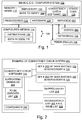
- some embodiments use an algorithm implemented in a consistency check system 200 to check the data consistency in a distributed online system 100.
- the system 100 can serve normally during the data consistency check.
- the consistency check system 200 also referred to as a data consistency scan system 200 or the like, includes a system 102 which is tailored to perform an algorithm implemented with consistency check software 124.
- the algorithm operates on two or more sets 202 of data in respective repositories 120.
- the data 122 whose consistency is checked is organized into entities, also referred to using reference numeral 122.
- an instance of a given entity 122 in one repository is compared to an instance of the same entity in another repository to see if they are consistent, that is, to see whether the portion 404 of the data that is seen by users is the same.
- Portions of the data that are not seen by users such as bits following an end-of-file marker, may differ without violating consistency.
- physical locations will clearly differ, and corresponding characteristics of physical storage, such as the number of sectors allocated and page size, may also differ without violating consistency.
- the illustrated consistency check system 200 also includes and maintains a skipped entity list 204, an issues list 206, and supporting variables 208 such as the current time cutoff T0 that defines which entities are compared and which are too new to compare, and rescan caps.
- Figure 5 illustrates some process embodiments in a flowchart 500.
- Technical processes shown in the Figures or otherwise disclosed will be performed automatically by consistency check system 200, unless otherwise indicated. Processes may also be performed in part automatically and in part manually to the extent action by a human administrator or other human person is implicated. No process contemplated as innovative herein is entirely manual. In a given embodiment zero or more illustrated steps of a process may be repeated, perhaps with different parameters or data to operate on. Steps in an embodiment may also be done in a different order than the top-to-bottom order that is laid out in Figure 5 . Steps may be performed serially, in a partially overlapping manner, or fully in parallel.
- flowchart 500 is traversed to indicate the steps performed during a process may vary from one performance of the process to another performance of the process.
- the flowchart traversal order may also vary from one process embodiment to another process embodiment. Steps may also be omitted, combined, renamed, regrouped, or otherwise depart from the illustrated flow, provided that the process performed is operable and conforms to at least one claim.
- the following description depicts an target online system 100 containing two repository components A and B, with the data on A and B related to each other.
- an embodiment could first check the consistency between A and B, then check the consistency between B and C, and finally consolidate their results together by placing them all into a single issues list 206.
- the entities 122 to be checked each have a respective timestamp attribute 402 which indicates their last modification time.
- the entities in component A and B also share a common unique key attribute as entity identifier 406, e.g. student id, which is unique and won't be reused
- a data scan proceeds in phases, as follows.
- Exist, Not Exist entity, namely, an entity which does not exist on one side, i.e., is not present in one of the components.
- This kind of entity is skipped 504 in a first scan because one cannot know the last modified time of a "non-exists" entity, so tailored rescan logic 604 is used in one or more rescan phases to avoid 510 a false alarm 512 for such entities.
- Rescan 524 phase 526 rescan logic 604 can be executed multiple times. In an efficient example, rescan will only check 528 the entities in the skipped entity list which was generated 506 from a prior round of scanning. For each of the entities one is checking, rescan logic will fetch 530 the entity latest states 532 twice from both components in a specified order: ->A->B->A->B, where "->A" means fetch the entity's latest state from component A.
- the rescan check logic includes software and hardware implementing the following:
- the entity will be checked if testing 534 determines that its state was not changed during two fetch operations in any of the two components 212. Otherwise, it will be put 506 into the skipped entity list again for next round of rescan.
- the entity will be checked only if testing 534 determines that its state was not changed during two fetch operations for both components 212. Otherwise, it will be put 506 into skipped entity list again for the next round of rescan.
- a caller can use 536 a timeout mechanism 538 or limit 540 the rescan rounds 542 to control the rescan execution time 550, or limit 540 rescan time 550 directly. Examples may return 544 the skipped entity list for awareness in the result. The skipped entities may be added 548 into the issues list, because they keep changing during the scan.
- False negatives 554 are the true inconsistency issues that were not caught in the data scan. It's possible to have false negatives because the rescan phase could be ended even though there are still entities in the skipped entity list, due to timeout or reaching to the max rescan time or rounds constraint.
- the false negatives can be reduced 552 by increasing 540 the max rescan times, or can be caught in the future data scans. If an invalid entity stays in the system, eventually it should be caught by the data scan. Even in the extreme situation that an entity is modified quite frequently and will never be checked, it is most likely in a healthy state rather than an inconsistent state, because an unhealthy entity would probably not be updated so frequently.
- FIG. 3 shows a flowchart which further illustrates an algorithm suitable for implementing consistency checking as taught herein.
- the algorithm takes TO as a current cutoff time. Then the algorithm enters a loop which is controlled by a decision labeled "Has more?" that asks whether there are more entities to check for consistency. If “No”, meaning there are no more entities to check for consistency, control moves to a decision labeled "Any in Skipped Entity List?” that asks whether there are any entities in the Skipped Entity List (also called the "Skipped List” in Figure 3 ). If “No”, meaning there are no entities in the Skipped Entity List, the current execution of the algorithm ends. If “Yes”, meaning there is at least one entity in the Skipped Entity List, the algorithm does the following: Fetch entity E's latest status sequentially:
- Medium 112 may include disks (magnetic, optical, or otherwise), RAM, EEPROMS or other ROMs, and/or other configurable memory, including in particular computer-readable media (which are not mere propagated signals).
- the storage medium which is configured may be in particular a removable storage medium 114 such as a CD, DVD, or flash memory.
- a general-purpose memory which may be removable or not, and may be volatile or not, can be configured into an embodiment using items such as consistency check software 124, skipped list 204, and other lists, in the form of data 118 and instructions 116, read from a removable medium 114 and/or another source such as a network connection, to form a configured medium.
- the configured medium 112 is capable of causing a computer system to perform technical process steps for verifying data consistency as disclosed herein.
- the Figures thus help illustrate configured storage media embodiments and process embodiments, as well as system and process embodiments.
- any of the process steps illustrated in Figure 3 , Figure 5 , or otherwise taught herein, may be used to help configure a storage medium to form a configured medium embodiment.
- Entity check logic design First scan logic for entity E:
- a process may include any steps described herein in any subset or combination or sequence which is operable. Each variant may occur alone, or in combination with any one or more of the other variants. Each variant may occur with any of the processes and each process may be combined with any one or more of the other processes. Each process or combination of processes, including variants, may be combined with any of the medium combinations and variants describe above.
- scanning 522 and rescanning 524 detect state inconsistencies 558 between data entities in repositories or other components 212 of a distributed computing environment.
- entities are scanned based on a cutoff time T0. Entities for which state comparison is undesired are placed 506 in a skipped entity list. Any inconsistencies found in other entities is reported 556 by displaying or printing a list, emailing or texting an administrator, or the like.
- subsequent rescanning fetches 530 state and attempts to pare down the skipped entity list. Rescanning may be capped 540. Inconsistencies may be detected without requiring 560 downtime 564 from services 562 that update data entity state, and false reports of inconsistency may be avoided 510.
- the consistency check software of the system avoids 510 false alarms 512 in that only actual data inconsistencies are reported 556.
- innovations described herein can improve the functioning of a computer system itself by reducing or eliminating downtime required to perform a data consistency check, can improve distributed data technology scalability by providing an algorithm to identify inconsistencies in data that is stored in distributed repositories (and to isolate inconsistent data), and improve data protection technology compared to continuous data protection because the present innovations help protect data consistency while placing less demand on network and storage resources.
- One of skill also recognizes the inherently digital and computational nature of the operations taught, which cannot effectively be performed by mere mental steps or paper and pencil.
- some innovations herein can be characterized as an improvement to data inconsistency filtering technology, which is useful for identifying and filtering out inconsistent data in a system of distributed data repositories.
- a and “the” are inclusive of one or more of the indicated item or step.
- a reference to an item generally means at least one such item is present and a reference to a step means at least one instance of the step is performed.
- Headings are for convenience only; information on a given topic may be found outside the section whose heading indicates that topic.
Landscapes
- Engineering & Computer Science (AREA)
- Theoretical Computer Science (AREA)
- Physics & Mathematics (AREA)
- General Engineering & Computer Science (AREA)
- General Physics & Mathematics (AREA)
- Databases & Information Systems (AREA)
- Data Mining & Analysis (AREA)
- Computer Security & Cryptography (AREA)
- Quality & Reliability (AREA)
- Information Retrieval, Db Structures And Fs Structures Therefor (AREA)
- Debugging And Monitoring (AREA)
- Stored Programmes (AREA)
Claims (16)
- Rechentechnologieverfahren (500) zum Erfassen von Dateninkonsistenz (558), wobei das Verfahren (500) Folgendes umfasst:Auswählen (566) eines Ausschaltzeitwerts TO (568);Abtasten (522) von Dateninstanzen (122) in jeweiligen Komponenten (212), wobei die Dateninstanzen (122) Datenabschnitte (404) aufweisen, die Zustände (532) beinhalten;Einsetzen (506) in eine Fehlliste (204) von jeglichen abgetasteten Dateninstanzen (122), die in beiden Komponenten (212) vorhanden sind, aber in einer oder beiden Komponenten (212) nach TO (568) modifiziert wurden;Einsetzen (506) in die Fehlliste (204) von jeglichen abgetasteten Dateninstanzen (122), die in nur einer der Komponenten (212) vorhanden (508) sind;Vergleichen (514) von Datenabschnitten (404) von Dateninstanzen (122), die nicht in der Fehlliste (204) sind, und Auslösen (518) eines Inkonsistenzalarms (520), falls irgendwelche verglichenen Instanzen (122) sich in deren Datenabschnitten (404) unterscheiden; undDurchführen (524) einer oder mehrerer Neuabtastungsphasen (526), um Vergleich von Zuständen (532) von Dateninstanzen (122) zu versuchen, die in der Fehlliste (204) sind.
- Verfahren (500) nach Anspruch 1, wobei die Komponenten (212) hier als eine Komponente A und eine Komponente B bezeichnet sind, wobei jede der einen oder mehreren Neuabtastungsphasen (526) einen aktuellen Zustand (532) einer Dateninstanz (122) zweimal von den Komponenten (212) in einer verschachtelten Reihenfolge abruft (530), nämlich von Komponente A abruft (530), dann von Komponente B abruft (530), dann von Komponente A abruft (530) und dann von Komponente B abruft (530), wobei in Fällen, in denen eine Instanz (122) in die Fehlliste (204) eingesetzt (506) wurde, weil die Instanz (122) in beiden Komponenten (212) vorhanden (508) war, aber in einer oder beiden Komponenten (212) nach einer Abschaltzeit (568) modifiziert (516) wurde, die Instanzenzustände (532) auf Inkonsistenz (558) verglichen (514) werden, falls der Instanzenzustand (532) sich in mindestens einer Komponente (212) während der Abrufe nicht geändert hat, und ansonsten die Instanz (122) in der Fehlliste (204) belassen (570) wird, und wobei in Fällen, in denen eine Instanz (122) in die Fehlliste (204) eingesetzt (506) wurde, weil die Instanz (122) in nur einer der Komponenten (212) vorhanden (508) war, die Instanzenzustände (532) auf Inkonsistenz (558) verglichen (514) werden, falls sich der Instanzenzustand (532) in keiner Komponente (212) während der Abrufe geändert hat, und ansonsten die Instanz (122) in der Fehlliste (204) belassen (570) wird.
- Verfahren (500) nach Anspruch 2, wobei die Neuabtastungsphasen (526) von einer Ausführungszeit- (550) -grenze (208), einer Grenze (208) dafür, wie viele Neuabtastungsrunden (542) durchgeführt werden, oder beiden begrenzt (540) werden.
- Verfahren (500) nach Anspruch 1, wobei das Verfahren durchgeführt wird, ohne Stillstand (564) von jeglichem Dienst (562) zu benötigen (560), der die Dateninstanzen (122) aktualisiert.
- Verfahren (500) nach Anspruch 1, wobei das Verfahren Falschalarme (512) dadurch vermeidet (510), dass nur aktuelle Dateninkonsistenzen (558) den Inkonsistenzalarm (520) auslösen (518).
- Verfahren (500) nach Anspruch 2, wobei eine dritte Komponente C Daten (118) aufweist, die auch mit Komponente A und Komponente B verknüpft ist, und das Verfahren umfasst, auf Dateninkonsistenz (558) zwischen Komponente A und Komponente B zu prüfen, auf Dateninkonsistenz (558) zwischen Komponente B und Komponente C zu prüfen, und Ergebnisse der Prüfungen zusammenzuführen, indem die Ergebnisse gemeinsam in eine einzelne Problemliste (206) gesetzt werden.
- Verfahren (500) nach Anspruch 1, wobei das Verfahren (500) Dateninkonsistenz (558) über Datendepots (120) nach einer Wiederherstellung verifiziert.
- Verfahren (500) nach Anspruch 1, wobei das Verfahren (500) mindestens eine Dateninkonsistenz (558) erfasst, ohne Datenverwendung auf nur einen Einzeldatenspeicher einzuschränken und ohne eine datengrößenproportionale Stillstandeinschränkung.
- Verfahren (500) nach Anspruch 1, wobei das Verfahren (500) einen Unterschied bei Daten, die von Anwendern nicht gesehen werden, nicht als eine Inkonsistenz (558) behandelt.
- Verteiltes Rechensystem (200), das mit Dateninkonsistenz- (558) -erfassung ausgestattet ist, wobei das System (200) Folgendes umfasst:mindestens zwei Komponenten (212), wobei jede Komponente (212) mindestens einen Prozessor (110), einen Speicher (112) in betriebsfähiger Kommunikation mit dem Prozessor (110), und Dateninstanzen (122), die jeweilige Zustände (532) aufweisen, aufweist;Konsistenzprüfungssoftware (124), die in mindestens einem Speicher (112) liegt und mit mindestens einem Prozessor (110), ausführbar ist, um ein Verfahren (500) durchzuführen, das (a) in eine Fehlliste (204) jegliche Daten E_E einsetzt (506), die in beiden Komponenten (212) vorhanden (508), aber in einer oder beiden Komponenten (212) nach einem Abschaltzeitwert TO (568) modifiziert (516) wurden, (b) in die Fehlliste (204) jegliche abgetasteten Dateninstanzen E_N einsetzt (506), die in nur einer der Komponenten (212) vorhanden (508) sind, (c) Zustände (532) von Dateninstanzen (122) vergleicht (514), die nicht in der Fehlliste (204) sind, (d) eine Inkonsistenz (558) meldet (556), falls sich irgendwelche verglichenen Instanzen (122) in deren Zustand (532) unterscheiden, und (e) eine oder mehrere Neuabtastungsphasen (526) durchführt (524), um Vergleich von Zuständen (532) von Dateninstanzen (122) zu versuchen, die in der Fehlliste (204) sind.
- System (200) nach Anspruch 10, wobei Konsistenzprüfungssoftware (f) aktuellere Zustände (532) einer Instanz (122) von den Komponenten (212) abruft (530), (g) Zustände (532) für eine Instanz E_E vergleicht (514), wenn sich der Instanzenzustand (532) in mindestens einer Komponente (212) während der Abrufe nicht geändert hat, (h) Zustände (532) für eine Instanz E_N vergleicht (514), wenn sich der Instanzenzustand (532) in keiner Komponente (212) während der Abrufe geändert hat, (i) ansonsten Instanzen (122) in der Fehlliste (204) belässt (570) und (j) jegliche Instanzen (122) meldet, deren Zustände (532) inkonsistent sind, wenn sie verglichen werden.
- System (200) nach Anspruch 11, wobei die Neuabtastungsphasen (526) von einer Grenze (208) für Ausführungszeit (550), einer Grenze (208) dafür, wie viele Neuabtastungsrunden (542) durchgeführt werden, oder beiden begrenzt (540) werden.
- System (200) nach Anspruch 10, wobei das System (200) einen Dienst (562) beinhaltet, der die Zustände (532) von Dateninstanzen (122) aktualisiert, und wobei die Konsistenzprüfungssoftware (124) abläuft und jegliche Inkonsistenzen meldet (556), ohne Stillstand (564) des Dienstes (562) zu benötigen (560).
- System (200) nach Anspruch 10, wobei die Konsistenzprüfungssoftware (124) Falschalarme (512) vermeidet (510), die aus Unterschieden von Bits entstehen, die einer Dateiendmarkierung folgen.
- Computerlesbares Speichermedium (114), das mit ausführbaren Anweisungen (116) konfiguriert ist, um ein technisches Verfahren (500) zum Erfassen von Dateninkonsistenz (558) in einer verteilten Rechenumgebung durchzuführen, wobei das Verfahren (500) Folgendes umfasst:Auswählen (566) eines Ausschaltzeitwerts TO (568);Abtasten (522) von Dateninstanzen (122) in jeweiligen Komponenten (212), die hier als Komponente A und Komponente B bezeichnet sind, wobei die Dateninstanzen (122) Datenabschnitte (404) aufweisen, die Zustände (532) beinhalten;Einsetzen (506) in eine Fehlliste (204) von jeglichen abgetasteten Dateninstanzen (122), die in beiden Komponenten (212) vorhanden sind, aber in einer oder beiden Komponenten (212) nach TO (568) modifiziert wurden;Einsetzen (506) in die Fehlliste (204) von jeglichen abgetasteten Dateninstanzen (122), die in nur einer der Komponenten (212) vorhanden (508) sind;Vergleichen (514) von Datenabschnitten (404) von Dateninstanzen (122), die nicht in der Fehlliste (204) sind, und Auslösen (518) eines Inkonsistenzalarms (520), falls irgendwelche verglichenen Instanzen (122) sich in deren Datenabschnitten (404) unterscheiden; undDurchführen (524) einer oder mehrerer Neuabtastungsphasen (526), um Vergleich von Zuständen (532) von Dateninstanzen (122) zu versuchen, die in der Fehlliste (204) sind.
- Computerlesbares Speichermedium (114) nach Anspruch 15, wobei jede der einen oder mehreren Neuabtastungsphasen (526) einen aktuellen Zustand (532) einer Dateninstanz (122) zweimal von den Komponenten (212) abruft (530), wobei in Fällen, in denen eine Instanz (122) in die Fehlliste (204) eingesetzt (506) wurde, weil die Instanz (122) in beiden Komponenten (212) vorhanden (508) war, aber in einer oder beiden Komponenten (212) nach einer Abschaltzeit (568) modifiziert (516) wurde, die Instanzenzustände (532) auf Inkonsistenz (558) verglichen (514) werden, falls sich der Instanzenzustand (532) in mindestens einer Komponente (212) während der Abrufe nicht geändert hat, und ansonsten die Instanz (122) in der Fehlliste (204) belassen (570) wird, und wobei in Fällen, in denen eine Instanz (122) in die Fehlliste (204) eingesetzt (506) wurde, weil die Instanz (122) in nur einer der Komponenten (212) vorhanden (508) war, die Instanzenzustände (532) auf Inkonsistenz (558) verglichen (514) werden, falls sich der Instanzenzustand (532) in keiner Komponente (212) während der Abrufe geändert hat, und ansonsten die Instanz (122) in der Fehlliste (204) belassen (570) wird.
Applications Claiming Priority (2)
| Application Number | Priority Date | Filing Date | Title |
|---|---|---|---|
| CN201710114248.4A CN108509460B (zh) | 2017-02-28 | 2017-02-28 | 分布式系统中的数据一致性检查 |
| PCT/CN2017/079051 WO2018157430A1 (en) | 2017-02-28 | 2017-03-31 | Data consistency check in distributed system |
Publications (3)
| Publication Number | Publication Date |
|---|---|
| EP3566150A1 EP3566150A1 (de) | 2019-11-13 |
| EP3566150A4 EP3566150A4 (de) | 2020-09-30 |
| EP3566150B1 true EP3566150B1 (de) | 2021-10-27 |
Family
ID=63369673
Family Applications (1)
| Application Number | Title | Priority Date | Filing Date |
|---|---|---|---|
| EP17898566.9A Not-in-force EP3566150B1 (de) | 2017-02-28 | 2017-03-31 | Datenkonsistenzprüfung in einem verteilten system |
Country Status (4)
| Country | Link |
|---|---|
| US (1) | US11481380B2 (de) |
| EP (1) | EP3566150B1 (de) |
| CN (1) | CN108509460B (de) |
| WO (1) | WO2018157430A1 (de) |
Families Citing this family (4)
| Publication number | Priority date | Publication date | Assignee | Title |
|---|---|---|---|---|
| US11222005B1 (en) * | 2017-07-18 | 2022-01-11 | EMC IP Holding Company LLC | Proactive storage system configuration consistency validation |
| CN109982426B (zh) * | 2019-03-21 | 2021-04-13 | 中国科学院合肥物质科学研究院 | 一种无人驾驶车辆传感器数据离线同步方法 |
| CN111897683A (zh) * | 2020-07-10 | 2020-11-06 | 广东小天才科技有限公司 | 电子设备及其故障修复方法和装置 |
| JP7791033B2 (ja) * | 2022-04-12 | 2025-12-23 | 株式会社日立製作所 | 計算機システム及びデータの整合性維持方法 |
Family Cites Families (19)
| Publication number | Priority date | Publication date | Assignee | Title |
|---|---|---|---|---|
| US6751636B1 (en) | 2000-12-05 | 2004-06-15 | Silicon Graphics, Inc. | System and method for maintaining and recovering data consistency across multiple instances of a database |
| EP1574955B1 (de) | 2004-03-12 | 2012-10-24 | Sap Ag | Verwaltung von eingehenden Konflikten beim Zusammenbringen von Daten von verteilten Systemen |
| US7277905B2 (en) * | 2004-03-31 | 2007-10-02 | Microsoft Corporation | System and method for a consistency check of a database backup |
| US7774319B2 (en) | 2004-08-11 | 2010-08-10 | Sap Ag | System and method for an optimistic database access |
| CN101192971B (zh) | 2006-11-23 | 2011-05-11 | 中兴通讯股份有限公司 | 主备数据一致性检测方法 |
| US8126848B2 (en) | 2006-12-07 | 2012-02-28 | Robert Edward Wagner | Automated method for identifying and repairing logical data discrepancies between database replicas in a database cluster |
| US20080140734A1 (en) * | 2006-12-07 | 2008-06-12 | Robert Edward Wagner | Method for identifying logical data discrepancies between database replicas in a database cluster |
| US7711716B2 (en) | 2007-03-06 | 2010-05-04 | Microsoft Corporation | Optimizations for a background database consistency check |
| US8261028B2 (en) * | 2007-12-31 | 2012-09-04 | Intel Corporation | Cached dirty bits for context switch consistency checks |
| US8224780B2 (en) * | 2010-06-15 | 2012-07-17 | Microsoft Corporation | Checkpoints for a file system |
| US8326800B2 (en) | 2011-03-18 | 2012-12-04 | Microsoft Corporation | Seamless upgrades in a distributed database system |
| US20140025646A1 (en) | 2011-03-28 | 2014-01-23 | Telefonaktiebolaget L M Ericsson (Publ) | Data management in a data virtualization environment |
| US9235607B1 (en) * | 2012-03-29 | 2016-01-12 | Google Inc. | Specifying a predetermined degree of inconsistency for test data |
| WO2013187816A1 (en) * | 2012-06-15 | 2013-12-19 | Telefonaktiebolaget Lm Ericsson (Publ) | Method and a consistency checker for finding data inconsistencies in a data repository |
| US20160110406A1 (en) * | 2014-10-16 | 2016-04-21 | Microsoft Technology Licensing, Llc | Validation of data across multiple data stores |
| US9652220B2 (en) | 2015-05-11 | 2017-05-16 | Sap Portals Israel Ltd. | Zero down-time deployment of new application versions |
| US11442919B2 (en) * | 2015-07-31 | 2022-09-13 | Accenture Global Services Limited | Data reliability analysis |
| CN105589961B (zh) * | 2015-12-21 | 2019-02-19 | 武汉达梦数据库有限公司 | 一种数据库实时同步系统数据一致性的检测方法及系统 |
| CN106294611A (zh) * | 2016-08-02 | 2017-01-04 | 重庆农村商业银行股份有限公司 | 银行核心系统及新老核心系统数据切换方法 |
-
2017
- 2017-02-28 CN CN201710114248.4A patent/CN108509460B/zh not_active Expired - Fee Related
- 2017-03-31 EP EP17898566.9A patent/EP3566150B1/de not_active Not-in-force
- 2017-03-31 WO PCT/CN2017/079051 patent/WO2018157430A1/en not_active Ceased
- 2017-03-31 US US16/480,586 patent/US11481380B2/en active Active
Non-Patent Citations (1)
| Title |
|---|
| None * |
Also Published As
| Publication number | Publication date |
|---|---|
| CN108509460B (zh) | 2021-07-20 |
| WO2018157430A1 (en) | 2018-09-07 |
| US11481380B2 (en) | 2022-10-25 |
| CN108509460A (zh) | 2018-09-07 |
| EP3566150A1 (de) | 2019-11-13 |
| EP3566150A4 (de) | 2020-09-30 |
| US20190384758A1 (en) | 2019-12-19 |
Similar Documents
| Publication | Publication Date | Title |
|---|---|---|
| US10824420B2 (en) | Caching build graphs | |
| CN109416651B (zh) | 多租户云计算环境中的更新协调 | |
| EP3857382B1 (de) | Softwareprüfungssicherung durch erkennung von inkonsistenter behandlung | |
| CN106716361B (zh) | 用于运行时例程冗余跟踪的编译器高速缓存 | |
| US9009693B2 (en) | Out-of-band framework libraries within applications | |
| US11144469B2 (en) | Per-tenant incremental outward distributed proactive caching | |
| US20180218005A1 (en) | Chunk storage deduplication using graph structures | |
| EP3785127B1 (de) | Selektive verfolgung von abschnitten der computerprozessausführung | |
| EP4088187B1 (de) | Blockfreies auslesen von einheitlichen wertsätzen | |
| US11422932B2 (en) | Integrated reference and secondary marking | |
| US10606667B2 (en) | Precondition exclusivity mapping of tasks to computational locations | |
| US8412889B2 (en) | Low-level conditional synchronization support | |
| US20180246916A1 (en) | Scalable object service data and metadata overflow | |
| WO2017015071A1 (en) | Incremental interprocedural dataflow analysis during compilation | |
| US11481380B2 (en) | Data consistency check in distributed system | |
| US10078562B2 (en) | Transactional distributed lifecycle management of diverse application data structures | |
| US11392482B2 (en) | Data breakpoints on certain kinds of functions |
Legal Events
| Date | Code | Title | Description |
|---|---|---|---|
| STAA | Information on the status of an ep patent application or granted ep patent |
Free format text: STATUS: THE INTERNATIONAL PUBLICATION HAS BEEN MADE |
|
| PUAI | Public reference made under article 153(3) epc to a published international application that has entered the european phase |
Free format text: ORIGINAL CODE: 0009012 |
|
| STAA | Information on the status of an ep patent application or granted ep patent |
Free format text: STATUS: REQUEST FOR EXAMINATION WAS MADE |
|
| 17P | Request for examination filed |
Effective date: 20190805 |
|
| AK | Designated contracting states |
Kind code of ref document: A1 Designated state(s): AL AT BE BG CH CY CZ DE DK EE ES FI FR GB GR HR HU IE IS IT LI LT LU LV MC MK MT NL NO PL PT RO RS SE SI SK SM TR |
|
| AX | Request for extension of the european patent |
Extension state: BA ME |
|
| DAV | Request for validation of the european patent (deleted) | ||
| DAX | Request for extension of the european patent (deleted) | ||
| REG | Reference to a national code |
Ref country code: DE Ref legal event code: R079 Ref document number: 602017048527 Country of ref document: DE Free format text: PREVIOUS MAIN CLASS: G06F0017300000 Ipc: G06F0011140000 |
|
| A4 | Supplementary search report drawn up and despatched |
Effective date: 20200827 |
|
| RIC1 | Information provided on ipc code assigned before grant |
Ipc: G06F 16/23 20190101ALI20200821BHEP Ipc: G06F 11/14 20060101AFI20200821BHEP |
|
| STAA | Information on the status of an ep patent application or granted ep patent |
Free format text: STATUS: EXAMINATION IS IN PROGRESS |
|
| 17Q | First examination report despatched |
Effective date: 20201124 |
|
| GRAP | Despatch of communication of intention to grant a patent |
Free format text: ORIGINAL CODE: EPIDOSNIGR1 |
|
| STAA | Information on the status of an ep patent application or granted ep patent |
Free format text: STATUS: GRANT OF PATENT IS INTENDED |
|
| INTG | Intention to grant announced |
Effective date: 20210608 |
|
| GRAS | Grant fee paid |
Free format text: ORIGINAL CODE: EPIDOSNIGR3 |
|
| GRAA | (expected) grant |
Free format text: ORIGINAL CODE: 0009210 |
|
| STAA | Information on the status of an ep patent application or granted ep patent |
Free format text: STATUS: THE PATENT HAS BEEN GRANTED |
|
| AK | Designated contracting states |
Kind code of ref document: B1 Designated state(s): AL AT BE BG CH CY CZ DE DK EE ES FI FR GB GR HR HU IE IS IT LI LT LU LV MC MK MT NL NO PL PT RO RS SE SI SK SM TR |
|
| REG | Reference to a national code |
Ref country code: GB Ref legal event code: FG4D |
|
| REG | Reference to a national code |
Ref country code: CH Ref legal event code: EP |
|
| RAP4 | Party data changed (patent owner data changed or rights of a patent transferred) |
Owner name: MICROSOFT TECHNOLOGY LICENSING, LLC |
|
| REG | Reference to a national code |
Ref country code: AT Ref legal event code: REF Ref document number: 1442413 Country of ref document: AT Kind code of ref document: T Effective date: 20211115 |
|
| REG | Reference to a national code |
Ref country code: DE Ref legal event code: R096 Ref document number: 602017048527 Country of ref document: DE |
|
| REG | Reference to a national code |
Ref country code: IE Ref legal event code: FG4D |
|
| REG | Reference to a national code |
Ref country code: LT Ref legal event code: MG9D |
|
| REG | Reference to a national code |
Ref country code: NL Ref legal event code: MP Effective date: 20211027 |
|
| REG | Reference to a national code |
Ref country code: AT Ref legal event code: MK05 Ref document number: 1442413 Country of ref document: AT Kind code of ref document: T Effective date: 20211027 |
|
| PG25 | Lapsed in a contracting state [announced via postgrant information from national office to epo] |
Ref country code: RS Free format text: LAPSE BECAUSE OF FAILURE TO SUBMIT A TRANSLATION OF THE DESCRIPTION OR TO PAY THE FEE WITHIN THE PRESCRIBED TIME-LIMIT Effective date: 20211027 Ref country code: LT Free format text: LAPSE BECAUSE OF FAILURE TO SUBMIT A TRANSLATION OF THE DESCRIPTION OR TO PAY THE FEE WITHIN THE PRESCRIBED TIME-LIMIT Effective date: 20211027 Ref country code: FI Free format text: LAPSE BECAUSE OF FAILURE TO SUBMIT A TRANSLATION OF THE DESCRIPTION OR TO PAY THE FEE WITHIN THE PRESCRIBED TIME-LIMIT Effective date: 20211027 Ref country code: BG Free format text: LAPSE BECAUSE OF FAILURE TO SUBMIT A TRANSLATION OF THE DESCRIPTION OR TO PAY THE FEE WITHIN THE PRESCRIBED TIME-LIMIT Effective date: 20220127 Ref country code: AT Free format text: LAPSE BECAUSE OF FAILURE TO SUBMIT A TRANSLATION OF THE DESCRIPTION OR TO PAY THE FEE WITHIN THE PRESCRIBED TIME-LIMIT Effective date: 20211027 |
|
| PG25 | Lapsed in a contracting state [announced via postgrant information from national office to epo] |
Ref country code: IS Free format text: LAPSE BECAUSE OF FAILURE TO SUBMIT A TRANSLATION OF THE DESCRIPTION OR TO PAY THE FEE WITHIN THE PRESCRIBED TIME-LIMIT Effective date: 20220227 Ref country code: SE Free format text: LAPSE BECAUSE OF FAILURE TO SUBMIT A TRANSLATION OF THE DESCRIPTION OR TO PAY THE FEE WITHIN THE PRESCRIBED TIME-LIMIT Effective date: 20211027 Ref country code: PT Free format text: LAPSE BECAUSE OF FAILURE TO SUBMIT A TRANSLATION OF THE DESCRIPTION OR TO PAY THE FEE WITHIN THE PRESCRIBED TIME-LIMIT Effective date: 20220228 Ref country code: PL Free format text: LAPSE BECAUSE OF FAILURE TO SUBMIT A TRANSLATION OF THE DESCRIPTION OR TO PAY THE FEE WITHIN THE PRESCRIBED TIME-LIMIT Effective date: 20211027 Ref country code: NO Free format text: LAPSE BECAUSE OF FAILURE TO SUBMIT A TRANSLATION OF THE DESCRIPTION OR TO PAY THE FEE WITHIN THE PRESCRIBED TIME-LIMIT Effective date: 20220127 Ref country code: NL Free format text: LAPSE BECAUSE OF FAILURE TO SUBMIT A TRANSLATION OF THE DESCRIPTION OR TO PAY THE FEE WITHIN THE PRESCRIBED TIME-LIMIT Effective date: 20211027 Ref country code: LV Free format text: LAPSE BECAUSE OF FAILURE TO SUBMIT A TRANSLATION OF THE DESCRIPTION OR TO PAY THE FEE WITHIN THE PRESCRIBED TIME-LIMIT Effective date: 20211027 Ref country code: HR Free format text: LAPSE BECAUSE OF FAILURE TO SUBMIT A TRANSLATION OF THE DESCRIPTION OR TO PAY THE FEE WITHIN THE PRESCRIBED TIME-LIMIT Effective date: 20211027 Ref country code: GR Free format text: LAPSE BECAUSE OF FAILURE TO SUBMIT A TRANSLATION OF THE DESCRIPTION OR TO PAY THE FEE WITHIN THE PRESCRIBED TIME-LIMIT Effective date: 20220128 Ref country code: ES Free format text: LAPSE BECAUSE OF FAILURE TO SUBMIT A TRANSLATION OF THE DESCRIPTION OR TO PAY THE FEE WITHIN THE PRESCRIBED TIME-LIMIT Effective date: 20211027 |
|
| REG | Reference to a national code |
Ref country code: DE Ref legal event code: R097 Ref document number: 602017048527 Country of ref document: DE |
|
| PG25 | Lapsed in a contracting state [announced via postgrant information from national office to epo] |
Ref country code: SM Free format text: LAPSE BECAUSE OF FAILURE TO SUBMIT A TRANSLATION OF THE DESCRIPTION OR TO PAY THE FEE WITHIN THE PRESCRIBED TIME-LIMIT Effective date: 20211027 Ref country code: SK Free format text: LAPSE BECAUSE OF FAILURE TO SUBMIT A TRANSLATION OF THE DESCRIPTION OR TO PAY THE FEE WITHIN THE PRESCRIBED TIME-LIMIT Effective date: 20211027 Ref country code: RO Free format text: LAPSE BECAUSE OF FAILURE TO SUBMIT A TRANSLATION OF THE DESCRIPTION OR TO PAY THE FEE WITHIN THE PRESCRIBED TIME-LIMIT Effective date: 20211027 Ref country code: EE Free format text: LAPSE BECAUSE OF FAILURE TO SUBMIT A TRANSLATION OF THE DESCRIPTION OR TO PAY THE FEE WITHIN THE PRESCRIBED TIME-LIMIT Effective date: 20211027 Ref country code: DK Free format text: LAPSE BECAUSE OF FAILURE TO SUBMIT A TRANSLATION OF THE DESCRIPTION OR TO PAY THE FEE WITHIN THE PRESCRIBED TIME-LIMIT Effective date: 20211027 Ref country code: CZ Free format text: LAPSE BECAUSE OF FAILURE TO SUBMIT A TRANSLATION OF THE DESCRIPTION OR TO PAY THE FEE WITHIN THE PRESCRIBED TIME-LIMIT Effective date: 20211027 |
|
| PLBE | No opposition filed within time limit |
Free format text: ORIGINAL CODE: 0009261 |
|
| STAA | Information on the status of an ep patent application or granted ep patent |
Free format text: STATUS: NO OPPOSITION FILED WITHIN TIME LIMIT |
|
| 26N | No opposition filed |
Effective date: 20220728 |
|
| PG25 | Lapsed in a contracting state [announced via postgrant information from national office to epo] |
Ref country code: MC Free format text: LAPSE BECAUSE OF FAILURE TO SUBMIT A TRANSLATION OF THE DESCRIPTION OR TO PAY THE FEE WITHIN THE PRESCRIBED TIME-LIMIT Effective date: 20211027 Ref country code: AL Free format text: LAPSE BECAUSE OF FAILURE TO SUBMIT A TRANSLATION OF THE DESCRIPTION OR TO PAY THE FEE WITHIN THE PRESCRIBED TIME-LIMIT Effective date: 20211027 |
|
| REG | Reference to a national code |
Ref country code: CH Ref legal event code: PL |
|
| PG25 | Lapsed in a contracting state [announced via postgrant information from national office to epo] |
Ref country code: SI Free format text: LAPSE BECAUSE OF FAILURE TO SUBMIT A TRANSLATION OF THE DESCRIPTION OR TO PAY THE FEE WITHIN THE PRESCRIBED TIME-LIMIT Effective date: 20211027 |
|
| REG | Reference to a national code |
Ref country code: BE Ref legal event code: MM Effective date: 20220331 |
|
| PG25 | Lapsed in a contracting state [announced via postgrant information from national office to epo] |
Ref country code: LU Free format text: LAPSE BECAUSE OF NON-PAYMENT OF DUE FEES Effective date: 20220331 Ref country code: LI Free format text: LAPSE BECAUSE OF NON-PAYMENT OF DUE FEES Effective date: 20220331 Ref country code: IE Free format text: LAPSE BECAUSE OF NON-PAYMENT OF DUE FEES Effective date: 20220331 Ref country code: CH Free format text: LAPSE BECAUSE OF NON-PAYMENT OF DUE FEES Effective date: 20220331 |
|
| PG25 | Lapsed in a contracting state [announced via postgrant information from national office to epo] |
Ref country code: BE Free format text: LAPSE BECAUSE OF NON-PAYMENT OF DUE FEES Effective date: 20220331 |
|
| PG25 | Lapsed in a contracting state [announced via postgrant information from national office to epo] |
Ref country code: IT Free format text: LAPSE BECAUSE OF FAILURE TO SUBMIT A TRANSLATION OF THE DESCRIPTION OR TO PAY THE FEE WITHIN THE PRESCRIBED TIME-LIMIT Effective date: 20211027 |
|
| P01 | Opt-out of the competence of the unified patent court (upc) registered |
Effective date: 20230523 |
|
| PG25 | Lapsed in a contracting state [announced via postgrant information from national office to epo] |
Ref country code: MK Free format text: LAPSE BECAUSE OF FAILURE TO SUBMIT A TRANSLATION OF THE DESCRIPTION OR TO PAY THE FEE WITHIN THE PRESCRIBED TIME-LIMIT Effective date: 20211027 Ref country code: CY Free format text: LAPSE BECAUSE OF FAILURE TO SUBMIT A TRANSLATION OF THE DESCRIPTION OR TO PAY THE FEE WITHIN THE PRESCRIBED TIME-LIMIT Effective date: 20211027 |
|
| PGFP | Annual fee paid to national office [announced via postgrant information from national office to epo] |
Ref country code: DE Payment date: 20240220 Year of fee payment: 8 Ref country code: GB Payment date: 20240221 Year of fee payment: 8 |
|
| PG25 | Lapsed in a contracting state [announced via postgrant information from national office to epo] |
Ref country code: HU Free format text: LAPSE BECAUSE OF FAILURE TO SUBMIT A TRANSLATION OF THE DESCRIPTION OR TO PAY THE FEE WITHIN THE PRESCRIBED TIME-LIMIT; INVALID AB INITIO Effective date: 20170331 |
|
| PGFP | Annual fee paid to national office [announced via postgrant information from national office to epo] |
Ref country code: FR Payment date: 20240220 Year of fee payment: 8 |
|
| PG25 | Lapsed in a contracting state [announced via postgrant information from national office to epo] |
Ref country code: MT Free format text: LAPSE BECAUSE OF FAILURE TO SUBMIT A TRANSLATION OF THE DESCRIPTION OR TO PAY THE FEE WITHIN THE PRESCRIBED TIME-LIMIT Effective date: 20211027 |
|
| REG | Reference to a national code |
Ref country code: DE Ref legal event code: R119 Ref document number: 602017048527 Country of ref document: DE |
|
| GBPC | Gb: european patent ceased through non-payment of renewal fee |
Effective date: 20250331 |
|
| PG25 | Lapsed in a contracting state [announced via postgrant information from national office to epo] |
Ref country code: TR Free format text: LAPSE BECAUSE OF FAILURE TO SUBMIT A TRANSLATION OF THE DESCRIPTION OR TO PAY THE FEE WITHIN THE PRESCRIBED TIME-LIMIT Effective date: 20211027 |
|
| PG25 | Lapsed in a contracting state [announced via postgrant information from national office to epo] |
Ref country code: DE Free format text: LAPSE BECAUSE OF NON-PAYMENT OF DUE FEES Effective date: 20251001 |
|
| PG25 | Lapsed in a contracting state [announced via postgrant information from national office to epo] |
Ref country code: GB Free format text: LAPSE BECAUSE OF NON-PAYMENT OF DUE FEES Effective date: 20250331 |
|
| PG25 | Lapsed in a contracting state [announced via postgrant information from national office to epo] |
Ref country code: FR Free format text: LAPSE BECAUSE OF NON-PAYMENT OF DUE FEES Effective date: 20250331 |