EP3565870B1 - Kontinuierliches recycling von kautschuk und organischen polymeren unter verwendung eines superkritischen geschlossenen wasseroxidationssystems - Google Patents
Kontinuierliches recycling von kautschuk und organischen polymeren unter verwendung eines superkritischen geschlossenen wasseroxidationssystems Download PDFInfo
- Publication number
- EP3565870B1 EP3565870B1 EP18736736.2A EP18736736A EP3565870B1 EP 3565870 B1 EP3565870 B1 EP 3565870B1 EP 18736736 A EP18736736 A EP 18736736A EP 3565870 B1 EP3565870 B1 EP 3565870B1
- Authority
- EP
- European Patent Office
- Prior art keywords
- rubber material
- pump
- rubber
- supercritical
- material mixture
- Prior art date
- Legal status (The legal status is an assumption and is not a legal conclusion. Google has not performed a legal analysis and makes no representation as to the accuracy of the status listed.)
- Not-in-force
Links
Images


Classifications
-
- C—CHEMISTRY; METALLURGY
- C08—ORGANIC MACROMOLECULAR COMPOUNDS; THEIR PREPARATION OR CHEMICAL WORKING-UP; COMPOSITIONS BASED THEREON
- C08J—WORKING-UP; GENERAL PROCESSES OF COMPOUNDING; AFTER-TREATMENT NOT COVERED BY SUBCLASSES C08B, C08C, C08F, C08G or C08H
- C08J11/00—Recovery or working-up of waste materials
- C08J11/04—Recovery or working-up of waste materials of polymers
- C08J11/10—Recovery or working-up of waste materials of polymers by chemically breaking down the molecular chains of polymers or breaking of crosslinks, e.g. devulcanisation
- C08J11/14—Recovery or working-up of waste materials of polymers by chemically breaking down the molecular chains of polymers or breaking of crosslinks, e.g. devulcanisation by treatment with steam or water
-
- A—HUMAN NECESSITIES
- A47—FURNITURE; DOMESTIC ARTICLES OR APPLIANCES; COFFEE MILLS; SPICE MILLS; SUCTION CLEANERS IN GENERAL
- A47J—KITCHEN EQUIPMENT; COFFEE MILLS; SPICE MILLS; APPARATUS FOR MAKING BEVERAGES
- A47J37/00—Baking; Roasting; Grilling; Frying
- A47J37/06—Roasters; Grills; Sandwich grills
- A47J37/07—Roasting devices for outdoor use; Barbecues
- A47J37/0763—Small-size, portable barbecues
-
- A—HUMAN NECESSITIES
- A47—FURNITURE; DOMESTIC ARTICLES OR APPLIANCES; COFFEE MILLS; SPICE MILLS; SUCTION CLEANERS IN GENERAL
- A47J—KITCHEN EQUIPMENT; COFFEE MILLS; SPICE MILLS; APPARATUS FOR MAKING BEVERAGES
- A47J37/00—Baking; Roasting; Grilling; Frying
- A47J37/06—Roasters; Grills; Sandwich grills
- A47J37/07—Roasting devices for outdoor use; Barbecues
- A47J37/0786—Accessories
-
- B—PERFORMING OPERATIONS; TRANSPORTING
- B29—WORKING OF PLASTICS; WORKING OF SUBSTANCES IN A PLASTIC STATE IN GENERAL
- B29B—PREPARATION OR PRETREATMENT OF THE MATERIAL TO BE SHAPED; MAKING GRANULES OR PREFORMS; RECOVERY OF PLASTICS OR OTHER CONSTITUENTS OF WASTE MATERIAL CONTAINING PLASTICS
- B29B17/00—Recovery of plastics or other constituents of waste material containing plastics
- B29B17/04—Disintegrating plastics, e.g. by milling
-
- C—CHEMISTRY; METALLURGY
- C08—ORGANIC MACROMOLECULAR COMPOUNDS; THEIR PREPARATION OR CHEMICAL WORKING-UP; COMPOSITIONS BASED THEREON
- C08C—TREATMENT OR CHEMICAL MODIFICATION OF RUBBERS
- C08C19/00—Chemical modification of rubber
- C08C19/08—Depolymerisation
-
- C—CHEMISTRY; METALLURGY
- C10—PETROLEUM, GAS OR COKE INDUSTRIES; TECHNICAL GASES CONTAINING CARBON MONOXIDE; FUELS; LUBRICANTS; PEAT
- C10B—DESTRUCTIVE DISTILLATION OF CARBONACEOUS MATERIALS FOR PRODUCTION OF GAS, COKE, TAR, OR SIMILAR MATERIALS
- C10B53/00—Destructive distillation, specially adapted for particular solid raw materials or solid raw materials in special form
- C10B53/07—Destructive distillation, specially adapted for particular solid raw materials or solid raw materials in special form of solid raw materials consisting of synthetic polymeric materials, e.g. tyres
-
- C—CHEMISTRY; METALLURGY
- C10—PETROLEUM, GAS OR COKE INDUSTRIES; TECHNICAL GASES CONTAINING CARBON MONOXIDE; FUELS; LUBRICANTS; PEAT
- C10G—CRACKING HYDROCARBON OILS; PRODUCTION OF LIQUID HYDROCARBON MIXTURES, e.g. BY DESTRUCTIVE HYDROGENATION, OLIGOMERISATION, POLYMERISATION; RECOVERY OF HYDROCARBON OILS FROM OIL-SHALE, OIL-SAND, OR GASES; REFINING MIXTURES MAINLY CONSISTING OF HYDROCARBONS; REFORMING OF NAPHTHA; MINERAL WAXES
- C10G1/00—Production of liquid hydrocarbon mixtures from oil-shale, oil-sand, or non-melting solid carbonaceous or similar materials, e.g. wood, coal
- C10G1/10—Production of liquid hydrocarbon mixtures from oil-shale, oil-sand, or non-melting solid carbonaceous or similar materials, e.g. wood, coal from rubber or rubber waste
-
- C—CHEMISTRY; METALLURGY
- C10—PETROLEUM, GAS OR COKE INDUSTRIES; TECHNICAL GASES CONTAINING CARBON MONOXIDE; FUELS; LUBRICANTS; PEAT
- C10L—FUELS NOT OTHERWISE PROVIDED FOR; NATURAL GAS; SYNTHETIC NATURAL GAS OBTAINED BY PROCESSES NOT COVERED BY SUBCLASSES C10G OR C10K; LIQUIFIED PETROLEUM GAS; USE OF ADDITIVES TO FUELS OR FIRES; FIRE-LIGHTERS
- C10L3/00—Gaseous fuels; Natural gas; Synthetic natural gas obtained by processes not covered by subclass C10G, C10K; Liquefied petroleum gas
- C10L3/06—Natural gas; Synthetic natural gas obtained by processes not covered by C10G, C10K3/02 or C10K3/04
-
- C—CHEMISTRY; METALLURGY
- C10—PETROLEUM, GAS OR COKE INDUSTRIES; TECHNICAL GASES CONTAINING CARBON MONOXIDE; FUELS; LUBRICANTS; PEAT
- C10L—FUELS NOT OTHERWISE PROVIDED FOR; NATURAL GAS; SYNTHETIC NATURAL GAS OBTAINED BY PROCESSES NOT COVERED BY SUBCLASSES C10G OR C10K; LIQUIFIED PETROLEUM GAS; USE OF ADDITIVES TO FUELS OR FIRES; FIRE-LIGHTERS
- C10L9/00—Treating solid fuels to improve their combustion
- C10L9/08—Treating solid fuels to improve their combustion by heat treatments, e.g. calcining
- C10L9/086—Hydrothermal carbonization
-
- A—HUMAN NECESSITIES
- A47—FURNITURE; DOMESTIC ARTICLES OR APPLIANCES; COFFEE MILLS; SPICE MILLS; SUCTION CLEANERS IN GENERAL
- A47J—KITCHEN EQUIPMENT; COFFEE MILLS; SPICE MILLS; APPARATUS FOR MAKING BEVERAGES
- A47J37/00—Baking; Roasting; Grilling; Frying
- A47J37/06—Roasters; Grills; Sandwich grills
- A47J37/07—Roasting devices for outdoor use; Barbecues
- A47J37/0786—Accessories
- A47J2037/0795—Adjustable food supports, e.g. for height adjustment
-
- B—PERFORMING OPERATIONS; TRANSPORTING
- B29—WORKING OF PLASTICS; WORKING OF SUBSTANCES IN A PLASTIC STATE IN GENERAL
- B29B—PREPARATION OR PRETREATMENT OF THE MATERIAL TO BE SHAPED; MAKING GRANULES OR PREFORMS; RECOVERY OF PLASTICS OR OTHER CONSTITUENTS OF WASTE MATERIAL CONTAINING PLASTICS
- B29B17/00—Recovery of plastics or other constituents of waste material containing plastics
- B29B2017/001—Pretreating the materials before recovery
- B29B2017/0021—Dividing in large parts
-
- B—PERFORMING OPERATIONS; TRANSPORTING
- B29—WORKING OF PLASTICS; WORKING OF SUBSTANCES IN A PLASTIC STATE IN GENERAL
- B29B—PREPARATION OR PRETREATMENT OF THE MATERIAL TO BE SHAPED; MAKING GRANULES OR PREFORMS; RECOVERY OF PLASTICS OR OTHER CONSTITUENTS OF WASTE MATERIAL CONTAINING PLASTICS
- B29B17/00—Recovery of plastics or other constituents of waste material containing plastics
- B29B17/04—Disintegrating plastics, e.g. by milling
- B29B2017/0424—Specific disintegrating techniques; devices therefor
- B29B2017/0428—Jets of high pressure fluid
-
- B—PERFORMING OPERATIONS; TRANSPORTING
- B29—WORKING OF PLASTICS; WORKING OF SUBSTANCES IN A PLASTIC STATE IN GENERAL
- B29B—PREPARATION OR PRETREATMENT OF THE MATERIAL TO BE SHAPED; MAKING GRANULES OR PREFORMS; RECOVERY OF PLASTICS OR OTHER CONSTITUENTS OF WASTE MATERIAL CONTAINING PLASTICS
- B29B17/00—Recovery of plastics or other constituents of waste material containing plastics
- B29B17/04—Disintegrating plastics, e.g. by milling
- B29B2017/0424—Specific disintegrating techniques; devices therefor
- B29B2017/0456—Pressing tools with calibrated openings, e.g. in sizing plates, for disintegrating solid materials
-
- B—PERFORMING OPERATIONS; TRANSPORTING
- B29—WORKING OF PLASTICS; WORKING OF SUBSTANCES IN A PLASTIC STATE IN GENERAL
- B29B—PREPARATION OR PRETREATMENT OF THE MATERIAL TO BE SHAPED; MAKING GRANULES OR PREFORMS; RECOVERY OF PLASTICS OR OTHER CONSTITUENTS OF WASTE MATERIAL CONTAINING PLASTICS
- B29B17/00—Recovery of plastics or other constituents of waste material containing plastics
- B29B17/04—Disintegrating plastics, e.g. by milling
- B29B2017/0424—Specific disintegrating techniques; devices therefor
- B29B2017/0496—Pyrolysing the materials
-
- B—PERFORMING OPERATIONS; TRANSPORTING
- B29—WORKING OF PLASTICS; WORKING OF SUBSTANCES IN A PLASTIC STATE IN GENERAL
- B29L—INDEXING SCHEME ASSOCIATED WITH SUBCLASS B29C, RELATING TO PARTICULAR ARTICLES
- B29L2030/00—Pneumatic or solid tyres or parts thereof
-
- C—CHEMISTRY; METALLURGY
- C08—ORGANIC MACROMOLECULAR COMPOUNDS; THEIR PREPARATION OR CHEMICAL WORKING-UP; COMPOSITIONS BASED THEREON
- C08J—WORKING-UP; GENERAL PROCESSES OF COMPOUNDING; AFTER-TREATMENT NOT COVERED BY SUBCLASSES C08B, C08C, C08F, C08G or C08H
- C08J2319/00—Characterised by the use of rubbers not provided for in groups C08J2307/00 - C08J2317/00
-
- C—CHEMISTRY; METALLURGY
- C10—PETROLEUM, GAS OR COKE INDUSTRIES; TECHNICAL GASES CONTAINING CARBON MONOXIDE; FUELS; LUBRICANTS; PEAT
- C10L—FUELS NOT OTHERWISE PROVIDED FOR; NATURAL GAS; SYNTHETIC NATURAL GAS OBTAINED BY PROCESSES NOT COVERED BY SUBCLASSES C10G OR C10K; LIQUIFIED PETROLEUM GAS; USE OF ADDITIVES TO FUELS OR FIRES; FIRE-LIGHTERS
- C10L2200/00—Components of fuel compositions
- C10L2200/04—Organic compounds
- C10L2200/0461—Fractions defined by their origin
- C10L2200/0469—Renewables or materials of biological origin
-
- C—CHEMISTRY; METALLURGY
- C10—PETROLEUM, GAS OR COKE INDUSTRIES; TECHNICAL GASES CONTAINING CARBON MONOXIDE; FUELS; LUBRICANTS; PEAT
- C10L—FUELS NOT OTHERWISE PROVIDED FOR; NATURAL GAS; SYNTHETIC NATURAL GAS OBTAINED BY PROCESSES NOT COVERED BY SUBCLASSES C10G OR C10K; LIQUIFIED PETROLEUM GAS; USE OF ADDITIVES TO FUELS OR FIRES; FIRE-LIGHTERS
- C10L2290/00—Fuel preparation or upgrading, processes or apparatus therefore, comprising specific process steps or apparatus units
- C10L2290/02—Combustion or pyrolysis
-
- C—CHEMISTRY; METALLURGY
- C10—PETROLEUM, GAS OR COKE INDUSTRIES; TECHNICAL GASES CONTAINING CARBON MONOXIDE; FUELS; LUBRICANTS; PEAT
- C10L—FUELS NOT OTHERWISE PROVIDED FOR; NATURAL GAS; SYNTHETIC NATURAL GAS OBTAINED BY PROCESSES NOT COVERED BY SUBCLASSES C10G OR C10K; LIQUIFIED PETROLEUM GAS; USE OF ADDITIVES TO FUELS OR FIRES; FIRE-LIGHTERS
- C10L3/00—Gaseous fuels; Natural gas; Synthetic natural gas obtained by processes not covered by subclass C10G, C10K; Liquefied petroleum gas
- C10L3/06—Natural gas; Synthetic natural gas obtained by processes not covered by C10G, C10K3/02 or C10K3/04
- C10L3/08—Production of synthetic natural gas
-
- Y—GENERAL TAGGING OF NEW TECHNOLOGICAL DEVELOPMENTS; GENERAL TAGGING OF CROSS-SECTIONAL TECHNOLOGIES SPANNING OVER SEVERAL SECTIONS OF THE IPC; TECHNICAL SUBJECTS COVERED BY FORMER USPC CROSS-REFERENCE ART COLLECTIONS [XRACs] AND DIGESTS
- Y02—TECHNOLOGIES OR APPLICATIONS FOR MITIGATION OR ADAPTATION AGAINST CLIMATE CHANGE
- Y02P—CLIMATE CHANGE MITIGATION TECHNOLOGIES IN THE PRODUCTION OR PROCESSING OF GOODS
- Y02P20/00—Technologies relating to chemical industry
- Y02P20/141—Feedstock
- Y02P20/143—Feedstock the feedstock being recycled material, e.g. plastics
-
- Y—GENERAL TAGGING OF NEW TECHNOLOGICAL DEVELOPMENTS; GENERAL TAGGING OF CROSS-SECTIONAL TECHNOLOGIES SPANNING OVER SEVERAL SECTIONS OF THE IPC; TECHNICAL SUBJECTS COVERED BY FORMER USPC CROSS-REFERENCE ART COLLECTIONS [XRACs] AND DIGESTS
- Y02—TECHNOLOGIES OR APPLICATIONS FOR MITIGATION OR ADAPTATION AGAINST CLIMATE CHANGE
- Y02P—CLIMATE CHANGE MITIGATION TECHNOLOGIES IN THE PRODUCTION OR PROCESSING OF GOODS
- Y02P20/00—Technologies relating to chemical industry
- Y02P20/50—Improvements relating to the production of bulk chemicals
- Y02P20/54—Improvements relating to the production of bulk chemicals using solvents, e.g. supercritical solvents or ionic liquids
-
- Y—GENERAL TAGGING OF NEW TECHNOLOGICAL DEVELOPMENTS; GENERAL TAGGING OF CROSS-SECTIONAL TECHNOLOGIES SPANNING OVER SEVERAL SECTIONS OF THE IPC; TECHNICAL SUBJECTS COVERED BY FORMER USPC CROSS-REFERENCE ART COLLECTIONS [XRACs] AND DIGESTS
- Y02—TECHNOLOGIES OR APPLICATIONS FOR MITIGATION OR ADAPTATION AGAINST CLIMATE CHANGE
- Y02W—CLIMATE CHANGE MITIGATION TECHNOLOGIES RELATED TO WASTEWATER TREATMENT OR WASTE MANAGEMENT
- Y02W30/00—Technologies for solid waste management
- Y02W30/50—Reuse, recycling or recovery technologies
- Y02W30/62—Plastics recycling; Rubber recycling
Definitions
- Tire recycling the recycling of rubber, vulcanized rubber, organic material, or the like, in particular, poses a challenge to society and the environment.
- Tires by nature, may be highly durable products. Tires must withstand the wear and tear of driving, and must withstand heat, UV radiation, extreme environmental conditions, or the like. These properties make tires a challenge for continuous recycling, not only because the rubber itself is difficult to breakdown, but also because the tire generally contains other products, for example, metal, textile materials, and the like. Due to this recycling challenge, many recycling centers do not accept tires, thereby encouraging individuals to illegally dump unwanted tires or burn tires, which is detrimental to the environment. If a tire does enter the recycling stream, the tire may be stockpiled or ground up to create other products such as soft mulch, but have few other uses as a ground up tire. Other recycling efforts attempt to capture the energy by burning the tires for power production.
- combustion byproducts such as zinc oxide, polychlorinated dibenzodioxins, furans, and heavy metals that may be released into the surrounding area.
- These toxic products may enter the soil, waterways, groundwater, animals, or humans surrounding the tire fueled energy plant.
- a tire may have an estimated 75% void. This empty space may take up valuable landfill space. Additionally, tire piles above the surface may be problematic. Water may pool within the inner surface of the tire and harbor disease bearing insects such as mosquitos. Piles of tires may be susceptible to fires which produce thick black smoke, are difficult to extinguish, and are hazardous to the environment.
- Document US 5849964 A discloses a process for processing used or waste plastic materials in order to recover chemical raw materials and liquid fuel components by depolymerisation of the used materials, which are transformed into a pumpable and into a volatile phase.
- the volatile phase is separated into a gaseous phase and a condensate or condensable depolymerisation product, which are refined by standard usual procedures.
- the present invention provides a method for recycling tires, comprising the steps listed at claim 1.
- Dependent claims 2-8 outline advantageous ways of carrying out this method.
- the present invention relates to an apparatus for recycling tires having the features disclosed in claim 9.
- Tire recycling is a large challenge for society both presently and in the future. World-wide the number of vehicles on the road is increasing and that growth may be accelerating. As developing nations require more vehicles, there may be an increased consumption of tires. Tires are designed to be durable and are, thus, produced using materials that can withstand difficult conditions. Tires may be designed for use on or off-road. Even the best cared for and properly maintained/driven tires eventually wear out. It is possible that catastrophic events such as potholes, curbs, road debris, UV damage, dry-rotting, or the like, may shorten the expected life of a tire. Additionally, some governments may mandate minimum tread depths or service life of a tire as safe for vehicles. Thus, at some point, the tire is no longer usable and must be discarded.
- tires Since many recycling centers do not accept tires, disposal of the tires is very difficult for a consumer. Additionally, those facilities that do accept tires generally do not capture any materials that could be useful from the tires. For example, tires may represent a resource for the ingredients of a tire including oil, carbon black, and the like. However, current tire waste management and recycling may not capture these materials or do so in an environmentally friendly manner.
- a method or apparatus may perform a continuous de-polymerization process of solid particles.
- the solid particles may be rubber crumbs.
- the rubber crumb may be a tire mechanically broken apart and separated from belts, strands, textile fibers, or the like, within the tire.
- a continuous de-polymerization process is performed by a pump, which may be an extrusion pump, gear pump, heavy grease pump, or the like.
- the supercritical water is injected into a high-pressure reactor.
- the diluted rubber suspension at high temperature and pressure is atomized into the supercritical water reaction chamber.
- the atomization is performed by jet spray micro-orifices (up to 1:1,000,000,000).
- the supercritical water may be obtained by a high-pressure liquid pump pressurizing the water, and a heat source heating the water, for example, to a temperature of at least 375 degrees Celsius.
- the supercritical water may break down larger molecules of a larger rubber piece via oxidation.
- the oxidation may break the rubber down into components such as natural gas, oil, solids, carbon black, or the like.
- the pump may pressurize, then atomize the diluted broken down rubber and/or propane suspension into a reaction chamber of supercritical water.
- the oxidation reaction rate may be increased depending on the relative large surface area of the atomized fluid which may contain various molecular species in the molten rubber in the presence of supercritical water.
- the continuous mixing of reactants using atomization in supercritical water may result in a supercritical solution of a depolymerization mixture of rubber in supercritical water, which may comprise supercritical water, oil, natural gas, and suspended particles of carbon black.
- This mixture is continuously atomized inside a secondary reactor of supercritical propane. Oil and natural gas may be dissolved in the supercritical propane. The remaining undissolved mixture may include solids such as carbon black, water, or the like.
- the results of the reaction are continuously separated into fractions using separation vessels (cyclone separation) according to gravity.
- an additional vessel may be depressurized to about 10342340 pa (1500 psi).
- propane may not have solvation power of supercritical and, thus, the oil may be phased out of the propoane solution.
- propane and natural gas may be condensed into liquid, and may be fed back to the pump and/or condensed into liquid through cooling.
- the gas may be continuously pressurized, heated, re-used, condensed, or the like.
- unwanted rubber tires may be recycled.
- the tire may undergo a process to mechanically breakup a tire prior to the recycling process.
- the mechanical break up may cut up the tires into smaller, more manageable chunks or parts.
- the mechanical breakup may also serve to break up a tire such that more surface area of the smaller chunks of rubber exposed. Additionally or alternatively, the mechanical breakup may separate the rubber from any steel, threads, fabric material, or the like, that may have been included in the tire.
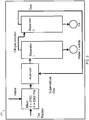
- Rubber material ready for recycling may be placed into the rubber recycling system 100 of FIG. 1 .
- the rubber material may be placed into a pump 101.
- the pump may be an extrusion pump, gear pump, heavy grease pump, or the like.
- the temperature in the pump may be 375 degrees Celsius or may be higher.
- the pressure in the pump may be in the range of 24131650 to 34473790 pascal (pa) (3500 to 5000 pounds per square inch (PSI)).
- the pump may then inject the rubber material into a dissociation system.
- the dissociation system may include a single chamber or multiple chambers, which may be configured as a single large chamber that is divided into separate chambers or may be configured as multiple completely separate chambers, or a combination thereof.
- the dissociating system may contain a mechanical dissociation means 102, which may break down the rubber material into smaller pieces and particles.
- a mechanical dissociation means may be a rotating screw, the meshing of gears, a piston, or the like.
- the mechanical dissociation means may mix the rubber material with other added components.
- additional components may be added to either the pump or the dissociating system.
- the water may be pressurized using a water pump 105 and may be heated using a water heater 106.
- the pressurized and heated water may form supercritical (SC) water 107.
- the supercritical water may be injected into the pump 101 or the dissociating system, and may be referred to as a first supercritical fluid.
- the first supercritical fluid may be water or water plus an oxidant such as H 2 O 2 .
- the supercritical fluid may be injected into an atomization chamber 103 included within the dissociating system, and may be referred to as a second supercritical fluid.
- the second supercritical fluid may be CO 2 , propane, pentane, or the like.
- the system may include one or both of the supercritical fluids.
- the mechanical dissociation means and the supercritical water dissociate the rubber material, meaning that the rubber material is broken down into smaller pieces and particles and components of the rubber. In other words, the dissociation attempts to unbond the components of the rubber to produce the components that were originally mixed together to create the rubber.
- the mechanical dissociation means, supercritical water, and supercritical propane may, in isolation or in any combination, dissociate the rubber material.
- the water may be recaptured from a system to be used again.
- a heat source may heat the dissociating systems and/or the contents within the dissociating system, for example, the rubber material mixture comprising the rubber injected by the pump and the supercritical fluid.
- the heat source may be propane.
- the heat source may be a band heater on the pump or atomization reactor.
- Other heat or fuel sources are possible and contemplated, for example, natural gas, electric heat, or the like.
- Propane may be the dilution fluid source for the heating because the propane can be collected from a separation apparatus that separates the components of the rubber material mixture.
- the propane may be a product of the tire recycling process, thereby making it a good choice as the heat source.
- the separation apparatus may separate propane from the atomized rubber material mixture.
- the propane may then be condensed using a propane condenser 112.
- the propane, or other fuel source may be from a source outside a separation apparatus such as a commercial gas line, a storage tank, or the like.
- the propane may then be pumped or pressurized by a propane pump 113, and the supercritical propane 114 may be injected into the pump, atomization chamber, a separation vessel, or other chamber within the system.
- the supercritical propane may be injected into the atomization reactor 103.
- a pseudohomogeneous, or vicious, mixture of rubber material and supercritical water may be formed.
- the pseudohomogeneous mixture may undergo a substantially instantaneous oxidation under supercritical conditions.
- the substantially instantaneous oxidation at supercritical conditions for water may break up the rubber material, for example, by causing scission of carbon-carbon, carbon-sulfur, and sulfur-sulfur bonds in the rubber material.
- the reaction may convert the rubber material to smaller and smaller molecular weight components.
- the smaller molecular weight components may yield lower molecular weight hydrocarbons and/or oxygenated hydrocarbons.
- the smaller molecular weight products may be of any size, hydrocarbons of 3 to 8 carbon atoms may be preferred.
- the water molecules may act as a non-polar solvent.
- the water may form a cage like structure surrounding the smaller hydrocarbon molecules which may result from the oxidation process.
- the dissociation of the rubber material is performed under supercritical conditions.
- the atomization reaction may contain additional reactants. Additional reactants may include xylene, alkanes, alkenes, dienes, aromatics such as benzene, toluene, sulfur containing hydrocarbons, or the like. Additional reactants may also include oxygenated hydrocarbons such as alcohols, carboxylic acids, aldehydes, ketones, or the like. The additional reactants may include rubber fragments, carbon dioxide, water, or other combustion products such as nitrous oxide, halide acids, or the like. The additional reactants may be used in any combination to improve the reaction at supercritical conditions.
- the rubber material mixture is atomized.
- the rubber material is squeezed through an orifice 104.
- the orifice is a spray jet micro orifice.
- the orifice atomizes the rubber material after a mechanical dissociation, heat, and supercritical liquid treatment.
- the atomization chamber may have a temperature between 120 - 375 degrees Celsius.
- the atomization chamber may have a pressure in the range of 11031610 - 27579030 Pa (1600-4000 psi).
- the dissociating system includes an atomization reactor 103.
- the reactants prior to atomization may be subjected to the effects of a French press.
- the French press effect may subject the molecule of the reactants and small particles of carbon black into a high level of friction like stress.
- the high level of friction like stress may be referred to as a stampede.
- the stampede of reactants prior to atomization in combination with propane at super critical pressure may exert force upon the reactants molecules. After the sudden force upon the reactant molecules, a substantially sudden expansion may favor the break-up of the reactant molecules into smaller particles.
- the mixture may be heated and pressurized. The pressure may be suddenly decreased, causing parts of the mixture to quickly expand, similar to popcorn popping, and break or explode into smaller particles.
- the smaller particles may be nano particles that are made of components of the rubber, for example, carbon black.
- the rubber material may become an elastomer blend after mechanical dissociation and exposure to a supercritical fluid.
- the elastomer blend may comprise large yields of lower molecular weight hydrocarbons and large yields of oxygenated hydrocarbons.
- the oxygenated hydrocarbons may have a molecular weight in the 3 - 8 carbon range.
- the products of the reaction may be used for multiple goods. These goods may include a substitute heating fuel, high-grade fuel substitutes for gasoline after further refinement or fractionation, specialty chemical, commodities, or the like.
- an amount of rubber material used relative to an amount of supercritical water may vary. This ratio may vary based upon on the type of rubber material used, a reaction temperature, a reaction pressure, an oxidant concentration, a resident time in the reaction, or the like. In an embodiment, a determination may be made based on the rubber material to ensure the temperature rise generated from an exothermic reaction is less than a maximum temperature necessary to melt an oxidation vessel. This temperature constraint may be determined based upon a particular rubber polymer weight, the heat of combustion associated with a particular rubber composition, an amount of oxidant used, a reactor pressure, a reaction starting temperature, or the like.
- the system includes a separating system, downstream in the process after atomization.
- the viscous mixture of rubber particles and supercritical water also referred to as the rubber material mixture
- This atomized rubber material mixture may be a grease-like mixture which may contain oil and natural gas.
- the grease-like mixture may be dissolved in supercritical propane to release the oil and natural gas, thereby leaving undissolved solids such as carbon black, water vapor, or the like.
- the undissolved solids of the grease-like mixture may be separated into fractions.
- carbon black, solids, and water may be recaptured in a vessel or in separate vessels, for example, as represented by 108, 109, and 111.
- oil and water may be separated from a non-supercritical phase of the mixture in a vessel or in separate vessels.
- propane, natural gas, or the like may be separated from a gas phase.
- a gas may be condensed into liquid through pressurization with a pump.
- a gas may be continuously pressurized, heated, re-used, condensed, or the like.
- At least portion of the product from the atomization reactor may pass into a vessel in which water 108 may be collected. Another portion of the product from the atomization reactor may pass into a vessel in which solids and/or carbon black 109 may be collected. Another portion of the product from the atomization reactor may pass into a vessel in which oil and/or petroleum 111 products may be collected.
- Each of the vessels may be in any order, and may be combined.
- the water may be collected first, solids second, and the oil third.
- the solids may be collected first, water second, and the oil third.
- FIG. 2 illustrates a more high-level overview of the apparatus as discussed in connection with FIG. 1 .
- the apparatus may be used in the recycling of tires.
- the components, steps, reactions, methods, or the like of FIG. 2 may be used in conjunction with or as an alternative to the components, steps, reactions, methods, or the like of FIG. 1 .
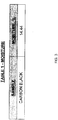
- the moisture content of carbon black may be about 14.44%
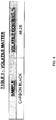
- the volatile content of the carbon black may be about 48.28%
- the particle size of carbon black may be about 36.25 nanometer (nm), and in a range of about 11.63 to 81.60 nm.
- the oxidation reaction and separation of reactants of the rubber material may have a system or method of control.
- the system may include a control system or computer that can use information to calculate or maintain the desire parameters of the oxidation reaction.
- the system may use circuits, circuitry, or components as illustrated in FIG. 6 .
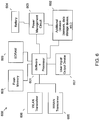
- FIG. 6 While various other circuits, circuitry or components may be utilized in information handling devices, with regard to an instrument for measuring fluid level and velocity according to any one of the various non-claimed embodiments described herein, an example is illustrated in FIG. 6 .
- the device circuitry 600 as illustrated in FIG. 6 may be used within the pressure meter to measure the pressure of the fluid, a temperature system to measure and control the temperature of the system, within a computer that controls the entire system and the advancement of the mixture from one portion of the system to another, or the like.
- the device circuity 600 may also be incorporated across multiple components of a larger system.
- the components within or connected to the system may include a portion of the components of FIG. 6
- another remote device may include other components illustrated in FIG.
- the device illustrated in FIG. 6 may include a particular computing platform (e.g., mobile computing, desktop computing, etc.) including software and processor(s) may be combined in a single chip 601.
- processors comprise internal arithmetic units, registers, cache memory, busses, I/O ports, etc., as is well known in the art. Internal busses and the like depend on different vendors, but essentially all the peripheral devices (602) may attach to a single chip 601.
- the circuitry 600 may combine the processor, memory control, and I/O controller hub all into a single chip 610. Common interfaces may include SPI, I2C and SDIO.
- power management chip(s) 603 e.g., a battery management unit, BMU, which manage power as supplied, for example, via a rechargeable battery 604, which may be recharged by a connection to a power source (not shown).
- BMU battery management unit
- a single chip, such as 601 is used to supply BIOS like functionality and DRAM memory.
- System 600 typically includes one or more of a WWAN transceiver 605 and a WLAN transceiver 606 for connecting to various networks, such as telecommunications networks and wireless Internet devices, e.g., access points. Additionally, devices 602 are commonly included, e.g., sensors (e.g., pressure sensor), data storage devices (e.g., external hard drive, local hard drive, cloud storage, etc.), and the like.
- System 600 includes input/output devices 607 for data input and display/rendering (e.g., a computing location located away from the single beam system that is easily accessible by a user).
- System 600 also typically includes various memory devices, for example flash memory 608 and SDRAM 609.
- electronic components of one or more systems or devices may include, but are not limited to, at least one processing unit, a memory, and a communication bus or communication means that couples various components including the memory to the processing unit(s).
- a system or device may include or have access to a variety of device readable media.
- System memory may include device readable storage media in the form of volatile and/or nonvolatile memory such as read only memory (ROM) and/or random access memory (RAM).
- ROM read only memory
- RAM random access memory
- system memory may also include an operating system, application programs, other program modules, and program data.
- a device readable storage medium may be any tangible, non-signal medium that can contain or store a program comprised of program code configured for use by or in connection with an instruction execution system, apparatus, or device.
- a storage medium or device is to be construed as non-transitory, i.e., not inclusive of signals or propagating media.
- Program code for carrying out operations may be written in any combination of one or more programming languages.
- the program code may execute entirely on a single device, partly on a single device, as a stand-alone software package, partly on single device and partly on another device, or entirely on the other device.
- the devices may be connected through any type of connection or network, including a local area network (LAN) or a wide area network (WAN), or the connection may be made through other devices (for example, through the Internet using an Internet Service Provider), through wireless connections, e.g., near-field communication, or through a hard wire connection, such as over a USB connection.
- LAN local area network
- WAN wide area network
- Internet Service Provider for example, AT&T, MCI, Sprint, EarthLink, MSN, GTE, etc.
- Example embodiments are described herein with reference to the figures, which illustrate example methods, devices and products according to various example embodiments. It will be understood that the actions and functionality may be implemented at least in part by program instructions. These program instructions may be provided to a processor of a device, e.g., a hand held measurement device, or other programmable data processing device to produce a machine, such that the instructions, which execute via a processor of the device, implement the functions/acts specified.
- a processor of a device e.g., a hand held measurement device, or other programmable data processing device to produce a machine, such that the instructions, which execute via a processor of the device, implement the functions/acts specified.
Landscapes
- Chemical & Material Sciences (AREA)
- Engineering & Computer Science (AREA)
- Oil, Petroleum & Natural Gas (AREA)
- Organic Chemistry (AREA)
- Chemical Kinetics & Catalysis (AREA)
- General Chemical & Material Sciences (AREA)
- Polymers & Plastics (AREA)
- Medicinal Chemistry (AREA)
- Life Sciences & Earth Sciences (AREA)
- Health & Medical Sciences (AREA)
- Mechanical Engineering (AREA)
- Environmental & Geological Engineering (AREA)
- Wood Science & Technology (AREA)
- Food Science & Technology (AREA)
- Sustainable Development (AREA)
- Physics & Mathematics (AREA)
- Combustion & Propulsion (AREA)
- Materials Engineering (AREA)
- Thermal Sciences (AREA)
- Separation, Recovery Or Treatment Of Waste Materials Containing Plastics (AREA)
- Processing Of Solid Wastes (AREA)
- Manufacture Of Porous Articles, And Recovery And Treatment Of Waste Products (AREA)
Claims (11)
- Verfahren zum Recycling von Reifen, umfassend:Einspritzen eines Gummimaterials unter Verwendung einer Pumpe, die aus der Gruppe bestehend aus einer Extrusionspumpe, einer Zahnradpumpe und einer Schwerfettpumpe ausgewählt ist, in ein dissoziierendes System, wobei die Pumpe eine mechanische Kraft auf das Gummimaterial ausübt, um eine Größe des Gummimaterials zu verringern;Erzeugen einer Gummimaterialmischung innerhalb des dissoziierenden Systems durch:Einspritzen eines superkritischen Wassers zum Mischen mit dem Gummimaterial;Erwärmen der Gummimaterialmischung unter Verwendung einer Wärmequelle;Zerstäuben der Gummimaterialmischung, wobei das Zerstäuben das Verwenden von Sprühstrahl-Mikroöffnungen in einer Reaktionskammer mit superkritischem Wasser und kontinuierliches Zerstäuben der Mischung in einem sekundären Reaktor mit superkritischem Propan umfasst;undWeiterleiten der resultierenden zerstäubten Gummimaterialmischung zu einem Trennsystem, um die Gummimaterialmischung in verschiedene Komponenten zu trennen.
- Verfahren nach Anspruch 1, wobei die Pumpe eine interne mechanische Vorrichtung umfasst und aus der Gruppe bestehend aus einer Schraube, einem Zahnrad und einem Kolben ausgewählt ist.
- Verfahren nach Anspruch 1, wobei das Einspritzen des Gummimaterials unter Verwendung einer Pumpe ferner das Einspritzen von superkritischem Wasser an der Pumpe umfasst.
- Verfahren nach Anspruch 1, wobei die Wärmequelle unter Druck stehendes Propan als Verdünnungsfluidquelle für das Erwärmen umfasst.
- Verfahren nach Anspruch 1, wobei das Trennsystem ein System umfasst, welches die zerstäubte Gummimaterialmischung in eine Wasserfraktion, eine Feststofffraktion und eine Ölfraktion trennt.
- Verfahren nach Anspruch 1, wobei das Einspritzen eines Gummimaterials das Depolymerisieren des Gummimaterials umfasst.
- Verfahren nach Anspruch 1, wobei das Zerstäuben das Druckbeaufschlagen und Erwärmen der Gummimaterialmischung und ein plötzliches Verringern des Drucks umfasst.
- Verfahren nach Anspruch 1, wobei das Gummimaterial aus einem vorbehandelten Reifen umfasst.
- Vorrichtung zum Recycling von Reifen, umfassend:eine Pumpe, ausgewählt aus der Gruppe bestehend aus einer Extrusionspumpe, einer Zahnradpumpe und einer Schwerfettpumpe, die angeordnet ist, um ein Gummimaterial in ein dissoziierendes System zu spritzen, wobei die Pumpe angeordnet ist, um eine mechanische Kraft auf das Gummimaterial auszuüben, um eine Größe des Gummimaterials zu verringern;wobei das dissoziierende System angeordnet ist, um eine Gummimaterialmischung zu erzeugen mithilfe:eines Mittels zum Einspritzen eines superkritischen Wassers zum Mischen mit dem Gummimaterial in eine Reaktionskammer mit superkritischem Wasser;einer Wärmequelle zum Erwärmen der Gummimaterialmischung;eines Mittels zum Zerstäuben des Gummimaterials umfassend Sprühstrahl-Mikroöffnungen;eines sekundären Reaktors mit superkritischem Propan; undeines Trennsystems umfassend eines oder mehrere Trenngefäße, das angeordnet ist, um die zerstäubte Gummimaterialmischung in verschiedene Komponenten der Gummimaterialmischung zu trennen.
- Vorrichtung nach Anspruch 9, wobei das Trennsystem ein System umfasst, das die zerstäubte Gummimaterialmischung in eine Wasserfraktion, eine Feststofffraktion und eine Ölfraktion trennt.
- Vorrichtung nach Anspruch 9, wobei die Pumpe angeordnet ist, um das Gummimaterial zu depolymerisieren.
Applications Claiming Priority (2)
| Application Number | Priority Date | Filing Date | Title |
|---|---|---|---|
| US201762498741P | 2017-01-06 | 2017-01-06 | |
| PCT/US2018/012560 WO2018129298A1 (en) | 2017-01-06 | 2018-01-05 | Continuous recycling of rubber and organic polymers using supercritical water oxidation closed system |
Publications (3)
| Publication Number | Publication Date |
|---|---|
| EP3565870A1 EP3565870A1 (de) | 2019-11-13 |
| EP3565870A4 EP3565870A4 (de) | 2020-01-15 |
| EP3565870B1 true EP3565870B1 (de) | 2021-03-03 |
Family
ID=62791241
Family Applications (1)
| Application Number | Title | Priority Date | Filing Date |
|---|---|---|---|
| EP18736736.2A Not-in-force EP3565870B1 (de) | 2017-01-06 | 2018-01-05 | Kontinuierliches recycling von kautschuk und organischen polymeren unter verwendung eines superkritischen geschlossenen wasseroxidationssystems |
Country Status (4)
| Country | Link |
|---|---|
| US (1) | US11326039B2 (de) |
| EP (1) | EP3565870B1 (de) |
| MX (1) | MX2019008111A (de) |
| WO (1) | WO2018129298A1 (de) |
Families Citing this family (1)
| Publication number | Priority date | Publication date | Assignee | Title |
|---|---|---|---|---|
| WO2022128674A1 (en) * | 2020-12-18 | 2022-06-23 | Orion Engineered Carbons Gmbh | Process for producing carbon blacks with reduced polycyclic aromatic hydrocarbon content utilizing supercritical fluid extraction |
Family Cites Families (4)
| Publication number | Priority date | Publication date | Assignee | Title |
|---|---|---|---|---|
| DE4311034A1 (de) * | 1993-04-03 | 1994-10-06 | Veba Oel Ag | Verfahren zur Gewinnung von Chemierohstoffen und Kraftstoffkomponenten aus Alt- oder Abfallkunststoff |
| US5516952A (en) * | 1993-08-11 | 1996-05-14 | The University Of Akron | Oxidative decoupling of scrap rubber |
| US6426136B1 (en) * | 1998-02-10 | 2002-07-30 | R & D Technology, Inc. | Method of reducing material size |
| CA2358143A1 (en) * | 2001-10-02 | 2003-04-02 | Costas Tzoganakis | Method of modifying crosslinked rubber |
-
2018
- 2018-01-05 EP EP18736736.2A patent/EP3565870B1/de not_active Not-in-force
- 2018-01-05 US US16/475,945 patent/US11326039B2/en active Active
- 2018-01-05 MX MX2019008111A patent/MX2019008111A/es unknown
- 2018-01-05 WO PCT/US2018/012560 patent/WO2018129298A1/en not_active Ceased
Non-Patent Citations (1)
| Title |
|---|
| None * |
Also Published As
| Publication number | Publication date |
|---|---|
| EP3565870A1 (de) | 2019-11-13 |
| WO2018129298A1 (en) | 2018-07-12 |
| EP3565870A4 (de) | 2020-01-15 |
| US11326039B2 (en) | 2022-05-10 |
| US20190345307A1 (en) | 2019-11-14 |
| MX2019008111A (es) | 2019-12-09 |
Similar Documents
| Publication | Publication Date | Title |
|---|---|---|
| Rowhani et al. | Scrap tyre management pathways and their use as a fuel—a review | |
| De Sousa et al. | From devulcanization to revulcanization: Challenges in getting recycled tire rubber for technical applications | |
| US8445553B2 (en) | Devulcanized rubber and methods | |
| De Marco et al. | Recycling of automobile shredder residues by means of pyrolysis | |
| Ibarra | Recycling of thermosets and their composites | |
| KR101979212B1 (ko) | 폐기물질로부터 유용한 생성물을 생산하는 방법 및 과정 | |
| Rahman et al. | Valorisation of waste tyre via pyrolysis: Advances and Perspectives | |
| US5516952A (en) | Oxidative decoupling of scrap rubber | |
| Gumede et al. | Organic chemical devulcanization of rubber vulcanizates in supercritical carbon dioxide and associated less eco-unfriendly approaches: A review | |
| JPH10292177A (ja) | プラスチック廃棄物の油化方法及び装置 | |
| US10358603B1 (en) | Method for producing fuel from plastic or rubber waste material | |
| Zhang et al. | Understanding H2O2-induced thermo-oxidative reclamation of vulcanized styrene butadiene rubber at low temperatures | |
| Wang et al. | Preparation of devulcanized ground tire rubber with supercritical carbon dioxide jet pulverization | |
| CN114786803A (zh) | 用于将聚合物转化成产物的方法和设备 | |
| US11326039B2 (en) | Continuous recycling of rubber and organic polymers using supercritical water oxidation closed system | |
| Haddaji et al. | Behavior of waste tire rubber composites reinforced with waste fibers | |
| Sathish et al. | Factors influencing the pyrolysis products of waste tyres and its practical applications: a mini topical review | |
| Abdel-Raouf et al. | Thermo-catalytic versus thermo-chemical recycling of polystyrene waste | |
| Habyarimana et al. | Synthesis of hydrocarbon fuel by thermal catalytic cracking of polypropylene | |
| Zhang et al. | Facile and Efficient Chemical Degradation of End-of-Life Tires into Value-Added Liquid Rubber | |
| Park et al. | Conversion of tire waste using subcritical and supercritical water oxidation | |
| US20090031620A1 (en) | Process For Using Polymeric Waste Materials To Produce Fuel | |
| WO2009018202A2 (en) | Process for recycling polymeric waste materials | |
| Cherop et al. | Kinetics of granulated scrap tyre pyrolysis via thermogravimetry | |
| Khani et al. | Converting polymeric mixture waste of a car breaker company to hydrocarbon by designed high performance co-pyrolysis system |
Legal Events
| Date | Code | Title | Description |
|---|---|---|---|
| STAA | Information on the status of an ep patent application or granted ep patent |
Free format text: STATUS: THE INTERNATIONAL PUBLICATION HAS BEEN MADE |
|
| PUAI | Public reference made under article 153(3) epc to a published international application that has entered the european phase |
Free format text: ORIGINAL CODE: 0009012 |
|
| STAA | Information on the status of an ep patent application or granted ep patent |
Free format text: STATUS: REQUEST FOR EXAMINATION WAS MADE |
|
| 17P | Request for examination filed |
Effective date: 20190805 |
|
| AK | Designated contracting states |
Kind code of ref document: A1 Designated state(s): AL AT BE BG CH CY CZ DE DK EE ES FI FR GB GR HR HU IE IS IT LI LT LU LV MC MK MT NL NO PL PT RO RS SE SI SK SM TR |
|
| AX | Request for extension of the european patent |
Extension state: BA ME |
|
| A4 | Supplementary search report drawn up and despatched |
Effective date: 20191213 |
|
| RIC1 | Information provided on ipc code assigned before grant |
Ipc: C10G 1/10 20060101AFI20191209BHEP Ipc: C10L 9/08 20060101ALI20191209BHEP Ipc: C08J 11/10 20060101ALI20191209BHEP Ipc: B29B 17/02 20060101ALI20191209BHEP Ipc: C08J 11/14 20060101ALI20191209BHEP Ipc: C08C 19/04 20060101ALI20191209BHEP Ipc: B29B 17/04 20060101ALI20191209BHEP Ipc: C08C 19/08 20060101ALI20191209BHEP Ipc: C10B 53/07 20060101ALI20191209BHEP |
|
| DAV | Request for validation of the european patent (deleted) | ||
| DAX | Request for extension of the european patent (deleted) | ||
| GRAP | Despatch of communication of intention to grant a patent |
Free format text: ORIGINAL CODE: EPIDOSNIGR1 |
|
| STAA | Information on the status of an ep patent application or granted ep patent |
Free format text: STATUS: GRANT OF PATENT IS INTENDED |
|
| INTG | Intention to grant announced |
Effective date: 20200924 |
|
| GRAS | Grant fee paid |
Free format text: ORIGINAL CODE: EPIDOSNIGR3 |
|
| GRAA | (expected) grant |
Free format text: ORIGINAL CODE: 0009210 |
|
| STAA | Information on the status of an ep patent application or granted ep patent |
Free format text: STATUS: THE PATENT HAS BEEN GRANTED |
|
| AK | Designated contracting states |
Kind code of ref document: B1 Designated state(s): AL AT BE BG CH CY CZ DE DK EE ES FI FR GB GR HR HU IE IS IT LI LT LU LV MC MK MT NL NO PL PT RO RS SE SI SK SM TR |
|
| REG | Reference to a national code |
Ref country code: GB Ref legal event code: FG4D |
|
| REG | Reference to a national code |
Ref country code: AT Ref legal event code: REF Ref document number: 1367203 Country of ref document: AT Kind code of ref document: T Effective date: 20210315 Ref country code: CH Ref legal event code: EP |
|
| REG | Reference to a national code |
Ref country code: DE Ref legal event code: R096 Ref document number: 602018013463 Country of ref document: DE |
|
| REG | Reference to a national code |
Ref country code: IE Ref legal event code: FG4D |
|
| REG | Reference to a national code |
Ref country code: LT Ref legal event code: MG9D |
|
| PG25 | Lapsed in a contracting state [announced via postgrant information from national office to epo] |
Ref country code: LT Free format text: LAPSE BECAUSE OF FAILURE TO SUBMIT A TRANSLATION OF THE DESCRIPTION OR TO PAY THE FEE WITHIN THE PRESCRIBED TIME-LIMIT Effective date: 20210303 Ref country code: NO Free format text: LAPSE BECAUSE OF FAILURE TO SUBMIT A TRANSLATION OF THE DESCRIPTION OR TO PAY THE FEE WITHIN THE PRESCRIBED TIME-LIMIT Effective date: 20210603 Ref country code: HR Free format text: LAPSE BECAUSE OF FAILURE TO SUBMIT A TRANSLATION OF THE DESCRIPTION OR TO PAY THE FEE WITHIN THE PRESCRIBED TIME-LIMIT Effective date: 20210303 Ref country code: GR Free format text: LAPSE BECAUSE OF FAILURE TO SUBMIT A TRANSLATION OF THE DESCRIPTION OR TO PAY THE FEE WITHIN THE PRESCRIBED TIME-LIMIT Effective date: 20210604 Ref country code: FI Free format text: LAPSE BECAUSE OF FAILURE TO SUBMIT A TRANSLATION OF THE DESCRIPTION OR TO PAY THE FEE WITHIN THE PRESCRIBED TIME-LIMIT Effective date: 20210303 Ref country code: BG Free format text: LAPSE BECAUSE OF FAILURE TO SUBMIT A TRANSLATION OF THE DESCRIPTION OR TO PAY THE FEE WITHIN THE PRESCRIBED TIME-LIMIT Effective date: 20210603 |
|
| REG | Reference to a national code |
Ref country code: NL Ref legal event code: MP Effective date: 20210303 |
|
| REG | Reference to a national code |
Ref country code: AT Ref legal event code: MK05 Ref document number: 1367203 Country of ref document: AT Kind code of ref document: T Effective date: 20210303 |
|
| PG25 | Lapsed in a contracting state [announced via postgrant information from national office to epo] |
Ref country code: RS Free format text: LAPSE BECAUSE OF FAILURE TO SUBMIT A TRANSLATION OF THE DESCRIPTION OR TO PAY THE FEE WITHIN THE PRESCRIBED TIME-LIMIT Effective date: 20210303 Ref country code: PL Free format text: LAPSE BECAUSE OF FAILURE TO SUBMIT A TRANSLATION OF THE DESCRIPTION OR TO PAY THE FEE WITHIN THE PRESCRIBED TIME-LIMIT Effective date: 20210303 Ref country code: LV Free format text: LAPSE BECAUSE OF FAILURE TO SUBMIT A TRANSLATION OF THE DESCRIPTION OR TO PAY THE FEE WITHIN THE PRESCRIBED TIME-LIMIT Effective date: 20210303 Ref country code: SE Free format text: LAPSE BECAUSE OF FAILURE TO SUBMIT A TRANSLATION OF THE DESCRIPTION OR TO PAY THE FEE WITHIN THE PRESCRIBED TIME-LIMIT Effective date: 20210303 |
|
| PG25 | Lapsed in a contracting state [announced via postgrant information from national office to epo] |
Ref country code: NL Free format text: LAPSE BECAUSE OF FAILURE TO SUBMIT A TRANSLATION OF THE DESCRIPTION OR TO PAY THE FEE WITHIN THE PRESCRIBED TIME-LIMIT Effective date: 20210303 |
|
| PG25 | Lapsed in a contracting state [announced via postgrant information from national office to epo] |
Ref country code: EE Free format text: LAPSE BECAUSE OF FAILURE TO SUBMIT A TRANSLATION OF THE DESCRIPTION OR TO PAY THE FEE WITHIN THE PRESCRIBED TIME-LIMIT Effective date: 20210303 Ref country code: CZ Free format text: LAPSE BECAUSE OF FAILURE TO SUBMIT A TRANSLATION OF THE DESCRIPTION OR TO PAY THE FEE WITHIN THE PRESCRIBED TIME-LIMIT Effective date: 20210303 Ref country code: SM Free format text: LAPSE BECAUSE OF FAILURE TO SUBMIT A TRANSLATION OF THE DESCRIPTION OR TO PAY THE FEE WITHIN THE PRESCRIBED TIME-LIMIT Effective date: 20210303 Ref country code: AT Free format text: LAPSE BECAUSE OF FAILURE TO SUBMIT A TRANSLATION OF THE DESCRIPTION OR TO PAY THE FEE WITHIN THE PRESCRIBED TIME-LIMIT Effective date: 20210303 |
|
| PG25 | Lapsed in a contracting state [announced via postgrant information from national office to epo] |
Ref country code: RO Free format text: LAPSE BECAUSE OF FAILURE TO SUBMIT A TRANSLATION OF THE DESCRIPTION OR TO PAY THE FEE WITHIN THE PRESCRIBED TIME-LIMIT Effective date: 20210303 Ref country code: PT Free format text: LAPSE BECAUSE OF FAILURE TO SUBMIT A TRANSLATION OF THE DESCRIPTION OR TO PAY THE FEE WITHIN THE PRESCRIBED TIME-LIMIT Effective date: 20210705 Ref country code: SK Free format text: LAPSE BECAUSE OF FAILURE TO SUBMIT A TRANSLATION OF THE DESCRIPTION OR TO PAY THE FEE WITHIN THE PRESCRIBED TIME-LIMIT Effective date: 20210303 Ref country code: IS Free format text: LAPSE BECAUSE OF FAILURE TO SUBMIT A TRANSLATION OF THE DESCRIPTION OR TO PAY THE FEE WITHIN THE PRESCRIBED TIME-LIMIT Effective date: 20210703 |
|
| REG | Reference to a national code |
Ref country code: DE Ref legal event code: R097 Ref document number: 602018013463 Country of ref document: DE |
|
| PLBE | No opposition filed within time limit |
Free format text: ORIGINAL CODE: 0009261 |
|
| STAA | Information on the status of an ep patent application or granted ep patent |
Free format text: STATUS: NO OPPOSITION FILED WITHIN TIME LIMIT |
|
| PG25 | Lapsed in a contracting state [announced via postgrant information from national office to epo] |
Ref country code: DK Free format text: LAPSE BECAUSE OF FAILURE TO SUBMIT A TRANSLATION OF THE DESCRIPTION OR TO PAY THE FEE WITHIN THE PRESCRIBED TIME-LIMIT Effective date: 20210303 Ref country code: AL Free format text: LAPSE BECAUSE OF FAILURE TO SUBMIT A TRANSLATION OF THE DESCRIPTION OR TO PAY THE FEE WITHIN THE PRESCRIBED TIME-LIMIT Effective date: 20210303 Ref country code: ES Free format text: LAPSE BECAUSE OF FAILURE TO SUBMIT A TRANSLATION OF THE DESCRIPTION OR TO PAY THE FEE WITHIN THE PRESCRIBED TIME-LIMIT Effective date: 20210303 |
|
| 26N | No opposition filed |
Effective date: 20211206 |
|
| PG25 | Lapsed in a contracting state [announced via postgrant information from national office to epo] |
Ref country code: SI Free format text: LAPSE BECAUSE OF FAILURE TO SUBMIT A TRANSLATION OF THE DESCRIPTION OR TO PAY THE FEE WITHIN THE PRESCRIBED TIME-LIMIT Effective date: 20210303 |
|
| PG25 | Lapsed in a contracting state [announced via postgrant information from national office to epo] |
Ref country code: IT Free format text: LAPSE BECAUSE OF FAILURE TO SUBMIT A TRANSLATION OF THE DESCRIPTION OR TO PAY THE FEE WITHIN THE PRESCRIBED TIME-LIMIT Effective date: 20210303 |
|
| PGFP | Annual fee paid to national office [announced via postgrant information from national office to epo] |
Ref country code: GB Payment date: 20220118 Year of fee payment: 5 Ref country code: DE Payment date: 20220127 Year of fee payment: 5 |
|
| PG25 | Lapsed in a contracting state [announced via postgrant information from national office to epo] |
Ref country code: IS Free format text: LAPSE BECAUSE OF FAILURE TO SUBMIT A TRANSLATION OF THE DESCRIPTION OR TO PAY THE FEE WITHIN THE PRESCRIBED TIME-LIMIT Effective date: 20210703 |
|
| PGFP | Annual fee paid to national office [announced via postgrant information from national office to epo] |
Ref country code: FR Payment date: 20220126 Year of fee payment: 5 |
|
| PG25 | Lapsed in a contracting state [announced via postgrant information from national office to epo] |
Ref country code: MC Free format text: LAPSE BECAUSE OF FAILURE TO SUBMIT A TRANSLATION OF THE DESCRIPTION OR TO PAY THE FEE WITHIN THE PRESCRIBED TIME-LIMIT Effective date: 20210303 |
|
| REG | Reference to a national code |
Ref country code: CH Ref legal event code: PL |
|
| REG | Reference to a national code |
Ref country code: BE Ref legal event code: MM Effective date: 20220131 |
|
| PG25 | Lapsed in a contracting state [announced via postgrant information from national office to epo] |
Ref country code: LU Free format text: LAPSE BECAUSE OF NON-PAYMENT OF DUE FEES Effective date: 20220105 |
|
| PG25 | Lapsed in a contracting state [announced via postgrant information from national office to epo] |
Ref country code: BE Free format text: LAPSE BECAUSE OF NON-PAYMENT OF DUE FEES Effective date: 20220131 |
|
| PG25 | Lapsed in a contracting state [announced via postgrant information from national office to epo] |
Ref country code: LI Free format text: LAPSE BECAUSE OF NON-PAYMENT OF DUE FEES Effective date: 20220131 Ref country code: CH Free format text: LAPSE BECAUSE OF NON-PAYMENT OF DUE FEES Effective date: 20220131 |
|
| PG25 | Lapsed in a contracting state [announced via postgrant information from national office to epo] |
Ref country code: IE Free format text: LAPSE BECAUSE OF NON-PAYMENT OF DUE FEES Effective date: 20220105 |
|
| P01 | Opt-out of the competence of the unified patent court (upc) registered |
Effective date: 20230601 |
|
| REG | Reference to a national code |
Ref country code: DE Ref legal event code: R119 Ref document number: 602018013463 Country of ref document: DE |
|
| GBPC | Gb: european patent ceased through non-payment of renewal fee |
Effective date: 20230105 |
|
| PG25 | Lapsed in a contracting state [announced via postgrant information from national office to epo] |
Ref country code: GB Free format text: LAPSE BECAUSE OF NON-PAYMENT OF DUE FEES Effective date: 20230105 Ref country code: DE Free format text: LAPSE BECAUSE OF NON-PAYMENT OF DUE FEES Effective date: 20230801 |
|
| PG25 | Lapsed in a contracting state [announced via postgrant information from national office to epo] |
Ref country code: FR Free format text: LAPSE BECAUSE OF NON-PAYMENT OF DUE FEES Effective date: 20230131 |
|
| PG25 | Lapsed in a contracting state [announced via postgrant information from national office to epo] |
Ref country code: MK Free format text: LAPSE BECAUSE OF FAILURE TO SUBMIT A TRANSLATION OF THE DESCRIPTION OR TO PAY THE FEE WITHIN THE PRESCRIBED TIME-LIMIT Effective date: 20210303 Ref country code: CY Free format text: LAPSE BECAUSE OF FAILURE TO SUBMIT A TRANSLATION OF THE DESCRIPTION OR TO PAY THE FEE WITHIN THE PRESCRIBED TIME-LIMIT Effective date: 20210303 |
|
| PG25 | Lapsed in a contracting state [announced via postgrant information from national office to epo] |
Ref country code: HU Free format text: LAPSE BECAUSE OF FAILURE TO SUBMIT A TRANSLATION OF THE DESCRIPTION OR TO PAY THE FEE WITHIN THE PRESCRIBED TIME-LIMIT; INVALID AB INITIO Effective date: 20180105 |
|
| PG25 | Lapsed in a contracting state [announced via postgrant information from national office to epo] |
Ref country code: TR Free format text: LAPSE BECAUSE OF FAILURE TO SUBMIT A TRANSLATION OF THE DESCRIPTION OR TO PAY THE FEE WITHIN THE PRESCRIBED TIME-LIMIT Effective date: 20210303 |
|
| PG25 | Lapsed in a contracting state [announced via postgrant information from national office to epo] |
Ref country code: MT Free format text: LAPSE BECAUSE OF FAILURE TO SUBMIT A TRANSLATION OF THE DESCRIPTION OR TO PAY THE FEE WITHIN THE PRESCRIBED TIME-LIMIT Effective date: 20210303 |