EP3565817B1 - Small molecule inhibitors of neutral sphingomyelinase 2 (nsmase2) for the treatment of neurodegenerative diseases - Google Patents
Small molecule inhibitors of neutral sphingomyelinase 2 (nsmase2) for the treatment of neurodegenerative diseases Download PDFInfo
- Publication number
- EP3565817B1 EP3565817B1 EP18736683.6A EP18736683A EP3565817B1 EP 3565817 B1 EP3565817 B1 EP 3565817B1 EP 18736683 A EP18736683 A EP 18736683A EP 3565817 B1 EP3565817 B1 EP 3565817B1
- Authority
- EP
- European Patent Office
- Prior art keywords
- substituted
- unsubstituted
- group
- alkyl
- dmso
- Prior art date
- Legal status (The legal status is an assumption and is not a legal conclusion. Google has not performed a legal analysis and makes no representation as to the accuracy of the status listed.)
- Active
Links
Images




Classifications
-
- A—HUMAN NECESSITIES
- A61—MEDICAL OR VETERINARY SCIENCE; HYGIENE
- A61P—SPECIFIC THERAPEUTIC ACTIVITY OF CHEMICAL COMPOUNDS OR MEDICINAL PREPARATIONS
- A61P25/00—Drugs for disorders of the nervous system
-
- C—CHEMISTRY; METALLURGY
- C07—ORGANIC CHEMISTRY
- C07D—HETEROCYCLIC COMPOUNDS
- C07D487/00—Heterocyclic compounds containing nitrogen atoms as the only ring hetero atoms in the condensed system, not provided for by groups C07D451/00 - C07D477/00
- C07D487/02—Heterocyclic compounds containing nitrogen atoms as the only ring hetero atoms in the condensed system, not provided for by groups C07D451/00 - C07D477/00 in which the condensed system contains two hetero rings
- C07D487/04—Ortho-condensed systems
-
- A—HUMAN NECESSITIES
- A61—MEDICAL OR VETERINARY SCIENCE; HYGIENE
- A61K—PREPARATIONS FOR MEDICAL, DENTAL OR TOILETRY PURPOSES
- A61K31/00—Medicinal preparations containing organic active ingredients
- A61K31/33—Heterocyclic compounds
- A61K31/395—Heterocyclic compounds having nitrogen as a ring hetero atom, e.g. guanethidine or rifamycins
- A61K31/495—Heterocyclic compounds having nitrogen as a ring hetero atom, e.g. guanethidine or rifamycins having six-membered rings with two or more nitrogen atoms as the only ring heteroatoms, e.g. piperazine or tetrazines
- A61K31/50—Pyridazines; Hydrogenated pyridazines
- A61K31/5025—Pyridazines; Hydrogenated pyridazines ortho- or peri-condensed with heterocyclic ring systems
-
- A—HUMAN NECESSITIES
- A61—MEDICAL OR VETERINARY SCIENCE; HYGIENE
- A61P—SPECIFIC THERAPEUTIC ACTIVITY OF CHEMICAL COMPOUNDS OR MEDICINAL PREPARATIONS
- A61P25/00—Drugs for disorders of the nervous system
- A61P25/28—Drugs for disorders of the nervous system for treating neurodegenerative disorders of the central nervous system, e.g. nootropic agents, cognition enhancers, drugs for treating Alzheimer's disease or other forms of dementia
-
- A—HUMAN NECESSITIES
- A61—MEDICAL OR VETERINARY SCIENCE; HYGIENE
- A61P—SPECIFIC THERAPEUTIC ACTIVITY OF CHEMICAL COMPOUNDS OR MEDICINAL PREPARATIONS
- A61P35/00—Antineoplastic agents
Definitions
- Ceramide is a bioactive lipid that plays an important role in stress responses leading to apoptosis, cell growth arrest, and differentiation. Ceramide production is due in part to sphingomyelin hydrolysis by sphingomyelinases.
- neutral sphingomyelinase 2 nSMase2
- nSMase2 neutral sphingomyelinase 2
- HAV-1 human immunodeficiency virus
- Increased nSMase2 activity translates into higher ceramide levels and neuronal cell death, which can be prevented by chemical or genetic inhibition of nSMase2 activity or expression.
- nSMase2 human neutral sphingomyelinase 2
- the most widely used inhibitor i.e., GW4869, was identified from an early screen using rat neutral sphingomyelinase over 14 years ago ( J Biol Chem 277, 41128 (2002 )). GW4869, however, exhibits poor solubility and consequently has very limited ability to serve as pharmacological tool or as starting point for clinical development.
- WO 02/066447 describes 4H-1, 2, 4-Triazole-3(2H)-Thione derivatives as Sphingomyelinase inhibitors and for use in the treatment of diseases associated with disorders of neutral sphingomyelinase.
- the presently disclosed subject matter provides small molecule inhibitors of neutral sphingomyelinase 2 (nSMase2) and their use, in some aspects, for treating neurodegenerative diseases, such as, neurodegenerative diseases associated with high levels of ceramide, including, but not limited to Alzheimer's disease (AD), HIV-associated neurocognitive disorder (HAND), multiple sclerosis (MS), and amyotrophic lateral sclerosis (ALS), and, in other aspects, for treating cancer.
- AD Alzheimer's disease
- HAND HIV-associated neurocognitive disorder
- MS multiple sclerosis
- ALS amyotrophic lateral sclerosis
- the present invention provides a compound of formula (Ia) or, a compound of formula (Ib) wherein:
- nSMase2 inhibitor of formula (Ia) or (Ib) is for use in treating a condition, disease, or disorder associated with an increased neutral sphingomyelinase 2 (nSMase2) activity or expression
- the condition, disease, or disorder comprises a neurodegenerative disease.
- the neurodegenerative disease is selected from the group consisting of Alzheimer's disease (AD), HIV-associated neurocognitive disorder (HAND), multiple sclerosis (MS), and amyotrophic lateral sclerosis (ALS).
- AD Alzheimer's disease
- HAND HIV-associated neurocognitive disorder
- MS multiple sclerosis
- ALS amyotrophic lateral sclerosis
- the condition, disease, or disorder is a cancer.
- the presently disclosed subject matter provides a compound of formula (Ia) or (Ib) of the present invention for use in inhibiting neutral sphingomyelinase 2 (nSMase2).
- the presently disclosed subject matter provides small molecule inhibitors of neutral sphingomyelinase 2 (nSMase2) for the treatment of neurodegenerative diseases, such as, neurodegenerative diseases associated with high levels of ceramide, including, but not limited to, Alzheimer's disease (AD), multiple sclerosis (MS), amyotrophic lateral sclerosis (ALS) and HIV-associated neurocognitive disorders (HAND).
- nSMase2 inhibitors also could be used for the treatment of cancer.
- a compound of formula (I) may be: wherein:
- the substituted alkyl or unsubstituted alkyl represented by R 1 , R 2 , R 3 , R 4 , and R 5 of formula (I) can be a C 1 , C 2 , C 3 , C 4 , C 5 , C 6 , C 7 , or Cs linear or branched alkyl, in some embodiments, C 1-4 substituted or unsubstituted alkyl, in some embodiments, C 1-6 substituted or unsubstituted alkyl, in some embodiments, C 1-8 alkyl substituted or unsubstituted alkyl, including, but not limited to, methyl, ethyl, n -propyl, isopropyl, n -butyl, isobutyl, sec -butyl, tert -butyl, n -pentyl, sec -pentyl, isopentyl, neopentyl, n -hexy
- substituent groups include, but are not limited to, alkyl, substituted alkyl, halogen, aryl, substituted aryl, alkoxyl, hydroxyl, nitro, amino, alkylamino, dialkylamino, sulfate, cyano, mercapto, and alkylthio.
- the 5- to 6-membered heterocyclic ring formed from R 1 and R 2 together with the nitrogen to which they are bound includes, but is not limited to, pyrrolidinyl, imidazolidinyl, imidazolinyl, pyrazolidinyl, pyrazolinyl, piperidinyl, piperazinyl, indolinyl, 3-pyrrolinyl, morpholinyl, and the like.
- the substituted or unsubstituted alkyl, substituted or unsubstituted aryl, substituted or unsubstituted heteroaryl, and a substituted or unsubstituted multicyclic aryl or multicyclic heteroaryl ring represented by R 5 of formula (I) includes phenyl, thiophen-2-yl, furanyl, thiazolyl, pyridinyl, indolyl, benzo[d][1,3]dioxolyl, and the like.
- the compound of formula (I),disclosed herein for reference may be: wherein:
- the compound of formula (Ia) is: or the compound of formula (Ib) is: wherein:
- the compound of formula (Ia) or (Ib) may be selected from the group consisting of: and
- the compound of formula (Ia) or (Ib) may be selected from the group consisting of
- R 5 may be selected from the group consisting of H, halogen, and substituted or unsubstituted alkyl.
- the compound of formula (Ia) or (Ib) may be selected from the group consisting of
- R 5 may be a substituted or unsubstituted multicyclic aryl or multicyclic heteroaryl ring.
- the compound of formula (Ia) or (Ib) may be selected from the group consisting of:
- R 5 is a substituted or unsubstituted heteroaryl.
- the compound of formula (Ia) or (Ib) may be selected from the group consisting of: and
- the compound of formula (I) may be selected from the group consisting of
- R 1 and R 2 together with the nitrogen atom to which they are bound form a substituted or unsubstituted 5- or 6-membered heterocyclic ring selected from the group consisting of: wherein:
- R 1 and R 2 are each independently selected from substituted or unsubstituted alkyl. Also disclosed herein is the compound of formula (I) which may be:
- Table 1A Representative compounds of formula (I) and their activities are summarized in Table 1A. For instance, entries 2, 44 to 53, 56 to 60, 63, 65, 44-PROV, 46-PROV, 50-PROV, and 59-PROV as shown in Table 1A are disclosed herein for reference only and do not form part of the present invention. Table 1A.
- each X is independently selected from the group consisting of C(H) 0-1 , N, O, and S; R 1 and R 2 together with the nitrogen atom to which they are bound form a substituted or unsubstituted 5- or 6-membered heterocyclic ring; R 3 is selected from the group consisting of H, substituted or unsubstituted alkyl, substituted or unsubstituted alkoxyl, substituted or unsubstituted thioalkyl, substituted or unsubstituted aryl, and halogen; R 4 can be present or absent and when present is selected from the group consisting of H, substituted or unsubstituted alkyl; R 5 is selected from the group consisting of H, halogen, substituted or unsubstituted aryl, substituted or unsubstituted heteroaryl, and a substituted or unsubsti
- the compound of formula (II) can be selected from the group consisting of:
- nSMase2 inhibitor of formula (I) for use in treating a condition, disease, or disorder associated with an increased neutral sphingomyelinase 2 (nSMase2) activity or expression, and comprising administering to a subject in need of treatment thereof an effective amount of the nSMase2 inhibitor of reference formula (I): wherein:
- nSMase2 inhibitor of formula (II) for use in treating a condition, disease, or disorder associated with an increased neutral sphingomyelinase 2 (nSMase2) activity or expression, and comprising administering to a subject in need of treatment thereof an effective amount of an nSMase2 inhibitor of formula (II): wherein: each X is independently selected from the group consisting of C(H) 0-1 , N, O, and S; R 1 and R 2 together with the nitrogen atom to which they are bound form a substituted or unsubstituted 5- or 6-membered heterocyclic ring; R 3 is selected from the group consisting of H, substituted or unsubstituted alkyl, substituted or unsubstituted alkoxyl, substituted or unsubstituted thioalkyl, substituted or unsubstituted aryl, and halogen; R 4 can be present or absent and when present is selected from the group consist
- the compound of formula (II) is selected from the group consisting of:
- condition, disease, or disorder is associated with an elevated level of ceramide in the subject in need of treatment compared to a control subject not afflicted with the condition, disease, or disorder.
- the condition, disease, or disorder comprises a neurodegenerative disease.
- the neurodegenerative disease is selected from the group consisting of Alzheimer's disease (AD), HIV-associated neurocognitive disorder (HAND), multiple sclerosis (MS), and amyotrophic lateral sclerosis (ALS).
- condition, disease, or disorder is a cancer.
- the administration of an effective amount of a compound of formula (I) to the subject decreases the (nSMase2) activity or expression or decreases a level of ceramide in the subject.
- the term "treating" can include reversing, alleviating, inhibiting the progression of, preventing or reducing the likelihood of the disease, disorder, or condition to which such term applies, or one or more symptoms or manifestations of such disease, disorder or condition. Preventing refers to causing a disease, disorder, condition, or symptom or manifestation of such, or worsening of the severity of such, not to occur. Accordingly, the presently disclosed compounds can be administered prophylactically to prevent or reduce the incidence or recurrence of the disease, disorder, or condition.
- a "subject” treated by the presently disclosed methods in their many embodiments is desirably a human subject, although it is to be understood that the methods described herein are effective with respect to all vertebrate species, which are intended to be included in the term "subject.” Accordingly, a “subject” can include a human subject for medical purposes, such as for the treatment of an existing condition or disease or the prophylactic treatment for preventing the onset of a condition or disease, or an animal subject for medical, veterinary purposes, or developmental purposes.
- Suitable animal subjects include mammals including, but not limited to, primates, e.g., humans, monkeys, apes, and the like; bovines, e.g., cattle, oxen, and the like; ovines, e.g., sheep and the like; caprines, e.g., goats and the like; porcines, e.g., pigs, hogs, and the like; equines, e.g., horses, donkeys, zebras, and the like; felines, including wild and domestic cats; canines, including dogs; lagomorphs, including rabbits, hares, and the like; and rodents, including mice, rats, and the like.
- mammals including, but not limited to, primates, e.g., humans, monkeys, apes, and the like; bovines, e.g., cattle, oxen, and the like; ovines, e.g., sheep and the like; cap
- an animal may be a transgenic animal.
- the subject is a human including, but not limited to, fetal, neonatal, infant, juvenile, and adult subjects.
- a "subject” can include a patient afflicted with or suspected of being afflicted with a condition or disease.
- the terms “subject” and “patient” are used interchangeably herein.
- the term “subject” also refers to an organism, tissue, cell, or collection of cells from a subject.
- the "effective amount" of an active agent or drug delivery device refers to the amount necessary to elicit the desired biological response.
- the effective amount of an agent or device may vary depending on such factors as the desired biological endpoint, the agent to be delivered, the makeup of the pharmaceutical composition, the target tissue, and the like.
- the term “combination” is used in its broadest sense and means that a subject is administered at least two agents, more particularly a compound of formula (I) and at least one beta-lactam antibiotic and, optionally, one or more antibacterial agents. More particularly, the term “in combination” refers to the concomitant administration of two (or more) active agents for the treatment of a, e.g., single disease state.
- the active agents may be combined and administered in a single dosage form, may be administered as separate dosage forms at the same time, or may be administered as separate dosage forms that are administered alternately or sequentially on the same or separate days.
- the active agents are combined and administered in a single dosage form.
- the active agents are administered in separate dosage forms (e.g., wherein it is desirable to vary the amount of one but not the other).
- the single dosage form may include additional active agents for the treatment of the disease state.
- the compounds of formula (I) described herein can be administered alone or in combination with adjuvants that enhance stability of the compounds of formula (I), alone or in combination with one or more antibacterial agents, facilitate administration of pharmaceutical compositions containing them in certain embodiments, provide increased dissolution or dispersion, increase inhibitory activity, provide adjunct therapy, and the like, including other active ingredients.
- combination therapies utilize lower dosages of the conventional therapeutics, thus avoiding possible toxicity and adverse side effects incurred when those agents are used as monotherapies.
- a subject administered a combination of a compound of formula (I) and at least one additional therapeutic agent can receive compound of formula (I) and at least one additional therapeutic agent at the same time (i.e., simultaneously) or at different times (i.e., sequentially, in either order, on the same day or on different days), so long as the effect of the combination of both agents is achieved in the subject.
- agents administered sequentially can be administered within 1, 5, 10, 30, 60, 120, 180, 240 minutes or longer of one another. In other embodiments, agents administered sequentially, can be administered within 1, 5, 10, 15, 20 or more days of one another.
- the compound of formula (I) and at least one additional therapeutic agent are administered simultaneously, they can be administered to the subject as separate pharmaceutical compositions, each comprising either a compound of formula (I) or at least one additional therapeutic agent, or they can be administered to a subject as a single pharmaceutical composition comprising both agents.
- the effective concentration of each of the agents to elicit a particular biological response may be less than the effective concentration of each agent when administered alone, thereby allowing a reduction in the dose of one or more of the agents relative to the dose that would be needed if the agent was administered as a single agent.
- the effects of multiple agents may, but need not be, additive or synergistic.
- the agents may be administered multiple times.
- the two or more agents when administered in combination, can have a synergistic effect.
- the terms “synergy,” “synergistic,” “synergistically” and derivations thereof, such as in a “synergistic effect” or a “synergistic combination” or a “synergistic composition” refer to circumstances under which the biological activity of a combination of a compound of formula (I) and at least one additional therapeutic agent is greater than the sum of the biological activities of the respective agents when administered individually.
- a "synergistic combination” has an activity higher that what can be expected based on the observed activities of the individual components when used alone.
- a “synergistically effective amount" of a component refers to the amount of the component necessary to elicit a synergistic effect in, for example, another therapeutic agent present in the composition.
- nSMase2 neutral sphingomyelinase 2
- administering to a subject, cell, or tissue an amount of the compound of formula (I) effective to inhibit nSMase2: wherein:
- each X is independently selected from the group consisting of C(H) 0-1 , N, O, and S; R 1 and R 2 together with the nitrogen atom to which they are bound form a substituted or unsubstituted 5- or 6-membered heterocyclic ring; R 3 is selected from the group consisting of H, substituted or unsubstituted alkyl, substituted or unsubstituted alkoxyl, substituted or unsubstituted thioalkyl, substituted or unsubstituted aryl, and halogen; R 4 can be present or absent and when present is selected from the group consisting of H, substituted or unsubstituted alky
- the compound of formula (I) is selected from the group consisting of:
- the term “inhibit,” and grammatical derivations thereof, refers to the ability of a presently disclosed compound, e.g., a presently disclosed compound of formula (I), to block, partially block, interfere, decrease, or reduce the growth of bacteria or a bacterial infection.
- a presently disclosed compound e.g., a presently disclosed compound of formula (I)
- the term “inhibit” encompasses a complete and/or partial decrease in the growth of bacteria or a bacterial infection, e.g., a decrease by at least 10%, in some embodiments, a decrease by at least 20%, 30%, 50%, 75%, 95%, 98%, and up to and including 100%.
- the present disclosure provides a pharmaceutical composition including one compound of formula (I) alone or in combination with one or more additional therapeutic agents in admixture with a pharmaceutically acceptable excipient.
- pharmaceutical compositions include the pharmaceutically acceptable salts of the compounds described above.
- Pharmaceutically acceptable salts are generally well known to those of ordinary skill in the art, and include salts of active compounds which are prepared with relatively nontoxic acids or bases, depending on the particular substituent moieties found on the compounds described herein.
- base addition salts can be obtained by contacting the neutral form of such compounds with a sufficient amount of the desired base, either neat or in a suitable inert solvent or by ion exchange, whereby one basic counterion (base) in an ionic complex is substituted for another.
- bases include sodium, potassium, calcium, ammonium, organic amino, or magnesium salt, or a similar salt.
- acid addition salts can be obtained by contacting the neutral form of such compounds with a sufficient amount of the desired acid, either neat or in a suitable inert solvent or by ion exchange, whereby one acidic counterion (acid) in an ionic complex is substituted for another.
- Examples of pharmaceutically acceptable acid addition salts include those derived from inorganic acids like hydrochloric, hydrobromic, nitric, carbonic, monohydrogencarbonic, phosphoric, monohydrogenphosphoric, dihydrogenphosphoric, sulfuric, monohydrogensulfuric, hydriodic, or phosphorous acids and the like, as well as the salts derived from relatively nontoxic organic acids like acetic, propionic, isobutyric, maleic, malonic, benzoic, succinic, suberic, fumaric, lactic, mandelic, phthalic, benzenesulfonic, p-toluenesulfonic, citric, tartaric, methanesulfonic, and the like.
- inorganic acids like hydrochloric, hydrobromic, nitric, carbonic, monohydrogencarbonic, phosphoric, monohydrogenphosphoric, dihydrogenphosphoric, sulfuric, monohydrogensulfuric, hydriodic, or phosphorous
- salts of amino acids such as arginate and the like, and salts of organic acids like glucuronic or galactunoric acids and the like (see, for example, Berge et al, "Pharmaceutical Salts", Journal of Pharmaceutical Science, 1977, 66, 1-19 ).
- Certain specific compounds of the present disclosure contain both basic and acidic functionalities that allow the compounds to be converted into either base or acid addition salts.
- salts suitable for use with the presently disclosed subject matter include, by way of example but not limitation, acetate, benzenesulfonate, benzoate, bicarbonate, bitartrate, bromide, calcium edetate, camsylate, carbonate, citrate, edetate, edisylate, estolate, esylate, fumarate, gluceptate, gluconate, glutamate, glycollylarsanilate, hexylresorcinate, hydrabamine, hydrobromide, hydrochloride, hydroxynaphthoate, iodide, isethionate, lactate, lactobionate, malate, maleate, mandelate, mesylate, mucate, napsylate, nitrate, pamoate (embonate), pantothenate, phosphate/diphosphate, polygalacturonate, salicylate, stearate, subacetate, succ
- the compounds of the disclosure can be formulated for a variety of modes of administration, including systemic and topical or localized administration. Techniques and formulations generally may be found in Remington: The Science and Practice of Pharmacy (20th ed.) Lippincott, Williams & Wilkins (2000 ).
- agents may be formulated into liquid or solid dosage forms and administered systemically or locally.
- the agents may be delivered, for example, in a timed- or sustained-slow release form as is known to those skilled in the art. Techniques for formulation and administration may be found in Remington: The Science and Practice of Pharmacy (20th ed.) Lippincott, Williams & Wilkins (2000 ).
- Suitable routes may include oral, buccal, by inhalation spray, sublingual, rectal, transdermal, vaginal, transmucosal, nasal or intestinal administration; parenteral delivery, including intramuscular, subcutaneous, intramedullary injections, as well as intrathecal, direct intraventricular, intravenous, intra-articullar, intra -sternal, intra-synovial, intra-hepatic, intralesional, intracranial, intraperitoneal, intranasal, or intraocular injections or other modes of delivery.
- the agents of the disclosure may be formulated and diluted in aqueous solutions, such as in physiologically compatible buffers such as Hank's solution, Ringer's solution, or physiological saline buffer.
- physiologically compatible buffers such as Hank's solution, Ringer's solution, or physiological saline buffer.
- penetrants appropriate to the barrier to be permeated are used in the formulation. Such penetrants are generally known in the art.
- compositions of the present disclosure in particular, those formulated as solutions, may be administered parenterally, such as by intravenous injection.
- the compounds can be formulated readily using pharmaceutically acceptable carriers well known in the art into dosages suitable for oral administration.
- Such carriers enable the compounds of the disclosure to be formulated as tablets, pills, capsules, liquids, gels, syrups, slurries, suspensions and the like, for oral ingestion by a subject (e.g., patient) to be treated.
- the agents of the disclosure also may be formulated by methods known to those of skill in the art, and may include, for example, but not limited to, examples of solubilizing, diluting, or dispersing substances, such as saline; preservatives, such as benzyl alcohol; absorption promoters; and fluorocarbons.
- compositions suitable for use in the present disclosure include compositions wherein the active ingredients are contained in an effective amount to achieve its intended purpose. Determination of the effective amounts is well within the capability of those skilled in the art, especially in light of the detailed disclosure provided herein. Generally, the compounds according to the disclosure are effective over a wide dosage range. For example, in the treatment of adult humans, dosages from 0.01 to 1000 mg, from 0.5 to 100 mg, from 1 to 50 mg per day, and from 5 to 40 mg per day are examples of dosages that may be used. A non-limiting dosage is 10 to 30 mg per day.
- the exact dosage will depend upon the route of administration, the form in which the compound is administered, the subject to be treated, the body weight of the subject to be treated, the bioavailability of the compound(s), the adsorption, distribution, metabolism, and excretion (ADME) toxicity of the compound(s), and the preference and experience of the attending physician.
- these pharmaceutical compositions may contain suitable pharmaceutically acceptable carriers comprising excipients and auxiliaries which facilitate processing of the active compounds into preparations which can be used pharmaceutically.
- suitable pharmaceutically acceptable carriers comprising excipients and auxiliaries which facilitate processing of the active compounds into preparations which can be used pharmaceutically.
- the preparations formulated for oral administration may be in the form of tablets, dragees, capsules, or solutions.
- compositions for oral use can be obtained by combining the active compounds with solid excipients, optionally grinding a resulting mixture, and processing the mixture of granules, after adding suitable auxiliaries, if desired, to obtain tablets or dragee cores.
- suitable excipients are, in particular, fillers such as sugars, including lactose, sucrose, mannitol, or sorbitol; cellulose preparations, for example, maize starch, wheat starch, rice starch, potato starch, gelatin, gum tragacanth, methyl cellulose, hydroxypropylmethyl- cellulose, sodium carboxymethyl-cellulose (CMC), and/or polyvinylpyrrolidone (PVP: povidone).
- disintegrating agents may be added, such as the cross-linked polyvinylpyrrolidone, agar, or alginic acid or a salt thereof such as sodium alginate.
- Dragee cores are provided with suitable coatings.
- suitable coatings may be used, which may optionally contain gum arabic, talc, polyvinylpyrrolidone, carbopol gel, polyethylene glycol (PEG), and/or titanium dioxide, lacquer solutions, and suitable organic solvents or solvent mixtures.
- Dyestuffs or pigments may be added to the tablets or dragee coatings for identification or to characterize different combinations of active compound doses.
- compositions that can be used orally include push-fit capsules made of gelatin, as well as soft, sealed capsules made of gelatin, and a plasticizer, such as glycerol or sorbitol.
- the push-fit capsules can contain the active ingredients in admixture with filler such as lactose, binders such as starches, and/or lubricants such as talc or magnesium stearate and, optionally, stabilizers.
- the active compounds may be dissolved or suspended in suitable liquids, such as fatty oils, liquid paraffin, or liquid polyethylene glycols (PEGs).
- PEGs liquid polyethylene glycols
- stabilizers may be added.
- substituted refers to the ability, as appreciated by one skilled in this art, to change one functional group for another functional group on a molecule, provided that the valency of all atoms is maintained.
- substituent may be either the same or different at every position.
- the substituents also may be further substituted (e.g., an aryl group substituent may have another substituent off it, such as another aryl group, which is further substituted at one or more positions).
- R groups such as groups R 1 , R 2 , and the like, or variables, such as "m” and "n"
- R 1 and R 2 can be substituted alkyls, or R 1 can be hydrogen and R 2 can be a substituted alkyl, and the like.
- a when used in reference to a group of substituents herein, mean at least one.
- a compound is substituted with "an” alkyl or aryl, the compound is optionally substituted with at least one alkyl and/or at least one aryl.
- R substituent the group may be referred to as "R-substituted.” Where a moiety is R-substituted, the moiety is substituted with at least one R substituent and each R substituent is optionally different.
- R or group will generally have the structure that is recognized in the art as corresponding to a group having that name, unless specified otherwise herein.
- certain representative “R” groups as set forth above are defined below.
- a "substituent group,” as used herein, includes a functional group selected from one or more of the following moieties, which are defined herein:
- the term hydrocarbon refers to any chemical group comprising hydrogen and carbon.
- the hydrocarbon may be substituted or unsubstituted. As would be known to one skilled in this art, all valencies must be satisfied in making any substitutions.
- the hydrocarbon may be unsaturated, saturated, branched, unbranched, cyclic, polycyclic, or heterocyclic.
- Illustrative hydrocarbons are further defined herein below and include, for example, methyl, ethyl, n -propyl, isopropyl, cyclopropyl, allyl, vinyl, n -butyl, tert -butyl, ethynyl, cyclohexyl, and the like.
- alkyl by itself or as part of another substituent, means, unless otherwise stated, a straight (i.e., unbranched) or branched chain, acyclic hydrocarbon group, or combination thereof, which is fully saturated, having the number of carbon atoms designated (i.e., C 1-10 means one to ten carbons, including 1, 2, 3, 4, 5, 6, 7, 8, 9, and 10 carbons).
- alkyl refers to C 1-20 inclusive, including 1, 2, 3, 4, 5, 6, 7, 8, 9, 10, 11, 12, 13, 14, 15, 16, 17, 18, 19, and 20 carbons, linear (i.e., "straight-chain"), branched, saturated hydrocarbon radicals derived from a hydrocarbon moiety containing between one and twenty carbon atoms by removal of a single hydrogen atom.
- Representative saturated hydrocarbon groups include, but are not limited to, methyl, ethyl, n -propyl, isopropyl, n -butyl, isobutyl, sec -butyl, tert -butyl, n -pentyl, sec -pentyl, isopentyl, neopentyl, n -hexyl, sec -hexyl, n -heptyl, n -octyl, n -decyl, n- undecyl and dodecyl.
- Branched refers to an alkyl group in which a lower alkyl group, such as methyl, ethyl or propyl, is attached to a linear alkyl chain.
- Lower alkyl refers to an alkyl group having 1 to about 8 carbon atoms (i.e., a C 1-8 alkyl), e.g., 1, 2, 3, 4, 5, 6, 7, or 8 carbon atoms.
- Higher alkyl refers to an alkyl group having about 10 to about 20 carbon atoms, e.g., 10, 11, 12, 13, 14, 15, 16, 17, 18, 19, or 20 carbon atoms.
- alkyl refers, in particular, to C 1-8 straight-chain alkyls. In other embodiments, “alkyl” refers, in particular, to C 1-8 branched-chain alkyls.
- Alkyl groups can optionally be substituted (a "substituted alkyl") with one or more alkyl group substituents, which can be the same or different.
- alkyl group substituent includes but is not limited to alkyl, substituted alkyl, halo, arylamino, acyl, hydroxyl, aryloxyl, alkoxyl, alkylthio, arylthio, aralkyloxyl, aralkylthio, carboxyl, alkoxycarbonyl, oxo, and cycloalkyl.
- alkyl chain There can be optionally inserted along the alkyl chain one or more oxygen, sulfur or substituted or unsubstituted nitrogen atoms, wherein the nitrogen substituent is hydrogen, lower alkyl (also referred to herein as "alkylaminoalkyl”), or aryl.
- substituted alkyl includes alkyl groups, as defined herein, in which one or more atoms or functional groups of the alkyl group are replaced with another atom or functional group, including for example, alkyl, substituted alkyl, halogen, aryl, substituted aryl, alkoxyl, hydroxyl, nitro, amino, alkylamino, dialkylamino, sulfate, cyano, and mercapto.
- heteroalkyl by itself or in combination with another term, means, unless otherwise stated, a stable straight or branched chain having from 1 to 20 carbon atoms or heteroatoms or a cyclic hydrocarbon group having from 3 to 10 carbon atoms or heteroatoms, or combinations thereof, consisting of at least one carbon atom and at least one heteroatom selected from the group consisting of O, N, P, Si and S, and wherein the nitrogen, phosphorus, and sulfur atoms may optionally be oxidized and the nitrogen heteroatom may optionally be quaternized.
- the heteroatom(s) O, N, P and S and Si may be placed at any interior position of the heteroalkyl group or at the position at which alkyl group is attached to the remainder of the molecule.
- heteroalkyl groups include those groups that are attached to the remainder of the molecule through a heteroatom, such as -C(O)NR', -NR'R", -OR', -SR, -S(O)R, and/or -S(O 2 )R'.
- heteroalkyl is recited, followed by recitations of specific heteroalkyl groups, such as -NR'R or the like, it will be understood that the terms heteroalkyl and -NR'R" are not redundant or mutually exclusive. Rather, the specific heteroalkyl groups are recited to add clarity. Thus, the term “heteroalkyl” should not be interpreted herein as excluding specific heteroalkyl groups, such as -NR'R” or the like.
- Cyclic and “cycloalkyl” refer to a non-aromatic mono- or multicyclic ring system of about 3 to about 10 carbon atoms, e.g., 3, 4, 5, 6, 7, 8, 9, or 10 carbon atoms.
- the cycloalkyl group can be optionally partially unsaturated.
- the cycloalkyl group also can be optionally substituted with an alkyl group substituent as defined herein, oxo, and/or alkylene.
- cyclic alkyl chain There can be optionally inserted along the cyclic alkyl chain one or more oxygen, sulfur or substituted or unsubstituted nitrogen atoms, wherein the nitrogen substituent is hydrogen, unsubstituted alkyl, substituted alkyl, aryl, or substituted aryl, thus providing a heterocyclic group.
- Representative monocyclic cycloalkyl rings include cyclopentyl, cyclohexyl, and cycloheptyl.
- Multicyclic cycloalkyl rings include adamantyl, octahydronaphthyl, decalin, camphor, camphane, and noradamantyl, and fused ring systems, such as dihydro- and tetrahydronaphthalene, and the like.
- cycloalkylalkyl refers to a cycloalkyl group as defined hereinabove, which is attached to the parent molecular moiety through an alkylene moiety, also as defined above, e.g., a C 1-20 alkylene moiety.
- alkylene moiety also as defined above, e.g., a C 1-20 alkylene moiety.
- Examples of cycloalkylalkyl groups include cyclopropylmethyl and cyclopentylethyl.
- cycloheteroalkyl or “heterocycloalkyl” refer to a non-aromatic ring system, unsaturated or partially unsaturated ring system, such as a 3- to 10-member substituted or unsubstituted cycloalkyl ring system, including one or more heteroatoms, which can be the same or different, and are selected from the group consisting of nitrogen (N), oxygen (O), sulfur (S), phosphorus (P), and silicon (Si), and optionally can include one or more double bonds.
- N nitrogen
- O oxygen
- S sulfur
- P phosphorus
- Si silicon
- the cycloheteroalkyl ring can be optionally fused to or otherwise attached to other cycloheteroalkyl rings and/or non-aromatic hydrocarbon rings.
- Heterocyclic rings include those having from one to three heteroatoms independently selected from oxygen, sulfur, and nitrogen, in which the nitrogen and sulfur heteroatoms may optionally be oxidized and the nitrogen heteroatom may optionally be quaternized.
- heterocylic refers to a non-aromatic 5-, 6-, or 7-membered ring or a polycyclic group wherein at least one ring atom is a heteroatom selected from O, S, and N (wherein the nitrogen and sulfur heteroatoms may be optionally oxidized), including, but not limited to, a bi- or tri-cyclic group, comprising fused six-membered rings having between one and three heteroatoms independently selected from the oxygen, sulfur, and nitrogen, wherein (i) each 5-membered ring has 0 to 2 double bonds, each 6-membered ring has 0 to 2 double bonds, and each 7-membered ring has 0 to 3 double bonds, (ii) the nitrogen and sulfur heteroatoms may be optionally oxidized, (iii) the nitrogen heteroatom may optionally be quaternized, and (iv) any of the above heterocyclic rings may be fused to an aryl or heteroaryl ring.
- Representative cycloheteroalkyl ring systems include, but are not limited to pyrrolidinyl, pyrrolinyl, imidazolidinyl, imidazolinyl, pyrazolidinyl, pyrazolinyl, piperidinyl, piperazinyl, indolinyl, quinuclidinyl, morpholinyl, thiomorpholinyl, thiadiazinanyl, tetrahydrofuranyl, and the like.
- cycloalkyl and “heterocycloalkyl”, by themselves or in combination with other terms, represent, unless otherwise stated, cyclic versions of “alkyl” and “heteroalkyl”, respectively. Additionally, for heterocycloalkyl, a heteroatom can occupy the position at which the heterocycle is attached to the remainder of the molecule. Examples of cycloalkyl include, but are not limited to, cyclopentyl, cyclohexyl, 1-cyclohexenyl, 3-cyclohexenyl, cycloheptyl, and the like.
- heterocycloalkyl examples include, but are not limited to, 1-(1,2,5,6-tetrahydropyridyl), 1-piperidinyl, 2-piperidinyl, 3-piperidinyl, 4- morpholinyl, 3-morpholinyl, tetrahydrofuran-2-yl, tetrahydrofuran-3-yl, tetrahydrothien-2-yl, tetrahydrothien-3-yl, 1 -piperazinyl, 2-piperazinyl, and the like.
- cycloalkylene and “heterocycloalkylene” refer to the divalent derivatives of cycloalkyl and heterocycloalkyl, respectively.
- An unsaturated hydrocarbon has one or more double bonds or triple bonds.
- unsaturated alkyl groups include, but are not limited to, vinyl, 2-propenyl, crotyl, 2-isopentenyl, 2-(butadienyl), 2,4-pentadienyl, 3-(l,4-pentadienyl), ethynyl, 1- and 3-propynyl, 3-butynyl, and the higher homologs and isomers.
- Alkyl groups which are limited to hydrocarbon groups are termed "homoalkyl.”
- alkenyl refers to a monovalent group derived from a C 2-20 inclusive straight or branched hydrocarbon moiety having at least one carbon-carbon double bond by the removal of a single hydrogen molecule.
- Alkenyl groups include, for example, ethenyl (i.e., vinyl), propenyl, butenyl, 1-methyl-2-buten-1-yl, pentenyl, hexenyl, octenyl, allenyl, and butadienyl.
- cycloalkenyl refers to a cyclic hydrocarbon containing at least one carbon-carbon double bond.
- Examples of cycloalkenyl groups include cyclopropenyl, cyclobutenyl, cyclopentenyl, cyclopentadiene, cyclohexenyl, 1,3-cyclohexadiene, cycloheptenyl, cycloheptatrienyl, and cyclooctenyl.
- alkynyl refers to a monovalent group derived from a straight or branched C 2-20 hydrocarbon of a designed number of carbon atoms containing at least one carbon-carbon triple bond.
- alkynyl include ethynyl, 2-propynyl (propargyl), 1-propynyl, pentynyl, hexynyl, and heptynyl groups, and the like.
- alkylene by itself or a part of another substituent refers to a straight or branched bivalent aliphatic hydrocarbon group derived from an alkyl group having from 1 to about 20 carbon atoms, e.g., 1, 2, 3, 4, 5, 6, 7, 8, 9, 10, 11, 12, 13, 14, 15, 16, 17, 18, 19, or 20 carbon atoms.
- the alkylene group can be straight, branched or cyclic.
- the alkylene group also can be optionally unsaturated and/or substituted with one or more "alkyl group substituents.” There can be optionally inserted along the alkylene group one or more oxygen, sulfur or substituted or unsubstituted nitrogen atoms (also referred to herein as "alkylaminoalkyl”), wherein the nitrogen substituent is alkyl as previously described.
- An alkylene group can have about 2 to about 3 carbon atoms and can further have 6-20 carbons. Typically, an alkyl (or alkylene) group will have from 1 to 24 carbon atoms, with those groups having 10 or fewer carbon atoms being some embodiments of the present disclosure.
- a "lower alkyl” or “lower alkylene” is a shorter chain alkyl or alkylene group, generally having eight or fewer carbon atoms.
- heteroalkylene by itself or as part of another substituent means a divalent group derived from heteroalkyl, as exemplified, but not limited by, -CH 2 -CH 2 -S-CH 2 -CH 2 - and -CH 2 -S-CH 2 -CH 2 -NH-CH 2 -.
- heteroatoms also can occupy either or both of the chain termini (e.g., alkyleneoxo, alkylenedioxo, alkyleneamino, alkylenediamino, and the like).
- no orientation of the linking group is implied by the direction in which the formula of the linking group is written. For example, the formula -C(O)OR'- represents both -C(O)OR'- and -R'OC(O)-.
- aryl means, unless otherwise stated, an aromatic hydrocarbon substituent that can be a single ring or multiple rings (such as from 1 to 3 rings), which are fused together or linked covalently.
- heteroaryl refers to aryl groups (or rings) that contain from one to four heteroatoms (in each separate ring in the case of multiple rings) selected from N, O, and S, wherein the nitrogen and sulfur atoms are optionally oxidized, and the nitrogen atom(s) are optionally quaternized.
- a heteroaryl group can be attached to the remainder of the molecule through a carbon or heteroatom.
- Non-limiting examples of aryl and heteroaryl groups include phenyl, 1-naphthyl, 2-naphthyl, 4-biphenyl, 1-pyrrolyl, 2-pyrrolyl, 3-pyrrolyl, 3-pyrazolyl, 2-imidazolyl, 4-imidazolyl, pyrazinyl, 2-oxazolyl, 4-oxazolyl, 2-phenyl-4-oxazolyl, 5-oxazolyl, 3-isoxazolyl, 4-isoxazolyl, 5-isoxazolyl, 2-thiazolyl, 4-thiazolyl, 5-thiazolyl, 2-furyl, 3-furyl, 2-thienyl, 3-thienyl, 2-pyridyl, 3-pyridyl, 4-pyridyl, 2-pyrimidyl, 4- pyrimidyl, 5-benzothiazolyl, purinyl, 2-benzimidazolyl, 5-indolyl, 1-isoquino
- arylene and heteroarylene refer to the divalent forms of aryl and heteroaryl, respectively.
- aryl when used in combination with other terms (e.g., aryloxy, arylthioxy, arylalkyl) includes both aryl and heteroaryl rings as defined above.
- arylalkyl and heteroarylalkyl are meant to include those groups in which an aryl or heteroaryl group is attached to an alkyl group (e.g., benzyl, phenethyl, pyridylmethyl, furylmethyl, and the like) including those alkyl groups in which a carbon atom (e.g., a methylene group) has been replaced by, for example, an oxygen atom (e.g., phenoxymethyl, 2-pyridyloxymethyl, 3-(l-naphthyloxy)propyl, and the like).
- haloaryl as used herein is meant to cover only aryls substituted with one or more halogens.
- heteroalkyl where a heteroalkyl, heterocycloalkyl, or heteroaryl includes a specific number of members (e.g. "3 to 7 membered"), the term “member” refers to a carbon or heteroatom.
- a structure represented generally by the formula: as used herein refers to a ring structure, for example, but not limited to a 3-carbon, a 4-carbon, a 5-carbon, a 6-carbon, a 7-carbon, and the like, aliphatic and/or aromatic cyclic compound, including a saturated ring structure, a partially saturated ring structure, and an unsaturated ring structure, comprising a substituent R group, wherein the R group can be present or absent, and when present, one or more R groups can each be substituted on one or more available carbon atoms of the ring structure.
- n is an integer generally having a value ranging from 0 to the number of carbon atoms on the ring available for substitution.
- Each R group if more than one, is substituted on an available carbon of the ring structure rather than on another R group.
- the structure above where n is 0 to 2 would comprise compound groups including, but not limited to: and the like.
- a dashed line representing a bond in a cyclic ring structure indicates that the bond can be either present or absent in the ring. That is, a dashed line representing a bond in a cyclic ring structure indicates that the ring structure is selected from the group consisting of a saturated ring structure, a partially saturated ring structure, and an unsaturated ring structure.
- alkyl e.g. , "alkyl,” “heteroalkyl,” “cycloalkyl, and “heterocycloalkyl”, “aryl,” “heteroaryl,” “phosphonate,” and “sulfonate” as well as their divalent derivatives
- alkyl e.g. , "alkyl,” “heteroalkyl,” “cycloalkyl, and “heterocycloalkyl”, “aryl,” “heteroaryl,” “phosphonate,” and “sulfonate” as well as their divalent derivatives
- R', R", R′′′ and R ⁇ each may independently refer to hydrogen, substituted or unsubstituted heteroalkyl, substituted or unsubstituted cycloalkyl, substituted or unsubstituted heterocycloalkyl, substituted or unsubstituted aryl (e.g., aryl substituted with 1-3 halogens), substituted or unsubstituted alkyl, alkoxy or thioalkoxy groups, or arylalkyl groups.
- an "alkoxy" group is an alkyl attached to the remainder of the molecule through a divalent oxygen.
- each of the R groups is independently selected as are each R', R", R′′′ and R ⁇ groups when more than one of these groups is present.
- R' and R" are attached to the same nitrogen atom, they can be combined with the nitrogen atom to form a 4-, 5-, 6-, or 7-membered ring.
- -NR'R is meant to include, but not be limited to, 1-pyrrolidinyl and 4-morpholinyl.
- alkyl is meant to include groups including carbon atoms bound to groups other than hydrogen groups, such as haloalkyl (e.g., -CF 3 and -CH 2 CF 3 ) and acyl (e.g., -C(O)CH 3 , -C(O)CF 3 , - C(O)CH 2 OCH 3 , and the like).
- haloalkyl e.g., -CF 3 and -CH 2 CF 3
- acyl e.g., -C(O)CH 3 , -C(O)CF 3 , - C(O)CH 2 OCH 3 , and the like.
- Two of the substituents on adjacent atoms of aryl or heteroaryl ring may optionally form a ring of the formula -T-C(O)-(CRR') q -U-, wherein T and U are independently -NR-, -O-, -CRR'- or a single bond, and q is an integer of from 0 to 3.
- two of the substituents on adjacent atoms of aryl or heteroaryl ring may optionally be replaced with a substituent of the formula -A-(CH 2 ) r -B-, wherein A and B are independently -CRR'-, -O-, -NR-, -S-, -S(O)-, -S(O) 2 -, -S(O) 2 NR'- or a single bond, and r is an integer of from 1 to 4.
- One of the single bonds of the new ring so formed may optionally be replaced with a double bond.
- two of the substituents on adjacent atoms of aryl or heteroaryl ring may optionally be replaced with a substituent of the formula -(CRR') s -X'- (C"R′′′) d -, where s and d are independently integers of from 0 to 3, and X' is -O-, -NR'-, -S-, -S(O)-, -S(O) 2 -, or -S(O) 2 NR'-.
- R, R', R" and R' may be independently selected from hydrogen, substituted or unsubstituted alkyl, substituted or unsubstituted cycloalkyl, substituted or unsubstituted heterocycloalkyl, substituted or unsubstituted aryl, and substituted or unsubstituted heteroaryl.
- acyl specifically includes aryl acyl groups, such as a 2-(furan-2-yl)acetyl)- and a 2-phenylacetyl group.
- acyl groups include acetyl and benzoyl.
- alkoxyl or “alkoxy” are used interchangeably herein and refer to a saturated (i.e., alkyl-O-) or unsaturated (i.e., alkenyl-O- and alkynyl-O-) group attached to the parent molecular moiety through an oxygen atom, wherein the terms “alkyl,” “alkenyl,” and “alkynyl” are as previously described and can include C 1-20 inclusive, linear, branched, or cyclic, saturated or unsaturated oxo-hydrocarbon chains, including, for example, methoxyl, ethoxyl, propoxyl, isopropoxyl, n -butoxyl, sec -butoxyl, tert -butoxyl, and n -pentoxyl, neopentoxyl, n -hexoxyl, and the like.
- alkoxyalkyl refers to an alkyl-O-alkyl ether, for example, a methoxyethyl or an ethoxymethyl group.
- Aryloxyl refers to an aryl-O- group wherein the aryl group is as previously described, including a substituted aryl.
- aryloxyl as used herein can refer to phenyloxyl or hexyloxyl, and alkyl, substituted alkyl, halo, or alkoxyl substituted phenyloxyl or hexyloxyl.
- Alkyl refers to an aryl-alkyl-group wherein aryl and alkyl are as previously described, and included substituted aryl and substituted alkyl.
- exemplary aralkyl groups include benzyl, phenylethyl, and naphthylmethyl.
- Alkyloxyl refers to an aralkyl-O- group wherein the aralkyl group is as previously described.
- An exemplary aralkyloxyl group is benzyloxyl, i.e., C 6 H 5 -CH 2 -O-.
- An aralkyloxyl group can optionally be substituted.
- exemplary alkoxycarbonyl groups include methoxycarbonyl, ethoxycarbonyl, butyloxycarbonyl, and tert -butyloxycarbonyl.
- exemplary aryloxycarbonyl groups include phenoxy- and naphthoxy-carbonyl.
- An exemplary aralkoxycarbonyl group is benzyloxycarbonyl.
- acyloxyl refers to an acyl-O- group wherein acyl is as previously described.
- amino refers to the -NH 2 group and also refers to a nitrogen containing group as is known in the art derived from ammonia by the replacement of one or more hydrogen radicals by organic radicals.
- acylamino and “alkylamino” refer to specific N-substituted organic radicals with acyl and alkyl substituent groups respectively.
- aminoalkyl refers to an amino group covalently bound to an alkylene linker. More particularly, the terms alkylamino, dialkylamino, and trialkylamino as used herein refer to one, two, or three, respectively, alkyl groups, as previously defined, attached to the parent molecular moiety through a nitrogen atom.
- alkylamino refers to a group having the structure -NHR' wherein R' is an alkyl group, as previously defined; whereas the term dialkylamino refers to a group having the structure -NR'R", wherein R' and R" are each independently selected from the group consisting of alkyl groups.
- trialkylamino refers to a group having the structure -NR'R"R"', wherein R', R", and R'" are each independently selected from the group consisting of alkyl groups. Additionally, R', R", and/or R'" taken together may optionally be -(CH 2 ) k - where k is an integer from 2 to 6. Examples include, but are not limited to, methylamino, dimethylamino, ethylamino, diethylamino, diethylaminocarbonyl, methylethylamino, isopropylamino, piperidino, trimethylamino, and propylamino.
- the amino group is -NR'R", wherein R' and R" are typically selected from hydrogen, substituted or unsubstituted alkyl, substituted or unsubstituted heteroalkyl, substituted or unsubstituted cycloalkyl, substituted or unsubstituted heterocycloalkyl, substituted or unsubstituted aryl, or substituted or unsubstituted heteroaryl.
- alkylthioether and thioalkoxyl refer to a saturated (i.e., alkyl-S-) or unsaturated (i.e., alkenyl-S- and alkynyl-S-) group attached to the parent molecular moiety through a sulfur atom.
- thioalkoxyl moieties include, but are not limited to, methylthio, ethylthio, propylthio, isopropylthio, n-butylthio, and the like.
- Acylamino refers to an acyl-NH- group wherein acyl is as previously described.
- “Aroylamino” refers to an aroyl-NH- group wherein aroyl is as previously described.
- Carboxyl refers to the -COOH group. Such groups also are referred to herein as a “carboxylic acid” moiety.
- cyano refers to the -C ⁇ N group.
- halo refers to fluoro, chloro, bromo, and iodo groups. Additionally, terms such as “haloalkyl,” are meant to include monohaloalkyl and polyhaloalkyl.
- halo(C 1-4 )alkyl is mean to include, but not be limited to, trifluoromethyl, 2,2,2-trifluoroethyl, 4-chlorobutyl, 3-bromopropyl, and the like.
- hydroxyl refers to the -OH group.
- hydroxyalkyl refers to an alkyl group substituted with an -OH group.
- mercapto refers to the -SH group.
- oxo as used herein means an oxygen atom that is double bonded to a carbon atom or to another element.
- nitro refers to the -NO 2 group.
- thio refers to a compound described previously herein wherein a carbon or oxygen atom is replaced by a sulfur atom.
- thiohydroxyl or thiol refers to a group of the formula -SH.
- sulfide refers to compound having a group of the formula -SR.
- sulfone refers to compound having a sulfonyl group -S(O 2 )R.
- sulfoxide refers to a compound having a sulfinyl group -S(O)R
- ureido refers to a urea group of the formula -NH-CO-NH 2 .
- Certain compounds of the present disclosure may possess asymmetric carbon atoms (optical or chiral centers) or double bonds; the enantiomers, racemates, diastereomers, tautomers, geometric isomers, stereoisometric forms that may be defined, in terms of absolute stereochemistry, as (R)-or (S)- or, as D- or L- for amino acids, and individual isomers are encompassed within the scope of the present disclosure.
- the compounds of the present disclosure do not include those which are known in art to be too unstable to synthesize and/or isolate.
- the present disclosure is meant to include compounds in racemic, scalemic, and optically pure forms.
- Optically active (R)- and (S)-, or D- and L-isomers may be prepared using chiral synthons or chiral reagents, or resolved using conventional techniques.
- the compounds described herein contain olefenic bonds or other centers of geometric asymmetry, and unless specified otherwise, it is intended that the compounds include both E and Z geometric isomers.
- structures depicted herein are also meant to include all stereochemical forms of the structure; i.e., the R and S configurations for each asymmetric center. Therefore, single stereochemical isomers as well as enantiomeric and diastereomeric mixtures of the present compounds are within the scope of the disclosure.
- tautomer refers to one of two or more structural isomers which exist in equilibrium and which are readily converted from one isomeric form to another.
- structures depicted herein are also meant to include compounds which differ only in the presence of one or more isotopically enriched atoms.
- compounds having the present structures with the replacement of a hydrogen by a deuterium or tritium, or the replacement of a carbon by 13 C- or 14 C-enriched carbon are within the scope of this disclosure.
- the compounds of the present disclosure may also contain unnatural proportions of atomic isotopes at one or more of atoms that constitute such compounds.
- the compounds may be radiolabeled with radioactive isotopes, such as for example tritium ( 3 H), iodine-125 ( 125 I) or carbon-14 ( 14 C). All isotopic variations of the compounds of the present disclosure, whether radioactive or not, are encompassed within the scope of the present disclosure.
- the compounds of the present disclosure may exist as salts.
- the present disclosure includes such salts.
- Examples of applicable salt forms include hydrochlorides, hydrobromides, sulfates, methanesulfonates, nitrates, maleates, acetates, citrates, fumarates, tartrates (e.g. (+)-tartrates, (-)-tartrates or mixtures thereof including racemic mixtures, succinates, benzoates and salts with amino acids such as glutamic acid.
- These salts may be prepared by methods known to those skilled in art.
- base addition salts such as sodium, potassium, calcium, ammonium, organic amino, or magnesium salt, or a similar salt.
- acid addition salts can be obtained by contacting the neutral form of such compounds with a sufficient amount of the desired acid, either neat or in a suitable inert solvent or by ion exchange.
- acceptable acid addition salts include those derived from inorganic acids like hydrochloric, hydrobromic, nitric, carbonic, monohydrogencarbonic, phosphoric, monohydrogenphosphoric, dihydrogenphosphoric, sulfuric, monohydrogensulfuric, hydriodic, or phosphorous acids and the like, as well as the salts derived organic acids like acetic, propionic, isobutyric, maleic, malonic, benzoic, succinic, suberic, fumaric, lactic, mandelic, phthalic, benzenesulfonic, p-tolylsulfonic, citric, tartaric, methanesulfonic, and the like.
- salts of amino acids such as arginate and the like, and salts of organic acids like glucuronic or galactunoric acids and the like.
- Certain specific compounds of the present disclosure contain both basic and acidic functionalities that allow the compounds to be converted into either base or acid addition salts.
- the neutral forms of the compounds may be regenerated by contacting the salt with a base or acid and isolating the parent compound in the conventional manner.
- the parent form of the compound differs from the various salt forms in certain physical properties, such as solubility in polar solvents.
- Certain compounds of the present disclosure can exist in unsolvated forms as well as solvated forms, including hydrated forms. In general, the solvated forms are equivalent to unsolvated forms and are encompassed within the scope of the present disclosure. Certain compounds of the present disclosure may exist in multiple crystalline or amorphous forms. In general, all physical forms are equivalent for the uses contemplated by the present disclosure and are intended to be within the scope of the present disclosure.
- the present disclosure provides compounds, which are in a prodrug form.
- Prodrugs of the compounds described herein are those compounds that readily undergo chemical changes under physiological conditions to provide the compounds of the present disclosure.
- prodrugs can be converted to the compounds of the present disclosure by chemical or biochemical methods in an ex vivo environment. For example, prodrugs can be slowly converted to the compounds of the present disclosure when placed in a transdermal patch reservoir with a suitable enzyme or chemical reagent.
- protecting group refers to chemical moieties that block some or all reactive moieties of a compound and prevent such moieties from participating in chemical reactions until the protective group is removed, for example, those moieties listed and described in T. W. Greene, P.G.M. Wuts, Protective Groups in Organic Synthesis, 3rd ed. John Wiley & Sons (1999 ). It may be advantageous, where different protecting groups are employed, that each (different) protective group be removable by a different means. Protective groups that are cleaved under totally disparate reaction conditions allow differential removal of such protecting groups. For example, protective groups can be removed by acid, base, and hydrogenolysis.
- Groups such as trityl, dimethoxytrityl, acetal and tert-butyldimethylsilyl are acid labile and may be used to protect carboxy and hydroxy reactive moieties in the presence of amino groups protected with Cbz groups, which are removable by hydrogenolysis, and Fmoc groups, which are base labile.
- Carboxylic acid and hydroxy reactive moieties may be blocked with base labile groups such as, without limitation, methyl, ethyl, and acetyl in the presence of amines blocked with acid labile groups such as tert-butyl carbamate or with carbamates that are both acid and base stable but hydrolytically removable.
- Carboxylic acid and hydroxy reactive moieties may also be blocked with hydrolytically removable protective groups such as the benzyl group, while amine groups capable of hydrogen bonding with acids may be blocked with base labile groups such as Fmoc.
- Carboxylic acid reactive moieties may be blocked with oxidatively-removable protective groups such as 2,4-dimethoxybenzyl, while coexisting amino groups may be blocked with fluoride labile silyl carbamates.
- Allyl blocking groups are useful in the presence of acid- and base- protecting groups since the former are stable and can be subsequently removed by metal or pi-acid catalysts.
- an allyl-blocked carboxylic acid can be deprotected with a palladium(O)- catalyzed reaction in the presence of acid labile t-butyl carbamate or base-labile acetate amine protecting groups.
- Yet another form of protecting group is a resin to which a compound or intermediate may be attached. As long as the residue is attached to the resin, that functional group is blocked and cannot react. Once released from the resin, the functional group is available to react.
- Typical blocking/protecting groups include, but are not limited to the following moieties:
- the term "about,” when referring to a value can be meant to encompass variations of, in some embodiments, ⁇ 100% in some embodiments ⁇ 50%, in some embodiments ⁇ 20%, in some embodiments ⁇ 10%, in some embodiments ⁇ 5%, in some embodiments ⁇ 1%, in some embodiments ⁇ 0.5%, and in some embodiments ⁇ 0.1% from the specified amount, as such variations are appropriate to perform the disclosed methods or employ the disclosed compositions.
- the presently disclosed subject matter provides a library of bicyclic heterocyclic compounds having an imidazo[1,2-b]pyridazine scaffold as a central core, which may act as inhibitors of human neutral sphingomyelinase 2 (hnSMase2).
- the initial screening of the IOCB compound library against hnSMase2 resulted in the discovery of two compounds with a closely related structures - compounds 1 (I35MCK380) and 2 (I35MCK388) (see FIG. 1 ).
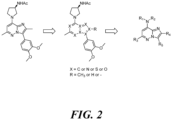
- the SAR study consisted of several steps. Firstly, the central imidazo[1,2-b]pyridazine core was substituted by numerous other bicyclic heterocycles including [1,2,3]triazolo[4,5-d]pyrimidine, purine, pyrazolo[1,5-a]pyrimidine, furo[3,2-b]pyridine, pyrazolo[5,4-d]pyrimidine, thieno[3,2-d]pyrimidine, thieno[3,4-d]pyrimidine and others. Since imidazo[1,2-b]pyridazine proved to be the only effective scaffold, the study was continued by gradual modification of various positions on this core to obtain a library of potential inhibitors of hnSMase2 ( FIG. 2 ).
- the synthetic strategy was generally as follows: Dichloroderivative SM-1 was used as a starting material ( J.Med. Chem, 2015, 58, 3767 ). Halogen atom in position 8 was replaced by ( R )-N-(pyrrolidin-3-yl)acetamide to give derivative SM-2. Second chlorine atom in position 6 was then converted to a methyl by treatment with trimethylaluminum-DABCO complex to afford compound 3, which was in the last step iodinated by NIS in dichloromethane. Compound SM-4 served as a starting material for synthesis of majority of the final compounds.
- Alternative starting material SM-6 bearing chlorine in position 6 and iodine in position 3 was prepared from derivative SM-5 ( J.Med.Chem, 2015, 58, 3767 ) using same conditions as in the preparation of SM-2.
- acetyl group was removed under acidic conditions, furnishing hydrochlorides of compounds 1a and 7a, which served as a starting material for subsequent derivatizations.
- phenyl urea 19
- sulfonyl derivatives 20-30
- acyl derivatives 31-37
- carbamates 39-43
- the HATU coupling agent and carboxylic acids were used.
- Compounds 40-42 were prepared by slightly modified method. Firstly, p -nitrophenylcarbamate was prepared and this intermediate was immediately treated with appropriate alcohol or phenol.
- 8-azapurine derivative 65 (Scheme 11 ) as a model compound with similar PK characteristic and also as a negative control for the experiments.
- Pyrrolidine substituent was introduced to the scaffold by nucleophilic substitution of the chlorine in 6-chloro-8-azapurine derivative ( Bioorg. Med. Chem. Lett., 2016, 26, 2706 ).
- Boc protecting group was then cleaved under acidic conditions and free amino group was acetylated to afford the target molecule.
- NMR spectra ( ⁇ , ppm; J, Hz) were measured on a Bruker Avance II-400 instrument (400.0 MHz for 1 H and 101 MHz for 13 C) in hexadeuterated dimethyl sulfoxide or CDCl 3 and referenced to the solvent signal ( ⁇ 2.50 and 39.70, respectively, 7.26 and 77.16).
- Mass spectra were measured on a LTQ Orbitrap XL (Thermo Fisher Scientific) using electrospray ionization (ESI). Column chromatography was performed on Silica gel 60 (Fluka) and thin-layer chromatography (TLC) on Silica gel 60 F254 foils (Merck).
- Acetamide 9 (410 mg, 1.03 mmol) was heated to reflux overnight in a mixture of conc. HCl (6.5 mL) and water (6.5 mL). Reaction mixture was evaporated to dryness, co-evaporated with ethanol (2 x 20 mL) and ethyl acetate (2 x 20 mL). It was obtained off white solid which was used without further purification.
- UPLC-MS: t 3.11 (M+H, 3 56.3).
- Hydrochloride 1a or 9a (160 mg, 0.4 mmol) was suspended in dry CH 2 Cl 2 (10 mL) and sequentially was added Et 3 N (0.3 mL, 2.2 mmol) and DMAP (cat.) at r.t.. Corresponding sulfonyl chloride was then added dropwise and reaction mixture was stirred at r.t. overnight. Reaction mixture was evaporated and residue was purified by silica gel chromatography (80 g) and product was then crystallized.
- Hydrochloride 1a or 1b (160 mg, 0.4 mmol) was suspended in dry CH 2 Cl 2 (10 mL) and mixture was cooled down to 0 °C. To this suspension was sequentially added Et 3 N (0.3 mL, 2.2 mmol) and DMAP (cat.). Appropriate chloroformate (0.6 mmol) was then added dropwise at 0 °C and reaction mixture slowly warmed to r.t. and was stirred overnight. Reaction mixture was evaporated and residue was purified by silica gel chromatography (100 g) and product was then crystallized.
- Hydrochloride 1a (320 mg, 0.79 mmol) was suspended in dry acetonitrile (20 mL) and mixture was cooled down to 0 °C. To this suspension were sequentially added Et 3 N (0.68 mL, 3.95 mmol) and DMAP (cat.). p-Nitrophenyl chloroformate (221 mg, 1.1 mmol) was then added in one portion at 0 °C and reaction mixture was stirred for 2 hours at 0 °C. Then was sequentially added triethylamine (0.4 mL, 2.4 mmol) and an appropriate alcohol (4 mmol) and reaction mixture was heated to 85 °C (bath) overnight.
- Hydrochloride 1a (320 mg, 0.73 mmol) was combined with sodium iodide (55 m, 0.36 mmol), DIPEA (1 mL, 5.8 mmol), 2,2'-bischlorodiethyl ether (130 ⁇ L, 1.1 mmol) in DMF (4 mL) at r.t. and resulting mixture was heated to 100 °C for 24 h. Reaction mixture was cooled down, DIPEA (0.5 mL, 2.9 mmol) and 2,2'-bischlorodiethyl ether (130 ⁇ L, 1.1 mmol) and then heating was continued for 5 h at 110 °C.
- Hydrogen peroxide is made to react with Amplex red (50 ⁇ M) in the presence of horseradish peroxidase (HRP, 1U/mL) to generate the fluorescent molecule resorufin.
- Generation of fluorescence is monitored by measuring relative florescence units (RFU) with excitation at 530 nm and emission at 590 nm. Extent of fluorescence is directly proportional to the extent of SM hydrolysis.
- Substrate stock solution is prepared in 2% Triton X-100 and sonicated for 1 min. Reactions are carried out for 1 h at 37°C in 100 mM Tris-HCl pH 7.4, 10 mM MgCl2, 0.2% Triton X-100.
- This assay has been optimized in 384-well format (50 ⁇ L total volume per well) under conditions where nSMase2-catalyzed hydrolysis of SM is linear with respect to nSMase2 concentration, time of incubation and SM concentration ( FIGS. 3A-3C ).
- the alkaline phosphatase, choline oxidase and HRP reactions are carried out in the absence of human nSMase2 and initiated by the addition of phosphorylcholine (2 ⁇ M), the alkaline phosphatase substrate.
- Compounds that show inhibition of the coupling enzymes are considered false positives and are not used further.
- Data analysis and non-linear least squares curve fitting are carried out with GraphPad Prism 5.
- plots show the dependence of enzyme activity with respect to protein concentration (left panel, FIG. 3A ), sphingomyelin (SM) concentration (middle panel. FIG. 3B ) and time of incubation (right panel. FIG. 3C ).
- K m and V max in middle panel were obtained from a non-linear least squares fit to the Michaelis-Menten equation.
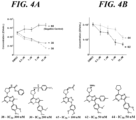
- nSMase2 inhibitors The effect of nSMase2 inhibitors on the manufacturing and release of ceramide rich exosomes from primary astrocytes was investigated as previously described. Dickens, et al. Briefly, rat astrocytes are seeded onto 6-well plates at a density of 20,000 cells/ well. Twenty-four hours after seeding, astrocytes are washed with PBS and the medium changed to media without FBS. Absence of FBS mimics a trophic factor withdrawal stimulus causing the release of exosomes via a nSMase2-dependent pathway. Astrocytes are then treated with nSMase2 inhibitors at concentrations in the range 0.03 - 30 ⁇ M. DMSO (0.02%) is used as control.
- EVs Astrocyte-derived extracellular vesicles
- Astrocyte-derived extracellular vesicles are isolated via ultracentrifugation at 100,000 g for 3h at 4°C. Fractions containing EV are washed twice with 5 ml PBS and the final pellet resuspended in PBS. This isolation procedure results in the isolation of EVs with a narrow size range and protein markers consistent with exosomes. Dickens, et al.
- compound 65 the closely related inactive analog, had no effect on exosome release.
- Baseline exosome release can be variable between experiments; as a result, inhibition is always compared relative to vehicle treatment within the same experiment. Structures of compounds with their corresponding IC 50 s are provided in the second row of FIG. 4 .
- COMPOUND 38 IS A NONCOMPETITIVE INHIBITOR OF nSMase2
- Methods - Mode of inhibition of compound 38 was determined using the fluorescence-based assay detailed above. Lysate of cells expressing recombinant nSMase2 (1.9 ⁇ g protein/50 ⁇ L) was incubated with different SM concentrations in the presence of different concentrations of 38 for 3h. Rate of change of fluorescence vs. sphinghomyelin concentration in the presence of increasing concentrations of 38 were plotted in GraphPad Prism and V max and K m were obtained by a least-squares fit to the Michaelis-Menten equation using non-linear regression.
- Methods - Compound 38 was dosed at 10 mg/kg (IP or peroral) at a dosing volume of 10 mL/kg.
- Plasma was harvested from blood by centrifugation.
- samples were extracted from plasma and brain by a one-step protein precipitation using acetonitrile followed by vortexing for 30 min and centrifugation (10,000 g for 10 min) as we have described previously. Rais, et al. Once extracted, the samples were reconstituted into a mobile phase and analyzed via LC/MS/MS.
- Plasma concentrations (nM) as well as tissue concentrations (pmol/g) were determined and plots of mean plasma concentration vs. time were constructed for PK analysis.
- Non-compartmental-analysis modules in WinNonlin ® (version 5.3) were used to assess pharmacokinetic parameters including maximal concentration (C max ), time to C max (T max ), area under the curve extrapolated to infinity (AUC 0- ⁇ ) and brain-to-plasma (B/P) ratios.
- IE1 ⁇ (0.1ng/3 ⁇ l) is injected (total volume of 3 ⁇ l) at the rate 0.5 ⁇ l/min via a pulled glass capillary tip diameter ⁇ 50 ⁇ m using the stereotaxic coordinates: A/P +1; M/L -2; -3 D/V.
- the capillary is held in place for 5 min to allow for solution to diffuse into the tissue.
- Animals are sacrificed at 2, 12 or 24h by an overdose of anesthetic, and transcardially perfused with ice-cold saline containing heparin (20 ⁇ l per 100 ml, Sigma). Blood is rapidly isolated and flash frozen. Brains are rapidly extracted and flash frozen or post fixed in 4% PFA followed by cryoprotection in a 30% sucrose solution and frozen at - 80°C.
- Plasma EVs GFAP-GFP mice that release green EVs from astrocytes into the systemic circulation were used so that exosome release from astrocytes in plasma can be followed.
- the beads are washed and placed on a magnet to separate EVs bound to anti-GFP antibody-coupled Dynabeads.
- the concentration of immunoprecipitated GFP+ EVs is quantified using Zeta View nanoparticle tracking analysis (Particle Metrix) as described in the cell-based exosome release.
- FIG. 8 Left Panel Total number of extracellular vesicles in plasma.
- FIG. 8 Right Panel Total number of GFP labeled EVs known to be released from brain. * p ⁇ 0.05, ** p ⁇ 0.001 when comparing IL1-1 ⁇ and IL-1 ⁇ + 65 vs. Saline. ## p ⁇ 0.01, ### p ⁇ 0.001 when comparing IL-1 ⁇ + 38 vs. IL-1 ⁇ .
- compound 38 was evaluated in Eurofins SafetyScreen44, a panel of 44 selected targets recommended by major pharmaceutical companies to establish undesirable off target activity profiles.
- Bowes, et al. There were 4/44 positive hits at 10 ⁇ M ( ⁇ 1A adrenergic receptor, Ca 2+ and Na + channels and dopamine transporter). All positive hits however, were significantly less than 100% inhibition indicating that there is at least a 20-fold segregation in potency between inhibition of these off targets and inhibition of nSMase2.
- compound 38 was negative against hERG and two additional phosphodiesterases (3A and 4D2).
- Figuera-Losada M., Stathis, M., Dorskind, J. M., Thomas, A. G., Bandaru, V. Yoo, S.-W., Westwood, N. J., Rogers, G. W., McArthur, J. C., Haughey, N. J., Slusher, B. S., and Rojas, C., Cambinol, a Novel Inhibitor of Neutral Sphingomyelinase 2 Shows Neuroprotective Properties, PLOS ONE, 26 May 2015 .
- Mejdrova I., Chalupska, D., Kogler, M., Sala, M., Plackova, P., Baumlova, A., Hrebabecky, H., Prochazkova, E., Dejmek, M., Guillon, R., Strunin, D., Weber. J., Lee, G., Birkus, G., Mertlikova-Kalserova, H., Boura, E., Nencka, R. "Highly Selective Phosphatidylinositol 4-Kinase IIIBeta Inhibitors and Structural Insight Into Their Mode of Action" J. Med. Chem., Vol. 58, 3767-3793 (2015 ).
Landscapes
- Health & Medical Sciences (AREA)
- Chemical & Material Sciences (AREA)
- Organic Chemistry (AREA)
- Veterinary Medicine (AREA)
- Public Health (AREA)
- General Health & Medical Sciences (AREA)
- Animal Behavior & Ethology (AREA)
- Life Sciences & Earth Sciences (AREA)
- Pharmacology & Pharmacy (AREA)
- Medicinal Chemistry (AREA)
- Neurosurgery (AREA)
- Nuclear Medicine, Radiotherapy & Molecular Imaging (AREA)
- General Chemical & Material Sciences (AREA)
- Chemical Kinetics & Catalysis (AREA)
- Neurology (AREA)
- Biomedical Technology (AREA)
- Bioinformatics & Cheminformatics (AREA)
- Engineering & Computer Science (AREA)
- Hospice & Palliative Care (AREA)
- Psychiatry (AREA)
- Epidemiology (AREA)
- Pharmaceuticals Containing Other Organic And Inorganic Compounds (AREA)
- Nitrogen Condensed Heterocyclic Rings (AREA)
Description
- This application claims the benefit and priority to
U.S. Patent Application No. 62/443,324, filed January 6, 2017 - This invention was made in part with United States Government support under RO1 MH107659 and P30 MH075673-06 awarded by the National Institutes of Health (NIH). The U.S. Government has certain rights in the invention.
- Ceramide is a bioactive lipid that plays an important role in stress responses leading to apoptosis, cell growth arrest, and differentiation. Ceramide production is due in part to sphingomyelin hydrolysis by sphingomyelinases. In brain, neutral sphingomyelinase 2 (nSMase2) is expressed in neurons and increases in its activity and expression have been associated with pro-inflammatory conditions observed in patients afflicted with Alzheimer's disease, multiple sclerosis, and human immunodeficiency virus (HIV-1). Increased nSMase2 activity translates into higher ceramide levels and neuronal cell death, which can be prevented by chemical or genetic inhibition of nSMase2 activity or expression.
- To date, however, there are no soluble, specific and potent small molecule inhibitor tool compounds for use in vivo studies or as a starting point for medicinal chemistry optimization. Moreover, the majority of the known inhibitors were identified using bacterial, bovine, or rat nSMase2. Thus, until now, there have been no known drug-like inhibitors of human neutral sphingomyelinase 2 (nSMase2). The most widely used inhibitor, i.e., GW4869, was identified from an early screen using rat neutral sphingomyelinase over 14 years ago (J Biol Chem 277, 41128 (2002)). GW4869, however, exhibits poor solubility and consequently has very limited ability to serve as pharmacological tool or as starting point for clinical development.
- Claus Ralf A et al, Inhibition of sphinomyeline hydrolysis: targeting the lipid mediator ceramide as a key regulator of cellular fate, Current Medicinal Chemistry, Bentham, NL, Bol. 16, No. 16, pages 1978-2000, describes inhibitors of neutral sphingomyelinase.
-
WO 02/066447 - The presently disclosed subject matter provides small molecule inhibitors of neutral sphingomyelinase 2 (nSMase2) and their use, in some aspects, for treating neurodegenerative diseases, such as, neurodegenerative diseases associated with high levels of ceramide, including, but not limited to Alzheimer's disease (AD), HIV-associated neurocognitive disorder (HAND), multiple sclerosis (MS), and amyotrophic lateral sclerosis (ALS), and, in other aspects, for treating cancer.
- In one aspect, the present invention provides a compound of formula (Ia)


- R3 is selected from the group consisting of H, substituted or unsubstituted alkyl, substituted or unsubstituted alkoxyl, substituted or unsubstituted thioalkyl, substituted or unsubstituted aryl, and halogen;
- R4 is selected from the group consisting of H, substituted or unsubstituted alkyl, and substituted or unsubstituted aryl;
- R5 is selected from the group consisting of H, halogen, substituted or unsubstituted alkyl, substituted or unsubstituted aryl, and substituted or unsubstituted heteroaryl;
- R6 is selected from the group consisting of H or substituted or unsubstituted C1-6 alkyl; and
- R7 is selected from the group consisting of -C(=O)-(CRyRz)m-R8, -C(=O)-(CRyRz)m-O-
- R8, -C(=O)-O-(CRyRz)m-R8, and -S(=O)2-R9, wherein each m is an integer selected from the group consisting of 0, 1, 2, 3, 4, 5, and 6, Ry and Rz are each independently H, alkoxyl, or halogen, R8 and R9 are each independently selected from the group consisting of substituted or unsubstituted alkyl, -CF3, substituted or unsubstituted cycloalkyl, substituted or unsubstituted aryl or heteroaryl, substituted or unsubstituted cycloheteroaryl, and NR10R11, wherein R10 and R11 are each independently selected from the group consisting of H, substituted or unsubstituted C1-6 alkyl, and substituted or unsubstituted aryl;
- p is an integer selected from the group consisting of 0, 1, 2, 3, 4, and 5;
- each R12 is independently selected from the group consisting of substituted or unsubstituted alkyl, hydroxyl, alkoxyl, halogen, cyano, amino, -CF3, -O-CF3, substituted or unsubstituted cycloheteroaklyl, -NR13(C=O)R14, -S(=O)2-R15, -S(=O)2-NR15R16, -SR16, -C(=O)-R17, -C(=O)-O-R18, and -C(=O)-NR19R20, wherein R13 is selected from the group consisting of H or substituted or unsubstituted C1-6 alkyl, R14 is substituted or unsubstituted C1-6 alkyl or -O-R21, and R15, R16, R17, R18, R19, R20, R21 are each independently H or substituted or unsubstituted C1-6 alkyl; and wherein the compound is a neutral sphingomyelinase 2 (nSMase2) inhibitor.
- In other aspects, the nSMase2 inhibitor of formula (Ia) or (Ib) is for use in treating a condition, disease, or disorder associated with an increased neutral sphingomyelinase 2 (nSMase2) activity or expression
- In certain aspects, the condition, disease, or disorder comprises a neurodegenerative disease. In particular aspects, the neurodegenerative disease is selected from the group consisting of Alzheimer's disease (AD), HIV-associated neurocognitive disorder (HAND), multiple sclerosis (MS), and amyotrophic lateral sclerosis (ALS). In other aspects, the condition, disease, or disorder is a cancer.
- In yet other aspects, the presently disclosed subject matter provides a compound of formula (Ia) or (Ib) of the present invention for use in inhibiting neutral sphingomyelinase 2 (nSMase2).
- Certain aspects of the presently disclosed subject matter having been stated hereinabove, which are addressed in whole or in part by the presently disclosed subject matter, other aspects will become evident as the description proceeds when taken in connection with the accompanying Examples and Drawings as best described herein below.
- Having thus described the presently disclosed subject matter in general terms, reference will now be made to the accompanying Figures, which are not necessarily drawn to scale, and wherein:
-
FIG. 1 shows two compounds, 1 (I35MCK380) and 2 (I35MCK388), identified in an unbiased screening of the Institute of Organic Chemistry and Biochemistry (IOCB) compound library against human neutral sphingomyelinase 2 (hnSMase2); -
FIG. 2 shows an imidazo[1,2-b]pyridazine scaffold from which modification of various positions on the imidazo[1,2-b]pyridazine core was carried out to obtain a library of potential inhibitors of hnSMase2; -
FIG. 3A, FIG. 3B, and FIG. 3C show the characterization of fluorescence-based activity assay using human nSMase2; -
FIG. 4A and FIG. 4B show the inhibition of exosome release in vitro bycompounds FIG. 4A ) and 44 and 62 (upper row, right panel,FIG. 4B ); -
FIG. 5 shows the Phase I metabolic stability of selected nSMase2 inhibitors;FIG. 6 shows the mechanism of inhibition ofcompound 38; -
FIG. 7A and FIG. 7B show pharmacokinetics ofcompound 38 following 10 mg/kg i.p. (FIG. 7A ) and 10 mg/kg peroral (FIG. 7B ) administrations in mice; and -
FIG. 8 shows the inhibition of exosome release in vivo bycompound 38. - The presently disclosed subject matter now will be described more fully hereinafter with reference to the accompanying Figures, in which some, but not all embodiments of the inventions are shown. Like numbers refer to like elements throughout. The presently disclosed subject matter may be embodied in many different forms and should not be construed as limited to the embodiments set forth herein; rather, these embodiments are provided so that this disclosure will satisfy applicable legal requirements. Indeed, many modifications and other embodiments of the presently disclosed subject matter set forth herein will come to mind to one skilled in the art to which the presently disclosed subject matter pertains having the benefit of the teachings presented in the foregoing descriptions and the associated Figures. Therefore, it is to be understood that the presently disclosed subject matter is not to be limited to the specific embodiments disclosed. The scope of the invention is defined in the appended claims.
- Unbiased screening of the chemical library from the Institute of Organic Chemistry and Biochemistry (IOCB) using a newly developed human neutral sphingomyelinase assay identified previously undisclosed I35MCK380 and I35MCK388 as potent inhibitors of nSMase2 (IC50 = 1 µM). Subsequent structure-activity relationship (SAR) studies provided additional novel analogues with submicromolar potencies and improved solubility over known inhibitors and lead to an understanding of the chemical features necessary for
neutral sphingomyelinase 2 inhibition. As there are no known potent and drug-like nSMase 2 inhibitors identified to date, these inhibitors could serve as critical tool compounds for the field and/or to be developed clinically. - Accordingly, in some embodiments, the presently disclosed subject matter provides small molecule inhibitors of neutral sphingomyelinase 2 (nSMase2) for the treatment of neurodegenerative diseases, such as, neurodegenerative diseases associated with high levels of ceramide, including, but not limited to, Alzheimer's disease (AD), multiple sclerosis (MS), amyotrophic lateral sclerosis (ALS) and HIV-associated neurocognitive disorders (HAND). The presently disclosed nSMase2 inhibitors also could be used for the treatment of cancer.
- In some embodiments disclosed herein for reference, a compound of formula (I) may be:

- R1 and R2 are each independently selected from substituted or unsubstituted alkyl or together with the nitrogen atom to which they are bound form a substituted or unsubstituted 5- or 6-membered heterocyclic ring;
- R3 is selected from the group consisting of H, substituted or unsubstituted alkyl, substituted or unsubstituted alkoxyl, substituted or unsubstituted thioalkyl, substituted or unsubstituted aryl, and halogen;
- R4 is selected from the group consisting of H, substituted or unsubstituted alkyl, and substituted or unsubstituted aryl;
- R5 is selected from the group consisting of H, halogen, substituted or unsubstituted alkyl, substituted or unsubstituted aryl, substituted or unsubstituted heteroaryl, and a substituted or unsubstituted multicyclic aryl or multicyclic heteroaryl ring;
- under the proviso that if R1 and R2 together with the nitrogen atom to which they are bound are pyridinyl or morpholinyl, then R5 cannot be H, halogen, or substituted or unsubstituted heteroaryl; and
- pharmaceutically acceptable salts thereof.
- One of ordinary skill in the art upon review of the presently disclosed subject matter would appreciate that compounds disclosed in U.S. patent application publication no.
US20120220581A1 for Imidazo[1,2-b]pyridazine Derivatives and their use as PDE10 Inhibitors, to Pastor-Fernández, published August 30, 2012 , are not included in the presently disclosed compounds. - In particular embodiments, the substituted alkyl or unsubstituted alkyl represented by R1, R2, R3, R4, and R5 of formula (I) can be a C1, C2, C3, C4, C5, C6, C7, or Cs linear or branched alkyl, in some embodiments, C1-4 substituted or unsubstituted alkyl, in some embodiments, C1-6 substituted or unsubstituted alkyl, in some embodiments, C1-8 alkyl substituted or unsubstituted alkyl, including, but not limited to, methyl, ethyl, n-propyl, isopropyl, n-butyl, isobutyl, sec-butyl, tert-butyl, n-pentyl, sec-pentyl, isopentyl, neopentyl, n-hexyl, sec-hexyl, n-heptyl, n-octyl, and the like, each of which can include one or more substitutents. Representative substituent groups include, but are not limited to, alkyl, substituted alkyl, halogen, aryl, substituted aryl, alkoxyl, hydroxyl, nitro, amino, alkylamino, dialkylamino, sulfate, cyano, mercapto, and alkylthio.
- In further embodiments, the 5- to 6-membered heterocyclic ring formed from R1 and R2 together with the nitrogen to which they are bound includes, but is not limited to, pyrrolidinyl, imidazolidinyl, imidazolinyl, pyrazolidinyl, pyrazolinyl, piperidinyl, piperazinyl, indolinyl, 3-pyrrolinyl, morpholinyl, and the like.
- In certain embodiments, the substituted or unsubstituted alkyl, substituted or unsubstituted aryl, substituted or unsubstituted heteroaryl, and a substituted or unsubstituted multicyclic aryl or multicyclic heteroaryl ring represented by R5 of formula (I) includes phenyl, thiophen-2-yl, furanyl, thiazolyl, pyridinyl, indolyl, benzo[d][1,3]dioxolyl, and the like.
- In some embodiments, the compound of formula (I),disclosed herein for reference, may be:

- n is an integer selected from the group consisting of 0, 1, 2, 3, 4, 5, 6, 7, and 8;
- Rx is selected from the group consisting of halogen, hydroxyl, alkoxyl, thioalkyl, cyano, amino, -N3, substituted or unsubstituted aryl, substituted or unsusbstituted cycloheteroalkyl, substituted or unsubstituted heteroaryl, -X-(C=O)-C1-6 alkyl, wherein X is O or S, and -NR6R7, wherein
- R6 is selected from the group consisting of H or substituted or unsubstituted C1-6 alkyl; and
- R7 is selected from the group consisting of -C(=O)-(CRyRz)m-R8, -C(=O)-(CRyRz)m-O-R8, -C(=O)-O-(CRyRz)m-R8, and -S(=O)2-R9, wherein each m is an integer selected from the group consisting of 0, 1, 2, 3, 4, 5, and 6, Ry and Rz are each independently H, alkoxyl, or halogen, R8 and R9 are each independently selected from the group consisting of substituted or unsubstituted alkyl, -CF3, substituted or unsubstituted cycloalkyl, substituted or unsubstituted aryl, substituted or unsubstituted cycloheteroaryl, substituted or unsubstituted multicyclic aryl or heteroaryl ring, and NR10R11, wherein R10 and R11 are each independently selected from the group consisting of H, substituted or unsubstituted C1-6 alkyl, and substituted or unsubstituted aryl.
- In particular embodiments of the present invention, the compound of formula (Ia) is:


- p is an integer selected from the group consisting of 0, 1, 2, 3, 4, and 5;
- each R12 is independently selected from the group consisting of substituted or unsubstituted alkyl, hydroxyl, alkoxyl, halogen, cyano, amino, -CF3, -O-CF3, substituted or unsubstituted cycloheteroaklyl, -NR13(C=O)R14, -S(=O)2-R15, -S(=O)2-NR15R16, -SR16, -C(=O)-R17, -C(=O)-O-R18, and -C(=O)-NR19R20, wherein R13 is selected from the group consisting of H or substituted or unsubstituted C1-6 alkyl, R14 is substituted or unsubstituted C1-6 alkyl or -O-R21, and R15, R16, R17, R18, R19, R20, R21 are each independently H or substituted or unsubstituted C1-6 alkyl.
- In certain embodiments, R6 is H and R7 is -C(=O)-(CRyRz)m-R8, wherein m is 0 and R8 is C1-6 alkyl. In particular embodiments, the compound of formula (Ia) or (Ib) may be selected from the group consisting of:


- In certain embodiments, R6 may be Hand R7 is selected from the group consisting of -C(=O)-(CRyRz)m-R8, -C(=O)-(CRyRz)m-O-R8, -C(=O)-O-(CRyRz)m-R8, wherein each m is an integer selected from the group consisting of 0, 1, 2, 3, 4, 5, and 6, Ry and Rz are each independently H, alkoxyl, or halogen, R8 is selected from the group consisting of substituted or unsubstituted alkyl, -CF3, substituted or unsubstituted cycloalkyl, substituted or unsubstituted aryl, substituted or unsubstituted cycloheteroaryl, substituted or unsubstituted multicyclic aryl or heteroaryl ring, and NR10R11, wherein R10 and R11 are each independently selected from the group consisting of H, substituted or unsubstituted C1-6 alkyl, and substituted or unsubstituted aryl. In particular embodiments, the compound of formula (Ia) or (Ib) may be selected from the group consisting of:


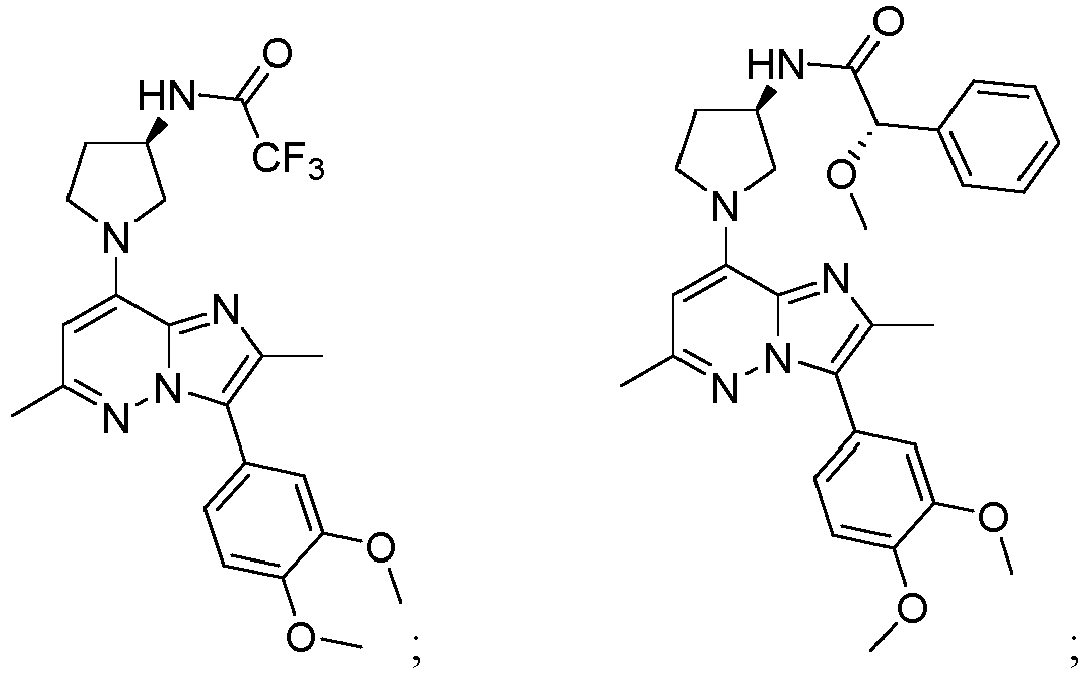


- In certain embodiments, R6 is H and R7 is -S(=O)2-R9. In particular embodiments, the compound of formula (Ia) or (Ib) may be selected from the group consisting of


- In certain embodiments, R5 may be selected from the group consisting of H, halogen, and substituted or unsubstituted alkyl. In particular embodiments, the compound of formula (Ia) or (Ib) may be selected from the group consisting of


- In certain embodiments, R5 may be a substituted or unsubstituted multicyclic aryl or multicyclic heteroaryl ring. In particular embodiments, the compound of formula (Ia) or (Ib) may be selected from the group consisting of:

- In certain embodimeonts, R5 is a substituted or unsubstituted heteroaryl. In particular embodiments, the compound of formula (Ia) or (Ib) may be selected from the group consisting of:
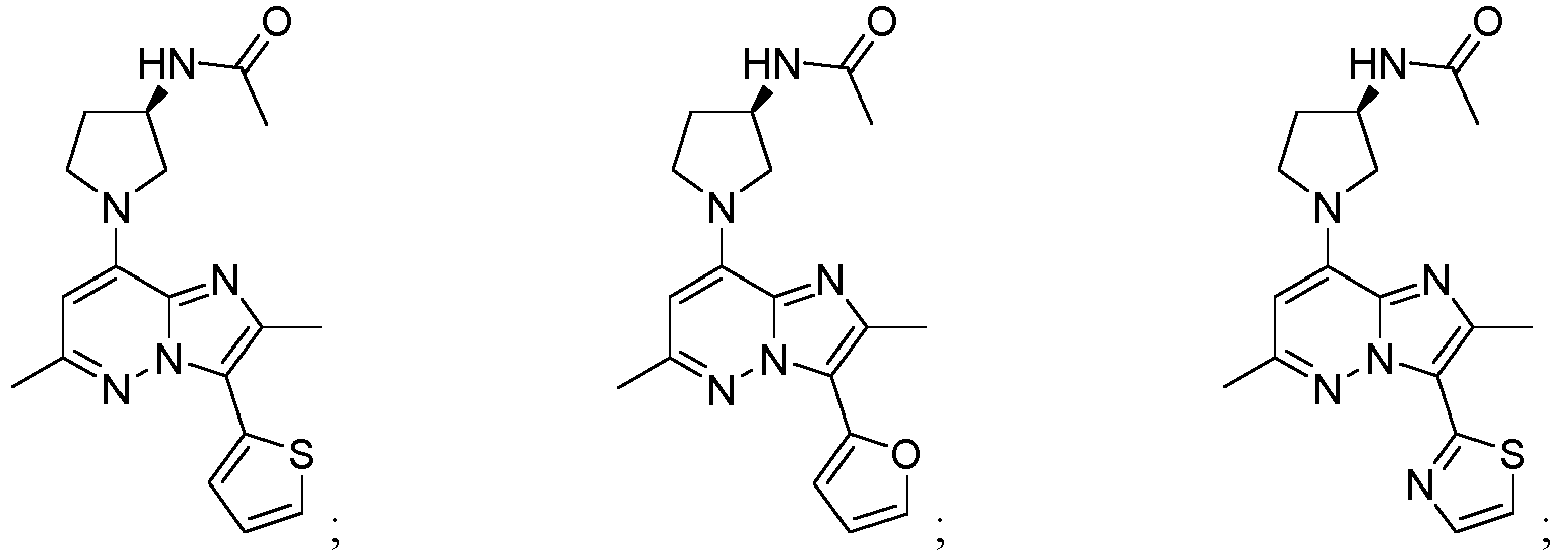

- In certain embodiments, disclosed herein for reference, n is 0, 1, or 2 and Rx is selected from the group consisting of halogen, hydroxyl, alkoxyl, thioalkyl, cyano, amino, -N3, substituted or unsubstituted aryl, substituted or unsusbstituted cycloheteroalkyl, substituted or unsubstituted heteroaryl, and -X-(C=O)-C1-6 alkyl, wherein X is O or S. In particular embodiments disclosed herein for reference, the compound of formula (I) may be selected from the group consisting of


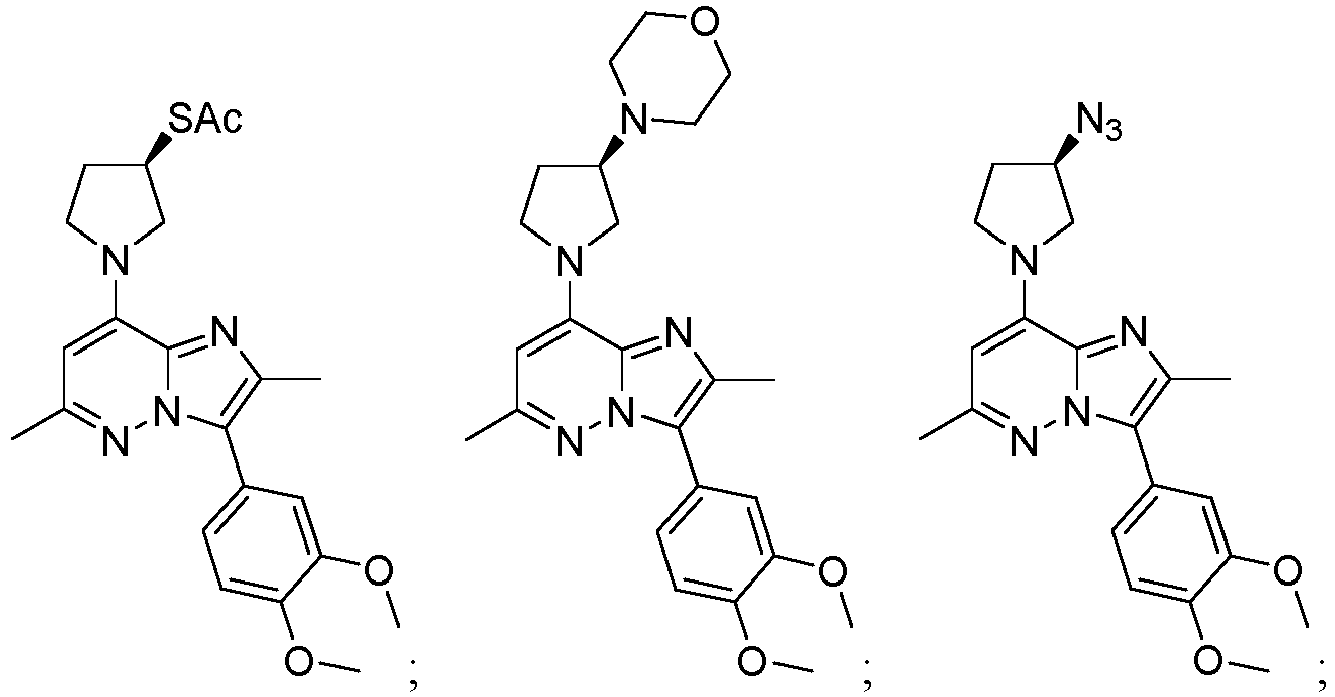

- In certain embodiments, R1 and R2 together with the nitrogen atom to which they are bound form a substituted or unsubstituted 5- or 6-membered heterocyclic ring selected from the group consisting of:

- u is an integer selected from the group consisting of 0, 1, 2, 3, 4, and 5;
- each v is independently an integer selected from the group consisting of 0, 1, 2, 3, and 4;
- w is an integer selected from the group consisting of 0, 1, 2, and 3; and
- R22, R23, R24, R25, R26, R27, and R28 are each independently selected from the group consisting of H, -(C=O)-R29, -(C=O)-O-R30, -S(=O)2-R31, and -NR32-C(=O)-R33, wherein R29, R30, R31, R32, and R33 are each independently selected from the group consisting of H, substituted or unsubstituted alkyl, and substituted or unsubstituted cycloalkyl. In particular embodiments, disclosed herein for reference, the compound of formula (I) may be selected from the group consisting of:


- In certain embodiments, R1 and R2 are each independently selected from substituted or unsubstituted alkyl. Also disclosed herein is the compound of formula (I) which may be:

- Representative compounds of formula (I) and their activities are summarized in Table 1A. For instance,
entries Table 1A. Representative Inhibitors of nSMase2 of Formula (I) Entry Structure IC50 (µM) 1 
1 2 
2 3 
8 4 
1 5 
2 6 
1 7 
0.6 8 
0.4 9 
0.2 10 
0.5 11 
0.5 12 
0.4 13 
0.3 14 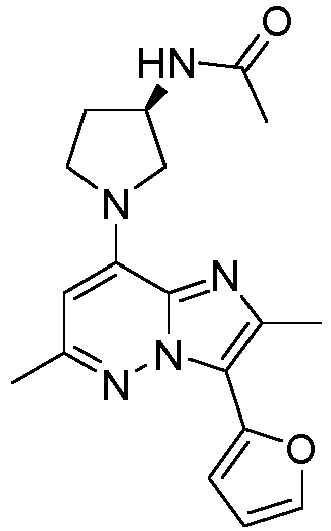
0.9 15 
1 16 
0.8 17 
0.2 18 
0.7 19 
0.2 20 
1 21 
0.1 22 
0.09 23 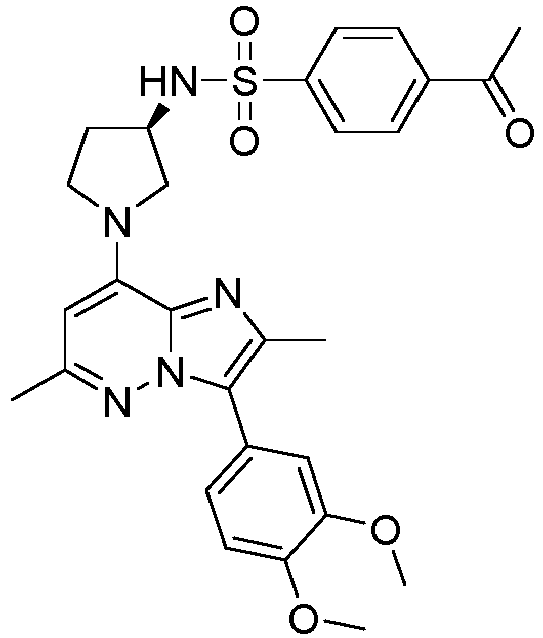
0.2 24 
0.1 25 
0.1 26 
0.3 27 
0.3 28 
0.5 29 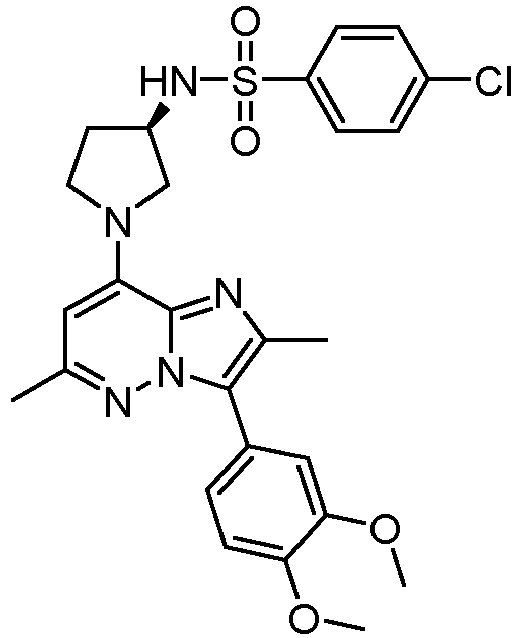
0.4 30 
0.2 31 
0.7 32 
0.1 33 
0.4 34 
0.2 35 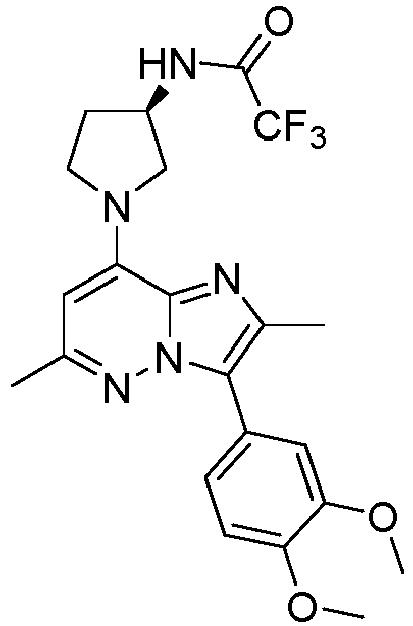
0.9 36 
0.4 37 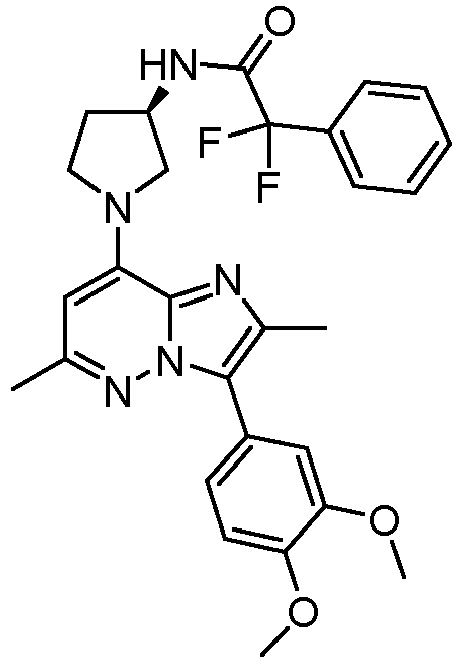
0.1 38 
0.3 39 
0.3 40 
0.3 41 
0.3 42 
0.2 43 
0.3 44 
0.05 45 
1 46 
5 47 
2 48 
1 49 
0.7 50 
1 51 
0.6 52 
0.5 53 
0.9 54 
0.7 55 
1 56 
0.3 57 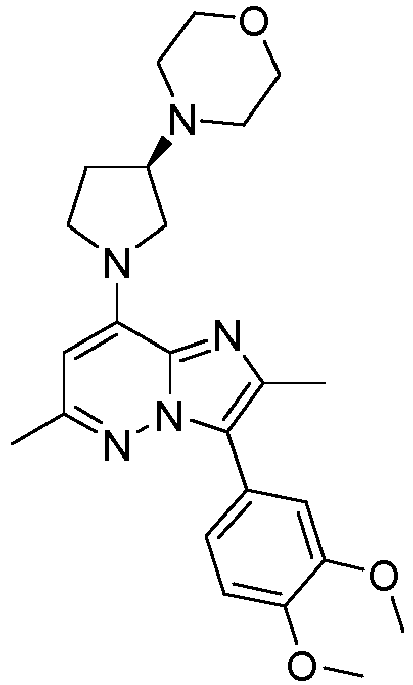
0.7 58 
0.7 59 
0.3 60 
0.4 61 
0.9 62 
0.05 63 
2 64 
1 65 
100 9-PROV 
> 100 11-PROV 
> 100 14-PROV 
> 100 15-PROV 
> 10 18-PROV 
> 100 19-PROV 
> 100 20-PROV 
> 1 22-PROV 
> 1 23-PROV 
> 10 33-PROV 
> 1 38-PROV 
> 1 39b-PROV 
≤ 1 40-PROV 
≤ 1 42-PROV 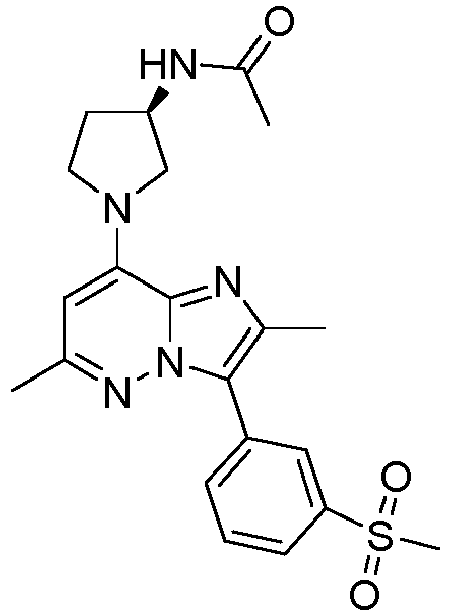
> 1 43-PROV 
≤ 1 44-PROV 
> 1 46-PROV 
> 1 47-PROV 
≤ 1 48-PROV 
>1 50-PROV 
- 54-PROV 
- 56-PROV 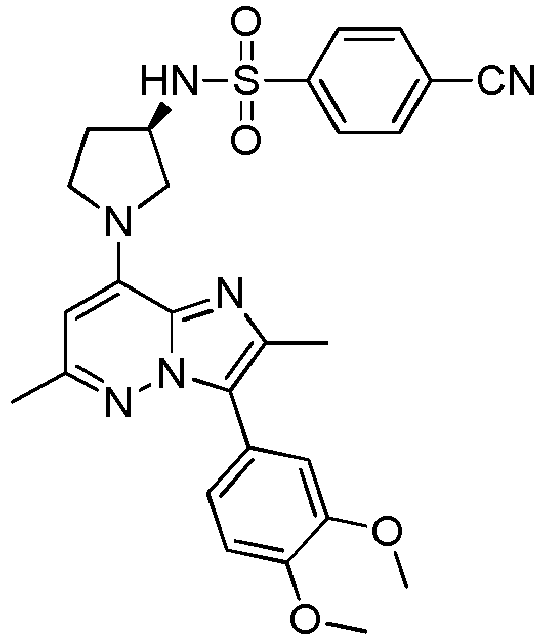
- 59-PROV 
- - In other embodiments disclosed herein for reference, the presently disclosed subject matter provides a compound of formula (II):

- In such embodiments, the compound of formula (II) can be selected from the group consisting of:


- Representative compounds of formula (II) for reference and their activities are summarized in Table 1B.
Table 1B. Representative Inhibitors of nSMase2 of Formula (II) No Code Structure Activity* MW 1-PROV MS 796 
D 397.43 2-PROV MS 797 
D 396.44 3-PROV MS 798 
D 410.47 4-PROV MS 799 
D 409.48 5-PROV MS 800 
D 396.44 6-PROV MS 801 
D 382.42 7-PROV MS 799A 
D 409.48 8-PROV MS 803 
D 409.48 10-PROV MS 805 
D 396.44 12-PROV MS 807 
D 410.47 13-PROV MS 808 
D 410.47 24-PROV HH 1280 
D 432.92 25-PROV HH 1281 
D 446.95 26-PROV HH 1283 
D 432.92 27-PROV HH 1284 
D 398.48 28-PROV HH 1287 
D 412.51 29a-PROV HH 1288 
D 426.54 29b-PROV HH 1289 
D 412.51 30-PROV HH 1290 
D 412.51 36-PROV MS 824 
D 410.47 *The activities of the compounds are scaled into four groups (A-D) as follows:
Category D IC50 > 100 µM; Category C IC50 > 10 µM; Category B IC50 > 1 µM;
Category A IC50 ≤ 1 µM. - Disclosed in here for reference is an example of an nSMase2 inhibitor of formula (I), for use in treating a condition, disease, or disorder associated with an increased neutral sphingomyelinase 2 (nSMase2) activity or expression, and comprising administering to a subject in need of treatment thereof an effective amount of the nSMase2 inhibitor of reference formula (I):

- R1 and R2 are each independently selected from substituted or unsubstituted alkyl or together with the nitrogen atom to which they are bound form a substituted or unsubstituted 5- or 6-membered heterocyclic ring;
- R3 is selected from the group consisting of H, substituted or unsubstituted alkyl, substituted or unsubstituted alkoxyl, substituted or unsubstituted thioalkyl, substituted or unsubstituted aryl, and halogen;
- R4 is selected from the group consisting of H, substituted or unsubstituted alkyl, and substituted or unsubstituted aryl;
- R5 is selected from the group consisting of H, halogen, substituted or unsubstituted alkyl, substituted or unsubstituted aryl, substituted or unsubstituted heteroaryl, and a substituted or unsubstituted multicyclic aryl or multicyclic heteroaryl ring;
- under the proviso that if R1 and R2 together with the nitrogen atom to which they are bound are pyridinyl or morpholinyl, then R5 cannot be H, halogen, or substituted or unsubstituted heteroaryl; and
- pharmaceutically acceptable salts thereof.
- Also disclosed herein for reference, is an nSMase2 inhibitor of formula (II) for use in treating a condition, disease, or disorder associated with an increased neutral sphingomyelinase 2 (nSMase2) activity or expression, and comprising administering to a subject in need of treatment thereof an effective amount of an nSMase2 inhibitor of formula (II):

- In some embodiments disclosed herein for reference, the compound of formula (II) is selected from the group consisting of:


- In some embodiments of the present invention, the condition, disease, or disorder is associated with an elevated level of ceramide in the subject in need of treatment compared to a control subject not afflicted with the condition, disease, or disorder.
- In some embodiments of the present invention, the condition, disease, or disorder comprises a neurodegenerative disease. In particular embodiments, the neurodegenerative disease is selected from the group consisting of Alzheimer's disease (AD), HIV-associated neurocognitive disorder (HAND), multiple sclerosis (MS), and amyotrophic lateral sclerosis (ALS).
- In yet other embodiments, the condition, disease, or disorder is a cancer.
- In particular embodiments, the administration of an effective amount of a compound of formula (I) to the subject decreases the (nSMase2) activity or expression or decreases a level of ceramide in the subject.
- As used herein, the term "treating" can include reversing, alleviating, inhibiting the progression of, preventing or reducing the likelihood of the disease, disorder, or condition to which such term applies, or one or more symptoms or manifestations of such disease, disorder or condition. Preventing refers to causing a disease, disorder, condition, or symptom or manifestation of such, or worsening of the severity of such, not to occur. Accordingly, the presently disclosed compounds can be administered prophylactically to prevent or reduce the incidence or recurrence of the disease, disorder, or condition.
- The "subject" treated by the presently disclosed methods in their many embodiments is desirably a human subject, although it is to be understood that the methods described herein are effective with respect to all vertebrate species, which are intended to be included in the term "subject." Accordingly, a "subject" can include a human subject for medical purposes, such as for the treatment of an existing condition or disease or the prophylactic treatment for preventing the onset of a condition or disease, or an animal subject for medical, veterinary purposes, or developmental purposes. Suitable animal subjects include mammals including, but not limited to, primates, e.g., humans, monkeys, apes, and the like; bovines, e.g., cattle, oxen, and the like; ovines, e.g., sheep and the like; caprines, e.g., goats and the like; porcines, e.g., pigs, hogs, and the like; equines, e.g., horses, donkeys, zebras, and the like; felines, including wild and domestic cats; canines, including dogs; lagomorphs, including rabbits, hares, and the like; and rodents, including mice, rats, and the like. An animal may be a transgenic animal. In some embodiments, the subject is a human including, but not limited to, fetal, neonatal, infant, juvenile, and adult subjects. Further, a "subject" can include a patient afflicted with or suspected of being afflicted with a condition or disease. Thus, the terms "subject" and "patient" are used interchangeably herein. The term "subject" also refers to an organism, tissue, cell, or collection of cells from a subject.
- In general, the "effective amount" of an active agent or drug delivery device refers to the amount necessary to elicit the desired biological response. As will be appreciated by those of ordinary skill in this art, the effective amount of an agent or device may vary depending on such factors as the desired biological endpoint, the agent to be delivered, the makeup of the pharmaceutical composition, the target tissue, and the like.
- The term "combination" is used in its broadest sense and means that a subject is administered at least two agents, more particularly a compound of formula (I) and at least one beta-lactam antibiotic and, optionally, one or more antibacterial agents. More particularly, the term "in combination" refers to the concomitant administration of two (or more) active agents for the treatment of a, e.g., single disease state. As used herein, the active agents may be combined and administered in a single dosage form, may be administered as separate dosage forms at the same time, or may be administered as separate dosage forms that are administered alternately or sequentially on the same or separate days. In one embodiment of the presently disclosed subject matter, the active agents are combined and administered in a single dosage form. In another embodiment, the active agents are administered in separate dosage forms (e.g., wherein it is desirable to vary the amount of one but not the other). The single dosage form may include additional active agents for the treatment of the disease state.
- Further, the compounds of formula (I) described herein can be administered alone or in combination with adjuvants that enhance stability of the compounds of formula (I), alone or in combination with one or more antibacterial agents, facilitate administration of pharmaceutical compositions containing them in certain embodiments, provide increased dissolution or dispersion, increase inhibitory activity, provide adjunct therapy, and the like, including other active ingredients. Advantageously, such combination therapies utilize lower dosages of the conventional therapeutics, thus avoiding possible toxicity and adverse side effects incurred when those agents are used as monotherapies.
- The timing of administration of a compound of formula (I) and at least one additional therapeutic agent can be varied so long as the beneficial effects of the combination of these agents are achieved. Accordingly, the phrase "in combination with" refers to the administration of a compound of formula (I) and at least one additional therapeutic agent either simultaneously, sequentially, or a combination thereof. Therefore, a subject administered a combination of a compound of formula (I) and at least one additional therapeutic agent can receive compound of formula (I) and at least one additional therapeutic agent at the same time (i.e., simultaneously) or at different times (i.e., sequentially, in either order, on the same day or on different days), so long as the effect of the combination of both agents is achieved in the subject.
- When administered sequentially, the agents can be administered within 1, 5, 10, 30, 60, 120, 180, 240 minutes or longer of one another. In other embodiments, agents administered sequentially, can be administered within 1, 5, 10, 15, 20 or more days of one another. Where the compound of formula (I) and at least one additional therapeutic agent are administered simultaneously, they can be administered to the subject as separate pharmaceutical compositions, each comprising either a compound of formula (I) or at least one additional therapeutic agent, or they can be administered to a subject as a single pharmaceutical composition comprising both agents.
- When administered in combination, the effective concentration of each of the agents to elicit a particular biological response may be less than the effective concentration of each agent when administered alone, thereby allowing a reduction in the dose of one or more of the agents relative to the dose that would be needed if the agent was administered as a single agent. The effects of multiple agents may, but need not be, additive or synergistic. The agents may be administered multiple times.
- In some embodiments, when administered in combination, the two or more agents can have a synergistic effect. As used herein, the terms "synergy," "synergistic," "synergistically" and derivations thereof, such as in a "synergistic effect" or a "synergistic combination" or a "synergistic composition" refer to circumstances under which the biological activity of a combination of a compound of formula (I) and at least one additional therapeutic agent is greater than the sum of the biological activities of the respective agents when administered individually.
- Synergy can be expressed in terms of a "Synergy Index (SI)," which generally can be determined by the method described by F. C. Kull et al., Applied Microbiology 9, 538 (1961), from the ratio determined by:

- QA is the concentration of a component A, acting alone, which produced an end point in relation to component A;
- Qa is the concentration of component A, in a mixture, which produced an end point;
- QB is the concentration of a component B, acting alone, which produced an end point in relation to component B; and
- Qb is the concentration of component B, in a mixture, which produced an end point.
- Generally, when the sum of Qa/QA and Qb/QB is greater than one, antagonism is indicated. When the sum is equal to one, additivity is indicated. When the sum is less than one, synergism is demonstrated. The lower the SI, the greater the synergy shown by that particular mixture. Thus, a "synergistic combination" has an activity higher that what can be expected based on the observed activities of the individual components when used alone. Further, a "synergistically effective amount" of a component refers to the amount of the component necessary to elicit a synergistic effect in, for example, another therapeutic agent present in the composition.
- In some embodiments disclosed herein for reference, is a compound of formula (I) for use in inhibiting neutral sphingomyelinase 2 (nSMase2), and administering to a subject, cell, or tissue an amount of the compound of formula (I) effective to inhibit nSMase2:

- R1 and R2 are each independently selected from substituted or unsubstituted alkyl or together with the nitrogen atom to which they are bound form a substituted or unsubstituted 5- or 6-membered heterocyclic ring;
- R3 is selected from the group consisting of H, substituted or unsubstituted alkyl, substituted or unsubstituted alkoxyl, substituted or unsubstituted thioalkyl, substituted or unsubstituted aryl, and halogen;
- R4 is selected from the group consisting of H, substituted or unsubstituted alkyl, and substituted or unsubstituted aryl;
- R5 is selected from the group consisting of H, halogen, substituted or unsubstituted alkyl, substituted or unsubstituted aryl, substituted or unsubstituted heteroaryl, and a substituted or unsubstituted multicyclic aryl or multicyclic heteroaryl ring;
- under the proviso that if R1 and R2 together with the nitrogen atom to which they are bound are pyridinyl or morpholinyl, then R5 cannot be H, halogen, or substituted or unsubstituted heteroaryl; and
- pharmaceutically acceptable salts thereof.
- In other embodiments disclosed herein for reference, is a compound of formula (II) for use in inhibiting neutral sphingomyelinase 2 (nSMase2), and comprising administering to a subject, cell, or tissue an amount of the compound of formula (II) effective to inhibit nSMase2:

- In some embodiments disclosed herein for reference, the compound of formula (I) is selected from the group consisting of:


- In particular embodiments disclosed herein for reference, the compound of formula (I) is:

- In yet more particular embodiments disclosed herein for reference, the compound of formula (I) is:

- In certain embodiments disclosed herein for reference, the compound of formula (I) is:

- As used herein, the term "inhibit," and grammatical derivations thereof, refers to the ability of a presently disclosed compound, e.g., a presently disclosed compound of formula (I), to block, partially block, interfere, decrease, or reduce the growth of bacteria or a bacterial infection. Thus, one of ordinary skill in the art would appreciate that the term "inhibit" encompasses a complete and/or partial decrease in the growth of bacteria or a bacterial infection, e.g., a decrease by at least 10%, in some embodiments, a decrease by at least 20%, 30%, 50%, 75%, 95%, 98%, and up to and including 100%.
- In another aspect, the present disclosure provides a pharmaceutical composition including one compound of formula (I) alone or in combination with one or more additional therapeutic agents in admixture with a pharmaceutically acceptable excipient. One of skill in the art will recognize that the pharmaceutical compositions include the pharmaceutically acceptable salts of the compounds described above. Pharmaceutically acceptable salts are generally well known to those of ordinary skill in the art, and include salts of active compounds which are prepared with relatively nontoxic acids or bases, depending on the particular substituent moieties found on the compounds described herein. When compounds of the present disclosure contain relatively acidic functionalities, base addition salts can be obtained by contacting the neutral form of such compounds with a sufficient amount of the desired base, either neat or in a suitable inert solvent or by ion exchange, whereby one basic counterion (base) in an ionic complex is substituted for another. Examples of pharmaceutically acceptable base addition salts include sodium, potassium, calcium, ammonium, organic amino, or magnesium salt, or a similar salt.
- When compounds of the present disclosure contain relatively basic functionalities, acid addition salts can be obtained by contacting the neutral form of such compounds with a sufficient amount of the desired acid, either neat or in a suitable inert solvent or by ion exchange, whereby one acidic counterion (acid) in an ionic complex is substituted for another. Examples of pharmaceutically acceptable acid addition salts include those derived from inorganic acids like hydrochloric, hydrobromic, nitric, carbonic, monohydrogencarbonic, phosphoric, monohydrogenphosphoric, dihydrogenphosphoric, sulfuric, monohydrogensulfuric, hydriodic, or phosphorous acids and the like, as well as the salts derived from relatively nontoxic organic acids like acetic, propionic, isobutyric, maleic, malonic, benzoic, succinic, suberic, fumaric, lactic, mandelic, phthalic, benzenesulfonic, p-toluenesulfonic, citric, tartaric, methanesulfonic, and the like. Also included are salts of amino acids such as arginate and the like, and salts of organic acids like glucuronic or galactunoric acids and the like (see, for example, Berge et al, "Pharmaceutical Salts", Journal of Pharmaceutical Science, 1977, 66, 1-19). Certain specific compounds of the present disclosure contain both basic and acidic functionalities that allow the compounds to be converted into either base or acid addition salts.
- Accordingly, pharmaceutically acceptable salts suitable for use with the presently disclosed subject matter include, by way of example but not limitation, acetate, benzenesulfonate, benzoate, bicarbonate, bitartrate, bromide, calcium edetate, camsylate, carbonate, citrate, edetate, edisylate, estolate, esylate, fumarate, gluceptate, gluconate, glutamate, glycollylarsanilate, hexylresorcinate, hydrabamine, hydrobromide, hydrochloride, hydroxynaphthoate, iodide, isethionate, lactate, lactobionate, malate, maleate, mandelate, mesylate, mucate, napsylate, nitrate, pamoate (embonate), pantothenate, phosphate/diphosphate, polygalacturonate, salicylate, stearate, subacetate, succinate, sulfate, tannate, tartrate, or teoclate. Other pharmaceutically acceptable salts may be found in, for example, Remington: The Science and Practice of Pharmacy (20th ed.) Lippincott, Williams & Wilkins (2000).
- In therapeutic and/or diagnostic applications, the compounds of the disclosure can be formulated for a variety of modes of administration, including systemic and topical or localized administration. Techniques and formulations generally may be found in Remington: The Science and Practice of Pharmacy (20th ed.) Lippincott, Williams & Wilkins (2000).
- Depending on the specific conditions being treated, such agents may be formulated into liquid or solid dosage forms and administered systemically or locally. The agents may be delivered, for example, in a timed- or sustained-slow release form as is known to those skilled in the art. Techniques for formulation and administration may be found in Remington: The Science and Practice of Pharmacy (20th ed.) Lippincott, Williams & Wilkins (2000). Suitable routes may include oral, buccal, by inhalation spray, sublingual, rectal, transdermal, vaginal, transmucosal, nasal or intestinal administration; parenteral delivery, including intramuscular, subcutaneous, intramedullary injections, as well as intrathecal, direct intraventricular, intravenous, intra-articullar, intra -sternal, intra-synovial, intra-hepatic, intralesional, intracranial, intraperitoneal, intranasal, or intraocular injections or other modes of delivery.
- For injection, the agents of the disclosure may be formulated and diluted in aqueous solutions, such as in physiologically compatible buffers such as Hank's solution, Ringer's solution, or physiological saline buffer. For such transmucosal administration, penetrants appropriate to the barrier to be permeated are used in the formulation. Such penetrants are generally known in the art.
- Use of pharmaceutically acceptable inert carriers to formulate the compounds herein disclosed for the practice of the disclosure into dosages suitable for systemic administration is within the scope of the disclosure. With proper choice of carrier and suitable manufacturing practice, the compositions of the present disclosure, in particular, those formulated as solutions, may be administered parenterally, such as by intravenous injection. The compounds can be formulated readily using pharmaceutically acceptable carriers well known in the art into dosages suitable for oral administration. Such carriers enable the compounds of the disclosure to be formulated as tablets, pills, capsules, liquids, gels, syrups, slurries, suspensions and the like, for oral ingestion by a subject (e.g., patient) to be treated.
- For nasal or inhalation delivery, the agents of the disclosure also may be formulated by methods known to those of skill in the art, and may include, for example, but not limited to, examples of solubilizing, diluting, or dispersing substances, such as saline; preservatives, such as benzyl alcohol; absorption promoters; and fluorocarbons.
- Pharmaceutical compositions suitable for use in the present disclosure include compositions wherein the active ingredients are contained in an effective amount to achieve its intended purpose. Determination of the effective amounts is well within the capability of those skilled in the art, especially in light of the detailed disclosure provided herein. Generally, the compounds according to the disclosure are effective over a wide dosage range. For example, in the treatment of adult humans, dosages from 0.01 to 1000 mg, from 0.5 to 100 mg, from 1 to 50 mg per day, and from 5 to 40 mg per day are examples of dosages that may be used. A non-limiting dosage is 10 to 30 mg per day. The exact dosage will depend upon the route of administration, the form in which the compound is administered, the subject to be treated, the body weight of the subject to be treated, the bioavailability of the compound(s), the adsorption, distribution, metabolism, and excretion (ADME) toxicity of the compound(s), and the preference and experience of the attending physician.
- In addition to the active ingredients, these pharmaceutical compositions may contain suitable pharmaceutically acceptable carriers comprising excipients and auxiliaries which facilitate processing of the active compounds into preparations which can be used pharmaceutically. The preparations formulated for oral administration may be in the form of tablets, dragees, capsules, or solutions.
- Pharmaceutical preparations for oral use can be obtained by combining the active compounds with solid excipients, optionally grinding a resulting mixture, and processing the mixture of granules, after adding suitable auxiliaries, if desired, to obtain tablets or dragee cores. Suitable excipients are, in particular, fillers such as sugars, including lactose, sucrose, mannitol, or sorbitol; cellulose preparations, for example, maize starch, wheat starch, rice starch, potato starch, gelatin, gum tragacanth, methyl cellulose, hydroxypropylmethyl- cellulose, sodium carboxymethyl-cellulose (CMC), and/or polyvinylpyrrolidone (PVP: povidone). If desired, disintegrating agents may be added, such as the cross-linked polyvinylpyrrolidone, agar, or alginic acid or a salt thereof such as sodium alginate.
- Dragee cores are provided with suitable coatings. For this purpose, concentrated sugar solutions may be used, which may optionally contain gum arabic, talc, polyvinylpyrrolidone, carbopol gel, polyethylene glycol (PEG), and/or titanium dioxide, lacquer solutions, and suitable organic solvents or solvent mixtures. Dyestuffs or pigments may be added to the tablets or dragee coatings for identification or to characterize different combinations of active compound doses.
- Pharmaceutical preparations that can be used orally include push-fit capsules made of gelatin, as well as soft, sealed capsules made of gelatin, and a plasticizer, such as glycerol or sorbitol. The push-fit capsules can contain the active ingredients in admixture with filler such as lactose, binders such as starches, and/or lubricants such as talc or magnesium stearate and, optionally, stabilizers. In soft capsules, the active compounds may be dissolved or suspended in suitable liquids, such as fatty oils, liquid paraffin, or liquid polyethylene glycols (PEGs). In addition, stabilizers may be added.
- Although specific terms are employed herein, they are used in a generic and descriptive sense only and not for purposes of limitation. Unless otherwise defined, all technical and scientific terms used herein have the same meaning as commonly understood by one of ordinary skill in the art to which this presently described subject matter belongs.
- While the following terms in relation to compounds of formula (I) are believed to be well understood by one of ordinary skill in the art, the following definitions are set forth to facilitate explanation of the presently disclosed subject matter. These definitions are intended to supplement and illustrate, not preclude, the definitions that would be apparent to one of ordinary skill in the art upon review of the present disclosure.
- The terms substituted, whether preceded by the term "optionally" or not, and substituent, as used herein, refer to the ability, as appreciated by one skilled in this art, to change one functional group for another functional group on a molecule, provided that the valency of all atoms is maintained. When more than one position in any given structure may be substituted with more than one substituent selected from a specified group, the substituent may be either the same or different at every position. The substituents also may be further substituted (e.g., an aryl group substituent may have another substituent off it, such as another aryl group, which is further substituted at one or more positions).
- Where substituent groups or linking groups are specified by their conventional chemical formulae, written from left to right, they equally encompass the chemically identical substituents that would result from writing the structure from right to left, e.g., -CH2O- is equivalent to -OCH2-; -C(=O)O- is equivalent to -OC(=O)-; -OC(=O)NR- is equivalent to -NRC(=O)O-, and the like.
- When the term "independently selected" is used, the substituents being referred to (e.g., R groups, such as groups R1, R2, and the like, or variables, such as "m" and "n"), can be identical or different. For example, both R1 and R2 can be substituted alkyls, or R1 can be hydrogen and R2 can be a substituted alkyl, and the like.
- The terms "a," "an," or "a(n)," when used in reference to a group of substituents herein, mean at least one. For example, where a compound is substituted with "an" alkyl or aryl, the compound is optionally substituted with at least one alkyl and/or at least one aryl. Moreover, where a moiety is substituted with an R substituent, the group may be referred to as "R-substituted." Where a moiety is R-substituted, the moiety is substituted with at least one R substituent and each R substituent is optionally different.
- A named "R" or group will generally have the structure that is recognized in the art as corresponding to a group having that name, unless specified otherwise herein. For the purposes of illustration, certain representative "R" groups as set forth above are defined below.
- Descriptions of compounds of the present disclosure are limited by principles of chemical bonding known to those skilled in the art. Accordingly, where a group may be substituted by one or more of a number of substituents, such substitutions are selected so as to comply with principles of chemical bonding and to give compounds which are not inherently unstable and/or would be known to one of ordinary skill in the art as likely to be unstable under ambient conditions, such as aqueous, neutral, and several known physiological conditions. For example, a heterocycloalkyl or heteroaryl is attached to the remainder of the molecule via a ring heteroatom in compliance with principles of chemical bonding known to those skilled in the art thereby avoiding inherently unstable compounds.
- Unless otherwise explicitly defined, a "substituent group," as used herein, includes a functional group selected from one or more of the following moieties, which are defined herein:
The term hydrocarbon, as used herein, refers to any chemical group comprising hydrogen and carbon. The hydrocarbon may be substituted or unsubstituted. As would be known to one skilled in this art, all valencies must be satisfied in making any substitutions. The hydrocarbon may be unsaturated, saturated, branched, unbranched, cyclic, polycyclic, or heterocyclic. Illustrative hydrocarbons are further defined herein below and include, for example, methyl, ethyl, n-propyl, isopropyl, cyclopropyl, allyl, vinyl, n-butyl, tert-butyl, ethynyl, cyclohexyl, and the like. - The term "alkyl," by itself or as part of another substituent, means, unless otherwise stated, a straight (i.e., unbranched) or branched chain, acyclic hydrocarbon group, or combination thereof, which is fully saturated, having the number of carbon atoms designated (i.e., C1-10 means one to ten carbons, including 1, 2, 3, 4, 5, 6, 7, 8, 9, and 10 carbons). In particular embodiments, the term "alkyl" refers to C1-20 inclusive, including 1, 2, 3, 4, 5, 6, 7, 8, 9, 10, 11, 12, 13, 14, 15, 16, 17, 18, 19, and 20 carbons, linear (i.e., "straight-chain"), branched, saturated hydrocarbon radicals derived from a hydrocarbon moiety containing between one and twenty carbon atoms by removal of a single hydrogen atom.
- Representative saturated hydrocarbon groups include, but are not limited to, methyl, ethyl, n-propyl, isopropyl, n-butyl, isobutyl, sec-butyl, tert-butyl, n-pentyl, sec-pentyl, isopentyl, neopentyl, n-hexyl, sec-hexyl, n-heptyl, n-octyl, n-decyl, n-undecyl and dodecyl.
- "Branched" refers to an alkyl group in which a lower alkyl group, such as methyl, ethyl or propyl, is attached to a linear alkyl chain. "Lower alkyl" refers to an alkyl group having 1 to about 8 carbon atoms (i.e., a C1-8 alkyl), e.g., 1, 2, 3, 4, 5, 6, 7, or 8 carbon atoms. "Higher alkyl" refers to an alkyl group having about 10 to about 20 carbon atoms, e.g., 10, 11, 12, 13, 14, 15, 16, 17, 18, 19, or 20 carbon atoms. In certain embodiments, "alkyl" refers, in particular, to C1-8 straight-chain alkyls. In other embodiments, "alkyl" refers, in particular, to C1-8 branched-chain alkyls.
- Alkyl groups can optionally be substituted (a "substituted alkyl") with one or more alkyl group substituents, which can be the same or different. The term "alkyl group substituent" includes but is not limited to alkyl, substituted alkyl, halo, arylamino, acyl, hydroxyl, aryloxyl, alkoxyl, alkylthio, arylthio, aralkyloxyl, aralkylthio, carboxyl, alkoxycarbonyl, oxo, and cycloalkyl. There can be optionally inserted along the alkyl chain one or more oxygen, sulfur or substituted or unsubstituted nitrogen atoms, wherein the nitrogen substituent is hydrogen, lower alkyl (also referred to herein as "alkylaminoalkyl"), or aryl.
- Thus, as used herein, the term "substituted alkyl" includes alkyl groups, as defined herein, in which one or more atoms or functional groups of the alkyl group are replaced with another atom or functional group, including for example, alkyl, substituted alkyl, halogen, aryl, substituted aryl, alkoxyl, hydroxyl, nitro, amino, alkylamino, dialkylamino, sulfate, cyano, and mercapto.
- The term "heteroalkyl," by itself or in combination with another term, means, unless otherwise stated, a stable straight or branched chain having from 1 to 20 carbon atoms or heteroatoms or a cyclic hydrocarbon group having from 3 to 10 carbon atoms or heteroatoms, or combinations thereof, consisting of at least one carbon atom and at least one heteroatom selected from the group consisting of O, N, P, Si and S, and wherein the nitrogen, phosphorus, and sulfur atoms may optionally be oxidized and the nitrogen heteroatom may optionally be quaternized. The heteroatom(s) O, N, P and S and Si may be placed at any interior position of the heteroalkyl group or at the position at which alkyl group is attached to the remainder of the molecule. Examples include, but are not limited to, -CH2-CH2-O-CH3, -CH2-CH2-NH-CH3, -CH2-CH2-N(CH3)-CH3, -CH2-S-CH2-CH3, -CH2-CH2-S(O)-CH3, -CH2-CH2-S(O)2-CH3, -CH=CH-O-CH3, -Si(CH3)3, -CH2-CH=N-OCH3, -CH=CH-N(CH3)- CH3, O-CH3, -O-CH2-CH3, and -CN. Up to two or three heteroatoms may be consecutive, such as, for example, -CH2-NH-OCH3 and -CH2-O-Si(CH3)3.
- As described above, heteroalkyl groups, as used herein, include those groups that are attached to the remainder of the molecule through a heteroatom, such as -C(O)NR', -NR'R", -OR', -SR, -S(O)R, and/or -S(O2)R'. Where "heteroalkyl" is recited, followed by recitations of specific heteroalkyl groups, such as -NR'R or the like, it will be understood that the terms heteroalkyl and -NR'R" are not redundant or mutually exclusive. Rather, the specific heteroalkyl groups are recited to add clarity. Thus, the term "heteroalkyl" should not be interpreted herein as excluding specific heteroalkyl groups, such as -NR'R" or the like.
- "Cyclic" and "cycloalkyl" refer to a non-aromatic mono- or multicyclic ring system of about 3 to about 10 carbon atoms, e.g., 3, 4, 5, 6, 7, 8, 9, or 10 carbon atoms. The cycloalkyl group can be optionally partially unsaturated. The cycloalkyl group also can be optionally substituted with an alkyl group substituent as defined herein, oxo, and/or alkylene. There can be optionally inserted along the cyclic alkyl chain one or more oxygen, sulfur or substituted or unsubstituted nitrogen atoms, wherein the nitrogen substituent is hydrogen, unsubstituted alkyl, substituted alkyl, aryl, or substituted aryl, thus providing a heterocyclic group. Representative monocyclic cycloalkyl rings include cyclopentyl, cyclohexyl, and cycloheptyl. Multicyclic cycloalkyl rings include adamantyl, octahydronaphthyl, decalin, camphor, camphane, and noradamantyl, and fused ring systems, such as dihydro- and tetrahydronaphthalene, and the like.
- The term "cycloalkylalkyl," as used herein, refers to a cycloalkyl group as defined hereinabove, which is attached to the parent molecular moiety through an alkylene moiety, also as defined above, e.g., a C1-20 alkylene moiety. Examples of cycloalkylalkyl groups include cyclopropylmethyl and cyclopentylethyl.
- The terms "cycloheteroalkyl" or "heterocycloalkyl" refer to a non-aromatic ring system, unsaturated or partially unsaturated ring system, such as a 3- to 10-member substituted or unsubstituted cycloalkyl ring system, including one or more heteroatoms, which can be the same or different, and are selected from the group consisting of nitrogen (N), oxygen (O), sulfur (S), phosphorus (P), and silicon (Si), and optionally can include one or more double bonds.
- The cycloheteroalkyl ring can be optionally fused to or otherwise attached to other cycloheteroalkyl rings and/or non-aromatic hydrocarbon rings. Heterocyclic rings include those having from one to three heteroatoms independently selected from oxygen, sulfur, and nitrogen, in which the nitrogen and sulfur heteroatoms may optionally be oxidized and the nitrogen heteroatom may optionally be quaternized. In certain embodiments, the term heterocylic refers to a non-aromatic 5-, 6-, or 7-membered ring or a polycyclic group wherein at least one ring atom is a heteroatom selected from O, S, and N (wherein the nitrogen and sulfur heteroatoms may be optionally oxidized), including, but not limited to, a bi- or tri-cyclic group, comprising fused six-membered rings having between one and three heteroatoms independently selected from the oxygen, sulfur, and nitrogen, wherein (i) each 5-membered ring has 0 to 2 double bonds, each 6-membered ring has 0 to 2 double bonds, and each 7-membered ring has 0 to 3 double bonds, (ii) the nitrogen and sulfur heteroatoms may be optionally oxidized, (iii) the nitrogen heteroatom may optionally be quaternized, and (iv) any of the above heterocyclic rings may be fused to an aryl or heteroaryl ring. Representative cycloheteroalkyl ring systems include, but are not limited to pyrrolidinyl, pyrrolinyl, imidazolidinyl, imidazolinyl, pyrazolidinyl, pyrazolinyl, piperidinyl, piperazinyl, indolinyl, quinuclidinyl, morpholinyl, thiomorpholinyl, thiadiazinanyl, tetrahydrofuranyl, and the like.
- The terms "cycloalkyl" and "heterocycloalkyl", by themselves or in combination with other terms, represent, unless otherwise stated, cyclic versions of "alkyl" and "heteroalkyl", respectively. Additionally, for heterocycloalkyl, a heteroatom can occupy the position at which the heterocycle is attached to the remainder of the molecule. Examples of cycloalkyl include, but are not limited to, cyclopentyl, cyclohexyl, 1-cyclohexenyl, 3-cyclohexenyl, cycloheptyl, and the like. Examples of heterocycloalkyl include, but are not limited to, 1-(1,2,5,6-tetrahydropyridyl), 1-piperidinyl, 2-piperidinyl, 3-piperidinyl, 4- morpholinyl, 3-morpholinyl, tetrahydrofuran-2-yl, tetrahydrofuran-3-yl, tetrahydrothien-2-yl, tetrahydrothien-3-yl, 1 -piperazinyl, 2-piperazinyl, and the like. The terms "cycloalkylene" and "heterocycloalkylene" refer to the divalent derivatives of cycloalkyl and heterocycloalkyl, respectively.
- An unsaturated hydrocarbon has one or more double bonds or triple bonds. Examples of unsaturated alkyl groups include, but are not limited to, vinyl, 2-propenyl, crotyl, 2-isopentenyl, 2-(butadienyl), 2,4-pentadienyl, 3-(l,4-pentadienyl), ethynyl, 1- and 3-propynyl, 3-butynyl, and the higher homologs and isomers. Alkyl groups which are limited to hydrocarbon groups are termed "homoalkyl."
- More particularly, the term "alkenyl" as used herein refers to a monovalent group derived from a C2-20 inclusive straight or branched hydrocarbon moiety having at least one carbon-carbon double bond by the removal of a single hydrogen molecule. Alkenyl groups include, for example, ethenyl (i.e., vinyl), propenyl, butenyl, 1-methyl-2-buten-1-yl, pentenyl, hexenyl, octenyl, allenyl, and butadienyl.
- The term "cycloalkenyl" as used herein refers to a cyclic hydrocarbon containing at least one carbon-carbon double bond. Examples of cycloalkenyl groups include cyclopropenyl, cyclobutenyl, cyclopentenyl, cyclopentadiene, cyclohexenyl, 1,3-cyclohexadiene, cycloheptenyl, cycloheptatrienyl, and cyclooctenyl.
- The term "alkynyl" as used herein refers to a monovalent group derived from a straight or branched C2-20 hydrocarbon of a designed number of carbon atoms containing at least one carbon-carbon triple bond. Examples of "alkynyl" include ethynyl, 2-propynyl (propargyl), 1-propynyl, pentynyl, hexynyl, and heptynyl groups, and the like.
- The term "alkylene" by itself or a part of another substituent refers to a straight or branched bivalent aliphatic hydrocarbon group derived from an alkyl group having from 1 to about 20 carbon atoms, e.g., 1, 2, 3, 4, 5, 6, 7, 8, 9, 10, 11, 12, 13, 14, 15, 16, 17, 18, 19, or 20 carbon atoms. The alkylene group can be straight, branched or cyclic. The alkylene group also can be optionally unsaturated and/or substituted with one or more "alkyl group substituents." There can be optionally inserted along the alkylene group one or more oxygen, sulfur or substituted or unsubstituted nitrogen atoms (also referred to herein as "alkylaminoalkyl"), wherein the nitrogen substituent is alkyl as previously described. Exemplary alkylene groups include methylene (-CH2-); ethylene (-CH2-CH2-); propylene (-(CH2)3-); cyclohexylene (-C6H10-); -CH=CH-CH=CH-; -CH=CH-CH2-; -CH2CH2CH2CH2-, -CH2CH=CHCH2-, -CH2CsCCH2-, -CH2CH2CH(CH2CH2CH3)CH2-, -(CH2)q-N(R)-(CH2)r-, wherein each of q and r is independently an integer from 0 to about 20, e.g., 0, 1, 2, 3, 4, 5, 6, 7, 8, 9, 10, 11, 12, 13, 14, 15, 16, 17, 18, 19, or 20, and R is hydrogen or lower alkyl; methylenedioxyl (-O-CH2-O-); and ethylenedioxyl (-O-(CH2)2-O-). An alkylene group can have about 2 to about 3 carbon atoms and can further have 6-20 carbons. Typically, an alkyl (or alkylene) group will have from 1 to 24 carbon atoms, with those groups having 10 or fewer carbon atoms being some embodiments of the present disclosure. A "lower alkyl" or "lower alkylene" is a shorter chain alkyl or alkylene group, generally having eight or fewer carbon atoms.
- The term "heteroalkylene" by itself or as part of another substituent means a divalent group derived from heteroalkyl, as exemplified, but not limited by, -CH2-CH2-S-CH2-CH2- and -CH2-S-CH2-CH2-NH-CH2-. For heteroalkylene groups, heteroatoms also can occupy either or both of the chain termini (e.g., alkyleneoxo, alkylenedioxo, alkyleneamino, alkylenediamino, and the like). Still further, for alkylene and heteroalkylene linking groups, no orientation of the linking group is implied by the direction in which the formula of the linking group is written. For example, the formula -C(O)OR'- represents both -C(O)OR'- and -R'OC(O)-.
- The term "aryl" means, unless otherwise stated, an aromatic hydrocarbon substituent that can be a single ring or multiple rings (such as from 1 to 3 rings), which are fused together or linked covalently. The term "heteroaryl" refers to aryl groups (or rings) that contain from one to four heteroatoms (in each separate ring in the case of multiple rings) selected from N, O, and S, wherein the nitrogen and sulfur atoms are optionally oxidized, and the nitrogen atom(s) are optionally quaternized. A heteroaryl group can be attached to the remainder of the molecule through a carbon or heteroatom. Non-limiting examples of aryl and heteroaryl groups include phenyl, 1-naphthyl, 2-naphthyl, 4-biphenyl, 1-pyrrolyl, 2-pyrrolyl, 3-pyrrolyl, 3-pyrazolyl, 2-imidazolyl, 4-imidazolyl, pyrazinyl, 2-oxazolyl, 4-oxazolyl, 2-phenyl-4-oxazolyl, 5-oxazolyl, 3-isoxazolyl, 4-isoxazolyl, 5-isoxazolyl, 2-thiazolyl, 4-thiazolyl, 5-thiazolyl, 2-furyl, 3-furyl, 2-thienyl, 3-thienyl, 2-pyridyl, 3-pyridyl, 4-pyridyl, 2-pyrimidyl, 4- pyrimidyl, 5-benzothiazolyl, purinyl, 2-benzimidazolyl, 5-indolyl, 1-isoquinolyl, 5- isoquinolyl, 2-quinoxalinyl, 5-quinoxalinyl, 3-quinolyl, and 6-quinolyl. Substituents for each of above noted aryl and heteroaryl ring systems are selected from the group of acceptable substituents described below. The terms "arylene" and "heteroarylene" refer to the divalent forms of aryl and heteroaryl, respectively.
- For brevity, the term "aryl" when used in combination with other terms (e.g., aryloxy, arylthioxy, arylalkyl) includes both aryl and heteroaryl rings as defined above. Thus, the terms "arylalkyl" and "heteroarylalkyl" are meant to include those groups in which an aryl or heteroaryl group is attached to an alkyl group (e.g., benzyl, phenethyl, pyridylmethyl, furylmethyl, and the like) including those alkyl groups in which a carbon atom (e.g., a methylene group) has been replaced by, for example, an oxygen atom (e.g., phenoxymethyl, 2-pyridyloxymethyl, 3-(l-naphthyloxy)propyl, and the like). However, the term "haloaryl," as used herein is meant to cover only aryls substituted with one or more halogens.
- Where a heteroalkyl, heterocycloalkyl, or heteroaryl includes a specific number of members (e.g. "3 to 7 membered"), the term "member" refers to a carbon or heteroatom.
- Further, a structure represented generally by the formula:


- A dashed line representing a bond in a cyclic ring structure indicates that the bond can be either present or absent in the ring. That is, a dashed line representing a bond in a cyclic ring structure indicates that the ring structure is selected from the group consisting of a saturated ring structure, a partially saturated ring structure, and an unsaturated ring structure.
- The symbol () denotes the point of attachment of a moiety to the remainder of the molecule.

- When a named atom of an aromatic ring or a heterocyclic aromatic ring is defined as being "absent," the named atom is replaced by a direct bond.
- Each of above terms (e.g. , "alkyl," "heteroalkyl," "cycloalkyl, and "heterocycloalkyl", "aryl," "heteroaryl," "phosphonate," and "sulfonate" as well as their divalent derivatives) are meant to include both substituted and unsubstituted forms of the indicated group. Optional substituents for each type of group are provided below.
- Substituents for alkyl, heteroalkyl, cycloalkyl, heterocycloalkyl monovalent and divalent derivative groups (including those groups often referred to as alkylene, alkenyl, heteroalkylene, heteroalkenyl, alkynyl, cycloalkyl, heterocycloalkyl, cycloalkenyl, and heterocycloalkenyl) can be one or more of a variety of groups selected from, but not limited to: -OR', =O, =NR', =N-OR', -NR'R", -SR', -halogen, -SiR'R"R‴, -OC(O)R', -C(O)R', -CO2R',-C(O)NR'R", -OC(O)NR'R", - NR"C(O)R', -NR'-C(O)NR"R"', -NR"C(O)OR', -NR-C(NR'R")=NR"', -S(O)R', - S(O)2R', -S(O)2NR'R", -NRSO2R', -CN, CF3, fluorinated C1-4 alkyl, and -NO2 in a number ranging from zero to (2m'+l), where m' is the total number of carbon atoms in such groups. R', R", R‴ and Rʺʺ each may independently refer to hydrogen, substituted or unsubstituted heteroalkyl, substituted or unsubstituted cycloalkyl, substituted or unsubstituted heterocycloalkyl, substituted or unsubstituted aryl (e.g., aryl substituted with 1-3 halogens), substituted or unsubstituted alkyl, alkoxy or thioalkoxy groups, or arylalkyl groups. As used herein, an "alkoxy" group is an alkyl attached to the remainder of the molecule through a divalent oxygen. When a compound of the disclosure includes more than one R group, for example, each of the R groups is independently selected as are each R', R", R‴ and Rʺʺ groups when more than one of these groups is present. When R' and R" are attached to the same nitrogen atom, they can be combined with the nitrogen atom to form a 4-, 5-, 6-, or 7-membered ring. For example, -NR'R" is meant to include, but not be limited to, 1-pyrrolidinyl and 4-morpholinyl. From the above discussion of substituents, one of skill in the art will understand that the term "alkyl" is meant to include groups including carbon atoms bound to groups other than hydrogen groups, such as haloalkyl (e.g., -CF3 and -CH2CF3) and acyl (e.g., -C(O)CH3, -C(O)CF3, - C(O)CH2OCH3, and the like).
- Similar to the substituents described for alkyl groups above, exemplary substituents for aryl and heteroaryl groups (as well as their divalent derivatives) are varied and are selected from, for example: halogen, -OR', -NR'R", -SR', -SiR'R"R‴, -OC(O)R', -C(O)R', -CO2R', -C(O)NR'R", -OC(O)NR'R", - NR"C(O)R', -NR'-C(O)NR"R‴, -NR"C(O)OR', -NR-C(NR'R"R‴)=NRʺʺ, -NR-C(NR'R")=NR‴ -S(O)R', -S(O)2R', -S(O)2NR'R", -NRSO2R', -CN and -NO2, -R', -N3, -CH(Ph)2, fluoro(C1-4)alkoxo, and fluoro(C1-4)alkyl, in a number ranging from zero to the total number of open valences on aromatic ring system; and where R', R", R‴ and Rʺʺ may be independently selected from hydrogen, substituted or unsubstituted alkyl, substituted or unsubstituted heteroalkyl, substituted or unsubstituted cycloalkyl, substituted or unsubstituted heterocycloalkyl, substituted or unsubstituted aryl and substituted or unsubstituted heteroaryl. When a compound of the disclosure includes more than one R group, for example, each of the R groups is independently selected as are each R', R", R‴ and Rʺʺ groups when more than one of these groups is present.
- Two of the substituents on adjacent atoms of aryl or heteroaryl ring may optionally form a ring of the formula -T-C(O)-(CRR')q-U-, wherein T and U are independently -NR-, -O-, -CRR'- or a single bond, and q is an integer of from 0 to 3. Alternatively, two of the substituents on adjacent atoms of aryl or heteroaryl ring may optionally be replaced with a substituent of the formula -A-(CH2)r-B-, wherein A and B are independently -CRR'-, -O-, -NR-, -S-, -S(O)-, -S(O)2-, -S(O)2NR'- or a single bond, and r is an integer of from 1 to 4.
- One of the single bonds of the new ring so formed may optionally be replaced with a double bond. Alternatively, two of the substituents on adjacent atoms of aryl or heteroaryl ring may optionally be replaced with a substituent of the formula -(CRR')s-X'- (C"R‴)d-, where s and d are independently integers of from 0 to 3, and X' is -O-, -NR'-, -S-, -S(O)-, -S(O)2-, or -S(O)2NR'-. The substituents R, R', R" and R'" may be independently selected from hydrogen, substituted or unsubstituted alkyl, substituted or unsubstituted cycloalkyl, substituted or unsubstituted heterocycloalkyl, substituted or unsubstituted aryl, and substituted or unsubstituted heteroaryl.
- As used herein, the term "acyl" refers to an organic acid group wherein the -OH of the carboxyl group has been replaced with another substituent and has the general formula RC(=O)-, wherein R is an alkyl, alkenyl, alkynyl, aryl, carbocylic, heterocyclic, or aromatic heterocyclic group as defined herein). As such, the term "acyl" specifically includes aryl acyl groups, such as a 2-(furan-2-yl)acetyl)- and a 2-phenylacetyl group. Specific examples of acyl groups include acetyl and benzoyl. Acyl groups also are intended to include amides, -RC(=O)NR', esters, -RC(=O)OR', ketones, -RC(=O)R', and aldehydes, -RC(=O)H.
- The terms "alkoxyl" or "alkoxy" are used interchangeably herein and refer to a saturated (i.e., alkyl-O-) or unsaturated (i.e., alkenyl-O- and alkynyl-O-) group attached to the parent molecular moiety through an oxygen atom, wherein the terms "alkyl," "alkenyl," and "alkynyl" are as previously described and can include C1-20 inclusive, linear, branched, or cyclic, saturated or unsaturated oxo-hydrocarbon chains, including, for example, methoxyl, ethoxyl, propoxyl, isopropoxyl, n-butoxyl, sec-butoxyl, tert-butoxyl, and n-pentoxyl, neopentoxyl, n-hexoxyl, and the like.
- The term "alkoxyalkyl" as used herein refers to an alkyl-O-alkyl ether, for example, a methoxyethyl or an ethoxymethyl group.
- "Aryloxyl" refers to an aryl-O- group wherein the aryl group is as previously described, including a substituted aryl. The term "aryloxyl" as used herein can refer to phenyloxyl or hexyloxyl, and alkyl, substituted alkyl, halo, or alkoxyl substituted phenyloxyl or hexyloxyl.
- "Aralkyl" refers to an aryl-alkyl-group wherein aryl and alkyl are as previously described, and included substituted aryl and substituted alkyl. Exemplary aralkyl groups include benzyl, phenylethyl, and naphthylmethyl.
- "Aralkyloxyl" refers to an aralkyl-O- group wherein the aralkyl group is as previously described. An exemplary aralkyloxyl group is benzyloxyl, i.e., C6H5-CH2-O-. An aralkyloxyl group can optionally be substituted.
- "Alkoxycarbonyl" refers to an alkyl-O-C(=O)- group. Exemplary alkoxycarbonyl groups include methoxycarbonyl, ethoxycarbonyl, butyloxycarbonyl, and tert-butyloxycarbonyl.
- "Aryloxycarbonyl" refers to an aryl-O-C(=O)- group. Exemplary aryloxycarbonyl groups include phenoxy- and naphthoxy-carbonyl.
- "Aralkoxycarbonyl" refers to an aralkyl-O-C(=O)- group. An exemplary aralkoxycarbonyl group is benzyloxycarbonyl.
- "Carbamoyl" refers to an amide group of the formula -C(=O)NH2. "Alkylcarbamoyl" refers to a R'RN-C(=O)- group wherein one of R and R' is hydrogen and the other of R and R' is alkyl and/or substituted alkyl as previously described. "Dialkylcarbamoyl" refers to a R'RN-C(=O)- group wherein each of R and R' is independently alkyl and/or substituted alkyl as previously described.
- The term carbonyldioxyl, as used herein, refers to a carbonate group of the formula -O-C(=O)-OR.
- "Acyloxyl" refers to an acyl-O- group wherein acyl is as previously described.
- The term "amino" refers to the -NH2 group and also refers to a nitrogen containing group as is known in the art derived from ammonia by the replacement of one or more hydrogen radicals by organic radicals. For example, the terms "acylamino" and "alkylamino" refer to specific N-substituted organic radicals with acyl and alkyl substituent groups respectively.
- An "aminoalkyl" as used herein refers to an amino group covalently bound to an alkylene linker. More particularly, the terms alkylamino, dialkylamino, and trialkylamino as used herein refer to one, two, or three, respectively, alkyl groups, as previously defined, attached to the parent molecular moiety through a nitrogen atom. The term alkylamino refers to a group having the structure -NHR' wherein R' is an alkyl group, as previously defined; whereas the term dialkylamino refers to a group having the structure -NR'R", wherein R' and R" are each independently selected from the group consisting of alkyl groups. The term trialkylamino refers to a group having the structure -NR'R"R"', wherein R', R", and R'" are each independently selected from the group consisting of alkyl groups. Additionally, R', R", and/or R'" taken together may optionally be -(CH2)k- where k is an integer from 2 to 6. Examples include, but are not limited to, methylamino, dimethylamino, ethylamino, diethylamino, diethylaminocarbonyl, methylethylamino, isopropylamino, piperidino, trimethylamino, and propylamino.
- The amino group is -NR'R", wherein R' and R" are typically selected from hydrogen, substituted or unsubstituted alkyl, substituted or unsubstituted heteroalkyl, substituted or unsubstituted cycloalkyl, substituted or unsubstituted heterocycloalkyl, substituted or unsubstituted aryl, or substituted or unsubstituted heteroaryl.
- The terms alkylthioether and thioalkoxyl refer to a saturated (i.e., alkyl-S-) or unsaturated (i.e., alkenyl-S- and alkynyl-S-) group attached to the parent molecular moiety through a sulfur atom. Examples of thioalkoxyl moieties include, but are not limited to, methylthio, ethylthio, propylthio, isopropylthio, n-butylthio, and the like.
- "Acylamino" refers to an acyl-NH- group wherein acyl is as previously described. "Aroylamino" refers to an aroyl-NH- group wherein aroyl is as previously described.
- The term "carbonyl" refers to the -C(=O)- group, and can include an aldehyde group represented by the general formula R-C(=O)H.
- The term "carboxyl" refers to the -COOH group. Such groups also are referred to herein as a "carboxylic acid" moiety.
- The term "cyano" refers to the -C≡N group.
- The terms "halo," "halide," or "halogen" as used herein refer to fluoro, chloro, bromo, and iodo groups. Additionally, terms such as "haloalkyl," are meant to include monohaloalkyl and polyhaloalkyl. For example, the term "halo(C1-4)alkyl" is mean to include, but not be limited to, trifluoromethyl, 2,2,2-trifluoroethyl, 4-chlorobutyl, 3-bromopropyl, and the like.
- The term "hydroxyl" refers to the -OH group.
- The term "hydroxyalkyl" refers to an alkyl group substituted with an -OH group.
- The term "mercapto" refers to the -SH group.
- The term "oxo" as used herein means an oxygen atom that is double bonded to a carbon atom or to another element.
- The term "nitro" refers to the -NO2 group.
- The term "thio" refers to a compound described previously herein wherein a carbon or oxygen atom is replaced by a sulfur atom.
- The term "sulfate" refers to the -SO4 group.
- The term thiohydroxyl or thiol, as used herein, refers to a group of the formula -SH.
- More particularly, the term "sulfide" refers to compound having a group of the formula -SR.
- The term "sulfone" refers to compound having a sulfonyl group -S(O2)R.
- The term "sulfoxide" refers to a compound having a sulfinyl group -S(O)R
- The term ureido refers to a urea group of the formula -NH-CO-NH2.
- Throughout the specification and claims, a given chemical formula or name shall encompass all tautomers, congeners, and optical- and stereoisomers, as well as racemic mixtures where such isomers and mixtures exist.
- Certain compounds of the present disclosure may possess asymmetric carbon atoms (optical or chiral centers) or double bonds; the enantiomers, racemates, diastereomers, tautomers, geometric isomers, stereoisometric forms that may be defined, in terms of absolute stereochemistry, as (R)-or (S)- or, as D- or L- for amino acids, and individual isomers are encompassed within the scope of the present disclosure. The compounds of the present disclosure do not include those which are known in art to be too unstable to synthesize and/or isolate. The present disclosure is meant to include compounds in racemic, scalemic, and optically pure forms. Optically active (R)- and (S)-, or D- and L-isomers may be prepared using chiral synthons or chiral reagents, or resolved using conventional techniques. When the compounds described herein contain olefenic bonds or other centers of geometric asymmetry, and unless specified otherwise, it is intended that the compounds include both E and Z geometric isomers.
- Unless otherwise stated, structures depicted herein are also meant to include all stereochemical forms of the structure; i.e., the R and S configurations for each asymmetric center. Therefore, single stereochemical isomers as well as enantiomeric and diastereomeric mixtures of the present compounds are within the scope of the disclosure.
- It will be apparent to one skilled in the art that certain compounds of this disclosure may exist in tautomeric forms, all such tautomeric forms of the compounds being within the scope of the disclosure. The term "tautomer," as used herein, refers to one of two or more structural isomers which exist in equilibrium and which are readily converted from one isomeric form to another.
- Unless otherwise stated, structures depicted herein are also meant to include compounds which differ only in the presence of one or more isotopically enriched atoms. For example, compounds having the present structures with the replacement of a hydrogen by a deuterium or tritium, or the replacement of a carbon by 13C- or 14C-enriched carbon are within the scope of this disclosure.
- The compounds of the present disclosure may also contain unnatural proportions of atomic isotopes at one or more of atoms that constitute such compounds. For example, the compounds may be radiolabeled with radioactive isotopes, such as for example tritium (3H), iodine-125 (125I) or carbon-14 (14C). All isotopic variations of the compounds of the present disclosure, whether radioactive or not, are encompassed within the scope of the present disclosure.
- The compounds of the present disclosure may exist as salts. The present disclosure includes such salts. Examples of applicable salt forms include hydrochlorides, hydrobromides, sulfates, methanesulfonates, nitrates, maleates, acetates, citrates, fumarates, tartrates (e.g. (+)-tartrates, (-)-tartrates or mixtures thereof including racemic mixtures, succinates, benzoates and salts with amino acids such as glutamic acid. These salts may be prepared by methods known to those skilled in art. Also included are base addition salts such as sodium, potassium, calcium, ammonium, organic amino, or magnesium salt, or a similar salt. When compounds of the present disclosure contain relatively basic functionalities, acid addition salts can be obtained by contacting the neutral form of such compounds with a sufficient amount of the desired acid, either neat or in a suitable inert solvent or by ion exchange. Examples of acceptable acid addition salts include those derived from inorganic acids like hydrochloric, hydrobromic, nitric, carbonic, monohydrogencarbonic, phosphoric, monohydrogenphosphoric, dihydrogenphosphoric, sulfuric, monohydrogensulfuric, hydriodic, or phosphorous acids and the like, as well as the salts derived organic acids like acetic, propionic, isobutyric, maleic, malonic, benzoic, succinic, suberic, fumaric, lactic, mandelic, phthalic, benzenesulfonic, p-tolylsulfonic, citric, tartaric, methanesulfonic, and the like. Also included are salts of amino acids such as arginate and the like, and salts of organic acids like glucuronic or galactunoric acids and the like. Certain specific compounds of the present disclosure contain both basic and acidic functionalities that allow the compounds to be converted into either base or acid addition salts.
- The neutral forms of the compounds may be regenerated by contacting the salt with a base or acid and isolating the parent compound in the conventional manner. The parent form of the compound differs from the various salt forms in certain physical properties, such as solubility in polar solvents.
- Certain compounds of the present disclosure can exist in unsolvated forms as well as solvated forms, including hydrated forms. In general, the solvated forms are equivalent to unsolvated forms and are encompassed within the scope of the present disclosure. Certain compounds of the present disclosure may exist in multiple crystalline or amorphous forms. In general, all physical forms are equivalent for the uses contemplated by the present disclosure and are intended to be within the scope of the present disclosure.
- In addition to salt forms, the present disclosure provides compounds, which are in a prodrug form. Prodrugs of the compounds described herein are those compounds that readily undergo chemical changes under physiological conditions to provide the compounds of the present disclosure. Additionally, prodrugs can be converted to the compounds of the present disclosure by chemical or biochemical methods in an ex vivo environment. For example, prodrugs can be slowly converted to the compounds of the present disclosure when placed in a transdermal patch reservoir with a suitable enzyme or chemical reagent.
- The term "protecting group" refers to chemical moieties that block some or all reactive moieties of a compound and prevent such moieties from participating in chemical reactions until the protective group is removed, for example, those moieties listed and described in T. W. Greene, P.G.M. Wuts, Protective Groups in Organic Synthesis, 3rd ed. John Wiley & Sons (1999). It may be advantageous, where different protecting groups are employed, that each (different) protective group be removable by a different means. Protective groups that are cleaved under totally disparate reaction conditions allow differential removal of such protecting groups. For example, protective groups can be removed by acid, base, and hydrogenolysis. Groups such as trityl, dimethoxytrityl, acetal and tert-butyldimethylsilyl are acid labile and may be used to protect carboxy and hydroxy reactive moieties in the presence of amino groups protected with Cbz groups, which are removable by hydrogenolysis, and Fmoc groups, which are base labile. Carboxylic acid and hydroxy reactive moieties may be blocked with base labile groups such as, without limitation, methyl, ethyl, and acetyl in the presence of amines blocked with acid labile groups such as tert-butyl carbamate or with carbamates that are both acid and base stable but hydrolytically removable.
- Carboxylic acid and hydroxy reactive moieties may also be blocked with hydrolytically removable protective groups such as the benzyl group, while amine groups capable of hydrogen bonding with acids may be blocked with base labile groups such as Fmoc. Carboxylic acid reactive moieties may be blocked with oxidatively-removable protective groups such as 2,4-dimethoxybenzyl, while coexisting amino groups may be blocked with fluoride labile silyl carbamates.
- Allyl blocking groups are useful in the presence of acid- and base- protecting groups since the former are stable and can be subsequently removed by metal or pi-acid catalysts. For example, an allyl-blocked carboxylic acid can be deprotected with a palladium(O)- catalyzed reaction in the presence of acid labile t-butyl carbamate or base-labile acetate amine protecting groups. Yet another form of protecting group is a resin to which a compound or intermediate may be attached. As long as the residue is attached to the resin, that functional group is blocked and cannot react. Once released from the resin, the functional group is available to react.
- Typical blocking/protecting groups include, but are not limited to the following moieties:


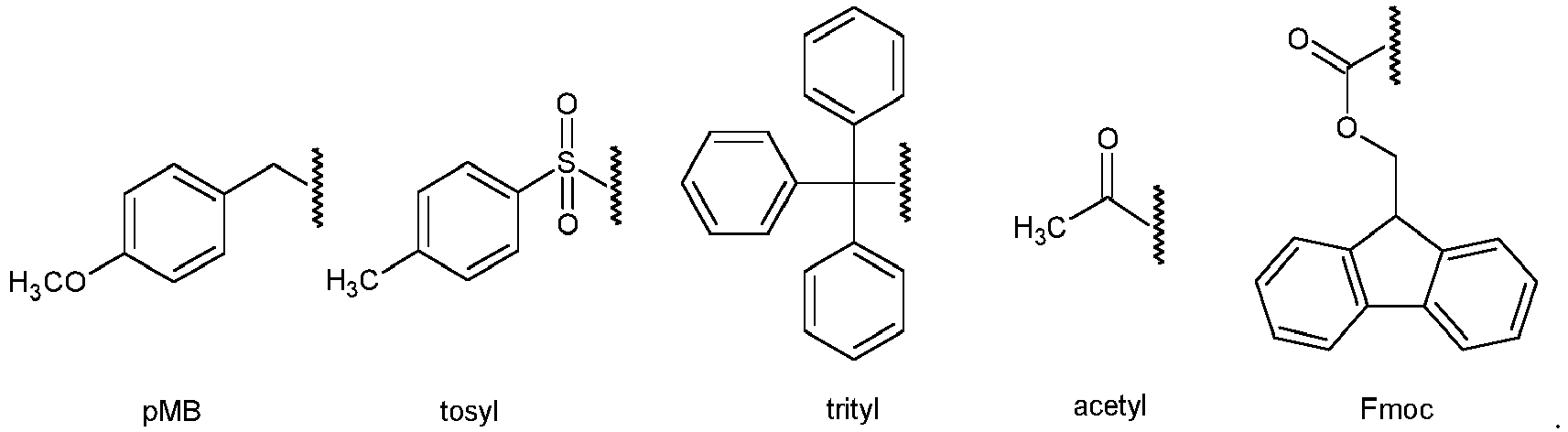
- Following long-standing patent law convention, the terms "a," "an," and "the" refer to "one or more" when used in this application, including the claims. Thus, for example, reference to "a subject" includes a plurality of subjects, unless the context clearly is to the contrary (e.g., a plurality of subjects), and so forth.
- Throughout this specification and the claims, the terms "comprise," "comprises," and "comprising" are used in a non-exclusive sense, except where the context requires otherwise. Likewise, the term "include" and its grammatical variants are intended to be non-limiting, such that recitation of items in a list is not to the exclusion of other like items that can be substituted or added to the listed items.
- For the purposes of this specification and appended claims, unless otherwise indicated, all numbers expressing amounts, sizes, dimensions, proportions, shapes, formulations, parameters, percentages, quantities, characteristics, and other numerical values used in the specification and claims, are to be understood as being modified in all instances by the term "about" even though the term "about" may not expressly appear with the value, amount or range. Accordingly, unless indicated to the contrary, the numerical parameters set forth in the following specification and attached claims are not and need not be exact, but may be approximate and/or larger or smaller as desired, reflecting tolerances, conversion factors, rounding off, measurement error and the like, and other factors known to those of skill in the art depending on the desired properties sought to be obtained by the presently disclosed subject matter. For example, the term "about," when referring to a value can be meant to encompass variations of, in some embodiments, ± 100% in some embodiments ± 50%, in some embodiments ± 20%, in some embodiments ± 10%, in some embodiments ± 5%, in some embodiments ±1%, in some embodiments ± 0.5%, and in some embodiments ± 0.1% from the specified amount, as such variations are appropriate to perform the disclosed methods or employ the disclosed compositions.
- Further, the term "about" when used in connection with one or more numbers or numerical ranges, should be understood to refer to all such numbers, including all numbers in a range and modifies that range by extending the boundaries above and below the numerical values set forth. The recitation of numerical ranges by endpoints includes all numbers, e.g., whole integers, including fractions thereof, subsumed within that range (for example, the recitation of 1 to 5 includes 1, 2, 3, 4, and 5, as well as fractions thereof, e.g., 1.5, 2.25, 3.75, 4.1, and the like) and any range within that range.
- The following Examples have been included to provide guidance to one of ordinary skill in the art for practicing representative embodiments of the presently disclosed subject matter. In light of the present disclosure and the general level of skill in the art, those of skill can appreciate that the following Examples are intended to be exemplary only and that numerous changes, modifications, and alterations can be employed without departing from the scope of the presently disclosed subject matter. The synthetic descriptions and specific examples that follow are only intended for the purposes of illustration, and are not to be construed as limiting in any manner to make compounds of the disclosure by other methods.
- The presently disclosed subject matter provides a library of bicyclic heterocyclic compounds having an imidazo[1,2-b]pyridazine scaffold as a central core, which may act as inhibitors of human neutral sphingomyelinase 2 (hnSMase2).
- The initial screening of the IOCB compound library against hnSMase2 resulted in the discovery of two compounds with a closely related structures - compounds 1 (I35MCK380) and 2 (I35MCK388) (see
FIG. 1 ). - The SAR study consisted of several steps. Firstly, the central imidazo[1,2-b]pyridazine core was substituted by numerous other bicyclic heterocycles including [1,2,3]triazolo[4,5-d]pyrimidine, purine, pyrazolo[1,5-a]pyrimidine, furo[3,2-b]pyridine, pyrazolo[5,4-d]pyrimidine, thieno[3,2-d]pyrimidine, thieno[3,4-d]pyrimidine and others. Since imidazo[1,2-b]pyridazine proved to be the only effective scaffold, the study was continued by gradual modification of various positions on this core to obtain a library of potential inhibitors of hnSMase2 (
FIG. 2 ). - The synthetic strategy was generally as follows: Dichloroderivative SM-1 was used as a starting material ( J.Med. Chem, 2015, 58, 3767). Halogen atom in
position 8 was replaced by (R)-N-(pyrrolidin-3-yl)acetamide to give derivative SM-2. Second chlorine atom inposition 6 was then converted to a methyl by treatment with trimethylaluminum-DABCO complex to afford compound 3, which was in the last step iodinated by NIS in dichloromethane. Compound SM-4 served as a starting material for synthesis of majority of the final compounds. Alternative starting material SM-6 bearing chlorine inposition 6 and iodine in position 3 was prepared from derivative SM-5 (J.Med.Chem, 2015, 58, 3767) using same conditions as in the preparation of SM-2.
- Methods for introducing aryl or hetaryl substituents to position 3 on the central core are depicted in
Scheme 2. Using method A (Suzuki coupling) or method C (Stille coupling) on SM-4 led to a set offinal compounds 1 and 4-18. For preparation of the chloro derivative SM-7 method B was used. Compound SM-7 then served as a starting material for preparation of derivatives with modifiedposition 6.
-
Compound 2, the opposite enantiomer tocompound 1, was synthesized using the same reaction conditions, only (S)-N-(pyrrolidin-3-yl)acetamide was used instead of (R)-enantiomer (Scheme 3).
- Since the initial studies suggested that the substituent at
position 8 of the central core can significantly influence the activity, derivatives ofcompounds 1 and 7 bearing various substituents on the amino group of the pyrrolidine ring (Scheme 4) also were prepared using the following methods. - Firstly, the acetyl group was removed under acidic conditions, furnishing hydrochlorides of compounds 1a and 7a, which served as a starting material for subsequent derivatizations. Four different modifications were chosen, phenyl urea (19), sulfonyl derivatives (20-30), acyl derivatives (31-37) and carbamates (39-43), which were then easily accessible by reaction of the compounds 1a or 7a, respectively, with phenylisocyanate, variously substituted sulfonyl chlorides, acyl chlorides and carbamates, respectively, under basic conditions. In some specific cases, the HATU coupling agent and carboxylic acids were used. Compounds 40-42 were prepared by slightly modified method. Firstly, p-nitrophenylcarbamate was prepared and this intermediate was immediately treated with appropriate alcohol or phenol.

- Derivatives bearing differently modified amines were prepared as depicted in scheme 5. Firstly the chlorine atom in
position 8 was exchanged under SNAr conditions (DIPEA, CH3CN or ethanol). Dimethoxyphenyl substituent was then introduced to position 3 by Suzuki coupling, according to the general method B, which was followed by methylation using trimethylaluminum-DABCO complex as a methylation reagent.
- Two examples with
derivatized position 6 were prepared from the compound SM-7 (Scheme 6). Suzuki coupling with phenylboronic acid led to derivative 54. Thioethyl derivative 55 was prepared by substitution of the chlorine atom with sodium salt of thioethanol. During this reaction partial demethylation occurred, and therefore free hydroxyl groups were then methylated with methyliodide/K2CO3 in acetone.
- Further modifications on pyrrolidine ring were achieved under Mitsunobu conditions applied on the hydroxy derivative 52 (Scheme 7). S-acetyl derivative 56 and azido compound 58 were prepared. Huisgen cycloaddition of the azido compound 58 with phenylacetylene afforded triazolo derivative 59 under standard conditions (copper sulphate/sodium ascorbate). Morpholino derivative 57 was prepared by closing the morpholino ring on an amino group of
1a using bis 2,2'-dichloroethyl ether. Acetylation (AczO) of the hydroxy group in compound 51 afforded O-acetyl derivative 60.
- Compound (61) with no substituent in
position 2 was prepared by following the synthetic route described inScheme 8. Firstly, chlorine inposition 8 in compound 60b (prepared by condensation of 60a with aq. chloroacetaldehyde) was replaced by (R)-N-(pyrrolidin-3-yl)acetamide and obtained substrate 60c was then converted to chloro intermediate 60d by Suzuki coupling (method A).Position 6 was then methylated with trimethylaluminum-DABCO complex (method D).
-
Compound 62 bearing a p-tolyl group inposition 2 was prepared as depicted in Scheme 9. Pyridazine derivative 62a was reacted with 2-bromo-1-(p-tolyl)ethan-1-one to close imidazo[1,2-b]pyridazine ring. Then, iodine was introduced to position 3 by using NIS to afford intermediate 62b. This substrate was then utilized in the same way as in previous cases (nuclephilic substitution, Suzuki coupling, methylation with trimethylaluminum-DABCO complex) andtarget compound 62 was obtained.
- Two more modifiactions were prepared (Scheme 10). Boc-protected derivative 46 was converted to cyclohexanoyl derivative 63. To increase solubility of
compound 18, the NH group was methylated to obtain derivative 64.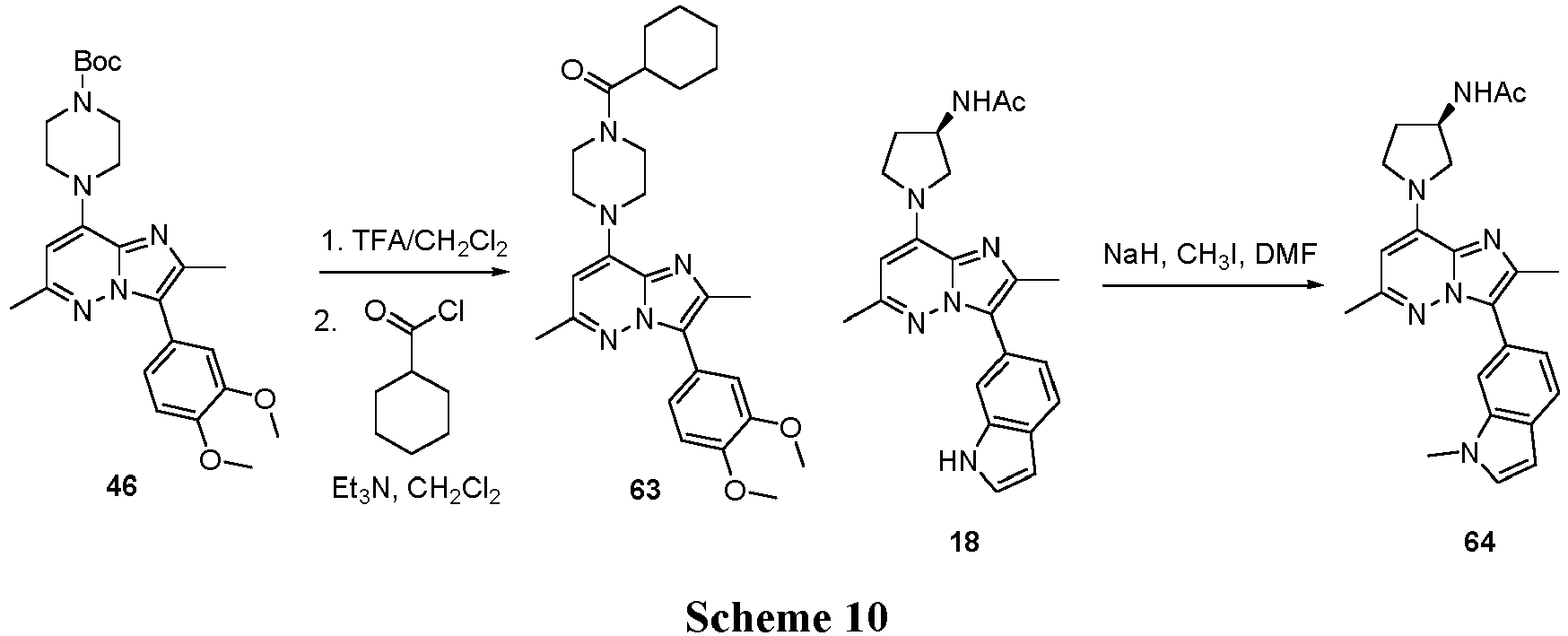
- 8-azapurine derivative 65 (Scheme 11) as a model compound with similar PK characteristic and also as a negative control for the experiments. Pyrrolidine substituent was introduced to the scaffold by nucleophilic substitution of the chlorine in 6-chloro-8-azapurine derivative ( Bioorg. Med. Chem. Lett., 2016, 26, 2706). Boc protecting group was then cleaved under acidic conditions and free amino group was acetylated to afford the target molecule.
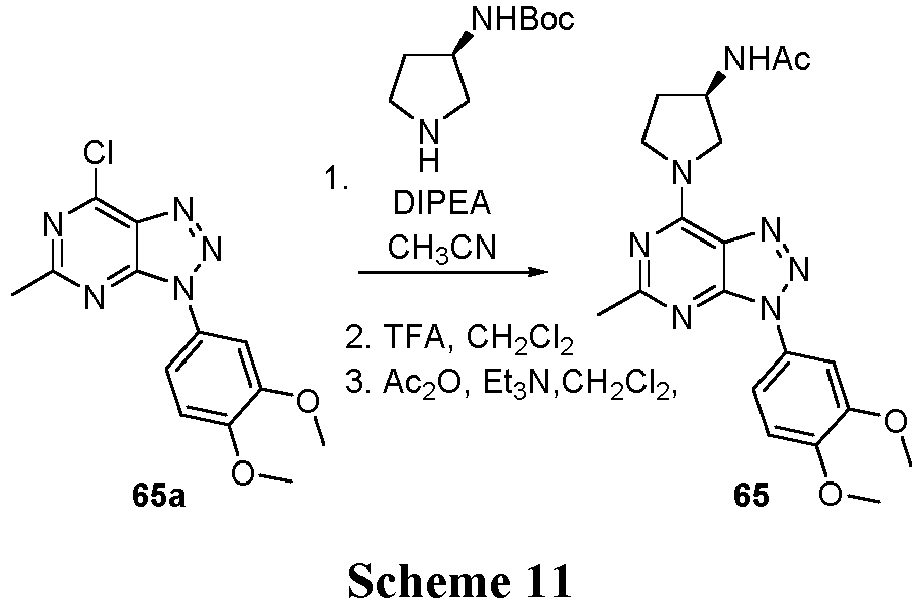
- NMR spectra (δ, ppm; J, Hz) were measured on a Bruker Avance II-400 instrument (400.0 MHz for 1H and 101 MHz for 13C) in hexadeuterated dimethyl sulfoxide or CDCl3 and referenced to the solvent signal (δ 2.50 and 39.70, respectively, 7.26 and 77.16). Mass spectra were measured on a LTQ Orbitrap XL (Thermo Fisher Scientific) using electrospray ionization (ESI). Column chromatography was performed on Silica gel 60 (Fluka) and thin-layer chromatography (TLC) on
Silica gel 60 F254 foils (Merck). Solvents were evaporated at 2 kPa and bath temperature 30-60 °C; the compounds were dried at 13 Pa and 50 °C. For all the tested compounds satisfactory elemental analysis was obtained supporting > 95% purity. Optical rotation was measured on polarimeter Autopol IV (Rudolph Research Analytical) at 589 nm wavelength in chloroform or DMSO. UPLC samples were measured on Waters UPLC H-Class Core System, (column Waters Acquity UPLC BEH C18 1.7 µm, 2.1x100 mm), Waters Acquity UPLC PDA detector, Mass spectrometer Waters SQD2 and MassLynx Mass Spectrometry Software. For reverse-phase flash column chromatography, C-18 RediSep Rf column Teledyne ISCO (50g) were used. -

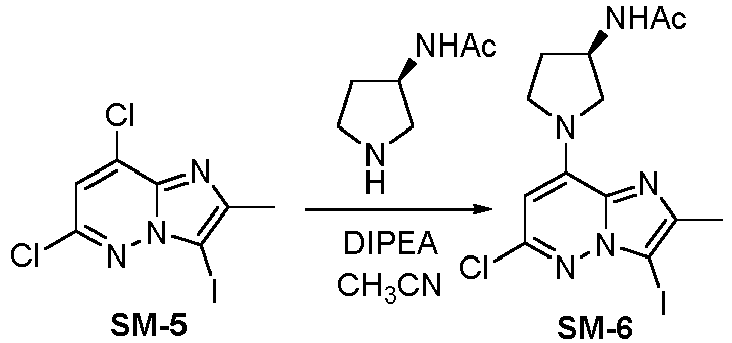
-
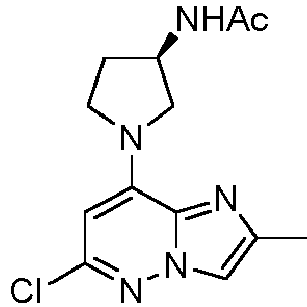
-

-

-


- Suspension of starting material SM-4 (1 mmol), appropriate boronic acid (1.5 mmol), sodium carbonate (2 mmol) in dioxane-water (10 mL, 4:1) was three times purged argon. Then Pd(dppf)2Cl2 (0.1 mmol) was added and again flask was purged with argon. Reaction mixture was then heated to 95 °C overnight, cooled down and diluted with ethyl acetate or chloroform (300 mL). The suspension was dried over Na2SO4 and evaporated. Final compound was isolated by column chromatography and then crystallized.
- Suspension of starting material SM-6 (1 mmol), appropriate boronic acid (1.2 mmol), sodium carbonate (1.5 mmol) in dioxane-water (10 mL, 4:1) was three times purged argon. Then Pd(dppf)2Cl2 (0.05-0.1 mmol) was added and again flask was purged with argon. Reaction mixture was then heated to 95 °C for 2 hours, cooled down and diluted with ethyl acetate or chloroform (300 mL). The mixture was dried over Na2SO4 and evaporated. Product was isolated by column chromatography and then crystallized.
- Mixture of compound SM-4 (0.5 mmol) and tributyltin reagent (0.65 mmol) in DMF (10 ml) was degassed and purged with argon. To this mixture Pd(PPh3)4 (58 mg, 10%) was added and reaction mixture was purged with argon and then heated to 100 °C for 16 hours. Reaction mixture was cooled down, diluted with ethyl acetate (300 mL), dried over Na2SO4 and evaporated. Product was isolated by column chromatography and then crystallized.

-


-

compound 1. As an amine was used commercially available (S)-N-(pyrrolidin-3-yl)acetamide. All the spectra were identical to those for (R)-enantiomers.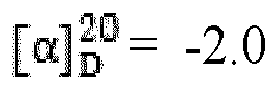
-


-


-


-

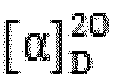
-
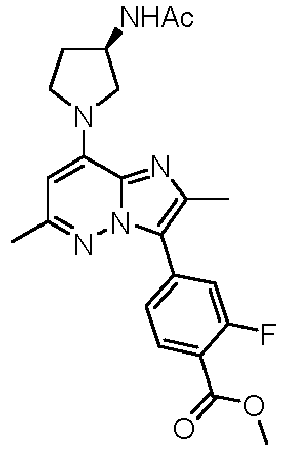

-
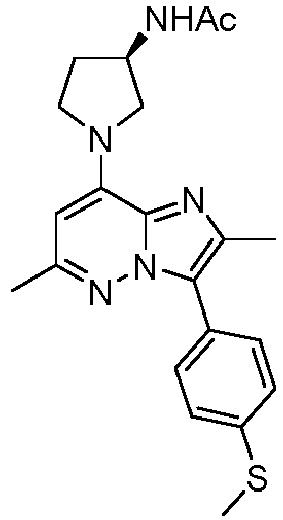

-


-


-


-
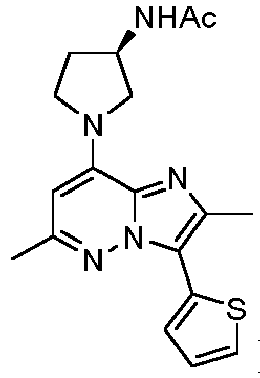
- Prepared by method C from 2-(tributylstannyl)thiophene in 68 % yield. Chromatography: CHCl3-acetone 3:2, crystallization from ethyl acetate.

-


-


-


-


-


-


-

-

-
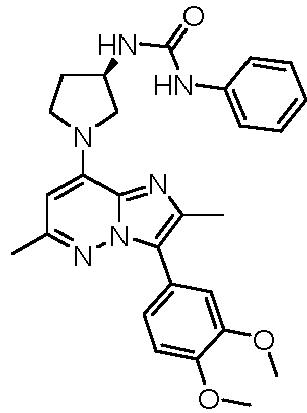

-

- Hydrochloride 1a or 9a (160 mg, 0.4 mmol) was suspended in dry CH2Cl2 (10 mL) and sequentially was added Et3N (0.3 mL, 2.2 mmol) and DMAP (cat.) at r.t.. Corresponding sulfonyl chloride was then added dropwise and reaction mixture was stirred at r.t. overnight. Reaction mixture was evaporated and residue was purified by silica gel chromatography (80 g) and product was then crystallized.
- Yield: 110 mg (67%).
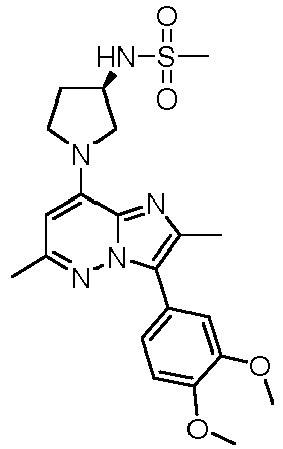

-
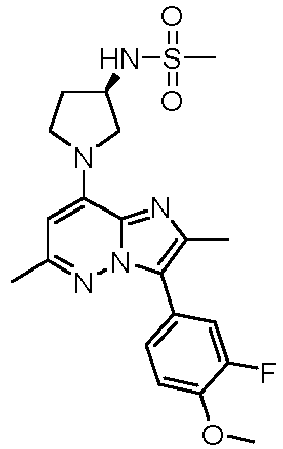

-
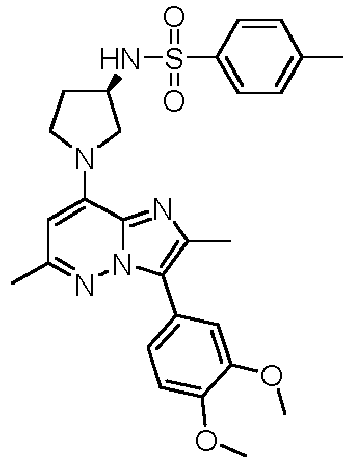

-


-


-

-


-

-


-


-

-

- Compound 4 (100 mg, 0.26 mmol) was heated to reflux overnight in a mixture of conc. HCl (3 mL) and water (3 mL). Reaction mixture was evaporated to dryness, co-evaporated with ethanol (3 × 20 mL) and then with ethyl acetate. Resulting solid was suspended in dichloromethane (10 mL) and sequentially was added triethylamine (182 µL, 1.3 mmol), DMAP (cat. amount) and cyclohexanecarbonyl chloride (53 µL, 0.39 mmol). Reaction mixture was stirred at r.t. for three hours and then evaporated. Product was purified by column chromatography (75 g, toluene:ethyl acetate 1:1). Obtained solid was triturated with ether and filtered off. It was obtained 47 mg (41%) of the product.

-


-


-
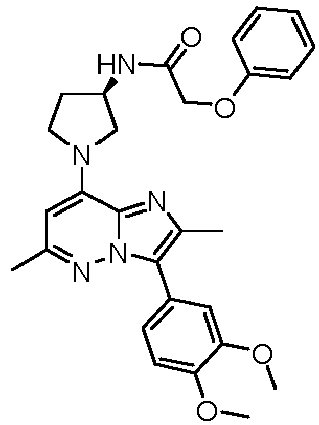

-


-


-


-

- Hydrochloride 1a or 1b (160 mg, 0.4 mmol) was suspended in dry CH2Cl2 (10 mL) and mixture was cooled down to 0 °C. To this suspension was sequentially added Et3N (0.3 mL, 2.2 mmol) and DMAP (cat.). Appropriate chloroformate (0.6 mmol) was then added dropwise at 0 °C and reaction mixture slowly warmed to r.t. and was stirred overnight. Reaction mixture was evaporated and residue was purified by silica gel chromatography (100 g) and product was then crystallized.
-


-


-
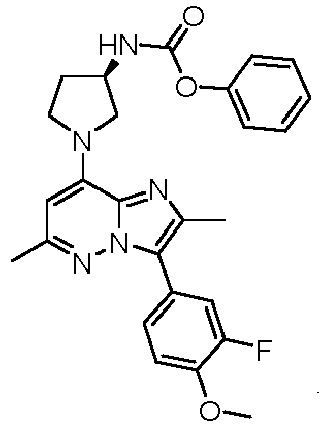

- Hydrochloride 1a (320 mg, 0.79 mmol) was suspended in dry acetonitrile (20 mL) and mixture was cooled down to 0 °C. To this suspension were sequentially added Et3N (0.68 mL, 3.95 mmol) and DMAP (cat.). p-Nitrophenyl chloroformate (221 mg, 1.1 mmol) was then added in one portion at 0 °C and reaction mixture was stirred for 2 hours at 0 °C. Then was sequentially added triethylamine (0.4 mL, 2.4 mmol) and an appropriate alcohol (4 mmol) and reaction mixture was heated to 85 °C (bath) overnight. After evaporation the residue was chromatographed on silica gel column (150 g) followed by purification on reverse-phase flash chromatography (C18, 50 g, water/acetonitrile 40% to 100%). Compounds were then lyophilized from dioxane.
-


-


-
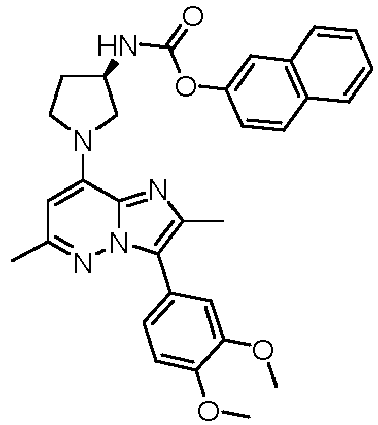
acetonitrile 30% to 100%). Product was lyophilized.
-


- Compound SM-5 (500 mg, 1.53 mmol), appropriate amine (2 mmol), DIPEA (3 mmol for amines, 4 mmol for amine hydrochlorides) was dissolved in acetonitrile (10 mL). Reaction mixture was heated at 85 °C for 16 hours and cooled down. Products were separated by column chromatography or directly as precipitated solids were filtered-off and washed with acetonitrile.
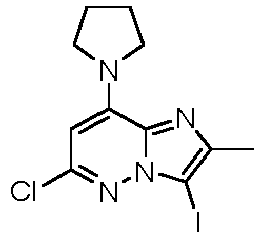
Yield: 79%. Chromatography: toluene:ethyl acetate 20:1. UPLC-MS: t = 5.28 (M+H, 363.1/365.1). -

-

-
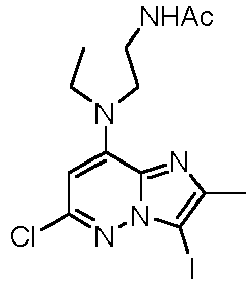
-

-

-

-
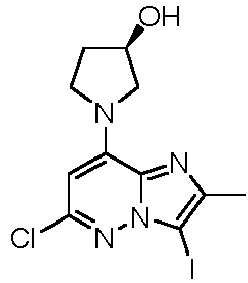
-

-

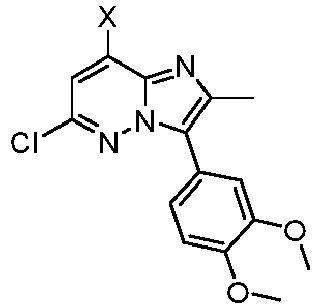
- General method B with 3,4-dimethoxyphenyl boronic acid as a coupling agent was used.
-
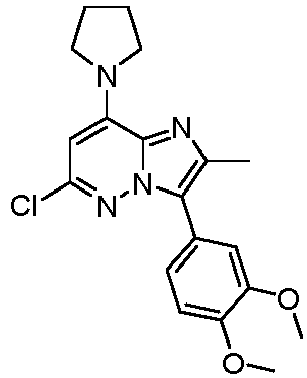
-

-

-

-

-

-

-

-

-


- To a solution of DABCO (98 mg, 0.88 mmol) in 3 mL freshly distilled THF, AlMe3 (2M in hexanes, 0.89 mL, 1.78 mmol) was added dropwise and the mixture was stirred at r.t. for 30 minutes under argon atmosphere. A solution of chloro derivative (1 mmol), Pd2(dba)3 (50 mg, 0.06 mmol) and X-Phos (57 mg, 0.12 mmol) in 15 mL freshly THF was subsequently added to the solution and the reaction mixture was stirred at 75 °C overnight under argon atmosphere. The mixture was cooled to 0 °C and quenched with sat. NH4Cl (4 mL), diluted with acetone and ethyl acetate and filtered through Celite. The Celite pad was thoroughly washed with acetone and ethyl acetate. The filtrate was evaporated and the residue was purified by silica gel column chromatography (120 g). Solids were then crystalized from appropriate solvent.
-

-

-

-

-

methanol 30% to 100%). Crystallization: ethyl acetate. 1H NMR (400 MHz, d6-DMSO) δ 2.30 (s, 3H), 2.40 (s, 3H), 4.60 (br s, 4H), 5.77 (s, 1H), 6.07 (s, 2H), 7.08 (d, J= 8.4 Hz, 1H), 7.18 (dd, J= 8.3, 2.0 Hz, 1H), 7.29 (d, J= 2.0 Hz, 1H). 13C NMR (101 MHz, d6-DMSO) δ 15.0, 21.7, 55.7, 56.5*, 93.8, 111.8, 113.3, 122.2, 124.0, 125.9*, 131.8, 136.8, 140.5, 148.3, 148.4, 151.5. HRMS calcd for C20H24N4O2 m/z: 351.1816 (M+H)+, found 351.1813. -

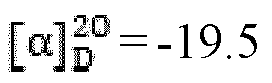
-


-


-

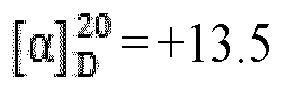
-

-


-

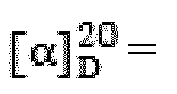
-

acetonitrile 10% to 100%). It was obtained 156 mg (27%) of the product.
-

acetonitrile 10% to 100%).
-

acetonitrile 10% to 100%). It was obtained 425 mg (79 %) of the product.
-

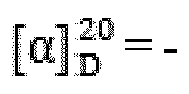
-


- Mixture of pyridazine 60a (2 g, 3.9 mmol), aq. chloroacetaldehyde (4 mL, 50% sol.) was heated to 80 °C in isopropanol (20 mL) for 16 h. Reaction mixture was cooled down, evaporated and extracted between ethyl acetate (400 mL) and satd. sodium bicarbonate (150 mL). Organic phases were dried over sodium sulphate and evaporated. Residue was passed through small pad of silica gel (toluene:ethyl acetate 3: 1) and obtained solid (1.77 g) was used without further purification. UPLC-MS: t = 4.11 (M+H, 266//268/270), t = 4.18 (310/312/314. Product is a mixture with its 8-Br derivative.
-

-

-


-

-

-

-

-


-

-


-


- Methods - The fluorescence based assay to monitor the activity of human nSMase2 in the presence or absence of potential inhibitors has been described recently. Figuera-Losada, et al. Lysate of cells expressing recombinant nSMase2 is used to catalyze the hydrolysis of sphingomyelin (SM) to ceramide and phosphorylcholine. Phosphorylcholine undergoes dephosphorylation in a reaction catalyzed by alkaline phosphatase (4 U/mL) to produce choline which in turn is oxidized by choline oxidase (0.1 U/mL) to betaine and hydrogen peroxide (H2O2). Hydrogen peroxide is made to react with Amplex red (50 µM) in the presence of horseradish peroxidase (HRP, 1U/mL) to generate the fluorescent molecule resorufin. Generation of fluorescence is monitored by measuring relative florescence units (RFU) with excitation at 530 nm and emission at 590 nm. Extent of fluorescence is directly proportional to the extent of SM hydrolysis. Substrate stock solution is prepared in 2% Triton X-100 and sonicated for 1 min. Reactions are carried out for 1 h at 37°C in 100 mM Tris-HCl pH 7.4, 10 mM MgCl2, 0.2% Triton X-100. This assay has been optimized in 384-well format (50 µL total volume per well) under conditions where nSMase2-catalyzed hydrolysis of SM is linear with respect to nSMase2 concentration, time of incubation and SM concentration (
FIGS. 3A-3C ). The assay has high reliability (Z' = 0.8 - 0.9). It is used for compound screening, IC50 determinations and mode of inhibition studies. IC50 determinations are carried out in duplicate eight-point dose response curves. A counter screen is concomitantly carried out to identify false positives resulting from inhibition of the coupling enzymes. For the counter screen, the alkaline phosphatase, choline oxidase and HRP reactions are carried out in the absence of human nSMase2 and initiated by the addition of phosphorylcholine (2 µM), the alkaline phosphatase substrate. Compounds that show inhibition of the coupling enzymes are considered false positives and are not used further. Data analysis and non-linear least squares curve fitting are carried out with GraphPad Prism 5. - Referring now to
FIG. 3A, FIG. 3B, and FIG. 3C , plots show the dependence of enzyme activity with respect to protein concentration (left panel,FIG. 3A ), sphingomyelin (SM) concentration (middle panel.FIG. 3B ) and time of incubation (right panel.FIG. 3C ). Km and Vmax in middle panel were obtained from a non-linear least squares fit to the Michaelis-Menten equation. - Methods - The effect of nSMase2 inhibitors on the manufacturing and release of ceramide rich exosomes from primary astrocytes was investigated as previously described. Dickens, et al. Briefly, rat astrocytes are seeded onto 6-well plates at a density of 20,000 cells/ well. Twenty-four hours after seeding, astrocytes are washed with PBS and the medium changed to media without FBS. Absence of FBS mimics a trophic factor withdrawal stimulus causing the release of exosomes via a nSMase2-dependent pathway. Astrocytes are then treated with nSMase2 inhibitors at concentrations in the range 0.03 - 30 µM. DMSO (0.02%) is used as control. Two hours after treatment, media is collected and centrifuged at 2700g for 15 min (4°C). Supernatant is further centrifuged at 10,000g for 15 min (4°C) to remove large particles such as apoptotic bodies. Astrocyte-derived extracellular vesicles (EVs) are isolated via ultracentrifugation at 100,000 g for 3h at 4°C. Fractions containing EV are washed twice with 5 ml PBS and the final pellet resuspended in PBS. This isolation procedure results in the isolation of EVs with a narrow size range and protein markers consistent with exosomes. Dickens, et al. The number of EVs is quantified using ZetaView Nanoparticle Tracker (Particle Metrix GmBH, Meerbusch, Germany) and the corresponding ZetaVeiw software (8.03.04.01). Nanosphere size standard 100 nm (Thermo Scientific) is used to calibrate the instrument prior to sample readings. For each
sample 1 mL of the supernatant is injected into the sample-carrier cell and the particle count measured at 5 positions, with 2 cycles of reading per position. Cells are washed with PBS after every sample. Mean concentration of EVs/mL (±SEM) is calculated from 6 replicates. This screening assay is reliable with a Z' = 0.75. - Referring now to
FIG. 4A and FIG. 4B , the ability ofcompound 38 and several of its analogs to inhibit exosome release in vitro was evaluated as previously described. Dickens, et al. Primary astrocytes were treated with compound of interest including the closely relatedinactive analog 65 at different concentrations (0.3 - 10 µM) with DMSO (0.02%) as control. Two hours after treatment, exosomes were isolated from the media and quantified using ZetaView Nanoparticle Tracker. The mean concentration of exosomes (EVs/mL ± SEM) was calculated from 6 replicate experiments (seeFIG. 4 ).Compounds compound 65, the closely related inactive analog, had no effect on exosome release. Baseline exosome release can be variable between experiments; as a result, inhibition is always compared relative to vehicle treatment within the same experiment. Structures of compounds with their corresponding IC50s are provided in the second row ofFIG. 4 . - Methods - Phase I metabolic stability in both mouse and human liver microsomes was performed as described previously. Rais et al. Briefly, compounds are spiked in liver microsomes (mouse, human) and incubated in an orbital shaker at 37°C. At predetermined times (0, 30 and 60 min) aliquots of the mixture in triplicate are removed and the reaction quenched by addition of three times the volume of ice cold acetonitrile spiked with internal standard. Compound disappearance is monitored over time using LC/MS/MS. See Table 2 and
FIG. 5 .Table 2 - Phase I metabolic stability of nSMase2 inhibitors Compound # Mouse Liver Microsome (+) NADPH* Human Liver Microsome (+) NADPH* % Remaining at 60 min % Remaining at 60 min 22 2 ± 1 29 ± 1 44 1 ± 0 58± 4 23 5 ± 1 12 ± 3 62 53 ± 6 28 ± 5 28 20 ± 1 43 ± 6 29 7 ± 2 32 ± 6 30 15 ± 5 61 ± 3 35 117 ± 8 113 ± 8 38 63 ± 6 103 ± 14 13 28 ± 2 50 ± 4 17 72 ± 6 114 ± 4 37 6 ± 1 20 ± 2 *Negative controls without NADPH > 95% remaining - Methods - Mode of inhibition of
compound 38 was determined using the fluorescence-based assay detailed above. Lysate of cells expressing recombinant nSMase2 (1.9 µg protein/50 µL) was incubated with different SM concentrations in the presence of different concentrations of 38 for 3h. Rate of change of fluorescence vs. sphinghomyelin concentration in the presence of increasing concentrations of 38 were plotted in GraphPad Prism and Vmax and Km were obtained by a least-squares fit to the Michaelis-Menten equation using non-linear regression. - Referring now to compound 38 exhibited non-competitive inhibition. Maximal rate of SM hydrolysis (Vmax) decreased with increasing concentrations of 38 while the binding constant (Km) remained the same (top panel). Vmax in RFU (Relative Fluorescent Units) per hour and Km at each inhibitor concentration were obtained from non-linear least squares fitting to the Michaelis-Menten equation. (middle panel).
- Methods -
Compound 38 was dosed at 10 mg/kg (IP or peroral) at a dosing volume of 10 mL/kg. Blood was obtained via cardiac puncture and brain tissue was dissected at 0.25, 0.5,1, 2, 4, 6 and 8 h post dose (n = 3 per gender and time point). Plasma was harvested from blood by centrifugation. Subsequently, samples were extracted from plasma and brain by a one-step protein precipitation using acetonitrile followed by vortexing for 30 min and centrifugation (10,000 g for 10 min) as we have described previously. Rais, et al. Once extracted, the samples were reconstituted into a mobile phase and analyzed via LC/MS/MS. Plasma concentrations (nM) as well as tissue concentrations (pmol/g) were determined and plots of mean plasma concentration vs. time were constructed for PK analysis. Non-compartmental-analysis modules in WinNonlin® (version 5.3) were used to assess pharmacokinetic parameters including maximal concentration (Cmax), time to Cmax (Tmax), area under the curve extrapolated to infinity (AUC0-∞) and brain-to-plasma (B/P) ratios. - Referring now to
FIG. 7A and FIG. 7B , plasma and brain levels of 38 were measured at 0.25, 0.50, 1, 2, 4, 6 and 8h post dose (n = 3 per time point). Following i.p.administration compound 38 showed high systemic exposures and excellent brain penetration (0.6). Brain levels at 8h post dose were > 2.5-fold higher than the IC50 value of 38 for inhibition of nSMase2 (300 nM). Similarly, following oral administration, 38 showed high plasma exposures suggesting 38 to be orally available. In addition, 38 also achieved high brain exposures with a brain to plasma ratio of 0.67. - Methods - Striatal injections of IL-1β and exosome measurements are performed as previously described by our group in adult (2-3 month) male GFAP-GFP mice (Jackson Laboratories). Dickens, et al.; McCluskey, et al. Mice are anesthetized with 3% Isoflourane (Baxter) in oxygen (Airgas), and placed in a stereotaxic frame (Stoelting Co.). A small burr hole is drilled in the skull over the left striatum using a dental drill (Fine Scientific Tools). IE1β (0.1ng/3µl) is injected (total volume of 3µl) at the rate 0.5 µl/min via a pulled glass capillary tip diameter < 50 µm using the stereotaxic coordinates: A/
P + 1; M/L -2; -3 D/V. Following infusion, the capillary is held in place for 5 min to allow for solution to diffuse into the tissue. Animals are sacrificed at 2, 12 or 24h by an overdose of anesthetic, and transcardially perfused with ice-cold saline containing heparin (20 µl per 100 ml, Sigma). Blood is rapidly isolated and flash frozen. Brains are rapidly extracted and flash frozen or post fixed in 4% PFA followed by cryoprotection in a 30% sucrose solution and frozen at - 80°C. - Quantitation of Plasma EVs: GFAP-GFP mice that release green EVs from astrocytes into the systemic circulation were used so that exosome release from astrocytes in plasma can be followed. Dickens, et al. Blood is collected via cardiac puncture using a heparin (Sigma Aldrich) coated syringe and EDTA tubes (BD) 2h following striatal injections. Blood is immediately centrifuged at 2700g for 15min (20°C) to obtain plasma. Plasma is further centrifuged at 10,000g for 15 min (4°C) to generate platelet free plasma. This procedure removes large particles such as apoptotic bodies. Plasma-derived EVs are isolated via ultracentrifugation at 100,000g for 3h (4°C). Fractions containing EVs are washed twice with 5 ml saline and the final pellet resuspended in saline. This isolation procedure results in the isolation of EVs with a narrow size range and protein markers consistent with exosomes. For isolation of GFP+ EVs from plasma collected from GFAP-GFP mice, Dynabeads M-450 Epoxy (Invitrogen) is coupled with anti-GFP antibody (Thermo Fisher) at a ratio of 200 µg antibody per 4 × 10⁸ beads. Plasma from GFAP-GFP mouse (50 µL) is incubated with 2 × 10⁷ anti-GFP antibody-coupled Dynabeads at 4°C overnight. The beads are washed and placed on a magnet to separate EVs bound to anti-GFP antibody-coupled Dynabeads. The precipitated EVs are eluted using 0.1 M glycine, pH = 3.0. The concentration of immunoprecipitated GFP+ EVs is quantified using Zeta View nanoparticle tracking analysis (Particle Metrix) as described in the cell-based exosome release.
- Referring now to
FIG. 8A and FIG. 8B , the ability ofcompound 38 to inhibit exosome release in vivo was evaluate as previously described. Dickens, et al. Striatal injection of IL-1β in mice triggers a release of brain exosomes which is measurable in plasma. Administration of 38 (10 mg/kg IP) 30 min before IL-1β injection significantly reduced the increased exosomes 2 h after IL-1β administration. The closely related inactive analog, 65, had no effect. Similar results were observed at 12 and 24 h (data not shown). Taken together, both, in vitro and in vivo results indicate 38 inhibits exosome release; the fact that 65, a closely related nSMase2 inactive analog, had no effect suggests that the effect of 38 is through nSMase2 inhibition.FIG. 8 Left Panel: Total number of extracellular vesicles in plasma.FIG. 8 Right Panel: Total number of GFP labeled EVs known to be released from brain. * p < 0.05, ** p < 0.001 when comparing IL1-1β and IL-1β + 65 vs. Saline. ## p < 0.01, ### p < 0.001 when comparing IL-1β + 38 vs. IL-1β. - In addition to compound 38 not inhibiting the related enzymes alkaline phosphatase (a phosphomonoesterase) or acid sphinghomyelinase (a phosphodiesterase),
compound 38 was evaluated in Eurofins SafetyScreen44, a panel of 44 selected targets recommended by major pharmaceutical companies to establish undesirable off target activity profiles. Bowes, et al. There were 4/44 positive hits at 10 µM (α1A adrenergic receptor, Ca2+ and Na+ channels and dopamine transporter). All positive hits however, were significantly less than 100% inhibition indicating that there is at least a 20-fold segregation in potency between inhibition of these off targets and inhibition of nSMase2. Of note,compound 38 was negative against hERG and two additional phosphodiesterases (3A and 4D2). - All publications, patent applications, patents, and other references mentioned in the specification are indicative of the level of those skilled in the art to which the presently disclosed subject matter pertains.
- Bowes, J., Brown, A. J., Hamon, J., Jarolimek, W., Sridhar, A., Waldron, G., and Whitebread, S. (2012) Reducing safety-related drug attrition: the use of in vitro pharmacological profiling, Nat Rev Drug Discov 11, 909-922.
- Dickens, A. M., Tovar, Y. R. L. B., Yoo, S. W., Trout, A. L., Bae, M., Kanmogne, M., Megra, B., Williams, D. W., Witwer, K. W., Gacias, M., Tabatadze, N., Cole, R. N., Casaccia, P., Berman, J. W., Anthony, D. C., and Haughey, N. J. (2017) Astrocyte-shed extracellular vesicles regulate the peripheral leukocyte response to inflammatory brain lesions, .
- Figuera-Losada, M., Stathis, M., Dorskind, J. M., Thomas, A. G., Bandaru, V. V., Yoo, S. W., Westwood, N. J., Rogers, G. W., McArthur, J. C., Haughey, N. J., Slusher, B. S., and Rojas, C. (2015) Cambinol, a novel inhibitor of .
- McCluskey, L., Campbell, S., Anthony, D., and Allan, S. M. (2008) Inflammatory responses in the rat brain in response to different methods of intra-cerebral administration, J Neuroimmunol 194, 27-33.
- Rais, R., Jancarik, A., Tenora, L., Nedelcovych, M., Alt, J., Englert, J., Rojas, C., Le, A., Elgogary, A., Tan, J., Monincova, L., Pate, K., Adams, R., Ferraris, D., Powell, J., Majer, P., and Slusher, B. S. (2016) Discovery of 6-Diazo-5-oxo-l-norleucine (DON) Prodrugs with Enhanced CSF Delivery in Monkeys: A Potential Treatment for Glioblastoma, J Med Chem 59, 8621-8633.
- Loberto, C., Hasslere, D. F., Signorelli, P., Okamoto, Y., Sawai, H., Boros, E., Hazen-Martin, D. J., Obeid, L. M., Hannun, Y. A., and Smith, G. K., "Inibition of Tumor Necrosis Factor-induced Cell Death in MCF7 by a Novel Inhibitor of Neutral Sphingomyelinase" J Biol Chem Vol. 277, 41128-41139 (2002).
- Figuera-Losada, M., Stathis, M., Dorskind, J. M., Thomas, A. G., Bandaru, V. Yoo, S.-W., Westwood, N. J., Rogers, G. W., McArthur, J. C., Haughey, N. J., Slusher, B. S., and Rojas, C., Cambinol, a Novel Inhibitor of .
- Asai, H., Ikezu, S., Tsunoda, S., Medalla, M., Luebke, J., Haydar, T., Wolozin, B., Butovsky, O., Kugler, S., Ikezu, T., "Depletion of Microglia and Inhibition of Exosome Synthesis Halt Tau Propagation" Nat Neurosci Vol. 18, 1584-1593 (2015).
- Van Echten-Deckert, G. and Walter, J. "Sphingolipids: Critical Players in Alzheimer's Disease" Progress in Lipid Research Vol. 51, 378-393 (2012).
- Jana, A. and Pahan, K., "Fibrillar Amyloid-Beta-Activated Human Astroglia Kill Primary Human Neurons Via Neutral Sphingomyelinase: Implications for Alzheimer's Disease" J Neurosci Vol. 30, 12676-12689 (2010).
- Jana, A. and Pahan, K., "Sphingolipids in Multiple Sclerosis" Neuromol Med Vol. 12, 351-361 (2010).
- Jana, A., Hogan, E. L., Pahan, K., "Ceramide and Neurodegeneration: Susceptibility of Neurons and Oligodendrocytes to Cell Damage and Death" Journal of the Neurological Sciences Vol. 278, 5-15 (2009).
- Cutler, R. G., Pedersen, W. A., Camandola, S., Rothstein, J. D., Mattson, M. P.. "Evidence that Accumulation of Ceramides and Cholesterol Esters Mediates Oxidative Stree-Induced Death of Motor Neurons in Amyotrophic Lateral Sclerosis" Ann Neurol Vol. 52, 448-457 (2002).
- Jana, A. and Pahan, K., "Human ).
- Haughey, N. J., Cutler, R. G. , Tamara, A., McArthur, J. C., Vargas, D. L., Pardo, C. A., Turchan, J., Nath, A., Mattson, M. P.. "Perturbation of Sphingolipid Metabolism and Ceramide Production in HIV-Dementia" Ann Neurol Vol. 55, 257-267 (2004).
- Kosaka, N., Iguchi, H., Hagiwara, K., Yoshioka, Y., Takeshita, F., Ochiya, T., "Neutral Sphingomyelinase 2 (nSMase2)-dependent Exosomal Transfer of Angiogenic MicroRNAs Regulate Cancer Cell Metastasis" J Biol Chem Vol. 288, 10849-10859 (2013).
- Horres, C. R. and Hannun, Y. A., "The Roles of Neutral Spingomyelinases in Neurological Pathologies" Neurochem Res Vol. 37, 1137-1149 (2012).
- Mejdrova, I., Chalupska, D., Kogler, M., Sala, M., Plackova, P., Baumlova, A., Hrebabecky, H., Prochazkova, E., Dejmek, M., Guillon, R., Strunin, D., Weber. J., Lee, G., Birkus, G., Mertlikova-Kalserova, H., Boura, E., Nencka, R. "Highly Selective Phosphatidylinositol 4-Kinase IIIBeta Inhibitors and Structural Insight Into Their Mode of Action" J. Med. Chem., Vol. 58, 3767-3793 (2015).
- Sala, M., Kogler, M., Plackova, P., Mejdrova, I., Hrebabecky, H., Prochazkova, E., Strunin, D., Lee, G., Birkus, G., Weber, J., Mertlikova-Kaiserova, H., Nencka, R., "Purine Analogs as Phosphatidylinositol 4-Kinase IIIBeta Inhibitors" Bioorg. Med. Chem. Lett., Vol. 26, 2706-2712 (2016).
- U.S. Patent Application Publication No.
US20120220581A1 for Imidazo[1,2-b]pyridazine Derivatives and their use as PDE10 Inhibitors, to Pastor-Fernández, published August 30, 2012 . - Although the foregoing subject matter has been described in some detail by way of illustration and example for purposes of clarity of understanding, it will be understood by those skilled in the art that certain changes and modifications can be practiced within the scope of the appended claims.
Claims (9)
- A compound of formula:
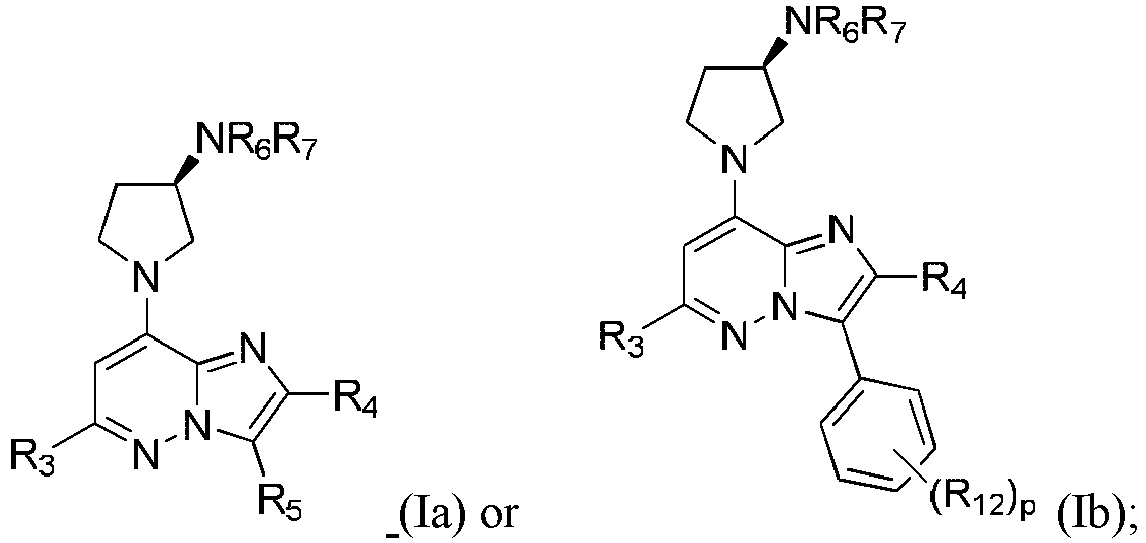 R3 is selected from the group consisting of H, substituted or unsubstituted alkyl, substituted or unsubstituted alkoxyl, substituted or unsubstituted thioalkyl, substituted or unsubstituted aryl, and halogen;R4 is selected from the group consisting of H, substituted or unsubstituted alkyl, and substituted or unsubstituted aryl;R5 is selected from the group consisting of H, halogen, substituted or unsubstituted alkyl, substituted or unsubstituted aryl, and substituted or unsubstituted heteroaryl;R6 is selected from the group consisting of H or substituted or unsubstituted C1-6 alkyl; andR7 is selected from the group consisting of -C(=O)-(CRyRz)m-R8, -C(=O)-(CRyRz)m-OR8, -C(=O)-O-(CRyRz)m-R8, and -S(=O)2-R9, wherein each m is an integer selected from the group consisting of 0, 1, 2, 3, 4, 5, and 6, Ry and Rz are each independently H, alkoxyl, or halogen, R8 and R9 are each independently selected from the group consisting of substituted or unsubstituted alkyl, -CF3, substituted or unsubstituted cycloalkyl, substituted or unsubstituted aryl or heteroaryl, substituted or unsubstituted cycloheteroaryl, and NR10R11, wherein R10 and R11 are each independently selected from the group consisting of H, substituted or unsubstituted C1-6 alkyl, and substituted or unsubstituted aryl;p is an integer selected from the group consisting of 0, 1, 2, 3, 4, and 5;each R12 is independently selected from the group consisting of substituted or unsubstituted alkyl, hydroxyl, alkoxyl, halogen, cyano, amino, -CF3, -O-CF3, substituted or unsubstituted cycloheteroaklyl, -NR13(C=O)R14, -S(=O)2-R15, -S(=O)2-NR15R16, -SR16, -C(=O)-R17, -C(=O)-O-R18, and -C(=O)-NR19R20, wherein R13 is selected from the group consisting of H or substituted or unsubstituted C1-6 alkyl, R14 is substituted or unsubstituted C1-6 alkyl or -O-R21, and R15, R16, R17, R18, R19, R20, R21 are each independently H or substituted or unsubstituted C1-6 alkyl;and wherein the compound is a neutral sphingomyelinase 2 (nSMase2) inhibitor.
 - The compounds of claim 1, wherein:(a) R6 is H and R7 is -C(=O)-(CRyRz)m-R8, wherein m is 0 and R8 is C1-6 alkyl;(b) R6 is H and R7 is selected from the group consisting of -C(=O)-(CRyRz)m-R8, - C(=O)-(CRyRz)m-O-R8, -C(=O)-O-(CRyRz)m-R8, wherein each m is an integer selected from the group consisting of 0, 1, 2, 3, 4, 5, and 6, Ry and Rz are each independently H, alkoxyl, or halogen, R8 is selected from the group consisting of substituted or unsubstituted alkyl, -CF3, substituted or unsubstituted cycloalkyl, substituted or unsubstituted aryl, substituted or unsubstituted cycloheteroaryl, substituted or unsubstituted multicyclic aryl or heteroaryl ring, and NR10R11, wherein R10 and R11 are each independently selected from the group consisting of H, substituted or unsubstituted C1-6 alkyl, and substituted or unsubstituted aryl;(c) R6 is H and R7 is -S(=O)2-R9;(d) R5 is selected from the group consisting of H, halogen, and substituted or unsubstituted alkyl;(e) R5 is a substituted or unsubstituted multicyclic aryl or multicyclic heteroaryl ring; or(f) R5 is a substituted or unsubstituted heteroaryl.
- The compounds of claim 2, wherein the compound of formula (Ia) or (Ib) is selected from the group consisting of(a)
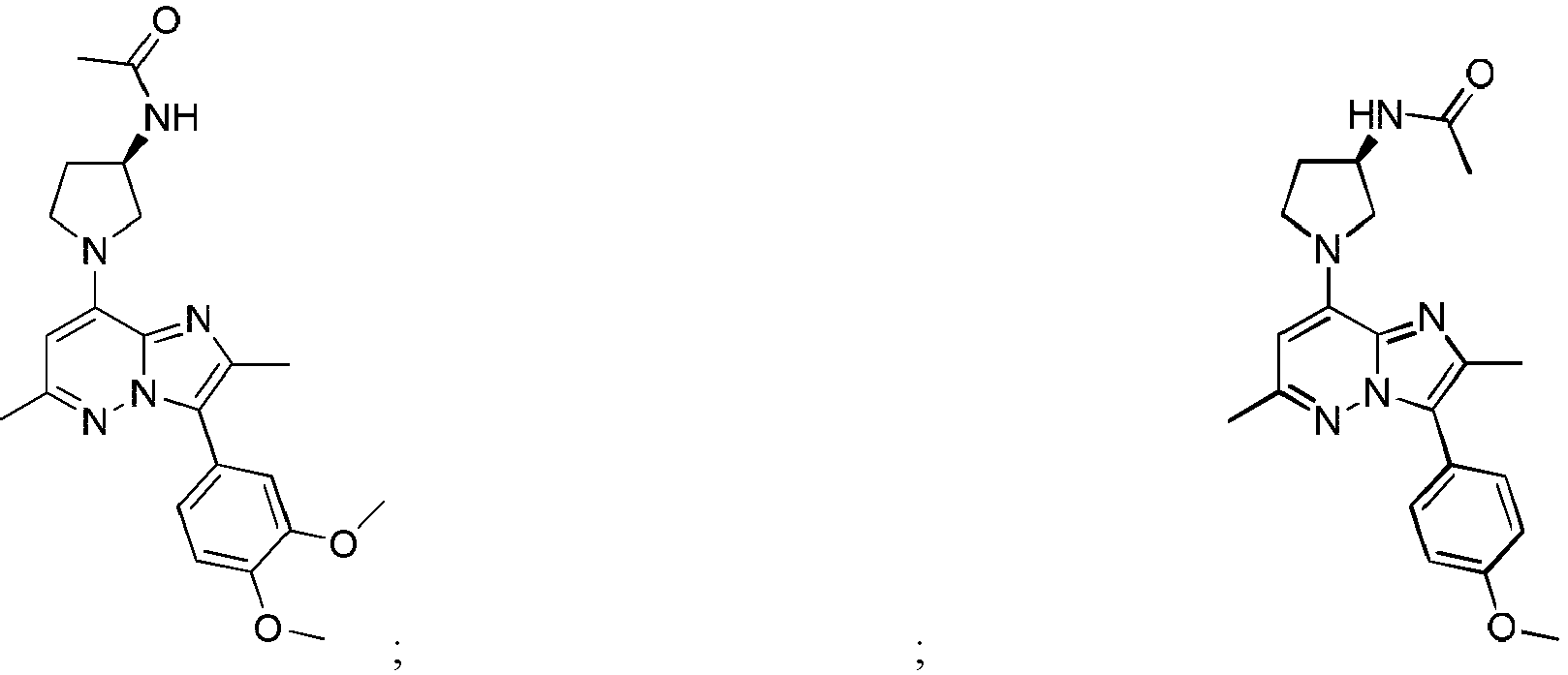


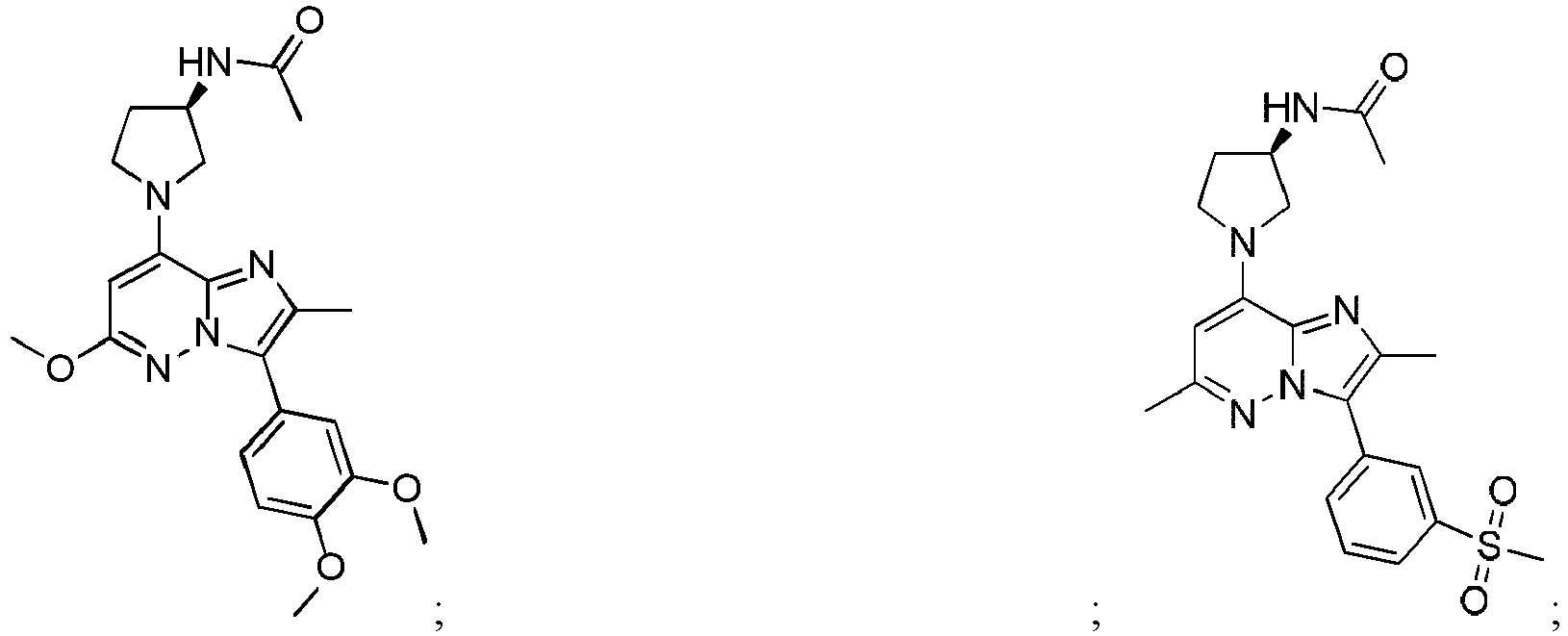
 (b)
(b)


 (c)
(c)


 (d)
(d)
 (e)
(e) (f)
(f)

- An nSMase2 inhibitor of formula (Ia) or (Ib) of any one of claims 1 to 3 for use in treating a condition, disease, or disorder associated with an increased neutral sphingomyelinase 2 (nSMase2) activity or expression.
- The nSMase2 inhibitor of formula (Ia) or (Ib) for use of claim 4, wherein the condition, disease, or disorder is associated with an elevated level of ceramide in the subject in need of treatment compared to a control subject not afflicted with the condition, disease, or disorder.
- The nSMase2 inhibitor of formula (Ia) or (Ib) for use of claim 4, wherein the condition, disease, or disorder comprises a neurodegenerative disease or a cancer.
- The nSMase2 inhibitor of formula (Ia) or (Ib) for use of claim 6, wherein the neurodegenerative disease is selected from the group consisting of Alzheimer's disease (AD), HIV-associated neurocognitive disorder (HAND), multiple sclerosis (MS), and amyotrophic lateral sclerosis (ALS).
- The nSMase2 inhibitor of formula (Ia) or (Ib) for use of claim 4, wherein administration of an effective amount of the nSMase2 inhibitor of formula (Ia) or (Ib) to a subject decreases the (nSMase2) activity or expression or decreases a level of ceramide in the subject.
- A compound of formula (Ia) or (Ib) of any one of claims 1 to 3 for use in inhibiting neutral sphingomyelinase 2 (nSMase2).
Applications Claiming Priority (2)
| Application Number | Priority Date | Filing Date | Title |
|---|---|---|---|
| US201762443324P | 2017-01-06 | 2017-01-06 | |
| PCT/US2018/012699 WO2018129405A1 (en) | 2017-01-06 | 2018-01-05 | SMALL MOLECULE INHIBITORS OF NEUTRAL SPHINGOMYELINASE 2 (nSMase2) FOR THE TREATMENT OF NEURODEGENERATIVE DISEASES |
Publications (3)
| Publication Number | Publication Date |
|---|---|
| EP3565817A1 EP3565817A1 (en) | 2019-11-13 |
| EP3565817A4 EP3565817A4 (en) | 2020-06-24 |
| EP3565817B1 true EP3565817B1 (en) | 2023-06-07 |
Family
ID=62791143
Family Applications (1)
| Application Number | Title | Priority Date | Filing Date |
|---|---|---|---|
| EP18736683.6A Active EP3565817B1 (en) | 2017-01-06 | 2018-01-05 | Small molecule inhibitors of neutral sphingomyelinase 2 (nsmase2) for the treatment of neurodegenerative diseases |
Country Status (7)
| Country | Link |
|---|---|
| US (1) | US11427590B2 (en) |
| EP (1) | EP3565817B1 (en) |
| JP (1) | JP2020505437A (en) |
| KR (1) | KR20190110106A (en) |
| AU (1) | AU2018205277B2 (en) |
| CA (1) | CA3049428A1 (en) |
| WO (1) | WO2018129405A1 (en) |
Families Citing this family (3)
| Publication number | Priority date | Publication date | Assignee | Title |
|---|---|---|---|---|
| JP7377207B2 (en) | 2018-01-29 | 2023-11-09 | メルク パテント ゲーエムベーハー | GCN2 inhibitors and their uses |
| EP4616913A3 (en) | 2018-01-29 | 2025-12-10 | Merck Patent GmbH | Gcn2 inhibitors and uses thereof |
| US11759466B2 (en) | 2018-03-01 | 2023-09-19 | The Johns Hopkins University | Inhibition of nSMase for the treatment of human immunodeficiency virus infection |
Family Cites Families (9)
| Publication number | Priority date | Publication date | Assignee | Title |
|---|---|---|---|---|
| WO2002066447A1 (en) | 2001-02-21 | 2002-08-29 | Ono Pharmaceutical Co., Ltd. | 4h-1,2,4-triazole-3(2h)-thione deratives as sphingomyelinase inhibitors |
| US7723336B2 (en) * | 2005-09-22 | 2010-05-25 | Bristol-Myers Squibb Company | Fused heterocyclic compounds useful as kinase modulators |
| TW201107329A (en) * | 2009-07-30 | 2011-03-01 | Oncotherapy Science Inc | Fused imidazole derivative having ttk inhibitory action |
| CA2778949C (en) * | 2009-10-30 | 2018-02-27 | Janssen Pharmaceutica Nv | Imidazo[1,2-b]pyridazine derivatives and their use as pde10 inhibitors |
| CA2849194A1 (en) * | 2011-11-01 | 2013-05-10 | F. Hoffmann-La Roche Ag | Imidazopyridazine compounds |
| MX2015005375A (en) * | 2012-11-07 | 2015-07-21 | Hoffmann La Roche | Triazolo compounds. |
| WO2014200882A1 (en) * | 2013-06-11 | 2014-12-18 | Janssen Pharmaceutica Nv | PDE10a INHIBITORS FOR THE TREATMENT OF TYPE II DIABETES |
| CN103360399B (en) * | 2013-08-02 | 2016-03-02 | 北京大学 | 6-aryl replacement-imidazoles-[1,2-b] pyridazine class derivative, Preparation Method And The Use |
| GB201321734D0 (en) * | 2013-12-09 | 2014-01-22 | Ucb Pharma Sa | Therapeutic Agents |
-
2018
- 2018-01-05 EP EP18736683.6A patent/EP3565817B1/en active Active
- 2018-01-05 KR KR1020197023169A patent/KR20190110106A/en not_active Ceased
- 2018-01-05 JP JP2019557528A patent/JP2020505437A/en active Pending
- 2018-01-05 CA CA3049428A patent/CA3049428A1/en active Pending
- 2018-01-05 US US16/475,433 patent/US11427590B2/en active Active
- 2018-01-05 AU AU2018205277A patent/AU2018205277B2/en active Active
- 2018-01-05 WO PCT/US2018/012699 patent/WO2018129405A1/en not_active Ceased
Also Published As
| Publication number | Publication date |
|---|---|
| AU2018205277A1 (en) | 2019-07-25 |
| US11427590B2 (en) | 2022-08-30 |
| AU2018205277B2 (en) | 2022-04-14 |
| KR20190110106A (en) | 2019-09-27 |
| CA3049428A1 (en) | 2018-07-12 |
| JP2020505437A (en) | 2020-02-20 |
| WO2018129405A1 (en) | 2018-07-12 |
| EP3565817A4 (en) | 2020-06-24 |
| EP3565817A1 (en) | 2019-11-13 |
| US20200190089A1 (en) | 2020-06-18 |
Similar Documents
| Publication | Publication Date | Title |
|---|---|---|
| JP7850663B2 (en) | Spiro ring-containing quinazoline compounds | |
| AU2018203354B2 (en) | Hepatitis B antiviral agents | |
| EP3068774B1 (en) | Azepane derivatives and methods of treating hepatitis b infections | |
| TW202341983A (en) | Compounds for mutant kras protein degradation and uses thereof | |
| EP3939979A1 (en) | Jak kinase inhibitor, preparation method for same, and applications thereof in field of medicine | |
| BR112013003097B1 (en) | 6-cycloalkyl-pyrazolopyrimidinones and pharmaceutical composition | |
| EP2900674B1 (en) | Compounds and methods for preventing, treating and/or protecting against sensory hair cell death | |
| US20190225593A1 (en) | Substituted chromane-8-carboxamide compounds and analogues thereof, and methods using same | |
| WO2019106434A1 (en) | Heterobicyclic aromatic derivatives for the treatment of ferroptosis-related disorders | |
| EA023574B1 (en) | 6-CYCLOBUTYL-1,5-DIHYDROPYRAZOLO[3,4-d]PYRIMIDIN-4-ONE DERIVATIVES AND THEIR USE AS PDE9A INHIBITORS | |
| US20220048884A1 (en) | Nrf2 activator | |
| US11427590B2 (en) | Small molecule inhibitors of neutral sphingomyelinase 2 (nSMase2) for the treatment of neurodegenerative diseases | |
| EP3670500A1 (en) | Chemical compound, pharmaceutical composition thereof, and use and application thereof | |
| BRPI0712001B1 (en) | substituted 8- [6-amino-3-pyridyl] xanthines and pharmaceutical composition containing said compound | |
| EP4053108B1 (en) | Compound containing benzene ring and application thereof | |
| EP4483880A1 (en) | Use of hpk1 inhibitor in treatment of interferon-related diseases | |
| EP1798233A1 (en) | Pyrrolo[1,2-a]quinoxaline derivatives as Adenosine A3 receptor modulators and uses thereof | |
| EP4079724B1 (en) | 2-(2-chlorophenyl)-n-(5-sulfamoylisoquinolin-7-yl)acetamide derivatives and similar compounds as p2x4 antagonists for the treatment of e.g. urinary tract diseases | |
| HK40017847A (en) | Small molecule inhibitors of neutral sphingomyelinase 2 (nsmase2) for the treatment of neurodegenerative diseases | |
| HK40017847B (en) | Small molecule inhibitors of neutral sphingomyelinase 2 (nsmase2) for the treatment of neurodegenerative diseases | |
| US20240287108A1 (en) | nSMASE2 INHIBITOR PRODRUGS WITH ENHANCED ORAL AND BRAIN EXPOSURES | |
| WO2026021342A1 (en) | Heterocyclic compound and pharmaceutical use thereof | |
| WO2024220874A2 (en) | Otub1 small-molecule binders and otub1-recruiting deubiquitinase-targeting chimeras (dubtacs) | |
| HK1197550A (en) | Hepatitis b antiviral agents | |
| HK1197550B (en) | Hepatitis b antiviral agents |
Legal Events
| Date | Code | Title | Description |
|---|---|---|---|
| STAA | Information on the status of an ep patent application or granted ep patent |
Free format text: STATUS: THE INTERNATIONAL PUBLICATION HAS BEEN MADE |
|
| PUAI | Public reference made under article 153(3) epc to a published international application that has entered the european phase |
Free format text: ORIGINAL CODE: 0009012 |
|
| STAA | Information on the status of an ep patent application or granted ep patent |
Free format text: STATUS: REQUEST FOR EXAMINATION WAS MADE |
|
| 17P | Request for examination filed |
Effective date: 20190704 |
|
| AK | Designated contracting states |
Kind code of ref document: A1 Designated state(s): AL AT BE BG CH CY CZ DE DK EE ES FI FR GB GR HR HU IE IS IT LI LT LU LV MC MK MT NL NO PL PT RO RS SE SI SK SM TR |
|
| AX | Request for extension of the european patent |
Extension state: BA ME |
|
| DAV | Request for validation of the european patent (deleted) | ||
| DAX | Request for extension of the european patent (deleted) | ||
| A4 | Supplementary search report drawn up and despatched |
Effective date: 20200525 |
|
| RIC1 | Information provided on ipc code assigned before grant |
Ipc: A61P 35/00 20060101ALI20200516BHEP Ipc: C07D 487/04 20060101AFI20200516BHEP Ipc: A61P 25/28 20060101ALI20200516BHEP Ipc: A61K 31/5025 20060101ALI20200516BHEP Ipc: A61P 25/00 20060101ALI20200516BHEP |
|
| REG | Reference to a national code |
Ref country code: HK Ref legal event code: DE Ref document number: 40017847 Country of ref document: HK |
|
| STAA | Information on the status of an ep patent application or granted ep patent |
Free format text: STATUS: EXAMINATION IS IN PROGRESS |
|
| 17Q | First examination report despatched |
Effective date: 20220329 |
|
| GRAP | Despatch of communication of intention to grant a patent |
Free format text: ORIGINAL CODE: EPIDOSNIGR1 |
|
| STAA | Information on the status of an ep patent application or granted ep patent |
Free format text: STATUS: GRANT OF PATENT IS INTENDED |
|
| INTG | Intention to grant announced |
Effective date: 20230113 |
|
| GRAS | Grant fee paid |
Free format text: ORIGINAL CODE: EPIDOSNIGR3 |
|
| GRAA | (expected) grant |
Free format text: ORIGINAL CODE: 0009210 |
|
| STAA | Information on the status of an ep patent application or granted ep patent |
Free format text: STATUS: THE PATENT HAS BEEN GRANTED |
|
| AK | Designated contracting states |
Kind code of ref document: B1 Designated state(s): AL AT BE BG CH CY CZ DE DK EE ES FI FR GB GR HR HU IE IS IT LI LT LU LV MC MK MT NL NO PL PT RO RS SE SI SK SM TR |
|
| REG | Reference to a national code |
Ref country code: GB Ref legal event code: FG4D |
|
| REG | Reference to a national code |
Ref country code: CH Ref legal event code: EP Ref country code: AT Ref legal event code: REF Ref document number: 1574754 Country of ref document: AT Kind code of ref document: T Effective date: 20230615 Ref country code: DE Ref legal event code: R096 Ref document number: 602018051042 Country of ref document: DE |
|
| P01 | Opt-out of the competence of the unified patent court (upc) registered |
Effective date: 20230525 |
|
| REG | Reference to a national code |
Ref country code: LT Ref legal event code: MG9D |
|
| REG | Reference to a national code |
Ref country code: NL Ref legal event code: MP Effective date: 20230607 |
|
| PG25 | Lapsed in a contracting state [announced via postgrant information from national office to epo] |
Ref country code: SE Free format text: LAPSE BECAUSE OF FAILURE TO SUBMIT A TRANSLATION OF THE DESCRIPTION OR TO PAY THE FEE WITHIN THE PRESCRIBED TIME-LIMIT Effective date: 20230607 Ref country code: NO Free format text: LAPSE BECAUSE OF FAILURE TO SUBMIT A TRANSLATION OF THE DESCRIPTION OR TO PAY THE FEE WITHIN THE PRESCRIBED TIME-LIMIT Effective date: 20230907 Ref country code: ES Free format text: LAPSE BECAUSE OF FAILURE TO SUBMIT A TRANSLATION OF THE DESCRIPTION OR TO PAY THE FEE WITHIN THE PRESCRIBED TIME-LIMIT Effective date: 20230607 |
|
| REG | Reference to a national code |
Ref country code: AT Ref legal event code: MK05 Ref document number: 1574754 Country of ref document: AT Kind code of ref document: T Effective date: 20230607 |
|
| PG25 | Lapsed in a contracting state [announced via postgrant information from national office to epo] |
Ref country code: RS Free format text: LAPSE BECAUSE OF FAILURE TO SUBMIT A TRANSLATION OF THE DESCRIPTION OR TO PAY THE FEE WITHIN THE PRESCRIBED TIME-LIMIT Effective date: 20230607 Ref country code: NL Free format text: LAPSE BECAUSE OF FAILURE TO SUBMIT A TRANSLATION OF THE DESCRIPTION OR TO PAY THE FEE WITHIN THE PRESCRIBED TIME-LIMIT Effective date: 20230607 Ref country code: LV Free format text: LAPSE BECAUSE OF FAILURE TO SUBMIT A TRANSLATION OF THE DESCRIPTION OR TO PAY THE FEE WITHIN THE PRESCRIBED TIME-LIMIT Effective date: 20230607 Ref country code: LT Free format text: LAPSE BECAUSE OF FAILURE TO SUBMIT A TRANSLATION OF THE DESCRIPTION OR TO PAY THE FEE WITHIN THE PRESCRIBED TIME-LIMIT Effective date: 20230607 Ref country code: HR Free format text: LAPSE BECAUSE OF FAILURE TO SUBMIT A TRANSLATION OF THE DESCRIPTION OR TO PAY THE FEE WITHIN THE PRESCRIBED TIME-LIMIT Effective date: 20230607 Ref country code: GR Free format text: LAPSE BECAUSE OF FAILURE TO SUBMIT A TRANSLATION OF THE DESCRIPTION OR TO PAY THE FEE WITHIN THE PRESCRIBED TIME-LIMIT Effective date: 20230908 |
|
| PG25 | Lapsed in a contracting state [announced via postgrant information from national office to epo] |
Ref country code: FI Free format text: LAPSE BECAUSE OF FAILURE TO SUBMIT A TRANSLATION OF THE DESCRIPTION OR TO PAY THE FEE WITHIN THE PRESCRIBED TIME-LIMIT Effective date: 20230607 |
|
| PG25 | Lapsed in a contracting state [announced via postgrant information from national office to epo] |
Ref country code: SK Free format text: LAPSE BECAUSE OF FAILURE TO SUBMIT A TRANSLATION OF THE DESCRIPTION OR TO PAY THE FEE WITHIN THE PRESCRIBED TIME-LIMIT Effective date: 20230607 |
|
| PG25 | Lapsed in a contracting state [announced via postgrant information from national office to epo] |
Ref country code: IS Free format text: LAPSE BECAUSE OF FAILURE TO SUBMIT A TRANSLATION OF THE DESCRIPTION OR TO PAY THE FEE WITHIN THE PRESCRIBED TIME-LIMIT Effective date: 20231007 |
|
| PG25 | Lapsed in a contracting state [announced via postgrant information from national office to epo] |
Ref country code: SM Free format text: LAPSE BECAUSE OF FAILURE TO SUBMIT A TRANSLATION OF THE DESCRIPTION OR TO PAY THE FEE WITHIN THE PRESCRIBED TIME-LIMIT Effective date: 20230607 Ref country code: SK Free format text: LAPSE BECAUSE OF FAILURE TO SUBMIT A TRANSLATION OF THE DESCRIPTION OR TO PAY THE FEE WITHIN THE PRESCRIBED TIME-LIMIT Effective date: 20230607 Ref country code: RO Free format text: LAPSE BECAUSE OF FAILURE TO SUBMIT A TRANSLATION OF THE DESCRIPTION OR TO PAY THE FEE WITHIN THE PRESCRIBED TIME-LIMIT Effective date: 20230607 Ref country code: PT Free format text: LAPSE BECAUSE OF FAILURE TO SUBMIT A TRANSLATION OF THE DESCRIPTION OR TO PAY THE FEE WITHIN THE PRESCRIBED TIME-LIMIT Effective date: 20231009 Ref country code: IS Free format text: LAPSE BECAUSE OF FAILURE TO SUBMIT A TRANSLATION OF THE DESCRIPTION OR TO PAY THE FEE WITHIN THE PRESCRIBED TIME-LIMIT Effective date: 20231007 Ref country code: EE Free format text: LAPSE BECAUSE OF FAILURE TO SUBMIT A TRANSLATION OF THE DESCRIPTION OR TO PAY THE FEE WITHIN THE PRESCRIBED TIME-LIMIT Effective date: 20230607 Ref country code: CZ Free format text: LAPSE BECAUSE OF FAILURE TO SUBMIT A TRANSLATION OF THE DESCRIPTION OR TO PAY THE FEE WITHIN THE PRESCRIBED TIME-LIMIT Effective date: 20230607 Ref country code: AT Free format text: LAPSE BECAUSE OF FAILURE TO SUBMIT A TRANSLATION OF THE DESCRIPTION OR TO PAY THE FEE WITHIN THE PRESCRIBED TIME-LIMIT Effective date: 20230607 |
|
| PG25 | Lapsed in a contracting state [announced via postgrant information from national office to epo] |
Ref country code: PL Free format text: LAPSE BECAUSE OF FAILURE TO SUBMIT A TRANSLATION OF THE DESCRIPTION OR TO PAY THE FEE WITHIN THE PRESCRIBED TIME-LIMIT Effective date: 20230607 |
|
| REG | Reference to a national code |
Ref country code: DE Ref legal event code: R097 Ref document number: 602018051042 Country of ref document: DE |
|
| PLBE | No opposition filed within time limit |
Free format text: ORIGINAL CODE: 0009261 |
|
| STAA | Information on the status of an ep patent application or granted ep patent |
Free format text: STATUS: NO OPPOSITION FILED WITHIN TIME LIMIT |
|
| PG25 | Lapsed in a contracting state [announced via postgrant information from national office to epo] |
Ref country code: DK Free format text: LAPSE BECAUSE OF FAILURE TO SUBMIT A TRANSLATION OF THE DESCRIPTION OR TO PAY THE FEE WITHIN THE PRESCRIBED TIME-LIMIT Effective date: 20230607 |
|
| PG25 | Lapsed in a contracting state [announced via postgrant information from national office to epo] |
Ref country code: SI Free format text: LAPSE BECAUSE OF FAILURE TO SUBMIT A TRANSLATION OF THE DESCRIPTION OR TO PAY THE FEE WITHIN THE PRESCRIBED TIME-LIMIT Effective date: 20230607 |
|
| 26N | No opposition filed |
Effective date: 20240308 |
|
| PG25 | Lapsed in a contracting state [announced via postgrant information from national office to epo] |
Ref country code: SI Free format text: LAPSE BECAUSE OF FAILURE TO SUBMIT A TRANSLATION OF THE DESCRIPTION OR TO PAY THE FEE WITHIN THE PRESCRIBED TIME-LIMIT Effective date: 20230607 Ref country code: IT Free format text: LAPSE BECAUSE OF FAILURE TO SUBMIT A TRANSLATION OF THE DESCRIPTION OR TO PAY THE FEE WITHIN THE PRESCRIBED TIME-LIMIT Effective date: 20230607 |
|
| PG25 | Lapsed in a contracting state [announced via postgrant information from national office to epo] |
Ref country code: MC Free format text: LAPSE BECAUSE OF FAILURE TO SUBMIT A TRANSLATION OF THE DESCRIPTION OR TO PAY THE FEE WITHIN THE PRESCRIBED TIME-LIMIT Effective date: 20230607 |
|
| PG25 | Lapsed in a contracting state [announced via postgrant information from national office to epo] |
Ref country code: MC Free format text: LAPSE BECAUSE OF FAILURE TO SUBMIT A TRANSLATION OF THE DESCRIPTION OR TO PAY THE FEE WITHIN THE PRESCRIBED TIME-LIMIT Effective date: 20230607 |
|
| REG | Reference to a national code |
Ref country code: CH Ref legal event code: PL |
|
| PG25 | Lapsed in a contracting state [announced via postgrant information from national office to epo] |
Ref country code: LU Free format text: LAPSE BECAUSE OF NON-PAYMENT OF DUE FEES Effective date: 20240105 |
|
| PG25 | Lapsed in a contracting state [announced via postgrant information from national office to epo] |
Ref country code: LU Free format text: LAPSE BECAUSE OF NON-PAYMENT OF DUE FEES Effective date: 20240105 |
|
| PG25 | Lapsed in a contracting state [announced via postgrant information from national office to epo] |
Ref country code: BE Free format text: LAPSE BECAUSE OF NON-PAYMENT OF DUE FEES Effective date: 20240131 |
|
| PG25 | Lapsed in a contracting state [announced via postgrant information from national office to epo] |
Ref country code: CH Free format text: LAPSE BECAUSE OF NON-PAYMENT OF DUE FEES Effective date: 20240131 |
|
| PG25 | Lapsed in a contracting state [announced via postgrant information from national office to epo] |
Ref country code: CH Free format text: LAPSE BECAUSE OF NON-PAYMENT OF DUE FEES Effective date: 20240131 Ref country code: BE Free format text: LAPSE BECAUSE OF NON-PAYMENT OF DUE FEES Effective date: 20240131 |
|
| REG | Reference to a national code |
Ref country code: BE Ref legal event code: MM Effective date: 20240131 |
|
| PG25 | Lapsed in a contracting state [announced via postgrant information from national office to epo] |
Ref country code: BG Free format text: LAPSE BECAUSE OF FAILURE TO SUBMIT A TRANSLATION OF THE DESCRIPTION OR TO PAY THE FEE WITHIN THE PRESCRIBED TIME-LIMIT Effective date: 20230607 |
|
| PG25 | Lapsed in a contracting state [announced via postgrant information from national office to epo] |
Ref country code: BG Free format text: LAPSE BECAUSE OF FAILURE TO SUBMIT A TRANSLATION OF THE DESCRIPTION OR TO PAY THE FEE WITHIN THE PRESCRIBED TIME-LIMIT Effective date: 20230607 |
|
| PG25 | Lapsed in a contracting state [announced via postgrant information from national office to epo] |
Ref country code: IE Free format text: LAPSE BECAUSE OF NON-PAYMENT OF DUE FEES Effective date: 20240105 |
|
| PG25 | Lapsed in a contracting state [announced via postgrant information from national office to epo] |
Ref country code: IE Free format text: LAPSE BECAUSE OF NON-PAYMENT OF DUE FEES Effective date: 20240105 |
|
| PG25 | Lapsed in a contracting state [announced via postgrant information from national office to epo] |
Ref country code: CY Free format text: LAPSE BECAUSE OF FAILURE TO SUBMIT A TRANSLATION OF THE DESCRIPTION OR TO PAY THE FEE WITHIN THE PRESCRIBED TIME-LIMIT; INVALID AB INITIO Effective date: 20180105 |
|
| PG25 | Lapsed in a contracting state [announced via postgrant information from national office to epo] |
Ref country code: HU Free format text: LAPSE BECAUSE OF FAILURE TO SUBMIT A TRANSLATION OF THE DESCRIPTION OR TO PAY THE FEE WITHIN THE PRESCRIBED TIME-LIMIT; INVALID AB INITIO Effective date: 20180105 |
|
| PG25 | Lapsed in a contracting state [announced via postgrant information from national office to epo] |
Ref country code: TR Free format text: LAPSE BECAUSE OF FAILURE TO SUBMIT A TRANSLATION OF THE DESCRIPTION OR TO PAY THE FEE WITHIN THE PRESCRIBED TIME-LIMIT Effective date: 20230607 |
|
| PGFP | Annual fee paid to national office [announced via postgrant information from national office to epo] |
Ref country code: GB Payment date: 20260127 Year of fee payment: 9 |
|
| PGFP | Annual fee paid to national office [announced via postgrant information from national office to epo] |
Ref country code: DE Payment date: 20260128 Year of fee payment: 9 |
|
| PGFP | Annual fee paid to national office [announced via postgrant information from national office to epo] |
Ref country code: FR Payment date: 20260126 Year of fee payment: 9 |