EP3565178A1 - Nachrichtenschutzverfahren, benutzervorrichtung und kernnetzwerkvorrichtung - Google Patents
Nachrichtenschutzverfahren, benutzervorrichtung und kernnetzwerkvorrichtung Download PDFInfo
- Publication number
- EP3565178A1 EP3565178A1 EP17894481.5A EP17894481A EP3565178A1 EP 3565178 A1 EP3565178 A1 EP 3565178A1 EP 17894481 A EP17894481 A EP 17894481A EP 3565178 A1 EP3565178 A1 EP 3565178A1
- Authority
- EP
- European Patent Office
- Prior art keywords
- random number
- message
- abnormal response
- response message
- signature
- Prior art date
- Legal status (The legal status is an assumption and is not a legal conclusion. Google has not performed a legal analysis and makes no representation as to the accuracy of the status listed.)
- Granted
Links
Images





Classifications
-
- H—ELECTRICITY
- H04—ELECTRIC COMMUNICATION TECHNIQUE
- H04W—WIRELESS COMMUNICATION NETWORKS
- H04W12/00—Security arrangements; Authentication; Protecting privacy or anonymity
- H04W12/50—Secure pairing of devices
-
- H—ELECTRICITY
- H04—ELECTRIC COMMUNICATION TECHNIQUE
- H04W—WIRELESS COMMUNICATION NETWORKS
- H04W12/00—Security arrangements; Authentication; Protecting privacy or anonymity
- H04W12/03—Protecting confidentiality, e.g. by encryption
- H04W12/037—Protecting confidentiality, e.g. by encryption of the control plane, e.g. signalling traffic
-
- H—ELECTRICITY
- H04—ELECTRIC COMMUNICATION TECHNIQUE
- H04L—TRANSMISSION OF DIGITAL INFORMATION, e.g. TELEGRAPHIC COMMUNICATION
- H04L63/00—Network architectures or network communication protocols for network security
- H04L63/14—Network architectures or network communication protocols for network security for detecting or protecting against malicious traffic
- H04L63/1441—Countermeasures against malicious traffic
- H04L63/1458—Denial of Service
-
- H—ELECTRICITY
- H04—ELECTRIC COMMUNICATION TECHNIQUE
- H04L—TRANSMISSION OF DIGITAL INFORMATION, e.g. TELEGRAPHIC COMMUNICATION
- H04L9/00—Cryptographic mechanisms or cryptographic arrangements for secret or secure communications; Network security protocols
- H04L9/06—Cryptographic mechanisms or cryptographic arrangements for secret or secure communications; Network security protocols the encryption apparatus using shift registers or memories for block-wise or stream coding, e.g. DES systems or RC4; Hash functions; Pseudorandom sequence generators
- H04L9/0643—Hash functions, e.g. MD5, SHA, HMAC or f9 MAC
-
- H—ELECTRICITY
- H04—ELECTRIC COMMUNICATION TECHNIQUE
- H04L—TRANSMISSION OF DIGITAL INFORMATION, e.g. TELEGRAPHIC COMMUNICATION
- H04L9/00—Cryptographic mechanisms or cryptographic arrangements for secret or secure communications; Network security protocols
- H04L9/08—Key distribution or management, e.g. generation, sharing or updating, of cryptographic keys or passwords
- H04L9/0861—Generation of secret information including derivation or calculation of cryptographic keys or passwords
- H04L9/0869—Generation of secret information including derivation or calculation of cryptographic keys or passwords involving random numbers or seeds
-
- H—ELECTRICITY
- H04—ELECTRIC COMMUNICATION TECHNIQUE
- H04L—TRANSMISSION OF DIGITAL INFORMATION, e.g. TELEGRAPHIC COMMUNICATION
- H04L9/00—Cryptographic mechanisms or cryptographic arrangements for secret or secure communications; Network security protocols
- H04L9/32—Cryptographic mechanisms or cryptographic arrangements for secret or secure communications; Network security protocols including means for verifying the identity or authority of a user of the system or for message authentication, e.g. authorization, entity authentication, data integrity or data verification, non-repudiation, key authentication or verification of credentials
-
- H—ELECTRICITY
- H04—ELECTRIC COMMUNICATION TECHNIQUE
- H04L—TRANSMISSION OF DIGITAL INFORMATION, e.g. TELEGRAPHIC COMMUNICATION
- H04L9/00—Cryptographic mechanisms or cryptographic arrangements for secret or secure communications; Network security protocols
- H04L9/32—Cryptographic mechanisms or cryptographic arrangements for secret or secure communications; Network security protocols including means for verifying the identity or authority of a user of the system or for message authentication, e.g. authorization, entity authentication, data integrity or data verification, non-repudiation, key authentication or verification of credentials
- H04L9/3247—Cryptographic mechanisms or cryptographic arrangements for secret or secure communications; Network security protocols including means for verifying the identity or authority of a user of the system or for message authentication, e.g. authorization, entity authentication, data integrity or data verification, non-repudiation, key authentication or verification of credentials involving digital signatures
-
- H—ELECTRICITY
- H04—ELECTRIC COMMUNICATION TECHNIQUE
- H04W—WIRELESS COMMUNICATION NETWORKS
- H04W12/00—Security arrangements; Authentication; Protecting privacy or anonymity
- H04W12/03—Protecting confidentiality, e.g. by encryption
-
- H—ELECTRICITY
- H04—ELECTRIC COMMUNICATION TECHNIQUE
- H04W—WIRELESS COMMUNICATION NETWORKS
- H04W12/00—Security arrangements; Authentication; Protecting privacy or anonymity
- H04W12/04—Key management, e.g. using generic bootstrapping architecture [GBA]
- H04W12/047—Key management, e.g. using generic bootstrapping architecture [GBA] without using a trusted network node as an anchor
- H04W12/0471—Key exchange
-
- H—ELECTRICITY
- H04—ELECTRIC COMMUNICATION TECHNIQUE
- H04W—WIRELESS COMMUNICATION NETWORKS
- H04W12/00—Security arrangements; Authentication; Protecting privacy or anonymity
- H04W12/10—Integrity
- H04W12/108—Source integrity
-
- H—ELECTRICITY
- H04—ELECTRIC COMMUNICATION TECHNIQUE
- H04W—WIRELESS COMMUNICATION NETWORKS
- H04W4/00—Services specially adapted for wireless communication networks; Facilities therefor
- H04W4/12—Messaging; Mailboxes; Announcements
- H04W4/14—Short messaging services, e.g. short message services [SMS] or unstructured supplementary service data [USSD]
-
- H—ELECTRICITY
- H04—ELECTRIC COMMUNICATION TECHNIQUE
- H04L—TRANSMISSION OF DIGITAL INFORMATION, e.g. TELEGRAPHIC COMMUNICATION
- H04L2463/00—Additional details relating to network architectures or network communication protocols for network security covered by H04L63/00
- H04L2463/141—Denial of service attacks against endpoints in a network
-
- H—ELECTRICITY
- H04—ELECTRIC COMMUNICATION TECHNIQUE
- H04L—TRANSMISSION OF DIGITAL INFORMATION, e.g. TELEGRAPHIC COMMUNICATION
- H04L63/00—Network architectures or network communication protocols for network security
- H04L63/08—Network architectures or network communication protocols for network security for authentication of entities
- H04L63/0823—Network architectures or network communication protocols for network security for authentication of entities using certificates
Definitions
- This application relates to the field of communications technologies, and in particular, to a message protection method, user equipment, and a core network device.
- FIG. 1 is a message exchange diagram of an existing forgery attack.
- network elements may include UE, a pseudo base station, an access network device, and a core network device.
- the pseudo base station is an unauthorized base station disposed by an attacker to attract the UE to camp on.
- the access network device and the core network device are network side devices when the UE normally accesses a network.
- the pseudo base station directly intercepts the request message 1, and forges an abnormal response message 1.
- the pseudo base station sends the forged abnormal response message 1 to the UE, causing long-time denial of service of the UE.
- the access network device and the core network device possibly cannot receive the request message 1 sent by the UE.
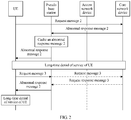
- FIG. 2 is a message exchange diagram of an existing replay attack.
- the UE sends a request message 2 on which no security protection is performed.
- the pseudo base station forwards the request message 2 to the core network device.
- the request message 2 may be rejected by the core network device.
- the core network device returns an abnormal response message 2.
- the pseudo base station forwards the abnormal response message 2 to the UE.
- the UE cannot access a network for a normal reason.
- the UE initiates a request again, and sends a request message 3.
- the pseudo base station After intercepting the request message 3, the pseudo base station sends the previously cached abnormal response message 2 to the UE, causing long-time denial of service of the UE again.
- the denial of service is abnormal denial of service caused by a replay attack.
- the access network device and the core network device possibly cannot receive the request message 3 sent by the UE.
- Embodiments of this application provide a message protection method, user equipment, and a core network device, so as to perform security protection on a message transmitted before a security context is established between the user equipment and the core network device, thereby improving network communication security.
- an embodiment of the present invention provides a message protection method, where the method may include: sending a request message on which no security protection is performed to a core network device; receiving an abnormal response message; and determining, based on a third random number, a signature, and an obtained credential, whether the abnormal response message is a valid message.
- security protection can be performed on a message transmitted before a security context is established between user equipment and the core network device, so that the user equipment can identify whether the received abnormal response message is a valid message. Therefore, long-time denial of service of the user equipment that is caused by a forgery attack or a replay attack made by a pseudo base station is avoided, so as to improve network communication security.
- the determining, based on a third random number, a signature, and an obtained credential, whether the abnormal response message is a valid message includes: if a first random number is the same as the third random number, and signature verification succeeds, determining that the abnormal response message is a valid message, where that signature verification succeeds includes: signature verification performed on the abnormal response message based on the third random number, the signature, and the credential succeeds.
- an input parameter used by the core network device to generate the signature includes the first random number and a key; and the user equipment may perform signature verification on the received abnormal response message based on the first random number, the third random number, the received signature, and the obtained credential, to determine whether the received abnormal response message is a valid message. Therefore, long-time denial of service of the user equipment that is caused by a forgery attack or a replay attack made by a pseudo base station can be avoided by using the first random number, the third random number, and the signature, so as to improve network communication security.
- the abnormal response message may further include a second random number, and the determining, based on a third random number, a signature, and an obtained credential, whether the abnormal response message is a valid message includes: if a first random number is the same as the third random number, and signature verification succeeds, determining that the abnormal response message is a valid message, where that signature verification succeeds includes: signature verification performed on the abnormal response message based on the third random number, the second random number, the signature, and the credential succeeds.
- an input parameter used by the core network device to generate the signature includes the first random number, the second random number, and a key; and the user equipment may perform signature verification on the received abnormal response message based on the first random number, the second random number, the third random number, the received signature, and the obtained credential, to determine whether the received abnormal response message is a valid message. Therefore, long-time denial of service of the user equipment that is caused by a forgery attack or a replay attack made by a pseudo base station can be avoided by using the first random number, the second random number, the third random number, and the signature, so as to improve network communication security.
- the method further includes: determining a second hash value based on the request message; and the determining, based on a third random number, a signature, and an obtained credential, whether the abnormal response message is a valid message includes: if a first random number is the same as the third random number, and signature verification succeeds, determining that the abnormal response message is a valid message, where that signature verification succeeds includes: signature verification performed on the abnormal response message based on the third random number, the second hash value, the signature, and the credential succeeds.
- an input parameter used by the core network device to generate the signature includes the first random number, a first hash value, and a key; and the user equipment may perform signature verification on the received abnormal response message based on the first random number, the second hash value, the third random number, the received signature, and the obtained credential, to determine whether the received abnormal response message is a valid message. Therefore, long-time denial of service of the user equipment that is caused by a forgery, replay, or tampering attack made by a pseudo base station can be avoided by using the first random number, the third random number, the first hash value, the second hash value, and the signature, so as to improve network communication security.
- the method further includes: determining a second hash value based on the request message, where the abnormal response message further includes a first hash value, and the first hash value is determined by the core network device based on the request message; and the determining, based on a third random number, a signature, and an obtained credential, whether the abnormal response message is a valid message includes: if a first random number is the same as the third random number, the first hash value is the same as the second hash value, and signature verification succeeds, determining that the abnormal response message is a valid message, where that signature verification succeeds includes: signature verification performed on the abnormal response message based on the third random number, the first hash value, the signature, and the credential succeeds.
- an input parameter used by the core network device to generate the signature includes the first random number, the first hash value, and a key; the core network device sends the first hash value to the user equipment; and the user equipment may perform signature verification on the received abnormal response message based on the first random number, the third random number, the first hash value, the received signature, and the obtained credential, to determine whether the received abnormal response message is a valid message. Therefore, long-time denial of service of the user equipment that is caused by a forgery, replay, or tampering attack made by a pseudo base station can be avoided by using the first random number, the third random number, the first hash value, the second hash value, and the signature, so as to improve network communication security.
- the method further includes: determining a second hash value based on the request message, where the abnormal response message further includes a second random number; and the determining, based on a third random number, a signature, and an obtained credential, whether the abnormal response message is a valid message includes: if a first random number is the same as the third random number, and signature verification succeeds, determining that the abnormal response message is a valid message, where that signature verification succeeds includes: signature verification performed on the abnormal response message based on the third random number, the second random number, the second hash value, the signature, and the credential succeeds.
- an input parameter used by the core network device to generate the signature includes the first random number, the second random number, a first hash value, and a key; and the user equipment may perform signature verification on the received abnormal response message based on the first random number, the second random number, the third random number, the second hash value, the received signature, and the obtained credential, to determine whether the received abnormal response message is a valid message. Therefore, long-time denial of service of the user equipment that is caused by a forgery, replay, or tampering attack made by a pseudo base station can be avoided by using the first random number, the second random number, the third random number, the first hash value, the second hash value, and the signature, so as to improve network communication security.
- the method further includes: determining a second hash value based on the request message, where the abnormal response message further includes a second random number and a first hash value, and the first hash value is determined by the core network device based on the request message; and the determining, based on a third random number, a signature, and an obtained credential, whether the abnormal response message is a valid message includes: if a first random number is the same as the third random number, the first hash value is the same as the second hash value, and signature verification succeeds, determining that the abnormal response message is a valid message, where that signature verification succeeds includes: signature verification performed on the abnormal response message based on the third random number, the second random number, the first hash value, the signature, and the credential succeeds.
- an input parameter used by the core network device to generate the signature includes the first random number, the second random number, the first hash value, and a key; the core network device sends the first hash value to the user equipment; and the user equipment may perform signature verification on the received abnormal response message based on the first random number, the second random number, the third random number, the second hash value, the received signature, and the pre-obtained credential, to determine whether the received abnormal response message is a valid message.
- the request message may include an attach request message or a tracking area update request message.
- the abnormal response message may include an attach reject message, a tracking area update reject message, or an identity request message.
- the abnormal response message may further include the credential, and the credential is used to verify the signature.
- an implementation of obtaining the credential by the user equipment is provided. Therefore, the user equipment can obtain the credential carried in the abnormal response message, to verify the signature in the abnormal response message based on the credential.
- the method may further include: if the abnormal response message is an invalid message, changing an accessed access network device, and resending the request message to the core network device by using a changed access network device.
- a method of processing performed by the user equipment when determining that the received abnormal response message is an invalid message The user equipment changes the access network device, and resends the request message, so as to improve network communication security.
- user equipment may pre-configure the credential.
- the user equipment may obtain the credential from a message received before the abnormal response message.
- the user equipment may obtain the credential by using the abnormal response message.
- the user equipment if determining that the received abnormal response message is a valid message, the user equipment performs a first operation based on the abnormal response message, where the first operation is an operation performed by the user equipment on a valid abnormal response message; or if determining that the received abnormal response message is an invalid message, the user equipment does not process the abnormal response message, but performs a second operation, where the second operation is an operation performed by the user equipment on an invalid abnormal response message.
- an embodiment of the present invention provides a message protection method, where the method may include: receiving a request message that is sent by user equipment and on which no security protection is performed; if the request message does not meet a preset condition, generating an abnormal response message; and sending the abnormal response message to the user equipment.
- a signature is generated based on an input parameter including a first random number may include: the signature is generated for the abnormal response message based on a pre-obtained key and the first random number.
- the method may further include: generating a second random number, where the abnormal response message further includes the second random number; and that a signature is generated based on an input parameter including a first random number includes: the signature is generated for the abnormal response message based on a pre-obtained key, the first random number, and the second random number.
- the method may further include: determining a first hash value based on the request message; and that a signature is generated based on an input parameter including a first random number includes: the signature is generated for the abnormal response message based on a pre-obtained key, the first random number, and the first hash value.
- the method may further include: generating a second random number; and determining a first hash value based on the request message, where the abnormal response message further includes the second random number; and that a signature is generated based on an input parameter including a first random number includes: the signature is generated for the abnormal response message based on a pre-obtained key, the first random number, the second random number, and the first hash value.
- the abnormal response message may further include the first hash value.
- the request message may include an attach request message or a tracking area update request message.
- the abnormal response message may include an attach reject message, a tracking area update reject message, or an identity request message.
- the abnormal response message may further include a credential, and the credential is used by the user equipment to verify the signature.
- an embodiment of the present invention provides user equipment, where the user equipment may include: a transceiver, configured to: send a request message on which no security protection is performed to a core network device; and receive an abnormal response message; and a processor, configured to determine, based on a third random number, a signature, and an obtained credential, whether the abnormal response message is a valid message.
- the processor is specifically configured to: if a first random number is the same as the third random number, and signature verification succeeds, determine that the abnormal response message is a valid message, where that signature verification succeeds includes: signature verification performed on the abnormal response message based on the third random number, the signature, and the credential succeeds.
- the abnormal response message may further include a second random number
- the processor is specifically configured to: if a first random number is the same as the third random number, and signature verification succeeds, determine that the abnormal response message is a valid message, where that signature verification succeeds includes: signature verification performed on the abnormal response message based on the third random number, the second random number, the signature, and the credential succeeds.
- the processor is further configured to determine a second hash value based on the request message; and the processor is specifically configured to: if a first random number is the same as the third random number, and signature verification succeeds, determine that the abnormal response message is a valid message, where that signature verification succeeds includes: signature verification performed on the abnormal response message based on the third random number, the second hash value, the signature, and the credential succeeds.
- the processor is further configured to determine a second hash value based on the request message, where the abnormal response message further includes a first hash value, and the first hash value is determined by the core network device based on the request message; and the processor is specifically configured to: if a first random number is the same as the third random number, the first hash value is the same as the second hash value, and signature verification succeeds, determine that the abnormal response message is a valid message, where that signature verification succeeds includes: signature verification performed on the abnormal response message based on the third random number, the first hash value, the signature, and the credential succeeds.
- the processor is further configured to determine a second hash value based on the request message, where the abnormal response message further includes a second random number; and the processor is specifically configured to: if a first random number is the same as the third random number, and signature verification succeeds, determine that the abnormal response message is a valid message, where that signature verification succeeds includes: signature verification performed on the abnormal response message based on the third random number, the second random number, the second hash value, the signature, and the credential succeeds.
- the processor is further configured to determine a second hash value based on the request message, where the abnormal response message further includes a second random number and a first hash value, and the first hash value is determined by the core network device based on the request message; and the processor is specifically configured to: if a first random number is the same as the third random number, the first hash value is the same as the second hash value, and signature verification succeeds, determine that the abnormal response message is a valid message, where that signature verification succeeds includes: signature verification performed on the abnormal response message based on the third random number, the second random number, the first hash value, the signature, and the credential succeeds.
- the request message may include an attach request message or a tracking area update request message.
- the abnormal response message may include an attach reject message, a tracking area update reject message, or an identity request message.
- the abnormal response message may further include the credential, and the credential is used to verify the signature.
- the processor is further configured to: if determining that the abnormal response message is an invalid message, change an accessed access network device; and the transceiver is further configured to resend the request message to the core network device by using a changed access network device.
- an embodiment of the present invention provides a core network device, where the core network device may include: a transceiver, configured to: receive a request message that is sent by user equipment and on which no security protection is performed; and send an abnormal response message generated by a processor to the user equipment; and the processor, configured to: when the request message does not meet a preset condition, generate the abnormal response message.
- the processor is specifically configured to generate a signature for the abnormal response message based on a pre-obtained key and a first random number.
- the processor is further configured to generate a second random number, where the abnormal response message further includes the second random number; and the processor is specifically configured to generate a signature for the abnormal response message based on a pre-obtained key, a first random number, and the second random number.
- the processor is further configured to determine a first hash value based on the request message; and the processor is specifically configured to generate a signature for the abnormal response message based on a pre-obtained key, a first random number, and the first hash value.
- the processor is further configured to generate a second random number; and determine a first hash value based on the request message, where the abnormal response message further includes the second random number; and the processor is specifically configured to generate a signature for the abnormal response message based on a pre-obtained key, a first random number, the second random number, and the first hash value.
- the abnormal response message further includes the first hash value.
- the request message includes an attach request message or a tracking area update request message.
- the abnormal response message includes an attach reject message, a tracking area update reject message, or an identity request message.
- the abnormal response message further includes a credential, and the credential is used by the user equipment to verify the signature.
- an embodiment of the present invention provides user equipment, where the user equipment may include: a transceiver module, configured to: send a request message on which no security protection is performed to a core network device; and receive an abnormal response message; and a processing module, configured to determine, based on a third random number, a signature, and an obtained credential, whether the abnormal response message is a valid message.
- the processing module is specifically configured to: if a first random number is the same as the third random number, and signature verification succeeds, determine that the abnormal response message is a valid message, where that signature verification succeeds includes: signature verification performed on the abnormal response message based on the third random number, the signature, and the credential succeeds.
- the abnormal response message may further include a second random number
- the processing module is specifically configured to: if a first random number is the same as the third random number, and signature verification succeeds, determine that the abnormal response message is a valid message, where that signature verification succeeds includes: signature verification performed on the abnormal response message based on the third random number, the second random number, the signature, and the credential succeeds.
- the processing module is further configured to determine a second hash value based on the request message; and the processing module is specifically configured to: if a first random number is the same as the third random number, and signature verification succeeds, determine that the abnormal response message is a valid message, where that signature verification succeeds includes: signature verification performed on the abnormal response message based on the third random number, the second hash value, the signature, and the credential succeeds.
- the processing module is further configured to determine a second hash value based on the request message, where the abnormal response message further includes a first hash value, and the first hash value is determined by the core network device based on the request message; and the processing module is specifically configured to: if a first random number is the same as the third random number, the first hash value is the same as the second hash value, and signature verification succeeds, determine that the abnormal response message is a valid message, where that signature verification succeeds includes: signature verification performed on the abnormal response message based on the third random number, the first hash value, the signature, and the credential succeeds.
- the processing module is further configured to determine a second hash value based on the request message, where the abnormal response message further includes a second random number; and the processing module is specifically configured to: if a first random number is the same as the third random number, and signature verification succeeds, determine that the abnormal response message is a valid message, where that signature verification succeeds includes: signature verification performed on the abnormal response message based on the third random number, the second random number, the second hash value, the signature, and the credential succeeds.
- the processing module is further configured to determine a second hash value based on the request message, where the abnormal response message further includes a second random number and a first hash value, and the first hash value is determined by the core network device based on the request message; and the processing module is specifically configured to: if a first random number is the same as the third random number, the first hash value is the same as the second hash value, and signature verification succeeds, determine that the abnormal response message is a valid message, where that signature verification succeeds includes: signature verification performed on the abnormal response message based on the third random number, the second random number, the first hash value, the signature, and the credential succeeds.
- the request message may include an attach request message or a tracking area update request message.
- the abnormal response message may include an attach reject message, a tracking area update reject message, or an identity request message.
- the abnormal response message may further include the credential, and the credential is used to verify the signature.
- the processing module is further configured to: if determining that the abnormal response message is an invalid message, change an accessed access network device; and the transceiver module is further configured to resend the request message to the core network device by using a changed access network device.
- an embodiment of the present invention provides a core network device, where the core network device may include: a transceiver module, configured to: receive a request message that is sent by user equipment and on which no security protection is performed; and send an abnormal response message generated by a processing module to the user equipment; and the processing module, configured to: when the request message does not meet a preset condition, generate the abnormal response message.
- a transceiver module configured to: receive a request message that is sent by user equipment and on which no security protection is performed; and send an abnormal response message generated by a processing module to the user equipment; and the processing module, configured to: when the request message does not meet a preset condition, generate the abnormal response message.
- the processing module is specifically configured to generate a signature for the abnormal response message based on a pre-obtained key and a first random number.
- the processing module is further configured to generate a second random number, where the abnormal response message further includes the second random number; and the processing module is specifically configured to generate a signature for the abnormal response message based on a pre-obtained key, a first random number, and the second random number.
- the processing module is further configured to determine a first hash value based on the request message; and the processing module is specifically configured to generate a signature for the abnormal response message based on a pre-obtained key, a first random number, and the first hash value.
- the processing module is further configured to generate a second random number; and determine a first hash value based on the request message, where the abnormal response message further includes the second random number; and the processing module is specifically configured to generate a signature for the abnormal response message based on a pre-obtained key, a first random number, the second random number, and the first hash value.
- the abnormal response message further includes the first hash value.
- the request message includes an attach request message or a tracking area update request message.
- the abnormal response message includes an attach reject message, a tracking area update reject message, or an identity request message.
- the abnormal response message further includes a credential, and the credential is used by the user equipment to verify the signature.
- the request message includes the first random number
- the abnormal response message includes the third random number and the signature
- the abnormal response message includes the first random number and the signature
- the signature is generated based on the input parameter including the first random number
- an embodiment of this application further provides a computer program product, where the computer program product includes program code used to perform the message protection method provided in the first aspect of the embodiments of this application.
- an embodiment of this application further provides a computer program product, where the computer program product includes program code used to perform the message protection method provided in the second aspect of the embodiments of this application.
- an embodiment of this application further provides a storage medium, where the storage medium is configured to store a computer program product, the computer program product includes program code, and the program code may include program code used to perform the message protection method provided in the first aspect of the embodiments of this application.
- an embodiment of this application further provides a storage medium, where the storage medium is configured to store a computer program product, the computer program product includes program code, and the program code may include program code used to perform the message protection method provided in the second aspect of the embodiments of this application.
- the user equipment sends the request message on which no security protection is performed to the core network device, where the request message includes the first random number; and if determining that the request message does not meet the preset condition, the core network device generates the abnormal response message, where the abnormal response message includes the first random number and the signature.
- security protection can be performed on a message transmitted before a security context is established between the user equipment and the core network device, so that the user equipment can identify whether the received abnormal response message is a valid message. Therefore, long-time denial of service of the user equipment that is caused by a forgery attack or a replay attack made by a pseudo base station is avoided, so as to improve network communication security.
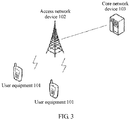
- FIG. 3 is an architectural diagram of a communications system to which embodiments of this application are applied. Methods provided in the following embodiments of this application may be applied to the communications system shown in FIG. 3 .
- the communications system may be a 4G or 5G communications system or an evolved communications system thereof.
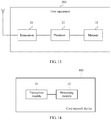
- the communications system may include user equipment 101, an access network device 102, and a core network device 103.
- the access network device 102 serves the user equipment 101 by using a wireless interface.
- the access network device 102 communicates with the core network device 103 by using a communications interface.
- FIG. 3 only two user equipments 101, one access network device 102, and one core network device 103 are shown as an example. However, in the communications system shown in FIG. 3 , a quantity of included user equipments 101, a quantity of included access network devices 102, a quantity of included core network devices 103, a quantity of access network devices 102 served by each core network device 103, and a quantity of user equipments 101 served by each access network device 102 are deployed based on an actual network requirement. This is not specifically limited in this application.
- the user equipment 101 shown in FIG. 3 may be a device that provides a user with data connectivity, a handheld device with a wireless connection function, or a wireless device connected to a wireless modem.
- a wireless terminal may communicate with one or more core networks through a radio access network (Radio Access Network, RAN).
- the wireless terminal may be a mobile terminal such as a mobile phone (also referred to as a "cellular" phone) or a computer with a mobile terminal.
- the wireless terminal may be a portable, pocket-sized, handheld, computer built-in, or vehicle-mounted mobile apparatus that exchanges voice and/or data with the radio access network.
- the wireless terminal may be a device such as a personal communication service (Personal Communication Service, PCS) phone, a cordless telephone set, a session initiation protocol (Session Initiation Protocol, SIP) phone, a wireless local loop (Wireless Local Loop, WLL) station, or a personal digital assistant (Personal Digital Assistant, PDA).
- PCS Personal Communication Service
- SIP Session Initiation Protocol
- WLL Wireless Local Loop
- PDA Personal Digital Assistant
- the wireless terminal may also be referred to as a subscriber unit (Subscriber Unit), a subscriber station (Subscriber Station), a mobile station (Mobile Station), a mobile console (Mobile), a remote station (Remote Station), an access point (Access Point), a remote terminal (Remote Terminal), an access terminal (Access Terminal), a user terminal (User Terminal), a user agent (User Agent), a user device (User Device), user equipment (User Equipment), a smartphone (smartphone), an automotive device (Automotive Device), or an internet of things device (Internet of Things Device).
- the access network device 102 shown in FIG. 3 may be a form of a radio station, and is a radio transceiver station that exchanges information with a mobile phone terminal in a specific radio coverage area by using a mobile switching center, or may be a device that communicates with a wireless terminal in an access network over an air interface by using one or more sectors.
- the access network device may be configured to perform conversion between a received over-the-air frame and an internet protocol (Internet Protocol, IP) packet, and serve as a router between the wireless terminal and the remaining part of the access network.
- the remaining part of the access network may include an internet protocol (IP) network.
- IP internet protocol
- the access network device may further coordinate attribute management of the air interface.
- the access network device may be an evolved NodeB (Evolved NodeB, eNB or eNodeB) in an LTE communications system, a relay station or an access point, or a gNB in a 5G network. This is not limited herein.
- Evolved NodeB evolved NodeB, eNB or eNodeB
- LTE communications system LTE communications system
- relay station or an access point or a gNB in a 5G network. This is not limited herein.
- the core network device 103 shown in FIG. 3 may support non-access stratum (Non Access Stratum, NAS) signaling and security of the non-access stratum, tracking area list management, selection of a packet data network gateway (Packet Data Network Gateway, P-GW) and a serving gateway (Serving Gateway, S-GW), selection of an MME during a cross-mobility management entity (Mobility Management Entity, MME) handover, selection of a serving GPRS support node (Service GPRS Support Node, SGSN) during a handover to a 2G/3G access system, user authentication, roaming control and bearer management, mobility management of core network nodes in different 3GPP access networks, and reachability management of UE in an idle mode.
- NAS Non Access Stratum
- P-GW Packet Data Network Gateway
- S-GW serving gateway
- MME Mobility Management Entity
- MME Mobility Management Entity
- the core network device may be an evolved packet core (Evolved Packet Core, EPC) function entity or an MME in a 4G network, or may be a mobility management function entity in the 5G network such as an access and mobility management function (access and mobility management function, AMF) entity, a common control network function (Common Control Network Function, CCNF) entity, or a security anchor function (security anchor function, SEAF) entity.
- EPC evolved Packet Core
- MME Mobility Management Entity
- AMF access and mobility management function
- AMF access and mobility management function
- CCNF Common Control Network Function
- SEAF security anchor function
- messages may be exchanged between the user equipment 101 and the core network device 103 through forwarding of the access network device 102.
- the user equipment 101 Before the user equipment 101 transmits a message to the core network device 103, the user equipment 101 may camp on and access an access network device 102.
- the access network device 102 may be an authorized access network device in a communications network, or may be a pseudo base station disposed by an attacker.
- the user equipment 101 may send a message to the core network device 103 in the following manner: The user equipment 101 sends a message to the access network device 102, and the access network device 102 forwards the message to the core network device 103.
- the core network device 103 may send a message to the user equipment 101 in the following manner: The core network device 103 sends a message to the access network device 102, and the access network device 102 forwards the message to the user equipment 101.
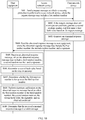
- FIG. 4 is a message exchange diagram of Embodiment 1 of a message protection method according to an embodiment of this application.
- the message protection method provided in this embodiment of this application may include the following steps.
- the user equipment sends a request message on which no security protection is performed to the core network device, where the request message may include a first random number.
- a security context usually needs to be established between a terminal side and a core network side, to perform integrity protection and encryption protection on NAS signaling exchanged between the user equipment and the core network device.
- the request message on which no security protection is performed in this embodiment of this application may be any message exchanged before a security context is established between the user equipment and the core network device.
- the request message on which no security protection is performed may include an attach request message or a tracking area update request message.
- the request message on which no security protection is performed may include request information.
- Specific content of the request information is not limited in this embodiment of this application.
- the request information may include all or a part of content of an existing request message generated by the user equipment.
- a request message 1 sent by the UE is the existing request message.
- the request message in this embodiment of this application may include a first random number S1 and request information, and the request information may include all or a part of content of the request message 1.
- the first random number may be generated by the user equipment based on a pseudo random number generation algorithm.
- the pseudo random number generation algorithm may be any one of existing algorithms, for example, a Monte-Carlo (Monte-Carlo) method.
- the first random number may be obtained by the user equipment by querying a random number table.
- the random number table includes no repeated random number.
- the random number table may be periodically updated, aperiodically updated, or updated through event trigger.
- the random number table may be generated by the user equipment, or may be obtained by the user equipment from another device.
- the user equipment temporarily saves the first random number for a period of time, to verify a third random number carried in an abnormal response message.
- the first random number may be multi-bit binary information.
- the core network device may receive the request message on which no security protection is performed from the user equipment.
- the request message may include the first random number.
- the core network device If determining that the request message does not meet a preset condition, the core network device generates an abnormal response message, where the abnormal response message may include the first random number and a signature, and the signature is generated based on an input parameter including the first random number.
- the abnormal response message may include an attach reject message, a tracking area update reject message, or an identity request message.
- the core network device determines whether the request message meets the preset condition. If the request message does not meet the preset condition, the core network device generates the abnormal response message. Correspondingly, if the request message meets the preset condition, a response message generated by the core network device may be referred to as a normal response message.
- the preset condition is not particularly limited in this embodiment of this application.
- the preset condition may vary with the request message, and the abnormal response message may vary with the request message. For example, when the request message is the attach request message, and an abnormal event occurs, for example, a public land mobile network indicated in the request message is not allowed, the core network device may return a corresponding abnormal response message, namely, the attach reject message.
- the core network device may return a corresponding abnormal response message, namely, the tracking area reject message.
- the core network device may return the identity request (identity request) message to request the user equipment to add an authorized identity.
- the first random number included in the abnormal response message is the first random number included in the request message received by the core network device from the user equipment.
- the core network device returns the received first random number to the user equipment by using the abnormal response message.
- the input parameter for generating the signature included in the abnormal response message includes the first random number.
- the signature varies with the first random number.
- Other content included in the input parameter for generating the signature is not limited in this embodiment of this application.
- an algorithm used by the core network device to generate the signature is not particularly limited in this embodiment of this application.
- the core network device may use any one of existing symmetric or asymmetric cryptographic algorithms, and the user equipment has a parameter and a capability of verifying the signature.
- the core network device may pre-obtain a key, in other words, the input parameter may further include the pre-obtained key.
- the key that is pre-obtained by the core network device varies with the used algorithm. A specific implementation and an obtaining manner of the pre-obtained key are not particularly limited in this embodiment of this application.
- the UE and the core network device need to pre-configure a same symmetric key and a same signature algorithm.
- the core network device needs to pre-configure a private key of the core network device and a signature algorithm. Before verifying the signature, the UE needs to obtain a public key corresponding to the private key and a same signature algorithm.
- a signature implementation procedure is as follows:
- a message is used as an input of a hash function, to obtain a hash (hash) value Hm.
- Hm hash (hash) value
- the signature is calculated based on the pre-obtained key and the hash value Hm.
- the signature may be calculated by using the following formula:
- the abnormal response message may further include a credential.
- the credential is used by the user equipment to verify the signature.
- the credential may be a certificate of the core network device.
- the credential may be a public key of the core network device.
- the credential may be an identity of the core network device.
- the generating an abnormal response message may include: generating abnormal information based on the request message.
- the input parameter for generating the signature may further include the abnormal information.
- the abnormal information is original information generated by the core network device based on the request message.
- Specific content of the abnormal information is not limited in this embodiment of this application.
- the abnormal information may include all or a part of content of an existing abnormal response message generated by the core network device based on the existing request message.
- a request message 2 sent by the UE is the existing request message.
- An abnormal response message 2 generated by the core network device based on the request message 2 is the existing abnormal response message.
- the request message in this embodiment of this application may include a first random number S2 and request information, and the request information may include all or a part of content of the request message 2.
- the abnormal response message in this embodiment of this application may include the first random number S2, the abnormal information, and the signature.
- the abnormal information may include all or a part of content of the abnormal response message 2.
- the core network device sends the abnormal response message to the user equipment.
- the abnormal response message in this step is the same as the abnormal response message in S102.
- the user equipment receives an abnormal response message, where the abnormal response message may include a third random number and a signature.
- the abnormal response message in this step may be the same as or different from the abnormal response message in S103.
- the first random number returned by the core network device to the user equipment in S103 may be the same as or different from the third random number received by the user equipment in this step
- the signature sent by the core network device to the user equipment in S103 may be the same as or different from the signature received by the user equipment in this step.
- the abnormal response message in this step is the same as the abnormal response message in S103.
- the first random number returned by the core network device to the user equipment is the same as the third random number received by the user equipment
- the signature sent by the core network device to the user equipment is the same as the signature received by the user equipment.
- the access network device accessed by the user equipment is a pseudo base station, when a forgery attack or a replay attack is made, the abnormal response message in this step may be different from the abnormal response message in S103.
- the first random number returned by the core network device to the user equipment may be different from the third random number received by the user equipment, and the signature sent by the core network device to the user equipment may also be different from the signature received by the user equipment.
- the abnormal response message received by the user equipment may further include a credential.
- the credential may be used by the user equipment to verify the signature.
- the credential sent by the core network device to the user equipment may be the same as or different from the credential received by the user equipment in this step.
- the user equipment has a capability of verifying validity of the credential.
- the credential may be the certificate of the core network device, and the user equipment verifies validity of the certificate by verifying a signature of the certificate authority.
- the credential may be the public key of the core network device, and the user equipment verifies validity of the public key by trusting a broadcast of the access network device.
- the credential may be the identity of the core network device, and the user equipment verifies validity of the identity because a PVT is preconfigured.
- the user equipment determines, based on the third random number, the signature, and an obtained credential, whether the abnormal response message is a valid message.
- the user equipment generates the first random number, and sends the first random number to the core network device by using the request message.
- the user equipment receives the abnormal response message, and the abnormal response message includes the third random number. It may be understood that, if the abnormal response message sent by the core network device to the user equipment does not encounter a forgery attack or a replay attack, the first random number sent by the user equipment is the same as the third random number received by the user equipment. Therefore, the user equipment may determine, based on the received third random number, whether the received abnormal response message is corresponding to the request message.
- the signature generated by the core network device is generated based on the first random number, and the signature varies with the first random number. Therefore, the user equipment may determine, based on the received third random number, the signature, and the obtained credential, whether the received abnormal response message is a valid message.
- the message protection method provided in this embodiment of this application regardless of whether the pseudo base station forges the first random number, verification on a signature forged by the pseudo base station cannot succeed because of the signature, and the user equipment can identify an abnormal response message forged in this scenario.
- the replay attack scenario shown in FIG. 2 according to the message protection method provided in this embodiment of this application, because first random numbers included in two request messages consecutively sent by the UE are definitely different, signatures generated by the core network device are definitely different. In this way, the pseudo base station cannot make a replay attack by using a cached abnormal response message, and the user equipment can identify an abnormal response message replayed in this scenario.
- the user equipment may alternatively determine, based on the first random number, the signature, and the obtained credential, whether the abnormal response message is a valid message.
- the first random number and the third random number may be replaced with each other. If the first random number is different from the third random number, it indicates that the abnormal response message sent by the core network device to the user equipment may encounter a forgery attack or a replay attack. In this case, it may be determined, based on the first random number, that the abnormal response message is an invalid message.
- an implementation of obtaining the credential by the user equipment is not particularly limited in this embodiment of this application, and the credential may be obtained based on a preconfigured encryption algorithm.
- the user equipment may pre-configure the credential.
- the user equipment and the core network device may pre-configure the same symmetric key.
- the user equipment may obtain the credential from a message received before the abnormal response message.
- the user equipment may obtain the credential by using the abnormal response message.
- the method provided in this embodiment of this application may further include: If determining that the received abnormal response message is a valid message, the user equipment performs a first operation based on the abnormal response message, where the first operation is an operation performed by the user equipment on a valid abnormal response message; or if determining that the received abnormal response message is an invalid message, the user equipment does not process the abnormal response message, but performs a second operation, where the second operation is an operation performed by the user equipment on an invalid abnormal response message.
- the first operation and the second operation are not particularly limited in this embodiment of this application.
- the first operation may be any processing procedure performed by the user equipment after receiving the existing abnormal response message.
- the second operation may include: changing an access network device accessed by the user equipment, and resending the request message to the core network device by using a changed access network device.
- the second operation may include: notifying a user, so that the user determines a next operation, where optionally, the user may move and restart the user equipment.
- the user equipment sends the request message on which no security protection is performed to the core network device, where the request message includes the first random number; if determining that the request message does not meet the preset condition, the core network device generates the abnormal response message, where the abnormal response message includes the first random number and the signature; the core network device sends the abnormal response message to the user equipment; the user equipment receives the abnormal response message, where the abnormal response message includes the third random number and the signature; and the user equipment determines, based on the third random number, the signature, and the obtained credential, whether the received abnormal response message is a valid message.
- security protection can be performed on a message transmitted before a security context is established between the user equipment and the core network device, so that the user equipment can identify whether the received abnormal response message is a valid message. Therefore, long-time denial of service of the user equipment that is caused by a forgery attack or a replay attack made by a pseudo base station is avoided, so as to improve network communication security.
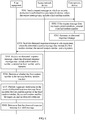
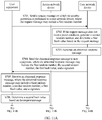
- FIG. 5 is a message exchange diagram of Embodiment 2 of a message protection method according to an embodiment of this application. Based on Embodiment 1, this embodiment of this application provides an implementation of S102 and an implementation of S105. S102 may be specifically S202, and S105 may include S205 to S207. As shown in FIG. 5 , the message protection method provided in this embodiment of this application may include the following steps.
- User equipment sends a request message on which no security protection is performed to a core network device, where the request message may include a first random number.
- the core network device If determining that the request message does not meet a preset condition, the core network device generates an abnormal response message.
- the abnormal response message may include the first random number and a signature, and the signature is generated for the abnormal response message based on a pre-obtained key and the first random number.
- an input parameter for generating the signature includes the pre-obtained key and the first random number.
- the abnormal response message may further include a credential, and the credential is used by the user equipment to verify the signature.
- the credential refer to the description in S102.
- the core network device sends the abnormal response message to the user equipment, where the abnormal response message may include the first random number and a signature.
- the user equipment receives an abnormal response message, where the abnormal response message may include a third random number and a signature.
- the user equipment determines whether the first random number is the same as the third random number.
- the first random number is the same as the third random number, a next step is performed. If the first random number is different from the third random number, it is determined that the received abnormal response message is an invalid message.
- the user equipment performs signature verification on the received abnormal response message based on either the first random umber or the third random number, the signature, and an obtained credential.
- an input parameter for verifying the signature includes either the first random number or the third random number.
- the signature verification succeeds, a next step is performed. If the signature verification fails, it is determined that the received abnormal response message is an invalid message.
- an algorithm used by the user equipment to verify the signature is not particularly limited in this embodiment of this application, and any of existing symmetric or asymmetric cryptographic algorithms may be used.
- a signature verification procedure is as follows: A hash value Hm is obtained based on the input parameter for verifying the signature and the foregoing formula 1; a hash value Hm' is obtained based on the signature, the obtained credential, and a formula 3; Hm is compared with Hm'; and if Hm is different from Hm', the signature verification fails; or if Hm is the same as Hm', the signature verification succeeds.
- the signature is carried in the abnormal response message.
- the user equipment determines that the received abnormal response message is a valid message.
- the input parameter used by the core network device to generate the signature includes the first random number and the pre-obtained key, and the first random number is generated and sent by the user equipment to the core network device.
- the generated signature varies as long as one of the first random number and the pre-obtained key varies. Therefore, by using the first random number and the signature, security protection can be performed on a message transmitted before a security context is established between the user equipment and the core network device.
- the pseudo base station cannot obtain a valid signature key, and because of the signature, the user equipment can identify an abnormal response message forged in this scenario.
- the replay attack scenario shown in FIG. 2 because first random numbers included in two request messages consecutively sent by the UE are definitely different, two signatures consecutively generated by the core network device are definitely different. In this way, the user equipment can identify an abnormal response message replayed in this scenario.
- S105 in which the user equipment determines, based on the third random number, the signature, and an obtained credential, whether the abnormal response message is a valid message may include: The user equipment performs signature verification on the received abnormal response message based on either the first random number or the third random number, the signature, and the obtained credential;
- the input parameter used by the core network device to generate the signature includes the first random number and the pre-obtained key; and the user equipment may perform signature verification on the received abnormal response message based on the first random number, the third random number, the received signature, and the obtained credential, to determine whether the received abnormal response message is a valid message.
- the message protection method provided in this embodiment of this application long-time denial of service of the user equipment that is caused by a forgery attack or a replay attack made by a pseudo base station can be avoided by using the first random number, the third random number, and the signature, so as to improve network communication security.
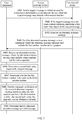
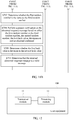
- FIG. 6 is a message exchange diagram of Embodiment 3 of a message protection method according to an embodiment of this application. Based on Embodiment 1, this embodiment of this application provides another implementation of S102 and another implementation of S105. S102 may include S302 and S303, and S105 may include S306 to S308. As shown in FIG. 6 , the message protection method provided in this embodiment of this application may include the following steps.
- User equipment sends a request message on which no security protection is performed to a core network device, where the request message may include a first random number.
- the core network device If determining that the request message does not meet a preset condition, the core network device generates a second random number.
- a principle of the second random number is similar to that of the first random number, and details are not described herein again.
- the core network device generates an abnormal response message.
- the abnormal response message may include the first random number, the second random number, and a signature, and the signature is generated for the abnormal response message based on a pre-obtained key, the first random number, and the second random number.
- an input parameter for generating the signature further includes the second random number based on S202.
- the abnormal response message may further include a credential, and the credential is used by the user equipment to verify the signature.
- the credential refer to the description in S102.
- the core network device sends the abnormal response message to the user equipment, where the abnormal response message may include the first random number, the second random number, and a signature.
- the user equipment receives an abnormal response message, where the abnormal response message may include a third random number, a second random number, and a signature.
- the second random number is generated by the core network device.
- the user equipment determines whether the first random number is the same as the third random number.
- the first random number is the same as the third random number, a next step is performed. If the first random number is different from the third random number, it is determined that the received abnormal response message is an invalid message.
- the user equipment performs signature verification on the received abnormal response message based on either the first random number or the third random number, the second random number, the signature, and an obtained credential.
- the signature verification succeeds, a next step is performed. If the signature verification fails, it is determined that the received abnormal response message is an invalid message.
- an input parameter for verifying the signature further includes the second random number based on S206.
- the user equipment determines that the received abnormal response message is a valid message.
- the input parameter used by the core network device to generate the signature includes the first random number, the second random number, and the pre-obtained key.
- the first random number is generated and sent by the user equipment to the core network device.
- the second random number is generated by the core network device.
- the generated signature varies as long as one of the first random number, the second random number, and the pre-obtained key varies. Therefore, by using the first random number, the second random number, and the signature, security protection can be performed on a message transmitted before a security context is established between the user equipment and the core network device.
- the second random number generated by the core network device is added to the input parameter for generating the signature.
- the user equipment performs signature verification additionally based on the second random number, so that a verification condition is more secure, thereby improving network communication security.
- the pseudo base station cannot obtain a valid signature key, and because of the signature, the user equipment can identify an abnormal response message forged in this scenario.
- the replay attack scenario shown in FIG. 2 because first random numbers included in two request messages consecutively sent by the UE are definitely different, and two second random numbers consecutively generated by the core network device are definitely different, two signatures consecutively generated by the core network device are definitely different. In this way, the user equipment can identify an abnormal response message replayed in this scenario.
- S105 in which the user equipment determines, based on the third random number, the signature, and an obtained credential, whether the abnormal response message is a valid message may include: The user equipment performs signature verification on the received abnormal response message based on either the first random number or the third random number, the second random number, and the obtained credential;
- the input parameter used by the core network device to generate the signature includes the first random number sent by the user equipment, the second random number generated by the core network device, and the pre-obtained key; and the user equipment may perform signature verification on the received abnormal response message based on the first random number, the second random number, the third random number, the received signature, and the obtained credential, to determine whether the received abnormal response message is a valid message.
- the message protection method provided in this embodiment of this application long-time denial of service of the user equipment that is caused by a forgery attack or a replay attack made by a pseudo base station can be avoided by using the first random number, the second random number, the third random number, and the signature, so as to improve network communication security.
- FIG. 7 is a message exchange diagram of Embodiment 4 of a message protection method according to an embodiment of this application. Based on Embodiment 1, this embodiment of this application provides still another implementation of S102 and still another implementation of S105. S102 may include S402 and S403, and S105 may include S408 to S410. As shown in FIG. 7 , the message protection method provided in this embodiment of this application may include the following steps.
- User equipment sends a request message on which no security protection is performed to a core network device, where the request message may include a first random number.
- the core network device determines a first hash value based on the received request message.
- the first hash value may be determined based on the request message by using any one of existing hash algorithms.
- the user equipment and the core network device use a same hash algorithm.
- the request message (message) includes request information (message 1) and a first random value (S1)
- the first hash value varies with the request message.
- the core network device generates an abnormal response message.
- the abnormal response message may include the first random number and a signature.
- the signature is generated for the abnormal response message based on a pre-obtained key, the first random number, and the first hash value.
- an input parameter for generating the signature further includes the first hash value based on S202.
- the abnormal response message may further include a credential, and the credential is used by the user equipment to verify the signature.
- the credential refer to the description in S102.
- the core network device sends the abnormal response message to the user equipment, where the abnormal response message may include the first random number and a signature.
- the user equipment receives an abnormal response message, where the abnormal response message may include a third random number and a signature.
- the user equipment determines a second hash value based on the request message.
- a principle of the second hash value is similar to that of the first hash value, and details are not described herein again.
- the first hash value is determined by the core network device based on the request message
- the second hash value is determined by the user equipment based on the request message. If the request message sent by the user equipment and the request message received by the core network device do not change in a transmission process, the first hash value is the same as the second hash value.
- S406 may be performed before S405.
- a user saves the second hash value for a period of time, to wait to verify the first hash value.
- the user equipment determines whether the first random number is the same as the third random number.
- the first random number is the same as the third random number, a next step is performed. If the first random number is different from the third random number, it is determined that the received abnormal response message is an invalid message.
- the user equipment performs signature verification on the received abnormal response message based on either the first random number or the third random number, the second hash value, the signature, and an obtained credential.
- the user equipment may perform signature verification on the abnormal response message based on the second hash value generated by the user equipment.
- the signature verification succeeds, a next step is performed. If the signature verification fails, it is determined that the received abnormal response message is an invalid message.
- an input parameter for verifying the signature further includes the second hash value based on S206.
- the user equipment determines that the received abnormal response message is a valid message.
- the input parameter used by the core network device to generate the signature includes the first random number, the first hash value, and the pre-obtained key.
- the first random number is generated and sent by the user equipment to the core network device.
- the first hash value is generated by the core network device.
- the generated signature varies as long as one of the first random number, the first hash value, and the pre-obtained key varies.
- the core network device does not send the first hash value to the user equipment.
- the user equipment performs signature verification on the abnormal response message based on the first random number and the second hash value. Therefore, by using the first random number, the first hash value, the second hash value, and the signature, security protection can be performed on a message transmitted before a security context is established between the user equipment and the core network device.
- the first hash value obtained by the core network device based on the request message is added to the input parameter used by the core network device to generate the signature.
- the user equipment performs signature verification additionally based on the second hash value is added, so that a verification condition is more secure, thereby improving network communication security.
- FIG. 8 is a message exchange diagram of an existing tampering attack.
- the UE sends a request message 4 on which no security protection is performed.
- the pseudo base station tampers with the request message 4 by using a request message 5, and sends the request message 5 to a core network device.
- the request message 5 is rejected by the core network.
- the core network device returns an abnormal response message 5.
- the pseudo base station forwards the abnormal response message 5 to the UE, causing long-time denial of service of the UE.
- the input parameter used by the core network device to generate the signature includes the first hash value determined by the core network device based on the request message, and if the request message is tampered with, the second hash value generated by the user equipment is different from the first hash value determined by the core network device.
- signature verification performed on the abnormal response message based on the second hash value fails. Therefore, the user equipment can determine, by using the first hash value and the second hash value, whether the received abnormal response message is a valid message, so as to avoid a tampering attack.
- S105 in which the user equipment determines, based on the third random number, the signature, and an obtained credential, whether the abnormal response message is a valid message may include: The user equipment performs signature verification on the received abnormal response message based on either the first random number or the third random number, the second hash value, and the obtained credential;
- the input parameter used by the core network device to generate the signature includes the first random number sent by the user equipment, the first hash value determined by the core network device based on the request message, and the pre-obtained key; and the user equipment may perform signature verification on the received abnormal response message based on the first random number, the second hash value determined based on the request message, the received third random number, the received signature, and the obtained credential, to determine whether the received abnormal response message is a valid message.
- long-time denial of service of the user equipment that is caused by a forgery, replay, or tampering attack made by a pseudo base station can be avoided by using the first random number, the third random number, the first hash value, the second hash value, and the signature, so as to improve network communication security.
- FIG. 9 is a message exchange diagram of Embodiment 5 of a message protection method according to an embodiment of this application. Based on Embodiment 1, this embodiment of this application provides still another implementation of S102 and still another implementation of S105. S102 may include S502 and S503, and S105 may include S507 to S510. As shown in FIG. 9 , the message protection method provided in this embodiment of this application may include the following steps.
- User equipment sends a request message on which no security protection is performed to a core network device, where the request message may include a first random number.
- the core network device determines a first hash value based on the received request message.
- the core network device generates an abnormal response message.
- the abnormal response message may include the first random number, the first hash value, and a signature.
- the signature is generated for the abnormal response message based on a pre-obtained key, the first random number, and the first hash value.
- an input parameter for generating the signature further includes the first hash value based on S202.
- the abnormal response message may further include a credential, and the credential is used by the user equipment to verify the signature.
- the credential refer to the description in S102.
- the core network device sends the abnormal response message to the user equipment, where the abnormal response message may include the first random number, the first hash value, and a signature.
- the user equipment receives an abnormal response message, where the abnormal response message may include a third random number, a first hash value, and a signature, and the first hash value is determined by the core network device based on the request message.
- the user equipment determines a second hash value based on the request message.
- S506 may be performed before S505.
- the user equipment determines whether the first random number is the same as the third random number.
- the first random number is the same as the third random number, a next step is performed. If the first random number is different from the third random number, it is determined that the received abnormal response message is an invalid message.
- the user equipment performs signature verification on the abnormal response message based on either the first random number or the third random number, the first hash value, the signature, and an obtained credential.
- the signature verification succeeds, a next step is performed. If the signature verification fails, it is determined that the received abnormal response message is an invalid message.
- an input parameter for verifying the signature further includes the first hash value based on S206.
- the user equipment determines whether the first hash value is the same as the second hash value.
- first hash value is the same as the second hash value, a next step is performed. If the first hash value is different from the second hash value, it is determined that the received abnormal response message is an invalid message.
- the user equipment determines that the received abnormal response message is a valid message.
- the abnormal response message sent by the core network device to the user equipment further includes the first hash value, and the user equipment may determine whether the first hash value is the same as the second hash value, to determine whether the received abnormal response message is a valid message, so as to avoid an attack, and improve network communication security.
- S105 in which the user equipment determines, based on the third random number, the signature, and an obtained credential, whether the abnormal response message is a valid message may include: The user equipment determines whether the first random number is the same as the third random number;
- S105 in which the user equipment determines, based on the third random number, the signature, and an obtained credential, whether the abnormal response message is a valid message may include: The user equipment performs signature verification on the abnormal response message based on either the first random number or the third random number, the first hash value, and the obtained credential;
- S105 in which the user equipment determines, based on the third random number, the signature, and an obtained credential, whether the abnormal response message is a valid message may include: The user equipment performs signature verification on the abnormal response message based on either the first random number or the third random number, the first hash value, and the obtained credential;
- S105 in which the user equipment determines, based on the third random number and the signature, whether the abnormal response message is a valid message may include: The user equipment determines whether the first hash value is the same as the second hash value;
- S105 in which the user equipment determines, based on the third random number, the signature, and an obtained credential, whether the abnormal response message is a valid message may include: The user equipment determines whether the first hash value is the same as the second hash value;
- the input parameter used by the core network device to generate the signature includes the first random number sent by the user equipment, the first hash value determined by the core network device based on the request message, and the pre-obtained key; the core network device sends the first hash value to the user equipment; and the user equipment may perform signature verification on the received abnormal response message based on the first random number, the third random number, the first hash value, the received signature, and the obtained credential, to determine whether the received abnormal response message is a valid message.
- long-time denial of service of the user equipment that is caused by a forgery, replay, or tampering attack made by a pseudo base station can be avoided by using the first random number, the third random number, the first hash value, the second hash value, and the signature, so as to improve network communication security.
- FIG. 10 is a message exchange diagram of Embodiment 6 of a message protection method according to an embodiment of this application. Based on Embodiment 1, this embodiment of this application provides still another implementation of S102 and still another implementation of S105. S102 may include S602 and S603, and S105 may include S607 to S609. As shown in FIG. 10 , the message protection method provided in this embodiment of this application may include the following steps.
- User equipment sends a request message on which no security protection is performed to a core network device, where the request message may include a first random number.
- the core network device If determining that the request message does not meet a preset condition, the core network device generates a second random number, and determines a first hash value based on the received request message.
- a sequence of generating the second random number and determining the first hash value based on the received request message is not limited in this embodiment of this application.
- a principle of the second random number is similar to that of the first random number, and details are not described herein again.
- the core network device generates an abnormal response message.
- the abnormal response message may include the first random number, the second random number, and a signature.
- the signature is generated for the abnormal response message based on a pre-obtained key, the first random number, the second random number, and the first hash value.
- an input parameter for generating the signature further includes the second random number and the first hash value based on S202.
- the abnormal response message may further include a credential, and the credential is used by the user equipment to verify the signature.
- the credential refer to the description in S102.
- the core network device sends the abnormal response message to the user equipment, where the abnormal response message may include the first random number, the second random number, and a signature.
- the user equipment receives an abnormal response message, where the abnormal response message may include a third random number, a second random number, and a signature, and the second random number is generated by the core network device.
- the user equipment determines a second hash value based on the request message.
- S606 may be performed before S605.
- the user equipment determines whether the first random number is the same as the third random number.
- the first random number is the same as the third random number, a next step is performed. If the first random number is different from the third random number, it is determined that the received abnormal response message is an invalid message.
- the user equipment performs signature verification on the abnormal response message based on either the first random number or the third random number, the second random number, the second hash value, the signature, and an obtained credential.
- the signature verification succeeds, a next step is performed. If the signature verification fails, it is determined that the received abnormal response message is an invalid message.
- an input parameter for verifying the signature further includes the second random number and the second hash value based on S206.
- the user equipment determines that the received abnormal response message is a valid message.
- the input parameter used by the core network device to generate the signature further includes the second random number generated by the core network device, and therefore a signature generation condition is increased.
- the user equipment determines, based on the first random number, the second random number, the third random number, the second hash value, and the signature, whether the received abnormal response message is a valid message. Therefore, a condition used by the user equipment to verify the signature is more secure, so as to improve network communication security.
- S105 in which the user equipment determines, based on the third random number, the signature, and an obtained credential, whether the abnormal response message is a valid message may include: The user equipment performs signature verification on the abnormal response message based on either the first random number or the third random number, the second random number, the second hash value, and the obtained credential;
- the input parameter used by the core network device to generate the signature includes the first random number sent by the user equipment, the second random number generated by the core network device, the first hash value determined by the core network device based on the request message, and the pre-obtained key; and the user equipment may perform signature verification on the received abnormal response message based on the first random number, the second random number, the third random number, the second hash value, the received signature, and the obtained credential, to determine whether the received abnormal response message is a valid message.
- long-time denial of service of the user equipment that is caused by a forgery, replay, or tampering attack made by a pseudo base station can be avoided by using the first random number, the second random number, the third random number, the first hash value, the second hash value, and the signature, so as to improve network communication security.
- FIG. 11A and FIG. 11B are a message exchange diagram of Embodiment 7 of a message protection method according to an embodiment of this application. Based on Embodiment 1, this embodiment of this application provides still another implementation of S102 and still another implementation of S105. S102 may include S702 and S703, and S105 may include S707 to S710. As shown in FIG. 11A and FIG. 11B , the message protection method provided in this embodiment of this application may include the following steps.
- User equipment sends a request message on which no security protection is performed to a core network device, where the request message may include a first random number.
- the core network device If determining that the request message does not meet a preset condition, the core network device generates a second random number, and determines a first hash value based on the received request message.
- a sequence of generating the second random number and determining the first hash value based on the received request message is not limited in this embodiment of this application.
- a principle of the second random number is similar to that of the first random number, and details are not described herein again.
- the core network device generates an abnormal response message.
- the abnormal response message may include the first random number, the second random number, the first hash value, and a signature.
- the signature is generated for the abnormal response message based on a pre-obtained key, the first random number, the second random number, and the first hash value.
- an input parameter for generating the signature further includes the second random number and the first hash value based on S202.
- the abnormal response message may further include a credential, and the credential is used by the user equipment to verify the signature.
- the credential refer to the description in S102.
- the core network device sends the abnormal response message to the user equipment, where the abnormal response message may include the first random number, the second random number, the first hash value, and a signature.
- the user equipment receives an abnormal response message, where the abnormal response message may include a third random number, a second random number, a first hash value, and a signature, the first hash value is determined by the core network device based on the request message, and the second random number is generated by the core network device.
- the abnormal response message may include a third random number, a second random number, a first hash value, and a signature
- the first hash value is determined by the core network device based on the request message
- the second random number is generated by the core network device.
- the user equipment determines a second hash value based on the request message.
- S706 may be performed before S705.
- the user equipment determines whether the first random number is the same as the third random number.
- the first random number is the same as the third random number, a next step is performed. If the first random number is different from the third random number, it is determined that the received abnormal response message is an invalid message.
- the user equipment performs signature verification on the abnormal response message based on either the first random number or the third random number, the second random number, the first hash value, the signature, and an obtained credential.
- the signature verification succeeds, a next step is performed. If the signature verification fails, it is determined that the received abnormal response message is an invalid message.
- an input parameter for verifying the signature further includes the second random number and the first hash value based on S206.
- the user equipment determines whether the first hash value is the same as the second hash value.
- first hash value is the same as the second hash value, a next step is performed. If the first hash value is different from the second hash value, it is determined that the received abnormal response message is an invalid message.
- the user equipment determines that the received abnormal response message is a valid message.
- the abnormal response message sent by the core network device to the user equipment includes the first hash value
- the abnormal response message received by the user equipment includes the first hash value. It may be understood that the first hash value sent by the core network device may be the same as or different from the first hash value received by the user equipment. Therefore, the user equipment may determine whether the first hash value is the same as the second hash value, to determine whether the received abnormal response message is a valid message, so as to avoid an attack, and improve network communication security.
- the input parameter used by the core network device to generate the signature further includes the second random number generated by the core network device, and therefore a signature generation condition is strengthened.
- the user equipment determines, based on the first random number, the second random number, the third random number, the second hash value, and the signature, whether the received abnormal response message is a valid message. Therefore, a condition used by the user equipment to verify the signature is more secure, so as to improve network communication security.
- S105 in which the user equipment determines, based on the third random number, the signature, and an obtained credential, whether the abnormal response message is a valid message may include: The user equipment determines whether the first random number is the same as the third random number;
- S105 in which the user equipment determines, based on the third random number, the signature, and an obtained credential, whether the abnormal response message is a valid message may include: The user equipment performs signature verification on the abnormal response message based on either the first random number or the third random number, the second random number, the first hash value, and the obtained credential;
- S105 in which the user equipment determines, based on the third random number, the signature, and an obtained credential, whether the abnormal response message is a valid message may include: The user equipment performs signature verification on the abnormal response message based on either the first random number or the third random number, the second random number, the first hash value, and the obtained credential;
- S105 in which the user equipment determines, based on the third random number, the signature, and an obtained credential, whether the abnormal response message is a valid message may include: The user equipment determines whether the first hash value is the same as the second hash value;
- S105 in which the user equipment determines, based on the third random number, the signature, and an obtained credential, whether the abnormal response message is a valid message may include:
- the user equipment determines whether the first hash value is the same as the second hash value
- the input parameter used by the core network device to generate the signature includes the first random number sent by the user equipment, the second random number generated by the core network device, the first hash value determined by the core network device based on the request message, and the pre-obtained key; the core network device sends the first hash value to the user equipment; and the user equipment may perform signature verification on the received abnormal response message based on the first random number, the second random number, the third random number, the first hash value, the second hash value, the received signature, and the obtained credential, to determine whether the received abnormal response message is a valid message.
- long-time denial of service of the user equipment that is caused by a forgery, replay, or tampering attack made by a pseudo base station can be avoided by using the first random number, the second random number, the third random number, the first hash value, the second hash value, and the signature, so as to improve network communication security.
- FIG. 12 is a schematic structural diagram of user equipment according to an embodiment of this application. As shown in FIG. 12 , the user equipment 100 provided in this embodiment of this application may include:
- the processing module 12 is specifically configured to: if the first random number is the same as the third random number, and signature verification succeeds, determine that the abnormal response message is a valid message, where that signature verification succeeds includes: signature verification performed on the abnormal response message based on the third random number, the signature, and the credential succeeds.
- the abnormal response message further includes a second random number
- the processing module 12 is specifically configured to: if the first random number is the same as the third random number, and signature verification succeeds, determine that the abnormal response message is a valid message, where that signature verification succeeds includes: signature verification performed on the abnormal response message based on the third random number, the second random number, the signature, and the credential succeeds.
- the processing module 12 is further configured to determine a second hash value based on the request message; and the processing module 12 is specifically configured to: if the first random number is the same as the third random number, and signature verification succeeds, determine that the abnormal response message is a valid message, where that signature verification succeeds includes: signature verification performed on the abnormal response message based on the third random number, the second hash value, the signature, and the credential succeeds.
- the processing module 12 is further configured to determine a second hash value based on the request message, where
- the processing module 12 is further configured to determine a second hash value based on the request message, where
- the processing module 12 is further configured to determine a second hash value based on the request message, where
- the request message includes an attach request message or a tracking area update request message.
- the abnormal response message includes an attach reject message, a tracking area update reject message, or an identity request message.
- the abnormal response message further includes the credential, and the credential is used to verify the signature.
- the processing module 12 is further configured to: if determining that the abnormal response message is an invalid message, change an accessed access network device; and the transceiver module 11 is further configured to resend the request message to the core network device by using a changed access network device.
- FIG. 13 is a schematic structural diagram of another user equipment according to an embodiment of this application.
- the user equipment 200 may include a processor 22, a transceiver 21, and a memory 23.
- the processor 22 may be connected to the transceiver 21.
- the processor 22 may be further connected to the memory 23.
- the processor 22 may invoke a program instruction stored in the memory 23, to implement the processing module 12 shown above.
- the processor 22 may control the transceiver 21 to implement the transceiver module 11 shown above.
- an embodiment of this application further provides a computer program product.
- the computer program product may include program code.
- the program code may be program code used to perform the message protection method performed by the user equipment in any one of the method embodiments in FIG. 4 to FIG. 7 and FIG. 9 to FIG. 11A and FIG. 11B in the embodiments of this application.
- the program code in the computer program product may be executed by the processor 22 in the user equipment 200 shown in FIG. 13 .
- an embodiment of this application further provides a storage medium.
- the storage medium may be configured to store a computer program product.
- the computer program product may include program code.
- the program code may be program code used to perform the message protection method performed by the user equipment in any one of the method embodiments in FIG. 4 to FIG. 7 and FIG. 9 to FIG. 11A and FIG. 11B in the embodiments of this application.
- the storage medium may be an internal memory in the user equipment 200 shown in FIG. 13 , or may be an external memory connected to the user equipment 200 shown in FIG. 13 .
- the program code in the computer program product may be executed by the processor 22 in the user equipment 200 shown in FIG. 13 .
- the user equipment, the computer program product, and the storage medium provided in the embodiments of this application may perform the operations performed by the user equipment in the message protection method provided in any one of the method embodiments in FIG. 4 to FIG. 7 and FIG. 9 to FIG. 11A and FIG. 11B .
- the user equipment may perform the operations performed by the user equipment in the message protection method provided in any one of the method embodiments in FIG. 4 to FIG. 7 and FIG. 9 to FIG. 11A and FIG. 11B .
- FIG. 14 is a schematic structural diagram of a core network device according to an embodiment of this application.
- the core network device 300 provided in this embodiment of this application may include:
- the processing module 32 is specifically configured to generate the signature for the abnormal response message based on a pre-obtained key and the first random number.
- processing module 32 is further configured to generate a second random number, where
- the processing module 32 is further configured to determine a first hash value based on the request message; and the processing module 32 is specifically configured to generate the signature for the abnormal response message based on a pre-obtained key, the first random number, and the first hash value.
- processing module 32 is further configured to:
- the abnormal response message further includes the first hash value.
- the request message includes an attach request message or a tracking area update request message.
- the abnormal response message includes an attach reject message, a tracking area update reject message, or an identity request message.
- the abnormal response message further includes a credential, and the credential is used by the user equipment to verify the signature.
- FIG. 15 is a schematic structural diagram of another core network device according to an embodiment of this application.
- the core network device 400 may include a processor 42, a transceiver 41, and a memory 43.
- the processor 42 may be connected to the transceiver 41.
- the processor 42 may be further connected to the memory 43.
- the processor 42 may invoke a program instruction stored in the memory 43, to implement the processing module 32 shown above.
- the processor 42 may control the transceiver 41 to implement the transceiver module 31 shown above.
- an embodiment of this application further provides a computer program product.
- the computer program product may include program code.
- the program code may be program code used to perform the message protection method performed by the core network device in any one of the method embodiments in FIG. 4 to FIG. 7 and FIG. 9 to FIG. 11A and FIG. 11B in the embodiments of this application.
- the program code in the computer program product may be executed by the processor 42 in the core network device 400 shown in FIG. 15 .
- an embodiment of this application further provides a storage medium.
- the storage medium may be configured to store a computer program product.
- the computer program product may include program code.
- the program code may be program code used to perform the message protection method performed by the core network device in any one of the method embodiments in FIG. 4 to FIG. 7 and FIG. 9 to FIG. 11A and FIG. 11B in the embodiments of this application.
- the storage medium may be an internal memory in the core network device 400 shown in FIG. 15 , or may be an external memory connected to the core network device 400 shown in FIG. 15 .
- the program code in the computer program product may be executed by the processor 42 in the core network device 400 shown in FIG. 15 .
- the core network device, the computer program product, and the storage medium provided in the embodiments of this application may perform the operations performed by the core network device in the message protection method provided in any one of the method embodiments in FIG. 4 to FIG. 7 and FIG. 9 to FIG. 11A and FIG. 11B .
- the core network device may perform the operations performed by the core network device in the message protection method provided in any one of the method embodiments in FIG. 4 to FIG. 7 and FIG. 9 to FIG. 11A and FIG. 11B .
Landscapes
- Engineering & Computer Science (AREA)
- Computer Security & Cryptography (AREA)
- Computer Networks & Wireless Communication (AREA)
- Signal Processing (AREA)
- Power Engineering (AREA)
- Computer Hardware Design (AREA)
- Computing Systems (AREA)
- General Engineering & Computer Science (AREA)
- Mobile Radio Communication Systems (AREA)
- Data Exchanges In Wide-Area Networks (AREA)
Applications Claiming Priority (1)
| Application Number | Priority Date | Filing Date | Title |
|---|---|---|---|
| PCT/CN2017/072665 WO2018137195A1 (zh) | 2017-01-25 | 2017-01-25 | 消息保护方法、用户设备和核心网设备 |
Publications (3)
| Publication Number | Publication Date |
|---|---|
| EP3565178A1 true EP3565178A1 (de) | 2019-11-06 |
| EP3565178A4 EP3565178A4 (de) | 2019-11-06 |
| EP3565178B1 EP3565178B1 (de) | 2021-03-17 |
Family
ID=62978898
Family Applications (1)
| Application Number | Title | Priority Date | Filing Date |
|---|---|---|---|
| EP17894481.5A Active EP3565178B1 (de) | 2017-01-25 | 2017-01-25 | Nachrichtenschutzverfahren, benutzervorrichtung und kernnetzwerkvorrichtung |
Country Status (4)
| Country | Link |
|---|---|
| US (1) | US10582378B2 (de) |
| EP (1) | EP3565178B1 (de) |
| CN (1) | CN109691017B (de) |
| WO (1) | WO2018137195A1 (de) |
Families Citing this family (5)
| Publication number | Priority date | Publication date | Assignee | Title |
|---|---|---|---|---|
| RU2746923C1 (ru) * | 2018-02-15 | 2021-04-22 | Телефонактиеболагет Лм Эрикссон (Пабл) | Способ для улучшения безопасности передачи данных |
| US11469881B2 (en) * | 2018-12-26 | 2022-10-11 | Korea Institute Of Science And Technology | Apparatus and method for forgery prevention of digital information |
| US11336438B2 (en) * | 2020-03-31 | 2022-05-17 | EMC IP Holding Company LLC | Remote approval and execution of restricted operations |
| US11522879B2 (en) * | 2020-05-20 | 2022-12-06 | At&T Intellectual Property I, L.P. | Scrubber for distributed denial of service attacks targetting mobile networks |
| US12489637B2 (en) * | 2021-10-14 | 2025-12-02 | Galiant Arts, LLC | NFT-based authentication system for tagged objects and methods for use therewith |
Family Cites Families (11)
| Publication number | Priority date | Publication date | Assignee | Title |
|---|---|---|---|---|
| CN100349496C (zh) * | 2005-07-15 | 2007-11-14 | 华为技术有限公司 | 一种消息认证方法 |
| CN100344208C (zh) * | 2005-07-15 | 2007-10-17 | 华为技术有限公司 | 一种防止重放攻击的认证方法 |
| US8639939B2 (en) * | 2006-07-07 | 2014-01-28 | Sandisk Technologies Inc. | Control method using identity objects |
| GB0822599D0 (en) * | 2008-12-11 | 2009-01-21 | Vodafone Plc | Securing network rejection |
| CN102055744A (zh) * | 2009-11-06 | 2011-05-11 | 中兴通讯股份有限公司 | 一种ip多媒体子系统紧急呼叫业务的实现系统及方法 |
| US8566465B2 (en) * | 2010-09-17 | 2013-10-22 | At&T Intellectual Property I, L.P. | System and method to detect and mitigate distributed denial of service attacks using random internet protocol hopping |
| US20120323717A1 (en) * | 2011-06-16 | 2012-12-20 | OneID, Inc. | Method and system for determining authentication levels in transactions |
| US9083531B2 (en) * | 2012-10-16 | 2015-07-14 | Symantec Corporation | Performing client authentication using certificate store on mobile device |
| US9460272B2 (en) * | 2013-03-14 | 2016-10-04 | Arris Enterprises, Inc. | Method and apparatus for group licensing of device features |
| CN105792194B (zh) * | 2016-04-25 | 2019-06-28 | 中国联合网络通信集团有限公司 | 基站合法性的认证方法、认证装置、网络设备、认证系统 |
| US10588019B2 (en) * | 2016-05-05 | 2020-03-10 | Qualcomm Incorporated | Secure signaling before performing an authentication and key agreement |
-
2017
- 2017-01-25 CN CN201780056174.1A patent/CN109691017B/zh active Active
- 2017-01-25 WO PCT/CN2017/072665 patent/WO2018137195A1/zh not_active Ceased
- 2017-01-25 EP EP17894481.5A patent/EP3565178B1/de active Active
-
2019
- 2019-07-24 US US16/520,833 patent/US10582378B2/en active Active
Also Published As
| Publication number | Publication date |
|---|---|
| CN109691017A (zh) | 2019-04-26 |
| US10582378B2 (en) | 2020-03-03 |
| WO2018137195A1 (zh) | 2018-08-02 |
| EP3565178B1 (de) | 2021-03-17 |
| US20190349753A1 (en) | 2019-11-14 |
| CN109691017B (zh) | 2022-02-01 |
| EP3565178A4 (de) | 2019-11-06 |
Similar Documents
| Publication | Publication Date | Title |
|---|---|---|
| CN113016202B (zh) | 用于基站的装置、方法和计算机可读存储介质 | |
| US11856402B2 (en) | Identity-based message integrity protection and verification for wireless communication | |
| US20230413041A1 (en) | Protection of Initial Non-Access Stratum Protocol Message in 5G Systems | |
| US11582602B2 (en) | Key obtaining method and device, and communications system | |
| CN112154624B (zh) | 针对伪基站的用户身份隐私保护 | |
| US10582378B2 (en) | Message protection method, user equipment, and core network device | |
| EP4089977A1 (de) | Verfahren und vorrichtung zur schlüsselerfassung | |
| Cao et al. | A simple and robust handover authentication between HeNB and eNB in LTE networks | |
| Norrman et al. | Protecting IMSI and user privacy in 5G networks | |
| EP3944649A1 (de) | Verifizierungsverfahren, gerät und vorrichtung | |
| CN101237444B (zh) | 密钥处理方法、系统和设备 | |
| CN110583036A (zh) | 网络认证方法、网络设备及核心网设备 | |
| EP3700245A1 (de) | Kommunikationsverfahren und -vorrichtung | |
| Zhang et al. | Dynamic group based authentication protocol for machine type communications | |
| US10492056B2 (en) | Enhanced mobile subscriber privacy in telecommunications networks | |
| US20250392582A1 (en) | Communication method and communication apparatus | |
| US20080176572A1 (en) | Method of handoff | |
| US12556912B2 (en) | Systems and methods for provisioning security policies for deriving session keys | |
| CN116156500B (zh) | 设备鉴权方法及装置 | |
| US20260089499A1 (en) | Systems and methods for managing network security keys between a home network and a visited network | |
| CN119450473A (zh) | 会话建立方法及相关装置 | |
| CN119922542A (zh) | 通信方法和通信装置 |
Legal Events
| Date | Code | Title | Description |
|---|---|---|---|
| STAA | Information on the status of an ep patent application or granted ep patent |
Free format text: STATUS: THE INTERNATIONAL PUBLICATION HAS BEEN MADE |
|
| PUAI | Public reference made under article 153(3) epc to a published international application that has entered the european phase |
Free format text: ORIGINAL CODE: 0009012 |
|
| STAA | Information on the status of an ep patent application or granted ep patent |
Free format text: STATUS: REQUEST FOR EXAMINATION WAS MADE |
|
| 17P | Request for examination filed |
Effective date: 20190729 |
|
| A4 | Supplementary search report drawn up and despatched |
Effective date: 20190925 |
|
| AK | Designated contracting states |
Kind code of ref document: A1 Designated state(s): AL AT BE BG CH CY CZ DE DK EE ES FI FR GB GR HR HU IE IS IT LI LT LU LV MC MK MT NL NO PL PT RO RS SE SI SK SM TR |
|
| AX | Request for extension of the european patent |
Extension state: BA ME |
|
| DAV | Request for validation of the european patent (deleted) | ||
| DAX | Request for extension of the european patent (deleted) | ||
| GRAP | Despatch of communication of intention to grant a patent |
Free format text: ORIGINAL CODE: EPIDOSNIGR1 |
|
| STAA | Information on the status of an ep patent application or granted ep patent |
Free format text: STATUS: GRANT OF PATENT IS INTENDED |
|
| INTG | Intention to grant announced |
Effective date: 20201008 |
|
| GRAS | Grant fee paid |
Free format text: ORIGINAL CODE: EPIDOSNIGR3 |
|
| GRAA | (expected) grant |
Free format text: ORIGINAL CODE: 0009210 |
|
| STAA | Information on the status of an ep patent application or granted ep patent |
Free format text: STATUS: THE PATENT HAS BEEN GRANTED |
|
| AK | Designated contracting states |
Kind code of ref document: B1 Designated state(s): AL AT BE BG CH CY CZ DE DK EE ES FI FR GB GR HR HU IE IS IT LI LT LU LV MC MK MT NL NO PL PT RO RS SE SI SK SM TR |
|
| REG | Reference to a national code |
Ref country code: GB Ref legal event code: FG4D |
|
| REG | Reference to a national code |
Ref country code: CH Ref legal event code: EP |
|
| REG | Reference to a national code |
Ref country code: DE Ref legal event code: R096 Ref document number: 602017035020 Country of ref document: DE |
|
| REG | Reference to a national code |
Ref country code: IE Ref legal event code: FG4D |
|
| REG | Reference to a national code |
Ref country code: AT Ref legal event code: REF Ref document number: 1373277 Country of ref document: AT Kind code of ref document: T Effective date: 20210415 |
|
| REG | Reference to a national code |
Ref country code: LT Ref legal event code: MG9D |
|
| PG25 | Lapsed in a contracting state [announced via postgrant information from national office to epo] |
Ref country code: NO Free format text: LAPSE BECAUSE OF FAILURE TO SUBMIT A TRANSLATION OF THE DESCRIPTION OR TO PAY THE FEE WITHIN THE PRESCRIBED TIME-LIMIT Effective date: 20210617 Ref country code: HR Free format text: LAPSE BECAUSE OF FAILURE TO SUBMIT A TRANSLATION OF THE DESCRIPTION OR TO PAY THE FEE WITHIN THE PRESCRIBED TIME-LIMIT Effective date: 20210317 Ref country code: FI Free format text: LAPSE BECAUSE OF FAILURE TO SUBMIT A TRANSLATION OF THE DESCRIPTION OR TO PAY THE FEE WITHIN THE PRESCRIBED TIME-LIMIT Effective date: 20210317 Ref country code: GR Free format text: LAPSE BECAUSE OF FAILURE TO SUBMIT A TRANSLATION OF THE DESCRIPTION OR TO PAY THE FEE WITHIN THE PRESCRIBED TIME-LIMIT Effective date: 20210618 Ref country code: BG Free format text: LAPSE BECAUSE OF FAILURE TO SUBMIT A TRANSLATION OF THE DESCRIPTION OR TO PAY THE FEE WITHIN THE PRESCRIBED TIME-LIMIT Effective date: 20210617 |
|
| REG | Reference to a national code |
Ref country code: AT Ref legal event code: MK05 Ref document number: 1373277 Country of ref document: AT Kind code of ref document: T Effective date: 20210317 |
|
| REG | Reference to a national code |
Ref country code: NL Ref legal event code: MP Effective date: 20210317 |
|
| PG25 | Lapsed in a contracting state [announced via postgrant information from national office to epo] |
Ref country code: LV Free format text: LAPSE BECAUSE OF FAILURE TO SUBMIT A TRANSLATION OF THE DESCRIPTION OR TO PAY THE FEE WITHIN THE PRESCRIBED TIME-LIMIT Effective date: 20210317 Ref country code: RS Free format text: LAPSE BECAUSE OF FAILURE TO SUBMIT A TRANSLATION OF THE DESCRIPTION OR TO PAY THE FEE WITHIN THE PRESCRIBED TIME-LIMIT Effective date: 20210317 Ref country code: SE Free format text: LAPSE BECAUSE OF FAILURE TO SUBMIT A TRANSLATION OF THE DESCRIPTION OR TO PAY THE FEE WITHIN THE PRESCRIBED TIME-LIMIT Effective date: 20210317 |
|
| PG25 | Lapsed in a contracting state [announced via postgrant information from national office to epo] |
Ref country code: NL Free format text: LAPSE BECAUSE OF FAILURE TO SUBMIT A TRANSLATION OF THE DESCRIPTION OR TO PAY THE FEE WITHIN THE PRESCRIBED TIME-LIMIT Effective date: 20210317 |
|
| PG25 | Lapsed in a contracting state [announced via postgrant information from national office to epo] |
Ref country code: AT Free format text: LAPSE BECAUSE OF FAILURE TO SUBMIT A TRANSLATION OF THE DESCRIPTION OR TO PAY THE FEE WITHIN THE PRESCRIBED TIME-LIMIT Effective date: 20210317 Ref country code: SM Free format text: LAPSE BECAUSE OF FAILURE TO SUBMIT A TRANSLATION OF THE DESCRIPTION OR TO PAY THE FEE WITHIN THE PRESCRIBED TIME-LIMIT Effective date: 20210317 Ref country code: EE Free format text: LAPSE BECAUSE OF FAILURE TO SUBMIT A TRANSLATION OF THE DESCRIPTION OR TO PAY THE FEE WITHIN THE PRESCRIBED TIME-LIMIT Effective date: 20210317 Ref country code: CZ Free format text: LAPSE BECAUSE OF FAILURE TO SUBMIT A TRANSLATION OF THE DESCRIPTION OR TO PAY THE FEE WITHIN THE PRESCRIBED TIME-LIMIT Effective date: 20210317 Ref country code: LT Free format text: LAPSE BECAUSE OF FAILURE TO SUBMIT A TRANSLATION OF THE DESCRIPTION OR TO PAY THE FEE WITHIN THE PRESCRIBED TIME-LIMIT Effective date: 20210317 |
|
| PG25 | Lapsed in a contracting state [announced via postgrant information from national office to epo] |
Ref country code: IS Free format text: LAPSE BECAUSE OF FAILURE TO SUBMIT A TRANSLATION OF THE DESCRIPTION OR TO PAY THE FEE WITHIN THE PRESCRIBED TIME-LIMIT Effective date: 20210717 Ref country code: SK Free format text: LAPSE BECAUSE OF FAILURE TO SUBMIT A TRANSLATION OF THE DESCRIPTION OR TO PAY THE FEE WITHIN THE PRESCRIBED TIME-LIMIT Effective date: 20210317 Ref country code: RO Free format text: LAPSE BECAUSE OF FAILURE TO SUBMIT A TRANSLATION OF THE DESCRIPTION OR TO PAY THE FEE WITHIN THE PRESCRIBED TIME-LIMIT Effective date: 20210317 Ref country code: PL Free format text: LAPSE BECAUSE OF FAILURE TO SUBMIT A TRANSLATION OF THE DESCRIPTION OR TO PAY THE FEE WITHIN THE PRESCRIBED TIME-LIMIT Effective date: 20210317 Ref country code: PT Free format text: LAPSE BECAUSE OF FAILURE TO SUBMIT A TRANSLATION OF THE DESCRIPTION OR TO PAY THE FEE WITHIN THE PRESCRIBED TIME-LIMIT Effective date: 20210719 |
|
| REG | Reference to a national code |
Ref country code: DE Ref legal event code: R097 Ref document number: 602017035020 Country of ref document: DE |
|
| PLBE | No opposition filed within time limit |
Free format text: ORIGINAL CODE: 0009261 |
|
| STAA | Information on the status of an ep patent application or granted ep patent |
Free format text: STATUS: NO OPPOSITION FILED WITHIN TIME LIMIT |
|
| PG25 | Lapsed in a contracting state [announced via postgrant information from national office to epo] |
Ref country code: ES Free format text: LAPSE BECAUSE OF FAILURE TO SUBMIT A TRANSLATION OF THE DESCRIPTION OR TO PAY THE FEE WITHIN THE PRESCRIBED TIME-LIMIT Effective date: 20210317 Ref country code: AL Free format text: LAPSE BECAUSE OF FAILURE TO SUBMIT A TRANSLATION OF THE DESCRIPTION OR TO PAY THE FEE WITHIN THE PRESCRIBED TIME-LIMIT Effective date: 20210317 Ref country code: DK Free format text: LAPSE BECAUSE OF FAILURE TO SUBMIT A TRANSLATION OF THE DESCRIPTION OR TO PAY THE FEE WITHIN THE PRESCRIBED TIME-LIMIT Effective date: 20210317 |
|
| 26N | No opposition filed |
Effective date: 20211220 |
|
| PG25 | Lapsed in a contracting state [announced via postgrant information from national office to epo] |
Ref country code: SI Free format text: LAPSE BECAUSE OF FAILURE TO SUBMIT A TRANSLATION OF THE DESCRIPTION OR TO PAY THE FEE WITHIN THE PRESCRIBED TIME-LIMIT Effective date: 20210317 |
|
| PG25 | Lapsed in a contracting state [announced via postgrant information from national office to epo] |
Ref country code: IT Free format text: LAPSE BECAUSE OF FAILURE TO SUBMIT A TRANSLATION OF THE DESCRIPTION OR TO PAY THE FEE WITHIN THE PRESCRIBED TIME-LIMIT Effective date: 20210317 |
|
| PG25 | Lapsed in a contracting state [announced via postgrant information from national office to epo] |
Ref country code: IS Free format text: LAPSE BECAUSE OF FAILURE TO SUBMIT A TRANSLATION OF THE DESCRIPTION OR TO PAY THE FEE WITHIN THE PRESCRIBED TIME-LIMIT Effective date: 20210717 |
|
| PG25 | Lapsed in a contracting state [announced via postgrant information from national office to epo] |
Ref country code: MC Free format text: LAPSE BECAUSE OF FAILURE TO SUBMIT A TRANSLATION OF THE DESCRIPTION OR TO PAY THE FEE WITHIN THE PRESCRIBED TIME-LIMIT Effective date: 20210317 |
|
| REG | Reference to a national code |
Ref country code: CH Ref legal event code: PL |
|
| REG | Reference to a national code |
Ref country code: BE Ref legal event code: MM Effective date: 20220131 |
|
| PG25 | Lapsed in a contracting state [announced via postgrant information from national office to epo] |
Ref country code: LU Free format text: LAPSE BECAUSE OF NON-PAYMENT OF DUE FEES Effective date: 20220125 |
|
| PG25 | Lapsed in a contracting state [announced via postgrant information from national office to epo] |
Ref country code: FR Free format text: LAPSE BECAUSE OF NON-PAYMENT OF DUE FEES Effective date: 20220131 Ref country code: BE Free format text: LAPSE BECAUSE OF NON-PAYMENT OF DUE FEES Effective date: 20220131 |
|
| PG25 | Lapsed in a contracting state [announced via postgrant information from national office to epo] |
Ref country code: LI Free format text: LAPSE BECAUSE OF NON-PAYMENT OF DUE FEES Effective date: 20220131 Ref country code: CH Free format text: LAPSE BECAUSE OF NON-PAYMENT OF DUE FEES Effective date: 20220131 |
|
| PG25 | Lapsed in a contracting state [announced via postgrant information from national office to epo] |
Ref country code: IE Free format text: LAPSE BECAUSE OF NON-PAYMENT OF DUE FEES Effective date: 20220125 |
|
| PG25 | Lapsed in a contracting state [announced via postgrant information from national office to epo] |
Ref country code: MK Free format text: LAPSE BECAUSE OF FAILURE TO SUBMIT A TRANSLATION OF THE DESCRIPTION OR TO PAY THE FEE WITHIN THE PRESCRIBED TIME-LIMIT Effective date: 20210317 Ref country code: CY Free format text: LAPSE BECAUSE OF FAILURE TO SUBMIT A TRANSLATION OF THE DESCRIPTION OR TO PAY THE FEE WITHIN THE PRESCRIBED TIME-LIMIT Effective date: 20210317 |
|
| PG25 | Lapsed in a contracting state [announced via postgrant information from national office to epo] |
Ref country code: HU Free format text: LAPSE BECAUSE OF FAILURE TO SUBMIT A TRANSLATION OF THE DESCRIPTION OR TO PAY THE FEE WITHIN THE PRESCRIBED TIME-LIMIT; INVALID AB INITIO Effective date: 20170125 |
|
| PG25 | Lapsed in a contracting state [announced via postgrant information from national office to epo] |
Ref country code: MT Free format text: LAPSE BECAUSE OF FAILURE TO SUBMIT A TRANSLATION OF THE DESCRIPTION OR TO PAY THE FEE WITHIN THE PRESCRIBED TIME-LIMIT Effective date: 20210317 |
|
| PGFP | Annual fee paid to national office [announced via postgrant information from national office to epo] |
Ref country code: DE Payment date: 20241203 Year of fee payment: 9 |
|
| PG25 | Lapsed in a contracting state [announced via postgrant information from national office to epo] |
Ref country code: TR Free format text: LAPSE BECAUSE OF FAILURE TO SUBMIT A TRANSLATION OF THE DESCRIPTION OR TO PAY THE FEE WITHIN THE PRESCRIBED TIME-LIMIT Effective date: 20210317 |
|
| PGFP | Annual fee paid to national office [announced via postgrant information from national office to epo] |
Ref country code: GB Payment date: 20251204 Year of fee payment: 10 |