EP3565019A1 - Aluminum laminated packaging film, and lithium-ion battery using same - Google Patents
Aluminum laminated packaging film, and lithium-ion battery using same Download PDFInfo
- Publication number
- EP3565019A1 EP3565019A1 EP16925792.0A EP16925792A EP3565019A1 EP 3565019 A1 EP3565019 A1 EP 3565019A1 EP 16925792 A EP16925792 A EP 16925792A EP 3565019 A1 EP3565019 A1 EP 3565019A1
- Authority
- EP
- European Patent Office
- Prior art keywords
- layer
- aluminum
- graphene
- packaging film
- laminated packaging
- Prior art date
- Legal status (The legal status is an assumption and is not a legal conclusion. Google has not performed a legal analysis and makes no representation as to the accuracy of the status listed.)
- Granted
Links
Images
Classifications
-
- H—ELECTRICITY
- H01—ELECTRIC ELEMENTS
- H01M—PROCESSES OR MEANS, e.g. BATTERIES, FOR THE DIRECT CONVERSION OF CHEMICAL ENERGY INTO ELECTRICAL ENERGY
- H01M10/00—Secondary cells; Manufacture thereof
- H01M10/05—Accumulators with non-aqueous electrolyte
- H01M10/052—Li-accumulators
- H01M10/0525—Rocking-chair batteries, i.e. batteries with lithium insertion or intercalation in both electrodes; Lithium-ion batteries
-
- B—PERFORMING OPERATIONS; TRANSPORTING
- B32—LAYERED PRODUCTS
- B32B—LAYERED PRODUCTS, i.e. PRODUCTS BUILT-UP OF STRATA OF FLAT OR NON-FLAT, e.g. CELLULAR OR HONEYCOMB, FORM
- B32B15/00—Layered products comprising a layer of metal
- B32B15/20—Layered products comprising a layer of metal comprising aluminium or copper
-
- B—PERFORMING OPERATIONS; TRANSPORTING
- B32—LAYERED PRODUCTS
- B32B—LAYERED PRODUCTS, i.e. PRODUCTS BUILT-UP OF STRATA OF FLAT OR NON-FLAT, e.g. CELLULAR OR HONEYCOMB, FORM
- B32B9/00—Layered products comprising a layer of a particular substance not covered by groups B32B11/00 - B32B29/00
- B32B9/005—Layered products comprising a layer of a particular substance not covered by groups B32B11/00 - B32B29/00 comprising one layer of ceramic material, e.g. porcelain, ceramic tile
- B32B9/007—Layered products comprising a layer of a particular substance not covered by groups B32B11/00 - B32B29/00 comprising one layer of ceramic material, e.g. porcelain, ceramic tile comprising carbon, e.g. graphite, composite carbon
-
- H—ELECTRICITY
- H01—ELECTRIC ELEMENTS
- H01M—PROCESSES OR MEANS, e.g. BATTERIES, FOR THE DIRECT CONVERSION OF CHEMICAL ENERGY INTO ELECTRICAL ENERGY
- H01M50/00—Constructional details or processes of manufacture of the non-active parts of electrochemical cells other than fuel cells, e.g. hybrid cells
- H01M50/10—Primary casings; Jackets or wrappings
- H01M50/102—Primary casings; Jackets or wrappings characterised by their shape or physical structure
- H01M50/105—Pouches or flexible bags
-
- H—ELECTRICITY
- H01—ELECTRIC ELEMENTS
- H01M—PROCESSES OR MEANS, e.g. BATTERIES, FOR THE DIRECT CONVERSION OF CHEMICAL ENERGY INTO ELECTRICAL ENERGY
- H01M50/00—Constructional details or processes of manufacture of the non-active parts of electrochemical cells other than fuel cells, e.g. hybrid cells
- H01M50/10—Primary casings; Jackets or wrappings
- H01M50/116—Primary casings; Jackets or wrappings characterised by the material
- H01M50/117—Inorganic material
-
- H—ELECTRICITY
- H01—ELECTRIC ELEMENTS
- H01M—PROCESSES OR MEANS, e.g. BATTERIES, FOR THE DIRECT CONVERSION OF CHEMICAL ENERGY INTO ELECTRICAL ENERGY
- H01M50/00—Constructional details or processes of manufacture of the non-active parts of electrochemical cells other than fuel cells, e.g. hybrid cells
- H01M50/10—Primary casings; Jackets or wrappings
- H01M50/116—Primary casings; Jackets or wrappings characterised by the material
- H01M50/117—Inorganic material
- H01M50/119—Metals
-
- H—ELECTRICITY
- H01—ELECTRIC ELEMENTS
- H01M—PROCESSES OR MEANS, e.g. BATTERIES, FOR THE DIRECT CONVERSION OF CHEMICAL ENERGY INTO ELECTRICAL ENERGY
- H01M50/00—Constructional details or processes of manufacture of the non-active parts of electrochemical cells other than fuel cells, e.g. hybrid cells
- H01M50/10—Primary casings; Jackets or wrappings
- H01M50/116—Primary casings; Jackets or wrappings characterised by the material
- H01M50/121—Organic material
-
- H—ELECTRICITY
- H01—ELECTRIC ELEMENTS
- H01M—PROCESSES OR MEANS, e.g. BATTERIES, FOR THE DIRECT CONVERSION OF CHEMICAL ENERGY INTO ELECTRICAL ENERGY
- H01M50/00—Constructional details or processes of manufacture of the non-active parts of electrochemical cells other than fuel cells, e.g. hybrid cells
- H01M50/10—Primary casings; Jackets or wrappings
- H01M50/116—Primary casings; Jackets or wrappings characterised by the material
- H01M50/124—Primary casings; Jackets or wrappings characterised by the material having a layered structure
-
- H—ELECTRICITY
- H01—ELECTRIC ELEMENTS
- H01M—PROCESSES OR MEANS, e.g. BATTERIES, FOR THE DIRECT CONVERSION OF CHEMICAL ENERGY INTO ELECTRICAL ENERGY
- H01M50/00—Constructional details or processes of manufacture of the non-active parts of electrochemical cells other than fuel cells, e.g. hybrid cells
- H01M50/10—Primary casings; Jackets or wrappings
- H01M50/116—Primary casings; Jackets or wrappings characterised by the material
- H01M50/124—Primary casings; Jackets or wrappings characterised by the material having a layered structure
- H01M50/126—Primary casings; Jackets or wrappings characterised by the material having a layered structure comprising three or more layers
-
- H—ELECTRICITY
- H01—ELECTRIC ELEMENTS
- H01M—PROCESSES OR MEANS, e.g. BATTERIES, FOR THE DIRECT CONVERSION OF CHEMICAL ENERGY INTO ELECTRICAL ENERGY
- H01M50/00—Constructional details or processes of manufacture of the non-active parts of electrochemical cells other than fuel cells, e.g. hybrid cells
- H01M50/10—Primary casings; Jackets or wrappings
- H01M50/116—Primary casings; Jackets or wrappings characterised by the material
- H01M50/124—Primary casings; Jackets or wrappings characterised by the material having a layered structure
- H01M50/126—Primary casings; Jackets or wrappings characterised by the material having a layered structure comprising three or more layers
- H01M50/128—Primary casings; Jackets or wrappings characterised by the material having a layered structure comprising three or more layers with two or more layers of only inorganic material
-
- H—ELECTRICITY
- H01—ELECTRIC ELEMENTS
- H01M—PROCESSES OR MEANS, e.g. BATTERIES, FOR THE DIRECT CONVERSION OF CHEMICAL ENERGY INTO ELECTRICAL ENERGY
- H01M50/00—Constructional details or processes of manufacture of the non-active parts of electrochemical cells other than fuel cells, e.g. hybrid cells
- H01M50/10—Primary casings; Jackets or wrappings
- H01M50/131—Primary casings; Jackets or wrappings characterised by physical properties, e.g. gas permeability, size or heat resistance
- H01M50/133—Thickness
-
- B—PERFORMING OPERATIONS; TRANSPORTING
- B32—LAYERED PRODUCTS
- B32B—LAYERED PRODUCTS, i.e. PRODUCTS BUILT-UP OF STRATA OF FLAT OR NON-FLAT, e.g. CELLULAR OR HONEYCOMB, FORM
- B32B2313/00—Elements other than metals
- B32B2313/04—Carbon
-
- B—PERFORMING OPERATIONS; TRANSPORTING
- B32—LAYERED PRODUCTS
- B32B—LAYERED PRODUCTS, i.e. PRODUCTS BUILT-UP OF STRATA OF FLAT OR NON-FLAT, e.g. CELLULAR OR HONEYCOMB, FORM
- B32B2439/00—Containers; Receptacles
- B32B2439/40—Closed containers
- B32B2439/46—Bags
-
- B—PERFORMING OPERATIONS; TRANSPORTING
- B32—LAYERED PRODUCTS
- B32B—LAYERED PRODUCTS, i.e. PRODUCTS BUILT-UP OF STRATA OF FLAT OR NON-FLAT, e.g. CELLULAR OR HONEYCOMB, FORM
- B32B2457/00—Electrical equipment
- B32B2457/10—Batteries
-
- H—ELECTRICITY
- H01—ELECTRIC ELEMENTS
- H01M—PROCESSES OR MEANS, e.g. BATTERIES, FOR THE DIRECT CONVERSION OF CHEMICAL ENERGY INTO ELECTRICAL ENERGY
- H01M50/00—Constructional details or processes of manufacture of the non-active parts of electrochemical cells other than fuel cells, e.g. hybrid cells
- H01M50/10—Primary casings; Jackets or wrappings
- H01M50/116—Primary casings; Jackets or wrappings characterised by the material
- H01M50/124—Primary casings; Jackets or wrappings characterised by the material having a layered structure
- H01M50/126—Primary casings; Jackets or wrappings characterised by the material having a layered structure comprising three or more layers
- H01M50/129—Primary casings; Jackets or wrappings characterised by the material having a layered structure comprising three or more layers with two or more layers of only organic material
-
- Y—GENERAL TAGGING OF NEW TECHNOLOGICAL DEVELOPMENTS; GENERAL TAGGING OF CROSS-SECTIONAL TECHNOLOGIES SPANNING OVER SEVERAL SECTIONS OF THE IPC; TECHNICAL SUBJECTS COVERED BY FORMER USPC CROSS-REFERENCE ART COLLECTIONS [XRACs] AND DIGESTS
- Y02—TECHNOLOGIES OR APPLICATIONS FOR MITIGATION OR ADAPTATION AGAINST CLIMATE CHANGE
- Y02E—REDUCTION OF GREENHOUSE GAS [GHG] EMISSIONS, RELATED TO ENERGY GENERATION, TRANSMISSION OR DISTRIBUTION
- Y02E60/00—Enabling technologies; Technologies with a potential or indirect contribution to GHG emissions mitigation
- Y02E60/10—Energy storage using batteries
Definitions
- the present disclosure relates to the field of new materials for lithium ion batteries, and in particular, to aluminum laminated packaging films and lithium-ion batteries using the same.
- lithium-ion battery As a green, high-efficiency and portable energy source, lithium-ion battery is widely used in 3C consumer electronic products, electric vehicles, energy storage power stations, etc., and has been recognized as a key development industry in the 13th Five-Year Plan.
- Lithium-ion batteries are classified into square batteries, round batteries and flexible packaging batteries according to their shape and packaging. Compared with the former two, the flexible packaging battery has the advantages of flexible shape, high energy density and good safety, but there are also some difficult problems, such as the safety problem caused by the corrosion of the electrolyte on the soft packaging shell.
- the flexible package is also referred to as aluminum laminated packaging film 1.
- the aluminum laminated packaging film 1 is composed of a nylon layer 11, an aluminum layer 12 and a sealing layer 13 in the order from outside to inside.
- the nylon layer 11 is mainly used to form an aesthetically pleasing shape and to prevent oxygen and moisture in the air from entering the interior of the battery.
- the main function of the aluminum layer 12 is to further prevent the entry of oxygen and moisture in the air, and serve as a skeleton for supporting the outer shape of the aluminum laminated packaging film 1.
- the innermost sealing layer 13 functions to provide heat sealing adhesion between the two layers of the aluminum laminated packaging film while protecting the aluminum layer 12 from the corrosive action of the electrolyte.
- the sealing layer 13 has a melting point of 160 °C to 170 °C. Under high temperature and high pressure, the sealing layer 13 of the two-layer aluminum laminated packaging film 1 is melted, and is bonded together after cooling.
- the thickness of the sealing layer 13 is about 30 ⁇ m. Under the relatively excellent process conditions, after the heat sealing, the thickness of the sealed sealing layer 13 is uniform, and the aluminum layer 12 can be well covered.
- the parameters of the heat sealing machine change due to human or equipment factors, such as the heat sealing temperature increases, the heat sealing pressure increases, and the heat sealing time is lengthened, an over-packaging may occur. That is, the layer 13 of the aluminum laminated packaging film corresponding to the heat sealing head position is pressed to become too thin or lost, for example, the portion shown as 13a in Fig. 2 is the weak portion of the sealing layer 13, and the excessively thin polymer at 13a may expose the aluminum layer 12.
- FIG. 3 shows a schematic view of the battery, and the weak portion 13a of the sealing layer 13 generally appears on the top side heat sealing regions 1a, 1b of the battery 2.
- FIG. 4 shows a process in which the aluminum laminated packaging film 1 is processed to form a battery case, the aluminum laminated packaging film 1 is supported on the concave mold 32, and the convex mold 31 is punched down to form a battery case.
- the bent portion of the aluminum laminated packaging film 1 is the most severely stretched position of the sealing layer 13, that is, the weak portion 13a of the sealing layer 13 in Fig. 4 , where the breakage of the sealing layer 13 is most likely to cause the aluminum layer 12 to be exposed.
- the aluminum layer 12 is directly contacted with the electrolyte. At this time, the trace amount of hydrofluoric acid in the electrolyte will contact the aluminum layer to cause pitting corrosion to fail to prevent water vapor and air and cause the lithium ion battery to swell or leak.
- FIG. 5 is a schematic view showing the corrosion of the aluminum laminated packaging film 1 after the sealing layer is broken.
- the aluminum layer 12 in the damaged position of the sealing layer 13 is exposed to the internal environment of the battery, that is, the electrolyte
- the metal piece of the negative electrode 21 is in contact with the aluminum layer 12 of the aluminum laminated packaging film 1 at the corresponding position
- the aluminum layer 12 in the damaged position of the sealing layer 13 is in contact with the electrolyte to form a loop.
- the potential of the aluminum layer 12 is the same as that of the negative electrode 21, and at the voltage of the positive and negative electrodes, the lithium ion (Li + ) in the electrolyte moves toward the aluminum layer 12 to form a loose aluminum-lithium alloy.
- the aluminum layer 12 is electrochemically etched to accelerate the corrosion degree of the aluminum layer 12. After the aluminum layer 12 is perforated, the external air and moisture will enter the inside of the battery, causing a great safety hazard.
- an aluminum laminated packaging film which includes an aluminum layer, a graphene layer, and a sealing layer in sequence.
- the graphene layer has a thickness of 0.5 ⁇ m to 10 ⁇ m.
- the graphene layer has a thickness of 2 ⁇ m to 8 ⁇ m.
- the graphene content in the graphene layer is from 1 wt% to 10 wt%.
- the graphene content in the graphene layer is from 2 wt% to 8 wt%.
- the graphene monolayer ratio in the graphene layer is 30 wt% or more.
- the graphene monolayer ratio in the graphene layer is 60 wt% or more.
- the graphene layer has a melting point of from 200° C to 400° C.
- the graphene layer has a melting point of from 250° C to 350° C.
- a lithium-ion battery which includes any of the above aluminum laminated packaging films.
- the graphene layer of the present disclosure is formed by mixing graphene sheets and a polymer glue, and uniformly coating the surface of the aluminum layer, and the graphene layer per unit thickness contains tens of thousands of graphene sheets arranged vertically along the cross section.
- the lithium ions will directly contact the graphene layer. Since the graphene has a sheet structure, the intersecting positions of the irregularly arranged graphene sheets form a tortuous and complicated path. The process of lithium ions leading to the aluminum layer is greatly hindered, thus preventing lithium ions from forming aluminum lithium alloy with aluminum metal and finally avoiding corrosion of aluminum layer.
- the aluminum laminated packaging film of the present disclosure comprises a graphene layer. Due to the characteristics of the graphene itself, the graphene layer used has good plasticity, and can be well bonded to the aluminum layer to form a standard deformation under the action of an external force.
- the aluminum laminated packaging film has good toughness, and does not break under the specified deformation range. And it has high thermal stability, and does not melt and decompose below 200 °C, thus ensuring the protection of the aluminum layer.
- Fig. 6 is a schematic cross-sectional view showing a graphene-containing aluminum laminated packaging film of the present embodiment.
- the aluminum laminated packaging film 1 includes a nylon layer 11, an aluminum layer 12, a graphene layer 14, and a sealing layer 13 in sequence.
- the nylon layer 11 is on the outer side of the packaging material to serve as an outer layer protection which is suitable for cold stamping. Further, according to the appearance of the product, a decorative layer (not shown) such as a matt layer or a dyed coating may be added to the outer surface of the nylon layer 11 to enhance the aesthetic appearance of the product.
- the sealing layer 13 is at the innermost side and is in direct contact with the electrolyte and the bare cells.
- the material of the sealing layer 13 may be selected from materials such as polyethylene terephthalate, polyvinyl chloride, polyethylene or polypropylene etc.
- the aluminum layer 12 and the graphene layer 14 are between the nylon layer 11 and the sealing layer 13.
- the graphene layer 14 is described below.
- the graphene layer 14 may be formed by mixing graphene sheets and a thermoplastic polymer glue, uniformly coating on the surface of the aluminum layer 12, and solidifying.
- the thermoplastic polymer glue can be any polymer glue used in a lithium ion battery, that is, it does not chemically react with the electrolyte at the working temperature of the battery, and does not volatilize or decompose.
- the polymer glues in the following examples include aliphatic polyether polyurethanes, thermoplastic polyimide glue, and N,N-ethylene bis-stearamide.
- the above polymer glues are merely examples and are not intended to limit the disclosure.
- the thickness of the graphene layer 14 is preferably 0.5 to 10 ⁇ m, and more preferably 3 to 8 ⁇ m.
- the graphene content in the graphene layer 14 is preferably from 1 wt% to 10 wt%, more preferably from 2 wt% to 8 wt%.
- the graphene monolayer ratio in the graphene layer 14 is preferably 30% by weight or more, and more preferably 60% by weight or more.
- the melting point of the graphene layer 14 is preferably 200° C to 400° C, and more preferably 250° C to 350° C.
- Fig. 7 is a schematic cross-sectional view showing the corrosion resistance of a graphene-containing aluminum laminated packaging film, and the graphene layer 14 per unit thickness contains tens of thousands of graphene sheets arranged vertically along the cross section.
- the sealing layer 13 is broken, the lithium ions and the electrolyte are directly in contact with the graphene layer.
- Fig. 8 is a schematic view showing that the graphene layer hinders lithium ion corrosion of the aluminum layer.
- the graphene is has a sheet structure, the intersecting positions of the irregularly arranged graphene sheets form a tortuous and complicated path, and the process of lithium ions and electrolytes leading to the aluminum layer 12 is greatly hindered, thus preventing lithium ions from forming an aluminum-lithium alloy with aluminum metal, and finally avoiding electrochemical corrosion and chemical corrosion of the aluminum layer.
- the preparation of the packaging material included a nylon layer 11, an aluminum layer 12, a graphene layer 14, and a sealing layer 13 from the outer layer to the inner layer.
- the nylon layer 11 used in the following examples had a thickness of 30 ⁇ m
- the aluminum layer 12 had a thickness of 40 ⁇ m
- the sealing layer 13 was made of polypropylene and had a thickness of 30 ⁇ m, which is not described in detail in the following examples.
- the process in which the graphene layer 14 was formed on the aluminum layer 12 is described in detail below in Examples 1-6.
- the graphene raw material and the aliphatic polyether polyurethane, water were sufficiently dispersed in a mass ratio of 4:4:2, and the mixed dispersion was added to a thermoplastic polyimide at a temperature of 300° C. It was kept at a high temperature of 300° C, and was dispersed for 6 hours by a vacuum high-speed shearing machine, and then dispersed by an ultrasonic pulverizer at a working frequency of 50 kHz to 100 kHz for 6 hours, repeating the cycle 5 times, after the first cycle, adding 1% by mass of N,N-ethylene bis-stearamide.
- the high-temperature graphene polymer glue was prepared, it was precisely coated on the aluminum foil using a high-precision coat machine. After coating, it was subjected to 300° C, 250° C, 200° C temperature zone cooling and pressed by a precision roller provided at the end of the coating machine at a roll temperature of 150° C at a roll pressure of 100 to 300 kgf/cm 2 .
- the graphene layer had a thickness of 8 ⁇ m and a grapheme content of 8 wt% after the roll press.
- the graphene raw material and the aliphatic polyether polyurethane, water were sufficiently dispersed in a mass ratio of 4:4:2, and the mixed dispersion was added to a thermoplastic polyimide at a temperature of 300° C. It was kept at a high temperature of 300° C, and was dispersed at a high temperature for 6 hours using a vacuum high-speed shearing machine, and then dispersed by an ultrasonic pulverizer at a working frequency of 50 kHz to 100 kHz for 6 hours, repeating the cycle 5 times, after the first cycle, adding 1% by mass of N,N-ethylene bis-stearamide.
- the high-temperature graphene polymer glue was prepared, it was precisely coated on the aluminum foil using a high-precision coat machine. After coating, it was subjected to 300° C, 250° C, 200° C temperature zone cooling and pressed by a precision roller provided at the end of the coating machine at a roll temperature of 150° C at a roll pressure of 100 to 300 kgf/cm 2 .
- the graphene layer had a thickness of 10 ⁇ m and a grapheme content of 5 wt% after the roll press.
- the graphene raw material and the aliphatic polyether polyurethane, water were sufficiently dispersed in a mass ratio of 4:4:2, and the mixed dispersion was added to a thermoplastic polyimide at a temperature of 300° C. It was kept at a high temperature of 300° C, and was dispersed for 6 hours by a vacuum high-speed shearing machine, and then dispersed by an ultrasonic pulverizer at a working frequency of 50 kHz to 100 kHz for 6 hours, repeating the cycle 5 times, after the first cycle, adding 1% by mass of N,N-ethylene bis-stearamide.
- the high-temperature graphene polymer glue was prepared, it was precisely coated on the aluminum foil using a high-precision coat machine. After coating, it was subjected to 300° C, 250° C, 200° C temperature zone cooling and pressed by a precision roller provided at the end of the coating machine at a roll temperature of 150° C at a roll pressure of 100 to 300 kgf/cm 2 .
- the graphene layer had a thickness of 3 ⁇ m and a grapheme content of 1 wt% after the roll press.
- the graphene raw material and the aliphatic polyether polyurethane, water were sufficiently dispersed in a mass ratio of 4:4:2, and the mixed dispersion was added to a thermoplastic polyimide at a temperature of 300° C. It was kept at a high temperature of 300° C, and was dispersed for 6 hours by a vacuum high-speed shearing machine, and then dispersed by an ultrasonic pulverizer at a working frequency of 50 kHz to 100 kHz for 6 hours, repeating the cycle 5 times, after the first cycle, adding 1% by mass of N,N-ethylene bis-stearamide.
- the high-temperature graphene polymer glue was prepared, it was precisely coated on the aluminum foil using a high-precision coat machine. After coating, it was subjected to 300° C, 250° C, 200° C temperature zone cooling and pressed by a precision roller provided at the end of the coating machine at a roll temperature of 150° C at a roll pressure of 100 to 300 kgf/cm 2 .
- the graphene layer had a thickness of 2 ⁇ m and a grapheme content of 7 wt% after the roll press.
- the graphene raw material and the aliphatic polyether polyurethane, water were sufficiently dispersed in a mass ratio of 4:4:2, and the mixed dispersion was added to a thermoplastic polyimide at a temperature of 300° C. It was kept at a high temperature of 300° C, and was dispersed for 6 hours by a vacuum high-speed shearing machine, and then dispersed by an ultrasonic pulverizer at a working frequency of 50 kHz to 100 kHz for 6 hours, repeating the cycle 5 times, after the first cycle, adding 1% by mass of N,N-ethylene bis-stearamide.
- the high-temperature graphene polymer glue was prepared, it was precisely coated on the aluminum foil using a high-precision coat machine. After coating, it was subjected to 300° C, 250° C, 200° C temperature zone cooling and pressed by a precision roller provided at the end of the coating machine at a roll temperature of 150° C at a roll pressure of 100 to 300 kgf/cm 2 .
- the graphene layer had a thickness of 0.5 ⁇ m and a grapheme content of 10 wt% after the roll press.
- the graphene raw material and the aliphatic polyether polyurethane, water were sufficiently dispersed in a mass ratio of 4:4:2, and the mixed dispersion was added to a thermoplastic polyimide at a temperature of 300° C. It was kept at a high temperature of 300° C, and was dispersed for 6 hours by a vacuum high-speed shearing machine, and then dispersed by an ultrasonic pulverizer at a working frequency of 50 kHz to 100 kHz for 6 hours, repeating the cycle 5 times, after the first cycle, adding 1% by mass of N,N-ethylene bis-stearamide.
- the high-temperature graphene polymer glue was prepared, it was precisely coated on the aluminum foil using a high-precision coat machine. After coating, it was subjected to 300° C, 250° C, 200° C temperature zone cooling and pressed by a precision roller provided at the end of the coating machine at a roll temperature of 150° C at a roll pressure of 100 to 300 kgf/cm 2 .
- the graphene layer had a thickness of 6 ⁇ m and a grapheme content of 2 wt% after the roll press.
- a positive electrode active material, conductive carbon black Super-P as a conductive agent, and a binder were uniformly dispersed in a solvent to prepare a positive electrode slurry.
- the positive electrode slurry was uniformly coated on the positive current collector.
- a positive electrode sheet was obtained by stoving, cold pressing, trimming, cutting, slitting, drying, and welding electrode ears in turn.
- a negative electrode active material artificial graphite, conductive carbon black Super-P as a conductive agent, a thickener, and a binder were uniformly mixed in deionized water to prepare a negative electrode slurry.
- the negative electrode slurry was uniformly coated on the negative current collector. Then, a negative electrode sheet was obtained by stoving, cold pressing, trimming, cutting, slitting, drying, and welding electrode ears in turn.
- a polypropylene film was used as a separator.
- the positive electrode sheet, the separator, and the negative electrode sheet were sequentially stacked upon one another, and then wound to form a bare cell.
- the bare cell was placed in a case formed by any of the aluminum laminated packaging films prepared in Example 1-6, and an electrolyte was injected. After vacuum-package and maintaining for 24 h, it was charged to 4.4 V with a constant current of 0.1 C, and then charged with 4.4. V constant voltage until the current drops to 0.05 C, then discharged to 3.0 V with a constant current of 0.1 C, repeating the charge and discharge cycle twice, and finally charged to 3.8 V with a constant current of 0.1 C, thereby completing the preparation of a lithium ion battery.
- the cases prepared in Examples 1-6 were used to form the lithium ion batteries of Examples 7-12, respectively.
- the case of the lithium ion battery was the same as the case prepared in any one of examples 1-6 except that the graphene layer was not contained.
- Example 71-2 The negative electrode ear of the fully charged lithium ion battery is short-circuited with the packaging film by the metal wire of to form an electron channel. Then the battery prepared in Example 71-2 was stored at 40-50° C at the relative humidity of >90%, and the battery case checked for chemical corrosion regularly. The test results were shown in Table 1. Table 1 No. Accelerated corrosion test (number of corrosions occurring in 3 months / total number of tests) Example 1 0/100 Example 2 0/100 Example 3 0/100 Example 4 0/100 Example 5 0/100 Example 6 0/100 Comparative example 1 5/100
- the lithium-ion batteries using the aluminum laminated packaging films prepared in Examples 1-6 have an obviously improved anti-hydrofluoric acid ability, and the lithium alloy is not easily formed, and even when the negative electrode and the packaging material are short-circuited, lithium is not precipitated. Therefore, it can better resistance to electrochemical corrosion, enhance the safety and increase the service life of lithium-ion batteries. It also improves the resistance to penetration of lithium-ion batteries.
Landscapes
- Chemical & Material Sciences (AREA)
- Chemical Kinetics & Catalysis (AREA)
- Electrochemistry (AREA)
- General Chemical & Material Sciences (AREA)
- Inorganic Chemistry (AREA)
- Engineering & Computer Science (AREA)
- Materials Engineering (AREA)
- Manufacturing & Machinery (AREA)
- Ceramic Engineering (AREA)
- Laminated Bodies (AREA)
- Sealing Battery Cases Or Jackets (AREA)
Abstract
Description
- The present disclosure relates to the field of new materials for lithium ion batteries, and in particular, to aluminum laminated packaging films and lithium-ion batteries using the same.
- As a green, high-efficiency and portable energy source, lithium-ion battery is widely used in 3C consumer electronic products, electric vehicles, energy storage power stations, etc., and has been recognized as a key development industry in the 13th Five-Year Plan.
- Lithium-ion batteries are classified into square batteries, round batteries and flexible packaging batteries according to their shape and packaging. Compared with the former two, the flexible packaging battery has the advantages of flexible shape, high energy density and good safety, but there are also some difficult problems, such as the safety problem caused by the corrosion of the electrolyte on the soft packaging shell.
- As shown in
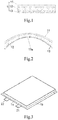
FIG. 1 , the flexible package is also referred to as aluminum laminated packaging film 1. From the perspective of the battery, the aluminum laminated packaging film 1 is composed of anylon layer 11, analuminum layer 12 and a sealinglayer 13 in the order from outside to inside. Thenylon layer 11 is mainly used to form an aesthetically pleasing shape and to prevent oxygen and moisture in the air from entering the interior of the battery. The main function of thealuminum layer 12 is to further prevent the entry of oxygen and moisture in the air, and serve as a skeleton for supporting the outer shape of the aluminum laminated packaging film 1. Theinnermost sealing layer 13 functions to provide heat sealing adhesion between the two layers of the aluminum laminated packaging film while protecting thealuminum layer 12 from the corrosive action of the electrolyte. Thesealing layer 13 has a melting point of 160 °C to 170 °C. Under high temperature and high pressure, the sealinglayer 13 of the two-layer aluminum laminated packaging film 1 is melted, and is bonded together after cooling. - As shown in
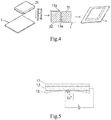
FIG. 2 , the thickness of thesealing layer 13 is about 30 µm. Under the relatively excellent process conditions, after the heat sealing, the thickness of the sealedsealing layer 13 is uniform, and thealuminum layer 12 can be well covered. When the parameters of the heat sealing machine change due to human or equipment factors, such as the heat sealing temperature increases, the heat sealing pressure increases, and the heat sealing time is lengthened, an over-packaging may occur. That is, thelayer 13 of the aluminum laminated packaging film corresponding to the heat sealing head position is pressed to become too thin or lost, for example, the portion shown as 13a inFig. 2 is the weak portion of thesealing layer 13, and the excessively thin polymer at 13a may expose thealuminum layer 12.Fig. 3 shows a schematic view of the battery, and theweak portion 13a of thesealing layer 13 generally appears on the top sideheat sealing regions 1a, 1b of the battery 2. In addition,FIG. 4 shows a process in which the aluminum laminated packaging film 1 is processed to form a battery case, the aluminum laminated packaging film 1 is supported on theconcave mold 32, and theconvex mold 31 is punched down to form a battery case. The bent portion of the aluminum laminated packaging film 1 is the most severely stretched position of thesealing layer 13, that is, theweak portion 13a of thesealing layer 13 inFig. 4 , where the breakage of thesealing layer 13 is most likely to cause thealuminum layer 12 to be exposed. Further, thealuminum layer 12 is directly contacted with the electrolyte. At this time, the trace amount of hydrofluoric acid in the electrolyte will contact the aluminum layer to cause pitting corrosion to fail to prevent water vapor and air and cause the lithium ion battery to swell or leak. -
FIG. 5 is a schematic view showing the corrosion of the aluminum laminated packaging film 1 after the sealing layer is broken. When thealuminum layer 12 in the damaged position of thesealing layer 13 is exposed to the internal environment of the battery, that is, the electrolyte, if the metal piece of thenegative electrode 21 is in contact with thealuminum layer 12 of the aluminum laminated packaging film 1 at the corresponding position, thealuminum layer 12 in the damaged position of thesealing layer 13 is in contact with the electrolyte to form a loop. That is, the potential of thealuminum layer 12 is the same as that of thenegative electrode 21, and at the voltage of the positive and negative electrodes, the lithium ion (Li+) in the electrolyte moves toward thealuminum layer 12 to form a loose aluminum-lithium alloy. Thealuminum layer 12 is electrochemically etched to accelerate the corrosion degree of thealuminum layer 12. After thealuminum layer 12 is perforated, the external air and moisture will enter the inside of the battery, causing a great safety hazard. - It is an object of the present disclosure to provide a graphene-containing aluminum laminated packaging film and a lithium ion battery using the same that solves a problem of internal corrosion of a battery.
- According to one aspect of the present disclosure, there is disclosed an aluminum laminated packaging film, which includes an aluminum layer, a graphene layer, and a sealing layer in sequence.
- In an exemplary embodiment of the present disclosure, the graphene layer has a thickness of 0.5 µm to 10 µm.
- In an exemplary embodiment of the present disclosure, the graphene layer has a thickness of 2 µm to 8 µm.
- In an exemplary embodiment of the present disclosure, the graphene content in the graphene layer is from 1 wt% to 10 wt%.
- In an exemplary embodiment of the present disclosure, the graphene content in the graphene layer is from 2 wt% to 8 wt%.
- In an exemplary embodiment of the present disclosure, the graphene monolayer ratio in the graphene layer is 30 wt% or more.
- In an exemplary embodiment of the present disclosure, the graphene monolayer ratio in the graphene layer is 60 wt% or more.
- In an exemplary embodiment of the present disclosure, the graphene layer has a melting point of from 200° C to 400° C.
- In an exemplary embodiment of the present disclosure, the graphene layer has a melting point of from 250° C to 350° C.
- According to other aspect of the present disclosure, there is disclosed a lithium-ion battery, which includes any of the above aluminum laminated packaging films.
- The graphene layer of the present disclosure is formed by mixing graphene sheets and a polymer glue, and uniformly coating the surface of the aluminum layer, and the graphene layer per unit thickness contains tens of thousands of graphene sheets arranged vertically along the cross section. During the processing of the battery, if the sealing layer is broken, the lithium ions will directly contact the graphene layer. Since the graphene has a sheet structure, the intersecting positions of the irregularly arranged graphene sheets form a tortuous and complicated path. The process of lithium ions leading to the aluminum layer is greatly hindered, thus preventing lithium ions from forming aluminum lithium alloy with aluminum metal and finally avoiding corrosion of aluminum layer.
- At the same time, the aluminum laminated packaging film of the present disclosure comprises a graphene layer. Due to the characteristics of the graphene itself, the graphene layer used has good plasticity, and can be well bonded to the aluminum layer to form a standard deformation under the action of an external force. The aluminum laminated packaging film has good toughness, and does not break under the specified deformation range. And it has high thermal stability, and does not melt and decompose below 200 °C, thus ensuring the protection of the aluminum layer.
- The above and other objects, features and advantages of the present disclosure will become more apparent from detailed description of exemplary embodiments with reference to accompanying drawings.
-
Fig. 1 is a schematic cross-sectional view of a prior art aluminum-plastic encapsulation film. -
Fig. 2 is a schematic cross-sectional view of a prior art aluminum laminated packaging film after stretching. -
Fig. 3 is a schematic view of a prior art battery. -
Fig. 4 is a schematic view showing a process of processing an aluminum laminated packaging film of the prior art. -
Fig. 5 is a schematic view showing the corrosion of the aluminum laminated packaging film after the sealing layer is broken in the prior art. -
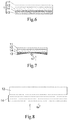
Fig.6 is a schematic cross-sectional view of a graphene-containing aluminum laminated packaging film of the present disclosure. -
Fig.7 is a schematic cross-sectional view showing a corrosion resistance of a graphene-containing aluminum laminated packaging film of the present disclosure. -
Fig. 8 is a schematic view of the graphene layer hindering lithium ion corrosion of the aluminum layer. - Reference numerals are list as follows:
- 1 aluminum laminated packaging film;
- 1a top side heat sealing area of battery;
- 1b side heat sealing area of battery;
- 11 nylon layer;
- 12 aluminum layer;
- 13 sealing layer;
- 13a weak point of sealing layer;
- 14 graphene layer;
- 2 battery;
- 21 positive electrode;
- 22 negative electrode;
- 31 convex mold;
- 32 concave mold;
- The present disclosure will be described in detail below in conjunction with specific embodiments.
-
Fig. 6 is a schematic cross-sectional view showing a graphene-containing aluminum laminated packaging film of the present embodiment. The aluminum laminated packaging film 1 includes anylon layer 11, analuminum layer 12, agraphene layer 14, and asealing layer 13 in sequence. - The
nylon layer 11 is on the outer side of the packaging material to serve as an outer layer protection which is suitable for cold stamping. Further, according to the appearance of the product, a decorative layer (not shown) such as a matt layer or a dyed coating may be added to the outer surface of thenylon layer 11 to enhance the aesthetic appearance of the product. - The
sealing layer 13 is at the innermost side and is in direct contact with the electrolyte and the bare cells. In the present embodiment, the material of thesealing layer 13 may be selected from materials such as polyethylene terephthalate, polyvinyl chloride, polyethylene or polypropylene etc. - The
aluminum layer 12 and thegraphene layer 14 are between thenylon layer 11 and thesealing layer 13. - The
graphene layer 14 is described below. In the present embodiment, thegraphene layer 14 may be formed by mixing graphene sheets and a thermoplastic polymer glue, uniformly coating on the surface of thealuminum layer 12, and solidifying. The thermoplastic polymer glue can be any polymer glue used in a lithium ion battery, that is, it does not chemically react with the electrolyte at the working temperature of the battery, and does not volatilize or decompose. The polymer glues in the following examples include aliphatic polyether polyurethanes, thermoplastic polyimide glue, and N,N-ethylene bis-stearamide. However, the above polymer glues are merely examples and are not intended to limit the disclosure. - The thickness of the
graphene layer 14 is preferably 0.5 to 10 µm, and more preferably 3 to 8 µm. - The graphene content in the
graphene layer 14 is preferably from 1 wt% to 10 wt%, more preferably from 2 wt% to 8 wt%. - The graphene monolayer ratio in the
graphene layer 14 is preferably 30% by weight or more, and more preferably 60% by weight or more. - The melting point of the
graphene layer 14 is preferably 200° C to 400° C, and more preferably 250° C to 350° C. -
Fig. 7 is a schematic cross-sectional view showing the corrosion resistance of a graphene-containing aluminum laminated packaging film, and thegraphene layer 14 per unit thickness contains tens of thousands of graphene sheets arranged vertically along the cross section. During the processing of the battery, if thesealing layer 13 is broken, the lithium ions and the electrolyte are directly in contact with the graphene layer.Fig. 8 is a schematic view showing that the graphene layer hinders lithium ion corrosion of the aluminum layer. Since the graphene is has a sheet structure, the intersecting positions of the irregularly arranged graphene sheets form a tortuous and complicated path, and the process of lithium ions and electrolytes leading to thealuminum layer 12 is greatly hindered, thus preventing lithium ions from forming an aluminum-lithium alloy with aluminum metal, and finally avoiding electrochemical corrosion and chemical corrosion of the aluminum layer. - The bonding process of the graphene-containing
layer 14 and thealuminum layer 12 will be described in detail based on the preparation of a conventional aluminum laminated packaging film. - The preparation of the packaging material included a
nylon layer 11, analuminum layer 12, agraphene layer 14, and asealing layer 13 from the outer layer to the inner layer. Thenylon layer 11 used in the following examples had a thickness of 30 µm, thealuminum layer 12 had a thickness of 40 µm, and thesealing layer 13 was made of polypropylene and had a thickness of 30 µm, which is not described in detail in the following examples. The process in which thegraphene layer 14 was formed on thealuminum layer 12 is described in detail below in Examples 1-6. - Using a single layer rate of 50 wt% graphene as a raw material, the graphene raw material and the aliphatic polyether polyurethane, water were sufficiently dispersed in a mass ratio of 4:4:2, and the mixed dispersion was added to a thermoplastic polyimide at a temperature of 300° C. It was kept at a high temperature of 300° C, and was dispersed for 6 hours by a vacuum high-speed shearing machine, and then dispersed by an ultrasonic pulverizer at a working frequency of 50 kHz to 100 kHz for 6 hours, repeating the cycle 5 times, after the first cycle, adding 1% by mass of N,N-ethylene bis-stearamide.
- After the high-temperature graphene polymer glue was prepared, it was precisely coated on the aluminum foil using a high-precision coat machine. After coating, it was subjected to 300° C, 250° C, 200° C temperature zone cooling and pressed by a precision roller provided at the end of the coating machine at a roll temperature of 150° C at a roll pressure of 100 to 300 kgf/cm2. The graphene layer had a thickness of 8 µm and a grapheme content of 8 wt% after the roll press.
- Using a single layer rate of 30 wt% graphene as a raw material, the graphene raw material and the aliphatic polyether polyurethane, water were sufficiently dispersed in a mass ratio of 4:4:2, and the mixed dispersion was added to a thermoplastic polyimide at a temperature of 300° C. It was kept at a high temperature of 300° C, and was dispersed at a high temperature for 6 hours using a vacuum high-speed shearing machine, and then dispersed by an ultrasonic pulverizer at a working frequency of 50 kHz to 100 kHz for 6 hours, repeating the cycle 5 times, after the first cycle, adding 1% by mass of N,N-ethylene bis-stearamide.
- After the high-temperature graphene polymer glue was prepared, it was precisely coated on the aluminum foil using a high-precision coat machine. After coating, it was subjected to 300° C, 250° C, 200° C temperature zone cooling and pressed by a precision roller provided at the end of the coating machine at a roll temperature of 150° C at a roll pressure of 100 to 300 kgf/cm2. The graphene layer had a thickness of 10 µm and a grapheme content of 5 wt% after the roll press.
- Using a single layer rate of 60 wt% graphene as a raw material, the graphene raw material and the aliphatic polyether polyurethane, water were sufficiently dispersed in a mass ratio of 4:4:2, and the mixed dispersion was added to a thermoplastic polyimide at a temperature of 300° C. It was kept at a high temperature of 300° C, and was dispersed for 6 hours by a vacuum high-speed shearing machine, and then dispersed by an ultrasonic pulverizer at a working frequency of 50 kHz to 100 kHz for 6 hours, repeating the cycle 5 times, after the first cycle, adding 1% by mass of N,N-ethylene bis-stearamide.
- After the high-temperature graphene polymer glue was prepared, it was precisely coated on the aluminum foil using a high-precision coat machine. After coating, it was subjected to 300° C, 250° C, 200° C temperature zone cooling and pressed by a precision roller provided at the end of the coating machine at a roll temperature of 150° C at a roll pressure of 100 to 300 kgf/cm2. The graphene layer had a thickness of 3 µm and a grapheme content of 1 wt% after the roll press.
- Using a single layer rate of 95 wt% graphene as a raw material, the graphene raw material and the aliphatic polyether polyurethane, water were sufficiently dispersed in a mass ratio of 4:4:2, and the mixed dispersion was added to a thermoplastic polyimide at a temperature of 300° C. It was kept at a high temperature of 300° C, and was dispersed for 6 hours by a vacuum high-speed shearing machine, and then dispersed by an ultrasonic pulverizer at a working frequency of 50 kHz to 100 kHz for 6 hours, repeating the cycle 5 times, after the first cycle, adding 1% by mass of N,N-ethylene bis-stearamide.
- After the high-temperature graphene polymer glue was prepared, it was precisely coated on the aluminum foil using a high-precision coat machine. After coating, it was subjected to 300° C, 250° C, 200° C temperature zone cooling and pressed by a precision roller provided at the end of the coating machine at a roll temperature of 150° C at a roll pressure of 100 to 300 kgf/cm2. The graphene layer had a thickness of 2 µm and a grapheme content of 7 wt% after the roll press.
- Using a single layer rate of 80 wt% graphene as a raw material, the graphene raw material and the aliphatic polyether polyurethane, water were sufficiently dispersed in a mass ratio of 4:4:2, and the mixed dispersion was added to a thermoplastic polyimide at a temperature of 300° C. It was kept at a high temperature of 300° C, and was dispersed for 6 hours by a vacuum high-speed shearing machine, and then dispersed by an ultrasonic pulverizer at a working frequency of 50 kHz to 100 kHz for 6 hours, repeating the cycle 5 times, after the first cycle, adding 1% by mass of N,N-ethylene bis-stearamide.
- After the high-temperature graphene polymer glue was prepared, it was precisely coated on the aluminum foil using a high-precision coat machine. After coating, it was subjected to 300° C, 250° C, 200° C temperature zone cooling and pressed by a precision roller provided at the end of the coating machine at a roll temperature of 150° C at a roll pressure of 100 to 300 kgf/cm2. The graphene layer had a thickness of 0.5 µm and a grapheme content of 10 wt% after the roll press.
- Using a single layer rate of 70 wt% graphene as a raw material, the graphene raw material and the aliphatic polyether polyurethane, water were sufficiently dispersed in a mass ratio of 4:4:2, and the mixed dispersion was added to a thermoplastic polyimide at a temperature of 300° C. It was kept at a high temperature of 300° C, and was dispersed for 6 hours by a vacuum high-speed shearing machine, and then dispersed by an ultrasonic pulverizer at a working frequency of 50 kHz to 100 kHz for 6 hours, repeating the cycle 5 times, after the first cycle, adding 1% by mass of N,N-ethylene bis-stearamide.
- After the high-temperature graphene polymer glue was prepared, it was precisely coated on the aluminum foil using a high-precision coat machine. After coating, it was subjected to 300° C, 250° C, 200° C temperature zone cooling and pressed by a precision roller provided at the end of the coating machine at a roll temperature of 150° C at a roll pressure of 100 to 300 kgf/cm2. The graphene layer had a thickness of 6 µm and a grapheme content of 2 wt% after the roll press.
- A positive electrode active material, conductive carbon black Super-P as a conductive agent, and a binder were uniformly dispersed in a solvent to prepare a positive electrode slurry. The positive electrode slurry was uniformly coated on the positive current collector. Then, a positive electrode sheet was obtained by stoving, cold pressing, trimming, cutting, slitting, drying, and welding electrode ears in turn.
- A negative electrode active material artificial graphite, conductive carbon black Super-P as a conductive agent, a thickener, and a binder were uniformly mixed in deionized water to prepare a negative electrode slurry. The negative electrode slurry was uniformly coated on the negative current collector. Then, a negative electrode sheet was obtained by stoving, cold pressing, trimming, cutting, slitting, drying, and welding electrode ears in turn.
- A polypropylene film was used as a separator.
- The positive electrode sheet, the separator, and the negative electrode sheet were sequentially stacked upon one another, and then wound to form a bare cell. The bare cell was placed in a case formed by any of the aluminum laminated packaging films prepared in Example 1-6, and an electrolyte was injected. After vacuum-package and maintaining for 24 h, it was charged to 4.4 V with a constant current of 0.1 C, and then charged with 4.4. V constant voltage until the current drops to 0.05 C, then discharged to 3.0 V with a constant current of 0.1 C, repeating the charge and discharge cycle twice, and finally charged to 3.8 V with a constant current of 0.1 C, thereby completing the preparation of a lithium ion battery. The cases prepared in Examples 1-6 were used to form the lithium ion batteries of Examples 7-12, respectively.
- The case of the lithium ion battery was the same as the case prepared in any one of examples 1-6 except that the graphene layer was not contained.
- The negative electrode ear of the fully charged lithium ion battery is short-circuited with the packaging film by the metal wire of to form an electron channel. Then the battery prepared in Example 71-2 was stored at 40-50° C at the relative humidity of >90%, and the battery case checked for chemical corrosion regularly. The test results were shown in Table 1.
Table 1 No. Accelerated corrosion test (number of corrosions occurring in 3 months / total number of tests) Example 1 0/100 Example 2 0/100 Example 3 0/100 Example 4 0/100 Example 5 0/100 Example 6 0/100 Comparative example 1 5/100 - The lithium-ion batteries using the aluminum laminated packaging films prepared in Examples 1-6, have an obviously improved anti-hydrofluoric acid ability, and the lithium alloy is not easily formed, and even when the negative electrode and the packaging material are short-circuited, lithium is not precipitated. Therefore, it can better resistance to electrochemical corrosion, enhance the safety and increase the service life of lithium-ion batteries. It also improves the resistance to penetration of lithium-ion batteries.
- It will be appreciated that the present disclosure is not limited to the exact construction that has been described above and illustrated in the accompanying drawings, and that various modifications and changes may be made without departing from the scope thereof. It is intended that the scope of the disclosure only be limited by the appended claims.
Claims (10)
- An aluminum laminated packaging film, comprising an aluminum layer, a graphene layer, and a sealing layer in sequence.
- The aluminum laminated packaging film according to claim 1, wherein the graphene layer has a thickness of 0.5 µm to 10 µm.
- The aluminum laminated packaging film according to claim 2, wherein the graphene layer has a thickness of 2 µm to 8 µm.
- The aluminum laminated packaging film according to claim 1, wherein the graphene content in the graphene layer is from 1 wt% to 10 wt%.
- The aluminum laminated packaging film according to claim 4, wherein the grapheme content in the graphene layer is from 2 wt% to 8 wt%.
- The aluminum laminated packaging film according to claim 1, wherein the graphene monolayer ratio in the graphene layer is 30 wt% or more.
- The aluminum laminated packaging film according to claim 6, wherein the graphene monolayer ratio in the graphene layer is 60 wt% or more.
- The aluminum laminated packaging film according to claim 1, wherein the graphene layer has a melting point of from 200° C to 400° C.
- The aluminum laminated packaging film according to claim 6, wherein the graphene layer has a melting point of from 250° C to 350° C.
- A lithium-ion battery, comprising the aluminum laminated packaging film of any one of claims 1-9.
Applications Claiming Priority (1)
| Application Number | Priority Date | Filing Date | Title |
|---|---|---|---|
| PCT/CN2016/112996 WO2018119869A1 (en) | 2016-12-29 | 2016-12-29 | Aluminum laminated packaging film, and lithium-ion battery using same |
Publications (3)
| Publication Number | Publication Date |
|---|---|
| EP3565019A1 true EP3565019A1 (en) | 2019-11-06 |
| EP3565019A4 EP3565019A4 (en) | 2020-08-12 |
| EP3565019B1 EP3565019B1 (en) | 2026-01-28 |
Family
ID=62710837
Family Applications (1)
| Application Number | Title | Priority Date | Filing Date |
|---|---|---|---|
| EP16925792.0A Active EP3565019B1 (en) | 2016-12-29 | 2016-12-29 | Aluminum laminated packaging film, and lithium-ion battery using same |
Country Status (5)
| Country | Link |
|---|---|
| US (1) | US20200099019A1 (en) |
| EP (1) | EP3565019B1 (en) |
| JP (1) | JP2020513357A (en) |
| KR (1) | KR20190086006A (en) |
| WO (1) | WO2018119869A1 (en) |
Families Citing this family (10)
| Publication number | Priority date | Publication date | Assignee | Title |
|---|---|---|---|---|
| CN109037498B (en) * | 2018-07-26 | 2021-09-24 | 广州埃米石墨烯科技有限公司 | Oriented graphene flexible packaging film for lithium ion battery and preparation method of oriented graphene flexible packaging film |
| CN109509639B (en) * | 2018-12-18 | 2024-04-09 | 江西明冠锂膜技术有限公司 | Plastic-aluminum film for capacitor |
| CN109830665A (en) * | 2019-02-18 | 2019-05-31 | 山东星火科学技术研究院 | A kind of ultrafast charge and discharge large capacity aluminium-graphene battery |
| CN112537101A (en) * | 2019-09-20 | 2021-03-23 | 韩国铝业株式会社 | Graphene-containing sheet for packaging pharmaceutical agents |
| JP2021068705A (en) * | 2019-10-23 | 2021-04-30 | 韓国アルミニウム株式会社 | Rechargeable battery pouch film containing graphene |
| KR102819911B1 (en) | 2019-11-22 | 2025-06-11 | 주식회사 엘지에너지솔루션 | Packaging for flexible secondary battery and flexible secondary battery including the same |
| CN113424355B (en) * | 2020-09-25 | 2024-03-19 | 宁德新能源科技有限公司 | Packaging film and battery core with said packaging film |
| CN112937024B (en) * | 2021-01-29 | 2023-06-30 | 江西睿捷新材料科技有限公司 | Aluminum-plastic composite film for lithium battery and preparation method thereof |
| US11605851B1 (en) * | 2021-09-21 | 2023-03-14 | Knoetik Solutions, Inc. | Systems, methods and apparatus for improving rechargeable energy storage devices and integrated circuits |
| CN116179031B (en) * | 2022-12-19 | 2024-05-14 | 北京东方雨虹防水技术股份有限公司 | Graphene passivation solution, preparation method thereof, lithium battery soft-coated aluminum-plastic film and lithium battery |
Family Cites Families (13)
| Publication number | Priority date | Publication date | Assignee | Title |
|---|---|---|---|---|
| JP2004095333A (en) * | 2002-08-30 | 2004-03-25 | Sony Corp | Laminated film for battery and non-aqueous electrolyte secondary battery |
| EP1884353A1 (en) * | 2006-07-24 | 2008-02-06 | Alcan Technology & Management Ltd. | Plastic composite film |
| CN103518272B (en) * | 2011-05-11 | 2017-02-15 | 凸版印刷株式会社 | Cladding for lithium ion cell, lithium ion cell, and method for producing lithium ion cell |
| CN102208598B (en) * | 2011-05-12 | 2014-03-12 | 中国科学院宁波材料技术与工程研究所 | Electrode plate of graphene coating modified lithium secondary battery and manufacturing method thereof |
| WO2013012291A2 (en) * | 2011-07-21 | 2013-01-24 | 한화케미칼 주식회사 | Battery packaging material having heat-dissipating characteristics |
| CN103579630A (en) * | 2012-07-18 | 2014-02-12 | 海洋王照明科技股份有限公司 | Preparation method for aluminum foil current collector and application |
| CN103779084A (en) * | 2012-10-24 | 2014-05-07 | 海洋王照明科技股份有限公司 | Anode current collector and preparation method and application thereof |
| KR101661224B1 (en) * | 2015-04-30 | 2016-09-30 | (주) 퓨리켐 | Current collector for high voltage super-capacitor and super-capacitor therewith |
| JP2016027576A (en) * | 2015-09-17 | 2016-02-18 | 株式会社半導体エネルギー研究所 | Power storage device and electrical equipment |
| CN105428556B (en) * | 2015-12-26 | 2018-02-16 | 乐凯胶片股份有限公司 | A kind of lithium ion battery flexible packaging film |
| CN205439418U (en) * | 2015-12-29 | 2016-08-10 | 东莞新能源科技有限公司 | Lithium-ion battery flexible packaging material and lithium-ion battery using the material |
| CN105958079B (en) * | 2016-05-26 | 2018-04-10 | 宁波维科电池股份有限公司 | A kind of lithium ion battery of graphene composite coating aluminium foil and the application aluminium foil |
| CN106159316A (en) * | 2016-09-08 | 2016-11-23 | 海悦高科电池技术(大连)有限公司 | A current collector for the positive electrode of a lithium ion battery and a battery comprising the current collector |
-
2016
- 2016-12-29 KR KR1020197018302A patent/KR20190086006A/en not_active Ceased
- 2016-12-29 WO PCT/CN2016/112996 patent/WO2018119869A1/en not_active Ceased
- 2016-12-29 EP EP16925792.0A patent/EP3565019B1/en active Active
- 2016-12-29 US US16/466,569 patent/US20200099019A1/en not_active Abandoned
- 2016-12-29 JP JP2019531133A patent/JP2020513357A/en active Pending
Also Published As
| Publication number | Publication date |
|---|---|
| US20200099019A1 (en) | 2020-03-26 |
| KR20190086006A (en) | 2019-07-19 |
| EP3565019B1 (en) | 2026-01-28 |
| EP3565019A4 (en) | 2020-08-12 |
| WO2018119869A1 (en) | 2018-07-05 |
| JP2020513357A (en) | 2020-05-14 |
Similar Documents
| Publication | Publication Date | Title |
|---|---|---|
| EP3565019B1 (en) | Aluminum laminated packaging film, and lithium-ion battery using same | |
| KR102879708B1 (en) | Pouch film lamination, pouch-type battery case and pouch-type secondary battery | |
| EP3993110B1 (en) | Electrode sheet, electrochemical device and device thereof | |
| KR102256599B1 (en) | Pressing jig and method of fabricating secondary battery using the same | |
| US10505218B2 (en) | Non-aqueous electrolyte secondary battery | |
| US20180226681A1 (en) | All-solid-state battery | |
| CN102027627B (en) | Lithium ion battery and electrode wound body for lithium ion battery | |
| US20060286456A1 (en) | Nano-lithium-ion batteries and methos for manufacturing nano-lithium-ion batteries | |
| CN202503073U (en) | A kind of ultra-thin lithium-ion battery | |
| KR20000077418A (en) | Solid Electrolyte Battery | |
| KR20170097678A (en) | Electrochemical energy storage device | |
| CN104681858A (en) | Ultrathin flexible lithium ion battery and preparation method thereof | |
| US12237542B2 (en) | Electrochemical device and electronic device containing the same | |
| CN105261781A (en) | Electrochemical cell and preparation method thereof | |
| US20030072999A1 (en) | Method for manufacturing an electrode-separator assembly for galvanic elements | |
| CN109494413B (en) | Soft package lithium ion battery and preparation method thereof | |
| CN110661035B (en) | A single battery cell, a flexible battery pack and a method for preparing the same | |
| EP4030520A1 (en) | Non-aqueous electrolyte secondary battery | |
| WO2022000314A1 (en) | Separator for electrochemical device, electrochemical device and electronic device | |
| CN108539100A (en) | A kind of lithium battery | |
| KR20150079048A (en) | Secondary battery and method for packaging thereof | |
| GB2151069A (en) | Making active electrodes | |
| EP4199235B1 (en) | Unit cell and battery cell including the same | |
| JP2006286496A (en) | Polymer battery | |
| CN212434691U (en) | Low temperature soft pack battery |
Legal Events
| Date | Code | Title | Description |
|---|---|---|---|
| STAA | Information on the status of an ep patent application or granted ep patent |
Free format text: STATUS: THE INTERNATIONAL PUBLICATION HAS BEEN MADE |
|
| PUAI | Public reference made under article 153(3) epc to a published international application that has entered the european phase |
Free format text: ORIGINAL CODE: 0009012 |
|
| STAA | Information on the status of an ep patent application or granted ep patent |
Free format text: STATUS: REQUEST FOR EXAMINATION WAS MADE |
|
| 17P | Request for examination filed |
Effective date: 20190529 |
|
| AK | Designated contracting states |
Kind code of ref document: A1 Designated state(s): AL AT BE BG CH CY CZ DE DK EE ES FI FR GB GR HR HU IE IS IT LI LT LU LV MC MK MT NL NO PL PT RO RS SE SI SK SM TR |
|
| AX | Request for extension of the european patent |
Extension state: BA ME |
|
| DAV | Request for validation of the european patent (deleted) | ||
| DAX | Request for extension of the european patent (deleted) | ||
| RIN1 | Information on inventor provided before grant (corrected) |
Inventor name: LI, QING Inventor name: LI, HERAN Inventor name: ZHANG, JING |
|
| A4 | Supplementary search report drawn up and despatched |
Effective date: 20200714 |
|
| RIC1 | Information provided on ipc code assigned before grant |
Ipc: H01M 2/02 20060101AFI20200708BHEP |
|
| STAA | Information on the status of an ep patent application or granted ep patent |
Free format text: STATUS: EXAMINATION IS IN PROGRESS |
|
| 17Q | First examination report despatched |
Effective date: 20240614 |
|
| REG | Reference to a national code |
Ref country code: DE Ref legal event code: R079 Free format text: PREVIOUS MAIN CLASS: H01M0002020000 Ipc: H01M0050126000 Ref country code: DE Ref legal event code: R079 Ref document number: 602016094643 Country of ref document: DE Free format text: PREVIOUS MAIN CLASS: H01M0002020000 Ipc: H01M0050126000 |
|
| GRAP | Despatch of communication of intention to grant a patent |
Free format text: ORIGINAL CODE: EPIDOSNIGR1 |
|
| STAA | Information on the status of an ep patent application or granted ep patent |
Free format text: STATUS: GRANT OF PATENT IS INTENDED |
|
| RIC1 | Information provided on ipc code assigned before grant |
Ipc: H01M 50/126 20210101AFI20250721BHEP Ipc: H01M 50/119 20210101ALI20250721BHEP Ipc: H01M 50/121 20210101ALI20250721BHEP Ipc: H01M 50/133 20210101ALI20250721BHEP Ipc: H01M 50/117 20210101ALI20250721BHEP Ipc: H01M 50/105 20210101ALI20250721BHEP |
|
| INTG | Intention to grant announced |
Effective date: 20250812 |
|
| GRAS | Grant fee paid |
Free format text: ORIGINAL CODE: EPIDOSNIGR3 |
|
| GRAA | (expected) grant |
Free format text: ORIGINAL CODE: 0009210 |
|
| STAA | Information on the status of an ep patent application or granted ep patent |
Free format text: STATUS: THE PATENT HAS BEEN GRANTED |
|
| AK | Designated contracting states |
Kind code of ref document: B1 Designated state(s): AL AT BE BG CH CY CZ DE DK EE ES FI FR GB GR HR HU IE IS IT LI LT LU LV MC MK MT NL NO PL PT RO RS SE SI SK SM TR |
|
| REG | Reference to a national code |
Ref country code: CH Ref legal event code: F10 Free format text: ST27 STATUS EVENT CODE: U-0-0-F10-F00 (AS PROVIDED BY THE NATIONAL OFFICE) Effective date: 20260128 Ref country code: GB Ref legal event code: FG4D |
|
| REG | Reference to a national code |
Ref country code: DE Ref legal event code: R096 Ref document number: 602016094643 Country of ref document: DE |
|
| REG | Reference to a national code |
Ref country code: IE Ref legal event code: FG4D |