EP3564870A1 - Causality for machine learning systems - Google Patents
Causality for machine learning systems Download PDFInfo
- Publication number
- EP3564870A1 EP3564870A1 EP19162984.9A EP19162984A EP3564870A1 EP 3564870 A1 EP3564870 A1 EP 3564870A1 EP 19162984 A EP19162984 A EP 19162984A EP 3564870 A1 EP3564870 A1 EP 3564870A1
- Authority
- EP
- European Patent Office
- Prior art keywords
- variables
- causality
- user
- target result
- dag
- Prior art date
- Legal status (The legal status is an assumption and is not a legal conclusion. Google has not performed a legal analysis and makes no representation as to the accuracy of the status listed.)
- Ceased
Links
Images




Classifications
-
- G—PHYSICS
- G06—COMPUTING OR CALCULATING; COUNTING
- G06N—COMPUTING ARRANGEMENTS BASED ON SPECIFIC COMPUTATIONAL MODELS
- G06N5/00—Computing arrangements using knowledge-based models
- G06N5/04—Inference or reasoning models
- G06N5/045—Explanation of inference; Explainable artificial intelligence [XAI]; Interpretable artificial intelligence
-
- G—PHYSICS
- G06—COMPUTING OR CALCULATING; COUNTING
- G06N—COMPUTING ARRANGEMENTS BASED ON SPECIFIC COMPUTATIONAL MODELS
- G06N20/00—Machine learning
-
- G—PHYSICS
- G06—COMPUTING OR CALCULATING; COUNTING
- G06N—COMPUTING ARRANGEMENTS BASED ON SPECIFIC COMPUTATIONAL MODELS
- G06N7/00—Computing arrangements based on specific mathematical models
- G06N7/01—Probabilistic graphical models, e.g. probabilistic networks
Definitions
- Embodiments of the disclosure relate to causality for machine learning systems.
- Machine learning systems may analyze data sets and identify correlations between various results and/or variables associated with those results. However, such correlations do not indicate the causality between variables of interest and the results. For example, even if a correlation is found between people carrying umbrellas and the rain, the machine learning system does not know that stopping people from carrying umbrellas will not stop the rain.
- One or more embodiments of the present disclosure may include a method that includes obtaining one or more assumptions from a user, where the assumptions may be associated with a target result in a machine learning system.
- the method may also include identifying multiple variables, where the variables may represent causality candidates for the target result.
- the method may additionally include estimating a causal effect for each of the variables, and generating a causality explanation of the target result based on the causal effects for the variables.
- the method may also include providing the causality explanation to the user.
- a directed acyclic graph may be used to graphically represent a series of variables and at least one target result, where one or more of the variables and/or target results may be outputs of the machine learning system.
- a causal effect may be quantified for variables of interest by sufficiently isolating the variable of interest and estimating the causal effect for a given variable of interest.
- an explanation may be provided of which variable is causing the target result.
- Such an approach may facilitate the determination of and/or improvement of the accuracy of machine learning systems. Additionally, such an approach provides a more intuitive and easily accessible interface for analyzing causality and associated explanations.
- Figure 1 is a diagram illustrating an example system 100 that may be used to determine causality for a machine learning system, in accordance with one or more embodiments of the present disclosure.
- the system 100 may include a machine learning system 110 and a user interaction module 120 that may provide input to a causality module 130.
- the causality module 130 may facilitate determination of the explanation 140 associated with causality between variables and results.
- a variable may include any activity, factor, attribute, etc. that may influence or otherwise potentially lead to a result. For example, if a result includes that a contract is won by a company, the variables may include the business unit associated with the new contract, the salesman who negotiated the contract, and the region of the world in which the contract was won.
- such causality may lead to an explanation between the variables and the result, such as the contract was won because of the salesman who negotiated the contract.
- the user may interact with the system 100 (e.g., to adjust one or more assumptions) and the causality may be examined again.
- the machine learning system 110 may include any machine learning system configured to identify relationships and/or correlations from a data set.
- the machine learning system 110 may be configured to identify a set of most likely factors contributing to a result, whether directly or indirectly, by analyzing data sets.
- the machine learning system 110 may analyze all contracts won for a company, all pitches made without a contract won for a company, and may identify which factors correlate with the winning of a contract.
- the machine learning system 110 may be configured to analyze product purchases from a business, and may identify factors such as related products, demographics of purchasers, etc. to identify which factors correlate with the purchase of a product.
- the machine learning system 110 may be configured to analyze patient health data and outcomes with certain diseases to identify which factors correlate with positive outcomes with the diseases. In these and other embodiments, the machine learning system 110 may provide the correlations and/or the factors contributing to a result to the user interaction module 120 and/or the causality module 130.
- the machine learning system 110 may operate using any machine learning technique or deep learning technique, such as decision tree learning, association rule learning, clustering, reinforcement learning, representation learning, genetic algorithms, etc. In some embodiments, the machine learning system 110 may be utilized to perform a task, such as providing a recommendation based on correlations in a data set.
- the user interaction module 120 may include any device or system or components thereof configured to receive user input and/or provide information to the user.
- the user interaction module 120 may present a set of variables of a result as determined by the machine learning system 110 to a user.
- the user may utilize the user interaction module 120 to identify one or more variables of interest from the variables.
- the user may designate a subset of the set of variables for a given result as those in which the user is interested.
- the user may indicate a particular result as the result in which the user is interested (e.g., a target result).
- the user may interact with the user interaction module 120 to designate one or more assumptions regarding assumed or believed causal relationships between one or more of the variables and/or results. For example, with reference to the contract example, the user may enter an assumed directional relationship between the salesman and the business unit (e.g., "Salesman X often performs well and has lots of sales when working with this particular business unit.”).
- the causality module 130 may include any device or system or components thereof configured to utilize the inputs from the machine learning system 110 (e.g., the variables and result) and from the user interaction module 120 (e.g., the assumptions and target result from the user) to generate the explanation 140.
- the machine learning system 110 e.g., the variables and result
- the user interaction module 120 e.g., the assumptions and target result from the user
- the causality module 130 may construct a directed acyclic graph (DAG) representing the relationships and/or assumptions between the variables and the target result.
- DAG directed acyclic graph
- Figures 2A-2C illustrate examples of such a DAG.
- the DAG may begin with any known directional relationships with respect to the variables as related to other variables and/or the target result.
- the DAG may be supplemented by adding directional edges based on the assumptions as received from the user interaction module 120.
- the causality module 130 may construct the DAG without including the assumptions and may present the DAG visually to the user via the user interaction module 120.
- the user may utilize the visualization of the DAG to select the variables of interest and/or the target result. Additionally or alternatively, the user may utilize the visualization of the DAG to designate or create new relationships as the assumptions.
- the visualization of the DAG may be accessed and interacted with via a graphical user interface (GUI) or any other interface of the user interaction module 120.
- GUI graphical user interface
- the causality module 130 may utilize the DAG to analyze whether or not there is sufficient causal evidence to identify a causal relationship between the variables of interest and the target result. To perform such an analysis, the causality module 130 may determine whether or not the DAG includes any confounders.
- a confounder may include any variable that affects one or more of the variables of interest as well as the target result. For example, if one of the variables includes a relationship with both a variable of interest and the target result, such a variable may be a confounder. In some embodiments, a confounder may be designated based on a single variable of interest. If the causality module 130 determines that there are no confounders in the DAG, the causality module 130 may determine a causal effect for each of the variables of interest to facilitate determination of the explanation 140.
- the causality module 130 may determine whether paths through the DAG to the target result that include the confounders (which may be referred to as back-door paths) are blockable. To determine whether the back-door paths can be blocked, the causality module 130 may consider which direction edges flow between the nodes in the back-door path, and whether or not the nodes are observed in the back-door path.
- One such blocking scenario may include where the back-door path includes a collider node (where two nodes converge on a single node, sometimes referred to as a head to head node), and the node and its descendants are not observed.
- Another blocking scenario may include a causal chain, where there may be a node in the path between the confounder and the target result with one edge coming in and one edge coming out (sometimes referred to as a casual chain) and that node is observed.
- the collider node may be unobserved and the other nodes in the back-door path may be observed.
- the causality module 130 may determine that there are confounders that may not be accounted for.
- the causality module 130 may output a message indicating that there is insufficient causal evidence to determine the explanation 140.
- the causality module 130 may provide an indication of what information may be used to provide the missing causal evidence. For example, the causality module 130 may indicate which paths are unblockable and what information or data may facilitate the blockability of such paths.
- the causality module 130 may block all such back-door paths. For example, the causality module 130 may control for the blocking variable in the determination of the explanation 140. After blocking all the back-door paths, the causality module 130 may determine the causal effects for each of the variables of interest.
- the causality module 130 may quantify the causal effect of each variable on the target result. In some embodiments, such quantification may be based on the variable including a binary value (e.g., is it salesman X that is involved in the negotiation of the contract?). In these and other embodiments, the causal effect may be quantified as a number between zero and one.
- the quantification of the causal effect of variable X on target result Y may be represented by Equation 1.
- do X 1 ⁇ E Y
- X 1 ⁇ P Y
- X 0
- E() represents the expectation function (e.g., E ( Y
- P () represents a probability function (e.g., P ( Y
- a causal effect may be determined for a given variable of interest.
- various operations may be repeated for each variable of interest.
- the causality module 130 may identify and handle any confounders and determine the causal effect for a given variable of interest, and those operations may be repeated for each of the variables of interest.
- the present disclosure may iteratively cycle through the variables of interest, determine if they can be isolated, and if they can be isolated, determine the causal effect of each of the variables of interest on the target result.
- the causality module 130 may compare the quantification of the causal effects for each of the variables of interest. To select the causal effect that results in the explanation 140, the causality module 130 may select the variable with the highest numerical value for the quantification of the causal effect. The causality module 130 may generate the explanation 140 based on the selected variable. For example, if the target result was winning a contract and the variable with the highest causal effect was whether or not the salesman X was involved, the explanation 140 may indicate that the contract was won because the salesman X was involved in negotiating the contract.
- the user may be dissatisfied with the explanation 140.
- the user may modify or adjust one or more of the assumptions provided to the causality module 130 regarding the relationships and/or correlations between the variables. Additionally or alternatively, the user may set certain variables (e.g., setting the salesman X as always working on a given business unit to determine the causal effect if those variables are always set to their maximal value).
- the causality module 130 may repeatedly generate different explanations 140 until the user is satisfied with the explanation 140.
- the user may be dissatisfied with the explanation based on knowledge the user has about the relationships between variables in the DAG. For example, if a user is recommended a product as one they may be interested in, the causality module 130 may provide the explanation 140 as to why the user was recommended the product and the user may adjust the assumptions (e.g., based on the explanation "because you are interested in shoes, we recommended this brand of socks," the user may adjust the directional relationship between interest in shoes and socks).
- the dissatisfaction of the user with the explanation 140 may be based on an illogical or faulty causal relationship, such as an explanation that people having umbrellas has caused it to rain.
- the iterative processing may be used to analyze and/or determine counterfactual scenarios. For example, by changing assumptions the user may determine the potential causal effect if a certain variable had been different (e.g., if the salesman X had been operating in a different business unit, would we still have won the contract?).
- the present disclosure may improve the operation of machine learning systems by providing insight to users regarding the reasoning that forms the basis for the outputs of the machine learning systems. For example, if the output is to provide a recommendation (e.g., a product recommendation, an advertisement recommendation, a treatment of a disease recommendation, etc.), the explanation 140 of the causality leading to the recommendation may be provided to the user and/or analyzed by the user. As another example, the effectiveness and/or accuracy of the machine learning system may be assessed. For example, using the explanation 140, the user may improve the accuracy of the machine learning system 110 by correcting faulty assumptions made by the machine learning system 110.
- a recommendation e.g., a product recommendation, an advertisement recommendation, a treatment of a disease recommendation, etc.
- the explanation 140 of the causality leading to the recommendation may be provided to the user and/or analyzed by the user.
- the effectiveness and/or accuracy of the machine learning system may be assessed.
- the user may improve the accuracy of the machine learning system 110 by correcting faulty assumptions made by the machine learning system
- a recommendation may be made to a user purchasing a backpack to purchase a laptop based on a correlation in a data set between the purchase of laptops and backpacks.
- using embodiments of the present disclosure may identify the directionality and causality of the correlation such that a purchase of a laptop may result in a recommendation of a backpack but not vice versa.
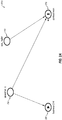
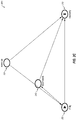
- FIGS 2A-2C are diagrams illustrating example directed acyclic graphs (DAGs) 200a-200c used in determining causality for machine learning systems, in accordance with one or more embodiments of the present disclosure.
- the DAG 200a may be associated with an example of a target result (as designated by the vertical line) of a contract won 210, with variables of a business unit 220, a salesman_x 230, and a usa region 240.
- the variable of interest is the business unit 220 (as designated by the triangle).
- the DAG 200a may be based on an attempt to determine what caused a company to win a contract by their sales team (e.g., did we win the contract because of what business unit the contract was in).
- the DAG 200b may be associated with an example of a target result (as designated by the vertical line) of a cooker 211 being purchased, with variables of a gasket 221 being purchased, and curiosity 231 of a purchaser.
- the variable of interest is the gasket 221 being purchased (as designated by the triangle).
- the DAG 200b may be based on an attempt to determine whether a recommendation to purchase a pressure cooker based on someone buying a gasket is a worthwhile recommendation (e.g., can purchasing a gasket cause someone to purchase a pressure cooker).
- the DAG 200c may be associated with an example of a target result (as designated by the vertical line) of recovery 212 of a patient from an illness, with variables of a drug 222 being provided to the patient, exercise 232 of the patient, and food habits 242 of the patient.
- the variable of interest is the drug 222 being provided to the patient (as designated by the triangle).
- the DAG 200c may be based on an attempt to determine whether giving a patient a drug is what caused their recovery from the illness (e.g., did the drug cure the patient).
- a user may identify the variables of interest and/or the target result.
- the variables used in the DAGs 200a-200c may be the top variables correlating with the target result as output from a machine learning system, such as the machine learning system 110 of Figure 1 . Additionally or alternatively, the variables used in the DAGs 200a-200c may be the variables with a correlation score above a threshold for the machine learning system.
- an initial DAG may include the directional edges from the variables to the target result. The initial DAG may be supplemented with assumptions from a user, such as the directional edge from the salesman_x 230 to the business unit 220 to yield the DAG 200a, or the directional edge from the drug 222 to the food habits 242 to yield the DAG 200c.
- these assumptions may be implemented in an iterative manner, where the causality module 130 of Figure 1 may provide an explanation, the user may adjust assumptions based on the provided explanation and observe the revised explanation, and the process may be repeated until the set of assumptions and the explanation are to the satisfaction of the user.
- one or more of the variables and/or assumption may be included in the DAG based on input from a user. For example, the user may identify one or more additional variables aside from those identified by a machine learning system to be included in the causal analysis.
- a determination may be made whether or not any confounders are present in the DAG 200a.
- the salesman_x 230 may operate as a confounder, because the salesman_x 230 affects the variables of interest (the business unit 220) as well as the target result (the contract won 210). Based on the existence of the confounder, a determination may be made whether or not the paths to the contract won 210 from the confounder (the salesman x) are blockable.
- the path through the business unit 220 is blockable by observing the salesman x 230, and so that backdoor-path may be blocked. Additionally, the path between the salesman x 230 and the contract won 210 that is direct is blocked by observing the usa region 240. Therefore, the business unit 220 may be sufficiently isolated such that a determination of the causal effect between the business unit 220 and the contract won 210 may be determined. The causal effect may be quantified, for example, using Equation 1.
- the causal effect of the usa_region 240 and/or the salesman x 230 may also be determined, and an explanation may be generated based on the highest causal effect between the business unit 220, the salesman_x 230, and the usa region 240.
- a user presented with the explanation may revise the assumptions and reapply the analysis to determine other explanations based on other assumptions and/or other variables added by the user. For example, the directional edge between the salesman_x 230 and the business unit 220 may be removed and a different directional edge may be introduced between the salesman_x 230 and the usa region 240. If the user is dissatisfied with the explanation, the user may continue to revise the assumptions until the user receives an explanation with which they are satisfied.
- a determination may be made whether or not any confounders are present in the DAG 200b.
- the curiosity 231 may operate as a confounder, because the curiosity 231 affects the variables of interest (the gasket 221) as well as the target result (the cooker 211). Based on the existence of the confounder, a determination may be made whether or not the paths to the cooker 211 from the confounder (the curiosity 231) are blockable.
- the path through the curiosity 231 is blockable by observing the curiosity 231, and so that backdoor-path may be blocked.
- monitoring and/or analyzing what clicks a user performs when interacting with the gasket 221 and/or the cooker 211, as well as what sites or searches were the gateway to arriving at the site to purchase the cooker 211 may be used to control for the curiosity 231. Therefore, the gasket 221 may be sufficiently isolated such that a determination of the causal effect between gasket 221 and the cooker 211 may be determined.
- the causal effect may be quantified, for example, using Equation 1.
- the causal effect of the curiosity 231 may also be determined, and an explanation may be generated based on the highest causal effect between the gasket 221 and the curiosity 231.
- a user presented with the explanation may revise the assumptions and reapply the analysis to determine other explanations based on other assumptions. If the user is dissatisfied with the explanation, the user may continue to revise the assumptions until the user receives an explanation with which they are satisfied.
- a determination may be made whether or not any confounders are present in the DAG 200c.
- the exercise 232 may operate as a confounder, because the exercise 232 affects the variable of interest (the drug 222) as well as the target result (the recovery 212). Based on the existence of the confounder, a determination may be made whether or not the paths to the recovery 212 from the confounder (the exercise 232) are blockable. In the DAG 200c of Figure 2C , the path through the exercise 232 is blockable by observing the exercise 232, and so that backdoor-path may be blocked.
- monitoring and/or analyzing what exercise the patient performs using fitness tracking apps and/or devices may be used to control for the exercise 232. Therefore, the drug 222 may be sufficiently isolated such that a determination of the causal effect between the drug 222 and the recovery 212 may be determined.
- the causal effect may be quantified, for example, using Equation 1.
- the causal effect of the exercise 232 and/or the food habits 242 may also be determined, and an explanation may be generated based on the highest causal effect between the drug 222, the exercise 232, and the food habits 242.
- a user presented with the explanation may revise the assumptions and reapply the analysis to determine other explanations based on other assumptions. If the user is dissatisfied with the explanation, the user may continue to revise the assumptions until the user receives an explanation with which they are satisfied.
- the DAGs 200 may include any number of nodes and edges, and in application would likely have many more nodes and edges than illustrated in the simplified example of Figures 2A-2C .
- the DAGs 200a-c may be changed over time as a user provides different assumptions.
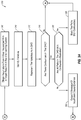
- Figures 3A and 3B illustrate a flow diagram illustrating one embodiment of a process 300 of identifying a potential emulated mobile device.
- the process 300 may be arranged in accordance with at least one embodiment described herein.
- One or more operations of the process 300 may be performed by a system or device, or combinations thereof, such as the system 100, the machine learning system 110, the user interaction module 120, and/or the causality module 130 of Figure. 1 , the computing system 400 of Figure. 4 , etc.
- various blocks below will be identified as potentially being performed by one of the machine learning system 110, the user interaction module 120, and/or the causality module 130 of Figure.1 .
- the process 300 may be performed based on the execution of instructions stored on one or more non-transitory computer-readable media. Although illustrated as discrete blocks, various blocks of the process 300 may be divided into additional blocks, combined into fewer blocks, or eliminated, depending on the desired implementation. For illustrative purposes, the blocks of the process 300 may be provided with reference to the DAG 200c of Figure 2C .
- one or more assumptions associated with a target result in a machine learning system may be obtained from a user.
- a user interface module (such as the user interaction module 120 of Figure 1 ) may provide a user with outputs of a machine learning system (such as the machine learning system 110 of Figure 1 ) which may include variables of results.
- the user may provide the assumptions by designating directional relationships between various variables and/or results.
- a user may designate an assumption that there is an effect of exercise 232 on the drug 222.
- one or more variables may be identified.
- the variables for a target result as designated by a user may be identified.
- the identification of the variables may include analyzing or obtaining results of the machine learning system (e.g., what variables have a correlation or relationship above a threshold for the target result).
- the block 310 may include identifying a target variable for which a causal effect may be determined.
- a user may designate the drug 222 as the variable of interest and the recovery 212 as the target result.
- the variables may be represented as a DAG.
- a DAG may be generated by a causality module (such as the causality module 130 of Figure 1 ) that graphically represents the relationships between the variables and the results.
- the DAG may be generated in part based on the assumptions of the block 305. For example, the assumptions may introduce directional edges between one or more of the variables and/or results in the DAG.
- the DAG 200c may be generated based on known correlations/causalities and/or the assumptions from the user (e.g., the connection between the exercise 232 and the drug 222).
- a determination may be made whether or not there are confounders in the DAG of the block 315. For example, for a given variable, a determination may be made by the causality module 130 whether or not there are other variables that affect the given variable and the target result. If there are confounders in the DAG, the process 300 may proceed to the block 325. If there are not confounders in the DAG, the process 300 may proceed to the block 340 via the node A leading to Figure 3B .
- the exercise 232 may be identified as a confounder because it affects both the drug 222 and the recovery 212.
- a determination may be made whether or not all paths in the DAG with confounders (e.g., back-door paths) are blockable. For example, a determination may be made by the causality module 130 whether, for a given variable of interest and the target result, the paths between the variable of interest and the target result are affected by confounders. For example, a determination may be made whether the back-door paths between the given confounder and the target result includes a collider node and the collider node and its descendants are outside of the set of blocking variables (e.g., the collider node and its descendants may be unobserved to block such a back-door path).
- confounders e.g., back-door paths
- the process 300 may proceed to the block 335. If all paths in the DAG with confounders (e.g., all back-door paths) are blockable, the process 300 may proceed to the block 330.
- a determination may be made whether the exercise 232 may be controlled for.
- a message may be output of insufficient causal evidence.
- the causality module 130 may output such a message indicating that the variables of interest may not be sufficiently isolated.
- such a message may include indications of what additional information or assumptions may provide sufficient information to provide an explanation of the causality of the target result.
- the output of such a message may be considered an explanation of the causality (such as the explanation 140 of Figure 1 ), and the process may proceed to the block 365 via the node B leading to Figure 3B .
- the output message may indicate that there is insufficient causal evidence because the exercise 232 may affect the recovery 212 and cannot be controlled for.
- the paths with confounders may be blocked.
- the causality module 130 may maintain any collider nodes and their descendants as unobserved and may observe other nodes in the back-door paths between the variable of interest and the target result.
- the process 300 may proceed to the block 340 via the node A leading to Figure 3B .
- the path from the exercise 232 to the recovery 212 may be blocked, for example, by controlling for and observing the exercise 232.
- controlling and/or observing the exercise 232 may be accomplished by using fitness tracker applications or devices to monitor the exercise habits of the patient.
- a causal effect for the variables may be estimated.
- the causality module 130 may estimate the causal effect for the variables.
- such an estimation may include a quantification based on Equation 1.
- the estimation of the block 340 may be based on a single variable of interest and one or more of the blocks 320-340 may be iteratively repeated for each of the variables under consideration until each of the variables under consideration has an associated causal effect.
- causal effect of the drug 222 may be estimated, after controlling for the exercise 232.
- the blocks 320-340 may be iteratively repeated to determine a causal effect estimate for the food habits 242 and for the exercise 232.
- a causality explanation of the target result may be generated based on the causal effects for the variables.
- the causality module 130 may select the variable with the highest causal effect as the reason for the target result and may generate the causality explanation (such as the explanation 140 of Figure 1 ) as the highest causal effect variable causing the target result.
- whichever of the causal effects of the drug 222, exercise 232, and the food habits 242 has the highest causal effect may be identified in the causal explanation as causing the target result. For example, if the drug 222 has the highest causal effect, the drug 222 may be identified as explaining the cause of the recovery 212.
- a determination may be made whether or not there are other target results and/or variables to be analyzed.
- the causality module 130 may be configured to analyze multiple target results and provide an explanation that addresses each of the target results.
- the causality module may analyze multiple variables. If a determination is made that there are other target results and/or variables to be analyzed, the process 300 may return to the block 305 via the node C returning to Figure 3A . If a determination is made that there are not other target results and/or variables to be analyzed, the process 300 may proceed to the block 355.
- the recovery 212 is the only target result being analyzed so the process 300 may proceed to the block 355.
- the causality explanation may be provided to the user.
- the causality explanation of the block 345 may be provided that the drug 222 causes the recovery 212.
- an accuracy of the machine learning system maybe determined based on the causality explanation and/or user feedback or revisions to the DAG based on the explanation provided at 350.
- the causality module and/or the machine learning system may monitor the iterative responses of the user to adjust assumptions or modifications made by the user to the DAG. By analyzing the modifications and changes made by the user, the causality module may determine the accuracy of the machine learning system. Additionally or alternatively, the directionality of the causality may provide greater accuracy to the machine learning system.
- the causality module may provide the machine learning system identification of faulty assumptions or incorrect correlations or directional connections in the DAG as determined by the changes made by the user in the iterative feedback provided by the user (e.g., as illustrated in block 365, returning back to block 305).
- the machine learning system may utilize that information to provide more accurate analyses in the future. For example, following the example of the DAG 200b illustrated in Figure 2B , if the feedback from the user modified assumptions to show that there is no directional connection between purchasing a gasket and purchasing a pressure cooker, in the future, the machine learning system may provide a recommendation of gaskets when a user purchases a pressure cooker but will not provide recommendations of pressure cookers when a user purchases a gasket.
- the initial accuracy of the machine learning system used to generate the initial DAG 200c may be determined. Additionally or alternatively, the machine learning system may use the information of the changes to assumptions made by the user to provide a more accurate machine learning analysis in the future.
- a determination may be made whether or not the user is satisfied with the explanation.
- the causality module may provide the user with a binary query via the user interaction module whether or not the user is satisfied with the explanation.
- the user may be invited to adjust one or more assumptions and to observe the changes on the explanation based on the adjusted assumptions.
- the user may be provided an opportunity to provide the additional information or assumptions identified at the block 330 when outputting the message of insufficient causal evidence.
- the causality module may determine whether or not the user is satisfied with the explanation. If it is determined that the user is satisfied with the explanation (for example, because the user has selected an affirmative response to the binary query), the process 300 may proceed to the block 370 to end the process. If it is determined that the user is not satisfied with the explanation, the process 300 may return to the block 305 via the node C returning to the Figure 3A .
- a user may be queried whether or not they are satisfied with the explanation (e.g., that the drug 222 causes the recovery 212). If the user wants to then analyze whether an assumed causal relationship between exercise and food habits also affects the causal analysis, the DAG 200c may be updated with a directional edge from the exercise 232 to the food habits 242, and the process 300 may be repeated. As another example, if the user wants to then include other variables such as the age of the patient, the smoking history of the patient, etc., the user may add additional variables with associated assumptions to add more detail and/or more complexity to the causal analysis.
- the process 300 may end.
- FIG. 4 illustrates an example computing system 400 for determining causality in machine learning systems, according to at least one embodiment described in the present disclosure.
- the computing system 400 may include a processor 410, a memory 420, a data storage 430, and/or a communication unit 440, which all may be communicatively coupled. Any or all of the system 100 of Figure 1 may be implemented as a computing system consistent with the computing system 400.
- the machine learning system 110, the user interaction module 120, and the causality module 130 may be implemented together as a single computing system.
- the machine learning system 110 may be implemented as one computing system while the causality module and the user interaction module may be implemented as a separate computing system.
- the machine learning system 110 may be implemented as one computing system
- the causality module 130 may be implemented as another computing system
- the user interaction module 120 may be implemented as an additional computing system.
- the computing system 400 may be a specialized computing system configured to perform specific and non-conventional operations, such as those identified in Figures 3A-3B .
- the processor 410 may include any suitable special-purpose or general-purpose computer, computing entity, or processing device including various computer hardware or software modules and may be configured to execute instructions stored on any applicable computer-readable storage media.
- the processor 410 may include a microprocessor, a microcontroller, a digital signal processor (DSP), an application-specific integrated circuit (ASIC), a Field-Programmable Gate Array (FPGA), or any other digital or analog circuitry configured to interpret and/or to execute program instructions and/or to process data.
- DSP digital signal processor
- ASIC application-specific integrated circuit
- FPGA Field-Programmable Gate Array
- the processor 410 may include any number of processors distributed across any number of network or physical locations that are configured to perform individually or collectively any number of operations described in the present disclosure.
- the processor 410 may interpret and/or execute program instructions and/or process data stored in the memory 420, the data storage 430, or the memory 420 and the data storage 430.
- the processor 410 may fetch program instructions from the data storage 430 and load the program instructions into the memory 420.
- the processor 410 may execute the program instructions, such as instructions to perform the process 300 of Figures 3A and 3B .
- the processor 410 may obtain instructions regarding determining causality in results of a machine learning system, and generating an explanation regarding the causality.
- the processor 410 may analyze user changes to assumptions leading to the explanation, and determine accuracy of a machine learning system based on those changes to assumptions.
- the memory 420 and the data storage 430 may include computer-readable storage media or one or more computer-readable storage mediums for carrying or having computer-executable instructions or data structures stored thereon.
- Such computer-readable storage media may be any available media that may be accessed by a general-purpose or special-purpose computer, such as the processor 410.
- the computing system 400 may or may not include either of the memory 420 and the data storage 430.
- such computer-readable storage media may include non-transitory computer-readable storage media including Random Access Memory (RAM), Read-Only Memory (ROM), Electrically Erasable Programmable Read-Only Memory (EEPROM), Compact Disc Read-Only Memory (CD-ROM) or other optical disk storage, magnetic disk storage or other magnetic storage devices, flash memory devices (e.g., solid state memory devices), or any other storage medium which may be used to carry or store desired program code in the form of computer-executable instructions or data structures and which may be accessed by a general-purpose or special-purpose computer. Combinations of the above may also be included within the scope of computer-readable storage media.
- Computer-executable instructions may include, for example, instructions and data configured to cause the processor 410 to perform a certain operation or group of operations.
- the communication unit 440 may include any component, device, system, or combination thereof that is configured to transmit or receive information over a network. In some embodiments, the communication unit 440 may communicate with other devices at other locations, the same location, or even other components within the same system.
- the communication unit 540 may include a modem, a network card (wireless or wired), an optical communication device, an infrared communication device, a wireless communication device (such as an antenna), and/or chipset (such as a Bluetooth device, an 802.6 device (e.g., Metropolitan Area Network (MAN)), a WiFi device, a WiMax device, cellular communication facilities, or others), and/or the like.
- the communication unit 440 may permit data to be exchanged with a network and/or any other devices or systems described in the present disclosure.
- the communication unit 440 may allow the system 400 to communicate with other systems, such as computing devices and/or other networks.
- system 400 may include more or fewer components than those explicitly illustrated and described.
- the different components, modules, engines, and services described herein may be implemented as objects or processes that execute on a computing system (e.g., as separate threads). While some of the systems and processes described herein are generally described as being implemented in software (stored on and/or executed by general purpose hardware), specific hardware implementations or a combination of software and specific hardware implementations are also possible and contemplated.
- the invention provides a computer program or a computer program product for carrying out any of the methods described herein, and a computer readable medium having stored thereon a program for carrying out any of the methods described herein.
- a computer program embodying the invention may be stored on a computer-readable medium, or it could, for example, be in the form of a signal such as a downloadable data signal provided from an Internet website, or it could be in any other form.
- any disjunctive word or phrase presenting two or more alternative terms, whether in the description, claims, or drawings, should be understood to contemplate the possibilities of including one of the terms, either of the terms, or both terms.
- the phrase “A or B” should be understood to include the possibilities of "A” or “B” or “A and B.”
- first,” “second,” “third,” etc. are not necessarily used herein to connote a specific order. Generally, the terms “first,” “second,” “third,” etc., are used to distinguish between different elements. Absence a showing of a specific that the terms “first,” “second,” “third,” etc. connote a specific order, these terms should not be understood to connote a specific order.
Landscapes
- Engineering & Computer Science (AREA)
- Theoretical Computer Science (AREA)
- Software Systems (AREA)
- Physics & Mathematics (AREA)
- General Physics & Mathematics (AREA)
- General Engineering & Computer Science (AREA)
- Mathematical Physics (AREA)
- Artificial Intelligence (AREA)
- Data Mining & Analysis (AREA)
- Evolutionary Computation (AREA)
- Computing Systems (AREA)
- Medical Informatics (AREA)
- Computational Linguistics (AREA)
- Computer Vision & Pattern Recognition (AREA)
- Computational Mathematics (AREA)
- Pure & Applied Mathematics (AREA)
- Mathematical Optimization (AREA)
- Mathematical Analysis (AREA)
- Algebra (AREA)
- Probability & Statistics with Applications (AREA)
- Information Retrieval, Db Structures And Fs Structures Therefor (AREA)
- User Interface Of Digital Computer (AREA)
- Medical Treatment And Welfare Office Work (AREA)
Abstract
Description
- Embodiments of the disclosure relate to causality for machine learning systems.
- Machine learning systems may analyze data sets and identify correlations between various results and/or variables associated with those results. However, such correlations do not indicate the causality between variables of interest and the results. For example, even if a correlation is found between people carrying umbrellas and the rain, the machine learning system does not know that stopping people from carrying umbrellas will not stop the rain.
- The invention is defined by the independent claims, to which reference should now be made. Preferable features are set out in the dependent claims. One or more embodiments of the present disclosure may include a method that includes obtaining one or more assumptions from a user, where the assumptions may be associated with a target result in a machine learning system. The method may also include identifying multiple variables, where the variables may represent causality candidates for the target result. The method may additionally include estimating a causal effect for each of the variables, and generating a causality explanation of the target result based on the causal effects for the variables. The method may also include providing the causality explanation to the user.
- It is to be understood that both the foregoing general description and the following detailed description are merely examples and explanatory and are not restrictive.
- Example embodiments will be described and explained with additional specificity and detail through the use of the accompanying drawings in which:
-
Figure 1 is a diagram illustrating an example system that may be used to determine causality for a machine learning system; -
Figures 2A-2C are diagrams illustrating example directed acyclic graphs (DAGs) used in determining causality for a machine learning system; -
Figures 3A and3B illustrate a flow diagram of a method of determining causality for a machine learning system; and -
Figure 4 illustrates an example computing system. - The present disclosure relates to the use of causality for machine learning systems. A directed acyclic graph (DAG) may be used to graphically represent a series of variables and at least one target result, where one or more of the variables and/or target results may be outputs of the machine learning system. A causal effect may be quantified for variables of interest by sufficiently isolating the variable of interest and estimating the causal effect for a given variable of interest. Using the quantified causal effects for the variables of interest, an explanation may be provided of which variable is causing the target result. Such an approach may facilitate the determination of and/or improvement of the accuracy of machine learning systems. Additionally, such an approach provides a more intuitive and easily accessible interface for analyzing causality and associated explanations.
- One or more example embodiments are explained with reference to the accompanying drawings.
-
Figure 1 is a diagram illustrating anexample system 100 that may be used to determine causality for a machine learning system, in accordance with one or more embodiments of the present disclosure. Thesystem 100 may include amachine learning system 110 and auser interaction module 120 that may provide input to a causality module 130. The causality module 130 may facilitate determination of theexplanation 140 associated with causality between variables and results. As used herein, a variable may include any activity, factor, attribute, etc. that may influence or otherwise potentially lead to a result. For example, if a result includes that a contract is won by a company, the variables may include the business unit associated with the new contract, the salesman who negotiated the contract, and the region of the world in which the contract was won. In some embodiments, such causality may lead to an explanation between the variables and the result, such as the contract was won because of the salesman who negotiated the contract. In these and other embodiments, if a user is dissatisfied with the provided explanation (e.g., the explanation is illogical, etc.), the user may interact with the system 100 (e.g., to adjust one or more assumptions) and the causality may be examined again. - The
machine learning system 110 may include any machine learning system configured to identify relationships and/or correlations from a data set. For example, themachine learning system 110 may be configured to identify a set of most likely factors contributing to a result, whether directly or indirectly, by analyzing data sets. As an example, themachine learning system 110 may analyze all contracts won for a company, all pitches made without a contract won for a company, and may identify which factors correlate with the winning of a contract. As another example, themachine learning system 110 may be configured to analyze product purchases from a business, and may identify factors such as related products, demographics of purchasers, etc. to identify which factors correlate with the purchase of a product. As a further example, themachine learning system 110 may be configured to analyze patient health data and outcomes with certain diseases to identify which factors correlate with positive outcomes with the diseases. In these and other embodiments, themachine learning system 110 may provide the correlations and/or the factors contributing to a result to theuser interaction module 120 and/or the causality module 130. - In some embodiments, the
machine learning system 110 may operate using any machine learning technique or deep learning technique, such as decision tree learning, association rule learning, clustering, reinforcement learning, representation learning, genetic algorithms, etc. In some embodiments, themachine learning system 110 may be utilized to perform a task, such as providing a recommendation based on correlations in a data set. - The
user interaction module 120 may include any device or system or components thereof configured to receive user input and/or provide information to the user. For example, theuser interaction module 120 may present a set of variables of a result as determined by themachine learning system 110 to a user. In these and other embodiments, the user may utilize theuser interaction module 120 to identify one or more variables of interest from the variables. For example, the user may designate a subset of the set of variables for a given result as those in which the user is interested. Additionally or alternatively, the user may indicate a particular result as the result in which the user is interested (e.g., a target result). - In some embodiments, the user may interact with the
user interaction module 120 to designate one or more assumptions regarding assumed or believed causal relationships between one or more of the variables and/or results. For example, with reference to the contract example, the user may enter an assumed directional relationship between the salesman and the business unit (e.g., "Salesman X often performs well and has lots of sales when working with this particular business unit."). - The causality module 130 may include any device or system or components thereof configured to utilize the inputs from the machine learning system 110 (e.g., the variables and result) and from the user interaction module 120 (e.g., the assumptions and target result from the user) to generate the
explanation 140. - In some embodiments, the causality module 130 may construct a directed acyclic graph (DAG) representing the relationships and/or assumptions between the variables and the target result.
Figures 2A-2C illustrate examples of such a DAG. In some embodiments, the DAG may begin with any known directional relationships with respect to the variables as related to other variables and/or the target result. The DAG may be supplemented by adding directional edges based on the assumptions as received from theuser interaction module 120. - In some embodiments, the causality module 130 may construct the DAG without including the assumptions and may present the DAG visually to the user via the
user interaction module 120. The user may utilize the visualization of the DAG to select the variables of interest and/or the target result. Additionally or alternatively, the user may utilize the visualization of the DAG to designate or create new relationships as the assumptions. In these and other embodiments, the visualization of the DAG may be accessed and interacted with via a graphical user interface (GUI) or any other interface of theuser interaction module 120. - In some embodiments, the causality module 130 may utilize the DAG to analyze whether or not there is sufficient causal evidence to identify a causal relationship between the variables of interest and the target result. To perform such an analysis, the causality module 130 may determine whether or not the DAG includes any confounders. As used herein, a confounder may include any variable that affects one or more of the variables of interest as well as the target result. For example, if one of the variables includes a relationship with both a variable of interest and the target result, such a variable may be a confounder. In some embodiments, a confounder may be designated based on a single variable of interest. If the causality module 130 determines that there are no confounders in the DAG, the causality module 130 may determine a causal effect for each of the variables of interest to facilitate determination of the
explanation 140. - Conversely, if the causality module 130 determines that there are confounders in the DAG, the causality module 130 may determine whether paths through the DAG to the target result that include the confounders (which may be referred to as back-door paths) are blockable. To determine whether the back-door paths can be blocked, the causality module 130 may consider which direction edges flow between the nodes in the back-door path, and whether or not the nodes are observed in the back-door path. One such blocking scenario may include where the back-door path includes a collider node (where two nodes converge on a single node, sometimes referred to as a head to head node), and the node and its descendants are not observed. Another blocking scenario may include a causal chain, where there may be a node in the path between the confounder and the target result with one edge coming in and one edge coming out (sometimes referred to as a casual chain) and that node is observed. Thus, to block a back-door path, the collider node may be unobserved and the other nodes in the back-door path may be observed. In these and other embodiments, if a given back-door path is unblockable, the causality module 130 may determine that there are confounders that may not be accounted for. In response, the causality module 130 may output a message indicating that there is insufficient causal evidence to determine the
explanation 140. In some embodiments, the causality module 130 may provide an indication of what information may be used to provide the missing causal evidence. For example, the causality module 130 may indicate which paths are unblockable and what information or data may facilitate the blockability of such paths. - If the causality module 130 determines that all the back-door paths are blockable, the causality module 130 may block all such back-door paths. For example, the causality module 130 may control for the blocking variable in the determination of the
explanation 140. After blocking all the back-door paths, the causality module 130 may determine the causal effects for each of the variables of interest. - To determine the causal effect for the various variables of interest, the causality module 130 may quantify the causal effect of each variable on the target result. In some embodiments, such quantification may be based on the variable including a binary value (e.g., is it salesman X that is involved in the negotiation of the contract?). In these and other embodiments, the causal effect may be quantified as a number between zero and one. The quantification of the causal effect of variable X on target result Y may be represented by Equation 1.

- In some embodiments, various operations may be repeated for each variable of interest. For example, the causality module 130 may identify and handle any confounders and determine the causal effect for a given variable of interest, and those operations may be repeated for each of the variables of interest. Thus, the present disclosure may iteratively cycle through the variables of interest, determine if they can be isolated, and if they can be isolated, determine the causal effect of each of the variables of interest on the target result.
- In these and other embodiments, the causality module 130 may compare the quantification of the causal effects for each of the variables of interest. To select the causal effect that results in the
explanation 140, the causality module 130 may select the variable with the highest numerical value for the quantification of the causal effect. The causality module 130 may generate theexplanation 140 based on the selected variable. For example, if the target result was winning a contract and the variable with the highest causal effect was whether or not the salesman X was involved, theexplanation 140 may indicate that the contract was won because the salesman X was involved in negotiating the contract. - In some embodiments, after being presented with the
explanation 140, the user may be dissatisfied with theexplanation 140. In these and other embodiments, the user may modify or adjust one or more of the assumptions provided to the causality module 130 regarding the relationships and/or correlations between the variables. Additionally or alternatively, the user may set certain variables (e.g., setting the salesman X as always working on a given business unit to determine the causal effect if those variables are always set to their maximal value). - By iteratively repeating the process of adjusting the assumptions from the user, the causality module 130 may repeatedly generate
different explanations 140 until the user is satisfied with theexplanation 140. In some embodiments, the user may be dissatisfied with the explanation based on knowledge the user has about the relationships between variables in the DAG. For example, if a user is recommended a product as one they may be interested in, the causality module 130 may provide theexplanation 140 as to why the user was recommended the product and the user may adjust the assumptions (e.g., based on the explanation "because you are interested in shoes, we recommended this brand of socks," the user may adjust the directional relationship between interest in shoes and socks). In some embodiments, the dissatisfaction of the user with theexplanation 140 may be based on an illogical or faulty causal relationship, such as an explanation that people having umbrellas has caused it to rain. In some embodiments, the iterative processing may be used to analyze and/or determine counterfactual scenarios. For example, by changing assumptions the user may determine the potential causal effect if a certain variable had been different (e.g., if the salesman X had been operating in a different business unit, would we still have won the contract?). - In these and other embodiments, the present disclosure may improve the operation of machine learning systems by providing insight to users regarding the reasoning that forms the basis for the outputs of the machine learning systems. For example, if the output is to provide a recommendation (e.g., a product recommendation, an advertisement recommendation, a treatment of a disease recommendation, etc.), the
explanation 140 of the causality leading to the recommendation may be provided to the user and/or analyzed by the user. As another example, the effectiveness and/or accuracy of the machine learning system may be assessed. For example, using theexplanation 140, the user may improve the accuracy of themachine learning system 110 by correcting faulty assumptions made by themachine learning system 110. For example, a recommendation may be made to a user purchasing a backpack to purchase a laptop based on a correlation in a data set between the purchase of laptops and backpacks. However, using embodiments of the present disclosure may identify the directionality and causality of the correlation such that a purchase of a laptop may result in a recommendation of a backpack but not vice versa. - One skilled in the art, after reviewing this disclosure, may recognize that modifications, additions, or omissions may be made to the
system 100 without departing from the scope of the disclosure. For example, the designations of different elements in the manner described is meant to help explain concepts described herein and is not limiting. Further, thesystem 100 may include any number of other elements or may be implemented within other systems or contexts than those described. -
Figures 2A-2C are diagrams illustrating example directed acyclic graphs (DAGs) 200a-200c used in determining causality for machine learning systems, in accordance with one or more embodiments of the present disclosure. As illustrated inFigure 2A , theDAG 200a may be associated with an example of a target result (as designated by the vertical line) of a contract won 210, with variables of abusiness unit 220, asalesman_x 230, and ausa region 240. The variable of interest is the business unit 220 (as designated by the triangle). TheDAG 200a may be based on an attempt to determine what caused a company to win a contract by their sales team (e.g., did we win the contract because of what business unit the contract was in). As illustrated inFigure 2B , theDAG 200b may be associated with an example of a target result (as designated by the vertical line) of acooker 211 being purchased, with variables of agasket 221 being purchased, andcuriosity 231 of a purchaser. The variable of interest is thegasket 221 being purchased (as designated by the triangle). TheDAG 200b may be based on an attempt to determine whether a recommendation to purchase a pressure cooker based on someone buying a gasket is a worthwhile recommendation (e.g., can purchasing a gasket cause someone to purchase a pressure cooker). As illustrated inFigure 2C , theDAG 200c may be associated with an example of a target result (as designated by the vertical line) ofrecovery 212 of a patient from an illness, with variables of adrug 222 being provided to the patient, exercise 232 of the patient, andfood habits 242 of the patient. The variable of interest is thedrug 222 being provided to the patient (as designated by the triangle). TheDAG 200c may be based on an attempt to determine whether giving a patient a drug is what caused their recovery from the illness (e.g., did the drug cure the patient). In some embodiments, a user may identify the variables of interest and/or the target result. - In some embodiments, the variables used in the
DAGs 200a-200c may be the top variables correlating with the target result as output from a machine learning system, such as themachine learning system 110 ofFigure 1 . Additionally or alternatively, the variables used in theDAGs 200a-200c may be the variables with a correlation score above a threshold for the machine learning system. In these and other embodiments, an initial DAG may include the directional edges from the variables to the target result. The initial DAG may be supplemented with assumptions from a user, such as the directional edge from thesalesman_x 230 to thebusiness unit 220 to yield theDAG 200a, or the directional edge from thedrug 222 to thefood habits 242 to yield theDAG 200c. In some embodiments, these assumptions may be implemented in an iterative manner, where the causality module 130 ofFigure 1 may provide an explanation, the user may adjust assumptions based on the provided explanation and observe the revised explanation, and the process may be repeated until the set of assumptions and the explanation are to the satisfaction of the user. In some embodiments, one or more of the variables and/or assumption may be included in the DAG based on input from a user. For example, the user may identify one or more additional variables aside from those identified by a machine learning system to be included in the causal analysis. - With respect to the
Figure 2A , when analyzing thebusiness unit 220 as the variable of interest (e.g., thebusiness unit 220 is the input and the contract won 210 is the output), a determination may be made whether or not any confounders are present in theDAG 200a. Thesalesman_x 230 may operate as a confounder, because thesalesman_x 230 affects the variables of interest (the business unit 220) as well as the target result (the contract won 210). Based on the existence of the confounder, a determination may be made whether or not the paths to the contract won 210 from the confounder (the salesman x) are blockable. In theDAG 200a ofFigure 2A , the path through thebusiness unit 220 is blockable by observing the salesman x 230, and so that backdoor-path may be blocked. Additionally, the path between the salesman x 230 and the contract won 210 that is direct is blocked by observing theusa region 240. Therefore, thebusiness unit 220 may be sufficiently isolated such that a determination of the causal effect between thebusiness unit 220 and the contract won 210 may be determined. The causal effect may be quantified, for example, using Equation 1. - In some embodiments, the causal effect of the
usa_region 240 and/or the salesman x 230 may also be determined, and an explanation may be generated based on the highest causal effect between thebusiness unit 220, thesalesman_x 230, and theusa region 240. In these and other embodiments, a user presented with the explanation may revise the assumptions and reapply the analysis to determine other explanations based on other assumptions and/or other variables added by the user. For example, the directional edge between thesalesman_x 230 and thebusiness unit 220 may be removed and a different directional edge may be introduced between thesalesman_x 230 and theusa region 240. If the user is dissatisfied with the explanation, the user may continue to revise the assumptions until the user receives an explanation with which they are satisfied. - With reference to
Figure 2B , when analyzing thegasket 221 purchase as the variable of interest and thecooker 211 purchase as the target result (e.g., thegasket 221 purchase is the input and thecooker 211 purchase is the output), a determination may be made whether or not any confounders are present in theDAG 200b. Thecuriosity 231 may operate as a confounder, because thecuriosity 231 affects the variables of interest (the gasket 221) as well as the target result (the cooker 211). Based on the existence of the confounder, a determination may be made whether or not the paths to thecooker 211 from the confounder (the curiosity 231) are blockable. In theDAG 200b ofFigure 2B , the path through thecuriosity 231 is blockable by observing thecuriosity 231, and so that backdoor-path may be blocked. For example, monitoring and/or analyzing what clicks a user performs when interacting with thegasket 221 and/or thecooker 211, as well as what sites or searches were the gateway to arriving at the site to purchase thecooker 211 may be used to control for thecuriosity 231. Therefore, thegasket 221 may be sufficiently isolated such that a determination of the causal effect betweengasket 221 and thecooker 211 may be determined. The causal effect may be quantified, for example, using Equation 1. - In some embodiments, the causal effect of the
curiosity 231 may also be determined, and an explanation may be generated based on the highest causal effect between thegasket 221 and thecuriosity 231. In these and other embodiments, a user presented with the explanation may revise the assumptions and reapply the analysis to determine other explanations based on other assumptions. If the user is dissatisfied with the explanation, the user may continue to revise the assumptions until the user receives an explanation with which they are satisfied. - With reference to
Figure 2C , when analyzing thedrug 222 as the variable of interest and therecovery 212 as the target result (e.g., thedrug 222 is the input and therecovery 212 is the output), a determination may be made whether or not any confounders are present in theDAG 200c. Theexercise 232 may operate as a confounder, because theexercise 232 affects the variable of interest (the drug 222) as well as the target result (the recovery 212). Based on the existence of the confounder, a determination may be made whether or not the paths to therecovery 212 from the confounder (the exercise 232) are blockable. In theDAG 200c ofFigure 2C , the path through theexercise 232 is blockable by observing theexercise 232, and so that backdoor-path may be blocked. For example, monitoring and/or analyzing what exercise the patient performs using fitness tracking apps and/or devices, may be used to control for theexercise 232. Therefore, thedrug 222 may be sufficiently isolated such that a determination of the causal effect between thedrug 222 and therecovery 212 may be determined. The causal effect may be quantified, for example, using Equation 1. - In some embodiments, the causal effect of the
exercise 232 and/or thefood habits 242 may also be determined, and an explanation may be generated based on the highest causal effect between thedrug 222, theexercise 232, and thefood habits 242. In these and other embodiments, a user presented with the explanation may revise the assumptions and reapply the analysis to determine other explanations based on other assumptions. If the user is dissatisfied with the explanation, the user may continue to revise the assumptions until the user receives an explanation with which they are satisfied. - One skilled in the art, after reviewing this disclosure, may recognize that modifications, additions, or omissions may be made to
Figures 2A-2C without departing from the scope of the disclosure. For example, the DAGs 200 may include any number of nodes and edges, and in application would likely have many more nodes and edges than illustrated in the simplified example ofFigures 2A-2C . As another example, theDAGs 200a-c may be changed over time as a user provides different assumptions. -
Figures 3A and3B illustrate a flow diagram illustrating one embodiment of aprocess 300 of identifying a potential emulated mobile device. Theprocess 300 may be arranged in accordance with at least one embodiment described herein. One or more operations of theprocess 300 may be performed by a system or device, or combinations thereof, such as thesystem 100, themachine learning system 110, theuser interaction module 120, and/or the causality module 130 ofFigure. 1 , thecomputing system 400 ofFigure. 4 , etc. For illustrative purposes, various blocks below will be identified as potentially being performed by one of themachine learning system 110, theuser interaction module 120, and/or the causality module 130 ofFigure.1 . In these and other embodiments, theprocess 300 may be performed based on the execution of instructions stored on one or more non-transitory computer-readable media. Although illustrated as discrete blocks, various blocks of theprocess 300 may be divided into additional blocks, combined into fewer blocks, or eliminated, depending on the desired implementation. For illustrative purposes, the blocks of theprocess 300 may be provided with reference to theDAG 200c ofFigure 2C . - At
block 305, one or more assumptions associated with a target result in a machine learning system may be obtained from a user. For example, a user interface module (such as theuser interaction module 120 ofFigure 1 ) may provide a user with outputs of a machine learning system (such as themachine learning system 110 ofFigure 1 ) which may include variables of results. In some embodiments, the user may provide the assumptions by designating directional relationships between various variables and/or results. - With reference to the example of
Figure 2C , a user may designate an assumption that there is an effect ofexercise 232 on thedrug 222. - At
block 310, one or more variables may be identified. For example, the variables for a target result as designated by a user may be identified. In some embodiments, the identification of the variables may include analyzing or obtaining results of the machine learning system (e.g., what variables have a correlation or relationship above a threshold for the target result). In some embodiments, theblock 310 may include identifying a target variable for which a causal effect may be determined. - With reference to the example of
Figure 2C , a user may designate thedrug 222 as the variable of interest and therecovery 212 as the target result. - At
block 315, the variables may be represented as a DAG. For example, a DAG may be generated by a causality module (such as the causality module 130 ofFigure 1 ) that graphically represents the relationships between the variables and the results. In these and other embodiments, the DAG may be generated in part based on the assumptions of theblock 305. For example, the assumptions may introduce directional edges between one or more of the variables and/or results in the DAG. - With reference to the example of
Figure 2C , theDAG 200c may be generated based on known correlations/causalities and/or the assumptions from the user (e.g., the connection between theexercise 232 and the drug 222). - At
block 320, a determination may be made whether or not there are confounders in the DAG of theblock 315. For example, for a given variable, a determination may be made by the causality module 130 whether or not there are other variables that affect the given variable and the target result. If there are confounders in the DAG, theprocess 300 may proceed to theblock 325. If there are not confounders in the DAG, theprocess 300 may proceed to theblock 340 via the node A leading toFigure 3B . - With reference to the example of
Figure 2C , theexercise 232 may be identified as a confounder because it affects both thedrug 222 and therecovery 212. - At
block 325, a determination may be made whether or not all paths in the DAG with confounders (e.g., back-door paths) are blockable. For example, a determination may be made by the causality module 130 whether, for a given variable of interest and the target result, the paths between the variable of interest and the target result are affected by confounders. For example, a determination may be made whether the back-door paths between the given confounder and the target result includes a collider node and the collider node and its descendants are outside of the set of blocking variables (e.g., the collider node and its descendants may be unobserved to block such a back-door path). If all paths in the DAG with confounders (e.g., all back-door paths) are blockable, theprocess 300 may proceed to theblock 335. If all paths in the DAG with confounders (e.g., all back-door paths) are not blockable, theprocess 300 may proceed to theblock 330. - With reference to the example of
Figure 2C , a determination may be made whether theexercise 232 may be controlled for. - At the
block 330, a message may be output of insufficient causal evidence. For example, the causality module 130 may output such a message indicating that the variables of interest may not be sufficiently isolated. In some embodiments, such a message may include indications of what additional information or assumptions may provide sufficient information to provide an explanation of the causality of the target result. The output of such a message may be considered an explanation of the causality (such as theexplanation 140 ofFigure 1 ), and the process may proceed to theblock 365 via the node B leading toFigure 3B . - With reference to the example of
Figure 2C , if it is assumed that theexercise 232 cannot be controlled for, the output message may indicate that there is insufficient causal evidence because theexercise 232 may affect therecovery 212 and cannot be controlled for. - At
block 335, the paths with confounders may be blocked. For example, the causality module 130 may maintain any collider nodes and their descendants as unobserved and may observe other nodes in the back-door paths between the variable of interest and the target result. After theblock 335, theprocess 300 may proceed to theblock 340 via the node A leading toFigure 3B . - With reference to the example of
Figure 2C , the path from theexercise 232 to therecovery 212 may be blocked, for example, by controlling for and observing theexercise 232. As described above, controlling and/or observing theexercise 232 may be accomplished by using fitness tracker applications or devices to monitor the exercise habits of the patient. - At
block 340, a causal effect for the variables may be estimated. For example, the causality module 130 may estimate the causal effect for the variables. In some embodiments, such an estimation may include a quantification based on Equation 1. In these and other embodiments, the estimation of theblock 340 may be based on a single variable of interest and one or more of the blocks 320-340 may be iteratively repeated for each of the variables under consideration until each of the variables under consideration has an associated causal effect. - With reference to the example of
Figure 2C , causal effect of thedrug 222 may be estimated, after controlling for theexercise 232. The blocks 320-340 may be iteratively repeated to determine a causal effect estimate for thefood habits 242 and for theexercise 232. - At
block 345, a causality explanation of the target result may be generated based on the causal effects for the variables. For example, the causality module 130 may select the variable with the highest causal effect as the reason for the target result and may generate the causality explanation (such as theexplanation 140 ofFigure 1 ) as the highest causal effect variable causing the target result. - With reference to the example of
Figure 2C , whichever of the causal effects of thedrug 222,exercise 232, and thefood habits 242 has the highest causal effect may be identified in the causal explanation as causing the target result. For example, if thedrug 222 has the highest causal effect, thedrug 222 may be identified as explaining the cause of therecovery 212. - At
block 350, a determination may be made whether or not there are other target results and/or variables to be analyzed. For example, the causality module 130 may be configured to analyze multiple target results and provide an explanation that addresses each of the target results. As another example, the causality module may analyze multiple variables. If a determination is made that there are other target results and/or variables to be analyzed, theprocess 300 may return to theblock 305 via the node C returning toFigure 3A . If a determination is made that there are not other target results and/or variables to be analyzed, theprocess 300 may proceed to theblock 355. - With reference to the example of
Figure 2C , therecovery 212 is the only target result being analyzed so theprocess 300 may proceed to theblock 355. - At
block 355, the causality explanation may be provided to the user. - With reference to the example of
Figure 2C , following the assumption that thedrug 222 has the highest causality effect, the causality explanation of theblock 345 may be provided that thedrug 222 causes therecovery 212. - At
block 360, an accuracy of the machine learning system maybe determined based on the causality explanation and/or user feedback or revisions to the DAG based on the explanation provided at 350. For example, the causality module and/or the machine learning system may monitor the iterative responses of the user to adjust assumptions or modifications made by the user to the DAG. By analyzing the modifications and changes made by the user, the causality module may determine the accuracy of the machine learning system. Additionally or alternatively, the directionality of the causality may provide greater accuracy to the machine learning system. For example, the causality module may provide the machine learning system identification of faulty assumptions or incorrect correlations or directional connections in the DAG as determined by the changes made by the user in the iterative feedback provided by the user (e.g., as illustrated inblock 365, returning back to block 305). The machine learning system may utilize that information to provide more accurate analyses in the future. For example, following the example of theDAG 200b illustrated inFigure 2B , if the feedback from the user modified assumptions to show that there is no directional connection between purchasing a gasket and purchasing a pressure cooker, in the future, the machine learning system may provide a recommendation of gaskets when a user purchases a pressure cooker but will not provide recommendations of pressure cookers when a user purchases a gasket. - With reference to the example of
Figure 2C , based on the causality explanation and based on changes to assumptions made by the user, the initial accuracy of the machine learning system used to generate theinitial DAG 200c may be determined. Additionally or alternatively, the machine learning system may use the information of the changes to assumptions made by the user to provide a more accurate machine learning analysis in the future. - At
block 365, a determination may be made whether or not the user is satisfied with the explanation. For example, the causality module may provide the user with a binary query via the user interaction module whether or not the user is satisfied with the explanation. As another example, the user may be invited to adjust one or more assumptions and to observe the changes on the explanation based on the adjusted assumptions. As an additional example, the user may be provided an opportunity to provide the additional information or assumptions identified at theblock 330 when outputting the message of insufficient causal evidence. Based on the user response, the causality module may determine whether or not the user is satisfied with the explanation. If it is determined that the user is satisfied with the explanation (for example, because the user has selected an affirmative response to the binary query), theprocess 300 may proceed to theblock 370 to end the process. If it is determined that the user is not satisfied with the explanation, theprocess 300 may return to theblock 305 via the node C returning to theFigure 3A . - With reference to the example of
Figure 2C , a user may be queried whether or not they are satisfied with the explanation (e.g., that thedrug 222 causes the recovery 212). If the user wants to then analyze whether an assumed causal relationship between exercise and food habits also affects the causal analysis, theDAG 200c may be updated with a directional edge from theexercise 232 to thefood habits 242, and theprocess 300 may be repeated. As another example, if the user wants to then include other variables such as the age of the patient, the smoking history of the patient, etc., the user may add additional variables with associated assumptions to add more detail and/or more complexity to the causal analysis. - At
block 370, theprocess 300 may end. - One skilled in the art, after reviewing this disclosure, may recognize that modifications, additions, or omissions may be made to the
process 300 without departing from the scope of the disclosure. For example, the operations of theprocess 300 may be implemented in differing order. Additionally or alternatively, two or more operations may be performed at the same time. Furthermore, the outlined operations and actions are provided as examples, and some of the operations and actions may be optional, combined into fewer operations and actions, or expanded into additional operations and actions without detracting from the essence of the disclosed embodiments. -
Figure 4 illustrates anexample computing system 400 for determining causality in machine learning systems, according to at least one embodiment described in the present disclosure. Thecomputing system 400 may include aprocessor 410, amemory 420, adata storage 430, and/or acommunication unit 440, which all may be communicatively coupled. Any or all of thesystem 100 ofFigure 1 may be implemented as a computing system consistent with thecomputing system 400. For example, themachine learning system 110, theuser interaction module 120, and the causality module 130 may be implemented together as a single computing system. As another example, themachine learning system 110 may be implemented as one computing system while the causality module and the user interaction module may be implemented as a separate computing system. As an additional example, themachine learning system 110 may be implemented as one computing system, the causality module 130 may be implemented as another computing system, and theuser interaction module 120 may be implemented as an additional computing system. In these and other embodiments, thecomputing system 400 may be a specialized computing system configured to perform specific and non-conventional operations, such as those identified inFigures 3A-3B . - Generally, the
processor 410 may include any suitable special-purpose or general-purpose computer, computing entity, or processing device including various computer hardware or software modules and may be configured to execute instructions stored on any applicable computer-readable storage media. For example, theprocessor 410 may include a microprocessor, a microcontroller, a digital signal processor (DSP), an application-specific integrated circuit (ASIC), a Field-Programmable Gate Array (FPGA), or any other digital or analog circuitry configured to interpret and/or to execute program instructions and/or to process data. - Although illustrated as a single processor in
Figure 4 , it is understood that theprocessor 410 may include any number of processors distributed across any number of network or physical locations that are configured to perform individually or collectively any number of operations described in the present disclosure. In some embodiments, theprocessor 410 may interpret and/or execute program instructions and/or process data stored in thememory 420, thedata storage 430, or thememory 420 and thedata storage 430. In some embodiments, theprocessor 410 may fetch program instructions from thedata storage 430 and load the program instructions into thememory 420. - After the program instructions are loaded into the
memory 420, theprocessor 410 may execute the program instructions, such as instructions to perform theprocess 300 ofFigures 3A and3B . For example, theprocessor 410 may obtain instructions regarding determining causality in results of a machine learning system, and generating an explanation regarding the causality. As another example, theprocessor 410 may analyze user changes to assumptions leading to the explanation, and determine accuracy of a machine learning system based on those changes to assumptions. - The
memory 420 and thedata storage 430 may include computer-readable storage media or one or more computer-readable storage mediums for carrying or having computer-executable instructions or data structures stored thereon. Such computer-readable storage media may be any available media that may be accessed by a general-purpose or special-purpose computer, such as theprocessor 410. In some embodiments, thecomputing system 400 may or may not include either of thememory 420 and thedata storage 430. - By way of example, and not limitation, such computer-readable storage media may include non-transitory computer-readable storage media including Random Access Memory (RAM), Read-Only Memory (ROM), Electrically Erasable Programmable Read-Only Memory (EEPROM), Compact Disc Read-Only Memory (CD-ROM) or other optical disk storage, magnetic disk storage or other magnetic storage devices, flash memory devices (e.g., solid state memory devices), or any other storage medium which may be used to carry or store desired program code in the form of computer-executable instructions or data structures and which may be accessed by a general-purpose or special-purpose computer. Combinations of the above may also be included within the scope of computer-readable storage media. Computer-executable instructions may include, for example, instructions and data configured to cause the
processor 410 to perform a certain operation or group of operations. - The
communication unit 440 may include any component, device, system, or combination thereof that is configured to transmit or receive information over a network. In some embodiments, thecommunication unit 440 may communicate with other devices at other locations, the same location, or even other components within the same system. For example, the communication unit 540 may include a modem, a network card (wireless or wired), an optical communication device, an infrared communication device, a wireless communication device (such as an antenna), and/or chipset (such as a Bluetooth device, an 802.6 device (e.g., Metropolitan Area Network (MAN)), a WiFi device, a WiMax device, cellular communication facilities, or others), and/or the like. Thecommunication unit 440 may permit data to be exchanged with a network and/or any other devices or systems described in the present disclosure. For example, thecommunication unit 440 may allow thesystem 400 to communicate with other systems, such as computing devices and/or other networks. - One skill in the art, after reviewing this disclosure, may recognize that modifications, additions, or omissions may be made to the
system 400 without departing from the scope of the present disclosure. For example, thesystem 400 may include more or fewer components than those explicitly illustrated and described. - The foregoing disclosure is not intended to limit the present disclosure to the precise forms or particular fields of use disclosed. As such, it is contemplated that various alternate embodiments and/or modifications to the present disclosure, whether explicitly described or implied herein, are possible in light of the disclosure. Having thus described embodiments of the present disclosure, it may be recognized that changes may be made in form and detail without departing from the scope of the present disclosure. Thus, the present disclosure is limited only by the claims.
- In some embodiments, the different components, modules, engines, and services described herein may be implemented as objects or processes that execute on a computing system (e.g., as separate threads). While some of the systems and processes described herein are generally described as being implemented in software (stored on and/or executed by general purpose hardware), specific hardware implementations or a combination of software and specific hardware implementations are also possible and contemplated.
- The invention provides a computer program or a computer program product for carrying out any of the methods described herein, and a computer readable medium having stored thereon a program for carrying out any of the methods described herein. A computer program embodying the invention may be stored on a computer-readable medium, or it could, for example, be in the form of a signal such as a downloadable data signal provided from an Internet website, or it could be in any other form.
- In any of the above aspects, the various features may be implemented in hardware, or as software modules running on one or more processors. Features of one aspect may be applied to any of the other aspects.
- Terms used herein and especially in the appended claims (e.g., bodies of the appended claims) are generally intended as "open" terms (e.g., the term "including" should be interpreted as "including, but not limited to," the term "having" should be interpreted as "having at least," the term "includes" should be interpreted as "includes, but is not limited to," etc.).
- Additionally, if a specific number of an introduced claim recitation is intended, such an intent will be explicitly recited in the claim, and in the absence of such recitation no such intent is present. For example, as an aid to understanding, the following appended claims may contain usage of the introductory phrases "at least one" and "one or more" to introduce claim recitations. However, the use of such phrases should not be construed to imply that the introduction of a claim recitation by the indefinite articles "a" or "an" limits any particular claim containing such introduced claim recitation to embodiments containing only one such recitation, even when the same claim includes the introductory phrases "one or more" or "at least one" and indefinite articles such as "a" or "an" (e.g., "a" and/or "an" should be interpreted to mean "at least one" or "one or more"); the same holds true for the use of definite articles used to introduce claim recitations.
- In addition, even if a specific number of an introduced claim recitation is explicitly recited, those skilled in the art will recognize that such recitation should be interpreted to mean at least the recited number (e.g., the bare recitation of "two recitations," without other modifiers, means at least two recitations, or two or more recitations). Furthermore, in those instances where a convention analogous to "at least one of A, B, and C, etc." or "one or more of A, B, and C, etc." is used, in general such a construction is intended to include A alone, B alone, C alone, A and B together, A and C together, B and C together, or A, B, and C together, etc. For example, the use of the term "and/or" is intended to be construed in this manner.
- Further, any disjunctive word or phrase presenting two or more alternative terms, whether in the description, claims, or drawings, should be understood to contemplate the possibilities of including one of the terms, either of the terms, or both terms. For example, the phrase "A or B" should be understood to include the possibilities of "A" or "B" or "A and B."
- However, the use of such phrases should not be construed to imply that the introduction of a claim recitation by the indefinite articles "a" or "an" limits any particular claim containing such introduced claim recitation to embodiments containing only one such recitation, even when the same claim includes the introductory phrases "one or more" or "at least one" and indefinite articles such as "a" or "an" (e.g., "a" and/or "an" should be interpreted to mean "at least one" or "one or more"); the same holds true for the use of definite articles used to introduce claim recitations.
- Additionally, the use of the terms "first," "second," "third," etc. are not necessarily used herein to connote a specific order. Generally, the terms "first," "second," "third," etc., are used to distinguish between different elements. Absence a showing of a specific that the terms "first," "second," "third," etc. connote a specific order, these terms should not be understood to connote a specific order.
- All examples and conditional language recited herein are intended for pedagogical objects to aid the reader in understanding the invention and the concepts contributed by the inventor to furthering the art, and are to be construed as being without limitation to such specifically recited examples and conditions. Although embodiments of the present disclosure have been described in detail, it should be understood that various changes, substitutions, and alterations could be made hereto without departing from the spirit and scope of the present disclosure.
- The previous description of the disclosed embodiments is provided to enable any person skilled in the art to make or use the present disclosure. Various modifications to these embodiments will be readily apparent to those skilled in the art, and the generic principles defined herein may be applied to other embodiments without departing from the spirit or scope of the disclosure. Thus, the present disclosure is not intended to be limited to the embodiments shown herein but is to be accorded the widest scope consistent with the principles and novel features disclosed herein.
Claims (12)
- A method comprising:obtaining one or more assumptions from a user, the assumptions associated with a target result in a machine learning system;identifying a plurality of variables, the variables representing causality candidates for the target result;estimating a causal effect for each of the variables;generating a causality explanation of the target result based on the causal effects for the variables; andproviding the causality explanation to the user.
- The method of claim 1, wherein obtaining one or more assumptions includes:receiving an assumed causal relationship between at least one variable and the target result; andrepresenting the plurality of variables as a directed acyclic graph, DAG, the DAG including at least an edge flowing from the at least one variable and the target result.
- The method of claim 2, wherein estimating the causal effect includes:identifying whether or not there are confounders in the DAG, the confounders including one or more variables related to the at least one variable and impacting the target result; anddetermining if all paths in the DAG to the target result that include confounders are blockable.
- The method of claim 3, wherein estimating the causal effect includes, based on a determination that all the paths in the DAG to the target result that include confounders are blockable, blocking all the paths in the DAG to the target result that include confounders.
- The method of claim 3 or 4, wherein estimating the causal effect includes, based on a determination that not all the paths in the DAG to the target result that include confounders are blockable, outputting a message indicating that insufficient causal evidence.
- The method of any preceding claim, further comprising iteratively repeating the method based on modified assumptions from the user.
- The method of any preceding claim, wherein the variables are an output of the machine learning system.
- The method of any preceding claim, wherein the causality explanation is based on a highest causal effect of the causal effects of the variables such that a given variable receiving the highest causal effect is identified as causing the target result.
- The method of any preceding claim, further comprising determining an accuracy of the machine learning system based on the causality explanation.
- A computer program comprising instructions which, when the program is executed by a computer, causes the computer to carry out the method of any of claims 1 to 9.
- A non-transitory computer-readable medium having stored thereon the computer program of claim 10.
- A system comprising:one or more processors; andone or more of the non-transitory computer-readable media as claimed in claim 11.
Applications Claiming Priority (1)
| Application Number | Priority Date | Filing Date | Title |
|---|---|---|---|
| US15/967,508 US20190332957A1 (en) | 2018-04-30 | 2018-04-30 | Causality for machine learning systems |
Publications (1)
| Publication Number | Publication Date |
|---|---|
| EP3564870A1 true EP3564870A1 (en) | 2019-11-06 |
Family
ID=65817837
Family Applications (1)
| Application Number | Title | Priority Date | Filing Date |
|---|---|---|---|
| EP19162984.9A Ceased EP3564870A1 (en) | 2018-04-30 | 2019-03-14 | Causality for machine learning systems |
Country Status (3)
| Country | Link |
|---|---|
| US (1) | US20190332957A1 (en) |
| EP (1) | EP3564870A1 (en) |
| JP (1) | JP7275791B2 (en) |
Families Citing this family (16)
| Publication number | Priority date | Publication date | Assignee | Title |
|---|---|---|---|---|
| WO2020004154A1 (en) * | 2018-06-28 | 2020-01-02 | ソニー株式会社 | Information processing device, information processing method and program |
| US11017905B2 (en) * | 2019-02-28 | 2021-05-25 | Babylon Partners Limited | Counterfactual measure for medical diagnosis |
| US11379747B1 (en) * | 2019-02-28 | 2022-07-05 | Babylon Partners Limited | Counterfactual measure for medical diagnosis |
| CN113961556B (en) * | 2020-07-21 | 2026-03-20 | 日本电气株式会社 | Methods, apparatus, devices and storage media for information processing |
| WO2022059175A1 (en) * | 2020-09-18 | 2022-03-24 | 富士通株式会社 | Information processing program, information processing method, and information processing device |
| US12141665B2 (en) * | 2020-09-29 | 2024-11-12 | Fujitsu Limited | Identifying and quantifying confounding bias based on expert knowledge |
| US12254388B2 (en) * | 2020-10-27 | 2025-03-18 | Accenture Global Solutions Limited | Generation of counterfactual explanations using artificial intelligence and machine learning techniques |
| US11252113B1 (en) * | 2021-06-15 | 2022-02-15 | Drift.com, Inc. | Proactive and reactive directing of conversational bot-human interactions |
| JP7717501B2 (en) * | 2021-06-15 | 2025-08-04 | キヤノンメディカルシステムズ株式会社 | Medical information processing device, medical information processing system, medical information processing method, and medical information processing program |
| JP7590280B2 (en) * | 2021-06-25 | 2024-11-26 | 株式会社日立製作所 | Computer system and method for predicting intervention effect |
| JP7716962B2 (en) * | 2021-11-12 | 2025-08-01 | 株式会社日立製作所 | Computer system and method for predicting intervention effects |
| CN114491261B (en) * | 2022-01-27 | 2024-05-14 | 北京有竹居网络技术有限公司 | Method, apparatus and computer readable medium for obtaining recommended interpretation |
| WO2023176467A1 (en) | 2022-03-16 | 2023-09-21 | Jfeスチール株式会社 | Cause inference device, cause inference method, cause inference system, and terminal device |
| WO2023176464A1 (en) | 2022-03-16 | 2023-09-21 | Jfeスチール株式会社 | Cause inference device, cause inference method, cause inference system, and terminal device |
| WO2024224518A1 (en) * | 2023-04-26 | 2024-10-31 | 富士通株式会社 | Information processing program, information processing device, and information processing method |
| US12326798B2 (en) * | 2023-09-08 | 2025-06-10 | International Business Machines Corporation | Causal process discovery and generation of causal process discrepancy views from process event logs |
Citations (1)
| Publication number | Priority date | Publication date | Assignee | Title |
|---|---|---|---|---|
| US20160292248A1 (en) * | 2013-11-22 | 2016-10-06 | Cambridge Social Science Decision Lab Inc. | Methods, systems, and articles of manufacture for the management and identification of causal knowledge |
Family Cites Families (2)
| Publication number | Priority date | Publication date | Assignee | Title |
|---|---|---|---|---|
| JP2007249873A (en) | 2006-03-17 | 2007-09-27 | Toshiba Corp | Analysis model creation method, analysis model creation program, and analysis model creation device |
| WO2017145710A1 (en) | 2016-02-23 | 2017-08-31 | ソニー株式会社 | Information processing device, information processing method, and program |
-
2018
- 2018-04-30 US US15/967,508 patent/US20190332957A1/en not_active Abandoned
-
2019
- 2019-03-14 EP EP19162984.9A patent/EP3564870A1/en not_active Ceased
- 2019-04-10 JP JP2019074705A patent/JP7275791B2/en active Active
Patent Citations (1)
| Publication number | Priority date | Publication date | Assignee | Title |
|---|---|---|---|---|
| US20160292248A1 (en) * | 2013-11-22 | 2016-10-06 | Cambridge Social Science Decision Lab Inc. | Methods, systems, and articles of manufacture for the management and identification of causal knowledge |
Non-Patent Citations (3)
| Title |
|---|
| JUDEA PEARL: "An Introduction to Causal Inference", THE INTERNATIONAL JOURNAL OF BIOSTATISTICS, vol. 6, no. 2, 26 January 2010 (2010-01-26), XP055622048, DOI: 10.2202/1557-4679.1203 * |
| RICARDO SILVA: "Causal Inference in Machine Learning", MACHINE LEARNING TUTORIAL SERIES AT IMPERIAL COLLEGE, 26 November 2014 (2014-11-26), pages 1 - 124, XP055622072, Retrieved from the Internet <URL:http://www.homepages.ucl.ac.uk/~ucgtrbd/talks/imperial_causality.pdf> [retrieved on 20190913] * |
| RICARDO SILVA: "Causality", 27 October 2014 (2014-10-27), XP055622059, Retrieved from the Internet <URL:http://www.homepages.ucl.ac.uk/~ucgtrbd/papers/causality.pdf> [retrieved on 20190913] * |
Also Published As
| Publication number | Publication date |
|---|---|
| JP7275791B2 (en) | 2023-05-18 |
| JP2019194849A (en) | 2019-11-07 |
| US20190332957A1 (en) | 2019-10-31 |
Similar Documents
| Publication | Publication Date | Title |
|---|---|---|
| EP3564870A1 (en) | Causality for machine learning systems | |
| US12597228B1 (en) | Textile matching using color and pattern recognition and methods of use | |
| Miguéis et al. | Customer attrition in retailing: an application of multivariate adaptive regression splines | |
| CA3114298C (en) | Recommendation method and system and method and system for improving a machine learning system | |
| WO2019154108A1 (en) | Method and apparatus for processing transaction data | |
| US11244332B2 (en) | Segments of contacts | |
| US20220358416A1 (en) | Analyzing performance of models trained with varying constraints | |
| CN114692859B (en) | Data processing methods and apparatus, computing equipment and experimental simplification equipment | |
| US20240029135A1 (en) | Personalized item recommendations using a hyper-convolutional model | |
| Backiel et al. | Combining local and social network classifiers to improve churn prediction | |
| Radu | Effort Prediction in Agile Software Development with Bayesian Networks. | |
| Pan et al. | Collaborative recommendation with multiclass preference context | |
| Jafarpour et al. | Quantifying the determinants of outbreak detection performance through simulation and machine learning | |
| Shekhovtsov et al. | Version [1.1]-[pymcdm–The universal library for solving multi-criteria decision-making problems] | |
| US20170011096A1 (en) | Frequent item-set mining based on item absence | |
| Rankovic et al. | COSMIC FP method in software development estimation using artificial neural networks based on orthogonal arrays | |
| Khaliq et al. | From data to decisions: predictive machine learning models for customer retention in banking | |
| Motevalli et al. | Applying meta-heuristic dynamic algorithms to maximize impact and discover significant nodes in social networks | |
| Yan et al. | Generalization of the time-to-event continual reassessment method to bivariate outcomes | |
| Dey et al. | Predicting Customer Lifetime Value in E-Commerce: A Data-Driven Approach to Enhance Customer Retention Strategies | |
| Shen et al. | Research of customer classification based on rough set using rosetta software | |
| Lu et al. | Generalized linear mixed quantile regression with panel data | |
| Shahin et al. | Orchestration of serverless functions for scalable association rule mining with apollo | |
| KR102290213B1 (en) | Method for generating customer profile using card usage information and appratus for generating customer profile | |
| Dogan et al. | Process-Centric Customer Analytics: Understanding Visit Purposes of Predicted Age Groups with Discovered Paths. |
Legal Events
| Date | Code | Title | Description |
|---|---|---|---|
| PUAI | Public reference made under article 153(3) epc to a published international application that has entered the european phase |
Free format text: ORIGINAL CODE: 0009012 |
|
| STAA | Information on the status of an ep patent application or granted ep patent |
Free format text: STATUS: THE APPLICATION HAS BEEN PUBLISHED |
|
| AK | Designated contracting states |
Kind code of ref document: A1 Designated state(s): AL AT BE BG CH CY CZ DE DK EE ES FI FR GB GR HR HU IE IS IT LI LT LU LV MC MK MT NL NO PL PT RO RS SE SI SK SM TR |
|
| AX | Request for extension of the european patent |
Extension state: BA ME |
|
| STAA | Information on the status of an ep patent application or granted ep patent |
Free format text: STATUS: REQUEST FOR EXAMINATION WAS MADE |
|
| 17P | Request for examination filed |
Effective date: 20200402 |
|
| RBV | Designated contracting states (corrected) |
Designated state(s): AL AT BE BG CH CY CZ DE DK EE ES FI FR GB GR HR HU IE IS IT LI LT LU LV MC MK MT NL NO PL PT RO RS SE SI SK SM TR |
|
| STAA | Information on the status of an ep patent application or granted ep patent |
Free format text: STATUS: EXAMINATION IS IN PROGRESS |
|
| 17Q | First examination report despatched |
Effective date: 20210325 |
|
| STAA | Information on the status of an ep patent application or granted ep patent |
Free format text: STATUS: THE APPLICATION HAS BEEN REFUSED |
|
| 18R | Application refused |
Effective date: 20240131 |