EP3564352B1 - Verfahren zur extraktion von aroma aus gärbottichen - Google Patents
Verfahren zur extraktion von aroma aus gärbottichen Download PDFInfo
- Publication number
- EP3564352B1 EP3564352B1 EP17829585.3A EP17829585A EP3564352B1 EP 3564352 B1 EP3564352 B1 EP 3564352B1 EP 17829585 A EP17829585 A EP 17829585A EP 3564352 B1 EP3564352 B1 EP 3564352B1
- Authority
- EP
- European Patent Office
- Prior art keywords
- aroma
- fermenting
- density
- fermentation
- aromatic
- Prior art date
- Legal status (The legal status is an assumption and is not a legal conclusion. Google has not performed a legal analysis and makes no representation as to the accuracy of the status listed.)
- Active
Links
Images



Classifications
-
- C—CHEMISTRY; METALLURGY
- C12—BIOCHEMISTRY; BEER; SPIRITS; WINE; VINEGAR; MICROBIOLOGY; ENZYMOLOGY; MUTATION OR GENETIC ENGINEERING
- C12F—RECOVERY OF BY-PRODUCTS OF FERMENTED SOLUTIONS; DENATURED ALCOHOL; PREPARATION THEREOF
- C12F3/00—Recovery of by-products
- C12F3/02—Recovery of by-products of carbon dioxide
- C12F3/04—Recovery of volatile fermentation products from carbon dioxide
-
- C—CHEMISTRY; METALLURGY
- C12—BIOCHEMISTRY; BEER; SPIRITS; WINE; VINEGAR; MICROBIOLOGY; ENZYMOLOGY; MUTATION OR GENETIC ENGINEERING
- C12F—RECOVERY OF BY-PRODUCTS OF FERMENTED SOLUTIONS; DENATURED ALCOHOL; PREPARATION THEREOF
- C12F3/00—Recovery of by-products
- C12F3/06—Recovery of by-products from beer and wine
-
- A—HUMAN NECESSITIES
- A23—FOODS OR FOODSTUFFS; TREATMENT THEREOF, NOT COVERED BY OTHER CLASSES
- A23L—FOODS, FOODSTUFFS OR NON-ALCOHOLIC BEVERAGES, NOT OTHERWISE PROVIDED FOR; PREPARATION OR TREATMENT THEREOF
- A23L27/00—Spices; Flavouring agents or condiments; Artificial sweetening agents; Table salts; Dietetic salt substitutes; Preparation or treatment thereof
- A23L27/20—Synthetic spices, flavouring agents or condiments
- A23L27/24—Synthetic spices, flavouring agents or condiments prepared by fermentation
-
- C—CHEMISTRY; METALLURGY
- C12—BIOCHEMISTRY; BEER; SPIRITS; WINE; VINEGAR; MICROBIOLOGY; ENZYMOLOGY; MUTATION OR GENETIC ENGINEERING
- C12G—WINE; PREPARATION THEREOF; ALCOHOLIC BEVERAGES; PREPARATION OF ALCOHOLIC BEVERAGES NOT PROVIDED FOR IN SUBCLASSES C12C OR C12H
- C12G1/00—Preparation of wine or sparkling wine
- C12G1/02—Preparation of must from grapes; Must treatment and fermentation
-
- A—HUMAN NECESSITIES
- A23—FOODS OR FOODSTUFFS; TREATMENT THEREOF, NOT COVERED BY OTHER CLASSES
- A23V—INDEXING SCHEME RELATING TO FOODS, FOODSTUFFS OR NON-ALCOHOLIC BEVERAGES AND LACTIC OR PROPIONIC ACID BACTERIA USED IN FOODSTUFFS OR FOOD PREPARATION
- A23V2002/00—Food compositions, function of food ingredients or processes for food or foodstuffs
-
- C—CHEMISTRY; METALLURGY
- C12—BIOCHEMISTRY; BEER; SPIRITS; WINE; VINEGAR; MICROBIOLOGY; ENZYMOLOGY; MUTATION OR GENETIC ENGINEERING
- C12G—WINE; PREPARATION THEREOF; ALCOHOLIC BEVERAGES; PREPARATION OF ALCOHOLIC BEVERAGES NOT PROVIDED FOR IN SUBCLASSES C12C OR C12H
- C12G2200/00—Special features
- C12G2200/21—Wine additives, e.g. flavouring or colouring agents
-
- C—CHEMISTRY; METALLURGY
- C12—BIOCHEMISTRY; BEER; SPIRITS; WINE; VINEGAR; MICROBIOLOGY; ENZYMOLOGY; MUTATION OR GENETIC ENGINEERING
- C12G—WINE; PREPARATION THEREOF; ALCOHOLIC BEVERAGES; PREPARATION OF ALCOHOLIC BEVERAGES NOT PROVIDED FOR IN SUBCLASSES C12C OR C12H
- C12G3/00—Preparation of other alcoholic beverages
- C12G3/04—Preparation of other alcoholic beverages by mixing, e.g. for preparation of liqueurs
- C12G3/06—Preparation of other alcoholic beverages by mixing, e.g. for preparation of liqueurs with flavouring ingredients
Definitions
- the present invention relates to the recovery of aroma from musts fermentations, for example, during a wine or brewery production.
- the invention is set out in the appended claims.
- Wine is a distinctive product whose quality is determined by the presence of hundreds of odorant molecules, most of which come from grapes and alcoholic fermentation. Up to 40% of the odorant compounds are lost during the traction fermentation caused by carbon dioxide. Some of the measures that are taken industrially to minimize aromatic losses, such as fermentation at low temperatures, have a negative effect on the production process, for example, an increase of 25% in the average fermentation time and 30% in energy sources.
- the aroma of wine is one of the intrinsic factors that most influence its quality and its acceptance by consumers.
- Wine is a complex product in aromatic terms. Volatile compounds are defined by more than 800 molecules in very low concentrations; of these molecules, 8-10% have odorant capacity and make up the aroma of wine.
- the aromas of wine come mainly from three sources: grape (varietal aromas), fermentation (fermentative aromas) or aging.
- the odorant molecules correspond to alcohols, esters, aldehydes, ketones, acids, terpenes, phenols and sulfur compounds in various concentrations. Not all of these compounds contribute to improving the aromatic quality of the wine. However, some compounds of varietal origin contribute positively, if found in suitable concentrations.
- thiol compounds such as 3-mercaptohexanol (3MH), 4-methyl-4-mercapto-2-pentanone (4MMP) and 3-mercaptohexanol acetate (Ac3MH) provide tropical and fruit notes (grapefruit, passion fruit, among others), which are highly appreciated by consumers of white wine.
- Alcoholic fermentation consists of a process in which the sugars present in the must (mainly glucose and fructose) are converted mainly to ethyl alcohol and carbon dioxide.
- the fermentation process is carried out by yeast species Saccharomyces cerevisiae. During this process, generated carbon dioxide (CO 2 ) (50 L CO 2 / L of must) entrains a substantial amount of aromas from the fermenting must, which means a loss of aromatic wine quality.
- the inventors have observed that the aromatic compounds change according to the fermented and multiple variable strains of the fermenting must, in particular their temperature and density, generating a complex and changing set of aromas and flavors, which are mixed in a single extract or they are all recycled without any distinction.
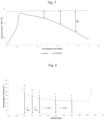
- the present invention provides a method for extracting different groups of aromatic compounds from fermentation vats according to the density of the liquid within the vat; Providing a useful tool in predictably preparing beverages from the fermentation of must.
- the present invention enables the aromatic profile of an alcoholic beverage to be changed in a predictable and programmed manner to obtain the desired aromatic profile. Allowing making wines and other drinks like juices and beers, in a manner designed and tailored to a target audience.
- the present invention also allows, for example, fermenting a wine at higher temperatures without losing the quality of the wine, increasing by 25% the productive capacity of a winery with a 30% energy saving.
- the generated aromatic fractions have an important appealing, both for the wine industry and for the industry of aromas and flavors.
- It is an object of the present invention to provide a method using an aroma recovery system comprising inter alia an installation with a plurality of fermentation vats for preparing beverages such as white wine, red wine, beers and juices; said system is defined in the method according to present claim 1, which defines the present invention.
- the aroma recovery system used in the method of the present invention comprises an installation with a plurality of fermentation vats (A) containing a fermenting must for preparing beverages, wherein said system is configured to recover aroma from said plurality of fermentation vats (A) and wherein said system further comprises: at least one multiple connection system for conveying fluids, connected to a gas outlet of each of said plurality of fermentation vats (A); at least one aroma recovery equipment connected to said multiple connection system, and connected to at least one aroma storage vessel for storing aroma condensates; wherein said multiple connection system comprises automatic valves connected to said gas outlet of each of said plurality of fermentation vats (A) and a Programmable Logic Controller (PLC) connected to said automatic valves and configured for driving said automatic valves according to the density of the fermenting must in said plurality of fermentation vats (A); wherein said Programmable Logic Control (PLC) is configured for driving said automatic valves according to the density of the fermenting must in said plurality of fermentation vats (A), and to open said automatic
- said multiple connection system further comprises: at least one trunk of conduits for conveying fluids, with automatic valves at each end of said conduits, connected to said plurality of fermentation vats and an automatic overpressure valve at the end connected to said at least one aroma recovery equipment.
- said logic control programmer is configured to open an automatic valve a fermentation vat connected to the multiple connection system, to extract aromas through the aroma recovery system, subsequently to measuring a CO 2 peak generation and subsequent CO 2 generation reduction in a fermentation vat also connected to the multiple connection system and aroma are extracted by the aroma recovery system.
- said logic control programmer is configured to open an automatic valve a fermentation vat connected to the multiple connection system, to extract aromas through the aroma recovery system subsequently to measuring a liquid density in one or more fermentation vats also connected to the multiple connection system and in which aromas are already drawn by the aroma recovery system.
- said multiple connection system further comprises a plurality of food grade silicone sheets, which are disposed in the upper port of each fermentation vat, which is connected to the multiple connection system.
- These silicone sheets allow the sealing of vats and prevent leakage of CO 2 .
- the sheets are sanitized and are simply installed on the port of each vat and then the lid and butterfly nut of the vat is tightened.
- said silicone sheets are of dimensions of about 80 x 80 cm and a thickness of about 3.2 mm.
- said conduits of the connection system consist of reinforced food grade silicone hose, such as, for example, Enoflex ® hoses.
- said connecting system comprises connectors at the ends of the conduits, connecting the fermentation vats, wherein said connectors are made of stainless steel, with a first camlock type terminal at the end connected to the conduit, and with a second end coated with food grade silicone through a high pressure clamp, at the other end connected to the fermentation vat, the connector further comprises an overpressure relief valve in the event of an emergency, said overpressure relief valve is set, for example, around 7 kPa (1 psi).
- said at least one vessel is a vessel, which maintains darkness and allows the oxygen to be released, preferably said vessel is a barrel, preferably a Kegs Brewers kind of barrel.
- said vessel is a wooden barrel or a glass bottle.
- the steps of the method of recovering aroma from fermentation vats for preparing a beverage, such as white wine, red wine, beer and juices, according to claim 1, are:
- the step of providing said aromatic characterization comprises the steps of:
- the step of making an aromatic profile for each vessel consists of:
- said step of making an aromatic profile is made by a panel of calibrated experts, for example using a sensory method such as a Quantitative Descriptive Analysis (QDA).
- QDA Quantitative Descriptive Analysis
- the step of making an aromatic profile for each vessel further comprises the step of performing a chemical characterization by extracting volatiles with SPME type fiber and gas chromatography analysis for each vessel.
- said method further comprises the step of grouping the recovered aromas according to the similarity of their aromatic profiles through a Principal Component Analysis (PCA) and / or Hierarchical Ascendant Classification (Agglomerative Hierarchical Clustering - HAC) to generate said aromatic characterization of the beverage according to density range.
- PCA Principal Component Analysis
- Agglomerative Hierarchical Clustering - HAC Hierarchical Ascendant Classification
- the method further comprises the step h1) returning said recovered aroma to enrich the beverage in preparation, in said plurality of fermentation vats.
- the method of the present invention was applied in different wineries of Santa Rita Museum located in the ses of Palmilla, Chile.
- This example shows that the gas emitted CO 2 (10) is taken from the fermentation vat (A) to be directed to a first heat exchanger (B1) operating cooling the CO 2 gas (10) at a temperature of around - 10 ° C by a first refrigerant circuit (21, 22) cooled to -15 ° C in an heat exchanger of the first circuit (C1), then said CO 2 gas cooled (23) is led to a second heat exchanger (B2) to be cooled to a temperature of about -40 ° C by a second refrigerant circuit (24, 25) cooled to -40 ° C in the heat exchanger of the second circuit (C2) and then evacuated (30).
- this first heat exchanger (B1) From the first heat exchanger (B1), condensed water can be extracted with an aroma portion entrained by the condensation, this first heat exchanger (B1) requires to operate with the first refrigeration circuit (21, 22, B1, C1) with a heat extraction capacity of about 32 mW / Liter of must in the fermentation vat (A).
- this second heat exchanger (B2) requires operation with the second heating circuit refrigeration (24, 25, B2, C2) with a heat extraction capacity of about 16 mW / Liter of must in the fermentation vat (A).
- the aroma recovery system used in the method of the present invention was tested in a cellar comprising 4 fermentation vats collecting a total of 30 liters of aroma at -40 ° C for a period of 15 days, between April 14 and 27, 2015.
- the aroma recovery system used in the method of the present invention was tested with a connection system covering a total of 46 fermentation vats of 50,000 liters of must of Sauvignon Blanc and Chardonnay strains.
- the final aroma recovery count in white wines amounts to approximately 430 liters of aroma of - 40 ° C, for a period of 29 days, from 30 March to 27 April 2015.
- QDA Quantitative Descriptive Analysis
- the condensates were stored at -80 ° C until analyzed.
- the condensates were diluted with a hydro-alcoholic solution of 12% v/v, pH 3.2 and refrigerated at 4 ° C. A solution, 0.165% of 400 mL, is prepared. The atmosphere of the solution is purged with nitrogen (N 2 ), then sample aliquot is added and purged again with nitrogen atmosphere. The samples are stored in bottles protected with foil and stored at 4 ° C until analyzed.
- the expert panel consists of 8 judges (6 women and 2 men between 24 and 40 years old) with more than one year of experience, based on four requirements: motivation to participate in the study, availability, health and sensorial performance. Sensory performance is evaluated based on ISO8586-1: 1993.
- the expert panel analyzes the condensates; with a nose sensorial analysis of the condensed at 25 ° C, evaluating the intensity of 12 aromatic fractions that were defined by a selection and reduction of 41 aromatic attributes describing a white wine based on geometric means (GM> 10%) according to ISO standard 11035, 1994.
- Table 1 Aromatic fraction, description and standard reference. Fraction - Romantic Description Standard reference Pineapple (FA1) Aroma of the pineapple, ester Concentrated and frozen pineapple juice Apple / pear (FA2) Aroma of green apple, sweet fruit Ethyl octanoate (2005 ppb) Linalool (FA3) Aroma of the floral lemon Linalool (1000ppm) Banana (FA4) Aroma of the banana, sweet fruit Isoamyl acetate (30 ppb) Passion fruit (FA5) Aroma of passion fruit, gooseberry, guava 3-mercaptohexylacetate (63.15 ng / L in ethanol) Grape (AF6) Aroma of the grape Frozen natural fruit Rose (FA7) Aroma of flower, rose, honey Phenylethyl alcohol (2000 ppb) Grass (FA8) Aroma of fresh grass, oil, green apple, wood Hexanol (8000 ppb) Humid
- flavorings condensates with similar aromatic profiles are grouped by Principal Component Analysis (PCA) and Ascendant Hierarchical Classification (AHC), for generating said aromatic characterization of the beverage, in this case white wine, Sauvignon Blanc, in a new range of densities.
- PCA Principal Component Analysis
- AHC Ascendant Hierarchical Classification
- the matrix coefficients include relationships between aromatic fractions, which confirms the PCA analysis. From the above data, you can perform three groups of condensates or flavors.
- Hierarchical Ascendant Classification observed in the dendrogram of Figure 7 is performed defining three groups of flavorings with the following distributions corresponding to different ranges of density must in fermentation:
Landscapes
- Chemical & Material Sciences (AREA)
- Organic Chemistry (AREA)
- Life Sciences & Earth Sciences (AREA)
- Engineering & Computer Science (AREA)
- Health & Medical Sciences (AREA)
- Wood Science & Technology (AREA)
- General Engineering & Computer Science (AREA)
- General Health & Medical Sciences (AREA)
- Genetics & Genomics (AREA)
- Bioinformatics & Cheminformatics (AREA)
- Biochemistry (AREA)
- Zoology (AREA)
- Biotechnology (AREA)
- Nutrition Science (AREA)
- Food Science & Technology (AREA)
- Polymers & Plastics (AREA)
- Distillation Of Fermentation Liquor, Processing Of Alcohols, Vinegar And Beer (AREA)
- Micro-Organisms Or Cultivation Processes Thereof (AREA)
- Seasonings (AREA)
- Separation, Recovery Or Treatment Of Waste Materials Containing Plastics (AREA)
Claims (9)
- Verfahren zur Rückgewinnung des Aromas aus einer Vielzahl von Gärbottichen (A), die einen gärenden Most zur Herstellung eines Getränks enthalten, mit Hilfe eines Aromarückgewinnungssystems;
wobei das Aromarückgewinnungssystem umfasst:eine Anlage mit einer Vielzahl von Gärbottichen (A), die einen Gärmost zur Herstellung von Getränken enthalten;mindestens ein Mehrfachanschlusssystem für den Transport von Fluiden, das mit einem Gasauslass jedes der mehreren Gärbehälter (A) verbunden ist;mindestens eine Aromarückgewinnungsanlage, die mit dem Mehrfachverbindungssystem verbunden ist und mit mindestens einem Aromaspeicherbehälter zum Speichern von Aromakondensaten verbunden ist;wobei das Mehrfachverbindungssystem automatische Ventile umfasst, die mit der Gasauslass jedes der mehreren Gärbottiche (A) und eine speicherprogrammierbare Steuerung (SPS), die mit den automatischen Ventilen verbunden und so konfiguriert ist, dass sie die automatischen Ventile in Abhängigkeit von der Dichte des gärenden Mosts in den mehreren Gärbottichen (A) ansteuert;wobei die speicherprogrammierbare Steuerung (SPS) so konfiguriert ist, dass sie die automatischen Ventile entsprechend der Dichte des Gärmosts in der Vielzahl von Gärbottichen (A) ansteuert und die automatischen Ventile öffnet, um die Aromakondensate durch die mindestens eine Aromarückgewinnungseinrichtung zu extrahieren, nachdem eine Gärmostdichte in einem oder mehreren der Gärbottiche (A) gemessen wurde;wobei das Verfahren die folgenden Schritte umfasst:a) Bereitstellung einer aromatischen Charakterisierung des Getränks entsprechend den Dichtebereichen der Flüssigkeit in der Vielzahl der Gärbottiche (A);b) Verbinden des Gasauslasses jedes der mehreren Gärbottiche (A) mit der mindestens einen Aromarückgewinnungsanlage mit Hilfe des mindestens einen Mehrfachverbindungssystems;c) Messung der Dichte des gärenden Mosts in den einzelnen Gärbottichen (A);d) Auswahl eines vorbestimmten Bereichs der Gärmostdichte entsprechend der aromatischen Charakterisierung für das Getränk;e) Auswahl eines Satzes von Fermentationsbehältern der Vielzahl von Fermentationsbehältern (A), die eine Gärmostdichte, die innerhalb des vorgegebenen Bereichs der Gärmostdichte liegt;f) Einspeisung eines Gases (10), das in dem ausgewählten Satz von Fermentationsbehältern erzeugt wird, in die mindestens eine Aromarückgewinnungsanlage durch Betätigung des Mehrfachverbindungssystems;g) Speichern eines von der mindestens einen Aromarückgewinnungsanlage gewonnenen Aromakondensats in dem mindestens einen Aromaspeicherbehälter;h) Etikettierung des mindestens einen Aromaspeichers entsprechend der aromatischen Charakterisierung. - Verfahren zur Gewinnung eines Aromas nach Anspruch 1, wobei der Schritt der Bereitstellung der aromatischen Charakterisierung die folgenden Schritte umfasst:a. Verbinden der mindestens einen Aromarückgewinnungsanlage mit einem der mehreren Gärbottiche (A), die einen gärenden Most enthalten;b. Anschluss eines Aromaspeicherbehälters an die Aromarückgewinnungsanlage;c. Messung der Dichte des gärenden Mosts in dem Gärbehälter (A) über einen bestimmten Zeitraum;d. Extraktion des Gases (10), das durch die Gärung des gärenden Mosts in dem Gärbehälter (A) erzeugt wird, mit der Aromarückgewinnungsanlage;e. Lagerung eines von der Aromarückgewinnungsanlage gewonnenen Aromakondensats in dem Aromaspeicherbehälter, während die Dichte des gärenden Mosts auf einem bestimmten Dichtebereich des gärenden Mostes, wobei das Aromalagergefäß mit diesem bestimmten Dichtebereich gekennzeichnet ist;f. Wiederholung der Schritte c) bis e), bis die Dichte des gärenden Mosts einen nächsten Dichtebereich erreicht, Abziehen des mit der Aromarückgewinnungsanlage verbundenen Aromavorratsbehälters und Anschluss eines nächsten Aromavorratsbehälters an die Aromarückgewinnungsanlage,g. Lagern des von der Aromarückgewinnungsanlage zurückgewonnenen Aromakondensats in dem nächsten Aromalagerbehälter, während die Dichte des gärenden Mosts in einem nächsten Dichtebereich des gärenden Mosts verbleibt, wobei der nächste Aromalagerbehälter mit dem nächsten Dichtebereich beschriftet ist;h. Wiederholung der Schritte c) bis g), bis die Gärung des gärenden Mostes in dem Gärbehälter (A) beendet ist, wobei eine Vielzahl von Aromaspeicherbehältern erhalten wird, die mit Dichtebereichen des gärenden Mostes gekennzeichnet und mit Aromakondensaten gefüllt sind, die aus dem gärenden Most in den gekennzeichneten Dichtebereichen gewonnen wurden;i. Erstellung eines Aromaprofils für jeden gekennzeichneten Aromalagerbehälter, Identifizierung des gärenden Mostes und seines Dichtebereichs, Erstellung der Aromacharakterisierung des Getränks.
- Verfahren zur Rückgewinnung von Aroma gemäß Anspruch 2, wobei der Schritt der Durchführung eines Aromaprofils für jedes markierte Aromalagergefäß umfasst:a. Identifizierung der aromatischen Fraktionen in dem gekennzeichneten Aromavorratsbehälter; undb. Vergabe einer Punktzahl für jede aromatische Fraktion entsprechend ihrer Intensität für jedes markierte Aromaspeichergefäß, wodurch das aromatische Profil der Aromakondensate in dem markierten Aromaspeichergefäß erstellt wird;c. Gruppierung der Aromakondensate nach der Ähnlichkeit ihrer Aromaprofile in unterschiedlich gekennzeichnete Aromalagerbehälter, die die verschiedene Dichtebereiche, die den gruppierten Aromen entsprechen, um eine Aromacharakterisierung gemäß einem neuen bevorzugten Dichtebereich zu erstellen.
- Verfahren zur Rückgewinnung des Aromas nach Anspruch 3, wobei der Schritt der Erstellung eines Aromaprofils durch ein kalibriertes Expertengremium unter Verwendung einer quantitativen deskriptiven sensorischen Analyse erfolgt.
- Verfahren zur Rückgewinnung von Aromen nach Anspruch 3, wobei der Schritt der Erstellung eines Aromaprofils für jedes markierte Aromalagergefäß ferner den Schritt der Durchführung einer chemischen Charakterisierung durch Extraktion flüchtiger Stoffe mit Fasern vom SPME-Typ und einer gaschromatographischen Analyse für jedes markierte Aromalagergefäß umfasst.
- Verfahren zur Rückgewinnung von Aromen nach Anspruch 3, wobei der Schritt der Gruppierung der rückgewonnenen Aromakondensate entsprechend der Ähnlichkeit ihrer aromatischen Profile durch eine Hauptkomponentenanalyse (PCA) und/oder eine hierarchisch aufsteigende Klassifizierung (Agglomerative Hierarchical Clustering - HAC) durchgeführt wird, um die aromatische Charakterisierung entsprechend dem Dichtebereich zu erzeugen.
- Verfahren zur Rückgewinnung von Aromastoffen nach einem der Ansprüche 1 bis 16, das außerdem den Schritt umfasst.
h1) Rückführen des zurückgewonnenen Aromakondensats in die mehreren Gärbottiche (A), um das Aroma des in den mehreren Gärbottichen (A) zubereiteten Getränks anzureichern, um ein angereichertes Getränk zu erhalten. - Verfahren zur Rückgewinnung des Aromas nach Anspruch 1, wobei das Gefäß ein Fass vom Typ Brewers Kegs, ein Holzfass oder eine Glasflasche ist.
- Verfahren zur Rückgewinnung von Aromen nach Anspruch 1, wobei das Mehrfachverbindungssystem umfasst:
mindestens einen Leitungsstrang zum Fördern von Fluiden mit den automatischen Ventilen an jedem Ende der Leitungen, das mit der Vielzahl von Gärbehältern (A) verbunden ist, und ein automatisches Ventil über dem Behälter an dem Ende, das mit dem mindestens einen Gärbehälter verbunden ist.
Applications Claiming Priority (2)
| Application Number | Priority Date | Filing Date | Title |
|---|---|---|---|
| CL2016003385A CL2016003385A1 (es) | 2016-12-29 | 2016-12-29 | Método y sistemas de recuperación de aroma a partir de cubas fermentativas |
| PCT/CL2017/050079 WO2018119532A1 (es) | 2016-12-29 | 2017-12-20 | Método y sistemas de recuperación de aroma a partir de cubas fermentativas |
Publications (3)
| Publication Number | Publication Date |
|---|---|
| EP3564352A1 EP3564352A1 (de) | 2019-11-06 |
| EP3564352C0 EP3564352C0 (de) | 2024-04-03 |
| EP3564352B1 true EP3564352B1 (de) | 2024-04-03 |
Family
ID=60990542
Family Applications (1)
| Application Number | Title | Priority Date | Filing Date |
|---|---|---|---|
| EP17829585.3A Active EP3564352B1 (de) | 2016-12-29 | 2017-12-20 | Verfahren zur extraktion von aroma aus gärbottichen |
Country Status (5)
| Country | Link |
|---|---|
| US (1) | US11236295B2 (de) |
| EP (1) | EP3564352B1 (de) |
| CL (1) | CL2016003385A1 (de) |
| ES (1) | ES2979058T3 (de) |
| WO (1) | WO2018119532A1 (de) |
Families Citing this family (5)
| Publication number | Priority date | Publication date | Assignee | Title |
|---|---|---|---|---|
| US11062216B2 (en) * | 2017-11-21 | 2021-07-13 | International Business Machines Corporation | Prediction of olfactory and taste perception through semantic encoding |
| EP3919602A4 (de) * | 2019-01-31 | 2022-08-03 | Suntory Holdings Limited | Getränk mit biergeschmack |
| US11836594B2 (en) * | 2019-05-15 | 2023-12-05 | International Business Machines Corporation | Creation of detailed perceptual description ratings from general perception ratings |
| CN110860176A (zh) * | 2019-11-27 | 2020-03-06 | 南京九思高科技有限公司 | 一种回收葡萄酒发酵过程中混合气体的装置及工艺 |
| US20240141263A1 (en) * | 2021-01-28 | 2024-05-02 | Asahi Group Holdings, Ltd. | Beer-flavored low-alcohol beverage |
Family Cites Families (26)
| Publication number | Priority date | Publication date | Assignee | Title |
|---|---|---|---|---|
| US2371208A (en) * | 1945-03-13 | System of continuous fermentation | ||
| US2536994A (en) | 1948-08-23 | 1951-01-02 | Cremaschi Victor Manuel | Continuous fermentation of wine and the like |
| US3449128A (en) * | 1965-02-05 | 1969-06-10 | Masakazu Yamada | Method of enhancing the flavor of alcoholic beverages |
| US3477443A (en) * | 1966-04-28 | 1969-11-11 | Nisshin Sangyo Co | Method of imparting flavor to smoking tobaccos |
| US3526509A (en) * | 1966-10-20 | 1970-09-01 | Nisshin Sangyo Co | Capturing and preserving flavor of alcoholic beverages |
| US3486437A (en) * | 1968-02-23 | 1969-12-30 | Anapsky Vinzavod | Automatic must fermentation plant |
| US3852477A (en) * | 1972-01-31 | 1974-12-03 | P Venter | Recovering flavor and aroma substances from fermentation gases |
| FR2459280A1 (fr) * | 1979-06-19 | 1981-01-09 | Poinsard Robert | Dispositif pour la recuperation des vapeurs entrainees par le gaz carbonique s'echappant des recipients de liquides fermentescibles |
| GB8526628D0 (en) * | 1985-10-29 | 1985-12-04 | Acumet Precision Instr Ltd | Measurement of specific gravity |
| FR2617184B1 (fr) * | 1987-06-25 | 1994-10-21 | Rech Oenologiques Et | Procede d'amelioration des qualites aromatiques des produits de fermentation et dispositif pour sa mise en oeuvre |
| FR2618451B1 (fr) * | 1987-07-22 | 1991-05-31 | Canet Ste Coop Agricole | Procede et installation de vinification et utilisations s'y rapportant |
| ITTO20010965A1 (it) * | 2001-10-11 | 2003-04-11 | Gimar Tecno S R L | Apparecchiatura di fermentazione a funzionamento automatico. |
| US20060080274A1 (en) * | 2004-10-12 | 2006-04-13 | Pricegrabber.Com, Llc | Dynamic product association |
| CA2615583C (en) * | 2005-07-19 | 2012-09-04 | Mars Incorporated | Aroma composition and method |
| PT103657B (pt) * | 2007-02-12 | 2009-08-25 | Univ Do Porto | Processo de enriquecimento aromático de uma bebida obtida por desalcoolização |
| US8956671B1 (en) * | 2008-06-04 | 2015-02-17 | Ecopas Llc | Volatile organic compound recovery system and method |
| US8794049B1 (en) * | 2011-01-26 | 2014-08-05 | Marci Norkin | Real-time monitor for wine fermentation |
| WO2011058585A1 (en) * | 2009-11-10 | 2011-05-19 | Carlo Farotto | Automated winemaking system and winemaking method thereof |
| US9494566B2 (en) * | 2011-09-27 | 2016-11-15 | VineSleuth, Inc. | Systems and methods for evaluation of wine characteristics |
| CN102645502A (zh) * | 2012-04-23 | 2012-08-22 | 上海应用技术学院 | 一种利用快速气相色谱型电子鼻指纹分析系统鉴别黄酒酒龄的方法 |
| CA2907545A1 (en) * | 2013-03-08 | 2014-09-12 | John Mitchell | Fuel cell fermentation monitor |
| CA2959944A1 (en) * | 2013-09-04 | 2015-03-12 | Cellier Domesticus Inc. | Method and system for controlling an artificial cellar |
| ES2643573T3 (es) * | 2014-01-10 | 2017-11-23 | Wia Wine Ag | Dispositivo y procedimiento para la fabricación de una bebida desalcoholizada |
| EP3473697A1 (de) * | 2014-09-16 | 2019-04-24 | Altria Client Services LLC | Getränkevorläufer und verfahren zur herstellung von getränken |
| US9932547B2 (en) * | 2015-07-31 | 2018-04-03 | Picobrew, Inc. | Fermentation monitoring and management |
| CL2016003386A1 (es) * | 2016-12-29 | 2018-09-21 | Dictuc S A 20% | Equipo recuperador de aromas desde cubas fermentativas |
-
2016
- 2016-12-29 CL CL2016003385A patent/CL2016003385A1/es unknown
-
2017
- 2017-12-20 ES ES17829585T patent/ES2979058T3/es active Active
- 2017-12-20 WO PCT/CL2017/050079 patent/WO2018119532A1/es not_active Ceased
- 2017-12-20 US US16/475,334 patent/US11236295B2/en active Active
- 2017-12-20 EP EP17829585.3A patent/EP3564352B1/de active Active
Also Published As
| Publication number | Publication date |
|---|---|
| EP3564352C0 (de) | 2024-04-03 |
| CL2016003385A1 (es) | 2018-09-21 |
| US20190338226A1 (en) | 2019-11-07 |
| EP3564352A1 (de) | 2019-11-06 |
| ES2979058T3 (es) | 2024-09-24 |
| US11236295B2 (en) | 2022-02-01 |
| WO2018119532A1 (es) | 2018-07-05 |
Similar Documents
| Publication | Publication Date | Title |
|---|---|---|
| EP3564352B1 (de) | Verfahren zur extraktion von aroma aus gärbottichen | |
| Varela et al. | Sensory profile and volatile aroma composition of reduced alcohol Merlot wines fermented with Metschnikowia pulcherrima and Saccharomyces uvarum | |
| Tubia et al. | Beverage spoilage yeast detection methods and control technologies: A review of Brettanomyces | |
| Mingorance-Cazorla et al. | Contribution of different natural yeasts to the aroma of two alcoholic beverages | |
| Vigentini et al. | Indigenous Georgian wine-associated yeasts and grape cultivars to edit the wine quality in a precision oenology perspective | |
| Izquierdo-Cañas et al. | Malolactic fermentation before or during wine aging in barrels | |
| Versari et al. | Effect of co‐inoculation with yeast and bacteria on chemical and sensory characteristics of commercial Cabernet Franc red wine from Switzerland | |
| Scudamore-Smith et al. | Color and phenolic changes of Cabernet Sauvignon wine made by simultaneous yeast/bacterial fermentation and extended pomace contact | |
| US20090291175A1 (en) | Method for aging alcoholic liquids | |
| Massera et al. | Simultaneous inoculation of Malbec (Vitis vinifera) musts with yeast and bacteria: effects on fermentation performance, sensory and sanitary attributes of wines. | |
| CN110753748A (zh) | 赋予饮料啤酒花风味的工艺、通过这样的工艺可获得的啤酒花风味饮料组分及其用途 | |
| Sun et al. | Sequential culture with Torulaspora delbrueckii and Saccharomyces cerevisiae and management of fermentation temperature to improve cherry wine quality | |
| EP0300900A1 (de) | Verfahren und Vorrichtung zur Gärung und Verwendung | |
| Alfonzo et al. | Use of grape racemes from Grillo cultivar to increase the acidity level of sparkling base wines produced with different Saccharomyces cerevisiae strains | |
| Bekris et al. | Spontaneous vinification supports different microbiota, volatilome and leads to wines with different sensory attributes compared to vinifications inoculated with commercial and indigenous to Vidiano cultivar Saccharomyces cerevisiae | |
| Del Campo et al. | Ciders produced by two types of presses and fermented in stainless steel and wooden vats | |
| Grieco et al. | Exploitation of autochthonous micro-organism potential to enhance the quality of Apulian wines | |
| Ding et al. | Microbial succession during spontaneous fermentation of Ecolly grapes and their important contribution to flavor metabolites | |
| Schinca et al. | Biodiversity and brewing attitude of non-Saccharomyces strains isolated from Uruguayan vineyards and other ecosystems | |
| Lei et al. | Isolation and identification of non‐Saccharomyces yeasts and their flavour characteristics while brewing Yinhong plum wine | |
| Kumar et al. | White wine dealcoholization by osmotic distillation: An experimental study and impact on key quality parameters | |
| Zhang et al. | Deterministic vs. stochastic: Fungal assembly driven by grape cultivar dictates divergent wine aromas in spontaneous fermentation | |
| Camba | Modulation of chemical and sensory characteristics of red wine from Mencía by using indigenous Saccharomyces cerevisiae yeast strains | |
| Giovenzana et al. | Evaluation of energy savings in white winemaking: impact of temperature management combined with specific yeasts choice on required heat dissipation during industrial-scale fermentation | |
| US20250019630A1 (en) | De-alcoholisation method and device, and uses thereof |
Legal Events
| Date | Code | Title | Description |
|---|---|---|---|
| STAA | Information on the status of an ep patent application or granted ep patent |
Free format text: STATUS: UNKNOWN |
|
| STAA | Information on the status of an ep patent application or granted ep patent |
Free format text: STATUS: THE INTERNATIONAL PUBLICATION HAS BEEN MADE |
|
| PUAI | Public reference made under article 153(3) epc to a published international application that has entered the european phase |
Free format text: ORIGINAL CODE: 0009012 |
|
| STAA | Information on the status of an ep patent application or granted ep patent |
Free format text: STATUS: REQUEST FOR EXAMINATION WAS MADE |
|
| 17P | Request for examination filed |
Effective date: 20190729 |
|
| AK | Designated contracting states |
Kind code of ref document: A1 Designated state(s): AL AT BE BG CH CY CZ DE DK EE ES FI FR GB GR HR HU IE IS IT LI LT LU LV MC MK MT NL NO PL PT RO RS SE SI SK SM TR |
|
| AX | Request for extension of the european patent |
Extension state: BA ME |
|
| DAV | Request for validation of the european patent (deleted) | ||
| DAX | Request for extension of the european patent (deleted) | ||
| STAA | Information on the status of an ep patent application or granted ep patent |
Free format text: STATUS: EXAMINATION IS IN PROGRESS |
|
| 17Q | First examination report despatched |
Effective date: 20210810 |
|
| GRAP | Despatch of communication of intention to grant a patent |
Free format text: ORIGINAL CODE: EPIDOSNIGR1 |
|
| STAA | Information on the status of an ep patent application or granted ep patent |
Free format text: STATUS: GRANT OF PATENT IS INTENDED |
|
| INTG | Intention to grant announced |
Effective date: 20231124 |
|
| GRAS | Grant fee paid |
Free format text: ORIGINAL CODE: EPIDOSNIGR3 |
|
| GRAA | (expected) grant |
Free format text: ORIGINAL CODE: 0009210 |
|
| STAA | Information on the status of an ep patent application or granted ep patent |
Free format text: STATUS: THE PATENT HAS BEEN GRANTED |
|
| AK | Designated contracting states |
Kind code of ref document: B1 Designated state(s): AL AT BE BG CH CY CZ DE DK EE ES FI FR GB GR HR HU IE IS IT LI LT LU LV MC MK MT NL NO PL PT RO RS SE SI SK SM TR |
|
| REG | Reference to a national code |
Ref country code: GB Ref legal event code: FG4D |
|
| REG | Reference to a national code |
Ref country code: CH Ref legal event code: EP |
|
| REG | Reference to a national code |
Ref country code: IE Ref legal event code: FG4D |
|
| REG | Reference to a national code |
Ref country code: DE Ref legal event code: R096 Ref document number: 602017080670 Country of ref document: DE |
|
| U01 | Request for unitary effect filed |
Effective date: 20240430 |
|
| U07 | Unitary effect registered |
Designated state(s): AT BE BG DE DK EE FI FR IT LT LU LV MT NL PT SE SI Effective date: 20240506 |
|
| REG | Reference to a national code |
Ref country code: ES Ref legal event code: FG2A Ref document number: 2979058 Country of ref document: ES Kind code of ref document: T3 Effective date: 20240924 |
|
| PG25 | Lapsed in a contracting state [announced via postgrant information from national office to epo] |
Ref country code: IS Free format text: LAPSE BECAUSE OF FAILURE TO SUBMIT A TRANSLATION OF THE DESCRIPTION OR TO PAY THE FEE WITHIN THE PRESCRIBED TIME-LIMIT Effective date: 20240803 |
|
| PG25 | Lapsed in a contracting state [announced via postgrant information from national office to epo] |
Ref country code: HR Free format text: LAPSE BECAUSE OF FAILURE TO SUBMIT A TRANSLATION OF THE DESCRIPTION OR TO PAY THE FEE WITHIN THE PRESCRIBED TIME-LIMIT Effective date: 20240403 |
|
| PG25 | Lapsed in a contracting state [announced via postgrant information from national office to epo] |
Ref country code: CZ Free format text: LAPSE BECAUSE OF FAILURE TO SUBMIT A TRANSLATION OF THE DESCRIPTION OR TO PAY THE FEE WITHIN THE PRESCRIBED TIME-LIMIT Effective date: 20240403 |
|
| PG25 | Lapsed in a contracting state [announced via postgrant information from national office to epo] |
Ref country code: PL Free format text: LAPSE BECAUSE OF FAILURE TO SUBMIT A TRANSLATION OF THE DESCRIPTION OR TO PAY THE FEE WITHIN THE PRESCRIBED TIME-LIMIT Effective date: 20240403 |
|
| PG25 | Lapsed in a contracting state [announced via postgrant information from national office to epo] |
Ref country code: PL Free format text: LAPSE BECAUSE OF FAILURE TO SUBMIT A TRANSLATION OF THE DESCRIPTION OR TO PAY THE FEE WITHIN THE PRESCRIBED TIME-LIMIT Effective date: 20240403 Ref country code: NO Free format text: LAPSE BECAUSE OF FAILURE TO SUBMIT A TRANSLATION OF THE DESCRIPTION OR TO PAY THE FEE WITHIN THE PRESCRIBED TIME-LIMIT Effective date: 20240703 Ref country code: IS Free format text: LAPSE BECAUSE OF FAILURE TO SUBMIT A TRANSLATION OF THE DESCRIPTION OR TO PAY THE FEE WITHIN THE PRESCRIBED TIME-LIMIT Effective date: 20240803 Ref country code: HR Free format text: LAPSE BECAUSE OF FAILURE TO SUBMIT A TRANSLATION OF THE DESCRIPTION OR TO PAY THE FEE WITHIN THE PRESCRIBED TIME-LIMIT Effective date: 20240403 Ref country code: CZ Free format text: LAPSE BECAUSE OF FAILURE TO SUBMIT A TRANSLATION OF THE DESCRIPTION OR TO PAY THE FEE WITHIN THE PRESCRIBED TIME-LIMIT Effective date: 20240403 Ref country code: RS Free format text: LAPSE BECAUSE OF FAILURE TO SUBMIT A TRANSLATION OF THE DESCRIPTION OR TO PAY THE FEE WITHIN THE PRESCRIBED TIME-LIMIT Effective date: 20240703 |
|
| REG | Reference to a national code |
Ref country code: DE Ref legal event code: R097 Ref document number: 602017080670 Country of ref document: DE |
|
| U20 | Renewal fee for the european patent with unitary effect paid |
Year of fee payment: 8 Effective date: 20241209 |
|
| PG25 | Lapsed in a contracting state [announced via postgrant information from national office to epo] |
Ref country code: SK Free format text: LAPSE BECAUSE OF FAILURE TO SUBMIT A TRANSLATION OF THE DESCRIPTION OR TO PAY THE FEE WITHIN THE PRESCRIBED TIME-LIMIT Effective date: 20240403 Ref country code: RO Free format text: LAPSE BECAUSE OF FAILURE TO SUBMIT A TRANSLATION OF THE DESCRIPTION OR TO PAY THE FEE WITHIN THE PRESCRIBED TIME-LIMIT Effective date: 20240403 |
|
| PG25 | Lapsed in a contracting state [announced via postgrant information from national office to epo] |
Ref country code: SM Free format text: LAPSE BECAUSE OF FAILURE TO SUBMIT A TRANSLATION OF THE DESCRIPTION OR TO PAY THE FEE WITHIN THE PRESCRIBED TIME-LIMIT Effective date: 20240403 |
|
| PG25 | Lapsed in a contracting state [announced via postgrant information from national office to epo] |
Ref country code: SM Free format text: LAPSE BECAUSE OF FAILURE TO SUBMIT A TRANSLATION OF THE DESCRIPTION OR TO PAY THE FEE WITHIN THE PRESCRIBED TIME-LIMIT Effective date: 20240403 Ref country code: SK Free format text: LAPSE BECAUSE OF FAILURE TO SUBMIT A TRANSLATION OF THE DESCRIPTION OR TO PAY THE FEE WITHIN THE PRESCRIBED TIME-LIMIT Effective date: 20240403 Ref country code: RO Free format text: LAPSE BECAUSE OF FAILURE TO SUBMIT A TRANSLATION OF THE DESCRIPTION OR TO PAY THE FEE WITHIN THE PRESCRIBED TIME-LIMIT Effective date: 20240403 |
|
| PLBE | No opposition filed within time limit |
Free format text: ORIGINAL CODE: 0009261 |
|
| STAA | Information on the status of an ep patent application or granted ep patent |
Free format text: STATUS: NO OPPOSITION FILED WITHIN TIME LIMIT |
|
| 26N | No opposition filed |
Effective date: 20250106 |
|
| PG25 | Lapsed in a contracting state [announced via postgrant information from national office to epo] |
Ref country code: MC Free format text: LAPSE BECAUSE OF FAILURE TO SUBMIT A TRANSLATION OF THE DESCRIPTION OR TO PAY THE FEE WITHIN THE PRESCRIBED TIME-LIMIT Effective date: 20240403 |
|
| U1N | Appointed representative for the unitary patent procedure changed after the registration of the unitary effect |
Representative=s name: BIRD & BIRD SOCIETA TRA AVVOCATI S.R.L.; IT |
|
| REG | Reference to a national code |
Ref country code: CH Ref legal event code: PL |
|
| GBPC | Gb: european patent ceased through non-payment of renewal fee |
Effective date: 20241220 |
|
| PG25 | Lapsed in a contracting state [announced via postgrant information from national office to epo] |
Ref country code: GB Free format text: LAPSE BECAUSE OF NON-PAYMENT OF DUE FEES Effective date: 20241220 |
|
| PG25 | Lapsed in a contracting state [announced via postgrant information from national office to epo] |
Ref country code: CH Free format text: LAPSE BECAUSE OF NON-PAYMENT OF DUE FEES Effective date: 20241231 |
|
| PG25 | Lapsed in a contracting state [announced via postgrant information from national office to epo] |
Ref country code: IE Free format text: LAPSE BECAUSE OF NON-PAYMENT OF DUE FEES Effective date: 20241220 |
|
| U20 | Renewal fee for the european patent with unitary effect paid |
Year of fee payment: 9 Effective date: 20251218 |
|
| PGFP | Annual fee paid to national office [announced via postgrant information from national office to epo] |
Ref country code: ES Payment date: 20260324 Year of fee payment: 9 |