EP3563284B1 - Intelligenz- und analysegesteuerte sicherheits- und konformitätsempfehlungen - Google Patents
Intelligenz- und analysegesteuerte sicherheits- und konformitätsempfehlungen Download PDFInfo
- Publication number
- EP3563284B1 EP3563284B1 EP17826366.1A EP17826366A EP3563284B1 EP 3563284 B1 EP3563284 B1 EP 3563284B1 EP 17826366 A EP17826366 A EP 17826366A EP 3563284 B1 EP3563284 B1 EP 3563284B1
- Authority
- EP
- European Patent Office
- Prior art keywords
- configuration
- policy
- suggested
- tenant
- currently implemented
- Prior art date
- Legal status (The legal status is an assumption and is not a legal conclusion. Google has not performed a legal analysis and makes no representation as to the accuracy of the status listed.)
- Active
Links
Images






Classifications
-
- G—PHYSICS
- G06—COMPUTING OR CALCULATING; COUNTING
- G06F—ELECTRIC DIGITAL DATA PROCESSING
- G06F21/00—Security arrangements for protecting computers, components thereof, programs or data against unauthorised activity
- G06F21/50—Monitoring users, programs or devices to maintain the integrity of platforms, e.g. of processors, firmware or operating systems
- G06F21/55—Detecting local intrusion or implementing counter-measures
- G06F21/552—Detecting local intrusion or implementing counter-measures involving long-term monitoring or reporting
-
- G—PHYSICS
- G06—COMPUTING OR CALCULATING; COUNTING
- G06F—ELECTRIC DIGITAL DATA PROCESSING
- G06F21/00—Security arrangements for protecting computers, components thereof, programs or data against unauthorised activity
- G06F21/60—Protecting data
-
- G—PHYSICS
- G06—COMPUTING OR CALCULATING; COUNTING
- G06F—ELECTRIC DIGITAL DATA PROCESSING
- G06F21/00—Security arrangements for protecting computers, components thereof, programs or data against unauthorised activity
- G06F21/60—Protecting data
- G06F21/62—Protecting access to data via a platform, e.g. using keys or access control rules
- G06F21/6218—Protecting access to data via a platform, e.g. using keys or access control rules to a system of files or objects, e.g. local or distributed file system or database
- G06F21/6245—Protecting personal data, e.g. for financial or medical purposes
-
- G—PHYSICS
- G06—COMPUTING OR CALCULATING; COUNTING
- G06Q—INFORMATION AND COMMUNICATION TECHNOLOGY [ICT] SPECIALLY ADAPTED FOR ADMINISTRATIVE, COMMERCIAL, FINANCIAL, MANAGERIAL OR SUPERVISORY PURPOSES; SYSTEMS OR METHODS SPECIALLY ADAPTED FOR ADMINISTRATIVE, COMMERCIAL, FINANCIAL, MANAGERIAL OR SUPERVISORY PURPOSES, NOT OTHERWISE PROVIDED FOR
- G06Q10/00—Administration; Management
- G06Q10/10—Office automation; Time management
- G06Q10/101—Collaborative creation, e.g. joint development of products or services
Definitions
- Hosted services provided by tenants of service providers to their users are an increasingly common software usage model.
- Hosted services cover a wide range of software applications and systems from cloud storage to productivity, and collaboration to communication.
- any number of users may utilize applications provided under a hosted service umbrella in generating, processing, storing, and collaborating on documents and other data.
- Embodiments are directed to intelligence and analysis driven security and compliance suggestions.
- a security and compliance module associated with a hosted service may be configured to analyze a tenant's environment, such as numbers and types of users, employed service components, processed and stored documents, and data. Based on the analysis, the security and compliance module may suggest a policy or a configuration change to be implemented based on the analysis, which may be presented to the tenant through a dashboard.
- the suggested policy or configuration may encompass regulatory, legal, industrial, internal compliance, external compliance, and other security and compliance rules or standards employed to protect the tenant, for example.
- the suggested policy or configuration may be presented along with the analysis results and a prompt to confirm implementation of the suggested policy or configuration.
- an option may be presented to customize the suggested policy or configuration by modifying the settings suggested based on analysis results.
- a security and compliance module associated with a hosted service and/or a separate protection service may aggregate and analyze data, metadata, and activities associated with the hosted service in order to detect patterns and derive insights for applicable policies and/or configurations based on the pattern from which a suggestion comprising a policy and/or configuration may be generated.
- the policy or configuration may be tailored based on a tenant profile, where the tenant profile includes an industry, a size, a geographical location, a hosted service ecosystem, a role, a regulatory requirement, and/or a legal requirement associated with the tenant.
- the policy or configuration may be related to regulatory, legal, industrial, internal compliance, external compliance, and other security and compliance rules or standards employed to protect the tenant's information, for example.
- the suggestion may be presented to the tenant through a dashboard, and implemented upon receipt of a confirmation.
- the suggestion may be presented along with the analysis results and a prompt to confirm implementation of the policy or configuration.
- an option may be presented to customize the policy or configuration by modifying the settings suggested based on analysis results.
- the policy or configuration may be automatically implemented.
- the policy or configuration may be monitored to determine an effectiveness of its performance in protecting data within the tenant's service environment. A performance report may be created based on the monitoring that is analyzed in order to determine suggested policy or configuration updates.
- program modules include routines, programs, components, data structures, and other types of structures that perform particular tasks or implement particular abstract data types.
- embodiments may be practiced with other computer system configurations, including hand-held devices, multiprocessor systems, microprocessor-based or programmable consumer electronics, minicomputers, mainframe computers, and comparable computing devices.
- Embodiments may also be practiced in distributed computing environments where tasks are performed by remote processing devices that are linked through a communications network.
- program modules may be located in both local and remote memory storage devices.
- Some embodiments may be implemented as a computer-implemented process (method), a computing system, or as an article of manufacture, such as a computer program product or computer readable media.
- the computer program product may be a computer storage medium readable by a computer system and encoding a computer program that comprises instructions for causing a computer or computing system to perform example process(es).
- the computer-readable storage medium is a computer-readable memory device.
- the computer-readable storage medium can for example be implemented via one or more of a volatile computer memory, a non-volatile memory, a hard drive, a flash drive, a floppy disk, or a compact disk, and comparable hardware media.
- platform may be a combination of software and hardware components for providing intelligence and analysis driven security and compliance suggestions. Examples of platforms include, but are not limited to, a hosted service executed over a plurality of servers, an application executed on a single computing device, and comparable systems.
- server generally refers to a computing device executing one or more software programs typically in a networked environment. However, a server may also be implemented as a virtual server (software programs) executed on one or more computing devices viewed as a server on the network. More detail on these technologies and example operations is provided below.
- FIG. 1A through 1C include display diagrams illustrating an example network environment where a system to provide intelligence and analysis driven security and compliance suggestions may be implemented.
- an example system may include a datacenter 112 executing a hosted service 114 on at least one processing server 116, which may provide productivity, communication, cloud storage, collaboration, and comparable services to users in conjunction with other servers 120, for example.
- the hosted service 114 may further include scheduling services, online conferencing services, and comparable ones.
- the hosted service 114 may be configured to interoperate with a client application 106 through one or more client devices 102 over one or more networks, such as network 110.
- the client devices 102 may include a desktop computer, a laptop computer, a tablet computer, a vehicle-mount computer, a smart phone, or a wearable computing device, among other similar devices.
- the hosted service 114 may allow users to access its services through the client application 106 executed on the client devices 102.
- the hosted service 114 may be provided to a tenant (e.g., a business, an organization, or similar entities), which may configure and manage the services for their users.
- the processing server 116 may be operable to execute a security and compliance module 118 of the hosted service 114, where the security and compliance module 118 may be integrated with the hosted service 114.
- the client application 106 may be operable to execute the security and compliance module 118, where the security and compliance module 118 may be integrated with the client application 106.
- the security and compliance module 118 may be integrated with a separate protection service 122 and executed by one or more processing servers 124 of the protection service 122.
- the protection service 122 may be configured to serve the hosted service 114 and/or multiple applications associated with the hosted service 114, such as the client application 106.
- the protection service 122 may provide its services to multiple hosted services.
- common information e.g., analysis results, user profiles, data and metadata
- the protection service 122 may be implemented as software, hardware, or combinations thereof.
- the security and compliance module 118 may be configured to manage protection aspects of the tenant's service environment such as malicious attack mitigation, data governance (e.g., based on legal and regulatory requirements), and policy configuration and enforcement.
- the client application 106 may provide access to a user interface associated with the security and compliance module 118 of the hosted service 114 (or of the protection service 122), such as a dashboard, that may provide summary and/or detailed information associated with threats, security and compliance configurations, analyses results, and configuration controls.
- the user interface may be used by a system administrator 104 to manage the tenant's security and compliance matters in conjunction with the hosted service 114.
- the security and compliance module 118 may be configured to analyze a tenant's environment such as numbers and types of users, employed service components, and processed and stored documents and data. Based on the analysis, the security and compliance module 118 may suggest a policy or configuration to be implemented, where the suggestion may be presented through the dashboard. In some embodiments, the suggestion may be to customize or update a currently implemented policy or configuration.
- the suggestion may encompass regulatory, legal, industrial, internal compliance, external compliance, and other security and compliance rules or standards employed to protect the tenant, for example.
- the suggestion may be presented for tenant selection through the dashboard along with analysis results showing reasons and/or potential protection results to encourage proactive as well as reactive creation of the policy or configuration.
- the security and compliance module 118 may present an option to customize the policy or configuration by modifying the settings suggested based on analysis results. Alternatively, the suggestion and/or customized option may be implemented automatically.
- the suggested policy or configuration may be stored remotely in a data store associated with the hosted service 114 or protection service 122 (for example, at a storage server within the other servers 120) and/or locally on the client devices 102 (for example, at local storage 108) associated with the administrator 104.
- the security and compliance module 118 may be configured to provide other security and compliance suggestions based on the analysis, such as alert generation and management, tenant configuration changes, profile generation, and user interface customization.
- hosted services provided by tenants of service providers to their users are an increasingly common software usage model because it allows any number of users to utilize applications provided under the hosted service umbrella in generating, processing, storing, and collaborating on documents and other data.
- the usage of hosted services and handling of data may be subject to regulatory, legal, industry, and other rules, where different rules are applicable depending on the particular hosted service, handled data, organization type, and many other factors.
- system administrators determine applicable policies and rules for their organization, configure systems, and implement the applicable policies and rules.
- Implementation of intelligence and analysis driven policy suggestions as described herein may allow tenants of a hosted service to determine their security and compliance needs, configure their systems, implement new policies, and customize user interfaces in an efficient manner. By determining proper policies and configurations automatically, processing and network capacity may be preserved, data security may be enhanced, usability may be improved, and user interactivity may be increased.
- the actions/operations described herein are not a mere use of a computer, but address results of a system that is a direct consequence of software used as a service offered in conjunction with a large numbers of devices and users using hosted services.
- FIG. 2 includes a display diagram illustrating an example architecture of a system to use data input from a user interface to provide customized intelligence and analysis driven security and compliance suggestions for display through the user interface.
- a hosted service may allow access to its services through a client application configured to, among other things, provide a user interface for display.
- the user interface may enable a tenant, administrator, or other user to interact with an action center associated with protection aspects of a system or organization, such as malicious attack mitigation, data protection, and policy configuration and enforcement, for example.
- a controller 204 associated with the user interface may collect user interface data input 202 to create a scope 206 of custom intelligence and analysis driven security and compliance suggestions that may be displayed.
- the controller 204 may interface with a protection service 208, which can create the suggestions based on the scope 206.
- the protection service 208 may interface with a web service 210 in order to obtain additional data and/or profiles, such as a tenant profile to create the suggestions.
- the web service 210 may include backend storage systems, such as tenant storage and general storage, from which the additional data and/or profiles may be retrieved.
- the controller 204 may provide the created suggestions, customized based on the scope 206, for user interface display 212.
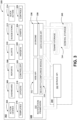
- FIG. 3 includes a display diagram illustrating example architecture of a system to provide intelligence and analysis driven security and compliance suggestions for implementation.
- a hosted service may allow access to its services through a client application 302.
- the client application 302 may display a user interface enabling a tenant, administrator, or user to interact with an action center 304 associated with protection aspects of a system or organization, such as malicious attack mitigation, data protection, and policy configuration and enforcement, for example.
- the user interface may be a dashboard 306, where data input from the dashboard 306 may be used to provide customized suggestions 312 for display through the dashboard 306.
- the suggestions 312 may include a policy, a configuration, a policy customization, or a configuration customization to protect, for example.
- the dashboard 306 may also provide reports 308, alerts 310, and quick action options 314 with which the tenant, administrator, or user may interact.
- the dashboard 306 may have attributes such as templates 316, layouts 318, widgets 322, charts 324 and controls 326 that may be customized.
- a dashboard controller 320 may interface with a server 328 through a web application programming interface (API) 332. Calls may be sent back and forth from the server 328 to the client application 302 based on what should be displayed through the dashboard 306. For example, a security and compliance module 334 may generate the suggestions 312 and a call may sent through the web API 332 to display the suggestions 312 through the dashboard 306 in a manner determined by the user interface (UI) engine 336.
- the server 328 may host a notification framework 330 configured to determine tenants, administrators, and/or users to be notified of policy suggestions, alerts, and reports, among other examples, and how those notifications should be delivered.
- a data access API 338 hosted by the server 328 may interface with backend storage systems 340.
- the backend storage systems 340 may include tenant storage 344 and general storage 346, for example.
- the backend storage systems 340 may also include a service API 342 that interfaces with the security and compliance module 334, the notification framework 330, and data that is being retrieved by the data access API 338 from the tenant storage 344 and general storage 346 to allow exchange.
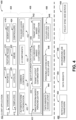
- FIG. 4 includes a display diagram illustrating another example architecture of a system to provide customization and alert management after a security and compliance suggestion has been implemented.
- a hosted service may allow access to its services through a client application 402 comprising various layers.
- a first layer 404 may comprise a user interface displayed by the client application 402.
- the user interface may enable a tenant, administrator, and/or user to interact with an action center associated with protection aspects of a system or organization, such as malicious attack mitigation, data protection, and policy configuration and enforcement, for example.
- the user interface may be a dashboard 410 that include attributes such as reports 412, feature pages 414, workflows 416, templates 418, layouts 420, views 422, and controllers 424 that may be customized.
- a second layer 406 may comprise authentication/authorization features 426, common controls 428, user interface components 430, role-based access controls (RBAC) 432, and user interface (UI) customization features 434 configured to control access to and enable customization of the user interface displayed by client application 402.
- the UI customization features 434 may be data-driven and include RBAC or persona based personalization 436, tenant layout customization 438, data insights based customization 440, and tenant usage based customization 442.
- a third layer 408 may include a data insights access layer 444, personalization data access layer 446, and a features data access layer 448 that help to support the UI customization features 434 provided by the second layer 406 to enable access control to and customization of the user interface displayed by the client application 402.
- a server 450 may host a notification framework 452, a data insights engine 454, a background job framework 456, and a policy synchronization web service 458.
- the policy synchronization web service 458 may be configured provide and implement policy or configuration suggestions, and ensure that the policies or configurations once implemented are synchronized with the client application 402.
- the notification framework 452 may be configured to determine tenants, administrators, and/or users to be notified of policy suggestions, alerts, and reports, among other examples, and how those notifications should be delivered.
- the data insights engine 454 may in conjunction with the data insights access layer 444 help to support the UI customization features 434 to enable access control to and customization of the user interface displayed by the client application 402.
- the data insights engine 454 may analyze data from the background job framework 456 to detect a pattern within a tenant's service environment from which it may derive an insight for applicable policies or configurations to generate at least one suggested policy or configuration.
- FIG. 5 includes a display diagram illustrating conceptually an example set of actions and components in implementing intelligence and analysis driven security and compliance suggestions.
- a protection service 502 may retrieve, from a hosted service 510, data, metadata, and activities 506 associated with the hosted service 510.
- the protection service 502 may include a security and compliance module 504, which may aggregate and analyze the data, metadata, and activities 506 in order to detect patterns to derive insights 508 for applicable policies and/or policy configurations based on the patterns.
- the derived insights 508 may be used to generate security and compliance suggestions 512 to protect their organization.
- the security and compliance suggestions 512 may include policy suggestions, policy configurations, alert generation and management, organization configuration changes, profile generation, and user interface customization.
- the security and compliance suggestions 512 may be further tailored based on a tenant profile, where the tenant profile includes an industry, a size, a geographical location, a hosted service ecosystem, a role, a regulatory requirement, and/or a legal requirement associated with the tenant using the hosted service 510. In some embodiments, these security and compliance suggestions 512 may be implemented automatically.
- the protection service 502 may manage recommendation visibility, widget availability, recommendation ordering, suggested recommendations, default homepages, widget ordering in a widget library, digest content, auto-pins based on actions, insights in policy flow, automatic policy settings based on insights, customized dashboards, intelligent quick actions, widget content, insights drilldown content, alerts, retention/archiving/data loss prevention (DLP) widgets, recommendation content, and people and content pages.
- DLP data loss prevention
- a guided cross-scenario compliance workflow may be implemented in the hosted service 510.
- the guided cross-scenario compliance workflow may allow for creation of multiple actions on a single data set, and guide a user to intelligently define that data set.
- Comprehensive protection policies that take several actions based on locations, actions, and classification may be implemented.
- the protection service 502 may thereby manage classifications, intelligent imports, retention policies, DLP policies, alert policies, regulation or legal compliance policies, provision of simple or advanced policy flows, and creation of alerts from a policy.
- pivots such as mailflow data, tenant content, and similar ones may be used to provide rich detection of threats. Automatic detection of and alerting on these threats may be implemented by managing alerts, alert dashboards, recent alerts widgets, people pages, content pages, correlation based alerts, remediation actions on data in line, an editing alert threshold from user interface, creation of an alert from a policy, and creation of an alert based on triggers for each potential alert scenario (e.g., data deleted).
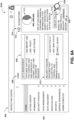
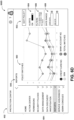
- FIGs. 6A through 6D include display diagrams illustrating an example dashboard through which suggestions may be presented, implemented, and monitored.
- a client application may provide an administrator, for example, access to a user interface, such as a dashboard 602, associated with a security and compliance module of the hosted service or a separate protection service.
- the dashboard 602 may present summary and/or detailed information associated with threats, security and compliance configurations, analyses results, and configuration controls, for example.
- the dashboard 602 may comprise a plurality of tabs 604 that each offer one or more security and compliance-based features that may be managed by the tenant, administrators, and/or users through the dashboard 602.
- Example tabs 604 may include a home dashboard view 606, an action center, permissions, security policies, data management, data discovery, investigation, reports, service assurances, and administrative consoles.
- the home dashboard view 606 may enable the tenant, administrators, and/or users to quickly create, enable, or manage data 608 and security policies 610. Additionally, the home dashboard view 606 may display a suggestion user interface element 612 that includes one or more suggested policies or configurations. In some examples, an icon 614, such as a star, may be associated with the suggestion user interface element 612 to indicate that a new policy or configuration has been suggested since the last time the dashboard 602 was viewed.
- the suggestion user interface element 612 may convey the level of protection for information within the tenant's service environment graphically and/or textually based on the analysis of the tenant's service environment.
- a pie chart and accompanying text 616 indicate that 68% or 469, 620 of the documents within the tenant's service environment were not being protected by a currently implemented policy or configuration.
- the suggestion user interface element 612 may also display analysis results 618, such as the particular type of information not being protected, and a prompt to confirm implementation of a reactive policy 620 to enable protection of the particular type of information. For example, financial data may be detected within the tenant's service environment, and no currently implemented policies or configurations may protect the financial data. Therefore, implementation of a reactive policy to protect the financial data may be suggested.
- metadata associated with a tenant profile 622 used to tailor the suggested policy may also be displayed in the suggestion user interface element 612.
- the metadata associated with the tenant profile 622 may include an industry, a size, a geographical location, a hosted service ecosystem, a role, a regulatory requirement, and/or a legal requirement associated with the tenant.
- the suggested policy may be tailored based on a tenant's affiliation with the financial industry and its location within the United States.
- a policy creation user interface element 626 may be overlaid on the home dashboard view 606, as shown in diagram 600B of FIG. 6B .
- the policy creation user interface element 626 may include a more detailed graphical conveyance to show the exact types of financial data within the tenant's service environment that are not protected by currently implemented policies.
- a more detailed graph 628 and accompanying legend 630 breaks down the types of financial data that are not protected and the amount of each of those unprotected types of financial data proportionate to the total amount of data within the tenant's service environment.
- the types of financial data that are not protected include credit card numbers, bank account numbers, social security numbers, and SWIFT codes.
- the policy creation user interface element 626 may also include a prompt 632 to inform the user about the types of data the policy will protect once implemented, such as the currently unprotected bank account numbers, social security numbers, and SWIFT code, and other features that will be enabled by the policy, such as generation of activity reports.
- the policy creation user interface element 626 may also include selectable options for alert generation 634 and user notifications 636. For example, the administrator may select an option to be alerted when a user shares a document that contains any financial data and/or to send a notification to that user when they share the document. The administrator may then select a "Create" control element 638 to create and implement the policy or select a "Cancel" control element 640 to prevent the policy from being created and implemented.
- the administrator may be returned to the home dashboard view 606 and the suggestion user interface element 612 may be updated, as illustrated in diagram 600C of FIG. 6C .
- the suggestion user interface element 612 may include a confirmation prompt 644 to indicate the financial data is now be protected by the created policy.
- the suggestion user interface element 612 may include a list of the particular types of financial data being protected 646, such as credit card numbers, bank account numbers, social security numbers, and SWIFT codes.
- the security and compliance module of the hosted service or the separate protection service may be configured to monitor particular types of data that are being created, used, and shared within the tenant's service environment and determine whether the created policy matches, and therefore protects, that data.
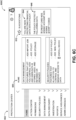
- the monitoring results may be compiled to produce a performance report which may then be provided to the administrator through the dashboard 602, as shown in a diagram 600D of FIG. 6D .
- a reports view 648 may be displayed through the dashboard 602.
- the monitoring results may be presented as a graphical representation of the policy matches 650, which may be visually pleasing and easier to digest by the administrator.
- the graphical representation of the policy matches 650 may include just a total number of policy matches and/or, as shown, may also break down the matches by particular types of data matching the policy.
- the reports view 648 may include an option to edit the policy 652. In some examples, suggestions for updates and/or further customization of the implemented policy or configuration may be determined based on the monitoring results, and displayed if the option to edit the policy 652 is selected.
- the reports view 648 may also include an option to turn on or off an alerts feature 656 regarding monitoring results associated with the policy. In some embodiments, if the alerts feature 656 is turned on, the administrator may receive an email or other form of message notifying him or her of a strange pattern or trend detected from the monitoring results. For example, the message may indicate that a higher number of policy matches than normal have been detected within the past 24 hours. The message may include a selectable link to the reports view 648, which will include more detailed information about the pattern or trend detected.
- the reports view 648 may further include filters 656 to customize the graphical representation of the policy matches 650 and a date range 658 from which monitoring results are pooled from to create the graphical representation of the policy matches 650.
- the dashboard 602 is not limited to the above described components and features. Various graphical, textual, coloring, shading, and visual effect schemes may be employed to present suggested policies and/or policy configuration options through a dashboard.
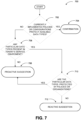
- FIG. 7 includes a display diagram illustrating a logic flow diagram for determining a policy or configuration to be suggested to the tenant.
- a tenant's service environment may be analyzed to determine a need for a policy or configuration change, a suggested policy or configuration may be determined based on the analysis, and the suggested policy or configuration may be presented to the tenant through a dashboard.
- policies and configurations that are being currently implemented by the hosted service may be retrieved to determine whether they include policies or configurations that protect available sensitive information 702.
- available sensitive information may include confidential data associated with personal information or business information.
- the confidential data may be financial in nature, including credit card numbers, debit card numbers, bank account numbers, and SWIFT codes, for example.
- the confidential data may also include private information such as social security numbers, personal health information, and the like. Thus, it may be determined whether or not the currently implemented policies and configurations include protection for each of these types of available sensitive information.
- a proactive suggestion 708 comprising one or more policies or configurations to protect the types of the available sensitive information that are not protected by the currently implemented policies may be provided. If there is sensitive information detected within the tenant's service environment, it may be determined whether the type(s) of sensitive information detected is/are protected by the currently implemented policies or configurations 710. If the types of sensitive information detected are protected by the currently implemented policies, the proactive suggestion 708 comprising one or more policies or configurations to protect the types of the available sensitive information that are not protected by the currently implemented policies or configurations may be provided. Alternatively, if one or more of the types of sensitive information detected are not protected by the currently implemented policies or configurations, a reactive suggestion 712 comprising one or more policies or configurations to protect those types of sensitive information that are not currently protected may be provided.
- the tenant may be healthcare insurance provider.
- the tenant must comply with regulatory, legal, and industry rules, such as the Health Insurance Portability and Accountability Act (HIPPA), for example.
- HPPA Health Insurance Portability and Accountability Act
- a majority of data received and stored by the tenant may contain confidential information, such as social security numbers, personal health information, and financial information, among others.
- An analysis of the tenant's service environment may reveal that the currently implemented policies or organizations do not protect every type of available sensitive information, and while the social security numbers and personal health information are protected, the financial information is not protected. Therefore, a policy or configuration that protects various types of financial information, such as credit card numbers, debit card numbers, and bank account numbers may be suggested for implementation.
- FIGs. 8A through 8D include display diagrams illustrating suggested policies or configurations presented to a tenant through a dashboard.
- a tenant's service environment may be analyzed to determine a need for a policy or configuration change and a suggested policy or configuration may be determined based on the analysis.
- the suggested security and compliance policy may be presented to the tenant through a dashboard.
- the dashboard may include a suggestion user interface element 802 within which the suggested policy or configuration may be displayed.
- the suggested policy may be displayed along with analysis results and a prompt to confirm implementation of the suggested policy or configuration.
- the analysis of the tenant's service environment may reveal that currently implemented policies or configurations do not protect every type of available sensitive information, but no types of sensitive information are detected within the tenant's service environment.
- a presented suggestion 810 may be proactive offering one or more policies to be implemented in order to protect a type of sensitive information that could be potentially stored in the tenant's service environment and is not yet protected by the currently implemented policies or configurations.
- the suggestion user interface element 802 may convey the level of protection for information within the tenant's service environment graphically 804 and/or textually 806 and provide an explanation of the analysis results 810. In this example, there was no sensitive information within the tenant's service environment detected, and thus by default the information within the tenant's service environment is 100% protected.
- the suggestion user interface element 802 may also include a prompt 812 to confirm implementation of the suggestion 810.
- the analysis of the tenant's service environment may reveal that currently implemented policies or configurations do not protect available sensitive information, and there are types of sensitive information detected within the tenant's service environment that are unprotected.
- the suggestion 820 may include one or more policies to protect the types of sensitive information detected that are not protected by the currently implemented policies or configurations.
- the suggestion user interface element 802 may convey the level of protection for information within the tenant's service environment graphically 814 and/or textually 816 and provide an explanation of the analysis results 818. In this example, there was sensitive information detected within the tenant's service environment, and of that sensitive information, 58% of that sensitive information was not protected by the currently implemented policies.
- the suggestion user interface element 802 may also include a prompt 822 to confirm implementation of the suggestion 820.
- the graphical and/or textual conveyance of protection levels may be more detailed to show the exact types of sensitive information within the tenant's service environment that are not protected by currently implemented policies.
- the graph 824 and accompanying legend 826 breaks down the types of sensitive information that are not protected 828 and the percentage of each of those unprotected types of sensitive information within the total amount of information within the tenant's service environment.
- the types of sensitive information that are not protected 828 include credit card numbers, bank account numbers, social security numbers, and SWIFT codes.
- the analysis of the tenant's service environment may reveal that currently implemented policies or organizations do not protect the available sensitive information, but each of the types of sensitive information detected within the tenant's service environment were protected by a currently implemented policy or organization.
- a suggested policy 840 may be proactive, offering one or more policies to be implemented in order to protect a type of sensitive information that could be potentially stored in the tenant's service environment and is not yet protected by the currently implemented policies.
- the suggestion user interface element 802 may convey the level of protection for information within the tenant's service environment graphically 834 and/or textually 836 and provide an explanation of the analysis results 838.
- the suggestion user interface element 802 may also include a prompt 842 to confirm implementation of the suggested policies in addition to the policy suggestion 840.
- the analysis of the tenant's service environment may reveal that the currently implemented policies or configurations protect the available sensitive information (that is, there are policies or configurations already implemented for every type of sensitive information possible), and thus feedback that the currently implemented policies or organizations are sufficient may be provided. No suggested policy may be provided.
- the suggestion user interface element 802 may convey the level of protection for information within the tenant's service environment graphically 844 and/or textually 846 and provide an explanation of the analysis results 848. In this example, policies or configurations are currently implemented for every type of available sensitive information as conveyed by explanation 850, and thus any type of sensitive information that is within the tenant's service environment is 100% protected.
- the suggestion user interface element 802 may also include a prompt 852 to indicate no policies or configurations are suggested at this time based on the fact that every type of available sensitive information is already protected by a currently implemented policy or configuration .
- FIGs. 1A through 8D are illustrated with specific systems, services, applications, modules, and displays. Embodiments are not limited to environments according to these examples. Intelligence and analysis driven policy suggestions may be implemented in environments employing fewer or additional systems, services, applications, modules, and displays. Furthermore, the example systems, services, applications, modules, and notifications shown in FIG. 1A through 8D may be implemented in a similar manner with other user interface or action flow sequences using the principles described herein.
- FIG. 9 is a networked environment, where a system according to embodiments may be implemented.
- a security and compliance module as described herein may be employed in conjunction with hosted applications and services (for example, the client application 106 associated with the hosted service 114, the hosted service 114, or the protection service 114) that may be implemented via software executed over one or more servers 906 or individual server 908, as illustrated in diagram 900.
- a hosted service or application may communicate with client applications on individual computing devices such as a handheld computer 901, a desktop computer 902, a laptop computer 903, a smart phone 904, a tablet computer (or slate), 905 ( ⁇ client devices') through network(s) 910 and control a user interface, such as a dashboard, presented to users.
- Client devices 901-905 are used to access the functionality provided by the hosted service or client application.
- One or more of the servers 906 or server 908 may be used to provide a variety of services as discussed above.
- Relevant data may be stored in one or more data stores (e.g. data store 914), which may be managed by any one of the servers 906 or by database server 912.
- Network(s) 910 may comprise any topology of servers, clients, Internet service providers, and communication media.
- a system according to embodiments may have a static or dynamic topology.
- Network(s) 910 may include a secure network such as an enterprise network, an unsecure network such as a wireless open network, or the Internet.
- Network(s) 910 may also coordinate communication over other networks such as PSTN or cellular networks.
- Network(s) 910 provides communication between the nodes described herein.
- network(s) 910 may include wireless media such as acoustic, RF, infrared and other wireless media.
- FIG. 10 is a block diagram of an example general purpose computing device, which may be used to provide intelligence and analysis driven security and compliance suggestions.
- computing device 1000 may be used as a server, desktop computer, portable computer, smart phone, special purpose computer, or similar device.
- the computing device 1000 may include one or more processors 1004 and a system memory 1006.
- a memory bus 1008 may be used for communicating between the processor 1004 and the system memory 1006.
- the basic configuration 1002 is illustrated in FIG. 10 by those components within the inner dashed line.
- the processor 1004 may be of any type, including but not limited to a microprocessor ( ⁇ P), a microcontroller ( ⁇ C), a digital signal processor (DSP), or any combination thereof.
- the processor 1004 may include one more levels of caching, such as a level cache memory 1012, one or more processor cores 1014, and registers 1016.
- the example processor cores 1014 may (each) include an arithmetic logic unit (ALU), a floating point unit (FPU), a digital signal processing core (DSP Core), or any combination thereof.
- An example memory controller 1018 may also be used with the processor 1004, or in some implementations the memory controller 1018 may be an internal part of the processor 1004.
- the system memory 1006 may be of any type including but not limited to volatile memory (such as RAM), non-volatile memory (such as ROM, flash memory, etc.) or any combination thereof.
- the system memory 1006 may include an operating system 1020, a protection application or service 1022, and program data 1024.
- the protection application or service 1022 may include a security and compliance module 1026, which may be an integrated module of the protection application or service 1022.
- the security and compliance module 1026 may be configured to aggregate and analyze data, metadata, and activities associated with a hosted service in order to detect patterns and derive useful insights for applicable policies and/or configurations based on the pattern, from which a suggestion comprising a policy or configuration may be generated and presented to the tenant through a dashboard.
- the suggested policy or configuration may be presented along with the analysis results and a prompt to confirm implementation of the suggested policy or configuration.
- an option may be presented to customize the suggested policy or configuration by modifying the settings suggested based on analysis results.
- the program data 1024 may include, among other data, tenant/user data 1028, such as the user information, hosted service information, etc., as described herein.
- the computing device 1000 may have additional features or functionality, and additional interfaces to facilitate communications between the basic configuration 1002 and any desired devices and interfaces.
- a bus/interface controller 1030 may be used to facilitate communications between the basic configuration 1002 and one or more data storage devices 1032 via a storage interface bus 1034.
- the data storage devices 1032 may be one or more removable storage devices 1036, one or more non-removable storage devices 1038, or a combination thereof.
- Examples of the removable storage and the non-removable storage devices include magnetic disk devices such as flexible disk drives and hard-disk drives (HDDs), optical disk drives such as compact disk (CD) drives or digital versatile disk (DVD) drives, solid state drives (SSD), and tape drives to name a few.
- Example computer storage media may include volatile and nonvolatile, removable and non-removable media implemented in any method or technology for storage of information, such as computer readable instructions, data structures, program modules, or other data.
- the system memory 1006, the removable storage devices 1036 and the non-removable storage devices 1038 are examples of computer storage media.
- Computer storage media includes, but is not limited to, RAM, ROM, EEPROM, flash memory or other memory technology, CD-ROM, digital versatile disks (DVDs), solid state drives, or other optical storage, magnetic cassettes, magnetic tape, magnetic disk storage or other magnetic storage devices, or any other medium which may be used to store the desired information and which may be accessed by the computing device 1000. Any such computer storage media may be part of the computing device 1000.
- the computing device 1000 may also include an interface bus 1040 for facilitating communication from various interface devices (for example, one or more output devices 1042, one or more peripheral interfaces 1044, and one or more communication devices 1046) to the basic configuration 1002 via the bus/interface controller 1030.
- interface devices for example, one or more output devices 1042, one or more peripheral interfaces 1044, and one or more communication devices 1046
- Some of the example output devices 1042 include a graphics processing unit 1048 and an audio processing unit 1050, which may be configured to communicate to various external devices such as a display or speakers via one or more A/V ports 1052.
- One or more example peripheral interfaces 1044 may include a serial interface controller 1054 or a parallel interface controller 1056, which may be configured to communicate with external devices such as input devices (for example, keyboard, mouse, pen, voice input device, touch input device, etc.) or other peripheral devices (for example, printer, scanner, etc.) via one or more I/O ports 1058.
- An example communication device 1046 includes a network controller 1060, which may be arranged to facilitate communications with one or more other computing devices 1062 over a network communication link via one or more communication ports 1064.
- the one or more other computing devices 1062 may include servers, computing devices, and comparable devices.
- the network communication link may be one example of a communication media.
- Communication media may typically be embodied by computer readable instructions, data structures, program modules, or other data in a modulated data signal, such as a carrier wave or other transport mechanism, and may include any information delivery media.
- a "modulated data signal" may be a signal that has one or more of its characteristics set or changed in such a manner as to encode information in the signal.
- communication media may include wired media such as a wired network or direct-wired connection, and wireless media such as acoustic, radio frequency (RF), microwave, infrared (IR) and other wireless media.
- RF radio frequency
- IR infrared
- the term computer readable media as used herein may include both storage media and communication media.
- the computing device 1000 may be implemented as a part of a general purpose or specialized server, mainframe, or similar computer that includes any of the above functions.
- the computing device 1000 may also be implemented as a personal computer including both laptop computer and non-laptop computer configurations.
- Example embodiments may also include methods to provide intelligence and analysis driven security and compliance suggestions. These methods can be implemented in any number of ways, including the structures described herein. One such way may be by machine operations, of devices of the type described in the present disclosure. Another optional way may be for one or more of the individual operations of the methods to be performed in conjunction with one or more human operators performing some of the operations while other operations may be performed by machines. These human operators need not be collocated with each other, but each can be only with a machine that performs a portion of the program. In other embodiments, the human interaction can be automated such as by pre-selected criteria that may be machine automated.
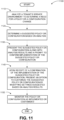
- FIG. 11 illustrates a logic flow diagram of a method to provide intelligence and analysis driven security and compliance suggestions.
- Process 1100 may be implemented on a computing device, server, or other system.
- An example server may comprise a communication interface to facilitate communication between one or more client devices and the server.
- the example server may also comprise a memory to store instructions, and one or more processors coupled to the memory.
- the processors, in conjunction with the instructions stored on the memory, may be configured to provide intelligence and analysis driven policy suggestions.
- Process 1100 begins with operation 1110, where a tenant's service environment may be analyzed to determine a need for a policy or a configuration change. There need for a policy or configuration change may be determined based on whether a currently implemented policy protects available sensitive information, whether a type of sensitive information is detected within the tenant's service environment, and/or whether the type of sensitive information detected is protected by currently implemented policies or configurations.
- a suggested policy or configuration may be determined based on the analysis.
- the suggested policy or configuration along with the analysis results and a prompt to confirm implementation of the suggested policy may be presented through a dashboard, for example.
- an option may be presented to customize the suggested policy or configuration by modifying the settings suggested based on analysis results.
- the policy or configuration may be monitored as implemented or customized. The policy or configuration may be monitored to determine an effectiveness of its performance in protecting data within the tenant's service environment. A performance report may be created based on the monitoring that is analyzed in order to determine suggested policy or configuration updates.
- process 1100 The operations included in process 1100 are for illustration purposes Intelligence and analysis driven policy suggestions may be implemented by similar processes with fewer or additional steps, as well as in different order of operations using the principles described herein.
- the operations described herein may be executed by one or more processors operated on one or more computing devices, one or more processor cores, specialized processing devices, and/or general purpose processors, among other examples.
- Example means may include analyzing a tenant's service environment to determine a need for a policy or a configuration change, determining a suggested policy or configuration based on analysis results, presenting the suggested policy or configuration along with the analysis results and a prompt to confirm implementation of the suggested policy or configuration, and presenting an option to customize the suggested policy or configuration by modifying settings suggested based on analysis results upon receiving a confirmation of the implementation of the suggested policy or configuration.
- An example method may include analyzing a tenant's service environment to determine a need for a policy or a configuration change, determining a suggested policy or configuration based on analysis results, and presenting the suggested policy or configuration along with the analysis results and a prompt to confirm implementation of the suggested policy or configuration.
- the method may also include presenting an option to customize the suggested policy or configuration by modifying settings suggested based on analysis results upon receiving a confirmation of the implementation of the suggested policy or configuration.
- the suggested policy or configuration may be automatically implemented.
- a particular type of data from the available data types may be detected within the tenant's service environment, a determination of whether the particular type of data detected is protected by the currently implemented policy or configuration may be made, and in response to the determination that the particular type of data detected is not protected by the currently implemented policy or configuration, a policy, a configuration, a policy customization, or a configuration customization to protect the particular type of data may be reactively suggested.
- a policy or a configuration to protect a type of data that could be potentially stored in the tenant's service environment and is not protected by the currently implemented policy or configuration based on the analysis may be proactively suggested.
- determining the suggested policy or configuration based on analysis results may include detecting a pattern based on the analysis of the tenant's service environment, deriving an insight for an applicable policy or configuration based on the pattern, and generating the suggested policy or configuration based on the derived insight.
- the suggested policy or configuration may be tailored based on a tenant profile, where the tenant profile may include an industry, a size, a geographical location, a hosted service ecosystem, a role, a regulatory requirement, and/or a legal requirement associated with the tenant.
- the suggested policy or configuration and the option to customize the suggested policy or configuration may be presented through a dashboard.
- the suggested policy or configuration may be monitored once implemented, a performance report may be created based on the monitoring, and suggested policy or configuration updates may be suggested based on an analysis of the performance report.
- servers configured to provide intelligence and analysis driven security and compliance suggestions for hosted services.
- An example server may include a communication interface configured to facilitate communication between another server hosting a service, one or more client devices, and the server, a memory configured to store instructions, and one or more processors coupled to the communication interface and the memory and configured to execute a security and compliance module
- the security and compliance module may be configured to analyze a tenant's service environment to determine a need for a policy or configuration, determine a suggested policy or configuration based on analysis results, present the suggested policy or configuration along with the analysis results and a prompt to confirm implementation of the suggested policy or configuration, and present an option to customize the suggested policy or configuration by modifying settings suggested based on analysis results upon receipt of a confirmation of the implementation of the suggested policy or configuration.
- the analysis of the tenant's service environment to determine a need for a policy or configuration may be based on whether a currently implemented policy or configuration protects available data types, whether a particular type of data from the available data types is detected within the tenant's service environment, and/or whether the particular type of data detected is protected by the currently implemented policy or configuration.
- the available data types include financial, tax, health or medical, personal, or business.
- the security and compliance module may be an integral module of the hosted service, an integral module of a client application locally installed on the one or more client devices, or a separate module associated with a protection service.
- An example system may include a first server configured to host a service for a tenant and one or more users, and a second server.
- the second server may include a communication interface configured to facilitate communication between the first server and the second server, a memory configured to store instructions, and one or more processors coupled to the communication interface and the memory and configured to execute a security and compliance module.
- the security and compliance module may be configured to receive data, metadata, and activities associated with the tenant and the users from the first server, analyze the data, metadata, and activities associated with the tenant and the users to determine a need for a policy, a configuration, a policy customization, or a configuration customization, and determine a suggestion based on analysis results, where the suggestion may include a suggested policy, organization, policy customization, or organization customization.
- the security and compliance module may also be configured to present the suggestion along with the analysis results and a prompt to confirm implementation of the suggestion, present an option to customize the suggestion by modifying settings suggested based on analysis results upon receipt of a confirmation of the implementation of the suggestion, and monitor the implemented suggestion.
- the security and compliance module may be further configured to determine and present another suggestion to customize or update the implemented suggestion based on monitoring results.
- the another suggestion may include alert generation and management, tenant configuration changes, profile generation, and user interface customization.
Landscapes
- Engineering & Computer Science (AREA)
- Theoretical Computer Science (AREA)
- Computer Security & Cryptography (AREA)
- Software Systems (AREA)
- General Engineering & Computer Science (AREA)
- Computer Hardware Design (AREA)
- Physics & Mathematics (AREA)
- General Physics & Mathematics (AREA)
- General Health & Medical Sciences (AREA)
- Health & Medical Sciences (AREA)
- Bioethics (AREA)
- Medical Informatics (AREA)
- Databases & Information Systems (AREA)
- Management, Administration, Business Operations System, And Electronic Commerce (AREA)
- Information Transfer Between Computers (AREA)
- User Interface Of Digital Computer (AREA)
Claims (9)
- Auf einer Vorrichtung implementiertes Verfahren zum Bereitstellen von auf Intelligenz und Analyse basierenden Sicherheits- und Einhaltungsvorschlägen für gehostete Dienste, wobei das Verfahren Folgendes umfasst:Analysieren (1110) eines Dienstleistungsumfelds eines Mandanten, um die Notwendigkeit einer Richtlinien- oder Konfigurationsänderung zu bestimmen, umfassend:Abrufen einer aktuell implementierten Richtlinie oder Konfiguration; undBestimmen (702), ob die aktuell implementierte Richtlinie oder Konfiguration Schutz für verfügbare Datentypen beinhaltet;als Reaktion auf eine Bestimmung (702), dass die aktuell implementierte Richtlinie oder Konfiguration Schutz für die verfügbaren Datentypen bereitstellt, Bereitstellen (704) einer Bestätigung;als Reaktion auf eine Bestimmung (702), dass die aktuell implementierte Richtlinie oder Konfiguration die verfügbaren Datentypen nicht schützt:Erkennen (706) eines bestimmten Datentyps aus den verfügbaren Datentypen innerhalb des Dienstleistungsumfelds des Mandanten;Bestimmen (710), ob der bestimmte erkannte Datentyp durch die aktuell implementierte Richtlinie oder Konfiguration geschützt ist; undals Reaktion auf eine Bestimmung (710), dass der bestimmte erkannte Datentyp nicht durch die aktuell implementierte Richtlinie oder Konfiguration geschützt ist, Bestimmen (1120) einer vorgeschlagenen Richtlinie oder Konfiguration basierend auf Analyseergebnissen und reaktives Vorschlagen (712) der vorgeschlagenen Richtlinie oder Konfiguration, um den bestimmten Typ zu schützen;Präsentieren (1130) der vorgeschlagenen Richtlinie oder Konfiguration zusammen mit den Analyseergebnissen und einer Aufforderung zum Bestätigen der Implementierung der vorgeschlagenen Richtlinie oder Konfiguration; undnach Erhalten einer Bestätigung der Implementierung der vorgeschlagenen Richtlinie oder Konfiguration, Präsentieren (1140) einer Option zum Anpassen der vorgeschlagenen Richtlinie oder Konfiguration durch Ändern von vorgeschlagenen Einstellungen basierend auf Analyseergebnissen.
- Verfahren nach Anspruch 1, das weiter Folgendes umfasst:
als Reaktion darauf, dass keine bestimmten Datentypen aus den verfügbaren Datentypen innerhalb des Dienstleistungsumfelds des Mandanten erkannt werden oder dass der erkannte Datentyp durch die aktuell implementierte Richtlinie oder Konfiguration geschützt ist, proaktives Vorschlagen einer Richtlinie oder Konfiguration, um einen Datentyp zu schützen, der möglicherweise in dem Dienstleistungsumfeld des Mandanten gespeichert werden könnte und durch die aktuell implementierte Richtlinie oder Konfiguration nicht geschützt ist, basierend auf der Analyse. - Verfahren nach Anspruch 2, das weiter Folgendes umfasst:
Individuelles Anpassen der vorgeschlagenen Richtlinie oder Konfiguration basierend auf einem Mandantenprofil, wobei das Mandantenprofil eines oder mehrere beinhaltet von einer Branche, einer Größe, einem geografischen Standort, einem gehosteten Service-Ökosystem, einer Rolle, einer behördlichen Anforderung und einer gesetzlichen Anforderung, die dem Mandanten zugeordnet sind. - Verfahren nach Anspruch 1, das weiter Folgendes umfasst:
Präsentieren der vorgeschlagenen Richtlinie oder Konfiguration und der Option, die vorgeschlagene Richtlinie oder Konfiguration über ein Dashboard anzupassen. - Verfahren nach Anspruch 1, das weiter Folgendes umfasst:Überwachen (1150) der vorgeschlagenen Richtlinie oder Konfiguration, sobald diese implementiert ist;Erstellen eines Leistungsberichts basierend auf dem Überwachen; undAnalysieren und Bestimmen vorgeschlagener Richtlinien- oder Konfigurationsaktualisierungen basierend auf dem Leistungsbericht.
- Server, der so konfiguriert ist, dass er auf Intelligenz und Analyse basierende Sicherheits- und Einhaltungsvorschläge für gehostete Dienste bereitstellt, wobei der Server Folgendes umfasst:eine Kommunikationsschnittstelle, die konfiguriert ist, um Kommunikation zwischen einem anderen Server, der einen Dienst hostet, einer oder mehreren Client-Vorrichtungen und dem Server zu erleichtern;einen Speicher, der zum Speichern von Anweisungen konfiguriert ist; undeinen oder mehrere Prozessoren, die mit der Kommunikationsschnittstelle und dem Speicher gekoppelt und zur Ausführung eines Sicherheits- und Einhaltungsmoduls konfiguriert sind, wobei das Sicherheits- und Einhaltungsmodul konfiguriert ist zum:Analysieren des Dienstleistungsumfelds eines Mandanten, um einen Bedarf an einer Richtlinie oder Konfiguration zu bestimmen, umfassend:Abrufen einer aktuell implementierten Richtlinie oder Konfiguration; undBestimmen, ob die aktuell implementierte Richtlinie oder Konfiguration Schutz für verfügbare Datentypen beinhaltet;als Reaktion auf eine Bestimmung, dass die aktuell implementierte Richtlinie oder Konfiguration Schutz für die verfügbaren Datentypen bereitstellt, Bereitstellen einer Bestätigung;als Reaktion auf eine Bestimmung, dass die aktuell implementierte Richtlinie oder Konfiguration die verfügbaren Datentypen nicht schützt:Erkennen eines bestimmten Datentyps aus den verfügbaren Datentypen innerhalb des Dienstleistungsumfelds des Mandanten;Bestimmen, ob der bestimmte erkannte Datentyp durch die aktuell implementierte Richtlinie oder Konfiguration geschützt ist; undals Reaktion auf eine Bestimmung (710), dass der bestimmte erkannte Datentyp nicht durch die aktuell implementierte Richtlinie oder Konfiguration geschützt ist, Bestimmen einer vorgeschlagenen Richtlinie oder Konfiguration basierend auf Analyseergebnissen und reaktives Vorschlagen der vorgeschlagenen Richtlinie oder Konfiguration, um den bestimmten Typ zu schützen;Präsentieren der vorgeschlagenen Richtlinie oder Konfiguration zusammen mit den Analyseergebnissen und einer Aufforderung zur Bestätigung der Implementierung der vorgeschlagenen Richtlinie oder Konfiguration; undnach Erhalten einer Bestätigung der Implementierung der vorgeschlagenen Richtlinie oder Konfiguration, Präsentieren einer Option zum Anpassen der vorgeschlagenen Richtlinie oder Konfiguration durch Ändern von vorgeschlagenen Einstellungen basierend auf den Analyseergebnissen.
- Server nach Anspruch 6, wobei das Sicherheits- und Einhaltungsmodul eines ist von:einem integralen Modul des gehosteten Dienstes;einem integralen Modul einer Client-Anwendung, das lokal auf dem einen oder den mehreren Client-Vorrichtungen installiert ist; undeinem separaten Modul, das einem Schutzdienst zugeordnet ist.
- System, das so konfiguriert ist, dass es auf Intelligenz und Analyse basierende Sicherheits- und Einhaltungsvorschläge für gehostete Dienste bereitstellt, wobei das System Folgendes umfasst:einen ersten Server, der zum Hosten eines Dienstes für einen Mandanten und einen oder mehrere Benutzer konfiguriert ist; undeinen zweiten Server, umfassend:eine Kommunikationsschnittstelle, die konfiguriert ist, um Kommunikation zwischen dem ersten Server und dem zweiten Server zu erleichtern;einen Speicher, der zum Speichern von Anweisungen konfiguriert ist; undeinen oder mehrere Prozessoren, die mit der Kommunikationsschnittstelle und dem Speicher gekoppelt und zum Ausführen eines Sicherheits- und Einhaltungsmoduls konfiguriert sind, wobei das Sicherheits- und Einhaltungsmodul konfiguriert ist zum:Analysieren des Dienstleistungsumfelds eines Mandanten, um einen Bedarf an einer Richtlinie oder Konfiguration zu bestimmen, umfassend:Abrufen einer aktuell implementierten Richtlinie oder Konfiguration; undBestimmen, ob die aktuell implementierte Richtlinie oder Konfiguration Schutz für verfügbare Datentypen beinhaltet;als Reaktion auf eine Bestimmung, dass die aktuell implementierte Richtlinie oder Konfiguration Schutz für die verfügbaren Datentypen bereitstellt, Bereitstellen einer Bestätigung;als Reaktion auf eine Bestimmung, dass die aktuell implementierte Richtlinie oder Konfiguration die verfügbaren Datentypen nicht schützt:Erkennen eines bestimmten Datentyps aus den verfügbaren Datentypen innerhalb des Dienstleistungsumfelds des Mandanten;Bestimmen, ob der bestimmte erkannte Datentyp durch die aktuell implementierte Richtlinie oder Konfiguration geschützt ist; undals Reaktion auf eine Bestimmung (710), dass der bestimmte erkannte Datentyp nicht durch die aktuell implementierte Richtlinie oder Konfiguration geschützt ist, Bestimmen einer vorgeschlagenen Richtlinie oder Konfiguration basierend auf Analyseergebnissen und reaktives Vorschlagen der vorgeschlagenen Richtlinie oder Konfiguration, um den bestimmten Typ zu schützen;Präsentieren der vorgeschlagenen Richtlinie oder Konfiguration zusammen mit den Analyseergebnissen und einer Aufforderung zur Bestätigung der Implementierung der vorgeschlagenen Richtlinie oder Konfiguration; undnach Erhalten einer Bestätigung der Implementierung der vorgeschlagenen Richtlinie oder Konfiguration, Präsentieren einer Option zum Anpassen der vorgeschlagenen Richtlinie oder Konfiguration durch Ändern von vorgeschlagenen Einstellungen basierend auf den Analyseergebnissen.
- System nach Anspruch 8, wobei das Sicherheits- und Einhaltungsmodul weiter konfiguriert ist zum:Überwachen der vorgeschlagenen Richtlinie oder Konfiguration, sobald sie implementiert ist; undBestimmen und Präsentieren eines weiteren Vorschlags zum Anpassen oder Aktualisieren des implementierten Vorschlags basierend auf Überwachungsergebnissen, wobei der andere Vorschlag eine oder mehrere von Warnungsgenerierung und - verwaltung, Mandantenkonfigurationsänderungen, Profilgenerierung und Benutzeroberflächenanpassung beinhaltet.
Applications Claiming Priority (3)
| Application Number | Priority Date | Filing Date | Title |
|---|---|---|---|
| US201662440934P | 2016-12-30 | 2016-12-30 | |
| US15/462,466 US10579821B2 (en) | 2016-12-30 | 2017-03-17 | Intelligence and analysis driven security and compliance recommendations |
| PCT/US2017/066238 WO2018125586A1 (en) | 2016-12-30 | 2017-12-14 | Intelligence and analysis driven security and compliance recommendations |
Publications (2)
| Publication Number | Publication Date |
|---|---|
| EP3563284A1 EP3563284A1 (de) | 2019-11-06 |
| EP3563284B1 true EP3563284B1 (de) | 2023-11-01 |
Family
ID=60943125
Family Applications (1)
| Application Number | Title | Priority Date | Filing Date |
|---|---|---|---|
| EP17826366.1A Active EP3563284B1 (de) | 2016-12-30 | 2017-12-14 | Intelligenz- und analysegesteuerte sicherheits- und konformitätsempfehlungen |
Country Status (4)
| Country | Link |
|---|---|
| US (2) | US10579821B2 (de) |
| EP (1) | EP3563284B1 (de) |
| CN (1) | CN110168553B (de) |
| WO (1) | WO2018125586A1 (de) |
Families Citing this family (19)
| Publication number | Priority date | Publication date | Assignee | Title |
|---|---|---|---|---|
| US10848501B2 (en) | 2016-12-30 | 2020-11-24 | Microsoft Technology Licensing, Llc | Real time pivoting on data to model governance properties |
| US10701100B2 (en) | 2016-12-30 | 2020-06-30 | Microsoft Technology Licensing, Llc | Threat intelligence management in security and compliance environment |
| US10848494B2 (en) * | 2017-08-14 | 2020-11-24 | Microsoft Technology Licensing, Llc | Compliance boundaries for multi-tenant cloud environment |
| US12125054B2 (en) | 2018-09-25 | 2024-10-22 | Valideck International Corporation | System, devices, and methods for acquiring and verifying online information |
| US11636220B2 (en) | 2019-02-01 | 2023-04-25 | Intertrust Technologies Corporation | Data management systems and methods |
| US10951662B1 (en) | 2019-11-06 | 2021-03-16 | Dflabs S.P.A. | Open integration framework for cybersecurity incident management software platform |
| US12493712B2 (en) * | 2020-12-23 | 2025-12-09 | Zscaler, Inc. | Data owner controls in DLP |
| US11711400B2 (en) | 2021-01-15 | 2023-07-25 | Home Depot Product Authority, Llc | Electronic access control system |
| US11546445B2 (en) * | 2021-03-17 | 2023-01-03 | Salesforce.Com, Inc. | Method and system for universal security services abstraction |
| USD1115792S1 (en) * | 2021-04-13 | 2026-03-03 | Kpmg Llp | Electronic device display screen with a graphical user interface |
| US11775695B2 (en) * | 2021-08-03 | 2023-10-03 | International Business Machines Corporation | Image redaction for a display device |
| US11805017B2 (en) | 2021-08-19 | 2023-10-31 | Bank Of America Corporation | Systems and methods for identifying and determining third party compliance |
| US11893116B2 (en) * | 2021-08-19 | 2024-02-06 | Bank Of America Corporation | Assessment plug-in system for providing binary digitally signed results |
| CN114760092A (zh) * | 2022-03-09 | 2022-07-15 | 浙江零跑科技股份有限公司 | 一种用于智能汽车与云平台的网络数据安全检测系统 |
| US12242633B2 (en) | 2022-04-11 | 2025-03-04 | International Business Machines Corporation | Regulation based protection of data for storage systems |
| US12182279B2 (en) * | 2022-05-26 | 2024-12-31 | Vanta Inc. | Techniques for providing security-related information |
| US12438920B2 (en) | 2022-08-03 | 2025-10-07 | International Business Machines Corporation | Using a handshake to communicate between a security and compliance center (SCC) and at least a first operator |
| US12518041B2 (en) | 2023-08-18 | 2026-01-06 | Servicenow, Inc. | Configurable security policy architecture |
| US20250097246A1 (en) * | 2023-09-15 | 2025-03-20 | Jamf Software, Llc | Security threat investigation |
Family Cites Families (59)
| Publication number | Priority date | Publication date | Assignee | Title |
|---|---|---|---|---|
| US20020091940A1 (en) | 2001-01-05 | 2002-07-11 | Welborn Christopher Michael | E-mail user behavior modification system and mechanism for computer virus avoidance |
| US7813947B2 (en) | 2003-09-23 | 2010-10-12 | Enterra Solutions, Llc | Systems and methods for optimizing business processes, complying with regulations, and identifying threat and vulnerabilty risks for an enterprise |
| US8201257B1 (en) | 2004-03-31 | 2012-06-12 | Mcafee, Inc. | System and method of managing network security risks |
| US9100422B1 (en) | 2004-10-27 | 2015-08-04 | Hewlett-Packard Development Company, L.P. | Network zone identification in a network security system |
| US20090307755A1 (en) | 2005-02-24 | 2009-12-10 | Dvorak Carl D | System and method for facilitating cross enterprises data sharing in a healthcare setting |
| US8561127B1 (en) * | 2006-03-01 | 2013-10-15 | Adobe Systems Incorporated | Classification of security sensitive information and application of customizable security policies |
| US9069599B2 (en) | 2008-06-19 | 2015-06-30 | Servicemesh, Inc. | System and method for a cloud computing abstraction layer with security zone facilities |
| US20100319004A1 (en) | 2009-06-16 | 2010-12-16 | Microsoft Corporation | Policy Management for the Cloud |
| US8799322B2 (en) * | 2009-07-24 | 2014-08-05 | Cisco Technology, Inc. | Policy driven cloud storage management and cloud storage policy router |
| US8910278B2 (en) * | 2010-05-18 | 2014-12-09 | Cloudnexa | Managing services in a cloud computing environment |
| US8800045B2 (en) * | 2011-02-11 | 2014-08-05 | Achilles Guard, Inc. | Security countermeasure management platform |
| US9369433B1 (en) | 2011-03-18 | 2016-06-14 | Zscaler, Inc. | Cloud based social networking policy and compliance systems and methods |
| US8464335B1 (en) | 2011-03-18 | 2013-06-11 | Zscaler, Inc. | Distributed, multi-tenant virtual private network cloud systems and methods for mobile security and policy enforcement |
| US8577823B1 (en) | 2011-06-01 | 2013-11-05 | Omar M. A. Gadir | Taxonomy system for enterprise data management and analysis |
| US20130179936A1 (en) * | 2012-01-09 | 2013-07-11 | International Business Machines Corporation | Security policy management using incident analysis |
| US9509711B1 (en) | 2012-02-01 | 2016-11-29 | Tripwire, Inc. | Comparing an organization's security data to aggregate security data |
| US20130346294A1 (en) | 2012-03-21 | 2013-12-26 | Patrick Faith | Risk manager optimizer |
| US9912638B2 (en) | 2012-04-30 | 2018-03-06 | Zscaler, Inc. | Systems and methods for integrating cloud services with information management systems |
| US8850588B2 (en) | 2012-05-01 | 2014-09-30 | Taasera, Inc. | Systems and methods for providing mobile security based on dynamic attestation |
| US9117027B2 (en) | 2012-09-03 | 2015-08-25 | Tata Consultancy Services Limited | Method and system for compliance testing in a cloud storage environment |
| US10169090B2 (en) * | 2012-09-12 | 2019-01-01 | Salesforce.Com, Inc. | Facilitating tiered service model-based fair allocation of resources for application servers in multi-tenant environments |
| US20140289793A1 (en) | 2012-12-20 | 2014-09-25 | Bank Of America Corporation | Granular risk expression |
| CN103886384B (zh) * | 2012-12-20 | 2018-10-19 | 伊姆西公司 | 用于数据保护的方法和系统 |
| US9203723B2 (en) | 2013-01-30 | 2015-12-01 | Broadcom Corporation | Network tracing for data centers |
| WO2014165601A1 (en) | 2013-04-02 | 2014-10-09 | Orbis Technologies, Inc. | Data center analytics and dashboard |
| US9438648B2 (en) | 2013-05-09 | 2016-09-06 | Rockwell Automation Technologies, Inc. | Industrial data analytics in a cloud platform |
| US20150067394A1 (en) * | 2013-08-27 | 2015-03-05 | Connectloud, Inc. | Method and apparatus for processing virtual machine instances in real time event stream for root cause analysis and dynamically suggesting instance remedy |
| US20150067761A1 (en) * | 2013-08-29 | 2015-03-05 | International Business Machines Corporation | Managing security and compliance of volatile systems |
| US9467477B2 (en) * | 2013-11-06 | 2016-10-11 | Intuit Inc. | Method and system for automatically managing secrets in multiple data security jurisdiction zones |
| US9692789B2 (en) * | 2013-12-13 | 2017-06-27 | Oracle International Corporation | Techniques for cloud security monitoring and threat intelligence |
| US10063654B2 (en) | 2013-12-13 | 2018-08-28 | Oracle International Corporation | Systems and methods for contextual and cross application threat detection and prediction in cloud applications |
| US9444819B2 (en) | 2014-01-16 | 2016-09-13 | International Business Machines Corporation | Providing context-based visibility of cloud resources in a multi-tenant environment |
| US9785795B2 (en) | 2014-05-10 | 2017-10-10 | Informatica, LLC | Identifying and securing sensitive data at its source |
| US10585892B2 (en) | 2014-07-10 | 2020-03-10 | Oracle International Corporation | Hierarchical dimension analysis in multi-dimensional pivot grids |
| US9386033B1 (en) | 2014-09-10 | 2016-07-05 | Amazon Technologies, Inc. | Security recommendation engine |
| EP3200115B1 (de) | 2014-10-14 | 2019-01-09 | Nippon Telegraph and Telephone Corporation | Spezifikationsvorrichtung, spezifikationsverfahren und spezifikationsprogramm |
| US9521151B2 (en) * | 2014-10-22 | 2016-12-13 | CloudHealth Technologies, Inc. | Automated and policy driven optimization of cloud infrastructure through delegated actions |
| US20160127418A1 (en) | 2014-11-03 | 2016-05-05 | Hewlett Packard Enterprise Development Lp | Policy-guided fulfillment of a cloud service |
| US9692778B1 (en) | 2014-11-11 | 2017-06-27 | Symantec Corporation | Method and system to prioritize vulnerabilities based on contextual correlation |
| JP2016095631A (ja) | 2014-11-13 | 2016-05-26 | 株式会社リコー | 情報診断システム、情報診断装置、情報診断方法およびプログラム |
| US10855688B2 (en) | 2014-12-16 | 2020-12-01 | Netapp Inc. | Multi-tenant security in the cloud |
| US20180232779A1 (en) * | 2014-12-19 | 2018-08-16 | AdvisorDeck, LLC | Multi-tenant publishing system |
| US9521160B2 (en) * | 2014-12-29 | 2016-12-13 | Cyence Inc. | Inferential analysis using feedback for extracting and combining cyber risk information |
| CN105825138B (zh) * | 2015-01-04 | 2019-02-15 | 北京神州泰岳软件股份有限公司 | 一种敏感数据识别的方法和装置 |
| US20180027006A1 (en) | 2015-02-24 | 2018-01-25 | Cloudlock, Inc. | System and method for securing an enterprise computing environment |
| WO2016138566A1 (en) | 2015-03-04 | 2016-09-09 | Lumanetix Pty Ltd | A system and method for federated enterprise analysis |
| US9836598B2 (en) | 2015-04-20 | 2017-12-05 | Splunk Inc. | User activity monitoring |
| US20170236131A1 (en) * | 2015-04-30 | 2017-08-17 | NetSuite Inc. | System and methods for leveraging customer and company data to generate recommendations and other forms of interactions with customers |
| US10033766B2 (en) | 2015-06-05 | 2018-07-24 | Cisco Technology, Inc. | Policy-driven compliance |
| US9363149B1 (en) | 2015-08-01 | 2016-06-07 | Splunk Inc. | Management console for network security investigations |
| US10033604B2 (en) * | 2015-08-05 | 2018-07-24 | Suse Llc | Providing compliance/monitoring service based on content of a service controller |
| US9456000B1 (en) | 2015-08-06 | 2016-09-27 | Palantir Technologies Inc. | Systems, methods, user interfaces, and computer-readable media for investigating potential malicious communications |
| US10331899B2 (en) * | 2015-10-24 | 2019-06-25 | Oracle International Corporation | Display of dynamic contextual pivot grid analytics |
| US10230749B1 (en) | 2016-02-29 | 2019-03-12 | Palo Alto Networks, Inc. | Automatically grouping malware based on artifacts |
| US10003606B2 (en) | 2016-03-30 | 2018-06-19 | Symantec Corporation | Systems and methods for detecting security threats |
| US10169608B2 (en) * | 2016-05-13 | 2019-01-01 | Microsoft Technology Licensing, Llc | Dynamic management of data with context-based processing |
| CN106203162B (zh) * | 2016-06-30 | 2019-03-19 | 中国地质大学(武汉) | 一种疏堵结合的隐私保护方法与系统 |
| US10701100B2 (en) | 2016-12-30 | 2020-06-30 | Microsoft Technology Licensing, Llc | Threat intelligence management in security and compliance environment |
| US10848501B2 (en) | 2016-12-30 | 2020-11-24 | Microsoft Technology Licensing, Llc | Real time pivoting on data to model governance properties |
-
2017
- 2017-03-17 US US15/462,466 patent/US10579821B2/en active Active
- 2017-12-14 WO PCT/US2017/066238 patent/WO2018125586A1/en not_active Ceased
- 2017-12-14 CN CN201780081629.5A patent/CN110168553B/zh active Active
- 2017-12-14 EP EP17826366.1A patent/EP3563284B1/de active Active
-
2020
- 2020-01-27 US US16/752,979 patent/US11023615B2/en active Active
Also Published As
| Publication number | Publication date |
|---|---|
| WO2018125586A1 (en) | 2018-07-05 |
| US11023615B2 (en) | 2021-06-01 |
| EP3563284A1 (de) | 2019-11-06 |
| US20200159959A1 (en) | 2020-05-21 |
| CN110168553A (zh) | 2019-08-23 |
| US20180189517A1 (en) | 2018-07-05 |
| US10579821B2 (en) | 2020-03-03 |
| CN110168553B (zh) | 2023-07-14 |
Similar Documents
| Publication | Publication Date | Title |
|---|---|---|
| US11023615B2 (en) | Intelligence and analysis driven security and compliance recommendations | |
| US11023432B2 (en) | Filter suggestion for selective data import | |
| US10848501B2 (en) | Real time pivoting on data to model governance properties | |
| US10701100B2 (en) | Threat intelligence management in security and compliance environment | |
| US9892477B2 (en) | Data processing systems and methods for implementing audit schedules for privacy campaigns | |
| US9754098B2 (en) | Providing policy tips for data loss prevention in collaborative environments | |
| US20180255099A1 (en) | Security and compliance alerts based on content, activities, and metadata in cloud | |
| US20170286917A1 (en) | Data processing systems and methods for implementing audit schedules for privacy campaigns | |
| US10887338B2 (en) | Creating notes on lock screen | |
| US11328254B2 (en) | Automatic group creation based on organization hierarchy | |
| US10853859B2 (en) | Data processing systems and methods for operationalizing privacy compliance and assessing the risk of various respective privacy campaigns | |
| US20180349269A1 (en) | Event triggered data retention | |
| US20190089743A1 (en) | Policies based on classification of groups, teams, and sites | |
| US11341091B2 (en) | Content preservation and policy lock features to provide immutability for regulated compliance | |
| US20240281506A1 (en) | Customized controls for secure web session | |
| EP3387593A1 (de) | Bereitstellung von erinnerungen im zusammenhang mit kontextabhängigen daten auf sperrbildschirmen |
Legal Events
| Date | Code | Title | Description |
|---|---|---|---|
| STAA | Information on the status of an ep patent application or granted ep patent |
Free format text: STATUS: UNKNOWN |
|
| STAA | Information on the status of an ep patent application or granted ep patent |
Free format text: STATUS: THE INTERNATIONAL PUBLICATION HAS BEEN MADE |
|
| PUAI | Public reference made under article 153(3) epc to a published international application that has entered the european phase |
Free format text: ORIGINAL CODE: 0009012 |
|
| STAA | Information on the status of an ep patent application or granted ep patent |
Free format text: STATUS: REQUEST FOR EXAMINATION WAS MADE |
|
| 17P | Request for examination filed |
Effective date: 20190502 |
|
| AK | Designated contracting states |
Kind code of ref document: A1 Designated state(s): AL AT BE BG CH CY CZ DE DK EE ES FI FR GB GR HR HU IE IS IT LI LT LU LV MC MK MT NL NO PL PT RO RS SE SI SK SM TR |
|
| AX | Request for extension of the european patent |
Extension state: BA ME |
|
| DAV | Request for validation of the european patent (deleted) | ||
| DAX | Request for extension of the european patent (deleted) | ||
| STAA | Information on the status of an ep patent application or granted ep patent |
Free format text: STATUS: EXAMINATION IS IN PROGRESS |
|
| 17Q | First examination report despatched |
Effective date: 20210504 |
|
| RAP3 | Party data changed (applicant data changed or rights of an application transferred) |
Owner name: MICROSOFT TECHNOLOGY LICENSING, LLC |
|
| GRAP | Despatch of communication of intention to grant a patent |
Free format text: ORIGINAL CODE: EPIDOSNIGR1 |
|
| STAA | Information on the status of an ep patent application or granted ep patent |
Free format text: STATUS: GRANT OF PATENT IS INTENDED |
|
| INTG | Intention to grant announced |
Effective date: 20230526 |
|
| P01 | Opt-out of the competence of the unified patent court (upc) registered |
Effective date: 20230731 |
|
| GRAS | Grant fee paid |
Free format text: ORIGINAL CODE: EPIDOSNIGR3 |
|
| GRAA | (expected) grant |
Free format text: ORIGINAL CODE: 0009210 |
|
| STAA | Information on the status of an ep patent application or granted ep patent |
Free format text: STATUS: THE PATENT HAS BEEN GRANTED |
|
| AK | Designated contracting states |
Kind code of ref document: B1 Designated state(s): AL AT BE BG CH CY CZ DE DK EE ES FI FR GB GR HR HU IE IS IT LI LT LU LV MC MK MT NL NO PL PT RO RS SE SI SK SM TR |
|
| REG | Reference to a national code |
Ref country code: GB Ref legal event code: FG4D |
|
| REG | Reference to a national code |
Ref country code: CH Ref legal event code: EP |
|
| REG | Reference to a national code |
Ref country code: IE Ref legal event code: FG4D |
|
| REG | Reference to a national code |
Ref country code: DE Ref legal event code: R096 Ref document number: 602017076078 Country of ref document: DE |
|
| REG | Reference to a national code |
Ref country code: NL Ref legal event code: FP |
|
| PGFP | Annual fee paid to national office [announced via postgrant information from national office to epo] |
Ref country code: NL Payment date: 20231219 Year of fee payment: 7 Ref country code: FR Payment date: 20231219 Year of fee payment: 7 |
|
| REG | Reference to a national code |
Ref country code: LT Ref legal event code: MG9D |
|
| PG25 | Lapsed in a contracting state [announced via postgrant information from national office to epo] |
Ref country code: GR Free format text: LAPSE BECAUSE OF FAILURE TO SUBMIT A TRANSLATION OF THE DESCRIPTION OR TO PAY THE FEE WITHIN THE PRESCRIBED TIME-LIMIT Effective date: 20240202 |
|
| PG25 | Lapsed in a contracting state [announced via postgrant information from national office to epo] |
Ref country code: IS Free format text: LAPSE BECAUSE OF FAILURE TO SUBMIT A TRANSLATION OF THE DESCRIPTION OR TO PAY THE FEE WITHIN THE PRESCRIBED TIME-LIMIT Effective date: 20240301 |
|
| PG25 | Lapsed in a contracting state [announced via postgrant information from national office to epo] |
Ref country code: LT Free format text: LAPSE BECAUSE OF FAILURE TO SUBMIT A TRANSLATION OF THE DESCRIPTION OR TO PAY THE FEE WITHIN THE PRESCRIBED TIME-LIMIT Effective date: 20231101 |
|
| REG | Reference to a national code |
Ref country code: AT Ref legal event code: MK05 Ref document number: 1628037 Country of ref document: AT Kind code of ref document: T Effective date: 20231101 |
|
| PG25 | Lapsed in a contracting state [announced via postgrant information from national office to epo] |
Ref country code: AT Free format text: LAPSE BECAUSE OF FAILURE TO SUBMIT A TRANSLATION OF THE DESCRIPTION OR TO PAY THE FEE WITHIN THE PRESCRIBED TIME-LIMIT Effective date: 20231101 |
|
| PG25 | Lapsed in a contracting state [announced via postgrant information from national office to epo] |
Ref country code: ES Free format text: LAPSE BECAUSE OF FAILURE TO SUBMIT A TRANSLATION OF THE DESCRIPTION OR TO PAY THE FEE WITHIN THE PRESCRIBED TIME-LIMIT Effective date: 20231101 |
|
| PG25 | Lapsed in a contracting state [announced via postgrant information from national office to epo] |
Ref country code: LT Free format text: LAPSE BECAUSE OF FAILURE TO SUBMIT A TRANSLATION OF THE DESCRIPTION OR TO PAY THE FEE WITHIN THE PRESCRIBED TIME-LIMIT Effective date: 20231101 Ref country code: IS Free format text: LAPSE BECAUSE OF FAILURE TO SUBMIT A TRANSLATION OF THE DESCRIPTION OR TO PAY THE FEE WITHIN THE PRESCRIBED TIME-LIMIT Effective date: 20240301 Ref country code: GR Free format text: LAPSE BECAUSE OF FAILURE TO SUBMIT A TRANSLATION OF THE DESCRIPTION OR TO PAY THE FEE WITHIN THE PRESCRIBED TIME-LIMIT Effective date: 20240202 Ref country code: ES Free format text: LAPSE BECAUSE OF FAILURE TO SUBMIT A TRANSLATION OF THE DESCRIPTION OR TO PAY THE FEE WITHIN THE PRESCRIBED TIME-LIMIT Effective date: 20231101 Ref country code: BG Free format text: LAPSE BECAUSE OF FAILURE TO SUBMIT A TRANSLATION OF THE DESCRIPTION OR TO PAY THE FEE WITHIN THE PRESCRIBED TIME-LIMIT Effective date: 20240201 Ref country code: AT Free format text: LAPSE BECAUSE OF FAILURE TO SUBMIT A TRANSLATION OF THE DESCRIPTION OR TO PAY THE FEE WITHIN THE PRESCRIBED TIME-LIMIT Effective date: 20231101 Ref country code: PT Free format text: LAPSE BECAUSE OF FAILURE TO SUBMIT A TRANSLATION OF THE DESCRIPTION OR TO PAY THE FEE WITHIN THE PRESCRIBED TIME-LIMIT Effective date: 20240301 |
|
| PG25 | Lapsed in a contracting state [announced via postgrant information from national office to epo] |
Ref country code: SE Free format text: LAPSE BECAUSE OF FAILURE TO SUBMIT A TRANSLATION OF THE DESCRIPTION OR TO PAY THE FEE WITHIN THE PRESCRIBED TIME-LIMIT Effective date: 20231101 Ref country code: RS Free format text: LAPSE BECAUSE OF FAILURE TO SUBMIT A TRANSLATION OF THE DESCRIPTION OR TO PAY THE FEE WITHIN THE PRESCRIBED TIME-LIMIT Effective date: 20231101 Ref country code: PL Free format text: LAPSE BECAUSE OF FAILURE TO SUBMIT A TRANSLATION OF THE DESCRIPTION OR TO PAY THE FEE WITHIN THE PRESCRIBED TIME-LIMIT Effective date: 20231101 Ref country code: NO Free format text: LAPSE BECAUSE OF FAILURE TO SUBMIT A TRANSLATION OF THE DESCRIPTION OR TO PAY THE FEE WITHIN THE PRESCRIBED TIME-LIMIT Effective date: 20240201 Ref country code: LV Free format text: LAPSE BECAUSE OF FAILURE TO SUBMIT A TRANSLATION OF THE DESCRIPTION OR TO PAY THE FEE WITHIN THE PRESCRIBED TIME-LIMIT Effective date: 20231101 Ref country code: HR Free format text: LAPSE BECAUSE OF FAILURE TO SUBMIT A TRANSLATION OF THE DESCRIPTION OR TO PAY THE FEE WITHIN THE PRESCRIBED TIME-LIMIT Effective date: 20231101 |
|
| PG25 | Lapsed in a contracting state [announced via postgrant information from national office to epo] |
Ref country code: DK Free format text: LAPSE BECAUSE OF FAILURE TO SUBMIT A TRANSLATION OF THE DESCRIPTION OR TO PAY THE FEE WITHIN THE PRESCRIBED TIME-LIMIT Effective date: 20231101 |
|
| PG25 | Lapsed in a contracting state [announced via postgrant information from national office to epo] |
Ref country code: CZ Free format text: LAPSE BECAUSE OF FAILURE TO SUBMIT A TRANSLATION OF THE DESCRIPTION OR TO PAY THE FEE WITHIN THE PRESCRIBED TIME-LIMIT Effective date: 20231101 |
|
| PG25 | Lapsed in a contracting state [announced via postgrant information from national office to epo] |
Ref country code: SK Free format text: LAPSE BECAUSE OF FAILURE TO SUBMIT A TRANSLATION OF THE DESCRIPTION OR TO PAY THE FEE WITHIN THE PRESCRIBED TIME-LIMIT Effective date: 20231101 |
|
| PG25 | Lapsed in a contracting state [announced via postgrant information from national office to epo] |
Ref country code: SM Free format text: LAPSE BECAUSE OF FAILURE TO SUBMIT A TRANSLATION OF THE DESCRIPTION OR TO PAY THE FEE WITHIN THE PRESCRIBED TIME-LIMIT Effective date: 20231101 Ref country code: SK Free format text: LAPSE BECAUSE OF FAILURE TO SUBMIT A TRANSLATION OF THE DESCRIPTION OR TO PAY THE FEE WITHIN THE PRESCRIBED TIME-LIMIT Effective date: 20231101 Ref country code: IT Free format text: LAPSE BECAUSE OF FAILURE TO SUBMIT A TRANSLATION OF THE DESCRIPTION OR TO PAY THE FEE WITHIN THE PRESCRIBED TIME-LIMIT Effective date: 20231101 Ref country code: EE Free format text: LAPSE BECAUSE OF FAILURE TO SUBMIT A TRANSLATION OF THE DESCRIPTION OR TO PAY THE FEE WITHIN THE PRESCRIBED TIME-LIMIT Effective date: 20231101 Ref country code: DK Free format text: LAPSE BECAUSE OF FAILURE TO SUBMIT A TRANSLATION OF THE DESCRIPTION OR TO PAY THE FEE WITHIN THE PRESCRIBED TIME-LIMIT Effective date: 20231101 Ref country code: CZ Free format text: LAPSE BECAUSE OF FAILURE TO SUBMIT A TRANSLATION OF THE DESCRIPTION OR TO PAY THE FEE WITHIN THE PRESCRIBED TIME-LIMIT Effective date: 20231101 |
|
| REG | Reference to a national code |
Ref country code: CH Ref legal event code: PL |
|
| REG | Reference to a national code |
Ref country code: DE Ref legal event code: R097 Ref document number: 602017076078 Country of ref document: DE |
|
| PG25 | Lapsed in a contracting state [announced via postgrant information from national office to epo] |
Ref country code: LU Free format text: LAPSE BECAUSE OF NON-PAYMENT OF DUE FEES Effective date: 20231214 |
|
| PG25 | Lapsed in a contracting state [announced via postgrant information from national office to epo] |
Ref country code: MC Free format text: LAPSE BECAUSE OF FAILURE TO SUBMIT A TRANSLATION OF THE DESCRIPTION OR TO PAY THE FEE WITHIN THE PRESCRIBED TIME-LIMIT Effective date: 20231101 |
|
| REG | Reference to a national code |
Ref country code: BE Ref legal event code: MM Effective date: 20231231 |
|
| PG25 | Lapsed in a contracting state [announced via postgrant information from national office to epo] |
Ref country code: MC Free format text: LAPSE BECAUSE OF FAILURE TO SUBMIT A TRANSLATION OF THE DESCRIPTION OR TO PAY THE FEE WITHIN THE PRESCRIBED TIME-LIMIT Effective date: 20231101 Ref country code: LU Free format text: LAPSE BECAUSE OF NON-PAYMENT OF DUE FEES Effective date: 20231214 |
|
| PLBE | No opposition filed within time limit |
Free format text: ORIGINAL CODE: 0009261 |
|
| STAA | Information on the status of an ep patent application or granted ep patent |
Free format text: STATUS: NO OPPOSITION FILED WITHIN TIME LIMIT |
|
| 26N | No opposition filed |
Effective date: 20240802 |
|
| REG | Reference to a national code |
Ref country code: IE Ref legal event code: MM4A |
|
| PG25 | Lapsed in a contracting state [announced via postgrant information from national office to epo] |
Ref country code: IE Free format text: LAPSE BECAUSE OF NON-PAYMENT OF DUE FEES Effective date: 20231214 |
|
| PG25 | Lapsed in a contracting state [announced via postgrant information from national office to epo] |
Ref country code: BE Free format text: LAPSE BECAUSE OF NON-PAYMENT OF DUE FEES Effective date: 20231231 |
|
| PG25 | Lapsed in a contracting state [announced via postgrant information from national office to epo] |
Ref country code: CH Free format text: LAPSE BECAUSE OF NON-PAYMENT OF DUE FEES Effective date: 20231231 |
|
| PG25 | Lapsed in a contracting state [announced via postgrant information from national office to epo] |
Ref country code: SI Free format text: LAPSE BECAUSE OF FAILURE TO SUBMIT A TRANSLATION OF THE DESCRIPTION OR TO PAY THE FEE WITHIN THE PRESCRIBED TIME-LIMIT Effective date: 20231101 |
|
| PG25 | Lapsed in a contracting state [announced via postgrant information from national office to epo] |
Ref country code: SI Free format text: LAPSE BECAUSE OF FAILURE TO SUBMIT A TRANSLATION OF THE DESCRIPTION OR TO PAY THE FEE WITHIN THE PRESCRIBED TIME-LIMIT Effective date: 20231101 Ref country code: IE Free format text: LAPSE BECAUSE OF NON-PAYMENT OF DUE FEES Effective date: 20231214 Ref country code: CH Free format text: LAPSE BECAUSE OF NON-PAYMENT OF DUE FEES Effective date: 20231231 Ref country code: BE Free format text: LAPSE BECAUSE OF NON-PAYMENT OF DUE FEES Effective date: 20231231 |
|
| PG25 | Lapsed in a contracting state [announced via postgrant information from national office to epo] |
Ref country code: RO Free format text: LAPSE BECAUSE OF FAILURE TO SUBMIT A TRANSLATION OF THE DESCRIPTION OR TO PAY THE FEE WITHIN THE PRESCRIBED TIME-LIMIT Effective date: 20231101 |
|
| PG25 | Lapsed in a contracting state [announced via postgrant information from national office to epo] |
Ref country code: FI Free format text: LAPSE BECAUSE OF FAILURE TO SUBMIT A TRANSLATION OF THE DESCRIPTION OR TO PAY THE FEE WITHIN THE PRESCRIBED TIME-LIMIT Effective date: 20231101 |
|
| PG25 | Lapsed in a contracting state [announced via postgrant information from national office to epo] |
Ref country code: CY Free format text: LAPSE BECAUSE OF FAILURE TO SUBMIT A TRANSLATION OF THE DESCRIPTION OR TO PAY THE FEE WITHIN THE PRESCRIBED TIME-LIMIT; INVALID AB INITIO Effective date: 20171214 |
|
| REG | Reference to a national code |
Ref country code: NL Ref legal event code: MM Effective date: 20250101 |
|
| PG25 | Lapsed in a contracting state [announced via postgrant information from national office to epo] |
Ref country code: HU Free format text: LAPSE BECAUSE OF FAILURE TO SUBMIT A TRANSLATION OF THE DESCRIPTION OR TO PAY THE FEE WITHIN THE PRESCRIBED TIME-LIMIT; INVALID AB INITIO Effective date: 20171214 |
|
| PG25 | Lapsed in a contracting state [announced via postgrant information from national office to epo] |
Ref country code: NL Free format text: LAPSE BECAUSE OF NON-PAYMENT OF DUE FEES Effective date: 20250101 |
|
| PG25 | Lapsed in a contracting state [announced via postgrant information from national office to epo] |
Ref country code: FR Free format text: LAPSE BECAUSE OF NON-PAYMENT OF DUE FEES Effective date: 20241231 |
|
| PG25 | Lapsed in a contracting state [announced via postgrant information from national office to epo] |
Ref country code: TR Free format text: LAPSE BECAUSE OF FAILURE TO SUBMIT A TRANSLATION OF THE DESCRIPTION OR TO PAY THE FEE WITHIN THE PRESCRIBED TIME-LIMIT Effective date: 20231101 |
|
| PGFP | Annual fee paid to national office [announced via postgrant information from national office to epo] |
Ref country code: DE Payment date: 20251126 Year of fee payment: 9 |
|
| PGFP | Annual fee paid to national office [announced via postgrant information from national office to epo] |
Ref country code: GB Payment date: 20251120 Year of fee payment: 9 |