EP3561022A1 - Heat-storage material - Google Patents
Heat-storage material Download PDFInfo
- Publication number
- EP3561022A1 EP3561022A1 EP17883574.0A EP17883574A EP3561022A1 EP 3561022 A1 EP3561022 A1 EP 3561022A1 EP 17883574 A EP17883574 A EP 17883574A EP 3561022 A1 EP3561022 A1 EP 3561022A1
- Authority
- EP
- European Patent Office
- Prior art keywords
- heat
- water
- storage material
- water vapor
- chemical
- Prior art date
- Legal status (The legal status is an assumption and is not a legal conclusion. Google has not performed a legal analysis and makes no representation as to the accuracy of the status listed.)
- Withdrawn
Links
Images

Classifications
-
- C—CHEMISTRY; METALLURGY
- C09—DYES; PAINTS; POLISHES; NATURAL RESINS; ADHESIVES; COMPOSITIONS NOT OTHERWISE PROVIDED FOR; APPLICATIONS OF MATERIALS NOT OTHERWISE PROVIDED FOR
- C09K—MATERIALS FOR MISCELLANEOUS APPLICATIONS, NOT PROVIDED FOR ELSEWHERE
- C09K5/00—Heat-transfer, heat-exchange or heat-storage materials, e.g. refrigerants; Materials for the production of heat or cold by chemical reactions other than by combustion
- C09K5/16—Materials undergoing chemical reactions when used
-
- F—MECHANICAL ENGINEERING; LIGHTING; HEATING; WEAPONS; BLASTING
- F28—HEAT EXCHANGE IN GENERAL
- F28D—HEAT-EXCHANGE APPARATUS, NOT PROVIDED FOR IN ANOTHER SUBCLASS, IN WHICH THE HEAT-EXCHANGE MEDIA DO NOT COME INTO DIRECT CONTACT
- F28D20/00—Heat storage plants or apparatus in general; Regenerative heat-exchange apparatus not covered by groups F28D17/00 or F28D19/00
- F28D20/003—Heat storage plants or apparatus in general; Regenerative heat-exchange apparatus not covered by groups F28D17/00 or F28D19/00 using thermochemical reactions
-
- F—MECHANICAL ENGINEERING; LIGHTING; HEATING; WEAPONS; BLASTING
- F28—HEAT EXCHANGE IN GENERAL
- F28D—HEAT-EXCHANGE APPARATUS, NOT PROVIDED FOR IN ANOTHER SUBCLASS, IN WHICH THE HEAT-EXCHANGE MEDIA DO NOT COME INTO DIRECT CONTACT
- F28D20/00—Heat storage plants or apparatus in general; Regenerative heat-exchange apparatus not covered by groups F28D17/00 or F28D19/00
- F28D20/0056—Heat storage plants or apparatus in general; Regenerative heat-exchange apparatus not covered by groups F28D17/00 or F28D19/00 using solid heat storage material
-
- Y—GENERAL TAGGING OF NEW TECHNOLOGICAL DEVELOPMENTS; GENERAL TAGGING OF CROSS-SECTIONAL TECHNOLOGIES SPANNING OVER SEVERAL SECTIONS OF THE IPC; TECHNICAL SUBJECTS COVERED BY FORMER USPC CROSS-REFERENCE ART COLLECTIONS [XRACs] AND DIGESTS
- Y02—TECHNOLOGIES OR APPLICATIONS FOR MITIGATION OR ADAPTATION AGAINST CLIMATE CHANGE
- Y02E—REDUCTION OF GREENHOUSE GAS [GHG] EMISSIONS, RELATED TO ENERGY GENERATION, TRANSMISSION OR DISTRIBUTION
- Y02E60/00—Enabling technologies; Technologies with a potential or indirect contribution to GHG emissions mitigation
- Y02E60/14—Thermal energy storage
Definitions
- the present invention relates to a heat-storage material, in particular a chemical heat-storage material. More particularly, the present invention relates to a chemical heat-storage material that adsorbs or desorbs water vapor (water) at a low temperature and stores a large amount of heat.
- heat-storage material collectively refers to materials that store heat energy. Some heat-storage materials are known to absorb or release heat. Such known heat-storage materials include a sensible heat-storage material that stores heat energy by the heat capacity of the material through application of a temperature difference; a latent heat-storage material that stores heat by the transfer of heat energy during the phase change of the material; and a chemical heat-storage material that stores heat of chemical reaction generated upon contact between a reaction medium and the heat-storage material. Among these heat-storage materials, a chemical heat-storage material is advantageous in that it has a large heat storage capacity, can extract heat at a constant temperature, and can be stored at ambient temperature if a reactant is separated therefrom.
- Calcium oxide is a typical example of the aforementioned chemical heat-storage material and is known to release and absorb heat in association with hydration/dehydration reaction.
- Patent Document 1 discloses that a compound obtained by reaction of a mixture of copper (II) nitrate trihydrate, isonicotinic acid, and water exhibits a desorption temperature of water of 63.5°C and a heat absorption amount (heat storage amount) of 309 J/g as determined with a differential scanning calorimeter.
- Patent Document 1 Japanese Patent Application Publication No. 2005-097530 ( JP 2005-097530 A )
- the material When the aforementioned calcium oxide is used as a chemical heat-storage material, the material generates heat by hydration reaction even at a low temperature of 30°C or lower and effectively releases heat.
- the dehydration reaction of calcium hydroxide generated by the hydration reaction i.e., heat storage
- calcium oxide poses a problem in terms of practical use.
- the coordination polymer composed of a metal element and an organic ligand disclosed in Patent Document 1 is used as a chemical heat-storage material, the material can be utilized at a temperature of 200°C or lower, but the material exhibits a heat storage amount smaller than that of the aforementioned calcium oxide system.
- the coordination polymer poses a problem in that it has an insufficient performance as a heat-storage material.
- An object of the present invention is to provide a chemical heat-storage material for solving the aforementioned problems; specifically, a chemical heat-storage material that adsorbs or desorbs water vapor (water) at a low temperature (i.e., usable at a low temperature) and stores a large amount of heat.
- the present inventor has conducted extensive studies for solving the aforementioned problems, and as a result has found that a C 2-10 aliphatic polycarboxylic acid metal salt can be used as a chemical heat-storage material that adsorbs or desorbs water vapor (water) at a low temperature, stores a large amount of heat, and thus exhibits a good performance.
- the present invention has been accomplished on the basis of this finding.
- a first aspect of the present invention is a chemical heat-storage material comprising a C 2-10 aliphatic polycarboxylic acid metal salt, wherein the chemical heat-storage material generates or absorbs heat_by adsorption or desorption of water vapor (water).
- a second aspect of the present invention is the chemical heat-storage material according to the first aspect, wherein the aliphatic polycarboxylic acid is at least one selected from the group consisting of a dicarboxylic acid, a tricarboxylic acid, and a tetracarboxylic acid.
- a third aspect of the present invention is the chemical heat-storage material according to the second aspect, wherein the aliphatic polycarboxylic acid is a dicarboxylic acid.
- a fourth aspect of the present invention is the chemical heat-storage material according to any one of the first to third aspects, wherein the aliphatic polycarboxylic acid is a C 2-4 polycarboxylic acid.
- a fifth aspect of the present invention is the chemical heat-storage material according to the first aspect, wherein the aliphatic polycarboxylic acid is at least one selected from the group consisting of oxalic acid, malonic acid, and fumaric acid.
- a sixth aspect of the present invention is the chemical heat-storage material according to the first aspect, wherein the aliphatic polycarboxylic acid is fumaric acid.
- a seventh aspect of the present invention is the chemical heat-storage material according to any one of the first to sixth aspects, wherein the metal species of the metal salt is at least one selected from the group consisting of lithium, sodium, potassium, magnesium, calcium, strontium, barium, aluminum, manganese, iron, cobalt, copper, nickel, zinc, silver, and tin.
- An eighth aspect of the present invention is the chemical heat-storage material according to the seventh aspect, wherein the metal species of the metal salt is an alkaline earth metal.
- a ninth aspect of the present invention is the chemical heat-storage material according to the seventh aspect, wherein the metal species of the metal salt is at least one selected from the group consisting of magnesium and calcium.
- a tenth aspect of the present invention is the chemical heat-storage material according to any one of the first to ninth aspects, wherein the amount of heat generated by adsorption of water vapor (water) or the amount of heat absorbed by desorption of water vapor (water) is 0.5 MJ/kg or more.
- An eleventh aspect of the present invention is the chemical heat-storage material according to any one of the first to tenth aspects, wherein the chemical heat-storage material exhibits a desorption temperature of water vapor (water) of 200°C or lower.
- a twelfth aspect of the present invention is a heat exchanger comprising the chemical heat-storage material according to any one of the first to eleventh aspects.
- a thirteenth aspect of the present invention is the heat exchanger according to the twelfth aspect, wherein the heat exchanger is used for a system that stores heat by desorption of water vapor (water) with heat discharged from a vehicle and generates heat by adsorption of water vapor (water).
- a fourteenth aspect of the present invention is the heat exchanger according to the twelfth aspect, wherein the heat exchanger is used for a system that stores heat by desorption of water vapor (water) with heat discharged from a factory and generates heat by adsorption of water vapor (water).
- a fifteenth aspect of the present invention is the heat exchanger according to the twelfth aspect, wherein the heat exchanger is used for a system that stores heat by desorption of water vapor (water) with heat discharged from a device or an apparatus and generates heat by adsorption of water vapor (water).
- a sixteenth aspect of the present invention is a system comprising the chemical heat-storage material according to any one of the first to eleventh aspects, wherein the system stores heat by desorption of water vapor (water) with heat discharged from a vehicle and generates heat by adsorption of water vapor (water).
- a seventeenth aspect of the present invention is a system comprising the chemical heat-storage material according to any one of the first to eleventh aspects, wherein the system stores heat by desorption of water vapor (water) with heat discharged from a factory and generates heat by adsorption of water vapor (water).
- An eighteenth aspect of the present invention is a system comprising the chemical heat-storage material according to any one of the first to eleventh aspects, wherein the system stores heat by desorption of water vapor (water) with heat discharged from a device or an apparatus and generates heat by adsorption of water vapor (water).
- the heat-storage material of the present invention can adsorb or desorb water vapor (water) at a low temperature of, for example, 200°C or lower and stores a large amount of heat.
- the heat-storage material can be applied to a variety of products, including a portable warming tool (pocket body warmer), a food desiccant, an exothermic material in a lunch box heater, an exothermic material in a liquor heater, an adsorber for an adsorption heat pump, an adsorber for a desiccant air conditioner, a dehumidifying desiccant for an automobile, and a dehumidifying desiccant for a housing.
- the heat-storage material of the present invention can serve as an efficient heat-storage material that enables utilization of absorbed heat when needed, and is suitable for use as a heat-storage material of, for example, an in-vehicle system for waste heat recovery and recycling.
- the chemical heat-storage material of the present invention is characterized in that it is composed of a C 2-10 aliphatic polycarboxylic acid metal salt and generates or absorbs heat by adsorption or desorption of water vapor (water).
- chemical heat-storage material refers to a heat-storage material that absorbs or releases heat of chemical reaction generated upon contact between a reaction medium and the heat-storage material, in particular, a heat-storage material that generates or absorbs heat by adsorption or desorption of water vapor (water).
- the C 2-10 aliphatic polycarboxylic acid forming the C 2-10 aliphatic polycarboxylic acid metal salt usable in the present invention is an aliphatic compound having 2 to 10 carbon atoms (inclusive of the carbon atoms of a carboxy group) and having two or more carboxy groups.
- the C 2-10 aliphatic polycarboxylic acid may be a hydroxy acid having a hydroxy group in combination of two or more carboxy groups.
- Examples of the aliphatic polycarboxylic acid include dicarboxylic acids, such as oxalic acid, malonic acid, succinic acid, fumaric acid, maleic acid, acetylenedicarboxylic acid, malic acid, tartaric acid, glutaric acid, adipic acid, pimelic acid (heptanedioic acid), and suberic acid (octanedioic acid); tricarboxylic acids, such as aconitic acid, citric acid, and cyclohexane-1,2,4-tricarboxylic acid; tetracarboxylic acids, such as butane-1,2,3,4-tetracarboxylic acid, cyclobutane-1,2,3,4-tetracarboxylic acid, and cyclohexane-1,2,4,5-tetracarboxylic acid; and hydroxy acids, such as malic acid, tartaric acid, and citric acid.
- the C 2-10 aliphatic polycarboxylic acid is preferably at least one selected from the group consisting of a dicarboxylic acid, a tricarboxylic acid, and a tetracarboxylic acid, more preferably a dicarboxylic acid.
- the C 2-10 aliphatic polycarboxylic acid is preferably a C 2-4 polycarboxylic acid, preferably at least one selected from the group consisting of oxalic acid, malonic acid, and fumaric acid, more preferably fumaric acid.
- aliphatic polycarboxylic acids may be used alone or in combination of two or more species. Preferably, the aliphatic polycarboxylic acid is used alone.
- the metal forming the C 2-10 aliphatic polycarboxylic acid metal salt usable in the present invention may be any of monovalent, divalent, and trivalent metals.
- the aforementioned metal is preferably at least one selected from the group consisting of lithium, sodium, potassium, magnesium, calcium, strontium, barium, aluminum, manganese, iron, cobalt, copper, nickel, zinc, silver, and tin.
- the aforementioned metal is more preferably an alkaline earth metal, still more preferably at least one selected from the group consisting of magnesium and calcium.
- These metals may be used alone or in combination of two or more species.
- the aliphatic polycarboxylic acid metal salt can be produced in the form of crystalline powder by a method involving mixing of any of the aforementioned aliphatic polycarboxylic acids with a chloride, sulfate, or nitrate of any of the aforementioned metals and a base (e.g., sodium hydroxide) in water, reaction of the resultant mixture to thereby precipitate an aliphatic polycarboxylic acid metal salt, and subsequent filtration and drying of the metal salt.
- a base e.g., sodium hydroxide
- the aliphatic polycarboxylic acid metal salt can be produced by a method involving mixing of any of the aforementioned aliphatic polycarboxylic acids with an oxide, hydroxide, or carbonate of any of the aforementioned metals in water, reaction of the resultant mixture to thereby precipitate an aliphatic polycarboxylic acid metal salt, and subsequent filtration and drying of the metal salt.
- the resultant powder is generally in the form of, for example, granular crystals, plate-like crystals, strip crystals, rod-like crystals, or acicular crystals.
- the powder may be in the form of a layered product of such crystals.
- the compound (crystalline powder) may be a commercial product if available.
- the heat storage amount can be evaluated on the basis of heat balance (the amount of absorbed or released heat) as determined by differential scanning calorimetry.
- the chemical heat-storage material of the present invention exhibits a heat storage amount of preferably 0.5 MJ/kg or more, more preferably 0.7 MJ/kg or more, particularly preferably 1.0 MJ/kg or more.
- the chemical heat-storage material of the present invention preferably exhibits such a heat balance. No particular limitation is imposed on the maximum heat balance, and a higher value is more preferred.
- the heat balance is generally 10 MJ/kg or less.
- the temperature at which the chemical heat-storage material of the present invention can adsorb or desorb water vapor (water) is preferably 200°C or lower (e.g., -30 to 200°C), more preferably 30 to 180°C, particularly preferably 50 to 100°C.
- the chemical heat-storage material exhibits a heat balance within such a temperature range, the chemical heat-storage material can absorb or generate heat within the temperature range.
- the chemical heat-storage material absorbs heat within the temperature range, it can be used for, for example, exhaust heat recovery or mitigation of heat island phenomenon.
- the chemical heat-storage material generates heat within the temperature range, it can be used for, for example, heating or a heater of an automotive engine.
- the chemical heat-storage material of the present invention exhibits a heat balance within a temperature range of preferably -30 to 200°C, particularly preferably 30 to 180°C, especially preferably 50 to 100°C, as determined by differential scanning calorimetry.
- the present invention also relates to a heat exchanger comprising the aforementioned chemical heat-storage material.
- the present invention also relates to the aforementioned heat exchanger used for a system that stores heat by desorption of water vapor (water) with heat discharged from, for example, a vehicle, a factory, or a device or an apparatus and generates heat by adsorption of water vapor (water).
- the present invention also relates to a system comprising the aforementioned chemical heat-storage material, wherein the system stores heat by desorption of water vapor (water) with heat discharged from, for example, a vehicle, a factory, or a device or an apparatus and generates heat by adsorption of water vapor (water).
- the system stores heat by desorption of water vapor (water) with heat discharged from, for example, a vehicle, a factory, or a device or an apparatus and generates heat by adsorption of water vapor (water).
- the system includes, for example, a reactor, an evaporator, a condenser, and a flow channel switching valve.
- the reactor is filled with the aforementioned chemical heat-storage material and is also equipped with the heat exchanger for facilitating heating or cooling.
- high-temperature exhaust heat from, for example, a vehicle, a factory, or a device or an apparatus is introduced into the reactor to thereby desorb water vapor (water) from the chemical heat-storage material.
- the resultant water vapor (water) is liquefied in the condenser.
- water vapor (water) is transferred from the evaporator to the chemical heat-storage material (from which water vapor (water) has been desorbed) to thereby adsorb water vapor (water) thereto and to generate heat.
- the resultant heat can be rapidly extracted via the heat exchanger to the outside of the system for use of the heat.
- the aforementioned system enables efficient use of exhaust heat from a vehicle for cooling and heating, or heating of, for example, an engine, an ATF, or an exhaust gas catalyst.
- the present invention enables storage of a large amount of heat at a low temperature and achieves efficient use of unutilized waste heat.
- thermogravimetry/differential scanning calorimetry for evaluation of the amount of heat absorption (heat storage amount) caused by desorption of water and heat absorption initiation temperature (desorption temperature of water). The results are shown in Table 1.
- Example 1 Compound Heat storage amount [MJ/kg] Desorption temperature [°C]
- Example 1 OxA-Mg 0.90 167
- Example 2 OxA-Ca 0.53 130
- Example 3 OxA-Mn 0.71 121
- Example 4 OxA-Zn 0.66 118
- Example 5 MaA-Mg 0.94 181
- Example 6 FuA-Mg 1.30
- Example 7 FuA-Ca 0.66
- Example 8 TaA-Mg 0.61 101
- Example 9 CiA-Mg 0.84 125
- Example 10 cBTA-Mg 0.83 161 Comparative Example 1 Ca(OH) 2 1.34 427
- the heat-storage material of the present invention was found to exhibit a large heat storage amount of 0.5 MJ/kg or more and a heat storage initiation temperature (desorption temperature of water) of 200°C or lower.
- the heat-storage material composed of magnesium fumarate Example 6 was found to exhibit very excellent performance; i.e., a heat storage amount exceeding 1 MJ/kg and a heat storage initiation temperature of 100°C or lower.
- calcium hydroxide which is a publicly known heat-storage material, exhibited a large heat storage amount but a very high heat storage initiation temperature of 400°C or higher. Thus, calcium hydroxide was found to be impractical.
- the heat-storage material of the present invention underwent almost no change in heat storage performance (e.g., heat storage amount or desorption temperature) even after repetition of water desorption (dehydration)/water adsorption.
- the heat-storage material was found to have excellent repeating characteristics.
Landscapes
- Engineering & Computer Science (AREA)
- Chemical & Material Sciences (AREA)
- Thermal Sciences (AREA)
- Physics & Mathematics (AREA)
- Chemical Kinetics & Catalysis (AREA)
- General Engineering & Computer Science (AREA)
- Mechanical Engineering (AREA)
- Materials Engineering (AREA)
- Organic Chemistry (AREA)
- Combustion & Propulsion (AREA)
- General Chemical & Material Sciences (AREA)
- Sorption Type Refrigeration Machines (AREA)
- Solid-Sorbent Or Filter-Aiding Compositions (AREA)
- Compositions Of Macromolecular Compounds (AREA)
Abstract
Description
- The present invention relates to a heat-storage material, in particular a chemical heat-storage material. More particularly, the present invention relates to a chemical heat-storage material that adsorbs or desorbs water vapor (water) at a low temperature and stores a large amount of heat.
- The term "heat-storage material" collectively refers to materials that store heat energy. Some heat-storage materials are known to absorb or release heat. Such known heat-storage materials include a sensible heat-storage material that stores heat energy by the heat capacity of the material through application of a temperature difference; a latent heat-storage material that stores heat by the transfer of heat energy during the phase change of the material; and a chemical heat-storage material that stores heat of chemical reaction generated upon contact between a reaction medium and the heat-storage material. Among these heat-storage materials, a chemical heat-storage material is advantageous in that it has a large heat storage capacity, can extract heat at a constant temperature, and can be stored at ambient temperature if a reactant is separated therefrom.
- Calcium oxide is a typical example of the aforementioned chemical heat-storage material and is known to release and absorb heat in association with hydration/dehydration reaction.
- Another chemical heat-storage material has been proposed which contains a coordination polymer composed of a metal element and an organic ligand (Patent Document 1).
Patent Document 1 discloses that a compound obtained by reaction of a mixture of copper (II) nitrate trihydrate, isonicotinic acid, and water exhibits a desorption temperature of water of 63.5°C and a heat absorption amount (heat storage amount) of 309 J/g as determined with a differential scanning calorimeter. - Patent Document 1: Japanese Patent Application Publication No.
2005-097530 JP 2005-097530 A - When the aforementioned calcium oxide is used as a chemical heat-storage material, the material generates heat by hydration reaction even at a low temperature of 30°C or lower and effectively releases heat. However, the dehydration reaction of calcium hydroxide generated by the hydration reaction (i.e., heat storage) requires a high temperature of 400°C or higher. Thus, calcium oxide poses a problem in terms of practical use.
- When the coordination polymer composed of a metal element and an organic ligand disclosed in
Patent Document 1 is used as a chemical heat-storage material, the material can be utilized at a temperature of 200°C or lower, but the material exhibits a heat storage amount smaller than that of the aforementioned calcium oxide system. Thus, the coordination polymer poses a problem in that it has an insufficient performance as a heat-storage material. - An object of the present invention is to provide a chemical heat-storage material for solving the aforementioned problems; specifically, a chemical heat-storage material that adsorbs or desorbs water vapor (water) at a low temperature (i.e., usable at a low temperature) and stores a large amount of heat.
- The present inventor has conducted extensive studies for solving the aforementioned problems, and as a result has found that a C2-10 aliphatic polycarboxylic acid metal salt can be used as a chemical heat-storage material that adsorbs or desorbs water vapor (water) at a low temperature, stores a large amount of heat, and thus exhibits a good performance. The present invention has been accomplished on the basis of this finding.
- Accordingly, a first aspect of the present invention is a chemical heat-storage material comprising a C2-10 aliphatic polycarboxylic acid metal salt, wherein the chemical heat-storage material generates or absorbs heat_by adsorption or desorption of water vapor (water).
- A second aspect of the present invention is the chemical heat-storage material according to the first aspect, wherein the aliphatic polycarboxylic acid is at least one selected from the group consisting of a dicarboxylic acid, a tricarboxylic acid, and a tetracarboxylic acid.
- A third aspect of the present invention is the chemical heat-storage material according to the second aspect, wherein the aliphatic polycarboxylic acid is a dicarboxylic acid.
- A fourth aspect of the present invention is the chemical heat-storage material according to any one of the first to third aspects, wherein the aliphatic polycarboxylic acid is a C2-4 polycarboxylic acid.
- A fifth aspect of the present invention is the chemical heat-storage material according to the first aspect, wherein the aliphatic polycarboxylic acid is at least one selected from the group consisting of oxalic acid, malonic acid, and fumaric acid.
- A sixth aspect of the present invention is the chemical heat-storage material according to the first aspect, wherein the aliphatic polycarboxylic acid is fumaric acid.
- A seventh aspect of the present invention is the chemical heat-storage material according to any one of the first to sixth aspects, wherein the metal species of the metal salt is at least one selected from the group consisting of lithium, sodium, potassium, magnesium, calcium, strontium, barium, aluminum, manganese, iron, cobalt, copper, nickel, zinc, silver, and tin.
- An eighth aspect of the present invention is the chemical heat-storage material according to the seventh aspect, wherein the metal species of the metal salt is an alkaline earth metal.
- A ninth aspect of the present invention is the chemical heat-storage material according to the seventh aspect, wherein the metal species of the metal salt is at least one selected from the group consisting of magnesium and calcium.
- A tenth aspect of the present invention is the chemical heat-storage material according to any one of the first to ninth aspects, wherein the amount of heat generated by adsorption of water vapor (water) or the amount of heat absorbed by desorption of water vapor (water) is 0.5 MJ/kg or more.
- An eleventh aspect of the present invention is the chemical heat-storage material according to any one of the first to tenth aspects, wherein the chemical heat-storage material exhibits a desorption temperature of water vapor (water) of 200°C or lower.
- A twelfth aspect of the present invention is a heat exchanger comprising the chemical heat-storage material according to any one of the first to eleventh aspects.
- A thirteenth aspect of the present invention is the heat exchanger according to the twelfth aspect, wherein the heat exchanger is used for a system that stores heat by desorption of water vapor (water) with heat discharged from a vehicle and generates heat by adsorption of water vapor (water).
- A fourteenth aspect of the present invention is the heat exchanger according to the twelfth aspect, wherein the heat exchanger is used for a system that stores heat by desorption of water vapor (water) with heat discharged from a factory and generates heat by adsorption of water vapor (water).
- A fifteenth aspect of the present invention is the heat exchanger according to the twelfth aspect, wherein the heat exchanger is used for a system that stores heat by desorption of water vapor (water) with heat discharged from a device or an apparatus and generates heat by adsorption of water vapor (water).
- A sixteenth aspect of the present invention is a system comprising the chemical heat-storage material according to any one of the first to eleventh aspects, wherein the system stores heat by desorption of water vapor (water) with heat discharged from a vehicle and generates heat by adsorption of water vapor (water).
- A seventeenth aspect of the present invention is a system comprising the chemical heat-storage material according to any one of the first to eleventh aspects, wherein the system stores heat by desorption of water vapor (water) with heat discharged from a factory and generates heat by adsorption of water vapor (water).
- An eighteenth aspect of the present invention is a system comprising the chemical heat-storage material according to any one of the first to eleventh aspects, wherein the system stores heat by desorption of water vapor (water) with heat discharged from a device or an apparatus and generates heat by adsorption of water vapor (water).
- The heat-storage material of the present invention can adsorb or desorb water vapor (water) at a low temperature of, for example, 200°C or lower and stores a large amount of heat. Thus, the heat-storage material can be applied to a variety of products, including a portable warming tool (pocket body warmer), a food desiccant, an exothermic material in a lunch box heater, an exothermic material in a liquor heater, an adsorber for an adsorption heat pump, an adsorber for a desiccant air conditioner, a dehumidifying desiccant for an automobile, and a dehumidifying desiccant for a housing.
- The heat-storage material of the present invention can serve as an efficient heat-storage material that enables utilization of absorbed heat when needed, and is suitable for use as a heat-storage material of, for example, an in-vehicle system for waste heat recovery and recycling.
-
-
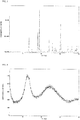
FIG. 1 is a graph showing a TGA-DSC curve before a test. -
FIG. 2 is a graph showing a TGA-DSC curve after a dehydration step. -
FIG. 3 is a chart showing an XRD pattern before a test. -
FIG. 4 is a chart showing an XRD pattern after a dehydration step. - The present invention will next be described in detail.
- The chemical heat-storage material of the present invention is characterized in that it is composed of a C2-10 aliphatic polycarboxylic acid metal salt and generates or absorbs heat by adsorption or desorption of water vapor (water).
- The term "chemical heat-storage material" as used herein refers to a heat-storage material that absorbs or releases heat of chemical reaction generated upon contact between a reaction medium and the heat-storage material, in particular, a heat-storage material that generates or absorbs heat by adsorption or desorption of water vapor (water).
- The mechanism of generation or absorption of heat by the chemical heat-storage material referred above will now be described with reference to calcium oxide as an example.
- As shown in the following (Formula 1), heat is generated when calcium oxide is transformed into calcium hydroxide by hydration reaction of calcium oxide (adsorption of water vapor (water)). Meanwhile, as shown in the following (Formula 2), heat is absorbed when calcium hydroxide is transformed into calcium oxide by dehydration of calcium hydroxide.
(Formula 1) CaO + H2O → Ca(OH)2 + 1.46 MJ/kg
(Formula 2) Ca(OH)2 + 1.46 MJ/kg → CaO + H2O
- As is clear from the aforementioned (Formula 1) and (Formula 2), a heat of 1.46 MJ/kg is generated or absorbed during the hydration reaction or the dehydration reaction. The generated or absorbed heat can be considered as being stored in the chemical heat-storage material (calcium oxide).
- No particular limitation is imposed on the C2-10 aliphatic polycarboxylic acid forming the C2-10 aliphatic polycarboxylic acid metal salt usable in the present invention, so long as the polycarboxylic acid is an aliphatic compound having 2 to 10 carbon atoms (inclusive of the carbon atoms of a carboxy group) and having two or more carboxy groups. The C2-10 aliphatic polycarboxylic acid may be a hydroxy acid having a hydroxy group in combination of two or more carboxy groups.
- Examples of the aliphatic polycarboxylic acid include dicarboxylic acids, such as oxalic acid, malonic acid, succinic acid, fumaric acid, maleic acid, acetylenedicarboxylic acid, malic acid, tartaric acid, glutaric acid, adipic acid, pimelic acid (heptanedioic acid), and suberic acid (octanedioic acid); tricarboxylic acids, such as aconitic acid, citric acid, and cyclohexane-1,2,4-tricarboxylic acid; tetracarboxylic acids, such as butane-1,2,3,4-tetracarboxylic acid, cyclobutane-1,2,3,4-tetracarboxylic acid, and cyclohexane-1,2,4,5-tetracarboxylic acid; and hydroxy acids, such as malic acid, tartaric acid, and citric acid.
- The C2-10 aliphatic polycarboxylic acid is preferably at least one selected from the group consisting of a dicarboxylic acid, a tricarboxylic acid, and a tetracarboxylic acid, more preferably a dicarboxylic acid.
- The C2-10 aliphatic polycarboxylic acid is preferably a C2-4 polycarboxylic acid, preferably at least one selected from the group consisting of oxalic acid, malonic acid, and fumaric acid, more preferably fumaric acid.
- These aliphatic polycarboxylic acids may be used alone or in combination of two or more species. Preferably, the aliphatic polycarboxylic acid is used alone.
- The metal forming the C2-10 aliphatic polycarboxylic acid metal salt usable in the present invention may be any of monovalent, divalent, and trivalent metals.
- The aforementioned metal is preferably at least one selected from the group consisting of lithium, sodium, potassium, magnesium, calcium, strontium, barium, aluminum, manganese, iron, cobalt, copper, nickel, zinc, silver, and tin.
- The aforementioned metal is more preferably an alkaline earth metal, still more preferably at least one selected from the group consisting of magnesium and calcium.
- These metals may be used alone or in combination of two or more species.
- No particular limitation is imposed on the production method for the aliphatic polycarboxylic acid metal salt. The aliphatic polycarboxylic acid metal salt can be produced in the form of crystalline powder by a method involving mixing of any of the aforementioned aliphatic polycarboxylic acids with a chloride, sulfate, or nitrate of any of the aforementioned metals and a base (e.g., sodium hydroxide) in water, reaction of the resultant mixture to thereby precipitate an aliphatic polycarboxylic acid metal salt, and subsequent filtration and drying of the metal salt. Alternatively, the aliphatic polycarboxylic acid metal salt can be produced by a method involving mixing of any of the aforementioned aliphatic polycarboxylic acids with an oxide, hydroxide, or carbonate of any of the aforementioned metals in water, reaction of the resultant mixture to thereby precipitate an aliphatic polycarboxylic acid metal salt, and subsequent filtration and drying of the metal salt.
- The resultant powder is generally in the form of, for example, granular crystals, plate-like crystals, strip crystals, rod-like crystals, or acicular crystals. The powder may be in the form of a layered product of such crystals. The compound (crystalline powder) may be a commercial product if available.
- The heat storage amount can be evaluated on the basis of heat balance (the amount of absorbed or released heat) as determined by differential scanning calorimetry. The chemical heat-storage material of the present invention exhibits a heat storage amount of preferably 0.5 MJ/kg or more, more preferably 0.7 MJ/kg or more, particularly preferably 1.0 MJ/kg or more. Thus, the chemical heat-storage material of the present invention preferably exhibits such a heat balance. No particular limitation is imposed on the maximum heat balance, and a higher value is more preferred. The heat balance is generally 10 MJ/kg or less.
- The temperature at which the chemical heat-storage material of the present invention can adsorb or desorb water vapor (water) is preferably 200°C or lower (e.g., -30 to 200°C), more preferably 30 to 180°C, particularly preferably 50 to 100°C. When the chemical heat-storage material exhibits a heat balance within such a temperature range, the chemical heat-storage material can absorb or generate heat within the temperature range. When the chemical heat-storage material absorbs heat within the temperature range, it can be used for, for example, exhaust heat recovery or mitigation of heat island phenomenon. When the chemical heat-storage material generates heat within the temperature range, it can be used for, for example, heating or a heater of an automotive engine. Thus, the chemical heat-storage material of the present invention exhibits a heat balance within a temperature range of preferably -30 to 200°C, particularly preferably 30 to 180°C, especially preferably 50 to 100°C, as determined by differential scanning calorimetry.
- The present invention also relates to a heat exchanger comprising the aforementioned chemical heat-storage material.
- The present invention also relates to the aforementioned heat exchanger used for a system that stores heat by desorption of water vapor (water) with heat discharged from, for example, a vehicle, a factory, or a device or an apparatus and generates heat by adsorption of water vapor (water).
- The present invention also relates to a system comprising the aforementioned chemical heat-storage material, wherein the system stores heat by desorption of water vapor (water) with heat discharged from, for example, a vehicle, a factory, or a device or an apparatus and generates heat by adsorption of water vapor (water).
- In one mode of the aforementioned system, the system includes, for example, a reactor, an evaporator, a condenser, and a flow channel switching valve. The reactor is filled with the aforementioned chemical heat-storage material and is also equipped with the heat exchanger for facilitating heating or cooling.
- During storage of heat, high-temperature exhaust heat from, for example, a vehicle, a factory, or a device or an apparatus is introduced into the reactor to thereby desorb water vapor (water) from the chemical heat-storage material. The resultant water vapor (water) is liquefied in the condenser. During release of heat, water vapor (water) is transferred from the evaporator to the chemical heat-storage material (from which water vapor (water) has been desorbed) to thereby adsorb water vapor (water) thereto and to generate heat. The resultant heat can be rapidly extracted via the heat exchanger to the outside of the system for use of the heat.
- For example, the aforementioned system enables efficient use of exhaust heat from a vehicle for cooling and heating, or heating of, for example, an engine, an ATF, or an exhaust gas catalyst.
- The present invention enables storage of a large amount of heat at a low temperature and achieves efficient use of unutilized waste heat.
- The present invention will next be described in more detail by way of examples, but the present invention is not limited to the following examples.
- In the examples, the following apparatuses and conditions were used for preparation of samples and analysis of properties.
-
- Apparatus: TGA/
DSC 1, available from Mettler-Toledo - Measurement temperature (Examples 1 to 10): 40 to 300°C
- Measurement temperature (Comparative Example 1): 40 to 500°C
- Heating rate: 10°C/minute
- Nitrogen flow rate: 50 mL/minute
- Sample pan: aluminum pan
-
- Apparatus: desktop X-ray diffractometer MiniFlex (registered trademark) 600, available from Rigaku Corporation
- Measurement angle (2θ): 3 to 40°
- Scanning rate: 15°/minute
- 6.48 g (51.4 mmol) of oxalic acid dihydrate [available from Junsei Chemical Co., Ltd.] was mixed with 3.00 g (51.4 mmol) of magnesium hydroxide [available from Junsei Chemical Co., Ltd.] and 50 g of water, and the mixture was stirred at 90°C for five hours. The reaction mixture was cooled to room temperature (about 23°C), and the precipitated solid was filtered. The resultant solid was dried under reduced pressure at 50°C for one hour, to thereby produce 7.01 g of magnesium oxalate (hydrate).
- 5.10 g (40.5 mmol) of oxalic acid dihydrate was mixed with 3.00 g (40.5 mmol) of calcium hydroxide [available from Junsei Chemical Co., Ltd.] and 50 g of water, and the mixture was stirred at 90°C for five hours. The reaction mixture was cooled to room temperature (about 23°C), and the precipitated solid was filtered. The resultant solid was dried under reduced pressure at 50°C for one hour, to thereby produce 5.57 g of calcium oxalate (hydrate).
- 3.29 g (26.1 mmol) of oxalic acid dihydrate was mixed with 3.00 g (26.1 mmol) of manganese carbonate [available from Junsei Chemical Co., Ltd.] and 30 g of water, and the mixture was stirred at 90°C for four hours. The reaction mixture was cooled to room temperature (about 23°C), and the precipitated solid was filtered. The resultant solid was dried under reduced pressure at 50°C for one hour, to thereby produce 4.20 g of manganese oxalate (hydrate).
- 3.81 g (30.2 mmol) of oxalic acid dihydrate was mixed with 3.00 g (30.2 mmol) of zinc hydroxide [available from Junsei Chemical Co., Ltd.] and 30 g of water, and the mixture was stirred at 90°C for four hours. The reaction mixture was cooled to room temperature (about 23°C), and the precipitated solid was filtered. The resultant solid was dried under reduced pressure at 50°C for one hour, to thereby produce 5.29 g of zinc oxalate (hydrate).
- 5.35 g (51.4 mmol) of malonic acid [available from Tokyo Chemical Industry Co., Ltd.] was mixed with 3.00 g (51.4 mmol) of magnesium hydroxide and 31 g of water, and the mixture was stirred at 90°C for three hours. The reaction mixture was cooled to room temperature (about 23°C), and the precipitated solid was filtered. The resultant solid was dried under reduced pressure at 50°C for one hour, to thereby produce 7.25 g of magnesium malonate (hydrate).
- 5.97 g (51.4 mmol) of fumaric acid [available from Junsei Chemical Co., Ltd.] was mixed with 3.00 g (51.4 mmol) of magnesium hydroxide and 33 g of water, and the mixture was stirred at 90°C for three hours. The reaction mixture was cooled to room temperature (about 23°C), and the precipitated solid was filtered. The resultant solid was dried under reduced pressure at 50°C for one hour, to thereby produce 5.64 g of magnesium fumarate (hydrate).
- 4.70 g (40.5 mmol) of fumaric acid was mixed with 3.00 g (40.5 mmol) of calcium hydroxide and 30 g of water, and the mixture was stirred at 90°C for 2.5 hours. The reaction mixture was cooled to room temperature (about 23°C), and the precipitated solid was filtered. The resultant solid was dried under reduced pressure at 50°C for one hour, to thereby produce 6.50 g of calcium fumarate (hydrate).
- 5.15 g (34.3 mmol) of L-tartaric acid [available from Junsei Chemical Co., Ltd.] was mixed with 2.00 g (34.3 mmol) of magnesium hydroxide and 33 g of water, and the mixture was stirred at 90°C for five hours. The reaction mixture was cooled to room temperature (about 23°C), and the precipitated solid was filtered. The resultant solid was dried under reduced pressure at 50°C for one hour, to thereby produce 6.40 g of magnesium tartrate (hydrate).
- 6.59 g (34.3 mmol) of citric acid [available from Junsei Chemical Co., Ltd.] was mixed with 3.00 g (51.4 mmol) of magnesium hydroxide and 30 g of water, and the mixture was stirred at 90°C for five hours. The reaction mixture was cooled to room temperature (about 23°C), and the precipitated solid was filtered. The resultant solid was dried under reduced pressure at 50°C for one hour, to thereby produce 9.65 g of magnesium citrate (hydrate).
- 1.00 g (4.29 mmol) of cyclobutane-1,2,3,4-tetracarboxylic acid [available from Aldrich] was mixed with 0.50 g (8.57 mmol) of magnesium hydroxide and 5 g of water, and the mixture was stirred at 90°C for three hours. The reaction mixture was cooled to room temperature (about 23°C), and the precipitated solid was filtered. The resultant solid was dried under reduced pressure at 50°C for one hour, to thereby produce 1.41 g of magnesium cyclobutane-1,2,3,4-tetracarboxylate (hydrate).
- The aliphatic carboxylic acid metal salts produced in Production Examples 1 to 10 and calcium hydroxide [available from Junsei Chemical Co., Ltd.] were subjected to thermogravimetry/differential scanning calorimetry for evaluation of the amount of heat absorption (heat storage amount) caused by desorption of water and heat absorption initiation temperature (desorption temperature of water). The results are shown in Table 1.
Table 1 Compound Heat storage amount [MJ/kg] Desorption temperature [°C] Example 1 OxA-Mg 0.90 167 Example 2 OxA-Ca 0.53 130 Example 3 OxA-Mn 0.71 121 Example 4 OxA-Zn 0.66 118 Example 5 MaA-Mg 0.94 181 Example 6 FuA-Mg 1.30 80 Example 7 FuA-Ca 0.66 86 Example 8 TaA-Mg 0.61 101 Example 9 CiA-Mg 0.84 125 Example 10 cBTA-Mg 0.83 161 Comparative Example 1 Ca(OH)2 1.34 427 - As shown in Table 1, the heat-storage material of the present invention was found to exhibit a large heat storage amount of 0.5 MJ/kg or more and a heat storage initiation temperature (desorption temperature of water) of 200°C or lower. In particular, the heat-storage material composed of magnesium fumarate (Example 6) was found to exhibit very excellent performance; i.e., a heat storage amount exceeding 1 MJ/kg and a heat storage initiation temperature of 100°C or lower.
- In contrast, calcium hydroxide, which is a publicly known heat-storage material, exhibited a large heat storage amount but a very high heat storage initiation temperature of 400°C or higher. Thus, calcium hydroxide was found to be impractical.
- 5.00 g of FuA-Mg was placed in a petri dish, and the following steps were repeated five times:
- (1) dehydration step: left to stand still under reduced pressure at 90°C for four hours; and
- (2) water vapor adsorption step: left to stand still at room temperature (about 23°C) and at 100% relative humidity for 18 hours. After completion of each step, the sample was subjected to thermogravimetry/differential scanning calorimetry and powder X-ray diffraction analysis for evaluation of the amount of heat absorption (heat storage amount) caused by desorption of water, heat absorption initiation temperature (desorption temperature of water), thermogravimetric weight loss, and XRD pattern. The results are shown in Table 2.
FIG. 1 shows a TGA-DSC curve before the test;FIG. 2 shows a TGA-DSC curve after the first dehydration step;FIG. 3 shows an XRD pattern before the test; andFIG. 4 shows an XRD pattern after the first dehydration step. - As shown in Table 2, the heat-storage material of the present invention underwent almost no change in heat storage performance (e.g., heat storage amount or desorption temperature) even after repetition of water desorption (dehydration)/water adsorption. Thus, the heat-storage material was found to have excellent repeating characteristics.
| Mass [g] | Heat storage amount [MJ/kg] | Desorption temperature [°C] | Weight loss [%] | XRD pattern | |
| Before test | 5.00 | 1.36 | 95 | 38 | Pattern A |
| After 1st dehydration step | 3.24 | No endothermic peak | 0 | Pattern B | |
| After 1st adsorption step | 5.27 | 1.38 | 94 | 37 | Pattern A |
| After 2nd dehydration step | 3.27 | No endothermic peak | 0 | Pattern B | |
| After 2nd adsorption step | 4.97 | 1.30 | 87 | 37 | Pattern A |
| After 3rd dehydration step | 3.34 | No endothermic peak | 0 | Pattern B | |
| After 3rd adsorption step | 4.97 | 1.37 | 92 | 36 | Pattern A |
| After 4th dehydration step | 3.34 | No endothermic peak | 0 | Pattern B | |
| After 4th adsorption step | 4.84 | 1.39 | 94 | 37 | Pattern A |
| After 5th dehydration step | 3.20 | No endothermic peak | 0 | Pattern B | |
| After 5th adsorption step | 5.08 | 1.39 | 95 | 38 | Pattern A |
Claims (18)
- A chemical heat-storage material comprising a C2-10 aliphatic polycarboxylic acid metal salt, wherein the chemical heat-storage material generates or absorbs heat by adsorption or desorption of water vapor (water).
- The chemical heat-storage material according to claim 1, wherein the aliphatic polycarboxylic acid is at least one selected from the group consisting of a dicarboxylic acid, a tricarboxylic acid, and a tetracarboxylic acid.
- The chemical heat-storage material according to claim 2, wherein the aliphatic polycarboxylic acid is a dicarboxylic acid.
- The chemical heat-storage material according to any one of claims 1 to 3, wherein the aliphatic polycarboxylic acid is a C2-4 polycarboxylic acid.
- The chemical heat-storage material according to claim 1, wherein the aliphatic polycarboxylic acid is at least one selected from the group consisting of oxalic acid, malonic acid, and fumaric acid.
- The chemical heat-storage material according to claim 1, wherein the aliphatic polycarboxylic acid is fumaric acid.
- The chemical heat-storage material according to any one of claims 1 to 6, wherein the metal species of the metal salt is at least one selected from the group consisting of lithium, sodium, potassium, magnesium, calcium, strontium, barium, aluminum, manganese, iron, cobalt, copper, nickel, zinc, silver, and tin.
- The chemical heat-storage material according to claim 7, wherein the metal species of the metal salt is an alkaline earth metal.
- The chemical heat-storage material according to claim 7, wherein the metal species of the metal salt is at least one selected from the group consisting of magnesium and calcium.
- The chemical heat-storage material according to any one of claims 1 to 9, wherein the amount of heat generated by adsorption of water vapor (water) or the amount of heat absorbed by desorption of water vapor (water) is 0.5 MJ/kg or more.
- The chemical heat-storage material according to anyone of claims 1 to 10, wherein the chemical heat-storage material exhibits a desorption temperature of water vapor (water) of 200°C or lower.
- A heat exchanger comprising the chemical heat-storage material according to any one of claims 1 to 11.
- The heat exchanger according to claim 12, wherein the heat exchanger is used for a system that stores heat by desorption of water vapor (water) with heat discharged from a vehicle and generates heat by adsorption of water vapor (water).
- The heat exchanger according to claim 12, wherein the heat exchanger is used for a system that stores heat by desorption of water vapor (water) with heat discharged from a factory and generates heat by adsorption of water vapor (water).
- The heat exchanger according to claim 12, wherein the heat exchanger is used for a system that stores heat by desorption of water vapor (water) with heat discharged from a device or an apparatus and generates heat by adsorption of water vapor (water).
- A system comprising the chemical heat-storage material according to any one of claims 1 to 11, wherein the system stores heat by desorption of water vapor (water) with heat discharged from a vehicle and generates heat by adsorption of water vapor (water).
- A system comprising the chemical heat-storage material according to any one of claims 1 to 11, wherein the system stores heat by desorption of water vapor (water) with heat discharged from a factory and generates heat by adsorption of water vapor (water).
- A system comprising the chemical heat-storage material according to any one of claims 1 to 11, wherein the system stores heat by desorption of water vapor (water) with heat discharged from a device or an apparatus and generates heat by adsorption of water vapor (water).
Applications Claiming Priority (2)
| Application Number | Priority Date | Filing Date | Title |
|---|---|---|---|
| JP2016249329 | 2016-12-22 | ||
| PCT/JP2017/045749 WO2018117159A1 (en) | 2016-12-22 | 2017-12-20 | Heat-storage material |
Publications (2)
| Publication Number | Publication Date |
|---|---|
| EP3561022A1 true EP3561022A1 (en) | 2019-10-30 |
| EP3561022A4 EP3561022A4 (en) | 2020-01-08 |
Family
ID=62626564
Family Applications (1)
| Application Number | Title | Priority Date | Filing Date |
|---|---|---|---|
| EP17883574.0A Withdrawn EP3561022A4 (en) | 2016-12-22 | 2017-12-20 | CHANGE MATERIAL |
Country Status (7)
| Country | Link |
|---|---|
| US (1) | US20190330509A1 (en) |
| EP (1) | EP3561022A4 (en) |
| JP (1) | JPWO2018117159A1 (en) |
| KR (1) | KR20190100167A (en) |
| CN (1) | CN109996855A (en) |
| TW (1) | TW201840525A (en) |
| WO (1) | WO2018117159A1 (en) |
Families Citing this family (2)
| Publication number | Priority date | Publication date | Assignee | Title |
|---|---|---|---|---|
| JP7698844B2 (en) * | 2020-04-30 | 2025-06-26 | タテホ化学工業株式会社 | Chemical heat storage material and its manufacturing method |
| CN112457184A (en) * | 2020-12-23 | 2021-03-09 | 河南瑞贝佳生物科技有限公司 | Preparation method of magnesium fumarate |
Family Cites Families (9)
| Publication number | Priority date | Publication date | Assignee | Title |
|---|---|---|---|---|
| FR2078616A5 (en) * | 1970-02-17 | 1971-11-05 | M & T Chemicals Inc | |
| JPS59543B2 (en) * | 1978-07-20 | 1984-01-07 | 三菱電機株式会社 | heat storage material |
| US4574874A (en) * | 1983-04-07 | 1986-03-11 | Pan Tech Management Corp. | Chemisorption air conditioner |
| JPH1143668A (en) * | 1997-07-28 | 1999-02-16 | Mitsubishi Chem Corp | Thermal storage material composition |
| EP1158036A1 (en) * | 2000-05-24 | 2001-11-28 | Texaco Development Corporation | Carboxylate salts in heat-storage applications |
| JP2005097530A (en) | 2003-09-04 | 2005-04-14 | Mitsubishi Chemicals Corp | Heat storage material |
| JP4586925B2 (en) * | 2008-01-09 | 2010-11-24 | 日立化成工業株式会社 | Thermosetting resin composition, epoxy resin molding material, substrate for mounting optical semiconductor element, manufacturing method thereof, and optical semiconductor device |
| JP6535504B2 (en) * | 2014-04-22 | 2019-06-26 | 株式会社デンソー | Heat storage system and heat storage material |
| JP2016098234A (en) * | 2014-11-18 | 2016-05-30 | 株式会社豊田中央研究所 | Chemical heat storage material and method for producing the same |
-
2017
- 2017-12-20 JP JP2018558036A patent/JPWO2018117159A1/en not_active Withdrawn
- 2017-12-20 EP EP17883574.0A patent/EP3561022A4/en not_active Withdrawn
- 2017-12-20 US US16/472,967 patent/US20190330509A1/en not_active Abandoned
- 2017-12-20 CN CN201780073380.3A patent/CN109996855A/en active Pending
- 2017-12-20 KR KR1020197012790A patent/KR20190100167A/en not_active Withdrawn
- 2017-12-20 WO PCT/JP2017/045749 patent/WO2018117159A1/en not_active Ceased
- 2017-12-22 TW TW106145192A patent/TW201840525A/en unknown
Also Published As
| Publication number | Publication date |
|---|---|
| TW201840525A (en) | 2018-11-16 |
| US20190330509A1 (en) | 2019-10-31 |
| EP3561022A4 (en) | 2020-01-08 |
| WO2018117159A1 (en) | 2018-06-28 |
| JPWO2018117159A1 (en) | 2019-11-14 |
| CN109996855A (en) | 2019-07-09 |
| KR20190100167A (en) | 2019-08-28 |
Similar Documents
| Publication | Publication Date | Title |
|---|---|---|
| JP5177386B2 (en) | Chemical heat pump | |
| US8795626B2 (en) | Zeolite having copper and alkali earth metal supported thereon | |
| US11161089B2 (en) | Moisture adsorption composition, a method of preparing the same, and a surface coating including the same | |
| EP4023656A1 (en) | Novel aluminum-based metal-organic framework having three dimensional porous structure and comprising at least two types of ligands, preparation method therefor, and use thereof | |
| Ramírez-Moreno et al. | CO2 adsorption at elevated pressure and temperature on Mg–Al layered double hydroxide | |
| US20140312272A1 (en) | Carbon dioxide adsorbent, the manufacturing method thereof, and the use method thereof | |
| US20190330509A1 (en) | Heat-storage material | |
| Strelova et al. | Composites “lithium chloride/vermiculite” for adsorption thermal batteries: Giant acceleration of sorption dynamics | |
| JP6471947B1 (en) | Chemical heat storage material and method for producing the same, chemical heat pump and method for operating the same | |
| Yan et al. | Tailoring cobalt oxide nanostructures for high light absorption and thermochemical energy storage performance | |
| JP7248989B2 (en) | Chemical heat storage material and its manufacturing method | |
| CN110770523B (en) | Chemical heat storage material and method for producing same, and chemical heat pump and method for operating same | |
| EP3591023A1 (en) | Heat storage material comprising metal salt of cyanuric acid | |
| TWI496788B (en) | Metal-organic framework material, preparing method thereof, and use thereof | |
| US8431737B2 (en) | Drying agent | |
| JP7698844B2 (en) | Chemical heat storage material and its manufacturing method | |
| JP2019189829A (en) | Heat storage material, manufacturing method of heat storage material, and chemical heat pump | |
| Ferenc et al. | Complexes of Mn (II), Co (II), Ni (II), Cu (II) and Zn (II) with 4-chloro-2-methoxybenzoic acid anion: Physico-chemical properties | |
| Kishida et al. | Crystal structure and NH3 desorption properties of complex metal ammine chloride | |
| JP2018168223A (en) | Chemical thermal storage medium and method for producing the same | |
| JP2019044028A (en) | Chemical heat storage material and method of manufacturing the same | |
| Jang et al. | Suppressing deactivation in magnesium oxide for direct air capture via sodium nitrate–potassium nitrate promotion | |
| JP2018168225A (en) | Chemical thermal storage medium and method for producing the same | |
| JP2025029764A (en) | Chemical heat storage material and its manufacturing method | |
| MIYAZAKI et al. | Some ion exchange properties of semicrystalline titanium phosphate and its synthesis on acryl resin bead surface |
Legal Events
| Date | Code | Title | Description |
|---|---|---|---|
| STAA | Information on the status of an ep patent application or granted ep patent |
Free format text: STATUS: THE INTERNATIONAL PUBLICATION HAS BEEN MADE |
|
| PUAI | Public reference made under article 153(3) epc to a published international application that has entered the european phase |
Free format text: ORIGINAL CODE: 0009012 |
|
| STAA | Information on the status of an ep patent application or granted ep patent |
Free format text: STATUS: REQUEST FOR EXAMINATION WAS MADE |
|
| 17P | Request for examination filed |
Effective date: 20190722 |
|
| AK | Designated contracting states |
Kind code of ref document: A1 Designated state(s): AL AT BE BG CH CY CZ DE DK EE ES FI FR GB GR HR HU IE IS IT LI LT LU LV MC MK MT NL NO PL PT RO RS SE SI SK SM TR |
|
| AX | Request for extension of the european patent |
Extension state: BA ME |
|
| STAA | Information on the status of an ep patent application or granted ep patent |
Free format text: STATUS: EXAMINATION IS IN PROGRESS |
|
| A4 | Supplementary search report drawn up and despatched |
Effective date: 20191206 |
|
| RIC1 | Information provided on ipc code assigned before grant |
Ipc: C09K 5/16 20060101AFI20191202BHEP Ipc: F28D 20/00 20060101ALI20191202BHEP |
|
| 17Q | First examination report despatched |
Effective date: 20191217 |
|
| DAV | Request for validation of the european patent (deleted) | ||
| DAX | Request for extension of the european patent (deleted) | ||
| STAA | Information on the status of an ep patent application or granted ep patent |
Free format text: STATUS: THE APPLICATION IS DEEMED TO BE WITHDRAWN |
|
| 18D | Application deemed to be withdrawn |
Effective date: 20210701 |