EP3560174B1 - Generation der anwendung zulässige listen für die maschinen - Google Patents
Generation der anwendung zulässige listen für die maschinen Download PDFInfo
- Publication number
- EP3560174B1 EP3560174B1 EP17826042.8A EP17826042A EP3560174B1 EP 3560174 B1 EP3560174 B1 EP 3560174B1 EP 17826042 A EP17826042 A EP 17826042A EP 3560174 B1 EP3560174 B1 EP 3560174B1
- Authority
- EP
- European Patent Office
- Prior art keywords
- cluster
- allowed list
- allowed
- machine
- machines
- Prior art date
- Legal status (The legal status is an assumption and is not a legal conclusion. Google has not performed a legal analysis and makes no representation as to the accuracy of the status listed.)
- Active
Links
Images



Classifications
-
- H—ELECTRICITY
- H04—ELECTRIC COMMUNICATION TECHNIQUE
- H04L—TRANSMISSION OF DIGITAL INFORMATION, e.g. TELEGRAPHIC COMMUNICATION
- H04L63/00—Network architectures or network communication protocols for network security
- H04L63/10—Network architectures or network communication protocols for network security for controlling access to devices or network resources
- H04L63/104—Grouping of entities
-
- G—PHYSICS
- G06—COMPUTING OR CALCULATING; COUNTING
- G06F—ELECTRIC DIGITAL DATA PROCESSING
- G06F21/00—Security arrangements for protecting computers, components thereof, programs or data against unauthorised activity
- G06F21/10—Protecting distributed programs or content, e.g. vending or licensing of copyrighted material ; Digital rights management [DRM]
-
- H—ELECTRICITY
- H04—ELECTRIC COMMUNICATION TECHNIQUE
- H04L—TRANSMISSION OF DIGITAL INFORMATION, e.g. TELEGRAPHIC COMMUNICATION
- H04L63/00—Network architectures or network communication protocols for network security
- H04L63/10—Network architectures or network communication protocols for network security for controlling access to devices or network resources
-
- H—ELECTRICITY
- H04—ELECTRIC COMMUNICATION TECHNIQUE
- H04L—TRANSMISSION OF DIGITAL INFORMATION, e.g. TELEGRAPHIC COMMUNICATION
- H04L63/00—Network architectures or network communication protocols for network security
- H04L63/10—Network architectures or network communication protocols for network security for controlling access to devices or network resources
- H04L63/101—Access control lists [ACL]
-
- H—ELECTRICITY
- H04—ELECTRIC COMMUNICATION TECHNIQUE
- H04L—TRANSMISSION OF DIGITAL INFORMATION, e.g. TELEGRAPHIC COMMUNICATION
- H04L67/00—Network arrangements or protocols for supporting network services or applications
- H04L67/2866—Architectures; Arrangements
- H04L67/30—Profiles
-
- H—ELECTRICITY
- H04—ELECTRIC COMMUNICATION TECHNIQUE
- H04W—WIRELESS COMMUNICATION NETWORKS
- H04W12/00—Security arrangements; Authentication; Protecting privacy or anonymity
- H04W12/08—Access security
-
- G—PHYSICS
- G06—COMPUTING OR CALCULATING; COUNTING
- G06F—ELECTRIC DIGITAL DATA PROCESSING
- G06F11/00—Error detection; Error correction; Monitoring
- G06F11/30—Monitoring
- G06F11/34—Recording or statistical evaluation of computer activity, e.g. of down time, of input/output operation ; Recording or statistical evaluation of user activity, e.g. usability assessment
-
- G—PHYSICS
- G06—COMPUTING OR CALCULATING; COUNTING
- G06F—ELECTRIC DIGITAL DATA PROCESSING
- G06F16/00—Information retrieval; Database structures therefor; File system structures therefor
-
- G—PHYSICS
- G06—COMPUTING OR CALCULATING; COUNTING
- G06F—ELECTRIC DIGITAL DATA PROCESSING
- G06F21/00—Security arrangements for protecting computers, components thereof, programs or data against unauthorised activity
- G06F21/50—Monitoring users, programs or devices to maintain the integrity of platforms, e.g. of processors, firmware or operating systems
- G06F21/55—Detecting local intrusion or implementing counter-measures
- G06F21/552—Detecting local intrusion or implementing counter-measures involving long-term monitoring or reporting
Definitions
- Cyber-attacks cost companies and individuals billions of dollars. A report in 2015 estimated that cyber-attacks cost companies over $400 billion annually. In addition to the financial costs, cyber-attacks may result in other damages such as the destruction of valuable information, the release of sensitive information, and so on. The costs and damages will surely increase over time without effective defenses. Cyber-attacks often rely on malicious software, referred to as "malware," which is installed and executed by a computer that is the target of the attack. The executing malware orchestrates the attack. For example, a ransomware attack may encrypt all the data on a computer, including the only copy of financial documents, family photographs, electronic mail messages, and so on. If the ransom is not paid, then the data may remain encrypted forever.
- malware malicious software
- ransomware may arrive as an email attachment that contains garbled content and a malicious macro.
- the attachment requests the user to enable macros if the content appears garbled.
- the malicious macro installs and executes the ransomware.
- an employee of a corporation may install an unauthorized application on their computer. Normally, the information technology group of a corporation analyzes and authorizes only those applications that meet the strict security standards of the corporation. If an unauthorized application is installed, it can expose all the computers on the network of the corporation to vulnerabilities that significantly increase the chance of a cyber-attack against the corporation.
- An organization may have thousands of servers and thousands of user computers (e.g., desktops and laptops) connected to its network.
- the servers may each be a certain type of server, such as a load balancing server, a firewall server, a database server, an authentication server, a personnel management server, a web server, a file system server, and so on.
- the user computers may each be a certain type, such as a management computer, a technical support computer, a developer computer, a secretarial computer, and so on.
- Each server and user computer may have various applications installed that are needed to support the function of the computer. Because of the various types of servers and user computers, such a network is referred to as a "hybrid environment.”
- the term "application” refers to any software that can be separately identified and executed, such as application programs, applets, dynamic-link libraries, operating system software, scripts, add-ins, operating system drivers, and so on.
- security tools may be installed on each computer to help ensure that only certain authorized applications are allowed to execute on each computer.
- the security tool may allow an administrator to generate an allowed list for each computer that lists the authorized applications that are allowed to be executed by that computer.
- the operating system executing on a computer receives a request to execute an application, the operating system asks the security tool whether to allow the execution. If the application is in the allowed list, the security tool indicates that execution is allowed. Otherwise, the security tool indicates that the execution is to be blocked.
- US 2002/131404 A1 relates to a method and system for maintaining and distributing wireless applications.
- Content is provisioned by inspecting the content for designated code, optimizing the content for smaller size and greater speed, instrumenting code that implements security, billing, usage, or other carrier policies, and packaging code for the intended subscriber device.
- the content is inspected for malicious or banned code or for the use of specified API, or the code is inspected for misbehaving or forbidden API.
- the code inspection compares the content with a list of package, class, method, or field names.
- the Application Verifier determines whether a requested application has been forbidden by the carrier for deployment.
- a system administrator can edit, approve, or reject any of the applications listed as pending.
- the administrator is responsible for evaluating the submitted application's application profile against a wireless carrier's policies with regards to provisioning submitted applications and determining whether to reject or approve the application.
- the administrator can create subscriber groups to which a subscriber can be assigned or subscribe and can define the content that is available to each subscriber group by associating content categories with each group.
- US 2013/104118 A1 relates to an application installation system.
- a first installation control setting is associated with a first plurality of users, each of the first plurality of users having a common grouping characteristic.
- the second installation control setting are associated with a second plurality of users, at least some of which are different to the first plurality of users, each of the second plurality of users having a second common grouping characteristic, different to the first common grouping characteristic.
- the installation control settings may be configured for multiple users simultaneously, based on some shared grouping characteristics, such as enterprise associated therewith or users of a given application, and different grouping characteristics are applied.
- the installation control settings include a setting allowing the user terminal to install an application; a setting denying the user terminal a right to install an application; and a setting suspending access to an application if previously installed.
- An administrative control role defines a user as being part of a group of users, to which installation control settings can be configured as a whole.
- An enterprise configures installation control settings based on each user's role within the enterprise (e.g. every employee in the sales team, or everyone employed in the accounts department). A decision must be made as to which installation control setting to use for determining the installation control data.
- the conflict resolution algorithm is expanded to select among a plurality of installation control settings configured by an administrative control role when those settings relate to the same user and the same application. For example, an entry for an individual may take precedence over the relevant group entry, which in turn may take precedence over the "all users" entry set. Alternatively or additionally, a most restrictive installation control setting from the several different installation control settings may be selected.
- a computing system for generating allowed lists of applications for machines is provided.
- the system for each machine, identifies a set of executed applications that were executed by that machine.
- the system then clusters the machines based on similarity between the sets of executed applications so that machines with similar sets are in the same cluster.
- the system then, for each cluster of machines, creates an allowed list of applications for the cluster that includes the applications in the sets of executed applications of the machines of the cluster.
- An allowed list for a cluster indicates that only applications in the allowed list are allowed to be executed by a machine in the cluster.
- the system then distributes the allowed list for a cluster to the machines of that cluster so that the machines execute only applications in the allowed list for their cluster.
- a method and system for automatically generating an allowed list of applications for machines is provided.
- the term "machine” refers to any computing system that can be considered to execute applications, such as servers, virtual machines, user computers, tablets, smartphones, embedded devices, special-purpose computers, and so on.
- an allowed list generation (“ALG") system identifies the set of applications executed by machines in a collection of machines (e.g., the machines of an organization) and identifies clusters of machines that will share the same allowed list. For example, the machines may be clustered based on their functions (e.g., database servers in the same cluster), clustered based on manual designation by an administrator, automatically clustered based on similarity of the sets of applications they have executed, and so on.
- the ALG system creates an allowed list of applications for each cluster.
- the allowed list for a cluster may include the applications of the sets of the machines of the cluster that are in each set of a machine in the cluster-that is, the allowed list for a cluster may be the intersection of the sets of the machines in the cluster.
- the ALG then distributes the allowed list of each cluster to the machines in the cluster so that a security tool on each machine can enforce the allowed list by allowing execution of applications on the allowed list and blocking execution of applications that are not on the allowed list.
- the ALG system may collect from the machines process creation logs generated by the operating system.
- a process creation log may specify for each application an identifier of the application (e.g., name or hash of the code of the application), time of process creation, type of application, and so on.
- the ALG system may also collect from the machines other logs generated by various software systems, such as logs of dynamic-link libraries loaded, logs of scripts executed, logs of drivers loaded, and so on. To generate the set of applications executed by a machine, the ALG system analyzes the logs to identify all the applications executed by the machine and adds each application to the set for the machine.
- the ALG system may divide a log into a training log and a testing log. For example, if a log covers four weeks, the training log may encompass the first three weeks, and the testing log may encompass the last week. Training logs may be used to generate the allowed lists, and the testing log may be used to test the allowed lists as described below in more detail.
- the ALG system clusters the machines based on similarity of the sets of applications executed by the machine.
- the following table illustrates example sets of applications for some machines: Machine A B C D E F G 1 X X X 2 X X X X 3 X X X 4 X X X X 5 X X X X X X X
- An "x" indicates that the application is in the set of a machine.
- machine 1 has the set of ⁇ A, B, C ⁇ .
- the ALG system may assign machines 1, 2, and 3 to one cluster and machines 4 and 5 to another cluster.
- the cluster for machines 1, 2, and 3 has the allowed list of [A, B, C, D]
- the cluster of machines 4 and 5 has the allowed list of [A, D, E, F, G].
- the ALG system may use various similarity criteria to determine whether sets are similar. For example, a similarity criterion may be that the sets have a certain percentage of their applications in common.
- Another similarity criterion may be a cosine similarity between a feature vector with a dimension for each application that is set to 0 or 1 to indicate whether each application is in the set.
- the ALG system may use various clustering algorithms. For example, when determining whether to place a machine in a cluster, the ALG system may compare the set for the machine to the intersection of the sets of the machines already in the cluster to determine whether the similarity criterion is satisfied. If so, the ALG system adds the machine to the cluster. If the similarity criterion is not satisfied for any cluster, the ALG system may create a new cluster that contains only that machine.
- the ALG system may filter out machines whose execution of applications appears to be "unstable.” For example, a pool of user computers may be available to be used by various groups within an organization as a backup in case of failures in other user computers. In such as case, the execution of applications by the user computers in the pool may be considered unstable in the sense that on different days, the user computer may execute very different sets of applications.
- the ALG system may use various unstable criteria to determine whether a machine is unstable. For example, the unstable criteria may be that the cardinality of a set of applications for a machine exceeds a certain threshold, that the timing of the execution of the applications in the set appears to be random, and so on. When a machine is determined to be unstable, the ALG system may remove the machine from the machines that are clustered. As a result, a different mechanism may be employed to generate the allowed lists for unstable machines (e.g., manually by an administrator).
- the ALG system may perform various testing of the allowed lists to ensure their effectiveness.
- the ALG system may generate the allowed lists based on sets derived from the portions of the logs designated as training logs.
- One test referred to as a screening test, to determine the effectiveness of an allowed list for a machine may be to compare the applications in the allowed list to the applications in the test log for that machine. If the test log indicates that one more applications were executed that are not in the allowed list, then the test is considered to have failed because the allowed list may not be appropriate for that machine.
- Another test referred to as an audit, would be to collect additional audit logs of a machine, generated during non-enforcement of the allowed list, that indicate the applications executed by the machine.
- the ALG system compares the applications in the allowed list to the applications in the audit logs. If the audit logs indicate that one or more applications were executed that are not in the allowed list, then the test is considered to have failed because the allowed list may not be appropriate for that machine. Yet another test, referred to as an enforcement test, would be to collect enforcement logs of a machine, generated during enforcement of the allowed list, that indicate the applications whose execution was allowed and the applications whose execution was blocked. If the enforcement logs indicate that an application in the allowed list was never executed, the ALG system may indicate that that application should be considered for removal from the allowed list, especially if no machine in the same cluster executed that application. If the enforcement logs indicate that an application is blocked many times, the ALG system may indicate that that application should be considered for addition to the allowed list, especially if other machines in the same cluster also blocked execution of that application.
- the ALG system may allow a user to approve the allowed lists, modify the allowed lists, modify clusters, and so on prior to enforcement of the allowed list.
- the ALG system provides a user interface through which a user can review the allowed list for a cluster and add applications to or remove applications from the allowed list.
- the user interface also allows a user to review the machines in each cluster, move machines to different clusters, create new clusters, create allowed lists for new clusters, and so on.
- the user interface may allow the user to specify baseline applications that should be included in every allowed list and excluded applications that should never be included in an allowed list.
- the ALG system may allow a cloud administrator to specify baseline applications that should be included in every allowed list for every customer.
- the ALG system may automatically generate the list of baseline applications as the applications that are executed by every machine in the cloud data center.
- Such applications may include operating systems, virtual machine monitors, performance monitors, maintenance tools, and so on.
- the ALG system may provide various statistics to assist a user in reviewing the allowed lists. For example, the ALG system may generate a confidence level for each application in an allowed list to indicate how confident the ALG system is that the application should be in the allowed list for a cluster.
- the confidence level of applications A, B, and C may be high since each of these applications in the set of each machine of the cluster.
- the confidence level of application D may be low since it is only in the set for machine 3.
- a user may have manually directed that machine 3 execute application D, which may be a diagnostic program. In such a case, it may not be appropriate to include application D in the allowed list as indicated by its confidence level.
- the ALG system presents the confidence levels to the user to assist in the review of the applications. Once the user approves the allowed list for a cluster, it can be distributed to the machines in the cluster and enforcement enabled.
- FIG. 1 is a flow diagram that illustrates processing of a generate allowed lists component of the ALG system in some embodiments.
- a generate allowed lists component 100 generates allowed lists for clusters of machines in a collection of machines.
- a collection of machines may be the machines of a single customer of a cloud provider.
- the component collects from each machine the application log of the machine. The application log identifies each application that was executed by the machine.
- the component clusters the machines based on the similarity among the sets of applications that the machines executed.
- the component loops generating the allowed list for each cluster.
- the component selects the next cluster.
- decision block 104 if all the clusters have already been selected, then the component completes, else the component continues at block 105.
- the component identifies the applications used by the machines in the cluster as specified by the application logs.
- the component creates an allowed list of applications for the cluster that includes each application executed by a machine in the cluster. The component then loops to block 103 to select the next cluster.
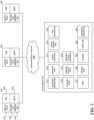
- FIG. 2 is a block diagram that illustrates components of the ALG system in some embodiments.
- the ALG system 210 is connected to machines 230 via a communications channel 250.
- the ALG system includes a generate allowed list component 211, a generate sets component 212, a cluster machines component 213, a create allowed lists component 214, a test allowed list component 215, an evaluate audit component 216, an evaluate enforcement component 217, and a generate recommendation component 218.
- the generate allowed list component controls the overall generation of the allowed list.
- the generate sets component generates sets of applications executed by the machines from the logs collected from the machines.
- the cluster machines component uses the sets to cluster the machines based on similarity of the sets.
- the create allowed lists component creates the allowed list for each cluster.
- the test allowed lists component tests the allowed list using the testing logs.
- the evaluate audit component evaluates the audit logs as part of an audit test.
- the evaluate enforcement component evaluates the enforcement logs as part of the enforcement tests.
- the generate recommendation component generates recommendations for modifying the allowed lists and/or clusters based on the results of the enforcement tests.
- the ALG system also includes a log store 221, an allowed list store 222, and a cluster store 223.
- the log store stores the logs collected from the machines.
- the allowed list store stores the allowed lists generated by the ALG system.
- the cluster store stores an indication of each cluster and the machines of each cluster.
- the ALG system also includes a collect log component 224 to collect logs from the machines and a distribute allowed list component 225 to distribute the allowed lists to the machines.
- Each machine includes various applications 231, a security tool 232, an agent 233, a log store 234, and an allowed list store 235.
- the security tool is responsible for enforcing the allowed list for the machine.
- the agent which may be a machine-side component of the ALG system, gathers the logs of the machine and sends them to the ALG system and receives an allowed list and configures the security tool to use the allowed list.
- the computing systems on which the ALG system may be implemented may include a central processing unit, input devices, output devices (e.g., display devices and speakers), storage devices (e.g., memory and disk drives), network interfaces, graphics processing units, accelerometers, cellular radio link interfaces, global positioning system devices, and so on.
- the computing systems may include servers of a data center, massively parallel systems, and so on.
- the computing systems may access computer-readable media that include computer-readable storage media and data transmission media.
- the computer-readable storage media are tangible storage means that do not include a transitory, propagating signal. Examples of computer-readable storage media include memory such as primary memory, cache memory, and secondary memory (e.g., DVD) and other storage.
- the computer-readable storage media may have recorded on them or may be encoded with computer-executable instructions or logic that implements the ALG system.
- the data transmission media are used for transmitting data via transitory, propagating signals or carrier waves (e.g., electromagnetism) via a wired or wireless connection.
- the ALG system may be described in the general context of computer-executable instructions, such as program modules and components, executed by one or more computers, processors, or other devices.
- program modules or components include routines, programs, objects, data structures, and so on that perform particular tasks or implement particular data types.
- the functionality of the program modules may be combined or distributed as desired in various embodiments.
- aspects of the ALG system may be implemented in hardware using, for example, an application-specific integrated circuit (ASIC).
- ASIC application-specific integrated circuit
- FIG. 3 is a flow diagram that illustrates processing of the ALG system in some embodiments.
- the ALG system 300 generates the allowed lists and evaluates an audit of and enforcement of the allowed lists.
- the component invokes a generate allowed list component to generate the allowed list for machines in a collection.
- decision block 302 if the allowed lists were approved by a user, then the component continues at block 303, else the component completes.
- the component distributes the allowed list to the machines.
- the component sets each machine to operate in an audit mode in which the allowed list is not in force and logs of the executed applications are generated.
- the component invokes an evaluate audit component to evaluate the audit of the allowed lists.
- decision block 306 if the evaluation indicates that the audit has passed, then the component continues at block 307, else the component continues at block 310.
- block 307 the component sets each machine to operate in an enforcement mode in which the allowed lists are enforced.
- block 308 the component invokes an evaluate enforcement component to evaluate the enforcement of the allowed lists.
- decision block 309 if the evaluation indicates that the enforcement has passed, then the component loops to block 308 to evaluate subsequent enforcements, else the component continues at block 310.
- the component generates an alert indicating that an evaluation has not passed, for example, by notifying a system administrator. The system administrator can then take corrective actions via the user interface to modify the allowed lists or clusters as recommended by the evaluate enforcement component. The component then completes.
- FIG. 4 is a flow diagram that illustrates processing of a generate allowed lists component in some embodiments.
- a generate allowed lists component 400 is invoked to generate allowed lists for a collection of machines.
- the component invokes a generate sets component to generate for each machine a set of applications executed by that machine.
- the component invokes a cluster machines component to generate clusters of the machines in the collection based on similarity of the sets.
- the component invokes a create allowed list component to create an allowed list for each cluster based on the sets of applications for the machines in the cluster.
- the component invokes a test allowed lists component to test the allowed list using testing logs collected from the machines.
- the component presents the user interface to a user for modification of the allowed lists or clusters and approval of the allowed lists. The component then completes.
- FIG. 5 is a flow diagram that illustrates processing of a generate sets component of the ALG system in some embodiments.
- a generate sets component 500 is invoked to generate a training set and a testing set of applications executed by each machine based on the logs collected from the machines.
- the component selects the next machine.
- decision block 502 if all the machines have already been selected, then the component continues at block 509, else the component continues at block 503.
- the component collects the application logs from the machine.
- the component divides the logs into a training log and a testing log.
- the component generates a training set that includes each application executed by the machine as indicated by the training log.
- the component In block 506, the component generates a testing set that includes each application executed by the machine as indicated by the testing log. In decision block 507, if the machine satisfies an unstable criterion, then the component continues at block 508, else the component loops to block 501 to select the next machine. In block 508, the component marks the machine as unstable and then loops to block 501 to select the next machine. In block 509, the component identifies the common applications executed by each machine and may remove the common applications from the sets so that the common applications do not influence the clustering, but are included in each allowed list. The component then completes.
- FIG. 6 is a flow diagram that illustrates processing of a cluster machines component in some embodiments.
- a cluster machines component 600 is invoked to cluster machines based on sets of applications executed by those machines.
- the component selects the next stable machine.
- decision block 602 if all the stable machines have already been selected, then the component completes, else the component continues at block 603.
- the component selects the next cluster.
- decision block 604 if all the clusters have already been selected (or there are not yet any clusters), then the component continues at block 606, else the component continues at block 605.
- decision block 605 if the selected set of applications for the selected machine is similar to the sets of applications of the machines in the cluster, then the component continues at block 607, else the component loops to block 603 to select the next cluster.
- the component creates a cluster and adds the selected machine to the new cluster and then loops to block 601 to select the next stable machine.
- the component adds the machine to the selected cluster and then loops to block 601 to select the next stable machine.
- Figure 7 is a flow diagram that illustrates the processing of a create allowed lists component in some embodiments.
- a create allowed lists component 700 is invoked to create an allowed list for each cluster.
- the component selects the next cluster.
- the component if all the clusters have already been selected, then the component completes, else the component continues at block 703.
- the component selects the next machine in the cluster.
- decision block 704 if all the machines in the cluster have already been selected, then the component continues at block 709, else the component continues at block 705.
- the component selects the next application in the training set for the selected machine.
- decision block 706 if all the applications in the training set have already been selected, then the component loops to block 703 to select the next machine in the cluster, else the component continues at block 707.
- block 707 the component adds the application to the allowed list for the selected cluster if not already in the allowed list.
- the component increments a count for the application to indicate how many machines executed the application and then loops to block 705 to select the next application in the training set.
- block 709 the component sets a confidence level for each application in the allowed set based on the percentage of machines in the cluster that executed that application.
- the component augments the allowed list with baseline applications such as those applications specified by a customer to be included in each machine, those applications specified by a cloud provider to be included in each machine, or those applications identified as common to all machines of a cloud system.
- the component then loops to block 701 to select the next cluster.
- FIG 8 is a flow diagram that illustrates processing of a test allowed list component in some embodiments.
- a test allowed list component 800 is invoked to test the allowed list for each machine based on the testing set for each machine.
- the component selects the next machine.
- decision block 802 if all the machines have already been selected, then the component completes, else the component continues at block 803.
- the component selects the next application in the testing set.
- decision block 804 if all the applications in the testing set for the machine have already been selected, then the component loops to block 801 to select the next machine, else the component continues at block 805.
- decision block 805 if the application is in the allowed list, then the component loops to block 803 to select the next application in the testing set, else the component continues at block 806.
- the component marks the application as not approved to indicate that the allowed list has not passed the test, and the component loops to block 803 to select the next app in the testing set.
- Figure 9 is a flow diagram that illustrates processing of an evaluate audit component of the ALG system in some embodiments.
- An evaluate audit component 900 is invoked to evaluate an audit of the allowed list for the machines.
- the component selects the next machine.
- decision block 902 if all the machines have already been selected, then the component completes, else the component continues at block 903.
- the component collects the audit log from the machine.
- the component selects the next application in the audit log.
- decision block 905 if all the applications in the audit log have already been selected, then the component loops to block 901 to select the next machine, else the component continues at block 906.
- decision block 906 if the application is in the allowed list, then the component loops to block 904 to select the next application in the audit log, else the component continues at block 907.
- the component marks the application as not approved to indicate that the allowed list did not pass the test and loops to block 904 to select the next application in the audit log.
- Figure 10 is a flow diagram that illustrates processing of an evaluate enforcement component of the ALG system in some embodiments.
- An evaluate enforcement component 1000 is invoked to evaluate enforcement of the allowed list for the machines in each cluster.
- the component selects the next cluster.
- decision block 1002 if all the clusters have already been selected, then the component continues at block 1010, else the component continues at block 1003.
- block 1003 the component selects the next machine in the cluster.
- decision block 1004 if all the machines in the cluster have already been selected, then the component continues at block 1009, else the component continues at block 1005.
- the component collects the enforcement log for the machine.
- the component selects the next entry in the enforcement log.
- decision block 1007 if all the entries in the enforcement log have already been selected, then the component loops to block 1003 to select the next machine, else the component continues at block 1008.
- the component increments an allowed count or blocked count for the application depending on whether the entry indicates that execution of an application was allowed or blocked. The component then loops to block 1006 to select the next entry in the enforcement log.
- a generate recommendation component is passed an indication of the cluster and generates a recommendation on whether to modify the allowed list for the cluster based on the counts of applications that are allowed or blocked. The component then loops to block 1001 to select the next cluster.
- the component evaluates whether to recommend to a user to merge clusters based on similarity among the allowed lists of the clusters. The component then completes.
- FIG. 11 is a flow diagram that illustrates processing of a generate recommendation component of the ALG system in some embodiments.
- a generate recommendation component 1100 is invoked to generate a recommendation on whether to modify an allowed list or to split a cluster.
- decision block 1101 if a criterion is satisfied to remove an application from the allowed list for the cluster, then the component continues at block 1102, else the component continues at block 1103.
- block 1102 the component generates a recommendation to remove one or more applications from the allowed list and then completes.
- decision block 1103 if the criteria is satisfied to add an application to the allowed list for the cluster, then the component continues at block 1104, else the component continues at block 1105.
- the component generates a recommendation to add one or more applications to the allowed list and then completes.
- decision block 1105 if a split cluster criterion is satisfied, then the component continues at block 1106, else the component completes.
Landscapes
- Engineering & Computer Science (AREA)
- Computer Security & Cryptography (AREA)
- Signal Processing (AREA)
- Computer Networks & Wireless Communication (AREA)
- Computer Hardware Design (AREA)
- General Engineering & Computer Science (AREA)
- Computing Systems (AREA)
- Software Systems (AREA)
- Theoretical Computer Science (AREA)
- Multimedia (AREA)
- Technology Law (AREA)
- Physics & Mathematics (AREA)
- General Physics & Mathematics (AREA)
- Debugging And Monitoring (AREA)
- Storage Device Security (AREA)
Claims (13)
- Verfahren, das von einem Rechensystem zum Generieren einer Erlaubtliste von Anwendungen für Cluster von Maschinen durchgeführt wird, wobei das Verfahren Folgendes umfasst:für jede Maschine, Identifizieren (401) eines Satzes ausgeführter Anwendungen, die von der Maschine ausgeführt wurden, und Aufteilen des Satzes ausgeführter Anwendungen für jede Maschine in einen Trainingssatz und einen Testsatz;Generieren (402) von Clustern der Maschinen;für jeden Cluster von Maschinen, Erstellen (403) einer Erlaubtliste von Anwendungen für den Cluster, die die Anwendungen im Trainingssatz der Maschinen des Clusters einschließt, wobei die Erlaubtliste angibt, dass nur Anwendungen in der Erlaubtliste von den Maschinen im Cluster ausgeführt werden dürfen;für jede Maschine in dem Cluster, Generieren von Umsetzungsprotokollen während der Umsetzung der Erlaubtliste, wobei die Umsetzungsprotokolle die Anwendungen, deren Ausführung erlaubt war, und die Anwendungen, deren Ausführung durch die Erlaubtliste für den Cluster blockiert wurde, angeben; undAnalysieren (404) der Umsetzungsprotokolle, um zu bestimmen, ob die Erlaubtliste für den Cluster angepasst werden soll, wobei die Erlaubtliste für den Cluster angepasst wird, indem eine Anwendung aus der Erlaubtliste entfernt wird, die nie von mindestens einer Maschine in dem Cluster ausgeführt wurde, oder indem eine Anwendung zu der Erlaubtliste hinzugefügt wird, die von mindestens einer Maschine in dem Cluster viele Male blockiert wurde.
- Verfahren nach Anspruch 1, wobei die Cluster auf der Grundlage der Ähnlichkeit zwischen den Sätzen ausgeführter Anwendungen der Maschinen generiert werden.
- Verfahren nach Anspruch 1, weiter umfassend Identifizieren eines Satzes gemeinsamer Anwendungen, der die Schnittmenge der Sätze der Maschinen darstellt, wobei bei der Generierung der Cluster die Anwendungen des Satzes gemeinsamer Anwendungen nicht berücksichtigt werden.
- Verfahren nach Anspruch 1, weiter umfassend nach Generieren der Erlaubtliste für einen Cluster, Prüfen der Erlaubtliste für eine Maschine in dem Cluster, indem ein Prüfprotokoll von Anwendungen generiert wird, die von der Maschine ausgeführt wurden, ohne die Erlaubtliste umzusetzen, und wenn das Prüfprotokoll anzeigt, dass die Maschine eine Anwendung ausgeführt hat, die nicht in der Erlaubtliste enthalten ist, Angeben, dass die Erlaubtliste für die Maschine die Prüfung nicht bestanden hat.
- Verfahren nach Anspruch 1, weiter umfassend Verteilen der Erlaubtliste für einen Cluster an die Maschinen innerhalb des Clusters und Ermöglichen der Umsetzung der Erlaubtliste durch die Maschinen.
- Verfahren nach Anspruch 1, wobei Anpassungen an der Erlaubtliste aus einer Gruppe ausgewählt werden, die aus Reduzieren der Erlaubtliste, Erweitern der Erlaubtliste, Teilen eines Clusters oder Zusammenführen eines Clusters besteht.
- Rechensystem zum Generieren einer Erlaubtliste von Anwendungen für Cluster von Maschinen, wobei das Rechensystem Folgendes umfasst:
ein computerlesbares Speichermedium, das computerausführbare Anweisungen speichert, die bei ihrer Ausführung das Rechensystem steuern zum:Sammeln (401), von jeder Maschine, eines Ausführungsprotokolls, das Anwendungen angibt, die von der Maschine ausgeführt wurden, und Aufteilen des Satzes ausgeführter Anwendungen für jede Maschine in einen Trainingssatz und einen Testsatz;Generieren (402) von Clustern der Maschinen;für jeden Cluster von Maschinen, Erstellen (403) einer Erlaubtliste von Anwendungen für den Cluster, die die Anwendungen im Trainingssatz der Maschinen des Clusters einschließt, wobei die Erlaubtliste angibt, dass nur Anwendungen in der Erlaubtliste von den Maschinen im Cluster ausgeführt werden dürfen;für jede Maschine in dem Cluster, Generieren von Umsetzungsprotokollen während der Umsetzung der Erlaubtliste, wobei die Umsetzungsprotokolle die Anwendungen, deren Ausführung erlaubt war, und die Anwendungen, deren Ausführung durch die Erlaubtliste für den Cluster blockiert wurde, angeben; undAnalysieren (404) der Umsetzungsprotokolle, um zu bestimmen, ob die Erlaubtliste für den Cluster angepasst werden soll, wobei die Erlaubtliste für den Cluster angepasst wird, indem eine Anwendung aus der Erlaubtliste entfernt wird, die nie von mindestens einer Maschine in dem Cluster ausgeführt wurde, oder indem eine Anwendung zu der Erlaubtliste hinzugefügt wird, die von mindestens einer Maschine in dem Cluster viele Male blockiert wurde; undeinen Prozessor, der die computerausführbaren Anweisungen ausführt, die auf dem computerlesbaren Speichermedium gespeichert sind. - Rechensystem nach Anspruch 7, wobei das Ausführungsprotokoll für eine Maschine eine Endzeit aufweist und wobei die computerausführbaren Anweisungen weiter das Rechensystem steuern, um eine Erlaubtliste für eine Maschine zu testen, indem bestimmt wird, ob die Maschine eine Anwendung, die nicht auf der Erlaubtliste steht, nach der Endzeit und vor der Umsetzung der Erlaubtliste ausgeführt hat.
- Rechensystem nach Anspruch 7, wobei die computerausführbaren Anweisungen das Rechensystem weiter so steuern, dass es einem Benutzer die Erlaubtlisten zur Änderung der Erlaubtlisten oder zur Änderung der Cluster präsentiert.
- Rechensystem nach Anspruch 7, wobei die computerausführbaren Anweisungen das Rechensystem weiter so steuern, dass es vor Aktivierung einer Umsetzung einer Erlaubtliste die Erlaubtliste einem Benutzer zur Genehmigung präsentiert.
- Rechensystem nach Anspruch 7, wobei die computerausführbaren Anweisungen das Rechensystem weiter so steuern, dass die Umsetzung der Erlaubtlisten ohne Benutzereingriff automatisch aktiviert wird.
- Rechensystem nach Anspruch 7, wobei die Maschinen in einem Rechenzentrum eines Rechenzentrumsanbieters gehostet werden, der Maschinen mehrerer Kunden hostet, und wobei die Maschinen jedes Kunden separat geclustert sind.
- Computerlesbares Speichermedium, das computerausführbare Anweisungen speichert, um ein Rechensystem zu steuern, um eine Erlaubtliste von Anwendungen für Cluster von Maschinen zu generieren, wobei die computerausführbaren Anweisungen Anweisungen umfassen, die das Rechensystem steuern zum:für jede Maschine, Identifizieren (401) eines Satzes ausgeführter Anwendungen, die von der Maschine ausgeführt wurden, und Aufteilen des Satzes ausgeführter Anwendungen für jede Maschine in einen Trainingssatz und einen Testsatz;Generieren (402) von Clustern der Maschinen;für jeden Cluster von Maschinen, Erstellen (403) einer Erlaubtliste von Anwendungen für den Cluster, die die Anwendungen im Trainingssatz der Maschinen des Clusters einschließt, wobei die Erlaubtliste angibt, dass nur Anwendungen in der Erlaubtliste von den Maschinen im Cluster ausgeführt werden dürfen;für jede Maschine in dem Cluster, Generieren von Umsetzungsprotokollen während der Umsetzung der Erlaubtliste, wobei die Umsetzungsprotokolle die Anwendungen, deren Ausführung erlaubt war, und die Anwendungen, deren Ausführung durch die Erlaubtliste für den Cluster blockiert wurde, angeben; undAnalysieren (404) der Umsetzungsprotokolle, um zu bestimmen, ob die Erlaubtliste für den Cluster angepasst werden soll, wobei die Erlaubtliste für den Cluster angepasst wird, indem eine Anwendung aus der Erlaubtliste entfernt wird, die nie von mindestens einer Maschine in dem Cluster ausgeführt wurde, oder indem eine Anwendung zu der Erlaubtliste hinzugefügt wird, die von mindestens einer Maschine in dem Cluster viele Male blockiert wurde.
Applications Claiming Priority (2)
| Application Number | Priority Date | Filing Date | Title |
|---|---|---|---|
| US15/387,427 US10757110B2 (en) | 2016-12-21 | 2016-12-21 | Generation of application allowed lists for machines |
| PCT/US2017/065942 WO2018118547A1 (en) | 2016-12-21 | 2017-12-13 | Generation of application allowed lists for machines |
Publications (2)
| Publication Number | Publication Date |
|---|---|
| EP3560174A1 EP3560174A1 (de) | 2019-10-30 |
| EP3560174B1 true EP3560174B1 (de) | 2023-09-20 |
Family
ID=60937899
Family Applications (1)
| Application Number | Title | Priority Date | Filing Date |
|---|---|---|---|
| EP17826042.8A Active EP3560174B1 (de) | 2016-12-21 | 2017-12-13 | Generation der anwendung zulässige listen für die maschinen |
Country Status (4)
| Country | Link |
|---|---|
| US (1) | US10757110B2 (de) |
| EP (1) | EP3560174B1 (de) |
| CN (1) | CN110100423B (de) |
| WO (1) | WO2018118547A1 (de) |
Families Citing this family (4)
| Publication number | Priority date | Publication date | Assignee | Title |
|---|---|---|---|---|
| US20190089595A1 (en) * | 2017-09-18 | 2019-03-21 | Cyber 2.0 (2015) LTD | Automatic security configuration |
| US11681710B2 (en) | 2018-12-23 | 2023-06-20 | Microsoft Technology Licensing, Llc | Entity extraction rules harvesting and performance |
| US11405400B2 (en) | 2019-09-08 | 2022-08-02 | Microsoft Technology Licensing, Llc | Hardening based on access capability exercise sufficiency |
| US11888870B2 (en) | 2021-10-04 | 2024-01-30 | Microsoft Technology Licensing, Llc | Multitenant sharing anomaly cyberattack campaign detection |
Family Cites Families (15)
| Publication number | Priority date | Publication date | Assignee | Title |
|---|---|---|---|---|
| CN1489736A (zh) | 2000-11-28 | 2004-04-14 | �����ĵ� | 用于维护和分发无线应用的方法和系统 |
| BR0211884A (pt) * | 2001-08-13 | 2004-09-21 | Qualcomm Inc | Uso de permissões para alocar recursos de dispositivo para um aplicativo |
| US20080243999A1 (en) * | 2007-03-27 | 2008-10-02 | Motorola, Inc. | Method and system for management of an application ensemble |
| US20110247074A1 (en) * | 2010-03-30 | 2011-10-06 | Manring Bradley A C | Metadata-based access, security, and compliance control of software generated files |
| US9003389B2 (en) * | 2010-05-25 | 2015-04-07 | Red Hat, Inc. | Generating an encoded package profile based on executing host processes |
| FR2971657A1 (fr) * | 2011-02-11 | 2012-08-17 | Alcatel Lucent | Determination d'objets reels actifs pour mise en œuvre d'une application logicielle |
| US9110750B2 (en) | 2011-10-19 | 2015-08-18 | Good Technology Corporation | Application installation system |
| US20150009222A1 (en) * | 2012-11-28 | 2015-01-08 | Nvidia Corporation | Method and system for cloud based virtualized graphics processing for remote displays |
| CN105142646A (zh) * | 2013-02-12 | 2015-12-09 | 兰诺龙有限公司 | 产生微粒的方法 |
| US9392022B2 (en) * | 2013-05-03 | 2016-07-12 | Vmware, Inc. | Methods and apparatus to measure compliance of a virtual computing environment |
| US9305162B2 (en) * | 2013-07-31 | 2016-04-05 | Good Technology Corporation | Centralized selective application approval for mobile devices |
| US9405838B2 (en) | 2013-12-27 | 2016-08-02 | Quixey, Inc. | Determining an active persona of a user device |
| US9760712B2 (en) | 2014-05-23 | 2017-09-12 | Vmware, Inc. | Application whitelisting using user identification |
| US9544367B2 (en) * | 2014-06-16 | 2017-01-10 | Verizon Patent And Licensing Inc. | Automated server cluster selection for virtual machine deployment |
| US9967264B2 (en) * | 2014-09-14 | 2018-05-08 | Sophos Limited | Threat detection using a time-based cache of reputation information on an enterprise endpoint |
-
2016
- 2016-12-21 US US15/387,427 patent/US10757110B2/en active Active
-
2017
- 2017-12-13 CN CN201780078317.9A patent/CN110100423B/zh active Active
- 2017-12-13 WO PCT/US2017/065942 patent/WO2018118547A1/en not_active Ceased
- 2017-12-13 EP EP17826042.8A patent/EP3560174B1/de active Active
Also Published As
| Publication number | Publication date |
|---|---|
| EP3560174A1 (de) | 2019-10-30 |
| CN110100423B (zh) | 2021-09-21 |
| CN110100423A (zh) | 2019-08-06 |
| WO2018118547A1 (en) | 2018-06-28 |
| US20180176227A1 (en) | 2018-06-21 |
| US10757110B2 (en) | 2020-08-25 |
Similar Documents
| Publication | Publication Date | Title |
|---|---|---|
| US11652852B2 (en) | Intrusion detection and mitigation in data processing | |
| US11438349B2 (en) | Systems and methods for protecting devices from malware | |
| US9760712B2 (en) | Application whitelisting using user identification | |
| US11870811B2 (en) | Trusted execution security policy platform | |
| RU2645268C2 (ru) | Сложное классифицирование для выявления вредоносных программ | |
| US9092616B2 (en) | Systems and methods for threat identification and remediation | |
| KR20210096687A (ko) | 클라우드-기반 제어-평면 이벤트 모니터를 위한 시스템 및 방법 | |
| WO2015183698A1 (en) | Method and system for implementing data security policies using database classification | |
| US10986112B2 (en) | Method for collecting cyber threat intelligence data and system thereof | |
| US10757110B2 (en) | Generation of application allowed lists for machines | |
| US12095807B1 (en) | System and method for generating cybersecurity remediation in computing environments | |
| EP3445001B1 (de) | Verfahren und vorrichtung zur prüfung einer virtuellen netzwerkfunktion | |
| US12292966B2 (en) | Systems and methods for folder and file sequestration | |
| CN102868690B (zh) | Web服务隔离检测的方法及系统 | |
| Haar et al. | Securing orchestrated containers with bsi module sys. 1.6 | |
| RU2824732C1 (ru) | Система и способ реагирования на инцидент информационной безопасности | |
| Lawal | Zero-Trust Architecture for Preventing Ransomware Infiltration in Financial Cloud Environments | |
| US20250005143A1 (en) | Firmware protection for industrial control systems | |
| Yadav et al. | Attack Vector Analysis with a New Benchmark | |
| CN115292694A (zh) | 计算机网络安全服务器虚拟化处理方法及相关设备 | |
| Reiser | Towards intrusion-resilient security monitoring in multi-cloud infrastructures | |
| CN121711113A (zh) | 用于安全托管服务处理的方法、装置、设备和存储介质 |
Legal Events
| Date | Code | Title | Description |
|---|---|---|---|
| STAA | Information on the status of an ep patent application or granted ep patent |
Free format text: STATUS: UNKNOWN |
|
| STAA | Information on the status of an ep patent application or granted ep patent |
Free format text: STATUS: THE INTERNATIONAL PUBLICATION HAS BEEN MADE |
|
| PUAI | Public reference made under article 153(3) epc to a published international application that has entered the european phase |
Free format text: ORIGINAL CODE: 0009012 |
|
| STAA | Information on the status of an ep patent application or granted ep patent |
Free format text: STATUS: REQUEST FOR EXAMINATION WAS MADE |
|
| 17P | Request for examination filed |
Effective date: 20190516 |
|
| AK | Designated contracting states |
Kind code of ref document: A1 Designated state(s): AL AT BE BG CH CY CZ DE DK EE ES FI FR GB GR HR HU IE IS IT LI LT LU LV MC MK MT NL NO PL PT RO RS SE SI SK SM TR |
|
| AX | Request for extension of the european patent |
Extension state: BA ME |
|
| DAV | Request for validation of the european patent (deleted) | ||
| DAX | Request for extension of the european patent (deleted) | ||
| STAA | Information on the status of an ep patent application or granted ep patent |
Free format text: STATUS: EXAMINATION IS IN PROGRESS |
|
| RAP3 | Party data changed (applicant data changed or rights of an application transferred) |
Owner name: MICROSOFT TECHNOLOGY LICENSING, LLC |
|
| 17Q | First examination report despatched |
Effective date: 20211025 |
|
| REG | Reference to a national code |
Ref country code: DE Ref legal event code: R079 Free format text: PREVIOUS MAIN CLASS: H04L0029080000 Ipc: H04L0009400000 Ref document number: 602017074485 Country of ref document: DE |
|
| RIC1 | Information provided on ipc code assigned before grant |
Ipc: G06F 11/34 20060101ALI20230322BHEP Ipc: H04W 12/08 20090101ALI20230322BHEP Ipc: G06F 21/55 20130101ALI20230322BHEP Ipc: G06F 21/10 20130101ALI20230322BHEP Ipc: H04L 67/30 20220101ALI20230322BHEP Ipc: H04L 9/40 20220101AFI20230322BHEP |
|
| GRAP | Despatch of communication of intention to grant a patent |
Free format text: ORIGINAL CODE: EPIDOSNIGR1 |
|
| STAA | Information on the status of an ep patent application or granted ep patent |
Free format text: STATUS: GRANT OF PATENT IS INTENDED |
|
| INTG | Intention to grant announced |
Effective date: 20230428 |
|
| GRAS | Grant fee paid |
Free format text: ORIGINAL CODE: EPIDOSNIGR3 |
|
| GRAA | (expected) grant |
Free format text: ORIGINAL CODE: 0009210 |
|
| STAA | Information on the status of an ep patent application or granted ep patent |
Free format text: STATUS: THE PATENT HAS BEEN GRANTED |
|
| P01 | Opt-out of the competence of the unified patent court (upc) registered |
Effective date: 20230731 |
|
| AK | Designated contracting states |
Kind code of ref document: B1 Designated state(s): AL AT BE BG CH CY CZ DE DK EE ES FI FR GB GR HR HU IE IS IT LI LT LU LV MC MK MT NL NO PL PT RO RS SE SI SK SM TR |
|
| REG | Reference to a national code |
Ref country code: GB Ref legal event code: FG4D |
|
| REG | Reference to a national code |
Ref country code: CH Ref legal event code: EP |
|
| REG | Reference to a national code |
Ref country code: DE Ref legal event code: R096 Ref document number: 602017074485 Country of ref document: DE |
|
| REG | Reference to a national code |
Ref country code: IE Ref legal event code: FG4D |
|
| REG | Reference to a national code |
Ref country code: LT Ref legal event code: MG9D |
|
| PG25 | Lapsed in a contracting state [announced via postgrant information from national office to epo] |
Ref country code: GR Free format text: LAPSE BECAUSE OF FAILURE TO SUBMIT A TRANSLATION OF THE DESCRIPTION OR TO PAY THE FEE WITHIN THE PRESCRIBED TIME-LIMIT Effective date: 20231221 |
|
| REG | Reference to a national code |
Ref country code: NL Ref legal event code: MP Effective date: 20230920 |
|
| PG25 | Lapsed in a contracting state [announced via postgrant information from national office to epo] |
Ref country code: SE Free format text: LAPSE BECAUSE OF FAILURE TO SUBMIT A TRANSLATION OF THE DESCRIPTION OR TO PAY THE FEE WITHIN THE PRESCRIBED TIME-LIMIT Effective date: 20230920 Ref country code: RS Free format text: LAPSE BECAUSE OF FAILURE TO SUBMIT A TRANSLATION OF THE DESCRIPTION OR TO PAY THE FEE WITHIN THE PRESCRIBED TIME-LIMIT Effective date: 20230920 Ref country code: NO Free format text: LAPSE BECAUSE OF FAILURE TO SUBMIT A TRANSLATION OF THE DESCRIPTION OR TO PAY THE FEE WITHIN THE PRESCRIBED TIME-LIMIT Effective date: 20231220 Ref country code: LV Free format text: LAPSE BECAUSE OF FAILURE TO SUBMIT A TRANSLATION OF THE DESCRIPTION OR TO PAY THE FEE WITHIN THE PRESCRIBED TIME-LIMIT Effective date: 20230920 Ref country code: LT Free format text: LAPSE BECAUSE OF FAILURE TO SUBMIT A TRANSLATION OF THE DESCRIPTION OR TO PAY THE FEE WITHIN THE PRESCRIBED TIME-LIMIT Effective date: 20230920 Ref country code: HR Free format text: LAPSE BECAUSE OF FAILURE TO SUBMIT A TRANSLATION OF THE DESCRIPTION OR TO PAY THE FEE WITHIN THE PRESCRIBED TIME-LIMIT Effective date: 20230920 Ref country code: GR Free format text: LAPSE BECAUSE OF FAILURE TO SUBMIT A TRANSLATION OF THE DESCRIPTION OR TO PAY THE FEE WITHIN THE PRESCRIBED TIME-LIMIT Effective date: 20231221 Ref country code: FI Free format text: LAPSE BECAUSE OF FAILURE TO SUBMIT A TRANSLATION OF THE DESCRIPTION OR TO PAY THE FEE WITHIN THE PRESCRIBED TIME-LIMIT Effective date: 20230920 |
|
| PGFP | Annual fee paid to national office [announced via postgrant information from national office to epo] |
Ref country code: FR Payment date: 20231122 Year of fee payment: 7 |
|
| REG | Reference to a national code |
Ref country code: AT Ref legal event code: MK05 Ref document number: 1614276 Country of ref document: AT Kind code of ref document: T Effective date: 20230920 |
|
| PG25 | Lapsed in a contracting state [announced via postgrant information from national office to epo] |
Ref country code: NL Free format text: LAPSE BECAUSE OF FAILURE TO SUBMIT A TRANSLATION OF THE DESCRIPTION OR TO PAY THE FEE WITHIN THE PRESCRIBED TIME-LIMIT Effective date: 20230920 |
|
| PG25 | Lapsed in a contracting state [announced via postgrant information from national office to epo] |
Ref country code: IS Free format text: LAPSE BECAUSE OF FAILURE TO SUBMIT A TRANSLATION OF THE DESCRIPTION OR TO PAY THE FEE WITHIN THE PRESCRIBED TIME-LIMIT Effective date: 20240120 |
|
| PG25 | Lapsed in a contracting state [announced via postgrant information from national office to epo] |
Ref country code: AT Free format text: LAPSE BECAUSE OF FAILURE TO SUBMIT A TRANSLATION OF THE DESCRIPTION OR TO PAY THE FEE WITHIN THE PRESCRIBED TIME-LIMIT Effective date: 20230920 |
|
| PG25 | Lapsed in a contracting state [announced via postgrant information from national office to epo] |
Ref country code: ES Free format text: LAPSE BECAUSE OF FAILURE TO SUBMIT A TRANSLATION OF THE DESCRIPTION OR TO PAY THE FEE WITHIN THE PRESCRIBED TIME-LIMIT Effective date: 20230920 |
|
| PG25 | Lapsed in a contracting state [announced via postgrant information from national office to epo] |
Ref country code: SM Free format text: LAPSE BECAUSE OF FAILURE TO SUBMIT A TRANSLATION OF THE DESCRIPTION OR TO PAY THE FEE WITHIN THE PRESCRIBED TIME-LIMIT Effective date: 20230920 Ref country code: RO Free format text: LAPSE BECAUSE OF FAILURE TO SUBMIT A TRANSLATION OF THE DESCRIPTION OR TO PAY THE FEE WITHIN THE PRESCRIBED TIME-LIMIT Effective date: 20230920 Ref country code: IS Free format text: LAPSE BECAUSE OF FAILURE TO SUBMIT A TRANSLATION OF THE DESCRIPTION OR TO PAY THE FEE WITHIN THE PRESCRIBED TIME-LIMIT Effective date: 20240120 Ref country code: ES Free format text: LAPSE BECAUSE OF FAILURE TO SUBMIT A TRANSLATION OF THE DESCRIPTION OR TO PAY THE FEE WITHIN THE PRESCRIBED TIME-LIMIT Effective date: 20230920 Ref country code: EE Free format text: LAPSE BECAUSE OF FAILURE TO SUBMIT A TRANSLATION OF THE DESCRIPTION OR TO PAY THE FEE WITHIN THE PRESCRIBED TIME-LIMIT Effective date: 20230920 Ref country code: CZ Free format text: LAPSE BECAUSE OF FAILURE TO SUBMIT A TRANSLATION OF THE DESCRIPTION OR TO PAY THE FEE WITHIN THE PRESCRIBED TIME-LIMIT Effective date: 20230920 Ref country code: AT Free format text: LAPSE BECAUSE OF FAILURE TO SUBMIT A TRANSLATION OF THE DESCRIPTION OR TO PAY THE FEE WITHIN THE PRESCRIBED TIME-LIMIT Effective date: 20230920 Ref country code: SK Free format text: LAPSE BECAUSE OF FAILURE TO SUBMIT A TRANSLATION OF THE DESCRIPTION OR TO PAY THE FEE WITHIN THE PRESCRIBED TIME-LIMIT Effective date: 20230920 Ref country code: PT Free format text: LAPSE BECAUSE OF FAILURE TO SUBMIT A TRANSLATION OF THE DESCRIPTION OR TO PAY THE FEE WITHIN THE PRESCRIBED TIME-LIMIT Effective date: 20240122 |
|
| PG25 | Lapsed in a contracting state [announced via postgrant information from national office to epo] |
Ref country code: PL Free format text: LAPSE BECAUSE OF FAILURE TO SUBMIT A TRANSLATION OF THE DESCRIPTION OR TO PAY THE FEE WITHIN THE PRESCRIBED TIME-LIMIT Effective date: 20230920 Ref country code: IT Free format text: LAPSE BECAUSE OF FAILURE TO SUBMIT A TRANSLATION OF THE DESCRIPTION OR TO PAY THE FEE WITHIN THE PRESCRIBED TIME-LIMIT Effective date: 20230920 |
|
| REG | Reference to a national code |
Ref country code: DE Ref legal event code: R097 Ref document number: 602017074485 Country of ref document: DE |
|
| PG25 | Lapsed in a contracting state [announced via postgrant information from national office to epo] |
Ref country code: DK Free format text: LAPSE BECAUSE OF FAILURE TO SUBMIT A TRANSLATION OF THE DESCRIPTION OR TO PAY THE FEE WITHIN THE PRESCRIBED TIME-LIMIT Effective date: 20230920 |
|
| PLBE | No opposition filed within time limit |
Free format text: ORIGINAL CODE: 0009261 |
|
| STAA | Information on the status of an ep patent application or granted ep patent |
Free format text: STATUS: NO OPPOSITION FILED WITHIN TIME LIMIT |
|
| PG25 | Lapsed in a contracting state [announced via postgrant information from national office to epo] |
Ref country code: DK Free format text: LAPSE BECAUSE OF FAILURE TO SUBMIT A TRANSLATION OF THE DESCRIPTION OR TO PAY THE FEE WITHIN THE PRESCRIBED TIME-LIMIT Effective date: 20230920 |
|
| REG | Reference to a national code |
Ref country code: CH Ref legal event code: PL |
|
| PG25 | Lapsed in a contracting state [announced via postgrant information from national office to epo] |
Ref country code: LU Free format text: LAPSE BECAUSE OF NON-PAYMENT OF DUE FEES Effective date: 20231213 |
|
| PG25 | Lapsed in a contracting state [announced via postgrant information from national office to epo] |
Ref country code: MC Free format text: LAPSE BECAUSE OF FAILURE TO SUBMIT A TRANSLATION OF THE DESCRIPTION OR TO PAY THE FEE WITHIN THE PRESCRIBED TIME-LIMIT Effective date: 20230920 |
|
| 26N | No opposition filed |
Effective date: 20240621 |
|
| REG | Reference to a national code |
Ref country code: BE Ref legal event code: MM Effective date: 20231231 |
|
| PG25 | Lapsed in a contracting state [announced via postgrant information from national office to epo] |
Ref country code: MC Free format text: LAPSE BECAUSE OF FAILURE TO SUBMIT A TRANSLATION OF THE DESCRIPTION OR TO PAY THE FEE WITHIN THE PRESCRIBED TIME-LIMIT Effective date: 20230920 Ref country code: LU Free format text: LAPSE BECAUSE OF NON-PAYMENT OF DUE FEES Effective date: 20231213 |
|
| REG | Reference to a national code |
Ref country code: IE Ref legal event code: MM4A |
|
| PG25 | Lapsed in a contracting state [announced via postgrant information from national office to epo] |
Ref country code: IE Free format text: LAPSE BECAUSE OF NON-PAYMENT OF DUE FEES Effective date: 20231213 |
|
| PG25 | Lapsed in a contracting state [announced via postgrant information from national office to epo] |
Ref country code: BE Free format text: LAPSE BECAUSE OF NON-PAYMENT OF DUE FEES Effective date: 20231231 |
|
| PG25 | Lapsed in a contracting state [announced via postgrant information from national office to epo] |
Ref country code: CH Free format text: LAPSE BECAUSE OF NON-PAYMENT OF DUE FEES Effective date: 20231231 |
|
| PG25 | Lapsed in a contracting state [announced via postgrant information from national office to epo] |
Ref country code: SI Free format text: LAPSE BECAUSE OF FAILURE TO SUBMIT A TRANSLATION OF THE DESCRIPTION OR TO PAY THE FEE WITHIN THE PRESCRIBED TIME-LIMIT Effective date: 20230920 |
|
| PG25 | Lapsed in a contracting state [announced via postgrant information from national office to epo] |
Ref country code: SI Free format text: LAPSE BECAUSE OF FAILURE TO SUBMIT A TRANSLATION OF THE DESCRIPTION OR TO PAY THE FEE WITHIN THE PRESCRIBED TIME-LIMIT Effective date: 20230920 Ref country code: IE Free format text: LAPSE BECAUSE OF NON-PAYMENT OF DUE FEES Effective date: 20231213 Ref country code: CH Free format text: LAPSE BECAUSE OF NON-PAYMENT OF DUE FEES Effective date: 20231231 Ref country code: BE Free format text: LAPSE BECAUSE OF NON-PAYMENT OF DUE FEES Effective date: 20231231 |
|
| PG25 | Lapsed in a contracting state [announced via postgrant information from national office to epo] |
Ref country code: BG Free format text: LAPSE BECAUSE OF FAILURE TO SUBMIT A TRANSLATION OF THE DESCRIPTION OR TO PAY THE FEE WITHIN THE PRESCRIBED TIME-LIMIT Effective date: 20230920 |
|
| PG25 | Lapsed in a contracting state [announced via postgrant information from national office to epo] |
Ref country code: BG Free format text: LAPSE BECAUSE OF FAILURE TO SUBMIT A TRANSLATION OF THE DESCRIPTION OR TO PAY THE FEE WITHIN THE PRESCRIBED TIME-LIMIT Effective date: 20230920 |
|
| PG25 | Lapsed in a contracting state [announced via postgrant information from national office to epo] |
Ref country code: CY Free format text: LAPSE BECAUSE OF FAILURE TO SUBMIT A TRANSLATION OF THE DESCRIPTION OR TO PAY THE FEE WITHIN THE PRESCRIBED TIME-LIMIT; INVALID AB INITIO Effective date: 20171213 |
|
| PG25 | Lapsed in a contracting state [announced via postgrant information from national office to epo] |
Ref country code: HU Free format text: LAPSE BECAUSE OF FAILURE TO SUBMIT A TRANSLATION OF THE DESCRIPTION OR TO PAY THE FEE WITHIN THE PRESCRIBED TIME-LIMIT; INVALID AB INITIO Effective date: 20171213 |
|
| PG25 | Lapsed in a contracting state [announced via postgrant information from national office to epo] |
Ref country code: FR Free format text: LAPSE BECAUSE OF NON-PAYMENT OF DUE FEES Effective date: 20241231 |
|
| PG25 | Lapsed in a contracting state [announced via postgrant information from national office to epo] |
Ref country code: TR Free format text: LAPSE BECAUSE OF FAILURE TO SUBMIT A TRANSLATION OF THE DESCRIPTION OR TO PAY THE FEE WITHIN THE PRESCRIBED TIME-LIMIT Effective date: 20230920 |
|
| PGFP | Annual fee paid to national office [announced via postgrant information from national office to epo] |
Ref country code: DE Payment date: 20251126 Year of fee payment: 9 |
|
| PGFP | Annual fee paid to national office [announced via postgrant information from national office to epo] |
Ref country code: GB Payment date: 20251119 Year of fee payment: 9 |