EP3557584B1 - Abfrage mit künstlicher intelligenz für radiologieberichte in der medizinischen bildgebung - Google Patents
Abfrage mit künstlicher intelligenz für radiologieberichte in der medizinischen bildgebung Download PDFInfo
- Publication number
- EP3557584B1 EP3557584B1 EP19167486.0A EP19167486A EP3557584B1 EP 3557584 B1 EP3557584 B1 EP 3557584B1 EP 19167486 A EP19167486 A EP 19167486A EP 3557584 B1 EP3557584 B1 EP 3557584B1
- Authority
- EP
- European Patent Office
- Prior art keywords
- question
- answer
- radiology report
- learnt
- patient
- Prior art date
- Legal status (The legal status is an assumption and is not a legal conclusion. Google has not performed a legal analysis and makes no representation as to the accuracy of the status listed.)
- Active
Links
Images

Classifications
-
- G—PHYSICS
- G16—INFORMATION AND COMMUNICATION TECHNOLOGY [ICT] SPECIALLY ADAPTED FOR SPECIFIC APPLICATION FIELDS
- G16H—HEALTHCARE INFORMATICS, i.e. INFORMATION AND COMMUNICATION TECHNOLOGY [ICT] SPECIALLY ADAPTED FOR THE HANDLING OR PROCESSING OF MEDICAL OR HEALTHCARE DATA
- G16H50/00—ICT specially adapted for medical diagnosis, medical simulation or medical data mining; ICT specially adapted for detecting, monitoring or modelling epidemics or pandemics
-
- G—PHYSICS
- G06—COMPUTING OR CALCULATING; COUNTING
- G06F—ELECTRIC DIGITAL DATA PROCESSING
- G06F40/00—Handling natural language data
- G06F40/40—Processing or translation of natural language
- G06F40/55—Rule-based translation
- G06F40/56—Natural language generation
-
- G—PHYSICS
- G06—COMPUTING OR CALCULATING; COUNTING
- G06N—COMPUTING ARRANGEMENTS BASED ON SPECIFIC COMPUTATIONAL MODELS
- G06N3/00—Computing arrangements based on biological models
- G06N3/02—Neural networks
- G06N3/04—Architecture, e.g. interconnection topology
- G06N3/044—Recurrent networks, e.g. Hopfield networks
- G06N3/0442—Recurrent networks, e.g. Hopfield networks characterised by memory or gating, e.g. long short-term memory [LSTM] or gated recurrent units [GRU]
-
- G—PHYSICS
- G06—COMPUTING OR CALCULATING; COUNTING
- G06N—COMPUTING ARRANGEMENTS BASED ON SPECIFIC COMPUTATIONAL MODELS
- G06N3/00—Computing arrangements based on biological models
- G06N3/02—Neural networks
- G06N3/08—Learning methods
- G06N3/09—Supervised learning
-
- G—PHYSICS
- G16—INFORMATION AND COMMUNICATION TECHNOLOGY [ICT] SPECIALLY ADAPTED FOR SPECIFIC APPLICATION FIELDS
- G16H—HEALTHCARE INFORMATICS, i.e. INFORMATION AND COMMUNICATION TECHNOLOGY [ICT] SPECIALLY ADAPTED FOR THE HANDLING OR PROCESSING OF MEDICAL OR HEALTHCARE DATA
- G16H15/00—ICT specially adapted for medical reports, e.g. generation or transmission thereof
-
- G—PHYSICS
- G16—INFORMATION AND COMMUNICATION TECHNOLOGY [ICT] SPECIALLY ADAPTED FOR SPECIFIC APPLICATION FIELDS
- G16H—HEALTHCARE INFORMATICS, i.e. INFORMATION AND COMMUNICATION TECHNOLOGY [ICT] SPECIALLY ADAPTED FOR THE HANDLING OR PROCESSING OF MEDICAL OR HEALTHCARE DATA
- G16H40/00—ICT specially adapted for the management or administration of healthcare resources or facilities; ICT specially adapted for the management or operation of medical equipment or devices
- G16H40/60—ICT specially adapted for the management or administration of healthcare resources or facilities; ICT specially adapted for the management or operation of medical equipment or devices for the operation of medical equipment or devices
- G16H40/67—ICT specially adapted for the management or administration of healthcare resources or facilities; ICT specially adapted for the management or operation of medical equipment or devices for the operation of medical equipment or devices for remote operation
Definitions
- Radiology reports such as a radiology report
- Medical reports are primarily a written communication between radiologists, medical professionals, and patients.
- the reports often contain complex anatomical, technical, and medical information.
- a comprehensive explanation and deep understanding of the contents of the report has significant value in disease diagnosis, prognosis, and treatment.
- radiology reports can be hard to read, especially for those without a medical background. Patients with limited medical knowledge may benefit from simpler explanation of the report, but such simple explanation may require time and communications with a physician.
- Medical professionals may not comprehensively understand the report drafted by someone with a different medical expertise or may not desire to again review the entire report to efficiently extract desired information.
- Document EP 3 229 157 A1 shows a computer-implemented method for predicting answers to questions on medical image analysis reports using a trained recurrent neural network (RNN).
- RNN trained recurrent neural network
- the preferred embodiments described below include methods and systems for obtaining information from a radiology report based on machine learning.
- deep learning is used to train a machine-learnt network to contribute to extraction of a patient-specific answer from a patient-specific radiology report.
- Natural language questions including questions with less informed terminology from a patient and questions with more informed terminology from a physician, are answered using evidence from the patient-specific radiology report even where that report and/or questions are not used in training the machine-learnt network.
- QA systems generally use a combination of techniques from computational linguistics, information retrieval and knowledge representation for finding answers.
- QA systems have been studied and showed success in various research areas.
- IBM Watson QA system defeated two Jeopardy champions.
- EAGLi QA system is a search engine for MEDLINE with terminology-powered navigation and knowledge extraction skills.
- Facebook research DrQA system is a reading comprehension system for Wikipedia to answer open-domain questions.
- START is a web-based QA system to answer various questions about geography, arts, history, and other generic subjects. Most existing QA systems are at a research level and use a large database of generic information.
- a QA system answers questions specific to that single source.
- Artificial intelligence-based querying of knowledge from radiology reports may assist patients and medical professionals in understanding or efficiently using a radiology report for a specific patient.
- the patient-specific QA system is based on natural language processing (NLP), deep learning techniques. Given a natural language question together with a document (i.e., radiology report), the QA system can understand the question and document, automatically retrieve the corresponding information as the evidence, and generate the answer.
- NLP natural language processing
- the QA system provides an easy way to convey the radiology report to patient.
- the patient may use their vocabulary to ask any questions, which the QA system answers based on the patient's radiology report.
- the radiology report QA system may pull answers from an unstructured document (i.e., free-form report).
- the QA system is a flexible analysis tool for users with various purposes, such as medical professionals, financial staffs, insurance companies and/or patients.
- the QA system is not limited to radiology reports.
- Other patient-specific text data such as medical record, family history, lab test report, and so on, may be used for answering a question.
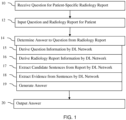
- Figure 1 shows an alternative embodiment of a method for obtaining information from a radiology report based on machine learning.
- Deep machine learning trains one or more machine-learnt networks.
- the machine-learnt networks are trained to contribute to natural language processing in a QA system, such as for analyzing the question, parsing the radiology report, matching text from the radiology report to the question, extracting evidence from the text, and/or determining an answer from the extracted evidence.
- the QA system is configured, in part by the deep learning, to answer a question specific to the content of one document, the radiology report.
- the method not part of the invention is implemented by the system of Figure 7 or another system.
- the method is implemented by a computer, server, or other processor.
- a radiology report is loaded from memory.
- An interface receives the question.
- a computer e.g., processor
- the computer outputs an answer to the question based on the information in the input radiology report.
- the output answer may be stored in memory or displayed on a display device. Different devices may be used.
- acts 15-19 represent one example for determining an answer to a question about a given radiology report. Less than all and/or additional acts may be used to determine the answer.
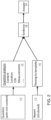
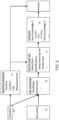
- Figures 2 and 5 shows two other embodiments, where the method of Figure 2 does not extract sentences in act 17 and the method of Figure 5 does not parse to a template.
- Acts 15-18 are shown as using deep-learnt networks. Different deep learnt networks or classifiers are used for each act, but a common network or a network formed from other networks may be used for implementing two or more acts. In other embodiments, a deep-learnt network is not used for one or more of acts 15-18 and/or is used for act 19.
- acts 15 and 16 are performed in a reverse order or simultaneously.
- interface hardware receives a question about a patient.
- the interface hardware is a communications interface, such as a user input device, port, bus, or memory.
- the question is received by the interface hardware, such as receiving a question typed on a keyboard at a universal serial bus (USB) connector of a computer.
- a microphone may be used to receive the question.
- USB universal serial bus
- the question is input as text or converted to text.
- the question is a natural language question, such as using phrasing, abbreviations, terms, and/or structure in a common language, such as English.
- the question is not a pre-prepared question, such as the user selecting a question from a list (e.g., from a table or drop-down menu). In alternative embodiments, the question is selected from a list.
- the question is patient-specific. Rather than being generic to many patients, the question is about a particular patient. The question is directed to or for a given patient. The same question may be asked for other patient. For example, the question is whether there is an indication of stenosis of a right coronary artery for the patient. In another example, the question is "what is the level of calcification of plaque?" In other embodiments, the question is not about a specific patient, but instead is a question that is asked for many patients.
- the question is received from the patient.
- the phrasing of the question may be different due to being from a patient, such as whether there is an indication of a heart problem rather than whether there is an indication of stenosis of a right coronary artery. Any vocabulary and phrasing may be used.
- the patient or a relative may ask a question, and the QA system provides an answer based on the patient's radiology report.
- the question is received from a treating physician.
- a surgeon, anesthesiologist, primary care physician (internal medicine), nurse, or other medical professional asks the question.
- the phrasing may be appropriate for the physician or medical professional. Since the medical professional may have different knowledge than the radiologist that prepared the report and/or to avoid having to review the entire report again to find an answer, the QA system answers the question from the medical professional based on the report for the patient being treated.
- the questions are posed by an algorithm.
- a computer generates one or more questions.
- Computer-generated questions may be used for machine training or for analysis of answers. For example, data analytics are performed for radiology reports for a physician and/or hospital. Key or embedded knowledge is automatically retrieved in the large volume of radiology reports.
- the question is loaded from memory or otherwise generated, and the answers are used for radiology research and/or to improve practices in reporting.
- the interface, memory, and/or processor inputs the question and a radiology report into the QA system.
- the patient-specific question and the radiology report for that patient are input to the natural language processing system for an answer.
- the natural language processing system includes a deep machine-learnt network. Other natural language processing tools may also be included. Computational linguistics (e.g., linguist rules), information retrieval, and/or knowledge representation may be part of the natural language processing system.
- the deep machine-learnt network contributes to any part of the natural language processing system.
- the network contributes to extraction of an answer from the patient-specific input (e.g., the radiology report for the patient and/or question about the patient). Any contribution may be provided, such as for analyzing the question, parsing the report, extracting candidate phrases or sentences from the report, retrieving evidence from the report and/or extracted information, and/or generating an answer from retrieved evidence.
- One network may be trained to perform all these acts. A separate network may be trained for each of the acts. Some acts may not use any machine-learnt network.
- the deep machine-learnt network is any now known or later developed network.
- deep learning uses a neural network with raw data or data without conversion to other features as input and a ground truth. The relationship of the values of the input raw data to the ground truth is learned.
- deep learning e.g., deep structured learning, hierarchical learning, or deep machine learning
- Deep learning may be used without including specific linguistic rules.
- a deep neural network processes the input via multiple layers of feature extraction to produce features used to output.
- the deep learning provides the features used to generate the output.
- other machine learning is used, such as a Bayesian network or support vector machine.
- the deep-machine learnt network may be a recursive neural network and/or a long term-short memory network. Any architecture may be used. Other deep learnt, sparse auto-encoding models may be trained and applied.
- the machine training is unsupervised in learning the features to use and how to classify given an input sample (i.e., feature vector). The combination of information in the raw data indicative of the ground truth is learned, and an output given input combination of information is learned.
- the training data includes many samples.
- the samples are based on the contribution.
- the samples include appropriate input information and corresponding ground truth or output to be learned.
- many different questions in the form of ASCI text are provided as samples of the raw data to be input.
- the ground truth is the question information, such as content (e.g., category of subject matter, object, or subject), type of question (Yes/No, how, what, where ...), anatomy, and/or anatomy location.
- the deep learning learns to provide the question information from an input question.
- many samples of radiology reports are used with the content of the reports in a structural template as the ground truth.
- the deep learning learns to provide the structural template populated with the content of the reports.
- many samples of question information and report sentences are provided with particular ones of the report sentences having content relative to the question information as ground truth.
- many samples of question information are provided as raw data inputs and corresponding text from medical reports or templates matching the question information are provided as the ground truth.
- the deep learning learns to provide key knowledge (e.g., evidence) from the text.
- many samples of extracted evidence and corresponding question information are provided with a correct answer as the ground truth.
- many samples of questions and radiology reports are provided with the correct answer as the ground truth.
- the network is trained to provide the answer from the question and report without intervening processing. Other inputs and ground truths (i.e., outputs) may be used.
- the trained network is stored in a memory.
- the trained artificial intelligence i.e., machine-learnt network
- the result of the training is a matrix or other model.
- the matrix represents the learned knowledge through machine training using deep learning.
- Other machine-learnt network representations may be used, such as a hierarchy of matrices or other non-linear models.
- the memory used for the training data may be used.
- the memory may be in other devices.
- the trained model is stored in a memory of a server.
- the server uses the trained model to output to clients.
- multiple copies of the trained model are provided to different physicians, medical scanners, and/or workstations for use by different physicians.
- the machine-learnt network is applied by a machine, such as a computer, processor, or server.
- the machine uses input raw data for a patient (i.e., radiology report, question, and/or information derived therefrom) and the machine-learnt network to generate an output, such as question information, a parse of the report, evidence, and/or an answer.
- the only inputs to the QA system are the question and the radiology report for the patient. Rather than answering the question based on a corpus that includes reports for other patients, only the radiology report or reports for the specific patient are input.
- the QA system may include learned knowledge from the deep learning, but that knowledge is not input during application to answer a question. The deep learnt knowledge is applied to answer the question.
- other information is input to answer the question, such as other information from a medical record of the patient and/or information generic to patients (e.g., a medical atlas).
- the input question is different than any question used to train the deep machine-learnt network. At least one word or order of words in the question is different.
- the input radiology report for the patient is different than any radiology report used to train the deep machine-learnt network. At least the text, image, or organization is different.
- the machine-learnt network is trained to predict an output based on the input even if the input is different than any used in training.
- the question and/or radiology report input during application is the same as used for training. Rather than looking up the output in a database, the machine-learnt network outputs an answer based on the training.
- the computer determines an answer to the input question.
- an answer to the question is derived from the radiology report. Only the information from the radiology report for the specific patient is used to derive the answer to the question. A patient-specific answer is determined as specific to the radiology report for that patient. Alternatively, other information is also used, such as atlas information.
- the answer is determined by the QA system with natural language processing including the deep machine-learnt network.
- the deep machine-learnt network is part of the natural language processing, such as to retrieve evidence in response to a natural language question about a patient from a radiology report for the patient and/or forming an answer from the evidence.
- the deep machine-learnt network is a natural language processing deep-learnt network.
- Other natural language processing may be applied, such as linguistic rules, information retrieval, knowledge representation, text/sentence negation, sentiment analysis, and/or logical reasoning.
- the natural language processing in general, performs multiple acts to derive the answer to the question from the radiology report.
- Question information is derived from the question using natural language processing.
- the radiology report is reformatted, parsed, used to populate a template, and/or separated using natural language processing.
- Evidence and/or candidate sentences or phrases relevant to the question are identified using natural language processing.
- the evidence and/or candidates are analyzed using natural language processing to provide an answer.
- Acts 15-19 show one example combination of acts using natural language processing.
- Figures 2 and 5 show other example embodiments of combinations of acts to derive an answer using natural language processing.
- the deep machine-learnt network or networks are used in one or more of the acts.
- Machine-learnt networks may be used in all or only a sub-set of the acts.
- question information is derived from the question. Any question information may be derived.
- the content e.g., subject, object, and/or category of subject matter
- type of question e.g., Yes/no, compound, who, what, where, how, why, when, ...), anatomy, anatomy location, or other question information is extracted from the question.
- the question is input as "is there a stenosis in the RCA?”
- the content is identified as coronary arteries; the type of question is Yes/No; a sign/measure/symptom is stenosis; and the anatomy/organ/segment is right coronary artery.
- Other medical related categorization and/or content may be derived, such as association with a branch or group of terms.
- Natural language processing is used to extract the question information. Some or all the question information may be derived by a deep machine-learnt network. The question is analyzed to determine the question information.
- radiology report information is derived from the radiology report.
- the radiology report is analyzed to understand the document. Sections or types of information may be identified. The content, anatomy, and/or other information about each part may be derived. Different parts of the radiology report are separated, such as identifying sentences, clauses or phrases. In one embodiment, the radiology report is split into sentences, but other separations (e.g., by section or grammar-based) may be used.
- the radiology report is parsed.
- the parsing locates different types of information and places the information into a template radiology report.
- the template includes a hierarchical standardized structure, which is populated from the radiology report based on natural language processing.
- grammatical rules or searching for punctuation and/or capitalization is used to extract the parts of the radiology report. Other derivations may be performed.
- Radiology report information For example, computational linguistics or knowledge representation are used to extract. Some or all the radiology report information may be derived by a deep machine-learnt network.
- candidate sentences or phrases are extracted from the radiology report and/or from the radiology report information from act 16.
- the information or parts of the radiology report corresponding to the question information are extracted.
- the sentences are compared to the question, and the candidate sentences that relate to the question are extracted (e.g., any sentence with content for right coronary artery is identified). Less than all the sentences are extracted as candidate sentences.
- the parts of the hierarchal template structure corresponding to the question are extracted.
- Natural language processing is used to extract from the radiology report information associated with or providing evidence for the question.
- a deep machine-learnt network may be applied to extract.
- the radiology report information that relates to the question information is output as a match.
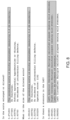
- Figure 8 shows an example, where three different questions and the corresponding four candidate sentences having the top four probabilities (shown) are listed.
- evidence is extracted from the radiology report information and/or extracted candidates therefrom. Any evidence that may contribute to the answer is extracted.
- the candidate sentences and/or radiology report information may be parsed or analyzed with respect to the question information. For example, a candidate sentence is "Right Coronary: No evidence of stenosis.” The extracted evidence is a negative with respect to stenosis and the right coronary artery.
- Natural language processing is used to extract the evidence.
- a deep machine-learnt network may be applied to extract the evidence.
- the evidence in the radiology report information and/or candidates that indicate a possible answer to the question is retrieved by the natural language processing.
- an answer is generated from the evidence, candidates, and/or radiology report information.
- the evidence retrieved from the radiology report is analyzed with respect to the question information to generate the answer. For example, the evidence is combined to determine the answer.
- Natural language processing is used to generate the answer.
- the evidence is combined, such as probabilistically, to determine a most likely or probable answer.
- Rules or fuzzy logic may be used.
- a deep-machine learnt network may be used to generate the answer, such as outputting possible answers and corresponding probabilities given input evidence and question information. The possible answer with a greatest probability is selected. Alternatively, the network may output a single answer with or without probability information.
- the computer e.g., processor
- the computer outputs the answer.
- the answer provided by the determination is output.
- the output is to a display device, such as a response to input of the question on a user interface.
- the output is to a report, such as adding the question and answer to the radiology report and/or the medical data record of the patient.
- the use of a deep machine-learnt network may make the response time of the computer to provide an answer more rapid. Due to the application of the network rather than hand programmed series of calculations, the computer operates more quickly to provide an answer.
- the output answer may assist a patient or family in understanding their radiology report. Rather than having to search for meanings of medical terms, simple language questions may be posed and simple language answers output. Arranging for consultation with a physician may be avoided.
- the output answer may assist a physician. Reviewing the entire radiology report again may be avoided by asking a question and receiving the answer. Where the radiologist uses different expressions or terminology, the physician may receive an answer that avoids confusion, assisting in diagnosis, prognosis, and/or treatment.
- Figures 2-4 show an example embodiment of the method of Figure 1 .
- a template matching approach is used, so the arrangement allows the QA system to operate based on structured language.
- the input question has sufficient information to form an answer, such as including radiology related anatomy.
- the input report uses structured language, so may be parsed or grammatically analyzed.
- a question with rich content and a radiology report are input in act 12.
- question information content, type, and anatomy location
- the input question is analyzed to understand the content, type, location etc.
- the radiology report is parsed into a template by another deep machine-learnt classifier.
- the template has a hierarchical standardized structure.
- Figure 3 shows an example part of the template, where different levels correspond to the hierarchy, ending with a level with findings.
- text from the template is selected based on the question information.
- the question information e.g., content, type, and/or anatomy location
- the answer is generated from the selected text.
- the question is matched into the template to pick-up the right answer.
- the selected text correlates to findings, which are used to answer the question.
- Figure 4 shows the outputs of the acts of Figure 2 in one example.
- the evidence is the selected text.
- the numbers by the question information represent probabilities associated with the information. Where the probability is 1.0, there is no contrary indication.
- Figures 5 and 6 show another example embodiment of the method of Figure 1 .
- Template matching is not used, so there are no requirements on the input document.
- This allows the computer to operate the QA system with text, graphics, charts, medical images, and/or spreadsheets. Structure and/or unstructured data may be used.
- the input question may be more flexible in content, and the QA system may better handle natural language than the embodiment of Figure 2 .
- a question and a radiology report are input in act 12.
- question information content, type, anatomy location, and measurements
- the input question is analyzed to understand the content, type, location etc.
- the radiology report is separated into sentences or phrases. Grammatical rules, punctuation rules, or other hand programmed rules are used to split the radiology report into sentences or phrases.
- candidates of the sentences or phrases are identified by another natural language processing deep machine-learnt classifier.
- the question and report sentences are fed into a QA matching model (e.g., a pre-trained deep learning model).
- the candidate sentences containing answers based on the question information are automatically detected by the model as the evidence.
- Natural language processing tools such as cTakes, may be used to extract the evidence.
- parts of the candidates are selected.
- the candidate sentences are analyzed using natural language processing tools and/or a deep machine-learnt network to extract evidence (e.g., key knowledge) from the candidate sentences.
- Evidence e.g., key knowledge
- Specific information from the statements that relates to the question is identified.
- the answer is generated from the selected text.
- the question is matched into the evidence to pick-up the right answer.
- the selected evidence correlates to an answer to the question.
- Figure 6 shows the outputs of some of the acts of Figure 5 in one example (e.g., extraction of key knowledge from the candidate sentences). Two candidate sentences are shown. Text or phrase from the candidate sentences extracted as evidence are shown. The location is a text location in the sentence represented numerically. The classification and positive/negative are further extracted evidence at those locations.
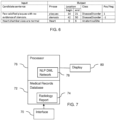
- Figure 7 shows a block diagram of the system according to the invention for obtaining information from a radiology report based on machine learning.
- the system is for application of the machine-learnt model but may alternatively or additionally be used for training with machine learning.
- question information, template population, report parsing, matching of the question to candidates, text, or other evidence, and/or matching the evidence to an answer may be performed more rapidly by the system.
- the system implements a QA and/or natural language processing system able to derive answers to questions based on patient-specific radiology reports.
- the system implements the method of Figure 1 , the method of Figure 2 , the method of Figure 5 , and/or other natural language processing using a deep machine-learnt network to contributed to answering a question for a specific patient.
- Other methods or acts may be implemented, such as acts for selecting the radiology report and/or using the answer.
- the system includes an interface 70, a medical records database 72 with a radiology report 74, a processor 76 for applying a natural language processing, deep machine-learnt network 78, and a display 80. Additional, different, or fewer components may be provided.
- a medical imager is provided for scanning the patient to generate the radiology report 74.
- a network or network connection is provided, such as for networking with a medical imaging network or data archival system or interconnecting the processor 76 and the database 72.
- the interface 70, medical records database 72, processor 76, and/or display 80 are part of a medical imager, server, workstation, or computer.
- the interface 70, medical records database 72, processor 76, and/or display 80 are a personal computer, such as desktop or laptop.
- the medical records database 72 is part of a separate computer from the processor 76.
- the interface 70 is a communications port, such as an ethernet card.
- the interface 70 is a user interface, such as user input device (e.g., keyboard, mouse, trackpad, touchscreen, and/or roller ball).
- the interface 70 may be a bus, chip, or other hardware for receiving the radiology report and/or question.
- the interface 70 is configured to receive a question about a radiology report of a patient.
- the configuration is provided by software, hardware, and/or firmware.
- the interface 70 is configured by an operating system to receive user entry of a question via audio or text.
- the medical records database 72 is a random access memory, system memory, cache memory, hard drive, optical media, magnetic media, flash drive, buffer, database, combinations thereof, or other now known or later developed memory device for storing the radiology report 74, the deep machine-learnt network 78, and/or data generated by natural language processing (e.g., template, sentences, candidates, evidence, text, probabilities, and/or answer).
- the medical records database 72 is part of the computer associated with the processor 76 or is a separate or remote database for access over a computer network.
- the medical records database 72 or other memory is alternatively or additionally a non-transitory computer readable storage medium storing data representing instructions executable by the programmed processor 76 for learning or applying the machine-learnt model, and/or for natural language processing.
- the instructions for implementing the processes, methods, and/or techniques discussed herein are provided on non-transitory computer-readable storage media or memories, such as a cache, buffer, RAM, removable media, hard drive, or other computer readable storage media.
- Non-transitory computer readable storage media include various types of volatile and nonvolatile storage media. The functions, acts or tasks illustrated in the figures or described herein are executed in response to one or more sets of instructions stored in or on computer readable storage media.
- processing strategies may include multiprocessing, multitasking, parallel processing, and the like.
- the instructions are stored on a removable media device for reading by local or remote systems.
- the instructions are stored in a remote location for transfer through a computer network or over telephone lines.
- the instructions are stored within a given computer, CPU, GPU, or system.
- the processor 76 is a general processor, control processor, digital signal processor, application specific integrated circuit, field programmable gate array, or other hardware processor for natural language processing in a QA system.
- the processor 76 is part of a computer, workstation, server, or other device configured to apply machine learning and/or to apply a machine-learnt network 78.
- the processor 76 is configured by software, hardware, and/or firmware.
- the processor 76 is configured by one or more machine learning algorithms.
- the processor 76 is configured, in part, by a learnt matrix or matrices, table, or other neural network representation associating input data to output data.
- the processor 76 applies the machine-learnt network 78 and/or other natural language processing.
- the machine-learnt network 78 as implemented by the processor 76, contributes to determining an answer to a question from a radiology report.
- the processor 76 is configured to analyze the question for information, identify parts of the radiology report, retrieve evidence related to the question from the parts, and generate an answer to the question based on the evidence.
- the configuration for at least one of the analyze, identify, retrieve, or generate includes natural language processing and/or application of a natural language processing, deep training-based machine-learnt network.
- the processor 76 is configured to: analyze by extraction of the information as content, type, and anatomy location by a first deep machine-learnt classifier of the deep-training based machine-learnt network; identify the parts by a parse of the radiology report into a template by a second deep machine-learnt classifier of the deep-training based machine-learnt network; retrieve the evidence as a selection of text from the template based on the content, type, and/or anatomy location; and/or generate the answer from the selected text.
- the processor 76 is configured to: extract content, type, and anatomy location from the question with a first deep machine-learnt classifier of the deep-training based machine-learnt network; separate the radiology report into sentences or phrases; identify candidates of the sentences or phrases by a second deep machine-learnt classifier of the deep-training based machine-learnt network; select parts of the sentences or phrases; and/or generate the answer from the selected parts.
- the display 80 is a monitor, LCD, projector, plasma display, CRT, printer, or other now known or later developed device for displaying the answer, question, evidence, and/or radiology report.
- the display 80 receives the answer from the processor 76, the radiology report from the processor 76 or database 72, and the question from the interface 70 or processor 76.
- the processor 76 formats the data into an image and stores the image in a buffer, configuring the display 80.
- the display 80 uses the image in the buffer to generate an image for viewing.
- the image includes graphics, alphanumeric text, anatomical scan, and/or other information for communicating the answer.
Landscapes
- Engineering & Computer Science (AREA)
- Health & Medical Sciences (AREA)
- General Health & Medical Sciences (AREA)
- Theoretical Computer Science (AREA)
- Physics & Mathematics (AREA)
- Biomedical Technology (AREA)
- Medical Informatics (AREA)
- Public Health (AREA)
- Primary Health Care (AREA)
- Epidemiology (AREA)
- Data Mining & Analysis (AREA)
- General Physics & Mathematics (AREA)
- General Engineering & Computer Science (AREA)
- Artificial Intelligence (AREA)
- Computational Linguistics (AREA)
- Biophysics (AREA)
- Software Systems (AREA)
- Molecular Biology (AREA)
- Computing Systems (AREA)
- Life Sciences & Earth Sciences (AREA)
- Evolutionary Computation (AREA)
- Mathematical Physics (AREA)
- Pathology (AREA)
- Databases & Information Systems (AREA)
- Business, Economics & Management (AREA)
- General Business, Economics & Management (AREA)
- Audiology, Speech & Language Pathology (AREA)
- Medical Treatment And Welfare Office Work (AREA)
- Apparatus For Radiation Diagnosis (AREA)
Claims (6)
- Computerimplementiertes Verfahren zur Gewinnung von Informationen aus einem Radiologiebericht (74) auf der Grundlage von maschinellem Lernen, wobei das Verfahren umfasst:Empfangen (10) einer Frage über einen Patienten von der Hardware einer Schnittstelle (70), wobei das Empfangen (10) das Empfangen (10) der Frage von dem Patienten umfasst oder wobei das Empfangen (10) das Empfangen (10) der Frage von einem behandelnden Arzt des Patienten umfasst und wobei die Hardware der Schnittstelle (70) eine Benutzerschnittstelle ist;Eingeben (12) der Frage und eines Radiologieberichts (74) aus der medizinischen Bildgebung des Patienten in ein System zur Verarbeitung natürlicher Sprache, wobei das System zur Verarbeitung natürlicher Sprache ein tiefes maschinelles Netzwerk umfasst, das so trainiert wurde, dass es zur Extraktion einer Antwort aus einer patientenspezifischen Eingabe beiträgt;Bestimmen (14) einer Antwort auf die Frage als Reaktion auf das Eingeben (12) und unter Verwendung des tiefen maschinell erlernten Netzwerks, wobei die Antwort spezifisch für den Radiologiebericht (74) für den Patienten ist; undAusgeben (20) der Antwort, wobei die Ausgabe an eine Anzeigevorrichtung erfolgt, beispielsweise als Antwort auf die Eingabe der Frage auf der Benutzerschnittstelle,wobei das tiefe maschinell erlernte Netzwerk mindestens einen ersten und einen zweiten tiefen maschinell erlernten Klassifikator umfasst, und wobei das Bestimmen (14) umfasst:Extrahieren (15) des Inhalts, der Art der Frage, der Lage der Anatomie und der Maße aus der Frage durch den ersten tiefen maschinell erlernten Klassifikator und Analysieren der Frage, um den Inhalt, die Art der Frage, die Lage der Anatomie und die Maße zu verstehen,Kopieren (16) des Radiologieberichts (74) in eine Schablone durch den zweiten tiefen maschinell erlernten Klassifikator, wobei die Schablone eine hierarchische standardisierte Struktur mit verschiedenen Ebenen umfasst, die mit einer Ebene mit Befunden endet, und wobei die Schablone aus dem Radiologiebericht auf der Grundlage der natürlichen Sprachverarbeitung ausgefüllt wird,Auswählen (18) von Text aus der Schablone auf der Grundlage des Inhalts, der Art der Frage, der anatomischen Position und der Messungen, wobei der Inhalt, die Art der Frage, die anatomische Position und die Messungen in die Schablone eingepasst werden, um den entsprechenden Text als Beweis auszuwählen, undGenerieren (19) der Antwort aus dem ausgewählten Text, wobei die Frage mit der Vorlage abgeglichen wird, um die richtige Antwort zu finden, wobei der ausgewählte Text mit Erkenntnissen korreliert, die zur Beantwortung der Frage verwendet werden.
- Verfahren nach Anspruch 1, wobei das Bestimmen (14) das Ableiten (15) von Frageinformationen aus der Frage durch das tiefe maschinell erlernte Netzwerk umfasst
und/oder
wobei das Bestimmen (14) das Ableiten (16) von Informationen des Radiologieberichts (74) aus dem Radiologiebericht (74) durch das tiefe maschinell erlernte Netzwerk umfasst. - Verfahren nach einem der vorhergehenden Ansprüche, wobei das Bestimmen (14) das Extrahieren (17) von Sätzen oder Phrasen aus dem Radiologiebericht (74) durch das tiefe maschinell erlernte Netzwerk umfasst
und/oder
wobei das Bestimmen (14) das Extrahieren (18) von Beweisen aus Sätzen oder Phrasen aus dem Radiologiebericht (74) umfasst, wobei die Beweise durch das tiefe maschinell erlernte Netzwerk extrahiert werdenk. - Verfahren nach einem der vorhergehenden Ansprüche, wobei das Eingeben (12) nur das Eingeben (12) der Frage und des Radiologieberichts (74) umfasst und wobei das Bestimmen (14) das Bestimmen (14) der Antwort nur aus der Information in dem Radiologiebericht (74) umfasst,
oderwobei das Eingeben (12) der Frage das Eingeben (12) der Frage umfasst, wobei sich die Frage von jeder Frage unterscheidet, die zum Trainieren des tiefen maschinell erlernten Netzwerks verwendet wird, und wobei das Eingeben (12) des Radiologieberichts (74) das Eingeben (12) des Radiologieberichts (74) umfasst, wobei sich der Radiologiebericht (74) von jedem Radiologiebericht (74) unterscheidet, der zum Trainieren des tiefen maschinell erlernten Netzwerks verwendet wird,
oderwobei das Eingeben (12) der Frage das Eingeben (12) als Text ohne Auswahl aus einer Liste umfasst. - System zur Gewinnung von Informationen aus einem Radiologiebericht (74) auf der Grundlage von maschinellem Lernen, wobei das System umfasst:eine Schnittstelle (70), die so konfiguriert ist, dass sie eine Frage zu einem Radiologiebericht (74) eines Patienten empfängt, wobei das Empfangen (10) das Empfangen (10) der Frage von dem Patienten umfasst oder wobei das Empfangen (10) das Empfangen (10) der Frage von einem behandelnden Arzt des Patienten umfasst und wobei die Schnittstelle (70) eine Benutzerschnittstelle ist;eine Datenbank für medizinische Aufzeichnungen (72), in der der radiologische Bericht (74) des Patienten gespeichert ist;einen Prozessor (76), der so konfiguriert ist, dass er:Eingeben (12) der Frage und eines Radiologieberichts (74) aus der medizinischen Bildgebung des Patienten in ein System zur Verarbeitung natürlicher Sprache, wobei das System zur Verarbeitung natürlicher Sprache ein tiefes maschinelles Netzwerk umfasst, das so trainiert wurde, dass es zur Extraktion einer Antwort aus einer patientenspezifischen Eingabe beiträgt;Bestimmen (14) einer Antwort auf die Frage als Reaktion auf das Eingeben (12) und unter Verwendung des tiefen maschinell erlernten Netzwerks, wobei die Antwort spezifisch für den Radiologiebericht (74) für den Patienten ist; undwobei das tiefe maschinell erlernte Netzwerk mindestens einen ersten und einen zweiten tiefen maschinell erlernten Klassifikator umfasst, und wobei das Bestimmen (14) umfasst:Extrahieren (15) des Inhalts, der Art der Frage, der Lage der Anatomie und der Maße aus der Frage durch den ersten tiefen maschinell erlernten Klassifikator und Analysieren der Frage, um den Inhalt, die Art der Frage, die Lage der Anatomie und die Maße zu verstehen,Kopieren (16) des Radiologieberichts (74) in eine Schablone durch den zweiten tiefen maschinell erlernten Klassifikator, wobei die Schablone eine hierarchische standardisierte Struktur mit verschiedenen Ebenen umfasst, die mit einer Ebene mit Befunden endet, und wobei die Schablone aus dem Radiologiebericht auf der Grundlage der natürlichen Sprachverarbeitung ausgefüllt wird,Auswählen (18) von Text aus der Schablone auf der Grundlage des Inhalts, der Art der Frage, der anatomischen Position und der Messungen, wobei der Inhalt, die Art der Frage, die anatomische Position und die Messungen in die Schablone eingepasst werden, um den entsprechenden Text als Beweis auszuwählen, undGenerieren (19) der Antwort aus dem ausgewählten Text, wobei die Frage in die Vorlage eingepasst wird, um die richtige Antwort auszuwählen, wobei der ausgewählte Text mit Erkenntnissen korreliert, die zur Beantwortung der Frage verwendet werden; undeine Anzeige (80), die so konfiguriert ist, dass sie die Antwort, beispielsweise eine Antwort auf die Eingabe der Frage, auf der Benutzerschnittstelle ausgibt.
- System nach Anspruch 5, wobei das tiefe maschinell erlernte Netzwerk (78) ein Netzwerk mit Langzeit-Kurzzeitgedächtnis umfasst.
Applications Claiming Priority (1)
| Application Number | Priority Date | Filing Date | Title |
|---|---|---|---|
| US15/957,143 US20190325300A1 (en) | 2018-04-19 | 2018-04-19 | Artificial intelligence querying for radiology reports in medical imaging |
Publications (3)
| Publication Number | Publication Date |
|---|---|
| EP3557584A1 EP3557584A1 (de) | 2019-10-23 |
| EP3557584B1 true EP3557584B1 (de) | 2024-08-21 |
| EP3557584C0 EP3557584C0 (de) | 2024-08-21 |
Family
ID=66101888
Family Applications (1)
| Application Number | Title | Priority Date | Filing Date |
|---|---|---|---|
| EP19167486.0A Active EP3557584B1 (de) | 2018-04-19 | 2019-04-05 | Abfrage mit künstlicher intelligenz für radiologieberichte in der medizinischen bildgebung |
Country Status (2)
| Country | Link |
|---|---|
| US (1) | US20190325300A1 (de) |
| EP (1) | EP3557584B1 (de) |
Families Citing this family (11)
| Publication number | Priority date | Publication date | Assignee | Title |
|---|---|---|---|---|
| JP7007469B2 (ja) * | 2018-04-24 | 2022-01-24 | 富士フイルム株式会社 | 医療文書作成支援装置、方法およびプログラム、学習済みモデル、並びに学習装置、方法およびプログラム |
| EP3567605B1 (de) * | 2018-05-08 | 2025-04-30 | Siemens Healthineers AG | Strukturierte berichtsdaten aus einem medizinischen textbericht |
| CN111489802B (zh) * | 2020-03-31 | 2023-07-25 | 重庆金域医学检验所有限公司 | 报告单编码模型生成方法、系统、设备及存储介质 |
| CN111597790B (zh) * | 2020-05-25 | 2023-12-05 | 郑州轻工业大学 | 一种基于人工智能的自然语言处理系统 |
| CN113743096A (zh) * | 2020-05-27 | 2021-12-03 | 南京大学 | 一种基于自然语言处理的众包测试报告相似度检测的方法 |
| EP4300505A1 (de) * | 2022-06-29 | 2024-01-03 | Ebit srl | Strukturierte medizinische berichterstattungsabläufe mit hilfe von techniken zur verarbeitung natürlicher sprache |
| EP4414995A1 (de) * | 2023-02-08 | 2024-08-14 | Vulgaroo | Verfahren zur erzeugung von berichten eines medizinischen verfahrens |
| CN116257613B (zh) * | 2023-02-10 | 2024-02-06 | 北京百度网讯科技有限公司 | 数据生产方法、装置、电子设备及存储介质 |
| US12536661B2 (en) | 2023-09-28 | 2026-01-27 | Ge Precision Healthcare | System and method for providing AI-assisted checklist for interventional medical procedures |
| CN117095795B (zh) * | 2023-10-13 | 2023-12-15 | 万里云医疗信息科技(北京)有限公司 | 用于显示阳性部位的医学影像的确定方法和装置 |
| CN118170892B (zh) * | 2024-05-13 | 2024-08-09 | 山东第一医科大学附属省立医院(山东省立医院) | 体检报告影像学检查辅助解读方法及装置 |
Family Cites Families (2)
| Publication number | Priority date | Publication date | Assignee | Title |
|---|---|---|---|---|
| US11024406B2 (en) * | 2013-03-12 | 2021-06-01 | Nuance Communications, Inc. | Systems and methods for identifying errors and/or critical results in medical reports |
| US9984772B2 (en) * | 2016-04-07 | 2018-05-29 | Siemens Healthcare Gmbh | Image analytics question answering |
-
2018
- 2018-04-19 US US15/957,143 patent/US20190325300A1/en not_active Abandoned
-
2019
- 2019-04-05 EP EP19167486.0A patent/EP3557584B1/de active Active
Also Published As
| Publication number | Publication date |
|---|---|
| EP3557584C0 (de) | 2024-08-21 |
| US20190325300A1 (en) | 2019-10-24 |
| EP3557584A1 (de) | 2019-10-23 |
Similar Documents
| Publication | Publication Date | Title |
|---|---|---|
| EP3557584A1 (de) | Abfrage mit künstlicher intelligenz für radiologieberichte in der medizinischen bildgebung | |
| US20250173613A1 (en) | Training of text and image models | |
| Karthikeyan et al. | An OCR post-correction approach using deep learning for processing medical reports | |
| US11282196B2 (en) | Automated patient complexity classification for artificial intelligence tools | |
| US10929420B2 (en) | Structured report data from a medical text report | |
| US11610678B2 (en) | Medical diagnostic aid and method | |
| CN111727478B (zh) | 使用深度卷积网络从医学文本中自动提取结构化标签并将其用于训练计算机视觉模型 | |
| Carchiolo et al. | Medical prescription classification: a NLP-based approach | |
| CN112712879A (zh) | 医学影像报告的信息提取方法、装置、设备及存储介质 | |
| US10892056B2 (en) | Artificial intelligence based alert system | |
| US20240006039A1 (en) | Medical structured reporting workflow assisted by natural language processing techniques | |
| Alsharid et al. | Captioning ultrasound images automatically | |
| US12586676B2 (en) | Image interpretation model development | |
| EP4421816A1 (de) | Technik zur erstellung von medizinischen untersuchungsberichten auf sensordatenbasis | |
| Mahalakshmi et al. | A real-time medical report analysis and AI-powered diagnosis: a cloud-based solution for improved patient care | |
| Nair et al. | Automated clinical concept-value pair extraction from discharge summary of pituitary adenoma patients | |
| Liberatore et al. | The potential of artificial intelligence to transform medicine | |
| Khoriba et al. | Large Language Models in Medical Image Understanding | |
| Derek et al. | Natural Language Processing (NLP) in Healthcare AI: Enhancing Clinical Insight Extraction from Unstructured Patient Data | |
| Al-Aiad et al. | Text mining in radiology reports (Methodologies and algorithms), and how it affects on workflow and supports decision making in clinical practice (Systematic review) | |
| Puts et al. | Natural language processing in oncology | |
| Zazum et al. | An Implementation of ICD Coding for Bi-Lingual Medical Records Using Deep Learning | |
| Kanani et al. | Information extraction and summarization of medical reports using Textract and GPT-2 | |
| Santin et al. | Natural language processing in the classification of radiology reports in benign gallbladder diseases | |
| US20260057983A1 (en) | System and Computer-Implemented Method For Generating Clinical Notes |
Legal Events
| Date | Code | Title | Description |
|---|---|---|---|
| PUAI | Public reference made under article 153(3) epc to a published international application that has entered the european phase |
Free format text: ORIGINAL CODE: 0009012 |
|
| STAA | Information on the status of an ep patent application or granted ep patent |
Free format text: STATUS: REQUEST FOR EXAMINATION WAS MADE |
|
| 17P | Request for examination filed |
Effective date: 20190405 |
|
| AK | Designated contracting states |
Kind code of ref document: A1 Designated state(s): AL AT BE BG CH CY CZ DE DK EE ES FI FR GB GR HR HU IE IS IT LI LT LU LV MC MK MT NL NO PL PT RO RS SE SI SK SM TR |
|
| AX | Request for extension of the european patent |
Extension state: BA ME |
|
| RBV | Designated contracting states (corrected) |
Designated state(s): AL AT BE BG CH CY CZ DE DK EE ES FI FR GB GR HR HU IE IS IT LI LT LU LV MC MK MT NL NO PL PT RO RS SE SI SK SM TR |
|
| STAA | Information on the status of an ep patent application or granted ep patent |
Free format text: STATUS: EXAMINATION IS IN PROGRESS |
|
| 17Q | First examination report despatched |
Effective date: 20211015 |
|
| RAP1 | Party data changed (applicant data changed or rights of an application transferred) |
Owner name: SIEMENS HEALTHINEERS AG |
|
| REG | Reference to a national code |
Ref country code: DE Ref legal event code: R079 Free format text: PREVIOUS MAIN CLASS: G16H0015000000 Ipc: G16H0040670000 Ref country code: DE Ref legal event code: R079 Ref document number: 602019057264 Country of ref document: DE Free format text: PREVIOUS MAIN CLASS: G16H0015000000 Ipc: G16H0040670000 |
|
| GRAP | Despatch of communication of intention to grant a patent |
Free format text: ORIGINAL CODE: EPIDOSNIGR1 |
|
| STAA | Information on the status of an ep patent application or granted ep patent |
Free format text: STATUS: GRANT OF PATENT IS INTENDED |
|
| RIC1 | Information provided on ipc code assigned before grant |
Ipc: G06F 40/56 20200101ALI20240501BHEP Ipc: G16H 15/00 20180101ALI20240501BHEP Ipc: G16H 40/67 20180101AFI20240501BHEP |
|
| INTG | Intention to grant announced |
Effective date: 20240517 |
|
| RIN1 | Information on inventor provided before grant (corrected) |
Inventor name: XU, JUAN Inventor name: SHARMA, PUNEET |
|
| GRAS | Grant fee paid |
Free format text: ORIGINAL CODE: EPIDOSNIGR3 |
|
| GRAA | (expected) grant |
Free format text: ORIGINAL CODE: 0009210 |
|
| STAA | Information on the status of an ep patent application or granted ep patent |
Free format text: STATUS: THE PATENT HAS BEEN GRANTED |
|
| AK | Designated contracting states |
Kind code of ref document: B1 Designated state(s): AL AT BE BG CH CY CZ DE DK EE ES FI FR GB GR HR HU IE IS IT LI LT LU LV MC MK MT NL NO PL PT RO RS SE SI SK SM TR |
|
| REG | Reference to a national code |
Ref country code: GB Ref legal event code: FG4D |
|
| REG | Reference to a national code |
Ref country code: CH Ref legal event code: EP |
|
| REG | Reference to a national code |
Ref country code: IE Ref legal event code: FG4D |
|
| REG | Reference to a national code |
Ref country code: DE Ref legal event code: R096 Ref document number: 602019057264 Country of ref document: DE |
|
| U01 | Request for unitary effect filed |
Effective date: 20240823 |
|
| U07 | Unitary effect registered |
Designated state(s): AT BE BG DE DK EE FI FR IT LT LU LV MT NL PT RO SE SI Effective date: 20240903 |
|
| PG25 | Lapsed in a contracting state [announced via postgrant information from national office to epo] |
Ref country code: NO Free format text: LAPSE BECAUSE OF FAILURE TO SUBMIT A TRANSLATION OF THE DESCRIPTION OR TO PAY THE FEE WITHIN THE PRESCRIBED TIME-LIMIT Effective date: 20241121 |
|
| PG25 | Lapsed in a contracting state [announced via postgrant information from national office to epo] |
Ref country code: GR Free format text: LAPSE BECAUSE OF FAILURE TO SUBMIT A TRANSLATION OF THE DESCRIPTION OR TO PAY THE FEE WITHIN THE PRESCRIBED TIME-LIMIT Effective date: 20241122 Ref country code: PL Free format text: LAPSE BECAUSE OF FAILURE TO SUBMIT A TRANSLATION OF THE DESCRIPTION OR TO PAY THE FEE WITHIN THE PRESCRIBED TIME-LIMIT Effective date: 20240821 |
|
| PG25 | Lapsed in a contracting state [announced via postgrant information from national office to epo] |
Ref country code: IS Free format text: LAPSE BECAUSE OF FAILURE TO SUBMIT A TRANSLATION OF THE DESCRIPTION OR TO PAY THE FEE WITHIN THE PRESCRIBED TIME-LIMIT Effective date: 20241221 |
|
| PG25 | Lapsed in a contracting state [announced via postgrant information from national office to epo] |
Ref country code: HR Free format text: LAPSE BECAUSE OF FAILURE TO SUBMIT A TRANSLATION OF THE DESCRIPTION OR TO PAY THE FEE WITHIN THE PRESCRIBED TIME-LIMIT Effective date: 20240821 |
|
| PG25 | Lapsed in a contracting state [announced via postgrant information from national office to epo] |
Ref country code: ES Free format text: LAPSE BECAUSE OF FAILURE TO SUBMIT A TRANSLATION OF THE DESCRIPTION OR TO PAY THE FEE WITHIN THE PRESCRIBED TIME-LIMIT Effective date: 20240821 Ref country code: RS Free format text: LAPSE BECAUSE OF FAILURE TO SUBMIT A TRANSLATION OF THE DESCRIPTION OR TO PAY THE FEE WITHIN THE PRESCRIBED TIME-LIMIT Effective date: 20241121 |
|
| PG25 | Lapsed in a contracting state [announced via postgrant information from national office to epo] |
Ref country code: RS Free format text: LAPSE BECAUSE OF FAILURE TO SUBMIT A TRANSLATION OF THE DESCRIPTION OR TO PAY THE FEE WITHIN THE PRESCRIBED TIME-LIMIT Effective date: 20241121 Ref country code: PL Free format text: LAPSE BECAUSE OF FAILURE TO SUBMIT A TRANSLATION OF THE DESCRIPTION OR TO PAY THE FEE WITHIN THE PRESCRIBED TIME-LIMIT Effective date: 20240821 Ref country code: NO Free format text: LAPSE BECAUSE OF FAILURE TO SUBMIT A TRANSLATION OF THE DESCRIPTION OR TO PAY THE FEE WITHIN THE PRESCRIBED TIME-LIMIT Effective date: 20241121 Ref country code: IS Free format text: LAPSE BECAUSE OF FAILURE TO SUBMIT A TRANSLATION OF THE DESCRIPTION OR TO PAY THE FEE WITHIN THE PRESCRIBED TIME-LIMIT Effective date: 20241221 Ref country code: HR Free format text: LAPSE BECAUSE OF FAILURE TO SUBMIT A TRANSLATION OF THE DESCRIPTION OR TO PAY THE FEE WITHIN THE PRESCRIBED TIME-LIMIT Effective date: 20240821 Ref country code: GR Free format text: LAPSE BECAUSE OF FAILURE TO SUBMIT A TRANSLATION OF THE DESCRIPTION OR TO PAY THE FEE WITHIN THE PRESCRIBED TIME-LIMIT Effective date: 20241122 Ref country code: ES Free format text: LAPSE BECAUSE OF FAILURE TO SUBMIT A TRANSLATION OF THE DESCRIPTION OR TO PAY THE FEE WITHIN THE PRESCRIBED TIME-LIMIT Effective date: 20240821 |
|
| PG25 | Lapsed in a contracting state [announced via postgrant information from national office to epo] |
Ref country code: SM Free format text: LAPSE BECAUSE OF FAILURE TO SUBMIT A TRANSLATION OF THE DESCRIPTION OR TO PAY THE FEE WITHIN THE PRESCRIBED TIME-LIMIT Effective date: 20240821 |
|
| PG25 | Lapsed in a contracting state [announced via postgrant information from national office to epo] |
Ref country code: CZ Free format text: LAPSE BECAUSE OF FAILURE TO SUBMIT A TRANSLATION OF THE DESCRIPTION OR TO PAY THE FEE WITHIN THE PRESCRIBED TIME-LIMIT Effective date: 20240821 |
|
| PG25 | Lapsed in a contracting state [announced via postgrant information from national office to epo] |
Ref country code: SK Free format text: LAPSE BECAUSE OF FAILURE TO SUBMIT A TRANSLATION OF THE DESCRIPTION OR TO PAY THE FEE WITHIN THE PRESCRIBED TIME-LIMIT Effective date: 20240821 |
|
| U20 | Renewal fee for the european patent with unitary effect paid |
Year of fee payment: 7 Effective date: 20250417 |
|
| PLBE | No opposition filed within time limit |
Free format text: ORIGINAL CODE: 0009261 |
|
| STAA | Information on the status of an ep patent application or granted ep patent |
Free format text: STATUS: NO OPPOSITION FILED WITHIN TIME LIMIT |
|
| PGFP | Annual fee paid to national office [announced via postgrant information from national office to epo] |
Ref country code: GB Payment date: 20250507 Year of fee payment: 7 |
|
| 26N | No opposition filed |
Effective date: 20250522 |
|
| REG | Reference to a national code |
Ref country code: CH Ref legal event code: H13 Free format text: ST27 STATUS EVENT CODE: U-0-0-H10-H13 (AS PROVIDED BY THE NATIONAL OFFICE) Effective date: 20251125 |
|
| PG25 | Lapsed in a contracting state [announced via postgrant information from national office to epo] |
Ref country code: MC Free format text: LAPSE BECAUSE OF FAILURE TO SUBMIT A TRANSLATION OF THE DESCRIPTION OR TO PAY THE FEE WITHIN THE PRESCRIBED TIME-LIMIT Effective date: 20240821 |
|
| PG25 | Lapsed in a contracting state [announced via postgrant information from national office to epo] |
Ref country code: CH Free format text: LAPSE BECAUSE OF NON-PAYMENT OF DUE FEES Effective date: 20250430 |
|
| PG25 | Lapsed in a contracting state [announced via postgrant information from national office to epo] |
Ref country code: IE Free format text: LAPSE BECAUSE OF NON-PAYMENT OF DUE FEES Effective date: 20250405 |