EP3556093B1 - Farbabstufungs-interpolationsverfahren und vorrichtungen - Google Patents
Farbabstufungs-interpolationsverfahren und vorrichtungen Download PDFInfo
- Publication number
- EP3556093B1 EP3556093B1 EP17822149.5A EP17822149A EP3556093B1 EP 3556093 B1 EP3556093 B1 EP 3556093B1 EP 17822149 A EP17822149 A EP 17822149A EP 3556093 B1 EP3556093 B1 EP 3556093B1
- Authority
- EP
- European Patent Office
- Prior art keywords
- color
- color transform
- transform
- original picture
- transforms
- Prior art date
- Legal status (The legal status is an assumption and is not a legal conclusion. Google has not performed a legal analysis and makes no representation as to the accuracy of the status listed.)
- Active
Links
Images

Classifications
-
- G—PHYSICS
- G09—EDUCATION; CRYPTOGRAPHY; DISPLAY; ADVERTISING; SEALS
- G09G—ARRANGEMENTS OR CIRCUITS FOR CONTROL OF INDICATING DEVICES USING STATIC MEANS TO PRESENT VARIABLE INFORMATION
- G09G5/00—Control arrangements or circuits for visual indicators common to cathode-ray tube indicators and other visual indicators
- G09G5/02—Control arrangements or circuits for visual indicators common to cathode-ray tube indicators and other visual indicators characterised by the way in which colour is displayed
- G09G5/026—Control of mixing and/or overlay of colours in general
-
- G—PHYSICS
- G09—EDUCATION; CRYPTOGRAPHY; DISPLAY; ADVERTISING; SEALS
- G09G—ARRANGEMENTS OR CIRCUITS FOR CONTROL OF INDICATING DEVICES USING STATIC MEANS TO PRESENT VARIABLE INFORMATION
- G09G5/00—Control arrangements or circuits for visual indicators common to cathode-ray tube indicators and other visual indicators
- G09G5/003—Details of a display terminal, the details relating to the control arrangement of the display terminal and to the interfaces thereto
- G09G5/005—Adapting incoming signals to the display format of the display terminal
-
- G—PHYSICS
- G09—EDUCATION; CRYPTOGRAPHY; DISPLAY; ADVERTISING; SEALS
- G09G—ARRANGEMENTS OR CIRCUITS FOR CONTROL OF INDICATING DEVICES USING STATIC MEANS TO PRESENT VARIABLE INFORMATION
- G09G5/00—Control arrangements or circuits for visual indicators common to cathode-ray tube indicators and other visual indicators
- G09G5/10—Intensity circuits
-
- H—ELECTRICITY
- H04—ELECTRIC COMMUNICATION TECHNIQUE
- H04N—PICTORIAL COMMUNICATION, e.g. TELEVISION
- H04N19/00—Methods or arrangements for coding, decoding, compressing or decompressing digital video signals
- H04N19/30—Methods or arrangements for coding, decoding, compressing or decompressing digital video signals using hierarchical techniques, e.g. scalability
-
- H—ELECTRICITY
- H04—ELECTRIC COMMUNICATION TECHNIQUE
- H04N—PICTORIAL COMMUNICATION, e.g. TELEVISION
- H04N19/00—Methods or arrangements for coding, decoding, compressing or decompressing digital video signals
- H04N19/46—Embedding additional information in the video signal during the compression process
-
- H—ELECTRICITY
- H04—ELECTRIC COMMUNICATION TECHNIQUE
- H04N—PICTORIAL COMMUNICATION, e.g. TELEVISION
- H04N9/00—Details of colour television systems
- H04N9/64—Circuits for processing colour signals
- H04N9/67—Circuits for processing colour signals for matrixing
-
- H—ELECTRICITY
- H04—ELECTRIC COMMUNICATION TECHNIQUE
- H04N—PICTORIAL COMMUNICATION, e.g. TELEVISION
- H04N9/00—Details of colour television systems
- H04N9/64—Circuits for processing colour signals
- H04N9/68—Circuits for processing colour signals for controlling the amplitude of colour signals, e.g. automatic chroma control circuits
-
- G—PHYSICS
- G09—EDUCATION; CRYPTOGRAPHY; DISPLAY; ADVERTISING; SEALS
- G09G—ARRANGEMENTS OR CIRCUITS FOR CONTROL OF INDICATING DEVICES USING STATIC MEANS TO PRESENT VARIABLE INFORMATION
- G09G2340/00—Aspects of display data processing
- G09G2340/06—Colour space transformation
-
- G—PHYSICS
- G09—EDUCATION; CRYPTOGRAPHY; DISPLAY; ADVERTISING; SEALS
- G09G—ARRANGEMENTS OR CIRCUITS FOR CONTROL OF INDICATING DEVICES USING STATIC MEANS TO PRESENT VARIABLE INFORMATION
- G09G2340/00—Aspects of display data processing
- G09G2340/10—Mixing of images, i.e. displayed pixel being the result of an operation, e.g. adding, on the corresponding input pixels
-
- H—ELECTRICITY
- H04—ELECTRIC COMMUNICATION TECHNIQUE
- H04N—PICTORIAL COMMUNICATION, e.g. TELEVISION
- H04N19/00—Methods or arrangements for coding, decoding, compressing or decompressing digital video signals
- H04N19/70—Methods or arrangements for coding, decoding, compressing or decompressing digital video signals characterised by syntax aspects related to video coding, e.g. related to compression standards
Definitions
- the present disclosure relates to the domain of color grading of videos for example when a transformation is applied to an original video for different viewing conditions.
- viewing conditions include both the display on which the content is rendered and the environment of the rendering.
- viewing conditions can include the color gamut of the display, the maximum luminance of the display, but also ambient light falling on the display, the luminance and chromaticity of the background, the adopted white of the human eye, the viewing distance, or the temporal evolution in any of those conditions.
- reference video a second version of the video, called reference video, that is well adapted to be displayed on a reference display having reference viewing conditions that are different from the original viewing conditions.
- This reference video may be generated either by manual color grading or by color processing such as gamut mapping and tone mapping or a combination of manual color grading followed by color processing.
- reference video is of fixed nature in the sense that it contains colors that should be shown under the reference viewing conditions. If the viewing conditions are different from reference viewing conditions, the reference video does not show up correctly. For example, images prepared for a television set in a living room should be enhanced in contrast and saturation when shown on table outside in the sun.
- a known solution to this problem consists in storing or transmitting a color transform, being any combination of color grading and color processing, that can derive the additional video - for example - from the reference video.
- Color grading and color processing can include modification of intensity, saturation, hue, contrast, in images, part of images, multiple images or in temporal image sequences.
- the advantage is that instead of storing/transmitting an additional video, only a color transform has to be stored/transmitted.
- these known methods still require storage and transmission of each color transform. The transmission channel may not allow transmitting additional color transforms corresponding for additional viewing conditions.
- the distant receiver can neither receive additional transform nor generate additional target version of a reference video.
- Another solution is disclosed in EP3067882A1 that limits the transmitted data where, at the display side, a third color function adapted at third viewing conditions is interpolated from first and second color functions.
- the interpolation of EP3067882A1 is blind, as it neither considers a mastered color graded image nor a respective mastered color function created on the production side for the third viewing conditions, and thus raises the issue of fidelity of the third color graded image with regard to the reference video image.
- a method for generating a new color video using color transforms adapted to target viewing conditions such that these color transforms require a minimum of storage place and a low transmission rate is therefore desirable in particular when the content receiver is distant.
- a color gamut is a certain complete set of colors. The most common usage refers to a set of colors which can be accurately represented in a given circumstance, such as within a given color space or by a certain output device.
- a color gamut is often defined by a color space and its dynamic range (i.e. min/max luminance) of the values, or coordinates, represented in the color space.
- a color space may further be specified by color primaries and by the reference white.
- An example of such a color space is RGB BT.2020 with D65 reference white and with minimum values equal to 0 and maximum values equal to 1. In this case, the values are relative values.
- RGB BT.709 with D65 reference white and with minimum values equal to 0 and maximum values equal to 1 is another example of such a color space.
- a relative luminance of BT.709 When working with a relative color space, for example BT.709, and a display having an absolute peak luminance, for example 100 cd/m 2 , a relative luminance of BT.709, calculated from a weighted sum of R, G, and B color values according to BT.709, is multiplied by 100 resulting in an absolute luminance in the range from 0 cd/m 2 to 100 cd/m 2 .
- Viewing conditions include additional characteristics such as absolute maximum display luminance (in cd/m 2 ), CIE 1931 x,y chromaticities of the background and/or surround of the display, the viewing distance and the viewing angle of the observer.
- a color transform adapted to absolute luminance of a display of 1000 cd/m 2 is advantageously interpolated from a color transform adapted to absolute luminance of a display of 2000 cd/m 2 and a color transform adapted to absolute luminance of a display of 100 cd/m 2 , where the parameters of the interpolation function are guided by another reference color transform adapted to absolute luminance of a display of 1000 cd/m 2 .
- Color transform for 100 cd/m 2 and color transform for 2000 cd/m 2 are for instance advantageously transmitted as metadata to a distant receiver implementing the method and connected to a display of 100 cd/m 2 .
- the another reference color transform adapted to absolute luminance of a display of 1000 cd/m 2 is removed from production thus reducing the storage of dedicated transform.
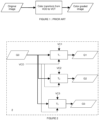
- Figure 1 depicts a color grading transform.
- a color graded image adapted to specific target viewing conditions VCT is obtained from an original color image adapted to be shown under original viewing conditions VCO by applying a color transform.
- This color transform can be generated by manual or automatic tuning of a color processing applicator such as a gamut mapping, or a tone mapping.
- the gamut mapping operator is any known gamut mapping algorithm, for example Morovic and Luo review some algorithms is their paper entitled "The Fundamentals of Gamut Mapping: A Survey” and published in the Journal of Imaging Science and Technology in 2001 while the color gamut can be described using a Gamut Boundary Description using the Gamut ID format standardized by the IEC in IEC 61966-12-1 standard.
- the tone mapping operator mainly modifies the intensity and only slightly the hue and/or saturation of the original colors.
- the tone mapping operators are adapted to viewing conditions that differ mainly by the maximum display luminance. Tone mapping algorithms described by Erik Reinhard in his book (chapter 6) entitled "High dynamic range imaging" are compatible with the present principles. According to further non-limiting examples, such color transform is implemented as a LUT, a matrix or a mathematical function.
- a color transform is based on a single coefficient.
- R L R L 0 ⁇ G 0 B
- R L R L 0 ⁇ B 0 and its coefficient is L R L 0 .
- the interpolation parameters a, b, c are determined at production using linear regression such that the remaining error min a , b , c f L R L 0 ⁇ L T 2 is minimal.
- interpolation parameters a, b, c are transmitted to a receiver instead of the transform represented by its coefficient L I L 0 .
- the reference transform might be much more complex than is this exemplary embodiment and the gain is all the more important.
- the way the color graded version and reference transforms are obtained and the form of the reference transform are out of the scope of the present disclosure.
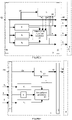
- Figure 2 is a schematic view of a device storing the three color graded versions from three color grading transforms of a same original image according to an exemplary and non-limiting embodiment.
- the device 2 comprises an input configured to obtain an original version G0 of at least a picture.
- the device 2 further comprises an input configured to respectively obtain a first color graded version G1, a second color graded version G2 and a third color graded version G3 of at least a picture by applying a first color transform T 1 , a second color transform T 2 and a third color transform T 3 to the original version G0 of the picture.
- Each version is different from the others color graded versions.
- the three color graded versions have been created on the production side and are adapted to two different viewing conditions respectively VC1, VC2 and VC3, such as absolute luminance of a display of 2000 cd/m 2 , 100 cd/m 2 and 1000 cd/m 2 .
- the viewing conditions may not only include the display on which the color graded version is rendered but also the environment of the display and the environment of the user.
- the environment for example comprises the surround and the background of the display.
- the environment of the user includes for example the distance between user and display.
- the viewing conditions comprise at least one of:
- the first color transform T 1 , the second color transform T 2 and the third color transform T 3 to apply to an original picture as well as associated viewing conditions may be obtained from a source.
- the source belongs to a set comprising:
- the device 2 may store color transforms T 1 , T 2 and T 3 for each viewing condition, and may further store color graded versions G1, G2 and G3 for each viewing condition as shown on figure 2 . According to the present principles, only a sub-set of the color transforms is needed, for instance the first and second ones, T 1 , T 2 , to obtain color transforms for each viewing condition.
- Figure 3 is a schematic view of a device for generating a fourth color transform for obtaining a target color graded version of an original image from an interpolation of a first color transform and a second color transform according to an exemplary and non-limiting embodiment.
- the device 3 comprises an input 30 configured to obtain an original version G0 of at least a picture.
- the device 3 further comprises modules (memory or dedicated hardware) configured for storing a first color transform T 1 , a second color transform T 2 and a third color transform T 3 .
- Each transform is different from the other color transforms.
- the three color graded versions and respective color transforms T 1 , T 2 and T 3 have been created on the production side and are adapted to different viewing conditions.
- the first color transform T 1 , the second color transform T 2 and the third color transform T 3 as well as associated viewing conditions may be obtained through the input 30 from a source.
- the source belongs to a set comprising:
- the modules storing T 1 , T 2 , T 3 are linked to an interpolation transform processor 31.
- the processing of the interpolation transform processor 31 is described hereafter with respect to the method of figure 5 .
- the interpolation transform processor 31 is linked to a module 32 configured to obtain the fourth color transform T 4 and apply the obtained color transform T 4 to the original image G0 to generate the fourth color graded version G4 from the interpolation parameters k, and a sub-set T 1 and T 2 of color transforms.
- the interpolation transform processor 31 outputs interpolation parameters k such that T 4 is an estimation of T 3 and such that T 4 obtained by a parametric function, called interpolation function, applied to T 1 and T 2 is controlled by parameters k.
- an iterative process is optionally performed by the interpolation transform processor 31.
- the color transform T 4 generated in module 32 is send back to the interpolation transform processor 31 for assessment.
- the color graded version G4 obtained from T 4 is used in the iterative loop and also send back to the interpolation transform processor 31.
- the module 32 is linked to an output 33.
- the fourth color graded version G4 can be stored in a memory or can be sent (not shown) to a display 5.
- both the interpolation function and the color graded version are generated in a same device.
- a device is a high-end post-production computer or an end-user mobile implementing some image processing tool.
- the reference color transform T 3 is removed from memory.
- the first color transform T 1 , the second color transform T 2 and parameters k are stored in a remote or in a local memory, e.g. a video memory or a RAM, a hard disk.
- the first color transform T 1 , the second color transform T 2 and interpolation parameters k are sent to a distant receiver 4 by means of a storage interface, e.g.
- a communication interface e.g. an interface to a point to point link, a communication bus, a point to multipoint link or a broadcast network.
- the interpolation of T 4 using T 1 and T 2 allows us to not use and/or not save and/or not transmit the given third color transform T 3 while yielding in a fourth transformed video G4 being close to a third transformed video G3 that could have been obtained applying the third color transform T 3 to the original video.
- the fourth transformed video G4 is close to a third transformed video G3 because the interpolated transform T 4 is generally close to the transform T 3 .
- Figure 4 is a schematic view of a device for obtaining a target color graded version of an original image from an interpolation of a first color transform and a second color transform according to an exemplary and non-limiting embodiment.
- the device 4 comprises an input 40 configured to obtain an original version G0 of at least a picture.
- the device 3 further comprises modules configured for storing a first color transform T 1 , a second color transform T 2 and interpolation parameters k.
- the sub-set of reference color transforms T 4 and T 2 are created on the production side and are adapted to different viewing conditions.
- the first color transform T 1 , the second color transform T 2 and interpolation parameters k may be obtained through the input 40 from a source.
- the source belongs to a set comprising:
- the modules storing T 1 , T 2 , k are linked to an interpolation processor 41.
- the processing of the interpolation transform processor 41 generating the color transform T 4 is described hereafter with respect to the method of figure 6 .
- the interpolation processor 41 is linked to a module 42 configured to apply the color transform T 4 to the original image G0 resulting into the fourth color graded version G4.
- the module 42 is linked to an output 43.
- the third color G4 can be stored in a memory or can be sent to a display 5.
- the interpolation of T 4 using T 1 , T 2 guided by interpolation parameters k allows to not use and/or not save and/or not transmit the given third color transform T 3 while yielding in a fourth transformed video G4 being close to a third transformed video G3 that could have been obtained applying the third color transform T 3 to the original video.
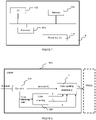
- Figure 5 represents a flowchart of a method for generating a color transform by interpolation according to an exemplary and non-limiting embodiment. Such method is implemented in the interpolation transform processor of a device 3.
- the color transforms T 1 , T 2 used as reference transforms and color transform T 3 used as exemplary transform for guiding the interpolation are obtained, for example, from a source. The way these exemplary transforms are generated is out of the scope of the present principles.
- a step S11 at least an interpolation parameter k is determined such that a parametric interpolation function applied to the first color transform T 1 and the second color transform T 2 results into a fourth color transform T 4 being an estimation (or approximation, in other word close to) of the third color transform T 3 .
- the interpolation of T 4 is not blind but is driven by the exemplary third color transform T 3 .
- the interpolation of T 4 allows to not use and/or not save and/or not transmit the given exemplary third color transform T 3 while providing information for generating a fourth transformed video G4 being close to a third transformed video G3 that could have been obtained applying the third color transform T 3 to the original video G0.
- any function is compatible with the present principles such as non-linear, parametric functions, splines or look up tables.
- the linear interpolation function such function is calculated such that min D ( f ( T 1, T 2 ), T 3 ) with D() being a distance, norm, or interpolation error function.
- the interpolation function for instance represented by its color transform interpolation parameters k, is determined by minimizing the interpolation error on sample color values C i with 0 ⁇ i ⁇ I : ⁇ i T 3 C i ⁇ f T 1 T 2 C i 2
- step S12 once the interpolation function is determined, the color transform itself T 4 is calculated by applying the interpolation function to T 1 and T 2 using the parametric model and the at least one interpolation parameter k.
- step S13 T 3 and T 4 are compared.
- the comparison allows verifying the error in the minimization process of step S11.
- the error in the interpolated color transform T 4 is too large, the determining step S11 is re-iterated.
- the error ⁇ or the function D() is the sum of squared differences (also known as L2 norm) is computed between T 3 and T 4 for a set of sample color values C i with 0 ⁇ i ⁇ I.
- step S11 is repeated to determine an updated parameter k. Else, if the error ⁇ is not larger than the predefined threshold T, the method goes to step S14.
- the set of samples colors used to assess the error is the same as in the determining step S11 or a different one, for instance larger than the one used in determining step S11.
- the error ⁇ is computed considering color preferences indicating - for at least one color - the importance of colors for difference calculations.
- the determining step S11 is re-iterated.
- an assessment of the error ⁇ between T 3 and T 4 is obtained by a difference of their respective color graded images G3 and G4.
- the fourth color transform is applied to an original image G0 resulting into the fourth color graded image G4.
- the third color transform is also applied to the original image G0 resulting into the third color graded image G3.
- the image difference is computed considering image preferences indicating - at least for one spatial part of the image - the importance of spatial image parts for image difference calculation.
- step S14 compliant with the variant where color transform is performed in a distant receiver, the parameter k of the parametric model of the interpolation function is transmitted to the distant receiver already storing the two color transforms T 1 and T 2 .
- the interpolation function is of simple complexity, such as with a linear function, to reduce computational effort for calculation of the interpolation parameter.
- the present principles are well adapted with complex color transforms since any color transform is adaptively generated based on a subset of color transforms, in a preferred embodiment 2 color transforms, and the parametric interpolation function.
- the gain of transmitting k rather than complex color transform such as nonlinear function or implemented as a LUT, is particularly advantageous.
- Figure 6 represents a flowchart of a method for generating a target color graded version from an interpolated color transform according to an exemplary and non-limiting embodiment.
- Such method is implemented in the interpolation transform processor of device 4.
- the subset of color transforms T 1 and T 2 used as reference transforms for generating the interpolated transform are obtained, for example, from a source.
- the subset of color transforms T 1 and T 2 are transmitted as metadata (color related information) to the device 4.
- metadata color related information
- a step S21 at least an interpolation parameter k is received from a device 3 for generating a fourth color transform based on a sub-set of reference transform and corresponding to an exemplary third color transform T 3 (only known from the device 3 which generates the interpolation parameter k).
- the interpolation parameter in any of its variants describe with figure 4 , determines a parametric function of the device 4.
- a fourth color transform T 4 is interpolated by applying the parametric function determined by the interpolation parameter(s) k to the first color transform T 1 and the second color transform T 2 .
- the interpolated fourth color transform T 4 is an estimation of a third color transform T 3 .
- the fourth color transform T 4 is applied to an original image G0 resulting into the fourth color graded image G4.
- G4 and G3 are color graded version of the original image G0 corresponding to same viewing conditions.
- G4 is obtained without transmitting or storing the reference third color transform T 3 to the device 4.
- the device 4 is adapted to changing viewing conditions without transmitting dedicated color transforms.
- FIG 7 represents an exemplary architecture of a color grading device 4 according to an exemplary and non-limiting embodiment.
- the color grading interpolation device 4 is configured to execute the method described with reference to figure 6 .
- the skilled in the art will appreciate that the exemplary architecture is also suitable to execute the method described with reference to figure 5 .
- the color grading interpolation device 4 comprises one or more processor(s) 410, which could comprise, for example, a CPU, a GPU and/or a DSP (English acronym of Digital Signal Processor), along with internal memory 420 (e.g. RAM, ROM and/or EPROM).
- processor(s) 410 could comprise, for example, a CPU, a GPU and/or a DSP (English acronym of Digital Signal Processor), along with internal memory 420 (e.g. RAM, ROM and/or EPROM).
- the color grade interpolation device 4 comprises one or more Input/Output interface(s) 430, each adapted to display output information and/or allow a user to enter commands and/or data (e.g. a keyboard, a mouse, a touchpad, a webcam); and a power source 440 which may be external to the color grading interpolation device 4.
- the color grading interpolation device 4 may also comprise one or more network interface(s) (not shown).
- the 2 color transforms T 1 and T 2 the original image G0 as well as the parameters of the interpolation function may be obtained from a source and stored in the memory 420.
- the fourth color graded version of the image may be sent to a destination, e.g. a display device.
- the fourth color graded version of the image is stored in a remote or in a local memory 420, e.g. a video memory or a RAM, a hard disk.
- the fourth color graded version of the picture is sent to a storage interface, e.g. an interface with a mass storage, a ROM, a flash memory, an optical disc or a magnetic support and/or transmitted over a communication interface, e.g. an interface to a point to point link, a communication bus, a point to multipoint link or a broadcast network.
- the color grading interpolation device 4 further comprises a computer program stored in the memory 420.
- the computer program comprises instructions which, when executed by the color grading interpolation device 4, in particular by the processor 410, enable the color grading interpolation device 4 to execute the method described with reference to figure 6 (or figure 5 ).
- the computer program is stored externally to the color grading interpolation device 4 on a non-transitory digital data support, e.g. on an external storage medium such as a HDD, CD-ROM, DVD, a read-only and/or DVD drive and/or a DVD Read/Write drive, all known in the art.
- the color grading interpolation device 4 thus comprises a mechanism to read the computer program. Further, the color grading interpolation device 4 could access one or more Universal Serial Bus (USB)-type storage devices (e.g., "memory sticks.") through corresponding USB ports (not shown).
- USB Universal Serial Bus
- the color grading interpolation device 4 can be, but not limited to:
- the color grade interpolation device 2 is advantageously part of a player 300 or of a TV set.
- Figure 8 represents a player 800 implementing a color grading interpolation device 4 according to an exemplary and non-limiting embodiment.
- the player 800 receives an input a bitstream.
- the input is connected a decoder 802 which is in turn connected to a color mapping circuit 804.
- the color mapping circuit 804 outputs the color transforms T1 and T2 derived from the Color mapping data.
- the decoder 802 is configured to decode the original color graded version of the picture, decoded G0, and the color mapping data.
- the color mapping circuit 804 is configured to derive and store a first color transform for instance corresponding to luminance of a display of 2000 cd/m 2 and a second color transform for instance adapted to luminance of a display of 100 cd/m 2 .
- Outputs of the color mapping circuit 804 and one output of the decoder 802 are connected on inputs of a color grading interpolation device 4.
- the color grading interpolation device 4 is configured to execute the method described with reference to figure 6 .
- the color grade interpolation device 4 generates the fourth color transform, for instance adapted to luminance of a display of 1000 cd/m 2 , from parameters k of an interpolation function received as additional color mapping data. Then the fourth color graded version of the picture is obtained from the decoded original color graded version responsive to the color mapping data (reference transforms and interpolation parameter).
- the output of the color grading interpolation device 4 is connected to an output of the player 800.
- the player 800 comprises one or more processor(s), which could comprise, for example, a CPU, a GPU and/or a DSP (English acronym of Digital Signal Processor), along with internal memory (e.g. RAM, ROM and/or EPROM).
- the player 800 comprises one or more Input/Output interface(s), each adapted to display output information and/or allow a user to enter commands and/or data (e.g. a keyboard, a mouse, a touchpad, a webcam); and a power source which may be external to the player 800.
- the player 800 may also comprise one or more network interface(s) (not shown).
- the implementations described herein may be implemented in, for example, a method or a process, an apparatus, a software program, a data stream, or a signal. Even if only discussed in the context of a single form of implementation (for example, discussed only as a method or a device), the implementation of features discussed may also be implemented in other forms (for example a program).
- An apparatus may be implemented in, for example, appropriate hardware, software, and firmware.
- the methods may be implemented in, for example, an apparatus such as, for example, a processor, which refers to processing devices in general, including, for example, a computer, a microprocessor, an integrated circuit, or a programmable logic device. Processors also include communication devices, such as, for example, computers, cell phones, portable/personal digital assistants ("PDAs”), and other devices that facilitate communication of information between end-users.
- PDAs portable/personal digital assistants
- Implementations of the various processes and features described herein may be embodied in a variety of different equipment or applications, particularly, for example, equipment or applications.
- equipment examples include an encoder, a decoder, a post-processor processing output from a decoder, a pre-processor providing input to an encoder, a video coder, a video decoder, a video codec, a web server, a set-top box, a laptop, a personal computer, a cell phone, a PDA, and other communication devices.
- the equipment may be mobile and even installed in a mobile vehicle.
- the methods may be implemented by instructions being performed by a processor, and such instructions (and/or data values produced by an implementation) may be stored on a processor-readable medium such as, for example, an integrated circuit, a software carrier or other storage device such as, for example, a hard disk, a compact diskette (“CD"), an optical disc (such as, for example, a DVD, often referred to as a digital versatile disc or a digital video disc), a random access memory (“RAM”), or a read-only memory (“ROM”).
- the instructions may form an application program tangibly embodied on a processor-readable medium. Instructions may be, for example, in hardware, firmware, software, or a combination.
- a processor may be characterized, therefore, as, for example, both a device configured to carry out a process and a device that includes a processor-readable medium (such as a storage device) having instructions for carrying out a process. Further, a processor-readable medium may store, in addition to or in lieu of instructions, data values produced by an implementation.
- implementations may produce a variety of signals formatted to carry information that may be, for example, stored or transmitted.
- the information may include, for example, instructions for performing a method, or data produced by one of the described implementations.
- a signal may be formatted to carry as data the rules for writing or reading the syntax of a described embodiment, or to carry as data the actual syntax-values written by a described embodiment.
- Such a signal may be formatted, for example, as an electromagnetic wave (for example, using a radio frequency portion of spectrum) or as a baseband signal.
- the formatting may include, for example, encoding a data stream and modulating a carrier with the encoded data stream.
- the information that the signal carries may be, for example, analog or digital information.
- the signal may be transmitted over a variety of different wired or wireless links, as is known.
- the signal may be stored on a processor-readable medium.
Landscapes
- Engineering & Computer Science (AREA)
- Multimedia (AREA)
- Signal Processing (AREA)
- Physics & Mathematics (AREA)
- Computer Hardware Design (AREA)
- General Physics & Mathematics (AREA)
- Theoretical Computer Science (AREA)
- Image Processing (AREA)
- Facsimile Image Signal Circuits (AREA)
Claims (13)
- Verfahren, das das Erzeugen einer Ziel-farbabgestuften Version (G4) eines ursprünglichen Bilds aus einer ersten Farbtransformation (T1) und einer zweiten Farbtransformation (T2) umfasst, wobei die erste Farbtransformation (T1) das ursprüngliche Bild (G0) in eine erste farbabgestufte Version des ursprünglichen Bilds transformiert, wobei die zweite Farbtransformation (T2) das ursprüngliche Bild (G0) in eine zweite farbabgestufte Version des ursprünglichen Bilds transformiert, wobei das Verfahren umfasst:• Empfangen mindestens eines Interpolationsparameters (k), der eine vierte Farbtransformation (T4) definiert, wobei die vierte Farbtransformation (T4) als eine Farbtransformation definiert ist, die durch Anwenden einer parametrischen Funktion, die durch den mindestens einen Interpolationsparameter (k) bestimmt ist, auf die erste Farbtransformation (T1) und auf die zweite Farbtransformation (T2) erhalten wird, wobei eine Differenz zwischen einer dritten Farbtransformation (T3) und der vierten Farbtransformation (T4) unter einem vorgegebenen Wert liegt, und wobei die dritte Farbtransformation das ursprüngliche Bild in die Ziel-farbabgestufte Version (G3) des Bilds transformiert;• Erzeugen der vierten Farbtransformation (T4) durch eine Interpolation, die die durch den mindestens einen Interpolationsparameter (k) bestimmte parametrische Funktion auf die erste Farbtransformation (T1) und auf die zweite Farbtransformation (T2) anwendet;• Erzeugen der Ziel-farbabgestuften Version (G4) des ursprünglichen Bilds (G0) durch Anwenden der vierten Farbtransformation (T4) auf das ursprüngliche Bild.
- Verfahren zum Erzeugen einer vierten Farbtransformation (T4), wobei die vierte Farbtransformation (T4) ein ursprüngliches Bild (G0) in eine Ziel-farbabgestufte Version (G3) des ursprünglichen Bilds transformiert, wobei das Verfahren umfasst:• Erhalten einer ersten Farbtransformation (T1), wobei die erste Farbtransformation (T1) das ursprüngliche Bild (G0) in eine erste farbabgestufte Version (G1) des ursprünglichen Bilds transformiert;• Erhalten einer zweiten Farbtransformation (T2), wobei die zweite Farbtransformation (T2) das ursprüngliche Bild (G0) in eine zweite farbabgestufte Version (G2) des ursprünglichen Bilds transformiert;• Erhalten einer dritten Farbtransformation (T3), wobei die dritte Farbtransformation (T3) das ursprüngliche Bild (G0) in die Ziel-farbabgestufte Version (G3) des ursprünglichen Bilds transformiert;• Erhalten mindestens eines Interpolationsparameters (k), wobei eine vierte Farbtransformation (T4) als eine Farbtransformation definiert ist, die durch Anwenden einer parametrischen Funktion, die durch den mindestens einen Interpolationsparameter (k) bestimmt ist, auf die erste Farbtransformation (T1) und auf die zweite Farbtransformation (T2) erhalten wird, und wobei eine Differenz zwischen der dritten Farbtransformation (T3) und der vierten Farbtransformation (T4) unter einem vorgegebenen Wert liegt.
- Verfahren nach Anspruch 2, das ferner umfasst:• Berechnen der vierten Farbtransformation (T4) durch eine Interpolation, die die durch den mindestens einen Interpolationsparameter (k) bestimmte parametrische Funktion auf die erste Farbtransformation (T1) und auf die zweite Farbtransformation (T2) anwendet.
- Verfahren nach einem der Ansprüche 2 bis 3, das ferner umfasst:• Senden der ersten Farbtransformation (T1), der zweiten Farbtransformation (T2) und des mindestens einen Interpolationsparameters (k).
- Verfahren nach einem der Ansprüche 2 bis 4, das ferner umfasst:• Erhalten der Differenz zwischen der dritten Farbtransformation (T3) und der vierten Farbtransformation (T4) für eine Menge von Stichprobenfarbwerten;• und Wiederholen des Erhaltens mindestens eines Interpolationsparameters (k), falls die Differenz über dem vorgegebenen Wert liegt.
- Vorrichtung (4) zum Erzeugen einer Ziel-farbabgestuften Version (G4) eines ursprünglichen Bilds, wobei die Vorrichtung einen Prozessor (210) umfasst, der konfiguriert ist zum:• Erhalten einer ersten Farbtransformation (T1) und einer zweiten Farbtransformation (T2), wobei die erste Farbtransformation (T1) das ursprüngliche Bild (G0) in eine erste farbabgestufte Version des ursprünglichen Bilds transformiert, wobei die zweite Farbtransformation (T2) das ursprüngliche Bild (G0) in eine zweite farbabgestufte Version des ursprünglichen Bilds transformiert,• Empfangen mindestens eines Interpolationsparameters (k), der eine vierte Farbtransformation (T4) definiert, wobei die vierte Farbtransformation (T4) als eine Farbtransformation definiert ist, die durch Anwenden einer parametrischen Funktion, die durch den mindestens einen Interpolationsparameter (k) bestimmt ist, auf die erste Farbtransformation (T1) und auf die zweite Farbtransformation (T2) erhalten wird, wobei eine Differenz zwischen einer dritten Farbtransformation (T3) und der vierten Farbtransformation (T4) unter einem vorgegebenen Wert liegt, und wobei die dritte Farbtransformation das ursprüngliche Bild in die Ziel-farbabgestufte Version (G3) des Bilds transformiert;• Erzeugen der vierten Farbtransformation (T4) durch einen Interpolator, der die durch den mindestens einen Interpolationsparameter (k) bestimmte parametrische Funktion auf die erste Farbtransformation (T1) und auf die zweite Farbtransformation (T2) anwendet;• Erzeugen der Ziel-farbabgestuften Version (G4) des ursprünglichen Bilds (G0) durch Anwenden der vierten Farbtransformation (T4) auf das ursprüngliche Bild.
- Vorrichtung nach Anspruch 6, wobei die Vorrichtung zu einer Menge gehört, die Folgendes umfasst:- eine mobile Vorrichtung;- eine Kommunikationsvorrichtung;- eine Spielevorrichtung;- eine Set-Top-Box;- ein Fernsehgerät;- einen Blu-Ray-Spieler;- ein Abspielgerät;- ein Tablet (oder einen Tablet-Computer);- einen Laptop;- eine Anzeige;- eine Kamera und- einen Decodierungs-Chip.
- Vorrichtung (3) zum Erzeugen einer vierten Farbtransformation (T4), wobei die vierte Farbtransformation (T4) ein ursprüngliches Bild (G0) in eine Ziel-farbabgestufte Version (G3) des ursprünglichen Bilds transformiert, wobei die Vorrichtung (3) einen Prozessor (210) umfasst, der konfiguriert ist zum:• Erhalten einer ersten Farbtransformation (T1), wobei die erste Farbtransformation (T1) das ursprüngliche Bild (G0) in eine erste farbabgestufte Version (G1) des ursprünglichen Bilds transformiert;• Erhalten einer zweiten Farbtransformation (T2), wobei die zweite Farbtransformation (T2) das ursprüngliche Bild (G0) in eine zweite farbabgestufte Version (G2) des ursprünglichen Bilds transformiert;• Erhalten einer dritten Farbtransformation (T3), wobei die dritte Farbtransformation (T3) das ursprüngliche Bild (G0) in die Ziel-farbabgestufte Version (G3) des ursprünglichen Bilds transformiert;• Erhalten mindestens eines Interpolationsparameters (k), wobei die vierte Farbtransformation (T4) als eine Farbtransformation definiert ist, die durch Anwenden einer parametrischen Funktion, die durch den mindestens einen Interpolationsparameter (k) bestimmt ist, auf die erste Farbtransformation (T1) und auf die zweite Farbtransformation (T2) erhalten wird, und wobei eine Differenz zwischen der dritten Farbtransformation (T3) und der vierten Farbtransformation (T4) unter einem vorgegebenen Wert liegt.
- Vorrichtung nach Anspruch 8, wobei der Prozessor ferner konfiguriert ist zum:• Berechnen der vierten Farbtransformation (T4) durch eine Interpolation, die die durch den mindestens einen Interpolationsparameter (k) bestimmte parametrische Funktion auf die erste Farbtransformation (T1) und auf die zweite Farbtransformation (T2) anwendet.
- Vorrichtung nach einem der Ansprüche 8 bis 9, wobei der Prozessor ferner konfiguriert ist zum:• Senden der ersten Farbtransformation (T1), der zweiten Farbtransformation (T2) und des mindestens einen Interpolationsparameters (k).
- Vorrichtung nach einem der Ansprüche 8 bis 10, wobei der Prozessor ferner konfiguriert ist zum:• Erhalten der Differenz zwischen der dritten Farbtransformation (T3) und der vierten Farbtransformation (T4) für eine Menge von Stichprobenfarbwerten;• und Wiederholen des Erhaltens mindestens eines Interpolationsparameters (k), falls die Differenz über dem vorgegebenen Wert liegt.
- Computerprogrammprodukt, das Anweisungen umfasst, die, wenn das Programm durch einen Computer ausgeführt wird, veranlassen, dass der Computer die Schritte des Verfahrens nach einem der Ansprüche 1 bis 5 ausführt.
- Computerlesbares Medium, das Anweisungen umfasst, die, wenn sie durch einen Computer ausgeführt werden, veranlassen, dass der Computer die Schritte des Verfahrens nach einem der Ansprüche 1 bis 5 ausführt.
Applications Claiming Priority (2)
| Application Number | Priority Date | Filing Date | Title |
|---|---|---|---|
| EP16306696.2A EP3337170A1 (de) | 2016-12-15 | 2016-12-15 | Farbabstufungs-interpolationsverfahren und vorrichtungen |
| PCT/EP2017/080412 WO2018108494A1 (en) | 2016-12-15 | 2017-11-24 | Color grading interpolation methods and devices |
Publications (2)
| Publication Number | Publication Date |
|---|---|
| EP3556093A1 EP3556093A1 (de) | 2019-10-23 |
| EP3556093B1 true EP3556093B1 (de) | 2023-02-01 |
Family
ID=57755112
Family Applications (2)
| Application Number | Title | Priority Date | Filing Date |
|---|---|---|---|
| EP16306696.2A Withdrawn EP3337170A1 (de) | 2016-12-15 | 2016-12-15 | Farbabstufungs-interpolationsverfahren und vorrichtungen |
| EP17822149.5A Active EP3556093B1 (de) | 2016-12-15 | 2017-11-24 | Farbabstufungs-interpolationsverfahren und vorrichtungen |
Family Applications Before (1)
| Application Number | Title | Priority Date | Filing Date |
|---|---|---|---|
| EP16306696.2A Withdrawn EP3337170A1 (de) | 2016-12-15 | 2016-12-15 | Farbabstufungs-interpolationsverfahren und vorrichtungen |
Country Status (3)
| Country | Link |
|---|---|
| US (1) | US11037524B2 (de) |
| EP (2) | EP3337170A1 (de) |
| WO (1) | WO2018108494A1 (de) |
Families Citing this family (2)
| Publication number | Priority date | Publication date | Assignee | Title |
|---|---|---|---|---|
| EP3367659A1 (de) * | 2017-02-28 | 2018-08-29 | Thomson Licensing | Farbtonbereichsumsetzung für farbtonänderung |
| US10742945B2 (en) | 2017-09-13 | 2020-08-11 | Panasonic Intellectual Property Management Co., Ltd. | Luminance characteristics generation method |
Family Cites Families (10)
| Publication number | Priority date | Publication date | Assignee | Title |
|---|---|---|---|---|
| US5604610A (en) | 1994-11-03 | 1997-02-18 | Eastman Kodak Company | Transforming color signal values for use by a particular device |
| US7822270B2 (en) | 2005-08-31 | 2010-10-26 | Microsoft Corporation | Multimedia color management system |
| CN1991969B (zh) | 2005-12-30 | 2010-05-05 | 财团法人工业技术研究院 | 显示器的色彩调整方法及其装置 |
| US8194997B2 (en) | 2006-03-24 | 2012-06-05 | Sharp Laboratories Of America, Inc. | Methods and systems for tone mapping messaging |
| KR101348369B1 (ko) | 2007-11-12 | 2014-01-07 | 삼성전자주식회사 | 디스플레이 장치의 색 변환 방법 및 장치 |
| US8793498B2 (en) * | 2008-08-11 | 2014-07-29 | Nbcuniversal Media, Llc | System and method for forensic analysis of media works |
| TWI413977B (zh) | 2009-03-06 | 2013-11-01 | Realtek Semiconductor Corp | 階調特性檢查表產生方法及顯示裝置 |
| US8593708B2 (en) * | 2010-03-15 | 2013-11-26 | Xerox Corporation | Methods, systems and apparatus for jointly optimizing node locations and corresponding output values of a color look-up-table (LUT) |
| EP3016387A1 (de) * | 2014-10-29 | 2016-05-04 | Thomson Licensing | Verfahren und Vorrichtung zur Schätzung einer Farbzuordnung zwischen zwei Versionen mit unterschiedlicher Farbgradierung einer Sequenz von Bildern |
| EP3067882A1 (de) * | 2015-03-10 | 2016-09-14 | Thomson Licensing | Adaptive farbqualität von interpolationsverfahren und vorrichtung |
-
2016
- 2016-12-15 EP EP16306696.2A patent/EP3337170A1/de not_active Withdrawn
-
2017
- 2017-11-24 US US16/470,214 patent/US11037524B2/en active Active
- 2017-11-24 EP EP17822149.5A patent/EP3556093B1/de active Active
- 2017-11-24 WO PCT/EP2017/080412 patent/WO2018108494A1/en not_active Ceased
Also Published As
| Publication number | Publication date |
|---|---|
| WO2018108494A1 (en) | 2018-06-21 |
| US20190311695A1 (en) | 2019-10-10 |
| EP3556093A1 (de) | 2019-10-23 |
| EP3337170A1 (de) | 2018-06-20 |
| US11037524B2 (en) | 2021-06-15 |
Similar Documents
| Publication | Publication Date | Title |
|---|---|---|
| US10701375B2 (en) | Encoding and decoding reversible production-quality single-layer video signals | |
| US11430095B2 (en) | Automatic display management metadata generation for gaming and/or SDR+ contents | |
| US10972759B2 (en) | Color appearance preservation in video codecs | |
| KR102291954B1 (ko) | 확장된 높은 동적 범위(hdr) 대 hdr 톤 매핑을 위한 방법, 장치 및 시스템 | |
| US10462492B2 (en) | Method and device for encoding a HDR picture | |
| RU2771580C2 (ru) | Преобразование динамических метаданных для поддержки альтернативного тоновоспроизведения | |
| US8600159B2 (en) | Color converting images | |
| US11388408B2 (en) | Interpolation of reshaping functions | |
| US20200296428A1 (en) | A method and a device for encoding a high dynamic range picture, corresponding decoding method and decoding device | |
| US20170324959A1 (en) | Method and apparatus for encoding/decoding a high dynamic range picture into a coded bitstream | |
| US12335535B2 (en) | Pixel filtering for content | |
| US11895416B2 (en) | Electro-optical transfer function conversion and signal legalization | |
| EP3051488A1 (de) | Verfahren und Vorrichtung zur umgekehrten Tonabbildung eines Bildes | |
| WO2017203942A1 (ja) | 画像処理装置、および画像処理方法、並びにプログラム | |
| JP2024505493A (ja) | グローバルおよびローカル再整形を介した画像向上 | |
| US10553178B2 (en) | Adaptive color grade interpolation method and device | |
| US11037524B2 (en) | Color grading interpolation methods and devices | |
| WO2015144566A1 (en) | An image processing method and a corresponding device | |
| KR20240171140A (ko) | Sl-hdr1 시스템에서의 sdr 픽처 보정 방법 | |
| EP2958103A1 (de) | Verfahren und Vorrichtung zur Codierung einer Bildfolge | |
| EP2958327A1 (de) | Verfahren und Vorrichtung zur Codierung einer Bildfolge | |
| CN116888959A (zh) | 经由全局和局部整形实现的图像增强 |
Legal Events
| Date | Code | Title | Description |
|---|---|---|---|
| STAA | Information on the status of an ep patent application or granted ep patent |
Free format text: STATUS: UNKNOWN |
|
| STAA | Information on the status of an ep patent application or granted ep patent |
Free format text: STATUS: THE INTERNATIONAL PUBLICATION HAS BEEN MADE |
|
| PUAI | Public reference made under article 153(3) epc to a published international application that has entered the european phase |
Free format text: ORIGINAL CODE: 0009012 |
|
| STAA | Information on the status of an ep patent application or granted ep patent |
Free format text: STATUS: REQUEST FOR EXAMINATION WAS MADE |
|
| 17P | Request for examination filed |
Effective date: 20190523 |
|
| AK | Designated contracting states |
Kind code of ref document: A1 Designated state(s): AL AT BE BG CH CY CZ DE DK EE ES FI FR GB GR HR HU IE IS IT LI LT LU LV MC MK MT NL NO PL PT RO RS SE SI SK SM TR |
|
| AX | Request for extension of the european patent |
Extension state: BA ME |
|
| RAP1 | Party data changed (applicant data changed or rights of an application transferred) |
Owner name: INTERDIGITAL VC HOLDINGS, INC. |
|
| DAV | Request for validation of the european patent (deleted) | ||
| DAX | Request for extension of the european patent (deleted) | ||
| STAA | Information on the status of an ep patent application or granted ep patent |
Free format text: STATUS: EXAMINATION IS IN PROGRESS |
|
| 17Q | First examination report despatched |
Effective date: 20200826 |
|
| GRAP | Despatch of communication of intention to grant a patent |
Free format text: ORIGINAL CODE: EPIDOSNIGR1 |
|
| STAA | Information on the status of an ep patent application or granted ep patent |
Free format text: STATUS: GRANT OF PATENT IS INTENDED |
|
| INTG | Intention to grant announced |
Effective date: 20220906 |
|
| GRAS | Grant fee paid |
Free format text: ORIGINAL CODE: EPIDOSNIGR3 |
|
| GRAA | (expected) grant |
Free format text: ORIGINAL CODE: 0009210 |
|
| STAA | Information on the status of an ep patent application or granted ep patent |
Free format text: STATUS: THE PATENT HAS BEEN GRANTED |
|
| AK | Designated contracting states |
Kind code of ref document: B1 Designated state(s): AL AT BE BG CH CY CZ DE DK EE ES FI FR GB GR HR HU IE IS IT LI LT LU LV MC MK MT NL NO PL PT RO RS SE SI SK SM TR |
|
| REG | Reference to a national code |
Ref country code: GB Ref legal event code: FG4D |
|
| REG | Reference to a national code |
Ref country code: CH Ref legal event code: EP Ref country code: AT Ref legal event code: REF Ref document number: 1547221 Country of ref document: AT Kind code of ref document: T Effective date: 20230215 |
|
| REG | Reference to a national code |
Ref country code: DE Ref legal event code: R096 Ref document number: 602017065896 Country of ref document: DE |
|
| REG | Reference to a national code |
Ref country code: IE Ref legal event code: FG4D |
|
| REG | Reference to a national code |
Ref country code: NL Ref legal event code: FP |
|
| REG | Reference to a national code |
Ref country code: LT Ref legal event code: MG9D |
|
| P01 | Opt-out of the competence of the unified patent court (upc) registered |
Effective date: 20230514 |
|
| REG | Reference to a national code |
Ref country code: AT Ref legal event code: MK05 Ref document number: 1547221 Country of ref document: AT Kind code of ref document: T Effective date: 20230201 |
|
| PG25 | Lapsed in a contracting state [announced via postgrant information from national office to epo] |
Ref country code: RS Free format text: LAPSE BECAUSE OF FAILURE TO SUBMIT A TRANSLATION OF THE DESCRIPTION OR TO PAY THE FEE WITHIN THE PRESCRIBED TIME-LIMIT Effective date: 20230201 Ref country code: PT Free format text: LAPSE BECAUSE OF FAILURE TO SUBMIT A TRANSLATION OF THE DESCRIPTION OR TO PAY THE FEE WITHIN THE PRESCRIBED TIME-LIMIT Effective date: 20230601 Ref country code: NO Free format text: LAPSE BECAUSE OF FAILURE TO SUBMIT A TRANSLATION OF THE DESCRIPTION OR TO PAY THE FEE WITHIN THE PRESCRIBED TIME-LIMIT Effective date: 20230501 Ref country code: LV Free format text: LAPSE BECAUSE OF FAILURE TO SUBMIT A TRANSLATION OF THE DESCRIPTION OR TO PAY THE FEE WITHIN THE PRESCRIBED TIME-LIMIT Effective date: 20230201 Ref country code: LT Free format text: LAPSE BECAUSE OF FAILURE TO SUBMIT A TRANSLATION OF THE DESCRIPTION OR TO PAY THE FEE WITHIN THE PRESCRIBED TIME-LIMIT Effective date: 20230201 Ref country code: HR Free format text: LAPSE BECAUSE OF FAILURE TO SUBMIT A TRANSLATION OF THE DESCRIPTION OR TO PAY THE FEE WITHIN THE PRESCRIBED TIME-LIMIT Effective date: 20230201 Ref country code: ES Free format text: LAPSE BECAUSE OF FAILURE TO SUBMIT A TRANSLATION OF THE DESCRIPTION OR TO PAY THE FEE WITHIN THE PRESCRIBED TIME-LIMIT Effective date: 20230201 Ref country code: AT Free format text: LAPSE BECAUSE OF FAILURE TO SUBMIT A TRANSLATION OF THE DESCRIPTION OR TO PAY THE FEE WITHIN THE PRESCRIBED TIME-LIMIT Effective date: 20230201 |
|
| PG25 | Lapsed in a contracting state [announced via postgrant information from national office to epo] |
Ref country code: SE Free format text: LAPSE BECAUSE OF FAILURE TO SUBMIT A TRANSLATION OF THE DESCRIPTION OR TO PAY THE FEE WITHIN THE PRESCRIBED TIME-LIMIT Effective date: 20230201 Ref country code: PL Free format text: LAPSE BECAUSE OF FAILURE TO SUBMIT A TRANSLATION OF THE DESCRIPTION OR TO PAY THE FEE WITHIN THE PRESCRIBED TIME-LIMIT Effective date: 20230201 Ref country code: IS Free format text: LAPSE BECAUSE OF FAILURE TO SUBMIT A TRANSLATION OF THE DESCRIPTION OR TO PAY THE FEE WITHIN THE PRESCRIBED TIME-LIMIT Effective date: 20230601 Ref country code: GR Free format text: LAPSE BECAUSE OF FAILURE TO SUBMIT A TRANSLATION OF THE DESCRIPTION OR TO PAY THE FEE WITHIN THE PRESCRIBED TIME-LIMIT Effective date: 20230502 Ref country code: FI Free format text: LAPSE BECAUSE OF FAILURE TO SUBMIT A TRANSLATION OF THE DESCRIPTION OR TO PAY THE FEE WITHIN THE PRESCRIBED TIME-LIMIT Effective date: 20230201 |
|
| PG25 | Lapsed in a contracting state [announced via postgrant information from national office to epo] |
Ref country code: SM Free format text: LAPSE BECAUSE OF FAILURE TO SUBMIT A TRANSLATION OF THE DESCRIPTION OR TO PAY THE FEE WITHIN THE PRESCRIBED TIME-LIMIT Effective date: 20230201 Ref country code: RO Free format text: LAPSE BECAUSE OF FAILURE TO SUBMIT A TRANSLATION OF THE DESCRIPTION OR TO PAY THE FEE WITHIN THE PRESCRIBED TIME-LIMIT Effective date: 20230201 Ref country code: EE Free format text: LAPSE BECAUSE OF FAILURE TO SUBMIT A TRANSLATION OF THE DESCRIPTION OR TO PAY THE FEE WITHIN THE PRESCRIBED TIME-LIMIT Effective date: 20230201 Ref country code: DK Free format text: LAPSE BECAUSE OF FAILURE TO SUBMIT A TRANSLATION OF THE DESCRIPTION OR TO PAY THE FEE WITHIN THE PRESCRIBED TIME-LIMIT Effective date: 20230201 Ref country code: CZ Free format text: LAPSE BECAUSE OF FAILURE TO SUBMIT A TRANSLATION OF THE DESCRIPTION OR TO PAY THE FEE WITHIN THE PRESCRIBED TIME-LIMIT Effective date: 20230201 |
|
| REG | Reference to a national code |
Ref country code: DE Ref legal event code: R097 Ref document number: 602017065896 Country of ref document: DE |
|
| PG25 | Lapsed in a contracting state [announced via postgrant information from national office to epo] |
Ref country code: SK Free format text: LAPSE BECAUSE OF FAILURE TO SUBMIT A TRANSLATION OF THE DESCRIPTION OR TO PAY THE FEE WITHIN THE PRESCRIBED TIME-LIMIT Effective date: 20230201 |
|
| PLBE | No opposition filed within time limit |
Free format text: ORIGINAL CODE: 0009261 |
|
| STAA | Information on the status of an ep patent application or granted ep patent |
Free format text: STATUS: NO OPPOSITION FILED WITHIN TIME LIMIT |
|
| 26N | No opposition filed |
Effective date: 20231103 |
|
| PG25 | Lapsed in a contracting state [announced via postgrant information from national office to epo] |
Ref country code: SI Free format text: LAPSE BECAUSE OF FAILURE TO SUBMIT A TRANSLATION OF THE DESCRIPTION OR TO PAY THE FEE WITHIN THE PRESCRIBED TIME-LIMIT Effective date: 20230201 |
|
| PG25 | Lapsed in a contracting state [announced via postgrant information from national office to epo] |
Ref country code: IT Free format text: LAPSE BECAUSE OF FAILURE TO SUBMIT A TRANSLATION OF THE DESCRIPTION OR TO PAY THE FEE WITHIN THE PRESCRIBED TIME-LIMIT Effective date: 20230201 |
|
| REG | Reference to a national code |
Ref country code: CH Ref legal event code: PL |
|
| PG25 | Lapsed in a contracting state [announced via postgrant information from national office to epo] |
Ref country code: MC Free format text: LAPSE BECAUSE OF FAILURE TO SUBMIT A TRANSLATION OF THE DESCRIPTION OR TO PAY THE FEE WITHIN THE PRESCRIBED TIME-LIMIT Effective date: 20230201 |
|
| PG25 | Lapsed in a contracting state [announced via postgrant information from national office to epo] |
Ref country code: LU Free format text: LAPSE BECAUSE OF NON-PAYMENT OF DUE FEES Effective date: 20231124 |
|
| PG25 | Lapsed in a contracting state [announced via postgrant information from national office to epo] |
Ref country code: CH Free format text: LAPSE BECAUSE OF NON-PAYMENT OF DUE FEES Effective date: 20231130 |
|
| PG25 | Lapsed in a contracting state [announced via postgrant information from national office to epo] |
Ref country code: MC Free format text: LAPSE BECAUSE OF FAILURE TO SUBMIT A TRANSLATION OF THE DESCRIPTION OR TO PAY THE FEE WITHIN THE PRESCRIBED TIME-LIMIT Effective date: 20230201 Ref country code: LU Free format text: LAPSE BECAUSE OF NON-PAYMENT OF DUE FEES Effective date: 20231124 Ref country code: CH Free format text: LAPSE BECAUSE OF NON-PAYMENT OF DUE FEES Effective date: 20231130 |
|
| REG | Reference to a national code |
Ref country code: BE Ref legal event code: MM Effective date: 20231130 |
|
| REG | Reference to a national code |
Ref country code: IE Ref legal event code: MM4A |
|
| PG25 | Lapsed in a contracting state [announced via postgrant information from national office to epo] |
Ref country code: IE Free format text: LAPSE BECAUSE OF NON-PAYMENT OF DUE FEES Effective date: 20231124 |
|
| PG25 | Lapsed in a contracting state [announced via postgrant information from national office to epo] |
Ref country code: BE Free format text: LAPSE BECAUSE OF NON-PAYMENT OF DUE FEES Effective date: 20231130 |
|
| PG25 | Lapsed in a contracting state [announced via postgrant information from national office to epo] |
Ref country code: IE Free format text: LAPSE BECAUSE OF NON-PAYMENT OF DUE FEES Effective date: 20231124 Ref country code: BE Free format text: LAPSE BECAUSE OF NON-PAYMENT OF DUE FEES Effective date: 20231130 |
|
| PG25 | Lapsed in a contracting state [announced via postgrant information from national office to epo] |
Ref country code: BG Free format text: LAPSE BECAUSE OF FAILURE TO SUBMIT A TRANSLATION OF THE DESCRIPTION OR TO PAY THE FEE WITHIN THE PRESCRIBED TIME-LIMIT Effective date: 20230201 |
|
| PG25 | Lapsed in a contracting state [announced via postgrant information from national office to epo] |
Ref country code: BG Free format text: LAPSE BECAUSE OF FAILURE TO SUBMIT A TRANSLATION OF THE DESCRIPTION OR TO PAY THE FEE WITHIN THE PRESCRIBED TIME-LIMIT Effective date: 20230201 |
|
| PG25 | Lapsed in a contracting state [announced via postgrant information from national office to epo] |
Ref country code: CY Free format text: LAPSE BECAUSE OF FAILURE TO SUBMIT A TRANSLATION OF THE DESCRIPTION OR TO PAY THE FEE WITHIN THE PRESCRIBED TIME-LIMIT; INVALID AB INITIO Effective date: 20171124 |
|
| PG25 | Lapsed in a contracting state [announced via postgrant information from national office to epo] |
Ref country code: HU Free format text: LAPSE BECAUSE OF FAILURE TO SUBMIT A TRANSLATION OF THE DESCRIPTION OR TO PAY THE FEE WITHIN THE PRESCRIBED TIME-LIMIT; INVALID AB INITIO Effective date: 20171124 |
|
| PG25 | Lapsed in a contracting state [announced via postgrant information from national office to epo] |
Ref country code: TR Free format text: LAPSE BECAUSE OF FAILURE TO SUBMIT A TRANSLATION OF THE DESCRIPTION OR TO PAY THE FEE WITHIN THE PRESCRIBED TIME-LIMIT Effective date: 20230201 |
|
| PGFP | Annual fee paid to national office [announced via postgrant information from national office to epo] |
Ref country code: NL Payment date: 20251124 Year of fee payment: 9 |
|
| PGFP | Annual fee paid to national office [announced via postgrant information from national office to epo] |
Ref country code: DE Payment date: 20251126 Year of fee payment: 9 |
|
| PGFP | Annual fee paid to national office [announced via postgrant information from national office to epo] |
Ref country code: GB Payment date: 20251125 Year of fee payment: 9 |
|
| PGFP | Annual fee paid to national office [announced via postgrant information from national office to epo] |
Ref country code: FR Payment date: 20251125 Year of fee payment: 9 |