EP3556060B1 - Method for optimizing the failure detection of redundancy protocols by means of test data packets - Google Patents
Method for optimizing the failure detection of redundancy protocols by means of test data packets Download PDFInfo
- Publication number
- EP3556060B1 EP3556060B1 EP17828698.5A EP17828698A EP3556060B1 EP 3556060 B1 EP3556060 B1 EP 3556060B1 EP 17828698 A EP17828698 A EP 17828698A EP 3556060 B1 EP3556060 B1 EP 3556060B1
- Authority
- EP
- European Patent Office
- Prior art keywords
- network
- data packets
- test data
- transmission
- data packet
- Prior art date
- Legal status (The legal status is an assumption and is not a legal conclusion. Google has not performed a legal analysis and makes no representation as to the accuracy of the status listed.)
- Active
Links
Images

Classifications
-
- H—ELECTRICITY
- H04—ELECTRIC COMMUNICATION TECHNIQUE
- H04L—TRANSMISSION OF DIGITAL INFORMATION, e.g. TELEGRAPHIC COMMUNICATION
- H04L69/00—Network arrangements, protocols or services independent of the application payload and not provided for in the other groups of this subclass
- H04L69/40—Network arrangements, protocols or services independent of the application payload and not provided for in the other groups of this subclass for recovering from a failure of a protocol instance or entity, e.g. service redundancy protocols, protocol state redundancy or protocol service redirection
-
- H—ELECTRICITY
- H04—ELECTRIC COMMUNICATION TECHNIQUE
- H04L—TRANSMISSION OF DIGITAL INFORMATION, e.g. TELEGRAPHIC COMMUNICATION
- H04L12/00—Data switching networks
- H04L12/28—Data switching networks characterised by path configuration, e.g. LAN [Local Area Networks] or WAN [Wide Area Networks]
- H04L12/42—Loop networks
- H04L12/437—Ring fault isolation or reconfiguration
-
- H—ELECTRICITY
- H04—ELECTRIC COMMUNICATION TECHNIQUE
- H04L—TRANSMISSION OF DIGITAL INFORMATION, e.g. TELEGRAPHIC COMMUNICATION
- H04L43/00—Arrangements for monitoring or testing data switching networks
- H04L43/06—Generation of reports
- H04L43/067—Generation of reports using time frame reporting
-
- H—ELECTRICITY
- H04—ELECTRIC COMMUNICATION TECHNIQUE
- H04L—TRANSMISSION OF DIGITAL INFORMATION, e.g. TELEGRAPHIC COMMUNICATION
- H04L43/00—Arrangements for monitoring or testing data switching networks
- H04L43/08—Monitoring or testing based on specific metrics, e.g. QoS, energy consumption or environmental parameters
- H04L43/0823—Errors, e.g. transmission errors
-
- H—ELECTRICITY
- H04—ELECTRIC COMMUNICATION TECHNIQUE
- H04L—TRANSMISSION OF DIGITAL INFORMATION, e.g. TELEGRAPHIC COMMUNICATION
- H04L43/00—Arrangements for monitoring or testing data switching networks
- H04L43/10—Active monitoring, e.g. heartbeat, ping or trace-route
- H04L43/106—Active monitoring, e.g. heartbeat, ping or trace-route using time related information in packets, e.g. by adding timestamps
-
- H—ELECTRICITY
- H04—ELECTRIC COMMUNICATION TECHNIQUE
- H04L—TRANSMISSION OF DIGITAL INFORMATION, e.g. TELEGRAPHIC COMMUNICATION
- H04L43/00—Arrangements for monitoring or testing data switching networks
- H04L43/50—Testing arrangements
-
- H—ELECTRICITY
- H04—ELECTRIC COMMUNICATION TECHNIQUE
- H04L—TRANSMISSION OF DIGITAL INFORMATION, e.g. TELEGRAPHIC COMMUNICATION
- H04L43/00—Arrangements for monitoring or testing data switching networks
- H04L43/08—Monitoring or testing based on specific metrics, e.g. QoS, energy consumption or environmental parameters
- H04L43/0805—Monitoring or testing based on specific metrics, e.g. QoS, energy consumption or environmental parameters by checking availability
- H04L43/0811—Monitoring or testing based on specific metrics, e.g. QoS, energy consumption or environmental parameters by checking availability by checking connectivity
Definitions
- the invention relates to a method for operating a network, wherein network devices in the network exchange user data with each other via at least one transmission medium by transmitting user data packets and at least one redundancy protocol is used to reduce the risk of failure, wherein this at least one redundancy protocol carries out a transmission of test data packets to detect failures in the network, according to the features of the respective preamble of the two independent patent claims.
- Methods for operating a network are known, wherein network devices in the network exchange data with each other and from and to other devices such as sensors, actuators, and the like via at least one transmission medium, and at least one redundancy protocol is used to reduce the risk of failure.
- This at least one redundancy protocol carries out a cyclical transmission of test data packets to detect failures in the network.
- Networks, in particular Ethernet data networks form the technological basis, for example, for industrial monitoring and for control networks in production lines. A failure or malfunction in these networks is typically associated with a loss of productivity or control or monitoring reliability.
- Redundancy protocols such as the Media Redundancy Protocol (MRP) or the Device Level Ring (DLR) have proven effective in reducing the risk of failure. These redundancy protocols typically require, in addition to the exchange of payload data (also referred to as productive data) between network devices and other devices in the network using payload data packets (also referred to as frames), the cyclical transmission of test data packets (also referred to as test frames or test packets) to detect network failures.
- payload data also referred to as productive data
- payload data packets also referred to as frames
- test data packets also referred to as test frames or test packets
- test data packets can be significantly delayed, which negatively impacts the worst-case switchover time to redundant network paths in the event of a failure.
- frame preemption according to IEEE802.3br and IEEE 802.1Qbu also enables the interruption of the transmission of other data (payload data) in order to improve the latency for certain traffic classes of the payload data packets.
- TDMA time-division multiple access
- CoS class-of-service priorities
- VLAN virtual local area network
- test data packets of a redundancy protocol typically compete with other data (payload) for access to at least one transmission medium (e.g., data line, radio link, or the like; in Ethernet applications, primarily wired).
- transmission medium e.g., data line, radio link, or the like; in Ethernet applications, primarily wired.
- the payload can increasingly lead to delays in the forwarding of test data packets.
- the worst-case detection and switchover times of redundancy protocols with test data packets are therefore due to the maximum delay in forwarding a test frame on each network device.
- the invention is therefore based on the object of providing a method for operating a network that avoids the disadvantages described above.
- the time required to switch to another transmission path when an interruption of at least one transmission medium is detected is to be reduced.
- the present invention combines known methods of dynamic redundancy protocols with test data packets and the use of frame preemption or time slotting techniques in three alternative or combinable ways. This, either individually or in combination, enables a significant reduction in the worst-case detection time of a network failure and thus a reduction in the worst-case failover time in the event of a fault.
- the redundancy protocols MRP and DLR have proven effective in ring networks.
- a network device configured as a ring master monitors the network by regularly sending test data packets through the ring. The test data packets are received by every network device participating in the redundancy protocol and forwarded until they arrive back at the ring master. If the test data packets fail to arrive, a failure occurs in the ring network, and an alternative transmission path is activated.
- the invention provides that the transmission of a user data packet is interrupted and, instead of further transmission of this user data packet, a test data packet is transmitted and only then is the transmission of the remaining user data packet carried out.
- redundancy protocols can treat test data packets as express data, and the transmission of payload packets can be interrupted. This interruption enables the prioritized transmission of test data packets, even if a payload packet has already begun. After the test data packet has been transmitted, the transmission of payload packets is resumed and completed.
- the dwell time of the test data packets in the network devices participating in the redundancy protocol is reduced to a minimum defined by the frame preemption mechanism. This results in the dwell time of the test data packets being independent of the payload data length, thus significantly reducing worst-case detection and failover times in the event of a fault.
- the invention provides that a predeterminable time range is reserved for the transmission of test data packets, wherein no payload data packets (regardless of the traffic class or the priority assigned to them) are transmitted within the predeterminable time range.
- a predefined time range is always available for the transmission of a test data packet, which is at least large enough for the test data packet to be transmitted within the predefined time range. It is also possible to select a longer time for the reserved transmission of test data packets than is required for the actual transmission. In this case, it is ensured that the test data packets are transmitted with the highest priority and precedence over the transmission of payload data packets.
- the specified time range is longer than the time required to transmit a test data packet, the available bandwidth will not be used optimally, since within the specified time range (time slot) after the transmission of a test data packet there is still time available to transmit payload data packets, in particular payload data packets of lower priority.
- the invention therefore provides that a predeterminable time period is reserved for the transmission of test data packets, wherein the transmission of payload data can continue within the predeterminable time period and the test data packets are transmitted with a higher transmission priority than the payload data packets.
- payload data packets in particular payload data packets with a lower priority or payload data packets that are in a queue, can also be transmitted within this time slot. This means that the bandwidth is optimally utilized and it is not necessary to wait for the predefined time period to expire before further payload data packets can be transmitted.
- a test data packet is first transmitted by the network devices and only then does at least one network device begin transmitting a user data packet.
- the fact that no user data packets are transmitted within the predefined time range advantageously ensures that the user data packets cannot cause any influence or delay for the transmission of the test data packets.
- test data packets are assigned to a class, a so-called traffic class, based on recognizable properties of these packets, for which a predefined time slot is then configured using time slotting techniques such as IEEE802.1Qbv. In such a time slot, the test data packets are then transmitted with priority, either within a class and/or across classes.
- the advantage of this solution is the optimization of worst-case detection and switching times and thus in the Use of time slotting techniques, such as the aforementioned "Enhancements for Scheduled Traffic” (IEEE802.1Qbv), to enable the transmission of test data packets on the ring through dedicated time slots without additional waiting time in the forwarding network device.
- a predefined portion of the available network bandwidth is thus reserved for test frames (test data packets).
- the ring master sends the test frames synchronized with the start of the time slot designated for test frames.
- the generation of the test data packets in the network device configured as the master is time-coupled with the opening of the time slot designated for the test data packets. This ensures optimal use of the time window for transmitting the test data packet.
- the invention is not limited to ring redundancy protocols, but extends to redundancy protocols based on the use of test data packets, regardless of the network topology.
- the detection of a failure is thus always advantageously quickly detected by minimizing the waiting time of test data packets on network devices, so that the time until a failure is detected is minimized.
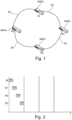
- Figure 1 shows an example of a network in the form of a ring topology in which four network devices (NWG) are present. These network devices (NWG) are connected to each other via a wired transmission medium, in particular a data line (DL), for the purpose of transmitting data.
- DL data line
- MRP Media Redundancy Protocol
- DLR Device Level Ring
- FIG 2 is the passage of test data packets TP within the ring topology according to Figure 1
- the network device NWG which is configured as master M, sends a test data packet TP to the next network device NWG (here the client R1). From there, the client R1 sends the test data packet to the next network device NWG, namely the next client R2. Once the test data packet TP has been received, it is forwarded to the next Network device NWG, namely the client R3, which can forward the received test data packet to the master M. Due to this mechanism, it is recognized in a conventional manner that the ring is closed and there is no interruption.
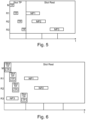
- test data packets and payload data packets The worst case scenario for this transmission of test data packets and payload data packets is that the master M sends a test data packet. Since the client R1 processes, and in particular sends, a payload data packet NP1, the test data packet TP received by the master M can only be forwarded once the payload data packet NP1 has been completely transmitted. The same applies to the other network devices R2 and R3, so that in any case, the forwarding of the test data packet by the other network devices NWG (here the clients R2 and R3) is delayed due to the processing or transmission of the other payload data packets NP2 and NP3.
- NWG here the clients R2 and R3
- the transmission of a payload packet is interrupted and instead of further transmission of this payload packet, a test data packet is transmitted and only then the transmission of the remaining payload packet is carried out.
- the first network device (the master M, which does not necessarily have to be the first network device, but can be any other network device) sends out a test data packet and the next network device NWG, here the client R1, starts sending a payload packet 1.
- NWG next network device
- the system does not wait until the payload packet NP1 has been completely transmitted by the network device R1, but rather interrupts the transmission of this payload packet NP1 in order to initiate the transmission of the test data packet TP by the network device R1. After this has happened, the remaining payload packet NP1 (in the Figure 4 the larger part of NP1) is emitted.
- the same process occurs on network device R2, which has already begun transmitting a payload packet NP2 upon receiving the test data packet.
- the transmission of the payload packet NP2 that had already begun is interrupted, and the test data packet TP is transmitted by network device R2.
- the remaining part of the payload packet NP2 (here, again, the larger part, for example) is transmitted further.
- the length or size of the respective payload data packet NP1, NP2 or NP3 according to Figure 4 depends on the time at which the respective test data packet TP was received on the respective network device. This means that the length or size of the payload packets NP1, NP2 and NP3 before and after the test data packet TP can be the same or different than shown in Figure 4 is shown.
- the master M therefore sends out its test data packet TP within the reserved time slot, which is received and forwarded by the client R1.
- the same also applies to the two other network devices R2 and R3, which can only send their payload packets NP2 and NP3 respectively when the test data packet TP has been transmitted within the reserved time slot (slot TP).
- slot TP the reserved time slot
- a predeterminable time range is reserved for the transmission of test data packets, with no payload data packets being transmitted within the predeterminable time range.
- This can thus be at least two or more time slots (as opposed to one time slot for all network devices) and even different time slots on different network devices to account for path and processing latencies.
- each network device (M, R1 to R3) is assigned a reserved time slot (slot TP) in which the test data packet TP can be transmitted.
- the transmission of the payload packets is possible at any time before and after this reserved time slot.
- the network device configured as master M sends a test data packet to the client R1 in a time slot reserved for this purpose. Before and after the reserved time slot, the network device configured as master can receive and send payload packets.
- the client R1 Before and after the reserved time slot, the network device configured as master can receive and send payload packets.
- the client R1 has reserved a time slot within which it can forward the received test data packet TP.
- the payload packet NP1 from client R1 is sent after the reserved time slot for the test data packet TP.
- Client R3 has also reserved a time slot for the test data packet TP. However, this client R3 can, in turn, send its payload packet NP3 before the reserved time slot.
- time slots reserved by the respective network devices are identical (i.e., they have the same length). Alternatively, different time slots can be reserved for the test data packets for each network device or group of network devices (configured in the network device). Care must be taken to ensure that the specified time range (time slot) has a minimum length sufficient for the secure and complete transmission of a test data packet.
- test data packets are transmitted preferentially in the reserved time slot of the network devices, so that either the transmission of a network data packet must occur before the reserved time slot or only after the transmission of the test data packet within its reserved time slot. This advantageously ensures that whenever a test data packet is pending transmission, no payload data packet is in transmission and would interfere with the transmission of the test data packet.
- test data packets are treated as so-called express data, just as in the first solution according to the invention, whereby in the first solution the payload data packets are interrupted and in the second solution the test data packets have the highest priority and thus "free" travel on the network.
Landscapes
- Engineering & Computer Science (AREA)
- Computer Networks & Wireless Communication (AREA)
- Signal Processing (AREA)
- Health & Medical Sciences (AREA)
- Cardiology (AREA)
- General Health & Medical Sciences (AREA)
- Environmental & Geological Engineering (AREA)
- Computer Security & Cryptography (AREA)
- Maintenance And Management Of Digital Transmission (AREA)
- Small-Scale Networks (AREA)
Description
Die Erfindung betrifft ein Verfahren zum Betreiben eines Netzwerkes, wobei Netzwerkgeräte in dem Netzwerk über zumindest ein Übertragungsmedium untereinander Nutzdaten durch die Übertragung von Nutzdatenpaketen austauschen und zur Verringerung eines Ausfallsrisikos zumindest ein Redundanzprotokoll angewendet wird, wobei dieses zumindest eine Redundanzprotokoll eine Übertragung von Testdatenpaketen zur Detektion von Ausfällen im Netzwerk durchführt, gemäß den Merkmalen des jeweiligen Oberbegriffes der beiden unabhängigen Patentansprüche.The invention relates to a method for operating a network, wherein network devices in the network exchange user data with each other via at least one transmission medium by transmitting user data packets and at least one redundancy protocol is used to reduce the risk of failure, wherein this at least one redundancy protocol carries out a transmission of test data packets to detect failures in the network, according to the features of the respective preamble of the two independent patent claims.
Es sind Verfahren zum Betreiben eines Netzwerkes bekannt, wobei Netzwerkgeräte in dem Netzwerk über zumindest ein Übertragungsmedium untereinander sowie von und an weiteren Geräten wie Sensoren, Aktoren und dergleichen Daten austauschen und zur Verringerung eines Ausfallsrisikos zumindest ein Redundanzprotokoll angewendet wird, wobei dieses zumindest eine Redundanzprotokoll eine zyklische Übertragung von Testdatenpaketen zur Detektion von Ausfällen im Netzwerk durchführt. Netzwerke, insbesondere Ethernet-Datennetze, bilden die technologische Basis zum Beispiel für die industrielle Überwachung und für Steuerungsnetzwerke in Produktionsstraßen. Ein Ausfall beziehungsweise eine Fehlfunktion in diesen Netzwerken ist typischerweise mit einem Verlust an Produktivität beziehungsweise Steuerungs- oder Überwachungssicherheit verbunden.Methods for operating a network are known, wherein network devices in the network exchange data with each other and from and to other devices such as sensors, actuators, and the like via at least one transmission medium, and at least one redundancy protocol is used to reduce the risk of failure. This at least one redundancy protocol carries out a cyclical transmission of test data packets to detect failures in the network. Networks, in particular Ethernet data networks, form the technological basis, for example, for industrial monitoring and for control networks in production lines. A failure or malfunction in these networks is typically associated with a loss of productivity or control or monitoring reliability.
Weiterer Stand der Technik ist in der
Zur Verringerung des Ausfallsrisikos haben sich zum einen Redundanzprotokolle, wie zum Beispiel das Media Redundancy Protocol (MRP) oder der Device Level Ring (DLR), bewährt. Diese Redundanzprotokolle setzen typischerweise neben dem Austausch von Nutzdaten (auch als produktive Daten zu bezeichnen) zwischen den Netzwerkgeräten und weiteren Geräten in dem Netzwerk mittels Nutzdatenpaketen (auch als Frames bezeichnet) die zyklische Übertragung von Testdatenpaketen (auch als Testframes oder Testpakete zu bezeichnen) zur Detektion von Ausfällen im Netzwerk voraus. Abhängig von der Datenmenge, die die Netzwerkgeräte untereinander und gegebenenfalls auch mit den weiteren Geräten in dem Netzwerk austauschen, und der damit verbundenen Auslastung des zumindest einen Übertragungsmediums aufgrund der übertragenen Nutzdatenpakete kann die Übertragung von Testdatenpaketen allerdings signifikant verzögert werden, was die Worst-Case-Umschaltzeit auf redundante Netzwerkpfade im Fehlerfall negativ beeinflusst.Redundancy protocols such as the Media Redundancy Protocol (MRP) or the Device Level Ring (DLR) have proven effective in reducing the risk of failure. These redundancy protocols typically require, in addition to the exchange of payload data (also referred to as productive data) between network devices and other devices in the network using payload data packets (also referred to as frames), the cyclical transmission of test data packets (also referred to as test frames or test packets) to detect network failures. However, depending on the amount of data that network devices exchange with each other and, where applicable, with other devices in the network, and the associated utilization of at least one transmission medium due to the transmitted payload data packets, the transmission of test data packets can be significantly delayed, which negatively impacts the worst-case switchover time to redundant network paths in the event of a failure.
Die Nutzung von Frame Preemption nach IEEE802.3br und IEEE 802.1Qbu ermöglicht zum anderen eine Unterbrechung der Übertragung anderer Daten (Nutzdaten), um so die Latenz für bestimmte Verkehrsklassen der Nutzdatenpakete zu verbessern.The use of frame preemption according to IEEE802.3br and IEEE 802.1Qbu also enables the interruption of the transmission of other data (payload data) in order to improve the latency for certain traffic classes of the payload data packets.
Nach IEEE 802.1Qbv ist es bekannt, mittels eines Time-Division-Multiple-Access-Verfahrens (TDMA) Kommunikationszyklen und den Zugriff auf das Übertragungsmedium anhand von Class-of-Service-Prioritäten (CoS) in einem Virtual Local Area Network (VLAN) Header von Ethernet Frames festzulegen, um damit harte Echtzeitanforderungen mit geringen Latenzen und Abweichungen (Jitter) umzusetzen.According to IEEE 802.1Qbv, it is known to use a time-division multiple access (TDMA) method to define communication cycles and access to the transmission medium based on class-of-service priorities (CoS) in a virtual local area network (VLAN) header of Ethernet frames in order to implement hard real-time requirements with low latencies and deviations (jitter).
Die Testdatenpakete eines Redundanzprotokolls konkurrieren gewöhnlich bei der Übertragung mit anderen Daten (Nutzdaten) um den Zugriff auf das zumindest eine Übertragungsmedium (zum Beispiel Datenleitung, Funkstrecke oder dergleichen; bei Ethemetanwendungen vor allem drahtgebunden). Bei steigender Nutzung der verfügbaren Bandbreite sowie bei steigender Anzahl an Netzwerkgeräten in dem Netzwerk, insbesondere in einem Ringnetzwerk, können die Nutzdaten zunehmend zu Verzögerungen bei der Weiterleitung von Testdatenpaketen führen. Die Worst-Case-Erkennungs- und Umschaltzeiten von Redundanzprotokollen mit Testdatenpaketen ergeben sich daher durch die maximale Verzögerung bei der Weiterleitung eines Testframes auf jedem Netzwerkgerät.The test data packets of a redundancy protocol typically compete with other data (payload) for access to at least one transmission medium (e.g., data line, radio link, or the like; in Ethernet applications, primarily wired). As the available bandwidth usage increases, as well as the number of network devices in the network increases, especially in a ring network, the payload can increasingly lead to delays in the forwarding of test data packets. The worst-case detection and switchover times of redundancy protocols with test data packets are therefore due to the maximum delay in forwarding a test frame on each network device.
Der Erfindung liegt daher die Aufgabe zugrunde, ein Verfahren zum Betreiben eines Netzwerkes bereitzustellen, mit dem die eingangs geschilderten Nachteile vermieden werden. Insbesondere soll die Zeit, mit der auf einen anderen Übertragungsweg umgeschaltet werden soll, wenn eine Unterbrechung des zumindest einen Übertragungsmediums festgestellt worden ist, verringert werden.The invention is therefore based on the object of providing a method for operating a network that avoids the disadvantages described above. In particular, the time required to switch to another transmission path when an interruption of at least one transmission medium is detected is to be reduced.
Diese Aufgabe ist durch die Merkmale der unabhängigen Patentansprüche gelöst.This problem is solved by the features of the independent patent claims.
Die vorliegende Erfindung kombiniert bekannte Verfahren dynamischer Redundanzprotokolle mit Testdatenpaketen und den Einsatz von Frame Preemption oder Zeitschlitzverfahren auf drei alternative oder miteinander kombinierbare Arten und Weisen. Dies ermöglicht jeweils für sich alleine betrachtet oder aber auch in Kombination miteinander eine signifikante Verringerung der Worst-Case-Erkennungszeit eines Ausfalls im Netzwerk und dadurch die Reduktion der WorstCase-Umschaltzeit im Fehlerfall.The present invention combines known methods of dynamic redundancy protocols with test data packets and the use of frame preemption or time slotting techniques in three alternative or combinable ways. This, either individually or in combination, enables a significant reduction in the worst-case detection time of a network failure and thus a reduction in the worst-case failover time in the event of a fault.
Zur Verringerung des Ausfallrisikos haben sich beispielsweis bei Ringnetzwerken die Redundanzprotokolle MRP oder DLR bewährt. Hier überwacht ein als Ringmaster konfiguriertes Netzwerkgerät das Netzwerk, indem er regelmäßig Testdatenpakete durch den Ring schickt. Die Testdatenpakete werden von jedem an dem Redundanzprotokoll teilnehmenden Netzwerkgerät empfangen und weitergeleitet, bis sie wieder bei dem Ringmaster ankommen. Bleiben die Testdatenpakete aus, ist ein Ausfall im Ringnetzwerk vorhanden und ein alternativer Übertragungspfad wird aktiviert.To reduce the risk of failure, the redundancy protocols MRP and DLR, for example, have proven effective in ring networks. Here, a network device configured as a ring master monitors the network by regularly sending test data packets through the ring. The test data packets are received by every network device participating in the redundancy protocol and forwarded until they arrive back at the ring master. If the test data packets fail to arrive, a failure occurs in the ring network, and an alternative transmission path is activated.
Gemäß einer ersten Lösung ist erfindungsgemäß vorgesehen, dass die Übertragung eines Nutzdatenpaketes unterbrochen und anstelle der weiteren Übertragung dieses Nutzdatenpaketes ein Testdatenpaket übertragen und erst danach die Übertragung des restlichen Nutzdatenpaketes durchgeführt wird.According to a first solution, the invention provides that the transmission of a user data packet is interrupted and, instead of further transmission of this user data packet, a test data packet is transmitted and only then is the transmission of the remaining user data packet carried out.
Durch die Nutzung von Frame Preemption können die Testdatenpakete von Redundanzprotokollen als Expressdaten behandelt und die Übertragung der Nutzdatenpakete unterbrochen werden. Diese Unterbrechung ermöglicht die priorisierte Übertragung der Testdatenpakete, auch wenn bereits mit der Übertragung eines Nutzdatenpaketes begonnen wurde. Nach Abschluss der Übertragung des Testdatenpakets wird die Übertragung der Nutzdatenpakete wiederaufgenommen und vervollständigt.By using frame preemption, redundancy protocols can treat test data packets as express data, and the transmission of payload packets can be interrupted. This interruption enables the prioritized transmission of test data packets, even if a payload packet has already begun. After the test data packet has been transmitted, the transmission of payload packets is resumed and completed.
Durch die Unterbrechung der Nutzdatenübertragung und der priorisierten Weiterleitung der Testdatenpakete wird die Verweilzeit der Testdatenpakete in den am Redundanzprotokoll teilnehmenden Netzwerkgeräten auf ein durch den Frame Preemption Mechanismus definiertes Minimum reduziert. Dies führt zu einer Unabhängigkeit der Verweilzeiten der Testdatenpakete von der Länge der Nutzdaten und dadurch zu einer signifikanten Reduktion der Worst-Case-Erkennungs- und Umschaltzeiten im Fehlerfall.By interrupting the payload data transmission and prioritizing the forwarding of the test data packets, the dwell time of the test data packets in the network devices participating in the redundancy protocol is reduced to a minimum defined by the frame preemption mechanism. This results in the dwell time of the test data packets being independent of the payload data length, thus significantly reducing worst-case detection and failover times in the event of a fault.
Gemäß einer ersten Alternative einer zweiten Lösung ist erfindungsgemäß vorgesehen, dass für die Übertragung von Testdatenpaketen ein vorgebbarer Zeitbereich reserviert wird, wobei innerhalb des vorgebbaren Zeitbereiches keine Nutzdatenpakete (unabhängig von der Verkehrsklasse beziehungsweise der ihnen zugeordneten Priorität) übertragen werden. Für die Übertragung eines Testdatenpaketes steht somit immer ein vorgegebener Zeitbereich zur Verfügung, der mindestens so groß ist, dass innerhalb des vorgegebenen Zeitbereiches das Testdatenpaket übertragen werden kann. Es kann auch daran gedacht werden, die reservierte Zeit für die Übertragung von Testdatenpaketen größer zu wählen, als es für die tatsächliche Übertragung erforderlich ist. In diesem Fall ist sichergestellt, dass die Testdatenpakete mit höchster Priorität und Vorrang vor der Übertragung von Nutzdatenpaketen übertragen werden. Sollte jedoch der vorgegebene Zeitbereich größer sein als die Zeit, die für die Übertragung eines Testdatenpaketes erforderlich ist, wird dadurch die zur Verfügung stehende Bandbreite nicht optimal ausgenutzt, da innerhalb des vorgegebenen Zeitbereiches (Zeitschlitzes) nach dem Versand eines Testdatenpaketes noch Zeit zur Verfügung steht, um Nutzdatenpakete, insbesondere Nutzdatenpakete niedrigerer Priorität, zu übertragen.According to a first alternative of a second solution, the invention provides that a predeterminable time range is reserved for the transmission of test data packets, wherein no payload data packets (regardless of the traffic class or the priority assigned to them) are transmitted within the predeterminable time range. Thus, a predefined time range is always available for the transmission of a test data packet, which is at least large enough for the test data packet to be transmitted within the predefined time range. It is also possible to select a longer time for the reserved transmission of test data packets than is required for the actual transmission. In this case, it is ensured that the test data packets are transmitted with the highest priority and precedence over the transmission of payload data packets. However, if the specified time range is longer than the time required to transmit a test data packet, the available bandwidth will not be used optimally, since within the specified time range (time slot) after the transmission of a test data packet there is still time available to transmit payload data packets, in particular payload data packets of lower priority.
Gemäß einer zweiten Alternative der zweiten Lösung ist daher erfindungsgemäß vorgesehen, dass für die Übertragung von Testdatenpaketen ein vorgebbarer Zeitbereich reserviert wird, wobei innerhalb des vorgebbaren Zeitbereichs weiterhin die Übertragung von Nutzdaten erfolgen kann und die Testdatenpakete gegenüber den Nutzdatenpaketen mit einer höheren Übertragungspriorität übertragen werden. Sollte in einem solchen Fall nach der vorrangigen Übertragung eines Testdatenpaketes innerhalb des vorgegebenen Zeitbereiches noch Zeit innerhalb dieses Zeitschlitzes zur Verfügung stehen, können Nutzdatenpakete, insbesondere Nutzdatenpakete niedrigerer Priorität beziehungsweise Nutzdatenpakete, die sich in einer Warteschlange befinden, auch innerhalb dieses Zeitschlitzes übertragen werden. Das bedeutet, dass die Bandbreite optimal ausgenutzt wird und es nicht erforderlich ist, den Ablauf des vorgegebenen Zeitbereiches abzuwarten, bevor weitere Nutzdatenpakete übertragen werden können.According to a second alternative of the second solution, the invention therefore provides that a predeterminable time period is reserved for the transmission of test data packets, wherein the transmission of payload data can continue within the predeterminable time period and the test data packets are transmitted with a higher transmission priority than the payload data packets. In such a case, if time is still available within this time slot after the priority transmission of a test data packet within the predefined time period, payload data packets, in particular payload data packets with a lower priority or payload data packets that are in a queue, can also be transmitted within this time slot. This means that the bandwidth is optimally utilized and it is not necessary to wait for the predefined time period to expire before further payload data packets can be transmitted.
In einer Ausführungsform ist hierzu vorgesehen, dass zunächst ein Testdatenpaket von den Netzwerkgeräten übertragen und erst danach von zumindest einem Netzwerkgerät mit der Übertagung eines Nutzdatenpaketes begonnen wird.In one embodiment, it is provided that a test data packet is first transmitted by the network devices and only then does at least one network device begin transmitting a user data packet.
Dadurch, dass innerhalb des vorgebbaren Zeitbereiches (auch als Zeitfenster oder Zeitschlitz zu bezeichnen) keine Nutzdatenpakete übertragen werden, wird in vorteilhafter Weise sichergestellt, dass die Nutzdatenpakete keinerlei Einfluss oder Verzögerung für die Übertragung der Testdatenpakete verursachen können.The fact that no user data packets are transmitted within the predefined time range (also referred to as a time window or time slot) advantageously ensures that the user data packets cannot cause any influence or delay for the transmission of the test data packets.
Bei der Verwendung von Zeitschlitzverfahren wie beispielsweise IEEE802.1Qbv kann die Verzögerung bei der Weiterleitung eines Testdatenpaketes (Testframes) auf einem Netzwerkgerät aufgrund eines bereits im Versand befindlichen Nutzdatenpaketes (Nutzdatenframes) sogar vollständig eliminiert werden. Testdatenpakete werden über erkennbare Eigenschaften dieser Pakete einer Klasse, einer sogenannten Traffic Class, zugeordnet, für welche dann mittels Zeitschlitzverfahren, wie IEEE802.1Qbv, ein vorgebbarer Zeitschlitz konfiguriert wird. In einem solchen Zeitschlitz entweder innerhalb einer Klasse und/oder auch klassenübergreifend werden die Testdatenpakete dann priorisiert übertragen. Der Vorteil dieser Lösung besteht somit in der Optimierung der Worst-Case-Erkennungs- und Umschaltzeiten und somit in der Nutzung von Zeitschlitzverfahren, wie dem erwähnten "Enhancements for Scheduled Traffic" (IEEE802.1Qbv), um den Übertragungszeitpunkt der Testdatenpakete auf dem Ring durch dedizierte Zeitschlitze ohne zusätzliche Wartezeit im weiterleitenden Netzwerkgerät zu ermöglichen. Ein vorgebbarer Anteil der verfügbaren Bandbreite der Netzwerkkapazität wird somit für Testframes (Testdatenpakete) reserviert. Für eine optimale Nutzung des Ausfallerkennungszeitraums versendet der Ringmaster die Testframes synchronisiert mit dem Start des für Testframes vorgesehenen Zeitschlitzes.When using time slotting techniques such as IEEE802.1Qbv, the delay in forwarding a test data packet (test frame) on a network device due to a payload packet (payload frame) already in transit can even be completely eliminated. Test data packets are assigned to a class, a so-called traffic class, based on recognizable properties of these packets, for which a predefined time slot is then configured using time slotting techniques such as IEEE802.1Qbv. In such a time slot, the test data packets are then transmitted with priority, either within a class and/or across classes. The advantage of this solution is the optimization of worst-case detection and switching times and thus in the Use of time slotting techniques, such as the aforementioned "Enhancements for Scheduled Traffic" (IEEE802.1Qbv), to enable the transmission of test data packets on the ring through dedicated time slots without additional waiting time in the forwarding network device. A predefined portion of the available network bandwidth is thus reserved for test frames (test data packets). For optimal use of the failure detection period, the ring master sends the test frames synchronized with the start of the time slot designated for test frames.
In Weiterbildung der Erfindung ist das Erzeugen der Testdatenpakete in dem Netzwerkgerät, das als Master konfiguriert ist, zeitlich an die Öffnung des für die Testdatenpakete vorgesehenen Zeitschlitzes gekoppelt. Hierdurch wird bestmögliche Nutzung des Zeitfensters für die Übertragung des Testdatenpaketes realisiert.In a further development of the invention, the generation of the test data packets in the network device configured as the master is time-coupled with the opening of the time slot designated for the test data packets. This ensures optimal use of the time window for transmitting the test data packet.
Aufgrund der Längenunabhängigkeit ist im Gegensatz zum bekannten Stand der Technik die Verwendung von Jumbo-Frames (d.h. überlange Datenpakete) ebenfalls ohne Beeinträchtigung der Worst-Case-Erkennungs- und Umschaltzeiten möglich.Due to the length independence, in contrast to the known state of the art, the use of jumbo frames (i.e. extra-long data packets) is also possible without affecting the worst-case detection and switching times.
Schließlich ist die Erfindung nicht auf Ringredundanzprotokolle beschränkt, sondern erstreckt sich unabhängig von der Topologie des Netzwerkes über Redundanzprotokolle, die auf dem Einsatz von Testdatenpaketen basieren.Finally, the invention is not limited to ring redundancy protocols, but extends to redundancy protocols based on the use of test data packets, regardless of the network topology.
Nach der Erfindung wird somit in vorteilhafter Weise immer durch die minimierte Wartezeit von Testdatenpaketen auf Netzwerkgeräten die Erkennung eines Ausfalles (Unterbrechung der Übertragung gleich aus welchem Grund, wie zum Beispiel Kabelbruch, gezogener oder defekter Steckverbinder, Stromausfall bei einem Netzwerkgerät oder dergleichen) schnell erkannt, so dass die Zeit bis zu einer Erkennung eines Ausfalles minimiert wird.According to the invention, the detection of a failure (interruption of transmission for whatever reason, such as a cable break, pulled or defective connector, power failure in a network device or the like) is thus always advantageously quickly detected by minimizing the waiting time of test data packets on network devices, so that the time until a failure is detected is minimized.
Eine Beispielrechnung kann den Beitrag der Erfindung verdeutlichen. In DIN EN 62439-2:2010-09 (MRP), Kapitel 9.5.4, wird eine Worst-Case-Berechnung für 50 Ringteilnehmer durchgeführt, mit dem Ergebnis einer Umschaltzeit von 26,2 ms. Setzt man für TQueue den Wert für kleinste Framelets bei Frame Preemption von 64 Byte / 5,12 µs ein, so ergeben sich nur noch 14,5 ms. Durch Verwendung des Zeitschlitzverfahrens kann TQueue auf 0 µs sinken, die Umschaltzeit beträgt dann nur noch 14,0 ms.An example calculation can illustrate the contribution of the invention. In DIN EN 62439-2:2010-09 (MRP), Chapter 9.5.4, a worst-case calculation is performed for 50 ring participants, resulting in a switching time of 26.2 ms. If the value for the smallest framelet with frame preemption of 64 bytes / 5.12 µs is used for T Queue , the result is only 14.5 ms. By using the Using the time slot method, T Queue can drop to 0 µs, and the switching time is then only 14.0 ms.
Die beiden vorstehend allgemein beschriebenen Lösungen werden im Folgenden unter Bezugnahme auf die Figuren anhand eines Ausführungsbeispiels näher beschrieben.The two solutions described in general terms above are described in more detail below with reference to the figures using an exemplary embodiment.
In der
In
An dieser Stelle sei erwähnt, dass diese Vorgehensweise anhand einer Ringtopologie beschrieben wird. Die Erfindung ist jedoch nicht auf Ringtopologien beschränkt und kann auf andere Netzwerktopologien, wie z. B. Linientopologien, genauso angewandt werden.It should be noted that this approach is described using a ring topology. However, the invention is not limited to ring topologies and can be applied to other network topologies, such as line topologies.
In
In
In der
Gemäß der ersten Lösung nach der Erfindung wird, wie es in
Der gleiche Vorgang erfolgt bei dem Netzwerkgerät R2, welches bei Empfang des Testdatenpaketes schon mit der Aussendung eines Nutzdatenpaketes NP2 begonnen hat. Wenn das Testdatenpaket TP des Netzwerkgerätes R1 von dem Netzwerkgerät R2 empfangen worden ist wird die schon begonnene Übertragung des Nutzdatenpaketes NP2 unterbrochen und das Testdatenpaket TP von dem Netzwerkgerät R2 ausgesendet. Nachdem dies erfolgt ist, wird der restliche Teil des Nutzdatenpaketes NP2 (auch hier beispielhaft der größere Teil) weiter übertragen.The same process occurs on network device R2, which has already begun transmitting a payload packet NP2 upon receiving the test data packet. Once the test data packet TP from network device R1 has been received by network device R2, the transmission of the payload packet NP2 that had already begun is interrupted, and the test data packet TP is transmitted by network device R2. After this has occurred, the remaining part of the payload packet NP2 (here, again, the larger part, for example) is transmitted further.
Dies setzt sich bei dem weiteren Netzwerkgerät R3 fort, so dass der erfindungsgemäße erste Lösungsansatz die deutliche Verkürzung der Übertragungszeit eines Testdatenpaketes TP auf dem Ringnetzwerk deutlich macht gegenüber dem Worstcase, der in
Die Länge beziehungsweise Größe des jeweiligen Nutzdatenpaketes NP1, NP2 beziehungsweise NP3 gemäß
In
In dem Beispielfall gemäß
In
In
Die von den jeweiligen Netzwerkgeräten reservierten Zeitschlitze sind gleich (haben also die gleiche zeitliche Länge). Alternativ können je Netzwerkgerät oder auch je Netzwerkgerätgruppe unterschiedliche Zeitschlitze für die Testdatenpakete reserviert werden (im Netzwerkgerät durch Konfiguration einzustellen). Dabei ist darauf zu achten, dass der vorgebbare Zeitbereich (Zeitschlitz) eine solche zeitliche Mindestlänge aufweist, die für die sichere und vollständige Übertragung eines Testdatenpaketes ausreicht.The time slots reserved by the respective network devices are identical (i.e., they have the same length). Alternatively, different time slots can be reserved for the test data packets for each network device or group of network devices (configured in the network device). Care must be taken to ensure that the specified time range (time slot) has a minimum length sufficient for the secure and complete transmission of a test data packet.
Bei dieser Alternative der zweiten erfindungsgemäßen Lösung werden somit die Testdatenpakete in den reservierten Zeitschlitz der Netzwerkgeräte bevorzugt übertragen, sodass entweder die Übertragung eines Netzdatenpaketes vor dem reservierten Zeitschlitz erfolgen muss oder erst nach der Übertragung des Test Datenpaketes innerhalb seines reservierten Zeitschlitzes erfolgt. Damit ist in vorteilhafter Weise sichergestellt, dass immer dann, wenn ein Testdatenpaket für die Übertragung ansteht, kein Nutzdatenpaket in der Übertragung befindlich ist und die Übertragung des Testdatenpaketes behindert.In this alternative of the second solution according to the invention, the test data packets are transmitted preferentially in the reserved time slot of the network devices, so that either the transmission of a network data packet must occur before the reserved time slot or only after the transmission of the test data packet within its reserved time slot. This advantageously ensures that whenever a test data packet is pending transmission, no payload data packet is in transmission and would interfere with the transmission of the test data packet.
Auch durch diese zweite Lösung kommt es zu einer deutlich schnelleren Übertragung der Testdatenpakete (insbesondere bei einem Vergleich mit der
Bei der zweiten erfindungsgemäßen Lösung (bei einer der beiden oder auch bei beiden Alternativen) werden somit die Testdatenpakete, genauso wie bei der ersten erfindungsgemäßen Lösung, als sogenannte Expressdaten behandelt, wobei bei der ersten Lösung die Nutzdatenpakete unterbrochen werden und bei der zweiten Lösung die Testdatenpakete höchste Priorität und somit "freie" Fahrt auf dem Netzwerk haben.In the second solution according to the invention (in one of the two or both alternatives), the test data packets are treated as so-called express data, just as in the first solution according to the invention, whereby in the first solution the payload data packets are interrupted and in the second solution the test data packets have the highest priority and thus "free" travel on the network.
Claims (6)
- Method for operating a network, wherein network devices in the network exchange useful data with one another via at least one transmission medium through the transmission of useful data packets and at least one redundancy protocol is applied in order to reduce a failure risk, wherein this at least one redundancy protocol performs a transmission of test data packets in order to detect failures in the network, characterized in that the transmission of a useful data packet is interrupted and, instead of the further transmission of this useful data packet, a test data packet is transmitted in order to detect failures in the network and only thereafter is the transmission of the remaining useful data packet carried out.
- Method for operating a network, wherein network devices in the network exchange useful data with one another via at least one transmission medium through the transmission of useful data packets and at least one redundancy protocol is applied in order to reduce a failure risk, wherein this at least one redundancy protocol performs a transmission of test data packets in order to detect failures in the network, characterized in that a predefinable time slot is reserved for the transmission of test data packets in order to detect failures in the network, wherein no useful data packets are transmitted within the predefinable time slot.
- Method for operating a network, wherein network devices in the network exchange useful data with one another via at least one transmission medium through the transmission of useful data packets and at least one redundancy protocol is applied in order to reduce a failure risk, wherein this at least one redundancy protocol performs a transmission of test data packets in order to detect failures in the network, characterized in that a predefinable time slot is reserved for the transmission of test data packets in order to detect failures in the network, wherein the transmission of useful data can continue to take place within the predefinable time slot and the test data packets are transmitted with a higher transmission priority compared to the useful data packets.
- Method for operating a network according to Claim 2 or 3, characterized in that a test data packet is first transmitted by the network device which is configured as the master and only thereafter does at least one network device start to transmit a useful data packet.
- Method for operating a network according to Claim 2 or 3, characterized in that generation of the test data packets in the network device which is configured as the master is temporally linked to the opening of the time slot provided for test data packets.
- Method for operating a network according to one of the preceding claims, characterized in that test data packets for detecting failures in the network are given a higher priority, and waiting times for test data packets on network devices are thus reduced to a minimum which is necessary until a lower-priority useful data packet has been interrupted.
Applications Claiming Priority (2)
| Application Number | Priority Date | Filing Date | Title |
|---|---|---|---|
| DE102016124584 | 2016-12-16 | ||
| PCT/EP2017/083105 WO2018109190A1 (en) | 2016-12-16 | 2017-12-15 | Method for optimizing the failure detection of redundancy protocols by means of test data packets |
Publications (2)
| Publication Number | Publication Date |
|---|---|
| EP3556060A1 EP3556060A1 (en) | 2019-10-23 |
| EP3556060B1 true EP3556060B1 (en) | 2025-06-18 |
Family
ID=60955012
Family Applications (1)
| Application Number | Title | Priority Date | Filing Date |
|---|---|---|---|
| EP17828698.5A Active EP3556060B1 (en) | 2016-12-16 | 2017-12-15 | Method for optimizing the failure detection of redundancy protocols by means of test data packets |
Country Status (5)
| Country | Link |
|---|---|
| US (1) | US20190335024A1 (en) |
| EP (1) | EP3556060B1 (en) |
| CN (1) | CN110249591B (en) |
| DE (1) | DE102017130167A1 (en) |
| WO (1) | WO2018109190A1 (en) |
Families Citing this family (2)
| Publication number | Priority date | Publication date | Assignee | Title |
|---|---|---|---|---|
| EP3451591B1 (en) * | 2017-09-01 | 2020-03-18 | Siemens Aktiengesellschaft | Method of operating a communication network in a ring topology, and such a communication network |
| AU2020365435B2 (en) * | 2019-10-18 | 2023-03-02 | Omicron Electronics Gmbh | Safe test arrangement |
Citations (2)
| Publication number | Priority date | Publication date | Assignee | Title |
|---|---|---|---|---|
| EP1734700A1 (en) * | 2005-06-16 | 2006-12-20 | Siemens Aktiengesellschaft | Method and apparatus for realtime data transmission in an Ethernet data network |
| EP3451591A1 (en) * | 2017-09-01 | 2019-03-06 | Siemens Aktiengesellschaft | Method of operating a communication network in a ring topology, and such a communication network |
Family Cites Families (12)
| Publication number | Priority date | Publication date | Assignee | Title |
|---|---|---|---|---|
| SE505091C2 (en) * | 1995-10-03 | 1997-06-23 | Ericsson Telefon Ab L M | Redundancy structure for digital voters |
| DE19810587A1 (en) * | 1998-03-11 | 1999-09-16 | Siemens Ag | Ethernet (RTM) network with redundancy characteristics |
| US20050058149A1 (en) * | 1998-08-19 | 2005-03-17 | Howe Wayne Richard | Time-scheduled and time-reservation packet switching |
| US6910148B1 (en) * | 2000-12-07 | 2005-06-21 | Nokia, Inc. | Router and routing protocol redundancy |
| US20070071026A1 (en) * | 2005-09-23 | 2007-03-29 | Rivulet Communications, Inc. | Compressed video packet scheduling system |
| US7747734B2 (en) * | 2006-03-29 | 2010-06-29 | International Business Machines Corporation | Apparatus, system, and method for error assessment over a communication link |
| ATE476809T1 (en) * | 2006-09-29 | 2010-08-15 | Nokia Siemens Networks Gmbh | METHOD FOR PROTECTIVE SWITCHING IN RING TOPOLOGIES |
| US8520508B2 (en) * | 2007-02-13 | 2013-08-27 | Force10 Networks, Inc. | Spanning tree ring protocol |
| US8259590B2 (en) * | 2007-12-21 | 2012-09-04 | Ciena Corporation | Systems and methods for scalable and rapid Ethernet fault detection |
| WO2010105828A1 (en) * | 2009-03-18 | 2010-09-23 | Hirschmann Automation And Control Gmbh | Parallel operation of rstp (rapid spanning tree protocol) and mrp (media redundancy protocol) and segmentation/coupling |
| ES2532579T3 (en) * | 2012-04-30 | 2015-03-30 | Siemens Aktiengesellschaft | Communication device for an industrial communication network that can be operated redundantly and procedure for operating a communication network |
| US9769075B2 (en) * | 2015-04-01 | 2017-09-19 | Honeywell International Inc. | Interference cognizant network scheduling |
-
2017
- 2017-12-15 CN CN201780085740.1A patent/CN110249591B/en active Active
- 2017-12-15 EP EP17828698.5A patent/EP3556060B1/en active Active
- 2017-12-15 US US16/468,424 patent/US20190335024A1/en not_active Abandoned
- 2017-12-15 WO PCT/EP2017/083105 patent/WO2018109190A1/en not_active Ceased
- 2017-12-15 DE DE102017130167.4A patent/DE102017130167A1/en active Pending
Patent Citations (2)
| Publication number | Priority date | Publication date | Assignee | Title |
|---|---|---|---|---|
| EP1734700A1 (en) * | 2005-06-16 | 2006-12-20 | Siemens Aktiengesellschaft | Method and apparatus for realtime data transmission in an Ethernet data network |
| EP3451591A1 (en) * | 2017-09-01 | 2019-03-06 | Siemens Aktiengesellschaft | Method of operating a communication network in a ring topology, and such a communication network |
Also Published As
| Publication number | Publication date |
|---|---|
| CN110249591A (en) | 2019-09-17 |
| WO2018109190A1 (en) | 2018-06-21 |
| DE102017130167A1 (en) | 2018-06-21 |
| CN110249591B (en) | 2022-05-10 |
| EP3556060A1 (en) | 2019-10-23 |
| US20190335024A1 (en) | 2019-10-31 |
Similar Documents
| Publication | Publication Date | Title |
|---|---|---|
| EP2936747B1 (en) | Data transmission using a protocol exception state | |
| EP1100230B1 (en) | Data transmission system for aircrafts | |
| EP2637362B1 (en) | Bus participant device for connection to a line-redundant, serial data bus and method for controlling the communication of a bus participant with a line-redundant, serial data bus | |
| EP3248362B1 (en) | Data transmission in a communications network | |
| EP3155763B1 (en) | Redundant transmission of data telegrams in communication networks having ring topology | |
| EP2538619B1 (en) | Method for transferring data packets | |
| EP3183851A1 (en) | Distribution node, automation network, and method for transmitting real-time-relevant and non-real-time relevant data packets | |
| EP2586162B1 (en) | Prioritized transfer of data telegrams | |
| EP3211838B1 (en) | Redundant industrial communication system, method of operating same and radio transceiver station | |
| EP2936746B1 (en) | Data transmission protocol with protocol exception state | |
| WO2019007516A1 (en) | METHOD FOR THE PERFORMANT DATA TRANSMISSION IN A DATA NETWORK WITH PARTIAL REAL TIME REQUIREMENTS AND DEVICE FOR CARRYING OUT SAID METHOD | |
| EP3151476B1 (en) | Method for cross-traffic between two slaves of a ring -shaped data network | |
| DE102012206529B4 (en) | Wireless real-time transmission system | |
| EP3556060B1 (en) | Method for optimizing the failure detection of redundancy protocols by means of test data packets | |
| EP3451591B1 (en) | Method of operating a communication network in a ring topology, and such a communication network | |
| EP2704370B1 (en) | Method for message transmission in a redundant industrial communication network and communication device for a redundant industrial communication network | |
| EP3854035B1 (en) | Data transmission method and automation communication network | |
| WO2009089850A1 (en) | Method for operating a communication network, switch, and communications network | |
| EP3130099A1 (en) | Method for a redundant transmission system with prp and energy-savings | |
| EP1990941B1 (en) | Assembly and method for secure data communication over an unsecured network | |
| EP3629550A1 (en) | Method for transmitting data within an industrial communication system and coupling communication device | |
| EP2466805B1 (en) | Method for transmitting data between two participants, converter for transmitting and receiving data and data transmission path | |
| EP3435179B1 (en) | Method for functionally secure exchange of information according to a safety standard | |
| DE102011003310A1 (en) | Network devices for connecting partial networks of industrial automation network to control e.g. machines, have data processing units processing switch-off signal to control communication unit to interrupt communication between subscribers | |
| DE102020202226A1 (en) | Process and transmission system for the transmission of measurement data |
Legal Events
| Date | Code | Title | Description |
|---|---|---|---|
| STAA | Information on the status of an ep patent application or granted ep patent |
Free format text: STATUS: UNKNOWN |
|
| STAA | Information on the status of an ep patent application or granted ep patent |
Free format text: STATUS: THE INTERNATIONAL PUBLICATION HAS BEEN MADE |
|
| PUAI | Public reference made under article 153(3) epc to a published international application that has entered the european phase |
Free format text: ORIGINAL CODE: 0009012 |
|
| STAA | Information on the status of an ep patent application or granted ep patent |
Free format text: STATUS: REQUEST FOR EXAMINATION WAS MADE |
|
| 17P | Request for examination filed |
Effective date: 20190715 |
|
| AK | Designated contracting states |
Kind code of ref document: A1 Designated state(s): AL AT BE BG CH CY CZ DE DK EE ES FI FR GB GR HR HU IE IS IT LI LT LU LV MC MK MT NL NO PL PT RO RS SE SI SK SM TR |
|
| AX | Request for extension of the european patent |
Extension state: BA ME |
|
| DAV | Request for validation of the european patent (deleted) | ||
| DAX | Request for extension of the european patent (deleted) | ||
| RIN1 | Information on inventor provided before grant (corrected) |
Inventor name: WENDT, MARTIN Inventor name: MUECK, FLORIAN Inventor name: KEHRER, STEPHAN Inventor name: HUMMEN, RENE |
|
| RIN1 | Information on inventor provided before grant (corrected) |
Inventor name: WENDT, MARTIN Inventor name: KEHRER, STEPHAN Inventor name: MUECK, FLORIAN Inventor name: HUMMEN, RENE |
|
| STAA | Information on the status of an ep patent application or granted ep patent |
Free format text: STATUS: EXAMINATION IS IN PROGRESS |
|
| 17Q | First examination report despatched |
Effective date: 20210511 |
|
| GRAP | Despatch of communication of intention to grant a patent |
Free format text: ORIGINAL CODE: EPIDOSNIGR1 |
|
| STAA | Information on the status of an ep patent application or granted ep patent |
Free format text: STATUS: GRANT OF PATENT IS INTENDED |
|
| RIC1 | Information provided on ipc code assigned before grant |
Ipc: H04L 43/50 20220101ALI20250227BHEP Ipc: H04L 43/0823 20220101ALI20250227BHEP Ipc: H04L 43/0811 20220101ALI20250227BHEP Ipc: H04L 12/437 20060101AFI20250227BHEP |
|
| INTG | Intention to grant announced |
Effective date: 20250314 |
|
| GRAS | Grant fee paid |
Free format text: ORIGINAL CODE: EPIDOSNIGR3 |
|
| GRAA | (expected) grant |
Free format text: ORIGINAL CODE: 0009210 |
|
| STAA | Information on the status of an ep patent application or granted ep patent |
Free format text: STATUS: THE PATENT HAS BEEN GRANTED |
|
| AK | Designated contracting states |
Kind code of ref document: B1 Designated state(s): AL AT BE BG CH CY CZ DE DK EE ES FI FR GB GR HR HU IE IS IT LI LT LU LV MC MK MT NL NO PL PT RO RS SE SI SK SM TR |
|
| REG | Reference to a national code |
Ref country code: GB Ref legal event code: FG4D Free format text: NOT ENGLISH |
|
| REG | Reference to a national code |
Ref country code: CH Ref legal event code: EP |
|
| REG | Reference to a national code |
Ref country code: DE Ref legal event code: R096 Ref document number: 502017016914 Country of ref document: DE |
|
| REG | Reference to a national code |
Ref country code: CH Ref legal event code: EP |
|
| REG | Reference to a national code |
Ref country code: IE Ref legal event code: FG4D Free format text: LANGUAGE OF EP DOCUMENT: GERMAN |
|
| PG25 | Lapsed in a contracting state [announced via postgrant information from national office to epo] |
Ref country code: FI Free format text: LAPSE BECAUSE OF FAILURE TO SUBMIT A TRANSLATION OF THE DESCRIPTION OR TO PAY THE FEE WITHIN THE PRESCRIBED TIME-LIMIT Effective date: 20250618 |
|
| REG | Reference to a national code |
Ref country code: LT Ref legal event code: MG9D |
|
| PG25 | Lapsed in a contracting state [announced via postgrant information from national office to epo] |
Ref country code: NO Free format text: LAPSE BECAUSE OF FAILURE TO SUBMIT A TRANSLATION OF THE DESCRIPTION OR TO PAY THE FEE WITHIN THE PRESCRIBED TIME-LIMIT Effective date: 20250918 Ref country code: GR Free format text: LAPSE BECAUSE OF FAILURE TO SUBMIT A TRANSLATION OF THE DESCRIPTION OR TO PAY THE FEE WITHIN THE PRESCRIBED TIME-LIMIT Effective date: 20250919 |
|
| PG25 | Lapsed in a contracting state [announced via postgrant information from national office to epo] |
Ref country code: BG Free format text: LAPSE BECAUSE OF FAILURE TO SUBMIT A TRANSLATION OF THE DESCRIPTION OR TO PAY THE FEE WITHIN THE PRESCRIBED TIME-LIMIT Effective date: 20250618 |
|
| PG25 | Lapsed in a contracting state [announced via postgrant information from national office to epo] |
Ref country code: HR Free format text: LAPSE BECAUSE OF FAILURE TO SUBMIT A TRANSLATION OF THE DESCRIPTION OR TO PAY THE FEE WITHIN THE PRESCRIBED TIME-LIMIT Effective date: 20250618 |
|
| PG25 | Lapsed in a contracting state [announced via postgrant information from national office to epo] |
Ref country code: RS Free format text: LAPSE BECAUSE OF FAILURE TO SUBMIT A TRANSLATION OF THE DESCRIPTION OR TO PAY THE FEE WITHIN THE PRESCRIBED TIME-LIMIT Effective date: 20250918 |
|
| REG | Reference to a national code |
Ref country code: NL Ref legal event code: MP Effective date: 20250618 |
|
| PG25 | Lapsed in a contracting state [announced via postgrant information from national office to epo] |
Ref country code: LV Free format text: LAPSE BECAUSE OF FAILURE TO SUBMIT A TRANSLATION OF THE DESCRIPTION OR TO PAY THE FEE WITHIN THE PRESCRIBED TIME-LIMIT Effective date: 20250618 |
|
| PG25 | Lapsed in a contracting state [announced via postgrant information from national office to epo] |
Ref country code: NL Free format text: LAPSE BECAUSE OF FAILURE TO SUBMIT A TRANSLATION OF THE DESCRIPTION OR TO PAY THE FEE WITHIN THE PRESCRIBED TIME-LIMIT Effective date: 20250618 |
|
| PG25 | Lapsed in a contracting state [announced via postgrant information from national office to epo] |
Ref country code: PT Free format text: LAPSE BECAUSE OF FAILURE TO SUBMIT A TRANSLATION OF THE DESCRIPTION OR TO PAY THE FEE WITHIN THE PRESCRIBED TIME-LIMIT Effective date: 20251020 |
|
| PG25 | Lapsed in a contracting state [announced via postgrant information from national office to epo] |
Ref country code: IS Free format text: LAPSE BECAUSE OF FAILURE TO SUBMIT A TRANSLATION OF THE DESCRIPTION OR TO PAY THE FEE WITHIN THE PRESCRIBED TIME-LIMIT Effective date: 20251018 |
|
| PGFP | Annual fee paid to national office [announced via postgrant information from national office to epo] |
Ref country code: DE Payment date: 20251211 Year of fee payment: 9 |
|
| PGFP | Annual fee paid to national office [announced via postgrant information from national office to epo] |
Ref country code: GB Payment date: 20251219 Year of fee payment: 9 |
|
| PG25 | Lapsed in a contracting state [announced via postgrant information from national office to epo] |
Ref country code: SM Free format text: LAPSE BECAUSE OF FAILURE TO SUBMIT A TRANSLATION OF THE DESCRIPTION OR TO PAY THE FEE WITHIN THE PRESCRIBED TIME-LIMIT Effective date: 20250618 |
|
| PG25 | Lapsed in a contracting state [announced via postgrant information from national office to epo] |
Ref country code: CZ Free format text: LAPSE BECAUSE OF FAILURE TO SUBMIT A TRANSLATION OF THE DESCRIPTION OR TO PAY THE FEE WITHIN THE PRESCRIBED TIME-LIMIT Effective date: 20250618 |
|
| PG25 | Lapsed in a contracting state [announced via postgrant information from national office to epo] |
Ref country code: PL Free format text: LAPSE BECAUSE OF FAILURE TO SUBMIT A TRANSLATION OF THE DESCRIPTION OR TO PAY THE FEE WITHIN THE PRESCRIBED TIME-LIMIT Effective date: 20250618 |
|
| PG25 | Lapsed in a contracting state [announced via postgrant information from national office to epo] |
Ref country code: EE Free format text: LAPSE BECAUSE OF FAILURE TO SUBMIT A TRANSLATION OF THE DESCRIPTION OR TO PAY THE FEE WITHIN THE PRESCRIBED TIME-LIMIT Effective date: 20250618 |
|
| PG25 | Lapsed in a contracting state [announced via postgrant information from national office to epo] |
Ref country code: SK Free format text: LAPSE BECAUSE OF FAILURE TO SUBMIT A TRANSLATION OF THE DESCRIPTION OR TO PAY THE FEE WITHIN THE PRESCRIBED TIME-LIMIT Effective date: 20250618 Ref country code: RO Free format text: LAPSE BECAUSE OF FAILURE TO SUBMIT A TRANSLATION OF THE DESCRIPTION OR TO PAY THE FEE WITHIN THE PRESCRIBED TIME-LIMIT Effective date: 20250618 |
|
| PG25 | Lapsed in a contracting state [announced via postgrant information from national office to epo] |
Ref country code: ES Free format text: LAPSE BECAUSE OF FAILURE TO SUBMIT A TRANSLATION OF THE DESCRIPTION OR TO PAY THE FEE WITHIN THE PRESCRIBED TIME-LIMIT Effective date: 20250618 |