EP3554764B1 - Fastener driving tool having auto ignition - Google Patents
Fastener driving tool having auto ignition Download PDFInfo
- Publication number
- EP3554764B1 EP3554764B1 EP17817631.9A EP17817631A EP3554764B1 EP 3554764 B1 EP3554764 B1 EP 3554764B1 EP 17817631 A EP17817631 A EP 17817631A EP 3554764 B1 EP3554764 B1 EP 3554764B1
- Authority
- EP
- European Patent Office
- Prior art keywords
- fastener driving
- fuel
- driving tool
- oxidizer
- powered fastener
- Prior art date
- Legal status (The legal status is an assumption and is not a legal conclusion. Google has not performed a legal analysis and makes no representation as to the accuracy of the status listed.)
- Active
Links
Images


Classifications
-
- B—PERFORMING OPERATIONS; TRANSPORTING
- B25—HAND TOOLS; PORTABLE POWER-DRIVEN TOOLS; MANIPULATORS
- B25C—HAND-HELD NAILING OR STAPLING TOOLS; MANUALLY OPERATED PORTABLE STAPLING TOOLS
- B25C1/00—Hand-held nailing tools; Nail feeding devices
- B25C1/08—Hand-held nailing tools; Nail feeding devices operated by combustion pressure
- B25C1/10—Hand-held nailing tools; Nail feeding devices operated by combustion pressure generated by detonation of a cartridge
- B25C1/18—Details and accessories, e.g. splinter guards, spall minimisers
-
- B—PERFORMING OPERATIONS; TRANSPORTING
- B25—HAND TOOLS; PORTABLE POWER-DRIVEN TOOLS; MANIPULATORS
- B25C—HAND-HELD NAILING OR STAPLING TOOLS; MANUALLY OPERATED PORTABLE STAPLING TOOLS
- B25C1/00—Hand-held nailing tools; Nail feeding devices
- B25C1/08—Hand-held nailing tools; Nail feeding devices operated by combustion pressure
-
- B—PERFORMING OPERATIONS; TRANSPORTING
- B25—HAND TOOLS; PORTABLE POWER-DRIVEN TOOLS; MANIPULATORS
- B25C—HAND-HELD NAILING OR STAPLING TOOLS; MANUALLY OPERATED PORTABLE STAPLING TOOLS
- B25C1/00—Hand-held nailing tools; Nail feeding devices
- B25C1/08—Hand-held nailing tools; Nail feeding devices operated by combustion pressure
- B25C1/10—Hand-held nailing tools; Nail feeding devices operated by combustion pressure generated by detonation of a cartridge
- B25C1/16—Cartridges specially adapted for impact tools; Cartridge and bolts units
- B25C1/163—Cartridges
Definitions
- Powered fastener driving tools are well known and commercially widely used throughout the world. Powered fastener driving tools are typically electrically powered, pneumatically powered, combustion-powered, or powder activated. Powered fastener driving tools are typically used to drive fasteners (such as nails, staples, and the like) to connect a first material, item, or workpiece to a second material, item, workpiece, or substrate.
- fasteners such as nails, staples, and the like
- Powered fastener driving tools typically include: (a) a housing; (b) a power source or supply assembly in, connected to, or supported by the housing; (c) a fastener supply assembly in, connected to, or supported by the housing; (d) a fastener driving assembly in, connected to, or supported by the housing; (e) a trigger mechanism partially in, connected to, or supported by the housing; and (f) a workpiece contactor or contacting element (sometimes referred to herein as a "WCE”) connected to or supported by the housing.
- WCE workpiece contactor or contacting element
- the WCE is configured to engage or contact a workpiece and to operatively work with the trigger mechanism such that the WCE needs to be depressed or moved inwardly a predetermined distance with respect to the housing before activation of the trigger mechanism causes actuation of the power fastener driving tool.
- Powered fastener driving tools typically have two different types of operational modes and one or more mechanisms that enable the operator to optionally select one of the two different types of operational modes that the operator desires to use for driving the fasteners.
- One operational mode is known in the industry as the sequential or single actuation operational mode. In this operational mode, the depression or actuation of the trigger mechanism will not (by itself) initiate the actuation of the powered fastener driving tool and the driving of a fastener into the workpiece unless the WCE is sufficiently depressed against the workpiece. In other words, to operate the powered fastener driving tool in accordance with the sequential or single actuation operational mode, the WCE must first be depressed against the workpiece followed by the depression or actuation of the trigger mechanism.
- the contact actuation operational mode Another operational mode is known in the industry as the contact actuation operational mode.
- the operator can maintain the trigger mechanism at or in its depressed position, and subsequently, each time the WCE is in contact with, and sufficiently pressed against the workpiece, the power fastener driving tool will actuate, thereby driving a fastener into the workpiece.
- combustion-powered fastener driving tools are combustion-powered.
- Many combustion-powered fastener driving tools are powered by a rechargeable battery (or battery pack) and a replaceable fuel cell or cartridge.
- Various combustion-power fastener driving tools, battery packs, and fuel cells have been available commercially from ITW-Paslode of Vernon Hills, Illinois (a division of Illinois Tool Works, Inc., the assignee of this application).
- the fuel cell or cartridge supplies fuel
- the battery provides a spark or energy to ignite the fuel.
- the battery powered sparks ignite the fuel to generate high pressure gas that moves the piston and attached driving blade to strike a fastener such as a nail from the nail magazine.
- combustion-powered fastener driving tools typically include a control system with a fan for supplying air and purging exhaust.
- Certain of these known fuel cells contain a valve that meters out the same amount of fuel each time its valve stem is depressed. Certain of these known fuel cells enable fuel dispensing when the tool is in any orientation.
- combustion-powered fastener driving tools are often more powerful than electrically powered, pneumatically powered, or powder activated fastener driving tools.
- Combustion-powered fastener driving tools are typically thus used for higher power required applications such as attaching a metal object to a concrete wall wherein the fastener has to be driven through the metal object and into the concrete wall. This is opposed to a lower powered fastener driving tool such as certain pneumatically powered tools that are used to attach one wooden member or object to another wooden member or object.
- Certain known fuel cells for these tools contain a high pressure propellant gas that has a limited shelf life. Certain known batteries in these tools need to be charged relatively frequently. Certain known batteries for these tools also have reduced lifetimes due to sudden discharges.
- combustion-powered fastener driving tools use such rechargeable batteries (or battery packs) and consumable fuel cells, there is a continuing need to make combustion-powered fastener driving tools more efficient.
- US739915A relates to a simplified self-contained internal combustion fastener driving tool.
- WO2007048006A2 relates to a combustion-powered driving tool.
- the powered fastener driving tool having an auto ignition assembly that provides necessary power levels for driving fasteners such as nails.
- the powered fastener driving tool includes a housing that supports a piston connected to a driving blade, wherein the auto ignition assembly produces a high pressure gas to activate the piston.
- the powered fastener driving tool includes an auto ignition assembly that: (a) uses a flexible fuel that is activated by an oxidizer to drive the piston; (b) uses an oxidizer that includes a stabilizer for safety purposes; (c) uses a catalyst to cause, enhance or accelerate the chemical reaction between the fuel and the oxidizer; (d) is configured to receive two or more replaceable fuel and oxidizer cartridges or a replaceable dual cartridge system that contains both the flexible fuel and the oxidizer; (d) provides relatively high adjustable power levels; (e) provides a fuel and an oxidizer that each have an increased shelf life; and (f) eliminates the need for certain batteries (or battery packs) in such tools.
- an auto ignition assembly that: (a) uses a flexible fuel that is activated by an oxidizer to drive the piston; (b) uses an oxidizer that includes a stabilizer for safety purposes; (c) uses a catalyst to cause, enhance or accelerate the chemical reaction between the fuel and the oxidizer; (d) is configured to receive two or more replaceable fuel
- the powered fastener driving tool includes a housing configured to support a removable fuel container and a removable oxidizer container, a piston chamber in the housing, a combustion chamber in the housing, a piston disposed in the piston chamber, and a fastener driving blade connected to the piston and configured to engage and drive a fastener when fuel from the fuel container reacts with an oxidizer from the oxidizer container in the combustion chamber.
- the powered fastener driving tool includes a catalyst in the combustion chamber for causing, enhancing, or accelerating the reaction between the fuel and the oxidizer in the combustion chamber.
- the powered fastener driving tool having an auto ignition assembly that produces a high pressure gas to activate the piston and thus provides necessary power levels for driving fasteners such as nails.
- the powered fastener driving tool includes a housing that supports a piston connected to a driving blade.
- the auto-ignition assembly provides a spontaneous combustion to produce high-pressure gas to actuate the piston of the powered fastener driving tool.
- the high pressure gas is caused by a fuel bursting into a flame as a result of a chemical reaction with an oxidizer, without the addition of heat or a spark from an external source.
- the auto ignition assembly causes the fuel and oxidizer to be mixed together in a combustion chamber to generate the high pressure gas.
- the auto ignition assembly produces a high pressure gas without any spark needed to ignite the fuel.
- the auto ignition assembly employs controlled energetic materials or explosive materials.
- the auto ignition assembly provides a controlled explosion in the form of a rapid expansion of matter into a much greater volume.
- the auto ignition assembly controls the expansion such that the energy is transferred substantially or almost completely into mass motion of the piston.
- the auto ignition assembly is different from homogeneous charge compression ignition (HCCI), in which well-mixed fuel and oxidizer (such as air) are compressed to the point of automatic ignition. Rather, in various embodiments, the disclosed auto-ignition is based on the fuel and oxidizer meeting on or at a catalyst for ignition.
- HCCI homogeneous charge compression ignition
- the auto ignition assembly includes an energetic oxidizer that interfaces with a fuel.
- the auto ignition assembly causes the energetic oxidizer to react with the fuel to generate sudden pressure against the piston.
- the auto ignition assembly provides sudden pressure as high as 10 bars (150 psig) or even higher (110 bars or 11 MPa or 1,595 psig).
- the auto ignition assembly generates high pressure gas in situ and simultaneously at a millisecond level.
- the auto ignition assembly employs a fuel that is in a liquid form.
- the liquid fuel includes a petroleum fuel such as kerosene or gasoline.
- the liquid fuel includes a butene.
- the liquid fuel includes an alcohol, such as methanol, ethanol, propanol, or combinations thereof.
- the auto ignition assembly employs a fuel that is in a solid form.
- the solid fuel includes a metal powder, a sawdust, or a plastic.
- the liquid fuel includes aluminum powder or iron powder or combinations thereof.
- the auto ignition assembly employs a fuel that is in a gaseous form.
- the gaseous fuel includes a hydrocarbon gas such as propane, butane, propylene, butylene, or combinations thereof.
- the gaseous fuel includes an alkane, such as methane, ethane, propane, or butane, or an alkene, such as ethylene, propylene, butylene, butadiene, kerosene, naphtha, liquefied petroleum gas (LPG), and any other saturated as well as unsaturated hydrocarbons, or combinations thereof; alcohols such as propanol, butanol; ketones such as acetone, and other possible combustible gas or liquid fuels.
- certain solid fuels such as cellulose, sugar, active carbon, could be used for this application. However, certain solid fuels may need special delivery methods and may not be optimal for this power tool use.
- example fuels include: (1) nitrobenzene; (2) nitronaphthalene; (3) nitrotoluenes; (4) nitrocellulose; (5) picric acid; (6) petroleum; (7) turpentine; (8) naphtha; (9) castor oil, sugar, glycerin; (10) acetylene wax, paraffin, sawdust; (11) halogenated hydrocarbons; (12) halogens; (13) powdered metals; (14) carbon disulfide (CS 2 ); (15) phosphorus (P 4 ); and (16) octasulfur (S 8 ).
- the auto ignition assembly employs an oxidizer in a solid form.
- the auto ignition assembly employs an oxidizer in a liquid form.
- the auto ignition assembly employs an oxidizer in a gaseous form.
- example oxidizers include: (1) oxygen and halogens; (2) perchlorates such as: KClO 4 , NH 4 ClO 4 , NaClO 4 , HClO 4 , Ba(ClO 4 ) 2 , & Ca(ClO 4 ) 2 ; (3) chlorates such as: KClO 3 , LiClO 3 , NaClO 3 , Mg(ClO 3 ) 2 , & Ba(ClO 3 ) 2 ; (4) hypochlorites such as: Ca(ClO) 2 , NaClO, & HClO ; (5) nitrates such as: KNO 3 , NH 4 NO 3 , NaNO 3 , HNO 3 , Ba(NO 3 ) 2 , AgNO 3 , & Sr(NO 3 ) 2 ; (6) chromates such as: PbCrO 4 , BaCrO 4 , CaCrO 4 ,
- the oxidizer is hydrogen peroxide (H 2 O 2 ), such as a high purity hydrogen peroxide with an optional stabilizer, nitric acid (HNO 3 ), dinitrogen tetraoxide (N 2 O 4 ), a fluorine based oxidizer (e.g., fluorine, ClF 3 , and FClO 3 ), Fe 2 O 3 , and other possible energetic oxidizers.
- the oxidizer is hydrogen peroxide (H 2 O 2 ) or nitric acid (HNO 3 ), preferably hydrogen peroxide.
- the auto ignition assembly includes one or more stabilizers that stabilize the oxidizer.
- example stabilizers include: metal chelating agents and colloids including stannates, pyrophosphates and organophosphonates.
- the stabilizer is: colloidal stannate; sodium pyrophosphate; an organophosphonate (e.g., Monsanto's Dequest products); nitrate; phosphoric acid; colloidal silicate; or combinations thereof.
- the stabilizer is a hydrogen peroxide stabilizer.
- the catalyst includes a liquid or gaseous catalyst solution for causing, enhancing, or accelerating the reaction of the oxidizer and the fuel in the combustion chamber in the housing of the tool.
- the catalyst includes a solid material positioned in the combustion chamber in the housing of the tool for causing, enhancing, or accelerating the reaction of the oxidizer and the fuel in the combustion chamber.
- the auto ignition assembly employs a catalyst in the form of a metal foam in the combustion chamber in the housing of the tool for causing, enhancing, or accelerating the reaction or fuel ignition in the combustion chamber.
- the metal foam includes a metal or metal alloy such as iron, iron alloy, steel, aluminum, aluminum alloy, chromium, titanium, cobalt lead, nickel, manganese, molybdenum, copper, and combinations thereof.
- the auto ignition assembly includes a metal foam catalyst including a noble metal such as ruthenium, rhodium, palladium, platinum, silver, osmium, and/or gold to increase the combustion efficiency.
- the auto ignition assembly employs a catalyst in the form of a stainless steel foam in the combustion chamber in the housing of the tool for causing, enhancing, or accelerating the reaction or fuel ignition in the combustion chamber.
- the iron in the stainless steel is a good catalyst for hydrogen peroxide decomposition and fuel oxidation.
- the auto ignition assembly includes a metal foam catalyst in the combustion chamber that also functions as a filter and/or collector to remove deposited stabilizers from the oxidizer.
- the auto ignition assembly includes a metal foam catalyst in the combustion chamber that also functions as a filter and/or collector to soot.
- the auto ignition assembly includes a metal foam catalyst in the combustion chamber that also functions as a filter and/or collector to remove carbon particles.
- the auto ignition assembly includes a metal foam catalyst in the combustion chamber that also functions as a filter and/or collector to remove un-reacted fuels.
- the auto ignition assembly includes a catalyst in the form of a metal foam positioned in the combustion chamber that additionally functions as a filter and also a heat distributor without hotspots.
- the auto ignition assembly includes a hypergolic combination of an oxidizer and a fuel.
- a hypergolic combination is a hydrazine based fuel combined with a nitrogen oxide such as dinitrogen tetraoxide.
- a hypergolic combination is a hydrocarbon fuel, such as propane, butene, or combinations thereof, and a peroxide, such as hydrogen peroxide.
- a hypergolic combination is an alcohol fuel, such as propanol, and a permanganate, such as sodium permanganate.
- the auto ignition assembly includes a metallic fuel, such as aluminum, and an oxidizer.
- the oxidizer may be, for example, iron oxide, molybdenum oxide, tungsten trioxide, manganese dioxide, copper oxide, bismuth oxide, or a fluoropolymer, or combinations thereof.
- Ten highly energetic reactant mixtures that can be used as example fuel and oxidizer combinations that for the auto ignition assembly of various embodiments of the present disclosure are: Fe 2 O 3 + 2Al ⁇ Al 2 O 3 + 2Fe + ⁇ H (-16.4 kJ cm -3 ) 3Fe 3 O 4 + 8AI ⁇ 4Al 2 O 3 + 9Fe + ⁇ H (-15.6 kJ cm -3 ) 3MoO 2 + 4AI ⁇ 2Al 2 O 3 + 3Mo + ⁇ H (-16.1 kJ cm -3 ) WO 3 + 2AI ⁇ Al 2 O 3 + W + ⁇ H (-15.9 kJ cm -3 ) 3MnO 2 + 4AI ⁇ 2Al 2 O 3 + 3Mn + ⁇ H (-19.4 kJ cm -3 ) MoO 3 + 2AI ⁇ Al 2 O 3 + Mo + ⁇ H (-17.8 kJ cm -3 ) 3CuO + 2Al ⁇ Al 2 O 3 + 3Cu + ⁇
- the auto ignition assembly uses fuels that are propane or butene or combinations thereof, an oxidizer that is 80% hydrogen peroxide, and a catalyst that is a sodium permanganate monohydrate solution.
- the catalyst can stand alone or be mixed with oxidizer or fuels upon the solubility.
- the fuel can also be an alcohol, such as propanol, which can mix with an oxidizer, such as sodium permanganate monohydrate solution.
- the auto ignition assembly includes one or more stabilizers that stabilize the oxidizer.
- the oxidizer is a high concentration hydrogen peroxide oxidizer and the stabilizer is: (a) a colloidal stannate; (b) sodium pyrophosphate (such as present at 25 - 250 mg/L); (c) an organophosphonate (e.g., Monsanto's Dequest products); (d) Nitrate (for pH adjustment and corrosion inhibition), or (e) phosphoric acid (for pH adjustment ⁇ 4).
- the auto ignition assembly (or the housing of the tool) is configured to receive a plurality of individual containers or cartridges including one or more containers or cartridges holding the fuel and one or more containers or cartridges holding the oxidizer.
- the auto ignition assembly and the containers or cartridges are configured to prevent any cross-contamination and/or self-discharge.
- the auto ignition assembly (or the housing of the tool) is configured to receive one or more dual containers or cartridges, wherein each container or cartridge has a fuel holding chamber and an oxidizer holding chamber.
- the auto ignition assembly and the containers or cartridges are configured to prevent any cross-contamination and/or self-discharge.
- the containers or cartridges for the auto ignition assembly facilitate increased shelf life for the fuel and the oxidizer.
- the fastener driving tool is generally indicated by numeral 10 and includes a housing (not shown in detail but generally indicated by the phantom line labeled 16).
- the housing 16 includes or contains: (a) piston chamber 20 in the housing 16; (b) a combustion chamber 18 in the housing 16; (c) a removable fuel container (not shown) configured to communicate fuel 90 into the combustion chamber 18; (d) a removable oxidizer container (not shown) configured to communicate the oxidizer 12 into the combustion chamber 18; (e) a catalyst 13 in the combustion chamber 18 which in this illustrated example embodiment is in the form of a metal foam; (f) a piston 22 disposed in the piston chamber 20; and (g) and a fastener driving blade 24 connected to the piston 22, partly disposed in the piston chamber 20, and configured to engage and drive fasteners (not shown).
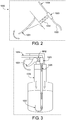
- FIG. 2 and 3 a diagrammatic configuration for a fastener driving tool generally indicated by numeral 1000 and having an auto ignition assembly of another example embodiment of the present disclosure is generally shown.
- Figs. 2 and 3 illustrate one way to dispense fuel into the combustion chamber of the auto ignite assembly of the fastener driving tool.
- the fastener driving tool 1000 includes a housing (not shown) containing: (a) piston chamber (not shown) in the housing; (b) a combustion chamber (not shown) in the housing; (c) a removable fuel container or bottle 1006 configured to communicate fuel 1007 into the combustion chamber; (d) a removable oxidizer container (not shown) configured to communicate a oxidizer into the combustion chamber; (e) a piston (not shown) disposed in the piston chamber; and (f) and a fastener driving blade (not shown) connected to the piston, partly disposed in the piston chamber, and configured to engage and drive fasteners (not shown).
- an activation or pump of the trigger 1001 pushes against a spring loaded bar 1002 forcing air initially from a nozzle 1003.
- the escape of air causes a sudden drop in air pressure at the top of the tube 1005 in the bottle 1006.
- the air inside the top of the bottle 1006 is at higher pressure than the air in the tube 1005, so it pushes down on the liquid fuel 1007.
- the liquid fuel 1007 is forced up the tube toward the pump mechanism.
- the liquid fuel 1007 leaves the pump mechanism as a fine mist 1004 which enters the combustion chamber.
- the respective inner diameters (IDs) of the tube and nozzle can be varied for these embodiments to control the ratio for the amount of liquid fuel dispensed.
- the liquid injection system of this type of tool is a liquid injection system that is identical or similar to a known conventional battery operated liquid injection systems that have been used in known battery powered tooth brushes and other devices.
- this pump system can be used for bump fire of fasteners in case the bottle spray does not spray fast enough.
- the tool when the tool starts to work, the tool initially uses the bottle spray function to fire fasteners. As the tool warms up quickly, the tool can be operated either in the bottle spray mode or in a thermal electric generator (TEG) operated mode.
- TOG thermal electric generator
- the bottle contains only the liquid ingredient (i.e., there's no propellant at all).
- the trigger mechanism When the trigger mechanism is pumped or activated, the lower air pressure in the tube runs down into the bottle. Because there's air inside the bottle, at the top, the liquid is forced up the tube. The pump mechanism forces some of this liquid out through the tube into a much smaller nozzle, so it turns into a relatively high-speed aerosol of tiny droplets.
- FIG. 4 another example embodiment for a fastener driving tool with the auto ignition assembly of the present disclosure is generally shown.
- This fastener driving tool generally is indicated by numeral 2000 and is somewhat similar to the fastener driving tool disclosed in U.S. Patent Publication 2013/0048696 with the exception of the auto ignition assembly.
- the fastener driving tool 2000 includes: (a) a housing 2016; (b) a combustion chamber 2018 in the housing 2016; (c) a fuel and oxidizer injection nozzle 2012 supported by the housing 2016; (d) a catalyst 2013 for the auto ignition supported by the housing 2016 and positioned in the combustion chamber 2018; (f) a structure 2014 of the combustion chamber 2018 supported by the housing 2016; (g) a cylinder 2020 supported by the housing 2016; (h) a piston 2022 supported by the housing 2016; (i) a driving blade 2024 supported by the housing 2016; (j) a trigger switch 2026 supported by the housing 2016; (k) a fastener magazine 2030 connected to the housing 2016; (I) a work piece contact element or nose 2032 supported by the housing 2016; (m) a linkage 2034 supported by the housing 2016; (n) a valve sleeve 2036 supported by the housing 2016; (o) a spring for bounce back 2038 supported by the housing 2016; (p) suitable liquid fuel and liquid oxidizer containers
- the auto ignition assembly is configured to receive two removable containers holding liquids, and specifically including a fuel container and an oxidizer container.
- the auto ignition assembly includes a foam catalyst 2013 that causes, enhances, or accelerates the interaction of the fuel and oxidizer.
- the foam catalyst 2013 includes a stainless steel foam, a nickel foam, or any other metal foam. In certain embodiments, the foam catalyst 2013 is at least partially coated with a silver catalyst, a MnO2 catalyst, or any other suitable catalyst.
- the tool 2000 includes a thermo-electric generator (TEG) 2054.
- the TEG 2054 is a Peltier device that converts heat to electricity.
- the TEG 2054 can be product CP85138 from CUI Inc.
- the TEG 2054 operates at the temperature difference >60C.
- the TEG 2054 can produce power 16W at 2 volts and 8 amps.
- the TEG 2054 provides the power for: (1) a liquid injection system when bump firing (continuous high frequency firing) is needed; and (2) light emitting diodes (LED) display for fuel/oxidizer usage.
- LED light emitting diodes
- the auto ignition assembly of the present disclosure can be employed in or with stand-alone power tool or a hybrid pneumatic power tool.
- the disclosed auto ignition assembly can be used in pneumatic tools as well as cordless tools.
- the auto ignition assembly can thus be employed in pneumatic powered fastener driving tools.
- the auto ignition assembly is employed or starts to work when the air hose that supplies pressurized air to the pneumatic tool is disconnected.
- the hose can be disconnected anytime if needed. Once the hose is disconnected, the auto ignition assembly gas generation is in the active mode and the tool can be used with the fuel and oxidizer.
- the auto ignition assembly of the present disclosure including the oxidizer and the fuel can be used once they are mixed with certain doses after activation of a trigger. Without mixing, the fuel and oxidizer stay in each respective container. This reduce self-discharges and increases shelf lifetime.
- the auto ignition assembly of the present disclosure can eliminate the need for batteries for ignition of the fuels (which typically consumes relatively large amounts of energy from the battery or batteries).
- the tools including the auto ignition assembly of the present disclosure can include one or more batteries for screens or sensors and that typically such screens or sensors consume relatively low amounts of energy.
- the auto ignition assembly of the present disclosure can eliminate the need for a motor and fan for air inlet and purge or exhaust in such tools.
- the auto ignition assembly of the present disclosure can reduce the weight of the power tools in part by reducing the combustion chamber size.
- Certain known powered fastener driving tools have a 1 to 1 ratio of the piston chamber size versus the combustion chamber size.
- the reason for the large combustion chamber is due to the pressure produced from the fuel spark ignition.
- the pressure from the spark ignition is often around 100 psi. From this ratio, various embodiments of the present disclosure can produce pressure at 300 psi or even higher, and thus the combustion chamber size can be reduced accordingly if less pressure is required.
- the auto ignition and piston striking in the present disclosure are at the same time.
- the combustion chamber pressure can be maintained at certain pressure as needed. For example, if the fasteners need to be driven into a concrete substrate, the striking pressure could be adjusted to high by adjusting the fuel and oxidizer doses.
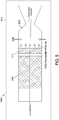
- the fastener driving tool 3000 includes a housing (not shown in detail but generally indicated by the phantom line labeled 3016) containing: (a) a piston chamber (not shown) in the housing 3016; (b) a combustion chamber 3018 in the housing 3016; (c) a removable fuel container (not shown) configured to communicate liquid fuel 3090 into the combustion chamber 3018; (d) a removable oxidizer container (not shown) configured to communicate an oxidizer into the combustion chamber 3018; (e) a catalyst bed 3013 that is in communication with, adjacent to, or in the combustion chamber 3018; (f) a piston (not shown) disposed in the piston chamber (not shown); and (g) and a fastener driving blade (not shown) connected to the piston, partly disposed in the piston chamber, and configured to
- the liquid fuel 3090 can be an 87 octane gasoline (which includes an 87 percent blend of isooctane and 13 percent n-heptane, or a blend that's equivalent thereto);
- the oxidizer can be a 70% H 2 O 2 ; and
- the catalyst can be MnO 2 , Ag mesh, or other suitable catalysts.
- This illustrated example embodiment of the auto ignition assembly further includes a dessicator 3080 configured to remove water from the H 2 O 2 oxidizer (i.e., to raise the concentration of the H 2 O 2 oxidizer in situ).
- the dessicator 3080 is in communication with or adjacent to the combustion chamber 3018.
- the dessicator 3080 is provided to remove (adsorb) water (H 2 O) from the 70% H 2 O 2 to create a high concentration H 2 O 2 (>87%) to cause the interaction of this fuel and oxidizer.
- this example embodiment causes the concentration of the H 2 O 2 oxidizer to increase in situ to ignite the 87 octane gasoline fuel.
- the adsorbed water evaporates once the fuel combusted to heat up the desiccator.
- the oxidizer can be a 50% and 70% H 2 O 2
- the catalyst can be MnO 2 , Ag mesh, any Mn oxides, or Ag compounds
- the desiccator can be calcium sulfate (Drierite), calcium chloride, calcium oxide, silica gel.
Landscapes
- Engineering & Computer Science (AREA)
- Chemical & Material Sciences (AREA)
- Combustion & Propulsion (AREA)
- Mechanical Engineering (AREA)
- Portable Nailing Machines And Staplers (AREA)
Description
- This application claims priority to and the benefit of
U.S. Provisional Patent Application Serial No. 62/434,663, filed December 15, 2016 U.S. Non-Provisional Patent Application No. 15/833,525, filed December 6, 2017 - Powered fastener driving tools are well known and commercially widely used throughout the world. Powered fastener driving tools are typically electrically powered, pneumatically powered, combustion-powered, or powder activated. Powered fastener driving tools are typically used to drive fasteners (such as nails, staples, and the like) to connect a first material, item, or workpiece to a second material, item, workpiece, or substrate.
- Various known powered fastener driving tools typically include: (a) a housing; (b) a power source or supply assembly in, connected to, or supported by the housing; (c) a fastener supply assembly in, connected to, or supported by the housing; (d) a fastener driving assembly in, connected to, or supported by the housing; (e) a trigger mechanism partially in, connected to, or supported by the housing; and (f) a workpiece contactor or contacting element (sometimes referred to herein as a "WCE") connected to or supported by the housing. The WCE is configured to engage or contact a workpiece and to operatively work with the trigger mechanism such that the WCE needs to be depressed or moved inwardly a predetermined distance with respect to the housing before activation of the trigger mechanism causes actuation of the power fastener driving tool.
- Powered fastener driving tools typically have two different types of operational modes and one or more mechanisms that enable the operator to optionally select one of the two different types of operational modes that the operator desires to use for driving the fasteners. One operational mode is known in the industry as the sequential or single actuation operational mode. In this operational mode, the depression or actuation of the trigger mechanism will not (by itself) initiate the actuation of the powered fastener driving tool and the driving of a fastener into the workpiece unless the WCE is sufficiently depressed against the workpiece. In other words, to operate the powered fastener driving tool in accordance with the sequential or single actuation operational mode, the WCE must first be depressed against the workpiece followed by the depression or actuation of the trigger mechanism. Another operational mode is known in the industry as the contact actuation operational mode. In this operational mode, the operator can maintain the trigger mechanism at or in its depressed position, and subsequently, each time the WCE is in contact with, and sufficiently pressed against the workpiece, the power fastener driving tool will actuate, thereby driving a fastener into the workpiece.
- As mentioned above, various known powered fastener driving tools are combustion-powered. Many combustion-powered fastener driving tools are powered by a rechargeable battery (or battery pack) and a replaceable fuel cell or cartridge. Various combustion-power fastener driving tools, battery packs, and fuel cells have been available commercially from ITW-Paslode of Vernon Hills, Illinois (a division of Illinois Tool Works, Inc., the assignee of this application).
- In these combustion-powered fastener driving tools, the fuel cell or cartridge supplies fuel, and the battery provides a spark or energy to ignite the fuel. The battery powered sparks ignite the fuel to generate high pressure gas that moves the piston and attached driving blade to strike a fastener such as a nail from the nail magazine.
- These combustion-powered fastener driving tools typically include a control system with a fan for supplying air and purging exhaust. Certain of these known fuel cells contain a valve that meters out the same amount of fuel each time its valve stem is depressed. Certain of these known fuel cells enable fuel dispensing when the tool is in any orientation.
- Such known combustion-powered fastener driving tools are often more powerful than electrically powered, pneumatically powered, or powder activated fastener driving tools. Combustion-powered fastener driving tools are typically thus used for higher power required applications such as attaching a metal object to a concrete wall wherein the fastener has to be driven through the metal object and into the concrete wall. This is opposed to a lower powered fastener driving tool such as certain pneumatically powered tools that are used to attach one wooden member or object to another wooden member or object.
- There are certain disadvantages with such known combustion powered fastener driving tools, and the fuel cells and batteries therefore. Certain known fuel cells for these tools contain a high pressure propellant gas that has a limited shelf life. Certain known batteries in these tools need to be charged relatively frequently. Certain known batteries for these tools also have reduced lifetimes due to sudden discharges.
- Since such known combustion-powered fastener driving tools use such rechargeable batteries (or battery packs) and consumable fuel cells, there is a continuing need to make combustion-powered fastener driving tools more efficient.
- There is also a need to provide high powered fastener driving tools that provide the same or greater power levels as combustion-powered fastener driving tools without the need for such batteries and/or fuel cells, or other known batteries and/or known fuel cells.
US739915A relates to a simplified self-contained internal combustion fastener driving tool.WO2007048006A2 relates to a combustion-powered driving tool. - Various embodiments of the present disclosure provide a powered fastener driving tool having an auto ignition assembly that provides necessary power levels for driving fasteners such as nails. In various embodiments of the present disclosure, the powered fastener driving tool includes a housing that supports a piston connected to a driving blade, wherein the auto ignition assembly produces a high pressure gas to activate the piston.
- In various embodiments of the present disclosure, the powered fastener driving tool includes an auto ignition assembly that: (a) uses a flexible fuel that is activated by an oxidizer to drive the piston; (b) uses an oxidizer that includes a stabilizer for safety purposes; (c) uses a catalyst to cause, enhance or accelerate the chemical reaction between the fuel and the oxidizer; (d) is configured to receive two or more replaceable fuel and oxidizer cartridges or a replaceable dual cartridge system that contains both the flexible fuel and the oxidizer; (d) provides relatively high adjustable power levels; (e) provides a fuel and an oxidizer that each have an increased shelf life; and (f) eliminates the need for certain batteries (or battery packs) in such tools.
- In various embodiments of the present disclosure, the powered fastener driving tool includes a housing configured to support a removable fuel container and a removable oxidizer container, a piston chamber in the housing, a combustion chamber in the housing, a piston disposed in the piston chamber, and a fastener driving blade connected to the piston and configured to engage and drive a fastener when fuel from the fuel container reacts with an oxidizer from the oxidizer container in the combustion chamber. In various embodiments, the powered fastener driving tool includes a catalyst in the combustion chamber for causing, enhancing, or accelerating the reaction between the fuel and the oxidizer in the combustion chamber.
- Other objects, features, and advantages of the present disclosure will be apparent from the following detailed disclosure, taken in conjunction with the accompanying sheets of drawings, wherein like reference numerals refer to like parts.
-
-
Fig. 1 is a diagrammatic view of part of a fastener driving tool including an auto ignition assembly of one example embodiment of the present disclosure. -
Figs. 2 and 3 are diagrammatic views of part of a fastener driving tool including an auto ignition assembly of another example embodiment of the present disclosure. -
Fig. 4 is a cross sectional view of a fastener driving tool including an auto ignition assembly of another example embodiment of the present disclosure. -
Fig. 5 is a diagrammatic view of part of a fastener driving tool including an auto ignition assembly of another example embodiment of the present disclosure. - Various embodiments of the present disclosure provide a powered fastener driving tool having an auto ignition assembly that produces a high pressure gas to activate the piston and thus provides necessary power levels for driving fasteners such as nails. In various embodiments of the present disclosure, the powered fastener driving tool includes a housing that supports a piston connected to a driving blade.
- In various embodiments, the auto-ignition assembly provides a spontaneous combustion to produce high-pressure gas to actuate the piston of the powered fastener driving tool. The high pressure gas is caused by a fuel bursting into a flame as a result of a chemical reaction with an oxidizer, without the addition of heat or a spark from an external source.
- In various embodiments, the auto ignition assembly causes the fuel and oxidizer to be mixed together in a combustion chamber to generate the high pressure gas.
- In various embodiments, the auto ignition assembly produces a high pressure gas without any spark needed to ignite the fuel.
- In various embodiments, the auto ignition assembly employs controlled energetic materials or explosive materials.
- In various embodiments, the auto ignition assembly provides a controlled explosion in the form of a rapid expansion of matter into a much greater volume.
- In various embodiments, the auto ignition assembly controls the expansion such that the energy is transferred substantially or almost completely into mass motion of the piston.
- In various embodiments, the auto ignition assembly is different from homogeneous charge compression ignition (HCCI), in which well-mixed fuel and oxidizer (such as air) are compressed to the point of automatic ignition. Rather, in various embodiments, the disclosed auto-ignition is based on the fuel and oxidizer meeting on or at a catalyst for ignition.
- In various embodiments, the auto ignition assembly includes an energetic oxidizer that interfaces with a fuel. When the high pressure gas is needed, the auto ignition assembly causes the energetic oxidizer to react with the fuel to generate sudden pressure against the piston.
- In various embodiments, the auto ignition assembly provides sudden pressure as high as 10 bars (150 psig) or even higher (110 bars or 11 MPa or 1,595 psig).
- In various embodiments, the auto ignition assembly generates high pressure gas in situ and simultaneously at a millisecond level.
- In various embodiments, the auto ignition assembly employs a fuel that is in a liquid form. In various embodiments, the liquid fuel includes a petroleum fuel such as kerosene or gasoline. In various embodiments, the liquid fuel includes a butene. In various embodiments, the liquid fuel includes an alcohol, such as methanol, ethanol, propanol, or combinations thereof.
- In other embodiments, the auto ignition assembly employs a fuel that is in a solid form. In various embodiments, the solid fuel includes a metal powder, a sawdust, or a plastic. In various embodiments, the liquid fuel includes aluminum powder or iron powder or combinations thereof.
- In other embodiments, the auto ignition assembly employs a fuel that is in a gaseous form. In various embodiments, the gaseous fuel includes a hydrocarbon gas such as propane, butane, propylene, butylene, or combinations thereof. In various embodiments, the gaseous fuel includes an alkane, such as methane, ethane, propane, or butane, or an alkene, such as ethylene, propylene, butylene, butadiene, kerosene, naphtha, liquefied petroleum gas (LPG), and any other saturated as well as unsaturated hydrocarbons, or combinations thereof; alcohols such as propanol, butanol; ketones such as acetone, and other possible combustible gas or liquid fuels. It should also be appreciated that in various embodiments, certain solid fuels such as cellulose, sugar, active carbon, could be used for this application. However, certain solid fuels may need special delivery methods and may not be optimal for this power tool use.
- In various different embodiments, example fuels include: (1) nitrobenzene; (2) nitronaphthalene; (3) nitrotoluenes; (4) nitrocellulose; (5) picric acid; (6) petroleum; (7) turpentine; (8) naphtha; (9) castor oil, sugar, glycerin; (10) acetylene wax, paraffin, sawdust; (11) halogenated hydrocarbons; (12) halogens; (13) powdered metals; (14) carbon disulfide (CS2); (15) phosphorus (P4); and (16) octasulfur (S8).
- In various embodiments, the auto ignition assembly employs an oxidizer in a solid form.
- In other embodiments, the auto ignition assembly employs an oxidizer in a liquid form.
- In other embodiments, the auto ignition assembly employs an oxidizer in a gaseous form.
- In various different embodiments, example oxidizers include: (1) oxygen and halogens; (2) perchlorates such as: KClO4, NH4ClO4, NaClO4, HClO4, Ba(ClO4)2, & Ca(ClO4)2; (3) chlorates such as: KClO3, LiClO3, NaClO3, Mg(ClO3)2, & Ba(ClO3)2; (4) hypochlorites such as: Ca(ClO)2, NaClO, & HClO ; (5) nitrates such as: KNO3, NH4NO3, NaNO3, HNO3, Ba(NO3)2, AgNO3, & Sr(NO3)2; (6) chromates such as: PbCrO4, BaCrO4, CaCrO4, & K2CrO4; (7) dichromates such as: K2Cr2O7 & NH4Cr2O7; (8) iodates such as KIO3, Pb(IO3)2, & AgIO3; (9) permanganates such as: KMnO4; (10) metal oxides such as: BaO2, Cu2O, CuO, Fe2O3, Fe3O4, PbO2, Pb3O4, PbO, MnO2, & ZnO; (11) nitrogen oxides such as: NO2 & N2O4; (12) peroxides such as: Na2O2, H2O2, & dibenzoyl peroxide (DBPO), and combinations thereof.
- In various different embodiments, the oxidizer is hydrogen peroxide (H2O2), such as a high purity hydrogen peroxide with an optional stabilizer, nitric acid (HNO3), dinitrogen tetraoxide (N2O4), a fluorine based oxidizer (e.g., fluorine, ClF3, and FClO3), Fe2O3, and other possible energetic oxidizers. In some such embodiments, the oxidizer is hydrogen peroxide (H2O2) or nitric acid (HNO3), preferably hydrogen peroxide.
- In various embodiments, the auto ignition assembly includes one or more stabilizers that stabilize the oxidizer. In various embodiments, example stabilizers include: metal chelating agents and colloids including stannates, pyrophosphates and organophosphonates. In various embodiments, the stabilizer is: colloidal stannate; sodium pyrophosphate; an organophosphonate (e.g., Monsanto's Dequest products); nitrate; phosphoric acid; colloidal silicate; or combinations thereof.
- In various embodiments, the stabilizer is a hydrogen peroxide stabilizer.
- In various embodiments, the catalyst includes a liquid or gaseous catalyst solution for causing, enhancing, or accelerating the reaction of the oxidizer and the fuel in the combustion chamber in the housing of the tool.
- In various embodiments, the catalyst includes a solid material positioned in the combustion chamber in the housing of the tool for causing, enhancing, or accelerating the reaction of the oxidizer and the fuel in the combustion chamber.
- In various embodiments, the auto ignition assembly employs a catalyst in the form of a metal foam in the combustion chamber in the housing of the tool for causing, enhancing, or accelerating the reaction or fuel ignition in the combustion chamber. In various embodiments, the metal foam includes a metal or metal alloy such as iron, iron alloy, steel, aluminum, aluminum alloy, chromium, titanium, cobalt lead, nickel, manganese, molybdenum, copper, and combinations thereof. In various embodiments, the auto ignition assembly includes a metal foam catalyst including a noble metal such as ruthenium, rhodium, palladium, platinum, silver, osmium, and/or gold to increase the combustion efficiency.
- In various embodiments, the auto ignition assembly employs a catalyst in the form of a stainless steel foam in the combustion chamber in the housing of the tool for causing, enhancing, or accelerating the reaction or fuel ignition in the combustion chamber. In certain such embodiments, the iron in the stainless steel is a good catalyst for hydrogen peroxide decomposition and fuel oxidation.
- In various embodiments, the auto ignition assembly includes a metal foam catalyst in the combustion chamber that also functions as a filter and/or collector to remove deposited stabilizers from the oxidizer.
- In various embodiments, the auto ignition assembly includes a metal foam catalyst in the combustion chamber that also functions as a filter and/or collector to soot.
- In various embodiments, the auto ignition assembly includes a metal foam catalyst in the combustion chamber that also functions as a filter and/or collector to remove carbon particles.
- In various embodiments, the auto ignition assembly includes a metal foam catalyst in the combustion chamber that also functions as a filter and/or collector to remove un-reacted fuels.
- In various embodiments, the auto ignition assembly includes a catalyst in the form of a metal foam positioned in the combustion chamber that additionally functions as a filter and also a heat distributor without hotspots.
- In various embodiments, the auto ignition assembly includes a hypergolic combination of an oxidizer and a fuel. One example of a hypergolic combination is a hydrazine based fuel combined with a nitrogen oxide such as dinitrogen tetraoxide. Another example of a hypergolic combination is a hydrocarbon fuel, such as propane, butene, or combinations thereof, and a peroxide, such as hydrogen peroxide. Another example of a hypergolic combination is an alcohol fuel, such as propanol, and a permanganate, such as sodium permanganate.
- In various embodiments, the auto ignition assembly includes a metallic fuel, such as aluminum, and an oxidizer. The oxidizer may be, for example, iron oxide, molybdenum oxide, tungsten trioxide, manganese dioxide, copper oxide, bismuth oxide, or a fluoropolymer, or combinations thereof.
- The list below provides example fuel and oxidizer combinations that can be used to form controlled composite explosions for the auto ignition assembly of various example embodiments of the present disclosure. Most of these example embodiments contain no nitrogen. Most of these example embodiments are either commercially available or easily prepared.
- Ten highly energetic reactant mixtures that can be used as example fuel and oxidizer combinations that for the auto ignition assembly of various embodiments of the present disclosure are:
Fe2O3 + 2Al→Al2O3 + 2Fe + ΔH (-16.4 kJ cm-3)
3Fe3O4 + 8AI → 4Al2O3 + 9Fe + ΔH (-15.6 kJ cm-3)
3MoO2 + 4AI → 2Al2O3 + 3Mo + ΔH (-16.1 kJ cm-3)
WO3 + 2AI → Al2O3 + W + ΔH (-15.9 kJ cm-3)
3MnO2 + 4AI → 2Al2O3 + 3Mn + ΔH (-19.4 kJ cm-3)
MoO3 + 2AI → Al2O3 + Mo + ΔH (-17.8 kJ cm-3)
3CuO + 2Al → Al2O3 + 3Cu + ΔH (-20.8 kJ cm-3)
3(-C2F4-) + 4Al → 4AlF3 + 6C + ΔH (-21 kJ cm-3)
Bi2O3 + 2Al → Al2O3 + 2Bi + ΔH (-15.2 kJ cm-3)
3I2O5 + 10Al → 5Al2O3 +61 + ΔH (-25.7 kJ cm-3)
- In various embodiments, the auto ignition assembly uses fuels that are propane or butene or combinations thereof, an oxidizer that is 80% hydrogen peroxide, and a catalyst that is a sodium permanganate monohydrate solution. In various such embodiments, the catalyst can stand alone or be mixed with oxidizer or fuels upon the solubility. In various embodiments, the fuel can also be an alcohol, such as propanol, which can mix with an oxidizer, such as sodium permanganate monohydrate solution.
- In various embodiments, the auto ignition assembly includes one or more stabilizers that stabilize the oxidizer. In one example, the oxidizer is a high concentration hydrogen peroxide oxidizer and the stabilizer is: (a) a colloidal stannate; (b) sodium pyrophosphate (such as present at 25 - 250 mg/L); (c) an organophosphonate (e.g., Monsanto's Dequest products); (d) Nitrate (for pH adjustment and corrosion inhibition), or (e) phosphoric acid (for pH adjustment <4).
- In various embodiments, the auto ignition assembly (or the housing of the tool) is configured to receive a plurality of individual containers or cartridges including one or more containers or cartridges holding the fuel and one or more containers or cartridges holding the oxidizer. In such embodiments, the auto ignition assembly and the containers or cartridges are configured to prevent any cross-contamination and/or self-discharge.
- In various embodiments, the auto ignition assembly (or the housing of the tool) is configured to receive one or more dual containers or cartridges, wherein each container or cartridge has a fuel holding chamber and an oxidizer holding chamber. In such embodiments, the auto ignition assembly and the containers or cartridges are configured to prevent any cross-contamination and/or self-discharge.
- In various embodiments, the containers or cartridges for the auto ignition assembly facilitate increased shelf life for the fuel and the oxidizer.
- Referring now to
Fig. 1 , a diagrammatic configuration for part of a fastener driving tool with the auto ignition assembly of one example embodiment of the present disclosure is generally shown. In this example embodiment, the fastener driving tool is generally indicated bynumeral 10 and includes a housing (not shown in detail but generally indicated by the phantom line labeled 16). Thehousing 16 includes or contains: (a)piston chamber 20 in thehousing 16; (b) acombustion chamber 18 in thehousing 16; (c) a removable fuel container (not shown) configured to communicatefuel 90 into thecombustion chamber 18; (d) a removable oxidizer container (not shown) configured to communicate theoxidizer 12 into thecombustion chamber 18; (e) acatalyst 13 in thecombustion chamber 18 which in this illustrated example embodiment is in the form of a metal foam; (f) apiston 22 disposed in thepiston chamber 20; and (g) and afastener driving blade 24 connected to thepiston 22, partly disposed in thepiston chamber 20, and configured to engage and drive fasteners (not shown). - Referring now to
Figs. 2 and 3 , a diagrammatic configuration for a fastener driving tool generally indicated by numeral 1000 and having an auto ignition assembly of another example embodiment of the present disclosure is generally shown. In particular,Figs. 2 and 3 illustrate one way to dispense fuel into the combustion chamber of the auto ignite assembly of the fastener driving tool. In this example embodiment, thefastener driving tool 1000 includes a housing (not shown) containing: (a) piston chamber (not shown) in the housing; (b) a combustion chamber (not shown) in the housing; (c) a removable fuel container orbottle 1006 configured to communicatefuel 1007 into the combustion chamber; (d) a removable oxidizer container (not shown) configured to communicate a oxidizer into the combustion chamber; (e) a piston (not shown) disposed in the piston chamber; and (f) and a fastener driving blade (not shown) connected to the piston, partly disposed in the piston chamber, and configured to engage and drive fasteners (not shown). - In this illustrated embodiment, an activation or pump of the
trigger 1001 pushes against a spring loadedbar 1002 forcing air initially from anozzle 1003. The escape of air causes a sudden drop in air pressure at the top of thetube 1005 in thebottle 1006. The air inside the top of thebottle 1006 is at higher pressure than the air in thetube 1005, so it pushes down on theliquid fuel 1007. Theliquid fuel 1007 is forced up the tube toward the pump mechanism. Theliquid fuel 1007 leaves the pump mechanism as afine mist 1004 which enters the combustion chamber. The respective inner diameters (IDs) of the tube and nozzle can be varied for these embodiments to control the ratio for the amount of liquid fuel dispensed. - In certain embodiments, the liquid injection system of this type of tool is a liquid injection system that is identical or similar to a known conventional battery operated liquid injection systems that have been used in known battery powered tooth brushes and other devices.
- In certain embodiments, this pump system can be used for bump fire of fasteners in case the bottle spray does not spray fast enough.
- In certain embodiments, when the tool starts to work, the tool initially uses the bottle spray function to fire fasteners. As the tool warms up quickly, the tool can be operated either in the bottle spray mode or in a thermal electric generator (TEG) operated mode.
- In certain embodiments, the bottle contains only the liquid ingredient (i.e., there's no propellant at all). When the trigger mechanism is pumped or activated, the lower air pressure in the tube runs down into the bottle. Because there's air inside the bottle, at the top, the liquid is forced up the tube. The pump mechanism forces some of this liquid out through the tube into a much smaller nozzle, so it turns into a relatively high-speed aerosol of tiny droplets.
- Referring now to
Fig. 4 , another example embodiment for a fastener driving tool with the auto ignition assembly of the present disclosure is generally shown. This fastener driving tool generally is indicated by numeral 2000 and is somewhat similar to the fastener driving tool disclosed inU.S. Patent Publication 2013/0048696 - In this example embodiment, the auto ignition assembly is configured to receive two removable containers holding liquids, and specifically including a fuel container and an oxidizer container.
- In this example embodiment, the auto ignition assembly includes a
foam catalyst 2013 that causes, enhances, or accelerates the interaction of the fuel and oxidizer. - In certain embodiments, the
foam catalyst 2013 includes a stainless steel foam, a nickel foam, or any other metal foam. In certain embodiments, thefoam catalyst 2013 is at least partially coated with a silver catalyst, a MnO2 catalyst, or any other suitable catalyst. - In this example embodiment, the
tool 2000 includes a thermo-electric generator (TEG) 2054. In certain embodiments, theTEG 2054 is a Peltier device that converts heat to electricity. For example, theTEG 2054 can be product CP85138 from CUI Inc. In certain embodiments, theTEG 2054 operates at the temperature difference >60C. In certain embodiments, theTEG 2054 can produce power 16W at 2 volts and 8 amps. In certain embodiments, theTEG 2054 provides the power for: (1) a liquid injection system when bump firing (continuous high frequency firing) is needed; and (2) light emitting diodes (LED) display for fuel/oxidizer usage. - It should be appreciated that the auto ignition assembly of the present disclosure can be employed in or with stand-alone power tool or a hybrid pneumatic power tool. In other words, it should be appreciated that the disclosed auto ignition assembly can be used in pneumatic tools as well as cordless tools. It should be appreciated that the auto ignition assembly can thus be employed in pneumatic powered fastener driving tools. In certain such pneumatic tool embodiments, the auto ignition assembly is employed or starts to work when the air hose that supplies pressurized air to the pneumatic tool is disconnected. Thus, for these pneumatic tools, the hose can be disconnected anytime if needed. Once the hose is disconnected, the auto ignition assembly gas generation is in the active mode and the tool can be used with the fuel and oxidizer.
- It should be appreciated that the auto ignition assembly of the present disclosure including the oxidizer and the fuel can be used once they are mixed with certain doses after activation of a trigger. Without mixing, the fuel and oxidizer stay in each respective container. This reduce self-discharges and increases shelf lifetime.
- It should be appreciated that the auto ignition assembly of the present disclosure can eliminate the need for batteries for ignition of the fuels (which typically consumes relatively large amounts of energy from the battery or batteries).
- It should be appreciated that the tools including the auto ignition assembly of the present disclosure can include one or more batteries for screens or sensors and that typically such screens or sensors consume relatively low amounts of energy.
- It should be appreciated that the auto ignition assembly of the present disclosure can eliminate the need for a motor and fan for air inlet and purge or exhaust in such tools.
- It should be appreciated that the auto ignition assembly of the present disclosure can reduce the weight of the power tools in part by reducing the combustion chamber size. Certain known powered fastener driving tools have a 1 to 1 ratio of the piston chamber size versus the combustion chamber size. The reason for the large combustion chamber is due to the pressure produced from the fuel spark ignition. The pressure from the spark ignition is often around 100 psi. From this ratio, various embodiments of the present disclosure can produce pressure at 300 psi or even higher, and thus the combustion chamber size can be reduced accordingly if less pressure is required. The auto ignition and piston striking in the present disclosure are at the same time. Thus, the combustion chamber pressure can be maintained at certain pressure as needed. For example, if the fasteners need to be driven into a concrete substrate, the striking pressure could be adjusted to high by adjusting the fuel and oxidizer doses.
- Referring now to
Fig. 5 , a diagrammatic configuration of part of a fastener driving tool auto ignition assembly of afastener driving tool 3000 of another example embodiment of the present disclosure is generally shown. In this example embodiment, thefastener driving tool 3000 includes a housing (not shown in detail but generally indicated by the phantom line labeled 3016) containing: (a) a piston chamber (not shown) in thehousing 3016; (b) acombustion chamber 3018 in thehousing 3016; (c) a removable fuel container (not shown) configured to communicateliquid fuel 3090 into thecombustion chamber 3018; (d) a removable oxidizer container (not shown) configured to communicate an oxidizer into thecombustion chamber 3018; (e) acatalyst bed 3013 that is in communication with, adjacent to, or in thecombustion chamber 3018; (f) a piston (not shown) disposed in the piston chamber (not shown); and (g) and a fastener driving blade (not shown) connected to the piston, partly disposed in the piston chamber, and configured to engage and drive fasteners (not shown). In certain such embodiments, the catalytic bed(s) 3013 include a metal foam. - In this illustrated example embodiment of the auto ignition assembly: (a) the
liquid fuel 3090 can be an 87 octane gasoline (which includes an 87 percent blend of isooctane and 13 percent n-heptane, or a blend that's equivalent thereto); (b) the oxidizer can be a 70% H2O2; and (c) the catalyst can be MnO2, Ag mesh, or other suitable catalysts. This illustrated example embodiment of the auto ignition assembly further includes adessicator 3080 configured to remove water from the H2O2 oxidizer (i.e., to raise the concentration of the H2O2 oxidizer in situ). Thedessicator 3080 is in communication with or adjacent to thecombustion chamber 3018. - More specifically, since 87 octane gasoline will generally not be ignited by 70% H2O2, the
dessicator 3080 is provided to remove (adsorb) water (H2O) from the 70% H2O2 to create a high concentration H2O2 (>87%) to cause the interaction of this fuel and oxidizer. In other words, this example embodiment causes the concentration of the H2O2 oxidizer to increase in situ to ignite the 87 octane gasoline fuel. The adsorbed water evaporates once the fuel combusted to heat up the desiccator. - Alternatively, in this illustrated example embodiment of the auto ignition assembly: (a) the fuel can be a Kerosene (CnH2n+1(n=12-16)) or Naphtha (C7H18) that is a hydrocarbon mixture; (b) the oxidizer can be a 50% and 70% H2O2; (c) the catalyst can be MnO2, Ag mesh, any Mn oxides, or Ag compounds; and (d) the desiccator can be calcium sulfate (Drierite), calcium chloride, calcium oxide, silica gel.
- It will be understood that modifications and variations may be effected without departing from the scope of the novel concepts of the present invention, and it is understood that this application is to be limited only by the scope of the claims.
Claims (15)
- A powered fastener driving tool (1000) comprising:a housing (16) configured to support a removable fuel container (1006) and an oxidizer container (2050);a piston chamber (20) in the housing;a combustion chamber (18) in the housing;a catalyst (13) in the combustion chamber;a piston (22) disposed in the piston chamber; anda fastener driving blade connected to the piston (22) and configured to engage and drive a fastener upon fuel (90) from the fuel container (1006) reacting with an oxidizer from the oxidizer container in the combustion chamber (18).
- The powered fastener driving tool (1000) of claim 1, wherein the catalyst (13) is a solid material.
- The powered fastener driving tool (1000) of claim 1, wherein the catalyst (13) comprises iron.
- The powered fastener driving tool (1000) of claim 1, wherein the catalyst (13) is a foam comprising a metal or a metal alloy.
- The powered fastener driving tool (1000) of claim 1, wherein the catalyst (13) includes a stainless steel foam.
- The powered fastener driving tool (1000) of claim 1, wherein the catalyst (13) is a liquid.
- The powered fastener driving tool (1000) of claim 1, wherein the catalyst (13) includes a sodium permanganate monohydrate solution.
- The powered fastener driving tool (1000) of claim 1, wherein the oxidizer is selected from the group consisting of oxygen, halogen, perchlorate, chlorate, hypochlorite, nitrate, chromate, dichromate, permanganate, metal oxide, nitrogen oxide, peroxide, and combinations thereof.
- The powered fastener driving tool (1000) of claim 1, wherein the oxidizer is a peroxide.
- The powered fastener driving tool (1000) of claim 9, wherein the oxidizer is a hydrogen peroxide.
- The powered fastener driving tool (1000) of claim 1, wherein the fuel is selected from the group consisting of a metallic fuel, a petroleum fuel, and an alcohol fuel.
- The powered fastener driving tool (1000) of claim 1, wherein the fuel (90) comprises a hydrocarbon gas selected from the group consisting of methane, ethane, propane, butane, ethylene, propylene, butene, butadiene, kerosene, naphtha, gasoline, and combinations thereof.
- The powered fastener driving tool (1000) of claim 1, wherein the fuel (90) comprises propane, butene, or combinations thereof.
- The powered fastener driving tool (1000) of claim 1, which includes a desiccator.
- The powered fastener driving tool (1000) of claim 1, wherein the oxidizer (2050) container is removable.
Applications Claiming Priority (3)
| Application Number | Priority Date | Filing Date | Title |
|---|---|---|---|
| US201662434663P | 2016-12-15 | 2016-12-15 | |
| US15/833,525 US10717180B2 (en) | 2016-12-15 | 2017-12-06 | Fastener tool having auto ignition |
| PCT/US2017/065029 WO2018111669A1 (en) | 2016-12-15 | 2017-12-07 | Fastener driving tool having auto ignition |
Publications (2)
| Publication Number | Publication Date |
|---|---|
| EP3554764A1 EP3554764A1 (en) | 2019-10-23 |
| EP3554764B1 true EP3554764B1 (en) | 2021-10-06 |
Family
ID=62557210
Family Applications (1)
| Application Number | Title | Priority Date | Filing Date |
|---|---|---|---|
| EP17817631.9A Active EP3554764B1 (en) | 2016-12-15 | 2017-12-07 | Fastener driving tool having auto ignition |
Country Status (5)
| Country | Link |
|---|---|
| US (1) | US10717180B2 (en) |
| EP (1) | EP3554764B1 (en) |
| AU (1) | AU2017375596B2 (en) |
| CA (1) | CA3046206C (en) |
| WO (1) | WO2018111669A1 (en) |
Families Citing this family (5)
| Publication number | Priority date | Publication date | Assignee | Title |
|---|---|---|---|---|
| TWI781941B (en) * | 2016-07-29 | 2022-11-01 | 日商工機控股股份有限公司 | nailing machine |
| WO2019071237A1 (en) * | 2017-10-06 | 2019-04-11 | Black & Decker Inc. | Hydrogen fuel canister |
| US12427634B2 (en) | 2018-06-11 | 2025-09-30 | Milwaukee Electric Tool Corporation | Gas spring-powered fastener driver |
| US20190381643A1 (en) * | 2018-06-14 | 2019-12-19 | Illinois Tool Works Inc. | Fastener driving tool having degassing power assembly |
| WO2022132500A1 (en) * | 2020-12-16 | 2022-06-23 | Illinois Tool Works Inc. | Fastener driving device |
Family Cites Families (13)
| Publication number | Priority date | Publication date | Assignee | Title |
|---|---|---|---|---|
| US4653380A (en) | 1984-06-15 | 1987-03-31 | Fmc Corporation | Bipropellant gun and method of firing same |
| US4739915A (en) * | 1986-07-02 | 1988-04-26 | Senco Products, Inc. | Simplified self-contained internal combustion fastener driving tool |
| US5749509A (en) * | 1995-06-05 | 1998-05-12 | Sencorp | Resiliently expandable ring seal for combustion chamber of propellant tool |
| US5842623A (en) * | 1997-06-16 | 1998-12-01 | Olin Corporation | Gas primed powder actuated tool |
| US5932837A (en) | 1997-12-22 | 1999-08-03 | The United States Of America As Represented By The Secretary Of The Navy | Non-toxic hypergolic miscible bipropellant |
| US7198603B2 (en) * | 2003-04-14 | 2007-04-03 | Remon Medical Technologies, Inc. | Apparatus and methods using acoustic telemetry for intrabody communications |
| AU2002337728A1 (en) * | 2001-09-27 | 2003-04-07 | Vanderbilt University | Monopropellant/hypergolic powered proportional actuator |
| DE10260704A1 (en) | 2002-12-23 | 2004-07-01 | Hilti Ag | Combustion-powered setting tool |
| US7150139B1 (en) * | 2003-03-19 | 2006-12-19 | Lund And Company Invention, L.L.C. | Lawnmower utilizing hydrogen from the electrolysis of water |
| WO2007048006A2 (en) | 2005-10-21 | 2007-04-26 | Black & Decker Inc. | Combustion-powered driving tool |
| FR2953751B1 (en) * | 2009-12-11 | 2012-01-20 | Prospection & Inventions | FASTENING TOOL WITH ADJUSTABLE MASSELOTTE ROD EXTENSION |
| US9492915B2 (en) | 2011-08-31 | 2016-11-15 | Illinois Tool Works Inc. | High efficiency engine for combustion nailer |
| US10385285B2 (en) | 2015-02-25 | 2019-08-20 | Illinois Tool Works Inc. | Fuel and propellant composition for combustion tools |
-
2017
- 2017-12-06 US US15/833,525 patent/US10717180B2/en active Active
- 2017-12-07 AU AU2017375596A patent/AU2017375596B2/en active Active
- 2017-12-07 WO PCT/US2017/065029 patent/WO2018111669A1/en not_active Ceased
- 2017-12-07 EP EP17817631.9A patent/EP3554764B1/en active Active
- 2017-12-07 CA CA3046206A patent/CA3046206C/en active Active
Non-Patent Citations (1)
| Title |
|---|
| None * |
Also Published As
| Publication number | Publication date |
|---|---|
| AU2017375596A1 (en) | 2019-06-20 |
| EP3554764A1 (en) | 2019-10-23 |
| US20180169846A1 (en) | 2018-06-21 |
| NZ754074A (en) | 2025-05-30 |
| CA3046206A1 (en) | 2018-06-21 |
| AU2017375596B2 (en) | 2023-12-14 |
| CA3046206C (en) | 2021-06-22 |
| WO2018111669A1 (en) | 2018-06-21 |
| US10717180B2 (en) | 2020-07-21 |
Similar Documents
| Publication | Publication Date | Title |
|---|---|---|
| EP3554764B1 (en) | Fastener driving tool having auto ignition | |
| US6779335B2 (en) | Burning nitrous oxide and a fuel | |
| US20090301601A1 (en) | Apparatus and Method for Using Tetrazine-Based Energetic Material | |
| US6849247B1 (en) | Gas generating process for propulsion and hydrogen production | |
| EP3807053B1 (en) | Fastener driving tool having degassing power assembly | |
| US20160176771A1 (en) | Oxidizer compound for rocket propulsion | |
| EP1845231A2 (en) | A thermic lance | |
| US12459096B2 (en) | Powered fastener driving tool having fuel/gas mixture compressed ignition | |
| US8337765B2 (en) | Electrocatalytically induced propellant decomposition | |
| EP1767248A1 (en) | Hybrid fire extinguisher | |
| Kappenstein et al. | Propulsion and Catalysis− Historical Survey, Up-to-Date Overview, and Current Challenges | |
| US20240165443A1 (en) | Solid-state fire suppression | |
| PAQUOT | Storable green oxidizers for hybrid rocket propulsion | |
| RU49U1 (en) | Pneumatic system | |
| NZ754074B2 (en) | Fastener driving tool having auto ignition | |
| BONDUGULA et al. | Hydrogen peroxide based green propellants for future space propulsion applications | |
| HK1110640B (en) | A thermic lance |
Legal Events
| Date | Code | Title | Description |
|---|---|---|---|
| STAA | Information on the status of an ep patent application or granted ep patent |
Free format text: STATUS: UNKNOWN |
|
| STAA | Information on the status of an ep patent application or granted ep patent |
Free format text: STATUS: THE INTERNATIONAL PUBLICATION HAS BEEN MADE |
|
| PUAI | Public reference made under article 153(3) epc to a published international application that has entered the european phase |
Free format text: ORIGINAL CODE: 0009012 |
|
| STAA | Information on the status of an ep patent application or granted ep patent |
Free format text: STATUS: REQUEST FOR EXAMINATION WAS MADE |
|
| 17P | Request for examination filed |
Effective date: 20190531 |
|
| AK | Designated contracting states |
Kind code of ref document: A1 Designated state(s): AL AT BE BG CH CY CZ DE DK EE ES FI FR GB GR HR HU IE IS IT LI LT LU LV MC MK MT NL NO PL PT RO RS SE SI SK SM TR |
|
| AX | Request for extension of the european patent |
Extension state: BA ME |
|
| DAV | Request for validation of the european patent (deleted) | ||
| DAX | Request for extension of the european patent (deleted) | ||
| STAA | Information on the status of an ep patent application or granted ep patent |
Free format text: STATUS: EXAMINATION IS IN PROGRESS |
|
| 17Q | First examination report despatched |
Effective date: 20201109 |
|
| GRAP | Despatch of communication of intention to grant a patent |
Free format text: ORIGINAL CODE: EPIDOSNIGR1 |
|
| STAA | Information on the status of an ep patent application or granted ep patent |
Free format text: STATUS: GRANT OF PATENT IS INTENDED |
|
| INTG | Intention to grant announced |
Effective date: 20210507 |
|
| GRAS | Grant fee paid |
Free format text: ORIGINAL CODE: EPIDOSNIGR3 |
|
| GRAA | (expected) grant |
Free format text: ORIGINAL CODE: 0009210 |
|
| STAA | Information on the status of an ep patent application or granted ep patent |
Free format text: STATUS: THE PATENT HAS BEEN GRANTED |
|
| AK | Designated contracting states |
Kind code of ref document: B1 Designated state(s): AL AT BE BG CH CY CZ DE DK EE ES FI FR GB GR HR HU IE IS IT LI LT LU LV MC MK MT NL NO PL PT RO RS SE SI SK SM TR |
|
| REG | Reference to a national code |
Ref country code: GB Ref legal event code: FG4D |
|
| REG | Reference to a national code |
Ref country code: CH Ref legal event code: EP Ref country code: AT Ref legal event code: REF Ref document number: 1435815 Country of ref document: AT Kind code of ref document: T Effective date: 20211015 |
|
| REG | Reference to a national code |
Ref country code: IE Ref legal event code: FG4D |
|
| REG | Reference to a national code |
Ref country code: DE Ref legal event code: R096 Ref document number: 602017047249 Country of ref document: DE |
|
| REG | Reference to a national code |
Ref country code: LT Ref legal event code: MG9D |
|
| REG | Reference to a national code |
Ref country code: NL Ref legal event code: MP Effective date: 20211006 |
|
| REG | Reference to a national code |
Ref country code: AT Ref legal event code: MK05 Ref document number: 1435815 Country of ref document: AT Kind code of ref document: T Effective date: 20211006 |
|
| PG25 | Lapsed in a contracting state [announced via postgrant information from national office to epo] |
Ref country code: RS Free format text: LAPSE BECAUSE OF FAILURE TO SUBMIT A TRANSLATION OF THE DESCRIPTION OR TO PAY THE FEE WITHIN THE PRESCRIBED TIME-LIMIT Effective date: 20211006 Ref country code: LT Free format text: LAPSE BECAUSE OF FAILURE TO SUBMIT A TRANSLATION OF THE DESCRIPTION OR TO PAY THE FEE WITHIN THE PRESCRIBED TIME-LIMIT Effective date: 20211006 Ref country code: FI Free format text: LAPSE BECAUSE OF FAILURE TO SUBMIT A TRANSLATION OF THE DESCRIPTION OR TO PAY THE FEE WITHIN THE PRESCRIBED TIME-LIMIT Effective date: 20211006 Ref country code: BG Free format text: LAPSE BECAUSE OF FAILURE TO SUBMIT A TRANSLATION OF THE DESCRIPTION OR TO PAY THE FEE WITHIN THE PRESCRIBED TIME-LIMIT Effective date: 20220106 Ref country code: AT Free format text: LAPSE BECAUSE OF FAILURE TO SUBMIT A TRANSLATION OF THE DESCRIPTION OR TO PAY THE FEE WITHIN THE PRESCRIBED TIME-LIMIT Effective date: 20211006 |
|
| PG25 | Lapsed in a contracting state [announced via postgrant information from national office to epo] |
Ref country code: IS Free format text: LAPSE BECAUSE OF FAILURE TO SUBMIT A TRANSLATION OF THE DESCRIPTION OR TO PAY THE FEE WITHIN THE PRESCRIBED TIME-LIMIT Effective date: 20220206 Ref country code: SE Free format text: LAPSE BECAUSE OF FAILURE TO SUBMIT A TRANSLATION OF THE DESCRIPTION OR TO PAY THE FEE WITHIN THE PRESCRIBED TIME-LIMIT Effective date: 20211006 Ref country code: PT Free format text: LAPSE BECAUSE OF FAILURE TO SUBMIT A TRANSLATION OF THE DESCRIPTION OR TO PAY THE FEE WITHIN THE PRESCRIBED TIME-LIMIT Effective date: 20220207 Ref country code: PL Free format text: LAPSE BECAUSE OF FAILURE TO SUBMIT A TRANSLATION OF THE DESCRIPTION OR TO PAY THE FEE WITHIN THE PRESCRIBED TIME-LIMIT Effective date: 20211006 Ref country code: NO Free format text: LAPSE BECAUSE OF FAILURE TO SUBMIT A TRANSLATION OF THE DESCRIPTION OR TO PAY THE FEE WITHIN THE PRESCRIBED TIME-LIMIT Effective date: 20220106 Ref country code: NL Free format text: LAPSE BECAUSE OF FAILURE TO SUBMIT A TRANSLATION OF THE DESCRIPTION OR TO PAY THE FEE WITHIN THE PRESCRIBED TIME-LIMIT Effective date: 20211006 Ref country code: LV Free format text: LAPSE BECAUSE OF FAILURE TO SUBMIT A TRANSLATION OF THE DESCRIPTION OR TO PAY THE FEE WITHIN THE PRESCRIBED TIME-LIMIT Effective date: 20211006 Ref country code: HR Free format text: LAPSE BECAUSE OF FAILURE TO SUBMIT A TRANSLATION OF THE DESCRIPTION OR TO PAY THE FEE WITHIN THE PRESCRIBED TIME-LIMIT Effective date: 20211006 Ref country code: GR Free format text: LAPSE BECAUSE OF FAILURE TO SUBMIT A TRANSLATION OF THE DESCRIPTION OR TO PAY THE FEE WITHIN THE PRESCRIBED TIME-LIMIT Effective date: 20220107 Ref country code: ES Free format text: LAPSE BECAUSE OF FAILURE TO SUBMIT A TRANSLATION OF THE DESCRIPTION OR TO PAY THE FEE WITHIN THE PRESCRIBED TIME-LIMIT Effective date: 20211006 |
|
| REG | Reference to a national code |
Ref country code: DE Ref legal event code: R097 Ref document number: 602017047249 Country of ref document: DE |
|
| PG25 | Lapsed in a contracting state [announced via postgrant information from national office to epo] |
Ref country code: SM Free format text: LAPSE BECAUSE OF FAILURE TO SUBMIT A TRANSLATION OF THE DESCRIPTION OR TO PAY THE FEE WITHIN THE PRESCRIBED TIME-LIMIT Effective date: 20211006 Ref country code: SK Free format text: LAPSE BECAUSE OF FAILURE TO SUBMIT A TRANSLATION OF THE DESCRIPTION OR TO PAY THE FEE WITHIN THE PRESCRIBED TIME-LIMIT Effective date: 20211006 Ref country code: RO Free format text: LAPSE BECAUSE OF FAILURE TO SUBMIT A TRANSLATION OF THE DESCRIPTION OR TO PAY THE FEE WITHIN THE PRESCRIBED TIME-LIMIT Effective date: 20211006 Ref country code: MC Free format text: LAPSE BECAUSE OF FAILURE TO SUBMIT A TRANSLATION OF THE DESCRIPTION OR TO PAY THE FEE WITHIN THE PRESCRIBED TIME-LIMIT Effective date: 20211006 Ref country code: EE Free format text: LAPSE BECAUSE OF FAILURE TO SUBMIT A TRANSLATION OF THE DESCRIPTION OR TO PAY THE FEE WITHIN THE PRESCRIBED TIME-LIMIT Effective date: 20211006 Ref country code: DK Free format text: LAPSE BECAUSE OF FAILURE TO SUBMIT A TRANSLATION OF THE DESCRIPTION OR TO PAY THE FEE WITHIN THE PRESCRIBED TIME-LIMIT Effective date: 20211006 Ref country code: CZ Free format text: LAPSE BECAUSE OF FAILURE TO SUBMIT A TRANSLATION OF THE DESCRIPTION OR TO PAY THE FEE WITHIN THE PRESCRIBED TIME-LIMIT Effective date: 20211006 |
|
| REG | Reference to a national code |
Ref country code: CH Ref legal event code: PL |
|
| PLBE | No opposition filed within time limit |
Free format text: ORIGINAL CODE: 0009261 |
|
| STAA | Information on the status of an ep patent application or granted ep patent |
Free format text: STATUS: NO OPPOSITION FILED WITHIN TIME LIMIT |
|
| 26N | No opposition filed |
Effective date: 20220707 |
|
| REG | Reference to a national code |
Ref country code: BE Ref legal event code: MM Effective date: 20211231 |
|
| PG25 | Lapsed in a contracting state [announced via postgrant information from national office to epo] |
Ref country code: LU Free format text: LAPSE BECAUSE OF NON-PAYMENT OF DUE FEES Effective date: 20211207 Ref country code: IE Free format text: LAPSE BECAUSE OF NON-PAYMENT OF DUE FEES Effective date: 20211207 Ref country code: AL Free format text: LAPSE BECAUSE OF FAILURE TO SUBMIT A TRANSLATION OF THE DESCRIPTION OR TO PAY THE FEE WITHIN THE PRESCRIBED TIME-LIMIT Effective date: 20211006 |
|
| PG25 | Lapsed in a contracting state [announced via postgrant information from national office to epo] |
Ref country code: SI Free format text: LAPSE BECAUSE OF FAILURE TO SUBMIT A TRANSLATION OF THE DESCRIPTION OR TO PAY THE FEE WITHIN THE PRESCRIBED TIME-LIMIT Effective date: 20211006 Ref country code: BE Free format text: LAPSE BECAUSE OF NON-PAYMENT OF DUE FEES Effective date: 20211231 |
|
| PG25 | Lapsed in a contracting state [announced via postgrant information from national office to epo] |
Ref country code: LI Free format text: LAPSE BECAUSE OF NON-PAYMENT OF DUE FEES Effective date: 20211231 Ref country code: CH Free format text: LAPSE BECAUSE OF NON-PAYMENT OF DUE FEES Effective date: 20211231 |
|
| PG25 | Lapsed in a contracting state [announced via postgrant information from national office to epo] |
Ref country code: IT Free format text: LAPSE BECAUSE OF FAILURE TO SUBMIT A TRANSLATION OF THE DESCRIPTION OR TO PAY THE FEE WITHIN THE PRESCRIBED TIME-LIMIT Effective date: 20211006 |
|
| PG25 | Lapsed in a contracting state [announced via postgrant information from national office to epo] |
Ref country code: CY Free format text: LAPSE BECAUSE OF FAILURE TO SUBMIT A TRANSLATION OF THE DESCRIPTION OR TO PAY THE FEE WITHIN THE PRESCRIBED TIME-LIMIT Effective date: 20211006 |
|
| P01 | Opt-out of the competence of the unified patent court (upc) registered |
Effective date: 20230606 |
|
| PG25 | Lapsed in a contracting state [announced via postgrant information from national office to epo] |
Ref country code: HU Free format text: LAPSE BECAUSE OF FAILURE TO SUBMIT A TRANSLATION OF THE DESCRIPTION OR TO PAY THE FEE WITHIN THE PRESCRIBED TIME-LIMIT; INVALID AB INITIO Effective date: 20171207 |
|
| PG25 | Lapsed in a contracting state [announced via postgrant information from national office to epo] |
Ref country code: MK Free format text: LAPSE BECAUSE OF FAILURE TO SUBMIT A TRANSLATION OF THE DESCRIPTION OR TO PAY THE FEE WITHIN THE PRESCRIBED TIME-LIMIT Effective date: 20211006 |
|
| PG25 | Lapsed in a contracting state [announced via postgrant information from national office to epo] |
Ref country code: MT Free format text: LAPSE BECAUSE OF FAILURE TO SUBMIT A TRANSLATION OF THE DESCRIPTION OR TO PAY THE FEE WITHIN THE PRESCRIBED TIME-LIMIT Effective date: 20211006 |
|
| PGFP | Annual fee paid to national office [announced via postgrant information from national office to epo] |
Ref country code: DE Payment date: 20241227 Year of fee payment: 8 |
|
| PG25 | Lapsed in a contracting state [announced via postgrant information from national office to epo] |
Ref country code: TR Free format text: LAPSE BECAUSE OF FAILURE TO SUBMIT A TRANSLATION OF THE DESCRIPTION OR TO PAY THE FEE WITHIN THE PRESCRIBED TIME-LIMIT Effective date: 20211006 |
|
| PGFP | Annual fee paid to national office [announced via postgrant information from national office to epo] |
Ref country code: GB Payment date: 20251229 Year of fee payment: 9 |
|
| PGFP | Annual fee paid to national office [announced via postgrant information from national office to epo] |
Ref country code: FR Payment date: 20251226 Year of fee payment: 9 |