EP3554495B1 - Combination of a protein kinase inhibitor and an additional chemotherapeutic agent - Google Patents
Combination of a protein kinase inhibitor and an additional chemotherapeutic agent Download PDFInfo
- Publication number
- EP3554495B1 EP3554495B1 EP17823090.0A EP17823090A EP3554495B1 EP 3554495 B1 EP3554495 B1 EP 3554495B1 EP 17823090 A EP17823090 A EP 17823090A EP 3554495 B1 EP3554495 B1 EP 3554495B1
- Authority
- EP
- European Patent Office
- Prior art keywords
- compound
- nci
- etoposide
- lung
- combination
- Prior art date
- Legal status (The legal status is an assumption and is not a legal conclusion. Google has not performed a legal analysis and makes no representation as to the accuracy of the status listed.)
- Active
Links
Images





Classifications
-
- A—HUMAN NECESSITIES
- A61—MEDICAL OR VETERINARY SCIENCE; HYGIENE
- A61K—PREPARATIONS FOR MEDICAL, DENTAL OR TOILETRY PURPOSES
- A61K31/00—Medicinal preparations containing organic active ingredients
- A61K31/33—Heterocyclic compounds
- A61K31/395—Heterocyclic compounds having nitrogen as a ring hetero atom, e.g. guanethidine or rifamycins
- A61K31/495—Heterocyclic compounds having nitrogen as a ring hetero atom, e.g. guanethidine or rifamycins having six-membered rings with two or more nitrogen atoms as the only ring heteroatoms, e.g. piperazine or tetrazines
- A61K31/505—Pyrimidines; Hydrogenated pyrimidines, e.g. trimethoprim
- A61K31/517—Pyrimidines; Hydrogenated pyrimidines, e.g. trimethoprim ortho- or peri-condensed with carbocyclic ring systems, e.g. quinazoline, perimidine
-
- A—HUMAN NECESSITIES
- A61—MEDICAL OR VETERINARY SCIENCE; HYGIENE
- A61K—PREPARATIONS FOR MEDICAL, DENTAL OR TOILETRY PURPOSES
- A61K41/00—Medicinal preparations obtained by treating materials with wave energy or particle radiation ; Therapies using these preparations
- A61K41/0038—Radiosensitizing, i.e. administration of pharmaceutical agents that enhance the effect of radiotherapy
-
- A—HUMAN NECESSITIES
- A61—MEDICAL OR VETERINARY SCIENCE; HYGIENE
- A61K—PREPARATIONS FOR MEDICAL, DENTAL OR TOILETRY PURPOSES
- A61K31/00—Medicinal preparations containing organic active ingredients
- A61K31/28—Compounds containing heavy metals
- A61K31/282—Platinum compounds
-
- A—HUMAN NECESSITIES
- A61—MEDICAL OR VETERINARY SCIENCE; HYGIENE
- A61K—PREPARATIONS FOR MEDICAL, DENTAL OR TOILETRY PURPOSES
- A61K31/00—Medicinal preparations containing organic active ingredients
- A61K31/33—Heterocyclic compounds
- A61K31/335—Heterocyclic compounds having oxygen as the only ring hetero atom, e.g. fungichromin
- A61K31/357—Heterocyclic compounds having oxygen as the only ring hetero atom, e.g. fungichromin having two or more oxygen atoms in the same ring, e.g. crown ethers, guanadrel
-
- A—HUMAN NECESSITIES
- A61—MEDICAL OR VETERINARY SCIENCE; HYGIENE
- A61K—PREPARATIONS FOR MEDICAL, DENTAL OR TOILETRY PURPOSES
- A61K31/00—Medicinal preparations containing organic active ingredients
- A61K31/33—Heterocyclic compounds
- A61K31/395—Heterocyclic compounds having nitrogen as a ring hetero atom, e.g. guanethidine or rifamycins
- A61K31/535—Heterocyclic compounds having nitrogen as a ring hetero atom, e.g. guanethidine or rifamycins having six-membered rings with at least one nitrogen and one oxygen as the ring hetero atoms, e.g. 1,2-oxazines
- A61K31/5375—1,4-Oxazines, e.g. morpholine
- A61K31/5377—1,4-Oxazines, e.g. morpholine not condensed and containing further heterocyclic rings, e.g. timolol
-
- A—HUMAN NECESSITIES
- A61—MEDICAL OR VETERINARY SCIENCE; HYGIENE
- A61K—PREPARATIONS FOR MEDICAL, DENTAL OR TOILETRY PURPOSES
- A61K31/00—Medicinal preparations containing organic active ingredients
- A61K31/70—Carbohydrates; Sugars; Derivatives thereof
- A61K31/7004—Monosaccharides having only carbon, hydrogen and oxygen atoms
-
- A—HUMAN NECESSITIES
- A61—MEDICAL OR VETERINARY SCIENCE; HYGIENE
- A61K—PREPARATIONS FOR MEDICAL, DENTAL OR TOILETRY PURPOSES
- A61K31/00—Medicinal preparations containing organic active ingredients
- A61K31/70—Carbohydrates; Sugars; Derivatives thereof
- A61K31/7042—Compounds having saccharide radicals and heterocyclic rings
- A61K31/7048—Compounds having saccharide radicals and heterocyclic rings having oxygen as a ring hetero atom, e.g. leucoglucosan, hesperidin, erythromycin, nystatin, digitoxin or digoxin
-
- A—HUMAN NECESSITIES
- A61—MEDICAL OR VETERINARY SCIENCE; HYGIENE
- A61K—PREPARATIONS FOR MEDICAL, DENTAL OR TOILETRY PURPOSES
- A61K33/00—Medicinal preparations containing inorganic active ingredients
- A61K33/24—Heavy metals; Compounds thereof
- A61K33/243—Platinum; Compounds thereof
-
- A—HUMAN NECESSITIES
- A61—MEDICAL OR VETERINARY SCIENCE; HYGIENE
- A61K—PREPARATIONS FOR MEDICAL, DENTAL OR TOILETRY PURPOSES
- A61K9/00—Medicinal preparations characterised by special physical form
- A61K9/0012—Galenical forms characterised by the site of application
- A61K9/0019—Injectable compositions; Intramuscular, intravenous, arterial, subcutaneous administration; Compositions to be administered through the skin in an invasive manner
-
- A—HUMAN NECESSITIES
- A61—MEDICAL OR VETERINARY SCIENCE; HYGIENE
- A61P—SPECIFIC THERAPEUTIC ACTIVITY OF CHEMICAL COMPOUNDS OR MEDICINAL PREPARATIONS
- A61P35/00—Antineoplastic agents
-
- A—HUMAN NECESSITIES
- A61—MEDICAL OR VETERINARY SCIENCE; HYGIENE
- A61P—SPECIFIC THERAPEUTIC ACTIVITY OF CHEMICAL COMPOUNDS OR MEDICINAL PREPARATIONS
- A61P43/00—Drugs for specific purposes, not provided for in groups A61P1/00-A61P41/00
-
- A—HUMAN NECESSITIES
- A61—MEDICAL OR VETERINARY SCIENCE; HYGIENE
- A61K—PREPARATIONS FOR MEDICAL, DENTAL OR TOILETRY PURPOSES
- A61K2300/00—Mixtures or combinations of active ingredients, wherein at least one active ingredient is fully defined in groups A61K31/00 - A61K41/00
Definitions
- Protein kinases constitute a large family of structurally related enzymes that are responsible for the control of a variety of signal transduction processes within the cell. Protein kinases are thought to have evolved from a common ancestral gene due to the conservation of their structure and catalytic function. Almost all kinases contain a similar 250-300 amino acid catalytic domain. The kinases may be categorized into families by the substrates they phosphorylate (e.g., protein-tyrosine, protein-serine/threonine, lipids, etc.).
- DNA-dependent protein kinase is a serine/threonine protein kinase which is activated in conjunction with DNA.
- Biochemical and genetic data show that DNA-PK consists (a) of a catalytic sub-unit, which is called DNA-PKcs, and (b) two regulatory components (Ku70 and Ku80).
- DNA-PK is a crucial constituent on the one hand of the repair of DNA double-strand breaks (DSBs) and on the other hand of somatic or V(D)J recombination.
- DNA-PK and its components are connected with a multiplicity of further physiological processes, including modulation of the chromatin structure and telomeric maintenance ( Smith & Jackson (1999) Genes and Dev 13: 916 ; Goytisolo et al. (2001) Mol. Cell. Biol. 21: 3642 ; Williams et al. (2009) Cancer Res. 69: 2100 ).
- ROSs reactive oxygen species
- Double-strand breaks can arise if prior single-strand breaks occur in close proximity.
- single- and double-strand breaks may be caused if the DNA replication fork encounters damaged base patterns.
- exogenous influences such as ionising radiation (for example gamma or particle radiation), and certain anticancer medicaments (for example bleomycin) are capable of causing DNA double-strand breaks.
- DSBs may furthermore occur as intermediates of somatic recombination, a process which is important for the formation of a functional immune system of all vertebrates. If DNA double-strand breaks are not repaired or are repaired incorrectly, mutations and/or chromosome aberrations may occur, which may consequently result in cell death. In order to counter the severe dangers resulting from DNA double-strand breaks, eukaryotic cells have developed a number of mechanisms to repair them. Higher eukaryotes use predominantly so-called non-homologous end-joining, in which the DNA-dependent protein kinase adopts the key role. Biochemical investigations have shown that DNA-PK is activated most effectively by the occurrence of DNA-DSBs. Cell lines whose DNA-PK components have mutated and are non-functional prove to be radiation-sensitive (Smith and Jackson, 1999).
- the present invention provides (S)-[2-chloro-4-fluoro-5-(7-morpholin-4-yl-quinazolin-4-yl)-phenyl]-(6-methoxy-pyridazin-3-yl)-methanol, having the below structure and designated Compound 1 in the following: or pharmaceutically acceptable salt thereof, for use in the treatment of lung cancer, wherein the treatment comprises administering Compound 1 or pharmaceutically acceptable salt thereof with the chemotherapeutic agents etoposide and cisplatin.
- Compound 1 is described in detail in United States published patent application US 2016/0083401, published on March 24, 2016 (referred to herein as "the '401 publication.
- Compound 1 is designated as compound 136 in Table 4 of the '401 publication.
- Compound 1 is active in a variety of assays and therapeutic models demonstrating inhibition of DNA-PK (see, e.g., Table 4 of the '401 publication). Accordingly, Compound 1, or a pharmaceutically acceptable salt thereof, is useful for treating one or more disorders associated with activity of DNA-PK, as described in detail herein, infra .
- Compound 1 may be administered in an amount of about 1 to about 800 mg, for instance in an amount of about 10 to about 800 mg.
- Etoposide may, for example, be administered intravenously in an amount of about 100 mg/m 2 .
- the etoposide may be administered via intravenous infusion over about 1 hour.
- Cisplatin may, for example, be administered intravenously in an amount of about at 75 mg/m 2 .
- cisplatin may be administered via intravenous infusion over about 1 hour.
- Cancers for which the combination respectively treatment according to the present invention is particularly beneficial are set out in the exemplary embodiments and comparative examples, which are also relevant outside and beyond the particular experimental conditions applied. The higher the synergy score, the greater the beneficial effect. Of course, since Compound 1 is an inhibitor of DNA-PK, no efficacy would be expected in DNA-PK deficient cancer cells/types, as confirmed by the experimental data shown herein.
- the present invention provides Compound 1 or a pharmaceutically acceptable salt thereof in combination with the chemotherapeutic agents etoposide and cisplatin for use according to claims 1 or 2.
- treating lung cancer comprises administering to a patient in need thereof the DNA-PK inhibitor Compound 1, or a pharmaceutically acceptable salt thereof, in combination with etoposide and cisplatin.
- the term "in combination" with regard to administration of Compound 1, or a pharmaceutically acceptable salt thereof, and the additional chemotherapeutic agent means that each of Compound 1, or a pharmaceutically acceptable salt thereof, and the additional chemotherapeutic agent are administered to the patient in any order (i.e., simultaneously or sequentially) or together in a single composition, formulation, or unit dosage form.
- the term “combination” means that the Compound 1, or pharmaceutically acceptable salt thereof, and the additional therapeutic agent, are administered simultaneously or sequentially.
- the Compound 1, or pharmaceutically acceptable salt thereof, and the additional therapeutic agent are administered simultaneously in the same composition comprising the Compound 1, or pharmaceutically acceptable salt thereof, and the additional therapeutic agent.
- the Compound 1, or pharmaceutically acceptable salt thereof, and the additional therapeutic agent are administered simultaneously in separate compositions (i.e., wherein the Compound 1, or pharmaceutically acceptable salt thereof, and the additional therapeutic agent are administered simultaneously each in a separate unit dosage form). It will be appreciated that Compound 1, or a pharmaceutically acceptable salt thereof, and the additional chemotherapeutic agent are administered on the same day or on different days and in any order as according to an appropriate dosing protocol.
- a "therapeutically effective amount” means an amount of a substance (e.g., a therapeutic agent, composition, and/or formulation) that elicits a desired biological response.
- a therapeutically effective amount of a substance is an amount that is sufficient, when administered as part of a dosing regimen to a subject suffering from or susceptible to a disease, condition, or disorder, to treat, diagnose, prevent, and/or delay the onset of the disease, condition, or disorder.
- the effective amount of a substance may vary depending on such factors as the desired biological endpoint, the substance to be delivered, the target cell or tissue, etc.
- the effective amount of compound in a formulation to treat a disease, condition, or disorder is the amount that alleviates, ameliorates, relieves, inhibits, prevents, delays onset of, reduces severity of and/or reduces incidence of one or more symptoms or features of the disease, condition, or disorder.
- a "therapeutically effective amount" is at least a minimal amount of a compound, or composition containing a compound, which is sufficient for treating one or more symptoms of a disease or disorder associated with DNA-PK.
- treat refers to partially or completely alleviating, inhibiting, delaying onset of, preventing, ameliorating and/or relieving a disease or disorder, or one or more symptoms of the disease or disorder.
- treatment refers to partially or completely alleviating, inhibiting, delaying onset of, preventing, ameliorating and/or relieving a disease or disorder, or one or more symptoms of the disease or disorder, as described herein.
- treatment may be administered after one or more symptoms have developed.
- the term “treating” includes preventing or halting the progression of a disease or disorder.
- treatment may be administered in the absence of symptoms.
- treatment may be administered to a susceptible individual prior to the onset of symptoms (e.g., in light of a history of symptoms and/or in light of genetic or other susceptibility factors). Treatment may also be continued after symptoms have resolved, for example to prevent or delay their recurrence.
- treating includes preventing relapse or recurrence of a disease or disorder.
- unit dosage form refers to a physically discrete unit of therapeutic formulation appropriate for the subject to be treated. It will be understood, however, that the total daily usage of the compositions of the present invention will be decided by the attending physician within the scope of sound medical judgment.
- the specific effective dose level for any particular subject or organism will depend upon a variety of factors including the disorder being treated and the severity of the disorder; activity of specific active agent employed; specific composition employed; age, body weight, general health, sex and diet of the subject; time of administration, and rate of excretion of the specific active agent employed; duration of the treatment; drugs and/or additional therapies used in combination or coincidental with specific compound(s) employed, and like factors well known in the medical arts.
- the present invention provides the inhibitor of DNA-PK (S)-[2-chloro-4-fluoro-5-(7-morpholin-4-yl-quinazolin-4-yl)-phenyl]-(6-methoxy-pyridazin-3-yl)-methanol, having the below structure Compound 1: or a pharmaceutically acceptable salt thereof, for use according to claims 1 or 2.
- a dose or dosing regimen for a pharmaceutically acceptable salt of Compound 1, or a pharmaceutically acceptable salt thereof is selected from any of the doses or dosing regimens for Compound 1 as described herein.
- the present invention is directed to combination therapies utilizing Compound 1, or a pharmaceutically acceptable salt thereof, and both chemotherapeutic agents etoposide and cisplatin for the treatment of lung cancer.
- Etoposide forms a ternary complex with DNA and the topoisomerase II enzyme which aids in DNA unwinding during replication. This prevents re-ligation of the DNA strands and causes DNA strands to break. Cancer cells rely on this enzyme more than healthy cells because they divide more rapidly. Therefore, etoposide treatment causes errors in DNA synthesis and promotes apoptosis of the cancer cells. Without wishing to be bound by any particular theory, it is believed that a DNA-PK inhibitor blocks one of the main pathways for repair of DSBs in DNA thus delaying the repair process and leading to an enhancement of the antitumor activity of etoposide.
- Platins are platinum-based chemotherapeutic agents.
- platinum is used interchangeably with the term “platinating agent.”
- Platinating agents are well known in the art.
- the platin or platinating agent is cisplatin.
- Cisplatin crosslinks cellular DNA in several different ways interfering with cell division by mitosis. Most notable among the changes in DNA are the intrastrand cross-links with purine bases. These crosslinks are repaired primarily by nucleotide excision repair. The damaged DNA activates checkpoint mechanisms, which in turn activate apoptosis when repair proves impossible.
- Compound 1 is a potent and selective ATP-competitive inhibitor of DNA-PK, as demonstrated by crystallographic and enzyme kinetics studies.
- DNA-PK together with five additional protein factors (Ku70, Ku80, XRCC4, Ligase IV, and Artemis) plays a critical role in the repair of DSB via NHEJ.
- Kinase activity of DNA-PK is essential for proper and timely DNA repair and the long-term survival of cancer cells (Salles et al., 2006; Dobbs et al., 2011).
- Compound 1 the primary effects of Compound 1 are suppression of DNA-PK activity and DNA double strand break (DSB) repair, leading to altered repair of DNA and potentiation of antitumor activity of DNA-damaging agents.
- the present invention is intended for use in a method of treating lung cancer in a patient in need thereof comprising administering to said patient Compound 1, or a pharmaceutically acceptable salt thereof, in combination with etoposide and cisplatin.
- the present invention pertains to use in treating lung cancer, including histological subtypes thereof (e.g., adeno, squamous, large cell) in a patient in need thereof, comprising administering to said patient Compound 1, or a pharmaceutically acceptable salt thereof, in combination with etoposide and cisplatin.
- histological subtypes thereof e.g., adeno, squamous, large cell
- Compound 1, or a pharmaceutically acceptable salt thereof, and compositions thereof according to embodiments of the present invention are administered using any amount and any route of administration effective for treating or lessening the severity of the disorder provided above.
- the exact amount required will vary from subject to subject, depending on the species, age, and general condition of the subject, its mode of administration, and the like.
- histological subtypes thereof e.g., adeno, squamous, large cell
- cisplatin is administered intravenously in an amount of about 50 to about 75 mg/m 2 .
- etoposide is administered intravenously in an amount of about 50 to about 100 mg/m 2 . Most commonly, cisplatin is administered at 75 mg/m 2 and etoposide at 100 mg/m 2 .
- histological subtypes thereof e.g., adeno, squamous, large cell
- treating lung cancer in a patient in need thereof comprises administering to said patient Compound 1, or a pharmaceutically acceptable salt thereof, followed by administration of cisplatin and then administration of etoposide.
- Compound 1 is administered about 1-2, preferably about 1.5 hours prior to administration of the cisplatin.
- Compound 1 is administered to said patient QD.
- Compound 1 is administered for 5 days.
- Compound 1 is administered from about 4 days to about 3 weeks, for about 5 days, for about 1 week, or for about 2 weeks.
- the cisplatin is administered via intravenous infusion. In certain embodiments, the cisplatin is administered via intravenous infusion at about 75 mg/m 2 over a 60-minute period. In some embodiments, the etoposide is administered via intravenous infusion. In certain embodiments, the etoposide is administered via intravenous infusion at about 100 mg/m 2 over a 60-minute period.
- the etoposide is administered via intravenous infusion on Day 1 and then via intravenous infusion or oral administration on Days 2 and 3.
- the treatment of lung cancer comprises administering a pharmaceutically acceptable composition comprising Compound 1, or a pharmaceutically acceptable salt thereof, one, two, three, or four times a day.
- a pharmaceutically acceptable composition comprising Compound 1, or a pharmaceutically acceptable salt thereof, is administered daily.
- a pharmaceutically acceptable composition comprising Compound 1, or a pharmaceutically acceptable salt thereof, is administered once daily ("QD").
- a pharmaceutically acceptable composition comprising Compound 1, or a pharmaceutically acceptable salt thereof, is administered twice daily.
- twice daily administration refers to a compound or composition that is administered "BID", or two equivalent doses administered at two different times in one day.
- a pharmaceutically acceptable composition comprising Compound 1, or a pharmaceutically acceptable salt thereof is administered three times a day. In some embodiments, a pharmaceutically acceptable composition comprising Compound 1, or a pharmaceutically acceptable salt thereof, is administered "TID", or three equivalent doses administered at three different times in one day.
- a pharmaceutically acceptable composition comprising Compound 1, or a pharmaceutically acceptable salt thereof is administered four times a day.
- a pharmaceutically acceptable composition comprising Compound 1, or a pharmaceutically acceptable salt thereof is administered "QID", or four equivalent doses administered at four different times in one day.
- Compound 1, or a pharmaceutically acceptable salt thereof is administered to a patient under fasted conditions and the total daily dose is any of those contemplated above and herein.
- Compound 1, or a pharmaceutically acceptable salt thereof is administered to a patient under fed conditions and the total daily dose is any of those contemplated above and herein.
- Compound 1, or a pharmaceutically acceptable salt thereof is administered orally.
- Compound 1 is administered on the same day and from, for example, about 2 hours before etoposide, or at about the same time as etoposide, or less than 7 hours after etoposide, for instance less than 5, 3 or 1 hour after etoposide.
- treatment methods comprise administering a pharmaceutically acceptable composition comprising a chemotherapeutic agent one, two, three, or four times a day.
- a pharmaceutically acceptable composition comprising a chemotherapeutic agent is administered once daily ("QD").
- a pharmaceutically acceptable composition comprising a chemotherapeutic agent is administered twice daily.
- twice daily administration refers to a compound or composition that is administered "BID", or two equivalent doses administered at two different times in one day.
- a pharmaceutically acceptable composition comprising a chemotherapeutic agent is administered three times a day. In some embodiments, a pharmaceutically acceptable composition comprising a chemotherapeutic agent is administered "TID", or three equivalent doses administered at three different times in one day.
- a pharmaceutically acceptable composition comprising a chemotherapeutic agent is administered four times a day.
- a pharmaceutically acceptable composition comprising a chemotherapeutic agent is administered "QID", or four equivalent doses administered at four different times in one day.
- a pharmaceutically acceptable composition comprising a chemotherapeutic agent is administered for a various number of days (for example 14, 21, 28) with a various number of days between treatment (0, 14, 21, 28).
- a chemotherapeutic agent is administered to a patient under fasted conditions and the total daily dose is any of those contemplated above and herein.
- a chemotherapeutic agent is administered to a patient under fed conditions and the total daily dose is any of those contemplated above and herein.
- a chemotherapeutic agent is administered orally for reasons of convenience.
- a chemotherapeutic agent when administered orally, is administered with a meal and water.
- the chemotherapeutic agent is dispersed in water or juice (e.g., apple juice or orange juice) and administered orally as a suspension.
- a chemotherapeutic agent when administered orally, is administered in a fasted state.
- a chemotherapeutic agent can also be administered intradermally, intramuscularly, intraperitoneally, percutaneously, intravenously, subcutaneously, intranasally, epidurally, sublingually, intracerebrally, intravaginally, transdermally, rectally, mucosally, by inhalation, or topically to the ears, nose, eyes, or skin.
- the mode of administration is left to the discretion of the health-care practitioner, and can depend in-part upon the site of the medical condition.
- compositions of Compound 1 and / or a chemotherapeutic agent are provided.
- Compound 1, or a pharmaceutically acceptable salt thereof may be provided in a pharmaceutically acceptable composition
- a pharmaceutically acceptable composition of a chemotherapeutic agent is used.
- a composition comprising Compound 1, or a pharmaceutically acceptable salt thereof is separate from a composition comprising a chemotherapeutic agent.
- Compound 1, or a pharmaceutically acceptable salt thereof, and a chemotherapeutic agent are present in the same composition.
- the present invention provides a composition comprising Compound 1, or a pharmaceutically acceptable salt thereof, and both of etoposide and cisplatin.
- a provided composition comprising Compound 1, or a pharmaceutically acceptable salt thereof, and both etoposide and cisplatin is formulated for oral administration. Exemplary such pharmaceutically acceptable compositions are described further below and herein.
- Liquid dosage forms for oral administration include, but are not limited to, pharmaceutically acceptable emulsions, microemulsions, solutions, suspensions, syrups and elixirs.
- the liquid dosage forms may contain inert diluents commonly used in the art such as, for example, water or other solvents, solubilizing agents and emulsifiers such as ethyl alcohol, isopropyl alcohol, ethyl carbonate, ethyl acetate, benzyl alcohol, benzyl benzoate, propylene glycol, 1,3-butylene glycol, dimethylformamide, oils (in particular, cottonseed, groundnut, corn, germ, olive, castor, and sesame oils), glycerol, tetrahydrofurfuryl alcohol, polyethylene glycols and fatty acid esters of sorbitan, and mixtures thereof.
- inert diluents commonly used in the art such as, for example, water or other solvents,
- sterile injectable aqueous or oleaginous suspensions may be formulated according to the known art using suitable dispersing or wetting agents and suspending agents.
- the sterile injectable preparation may also be a sterile injectable solution, suspension or emulsion in a nontoxic parenterally acceptable diluent or solvent, for example, as a solution in 1,3-butanediol.
- acceptable vehicles and solvents that may be employed are water, Ringer's solution, U.S. P. and isotonic sodium chloride solution.
- sterile, fixed oils are conventionally employed as a solvent or suspending medium.
- any bland fixed oil can be employed including synthetic mono- or diglycerides.
- fatty acids such as oleic acid are used in the preparation of injectables.
- Injectable formulations can be sterilized, for example, by filtration through a bacterial-retaining filter, or by incorporating sterilizing agents in the form of sterile solid compositions which can be dissolved or dispersed in sterile water or other sterile injectable medium prior to use.
- Injectable depot forms are made by forming microencapsule matrices of Compound 1, or a pharmaceutically acceptable salt thereof, and/or a chemotherapeutic agent, in biodegradable polymers such as polylactide-polyglycolide. Depending upon the ratio of compound to polymer and the nature of the particular polymer employed, the rate of compound release can be controlled. Examples of other biodegradable polymers include poly(orthoesters) and poly(anhydrides). Depot injectable formulations are also prepared by entrapping the compound in liposomes or microemulsions that are compatible with body tissues.
- compositions for rectal or vaginal administration are preferably suppositories which can be prepared by mixing the compounds of this invention with suitable non-irritating excipients or carriers such as cocoa butter, polyethylene glycol or a suppository wax which are solid at ambient temperature but liquid at body temperature and therefore melt in the rectum or vaginal cavity and release the active compound.
- suitable non-irritating excipients or carriers such as cocoa butter, polyethylene glycol or a suppository wax which are solid at ambient temperature but liquid at body temperature and therefore melt in the rectum or vaginal cavity and release the active compound.
- Solid dosage forms for oral administration include capsules, tablets, pills, powders, and granules.
- the active compound is mixed with at least one inert, pharmaceutically acceptable excipient or carrier such as sodium citrate or dicalcium phosphate and/or a) fillers or extenders such as starches, lactose, sucrose, glucose, mannitol, and silicic acid, b) binders such as, for example, carboxymethylcellulose, alginates, gelatin, polyvinylpyrrolidinone, sucrose, and acacia, c) humectants such as glycerol, d) disintegrating agents such as agar-agar, calcium carbonate, potato or tapioca starch, alginic acid, certain silicates, and sodium carbonate, e) solution retarding agents such as paraffin, f) absorption accelerators such as quaternary ammonium compounds, g) wetting agents such as, for example, cetyl alcohol and gly
- Solid compositions of a similar type may also be employed as fillers in soft and hard-filled gelatin capsules using such excipients as lactose or milk sugar as well as high molecular weight polyethylene glycols and the like.
- the solid dosage forms of tablets, dragees, capsules, pills, and granules can be prepared with coatings and shells such as enteric coatings and other coatings well known in the pharmaceutical formulating art. They may optionally contain opacifying agents and can also be of a composition that they release the active ingredient(s) only, or preferentially, in a certain part of the intestinal tract, optionally, in a delayed manner.
- Examples of embedding compositions that can be used include polymeric substances and waxes.
- compositions of a similar type may also be employed as fillers in soft and hard-filled gelatin capsules using such excipients as lactose or milk sugar as well as high molecular weight polyethylene glycols and the like.
- Compound 1, or a pharmaceutically acceptable salt thereof, and/or a chemotherapeutic agent can also be in micro-encapsulated form with one or more excipients as noted above.
- the solid dosage forms of tablets, dragees, capsules, pills, and granules can be prepared with coatings and shells such as enteric coatings, release controlling coatings and other coatings well known in the pharmaceutical formulating art.
- Compound 1, or a pharmaceutically acceptable salt thereof, and/or a chemotherapeutic agent may be admixed with at least one inert diluent such as sucrose, lactose or starch.
- Such dosage forms may also comprise, as is normal practice, additional substances other than inert diluents, e.g., tableting lubricants and other tableting aids such a magnesium stearate and microcrystalline cellulose.
- additional substances other than inert diluents e.g., tableting lubricants and other tableting aids such a magnesium stearate and microcrystalline cellulose.
- the dosage forms may also comprise buffering agents. They may optionally contain opacifying agents and can also be of a composition that they release the active ingredient(s) only, or preferentially, in a certain part of the intestinal tract, optionally, in a delayed manner. Examples of embedding compositions that can be used include polymeric substances and waxes.
- Dosage forms for topical or transdermal administration of Compound 1, or a pharmaceutically acceptable salt thereof, and/or a chemotherapeutic agent include ointments, pastes, creams, lotions, gels, powders, solutions, sprays, inhalants or patches.
- the active component is admixed under sterile conditions with a pharmaceutically acceptable carrier and any needed preservatives or buffers as may be required.
- Ophthalmic formulation, ear drops, and eye drops are also contemplated as being within the scope of this invention.
- the present invention contemplates the use of transdermal patches, which have the added advantage of providing controlled delivery of a compound to the body.
- Such dosage forms can be made by dissolving or dispensing the compound in the proper medium.
- Absorption enhancers can also be used to increase the flux of the compound across the skin. The rate can be controlled by either providing a rate controlling membrane or by dispersing the compound in a polymer matrix or gel.
- IR ionizing radiation
- the standard radiotherapy regimen used in the clinic is a 6-week fractionated treatment schedule (5 fractions of 2 Gy IR per week - 60 Gy total).
- this regiment was applied in two xenograft models of human cancer (FaDu and NCI-H460).
- Compound 1 was given orally 10 min prior to each fraction of radiation at doses of 5, 10, 25, and 50 mg/kg in the FaDu (refer to ONC397-1-13AZ) and 25 and 50 mg/kg in the NCI-H460 study (ONC398-1-5aAZ).
- the NCI-H460 was chosen as a model relatively insensitive to IR treatment.
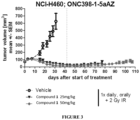
- the tumors treated with IR only, rapidly progressed under treatment. However, the tumors treated with the IR and Compound 1 regressed during the treatment and observation period up to approximately day 90 ( Figure 3 - Efficacy of Compound 1 in Combination with IR in a 6-week Treatment Schedule in the NCI-H460 xenograft model).
- the tumor xenografts in the mice treated with 50 mg/kg of the DNA-Pki did not exceed their starting volume until the end of the experiment at day 110 (42 days of treatment plus 68 days observation).
- mice For efficacy xenograft study 1014-1-58/ BKU00105 female CD1 nu/nu mice [internal Batch ID 04108; Charles River Laboratories, Sulzfeld, Germany], aged 6-8 weeks, were used.
- hematology study 1015-1-3/ BKU00106 immunocompetent female CD1 mice [internal Batch ID1406; Janvier Labs, Genest-Saint-Isle, France], aged 12 weeks were used. The mice were acclimatized to the housing conditions for 1 week. They were kept in groups of 10 in polysulfone cages Type III (42.5x26.6x15.5cm; Techniplast, Hohenpeissenberg). Bedding consisted of aspen chips (E. Becker, Castrop-Rauxel).
- NCI-H526 cells were obtained from the Merck KGaA central cell bank (cryo vial NCI-H526/5 17.03.2011). The cells grown in suspension and were cultured in RPMI 1640 growth medium (Gibco No. 31870) incl 10% FCS (Biochrome Cat.: SO615, Lot0707W), 2mM L-Glutamine (Gibco No. 25030), 1mM Sodium Pyruvate (Gibco No. 11360) at 37°C, 5% CO2 to obtain 2x10⁸ cells in total.
- RPMI 1640 growth medium Gibco No. 31870
- FCS Biochrome Cat.: SO615, Lot0707W
- 2mM L-Glutamine Gabco No. 25030
- 1mM Sodium Pyruvate Gabco No. 11360
- Compound 1 was produced at Merck KGaA Darmstadt, Germany. Formulation: The respective compound amount was weighed into a "Precellys"-tube [PEQ-Lab, 91-PCS-CK28R], 1ml vehicle (0.5% Methocel (K4M Premium USP/ EP; Colorcon), 0.25% Tween20 (Merck, order no.: 8170721000) in Na-citrate buffer 300 mM pH 2.5) was added. The tube was placed in "precellys 24" tissue homogenizer [Bertin technologies, Montigny le Bretonneux (FR)] and ground twice at 6500 shakes for 30sec. Afterwards, compound mixture was transferred to an appropriate glass vial and vehicle was added to bring the suspension to its final volume. Finally, the formulation (yellow colored, very fine suspension) was stirred for 10min at 40°C. A fresh preparation was prepared once a week.
- Cisplatin was obtained from Metac GmbH, Infusions 50 mg/ 100 ml (0.5 mg/ ml); delivery 2015/02/12, Lot.-No. M130845B. Cisplatin was diluted to the final application concentration using 0.9% saline (Braun, Reg.-ID.:6726174.00.00). A fresh preparation was prepared once a week.
- N 10 animals (female CD1 nude mice) per treatment group
- Tumor cell inoculation The suspension of human NCI-H526 cells has been subcutaneously inoculated in the right flank of CD1 nu/nu mice in a volume of 100 ⁇ L DPBS (-Mg/-Ca) with Matrigel (1:1/v:v) and a concentration of 2x10⁷ cells/ml.
- Tumor measurements and calculations When the tumors reached a volume of 96-214 mm 3 the animals were randomized into 7 treatment groups with 10 animals each. Tumor length (L) and width (W) were measured twice weekly by calipers. The tumor volume was calculated using the formula LxW2/2. Data were collected in Study AdvantageTM (data collection system).
- Body weight Body weight was monitored two/three times per week.
- Blood sampling and processing for hematology Blood was collected using a Sarstedt Microvette 500 K3E (Tri-Kalium-EDTA) REF20.1341, Lot.4074501: Tubes were immediately put on a roller mixer (Stuart roller mixer SRT9D) and rolled until analysis. Hematological analysis was performed using the Analyser Sysmex xT-2000iV, located in A32/113.
- T/C-value The ability of a treatment to inhibit tumor growth was assessed at the end of each study by calculating the % T/C value according to following formulas: % T/C delta > 0 calculation (mean): [(end tumor volume treatment - start tumor volume treatment)/(end tumor volume control - start tumor volume control)] ⁇ 100] % T/C delta ⁇ 0 (regression) calculation (mean): [(end tumor volume treatment - start tumor volume treatment)/start tumor volume treatment] ⁇ 100
- the efficacy data have been analyzed by RM-ANCOVA and pairwise comparisons of the tumor volume data of the respective combination groups to tumor volume data of the SoC only treatment group.
- the hematology data were evaluated by RM-ANOVA and Bonferroni multiple comparisons post test comparing the blood cell counts of the respective combination groups to the blood cell counts of the SoC only treatment group.
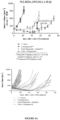
- Compound 1 shows significantly enhanced antitumor activity in the human SCLC NCI-H526 mouse xenograft model ( Figure 4a - Efficacy of Compound 1 in Combination with etoposide/ cisplatin in the NCI-H526 Xenograft Model (mean tumor volume left and individual tumor volumes right)) (refer to ONC1014-1-58AZ).
- the addition of Compound 1 to the SoC regimen of etoposide and cisplatin resulted in additional efficacy as compared to the SoC treatment arm.
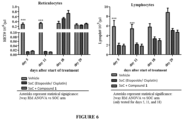
- SoC therapy induced body weight loss in the animals ( Figure 5 - Body weight change upon etoposide/ cisplatin treatment and the combination with Compound 1 in mice). Combining SoC with the Compound 1 led to additional body weight loss. All animals were supplemented with enabled food supply (DietGel ® Boost mixed with water) throughout the study in order to keep body weight loss in a moderate range and stabilize their overall condition. After termination of SoC treatment at the end of chemotherapy cycle 3 (d21) the animals recovered despite the continuous Compound 1 administration.
- Compound 1 did not significantly affect blood cell reduction nor the recovery phase. Similar effects were seen for eosinophils and no significant effects were observed for neutrophils, and platelets. Since myeloid and lymphoid suppression is one of the dose limiting toxicities of the etoposide/cisplatin regimen in patients, the demonstrated absence of any significant additional toxicity is a positive outcome.
- DNA-PKc DNA-PK
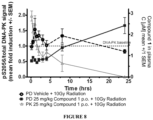
- Ser2056 is one of the most prominent and best studied autophosphorylation sites. Because Ser2056 phosphorylation (p-Ser2056) correlated well with DNA-PK activation state it was chosen as the pharmacodynamics (PD) biomarker.
- ELISA and MSD format Two different assay formats were established to measure p-Ser2056 in tumor tissue: ELISA and MSD format. In order to detect sequence reliable signal, IR was used at 50 Gy for the ELISA assay and 10 Gy for the more sensitive MSD assay.
- Compound 1 in combination with etoposide or cisplatin was tested in the following cancer cell lines for inhibition of tumor cells: human lung carcinoma (NCI-H460), human glioblastoma (MO59K and MO59J), and human squamous cell carcinoma pharynx (FaDu). Details of the assay protocol and material utilized are set forth below.
- Test material Concentration in ⁇ M/nM Duration Vehicle Compound 1 30 ⁇ M; 10 ⁇ M; 3.3 ⁇ M; 1.1 ⁇ M; 370nM; 120nM; 41nM; 14nM 72h DMSO Compound 1 30 ⁇ M; 10 ⁇ M; 3.3 ⁇ M; 1.1 ⁇ M; 370nM; 120nM; 41nM; 14nM 168h DMSO Etoposide 10 ⁇ M; 3.3 ⁇ M; 1.1 ⁇ M; 370nM; 120nM; 41nM; 14nM; 4.7nM 72h DMSO Etoposide 10 ⁇ M; 3.3 ⁇ M; 1.1 ⁇ M; 370nM; 120nM; 41nM; 14nM;4.7nM 168h DMSO Etoposide 10 ⁇ M; 2 ⁇ M; 400nM; 80nM; 16nM; 3.2nM; 0.64nM; 0.13nM 168h DMSO Cisplatin 10 ⁇ M; 3.3 ⁇ M; 1.1 ⁇ M; 370nM; 120
- Cells were plated in a volume of 180 ⁇ l/well in 96-well plates: (FaDu: 1000cells/well (168h); NCI-H460 3000cells/well (72h) and 1000cells/well (168h); MO59J: 5000cells/well(72h) and 2000cells/well (168h); MO59K: 2000c/well (72h) and 1000cells/well (168h)) and incubated at 37°C and relevant CO2 for 24h hours. 20 ⁇ l per well of medium including serial dilutions of Compound 1 and/or Etoposide or Cisplatin were added to the culture plates and the incubation was continued further for 3 days (72h) or 7 days (168h) at 37°C and relevant CO2. Compound 1 was pre-incubated for 30min before Etoposide or Cisplatin were added.
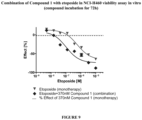
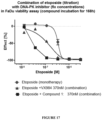
- Compound 1 showed enhanced inhibition of viability of NCI-H460, FaDu and MO59K (DNA-PK wild type) cells in vitro by using the combination with etoposide ( Figures 9 , 11 and 12 ).
- VX-984 represents the compound 8-[(1S)-2-[[6-(4,6-dideuterio-2-methylpyrimidin-5-yl)pyrimidin-4-yl]amino]-1-methylethyl]quinoline-4-carboxamide, as disclosed in WO 2013/163190 , for instance.
- MO59J cells that are DNA-PK deficient (1), showed no such combination effect of Compound 1 with Etoposide under comparable conditions ( Figure 13 ). No significant combination effect of Compound 1 together with cisplatin on the viability of NCI-H460 was observed ( Figures 10 ).
- Combination and monotherapy treatment effects were compared for the two major tissues of origins, colon and lung, but for some aspects also data of the four pleura derived cell lines are considered.
- 128 cell lines were screened with variable doses of etoposide (2.44E-09M, 9.77E-09M, 3,91E-08M, 1,56E-07M, 6,25E-07M, 2,50E-06M, 1,00E-05M) and fixed doses of Compound 1 (0.3 ⁇ M). Single agent as well as combination treatment growth inhibition effects were measured by ONCOLEAD.
- Relative area above the dose-response curve (relAOC or AOC) were obtained as the area above the dose-response curve in the dose range between 1E-3M and 1E-10M.
- Combination effects of etoposide with Compound 1 were calculated under the assumption of independent modes of action of the combination partners. Synergy of the treatment effect was assessed using the BLISS independence model (2) as the average excess over the linear combination of the monotherapy treatments effects at the different data points measured. The synergy scores were provided by ONCOLEAD.
- Treatment effects are summarized as area above the dose-response curve (AOC) or as the concentration needed to reach 50% growth inhibition relative to control cells (GI50).
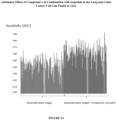
- AOC values were obtained for 122 cell lines of the three major tissues of origin, colon, lung and pleura. The sensitivity against the combination treatment is higher in nearly all (120/122) cases which is indicated by longer red bars in the AOC ratio plot in Figure 14 (Antitumor Effect of Compound 1 in Combination with etoposide in the Lung and Colon Cancer Cell Line Panels in vitro).
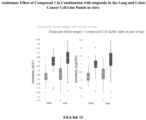
- Figure 15 depicts Antitumor Effect of Compound 1 in Combination with etoposide in the Lung and Colon Cancer Cell Line Panels in vitro.
- the combination in those two indications result in 12.8-fold lower concentration of etoposide needed to reach at GI50 when administered in combination with Compound 1.
- Synergy scores were provided by ONCOLEAD as mean excess over the linear combination of the monotherapy effects over the individual measurements.
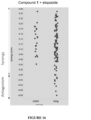
- Synergy score distributions for the Compound 1 combination treatments are shown in Figure 16 as scatter plots of individual cell line data points. Synergy levels within 10% above or below the linear combination effects could be seen as 'close to linear' effect.
- Compound 1 was evaluated to determine the shift in activity of etoposide in multiple cancer cell lines.
- Compound 1 was used in DMSO solution in the following concentrations: 150 nM, 300 nM, and 1pM.
- Etoposide was used in DMSO solution in the following concentrations: 10 pM, 2.5 pM, 630 nM, 156 nM, 39 nM, 9.8 nM, and 2.4 nM.
- Cell lines were purchased directly from the ATCC, NCI, CLS and DSMZ cell line collections. A master bank and working aliquots were prepared. Cells used for the study in vitro potentiation study using a 200+ cell line panel had undergone less than 20 passages. To ensure the absence of potential contamination or wrong assignment, all cell lines were tested by STR analysis. Absence of mycoplasma and SMRV contamination was confirmed for all cell lines used in the studies.
- the cell lines were grown in the media recommended by the suppliers in the presence of 100 U/ml penicillin G and 100 ⁇ g/ml streptomycin supplemented with 10% FCS.
- RPMI 1640, and DMEM were supplemented with 2 mM L-glutamine and 1 mM Na-pyruvate.
- MEM Earle's medium had additionally 1% NEAA. Some cell lines required additional supplements such as 2.5% horse serum, hydrocortisone, transferrin, beta-estradiol, se-lenite and 1 unit/ml insulin.
- RPMI medium was used for culturing the following cell lines: 5637, 22RV1, 786O, A2780, A431, A549, ACHN, ASPC1, BT20, BXPC3, CAKI1, CLS439, COLO205, COLO678, DLD1, DU145, EFO21, EJ28, HCT15, HS578T, IGROV1, JAR, LOVO, MCF7, MDAMB231, MDAMB435, MDAMB436, MDAMB468, MHHES1, MT3, NCIH292, NCIH358M, NCIH460, NCIH82, OVCAR3, OVCAR4, PANC1005 (addition of insulin), PBMC, PC3, RDES, SF268, SF295, SKBR3, SKMEL28, SKMEL5, SKOV3, SW620, U2OS, UMUC3, UO31, GRANTA-519, SU-DHL-6, SU-DHL-10, RAMOS, MINO, HL
- DMEM medium was used to culture A204, A375, A673, C33A, CASKI, HCT116, HEPG2, HS729, HT29, J82, MG63, MIAPACA2 (addition of horse serum), PANC1, PLCPRF5, RD, SAOS2, SKLMS1, SKNAS, SNB75, T24, and TE671.
- MEM Earle's medium was used for CACO2, CALU6, HEK293, HELA, HT1080, IMR90, JEG3, JIMT1, SKHEP1, SKNSH, and U87MG.
- DMEM/F12 medium was used for NCI-H2066, NCI-H2029, NCI-H2444, H-MESO-1, NCI-H2085, LC-2/ad, DMS114, NCI-H2126, SW948, T84, NCI-H2405, SW1463, SW1116, A110L, T3M-11, JU77, NCI-H596, NCI-H1048, NCI-H226, NCI-H2073, HLF-a, NCI-H2342, NCI-H1734, NCI-H2196, DMS454, NCI-H1882, NCI-H1876, HCC2935, NCI-H2286, NCI-H2110, NCI-H2291, IA-LM, NCI-H1755, NCI-H522, SW1417, SW837, SW48, NCI-H520, COLO-699, BEN, NCI-H1573, NCI-H1975, NCI-H2170, HCC-827,
- Cell growth and treatment were performed in 96-well microtitre plates CELLSTAR ® (Greiner Bio-One, Germany). Cells harvested from exponential phase cultures by trypsinization or by splitting (in the case of cells growing in suspension) were plated in 90 ⁇ l of media at optimal seeding densities. The optimal seeding density for each cell line was determined to ensure exponential growth for the duration of the experiment. All cells growing without anticancer agents were sub-confluent by the end of the treatment, as determined by visual inspection.
- % T/C x 100 One common way to express the effect of an anticancer agent is to measure cell viability and survival in the presence of the test agent as % T/C x 100.
- the relationship between viability and dose is called a dose response curve. Two major values are used to describe this relationship without needing to show the curve: the concentration of test agents giving a % T/C value of 50%, or 50% growth inhibition (IC50), and a % T/C value of 10%, or 90% growth inhibition (IC90).
- GI50 incomplete inhibition of cell growth
- TGI complete inhibition of cell growth
- LC net loss of cells due to compound activity.
- GI50 is IC50 corrected for time zero. Similar to IC90, calculated GI90 values are also reported for all compounds tested.
- Etoposide and Compound 1 were investigated previously in a panel of 81 cancer cell lines representing 17 tumor tissue types, plus resting, non-proliferating PBMC (total 82 cell lines), which were used to detect activity beyond affecting cell proliferation.
- Etoposide showed broad, more than 1000-fold, activity ranging from 30 nM in JEG3 cell lines to above 10 ⁇ M, , e.g. JIMT1 and COLO678.
- GI50 values could only be estimated above 10 ⁇ M, and for 14 cell lines no activity above 10 ⁇ M could be recorded (including resting PBMC).
- Compound 1 showed a narrow but more than 20-fold activity range, from 500 nM in a set of cell lines to above 10 ⁇ M. For some cell lines, GI50 values could only be estimated above 10 ⁇ M. No activity in resting PBMC could be detected.
- Origin Cell line ⁇ M ( ⁇ Compound 1 ) Combination Effect Etoposide +150 nM + 1 ⁇ M Average +150 nM + 1 ⁇ M breast MCF7 1.287 0.209 ⁇ 0.002 -0.18 0.20 0.74 breast MDAMB468 1.169 0.467 0.027 -0.38 0.09 0.35 prostate 22RV1 0.234 0.063 0.002 -0.23 0.12 0.39 bladder 5637 0.685 0.183 0.019 -0.83 0.06 0.21 kidney 786O 0.928 0.295 0.044 -0.38 0.05 0.27 muscle A204 0.286 0.019 ⁇ 0.002 -0.11 0.28 0.63 ovary A2780 0.062 0.023 0.001 -0.33 0.09 0.45 skin A375 0.378 0.083 0.012 -0.24 0.23 0.28 Origin Cell line ⁇ M ( ⁇ Compound 1 ) Combination Effect Etoposide +150 nM + 1 ⁇ M Average +150 nM + 1 ⁇ M breast MCF7 1.2
- Phase Ib Subjects will receive Compound 1 at the assigned dose level. On Day 1 of each cycle, after oral intake of Compound 1, cisplatin will be administered first, followed by etoposide. In all instances Compound 1 should be administered approximately 1.5 hours before chemotherapy. On Days 2 and 3 of each cycle, Compound 1 should be taken orally QD preferably in the morning. The dose of Compound 1 will be modified according to the dose escalation rules described in this protocol.
- Cisplatin and etoposide will be given according to the local guidelines. Most commonly, cisplatin is administered at 75 mg/m 2 over a 60-minute iv infusion on Day 1, followed by etoposide administered at 100 mg/m 2 over a 60-minute iv infusion. On Days 2 and 3 of each cycle, etoposide can be given either as an iv infusion or orally according to the local guidelines.
- Phase II Subjects will be randomized to receive cisplatin and etoposide in combination with placebo or Compound 1 at the RP2D identified in the Phase Ib part of the trial. On Day 1 of each cycle, after oral intake of Compound 1 /placebo, cisplatin will be administered first, followed by etoposide. In all instances Compound 1 should be administered approximately 1.5 hours before chemotherapy. On Days 2 and 3 of each cycle, Compound 1 should be taken orally QD preferably in the morning. Cisplatin and etoposide will be given according to the local guidelines.
- cisplatin is administered at 75 mg/m2 over a 60-minute iv infusion on Day 1 followed by etoposide administered at 100 mg/m2 over a 60-minute iv infusion.
- etoposide can be given either as an intravenous infusion or orally according to the local guidelines.
Landscapes
- Health & Medical Sciences (AREA)
- Life Sciences & Earth Sciences (AREA)
- Animal Behavior & Ethology (AREA)
- Pharmacology & Pharmacy (AREA)
- Medicinal Chemistry (AREA)
- General Health & Medical Sciences (AREA)
- Public Health (AREA)
- Veterinary Medicine (AREA)
- Chemical & Material Sciences (AREA)
- Epidemiology (AREA)
- Chemical Kinetics & Catalysis (AREA)
- General Chemical & Material Sciences (AREA)
- Nuclear Medicine, Radiotherapy & Molecular Imaging (AREA)
- Organic Chemistry (AREA)
- Inorganic Chemistry (AREA)
- Molecular Biology (AREA)
- Dermatology (AREA)
- Bioinformatics & Cheminformatics (AREA)
- Engineering & Computer Science (AREA)
- Pharmaceuticals Containing Other Organic And Inorganic Compounds (AREA)
- Acyclic And Carbocyclic Compounds In Medicinal Compositions (AREA)
Description
- The search for new therapeutic agents has been greatly aided in recent years by a better understanding of the structure of enzymes and other biomolecules associated with diseases. One important class of enzymes that has been the subject of extensive study is protein kinases.
- Protein kinases constitute a large family of structurally related enzymes that are responsible for the control of a variety of signal transduction processes within the cell. Protein kinases are thought to have evolved from a common ancestral gene due to the conservation of their structure and catalytic function. Almost all kinases contain a similar 250-300 amino acid catalytic domain. The kinases may be categorized into families by the substrates they phosphorylate (e.g., protein-tyrosine, protein-serine/threonine, lipids, etc.).
- DNA-dependent protein kinase (DNA-PK) is a serine/threonine protein kinase which is activated in conjunction with DNA. Biochemical and genetic data show that DNA-PK consists (a) of a catalytic sub-unit, which is called DNA-PKcs, and (b) two regulatory components (Ku70 and Ku80). In functional terms, DNA-PK is a crucial constituent on the one hand of the repair of DNA double-strand breaks (DSBs) and on the other hand of somatic or V(D)J recombination. In addition, DNA-PK and its components are connected with a multiplicity of further physiological processes, including modulation of the chromatin structure and telomeric maintenance (Smith & Jackson (1999) Genes and Dev 13: 916; Goytisolo et al. (2001) Mol. Cell. Biol. 21: 3642; Williams et al. (2009) Cancer Res. 69: 2100).
- Human genetic material in the form of DNA is constantly subjected to attack by reactive oxygen species (ROSs), which are formed principally as by-products of oxidative metabolism. ROSs are capable of causing DNA damage in the form of single-strand breaks. Double-strand breaks can arise if prior single-strand breaks occur in close proximity. In addition, single- and double-strand breaks may be caused if the DNA replication fork encounters damaged base patterns. Furthermore, exogenous influences, such as ionising radiation (for example gamma or particle radiation), and certain anticancer medicaments (for example bleomycin) are capable of causing DNA double-strand breaks. DSBs may furthermore occur as intermediates of somatic recombination, a process which is important for the formation of a functional immune system of all vertebrates. If DNA double-strand breaks are not repaired or are repaired incorrectly, mutations and/or chromosome aberrations may occur, which may consequently result in cell death. In order to counter the severe dangers resulting from DNA double-strand breaks, eukaryotic cells have developed a number of mechanisms to repair them. Higher eukaryotes use predominantly so-called non-homologous end-joining, in which the DNA-dependent protein kinase adopts the key role. Biochemical investigations have shown that DNA-PK is activated most effectively by the occurrence of DNA-DSBs. Cell lines whose DNA-PK components have mutated and are non-functional prove to be radiation-sensitive (Smith and Jackson, 1999).
- Many diseases are associated with abnormal cellular responses, proliferation and evasion of programmed cell-death, triggered by protein kinase-mediated events as described above and herein. While considerable progress in the development of protein kinase inhibitors that are useful as therapeutic agents has been made to date, there remains a need to identify which particular treatments and conditions may allow beneficial expansion of the protein kinase inhibitors' potential.
- The present invention provides (S)-[2-chloro-4-fluoro-5-(7-morpholin-4-yl-quinazolin-4-yl)-phenyl]-(6-methoxy-pyridazin-3-yl)-methanol, having the below structure and designated
Compound 1 in the following: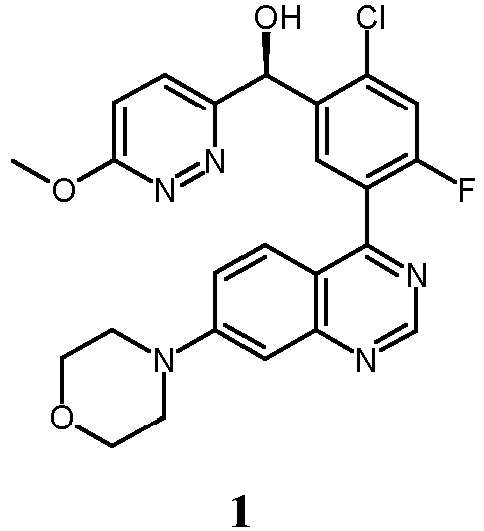
-
Compound 1 is described in detail in United States published patent applicationUS 2016/0083401, published on March 24, 2016 (referred to herein as "the '401 publication.Compound 1 is designated as compound 136 in Table 4 of the '401 publication.Compound 1 is active in a variety of assays and therapeutic models demonstrating inhibition of DNA-PK (see, e.g., Table 4 of the '401 publication). Accordingly,Compound 1, or a pharmaceutically acceptable salt thereof, is useful for treating one or more disorders associated with activity of DNA-PK, as described in detail herein, infra. - The present invention, in particular, pertains to the following aspects and embodiments:
- Firstly, it pertains to the
Compound 1 or pharmaceutically acceptable salt thereof for use in treating lung cancer in a patient in need thereof, comprising administering to saidpatient Compound 1, or a pharmaceutically acceptable salt thereof, in combination with both etoposide and cisplatin. - Secondly, it pertains to a ccombination of
Compound 1, or pharmaceutically acceptable salt thereof, and both etoposide and cisplatin for use in the treatment of lung cancer. - In any preferred embodiment, Compound 1 may be administered in an amount of about 1 to about 800 mg, for instance in an amount of about 10 to about 800 mg.
- Etoposide may, for example, be administered intravenously in an amount of about 100 mg/m2.
- For instance, the etoposide may be administered via intravenous infusion over about 1 hour.
- Cisplatin may, for example, be administered intravenously in an amount of about at 75 mg/m2.
- For instance, cisplatin may be administered via intravenous infusion over about 1 hour.
- The following information with regard to a combination of
Compound 1 and etoposide alone is provided as background information. - When treating cancer in a patient in need thereof by administering to said
patient Compound 1, or a pharmaceutically acceptable salt thereof, in combination with etoposide alone, the effect ofCompound 1 in combination with etoposide is synergistic, wherein the etoposide induced myelo- and lymphoid reductions are not further increased by Compound 1. - Cancers for which the combination respectively treatment according to the present invention is particularly beneficial are set out in the exemplary embodiments and comparative examples, which are also relevant outside and beyond the particular experimental conditions applied. The higher the synergy score, the greater the beneficial effect. Of course, since Compound 1 is an inhibitor of DNA-PK, no efficacy would be expected in DNA-PK deficient cancer cells/types, as confirmed by the experimental data shown herein.
- Additional embodiments describing methods of utilizing a provided combination are described in detail herein, infra.
- Without wishing to be bound by theory, the following can be derived from the examples presented further below: The experimental data shown herein demonstrate potentiation of etoposide by
Compound 1 over a broad activity range. The broadening of the activity range in comparison to the single agent suggests that Compound 1 increases the specificity of etoposide action, thus widening its clinical applications. The experimental results further provide strong evidence for a synthetic-lethality mechanism arising from the combination of etoposide withCompound 1. -
-
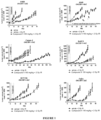
Figure 1 shows the efficacy ofCompound 1 in combination with radiation in six mouse xenograft models of human cancer (background information). -
Figure 2 shows the efficacy ofCompound 1 in combination with IR in a 6-week treatment schedule in FaDu xenograft model (background information). -
Figure 3 shows the efficacy ofCompound 1 in combination with IR in a 6-week treatment schedule in the NCI-H460 xenograft model (background information). -
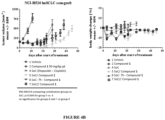
Figure 4a shows the efficacy ofCompound 1 in combination with etoposide/ cisplatin in the NCI-H526 xenograft model;Figure 4b shows that administering Compound 1 daily throughout the study resulted in better efficacy than separating SoC andCompound 1 treatment by either 7h or days. -
Figure 5 shows the body weight change upon etoposide/ cisplatin treatment and the combination withCompound 1 in mice. -
Figure 6 shows the reticulocyte and lymphocyte counts under treatment with and recovery from etoposide/cisplatin and the combination withCompound 1. -
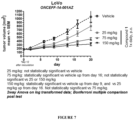
Figure 7 shows the single agent efficacy ofCompound 1 in the ATM pathway deficient LoVo xenograft model (background information). -
Figure 8 shows thatCompound 1 inhibits DNA-PK autophosphorylation (p-Ser2056) in WM164 xenograft tumor (background information). -
Figure 9 shows the results of the combination ofCompound 1 with Etoposide in NCI-H460 viability assay (compound incubation for 72h) (background information). -
Figure 10 show the results of the combination ofCompound 1 with Etoposide in NCI-H460 viability assay (compound incubation for 168h) (background information). -
Figure 11 show the results of the combination ofCompound 1 with Etoposide in MO59K (DNA-PK wild type) viability assay (compound incubation for 72h) (background information). -
Figures 12 show the results of the combination ofCompound 1 with Etoposide in MO59K (DNA-PK wild type) viability assay (compound incubation for 168h) (background information). -
Figures 13 show the results of the combination ofCompound 1 with Etoposide in MO59J (DNA-PK deficient) viability assay (compound incubation for 168h) (background information). -
Figures 14 show the results of the combination ofCompound 1 with Etoposide in the cancer cell line panels in vitro (background information).. -
Figure 15 show the results of the combination ofCompound 1 with Etoposide in cancer cell line panels in vitro (background information).. -
Figures 16 show the synergystic results of the combination ofCompound 1 with Etoposide. -
Figure 17 shows the results of the combination ofCompound 1 in comparison to VX-984 with Etoposide in MO59K (DNA-PK wild type) viability assay (compound incubation for 72h) (background information).. - As described herein, the present invention provides
Compound 1 or a pharmaceutically acceptable salt thereof in combination with the chemotherapeutic agents etoposide and cisplatin for use according toclaims PK inhibitor Compound 1, or a pharmaceutically acceptable salt thereof, in combination with etoposide and cisplatin. - The terms "comprising" and "including" are used herein in their open-ended and nonlimiting sense unless otherwise noted.
- The terms "a" and "an" and "the" and similar references in the context of describing the invention (especially in the context of the following claims) are to be construed to cover both the singular and the plural, unless otherwise indicated herein or clearly contradicted by context. Where the plural form is used for compounds, salts, and the like, this is taken to mean also a single compound, salt, or the like.
- As used herein, the term "in combination" with regard to administration of
Compound 1, or a pharmaceutically acceptable salt thereof, and the additional chemotherapeutic agent means that each ofCompound 1, or a pharmaceutically acceptable salt thereof, and the additional chemotherapeutic agent are administered to the patient in any order (i.e., simultaneously or sequentially) or together in a single composition, formulation, or unit dosage form. In some embodiments, the term "combination" means that theCompound 1, or pharmaceutically acceptable salt thereof, and the additional therapeutic agent, are administered simultaneously or sequentially. In certain embodiments, theCompound 1, or pharmaceutically acceptable salt thereof, and the additional therapeutic agent, are administered simultaneously in the same composition comprising theCompound 1, or pharmaceutically acceptable salt thereof, and the additional therapeutic agent. In certain embodiments, theCompound 1, or pharmaceutically acceptable salt thereof, and the additional therapeutic agent, are administered simultaneously in separate compositions (i.e., wherein theCompound 1, or pharmaceutically acceptable salt thereof, and the additional therapeutic agent are administered simultaneously each in a separate unit dosage form). It will be appreciated thatCompound 1, or a pharmaceutically acceptable salt thereof, and the additional chemotherapeutic agent are administered on the same day or on different days and in any order as according to an appropriate dosing protocol. - The term "about" or "approximately" shall have the meaning of within 10%, for example within 5%, of a given value or range.
- As used herein, a "therapeutically effective amount" means an amount of a substance (e.g., a therapeutic agent, composition, and/or formulation) that elicits a desired biological response. In some embodiments, a therapeutically effective amount of a substance is an amount that is sufficient, when administered as part of a dosing regimen to a subject suffering from or susceptible to a disease, condition, or disorder, to treat, diagnose, prevent, and/or delay the onset of the disease, condition, or disorder. As will be appreciated by those of ordinary skill in this art, the effective amount of a substance may vary depending on such factors as the desired biological endpoint, the substance to be delivered, the target cell or tissue, etc. For example, the effective amount of compound in a formulation to treat a disease, condition, or disorder is the amount that alleviates, ameliorates, relieves, inhibits, prevents, delays onset of, reduces severity of and/or reduces incidence of one or more symptoms or features of the disease, condition, or disorder. In some embodiments, a "therapeutically effective amount" is at least a minimal amount of a compound, or composition containing a compound, which is sufficient for treating one or more symptoms of a disease or disorder associated with DNA-PK.
- The terms "treat" or "treating," as used herein, refers to partially or completely alleviating, inhibiting, delaying onset of, preventing, ameliorating and/or relieving a disease or disorder, or one or more symptoms of the disease or disorder. As used herein, the terms "treatment," "treat," and "treating" refer to partially or completely alleviating, inhibiting, delaying onset of, preventing, ameliorating and/or relieving a disease or disorder, or one or more symptoms of the disease or disorder, as described herein. In some embodiments, treatment may be administered after one or more symptoms have developed. In some embodiments, the term "treating" includes preventing or halting the progression of a disease or disorder. In other embodiments, treatment may be administered in the absence of symptoms. For example, treatment may be administered to a susceptible individual prior to the onset of symptoms (e.g., in light of a history of symptoms and/or in light of genetic or other susceptibility factors). Treatment may also be continued after symptoms have resolved, for example to prevent or delay their recurrence. Thus, in some embodiments, the term "treating" includes preventing relapse or recurrence of a disease or disorder.
- The expression "unit dosage form" as used herein refers to a physically discrete unit of therapeutic formulation appropriate for the subject to be treated. It will be understood, however, that the total daily usage of the compositions of the present invention will be decided by the attending physician within the scope of sound medical judgment. The specific effective dose level for any particular subject or organism will depend upon a variety of factors including the disorder being treated and the severity of the disorder; activity of specific active agent employed; specific composition employed; age, body weight, general health, sex and diet of the subject; time of administration, and rate of excretion of the specific active agent employed; duration of the treatment; drugs and/or additional therapies used in combination or coincidental with specific compound(s) employed, and like factors well known in the medical arts.
- As described generally above, the present invention provides the inhibitor of DNA-PK (S)-[2-chloro-4-fluoro-5-(7-morpholin-4-yl-quinazolin-4-yl)-phenyl]-(6-methoxy-pyridazin-3-yl)-methanol, having the below structure Compound 1:

claims - It is understood that although the methods described herein may refer to formulations, doses and dosing regimens/schedules of
Compound 1, such formulations, doses and/or dosing regimens/schedules are equally applicable to any pharmaceutically acceptable salt ofCompound 1. Accordingly, in some embodiments, a dose or dosing regimen for a pharmaceutically acceptable salt ofCompound 1, or a pharmaceutically acceptable salt thereof, is selected from any of the doses or dosing regimens forCompound 1 as described herein. - As described generally above, the present invention is directed to combination
therapies utilizing Compound 1, or a pharmaceutically acceptable salt thereof, and both chemotherapeutic agents etoposide and cisplatin for the treatment of lung cancer. - Etoposide forms a ternary complex with DNA and the topoisomerase II enzyme which aids in DNA unwinding during replication. This prevents re-ligation of the DNA strands and causes DNA strands to break. Cancer cells rely on this enzyme more than healthy cells because they divide more rapidly. Therefore, etoposide treatment causes errors in DNA synthesis and promotes apoptosis of the cancer cells. Without wishing to be bound by any particular theory, it is believed that a DNA-PK inhibitor blocks one of the main pathways for repair of DSBs in DNA thus delaying the repair process and leading to an enhancement of the antitumor activity of etoposide.
- Platins are platinum-based chemotherapeutic agents. As used herein, the term "platin" is used interchangeably with the term "platinating agent." Platinating agents are well known in the art. According to the invention, the platin (or platinating agent) is cisplatin.
- Cisplatin crosslinks cellular DNA in several different ways interfering with cell division by mitosis. Most notable among the changes in DNA are the intrastrand cross-links with purine bases. These crosslinks are repaired primarily by nucleotide excision repair. The damaged DNA activates checkpoint mechanisms, which in turn activate apoptosis when repair proves impossible.
-
Compound 1 is a potent and selective ATP-competitive inhibitor of DNA-PK, as demonstrated by crystallographic and enzyme kinetics studies. DNA-PK, together with five additional protein factors (Ku70, Ku80, XRCC4, Ligase IV, and Artemis) plays a critical role in the repair of DSB via NHEJ. Kinase activity of DNA-PK is essential for proper and timely DNA repair and the long-term survival of cancer cells (Salles et al., 2006; Dobbs et al., 2011). Without wishing to be bound by any particular theory, it is believed that the primary effects ofCompound 1 are suppression of DNA-PK activity and DNA double strand break (DSB) repair, leading to altered repair of DNA and potentiation of antitumor activity of DNA-damaging agents. - In vitro data demonstrated a synergy of
Compound 1 in combination with etoposide versus etoposide alone. The experimental results presented herein provide strong evidence for potentiation of etoposide, in particular, byCompound 1 or a pharmaceutically acceptable salt thereof. - In certain embodiments, the present invention is intended for use in a method of treating lung cancer in a patient in need thereof comprising administering to said
patient Compound 1, or a pharmaceutically acceptable salt thereof, in combination with etoposide and cisplatin. - The present invention pertains to use in treating lung cancer, including histological subtypes thereof (e.g., adeno, squamous, large cell) in a patient in need thereof, comprising administering to said
patient Compound 1, or a pharmaceutically acceptable salt thereof, in combination with etoposide and cisplatin. -
Compound 1, or a pharmaceutically acceptable salt thereof, and compositions thereof according to embodiments of the present invention, are administered using any amount and any route of administration effective for treating or lessening the severity of the disorder provided above. The exact amount required will vary from subject to subject, depending on the species, age, and general condition of the subject, its mode of administration, and the like. - In some embodiments, treating lung cancer, including histological subtypes thereof (e.g., adeno, squamous, large cell) in a patient in need thereof comprises administering to said
patient Compound 1, or a pharmaceutically acceptable salt thereof, in an amount of about 1 to about 800 mg in combination with cisplatin and etoposide. - In some other embodiments, treating lung cancer, including histological subtypes thereof (e.g., adeno, squamous, large cell) in a patient in need thereof comprises administering to said
patient Compound 1, or a pharmaceutically acceptable salt thereof, in an amount of about 10 to about 800 mg in combination with cisplatin and etoposide, in amounts according to the local clinical standard of care guidelines. In certain embodiments, cisplatin is administered intravenously in an amount of about 50 to about 75 mg/m2. In some embodiments, etoposide is administered intravenously in an amount of about 50 to about 100 mg/m2. Most commonly, cisplatin is administered at 75 mg/m2 and etoposide at 100 mg/m2. - In certain embodiments, treating lung cancer, including histological subtypes thereof (e.g., adeno, squamous, large cell) in a patient in need thereof comprises administering to said
patient Compound 1, or a pharmaceutically acceptable salt thereof, in combination with etoposide and cisplatin, wherein theCompound 1, or a pharmaceutically acceptable salt thereof, and etoposide and cisplatin are provided as separate compositions for simultaneous or sequential administration to said patient. - In some embodiments, treating lung cancer in a patient in need thereof comprises administering to said
patient Compound 1, or a pharmaceutically acceptable salt thereof, followed by administration of cisplatin and then administration of etoposide. In certain embodiments,Compound 1 is administered about 1-2, preferably about 1.5 hours prior to administration of the cisplatin. In some embodiments,Compound 1 is administered to said patient QD. In certain embodiments,Compound 1 is administered for 5 days. In some embodiments,Compound 1 is administered from about 4 days to about 3 weeks, for about 5 days, for about 1 week, or for about 2 weeks. - In certain embodiments, the cisplatin is administered via intravenous infusion. In certain embodiments, the cisplatin is administered via intravenous infusion at about 75 mg/m2 over a 60-minute period. In some embodiments, the etoposide is administered via intravenous infusion. In certain embodiments, the etoposide is administered via intravenous infusion at about 100 mg/m2 over a 60-minute period.
- In certain embodiments, the etoposide is administered via intravenous infusion on
Day 1 and then via intravenous infusion or oral administration onDays 2 and 3. - In some embodiments, the treatment of lung cancer comprises administering a pharmaceutically acceptable
composition comprising Compound 1, or a pharmaceutically acceptable salt thereof, one, two, three, or four times a day. - In some embodiments, a pharmaceutically acceptable
composition comprising Compound 1, or a pharmaceutically acceptable salt thereof, is administered daily. - In some embodiments, a pharmaceutically acceptable
composition comprising Compound 1, or a pharmaceutically acceptable salt thereof, is administered once daily ("QD"). - In some embodiments, a pharmaceutically acceptable
composition comprising Compound 1, or a pharmaceutically acceptable salt thereof, is administered twice daily. In some embodiments, twice daily administration refers to a compound or composition that is administered "BID", or two equivalent doses administered at two different times in one day. - In some embodiments, a pharmaceutically acceptable
composition comprising Compound 1, or a pharmaceutically acceptable salt thereof, is administered three times a day. In some embodiments, a pharmaceutically acceptablecomposition comprising Compound 1, or a pharmaceutically acceptable salt thereof, is administered "TID", or three equivalent doses administered at three different times in one day. - In some embodiments, a pharmaceutically acceptable
composition comprising Compound 1, or a pharmaceutically acceptable salt thereof, is administered four times a day. In some embodiments, a pharmaceutically acceptablecomposition comprising Compound 1, or a pharmaceutically acceptable salt thereof, is administered "QID", or four equivalent doses administered at four different times in one day. - In some embodiments,
Compound 1, or a pharmaceutically acceptable salt thereof, is administered to a patient under fasted conditions and the total daily dose is any of those contemplated above and herein. - In some embodiments,
Compound 1, or a pharmaceutically acceptable salt thereof, is administered to a patient under fed conditions and the total daily dose is any of those contemplated above and herein. - In some embodiments,
Compound 1, or a pharmaceutically acceptable salt thereof, is administered orally. - In a preferred embodiment of administering etoposide and
Compound 1, or a pharmaceutically acceptable salt thereof,Compound 1 is administered on the same day and from, for example, about 2 hours before etoposide, or at about the same time as etoposide, or less than 7 hours after etoposide, for instance less than 5, 3 or 1 hour after etoposide. - In some embodiments, treatment methods comprise administering a pharmaceutically acceptable composition comprising a chemotherapeutic agent one, two, three, or four times a day.
- In some embodiments, a pharmaceutically acceptable composition comprising a chemotherapeutic agent is administered once daily ("QD").
- In some embodiments, a pharmaceutically acceptable composition comprising a chemotherapeutic agent is administered twice daily. In some embodiments, twice daily administration refers to a compound or composition that is administered "BID", or two equivalent doses administered at two different times in one day.
- In some embodiments, a pharmaceutically acceptable composition comprising a chemotherapeutic agent is administered three times a day. In some embodiments, a pharmaceutically acceptable composition comprising a chemotherapeutic agent is administered "TID", or three equivalent doses administered at three different times in one day.
- In some embodiments, a pharmaceutically acceptable composition comprising a chemotherapeutic agent is administered four times a day. In some embodiments, a pharmaceutically acceptable composition comprising a chemotherapeutic agent is administered "QID", or four equivalent doses administered at four different times in one day. In some embodiments, a pharmaceutically acceptable composition comprising a chemotherapeutic agent is administered for a various number of days (for example 14, 21, 28) with a various number of days between treatment (0, 14, 21, 28).
- In some embodiments, a chemotherapeutic agent is administered to a patient under fasted conditions and the total daily dose is any of those contemplated above and herein.
- In some embodiments, a chemotherapeutic agent is administered to a patient under fed conditions and the total daily dose is any of those contemplated above and herein.
- In some embodiments, a chemotherapeutic agent is administered orally for reasons of convenience. In some embodiments, when administered orally, a chemotherapeutic agent is administered with a meal and water. In another embodiment, the chemotherapeutic agent is dispersed in water or juice (e.g., apple juice or orange juice) and administered orally as a suspension. In some embodiments, when administered orally, a chemotherapeutic agent is administered in a fasted state.
- A chemotherapeutic agent can also be administered intradermally, intramuscularly, intraperitoneally, percutaneously, intravenously, subcutaneously, intranasally, epidurally, sublingually, intracerebrally, intravaginally, transdermally, rectally, mucosally, by inhalation, or topically to the ears, nose, eyes, or skin. The mode of administration is left to the discretion of the health-care practitioner, and can depend in-part upon the site of the medical condition.
-
Compound 1, or a pharmaceutically acceptable salt thereof may be provided in a pharmaceutically acceptable compositionIn some embodiments, a pharmaceutically acceptable composition of a chemotherapeutic agent is used. In some embodiments, acomposition comprising Compound 1, or a pharmaceutically acceptable salt thereof, is separate from a composition comprising a chemotherapeutic agent. In some embodiments,Compound 1, or a pharmaceutically acceptable salt thereof, and a chemotherapeutic agent are present in the same composition. In certain embodiments, the present invention provides acomposition comprising Compound 1, or a pharmaceutically acceptable salt thereof, and both of etoposide and cisplatin. In some embodiments, a providedcomposition comprising Compound 1, or a pharmaceutically acceptable salt thereof, and both etoposide and cisplatin is formulated for oral administration. Exemplary such pharmaceutically acceptable compositions are described further below and herein. - Liquid dosage forms for oral administration include, but are not limited to, pharmaceutically acceptable emulsions, microemulsions, solutions, suspensions, syrups and elixirs. In addition to
Compound 1, or a pharmaceutically acceptable salt thereof, and/or a chemotherapeutic agent, the liquid dosage forms may contain inert diluents commonly used in the art such as, for example, water or other solvents, solubilizing agents and emulsifiers such as ethyl alcohol, isopropyl alcohol, ethyl carbonate, ethyl acetate, benzyl alcohol, benzyl benzoate, propylene glycol, 1,3-butylene glycol, dimethylformamide, oils (in particular, cottonseed, groundnut, corn, germ, olive, castor, and sesame oils), glycerol, tetrahydrofurfuryl alcohol, polyethylene glycols and fatty acid esters of sorbitan, and mixtures thereof. Besides inert diluents, the oral compositions can also include adjuvants such as wetting agents, emulsifying and suspending agents, sweetening, flavouring, and perfuming agents. - Injectable preparations, for example, sterile injectable aqueous or oleaginous suspensions may be formulated according to the known art using suitable dispersing or wetting agents and suspending agents. The sterile injectable preparation may also be a sterile injectable solution, suspension or emulsion in a nontoxic parenterally acceptable diluent or solvent, for example, as a solution in 1,3-butanediol. Among the acceptable vehicles and solvents that may be employed are water, Ringer's solution, U.S. P. and isotonic sodium chloride solution. In addition, sterile, fixed oils are conventionally employed as a solvent or suspending medium. For this purpose any bland fixed oil can be employed including synthetic mono- or diglycerides. In addition, fatty acids such as oleic acid are used in the preparation of injectables.
- Injectable formulations can be sterilized, for example, by filtration through a bacterial-retaining filter, or by incorporating sterilizing agents in the form of sterile solid compositions which can be dissolved or dispersed in sterile water or other sterile injectable medium prior to use.
- In order to prolong the effect of
Compound 1, and/or an additional chemotherapeutic agent, it is often desirable to slow absorption from subcutaneous or intramuscular injection. This may be accomplished by the use of a liquid suspension of crystalline or amorphous material with poor water solubility. The rate of absorption then depends upon its rate of dissolution that, in turn, may depend upon crystal size and crystalline form. Alternatively, delayed absorption of parenterally administeredCompound 1, or a pharmaceutically acceptable salt thereof, and/or a chemotherapeutic agent, is accomplished by dissolving or suspending the compound in an oil vehicle. Injectable depot forms are made by forming microencapsule matrices ofCompound 1, or a pharmaceutically acceptable salt thereof, and/or a chemotherapeutic agent, in biodegradable polymers such as polylactide-polyglycolide. Depending upon the ratio of compound to polymer and the nature of the particular polymer employed, the rate of compound release can be controlled. Examples of other biodegradable polymers include poly(orthoesters) and poly(anhydrides). Depot injectable formulations are also prepared by entrapping the compound in liposomes or microemulsions that are compatible with body tissues. - Compositions for rectal or vaginal administration are preferably suppositories which can be prepared by mixing the compounds of this invention with suitable non-irritating excipients or carriers such as cocoa butter, polyethylene glycol or a suppository wax which are solid at ambient temperature but liquid at body temperature and therefore melt in the rectum or vaginal cavity and release the active compound.
- Solid dosage forms for oral administration include capsules, tablets, pills, powders, and granules. In such solid dosage forms, the active compound is mixed with at least one inert, pharmaceutically acceptable excipient or carrier such as sodium citrate or dicalcium phosphate and/or a) fillers or extenders such as starches, lactose, sucrose, glucose, mannitol, and silicic acid, b) binders such as, for example, carboxymethylcellulose, alginates, gelatin, polyvinylpyrrolidinone, sucrose, and acacia, c) humectants such as glycerol, d) disintegrating agents such as agar-agar, calcium carbonate, potato or tapioca starch, alginic acid, certain silicates, and sodium carbonate, e) solution retarding agents such as paraffin, f) absorption accelerators such as quaternary ammonium compounds, g) wetting agents such as, for example, cetyl alcohol and glycerol monostearate, h) absorbents such as kaolin and bentonite clay, and i) lubricants such as talc, calcium stearate, magnesium stearate, solid polyethylene glycols, sodium lauryl sulfate, and mixtures thereof. In the case of capsules, tablets and pills, the dosage form may also comprise buffering agents.
- Solid compositions of a similar type may also be employed as fillers in soft and hard-filled gelatin capsules using such excipients as lactose or milk sugar as well as high molecular weight polyethylene glycols and the like. The solid dosage forms of tablets, dragees, capsules, pills, and granules can be prepared with coatings and shells such as enteric coatings and other coatings well known in the pharmaceutical formulating art. They may optionally contain opacifying agents and can also be of a composition that they release the active ingredient(s) only, or preferentially, in a certain part of the intestinal tract, optionally, in a delayed manner. Examples of embedding compositions that can be used include polymeric substances and waxes.
- Solid compositions of a similar type may also be employed as fillers in soft and hard-filled gelatin capsules using such excipients as lactose or milk sugar as well as high molecular weight polyethylene glycols and the like.
-
Compound 1, or a pharmaceutically acceptable salt thereof, and/or a chemotherapeutic agent, can also be in micro-encapsulated form with one or more excipients as noted above. The solid dosage forms of tablets, dragees, capsules, pills, and granules can be prepared with coatings and shells such as enteric coatings, release controlling coatings and other coatings well known in the pharmaceutical formulating art. In such soliddosage forms Compound 1, or a pharmaceutically acceptable salt thereof, and/or a chemotherapeutic agent, may be admixed with at least one inert diluent such as sucrose, lactose or starch. Such dosage forms may also comprise, as is normal practice, additional substances other than inert diluents, e.g., tableting lubricants and other tableting aids such a magnesium stearate and microcrystalline cellulose. In the case of capsules, tablets and pills, the dosage forms may also comprise buffering agents. They may optionally contain opacifying agents and can also be of a composition that they release the active ingredient(s) only, or preferentially, in a certain part of the intestinal tract, optionally, in a delayed manner. Examples of embedding compositions that can be used include polymeric substances and waxes. - Dosage forms for topical or transdermal administration of
Compound 1, or a pharmaceutically acceptable salt thereof, and/or a chemotherapeutic agent, include ointments, pastes, creams, lotions, gels, powders, solutions, sprays, inhalants or patches. The active component is admixed under sterile conditions with a pharmaceutically acceptable carrier and any needed preservatives or buffers as may be required. Ophthalmic formulation, ear drops, and eye drops are also contemplated as being within the scope of this invention. Additionally, the present invention contemplates the use of transdermal patches, which have the added advantage of providing controlled delivery of a compound to the body. Such dosage forms can be made by dissolving or dispensing the compound in the proper medium. Absorption enhancers can also be used to increase the flux of the compound across the skin. The rate can be controlled by either providing a rate controlling membrane or by dispersing the compound in a polymer matrix or gel. - The following Examples illustrate the invention described above; they are not, however, intended to limit the scope of the invention in any way. The beneficial effects of the pharmaceutical compounds, combinations, and compositions of the present invention can also be determined by other test models known as such to the person skilled in the pertinent art.
- The therapeutic relevance of DNA-PK inhibition by
Compound 1 was investigated in vivo in combination with ionizing radiation (IR), a clinically established DSB-inducing treatment.Compound 1 was tested for activity in six xenograft mouse models of human cancer. The models were chosen from different cancer indications (colon, lung, head and neck, pancreatic), and histological subtypes (adeno, squamous, large cell). Ionizing radiation was administered using a fractionated schedule of 2 Gy per day administered over five consecutive days (total radiation dose = 10 Gy).Compound 1 was given orally 10 min prior to each fraction of radiation (ONC397-1-2AZ, ONC397-1-3AZ, ONC397-1-4AZ, ONC397-1-5AZ, ONC397-1-8AZ). - In all models, oral administration of
Compound 1 resulted in a strong enhancement of the radiation effect (Figure 1 - Efficacy ofCompound 1 in Combination with Radiation in Six Mouse Xenograft Models of Human Cancer). Radiotherapy enhancing effect ofCompound 1 was quantified across the tested models by the time to reaching 400% initial volume for the 150 mg/kg study arms. The resulting Kaplan-Meier plots were compared by the log-rank test. The enhancement ratio in this treatment setting was found to be between 1.5 (A549, HCT116), and 2.6 (NCI-H460) (Table 1).

- As demonstrated in the FaDu xenograft model, the results of which are summarized in Table 2, below, these effects were increased by applying either a higher dose of
Compound 1 or a higher dose of radiation. For example, 100 mg/kg ofCompound 1 in combination with a daily dose of 4 Gy (20 Gy total dose) led to a complete response (CR) in the FaDu model over the 92 day observation period (ONC397-1-11AZ), and when animals were irradiated with a daily dose of 6 Gy (30 Gy total dose) an enhancement ratio of 2 was observed with a 10 mg/kg Compound 1 dose (ONC397-1-12AZ).
- The standard radiotherapy regimen used in the clinic is a 6-week fractionated treatment schedule (5 fractions of 2 Gy IR per week - 60 Gy total). To examine the therapeutic potential of
Compound 1, this regiment was applied in two xenograft models of human cancer (FaDu and NCI-H460). Compound 1was given orally 10 min prior to each fraction of radiation at doses of 5, 10, 25, and 50 mg/kg in the FaDu (refer to ONC397-1-13AZ) and 25 and 50 mg/kg in the NCI-H460 study (ONC398-1-5aAZ). - In the FaDu study, this combination treatment resulted in a strong inhibition of tumor growth in comparison to tumors treated with IR alone. Complete tumor regression was observed in 44% of the animals treated with 10 mg/kg of
Compound 1 and tumors did not regrow during the study period (113 days). At doses of 25 and 50 mg/kg, tumor xenograft regressed in all 10 animals and did not relapse until the end of the study (Figure 2 - Efficacy ofCompound 1 in Combination with IR in a 6-week Treatment Schedule in FaDu Xenograft Model). - The NCI-H460 was chosen as a model relatively insensitive to IR treatment. The tumors treated with IR only, rapidly progressed under treatment. However, the tumors treated with the IR and
Compound 1 regressed during the treatment and observation period up to approximately day 90 (Figure 3 - Efficacy ofCompound 1 in Combination with IR in a 6-week Treatment Schedule in the NCI-H460 xenograft model). The tumor xenografts in the mice treated with 50 mg/kg of the DNA-Pki did not exceed their starting volume until the end of the experiment at day 110 (42 days of treatment plus 68 days observation). - In both studies, the treatment was generally well tolerated. During the treatment period, the animals in all treatment groups showed moderate body weight loss, likely due to the daily treatment procedures -oral gavage, anesthesia, and IR over a period of 6 weeks. The body weight loss was fully reversible.
- For efficacy xenograft study 1014-1-58/ BKU00105 female CD1 nu/nu mice [internal Batch ID 04108; Charles River Laboratories, Sulzfeld, Germany], aged 6-8 weeks, were used. For the hematology study 1015-1-3/ BKU00106 immunocompetent female CD1 mice [internal Batch ID1406; Janvier Labs, Genest-Saint-Isle, France], aged 12 weeks were used. The mice were acclimatized to the housing conditions for 1 week. They were kept in groups of 10 in polysulfone cages Type III (42.5x26.6x15.5cm; Techniplast, Hohenpeissenberg). Bedding consisted of aspen chips (E. Becker, Castrop-Rauxel). Room temperature was 24 +/-2°C and relative humidity was 50+/-10% at 15 air changes per hour. Drinking water (provided ad libitum) was supplemented with 1mg/mL Chlorine and was adjusted to a pH of 6.5 with HCl. Sterile high protein maintenance diet for immunodeficient mice (Ssniff, Soest, product No V1244-72, γ-sterilized) was also provided ad libitum. The light cycle was set at 12 hrs light and 12 hrs darkness. Details of the study protocol are as follows:
- For the efficacy xenograft study human small cell lung carcinoma cells 1014-1-58/ BKU00105 NCI-H526 cells were obtained from the Merck KGaA central cell bank (cryo vial NCI-H526/5 17.03.2011). The cells grown in suspension and were cultured in RPMI 1640 growth medium (Gibco No. 31870) incl 10% FCS (Biochrome Cat.: SO615, Lot0707W), 2mM L-Glutamine (Gibco No. 25030), 1mM Sodium Pyruvate (Gibco No. 11360) at 37°C, 5% CO2 to obtain 2x10⁸ cells in total. Cells were then washed 3x with DPBS and re-suspended in DPBS (-Mg/-Ca) with Matrigel (BD, Cat.no.:354234) (1:1/v:v) to 2x10⁷ cells/ml. Then the cell suspension (100 µL/animal) was subcutaneously inoculated in the right flank of immunodeficient CD1 mice.
- All reagents and buffers were stored according to the instructions of the manufacturers and used before the batch expiration date.
-
Compound 1 was produced at Merck KGaA Darmstadt, Germany. Formulation: The respective compound amount was weighed into a "Precellys"-tube [PEQ-Lab, 91-PCS-CK28R], 1ml vehicle (0.5% Methocel (K4M Premium USP/ EP; Colorcon), 0.25% Tween20 (Merck, order no.: 8170721000) in Na-citrate buffer 300 mM pH 2.5) was added. The tube was placed in "precellys 24" tissue homogenizer [Bertin technologies, Montigny le Bretonneux (FR)] and ground twice at 6500 shakes for 30sec. Afterwards, compound mixture was transferred to an appropriate glass vial and vehicle was added to bring the suspension to its final volume. Finally, the formulation (yellow colored, very fine suspension) was stirred for 10min at 40°C. A fresh preparation was prepared once a week. - Etoposide VP-16 was obtained from Selleck Chemicals LLC, Cat No SI225-07. Etoposide was formulated as follows: 2 ml Chremophor was added to 12 mg Etoposide and sonicated to dissolve. 2
ml 100% Ethanol was added and mixed. Then 24 ml distilled water were added and sonicated. Final concentration of VP-16 = 0.4 mg/ ml. A fresh preparation was prepared once a week. - Cisplatin was obtained from Metac GmbH,
Infusions 50 mg/ 100 ml (0.5 mg/ ml); delivery 2015/02/12, Lot.-No. M130845B. Cisplatin was diluted to the final application concentration using 0.9% saline (Braun, Reg.-ID.:6726174.00.00). A fresh preparation was prepared once a week. - Treatment summary is set forth below:
N=10 animals (female CD1 nude mice) per treatment group Group No. Compound Vehicle Dose Route Schedule 1 Vehicle Methocel/ Tween/ Citrate buffer - po daily Cremophor/ EtOH/ H 20ip 3 x weekly, 3 consecutive days 2 Compound 1Ref to 3.1.3 50 mg/kg po daily 3 Etoposide Ref to 3.1.3 4 mg/kg ip 3 x weekly, 3 consecutive days 4 Etoposide Ref to 3.1.3 4 mg/kg ip 3 x weekly, 3 consecutive days Cisplatin 3 mg/ kg ip 1 x weekly 5 Compound 13.1.3 50 mg/kg po Daily* Etoposide 4 mg/kg ip 3 x weekly, 3 consecutive days Cisplatin 3 mg/ kg ip 1 x weekly *(together with Etoposide when applicable) 6 Compound 1Ref to 3.1.3 50 mg/kg po Daily* Etoposide 4 mg/kg ip 3 x weekly, 3 consecutive days Cisplatin 3 mg/ kg ip 1 x weekly *(7h after Etoposide when applicable) 7 Compound 1Ref to 3.1.3 50 mg/kg po 4 x weekly (days where Etoposide is not given) Etoposide 4 mg/kg ip 3 x weekly, 3 consecutive days Cisplatin 3 mg/ kg ip 1 x weekly - Tumor cell inoculation: The suspension of human NCI-H526 cells has been subcutaneously inoculated in the right flank of CD1 nu/nu mice in a volume of 100 µL DPBS (-Mg/-Ca) with Matrigel (1:1/v:v) and a concentration of 2x10⁷ cells/ml.
- Animal identification: All animals were individually identified using subcutaneously implanted electronic NONATEC transponders (LUTRONIC, Luxemburg). Implantation was performed on the back by hypodermic needle (18 gauge) after germ reduction of the skin with 70% alcohol. An electronic reader allowed the identification of each individual animal with the corresponding code number.
- Tumor measurements and calculations: When the tumors reached a volume of 96-214 mm3 the animals were randomized into 7 treatment groups with 10 animals each. Tumor length (L) and width (W) were measured twice weekly by calipers. The tumor volume was calculated using the formula LxW2/2. Data were collected in Study AdvantageTM (data collection system).
- Body weight: Body weight was monitored two/three times per week.
- Treatment: dosing and scheduling per above.
Compound 1 administered according to 3 different schedules: - 1) Daily throughout the study and concomitant with SoC
- 2) Daily throughout the study, on days of
SoC combination 7h setup time between SoC treatment andCompound 1 application - 3) Application only on days with no Etoposide treatment
- Blood sampling and processing for hematology: Blood was collected using a
Sarstedt Microvette 500 K3E (Tri-Kalium-EDTA) REF20.1341, Lot.4074501: Tubes were immediately put on a roller mixer (Stuart roller mixer SRT9D) and rolled until analysis. Hematological analysis was performed using the Analyser Sysmex xT-2000iV, located in A32/113. - Detection of
Compound 1 and Etoposide in mouse plasma: Blood was collected as indicated in 11.3 (BKU00113) and 11.5 (BKU00105), respectively. - The quantitative determination of
Compound 1 in mouse plasma was performed using HPLC-MS/MS assay in general compliance with procedures described the the SO-ABC-6 Standard Operating Procedure 80.45.16.051 and the references provided therein. - T/C-value: The ability of a treatment to inhibit tumor growth was assessed at the end of each study by calculating the % T/C value according to following formulas:
% T/C delta > 0 calculation (mean): [(end tumor volume treatment - start tumor volume treatment)/(end tumor volume control - start tumor volume control)] × 100]
% T/C delta ≤ 0 (regression) calculation (mean): [(end tumor volume treatment - start tumor volume treatment)/start tumor volume treatment] × 100 - Stasis: Stasis defined as tumors that demonstrated a smaller or larger size (≤ -50% and ≤ +25%) at the end of the experiment relative to that at the start of treatment
- Partial Regressions: Partial regression was defined as tumors that demonstrated a smaller size (≤ 50%) at the end of the experiment relative to that at the start of treatment.
- Complete Regressions: Complete remissions were defined as tumors that were no longer palpable.
- Tumor growth delay: The difference in days for treated versus control tumors to reach a specified volume, usually 1 cm3 but could be less.
- Toxicity: The bodyweight change in % denotes the difference between the weight at start of treatment and the end of treatment. Changes of bodyweight during the treatment course are particularly important as it is considered a measure for presence or absence of treatment-related toxicity. A dosage producing a 20% body weight change (mean of group) or ≥ 10% drug deaths was considered an excessively toxic dosage. Animal body weights included the tumor weights.
- The efficacy data have been analyzed by RM-ANCOVA and pairwise comparisons of the tumor volume data of the respective combination groups to tumor volume data of the SoC only treatment group.
- The hematology data were evaluated by RM-ANOVA and Bonferroni multiple comparisons post test comparing the blood cell counts of the respective combination groups to the blood cell counts of the SoC only treatment group.
- The therapeutic effect of
Compound 1 in combination with the standard of care (SoC) regimen of etoposide and cisplatin was tested in the human small cell lung cancer xenograft model NCI-H526 in nude mice. Animals were treated with three 1-week cycles of chemotherapy consisting of Cisplatin (3 mg/kg once weekly) and Etoposide (4 mg/kg for three consecutive days per week). The combination with Compound 1 (50 mg/kg) was in three different schedules. 1)Compound 1 was applied daily throughout the study and concomitant with Etoposide on the respective days. 2)Compound 1 was applied daily throughout thestudy 7h after Etoposide treatment on the respective days. 3)Compound 1 was separated from Etoposide treatment and only applied on days where no Etoposide was given. In the combination arm of thestudy Compound 1 was given in addition to chemotherapy (50 mg/kg daily throughout the study period, extending the three weeks of chemotherapy. - In combination with Etoposide and Cisplatin,
Compound 1 shows significantly enhanced antitumor activity in the human SCLC NCI-H526 mouse xenograft model (Figure 4a - Efficacy ofCompound 1 in Combination with etoposide/ cisplatin in the NCI-H526 Xenograft Model (mean tumor volume left and individual tumor volumes right)) (refer to ONC1014-1-58AZ). The addition ofCompound 1 to the SoC regimen of etoposide and cisplatin resulted in additional efficacy as compared to the SoC treatment arm. At the end of SoC treatment period (day 21) the mean tumor volume of the combination group (n=10) was 50 mm3 - a decrease of about 67% compared to starting volume, whereas the mean tumor volume of the SoC group (n=10) increased by 30% to about 200 mm3. On day 28, 9/10 animals in the combination arm were progression free, 4/10 were showing complete response of which 3/10 stable disease and 1/10 regression. In theSoC arm 8/10 animals showed progressive disease.Figure 4b shows that administeringCompound 1 daily throughout the study resulted in better efficacy than separating SoC andCompound 1 treatment by either 7h or days. - SoC therapy induced body weight loss in the animals (
Figure 5 - Body weight change upon etoposide/ cisplatin treatment and the combination withCompound 1 in mice). Combining SoC with theCompound 1 led to additional body weight loss. All animals were supplemented with enabled food supply (DietGel® Boost mixed with water) throughout the study in order to keep body weight loss in a moderate range and stabilize their overall condition. After termination of SoC treatment at the end of chemotherapy cycle 3 (d21) the animals recovered despite thecontinuous Compound 1 administration. - In parallel with the antitumor effect of the etoposide/cisplatin/
Compound 1 combination, the effect on myeloid and lymphoid cells was investigated in immunocompetent mice (refer to ONC1015-1-3AZ). Animals were treated at the same doses and schedules as in the antitumor study, but for two weeks only. Blood cell count was determined under treatment (days 5 and 11) and during recovery (days 18 and 24).Figure 6 - Reticulocyte and Lymphocyte counts under treatment with and recovery from etoposide/cisplatin and the combination withCompound 1 shows that reticulocytes and lymphocytes were significantly reduced upon treatment with etoposide and cisplatin. The addition ofCompound 1 did not significantly affect blood cell reduction nor the recovery phase. Similar effects were seen for eosinophils and no significant effects were observed for neutrophils, and platelets. Since myeloid and lymphoid suppression is one of the dose limiting toxicities of the etoposide/cisplatin regimen in patients, the demonstrated absence of any significant additional toxicity is a positive outcome. - It has been reported recently that tumor cells with dysfunctional DNA repair pathway components can be addicted to DNA-PK, suggesting that DNA-PK inhibitors may have single agent activity in DNA repair deficient tumors (Riabinska et al., 2013, Dietlein et al., 2014). We tested the effect of
Compound 1 on the growth of established LoVo colon carcinoma xenografts that are known to be deficient in ATM pathway function due to mutation in the MRE11 protein. Three week administration of the DNA-PK inhibitor to tumor bearing mice led to a dose-dependent tumor growth inhibition with nearly complete growth suppression at 150 mg/kg (Figure 7 - Single Agent Efficacy ofCompound 1 in the ATM Pathway Deficient LoVo Xenograft Model) (refer to ONCEFF-14-001AZ). - Following the induction of DSB by radiation therapy or other DNA damaging agents, the catalytic subunit of DNA-PK (DNA-PKc) is autophosphorylated at several serine and threonine residues. Ser2056 is one of the most prominent and best studied autophosphorylation sites. Because Ser2056 phosphorylation (p-Ser2056) correlated well with DNA-PK activation state it was chosen as the pharmacodynamics (PD) biomarker. Two different assay formats were established to measure p-Ser2056 in tumor tissue: ELISA and MSD format. In order to detect sequence reliable signal, IR was used at 50 Gy for the ELISA assay and 10 Gy for the more sensitive MSD assay. Dose-dependent inhibition of IR-induced DNA-PK phosphorylation (Ser2056) by
Compound 1 was demonstrated in the human xenograft models FaDu and HCT116 by ELISA (refer to ONC101305BCS) and WM164 by the MSD assay. Mice with established WM164 tumors were givenCompound 1 10 minutes prior to 10 Gy of IR and DNA-PK (p-Ser2056) levels in tumor tissue (PD) were measured at several time points and correlated withCompound 1 plasma concentration (PK). DNA-PK autophosphorylation was increased after IR showing a maximal stimulation between 1 and 2 hours. Co-administration of IR and Compound 1 (25 mg/kg) led to inhibition of DNA-PK autophosphorylation in tumor tissue with strongest effects corresponding to high plasma exposure ofCompound 1. Inhibited level was below that in vehicle treated animals due to inhibition of the basal level of DNA-PK phosphorylation (p-Ser2056) (Figure 8 -Compound 1 Inhibits DNA-PK Autophosphorylation (p-Ser2056) in WM164 Xenograft Tumor) (refer to ONC20140508CS). -
Compound 1 in combination with etoposide or cisplatin was tested in the following cancer cell lines for inhibition of tumor cells: human lung carcinoma (NCI-H460), human glioblastoma (MO59K and MO59J), and human squamous cell carcinoma pharynx (FaDu). Details of the assay protocol and material utilized are set forth below. -
- Nuncon surface 96-well plate (cell culture)
- Nunc
- DMEM
- Pan Biotech GmbH
- RPMI
- Gibco
- HAM F12
- Pan Biotech GmbH
- Sodium Pyruvat
- Gibco
- L-Glutamin
- Gibco
- Non Essential Amino Acid
- SIGMA
- PBS (10x) Dulbecco
- Gibco
- 96-well microtiter plates (Polypropylene)
- Nunc
- AlamarBlue
- Serotec
- FCS (fetal bovine serum)
- Biochrom
- Trypsin/EDTA solution 10x
- Biochrom AG
-
- 75cm culture flask
- DB Falcon
- Etoposide
- SIGMA
- Cisplatin
- SIGMA
- DMEM/F12 (1:1)
- Gibco
- Alamar blue
- Serotec
- NCI-H460
- Lung carcinoma human; ATCC HTB177
- MO59K
- human glioblastoma: ATCC CRL-2365
- MO59J
- human glioblastoma ATCC CRL-2366
- FaDu
- human squamous cell carcinoma pharynx; ATCC HTB43
-
Instrument Supplier Incubator Heracell 150i Heraeus Flow Herasafe Tecan reader Connect Tecan HP D300 Digital Dispenser HP//Tecan -
Test material Concentration in µM/nM Duration Vehicle Compound 1 30µM; 10µM; 3.3µM; 1.1µM; 370nM; 120nM; 41nM; 14nM 72h DMSO Compound 1 30µM; 10µM; 3.3µM; 1.1µM; 370nM; 120nM; 41nM; 14nM 168h DMSO Etoposide 10µM; 3.3µM; 1.1µM; 370nM; 120nM; 41nM; 14nM; 4.7 nM 72h DMSO Etoposide 10µM; 3.3µM; 1.1µM; 370nM; 120nM; 41nM; 14nM;4.7 nM 168h DMSO Etoposide 10µM; 2µM; 400nM; 80nM; 16nM; 3.2nM; 0.64nM; 0.13 nM 168h DMSO Cisplatin 10µM; 3.3µM; 1.1µM; 370nM; 120nM; 41nM; 14nM;4.7 nM 72h DMSO - Cells were plated in a volume of 180µl/well in 96-well plates: (FaDu: 1000cells/well (168h); NCI-H460 3000cells/well (72h) and 1000cells/well (168h); MO59J: 5000cells/well(72h) and 2000cells/well (168h); MO59K: 2000c/well (72h) and 1000cells/well (168h)) and incubated at 37°C and relevant CO2 for 24h hours. 20µl per well of medium including serial dilutions of
Compound 1 and/or Etoposide or Cisplatin were added to the culture plates and the incubation was continued further for 3 days (72h) or 7 days (168h) at 37°C and relevant CO2.Compound 1 was pre-incubated for 30min before Etoposide or Cisplatin were added. - Cells were plated in 200µl volume per well (FaDu: 1000cells/well (168h); NCI-H460 3000cells/well (72h) and 1000cells/well (168h); MO59J: 5000cells/well (72h) and 2000cells/well (168h); MO59K: 2000c/well (72h) and 1000cells/well (168h)). After 24h incubation at 37°
C Compound 1, Etoposide or Cisplatin were dispensed by using the Digital HP Dispenser D300 (and the included dispensing software). Plates were further incubated for 3days (72h) or 7days (168h) at 37°C and relevant CO2. - At the end of the compound incubation period 20µl AlamarBlue reagent was added per well and the 96-well plates were incubated further up to seven hours. Absorption was determined at 540nm by using Tecan Reader Connect and
Magelan 7.
0% effect = cells treated with DMSO; -100% effect= no cells
-
Compound 1 showed enhanced inhibition of viability of NCI-H460, FaDu and MO59K (DNA-PK wild type) cells in vitro by using the combination with etoposide (Figures 9 ,11 and12 ). -
Compound 1 compares favorably with another DNA-PK inhibitor, VX984, which requires higher concentrations of etoposide to arrive at the same % effect, as illustrated inFigure 17 . VX-984 represents the compound 8-[(1S)-2-[[6-(4,6-dideuterio-2-methylpyrimidin-5-yl)pyrimidin-4-yl]amino]-1-methylethyl]quinoline-4-carboxamide, as disclosed inWO 2013/163190 , for instance. - MO59J cells, that are DNA-PK deficient (1), showed no such combination effect of
Compound 1 with Etoposide under comparable conditions (Figure 13 ). No significant combination effect ofCompound 1 together with cisplatin on the viability of NCI-H460 was observed (Figures 10 ). - The effects on cell growth of etoposide treatment in combination with Compound 1 was analyzed in a panel of the following cell lines: A110L, A-427, A529L, A549, BEN, CACO2, CALU-1, Calu-3, CALU6, COLO205, COLO-677, COLO678, COLO-699, COR-L311, COR-L88, DLD1, DMS 114, DMS 153, DMS 454, DMS 53, DV-90, EBC-1, EPLC-272H, H-2171, H69V, HCC-15, HCC2935, HCC-366, HCC-44, HCC-827, HCT116, HCT15, HLC-1, HLF-a, H-MESO-1, HT29, IA-LM, IMR90, JU77, LC-2/ad, LK-2, LO68, LOVO, LS123, LS411N, LU65, Lu99B, LUDLU-1, LXF-289, MIAPACA2, MS-1, MSTO-211H, NCI-H1048, NCI-H1105, NCI-H1299, NCI-H146, NCI-H1563, NCI-H1568, NCI-H1573, NCI-H1581, NCI-H1651, NCI-H1694, NCI-H1734, NCI-H1755, NCI-H1792, NCI-H1838, NCI-H1869, NCI-H1876, NCI-H1882, NCI-H1915, NCI-H196, NCI-H1975, NCI-H2029, NCI-H2030, NCI-H2066, NCI-H2073, NCI-H2081, NCI-H2085, NCI-H211, NCI-H2110, NCI-H2122, NCI-H2126, NCI-H2141, NCI-H2170, NCI-H2172, NCI-H2196, NCI-H226, NCI-H2286, NCI-H2291, NCI-H23, NCI-H2342, NCI-H2347, NCI-H2405, NCI-H2444, NCIH292, NCIH358M, NCI-H446, NCIH460, NCI-H508, NCI-H520, NCI-H522, NCI-H524, NCI-H596, NCI-H647, NCI-H661, NCI-H69, NCI-H774, NCIH82, NCI-H841, NGP, PC-9, RKO, SCLC-21h, SHP-77, SK-CO-1, SK-MES-1, SNU-C1, SW1116, SW1417, SW1463, SW48, SW620, SW837, SW 900, SW948, T3M-11, T3M-12, T84, A110L, A-427, A529L, A549, BEN, CACO2, CALU-1, Calu-3, CALU6, COLO205, COLO-677, COLO678, COLO-699, COR-L311, COR-L88, DLD1, DMS 114, DMS 153, DMS 454, DMS 53, DV-90, EBC-1, EPLC-272H, H-2171, H69V, HCC-15, HCC2935, HCC-366, HCC-44, HCC-827, HCT116, HCT15, HLC-1, HLF-a, H-MESO-1, HT29, IA-LM, IMR90, JU77, LC-2/ad, LK-2, LO68, LOVO, LS123, LS411N, LU65, Lu99B, LUDLU-1, LXF-289, MIAPACA2, MS-1, MSTO-211H, NCI-H1048, NCI-H1105, NCI-H1299, NCI-H146, NCI-H1563, NCI-H1568, NCI-H1573, NCI-H1581, NCI-H1651, NCI-H1694, NCI-H1734, NCI-H1755, NCI-H1792, NCI-H1838, NCI-H1869, NCI-H1876, NCI-H1882, NCI-H1915, NCI-H196, NCI-H1975, NCI-H2029, NCI-H2030, NCI-H2066, NCI-H2073, NCI-H2081, NCI-H2085, NCI-H211, NCI-H2110, NCI-H2122, NCI-H2126, NCI-H2141, NCI-H2170, NCI-H2172, NCI-H2196, NCI-H226, NCI-H2286, NCI-H2291, NCI-H23, NCI-H2342, NCI-H2347, NCI-H2405, NCI-H2444, NCIH292, NCIH358M, NCI-H446, NCIH460, NCI-H508, NCI-H520, NCI-H522, NCI-H524, NCI-H596, NCI-H647, NCI-H661, NCI-H69, NCI-H774, NCIH82, NCI-H841, NGP, PC-9, RKO, SCLC-21h, SHP-77, SK-CO-1, SK-MES-1, SNU-C1, SW1116, SW1417, SW1463, SW48, SW620, SW837, SW 900, SW948, T3M-11, T3M-12, and T84.
- Combination and monotherapy treatment effects were compared for the two major tissues of origins, colon and lung, but for some aspects also data of the four pleura derived cell lines are considered.
- Over all the combination of etoposide with
Compound 1 demonstrated an increase in growth inhibition for the cell lines analyzed. The combination effects are synergistic for most cell lines in the combination withCompound 1. - Details of the assay protocol are set forth below.
- 128 cell lines were screened with variable doses of etoposide (2.44E-09M, 9.77E-09M, 3,91E-08M, 1,56E-07M, 6,25E-07M, 2,50E-06M, 1,00E-05M) and fixed doses of Compound 1 (0.3µM). Single agent as well as combination treatment growth inhibition effects were measured by ONCOLEAD.
- Growth inhibition data relative to an untreated control were received as individual measures and have been modeled as a 4-parametric dose-response curve using the DRC package in R (1). The inhibitor concentrations at 50% growth-inhibition (GI50) were obtained using the crossing point of the dose-response curve with the 50% growth inhibition level.
- Relative area above the dose-response curve (relAOC or AOC) were obtained as the area above the dose-response curve in the dose range between 1E-3M and 1E-10M.
- Combination effects of etoposide with
Compound 1 were calculated under the assumption of independent modes of action of the combination partners. Synergy of the treatment effect was assessed using the BLISS independence model (2) as the average excess over the linear combination of the monotherapy treatments effects at the different data points measured. The synergy scores were provided by ONCOLEAD. - Treatment effects are summarized as area above the dose-response curve (AOC) or as the concentration needed to reach 50% growth inhibition relative to control cells (GI50). AOC values were obtained for 122 cell lines of the three major tissues of origin, colon, lung and pleura. The sensitivity against the combination treatment is higher in nearly all (120/122) cases which is indicated by longer red bars in the AOC ratio plot in
Figure 14 (Antitumor Effect ofCompound 1 in Combination with etoposide in the Lung and Colon Cancer Cell Line Panels in vitro).Figure 15 depicts Antitumor Effect ofCompound 1 in Combination with etoposide in the Lung and Colon Cancer Cell Line Panels in vitro. - Median etoposide concentration needed to reach GI50 is shifted in lung cancer cell lines from: 0.32µM for monotherapy to 0.04µM in combination with
Compound 1. - Median etoposide concentration needed to reach GI50 is shifted in colon cancer cell lines from 0.7µM for monotherapy to 0.12µM in combination with
Compound 1. - Median etoposide concentration needed to reach GI50 is shifted in mesothelioma cell lines from 1µM for monotherapy to 0.11µM in combination with
Compound 1. - The GI50 shift for the four major lung tumor subtypes small cell carcinoma, adenocarcinoma, squamous cell carcinoma, and large cell carcinoma in the combination of etoposide with
Compound 1, both the squamous as well as the large cell carcinomas are equally sensitized to the combination treatment. The combination in those two indications result in 12.8-fold lower concentration of etoposide needed to reach at GI50 when administered in combination withCompound 1. - Synergy scores were provided by ONCOLEAD as mean excess over the linear combination of the monotherapy effects over the individual measurements.
- Synergy score distributions for the
Compound 1 combination treatments are shown inFigure 16 as scatter plots of individual cell line data points. Synergy levels within 10% above or below the linear combination effects could be seen as 'close to linear' effect. - As shown in
Figure 16 ,15 of 20 colon, 2 of 4 pleura (not shown), and 58 of 97 lung cell lines show a synergistic effect between etoposide andCompound 1. The other cell lines shows a linear or close to linear combination effect of those two compounds. -
Compound 1 was evaluated to determine the shift in activity of etoposide in multiple cancer cell lines.Compound 1 was used in DMSO solution in the following concentrations: 150 nM, 300 nM, and 1pM. Etoposide was used in DMSO solution in the following concentrations: 10 pM, 2.5 pM, 630 nM, 156 nM, 39 nM, 9.8 nM, and 2.4 nM. - Cell lines were purchased directly from the ATCC, NCI, CLS and DSMZ cell line collections. A master bank and working aliquots were prepared. Cells used for the study in vitro potentiation study using a 200+ cell line panel had undergone less than 20 passages. To ensure the absence of potential contamination or wrong assignment, all cell lines were tested by STR analysis. Absence of mycoplasma and SMRV contamination was confirmed for all cell lines used in the studies.
- The cell lines were grown in the media recommended by the suppliers in the presence of 100 U/ml penicillin G and 100 µg/ml streptomycin supplemented with 10% FCS. RPMI 1640, and DMEM were supplemented with 2 mM L-glutamine and 1 mM Na-pyruvate.
- MEM Earle's medium had additionally 1% NEAA. Some cell lines required additional supplements such as 2.5% horse serum, hydrocortisone, transferrin, beta-estradiol, se-lenite and 1 unit/ml insulin.
- RPMI medium was used for culturing the following cell lines: 5637, 22RV1, 786O, A2780, A431, A549, ACHN, ASPC1, BT20, BXPC3, CAKI1, CLS439, COLO205, COLO678, DLD1, DU145, EFO21, EJ28, HCT15, HS578T, IGROV1, JAR, LOVO, MCF7, MDAMB231, MDAMB435, MDAMB436, MDAMB468, MHHES1, MT3, NCIH292, NCIH358M, NCIH460, NCIH82, OVCAR3, OVCAR4, PANC1005 (addition of insulin), PBMC, PC3, RDES, SF268, SF295, SKBR3, SKMEL28, SKMEL5, SKOV3, SW620, U2OS, UMUC3, UO31, GRANTA-519, SU-DHL-6, SU-DHL-10, RAMOS, MINO, HL-60, K-562, THP-1, L-363, WSU-NHL, and MV4-11. The following lung and colorectal cancer cell lines were cultured RPMI:
- NCI-H23 NCI-H1838 NCI-H2347 LS411N H-2171 NCI-H2122 NCI-H1915 NCI-H1299 COR-L88 COLO-677 DV-90 NCI-H69 MS-1 NCI-H211 NCI-H524 SCLC-21h COR-L311 T3M-12 NCI-H146 NCI-H2030 NCI-H1792 HCC-44 H69V NCIH292 COLO678 NCI-H508 SNU-C1
- DMEM medium was used to culture A204, A375, A673, C33A, CASKI, HCT116, HEPG2, HS729, HT29, J82, MG63, MIAPACA2 (addition of horse serum), PANC1, PLCPRF5, RD, SAOS2, SKLMS1, SKNAS, SNB75, T24, and TE671.
- MEM Earle's medium was used for CACO2, CALU6, HEK293, HELA, HT1080, IMR90, JEG3, JIMT1, SKHEP1, SKNSH, and U87MG.
- DMEM/F12 medium was used for NCI-H2066, NCI-H2029, NCI-H2444, H-MESO-1, NCI-H2085, LC-2/ad, DMS114, NCI-H2126, SW948, T84, NCI-H2405, SW1463, SW1116, A110L, T3M-11, JU77, NCI-H596, NCI-H1048, NCI-H226, NCI-H2073, HLF-a, NCI-H2342, NCI-H1734, NCI-H2196, DMS454, NCI-H1882, NCI-H1876, HCC2935, NCI-H2286, NCI-H2110, NCI-H2291, IA-LM, NCI-H1755, NCI-H522, SW1417, SW837, SW48, NCI-H520, COLO-699, BEN, NCI-H1573, NCI-H1975, NCI-H2170, HCC-827, LO68, NCI-H841, SHP-77, SW900, LXF-289, NCI-H661, NCI-H1581, HCC-15, SK-MES-1, NCI-H647, LUDLU-1, HLC-1, EBC-1, LU65, CALU-1, PC-9, A-427, LK-2, MSTO-211H, Lu99B, NCI-H2141, NCI-H1105, NCI-H774, NCI-H1694, NCI-H2081, NCI-H1869, Calu-3, EPLC-272H, HCC-366 ,DMS 53, NCI-H1651, NCI-H2172, NCI-H1563, NCI-H1568, NCI-H446, A529L, NCI-H196, DMS 153, and NGP.
- Cells were grown in 5% CO2 atmosphere in a NB-203-XXL incubator (N-Biotec, South Korea).
- Cell growth and treatment were performed in 96-well microtitre plates CELLSTAR® (Greiner Bio-One, Germany). Cells harvested from exponential phase cultures by trypsinization or by splitting (in the case of cells growing in suspension) were plated in 90 µl of media at optimal seeding densities. The optimal seeding density for each cell line was determined to ensure exponential growth for the duration of the experiment. All cells growing without anticancer agents were sub-confluent by the end of the treatment, as determined by visual inspection.
- Compound dilutions in DMSO were performed in 96-well 0.5 ml MTP plates (Greiner Bio-One, Germany). Compounds were then diluted 1:100 in RPMI medium.
- 90 µl of cells, after a 48-hour pre-growth period, were treated by mixing with 10 µl of the compound-containing media (resulting in a final DMSO concentration of 0.1%). The cells were allowed to grow at 37°C for 72 (or 120) hours.
- In addition, all experiments contained a few plates with cells that were analyzed immediately after the 48 hours recovery period. These plates contained information about the cell number, Tz, at time zero (see 3.5.1) i.e. before treatment, and served to calculate the cytotoxicity.
- In the case of combination both agents were mixed together in DMSO at equal volumes so that final concentration of DMSO was 0.2%.
- Measurements were performed using a total protein staining protocol [Vichai and Kirtikara, 2006]. Cells were fixed to the surface by addition of 10% TCA (for adherent growing cells) or 50% TCA (for semi-adherent growing cell or cells growing in suspension). After an hour of incubation at 4°C plates were washed twice with 200 µl of deionized water and dried. Cells were then stained with 100 µl of 0.04% w/v SRB. The plates were incubated at room temperature for at least 30 min and washed six times with 1% acetic acid to remove unbound stain. The plates were left to dry at room temperature and bound SRB was solubilized with 100 µl of 10 mM Tris base. Optical density was measured at 492, 520, and 560 nm using a Deelux-LED96 plate reader (Deelux Labortechnik GmbH, Germany).
- The non-linear curve fitting calculations were performed using algorithms and visualization tools developed in-house. The algorithms are similar to those previously described [DeLean et al., 1978] and were complemented with the mean square error or MSE model.
- This can be compared to commercial applications, e.g. XLfit (ID Business Solutions Ltd., Guildford, UK) algorithm "205". The calculations included the dose response curves with the best approximation line, a 95% confidence interval for the 50% effect (see below).
- One common way to express the effect of an anticancer agent is to measure cell viability and survival in the presence of the test agent as % T/
C x 100. The relationship between viability and dose is called a dose response curve. Two major values are used to describe this relationship without needing to show the curve: the concentration of test agents giving a % T/C value of 50%, or 50% growth inhibition (IC50), and a % T/C value of 10%, or 90% growth inhibition (IC90). - Using these measurements, cellular responses can be calculated for incomplete inhibition of cell growth (GI), complete inhibition of cell growth (TGI) and net loss of cells (LC) due to compound activity. Growth inhibition of 50% (GI50) is calculated as 100 x [(Ti - Tz)/(C - Tz)] = 50. This is the drug concentration causing a 50% reduction compared to the net protein increase in control cells during the drug incubation period. In other words, GI50 is IC50 corrected for time zero. Similar to IC90, calculated GI90 values are also reported for all compounds tested. TGI was calculated from Ti = Tz. LC50, is the concentration of drug causing a 50% reduction in the measured protein at the end of the drug incubation period compared to that at the beginning. It was calculated as 100 x [(Ti -Tz)/Tz] = -50.
- The activity of Etoposide and
Compound 1 was investigated previously in a panel of 81 cancer cell lines representing 17 tumor tissue types, plus resting, non-proliferating PBMC (total 82 cell lines), which were used to detect activity beyond affecting cell proliferation. - Etoposide showed broad, more than 1000-fold, activity ranging from 30 nM in JEG3 cell lines to above 10 µM, , e.g. JIMT1 and COLO678. For 3 cell lines GI50 values could only be estimated above 10 µM, and for 14 cell lines no activity above 10 µM could be recorded (including resting PBMC).
-
Compound 1 showed a narrow but more than 20-fold activity range, from 500 nM in a set of cell lines to above 10 µM. For some cell lines, GI50 values could only be estimated above 10 µM. No activity in resting PBMC could be detected. - The overall effect of the combination of
Compound 1 and etoposide was evaluated by comparing GI50 values alone and in combination. Addition ofCompound 1 significantly increased both the activity range and potency of Etoposide in combination. Table 3 summarizes etoposide activity alone and in combination withCompound 1. The * or ** mark the lowest or highest tested concentrations. Etoposide-Compound 1-150nM and Etoposide-Compound 1-1uM were tested in a panel of 93 cell lines. Etoposide-Compound 1-300nM was tested in a panel of 127 cell lines enriched for lung and colorectal cancer cell lines and with 120 hours of treatment. In the [] brackets 120 hour-treatment results are shown. Both uM and µM stand for micromolar.Table 3 Agent Average GI50 in µM Median GI50 in µM Most sensitive cell line(GI50 ) Most resistant cell line(GI50 ) Etoposide 1.7 [0.7] 0.9[0.4] MV4-11 (38 nM) [COLO-677 15 nM] 6 [5] cell lines >10 µM** Etoposide-Compound 1-150nM 0.8 0.3 MV4-11 (5nM) 1 cell line >10 µM** Etoposide-Compound 1-300nM 0.17 0.04 [5 cell lines < 2nM*] SNU-C1, 4.5µM Etoposide-Compound 1-luM 0.16 0.03 25 cell lines (< 2nM*) 1 cell line >10 µM** Table 4 provides the potentiation of etoposide and Compound 1 calculated as GI50 (93 cell lines panel).Origin Cell line µM (±Compound 1) Combination Effect Etoposide +150 nM + 1µM Average +150 nM + 1µM breast MCF7 1.287 0.209 <0.002 -0.18 0.20 0.74 breast MDAMB468 1.169 0.467 0.027 -0.38 0.09 0.35 prostate 22RV1 0.234 0.063 0.002 -0.23 0.12 0.39 bladder 5637 0.685 0.183 0.019 -0.83 0.06 0.21 kidney 786O 0.928 0.295 0.044 -0.38 0.05 0.27 muscle A204 0.286 0.019 <0.002 -0.11 0.28 0.63 ovary A2780 0.062 0.023 0.001 -0.33 0.09 0.45 skin A375 0.378 0.083 0.012 -0.24 0.23 0.28 Origin Cell line µM (±Compound 1) Combination Effect Etoposide +150 nM + 1µM Average +150 nM + 1µM breast MCF7 1.287 0.209 <0.002 -0.18 0.20 0.74 breast MDAMB468 1.169 0.467 0.027 -0.38 0.09 0.35 skin A431 1.522 0.355 0.011 -0.36 0.11 0.40 lung A549 0.390 0.067 0.003 -0.49 0.11 0.42 muscle A673 1.075 0.308 0.039 -0.75 -0.01 0.15 kidney ACHN 0.714 0.202 <0.002 -0.25 0.20 0.50 pancreas ASPC1 >10 8.757 0.797 -0.09 0.10 0.33 breast BT20 0.073 0.052 0.017 -0.09 0.11 0.27 pancreas BXPC3 7.144 3.797 0.363 -0.09 0.11 0.33 cervix C33A 0.393 0.126 0.022 -0.44 0.05 0.25 colon CACO2 3.648 2.550 0.733 -0.12 0.04 0.22 kidney CAKI1 0.520 0.046 0.001 -0.29 0.27 0.54 lung CALU6 3.651 1.782 0.815 -0.38 0.00 0.12 cervix CASKI 1.454 0.571 0.016 -0.22 0.11 0.50 bladder CLS439 0.965 0.403 0.007 -0.09 0.15 0.36 colon COLO205 1.046 0.406 0.077 -0.74 -0.04 0.13 colon COLO678 10.815 6.035 1.387 -0.14 0.06 0.17 colon DLD1 1.350 0.595 0.061 -0.36 0.04 0.23 Origin Cell line µM (±Compound 1) Combination Effect Etoposide +150 nM + 1µM Average +150 nM + 1µM breast MCF7 1.287 0.209 <0.002 -0.18 0.20 0.74 breast MDAMB468 1.169 0.467 0.027 -0.38 0.09 0.35 prostate DU145 0.701 0.235 0.022 -0.33 0.07 0.31 ovary EFO21 8.221 4.468 <0.002 0.01 0.25 0.58 bladder EJ28 0.440 0.061 0.011 -1.21 0.02 0.14 hematological GRANTA-519 0.247 0.098 0.008 -0.29 0.05 0.41 colon HCT116 0.770 0.328 0.048 -0.44 0.00 0.27 colon HCT15 1.466 0.703 0.066 -0.37 0.04 0.22 kidney HEK293 0.190 0.073 0.006 -0.36 0.03 0.41 cervix HELA 2.363 0.875 0.251 -0.35 0.04 0.19 liver HEPG2 0.806 0202 0.016 -0.58 -0.02 0.23 hematological HL-60 0.120 0.056 0.005 -0.29 0.07 0.35 breast HS578T 0.874 0.106 0.001 -0.37 0.10 0.42 muscle HS729 0.730 0.521 0.095 -0.26 0.07 0.21 connective tissue HT1080 0.096 0.019 0.004 -1.12 -0.03 0.10 colon HT29 2.223 1.698 0.315 -0.18 0.02 0.30 ovary IGROV1 1.056 0.322 <0.002 -0.11 0.11 0.73 lung IMR90 0.704 0.032 <0.002 -0.02 0.36 0.66 Origin Cell line µM (±Compound 1) Combination Effect Etoposid e +150 nM + 1µM Average +150 nM + 1µM breast MCF7 1.287 0.209 <0.002 -0.18 0.20 0.74 breast MDAMB468 1.169 0.467 0.027 -0.38 0.09 0.35 bladder J82 7.930 3.541 1.322 -0.34 -0.01 0.19 placenta JAR 0.116 0.017 0.001 -0.83 0.09 0.28 placenta JEG3 0.041 0.014 0.003 -0.61 0.08 0.20 breast JIMT1 17.654 1.380 0.047 -0.23 0.10 0.33 hematological K-562 0.277 0.067 0.008 -0.75 0.05 0.20 hematological KASUMI-1 0.494 0.170 <0.002 -0.16 0.12 0.64 hematological L-363 0.327 0.121 0.004 -0.26 0.02 0.52 colon LOVO 0.606 0.105 0.001 -0.16 0.25 0.53 breast MDAMB231 1.941 0.480 0.135 -0.66 0.05 0.13 skin MDAMB435 1.143 0.529 0.070 -0.35 0.05 0.28 breast MDAMB436 0.378 0.101 0.007 -0.16 0.12 0.38 bone MG63 1.020 0.944 0.199 -0.29 -0.02 0.11 bone MHHES 1 0.227 0.053 0.006 -0.77 0.05 0.24 pancreas MIAPACA2 0.689 0.178 0.045 -0.92 0.03 0.16 hematological MINO 0.236 0.081 <0.002 -0.30 0.06 0.49 breast MT3 0.609 0.179 0.009 -0.41 0.00 0.36 Origin Cell line µM (±Compound 1) Combination Effect Etoposide +150 nM + 1µM Average +150 nM + 1µM breast MCF7 1.287 0.209 <0.002 -0.18 0.20 0.74 breast MDAMB468 1.169 0.467 0.027 -0.38 0.09 0.35 hematological MV4-11 0.038 0.005 <0.002 -0.15 0.30 0.67 lung NCIH292 1.650 0.131 <0.002 -0.28 0.15 0.70 lung NCIH358M 3.331 1.168 0.001 -0.15 0.13 0.39 lung NCIH460 0.167 0.059 0.004 -0.47 0.05 0.37 lung NCIH82 1.150 0.503 0.075 -0.32 0.06 0.29 ovary OVCAR3 2.542 0.620 <0.002 -0.12 0.17 0.55 ovary OVCAR4 >10 >10 >10 -0.08 0.13 0.26 pancreas PANC1 1.925 0.533 0.065 -0.23 0.12 0.15 pancreas PANC1005 2.733 0.998 0.123 -0.22 0.08 0.24 hematological PBMC >10 >10 >10 -0.35 0.01 0.07 prostate PC3 5.235 2.163 <0.002 -0.04 0.21 0.53 liver PLCPRF5 6.252 3.184 1.884 -0.22 0.01 0.16 hematological RAMOS 0.204 0.031 <0.002 -0.24 0.20 0.63 muscle RD >10 4.262 0.932 -0.29 0.01 0.15 bone RDES 0.412 0.152 0.012 -0.52 0.06 0.34 bone SAOS2 1.456 0.789 0.004 -0.21 0.09 0.48 Origin Cell line µM (±Compound 1) Combination Effect Etoposide +150 nM + 1µM Average +150 nM + 1µM breast MCF7 1.287 0.209 <0.002 -0.18 0.20 0.74 breast MDAMB468 1.169 0.467 0.027 -0.38 0.09 0.35 brain SF268 1.967 1.044 0.189 -0.46 0.05 0.17 brain SF295 1.161 0.341 0.038 -0.57 0.11 0.22 breast SKBR3 0.432 0.224 0.055 -0.22 0.08 0.33 liver SKHEP1 0.083 0.021 0.005 -0.61 0.08 0.07 uterus SKLMS1 1.636 0.598 <0.002 -0.23 0.05 0.29 skin SKMEL28 1.887 0.828 0.120 -0.19 0.15 0.30 skin SKMEL5 0.558 0.123 0.009 -0.85 0.03 0.25 brain SKNAS 2.146 0.914 0.193 -0.49 0.06 0.11 brain SKNSH 0.265 0.099 <0.002 -0.38 0.13 0.53 ovary SKOV3 2.986 1.800 0.286 -0.06 0.11 0.40 brain SNB75 3.794 2.103 0.012 -0.27 0.08 0.45 hematological SU-DHL-6 0.665 0.089 <0.002 -0.03 0.36 0.94 colon SW620 0.302 0.097 0.018 -0.60 0.03 0.17 bladder T24 2.527 1.780 0.630 -0.31 0.04 0.04 muscle TE671 1.146 0.373 0.038 -0.32 0.08 0.23 hematological THP-1 0.110 0.035 <0.002 -0.10 0.16 0.49 Origin Cell line µM (±Compound 1) Combination Effect Etoposide +150 nM + 1µM Average +150 nM + 1µM breast MCF7 1.287 0.209 <0.002 -0.18 0.20 0.74 breast MDAMB468 1.169 0.467 0.027 -0.38 0.09 0.35 bone 152OS 1.078 0.314 0.038 -0.34 0.05 0.21 brain 1587MG 2.400 0.469 0.007 -0.12 0.15 0.43 bladder 15M15C3 0604 0.153 0.038 -0.66 0.06 0.18 kidney 15031 7.911 1.174 0.050 -0.29 0.17 0.42 hematological WS15-NHL 0.149 0.036 <0.002 -0.11 0.28 0.93 Table 5 Potentiation of Etoposide and Compound 1 calculated as GI50 (127 cell lines panel) Origin Cell line µM (±Compound 1) Combination Effect Etoposide +300 nM Average +300 nM lung L15DL15-1 1.09 0.08 -0.56 0.19 lung MS-1 0.25 0.06 -0.20 0.08 lung A-427 0.10 0.01 -0.47 0.29 lung A110L 0.17 0.01 -0.99 0.12 Origin Cell line µM (±Compound 1) Combination Effect Etoposide +300 nM Average +300 nM lung LUDLU-1 1.09 0.08 -0.56 0.19 lung MS-1 0.25 0.06 -0.20 0.08 lung A529L 0.47 0.09 -0.25 0.06 lung A549 0.17 0.01 -0.47 0.30 lung BEN 1.39 0.24 -0.11 0.23 colon CACO2 0.87 0.13 -0.23 0.09 lung CALU-1 0.29 1.08 -0.31 -0.12 lung CALU6 0.25 0.03 -0.86 0.08 lung COLO-677 0.02 0.00 -0.52 0.13 Origin Cell line µM (±Compound 1) Combination Effect lung COLO-699 1.14 0.15 -0.13 0.28 colon COLO205 0.35 0.05 -0.64 0.04 colon COLO678 0.62 0.08 -0.16 0.14 lung COR-L311 0.31 0.06 -0.30 0.10 lung COR-L88 1.03 0.37 -0.22 0.03 lung Calu-3 0.03 0.00 -0.60 0.06 colon DLD1 0.45 0.09 -0.34 0.09 lung DMS 114 0.32 0.04 -0.39 0.13 lung DMS 153 0.17 0.09 -0.11 0.01 Origin Cell line µM (±Compound 1) Combination Effect Etoposide +300 nM Average +300 nM lung LUDLU-1 1.09 0.08 -0.56 0.19 lung MS-1 0.25 0.06 -0.20 0.08 lung DMS 454 2.46 0.49 -0.17 0.15 lung DMS 53 0.71 002 -0.13 0.34 lung DV-90 0.22 0.03 -0.30 0.14 lung EBC-1 1.17 0.10 -0.47 0.19 lung EPLC-272H 0.26 0.01 -0.44 0.27 lung H-2171 0.29 0.05 -0.25 0.11 lung H-MESO-1 0.73 0.05 -0.40 0.19 lung H69V 0.68 0.08 -0.58 0.09 lung HCC-15 0.21 0.01 -0.49 0.21 lung HCC-366 3.02 1.02 -0.09 0.12 lung HCC-44 0.28 0.03 -0.35 0.18 lung HCC-827 0.32 0.03 -0.35 0.17 lung HCC2935 1.60 0.33 -0.07 0.19 colon HCT116 0.75 0.16 -0.43 0.04 colon HCT15 0.57 0.10 -0.41 0.08 lung HLC-1 0.85 0.02 -0.13 0.43 Origin Cell line µM (±Compound 1) Combination Effect Etoposide +300 nM Average +300 nM lung LUDLU-1 1.09 0.08 -0.56 0.19 lung MS-1 0.25 0.06 -0.20 0.08 lung HLF-a >10 1.28 0.02 0.45 colon HT29 1.08 0.13 -0.70 0.09 lung IA-LM 0.93 0.01 0.11 0.44 lung IMR90 0.40 0.00 -0.05 0.53 lung JU77 2.39 0.23 -0.07 0.28 lung LC-2/ad 0.23 0.01 -0.33 0.27 lung LK-2 0.22 0.02 -0.61 0.25 lung LO68 1.09 0.11 -0.12 0.24 colon LOVO 0.36 0.04 -0.09 0.33 colon LS123 0.76 0.06 -0.14 0.22 colon LS411N 0.23 0.03 -0.62 0.09 Origin Cell line µM (±Compound 1) Combination Effect lung LU65 0.22 0.01 -0.94 0.06 lung LXF-289 0.61 0.03 -1.07 0.15 lung Lu99B 0.13 0.01 -0.71 0.23 pancreas MIAPACA2 0.31 0.04 -0.75 0.11 lung MSTO-211H 0.09 0.01 -0.36 0.30 Origin Cell line µM (±Compound 1) Combination Effect Etoposide +300 nM Average +300 nM lung LUDLU-1 1.09 0.08 -0.56 0.19 lung MS-1 0.25 0.06 -0.20 0.08 lung NCI-H1048 0.09 0.00 -0.07 0.49 lung NCI-H1105 0.19 0.07 -0.09 0.10 lung NCI-H1299 0.57 0.04 -0.97 0.10 lung NCI-H146 0.08 0.02 -0.21 0.01 lung NCI-H1563 4.46 0.00 -0.06 0.56 lung NCI-H1568 0.08 0.00 -0.31 0.35 lung NCI-H1573 1.13 0.47 0.07 0.16 lung NCI-H1581 0.25 0.01 -0.31 0.28 lung NCI-H1651 0.14 0.03 -0.04 0.23 lung NCI-H1694 0.21 0.04 -0.42 0.04 lung NCI-H1734 0.04 0.00 -0.29 0.35 lung NCI-H1755 0.98 0.05 -0.17 0.38 lung NCI-H1792 0.88 0.16 -0.54 0.06 lung NCI-H1838 0.19 0.04 0.03 0.29 lung NCI-H1869 0.49 0.01 -0.16 0.28 lung NCI-H1876 0.03 0.00 -0.05 0.35 lung LUDLU-1 1.09 0.08 -0.56 0.19 lung MS-1 0.25 0.06 -0.20 0.08 lung NCI-H1882 0.06 0.02 -0.03 0.23 lung NCI-H1915 1.19 0.14 -0.62 0.07 lung NCI-H196 1.55 0.04 0.14 0.47 lung NCI-H1975 0.27 0.03 -0.49 0.13 lung NCI-H2030 0.45 0.02 -0.29 0.34 lung NCI-H2073 2.10 0.54 -0.10 0.24 lung NCI-H2081 0.09 0.01 -0.24 0.13 lung NCI-H2085 3.15 0.01 -0.28 0.41 lung NCI-H211 0.14 0.04 -0.19 0.14 lung NCI-H2110 0.21 0.02 -0.68 0.07 lung NCI-H2122 0.33 0.04 -0.59 0.05 lung NCI-H2126 0.27 0.02 -0.66 0.21 lung NCI-H2141 0.51 0.13 -0.16 0.13 Origin Cell line µM (±Compound 1) Combination Effect lung NCI-H2170 1.17 0.13 -0.58 0.17 lung NCI-H2172 7.92 1.82 -0.09 0.13 lung NCI-H2196 0.80 0.09 -0.13 0.29 Origin Cell line µM (±Compound 1) Combination Effect Etoposide +300 nM Average +300 nM lung LUDLU-1 1.09 0.08 -0.56 0.19 lung MS-1 0.25 0.06 -0.20 0.08 lung NCI-H226 0.19 0.01 -0.19 0.23 lung NCI-H2286 0.22 0.04 -0.65 0.03 lung NCI-H2291 0.13 0.06 0.13 0.34 lung NCI-H23 0.16 0.02 -0.33 0.15 lung NCI-H2342 0.52 0.19 -0.10 0.03 lung NCI-H2347 0.40 0.03 -0.12 0.27 lung NCI-H2405 2.03 0.47 -0.07 0.21 lung NCI-H446 0.20 0.01 -0.10 0.33 colon NCI-H508 0.98 0.16 -0.20 0.26 lung NCI-H520 1.56 0.11 -0.08 0.35 lung NCI-H522 0.67 0.15 -0.06 0.20 lung NCI-H524 0.29 0.03 -0.62 0.13 lung NCI-H596 0.82 0.12 0.05 0.28 lung NCI-H647 0.07 0.01 -0.27 0.32 Origin Cell line µM (±Compound 1) Combination Effect lung NCI-H661 0.23 0.04 -0.03 0.37 lung NCI-H69 0.53 0.03 -0.76 0.11 Origin Cell line µM (±Compound 1) Combination Effect Etoposide +300 nM Average +300 nM lung LUDLU-1 1.09 0.08 -0.56 0.19 lung MS-1 0.25 0.06 -0.20 0.08 lung NCI-H774 1.43 0.34 -0.19 0.26 lung NCI-H841 0.23 0.04 -0.20 0.20 lung NCIH292 0.40 0.02 -0.18 0.28 lung NCIH358M 0.30 0.01 -0.24 0.26 lung NCIH460 0.05 0.01 -0.19 0.33 lung NCIH82 0.35 0.03 -0.23 0.28 lung NGP 0.11 0.01 -0.68 0.04 lung PC-9 1.41 0.13 -0.94 0.04 colon RKO 0.68 0.11 -0.45 0.05 lung SCLC-21h 0.80 0.18 -0.25 0.09 lung SHP-77 2.55 0.43 -0.17 0.13 colon SK-CO-1 0.31 0.05 -0.26 0.26 lung SK-MES-1 0.59 0.02 -0.60 0.25 colon SNU-C1 >10 4.50 -0.17 0.01 Origin Cell line µM (±Compound 1) Combination Effect lung SW 900 0.42 0.04 -0.16 0.23 colon SW1116 0.89 0.26 -0.10 0.12 Origin Cell line µM (±Compound 1) Combination Effect Etoposide +300 nM Average +300 nM lung LUDLU-1 1.09 0.08 -0.56 0.19 lung MS-1 0.25 0.06 -0.20 0.08 colon SW1417 2.16 0.24 -0.14 0.26 colon SW48 0.04 <0.002 -1.02 0.15 colon SW620 0.12 0.01 -0.61 0.21 colon SW837 0.79 0.10 -0.55 0.05 colon SW948 2.35 0.20 -0.81 0.08 lung T3M-11 0.16 0.01 -0.27 0.32 lung T3M-12 0.40 0.17 -0.17 0.02 colon T84 3.04 1.10 -0.23 -0.03 - Phase Ib: Subjects will receive
Compound 1 at the assigned dose level. OnDay 1 of each cycle, after oral intake ofCompound 1, cisplatin will be administered first, followed by etoposide. In allinstances Compound 1 should be administered approximately 1.5 hours before chemotherapy. OnDays 2 and 3 of each cycle,Compound 1 should be taken orally QD preferably in the morning. The dose ofCompound 1 will be modified according to the dose escalation rules described in this protocol. - Cisplatin and etoposide will be given according to the local guidelines. Most commonly, cisplatin is administered at 75 mg/m2 over a 60-minute iv infusion on
Day 1, followed by etoposide administered at 100 mg/m2 over a 60-minute iv infusion. OnDays 2 and 3 of each cycle, etoposide can be given either as an iv infusion or orally according to the local guidelines. - Phase II: Subjects will be randomized to receive cisplatin and etoposide in combination with placebo or
Compound 1 at the RP2D identified in the Phase Ib part of the trial. OnDay 1 of each cycle, after oral intake ofCompound 1/placebo, cisplatin will be administered first, followed by etoposide. In allinstances Compound 1 should be administered approximately 1.5 hours before chemotherapy. OnDays 2 and 3 of each cycle,Compound 1 should be taken orally QD preferably in the morning. Cisplatin and etoposide will be given according to the local guidelines. Most commonly, cisplatin is administered at 75 mg/m2 over a 60-minute iv infusion onDay 1 followed by etoposide administered at 100 mg/m2 over a 60-minute iv infusion. OnDays 2 and 3 of each cycle, etoposide can be given either as an intravenous infusion or orally according to the local guidelines.
Claims (2)
- Compound 1, or pharmaceutically acceptable salt thereof:

- A combination of Compound 1, or pharmaceutically acceptable salt thereof:

Applications Claiming Priority (2)
| Application Number | Priority Date | Filing Date | Title |
|---|---|---|---|
| US201662436046P | 2016-12-19 | 2016-12-19 | |
| PCT/EP2017/083272 WO2018114776A1 (en) | 2016-12-19 | 2017-12-18 | Combination of a protein kinase inhibitor and an additional chemotherapeutic agent |
Publications (2)
| Publication Number | Publication Date |
|---|---|
| EP3554495A1 EP3554495A1 (en) | 2019-10-23 |
| EP3554495B1 true EP3554495B1 (en) | 2025-06-04 |
Family
ID=60915499
Family Applications (1)
| Application Number | Title | Priority Date | Filing Date |
|---|---|---|---|
| EP17823090.0A Active EP3554495B1 (en) | 2016-12-19 | 2017-12-18 | Combination of a protein kinase inhibitor and an additional chemotherapeutic agent |
Country Status (8)
| Country | Link |
|---|---|
| US (1) | US11246929B2 (en) |
| EP (1) | EP3554495B1 (en) |
| JP (1) | JP7113826B2 (en) |
| KR (1) | KR102607967B1 (en) |
| AU (1) | AU2017384134B2 (en) |
| CA (1) | CA3047449C (en) |
| ES (1) | ES3040063T3 (en) |
| WO (1) | WO2018114776A1 (en) |
Families Citing this family (3)
| Publication number | Priority date | Publication date | Assignee | Title |
|---|---|---|---|---|
| DE102013008118A1 (en) * | 2013-05-11 | 2014-11-13 | Merck Patent Gmbh | Arylchinazoline |
| US20220267310A1 (en) * | 2019-06-27 | 2022-08-25 | Medshine Discovery Inc. | Quinazoline and cinnoline derivatives as dna-pk inhibitor |
| CN116670128A (en) * | 2020-12-28 | 2023-08-29 | 南京明德新药研发有限公司 | Crystal form of morpholine-substituted benzopyrimidine compound and preparation method thereof |
Family Cites Families (7)
| Publication number | Priority date | Publication date | Assignee | Title |
|---|---|---|---|---|
| US8710095B2 (en) | 2002-04-30 | 2014-04-29 | Bionumerik Pharmaceuticals, Inc. | Drugs for prophylaxis or mitigation of taxane-induced neurotoxicity |
| CN1861050A (en) | 2006-06-21 | 2006-11-15 | 山东蓝金生物工程有限公司 | A slow-release injection of anticancer drugs loaded with platinum compounds and their synergists |
| AU2008298948B2 (en) | 2007-09-12 | 2014-09-04 | F. Hoffmann-La Roche Ag | Combinations of phosphoinositide 3-kinase inhibitor compounds and chemotherapeutic agents, and methods of use |
| MX2010009669A (en) | 2008-03-06 | 2010-09-22 | Genentech Inc | Combination therapy with c-met and egfr antagonists. |
| SI3459942T1 (en) * | 2012-04-24 | 2021-05-31 | Vertex Pharmaceuticals Incorporated | Dna-pk inhibitors |
| DE102013008118A1 (en) * | 2013-05-11 | 2014-11-13 | Merck Patent Gmbh | Arylchinazoline |
| PT3424920T (en) | 2013-10-17 | 2020-07-07 | Vertex Pharma | Co-crystals of (s)-n-methyl-8-(1-((2'-methyl-[4,5'-bipyrimidin]-6-yl)amino)propan-2-yl)quinoline-4-carboxamide and deuterated derivatives thereof as dna-pk inhibitors |
-
2017
- 2017-12-18 US US16/462,309 patent/US11246929B2/en active Active
- 2017-12-18 ES ES17823090T patent/ES3040063T3/en active Active
- 2017-12-18 JP JP2019532927A patent/JP7113826B2/en active Active
- 2017-12-18 WO PCT/EP2017/083272 patent/WO2018114776A1/en not_active Ceased
- 2017-12-18 AU AU2017384134A patent/AU2017384134B2/en active Active
- 2017-12-18 KR KR1020197020952A patent/KR102607967B1/en active Active
- 2017-12-18 CA CA3047449A patent/CA3047449C/en active Active
- 2017-12-18 EP EP17823090.0A patent/EP3554495B1/en active Active
Also Published As
| Publication number | Publication date |
|---|---|
| CA3047449A1 (en) | 2018-06-28 |
| KR20190099253A (en) | 2019-08-26 |
| US20190365896A1 (en) | 2019-12-05 |
| AU2017384134B2 (en) | 2022-03-24 |
| KR102607967B1 (en) | 2023-11-29 |
| CA3047449C (en) | 2023-07-04 |
| WO2018114776A1 (en) | 2018-06-28 |
| JP2020502182A (en) | 2020-01-23 |
| ES3040063T3 (en) | 2025-10-28 |
| EP3554495A1 (en) | 2019-10-23 |
| AU2017384134A1 (en) | 2019-08-01 |
| JP7113826B2 (en) | 2022-08-05 |
| US11246929B2 (en) | 2022-02-15 |
Similar Documents
| Publication | Publication Date | Title |
|---|---|---|
| US20210100813A1 (en) | Combination therapy for cancer using bromodomain and extra-terminal (bet) protein inhibitors | |
| US20200368235A1 (en) | Ibrutinib combination therapy | |
| TW202302095A (en) | Use of bet inhibitors as a treatment for myelofibrosis | |
| EP4110326B1 (en) | Combination comprising alpelisib and 6-(2,4-dichlorophenyl)-5-[4-[(3s)-1-(3-fluoropropyl)pyrrolidin-3-yl]oxyphenyl]-8,9-dihydro-7h-benzo[7]annulene-2-carboxylic acid | |
| US12544370B2 (en) | Methods for cancer therapy | |
| AU2021267213B2 (en) | Pharmaceutical combination comprising TNO155 and nazartinib | |
| JP2020512977A (en) | Combination of CHK1 inhibitor and WEE1 inhibitor | |
| US11246929B2 (en) | Combination of a protein kinase inhibitor and an additional chemotherapeutic agent | |
| EP4424310A1 (en) | Anti-tumor pharmaceutical composition comprising azvudine and an egfr/tki inhibitor | |
| KR20250121432A (en) | Cancer treatment using MTA-cooperated PRMT5 inhibitors | |
| CN113329749A (en) | Combination therapy for the treatment of uveal melanoma | |
| US12514863B2 (en) | Pharmaceutical combination and use thereof | |
| RU2785997C1 (en) | Combination of protein kinase inhibitor and additional chemotherapeutic agent | |
| CN110638802A (en) | Application of ATCA in preparation of medicine for treating tumors | |
| TW202308641A (en) | Methods and dosing regimens comprising a cdk inhibitor for the treatment of cancer | |
| HK40130580A (en) | Cancer treatments using mta-cooperative prmt5 inhibitors | |
| Li et al. | Anaplastic Carcinoma | |
| US20090176759A1 (en) | Leukemic stem cell ablation | |
| HK40061016A (en) | Combination therapy for the treatment of uveal melanoma | |
| HK40004756B (en) | Combination therapy with notch and pd-1 or pd-l1 inhibitors | |
| HK40004756A (en) | Combination therapy with notch and pd-1 or pd-l1 inhibitors |
Legal Events
| Date | Code | Title | Description |
|---|---|---|---|
| STAA | Information on the status of an ep patent application or granted ep patent |
Free format text: STATUS: UNKNOWN |
|
| STAA | Information on the status of an ep patent application or granted ep patent |
Free format text: STATUS: THE INTERNATIONAL PUBLICATION HAS BEEN MADE |
|
| PUAI | Public reference made under article 153(3) epc to a published international application that has entered the european phase |
Free format text: ORIGINAL CODE: 0009012 |
|
| STAA | Information on the status of an ep patent application or granted ep patent |
Free format text: STATUS: REQUEST FOR EXAMINATION WAS MADE |
|
| 17P | Request for examination filed |
Effective date: 20190617 |
|
| AK | Designated contracting states |
Kind code of ref document: A1 Designated state(s): AL AT BE BG CH CY CZ DE DK EE ES FI FR GB GR HR HU IE IS IT LI LT LU LV MC MK MT NL NO PL PT RO RS SE SI SK SM TR |
|
| AX | Request for extension of the european patent |
Extension state: BA ME |
|
| DAV | Request for validation of the european patent (deleted) | ||
| DAX | Request for extension of the european patent (deleted) | ||
| STAA | Information on the status of an ep patent application or granted ep patent |
Free format text: STATUS: EXAMINATION IS IN PROGRESS |
|
| 17Q | First examination report despatched |
Effective date: 20210426 |
|
| RAP3 | Party data changed (applicant data changed or rights of an application transferred) |
Owner name: MERCK PATENT GMBH |
|
| P01 | Opt-out of the competence of the unified patent court (upc) registered |
Effective date: 20230519 |
|
| REG | Reference to a national code |
Ref country code: DE Free format text: PREVIOUS MAIN CLASS: A61K0031282000 Ref legal event code: R079 Ref document number: 602017089796 Country of ref document: DE Ipc: A61P0043000000 |
|
| REG | Reference to a national code |
Ref legal event code: R079 Free format text: PREVIOUS MAIN CLASS: A61P0043000000 Ref country code: DE Ref document number: 602017089796 Country of ref document: DE Ipc: A61K0031282000 |
|
| GRAP | Despatch of communication of intention to grant a patent |
Free format text: ORIGINAL CODE: EPIDOSNIGR1 |
|
| STAA | Information on the status of an ep patent application or granted ep patent |
Free format text: STATUS: GRANT OF PATENT IS INTENDED |
|
| RIC1 | Information provided on ipc code assigned before grant |
Ipc: A61P 35/00 20060101ALI20241212BHEP Ipc: A61K 31/7004 20060101ALI20241212BHEP Ipc: A61K 31/517 20060101ALI20241212BHEP Ipc: A61K 31/282 20060101ALI20241212BHEP Ipc: A61P 43/00 20060101AFI20241212BHEP |
|
| INTG | Intention to grant announced |
Effective date: 20250102 |
|
| RIC1 | Information provided on ipc code assigned before grant |
Ipc: A61P 35/00 20060101ALI20241217BHEP Ipc: A61K 31/7004 20060101ALI20241217BHEP Ipc: A61K 31/517 20060101ALI20241217BHEP Ipc: A61P 43/00 20060101ALI20241217BHEP Ipc: A61K 31/282 20060101AFI20241217BHEP |
|
| RIN1 | Information on inventor provided before grant (corrected) |
Inventor name: ZIMMERMANN, ASTRID Inventor name: VASSILEV, LYUBOMIR Inventor name: SIRRENBERG, CHRISTIAN Inventor name: GROMBACHER, THOMAS Inventor name: DAMSTRUP, LARS |
|
| GRAS | Grant fee paid |
Free format text: ORIGINAL CODE: EPIDOSNIGR3 |
|
| GRAA | (expected) grant |
Free format text: ORIGINAL CODE: 0009210 |
|
| STAA | Information on the status of an ep patent application or granted ep patent |
Free format text: STATUS: THE PATENT HAS BEEN GRANTED |
|
| AK | Designated contracting states |
Kind code of ref document: B1 Designated state(s): AL AT BE BG CH CY CZ DE DK EE ES FI FR GB GR HR HU IE IS IT LI LT LU LV MC MK MT NL NO PL PT RO RS SE SI SK SM TR |
|
| REG | Reference to a national code |
Ref country code: GB Ref legal event code: FG4D |
|
| REG | Reference to a national code |
Ref country code: CH Ref legal event code: EP |
|
| REG | Reference to a national code |
Ref country code: DE Ref legal event code: R096 Ref document number: 602017089796 Country of ref document: DE |
|
| REG | Reference to a national code |
Ref country code: IE Ref legal event code: FG4D |
|
| REG | Reference to a national code |
Ref country code: NL Ref legal event code: MP Effective date: 20250604 |
|
| PG25 | Lapsed in a contracting state [announced via postgrant information from national office to epo] |
Ref country code: FI Free format text: LAPSE BECAUSE OF FAILURE TO SUBMIT A TRANSLATION OF THE DESCRIPTION OR TO PAY THE FEE WITHIN THE PRESCRIBED TIME-LIMIT Effective date: 20250604 |
|
| REG | Reference to a national code |
Ref country code: LT Ref legal event code: MG9D |
|
| PG25 | Lapsed in a contracting state [announced via postgrant information from national office to epo] |
Ref country code: NO Free format text: LAPSE BECAUSE OF FAILURE TO SUBMIT A TRANSLATION OF THE DESCRIPTION OR TO PAY THE FEE WITHIN THE PRESCRIBED TIME-LIMIT Effective date: 20250904 Ref country code: GR Free format text: LAPSE BECAUSE OF FAILURE TO SUBMIT A TRANSLATION OF THE DESCRIPTION OR TO PAY THE FEE WITHIN THE PRESCRIBED TIME-LIMIT Effective date: 20250905 |
|
| PG25 | Lapsed in a contracting state [announced via postgrant information from national office to epo] |
Ref country code: PL Free format text: LAPSE BECAUSE OF FAILURE TO SUBMIT A TRANSLATION OF THE DESCRIPTION OR TO PAY THE FEE WITHIN THE PRESCRIBED TIME-LIMIT Effective date: 20250604 |
|
| PG25 | Lapsed in a contracting state [announced via postgrant information from national office to epo] |
Ref country code: BG Free format text: LAPSE BECAUSE OF FAILURE TO SUBMIT A TRANSLATION OF THE DESCRIPTION OR TO PAY THE FEE WITHIN THE PRESCRIBED TIME-LIMIT Effective date: 20250604 |
|
| PG25 | Lapsed in a contracting state [announced via postgrant information from national office to epo] |
Ref country code: HR Free format text: LAPSE BECAUSE OF FAILURE TO SUBMIT A TRANSLATION OF THE DESCRIPTION OR TO PAY THE FEE WITHIN THE PRESCRIBED TIME-LIMIT Effective date: 20250604 |
|
| PG25 | Lapsed in a contracting state [announced via postgrant information from national office to epo] |
Ref country code: RS Free format text: LAPSE BECAUSE OF FAILURE TO SUBMIT A TRANSLATION OF THE DESCRIPTION OR TO PAY THE FEE WITHIN THE PRESCRIBED TIME-LIMIT Effective date: 20250904 |
|
| REG | Reference to a national code |
Ref country code: ES Ref legal event code: FG2A Ref document number: 3040063 Country of ref document: ES Kind code of ref document: T3 Effective date: 20251028 |
|
| PG25 | Lapsed in a contracting state [announced via postgrant information from national office to epo] |
Ref country code: LV Free format text: LAPSE BECAUSE OF FAILURE TO SUBMIT A TRANSLATION OF THE DESCRIPTION OR TO PAY THE FEE WITHIN THE PRESCRIBED TIME-LIMIT Effective date: 20250604 |
|
| PG25 | Lapsed in a contracting state [announced via postgrant information from national office to epo] |
Ref country code: NL Free format text: LAPSE BECAUSE OF FAILURE TO SUBMIT A TRANSLATION OF THE DESCRIPTION OR TO PAY THE FEE WITHIN THE PRESCRIBED TIME-LIMIT Effective date: 20250604 |
|
| PG25 | Lapsed in a contracting state [announced via postgrant information from national office to epo] |
Ref country code: PT Free format text: LAPSE BECAUSE OF FAILURE TO SUBMIT A TRANSLATION OF THE DESCRIPTION OR TO PAY THE FEE WITHIN THE PRESCRIBED TIME-LIMIT Effective date: 20251006 |
|
| REG | Reference to a national code |
Ref country code: AT Ref legal event code: MK05 Ref document number: 1799715 Country of ref document: AT Kind code of ref document: T Effective date: 20250604 |
|
| REG | Reference to a national code |
Ref country code: CH Ref legal event code: U11 Free format text: ST27 STATUS EVENT CODE: U-0-0-U10-U11 (AS PROVIDED BY THE NATIONAL OFFICE) Effective date: 20260101 |
|
| PG25 | Lapsed in a contracting state [announced via postgrant information from national office to epo] |
Ref country code: IS Free format text: LAPSE BECAUSE OF FAILURE TO SUBMIT A TRANSLATION OF THE DESCRIPTION OR TO PAY THE FEE WITHIN THE PRESCRIBED TIME-LIMIT Effective date: 20251004 |
|
| PGFP | Annual fee paid to national office [announced via postgrant information from national office to epo] |
Ref country code: DE Payment date: 20251126 Year of fee payment: 9 |
|
| PGFP | Annual fee paid to national office [announced via postgrant information from national office to epo] |
Ref country code: GB Payment date: 20251120 Year of fee payment: 9 |
|
| PG25 | Lapsed in a contracting state [announced via postgrant information from national office to epo] |
Ref country code: SM Free format text: LAPSE BECAUSE OF FAILURE TO SUBMIT A TRANSLATION OF THE DESCRIPTION OR TO PAY THE FEE WITHIN THE PRESCRIBED TIME-LIMIT Effective date: 20250604 Ref country code: AT Free format text: LAPSE BECAUSE OF FAILURE TO SUBMIT A TRANSLATION OF THE DESCRIPTION OR TO PAY THE FEE WITHIN THE PRESCRIBED TIME-LIMIT Effective date: 20250604 |
|
| PGFP | Annual fee paid to national office [announced via postgrant information from national office to epo] |
Ref country code: IT Payment date: 20251119 Year of fee payment: 9 |
|
| PGFP | Annual fee paid to national office [announced via postgrant information from national office to epo] |
Ref country code: FR Payment date: 20251120 Year of fee payment: 9 |
|
| PG25 | Lapsed in a contracting state [announced via postgrant information from national office to epo] |
Ref country code: CZ Free format text: LAPSE BECAUSE OF FAILURE TO SUBMIT A TRANSLATION OF THE DESCRIPTION OR TO PAY THE FEE WITHIN THE PRESCRIBED TIME-LIMIT Effective date: 20250604 |
|
| PG25 | Lapsed in a contracting state [announced via postgrant information from national office to epo] |
Ref country code: EE Free format text: LAPSE BECAUSE OF FAILURE TO SUBMIT A TRANSLATION OF THE DESCRIPTION OR TO PAY THE FEE WITHIN THE PRESCRIBED TIME-LIMIT Effective date: 20250604 |
|
| PG25 | Lapsed in a contracting state [announced via postgrant information from national office to epo] |
Ref country code: RO Free format text: LAPSE BECAUSE OF FAILURE TO SUBMIT A TRANSLATION OF THE DESCRIPTION OR TO PAY THE FEE WITHIN THE PRESCRIBED TIME-LIMIT Effective date: 20250604 Ref country code: SK Free format text: LAPSE BECAUSE OF FAILURE TO SUBMIT A TRANSLATION OF THE DESCRIPTION OR TO PAY THE FEE WITHIN THE PRESCRIBED TIME-LIMIT Effective date: 20250604 |
|
| REG | Reference to a national code |
Ref country code: DE Ref legal event code: R097 Ref document number: 602017089796 Country of ref document: DE |
|
| PGFP | Annual fee paid to national office [announced via postgrant information from national office to epo] |
Ref country code: ES Payment date: 20260102 Year of fee payment: 9 |
|
| PLBE | No opposition filed within time limit |
Free format text: ORIGINAL CODE: 0009261 |
|
| STAA | Information on the status of an ep patent application or granted ep patent |
Free format text: STATUS: NO OPPOSITION FILED WITHIN TIME LIMIT |
|
| PG25 | Lapsed in a contracting state [announced via postgrant information from national office to epo] |
Ref country code: DK Free format text: LAPSE BECAUSE OF FAILURE TO SUBMIT A TRANSLATION OF THE DESCRIPTION OR TO PAY THE FEE WITHIN THE PRESCRIBED TIME-LIMIT Effective date: 20250604 |
|
| REG | Reference to a national code |
Ref country code: CH Ref legal event code: L10 Free format text: ST27 STATUS EVENT CODE: U-0-0-L10-L00 (AS PROVIDED BY THE NATIONAL OFFICE) Effective date: 20260416 |
|
| PGFP | Annual fee paid to national office [announced via postgrant information from national office to epo] |
Ref country code: CH Payment date: 20260101 Year of fee payment: 9 |
|
| 26N | No opposition filed |
Effective date: 20260305 |