EP3554479B1 - Procédé de production de billes - Google Patents
Procédé de production de billes Download PDFInfo
- Publication number
- EP3554479B1 EP3554479B1 EP17829184.5A EP17829184A EP3554479B1 EP 3554479 B1 EP3554479 B1 EP 3554479B1 EP 17829184 A EP17829184 A EP 17829184A EP 3554479 B1 EP3554479 B1 EP 3554479B1
- Authority
- EP
- European Patent Office
- Prior art keywords
- beads
- milk protein
- solution
- alginate
- preparation
- Prior art date
- Legal status (The legal status is an assumption and is not a legal conclusion. Google has not performed a legal analysis and makes no representation as to the accuracy of the status listed.)
- Not-in-force
Links
Images




Classifications
-
- A—HUMAN NECESSITIES
- A61—MEDICAL OR VETERINARY SCIENCE; HYGIENE
- A61K—PREPARATIONS FOR MEDICAL, DENTAL OR TOILETRY PURPOSES
- A61K9/00—Medicinal preparations characterised by special physical form
- A61K9/14—Particulate form, e.g. powders, Processes for size reducing of pure drugs or the resulting products, Pure drug nanoparticles
- A61K9/16—Agglomerates; Granulates; Microbeadlets ; Microspheres; Pellets; Solid products obtained by spray drying, spray freeze drying, spray congealing,(multiple) emulsion solvent evaporation or extraction
- A61K9/1682—Processes
- A61K9/1694—Processes resulting in granules or microspheres of the matrix type containing more than 5% of excipient
-
- A—HUMAN NECESSITIES
- A23—FOODS OR FOODSTUFFS; TREATMENT THEREOF, NOT COVERED BY OTHER CLASSES
- A23J—PROTEIN COMPOSITIONS FOR FOODSTUFFS; WORKING-UP PROTEINS FOR FOODSTUFFS; PHOSPHATIDE COMPOSITIONS FOR FOODSTUFFS
- A23J3/00—Working-up of proteins for foodstuffs
- A23J3/04—Animal proteins
- A23J3/08—Dairy proteins
-
- A—HUMAN NECESSITIES
- A23—FOODS OR FOODSTUFFS; TREATMENT THEREOF, NOT COVERED BY OTHER CLASSES
- A23L—FOODS, FOODSTUFFS OR NON-ALCOHOLIC BEVERAGES, NOT OTHERWISE PROVIDED FOR; PREPARATION OR TREATMENT THEREOF
- A23L33/00—Modifying nutritive qualities of foods; Dietetic products; Preparation or treatment thereof
- A23L33/10—Modifying nutritive qualities of foods; Dietetic products; Preparation or treatment thereof using additives
- A23L33/125—Modifying nutritive qualities of foods; Dietetic products; Preparation or treatment thereof using additives containing carbohydrate syrups; containing sugars; containing sugar alcohols; containing starch hydrolysates
-
- A—HUMAN NECESSITIES
- A23—FOODS OR FOODSTUFFS; TREATMENT THEREOF, NOT COVERED BY OTHER CLASSES
- A23L—FOODS, FOODSTUFFS OR NON-ALCOHOLIC BEVERAGES, NOT OTHERWISE PROVIDED FOR; PREPARATION OR TREATMENT THEREOF
- A23L33/00—Modifying nutritive qualities of foods; Dietetic products; Preparation or treatment thereof
- A23L33/10—Modifying nutritive qualities of foods; Dietetic products; Preparation or treatment thereof using additives
- A23L33/17—Amino acids, peptides or proteins
- A23L33/19—Dairy proteins
-
- A—HUMAN NECESSITIES
- A23—FOODS OR FOODSTUFFS; TREATMENT THEREOF, NOT COVERED BY OTHER CLASSES
- A23P—SHAPING OR WORKING OF FOODSTUFFS, NOT FULLY COVERED BY A SINGLE OTHER SUBCLASS
- A23P10/00—Shaping or working of foodstuffs characterised by the products
- A23P10/30—Encapsulation of particles, e.g. foodstuff additives
-
- A—HUMAN NECESSITIES
- A23—FOODS OR FOODSTUFFS; TREATMENT THEREOF, NOT COVERED BY OTHER CLASSES
- A23P—SHAPING OR WORKING OF FOODSTUFFS, NOT FULLY COVERED BY A SINGLE OTHER SUBCLASS
- A23P30/00—Shaping or working of foodstuffs characterised by the process or apparatus
- A23P30/20—Extruding
-
- A—HUMAN NECESSITIES
- A61—MEDICAL OR VETERINARY SCIENCE; HYGIENE
- A61K—PREPARATIONS FOR MEDICAL, DENTAL OR TOILETRY PURPOSES
- A61K31/00—Medicinal preparations containing organic active ingredients
- A61K31/33—Heterocyclic compounds
- A61K31/395—Heterocyclic compounds having nitrogen as a ring hetero atom, e.g. guanethidine or rifamycins
- A61K31/495—Heterocyclic compounds having nitrogen as a ring hetero atom, e.g. guanethidine or rifamycins having six-membered rings with two or more nitrogen atoms as the only ring heteroatoms, e.g. piperazine or tetrazines
- A61K31/4985—Pyrazines or piperazines ortho- or peri-condensed with heterocyclic ring systems
-
- A—HUMAN NECESSITIES
- A61—MEDICAL OR VETERINARY SCIENCE; HYGIENE
- A61K—PREPARATIONS FOR MEDICAL, DENTAL OR TOILETRY PURPOSES
- A61K9/00—Medicinal preparations characterised by special physical form
- A61K9/14—Particulate form, e.g. powders, Processes for size reducing of pure drugs or the resulting products, Pure drug nanoparticles
- A61K9/16—Agglomerates; Granulates; Microbeadlets ; Microspheres; Pellets; Solid products obtained by spray drying, spray freeze drying, spray congealing,(multiple) emulsion solvent evaporation or extraction
- A61K9/1605—Excipients; Inactive ingredients
- A61K9/1629—Organic macromolecular compounds
- A61K9/1652—Polysaccharides, e.g. alginate, cellulose derivatives; Cyclodextrin
-
- A—HUMAN NECESSITIES
- A61—MEDICAL OR VETERINARY SCIENCE; HYGIENE
- A61K—PREPARATIONS FOR MEDICAL, DENTAL OR TOILETRY PURPOSES
- A61K9/00—Medicinal preparations characterised by special physical form
- A61K9/14—Particulate form, e.g. powders, Processes for size reducing of pure drugs or the resulting products, Pure drug nanoparticles
- A61K9/16—Agglomerates; Granulates; Microbeadlets ; Microspheres; Pellets; Solid products obtained by spray drying, spray freeze drying, spray congealing,(multiple) emulsion solvent evaporation or extraction
- A61K9/1605—Excipients; Inactive ingredients
- A61K9/1629—Organic macromolecular compounds
- A61K9/1658—Proteins, e.g. albumin, gelatin
-
- A—HUMAN NECESSITIES
- A61—MEDICAL OR VETERINARY SCIENCE; HYGIENE
- A61K—PREPARATIONS FOR MEDICAL, DENTAL OR TOILETRY PURPOSES
- A61K9/00—Medicinal preparations characterised by special physical form
- A61K9/48—Preparations in capsules, e.g. of gelatin, of chocolate
- A61K9/50—Microcapsules having a gas, liquid or semi-solid filling; Solid microparticles or pellets surrounded by a distinct coating layer, e.g. coated microspheres, coated drug crystals
- A61K9/5005—Wall or coating material
- A61K9/5021—Organic macromolecular compounds
- A61K9/5036—Polysaccharides, e.g. gums, alginate; Cyclodextrin
-
- A—HUMAN NECESSITIES
- A61—MEDICAL OR VETERINARY SCIENCE; HYGIENE
- A61K—PREPARATIONS FOR MEDICAL, DENTAL OR TOILETRY PURPOSES
- A61K9/00—Medicinal preparations characterised by special physical form
- A61K9/48—Preparations in capsules, e.g. of gelatin, of chocolate
- A61K9/50—Microcapsules having a gas, liquid or semi-solid filling; Solid microparticles or pellets surrounded by a distinct coating layer, e.g. coated microspheres, coated drug crystals
- A61K9/5005—Wall or coating material
- A61K9/5021—Organic macromolecular compounds
- A61K9/5052—Proteins, e.g. albumin
-
- A—HUMAN NECESSITIES
- A23—FOODS OR FOODSTUFFS; TREATMENT THEREOF, NOT COVERED BY OTHER CLASSES
- A23V—INDEXING SCHEME RELATING TO FOODS, FOODSTUFFS OR NON-ALCOHOLIC BEVERAGES AND LACTIC OR PROPIONIC ACID BACTERIA USED IN FOODSTUFFS OR FOOD PREPARATION
- A23V2002/00—Food compositions, function of food ingredients or processes for food or foodstuffs
Definitions
- the current invention relates to a method for producing beads.
- the current invention relates to a method for producing microbeads.
- the invention also relates to a microbead preparation produced by the method of the invention.
- Microbeads are spherical polymer particles, typically from about 1 ⁇ m to 1000 ⁇ m in diameter. Typically, spherical polymer particles, larger than 1mm in diameter are called macrobeads. Beads, particularly microbeads, are widely used as vehicles to protect, transport and control the release of a bioactive component(s), such as flavours, vitamins, peptides, enzymes, antibodies and microorganisms, encapsulated therein, to a target site in the body in both the food and pharmaceutical fields. Microbead preparations are often administered by oral ingestion via a food or beverage product.
- microbead preparations are made using a method comprising a first step of producing a polymer droplet. This step is followed by gelation of the droplet by changing the solvent properties or the environment of the polymer mixture (e.g. variation in temperature, pH, ionic strength).
- Biopolymers especially those representing as non-toxic, low cost, biocompatible and biodegradable are frequently used as effective encapsulating matrix components in food and pharmaceutical applications.
- crosslinkers are commonly used to form the polymer microbeads
- the polymers chosen to prepare the microbeads are generally those which react well with a crosslinker.
- Alginate, or alginic acid is one of the most widely used biopolymers in the manufacture of microbeads due to its simplicity, non-toxicity, biocompatibility and gelling properties.
- Alginate is a linear copolymer with homopolymeric blocks of linked (1-4)-linked ⁇ -D-mannuronate and ⁇ -L-guluronate residues and it is capable of crosslinking with calcium ions to form microbeads.
- alginate microbeads have some drawbacks in that they offer limited protection of active agents, such as probiotic bacteria, when ingested due to their low stability in the acidic conditions of the stomach.
- microbeads have been developed previously, which comprise a combination of alginate and heat denatured whey protein. These microbeads are produced by crosslinking this mixture with calcium ions.
- Whey proteins are biopolymers that are used in the food industry for their nutritional value and functional ability to form gels and emulsions.
- WPI whey protein isolate
- WPI also requires a heat denaturation step to activate its gelation properties. This step increases solution viscosity significantly, which can cause problems during production as it is difficult to filter (Doherty, et al.).
- Milk protein-based micro-beads have been used for successful encapsulation of bioactives including probiotic bacteria (Hébrard, et al., 2009; Doherty et al., 2011; Wichchukit et al., 2013; Shi et al., 2013; Egan et al., 2014; O'Neill et al., 2014).
- a further method described by Doherty et al. involves extrusion of a polymer mixture such as alginate and denatured whey protein from a syringe through a vibrating nozzle to generate uniform droplets under the effects of vibration, followed by the subsequent gelation of the droplets in a gel bath.
- This method produces microbeads of intermediate size (between 150 and 900um in diameter depending on the nozzle size used), which are also suitable for food application.
- alginate and denatured whey protein there are several drawbacks to using alginate and denatured whey protein in this method.
- the increased solution viscosity imparted by the denaturation step of the WPI hampers the filtration step of the extrusion technique.
- Folate is a water-soluble B vitamin that is naturally present in some foods. Naturally occurring folates in reduced form are highly sensitive to oxygen, temperature, pH and light and thus their stability is affected during processing and storage of food sources of this vitamin.
- Folic acid refers to the synthetic, fully oxidise form of folate that is used in dietary supplements and fortified foods. Folic acid is relatively stable between pH 5 and 12 in aqueous solution when protected from light, even when it is heated. However, as the pH decreases below 5, it is susceptible to aerobic hydrolysis to give p-aminobenzoylglutamic acid and 6-methylpterin.
- WO02/094224 discloses a method for producing a bead in which chitosan modified with caproic acid was mixed with lactic bacteria in the presence of milk proteins. The beads were then formed and subsequently re-suspended in alginate. No heat-treated milk protein was used and the beads of this document were formed before the addition of alginate. In view of the use of chitosan and the fact that both alginate and chitosan were modified by succinylation, these beads would not be suitable for use in the food industry.
- This document discloses a further method for producing a bead using a solution of alginate mixed with a solution of whey protein and lactic bacteria. The suspension was dripped into a further solution of alginate and the beads were formed. Again, this method does not use heat-treated proteins. Using whey protein without heat-treatment provides beads which are structure by calcium alginate. In other words, the protein did not aid in the bead formation but acted as a filler. As a result, the beads of WO02/094224 are weak and lack optimum stability.
- the current invention aims to alleviate one or more of the above problems by providing a method for producing a preparation of beads, preferably microbeads, which is low cost, less energy intensive, suitable for incorporation of sensitive bioactive components and permits large scale production.
- the beads produced by the method of the invention are robust have a high nutritional value and are suitable for food and/or beverage applications.
- the current invention provides a method for producing beads comprising an active component encased therein, the method comprising
- the milk protein product or milk protein is heat-treated.
- the beads are microbeads.
- the beads are macrobeads.
- the milk protein product is milk protein isolate (MPI).
- the milk protein product is milk protein concentrate (MPC).
- alginate is sodium alginate.
- the concentration of the milk protein product in the solution is from about 0.5% w/w to about 6% w/w. Typically, said concentration is from about 1.5% w/w to about 3% w/w. Still preferred, said concentration is 2% w/w. Preferably, the concentration is less than about 5%. Typically, the concentration is less than about 3% w/w.
- the concentration of the alginate in the solution is from about 0.3% to about 3% w/w.
- said concentration is from about 0.5% to about 0.8% w/w.
- said concentration is about 0.7% w/w.
- the concentration of the active component in the solution is greater than 0 to about 4%w/w.
- said concentration is from about 0.004%w/w to about 0.4%w/w.
- said concentration is about 0.04%w/w.
- the MPI comprises at least about 80% milk protein.
- the MPC comprises between about 35% and about 80% milk protein. Preferably, about 65% milk protein.
- the heat-treated milk protein product, or milk protein has a degree of denaturation of at least 80%.
- gelation occurs immediately after the formation of droplets.
- said cation is selected from the group comprising calcium, magnesium and iron.
- said cation is calcium ions.
- the cation is calcium chloride
- the bath contains a solution comprising about 0.1 M to about 0.5M of cation. Preferably, from about 0.1M to about 0.3M. Ideally, about 0.2M.
- an effective amount of Tween-20 is added to the bath.
- the solution is stirred during gelation.
- the droplet is produced by extrusion.
- this method comprises extrusion of the mixture from a syringe through a vibrating nozzle.
- the droplet is produced by jet-cutting.
- said spray nozzle has an aperture of from about 100 ⁇ m to about 1mm.
- said aperture is from about 150 ⁇ m, to about 400 ⁇ m.
- said aperture is ideally 200 ⁇ m.
- the droplet is produced using a nozzle having an aperture of from 0.5mm to about 2.5mm, preferably about 1mm or larger.
- the droplet may be produced using a pipette, a burette, or a syringe, having an aperture of from 0.5mm to about 2.5mm, preferably about 1mm or larger.
- gelation is for a period of about 15 mins to 60 mins.
- gelation is with agitation.
- the frequency operation of the vibrating nozzle is from about 1000 Hz to 4000 Hz. Generally, the frequency is from about 1200Hz to about 2000Hz. Still preferred, the frequency is from about 1500Hz to about 1800 Hz.
- the flow rate of the mixture through the nozzle is from about 4.6 to 5.8 ml/min.
- the flow rate is from about 3.5 to about 6.5 ml/min.
- the flow rate is from about 4.6 to 6.0 ml/min.
- the flow rate is about 5.7 ml/min.
- the falling distance from the nozzle to the bath is from about 8 cm to about 25 cm.
- the falling distance is from about 10 cm to about 18 cm.
- the falling distance is about 14cm.
- the electrostatic potential between the nozzle and bath is from about 0.8 to 2kV.
- the electrostatic potential is from about 0.95kV to about 1.15kV.
- the electrostatic potential is about 1kV.
- the amplitude range is from about 1 to about 7. Preferably, from about 3 to about 7. Ideally, the amplitude range is about 6.
- the mixture is filtered prior to the steps of forming the droplets and gelation.
- the size of the gel bath is such that it is large enough to ensure enough cations and space are available for bead formation.
- the active component is selected from the group comprising a probiotic, a prebiotic, an antibody, an enzyme, a vitamin, preferably a light sensitive vitamin, a microorganism, a protein, a sugar, a nucleic acid or nucleic acid construct and a pharmaceutically active agent, or a combination thereof.
- said vitamin is folic acid.
- the active component is beta-carotene.
- the active component is homogeneously dispersed within the microbead or macrobead.
- the microbead or macrobead produced is spherical.
- the microbead or microbead preparation is uniform in shape.
- the microbeads in the preparation of microbeads have a size range of about about 1 to about 1,000 ⁇ m, in other words, less than or equal to 1mm.
- the microbeads in the preparation have a size range from about 300 to about 450 ⁇ m.
- the macrobeads in the preparation of macrobeads have a size range of greater than about 1mm but less than about 6mm in diameter. Preferably, between about 3 and about 4mm in diameter. Ideally about 3.5mm in diameter.
- the beads in the preparation are resistant to the low pH conditions of the stomach.
- a further aspect of the invention provides a microbead preparation obtainable by the method as described above.
- a further aspect of the invention provides a macrobead preparation obtainable by the method as described above.
- a further aspect of the invention provides a microbead preparation comprising a mixture of milk protein product in which the milk protein has at least a 70% degree of denaturation and alginate, wherein the size of the microbeads in the preparation is less than 1000 ⁇ m.
- a further aspect of the invention provides a microbead preparation comprising a mixture of milk protein product in which the milk protein has at least a 70% degree of denaturation and alginate, wherein the average size of the microbead in the preparation is from about 300 ⁇ m to about 450 ⁇ m.
- a further aspect of the invention provides a macrobead preparation comprising a mixture of milk protein product in which the milk protein has at least a 70% degree of denaturation and alginate, wherein the size of the macrobead in the preparation is >1mm.
- a further aspect of the invention provides a macrobead preparation comprising a mixture of milk protein product in which the milk protein has at least a 70% degree of denaturation and alginate, wherein the size of the macrobead in the preparation is from about 3mm to about 4mm.
- the milk protein product is heat-treated or heat-denatured.
- alginate is sodium alginate.
- the MPI is as described herein.
- the alginate is as described herein.
- a further aspect of the invention provides a food product or beverage product comprising a bead preparation of the invention.
- the food product may be a dairy product.
- a further aspect of the invention provides a pharmaceutical product comprising a bead preparation of the invention.
- the bead preparation is a microbead preparation.
- a still further aspect of the invention provides a delivery vehicle for delivery or transport of an active component to a site in the body, comprising a bead preparation of the invention.
- Another aspect of the invention provides a method of delivery of an active agent to a site in the body comprising orally administering a preparation of beads of the invention to a subject.
- a further aspect provides a method for producing a bead preparation, the method comprising
- the milk protein product is milk protein isolate (MPI).
- the milk protein product is milk protein concentrate (MPC).
- alginate is sodium alginate.
- the milk protein product is heat-treated or heat-denatured.
- the beads are microbeads.
- the beads are macrobeads.
- the MPI is as described herein.
- the alginate is as described herein.
- the solution is as described herein.
- the gelation step is as described herein.
- the step of forming a droplet is as described herein.
- the term “comprise,” or variations thereof such as “comprises” or “comprising,” are to be read to indicate the inclusion of any recited integer (e.g. a feature, element, characteristic, property, method/process step or limitation) or group of integers (e.g. features, element, characteristics, properties, method/process steps or limitations) but not the exclusion of any other integer or group of integers.
- the term “comprising” is inclusive or open-ended and does not exclude additional, unrecited integers or method/process steps.
- microbead is understood to mean a substantially spherical droplet of a gelled protein mixture, having an average diameter of about 1 ⁇ m to 1000 ⁇ m.
- the term "macrobead” is understood to mean a substantially spherical droplet of a gelled protein mixture, having an average diameter of greater than about 1mm; preferably between about 1mm to about 6mm; more preferably between about 3mm to 4mm; and ideally about 3.5mm.
- active component when used herein is a compound that has an effect on an organism, tissue or cell.
- denaturation when used herein is a process in which proteins or nucleic acids lose the quaternary structure, tertiary structure and secondary structure or a percentage thereof which is present in their native state. Said protein is referred to as a "denatured” protein or a protein having a particular percentage of denaturation.
- the invention provides a method for producing beads comprising an active component encased therein, comprising a step of providing a solution comprising denatured milk protein product, alginate and an active component, forming a droplet with said solution, followed by gelation in a bath of a solution comprising a cation.
- the milk protein product is heat treated.
- bead may be used interchangeably with gel bead.
- the beads are microbeads.
- the beads are macrobeads. It will be appreciated that the method as described herein may be used for the production of microbeads or macrobeads.
- the method of the invention does not involve any steps that expose the beads to high pressure or shear which could damage the active component encased in the bead. This makes the method suitable for producing beads encasing sensitive active components, such as probiotics.
- the method of the invention is easier, cheaper, and less energy intensive process compared to those of the prior art. In this manner, the method of the invention is suitable for large scale production.
- the milk protein product comprises greater than 65% milk protein.
- the milk protein product comprises at least 60%, 70%, 75%, 80%, 85%, 90%, 95%, 99% or 100% milk protein.
- the milk protein product is MPI.
- MPI is the substance obtained by the partial removal of sufficient non-protein constituents (lactose and minerals) from skim milk to yield a finished product, usually a dry product, containing 80% or more milk protein by weight. MPI is used interchangeably with the term "milk protein (MP)”. MPI is generally in the form of a powder.
- the MPI comprises 80% or more milk protein.
- the MPI may comprise 80%, 81%, 82%, 83%, 84%, 85%, 86%, 87%, 88%, 89%, 90%, 91%, 92%, 93%, 94%, 95%, 96%, 97%, 98%, 99% or 100% milk protein.
- Protein content may be determined by any method known in the art. For example, protein content may be determined by the Kjeldahl method (Kjeldahl method (IDF Standard, 26, 2001) International Dairy Federation).
- the milk protein product is MPC.
- MPC is a milk (concentrated) product containing from about 35% to 80% milk protein by weight.
- MPC may comprise less than 80% milk protein.
- the MPC may comprise about 35%, 40%, 45%, 50%, 55%,60%, 65%, 70%, or 75% milk protein, preferably at least 65% milk protein.
- MPC has low molecular weight material, e.g. lactose and small peptides and minerals, and contains casein and whey protein in the same ratio found in milk.
- the MPC does not contain fat.
- the milk protein in the milk protein product has a degree of denaturation of at least 60% 70%, 75%, 80%, 85%, 90%, 95% or 99%.
- the milk protein has a degree of denaturation of at least 80%.
- the milk protein may be completely denatured, i.e. about 100% degree of denaturation.
- the whey protein in the milk protein product has a degree of denaturation of at least 60% 70%, 75%, 80%, 85%, 90%, 95%, 99% or 100%.
- the milk protein product is heat-treated.
- Various methods of heat treatment are known in the field. It will be appreciated that any suitable method may be used. Exemplary methods include direct heating, e.g. steam injection, indirect heating, e.g. heat exchanger, or as part of an evaporation and drying process.
- the milk protein is heated above 80°C.
- the heat treatment may be for about 1 second to about 120 seconds, preferably for about 5, 10, 15, 20, 25, 30, 35, 40, 45, 50, 60, 65, 70, 85, 80, 85, 90, 95, 100, 105, 110, 115 seconds. It will be appreciated that the length of the heat treatment may vary depending on a number of factors including but not limited to the temperature and the concentration of the MPI.
- the heat-treated milk product has a degree of denaturation of at least 70%, 75%, 80%, 85%, 90%, 95% or 99%.
- the heat-treated milk product has a degree of denaturation of at least 80%.
- the degree of denaturation may be measured by a method known in the art, such as but not limited to, isoelectric precipitation or reversed phase HPLC.
- Denaturation may be as a result of pressure treatment, such as high pressure treatment.
- Methods of denaturation by pressure treatment are known in the art and any suitable method may be used.
- the milk protein product is denatured prior to the inclusion in the solution or method of the invention.
- a soluble form of alginate is used.
- the alginate is sodium alginate.
- Sodium alginate is the sodium salt of alginic acid having the formula NaC 6 H 7 O 6 .
- the method comprises preparing a solution of milk protein product, alginate and an active component.
- the milk protein has a degree of denaturation of at least 70%.
- the milk protein product is heat-treated.
- the heat-treated milk product is in the form of a powder.
- the solution of milk protein product and alginate is referred to as a polymer matrix solution.
- a milk protein solution typically a heat-treated milk protein solution, such as an MPI solution, may be prepared prior to addition of other components. It may be prepared with distilled water.
- the solution may comprise up to 9% protein to reach protein concentration in the final solution of from about 0.5 % to about 6% w/w.
- the concentration is less than 5% w/w, preferably from about 1.5% to about 3.0 % w/w.
- the concentration is 2% w/w.
- the concentration is less than 3% w/w.
- the concentration is 3% or less w/w.
- An alginate solution e.g. sodium alginate, may be prepared prior to addition of other components.
- the alginate solution may comprise up to 5% alginate to reach alginate concentrations in the final solution of from about 0.3% to about 3% w/w alginate.
- concentration is from about 0.3% to about 1.5% w/w, preferably from about 0.5% to about 0.8% w/w of the mixture.
- concentration is 0.7% w/w of the mixture.
- the milk protein product can be dissolved and mixed with alginate to form a polymer matrix solution.
- the present invention uses milk protein product, e.g. MPI, as a base and alginate is added to strengthen it, so it still has functionalities governed by protein, not just by alginate.
- milk protein product e.g. MPI
- the present invention uses heat-treated milk protein product, e.g. MPI, as a base and alginate is added to strengthen it, so it still has functionalities governed by protein, not just by alginate.
- the polymer matrix solution comprises 2% w/w MPI and 0.7% SA.
- the active component is then added to the solution.
- this component is mixed into the solution of milk protein product and alginate.
- the active component is lipid soluble, e.g. beta-carotene, vitamins, dyes, flavours, lipids or hydrophobic peptides, such components may be emulsified in oil and an emulsifier solution before being mixed into the milk protein product/alginate solution.
- MPI may be used as an emulsifier. It will be appreciated that emulsification can be achieved using any standard homogeniser.
- the solution is then treated to form a droplet.
- Various methods of generating a droplet will be known to a person skilled in the art.
- the droplet may be produced by extrusion.
- the method comprises extrusion of the solution from a syringe through a vibrating nozzle.
- the solution is extruded though a nozzle and breakup of the jet is induced by applying a sinusoidal frequency to the nozzle.
- the droplet is produced by jet-cutting.
- droplet generation is achieved by cutting the jet of fluid coming out of a nozzle by means of a rotating cutting wires into cylindrical segments which then form beads or droplets due to the surface tension on the passage to the bath.
- An exemplary device for undertaking extrusion is the Büchi Encapsulator B-390, the Nisco encapulsation system or the BRACE encapsulation system. An equivalent device may be used.
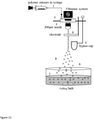
- FIG. 11 The process of the extrusion technique using an encapsulator device is illustrated by Figure 11 .
- the suspension is delivered to the nozzle via a feed-line 1 which is connected to the polymer reservoir.
- the diameter of the aperture of the nozzle is 200 ⁇ m.
- the nozzle (3) is connected via a PTFE membrane, to a vibrating device (2), which is insulated from the surrounding structures by rubber mounts to avoid the generation of resonance frequencies in the system.
- the flow of solution to the nozzle (3) is accomplished using a precision syringe pump with maximum extrusion volume of 50 ml.
- the solution 8 is extruded through the nozzle and passed through an electrode (4) into a gelling bath (6) containing a crosslinking solution (7).
- this device may also be used for macrobead production.
- any combination of parameters of the device may be used and such combinations depend on nozzle size and viscosity of the polymer solution. For instance, if the polymer solution is very viscous which may be caused by a high sodium alginate and protein content, the nozzle size required will be larger and flow rates will increase. A person skilled in the art may visually optimize parameters to create a laminar flow and small droplets. It will be appreciated that the frequency, the flow rate and the amplitude can be controlled as desired by the user and calculated by any suitable means known in the art.
- the spray nozzle has an aperture of from about 100 ⁇ m to about 1mm in diameter.
- said aperture is from about 150 ⁇ m, to 400 ⁇ m.
- said aperture is ideally 200 ⁇ m. It will be understood that the following values are for a nozzle having a 200 ⁇ m diameter. However, it will be appreciated that the values may equally apply to a nozzle of a different size.
- the frequency of the vibrating nozzle is from about 1000 Hz to 4000 Hz. In a preferred embodiment, the frequency is from about 1200Hz to 2000Hz, ideally, from about 1500, 1600, 1700 or 1800 Hz.
- the flow rate is from about 3.5 to about 6.5 ml/min.
- the flow rate may be 4.6, 4.7. 4.8, 4.9, 5, 5.1, 5.2, 5.3, 5.4, 5.5, 5.6, 5.7, 5.8, 5.9 or 6ml/min.
- the flow rate is 5.7 ml/min.
- the amplitude range is from about 1 to 7. Preferably the range is 3, 4, 5, ideally 6.
- the distance between the nozzle and the gelling bath is called the falling distance.
- the falling distance is 25cm or less, preferably about 8cm, 9cm, 10cm, 11cm, 12cm, 13cm, 14cm, 15cm, 16cm, 17 cm, or 18cm.
- the solution is extruded through the nozzle and passed into a bath or gel bath containing a crosslinking solution comprising a cation.
- a crosslinking solution comprising a cation.
- Any suitable cation may be used.
- the cation is selected from the group comprising magnesium, iron and calcium chloride.
- the cation is calcium chloride.
- the solution comprises from about 0.1M to about 0.5M calcium chloride.
- the solution may be stirred or agitated during gelation. This allows the formation of uniform spherical microbeads.
- the solution may comprise an effective amount of a surfactant.
- the added surfactant is preferably an effective amount of Tween-20.
- Tween-20 is added, preferably, about 0.05% w/w. This prevents agglomeration of the microbeads and imparts stability of single microbeads in solution.
- Gelation is carried out for about 15 to about 60 minutes, preferably with agitation. In a preferred embodiment, this step is about 20 mins, 25 mins, 30 mins, 35 mins, 40 mins, 45 mins, 50 mins or 55 mins. It will be appreciated that the time taken for gelation is a time sufficient to effectively cure or crosslink the microbeads in the preparation.
- the droplet may be formed with a nozzle having an aperture of from about 0.5mm to about 2.5mm, preferably from 1mm or larger.
- the droplet may be produced using a pipette, a burette, or a syringe, having an aperture of from about 0.5mm to about 2.5mm, preferably from 1mm or larger.
- the solution may be filtered prior to formation of the microbeads.
- the solution is filtered through a large pore filter.
- the filter has pores between about 5 ⁇ m and 150 ⁇ m.
- the pore size is typically smaller than the nozzle sized used in the method. This removes any undissolved material.
- the solution is filtered through a 10 ⁇ m membrane syringe filter e.g. 10.0 ⁇ m Versapor ® membrane syringe filter, prior to extrusion through the nozzle.
- the microbead preparation is then recovered.
- the microbead preparation may be washed to remove calcium.
- the preparation may be washed with water.
- a further aspect of the invention provides a microbead preparation produced by the method of the invention.
- a further aspect of the invention provides a microbead preparation comprising a mixture of milk protein product, typically heat-treated milk protein product and alginate.
- the milk protein in the milk protein product has at least 70% degree of denaturation.
- the size of the microbead in the preparation is from about 300 ⁇ m to about 450 ⁇ m.
- the average size of the microbead in the preparation is from about 300 ⁇ m to about 450 ⁇ m.
- the microbead may have an active component encased therein.
- the microbeads in the preparation(s) of the invention have a diameter of from about 150 ⁇ m to about 500 ⁇ m; and preferably from about 300 ⁇ m to about 450 ⁇ m. preferably 310, 320, 330, 340, 350, 360, 370, 380, 390, 400, 410, 420, 430, 440, 450 ⁇ m.
- each microbead in the preparation has a diameter of from about 300 ⁇ m to 450 ⁇ m.
- at least 70%, 80% or 90% of the microbeads have a diameter of from about 300 ⁇ m to 450 ⁇ m.
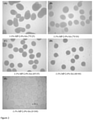
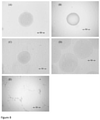
- Figure 2 is a light microscopic image of MPI/sodium alginate microbeads of the invention. Size (diameter in ⁇ m) can be estimated by microscopy and calibrated image analysis, or similar method known in the art.
- the macrobeads in the preparation of macrobeads have a size range or diameter of greater than about 1mm but less than about 6mm in diameter. Preferably, from about 1.5mm to about 5.5mm, typically, about 2mm, 2.5mm, 3mm, 3.5mm, 4mm, 4.5mm, or 5mm in diameter. Ideally about 3.5mm in diameter.
- each macrobead in the preparation has a diameter of from about 3 to 4mm. In one embodiment, at least 70%, 80% or 90% of the microbeads have a diameter of from about 3 to 4mm. The size may be the average size.
- the beads of the preparation of the invention are robust and capable of surviving intact in the low pH of the stomach and releasing the active agent at a higher pH.
- the beads of the invention are stable at low pH compared to prior art microbeads such as alginate based microbeads, without any disintegration at the conditions mimicking the upper gastro intestinal tract. Therefore, the preparation is capable of acting as a vehicle to protect an active agent in the stomach and allow its passage through the stomach after ingestion.
- the beads in the preparation can disintegrate at the more alkaline environment of the small intestine. Therefore, the bead of the invention is capable of protecting the encapsulated component such as folic acid in the acidic gastric condition and release it in the alkaline condition in the small intestine. This is beneficial as absorbance of vitamins takes place in the small intestine. This allows the release and delivery of the active agent to this area.
- the bead of the invention allows sustained release of the component encased therein.
- milk protein as a component of the microbeads of the invention has an advantage in terms of protection and control release of active components during passage through gastro-intestinal tract but may also provide essential bioactive peptides from hydrolysis of milk protein by digestive enzymes which may exert a number of physiological effects.
- the beads are capable of surviving intact in simulated gastric fluid (SGF) of pH 3.
- the beads rupture in simulated intestinal fluid (SIF) at pH 7 within 30 mins, preferably in the presence of digestive enzymes.
- a further aspect of the invention provides a method of delivering an active agent comprising orally administrating an effective amount of the microbead preparation.
- the microbead preparation may be administered directly, in a capsule and/or as an ingredient in a food product or beverage.
- the bioactive may be a bioactive peptide produced by hydrolysis of the milk protein by digestive enzymes.
- a further aspect of the invention provides a food product or a beverage product comprising the microbead preparation of the invention.
- the food product may be any such product known in the art, for example, a dairy product, such as milk, cheese or yogurt, bars e.g. energy or protein bars.
- the beverage product may be any beverage product known in the art.
- Heat treated milk protein isolate (MPI, 87% protein, w/w) was provided by Kerry ingredients (Kerry Group, Ireland). Its protein content (87%) was determined by the Kjeldahl method ((IDF Standard, 26, 2001) using a nitrogen-to-protein conversion factor of 6.38). Sodium alginate (SA) was obtained from Büchi (Büchi Labortechnik AG, Switzerland).
- Folic acid ( ⁇ 97%), sodium hydroxide, calcium chloride dehydrate, potassium chloride, potassium dihydrogen phosphate, sodium bicarbonate, sodium chloride, magnesium chloride hexahydrate, sodium citrate, pepsin (extracted from porcine stomach mucosa, activity: 837 U/mg of protein), pancreatin (extracted from porcine pancreas, 4xUSP specification), bile acid (porcine bile extract) were purchased from Sigma-Aldrich (Dublin, Ireland). Tween-20 was obtained from BDH (VWR International Ltd., Dublin, Ireland).
- HPLC high performance liquid chromatography
- ACN acetonitrile
- TFA trifluoroacetic acid
- Milli-Q water Milli-Q water (Millipore, Cork, Ireland) was used for HPLC analysis.
- the solutions of MPI were prepared using distilled water. The solution was stirred for at least 3 hrs at room temperature. MPI solutions were adjusted at pH 7.0 with 0.5 M sodium hydroxide and then allowed to stand for overnight at 4°C in cold room to ensure complete hydration of proteins. Following overnight storage, the solutions were brought to room temperature with further stirring for at least 45 min and final checked at pH 7.0. Solutions were subjected to centrifugation in sealed bottles at 14,000 rpm for 30 min at 20°C using SLA 1500 rotar (SORVALL ® RC PLUS, Thermo electron LED GmbH, D - 63505 Langenselbold, Germany).
- the supernatant was immediately transferred after centrifugation into separate beaker for each solution.
- the final protein content in each solution was estimated (2.7, 3.1, 3.5 and 4.1% protein in supernatant of 5.0, 6.0, 7.0, and 8.0% MPI solutions, respectively) by Kjeldahl method and Quick Start Bradford Protein Assay kit.
- the solution of SA (2.0%, w/w) was prepared with distilled water and stirred gently overnight at room temperature.
- Sodium azide Sigma Chemical Co., S. Louis, MO, USA
- alginate solution was filtered through 5.0 ⁇ m Minisart syringe filter (Sartorius Stedim Biotech GmbH, Göttingen, Germany) and stored at room temperature for further use up to 2 weeks.
- MP (3.1%) and SA (2.0%) solutions were combined with ratios of 75/25, 70/30, 65/35, and 60/40 to make polymer matrix solutions.
- Polymer matrix solutions were also prepared using solutions of MP (2.7, 3.5 and 4.1%) and SA (2.0%) with ratio of 65/35.
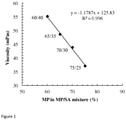
- Viscosity of polymer solutions was measured using an AR 2000ex Rheometer (TA Instruments UK, Ltd., Crawley, England) with a cone and plate configuration at a constant shear rate of 400 s -1 at control temperature (20°C) to find out viscosity suitable for Encapsulator.
- Polymer matrix solutions were filtered through 10.0 ⁇ m Versapor ® membrane syringe filter (PALL Life Sciences, Ann Arbor, Ml, USA) prior to extrusion through the nozzle.
- Microbeads were prepared by extrusion method using the Inotech IE-50R Encapsulator ® (Inotech AG, Dottikon, Switzerland) as described by Doherty et al, (Food Hydrocolloids, 2011;25:1604-1617 .). Each polymer solution was extruded through a vibrating nozzle (diameter 200 ⁇ m) under frequency of 1500-1800 Hz with flow rate of 5.7-5.8 ml/min into a calcium chloride (0.2 M) gelling bath, containing 0.05% Tween-20 with continuous slow stirring. Micro-beads prepared from SA solution was used as reference. Micro-beads were cured/polymerised in gelling bath for 30 min. The amount of protein leakage out from mixed MP/SA during polymerisation was evaluated by determining the amount of protein leakage into the calcium chloride gelling bath using Quick Start Bradford Protein Assay kit.
- the polymer matrix solutions prepared with combination of MP (3.1%) and SA (2.0%) solutions with ratios of 75/25 (2.325%MP/0.5% SA), 70/30 (2.17%MP/0.6% SA), 65/35 (2.015% MP/0.7% SA) and 60/40 (1.86% MP/0.8% SA) were used for encapsulation of folic acid and their encapsulation efficiency into the beads.
- Folic acid was added at a final concentration of 1 mM in each polymer solution.
- Macro-beads were prepared using polymer matrix solutions of MP (3.1%)/SA (2.0%) with ratios of 75/25, 70/30, 65/35, and 60/40 by manually dropping using a Pasteur pipette into 0.2 M CaCl 2 gelling bath containing 0.05% Tween-20 with continuous slow stirring. Beads were cured/polymerised in gelling bath for 30 min.
- micro-beads The size and morphology of micro-beads were analysed using an optical microscope equipped with a digital camera (BX51 light microscope, Olympus, Essex, UK). For each formulation, diameter of randomly selected 25 micro-beads was measured using a scale bar with x10 magnification. The diameter of randomly selected 25 macro-beads was measured by digital calliper gauge (Work Zone, GT-DC-02, ALDI Stores Ireland Ltd). The size of each formulation was presented as the mean size ⁇ standard deviation (SD) of triplicate batches.
- SD standard deviation
- the mechanical strength of MP/SA macrobeads was analysed using a texture analyser (TA-HDi, Stable Micro Systems, Godalming, UK). A specific force was applied to a macro-bead and the quantity of deformation/rupture of the bead was assigned as a measure of mechanical strength. Strength assay was performed using a 20mm diameter cylindrical aluminium probe at a mobile speed of 0.3 mm/s in compression mode. A rupture distance of 95% was applied and the peak force (expressed in gram force) exerted by the probe on the bead was recorded. Analysis was conducted on separate 10 single bead per batch and 3 replicate batches were analysed. The results were expressed as the mean ⁇ standard deviation (SD) for triplicate batches.
- SD standard deviation
- Microbeads of SA and MP (3.1%)/SA (2.0%) with ratios of 75/25, 70/30, 65/35, and 60/40 with folic acid were washed with distilled water and then dried by blotting with tissue paper.
- Dried microbeads (0.5 mg) were accurately weighed and dispersed in 10 ml of 50 mM sodium citrate solution at pH 7.5 in 15 ml falcon tube (120x17mm) (Sarstedt, Germany). Tubes were wrapped with aluminium foil to protect folic acid from light during extraction procedure. The solutions were then diluted in appropriate concentration with distilled water and filtered through 0.2 ⁇ m syringe filters prior to analysis of folic acid by HPLC method.
- EE Encapsulation efficiency
- SA and MP (3.1%)/SA (2.0%) micro-beads with and without folic acid were incubated in simulated gastric fluid (SGF) at pH 3.0 and in simulated intestinal fluid (SIF) at pH 7.0 in the presence and absence of digestive enzymes.
- SGF media was formulated according to slight modification as reported by Minekus et al., (2014) and consisted of 6.9 mM potassium chloride, 0.9 mM potassium dihydrogen phosphate, 25 mM sodium bicarbonate, 47.2 mM sodium chloride, and 0.1 mM magnesium chloride hexahydrate. The pH of the SGF 3.0 was adjusted using 1.0 M hydrochloric acid. Simulated gastric digestion studies were performed with and without pepsin.
- Pepsin was added into SGF to achieve 1000 U/ml in the final digestion mixture.
- Samples 1.0 g beads with 9.0 ml water and 10.0 ml SGF with or without pepsin
- the pH 3.0 of the digestion mixture was adjusted prior to incubation.
- Samples were recovered after pre-determined time (30, 60, 90, 120, and 180 min) interval during 180 min incubation.
- Pepsin activity was inactivated by neutralising the samples using 0.5 M sodium hydroxide and subsequently analysed protein content in micro-beads and in digestion fluid, and folic acid released in the fluid during incubation.
- micro-bead samples digested in gastric media for 120 min were mixed with SIF (ratio of gastric phase to SIF of 50/50, v/v) and subsequently incubated at 37°C with agitation (100 rpm).
- Simulated intestinal fluid consists of 6.8 mM potassium chloride, 0.8 mM potassium dihydrogen phosphate, 85.0 mM sodium bicarbonate, 38.4 mM sodium chloride, and 0.33 mM magnesium chloride hexahydrate.
- the pH 7.0 of intestinal digestion mixture was adjusted using 1.0 M sodium hydroxide/hydrochloric acid prior to incubation.
- Simulated intestinal digestion was performed in the presence and absence of bile (10 mM in final mixture) and pancreatic enzymes.
- pancreatin The amount of pancreatin was added to achieve trypsin activity of 100 U/ml of final mixture. Samples were recovered after pre-determined time (30, 60, 90, 120, and 180min) interval during 180 min incubation. Enzymes were inactivated immediately after recovering the sample using heat treatment in water bath at 95°C for 30sec. The pH was also re-adjusted using 0.5 M HCl during digestion. Individual sample bottles were used for each time point. Three independent studies were conducted and results were expressed using the mean value ⁇ SD.
- Swelling behaviour of SA and MP/SA 65/35) microbeads were evaluated in simulated gastric fluid (pH 3.0) and intestinal fluid (pH 7.0) in the presence and absence of digestive enzymes.
- Size exclusion chromatography was performed on MP/SA micro-bead samples incubated in simulated GI studies using 2695 Waters TM HPLC system (Millipore, Middlesex, UK) equipped with a UV/Visible detector (waters 2489) and a TSK G2000 SW column (600 x 7.5 mm; Tosu Hass, Japan) according to the method outlined by Doherty et al., (2010).
- the samples were eluted using 30% ACN containing 0.1% TFA (v/v) at a flow rate of 1 ml/min.
- a molecular weight calibration curve was prepared from the retention time of standard proteins and peptides. All samples were filtered through 0.2 ⁇ m syringe filter prior to injecting into the HPLC system.
- Folic acid in standard solutions, fresh micro-beads, and folic acid released in GI fluid in the presence and absence of digestive enzymes during incubation of micro-beads at 37°C was determined using reverse-phase 2695 Waters TM HPLC system (Millipore, Middlesex, UK) equipped with a UV/Visible detector (waters 2489) and a Phenomenex Jupiter C18 (4.6 mm x 250 mm x 5 ⁇ m, 300 ⁇ , Phenomenex, Cheshire, UK) reverse phase column.
- a gradient of solvent B and solvent C (at 86.7: 13.3 for 5 min, from 86.7:13.3 to 72.2: 27.8 in 15 min, from 72.2: 27.8 to 0.0: 100.0 in 2 min, at 0.0:100.0 for 5 min, from 0.0: 100.0 to 86.7: 13.3 in 2 min and at 86.7: 13.3 for 5 min) was used as mobile phase at a flow-rate of 1 ml/min, where Solvent B was 0.1% TFA (v/v) in Milli-Q water and solvent C was 90% acetonitrile (MeCN) containing 0.1% TFA (v/v). Wavelength of detection was 214 and 290 nm. An injection volume of 20 ⁇ l was loaded onto the column and column temperature was 28°C.
- Folic acid content was calculated using standard curve prepared with 5 different concentrations (from 1.0 to 20.0 ⁇ g/ml) of standard folic acid. Folic acid ( ⁇ 97%) of 10 mg was accurately weighed in 100 ml volumetric flask. Initially 50 ml of phosphate buffer (50 mM, pH 7.0) was added into the flask and folic acid was completely dissolved by gentle shaking. Phosphate buffer was added to volumetric flask up to the volume mark and mix properly. This solution was used as stock standard. Five different concentrations of working standard were prepared from this stock solution to make standard curve. The solutions were filtered through 0.2 ⁇ m syringe filter prior to injecting into the HPLC system.
- phosphate buffer 50 mM, pH 7.0
- microbead formulation for its suitability as a delivery system for probiotic cultures.
- a bottle containing the two formulations [3.1% MP solution and 2% Na-alginate solution at a ratio of 65/35; prepared as described above] was poured into a second bottle containing an amount of centrifuged probiotic bacterial culture [such as Lactobacillus rhamnosus (LGG ® )] to reach a final concentration of 1 ⁇ 10 9 CFU/mL in the mixture.
- the probiotic/polymer mixture was then agitated gently using a magnetic stir bar and stir plate. Typical amounts would be 100-500mL.
- the formulation and the probiotic mixed well to form a homogeneously dispersion The formulation mixture was passed through a filter prior to extrusion through a 300 ⁇ m nozzle and formed good spherical beads once it entered the gelling solution of 0.2 M CaCl 2 containing 0.05% Tween-20.
- the formulation was easy to work with and remained fluid throughout the encapsulation process. This was repeated on two further occasions within the same hour using the same dilution factor to generate 300 mL of beads.
- MPI solution at concentrations of > 8.0% was very viscous without instant gelation behaviour.
- ⁇ -casein of casein fraction interact with the heat denatured unfolded whey proteins by hydrophobic interaction and/or disulphide bond. This bond has a protective effect against heat-induced aggregation of whey proteins, which in turn reduced the aggregate size and gelling behaviour of milk protein.
- the solutions of MPI ( ⁇ 8.0%, w/w) were combined with solution of SA (2.0%, w/w) to increase their gelation behaviour.
- MPI solutions were centrifuged prior to mix with SA solution to remove any unhydrated proteins, which make matrix solutions very viscous immediate after mixing with SA solution.
- the final protein content in each solution was estimated 2.7, 3.1, 3.5 and 4.1% in supernatant of 5.0, 6.0, 7.0, and 8.0% of MPI solutions, respectively.
- the polymer matrix solutions from mixture of MP from 3.5 to 4.1%) and SA solutions with ratios of 65/35 and 60/40 generated rigid gel structure immediate after mixing.
- Matrix solutions from mixture of MP from 3.5 to 4.1%) and SA solutions (2.0%) with ratios of 75/25 and 70/30 were easy to extrude through 200 ⁇ m vibrating nozzle.
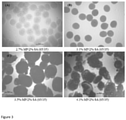
- the mechanical strength of gel beads is very important for handling, processing and stability study. To measure the mechanical strength of gel beads it was important to have individual or same number of beads on every measurement time. Since handle of individual or same number of microbeads for every experiment was difficult therefore macrobeads were prepared to measure the mechanical strength of gel beads by manually dropping of polymer solutions using a pasteur pipette with the same formulations (3.1% MP and 2.0% SA solutions with ratios of 75/25, 70/30, 65/35, 60/40 and 0/100) used for preparation of micro-beads. Images of macrobeads ( Figure 4 ) showed that sphericity of macro-beads was similar with micro-beads.
- Beads sphericity mainly depends on gelation behaviour of matrix solution. Instant gelation behaviour of matrix solutions with ratios of 65/35 and 60/40 produced mostly spherical micro-beads.
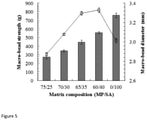
- Figure 5 showed that size and mechanical strength of gel macro-beads increased with increasing SA content in the formulation. For example, lowest size and mechanical strength of beads was obtained when alginate content was lowest (25%) in the formulation, whereas highest size and mechanical strength of beads was found when alginate content was highest (40%) in the formulation of mixture of MP and SA solutions. However, highest mechanical strength of pure SA macro-bead (MP/SA, 0/100) was found though bead size was lower than MP/SA with ratio of 70/30. There was no significant difference in bead sizes prepared from formulation of 65/35 and 60/40, but mechanical strength was lower for macro-bead prepared from formulation of 65/35 than for beads prepared from formulation of 60/40. Data showed that SA concentration in the matrix solutions not only affected beads sphericity but also beads size and strength.
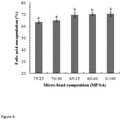
- Encapsulation efficiency (EE) of folic acid in gel micro-beads manufactured using matrix solutions of MP (3.1%)/SA (2.0%) with ratios of 75/25, 70/30, 65/35, and 60/40 are shown in Figure 6 .
- Folic acid was also encapsulated in pure SA (2.0%) micro-beads to use as reference (MP/SA, 0/100 in Figure 6 ).
- Data showed that EE of folic acid in gel micro-beads increased with increase of SA concentration in the matrix solutions.
- Encapsulation of folic acid in SA micro-beads and in MP/SA micro-beads with ratios of 65/35 and 60/40 was significantly higher than in MP/SA micro-beads with ratios of 75/25 and 70/30. There was no significant different in EE between SA beads and MP/SA beads with ratios of 65/35 and 60/40.
- Encapsulation of folic acid mainly occurred by physical entrapment in polymer matrices, there was no any chemical interaction between folic acid and polymer matrix components. Due to slow gelation of polymer solutions with ratios of 75/25 and 70/30, water soluble folic acid may diffuse from the matrix solutions to the calcium chloride curing media before formation of complete gel beads and loss in entrapment efficiency.
- low molecular weight water soluble bioactives such as folic acid or riboflavin may be allowed for diffusion through the pores of bead surface during the curing/polymerisation of bead, as a result comparatively low encapsulation yield for folic acid than probiotic bacteria.
- ringing of microbeads prior to estimation of folic acid could also be caused for losses of water soluble folic acid from all formulations.
- microbead formulation for its suitability as a delivery system for probiotic cultures.
- microscopy observation confirmed the microbeads integrity after 180 min incubation in SGF in presence of pepsin and disintegration within 30 min of incubation in SIF in presence of pancreatin.
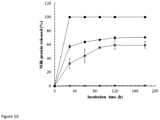
- MP/SA microbeads delayed folic acid release in SGF and completely released in SIF in presence of enzymes.
- the microbeads of the current invention can protect encapsulated folic acid or other bioactive components from harsh gastric environmental condition and control release of the encapsulated component during gastric-intestinal passage to deliver them at specific target site.
Landscapes
- Health & Medical Sciences (AREA)
- Life Sciences & Earth Sciences (AREA)
- Engineering & Computer Science (AREA)
- Chemical & Material Sciences (AREA)
- Bioinformatics & Cheminformatics (AREA)
- Medicinal Chemistry (AREA)
- Epidemiology (AREA)
- Pharmacology & Pharmacy (AREA)
- Animal Behavior & Ethology (AREA)
- General Health & Medical Sciences (AREA)
- Public Health (AREA)
- Veterinary Medicine (AREA)
- Food Science & Technology (AREA)
- Polymers & Plastics (AREA)
- Nutrition Science (AREA)
- Mycology (AREA)
- Manufacturing & Machinery (AREA)
- Proteomics, Peptides & Aminoacids (AREA)
- Molecular Biology (AREA)
- Zoology (AREA)
- Biochemistry (AREA)
- Medicinal Preparation (AREA)
- Coloring Foods And Improving Nutritive Qualities (AREA)
- Dairy Products (AREA)
Claims (15)
- Méthode de production de billes comprenant un composant actif en étant enrobé, la méthode comprenant :- la mise à disposition d'une solution comprenant un produit de protéines du lait dans lequel les protéines du lait présentent un degré de dénaturation d'au moins 70%, de l'alginate et un composant actif ;- la formation de gouttelettes à partir de ladite solution ; et- la gélification desdites gouttelettes dans un bain d'une solution comprenant un cation ;afin de former des billes.
- Méthode selon la revendication 1, dans laquelle les protéines du lait présentent un degré de dénaturation compris entre 80% et 100%.
- Méthode selon la revendication 1 ou 2, dans laquelle le produit de protéines du lait est traité thermiquement.
- Méthode selon l'une quelconque des revendications précédentes, dans laquelle les billes sont des microbilles ou des macrobilles.
- Méthode selon l'une quelconque des revendications précédentes, dans laquelle le produit de protéines du lait est un isolat de protéines du lait ou un concentré de protéines du lait, préférablement où le produit de protéines du lait comprend 80%, ou plus, de protéines du lait.
- Méthode selon l'une quelconque des revendications précédentes, dans laquelle l'alginate est l'alginate de sodium.
- Méthode selon l'une quelconque des revendications précédentes, où la concentration en produit de protéines du lait dans la solution va d'environ 0,5% p/p à environ 6% p/p, préférablement, où la concentration est inférieure à environ 3% p/p, et/ouoù la concentration en alginate va d'environ 0,3% p/p à environ 3% p/p, préférablement,où la concentration en composant actif est supérieure à 0 et va jusqu'à environ 4% p/p.
- Méthode selon l'une quelconque des revendications précédentes, dans laquelle la microbille est produite par l'extrusion du mélange à partir d'une seringue dans une buse vibrante, préférablement où la buse présente une ouverture d'environ 200 µm.
- Méthode selon l'une quelconque des revendications précédentes, dans laquelle le cation est choisi dans le groupe constitué par le calcium, le magnésium et le fer, préférablement où la solution comprend du chlorure de calcium.
- Méthode selon l'une quelconque des revendications précédentes, dans laquelle le mélange est filtré préalablement aux étapes de formation des gouttelettes et de gélification.
- Méthode selon l'une quelconque des revendications précédentes, dans laquelle le composant actif est choisi dans le groupe constitué par un probiotique, un anticorps, une enzyme, une vitamine, un microorganisme, une protéine, un sucre, un peptide, un acide nucléique, ou une construction d'acide nucléique, et un agent pharmaceutiquement actif.
- Préparation de microbilles ou préparation de macrobilles, pouvant être obtenue par la méthode selon l'une quelconque des revendications 1 à 11.
- Préparation de microbilles comprenant un mélange d'un produit de protéines du lait dans lequel les protéines du lait présentent un degré de dénaturation d'au moins 70%, et d'alginate, où la taille des microbilles dans la préparation va d'environ 150 µm à environ 500 µm.
- Véhicule d'administration destiné à l'administration ou au transport d'un composant actif vers un site dans l'organisme, comprenant une bille pouvant être obtenue par la méthode selon l'une quelconque des revendications 1 à 11, ou la préparation de billes selon la revendication 12 ou 13.
- Produit alimentaire ou produit de boisson, comprenant une bille pouvant être obtenue par la méthode selon l'une quelconque des revendications 1 à 11, ou la préparation de billes selon la revendication 12 ou 13.
Applications Claiming Priority (2)
| Application Number | Priority Date | Filing Date | Title |
|---|---|---|---|
| EP16205148 | 2016-12-19 | ||
| PCT/EP2017/083583 WO2018114971A1 (fr) | 2016-12-19 | 2017-12-19 | Procédé de production de billes |
Publications (2)
| Publication Number | Publication Date |
|---|---|
| EP3554479A1 EP3554479A1 (fr) | 2019-10-23 |
| EP3554479B1 true EP3554479B1 (fr) | 2022-02-16 |
Family
ID=57570730
Family Applications (1)
| Application Number | Title | Priority Date | Filing Date |
|---|---|---|---|
| EP17829184.5A Not-in-force EP3554479B1 (fr) | 2016-12-19 | 2017-12-19 | Procédé de production de billes |
Country Status (4)
| Country | Link |
|---|---|
| US (1) | US20200276127A1 (fr) |
| EP (1) | EP3554479B1 (fr) |
| CA (1) | CA3047501A1 (fr) |
| WO (1) | WO2018114971A1 (fr) |
Families Citing this family (3)
| Publication number | Priority date | Publication date | Assignee | Title |
|---|---|---|---|---|
| WO2020227580A1 (fr) * | 2019-05-07 | 2020-11-12 | Optimed Technology, Inc. | Substances ainsi que procédés et méthodes associés à une surcroissance gingivale induite par médicament |
| CN112931907B (zh) * | 2021-04-06 | 2023-01-31 | 大连工业大学 | 一种基于分离乳清蛋白提高虾青素释放率的微球制备方法 |
| CN113243529A (zh) * | 2021-04-29 | 2021-08-13 | 东北农业大学 | 一种运载β-胡萝卜素凝胶微球的制备方法 |
Family Cites Families (1)
| Publication number | Priority date | Publication date | Assignee | Title |
|---|---|---|---|---|
| EP1395246A1 (fr) | 2001-05-23 | 2004-03-10 | Institut National de la Recherche Scientifique | Compositions biocompatibles en tant que supports ou excipients pour des formulations pharmaceutiques et nutriceutiques et pour la protection des aliments |
-
2017
- 2017-12-19 EP EP17829184.5A patent/EP3554479B1/fr not_active Not-in-force
- 2017-12-19 US US16/470,873 patent/US20200276127A1/en not_active Abandoned
- 2017-12-19 WO PCT/EP2017/083583 patent/WO2018114971A1/fr not_active Ceased
- 2017-12-19 CA CA3047501A patent/CA3047501A1/fr not_active Abandoned
Also Published As
| Publication number | Publication date |
|---|---|
| WO2018114971A1 (fr) | 2018-06-28 |
| US20200276127A1 (en) | 2020-09-03 |
| EP3554479A1 (fr) | 2019-10-23 |
| CA3047501A1 (fr) | 2018-06-28 |
Similar Documents
| Publication | Publication Date | Title |
|---|---|---|
| Chen et al. | Alginate–whey protein granular microspheres as oral delivery vehicles for bioactive compounds | |
| Dong et al. | Effect of interaction between ovotransferrin fibrils and pectin on properties of oleogel-based Pickering emulsions | |
| ES2837173T3 (es) | Una solución de proteína de guisantes desnaturalizada y sus usos para formar micropartículas | |
| Elzoghby et al. | Casein-based formulations as promising controlled release drug delivery systems | |
| Doherty et al. | Development and characterisation of whey protein micro-beads as potential matrices for probiotic protection | |
| Bokkhim et al. | In-vitro digestion of different forms of bovine lactoferrin encapsulated in alginate micro-gel particles | |
| Zhang et al. | Preparation and evaluation of alginate–chitosan microspheres for oral delivery of insulin | |
| Kurukji et al. | Fabrication of sub-micron protein-chitosan electrostatic complexes for encapsulation and pH-Modulated delivery of model hydrophilic active compounds | |
| Hashemi et al. | Functional and in vitro gastric digestibility of the whey protein hydrogel loaded with nanostructured lipid carriers and gelled via citric acid-mediated crosslinking | |
| Diarrassouba et al. | Self-assembly of β-lactoglobulin and egg white lysozyme as a potential carrier for nutraceuticals | |
| Su et al. | A novel complex coacervate formed by gliadin and sodium alginate: Relationship to encapsulation and controlled release properties | |
| ES2564190T3 (es) | Método para producir microperlas | |
| Su et al. | Encapsulation of probiotic Bifidobacterium longum BIOMA 5920 with alginate–human-like collagen and evaluation of survival in simulated gastrointestinal conditions | |
| Paques | Alginate nanospheres prepared by internal or external gelation with nanoparticles | |
| Wei et al. | Enhanced stability and controlled gastrointestinal digestion of β-carotene loaded Pickering emulsions with particle–particle complex interfaces | |
| Huang et al. | Osteopontin enhances the probiotic viability of Bifidobacteria in pectin-based microencapsulation subjected to in vitro infant gastrointestinal digestion | |
| Sun et al. | Quercetagetin-loaded zein-propylene glycol alginate composite particles induced by calcium ions: Structural comparison between colloidal dispersions and lyophilized powders after in vitro simulated gastraintestinal digestion | |
| US20200276127A1 (en) | Method for producing beads | |
| Liang et al. | Engineering functional alginate beads for encapsulation of Pickering emulsions stabilized by colloidal particles | |
| WO2006016595A1 (fr) | Complexe de lactoférine et méthode pour le produire | |
| Park et al. | Effects of alginate oligosaccharide mixture on the bioavailability of lysozyme as an antimicrobial agent | |
| Brodkorb et al. | WO 2018/114971 A1 A method for producing beads | |
| CA3191401A1 (fr) | Composition comprenant des microcapsules | |
| US20040146564A1 (en) | Process for making delivery matrix and uses thereof | |
| WO2023144352A1 (fr) | Nano-émulsions huile-dans-eau et leurs procédés de production et d'utilisation |
Legal Events
| Date | Code | Title | Description |
|---|---|---|---|
| STAA | Information on the status of an ep patent application or granted ep patent |
Free format text: STATUS: UNKNOWN |
|
| STAA | Information on the status of an ep patent application or granted ep patent |
Free format text: STATUS: THE INTERNATIONAL PUBLICATION HAS BEEN MADE |
|
| PUAI | Public reference made under article 153(3) epc to a published international application that has entered the european phase |
Free format text: ORIGINAL CODE: 0009012 |
|
| STAA | Information on the status of an ep patent application or granted ep patent |
Free format text: STATUS: REQUEST FOR EXAMINATION WAS MADE |
|
| 17P | Request for examination filed |
Effective date: 20190708 |
|
| AK | Designated contracting states |
Kind code of ref document: A1 Designated state(s): AL AT BE BG CH CY CZ DE DK EE ES FI FR GB GR HR HU IE IS IT LI LT LU LV MC MK MT NL NO PL PT RO RS SE SI SK SM TR |
|
| AX | Request for extension of the european patent |
Extension state: BA ME |
|
| DAV | Request for validation of the european patent (deleted) | ||
| DAX | Request for extension of the european patent (deleted) | ||
| REG | Reference to a national code |
Ref country code: DE Ref legal event code: R079 Ref document number: 602017053517 Country of ref document: DE Free format text: PREVIOUS MAIN CLASS: A61K0009160000 Ipc: A23P0010200000 |
|
| GRAP | Despatch of communication of intention to grant a patent |
Free format text: ORIGINAL CODE: EPIDOSNIGR1 |
|
| STAA | Information on the status of an ep patent application or granted ep patent |
Free format text: STATUS: GRANT OF PATENT IS INTENDED |
|
| RIC1 | Information provided on ipc code assigned before grant |
Ipc: A61K 9/16 20060101ALI20210226BHEP Ipc: A23P 10/20 20160101AFI20210226BHEP Ipc: A61K 9/50 20060101ALI20210226BHEP |
|
| INTG | Intention to grant announced |
Effective date: 20210330 |
|
| GRAJ | Information related to disapproval of communication of intention to grant by the applicant or resumption of examination proceedings by the epo deleted |
Free format text: ORIGINAL CODE: EPIDOSDIGR1 |
|
| STAA | Information on the status of an ep patent application or granted ep patent |
Free format text: STATUS: REQUEST FOR EXAMINATION WAS MADE |
|
| INTC | Intention to grant announced (deleted) | ||
| GRAS | Grant fee paid |
Free format text: ORIGINAL CODE: EPIDOSNIGR3 |
|
| STAA | Information on the status of an ep patent application or granted ep patent |
Free format text: STATUS: GRANT OF PATENT IS INTENDED |
|
| GRAP | Despatch of communication of intention to grant a patent |
Free format text: ORIGINAL CODE: EPIDOSNIGR1 |
|
| INTG | Intention to grant announced |
Effective date: 20210923 |
|
| GRAA | (expected) grant |
Free format text: ORIGINAL CODE: 0009210 |
|
| STAA | Information on the status of an ep patent application or granted ep patent |
Free format text: STATUS: THE PATENT HAS BEEN GRANTED |
|
| AK | Designated contracting states |
Kind code of ref document: B1 Designated state(s): AL AT BE BG CH CY CZ DE DK EE ES FI FR GB GR HR HU IE IS IT LI LT LU LV MC MK MT NL NO PL PT RO RS SE SI SK SM TR |
|
| REG | Reference to a national code |
Ref country code: GB Ref legal event code: FG4D |
|
| REG | Reference to a national code |
Ref country code: CH Ref legal event code: EP |
|
| REG | Reference to a national code |
Ref country code: DE Ref legal event code: R096 Ref document number: 602017053517 Country of ref document: DE |
|
| REG | Reference to a national code |
Ref country code: AT Ref legal event code: REF Ref document number: 1468338 Country of ref document: AT Kind code of ref document: T Effective date: 20220315 |
|
| REG | Reference to a national code |
Ref country code: IE Ref legal event code: FG4D |
|
| REG | Reference to a national code |
Ref country code: LT Ref legal event code: MG9D |
|
| REG | Reference to a national code |
Ref country code: NL Ref legal event code: MP Effective date: 20220216 |
|
| REG | Reference to a national code |
Ref country code: AT Ref legal event code: MK05 Ref document number: 1468338 Country of ref document: AT Kind code of ref document: T Effective date: 20220216 |
|
| PG25 | Lapsed in a contracting state [announced via postgrant information from national office to epo] |
Ref country code: SE Free format text: LAPSE BECAUSE OF FAILURE TO SUBMIT A TRANSLATION OF THE DESCRIPTION OR TO PAY THE FEE WITHIN THE PRESCRIBED TIME-LIMIT Effective date: 20220216 Ref country code: RS Free format text: LAPSE BECAUSE OF FAILURE TO SUBMIT A TRANSLATION OF THE DESCRIPTION OR TO PAY THE FEE WITHIN THE PRESCRIBED TIME-LIMIT Effective date: 20220216 Ref country code: PT Free format text: LAPSE BECAUSE OF FAILURE TO SUBMIT A TRANSLATION OF THE DESCRIPTION OR TO PAY THE FEE WITHIN THE PRESCRIBED TIME-LIMIT Effective date: 20220616 Ref country code: NO Free format text: LAPSE BECAUSE OF FAILURE TO SUBMIT A TRANSLATION OF THE DESCRIPTION OR TO PAY THE FEE WITHIN THE PRESCRIBED TIME-LIMIT Effective date: 20220516 Ref country code: NL Free format text: LAPSE BECAUSE OF FAILURE TO SUBMIT A TRANSLATION OF THE DESCRIPTION OR TO PAY THE FEE WITHIN THE PRESCRIBED TIME-LIMIT Effective date: 20220216 Ref country code: LT Free format text: LAPSE BECAUSE OF FAILURE TO SUBMIT A TRANSLATION OF THE DESCRIPTION OR TO PAY THE FEE WITHIN THE PRESCRIBED TIME-LIMIT Effective date: 20220216 Ref country code: HR Free format text: LAPSE BECAUSE OF FAILURE TO SUBMIT A TRANSLATION OF THE DESCRIPTION OR TO PAY THE FEE WITHIN THE PRESCRIBED TIME-LIMIT Effective date: 20220216 Ref country code: ES Free format text: LAPSE BECAUSE OF FAILURE TO SUBMIT A TRANSLATION OF THE DESCRIPTION OR TO PAY THE FEE WITHIN THE PRESCRIBED TIME-LIMIT Effective date: 20220216 Ref country code: BG Free format text: LAPSE BECAUSE OF FAILURE TO SUBMIT A TRANSLATION OF THE DESCRIPTION OR TO PAY THE FEE WITHIN THE PRESCRIBED TIME-LIMIT Effective date: 20220516 |
|
| PG25 | Lapsed in a contracting state [announced via postgrant information from national office to epo] |
Ref country code: PL Free format text: LAPSE BECAUSE OF FAILURE TO SUBMIT A TRANSLATION OF THE DESCRIPTION OR TO PAY THE FEE WITHIN THE PRESCRIBED TIME-LIMIT Effective date: 20220216 Ref country code: LV Free format text: LAPSE BECAUSE OF FAILURE TO SUBMIT A TRANSLATION OF THE DESCRIPTION OR TO PAY THE FEE WITHIN THE PRESCRIBED TIME-LIMIT Effective date: 20220216 Ref country code: GR Free format text: LAPSE BECAUSE OF FAILURE TO SUBMIT A TRANSLATION OF THE DESCRIPTION OR TO PAY THE FEE WITHIN THE PRESCRIBED TIME-LIMIT Effective date: 20220517 Ref country code: FI Free format text: LAPSE BECAUSE OF FAILURE TO SUBMIT A TRANSLATION OF THE DESCRIPTION OR TO PAY THE FEE WITHIN THE PRESCRIBED TIME-LIMIT Effective date: 20220216 Ref country code: AT Free format text: LAPSE BECAUSE OF FAILURE TO SUBMIT A TRANSLATION OF THE DESCRIPTION OR TO PAY THE FEE WITHIN THE PRESCRIBED TIME-LIMIT Effective date: 20220216 |
|
| PG25 | Lapsed in a contracting state [announced via postgrant information from national office to epo] |
Ref country code: IS Free format text: LAPSE BECAUSE OF FAILURE TO SUBMIT A TRANSLATION OF THE DESCRIPTION OR TO PAY THE FEE WITHIN THE PRESCRIBED TIME-LIMIT Effective date: 20220617 |
|
| PG25 | Lapsed in a contracting state [announced via postgrant information from national office to epo] |
Ref country code: SM Free format text: LAPSE BECAUSE OF FAILURE TO SUBMIT A TRANSLATION OF THE DESCRIPTION OR TO PAY THE FEE WITHIN THE PRESCRIBED TIME-LIMIT Effective date: 20220216 Ref country code: SK Free format text: LAPSE BECAUSE OF FAILURE TO SUBMIT A TRANSLATION OF THE DESCRIPTION OR TO PAY THE FEE WITHIN THE PRESCRIBED TIME-LIMIT Effective date: 20220216 Ref country code: RO Free format text: LAPSE BECAUSE OF FAILURE TO SUBMIT A TRANSLATION OF THE DESCRIPTION OR TO PAY THE FEE WITHIN THE PRESCRIBED TIME-LIMIT Effective date: 20220216 Ref country code: EE Free format text: LAPSE BECAUSE OF FAILURE TO SUBMIT A TRANSLATION OF THE DESCRIPTION OR TO PAY THE FEE WITHIN THE PRESCRIBED TIME-LIMIT Effective date: 20220216 Ref country code: DK Free format text: LAPSE BECAUSE OF FAILURE TO SUBMIT A TRANSLATION OF THE DESCRIPTION OR TO PAY THE FEE WITHIN THE PRESCRIBED TIME-LIMIT Effective date: 20220216 Ref country code: CZ Free format text: LAPSE BECAUSE OF FAILURE TO SUBMIT A TRANSLATION OF THE DESCRIPTION OR TO PAY THE FEE WITHIN THE PRESCRIBED TIME-LIMIT Effective date: 20220216 |
|
| REG | Reference to a national code |
Ref country code: DE Ref legal event code: R097 Ref document number: 602017053517 Country of ref document: DE |
|
| PG25 | Lapsed in a contracting state [announced via postgrant information from national office to epo] |
Ref country code: AL Free format text: LAPSE BECAUSE OF FAILURE TO SUBMIT A TRANSLATION OF THE DESCRIPTION OR TO PAY THE FEE WITHIN THE PRESCRIBED TIME-LIMIT Effective date: 20220216 |
|
| PLBE | No opposition filed within time limit |
Free format text: ORIGINAL CODE: 0009261 |
|
| STAA | Information on the status of an ep patent application or granted ep patent |
Free format text: STATUS: NO OPPOSITION FILED WITHIN TIME LIMIT |
|
| 26N | No opposition filed |
Effective date: 20221117 |
|
| PGFP | Annual fee paid to national office [announced via postgrant information from national office to epo] |
Ref country code: IE Payment date: 20221215 Year of fee payment: 6 |
|
| PG25 | Lapsed in a contracting state [announced via postgrant information from national office to epo] |
Ref country code: SI Free format text: LAPSE BECAUSE OF FAILURE TO SUBMIT A TRANSLATION OF THE DESCRIPTION OR TO PAY THE FEE WITHIN THE PRESCRIBED TIME-LIMIT Effective date: 20220216 |
|
| PLBE | No opposition filed within time limit |
Free format text: ORIGINAL CODE: 0009261 |
|
| REG | Reference to a national code |
Ref country code: CH Ref legal event code: PK Free format text: BERICHTIGUNGEN |
|
| 26N | No opposition filed |
Effective date: 20221117 |
|
| DAV | Request for validation of the european patent (deleted) | ||
| DAX | Request for extension of the european patent (deleted) | ||
| INTG | Intention to grant announced |
Effective date: 20210923 |
|
| RIC2 | Information provided on ipc code assigned after grant |
Ipc: A61K 9/50 20060101ALI20210226BHEP Ipc: A61K 9/16 20060101ALI20210226BHEP Ipc: A23P 10/20 20160101AFI20210226BHEP |
|
| REG | Reference to a national code |
Ref country code: DE Ref legal event code: R119 Ref document number: 602017053517 Country of ref document: DE |
|
| PG25 | Lapsed in a contracting state [announced via postgrant information from national office to epo] |
Ref country code: IT Free format text: LAPSE BECAUSE OF FAILURE TO SUBMIT A TRANSLATION OF THE DESCRIPTION OR TO PAY THE FEE WITHIN THE PRESCRIBED TIME-LIMIT Effective date: 20220216 |
|
| REG | Reference to a national code |
Ref country code: CH Ref legal event code: PL |
|
| GBPC | Gb: european patent ceased through non-payment of renewal fee |
Effective date: 20221219 |
|
| REG | Reference to a national code |
Ref country code: BE Ref legal event code: MM Effective date: 20221231 |
|
| PG25 | Lapsed in a contracting state [announced via postgrant information from national office to epo] |
Ref country code: LU Free format text: LAPSE BECAUSE OF NON-PAYMENT OF DUE FEES Effective date: 20221219 |
|
| PG25 | Lapsed in a contracting state [announced via postgrant information from national office to epo] |
Ref country code: LI Free format text: LAPSE BECAUSE OF NON-PAYMENT OF DUE FEES Effective date: 20221231 Ref country code: GB Free format text: LAPSE BECAUSE OF NON-PAYMENT OF DUE FEES Effective date: 20221219 Ref country code: DE Free format text: LAPSE BECAUSE OF NON-PAYMENT OF DUE FEES Effective date: 20230701 Ref country code: CH Free format text: LAPSE BECAUSE OF NON-PAYMENT OF DUE FEES Effective date: 20221231 |
|
| PG25 | Lapsed in a contracting state [announced via postgrant information from national office to epo] |
Ref country code: FR Free format text: LAPSE BECAUSE OF NON-PAYMENT OF DUE FEES Effective date: 20221231 Ref country code: BE Free format text: LAPSE BECAUSE OF NON-PAYMENT OF DUE FEES Effective date: 20221231 |
|
| PG25 | Lapsed in a contracting state [announced via postgrant information from national office to epo] |
Ref country code: HU Free format text: LAPSE BECAUSE OF FAILURE TO SUBMIT A TRANSLATION OF THE DESCRIPTION OR TO PAY THE FEE WITHIN THE PRESCRIBED TIME-LIMIT; INVALID AB INITIO Effective date: 20171219 |
|
| PG25 | Lapsed in a contracting state [announced via postgrant information from national office to epo] |
Ref country code: CY Free format text: LAPSE BECAUSE OF FAILURE TO SUBMIT A TRANSLATION OF THE DESCRIPTION OR TO PAY THE FEE WITHIN THE PRESCRIBED TIME-LIMIT Effective date: 20220216 |
|
| PG25 | Lapsed in a contracting state [announced via postgrant information from national office to epo] |
Ref country code: MK Free format text: LAPSE BECAUSE OF FAILURE TO SUBMIT A TRANSLATION OF THE DESCRIPTION OR TO PAY THE FEE WITHIN THE PRESCRIBED TIME-LIMIT Effective date: 20220216 |
|
| PG25 | Lapsed in a contracting state [announced via postgrant information from national office to epo] |
Ref country code: MC Free format text: LAPSE BECAUSE OF FAILURE TO SUBMIT A TRANSLATION OF THE DESCRIPTION OR TO PAY THE FEE WITHIN THE PRESCRIBED TIME-LIMIT Effective date: 20220216 |
|
| PG25 | Lapsed in a contracting state [announced via postgrant information from national office to epo] |
Ref country code: TR Free format text: LAPSE BECAUSE OF FAILURE TO SUBMIT A TRANSLATION OF THE DESCRIPTION OR TO PAY THE FEE WITHIN THE PRESCRIBED TIME-LIMIT Effective date: 20220216 Ref country code: MC Free format text: LAPSE BECAUSE OF FAILURE TO SUBMIT A TRANSLATION OF THE DESCRIPTION OR TO PAY THE FEE WITHIN THE PRESCRIBED TIME-LIMIT Effective date: 20220216 |
|
| PG25 | Lapsed in a contracting state [announced via postgrant information from national office to epo] |
Ref country code: MT Free format text: LAPSE BECAUSE OF FAILURE TO SUBMIT A TRANSLATION OF THE DESCRIPTION OR TO PAY THE FEE WITHIN THE PRESCRIBED TIME-LIMIT Effective date: 20220216 |
|
| REG | Reference to a national code |
Ref country code: IE Ref legal event code: MM4A |
|
| PG25 | Lapsed in a contracting state [announced via postgrant information from national office to epo] |
Ref country code: IE Free format text: LAPSE BECAUSE OF NON-PAYMENT OF DUE FEES Effective date: 20231219 |
|
| PG25 | Lapsed in a contracting state [announced via postgrant information from national office to epo] |
Ref country code: IE Free format text: LAPSE BECAUSE OF NON-PAYMENT OF DUE FEES Effective date: 20231219 |