EP3553779A1 - Assistant virtuel amélioré pour dispositif d'assistant numérique - Google Patents
Assistant virtuel amélioré pour dispositif d'assistant numérique Download PDFInfo
- Publication number
- EP3553779A1 EP3553779A1 EP18167035.7A EP18167035A EP3553779A1 EP 3553779 A1 EP3553779 A1 EP 3553779A1 EP 18167035 A EP18167035 A EP 18167035A EP 3553779 A1 EP3553779 A1 EP 3553779A1
- Authority
- EP
- European Patent Office
- Prior art keywords
- user
- score
- response
- request
- difficulty
- Prior art date
- Legal status (The legal status is an assumption and is not a legal conclusion. Google has not performed a legal analysis and makes no representation as to the accuracy of the status listed.)
- Withdrawn
Links
Images

Classifications
-
- G—PHYSICS
- G06—COMPUTING OR CALCULATING; COUNTING
- G06F—ELECTRIC DIGITAL DATA PROCESSING
- G06F3/00—Input arrangements for transferring data to be processed into a form capable of being handled by the computer; Output arrangements for transferring data from processing unit to output unit, e.g. interface arrangements
- G06F3/16—Sound input; Sound output
- G06F3/167—Audio in a user interface, e.g. using voice commands for navigating, audio feedback
-
- G—PHYSICS
- G10—MUSICAL INSTRUMENTS; ACOUSTICS
- G10L—SPEECH ANALYSIS TECHNIQUES OR SPEECH SYNTHESIS; SPEECH RECOGNITION; SPEECH OR VOICE PROCESSING TECHNIQUES; SPEECH OR AUDIO CODING OR DECODING
- G10L25/00—Speech or voice analysis techniques not restricted to a single one of groups G10L15/00 - G10L21/00
- G10L25/48—Speech or voice analysis techniques not restricted to a single one of groups G10L15/00 - G10L21/00 specially adapted for particular use
Definitions
- the following generally relates to a digital assistant device and more particularly to an enhanced virtual assistant of a digital assistant device and/or the digital assistant device with the enhanced virtual assistant.
- a virtual assistant is a software agent (i.e. a computer program) executable by a (micro)processor-based device to perform certain functions.
- virtual assistants include, but are not limited to, Apple's Siri, Google Assistant, Amazon Alexa and Microsoft Cortana.
- suitable (micro)processor-based devices include, but are not limited to, a personal computer (e.g., a desktop computer, etc.), a wearable computer (e.g., a smartwatch, an augmented reality viewer, etc.), a portable computer (e.g., a laptop, tablet, notebook, etc.), a handheld computer (e.g., a smartphone, a personal data assistant, etc.), a smart speaker, a smart television, etc.
- a microprocessor-based device with a virtual assistant is referred to herein as a digital assistant device.
- Digital assistant devices are pervasive in many regions of the world. They are used, e.g., to assist humans. For instance, a user can ask an active digital assistant device a question such as "what is the weather today?," and the digital assistant device, with knowledge of its (i.e. the digital assistant device's) location, will access a suitable computing resource (e.g., a server, "cloud” based, etc. resource via the Internet, cellular, satellite, etc. communications) to determine an answer and provide the answer to the user (e.g., via visual display on a display monitor, digital voice through a speaker, etc.).
- the software agent includes an algorithm that is configured to distinguish questions from non-questions so that it can identify when it is asked a question and begin the retrieval and the answer process.
- a digital assistant device includes a memory device configured to store an enhanced virtual assistant module and a processor configured to execute the enhanced virtual assistant module.
- the enhanced virtual assistant module when executed by the processor, causes the processor to: identify a request act for which a user is expected to provide a response, determine a response imbalance score for the user based on a request difficulty score and a response capacity score, determine assistance for the user based on the response imbalance score, and provide the assistance.
- a method for providing assistance with a digital assistant device includes identifying a request act for which the user is expected to provide a response, determining a response imbalance score for the user based on a request difficulty score and a response capacity score, determining assistance for the user based on the response imbalance score, and providing the assistance.
- a computer readable storage medium is encoded with computer readable instructions.
- the computer readable instructions when executed by a processer, cause the processor to: identify a request act for which the user is expected to provide a response, determine a response imbalance score for the user based on a request difficulty score and a response capacity score, determine assistance for the user based on the response imbalance score, and provide the assistance.
- the enhanced virtual assistant is configured to intervene in an interaction between a user and one or more others only if needed, at a relevant moment and to a suitable degree.
- the enhanced virtual assistant is configured to determine when the user of the digital assistant device is having difficulty in a conversion, and whether to aid and how much assistance the digital assistant device should provide to the user.
- the enhanced virtual assistant is configured to intervene in an interaction between the assistant itself and the user. For example, where the enhanced virtual assistant is making requests to the user and the user is not responding in a satisfactory way, the enhanced virtual assistant provides assistance to the user.
- FIGURE 1 schematically illustrates an example system 100 including a digital assistant device 102.
- the digital assistant device 102 includes a processor 104 such as a central processing unit (CPU), a microprocessor, or the like.
- the digital assistant device 102 further includes a computer readable storage medium (“memory") 106 (which excludes transitory medium) such as physical memory and/or other non-transitory memory.
- the computer readable storage medium 106 includes computer readable instructions 108, and the processor 104 is configured to execute the computer readable instructions 108.
- the digital assistant device 102 further includes input/output (I/O) 110.
- the I/O 110 provides communication between the digital assistant device 102 and one or more remote computing devices 112 1 , ..., 112 N (collectively referred to as remote computing devices 112), where N is a positive integer equal to or greater than one, via a communication path 114.
- Examples of I/O 110 include a network card, a modem, a bus, a port, etc.
- the I/O 110 also provides communication with an input device 116 (e.g., a microphone, a video camera, etc.) and/or an output device 118 (e.g., a loudspeaker, a display monitor, etc.), which, in this example, are integrated into the device 102.
- an input device 116 or the output device 118 is external and remote from the device 102.
- the I/O 110 also provides communication with one or more sensors 120.
- the one or more sensors 120 are supported by a subject 122.
- the I/O 110 concurrently communicates with another sensor support by another subject.
- the one or more sensors 120 are remote from the subject and supported by another subject and/or object.
- the one or more sensors 120 include a physiological sensor such as a heart rate, a blood pressure, an electrocardiography (ECG/EKG), a sweat, and/or other physiological sensor.
- ECG/EKG electrocardiography
- a sweat and/or other physiological sensor.
- Such sensors 120 can be applied directly to the subject (e.g., ECG electrodes) and/or carried by a carrier such as a wrist band, a wrist watch, a necklace, and/or other carrier.
- the I/O 110 does not support communication with the one or more sensors 120.
- the computer readable instructions 108 include a conversational user interface 124 and an enhanced virtual assistant module 126.
- the conversational user interface 124 and the enhanced virtual assistant module 126 are separate sets of instructions.
- the conversational user interface 124 and the enhanced virtual assistant module 126 are part of a same set of instructions.
- the enhanced virtual assistant module 126 is remote from the digital assistant device 102 such as in a server, a "cloud," etc.
- the conversational user interface 124 includes a virtual assistant such as Apple's Siri, Google Assistant, Amazon Alexa, Microsoft Cortana and/or another virtual assistant.
- the enhanced virtual assistant module 126 extends functionality of the conversational user interface 124.
- the enhanced virtual assistant module 126 is configured to determine when to intervene to assist the user 122 during an interaction with others 128 1 , ..., 128 M , (collectively referred to as one or more others 128), where M is a positive integer equal to or greater than one, and the intervention.
- the combination of the conversational user interface 124 and the enhanced virtual assistant module 126 not only assists the user 122 with the questions the user 122 asks the digital assistant device 102, but also assists in other situations such as when the user 122 is interacting with the one or more of the others 128 1 , ..., 128 M .
- the degree of assistance can be limited by the user 122 by setting a restriction while configuring the digital assistant device 102 with respect to how invasive the user 122 wants the digital assistant device 102 to be in their life.
- the digital assistant device 102 can be at any one of a variety of locations.
- the digital assistant device 102 is at a home of the user 122.
- the digital assistant device 102 is configured to monitor a single room, multiple rooms or the entire house.
- the digital assistant device 102 is embodied in a portable or wearable device such as a smartphone or smartwatch and carried with the user 122.
- the digital assistant device 102 is at an office of a doctor of the user 122.
- the digital assistant device 102 is in a motor vehicle of the user 122.
- the digital assistant device 102 is distributed across a plurality of digital assistant devices where at least two of the digital assistant devices are at different locations.
- the following provides non-limiting use cases of the digital assistant device 102.
- the digital assistant device 102 takes over tasks (e.g., scheduling an appointment, providing information, creating a reminder or a to-do-list, etc.) when the user 122 is overwhelmed or distracted.
- tasks e.g., scheduling an appointment, providing information, creating a reminder or a to-do-list, etc.
- An example is a doctor consult where the doctor (e.g., other 128i) provides less than good information to the user 122 or discusses a serious condition with the user 122.
- the doctor often provides a lot of information to the user 122, and emotions of the user 122 can be overwhelming, which may make the user 122 unable to concentrate and/or answer even simple queries by the doctor and/or other care professional.
- the digital assistant device makes decisions for the user 122 and confirms any decision later with the user 122 during a calmer moment of the user 122.
- the digital assistant device 102 intervenes during a multiuser discussion (e.g., with the others 128 j and 128 k ) for mediation when the user 122 is overwhelmed or embarrassed. This can be used for mediation on delicate topics such as life-threatening diseases.
- the digital assistant device 102 can take the role of a companion for the user 122 and/or relatives and/or friends of the user 122 that are also affected by the disease. For example, for the question: "Dad, how long do you have to live?" to the user 122 and the answer: "I don't really know" from the user 122, the digital assistant device 102 detects that the user 122 has difficulty answering and questioner would like a more satisfying answer (e.g.
- the digital assistant device 102 can provide discussion triggers like a question and/or a video.
- the digital assistant device 102 provides assistance when the user 122 appears to be confused. For example, in the case where the user 122 is concerned that the doctor will provide the less than good news in the consult, the digital assistant device 102 detects that the worry is not clear and that the user 122 hides another worry. Through discourse between the digital assistant device 102 and the user 122, the digital assistant device 102 can help the user 122 narrow down the worry prior to the consult, e.g., in order to ensure the time during the consult is used efficiently.
- FIGURE 2 schematically illustrates an example of the enhanced virtual assistant module 126.
- the enhanced virtual assistant module 126 includes a request identifying (RID) module 200, a request difficulty score (RDS) module 202, a physiological and/or behavior response (PBR) module 204, a response capacity score (RCS) module 206, a response imbalance score (RIS) module 208, and an assistance determining (AD) module 210.
- RIS request identifying
- RRS physiological and/or behavior response
- RCS response capacity score
- RIS response imbalance score
- AD assistance determining
- the RID 200 determines whether the user 122 is posed with an utterance for which a response is expected from the one or more others 128 and/or the digital assistant device 102. For this, the digital assistant device 102 uses a microphone of the input device 116. Alternatively, or additionally, speech detection and analysis software executing in a device such as a smart or cellular telephone, a wearable device, etc. worn by the user 122 records the utterance and transmits a signal indicative thereof to the digital assistant device 102.
- the RID 200 evaluates, in the background, ongoing dialogue and identifies utterances invoking such a response by the user 122. If such an utterance is not identified, the RID 200 continues to monitor for such utterances. If such an utterance is identified, the RDS module 202 and the PBR module 204 / RCS module 204 pair are invoked to perform the below described functions. In one instance, the RDS module 202 and the PBR module 204 / RCS module 204 pair are concurrently invoked. In another instance, the RDS module 202 and the PBR module 204 / RCS module 204 pair are serially invoked.
- the RDS module 202 computes a request difficulty score based on a semantic analysis of the content of the request utterance, a scale of easy to complex and a user request difficulty profile, as described in greater detail below through example.
- the computed RDS provides a metric indicative of the difficulty of the request utterance.
- the RCS module 206 computes a response capacity score based at least on a physiological and/or behavioral response of the user 122 to the request utterance as determined by the PBR module 204 and a user response profile, as described in greater detail below through example.
- the RIS module 208 computes a response imbalance score based at least on the RDS and the RCS.
- the RIS provides a metric indicative of whether the RCS is problematic given the RDS.
- the RIS provides a metric indicative of a current mental capacity state of the user 122 which provides an indication of an amount of involvement required by the digital assistant device 102, as described in greater detail below through example. In one instance, the health of the user 122 is taken into consideration.
- the AD module 210 determines appropriate assistance to provide to the user 122 based on the content of the utterance, the RIS, and user restrictions.
- the digital assistant device 102 provides the assistance to the user 122 based on a set of predetermined (types of) interventions.
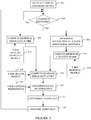
- FIGURE 3 schematically illustrates an example flow chart for the enhanced virtual assistant module 126 in accordance with an embodiment herein.
- deactivation e.g., turning "off" of the digital assistant device 102 is not shown in this example.
- the user 122 can deactivate the digital assistant device 102 at any time, which would terminate the illustrated flow.
- the digital assistant device 102 can implement multiple instances of the flow in parallel and/or in series, and concurrently and/or serially address multiple utterances, concurrently and/or serially for the user 122 and/or other users.
- the digital assistant device 102 is activated. In one example, this is achieved by the user 122, another person and/or computer turning “on” the digital assistant device 102 and/or the enhanced virtual assistant module 126. This may be considered an on-demand mode that stays "on” until turned “off.”
- the digital assistant device 102 includes a digital schedule which indicates a date(s)/time(s) to activate the enhanced virtual assistant module 126. The schedule may also include a deactivation date(s)/time(s) or "on" time duration.
- the digital assistant device 102 determines whether the user 122 received a request utterance for which a response (e.g., an answer) is expected from the one or more others 128 and/or the digital assistant device 102. Examples of questions include, but are not limited to, "Do you prefer to have this appointment on Wednesday or Friday?;” "Do you exercise regularly?;” "Please bring your sports clothes next time;” “We need to talk about your treatment compliance...,” and “I have pain there... but also I do not sleep so well... it's hard you know.”
- the digital assistant device 102 continues to monitor the dialog and check for such an utterance posed to the user 122 by the one or more others 128 and/or the digital assistant device 102 for which a response is expected. If such a request utterance is identified, at 306, the enhanced virtual assistant module 126 computes a RDS, and, at 308 and 310, respectively determines the physiological and/or behavioral response of the user to the request and computes a RCS based thereon.
- the enhanced virtual assistant module 126 semantically analyzes the utterance for predetermined characteristics.
- predetermined characteristics include, but are not limited to, expected memory usage, emotional charge, combining information, planning and imagining a situation in the future, and/or request complexity.
- One or more of these and/or other characteristics can be used to generate the request difficulty score.
- Example scores include: Low (score 1-3) for a question with no references to the past such as a question about today or at most the recent past such as yesterday's event; Medium (score 4-7) for a question with a reference to the recent past such as within the last several weeks; and High (score 8-10) for a question with a reference to the past.
- Example scores include: Low (score 1-3) for pure factual information or question; Medium (score 4-7) for a sentence that contains emotional words (e.g. referring to anger, depression or hurt), and High (score 8-10) for a reference to close family members/friends in combination with emotionally charged words.
- Example scores include: Low (score 1-3) where one topic addressed in the sentence; Medium (score 4-7) for a combination of two topics in one question sentence, and High (score 8-10) when the user 122 needs to combine information of multiple elements or needs to analyze and look back (e.g. how often did you forgot your medication in the last month, and did you feel a negative effect?).
- Example scores include: Low (score 1-3) where the utterance includes no reference to the future; Medium (score 4-7) where the utterance includes a reference to the near future such as today or tomorrow, and High (score 8-10) where the utterance includes a future reference beyond a week.
- an utterance can be a more complex sentence with sub sentences or even multiple sentences.
- Example scores include: Low (score 1-3) for an utterance where the request includes a simple short sentence; Medium (score 4-7) for an utterance where the request includes a sentence with sub sentences, and High (score 8-10) for an utterance where the request includes a combination of multiple sentences, e.g. an introduction is given before the real question is given.
- the enhanced virtual assistant module 126 computes the RDS by summing the individual expected memory usage, emotional charge, combining information, planning and imagining a situation in the future, and request complexity scores.
- the enhanced virtual assistant module 126 first multiplies each score with predetermined weight factors from a user request difficulty profile 312.
- the user request difficulty profile 312 reflects variation between individuals in aspects that make an utterance difficult.
- the weights could be determined via a psychological or other test in which a variety of utterances are made to the user 122, and the user 122 is requested to judge the difficulty.
- the weighted scores are averaged to produce RDS with a value on a scale from 1 to 10.
- Table 1 below shows a non-limiting example of determining an RDS.
- one or more of expected memory usage, emotional charge, combining information, planning and imagining a situation in the future and/or request complexity, and/or other characteristic(s) can be used to generate the request difficulty score.
- the RDS is computed for the user 122 as a summation of weighted expected memory usage, emotional charge, combining information, planning and imagining a situation in the future and/or request complexity scores, where the scores are first weighted with weights from the user request difficulty profile 312 of the user 122.
- the computed RDS is 4.30.
- RDS Request Difficulty Score
- RDS Factor Score Weight Total Expected Memory Usage 0.20 3 0.60 Emotional Charge 0.40 5 2.00 Combining Information 0.05 3 0.15 Planning and future imagination 0.10 8 0.80 Request Complexity 0.25 3 0.75 Request Difficulty Score (RDS) 4.30
- the user request difficulty profile 312 is omitted.
- no weights are applied, or a set of standard weights are applied.
- the standard weights can be based on previous weights, a set of weights determined for a population of users, empirically determined weights, theoretically determined weights, and/or other weights.
- a behavioral response of the user 122 to the utterance can be sensed by the input device 116 and/or other device, e.g., where the input device 116 and/or another device include a microphone and/or a video camera.
- Examples of behavioral responses that are analyzed with input recorded by a microphone include, but are not limited to, speech, absence of speech, a pause in speech (e.g., longer than 5 seconds for an "easy” query (appointment), longer than 20 second for a "difficult” query (emotional discussion), etc.), a sound indicating an indecision (e.g., "eeeh,” scratching throat, swallowing, etc.), a tone of voice (e.g., loudness and speed of speech indicating an angry or panicked state), a contradiction (e.g., "Wednesday... no, Friday. No... Wednesday!), and/or a keyword (e.g., "I don't know" "Wait, let me think”).
- a pause in speech e.g., longer than 5 seconds for an "easy” query (appointment), longer than 20 second for a "difficult” query (emotional discussion), etc.
- a sound indicating an indecision
- Examples of behavioral responses that can be analyzed with input recorded by a video camera include, but are not limited to, a gesture (e.g., nervous hand, scratching, eating nails, etc.), a posture (e.g., head down or turned away from interlocutor, body turns away or leans back from interlocutor, etc.), a facial expression (e.g., tense, confused, angry, unreactive, droopy eyes, flushing, etc.), and/or a gaze (e.g., not looking at interlocutor, rapid and/or random eye movement, etc.).
- a gesture e.g., nervous hand, scratching, eating nails, etc.
- a posture e.g., head down or turned away from interlocutor, body turns away or leans back from interlocutor, etc.
- a facial expression e.g., tense, confused, angry, unreactive, droopy eyes, flushing, etc.
- a gaze
- a physiological response of the user 122 to the utterance can be recorded by the sensor(s) 120 and/or another sensor.
- physiological responses that can be analyzed with phenomena sensed by the sensor(s) 120 and/or other sensor include, but are not limited to, a physiological signal, arousal via cortisol/skin conductance sensing, a heart rate, a breathing rate, face micro-blushes, and/or an EEG signal.
- Further information can be derived from a combination of the behavioral response and the physiological response. For example, when a behavioral response (e.g., body language and/or speech) and physiological response (e.g., vital signs) do not match, a behavioral/ physiological contradiction response can be derived from the combination of the behavioral and physiological responses.
- a behavioral response e.g., body language and/or speech
- physiological response e.g., vital signs
- An example includes a calm face and normal attitude and an increased heart rate.
- this derived information includes information hidden from and not readily perceivable by a human.
- a contradiction response can also be derived with information from the others 128 such as a care giver, other people in discussion, etc.
- This information can include any of behavioral and/or physiological responses described above and/or other behavioral and/or physiological responses. This information can indicate, e.g., that the other 128 is not satisfied by the answer given by the user, the answer is incomplete, etc.
- the RCS metric indicates a degree of capacity (and hence incapacity) of the user 122.
- a lack of capacity can be due to, e.g., the user 122 being overwhelmed by information, emotions, lack of knowledge, embarrassment due to their own emotions or other people's emotions, temporary physiological inability (tiredness, drug or alcohol use, etc.), etc. Since people may react differently in situations of being incapable to respond to an utterance (e.g., some people may flush, others may look away, etc.), the computation of the RCS includes information from a user response profile 314.
- the user response profile 314 includes weighing factors for physiological and behavioral responses.
- the weighing factors may be determined via a psychological and/or other test by which the user 122 is provided with multiple utterances that the user 122 is incapable to fulfill in various degrees. During the test the physiological and behavioral responses of the user 122 are observed. In relation to the presented utterance difficulties, an algorithm may learn how the user typically expresses incapability in response to requests.
- Table 2 below shows a non-limiting example of determining an RCS.
- the RCS is computed by observing for the different types of responses of the user 122 to an utterance during a predetermined time period (e.g., 10 seconds), recording which of the responses are performed by the user 122 in the time period as a count, weighting each count with its corresponding weight to produce a weighted count, summing the weighted counts, dividing the summed value by the number of counts, and multiplying this value by a predetermined factor (e.g., 1, 10, etc.).
- the user response profile 314 is omitted. In this instance, either no weights are applied, or a set of standard weights are applied.
- the standard weights can be based on previous weights, a set of weights determined for a population of users, empirically determined weights, theoretically determined weights, and/or other weights.
- the RIS is computed using the RDS and RCS.
- RCS request utterance
- RDS request utterance
- RCS low
- RCS lower
- RCS lower
- RDS RCS RIS Easy Fully Capable Low Easy Half Capable Medium/High Easy Fully Incapable High Moderate Fully Capable Low Moderate Half Capable Medium Moderate Fully Incapable High Difficult Fully Capable Low Difficult Half Capable Medium/Low Difficult Fully Incapable High
- RIS MAX (RCS - C ⁇ RDS, 1), where C is a determined constant and the MAX function returns the larger of the two input arguments, (RCS - C ⁇ RDS) or 1.
- RDS RDS in the example in Table 1
- RCS RCS in the example in Table 2
- C 1 ⁇ 4
- the value of C is programmable and can be changed based on the user 122, etc.
- Table 4. Example with C 1 ⁇ 4.
- RDS RCS RIS 10 10 7.50 10 1 1.00 4 10 9.00 8 8 6.00 5 1 1.00 1 10 9.75 1 1 1.00
- a health condition of the user 122 from a user health profile 318 can also be used to compute the response imbalance score, as the health condition of the user 122 may impact the user's capacity to respond to an utterance. For example, if the user 122 is fatigued, in pain, sleep deprived, in a bad mood, affected by prior stress events (physiological signals such as heartrate variation or skin response can be used to estimate cortisol level, indicative of stress, etc.), etc., this may impact his response to utterances, even if they have a low difficulty score.
- the user health profile 318 indicates how the user's response incapacity is affected by health condition, next to the request difficulty score.
- This information can be acquired over time to learn what RCS it can expect in relation to a RDS while the user is in a relatively good health condition. If the user is less capable to react than is to be expected given the request difficulty, then this may be caused by a (temporary) decline in health condition (physical, mental and/or emotional). Also, the history RCS's, and how much they vary with variation in request difficulty can give an indication of declined health condition. For example, if the user in general seems less capable to answer even easier questions, then this may be an indication of a declined health condition.
- the digital assistant device 102 determines a level of assistance based on user control preferences 322 of the user 122.
- the user control preferences 322 are omitted.
- the user 122 specifies in the user control preferences 322 a maximum degree of involvement by the digital assistant device 102.
- Non-limiting examples include, but are not limited to, provides a suggestion, a reminder, or a discussion trigger via voice, sound, text, image, video, etc. Examples of these include the message "Wednesday you often do the groceries; Friday might be better,” setting up an automatic reminder to bring sport clothes the morning before the next appointment, asking an extra question such as "Do you remember if you took your medication yesterday?,” and providing an explanatory video about treatment compliance and effectiveness.
- Non-limiting examples include, but are not limited to, making a decision with a concrete effect. Examples of this include indicating in the doctor's scheduling tool "Please make the appointment for Friday," ordering some sport clothes because he knows that the user does not own any, and calling an Uber to bring the user home. Other Non-limiting examples include, but are not limited to, overruling a decision of the user 122. Examples of this include recording the user 122 saying “Wednesday is good” but because the user 122 is in a confused state and will be busy that day, indicating in the doctor's scheduling tool "Wednesday will be busy, I will make the appointment for Friday,” and locking the car of the user 122.
- the user control preferences 322 act as a restriction to the level of assistance that the digital assistant device 102 can provide. For example, if the user 122 never wants the digital assistant device 102 to take any action without directly informing the user 122, then the user's control preference would be set to a level that indicate the digital assistant device 102 level of involvement cannot exceed, e.g., take action and inform. If the user 122 is more conservative then the user 122 may not allow the digital assistant device 102 to take any action on behalf of the user 122, only allowing suggestions that the user 122 may or may follow.
- the digital assistant device 102 determines the assistance based on the utterance, the level of assistance, and an intervention for the utterance at the level of assistance.
- Table 5 shows a plurality of examples of assistance (interventions) for different utterances, RIS's, and levels of assistance.
- Assistance. Request RIS Level of Involvement Intervention The user receives results from a medical test, and is hesitating to open it 6 3-Extra information Digital assistant initiates a conversation encouraging and suggesting the user to read the report without further delay User learns that the tumor is cancerous and is in shock. Virtual assistant asks the user if his spouse needs to be notified. 7 4-Take action and inform User promptly refuses to inform anyone.
- the digital assistant decides to notify (send a message) to the spouse of the user. Informing that user is in need of emotional support.
- the Healthcare professional has requested for an appointment to discuss the diagnosis and treatment 7
- 4-Take action and inform Digital assistant finds an appropriate time within the user's agenda and makes an appointment with the physician. Communicates its details to the User. Friends and family visit user to offer support and learn about the recent test results. Upon revealing the results, there is silence and remorse in the room. 5
- Digital assistant acts upon the situation and shares information with everyone about his condition, what it means and the next steps in treatment. Alone at home, the user feels weak and dizzy, almost falling down to the ground 10
- 5-Take action only immediately informs and shares user's data with the informal care giver and the doctor about the situation
- the digital assistant device 102 may later confirm this decision with the user 122 and possibly change the decision when the user 122 is likely more capable to respond to the request. For this, the digital assistant device 102 may keep track of the RIS's over time and monitor them for when they drop below a predetermined threshold and only then engage with the user 122 again on a decision made earlier. In generally, the decision is checked at a moment where the user 122 is not conducting another activity, like watching television, in a conversation, playing a sport, etc., which can be monitored using known approaches.
- the digital assistant device 102 can implement multiple instances of the flow described in FIGURE 3 in parallel and/or in series, and concurrently and/or serially address multiple utterances, concurrently and/or serially for the user 122 and/or other users.
- the flow in FIGURE 3 is described in connection with one instance for the user 122.
- FIGURE 3 further shows a subsequent iteration after the providing assistance at 326 where the digital assistant device polls for a next utterance for which a response is expected in the decision block 304.
- the next identified utterance is not related to the prior identified utterance and similar flow is executed.
- the next identified utterance is related to or the same as the prior identified utterance.
- information of the previous loop can also be used to compute any of the RDS, RCS and/or RIS, and/or determine the assistance.
- the following illustrates an example emergency response service use case.
- a frail elderly wears a fall detection unit which, in case of a fall, automatically connects the elderly to an emergency response service via his telephone line.
- the service employee on the other side then tries to estimate the condition of the elderly in order to organize the appropriate response. This can extend from doing nothing to sending an ambulance.
- the digital assistant device 102 described herein performs this triage task. This could lower work load on the emergency response service.
- the digital assistant device 102 asks the elderly if he/she is okay. In this example, this is an easy question, with a RDS of 1.
- the response of the elderly is analyzed via the parameters described in Table 2 to arrive at a RIS.
- the digital assistant device 102 takes action according to a specific version of Table 5, as shown below in Table 6.
- the digital assistant device 102 follows up by asking more difficult questions to assess if the elderly's cognitive abilities have been affected by the fall. Table 6. Assistance.
- RIS RIS Description Level of Involvement Response Type Response Description 1-2 Fully capable 1 Confirmation Assistant confirms and acts upon the user's response, e.g., "I am glad to hear you are fine.
- Action & Inform Assistant takes a decision /action, possibly overruling the user's response, and informs the user, e.g., "I am calling the emergency response service for you and I will inform your partner / relative" 9-10
- Action only Assistant takes a decision / action without informing the user (at the moment), e.g., The assistant calls an ambulance, informs the emergency response service, and calls a designated other
- the digital assistant device 102 instead of taking over the triage task from the emergency response service employee, the digital assistant device 102 provides decision support to the emergency response service employee. This could be done by providing the RIS derived from assessing the conversation and physiological responses, and advice on response actions to the employee, instead of having a conversation with the elderly.
- a verbal utterance e.g., posed to a user for which the user is expected to provide a response
- the request could alternatively, or additionally, be an observable task that the user starts or is expected to perform.
- Non-limiting examples include, but are not limited to, a user attempting to withdraw money from an automated teller machine (ATM), a doorbell rings and the user is expected to open the door, a telephone rings and user is expected to answer it, and the user is attempting to make coffee or meal.
- the task can be observed by sensors (e.g. in-home sensors or cameras) and/or otherwise.
- the request difficulty score relates to the task difficulty as experienced by the user.
- a request act includes, but it not limited to, a verbal utterance, an observable task that the user starts, and/or an observable task that the user is expected to perform.
- the method(s) described herein may be implemented by way of computer readable instructions, encoded or embedded on computer readable storage medium (which excludes transitory medium), which, when executed by a computer processor(s) (e.g., CPU, microprocessor, etc.), cause the processor(s) to carry out acts described herein. Additionally, or alternatively, at least one of the computer readable instructions is carried by a signal, carrier wave or other transitory medium, which is not computer readable storage medium.
- a computer processor(s) e.g., CPU, microprocessor, etc.
- a computer program may be stored/distributed on a suitable medium, such as an optical storage medium or a solid-state medium supplied together with or as part of other hardware, but may also be distributed in other forms, such as via the Internet or other wired or wireless telecommunication systems. Any reference signs in the claims should not be construed as limiting the scope.
Landscapes
- Engineering & Computer Science (AREA)
- Theoretical Computer Science (AREA)
- Multimedia (AREA)
- Health & Medical Sciences (AREA)
- Audiology, Speech & Language Pathology (AREA)
- General Health & Medical Sciences (AREA)
- Human Computer Interaction (AREA)
- Physics & Mathematics (AREA)
- General Engineering & Computer Science (AREA)
- General Physics & Mathematics (AREA)
- User Interface Of Digital Computer (AREA)
- Medical Treatment And Welfare Office Work (AREA)
Priority Applications (1)
| Application Number | Priority Date | Filing Date | Title |
|---|---|---|---|
| EP18167035.7A EP3553779A1 (fr) | 2018-04-12 | 2018-04-12 | Assistant virtuel amélioré pour dispositif d'assistant numérique |
Applications Claiming Priority (1)
| Application Number | Priority Date | Filing Date | Title |
|---|---|---|---|
| EP18167035.7A EP3553779A1 (fr) | 2018-04-12 | 2018-04-12 | Assistant virtuel amélioré pour dispositif d'assistant numérique |
Publications (1)
| Publication Number | Publication Date |
|---|---|
| EP3553779A1 true EP3553779A1 (fr) | 2019-10-16 |
Family
ID=62091645
Family Applications (1)
| Application Number | Title | Priority Date | Filing Date |
|---|---|---|---|
| EP18167035.7A Withdrawn EP3553779A1 (fr) | 2018-04-12 | 2018-04-12 | Assistant virtuel amélioré pour dispositif d'assistant numérique |
Country Status (1)
| Country | Link |
|---|---|
| EP (1) | EP3553779A1 (fr) |
Citations (3)
| Publication number | Priority date | Publication date | Assignee | Title |
|---|---|---|---|---|
| US20080147582A1 (en) * | 2006-12-19 | 2008-06-19 | Fadi Victor Micaelian | Engines, methods, and systems for normalizing heterogeneous parameters for scoring proposals |
| US20170162197A1 (en) * | 2015-12-06 | 2017-06-08 | Voicebox Technologies Corporation | System and method of conversational adjustment based on user's cognitive state and/or situational state |
| WO2017112496A1 (fr) * | 2015-12-22 | 2017-06-29 | Microsoft Technology Licensing, Llc | Moteur de discussion en ligne émotionnellement intelligent |
-
2018
- 2018-04-12 EP EP18167035.7A patent/EP3553779A1/fr not_active Withdrawn
Patent Citations (3)
| Publication number | Priority date | Publication date | Assignee | Title |
|---|---|---|---|---|
| US20080147582A1 (en) * | 2006-12-19 | 2008-06-19 | Fadi Victor Micaelian | Engines, methods, and systems for normalizing heterogeneous parameters for scoring proposals |
| US20170162197A1 (en) * | 2015-12-06 | 2017-06-08 | Voicebox Technologies Corporation | System and method of conversational adjustment based on user's cognitive state and/or situational state |
| WO2017112496A1 (fr) * | 2015-12-22 | 2017-06-29 | Microsoft Technology Licensing, Llc | Moteur de discussion en ligne émotionnellement intelligent |
Similar Documents
| Publication | Publication Date | Title |
|---|---|---|
| US10376195B1 (en) | Automated nursing assessment | |
| US9901780B2 (en) | Adjusting exercise machine settings based on current work conditions | |
| US10706971B2 (en) | System for management and intervention of neurocognitive related conditions and diseases | |
| US10430557B2 (en) | Monitoring treatment compliance using patient activity patterns | |
| EP3133471B1 (fr) | Procédé de commande de jeu, appareil, terminal et support d'enregistrement | |
| CN113287175B (zh) | 互动式健康状态评估方法及其系统 | |
| US20050163302A1 (en) | Customer service system and method using physiological data | |
| US20170344713A1 (en) | Device, system and method for assessing information needs of a person | |
| US20100286490A1 (en) | Interactive patient monitoring system using speech recognition | |
| US20160140986A1 (en) | Monitoring treatment compliance using combined performance indicators | |
| US20160135738A1 (en) | Monitoring treatment compliance using passively captured task performance patterns | |
| Iwasaki et al. | AffectPhone: A Handset Device to Present User's Emotional State with Warmth/Coolness. | |
| US10701210B2 (en) | Systems and methods for matching subjects with care consultants in telenursing call centers | |
| JP2025510447A (ja) | 意思決定サポートツールを介してユーザへのメッセージをリアルタイムで動的に選択するためのプラットフォーム | |
| EP3553779A1 (fr) | Assistant virtuel amélioré pour dispositif d'assistant numérique | |
| Chan et al. | Prospero: A personal wearable memory coach | |
| Merlino | Haptics and emotions in speech and language therapy sessions for people with post-stroke aphasia | |
| US20160140317A1 (en) | Determining treatment compliance using passively captured activity performance patterns | |
| Redfield et al. | Assistive robots for long covid and me/cfs support: Challenges and opportunities | |
| Broadbent et al. | The Role of Technology in Chronic Illness | |
| US20160135739A1 (en) | Determining treatment compliance using combined performance indicators | |
| JP2026051095A (ja) | システム | |
| JP2026073617A (ja) | システム | |
| JP2026045670A (ja) | システム | |
| JP2026044775A (ja) | システム |
Legal Events
| Date | Code | Title | Description |
|---|---|---|---|
| PUAI | Public reference made under article 153(3) epc to a published international application that has entered the european phase |
Free format text: ORIGINAL CODE: 0009012 |
|
| AK | Designated contracting states |
Kind code of ref document: A1 Designated state(s): AL AT BE BG CH CY CZ DE DK EE ES FI FR GB GR HR HU IE IS IT LI LT LU LV MC MK MT NL NO PL PT RO RS SE SI SK SM TR |
|
| AX | Request for extension of the european patent |
Extension state: BA ME |
|
| RAP1 | Party data changed (applicant data changed or rights of an application transferred) |
Owner name: KONINKLIJKE PHILIPS N.V. |
|
| STAA | Information on the status of an ep patent application or granted ep patent |
Free format text: STATUS: THE APPLICATION IS DEEMED TO BE WITHDRAWN |
|
| 18D | Application deemed to be withdrawn |
Effective date: 20200603 |