EP3553671B1 - Hierarchische fensterfunktion - Google Patents
Hierarchische fensterfunktion Download PDFInfo
- Publication number
- EP3553671B1 EP3553671B1 EP19168129.5A EP19168129A EP3553671B1 EP 3553671 B1 EP3553671 B1 EP 3553671B1 EP 19168129 A EP19168129 A EP 19168129A EP 3553671 B1 EP3553671 B1 EP 3553671B1
- Authority
- EP
- European Patent Office
- Prior art keywords
- node
- hierarchy
- value
- nodes
- window function
- Prior art date
- Legal status (The legal status is an assumption and is not a legal conclusion. Google has not performed a legal analysis and makes no representation as to the accuracy of the status listed.)
- Active
Links
Images







Classifications
-
- G—PHYSICS
- G06—COMPUTING OR CALCULATING; COUNTING
- G06F—ELECTRIC DIGITAL DATA PROCESSING
- G06F16/00—Information retrieval; Database structures therefor; File system structures therefor
- G06F16/20—Information retrieval; Database structures therefor; File system structures therefor of structured data, e.g. relational data
- G06F16/28—Databases characterised by their database models, e.g. relational or object models
- G06F16/284—Relational databases
-
- G—PHYSICS
- G06—COMPUTING OR CALCULATING; COUNTING
- G06F—ELECTRIC DIGITAL DATA PROCESSING
- G06F16/00—Information retrieval; Database structures therefor; File system structures therefor
- G06F16/20—Information retrieval; Database structures therefor; File system structures therefor of structured data, e.g. relational data
- G06F16/24—Querying
- G06F16/245—Query processing
- G06F16/2455—Query execution
- G06F16/24553—Query execution of query operations
- G06F16/24554—Unary operations; Data partitioning operations
-
- G—PHYSICS
- G06—COMPUTING OR CALCULATING; COUNTING
- G06F—ELECTRIC DIGITAL DATA PROCESSING
- G06F16/00—Information retrieval; Database structures therefor; File system structures therefor
- G06F16/10—File systems; File servers
- G06F16/18—File system types
- G06F16/185—Hierarchical storage management [HSM] systems, e.g. file migration or policies thereof
-
- G—PHYSICS
- G06—COMPUTING OR CALCULATING; COUNTING
- G06F—ELECTRIC DIGITAL DATA PROCESSING
- G06F16/00—Information retrieval; Database structures therefor; File system structures therefor
- G06F16/20—Information retrieval; Database structures therefor; File system structures therefor of structured data, e.g. relational data
- G06F16/22—Indexing; Data structures therefor; Storage structures
- G06F16/2228—Indexing structures
- G06F16/2264—Multidimensional index structures
-
- G—PHYSICS
- G06—COMPUTING OR CALCULATING; COUNTING
- G06F—ELECTRIC DIGITAL DATA PROCESSING
- G06F16/00—Information retrieval; Database structures therefor; File system structures therefor
- G06F16/20—Information retrieval; Database structures therefor; File system structures therefor of structured data, e.g. relational data
- G06F16/22—Indexing; Data structures therefor; Storage structures
- G06F16/2228—Indexing structures
- G06F16/2272—Management thereof
-
- G—PHYSICS
- G06—COMPUTING OR CALCULATING; COUNTING
- G06F—ELECTRIC DIGITAL DATA PROCESSING
- G06F16/00—Information retrieval; Database structures therefor; File system structures therefor
- G06F16/20—Information retrieval; Database structures therefor; File system structures therefor of structured data, e.g. relational data
- G06F16/24—Querying
- G06F16/245—Query processing
- G06F16/2457—Query processing with adaptation to user needs
- G06F16/24578—Query processing with adaptation to user needs using ranking
-
- G—PHYSICS
- G06—COMPUTING OR CALCULATING; COUNTING
- G06F—ELECTRIC DIGITAL DATA PROCESSING
- G06F16/00—Information retrieval; Database structures therefor; File system structures therefor
- G06F16/20—Information retrieval; Database structures therefor; File system structures therefor of structured data, e.g. relational data
- G06F16/28—Databases characterised by their database models, e.g. relational or object models
- G06F16/282—Hierarchical databases, e.g. IMS, LDAP data stores or Lotus Notes
Definitions
- the subject matter described herein relates generally to database processing and more specifically to processing hierarchical data stored in a database.
- Hierarchical data may refer to data that has been organized into a tree-like structure.
- hierarchical data may be associated with level-based hierarchies having fixed depths and/or parent-child hierarchies having variable depths.
- a structured query language (SQL) SELECT query which is commonly used to retrieve rows of data from one or more tables in a relational database, may not be suitable for operating on a parent-child hierarchy stored in a self-referencing table because the number of times the self-referencing table must be joined to execute the SQL SELECT query may be indeterminate.
- SQL structured query language
- Document US 2015/0186447 A1 discloses a computer-implemented system for reference partitioning database objects by lifecycle state that includes at least one hardware processor, at least one database environment, the database environment supporting triggers and partitioning, at least one application program, and memory storing a lifecycle metadata framework.
- the lifecycle metadata framework identifies classes in a ragged hierarchy of database objects, identifies at least one class as a root of the hierarchy, identifies, for each non-root class, a lifecycle inheritance function for the class, and identifies, for each parent class-child class pair in the hierarchy, a relation-join query, the relation-join query being a join between tables in the database environment onto which the parent class and child class are persisted.
- the memory also stores triggers that use the framework to maintain lifecycle states for non-root database objects.
- Document US 7412444 is directed to ordering a hierarchical data structure in a manner that avoids the complexities of including the ordering specification in an SQL command.
- Each node in the hierarchical structure is assigned a sequence number with respect to its peers.
- Each row in the hierarchical table represents a node in the data hierarchy.
- the hierarchical table is traversed such that for each row representing a node, a TREE_SORT value is computed using the node's sequence number and the TREE_SORT value of its ancestors. In this way a traversal sequence for the nodes in the hierarchy can be specified independently of the SQL defining the operation to be executed against the data.
- a system that includes at least one processor and at least one memory.
- the at least one memory may include program code that provides operations when executed by the at least one processor.
- the operations may include: generating, based at least on a representation of a first hierarchy stored in a database, a visiting sequence data structure, the first hierarchy being stored in a table in the database, each of a plurality of rows comprising the table corresponding to one of a plurality of nodes comprising the first hierarchy, and the visiting sequence data structure include a first row vector specifying an order for traversing the plurality of nodes in the first hierarchy; and executing a hierarchical window function by at least iterating through the plurality of rows comprising the table in accordance with the order specified by the first row vector and determining, for a first node in the first hierarchy, a summary value corresponding to a first value of the first node and a second value of a second node descendent from the first node.
- the summary value may ybe an average, a count, a maximum, a medium, a minimum, a mode, a range, and/or a sum of the first value of the first node and the second value of the second node.
- the execution of the hierarchical window function may further include determining, for a third node comprising a parent node of the first node and/or the second node, another summary value corresponding to a third value of the third node and at least one of the first value of the first node and the second value of the second node.
- the visiting sequence data structure may further includes a second row vector enumerating one or more rows in the table corresponding to parent nodes in the first hierarchy or children nodes in the first hierarchy.
- the hierarchical window function may be associated with a frame comprising one or more levels of the first hierarchy.
- the summary value may be determined based on the first value of the first node and the second value of the second node based at least on the first node and the first node occupying the one or more levels of the frame.
- the summary value may be determined without a third value of a third node occupying a level outside of the frame.
- the visiting sequence data structure may further include a second row vector enumerating ancestor nodes of the first node occupying the one or more levels of the frame.
- the executing the hierarchical window function may further include iterating from the first node of the first hierarchy to the second node in the first hierarchy.
- the second node may be a child node of the first node when the hierarchical window function is executed in a top down order.
- the second node may be a parent node of the first node when the hierarchical window function is executed in a bottom up order.
- the first hierarchy may be a rooted product or a join between a second hierarchy and a third hierarchy.
- the first hierarchy may be a partition from a second hierarchy that is divided into the first hierarchy and a third hierarchy.
- the executing of the hierarchical window function may further include generating another visiting sequence data structure including a second row vector specifying an order for traversing a plurality nodes comprising the third hierarchy and iterating through the plurality of nodes comprising the third hierarchy in the order specified by the second row vector.
- executing the hierarchical window function may further include generating a second hierarchy that is a partition from the first hierarchy or a result of a rooted join between the first hierarchy and a third hierarchy.
- the representation of the first hierarchy may be generated by at least applying an indexing scheme to the first hierarchy.
- the applying of the indexing scheme may include assigning, to each of the plurality of nodes comprising the first hierarchy, one or more labels to enable an identification of parent nodes, children nodes, and sibling nodes in the first hierarchy.
- the indexing scheme may include a Pre, Post, Parent, and Level (PPPL) indexing scheme and/or a Pre, Size, and Level (PSL) indexing scheme.
- PPPL Pre, Post, Parent, and Level
- PSL Pre, Size, and Level
- a method for operating on hierarchical data in a database may include: generating, based at least on a representation of a first hierarchy stored in a database, a visiting sequence data structure, the first hierarchy being stored in a table in the database, each of a plurality of rows comprising the table corresponding to one of a plurality of nodes comprising the first hierarchy, and the visiting sequence data structure include a first row vector specifying an order for traversing the plurality of nodes in the first hierarchy; and executing a hierarchical window function by at least iterating through the plurality of rows comprising the table in accordance with the order specified by the first row vector and determining, for a first node in the first hierarchy, a summary value corresponding to a first value of the first node and a second value of a second node descendent from the first node.
- the summary value may be an average, a count, a maximum, a medium, a minimum, a mode, a range, and/or a sum of the first value of the first node and the second value of the second node.
- the execution of the hierarchical window function may further include determining, for a third node comprising a parent node of the first node and/or the second node, another summary value corresponding to a third value of the third node and at least one of the first value of the first node and the second value of the second node.
- the visiting sequence data structure may further include a second row vector enumerating one or more rows in the table corresponding to parent nodes in the first hierarchy or children nodes in the first hierarchy.
- the hierarchical window function may be associated with a frame comprising one or more levels of the first hierarchy.
- the summary value may be determined based on the first value of the first node and the second value of the second node based at least on the first node and the first node occupying the one or more levels of the frame.
- the summary value may be determined without a third value of a third node occupying a level outside of the frame.
- the visiting sequence data structure may further include a second row vector enumerating ancestor nodes of the first node occupying the one or more levels of the frame.
- the executing the hierarchical window function may further include iterating from the first node of the first hierarchy to the second node in the first hierarchy.
- the second node may be a child node of the first node when the hierarchical window function is executed in a top down order.
- the second node may be a parent node of the first node when the hierarchical window function is executed in a bottom up order.
- a computer program product that includes a non-transitory computer readable medium storing instructions.
- the instructions may cause operations when executed by at least one data processor.
- the operations may include: generating, based at least on a representation of a first hierarchy stored in a database, a visiting sequence data structure, the first hierarchy being stored in a table in the database, each of a plurality of rows comprising the table corresponding to one of a plurality of nodes comprising the first hierarchy, and the visiting sequence data structure include a first row vector specifying an order for traversing the plurality of nodes in the first hierarchy; and executing a hierarchical window function by at least iterating through the plurality of rows comprising the table in accordance with the order specified by the first row vector and determining, for a first node in the first hierarchy, a summary value corresponding to a first value of the first node and a second value of a second node descendent from the first node.
- Implementations of the current subject matter can include, but are not limited to, methods consistent with the descriptions provided herein as well as articles that comprise a tangibly embodied machine-readable medium operable to cause one or more machines (e.g., computers, etc.) to result in operations implementing one or more of the described features.
- machines e.g., computers, etc.
- computer systems are also described that may include one or more processors and one or more memories coupled to the one or more processors.
- a memory which can include a non-transitory computer-readable or machine-readable storage medium, may include, encode, store, or the like one or more programs that cause one or more processors to perform one or more of the operations described herein.
- Computer implemented methods consistent with one or more implementations of the current subject matter can be implemented by one or more data processors residing in a single computing system or multiple computing systems. Such multiple computing systems can be connected and can exchange data and/or statements or other instructions or the like via one or more connections, including, for example, to a connection over a network (e.g. the Internet, a wireless wide area network, a local area network, a wide area network, a wired network, or the like), via a direct connection between one or more of the multiple computing systems, etc.
- a network e.g. the Internet, a wireless wide area network, a local area network, a wide area network, a wired network, or the like
- a database management system may generate, based on one or more rows of data retrieved from at least one database table in the relational database, a summary value including, for example, an average, a count, a maximum, a medium, a minimum, a mode, a range, a sum, and/or the like.
- the aggregation may be performed by executing a structured query language (SQL) window function on the sequence of the rows.
- SQL window function may be configured to aggregate successive partitions of rows from the sequence of rows, each of which containing an additional row that is not present in a previous partition.
- the order in which the aggregation is performed may be determined by an ORDER BY clause added to the window function.
- a conventional SQL window function may not be optimized for operating on hierarchical data which, as noted, may include level-based hierarchical data associated with fixed depth hierarchies and parent-child hierarchical data associated with variable depths hierarchies.
- a database management system may be configured to support hierarchical window functions for operating on hierarchical data.
- a hierarchy window function may be executed to determine a summary value (e.g., an average, a count, a maximum, a medium, a minimum, a mode, a range, a sum, and/or the like) for one or more nodes in a hierarchy.
- FIG. 1A depicts a system diagram illustrating a data storage system 100, in accordance with some example embodiments.
- the data storage system 100 may include a database management system 110 coupled with a database 120.
- the data storage system 100 may further include one or more clients including, for example, a client 130 and/or the like.
- the client 130 may be any processor-based device including, for example, a workstation, a desktop computer, a laptop computer, a tablet computer, a mobile device, a wearable apparatus, and/or the like.
- the client 130 may be communicatively coupled with the database management system 110 via a network 140.
- the network 140 may be any wired and/or wireless network including, for example, a wide area network (WAN), a local area network (LAN), a virtual local area network (VLAN), a public land mobile network (PLMN), the Internet, and/or the like.
- WAN wide area network
- LAN local area network
- VLAN virtual local area network
- PLMN public land mobile network
- the database management system 110 may include a hierarchical data engine 115 configured to support one or more functions operating on at least a portion of a hierarchical data 125 stored in the database 120.
- the hierarchical data engine 115 may support hierarchical window functions operation on at least the portion of the hierarchical data 125 stored in the database 120.
- the hierarchical data 125 may include level-based hierarchical data associated with fixed depth hierarchies. Alternatively and/or additionally, the hierarchical data 125 may include parent-child hierarchies associated with variable depth hierarchies.
- the hierarchical data engine 115 may support hierarchical window functions that are optimized for operating on level-based hierarchical data as well as parent-child hierarchical data.
- a hierarchy window function may be executed to determine a summary value (e.g., an average, a count, a maximum, a medium, a minimum, a mode, a range, a sum, and/or the like) for one or more nodes in a hierarchy.
- a summary value e.g., an average, a count, a maximum, a medium, a minimum, a mode, a range, a sum, and/or the like
- the hierarchical data 125 may be stored in one or more tables in the database 120.
- each node in the hierarchical data 125 may be stored as a corresponding row in a table in the database 120.
- the database management system 110 may apply any indexing scheme in order to represent the structure of the hierarchical data 125 including, for example, a containment based labeling scheme, a path-based labeling scheme, an index-based scheme, and/or the like. Applying the indexing scheme may include assigning, to each node within the hierarchical data 125, one or more labels to reflect the relationship between different nodes.
- each node in the hierarchical data 125 may be assigned one or more labels that may enable and/or optimize the identification of parent nodes, children nodes, and/or sibling nodes, for instance, during the traversal of the hierarchical data 125.
- FIG. 1B depicts an example of a table 150 storing a representation of the hierarchical data 125, in accordance with some example embodiments. As shown in FIG. 1B , each node in the hierarchical data 125 may be stored as a corresponding row in the database 120.
- each node in the hierarchical data 125 may be assigned one or more labels (e.g., parent, pre/size/level (PSL) encoding, nested interval (NI), gap nested interval (GapNI), ordpath, and/or the like) configured to enable and/or optimize the identification of parent nodes, children nodes, and/or sibling nodes.
- labels e.g., parent, pre/size/level (PSL) encoding, nested interval (NI), gap nested interval (GapNI), ordpath, and/or the like
- the hierarchical data 125 may include level-based hierarchical data associated with fixed depth hierarchies and/or parent-child hierarchical data associated with variable depths hierarchies.
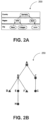
- FIG. 2A depicts an example of a level-based hierarchy 200, in accordance with some example embodiments.
- the nodes within a level-based hierarchy 200 may be organized into one or more levels. For instance, as shown in FIG. 2A , the nodes in the level-based hierarchy 200 may be organized into a "country" level, a "region" level, and a "city” level.
- nodes of a same type may occur only within a corresponding level of the level-based hierarchy 200. For example, FIG.
- the depth of the level-based hierarchy 200 may remain fixed, for example, to the quantity of levels present in the level-based hierarchy 200, even when additional nodes are added to the level-based hierarchy 200.
- FIG. 2B depicts an example of a parent-child hierarchy 250, in accordance with some example embodiments.
- the nodes in the parent-child hierarchy 250 may not be organized into one or more levels.
- the depth of the parent-child hierarchy 250 may not be subject to any limitations as in the level-based hierarchy 200. Instead, the depth of the parent-child hierarchy 250 may change due to the addition of nodes to the parent-child hierarchy 250.
- the hierarchical data engine 115 may execute a hierarchical window function configured to iterate through the hierarchical data 125 and determine, for each node in the hierarchical data 125, a summary value based on the value of each node and the values of all descendent or ascendant nodes.
- This summary value may be an average, a count, a maximum, a medium, a minimum, a mode, a range, a sum, and/or the like of the values of each node in the hierarchical data 125 and the values of all descendent or ascendant nodes.
- this summary value may be determined by at least propagating a window that expands, with each successive iteration, to include one or more parent nodes when the hierarchical window function is being performed in a bottom up fashion or one or more children nodes when the hierarchical window function is being performed in a top down fashion.
- FIG. 2C depicts the propagation of a window 280 during the performance of a hierarchical window function on a hierarchy 260, in accordance with some example embodiments.
- the performance of the hierarchical window function may be require a bottom up traversal of the hierarchy 260.
- the window 280 may include the leaf nodes at the bottom of the hierarchy 260 including, for example, a first node 270a, a second node 270b, a third node 270c, and a fourth node 270d.
- the performance of the hierarchical window function may include generating, for each of the first node 270a, the second node 270b, the third node 270c, and the fourth node 270d, a summary value corresponding to the respective values of each node.
- the window 280 may expand to include the parent nodes occupying the next level of the hierarchy 260 including, for example, a fifth node 270e and sixth node 270f.
- the performance of the hierarchical window function may include generating, for the fifth node 270e, a summary value based on the value of the fifth node 270e and the respective values of its children nodes (e.g., the first node 270a and the second node 270b).
- the performance of the hierarchical window function may further include generating, for the sixth node 270f, a summary value based on the value of the sixth node 270f and the respective values of its children nodes (e.g., the third node 270c and the fourth node 270d).
- the window 280 may expand to further include the parent nodes occupying the next level of the hierarchy 260 including, for example, the seventh node 270g.
- the performance of the hierarchical window function may continue by at least generating, for the seventh node 270g, a summary value based on the value of the seventh node 270g as well as the respective values of its descendent nodes including, for example, the first node 270a, the second node 270b, the third node 270c, the fourth node 270d, the fifth node 270e, and the sixth node 270f.
- a hierarchical window function may be executed to iterate through the level-based hierarchy 200 and determine a summary value for each of the nodes occupying the "city" level, "region" level, and "country” level.
- executing the hierarchical window function may include propagating a window that expands, with each successive iteration of the hierarchical window function, to include nodes occupying an additional level of the level-based hierarchy 200.
- executing the hierarchical window function on the level-based hierarchy 200 may include determining, for the nodes corresponding to the cities Bonn, C perfume, and Berlin, a summary value corresponding to the respective values of the nodes for the cities Bonn, Cologne, and Berlin.
- Executing the hierarchical window function on the level-based hierarchy 200 may also include determining, for the node corresponding to the North Rhine-Westphalia region, a summary value corresponding to the respective values of the nodes for the cities Bonn and Cologne. Furthermore, executing the hierarchical window function on the level-based hierarchy 200 may determine, for the node corresponding to the country Germany, a summary value corresponding to the respective values of the nodes associated with the North Rhine-Westphalia region, the Berlin region, the city Bonn, the city C perfume, and the city Berlin.
- a hierarchical window function may also be executed to iterate through the parent-child hierarchy 200. For instance, executing the hierarchical window function on the parent-child hierarchy 250 may determine, for Node B, a summary value corresponding to the respective values of Node D, Node E, and Node F. Meanwhile, executing the hierarchical window function on the parent-child hierarchy 250 may also determine, for Node A, a summary value corresponding to the respective values of Node B and Node C.
- Table 1 depicts the specification of a hierarchical window function.
- a SQL window function may be extended to support hierarchical data such as, for example, the hierarchical data 125.
- the SQL window function may be modified to include a HIERARCHIZE BY clause.
- the dataflow direction clause of the SQL window function may be modified to accept the keywords BOTTOM UP and TOP DOWN to specify the direction of the iteration performed as a part of executing the hierarchical window function.
- the iteration may be performed in a top down fashion starting from a root node of the hierarchical data 125 and progressing towards the leaf nodes of the hierarchical data 125.
- the iteration may be performed in a bottom up fashion starting from the leaf nodes of the hierarchical data 125 and progressing towards a root node of the hierarchical data 125.
- the hierarchical window function may include a hierarchy frame specification clause with the keywords LEVELS BETWEEN to specify a frame including the levels in the hierarchical data 125 at which the iteration is performed.
- the hierarchical data engine 115 may generate a visiting sequence data structure storing information that enables the execution of a hierarchical window function.
- the visiting sequence data structure may include a first row vector enumerating the rows of the table 150 in an order corresponding to an order in which the nodes in the hierarchical data 125 are to be traversed during the execution of the hierarchical window function.
- the visiting sequence data structure may further include a second row vector enumerating the rows in the table 150 corresponding to parent nodes or children nodes in the hierarchical data 125.
- the visiting sequence data structure may include a third row vector storing, for each row in the table 150, the rows in the table 150 corresponding to the k-th ancestor node in the hierarchical data 125.
- the hierarchical data engine 115 may generate the visiting sequence data structure to include the third row vector when executing a framed hierarchical window function a framed hierarchical window function in which the iterations of the hierarchical window function extends to some but not all of the levels in the hierarchical data 125.
- the rows in the first row vector may be ordered such that the rows in the table 150 corresponding to the parent nodes in the hierarchical data 125 are visited before the rows in the table 150 corresponding to the children nodes in the hierarchical data 125.
- the rows in the first row vector may be ordered such that the rows in the table 150 corresponding to children nodes in the hierarchical data 125 are visited before the rows in the table 150 corresponding to the parent nodes in the hierarchical data 125.
- the hierarchical data engine 150 may generate a row vector [ A, B, C, D, E, F, G, H ] or [ A, C, B, F, E, D, G, H ] for a top-down traversal of the parent-child hierarchy 250.
- the hierarchical data engine 150 may generate a row vector [ H, D, E, F, G, C, B, A ] or [ H, G, D, F, E, B, C, A ] for a bottom-up traversal of the parent-child hierarchy 250.
- Table 2 below depicts pseudo programming code for generating the visiting sequence data structure to include a row vector enumerating the rows in the table 150 in an order corresponding to an order in which the nodes in the hierarchical data 125 are traversed in a top down fashion.
- Table 3 below depicts pseudo programming code for generating the visiting sequence data structure to include a row vector enumerating the rows in the table 150 in an order corresponding to an order in which the nodes in the hierarchical data 125 are traversed in a bottom up fashion.
- the visiting sequence data structure may include another row vector enumerating the rows in the table 150 that correspond to parent nodes and/or children nodes in the hierarchical data 150.
- the hierarchical data engine 150 may generate a row vector [ A, B, C, E ] identifying the rows in the table 150 corresponding to parent nodes present in the hierarchical data 125 and/or a row vector [ A, B, C, E ] identifying the rows in the table 150 corresponding to children nodes present in the hierarchical data 125.
- Table 4 depicts pseudo programming code for generating the visiting sequence data structure to include a row vector enumerating the rows in the table 150 corresponding to parent nodes in the hierarchical data 125.
- Table 5 depicts pseudo programming code for generating the visiting sequence data structure to include a row vector enumerating the rows in the table 150 corresponding to children nodes in the hierarchical data 125.
- the visiting sequence data structure may include another row vector storing, for each row in the table 150, the rows in the table 150 corresponding to the k -th ancestor node in the hierarchical data 125.
- the hierarchical data engine 115 may generate this row vector in order to execute a framed hierarchical window function in which the iterations of the hierarchical window function are bound to a k quantity of levels preceding or a k quantity of levels subsequent to each of some but not all of the nodes in the hierarchical data 125.
- a framed hierarchical window function in which the iterations of the hierarchical window function are bound to a k quantity of levels preceding or a k quantity of levels subsequent to each of some but not all of the nodes in the hierarchical data 125.
- the hierarchical data engine 115 may execute a hierarchical window function that is framed between the second level and the third level of the parent-child hierarchy 250. That is, the frame of the hierarchical window function may include the second level and the third level of the parent-child hierarchy 250 but exclude the first level and the fourth level of the parent-child hierarchy 250. As such, the hierarchical data engine 115 may execute the hierarchical window function to determine a summary value for each of Node B, Node D, Node E, Node F, Node C, and Node G. These summary values may be determined without taking into account the respective values of Node A and Node H because these nodes occupy levels outside of the specified frame.
- the hierarchical data engine may generate the same visiting sequence data structure for the hierarchical data 125 regardless of the indexing scheme that is applied to represent the hierarchical data 125.
- applying an indexing scheme to the hierarchical data 125 may include assigning, to each node within the hierarchical data 125, one or more labels, one or more labels that enable and/or optimize the identification of parent nodes, children nodes, and/or sibling nodes.
- indexing schemes e.g., a containment based labeling scheme, a path-based labeling scheme, an index-based scheme, and/or the like
- index-based scheme e.g., a containment based labeling scheme, a path-based labeling scheme, an index-based scheme, and/or the like
- the hierarchical data engine 115 may generate the visiting sequence data structure to enable the execution of a hierarchical window function on at least a portion of the hierarchical data 125.
- the hierarchical window function may be executed to perform an aggregation to generate a summary value for each of at least some of the nodes in the hierarchical data 125 including, for example, an average, a count, a maximum, a medium, a minimum, a mode, a range, a sum, and/or the like.
- the hierarchical window function may be executed based on the visiting sequence data structure which, as noted, may include a row vector enumerating the rows in the table 150 in an order corresponding to the order in which the nodes in the hierarchical data 125 are to be traversed during the execution of the hierarchical window function.
- the visiting sequence data structure may further include one or more row vectors identifying the rows in the table 150 corresponding to parent nodes and/or children nodes in the hierarchical data 125.
- the visiting sequence data structure may include a row vector identifying, for each row in the table 150, the rows in the table 150 corresponding to the k -th ancestor node in the hierarchical data 125.
- the hierarchical data engine 115 may traverse the rows in the table 150 while updating the value in one or more of the rows in the table 150 with the summary value that is determined for each of these rows.
- Table 6 below depicts pseudo programming code implementing a hierarchical window function for generating, in a bottom up fashion, a sum at each node in the hierarchical data 125.
- the sum at a node in the hierarchical data may correspond to the sum of the value at the node and the respective values of each of the node's children nodes.
- the sum at a node in the hierarchical data may correspond to the sum of the value at the node and the respective values of each of the node's children nodes within the specified frame of the hierarchical window function.
- the sum at a node in the hierarchical data 125 may include the value of the node and the values of only those children nodes that occupy levels within the specified frame of the hierarchical window function.
- Table 7 depicts pseudo programming code implementing a hierarchical window function for generating, in a top down fashion, a sum at each node in the hierarchical data 125.
- the hierarchical data engine 115 may execute the hierarchical window function to determine a sum at each of at least some of the nodes in the hierarchical data 125 based on the visiting sequence data structure.
- the hierarchical window function may be executed by traversing, in the order specified by the visiting sequence data structure, the nodes occupying the specified frame of the hierarchical data 125 and accumulating values from each row in the table 150 corresponding a node occupying levels within the specified frame of the hierarchical window function either to or from the rows in the table 150 corresponding to the parent nodes, provided that these parent nodes also occupy levels within the specified frame of the hierarchical window function.
- FIG. 3A depicts a result of executing an example of a hierarchical window function for computing a sum, in accordance with some example embodiments.
- the hierarchical data engine 115 may execute a hierarchical window function to compute a sum over a hierarchy 300, which may be stored in the database 120 as a table 310.
- the hierarchical data engine 115 may generate the visiting sequence data structure to include a row vector [ A, C, D, E ], which may enumerate the rows in the table 310 in the order (e.g., top down) in which the nodes in the hierarchy 300 are to be traversed for executing the hierarchical window function.
- Node B may be excluded from the visiting sequence data structure because Node B is not part of the hierarchy 300.
- the hierarchical window function may then be executed, based on the visiting sequence data structure, by iterating over rows in the table 310 in the order specified by the visiting sequence data structure. For instance, on the first iteration, the hierarchical data engine 115 may visit Node A but do nothing because Node A is a root node of the hierarchy 300. On the second iteration, the hierarchical data engine 115 may visit, in accordance with the visiting sequence data structure, Node C and adds the value of its parent node (e.g., Node A) to its own value. The hierarchical data engine 115 may update the value of Node C in a separate table based on this new value (e.g., the sum of the respective values of Node C and Node A).
- the hierarchical data engine 115 may visit Node D and adds the value of its parent node (e.g., Node A) to its own value.
- the value of Node D (e.g., in another table) may be updated such that the new value of Node D may correspond to the sum of respective values of Node D and Node A.
- the hierarchical data engine 115 may visit Node E and adds the value of its parent node (e.g., Node D) to its own value.
- the hierarchical data engine 115 may update the value of Node E (e.g., in another table) such that the new value of Node E is the sum of respective values of Node E and Node D.
- Table 8 below depicts pseudo programming code implementing a hierarchical window function for generating, in a bottom up fashion, a maximum value at each node in the hierarchical data 125.
- the maximum value at a node in the hierarchical data 125 may corresponding to the maximum value that is associated with the node and each of its children nodes within the specified frame of the hierarchical window function.
- the maximum value at a node in the hierarchical data 125 may be determined only based on the value of the node and the values of only those children nodes occupying levels within the specified frame of the hierarchical window function.
- the hierarchical data engine 115 may execute the hierarchical window function to determine a maximum value or a minimum value at each of at least some of the nodes in the hierarchical data 125 based on the visiting sequence data structure.
- the hierarchical window function may be executed by traversing, in the order specified by the visiting sequence data structure, the nodes occupying the specified frame of the hierarchical data 125. In doing so, the hierarchical data engine 115 may propagate a maximum value or a minimum value across the hierarchical data 125.
- the value of the node may be set to the value of a preceding node if the value of that preceding node is greater than the value of the current node.
- the hierarchical data engine 115 may set the value of the current node to that of the preceding node if the value of the preceding node is less than the value of the current node. If the hierarchical window function is being performed in a top down fashion, the preceding node may be a parent node of the current node. By contrast, where the hierarchical window function is being performed in a bottom up fashion, the preceding node may be a child node of the current node.
- Table 9 depicts pseudo programming code implementing a hierarchical window function for generating, in a top down fashion, a maximum value at each node in the hierarchical data 125.
- Table 10 below depicts pseudo programming code implementing a hierarchical window function for generating, in a bottom up fashion, an average value at each node in the hierarchical data 125.
- the average value at a node in the hierarchical data 125 may be determined based on the value of the node and the respective values of each of its children nodes within the specified frame of the hierarchical window function.
- the average value at a node in the hierarchical data 125 may be determined only based on the value of the node and the values of only those children nodes occupying levels within the specified frame of the hierarchical window function.
- Table 11 depicts pseudo programming code implementing a hierarchical window function for generating, in a top down fashion, an average value at each node in the hierarchical data 125.
- a sum, maximum value, or minimum value at a node in the hierarchical data 125 may be determined based on the value of a preceding node (e.g., a child node in a bottom up traversal or a parent node in a top down traversal), determining an average value at a node may further require determining a quantity of ancestor nodes or descendent nodes within the specified frame of the hierarchical window function.
- the average value over an i + 1 quantity of nodes having values ( x i +1 , x i , ..., x 0 ) may be determined based on Equation (1) or Equation (2) below.
- AVG x i + 1 , x i , ... , x 0 AVG x i , ... , x 0 ⁇ i + x i i + 1
- AVG x i + 1 , x i , ... , x 0 SUM x i + 1 , x i , ... , x 0 i + 1
- value i in the denominator of Equation (1) and Equation (2) may denote the quantity of ancestor nodes or descendent nodes associated with a node.
- the value i may be computed, for example, based on the row vectors included in the visiting sequence data structure enumerating the parent nodes and/or children nodes present in the hierarchical
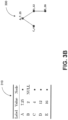
- FIG. 3B depicts a result of executing an example of a hierarchical window function for computing an average, in accordance with some example embodiments.
- the hierarchical data engine 115 may execute a hierarchical window function to compute an average over the hierarchy 300 which, as noted may be stored in the database 120 as the table 310. That is, the hierarchy 300 shown in FIG. 3B may be an average of the hierarchy 300 shown in FIG. 3A .
- the hierarchical data engine 115 may generate the visiting sequence data structure to include a row vector [ C, E, D, A ], which may enumerate the rows in the table 310 in the order (e.g., bottom up) in which the nodes in the hierarchy 300 are to be traversed for executing the hierarchical window function.
- the hierarchical window function may then be executed, based on the visiting sequence data structure, by iterating over rows in the table 310 in the order specified by the visiting sequence data structure.
- Table 12 below depicts an example of the iterations that may be performed during the execution of the hierarchical window function to determine an average value at each of Node C, Node E, Node D, and Node A in the hierarchy 300.
- the hierarchical data engine 115 may execute a framed hierarchical window function, which may iterate over a limited quantity of levels within a hierarchy. These levels may correspond to the specified frame of the hierarchical window function.
- the hierarchical data engine 115 executing the framed hierarchical window function may determine a summary value for each of the nodes occupying levels within the specified frame but not for the nodes occupying levels outside of the specified frame.
- the summary value that is determined for each of the nodes occupying levels within the specified frame may exclude the values of ancestor nodes and/or descendent nodes occupying levels outside of the specified frame.
- the hierarchical data engine 115 may determine, for each node occupying one of the k quantity of levels, a summary value that does not account for the values of nodes occupying levels outside of the k quantity of levels.
- x' i of an i -th node within the k quantity of levels may be determined based on Equation (3) below.
- x ′ i k x i + x ′ i ⁇ 1 k ⁇ x i ⁇ k ⁇ 1
- the hierarchical data engine 115 may compute a sum for all of the nodes up to the k -th preceding level inclusively and later subtract from those sums the values of the nodes occupying levels above or below the specified frame. To compute an average value for each of the nodes occupying the framed k quantity of levels, the hierarchical data engine 115 may iterate the hierarchy once to generate a sum for each of the nodes occupying the framed k quantity of levels and a second time to determine a total quantity of nodes preceding each of the nodes occupying the framed k quantity of levels.
- the average value at each of the nodes occupying the framed k quantity of levels may be determined, based on Equation (2) above, by at least dividing the sum determined for each of the nodes occupying the framed k quantity of levels with the total quantity of nodes (e.g., the value i + 1) preceding each of the nodes occupying the framed k quantity of levels.
- Table 13 below depicts pseudo programming code implementing a framed hierarchical window function for generating, in a bottom up fashion, a sum at each node occupying a level in a hierarchy that is within a specified frame of the framed hierarchical window function.
- Table 14 below depicts pseudo programming code implementing a framed hierarchical window function for generating, in a top down fashion, a sum at each node occupying a level in a hierarchy that is within a specified frame of the framed hierarchical window function.
- Table 15 depicts pseudo programming code implementing a framed hierarchical window function for generating, in a bottom up fashion, an average value at each node occupying a level in a hierarchy that is within a specified frame of the framed hierarchical window function.
- Table 16 below depicts pseudo programming code implementing a framed hierarchical window function for generating, in a bottom up fashion, an average value at each node occupying a level in a hierarchy that is within a specified frame of the framed hierarchical window function.
- Table 17 below depicts pseudo programming code implementing a framed hierarchical window function for generating, in a bottom up fashion, a maximum value at each node occupying a level in a hierarchy that is within a specified frame of the framed hierarchical window function.
- Table 18 depicts pseudo programming code implementing a framed hierarchical window function for generating, in a bottom up fashion, a maximum value at each node occupying a level in a hierarchy that is within a specified frame of the framed hierarchical window function.
- a hierarchical window function may be executed on separate partitions of a hierarchy, which may be divided based on the values of one or more of the labels associated with each of the nodes.
- the visiting sequence data structure may generated subsequent to the partitioning of the hierarchy such that the visiting sequence data structure may include row vector enumerating the order for traversing the nodes occupying each partition of the hierarchy.
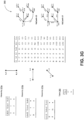
- FIG. 3C depicts a result of executing an example of a partitioned hierarchical window function to determine a sum for each node in two separate partitions of the parent-child hierarchy 250. As shown in FIG.
- the parent-child hierarchy 250 may be divided into a first partition 320a and a second partition 320b.
- the hierarchical data engine 115 may execute a hierarchical window function to determine a sum at each of the nodes within the first partition 320a and the second partition 320b.
- the hierarchical data engine 115 may generate a visiting sequence data structure for each of the first partition 320a and the second partition 320b.
- the hierarchical data engine 115 may execute the hierarchical window function by at least traversing each of the first partition 320a and the second partition 320b in an order specified by the respective visiting sequence data structures of the first partition 320a and the second partition 320b.
- the partitioning of the parent-child hierarchy 250 may alter the structure that is present in the parent-child hierarchy 250.
- the partitioning of the parent-child hierarchy 250 may alter the parent-child and sibling relationships that are present in the parent-child hierarchy 250 such that the nodes in the first partition 320a and the second partition 320b may be associated with different parent nodes, children nodes, and/or sibling nodes than before the partitioning.
- the technique for partitioning the parent-child hierarchy 250 may be dependent upon the indexing scheme used to generate the representation of the parent-child hierarchy for storage in the database 120.
- applying an indexing scheme to the parent-child hierarchy 250 may include assigning, to each node within the parent-child hierarchy 250, one or more labels that may enable and/or optimize the identification of parent nodes, children nodes, and/or sibling nodes.
- a Pre, Post, Parent, and Level (PPPL) indexing scheme may be applied in order to assign, to each node within the parent-child hierarchy 250, one or more labels that may enable and/or optimize the identification of parent nodes, children nodes, and/or sibling nodes.
- FIG. 3D depicts the parent-child hierarchy 250 being indexed in accordance with a Pre, Post, Parent, and Level (PPPL) indexing scheme, in accordance with some example embodiments. As shown in FIG.
- applying a Pre, Post, Parent, and (Level) indexing scheme may assign, to each node in the parent-child hierarchy 250, a four-tuple label that includes a pre-order number, a post-order number, a parent pre-order number, and a level.
- the level of the nodes l , m , and n may correspond to a distance of each node from a root node of the hierarchy. If a pre-order traversal of the hierarchy visits the node l before the node m and the node m before the node n, then the nodes may be assigned pre-order numbers having the property L pre ⁇ M pre ⁇ N pre . Alternatively, if a post-order traversal of the hierarchy visits the node l before the node m and the node m before the node n , then the nodes may be assigned post-order numbers having the property L post ⁇ M post ⁇ N post .
- partitioning the parent-child hierarchy 250 may require modifying the parent pre-order numbers and the levels of the nodes in the parent-child hierarchy 250 but not the pre-order number labels and the post-order number labels of the nodes. It should be appreciated the performance of a hierarchical window function may not require the levels of the nodes in the parent-child hierarchy 250. Moreover, the exact pre-order numbers and post- order numbers of the nodes may also be irrelevant for hierarchical window functions as long as these numbers remain in the same order such that a node having a greater pre-order number and/or post-order number is visited after a node having a lesser pre-order number and/or post-order number.
- PPPL Pre, Post, Parent, and Level
- the partitioning of the parent-child hierarchy 250 may require computing a map of pre-order numbers to the rows of a table storing the parent-child hierarchy 250.
- Table 19 below depicts pseudo programming code for computing the map of pre-order numbers to the rows of the table.
- the map of pre-order numbers to rows of the table storing the parent-child hierarchy 250 may be computed by iterating over the table and storing, in the array, the pre-order number of each row that corresponds to a node in the parent-child hierarchy 250.
- the partitioning of the parent-child hierarchy 250 may include traversing the parent-child hierarchy 250 to determine the parent node for each node in the first partition 320a and the second partition 320b.
- Table 20 below depicts pseudo programming code for partitioning a hierarchy.
- the portioning of the parent-child hierarchy 250 may include iterating over the corresponding table and replacing each row that corresponds to a parent node belonging to another partition with a row corresponding to a next ancestor node in the same partition.
- Table 21 depicts the iterations that are performed to partition the parent-child hierarchy 250 into the first partition 320a and the second partition 320b.
- the iterations may include visiting Node A, Node C, Node D, Node E, Node F, Node G, and Node H.
- the hierarchical data engine 115 may identify Node B as a root node of the first partition 320a.
- the hierarchical data engine 115 may change the parent node of Node E from Node B to Node A.
- Visit E; E.Parent A.Pre; Iteration 6. Visit F; Iteration 7. Visit G; Iteration 8. Visit H;
- the hierarchical data engine 115 may support a make node function in order to return new hierarchies corresponding to the first partition 320a and the second partition 320b that are formed by dividing the parent-child hierarchy 250.
- the make node function may take one or many node columns as parameters and returns a new hierarchy containing the nodes appearing in these node columns. These parameters may be passed directly as arguments to the make node function or passed as part of the HIERARCHIZE BY clause in the same manner as for other hierarchical window functions.
- the parameters of the make node function may also include one or more partitioning columns, which may be passed to the make node function as part of the PARTITION_BY clause of the corresponding hierarchical window function.
- Cartesian products may be associative and commutative. As shown in Equations (4) and (5) below, this means that the result of joining two or more tables or graphs does not depend on order in which the tables or graphs are joined. The result of joining two tables further does not depend on whether a first table is joined with a second table or the second table is joined with the first table.
- G ⁇ H ⁇ J G ⁇ H ⁇ J
- G ⁇ H H ⁇ G
- FIG. 3E depicts the joining of a first hierarchy 340a and a second hierarchy 340b to form a result 340c.
- the result 340c may be generated by determining the Cartesian product of the tables corresponding to each of the first hierarchy 340a and the second hierarchy 340b.
- the hierarchical data engine 115 may support determining the rooted product of two or more hierarchies.
- the rooted product of G o H of a hierarchy G and another hierarchy H may be defined as a graph obtained taking one copy of the hierarchy G and n copies of hierarchy H and identifying, for every vertex u i of the hierarchy G, the vertex u i with the root node of the i th copy of the hierarchy H for every 1 ⁇ i ⁇ n.
- the rooted product G o H may be associative but not commutative.
- the rooted product of two or more hierarchies may be significant because the rooted product of two or more hierarchies remains a hierarchy that preserves the directionality present in the original hierarchies without creating any cycles and preserves the quantity of parent nodes with the exception of the root of the second hierarchy.
- the hierarchical data engine 115 may be configured to perform a hierarchical window function to generate a summary value (e.g., an average, a count, a maximum, a medium, a minimum, a mode, a range, a sum, and/or the like) for each node in a rooted product of two or more hierarchies. For example, FIG.
- FIG. 3F depicts the result 350 of performing a hierarchical window function to determine a sum at each node in a rooted product of the first hierarchy 340a and the second hierarchy 340b shown in FIG. 3E .
- FIG. 3G depicts the result 360 of performing a hierarchical window function to determine a sum for each node in the rooted product of a first hierarchy 370a, a second hierarchy 370b, a third hierarchy 370c, and a table 380.
- FIG. 4 depicts a flowchart illustrating a process 400 for processing hierarchical data, in accordance with some example embodiments.
- the process 400 may be performed by the database management system 110, for example, the hierarchical data engine 115.
- the hierarchical data engine 115 may perform the process 400 in order to execute a hierarchical window function to determine, for each node occupying a level with a specified frame of the hierarchical window function, a summary value including, for example, an average, a count, a maximum, a medium, a minimum, a mode, a range, a sum, and/or the like.
- the hierarchical data engine 115 may generate, based at least on a representation of a hierarchy stored in a database, a visiting sequence data structure that includes a row vector specifying an order for traversing a table in which each row of the table corresponds to a node in the hierarchy.
- the hierarchical data engine 115 may generate a visiting sequence data structure storing information that enables the execution of a hierarchical window function.
- the visiting sequence data structure may. include a row vector enumerating the rows of the table 150 in an order corresponding to an order in which the nodes in the hierarchical data 125 are to be traversed during the execution of the hierarchical window function. For example, for the parent-child hierarchy 250 shown in FIG.
- the hierarchical data engine 150 may generate a row vector [ A, B, C, D, E, F, G, H ] or [ A, C, B, F, E, D, G, H ] for a top-down traversal of the parent-child hierarchy 250.
- the hierarchical data engine 150 may generate a row vector [ H, D, E, F, G, C, B, A ] or [ H, G, D, F, E, B, C, A ] for a bottom-up traversal of the parent-child hierarchy 250.
- the visiting sequence data structure may include another row vector enumerating the rows in the table 150 that correspond to parent nodes and/or children nodes in the hierarchical data 150.
- the hierarchical data engine 150 may generate a row vector [ A , B , C , E ] identifying the rows in the table 150 corresponding to parent nodes present in the hierarchical data 125 and/or a row vector [ A, B, C, E ] identifying the rows in the table 150 corresponding to children nodes present in the hierarchical data 125.
- the visiting sequence data structure may include a row vector storing, for each row in the table 150, the rows in the table 150 corresponding to the k- th ancestor node in the hierarchical data 125.
- the hierarchical data engine 115 may generate this row vector in order to execute a framed hierarchical window function in which the iterations of the hierarchical window function are bound to a k quantity of levels preceding or a k quantity of levels subsequent to each of some but not all of the nodes in the hierarchical data 125.
- the hierarchical data engine 115 may execute a hierarchical window function by at least iterating through the rows in the table in the order specified by row vector and determining, for each corresponding node occupying a level within a specified frame of the hierarchical window function, a summary value corresponding to a value of the node and a respective values of one or more descendent nodes.
- the hierarchical window function may be executed to perform an aggregation to generate a summary value for each of at least some of the nodes in the hierarchical data 125 including, for example, an average, a count, a maximum, a medium, a minimum, a mode, a range, a sum, and/or the like.
- the hierarchical window function may be executed based on the visiting sequence data structure which, as noted, may include a row vector enumerating the rows in the table 150 in an order corresponding to the order in which the nodes in the hierarchical data 125 are to be traversed during the execution of the hierarchical window function.
- the hierarchical data engine 115 may execute a hierarchical window function to compute a sum over the hierarchy 300, which may be stored in the database 120 as the table 310.
- the hierarchical data engine 115 may generate the visiting sequence data structure to include a row vector [ A, C, D, E ], which may enumerate the rows in the table 310 in the order (e.g., top down) in which the nodes in the hierarchy 300 are to be traversed for executing the hierarchical window function.
- Node B may be excluded from the visiting sequence data structure because Node B is not part of the hierarchy 300
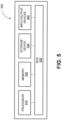
- FIG. 5 depicts a block diagram illustrating a computing system 500 consistent with implementations of the current subject matter.
- the computing system 500 can be used to implement the database management system 110 and/or any components therein.
- the computing system 500 can include a processor 510, a memory 520, a storage device 530, and input/output devices 540.
- the processor 510, the memory 520, the storage device 530, and the input/output devices 540 can be interconnected via a system bus 550.
- the processor 510 is capable of processing instructions for execution within the computing system 500. Such executed instructions can implement one or more components of, for example, the database management system 110.
- the processor 510 can be a single-threaded processor. Alternately, the processor 510 can be a multi-threaded processor.
- the processor 510 is capable of processing instructions stored in the memory 520 and/or on the storage device 530 to display graphical information for a user interface provided via the input/output device 540.
- the memory 520 is a computer readable medium such as volatile or non-volatile that stores information within the computing system 500.
- the memory 520 can store data structures representing configuration object databases, for example.
- the storage device 530 is capable of providing persistent storage for the computing system 500.
- the storage device 530 can be a floppy disk device, a hard disk device, an optical disk device, or a tape device, or other suitable persistent storage means.
- the input/output device 540 provides input/output operations for the computing system 500.
- the input/output device 540 includes a keyboard and/or pointing device.
- the input/output device 540 includes a display unit for displaying graphical user interfaces.
- the input/output device 540 can provide input/output operations for a network device.
- the input/output device 540 can include Ethernet ports or other networking ports to communicate with one or more wired and/or wireless networks (e.g., a local area network (LAN), a wide area network (WAN), the Internet).
- LAN local area network
- WAN wide area network
- the Internet the Internet
- the computing system 500 can be used to execute various interactive computer software applications that can be used for organization, analysis and/or storage of data in various formats.
- the computing system 500 can be used to execute any type of software applications.
- These applications can be used to perform various functionalities, e.g., planning functionalities (e.g., generating, managing, editing of spreadsheet documents, word processing documents, and/or any other objects, etc.), computing functionalities, communications functionalities, etc.
- the applications can include various add-in functionalities (e.g., SAP Integrated Business Planning as an add-in for a spreadsheet and/or other type of program) or can be standalone computing products and/or functionalities.
- the functionalities can be used to generate the user interface provided via the input/output device 540.
- the user interface can be generated and presented to a user by the computing system 500 (e.g., on a computer screen monitor, etc.).
- One or more aspects or features of the subject matter described herein can be realized in digital electronic circuitry, integrated circuitry, specially designed ASICs, field programmable gate arrays (FPGAs) computer hardware, firmware, software, and/or combinations thereof.
- These various aspects or features can include implementation in one or more computer programs that are executable and/or interpretable on a programmable system including at least one programmable processor, which can be special or general purpose, coupled to receive data and instructions from, and to transmit data and instructions to, a storage system, at least one input device, and at least one output device.
- the programmable system or computing system may include clients and servers.
- a client and server are generally remote from each other and typically interact through a communication network. The relationship of client and server arises by virtue of computer programs running on the respective computers and having a client-server relationship to each other.
- machine-readable medium refers to any computer program product, apparatus and/or device, such as for example magnetic discs, optical disks, memory, and Programmable Logic Devices (PLDs), used to provide machine instructions and/or data to a programmable processor, including a machine-readable medium that receives machine instructions as a machine-readable signal.
- machine-readable signal refers to any signal used to provide machine instructions and/or data to a programmable processor.
- the machine-readable medium can store such machine instructions non-transitorily, such as for example as would a non-transient solid-state memory or a magnetic hard drive or any equivalent storage medium.
- the machine-readable medium can alternatively or additionally store such machine instructions in a transient manner, such as for example, as would a processor cache or other random access memory associated with one or more physical processor cores.
- one or more aspects or features of the subject matter described herein can be implemented on a computer having a display device, such as for example a cathode ray tube (CRT) or a liquid crystal display (LCD) or a light emitting diode (LED) monitor for displaying information to the user and a keyboard and a pointing device, such as for example a mouse or a trackball, by which the user may provide input to the computer.
- a display device such as for example a cathode ray tube (CRT) or a liquid crystal display (LCD) or a light emitting diode (LED) monitor for displaying information to the user and a keyboard and a pointing device, such as for example a mouse or a trackball, by which the user may provide input to the computer.
- CTR cathode ray tube
- LCD liquid crystal display
- LED light emitting diode
- keyboard and a pointing device such as for example a mouse or a trackball
- Other kinds of devices can be used to provide
- phrases such as "at least one of” or “one or more of” may occur followed by a conjunctive list of elements or features.
- the term “and/or” may also occur in a list of two or more elements or features. Unless otherwise implicitly or explicitly contradicted by the context in which it used, such a phrase is intended to mean any of the listed elements or features individually or any of the recited elements or features in combination with any of the other recited elements or features.
- the phrases “at least one of A and B;” “one or more of A and B;” and “A and/or B” are each intended to mean "A alone, B alone, or A and B together.”
- a similar interpretation is also intended for lists including three or more items.
- phrases “at least one of A, B, and C;” “one or more of A, B, and C;” and “A, B, and/or C” are each intended to mean “A alone, B alone, C alone, A and B together, A and C together, B and C together, or A and B and C together.”
- Use of the term “based on,” above and in the claims is intended to mean, “based at least in part on,” such that an unrecited feature or element is also permissible.
Landscapes
- Engineering & Computer Science (AREA)
- Theoretical Computer Science (AREA)
- Databases & Information Systems (AREA)
- Data Mining & Analysis (AREA)
- Physics & Mathematics (AREA)
- General Engineering & Computer Science (AREA)
- General Physics & Mathematics (AREA)
- Software Systems (AREA)
- Computational Linguistics (AREA)
- Information Retrieval, Db Structures And Fs Structures Therefor (AREA)
Claims (15)
- System (100, 500), umfassend:zumindest einen Datenprozessor (510); undzumindest einen Speicher (520), der Anweisungen speichert, die, wenn sie von dem zumindest einen Datenprozessor (510) ausgeführt werden, in Operationen resultieren, die umfassen:Generieren, basierend auf zumindest einer Darstellung einer ersten Hierarchie (200, 250, 260, 300, 340a, 370a), die in einer Datenbank (120) gespeichert ist, einer Besuchssequenz-Datenstruktur, wobei die erste Hierarchie (200, 250, 260, 300, 340a, 370a) in einer Tabelle (150, 310, 330) in der Datenbank (120) gespeichert ist, wobei jede einer Mehrzahl von Zeilen der Tabelle (150, 310, 330) einem einer Mehrzahl von Knoten (270a-g) der ersten Hierarchie (200, 250, 260, 300, 340a, 370a) entspricht, und die Besuchssequenz-Datenstruktur einen ersten Zeilenvektor enthält, der eine Reihenfolge zum Durchlaufen der Mehrzahl von Knoten (270a-g) in der ersten Hierarchie (200, 250, 260, 300, 340a, 370a) spezifiziert; undAusführen einer hierarchischen Fensterfunktion zumindest durch Iterieren durch die Mehrzahl von Zeilen der Tabelle (150, 310, 330) in Übereinstimmung mit der durch den ersten Zeilenvektor spezifizierten Reihenfolge und Bestimmen, für einen ersten Knoten in der ersten Hierarchie (200, 250, 260, 300, 340a, 370a), eines Summenwerts, der einem ersten Wert des ersten Knotens und einem zweiten Wert eines zweiten Knotens entspricht, der von dem ersten Knoten abstammt.
- System (100, 500) nach Anspruch 1, wobei der Summenwert einen Durchschnitt, eine Zählung, ein Maximum, ein Mittel, ein Minimum, einen Modus, einen Bereich und/oder eine Summe des ersten Werts des ersten Knotens und des zweiten Werts des zweiten Knotens umfasst.
- System (100, 500) nach einem der vorhergehenden Ansprüche, wobei die Ausführung der hierarchischen Fensterfunktion ferner ein Bestimmen, für einen dritten Knoten, der einen Parent-Knoten bzw. übergeordneten Knoten des ersten Knotens und/oder des zweiten Knotens umfasst, eines weiteren Summenwerts umfasst, der einem dritten Wert des dritten Knotens und zumindest einem des ersten Werts des ersten Knotens und des zweiten Werts des zweiten Knotens entspricht.
- System (100, 500) nach einem der vorhergehenden Ansprüche, wobei die Besuchssequenz-Datenstruktur ferner einen zweiten Zeilenvektor enthält, der eine oder mehrere Zeilen in der Tabelle (150, 310, 330) aufzählt, die Parent-Knoten bzw. übergeordneten Knoten in der ersten Hierarchie (200, 250, 260, 300, 340a, 370a) oder Children-Knoten bzw. untergeordnete Knoten in der ersten Hierarchie (200, 250, 260, 300, 340a, 370a) entsprechen.
- System (100, 500) nach einem der vorhergehenden Ansprüche, wobei die hierarchische Fensterfunktion mit einem Frame verknüpft ist, der eine oder mehrere Ebenen der ersten Hierarchie (200, 250, 260, 300, 340a, 370a) umfasst, wobei der Summenwert basierend auf dem ersten Wert des ersten Knotens und dem zweiten Wert des zweiten Knotens bestimmt wird, und zwar basierend zumindest auf dem erste Knoten und dass der erste Knoten die eine oder mehreren Ebenen des Frames belegt, und wobei der Summenwert bestimmt wird, ohne dass ein dritter Wert eines dritten Knotens eine Ebene außerhalb des Frames belegt.
- System (100, 500) nach einem der vorhergehenden Ansprüche, wobei das Ausführen der hierarchischen Fensterfunktion ferner ein Iterieren von dem ersten Knoten der ersten Hierarchie (200, 250, 260, 300, 340a, 370a) zu dem zweiten Knoten in der ersten Hierarchie (200, 250, 260, 300, 340a, 370a) umfasst, wobei der zweite Knoten einen Child-Knoten bzw. untergeordneten Knoten des ersten Knotens umfasst, wenn die hierarchische Fensterfunktion in einer Top-down-Reihenfolge ausgeführt wird, und wobei der zweite Knoten einen Parent-Knoten bzw. übergeordneten Knoten des ersten Knotens umfasst, wenn die hierarchische Fensterfunktion in einer Bottom-Up-Reihenfolge ausgeführt wird, oder
wobei die erste Hierarchie (200, 250, 260, 300, 340a, 370a) ein gerootetes Produkt oder ein Join zwischen einer zweiten Hierarchie (340b, 370b) und einer dritten Hierarchie (370c) umfasst. - System (100, 500) nach einem der vorhergehenden Ansprüche, wobei die erste Hierarchie (200, 250, 340a) eine Partition (320) aus einer zweiten Hierarchie (340b, 370b) umfasst, die in die erste Hierarchie (200, 250, 340a) und eine dritte Hierarchie (370c) unterteilt ist, wobei das Ausführen der hierarchischen Fensterfunktion ferner ein Generieren einer weiteren Besuchssequenz-Datenstruktur, die einen zweiten Zeilenvektor enthält, der eine Reihenfolge zum Durchlaufen einer Mehrzahl von Knoten (270a-g) der dritten Hierarchie (370c) spezifiziert, und ein Iterieren durch die Mehrzahl von Knoten (270a-g) der dritten Hierarchie (370c) in der durch den zweiten Zeilenvektor spezifizierten Reihenfolge umfasst, oder
wobei das Ausführen der hierarchischen Fensterfunktion ferner ein Generieren einer zweiten Hierarchie (340b, 370b) umfasst, die eine Partition (320) aus der ersten Hierarchie (200, 250, 260, 300, 340a, 370a) oder ein Ergebnis eines gerooteten Join zwischen den ersten Hierarchie (200, 250, 260, 300, 340a, 370a) und einer dritten Hierarchie (370c) ist. - System (100, 500) nach einem der vorhergehenden Ansprüche, wobei die Darstellung der ersten Hierarchie (200, 250, 260, 300, 340a, 370a) generiert wird, indem zumindest ein Indizierungsschema auf die erste Hierarchie (200, 250, 260, 300, 340a, 370a) angewendet wird, und wobei das Anwenden des Indizierungsschemas ein Zuordnen, zu jedem der Mehrzahl von Knoten (270a-g) der ersten Hierarchie (200, 250, 260, 300, 340a, 370a), einer oder mehrerer Kennzeichnungen bzw. Labels beinhaltet, um eine Identifizierung von Parent-Knoten bzw. übergeordneten Knoten, Children-Knoten bzw. untergeordnete Knoten und Sibling-Knoten bzw. Geschwisterknoten in der ersten Hierarchie (200, 250, 260, 300, 340a, 370a) zu ermöglichen,
wobei das Indizierungsschema ein Pre, Post, Parent, und Level (PPPL)- Indizierungsschema und/oder ein Pre, Size, und Level (PSL)-Indizierungsschema umfasst. - Computerimplementiertes Verfahren, umfassend:Generieren, basierend auf zumindest einer Darstellung einer ersten Hierarchie (200, 250, 260, 300, 340a, 370a), die in einer Datenbank (120) gespeichert wird, einer Besuchssequenz-Datenstruktur, wobei die erste Hierarchie (200, 250, 260, 300, 340a, 370a) in einer Tabelle (150, 310, 330) in der Datenbank (120) gespeichert wird, wobei jede einer Mehrzahl von Zeilen der Tabelle (150, 310, 330) einem einer Mehrzahl von Knoten (270a-g) der ersten Hierarchie (200, 250, 260, 300, 340a, 370a) entspricht, und die Besuchssequenz-Datenstruktur einen ersten Zeilenvektor enthält, der eine Reihenfolge zum Durchlaufen der Mehrzahl von Knoten (270a-g) in der ersten Hierarchie (200, 250, 260, 300, 340a, 370a) spezifiziert; undAusführen einer hierarchischen Fensterfunktion zumindest durch Iterieren durch die Mehrzahl von Zeilen der Tabelle (150, 310, 330) in Übereinstimmung mit der durch den ersten Zeilenvektor spezifizierten Reihenfolge und Bestimmen, für einen ersten Knoten in der ersten Hierarchie (200, 250, 260, 300, 340a, 370a), eines Summenwerts, der einem ersten Wert des ersten Knotens und einem zweiten Wert eines zweiten Knotens entspricht, der von dem ersten Knoten abstammt.
- Verfahren nach Anspruch 9, wobei der Summenwert einen Durchschnitt, eine Zählung, ein Maximum, ein Mittel, ein Minimum, einen Modus, einen Bereich und/oder eine Summe des ersten Werts des ersten Knotens und des zweiten Werts des zweiten Knotens umfasst.
- Verfahren nach Anspruch 9 oder 10, wobei die Ausführung der hierarchischen Fensterfunktion ferner ein Bestimmen, für einen dritten Knoten, der einen Parent-Knoten bzw. übergeordneten Knoten des ersten Knotens und/oder des zweiten Knotens umfasst, eines weiteren Summenwerts umfasst, der einem dritten Wert des dritten Knotens und zumindest einem des ersten Werts des ersten Knotens und des zweiten Werts des zweiten Knotens entspricht.
- Verfahren nach einem der Ansprüche 9 bis 11, wobei die Besuchssequenz-Datenstruktur ferner einen zweiten Zeilenvektor enthält, der eine oder mehrere Zeilen in der Tabelle (150, 310, 330) aufzählt, die Parent-Knoten bzw. übergeordneten Knoten in der ersten Hierarchie (200, 250, 260, 300, 340a, 370a) oder Children-Knoten bzw. untergeordnete Knoten in der ersten Hierarchie (200, 250, 260, 300, 340a, 370a) entsprechen.
- Verfahren nach einem der Ansprüche 9 bis 12, wobei die hierarchische Fensterfunktion mit einem Frame verknüpft ist, der eine oder mehrere Ebenen der ersten Hierarchie (200, 250, 260, 300, 340a, 370a) umfasst, wobei der Summenwert basierend auf dem ersten Wert des ersten Knotens und dem zweiten Wert des zweiten Knotens bestimmt wird, und zwar basierend zumindest auf dem erste Knoten und dass der erste Knoten die eine oder mehreren Ebenen des Frames belegt, und wobei der Summenwert bestimmt wird, ohne dass ein dritter Wert eines dritten Knotens eine Ebene außerhalb des Frames belegt.
- Verfahren nach einem der Ansprüche 9 bis 13, wobei das Ausführen der hierarchischen Fensterfunktion ferner ein Iterieren von dem ersten Knoten der ersten Hierarchie (200, 250, 260, 300, 340a, 370a) zu dem zweiten Knoten in der ersten Hierarchie (200, 250, 260, 300, 340a, 370a) umfasst, wobei der zweite Knoten einen Child-Knoten bzw. untergeordneten Knoten des ersten Knotens umfasst, wenn die hierarchische Fensterfunktion in einer Top-down-Reihenfolge ausgeführt wird, und wobei der zweite Knoten einen Parent-Knoten bzw. übergeordneten Knoten des ersten Knotens umfasst, wenn die hierarchische Fensterfunktion in einer Bottom-Up-Reihenfolge ausgeführt wird.
- Nichtflüchtiges computerlesbares Medium, das Anweisungen speichert, die, wenn sie von zumindest einem Datenprozessor (510) ausgeführt werden, in Operationen resultieren, die umfassen:Generieren, basierend auf zumindest einer Darstellung einer ersten Hierarchie (200, 250, 260, 300, 340a, 370a), die in einer Datenbank (120) gespeichert ist, einer Besuchssequenz-Datenstruktur, wobei die erste Hierarchie (200, 250, 260, 300, 340a, 370a) in einer Tabelle (150, 310, 330) in der Datenbank (120) gespeichert ist, wobei jede einer Mehrzahl von Zeilen der Tabelle (150, 310, 330) einem einer Mehrzahl von Knoten (270a-g) der ersten Hierarchie (200, 250, 260, 300, 340a, 370a) entspricht, und die Besuchssequenz-Datenstruktur einen ersten Zeilenvektor enthält, der eine Reihenfolge zum Durchlaufen der Mehrzahl von Knoten (270a-g) in der ersten Hierarchie (200, 250, 260, 300, 340a, 370a) spezifiziert; undAusführen einer hierarchischen Fensterfunktion zumindest durch Iterieren durch die Mehrzahl von Zeilen der Tabelle (150, 310, 330) in Übereinstimmung mit der durch den ersten Zeilenvektor spezifizierten Reihenfolge und Bestimmen, für einen ersten Knoten in der ersten Hierarchie (200, 250, 260, 300, 340a, 370a), eines Summenwerts, der einem ersten Wert des ersten Knotens und einem zweiten Wert eines zweiten Knotens entspricht, der von dem ersten Knoten abstammt.
Applications Claiming Priority (2)
| Application Number | Priority Date | Filing Date | Title |
|---|---|---|---|
| US201862656146P | 2018-04-11 | 2018-04-11 | |
| US16/274,903 US11544267B2 (en) | 2018-04-11 | 2019-02-13 | Hierarchical window function |
Publications (2)
| Publication Number | Publication Date |
|---|---|
| EP3553671A1 EP3553671A1 (de) | 2019-10-16 |
| EP3553671B1 true EP3553671B1 (de) | 2023-03-01 |
Family
ID=66102954
Family Applications (1)
| Application Number | Title | Priority Date | Filing Date |
|---|---|---|---|
| EP19168129.5A Active EP3553671B1 (de) | 2018-04-11 | 2019-04-09 | Hierarchische fensterfunktion |
Country Status (2)
| Country | Link |
|---|---|
| US (1) | US11544267B2 (de) |
| EP (1) | EP3553671B1 (de) |
Families Citing this family (4)
| Publication number | Priority date | Publication date | Assignee | Title |
|---|---|---|---|---|
| KR102491925B1 (ko) * | 2021-02-26 | 2023-01-26 | 고려대학교 산학협력단 | 프로그램 분석 장치 및 방법 |
| US12067013B2 (en) * | 2021-06-29 | 2024-08-20 | Microsoft Technology Licensing, Llc. | Data aggregation in a hierarchy for query execution |
| US11928123B2 (en) * | 2021-07-02 | 2024-03-12 | Virtualitics, Inc. | Systems and methods for network explainability |
| US20250315607A1 (en) * | 2024-04-08 | 2025-10-09 | John Kinneman Hasley | System, method, and computer program product for vectorizing and analyzing text character data |
Citations (1)
| Publication number | Priority date | Publication date | Assignee | Title |
|---|---|---|---|---|
| US7412444B2 (en) * | 2004-02-11 | 2008-08-12 | Idx Systems Corporation | Efficient indexing of hierarchical relational database records |
Family Cites Families (8)
| Publication number | Priority date | Publication date | Assignee | Title |
|---|---|---|---|---|
| US8868544B2 (en) * | 2002-04-26 | 2014-10-21 | Oracle International Corporation | Using relational structures to create and support a cube within a relational database system |
| US7171427B2 (en) * | 2002-04-26 | 2007-01-30 | Oracle International Corporation | Methods of navigating a cube that is implemented as a relational object |
| US9195699B2 (en) * | 2003-08-08 | 2015-11-24 | Oracle International Corporation | Method and apparatus for storage and retrieval of information in compressed cubes |
| US9311381B2 (en) * | 2013-12-30 | 2016-04-12 | Bmc Software Inc. | Lifecycle reference partitioning for database objects |
| US9852184B2 (en) * | 2014-11-03 | 2017-12-26 | Sap Se | Partition-aware distributed execution of window operator |
| US10565179B2 (en) * | 2016-07-18 | 2020-02-18 | Sap Se | Hierarchical data grouping in main-memory relational databases |
| US10545974B2 (en) * | 2016-07-18 | 2020-01-28 | Sap Se | Hierarchical window database query execution |
| US20190377801A1 (en) * | 2018-06-11 | 2019-12-12 | Deloitte Development Llc | Relational data model for hierarchical databases |
-
2019
- 2019-02-13 US US16/274,903 patent/US11544267B2/en active Active
- 2019-04-09 EP EP19168129.5A patent/EP3553671B1/de active Active
Patent Citations (1)
| Publication number | Priority date | Publication date | Assignee | Title |
|---|---|---|---|---|
| US7412444B2 (en) * | 2004-02-11 | 2008-08-12 | Idx Systems Corporation | Efficient indexing of hierarchical relational database records |
Also Published As
| Publication number | Publication date |
|---|---|
| US20190317939A1 (en) | 2019-10-17 |
| US11544267B2 (en) | 2023-01-03 |
| EP3553671A1 (de) | 2019-10-16 |
Similar Documents
| Publication | Publication Date | Title |
|---|---|---|
| JP7712998B2 (ja) | 系統メタデータの生成、アクセス、及び表示 | |
| Angles et al. | An introduction to graph data management | |
| US11681716B2 (en) | Extended path finding operations on graph data | |
| US10762068B2 (en) | Virtual columns to expose row specific details for query execution in column store databases | |
| US11544267B2 (en) | Hierarchical window function | |
| US20130235031A1 (en) | Fully parallel in-place construction of 3d acceleration structures in a graphics processing unit | |
| US10839012B2 (en) | Adaptable adjacency structure for querying graph data | |
| JP2022548605A (ja) | 動的なデータベースクエリを伴うスプレッドシート | |
| US11556532B2 (en) | Hash trie based optimization of database operations | |
| CN116964571A (zh) | 对rdbms中存储的聚合存储数据全面支持多值、多字段、多级别、多位置功能索引的技术 | |
| US11500935B2 (en) | Index for traversing hierarchical data | |
| US20180357278A1 (en) | Processing aggregate queries in a graph database | |
| US8694918B2 (en) | Conveying hierarchical elements of a user interface | |
| US10545874B2 (en) | Reclamation of cache resources | |
| US10685079B2 (en) | Parsing nested javascript object notation requests | |
| US12380108B2 (en) | Table user-defined function for graph data processing | |
| US10558652B2 (en) | Merging multiproviders in a database calculation scenario | |
| US20230169114A1 (en) | Ad hoc processing of graph data | |
| US11710056B2 (en) | Learning model based recommendation engine | |
| US8943040B1 (en) | Using a table to track whether a dynamic partitioning condition evaluates to true | |
| US10810263B2 (en) | User interface for accessing hierarchical data | |
| Pokorny et al. | Big graph storage, processing and visualization | |
| US10810259B2 (en) | Graph data derivatives | |
| CN119149567A (zh) | 用于数据集的新增字段访问方法、系统及电子设备 |
Legal Events
| Date | Code | Title | Description |
|---|---|---|---|
| PUAI | Public reference made under article 153(3) epc to a published international application that has entered the european phase |
Free format text: ORIGINAL CODE: 0009012 |
|
| STAA | Information on the status of an ep patent application or granted ep patent |
Free format text: STATUS: THE APPLICATION HAS BEEN PUBLISHED |
|
| AK | Designated contracting states |
Kind code of ref document: A1 Designated state(s): AL AT BE BG CH CY CZ DE DK EE ES FI FR GB GR HR HU IE IS IT LI LT LU LV MC MK MT NL NO PL PT RO RS SE SI SK SM TR |
|
| AX | Request for extension of the european patent |
Extension state: BA ME |
|
| STAA | Information on the status of an ep patent application or granted ep patent |
Free format text: STATUS: REQUEST FOR EXAMINATION WAS MADE |
|
| 17P | Request for examination filed |
Effective date: 20200416 |
|
| RBV | Designated contracting states (corrected) |
Designated state(s): AL AT BE BG CH CY CZ DE DK EE ES FI FR GB GR HR HU IE IS IT LI LT LU LV MC MK MT NL NO PL PT RO RS SE SI SK SM TR |
|
| STAA | Information on the status of an ep patent application or granted ep patent |
Free format text: STATUS: EXAMINATION IS IN PROGRESS |
|
| 17Q | First examination report despatched |
Effective date: 20210408 |
|
| GRAP | Despatch of communication of intention to grant a patent |
Free format text: ORIGINAL CODE: EPIDOSNIGR1 |
|
| STAA | Information on the status of an ep patent application or granted ep patent |
Free format text: STATUS: GRANT OF PATENT IS INTENDED |
|
| INTG | Intention to grant announced |
Effective date: 20221114 |
|
| GRAS | Grant fee paid |
Free format text: ORIGINAL CODE: EPIDOSNIGR3 |
|
| GRAA | (expected) grant |
Free format text: ORIGINAL CODE: 0009210 |
|
| STAA | Information on the status of an ep patent application or granted ep patent |
Free format text: STATUS: THE PATENT HAS BEEN GRANTED |
|
| AK | Designated contracting states |
Kind code of ref document: B1 Designated state(s): AL AT BE BG CH CY CZ DE DK EE ES FI FR GB GR HR HU IE IS IT LI LT LU LV MC MK MT NL NO PL PT RO RS SE SI SK SM TR |
|
| REG | Reference to a national code |
Ref country code: GB Ref legal event code: FG4D |
|
| REG | Reference to a national code |
Ref country code: CH Ref legal event code: EP Ref country code: AT Ref legal event code: REF Ref document number: 1551490 Country of ref document: AT Kind code of ref document: T Effective date: 20230315 |
|
| REG | Reference to a national code |
Ref country code: DE Ref legal event code: R096 Ref document number: 602019025730 Country of ref document: DE |
|
| REG | Reference to a national code |
Ref country code: IE Ref legal event code: FG4D |
|
| REG | Reference to a national code |
Ref country code: LT Ref legal event code: MG9D |
|
| REG | Reference to a national code |
Ref country code: NL Ref legal event code: MP Effective date: 20230301 |
|
| PG25 | Lapsed in a contracting state [announced via postgrant information from national office to epo] |
Ref country code: RS Free format text: LAPSE BECAUSE OF FAILURE TO SUBMIT A TRANSLATION OF THE DESCRIPTION OR TO PAY THE FEE WITHIN THE PRESCRIBED TIME-LIMIT Effective date: 20230301 Ref country code: NO Free format text: LAPSE BECAUSE OF FAILURE TO SUBMIT A TRANSLATION OF THE DESCRIPTION OR TO PAY THE FEE WITHIN THE PRESCRIBED TIME-LIMIT Effective date: 20230601 Ref country code: LV Free format text: LAPSE BECAUSE OF FAILURE TO SUBMIT A TRANSLATION OF THE DESCRIPTION OR TO PAY THE FEE WITHIN THE PRESCRIBED TIME-LIMIT Effective date: 20230301 Ref country code: LT Free format text: LAPSE BECAUSE OF FAILURE TO SUBMIT A TRANSLATION OF THE DESCRIPTION OR TO PAY THE FEE WITHIN THE PRESCRIBED TIME-LIMIT Effective date: 20230301 Ref country code: HR Free format text: LAPSE BECAUSE OF FAILURE TO SUBMIT A TRANSLATION OF THE DESCRIPTION OR TO PAY THE FEE WITHIN THE PRESCRIBED TIME-LIMIT Effective date: 20230301 Ref country code: ES Free format text: LAPSE BECAUSE OF FAILURE TO SUBMIT A TRANSLATION OF THE DESCRIPTION OR TO PAY THE FEE WITHIN THE PRESCRIBED TIME-LIMIT Effective date: 20230301 |
|
| REG | Reference to a national code |
Ref country code: AT Ref legal event code: MK05 Ref document number: 1551490 Country of ref document: AT Kind code of ref document: T Effective date: 20230301 |
|
| PG25 | Lapsed in a contracting state [announced via postgrant information from national office to epo] |
Ref country code: SE Free format text: LAPSE BECAUSE OF FAILURE TO SUBMIT A TRANSLATION OF THE DESCRIPTION OR TO PAY THE FEE WITHIN THE PRESCRIBED TIME-LIMIT Effective date: 20230301 Ref country code: PL Free format text: LAPSE BECAUSE OF FAILURE TO SUBMIT A TRANSLATION OF THE DESCRIPTION OR TO PAY THE FEE WITHIN THE PRESCRIBED TIME-LIMIT Effective date: 20230301 Ref country code: NL Free format text: LAPSE BECAUSE OF FAILURE TO SUBMIT A TRANSLATION OF THE DESCRIPTION OR TO PAY THE FEE WITHIN THE PRESCRIBED TIME-LIMIT Effective date: 20230301 Ref country code: GR Free format text: LAPSE BECAUSE OF FAILURE TO SUBMIT A TRANSLATION OF THE DESCRIPTION OR TO PAY THE FEE WITHIN THE PRESCRIBED TIME-LIMIT Effective date: 20230602 Ref country code: FI Free format text: LAPSE BECAUSE OF FAILURE TO SUBMIT A TRANSLATION OF THE DESCRIPTION OR TO PAY THE FEE WITHIN THE PRESCRIBED TIME-LIMIT Effective date: 20230301 |
|
| PG25 | Lapsed in a contracting state [announced via postgrant information from national office to epo] |
Ref country code: SM Free format text: LAPSE BECAUSE OF FAILURE TO SUBMIT A TRANSLATION OF THE DESCRIPTION OR TO PAY THE FEE WITHIN THE PRESCRIBED TIME-LIMIT Effective date: 20230301 Ref country code: RO Free format text: LAPSE BECAUSE OF FAILURE TO SUBMIT A TRANSLATION OF THE DESCRIPTION OR TO PAY THE FEE WITHIN THE PRESCRIBED TIME-LIMIT Effective date: 20230301 Ref country code: PT Free format text: LAPSE BECAUSE OF FAILURE TO SUBMIT A TRANSLATION OF THE DESCRIPTION OR TO PAY THE FEE WITHIN THE PRESCRIBED TIME-LIMIT Effective date: 20230703 Ref country code: EE Free format text: LAPSE BECAUSE OF FAILURE TO SUBMIT A TRANSLATION OF THE DESCRIPTION OR TO PAY THE FEE WITHIN THE PRESCRIBED TIME-LIMIT Effective date: 20230301 Ref country code: CZ Free format text: LAPSE BECAUSE OF FAILURE TO SUBMIT A TRANSLATION OF THE DESCRIPTION OR TO PAY THE FEE WITHIN THE PRESCRIBED TIME-LIMIT Effective date: 20230301 Ref country code: AT Free format text: LAPSE BECAUSE OF FAILURE TO SUBMIT A TRANSLATION OF THE DESCRIPTION OR TO PAY THE FEE WITHIN THE PRESCRIBED TIME-LIMIT Effective date: 20230301 |
|
| PG25 | Lapsed in a contracting state [announced via postgrant information from national office to epo] |
Ref country code: SK Free format text: LAPSE BECAUSE OF FAILURE TO SUBMIT A TRANSLATION OF THE DESCRIPTION OR TO PAY THE FEE WITHIN THE PRESCRIBED TIME-LIMIT Effective date: 20230301 Ref country code: IS Free format text: LAPSE BECAUSE OF FAILURE TO SUBMIT A TRANSLATION OF THE DESCRIPTION OR TO PAY THE FEE WITHIN THE PRESCRIBED TIME-LIMIT Effective date: 20230701 |
|
| REG | Reference to a national code |
Ref country code: CH Ref legal event code: PL |
|
| REG | Reference to a national code |
Ref country code: DE Ref legal event code: R097 Ref document number: 602019025730 Country of ref document: DE |
|
| PG25 | Lapsed in a contracting state [announced via postgrant information from national office to epo] |
Ref country code: LU Free format text: LAPSE BECAUSE OF NON-PAYMENT OF DUE FEES Effective date: 20230409 |
|
| PLBE | No opposition filed within time limit |
Free format text: ORIGINAL CODE: 0009261 |
|
| STAA | Information on the status of an ep patent application or granted ep patent |
Free format text: STATUS: NO OPPOSITION FILED WITHIN TIME LIMIT |
|
| REG | Reference to a national code |
Ref country code: BE Ref legal event code: MM Effective date: 20230430 |
|
| PG25 | Lapsed in a contracting state [announced via postgrant information from national office to epo] |
Ref country code: MC Free format text: LAPSE BECAUSE OF FAILURE TO SUBMIT A TRANSLATION OF THE DESCRIPTION OR TO PAY THE FEE WITHIN THE PRESCRIBED TIME-LIMIT Effective date: 20230301 |
|
| PG25 | Lapsed in a contracting state [announced via postgrant information from national office to epo] |
Ref country code: SI Free format text: LAPSE BECAUSE OF FAILURE TO SUBMIT A TRANSLATION OF THE DESCRIPTION OR TO PAY THE FEE WITHIN THE PRESCRIBED TIME-LIMIT Effective date: 20230301 Ref country code: MC Free format text: LAPSE BECAUSE OF FAILURE TO SUBMIT A TRANSLATION OF THE DESCRIPTION OR TO PAY THE FEE WITHIN THE PRESCRIBED TIME-LIMIT Effective date: 20230301 Ref country code: LI Free format text: LAPSE BECAUSE OF NON-PAYMENT OF DUE FEES Effective date: 20230430 Ref country code: DK Free format text: LAPSE BECAUSE OF FAILURE TO SUBMIT A TRANSLATION OF THE DESCRIPTION OR TO PAY THE FEE WITHIN THE PRESCRIBED TIME-LIMIT Effective date: 20230301 Ref country code: CH Free format text: LAPSE BECAUSE OF NON-PAYMENT OF DUE FEES Effective date: 20230430 |
|
| 26N | No opposition filed |
Effective date: 20231204 |
|
| REG | Reference to a national code |
Ref country code: IE Ref legal event code: MM4A |
|
| PG25 | Lapsed in a contracting state [announced via postgrant information from national office to epo] |
Ref country code: BE Free format text: LAPSE BECAUSE OF NON-PAYMENT OF DUE FEES Effective date: 20230430 |
|
| PG25 | Lapsed in a contracting state [announced via postgrant information from national office to epo] |
Ref country code: IE Free format text: LAPSE BECAUSE OF NON-PAYMENT OF DUE FEES Effective date: 20230409 |
|
| PG25 | Lapsed in a contracting state [announced via postgrant information from national office to epo] |
Ref country code: IE Free format text: LAPSE BECAUSE OF NON-PAYMENT OF DUE FEES Effective date: 20230409 |
|
| PG25 | Lapsed in a contracting state [announced via postgrant information from national office to epo] |
Ref country code: IT Free format text: LAPSE BECAUSE OF FAILURE TO SUBMIT A TRANSLATION OF THE DESCRIPTION OR TO PAY THE FEE WITHIN THE PRESCRIBED TIME-LIMIT Effective date: 20230301 |
|
| PG25 | Lapsed in a contracting state [announced via postgrant information from national office to epo] |
Ref country code: BG Free format text: LAPSE BECAUSE OF FAILURE TO SUBMIT A TRANSLATION OF THE DESCRIPTION OR TO PAY THE FEE WITHIN THE PRESCRIBED TIME-LIMIT Effective date: 20230301 |
|
| PG25 | Lapsed in a contracting state [announced via postgrant information from national office to epo] |
Ref country code: BG Free format text: LAPSE BECAUSE OF FAILURE TO SUBMIT A TRANSLATION OF THE DESCRIPTION OR TO PAY THE FEE WITHIN THE PRESCRIBED TIME-LIMIT Effective date: 20230301 |
|
| PGFP | Annual fee paid to national office [announced via postgrant information from national office to epo] |
Ref country code: DE Payment date: 20250422 Year of fee payment: 7 |
|
| PGFP | Annual fee paid to national office [announced via postgrant information from national office to epo] |
Ref country code: GB Payment date: 20250423 Year of fee payment: 7 |
|
| PGFP | Annual fee paid to national office [announced via postgrant information from national office to epo] |
Ref country code: FR Payment date: 20250425 Year of fee payment: 7 |
|
| PG25 | Lapsed in a contracting state [announced via postgrant information from national office to epo] |
Ref country code: CY Free format text: LAPSE BECAUSE OF FAILURE TO SUBMIT A TRANSLATION OF THE DESCRIPTION OR TO PAY THE FEE WITHIN THE PRESCRIBED TIME-LIMIT; INVALID AB INITIO Effective date: 20190409 |
|
| PG25 | Lapsed in a contracting state [announced via postgrant information from national office to epo] |
Ref country code: HU Free format text: LAPSE BECAUSE OF FAILURE TO SUBMIT A TRANSLATION OF THE DESCRIPTION OR TO PAY THE FEE WITHIN THE PRESCRIBED TIME-LIMIT; INVALID AB INITIO Effective date: 20190409 |
|
| PG25 | Lapsed in a contracting state [announced via postgrant information from national office to epo] |
Ref country code: TR Free format text: LAPSE BECAUSE OF FAILURE TO SUBMIT A TRANSLATION OF THE DESCRIPTION OR TO PAY THE FEE WITHIN THE PRESCRIBED TIME-LIMIT Effective date: 20230301 |