EP3552435B1 - Nb-iot-mehrträgerbetrieb in unlizenzierten ism-bändern - Google Patents
Nb-iot-mehrträgerbetrieb in unlizenzierten ism-bändern Download PDFInfo
- Publication number
- EP3552435B1 EP3552435B1 EP18702653.9A EP18702653A EP3552435B1 EP 3552435 B1 EP3552435 B1 EP 3552435B1 EP 18702653 A EP18702653 A EP 18702653A EP 3552435 B1 EP3552435 B1 EP 3552435B1
- Authority
- EP
- European Patent Office
- Prior art keywords
- iot
- unlicensed
- unlicensed spectrum
- carrier
- licensed
- Prior art date
- Legal status (The legal status is an assumption and is not a legal conclusion. Google has not performed a legal analysis and makes no representation as to the accuracy of the status listed.)
- Active
Links
Images
Classifications
-
- H—ELECTRICITY
- H04—ELECTRIC COMMUNICATION TECHNIQUE
- H04W—WIRELESS COMMUNICATION NETWORKS
- H04W48/00—Access restriction; Network selection; Access point selection
- H04W48/08—Access restriction or access information delivery, e.g. discovery data delivery
- H04W48/10—Access restriction or access information delivery, e.g. discovery data delivery using broadcasted information
-
- H—ELECTRICITY
- H04—ELECTRIC COMMUNICATION TECHNIQUE
- H04W—WIRELESS COMMUNICATION NETWORKS
- H04W76/00—Connection management
- H04W76/20—Manipulation of established connections
- H04W76/27—Transitions between radio resource control [RRC] states
-
- H—ELECTRICITY
- H04—ELECTRIC COMMUNICATION TECHNIQUE
- H04L—TRANSMISSION OF DIGITAL INFORMATION, e.g. TELEGRAPHIC COMMUNICATION
- H04L67/00—Network arrangements or protocols for supporting network services or applications
- H04L67/01—Protocols
- H04L67/12—Protocols specially adapted for proprietary or special-purpose networking environments, e.g. medical networks, sensor networks, networks in vehicles or remote metering networks
-
- H—ELECTRICITY
- H04—ELECTRIC COMMUNICATION TECHNIQUE
- H04W—WIRELESS COMMUNICATION NETWORKS
- H04W72/00—Local resource management
- H04W72/20—Control channels or signalling for resource management
- H04W72/23—Control channels or signalling for resource management in the downlink direction of a wireless link, i.e. towards a terminal
-
- H—ELECTRICITY
- H04—ELECTRIC COMMUNICATION TECHNIQUE
- H04W—WIRELESS COMMUNICATION NETWORKS
- H04W74/00—Wireless channel access
- H04W74/08—Non-scheduled access, e.g. ALOHA
- H04W74/0833—Random access procedures, e.g. with 4-step access
-
- H—ELECTRICITY
- H04—ELECTRIC COMMUNICATION TECHNIQUE
- H04W—WIRELESS COMMUNICATION NETWORKS
- H04W74/00—Wireless channel access
- H04W74/08—Non-scheduled access, e.g. ALOHA
- H04W74/0833—Random access procedures, e.g. with 4-step access
- H04W74/0838—Random access procedures, e.g. with 4-step access using contention-free random access [CFRA]
Definitions
- the invention relates to a method for a joint multi-carrier operation of narrowband Internet-of-Things (NB-IoT) in both licensed and unlicensed frequency spectrum.
- NB-IoT narrowband Internet-of-Things
- Narrowband Internet-of-Things is a recently ratified 3GPP standard for the radio interface between base station (eNodeB) and user equipment (UE) [Reference: 3GPP TS 23.720 Study on architecture enhancements for Cellular Internet of Things].
- eNodeB base station
- UE user equipment
- the benefits of NB-IoT are increased coverage, ultra-low power consumption and reduced device costs while maintaining the high security standards as well as the global roaming capabilities of cellular communication.
- NB-IoT enables the support of a massive number of devices per cell and sector without additional investments in core network and radio access network equipment.
- NB-IoT supports the deployment within the radio frequency spectrum of a 3GPP Long Term Evolution (LTE) cell, so that no additional investments in radio spectrum are required in that case.
- LTE Long Term Evolution
- the network With the support of a massive number of devices, the network is at risk of overload when too many devices attempt to access the network at the same time.
- the network can overcome the overload situation by excluding certain access classes from network service for some time.
- M2M machine to machine
- the access barring procedure additionally depletes the battery of the device.
- ISM spectrum Industrial, Scientific and Medical Band
- low power wireless wide area network technologies like LoRaWAN, SigFox, and IEEE 802.11ah target the standalone deployment within unlicensed spectrum.
- LPWAN low power wireless wide area network
- LoRaWAN LoRaWAN
- SigFox SigFox
- IEEE 802.11ah target the standalone deployment within unlicensed spectrum.
- These technologies neither interact with technologies in licensed radio frequency spectrum, nor do they offer a migration path towards licensed spectrum.
- the investment of the user can be protected in case the unlicensed spectrum gets overloaded.
- the NB-IoT standard does not support the operation in unlicensed spectrum, e.g. industrial, scientific and medical (ISM) bands.
- ISM industrial, scientific and medical
- 3GPP DRAFT; RP-162158 first thoughts of using unlicensed bands are published.
- the regulatory requirements associated with the usage of ISM and other unlicensed bands are diverse in terms of maximum transmission power, transmission bandwidth, duty cycles, modulation, medium access, etc., and they are fragmented within different geographical regions.
- the unlicensed spectrum has to be shared with other devices, and coexistence mechanisms have to be put in place.
- Regulatory compliance means that the device operates in unlicensed radio frequency spectrum according to the regulatory requirements at apply in the region of operation.
- the International Telecommunication Union has defined the unlicensed ISM bands, but the regulatory requirements for the usage of ISM bands resides with regulatory bodies that are responsible for the considered region of the world. For the United States of America, for example, the Federal Communications Commission (FCC) is the regulatory authority. In Europe, the European Telecommunications Standards Institute (ETSI) is the responsible regulatory authority.
- FCC Federal Communications Commission
- ETSI European Telecommunications Standards Institute
- the solution allows to extend existing NB-IoT deployments in licensed spectrum by additional uplink (and optionally downlink) NB-IoT carriers operating in unlicensed spectrum using an enhanced version of the NB-IoT multi-carrier feature. Therefore, it is possible to ensure compliance to regulatory requirements of the unlicensed spectrum in uplink (UL) and downlink (DL) direction.
- the proposed method enables the addition of NB-IoT carriers in unlicensed radio frequency (RF) spectrum for network access and unicast transmission.
- a unicast transmission is the exchange of data between a base station and a single device/UE.
- the unlicensed spectrum is able to absorb load peaks in the network access and network traffic, so that more users and devices can be serviced without any additional investment in RF spectrum resources.
- services that are provided in the unlicensed spectrum will benefit from the proposed method in the following way.
- NB-IoT in the unlicensed spectrum, the existing security infrastructure of cellular communication can be used.
- the scheduled medium access of NB-IoT as well as the frequency reuse generally provides a higher spectral density, which reduces the radio time and prolongs the battery lifetime. Furthermore, it enables the seamless migration to and from licensed bands, in case the reliability and pricing preferences of the service changes over time.
- the service level provided can be switched without any hardware or software changes on the device side (UE) .
- the extended configuration data for a network access on an unlicensed carrier is broadcast within system information on a licensed carrier.
- the extended configuration data is understood as the configuration data extended by additional data.
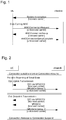
- the common configuration for network access on the unlicensed carrier is broadcast within the system information on the licensed carrier as shown exemplary in figure 1 .
- the 3GPP Release 14 already introduces the necessary configuration for random access on another NB-IoT carrier (e.g. NPRACH resources, location of the NPDCCH common search space (CSS) type 2, etc.) as part of the NB-IoT multi-carrier feature.
- Extending the configuration data by the necessary additional data that are broadcast by the system information has the advantage that no hardware changes on the device side (UE) are necessary.
- the additional data comprise of duty cycle budget for UE and/or energy detection threshold information and/or allowed carrier frequencies in unlicensed spectrum and/or maximum transmission power and/or bandwidth for uplink transmissions and/or transmission power for downlink NB-IoT reference symbols.
- the supported medium access mode(s) has/have to be indicated, e.g. duty cycling and/or listen-before-talk (LBT) including the associated parameters, e.g. duty cycle budget per UE or energy detection threshold. It is also necessary to extend the configuration data by the allowed carrier frequencies to cover the unlicensed bands as well as the maximum transmission power and bandwidth for uplink transmissions. And the transmission power of downlink NB-IoT reference symbols, if available, shall be added as well.
- LBT listen-before-talk
- the dedicated configuration is extended in the same way for the unicast operation on an unlicensed NB-IoT carrier after the connection establishment as discussed above ( figure 1 ).
- information is stored in a universal subscriber identity module (USIM) of a UE if the UE is allowed to use licensed and/or unlicensed spectrum to access the network.
- USIM universal subscriber identity module
- the network shall be contained in the subscription information stored on the Universal Subscriber Identity Module (USIM) of the UE.
- USIM Universal Subscriber Identity Module
- the UE Independently of the supported medium access control (MAC) mode, e.g. duty cycling and/or listen-before-talk (LBT), the UE needs to estimate the Narrowband Reference Signal Received Power (NRSRP) and path loss on the unlicensed carrier in order to determine the coverage class as well as the initial preamble transmission power.
- the NRSRP estimate can be obtained from an RF band this frequency-wise nearby, e.g. band 20 or band 8 for the EU 868 MHz unlicensed and the 915 MHz ISM band. Otherwise, the base station might use its duty cycle budget within the unlicensed band to transmit the narrowband reference signal (NRS).
- the NRS transmission window length and period shall be broadcast within the system information.
- the scheduled medium access procedure is based on duty cycling, whereas an uplink is performed in unlicensed spectrum according to a duty cycle and a duty cycle budget within a defined averaging window and a downlink is performed in licensed spectrum.
- the UE In the duty cycling access procedure the UE tries to contract the network in the unlicensed spectrum. The UE has to count when resources are free to make themselves known to the network. Once the network is aware of the UE, it is up to the network to tell the UE when the UE can send data and to manage the time resources which are available to the UE. It is the task of the network to set up a total balance of the transfer.
- the duty cycling access procedure only the uplink direction is transferred to the unlicensed carriers/bands, because the communication direction base station to UE has to be shared by a lot of UEs, and hence the restrictions to the data transfer for each UE would be too difficult, and would make no senses in most cases, if the DL is transferred to the unlicensed bands as well.
- a typical UE device e.g. a sensor generates one data item per hour or per day or generally per unit of time.
- the typical data stream is from the UE to the network, in order to send the data item in the network for further processing somewhere else.
- the other direction from base station to a UE is usually minimal. Therefore, if this uplink direction can be transferred to the unlicensed band, a clear relief can be achieved.
- the duty cycle budget represents a transmission time within the defined averaging window, whereas the duty cycle budget is determined by regulatory authorities and communicated to the UE by the base station.
- Certain unlicensed bands allow the uncoordinated medium access within a defined duty cycle.
- a duty cycle is understood as the time the device has been transmitting relative to the total observation time.
- the duty cycle budget applies to the transmitting device (UE), and it is measured over a defined averaging window.
- a duty cycle budget of 1% corresponds to for example 36 seconds of transmission time within one hour, which might be sufficient for many low traffic IoT applications that are periodically reporting a small amount of data.
- all uplink transmissions are executed within unlicensed spectrum.
- the downlink remains in licensed spectrum since the base station has to support many UEs. Since the considered class of IoT applications is uplink centric, the impact on the licensed operation remains limited.
- the UE starts a random-access procedure to the network if more resources are available than data have to be sent by the UE. This means that sufficient duty cycle budget must be available in the remaining duty cycle and hence the UE should prevent itself from running out of resources but still having data to send.
- Both UE and eNodeB track the UE uplink transmission time to ensure the duty cycle budget at the UE.
- the UE is allowed to start the random-access procedure only if there is sufficient budget available in the remaining duty cycle. Sufficient budget means the UE is expected to deliver all pending data of the current session with the remaining transmission time within the current duty cycle.
- the eNodeB schedules uplink transmissions only if the duty cycle of the UE allows. Otherwise, the eNodeB shall release or suspend the network connection. In order to account for preamble retransmissions in the budget at the eNodeB, the UE shall report the number of attempts to the network.
- a preamble transmission is the initial self-initiated transmission of the UE in order to access to the NB-IoT radio access network.
- the scheduled medium access procedure is based on listen-before-talk (LBT), whereas both the uplink and optionally the downlink are scheduled in unlicensed spectrum.
- LBT listen-before-talk
- the device might use listen-before-talk (LBT) for medium access in several unlicensed bands.
- Listen-before-talk is a procedure, where the UEs check the transmission channel, if it is free or used by another party. For example, the reporting of an exceptional event might have higher traffic requirements.
- the LBT mode can be used on both UL and DL side, whereas the DL side is optional.
- Another use case is the temporary offloading of devices from licensed to unlicensed carriers in order to accommodate more active devices during network load peaks.
- the LBT procedure shall ensure a fair coexistence between NB-IoT and other users of the unlicensed spectrum.
- the LBT procedure introduced into LTE for licensed assisted access (LAA) [Reference: RP-161803 Introduction of eLAA (UL Channel Access Procedure) in 36.213] shall be reused for NB-IoT in unlicensed spectrum.
- LAA licensed assisted access
- eLAA UL Channel Access Procedure
- uplink transmissions on narrowband physical uplink shared channel are scheduled by the base station, whereas the UE processes the LBT procedure within a defined NPUSCH LBT window on frequency resources assigned by the base station in order to prevent any blocking due to other UEs scheduled simultaneously on different sub-carriers.
- a sub-carrier according to the NB-IoT standard is a frequency spectrum resource of 15kHz, which is the smallest scheduling unit in terms of frequency spectrum.
- the defined NPUSCH LBT window and/or an additional synchronization sequence, which is prepended to the NPUSCH for the base station to detect the start of the uplink transmission are configured within the system information.
- the uplink transmissions on NPUSCH are scheduled by the eNodeB.
- the UE shall process the LBT, in addition.
- the LBT shall be processed on the frequency resources assigned within the uplink grant only in order to prevent any blocking due to other UEs scheduled simultaneously on different sub-carriers. If the LBT succeeds immediately or within a defined time window (the so-called NPUSCH LBT window), the UE starts the NPUSCH transmission, otherwise it remains silent.
- the NPUSCH transmission is started immediately after the LBT success.
- An additional synchronization sequence is prepended to the NPUSCH for the base station to detect the start of the uplink transmission.
- Both the NPUSCH LBT window and the NPUSCH synchronization sequence length are configured to the UE via system information (for random access message 3) and dedicated signaling (for other transmissions).
- the Dedicated Configuration sends the base station only in message 4 during random access. For the random access message 3, only system information is available.
- the exemplary overall procedure is shown in figure 5 .
- NPDCCH narrowband physical downlink control channel
- NPDSCH narrowband physical downlink shared channel
- the eNodeB might decide to start the NPDCCH later after the LBT has succeeded.
- the network might decide to schedule more NPDCCH repetitions to account for the initial blocking.
- the UE shall consider the potential blocking (missing NRS) during the channel estimation.
- the NPDSCH cannot be started later. Instead, the channel needs to be reserved beforehand, either via the associated NPDCCH or otherwise for cross-carrier scheduling.
- the eNodeB might start the LBT earlier to reserve the channel in advance and, thus, increase the probability to start the downlink transmission on time.
- a dynamic scheduling of licensed and unlicensed NB-IoT carriers is performed by extending the downlink control information (DCI) for unicast uplink and downlink by one bit to indicate the transmission on the licensed or unlicensed NB-IoT carrier.
- DCI downlink control information
- the interference situation within the unlicensed band might vary vastly on short time-scales.
- Another device is blocking the spectrum for several seconds, then the connection between UE and eNodeB would be temporarily out of service.
- This issue can be addressed by using reliable NPDCCH monitoring as described below and dynamic scheduling of licensed and unlicensed NB-IoT carriers on a per grant basis.
- the downlink control information (DCI) for unicast uplink and downlink is extended by one bit to indicate the transmission on the licensed or unlicensed carrier similar to cross-carrier scheduling in LTE.
- a UE can be moved from licensed to unlicensed spectrum within the MAC (medium access control) scheduling.
- the NPDCCH is simultaneously monitored in both unlicensed and licensed spectrum, whereas a user specific search space (USS) configured via dedicated configuration in the system information is used by the UE.
- USS user specific search space
- the connection to the base station might be blocked by external interference resulting in a connection error.
- the simultaneous monitoring of NPDCCH in both unlicensed and licensed spectrum is proposed.
- CCS common search space
- USS user specific search space
- the UE shall monitor the unlicensed NB-IoT carrier, if configured, as well as the anchor carrier in licensed spectrum.
- the monitoring period for each of them is configured via system information (CSS type 2) and via dedicate configuration (USS). This way, the UE can be reached via licensed spectrum even if the NPDCCH in unlicensed spectrum is blocked.
- the radio link shall be monitored for radio link failure on the anchor carrier within the licensed band, where the presence of NRS can be ensured.
- each UE In the uplink of a NB-IoT cell, multiple UEs can be scheduled using orthogonal resources in the frequency domain. If the UE would process the LBT within the full 180kHz system bandwidth, it will get blocked by the transmission of other UEs having started the transmission earlier. In other words, the LBT procedure would sequentialize the uplink transmission of the UEs. To achieve the multi-point uplink transmission also in unlicensed spectrum, each UE shall listen only on the frequency resources assigned to it using the LBT procedure described above. Hence, in a preferred embodiment of the inventive method, the UE listens only on frequency resources assigned to said UE by using the LBT procedure. This has the advantage that not the full bandwidth is blocked by a UE or has to be considered by a UE.
- the UE process LBT on all narrowband physical random access channel (NPRACH) frequencies resources using frequency hopping to achieve multiplexing of multiple UEs, whereas the UEs attempt to send a preamble until the processing of the LBT procedure is successful; otherwise the UE skips a NPRACH occasion and continues with a next NPRACH occasion.
- NPRACH physical random access channel
- Frequency-hopping is a method of transmitting radio signals by rapidly switching a carrier among many frequency channels, using a pseudorandom sequence known to both, transmitter and receiver, hence base station and/or UE. It is used as a multiple access method in the code division multiple access (CDMA) scheme frequency-hopping code division multiple access (FH-CDMA).
- CDMA code division multiple access
- FH-CDMA frequency-hopping code division multiple access
- FHSS is a wireless technology that spreads its signal over rapidly changing frequencies. Each available frequency band is divided into sub-frequencies. Signals rapidly change ("hop") among these in a pre-determined order. Interference at a specific frequency will only affect the signal during that short interval. FHSS can, however cause interference with adjacent direct-sequence spread spectrum (DSSS) systems.
- DSSS direct-sequence spread spectrum
- the UE needs to process LBT on all NPRACH frequency resources.
- TA timing advance
- the UE Before the UE can access the medium, hence the channel or frequency carrier, the UE has to process the LBT procedure. If the LBT procedure is successful, the UE can send the preamble. If the LBT procedure is not successful, the UE shall skip the NPRACH occasion and continue with the next NPRACH occasion. If the medium got busy during performing the LBT procedure, the UE shall determine the associated time when the medium got busy in terms of timing advance.
- Timing advance is the time difference between the downlink signal timing sent from the base station relative to the uplink signal timing sent by the UE. Then it should attempt to send the preamble using the estimated timing advance and proceed with the LBT procedure. This algorithm tries to align the start timing of the preamble according to the earliest observed NPRACH transmission as indicated by the LBT procedure. This way, it is ensured that eventually all UEs will be able to transmit the preamble.
- the number of NPRACH sub-carriers shall allow the configuration of 6 sub-carriers of 3.75 kHz in order to comply with the channel bandwidth constraint of 25 kHz.
- Figure 1 shows a common initialization between a network, hence a base station, and user equipment (UE).
- the base station eNodeB
- the system information includes the configuration data which are extended by additional information meaning that a network access can be performed on an unlicensed carrier.
- MAC medium access control
- LBT listen-before-talk
- the allowed carrier frequencies need to be extended to cover the unlicensed bands and the maximum transmission power and bandwidth for uplink transmissions need to be registered.
- the UE sends an RRCConnectionRequest on an unlicensed carrier in order to mitigate the peaks in the network load.
- an RRCConnectionSetupComplete message is transmitted to the base station on the unlicensed carrier to complete the data exchange.
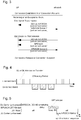
- FIG 2 shows a use case by periodic reporting of small data.
- the uplink transmissions take place in the unlicensed spectrum using the duty cycling medium access control (MAC).
- MAC duty cycling medium access control
- the connection establishment is already completed or has been resumed.
- the UE can periodically report small amounts of data.
- the base station transmit the downlink control information (DCI) via the narrowband physical downlink control channel (NPDCCH) on a licensed carrier, whereas the DCI includes information, on which unlicensed carrier the UE can transmit its data.
- DCI downlink control information
- NPDCCH narrowband physical downlink control channel
- Such information can also already be determined and exchanged in the system information.
- the UE which has informed the eNodeB to be configured or be able to transmit also on unlicensed carriers, transmit its user data on the narrowband physical uplink shared channel (NPUSCH) format 1 on the provided unlicensed carrier.
- NPUSCH narrowband physical uplink shared channel
- the eNodeB/network is responsible to provide resources to the UE, in order to allow the UE to transmit data.
- the base station transmits the downlink control information (DCI) via the narrowband physical downlink control channel (NPDCCH) on a licensed carrier, whereas the DCI includes information, on which unlicensed carrier the UE can transmit its data.
- DCI downlink control information
- NPDCCH narrowband physical downlink control channel
- the base station Concurrently the base station sends user data on the narrowband physical downlink shared channel (NPDSCH) for the UE on a licensed carrier, whereas the UE sends a "hand-shake" information on the narrowband physical uplink shared channel (NPUSCH) format 2 on the provided unlicensed carrier.
- NPDSCH narrowband physical downlink shared channel
- NPUSCH narrowband physical uplink shared channel
- the eNodeB/network is responsible to provide resources to the UE, in order to allow the UE to transmit data.
- both UE and eNodeB track the UE uplink transmission time to ensure the duty cycle budget at the UE.
- the UE is allowed to start the random-access procedure only if there is sufficient budget available in the remaining duty cycle.
- Sufficient budget means the UE is expected to deliver all pending data of the current session with the remaining transmission time within the current duty cycle. Therefore, the UE has to compare the remaining budget against the expected budget usage.
- the eNodeB schedules uplink transmissions only if the duty cycle of the UE allows. Otherwise, the eNodeB shall release or suspend the network connection.
- the UE In order to account for preamble retransmissions in the budget at the eNodeB, the UE shall report the number of attempts to the network. If an NPUSCH format 1 or 2 could not be received, the eNodeB shall nevertheless update the remaining duty cycle budget of the UE accordingly.
- the device might use listen-before-talk (LBT) for medium access in several unlicensed bands. For example, the reporting of an exceptional event might have higher traffic requirements.
- LBT listen-before-talk
- the LBT mode can be used on both UL and DL side as shown in figure 3.
- Figure 3 shows a use case reporting an exceptional event.
- the uplink as well as the downlink transmissions can take place in the unlicensed spectrum using the listen-before-talk (LBT) medium access control (MAC).
- LBT listen-before-talk
- MAC medium access control
- the connection establishment is already completed or has been resumed. After the connection of the UE with the base station has been established, the UE can report exceptional events by performing the LBT protocol and if the LBT has been succeeded the data can be exchanged.
- the base station transmits the downlink control information (DCI) via the narrowband physical downlink control channel (NPDCCH) on an unlicensed carrier, whereas the DCI includes information, on which unlicensed carrier the UE can transmit its data.
- the UE which has informed the eNodeB to be configured or able to transmit also on unlicensed carrier, transmit its user data on the narrowband physical uplink shared channel (NPUSCH) format 1 on the provided unlicensed carrier.
- NPUSCH narrowband physical uplink shared channel
- the base station transmits the downlink control information (DCI) via the narrowband physical downlink control channel (NPDCCH) on an unlicensed carrier, whereas the DCI includes information, on which unlicensed carrier the UE can transmit its data.
- the base station Concurrently the base station sends user data on the narrowband physical downlink shared channel (NPDSCH) for the UE on an unlicensed carrier, whereas the UE sends a "hand-shake" information on the narrowband physical uplink shared channel (NPUSCH) format 2 on the provided unlicensed carrier.
- NPDSCH narrowband physical downlink shared channel
- NPUSCH narrowband physical uplink shared channel
- FIG. 4 Another use case is shown in figure 4 .
- UEs devices
- FIG. 4 Another use case is shown in figure 4 .
- UEs devices
- FIG. 4 Another use case is shown in figure 4 .
- UEs devices
- FIG. 4 Another use case is shown in figure 4 .
- UEs devices
- FIG. 4 Another use case is shown in figure 4 .
- UEs devices
- FIG. 4 Another use case is shown in figure 4 .
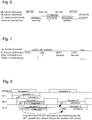
- Figure 5 shows the listen-before-talk procedure and synchronization signal transmission during a narrowband physical uplink shared channel (NPUSCH) processing in LBT MAC mode.
- NPUSCH physical uplink shared channel
- the uplink transmissions on NPUSCH (both format 1 and 2) are scheduled by the eNodeB.
- the UE shall process the LBT, in addition.
- the LBT shall be processed on the frequency resources assigned within the uplink grant only in order to prevent any blocking due to other UEs scheduled simultaneously on different sub-carriers. If the LBT succeeds immediately or within a defined time window (the so-called NPUSCH LBT window), the UE starts the NPUSCH transmission, otherwise it remains silent.
- the NPUSCH transmission is started immediately after the LBT success.
- An additional synchronization sequence (sync) is prepended to the NPUSCH for the base station to detect the start of the uplink transmission.
- Both, the NPUSCH LBT window and the NPUSCH synchronization sequence length are configured to the UE via system information (for random access message 3) and dedicated signaling (for other transmissions).
- system information for random access message 3
- dedicated signaling for other transmissions.
- Figure 6 shows a cross-carrier scheduling of narrowband physical uplink shared channel (NPUSCH).
- NPUSCH narrowband physical uplink shared channel
- the NPUSCH can be moved to licensed spectrum within the MAC scheduling.
- the interference situation within the unlicensed band might vary vastly on short time-scales.
- another device is blocking the spectrum for several seconds, then the connection between UE and eNodeB would be temporarily out of service.
- the downlink control information (DCI) for unicast uplink and downlink is extended by one bit to indicate the transmission on the licensed or unlicensed carrier similar to cross-carrier scheduling in LTE.
- DCI downlink control information
- Figure 7 shows a robust physical layer control signaling via monitoring the narrowband physical downlink control channel (NPDCCH) in both unlicensed and licensed bands.
- the radio link monitoring is conducted on the licensed band only. Radio link monitoring ensured that the UE detects a broken radio link and that the UE recovers from that situation.
- the radio link monitoring is used only in licensed spectrum. The rationale is that it cannot be ensured that the radio link monitoring is reliable in unlicensed spectrum due to arbitrary interference. With a NPDCCH allocated in unlicensed spectrum only, the connection to the base station might be blocked by external interference resulting in a connection error. To ensure reliable physical layer control signaling, it is proposed to simultaneously monitoring of NPDCCH in both unlicensed and licensed spectrum as shown in figure 7 .
- the UE shall monitor the unlicensed NB-IoT carrier, if configured, as well as the anchor carrier in licensed spectrum.
- the monitoring period for each of them is configured via system information (CSS type 2) and dedicate configuration (USS). This way, the UE can be reached via licensed spectrum even if the NPDCCH in unlicensed spectrum is blocked.
- the radio link shall be monitored for radio link failure on the anchor carrier within the licensed band, where the presence of NRS can be ensured.
- NB-IoT intra-cell interference mitigation for NB-IoT uplink transmissions.
- multiple UEs can be scheduled using orthogonal resources in the frequency domain. If the UE would process the LBT within the full 180 kHz system bandwidth, it will get blocked by the transmission of other UEs having started the transmission earlier. In other words, the LBT procedure would sequentialize the uplink transmission of the UEs.
- each UE shall listen only on the frequency resources assigned to it using the LBT procedure described above.
- Figure 8 shows a scenario where three UEs attempt to connect to the radio access network by sending an NPRACH on NPRACH occasion 1.
- the NPRACH occasion is defined in terms of the base station downlink timing. Due to the propagation delay of radio frequency signals, the NPRACH occasions are not time aligned at the considered UEs. Instead, UE 1 is assumed to be closest to the base station, so that UE 1 observes the NPRACH occasion first. Similarly, UE 2 observes the NPRACH occasion before UE 3 due to a lower propagation delay. On the observed start of the NPRACH occasion, each UE starts the LBT procedure. UE 1 finishes the LBT procedure first and starts the NPRACH transmission towards the base station.
- the NPRACH transmission from UE 1 blocks the medium access for the UEs 2 and 3, since they will observe the medium busy. They abort the medium access within NPRACH occasion 1 and attempt to access the medium again in the following NPRACH occasion 2. Since the LBT procedure has not been successful in the previous NPRACH attempt, both UE 2 and 3 will now attempt to send the NPRACH at the time the medium got busy within the previous NPRACH attempt in NPRACH occasion 1, after having processed LBT within NPRACH occasion 2. The benefit of the proposed procedure is that it time-aligns UEs that are attempting to send NPRACH, so that multiple access becomes possible even with LBT usage for NPRACH.
Landscapes
- Engineering & Computer Science (AREA)
- Computer Networks & Wireless Communication (AREA)
- Signal Processing (AREA)
- Health & Medical Sciences (AREA)
- Computing Systems (AREA)
- General Health & Medical Sciences (AREA)
- Medical Informatics (AREA)
- Computer Security & Cryptography (AREA)
- Mobile Radio Communication Systems (AREA)
Claims (13)
- Verfahren für einen gemeinsamen Mehrträger-Betrieb von Schmalband-Internet-der-Dinge, NB-IoT, ("Narrowband Internet-of-Things") sowohl in einem lizenzierten als auch in einem unlizenzierten Frequenzspektrum durch Erweitern des bestehenden NB-IoT-Standard-Release 14 im lizenzierten Spektrum durch zusätzliche Uplink- und/oder Downlink-NB-IoT-Träger, die im unlizenzierten Spektrum arbeiten, wobei zusätzliche Daten, die von einer geplanten Medienzugangsprozedur abhängen, zu Konfigurationsdaten hinzugefügt werden, die von einer Basisstation ausgestrahlt werden, um die Einhaltung gesetzlicher Bestimmungen während des Betriebs sowohl auf der UE- als auch auf der Basisstationsseite zu gewährleisten, wobei die geplante Medienzugangsprozedur auf "Listen-Before-Talk", LBT, basiert, wobei sowohl der Uplink als auch optional der Downlink im unlizenzierten Spektrum geplant sind, wobei Uplink-Übertragungen auf einem physischen gemeinsam genutzten Schmalband-Uplink-Kanal, NPUSCH, durch die Basisstation geplant werden, wobei das UE die LBT-Prozedur innerhalb eines definierten NPUSCH-LBT-Fensters auf durch die Basisstation zugewiesenen Frequenzressourcen verarbeitet, um jegliche Blockierung aufgrund anderer UEs zu verhindern, die gleichzeitig auf anderen Subträgern geplant sind.
- Verfahren für einen gemeinsamen Mehrträger-Betrieb von NB-IoT in einem unlizenziertem Spektrum nach Anspruch 1, wobei die erweiterten Konfigurationsdaten für einen Netzwerkzugriff auf einem unlizenzierten Träger in Systeminformationen auf einem lizenzierten Träger ausgestrahlt werden.
- Verfahren für einen gemeinsamen Mehrträger-Betrieb von NB-IoT in einem unlizenziertem Spektrum nach Anspruch 1 oder 2, wobei die zusätzlichen Daten ein Einschaltdauerbudget ("Duty cycle Budget") für ein UE und/oder Energiedetektionsschwelleninformationen und/oder erlaubte Trägerfrequenzen im unlizenzierten Spektrum und/oder maximale Übertragungsleistung und/oder Bandbreite für Uplink-Übertragungen und/oder Übertragungsleistung für Downlink-NB-IoT-Referenzsymbole umfassen.
- Verfahren für einen gemeinsamen Mehrträger-Betrieb von NB-IoT in einem unlizenziertem Spektrum nach einem der Ansprüche 1 bis 3, wobei eine Information in einem universellen Teilnehmeridentitätsmodul, USIM ("Universal Subscriber Identity Module"), eines UE gespeichert ist, falls dem UE gestattet ist, ein lizenziertes und/oder unlizenziertes Spektrum für das Zugreifen auf das Netzwerk zu verwenden.
- Verfahren für einen gemeinsamen Mehrträger-Betrieb von NB-IoT in einem unlizenziertem Spektrum nach einem der Ansprüche 1 bis 4, wobei die geplante Medienzugangsprozedur auf "Duty Cycling" basiert, wohingegen ein Uplink im unlizenzierten Spektrum gemäß einer Einschaltdauer und einem Einschaltdauerbudget in einem definierten Mittelungsfenster durchgeführt wird und ein Downlink im lizenzierten Spektrum durchgeführt wird.
- Verfahren für einen gemeinsamen Mehrträger-Betrieb von NB-IoT in einem unlizenziertem Spektrum nach Anspruch 5, wobei das Einschaltdauerbudget eine Übertragungszeit innerhalb des definierten Mittelungsfensters repräsentiert, wohingegen das Einschaltdauerbudget durch Regulierungsbehörden bestimmt und durch die Basisstation zu dem UE kommuniziert wird.
- Verfahren für einen gemeinsamen Mehrträger-Betrieb von NB-IoT in einem unlizenziertem Spektrum nach einem der Ansprüche 1 bis 6, wobei das UE eine Erstzugriffsprozedur auf das Netzwerk startet, falls mehr Ressourcen zur Verfügung stehen, als Daten durch das UE gesendet werden müssen.
- Verfahren für einen gemeinsamen Mehrträger-Betrieb von NB-IoT in einem unlizenziertem Spektrum nach Anspruch 1, wobei das definierte NPUSCH-LBT-Fenster und/oder eine zusätzliche Synchronisationssequenz, die dem NPUSCH vorangestellt wird, damit die Basisstation den Start der Uplink-Übertragung detektiert, in den Systeminformationen konfiguriert sind.
- Verfahren für einen gemeinsamen Mehrträger-Betrieb von NB-IoT in einem unlizenziertem Spektrum nach Anspruch 1, wobei Downlink-Übertragungen auf einem physischen Schmalband-Downlink-Steuerkanal bzw. NPDCCH blockiert werden, bis die LBT-Prozedur erfolgreich war, wohingegen gleichzeitig ein physischer gemeinsam genutzter Schmalband-Downlink-Kanal bzw. NPDSCH über den assoziierten NPDCCH für trägerübergreifende Planung reserviert wird.
- Verfahren für einen gemeinsamen Mehrträger-Betrieb von NB-IoT in einem unlizenziertem Spektrum nach einem der Ansprüche 1 bis 9, wobei eine dynamische Planung von lizenzierten und unlizenzierten NB-IoT-Trägern durch Erweitern, um ein Bit, der Downlink-Steuerinformationen bzw. DCI für Unicast-Uplink und -Downlink durchgeführt wird, um die Übertragung auf dem lizenzierten oder unlizenzierten NB-IoT-Träger anzugeben.
- Verfahren für einen gemeinsamen Mehrträger-Betrieb von NB-IoT in einem unlizenzierten Spektrum nach einem der Ansprüche 1 bis 10, wobei der NPDCCH gleichzeitig in sowohl dem unlizenzierten als auch dem lizenzierten Spektrum überwacht wird, wohingegen ein benutzerspezifischer Suchraum bzw. USS, der über eine dedizierte Konfiguration in den Systeminformationen konfiguriert wird, durch das UE verwendet wird.
- Verfahren für einen gemeinsamen Mehrträger-Betrieb von NB-IoT in einem unlizenziertem Spektrum nach einem der Ansprüche 1 bis 11, wobei das UE nur Frequenzressourcen abhört, die dem UE unter Verwendung der LBT-Prozedur zugewiesen werden.
- Verfahren für einen gemeinsamen Mehrträger-Betrieb von NB-IoT in einem unlizenziertem Spektrum nach einem der Ansprüche 1 bis 12, wobei das UE LBT auf allen Frequenzressourcen eines physischen Schmalband-Erstzugriffskanals, NPRACH, unter Verwendung von Frequenzsprungverfahren verarbeitet, indem es versucht eine Präambel zu senden, bis die Verarbeitung der LBT-Prozedur erfolgreich ist, andernfalls überspringt das UE das NPRACH-Ereignis und fährt mit einem nächsten Ereignis fort.
Applications Claiming Priority (2)
| Application Number | Priority Date | Filing Date | Title |
|---|---|---|---|
| EP17153665 | 2017-01-30 | ||
| PCT/EP2018/052119 WO2018138328A1 (en) | 2017-01-30 | 2018-01-29 | Nb-iot multi-carrier operation in unlicensed ism bands |
Publications (2)
| Publication Number | Publication Date |
|---|---|
| EP3552435A1 EP3552435A1 (de) | 2019-10-16 |
| EP3552435B1 true EP3552435B1 (de) | 2020-09-09 |
Family
ID=61148208
Family Applications (1)
| Application Number | Title | Priority Date | Filing Date |
|---|---|---|---|
| EP18702653.9A Active EP3552435B1 (de) | 2017-01-30 | 2018-01-29 | Nb-iot-mehrträgerbetrieb in unlizenzierten ism-bändern |
Country Status (4)
| Country | Link |
|---|---|
| US (1) | US11026266B2 (de) |
| EP (1) | EP3552435B1 (de) |
| CN (1) | CN110235473B (de) |
| WO (1) | WO2018138328A1 (de) |
Cited By (1)
| Publication number | Priority date | Publication date | Assignee | Title |
|---|---|---|---|---|
| US11452085B2 (en) * | 2019-08-06 | 2022-09-20 | Qualcomm Incorporated | Radio communications in narrowband regions of unlicensed spectrum |
Families Citing this family (17)
| Publication number | Priority date | Publication date | Assignee | Title |
|---|---|---|---|---|
| WO2018030774A1 (ko) * | 2016-08-11 | 2018-02-15 | 삼성전자 주식회사 | 강건하고 신뢰성 있는 5G New Radio 통신 방법 및 그 장치 |
| CN109729589B (zh) * | 2017-10-31 | 2021-08-31 | 华为技术有限公司 | 上行信号传输方法、终端、网络设备及系统 |
| US10681621B2 (en) * | 2017-12-14 | 2020-06-09 | T-Mobile Usa, Inc. | Narrowband internet of things device channel scanning |
| KR102742391B1 (ko) * | 2018-04-02 | 2024-12-16 | 엘지전자 주식회사 | 무선 통신 시스템에서 신호의 송수신 방법 및 이를 위한 장치 |
| CN118215151A (zh) * | 2018-04-03 | 2024-06-18 | 交互数字专利控股公司 | 用于信道接入管理的方法 |
| EP3611855B1 (de) * | 2018-08-16 | 2020-10-07 | Shenzhen Goodix Technology Co., Ltd. | Erkennung von falsch-positiven in einem nb-iot-downlink-steuerkanal basierend auf effektiver und geplanter coderate |
| WO2020060875A1 (en) * | 2018-09-17 | 2020-03-26 | Intel Corporation | UNLICENSED NARROWBAND INTERNET OF THINGS (NB-IoT) OPERATION ON BAND 47b |
| CN112740802A (zh) * | 2018-09-19 | 2021-04-30 | 瑞典爱立信有限公司 | 无线网络的占空比感知调度 |
| US12219618B2 (en) | 2018-09-22 | 2025-02-04 | Lg Electronics Inc. | Method and apparatus for transmitting and receiving signal in wireless communication system |
| CN110392384B (zh) * | 2019-07-23 | 2020-09-18 | 厦门大学 | 基于条件概率实现LoRa网关下行特定占空比的方法 |
| CN111465106B (zh) * | 2020-03-02 | 2023-11-14 | 浙江华云信息科技有限公司 | 一种用于智能电网的免授权频段通信方法 |
| US11711849B2 (en) * | 2020-05-22 | 2023-07-25 | Qualcomm Incorporated | Network controlled sidelink off-loading over unlicensed carrier |
| US11665680B2 (en) * | 2020-06-29 | 2023-05-30 | Qualcomm Incorporated | Configurations for a carrier overlapping multiple unlicensed bands |
| US11570793B2 (en) | 2020-07-31 | 2023-01-31 | T-Mobile Usa, Inc. | Connectivity scheduler for NB-IoT devices |
| US11451397B2 (en) | 2020-07-31 | 2022-09-20 | T-Mobile Usa, Inc. | Configurable UICC integrated in NB-IoT device |
| US11664977B2 (en) | 2020-07-31 | 2023-05-30 | T-Mobile Usa, Inc. | Encryption key management for NB-IoT devices |
| CN116916461A (zh) * | 2022-04-19 | 2023-10-20 | 华硕技术授权股份有限公司 | 在无线通信系统中调度对多个载波中的侧链路通信的请求的方法和设备 |
Family Cites Families (14)
| Publication number | Priority date | Publication date | Assignee | Title |
|---|---|---|---|---|
| US20090010345A1 (en) * | 2007-07-02 | 2009-01-08 | Legend Silicon Corp. | Tds-ofdma communication closed-loop power control |
| US8451785B2 (en) * | 2009-11-09 | 2013-05-28 | Telefonaktiebolaget L M Ericsson (Publ) | Control signal aggregation in a multi-carrier WCDMA system |
| US10357158B2 (en) * | 2010-11-08 | 2019-07-23 | Koninklijke Philips Electronics N.V. | System and method for exchanging duty-cycle information in wireless networks |
| CN105743631B (zh) * | 2010-12-06 | 2019-05-28 | 交互数字专利控股公司 | 用于在免许可频谱中使能无线操作的方法 |
| GB2498932B (en) * | 2012-01-30 | 2013-12-18 | Renesas Mobile Corp | Method, apparatus and computer program for distributed carrier aggregation |
| WO2014149120A2 (en) * | 2013-01-22 | 2014-09-25 | Eden Rock Communications, Llc | Method and system for intelligent jamming signal generation |
| US9967802B2 (en) * | 2014-06-13 | 2018-05-08 | Qualcomm Incorporated | Wireless communications over unlicensed radio frequency spectrum |
| US10070443B2 (en) * | 2014-09-25 | 2018-09-04 | Sharp Laboratories Of America, Inc. | Method and apparatus for unlicensed communications band access |
| US20160330678A1 (en) * | 2015-05-07 | 2016-11-10 | Electronics And Telecommunications Research Institute | Method and device for transmitting and receiving discovery reference signal through channel of unlicensed frequency band |
| US9860678B2 (en) * | 2015-05-22 | 2018-01-02 | Hyukjun Oh | Methods for performing machine type communication for the purpose of coverage enhancement, apparatuses and systems for performing the same |
| CN106301733B (zh) * | 2015-06-26 | 2020-11-20 | 中兴通讯股份有限公司 | 数据的传输方法及装置 |
| CN105338568B (zh) * | 2015-09-25 | 2019-01-25 | 宇龙计算机通信科技(深圳)有限公司 | 非授权频谱上的lte的传输方法及装置 |
| US10687330B2 (en) * | 2016-07-21 | 2020-06-16 | Qualcomm Incorporated | Techniques for communicating on an uplink in a shared radio frequency spectrum band |
| US10542436B2 (en) * | 2016-09-02 | 2020-01-21 | Qualcomm Incorporated | Unlicensed spectrum operation for narrowband internet of things and enhanced machine type communication |
-
2018
- 2018-01-29 WO PCT/EP2018/052119 patent/WO2018138328A1/en not_active Ceased
- 2018-01-29 EP EP18702653.9A patent/EP3552435B1/de active Active
- 2018-01-29 CN CN201880009340.7A patent/CN110235473B/zh active Active
-
2019
- 2019-07-26 US US16/523,981 patent/US11026266B2/en active Active
Non-Patent Citations (1)
| Title |
|---|
| None * |
Cited By (1)
| Publication number | Priority date | Publication date | Assignee | Title |
|---|---|---|---|---|
| US11452085B2 (en) * | 2019-08-06 | 2022-09-20 | Qualcomm Incorporated | Radio communications in narrowband regions of unlicensed spectrum |
Also Published As
| Publication number | Publication date |
|---|---|
| US20190357270A1 (en) | 2019-11-21 |
| CN110235473B (zh) | 2021-11-09 |
| EP3552435A1 (de) | 2019-10-16 |
| WO2018138328A1 (en) | 2018-08-02 |
| US11026266B2 (en) | 2021-06-01 |
| CN110235473A (zh) | 2019-09-13 |
Similar Documents
| Publication | Publication Date | Title |
|---|---|---|
| US11026266B2 (en) | NB-IoT multi-carrier operation in unlicensed ISM bands | |
| US11963166B2 (en) | Two-stage trigger procedure | |
| EP3018938B1 (de) | System für LTE-lizensierten, unterstützten Zugriff in unlizensierten Bändern | |
| EP3751949B1 (de) | Verfahren und vorrichtung zur durchführung eines direktzugriffsprozesses in einem unlizenzierten band | |
| US8406781B2 (en) | Determination of user equipment antenna capability | |
| US8023956B2 (en) | Scheduling methods for connection-based, over-the-air, inter-system communications for wireless networks | |
| EP2127433B1 (de) | Interferenzsteuerung in einer mobilen netzwerkstruktur mit privaten pico/home-basisstationen | |
| EP3536106B1 (de) | Verfahren für reservierungspräambel für konflikt von priorisierten medien in einem geteilten new-radio-netzwerkssystem mit geteiltem spektrum | |
| US20200337019A1 (en) | Paging procedures for user equipments with coverage extension | |
| KR20160054396A (ko) | 비면허 대역을 통한 데이터 전송 방법 및 장치 | |
| WO2009135993A1 (en) | Enhanced communication system |
Legal Events
| Date | Code | Title | Description |
|---|---|---|---|
| STAA | Information on the status of an ep patent application or granted ep patent |
Free format text: STATUS: UNKNOWN |
|
| STAA | Information on the status of an ep patent application or granted ep patent |
Free format text: STATUS: THE INTERNATIONAL PUBLICATION HAS BEEN MADE |
|
| PUAI | Public reference made under article 153(3) epc to a published international application that has entered the european phase |
Free format text: ORIGINAL CODE: 0009012 |
|
| STAA | Information on the status of an ep patent application or granted ep patent |
Free format text: STATUS: REQUEST FOR EXAMINATION WAS MADE |
|
| 17P | Request for examination filed |
Effective date: 20190620 |
|
| AK | Designated contracting states |
Kind code of ref document: A1 Designated state(s): AL AT BE BG CH CY CZ DE DK EE ES FI FR GB GR HR HU IE IS IT LI LT LU LV MC MK MT NL NO PL PT RO RS SE SI SK SM TR |
|
| AX | Request for extension of the european patent |
Extension state: BA ME |
|
| RIN1 | Information on inventor provided before grant (corrected) |
Inventor name: FROEHLICH, MARTIN Inventor name: KURTH, MATHIAS |
|
| GRAP | Despatch of communication of intention to grant a patent |
Free format text: ORIGINAL CODE: EPIDOSNIGR1 |
|
| STAA | Information on the status of an ep patent application or granted ep patent |
Free format text: STATUS: GRANT OF PATENT IS INTENDED |
|
| DAV | Request for validation of the european patent (deleted) | ||
| DAX | Request for extension of the european patent (deleted) | ||
| INTG | Intention to grant announced |
Effective date: 20200416 |
|
| GRAS | Grant fee paid |
Free format text: ORIGINAL CODE: EPIDOSNIGR3 |
|
| GRAA | (expected) grant |
Free format text: ORIGINAL CODE: 0009210 |
|
| STAA | Information on the status of an ep patent application or granted ep patent |
Free format text: STATUS: THE PATENT HAS BEEN GRANTED |
|
| AK | Designated contracting states |
Kind code of ref document: B1 Designated state(s): AL AT BE BG CH CY CZ DE DK EE ES FI FR GB GR HR HU IE IS IT LI LT LU LV MC MK MT NL NO PL PT RO RS SE SI SK SM TR |
|
| REG | Reference to a national code |
Ref country code: GB Ref legal event code: FG4D |
|
| REG | Reference to a national code |
Ref country code: AT Ref legal event code: REF Ref document number: 1313140 Country of ref document: AT Kind code of ref document: T Effective date: 20200915 Ref country code: CH Ref legal event code: EP |
|
| REG | Reference to a national code |
Ref country code: DE Ref legal event code: R096 Ref document number: 602018007690 Country of ref document: DE |
|
| REG | Reference to a national code |
Ref country code: IE Ref legal event code: FG4D |
|
| REG | Reference to a national code |
Ref country code: LT Ref legal event code: MG4D |
|
| PG25 | Lapsed in a contracting state [announced via postgrant information from national office to epo] |
Ref country code: SE Free format text: LAPSE BECAUSE OF FAILURE TO SUBMIT A TRANSLATION OF THE DESCRIPTION OR TO PAY THE FEE WITHIN THE PRESCRIBED TIME-LIMIT Effective date: 20200909 Ref country code: HR Free format text: LAPSE BECAUSE OF FAILURE TO SUBMIT A TRANSLATION OF THE DESCRIPTION OR TO PAY THE FEE WITHIN THE PRESCRIBED TIME-LIMIT Effective date: 20200909 Ref country code: LT Free format text: LAPSE BECAUSE OF FAILURE TO SUBMIT A TRANSLATION OF THE DESCRIPTION OR TO PAY THE FEE WITHIN THE PRESCRIBED TIME-LIMIT Effective date: 20200909 Ref country code: FI Free format text: LAPSE BECAUSE OF FAILURE TO SUBMIT A TRANSLATION OF THE DESCRIPTION OR TO PAY THE FEE WITHIN THE PRESCRIBED TIME-LIMIT Effective date: 20200909 Ref country code: GR Free format text: LAPSE BECAUSE OF FAILURE TO SUBMIT A TRANSLATION OF THE DESCRIPTION OR TO PAY THE FEE WITHIN THE PRESCRIBED TIME-LIMIT Effective date: 20201210 Ref country code: BG Free format text: LAPSE BECAUSE OF FAILURE TO SUBMIT A TRANSLATION OF THE DESCRIPTION OR TO PAY THE FEE WITHIN THE PRESCRIBED TIME-LIMIT Effective date: 20201209 Ref country code: NO Free format text: LAPSE BECAUSE OF FAILURE TO SUBMIT A TRANSLATION OF THE DESCRIPTION OR TO PAY THE FEE WITHIN THE PRESCRIBED TIME-LIMIT Effective date: 20201209 |
|
| REG | Reference to a national code |
Ref country code: AT Ref legal event code: MK05 Ref document number: 1313140 Country of ref document: AT Kind code of ref document: T Effective date: 20200909 |
|
| REG | Reference to a national code |
Ref country code: NL Ref legal event code: MP Effective date: 20200909 |
|
| PG25 | Lapsed in a contracting state [announced via postgrant information from national office to epo] |
Ref country code: RS Free format text: LAPSE BECAUSE OF FAILURE TO SUBMIT A TRANSLATION OF THE DESCRIPTION OR TO PAY THE FEE WITHIN THE PRESCRIBED TIME-LIMIT Effective date: 20200909 Ref country code: PL Free format text: LAPSE BECAUSE OF FAILURE TO SUBMIT A TRANSLATION OF THE DESCRIPTION OR TO PAY THE FEE WITHIN THE PRESCRIBED TIME-LIMIT Effective date: 20200909 Ref country code: LV Free format text: LAPSE BECAUSE OF FAILURE TO SUBMIT A TRANSLATION OF THE DESCRIPTION OR TO PAY THE FEE WITHIN THE PRESCRIBED TIME-LIMIT Effective date: 20200909 |
|
| PG25 | Lapsed in a contracting state [announced via postgrant information from national office to epo] |
Ref country code: EE Free format text: LAPSE BECAUSE OF FAILURE TO SUBMIT A TRANSLATION OF THE DESCRIPTION OR TO PAY THE FEE WITHIN THE PRESCRIBED TIME-LIMIT Effective date: 20200909 Ref country code: CZ Free format text: LAPSE BECAUSE OF FAILURE TO SUBMIT A TRANSLATION OF THE DESCRIPTION OR TO PAY THE FEE WITHIN THE PRESCRIBED TIME-LIMIT Effective date: 20200909 Ref country code: PT Free format text: LAPSE BECAUSE OF FAILURE TO SUBMIT A TRANSLATION OF THE DESCRIPTION OR TO PAY THE FEE WITHIN THE PRESCRIBED TIME-LIMIT Effective date: 20210111 Ref country code: RO Free format text: LAPSE BECAUSE OF FAILURE TO SUBMIT A TRANSLATION OF THE DESCRIPTION OR TO PAY THE FEE WITHIN THE PRESCRIBED TIME-LIMIT Effective date: 20200909 Ref country code: SM Free format text: LAPSE BECAUSE OF FAILURE TO SUBMIT A TRANSLATION OF THE DESCRIPTION OR TO PAY THE FEE WITHIN THE PRESCRIBED TIME-LIMIT Effective date: 20200909 |
|
| PG25 | Lapsed in a contracting state [announced via postgrant information from national office to epo] |
Ref country code: AL Free format text: LAPSE BECAUSE OF FAILURE TO SUBMIT A TRANSLATION OF THE DESCRIPTION OR TO PAY THE FEE WITHIN THE PRESCRIBED TIME-LIMIT Effective date: 20200909 Ref country code: AT Free format text: LAPSE BECAUSE OF FAILURE TO SUBMIT A TRANSLATION OF THE DESCRIPTION OR TO PAY THE FEE WITHIN THE PRESCRIBED TIME-LIMIT Effective date: 20200909 Ref country code: ES Free format text: LAPSE BECAUSE OF FAILURE TO SUBMIT A TRANSLATION OF THE DESCRIPTION OR TO PAY THE FEE WITHIN THE PRESCRIBED TIME-LIMIT Effective date: 20200909 Ref country code: IS Free format text: LAPSE BECAUSE OF FAILURE TO SUBMIT A TRANSLATION OF THE DESCRIPTION OR TO PAY THE FEE WITHIN THE PRESCRIBED TIME-LIMIT Effective date: 20210109 |
|
| REG | Reference to a national code |
Ref country code: DE Ref legal event code: R097 Ref document number: 602018007690 Country of ref document: DE |
|
| PG25 | Lapsed in a contracting state [announced via postgrant information from national office to epo] |
Ref country code: SK Free format text: LAPSE BECAUSE OF FAILURE TO SUBMIT A TRANSLATION OF THE DESCRIPTION OR TO PAY THE FEE WITHIN THE PRESCRIBED TIME-LIMIT Effective date: 20200909 |
|
| PLBE | No opposition filed within time limit |
Free format text: ORIGINAL CODE: 0009261 |
|
| STAA | Information on the status of an ep patent application or granted ep patent |
Free format text: STATUS: NO OPPOSITION FILED WITHIN TIME LIMIT |
|
| 26N | No opposition filed |
Effective date: 20210610 |
|
| PG25 | Lapsed in a contracting state [announced via postgrant information from national office to epo] |
Ref country code: SI Free format text: LAPSE BECAUSE OF FAILURE TO SUBMIT A TRANSLATION OF THE DESCRIPTION OR TO PAY THE FEE WITHIN THE PRESCRIBED TIME-LIMIT Effective date: 20200909 Ref country code: DK Free format text: LAPSE BECAUSE OF FAILURE TO SUBMIT A TRANSLATION OF THE DESCRIPTION OR TO PAY THE FEE WITHIN THE PRESCRIBED TIME-LIMIT Effective date: 20200909 Ref country code: MC Free format text: LAPSE BECAUSE OF FAILURE TO SUBMIT A TRANSLATION OF THE DESCRIPTION OR TO PAY THE FEE WITHIN THE PRESCRIBED TIME-LIMIT Effective date: 20200909 |
|
| REG | Reference to a national code |
Ref country code: CH Ref legal event code: PL |
|
| PG25 | Lapsed in a contracting state [announced via postgrant information from national office to epo] |
Ref country code: LU Free format text: LAPSE BECAUSE OF NON-PAYMENT OF DUE FEES Effective date: 20210129 |
|
| REG | Reference to a national code |
Ref country code: BE Ref legal event code: MM Effective date: 20210131 |
|
| PG25 | Lapsed in a contracting state [announced via postgrant information from national office to epo] |
Ref country code: IT Free format text: LAPSE BECAUSE OF FAILURE TO SUBMIT A TRANSLATION OF THE DESCRIPTION OR TO PAY THE FEE WITHIN THE PRESCRIBED TIME-LIMIT Effective date: 20200909 |
|
| PG25 | Lapsed in a contracting state [announced via postgrant information from national office to epo] |
Ref country code: CH Free format text: LAPSE BECAUSE OF NON-PAYMENT OF DUE FEES Effective date: 20210131 Ref country code: LI Free format text: LAPSE BECAUSE OF NON-PAYMENT OF DUE FEES Effective date: 20210131 |
|
| PG25 | Lapsed in a contracting state [announced via postgrant information from national office to epo] |
Ref country code: IE Free format text: LAPSE BECAUSE OF NON-PAYMENT OF DUE FEES Effective date: 20210129 |
|
| PG25 | Lapsed in a contracting state [announced via postgrant information from national office to epo] |
Ref country code: BE Free format text: LAPSE BECAUSE OF NON-PAYMENT OF DUE FEES Effective date: 20210131 |
|
| PG25 | Lapsed in a contracting state [announced via postgrant information from national office to epo] |
Ref country code: NL Free format text: LAPSE BECAUSE OF NON-PAYMENT OF DUE FEES Effective date: 20200923 Ref country code: CY Free format text: LAPSE BECAUSE OF FAILURE TO SUBMIT A TRANSLATION OF THE DESCRIPTION OR TO PAY THE FEE WITHIN THE PRESCRIBED TIME-LIMIT Effective date: 20200909 |
|
| PG25 | Lapsed in a contracting state [announced via postgrant information from national office to epo] |
Ref country code: HU Free format text: LAPSE BECAUSE OF FAILURE TO SUBMIT A TRANSLATION OF THE DESCRIPTION OR TO PAY THE FEE WITHIN THE PRESCRIBED TIME-LIMIT; INVALID AB INITIO Effective date: 20180129 |
|
| PG25 | Lapsed in a contracting state [announced via postgrant information from national office to epo] |
Ref country code: MK Free format text: LAPSE BECAUSE OF FAILURE TO SUBMIT A TRANSLATION OF THE DESCRIPTION OR TO PAY THE FEE WITHIN THE PRESCRIBED TIME-LIMIT Effective date: 20200909 |
|
| PG25 | Lapsed in a contracting state [announced via postgrant information from national office to epo] |
Ref country code: MT Free format text: LAPSE BECAUSE OF FAILURE TO SUBMIT A TRANSLATION OF THE DESCRIPTION OR TO PAY THE FEE WITHIN THE PRESCRIBED TIME-LIMIT Effective date: 20200909 |
|
| PG25 | Lapsed in a contracting state [announced via postgrant information from national office to epo] |
Ref country code: TR Free format text: LAPSE BECAUSE OF FAILURE TO SUBMIT A TRANSLATION OF THE DESCRIPTION OR TO PAY THE FEE WITHIN THE PRESCRIBED TIME-LIMIT Effective date: 20200909 |
|
| PGFP | Annual fee paid to national office [announced via postgrant information from national office to epo] |
Ref country code: GB Payment date: 20260128 Year of fee payment: 9 |
|
| PGFP | Annual fee paid to national office [announced via postgrant information from national office to epo] |
Ref country code: DE Payment date: 20260128 Year of fee payment: 9 |
|
| PGFP | Annual fee paid to national office [announced via postgrant information from national office to epo] |
Ref country code: FR Payment date: 20260121 Year of fee payment: 9 |