EP3552155B1 - Verfahren und gerät zur erzeugung eines bild-klassifizierungssystems - Google Patents
Verfahren und gerät zur erzeugung eines bild-klassifizierungssystems Download PDFInfo
- Publication number
- EP3552155B1 EP3552155B1 EP17821675.0A EP17821675A EP3552155B1 EP 3552155 B1 EP3552155 B1 EP 3552155B1 EP 17821675 A EP17821675 A EP 17821675A EP 3552155 B1 EP3552155 B1 EP 3552155B1
- Authority
- EP
- European Patent Office
- Prior art keywords
- module
- labelling
- mam
- images
- labels
- Prior art date
- Legal status (The legal status is an assumption and is not a legal conclusion. Google has not performed a legal analysis and makes no representation as to the accuracy of the status listed.)
- Active
Links
Images




Classifications
-
- G—PHYSICS
- G06—COMPUTING OR CALCULATING; COUNTING
- G06N—COMPUTING ARRANGEMENTS BASED ON SPECIFIC COMPUTATIONAL MODELS
- G06N3/00—Computing arrangements based on biological models
- G06N3/02—Neural networks
- G06N3/08—Learning methods
-
- G—PHYSICS
- G06—COMPUTING OR CALCULATING; COUNTING
- G06V—IMAGE OR VIDEO RECOGNITION OR UNDERSTANDING
- G06V10/00—Arrangements for image or video recognition or understanding
- G06V10/70—Arrangements for image or video recognition or understanding using pattern recognition or machine learning
- G06V10/74—Image or video pattern matching; Proximity measures in feature spaces
-
- G—PHYSICS
- G06—COMPUTING OR CALCULATING; COUNTING
- G06N—COMPUTING ARRANGEMENTS BASED ON SPECIFIC COMPUTATIONAL MODELS
- G06N20/00—Machine learning
-
- G—PHYSICS
- G06—COMPUTING OR CALCULATING; COUNTING
- G06N—COMPUTING ARRANGEMENTS BASED ON SPECIFIC COMPUTATIONAL MODELS
- G06N3/00—Computing arrangements based on biological models
- G06N3/02—Neural networks
- G06N3/04—Architecture, e.g. interconnection topology
- G06N3/0464—Convolutional networks [CNN, ConvNet]
-
- G—PHYSICS
- G06—COMPUTING OR CALCULATING; COUNTING
- G06N—COMPUTING ARRANGEMENTS BASED ON SPECIFIC COMPUTATIONAL MODELS
- G06N3/00—Computing arrangements based on biological models
- G06N3/02—Neural networks
- G06N3/08—Learning methods
- G06N3/09—Supervised learning
-
- G—PHYSICS
- G06—COMPUTING OR CALCULATING; COUNTING
- G06N—COMPUTING ARRANGEMENTS BASED ON SPECIFIC COMPUTATIONAL MODELS
- G06N3/00—Computing arrangements based on biological models
- G06N3/02—Neural networks
- G06N3/08—Learning methods
- G06N3/096—Transfer learning
-
- G—PHYSICS
- G06—COMPUTING OR CALCULATING; COUNTING
- G06N—COMPUTING ARRANGEMENTS BASED ON SPECIFIC COMPUTATIONAL MODELS
- G06N3/00—Computing arrangements based on biological models
- G06N3/02—Neural networks
- G06N3/04—Architecture, e.g. interconnection topology
- G06N3/045—Combinations of networks
Definitions
- the present invention relates to a method for obtaining an image labeling system, a corresponding computer program and device, and an image labeling system.
- the invention applies more particularly to a method for obtaining a computer-implemented image labeling system, in which labels indicate the presence of objects in images, according to claim 1.
- this particular layer represents, according to the article, a good compromise when the final task is not known.
- the descriptive data are then provided as input to a downstream module to perform its automatic learning so that the system can label images based on labels that may be different from those in the first training corpus.
- the first images are labeled in the second training corpus using second labels that are more generic than the first labels, since images that were previously associated with different first labels are, in the second training corpus, associated with the same second label.
- the first descriptive data provide a more generic representation of the image to be labeled than the second descriptive data.
- Each of the first labeling module and the second labeling module comprises successive processing layers beginning with a first processing layer
- the first upstream module comprises one or more successive processing layers of the first module
- the second upstream module comprises one or more successive processing layers of the second module.
- processing layer(s) of the first upstream module comprise the first processing layer of the first module and the processing layer(s) of the second upstream module comprise the first processing layer of the second module.
- Each of the first labeling module and the second labeling module comprises a convolutional neural network comprising, as successive processing layers, convolutional layers and neural layers that follow the convolutional layers.
- the first upstream module includes the convolutional layers and only part of the neural layers of the first module and the second upstream module includes the convolutional layers and only part of the neural layers of the second module.
- obtaining the second learning corpus comprises, for each of at least part of the first labels, the determination, in a predefined tree of labels including in particular the first labels, of a common ancestor to this first label and to at least one other first label, the determined common ancestor being the replacement label of this first label.
- the method comprises machine learning on a computer at least a portion of the downstream module from a third training corpus comprising third images associated with third labels, such that when the first upstream module and the second upstream module receive as input one of the third images, the downstream module provides an output consistent with the third label associated with that third image in the third training corpus, the first upstream module and the second upstream module remaining unchanged during the learning.
- labeling an image involves associating a score for that image with each of a plurality of predetermined labels.
- a module may be both a hardware module, i.e. a micro-programmed or micro-wired module in dedicated integrated circuits without the intervention of a computer program, and a software module intended to be executed by a processing unit of a computer.
- a module may comprise some hardware parts and other software parts.
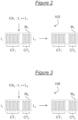
- a first image labeling module M 1 is obtained.
- the first module M 1 is trained by machine learning on a computer from a first training corpus CA 1 comprising first images I 1 associated with first labels L 1 .
- the first module M 1 is configured so that, when it receives one of the first images I 1 as input, it provides as output a labeling conforming to the first label L 1 associated with this first image I 1 in the first training corpus CA 1 .
- the first module M 1 comprises successive processing layers starting with a first processing layer.
- the first processing layer is intended to receive the image to be labeled.
- the output of each processing layer is provided as input to the following processing layer, except for the last processing layer which provides a labeling of the image to be labeled.
- Each processing layer comprises parameters which are adjusted during learning.
- the first module M 1 is a convolutional neural network.
- the first processing layers are convolutional CT 1 layers (five in the example described) and the following layers are fully connected CT 2 neural layers (three in the example described).
- the first CA 1 training corpus is for example the ILSVRC (ImageNet Large Scale Visual Recognition Challenge) image database which is itself extracted from the ImageNet image database, labeled according to the Word Net hierarchy.
- ILSVRC ImageNet Large Scale Visual Recognition Challenge
- the labels used in the most common image databases are generally very specific. As a result, the images are very visually consistent and probably facilitate machine learning. However, their use leads to obtaining a very specialized first module M 1 , which makes it difficult to reuse it for labeling based on other labels.
- the first module M 1 is again trained, but partially this time, by machine learning on a computer from a third training corpus CA 3 comprising third images I 3 associated with third labels L 3 .
- the machine learning is then carried out according to the “ fine -tuning” method by adjusting only part of the parameters of the first module M 1 . For example, only the parameters of one or more last neuronal layers CT 2 are adjusted. For example, only the parameters of the last neuronal layer are adjusted.
- the parameters of the other layers remain at their values from the first machine learning of the first module M 1 from the first training corpus CA 1 .
- a second training corpus CA 2 is obtained from the first training corpus CA 1 .
- the second training corpus CA 2 comprises the first images I 1 associated with second labels L 2 .
- Obtaining the second training corpus CA 2 comprises replacing, in the first training corpus CA 1 , each of at least part of the first labels L 1 by a replacement label, at least two first labels L 1 being replaced by the same replacement label.
- the second labels L 2 comprise the replacement labels and any first labels L 1 that have not been replaced.
- all the first images I 1 that were associated, in the first training corpus CA 1 , with the same first label L 1 that has been replaced are associated, in the second training corpus CA 2 , with the replacement label of this first label L 1 .
- the number of second labels L 2 is less than the number of first L 1 labels.
- replacement labels are labels that have a more generic meaning than the first L 1 labels they replace. For example, a replacement label for the first labels "labrador” and "german shepherd" could be the label "dog" or the label "animal”.
- second L 2 labels are more generic than first L 1 labels.
- obtaining the second learning corpus CA 2 comprises, for each of at least part of the first labels L 1 , determining, in a predefined tree of labels including in particular the first labels L 1 , a common ancestor to this first label L 1 and to at least one other first label L 1 , the determined common ancestor forming the replacement label for this first label L 1 .
- the second training corpus CA 2 is obtained automatically from the first training corpus CA 1 and the tree, without user intervention.
- the step of accepting or not a replacement by the user is replaced by a step during which the closest common ancestor is automatically added to the second set K2 on the basis of one or more predefined criteria.
- the predefined criterion or criteria include the criterion according to which the closest common ancestor belongs to a predetermined list of labels of the tree and the label ci does not belong thereto.
- each of at least some of the first labels L 1 is replaced by the closest common ancestor of that first label L 1 and at least one other first label L 1 , that closest common ancestor being located above a predetermined level in the tree, the levels of the tree being increasing from the leaf labels to the root label.
- the predefined criterion(s) for the preceding algorithm include the criterion that the closest common ancestor is above a predefined level in the tree and the label ci is below that predefined level.
- the second image labeling module M 2 is obtained.
- the second module M 2 is trained by machine learning on a computer from the second training corpus CA 2 .
- the second module M 2 is configured so that, when it receives one of the first images I 1 as input, it provides as output a labeling conforming to the second label L 2 associated with this first image I 1 in the second training corpus CA 2 .
- the second module M 2 is also a convolutional neural network.
- the first processing layers CT 1 are layers convolutional layers (five in the example described) and the following layers are fully connected CT 2 neural layers (three in the example described).
- the second module M2 is obtained independently of the learning of the first module M1 carried out in step 102.
- the first module M1 obtained following step 102 is not used to obtain the second module M2.
- the second module M 2 is again trained, but partially this time, by machine learning on a computer from the third training corpus CA 3 .
- the machine learning is then carried out according to the “ fine -tuning” method by adjusting only part of the parameters of the second module M 2 . For example, only the parameters of one or more last neuronal layers CT 2 are adjusted. For example, only the parameters of the last neuronal layer are adjusted.
- the parameters of the other layers remain at their values from the first machine learning of the second module M 2 from the second training corpus CA 2 .
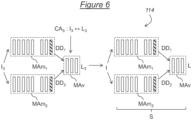
- the system S is obtained, such that it comprises three modules MAm 1 , MAm 2 and MAv.
- These three modules comprise, on the one hand, a first upstream module MAm 1 and a second upstream module MAm 2 designed to each receive the same image to be labeled I and to respectively provide first descriptive data DD 1 and second descriptive data DD 2 of the image to be labeled I and, on the other hand, a downstream module MAv designed to receive the first descriptive data DD 1 and the second descriptive data DD 2 and to provide a labeling L of the image to be labeled I.
- the system S is for example obtained in the form of a computer program comprising instructions implementing the functions of the modules described above, when said computer program is executed on a computer.
- This computer program could just as well be divided according to all possible combinations into one or more subprograms.
- the functions performed could also be at least partly microprogrammed or microwired in dedicated integrated circuits.
- the system S could be an electronic device composed solely of digital circuits (without a computer program) for performing the same functions.
- Step 108 of obtaining the system S comprises, for example, the following steps 110 to 114.
- the first upstream module MAm 1 is obtained from at least part of the first module M 1 .
- the first upstream module MAm 1 comprises one or more successive processing layers CT 1 , CT 2 of the first module M 1 , preferably including the first processing layer.
- the first upstream module MAm 1 includes the convolutional layers CT 1 and only part of the neural layers CT 2 , for example all the neural layers CT 2 except the last one.
- the first upstream module MAm 1 comprises a normalization layer N 1 placed after the last imported layer of the first module M 1 .
- the normalization layer N 1 is designed to normalize the output of the last imported layer of the first module M 1 according to a predefined vector norm, for example according to the Euclidean norm.
- the normalized output of the last imported layer of the first module M 1 forms the first descriptive data DD 1 .
- the second upstream module MAm 2 is obtained from at least part of the second module M 2 .
- the second upstream module MAm 2 comprises one or more successive processing layers CT 1 , CT 2 of the second module M 2 , preferably including the first processing layer.
- the second upstream module MAm 2 includes the convolutional layers CT 1 and only part of the neural layers CT 2 , for example all the neural layers CT 2 except the last one.
- the second upstream module MAm 2 comprises a normalization layer N 2 placed after the last imported layer of the second module M 2 .
- the normalization layer N 2 is designed to normalize the output of the last imported layer of the second module M 2 according to a predefined vector norm, for example according to the Euclidean norm.
- the normalized output of the last imported layer of the second module M 2 forms the second descriptive data DD 2 .
- the first descriptive data DD 1 are supplemented by the second descriptive data DD 2 which allow to describe the image at a more generic level than the first descriptive data DD 1 alone. This allows, as will be described later, an efficient reuse of the learning automatic analysis carried out from the first CA 1 learning corpus to label images according to new labels.
- the downstream module MAv is obtained.
- the downstream module MAv is trained by machine learning on a computer from the third training corpus CA 3 .
- the downstream module MAv is configured so that, when the first upstream module MAm 1 and the second upstream module MAm 2 receive one of the third images I 3 as input, the downstream module MAv provides as output a labeling conforming to the third label L 3 associated with this third image I 3 in the third training corpus CA 3 .
- the first upstream module MAm 1 and the second upstream module MAm 2 remain unchanged.
- the downstream module MAv comprises a neural network, for example comprising three layers of neurons.
- the number of third images I 3 may be much smaller than the number of first images I 1 .
- the number of third images I 3 may be equal to or smaller than 10% of the number of first images I 1 .
- the third images I 3 may represent completely different things than the first images I 1 , and the third labels L 3 may be different from the first labels L 1 and the second labels L 2 .
- the image labeling system S thus obtained gives good results for labeling images according to the third labels L 3 , in any case results often better than using the first descriptive data DD 1 alone.
- Method 700 is identical to method 100 except for the differences which will now be described.
- the downstream module MAv comprises, on the one hand, a first block B 1 designed to receive as input the first descriptive data DD 1 and the second descriptive data DD 2 and to provide as output global descriptive data DDG combining in the example described the first descriptive data DD 1 and the second descriptive data DD 2 and, on the other hand, a second block B 2 designed to receive as input the global descriptive data DDG and to provide output labeling from this global DDG descriptive data.
- step 114 of obtaining the downstream module MAv comprises the following steps 702 and 704.
- the first block B 1 is trained by machine learning on a computer from a fourth training corpus CA 4 comprising the first images I 1 associated with pairs of labels L 1 , L 2 .
- the pair of labels L 1 , L 2 of each first image I 1 comprises the first label L 1 associated with the first image I 1 in the first training corpus CA 1 and the second label L 2 associated with the first image I 1 in the second training corpus CA 2 .
- the first block B 1 is configured so that, when the first upstream module MAm 1 and the second upstream module MAm 2 receive as input one of the first images I 1 , the first block B 1 provides as output a double labeling (corresponding in the example described to the global descriptive data DDG) conforming to the pair of labels L 1 , L 2 associated with this first image I 1 in the fourth training corpus CA 4 .
- the first upstream module MAm 1 and the second upstream module MAm 2 remain unchanged.
- the first block B 1 is a neural network, for example comprising three layers of neurons.
- the second block B 2 is trained by machine learning on a computer from the third training corpus CA 3 .
- the second block B 2 is configured so that, when the first upstream module MAm 1 and the second upstream module MAm 2 receive as input one of the third images I 3 , the second block B 2 provides as output a labeling conforming to the third label L 3 associated with this third image I 3 in the third training corpus CA 3 .
- the first upstream module MAm 1 , the second upstream module MAm 2 and the first block B 1 remain unchanged.
- the second block B 2 is a neural network, for example comprising three layers of neurons.
- the device 1000 comprises for example a computer comprising a processing unit 1002 (comprising for example one or more processors) and a memory 1004 (comprising for example a RAM memory) for storing data files and computer programs.
- the memory 1004 comprises in particular a program 1006 comprising instructions for carrying out part or all of the steps of a method for obtaining an image labeling system S as described above, when said program 1006 is executed on the computer by the processing unit 1002.
- the program 1006 could just as well be divided according to all possible combinations into one or more sub-programs.
- the steps performed could also be at least partly micro-programmed or micro-wired in dedicated integrated circuits.
- the computer implementing the processing unit 1002 could be replaced by an electronic device composed solely of digital circuits (without a computer program) for performing the same steps.
Landscapes
- Engineering & Computer Science (AREA)
- Theoretical Computer Science (AREA)
- Physics & Mathematics (AREA)
- Software Systems (AREA)
- Computing Systems (AREA)
- Artificial Intelligence (AREA)
- General Physics & Mathematics (AREA)
- Evolutionary Computation (AREA)
- Mathematical Physics (AREA)
- General Engineering & Computer Science (AREA)
- Data Mining & Analysis (AREA)
- General Health & Medical Sciences (AREA)
- Health & Medical Sciences (AREA)
- Molecular Biology (AREA)
- Computational Linguistics (AREA)
- Biophysics (AREA)
- Biomedical Technology (AREA)
- Life Sciences & Earth Sciences (AREA)
- Computer Vision & Pattern Recognition (AREA)
- Medical Informatics (AREA)
- Databases & Information Systems (AREA)
- Multimedia (AREA)
- Image Analysis (AREA)
Claims (9)
- Verfahren (100; 700) zum Erhalten eines Systems (S) zum Kennzeichnen von Bildern, das durch einen Computer durchgeführt wird, wobei die Kennzeichnungen das Vorhandensein von Objekten in Bildern an, wobei das Verfahren Folgendes umfasst:- Erhalten eines ersten Moduls (M1) zum Kennzeichnen von Bildern, das durch maschinelles Lernen auf einem Computer anhand eines ersten Lernregelwerks (CA1), das erste Bilder (I1) umfasst, die ersten Kennzeichnungen (L1) zugeordnet sind, derart trainiert wurde, dass, wenn das erste Kennzeichnungsmodul (M1) eines der ersten Bilder (I1) als Eingabe empfängt, das erste Kennzeichnungsmodul (M1) eine Ausgabe bereitstellt, die mit der ersten Kennzeichnung (L1) übereinstimmt, die dem ersten Bild (I1) im ersten Lernregelwerk (CA1) zugeordnet ist,- Erhalten (108) des Systems (S) zum Kennzeichnen von Bildern in einer Weise, dass es Folgendes umfasst:• ein erstes vorgelagertes Modul (MAm1), das dazu ausgelegt ist, ein zu kennzeichnendes Bild (I) zu empfangen und erste beschreibende Daten (DD1) des zu kennzeichnenden Bildes (I) bereitzustellen, wobei das erste vorgelagerte Modul (MAm1) anhand mindestens eines Teils des ersten Kennzeichnungsmoduls (M1) erhalten wird,• ein nachgelagertes Modul (MAv), das dazu ausgelegt ist, eine Kennzeichnung (L) des zu kennzeichnenden Bildes (I) anhand der ersten beschreibenden Daten (DD1) bereitzustellen,- Erhalten (104) eines zweiten Lernregelwerks (CA2), das die ersten Bilder (I1) umfasst, die zweiten Kennzeichnungen (L2) zugeordnet sind, indem in dem ersten Lernregelwerk (CA1) jedes von mindestens einem Teil der ersten Kennzeichnungen (L1) durch eine Ersatzkennzeichnung ersetzt wird, wobei mindestens zwei erste Kennzeichnungen (L1) durch dieselbe Ersatzkennzeichnung ersetzt werden, wobei die zweiten Kennzeichnungen (L2) die Ersatzkennzeichnungen und die möglichen ersten Kennzeichnungen (L1), die nicht ersetzt wurden, umfassen,- maschinelles Lernen eines zweiten Moduls (M2) zum Kennzeichnen von Bildern anhand des zweiten Lernregelwerks (CA2) derart auf einem Computer, dass, wenn das zweite Kennzeichnungsmodul (M2) eines der ersten Bilder (I1) als Eingabe empfängt, das zweite Kennzeichnungsmodul (M2) eine Ausgabe bereitstellt, die mit der zweiten Kennzeichnung (L2) übereinstimmt, die dem ersten Bild (I1) im zweiten Lernregelwerk (CA2) zugeordnet ist,wobei das System (S) zum Kennzeichnen von Bildern ferner ein zweites vorgelagertes Modul (MAm2) umfasst, das dazu ausgelegt ist, das zu kennzeichnende Bild (I) zu empfangen und zweite beschreibende Daten (DD2) des zu kennzeichnenden Bildes (I) bereitzustellen, wobei das zweite vorgelagerte Modul (MAm2) anhand mindestens eines Teils des zweiten Kennzeichnungsmoduls (M2) erhalten wird,und das nachgelagerte Modul (MAv) dazu ausgelegt ist, eine Kennzeichnung (L) des zu kennzeichnenden Bildes (I) anhand der ersten beschreibenden Daten (DD1) und der zweiten beschreibenden Daten (DD2) bereitzustellen,wobei das erste Kennzeichnungsmodul (M1) und das zweite Kennzeichnungsmodul (M2) jeweils aufeinanderfolgende Verarbeitungsschichten (CT1, CT2) umfassen, beginnend mit einer ersten Verarbeitungsschicht, die dazu bestimmt ist, die ersten Bilder (I1) zu empfangen, undwobei das erste Kennzeichnungsmodul (M1) und das zweite Kennzeichnungsmodul (M2) jeweils ein gefaltetes neuronales Netzwerk umfassen, das als aufeinanderfolgende Verarbeitungsschichten Faltungsschichten (CT1) und neuronale Schichten (CT2), die auf die Faltungsschichten (CT1) folgen, umfasst,wobei das Verfahren dadurch gekennzeichnet ist, dass es ferner Folgendes umfasst:- maschinelles Lernen mindestens eines Teils des nachgelagerten Moduls (MAv) anhand eines dritten Lernregelwerks (CA3), das dritte Bilder (I3) umfasst, die dritten Kennzeichnungen (L3) zugeordnet sind, derart auf einem Computer, dass, wenn das erste vorgelagerte Modul (MAm1) und das zweite vorgelagerte Modul (MAm2) eines der dritten Bilder (I3) als Eingabe empfangen, das nachgelagerte Modul (MAv) eine Ausgabe bereitstellt, die mit der dritten Kennzeichnung (L3) übereinstimmt, die dem dritten Bild (I3) im dritten Lernregelwerk (CA3) zugeordnet ist, wobei das erste vorgelagerte Modul (MAm1) und das zweite vorgelagerte Modul (MAm2) während des maschinellen Lernens des mindestens einen Teils des nachgelagerten Moduls (MAv) unverändert bleiben.
- Verfahren (100; 700) nach Anspruch 1, wobei das erste vorgelagerte Modul (MAm1) eine oder mehrere aufeinanderfolgende Verarbeitungsschichten (CT1, CT2) des ersten Kennzeichnungsmoduls (M1) umfasst und wobei das zweite vorgelagerte Modul (MAm2) eine oder mehrere aufeinanderfolgende Verarbeitungsschichten (CT1, CT2) des zweiten Kennzeichnungsmoduls (M2) umfasst.
- Verfahren (100; 700) nach Anspruch 2, wobei die Verarbeitungsschicht oder die Verarbeitungsschichten des ersten vorgelagerten Moduls (MAm1) die erste Verarbeitungsschicht des ersten Kennzeichnungsmoduls (M1) umfassen und wobei die Verarbeitungsschicht oder die Verarbeitungsschichten des zweiten vorgelagerten Moduls (MAm2) die erste Verarbeitungsschicht des zweiten Kennzeichnungsmoduls (M2) umfassen.
- Verfahren (100) nach einem der Ansprüche 1 bis 3, wobei das erste vorgelagerte Modul (MAm1) die Faltungsschichten (CT1) und nur einen Teil der neuronalen Schichten (CT2) des ersten Kennzeichnungsmoduls (M1) umfasst und wobei das zweite vorgelagerte Modul (MAm2) die Faltungsschichten (CT1) und nur einen Teil der neuronalen Schichten (CT2) des zweiten Kennzeichnungsmoduls (M2) umfasst.
- Verfahren (100, 700) nach einem der Ansprüche 1 bis 4, wobei das Erhalten (104) des zweiten Lernregelwerks (CA2) für jeweils mindestens einen Teil der ersten Kennzeichnungen (L1) das Bestimmen eines gemeinsamen Vorläufers der ersten Kennzeichnung (L1) und mindestens einer anderen ersten Kennzeichnung (L1) in einem vordefinierten Baum von Kennzeichnungen, der insbesondere die ersten Kennzeichnungen (L1) einschließt, umfasst, wobei der bestimmte gemeinsame Vorläufer die Ersatzkennzeichnung der ersten Kennzeichnung (L1) ist.
- Verfahren (700) nach einem der Ansprüche 1 bis 5, wobei das vorgelagerte Modul (MAv) einerseits einen ersten Block (B1), der dazu ausgelegt ist, die ersten beschreibenden Daten (DD1) und die zweiten beschreibenden Daten (DD2) als Eingabe zu empfangen und die beschreibende Daten (DDG) als Ausgabe bereitzustellen, und andererseits einen zweiten Block (B2) umfasst, der dazu ausgelegt ist, die globalen beschreibenden Daten (DDG) als Eingabe zu empfangen und eine Kennzeichnung (L) als Ausgabe bereitzustellen, und ferner Folgendes umfasst:- maschinelles Lernen des ersten Blocks (B1) anhand eines vierten Lernregelwerks (CA4), der die ersten Bilder (I1) umfasst, die Paaren von Kennzeichnungen (L1, L2) zugeordnet sind, auf einem Computer, wobei das Paar von Kennzeichnungen (L1, L2), die jedem ersten Bild (I1) zugeordnet sind, die erste Kennzeichnung (L1), das dem ersten Bild (I1) im ersten Lernregelwerk (CA2) zugeordnet ist, und die zweite Kennzeichnung (L2) umfasst, die dem ersten Bild (I1) im zweiten Lernregelwerk (CA2) zugeordnet ist, derart, dass, wenn das erste vorgelagerte Modul (MAm1) und das zweite vorgelagerte Modul (MAm2) eines der ersten Bilder (I1) als Eingabe empfangen, der erste Block (B1) eine Ausgabe bereitstellt, die mit dem Paar von Kennzeichnungen (L1, L2) übereinstimmt, das dem ersten Bild (I1) im vierten Lernregelwerk (CA4) zugeordnet ist, wobei das erste vorgelagerte Modul (MAm1) und das zweite vorgelagerte Modul (MAm2) während des Lernens unverändert bleiben,- nach dem maschinellen Lernen des ersten Blocks (B1), maschinelles Lernen des zweiten Blocks (B2) anhand des dritten Lernregelwerks (CA3) derart auf einem Computer, dass, wenn die erste vorgelagerte Stufe (MAm1) und die zweite vorgelagerte Stufe (MAm2) eines der dritten Bilder (I3) als Eingabe empfangen, das nachgelagerte Modul (MAv) eine Ausgabe bereitstellt, die mit der dritten Kennzeichnung (L3) übereinstimmt, die dem dritten Bild (I3) im dritten Lernregelwerk (CA3) zugeordnet ist, wobei das erste vorgelagerte Modul (MAm1), das zweite vorgelagerte Modul (MAm2) und der erste Block (B1) während des Lernens unverändert bleiben.
- Computerprogramm, das aus einem Kommunikationsnetzwerk heruntergeladen werden kann und/oder auf einem computerlesbaren Medium gespeichert ist und/oder von einem Prozessor ausgeführt werden kann, dadurch gekennzeichnet, dass es Anweisungen zur Ausführung der Schritte eines Verfahrens nach einem der Ansprüche 1 bis 6 umfasst, wenn das Programm auf einem Computer ausgeführt wird.
- Vorrichtung (1000) zum Erhalten eines Systems (S) zum Kennzeichnen von Bildern, das dazu ausgelegt ist, ein Verfahren nach einem der Ansprüche 1 bis 6 durchzuführen.
- System (S) zum Kennzeichnen von Bildern, das mit einem durch einen Computer durchgeführten Verfahren nach einem der Ansprüche 1 bis 6 erhalten wurde.
Applications Claiming Priority (2)
| Application Number | Priority Date | Filing Date | Title |
|---|---|---|---|
| FR1662013A FR3059806B1 (fr) | 2016-12-06 | 2016-12-06 | Procede d'obtention d'un systeme de labellisation d'images, programme d'ordinateur et dispositif correspondants, systeme de labellisation d'images |
| PCT/FR2017/053342 WO2018104626A1 (fr) | 2016-12-06 | 2017-12-01 | Procede et dispositif d'obtention d'un systeme de labellisation d'images |
Publications (2)
| Publication Number | Publication Date |
|---|---|
| EP3552155A1 EP3552155A1 (de) | 2019-10-16 |
| EP3552155B1 true EP3552155B1 (de) | 2024-11-13 |
Family
ID=58707624
Family Applications (1)
| Application Number | Title | Priority Date | Filing Date |
|---|---|---|---|
| EP17821675.0A Active EP3552155B1 (de) | 2016-12-06 | 2017-12-01 | Verfahren und gerät zur erzeugung eines bild-klassifizierungssystems |
Country Status (4)
| Country | Link |
|---|---|
| US (1) | US20190311265A1 (de) |
| EP (1) | EP3552155B1 (de) |
| FR (1) | FR3059806B1 (de) |
| WO (1) | WO2018104626A1 (de) |
Families Citing this family (2)
| Publication number | Priority date | Publication date | Assignee | Title |
|---|---|---|---|---|
| US11699097B2 (en) * | 2019-05-21 | 2023-07-11 | Apple Inc. | Machine learning model with conditional execution of multiple processing tasks |
| CN115176277B (zh) * | 2020-03-04 | 2026-03-03 | 三菱电机株式会社 | 标注装置以及学习装置 |
Family Cites Families (1)
| Publication number | Priority date | Publication date | Assignee | Title |
|---|---|---|---|---|
| US10387773B2 (en) * | 2014-10-27 | 2019-08-20 | Ebay Inc. | Hierarchical deep convolutional neural network for image classification |
-
2016
- 2016-12-06 FR FR1662013A patent/FR3059806B1/fr active Active
-
2017
- 2017-12-01 EP EP17821675.0A patent/EP3552155B1/de active Active
- 2017-12-01 WO PCT/FR2017/053342 patent/WO2018104626A1/fr not_active Ceased
- 2017-12-01 US US16/466,889 patent/US20190311265A1/en not_active Abandoned
Also Published As
| Publication number | Publication date |
|---|---|
| EP3552155A1 (de) | 2019-10-16 |
| FR3059806B1 (fr) | 2019-10-25 |
| FR3059806A1 (fr) | 2018-06-08 |
| US20190311265A1 (en) | 2019-10-10 |
| WO2018104626A1 (fr) | 2018-06-14 |
Similar Documents
| Publication | Publication Date | Title |
|---|---|---|
| US11494648B2 (en) | Method and system for detecting fake news based on multi-task learning model | |
| WO2016102153A1 (fr) | Representation semantique du contenu d'une image | |
| WO2014198595A1 (fr) | Procede de classification thematique automatique d'un fichier de texte numerique | |
| EP4099228A1 (de) | Verbessertes maschinelles lernen ohne anmerkungen durch adaptive gruppierungen in offenen klassensätzen | |
| EP3552155B1 (de) | Verfahren und gerät zur erzeugung eines bild-klassifizierungssystems | |
| FR3062504A1 (fr) | Detection automatique de fraudes dans un flux de transaction de paiement par reseaux de neurones integrant des informations contextuelles | |
| WO2020208153A1 (fr) | Procede de definition d'un chemin | |
| EP2407921A1 (de) | Verfahren zur Datenkompression für einen Ordner | |
| EP1766538A1 (de) | Automatische suche nach ähnlichkeiten zwischen bildern einschliesslich menschlicher intervention | |
| FR3064095B1 (fr) | Detection par apprentissage automatique d'anomalies dans un ensemble de transactions bancaires par optimisation de la precision moyenne | |
| Liang et al. | Frequency is what you need: Considering word frequency when text masking benefits vision-language model pre-training | |
| EP4453896A1 (de) | Vorrichtung und verfahren zur verarbeitung von bilddaten eines menschlichen gesichts | |
| WO2023047071A1 (fr) | Procédé de traitement d'un contenu numérique exprimant un récit d'une expérience, et applications de ce procédé pour la recommandation de contenus et/ou d'expériences | |
| WO2022144847A1 (fr) | Compréhension automatique d'instructions multiples dans des expressions en langage naturel | |
| WO2020193253A1 (fr) | Procede et systeme d'identification d'objets a partir d'images labellisees desdits objets | |
| EP4165605A1 (de) | Verfahren zur erzeugung von bildern einer fahrzeug-innenkamera | |
| EP3114597B1 (de) | Verfahren zur analyse von mehreren nachrichten sowie entsprechendes computerprogrammprodukt und vorrichtung | |
| FR3110268A1 (fr) | Procédés d’utilisation sécurisée d’un premier réseau de neurones sur une donnée d’entrée, et d’apprentissage de paramètres d’un deuxième réseau de neurones | |
| EP3622445A1 (de) | Verfahren, durch computer implementiert, zum suchen von regeln der assoziation in einer datenbank | |
| Sanjay et al. | AgriAdvisor Pro: A Multimodal LLM-Driven Precision Advisory System for Enhanced Sustainable Farming | |
| WO2025141279A1 (fr) | Procédé d'apprentissage continu pour réseau de neurones de biométrie par comparaison faciale | |
| FR3118527A1 (fr) | Procédé de compréhension automatique d’expressions en langage naturel, et dispositif de compréhension associé | |
| EP3903236A1 (de) | Verfahren zur erzeugung eines werbungsbeispiels für ein maschinenlernmodell und zugehöriges robustifizierungsverfahren, erzeugungsvorrichtung und computerprogrammprodukt | |
| FR3103937A1 (fr) | Identification et compréhension de questions pilotées par ordinateur dans un dossier d’appel d’offres commercial pour le traitement automatisé d’offres | |
| FR3148664A1 (fr) | Procede pour generer automatiquement une sequence d’images ordonnee pour l’application de traitements d’images differencies |
Legal Events
| Date | Code | Title | Description |
|---|---|---|---|
| STAA | Information on the status of an ep patent application or granted ep patent |
Free format text: STATUS: UNKNOWN |
|
| STAA | Information on the status of an ep patent application or granted ep patent |
Free format text: STATUS: THE INTERNATIONAL PUBLICATION HAS BEEN MADE |
|
| PUAI | Public reference made under article 153(3) epc to a published international application that has entered the european phase |
Free format text: ORIGINAL CODE: 0009012 |
|
| STAA | Information on the status of an ep patent application or granted ep patent |
Free format text: STATUS: REQUEST FOR EXAMINATION WAS MADE |
|
| 17P | Request for examination filed |
Effective date: 20190603 |
|
| AK | Designated contracting states |
Kind code of ref document: A1 Designated state(s): AL AT BE BG CH CY CZ DE DK EE ES FI FR GB GR HR HU IE IS IT LI LT LU LV MC MK MT NL NO PL PT RO RS SE SI SK SM TR |
|
| AX | Request for extension of the european patent |
Extension state: BA ME |
|
| DAV | Request for validation of the european patent (deleted) | ||
| DAX | Request for extension of the european patent (deleted) | ||
| STAA | Information on the status of an ep patent application or granted ep patent |
Free format text: STATUS: EXAMINATION IS IN PROGRESS |
|
| 17Q | First examination report despatched |
Effective date: 20211020 |
|
| GRAP | Despatch of communication of intention to grant a patent |
Free format text: ORIGINAL CODE: EPIDOSNIGR1 |
|
| STAA | Information on the status of an ep patent application or granted ep patent |
Free format text: STATUS: GRANT OF PATENT IS INTENDED |
|
| RIC1 | Information provided on ipc code assigned before grant |
Ipc: G06N 3/045 20230101ALN20240610BHEP Ipc: G06N 3/09 20230101ALI20240610BHEP Ipc: G06N 3/08 20060101AFI20240610BHEP |
|
| INTG | Intention to grant announced |
Effective date: 20240621 |
|
| GRAS | Grant fee paid |
Free format text: ORIGINAL CODE: EPIDOSNIGR3 |
|
| GRAA | (expected) grant |
Free format text: ORIGINAL CODE: 0009210 |
|
| STAA | Information on the status of an ep patent application or granted ep patent |
Free format text: STATUS: THE PATENT HAS BEEN GRANTED |
|
| RAP3 | Party data changed (applicant data changed or rights of an application transferred) |
Owner name: COMMISSARIAT A L'ENERGIE ATOMIQUE ET AUX ENERGIESALTERNATIVES |
|
| AK | Designated contracting states |
Kind code of ref document: B1 Designated state(s): AL AT BE BG CH CY CZ DE DK EE ES FI FR GB GR HR HU IE IS IT LI LT LU LV MC MK MT NL NO PL PT RO RS SE SI SK SM TR |
|
| REG | Reference to a national code |
Ref country code: GB Ref legal event code: FG4D Free format text: NOT ENGLISH |
|
| REG | Reference to a national code |
Ref country code: CH Ref legal event code: EP |
|
| REG | Reference to a national code |
Ref country code: IE Ref legal event code: FG4D Free format text: LANGUAGE OF EP DOCUMENT: FRENCH |
|
| REG | Reference to a national code |
Ref country code: DE Ref legal event code: R096 Ref document number: 602017086132 Country of ref document: DE |
|
| REG | Reference to a national code |
Ref country code: LT Ref legal event code: MG9D |
|
| REG | Reference to a national code |
Ref country code: NL Ref legal event code: MP Effective date: 20241113 |
|
| PG25 | Lapsed in a contracting state [announced via postgrant information from national office to epo] |
Ref country code: PT Free format text: LAPSE BECAUSE OF FAILURE TO SUBMIT A TRANSLATION OF THE DESCRIPTION OR TO PAY THE FEE WITHIN THE PRESCRIBED TIME-LIMIT Effective date: 20250313 Ref country code: HR Free format text: LAPSE BECAUSE OF FAILURE TO SUBMIT A TRANSLATION OF THE DESCRIPTION OR TO PAY THE FEE WITHIN THE PRESCRIBED TIME-LIMIT Effective date: 20241113 Ref country code: IS Free format text: LAPSE BECAUSE OF FAILURE TO SUBMIT A TRANSLATION OF THE DESCRIPTION OR TO PAY THE FEE WITHIN THE PRESCRIBED TIME-LIMIT Effective date: 20250313 |
|
| PG25 | Lapsed in a contracting state [announced via postgrant information from national office to epo] |
Ref country code: NL Free format text: LAPSE BECAUSE OF FAILURE TO SUBMIT A TRANSLATION OF THE DESCRIPTION OR TO PAY THE FEE WITHIN THE PRESCRIBED TIME-LIMIT Effective date: 20241113 Ref country code: FI Free format text: LAPSE BECAUSE OF FAILURE TO SUBMIT A TRANSLATION OF THE DESCRIPTION OR TO PAY THE FEE WITHIN THE PRESCRIBED TIME-LIMIT Effective date: 20241113 |
|
| REG | Reference to a national code |
Ref country code: AT Ref legal event code: MK05 Ref document number: 1742245 Country of ref document: AT Kind code of ref document: T Effective date: 20241113 |
|
| PG25 | Lapsed in a contracting state [announced via postgrant information from national office to epo] |
Ref country code: BG Free format text: LAPSE BECAUSE OF FAILURE TO SUBMIT A TRANSLATION OF THE DESCRIPTION OR TO PAY THE FEE WITHIN THE PRESCRIBED TIME-LIMIT Effective date: 20241113 |
|
| PG25 | Lapsed in a contracting state [announced via postgrant information from national office to epo] |
Ref country code: ES Free format text: LAPSE BECAUSE OF FAILURE TO SUBMIT A TRANSLATION OF THE DESCRIPTION OR TO PAY THE FEE WITHIN THE PRESCRIBED TIME-LIMIT Effective date: 20241113 |
|
| PG25 | Lapsed in a contracting state [announced via postgrant information from national office to epo] |
Ref country code: NO Free format text: LAPSE BECAUSE OF FAILURE TO SUBMIT A TRANSLATION OF THE DESCRIPTION OR TO PAY THE FEE WITHIN THE PRESCRIBED TIME-LIMIT Effective date: 20250213 |
|
| PG25 | Lapsed in a contracting state [announced via postgrant information from national office to epo] |
Ref country code: LV Free format text: LAPSE BECAUSE OF FAILURE TO SUBMIT A TRANSLATION OF THE DESCRIPTION OR TO PAY THE FEE WITHIN THE PRESCRIBED TIME-LIMIT Effective date: 20241113 Ref country code: AT Free format text: LAPSE BECAUSE OF FAILURE TO SUBMIT A TRANSLATION OF THE DESCRIPTION OR TO PAY THE FEE WITHIN THE PRESCRIBED TIME-LIMIT Effective date: 20241113 Ref country code: GR Free format text: LAPSE BECAUSE OF FAILURE TO SUBMIT A TRANSLATION OF THE DESCRIPTION OR TO PAY THE FEE WITHIN THE PRESCRIBED TIME-LIMIT Effective date: 20250214 |
|
| PG25 | Lapsed in a contracting state [announced via postgrant information from national office to epo] |
Ref country code: PL Free format text: LAPSE BECAUSE OF FAILURE TO SUBMIT A TRANSLATION OF THE DESCRIPTION OR TO PAY THE FEE WITHIN THE PRESCRIBED TIME-LIMIT Effective date: 20241113 |
|
| PG25 | Lapsed in a contracting state [announced via postgrant information from national office to epo] |
Ref country code: RS Free format text: LAPSE BECAUSE OF FAILURE TO SUBMIT A TRANSLATION OF THE DESCRIPTION OR TO PAY THE FEE WITHIN THE PRESCRIBED TIME-LIMIT Effective date: 20250213 |
|
| PG25 | Lapsed in a contracting state [announced via postgrant information from national office to epo] |
Ref country code: SM Free format text: LAPSE BECAUSE OF FAILURE TO SUBMIT A TRANSLATION OF THE DESCRIPTION OR TO PAY THE FEE WITHIN THE PRESCRIBED TIME-LIMIT Effective date: 20241113 |
|
| PG25 | Lapsed in a contracting state [announced via postgrant information from national office to epo] |
Ref country code: DK Free format text: LAPSE BECAUSE OF FAILURE TO SUBMIT A TRANSLATION OF THE DESCRIPTION OR TO PAY THE FEE WITHIN THE PRESCRIBED TIME-LIMIT Effective date: 20241113 |
|
| PG25 | Lapsed in a contracting state [announced via postgrant information from national office to epo] |
Ref country code: EE Free format text: LAPSE BECAUSE OF FAILURE TO SUBMIT A TRANSLATION OF THE DESCRIPTION OR TO PAY THE FEE WITHIN THE PRESCRIBED TIME-LIMIT Effective date: 20241113 |
|
| PG25 | Lapsed in a contracting state [announced via postgrant information from national office to epo] |
Ref country code: RO Free format text: LAPSE BECAUSE OF FAILURE TO SUBMIT A TRANSLATION OF THE DESCRIPTION OR TO PAY THE FEE WITHIN THE PRESCRIBED TIME-LIMIT Effective date: 20241113 |
|
| PG25 | Lapsed in a contracting state [announced via postgrant information from national office to epo] |
Ref country code: SK Free format text: LAPSE BECAUSE OF FAILURE TO SUBMIT A TRANSLATION OF THE DESCRIPTION OR TO PAY THE FEE WITHIN THE PRESCRIBED TIME-LIMIT Effective date: 20241113 |
|
| PG25 | Lapsed in a contracting state [announced via postgrant information from national office to epo] |
Ref country code: CZ Free format text: LAPSE BECAUSE OF FAILURE TO SUBMIT A TRANSLATION OF THE DESCRIPTION OR TO PAY THE FEE WITHIN THE PRESCRIBED TIME-LIMIT Effective date: 20241113 |
|
| PG25 | Lapsed in a contracting state [announced via postgrant information from national office to epo] |
Ref country code: IT Free format text: LAPSE BECAUSE OF FAILURE TO SUBMIT A TRANSLATION OF THE DESCRIPTION OR TO PAY THE FEE WITHIN THE PRESCRIBED TIME-LIMIT Effective date: 20241113 |
|
| REG | Reference to a national code |
Ref country code: CH Ref legal event code: PL |
|
| REG | Reference to a national code |
Ref country code: DE Ref legal event code: R097 Ref document number: 602017086132 Country of ref document: DE |
|
| PG25 | Lapsed in a contracting state [announced via postgrant information from national office to epo] |
Ref country code: LU Free format text: LAPSE BECAUSE OF NON-PAYMENT OF DUE FEES Effective date: 20241201 |
|
| PG25 | Lapsed in a contracting state [announced via postgrant information from national office to epo] |
Ref country code: SE Free format text: LAPSE BECAUSE OF FAILURE TO SUBMIT A TRANSLATION OF THE DESCRIPTION OR TO PAY THE FEE WITHIN THE PRESCRIBED TIME-LIMIT Effective date: 20241113 |
|
| PG25 | Lapsed in a contracting state [announced via postgrant information from national office to epo] |
Ref country code: MC Free format text: LAPSE BECAUSE OF FAILURE TO SUBMIT A TRANSLATION OF THE DESCRIPTION OR TO PAY THE FEE WITHIN THE PRESCRIBED TIME-LIMIT Effective date: 20241113 |
|
| PLBE | No opposition filed within time limit |
Free format text: ORIGINAL CODE: 0009261 |
|
| STAA | Information on the status of an ep patent application or granted ep patent |
Free format text: STATUS: NO OPPOSITION FILED WITHIN TIME LIMIT |
|
| REG | Reference to a national code |
Ref country code: BE Ref legal event code: MM Effective date: 20241231 |
|
| PG25 | Lapsed in a contracting state [announced via postgrant information from national office to epo] |
Ref country code: BE Free format text: LAPSE BECAUSE OF NON-PAYMENT OF DUE FEES Effective date: 20241231 |
|
| PG25 | Lapsed in a contracting state [announced via postgrant information from national office to epo] |
Ref country code: CH Free format text: LAPSE BECAUSE OF NON-PAYMENT OF DUE FEES Effective date: 20241231 |
|
| 26N | No opposition filed |
Effective date: 20250814 |
|
| PG25 | Lapsed in a contracting state [announced via postgrant information from national office to epo] |
Ref country code: IE Free format text: LAPSE BECAUSE OF NON-PAYMENT OF DUE FEES Effective date: 20241201 |
|
| GBPC | Gb: european patent ceased through non-payment of renewal fee |
Effective date: 20250213 |
|
| PG25 | Lapsed in a contracting state [announced via postgrant information from national office to epo] |
Ref country code: GB Free format text: LAPSE BECAUSE OF NON-PAYMENT OF DUE FEES Effective date: 20250213 |
|
| PGFP | Annual fee paid to national office [announced via postgrant information from national office to epo] |
Ref country code: FR Payment date: 20251223 Year of fee payment: 9 |
|
| PG25 | Lapsed in a contracting state [announced via postgrant information from national office to epo] |
Ref country code: CY Free format text: LAPSE BECAUSE OF FAILURE TO SUBMIT A TRANSLATION OF THE DESCRIPTION OR TO PAY THE FEE WITHIN THE PRESCRIBED TIME-LIMIT; INVALID AB INITIO Effective date: 20171201 |
|
| PGFP | Annual fee paid to national office [announced via postgrant information from national office to epo] |
Ref country code: DE Payment date: 20251222 Year of fee payment: 9 |