EP3551809B1 - Toilet for use while squatting - Google Patents
Toilet for use while squatting Download PDFInfo
- Publication number
- EP3551809B1 EP3551809B1 EP17809359.7A EP17809359A EP3551809B1 EP 3551809 B1 EP3551809 B1 EP 3551809B1 EP 17809359 A EP17809359 A EP 17809359A EP 3551809 B1 EP3551809 B1 EP 3551809B1
- Authority
- EP
- European Patent Office
- Prior art keywords
- toilet bowl
- toilet
- support
- rim
- base
- Prior art date
- Legal status (The legal status is an assumption and is not a legal conclusion. Google has not performed a legal analysis and makes no representation as to the accuracy of the status listed.)
- Active
Links
Images




Classifications
-
- E—FIXED CONSTRUCTIONS
- E03—WATER SUPPLY; SEWERAGE
- E03D—WATER-CLOSETS OR URINALS WITH FLUSHING DEVICES; FLUSHING VALVES THEREFOR
- E03D11/00—Other component parts of water-closets, e.g. noise-reducing means in the flushing system, flushing pipes mounted in the bowl, seals for the bowl outlet, devices preventing overflow of the bowl contents; devices forming a water seal in the bowl after flushing, devices eliminating obstructions in the bowl outlet or preventing backflow of water and excrements from the waterpipe
- E03D11/02—Water-closet bowls ; Bowls with a double odour seal optionally with provisions for a good siphonic action; siphons as part of the bowl
- E03D11/04—Bowls of flat shape with only slightly inclined bottom ; Squat-type closets
-
- E—FIXED CONSTRUCTIONS
- E03—WATER SUPPLY; SEWERAGE
- E03D—WATER-CLOSETS OR URINALS WITH FLUSHING DEVICES; FLUSHING VALVES THEREFOR
- E03D11/00—Other component parts of water-closets, e.g. noise-reducing means in the flushing system, flushing pipes mounted in the bowl, seals for the bowl outlet, devices preventing overflow of the bowl contents; devices forming a water seal in the bowl after flushing, devices eliminating obstructions in the bowl outlet or preventing backflow of water and excrements from the waterpipe
- E03D11/02—Water-closet bowls ; Bowls with a double odour seal optionally with provisions for a good siphonic action; siphons as part of the bowl
Definitions
- the present invention relates to a toilet and components thereof, including a toilet bowl, a toilet seat, a toilet lid, and flushing apparatus. Also described are methods for manufacturing such toilets and components, and materials suitable therefor.
- the toilet is for use when the user maintains a squatting posture.
- a squatting posture is the natural posture for defecation.
- the natural squatting posture closes the hip angle and thereby relaxes the puborectalis muscle, which in turn allows the colon to straighten, so that defecation can take place more comfortably.
- squatting toilets for example a Japanese squatting toilet
- Conventional squatting toilets are usually not much more than a hole in the floor.
- textured foot supports are provided for extra grip, and occasionally handles either side of the hole are provided for support.
- squatting toilets that provide a toilet bowl, but these require the removal of the user's clothing before use, since the user's feet must be placed either side of the toilet bowl.
- a number of stools are currently available for elevating the feet of a user of a conventional modern toilet so as to achieve an acute hip angle in a seated position. This solution is not ideal, however, since the user's feet cannot be located far enough rearward to allow the user to support their weight without sitting.
- GB 685 960 A discloses toilet fixtures, particularly urinals and water-closet basins, and a method for flushing and washing the walls thereof.
- GB 2 215 748 A discloses a toilet bowl having an upper rim and foot rest means for supporting a person's feet above floor level.
- US 751 270 A disclose a water-closet in which the seat is low down, thereby necessitating a crouching position on the part of the person using it.
- US 4 012 797 A discloses a single water closet or toilet fixture for dual functional use as either a fixture wherein the user is in the sitting position and normally facing forward, or a fixture wherein the user is in the squatting position and facing either in the forward direction or the aft direction.
- US 2003/154541 A1 discloses a toilet seat lid raising and lowering device that relies on a motion sensor to trigger its operation.
- GB 2 276 890 A discloses an automatically operated spray clean nozzle means which is fixed at an angle to a toilet seat and incorporates an extendable and retractable nozzle sprayer from a spray clean nozzle housing which is fixed to piping means and a stop cock with a water inlet.
- WO 2010/030242 A1 discloses a water closet or toilet bowl usable in either in the: sitting, front facing squatting, or rear facing squatting postures.
- GB 567 702 A discloses a water closet pan.
- US 2009/229046 A1 discloses a toilet that includes a bowl having a first surface and a second surface
- EP 0 369 681 A1 discloses a screen for use with a toilet, and in particular for a squat-type toilet.
- WO 2008/117288 A2 discloses a toilet arrangement in which he toilet bowl or seat is displaceably mounted on a support structure so that when the user mounts the apparatus it is displaced such that the front of the seating arrangement is upwardly inclined relative to the horizontal.
- WO 2010/016012 A1 discloses a toilet training device that includes a seat defining a cavity shaped to accommodate a child, with an aperture in the seat, and a base on which the seat can be mounted.
- CN 205 712 391 U discloses a squat toilet bowl.
- KR 2010 0002420 A discloses a toilet hook.
- FR 1 306 690 A discloses a sanitary bowl for toilets.
- GB 2 208 121 A discloses a combined toilet and washing apparatus that includes a toilet bowl having a saddle-shaped seat and a W.C. unit.
- WO 2013/077818 A1 discloses a toilet bowl which is designed in a way that it provides the user who wishes to answer the call of nature to crouch with a crouching angle, the toilet bowl comprising a toilet base block, a toilet block carried by the toilet base block and a toilet cover.
- the present invention provides a toilet that can be used for both squatting use and for seated use.
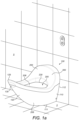
- FIGS 1a , 1b and 1c show a toilet bowl 100 for a squatting toilet 1.
- the toilet bowl 100 comprises a rim 200, an outlet 115, an outer surface 208, and an inner surface 206.
- the rim 200 defines an opening 205 into a concave space for holding water and/or faeces.
- the outlet 115 for waste is preferably provided in the lower most part of the toilet bowl 100 (when installed correctly).
- An inlet (not shown) is preferably provided for supplying water for flushing the contents of the toilet bowl 100 towards the outlet 115.
- the toilet bowl 100 is configured to be part of a floor-supported toilet 1, including a flat base 111 for contacting the floor 3. Due to the length of the toilet bowl 100, the base 111 supports the load of a user.
- the flat base 111 could be a planar surface, or simply an edge of the toilet bowl 100 lying in a plane that can contact a flat floor 3 to support the toilet bowl 100.
- the toilet bowl 100 may be configured to be part of a wall-supported toilet 1, in which case it would include a flat rear edge or surface 113 for abutment with a wall 5.
- Fasteners may be provided to attach the toilet bowl 100 to the wall 5 and to carry any load applied to the toilet bowl 100.
- both a base 111 and a flat rear edge or surface 113 are provided.
- the base 111 may carry the majority of the vertical load, while the toilet may communicate with a water supply and/or waste pipe via the wall 5.
- the toilet bowl 100 defines a forward direction, which - when the toilet 1 is correctly installed - extends perpendicular to the plane of the wall 5.
- the forward direction corresponds to the horizontal direction in which a user would face when sat correctly on the toilet bowl 100.
- the toilet bowl 100 Perpendicular to the forward direction, the toilet bowl 100 defines a transverse direction.
- the transverse direction is perpendicular to the forward direction and parallel to the plane of a flat floor 3 supporting the toilet bowl 100.
- the transverse direction may also correspond to the direction of a straight line between the two lowest points 215 on either side of the rim 200 (as described below) .
- the vertical direction is perpendicular to both the forward direction and the transverse direction the toilet bowl 100.
- the vertical direction is perpendicular to the flat base 111.
- the vertical direction is parallel to the plane of the flat rear edge or surface 113, if provided.
- the toilet bowl 100 is shaped to define a rearward portion 110 and an elongate frontal extension 120.
- the opening 205 extends through both the rearward portion 110 and the forward extension 120.
- the frontal extension 120 extends forward of a plane 105.
- the frontal extension 120 extends from the frontal edge of the base 111 in the forward direction.
- the rearward portion 110 includes the outlet 115 for waste, the flat base 111, and the optional flat rear edge or surface 113.
- the frontal extension 120 has a length of between 290 mm and 380 mm in the forward direction, and preferably 330 mm.
- the rearward portion 110 has a length of between 240 mm and 300 mm in the rearward direction, and preferably 270 mm.
- the frontal extension 120 is sized and shaped for a user to straddle.
- the rim 200 has in plan view (i.e. in a plane perpendicular to the vertical direction) a profile that preferably includes a convex rearward section 210c connected to a convex distal end 210a via two concave side sections 210b.
- the distal end 210a and two concave side sections 210b collectively define the portion of the profile of the rim 200 lying in the forward extension 120, while the rearward section 210c of the rim 200 lies in the rearward portion 110 of the toilet bowl 100.
- the two concave side sections 210b may extend from the rearward section 210c to collectively define a forward section 210a that is narrower in the transverse direction than the rearward section 210c in plan view.
- a forward section 210a that is narrower in the transverse direction than the rearward section 210c in plan view.
- Such a profile could be described as generally pear-shaped in plan view.
- the width of the frontal extension 120 in the transverse direction does not exceed 200 mm in the forwardmost 190 mm of the frontal extension 120. This is advantageous, since it allows the user to stand and squat with the frontal extension 120 of the toilet bowl 100 extending between the user's legs. In this way, the toilet bowl 100 can be used for simultaneous defecation and urination while the user squats.
- the frontal extension 120 is elevated relative to the lowest point 112 of the toilet bowl 100.
- the lowest point 112 corresponds to the base 111. This provides a clearance beneath the frontal extension 120 between the toilet bowl 100 and the floor 3.
- the elevation is preferably achieved by inclining the frontal extension 120 relative to the floor 3 and/or base 111 of the toilet bowl 100. This can provide a clearance beneath the frontal extension 120 between the toilet bowl 100 and the floor 3.
- the clearance between the frontal extension 120 and the floor 3 and/or base 111 of the toilet bowl 100 is preferably greater than 60 mm in height at every point forwardly from the transversely aligned locations intended for users to place their feet 6. In this way, the users may retain their underwear/other clothing around their ankles when squatting over the toilet bowl 100.
- the clearance can be achieved by the outside surface 208 of the toilet bowl 100 being inclined relative to the base 111 (i.e., upwardly when installed).
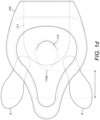
- the transversely aligned locations of the balls of the users' feet 6 will therefore be approximately 0 mm to 100 mm ahead of the forwardmost edge 115a of the outlet 115. Accordingly, the clearance is greater than 100 mm over the portion of the frontal extension 120 that extends from the distal end 125 of the frontal portion 120 to approximately 100 mm ahead of the forwardmost 115a edge of the outlet 115. As can be seen in Figure 1d , the base 111 therefore extends only slightly ahead of the outlet 115.
- the width in the transverse direction of the frontal portion 120 from the distal end 125 to approximately 100 mm ahead of the forwardmost edge 115a of the outlet 115 is preferably in the range 150 mm to 200 mm, and most preferably 200 mm.
- the rearward portion 110 does not need to be straddled and so can be wider.
- the rearward portion 110 has a width of at least 400 mm in a transverse direction, and is preferably at least 450 mm wide. In more preferred embodiments the width is less than 500 mm.
- the frontal extension 120 is upwardly inclined relative to the floor 3 (and/or is upwardly inclined relative to the flat base 111, and/or is upwardly inclined relative to a line perpendicular to the flat rear edge or surface 113, and/or is upwardly inclined relative to a line perpendicular to the surface of the wall 5).
- the height Z distal of the distal end 125 of the frontal extension 120 above the base 111 is preferably in the range 300 mm to 500 mm, and more preferably 350 mm to 420 mm. Any higher than this, and it would be too difficult for a user to walk backwards into the appropriate location for squatting use. If lower than this, there is a risk that urine might not be caught by the opening 205 in the frontal extension 120.
- Z distal is the height from the floor 3 in the vertical direction when installed.
- a handle 130 may be provided at the distal end 125 of the frontal extension 120.
- a user may hold the handle 130, allowing the user's centre of gravity to be located further backwards than would be possible without support.
- the handle 130 may be formed by shaping the frontal extension 120, or may be provided in addition to the frontal extension 120.
- the rim 200 which defines the upper surface of the toilet bowl 100, is also inclined in the forward direction in the frontal extension 120.
- the rim 200 increases in height forwardly of the two lowest points 215 transversely aligned in the rearward portion 110.
- the rim 200 also increases in height rearwardly of the two lowest points 215. Therefore, when viewed in a side profile plane defined by the vertical and forward directions, the rim 200 has a concave profile.
- the rim 200 preferably forms a smooth curve to avoid discontinuities. Therefore, when viewed in the side profile plane, the rim 200 defines a U-shaped curve. Most preferably, the U-shaped curve is skewed forwardly, for example such that rim 200 forward of the lowest point 215 has a shallower incline than the rim 200 rearward of the lowest point 215.
- the outer surface 208 of the toilet bowl 100 comprises a wall extending from the base 111 to the rim 200.
- the height Z low of the wall in a direction perpendicular to the base 111 is lowest at the two lowest points 215.
- the lowest height Z low of the wall in a direction perpendicular to the base is preferably in the range 180 mm to 240 mm.
- Z low is the height of the lowest points 215 of the rim 200 from the floor 3 in the vertical direction when installed.
- the highest height Z high of the rim 200 of the toilet bowl 100 in the rearward portion 110 in a direction perpendicular to the base 111 is preferably in the range 350 mm to 450 mm, and most preferably 400 mm.
- Z high is the highest height of the rim 200 in the rearward portion 110 of the toilet bowl 100 from the floor 3 in the vertical direction when installed.
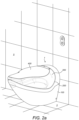
- FIGS 2a , 2b and 2c , and Figures 3a , 3b and 3c show a toilet 1, which preferably includes the toilet bowl 100 of Figures 1a to 1c .
- the toilet 1 comprises a support 300 and a lid 400.
- the support 300 is essentially a toilet seat having a greater than conventional depth.
- Each of the support 300 and lid 400 are pivotably attached to the toilet bowl 100.
- a hinge 505 may be provided for connecting either or both of the support 300 and/or lid 400 to the toilet bowl 100.
- the hinge axis is in parallel with the transverse axis.
- both the support 300 and the lid 400 pivot about the same axis.
- the support 300 is arranged for supporting a user above the opening 205 of a toilet bowl 100.
- the support 300 includes an opening 305 through which a user seated on the support 300 may defecate into the toilet bowl 100.
- the support 300 is arranged to pivot between an open position (shown in Figure 3b ) and a closed position (shown in Figure 3a ). In the open position the support 300 is rotated away from the toilet bowl 100. In the closed position the support 300 abuts the rim 200.
- the support 300 has an outermost edge 320.
- the shape of the outermost edge 320 generally corresponds with that of the rim 200 of the toilet bowl 100.
- the outermost edge 320 may extend around the majority of the support 300.
- the outermost edge 320 extends around more than 90% of the support 300.
- the outermost edge 320 extends around all of the support 300 except for the section contacting the hinge 505. In this way, when closed, the full length of the outermost edge 320 contacts the rim 200 or is adjacent the hinge.
- the support 300 is arranged such that when the outermost edge 320 abuts the rim 200 of the toilet bowl 100 the outer surface 308 of the support 300 and the outer surface 208 of the toilet bowl form a contiguous surface extending across the line of abutment.
- the support 300 therefore has a concave cross-section in a plane perpendicular to the forward direction.
- the support 300 therefore has a concave cross-section in a plane perpendicular to the forward direction over the majority of its length in the forward direction.
- the support 300 therefore has a concave cross-section in a plane perpendicular to the forward direction over at least 90% of its length in the forward direction.
- the width of the rearward portion 110 of the toilet bowl 100 is preferably at least 400 mm in a transverse direction and more preferably, at least 450 mm.
- the width of the rearward portion 110 of the toilet bowl 100 is no more than 500 mm in a transverse direction.
- the maximum width of the support 300 is preferably at least 400 mm in a transverse direction and more preferably, at least 450 mm. Preferably, the maximum width of the support 300 is no more than 500 mm in a transverse direction. The maximum width of the support 300 corresponds with the distance between the points on the outermost edge 320 that contact the lowest points 215 of the rim 200. This allows the user to squat without obstructions by, or undesirable contact with, the inner surface of the support 300.
- the support 300 preferably has a substantially flat seat portion 310.
- the seat portion 310 may surround the opening 305.
- the seat portion 310 of the support 300 may comprise or be formed of an elastomer.
- the support 300 has a maximum height in the range of 110 mm to 200 mm and preferably 120 mm to 170 mm (this corresponds to the lowest point 215).
- the support 300 comprises or is formed from a rigid thermosetting plastic, such as polycarbonate.
- the support 300 preferably comprises a hydrophobic material, more preferably a superhydrophobic material.
- the material may be a coating on the inner surface of the support 300, or may be distributed throughout the support material 300.
- the support 300 is preferably formed by co-moulding a first material for forming a structural part of the support 300 with the seat material.
- the support 300 is formed by co-moulding an elastomer for forming the seat portion 310 with a thermosetting plastic (such as polycarbonate), optionally including a hydrophobic material, for forming a structural part of the support 300.
- the lid 400 is arranged to pivot between an open position (shown in Figure 3a ) and a closed position (shown in Figure 2a ). In the open position, the lid 400 is rotated away from the support 300. It may, for example, rest against the wall 5.
- the lid 400 In the closed position, the lid 400 abuts the support 300 and closes the opening 305 in the support 300.
- both the lid 400 and the support 300 When both the lid 400 and the support 300 are in their respective closed positions, they collectively close the opening 205 of the toilet bowl 100. This can substantially contain any vapour/aerosol within the toilet 1, thereby providing a more hygienic toilet 1.
- the opening 305 in the support 300 preferably has a width in the transverse direction in the range 400 mm (preferably 450 mm) to 500 mm.
- one or both of the support 300 and/or lid 400 are moved between respective open and closed positions by an actuator (not shown).
- the actuator is triggered by one or more noncontact sensors 520.
- the hinge 505 may be part of a hinge assembly 500 includes a nozzle 510 for directing a jet of water forwardly into the toilet bowl 100.
- the nozzle 510 may be connected to a supply of water for use as a bidet.
- a further nozzle (not shown) may be mounted on the frontal extension 120 (preferably at the distal end 125) for directing a jet of water rearwardly into the toilet bowl.
- the further nozzle may be connected to a supply of water for use as a bidet.
- Such a frontal nozzle may provide a more hygienic bidet for a female user.
- a typical flushing approach is to provide a supply of water to a channel extending around the top of the bowl. This water overflows along the length of the ridge providing a flow of water into the bowl around the majority of its circumference. Owing to the height of the distal end 125 of the frontal extension 120 of the disclosed toilet 1, such a toilet 1 is difficult to flush.
- Preferred embodiments therefore include an inlet (not shown) for a supply of water and a ridge 230 within the toilet bowl 100 generally in parallel with at least a portion of the rim 200.
- the ridge 230 defines a channel in communication with the inlet for carrying flush water around the periphery of the toilet bowl 100. Whilst a majority of the channel is open for allowing flush water to flow into the toilet bowl 100 as in conventional flushes, in the preferred embodiment two lengths of the channel are closed.
- the channel may be open by the provision of a plurality of spaced holes in the base of the channel, or by one or more slots extending along its length. The closed portions of the channel would not include such holes or slots.
- the closed lengths of the channel may prevent water from flowing into the toilet bowl 100 over their respective extents 235a, 235b.
- the closed lengths extend along respective sides of the frontal extension 120.
- the channel is open at the forwardmost extent (near the distal end 125) of the frontal extension 120.
Landscapes
- Health & Medical Sciences (AREA)
- Life Sciences & Earth Sciences (AREA)
- Engineering & Computer Science (AREA)
- Hydrology & Water Resources (AREA)
- Public Health (AREA)
- Water Supply & Treatment (AREA)
- Sanitary Device For Flush Toilet (AREA)
- Toilet Supplies (AREA)
- Bidet-Like Cleaning Device And Other Flush Toilet Accessories (AREA)
Description
- The present invention relates to a toilet and components thereof, including a toilet bowl, a toilet seat, a toilet lid, and flushing apparatus. Also described are methods for manufacturing such toilets and components, and materials suitable therefor. In particular, the toilet is for use when the user maintains a squatting posture.
- It is well known that a squatting posture is the natural posture for defecation. Conventional modern toilets, particularly those sold in Western Europe and the US, require defecation to be carried out in a seated posture with a much more open hip angle than would be obtained during squatting. The natural squatting posture closes the hip angle and thereby relaxes the puborectalis muscle, which in turn allows the colon to straighten, so that defecation can take place more comfortably.
- Conventional squatting toilets, for example a Japanese squatting toilet, are usually not much more than a hole in the floor. Sometimes, textured foot supports are provided for extra grip, and occasionally handles either side of the hole are provided for support. There are a number of designs of squatting toilets that provide a toilet bowl, but these require the removal of the user's clothing before use, since the user's feet must be placed either side of the toilet bowl.
- A number of stools are currently available for elevating the feet of a user of a conventional modern toilet so as to achieve an acute hip angle in a seated position. This solution is not ideal, however, since the user's feet cannot be located far enough rearward to allow the user to support their weight without sitting.
-
GB 685 960 A -
GB 2 215 748 A -
DE 299 19 769 U1 discloses a toilet to be used in a crouch without contact. -
US 751 270 A disclose a water-closet in which the seat is low down, thereby necessitating a crouching position on the part of the person using it. -
US 4 012 797 A discloses a single water closet or toilet fixture for dual functional use as either a fixture wherein the user is in the sitting position and normally facing forward, or a fixture wherein the user is in the squatting position and facing either in the forward direction or the aft direction. -
US 2003/154541 A1 discloses a toilet seat lid raising and lowering device that relies on a motion sensor to trigger its operation. -
GB 2 276 890 A -
WO 2010/030242 A1 discloses a water closet or toilet bowl usable in either in the: sitting, front facing squatting, or rear facing squatting postures. -
US 2 000 658 A discloses a flush bowl and seat of a water closet. -
GB 567 702 A -
US 2009/229046 A1 discloses a toilet that includes a bowl having a first surface and a second surface -
EP 0 369 681 A1 discloses a screen for use with a toilet, and in particular for a squat-type toilet. -
WO 2008/117288 A2 discloses a toilet arrangement in which he toilet bowl or seat is displaceably mounted on a support structure so that when the user mounts the apparatus it is displaced such that the front of the seating arrangement is upwardly inclined relative to the horizontal. -
WO 2010/016012 A1 discloses a toilet training device that includes a seat defining a cavity shaped to accommodate a child, with an aperture in the seat, and a base on which the seat can be mounted. -
CN 205 712 391 U -
KR 2010 0002420 A -
FR 1 306 690 A -
GB 2 208 121 A -
WO 2013/077818 A1 discloses a toilet bowl which is designed in a way that it provides the user who wishes to answer the call of nature to crouch with a crouching angle, the toilet bowl comprising a toilet base block, a toilet block carried by the toilet base block and a toilet cover. - The present invention provides a toilet that can be used for both squatting use and for seated use.
- According to the invention there is provided a toilet bowl as defined by
claim 1 and a toilet defined by claim 7. - For a better understanding of the invention, and to show how the same may be put into effect, reference will now be made, by way of example only, to the accompanying drawings in which:
-
Figure 1a shows a perspective view of a toilet bowl; -
Figure 1b shows a side view of the toilet bowl ofFigure 1a ; -
Figure 1c shows a plan view of the toilet bowl ofFigure 1a ; -
Figure 1d shows schematically a plan view identifying the location of a user's feet during squatting use; -
Figure 2a shows a perspective view of a toilet; -
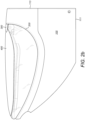
Figure 2b shows a side view of the toilet ofFigure 2a ; -
Figure 2c shows a plan view of the toilet ofFigure 2a ; -
Figure 3a shows a perspective view of the toilet ofFigure 2a with a lid in an open position; -
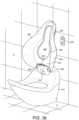
Figure 3b shows a perspective view of the toilet ofFigure 2a with a support in an open position; and -
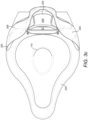
Figure 3c shows a plan view of the toilet ofFigure 2a with a support in an open position. -
Figures 1a ,1b and1c show atoilet bowl 100 for a squattingtoilet 1. Thetoilet bowl 100 comprises arim 200, anoutlet 115, anouter surface 208, and aninner surface 206. Therim 200 defines anopening 205 into a concave space for holding water and/or faeces. Theoutlet 115 for waste is preferably provided in the lower most part of the toilet bowl 100 (when installed correctly). An inlet (not shown) is preferably provided for supplying water for flushing the contents of thetoilet bowl 100 towards theoutlet 115. - The
toilet bowl 100 is configured to be part of a floor-supportedtoilet 1, including aflat base 111 for contacting thefloor 3. Due to the length of thetoilet bowl 100, thebase 111 supports the load of a user. Theflat base 111 could be a planar surface, or simply an edge of thetoilet bowl 100 lying in a plane that can contact aflat floor 3 to support thetoilet bowl 100. - Alternatively, not covered by the present claims, the
toilet bowl 100 may be configured to be part of a wall-supportedtoilet 1, in which case it would include a flat rear edge orsurface 113 for abutment with awall 5. Fasteners (not shown) may be provided to attach thetoilet bowl 100 to thewall 5 and to carry any load applied to thetoilet bowl 100. - Preferably, both a
base 111 and a flat rear edge orsurface 113 are provided. For example, thebase 111 may carry the majority of the vertical load, while the toilet may communicate with a water supply and/or waste pipe via thewall 5. - In any event, the
toilet bowl 100 defines a forward direction, which - when thetoilet 1 is correctly installed - extends perpendicular to the plane of thewall 5. The forward direction corresponds to the horizontal direction in which a user would face when sat correctly on thetoilet bowl 100. - Perpendicular to the forward direction, the
toilet bowl 100 defines a transverse direction. The transverse direction is perpendicular to the forward direction and parallel to the plane of aflat floor 3 supporting thetoilet bowl 100. The transverse direction may also correspond to the direction of a straight line between the twolowest points 215 on either side of the rim 200 (as described below) . - The vertical direction is perpendicular to both the forward direction and the transverse direction the
toilet bowl 100. The vertical direction is perpendicular to theflat base 111. - The vertical direction is parallel to the plane of the flat rear edge or
surface 113, if provided. - The
toilet bowl 100 is shaped to define arearward portion 110 and an elongatefrontal extension 120. Theopening 205 extends through both therearward portion 110 and theforward extension 120. Thefrontal extension 120 extends forward of aplane 105. Thefrontal extension 120 extends from the frontal edge of the base 111 in the forward direction. Therearward portion 110 includes theoutlet 115 for waste, theflat base 111, and the optional flat rear edge orsurface 113. - The
frontal extension 120 has a length of between 290 mm and 380 mm in the forward direction, and preferably 330 mm. - The
rearward portion 110 has a length of between 240 mm and 300 mm in the rearward direction, and preferably 270 mm. - The
frontal extension 120 is sized and shaped for a user to straddle. In this connection, and as best shown inFigure 1c , therim 200 has in plan view (i.e. in a plane perpendicular to the vertical direction) a profile that preferably includes a convexrearward section 210c connected to a convexdistal end 210a via twoconcave side sections 210b. Preferably, thedistal end 210a and twoconcave side sections 210b collectively define the portion of the profile of therim 200 lying in theforward extension 120, while therearward section 210c of therim 200 lies in therearward portion 110 of thetoilet bowl 100. - The two
concave side sections 210b may extend from therearward section 210c to collectively define aforward section 210a that is narrower in the transverse direction than therearward section 210c in plan view. Such a profile could be described as generally pear-shaped in plan view. - The width of the
frontal extension 120 in the transverse direction does not exceed 200 mm in the forwardmost 190 mm of thefrontal extension 120. This is advantageous, since it allows the user to stand and squat with thefrontal extension 120 of thetoilet bowl 100 extending between the user's legs. In this way, thetoilet bowl 100 can be used for simultaneous defecation and urination while the user squats. - The
frontal extension 120 is elevated relative to thelowest point 112 of thetoilet bowl 100. Thelowest point 112 corresponds to thebase 111. This provides a clearance beneath thefrontal extension 120 between thetoilet bowl 100 and thefloor 3. - The elevation is preferably achieved by inclining the
frontal extension 120 relative to thefloor 3 and/orbase 111 of thetoilet bowl 100. This can provide a clearance beneath thefrontal extension 120 between thetoilet bowl 100 and thefloor 3. - The clearance between the
frontal extension 120 and thefloor 3 and/orbase 111 of thetoilet bowl 100 is preferably greater than 60 mm in height at every point forwardly from the transversely aligned locations intended for users to place theirfeet 6. In this way, the users may retain their underwear/other clothing around their ankles when squatting over thetoilet bowl 100. - The clearance can be achieved by the
outside surface 208 of thetoilet bowl 100 being inclined relative to the base 111 (i.e., upwardly when installed). - With reference to
Figure 1d , it is intended that the users would aim to defecate directly into theoutlet 115. For a user of typical size in a squat, the transversely aligned locations of the balls of the users'feet 6 will therefore be approximately 0 mm to 100 mm ahead of theforwardmost edge 115a of theoutlet 115. Accordingly, the clearance is greater than 100 mm over the portion of thefrontal extension 120 that extends from thedistal end 125 of thefrontal portion 120 to approximately 100 mm ahead of the forwardmost 115a edge of theoutlet 115. As can be seen inFigure 1d , the base 111 therefore extends only slightly ahead of theoutlet 115. - Similarly, since this portion of the
toilet bowl 100 is intended to extend between the users' legs, the width in the transverse direction of thefrontal portion 120 from thedistal end 125 to approximately 100 mm ahead of theforwardmost edge 115a of theoutlet 115 is preferably in the range 150 mm to 200 mm, and most
preferably 200 mm. - The
rearward portion 110 does not need to be straddled and so can be wider. For reasons that will be apparent from the following, therearward portion 110 has a width of at least 400 mm in a transverse direction, and is preferably at least 450 mm wide. In more preferred embodiments the width is less than 500 mm. - As can be seen from
Figures 1a and1b , thefrontal extension 120 is upwardly inclined relative to the floor 3 (and/or is upwardly inclined relative to theflat base 111, and/or is upwardly inclined relative to a line perpendicular to the flat rear edge orsurface 113, and/or is upwardly inclined relative to a line perpendicular to the surface of the wall 5). - The height Zdistal of the
distal end 125 of thefrontal extension 120 above thebase 111 is preferably in therange 300 mm to 500 mm, and more preferably 350 mm to 420 mm. Any higher than this, and it would be too difficult for a user to walk backwards into the appropriate location for squatting use. If lower than this, there is a risk that urine might not be caught by theopening 205 in thefrontal extension 120. In embodiments oftoilets 1 that do not rest on abase 111, not covered by the appended claims, such as wall mounted toilets, Zdistal is the height from thefloor 3 in the vertical direction when installed. - Advantageously, since the
frontal portion 120 is inclined, ahandle 130 may be provided at thedistal end 125 of thefrontal extension 120. When squatting, a user may hold thehandle 130, allowing the user's centre of gravity to be located further backwards than would be possible without support. Thehandle 130 may be formed by shaping thefrontal extension 120, or may be provided in addition to thefrontal extension 120. - To accommodate the user when squatting, the
rim 200, which defines the upper surface of thetoilet bowl 100, is also inclined in the forward direction in thefrontal extension 120. - Preferably, the
rim 200 increases in height forwardly of the twolowest points 215 transversely aligned in therearward portion 110. Preferably, therim 200 also increases in height rearwardly of the twolowest points 215. Therefore, when viewed in a side profile plane defined by the vertical and forward directions, therim 200 has a concave profile. - The
rim 200 preferably forms a smooth curve to avoid discontinuities. Therefore, when viewed in the side profile plane, therim 200 defines a U-shaped curve. Most preferably, the U-shaped curve is skewed forwardly, for example such thatrim 200 forward of thelowest point 215 has a shallower incline than therim 200 rearward of thelowest point 215. - The
outer surface 208 of thetoilet bowl 100 comprises a wall extending from the base 111 to therim 200. The height Zlow of the wall in a direction perpendicular to thebase 111 is lowest at the twolowest points 215. The lowest height Zlow of the wall in a direction perpendicular to the base is preferably in the range 180 mm to 240 mm. In embodiments oftoilets 1 that do not rest on abase 111, not covered by the appended claims, such as wall mounted toilets, Zlow is the height of the
lowest points 215 of therim 200 from thefloor 3 in the vertical direction when installed. - The highest height Zhigh of the
rim 200 of thetoilet bowl 100 in therearward portion 110 in a direction perpendicular to thebase 111 is preferably in the range 350 mm to 450 mm, and most preferably 400 mm. In embodiments oftoilets 1 that do not rest on abase 111, not covered by the appended claims, such as wall mounted toilets, Zhigh is the highest
height of therim 200 in therearward portion 110 of thetoilet bowl 100 from thefloor 3 in the vertical direction when installed. -
Figures 2a ,2b and2c , andFigures 3a ,3b and3c show atoilet 1, which preferably includes thetoilet bowl 100 ofFigures 1a to 1c . Thetoilet 1 comprises asupport 300 and alid 400. Thesupport 300 is essentially a toilet seat having a greater than conventional depth. Each of thesupport 300 andlid 400 are pivotably attached to thetoilet bowl 100. Ahinge 505 may be provided for connecting either or both of thesupport 300 and/orlid 400 to thetoilet bowl 100. The hinge axis is in parallel with the transverse axis. Preferably, both thesupport 300 and thelid 400 pivot about the same axis. - The
support 300 is arranged for supporting a user above theopening 205 of atoilet bowl 100. Thesupport 300 includes anopening 305 through which a user seated on thesupport 300 may defecate into thetoilet bowl 100. - The
support 300 is arranged to pivot between an open position (shown inFigure 3b ) and a closed position (shown inFigure 3a ). In the open position thesupport 300 is rotated away from thetoilet bowl 100. In the closed position thesupport 300 abuts therim 200. Thesupport 300 has anoutermost edge 320. The shape of theoutermost edge 320 generally corresponds with that of therim 200 of thetoilet bowl 100. In some embodiments, theoutermost edge 320 may extend around the majority of thesupport 300. Preferably, theoutermost edge 320 extends around more than 90% of thesupport 300. As depicted in the Figures, theoutermost edge 320 extends around all of thesupport 300 except for the section contacting thehinge 505. In this way, when closed, the full length of theoutermost edge 320 contacts therim 200 or is adjacent the hinge. - The
support 300 is arranged such that when theoutermost edge 320 abuts therim 200 of thetoilet bowl 100 theouter surface 308 of thesupport 300 and theouter surface 208 of the toilet bowl form a contiguous surface extending across the line of abutment. - Since the height at which a user would most comfortably sit is considerably higher than the height at which the user would squat, it is necessary for the support to have a significant height. The
support 300 therefore has a concave cross-section in a plane perpendicular to the forward direction. Preferably, thesupport 300 therefore has a concave cross-section in a plane perpendicular to the forward direction over the majority of its length in the forward direction. Most preferably, thesupport 300 therefore has a concave cross-section in a plane perpendicular to the forward direction over at least 90% of its length in the forward direction. - As can be seen from
Figure 3c , since thesupport 300 has a concave cross-section, it must be reasonably wide to avoid obstructing a user when squatting. Therefore, the width of therearward portion 110 of thetoilet bowl 100 is preferably at least 400 mm in a transverse direction and more preferably, at least 450 mm. Preferably, the width of therearward portion 110 of thetoilet bowl 100 is no more than 500 mm in a transverse direction. - Since the shape of the
rim 200 of thetoilet bowl 100 corresponds with the shape of thesupport 300, the maximum width of thesupport 300 is preferably at least 400 mm in a transverse direction and more preferably, at least 450 mm. Preferably, the maximum width of thesupport 300 is no more than 500 mm in a transverse direction. The maximum width of thesupport 300 corresponds with the distance between the points on theoutermost edge 320 that contact thelowest points 215 of therim 200. This allows the user to squat without obstructions by, or undesirable contact with, the inner surface of thesupport 300. - The
support 300 preferably has a substantiallyflat seat portion 310. Theseat portion 310 may surround theopening 305. Theseat portion 310 of thesupport 300 may comprise or be formed of an elastomer. - The
support 300 has a maximum height in the range of 110 mm to 200 mm and preferably 120 mm to 170 mm (this corresponds to the lowest point 215). - As a result of the height of the support, it must be made of rigid material and cannot be too thick owing to its size. Accordingly, it is preferred that the
support 300 comprises or is formed from a rigid thermosetting plastic, such as polycarbonate. - The
support 300 preferably comprises a hydrophobic material, more preferably a superhydrophobic material. The material may be a coating on the inner surface of thesupport 300, or may be distributed throughout thesupport material 300. - The
support 300 is preferably formed by co-moulding a first material for forming a structural part of thesupport 300 with the seat material. Preferably, thesupport 300 is formed by co-moulding an elastomer for forming theseat portion 310 with a thermosetting plastic (such as polycarbonate), optionally including a hydrophobic material, for forming a structural part of thesupport 300. - The
lid 400 is arranged to pivot between an open position (shown inFigure 3a ) and a closed position (shown inFigure 2a ). In the open position, thelid 400 is rotated away from thesupport 300. It may, for example, rest against thewall 5. - In the closed position, the
lid 400 abuts thesupport 300 and closes theopening 305 in thesupport 300. - When both the
lid 400 and thesupport 300 are in their respective closed positions, they collectively close theopening 205 of thetoilet bowl 100. This can substantially contain any vapour/aerosol within thetoilet 1, thereby providing a morehygienic toilet 1. - For the same reasons, the
opening 305 in thesupport 300 preferably has a width in the transverse direction in therange 400 mm (preferably 450 mm) to 500 mm. - Preferably, one or both of the
support 300 and/orlid 400 are moved between respective open and closed positions by an actuator (not shown). Preferably, the actuator is triggered by one or morenoncontact sensors 520. - In preferred embodiments, the
hinge 505 may be part of ahinge assembly 500 includes anozzle 510 for directing a jet of water forwardly into thetoilet bowl 100. Thenozzle 510 may be connected to a supply of water for use as a bidet. - Similarly, a further nozzle (not shown) may be mounted on the frontal extension 120 (preferably at the distal end 125) for directing a jet of water rearwardly into the toilet bowl. The further nozzle may be connected to a supply of water for use as a bidet. Such a frontal nozzle may provide a more hygienic bidet for a female user.
- A typical flushing approach is to provide a supply of water to a channel extending around the top of the bowl. This water overflows along the length of the ridge providing a flow of water into the bowl around the majority of its circumference. Owing to the height of the
distal end 125 of thefrontal extension 120 of the disclosedtoilet 1, such atoilet 1 is difficult to flush. - Preferred embodiments, therefore include an inlet (not shown) for a supply of water and a
ridge 230 within thetoilet bowl 100 generally in parallel with at least a portion of therim 200. - The
ridge 230 defines a channel in communication with the inlet for carrying flush water around the periphery of thetoilet bowl 100. Whilst a majority of the channel is open for allowing flush water to flow into thetoilet bowl 100 as in conventional flushes, in the preferred embodiment two lengths of the channel are closed. The channel may be open by the provision of a plurality of spaced holes in the base of the channel, or by one or more slots extending along its length. The closed portions of the channel would not include such holes or slots. - With reference to
Figure 1c , the closed lengths of the channel may prevent water from flowing into thetoilet bowl 100 over theirrespective extents frontal extension 120. The channel is open at the forwardmost extent (near the distal end 125) of thefrontal extension 120. - By the provision of the closed lengths, it is possible to contain the flow of water for the flush over some of the inclined channel, thereby providing sufficient pressure for the flush water to reach the higher parts of the
frontal extension 120.
Claims (15)
- A toilet bowl (100) for a squatting toilet (1),
comprising:
a flat base (111) for contacting a floor (3), the flat base (111) including an outlet (115),the flat base (111) defining a plane that includes a forward direction and a transverse direction perpendicular to the forward direction,wherein:the toilet bowl (100) is shaped to define a rearward portion (110) including the base (111) and an elongate frontal extension (120) for a user to straddle, the frontal extension (120) extending generally in the forward direction from the rearward portion (110);the frontal extension (120) is elevated or inclined relative to the base for providing a clearance between the toilet bowl (100) and the floor (3);a rim (200) defining an opening (205) of the toilet bowl (100), the rim (200) extending around the periphery of both the frontal extension (120) and the rearward portion (110); andthe rim (200) is upwardly inclined relative to the base (111) in the forward direction throughout the frontal extension (120),characterised in that:the frontal extension (120) extends from the base (111) by at least 290 mm in the forward direction; anda width of the frontal extension (120) in the transverse direction does not exceed 200 mm in a forwardmost 190 mm of the frontal extension (120). - The toilet bowl (100) of claim 1, wherein the rim (200) has a profile in plan view is formed of a convex rearward section (210c) connected to a convex elongate frontal section (210a) via two concave side sections (210b).
- The toilet bowl (100) of any preceding claim, wherein the rim (200) is inclined relative to the base (111) in the frontal extension (120) in a side profile plane perpendicular to the base (111) and extending in the forward direction,preferably the rim (200) is concave in the side profile plane,more preferably the rim (200) has a skewed U-shaped profile in the side profile plane, with the forwardmost extent of the rim (200) having a shallower inclination relative to the base than the rearmost extent.
- The toilet bowl (100) of any preceding claim, wherein a minimum height of the rearward portion (110) coincides with the outlet (115) in the forward direction.
- The toilet bowl (100) of any preceding claim, wherein a wall extends from the base (111) to the rim (200), and the height of the wall in a direction perpendicular to the base (111) is lowest in the rearward portion (110).
- The toilet bowl (100) of any preceding claim, wherein the frontal extension (120) is shaped to provide a handle (130) at its forwardmost extent.
- A toilet (1) comprising:the toilet bowl (100) of any preceding claim; anda support (300) for supporting a user above the opening (205) of the toilet bowl (100),wherein:the support (300) has an outermost edge (320) shaped to generally correspond with the rim (200) of the toilet bowl (100); andthe support (300) has a substantially flat seat portion (310), the seat portion (310) surrounding an opening (305) in the support (300).
- The toilet (1) of claim 7, further comprising a lid (400) for closing the opening (305) in the support (300) so that the lid (400) and support (300) can collectively close the opening (205) of the toilet bowl (100).
- The toilet (1) of claim 7 or claim 8, wherein:the support (300) is pivotably attached to the toilet bowl (100);the support (300) is arranged to pivot between an open position and a closed position;in the open position the support (300) is rotated away from the toilet bowl (100); andin the closed position the outermost edge (320) abuts the rim (200).
- The toilet (1) of claim 9 as dependent upon claim 8, wherein:the lid (400) is pivotably attached to the toilet bowl (100);the lid (400) is arranged to pivot between an open position and a closed position;in the open position the lid (400) is rotated away from the support (300);in the closed position the lid (400) abuts the support (300) and closes the opening (305) in the support (300);when both the lid (400) and the support (300) are in their respective closed positions, they collectively close the opening (205) of the toilet bowl (100).
- The toilet (1) of any one of claims 7 to 10, wherein the support (300) is arranged such that when the outermost edge (320) abuts the rim (200) of the toilet bowl (100) the outer surface (308) of the support (300) and the outer surface (208) of the toilet bowl (100) form a contiguous surface extending across the abutment.
- The toilet (1) of any one of claims 7 to 11, wherein the support (300) comprises a hydrophobic or superhydrophobic material.
- The toilet (1) of any one of claims 7 to 12, further comprising a hinge assembly (500), pivotably connecting the support (300) to the toilet bowl (100), wherein the hinge assembly (500) includes a nozzle (510) for directing a jet of water into the toilet bowl (100).
- The toilet (1) of any one of claims 7 to 13, further comprising a nozzle mounted on the frontal extension (120) for directing a jet of water into the toilet bowl (100).
- The toilet (1) of any one of claims 7 to 14, further comprising:an inlet for a supply of water; anda ridge (230) within the toilet bowl (100) generally in parallel with at least a portion of the rim (200),wherein:the ridge (230) defines a channel in communication with the inlet for carrying water around the periphery of the toilet bowl (100);a majority of the channel is open for allowing water to overflow into the toilet bowl (100);two lengths of the channel are closed for preventing water to overflow into the toilet bowl (100);the closed lengths extend along respective sides of the frontal extension (120); andthe channel is open at the forwardmost extent of the frontal extension (120).
Applications Claiming Priority (2)
| Application Number | Priority Date | Filing Date | Title |
|---|---|---|---|
| GB1620742.5A GB2557319B (en) | 2016-12-06 | 2016-12-06 | Toilet for use while squatting, components thereof, and processes for its manufacture |
| PCT/GB2017/053634 WO2018104709A2 (en) | 2016-12-06 | 2017-12-01 | Toilet for use while squatting, components thereof, and processes for its manufacture |
Publications (3)
| Publication Number | Publication Date |
|---|---|
| EP3551809A2 EP3551809A2 (en) | 2019-10-16 |
| EP3551809C0 EP3551809C0 (en) | 2025-06-25 |
| EP3551809B1 true EP3551809B1 (en) | 2025-06-25 |
Family
ID=58159724
Family Applications (1)
| Application Number | Title | Priority Date | Filing Date |
|---|---|---|---|
| EP17809359.7A Active EP3551809B1 (en) | 2016-12-06 | 2017-12-01 | Toilet for use while squatting |
Country Status (10)
| Country | Link |
|---|---|
| US (1) | US11781304B2 (en) |
| EP (1) | EP3551809B1 (en) |
| JP (1) | JP7329443B2 (en) |
| KR (1) | KR20190092477A (en) |
| CN (1) | CN110177913A (en) |
| AU (1) | AU2017371803A1 (en) |
| BR (1) | BR112019011725B1 (en) |
| GB (1) | GB2557319B (en) |
| RU (1) | RU2758111C2 (en) |
| WO (1) | WO2018104709A2 (en) |
Families Citing this family (7)
| Publication number | Priority date | Publication date | Assignee | Title |
|---|---|---|---|---|
| CN106937843A (en) * | 2017-03-22 | 2017-07-11 | 当代五环(北京)文化发展中心 | A kind of new type closet |
| USD885537S1 (en) * | 2018-03-05 | 2020-05-26 | Seong Gyu KIM | Toilet bowl |
| CN108797744B (en) * | 2018-06-21 | 2020-08-07 | 广东荣信卫浴实业有限公司 | Toilet bowl |
| WO2019155449A1 (en) * | 2019-02-20 | 2019-08-15 | Mohammad Ibrahim Alameri Moath | Healthy modern elevated squatting toilet seat with easy installation |
| CN117758840A (en) * | 2019-12-27 | 2024-03-26 | 骊住株式会社 | Toilet unit |
| JP7365897B2 (en) * | 2019-12-27 | 2023-10-20 | 株式会社Lixil | toilet device |
| CN111691517A (en) * | 2020-07-14 | 2020-09-22 | 山东吉跃环保材料有限公司 | Multifunctional toilet bowl capable of intelligently detecting human health indexes |
Citations (5)
| Publication number | Priority date | Publication date | Assignee | Title |
|---|---|---|---|---|
| FR1306690A (en) * | 1961-09-05 | 1962-10-19 | Sanitary bowl | |
| GB2208121A (en) * | 1987-06-17 | 1989-03-01 | Elaine Margaret Gormley | Combined toilet and washing apparatus |
| KR20100002420A (en) * | 2008-06-30 | 2010-01-07 | 서광이앤피주식회사 | Toilet closestool for regular bowel movements |
| WO2013077818A1 (en) * | 2011-11-22 | 2013-05-30 | Gural Porselen Turizm Ve Vitrifiye San. A.S. | Ergonomic toilet bowl |
| CN205712391U (en) * | 2016-05-23 | 2016-11-23 | 丁伟刚 | Crouching appearance toilet seat |
Family Cites Families (35)
| Publication number | Priority date | Publication date | Assignee | Title |
|---|---|---|---|---|
| US751270A (en) * | 1904-02-02 | Water-closet bowl | ||
| US912754A (en) * | 1907-07-13 | 1909-02-16 | Trenton Potteries Company | Water-closet seat. |
| US1155885A (en) * | 1914-05-26 | 1915-10-05 | Bob Catchings | Water-closet bowl. |
| US2000658A (en) * | 1935-01-02 | 1935-05-07 | Fred G Bushold | Water closet |
| US2099118A (en) * | 1936-11-28 | 1937-11-16 | Kennedy George Winter | Toilet assembly |
| GB567702A (en) * | 1944-01-10 | 1945-02-27 | Frank Stanley Otway | Improvements in and relating to water closet pans |
| GB685960A (en) * | 1949-10-14 | 1953-01-14 | Ideal Boilers & Radiators Ltd | Toilet fixture |
| US2703409A (en) * | 1949-10-14 | 1955-03-08 | American Radiator & Standard | Toilet fixture |
| US4012797A (en) * | 1976-03-03 | 1977-03-22 | The Boeing Company | Sitting-squatting water closet |
| JPH0521583Y2 (en) | 1987-04-08 | 1993-06-02 | ||
| GB8803239D0 (en) | 1988-02-12 | 1988-03-09 | Flowers C C | Toilet bowl |
| EP0369681A1 (en) * | 1988-11-14 | 1990-05-23 | Frederick Jay Schwartz | Toilet screen |
| GB2276890B (en) * | 1993-04-09 | 1996-11-06 | Tin Poh Ow | Toilet seat with improved automatically operated spray clean nozzle |
| JPH0720996U (en) * | 1993-09-24 | 1995-04-18 | 宮本 斉典 | Japanese and Western style toilet bowl |
| JPH07189324A (en) * | 1993-12-28 | 1995-07-28 | Toto Ltd | Flush toilet stool |
| DE29919769U1 (en) * | 1999-11-09 | 2001-03-15 | Villeroy & Boch Ag, 66693 Mettlach | Toilet |
| JP2002129628A (en) | 2000-10-27 | 2002-05-09 | Matsushita Electric Works Ltd | Flush toilet bowl |
| US6516475B1 (en) * | 2001-09-27 | 2003-02-11 | Mark W. Anderson | Toilet device |
| CN2506716Y (en) * | 2001-12-06 | 2002-08-21 | 沈永革 | Comfortable pan closet |
| US20030154541A1 (en) * | 2002-02-15 | 2003-08-21 | Miller Daniel J. | Automatic toilet seat lid raising and lowering device |
| JP2003275133A (en) | 2002-03-25 | 2003-09-30 | Toto Ltd | Toilet seat component |
| JP3096417U (en) | 2002-05-17 | 2003-09-19 | 敏夫 増野 | Saddle type toilet seat |
| KR100493738B1 (en) * | 2002-07-05 | 2005-06-10 | 양회성 | Foilel Stool |
| RU2292428C2 (en) * | 2004-05-05 | 2007-01-27 | Григорий Оганесович Багмаджян | Toilet apparatus with natural user's pose during defecation act |
| CN2729176Y (en) * | 2004-09-03 | 2005-09-28 | 周会光 | Non-siphon water-saving toilet |
| JP2007070995A (en) | 2005-09-09 | 2007-03-22 | Yuko Mizuno | Western style closet bowl with lip |
| WO2008117288A2 (en) * | 2007-03-27 | 2008-10-02 | Carmi Halachmi | Ergonomic toilet |
| US20090229046A1 (en) * | 2008-03-11 | 2009-09-17 | Liu Yung-Ning | Anti splash toilet |
| AU2009278818B2 (en) * | 2008-08-05 | 2016-04-07 | Zoe Smith | Toilet training device |
| SG160240A1 (en) * | 2008-09-10 | 2010-04-29 | Chern Ee Pin | Sitting and squatting water closet and seat with cistern below |
| JP2010142283A (en) | 2008-12-16 | 2010-07-01 | Shigehiro Saijo | Western-style toilet |
| KR20110045504A (en) | 2009-10-27 | 2011-05-04 | 다이애나 민선 강 | Sanitary toilet and hygienic management method |
| CN203341645U (en) * | 2013-06-24 | 2013-12-18 | 陈永进 | Novel toilet bowl cover plate |
| KR101856985B1 (en) | 2014-06-25 | 2018-05-16 | 코웨이 주식회사 | Bidet apparatus having nozzle drying element |
| CN205636964U (en) * | 2016-04-14 | 2016-10-12 | 张汝忠 | Vacuum type excrement collecting system |
-
2016
- 2016-12-06 GB GB1620742.5A patent/GB2557319B/en active Active
-
2017
- 2017-12-01 JP JP2019531310A patent/JP7329443B2/en active Active
- 2017-12-01 RU RU2019120825A patent/RU2758111C2/en active
- 2017-12-01 KR KR1020197019102A patent/KR20190092477A/en not_active Ceased
- 2017-12-01 CN CN201780083683.3A patent/CN110177913A/en active Pending
- 2017-12-01 US US16/466,882 patent/US11781304B2/en active Active
- 2017-12-01 BR BR112019011725-3A patent/BR112019011725B1/en not_active IP Right Cessation
- 2017-12-01 AU AU2017371803A patent/AU2017371803A1/en not_active Abandoned
- 2017-12-01 WO PCT/GB2017/053634 patent/WO2018104709A2/en not_active Ceased
- 2017-12-01 EP EP17809359.7A patent/EP3551809B1/en active Active
Patent Citations (5)
| Publication number | Priority date | Publication date | Assignee | Title |
|---|---|---|---|---|
| FR1306690A (en) * | 1961-09-05 | 1962-10-19 | Sanitary bowl | |
| GB2208121A (en) * | 1987-06-17 | 1989-03-01 | Elaine Margaret Gormley | Combined toilet and washing apparatus |
| KR20100002420A (en) * | 2008-06-30 | 2010-01-07 | 서광이앤피주식회사 | Toilet closestool for regular bowel movements |
| WO2013077818A1 (en) * | 2011-11-22 | 2013-05-30 | Gural Porselen Turizm Ve Vitrifiye San. A.S. | Ergonomic toilet bowl |
| CN205712391U (en) * | 2016-05-23 | 2016-11-23 | 丁伟刚 | Crouching appearance toilet seat |
Also Published As
| Publication number | Publication date |
|---|---|
| EP3551809A2 (en) | 2019-10-16 |
| US20200063424A1 (en) | 2020-02-27 |
| RU2019120825A3 (en) | 2021-03-19 |
| GB2557319A (en) | 2018-06-20 |
| CN110177913A (en) | 2019-08-27 |
| EP3551809C0 (en) | 2025-06-25 |
| CA3046049A1 (en) | 2018-06-14 |
| AU2017371803A1 (en) | 2019-07-25 |
| KR20190092477A (en) | 2019-08-07 |
| BR112019011725B1 (en) | 2023-03-28 |
| WO2018104709A3 (en) | 2018-07-19 |
| GB201620742D0 (en) | 2017-01-18 |
| RU2019120825A (en) | 2021-01-13 |
| GB2557319B (en) | 2020-06-24 |
| WO2018104709A2 (en) | 2018-06-14 |
| RU2758111C2 (en) | 2021-10-26 |
| JP2020501047A (en) | 2020-01-16 |
| US11781304B2 (en) | 2023-10-10 |
| JP7329443B2 (en) | 2023-08-18 |
| BR112019011725A2 (en) | 2019-10-22 |
Similar Documents
| Publication | Publication Date | Title |
|---|---|---|
| US11781304B2 (en) | Toilet for use while squatting or sitting | |
| US20110179563A1 (en) | Sitting and squatting water closet and seat with cistern below | |
| US4012797A (en) | Sitting-squatting water closet | |
| CN112513386B (en) | toilet with bidet | |
| US7992231B1 (en) | Urinal | |
| US7987529B1 (en) | Method and apparatus for defecation and urination | |
| CA1110802A (en) | Combination water closet and bidet | |
| WO2014035339A1 (en) | Sitting and squatting water closet with seat inner wall flushing | |
| US10633848B1 (en) | Toilet for facilitating bowel movements | |
| CN216689640U (en) | Special urinal, squatting pan and toilet bowl | |
| KR101359284B1 (en) | A urinal for women only | |
| HK40011153B (en) | Toilet for use while squatting | |
| HK40011153A (en) | Toilet for use while squatting | |
| EP1899538A2 (en) | Toilet device | |
| CA3046049C (en) | Toilet for use while squatting, components thereof, and processes for its manufacture | |
| KR102480617B1 (en) | Urine scattering prevention device | |
| US20050005348A1 (en) | Toilet | |
| KR20210131124A (en) | Automatic sanitary scaffolding for urinal | |
| US10307025B1 (en) | Toilet structure for male urination comprising user support | |
| WO2003074799A1 (en) | Squatting toilet equipped with folded urinal pan. | |
| KR200426389Y1 (en) | Toilet seat with urine splash prevention aid | |
| JPH09324455A (en) | Toilet having flush water low tank and used both for closet bowl and for urinal stall | |
| US20170335557A1 (en) | Toilet urinal | |
| US20040231040A1 (en) | Flush-toilet bowl integrated with a urinal | |
| CN115324175A (en) | Squatting toilet |
Legal Events
| Date | Code | Title | Description |
|---|---|---|---|
| STAA | Information on the status of an ep patent application or granted ep patent |
Free format text: STATUS: UNKNOWN |
|
| STAA | Information on the status of an ep patent application or granted ep patent |
Free format text: STATUS: THE INTERNATIONAL PUBLICATION HAS BEEN MADE |
|
| PUAI | Public reference made under article 153(3) epc to a published international application that has entered the european phase |
Free format text: ORIGINAL CODE: 0009012 |
|
| STAA | Information on the status of an ep patent application or granted ep patent |
Free format text: STATUS: REQUEST FOR EXAMINATION WAS MADE |
|
| 17P | Request for examination filed |
Effective date: 20190702 |
|
| AK | Designated contracting states |
Kind code of ref document: A2 Designated state(s): AL AT BE BG CH CY CZ DE DK EE ES FI FR GB GR HR HU IE IS IT LI LT LU LV MC MK MT NL NO PL PT RO RS SE SI SK SM TR |
|
| AX | Request for extension of the european patent |
Extension state: BA ME |
|
| DAV | Request for validation of the european patent (deleted) | ||
| DAX | Request for extension of the european patent (deleted) | ||
| REG | Reference to a national code |
Ref country code: HK Ref legal event code: DE Ref document number: 40011153 Country of ref document: HK |
|
| STAA | Information on the status of an ep patent application or granted ep patent |
Free format text: STATUS: EXAMINATION IS IN PROGRESS |
|
| 17Q | First examination report despatched |
Effective date: 20210629 |
|
| GRAP | Despatch of communication of intention to grant a patent |
Free format text: ORIGINAL CODE: EPIDOSNIGR1 |
|
| STAA | Information on the status of an ep patent application or granted ep patent |
Free format text: STATUS: GRANT OF PATENT IS INTENDED |
|
| INTG | Intention to grant announced |
Effective date: 20241105 |
|
| GRAS | Grant fee paid |
Free format text: ORIGINAL CODE: EPIDOSNIGR3 |
|
| GRAA | (expected) grant |
Free format text: ORIGINAL CODE: 0009210 |
|
| STAA | Information on the status of an ep patent application or granted ep patent |
Free format text: STATUS: THE PATENT HAS BEEN GRANTED |
|
| AK | Designated contracting states |
Kind code of ref document: B1 Designated state(s): AL AT BE BG CH CY CZ DE DK EE ES FI FR GB GR HR HU IE IS IT LI LT LU LV MC MK MT NL NO PL PT RO RS SE SI SK SM TR |
|
| REG | Reference to a national code |
Ref country code: GB Ref legal event code: FG4D |
|
| REG | Reference to a national code |
Ref country code: CH Ref legal event code: EP |
|
| REG | Reference to a national code |
Ref country code: CH Ref legal event code: EP |
|
| REG | Reference to a national code |
Ref country code: IE Ref legal event code: FG4D |
|
| REG | Reference to a national code |
Ref country code: DE Ref legal event code: R096 Ref document number: 602017090156 Country of ref document: DE |
|
| U01 | Request for unitary effect filed |
Effective date: 20250723 |
|
| U07 | Unitary effect registered |
Designated state(s): AT BE BG DE DK EE FI FR IT LT LU LV MT NL PT RO SE SI Effective date: 20250730 |
|
| PG25 | Lapsed in a contracting state [announced via postgrant information from national office to epo] |
Ref country code: GR Free format text: LAPSE BECAUSE OF FAILURE TO SUBMIT A TRANSLATION OF THE DESCRIPTION OR TO PAY THE FEE WITHIN THE PRESCRIBED TIME-LIMIT Effective date: 20250926 Ref country code: NO Free format text: LAPSE BECAUSE OF FAILURE TO SUBMIT A TRANSLATION OF THE DESCRIPTION OR TO PAY THE FEE WITHIN THE PRESCRIBED TIME-LIMIT Effective date: 20250925 |
|
| PG25 | Lapsed in a contracting state [announced via postgrant information from national office to epo] |
Ref country code: HR Free format text: LAPSE BECAUSE OF FAILURE TO SUBMIT A TRANSLATION OF THE DESCRIPTION OR TO PAY THE FEE WITHIN THE PRESCRIBED TIME-LIMIT Effective date: 20250625 |
|
| PG25 | Lapsed in a contracting state [announced via postgrant information from national office to epo] |
Ref country code: RS Free format text: LAPSE BECAUSE OF FAILURE TO SUBMIT A TRANSLATION OF THE DESCRIPTION OR TO PAY THE FEE WITHIN THE PRESCRIBED TIME-LIMIT Effective date: 20250925 |
|
| PG25 | Lapsed in a contracting state [announced via postgrant information from national office to epo] |
Ref country code: IS Free format text: LAPSE BECAUSE OF FAILURE TO SUBMIT A TRANSLATION OF THE DESCRIPTION OR TO PAY THE FEE WITHIN THE PRESCRIBED TIME-LIMIT Effective date: 20251025 |
|
| PG25 | Lapsed in a contracting state [announced via postgrant information from national office to epo] |
Ref country code: SM Free format text: LAPSE BECAUSE OF FAILURE TO SUBMIT A TRANSLATION OF THE DESCRIPTION OR TO PAY THE FEE WITHIN THE PRESCRIBED TIME-LIMIT Effective date: 20250625 |
|
| PG25 | Lapsed in a contracting state [announced via postgrant information from national office to epo] |
Ref country code: CZ Free format text: LAPSE BECAUSE OF FAILURE TO SUBMIT A TRANSLATION OF THE DESCRIPTION OR TO PAY THE FEE WITHIN THE PRESCRIBED TIME-LIMIT Effective date: 20250625 |
|
| PG25 | Lapsed in a contracting state [announced via postgrant information from national office to epo] |
Ref country code: PL Free format text: LAPSE BECAUSE OF FAILURE TO SUBMIT A TRANSLATION OF THE DESCRIPTION OR TO PAY THE FEE WITHIN THE PRESCRIBED TIME-LIMIT Effective date: 20250625 |
|
| PG25 | Lapsed in a contracting state [announced via postgrant information from national office to epo] |
Ref country code: SK Free format text: LAPSE BECAUSE OF FAILURE TO SUBMIT A TRANSLATION OF THE DESCRIPTION OR TO PAY THE FEE WITHIN THE PRESCRIBED TIME-LIMIT Effective date: 20250625 |
|
| PG25 | Lapsed in a contracting state [announced via postgrant information from national office to epo] |
Ref country code: ES Free format text: LAPSE BECAUSE OF FAILURE TO SUBMIT A TRANSLATION OF THE DESCRIPTION OR TO PAY THE FEE WITHIN THE PRESCRIBED TIME-LIMIT Effective date: 20250625 |
|
| REG | Reference to a national code |
Ref country code: CH Ref legal event code: U11 Free format text: ST27 STATUS EVENT CODE: U-0-0-U10-U11 (AS PROVIDED BY THE NATIONAL OFFICE) Effective date: 20260421 |
|
| PLBE | No opposition filed within time limit |
Free format text: ORIGINAL CODE: 0009261 |
|
| STAA | Information on the status of an ep patent application or granted ep patent |
Free format text: STATUS: NO OPPOSITION FILED WITHIN TIME LIMIT |
|
| REG | Reference to a national code |
Ref country code: CH Ref legal event code: L10 Free format text: ST27 STATUS EVENT CODE: U-0-0-L10-L00 (AS PROVIDED BY THE NATIONAL OFFICE) Effective date: 20260507 |
|
| U21 | Renewal fee for the european patent with unitary effect paid with additional fee |
Year of fee payment: 9 Effective date: 20260409 |