EP3551441B1 - Preform with a multi-layer barrier for a container - Google Patents
Preform with a multi-layer barrier for a container Download PDFInfo
- Publication number
- EP3551441B1 EP3551441B1 EP16923421.8A EP16923421A EP3551441B1 EP 3551441 B1 EP3551441 B1 EP 3551441B1 EP 16923421 A EP16923421 A EP 16923421A EP 3551441 B1 EP3551441 B1 EP 3551441B1
- Authority
- EP
- European Patent Office
- Prior art keywords
- preform
- barrier layer
- oxygen barrier
- oxygen
- container
- Prior art date
- Legal status (The legal status is an assumption and is not a legal conclusion. Google has not performed a legal analysis and makes no representation as to the accuracy of the status listed.)
- Active
Links
Images




Classifications
-
- B—PERFORMING OPERATIONS; TRANSPORTING
- B29—WORKING OF PLASTICS; WORKING OF SUBSTANCES IN A PLASTIC STATE IN GENERAL
- B29C—SHAPING OR JOINING OF PLASTICS; SHAPING OF MATERIAL IN A PLASTIC STATE, NOT OTHERWISE PROVIDED FOR; AFTER-TREATMENT OF THE SHAPED PRODUCTS, e.g. REPAIRING
- B29C45/00—Injection moulding, i.e. forcing the required volume of moulding material through a nozzle into a closed mould; Apparatus therefor
- B29C45/16—Making multilayered or multicoloured articles
-
- B—PERFORMING OPERATIONS; TRANSPORTING
- B65—CONVEYING; PACKING; STORING; HANDLING THIN OR FILAMENTARY MATERIAL
- B65D—CONTAINERS FOR STORAGE OR TRANSPORT OF ARTICLES OR MATERIALS, e.g. BAGS, BARRELS, BOTTLES, BOXES, CANS, CARTONS, CRATES, DRUMS, JARS, TANKS, HOPPERS, FORWARDING CONTAINERS; ACCESSORIES, CLOSURES, OR FITTINGS THEREFOR; PACKAGING ELEMENTS; PACKAGES
- B65D1/00—Rigid or semi-rigid containers having bodies formed in one piece, e.g. by casting metallic material, by moulding plastics, by blowing vitreous material, by throwing ceramic material, by moulding pulped fibrous material or by deep-drawing operations performed on sheet material
- B65D1/40—Details of walls
-
- B—PERFORMING OPERATIONS; TRANSPORTING
- B29—WORKING OF PLASTICS; WORKING OF SUBSTANCES IN A PLASTIC STATE IN GENERAL
- B29B—PREPARATION OR PRETREATMENT OF THE MATERIAL TO BE SHAPED; MAKING GRANULES OR PREFORMS; RECOVERY OF PLASTICS OR OTHER CONSTITUENTS OF WASTE MATERIAL CONTAINING PLASTICS
- B29B11/00—Making preforms
- B29B11/14—Making preforms characterised by structure or composition
-
- B—PERFORMING OPERATIONS; TRANSPORTING
- B29—WORKING OF PLASTICS; WORKING OF SUBSTANCES IN A PLASTIC STATE IN GENERAL
- B29C—SHAPING OR JOINING OF PLASTICS; SHAPING OF MATERIAL IN A PLASTIC STATE, NOT OTHERWISE PROVIDED FOR; AFTER-TREATMENT OF THE SHAPED PRODUCTS, e.g. REPAIRING
- B29C49/00—Blow-moulding, i.e. blowing a preform or parison to a desired shape within a mould; Apparatus therefor
- B29C49/071—Preforms or parisons characterised by their configuration, e.g. geometry, dimensions or physical properties
-
- B—PERFORMING OPERATIONS; TRANSPORTING
- B65—CONVEYING; PACKING; STORING; HANDLING THIN OR FILAMENTARY MATERIAL
- B65D—CONTAINERS FOR STORAGE OR TRANSPORT OF ARTICLES OR MATERIALS, e.g. BAGS, BARRELS, BOTTLES, BOXES, CANS, CARTONS, CRATES, DRUMS, JARS, TANKS, HOPPERS, FORWARDING CONTAINERS; ACCESSORIES, CLOSURES, OR FITTINGS THEREFOR; PACKAGING ELEMENTS; PACKAGES
- B65D1/00—Rigid or semi-rigid containers having bodies formed in one piece, e.g. by casting metallic material, by moulding plastics, by blowing vitreous material, by throwing ceramic material, by moulding pulped fibrous material or by deep-drawing operations performed on sheet material
- B65D1/02—Bottles or similar containers with necks or like restricted apertures, designed for pouring contents
- B65D1/0207—Bottles or similar containers with necks or like restricted apertures, designed for pouring contents characterised by material, e.g. composition, physical features
- B65D1/0215—Bottles or similar containers with necks or like restricted apertures, designed for pouring contents characterised by material, e.g. composition, physical features multilayered
-
- B—PERFORMING OPERATIONS; TRANSPORTING
- B29—WORKING OF PLASTICS; WORKING OF SUBSTANCES IN A PLASTIC STATE IN GENERAL
- B29C—SHAPING OR JOINING OF PLASTICS; SHAPING OF MATERIAL IN A PLASTIC STATE, NOT OTHERWISE PROVIDED FOR; AFTER-TREATMENT OF THE SHAPED PRODUCTS, e.g. REPAIRING
- B29C45/00—Injection moulding, i.e. forcing the required volume of moulding material through a nozzle into a closed mould; Apparatus therefor
- B29C45/16—Making multilayered or multicoloured articles
- B29C45/1642—Making multilayered or multicoloured articles having a "sandwich" structure
- B29C45/1646—Injecting parison-like articles
- B29C2045/1648—Injecting parison-like articles the parison core layer being a barrier material
-
- B—PERFORMING OPERATIONS; TRANSPORTING
- B29—WORKING OF PLASTICS; WORKING OF SUBSTANCES IN A PLASTIC STATE IN GENERAL
- B29C—SHAPING OR JOINING OF PLASTICS; SHAPING OF MATERIAL IN A PLASTIC STATE, NOT OTHERWISE PROVIDED FOR; AFTER-TREATMENT OF THE SHAPED PRODUCTS, e.g. REPAIRING
- B29C49/00—Blow-moulding, i.e. blowing a preform or parison to a desired shape within a mould; Apparatus therefor
- B29C49/22—Blow-moulding, i.e. blowing a preform or parison to a desired shape within a mould; Apparatus therefor using multilayered preforms or parisons
- B29C2049/222—Blow-moulding, i.e. blowing a preform or parison to a desired shape within a mould; Apparatus therefor using multilayered preforms or parisons only parts of the preforms or parisons are layered
-
- B—PERFORMING OPERATIONS; TRANSPORTING
- B29—WORKING OF PLASTICS; WORKING OF SUBSTANCES IN A PLASTIC STATE IN GENERAL
- B29C—SHAPING OR JOINING OF PLASTICS; SHAPING OF MATERIAL IN A PLASTIC STATE, NOT OTHERWISE PROVIDED FOR; AFTER-TREATMENT OF THE SHAPED PRODUCTS, e.g. REPAIRING
- B29C2949/00—Indexing scheme relating to blow-moulding
- B29C2949/07—Preforms or parisons characterised by their configuration
- B29C2949/071—Preforms or parisons characterised by their configuration the preform being a tube, i.e. with both ends open
-
- B—PERFORMING OPERATIONS; TRANSPORTING
- B29—WORKING OF PLASTICS; WORKING OF SUBSTANCES IN A PLASTIC STATE IN GENERAL
- B29C—SHAPING OR JOINING OF PLASTICS; SHAPING OF MATERIAL IN A PLASTIC STATE, NOT OTHERWISE PROVIDED FOR; AFTER-TREATMENT OF THE SHAPED PRODUCTS, e.g. REPAIRING
- B29C2949/00—Indexing scheme relating to blow-moulding
- B29C2949/07—Preforms or parisons characterised by their configuration
- B29C2949/0715—Preforms or parisons characterised by their configuration the preform having one end closed
-
- B—PERFORMING OPERATIONS; TRANSPORTING
- B29—WORKING OF PLASTICS; WORKING OF SUBSTANCES IN A PLASTIC STATE IN GENERAL
- B29C—SHAPING OR JOINING OF PLASTICS; SHAPING OF MATERIAL IN A PLASTIC STATE, NOT OTHERWISE PROVIDED FOR; AFTER-TREATMENT OF THE SHAPED PRODUCTS, e.g. REPAIRING
- B29C2949/00—Indexing scheme relating to blow-moulding
- B29C2949/30—Preforms or parisons made of several components
- B29C2949/3012—Preforms or parisons made of several components at flange portion
-
- B—PERFORMING OPERATIONS; TRANSPORTING
- B29—WORKING OF PLASTICS; WORKING OF SUBSTANCES IN A PLASTIC STATE IN GENERAL
- B29C—SHAPING OR JOINING OF PLASTICS; SHAPING OF MATERIAL IN A PLASTIC STATE, NOT OTHERWISE PROVIDED FOR; AFTER-TREATMENT OF THE SHAPED PRODUCTS, e.g. REPAIRING
- B29C2949/00—Indexing scheme relating to blow-moulding
- B29C2949/30—Preforms or parisons made of several components
- B29C2949/3016—Preforms or parisons made of several components at body portion
-
- B—PERFORMING OPERATIONS; TRANSPORTING
- B29—WORKING OF PLASTICS; WORKING OF SUBSTANCES IN A PLASTIC STATE IN GENERAL
- B29C—SHAPING OR JOINING OF PLASTICS; SHAPING OF MATERIAL IN A PLASTIC STATE, NOT OTHERWISE PROVIDED FOR; AFTER-TREATMENT OF THE SHAPED PRODUCTS, e.g. REPAIRING
- B29C2949/00—Indexing scheme relating to blow-moulding
- B29C2949/30—Preforms or parisons made of several components
- B29C2949/302—Preforms or parisons made of several components at bottom portion
-
- B—PERFORMING OPERATIONS; TRANSPORTING
- B29—WORKING OF PLASTICS; WORKING OF SUBSTANCES IN A PLASTIC STATE IN GENERAL
- B29C—SHAPING OR JOINING OF PLASTICS; SHAPING OF MATERIAL IN A PLASTIC STATE, NOT OTHERWISE PROVIDED FOR; AFTER-TREATMENT OF THE SHAPED PRODUCTS, e.g. REPAIRING
- B29C2949/00—Indexing scheme relating to blow-moulding
- B29C2949/30—Preforms or parisons made of several components
- B29C2949/3032—Preforms or parisons made of several components having components being injected
-
- B—PERFORMING OPERATIONS; TRANSPORTING
- B29—WORKING OF PLASTICS; WORKING OF SUBSTANCES IN A PLASTIC STATE IN GENERAL
- B29C—SHAPING OR JOINING OF PLASTICS; SHAPING OF MATERIAL IN A PLASTIC STATE, NOT OTHERWISE PROVIDED FOR; AFTER-TREATMENT OF THE SHAPED PRODUCTS, e.g. REPAIRING
- B29C2949/00—Indexing scheme relating to blow-moulding
- B29C2949/30—Preforms or parisons made of several components
- B29C2949/3032—Preforms or parisons made of several components having components being injected
- B29C2949/3034—Preforms or parisons made of several components having components being injected having two or more components being injected
- B29C2949/3036—Preforms or parisons made of several components having components being injected having two or more components being injected having three or more components being injected
-
- B—PERFORMING OPERATIONS; TRANSPORTING
- B29—WORKING OF PLASTICS; WORKING OF SUBSTANCES IN A PLASTIC STATE IN GENERAL
- B29K—INDEXING SCHEME ASSOCIATED WITH SUBCLASSES B29B, B29C OR B29D, RELATING TO MOULDING MATERIALS OR TO MATERIALS FOR MOULDS, REINFORCEMENTS, FILLERS OR PREFORMED PARTS, e.g. INSERTS
- B29K2067/00—Use of polyesters or derivatives thereof, as moulding material
- B29K2067/003—PET, i.e. poylethylene terephthalate
-
- B—PERFORMING OPERATIONS; TRANSPORTING
- B29—WORKING OF PLASTICS; WORKING OF SUBSTANCES IN A PLASTIC STATE IN GENERAL
- B29K—INDEXING SCHEME ASSOCIATED WITH SUBCLASSES B29B, B29C OR B29D, RELATING TO MOULDING MATERIALS OR TO MATERIALS FOR MOULDS, REINFORCEMENTS, FILLERS OR PREFORMED PARTS, e.g. INSERTS
- B29K2995/00—Properties of moulding materials, reinforcements, fillers, preformed parts or moulds
- B29K2995/0037—Other properties
- B29K2995/0065—Permeability to gases
- B29K2995/0067—Permeability to gases non-permeable
Definitions
- the present disclosure relates to a multi-layer barrier preform for a container.
- While current containers are suitable for their intended use, they are subject to improvement.
- a low-cost, polymeric container having an oxygen barrier layer that is effective and clear would be desirable.
- the present teachings advantageously provide for a container preform that can be injection blow-molded to produce such a container.
- the present teachings provide numerous other advantages and unexpected results, as one skilled in the art will recognize.
- Oxygen scavenging polymers for packaging are generally kown from US 2005/0181156 A1 .
- a multilayer container comprising a scavenging layer is known from WO 00/68000 A1 . Further reference is made to US 6 123 211 A and to JP 2006 334849 A which show further preforms fo molding containers.
- US6344249B1 figure 26 discloses a preform corresponding to the preamble of claim 1.
- the present teachings provide for a preform configured to form a container.
- the preform includes a finish defining an opening and a top sealing surface configured to contact a closure to seal the opening closed.
- a body portion extends from the finish.
- a bottom portion is at an end of the preform opposite to the finish.
- a longitudinal axis of the preform extends through an axial center of the bottom portion.
- An oxygen barrier layer extends along the body portion to the bottom portion and across the bottom portion.
- a base layer includes an outer portion and an inner portion. The oxygen barrier layer is between the outer portion and the inner portion. The oxygen barrier layer extends along the body and the bottom portion.
- Figure 1 illustrates a preform according to the present teachings at reference numeral 10.
- the preform 10 is configured to form a container in any suitable manner, such as by injection blow molding.
- the container formed from the preform 10 can be any suitable container, having any suitable shape and size.
- the container formed from the preform 10 can be for storing oxygen sensitive products including ketchup, pasta sauce, salsa, applesauce, beer, wine, etc.
- the preform 10 can be formed in any suitable manner, such as by any suitable multi-layer injection molding process.
- the preform 10 according to the present teachings is configured to be blow-molded into a container that absorbs no more than 22 ppm of oxygen over a 24-month shelf life.
- the preform 10 can include any suitable polymeric material, and any suitable oxygen barrier layer, as described further herein.
- the preform 10 generally includes a finish portion 12, a body portion 14, and a bottom portion 16.
- a longitudinal axis A of the preform 10 extends through a radial center of the preform 10 along a length of the preform 10.
- the body portion 14 is arranged along the longitudinal axis A between the finish portion 12 and the bottom portion 16.
- the finish portion 12 defines an opening 20.
- the longitudinal axis A extends through a radial center of the opening 20.
- the opening 20 provides access to an interior of the preform 10, and to an inner volume defined by a container formed from the preform 10.
- Extending from an outer surface of the finish portion 12 are threads 22.
- the threads 22 are configured to cooperate with threads of any suitable closure. Cooperation between threads of the closure and the threads of the finish portion 12 secures the closure to a top sealing surface 24 of the finish portion 12 in order to seal the container closed.
- the threads 22 are between the top sealing surface 24 and a support flange 26, which extends outward and is configured to support the preform 10 in any suitable blow molding equipment as the preform 10 is blow molded into a container.
- the body portion 14 of the preform 10 is configured to be blow molded into a body portion of the container, and the bottom portion 16 is configured to be blow molded into a base portion of the container.
- the body portion 14 can be configured in any suitable manner to provide the resulting container with any suitable body portion having any suitable size, shape, and surface features, such as any suitable panels and ribs configured to absorb vacuum or pressure forces.
- the bottom portion 16 can be configured to provide the resulting container with any suitable base portion having any suitable size, shape, and surface features, such as surface features configured to absorb vacuum forces and/or to facilitate movement of the base to absorb vacuum forces.
- the base portion of the container can be any suitable base portion known in the art, such as any suitable flexible base portion configured to absorb vacuum forces that may be present in the container, such as during a hot fill-process.
- FIG. 2 is a cross-sectional view of the preform 10.
- Each one of the finish portion 12, the body portion 14, and the bottom portion 16 is formed by a base layer 50.
- An oxygen barrier layer 52 is arranged within the base layer 50. Specifically, the oxygen barrier layer 52 is arranged between an inner portion 54 and an outer portion 56 of the base layer 50.
- the oxygen barrier layer 52 extends from anywhere along the preform body portion 14 or finish portion 12, such as from about the support flange 26, across the body portion 14, and both to and across the bottom portion 16.
- the oxygen barrier layer 52 generally tapers inward toward the longitudinal axis A as the oxygen barrier layer 52 extends away from the support flange 26 and towards the bottom portion 16.
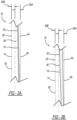
- Figures 3A and 3B are close-up views of area 3 of Figure 2 .
- Figure 3A illustrates the oxygen barrier 52 having a first thickness (width in cross-section)
- Figure 3B illustrates the oxygen barrier 52 having a second thickness (width in cross-section) that is greater than the first thickness (width in cross-section).
- the oxygen barrier layer 52 is confined to an inner area 50A of the base layer 50, and does not extend into an outer area 50B of the base layer 50.
- the inner area 50A is an inner 60% of the base layer 50, as measured from an inner surface 60 of the base layer 50, and includes the inner portion 54.
- the inner area 50A may include part of the outer portion 56 as well.
- the outer area 50B is an outer 40% of the base layer 50, as measured from an outer surface 62 of the base layer 50.
- the oxygen barrier layer 52 is confined to the inner area 50A (core biased) along an entire length of the body portion 14, as well as across the bottom portion 16.
- Figure 6 is an example of improved oxygen barrier results when the oxygen barrier layer 52 is confined to the inner area 50A.
- the oxygen barrier layer 52 is tapered such that the oxygen barrier layer 52 is closest to the inner surface 60 at and proximate to the bottom portion 16, and is furthest from the inner surface 60 (and closest to the outer surface 62) furthest from the bottom portion 16 and proximate to the support flange 26.
- the oxygen barrier layer 52 varies in thickness along a length thereof. Specifically, the oxygen barrier layer 52 is most thin at proximal end 70, which is at or most proximate to the finish portion 12. From the proximal end 70 the oxygen barrier layer 52 extends at a generally constant thickness away from the finish portion 12 to a tapered portion 72. At the tapered portion 72 the oxygen barrier layer 52 generally tapers outward in cross-section so as to gradually have a greater thickness. From the tapered portion 72 the oxygen barrier layer 52 assumes a generally uniform thickness along a barrier body portion 74, which extends along the length of the body portion 14.
- the uppermost or start of the tapered portion 72 can be any suitable distance from the top sealing surface (TSS) 24, such as 27mm from the top sealing surface 24 for example.
- the lowermost or end of the tapered portion 72 (where the tapered portion 72 transitions to the barrier body portion 74) can be any suitable distance from the TSS 24, such as 33mm from the TSS for example.
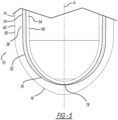
- the oxygen barrier layer 52 transitions to a barrier bottom portion 76 that fully encapsulates the bottom portion 16.
- the barrier bottom portion 76 of the oxygen barrier layer 52 gradually decreases in thickness from the barrier body portion 74 to a distal end 78 of the oxygen barrier layer 52.
- the distal end 78 is at a distalmost portion of the oxygen barrier layer 52 relative to the finish portion 12, and is positioned such that the longitudinal axis A extends through a center of the distal end 78.
- the base layer 50 can be made of any suitable blow-molding grade polyethylene terephthalate (PET), such as a TPA-based polyethylene terephthalate copolymer resin designed for a wide range of bottle applications that is a high molecular weight polymer with about a 0.80 intrinsic viscosity (IV).
- PET polyethylene terephthalate
- the blow-molding grade PET can include CLEARTUF ® 8006 from M&G Chemicals of Luxembourg.
- the oxygen barrier layer 52 can include PET and any suitable oxygen scavenger.
- the PET of the oxygen barrier layer 52 can include a cobalt catalyst.
- the PET of the oxygen barrier layer 52 may also include at least one of a low to moderate copolymer, antimony free and titanium catalyzed polymer designed for processes requiring faster crystallization rates, higher glass transition and melting points.
- the PET of the oxygen barrier layer 52 may also include a PET copolymer that is substantially free from cobalt, compatible with oxygen scavenger additives, and has an intrinsic viscosity of about 0.76 to about 0.82.
- the oxygen scavenger of the oxygen barrier layer 52 may be any suitable oxygen scavenger, such as a composition including a polyester, a copolyester ether, and an oxidation catalyst.
- the copolyester ether includes a zinc compound and at least one polyether segment selected from the group of (and the group may consist of) poly(tetramethylene ether) and poly(tetramethylene-co-alkylene ether).
- the copolyester ether can further include a polyether segment of a poly(alkylene oxide) glycol selected from the group of (and the group may consist of) polyethylene oxide) glycol, poly(trimethylene oxide) glycol, poly(tetramethylene oxide) glycol, poly(pentamethylene oxide) glycol, poly(hexamethylene oxide) glycol, poly(heptamethylene oxide) glycol, poly(octamethylene oxide) glycol and poly(alkylene oxide) glycols derived from cyclic ether monomers.
- At least one of the base layer 50 and the oxygen barrier layer 52 can include any suitable regrind material, such as in-house or post-consumer regrind material.
- the oxygen barrier layer 52 can further include at least one additive configured to make the oxygen barrier layer 52 clear or at least partially clear when measured for haze using a Hunter Lab spectrophotometer.
- Suitable additives include, for example, liquid or solid colorants and clarifier agents. Clarity may also be improved by using the methods described in the preceding paragraphs.
- the preform 10 is configured to be blow-molded into any suitable container having a container body haze of less than 5%.
- the oxygen barrier layer 52 can have any suitable weight.
- the oxygen barrier layer 52 can be configured to have a weight that is 8% to 50% of a total weight of the preform 10.
- the oxygen barrier layer 52 can be about 8%-35% of a total weight of the preform 10.
- the oxygen barrier layer 52 can be about 20%-50% of the total weight of the preform 10.
- the oxygen barrier layer 52 includes an oxygen scavenger that is about 0.25%-5% of a total weight of the oxygen barrier layer 52.
- the oxygen barrier layer 52 can have any suitable thickness.
- the oxygen barrier layer 52 can have a thickness of 20%-40%, such as 30%, of a total thickness of the preform 10 at the body portion 14.
- One example using 0.6% oxygen scavenger in the barrier layer 52 is shown in Figure 7 . Measured haze of the bottle can be reduced as the barrier layer 52 weight percentage increases, resulting in improved bottle clarity as compared to a container with no barrier layer 52.
Landscapes
- Engineering & Computer Science (AREA)
- Mechanical Engineering (AREA)
- Ceramic Engineering (AREA)
- Manufacturing & Machinery (AREA)
- Physics & Mathematics (AREA)
- Geometry (AREA)
- Containers Having Bodies Formed In One Piece (AREA)
- Blow-Moulding Or Thermoforming Of Plastics Or The Like (AREA)
- Processing And Handling Of Plastics And Other Materials For Molding In General (AREA)
- Laminated Bodies (AREA)
Description
- The present disclosure relates to a multi-layer barrier preform for a container.
- This section provides background information related to the present disclosure, which is not necessarily prior art.
- While current containers are suitable for their intended use, they are subject to improvement. For example, a low-cost, polymeric container having an oxygen barrier layer that is effective and clear would be desirable. The present teachings advantageously provide for a container preform that can be injection blow-molded to produce such a container. The present teachings provide numerous other advantages and unexpected results, as one skilled in the art will recognize.
- From
EP 2 231 373 B1claim 1 is known. Oxygen scavenging polymers for packaging are generally kown fromUS 2005/0181156 A1 . In addition, a multilayer container comprising a scavenging layer is known fromWO 00/68000 A1 US 6 123 211 A and toJP 2006 334849 A -
US6344249B1 figure 26 discloses a preform corresponding to the preamble ofclaim 1. - In view of this it is an object of the invention to disclose an improved preform for a polymeric container that leads to superior oxygen barrier properties in the final polymeric container.
- This object is solved by a preform according to
claim 1. - This section provides a general summary of the disclosure, and is not a comprehensive disclosure of its full scope or all of its features.
- The present teachings provide for a preform configured to form a container. The preform includes a finish defining an opening and a top sealing surface configured to contact a closure to seal the opening closed. A body portion extends from the finish. A bottom portion is at an end of the preform opposite to the finish. A longitudinal axis of the preform extends through an axial center of the bottom portion. An oxygen barrier layer extends along the body portion to the bottom portion and across the bottom portion. A base layer includes an outer portion and an inner portion. The oxygen barrier layer is between the outer portion and the inner portion. The oxygen barrier layer extends along the body and the bottom portion.
- Further areas of applicability will become apparent from the description provided herein. The description and specific examples in this summary are intended for purposes of illustration only and are not intended to limit the scope of the present disclosure.
- The drawings described herein are for illustrative purposes only of select embodiments and not all possible implementations, and are not intended to limit the scope of the present disclosure.
-
Figure 1 is a perspective view of a container preform in accordance with the present teachings; -
Figure 2 is a cross-sectional view taken along line 2-2 ofFigure 1 ; -
Figure 3A illustratesarea 3 ofFigure 2 in accordance with an embodiment of the present teachings; -
Figure 3B illustratesarea 3 ofFigure 2 in accordance with another embodiment of the present teachings; -
Figure 4 illustrates area 4 ofFigure 2 ; -
Figure 5 illustratesarea 5 ofFigure 2 ; -
Figure 6 shows exemplary improved oxygen barrier results that occur when theoxygen barrier layer 52 is confined to theinner area 50A; and -
Figure 7 illustrates container haze percentage versus barrier layer weight for a preform according to the present teachings having 0.6% oxygen scavenger in thebarrier layer 52. - Corresponding reference numerals indicate corresponding parts throughout the several views of the drawings.
- Example embodiments will now be described more fully with reference to the accompanying drawings.
-
Figure 1 illustrates a preform according to the present teachings atreference numeral 10. Thepreform 10 is configured to form a container in any suitable manner, such as by injection blow molding. The container formed from thepreform 10 can be any suitable container, having any suitable shape and size. For example, the container formed from thepreform 10 can be for storing oxygen sensitive products including ketchup, pasta sauce, salsa, applesauce, beer, wine, etc. Thepreform 10 can be formed in any suitable manner, such as by any suitable multi-layer injection molding process. Thepreform 10 according to the present teachings is configured to be blow-molded into a container that absorbs no more than 22 ppm of oxygen over a 24-month shelf life. Thepreform 10 can include any suitable polymeric material, and any suitable oxygen barrier layer, as described further herein. - The
preform 10 generally includes afinish portion 12, abody portion 14, and abottom portion 16. A longitudinal axis A of thepreform 10 extends through a radial center of thepreform 10 along a length of thepreform 10. Thebody portion 14 is arranged along the longitudinal axis A between thefinish portion 12 and thebottom portion 16. - The
finish portion 12 defines anopening 20. The longitudinal axis A extends through a radial center of theopening 20. The opening 20 provides access to an interior of thepreform 10, and to an inner volume defined by a container formed from thepreform 10. Extending from an outer surface of thefinish portion 12 arethreads 22. Thethreads 22 are configured to cooperate with threads of any suitable closure. Cooperation between threads of the closure and the threads of thefinish portion 12 secures the closure to atop sealing surface 24 of thefinish portion 12 in order to seal the container closed. Thethreads 22 are between thetop sealing surface 24 and asupport flange 26, which extends outward and is configured to support thepreform 10 in any suitable blow molding equipment as thepreform 10 is blow molded into a container. - The
body portion 14 of thepreform 10 is configured to be blow molded into a body portion of the container, and thebottom portion 16 is configured to be blow molded into a base portion of the container. Thebody portion 14 can be configured in any suitable manner to provide the resulting container with any suitable body portion having any suitable size, shape, and surface features, such as any suitable panels and ribs configured to absorb vacuum or pressure forces. Thebottom portion 16 can be configured to provide the resulting container with any suitable base portion having any suitable size, shape, and surface features, such as surface features configured to absorb vacuum forces and/or to facilitate movement of the base to absorb vacuum forces. The base portion of the container can be any suitable base portion known in the art, such as any suitable flexible base portion configured to absorb vacuum forces that may be present in the container, such as during a hot fill-process. -
Figure 2 is a cross-sectional view of thepreform 10. Each one of thefinish portion 12, thebody portion 14, and thebottom portion 16 is formed by abase layer 50. Anoxygen barrier layer 52 is arranged within thebase layer 50. Specifically, theoxygen barrier layer 52 is arranged between aninner portion 54 and anouter portion 56 of thebase layer 50. Theoxygen barrier layer 52 extends from anywhere along thepreform body portion 14 orfinish portion 12, such as from about thesupport flange 26, across thebody portion 14, and both to and across thebottom portion 16. As explained further herein, theoxygen barrier layer 52 generally tapers inward toward the longitudinal axis A as theoxygen barrier layer 52 extends away from thesupport flange 26 and towards thebottom portion 16. -
Figures 3A and 3B are close-up views ofarea 3 ofFigure 2 .Figure 3A illustrates theoxygen barrier 52 having a first thickness (width in cross-section), andFigure 3B illustrates theoxygen barrier 52 having a second thickness (width in cross-section) that is greater than the first thickness (width in cross-section). As illustrated inFigures 3A and 3B , theoxygen barrier layer 52 is confined to aninner area 50A of thebase layer 50, and does not extend into anouter area 50B of thebase layer 50. Theinner area 50A is an inner 60% of thebase layer 50, as measured from aninner surface 60 of thebase layer 50, and includes theinner portion 54. Theinner area 50A may include part of theouter portion 56 as well. Theouter area 50B is an outer 40% of thebase layer 50, as measured from anouter surface 62 of thebase layer 50. Theoxygen barrier layer 52 is confined to theinner area 50A (core biased) along an entire length of thebody portion 14, as well as across thebottom portion 16.Figure 6 is an example of improved oxygen barrier results when theoxygen barrier layer 52 is confined to theinner area 50A. Theoxygen barrier layer 52 is tapered such that theoxygen barrier layer 52 is closest to theinner surface 60 at and proximate to thebottom portion 16, and is furthest from the inner surface 60 (and closest to the outer surface 62) furthest from thebottom portion 16 and proximate to thesupport flange 26. - With additional reference to
Figure 4 , which is a close-up view of area 4 ofFigure 2 , theoxygen barrier layer 52 varies in thickness along a length thereof. Specifically, theoxygen barrier layer 52 is most thin atproximal end 70, which is at or most proximate to thefinish portion 12. From theproximal end 70 theoxygen barrier layer 52 extends at a generally constant thickness away from thefinish portion 12 to a taperedportion 72. At the taperedportion 72 theoxygen barrier layer 52 generally tapers outward in cross-section so as to gradually have a greater thickness. From the taperedportion 72 theoxygen barrier layer 52 assumes a generally uniform thickness along abarrier body portion 74, which extends along the length of thebody portion 14. The uppermost or start of the taperedportion 72 can be any suitable distance from the top sealing surface (TSS) 24, such as 27mm from thetop sealing surface 24 for example. The lowermost or end of the tapered portion 72 (where the taperedportion 72 transitions to the barrier body portion 74) can be any suitable distance from theTSS 24, such as 33mm from the TSS for example. - With reference to
Figure 5 , which is a close-up view ofarea 5 ofFigure 2 , theoxygen barrier layer 52 transitions to abarrier bottom portion 76 that fully encapsulates thebottom portion 16. Thebarrier bottom portion 76 of theoxygen barrier layer 52 gradually decreases in thickness from thebarrier body portion 74 to adistal end 78 of theoxygen barrier layer 52. Thedistal end 78 is at a distalmost portion of theoxygen barrier layer 52 relative to thefinish portion 12, and is positioned such that the longitudinal axis A extends through a center of thedistal end 78. - The
base layer 50 can be made of any suitable blow-molding grade polyethylene terephthalate (PET), such as a TPA-based polyethylene terephthalate copolymer resin designed for a wide range of bottle applications that is a high molecular weight polymer with about a 0.80 intrinsic viscosity (IV). For example, the blow-molding grade PET can include CLEARTUF® 8006 from M&G Chemicals of Luxembourg. Theoxygen barrier layer 52 can include PET and any suitable oxygen scavenger. The PET of theoxygen barrier layer 52 can include a cobalt catalyst. The PET of theoxygen barrier layer 52 may also include at least one of a low to moderate copolymer, antimony free and titanium catalyzed polymer designed for processes requiring faster crystallization rates, higher glass transition and melting points. The PET of theoxygen barrier layer 52 may also include a PET copolymer that is substantially free from cobalt, compatible with oxygen scavenger additives, and has an intrinsic viscosity of about 0.76 to about 0.82. The oxygen scavenger of theoxygen barrier layer 52 may be any suitable oxygen scavenger, such as a composition including a polyester, a copolyester ether, and an oxidation catalyst. The copolyester ether includes a zinc compound and at least one polyether segment selected from the group of (and the group may consist of) poly(tetramethylene ether) and poly(tetramethylene-co-alkylene ether). The copolyester ether can further include a polyether segment of a poly(alkylene oxide) glycol selected from the group of (and the group may consist of) polyethylene oxide) glycol, poly(trimethylene oxide) glycol, poly(tetramethylene oxide) glycol, poly(pentamethylene oxide) glycol, poly(hexamethylene oxide) glycol, poly(heptamethylene oxide) glycol, poly(octamethylene oxide) glycol and poly(alkylene oxide) glycols derived from cyclic ether monomers. At least one of thebase layer 50 and theoxygen barrier layer 52 can include any suitable regrind material, such as in-house or post-consumer regrind material. - The
oxygen barrier layer 52 can further include at least one additive configured to make theoxygen barrier layer 52 clear or at least partially clear when measured for haze using a Hunter Lab spectrophotometer. Suitable additives include, for example, liquid or solid colorants and clarifier agents. Clarity may also be improved by using the methods described in the preceding paragraphs. Thepreform 10 is configured to be blow-molded into any suitable container having a container body haze of less than 5%. - The
oxygen barrier layer 52 can have any suitable weight. For example, theoxygen barrier layer 52 can be configured to have a weight that is 8% to 50% of a total weight of thepreform 10. When thepreform 10 is configured to form a container for food products, theoxygen barrier layer 52 can be about 8%-35% of a total weight of thepreform 10. When thepreform 10 is configured to form a container for wine or beer products, theoxygen barrier layer 52 can be about 20%-50% of the total weight of thepreform 10. - The
oxygen barrier layer 52 includes an oxygen scavenger that is about 0.25%-5% of a total weight of theoxygen barrier layer 52. Theoxygen barrier layer 52 can have any suitable thickness. For example, at thebarrier body portion 74, theoxygen barrier layer 52 can have a thickness of 20%-40%, such as 30%, of a total thickness of thepreform 10 at thebody portion 14. One example using 0.6% oxygen scavenger in thebarrier layer 52 is shown inFigure 7 . Measured haze of the bottle can be reduced as thebarrier layer 52 weight percentage increases, resulting in improved bottle clarity as compared to a container with nobarrier layer 52.
Claims (15)
- A preform configured to form a container, the preform (10) comprising: a finish (12) defining an opening (20) and a top sealing surface (24) configured to contact a closure to seal the opening (20) closed; a body portion (14) extending from the finish (12); a bottom portion (16) at an end of the preform (10) opposite to the finish (12), a longitudinal axis (A) of the preform (10) extends through an axial center of the bottom portion (16); an oxygen barrier layer (52) comprising an oxygen scavenger and extending along the body portion (14) to the bottom portion (16), and across the bottom portion (16); and a base layer (50) including an outer portion (56) and an inner portion (54), wherein the oxygen barrier layer (52) is between the outer portion (56) and the inner portion (54), the oxygen barrier layer (52) extending along the body portion (14) and the bottom portion (16); wherein the oxygen barrier layer (52) is tapered such that the oxygen barrier layer (52) is closest to the inner surface (60) at and proximate to the bottom portion (16), and is furthest from the inner surface (60) and closest to the outer surface (62) furthest from the bottom portion (16) and proximate to the support flange (26), the preform being characterized in that the oxygen barrier layer (52) comprises an oxygen scavenger that is about 0.25%-5% of a total weight of the oxygen barrier layer (52).
- The preform of Claim 1, wherein the base layer (50) is a blow-molding grade polyethylene terephthalate (PET).
- The preform of Claim 1, wherein at least one of the base layer (50) and the oxygen barrier layer (52) includes in-house or post-consumer regrind material.
- The preform of Claim 1, wherein the oxygen barrier layer (52) includes polyethylene terephthalate (PET) and an oxygen scavenger,wherein the PET preferably includes a cobalt catalyst, orwherein the PET is preferably an antimony free and titanium catalyzed polymer;wherein the PET is preferably substantially free from cobalt, compatible with oxygen scavenger additives, and has an intrinsic viscosity of about 0.76 to about 0.82.
- The preform of Claim 4, wherein:the oxygen scavenger includes a composition comprising a polyester, a copolyester ether, and an oxidation catalyst; andthe copolyester ether includes a zinc compound and at least one polyether segment selected from the group consisting of poly(tetramethylene ether) and poly(tetramethylene-co-alkylene ether).
- The preform of Claim 1, wherein the oxygen barrier layer (52) includes at least one additive configured to make the oxygen barrier layer (52) at least partially clear.
- The preform of Claim 1, wherein the preform (10) is formed by a multi-layer injection molding process.
- The preform of Claim 1, wherein the preform (10) is configured to be blow-molded into a container;
or wherein the preform (10) is configured to be blow-molded into a container for storing oxygen sensitive products including ketchup, pasta sauce, salsa, apple sauce, beer, or wine. - The preform of Claim 1, wherein the preform (10) is configured to be blow-molded into a container that over a twenty-four month shelf life absorbs no more than 22ppm of oxygen.
- The preform of Claim 1, wherein the oxygen barrier layer (52) is 8-50% of a total weight of the preform (10);wherein preferably when the preform (10) is configured to form a container for food or beverage products, the oxygen barrier layer (52) is about 8-35% the total weight of the preform (10);wherein preferably when the preform (10) is configured to form a container for wine and beer products, the oxygen barrier layer (52) is about 20-50% the total weight of the preform (10).
- The preform of Claim 1, wherein at the body portion of the preform (10), the oxygen barrier layer (52) has a thickness of 20-40% of a total preform wall thickness;or wherein at the finish portion of the preform (10) the oxygen barrier layer (52) has a thickness of about 5-20% of a total preform wall thickness;or wherein at the base portion of the preform (10) the oxygen barrier layer (52) has a thickness of about 5-20% of a total preform wall thickness;or wherein at the body portion of the preform (10) the oxygen barrier layer (52) has a thickness of 30% of a total preform wall thickness.
- The preform of Claim 1, wherein at the body portion of the preform the oxygen barrier layer (52) is confined to an innermost 60% of a total preform wall thickness.
- The preform of Claim 1, wherein the oxygen barrier layer (52) is thinner at the bottom portion (16) than at the body portion (14).
- The preform of Claim 1, wherein the oxygen barrier layer (52) terminates prior to reaching the top sealing surface (24).
- The preform of Claim 1, wherein the oxygen barrier layer (52) includes a thinned portion proximate to the finish (12) that is thinner than a portion of the oxygen barrier layer (52) at the body portion (14), and the oxygen barrier layer (52) includes a tapered portion (72) between the thinned portion and the portion of the oxygen barrier layer (52) at the body portion (14).
Applications Claiming Priority (1)
| Application Number | Priority Date | Filing Date | Title |
|---|---|---|---|
| PCT/US2016/065565 WO2018106240A1 (en) | 2016-12-08 | 2016-12-08 | Multi-layer barrier for a container |
Publications (3)
| Publication Number | Publication Date |
|---|---|
| EP3551441A1 EP3551441A1 (en) | 2019-10-16 |
| EP3551441A4 EP3551441A4 (en) | 2020-10-21 |
| EP3551441B1 true EP3551441B1 (en) | 2023-04-19 |
Family
ID=62491997
Family Applications (1)
| Application Number | Title | Priority Date | Filing Date |
|---|---|---|---|
| EP16923421.8A Active EP3551441B1 (en) | 2016-12-08 | 2016-12-08 | Preform with a multi-layer barrier for a container |
Country Status (8)
| Country | Link |
|---|---|
| US (4) | US11390416B2 (en) |
| EP (1) | EP3551441B1 (en) |
| BR (1) | BR112019010858B1 (en) |
| CA (1) | CA3044807C (en) |
| CO (1) | CO2019006960A2 (en) |
| ES (1) | ES2946537T3 (en) |
| MX (1) | MX2019006487A (en) |
| WO (1) | WO2018106240A1 (en) |
Families Citing this family (6)
| Publication number | Priority date | Publication date | Assignee | Title |
|---|---|---|---|---|
| US12441045B2 (en) * | 2019-11-04 | 2025-10-14 | Ring Container Technologies, Llc | Container and method of manufacture |
| BR112020011972B1 (en) * | 2017-12-13 | 2023-01-31 | Amcor Rigid Packaging Usa, Llc | INSERTION OF A PASSIVE BARRIER LAYER INSIDE THE WALL OF THE CARBONATE BEVERAGE CONTAINER TO IMPROVE SHELF LIFE |
| MX2021010658A (en) | 2019-03-04 | 2021-09-28 | Amcor Rigid Packaging Usa Llc | Preform design for lightweight container. |
| US20250108549A1 (en) * | 2019-11-04 | 2025-04-03 | Ring Container Technologies, Llc | Container and method of manufacture |
| EP4294622A4 (en) * | 2021-02-16 | 2024-10-02 | Amcor Rigid Packaging USA, LLC | Polymeric preform and container including active oxygen scavenger layer and recycled material |
| JP7692784B2 (en) * | 2021-09-30 | 2025-06-16 | 株式会社吉野工業所 | Preform for double container molding |
Citations (1)
| Publication number | Priority date | Publication date | Assignee | Title |
|---|---|---|---|---|
| JP2006334849A (en) * | 2005-05-31 | 2006-12-14 | Yoshino Kogyosho Co Ltd | Preform manufacturing method, preform, and housing |
Family Cites Families (22)
| Publication number | Priority date | Publication date | Assignee | Title |
|---|---|---|---|---|
| US765746A (en) * | 1904-02-06 | 1904-07-26 | A D Gustin | Massage apparatus. |
| US5759653A (en) * | 1994-12-14 | 1998-06-02 | Continental Pet Technologies, Inc. | Oxygen scavenging composition for multilayer preform and container |
| US5804016A (en) * | 1996-03-07 | 1998-09-08 | Continental Pet Technologies, Inc. | Multilayer container resistant to elevated temperatures and pressures, and method of making the same |
| US6123211A (en) * | 1997-10-14 | 2000-09-26 | American National Can Company | Multilayer plastic container and method of making the same |
| ATE528346T1 (en) | 1998-02-03 | 2011-10-15 | Graham Packaging Pet Tech | IMPROVED OXYGEN ABSORBING POLYMER COMPOSITIONS AND PACKAGING MADE THEREFROM |
| JP4096440B2 (en) | 1999-03-11 | 2008-06-04 | 三菱瓦斯化学株式会社 | Multilayer molded product |
| WO2000068000A1 (en) * | 1999-05-11 | 2000-11-16 | Pechiney Emballage Flexible Europe | Multilayer container for oxygen and light sensitive products |
| EP1155807B1 (en) | 1999-11-30 | 2005-02-09 | Yoshino Kogyosho Co., Ltd. | Method for molding a multilayered polyester container |
| JP2002103428A (en) | 2000-09-29 | 2002-04-09 | Toyo Seikan Kaisha Ltd | Multilayered preform and multilayered bottle manufactured using the same |
| AU2002220024A1 (en) * | 2000-11-08 | 2002-05-21 | Valspar Sourcing, Inc. | Multilayered package with barrier properties |
| US6465062B2 (en) | 2001-02-12 | 2002-10-15 | Abbott Laboratories | Light-excluding, multi-layered material |
| JP4547843B2 (en) | 2001-08-30 | 2010-09-22 | 株式会社吉野工業所 | Primary molded product and casing of biaxially stretched blow molded casing |
| AU2002337971B2 (en) | 2001-10-24 | 2008-05-01 | Amcor Rigid Plastics Usa, Inc. | Polypropylene container and process for making it |
| EP1504999A1 (en) * | 2003-08-05 | 2005-02-09 | Amcor Limited | Rigid plastic container having gas-barrier properties and high transparency |
| ATE411359T1 (en) * | 2005-06-17 | 2008-10-15 | Eastman Chem Co | TRANSPARENT POLYMER BLENDS COMPRISING A POLYESTER CONTAINING CYCLOBUTANEDIOL AND ARTICLES MADE THEREFROM |
| US7655746B2 (en) | 2005-09-16 | 2010-02-02 | Eastman Chemical Company | Phosphorus containing compounds for reducing acetaldehyde in polyesters polymers |
| ATE548423T1 (en) * | 2007-08-31 | 2012-03-15 | Invista Tech Sarl | OXYGEN ABSORBING PLASTIC COMPOSITIONS |
| WO2009079724A2 (en) | 2007-11-09 | 2009-07-02 | Resilux | Preform and container for contaminable products and method for the manufacturing thereof |
| JP5779507B2 (en) | 2009-02-20 | 2015-09-16 | インヴィスタ テクノロジーズ エスアエルエル | Oxygen scavenging resin with a short induction period |
| LT2748084T (en) * | 2011-08-24 | 2019-08-26 | APG Polytech, LLC | Articles containing oxygen-scavenging materials |
| US9370916B2 (en) * | 2013-03-07 | 2016-06-21 | Mullinix Packages, Inc. | Poly(ethylene terephthalate)(CPET) multilayer oxygen-scavenging containers and methods of making |
| CN107109039B (en) * | 2015-01-30 | 2019-10-11 | 格莱汉姆包装公司 | Durable oxygen-scavenging plastic container |
-
2016
- 2016-12-08 WO PCT/US2016/065565 patent/WO2018106240A1/en not_active Ceased
- 2016-12-08 ES ES16923421T patent/ES2946537T3/en active Active
- 2016-12-08 BR BR112019010858-0A patent/BR112019010858B1/en active IP Right Grant
- 2016-12-08 CA CA3044807A patent/CA3044807C/en active Active
- 2016-12-08 US US16/467,082 patent/US11390416B2/en active Active
- 2016-12-08 EP EP16923421.8A patent/EP3551441B1/en active Active
- 2016-12-08 MX MX2019006487A patent/MX2019006487A/en unknown
-
2019
- 2019-06-27 CO CONC2019/0006960A patent/CO2019006960A2/en unknown
-
2022
- 2022-06-24 US US17/848,483 patent/US12030690B2/en active Active
-
2023
- 2023-02-16 US US18/110,625 patent/US12208938B2/en active Active
-
2025
- 2025-01-10 US US19/017,177 patent/US20250145324A1/en active Pending
Patent Citations (1)
| Publication number | Priority date | Publication date | Assignee | Title |
|---|---|---|---|---|
| JP2006334849A (en) * | 2005-05-31 | 2006-12-14 | Yoshino Kogyosho Co Ltd | Preform manufacturing method, preform, and housing |
Also Published As
| Publication number | Publication date |
|---|---|
| BR112019010858B1 (en) | 2023-01-17 |
| CA3044807C (en) | 2023-07-25 |
| US12208938B2 (en) | 2025-01-28 |
| WO2018106240A1 (en) | 2018-06-14 |
| US20220315270A1 (en) | 2022-10-06 |
| EP3551441A1 (en) | 2019-10-16 |
| US20250145324A1 (en) | 2025-05-08 |
| MX2019006487A (en) | 2019-08-01 |
| CO2019006960A2 (en) | 2019-07-10 |
| EP3551441A4 (en) | 2020-10-21 |
| CA3044807A1 (en) | 2018-06-14 |
| US11390416B2 (en) | 2022-07-19 |
| US12030690B2 (en) | 2024-07-09 |
| US20190382152A1 (en) | 2019-12-19 |
| ES2946537T3 (en) | 2023-07-20 |
| BR112019010858A2 (en) | 2019-10-01 |
| US20230192349A1 (en) | 2023-06-22 |
Similar Documents
| Publication | Publication Date | Title |
|---|---|---|
| US12208938B2 (en) | Multi-layer barrier for a container | |
| CA2501953C (en) | Pet copolymer composition with enhanced mechanical properties and stretch ratio, articles made therewith and methods | |
| JP5581564B2 (en) | Preform for plastic bottle molding | |
| US9969520B2 (en) | Vacuum resistant ribs for lightweight base technology containers | |
| KR101191934B1 (en) | Polyester container with enhanced gas barrier and method | |
| EP3756854B1 (en) | Dual-structure container with inner bag container having excellent regular contractility | |
| WO2012054398A2 (en) | Retort-resistant plastic container | |
| US20050221036A1 (en) | Polyester composition with enhanced gas barrier, articles made therewith, and methods | |
| JP5582206B2 (en) | Preform for plastic bottle molding | |
| US9340316B2 (en) | Poly(ethylene terephthalate)(APET) multilayer oxygen-scavenging containers and methods of making | |
| US9370916B2 (en) | Poly(ethylene terephthalate)(CPET) multilayer oxygen-scavenging containers and methods of making | |
| JP6641703B2 (en) | Plastic bottles, preforms and fillings | |
| JP4430833B2 (en) | Polyester composition bottle and method for producing the same | |
| EP4149738B1 (en) | Multilayer preform and container | |
| JPH06144453A (en) | Container with cap | |
| EP1902092A1 (en) | Polyester composition with enhanced gas barrier, articles made therewith, and methods |
Legal Events
| Date | Code | Title | Description |
|---|---|---|---|
| STAA | Information on the status of an ep patent application or granted ep patent |
Free format text: STATUS: THE INTERNATIONAL PUBLICATION HAS BEEN MADE |
|
| PUAI | Public reference made under article 153(3) epc to a published international application that has entered the european phase |
Free format text: ORIGINAL CODE: 0009012 |
|
| STAA | Information on the status of an ep patent application or granted ep patent |
Free format text: STATUS: REQUEST FOR EXAMINATION WAS MADE |
|
| 17P | Request for examination filed |
Effective date: 20190522 |
|
| AK | Designated contracting states |
Kind code of ref document: A1 Designated state(s): AL AT BE BG CH CY CZ DE DK EE ES FI FR GB GR HR HU IE IS IT LI LT LU LV MC MK MT NL NO PL PT RO RS SE SI SK SM TR |
|
| AX | Request for extension of the european patent |
Extension state: BA ME |
|
| DAV | Request for validation of the european patent (deleted) | ||
| DAX | Request for extension of the european patent (deleted) | ||
| RIC1 | Information provided on ipc code assigned before grant |
Ipc: B29B 11/14 20060101AFI20200624BHEP Ipc: B29C 45/16 20060101ALI20200624BHEP Ipc: B29C 49/22 20060101ALN20200624BHEP |
|
| A4 | Supplementary search report drawn up and despatched |
Effective date: 20200922 |
|
| RIC1 | Information provided on ipc code assigned before grant |
Ipc: B29B 11/14 20060101AFI20200916BHEP Ipc: B29C 49/22 20060101ALN20200916BHEP Ipc: B29C 45/16 20060101ALI20200916BHEP |
|
| STAA | Information on the status of an ep patent application or granted ep patent |
Free format text: STATUS: EXAMINATION IS IN PROGRESS |
|
| 17Q | First examination report despatched |
Effective date: 20220224 |
|
| REG | Reference to a national code |
Ref country code: DE Ref legal event code: R079 Ref document number: 602016078981 Country of ref document: DE Free format text: PREVIOUS MAIN CLASS: B29D0022000000 Ipc: B29B0011140000 |
|
| GRAP | Despatch of communication of intention to grant a patent |
Free format text: ORIGINAL CODE: EPIDOSNIGR1 |
|
| STAA | Information on the status of an ep patent application or granted ep patent |
Free format text: STATUS: GRANT OF PATENT IS INTENDED |
|
| RIC1 | Information provided on ipc code assigned before grant |
Ipc: B29C 49/22 20060101ALN20221018BHEP Ipc: B29C 45/16 20060101ALI20221018BHEP Ipc: B29B 11/14 20060101AFI20221018BHEP |
|
| INTG | Intention to grant announced |
Effective date: 20221102 |
|
| GRAS | Grant fee paid |
Free format text: ORIGINAL CODE: EPIDOSNIGR3 |
|
| GRAA | (expected) grant |
Free format text: ORIGINAL CODE: 0009210 |
|
| STAA | Information on the status of an ep patent application or granted ep patent |
Free format text: STATUS: THE PATENT HAS BEEN GRANTED |
|
| AK | Designated contracting states |
Kind code of ref document: B1 Designated state(s): AL AT BE BG CH CY CZ DE DK EE ES FI FR GB GR HR HU IE IS IT LI LT LU LV MC MK MT NL NO PL PT RO RS SE SI SK SM TR |
|
| REG | Reference to a national code |
Ref country code: GB Ref legal event code: FG4D |
|
| REG | Reference to a national code |
Ref country code: DE Ref legal event code: R096 Ref document number: 602016078981 Country of ref document: DE |
|
| REG | Reference to a national code |
Ref country code: CH Ref legal event code: EP |
|
| REG | Reference to a national code |
Ref country code: IE Ref legal event code: FG4D |
|
| REG | Reference to a national code |
Ref country code: AT Ref legal event code: REF Ref document number: 1560853 Country of ref document: AT Kind code of ref document: T Effective date: 20230515 |
|
| REG | Reference to a national code |
Ref country code: ES Ref legal event code: FG2A Ref document number: 2946537 Country of ref document: ES Kind code of ref document: T3 Effective date: 20230720 |
|
| REG | Reference to a national code |
Ref country code: LT Ref legal event code: MG9D |
|
| REG | Reference to a national code |
Ref country code: NL Ref legal event code: MP Effective date: 20230419 |
|
| REG | Reference to a national code |
Ref country code: AT Ref legal event code: MK05 Ref document number: 1560853 Country of ref document: AT Kind code of ref document: T Effective date: 20230419 |
|
| PG25 | Lapsed in a contracting state [announced via postgrant information from national office to epo] |
Ref country code: NL Free format text: LAPSE BECAUSE OF FAILURE TO SUBMIT A TRANSLATION OF THE DESCRIPTION OR TO PAY THE FEE WITHIN THE PRESCRIBED TIME-LIMIT Effective date: 20230419 |
|
| PG25 | Lapsed in a contracting state [announced via postgrant information from national office to epo] |
Ref country code: SE Free format text: LAPSE BECAUSE OF FAILURE TO SUBMIT A TRANSLATION OF THE DESCRIPTION OR TO PAY THE FEE WITHIN THE PRESCRIBED TIME-LIMIT Effective date: 20230419 Ref country code: PT Free format text: LAPSE BECAUSE OF FAILURE TO SUBMIT A TRANSLATION OF THE DESCRIPTION OR TO PAY THE FEE WITHIN THE PRESCRIBED TIME-LIMIT Effective date: 20230821 Ref country code: NO Free format text: LAPSE BECAUSE OF FAILURE TO SUBMIT A TRANSLATION OF THE DESCRIPTION OR TO PAY THE FEE WITHIN THE PRESCRIBED TIME-LIMIT Effective date: 20230719 Ref country code: AT Free format text: LAPSE BECAUSE OF FAILURE TO SUBMIT A TRANSLATION OF THE DESCRIPTION OR TO PAY THE FEE WITHIN THE PRESCRIBED TIME-LIMIT Effective date: 20230419 |
|
| PG25 | Lapsed in a contracting state [announced via postgrant information from national office to epo] |
Ref country code: RS Free format text: LAPSE BECAUSE OF FAILURE TO SUBMIT A TRANSLATION OF THE DESCRIPTION OR TO PAY THE FEE WITHIN THE PRESCRIBED TIME-LIMIT Effective date: 20230419 Ref country code: PL Free format text: LAPSE BECAUSE OF FAILURE TO SUBMIT A TRANSLATION OF THE DESCRIPTION OR TO PAY THE FEE WITHIN THE PRESCRIBED TIME-LIMIT Effective date: 20230419 Ref country code: LV Free format text: LAPSE BECAUSE OF FAILURE TO SUBMIT A TRANSLATION OF THE DESCRIPTION OR TO PAY THE FEE WITHIN THE PRESCRIBED TIME-LIMIT Effective date: 20230419 Ref country code: LT Free format text: LAPSE BECAUSE OF FAILURE TO SUBMIT A TRANSLATION OF THE DESCRIPTION OR TO PAY THE FEE WITHIN THE PRESCRIBED TIME-LIMIT Effective date: 20230419 Ref country code: IS Free format text: LAPSE BECAUSE OF FAILURE TO SUBMIT A TRANSLATION OF THE DESCRIPTION OR TO PAY THE FEE WITHIN THE PRESCRIBED TIME-LIMIT Effective date: 20230819 Ref country code: HR Free format text: LAPSE BECAUSE OF FAILURE TO SUBMIT A TRANSLATION OF THE DESCRIPTION OR TO PAY THE FEE WITHIN THE PRESCRIBED TIME-LIMIT Effective date: 20230419 Ref country code: GR Free format text: LAPSE BECAUSE OF FAILURE TO SUBMIT A TRANSLATION OF THE DESCRIPTION OR TO PAY THE FEE WITHIN THE PRESCRIBED TIME-LIMIT Effective date: 20230720 Ref country code: AL Free format text: LAPSE BECAUSE OF FAILURE TO SUBMIT A TRANSLATION OF THE DESCRIPTION OR TO PAY THE FEE WITHIN THE PRESCRIBED TIME-LIMIT Effective date: 20230419 |
|
| PG25 | Lapsed in a contracting state [announced via postgrant information from national office to epo] |
Ref country code: FI Free format text: LAPSE BECAUSE OF FAILURE TO SUBMIT A TRANSLATION OF THE DESCRIPTION OR TO PAY THE FEE WITHIN THE PRESCRIBED TIME-LIMIT Effective date: 20230419 |
|
| PG25 | Lapsed in a contracting state [announced via postgrant information from national office to epo] |
Ref country code: SK Free format text: LAPSE BECAUSE OF FAILURE TO SUBMIT A TRANSLATION OF THE DESCRIPTION OR TO PAY THE FEE WITHIN THE PRESCRIBED TIME-LIMIT Effective date: 20230419 |
|
| REG | Reference to a national code |
Ref country code: DE Ref legal event code: R097 Ref document number: 602016078981 Country of ref document: DE |
|
| PG25 | Lapsed in a contracting state [announced via postgrant information from national office to epo] |
Ref country code: SM Free format text: LAPSE BECAUSE OF FAILURE TO SUBMIT A TRANSLATION OF THE DESCRIPTION OR TO PAY THE FEE WITHIN THE PRESCRIBED TIME-LIMIT Effective date: 20230419 Ref country code: SK Free format text: LAPSE BECAUSE OF FAILURE TO SUBMIT A TRANSLATION OF THE DESCRIPTION OR TO PAY THE FEE WITHIN THE PRESCRIBED TIME-LIMIT Effective date: 20230419 Ref country code: RO Free format text: LAPSE BECAUSE OF FAILURE TO SUBMIT A TRANSLATION OF THE DESCRIPTION OR TO PAY THE FEE WITHIN THE PRESCRIBED TIME-LIMIT Effective date: 20230419 Ref country code: EE Free format text: LAPSE BECAUSE OF FAILURE TO SUBMIT A TRANSLATION OF THE DESCRIPTION OR TO PAY THE FEE WITHIN THE PRESCRIBED TIME-LIMIT Effective date: 20230419 Ref country code: DK Free format text: LAPSE BECAUSE OF FAILURE TO SUBMIT A TRANSLATION OF THE DESCRIPTION OR TO PAY THE FEE WITHIN THE PRESCRIBED TIME-LIMIT Effective date: 20230419 Ref country code: CZ Free format text: LAPSE BECAUSE OF FAILURE TO SUBMIT A TRANSLATION OF THE DESCRIPTION OR TO PAY THE FEE WITHIN THE PRESCRIBED TIME-LIMIT Effective date: 20230419 |
|
| PLBE | No opposition filed within time limit |
Free format text: ORIGINAL CODE: 0009261 |
|
| STAA | Information on the status of an ep patent application or granted ep patent |
Free format text: STATUS: NO OPPOSITION FILED WITHIN TIME LIMIT |
|
| 26N | No opposition filed |
Effective date: 20240122 |
|
| PG25 | Lapsed in a contracting state [announced via postgrant information from national office to epo] |
Ref country code: SI Free format text: LAPSE BECAUSE OF FAILURE TO SUBMIT A TRANSLATION OF THE DESCRIPTION OR TO PAY THE FEE WITHIN THE PRESCRIBED TIME-LIMIT Effective date: 20230419 |
|
| PG25 | Lapsed in a contracting state [announced via postgrant information from national office to epo] |
Ref country code: SI Free format text: LAPSE BECAUSE OF FAILURE TO SUBMIT A TRANSLATION OF THE DESCRIPTION OR TO PAY THE FEE WITHIN THE PRESCRIBED TIME-LIMIT Effective date: 20230419 |
|
| REG | Reference to a national code |
Ref country code: CH Ref legal event code: PL |
|
| PG25 | Lapsed in a contracting state [announced via postgrant information from national office to epo] |
Ref country code: LU Free format text: LAPSE BECAUSE OF NON-PAYMENT OF DUE FEES Effective date: 20231208 |
|
| PG25 | Lapsed in a contracting state [announced via postgrant information from national office to epo] |
Ref country code: MC Free format text: LAPSE BECAUSE OF FAILURE TO SUBMIT A TRANSLATION OF THE DESCRIPTION OR TO PAY THE FEE WITHIN THE PRESCRIBED TIME-LIMIT Effective date: 20230419 |
|
| GBPC | Gb: european patent ceased through non-payment of renewal fee |
Effective date: 20231208 |
|
| REG | Reference to a national code |
Ref country code: BE Ref legal event code: MM Effective date: 20231231 |
|
| PG25 | Lapsed in a contracting state [announced via postgrant information from national office to epo] |
Ref country code: MC Free format text: LAPSE BECAUSE OF FAILURE TO SUBMIT A TRANSLATION OF THE DESCRIPTION OR TO PAY THE FEE WITHIN THE PRESCRIBED TIME-LIMIT Effective date: 20230419 Ref country code: LU Free format text: LAPSE BECAUSE OF NON-PAYMENT OF DUE FEES Effective date: 20231208 |
|
| REG | Reference to a national code |
Ref country code: IE Ref legal event code: MM4A |
|
| PG25 | Lapsed in a contracting state [announced via postgrant information from national office to epo] |
Ref country code: IE Free format text: LAPSE BECAUSE OF NON-PAYMENT OF DUE FEES Effective date: 20231208 |
|
| PG25 | Lapsed in a contracting state [announced via postgrant information from national office to epo] |
Ref country code: GB Free format text: LAPSE BECAUSE OF NON-PAYMENT OF DUE FEES Effective date: 20231208 |
|
| PG25 | Lapsed in a contracting state [announced via postgrant information from national office to epo] |
Ref country code: BE Free format text: LAPSE BECAUSE OF NON-PAYMENT OF DUE FEES Effective date: 20231231 |
|
| PG25 | Lapsed in a contracting state [announced via postgrant information from national office to epo] |
Ref country code: CH Free format text: LAPSE BECAUSE OF NON-PAYMENT OF DUE FEES Effective date: 20231231 |
|
| PG25 | Lapsed in a contracting state [announced via postgrant information from national office to epo] |
Ref country code: IE Free format text: LAPSE BECAUSE OF NON-PAYMENT OF DUE FEES Effective date: 20231208 Ref country code: GB Free format text: LAPSE BECAUSE OF NON-PAYMENT OF DUE FEES Effective date: 20231208 Ref country code: CH Free format text: LAPSE BECAUSE OF NON-PAYMENT OF DUE FEES Effective date: 20231231 Ref country code: BE Free format text: LAPSE BECAUSE OF NON-PAYMENT OF DUE FEES Effective date: 20231231 |
|
| PG25 | Lapsed in a contracting state [announced via postgrant information from national office to epo] |
Ref country code: BG Free format text: LAPSE BECAUSE OF FAILURE TO SUBMIT A TRANSLATION OF THE DESCRIPTION OR TO PAY THE FEE WITHIN THE PRESCRIBED TIME-LIMIT Effective date: 20230419 |
|
| PG25 | Lapsed in a contracting state [announced via postgrant information from national office to epo] |
Ref country code: BG Free format text: LAPSE BECAUSE OF FAILURE TO SUBMIT A TRANSLATION OF THE DESCRIPTION OR TO PAY THE FEE WITHIN THE PRESCRIBED TIME-LIMIT Effective date: 20230419 |
|
| PG25 | Lapsed in a contracting state [announced via postgrant information from national office to epo] |
Ref country code: CY Free format text: LAPSE BECAUSE OF FAILURE TO SUBMIT A TRANSLATION OF THE DESCRIPTION OR TO PAY THE FEE WITHIN THE PRESCRIBED TIME-LIMIT; INVALID AB INITIO Effective date: 20161208 |
|
| PG25 | Lapsed in a contracting state [announced via postgrant information from national office to epo] |
Ref country code: HU Free format text: LAPSE BECAUSE OF FAILURE TO SUBMIT A TRANSLATION OF THE DESCRIPTION OR TO PAY THE FEE WITHIN THE PRESCRIBED TIME-LIMIT; INVALID AB INITIO Effective date: 20161208 |
|
| PG25 | Lapsed in a contracting state [announced via postgrant information from national office to epo] |
Ref country code: TR Free format text: LAPSE BECAUSE OF FAILURE TO SUBMIT A TRANSLATION OF THE DESCRIPTION OR TO PAY THE FEE WITHIN THE PRESCRIBED TIME-LIMIT Effective date: 20230419 |
|
| PGFP | Annual fee paid to national office [announced via postgrant information from national office to epo] |
Ref country code: DE Payment date: 20251111 Year of fee payment: 10 |
|
| PGFP | Annual fee paid to national office [announced via postgrant information from national office to epo] |
Ref country code: IT Payment date: 20251121 Year of fee payment: 10 |
|
| PGFP | Annual fee paid to national office [announced via postgrant information from national office to epo] |
Ref country code: FR Payment date: 20251117 Year of fee payment: 10 |
|
| PGFP | Annual fee paid to national office [announced via postgrant information from national office to epo] |
Ref country code: ES Payment date: 20260115 Year of fee payment: 10 |