EP3550874A1 - Verfahren zum übertragen von informationen, vorrichtung und computerspeichermedium - Google Patents
Verfahren zum übertragen von informationen, vorrichtung und computerspeichermedium Download PDFInfo
- Publication number
- EP3550874A1 EP3550874A1 EP18852767.5A EP18852767A EP3550874A1 EP 3550874 A1 EP3550874 A1 EP 3550874A1 EP 18852767 A EP18852767 A EP 18852767A EP 3550874 A1 EP3550874 A1 EP 3550874A1
- Authority
- EP
- European Patent Office
- Prior art keywords
- quasi
- information
- periodic csi
- csi feedback
- resource
- Prior art date
- Legal status (The legal status is an assumption and is not a legal conclusion. Google has not performed a legal analysis and makes no representation as to the accuracy of the status listed.)
- Granted
Links
- 238000000034 method Methods 0.000 title claims abstract description 60
- 230000005540 biological transmission Effects 0.000 title claims description 17
- 230000003213 activating effect Effects 0.000 claims abstract description 22
- 230000004913 activation Effects 0.000 claims abstract description 18
- 230000011664 signaling Effects 0.000 claims description 39
- 238000005259 measurement Methods 0.000 claims description 33
- 230000015654 memory Effects 0.000 claims description 28
- 238000004590 computer program Methods 0.000 claims description 14
- 230000000737 periodic effect Effects 0.000 claims description 10
- 230000008569 process Effects 0.000 claims description 9
- 239000011159 matrix material Substances 0.000 claims description 3
- 238000001994 activation Methods 0.000 description 14
- 238000004891 communication Methods 0.000 description 12
- 230000009471 action Effects 0.000 description 8
- 230000007246 mechanism Effects 0.000 description 7
- 238000010586 diagram Methods 0.000 description 6
- 230000009849 deactivation Effects 0.000 description 5
- 238000012545 processing Methods 0.000 description 5
- 230000008713 feedback mechanism Effects 0.000 description 4
- 230000006870 function Effects 0.000 description 4
- 238000005516 engineering process Methods 0.000 description 3
- 230000002085 persistent effect Effects 0.000 description 2
- 230000001413 cellular effect Effects 0.000 description 1
- 238000011161 development Methods 0.000 description 1
- 230000000977 initiatory effect Effects 0.000 description 1
- 230000007774 longterm Effects 0.000 description 1
- 230000003287 optical effect Effects 0.000 description 1
- 238000011160 research Methods 0.000 description 1
- 230000003068 static effect Effects 0.000 description 1
- 230000001360 synchronised effect Effects 0.000 description 1
- 239000002699 waste material Substances 0.000 description 1
Images


Classifications
-
- H—ELECTRICITY
- H04—ELECTRIC COMMUNICATION TECHNIQUE
- H04B—TRANSMISSION
- H04B7/00—Radio transmission systems, i.e. using radiation field
- H04B7/02—Diversity systems; Multi-antenna system, i.e. transmission or reception using multiple antennas
- H04B7/04—Diversity systems; Multi-antenna system, i.e. transmission or reception using multiple antennas using two or more spaced independent antennas
- H04B7/0413—MIMO systems
- H04B7/0417—Feedback systems
-
- H—ELECTRICITY
- H04—ELECTRIC COMMUNICATION TECHNIQUE
- H04L—TRANSMISSION OF DIGITAL INFORMATION, e.g. TELEGRAPHIC COMMUNICATION
- H04L1/00—Arrangements for detecting or preventing errors in the information received
- H04L1/0001—Systems modifying transmission characteristics according to link quality, e.g. power backoff
- H04L1/0023—Systems modifying transmission characteristics according to link quality, e.g. power backoff characterised by the signalling
- H04L1/0026—Transmission of channel quality indication
-
- H—ELECTRICITY
- H04—ELECTRIC COMMUNICATION TECHNIQUE
- H04B—TRANSMISSION
- H04B7/00—Radio transmission systems, i.e. using radiation field
- H04B7/02—Diversity systems; Multi-antenna system, i.e. transmission or reception using multiple antennas
- H04B7/04—Diversity systems; Multi-antenna system, i.e. transmission or reception using multiple antennas using two or more spaced independent antennas
- H04B7/06—Diversity systems; Multi-antenna system, i.e. transmission or reception using multiple antennas using two or more spaced independent antennas at the transmitting station
- H04B7/0613—Diversity systems; Multi-antenna system, i.e. transmission or reception using multiple antennas using two or more spaced independent antennas at the transmitting station using simultaneous transmission
- H04B7/0615—Diversity systems; Multi-antenna system, i.e. transmission or reception using multiple antennas using two or more spaced independent antennas at the transmitting station using simultaneous transmission of weighted versions of same signal
- H04B7/0619—Diversity systems; Multi-antenna system, i.e. transmission or reception using multiple antennas using two or more spaced independent antennas at the transmitting station using simultaneous transmission of weighted versions of same signal using feedback from receiving side
- H04B7/0621—Feedback content
- H04B7/0626—Channel coefficients, e.g. channel state information [CSI]
-
- H—ELECTRICITY
- H04—ELECTRIC COMMUNICATION TECHNIQUE
- H04L—TRANSMISSION OF DIGITAL INFORMATION, e.g. TELEGRAPHIC COMMUNICATION
- H04L1/00—Arrangements for detecting or preventing errors in the information received
- H04L1/0001—Systems modifying transmission characteristics according to link quality, e.g. power backoff
- H04L1/0023—Systems modifying transmission characteristics according to link quality, e.g. power backoff characterised by the signalling
- H04L1/0027—Scheduling of signalling, e.g. occurrence thereof
-
- H—ELECTRICITY
- H04—ELECTRIC COMMUNICATION TECHNIQUE
- H04L—TRANSMISSION OF DIGITAL INFORMATION, e.g. TELEGRAPHIC COMMUNICATION
- H04L5/00—Arrangements affording multiple use of the transmission path
- H04L5/003—Arrangements for allocating sub-channels of the transmission path
- H04L5/0044—Allocation of payload; Allocation of data channels, e.g. PDSCH or PUSCH
-
- H—ELECTRICITY
- H04—ELECTRIC COMMUNICATION TECHNIQUE
- H04L—TRANSMISSION OF DIGITAL INFORMATION, e.g. TELEGRAPHIC COMMUNICATION
- H04L5/00—Arrangements affording multiple use of the transmission path
- H04L5/003—Arrangements for allocating sub-channels of the transmission path
- H04L5/0053—Allocation of signalling, i.e. of overhead other than pilot signals
- H04L5/0057—Physical resource allocation for CQI
-
- H—ELECTRICITY
- H04—ELECTRIC COMMUNICATION TECHNIQUE
- H04L—TRANSMISSION OF DIGITAL INFORMATION, e.g. TELEGRAPHIC COMMUNICATION
- H04L5/00—Arrangements affording multiple use of the transmission path
- H04L5/0091—Signalling for the administration of the divided path, e.g. signalling of configuration information
- H04L5/0094—Indication of how sub-channels of the path are allocated
-
- H—ELECTRICITY
- H04—ELECTRIC COMMUNICATION TECHNIQUE
- H04W—WIRELESS COMMUNICATION NETWORKS
- H04W24/00—Supervisory, monitoring or testing arrangements
- H04W24/10—Scheduling measurement reports ; Arrangements for measurement reports
-
- H—ELECTRICITY
- H04—ELECTRIC COMMUNICATION TECHNIQUE
- H04W—WIRELESS COMMUNICATION NETWORKS
- H04W80/00—Wireless network protocols or protocol adaptations to wireless operation
- H04W80/02—Data link layer protocols
Definitions
- the disclosure relate to the technical field of wireless communication, and in particular to a method for transmitting information, a device and a computer storage medium.
- Radio access in the 5G is called as a New Radio (abbreviated as NR).
- NR New Radio
- a quasi-periodic resource transmission mechanism and a quasi-periodic Channel State Information (CSI) feedback mechanism are introduced, so that a terminal device can feed back CSI for a persistent duration during data burst or beam measurement.
- CSI Channel State Information
- a terminal is activated by a base station to execute the quasi-periodic CSI feedback mechanism.
- a base station is activated by a base station to execute the quasi-periodic CSI feedback mechanism.
- the disclosure are intended to provide a method for transmitting information, a device and a computer storage medium, which can deactivate a quasi-periodic CSI reporting mechanism.
- the disclosure provides a method for transmitting information.
- the method is applied to a network side device and may include the following operations.
- First information is sent to a terminal device, wherein the first information includes a resource indicator for performing a quasi-periodic CSI feedback and duration candidate values of the quasi-periodic CSI feedback.
- Second information is sent to the terminal device, wherein the second information includes an activation indicator for activating the quasi-periodic CSI feedback and determination information for determining a duration of the quasi-periodic CSI feedback from the candidate values.
- the disclosure provides a method for transmitting information.
- the method is applied to a terminal device and may include the following operations.
- First information sent by a network side device is received, wherein the first information includes a resource indicator for performing a quasi-periodic CSI feedback and duration candidate values of the quasi-periodic CSI feedback.
- Second information sent by the network side device is received, wherein the second information includes an activation indicator for activating the quasi-periodic CSI feedback and determination information for determining a duration of the quasi-periodic CSI feedback from the candidate values.
- the duration of the quasi-periodic CSI feedback is determined.
- Quasi-periodic CSI is fed back to the network side device within the duration.
- the quasi-periodic CSI is stopped being fed back to the network side device.
- the disclosure provides a network side device, which may include a first sending component and a second sending component.
- the first sending component is configured to send first information to a terminal device, wherein the first information includes resource indicator for performing a quasi-periodic CSI feedback and duration candidate values of the quasi-periodic CSI feedback.
- the second sending component is configured to send second information to the terminal device, wherein the second information includes an activation indicator for activating the quasi-periodic CSI feedback and determination information for determining a duration of the quasi-periodic CSI feedback from the candidate values.
- the disclosure provides a terminal device, which may include a first receiving component, a second receiving component, a determination component and a feedback component.
- the first receiving component is configured to receive first information sent by a network side device, wherein the first information includes a resource indicator for performing a quasi-periodic CSI feedback and duration candidate values of the quasi-periodic CSI feedback.
- the second receiving component is configured to receive second information sent by the network side device, wherein the second information includes an activation indicator for activating the quasi-periodic CSI feedback and determination information for determining a duration of the quasi-periodic CSI feedback from the candidate values.
- the determination component is configured to determine, based on the first information and the second information, the duration of the quasi-periodic CSI feedback.
- the feedback component is configured to feed the quasi-periodic CSI back to the network side device within the duration, and stop feeding the quasi-periodic CSI back to the network side device.
- the disclosure provides a network side device, which may include a first network interface, a first memory and a first processor.
- the first network interface is configured to receive and send a signal in a process of receiving and sending information with other external network elements.
- the first memory is configured to store a computer program capable of being operated on the first processor.
- the first processor is configured to execute operations of the method in the first aspect when operating the computer program.
- the disclosure provides a terminal device, which may include a second network interface, a second memory and a second processor.
- the second network interface is configured to receive and send a signal in a process of receiving and sending information with other external network elements.
- the second memory is configured to store a computer program capable of being operated on the second processor.
- the second processor is configured to execute operations of the method in the second aspect when operating the computer program.
- the disclosure provides a computer storage medium.
- the computer storage medium stores an information transmission program, and the information transmission program, when executed by at least one processor, implements the operations of the method in the first aspect or the operations of the method in the second aspect.
- the disclosure provides a method for transmitting the information, a device and a computer storage medium.
- the network side device can provide the duration candidate values of the quasi-periodic CSI feedback and the determination information for determining the duration of the quasi-periodic CSI feedback from the candidate values, while indicating a resource used by the quasi-periodic CSI feedback and activating the quasi-periodic CSI feedback.
- the terminal acquires the duration of the quasi-periodic CSI feedback based on the duration candidate values and the determination information and then deactivates the quasi-periodic CSI feedback, thereby implementing the deactivation on the quasi-periodic CSI reporting mechanism, preventing a situation that the terminal cannot stop feeding back the quasi-periodic CSI in an appropriate time, and saving channel resources.
- FIG. 1 illustrates a structure of a wireless communication system 10 in a non-typical example.
- the wireless communication system may include terminal devices 1A to 1C and a base station device 3.
- the terminal devices 1A to 1C may also be referred to User Equipment (abbreviated as "UE"), an access terminal, a user unit, a user station, a mobile station, a mobile radio station, a remote station, a remote terminal, a mobile device, a user terminal, a terminal, a wireless communication device and a user agent or a user device.
- UE User Equipment
- the terminal device may be a Station (abbreviated as "ST”) in a Wireless Local Area Networks (abbreviated as “WLAN”), and may be a cellular phone, a cordless telephone, a Session Initiation Protocol (abbreviated as “SIP”) phone, a Wireless Local Loop (abbreviated as “WLL”) station, a Personal Digital Assistant (abbreviated as "PDA”), a handheld device having a wireless communication function, a computing device or other processing devices connected to a wireless modem, a vehicle-mounted device, a wearable device, and a next generation communication system, such as a terminal device in a Fifth-Generation (abbreviated as "5G”) communication network or a terminal device in a future evolved Public Land Mobile Network (abbreviated as "PLMN”) network.
- ST Wireless Local Area Networks
- SIP Session Initiation Protocol
- WLL Wireless Local Loop
- PDA Personal Digital Assistant
- the terminal device may further be a wearable device.
- the wearable device may also be referred to as a wearable intelligent device, which is a general name of a wearable device obtained by intelligently designing and developing a daily wear with a wearable technology, such as eyeglasses, gloves, a watch, a costume and shoes, etc.
- the base station device 3 may be an Evolutional Node B (abbreviated as "eNB” or “eNodeB”) in a Long Term Evolution (LTE), or a relay station or an access point, or a vehicle-mounted device, a wearable device and a network device in an NR network, such as a 5G Node B (gNB) or a network device in a future evolved PLMN network.
- eNB Evolutional Node B
- LTE Long Term Evolution
- gNB 5G Node B
- PLMN future evolved PLMN network
- the terminal 1A and the base station gNB Based on the wireless communication system illustrated in FIG. 1 , in at least one example for the terminal 1A and the base station gNB, when the terminal has a data burst or performs beam measurement, it is necessary to feed back CSI within a persistent period, and thus the quasi-periodic CSI reporting mechanism is implemented. Specifically, the implementation process for activating the quasi-periodic CSI reporting mechanism is as follows.
- the gNB may activate, via Downlink Control Information (DCI), the terminal 1A to feed back the quasi-periodic CSI on semi-persistent Physical Uplink Shared CHannel (PUSCH) resources.
- DCI Downlink Control Information
- PUSCH Physical Uplink Shared CHannel
- the gNB may activate, via a Medium Access Control Layer Control Element (MAC CE), the terminal 1A to feed back the quasi-periodic CSI on semi-persistent Physical Uplink Control CHannel (PUCCH) resources.
- MAC CE Medium Access Control Layer Control Element
- PUCCH Physical Uplink Control CHannel
- the above activation process is merely for activating the terminal to feed back the quasi-periodic CSI, and does not indicate when to stop. Therefore, the terminal cannot stop feeding back the quasi-periodic CSI in an appropriate time, thereby resulting in waste of the channel resources.
- FIG. 2 illustrates a flowchart of a method for transmitting information provided by an embodiment of the disclosure.
- the method may be applied to a network side device, which specifically may be a base station device such as the gNB.
- the method may include the following operations.
- first information is sent to a terminal device, wherein the first information includes a resource indicator for performing a quasi-periodic CSI feedback and duration candidate values of the quasi-periodic CSI feedback.
- second information is sent to the terminal device, wherein the second information includes an activation indicator for activating the quasi-periodic CSI feedback and determination information for determining a duration of the quasi-periodic CSI feedback from the candidate values.
- the network side device can provide the duration candidate values of the quasi-periodic CSI feedback and the determination information for determining the duration of the quasi-periodic CSI feedback from the candidate values while indicating a resource used by the quasi-periodic CSI feedback and activating the quasi-periodic CSI feedback. Therefore, the terminal acquires the duration of the quasi-periodic CSI feedback based on the duration candidate values and the determination information and then deactivates the quasi-periodic CSI feedback, thereby implementing the deactivation on the quasi-periodic CSI reporting mechanism, preventing a situation that the terminal cannot stop feeding back the quasi-periodic CSI in an appropriate time, and saving channel resources.
- the operation that the first information is sent to a terminal device may specifically include the following action.
- Radio Resource Control (RRC) signaling carrying the first information or an MAC-CE signaling carrying the first information is sent to the terminal device.
- RRC Radio Resource Control
- the resource indicator for performing the quasi-periodic CSI feedback may include at least one of: indication information for indicating a PUCCH resource used to perform the quasi-periodic CSI feedback or indication information for indicating a PUSCH resource used to perform the quasi-periodic CSI feedback.
- the PUCCH resource or the PUSCH resource used to perform the quasi-periodic CSI feedback may be a universal PUCCH resource or PUSCH resource in a protocol, and may also be a semi-persistent PUCCH resource or a semi-persistent PUSCH resource, which will not be elaborated in this embodiment.
- the duration of the quasi-periodic CSI feedback may be represented by the number of times of the quasi-periodic CSI feedback or a time length for performing the quasi-periodic CSI feedback. Therefore, the duration candidate values of the quasi-periodic CSI feedback in the first information include: candidate values for the number of times of the quasi-periodic CSI feedback or candidate values for the time length of the quasi-periodic CSI feedback.
- the operation that the second information is sent to the terminal device may specifically include the following action.
- MAC CE signaling carrying the second information or DCI signaling carrying the second information is sent to the terminal device.
- the terminal After the terminal receives the first information and the second information, the duration of the quasi-periodic CSI feedback can be determined, the terminal performs the quasi-periodic CSI feedback within the duration, and when the duration expires, the terminal stops feeding back the quasi-periodic CSI to the network side device.
- the terminal deactivates the quasi-periodic CSI feedback.
- the network side device may also stop receiving a quasi-periodic CSI feedback activated by the terminal after the duration expires.
- FIG. 3 illustrates a flowchart of a method for transmitting information provided by an embodiment of the disclosure.
- the method may be applied to a terminal device, and may include the following operations.
- first information sent by a network side device is received, wherein the first information includes a resource indicator for performing a quasi-periodic CSI feedback and duration candidate values of the quasi-periodic CSI feedback.
- second information sent by the network side device is received, wherein the second information includes an activation indicator for activating the quasi-periodic CSI feedback and determination information for determining a duration of the quasi-periodic CSI feedback from the candidate values.
- the duration of the quasi-periodic CSI feedback is determined based on the first information and the second information.
- the quasi-periodic CSI is stopped being fed back to the network side device.
- the terminal determines the duration of the quasi-periodic CSI feedback, and when the duration expires, the terminal stops feeding the quasi-periodic CSI back to the network side device. Therefore, the deactivation on the quasi-periodic CSI feedback is implemented.
- the operation that the first information sent by a network side device is received may include the following action.
- RRC signaling carrying the first information or MAC CE signaling carrying the first information is received.
- the resource indicator for performing the quasi-periodic CSI feedback may include at least one of: indication information for indicating a PUCCH resource used to perform the quasi-periodic CSI feedback or indication information for indicating a PUSCH resource used to perform the quasi-periodic CSI feedback.
- the PUCCH resource or the PUSCH resource used to perform the quasi-periodic CSI feedback may be a universal PUCCH resource or PUSCH resource in a protocol, and may also be a semi-persistent PUCCH resource or a semi-persistent PUSCH resource, which will not be elaborated in this embodiment.
- the duration of the quasi-periodic CSI feedback may be represented by the number of times of the quasi-periodic CSI feedback or a time length for performing the quasi-periodic CSI feedback. Therefore, the duration candidate values of the quasi-periodic CSI feedback include: candidate values for the number of times of the quasi-periodic CSI feedback or candidate values for the time length of the quasi-periodic CSI feedback.
- the operation that the second information sent by the network side device is received may include the following action.
- the first content is relevant information required to activate the quasi-periodic CSI feedback, and thus includes the resource indicator used to perform the quasi-periodic CSI feedback and the activation indicator for activating the quasi-periodic CSI feedback.
- the second content is relevant information required to deactivate the quasi-periodic CSI feedback, and thus includes the duration candidate values for the quasi-periodic CSI feedback and the determination information for determining the duration of the quasi-periodic CSI feedback from the candidate values.
- the terminal can know when to deactivate the quasi-periodic CSI feedback based on the abovementioned second content. Therefore, in a possible implementation manner, the operation that the duration of the quasi-periodic CSI feedback is determined based on the first information and the second information may include the following action.
- a unique number of times of the quasi-periodic CSI feedback or a unique time length of the quasi-periodic CSI feedback is determined from the candidate values for the number of times of the quasi-periodic CSI feedback or the candidate values for the time length of the quasi-periodic CSI feedback.
- the terminal can feed the quasi-periodic CSI back to the network side device in a determined number of times of the quasi-periodic CSI feedback or a determined time length of the quasi-periodic CSI feedback.
- the operation that quasi-periodic CSI is fed back to the network side device may include the following action.
- the quasi-periodic CSI is fed back to the network side device through at least one of a PUCCH resource or a PUSCH resource indicated in the resource indicator for performing the quasi-periodic CSI feedback.
- the quasi-periodic CSI fed back by the terminal is obtained through measuring a resource configured by the network side device. Therefore, the operation that quasi-periodic CSI is fed back to the network side device within the duration may include the following actions.
- a measurement resource configured by the network side device is measured.
- the quasi-periodic CSI is reported to the network side device based on a measurement result.
- the measurement resource includes: a periodic CSI-Reference Signal (CSI-RS) resource, or a periodic Synchronization Signal Block (SSB) resource, or a quasi-periodic CSI-RS resource, or a quasi-periodic SSB resource.
- CSI-RS periodic CSI-Reference Signal
- SSB periodic Synchronization Signal Block
- the quasi-periodic CSI fed back at each time is sent to the network side device after the measurement resource is measured, and measurement resource measured at each time may be the same and may also be different. Therefore, in at least one example, the operation that the measurement resource configured by the network side device is measured may include the following action.
- Same measurement resource configured by the network side device is measured at each time; or different measurement resources configured by the network side device are measured at each time.
- the specific type of the quasi-periodic CSI may include one or more of the following: a CSI-RS Resource Indicator (CRI), a Rank Indication (RI), a Precoding Matrix Indicator (PMI), a Channel Quality Indicator (CQI), a single wideband indication il for indicating a codebook index, a Reference Signal Receiving Power (RSRP), an SSB-index or a Layer Index (LI).
- CRI CSI-RS Resource Indicator
- RI Rank Indication
- PMI Precoding Matrix Indicator
- CQI Channel Quality Indicator
- a single wideband indication il for indicating a codebook index
- RSRP Reference Signal Receiving Power
- SSB-index SSB-index
- LI Layer Index
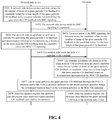
- FIG. 4 illustrates a detailed flow for transmitting information provided by an embodiment of the disclosure.
- the flow may be exemplarily applied to the system illustrated in FIG. 1 , and may include the following operations.
- a network side device carries candidate values for the number of times of a quasi-periodic CSI feedback or candidate values for a time length of the quasi-periodic CSI feedback and a resource indicator for performing the quasi-periodic CSI feedback into the RRC signaling.
- the resource indicator for performing the quasi-periodic CSI feedback may include at least one of: indication information for indicating a PUCCH resource used to perform the quasi-periodic CSI feedback or indication information for indicating a PUSCH resource used to perform the quasi-periodic CSI feedback.
- the candidate values for the number of times and the candidate values for the time length may be embodied in a form of a set.
- a set of the candidate values for the number of times is ⁇ 4, 8, 12, 16 ⁇
- a set of the candidate values for the time length may be ⁇ 5, 10, 15, 20 ⁇ in unit of number of slots
- a set value of a transmission coefficient is N.
- the network side device sends the RRC signaling to a terminal.
- the terminal upon reception of the RRC signaling, stores the candidate values for the number of times of the quasi-periodic CSI feedback or the candidate values for the time length of the quasi-periodic CSI feedback.
- the network side encapsulates an activation indicator for activating the quasi-periodic CSI feedback and determination information for determining a duration of the quasi-periodic CSI feedback from the candidate values into MAC CE signaling.
- the determination information may include an information domain for indicating the number of transmission times of the quasi-periodic CSI feedback or the time length of the quasi-periodic CSI feedback.
- the number of bits occupied by the information domain is log 2 ( N ) and is rounded upward.
- the number of bits occupied by the information domain is 2. 00 may correspond to the number of transmission times of 4 or the duration length of 5 slots, 01 corresponds to the number of transmission times of 8 or the duration length of 10 slots, 10 corresponds to the number of transmission times of 12 or the duration length of 15 slots, and 11 corresponds to the number of transmission times of 16 or the duration length of 20 slots.
- the network side sends the MAC CE signaling to the terminal.
- the terminal determines the duration of the quasi-periodic CSI feedback from the stored candidate values for the number of times of the quasi-periodic CSI feedback or candidate values for the time length of the quasi-periodic CSI feedback based on determination information in the MAC CE signaling.
- the number of transmission times of the quasi-periodic CSI feedback can be correspondingly selected from the set ⁇ 4, 8, 12, 16 ⁇ of the candidate values for the number of times to be 4, or the time length of the quasi-periodic CSI feedback can be selected from the set ⁇ 5, 10, 15, 20 ⁇ of the candidate values for the time length to be 5 slots.
- the terminal performs the quasi-periodic CSI feedback through at least one of the PUCCH resource or the PUSCH resource indicated by the stored resource indicator within the determined duration based on the activation indicator in the MAC CE signaling.
- a measurement resource configured by the network side device is measured and the quasi-periodic CSI is reported to the network side device based on a measurement result.
- the measurement resource may include a periodic CSI-RS resource, or a periodic SSB resource, or a quasi-periodic CSI-RS resource, or a quasi-periodic SSB resource.
- the terminal may measure same measurement resource configured by the network side device, or measure different measurement resources configured by the network side device.
- a specific type of the quasi-periodic CSI fed back by the terminal may include one or more of a CRI, an RI, a PMI, a CQI, an i1, an RSRP, an SSB-Index and an LI.
- the terminal stops feeding the quasi-periodic CSI back to the network side device.
- the network side device also stops receiving a quasi-periodic CSI feedback activated by the terminal.
- the terminal determines the duration of the quasi-periodic CSI feedback, and when the duration expires, the terminal stops feeding the quasi-periodic CSI back to the network side device. Therefore, the deactivation on the quasi-periodic CSI feedback is implemented.
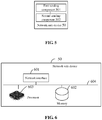
- FIG. 5 illustrates a network side device 50 provided by an embodiment of the disclosure.
- the network side device 50 may include a first sending component 501 and a second sending component 502.
- the first sending component 501 is configured to send first information to a terminal device.
- the first information includes resource indicator for performing a quasi-periodic CSI feedback and duration candidate values of the quasi-periodic CSI feedback.
- the second sending component 502 is configured to send second information to the terminal device.
- the second information includes an activation indicator for activating the quasi-periodic CSI feedback and determination information for determining a duration of the quasi-periodic CSI feedback from the candidate values.
- the first sending component 501 is configured to send RRC signaling carrying the first information or MAC CE signaling carrying the first information to the terminal device.
- the second sending component 502 is configured to send MAC CE signaling carrying the second information or DCI signaling carrying the second information to the terminal device.
- the resource indicator for performing the quasi-periodic CSI feedback may include at least one of indication information for indicating a PUCCH resource used to perform the quasi-periodic CSI feedback or indication information for indicating a PUSCH resource used to perform the quasi-periodic CSI feedback.
- the duration candidate values of the quasi-periodic CSI feedback include candidate values for the number of times of the quasi-periodic CSI feedback or candidate values for a time length of the quasi-periodic CSI feedback.
- component may be a partial circuit, a partial processor, a partial program or software and the like, and certainly may also be a unit, may further be a module and may also be non-modular.
- each component in this embodiment may be integrated into a processing unit, each component may also physically exist independently, and two or more than two units may also be integrated into a unit.
- the integrated unit may be implemented in a form of hardware, and may also be implemented in a form of a software functional module.
- the integrated unit When being realized in form of software functional unit and sold or used as an independent product, the integrated unit may be stored in a computer-readable storage medium.
- the technical solutions of the disclosure substantially or parts making contributions to the conventional art or all or part of the technical solutions may be embodied in form of software product, and the computer software product is stored in a storage medium, including a plurality of instructions configured to enable a computer device (which may be a personal computer, a server, a network device or the like) or a processor to execute all or part of the operations of the method in each embodiment of the disclosure.
- the abovementioned storage medium includes: various media capable of storing program codes such as a U disk, a mobile hard disk, a Read Only Memory (ROM), a Random Access Memory (RAM), a magnetic disk or an optical disk.
- the disclosure provides a computer storage medium.
- the computer storage medium stores an information transmission program, and the information transmission program, when executed by at least one processor, implements the operations of the method in Embodiment 1.
- FIG. 6 illustrates a network side device 50 provided by an embodiment of the disclosure.
- the network side device 50 may include: a first network interface 601, a first memory 602 and a first processor 603. Components are coupled together via a bus system 604. It may be understood that the bus system 604 is configured to implement connection and communication among these components.
- the bus system 604 may further include a power bus, a control bus and a state signal bus. However, for the clarity, various buses in FIG. 6 are marked as the bus system 604.
- the first network interface 601 is configured to receive and send a signal in a process of receiving and sending information with other external network elements.
- the first memory 602 is configured to store a computer program capable of being operated on the first processor 603.
- the first processor 603 is configured to execute the following operations when operating the computer program.
- First information is sent to a terminal device, wherein the first information includes a resource indicator used to perform a quasi-periodic CSI feedback and duration candidate values of the quasi-periodic CSI feedback.
- Second information is sent to the terminal device, wherein the second information includes an activation indicator for activating the quasi-periodic CSI feedback and determination information for determining a duration of the quasi-periodic CSI feedback from the candidate values.
- the first memory 602 in this embodiment may be a volatile memory or a non-volatile memory, or may include the volatile memory and the non-volatile memory.
- the non-volatile memory may be an ROM, a Programmable ROM (PROM), an Erasable PROM (EPROM), an Electrically EPROM (EEPROM) or a flash memory.
- the volatile memory may be an RAM and is used as an external high-speed cache.
- RAMs in various forms may be adopted, such as a Static RAM (SRAM), a Dynamic RAM (DRAM), a Synchronous DRAM (SDRAM), a Double Data Rate SDRAM (DDR SDRAM), an Enhanced SDRAM (ESDRAM), a Synchlink DRAM (SLDRAM) and a Direct Rambus RAM (DR RAM).
- SRAM Static RAM
- DRAM Dynamic RAM
- SDRAM Synchronous DRAM
- DDR SDRAM Double Data Rate SDRAM
- ESDRAM Enhanced SDRAM
- SLDRAM Synchlink DRAM
- DR RAM Direct Rambus RAM
- the first memory 602 of the system and the method described in the disclosure is intended to include but not limited to memories of these and any other suitable type.
- the first processor 603 may be an integrated circuit chip, and has a signal processing capability. During an implementation process, each operation of the method may be completed via an integrated logic circuit of hardware in the first processor 603 or an instruction in a software form.
- the first processor 603 may be a universal processor, a Digital Signal Processor (DSP), an Application Specific Integrated Circuit (ASIC) and a Field Programmable Gate Array (FPGA) or other programmable logic devices, discrete gates or transistor logic devices, and discrete hardware components. Each method, operation and logic block diagram disclosed in the embodiments of the disclosure may be implemented or executed.
- the universal processor may be a microprocessor or the processor may also be any conventional processor and the like.
- the operations of the methods disclosed in combination the embodiments of the disclosure may be directly embodied to be executed and completed by a hardware decoding processor or executed and completed by a combination of hardware and software modules in the decoding processor.
- the software module may be located in a mature storage medium in the art, such as an RAM, a flash memory, an ROM, a PROM, an EEPROM or a register.
- the storage medium is located in the first memory 602.
- the first processor 603 reads information in the first memory 602, and completes the operations of the above method in combination with hardware of the processor.
- a processing unit may be implemented in one or more of an Application Specific Integrated Circuits (ASIC), a Digital Signal Processing (DSP), a DSP Device (DSPD), a Programmable Logic Device (PLD), a Field-Programmable Gate Array (FPGA), a universal processor, a controller, a microcontroller, a microprocessor, other electronic units configured to execute the functions of the disclosure or a combination thereof.
- ASIC Application Specific Integrated Circuits
- DSP Digital Signal Processing
- DSPD DSP Device
- PLD Programmable Logic Device
- FPGA Field-Programmable Gate Array
- technologies used in the disclosure may be implemented via modules for executing the functions of the disclosure (such as a process, a function and the like).
- the software code may be stored in the memory and executed via the processor.
- the memory may be implemented in the processor or out of the processor.
- the first processor 603 in the network side device 50 is further configured to execute, when operating the computer program, the operations of the method in Embodiment 1, which will not be elaborated here.
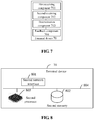
- FIG. 7 illustrates composition of a terminal device 70 provided by an embodiment of the disclosure.
- the terminal device 70 may include: a first receiving component 701, a second receiving component 702, a determination component 703 and a feedback component 704.
- the first receiving component 701 is configured to receive first information sent by a network side device.
- the first information includes a resource indicator for performing a quasi-periodic CSI feedback and duration candidate values of the quasi-periodic CSI feedback.
- the second receiving component 702 is configured to receive second information sent by the network side device.
- the second information includes an activation indicator for activating the quasi-periodic CSI feedback and determination information for determining a duration of the quasi-periodic CSI feedback from the candidate values.
- the determination component 703 is configured to determine, based on the first information and the second information, the duration of the quasi-periodic CSI feedback.
- the feedback component 704 is configured to feed the quasi-periodic CSI back to the network side device within the duration, and stop feeding the quasi-periodic CSI back to the network side device when the duration expires.
- the first receiving component 701 is configured to receive RRC signaling carrying the first information or MAC CE signaling carrying the first information.
- the second receiving component 702 is configured to receive MAC CE signaling carrying the second information or DCI signaling carrying the second information.
- the resource indicator for performing the quasi-periodic CSI feedback may include at least one of: indication information for indicating a PUCCH resource used to perform the quasi-periodic CSI feedback or indication information for indicating a PUSCH resource used to perform the quasi-periodic CSI feedback.
- the duration candidate values of the quasi-periodic CSI feedback include: candidate values for the number of times of the quasi-periodic CSI feedback or candidate values for a time length of the quasi-periodic CSI feedback.
- the determination component 703 is configured to determine, based on the determination information in the second information, a unique number of times of the quasi-periodic CSI feedback or a unique time length of the quasi-periodic CSI feedback from the candidate values for the number of times of the quasi-periodic CSI feedback or the candidate values for the time length of the quasi-periodic CSI feedback.
- the feedback component 704 is configured to feed the quasi-periodic CSI back to the network side device through at least one of the PUCCH resource or the PUSCH resource indicated by the resource indicator for performing the quasi-periodic CSI feedback.
- the feedback component 704 is configured to perform the following operations.
- a measurement resource configured by the network side device is measured.
- the quasi-periodic CSI is reported to the network side device based on a measurement result.
- the measurement resource includes: a periodic CSI-RS resource, a periodic SSB resource, or a quasi-periodic CSI-RS resource, or a quasi-periodic SSB resource.
- the feedback component 704 is configured to perform the following operation.
- Same measurement resource configured by the network side device is measured at each time; or different measurement resources configured by the network side device are measured at each time.
- the quasi-periodic CSI includes one or more of a CRI, an RI, a PMI, a CQI, an i1, an RSRP, an SSX-Index and an LI.
- the disclosure provides a computer storage medium.
- the computer storage medium stores an information transmission program, and the information transmission program, when executed by at least one processor, implements the operations of the method in Embodiment 2.
- Specific description on the computer storage medium is referred to the description in Embodiment 4, and will not be elaborated here.
- FIG. 8 illustrates a specific hardware composition of a terminal device 80 provided by an embodiment of the disclosure.
- the terminal device may include: a second network interface 801, a second memory 802 and a second processor 803. Components are coupled together via a bus system 804. It may be understood that the bus system 804 is configured to implement connection and communication among these components.
- the bus system 804 may further include a power bus, a control bus and a state signal bus. However, for the clarity, various buses in FIG. 8 are marked as the bus system 804.
- the second network interface 801 is configured to receive and send a signal in a process of receiving and sending information with other external network elements.
- the second memory 802 is configured to store a computer program capable of being operated on the second processor 803.
- the second processor 803 is configured to execute the following operations when operating the computer program.
- First information sent by a network side device is received, wherein the first information includes a resource indicator for performing a quasi-periodic CSI feedback and duration candidate values of the quasi-periodic CSI feedback.
- Second information sent by the network side device is received, wherein the second information includes an activation indicator for activating the quasi-periodic CSI feedback and determination information for determining a duration of the quasi-periodic CSI feedback from the candidate values.
- the duration of the quasi-periodic CSI feedback is determined based on the first information and the second information, t.
- Quasi-periodic CSI is fed back to the network side device within the duration.
- the quasi-periodic CSI is stopped being fed back to the network side device.
- the second processor 803 in the terminal device 70 is further configured to execute, when operating the computer program, the operations of the method in Embodiment 2, which will not be elaborated here.
- the network side device can provide, while indicating a resource used by the quasi-periodic CSI feedback and activating the quasi-periodic CSI feedback, the duration candidate values of the quasi-periodic CSI feedback and the determination information for determining the duration of the quasi-periodic CSI feedback in the candidate values. Therefore, the terminal acquires the duration of the quasi-periodic CSI feedback based on the duration candidate values and the determination information and then deactivates the quasi-periodic CSI feedback, thereby implementing the deactivation on the quasi-periodic CSI reporting mechanism, preventing a situation that the terminal cannot stop feeding back the quasi-periodic CSI in an appropriate time, and saving channel resources.
Landscapes
- Engineering & Computer Science (AREA)
- Signal Processing (AREA)
- Computer Networks & Wireless Communication (AREA)
- Quality & Reliability (AREA)
- Mobile Radio Communication Systems (AREA)
Applications Claiming Priority (1)
| Application Number | Priority Date | Filing Date | Title |
|---|---|---|---|
| PCT/CN2018/077255 WO2019161565A1 (zh) | 2018-02-26 | 2018-02-26 | 一种信息传输的方法、设备及计算机存储介质 |
Publications (3)
| Publication Number | Publication Date |
|---|---|
| EP3550874A1 true EP3550874A1 (de) | 2019-10-09 |
| EP3550874A4 EP3550874A4 (de) | 2019-10-09 |
| EP3550874B1 EP3550874B1 (de) | 2020-05-13 |
Family
ID=66261420
Family Applications (1)
| Application Number | Title | Priority Date | Filing Date |
|---|---|---|---|
| EP18852767.5A Not-in-force EP3550874B1 (de) | 2018-02-26 | 2018-02-26 | Verfahren zum übertragen von informationen, vorrichtung und computerspeichermedium |
Country Status (4)
| Country | Link |
|---|---|
| US (1) | US11296753B2 (de) |
| EP (1) | EP3550874B1 (de) |
| CN (1) | CN109716842B (de) |
| WO (1) | WO2019161565A1 (de) |
Families Citing this family (4)
| Publication number | Priority date | Publication date | Assignee | Title |
|---|---|---|---|---|
| CN113260030A (zh) * | 2020-02-13 | 2021-08-13 | 海信集团有限公司 | 终端设备、网络侧设备和通信方法 |
| US12389254B2 (en) * | 2020-05-07 | 2025-08-12 | Qualcomm Incorporated | Layer 1 measurement reporting using measurement index |
| CN121750181A (zh) * | 2022-01-27 | 2026-03-27 | 维沃移动通信有限公司 | 信息反馈方法、接收方法、装置、终端及网络侧设备 |
| CN121510281A (zh) * | 2024-08-07 | 2026-02-10 | 北京三星通信技术研究有限公司 | 用于接收和发送信息的方法和设备 |
Family Cites Families (13)
| Publication number | Priority date | Publication date | Assignee | Title |
|---|---|---|---|---|
| CN102811456B (zh) * | 2011-05-31 | 2016-03-30 | 华为技术有限公司 | 信息上报与处理方法、设备及系统 |
| CN102868499B (zh) * | 2011-07-06 | 2017-04-12 | 华为技术有限公司 | 传输指示信息的方法、用户设备和基站设备 |
| CN102932111B (zh) | 2011-08-10 | 2017-04-12 | 中兴通讯股份有限公司 | 无线信道状态信息上报方法及装置 |
| CN102291213B (zh) * | 2011-08-15 | 2017-06-16 | 中兴通讯股份有限公司 | 一种计算信道质量指示信息的终端及方法 |
| US9681425B2 (en) * | 2012-05-11 | 2017-06-13 | Qualcomm Incorporated | Rank-specific feedback for improved MIMO support |
| US9769677B2 (en) * | 2012-07-02 | 2017-09-19 | Industrial Technology Research Institute | Method and apparatus for bit-adaptive precoding matrix indicator feedback |
| EP2880796A4 (de) * | 2012-08-01 | 2016-03-30 | Nokia Solutions & Networks Oy | Konfigurierbare grösse einer »csi anfrage für aperiodische csi-rückkopplungsauslösung |
| CN103684705A (zh) | 2012-09-10 | 2014-03-26 | 中兴通讯股份有限公司 | 传输harq应答信息以及csi的方法、装置和系统 |
| CN103856300B (zh) * | 2012-11-28 | 2018-07-06 | 电信科学技术研究院 | 一种用户反馈信息的传输方法和设备 |
| US9877203B2 (en) * | 2015-05-07 | 2018-01-23 | Qualcomm Incorporated | Channel feedback reporting for shared frequency spectrum |
| US11218261B2 (en) | 2015-06-01 | 2022-01-04 | Qualcomm Incorporated | Channel state information reference signals in contention-based spectrum |
| CN106899522B (zh) * | 2015-12-17 | 2019-11-19 | 中国移动通信集团公司 | 一种信道状态信息参考信号csi-rs的发送方法、装置及基站 |
| EP3512265B1 (de) * | 2018-01-10 | 2022-05-11 | Comcast Cable Communications LLC | Leistungsregelung für kanalzustandsinformationen |
-
2018
- 2018-02-26 CN CN201880003435.8A patent/CN109716842B/zh active Active
- 2018-02-26 US US16/338,656 patent/US11296753B2/en active Active
- 2018-02-26 EP EP18852767.5A patent/EP3550874B1/de not_active Not-in-force
- 2018-02-26 WO PCT/CN2018/077255 patent/WO2019161565A1/zh not_active Ceased
Also Published As
| Publication number | Publication date |
|---|---|
| US20210359726A1 (en) | 2021-11-18 |
| CN109716842A (zh) | 2019-05-03 |
| US11296753B2 (en) | 2022-04-05 |
| EP3550874A4 (de) | 2019-10-09 |
| CN109716842B (zh) | 2020-06-26 |
| EP3550874B1 (de) | 2020-05-13 |
| WO2019161565A1 (zh) | 2019-08-29 |
Similar Documents
| Publication | Publication Date | Title |
|---|---|---|
| US20240291539A1 (en) | Csi report configuration method, terminal device, and network device | |
| US12160831B2 (en) | Reference signal determination method and device, and UE | |
| US12413281B2 (en) | Communication method and communication apparatus | |
| US11805487B2 (en) | Wireless communication method and device | |
| US12356326B2 (en) | Configuration method and device | |
| US12114290B2 (en) | Method and device for determining codebook subset, and user equipment | |
| CA3063789C (en) | Method and device for transmitting uplink control information | |
| US11259308B2 (en) | Signal processing method and apparatus | |
| EP3550874B1 (de) | Verfahren zum übertragen von informationen, vorrichtung und computerspeichermedium | |
| CA3066671C (en) | Wireless communication method and device | |
| CA3091299C (en) | Maximum transmission power determining method, apparatus, system, and storage medium | |
| US11129114B2 (en) | Method for sounding reference signal communication method and terminal device | |
| EP4645996A1 (de) | Strahlanzeigeverfahren, -vorrichtung und -vorrichtung | |
| US10986659B2 (en) | Wireless communication method, terminal and network device | |
| WO2025260246A1 (zh) | 资源配置方法及装置、终端设备、网络设备 |
Legal Events
| Date | Code | Title | Description |
|---|---|---|---|
| STAA | Information on the status of an ep patent application or granted ep patent |
Free format text: STATUS: UNKNOWN |
|
| STAA | Information on the status of an ep patent application or granted ep patent |
Free format text: STATUS: THE INTERNATIONAL PUBLICATION HAS BEEN MADE |
|
| PUAI | Public reference made under article 153(3) epc to a published international application that has entered the european phase |
Free format text: ORIGINAL CODE: 0009012 |
|
| STAA | Information on the status of an ep patent application or granted ep patent |
Free format text: STATUS: REQUEST FOR EXAMINATION WAS MADE |
|
| 17P | Request for examination filed |
Effective date: 20190314 |
|
| A4 | Supplementary search report drawn up and despatched |
Effective date: 20190909 |
|
| AK | Designated contracting states |
Kind code of ref document: A1 Designated state(s): AL AT BE BG CH CY CZ DE DK EE ES FI FR GB GR HR HU IE IS IT LI LT LU LV MC MK MT NL NO PL PT RO RS SE SI SK SM TR |
|
| AX | Request for extension of the european patent |
Extension state: BA ME |
|
| RAP1 | Party data changed (applicant data changed or rights of an application transferred) |
Owner name: GUANGDONG OPPO MOBILE TELECOMMUNICATIONS CORP., LT |
|
| GRAP | Despatch of communication of intention to grant a patent |
Free format text: ORIGINAL CODE: EPIDOSNIGR1 |
|
| STAA | Information on the status of an ep patent application or granted ep patent |
Free format text: STATUS: GRANT OF PATENT IS INTENDED |
|
| INTG | Intention to grant announced |
Effective date: 20200129 |
|
| GRAS | Grant fee paid |
Free format text: ORIGINAL CODE: EPIDOSNIGR3 |
|
| GRAA | (expected) grant |
Free format text: ORIGINAL CODE: 0009210 |
|
| STAA | Information on the status of an ep patent application or granted ep patent |
Free format text: STATUS: THE PATENT HAS BEEN GRANTED |
|
| AK | Designated contracting states |
Kind code of ref document: B1 Designated state(s): AL AT BE BG CH CY CZ DE DK EE ES FI FR GB GR HR HU IE IS IT LI LT LU LV MC MK MT NL NO PL PT RO RS SE SI SK SM TR |
|
| DAV | Request for validation of the european patent (deleted) | ||
| DAX | Request for extension of the european patent (deleted) | ||
| REG | Reference to a national code |
Ref country code: GB Ref legal event code: FG4D |
|
| REG | Reference to a national code |
Ref country code: CH Ref legal event code: EP |
|
| REG | Reference to a national code |
Ref country code: DE Ref legal event code: R096 Ref document number: 602018004688 Country of ref document: DE |
|
| REG | Reference to a national code |
Ref country code: AT Ref legal event code: REF Ref document number: 1271851 Country of ref document: AT Kind code of ref document: T Effective date: 20200615 |
|
| REG | Reference to a national code |
Ref country code: LT Ref legal event code: MG4D |
|
| REG | Reference to a national code |
Ref country code: NL Ref legal event code: MP Effective date: 20200513 |
|
| PG25 | Lapsed in a contracting state [announced via postgrant information from national office to epo] |
Ref country code: LT Free format text: LAPSE BECAUSE OF FAILURE TO SUBMIT A TRANSLATION OF THE DESCRIPTION OR TO PAY THE FEE WITHIN THE PRESCRIBED TIME-LIMIT Effective date: 20200513 Ref country code: PT Free format text: LAPSE BECAUSE OF FAILURE TO SUBMIT A TRANSLATION OF THE DESCRIPTION OR TO PAY THE FEE WITHIN THE PRESCRIBED TIME-LIMIT Effective date: 20200914 Ref country code: FI Free format text: LAPSE BECAUSE OF FAILURE TO SUBMIT A TRANSLATION OF THE DESCRIPTION OR TO PAY THE FEE WITHIN THE PRESCRIBED TIME-LIMIT Effective date: 20200513 Ref country code: SE Free format text: LAPSE BECAUSE OF FAILURE TO SUBMIT A TRANSLATION OF THE DESCRIPTION OR TO PAY THE FEE WITHIN THE PRESCRIBED TIME-LIMIT Effective date: 20200513 Ref country code: IS Free format text: LAPSE BECAUSE OF FAILURE TO SUBMIT A TRANSLATION OF THE DESCRIPTION OR TO PAY THE FEE WITHIN THE PRESCRIBED TIME-LIMIT Effective date: 20200913 Ref country code: GR Free format text: LAPSE BECAUSE OF FAILURE TO SUBMIT A TRANSLATION OF THE DESCRIPTION OR TO PAY THE FEE WITHIN THE PRESCRIBED TIME-LIMIT Effective date: 20200814 Ref country code: NO Free format text: LAPSE BECAUSE OF FAILURE TO SUBMIT A TRANSLATION OF THE DESCRIPTION OR TO PAY THE FEE WITHIN THE PRESCRIBED TIME-LIMIT Effective date: 20200813 |
|
| PG25 | Lapsed in a contracting state [announced via postgrant information from national office to epo] |
Ref country code: BG Free format text: LAPSE BECAUSE OF FAILURE TO SUBMIT A TRANSLATION OF THE DESCRIPTION OR TO PAY THE FEE WITHIN THE PRESCRIBED TIME-LIMIT Effective date: 20200813 Ref country code: LV Free format text: LAPSE BECAUSE OF FAILURE TO SUBMIT A TRANSLATION OF THE DESCRIPTION OR TO PAY THE FEE WITHIN THE PRESCRIBED TIME-LIMIT Effective date: 20200513 Ref country code: HR Free format text: LAPSE BECAUSE OF FAILURE TO SUBMIT A TRANSLATION OF THE DESCRIPTION OR TO PAY THE FEE WITHIN THE PRESCRIBED TIME-LIMIT Effective date: 20200513 Ref country code: RS Free format text: LAPSE BECAUSE OF FAILURE TO SUBMIT A TRANSLATION OF THE DESCRIPTION OR TO PAY THE FEE WITHIN THE PRESCRIBED TIME-LIMIT Effective date: 20200513 |
|
| REG | Reference to a national code |
Ref country code: AT Ref legal event code: MK05 Ref document number: 1271851 Country of ref document: AT Kind code of ref document: T Effective date: 20200513 |
|
| PG25 | Lapsed in a contracting state [announced via postgrant information from national office to epo] |
Ref country code: AL Free format text: LAPSE BECAUSE OF FAILURE TO SUBMIT A TRANSLATION OF THE DESCRIPTION OR TO PAY THE FEE WITHIN THE PRESCRIBED TIME-LIMIT Effective date: 20200513 Ref country code: NL Free format text: LAPSE BECAUSE OF FAILURE TO SUBMIT A TRANSLATION OF THE DESCRIPTION OR TO PAY THE FEE WITHIN THE PRESCRIBED TIME-LIMIT Effective date: 20200513 |
|
| PG25 | Lapsed in a contracting state [announced via postgrant information from national office to epo] |
Ref country code: RO Free format text: LAPSE BECAUSE OF FAILURE TO SUBMIT A TRANSLATION OF THE DESCRIPTION OR TO PAY THE FEE WITHIN THE PRESCRIBED TIME-LIMIT Effective date: 20200513 Ref country code: ES Free format text: LAPSE BECAUSE OF FAILURE TO SUBMIT A TRANSLATION OF THE DESCRIPTION OR TO PAY THE FEE WITHIN THE PRESCRIBED TIME-LIMIT Effective date: 20200513 Ref country code: CZ Free format text: LAPSE BECAUSE OF FAILURE TO SUBMIT A TRANSLATION OF THE DESCRIPTION OR TO PAY THE FEE WITHIN THE PRESCRIBED TIME-LIMIT Effective date: 20200513 Ref country code: EE Free format text: LAPSE BECAUSE OF FAILURE TO SUBMIT A TRANSLATION OF THE DESCRIPTION OR TO PAY THE FEE WITHIN THE PRESCRIBED TIME-LIMIT Effective date: 20200513 Ref country code: AT Free format text: LAPSE BECAUSE OF FAILURE TO SUBMIT A TRANSLATION OF THE DESCRIPTION OR TO PAY THE FEE WITHIN THE PRESCRIBED TIME-LIMIT Effective date: 20200513 Ref country code: DK Free format text: LAPSE BECAUSE OF FAILURE TO SUBMIT A TRANSLATION OF THE DESCRIPTION OR TO PAY THE FEE WITHIN THE PRESCRIBED TIME-LIMIT Effective date: 20200513 Ref country code: IT Free format text: LAPSE BECAUSE OF FAILURE TO SUBMIT A TRANSLATION OF THE DESCRIPTION OR TO PAY THE FEE WITHIN THE PRESCRIBED TIME-LIMIT Effective date: 20200513 Ref country code: SM Free format text: LAPSE BECAUSE OF FAILURE TO SUBMIT A TRANSLATION OF THE DESCRIPTION OR TO PAY THE FEE WITHIN THE PRESCRIBED TIME-LIMIT Effective date: 20200513 |
|
| REG | Reference to a national code |
Ref country code: DE Ref legal event code: R097 Ref document number: 602018004688 Country of ref document: DE |
|
| PG25 | Lapsed in a contracting state [announced via postgrant information from national office to epo] |
Ref country code: PL Free format text: LAPSE BECAUSE OF FAILURE TO SUBMIT A TRANSLATION OF THE DESCRIPTION OR TO PAY THE FEE WITHIN THE PRESCRIBED TIME-LIMIT Effective date: 20200513 Ref country code: SK Free format text: LAPSE BECAUSE OF FAILURE TO SUBMIT A TRANSLATION OF THE DESCRIPTION OR TO PAY THE FEE WITHIN THE PRESCRIBED TIME-LIMIT Effective date: 20200513 |
|
| PLBE | No opposition filed within time limit |
Free format text: ORIGINAL CODE: 0009261 |
|
| STAA | Information on the status of an ep patent application or granted ep patent |
Free format text: STATUS: NO OPPOSITION FILED WITHIN TIME LIMIT |
|
| 26N | No opposition filed |
Effective date: 20210216 |
|
| PG25 | Lapsed in a contracting state [announced via postgrant information from national office to epo] |
Ref country code: MC Free format text: LAPSE BECAUSE OF FAILURE TO SUBMIT A TRANSLATION OF THE DESCRIPTION OR TO PAY THE FEE WITHIN THE PRESCRIBED TIME-LIMIT Effective date: 20200513 |
|
| REG | Reference to a national code |
Ref country code: BE Ref legal event code: MM Effective date: 20210228 |
|
| PG25 | Lapsed in a contracting state [announced via postgrant information from national office to epo] |
Ref country code: CH Free format text: LAPSE BECAUSE OF NON-PAYMENT OF DUE FEES Effective date: 20210228 Ref country code: LI Free format text: LAPSE BECAUSE OF NON-PAYMENT OF DUE FEES Effective date: 20210228 Ref country code: LU Free format text: LAPSE BECAUSE OF NON-PAYMENT OF DUE FEES Effective date: 20210226 |
|
| PG25 | Lapsed in a contracting state [announced via postgrant information from national office to epo] |
Ref country code: IE Free format text: LAPSE BECAUSE OF NON-PAYMENT OF DUE FEES Effective date: 20210226 |
|
| PGFP | Annual fee paid to national office [announced via postgrant information from national office to epo] |
Ref country code: GB Payment date: 20220221 Year of fee payment: 5 Ref country code: DE Payment date: 20220217 Year of fee payment: 5 |
|
| PGFP | Annual fee paid to national office [announced via postgrant information from national office to epo] |
Ref country code: FR Payment date: 20220225 Year of fee payment: 5 |
|
| PG25 | Lapsed in a contracting state [announced via postgrant information from national office to epo] |
Ref country code: BE Free format text: LAPSE BECAUSE OF NON-PAYMENT OF DUE FEES Effective date: 20210228 |
|
| P01 | Opt-out of the competence of the unified patent court (upc) registered |
Effective date: 20230412 |
|
| PG25 | Lapsed in a contracting state [announced via postgrant information from national office to epo] |
Ref country code: CY Free format text: LAPSE BECAUSE OF FAILURE TO SUBMIT A TRANSLATION OF THE DESCRIPTION OR TO PAY THE FEE WITHIN THE PRESCRIBED TIME-LIMIT Effective date: 20200513 |
|
| PG25 | Lapsed in a contracting state [announced via postgrant information from national office to epo] |
Ref country code: HU Free format text: LAPSE BECAUSE OF FAILURE TO SUBMIT A TRANSLATION OF THE DESCRIPTION OR TO PAY THE FEE WITHIN THE PRESCRIBED TIME-LIMIT; INVALID AB INITIO Effective date: 20180226 |
|
| REG | Reference to a national code |
Ref country code: DE Ref legal event code: R119 Ref document number: 602018004688 Country of ref document: DE |
|
| PG25 | Lapsed in a contracting state [announced via postgrant information from national office to epo] |
Ref country code: SI Free format text: LAPSE BECAUSE OF FAILURE TO SUBMIT A TRANSLATION OF THE DESCRIPTION OR TO PAY THE FEE WITHIN THE PRESCRIBED TIME-LIMIT Effective date: 20200513 |
|
| GBPC | Gb: european patent ceased through non-payment of renewal fee |
Effective date: 20230226 |
|
| PG25 | Lapsed in a contracting state [announced via postgrant information from national office to epo] |
Ref country code: GB Free format text: LAPSE BECAUSE OF NON-PAYMENT OF DUE FEES Effective date: 20230226 |
|
| PG25 | Lapsed in a contracting state [announced via postgrant information from national office to epo] |
Ref country code: GB Free format text: LAPSE BECAUSE OF NON-PAYMENT OF DUE FEES Effective date: 20230226 Ref country code: FR Free format text: LAPSE BECAUSE OF NON-PAYMENT OF DUE FEES Effective date: 20230228 Ref country code: DE Free format text: LAPSE BECAUSE OF NON-PAYMENT OF DUE FEES Effective date: 20230901 |
|
| PG25 | Lapsed in a contracting state [announced via postgrant information from national office to epo] |
Ref country code: MK Free format text: LAPSE BECAUSE OF FAILURE TO SUBMIT A TRANSLATION OF THE DESCRIPTION OR TO PAY THE FEE WITHIN THE PRESCRIBED TIME-LIMIT Effective date: 20200513 |
|
| PG25 | Lapsed in a contracting state [announced via postgrant information from national office to epo] |
Ref country code: TR Free format text: LAPSE BECAUSE OF FAILURE TO SUBMIT A TRANSLATION OF THE DESCRIPTION OR TO PAY THE FEE WITHIN THE PRESCRIBED TIME-LIMIT Effective date: 20200513 |
|
| PG25 | Lapsed in a contracting state [announced via postgrant information from national office to epo] |
Ref country code: MT Free format text: LAPSE BECAUSE OF FAILURE TO SUBMIT A TRANSLATION OF THE DESCRIPTION OR TO PAY THE FEE WITHIN THE PRESCRIBED TIME-LIMIT Effective date: 20200513 |