EP3550428A2 - Sichere spekulative befehlsausführung in einem datenverarbeitungssystem - Google Patents
Sichere spekulative befehlsausführung in einem datenverarbeitungssystem Download PDFInfo
- Publication number
- EP3550428A2 EP3550428A2 EP19162132.5A EP19162132A EP3550428A2 EP 3550428 A2 EP3550428 A2 EP 3550428A2 EP 19162132 A EP19162132 A EP 19162132A EP 3550428 A2 EP3550428 A2 EP 3550428A2
- Authority
- EP
- European Patent Office
- Prior art keywords
- speculative
- data
- cache
- memory
- instruction
- Prior art date
- Legal status (The legal status is an assumption and is not a legal conclusion. Google has not performed a legal analysis and makes no representation as to the accuracy of the status listed.)
- Withdrawn
Links
Images

Classifications
-
- G—PHYSICS
- G06—COMPUTING OR CALCULATING; COUNTING
- G06F—ELECTRIC DIGITAL DATA PROCESSING
- G06F21/00—Security arrangements for protecting computers, components thereof, programs or data against unauthorised activity
- G06F21/50—Monitoring users, programs or devices to maintain the integrity of platforms, e.g. of processors, firmware or operating systems
- G06F21/55—Detecting local intrusion or implementing counter-measures
-
- G—PHYSICS
- G06—COMPUTING OR CALCULATING; COUNTING
- G06F—ELECTRIC DIGITAL DATA PROCESSING
- G06F9/00—Arrangements for program control, e.g. control units
- G06F9/06—Arrangements for program control, e.g. control units using stored programs, i.e. using an internal store of processing equipment to receive or retain programs
- G06F9/30—Arrangements for executing machine instructions, e.g. instruction decode
- G06F9/38—Concurrent instruction execution, e.g. pipeline or look ahead
- G06F9/3836—Instruction issuing, e.g. dynamic instruction scheduling or out of order instruction execution
- G06F9/3842—Speculative instruction execution
-
- G—PHYSICS
- G06—COMPUTING OR CALCULATING; COUNTING
- G06F—ELECTRIC DIGITAL DATA PROCESSING
- G06F12/00—Accessing, addressing or allocating within memory systems or architectures
- G06F12/02—Addressing or allocation; Relocation
- G06F12/08—Addressing or allocation; Relocation in hierarchically structured memory systems, e.g. virtual memory systems
- G06F12/0802—Addressing of a memory level in which the access to the desired data or data block requires associative addressing means, e.g. caches
- G06F12/0844—Multiple simultaneous or quasi-simultaneous cache accessing
-
- G—PHYSICS
- G06—COMPUTING OR CALCULATING; COUNTING
- G06F—ELECTRIC DIGITAL DATA PROCESSING
- G06F21/00—Security arrangements for protecting computers, components thereof, programs or data against unauthorised activity
- G06F21/70—Protecting specific internal or peripheral components, in which the protection of a component leads to protection of the entire computer
- G06F21/71—Protecting specific internal or peripheral components, in which the protection of a component leads to protection of the entire computer to assure secure computing or processing of information
-
- G—PHYSICS
- G06—COMPUTING OR CALCULATING; COUNTING
- G06F—ELECTRIC DIGITAL DATA PROCESSING
- G06F9/00—Arrangements for program control, e.g. control units
- G06F9/06—Arrangements for program control, e.g. control units using stored programs, i.e. using an internal store of processing equipment to receive or retain programs
- G06F9/30—Arrangements for executing machine instructions, e.g. instruction decode
- G06F9/38—Concurrent instruction execution, e.g. pipeline or look ahead
- G06F9/3824—Operand accessing
-
- G—PHYSICS
- G06—COMPUTING OR CALCULATING; COUNTING
- G06F—ELECTRIC DIGITAL DATA PROCESSING
- G06F9/00—Arrangements for program control, e.g. control units
- G06F9/06—Arrangements for program control, e.g. control units using stored programs, i.e. using an internal store of processing equipment to receive or retain programs
- G06F9/30—Arrangements for executing machine instructions, e.g. instruction decode
- G06F9/38—Concurrent instruction execution, e.g. pipeline or look ahead
- G06F9/3854—Instruction completion, e.g. retiring, committing or graduating
-
- G—PHYSICS
- G06—COMPUTING OR CALCULATING; COUNTING
- G06F—ELECTRIC DIGITAL DATA PROCESSING
- G06F9/00—Arrangements for program control, e.g. control units
- G06F9/06—Arrangements for program control, e.g. control units using stored programs, i.e. using an internal store of processing equipment to receive or retain programs
- G06F9/30—Arrangements for executing machine instructions, e.g. instruction decode
- G06F9/38—Concurrent instruction execution, e.g. pipeline or look ahead
- G06F9/3854—Instruction completion, e.g. retiring, committing or graduating
- G06F9/3858—Result writeback, i.e. updating the architectural state or memory
- G06F9/38585—Result writeback, i.e. updating the architectural state or memory with result invalidation, e.g. nullification
-
- G—PHYSICS
- G06—COMPUTING OR CALCULATING; COUNTING
- G06F—ELECTRIC DIGITAL DATA PROCESSING
- G06F2212/00—Indexing scheme relating to accessing, addressing or allocation within memory systems or architectures
- G06F2212/50—Control mechanisms for virtual memory, cache or TLB
- G06F2212/507—Control mechanisms for virtual memory, cache or TLB using speculative control
Definitions
- This disclosure relates generally to data processing, and more particularly, to securely performing a speculative instruction execution in a data processing system.
- processors may use, for example, branch prediction and speculative execution.
- Branching instructions allow different parts of code to be executed depending on a condition. It may be the case that all of the data necessary to evaluate the condition is not yet available. For example, the data may need to be computed or may need to be fetched from memory. In this case, it may not be certain which part of the program will be executed next.
- a processor may start executing one of the possible paths of the program. The processor starts by predicting which path is likely to be executed next and begins the execution. This type of execution may be referred to as speculative execution.
- Cache design in many systems interacts with speculatively executed instructions in an insecure manner.
- attackers have learned how to exploit the interaction between the cache memory and speculative execution in a recent class of attacks known as Spectre and Meltdown.
- this class of attacks uses various techniques to recover stored secrets in cache by measuring access timing through speculative execution.
- Existing countermeasures to these attacks do not resist every variation. Also, the existing countermeasures are typically implemented in software that reduces processor performance.
- the data processing system includes a speculative cache memory in addition to the normal cache memory.
- the speculative cache memory function is like the normal cache memory except that the speculative cache is only used for executing speculative instructions. Once the processor commits to the speculative instruction, the content of the speculative cache may be transferred to the normal cache memory.
- the method and data processing system allows speculative execution in processors without leaving traces in the normal cache memory that can be exploited by an attacker, while still providing the speed gains provided by speculative execution.
- a method for speculative execution in a data processing system includes: receiving an instruction to be executed by a processor of the data processing system, wherein the instruction is for accessing a memory for reading or writing data according to the instruction; determining that the access is speculative; determining that the data is not in a cache memory of the data processing system; retrieving the data from a main memory; storing the data in a speculative cache, wherein the speculative cache is for storing only speculative instructions and data related to the speculative instructions; and executing the speculative instruction.
- Accessing a memory for reading or writing may further include accessing the memory for reading data, and further including transferring the data to a register.
- Accessing a memory for reading or writing may further include accessing the memory for writing data, and may further include overwriting the data in the speculative cache by new data from a register.
- the method may further include retiring the speculative instruction.
- the method may further include: retiring the speculative instruction; determining that there are changes to the speculative cache; and transferring data from the speculative cache to the cache memory.
- Accessing a memory for reading or writing may further include accessing the memory for reading data, and wherein determining that the data is not in a cache memory may further include determining that the data is not is the cache memory or the speculative cache.
- the method may further include preventing write operations to the cache memory during the speculative execution.
- a data processing system including: a processor for executing instructions; a cache memory, coupled to the processor, for storing the instructions and related data; a speculative cache, coupled to the processor, for storing only speculative instructions and related data; and a control circuit, coupled to the processor, to the cache memory, and to the speculative cache, the control circuit for causing the speculative instructions to be stored in the speculative cache in response to receiving an indication from the processor.
- the processor may further include a branch predictor, wherein speculative execution may be performed in response to a prediction from the branch predictor regarding a speculative instruction.
- An instruction retirement circuit of the processor may retire the speculative instruction in response to the prediction being determined to be correct.
- the speculative cache and the cache memory may be separate portions of the same memory array.
- the processor may further include an instruction retirement circuit for retiring a speculative instruction after the speculative instruction is executed.
- the control circuit may prevent write operations to the cache memory during the speculative execution and only allow write operations to the speculative cache during the speculative execution.
- a method for speculative execution in a data processing system including: receiving an instruction to be executed by the processor, wherein the instruction is for accessing a memory for reading or writing data according to the instruction; determining that the access is speculative; preventing write operations to the cache memory during the speculative execution; determining that the data is not in a cache memory of the data processing system; retrieving the data from a main memory; storing the data in a speculative cache, wherein the speculative cache is for storing only speculative instructions and data related to the speculative instructions; and executing the speculative instruction.
- the instruction may be for a read access, and wherein the data may be transferred to a register of the processor.
- the instruction may be for a write access for writing data from a register of the processor to the speculative cache, and further include overwriting data in the speculative cache with the data from the register, and marking the data in the speculative cache as dirty.
- the method may further include retiring the speculative instruction.
- the method may further include: determining that there are changes to the data in the speculative cache; and transferring data from the speculative cache to the cache memory.
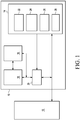
- FIG. 1 illustrates a simplified block diagram of data processing system 10 in accordance with an embodiment.
- Data processing system 10 may be implemented on a single integrated circuit (IC), or on multiple ICs.
- Data processing system 10 includes processor(s) 14, normal cache 16, speculative cache 18, and control circuit 20.
- Data processing system 10 is connected to a main memory 12.
- main memory 12 may be implemented as part of data processing system 10.
- Processor(s) 14 may be any type of processing circuit for executing instructions.
- processor(s) 14 may be one or more microprocessors (MPUs), microcontrollers (MCUs), digital signal processors (DSPs), or another type of processor or processor core.
- MPUs microprocessors
- MCUs microcontrollers
- DSPs digital signal processors
- processor(s) 14 may be peripheral devices or special-purpose processors used to control peripheral units, such as for example, a direct memory access (DMA) peripheral.
- DMA direct memory access
- processor(s) 14 is illustrated with blocks useful for describing various functions and aspects of the illustrated embodiment.
- processor(s) 14 includes a branch predictor 22, out-of-order execution circuit 24, instruction retirement circuit 26, and registers 28. It is understood that a processor will have other functional blocks not illustrated in FIG. 1 .
- Examples of other functional blocks include, but are not limited to, memory pages of random access memory (RAM), flash memory, and other types of non-volatile memory (NVM), an arithmetic logic unit (ALU), a debug interface, peripheral units such as a serial peripheral interface (SPI), analog-to-digital converter (ADC), controller area network (CAN), ethernet function block, and a DMA.
- RAM random access memory
- NVM non-volatile memory
- ALU arithmetic logic unit
- ALU arithmetic logic unit
- debug interface peripheral units such as a serial peripheral interface (SPI), analog-to-digital converter (ADC), controller area network (CAN), ethernet function block, and a DMA.
- SPI serial peripheral interface
- ADC analog-to-digital converter
- CAN controller area network
- ethernet function block ethernet function block
- DMA DMA
- registers 28 may include a plurality of registers that may be assigned to store various data and instructions by
- Normal cache memory 16 and speculative cache memory 18 are both bi-directionally connected to each other and to a control circuit 20.
- normal cache memory 16 and speculative cache memory 18 may be separate portions of the same memory array.
- Cache memory 16 stores instructions and related data to be executed by processor(s) 14.
- Speculative cache 18 is for storing only speculative instructions and related speculative data to be executed by processor(s) 14.
- Control circuit 20 is bi-directionally connected to processor(s) 14 and main memory 12 to transmit and receive data and control signals. In addition, control circuit 20 receives a control signal from processor(s) 14 to indicate if an instruction is a speculative instruction or non-speculative instruction.
- Speculative instructions may be executed in response to a prediction from branch predictor 22. Alternately, speculative execution may be in response to out-of-order execution controlled by out-of-order execution circuit 24.
- control circuit 20 in response to control circuit 20 receiving the control signal, controls circuit 20 causes speculative instructions and related data to be stored only in the speculative cache. Also, the speculative instructions are only executed from speculative cache 18 and write operations are only allowed to speculative cache 18. Write operations to normal cache 16 and main memory 12 are prevented while the speculative instructions are being executed.
- FIG. 2 illustrates method 30 for reading data from memory in accordance with an embodiment.
- the method may be performed by data processing system 10 during speculative execution.
- a read instruction is received from memory.
- the memory being read may be any one of cache memory 16, speculative cache 18, or main memory 12.
- the read instruction may be to read an address from memory to a particular register of registers 28.
- decision step 34 it is determined if the read instruction is speculative.
- the control signal provided to control circuit 20 from processor 14 provides the indication. If the read instruction is not speculative, the NO path is taken from decision step 34 to decision step 36.
- decision step 36 it is determined if the requested data is in normal cache memory 16.
- step 38 the YES path is taken to step 38 and the requested data is transferred to the particular register of registers 28. If at decision step 36 the data is not in the normal cache 16, then the NO path is taken to step 40. At step 40, the data is retrieved from main memory 12 and stored in cache memory 16. Note that the write to cache memory 16 is allowed because it has been determined that the instruction is not speculative. Then, at step 38, data is transferred from cache memory 16 to the particular register in processor(s) 14. However, if at decision step 34 it is determined that the instruction is speculative, the YES path is taken to decision step 42. At decision step 42, it is determined if the data is in any cache.
- speculative cache 18 there is a speculative cache 18 and a normal cache 16.
- the available caches may be different in other embodiments. If the data is in one of caches 16 and 18, the data is transferred to the register. Note that writes to normal memory 16 are not allowed when speculative execution is ongoing. The speculative instruction is executed entirely within speculative cache 18 to prevent an attacker from retrieving information from normal cache memory 16.
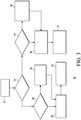
- FIG. 3 illustrates method 50 for writing data to memory in accordance with an embodiment.
- Method 50 may be performed by data processing system 10 during speculative execution.
- a write instruction is received.
- the memory being written to may be any one of cache memory 16, speculative cache 18, or main memory 12.
- the write instruction may be provided to write the contents of a particular register of registers 28 to an address in memory.
- decision step 54 it is determined if the write instruction is speculative. If the write instruction is not speculative, the NO path is taken to decision step 56.
- decision step 56 it is determined if the data is in cache memory 16. If the data is in cache memory 16, the data is overwritten by the data from the particular register, if necessary.
- step 56 if it is determined that the data is not in cache memory 16, then the NO path is taken to step 60.
- the data is retrieved from main memory 12 and stored in cache memory 16.
- the data is overwritten by the data from the particular register.
- the corresponding cache line in cache memory 16 is marked as dirty.
- decision step 64 it is determined if the data is already in speculative cache 18. If the data is already in speculative cache 18, the YES path is taken to step 66. At step 66, the data in speculative cache 18 is overwritten by data from the register. Note that, as discussed above, write operations to normal cache memory 16 are not allowed while speculative execution is proceeding. At step 70, the corresponding line in speculative cache 18 is marked as dirty. If at decision step 64, it is determined that the data is not in the speculative cache 18, the NO path is taken to step 68.
- step 68 the data is stored in speculative cache 18 from main memory 12. Then method 50 proceeds to steps 66 and 70 where the data in speculative cache 18 is overwritten by data in the predetermined register of registers 28, and the corresponding speculative cache line is marked dirty.
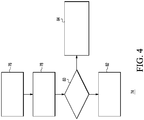
- FIG. 4 illustrates method 74 for speculative instruction retirement in accordance with an embodiment.
- Method 74 may be performed after either method 30 or method 50 depending on whether the instruction is a read or a write instruction.
- the speculative instruction is executed.
- the instruction is retired with any memory access being allowed because the speculative execution has been completed and the prediction of the branch predictor 22 was correct.
- processor(s) 14 executes an instruction in a speculative manner and the instruction execution turns out to be unnecessary because of an incorrect prediction, all the results of the speculative execution are discarded.
- the instruction retirement indicates the instruction has been committed to.
- step 80 it is determined if any modifications have made to speculative cache 18. If not, then the NO path is taken to step 82. At step 82, no further actions with respect to speculative cache 18 are required. If at decision step 80, it is determined that speculative cache 18 has been modified, then the YES path is taken to step 84. At step 84, data that was used by the instruction being retired is transferred from speculative cache 18 to cache memory 16.
- the disclosed method and data processing system allows speculative execution in processors without leaving traces in the normal cache memory that can be exploited by an attacker, while still providing the speed gains provided by speculative execution.
- Non-transitory machine-readable storage medium including any mechanism for storing information in a form readable by a machine, such as a personal computer, laptop computer, file server, smart phone, or other computing device.
- the non-transitory machine-readable storage medium may include volatile and non-volatile memories such as read only memory (ROM), random access memory (RAM), magnetic disk storage media, optical storage medium, flash memory, and the like.
- ROM read only memory
- RAM random access memory
- magnetic disk storage media such as magnetic disks, optical storage medium, flash memory, and the like.
- the non-transitory machine-readable storage medium excludes transitory signals.
Landscapes
- Engineering & Computer Science (AREA)
- Theoretical Computer Science (AREA)
- Software Systems (AREA)
- Physics & Mathematics (AREA)
- General Engineering & Computer Science (AREA)
- General Physics & Mathematics (AREA)
- Computer Hardware Design (AREA)
- Computer Security & Cryptography (AREA)
- Mathematical Physics (AREA)
- Advance Control (AREA)
- Memory System Of A Hierarchy Structure (AREA)
Applications Claiming Priority (1)
| Application Number | Priority Date | Filing Date | Title |
|---|---|---|---|
| US15/945,047 US10657057B2 (en) | 2018-04-04 | 2018-04-04 | Secure speculative instruction execution in a data processing system |
Publications (2)
| Publication Number | Publication Date |
|---|---|
| EP3550428A2 true EP3550428A2 (de) | 2019-10-09 |
| EP3550428A3 EP3550428A3 (de) | 2019-12-25 |
Family
ID=65766895
Family Applications (1)
| Application Number | Title | Priority Date | Filing Date |
|---|---|---|---|
| EP19162132.5A Withdrawn EP3550428A3 (de) | 2018-04-04 | 2019-03-12 | Sichere spekulative befehlsausführung in einem datenverarbeitungssystem |
Country Status (3)
| Country | Link |
|---|---|
| US (1) | US10657057B2 (de) |
| EP (1) | EP3550428A3 (de) |
| CN (1) | CN110348207A (de) |
Families Citing this family (4)
| Publication number | Priority date | Publication date | Assignee | Title |
|---|---|---|---|---|
| US11169805B2 (en) * | 2018-04-30 | 2021-11-09 | Hewlett Packard Enterprise Development Lp | Dynamic processor cache to avoid speculative vulnerability |
| US11210102B2 (en) * | 2019-11-26 | 2021-12-28 | Arm Limited | Speculative buffer for speculative memory accesses with entries tagged with execution context identifiers |
| TWI746261B (zh) * | 2020-11-12 | 2021-11-11 | 財團法人工業技術研究院 | 基於對話類型的快取管理方法及系統 |
| CN112433765B (zh) * | 2020-11-26 | 2023-09-08 | 海光信息技术股份有限公司 | 一种数据存储方法、装置、处理器及电子设备 |
Family Cites Families (24)
| Publication number | Priority date | Publication date | Assignee | Title |
|---|---|---|---|---|
| US6321328B1 (en) | 1999-03-22 | 2001-11-20 | Hewlett-Packard Company | Processor having data buffer for speculative loads |
| US6725338B2 (en) * | 2000-11-21 | 2004-04-20 | Sun Microsystems, Inc. | Method and apparatus for preventing cache pollution in microprocessors with speculative address loads |
| US20040154010A1 (en) * | 2003-01-31 | 2004-08-05 | Pedro Marcuello | Control-quasi-independent-points guided speculative multithreading |
| US7225299B1 (en) * | 2003-07-16 | 2007-05-29 | Transmeta Corporation | Supporting speculative modification in a data cache |
| US7149851B1 (en) * | 2003-08-21 | 2006-12-12 | Transmeta Corporation | Method and system for conservatively managing store capacity available to a processor issuing stores |
| US7409500B2 (en) | 2004-01-13 | 2008-08-05 | Hewlett-Packard Development Company, L.P. | Systems and methods for employing speculative fills |
| DE102005001679B4 (de) | 2005-01-13 | 2008-11-13 | Infineon Technologies Ag | Mikroprozessor-Einrichtung, und Verfahren zur Branch-Prediktion für conditional Branch-Befehle in einer Mikroprozessor-Einrichtung |
| US7587580B2 (en) * | 2005-02-03 | 2009-09-08 | Qualcomm Corporated | Power efficient instruction prefetch mechanism |
| US7836290B2 (en) | 2005-11-09 | 2010-11-16 | Oracle America, Inc. | Return address stack recovery in a speculative execution computing apparatus |
| JP2008186233A (ja) * | 2007-01-30 | 2008-08-14 | Toshiba Corp | 命令キャッシュプリフェッチ制御方法及びその装置 |
| JP4635063B2 (ja) | 2008-03-11 | 2011-02-16 | 株式会社東芝 | キャッシュメモリ制御回路及びプロセッサ |
| EP2332043B1 (de) * | 2008-07-28 | 2018-06-13 | Advanced Micro Devices, Inc. | Virtualisierbare fortschrittliche synchronisationseinrichtung |
| US8943273B1 (en) | 2008-08-14 | 2015-01-27 | Marvell International Ltd. | Method and apparatus for improving cache efficiency |
| US8352688B2 (en) * | 2010-11-15 | 2013-01-08 | Advanced Micro Devices, Inc. | Preventing unintended loss of transactional data in hardware transactional memory systems |
| US9710280B2 (en) * | 2011-12-30 | 2017-07-18 | Intel Corporation | Overlapping atomic regions in a processor |
| US9201796B2 (en) * | 2012-09-27 | 2015-12-01 | Apple Inc. | System cache with speculative read engine |
| US9645824B2 (en) * | 2012-10-31 | 2017-05-09 | Arm Limited | Branch target address cache using hashed fetch addresses |
| JP6016689B2 (ja) * | 2013-03-28 | 2016-10-26 | ルネサスエレクトロニクス株式会社 | 半導体装置 |
| WO2015075674A1 (en) | 2013-11-21 | 2015-05-28 | Green Cache AB | Systems and methods for direct data access in multi-level cache memory hierarchies |
| US10409763B2 (en) * | 2014-06-30 | 2019-09-10 | Intel Corporation | Apparatus and method for efficiently implementing a processor pipeline |
| US10324768B2 (en) * | 2014-12-17 | 2019-06-18 | Intel Corporation | Lightweight restricted transactional memory for speculative compiler optimization |
| US10963567B2 (en) * | 2017-10-12 | 2021-03-30 | Microsoft Technology Licensing, Llc | Speculative side-channel attack mitigations |
| US10613983B2 (en) * | 2018-03-20 | 2020-04-07 | Advanced Micro Devices, Inc. | Prefetcher based speculative dynamic random-access memory read request technique |
| US10949210B2 (en) * | 2018-05-02 | 2021-03-16 | Micron Technology, Inc. | Shadow cache for securing conditional speculative instruction execution |
-
2018
- 2018-04-04 US US15/945,047 patent/US10657057B2/en active Active
-
2019
- 2019-03-12 EP EP19162132.5A patent/EP3550428A3/de not_active Withdrawn
- 2019-04-02 CN CN201910264813.4A patent/CN110348207A/zh active Pending
Non-Patent Citations (1)
| Title |
|---|
| None |
Also Published As
| Publication number | Publication date |
|---|---|
| US20190310941A1 (en) | 2019-10-10 |
| EP3550428A3 (de) | 2019-12-25 |
| CN110348207A (zh) | 2019-10-18 |
| US10657057B2 (en) | 2020-05-19 |
Similar Documents
| Publication | Publication Date | Title |
|---|---|---|
| KR102746185B1 (ko) | 추론적 캐시 기억영역 | |
| EP3516508B1 (de) | Vorhersage von speicherverstössen | |
| KR101461378B1 (ko) | 동기화 simd 벡터 | |
| JP5357017B2 (ja) | 高速で安価なストア−ロード競合スケジューリング及び転送機構 | |
| US7114059B2 (en) | System and method to bypass execution of instructions involving unreliable data during speculative execution | |
| US8429636B2 (en) | Handling dependency conditions between machine instructions | |
| US8335912B2 (en) | Logical map table for detecting dependency conditions between instructions having varying width operand values | |
| US9798590B2 (en) | Post-retire scheme for tracking tentative accesses during transactional execution | |
| JP2875909B2 (ja) | 並列演算処理装置 | |
| EP3550428A2 (de) | Sichere spekulative befehlsausführung in einem datenverarbeitungssystem | |
| CN115867888B (zh) | 用于利用主-影子物理寄存器文件的方法和系统 | |
| KR20120070584A (ko) | 데이터 스트림에 대한 저장 인식 프리페치 | |
| US20080148282A1 (en) | Mechanism and method to track oldest processor event | |
| JP2008512769A (ja) | 読出しが以前の書込みに依存しているかどうかを予測する依存性メカニズムを備えたプロセッサ | |
| KR100335744B1 (ko) | 로드/로드 검출 및 재정렬 방법 | |
| KR20190051036A (ko) | 벡터 명령들에 대한 요소간 어드레스 해저드들의 처리 | |
| US20140156978A1 (en) | Detecting and Filtering Biased Branches in Global Branch History | |
| US8595744B2 (en) | Anticipatory helper thread based code execution | |
| CN113448625A (zh) | 状态转变指令后的推测性执行 | |
| US10977040B2 (en) | Heuristic invalidation of non-useful entries in an array | |
| US20130103930A1 (en) | Data processing device and method, and processor unit of same | |
| CN111045731B (zh) | 用于执行在推测屏障指令之后的分支指令的方法及装置 | |
| WO2019145668A1 (en) | Commit window move element |
Legal Events
| Date | Code | Title | Description |
|---|---|---|---|
| PUAI | Public reference made under article 153(3) epc to a published international application that has entered the european phase |
Free format text: ORIGINAL CODE: 0009012 |
|
| STAA | Information on the status of an ep patent application or granted ep patent |
Free format text: STATUS: THE APPLICATION HAS BEEN PUBLISHED |
|
| AK | Designated contracting states |
Kind code of ref document: A2 Designated state(s): AL AT BE BG CH CY CZ DE DK EE ES FI FR GB GR HR HU IE IS IT LI LT LU LV MC MK MT NL NO PL PT RO RS SE SI SK SM TR |
|
| AX | Request for extension of the european patent |
Extension state: BA ME |
|
| PUAL | Search report despatched |
Free format text: ORIGINAL CODE: 0009013 |
|
| AK | Designated contracting states |
Kind code of ref document: A3 Designated state(s): AL AT BE BG CH CY CZ DE DK EE ES FI FR GB GR HR HU IE IS IT LI LT LU LV MC MK MT NL NO PL PT RO RS SE SI SK SM TR |
|
| AX | Request for extension of the european patent |
Extension state: BA ME |
|
| RIC1 | Information provided on ipc code assigned before grant |
Ipc: G06F 9/38 20180101AFI20191119BHEP |
|
| STAA | Information on the status of an ep patent application or granted ep patent |
Free format text: STATUS: THE APPLICATION IS DEEMED TO BE WITHDRAWN |
|
| 18D | Application deemed to be withdrawn |
Effective date: 20200626 |