EP3550428A2 - Secure speculative instruction execution in a data processing system - Google Patents
Secure speculative instruction execution in a data processing system Download PDFInfo
- Publication number
- EP3550428A2 EP3550428A2 EP19162132.5A EP19162132A EP3550428A2 EP 3550428 A2 EP3550428 A2 EP 3550428A2 EP 19162132 A EP19162132 A EP 19162132A EP 3550428 A2 EP3550428 A2 EP 3550428A2
- Authority
- EP
- European Patent Office
- Prior art keywords
- speculative
- data
- cache
- memory
- instruction
- Prior art date
- Legal status (The legal status is an assumption and is not a legal conclusion. Google has not performed a legal analysis and makes no representation as to the accuracy of the status listed.)
- Withdrawn
Links
Images

Classifications
-
- G—PHYSICS
- G06—COMPUTING OR CALCULATING; COUNTING
- G06F—ELECTRIC DIGITAL DATA PROCESSING
- G06F21/00—Security arrangements for protecting computers, components thereof, programs or data against unauthorised activity
- G06F21/50—Monitoring users, programs or devices to maintain the integrity of platforms, e.g. of processors, firmware or operating systems
- G06F21/55—Detecting local intrusion or implementing counter-measures
-
- G—PHYSICS
- G06—COMPUTING OR CALCULATING; COUNTING
- G06F—ELECTRIC DIGITAL DATA PROCESSING
- G06F9/00—Arrangements for program control, e.g. control units
- G06F9/06—Arrangements for program control, e.g. control units using stored programs, i.e. using an internal store of processing equipment to receive or retain programs
- G06F9/30—Arrangements for executing machine instructions, e.g. instruction decode
- G06F9/38—Concurrent instruction execution, e.g. pipeline or look ahead
- G06F9/3836—Instruction issuing, e.g. dynamic instruction scheduling or out of order instruction execution
- G06F9/3842—Speculative instruction execution
-
- G—PHYSICS
- G06—COMPUTING OR CALCULATING; COUNTING
- G06F—ELECTRIC DIGITAL DATA PROCESSING
- G06F12/00—Accessing, addressing or allocating within memory systems or architectures
- G06F12/02—Addressing or allocation; Relocation
- G06F12/08—Addressing or allocation; Relocation in hierarchically structured memory systems, e.g. virtual memory systems
- G06F12/0802—Addressing of a memory level in which the access to the desired data or data block requires associative addressing means, e.g. caches
- G06F12/0844—Multiple simultaneous or quasi-simultaneous cache accessing
-
- G—PHYSICS
- G06—COMPUTING OR CALCULATING; COUNTING
- G06F—ELECTRIC DIGITAL DATA PROCESSING
- G06F21/00—Security arrangements for protecting computers, components thereof, programs or data against unauthorised activity
- G06F21/70—Protecting specific internal or peripheral components, in which the protection of a component leads to protection of the entire computer
- G06F21/71—Protecting specific internal or peripheral components, in which the protection of a component leads to protection of the entire computer to assure secure computing or processing of information
-
- G—PHYSICS
- G06—COMPUTING OR CALCULATING; COUNTING
- G06F—ELECTRIC DIGITAL DATA PROCESSING
- G06F9/00—Arrangements for program control, e.g. control units
- G06F9/06—Arrangements for program control, e.g. control units using stored programs, i.e. using an internal store of processing equipment to receive or retain programs
- G06F9/30—Arrangements for executing machine instructions, e.g. instruction decode
- G06F9/38—Concurrent instruction execution, e.g. pipeline or look ahead
- G06F9/3824—Operand accessing
-
- G—PHYSICS
- G06—COMPUTING OR CALCULATING; COUNTING
- G06F—ELECTRIC DIGITAL DATA PROCESSING
- G06F9/00—Arrangements for program control, e.g. control units
- G06F9/06—Arrangements for program control, e.g. control units using stored programs, i.e. using an internal store of processing equipment to receive or retain programs
- G06F9/30—Arrangements for executing machine instructions, e.g. instruction decode
- G06F9/38—Concurrent instruction execution, e.g. pipeline or look ahead
- G06F9/3854—Instruction completion, e.g. retiring, committing or graduating
-
- G—PHYSICS
- G06—COMPUTING OR CALCULATING; COUNTING
- G06F—ELECTRIC DIGITAL DATA PROCESSING
- G06F9/00—Arrangements for program control, e.g. control units
- G06F9/06—Arrangements for program control, e.g. control units using stored programs, i.e. using an internal store of processing equipment to receive or retain programs
- G06F9/30—Arrangements for executing machine instructions, e.g. instruction decode
- G06F9/38—Concurrent instruction execution, e.g. pipeline or look ahead
- G06F9/3854—Instruction completion, e.g. retiring, committing or graduating
- G06F9/3858—Result writeback, i.e. updating the architectural state or memory
- G06F9/38585—Result writeback, i.e. updating the architectural state or memory with result invalidation, e.g. nullification
-
- G—PHYSICS
- G06—COMPUTING OR CALCULATING; COUNTING
- G06F—ELECTRIC DIGITAL DATA PROCESSING
- G06F2212/00—Indexing scheme relating to accessing, addressing or allocation within memory systems or architectures
- G06F2212/50—Control mechanisms for virtual memory, cache or TLB
- G06F2212/507—Control mechanisms for virtual memory, cache or TLB using speculative control
Definitions
- This disclosure relates generally to data processing, and more particularly, to securely performing a speculative instruction execution in a data processing system.
- processors may use, for example, branch prediction and speculative execution.
- Branching instructions allow different parts of code to be executed depending on a condition. It may be the case that all of the data necessary to evaluate the condition is not yet available. For example, the data may need to be computed or may need to be fetched from memory. In this case, it may not be certain which part of the program will be executed next.
- a processor may start executing one of the possible paths of the program. The processor starts by predicting which path is likely to be executed next and begins the execution. This type of execution may be referred to as speculative execution.
- Cache design in many systems interacts with speculatively executed instructions in an insecure manner.
- attackers have learned how to exploit the interaction between the cache memory and speculative execution in a recent class of attacks known as Spectre and Meltdown.
- this class of attacks uses various techniques to recover stored secrets in cache by measuring access timing through speculative execution.
- Existing countermeasures to these attacks do not resist every variation. Also, the existing countermeasures are typically implemented in software that reduces processor performance.
- the data processing system includes a speculative cache memory in addition to the normal cache memory.
- the speculative cache memory function is like the normal cache memory except that the speculative cache is only used for executing speculative instructions. Once the processor commits to the speculative instruction, the content of the speculative cache may be transferred to the normal cache memory.
- the method and data processing system allows speculative execution in processors without leaving traces in the normal cache memory that can be exploited by an attacker, while still providing the speed gains provided by speculative execution.
- a method for speculative execution in a data processing system includes: receiving an instruction to be executed by a processor of the data processing system, wherein the instruction is for accessing a memory for reading or writing data according to the instruction; determining that the access is speculative; determining that the data is not in a cache memory of the data processing system; retrieving the data from a main memory; storing the data in a speculative cache, wherein the speculative cache is for storing only speculative instructions and data related to the speculative instructions; and executing the speculative instruction.
- Accessing a memory for reading or writing may further include accessing the memory for reading data, and further including transferring the data to a register.
- Accessing a memory for reading or writing may further include accessing the memory for writing data, and may further include overwriting the data in the speculative cache by new data from a register.
- the method may further include retiring the speculative instruction.
- the method may further include: retiring the speculative instruction; determining that there are changes to the speculative cache; and transferring data from the speculative cache to the cache memory.
- Accessing a memory for reading or writing may further include accessing the memory for reading data, and wherein determining that the data is not in a cache memory may further include determining that the data is not is the cache memory or the speculative cache.
- the method may further include preventing write operations to the cache memory during the speculative execution.
- a data processing system including: a processor for executing instructions; a cache memory, coupled to the processor, for storing the instructions and related data; a speculative cache, coupled to the processor, for storing only speculative instructions and related data; and a control circuit, coupled to the processor, to the cache memory, and to the speculative cache, the control circuit for causing the speculative instructions to be stored in the speculative cache in response to receiving an indication from the processor.
- the processor may further include a branch predictor, wherein speculative execution may be performed in response to a prediction from the branch predictor regarding a speculative instruction.
- An instruction retirement circuit of the processor may retire the speculative instruction in response to the prediction being determined to be correct.
- the speculative cache and the cache memory may be separate portions of the same memory array.
- the processor may further include an instruction retirement circuit for retiring a speculative instruction after the speculative instruction is executed.
- the control circuit may prevent write operations to the cache memory during the speculative execution and only allow write operations to the speculative cache during the speculative execution.
- a method for speculative execution in a data processing system including: receiving an instruction to be executed by the processor, wherein the instruction is for accessing a memory for reading or writing data according to the instruction; determining that the access is speculative; preventing write operations to the cache memory during the speculative execution; determining that the data is not in a cache memory of the data processing system; retrieving the data from a main memory; storing the data in a speculative cache, wherein the speculative cache is for storing only speculative instructions and data related to the speculative instructions; and executing the speculative instruction.
- the instruction may be for a read access, and wherein the data may be transferred to a register of the processor.
- the instruction may be for a write access for writing data from a register of the processor to the speculative cache, and further include overwriting data in the speculative cache with the data from the register, and marking the data in the speculative cache as dirty.
- the method may further include retiring the speculative instruction.
- the method may further include: determining that there are changes to the data in the speculative cache; and transferring data from the speculative cache to the cache memory.
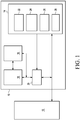
- FIG. 1 illustrates a simplified block diagram of data processing system 10 in accordance with an embodiment.
- Data processing system 10 may be implemented on a single integrated circuit (IC), or on multiple ICs.
- Data processing system 10 includes processor(s) 14, normal cache 16, speculative cache 18, and control circuit 20.
- Data processing system 10 is connected to a main memory 12.
- main memory 12 may be implemented as part of data processing system 10.
- Processor(s) 14 may be any type of processing circuit for executing instructions.
- processor(s) 14 may be one or more microprocessors (MPUs), microcontrollers (MCUs), digital signal processors (DSPs), or another type of processor or processor core.
- MPUs microprocessors
- MCUs microcontrollers
- DSPs digital signal processors
- processor(s) 14 may be peripheral devices or special-purpose processors used to control peripheral units, such as for example, a direct memory access (DMA) peripheral.
- DMA direct memory access
- processor(s) 14 is illustrated with blocks useful for describing various functions and aspects of the illustrated embodiment.
- processor(s) 14 includes a branch predictor 22, out-of-order execution circuit 24, instruction retirement circuit 26, and registers 28. It is understood that a processor will have other functional blocks not illustrated in FIG. 1 .
- Examples of other functional blocks include, but are not limited to, memory pages of random access memory (RAM), flash memory, and other types of non-volatile memory (NVM), an arithmetic logic unit (ALU), a debug interface, peripheral units such as a serial peripheral interface (SPI), analog-to-digital converter (ADC), controller area network (CAN), ethernet function block, and a DMA.
- RAM random access memory
- NVM non-volatile memory
- ALU arithmetic logic unit
- ALU arithmetic logic unit
- debug interface peripheral units such as a serial peripheral interface (SPI), analog-to-digital converter (ADC), controller area network (CAN), ethernet function block, and a DMA.
- SPI serial peripheral interface
- ADC analog-to-digital converter
- CAN controller area network
- ethernet function block ethernet function block
- DMA DMA
- registers 28 may include a plurality of registers that may be assigned to store various data and instructions by
- Normal cache memory 16 and speculative cache memory 18 are both bi-directionally connected to each other and to a control circuit 20.
- normal cache memory 16 and speculative cache memory 18 may be separate portions of the same memory array.
- Cache memory 16 stores instructions and related data to be executed by processor(s) 14.
- Speculative cache 18 is for storing only speculative instructions and related speculative data to be executed by processor(s) 14.
- Control circuit 20 is bi-directionally connected to processor(s) 14 and main memory 12 to transmit and receive data and control signals. In addition, control circuit 20 receives a control signal from processor(s) 14 to indicate if an instruction is a speculative instruction or non-speculative instruction.
- Speculative instructions may be executed in response to a prediction from branch predictor 22. Alternately, speculative execution may be in response to out-of-order execution controlled by out-of-order execution circuit 24.
- control circuit 20 in response to control circuit 20 receiving the control signal, controls circuit 20 causes speculative instructions and related data to be stored only in the speculative cache. Also, the speculative instructions are only executed from speculative cache 18 and write operations are only allowed to speculative cache 18. Write operations to normal cache 16 and main memory 12 are prevented while the speculative instructions are being executed.
- FIG. 2 illustrates method 30 for reading data from memory in accordance with an embodiment.
- the method may be performed by data processing system 10 during speculative execution.
- a read instruction is received from memory.
- the memory being read may be any one of cache memory 16, speculative cache 18, or main memory 12.
- the read instruction may be to read an address from memory to a particular register of registers 28.
- decision step 34 it is determined if the read instruction is speculative.
- the control signal provided to control circuit 20 from processor 14 provides the indication. If the read instruction is not speculative, the NO path is taken from decision step 34 to decision step 36.
- decision step 36 it is determined if the requested data is in normal cache memory 16.
- step 38 the YES path is taken to step 38 and the requested data is transferred to the particular register of registers 28. If at decision step 36 the data is not in the normal cache 16, then the NO path is taken to step 40. At step 40, the data is retrieved from main memory 12 and stored in cache memory 16. Note that the write to cache memory 16 is allowed because it has been determined that the instruction is not speculative. Then, at step 38, data is transferred from cache memory 16 to the particular register in processor(s) 14. However, if at decision step 34 it is determined that the instruction is speculative, the YES path is taken to decision step 42. At decision step 42, it is determined if the data is in any cache.
- speculative cache 18 there is a speculative cache 18 and a normal cache 16.
- the available caches may be different in other embodiments. If the data is in one of caches 16 and 18, the data is transferred to the register. Note that writes to normal memory 16 are not allowed when speculative execution is ongoing. The speculative instruction is executed entirely within speculative cache 18 to prevent an attacker from retrieving information from normal cache memory 16.
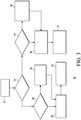
- FIG. 3 illustrates method 50 for writing data to memory in accordance with an embodiment.
- Method 50 may be performed by data processing system 10 during speculative execution.
- a write instruction is received.
- the memory being written to may be any one of cache memory 16, speculative cache 18, or main memory 12.
- the write instruction may be provided to write the contents of a particular register of registers 28 to an address in memory.
- decision step 54 it is determined if the write instruction is speculative. If the write instruction is not speculative, the NO path is taken to decision step 56.
- decision step 56 it is determined if the data is in cache memory 16. If the data is in cache memory 16, the data is overwritten by the data from the particular register, if necessary.
- step 56 if it is determined that the data is not in cache memory 16, then the NO path is taken to step 60.
- the data is retrieved from main memory 12 and stored in cache memory 16.
- the data is overwritten by the data from the particular register.
- the corresponding cache line in cache memory 16 is marked as dirty.
- decision step 64 it is determined if the data is already in speculative cache 18. If the data is already in speculative cache 18, the YES path is taken to step 66. At step 66, the data in speculative cache 18 is overwritten by data from the register. Note that, as discussed above, write operations to normal cache memory 16 are not allowed while speculative execution is proceeding. At step 70, the corresponding line in speculative cache 18 is marked as dirty. If at decision step 64, it is determined that the data is not in the speculative cache 18, the NO path is taken to step 68.
- step 68 the data is stored in speculative cache 18 from main memory 12. Then method 50 proceeds to steps 66 and 70 where the data in speculative cache 18 is overwritten by data in the predetermined register of registers 28, and the corresponding speculative cache line is marked dirty.
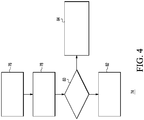
- FIG. 4 illustrates method 74 for speculative instruction retirement in accordance with an embodiment.
- Method 74 may be performed after either method 30 or method 50 depending on whether the instruction is a read or a write instruction.
- the speculative instruction is executed.
- the instruction is retired with any memory access being allowed because the speculative execution has been completed and the prediction of the branch predictor 22 was correct.
- processor(s) 14 executes an instruction in a speculative manner and the instruction execution turns out to be unnecessary because of an incorrect prediction, all the results of the speculative execution are discarded.
- the instruction retirement indicates the instruction has been committed to.
- step 80 it is determined if any modifications have made to speculative cache 18. If not, then the NO path is taken to step 82. At step 82, no further actions with respect to speculative cache 18 are required. If at decision step 80, it is determined that speculative cache 18 has been modified, then the YES path is taken to step 84. At step 84, data that was used by the instruction being retired is transferred from speculative cache 18 to cache memory 16.
- the disclosed method and data processing system allows speculative execution in processors without leaving traces in the normal cache memory that can be exploited by an attacker, while still providing the speed gains provided by speculative execution.
- Non-transitory machine-readable storage medium including any mechanism for storing information in a form readable by a machine, such as a personal computer, laptop computer, file server, smart phone, or other computing device.
- the non-transitory machine-readable storage medium may include volatile and non-volatile memories such as read only memory (ROM), random access memory (RAM), magnetic disk storage media, optical storage medium, flash memory, and the like.
- ROM read only memory
- RAM random access memory
- magnetic disk storage media such as magnetic disks, optical storage medium, flash memory, and the like.
- the non-transitory machine-readable storage medium excludes transitory signals.
Landscapes
- Engineering & Computer Science (AREA)
- Theoretical Computer Science (AREA)
- Software Systems (AREA)
- Physics & Mathematics (AREA)
- General Engineering & Computer Science (AREA)
- General Physics & Mathematics (AREA)
- Computer Hardware Design (AREA)
- Computer Security & Cryptography (AREA)
- Mathematical Physics (AREA)
- Memory System Of A Hierarchy Structure (AREA)
- Advance Control (AREA)
Abstract
Description
- This disclosure relates generally to data processing, and more particularly, to securely performing a speculative instruction execution in a data processing system.
- To enable faster instruction execution, processors may use, for example, branch prediction and speculative execution. Branching instructions allow different parts of code to be executed depending on a condition. It may be the case that all of the data necessary to evaluate the condition is not yet available. For example, the data may need to be computed or may need to be fetched from memory. In this case, it may not be certain which part of the program will be executed next. To get a speed advantage, a processor may start executing one of the possible paths of the program. The processor starts by predicting which path is likely to be executed next and begins the execution. This type of execution may be referred to as speculative execution.
- Cache design in many systems interacts with speculatively executed instructions in an insecure manner. Unfortunately, attackers have learned how to exploit the interaction between the cache memory and speculative execution in a recent class of attacks known as Spectre and Meltdown. Generally, this class of attacks uses various techniques to recover stored secrets in cache by measuring access timing through speculative execution. Existing countermeasures to these attacks do not resist every variation. Also, the existing countermeasures are typically implemented in software that reduces processor performance.
- Therefore, a need exists for a countermeasure that prevents speculative execution from being used to discover secret data from cache while still providing the performance advantages of speculative execution.
- The present invention is illustrated by way of example and is not limited by the accompanying figures, in which like references indicate similar elements. Elements in the figures are illustrated for simplicity and clarity and have not necessarily been drawn to scale.
-
FIG. 1 illustrates a data processing system in accordance with an embodiment. -
FIG. 2 illustrates a method for reading data from memory in accordance with an embodiment. -
FIG. 3 illustrates a method for writing data to memory in accordance with an embodiment. -
FIG. 4 illustrates a method for speculative instruction retirement in accordance with an embodiment. - Generally, there is provided, a data processing system and a method in the data processing system for secure speculative instruction execution. The data processing system includes a speculative cache memory in addition to the normal cache memory. The speculative cache memory function is like the normal cache memory except that the speculative cache is only used for executing speculative instructions. Once the processor commits to the speculative instruction, the content of the speculative cache may be transferred to the normal cache memory.
- The method and data processing system allows speculative execution in processors without leaving traces in the normal cache memory that can be exploited by an attacker, while still providing the speed gains provided by speculative execution.
- In accordance with an embodiment, there is provided, a method for speculative execution in a data processing system, the method includes: receiving an instruction to be executed by a processor of the data processing system, wherein the instruction is for accessing a memory for reading or writing data according to the instruction; determining that the access is speculative; determining that the data is not in a cache memory of the data processing system; retrieving the data from a main memory; storing the data in a speculative cache, wherein the speculative cache is for storing only speculative instructions and data related to the speculative instructions; and executing the speculative instruction. Accessing a memory for reading or writing may further include accessing the memory for reading data, and further including transferring the data to a register. Accessing a memory for reading or writing may further include accessing the memory for writing data, and may further include overwriting the data in the speculative cache by new data from a register. The method may further include retiring the speculative instruction. The method may further include: retiring the speculative instruction; determining that there are changes to the speculative cache; and transferring data from the speculative cache to the cache memory. Accessing a memory for reading or writing may further include accessing the memory for reading data, and wherein determining that the data is not in a cache memory may further include determining that the data is not is the cache memory or the speculative cache. The method may further include preventing write operations to the cache memory during the speculative execution.
- In another embodiment, there is provided, a data processing system including: a processor for executing instructions; a cache memory, coupled to the processor, for storing the instructions and related data; a speculative cache, coupled to the processor, for storing only speculative instructions and related data; and a control circuit, coupled to the processor, to the cache memory, and to the speculative cache, the control circuit for causing the speculative instructions to be stored in the speculative cache in response to receiving an indication from the processor. The processor may further include a branch predictor, wherein speculative execution may be performed in response to a prediction from the branch predictor regarding a speculative instruction. An instruction retirement circuit of the processor may retire the speculative instruction in response to the prediction being determined to be correct. The speculative cache and the cache memory may be separate portions of the same memory array. The processor may further include an instruction retirement circuit for retiring a speculative instruction after the speculative instruction is executed. The control circuit may prevent write operations to the cache memory during the speculative execution and only allow write operations to the speculative cache during the speculative execution.
- In yet another embodiment, there is provided, a method for speculative execution in a data processing system, the method including: receiving an instruction to be executed by the processor, wherein the instruction is for accessing a memory for reading or writing data according to the instruction; determining that the access is speculative; preventing write operations to the cache memory during the speculative execution; determining that the data is not in a cache memory of the data processing system; retrieving the data from a main memory; storing the data in a speculative cache, wherein the speculative cache is for storing only speculative instructions and data related to the speculative instructions; and executing the speculative instruction. The instruction may be for a read access, and wherein the data may be transferred to a register of the processor. The instruction may be for a write access for writing data from a register of the processor to the speculative cache, and further include overwriting data in the speculative cache with the data from the register, and marking the data in the speculative cache as dirty. The method may further include retiring the speculative instruction. The method may further include: determining that there are changes to the data in the speculative cache; and transferring data from the speculative cache to the cache memory. Accessing a memory for reading or writing may further include accessing the memory for reading data, and wherein determining that the data is not in a cache memory may further include determining that the data is not in the cache memory or the speculative cache. Determining that the data is not in a cache memory may further include determining that the data is not in the cache memory or the speculative cache.
-
FIG. 1 illustrates a simplified block diagram ofdata processing system 10 in accordance with an embodiment.Data processing system 10 may be implemented on a single integrated circuit (IC), or on multiple ICs.Data processing system 10 includes processor(s) 14,normal cache 16,speculative cache 18, andcontrol circuit 20.Data processing system 10 is connected to amain memory 12. In another embodiment,main memory 12 may be implemented as part ofdata processing system 10. Processor(s) 14 may be any type of processing circuit for executing instructions. For example, processor(s) 14 may be one or more microprocessors (MPUs), microcontrollers (MCUs), digital signal processors (DSPs), or another type of processor or processor core. Additionally, processor(s) 14 may be peripheral devices or special-purpose processors used to control peripheral units, such as for example, a direct memory access (DMA) peripheral. Processor(s) 14 is illustrated with blocks useful for describing various functions and aspects of the illustrated embodiment. For example, processor(s) 14 includes abranch predictor 22, out-of-order execution circuit 24,instruction retirement circuit 26, andregisters 28. It is understood that a processor will have other functional blocks not illustrated inFIG. 1 . Examples of other functional blocks include, but are not limited to, memory pages of random access memory (RAM), flash memory, and other types of non-volatile memory (NVM), an arithmetic logic unit (ALU), a debug interface, peripheral units such as a serial peripheral interface (SPI), analog-to-digital converter (ADC), controller area network (CAN), ethernet function block, and a DMA. There may also be system control functionality such as power management and system clock adjustment, additional system cores and coprocessors, etc.Registers 28 may include a plurality of registers that may be assigned to store various data and instructions by a programmer. -
Normal cache memory 16 andspeculative cache memory 18 are both bi-directionally connected to each other and to acontrol circuit 20. In one embodiment,normal cache memory 16 andspeculative cache memory 18 may be separate portions of the same memory array. In another embodiment, there may be a hierarchical memory system with more than one level of cache.Cache memory 16 stores instructions and related data to be executed by processor(s) 14.Speculative cache 18 is for storing only speculative instructions and related speculative data to be executed by processor(s) 14.Control circuit 20 is bi-directionally connected to processor(s) 14 andmain memory 12 to transmit and receive data and control signals. In addition,control circuit 20 receives a control signal from processor(s) 14 to indicate if an instruction is a speculative instruction or non-speculative instruction. - Speculative instructions may be executed in response to a prediction from
branch predictor 22. Alternately, speculative execution may be in response to out-of-order execution controlled by out-of-order execution circuit 24. In one embodiment, in response to controlcircuit 20 receiving the control signal,control circuit 20 causes speculative instructions and related data to be stored only in the speculative cache. Also, the speculative instructions are only executed fromspeculative cache 18 and write operations are only allowed tospeculative cache 18. Write operations tonormal cache 16 andmain memory 12 are prevented while the speculative instructions are being executed. -
FIG. 2 illustratesmethod 30 for reading data from memory in accordance with an embodiment. The method may be performed bydata processing system 10 during speculative execution. Atstep 32, a read instruction is received from memory. The memory being read may be any one ofcache memory 16,speculative cache 18, ormain memory 12. The read instruction may be to read an address from memory to a particular register ofregisters 28. Atdecision step 34, it is determined if the read instruction is speculative. The control signal provided to controlcircuit 20 fromprocessor 14 provides the indication. If the read instruction is not speculative, the NO path is taken fromdecision step 34 todecision step 36. Atdecision step 36, it is determined if the requested data is innormal cache memory 16. If the data is incache memory 16, then the YES path is taken to step 38 and the requested data is transferred to the particular register ofregisters 28. If atdecision step 36 the data is not in thenormal cache 16, then the NO path is taken to step 40. Atstep 40, the data is retrieved frommain memory 12 and stored incache memory 16. Note that the write tocache memory 16 is allowed because it has been determined that the instruction is not speculative. Then, atstep 38, data is transferred fromcache memory 16 to the particular register in processor(s) 14. However, if atdecision step 34 it is determined that the instruction is speculative, the YES path is taken todecision step 42. Atdecision step 42, it is determined if the data is in any cache. In the illustrated embodiment, there is aspeculative cache 18 and anormal cache 16. The available caches may be different in other embodiments. If the data is in one ofcaches normal memory 16 are not allowed when speculative execution is ongoing. The speculative instruction is executed entirely withinspeculative cache 18 to prevent an attacker from retrieving information fromnormal cache memory 16. -
FIG. 3 illustratesmethod 50 for writing data to memory in accordance with an embodiment.Method 50 may be performed bydata processing system 10 during speculative execution. Atstep 52, a write instruction is received. The memory being written to may be any one ofcache memory 16,speculative cache 18, ormain memory 12. The write instruction may be provided to write the contents of a particular register ofregisters 28 to an address in memory. Atdecision step 54, it is determined if the write instruction is speculative. If the write instruction is not speculative, the NO path is taken todecision step 56. Atdecision step 56, it is determined if the data is incache memory 16. If the data is incache memory 16, the data is overwritten by the data from the particular register, if necessary. Atdecision step 56, if it is determined that the data is not incache memory 16, then the NO path is taken to step 60. Atstep 60, the data is retrieved frommain memory 12 and stored incache memory 16. Atstep 58, the data is overwritten by the data from the particular register. Atstep 62, the corresponding cache line incache memory 16 is marked as dirty. - If at
decision step 54 it is determined that the instruction is speculative, the YES path is taken todecision step 64. Atdecision step 64, it is determined if the data is already inspeculative cache 18. If the data is already inspeculative cache 18, the YES path is taken to step 66. Atstep 66, the data inspeculative cache 18 is overwritten by data from the register. Note that, as discussed above, write operations tonormal cache memory 16 are not allowed while speculative execution is proceeding. Atstep 70, the corresponding line inspeculative cache 18 is marked as dirty. If atdecision step 64, it is determined that the data is not in thespeculative cache 18, the NO path is taken to step 68. Atstep 68, the data is stored inspeculative cache 18 frommain memory 12. Thenmethod 50 proceeds tosteps speculative cache 18 is overwritten by data in the predetermined register ofregisters 28, and the corresponding speculative cache line is marked dirty. -
FIG. 4 illustratesmethod 74 for speculative instruction retirement in accordance with an embodiment.Method 74 may be performed after eithermethod 30 ormethod 50 depending on whether the instruction is a read or a write instruction. Atstep 76, the speculative instruction is executed. Atstep 78, the instruction is retired with any memory access being allowed because the speculative execution has been completed and the prediction of thebranch predictor 22 was correct. On the other hand, when processor(s) 14 executes an instruction in a speculative manner and the instruction execution turns out to be unnecessary because of an incorrect prediction, all the results of the speculative execution are discarded. In another embodiment, in the case of an out-of-order execution, the instruction retirement indicates the instruction has been committed to. Atdecision step 80, it is determined if any modifications have made tospeculative cache 18. If not, then the NO path is taken to step 82. Atstep 82, no further actions with respect tospeculative cache 18 are required. If atdecision step 80, it is determined thatspeculative cache 18 has been modified, then the YES path is taken to step 84. Atstep 84, data that was used by the instruction being retired is transferred fromspeculative cache 18 tocache memory 16. - The disclosed method and data processing system allows speculative execution in processors without leaving traces in the normal cache memory that can be exploited by an attacker, while still providing the speed gains provided by speculative execution.
- Various embodiments, or portions of the embodiments, may be implemented in hardware or as instructions on a non-transitory machine-readable storage medium including any mechanism for storing information in a form readable by a machine, such as a personal computer, laptop computer, file server, smart phone, or other computing device. The non-transitory machine-readable storage medium may include volatile and non-volatile memories such as read only memory (ROM), random access memory (RAM), magnetic disk storage media, optical storage medium, flash memory, and the like. The non-transitory machine-readable storage medium excludes transitory signals.
- Although the invention is described herein with reference to specific embodiments, various modifications and changes can be made without departing from the scope of the present invention as set forth in the claims below. Accordingly, the specification and figures are to be regarded in an illustrative rather than a restrictive sense, and all such modifications are intended to be included within the scope of the present invention. For example, the herein described embodiments may be applied to cases where an IC has several levels of cache memory, and each level may have a speculative cache. Also, any of the existing cache eviction algorithms may be used with both a speculative and a normal cache. In addition, any existing mechanism for cache management may be used with both the speculative and normal cache. Any benefits, advantages, or solutions to problems that are described herein with regard to specific embodiments are not intended to be construed as a critical, required, or essential feature or element of any or all the claims.
- Furthermore, the terms "a" or "an," as used herein, are defined as one or more than one. Also, the use of introductory phrases such as "at least one" and "one or more" in the claims should not be construed to imply that the introduction of another claim element by the indefinite articles "a" or "an" limits any particular claim containing such introduced claim element to inventions containing only one such element, even when the same claim includes the introductory phrases "one or more" or "at least one" and indefinite articles such as "a" or "an." The same holds true for the use of definite articles.
- Unless stated otherwise, terms such as "first" and "second" are used to arbitrarily distinguish between the elements such terms describe. Thus, these terms are not necessarily intended to indicate temporal or other prioritization of such elements.
- The present disclosure extends to the following series of lettered clauses:
- A A method for speculative execution in a data processing system, the method comprising: receiving an instruction to be executed by the processor, wherein the instruction is for accessing a memory for reading or writing data according to the instruction; determining that the access is speculative; preventing write operations to the cache memory of the data processing system; retrieving the data from a main memory; storing the data in a speculative cache, wherein the speculative cache is for storing only speculative instructions and data related to the speculative instructions; and executing the speculative instruction.
- B. The method of clause A wherein the instruction is for a read access, and wherein the data is transferred to a register of the processor.
- C. The method of clause A or B, wherein the instruction is for a write access for writing data from a register of the processor to the speculative cache, and further comprising overwriting data in the speculative cache with the data from the register, and marking the data in the speculative cache as dirty.
- D. The method of any of clauses A to C, further comprising retiring the speculative instruction.
- E. The method of clause D further comprising: determining that there are changes to the data in the speculative cache; and transferring data from the speculative cache to the cache memory.
- F. The method of any of clauses A to E, wherein accessing a memory for reading or writing further comprises access the memory for reading data, and wherein determining that the data is not in a cache memory further comprises determining that the data is not in the cache memory or the speculative cache.
- G. The method of any of clauses A to F, wherein determining that the data is not in a cache memory further comprises determining that the data is not in the cache memory or the speculative cache.
Claims (13)
- A method for speculative execution in a data processing system, the method comprising:receiving an instruction to be executed by a processor of the data processing system, wherein the instruction is for accessing a memory for reading or writing data according to the instruction;determining that the access is speculative;determining that the data is not in a cache memory of the data processing system;retrieving the data from a main memory;storing the data in a speculative cache, wherein the speculative cache is for storing only speculative instructions and data related to the speculative instructions; andexecuting the speculative instruction.
- The method of claim 1, wherein accessing a memory for reading or writing further comprises accessing the memory for reading data, and further comprising transferring the data to a register.
- The method of claim 1 or 2, wherein accessing a memory for reading or writing further comprises accessing the memory for writing data, and further comprising overwriting the data in the speculative cache by new data from a register.
- The method of any preceding claim, further comprising retiring the speculative instruction.
- The method of claim 4, further comprising:determining that there are changes to the speculative cache; andtransferring data from the speculative cache to the cache memory.
- The method of any preceding claim, wherein accessing a memory for reading or writing further comprises accessing the memory for reading data, and wherein determining that the data is not in a cache memory further comprises determining that the data is not is the cache memory or the speculative cache.
- The method of any preceding claim, further comprising preventing write operations to the cache memory during the speculative execution.
- A data processing system comprising:a processor for executing instructions;a cache memory, coupled to the processor, for storing the instructions and related data;a speculative cache, coupled to the processor, for storing only speculative instructions and related data; anda control circuit, coupled to the processor, to the cache memory, and to the speculative cache, the control circuit for causing the speculative instructions to be stored in the speculative cache in response to receiving an indication from the processor.
- The data processing system of claim 8, wherein the processor further comprises a branch predictor, wherein speculative execution is performed in response to a prediction from the branch predictor regarding a speculative instruction.
- The data processing system of claim 8 or 9, wherein an instruction retirement circuit of the processor retires the speculative instruction in response to the prediction being determined to be correct.
- The data processing system of any of claims 8 to 10, wherein speculative cache and the cache memory are separate portions of the same memory array.
- The data processing system of any of claims 8 to 11, wherein the processor further comprises an instruction retirement circuit for retiring a speculative instruction after the speculative instruction is executed.
- The data processing system of any of claims 8 to 12, wherein the control circuit prevents write operations to the cache memory during the speculative execution and only allows write operations to the speculative cache during the speculative execution.
Applications Claiming Priority (1)
| Application Number | Priority Date | Filing Date | Title |
|---|---|---|---|
| US15/945,047 US10657057B2 (en) | 2018-04-04 | 2018-04-04 | Secure speculative instruction execution in a data processing system |
Publications (2)
| Publication Number | Publication Date |
|---|---|
| EP3550428A2 true EP3550428A2 (en) | 2019-10-09 |
| EP3550428A3 EP3550428A3 (en) | 2019-12-25 |
Family
ID=65766895
Family Applications (1)
| Application Number | Title | Priority Date | Filing Date |
|---|---|---|---|
| EP19162132.5A Withdrawn EP3550428A3 (en) | 2018-04-04 | 2019-03-12 | Secure speculative instruction execution in a data processing system |
Country Status (3)
| Country | Link |
|---|---|
| US (1) | US10657057B2 (en) |
| EP (1) | EP3550428A3 (en) |
| CN (1) | CN110348207A (en) |
Families Citing this family (4)
| Publication number | Priority date | Publication date | Assignee | Title |
|---|---|---|---|---|
| US11169805B2 (en) * | 2018-04-30 | 2021-11-09 | Hewlett Packard Enterprise Development Lp | Dynamic processor cache to avoid speculative vulnerability |
| US11210102B2 (en) * | 2019-11-26 | 2021-12-28 | Arm Limited | Speculative buffer for speculative memory accesses with entries tagged with execution context identifiers |
| TWI746261B (en) * | 2020-11-12 | 2021-11-11 | 財團法人工業技術研究院 | Cache managing method and system based on session type |
| CN112433765B (en) * | 2020-11-26 | 2023-09-08 | 海光信息技术股份有限公司 | A data storage method, device, processor and electronic equipment |
Family Cites Families (24)
| Publication number | Priority date | Publication date | Assignee | Title |
|---|---|---|---|---|
| US6321328B1 (en) | 1999-03-22 | 2001-11-20 | Hewlett-Packard Company | Processor having data buffer for speculative loads |
| US6725338B2 (en) * | 2000-11-21 | 2004-04-20 | Sun Microsystems, Inc. | Method and apparatus for preventing cache pollution in microprocessors with speculative address loads |
| US20040154010A1 (en) * | 2003-01-31 | 2004-08-05 | Pedro Marcuello | Control-quasi-independent-points guided speculative multithreading |
| US7225299B1 (en) * | 2003-07-16 | 2007-05-29 | Transmeta Corporation | Supporting speculative modification in a data cache |
| US7149851B1 (en) * | 2003-08-21 | 2006-12-12 | Transmeta Corporation | Method and system for conservatively managing store capacity available to a processor issuing stores |
| US7409500B2 (en) | 2004-01-13 | 2008-08-05 | Hewlett-Packard Development Company, L.P. | Systems and methods for employing speculative fills |
| DE102005001679B4 (en) | 2005-01-13 | 2008-11-13 | Infineon Technologies Ag | Microprocessor device, and method for branch prediction for conditional branch instructions in a microprocessor device |
| US7587580B2 (en) * | 2005-02-03 | 2009-09-08 | Qualcomm Corporated | Power efficient instruction prefetch mechanism |
| US7836290B2 (en) | 2005-11-09 | 2010-11-16 | Oracle America, Inc. | Return address stack recovery in a speculative execution computing apparatus |
| JP2008186233A (en) * | 2007-01-30 | 2008-08-14 | Toshiba Corp | Instruction cache prefetch control method and apparatus |
| JP4635063B2 (en) | 2008-03-11 | 2011-02-16 | 株式会社東芝 | Cache memory control circuit and processor |
| US9372718B2 (en) * | 2008-07-28 | 2016-06-21 | Advanced Micro Devices, Inc. | Virtualizable advanced synchronization facility |
| US8943273B1 (en) | 2008-08-14 | 2015-01-27 | Marvell International Ltd. | Method and apparatus for improving cache efficiency |
| US8352688B2 (en) * | 2010-11-15 | 2013-01-08 | Advanced Micro Devices, Inc. | Preventing unintended loss of transactional data in hardware transactional memory systems |
| US9710280B2 (en) * | 2011-12-30 | 2017-07-18 | Intel Corporation | Overlapping atomic regions in a processor |
| US9201796B2 (en) * | 2012-09-27 | 2015-12-01 | Apple Inc. | System cache with speculative read engine |
| US9645824B2 (en) * | 2012-10-31 | 2017-05-09 | Arm Limited | Branch target address cache using hashed fetch addresses |
| JP6016689B2 (en) * | 2013-03-28 | 2016-10-26 | ルネサスエレクトロニクス株式会社 | Semiconductor device |
| WO2015075674A1 (en) | 2013-11-21 | 2015-05-28 | Green Cache AB | Systems and methods for direct data access in multi-level cache memory hierarchies |
| US10409763B2 (en) * | 2014-06-30 | 2019-09-10 | Intel Corporation | Apparatus and method for efficiently implementing a processor pipeline |
| US10324768B2 (en) * | 2014-12-17 | 2019-06-18 | Intel Corporation | Lightweight restricted transactional memory for speculative compiler optimization |
| US10963567B2 (en) * | 2017-10-12 | 2021-03-30 | Microsoft Technology Licensing, Llc | Speculative side-channel attack mitigations |
| US10613983B2 (en) * | 2018-03-20 | 2020-04-07 | Advanced Micro Devices, Inc. | Prefetcher based speculative dynamic random-access memory read request technique |
| US10949210B2 (en) * | 2018-05-02 | 2021-03-16 | Micron Technology, Inc. | Shadow cache for securing conditional speculative instruction execution |
-
2018
- 2018-04-04 US US15/945,047 patent/US10657057B2/en active Active
-
2019
- 2019-03-12 EP EP19162132.5A patent/EP3550428A3/en not_active Withdrawn
- 2019-04-02 CN CN201910264813.4A patent/CN110348207A/en active Pending
Non-Patent Citations (1)
| Title |
|---|
| None |
Also Published As
| Publication number | Publication date |
|---|---|
| US10657057B2 (en) | 2020-05-19 |
| CN110348207A (en) | 2019-10-18 |
| US20190310941A1 (en) | 2019-10-10 |
| EP3550428A3 (en) | 2019-12-25 |
Similar Documents
| Publication | Publication Date | Title |
|---|---|---|
| KR102746185B1 (en) | Speculative cache memory area | |
| EP3516508B1 (en) | Memory violation prediction | |
| KR101461378B1 (en) | Synchronizing simd vectors | |
| JP5357017B2 (en) | Fast and inexpensive store-load contention scheduling and transfer mechanism | |
| US7114059B2 (en) | System and method to bypass execution of instructions involving unreliable data during speculative execution | |
| US8429636B2 (en) | Handling dependency conditions between machine instructions | |
| US8335912B2 (en) | Logical map table for detecting dependency conditions between instructions having varying width operand values | |
| US9798590B2 (en) | Post-retire scheme for tracking tentative accesses during transactional execution | |
| JP2875909B2 (en) | Parallel processing unit | |
| CN115867888B (en) | Method and system for utilizing master-shadow physical register files | |
| US10657057B2 (en) | Secure speculative instruction execution in a data processing system | |
| KR20120070584A (en) | Store aware prefetching for a data stream | |
| US20080148282A1 (en) | Mechanism and method to track oldest processor event | |
| JP2008512769A (en) | A processor with a dependency mechanism that predicts whether a read depends on a previous write | |
| KR100335744B1 (en) | Load/load detection and reorder method | |
| KR20190051036A (en) | Processing of inter-element address hazards for vector instructions | |
| US20140156978A1 (en) | Detecting and Filtering Biased Branches in Global Branch History | |
| US8595744B2 (en) | Anticipatory helper thread based code execution | |
| CN113448625A (en) | Speculative execution following state transition instructions | |
| US10977040B2 (en) | Heuristic invalidation of non-useful entries in an array | |
| CN115698942A (en) | Decoupling atomicity from operation size | |
| US20130103930A1 (en) | Data processing device and method, and processor unit of same | |
| US20100274994A1 (en) | Processor operating mode for mitigating dependency conditions | |
| CN111045731B (en) | Method and apparatus for executing branch instructions following a speculative barrier instruction |
Legal Events
| Date | Code | Title | Description |
|---|---|---|---|
| PUAI | Public reference made under article 153(3) epc to a published international application that has entered the european phase |
Free format text: ORIGINAL CODE: 0009012 |
|
| STAA | Information on the status of an ep patent application or granted ep patent |
Free format text: STATUS: THE APPLICATION HAS BEEN PUBLISHED |
|
| AK | Designated contracting states |
Kind code of ref document: A2 Designated state(s): AL AT BE BG CH CY CZ DE DK EE ES FI FR GB GR HR HU IE IS IT LI LT LU LV MC MK MT NL NO PL PT RO RS SE SI SK SM TR |
|
| AX | Request for extension of the european patent |
Extension state: BA ME |
|
| PUAL | Search report despatched |
Free format text: ORIGINAL CODE: 0009013 |
|
| AK | Designated contracting states |
Kind code of ref document: A3 Designated state(s): AL AT BE BG CH CY CZ DE DK EE ES FI FR GB GR HR HU IE IS IT LI LT LU LV MC MK MT NL NO PL PT RO RS SE SI SK SM TR |
|
| AX | Request for extension of the european patent |
Extension state: BA ME |
|
| RIC1 | Information provided on ipc code assigned before grant |
Ipc: G06F 9/38 20180101AFI20191119BHEP |
|
| STAA | Information on the status of an ep patent application or granted ep patent |
Free format text: STATUS: THE APPLICATION IS DEEMED TO BE WITHDRAWN |
|
| 18D | Application deemed to be withdrawn |
Effective date: 20200626 |