EP3549979A1 - Rubber additive, rubber composition, and tire in which same is used - Google Patents
Rubber additive, rubber composition, and tire in which same is used Download PDFInfo
- Publication number
- EP3549979A1 EP3549979A1 EP17876534.3A EP17876534A EP3549979A1 EP 3549979 A1 EP3549979 A1 EP 3549979A1 EP 17876534 A EP17876534 A EP 17876534A EP 3549979 A1 EP3549979 A1 EP 3549979A1
- Authority
- EP
- European Patent Office
- Prior art keywords
- group
- rubber
- carbon number
- rubber composition
- hydrogen atom
- Prior art date
- Legal status (The legal status is an assumption and is not a legal conclusion. Google has not performed a legal analysis and makes no representation as to the accuracy of the status listed.)
- Withdrawn
Links
- 229920001971 elastomer Polymers 0.000 title claims abstract description 148
- 239000005060 rubber Substances 0.000 title claims abstract description 147
- 239000000203 mixture Substances 0.000 title claims abstract description 65
- 239000000654 additive Substances 0.000 title claims abstract description 40
- 230000000996 additive effect Effects 0.000 title claims abstract description 39
- 229910052799 carbon Inorganic materials 0.000 claims abstract description 50
- OKTJSMMVPCPJKN-UHFFFAOYSA-N Carbon Chemical compound [C] OKTJSMMVPCPJKN-UHFFFAOYSA-N 0.000 claims abstract description 49
- -1 hydrazone compound Chemical class 0.000 claims abstract description 44
- 125000004435 hydrogen atom Chemical group [H]* 0.000 claims abstract description 38
- 125000000217 alkyl group Chemical group 0.000 claims abstract description 25
- 125000003342 alkenyl group Chemical group 0.000 claims abstract description 12
- 239000000945 filler Substances 0.000 claims description 22
- 150000001993 dienes Chemical class 0.000 claims description 19
- 239000006229 carbon black Substances 0.000 claims description 13
- 125000002887 hydroxy group Chemical group [H]O* 0.000 claims description 11
- 125000002252 acyl group Chemical group 0.000 claims description 10
- 125000000449 nitro group Chemical group [O-][N+](*)=O 0.000 claims description 9
- 239000003795 chemical substances by application Substances 0.000 claims description 8
- 244000043261 Hevea brasiliensis Species 0.000 claims description 6
- 229920003052 natural elastomer Polymers 0.000 claims description 6
- 229920001194 natural rubber Polymers 0.000 claims description 6
- OKKJLVBELUTLKV-UHFFFAOYSA-N Methanol Chemical compound OC OKKJLVBELUTLKV-UHFFFAOYSA-N 0.000 description 39
- 150000001875 compounds Chemical class 0.000 description 31
- 239000007787 solid Substances 0.000 description 30
- 238000004519 manufacturing process Methods 0.000 description 22
- 238000002844 melting Methods 0.000 description 19
- 230000008018 melting Effects 0.000 description 19
- 238000005160 1H NMR spectroscopy Methods 0.000 description 18
- IAZDPXIOMUYVGZ-WFGJKAKNSA-N Dimethyl sulfoxide Chemical compound [2H]C([2H])([2H])S(=O)C([2H])([2H])[2H] IAZDPXIOMUYVGZ-WFGJKAKNSA-N 0.000 description 18
- KFZMGEQAYNKOFK-UHFFFAOYSA-N Isopropanol Chemical compound CC(C)O KFZMGEQAYNKOFK-UHFFFAOYSA-N 0.000 description 12
- PNEYBMLMFCGWSK-UHFFFAOYSA-N aluminium oxide Inorganic materials [O-2].[O-2].[O-2].[Al+3].[Al+3] PNEYBMLMFCGWSK-UHFFFAOYSA-N 0.000 description 12
- 238000006243 chemical reaction Methods 0.000 description 10
- VYPSYNLAJGMNEJ-UHFFFAOYSA-N Silicium dioxide Chemical compound O=[Si]=O VYPSYNLAJGMNEJ-UHFFFAOYSA-N 0.000 description 9
- ZAFNJMIOTHYJRJ-UHFFFAOYSA-N Diisopropyl ether Chemical compound CC(C)OC(C)C ZAFNJMIOTHYJRJ-UHFFFAOYSA-N 0.000 description 8
- 125000003277 amino group Chemical group 0.000 description 8
- 229910052593 corundum Inorganic materials 0.000 description 8
- 238000000034 method Methods 0.000 description 8
- 239000011541 reaction mixture Substances 0.000 description 8
- 239000000126 substance Substances 0.000 description 8
- 229910001845 yogo sapphire Inorganic materials 0.000 description 8
- FYZGXAKJVDHGDR-UHFFFAOYSA-N aminosalicylic acid hydrazide Chemical compound NNC(=O)C1=CC=C(N)C=C1O FYZGXAKJVDHGDR-UHFFFAOYSA-N 0.000 description 6
- 230000000052 comparative effect Effects 0.000 description 6
- 230000003247 decreasing effect Effects 0.000 description 5
- 239000002904 solvent Substances 0.000 description 5
- VTYYLEPIZMXCLO-UHFFFAOYSA-L Calcium carbonate Chemical compound [Ca+2].[O-]C([O-])=O VTYYLEPIZMXCLO-UHFFFAOYSA-L 0.000 description 4
- NTIZESTWPVYFNL-UHFFFAOYSA-N Methyl isobutyl ketone Chemical compound CC(C)CC(C)=O NTIZESTWPVYFNL-UHFFFAOYSA-N 0.000 description 4
- UIHCLUNTQKBZGK-UHFFFAOYSA-N Methyl isobutyl ketone Natural products CCC(C)C(C)=O UIHCLUNTQKBZGK-UHFFFAOYSA-N 0.000 description 4
- XLOMVQKBTHCTTD-UHFFFAOYSA-N Zinc monoxide Chemical compound [Zn]=O XLOMVQKBTHCTTD-UHFFFAOYSA-N 0.000 description 4
- 230000020169 heat generation Effects 0.000 description 4
- 230000003993 interaction Effects 0.000 description 4
- 239000000377 silicon dioxide Substances 0.000 description 4
- XLYOFNOQVPJJNP-UHFFFAOYSA-N water Substances O XLYOFNOQVPJJNP-UHFFFAOYSA-N 0.000 description 4
- ZNRLMGFXSPUZNR-UHFFFAOYSA-N 2,2,4-trimethyl-1h-quinoline Chemical compound C1=CC=C2C(C)=CC(C)(C)NC2=C1 ZNRLMGFXSPUZNR-UHFFFAOYSA-N 0.000 description 3
- YXZWRRGQYMOXQO-UHFFFAOYSA-N 4-amino-2-hydroxy-N-(2-methylpropylideneamino)benzamide Chemical compound NC1=CC(=C(C(=O)NN=CC(C)C)C=C1)O YXZWRRGQYMOXQO-UHFFFAOYSA-N 0.000 description 3
- OMBKUUPJNPTOOE-UHFFFAOYSA-N 4-amino-2-hydroxy-N-(4-methylpentan-2-ylideneamino)benzamide Chemical compound NC1=CC(=C(C(=O)NN=C(C)CC(C)C)C=C1)O OMBKUUPJNPTOOE-UHFFFAOYSA-N 0.000 description 3
- MCJUVTUMULGJDK-UHFFFAOYSA-N 4-amino-2-hydroxy-N-(tricosan-12-ylideneamino)benzamide Chemical compound C(CCCCCCC(=NNC(=O)C1=CC=C(N)C=C1O)CCCCCCCCCCC)CCCC MCJUVTUMULGJDK-UHFFFAOYSA-N 0.000 description 3
- LLNVPRACUAXCCH-UHFFFAOYSA-N 4-amino-2-hydroxy-N-(tridecan-2-ylideneamino)benzamide Chemical compound NC1=CC(=C(C(=O)NN=C(C)CCCCCCCCCCC)C=C1)O LLNVPRACUAXCCH-UHFFFAOYSA-N 0.000 description 3
- OLWDVIPPFGFKOX-UHFFFAOYSA-N 4-amino-N-(2,4-dimethylpentan-3-ylideneamino)-2-hydroxybenzamide Chemical compound NC1=CC(=C(C(=O)NN=C(C(C)C)C(C)C)C=C1)O OLWDVIPPFGFKOX-UHFFFAOYSA-N 0.000 description 3
- QTBSBXVTEAMEQO-UHFFFAOYSA-N Acetic acid Chemical compound CC(O)=O QTBSBXVTEAMEQO-UHFFFAOYSA-N 0.000 description 3
- UHOVQNZJYSORNB-UHFFFAOYSA-N Benzene Chemical compound C1=CC=CC=C1 UHOVQNZJYSORNB-UHFFFAOYSA-N 0.000 description 3
- RTZKZFJDLAIYFH-UHFFFAOYSA-N Diethyl ether Chemical compound CCOCC RTZKZFJDLAIYFH-UHFFFAOYSA-N 0.000 description 3
- LFQSCWFLJHTTHZ-UHFFFAOYSA-N Ethanol Chemical compound CCO LFQSCWFLJHTTHZ-UHFFFAOYSA-N 0.000 description 3
- DKGAVHZHDRPRBM-UHFFFAOYSA-N Tert-Butanol Chemical compound CC(C)(C)O DKGAVHZHDRPRBM-UHFFFAOYSA-N 0.000 description 3
- YXFVVABEGXRONW-UHFFFAOYSA-N Toluene Chemical compound CC1=CC=CC=C1 YXFVVABEGXRONW-UHFFFAOYSA-N 0.000 description 3
- 239000003963 antioxidant agent Substances 0.000 description 3
- 230000003078 antioxidant effect Effects 0.000 description 3
- 229910052918 calcium silicate Inorganic materials 0.000 description 3
- 238000013329 compounding Methods 0.000 description 3
- 238000007796 conventional method Methods 0.000 description 3
- 230000007423 decrease Effects 0.000 description 3
- 125000000959 isobutyl group Chemical group [H]C([H])([H])C([H])(C([H])([H])[H])C([H])([H])* 0.000 description 3
- 125000001449 isopropyl group Chemical group [H]C([H])([H])C([H])(*)C([H])([H])[H] 0.000 description 3
- 239000000395 magnesium oxide Substances 0.000 description 3
- CPLXHLVBOLITMK-UHFFFAOYSA-N magnesium oxide Inorganic materials [Mg]=O CPLXHLVBOLITMK-UHFFFAOYSA-N 0.000 description 3
- AXZKOIWUVFPNLO-UHFFFAOYSA-N magnesium;oxygen(2-) Chemical compound [O-2].[Mg+2] AXZKOIWUVFPNLO-UHFFFAOYSA-N 0.000 description 3
- 229910052751 metal Inorganic materials 0.000 description 3
- 239000002184 metal Substances 0.000 description 3
- 150000002739 metals Chemical class 0.000 description 3
- 125000002496 methyl group Chemical group [H]C([H])([H])* 0.000 description 3
- 238000002156 mixing Methods 0.000 description 3
- 125000002948 undecyl group Chemical group [H]C([*])([H])C([H])([H])C([H])([H])C([H])([H])C([H])([H])C([H])([H])C([H])([H])C([H])([H])C([H])([H])C([H])([H])C([H])([H])[H] 0.000 description 3
- MRIIJUXYWIKHQF-UHFFFAOYSA-N 2,3-dihydroxy-N-(4-methylpentan-2-ylideneamino)benzamide Chemical compound OC1=C(C(=O)NN=C(C)CC(C)C)C=CC=C1O MRIIJUXYWIKHQF-UHFFFAOYSA-N 0.000 description 2
- HXVNBWAKAOHACI-UHFFFAOYSA-N 2,4-dimethyl-3-pentanone Chemical compound CC(C)C(=O)C(C)C HXVNBWAKAOHACI-UHFFFAOYSA-N 0.000 description 2
- LLSCVNLQYWKLAW-UHFFFAOYSA-N 3,5-dihydroxy-N-(4-methylpentan-2-ylideneamino)naphthalene-2-carboxamide Chemical compound OC=1C(=CC2=CC=CC(=C2C=1)O)C(=O)NN=C(C)CC(C)C LLSCVNLQYWKLAW-UHFFFAOYSA-N 0.000 description 2
- WVVAYVBCOWHSDA-UHFFFAOYSA-N 4-amino-2-hydroxy-N-(4-methylpent-3-en-2-ylideneamino)benzamide Chemical compound NC1=CC(=C(C(=O)NN=C(C)C=C(C)C)C=C1)O WVVAYVBCOWHSDA-UHFFFAOYSA-N 0.000 description 2
- AHCQKWSVJMUZGC-UHFFFAOYSA-N 4-amino-3-hydroxy-N-(4-methylpentan-2-ylideneamino)naphthalene-2-carboxamide Chemical compound NC1=C(C(=CC2=CC=CC=C12)C(=O)NN=C(C)CC(C)C)O AHCQKWSVJMUZGC-UHFFFAOYSA-N 0.000 description 2
- XKRFYHLGVUSROY-UHFFFAOYSA-N Argon Chemical compound [Ar] XKRFYHLGVUSROY-UHFFFAOYSA-N 0.000 description 2
- IJGRMHOSHXDMSA-UHFFFAOYSA-N Atomic nitrogen Chemical compound N#N IJGRMHOSHXDMSA-UHFFFAOYSA-N 0.000 description 2
- ODINCKMPIJJUCX-UHFFFAOYSA-N Calcium oxide Chemical compound [Ca]=O ODINCKMPIJJUCX-UHFFFAOYSA-N 0.000 description 2
- XTHFKEDIFFGKHM-UHFFFAOYSA-N Dimethoxyethane Chemical compound COCCOC XTHFKEDIFFGKHM-UHFFFAOYSA-N 0.000 description 2
- LCGLNKUTAGEVQW-UHFFFAOYSA-N Dimethyl ether Chemical compound COC LCGLNKUTAGEVQW-UHFFFAOYSA-N 0.000 description 2
- VEXZGXHMUGYJMC-UHFFFAOYSA-N Hydrochloric acid Chemical compound Cl VEXZGXHMUGYJMC-UHFFFAOYSA-N 0.000 description 2
- LRHPLDYGYMQRHN-UHFFFAOYSA-N N-Butanol Chemical compound CCCCO LRHPLDYGYMQRHN-UHFFFAOYSA-N 0.000 description 2
- 235000021355 Stearic acid Nutrition 0.000 description 2
- QAOWNCQODCNURD-UHFFFAOYSA-N Sulfuric acid Chemical compound OS(O)(=O)=O QAOWNCQODCNURD-UHFFFAOYSA-N 0.000 description 2
- WYURNTSHIVDZCO-UHFFFAOYSA-N Tetrahydrofuran Chemical compound C1CCOC1 WYURNTSHIVDZCO-UHFFFAOYSA-N 0.000 description 2
- GWEVSGVZZGPLCZ-UHFFFAOYSA-N Titan oxide Chemical compound O=[Ti]=O GWEVSGVZZGPLCZ-UHFFFAOYSA-N 0.000 description 2
- RTAQQCXQSZGOHL-UHFFFAOYSA-N Titanium Chemical compound [Ti] RTAQQCXQSZGOHL-UHFFFAOYSA-N 0.000 description 2
- 150000001299 aldehydes Chemical class 0.000 description 2
- BTANRVKWQNVYAZ-UHFFFAOYSA-N butan-2-ol Chemical compound CCC(C)O BTANRVKWQNVYAZ-UHFFFAOYSA-N 0.000 description 2
- 229910000019 calcium carbonate Inorganic materials 0.000 description 2
- 239000000378 calcium silicate Substances 0.000 description 2
- 239000003054 catalyst Substances 0.000 description 2
- 230000000694 effects Effects 0.000 description 2
- 238000011156 evaluation Methods 0.000 description 2
- 238000009472 formulation Methods 0.000 description 2
- XLYOFNOQVPJJNP-ZSJDYOACSA-N heavy water Substances [2H]O[2H] XLYOFNOQVPJJNP-ZSJDYOACSA-N 0.000 description 2
- 239000003112 inhibitor Substances 0.000 description 2
- 150000002484 inorganic compounds Chemical class 0.000 description 2
- 239000011256 inorganic filler Substances 0.000 description 2
- 229910003475 inorganic filler Inorganic materials 0.000 description 2
- 229910010272 inorganic material Inorganic materials 0.000 description 2
- ZXEKIIBDNHEJCQ-UHFFFAOYSA-N isobutanol Chemical compound CC(C)CO ZXEKIIBDNHEJCQ-UHFFFAOYSA-N 0.000 description 2
- 238000004898 kneading Methods 0.000 description 2
- VTHJTEIRLNZDEV-UHFFFAOYSA-L magnesium dihydroxide Chemical compound [OH-].[OH-].[Mg+2] VTHJTEIRLNZDEV-UHFFFAOYSA-L 0.000 description 2
- 239000000347 magnesium hydroxide Substances 0.000 description 2
- 229910001862 magnesium hydroxide Inorganic materials 0.000 description 2
- BDAGIHXWWSANSR-UHFFFAOYSA-N methanoic acid Natural products OC=O BDAGIHXWWSANSR-UHFFFAOYSA-N 0.000 description 2
- QIQXTHQIDYTFRH-UHFFFAOYSA-N octadecanoic acid Chemical compound CCCCCCCCCCCCCCCCCC(O)=O QIQXTHQIDYTFRH-UHFFFAOYSA-N 0.000 description 2
- OQCDKBAXFALNLD-UHFFFAOYSA-N octadecanoic acid Natural products CCCCCCCC(C)CCCCCCCCC(O)=O OQCDKBAXFALNLD-UHFFFAOYSA-N 0.000 description 2
- RVTZCBVAJQQJTK-UHFFFAOYSA-N oxygen(2-);zirconium(4+) Chemical compound [O-2].[O-2].[Zr+4] RVTZCBVAJQQJTK-UHFFFAOYSA-N 0.000 description 2
- BDERNNFJNOPAEC-UHFFFAOYSA-N propan-1-ol Chemical compound CCCO BDERNNFJNOPAEC-UHFFFAOYSA-N 0.000 description 2
- 238000010898 silica gel chromatography Methods 0.000 description 2
- 239000008117 stearic acid Substances 0.000 description 2
- 229920003048 styrene butadiene rubber Polymers 0.000 description 2
- 229910052719 titanium Inorganic materials 0.000 description 2
- 239000010936 titanium Substances 0.000 description 2
- 238000004073 vulcanization Methods 0.000 description 2
- 239000004636 vulcanized rubber Substances 0.000 description 2
- 239000011787 zinc oxide Substances 0.000 description 2
- 229910001928 zirconium oxide Inorganic materials 0.000 description 2
- 125000006059 1,1-dimethyl-2-butenyl group Chemical group 0.000 description 1
- 125000006033 1,1-dimethyl-2-propenyl group Chemical group 0.000 description 1
- 125000006060 1,1-dimethyl-3-butenyl group Chemical group 0.000 description 1
- RYHBNJHYFVUHQT-UHFFFAOYSA-N 1,4-Dioxane Chemical compound C1COCCO1 RYHBNJHYFVUHQT-UHFFFAOYSA-N 0.000 description 1
- 125000006037 1-ethyl-2-propenyl group Chemical group 0.000 description 1
- IVORCBKUUYGUOL-UHFFFAOYSA-N 1-ethynyl-2,4-dimethoxybenzene Chemical compound COC1=CC=C(C#C)C(OC)=C1 IVORCBKUUYGUOL-UHFFFAOYSA-N 0.000 description 1
- 125000006039 1-hexenyl group Chemical group 0.000 description 1
- 125000006028 1-methyl-2-butenyl group Chemical group 0.000 description 1
- 125000006021 1-methyl-2-propenyl group Chemical group 0.000 description 1
- 125000006030 1-methyl-3-butenyl group Chemical group 0.000 description 1
- 125000006023 1-pentenyl group Chemical group 0.000 description 1
- 125000006017 1-propenyl group Chemical group 0.000 description 1
- DMYJOOWXTBSSRB-UHFFFAOYSA-N 2,3-dihydroxybenzohydrazide Chemical compound NNC(=O)C1=CC=CC(O)=C1O DMYJOOWXTBSSRB-UHFFFAOYSA-N 0.000 description 1
- 125000004974 2-butenyl group Chemical group C(C=CC)* 0.000 description 1
- 125000006040 2-hexenyl group Chemical group 0.000 description 1
- 125000006024 2-pentenyl group Chemical group 0.000 description 1
- 125000003903 2-propenyl group Chemical group [H]C([*])([H])C([H])=C([H])[H] 0.000 description 1
- 125000004975 3-butenyl group Chemical group C(CC=C)* 0.000 description 1
- 125000006041 3-hexenyl group Chemical group 0.000 description 1
- FDNAQCWUERCJBK-UHFFFAOYSA-N 3-hydroxynaphthalene-2-carbohydrazide Chemical compound C1=CC=C2C=C(O)C(C(=O)NN)=CC2=C1 FDNAQCWUERCJBK-UHFFFAOYSA-N 0.000 description 1
- OSWFIVFLDKOXQC-UHFFFAOYSA-N 4-(3-methoxyphenyl)aniline Chemical compound COC1=CC=CC(C=2C=CC(N)=CC=2)=C1 OSWFIVFLDKOXQC-UHFFFAOYSA-N 0.000 description 1
- SHOJXDKTYKFBRD-UHFFFAOYSA-N 4-Methyl-3-penten-2-one, 9CI Chemical compound CC(C)=CC(C)=O SHOJXDKTYKFBRD-UHFFFAOYSA-N 0.000 description 1
- 125000006042 4-hexenyl group Chemical group 0.000 description 1
- ZZMVLMVFYMGSMY-UHFFFAOYSA-N 4-n-(4-methylpentan-2-yl)-1-n-phenylbenzene-1,4-diamine Chemical compound C1=CC(NC(C)CC(C)C)=CC=C1NC1=CC=CC=C1 ZZMVLMVFYMGSMY-UHFFFAOYSA-N 0.000 description 1
- 125000006043 5-hexenyl group Chemical group 0.000 description 1
- 239000005995 Aluminium silicate Substances 0.000 description 1
- USFZMSVCRYTOJT-UHFFFAOYSA-N Ammonium acetate Chemical compound N.CC(O)=O USFZMSVCRYTOJT-UHFFFAOYSA-N 0.000 description 1
- 239000005695 Ammonium acetate Substances 0.000 description 1
- 0 C*C(C1)C2C=C[C@]3[C@@]1C23 Chemical compound C*C(C1)C2C=C[C@]3[C@@]1C23 0.000 description 1
- OYPRJOBELJOOCE-UHFFFAOYSA-N Calcium Chemical compound [Ca] OYPRJOBELJOOCE-UHFFFAOYSA-N 0.000 description 1
- 239000006237 Intermediate SAF Substances 0.000 description 1
- AMIMRNSIRUDHCM-UHFFFAOYSA-N Isopropylaldehyde Chemical compound CC(C)C=O AMIMRNSIRUDHCM-UHFFFAOYSA-N 0.000 description 1
- FYYHWMGAXLPEAU-UHFFFAOYSA-N Magnesium Chemical compound [Mg] FYYHWMGAXLPEAU-UHFFFAOYSA-N 0.000 description 1
- BZLVMXJERCGZMT-UHFFFAOYSA-N Methyl tert-butyl ether Chemical compound COC(C)(C)C BZLVMXJERCGZMT-UHFFFAOYSA-N 0.000 description 1
- AFCARXCZXQIEQB-UHFFFAOYSA-N N-[3-oxo-3-(2,4,6,7-tetrahydrotriazolo[4,5-c]pyridin-5-yl)propyl]-2-[[3-(trifluoromethoxy)phenyl]methylamino]pyrimidine-5-carboxamide Chemical compound O=C(CCNC(=O)C=1C=NC(=NC=1)NCC1=CC(=CC=C1)OC(F)(F)F)N1CC2=C(CC1)NN=N2 AFCARXCZXQIEQB-UHFFFAOYSA-N 0.000 description 1
- BSVIWXJJAYESMQ-UHFFFAOYSA-N NC1=C(C(=CC2=CC=CC=C12)C(=O)NN)O Chemical compound NC1=C(C(=CC2=CC=CC=C12)C(=O)NN)O BSVIWXJJAYESMQ-UHFFFAOYSA-N 0.000 description 1
- CTQNGGLPUBDAKN-UHFFFAOYSA-N O-Xylene Chemical compound CC1=CC=CC=C1C CTQNGGLPUBDAKN-UHFFFAOYSA-N 0.000 description 1
- MXRIRQGCELJRSN-UHFFFAOYSA-N O.O.O.[Al] Chemical compound O.O.O.[Al] MXRIRQGCELJRSN-UHFFFAOYSA-N 0.000 description 1
- AMKATUAZLKHLCP-UHFFFAOYSA-N OC=1C(=CC2=CC=CC(=C2C=1)O)C(=O)NN Chemical compound OC=1C(=CC2=CC=CC(=C2C=1)O)C(=O)NN AMKATUAZLKHLCP-UHFFFAOYSA-N 0.000 description 1
- QSBINWBNXWAVAK-PSXMRANNSA-N PE-NMe(16:0/16:0) Chemical compound CCCCCCCCCCCCCCCC(=O)OC[C@H](COP(O)(=O)OCCNC)OC(=O)CCCCCCCCCCCCCCC QSBINWBNXWAVAK-PSXMRANNSA-N 0.000 description 1
- 239000005062 Polybutadiene Substances 0.000 description 1
- 239000006087 Silane Coupling Agent Substances 0.000 description 1
- 239000002174 Styrene-butadiene Substances 0.000 description 1
- NINIDFKCEFEMDL-UHFFFAOYSA-N Sulfur Chemical compound [S] NINIDFKCEFEMDL-UHFFFAOYSA-N 0.000 description 1
- DHXVGJBLRPWPCS-UHFFFAOYSA-N Tetrahydropyran Chemical compound C1CCOCC1 DHXVGJBLRPWPCS-UHFFFAOYSA-N 0.000 description 1
- QCWXUUIWCKQGHC-UHFFFAOYSA-N Zirconium Chemical compound [Zr] QCWXUUIWCKQGHC-UHFFFAOYSA-N 0.000 description 1
- 229910006220 ZrO(OH)2 Inorganic materials 0.000 description 1
- YKTSYUJCYHOUJP-UHFFFAOYSA-N [O--].[Al+3].[Al+3].[O-][Si]([O-])([O-])[O-] Chemical compound [O--].[Al+3].[Al+3].[O-][Si]([O-])([O-])[O-] YKTSYUJCYHOUJP-UHFFFAOYSA-N 0.000 description 1
- 125000000738 acetamido group Chemical group [H]C([H])([H])C(=O)N([H])[*] 0.000 description 1
- 125000002777 acetyl group Chemical group [H]C([H])([H])C(*)=O 0.000 description 1
- 239000002253 acid Substances 0.000 description 1
- 239000003377 acid catalyst Substances 0.000 description 1
- 150000007513 acids Chemical class 0.000 description 1
- 239000005456 alcohol based solvent Substances 0.000 description 1
- 229910052783 alkali metal Inorganic materials 0.000 description 1
- 150000001340 alkali metals Chemical class 0.000 description 1
- 229910052784 alkaline earth metal Inorganic materials 0.000 description 1
- 150000001342 alkaline earth metals Chemical class 0.000 description 1
- 125000004448 alkyl carbonyl group Chemical group 0.000 description 1
- 229910052782 aluminium Inorganic materials 0.000 description 1
- XAGFODPZIPBFFR-UHFFFAOYSA-N aluminium Chemical compound [Al] XAGFODPZIPBFFR-UHFFFAOYSA-N 0.000 description 1
- 229910000323 aluminium silicate Inorganic materials 0.000 description 1
- 235000012211 aluminium silicate Nutrition 0.000 description 1
- 235000019257 ammonium acetate Nutrition 0.000 description 1
- 229940043376 ammonium acetate Drugs 0.000 description 1
- VZTDIZULWFCMLS-UHFFFAOYSA-N ammonium formate Chemical compound [NH4+].[O-]C=O VZTDIZULWFCMLS-UHFFFAOYSA-N 0.000 description 1
- 229910052849 andalusite Inorganic materials 0.000 description 1
- 229910052786 argon Inorganic materials 0.000 description 1
- 239000010692 aromatic oil Substances 0.000 description 1
- 239000003849 aromatic solvent Substances 0.000 description 1
- QVGXLLKOCUKJST-UHFFFAOYSA-N atomic oxygen Chemical compound [O] QVGXLLKOCUKJST-UHFFFAOYSA-N 0.000 description 1
- 229960000892 attapulgite Drugs 0.000 description 1
- 125000004069 aziridinyl group Chemical group 0.000 description 1
- 229910001680 bayerite Inorganic materials 0.000 description 1
- 239000000440 bentonite Substances 0.000 description 1
- 229910000278 bentonite Inorganic materials 0.000 description 1
- SVPXDRXYRYOSEX-UHFFFAOYSA-N bentoquatam Chemical compound O.O=[Si]=O.O=[Al]O[Al]=O SVPXDRXYRYOSEX-UHFFFAOYSA-N 0.000 description 1
- 229910001593 boehmite Inorganic materials 0.000 description 1
- 238000009835 boiling Methods 0.000 description 1
- 229910000171 calcio olivine Inorganic materials 0.000 description 1
- 239000011575 calcium Substances 0.000 description 1
- 229910052791 calcium Inorganic materials 0.000 description 1
- AXCZMVOFGPJBDE-UHFFFAOYSA-L calcium dihydroxide Chemical compound [OH-].[OH-].[Ca+2] AXCZMVOFGPJBDE-UHFFFAOYSA-L 0.000 description 1
- ZFXVRMSLJDYJCH-UHFFFAOYSA-N calcium magnesium Chemical compound [Mg].[Ca] ZFXVRMSLJDYJCH-UHFFFAOYSA-N 0.000 description 1
- 239000000292 calcium oxide Substances 0.000 description 1
- BRPQOXSCLDDYGP-UHFFFAOYSA-N calcium oxide Chemical compound [O-2].[Ca+2] BRPQOXSCLDDYGP-UHFFFAOYSA-N 0.000 description 1
- OYACROKNLOSFPA-UHFFFAOYSA-N calcium;dioxido(oxo)silane Chemical compound [Ca+2].[O-][Si]([O-])=O OYACROKNLOSFPA-UHFFFAOYSA-N 0.000 description 1
- 150000004649 carbonic acid derivatives Chemical class 0.000 description 1
- 229910001598 chiastolite Inorganic materials 0.000 description 1
- 239000004927 clay Substances 0.000 description 1
- 239000008119 colloidal silica Substances 0.000 description 1
- 238000005520 cutting process Methods 0.000 description 1
- 150000003950 cyclic amides Chemical group 0.000 description 1
- 125000004122 cyclic group Chemical group 0.000 description 1
- 125000002704 decyl group Chemical group [H]C([H])([H])C([H])([H])C([H])([H])C([H])([H])C([H])([H])C([H])([H])C([H])([H])C([H])([H])C([H])([H])C([H])([H])* 0.000 description 1
- 125000004663 dialkyl amino group Chemical group 0.000 description 1
- IQDXNHZDRQHKEF-UHFFFAOYSA-N dialuminum;dicalcium;dioxido(oxo)silane Chemical compound [Al+3].[Al+3].[Ca+2].[Ca+2].[O-][Si]([O-])=O.[O-][Si]([O-])=O.[O-][Si]([O-])=O.[O-][Si]([O-])=O.[O-][Si]([O-])=O IQDXNHZDRQHKEF-UHFFFAOYSA-N 0.000 description 1
- UAMZXLIURMNTHD-UHFFFAOYSA-N dialuminum;magnesium;oxygen(2-) Chemical compound [O-2].[O-2].[O-2].[O-2].[Mg+2].[Al+3].[Al+3] UAMZXLIURMNTHD-UHFFFAOYSA-N 0.000 description 1
- PPQREHKVAOVYBT-UHFFFAOYSA-H dialuminum;tricarbonate Chemical compound [Al+3].[Al+3].[O-]C([O-])=O.[O-]C([O-])=O.[O-]C([O-])=O PPQREHKVAOVYBT-UHFFFAOYSA-H 0.000 description 1
- 229910001648 diaspore Inorganic materials 0.000 description 1
- 125000004915 dibutylamino group Chemical group C(CCC)N(CCCC)* 0.000 description 1
- 125000001664 diethylamino group Chemical group [H]C([H])([H])C([H])([H])N(*)C([H])([H])C([H])([H])[H] 0.000 description 1
- FSBVERYRVPGNGG-UHFFFAOYSA-N dimagnesium dioxido-bis[[oxido(oxo)silyl]oxy]silane hydrate Chemical compound O.[Mg+2].[Mg+2].[O-][Si](=O)O[Si]([O-])([O-])O[Si]([O-])=O FSBVERYRVPGNGG-UHFFFAOYSA-N 0.000 description 1
- 125000002147 dimethylamino group Chemical group [H]C([H])([H])N(*)C([H])([H])[H] 0.000 description 1
- HNPSIPDUKPIQMN-UHFFFAOYSA-N dioxosilane;oxo(oxoalumanyloxy)alumane Chemical compound O=[Si]=O.O=[Al]O[Al]=O HNPSIPDUKPIQMN-UHFFFAOYSA-N 0.000 description 1
- 125000003438 dodecyl group Chemical group [H]C([H])([H])C([H])([H])C([H])([H])C([H])([H])C([H])([H])C([H])([H])C([H])([H])C([H])([H])C([H])([H])C([H])([H])C([H])([H])C([H])([H])* 0.000 description 1
- 239000000806 elastomer Substances 0.000 description 1
- 229910052634 enstatite Inorganic materials 0.000 description 1
- 239000004210 ether based solvent Substances 0.000 description 1
- 125000001495 ethyl group Chemical group [H]C([H])([H])C([H])([H])* 0.000 description 1
- 125000000031 ethylamino group Chemical group [H]C([H])([H])C([H])([H])N([H])[*] 0.000 description 1
- 235000019253 formic acid Nutrition 0.000 description 1
- 229910052839 forsterite Inorganic materials 0.000 description 1
- 239000007789 gas Substances 0.000 description 1
- 229910001679 gibbsite Inorganic materials 0.000 description 1
- 229910052734 helium Inorganic materials 0.000 description 1
- 239000001307 helium Substances 0.000 description 1
- SWQJXJOGLNCZEY-UHFFFAOYSA-N helium atom Chemical compound [He] SWQJXJOGLNCZEY-UHFFFAOYSA-N 0.000 description 1
- 125000003187 heptyl group Chemical group [H]C([*])([H])C([H])([H])C([H])([H])C([H])([H])C([H])([H])C([H])([H])C([H])([H])[H] 0.000 description 1
- 125000000623 heterocyclic group Chemical group 0.000 description 1
- 150000004677 hydrates Chemical class 0.000 description 1
- 150000007857 hydrazones Chemical group 0.000 description 1
- 239000001257 hydrogen Substances 0.000 description 1
- 229910052739 hydrogen Inorganic materials 0.000 description 1
- 150000004679 hydroxides Chemical class 0.000 description 1
- FAHBNUUHRFUEAI-UHFFFAOYSA-M hydroxidooxidoaluminium Chemical compound O[Al]=O FAHBNUUHRFUEAI-UHFFFAOYSA-M 0.000 description 1
- 125000005462 imide group Chemical group 0.000 description 1
- 239000011261 inert gas Substances 0.000 description 1
- 229910052500 inorganic mineral Inorganic materials 0.000 description 1
- 229940035429 isobutyl alcohol Drugs 0.000 description 1
- 125000004491 isohexyl group Chemical group C(CCC(C)C)* 0.000 description 1
- 125000001972 isopentyl group Chemical group [H]C([H])([H])C([H])(C([H])([H])[H])C([H])([H])C([H])([H])* 0.000 description 1
- 125000000555 isopropenyl group Chemical group [H]\C([H])=C(\*)C([H])([H])[H] 0.000 description 1
- NLYAJNPCOHFWQQ-UHFFFAOYSA-N kaolin Chemical compound O.O.O=[Al]O[Si](=O)O[Si](=O)O[Al]=O NLYAJNPCOHFWQQ-UHFFFAOYSA-N 0.000 description 1
- 150000002576 ketones Chemical class 0.000 description 1
- 229910052850 kyanite Inorganic materials 0.000 description 1
- 239000011777 magnesium Substances 0.000 description 1
- 229910052749 magnesium Inorganic materials 0.000 description 1
- ZLNQQNXFFQJAID-UHFFFAOYSA-L magnesium carbonate Chemical compound [Mg+2].[O-]C([O-])=O ZLNQQNXFFQJAID-UHFFFAOYSA-L 0.000 description 1
- 239000000391 magnesium silicate Substances 0.000 description 1
- 229910052919 magnesium silicate Inorganic materials 0.000 description 1
- 235000019792 magnesium silicate Nutrition 0.000 description 1
- 239000000463 material Substances 0.000 description 1
- 125000000250 methylamino group Chemical group [H]N(*)C([H])([H])[H] 0.000 description 1
- 239000011707 mineral Substances 0.000 description 1
- 150000004682 monohydrates Chemical class 0.000 description 1
- 238000010068 moulding (rubber) Methods 0.000 description 1
- 125000001421 myristyl group Chemical group [H]C([*])([H])C([H])([H])C([H])([H])C([H])([H])C([H])([H])C([H])([H])C([H])([H])C([H])([H])C([H])([H])C([H])([H])C([H])([H])C([H])([H])C([H])([H])C([H])([H])[H] 0.000 description 1
- DEQZTKGFXNUBJL-UHFFFAOYSA-N n-(1,3-benzothiazol-2-ylsulfanyl)cyclohexanamine Chemical compound C1CCCCC1NSC1=NC2=CC=CC=C2S1 DEQZTKGFXNUBJL-UHFFFAOYSA-N 0.000 description 1
- 125000004108 n-butyl group Chemical group [H]C([H])([H])C([H])([H])C([H])([H])C([H])([H])* 0.000 description 1
- 125000002004 n-butylamino group Chemical group [H]N(*)C([H])([H])C([H])([H])C([H])([H])C([H])([H])[H] 0.000 description 1
- 125000001280 n-hexyl group Chemical group C(CCCCC)* 0.000 description 1
- 125000000740 n-pentyl group Chemical group [H]C([H])([H])C([H])([H])C([H])([H])C([H])([H])C([H])([H])* 0.000 description 1
- 125000004888 n-propyl amino group Chemical group [H]N(*)C([H])([H])C([H])([H])C([H])([H])[H] 0.000 description 1
- 125000004123 n-propyl group Chemical group [H]C([H])([H])C([H])([H])C([H])([H])* 0.000 description 1
- 125000001971 neopentyl group Chemical group [H]C([*])([H])C(C([H])([H])[H])(C([H])([H])[H])C([H])([H])[H] 0.000 description 1
- 229910052757 nitrogen Inorganic materials 0.000 description 1
- 125000001400 nonyl group Chemical group [H]C([*])([H])C([H])([H])C([H])([H])C([H])([H])C([H])([H])C([H])([H])C([H])([H])C([H])([H])C([H])([H])[H] 0.000 description 1
- 125000002347 octyl group Chemical group [H]C([*])([H])C([H])([H])C([H])([H])C([H])([H])C([H])([H])C([H])([H])C([H])([H])C([H])([H])[H] 0.000 description 1
- 150000007524 organic acids Chemical class 0.000 description 1
- 235000005985 organic acids Nutrition 0.000 description 1
- 239000001301 oxygen Substances 0.000 description 1
- 229910052760 oxygen Inorganic materials 0.000 description 1
- 125000000913 palmityl group Chemical group [H]C([*])([H])C([H])([H])C([H])([H])C([H])([H])C([H])([H])C([H])([H])C([H])([H])C([H])([H])C([H])([H])C([H])([H])C([H])([H])C([H])([H])C([H])([H])C([H])([H])C([H])([H])C([H])([H])[H] 0.000 description 1
- 229910052625 palygorskite Inorganic materials 0.000 description 1
- 239000002245 particle Substances 0.000 description 1
- 125000002958 pentadecyl group Chemical group [H]C([*])([H])C([H])([H])C([H])([H])C([H])([H])C([H])([H])C([H])([H])C([H])([H])C([H])([H])C([H])([H])C([H])([H])C([H])([H])C([H])([H])C([H])([H])C([H])([H])C([H])([H])[H] 0.000 description 1
- 125000000587 piperidin-1-yl group Chemical group [H]C1([H])N(*)C([H])([H])C([H])([H])C([H])([H])C1([H])[H] 0.000 description 1
- KNCYXPMJDCCGSJ-UHFFFAOYSA-N piperidine-2,6-dione Chemical group O=C1CCCC(=O)N1 KNCYXPMJDCCGSJ-UHFFFAOYSA-N 0.000 description 1
- 229920002857 polybutadiene Polymers 0.000 description 1
- 229920001195 polyisoprene Polymers 0.000 description 1
- 229920000642 polymer Polymers 0.000 description 1
- 125000001501 propionyl group Chemical group O=C([*])C([H])([H])C([H])([H])[H] 0.000 description 1
- 229910052903 pyrophyllite Inorganic materials 0.000 description 1
- 125000000719 pyrrolidinyl group Chemical group 0.000 description 1
- 230000035484 reaction time Effects 0.000 description 1
- 230000002787 reinforcement Effects 0.000 description 1
- 239000011347 resin Substances 0.000 description 1
- 229920005989 resin Polymers 0.000 description 1
- 238000005096 rolling process Methods 0.000 description 1
- 125000002914 sec-butyl group Chemical group [H]C([H])([H])C([H])([H])C([H])(*)C([H])([H])[H] 0.000 description 1
- 229910052851 sillimanite Inorganic materials 0.000 description 1
- 238000005507 spraying Methods 0.000 description 1
- KZNICNPSHKQLFF-UHFFFAOYSA-N succinimide Chemical group O=C1CCC(=O)N1 KZNICNPSHKQLFF-UHFFFAOYSA-N 0.000 description 1
- 229910052717 sulfur Inorganic materials 0.000 description 1
- 239000011593 sulfur Substances 0.000 description 1
- 239000000454 talc Substances 0.000 description 1
- 229910052623 talc Inorganic materials 0.000 description 1
- 125000006318 tert-butyl amino group Chemical group [H]N(*)C(C([H])([H])[H])(C([H])([H])[H])C([H])([H])[H] 0.000 description 1
- 125000000999 tert-butyl group Chemical group [H]C([H])([H])C(*)(C([H])([H])[H])C([H])([H])[H] 0.000 description 1
- 125000001973 tert-pentyl group Chemical group [H]C([H])([H])C([H])([H])C(*)(C([H])([H])[H])C([H])([H])[H] 0.000 description 1
- YLQBMQCUIZJEEH-UHFFFAOYSA-N tetrahydrofuran Natural products C=1C=COC=1 YLQBMQCUIZJEEH-UHFFFAOYSA-N 0.000 description 1
- 235000010215 titanium dioxide Nutrition 0.000 description 1
- VARQGBHBYZTYLJ-UHFFFAOYSA-N tricosan-12-one Chemical compound CCCCCCCCCCCC(=O)CCCCCCCCCCC VARQGBHBYZTYLJ-UHFFFAOYSA-N 0.000 description 1
- CYIFVRUOHKNECG-UHFFFAOYSA-N tridecan-2-one Chemical compound CCCCCCCCCCCC(C)=O CYIFVRUOHKNECG-UHFFFAOYSA-N 0.000 description 1
- 125000002889 tridecyl group Chemical group [H]C([*])([H])C([H])([H])C([H])([H])C([H])([H])C([H])([H])C([H])([H])C([H])([H])C([H])([H])C([H])([H])C([H])([H])C([H])([H])C([H])([H])C([H])([H])[H] 0.000 description 1
- 125000000391 vinyl group Chemical group [H]C([*])=C([H])[H] 0.000 description 1
- 239000008096 xylene Substances 0.000 description 1
- 239000010457 zeolite Substances 0.000 description 1
- 229910052726 zirconium Inorganic materials 0.000 description 1
- XJUNLJFOHNHSAR-UHFFFAOYSA-J zirconium(4+);dicarbonate Chemical compound [Zr+4].[O-]C([O-])=O.[O-]C([O-])=O XJUNLJFOHNHSAR-UHFFFAOYSA-J 0.000 description 1
Classifications
-
- C—CHEMISTRY; METALLURGY
- C07—ORGANIC CHEMISTRY
- C07C—ACYCLIC OR CARBOCYCLIC COMPOUNDS
- C07C251/00—Compounds containing nitrogen atoms doubly-bound to a carbon skeleton
- C07C251/72—Hydrazones
- C07C251/74—Hydrazones having doubly-bound carbon atoms of hydrazone groups bound to hydrogen atoms or to acyclic carbon atoms
- C07C251/76—Hydrazones having doubly-bound carbon atoms of hydrazone groups bound to hydrogen atoms or to acyclic carbon atoms to carbon atoms of a saturated carbon skeleton
-
- B—PERFORMING OPERATIONS; TRANSPORTING
- B60—VEHICLES IN GENERAL
- B60C—VEHICLE TYRES; TYRE INFLATION; TYRE CHANGING; CONNECTING VALVES TO INFLATABLE ELASTIC BODIES IN GENERAL; DEVICES OR ARRANGEMENTS RELATED TO TYRES
- B60C1/00—Tyres characterised by the chemical composition or the physical arrangement or mixture of the composition
-
- B—PERFORMING OPERATIONS; TRANSPORTING
- B60—VEHICLES IN GENERAL
- B60C—VEHICLE TYRES; TYRE INFLATION; TYRE CHANGING; CONNECTING VALVES TO INFLATABLE ELASTIC BODIES IN GENERAL; DEVICES OR ARRANGEMENTS RELATED TO TYRES
- B60C1/00—Tyres characterised by the chemical composition or the physical arrangement or mixture of the composition
- B60C1/0016—Compositions of the tread
-
- B—PERFORMING OPERATIONS; TRANSPORTING
- B60—VEHICLES IN GENERAL
- B60C—VEHICLE TYRES; TYRE INFLATION; TYRE CHANGING; CONNECTING VALVES TO INFLATABLE ELASTIC BODIES IN GENERAL; DEVICES OR ARRANGEMENTS RELATED TO TYRES
- B60C11/00—Tyre tread bands; Tread patterns; Anti-skid inserts
- B60C11/0008—Tyre tread bands; Tread patterns; Anti-skid inserts characterised by the tread rubber
-
- C—CHEMISTRY; METALLURGY
- C07—ORGANIC CHEMISTRY
- C07C—ACYCLIC OR CARBOCYCLIC COMPOUNDS
- C07C243/00—Compounds containing chains of nitrogen atoms singly-bound to each other, e.g. hydrazines, triazanes
- C07C243/24—Hydrazines having nitrogen atoms of hydrazine groups acylated by carboxylic acids
- C07C243/38—Hydrazines having nitrogen atoms of hydrazine groups acylated by carboxylic acids with acylating carboxyl groups bound to carbon atoms of six-membered aromatic rings
-
- C—CHEMISTRY; METALLURGY
- C08—ORGANIC MACROMOLECULAR COMPOUNDS; THEIR PREPARATION OR CHEMICAL WORKING-UP; COMPOSITIONS BASED THEREON
- C08K—Use of inorganic or non-macromolecular organic substances as compounding ingredients
- C08K3/00—Use of inorganic substances as compounding ingredients
- C08K3/02—Elements
- C08K3/04—Carbon
-
- C—CHEMISTRY; METALLURGY
- C08—ORGANIC MACROMOLECULAR COMPOUNDS; THEIR PREPARATION OR CHEMICAL WORKING-UP; COMPOSITIONS BASED THEREON
- C08K—Use of inorganic or non-macromolecular organic substances as compounding ingredients
- C08K5/00—Use of organic ingredients
- C08K5/16—Nitrogen-containing compounds
- C08K5/29—Compounds containing one or more carbon-to-nitrogen double bonds
- C08K5/30—Hydrazones; Semicarbazones
-
- C—CHEMISTRY; METALLURGY
- C08—ORGANIC MACROMOLECULAR COMPOUNDS; THEIR PREPARATION OR CHEMICAL WORKING-UP; COMPOSITIONS BASED THEREON
- C08L—COMPOSITIONS OF MACROMOLECULAR COMPOUNDS
- C08L21/00—Compositions of unspecified rubbers
-
- C—CHEMISTRY; METALLURGY
- C08—ORGANIC MACROMOLECULAR COMPOUNDS; THEIR PREPARATION OR CHEMICAL WORKING-UP; COMPOSITIONS BASED THEREON
- C08L—COMPOSITIONS OF MACROMOLECULAR COMPOUNDS
- C08L7/00—Compositions of natural rubber
-
- C—CHEMISTRY; METALLURGY
- C08—ORGANIC MACROMOLECULAR COMPOUNDS; THEIR PREPARATION OR CHEMICAL WORKING-UP; COMPOSITIONS BASED THEREON
- C08L—COMPOSITIONS OF MACROMOLECULAR COMPOUNDS
- C08L9/00—Compositions of homopolymers or copolymers of conjugated diene hydrocarbons
-
- B—PERFORMING OPERATIONS; TRANSPORTING
- B60—VEHICLES IN GENERAL
- B60C—VEHICLE TYRES; TYRE INFLATION; TYRE CHANGING; CONNECTING VALVES TO INFLATABLE ELASTIC BODIES IN GENERAL; DEVICES OR ARRANGEMENTS RELATED TO TYRES
- B60C11/00—Tyre tread bands; Tread patterns; Anti-skid inserts
- B60C11/0008—Tyre tread bands; Tread patterns; Anti-skid inserts characterised by the tread rubber
- B60C2011/0016—Physical properties or dimensions
- B60C2011/0025—Modulus or tan delta
Definitions
- the present disclosure relates to an additive for rubber, a rubber composition, and a tire using the same.
- Techniques developed to achieve low heat generating property for conventional pneumatic tires include increasing the particle diameter of carbon black in a rubber composition, and decreasing the blending quantity of carbon black. However, these techniques also cause a decrease in the wear resistance of the tread rubber or a decrease in the fracture resistance of the rubber such as cutting resistance and chipping resistance.
- PTL 1 discloses a rubber composition in which an elastomer containing natural rubber is blended with carbon black and a specific hydrazide compound in order to improve chemical interaction between the rubber component and the carbon black.
- an additive for rubber according to the present disclosure comprises a hydrazone compound represented by the following Formula (I): where R 1 and R 2 each independently represent a hydrogen atom, an alkyl group with a carbon number of 1 to 16, or an alkenyl group with a carbon number of 2 to 6, and A represents a group represented by the following Formula (A-1) or Formula (A-2): where R 3 , R 4 , R 5 , and R 6 each independently represent a hydrogen atom, a hydroxy group, a group of -N(R 7 )(R 8 ), or a nitro group, R 7 and R 8 each independently represent a hydrogen atom, an alkyl group with a carbon number of 1 to 4, or an acyl group with a carbon number of 1 to 4, not both R 3 and R 4 are a hydrogen atom, and not both R 5 and R 6 are a hydrogen atom.
- Formula (I) where R 1 and R 2 each independently represent a hydrogen atom, an alkyl group with a carbon number of 1 to
- the additive for rubber is for use as a low heat generating agent.
- the additive for rubber when used in a rubber composition, can achieve excellent low heat generating property.
- a rubber composition according to the present disclosure comprises: a rubber component containing diene-based rubber; a filler; and the additive for rubber according to the present disclosure.
- the rubber composition has excellent low heat generating property and processability.
- a content of the additive for rubber is 0.05 parts to 30 parts by mass with respect to 100 parts by mass of the rubber component.
- a content of the additive for rubber is 0.05 parts to 30 parts by mass with respect to 100 parts by mass of the rubber component.
- the diene-based rubber is natural rubber.
- the diene-based rubber is natural rubber.
- the filler includes carbon black.
- a content of the filler is 10 parts to 160 parts by mass with respect to 100 parts by mass of the rubber component.
- a content of the filler is 10 parts to 160 parts by mass with respect to 100 parts by mass of the rubber component.
- a tire according to the present disclosure comprises the rubber composition described above.
- the tire has excellent low heat generating property.
- a hydrazone compound according to the present disclosure is represented by the following Formula (I): where R 1 and R 2 each independently represent a hydrogen atom, an alkyl group with a carbon number of 1 to 16, or an alkenyl group with a carbon number of 2 to 6, and A represents a group represented by the following Formula (A-1) or Formula (A-2): where R 3 , R 4 , R 5 , and R 6 each independently represent a hydrogen atom, a hydroxy group, a group of -N(R 7 )(R 8 ), or a nitro group, R 7 and R 8 each independently represent a hydrogen atom, an alkyl group with a carbon number of 1 to 4, or an acyl group with a carbon number of 1 to 4, not both R 3 and R 4 are a hydrogen atom, and not both R 5 and R 6 are a hydrogen atom.
- R 1 and R 2 each independently represent a hydrogen atom, an alkyl group with a carbon number of 1 to 16, or an alkenyl group with
- An additive for rubber according to the present disclosure contains a hydrazone compound represented by the following Formula (I): where R 1 and R 2 each independently represent a hydrogen atom, an alkyl group with a carbon number of 1 to 16, or an alkenyl group with a carbon number of 2 to 6, and A represents a group represented by the following Formula (A-1) or Formula (A-2): where R 3 , R 4 , R 5 , and R 6 each independently represent a hydrogen atom, a hydroxy group, a group of -N(R 7 )(R 8 ), or a nitro group, R 7 and R 8 each independently represent a hydrogen atom, an alkyl group with a carbon number of 1 to 4, or an acyl group with a carbon number of 1 to 4, not both R 3 and R 4 are a hydrogen atom, and not both R 5 and R 6 are a hydrogen atom.
- Formula (I) where R 1 and R 2 each independently represent a hydrogen atom, an alkyl group with a carbon number of 1 to
- the additive for rubber according to the present disclosure can be used as a low heat generating agent, a heat generation inhibitor, a heat generation retardant, or a processability improver.
- the additive for rubber according to the present disclosure includes a low heat generating agent, a heat generation inhibitor, a heat generation retardant, or a processability improver that contains the hydrazone compound represented by the Formula (I) and that is added to a diene-based rubber component.
- Examples of the alkyl group with a carbon number of 1 to 4 for R 7 and R 8 include straight-chain or branched-chain alkyl groups with a carbon number of 1 to 4 such as methyl group, ethyl group, n-propyl group, isopropyl group, n-butyl group, sec-butyl group, isobutyl group, and tert-butyl group.
- Examples of the alkyl group with a carbon number of 1 to 16 for R 1 and R 2 include, in addition to the examples of the alkyl group with a carbon number of 1 to 4, straight-chain or branched-chain alkyl groups with a carbon number of 1 to 16 such as n-pentyl group, isopentyl group, neopentyl group, tert-pentyl group, n-hexyl group, isohexyl group, heptyl group, octyl group, nonyl group, decyl group, undecyl group, dodecyl group, tridecyl group, tetradecyl group, pentadecyl group, and hexadecyl group.
- straight-chain or branched-chain alkyl groups with a carbon number of 1 to 12 are preferable, and straight-chain or branched-chain alkyl groups with a carbon number of 1 to 6 are particularly preferable.
- alkenyl group with a carbon number of 2 to 6 for R 1 and R 2 examples include straight-chain or branched-chain alkenyl groups with a carbon number of 2 to 6 having at least one double bond at any position such as vinyl group, 1-propenyl group, allyl group, isopropenyl group, 2-butenyl group, 3-butenyl group, 1-methyl-2-propenyl group, 3-methyl-2-propenyl group, 1,3-butadienyl group, 1-pentenyl group, 2-pentenyl group, 3-pentenyl group, 4-pentenyl group, 1,1-dimethyl-2-propenyl group, 1-ethyl-2-propenyl group, 1-methyl-2-butenyl group, 1-methyl-3-butenyl group, 1-hexenyl group, 2-hexenyl group, 3-hexenyl group, 4-hexenyl group, 5-hexenyl group, 1,1-dimethyl-2-butenyl group,
- straight-chain or branched-chain alkenyl groups with a carbon number of 3 to 5 are preferable, and branched-chain alkenyl groups with a carbon number of 3 to 5 are particularly preferable.
- acyl group with a carbon number of 1 to 4 for R 7 and R 8 examples include straight-chain or branched-chain alkylcarbonyl groups with a carbon number of 1 to 3 such as acetyl group and propionyl group.
- Examples of an amino group represented by the group of -N(R 7 )(R 8 ) for R 3 , R 4 , R 5 , and R 6 include amino group; straight-chain or branched-chain monoalkylamino groups or dialkylamino groups with a carbon number of 1 to 4 such as amino group, methylamino group, dimethylamino group, ethylamino group, methylethylamino group, diethylamino group, n-propylamino group, isopropylamino group, n-butylamino group, sec-butylamino group, tert-butylamino group, and dibutylamino group; amino groups obtained by mono- or di-substituting straight-chain or branched-chain acyl groups with a carbon number of 1 to 4 such as acetylamino group, bisacetylamino group, propionylamino group, butyrylamino group, and iso
- R 7 and R 8 may integrate together to form a ring.
- heterocyclic groups such as aziridinyl group, pyrrolidinyl group, and piperidino group, cyclic amide groups such as 2-oxopiperidino group, and cyclic imide groups such as succinimide group and glutarimide group.
- At least one of R 3 and R 4 of the group represented by the Formula (A-1) (hereafter also referred to as "group (A-1)") in the hydrazone compound represented by the Formula (I) is preferably hydroxy group, amino group, or nitro group, and particularly preferably hydroxy group.
- At least one of R 5 and R 6 of the group represented by the Formula (A-2) (hereafter also referred to as "group (A-2)") in the hydrazone compound represented by the Formula (I) is preferably hydroxy group, amino group, or nitro group, and particularly preferably hydroxy group.
- R 1 and R 2 in the hydrazone compound represented by the Formula (I) are preferably a straight-chain or branched-chain alkyl group with a carbon number of 1 to 14, and particularly preferably a straight-chain or branched-chain alkyl group with a carbon number of 1 to 6.
- R 2 is isopropyl group when R 1 is hydrogen atom, and preferable that R 2 is 2-methylpropyl group, undecyl group, or 2-methylpropenyl group when R 1 is methyl group. Moreover, it is preferable that any one of R 1 and R 2 is isopropyl group or undecyl group, and particularly preferable that R 2 is 2-methylpropyl group when R 1 is methyl group. This imparts better low heat generating property and processability to the rubber composition.
- the melting point of the hydrazone compound represented by the Formula (I) is preferably 80 °C or more and less than 250 °C, and more preferably 80 °C to 200 °C. This increases the affinity for diene-based rubber, and imparts better low heat generating property and processability to the rubber composition.
- the hydrazone compound represented by the Formula (I) contained in the additive for rubber according to the present disclosure can be produced, for example, by a method represented by the following Reaction Formula-1: where R 1 , R 2 , and A are the same as above.
- the hydrazone compound represented by the Formula (I) can be produced by causing a hydrazide compound represented by the Formula (1) to react on aldehyde or ketone represented by the Formula (2).
- This reaction can be performed in a solvent.
- the solvent any known solvents inactive against the reaction can be widely used. Examples include ether-based solvents such as dimethyl ether, diethyl ether, diisopropyl ether, tert-butylmethyl ether, tetrahydrofuran, dioxane, tetrahydropyran, and 1,2-dimethoxyethane, aromatic solvents such as toluene, xylene, and benzene, alcohol-based solvents such as methanol, ethanol, n-propanol, isopropyl alcohol, n-butanol, isobutyl alcohol, sec-butyl alcohol, and tert-butyl alcohol, and water.
- ether-based solvents such as dimethyl ether, diethyl ether, diisopropyl ether, tert-butylmethyl ether, tetrahydrofuran, dioxane, tetrahydro
- the amount of such solvent used is typically about 0.1 parts to 500 parts by mass and preferably about 1 part to 10 parts by mass with respect to 1 part by mass of the hydrazide compound represented by the Formula (1).
- the amount of the aldehyde or ketone compound represented by the Formula (2) used in the reaction is typically 0.8 to 10 equivalents and preferably 1 to 2 equivalents with respect to the hydrazide compound represented by the Formula (1).
- a catalyst may be used in the reaction.
- usable catalysts include mineral acids such as sulfuric acid and hydrochloric acid, organic acids such as formic acid and acetic acid, and organic acid salts such as ammonium formate and ammonium acetate.
- the amount of such acid catalyst used is typically 0.01 to 0.5 equivalents and preferably 0.01 to 0.2 equivalents with respect to the hydrazide compound represented by the Formula (1).
- the reaction can be made typically in a range from about -10 °C to the boiling point of the solvent used.
- the reaction temperature is typically about 0 °C to 70 °C, and preferably about room temperature to 50 °C.
- the reaction time differs depending on the reaction temperature and the like, but typically the reaction is complete in about 0.5 hr to 24 hr.
- the additive for rubber according to the present disclosure may be composed solely of the hydrazone compound represented by the Formula (I), or contain known additives, fillers, other components within the range in which the effects of the hydrazone compound are not hampered.
- the amount of the additive for rubber according to the present disclosure added to or blended with the diene-based rubber component is adjusted so that the hydrazone compound represented by the Formula (I) is 0.05 parts to 30 parts by mass with respect to 100 parts by mass of the diene-based rubber component.
- the hydrazone compound is preferably 0.05 parts to 10 parts by mass and particularly preferably 0.05 parts to 5 parts by mass, with respect to 100 parts by mass of the diene-based rubber component.
- the additive for rubber according to the present disclosure is preferably added to the diene-based rubber component using by a mixer, an extruder, a kneader, or spraying.
- a rubber composition according to the present disclosure contains a rubber component, a filler, and an additive for rubber containing a hydrazone compound represented by the following Formula (I): where R 1 and R 2 each independently represent a hydrogen atom, an alkyl group with a carbon number of 1 to 16, or an alkenyl group with a carbon number of 2 to 6, and A represents a group represented by the following Formula (A-1) or Formula (A-2): where R 3 , R 4 , R 5 , and R 6 each independently represent a hydrogen atom, a hydroxy group, a group of -N(R 7 )(R 8 ), or a nitro group, R 7 and R 8 each independently represent a hydrogen atom, an alkyl group with a carbon number of 1 to 4, or an acyl group with a carbon number of 1 to 4, not both R 3 and R 4 are a hydrogen atom, and not both R 5 and R 6 are a hydrogen atom.
- R 1 and R 2 each independently represent a hydrogen atom, an al
- the rubber component contained in the rubber composition according to the present disclosure is not limited as long as it contains diene-based rubber.
- diene-based rubber examples include natural rubber, polyisoprene rubber (IR), styrene-butadiene copolymer rubber (SBR), and polybutadiene rubber (BR).
- natural rubber is preferable, because better low heat generating property and processability can be achieved.
- One of these diene-based rubbers may be used, or a blend of two or more of these diene-based rubbers may be used.
- the content of the diene-based rubber in the rubber component is not limited. In terms of maintaining excellent low heat generating property, the content of the diene-based rubber is preferably 80 mass% or more, and more preferably 90 mass% or more.
- the rubber composition according to the present disclosure contains a filler in addition to the above-described rubber component.
- the content of the filler is not limited, but is preferably 10 parts to 160 parts by mass and more preferably 30 parts to 100 parts by mass with respect to 100 parts by mass of the rubber component. With appropriate content of the filler, better low heat generating property and processability can be achieved. If the content is less than 10 parts by mass, sufficient fracture resistance may not be obtained. If the content is more than 160 parts by mass, sufficient low heat generating property may not be obtained.
- the type of the filler is not limited. Examples include carbon black, silica, and other inorganic fillers. Among them, the filler preferably includes carbon black, because better low heat generating property and processability can be achieved.
- Examples of the carbon black include carbon black of GPF, FEF, SRF, HAF, ISAF, IISAF, and SAF grade.
- silica examples include wet silica, dry silica, and colloidal silica.
- Examples of the other inorganic fillers include an inorganic compound represented by the following Formula (II): nM ⁇ xSiO Y ⁇ zH 2 O ... (II) (where M is at least one selected from metals selected from the group consisting of aluminum, magnesium, titanium, calcium, and zirconium, oxides or hydroxides of these metals, hydrates thereof, and carbonates of these metals, and n, x, y, and z are an integer of 1 to 5, an integer of 0 to 10, an integer of 2 to 5, and an integer of 0 to 10 respectively.)
- Formula (II) Formula (II): nM ⁇ xSiO Y ⁇ zH 2 O ... (II) (where M is at least one selected from metals selected from the group consisting of aluminum, magnesium, titanium, calcium, and zirconium, oxides or hydroxides of these metals, hydrates thereof, and carbonates of these metals, and n, x, y, and z are an integer
- Examples of the inorganic compound represented by the Formula (II) include: alumina (Al 2 O 3 ) such as ⁇ -alumina and ⁇ -alumina; alumina monohydrate (Al 2 O 3 ⁇ H 2 O) such as boehmite and diaspore; aluminum hydroxide [Al(OH) 3 ] such as gibbsite and bayerite; and aluminum carbonate [Al 2 (CO 3 ) 3 ], magnesium hydroxide [Mg(OH) 2 ], magnesium oxide (MgO), magnesium carbonate (MgCO 3 ), talc (3MgO ⁇ 4SiO 2 ⁇ H 2 O), attapulgite (5MgO ⁇ 8SiO 2 ⁇ 9H 2 O), titanium white (TiO 2 ), titanium black (TiO 2n-1 ), calcium oxide (CaO), calcium hydroxide [Ca(OH) 2 ], aluminum magnesium oxide (MgO ⁇ Al 2 O 3 ), clay (Al 2 O 3 ⁇ 2SiO 2 ),
- the rubber composition according to the present disclosure contains the above-described additive for rubber according to the present disclosure.
- the group A-1 or group A-2 represented by A in the hydrazone compound represented by the Formula (I) has high affinity for the filler such as carbon black, and the part having hydrazone moiety in the hydrazone compound has high affinity for the rubber component. Therefore, the additive for rubber, as a result of being blended with the rubber composition, can significantly improve chemical interaction between the rubber component and the filler. This can reduce hysteresis caused by friction between fillers, so that very good low heat generating property can be achieved as compared with conventional techniques. In addition, improvement in the dispersibility of the filler contributes to better reinforcement.
- the unvulcanized viscosity can be decreased while maintaining the low heat generating property of the rubber composition.
- processability can also be improved.
- the hydrazone compound represented by the Formula (I) is preferably 0.05 parts to 30 parts by mass, more preferably 0.05 parts to 10 parts by mass, and further preferably 0.05 parts to 5 parts by mass with respect to 100 parts by mass of the rubber component.
- the content By setting the content to 0.05 parts by mass or more with respect to 100 parts by mass of the rubber component, desired low heat generating property and processability can be achieved.
- the content By setting the content to 30 parts by mass or less with respect to 100 parts by mass of the rubber component, processability and other properties such as strength can be maintained favorably.
- the rubber composition according to the present disclosure may contain, in addition to the rubber component, the filler, and the additive for rubber, compounding agents commonly used in the rubber industry, which are selected as appropriate within the range in which the object of the present disclosure is not hampered.
- compounding agents commonly used in the rubber industry, which are selected as appropriate within the range in which the object of the present disclosure is not hampered.
- a such compounding agent include an antioxidant, a softener, a silane coupling agent, a stearic acid, a zinc oxide, a resin, a vulcanization accelerator, and a vulcanizing agent. Commercial products are suitable for use as these compounding agents.
- the production method for the rubber composition according to the present disclosure is not limited.
- the rubber composition can be yielded by blending and kneading the rubber component containing diene-based rubber, the filler, and the additive containing the hydrazone compound represented by the Formula (I) by a known method.
- a tire according to the present disclosure is formed using the above-described rubber composition according to the present disclosure.
- excellent low heat generating property can be achieved without decreasing other properties.
- the part in which the rubber composition is used in the tire is preferably the tread.
- the tire with the rubber composition according to the present disclosure used in its tread has excellent low heat generating property.
- the tire according to the present disclosure is not limited as long as the above-described rubber composition according to the present disclosure is used in any of its tire members, and can be produced according to conventional methods.
- an inert gas such as nitrogen, argon, or helium can be used as well as normal air or air whose oxygen partial pressure has been adjusted.
- a hydrazone compound according to the present disclosure is represented by the following Formula (I): where R 1 and R 2 each independently represent a hydrogen atom, an alkyl group with a carbon number of 1 to 16, or an alkenyl group with a carbon number of 2 to 6, and A represents a group represented by the following Formula (A-1) or Formula (A-2): where R 3 , R 4 , R 5 , and R 6 each independently represent a hydrogen atom, a hydroxy group, a group of -N(R 7 )(R 8 ), or a nitro group, R 7 and R 8 each independently represent a hydrogen atom, an alkyl group with a carbon number of 1 to 4, or an acyl group with a carbon number of 1 to 4, not both R 3 and R 4 are a hydrogen atom, and not both R 5 and R 6 are a hydrogen atom.
- R 1 and R 2 each independently represent a hydrogen atom, an alkyl group with a carbon number of 1 to 16, or an alkenyl group with
- the low heat generating property and processability of the rubber composition can be improved.
- the melting point and 1 H-NMR of the obtained compound are as follows: Melting point: 138 °C 1 H-NMR (300 MHz, DMSO-d 6 , ⁇ ppm): 0.91 (m, 6H), 2.0 (m, 4H), 2.2 (m, 2H), 6.8 (m, 1H), 7.0 (m, 1H), 7.4 (m, 1H), 9.6 (m, 1H), 10.9 (m, 1H), 11.2 (m, 1H).
- the melting point and 1 H-NMR of the obtained compound are as follows: Melting point: 166 °C 1 H-NMR (300 MHz, DMSO-d 6 , ⁇ ppm): 0.93 (m, 6H), 2.0 (m, 4H), 2.2 (m, 2H), 7.3 (m, 2H), 7.4 (m, 2H), 7.8 (m, 2H), 8.0 (m, 1H), 11.1 (m, 1H), NH(2H) was not detected.
- the melting point and 1 H-NMR of the obtained compound are as follows: Melting point: 130 °C 1 H-NMR (300 MHz, DMSO-d 6 , ⁇ ppm): 0.94 (m, 6H), 2.0 (m, 4H), 2.2 (m, 2H), 6.8 (m, 1H), 7.1 (m, 1H), 7.4 (m, 1H), 7.6 (m, 1H), 8.5 (m, 1H), 10.1 (s, 1H), 11.2 (m, 1H), 11.6 (m, 1H).
- the melting point and 1 H-NMR of the obtained compound are as follows: Melting point: 176 °C 1 H-NMR (300 MHz, DMSO-d 6 , ⁇ ppm): 1.6 (m, 3H), 1.9 (m, 3H), 2.0 (m, 3H), 5.6 (m, 1H), 5.7 (m, 2H), 6.08 (m, 1H), 6.13 (m, 1H), 7.6 (m, 1H), 10.9 (m, 2H).
- the melting point and 1 H-NMR of the obtained compound are as follows: Melting point: 155 °C 1 H-NMR (500 MHz, DMSO-d 6 , ⁇ ppm): 0.86 (m, 3H), 1.3 (m, 16H), 1.5 (m, 2H), 1.9 (m, 3H), 2.3 (m, 2H), 5.8 (m, 2H), 6.1 (m, 2H), 7.6 (m, 1H), 10.5 (m, 1H), 11.6 (m, 1H).
- the melting point and 1 H-NMR of the obtained compound are as follows: Melting point: 151 °C 1 H-NMR (300 MHz, DMSO-d 6 , ⁇ ppm): 0.86 (m, 6H), 1.2 (m, 32H), 1.5 (m, 4H), 2.3 (m, 4H), 5.8 (br-s, 2H), 6.1 (m, 2H), 7.6 (m, 1H), 10.7 (br-s, 1H), 11.5 (br-s, 1H).
- the melting point and 1 H-NMR of the obtained compound are as follows: Melting point: 162 °C 1 H-NMR (300 MHz, DMSO-d 6 , ⁇ ppm): 1.1 (m, 12H), 2.7 (m, 1H), 3.0 (m, 1H), 5.7 (br-s, 2H), 6.1 (m, 2H), 7.6 (d, 1H), 10.7 (br-s, 1H), 11.6 (br-s, 1H).
- the melting point and 1 H-NMR of the obtained compound are as follows: Melting point: 203 °C 1 H-NMR (300 MHz, DMSO-d 6 , ⁇ ppm): 0.91 (m, 6H), 2.0 (m, 4H), 2.2 (m, 2H), 5.7 (m, 2H), 6.1 (m, 2H), 7.6 (m, 1H), 10.6 (m, 1H), 11.6 (m, 1H).
- the melting point and 1 H-NMR of the obtained compound are as follows: Melting point: 95 °C 1 H-NMR (300 MHz, DMSO-d 6 , ⁇ ppm): 1.1 (m, 6H), 2.5 (m, 1H), 5.9 (br-s, 2H), 6.0 (m, 1H), 6.1 (m, 1H), 7.6 (m, 2H), 11.1 (br-s, 1H), 12.6 (br-s, 1H).
- Rubber compositions of formulations listed in Table 1 were prepared by kneading using Plastomill.
- the rubber composition of each sample was vulcanized at 145 °C for 33 min to obtain vulcanized rubber.
- the loss tangent (tan ⁇ ) of the obtained vulcanized rubber was measured at a temperature of 50 °C, a strain of 5 %, and a frequency of 15 Hz, using a viscoelasticity measuring instrument (produced by Rheometric Scientific).
- tan ⁇ is represented by an index with the value of Comparative Example 1 being 100, and a smaller index value indicates better low heat generating property.
- the unvulcanized viscosity of the rubber composition of each sample was measured by a Mooney viscosity test at 100 °C in accordance with JIS K 6300-1.
- the unvulcanized viscosity is represented by an index with the value of Comparative Example 1 being 100, and a smaller index value indicates lower viscosity and easier unvulcanized rubber molding.
- the rubber composition of each Example exhibited better low heat generating property and processability than the rubber composition of Comparative Example 1. Moreover, the rubber composition of each of Examples 1 to 3 exhibited better low heat generating property and processability than the rubber composition of Comparative Example 2.
Landscapes
- Chemical & Material Sciences (AREA)
- Organic Chemistry (AREA)
- Health & Medical Sciences (AREA)
- Chemical Kinetics & Catalysis (AREA)
- Medicinal Chemistry (AREA)
- Polymers & Plastics (AREA)
- Engineering & Computer Science (AREA)
- Mechanical Engineering (AREA)
- Compositions Of Macromolecular Compounds (AREA)
- Tires In General (AREA)
- Organic Low-Molecular-Weight Compounds And Preparation Thereof (AREA)
Abstract

Description
- The present disclosure relates to an additive for rubber, a rubber composition, and a tire using the same.
- The need for fuel-efficient vehicles has been growing in recent years, and tires with low rolling resistance are in demand. Hence, rubber compositions having low tanδ and excellent low heat generating property are desired as rubber compositions used in tire treads and the like.
- Techniques developed to achieve low heat generating property for conventional pneumatic tires include increasing the particle diameter of carbon black in a rubber composition, and decreasing the blending quantity of carbon black. However, these techniques also cause a decrease in the wear resistance of the tread rubber or a decrease in the fracture resistance of the rubber such as cutting resistance and chipping resistance.
- There is thus the need to develop techniques for improving low heat generating property without decreasing other properties such as strength.
- As an example of such techniques, PTL 1 discloses a rubber composition in which an elastomer containing natural rubber is blended with carbon black and a specific hydrazide compound in order to improve chemical interaction between the rubber component and the carbon black.
- PTL 1:
JP 2014-501827 A - However, the technique disclosed in PTL 1 does not provide sufficient low heat generating property, and better low heat generating property is necessary in order to meet the need for fuel-efficient vehicles. Besides, in the case where a hydrazide compound is contained in the rubber composition, the unvulcanized viscosity increases, and the processability of the rubber composition decreases.
- It could therefore be helpful to provide an additive for rubber that can improve the low heat generating property and processability of a rubber composition, and a rubber composition having excellent low heat generating property and processability. It could also be helpful to provide a tire having excellent low heat generating property.
- As a result of conducting extensive studies, we discovered that, by containing a hydrazone compound having a specific structure in a rubber composition, interaction between the rubber component and carbon black can be enhanced as compared with conventional techniques using a hydrazide compound or a hydrazone compound, so that better low heat generating property and processability can be achieved.
- That is, an additive for rubber according to the present disclosure comprises a hydrazone compound represented by the following Formula (I):


- With this structure, the low heat generating property and processability of a rubber composition can be improved.
- Preferably, the additive for rubber is for use as a low heat generating agent.
- The additive for rubber, when used in a rubber composition, can achieve excellent low heat generating property.
- A rubber composition according to the present disclosure comprises: a rubber component containing diene-based rubber; a filler; and the additive for rubber according to the present disclosure.
- With this structure, the rubber composition has excellent low heat generating property and processability.
- Preferably, in the rubber composition according to the present disclosure, a content of the additive for rubber is 0.05 parts to 30 parts by mass with respect to 100 parts by mass of the rubber component. Thus, better low heat generating property and processability can be achieved.
- Preferably, in the rubber composition according to the present disclosure, the diene-based rubber is natural rubber. Thus, better low heat generating property and processability can be achieved.
- Preferably, in the rubber composition according to the present disclosure, the filler includes carbon black. Thus, better low heat generating property and processability can be achieved.
- Preferably, in the rubber composition according to the present disclosure, a content of the filler is 10 parts to 160 parts by mass with respect to 100 parts by mass of the rubber component. Thus, better low heat generating property and processability can be achieved.
- A tire according to the present disclosure comprises the rubber composition described above.
- With this structure, the tire has excellent low heat generating property.
- A hydrazone compound according to the present disclosure is represented by the following Formula (I):


- It is thus possible to provide an additive for rubber that can improve the low heat generating property and processability of a rubber composition. It is also possible to provide a rubber composition having excellent low heat generating property and processability. It is further possible to provide a tire having excellent low heat generating property.
- One of the disclosed embodiments will be described in detail below.
- An additive for rubber according to the present disclosure contains a hydrazone compound represented by the following Formula (I):


- By adding the additive for rubber containing the hydrazone compound represented by the Formula (I) to a diene-based rubber component, excellent low heat generating property and processability can be imparted to the rubber composition.
- The additive for rubber according to the present disclosure can be used as a low heat generating agent, a heat generation inhibitor, a heat generation retardant, or a processability improver. In other words, the additive for rubber according to the present disclosure includes a low heat generating agent, a heat generation inhibitor, a heat generation retardant, or a processability improver that contains the hydrazone compound represented by the Formula (I) and that is added to a diene-based rubber component.
- Examples of the alkyl group with a carbon number of 1 to 4 for R7 and R8 include straight-chain or branched-chain alkyl groups with a carbon number of 1 to 4 such as methyl group, ethyl group, n-propyl group, isopropyl group, n-butyl group, sec-butyl group, isobutyl group, and tert-butyl group.
- Examples of the alkyl group with a carbon number of 1 to 16 for R1 and R2 include, in addition to the examples of the alkyl group with a carbon number of 1 to 4, straight-chain or branched-chain alkyl groups with a carbon number of 1 to 16 such as n-pentyl group, isopentyl group, neopentyl group, tert-pentyl group, n-hexyl group, isohexyl group, heptyl group, octyl group, nonyl group, decyl group, undecyl group, dodecyl group, tridecyl group, tetradecyl group, pentadecyl group, and hexadecyl group. Among them, straight-chain or branched-chain alkyl groups with a carbon number of 1 to 12 are preferable, and straight-chain or branched-chain alkyl groups with a carbon number of 1 to 6 are particularly preferable.
- Examples of the alkenyl group with a carbon number of 2 to 6 for R1 and R2 include straight-chain or branched-chain alkenyl groups with a carbon number of 2 to 6 having at least one double bond at any position such as vinyl group, 1-propenyl group, allyl group, isopropenyl group, 2-butenyl group, 3-butenyl group, 1-methyl-2-propenyl group, 3-methyl-2-propenyl group, 1,3-butadienyl group, 1-pentenyl group, 2-pentenyl group, 3-pentenyl group, 4-pentenyl group, 1,1-dimethyl-2-propenyl group, 1-ethyl-2-propenyl group, 1-methyl-2-butenyl group, 1-methyl-3-butenyl group, 1-hexenyl group, 2-hexenyl group, 3-hexenyl group, 4-hexenyl group, 5-hexenyl group, 1,1-dimethyl-2-butenyl group, and 1,1-dimethyl-3-butenyl group.
- Among them, straight-chain or branched-chain alkenyl groups with a carbon number of 3 to 5 are preferable, and branched-chain alkenyl groups with a carbon number of 3 to 5 are particularly preferable.
- Examples of the acyl group with a carbon number of 1 to 4 for R7 and R8 include straight-chain or branched-chain alkylcarbonyl groups with a carbon number of 1 to 3 such as acetyl group and propionyl group.
- Examples of an amino group represented by the group of -N(R7)(R8) for R3, R4, R5, and R6 include amino group; straight-chain or branched-chain monoalkylamino groups or dialkylamino groups with a carbon number of 1 to 4 such as amino group, methylamino group, dimethylamino group, ethylamino group, methylethylamino group, diethylamino group, n-propylamino group, isopropylamino group, n-butylamino group, sec-butylamino group, tert-butylamino group, and dibutylamino group; amino groups obtained by mono- or di-substituting straight-chain or branched-chain acyl groups with a carbon number of 1 to 4 such as acetylamino group, bisacetylamino group, propionylamino group, butyrylamino group, and isobutyrylamino group; and amino groups obtained by substituting acyl group with a carbon number of 1 to 4 and alkyl group with a carbon number of 1 to 4 such as acetylmethylamino group.
- Herein, with regard to the amino group represented by the group of -N(R7)(R8), R7 and R8 may integrate together to form a ring. Examples include heterocyclic groups such as aziridinyl group, pyrrolidinyl group, and piperidino group, cyclic amide groups such as 2-oxopiperidino group, and cyclic imide groups such as succinimide group and glutarimide group.
- In the additive for rubber according to the present disclosure, at least one of R3 and R4 of the group represented by the Formula (A-1) (hereafter also referred to as "group (A-1)") in the hydrazone compound represented by the Formula (I) is preferably hydroxy group, amino group, or nitro group, and particularly preferably hydroxy group.
- In the additive for rubber according to the present disclosure, at least one of R5 and R6 of the group represented by the Formula (A-2) (hereafter also referred to as "group (A-2)") in the hydrazone compound represented by the Formula (I) is preferably hydroxy group, amino group, or nitro group, and particularly preferably hydroxy group.
- In the additive for rubber according to the present disclosure, R1 and R2 in the hydrazone compound represented by the Formula (I) are preferably a straight-chain or branched-chain alkyl group with a carbon number of 1 to 14, and particularly preferably a straight-chain or branched-chain alkyl group with a carbon number of 1 to 6.
- In the hydrazone compound represented by the Formula (I) in the additive for rubber according to the present disclosure, it is preferable that R2 is isopropyl group when R1 is hydrogen atom, and preferable that R2 is 2-methylpropyl group, undecyl group, or 2-methylpropenyl group when R1 is methyl group. Moreover, it is preferable that any one of R1 and R2 is isopropyl group or undecyl group, and particularly preferable that R2 is 2-methylpropyl group when R1 is methyl group. This imparts better low heat generating property and processability to the rubber composition.
- By adding or blending the additive for rubber according to the present disclosure to or with a diene-based rubber component, better low heat generating property and processability can be imparted to the rubber composition.
- In the additive for rubber according to the present disclosure, the melting point of the hydrazone compound represented by the Formula (I) is preferably 80 °C or more and less than 250 °C, and more preferably 80 °C to 200 °C. This increases the affinity for diene-based rubber, and imparts better low heat generating property and processability to the rubber composition.
- The following are preferable specific compounds according to the present disclosure:


- The hydrazone compound represented by the Formula (I) contained in the additive for rubber according to the present disclosure can be produced, for example, by a method represented by the following Reaction Formula-1:

- According to the Reaction Formula-1, the hydrazone compound represented by the Formula (I) can be produced by causing a hydrazide compound represented by the Formula (1) to react on aldehyde or ketone represented by the Formula (2).
- This reaction can be performed in a solvent. As the solvent, any known solvents inactive against the reaction can be widely used. Examples include ether-based solvents such as dimethyl ether, diethyl ether, diisopropyl ether, tert-butylmethyl ether, tetrahydrofuran, dioxane, tetrahydropyran, and 1,2-dimethoxyethane, aromatic solvents such as toluene, xylene, and benzene, alcohol-based solvents such as methanol, ethanol, n-propanol, isopropyl alcohol, n-butanol, isobutyl alcohol, sec-butyl alcohol, and tert-butyl alcohol, and water.
- The amount of such solvent used is typically about 0.1 parts to 500 parts by mass and preferably about 1 part to 10 parts by mass with respect to 1 part by mass of the hydrazide compound represented by the Formula (1).
- The amount of the aldehyde or ketone compound represented by the Formula (2) used in the reaction is typically 0.8 to 10 equivalents and preferably 1 to 2 equivalents with respect to the hydrazide compound represented by the Formula (1).
- A catalyst may be used in the reaction. Examples of usable catalysts include mineral acids such as sulfuric acid and hydrochloric acid, organic acids such as formic acid and acetic acid, and organic acid salts such as ammonium formate and ammonium acetate. The amount of such acid catalyst used is typically 0.01 to 0.5 equivalents and preferably 0.01 to 0.2 equivalents with respect to the hydrazide compound represented by the Formula (1).
- The reaction can be made typically in a range from about -10 °C to the boiling point of the solvent used. The reaction temperature is typically about 0 °C to 70 °C, and preferably about room temperature to 50 °C.
- The reaction time differs depending on the reaction temperature and the like, but typically the reaction is complete in about 0.5 hr to 24 hr.
- The additive for rubber according to the present disclosure may be composed solely of the hydrazone compound represented by the Formula (I), or contain known additives, fillers, other components within the range in which the effects of the hydrazone compound are not hampered.
- The amount of the additive for rubber according to the present disclosure added to or blended with the diene-based rubber component is adjusted so that the hydrazone compound represented by the Formula (I) is 0.05 parts to 30 parts by mass with respect to 100 parts by mass of the diene-based rubber component. The hydrazone compound is preferably 0.05 parts to 10 parts by mass and particularly preferably 0.05 parts to 5 parts by mass, with respect to 100 parts by mass of the diene-based rubber component.
- The additive for rubber according to the present disclosure is preferably added to the diene-based rubber component using by a mixer, an extruder, a kneader, or spraying.
- A rubber composition according to the present disclosure contains a rubber component, a filler, and an additive for rubber containing a hydrazone compound represented by the following Formula (I):


- The rubber component contained in the rubber composition according to the present disclosure is not limited as long as it contains diene-based rubber.
- Examples of the diene-based rubber include natural rubber, polyisoprene rubber (IR), styrene-butadiene copolymer rubber (SBR), and polybutadiene rubber (BR). Among them, natural rubber is preferable, because better low heat generating property and processability can be achieved.
- One of these diene-based rubbers may be used, or a blend of two or more of these diene-based rubbers may be used.
- The content of the diene-based rubber in the rubber component is not limited. In terms of maintaining excellent low heat generating property, the content of the diene-based rubber is preferably 80 mass% or more, and more preferably 90 mass% or more.
- The rubber composition according to the present disclosure contains a filler in addition to the above-described rubber component.
- By containing the filler together with the rubber component and the below-described compound represented by the Formula (I), excellent low heat generating property and processability can be achieved without decreasing other properties.
- The content of the filler is not limited, but is preferably 10 parts to 160 parts by mass and more preferably 30 parts to 100 parts by mass with respect to 100 parts by mass of the rubber component. With appropriate content of the filler, better low heat generating property and processability can be achieved. If the content is less than 10 parts by mass, sufficient fracture resistance may not be obtained. If the content is more than 160 parts by mass, sufficient low heat generating property may not be obtained.
- The type of the filler is not limited. Examples include carbon black, silica, and other inorganic fillers. Among them, the filler preferably includes carbon black, because better low heat generating property and processability can be achieved.
- Examples of the carbon black include carbon black of GPF, FEF, SRF, HAF, ISAF, IISAF, and SAF grade.
- Examples of the silica include wet silica, dry silica, and colloidal silica.
- Examples of the other inorganic fillers include an inorganic compound represented by the following Formula (II):
nM·xSiOY·zH2O ... (II)
(where M is at least one selected from metals selected from the group consisting of aluminum, magnesium, titanium, calcium, and zirconium, oxides or hydroxides of these metals, hydrates thereof, and carbonates of these metals, and n, x, y, and z are an integer of 1 to 5, an integer of 0 to 10, an integer of 2 to 5, and an integer of 0 to 10 respectively.) - Examples of the inorganic compound represented by the Formula (II) include: alumina (Al2O3) such as γ-alumina and α-alumina; alumina monohydrate (Al2O3·H2O) such as boehmite and diaspore; aluminum hydroxide [Al(OH)3] such as gibbsite and bayerite; and aluminum carbonate [Al2(CO3)3], magnesium hydroxide [Mg(OH)2], magnesium oxide (MgO), magnesium carbonate (MgCO3), talc (3MgO·4SiO2·H2O), attapulgite (5MgO·8SiO2·9H2O), titanium white (TiO2), titanium black (TiO2n-1), calcium oxide (CaO), calcium hydroxide [Ca(OH)2], aluminum magnesium oxide (MgO·Al2O3), clay (Al2O3·2SiO2), kaolin (Al2O3·2SiO2·2H2O), pyrophyllite (Al2O3·4SiO2·H2O), bentonite (Al2O3·4SiO2·2H2O), aluminum silicate (Al2SiO5, Al4·3SiO4·5H2O, etc.), magnesium silicate (Mg2SiO4, MgSiO3, etc.), calcium silicate (Ca2SiO4, etc.), aluminum calcium silicate (Al2O3·CaO·2SiO2, etc.), magnesium calcium silicate (CaMgSiO4), calcium carbonate (CaCO3), zirconium oxide (ZrO2), zirconium hydroxide [ZrO(OH)2·nH2O], zirconium carbonate [Zr(CO3)2], and crystalline aluminosilicate containing hydrogen, alkali metal, or alkaline earth metal that corrects electric charge like various zeolites.
- The rubber composition according to the present disclosure contains the above-described additive for rubber according to the present disclosure.
- The group A-1 or group A-2 represented by A in the hydrazone compound represented by the Formula (I) has high affinity for the filler such as carbon black, and the part having hydrazone moiety in the hydrazone compound has high affinity for the rubber component. Therefore, the additive for rubber, as a result of being blended with the rubber composition, can significantly improve chemical interaction between the rubber component and the filler. This can reduce hysteresis caused by friction between fillers, so that very good low heat generating property can be achieved as compared with conventional techniques. In addition, improvement in the dispersibility of the filler contributes to better reinforcement.
- As a result of significantly improving chemical interaction between the rubber component and the filler, the unvulcanized viscosity can be decreased while maintaining the low heat generating property of the rubber composition. Thus, processability can also be improved.
- Regarding the content of the additive for rubber in the rubber composition according to the present disclosure, the hydrazone compound represented by the Formula (I) is preferably 0.05 parts to 30 parts by mass, more preferably 0.05 parts to 10 parts by mass, and further preferably 0.05 parts to 5 parts by mass with respect to 100 parts by mass of the rubber component. By setting the content to 0.05 parts by mass or more with respect to 100 parts by mass of the rubber component, desired low heat generating property and processability can be achieved. By setting the content to 30 parts by mass or less with respect to 100 parts by mass of the rubber component, processability and other properties such as strength can be maintained favorably.
- The rubber composition according to the present disclosure may contain, in addition to the rubber component, the filler, and the additive for rubber, compounding agents commonly used in the rubber industry, which are selected as appropriate within the range in which the object of the present disclosure is not hampered. Examples of a such compounding agent include an antioxidant, a softener, a silane coupling agent, a stearic acid, a zinc oxide, a resin, a vulcanization accelerator, and a vulcanizing agent. Commercial products are suitable for use as these compounding agents.
- The production method for the rubber composition according to the present disclosure is not limited. For example, the rubber composition can be yielded by blending and kneading the rubber component containing diene-based rubber, the filler, and the additive containing the hydrazone compound represented by the Formula (I) by a known method.
- A tire according to the present disclosure is formed using the above-described rubber composition according to the present disclosure. With the inclusion of the rubber composition according to the present disclosure as tire material, excellent low heat generating property can be achieved without decreasing other properties.
- The part in which the rubber composition is used in the tire is preferably the tread. The tire with the rubber composition according to the present disclosure used in its tread has excellent low heat generating property.
- The tire according to the present disclosure is not limited as long as the above-described rubber composition according to the present disclosure is used in any of its tire members, and can be produced according to conventional methods. As a gas with which the tire is filled, an inert gas such as nitrogen, argon, or helium can be used as well as normal air or air whose oxygen partial pressure has been adjusted.
- A hydrazone compound according to the present disclosure is represented by the following Formula (I):

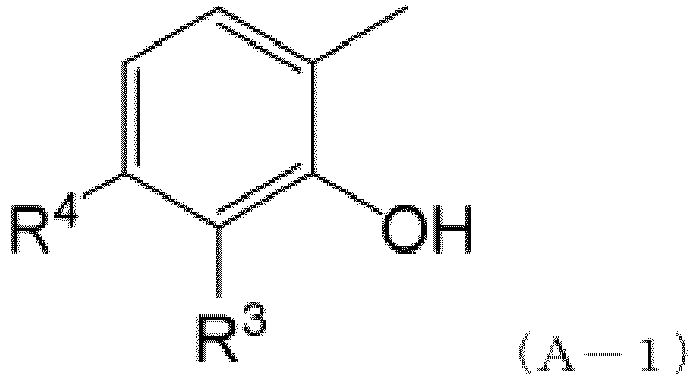

- As a result of the hydrazone compound being contained in the above-described additive for rubber according to the present disclosure, the low heat generating property and processability of the rubber composition can be improved.
- More detailed description will be given below by way of production examples and examples, although the present disclosure is not limited to these production examples and examples.
- 1.20 g of 2,3-dihydroxybenzohydrazide and 3.00 g of methyl isobutyl ketone were added to 10.0 mL of methanol, and stirred at 65 °C for 12 hr. The reaction mixture was concentrated and diisopropyl ether was added to the precipitated solid. The precipitated solid was then filtered, and further washed with diisopropyl ether. The resultant solid was dried under reduced pressure, thus obtaining 1.61 g of a pale yellow solid 2,3-dihydroxy-N'-(4-methylpentan-2-ylidene)benzohydrazide (yield: 90 %). The melting point and 1H-NMR of the obtained compound are as follows:
Melting point: 138 °C
1H-NMR (300 MHz, DMSO-d6, δppm): 0.91 (m, 6H), 2.0 (m, 4H), 2.2 (m, 2H), 6.8 (m, 1H), 7.0 (m, 1H), 7.4 (m, 1H), 9.6 (m, 1H), 10.9 (m, 1H), 11.2 (m, 1H). - 39.7 g of 4-amino-3-hydroxy-2-naphthoic acid hydrazide and 36.6 g of methyl isobutyl ketone were added to 183 mL of methanol, and stirred at 65 °C for 3 hr. The reaction mixture was cooled, and the precipitated solid was filtered and washed with isopropyl alcohol. The resultant solid was dried under reduced pressure, thus obtaining 52.1 g of a pale yellow solid 4-amino-3-hydroxy-N'-(4-methylpentan-2-ylidene)naphthalene-2-carbohydrazide (yield: 95 %). The melting point and 1H-NMR of the obtained compound are as follows:
Melting point: 166 °C
1H-NMR (300 MHz, DMSO-d6, δppm): 0.93 (m, 6H), 2.0 (m, 4H), 2.2 (m, 2H), 7.3 (m, 2H), 7.4 (m, 2H), 7.8 (m, 2H), 8.0 (m, 1H), 11.1 (m, 1H), NH(2H) was not detected. - 2.85 g of 3,5-dihydroxy-2-naphthoic acid hydrazide and 2.76 g of methyl isobutyl ketone were added to 12.0 mL of methanol, and stirred at 65 °C for 4 hr. The reaction mixture was concentrated, and diisopropyl ether was added to the precipitated solid. The precipitated solid was then filtered, and further washed with diisopropyl ether. The resultant solid was dried under reduced pressure, thus obtaining 3.84 g of a pale yellow solid 3,5-dihydroxy-N'-(4-methylpentan-2-ylidene)naphthalene-2-carbohydrazide (yield: 98 %). The melting point and 1H-NMR of the obtained compound are as follows:
Melting point: 130 °C
1H-NMR (300 MHz, DMSO-d6, δppm): 0.94 (m, 6H), 2.0 (m, 4H), 2.2 (m, 2H), 6.8 (m, 1H), 7.1 (m, 1H), 7.4 (m, 1H), 7.6 (m, 1H), 8.5 (m, 1H), 10.1 (s, 1H), 11.2 (m, 1H), 11.6 (m, 1H). - 4.73 g of 4-amino-2-hydroxybenzohydrazide and 3.34 g of 4-methylpenta-3-en-2-one were added to 50.0 mL of methanol, and stirred at 65 °C for 1 hr. The reaction mixture was cooled, and the precipitated solid was filtered and washed with methanol. The resultant solid was dried under reduced pressure, thus obtaining 3.01 g of a pale yellow solid 4-amino-2-hydroxy-N'-(4-methylpenta-3-en-2-ylidene)benzohydrazide (yield: 43 %). The melting point and 1H-NMR of the obtained compound are as follows:
Melting point: 176 °C
1H-NMR (300 MHz, DMSO-d6, δppm): 1.6 (m, 3H), 1.9 (m, 3H), 2.0 (m, 3H), 5.6 (m, 1H), 5.7 (m, 2H), 6.08 (m, 1H), 6.13 (m, 1H), 7.6 (m, 1H), 10.9 (m, 2H). - 4.81 g of 4-amino-2-hydroxybenzohydrazide and 6.85 g of tridecane-2-one were added to 50.0 mL of methanol, and stirred at 65 °C for 1 hr. The reaction mixture was concentrated , and isopropyl alcohol was added to the precipitated solid. The precipitated solid was then filtered, and further washed with isopropyl alcohol. The resultant solid was dried under reduced pressure, thus obtaining 8.18 g of a pale yellow solid 4-amino-2-hydroxy-N'-(tridecan-2-ylidene)benzohydrazide (yield: 82 %). The melting point and 1H-NMR of the obtained compound are as follows:
Melting point: 155 °C
1H-NMR (500 MHz, DMSO-d6, δppm): 0.86 (m, 3H), 1.3 (m, 16H), 1.5 (m, 2H), 1.9 (m, 3H), 2.3 (m, 2H), 5.8 (m, 2H), 6.1 (m, 2H), 7.6 (m, 1H), 10.5 (m, 1H), 11.6 (m, 1H). - 4.80 g of 4-amino-2-hydroxybenzohydrazide and 9.72 g of tricosan-12-one were added to 50.0 mL of methanol, and stirred at 65 °C for 1 hr. The reaction mixture was cooled, and the precipitated solid was filtered and washed with methanol. The resultant solid was dried under reduced pressure, thus obtaining 11.1 g of a pale yellow solid 4-amino-2-hydroxy-N'-(tricosan-12-ylidene)benzohydrazide (yield: 79 %). The melting point and 1H-NMR of the obtained compound are as follows:
Melting point: 151 °C
1H-NMR (300 MHz, DMSO-d6, δppm): 0.86 (m, 6H), 1.2 (m, 32H), 1.5 (m, 4H), 2.3 (m, 4H), 5.8 (br-s, 2H), 6.1 (m, 2H), 7.6 (m, 1H), 10.7 (br-s, 1H), 11.5 (br-s, 1H). - 4.45 g of 4-amino-2-hydroxybenzohydrazide and 64.0 g of diisopropyl ketone were added to 50.0 mL of methanol, and stirred at 65 °C for 48 hr. The reaction mixture was cooled, and the precipitated solid was filtered and washed with methanol. The resultant solid was purified by silica gel column chromatography, thus obtaining 5.25 g of a pale yellow solid 4-amino-N'-(2,4-dimethylpentan-3-ylidene)-2-hydroxybenzohydrazide (yield: 75 %). The melting point and 1H-NMR of the obtained compound are as follows:
Melting point: 162 °C
1H-NMR (300 MHz, DMSO-d6, δppm): 1.1 (m, 12H), 2.7 (m, 1H), 3.0 (m, 1H), 5.7 (br-s, 2H), 6.1 (m, 2H), 7.6 (d, 1H), 10.7 (br-s, 1H), 11.6 (br-s, 1H). - 1.66 g of 4-amino-2-hydroxybenzohydrazide and 1.05 g of methyl isobutyl ketone were added to 20.0 mL of methanol, and stirred at 65 °C for 2 hr. 20.0 mL of diisopropyl ether was added to the reaction mixture, and the precipitated solid was filtered and further washed with diisopropyl ether. The resultant solid was dried under reduced pressure, thus obtaining 1.59 g of a pale yellow solid 4-amino-2-hydroxy-N'-(4-methylpentan-2-ylidene)benzohydrazide (yield: 64 %). The melting point and 1H-NMR of the obtained compound are as follows:
Melting point: 203 °C
1H-NMR (300 MHz, DMSO-d6, δppm): 0.91 (m, 6H), 2.0 (m, 4H), 2.2 (m, 2H), 5.7 (m, 2H), 6.1 (m, 2H), 7.6 (m, 1H), 10.6 (m, 1H), 11.6 (m, 1H). - 5.29 g of 4-amino-2-hydroxybenzohydrazide and 2.74 g of isobutylaldehyde were added to 50.0 mL of methanol, and stirred at 65 °C for 1 hr. The precipitated solid was filtered, and then washed with diisopropyl ether. The resultant solid was purified by silica gel column chromatography, thus obtaining 4.00 g of a pale yellow solid 4-amino-2-hydroxy-N'-(2-methylpropylidene)benzohydrazide (yield: 57 %). The melting point and 1H-NMR of the obtained compound are as follows:
Melting point: 95 °C
1H-NMR (300 MHz, DMSO-d6, δppm): 1.1 (m, 6H), 2.5 (m, 1H), 5.9 (br-s, 2H), 6.0 (m, 1H), 6.1 (m, 1H), 7.6 (m, 2H), 11.1 (br-s, 1H), 12.6 (br-s, 1H). - Rubber compositions of formulations listed in Table 1 were prepared by kneading using Plastomill.
- The low heat generating property and processability of each prepared rubber composition were evaluated by the following methods.
- The evaluation results are listed in Table 1.
- The rubber composition of each sample was vulcanized at 145 °C for 33 min to obtain vulcanized rubber. The loss tangent (tanδ) of the obtained vulcanized rubber was measured at a temperature of 50 °C, a strain of 5 %, and a frequency of 15 Hz, using a viscoelasticity measuring instrument (produced by Rheometric Scientific).
- tanδ is represented by an index with the value of Comparative Example 1 being 100, and a smaller index value indicates better low heat generating property.
- The unvulcanized viscosity of the rubber composition of each sample was measured by a Mooney viscosity test at 100 °C in accordance with JIS K 6300-1.
- The unvulcanized viscosity is represented by an index with the value of Comparative Example 1 being 100, and a smaller index value indicates lower viscosity and easier unvulcanized rubber molding.
[Table 1] Example Comparative Example 1 2 3 4 5 6 7 8 9 1 2 Natural rubber*1 100 100 100 100 100 100 100 100 100 100 100 Carbon black N220*2 50 50 50 50 50 50 50 50 50 50 50 Compound a *9 1 - - - - - - - - - - Compound b *9 - 1 - - - - - - - - - Compound c*9 - - 1 - - - - - - - - Compound d *9 - - - 1 - - - - - - - Compound e*9 - - - - 1 - - - - - - Compound f*9 - - - - - 1 - - - - - Compound g*9 - - - - - - 1 - - - - Formulation Compound h*9 - - - - - - - 1 - - - (parts by mass) Compound i*9 - - - - - - - - 1 - - Compound j*3 - - - - - - - - - 1 - Compound k*4 - - - - - - - - - - 1 Aromatic oil*5 2 2 2 2 2 2 2 2 2 2 2 Stearic acid 2 2 2 2 2 2 2 2 2 2 2 Antioxidant 6PPD*6 1 1 1 1 1 1 1 1 1 1 1 Antioxidant TMQ*7 1 1 1 1 1 1 1 1 1 1 1 Zinc oxide 3 3 3 3 3 3 3 3 3 3 3 Vulcanization accelerator CBS*8 0.8 0.8 0.8 0.8 0.8 0.8 0.8 0.8 0.8 0.8 0.8 Sulfur 1.5 1.5 1.5 1.5 1.5 1.5 1.5 1.5 1.5 1.5 1.5 Evaluation tanδ index (low heat generating property) 87 83 88 93 96 97 99 98 99 100 90 Unvulcanized viscosity index (processability) 99 94 95 81 88 82 81 93 95 100 115 *1 RSS #1
*2 "#80" produced by Asahi Carbon Co., Ltd.
*3 3-hydroxy-2-naphthoic acid hydrazide, produced by Tokyo Chemical Industry Co., Ltd.
*4 isophthalic dihydrazide, produced by Tokyo Chemical Industry Co., Ltd.
*5 "AROMAX#3" produced by Fuji Kosan Co., Ltd.
*6 N-(1,3-dimethylbutyl)-N'-phenyl-p-phenylenediamine, product name "NOCRAC 6C" produced by Ouchi Shinko Chemical Industrial Co., Ltd.
*7 2,2,4-trimethyl-1,2-dihydroquinoline polymer, product name "NOCRAC 224" produced by Ouchi Shinko Chemical Industrial Co., Ltd.
*8 N-cyclohexyl-2-benzothiazolesulfenamide, "SANCELER CM" produced by Sanshin Chemical Industry Co. Ltd.
*9 Compounds a to i obtained according to Production Examples 1 to 9. - As can be seen from the results in Table 1, the rubber composition of each Example exhibited better low heat generating property and processability than the rubber composition of Comparative Example 1. Moreover, the rubber composition of each of Examples 1 to 3 exhibited better low heat generating property and processability than the rubber composition of Comparative Example 2.
- It is thus possible to provide an additive for rubber that can improve the low heat generating property and processability of a rubber composition, and a rubber composition having excellent low heat generating property and processability. It is also possible to provide a tire having excellent low heat generating property.
Claims (9)
- An additive for rubber, comprising
a hydrazone compound represented by the following Formula (I):


- The additive for rubber according to claim 1, for use as a low heat generating agent.
- A rubber composition comprising:a rubber component containing diene-based rubber;a filler; andthe additive for rubber according to claim 1 or 2.
- The rubber composition according to claim 3, wherein a content of the additive for rubber is 0.05 parts to 30 parts by mass with respect to 100 parts by mass of the rubber component.
- The rubber composition according to claim 3 or 4, wherein the diene-based rubber is natural rubber.
- The rubber composition according to any one of claims 3 to 5, wherein the filler includes carbon black.
- The rubber composition according to any one of claims 3 to 6, wherein a content of the filler is 10 parts to 160 parts by mass with respect to 100 parts by mass of the rubber component.
- A tire comprising
the rubber composition according to any one of claims 3 to 7. - A hydrazone compound represented by the following Formula (I):


Applications Claiming Priority (2)
| Application Number | Priority Date | Filing Date | Title |
|---|---|---|---|
| JP2016233610 | 2016-11-30 | ||
| PCT/JP2017/042920 WO2018101368A1 (en) | 2016-11-30 | 2017-11-29 | Rubber additive, rubber composition, and tire in which same is used |
Publications (2)
| Publication Number | Publication Date |
|---|---|
| EP3549979A1 true EP3549979A1 (en) | 2019-10-09 |
| EP3549979A4 EP3549979A4 (en) | 2020-07-22 |
Family
ID=62241645
Family Applications (1)
| Application Number | Title | Priority Date | Filing Date |
|---|---|---|---|
| EP17876534.3A Withdrawn EP3549979A4 (en) | 2016-11-30 | 2017-11-29 | Rubber additive, rubber composition, and tire in which same is used |
Country Status (5)
| Country | Link |
|---|---|
| US (1) | US11339272B2 (en) |
| EP (1) | EP3549979A4 (en) |
| JP (1) | JP7123805B2 (en) |
| CN (1) | CN110023398A (en) |
| WO (1) | WO2018101368A1 (en) |
Cited By (2)
| Publication number | Priority date | Publication date | Assignee | Title |
|---|---|---|---|---|
| US11708480B2 (en) | 2016-08-04 | 2023-07-25 | Otsuka Chemical Co., Ltd. | Rubber composition, tire, additive and hydrazide compound |
| EP3805306B1 (en) * | 2018-06-06 | 2023-12-27 | Bridgestone Corporation | Rubber composition and tire |
Families Citing this family (4)
| Publication number | Priority date | Publication date | Assignee | Title |
|---|---|---|---|---|
| JP6890475B2 (en) * | 2017-06-07 | 2021-06-18 | 株式会社ブリヂストン | Rubber composition for tires and tires |
| CN114479206A (en) * | 2020-11-11 | 2022-05-13 | 赛轮集团股份有限公司 | Low-heat-generation tear-resistant rubber composition for engineering tire and preparation method thereof |
| JP7808109B2 (en) * | 2021-06-29 | 2026-01-28 | 大塚化学株式会社 | Rubber composition and tire |
| CN115322454B (en) * | 2022-08-16 | 2024-02-09 | 安徽佳通乘用子午线轮胎有限公司 | Rubber composition for all-steel radial tire sidewall and preparation method thereof |
Family Cites Families (11)
| Publication number | Priority date | Publication date | Assignee | Title |
|---|---|---|---|---|
| US3689554A (en) * | 1969-08-15 | 1972-09-05 | Bayer Ag | Hydrazones |
| DE69424455T2 (en) | 1993-03-02 | 2001-01-18 | Bridgestone Corp., Tokio/Tokyo | Method for producing a natural rubber treated with viscosity stabilizing compounds |
| ES2271710T3 (en) * | 1997-04-02 | 2007-04-16 | Otsuka Chemical Holdings Co., Ltd. | DERIVATIVES OF HYDRAZONE. |
| JPH11292834A (en) | 1998-04-02 | 1999-10-26 | Otsuka Chem Co Ltd | Hydrazone derivative |
| EP1164126A1 (en) | 2000-06-16 | 2001-12-19 | Basf Aktiengesellschaft | Salicylic acid hydrazide derivatives, process and intermediates for their preparation, agents containing them and their use for combatting damaging fungi |
| JP2004525118A (en) * | 2001-01-22 | 2004-08-19 | アルパイダ アーゲー | New hydrazones |
| JP4911904B2 (en) | 2005-03-04 | 2012-04-04 | 株式会社ブリヂストン | Rubber composition and tire using the same |
| FR2969165B1 (en) | 2010-12-21 | 2014-06-06 | Michelin Soc Tech | COMPOSITION BASED ON NATURAL RUBBER AND CARBON BLACK COMPRISING HYDRAZIDE, HYDRAZONE OR POLYAMINO |
| EP3029099B1 (en) | 2011-02-23 | 2018-04-04 | Bridgestone Corporation | Rubber composition and tire produced using same, and process of producing rubber composition |
| JP6417318B2 (en) | 2013-03-28 | 2018-11-07 | 株式会社ブリヂストン | Method for producing rubber composition and rubber composition |
| CN105130856B (en) | 2015-08-20 | 2019-03-19 | 成都化润药业有限公司 | The preparation method of diphenyl ether sulfonyl azide compound |
-
2017
- 2017-11-29 WO PCT/JP2017/042920 patent/WO2018101368A1/en not_active Ceased
- 2017-11-29 CN CN201780073993.7A patent/CN110023398A/en active Pending
- 2017-11-29 EP EP17876534.3A patent/EP3549979A4/en not_active Withdrawn
- 2017-11-29 US US16/464,508 patent/US11339272B2/en active Active
- 2017-11-29 JP JP2018554217A patent/JP7123805B2/en active Active
Cited By (2)
| Publication number | Priority date | Publication date | Assignee | Title |
|---|---|---|---|---|
| US11708480B2 (en) | 2016-08-04 | 2023-07-25 | Otsuka Chemical Co., Ltd. | Rubber composition, tire, additive and hydrazide compound |
| EP3805306B1 (en) * | 2018-06-06 | 2023-12-27 | Bridgestone Corporation | Rubber composition and tire |
Also Published As
| Publication number | Publication date |
|---|---|
| JPWO2018101368A1 (en) | 2019-10-24 |
| WO2018101368A1 (en) | 2018-06-07 |
| EP3549979A4 (en) | 2020-07-22 |
| CN110023398A (en) | 2019-07-16 |
| US20210108048A1 (en) | 2021-04-15 |
| JP7123805B2 (en) | 2022-08-23 |
| US11339272B2 (en) | 2022-05-24 |
Similar Documents
| Publication | Publication Date | Title |
|---|---|---|
| US11339272B2 (en) | Additive for rubber, rubber composition, and tire using the same | |
| CN112533991B (en) | Rubber compositions, rubber materials and their uses, and additives | |
| JP7146636B2 (en) | Rubber composition, tire, additive and hydrazide compound | |
| EP3636707B1 (en) | Rubber composition for tire and tire | |
| EP3805306B1 (en) | Rubber composition and tire | |
| JP2008231417A (en) | Rubber composition and pneumatic tire using the same | |
| CN110461931A (en) | Rubber composition and tire | |
| WO2016009775A1 (en) | Method for producing rubber composition for tires, and pneumatic tire | |
| KR20170019354A (en) | Alkylidene aminoganidine and salt thereof, modifier composition, modified rubber for tire, rubber composition for tire, and tire | |
| EP2821433A1 (en) | Rubber composition and method for producing rubber composition | |
| US9670336B2 (en) | Method for producing rubber composition, and rubber composition | |
| JP7271445B2 (en) | Rubber composition and tire | |
| JP2006169434A (en) | Rubber composition and tire comprising the same | |
| JP4543630B2 (en) | Rubber composition | |
| JP2021152104A (en) | Rubber composition and tire | |
| JP7808109B2 (en) | Rubber composition and tire | |
| JP7495863B2 (en) | Rubber composition, tire and rubber additive | |
| JP2021024995A (en) | Rubber material and production method thereof | |
| JP5796930B2 (en) | Rubber composition and pneumatic tire | |
| EP3636704B1 (en) | Rubber composition, crosslinked rubber composition, rubber article, and tire | |
| EP3196232B1 (en) | Method for manufacturing rubber composition, and rubber composition | |
| JP2007277343A (en) | Rubber composition and pneumatic tire using the same |
Legal Events
| Date | Code | Title | Description |
|---|---|---|---|
| STAA | Information on the status of an ep patent application or granted ep patent |
Free format text: STATUS: THE INTERNATIONAL PUBLICATION HAS BEEN MADE |
|
| PUAI | Public reference made under article 153(3) epc to a published international application that has entered the european phase |
Free format text: ORIGINAL CODE: 0009012 |
|
| STAA | Information on the status of an ep patent application or granted ep patent |
Free format text: STATUS: REQUEST FOR EXAMINATION WAS MADE |
|
| 17P | Request for examination filed |
Effective date: 20190528 |
|
| AK | Designated contracting states |
Kind code of ref document: A1 Designated state(s): AL AT BE BG CH CY CZ DE DK EE ES FI FR GB GR HR HU IE IS IT LI LT LU LV MC MK MT NL NO PL PT RO RS SE SI SK SM TR |
|
| AX | Request for extension of the european patent |
Extension state: BA ME |
|
| DAV | Request for validation of the european patent (deleted) | ||
| DAX | Request for extension of the european patent (deleted) | ||
| A4 | Supplementary search report drawn up and despatched |
Effective date: 20200622 |
|
| RIC1 | Information provided on ipc code assigned before grant |
Ipc: C08L 21/00 20060101AFI20200616BHEP Ipc: C08K 3/04 20060101ALI20200616BHEP Ipc: C08L 9/00 20060101ALI20200616BHEP Ipc: C07C 243/38 20060101ALI20200616BHEP Ipc: C08L 7/00 20060101ALI20200616BHEP Ipc: C08K 5/30 20060101ALI20200616BHEP Ipc: B60C 1/00 20060101ALI20200616BHEP |
|
| STAA | Information on the status of an ep patent application or granted ep patent |
Free format text: STATUS: THE APPLICATION IS DEEMED TO BE WITHDRAWN |
|
| 18D | Application deemed to be withdrawn |
Effective date: 20210120 |