EP3549037B1 - System and method for detecting geo-locations in social media - Google Patents
System and method for detecting geo-locations in social media Download PDFInfo
- Publication number
- EP3549037B1 EP3549037B1 EP17869764.5A EP17869764A EP3549037B1 EP 3549037 B1 EP3549037 B1 EP 3549037B1 EP 17869764 A EP17869764 A EP 17869764A EP 3549037 B1 EP3549037 B1 EP 3549037B1
- Authority
- EP
- European Patent Office
- Prior art keywords
- location
- social media
- geo
- posting
- determining
- Prior art date
- Legal status (The legal status is an assumption and is not a legal conclusion. Google has not performed a legal analysis and makes no representation as to the accuracy of the status listed.)
- Active
Links
Images







Classifications
-
- G—PHYSICS
- G06—COMPUTING OR CALCULATING; COUNTING
- G06F—ELECTRIC DIGITAL DATA PROCESSING
- G06F9/00—Arrangements for program control, e.g. control units
- G06F9/06—Arrangements for program control, e.g. control units using stored programs, i.e. using an internal store of processing equipment to receive or retain programs
- G06F9/46—Multiprogramming arrangements
- G06F9/54—Interprogram communication
- G06F9/547—Remote procedure calls [RPC]; Web services
-
- H—ELECTRICITY
- H04—ELECTRIC COMMUNICATION TECHNIQUE
- H04L—TRANSMISSION OF DIGITAL INFORMATION, e.g. TELEGRAPHIC COMMUNICATION
- H04L51/00—User-to-user messaging in packet-switching networks, transmitted according to store-and-forward or real-time protocols, e.g. e-mail
- H04L51/21—Monitoring or handling of messages
- H04L51/222—Monitoring or handling of messages using geographical location information, e.g. messages transmitted or received in proximity of a certain spot or area
-
- H—ELECTRICITY
- H04—ELECTRIC COMMUNICATION TECHNIQUE
- H04L—TRANSMISSION OF DIGITAL INFORMATION, e.g. TELEGRAPHIC COMMUNICATION
- H04L51/00—User-to-user messaging in packet-switching networks, transmitted according to store-and-forward or real-time protocols, e.g. e-mail
- H04L51/52—User-to-user messaging in packet-switching networks, transmitted according to store-and-forward or real-time protocols, e.g. e-mail for supporting social networking services
-
- H—ELECTRICITY
- H04—ELECTRIC COMMUNICATION TECHNIQUE
- H04L—TRANSMISSION OF DIGITAL INFORMATION, e.g. TELEGRAPHIC COMMUNICATION
- H04L67/00—Network arrangements or protocols for supporting network services or applications
- H04L67/50—Network services
- H04L67/52—Network services specially adapted for the location of the user terminal
-
- H—ELECTRICITY
- H04—ELECTRIC COMMUNICATION TECHNIQUE
- H04W—WIRELESS COMMUNICATION NETWORKS
- H04W4/00—Services specially adapted for wireless communication networks; Facilities therefor
- H04W4/02—Services making use of location information
-
- H—ELECTRICITY
- H04—ELECTRIC COMMUNICATION TECHNIQUE
- H04W—WIRELESS COMMUNICATION NETWORKS
- H04W4/00—Services specially adapted for wireless communication networks; Facilities therefor
- H04W4/20—Services signaling; Auxiliary data signalling, i.e. transmitting data via a non-traffic channel
- H04W4/21—Services signaling; Auxiliary data signalling, i.e. transmitting data via a non-traffic channel for social networking applications
Definitions
- Geo-location detection from text is a difficult task. Detecting geo-locations from social data is further complicated by the prominence of hashtags, platform-specific lingo, lack of punctuation, capitalization, and proper grammar.
- the publication US 2013/325975 A1 relates to estimating the location of social network users.
- a plurality of social media messages generated by a given user is received.
- a plurality of location features is extracted from the social media messages.
- Each of the location features is processed with at least one classifier from an ensemble of classifiers.
- a location classification is generated by each of the classifiers for each of the social media messages.
- Each classification comprises a location and a weight associated with that location.
- US 2014/122604 A1 provides a technique to estimate a location relating to a user who has not filled in information about the location in a profile field in social media such as a microblog.
- a method for estimating association between a user in social media and a location includes the steps of acquiring a first content posted to the social media by a first user associated with a first location, determining regional localization of the first content on the basis of the first location, acquiring a second content posted to the social media by a second user not associated with a location, determining the degree of a relationship between the first content and the second content, and associating the first location with the second user on the basis of the localization and the degree of the relationship.
- US 2010/312769 A1 describes methods, systems and software for analyzing micro-blog messages to detect abnormal activity of interest.
- the system includes a clusterer for clustering micro-blog messages received over a first period of time, a classifier for scoring the clustered messages; a knowledge base, a rule generator for generating classification rules from the knowledge base; and a matcher for matching the scored messages to information requests. Methods for operating the system and its components are described.
- FIG. 1 shows a schematic diagram depicting an embodiment of a system 100 for detecting geo-locations in social media postings.
- the system 100 includes a social media system 104, a geo-location system 108, an application 112, and a user system 116.
- the social media system 104 provides a platform for its users to post postings and/or content to a network of other users using accounts of the system 100.
- the social media system 104 includes a social media server system 120 having a communication interface 124.
- the social media server system 120 provides functionality of the social media system 120 for users and as discussed herein, with the communication interface 124 providing communications over one or more communication networks 128 between the social media system 120 and other systems.
- the social media system 120 can take various different forms.
- the social media system 120 can be Twitter, in which users use their accounts to, among other things, post short postings and/or content, called Tweets, on the system.
- the social media system 120 can be another system, such as one or more of Facebook, Instagram, Snapchat, Tumblr, Pinterest, Flickr, or Reddit, etc.
- the geo-location system 108 includes a location mention identification module 132, a location determining module 136, and a qualifying module 140.
- the geo-location system 108 has a communication interface 144 that interfaces with the social media system 120 to retrieve social media postings and send them to location mention identification module 132 to identify and/or detect any location mentions in the postings or set of postings.
- Location mention identification module 132 can also extract locations specified by users of the social media system 120.
- the location mention identification module 132 has a database 148 for storing various locations, location ranks/scores, and geo-coordinates.
- the location determining module 136 finds the latitude and longitude geo-coordinate information associated with the detected locations using a location/geo-coordinate library.
- the location library is a third-party library.
- the qualifying module 140 uses a various methods to qualify and/or disambiguate locations, find the correct geo-coordinates for each location, and rank the locations based on a level of relevance to an event.
- the qualifying module 140 outputs location information to a communication interface 152.
- each of location mention identification module 132, location determining module 136, and qualifying module 140 can communicate with each other.
- communication interface 152 of geo-location module 108 outputs location information as metadata in a posting object of the social media posting over one or more communication networks 156 to application 112 for display on user system 116.
- application 112 may include an application programming interface (API) 160.
- application 112 communicates with user system via one or more communication networks 164. Alternatively, the geo-location system may output directly to the user system 116.
- API application programming interface
- the user system 116 may be any computing platform, such as one or more of a computer, a desktop computer, a laptop computer, a tablet, a smart phone, or other stationary or mobile devices, etc., that a user uses to communicate with other systems via one or more communication networks 164.
- the system 100 for detecting geo-locations in various social media postings may include the features depicted in or discussed herein in regard to FIG. 1 .
- FIG. 2 shows a flowchart depicting an embodiment of a method 200 of detecting geo-locations in postings of various social media systems such as microblogs according to an embodiment of the disclosure.
- the method may be performed by or involving components of the system 100 of FIG. 1 , such as by the geo-location system 108.
- the method begins at step 204.
- one or more social media postings are retrieved from social media server system 120.
- geo-location module 108 communicates with social media server system 120 via communication interfaces 124, 144 over network 128 to retrieve one or more social media postings of one or more social media accounts.
- the retrieved social media postings are pre-processed.
- the pre-processing is performed by geo-location system 108.
- the pre-processing can be performed by a separate processing module and the pre-processed social media postings then input into the geo-location system 108.
- the pre-processing involves one or more functions performed by the system to clean and prepare postings before identifying potential locations of the postings, as discussed herein.
- the pre-processing may include any combination of the features of the systems and methods of FIGS. 3-5 , or any combination of any subset and/or alternative ordering of the features of such system or methods.
- the system determines location mentions for the received and pre-processed social media postings.
- location mention identification module 132 determines location mentions by performing one or more of identifying location mentions from the text of the social media posting and/or from a user location of a social media account, as discussed herein.
- determining location mentions may include any combination of the features of the systems and methods of FIGS. 6-10 , or any combination of any subset and/or alternative ordering of the features of such system or methods.
- the system determines locations based on the determined location mentions.
- location determining module 136 receives the determined location mentions from location mention identification module 132 and determines possible geo-coordinates (i.e., latitude and longitude coordinates) for the geographic locations corresponding to the determined location mentions, as discussed herein.
- determining locations based on the location mentions may include any combination of the features of the systems and methods of FIGS. 11-12 , or any combination of any subset and/or alternative ordering of the features of such system or methods.
- the system determines a primary location of each location mention based on the determined locations.
- qualifying module 140 receives the determined geographic locations from location determining module 136 and determines which location is a primary location corresponding to each location mention in the social media posting, as discussed herein.
- determining locations based on the location mentions may include any combination of the features of the systems and methods of FIGS. 13-16 , or any combination of any subset and/or alternative ordering of the features of such system or methods.
- the system stores the geo-coordinates for the determined primary location in a social media posting object.
- the system adds the geo-coordinates for the primary location corresponding to that location mention.
- the geo-coordinates can be added as one or more metadata fields to the posting object.
- the geo-coordinates for each location can be communicated to location mention identification module 132 to be stored in database 148 on a non-transitory machine-readable storage medium for future location determination processes for future retrieved social media postings.
- the social media posting objects containing the geo-coordinates for their location mentions can be output to any downstream application seamlessly and in real-time.
- the posting objects can be output from geo-location module 108 to an API 160 of application 112 via network 156 and then output for display on a user system 116 via network 164.
- the posting objects can be output directly to user system 116. The method ends at step 236.
- the method 200 for detecting geo-locations in various social media postings may include the features depicted in or discussed herein in regard to FIG. 2 .
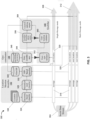
- FIG. 3 shows a schematic diagram depicting an exemplary embodiment of the geo-location system 108 for detecting geo-locations in postings of various social media systems such as microblogs in further detail according to an embodiment of the disclosure.
- the system 108 retrieves one or more social media postings from a social data stream 304.
- social media stream 304 can be outputted from social media server system 120.
- the system can retrieve social media postings in a single-posting mode 308 and/or a multi-posting mode 312. In single-posting mode 308, the system determines geo-location information based on single postings from user accounts, as discussed herein.
- each social media posting can include both a posting 316 in text and/or a user location 320.
- the text postings 316 of the social media postings are input into location mention identification module 132.
- location mentions from the posting text 316 of the social media postings and the user locations 320 of the social media postings are input into location determining module 136.
- possible location geo-coordinates for each location mention are input into qualifying module 140.
- primary location geo-coordinates for each location mention in the posting text 316 and/or user location 320 are output from qualifying module 140 and added to the posting object for each social media posting received from social data stream 304.
- the system 300 for detecting geo-locations in various social media postings may include the features depicted in or discussed herein in regard to FIG. 3 .
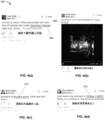
- FIGS. 4(a)-4(d) show exemplary social media postings 400 having geo-locations that can be detected according to an embodiment of the disclosure.
- various examples of social media postings that can be received from social media server system 120 as a part of social data stream 304 are depicted.
- the posting object can be updated with primary location geo-coordinates for each location mention.
- the exemplary social media postings 400 having geo-locations that can be detected may include the features depicted in or discussed herein in regard to FIGS. 4(a)-4(d) .
- FIG. 5 shows a flowchart depicting an embodiment of a pre-processing method 500 according to an embodiment of the disclosure.
- pre-processing method 500 is performed as step 212 of method 200.
- the system may perform a few preprocessing steps to clean and prepare the posting(s).
- Method 500 begins at step 504.
- step 508 the system removes truncations from the posting text.
- social media platforms such as Twitter
- truncated postings are common in automated post-sharing applications. For example, when a posting exceeds Twitter's 140-character limit, the trailing part of the posting is automatically removed by third-party applications. This can cause potential issues for the system.
- step 508 the system ignores and/or removes all truncation symbols and truncated words and phrases from the posting text.
- removing truncations is not as simple as merely identifying postings having the truncation symbol (i.e., an ellipsis represented by " --) at the end of the posting.
- automated applications may append additional hashtags, mentions, or URLs to the end of the posting (e.g. "Let us celebrate New York... via @AwesomeApp"). This often comes at the expense of the length of the original posting.
- not all postings that end with an ellipsis are truncated; sometimes users use the symbol simply as a mode of expression.
- the system in step 508, can use two main clues to determine if a tweet is truncated: 1) if the posting length is close to the character limit, and, 2) if the posting ends with either of two main truncation symbols (i.e. "" and the unicode character for horizontal ellipsis) potentially followed by a standard expression of truncation (e.g., "via @handle,” or "via #hashtag").
- a posting matches the above criteria, the last word or token before the truncation symbol is removed as well as the remaining tail-end of the posting.
- the system splits hashtags that appear in the posting text of the social media posting.
- hashtags can play an important role in identifying locations, especially when no other clue is available.
- Many reliable official accounts e.g., from disaster response teams, weather channels, traffic monitors, etc.
- location information e.g., "#BuelahHillFire"
- these official accounts are often careful to use different letter-casing in their postings to denote locations within hashtags.
- the system inspects each posting to determine whether it is written in ALL-CAPS (i.e., written using all capital letters). If ALL-CAPS is not used, the system splits each hashtag based on the location of its uppercase letters.
- the hashtag #BuelahHillFire can be broken into the text "#Buelah Hill Fire.” If multiple uppercase letters appear next to each other, the system reattaches any dangling letters back together. For instance, the hashtag “#LAFlood” will be broken into “#L A Flood,” and then the dangling letters “L” and “A” reattached to read “#LA Flood.”
- the system keeps the hashtag symbol in order to distinguish between hashtag-based locations and other locations determines from the posting text. This helps delimit the beginning of hashtag-based locations from the rest of the posting text. For instance, consider the posting "Hurricane Matthew moving towards Florida #HaitiDisaster.” Once the hashtag is broken down by the described processes, the posting will read “Hurricane Matthew moving towards Florida #Haiti Disaster.” If the hashtag symbol is removed, the system might mistakenly identify "Florida Haiti” as a single location due to consistent letter-casing. Therefore, retaining the hashtag symbol ensures that the system determines that "Florida” and "Haiti" are two different locations.
- the system removes special characters that appear in the posting text of the social media posting.
- Special characters may include non-alphanumeric characters found in the posting text.
- the system removes all special characters except a selected set of special characters retained as useful for identifying locations.
- the system may remove all special characters, such as including, e.g., brackets, asterisks, percentage signs, backslash, except the following:
- the pre-processing method 500 may include the features depicted in or discussed herein in regard to FIG. 5 .
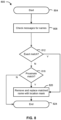
- FIG. 6 shows a flowchart depicting an embodiment of a location identification method 600 according to an embodiment of the disclosure.
- location identification method 600 is performed as step 216 of method 200 by location mention identification module 132.
- method 600 begins at step 604.
- the system can work in two modes: single and multi-posting mode. In both cases, in step 608, the system identifies locations mentioned in the text of each posting it retrieves.
- step 612 if one or more locations are identified from the posting text, method 620 ends. In some instances, there is not enough information in a posting (or set of postings) to identify any locations.
- step 612 if no location is identified from the posting text, method 600 proceeds to step 616 to identify locations from user profiles.
- Different location identification thresholds can be used to determine whether sufficient locations have been identified in step 612. For example, if the system finds fewer than two location mentions in the message, it also extracts user locations and adds them to the set of potential locations in step 616. In some embodiments, user locations can be identified even if locations are identified from text. For example, step 612 can be removed from method 600 and locations can be identified from both text and from user locations.
- the location identification method 600 may include the features depicted in or discussed herein in regard to FIG. 6 .
- the depicted embodiment of the location mention identification module 132 includes a taxonomy-based classifier module 324, a heuristic-based classifier module 328, and a knowledge-base (KB) based classifier module 332.
- location mention identification module 132 also includes a location taxonomy list and/or table 336 and an alias KB database 340 although one or more of these elements may be located outside location mention identification module 132.
- Taxonomy-based classifier module 324 is configured to perform a taxonomy-based approach to detect location mentions from the text of a social media posting, heuristic-based classifier module is configured to perform a heuristic-based approach, and KB-based classifier module 332 is configured to perform a KB-based approach.
- the taxonomy-based classifier module 324 can communicate with location taxonomy list and/or table 336 and KB-based classifier module 332 can communicate with alias KB database 340.
- taxonomy-based classifier module 324 each receive one or more social media postings, such as from social posting stream 304 via the communication interface 144 (omitted from this figure for clarify of illustration). Receipt of the social media postings and/or implementation of the location detection processes can be in parallel and/or in series.
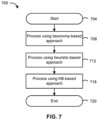
- FIG. 7 shows a flowchart depicting an embodiment of a method 700 of identifying locations from the text of a social media posting according to an embodiment of the disclosure.
- method 700 is performed by location mention identification module 132 and is performed serially.
- the location identification method 700 may be performed as step 216 of method 200 and/or as step 608 of method 600.
- method 700 begins at step 704.
- step 708 location mentions are detected from one or more social media postings using a taxonomy-based approach.
- location mentions are detected from one or more social media postings using a heuristic-based approach.
- location mentions are detected from one or more social media postings using a KB-based approach.
- Method 700 ends at step 720.
- the method 700 for identifying locations from the text of a social media posting may include the features depicted in or discussed herein in regard to FIG. 7 .
- FIG. 8 shows a flowchart depicting an embodiment of a method 800 implementing a taxonomy-based approach according to an embodiment of the disclosure.
- method 800 is implemented at step 708 of method 700 by taxonomy-based classifier module 324.
- Method 800 begins at step 804 and uses a standard taxonomy to detect common locations from posting text. Names of large and/or well-known geo-locations such as countries, continents, states, and provinces can be curated and/or collected to generate a taxonomy list 336 of location names. In some embodiments, taxonomy list 336 can include thousands of names.
- step 808 the location names making up taxonomy list 336 are retrieved by taxonomy-based classifier module 324 and are compared against the text of each received social media posting to see if any location names from taxonomy list 336 occur anywhere in the posting text.
- step 812 the system determines whether there is an exact match between a location mention in the text and a location included in taxonomy list 336. If there is no exact match, method 800 proceeds to step 816. If there is an exact match, method 800 proceeds to step 820. In step 816, in cases when an exact match is not found, the system determines whether there is a proximate match. In this step, the system parses the text for words that may be related to a particular location but may not exactly match a location from taxonomy list 336. For instance, nationalities found in the text can be mapped to their corresponding countries from taxonomy list 336 (e.g., "Canadian” can be matched to "Canada").
- Possessive forms can also be mapped to their corresponding locations from taxonomy list 336 (e.g., " Louisiana's fire departments” can be matched to "Louisiana.”).
- step 820 once a word from the posting text is matched (either exactly or proximately) to a term in taxonomy 336, it is removed and replaced by a location mask (e.g., " ⁇ loc>") in a processed version of the social media posting. By removing location mentions when they are matched, the system can avoid processing the same location mention multiple times and preserve system resources. For example, the posting shown in FIG.
- Method 800 ends at step 824. In some embodiments, even though processing overhead is increased, method 800 can determine proximate matches even when exact matches are also determined.
- the method 800 for implementing a taxonomy-based approach may include the features depicted in or discussed herein in regard to FIG. 8 .
- FIG. 9 shows a flowchart depicting an embodiment of a method 900 implementing a heuristic-based approach according to an embodiment of the disclosure.
- method 900 is implemented at step 712 of method 700 by heuristic-based classifier module 328.
- Method 900 begins at step 904.
- the system uses a set of standard heuristics to identify words or phrases from the social media posting that are likely to refer to locations.
- the system generates a rule list correlating particular words or phrases found in certain positions in the text with possible locations.
- the system checks the posting for text that matches rules from the rule list.
- Table 1. List of clues used to identify location mentions heuristically. Clue Position w.r.t the location Examples Examples of Exceptions Cardinal directions Prefix - North Aleppo - North of the city - Southeastern Aleppo - Northwest Bank - North of Aleppo - Southeast of Aleppo Landmark identifiers Prefix/Suffix - City of Aleppo - City Bank - Aleppo City - State Department - Gulf of Mexico - Islamic State - Suburb of New Jersey Distance indicators Prefix - 3 miles from NYC - Five miles of wheat fields - Five kilometers of NJ Urban landmark indicators Suffix - St.
- the system may detect the term "North” in the posting text and determine that this term correlates to a rule from the rule list, namely that the term "North” is a cardinal direction and is used as a prefix.
- the middle-right column of Table lists examples where the rule correctly detects a location mention in the text.
- the rightmost column of Table 1 lists examples where the rules match words in the text but the word that precedes or succeeds them is not a location.
- the system implements step 916 to determine a location based on capitalization. If the word in the posting text seems to have proper capitalization (e.g.
- step 916 can still match words to locations that are not locations (i.e., "Northwest Bank” satisfies the capitalization rule but is not a location mention.
- the system implements step 920 to remove and/or ignore certain blacklisted terms.
- each rule has a list of blacklisted terms associated with it. For example, the Landmark Identifiers rule shown in Table 1, a blacklisted term is "The Islamic State” because it is a commonly-used term that does not correspond to a location mention for the general landmark identifier "state.” Method ends at step 924.
- the method 900 for implementing a heuristic-based approach may include the features depicted in or discussed herein in regard to FIG. 9 .
- FIG. 10 shows a flowchart depicting an embodiment of method 1000 implementing a knowledge-based (KB) approach according to an embodiment of the disclosure.
- method 1000 is implemented at step 716 of method 700 by KB-based classifier module 332.
- a typical problem in identifying location mentions is the prominence of terms such as “NYC,” “LA,” “PDX,” “Big Apple,” and other common aliases for locations. Some of these aliases are known and can be supplied manually using a lexicon. However, sometimes local news outlets popularize a term that does not catch on in global media. For instance, "J&K” is commonly used to refer to "Jammu and Kashmir” in Indian media, but not elsewhere.
- aliases are not easy to detect or curate using traditional lexicons. Therefore, it may be important to dynamically detect these terms and associate them with their corresponding location, especially if they occur frequently.
- the system uses a dynamically self-adjusting Knowledge-Base (KB) to achieve this functionality.
- the dynamically self-adjusting Knowledge-Base (KB) is stored in database 340 shown in FIG. 3 .
- method 1000 begins at step 1004.
- step 1008 the system builds the KB by using co-occurrence information to determine associations between locations and their aliases. For instance, if "New York City” frequently co-occurs with "NYC" in social media postings, the system updates the KB to align the two terms.
- the system can remove incorrect alignments.
- the system determines whether two terms in the KB satisfy a minimum threshold for co-occurrence. For instance, the terms “New York City” and “NYC" have to occur together more than 1,000 times (i.e., the minimum threshold) to be considered. If the system determines that the terms do not meet the minimum threshold, the terms are removed from the KB.
- the system determines a rank reciprocity for the terms based on the co-occurrence information.
- the system first ranks each term based on the frequency of its co-occurrence with another term. For instance, if “NYC” is the second-most common term that co-occurs with "New York City,” then its rank with regards to "New York City” will be “2.” After all ranks are calculated, the system checks to see if “NYC” and "New York City” reciprocate each other's rank.
- the system determines whether "New York City” also the top most frequent term (i.e., ranked "1") that co-occurs with "NYC.” If the ranks match, the two terms are determined to satisfy rank reciprocity and are recognized as alias pairs in the KB.
- the KB may be dynamically updated periodically (e.g., every week) to expand its collection of alias alignments.
- the system uses the KB to detect aliases that occur in the posting and determine a location corresponding to each alias.
- a location corresponding to each alias During the processing of a posting to determine locations, if an alias appears as a potential location, both the alias and its corresponding match can be added as a location. For instance, if "NYC" appears in the posting (such as in the example shown in FIG. 4(d) ), both "NYC" and "New York City” are marked as potential location mentions. Method ends at step 1024.
- the method 1000 for implementing a KB-based approach includes the features depicted in or discussed herein in regard to FIG. 10 .
- the depicted embodiment of the location determining module 136 includes a geo-coordinator 344, a geo-coordination library and/or service 348, and a user-type validator 352.
- the user-type validator 352 may be located outside location determining module 136.
- Geo-coordinator 344 is configured to receive the results of all three location detection approaches (e.g., taxonomy-based, heuristic-based, and KB-based) discussed above as a list of potential locations.
- geo-coordinator 344 is also configured to receive one or more validated user locations from user-type validator 352.
- user-type validator 352 can receive a posting 316 and a user location 320 and determine if the posting account represents a particular type of account such as a fire or police department, local news outlet, or other public service account.
- geo-coordinator 344 can communicate with a geo-coordination library and/or service 348 to determine geo-coordinates for each of the potential location mentions received from location mention identification module 132.
- Geo-coordination library and/or service 348 can be a third-party library comprising a database correlating particular locations with geo-coordinates.
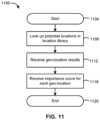
- FIG. 11 shows a flowchart depicting an embodiment of method 1100 of determining location geo-coordinates according to an embodiment of the disclosure.
- method 1100 is implemented at step 220 of method 200 by location determining module 136 shown in FIG. 3 .
- method 1100 begins at step 1104.
- the system looks up each of the potential locations received from location mention identification module 132 in geo-coordination library and/or service 348.
- the library 348 can be a third-party location library, such as, e.g., Nominatim, although other third-party location libraries can be used.
- This particular library receives data from the OpenStreetMap (OSM) project, which periodically provides a dump of all geo-locations around the globe that can be uploaded to a database.
- the location library provides a mechanism to easily access and query the database and can provide a REST service and a GUI for easy navigation.
- the system receives geo-location results from the location library for each potential location. If a word is looked up in the location library, it returns a set of geo-location results that the word can correspond to.
- the geo-location results can each have a score, such as an importance score, representing the strength of an association between the potential location and a particular geo-location. In embodiments, the score may be received from the library 348. In other embodiments, the score may be separately calculated.
- the method ends.
- the method 1100 for detecting determining location geo-coordinates may include the features depicted in or discussed herein in regard to FIG. 11 .
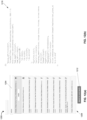
- FIGS. 12(a)-12(b) show exemplary outputs 1200 from an exemplary location library according to an embodiment of the disclosure.
- the query "orlando" 1204 was looked up in a location library and a listing of results 1208 was returned.
- the listing of results 1208 can be supplemented and/or replaced by a selection of button 1212.
- each result 1208 includes data 1216 including a latitude/longitude geo-coordinate pair, a polygon, some metadata indicating the result's larger context (e.g., province, country), and an importance score that shows a degree of commonality between the association between the query 1204 and the result 1208.
- the importance score represents the degree of correlation between the queried location and each geo-location result. For instance, the importance score for Orlando, Florida is about 0.71, while the importance score for Orlando, Arkansas is 0.37. The system can use this information to find the most likely geo-coordinates for each potential location.
- the exemplary output 1200 from an exemplary location library may include the features depicted in or discussed herein in regard to FIGS. 12(a)-12(b) .
- the depicted embodiment of the qualifying module 140 includes a location disambiguation engine 356, a user-location validator 360, and a location ranking engine 364.
- qualifying module 140 is configured to receive the results from the location library discussed above as a list or set of geo-coordinates and importance scores of potential locations.
- qualifying module 140 is configured to qualify and validate the list of potential locations and determine a primary location and corresponding geo-coordinates.
- FIG. 13 shows a flowchart depicting an embodiment of a method 1300 of qualifying locations according to an embodiment of the disclosure.
- method 1300 is implemented at step 224 of method 200 by qualifying module 140 shown in FIG. 3 .
- method 1300 begins at step 1304.
- the system qualifies location results from the location library using the importance scores.
- the system qualifies user locations using community heuristics based on types of user accounts and user locations. In some embodiments, these steps may include processes that identify and remove words that are not locations.
- the system finds and geo-coordinates a primary location determined from the list of remaining qualified potential locations. For example. once certain locations have been removed, for the remaining locations, the system can determine the "best" or most likely geo-coordinates from the list provided by the location library.
- the method ends.
- the method 1300 for qualifying locations may include the features depicted in or discussed herein in regard to FIG. 13 .
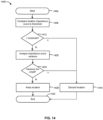
- FIG. 14 shows a flowchart depicting an embodiment of a method 1400 of qualifying locations from a location library according to an embodiment of the disclosure.
- method 1400 is implemented at step 1308 of method 1300 by location disambiguation engine 356.
- Method 1400 begins at step 1404.
- the system analyzes the results from the location library, such as by comparing the importance score of each result to an importance score threshold.
- the system determines whether an importance score of a particular result is lower than the threshold. If the importance score is lower than the threshold, the system discards the location result at step 1416. The system performs this analysis for each location result returned by the location library.
- the importance score of the top result returned by the location library is below the threshold, it likely means that the location is too obscure to be reliable. For instance, "The Milky Way” might match the name of a bar in New Jersey, but the system will not recognize (i.e., discard) this location if its importance score is below the threshold.
- step 1420 analyzes the important score variance of the results in the list.
- the system determines whether the variance in important scores across the entire listing of results is lower than a variance threshold. If the variance is lower than the variance threshold, the system discards the location result at step 1416. If the variance of the importance score of the results is below a variance threshold, it likely means that the system does not have enough confidence in coming up with a definitive geo-location for a potential location. For instance, "The Milky Way" might be the name of both a bar in New Jersey and a cafe in Washington, D.C.
- step 1432 method 1400 ends.
- the method 1400 for qualifying locations from a location library may include the features depicted in or discussed herein in regard to FIG. 14 .
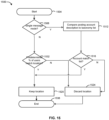
- FIG. 15 shows a flowchart depicting an embodiment of a method 1500 of qualifying user locations using community heuristics according to an embodiment of the disclosure.
- method 1500 is implemented at step 1312 of method 1300 by user location validator 360.
- User locations aren't always related to the location of a particular event. This may especially be true for targeted attacks such as terror attacks which may often happen in crowded locations prone to transit, such as airports and tourist attractions.
- a social media posting including a witness account from a Nice terrorist attack (location mention 408) may be posted by a user from Monaco. Therefore, the system may qualify user locations to determine a reliable geo-location.
- method 1500 begins at step 1504.
- the system determines whether it is retrieving social media posts in a single-posting mode or a multi-posting mode, such as a function of a setting or input from a user or other application. If a single-posting mode is determined, method 1500 proceeds to step 1512.
- step 1512 may be performed by user-type validator 352.
- the system may only accept the user location if the account is of a reliable type. Often, reliable accounts are official accounts from local news agencies, disaster response teams, police, or fire departments.
- the system can use a standard set of a words (e.g., "fire,” "police,” etc.) and match them against an account's description and name.
- a standard set of a words e.g., "fire,” "police,” etc.
- the system can curate a list of social media accounts belonging to local news agencies, local government agencies, and fire and police departments.
- the system can also collect the descriptions of these social media accounts, tokenize them, remove stopwords, and determine the most common terms found in the account descriptions.
- an exemplary standard set of words and/or taxonomy list can include words such as “city,” “state,” “county,” “local,” “department,” “dept.,” “police,” “emergency,” “emergencies,” “fire,” “911,” “breaking,” “news,” “service,” “weather,” “station,” “traffic,” and “channel.”
- the list of accounts can also include accounts having handles that begin or end with “PD” or “FD” (in uppercase) and accounts having descriptions that include the word “official.”
- the account list can include all accounts that have a URL ending in ".gov.”
- the system compares the name of the posting account to the determined set of words.
- step 1516 it is determined whether the posting account name matches an entry in the determined set of words. If the account name matches an entry in the determined set of words, the potential user location(s) is kept at step 1520. If the account name does not match an entry in the determined set of words, the potential user location(s) is discarded (e.g., ignored) at step 1524.
- a social media posting may contain the term "police” but may be posted by a user in a different location than the described event (e.g., Miami instead of Orlando). The system can compare the account name of the social media posting with the determined set of words and, if the account name does not match an entry in the determined set of words, the potential user location is ignored.
- method 1500 proceeds to step 1532.
- the system may only accept the user location if at least a certain predetermined percentage of users (e.g., 75%) have the same user location. If the system determines that a certain percentage of users does match the posting user's location, the location is kept at step 1520. If the system determines that a certain percentage of users do not match the posting user's location, the location is discarded (e.g., ignored) at step 1524. For example, if three postings are fed into the system, at least two users will have to have matching locations for their posts to be kept.
- Matching locations can be identified as "nearby" places (i.e., locations within a predetermined distance or radius of the user location). For instance, one user might identify a user location as "North London” and another user might identify a user location as “South London.”
- the location library can return a list of results/hits for each location. If, among the list of hits there is at least one user pair within a predetermined distance or radius (e.g., 20 miles) from each other, the users can be considered “nearby.” Method 1500 ends at step 1536.
- the method 1500 for qualifying user locations using community heuristics may include the features depicted in or discussed herein in regard to FIG. 15 .
- FIG. 16 shows a flowchart depicting an embodiment of a method 1600 for determining primary location geo-coordinates according to an embodiment of the disclosure.
- method 1600 is implemented at step 1316 of method 1300 by location ranking engine 364.
- the system ranks all locations remaining after the completion of the previous processes discussed above. In the embodiments shown, the ranking is based on a confidence level of the relevance of the location to an event that is the subject matter of the social media posting.
- the system ranks each remaining location based on the set of qualified user locations discussed above. This ranking represents the highest level of confidence that a location corresponds to the event.
- the system ranks each remaining location based on the location taxonomy list 336 discussed above.
- This ranking represents a lower level of confidence that a location corresponds to the event compared to a location ranked using a qualified user location.
- the system ranks each remaining location based on the heuristics used by heuristic-based classifier module 328 and the KB-based classifier module 332 discussed above. This ranking represents the lowest level of confidence that a location corresponds to the event compared to either a location ranked using a qualified user location or a location ranked using location taxonomy list 336.
- each source e.g., taxonomy, rule-based, and KB
- each source is assigned a separate confidence weight as discussed above in steps 1608, 1612, and 1616.
- taxonomy-based locations can have a higher confidence score than heuristics-based or KB locations.
- Each location can also be given a ranking score based on the following factors: 1) its position within the posting (e.g. leftmost location, rightmost location, second-left location, etc.); and 2) its inclusion within other locations inside the posting (e.g. "Flooding in Paris, France” will have both "Paris” and "France” tagged as locations, but since Paris is located in France, it will have a higher ranking score).
- the final ranking score can be a linear interpolation of the source confidence weights and the ranking scores.
- the ranking performance can be assessed within the end-to-end evaluation of the system, and the weights can be tuned such that they give the system maximum performance.
- each of steps 1608, 1612, and 1616 are performed on each remaining location.
- step 1612 is only performed on a remaining location that could not be ranked at step 1608 and step 1616 is only performed on a remaining location that could not be ranked at either step 1608 or 1612.
- the system identifies the geo-coordinates that most closely match each of the locations as primary location geo-coordinates. Having ranked the locations based on the above criteria, the system can use a pairwise minimum-distance process to determine the results/hits that generate the shortest distances.
- This step can be illustrated with reference to the following scenarios.
- scenario A the following social posting is received: "Two-alarm fire at 30 Main St.”
- a qualified user location is "Fort Lee, NJ.”
- scenario B the following social posting is received: "Hurricane alert for Paris, Texas.” For this posting, no qualified user location could be determined and, therefore, no user location is used.
- the system determines a location mention of "30 Main St” and a qualified user location of "Fort Lee, NJ” after implementation of the methods disclosed herein.
- the system receives results from a location library including three hits: “30 Main St., Brooklyn, NY,” “30 Main St., Flushing, NY,” and “30 Main St., Fort Lee, NJ.” Because the posting includes a qualified user location, the system implements step 1608 and determines a rank of the locations using the qualified user location "Fort Lee, NJ.” Based on this ranking, the location result "30 Main St., Fort Lee, NJ” is kept and the other two locations are discarded. In this scenario, steps 1612 and 1616 are not performed because a location ranked using a qualified user location represents the highest confidence level so further processing is unnecessary.
- the system then implements step 1620 to find a pair of geo-coordinates that corresponds to "30 Main St., Fort Lee, NJ," and designate those geo-coordinates as corresponding to the primary location of the event described in the posting.
- the system determines a location mention of "Paris, Texas” after implementation of the methods disclosed herein.
- the system receives results from a location library including three hits: “Paris, France,” “Paris, Texas,” and “Paris, Illinois.”
- the system skips step 1608 because there is no qualified user location and implements step 1612 to determine a rank of the locations based on the taxonomy list. Since "Paris” and “Texas” are determined to be the names of a city and state, respectively, from the taxonomy list, "Paris, Texas” is ranked as the most likely location in the list of hits.
- the system then implements step 1620 to find a pair of geo-coordinates that corresponds to "Paris, Texas” and designate those geo-coordinates as corresponding to the primary location of the event described in the posting.
- method 1600 ends at step 1624.
- the system can enrich the incoming social posting stream 304 by adding the geo-coordinates as metadata fields in the posting object(s).
- the stream can be consumed by any downstream application seamlessly and in real-time.
- the downstream applications may include, e.g., news detection, disaster detection, user profiling, etc. applications.
- the modified posting objects can be output to another application by communicating with a user system over one or more communication networks.
- the modified posting objects can be output directly to a user over one or more communication networks.
- the application can run in two modes: single-message and multi-message. Each mode can be used in streaming or pull fashion. For example, clusters of geo-tagged postings in a multi-message mode can be consumed via API calls or via a streaming service that enriches a UI or another application. A single geo-tagged posting in single-message mode can be similarly consumed.
- the method 1600 for determining primary location geo-coordinates may include the features depicted in or discussed herein in regard to FIG. 16 .
- Non-transitory computer-readable media includes physical computer storage media.
- a physical storage medium may be any available medium that can be accessed by a computer.
- non-transitory computer-readable media can comprise RAM, ROM, EEPROM, CD-ROM or other optical disk storage, magnetic disk storage or other magnetic storage devices, or any other physical medium that can be used to store desired program code in the form of instructions or data structures and that can be accessed by a computer.
- Disk and disc includes compact discs (CD), laser discs, optical discs, digital versatile discs (DVD), floppy disks and Blu-ray discs. Generally, disks reproduce data magnetically, and discs reproduce data optically. Combinations of the above are also included within the scope of non-transitory computer-readable media.
- the functions described above may be achieved through dedicated devices rather than software, such as a hardware circuit comprising custom VLSI circuits or gate arrays, off-the-shelf semiconductors such as logic chips, transistors, or other discrete components, all of which are non-transitory.
- Additional examples include programmable hardware devices such as field programmable gate arrays, programmable array logic, programmable logic devices or the like, all of which are non-transitory.
- Still further examples include application specific integrated circuits (ASIC) or very large scale integrated (VLSI) circuits.
- ASIC application specific integrated circuits
- VLSI very large scale integrated
- embodiments of the social media system 104, geo-location system 108, application 112, and user system 116, and/or any individual one, subset, or all of the components thereof may be implemented as hardware, software, or a mixture of hardware and software.
- each of the social media system 104, geo-location system 108, application 112, and user system 116, and/or any individual one, subset, or all of the components thereof may be implemented using a processor and a non-transitory storage medium, where the non-transitory machine-readable storage medium includes program instructions that when executed by the processor perform embodiments of the functions of such components discussed herein.
- each of the social media system 104, geo-location system 108, application 112, and user system 116, and/or any individual one, subset, or all of the components thereof, may be implemented using one or more computer systems, such as, e.g., a desktop computer, laptop computer, mobile computing device, network device, server, Internet server, cloud server, etc.
Landscapes
- Engineering & Computer Science (AREA)
- Computer Networks & Wireless Communication (AREA)
- Signal Processing (AREA)
- Software Systems (AREA)
- Theoretical Computer Science (AREA)
- Computing Systems (AREA)
- Physics & Mathematics (AREA)
- General Engineering & Computer Science (AREA)
- General Physics & Mathematics (AREA)
- Machine Translation (AREA)
- Geophysics And Detection Of Objects (AREA)
Applications Claiming Priority (2)
| Application Number | Priority Date | Filing Date | Title |
|---|---|---|---|
| US201662419609P | 2016-11-09 | 2016-11-09 | |
| PCT/US2017/057216 WO2018089178A1 (en) | 2016-11-09 | 2017-10-18 | System and method for detecting geo-locations in social media |
Publications (4)
| Publication Number | Publication Date |
|---|---|
| EP3549037A1 EP3549037A1 (en) | 2019-10-09 |
| EP3549037A4 EP3549037A4 (en) | 2020-11-25 |
| EP3549037C0 EP3549037C0 (en) | 2024-08-07 |
| EP3549037B1 true EP3549037B1 (en) | 2024-08-07 |
Family
ID=62064950
Family Applications (1)
| Application Number | Title | Priority Date | Filing Date |
|---|---|---|---|
| EP17869764.5A Active EP3549037B1 (en) | 2016-11-09 | 2017-10-18 | System and method for detecting geo-locations in social media |
Country Status (6)
| Country | Link |
|---|---|
| US (2) | US10652190B2 (es) |
| EP (1) | EP3549037B1 (es) |
| AU (1) | AU2017356150B2 (es) |
| CA (1) | CA3043010A1 (es) |
| ES (1) | ES2989281T3 (es) |
| WO (1) | WO2018089178A1 (es) |
Families Citing this family (5)
| Publication number | Priority date | Publication date | Assignee | Title |
|---|---|---|---|---|
| US10311524B2 (en) * | 2017-01-04 | 2019-06-04 | International Business Machines Corporation | Hashtag segmentation |
| US11223591B2 (en) * | 2020-02-05 | 2022-01-11 | International Business Machines Corporation | Dynamically modifying shared location information |
| US12022371B2 (en) | 2020-12-18 | 2024-06-25 | Social Asset Management Inc. | Method and system for managing electronic data representing emergency alerts |
| US12436665B2 (en) * | 2021-08-04 | 2025-10-07 | StoryForge LLC | Digital story generation |
| CN117236316B (zh) * | 2023-11-14 | 2024-01-26 | 苏州工业园区蒙纳士科学技术研究院 | 一种社交媒体中定位地点信息与文本地点信息融合方法 |
Family Cites Families (26)
| Publication number | Priority date | Publication date | Assignee | Title |
|---|---|---|---|---|
| US7596574B2 (en) * | 2005-03-30 | 2009-09-29 | Primal Fusion, Inc. | Complex-adaptive system for providing a facted classification |
| US8001287B2 (en) * | 2006-10-10 | 2011-08-16 | International Business Machines Corporation | Dynamically updating alias location codes with correct location codes during concurrent installation of a component in a computer system |
| US20100119053A1 (en) | 2008-11-13 | 2010-05-13 | Buzzient, Inc. | Analytic measurement of online social media content |
| EP2441010A4 (en) * | 2009-06-09 | 2016-12-28 | Ebh Entpr Inc | METHOD, DEVICE AND SOFTWARE FOR ANALYZING THE CONTENT OF MICROBLOG NEWS |
| US11122009B2 (en) * | 2009-12-01 | 2021-09-14 | Apple Inc. | Systems and methods for identifying geographic locations of social media content collected over social networks |
| US8315849B1 (en) | 2010-04-09 | 2012-11-20 | Wal-Mart Stores, Inc. | Selecting terms in a document |
| CN102387174A (zh) | 2010-09-02 | 2012-03-21 | 鸿富锦精密工业(深圳)有限公司 | 可自动更新社交网站信息的微件及方法 |
| KR101169377B1 (ko) | 2010-09-27 | 2012-07-30 | 한국과학기술연구원 | 핫 토픽 이벤트 추출에 기반한 실시간 이벤트의 하이라이트 제공 시스템 및 이를 이용한 하이라이트 서비스 제공방법 |
| US9122693B2 (en) | 2010-11-30 | 2015-09-01 | Nokia Technologies Oy | Method and apparatus for determining contextually relevant geographical locations |
| US20120173635A1 (en) * | 2010-12-30 | 2012-07-05 | Research In Motion Limited | Selective message rendering using a communication device |
| US20130290208A1 (en) | 2012-04-30 | 2013-10-31 | Gild, Inc. | Social media data filtering for electronic job recruiting |
| US8990327B2 (en) * | 2012-06-04 | 2015-03-24 | International Business Machines Corporation | Location estimation of social network users |
| US9646604B2 (en) * | 2012-09-15 | 2017-05-09 | Avaya Inc. | System and method for dynamic ASR based on social media |
| JP2014089583A (ja) | 2012-10-30 | 2014-05-15 | International Business Maschines Corporation | ソーシャル・メデイアに基づいてロケーションを推定する方法、コンピュータ・プログラム、コンピュータ。 |
| EP2946308A4 (en) | 2013-01-15 | 2016-08-24 | Getty Images Us Inc | CONTENT IDENTIFICATION ENGINE BASED ON SOCIAL MEDIA |
| US9652473B2 (en) | 2013-01-25 | 2017-05-16 | Adobe Systems Incorporated | Correlating social media data with location information |
| US9032000B2 (en) | 2013-02-19 | 2015-05-12 | Digital Globe Inc. | System and method for geolocation of social media posts |
| WO2014164746A1 (en) | 2013-03-11 | 2014-10-09 | Jc Goldenstein | Customizable, real time intelligence channel |
| EP2994846A4 (en) | 2013-05-09 | 2017-01-25 | Moodwire, Inc. | Hybrid human machine learning system and method |
| US10089394B2 (en) * | 2013-06-25 | 2018-10-02 | Google Llc | Personal search result identifying a physical location previously interacted with by a user |
| US20160203498A1 (en) | 2013-08-28 | 2016-07-14 | Leadsift Incorporated | System and method for identifying and scoring leads from social media |
| US9338759B2 (en) * | 2013-10-10 | 2016-05-10 | Pushd Inc. | Method and system for tracking a mobile user |
| US20150120788A1 (en) * | 2013-10-28 | 2015-04-30 | Xerox Corporation | Classification of hashtags in micro-blogs |
| US20150120502A1 (en) | 2013-10-29 | 2015-04-30 | Elwha LLC, a limited liability corporation of the State of Delaware | Supporting guaranty provisioning via user attribute proffering |
| US9307354B2 (en) | 2014-03-12 | 2016-04-05 | Apple Inc. | Retroactive check-ins based on learned locations to which the user has traveled |
| WO2016182774A1 (en) | 2015-05-08 | 2016-11-17 | Thomson Reuters Global Resources | Social Media Events Detection and Verification |
-
2017
- 2017-10-18 AU AU2017356150A patent/AU2017356150B2/en active Active
- 2017-10-18 WO PCT/US2017/057216 patent/WO2018089178A1/en not_active Ceased
- 2017-10-18 EP EP17869764.5A patent/EP3549037B1/en active Active
- 2017-10-18 ES ES17869764T patent/ES2989281T3/es active Active
- 2017-10-18 CA CA3043010A patent/CA3043010A1/en active Pending
- 2017-10-18 US US15/787,416 patent/US10652190B2/en active Active
-
2020
- 2020-04-08 US US16/843,327 patent/US11323403B2/en active Active
Also Published As
| Publication number | Publication date |
|---|---|
| EP3549037C0 (en) | 2024-08-07 |
| ES2989281T3 (es) | 2024-11-25 |
| US20180131654A1 (en) | 2018-05-10 |
| EP3549037A1 (en) | 2019-10-09 |
| AU2017356150B2 (en) | 2022-07-21 |
| EP3549037A4 (en) | 2020-11-25 |
| US11323403B2 (en) | 2022-05-03 |
| AU2017356150A1 (en) | 2019-05-09 |
| WO2018089178A1 (en) | 2018-05-17 |
| CA3043010A1 (en) | 2018-05-17 |
| US10652190B2 (en) | 2020-05-12 |
| US20200304447A1 (en) | 2020-09-24 |
Similar Documents
| Publication | Publication Date | Title |
|---|---|---|
| US11323403B2 (en) | System and method for detecting geo-locations in social media | |
| Gelernter et al. | An algorithm for local geoparsing of microtext | |
| US10303731B2 (en) | Social-based spelling correction for online social networks | |
| US20210312002A1 (en) | Text-to-Media Indexes on Online Social Networks | |
| EP2753024B1 (en) | System and method for continuously monitoring and searching social networking media | |
| CA2955321C (en) | Ranking external content on online social networks | |
| US8745065B2 (en) | Query parsing for map search | |
| US20150363402A1 (en) | Statistical Filtering of Search Results on Online Social Networks | |
| US20170083523A1 (en) | Granular Forward Indexes on Online Social Networks | |
| US20190079934A1 (en) | Snippet Generation for Content Search on Online Social Networks | |
| AU2019290018B2 (en) | Computer implemented system and method for geographic subject extraction for short text | |
| US20160019659A1 (en) | Predicting the business impact of tweet conversations | |
| CN103984771B (zh) | 一种英文微博中地理兴趣点抽取和感知其时间趋势的方法 | |
| CN105630884A (zh) | 一种微博热点事件的地理位置发现方法 | |
| US20130288725A1 (en) | Mobile terminal to recommend a short message recipient | |
| Gonzalez et al. | Tweolocator: a non-intrusive geographical locator system for twitter | |
| Alsaedi et al. | A combined classification-clustering framework for identifying disruptive events | |
| Han | Improving the utility of social media with Natural Language Processing | |
| Mahmood et al. | Public bus commuter assistance through the named entity recognition of twitter feeds and intelligent route finding | |
| NZ793494A (en) | System and method for detecting geo-locations in social media | |
| US20220398381A1 (en) | Digital content vernacular analysis | |
| Meurisch et al. | Enhanced detection of crisis-related microblogs by spatiotemporal feedback loops | |
| JP5879150B2 (ja) | フレーズ検出装置およびそのプログラム | |
| CA3103990C (en) | Computer implemented system and method for geographic subject extraction for short text | |
| Zahraa et al. | Automatic identification of eyewitness messages on twitter during disasters |
Legal Events
| Date | Code | Title | Description |
|---|---|---|---|
| STAA | Information on the status of an ep patent application or granted ep patent |
Free format text: STATUS: THE INTERNATIONAL PUBLICATION HAS BEEN MADE |
|
| PUAI | Public reference made under article 153(3) epc to a published international application that has entered the european phase |
Free format text: ORIGINAL CODE: 0009012 |
|
| STAA | Information on the status of an ep patent application or granted ep patent |
Free format text: STATUS: REQUEST FOR EXAMINATION WAS MADE |
|
| 17P | Request for examination filed |
Effective date: 20190503 |
|
| AK | Designated contracting states |
Kind code of ref document: A1 Designated state(s): AL AT BE BG CH CY CZ DE DK EE ES FI FR GB GR HR HU IE IS IT LI LT LU LV MC MK MT NL NO PL PT RO RS SE SI SK SM TR |
|
| AX | Request for extension of the european patent |
Extension state: BA ME |
|
| DAV | Request for validation of the european patent (deleted) | ||
| DAX | Request for extension of the european patent (deleted) | ||
| RAP1 | Party data changed (applicant data changed or rights of an application transferred) |
Owner name: THOMSON REUTERS ENTERPRISE CENTRE GMBH |
|
| REG | Reference to a national code |
Ref country code: DE Ref legal event code: R079 Free format text: PREVIOUS MAIN CLASS: G06F0017300000 Ipc: H04L0012580000 Ref country code: DE Ref legal event code: R079 Ref document number: 602017083958 Country of ref document: DE Free format text: PREVIOUS MAIN CLASS: G06F0017300000 Ipc: H04L0012580000 |
|
| A4 | Supplementary search report drawn up and despatched |
Effective date: 20201028 |
|
| RIC1 | Information provided on ipc code assigned before grant |
Ipc: H04L 12/58 20060101AFI20201022BHEP |
|
| STAA | Information on the status of an ep patent application or granted ep patent |
Free format text: STATUS: EXAMINATION IS IN PROGRESS |
|
| 17Q | First examination report despatched |
Effective date: 20221216 |
|
| P01 | Opt-out of the competence of the unified patent court (upc) registered |
Effective date: 20230524 |
|
| REG | Reference to a national code |
Ref country code: DE Free format text: PREVIOUS MAIN CLASS: H04L0012580000 Ipc: H04L0051222000 Ref country code: DE Ref legal event code: R079 Ref document number: 602017083958 Country of ref document: DE Free format text: PREVIOUS MAIN CLASS: H04L0012580000 Ipc: H04L0051222000 |
|
| GRAP | Despatch of communication of intention to grant a patent |
Free format text: ORIGINAL CODE: EPIDOSNIGR1 |
|
| STAA | Information on the status of an ep patent application or granted ep patent |
Free format text: STATUS: GRANT OF PATENT IS INTENDED |
|
| RIC1 | Information provided on ipc code assigned before grant |
Ipc: H04L 51/222 20220101AFI20240416BHEP |
|
| INTG | Intention to grant announced |
Effective date: 20240503 |
|
| GRAS | Grant fee paid |
Free format text: ORIGINAL CODE: EPIDOSNIGR3 |
|
| GRAA | (expected) grant |
Free format text: ORIGINAL CODE: 0009210 |
|
| STAA | Information on the status of an ep patent application or granted ep patent |
Free format text: STATUS: THE PATENT HAS BEEN GRANTED |
|
| RIN1 | Information on inventor provided before grant (corrected) |
Inventor name: SHAH, SAMEENA Inventor name: NOURBAKHSH, ARMINEH |
|
| AK | Designated contracting states |
Kind code of ref document: B1 Designated state(s): AL AT BE BG CH CY CZ DE DK EE ES FI FR GB GR HR HU IE IS IT LI LT LU LV MC MK MT NL NO PL PT RO RS SE SI SK SM TR |
|
| REG | Reference to a national code |
Ref country code: GB Ref legal event code: FG4D |
|
| REG | Reference to a national code |
Ref country code: CH Ref legal event code: EP |
|
| REG | Reference to a national code |
Ref country code: IE Ref legal event code: FG4D |
|
| REG | Reference to a national code |
Ref country code: DE Ref legal event code: R096 Ref document number: 602017083958 Country of ref document: DE |
|
| U01 | Request for unitary effect filed |
Effective date: 20240812 |
|
| U07 | Unitary effect registered |
Designated state(s): AT BE BG DE DK EE FI FR IT LT LU LV MT NL PT SE SI Effective date: 20240827 |
|
| P04 | Withdrawal of opt-out of the competence of the unified patent court (upc) registered |
Free format text: CASE NUMBER: APP_48406/2024 Effective date: 20240822 |
|
| REG | Reference to a national code |
Ref country code: ES Ref legal event code: FG2A Ref document number: 2989281 Country of ref document: ES Kind code of ref document: T3 Effective date: 20241125 |
|
| P05 | Withdrawal of opt-out of the competence of the unified patent court (upc) changed |
Free format text: CASE NUMBER: APP_48406/2024 Effective date: 20240827 |
|
| PG25 | Lapsed in a contracting state [announced via postgrant information from national office to epo] |
Ref country code: NO Free format text: LAPSE BECAUSE OF FAILURE TO SUBMIT A TRANSLATION OF THE DESCRIPTION OR TO PAY THE FEE WITHIN THE PRESCRIBED TIME-LIMIT Effective date: 20241107 |
|
| PG25 | Lapsed in a contracting state [announced via postgrant information from national office to epo] |
Ref country code: PL Free format text: LAPSE BECAUSE OF FAILURE TO SUBMIT A TRANSLATION OF THE DESCRIPTION OR TO PAY THE FEE WITHIN THE PRESCRIBED TIME-LIMIT Effective date: 20240807 Ref country code: GR Free format text: LAPSE BECAUSE OF FAILURE TO SUBMIT A TRANSLATION OF THE DESCRIPTION OR TO PAY THE FEE WITHIN THE PRESCRIBED TIME-LIMIT Effective date: 20241108 |
|
| PGFP | Annual fee paid to national office [announced via postgrant information from national office to epo] |
Ref country code: FI Payment date: 20241015 Year of fee payment: 8 |
|
| PG25 | Lapsed in a contracting state [announced via postgrant information from national office to epo] |
Ref country code: IS Free format text: LAPSE BECAUSE OF FAILURE TO SUBMIT A TRANSLATION OF THE DESCRIPTION OR TO PAY THE FEE WITHIN THE PRESCRIBED TIME-LIMIT Effective date: 20241207 |
|
| PG25 | Lapsed in a contracting state [announced via postgrant information from national office to epo] |
Ref country code: HR Free format text: LAPSE BECAUSE OF FAILURE TO SUBMIT A TRANSLATION OF THE DESCRIPTION OR TO PAY THE FEE WITHIN THE PRESCRIBED TIME-LIMIT Effective date: 20240807 |
|
| PG25 | Lapsed in a contracting state [announced via postgrant information from national office to epo] |
Ref country code: RS Free format text: LAPSE BECAUSE OF FAILURE TO SUBMIT A TRANSLATION OF THE DESCRIPTION OR TO PAY THE FEE WITHIN THE PRESCRIBED TIME-LIMIT Effective date: 20241107 |
|
| PGFP | Annual fee paid to national office [announced via postgrant information from national office to epo] |
Ref country code: SE Payment date: 20241010 Year of fee payment: 8 |
|
| PG25 | Lapsed in a contracting state [announced via postgrant information from national office to epo] |
Ref country code: RS Free format text: LAPSE BECAUSE OF FAILURE TO SUBMIT A TRANSLATION OF THE DESCRIPTION OR TO PAY THE FEE WITHIN THE PRESCRIBED TIME-LIMIT Effective date: 20241107 Ref country code: PL Free format text: LAPSE BECAUSE OF FAILURE TO SUBMIT A TRANSLATION OF THE DESCRIPTION OR TO PAY THE FEE WITHIN THE PRESCRIBED TIME-LIMIT Effective date: 20240807 Ref country code: NO Free format text: LAPSE BECAUSE OF FAILURE TO SUBMIT A TRANSLATION OF THE DESCRIPTION OR TO PAY THE FEE WITHIN THE PRESCRIBED TIME-LIMIT Effective date: 20241107 Ref country code: IS Free format text: LAPSE BECAUSE OF FAILURE TO SUBMIT A TRANSLATION OF THE DESCRIPTION OR TO PAY THE FEE WITHIN THE PRESCRIBED TIME-LIMIT Effective date: 20241207 Ref country code: HR Free format text: LAPSE BECAUSE OF FAILURE TO SUBMIT A TRANSLATION OF THE DESCRIPTION OR TO PAY THE FEE WITHIN THE PRESCRIBED TIME-LIMIT Effective date: 20240807 Ref country code: GR Free format text: LAPSE BECAUSE OF FAILURE TO SUBMIT A TRANSLATION OF THE DESCRIPTION OR TO PAY THE FEE WITHIN THE PRESCRIBED TIME-LIMIT Effective date: 20241108 |
|
| U21 | Renewal fee for the european patent with unitary effect paid with additional fee |
Year of fee payment: 8 Effective date: 20250220 |
|
| PG25 | Lapsed in a contracting state [announced via postgrant information from national office to epo] |
Ref country code: SM Free format text: LAPSE BECAUSE OF FAILURE TO SUBMIT A TRANSLATION OF THE DESCRIPTION OR TO PAY THE FEE WITHIN THE PRESCRIBED TIME-LIMIT Effective date: 20240807 |
|
| PG25 | Lapsed in a contracting state [announced via postgrant information from national office to epo] |
Ref country code: CZ Free format text: LAPSE BECAUSE OF FAILURE TO SUBMIT A TRANSLATION OF THE DESCRIPTION OR TO PAY THE FEE WITHIN THE PRESCRIBED TIME-LIMIT Effective date: 20240807 |
|
| PG25 | Lapsed in a contracting state [announced via postgrant information from national office to epo] |
Ref country code: SK Free format text: LAPSE BECAUSE OF FAILURE TO SUBMIT A TRANSLATION OF THE DESCRIPTION OR TO PAY THE FEE WITHIN THE PRESCRIBED TIME-LIMIT Effective date: 20240807 |
|
| PLBE | No opposition filed within time limit |
Free format text: ORIGINAL CODE: 0009261 |
|
| STAA | Information on the status of an ep patent application or granted ep patent |
Free format text: STATUS: NO OPPOSITION FILED WITHIN TIME LIMIT |
|
| PG25 | Lapsed in a contracting state [announced via postgrant information from national office to epo] |
Ref country code: MC Free format text: LAPSE BECAUSE OF FAILURE TO SUBMIT A TRANSLATION OF THE DESCRIPTION OR TO PAY THE FEE WITHIN THE PRESCRIBED TIME-LIMIT Effective date: 20240807 |
|
| 26N | No opposition filed |
Effective date: 20250508 |
|
| U20 | Renewal fee for the european patent with unitary effect paid |
Year of fee payment: 9 Effective date: 20250909 |
|
| PGFP | Annual fee paid to national office [announced via postgrant information from national office to epo] |
Ref country code: GB Payment date: 20250828 Year of fee payment: 9 |
|
| PGFP | Annual fee paid to national office [announced via postgrant information from national office to epo] |
Ref country code: IE Payment date: 20250827 Year of fee payment: 9 |
|
| REG | Reference to a national code |
Ref country code: CH Ref legal event code: U11 Free format text: ST27 STATUS EVENT CODE: U-0-0-U10-U11 (AS PROVIDED BY THE NATIONAL OFFICE) Effective date: 20251101 |
|
| PG25 | Lapsed in a contracting state [announced via postgrant information from national office to epo] |
Ref country code: RO Free format text: LAPSE BECAUSE OF FAILURE TO SUBMIT A TRANSLATION OF THE DESCRIPTION OR TO PAY THE FEE WITHIN THE PRESCRIBED TIME-LIMIT Effective date: 20240807 |
|
| PGFP | Annual fee paid to national office [announced via postgrant information from national office to epo] |
Ref country code: CH Payment date: 20251101 Year of fee payment: 9 |
|
| PG25 | Lapsed in a contracting state [announced via postgrant information from national office to epo] |
Ref country code: CY Free format text: LAPSE BECAUSE OF FAILURE TO SUBMIT A TRANSLATION OF THE DESCRIPTION OR TO PAY THE FEE WITHIN THE PRESCRIBED TIME-LIMIT; INVALID AB INITIO Effective date: 20171018 |
|
| PGFP | Annual fee paid to national office [announced via postgrant information from national office to epo] |
Ref country code: ES Payment date: 20251104 Year of fee payment: 9 |
|
| PG25 | Lapsed in a contracting state [announced via postgrant information from national office to epo] |
Ref country code: HU Free format text: LAPSE BECAUSE OF FAILURE TO SUBMIT A TRANSLATION OF THE DESCRIPTION OR TO PAY THE FEE WITHIN THE PRESCRIBED TIME-LIMIT; INVALID AB INITIO Effective date: 20171018 |