EP3548880B1 - Sensorhalter für invasive biosensoren - Google Patents
Sensorhalter für invasive biosensoren Download PDFInfo
- Publication number
- EP3548880B1 EP3548880B1 EP17875189.7A EP17875189A EP3548880B1 EP 3548880 B1 EP3548880 B1 EP 3548880B1 EP 17875189 A EP17875189 A EP 17875189A EP 3548880 B1 EP3548880 B1 EP 3548880B1
- Authority
- EP
- European Patent Office
- Prior art keywords
- sensor
- holder device
- sensor holder
- wire
- circuit board
- Prior art date
- Legal status (The legal status is an assumption and is not a legal conclusion. Google has not performed a legal analysis and makes no representation as to the accuracy of the status listed.)
- Active
Links
Images




Classifications
-
- A—HUMAN NECESSITIES
- A61—MEDICAL OR VETERINARY SCIENCE; HYGIENE
- A61B—DIAGNOSIS; SURGERY; IDENTIFICATION
- A61B5/00—Measuring for diagnostic purposes; Identification of persons
- A61B5/145—Measuring characteristics of blood in vivo, e.g. gas concentration or pH-value ; Measuring characteristics of body fluids or tissues, e.g. interstitial fluid or cerebral tissue
- A61B5/14507—Measuring characteristics of blood in vivo, e.g. gas concentration or pH-value ; Measuring characteristics of body fluids or tissues, e.g. interstitial fluid or cerebral tissue specially adapted for measuring characteristics of body fluids other than blood
- A61B5/1451—Measuring characteristics of blood in vivo, e.g. gas concentration or pH-value ; Measuring characteristics of body fluids or tissues, e.g. interstitial fluid or cerebral tissue specially adapted for measuring characteristics of body fluids other than blood for interstitial fluid
-
- A—HUMAN NECESSITIES
- A61—MEDICAL OR VETERINARY SCIENCE; HYGIENE
- A61B—DIAGNOSIS; SURGERY; IDENTIFICATION
- A61B5/00—Measuring for diagnostic purposes; Identification of persons
- A61B5/145—Measuring characteristics of blood in vivo, e.g. gas concentration or pH-value ; Measuring characteristics of body fluids or tissues, e.g. interstitial fluid or cerebral tissue
- A61B5/14532—Measuring characteristics of blood in vivo, e.g. gas concentration or pH-value ; Measuring characteristics of body fluids or tissues, e.g. interstitial fluid or cerebral tissue for measuring glucose, e.g. by tissue impedance measurement
-
- A—HUMAN NECESSITIES
- A61—MEDICAL OR VETERINARY SCIENCE; HYGIENE
- A61B—DIAGNOSIS; SURGERY; IDENTIFICATION
- A61B5/00—Measuring for diagnostic purposes; Identification of persons
- A61B5/145—Measuring characteristics of blood in vivo, e.g. gas concentration or pH-value ; Measuring characteristics of body fluids or tissues, e.g. interstitial fluid or cerebral tissue
- A61B5/1468—Measuring characteristics of blood in vivo, e.g. gas concentration or pH-value ; Measuring characteristics of body fluids or tissues, e.g. interstitial fluid or cerebral tissue using chemical or electrochemical methods, e.g. by polarographic means
- A61B5/1473—Measuring characteristics of blood in vivo, e.g. gas concentration or pH-value ; Measuring characteristics of body fluids or tissues, e.g. interstitial fluid or cerebral tissue using chemical or electrochemical methods, e.g. by polarographic means invasive, e.g. introduced into the body by a catheter
-
- A—HUMAN NECESSITIES
- A61—MEDICAL OR VETERINARY SCIENCE; HYGIENE
- A61B—DIAGNOSIS; SURGERY; IDENTIFICATION
- A61B5/00—Measuring for diagnostic purposes; Identification of persons
- A61B5/145—Measuring characteristics of blood in vivo, e.g. gas concentration or pH-value ; Measuring characteristics of body fluids or tissues, e.g. interstitial fluid or cerebral tissue
- A61B5/1468—Measuring characteristics of blood in vivo, e.g. gas concentration or pH-value ; Measuring characteristics of body fluids or tissues, e.g. interstitial fluid or cerebral tissue using chemical or electrochemical methods, e.g. by polarographic means
- A61B5/1486—Measuring characteristics of blood in vivo, e.g. gas concentration or pH-value ; Measuring characteristics of body fluids or tissues, e.g. interstitial fluid or cerebral tissue using chemical or electrochemical methods, e.g. by polarographic means using enzyme electrodes, e.g. with immobilised oxidase
- A61B5/14865—Measuring characteristics of blood in vivo, e.g. gas concentration or pH-value ; Measuring characteristics of body fluids or tissues, e.g. interstitial fluid or cerebral tissue using chemical or electrochemical methods, e.g. by polarographic means using enzyme electrodes, e.g. with immobilised oxidase invasive, e.g. introduced into the body by a catheter or needle or using implanted sensors
-
- A—HUMAN NECESSITIES
- A61—MEDICAL OR VETERINARY SCIENCE; HYGIENE
- A61B—DIAGNOSIS; SURGERY; IDENTIFICATION
- A61B5/00—Measuring for diagnostic purposes; Identification of persons
- A61B5/68—Arrangements of detecting, measuring or recording means, e.g. sensors, in relation to patient
- A61B5/6801—Arrangements of detecting, measuring or recording means, e.g. sensors, in relation to patient specially adapted to be attached to or worn on the body surface
- A61B5/683—Means for maintaining contact with the body
- A61B5/6835—Supports or holders, e.g., articulated arms
-
- A—HUMAN NECESSITIES
- A61—MEDICAL OR VETERINARY SCIENCE; HYGIENE
- A61B—DIAGNOSIS; SURGERY; IDENTIFICATION
- A61B5/00—Measuring for diagnostic purposes; Identification of persons
- A61B5/68—Arrangements of detecting, measuring or recording means, e.g. sensors, in relation to patient
- A61B5/6846—Arrangements of detecting, measuring or recording means, e.g. sensors, in relation to patient specially adapted to be brought in contact with an internal body part, i.e. invasive
- A61B5/6847—Arrangements of detecting, measuring or recording means, e.g. sensors, in relation to patient specially adapted to be brought in contact with an internal body part, i.e. invasive mounted on an invasive device
- A61B5/6848—Needles
Definitions
- the present disclosure generally relates to invasive biosensors and more specifically to a device for supporting sensing wires of invasive biosensors.
- Invasive biosensors such as sensors for wearable glucose monitoring devices, include thin wires that are insertable into a patient's skin. Sensing circuitry reads biological information about the patient via the thin wires. Once an invasive biosensor is inserted into a patient's skin, the electrical connections between the wires and circuitry remain exposed to potential moisture that may significantly impact the biosensor performance. For example, many electrochemical based sensors, may have performance impacts relating to calibration offsets or increases in the noise floor level due to moisture-caused current leakage within the electronics enclosure and is particularly high for biosensors included in wearable devices that may be exposed to perspiration on the patient's skin, weather, and other sources of moisture typically experienced by human skin.
- wearable glucose monitoring devices may include multiple parts that are coupled together to form working devices. Not only does the use of multiple parts cause the devices to be bulky, but it also creates multiple areas for possible moisture ingress (e.g., seals between parts).
- US 2012/0053608 A1 provides a sensor insertion and removing device which has a sensor; a puncture blade member; a housing which houses the sensor and the puncture blade member; a guide part which is provided within the housing and which glidably supports the puncture blade member; a puncture blade operating part which inserts the sensor under the skin by causing the puncture blade member to glide along the guide part integrally with the sensor, upon delivering the puncture blade member outside the housing to puncture the skin, and which causes the puncture blade member to glide along the guide part in a state of being separated from the sensor, upon removing the puncture blade member from under the skin into the housing, and a sensor operating part which pulls out the sensor from under the skin and removes it from under the skin into the housing.
- the device may include a connector for channeling a fluid from a fluid source and a device platform configured to receive the fluid via the connector.
- the device platform may contact the user's body.
- the device may further include one or more fluid cannulae coupled to and extending from the device platform and configured for insertion into the body.
- the fluid cannulae may be configured to receive the fluid from the device platform.
- the device may also include one or more channels configured to channel the fluid through the connector, into the device platform, into the one or more fluid cannulae, and into the body.
- the device may also include one or more sensors coupled to the device platform and configured for monitoring a parameter of the body.
- one disclosed device may include a rigid body, a set of legs, a sensor guiding structure, and groove formed in the rigid body, and an electrical trace.
- the set of legs may be attached to the rigid body and may extend from one side of the rigid body.
- the sensor guiding structure may be attached to the rigid body and may extend from the one side of the rigid body.
- the sensor guiding structure may define a guiding hole or a guiding opening.
- the groove may be formed in the rigid body.
- the groove may extend from the sensor guiding structure and may be sized to accommodate a sensor wire.
- the electrical trace may extend between the groove and a distal end of a first leg of the set of legs.
- the wearable monitoring device may include a printed circuit board, sensing circuitry, and a sensor holder device.
- the printed circuit board may be disposed in a housing that has an exterior surface for positioning the wearable monitoring device on a patient's skin.
- the sensing circuitry may include one or more electronic components coupled to the printed circuit board.
- the sensor holder device may include a body having a pair of legs, an electrical trace, a sensor retaining structure, and a sensor guiding structure. The pair of legs may extend from one side of the body.
- the sensor holder device may be physically coupled to the printed circuit board via the pair of legs.
- the electrical trace may extend along a first leg of the pair of legs to a first distal end of the first leg.
- the electrical trace may electrically couple a sensor wire to the printed circuit board.
- the sensor retaining structure may be disposed on the body and may retain a proximal portion of the sensor wire proximate to the electrical trace.
- the sensor guiding structure may guide a distal portion of the sensor wire beyond the exterior surface of the housing.
- One disclosed system may include a sensor wire and an interposer device.
- the sensor wire may include a first portion insertable into a patient's skin.
- the first portion may include means for generating glucose information.
- the interposer device may include sensor positioning means, retaining means, and coupling means.
- the sensor positioning means may be for positioning the sensor wire such that an insertion needle can insert the first portion into the patient's skin.
- the retaining means may be fore physically retaining a second portion of the sensor wire.
- the coupling means may be for electrically coupling the second portion of the sensor wire to circuitry disposed on a printed circuit board for determining a glucose level for a patient.
- a wearable glucose monitoring device includes a glucose sensor that can be inserted into a person's skin for continuous monitoring of the person's glucose levels. While being worn, the wearable glucose monitoring device may be exposed to normal external forces resulting from clothing, bumping up against obstacles, and other external forces. To reduce the impact of these forces and to improve wearer comfort, the footprint and the profile of the glucose monitoring device may be reduced.
- the glucose monitoring device described herein includes a sensor holder device.
- the sensor holder device has a unique shape that enables it to perform various functions, while also efficiently utilizing space in the glucose monitoring device. The unique shape is defined by a body that is supported by legs that extend from the body form void below the body.
- the legs are connected to a printed circuit board (“PCB") below the body and function to space the body apart from the PCB.
- PCB printed circuit board
- Components of the glucose monitoring device such as an integrated circuit and/or other sensing circuitry may be installed below the body, within the void.
- the sensor holder device provides for efficient use of space in the glucose monitoring device (e.g., allows for stacking of components and reduces an overall footprint of the device).
- the functions performed by the sensor holder device include structurally supporting electrodes of the glucose sensor, aligning sensor wires of the glucose sensor toward the person's skin, and electrically connecting the electrodes to the PCB.
- the sensor holder device structurally supports the electrodes by way of a groove into which the electrodes are placed.
- the sensor holder device aligns the sensor wires by way of a cylindrical opening or against one of the legs, either of which extends from the body of the sensor holder device toward the underside of the device.
- the sensor holder device electrically connects the electrodes by way of electrical traces formed in the surface of the sensor holder device. The electrical traces can extend between the groove and down the legs to the PCB. While the sensor holder device is described herein with reference to a glucose monitoring device, it is understood that the sensor holder device may be implemented to support any suitable electromechanical sensor.
- FIG. 1 illustrates a monitoring device 100, according to at least one example.
- the monitoring device 100 includes a sensor holder device 102 and a biosensor 104 such as a glucose sensor or other electromechanical sensor for use in sensing biological information of a patient.
- the biosensor 104 includes a sensor wire 106, sensing circuitry 108, a power source 110 such as a battery, a printed circuit board (“PCB”) 112, and an antenna 114.
- the sensor wire 106 includes a proximal end portion 106a and a distal end portion 106b. The proximal end portion 106a is supported by the sensor holder device 102.
- the proximal end portion 106a may be disposed within a groove or channel of the sensor holder device 102.
- the proximal end portion 106a is also electrically connected to the PCB 112 via the sensor holder device 102.
- the sensor holder device 102 may include a set of electrical traces 116a, 116b that extend proximate to a middle area of the sensor holder device 106 toward the PCB 112.
- biological parameters e.g., glucose levels
- the monitoring device 100 also includes a moisture barrier 118 disposed between a top enclosure 120, such as a cap, and a bottom enclosure 122.
- the moisture barrier 118 may create a seal that keeps moisture from infiltrating the biosensor 104.
- the top enclosure 120 encloses the biosensor 104 and the sensor holder device 102 and mates with the bottom enclosure 122.
- the bottom enclosure 122 includes an opening 124 through which the distal end portion 106b passes, when installed.
- the PCB 112 may include a corresponding opening through which the distal end portion 106b passes.
- the bottom enclosure 122 may include a substantially planar surface to allow the monitoring device 100 to be placed on the person's skin.
- the sensor holder device 102 may be suitably rigid to support the sensor wire 106 and provide structural support to the PCB 112.
- the sensor holder device 102 may be formed from liquid crystal polymer.
- the PCB 112 may be a flexible printed circuit board ("FPCB"). In this example, attaching the sensor holder device 102 to the PCB 112 may add rigidity to the entire monitoring device 100, in addition to the FPCB 112.
- the sensor holder device 102 may be considered an interposer device.
- the sensor holder device 102 stands off from the PCB 112 and may stand above components (e.g., the sensing circuitry 108, the power source 110, etc.) disposed below it, the sensor holder device 102 functions to save space within the monitoring device 100. This may result in the monitoring device 100 having a smaller footprint.
- the PCB 112 may be placed close to the person's skin unlike other monitoring devices that include a standoff fixture. This provides for improved wearer comfort and less overall device bulkiness.
- the sensor wire 106 may include one or more electrodes, chemicals, or other means for generating biological information.
- the sensor wire 106 may be a coaxial sensor and include two electrodes 123, 125 that are inserted into the person's skin to expose the electrodes 123, 125 to the interstitial fluid in the person's subcutaneous tissue.
- the electrode 123 includes at least a portion of the sensor wire 106 made of platinum or having a platinum coating and electrode 125 includes a silver/silver-chloride ("Ag/AgCl”) material that covers a part of electrode 123.
- the electrodes 123, 125 may be used to generate glucose information about the patient by generating electrical signals corresponding to an amount of glucose present within the interstitial fluid.
- a reactive material such as glucose oxidase (“GOX”)
- GOX glucose oxidase
- a voltage is applied to the electrodes 123, 125, an electrical current is generated based on the amount of these reaction products generated by the glucose/GOX reaction.
- the electrical current is routed through the sensor wire 106 to the sensing circuitry 108.
- the sensing circuitry 108 may use the strength of the current to determine glucose information such as the patient's glucose levels.
- glucose level measurements are described in this example, the biosensor 104 may be configured to measure other biological parameters without departing from the scope of the present disclosure.
- the chemical materials applied onto the sensor wire 106 to form the electrodes 123, 125 and the reactive material coated onto the electrodes 123, 125 may be suitable for a glucose sensor, other material may be used according to other examples, based on the application of the biosensor 104.
- the sensor wire's 106 length may allow the sensor wire 106 to extend from beneath the person's skin to the sensor holder device 102 with allowance for the patient's movement.
- the sensor wire 106 may be between approximately 10 millimeters to 30 millimeters long.
- the sensor wire's 106 thickness, or gauge may be selected to allow the sensor wire 106 to remain injected into the skin during this period with minimal discomfort.
- the sensor wire 106 includes an outer diameter of approximately 100-200 microns for portions of the wire coated with the electrode 125 and an outer diameter of approximately 100 microns for the electrode 123.
- the sensor wire 106 generally may have a maximum outer diameter approximately between 100 microns and 300 microns. In some examples, however, the sensor wire 106 may have an outer diameter of about 50 microns.
- the sensing circuitry 108 includes one or more electronic components configured for signal processing.
- the sensing circuitry 108 may include a system on chip (“SOC”) or system in package (“SIP”) that includes any suitable combination components for digital signal processing, analog signal processing, mixed-signal processing, and/or the like that may be present on the surface of a PCB assembly or embedded.
- Such components may include, for example, a microcontroller, a memory, a timing source, one or more digital interfaces, one or more analog interfaces, voltage regulators, and/or any other suitable component.
- the sensing circuitry 108 may be configured to receive electrical signals from the sensor wire 106 (e.g., via the PCB 112 and the electrical traces 116) and process the electrical signals to determine glucose levels of the patient.
- the sensing circuitry 108 includes a processing device and a computer-readable medium, such as a random access memory (“RAM”) coupled to the processing device.
- the processing device may execute computer-executable program instructions stored in memory, such as executing one or more computer programs.
- processing devices may comprise a microprocessor, a digital signal processor (“DSP”), an application-specific integrated circuit (“ASIC”), field programmable gate arrays (“FPGAs”), state machines, or other processing means for processing electrical signals received from electrodes 123, 125 of the sensor wire 106.
- Such processing means may further include programmable electronic devices such as PLCs, programmable interrupt controllers ("PICs”), programmable logic devices (“PLDs”), programmable read-only memories (“PROMs”), electronically programmable read-only memories (“EPROMs” or “EEPROMs”), or other similar devices.
- PLCs programmable electronic devices
- PLCs programmable interrupt controllers
- PLDs programmable logic devices
- PROMs programmable read-only memories
- EPROMs electronically programmable read-only memories
- EEPROMs electronically programmable read-only memories
- the processing device may include, or may be in communication with, media, for example computer-readable storage media, that may store instructions that, when executed by the processing device, cause the processing device to perform the steps described herein as carried out, or assisted, by a processing device.
- Examples of computer-readable media may include, but are not limited to a memory chip, ROM, RAM, ASIC, or any other storage means from which a processing device can read or write information.
- the top enclosure 120 and the bottom enclosure 122 may together form a housing for retaining the biosensor 104.
- the housing may be compact in size for placing on the person's skin.
- the housing may be made of any suitable material for housing the biosensor 104.
- Non-limiting examples of materials that may be suitable for the housing include silicone, polyethylene, polyvinyl chloride ("PVC"), polypropylene, nylon, polyurethane, polycarbonate, steel, aluminum, and other plastics and metals.
- the monitoring device 100 may be secured to the skin using an adhesive, band, strap, or other securing means. In some examples, the monitoring device 100 may be worn for extended period of time (e.g., days, weeks, months, etc.).
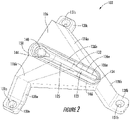
- FIGS 2 and 3 respectively illustrate a top perspective view and a bottom perspective view of the sensor holder device 102, according to certain examples.
- the sensor holder device 102 which is a type of molded interconnect device, may include a body 126 and a set of legs 128, a few of which are illustrated (e.g., 128a, 128b).
- the body 126 may include a substantially planar topside area (e.g., greater than 1 mm ⁇ 2). This topside area may be suitable sized and suitably flat to allow a suction head of a robotic placement device (e.g., a pick and place device) to grasp the sensor holder device 102.
- a robotic placement device e.g., a pick and place device
- the topside area may be located adjacent to the retaining structure 132 and a perimeter edge of the body 126.
- the topside area may be located at any suitable location along the topside of the body 126.
- the topside area may be greater when the retaining structure 132 is disposed on the underside of the body 126. This may result in more suitable locations where the suction head can pick up the sensor holder device 102 as compared to examples where the retaining structure is disposed on the topside of the body 126.
- the sensor holder device 102 may have a height of about 3 mm, a width of about 15 mm, and a length of about 20 mm. In other examples, the height, width, and/or length of the sensor holder device 102 may be respectively greater than or less than 3 mm, 15 mm, and/or 20 mm. The height of about 3 mm may be selected to be less than the height of the power source 110. The height of about 3 mm may also provide a suitable separation between the proximal end of the sensor wire 106b and the sensing circuitry 108 and other electronic components attached to or otherwise disposed within the PCB 112.
- the set of legs 128 extend from one side of the body 126, extend below the body 126, and, in some examples, include a corresponding set of feet 130, a few of which are illustrated (e.g., 130a-130c).
- the body 126 may be oriented in a first plane and the set of feet 130 may be oriented in a second, different plant.
- the set of legs 128 may extend between the first plane and the second plane to connect the body 126 to the set of feet 130.
- the body 126 may be oriented in the first plane when a substantial portion of the body 126 is located in the first plane.
- the set of feet 130 may be oriented in the second plan when substantial portions of the set of feet are located in the second plane.
- the feet 130 may include solder rings 131, a few of which are illustrated (e.g., 131a-131c).
- the sensor holder device 102 may be electrically and structurally attached to a PCB (e.g. the PCB 112) or other structure using the solder rings 131.
- the electrical traces 116 which begin in the body 126 and extend along the legs 128 and into the feet 130, may be electrically connected to the PCB 112 via the solder rings 131.
- the feet 130 are connected to the PCB 112 using surface mount technology.
- the sensor holder device 102 may be formed in any suitable manner including, for example, injection molding, or other suitable techniques.
- the sensor holder device 102 may be formed as a single piece including at least the body 126, the legs 128, the feet 130, and/or a sensor retaining structure 138.
- the sensor holder device 102 may be formed from any suitable material including, for example, liquid crystal polymer (e.g., RTP 3499-3 X 113393 A sold by RTP Co., VECTRA ® E840i LDS sold by Ticon, etc.), high-temperature nylon, polyetheretherketone (“PEEK”), and other similar materials.
- liquid crystal polymer e.g., RTP 3499-3 X 113393 A sold by RTP Co., VECTRA ® E840i LDS sold by Ticon, etc.
- PEEK polyetheretherketone
- the material selected for the sensor holder device 102 may be non-conductive, may be compatible with soldering, have low moisture absorption properties, have low water vapor transmission rates, and may be easily moldable into very thin walls. In some examples, the material selected for the sensor holder device 102 may be capable of laser direct structuring ("LDS") processing. The rigidity of the sensor holder device 102 may depend on one or both of the sensor holder device's 102 thickness and the material forming the sensor holder device 102.
- LDS laser direct structuring
- the sensor holder device's 102 thickness may be inversely proportional to the density of the material (e.g., a denser material may allow for a thinner sensor holder device 102 while a less dense material may require a thicker sensor holder device 102).
- the sensor holder device 102 also includes a sensor retaining structure 132 disposed in a top surface of the body 126.
- the sensor retaining structure 132 may include a groove (e.g., having a U-shaped, V-shaped, etc. cross-section) sized to receive the sensor wire 106 (shown in dashed lines).
- the sensor retaining structure 132 may include any suitable combination of tabs, hooks, springs, and the like configured to retain the sensor wire 106.
- the sensor retaining structure 132 may be used to align the sensor wire 106 during assembly.
- the proximal end portion 106a of the sensor wire 106 may be brought into contact with an end wall 134 near a first region 136a of the sensor retaining structure 132. This may align the sensor wire 106 in the transverse direction. Similarly, because the sensor wire 106 may sit down in the sensor retaining structure 132, the sensor retaining structure 132 may align the sensor wire 106 in the lateral direction.
- the sensor retaining structure 132 may be defined to include the first region 136a and a second region 136b.
- the electrical trace 116a may extend proximate to and, in some examples, within the first region 136a.
- the electrical trace 116b may extend proximate to and, in some examples, within the second region 136b.
- a first dimensional measurement e.g., a width, a depth, a cross-sectional area, etc.
- taken laterally across the sensor retaining structure 132 in the first region 136a may be different from a second dimensional measurement taken laterally across the sensor retaining structure 132 in the second region 136b.
- the electrodes 123, 125 may be of different sizes (e.g., have different diameters).
- the different lateral measurements may be selected based on the respective widths of a proximate end of the sensor wire at different locations.
- one portion of the proximate end of the sensor wire may be an exposed platinum electrode 123, which may have a narrower gauge than another portion which includes the platinum wire coated with a silver/silver-chloride electrode 125.
- the sensor holder device 102 may include other components (e.g., electronics, antennas, etc.) attached to or otherwise formed in the body 126 and/or the legs 128
- an antenna may be printed on the body 126 and electrically coupled to other electronics (e.g., an electronic device attached to the sensor holder device 102, the sensing circuitry 108, and/or the PCB 112) via one or more electrical traces, such as the electrical traces 116.
- the sensor holder device 102 may include any suitable number of electrical traces 116 to support any suitable number of electrodes.
- both electrical traces 116a, 116b may extend along the leg 128a (e.g., on the same side of the leg 128a or on opposite sides).
- other electrical traces 116 may extend along the other legs 128 of the sensor holder device 102.
- two or more electrical traces 116 may extend along each of the legs 128a-128c.
- at least one of the electrical traces 116 may function as a guard trace to reduce current leakage of one or more other electrical traces 116.
- the electrical traces 116a, 116b may be formed in the sensor holder device 102 using any suitable technique. Examples of such techniques include LDS processing and corresponding techniques for depositing a conductive material such as copper, nickel, gold, etc. in a circuit pattern. Such techniques may include electroless copper plating. For example, such techniques may include those using Enplate ® LDS AG-600 as sold by Enthone ® .
- the electrical traces 116a, 116b may have a thickness of about 1 micron. In some examples, the electrical traces 116a, 116a have a thickness of less than 1 micron (e.g., 0.25 microns to 0.5 microns).
- the electrodes 123, 125 may be electrically connected to the electrical traces 116a, 116b in any suitable manner. For example, once the electrodes 123, 125 have been placed in the sensor retaining structure 132, a conductive pressure sensitive adhesive ("PSA") or other electrically conductive adhesive may be applied to the electrodes 123, 125.
- PSA conductive pressure sensitive adhesive
- the electrically conductive adhesive may form independent electrical connections between the electrodes 123, 125 and the electrical traces 116a, 116b.
- the electrically conductive adhesive may be in any suitable form such as liquid, film, tape, and the like.
- Suitable materials include Electrically Conductive Adhesive Transfer Tapes ("ECATT") sold by the 3M, ARclad ® brand PSAs such as 8001-75, 8001-77, 9032, or 9032-70 sold by Adhesives Research ® , Supreme 10HTFN sold by the MasterBond ® , or any other suitable material.
- electrically conductive adhesives may be considered "snap cure” epoxies, polyurethanes, B-stage films, and the like.
- the sensor holder device 102 also includes a sensor guiding structure 138.
- the sensor guiding structure 138 is attached to the body 126 and extends away from the body 126 in generally the same direction as the legs 128.
- the sensor guiding structure 138 can be attached to the body 126 by being formed directly from the body 126.
- the sensor guiding structure 138 may also be attached to the body 126 by being formed as a separate part and connected to the body 126.
- the sensor guiding structure 138 may include an opening or hole 140 through which the sensor wire 106 may pass.
- the hole 140 may have any suitable shape such as cylindrical, conical, rectangular, and the like. Thus, the cross-section of the hole 140 may change with respect to its depth.
- the sensor guiding structure 138 may be attached to the PCB 112 using surface mount technology.
- the sensor guiding structure 138 may include a solder ring 142, which during solder reflow creates a hermetic seal between the sensor guiding structure 138 and the PCB 112.
- the sensor wire 106 may be threaded through the PCB 112 and the hole 140 before being bent into place within the sensor retaining structure 132.
- a potting material 144 may be positioned proximate the sensor wire 106 within the hole 140 as shown in Figure 2 .
- the potting material 144 may be injected on top of and around the sensor wire 106 to pot the sensor wire 106 to the hole 140.
- the potting material 144 may include a non-conductive material to prevent a short in the sensor wire 106.
- the potting material 144 may provide a moisture barrier for the electrical connections between the electrical traces 116 and the electrodes 123, 125.
- Non-limiting examples of the potting material 144 include epoxy, wax, silicone, acrylic, polyurethane, or other means for providing a moisture barrier.
- the potting material 144 is shown as positioned only proximate to the sensor wire 106, the potting material 144 may be applied to coat other components of the sensor holder device 102.
- a moisture seal 146 may be formed along a topside surface of the sensor holder device 102.
- the moisture seal 146 may function as a moisture barrier between the body 126 and the top enclosure 120.
- the moisture seal 146 may be formed by seam welding the top enclosure 120 to the body 126, with the sensor retaining structure 132 disposed within the moisture seal 146.
- a portion of the body 126 may be melted together with a portion of the top enclosure 120, or a moisture barrier adhesive may be applied to the body 126 prior to installation of the top enclosure 120.
- the adhesive may be pressure activated, and set when an installation force is applied to the top enclosure 120 to install it on the body 126.
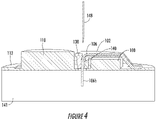
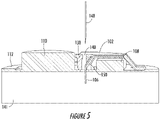
- Figure 4 and 5 illustrate examples of the sensor holder device 102, according to certain examples.
- the hole 140 or a separate opening that intersects with the hole 140 may be used to align a hypodermic insertion needle 148 of a sensor insertion tool (not shown).
- placing the insertion needle 148 in the hole 140, with the monitoring device 100 pressed against the person's skin 141, may achieve the proper alignment for the insertion needle 148 to insert the sensor wire 106 into the person's skin 141.
- the sensor guiding structure 138 in Figures 3 and 4 is illustrated as extending about orthogonally away from the body 126, it is understood that the sensor guiding structure 138 may be connected to the body 126 at any other suitable angle and/or may include other openings.
- the sensor guiding structure 138 may also include a sensor hole 150.
- the hole 140 may be considered a guiding hole for receiving, guiding, and aligning the insertion needle 148.
- the sensor hole 150 may function to guide the sensor wire 106 from the body 126 to a location beyond the PCB 112.
- the angle between the sensor hole 150 and the hole 140 may help stabilize the sensor wire 106 in the insertion needle 148 during insertion. For example, threading the sensor wire 106 through the sensor hole 150 may cause the sensor wire 106 to press up against the insertion needle 148.
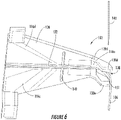
- Figure 6 illustrates an example of the sensor holder device 102 that includes the sensor retaining structure 132 (e.g., a groove or comparable structure described herein) disposed on an underside of the body 126, according to at least one example.
- the sensor wire 106 is retained by the sensor retaining structure 132 on the underside of the body 126.
- placing the sensor wire 106 on the underside of the body 126 may result in additional mechanical protection (e.g., provided by the sensor holder device 102) and additional moisture protection (e.g., from being located further within the monitoring device 100).
- placing the sensor wire 106 on the underside of the body 126 may result in decreased manufacturing costs and increased throughput. For example, because all electrical traces are located on the same side of the sensor holder device 102 (e.g., no requirement for through plating), the sensor holder device 102 does not have to be turned over during manufacturing.
- the sensor holder device 102 includes electrical traces 116c-116e also disposed on the underside of the body 126.
- the electrical traces 116c-116e are examples of the electrical traces 116a, 116b.
- each of the electrical traces 116c-116e correspond to an electrode of the sensor wire 106.
- the electrical trace 116d may be a guard trace, which may be installed in the sensor holder device 102 to reduce current leakage between the electrical traces 116c and 116e.
- the sensor holder device 102 may also include an isolation slot 149.
- the isolation slot 149 may be formed in the sensor holder device 102 to reduce current leakage between the electrical traces 116.
- the isolation slot 149 may be injected with potting materials (e.g., petroleum jelly, paraffin wax, low temperature silicones, etc.) to provide additional electrical protection against leakage currents.
- the sensor guiding structure 138 may be defined by one of the legs 128.
- the sensor guiding structure 138 may be defined by the leg 128d that includes a contoured shape including a guiding opening 151.
- the guiding opening 151 may be used to guide the sensor wire 106 from the body 126 towards the underside of the sensor holder device 100.
- the guiding opening 151 may be defined as being disposed between two feet, 130e and 130d, of the leg 128d.
- the leg 128d may include a single foot 130 including a guiding hole such as the guiding hole 140.
- the leg 128d may guide the sensor wire 106 from the sensor retaining structure 132 toward the underside of the sensor holder device 100.
- the insertion needle 148 may be inserted through the guiding opening 151 to intersect with the sensor wire 106 as part of inserting the sensor wire 106 into the person's skin.
- Figure 7 illustrates an example of the sensor holder device 102 including a sensor retaining structure 132, according to at least one example.
- the sensor retaining structure 132 illustrated in Figure 7 includes a set of tabs 152 (e.g., 152a-152d) configured to retain and align the sensor wire 106.
- the tabs 152 may be suitable spaced apart to receive and retain the sensor wire 106 via a snap-fit.
- the tabs 152 may include grooves formed on inward-facing surfaces. Additionally, the tabs 152 may be configured to deflect laterally in response to a downward force.
- a downward force may be applied to the sensor wire 106 in the direction of the top surface of the body 126, with the sensor wire aligned between the tabs 152a, 152b and 152c, 152d.
- This downward force may cause the tabs 152 to defect slightly laterally to accommodate the sensor wire 106 at least until the sensor wire 106 reaches the grooves formed on the inward-facing surfaces of the tabs 152.
- the electrical traces 116 may extend between the sensor retaining structure 132 and the feet 130. In some examples, the electrical traces 116 may extend within the tabs 152. In this manner, electrical connections between the electrical traces 116 and the sensor wire 106 may be made within the inward-facing surfaces of the tabs 152.
- the sensor retaining structure 132 may, in some examples, include hooks configured to retain the sensor wire 106.
- the sensor retaining structure 132 may also include springs, such as overmolded leaf springs, configured to retain the sensor wire 106. Any of the variations of the sensor retaining structure 132 described herein may be used in combination with the PSAs described herein.
- FIGS 8A-8C illustrate example monitoring devices 800a-800c including various sensor holder devices 802a-802c, according to certain examples.
- the monitoring device 800 is an example of the monitoring device 100 described herein.
- the monitoring device 800 may include a top enclosure 820, a biosensor 804, a PCB 812, a bottom enclosure 822, and a sensor wire 806.
- the sensor holder device 802a may be aligned with respect to the other components of the biosensor 804a such that the sensor wire 806a extends through an inner region of the biosensor 804a.
- the sensor wire 806a may extend through an opening in the PCB 812a disposed within an inner region of the PCB 812a.
- An enclosure opening 824a of the bottom enclosure 822a may correspond to the opening in the PCB 812a.
- the sensor holder device 802b may be aligned with respect to the other components of the biosensor 804b such that the sensor wire 806b extends through outer region of the biosensor 804b.
- the sensor wire 806b may extend through a PCB opening 854b disposed within an outer region of the PCB 812b.
- An enclosure opening 824b of the bottom enclosure 822b may correspond to the PCB opening 854b.
- the sensor holder device 802c may be aligned with respect to the other components of the biosensor 804c such that the sensor wire 806c extends proximate to an outer perimeter of the biosensor 804c.
- the sensor wire 806c may extend proximate to a perimeter edge 856c of the PCB 812c.
- the perimeter edge 856c may include a cut-away portion 858c to accommodate the sensor wire 806c.
- the bottom enclosure 822c may include a corresponding cut-away portion 860c.
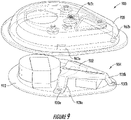
- FIG. 9 illustrates a monitoring device 900, according to at least one example.
- the monitoring device 900 is an example of the monitoring device 100.
- the monitoring device 900 may include a sensor holder device 902, a biosensor 904, and a top enclosure 920.
- features of the sensor holder device 902 may be used to align the top enclosure 920 with the other portions of the monitoring device 900.
- legs 928 and/or feet 930 of the sensor holder device 902 may correspond to alignment notches 962 of the top enclosure 920.
- the top enclosure 920 may be brought into contact with the sensor holder device 902 such that the legs 928 are received into the alignment notches 962.
- alignment using the alignment notches 962 and portions of the sensor holder device 902 may result in a tighter fit between the top enclosure 920 and the other portions of the monitoring device 900. This may be because the manufacturing tolerances of the sensor holder device 902 are much tighter (e.g., +/- 15 microns), which may result in an overall better fit.
- the top enclosure 920 may be aligned with a perimeter edge of a PCB 912.
- the PCB 912 will be cut using a die, which may have a relatively high tolerance (e.g., +/- 200 microns). This may result in a looser fit when compared to alignment using the alignment notches 962 and the legs 928.
- references herein to an example or implementation means that a particular feature, structure, operation, or other characteristic described in connection with the example may be included in at least one implementation of the disclosure.
- the disclosure is not restricted to the particular examples or implementations described as such.
- the appearance of the phrases "in one example,” “in an example,” “in one implementation,” or “in an implementation,” or variations of the same in various places in the specification does not necessarily refer to the same example or implementation.
- Any particular feature, structure, operation, or other characteristic described in this specification in relation to one example or implementation may be combined with other features, structures, operations, or other characteristics described in respect of any other example or implementation.
- a or B or C includes any or all of the following alternative combinations as appropriate for a particular usage: A alone; B alone; C alone; A and B only; A and C only; B and C only; and all three of A and B and C.
Landscapes
- Health & Medical Sciences (AREA)
- Life Sciences & Earth Sciences (AREA)
- Physics & Mathematics (AREA)
- Surgery (AREA)
- General Health & Medical Sciences (AREA)
- Engineering & Computer Science (AREA)
- Biomedical Technology (AREA)
- Heart & Thoracic Surgery (AREA)
- Medical Informatics (AREA)
- Molecular Biology (AREA)
- Biophysics (AREA)
- Animal Behavior & Ethology (AREA)
- Pathology (AREA)
- Public Health (AREA)
- Veterinary Medicine (AREA)
- Optics & Photonics (AREA)
- Chemical & Material Sciences (AREA)
- Chemical Kinetics & Catalysis (AREA)
- General Chemical & Material Sciences (AREA)
- Emergency Medicine (AREA)
- Measurement Of The Respiration, Hearing Ability, Form, And Blood Characteristics Of Living Organisms (AREA)
- Investigating Or Analysing Materials By Optical Means (AREA)
Claims (15)
- Sensorhaltevorrichtung (102) zum Stützen eines Sensordrahts (106), wobei die Sensorhaltevorrichtung (102) umfasst:einen starren Körper (126);einen Satz von Schenkeln (128, 128a, 128b), die an dem starren Körper (126) befestigt sind und sich von einer Seite des starren Körpers (126) erstrecken;eine Sensorführungsstruktur (138), die an dem starren Körper (126) befestigt ist und sich von einer Seite des starren Körpers (126) erstreckt, wobei die Sensorführungsstruktur (138) ein Führungsloch (150) oder eine Führungsöffnung (151), die dafür ausgebildet ist, den Sensordraht (106) zu führen, definiert,wobei der starre Körper (126) eine Kerbe (132) umfasst, die sich von der Sensorführungsstruktur (138) erstreckt und bemessen ist, den Sensordraht (106) zu beherbergen; undeine elektrische Leiterbahn (116), die die Kerbe (132) und ein distales Ende eines ersten Schenkels (128a) des Satzes von Schenkeln (128, 128a, 128b) elektrisch koppelt.
- Sensorhaltevorrichtung (102) nach Anspruch 1, wobei die Kerbe (132) an der einen Seite des starren Körpers (126) oder an einer Seite des starren Körpers (126), die der einen Seite entgegengesetzt ist, gebildet ist.
- Sensorhaltevorrichtung (102) nach Anspruch 1, wobei die Kerbe (132) definiert:einen ersten Bereich (136a), der eine erste Querschnittsfläche aufweist und bemessen ist, einen ersten Abschnitt (106a) des Sensordrahts (106) zu beherbergen; undeinen zweiten Bereich (136b), der eine zweite Querschnittsfläche aufweist und bemessen ist, einen zweiten Abschnitt des Sensordrahts (106) zu beherbergen, wobei die erste Querschnittsfläche sich von der zweiten Querschnittsfläche unterscheidet.
- Sensorhaltevorrichtung (102) nach Anspruch 1, wobei das Führungsloch (150) die Kerbe (132) schneidet und an einem distalen Ende der Sensorführungsstruktur (138) endet, das unter dem starren Körper (126) angeordnet ist.
- Sensorhaltevorrichtung (102) nach Anspruch 4, wobei:der starre Körper (126) in einer ersten Ebene ausgerichtet ist; unddas distale Ende der Sensorführungsstruktur (138) und das distale Ende des ersten Schenkels (128a) in einer zweiten Ebene ausgerichtet sind, wobei sich die erste Ebene von der zweiten Ebene unterscheidet.
- Sensorhaltevorrichtung (102) nach Anspruch 1, wobei:die Führungsstruktur (138) dafür ausgebildet ist, einen ersten Abschnitt (106b) des Sensordrahts (106) aufzunehmen und den ersten Abschnitt (106b) des Sensordrahts (106) unter dem starren Körper (126) zu führen;die Kerbe (132) dafür ausgebildet ist, einen zweiten Abschnitt (106a) des Sensordrahts (106) zurückzuhalten; unddie elektrische Leiterbahn (116) positioniert ist, sich mit dem zweiten Abschnitt (106a) des Sensordrahts (106) elektrisch zu koppeln.
- Tragbare Überwachungsvorrichtung (100), umfassend:- ein Gehäuse (120, 122), das eine Außenoberfläche zum Positionieren der tragbaren Überwachungsvorrichtung (100) auf einer Haut eines Patienten aufweist;- eine Leiterplatte (112), die in dem Gehäuse (120, 122) angeordnet ist;- Erfassungsschaltkreise (108), umfassend eine oder mehrere elektronische Komponenten, die mit der Leiterplatte (112) gekoppelt sind;- einen Sensordraht (106); und- eine Sensorhaltevorrichtung (102), die den Sensordraht (106) stützt, wobei die Sensorhaltevorrichtung (102) umfasst:einen Körper (126), der ein Paar von Schenkeln (128a, 128b) aufweist, das sich von einer Seite des Körpers (126) erstreckt, wobei die Sensorhaltevorrichtung (102) mit der Leiterplatte (112) über das Paar von Schenkeln (128a, 128b) physisch gekoppelt ist;eine elektrische Leiterbahn (116), die sich entlang eines ersten Schenkels (128a) des Paars von Schenkeln (128a, 128b) zu einem ersten distalen Ende des ersten Schenkels (128a) erstreckt, wobei die elektrische Leiterbahn (116) den Sensordraht (106) elektrisch an die Leiterplatte (112) koppelt;eine Sensorrückhaltestruktur (132), die auf dem Körper (126) angeordnet ist und einen proximalen Abschnitt (106a) des Sensordrahts (106) nahe der elektrischen Leiterbahn (116) zurückhält; undeine Sensorführungsstruktur (138), die einen distalen Abschnitt (106b) des Sensordrahts (106) über die Außenoberfläche des Gehäuses (120, 122) hinausführt.
- Tragbare Überwachungsvorrichtung (100) nach Anspruch 7, wobei das Gehäuse (120, 122) eine Kappe (120) umfasst, die die Erfassungsschaltkreise (108) und die Sensorhaltevorrichtung (102) umschließt.
- Tragbare Überwachungsvorrichtung (100) nach Anspruch 8, weiter umfassend eine Feuchtigkeitssperre (118), die zwischen einer Oberseitenoberfläche des Körpers (126) und der Kappe (120) gebildet ist.
- Tragbare Überwachungsvorrichtung (100) nach Anspruch 7, wobei der Sensordraht (106) eine erste Elektrode (123) und eine zweite Elektrode (125) umfasst.
- Tragbare Überwachungsvorrichtung (100) nach Anspruch 10, wobei:die elektrische Leiterbahn (116) eine erste elektrische Leiterbahn (116a) ist, die die erste Elektrode (123) elektrisch mit der Leiterplatte (112) koppelt; unddie Sensorhaltevorrichtung (102) weiter eine zweite elektrische Leiterbahn (116b) umfasst, die sich entlang eines zweiten Schenkels (128b) des Paars von Schenkeln (128a, 128b) zu einem zweiten distalen Ende des zweiten Schenkels (128b) erstreckt, wobei die zweite elektrische Leiterbahn (116) die zweite Elektrode (125) elektrisch mit der Leiterplatte (112) koppelt.
- Tragbare Überwachungsvorrichtung (100) nach Anspruch 10, wobei:die elektrische Leiterbahn (116) eine erste elektrische Leiterbahn (116a) ist, die die erste Elektrode (123) elektrisch mit der Leiterplatte (112) koppelt; unddie Sensorhaltevorrichtung (102) weiter eine zweite elektrische Leiterbahn (116b) umfasst, die sich entlang des ersten Schenkels (128a) erstreckt, wobei die zweite elektrische Leiterbahn (116) die zweite Elektrode (125) elektrisch mit der Leiterplatte (112) koppelt.
- Tragbare Überwachungsvorrichtung (100) nach Anspruch 7, wobei die Sensorrückhaltestruktur (132) an einer ersten Oberfläche des Körpers (126) angeordnet ist, die nahe der Leiterplatte (112) ist.
- Tragbare Überwachungsvorrichtung (100) nach Anspruch 7, wobei Sensorhaltevorrichtung (102) physisch mit der Leiterplatte (112) über die Sensorführungsstruktur (138) bei einer Befestigungsstelle (142) auf der Leiterplatte (112) gekoppelt ist, wobei die Befestigungsstelle (142) eine hermetische Dichtung zwischen der Sensorführungsstruktur (138) und der Leiterplatte (112) umfasst.
- Tragbare Überwachungsvorrichtung (100) nach Anspruch 7, wobei die Sensorführungsstruktur (138) ein Führungsloch (140) definiert, das bemessen ist, eine Einsatznadel (148) zu empfangen, die verwendet wird, um den distalen Abschnitt (106b) des Sensordrahts (106) in die Haut des Patienten einzusetzen.
Priority Applications (4)
| Application Number | Priority Date | Filing Date | Title |
|---|---|---|---|
| DK22182551.6T DK4124851T3 (da) | 2016-11-29 | 2017-11-28 | Sensorholderindretning til invasive biosensorer |
| EP24180747.8A EP4437942B1 (de) | 2016-11-29 | 2017-11-28 | Sensorhaltevorrichtung für invasive biosensoren |
| EP26163136.0A EP4728975A2 (de) | 2016-11-29 | 2017-11-28 | Sensorhaltevorrichtung für invasive biosensoren |
| EP22182551.6A EP4124851B1 (de) | 2016-11-29 | 2017-11-28 | Sensorhalter für invasive biosensoren |
Applications Claiming Priority (2)
| Application Number | Priority Date | Filing Date | Title |
|---|---|---|---|
| US15/362,955 US10827958B2 (en) | 2016-11-29 | 2016-11-29 | Sensor holder device for invasive biosensors |
| PCT/US2017/063393 WO2018102288A1 (en) | 2016-11-29 | 2017-11-28 | Sensor holder device for invasive biosensors |
Related Child Applications (4)
| Application Number | Title | Priority Date | Filing Date |
|---|---|---|---|
| EP24180747.8A Division EP4437942B1 (de) | 2016-11-29 | 2017-11-28 | Sensorhaltevorrichtung für invasive biosensoren |
| EP26163136.0A Division EP4728975A2 (de) | 2016-11-29 | 2017-11-28 | Sensorhaltevorrichtung für invasive biosensoren |
| EP22182551.6A Division EP4124851B1 (de) | 2016-11-29 | 2017-11-28 | Sensorhalter für invasive biosensoren |
| EP22182551.6A Division-Into EP4124851B1 (de) | 2016-11-29 | 2017-11-28 | Sensorhalter für invasive biosensoren |
Publications (3)
| Publication Number | Publication Date |
|---|---|
| EP3548880A1 EP3548880A1 (de) | 2019-10-09 |
| EP3548880A4 EP3548880A4 (de) | 2020-07-01 |
| EP3548880B1 true EP3548880B1 (de) | 2022-08-17 |
Family
ID=62192904
Family Applications (4)
| Application Number | Title | Priority Date | Filing Date |
|---|---|---|---|
| EP26163136.0A Pending EP4728975A2 (de) | 2016-11-29 | 2017-11-28 | Sensorhaltevorrichtung für invasive biosensoren |
| EP17875189.7A Active EP3548880B1 (de) | 2016-11-29 | 2017-11-28 | Sensorhalter für invasive biosensoren |
| EP24180747.8A Active EP4437942B1 (de) | 2016-11-29 | 2017-11-28 | Sensorhaltevorrichtung für invasive biosensoren |
| EP22182551.6A Active EP4124851B1 (de) | 2016-11-29 | 2017-11-28 | Sensorhalter für invasive biosensoren |
Family Applications Before (1)
| Application Number | Title | Priority Date | Filing Date |
|---|---|---|---|
| EP26163136.0A Pending EP4728975A2 (de) | 2016-11-29 | 2017-11-28 | Sensorhaltevorrichtung für invasive biosensoren |
Family Applications After (2)
| Application Number | Title | Priority Date | Filing Date |
|---|---|---|---|
| EP24180747.8A Active EP4437942B1 (de) | 2016-11-29 | 2017-11-28 | Sensorhaltevorrichtung für invasive biosensoren |
| EP22182551.6A Active EP4124851B1 (de) | 2016-11-29 | 2017-11-28 | Sensorhalter für invasive biosensoren |
Country Status (8)
| Country | Link |
|---|---|
| US (3) | US10827958B2 (de) |
| EP (4) | EP4728975A2 (de) |
| JP (3) | JP7114588B2 (de) |
| CN (3) | CN110023743B (de) |
| AU (3) | AU2017367026B2 (de) |
| CA (2) | CA3299604A1 (de) |
| DK (1) | DK4124851T3 (de) |
| WO (1) | WO2018102288A1 (de) |
Families Citing this family (23)
| Publication number | Priority date | Publication date | Assignee | Title |
|---|---|---|---|---|
| US10376213B2 (en) | 2009-06-30 | 2019-08-13 | Waveform Technologies, Inc. | System, method and apparatus for sensor insertion |
| EP3344123B1 (de) | 2015-08-31 | 2022-10-26 | Masimo Corporation | Verfahren zur drahtlosen patientenüberwachung |
| EP3525661B1 (de) | 2016-10-13 | 2025-07-23 | Masimo Corporation | Systeme und verfahren zur erkennung fallender patienten |
| US10827958B2 (en) | 2016-11-29 | 2020-11-10 | Dexcom, Inc. | Sensor holder device for invasive biosensors |
| US10624221B1 (en) * | 2017-08-17 | 2020-04-14 | Verily Life Sciences Llc | Housing construction for snap-in retention |
| US10932699B2 (en) * | 2017-09-13 | 2021-03-02 | Dexcom, Inc. | Invasive biosensor alignment and retention |
| DK3928687T3 (da) | 2017-10-24 | 2024-09-30 | Dexcom Inc | Bærbar indretning med på forhånd forbundet analytsensor |
| KR102920478B1 (ko) | 2019-04-22 | 2026-01-30 | 덱스콤, 인크. | 사전 연결식 분석물 센서 |
| USD940330S1 (en) * | 2019-06-10 | 2022-01-04 | Emfit Oy | Body sensor |
| WO2021003370A1 (en) * | 2019-07-03 | 2021-01-07 | Verily Life Sciences Llc | Systems and methods for sealing and providing wireless power to wearable or implantable devices |
| TWI729670B (zh) * | 2019-08-02 | 2021-06-01 | 華廣生技股份有限公司 | 生物感測器之植入裝置 |
| WO2021188999A2 (en) | 2020-03-20 | 2021-09-23 | Masimo Corporation | Health monitoring system for limiting the spread of an infection in an organization |
| USD931468S1 (en) * | 2020-05-15 | 2021-09-21 | Bionime Corporation | Biosensor |
| US12213782B2 (en) * | 2020-06-04 | 2025-02-04 | Medtronic Minimed, Inc. | Physiological characteristic sensor system |
| USD974193S1 (en) * | 2020-07-27 | 2023-01-03 | Masimo Corporation | Wearable temperature measurement device |
| MY205129A (en) * | 2020-09-15 | 2024-10-03 | Abbott Diabetes Care Inc | System, apparatus, and devices for analyte monitoring |
| USD1072837S1 (en) | 2020-10-27 | 2025-04-29 | Masimo Corporation | Display screen or portion thereof with graphical user interface |
| US11534086B2 (en) * | 2020-10-30 | 2022-12-27 | Medtronic Minimed, Inc. | Low-profile wearable medical device |
| USD1000975S1 (en) * | 2021-09-22 | 2023-10-10 | Masimo Corporation | Wearable temperature measurement device |
| EP4404831A1 (de) | 2021-09-22 | 2024-07-31 | Masimo Corporation | Tragbare vorrichtung zur nichtinvasiven körpertemperaturmessung |
| USD1048908S1 (en) | 2022-10-04 | 2024-10-29 | Masimo Corporation | Wearable sensor |
| WO2025093608A1 (en) * | 2023-11-02 | 2025-05-08 | Roche Diabetes Care Gmbh | Medical device and method of assembling the same |
| KR20250117110A (ko) * | 2024-01-26 | 2025-08-04 | 재단법인대구경북과학기술원 | 척수를 위한 광학 센서 거치 장치 및 방법 |
Family Cites Families (31)
| Publication number | Priority date | Publication date | Assignee | Title |
|---|---|---|---|---|
| US944576A (en) * | 1908-12-22 | 1909-12-28 | Henri Oudinot | Cushion-wheel. |
| US5954643A (en) * | 1997-06-09 | 1999-09-21 | Minimid Inc. | Insertion set for a transcutaneous sensor |
| US20030109903A1 (en) | 2001-12-12 | 2003-06-12 | Epic Biosonics Inc. | Low profile subcutaneous enclosure |
| US7303726B2 (en) | 2002-05-09 | 2007-12-04 | Lifescan, Inc. | Minimal procedure analyte test system |
| US7343205B1 (en) * | 2002-08-20 | 2008-03-11 | Boston Scientific Neuromodulation Corp. | System and method for insertion of a device into the brain |
| US7704260B2 (en) * | 2002-09-17 | 2010-04-27 | Medtronic, Inc. | Low profile instrument immobilizer |
| US7381184B2 (en) * | 2002-11-05 | 2008-06-03 | Abbott Diabetes Care Inc. | Sensor inserter assembly |
| US7591801B2 (en) | 2004-02-26 | 2009-09-22 | Dexcom, Inc. | Integrated delivery device for continuous glucose sensor |
| US7494465B2 (en) * | 2004-07-13 | 2009-02-24 | Dexcom, Inc. | Transcutaneous analyte sensor |
| US8989833B2 (en) | 2004-07-13 | 2015-03-24 | Dexcom, Inc. | Transcutaneous analyte sensor |
| AU2007256561B2 (en) | 2006-06-07 | 2012-07-19 | Unomedical A/S | Inserter for transcutaneous sensor |
| CN103251414B (zh) | 2007-06-21 | 2017-05-24 | 雅培糖尿病护理公司 | 用于分析物水平的检测的设备 |
| RU74311U1 (ru) | 2008-02-19 | 2008-06-27 | Общество с ограниченной ответственностью "Научно-производственная фирма "ЛАБОВЭЙ" | Пипеточный дозатор для анализатора глюкозы |
| JP5654587B2 (ja) | 2009-06-30 | 2015-01-14 | ライフスキャン・インコーポレイテッドLifescan,Inc. | 基礎インスリン療法を算出する分析物試験方法及び装置 |
| US10376213B2 (en) * | 2009-06-30 | 2019-08-13 | Waveform Technologies, Inc. | System, method and apparatus for sensor insertion |
| WO2011041531A1 (en) * | 2009-09-30 | 2011-04-07 | Abbott Diabetes Care Inc. | Interconnect for on-body analyte monitoring device |
| US9357951B2 (en) * | 2009-09-30 | 2016-06-07 | Dexcom, Inc. | Transcutaneous analyte sensor |
| JP5748595B2 (ja) * | 2010-08-30 | 2015-07-15 | アークレイ株式会社 | センサ挿入・回収装置 |
| EP2633310A4 (de) | 2010-10-26 | 2016-02-24 | Abbott Diabetes Care Inc | Analytmessvorrichtungen und -systeme sowie komponenten und verfahren in zusammenhang damit |
| US8702928B2 (en) | 2010-11-22 | 2014-04-22 | Abbott Diabetes Care Inc. | Modular analyte measurement system with extendable strip port |
| EP3677182B1 (de) | 2011-11-07 | 2022-05-04 | Abbott Diabetes Care Inc. | Analytüberwachungsvorrichtung und -verfahren |
| FI3300658T3 (fi) * | 2011-12-11 | 2024-03-01 | Abbott Diabetes Care Inc | Analyyttianturimenetelmiä |
| US20140155819A1 (en) * | 2012-12-03 | 2014-06-05 | PicoLife Technologies | Medicament Delivery Systems |
| US10252032B2 (en) * | 2013-03-12 | 2019-04-09 | Medtronic, Inc. | Socketed portal anchors and methods of using same |
| US9352125B2 (en) * | 2013-03-12 | 2016-05-31 | Medtronic, Inc. | Portal anchors incorporating strain relief cup and systems using same |
| RU133942U1 (ru) | 2013-06-19 | 2013-10-27 | Общество с ограниченной ответственностью "Научно-производственная фирма "ЛАБОВЭЙ" | Биосенсор-картридж для анализатора глюкозы с термокомпенсацией |
| US9320446B2 (en) * | 2013-12-09 | 2016-04-26 | Medtronic, Inc. | Bioelectric sensor device and methods |
| US10194843B2 (en) * | 2014-09-03 | 2019-02-05 | Nova Biomedical Corporation | Subcutaneous sensor inserter and method |
| US10827959B2 (en) * | 2015-11-11 | 2020-11-10 | Medtronic Minimed, Inc. | Sensor set |
| US20170181672A1 (en) * | 2015-12-28 | 2017-06-29 | Medtronic Minimed, Inc. | Sensor systems, devices, and methods for continuous glucose monitoring |
| US10827958B2 (en) | 2016-11-29 | 2020-11-10 | Dexcom, Inc. | Sensor holder device for invasive biosensors |
-
2016
- 2016-11-29 US US15/362,955 patent/US10827958B2/en active Active
-
2017
- 2017-11-28 JP JP2019527872A patent/JP7114588B2/ja active Active
- 2017-11-28 CN CN201780073812.0A patent/CN110023743B/zh active Active
- 2017-11-28 CA CA3299604A patent/CA3299604A1/en active Pending
- 2017-11-28 EP EP26163136.0A patent/EP4728975A2/de active Pending
- 2017-11-28 WO PCT/US2017/063393 patent/WO2018102288A1/en not_active Ceased
- 2017-11-28 CA CA3045102A patent/CA3045102C/en active Active
- 2017-11-28 AU AU2017367026A patent/AU2017367026B2/en active Active
- 2017-11-28 EP EP17875189.7A patent/EP3548880B1/de active Active
- 2017-11-28 EP EP24180747.8A patent/EP4437942B1/de active Active
- 2017-11-28 CN CN202210424992.5A patent/CN114767103B/zh active Active
- 2017-11-28 DK DK22182551.6T patent/DK4124851T3/da active
- 2017-11-28 CN CN202610005090.6A patent/CN121754175A/zh active Pending
- 2017-11-28 EP EP22182551.6A patent/EP4124851B1/de active Active
-
2020
- 2020-09-30 US US17/039,804 patent/US12004857B2/en active Active
-
2022
- 2022-07-26 JP JP2022118718A patent/JP7670651B2/ja active Active
-
2023
- 2023-01-18 AU AU2023200237A patent/AU2023200237B2/en active Active
-
2024
- 2024-05-02 US US18/653,700 patent/US20240277266A1/en active Pending
-
2025
- 2025-04-17 JP JP2025068231A patent/JP2025107189A/ja active Pending
- 2025-05-02 AU AU2025203150A patent/AU2025203150A1/en active Pending
Also Published As
Similar Documents
| Publication | Publication Date | Title |
|---|---|---|
| AU2023200237B2 (en) | Sensor holder device for invasive biosensors | |
| US11832938B2 (en) | Sensor cable support device including mechanical connectors |
Legal Events
| Date | Code | Title | Description |
|---|---|---|---|
| STAA | Information on the status of an ep patent application or granted ep patent |
Free format text: STATUS: THE INTERNATIONAL PUBLICATION HAS BEEN MADE |
|
| PUAI | Public reference made under article 153(3) epc to a published international application that has entered the european phase |
Free format text: ORIGINAL CODE: 0009012 |
|
| STAA | Information on the status of an ep patent application or granted ep patent |
Free format text: STATUS: REQUEST FOR EXAMINATION WAS MADE |
|
| 17P | Request for examination filed |
Effective date: 20190612 |
|
| AK | Designated contracting states |
Kind code of ref document: A1 Designated state(s): AL AT BE BG CH CY CZ DE DK EE ES FI FR GB GR HR HU IE IS IT LI LT LU LV MC MK MT NL NO PL PT RO RS SE SI SK SM TR |
|
| AX | Request for extension of the european patent |
Extension state: BA ME |
|
| RAP1 | Party data changed (applicant data changed or rights of an application transferred) |
Owner name: DEXCOM, INC. |
|
| DAV | Request for validation of the european patent (deleted) | ||
| DAX | Request for extension of the european patent (deleted) | ||
| RIC1 | Information provided on ipc code assigned before grant |
Ipc: A61B 5/145 20060101ALI20200420BHEP Ipc: G01N 27/26 20060101AFI20200420BHEP |
|
| A4 | Supplementary search report drawn up and despatched |
Effective date: 20200529 |
|
| RIC1 | Information provided on ipc code assigned before grant |
Ipc: G01N 27/26 20060101AFI20200525BHEP Ipc: A61B 5/145 20060101ALI20200525BHEP |
|
| GRAP | Despatch of communication of intention to grant a patent |
Free format text: ORIGINAL CODE: EPIDOSNIGR1 |
|
| STAA | Information on the status of an ep patent application or granted ep patent |
Free format text: STATUS: GRANT OF PATENT IS INTENDED |
|
| INTG | Intention to grant announced |
Effective date: 20220303 |
|
| GRAS | Grant fee paid |
Free format text: ORIGINAL CODE: EPIDOSNIGR3 |
|
| GRAA | (expected) grant |
Free format text: ORIGINAL CODE: 0009210 |
|
| STAA | Information on the status of an ep patent application or granted ep patent |
Free format text: STATUS: THE PATENT HAS BEEN GRANTED |
|
| AK | Designated contracting states |
Kind code of ref document: B1 Designated state(s): AL AT BE BG CH CY CZ DE DK EE ES FI FR GB GR HR HU IE IS IT LI LT LU LV MC MK MT NL NO PL PT RO RS SE SI SK SM TR |
|
| REG | Reference to a national code |
Ref country code: CH Ref legal event code: EP |
|
| REG | Reference to a national code |
Ref country code: DE Ref legal event code: R096 Ref document number: 602017060852 Country of ref document: DE |
|
| REG | Reference to a national code |
Ref country code: IE Ref legal event code: FG4D |
|
| REG | Reference to a national code |
Ref country code: AT Ref legal event code: REF Ref document number: 1512497 Country of ref document: AT Kind code of ref document: T Effective date: 20220915 |
|
| REG | Reference to a national code |
Ref country code: NL Ref legal event code: FP |
|
| REG | Reference to a national code |
Ref country code: LT Ref legal event code: MG9D |
|
| PG25 | Lapsed in a contracting state [announced via postgrant information from national office to epo] |
Ref country code: SE Free format text: LAPSE BECAUSE OF FAILURE TO SUBMIT A TRANSLATION OF THE DESCRIPTION OR TO PAY THE FEE WITHIN THE PRESCRIBED TIME-LIMIT Effective date: 20220817 Ref country code: RS Free format text: LAPSE BECAUSE OF FAILURE TO SUBMIT A TRANSLATION OF THE DESCRIPTION OR TO PAY THE FEE WITHIN THE PRESCRIBED TIME-LIMIT Effective date: 20220817 Ref country code: PT Free format text: LAPSE BECAUSE OF FAILURE TO SUBMIT A TRANSLATION OF THE DESCRIPTION OR TO PAY THE FEE WITHIN THE PRESCRIBED TIME-LIMIT Effective date: 20221219 Ref country code: NO Free format text: LAPSE BECAUSE OF FAILURE TO SUBMIT A TRANSLATION OF THE DESCRIPTION OR TO PAY THE FEE WITHIN THE PRESCRIBED TIME-LIMIT Effective date: 20221117 Ref country code: LV Free format text: LAPSE BECAUSE OF FAILURE TO SUBMIT A TRANSLATION OF THE DESCRIPTION OR TO PAY THE FEE WITHIN THE PRESCRIBED TIME-LIMIT Effective date: 20220817 Ref country code: LT Free format text: LAPSE BECAUSE OF FAILURE TO SUBMIT A TRANSLATION OF THE DESCRIPTION OR TO PAY THE FEE WITHIN THE PRESCRIBED TIME-LIMIT Effective date: 20220817 Ref country code: FI Free format text: LAPSE BECAUSE OF FAILURE TO SUBMIT A TRANSLATION OF THE DESCRIPTION OR TO PAY THE FEE WITHIN THE PRESCRIBED TIME-LIMIT Effective date: 20220817 |
|
| REG | Reference to a national code |
Ref country code: AT Ref legal event code: MK05 Ref document number: 1512497 Country of ref document: AT Kind code of ref document: T Effective date: 20220817 |
|
| PG25 | Lapsed in a contracting state [announced via postgrant information from national office to epo] |
Ref country code: PL Free format text: LAPSE BECAUSE OF FAILURE TO SUBMIT A TRANSLATION OF THE DESCRIPTION OR TO PAY THE FEE WITHIN THE PRESCRIBED TIME-LIMIT Effective date: 20220817 Ref country code: IS Free format text: LAPSE BECAUSE OF FAILURE TO SUBMIT A TRANSLATION OF THE DESCRIPTION OR TO PAY THE FEE WITHIN THE PRESCRIBED TIME-LIMIT Effective date: 20221217 Ref country code: HR Free format text: LAPSE BECAUSE OF FAILURE TO SUBMIT A TRANSLATION OF THE DESCRIPTION OR TO PAY THE FEE WITHIN THE PRESCRIBED TIME-LIMIT Effective date: 20220817 Ref country code: GR Free format text: LAPSE BECAUSE OF FAILURE TO SUBMIT A TRANSLATION OF THE DESCRIPTION OR TO PAY THE FEE WITHIN THE PRESCRIBED TIME-LIMIT Effective date: 20221118 |
|
| PG25 | Lapsed in a contracting state [announced via postgrant information from national office to epo] |
Ref country code: SM Free format text: LAPSE BECAUSE OF FAILURE TO SUBMIT A TRANSLATION OF THE DESCRIPTION OR TO PAY THE FEE WITHIN THE PRESCRIBED TIME-LIMIT Effective date: 20220817 Ref country code: RO Free format text: LAPSE BECAUSE OF FAILURE TO SUBMIT A TRANSLATION OF THE DESCRIPTION OR TO PAY THE FEE WITHIN THE PRESCRIBED TIME-LIMIT Effective date: 20220817 Ref country code: ES Free format text: LAPSE BECAUSE OF FAILURE TO SUBMIT A TRANSLATION OF THE DESCRIPTION OR TO PAY THE FEE WITHIN THE PRESCRIBED TIME-LIMIT Effective date: 20220817 Ref country code: DK Free format text: LAPSE BECAUSE OF FAILURE TO SUBMIT A TRANSLATION OF THE DESCRIPTION OR TO PAY THE FEE WITHIN THE PRESCRIBED TIME-LIMIT Effective date: 20220817 Ref country code: CZ Free format text: LAPSE BECAUSE OF FAILURE TO SUBMIT A TRANSLATION OF THE DESCRIPTION OR TO PAY THE FEE WITHIN THE PRESCRIBED TIME-LIMIT Effective date: 20220817 Ref country code: AT Free format text: LAPSE BECAUSE OF FAILURE TO SUBMIT A TRANSLATION OF THE DESCRIPTION OR TO PAY THE FEE WITHIN THE PRESCRIBED TIME-LIMIT Effective date: 20220817 |
|
| REG | Reference to a national code |
Ref country code: DE Ref legal event code: R097 Ref document number: 602017060852 Country of ref document: DE |
|
| PG25 | Lapsed in a contracting state [announced via postgrant information from national office to epo] |
Ref country code: SK Free format text: LAPSE BECAUSE OF FAILURE TO SUBMIT A TRANSLATION OF THE DESCRIPTION OR TO PAY THE FEE WITHIN THE PRESCRIBED TIME-LIMIT Effective date: 20220817 Ref country code: EE Free format text: LAPSE BECAUSE OF FAILURE TO SUBMIT A TRANSLATION OF THE DESCRIPTION OR TO PAY THE FEE WITHIN THE PRESCRIBED TIME-LIMIT Effective date: 20220817 |
|
| PLBE | No opposition filed within time limit |
Free format text: ORIGINAL CODE: 0009261 |
|
| STAA | Information on the status of an ep patent application or granted ep patent |
Free format text: STATUS: NO OPPOSITION FILED WITHIN TIME LIMIT |
|
| P01 | Opt-out of the competence of the unified patent court (upc) registered |
Effective date: 20230519 |
|
| PG25 | Lapsed in a contracting state [announced via postgrant information from national office to epo] |
Ref country code: MC Free format text: LAPSE BECAUSE OF FAILURE TO SUBMIT A TRANSLATION OF THE DESCRIPTION OR TO PAY THE FEE WITHIN THE PRESCRIBED TIME-LIMIT Effective date: 20220817 Ref country code: AL Free format text: LAPSE BECAUSE OF FAILURE TO SUBMIT A TRANSLATION OF THE DESCRIPTION OR TO PAY THE FEE WITHIN THE PRESCRIBED TIME-LIMIT Effective date: 20220817 |
|
| REG | Reference to a national code |
Ref country code: CH Ref legal event code: PL |
|
| 26N | No opposition filed |
Effective date: 20230519 |
|
| REG | Reference to a national code |
Ref country code: BE Ref legal event code: MM Effective date: 20221130 |
|
| PG25 | Lapsed in a contracting state [announced via postgrant information from national office to epo] |
Ref country code: LI Free format text: LAPSE BECAUSE OF NON-PAYMENT OF DUE FEES Effective date: 20221130 Ref country code: CH Free format text: LAPSE BECAUSE OF NON-PAYMENT OF DUE FEES Effective date: 20221130 |
|
| PG25 | Lapsed in a contracting state [announced via postgrant information from national office to epo] |
Ref country code: SI Free format text: LAPSE BECAUSE OF FAILURE TO SUBMIT A TRANSLATION OF THE DESCRIPTION OR TO PAY THE FEE WITHIN THE PRESCRIBED TIME-LIMIT Effective date: 20220817 Ref country code: LU Free format text: LAPSE BECAUSE OF NON-PAYMENT OF DUE FEES Effective date: 20221128 |
|
| PG25 | Lapsed in a contracting state [announced via postgrant information from national office to epo] |
Ref country code: BE Free format text: LAPSE BECAUSE OF NON-PAYMENT OF DUE FEES Effective date: 20221130 |
|
| PG25 | Lapsed in a contracting state [announced via postgrant information from national office to epo] |
Ref country code: HU Free format text: LAPSE BECAUSE OF FAILURE TO SUBMIT A TRANSLATION OF THE DESCRIPTION OR TO PAY THE FEE WITHIN THE PRESCRIBED TIME-LIMIT; INVALID AB INITIO Effective date: 20171128 |
|
| PG25 | Lapsed in a contracting state [announced via postgrant information from national office to epo] |
Ref country code: CY Free format text: LAPSE BECAUSE OF FAILURE TO SUBMIT A TRANSLATION OF THE DESCRIPTION OR TO PAY THE FEE WITHIN THE PRESCRIBED TIME-LIMIT Effective date: 20220817 |
|
| PG25 | Lapsed in a contracting state [announced via postgrant information from national office to epo] |
Ref country code: MK Free format text: LAPSE BECAUSE OF FAILURE TO SUBMIT A TRANSLATION OF THE DESCRIPTION OR TO PAY THE FEE WITHIN THE PRESCRIBED TIME-LIMIT Effective date: 20220817 Ref country code: IT Free format text: LAPSE BECAUSE OF FAILURE TO SUBMIT A TRANSLATION OF THE DESCRIPTION OR TO PAY THE FEE WITHIN THE PRESCRIBED TIME-LIMIT Effective date: 20220817 |
|
| PG25 | Lapsed in a contracting state [announced via postgrant information from national office to epo] |
Ref country code: BG Free format text: LAPSE BECAUSE OF FAILURE TO SUBMIT A TRANSLATION OF THE DESCRIPTION OR TO PAY THE FEE WITHIN THE PRESCRIBED TIME-LIMIT Effective date: 20220817 |
|
| PG25 | Lapsed in a contracting state [announced via postgrant information from national office to epo] |
Ref country code: MT Free format text: LAPSE BECAUSE OF FAILURE TO SUBMIT A TRANSLATION OF THE DESCRIPTION OR TO PAY THE FEE WITHIN THE PRESCRIBED TIME-LIMIT Effective date: 20220817 |
|
| PGFP | Annual fee paid to national office [announced via postgrant information from national office to epo] |
Ref country code: NL Payment date: 20241022 Year of fee payment: 8 |
|
| PGFP | Annual fee paid to national office [announced via postgrant information from national office to epo] |
Ref country code: FR Payment date: 20241022 Year of fee payment: 8 |
|
| PGFP | Annual fee paid to national office [announced via postgrant information from national office to epo] |
Ref country code: IE Payment date: 20241023 Year of fee payment: 8 |
|
| PG25 | Lapsed in a contracting state [announced via postgrant information from national office to epo] |
Ref country code: TR Free format text: LAPSE BECAUSE OF FAILURE TO SUBMIT A TRANSLATION OF THE DESCRIPTION OR TO PAY THE FEE WITHIN THE PRESCRIBED TIME-LIMIT Effective date: 20220817 |
|
| PGFP | Annual fee paid to national office [announced via postgrant information from national office to epo] |
Ref country code: DE Payment date: 20251022 Year of fee payment: 9 |
|
| PGFP | Annual fee paid to national office [announced via postgrant information from national office to epo] |
Ref country code: GB Payment date: 20251023 Year of fee payment: 9 |