EP3545708B1 - Verfahren und vorrichtung zur steuerung einer funkzugangsverbindung zu einem telekommunikationsnetz - Google Patents
Verfahren und vorrichtung zur steuerung einer funkzugangsverbindung zu einem telekommunikationsnetz Download PDFInfo
- Publication number
- EP3545708B1 EP3545708B1 EP16805353.6A EP16805353A EP3545708B1 EP 3545708 B1 EP3545708 B1 EP 3545708B1 EP 16805353 A EP16805353 A EP 16805353A EP 3545708 B1 EP3545708 B1 EP 3545708B1
- Authority
- EP
- European Patent Office
- Prior art keywords
- access
- wireless terminal
- barring
- indication
- radio network
- Prior art date
- Legal status (The legal status is an assumption and is not a legal conclusion. Google has not performed a legal analysis and makes no representation as to the accuracy of the status listed.)
- Active
Links
Images




Classifications
-
- H—ELECTRICITY
- H04—ELECTRIC COMMUNICATION TECHNIQUE
- H04W—WIRELESS COMMUNICATION NETWORKS
- H04W48/00—Access restriction; Network selection; Access point selection
- H04W48/08—Access restriction or access information delivery, e.g. discovery data delivery
- H04W48/12—Access restriction or access information delivery, e.g. discovery data delivery using downlink control channel
-
- H—ELECTRICITY
- H04—ELECTRIC COMMUNICATION TECHNIQUE
- H04W—WIRELESS COMMUNICATION NETWORKS
- H04W48/00—Access restriction; Network selection; Access point selection
- H04W48/02—Access restriction performed under specific conditions
- H04W48/06—Access restriction performed under specific conditions based on traffic conditions
-
- H—ELECTRICITY
- H04—ELECTRIC COMMUNICATION TECHNIQUE
- H04L—TRANSMISSION OF DIGITAL INFORMATION, e.g. TELEGRAPHIC COMMUNICATION
- H04L1/00—Arrangements for detecting or preventing errors in the information received
- H04L1/12—Arrangements for detecting or preventing errors in the information received by using return channel
- H04L1/16—Arrangements for detecting or preventing errors in the information received by using return channel in which the return channel carries supervisory signals, e.g. repetition request signals
- H04L1/1607—Details of the supervisory signal
- H04L1/1614—Details of the supervisory signal using bitmaps
-
- H—ELECTRICITY
- H04—ELECTRIC COMMUNICATION TECHNIQUE
- H04W—WIRELESS COMMUNICATION NETWORKS
- H04W24/00—Supervisory, monitoring or testing arrangements
- H04W24/10—Scheduling measurement reports ; Arrangements for measurement reports
-
- H—ELECTRICITY
- H04—ELECTRIC COMMUNICATION TECHNIQUE
- H04W—WIRELESS COMMUNICATION NETWORKS
- H04W4/00—Services specially adapted for wireless communication networks; Facilities therefor
- H04W4/70—Services for machine-to-machine communication [M2M] or machine type communication [MTC]
Definitions
- the present application relates to a method and apparatus for deferring a network access procedure for connecting to a telecommunications network.
- Narrowband Internet of Things (NB-loT) intended to provide machine to machine type connectivity.
- LTE Long Term Evolution
- eMTC machine-type communications
- BL bandwidth-reduced low-complexity
- UE User Equipment
- EC-GSM-loT was specified with the purpose to serve Internet of Things (loT) types of traffic.
- An NB-loT device or MTC device which connects to a telecommunications network via radio transmissions may be considered to comprise a wireless terminal; herein, reference to a wireless terminal shall include any NB-loT device or MTC device unless explicitly stated to the contrary.
- NB-loT, LTE and EC-GSM-loT have been specified to support Extended Access Class Barring (EAB) functionality where each device is associated with one out of 10 access classes, and one out of 5 special access classes.
- EAB Extended Access Class Barring
- the network can, at any time, choose to bar the devices in a certain access class from making a system access.
- the network indicates this via a bit map signaled in the system information.
- EAB Extended Access class Barring
- WO 2013/025148 A1 describes the control of access of a user equipment, UE, configured for and activated to implement extended access barring, EAB, or included in a group of UEs addressed via group paging to a wireless communication network.
- EAB extended access barring
- a timing of an attempt by the UE to access a cell in the wireless communication network is controlled based on the determined access delay.
- EP 2 879 437 A1 discloses a method and apparatus for MTC device accessing a wireless communication system.
- the method comprises: after the access network element obtaining the limited factor of the queue length, the normal access rank MTC device obtaining the corresponding limited factor of the queue length by monitoring the broadcasting channel; the MTC device calculating the queue length of its buffer, and judging whether the extending access barring EAB process can be performed according to the calculated queue length of its buffer and the obtained limited factor of the queue length; if not, continuing obtaining the corresponding limited factor of the queue length by monitoring the broadcasting channel; if yes, performing the EAB process, and determining whether random access process to the wireless communication system can be initiated according to the performance result of the EAB process.
- the overflow of the buffer can be avoided, which is resulted from that the MTC device with large traffic cannot access the network.
- WO 2016/122830 A1 discloses a wireless transmit/receive unit (WTRU) which may receive broadcast information that may include at least one control parameter and/or an associated indication of access barring for each of the plurality service types.
- the non-access stratum (NAS) layer in the WTRU may send a service access request to the radio resource control (RRC) layer for the application including the service type and/or the priority associated with the application. If a priority associated with an application is above a predetermined priority threshold, the RRC layer may generate and transmit an RRC connection request message for the application to an eNB. In this case, the WTRU may ignore an indication of access barring for a service type associated with the application when proceeding with the connection request.
- the service types may be application specific congestion control for data communication (ACDC) categories, for example.
- 3GPP Tdoc R2-115086 discusses an EAB solution for both UTRAN and E-UTRAN.
- Four different solutions are presented and the performance of the LTE ACB type solution and the Uniform random delay solution are evaluated with simulations.
- the paper concluded that the uniform random solution performs better than the LTE ACB type of solution, when the EAB is used for smoothing load peaks due to synchronous access from MTC devices.
- the paper acknowledges that an on/off type of barring might still be needed in some exceptional situations, the paper proposed that solution including both on/off barring and uniform random delay is chosen as the EAB solution in Rel-11.
- 3GPP Tdoc R2-115215 discusses a number of proposals for extended access barring and concludes with the following proposals:
- the method provides the advantage that a wireless terminal which would use a large amount of resources, for example due to being in extended coverage, refrains from accessing the radio network thus allowing other wireless terminals with better coverage and therefore lower resource consumption to access the radio network. Additionally this allows the indication of access barring to be specific to wireless terminals which consume high amounts of resources rather than being a more random barring which would prevent access to the radio network by wireless terminals which have good coverage and therefore would not produce a high amount of load.
- the indication may be defined in a simple form to indicate that any wireless terminal in extended coverage is barred from system access.
- a structured level of barring is achieved via a bitmap which provides the benefit of, for example, indicating one or more specific coverage classes as being barred.
- Different types of wireless terminal and wireless terminals in different situations may determine the coverage class to which they belong or are assigned.
- the wireless terminals have a particular transmission mode for which the barring is indicated.
- the radio resource usage comprises the wireless access terminal performing blind repetitions, repetitions, or re-transmission of transmissions to a radio network node.
- the wireless terminal determines the radio resource usage based on estimated cell signal strength and/or quality and radio resource usage thresholds. This provides the advantage that the wireless terminal is able to determine its radio resource usage dynamically and as result base its decision whether to perform a delay in proceeding with a radio network access procedure as a result of the determination.
- the indication of access barring comprises a plurality of resource based access class barring flags or bitmaps, wherein each flag or bitmap corresponds to a radio resource usage indication.
- the wireless terminal is configured with an Extended Access-class Barring (EAB) value and the indication of access barring indicates, for a given radio resource usage indication, an Extended Access-class Barring (EAB) value for which resource based access barring applies.
- EAB Extended Access-class Barring
- the wireless terminal performs a delay in proceeding with a radio network access procedure until a specified time period has elapsed, wherein the specified time period is based either on a random period or derived from a number of consecutive access attempts.
- a method in a radio network node for controlling access to the radio network node comprising the features of claim 5.
- providing an indication of access barring is signalled by the radio network node to the wireless terminal in one or more of: a synchronisation signal; a system information broadcast signal; a master information broadcast signal; or a message carried by a common or dedicated control channel.
- the radio network node provides a time period in which the wireless terminal performs a delay in proceeding with a radio network access procedure, wherein the time period is randomly generated.
- a wireless terminal is provided wherein the wireless terminal is configured as set out in claim 9.
- the indication of access barring comprises one or more of a resource based access barring flag, resource bases access barring bitmap, a coverage class level, or a transmission mode.
- the radio resource usage comprises the wireless access terminal performing blind repetitions, repetitions, or re-transmission of transmissions to a radio network node.
- the wireless terminal is configured to determine the radio resource usage based on estimated cell signal strength and/or quality and radio resource usage thresholds.
- the indication of access barring comprises a plurality of resource based access class barring flags or bitmaps, wherein each flag or bitmap corresponds to a radio resource usage indication.
- the wireless terminal is configured with an Extended Access-class Barring (EAB) value and the indication of access barring indicates, for a given radio resource usage indication, an Extended Access-class Barring (EAB) value for which resource based access barring applies.
- EAB Extended Access-class Barring
- the wireless terminal is configured to perform a delay in proceeding with a radio network access procedure until a specified time period has elapsed, wherein the specified time period is based either on a random period or derived from a number of consecutive access attempts.
- a radio network node is provided wherein the radio network node is configured as set out in claim 13.
- the radio network node is further configured to provide a time period in which the wireless terminal delays proceeding with a radio network access procedure, wherein the time period is randomly generated.
- the radio network node is configured to signal the indication of access barring in one or more of a synchronisation signal, a system information broadcast signal a master information broadcast signal or a message carried by a common or dedicated control channel.
- a method for controlling access to a radio network node in a telecommunications system comprising one or more radio network nodes and a plurality of wireless terminals, the method comprising the features of claim 15.
- the methods and apparatus disclosed herein provide an improvement to access class barring with specific consideration to radio resource consumption thereby alleviating potential congestion in a cell with user equipment which may perform blind repetitions, repetitions, or re-transmission of transmissions to a radio network node.
- a NB-loT device in extended coverage may, for example, use 128 repetitions under extreme radio conditions to access the system on the NB-loT Physical Random Access Channel (NPRACH), i.e. the physical channel used to make an initial system access.
- NPRACH Physical Random Access Channel
- a device in normal radio coverage it may on the other hand be sufficient to send a single NPRACH instance to access the system. EAB does not take this factor into account when barring UEs to avoid congestion of the radio interface.
- a disproportionate amount of resources may be alleviated/removed by not scheduling the users that use blind repetitions. This is however not possible at system access where the network has no control over which devices access the network and no knowledge relating to their coverage level and/or what amount of network resources they might use. Furthermore, even in the case of using scheduling to prevent devices from using network resources, it is not a preferred solution since these devices will still consume (a disproportionate amount of) resources on the random access channel / control channel before the network can control the scheduled dedicated resources.
- NB-loT and eMTC examples consider improvements targeting congestion control for system access.
- Both the NB-loT and eMTC radio interfaces for system access is fragmented in different (N)PRACH radio resources for UEs from different coverage enhancement (CE) levels.
- CE coverage enhancement
- the access class based congestion control do however apply across all CE levels, and is in that sense not suitable to combat a situation where congestion occurs in one isolated CE level appears.
- a barring mechanism that take the configuration of the radio interface into account may improve the situation.
- NB-loT and eMTC 3GPP e.g. Release 15 further Enhancements of NB-loT and eMTC, it is beneficial to specify improved congestion control taking the specifics of the radio interface into consideration.
- Means to bar/reject a network access for a wireless terminal based on the radio coverage level of a wireless terminal and the expected resource usage of the wireless terminal in the network in relation to its coverage level is therefore beneficial.
- the barring/rejection functionality may be dynamic in the sense that in case of network congestion the barring can be activated, while in more lightly loaded network scenarios, it can be deactivated.
- a wireless terminal delays proceeding with a radio network access procedure, such as a random access, based on an obtained indication of access barring, wherein the access barring is based on the radio resource usage of the wireless terminal.
- a radio network access procedure is, for example, the transmission of an uplink signal towards a radio network node which relates to the initial access of the wireless terminal with a radio network.
- this is a procedure performed in IDLE mode.
- the procedure comprises synchronisation with the radio network node.
- the procedure is performed after synchronisation with the radio network node.
- the radio network node is a base station such as an LTE eNode B.
- the radio network node may be another wireless terminal for example operating in a device to device scenario.
- One advantage provided is that barring of wireless terminals using more resources per transmit opportunity, e.g. users in extended coverage, will release a significant amount of radio resources.
- the net result is that less wireless terminals may need to be barred since the radio network node can be more selective through barring based on wireless terminal coverage class or transmission mode (and therefore resource consumption) to resolve a radio network congestion scenario.
- the resource usage of the wireless terminal is directly linked to its radio coverage level.
- the resource usage may be its radio resource consumption, for example how many blind repetitions, repetitions or HARQ retransmission it will perform. In other examples the resource usage may be related to its power consumption.
- Lower power wireless terminals can require more signalling resources, which may include blind repetitions, repetitions or HARQ retransmission, due to the transmissions occurring at a lower power.
- a coverage extension (CE) level may be described as a coverage mode or coverage class.
- the coverage extension level can be related to the absolute coupling loss of a device. In some examples there is a direct relation between the coverage extension level and the amount of resources consumed by a device. Depending on the system (EC-GSM-loT, NB-loT or LTE) different terms for the coverage extension level are used and also different numbers of levels may be defined.
- extended coverage class includes extended coverage levels and extreme coverage class levels. In the LTE specifications a coverage class can be said to map to a Coverage Extension (CE) level.
- CE Coverage Extension
- the radio resource usage is dependent on a specific transmission mode used by the terminal, where one transmission mode differs from other transmission modes by the amount of resources consumed in the network.
- extended coverage, or coverage class can be a transmission mode.
- Another transmission mode could be the power class, for example reduced power class, or reduced power mode.
- the coverage level or coverage class may be determined by the wireless terminal.
- the wireless terminal reads a set of signal level and /or quality thresholds broadcast by the radio network node that allows the UE to deduce its coverage level.
- said broadcast signal levels and/or thresholds are broadcast by the serving radio network node (serving cell) which are received by the wireless terminal after synchronising with the radio network node.
- the wireless terminal is triggered by higher layers to perform an action, e.g. a mobile originated (MO) access, wake up and synchronize in time and frequency to the radio network node.
- the wireless terminal may then estimate the downlink signal strength, and/or quality, to establish that the camped on cell is suitable before reading the broadcast signal levels and/or thresholds to determine the coverage level/coverage class.
- the indication of access barring is a resource based access barring indication, i.e. based on the radio resource usage of a wireless terminal.
- the indication is a resource based access barring flag, e.g. Resource based Access Class Barring (RACB) flag.
- RRACB flag When the RACB flag is set, wireless terminals in an extended coverage mode are barred from connecting to the radio network node.
- a wireless terminal receiving the RACB flag delays proceeding with a radio network access procedure, for example performing a random access procedure. The delay may be for a period of time or until the RACB flag is received with the flag turned off. Toggling the flag on and off in time by the radio network node provides barring of a distinct fraction of all access attempts from UEs in extended coverage.
- the indication comprises a resource based access barring bitmap, e.g. Resource based Access Class Barring (RACB) bitmap, where each bit relates to a certain resource based access class.
- RAB Resource based Access Class Barring
- the wireless terminal is configured with a Resource based Access Class and if the bit associated with the Resource based Access Class configured for the wireless terminal, is set, then the wireless terminal shall perform a delay in proceeding with a radio network access procedure.
- the RACB bit map is only read by a wireless terminal requiring a higher amount of resources, e.g. due to being in extended coverage, and hence using blind repetitions, before attempting a system access.
- RACB bit maps may be signalled, for example broadcasted in the system information.
- Each bitmap may be applicable to a certain pre-defined resource usage, e.g. coverage extension level.
- the flag or flags mentioned above are used without the use of a specific RACB/EAB bitmap. That is, a code point/bit combination, bit or flag is used to indicate that a specific coverage class is not allowed to access the network. This can be referred to as a Resource Barring Bitmap (RBB). Any wireless terminal belonging to a signaled coverage class in the RBB will not be allowed to access the network.
- RBB Resource Barring Bitmap
- the indication of access barring which is a resource based access barring
- the broadcast message may be a radio resource control (RRC) protocol message.
- RRC radio resource control
- EC-SI Extended Coverage system information
- LTE SI LTE SI message
- SI-NB system information Narrow Band
- the signaling of the indication of access barring, or a change of the same is performed using a synchronization channel (SCH), for example the EC-SCH for EC-GSM-loT, the LTE Primary Synchronization Signal (PSS) or Secondary Synchronization Signal (SSS) for eMTC and other LTE features or the NB Primary Synchronization Signal (NPSS) or the NB Secondary Synchronization Signal (NSSS) for NB-loT.
- SCH synchronization channel
- SCH synchronization channel
- the EC-SCH for EC-GSM-loT
- PSS Primary Synchronization Signal
- SSS Secondary Synchronization Signal
- NPSS NB Primary Synchronization Signal
- NSSS NB Secondary Synchronization Signal
- the signaling of the RACB bitmap, or a change of the same is performed using a master information block (MIB) message, i.e. the MIB for LTE or the MIB-NB for NB-IoT.
- MIB master information block
- the signaling of the indication of access barring, or a change of the same is performed using a message carried by a common or dedicated control channel, i.e. the EC-Common Control CHannel (EC-CCCH) for EC-GSM-loT, the Physical Downlink Control CHannel (PDCCH) for LTE, or a version thereof, the MTC Physical Downlink Control CHannel (MPDCCH) for eMTC or the Narrowband Physical Downlink Control CHannel (NPDCCH) for NB-IoT.
- EC-CCCH EC-Common Control CHannel
- PDCH Physical Downlink Control CHannel
- MPDCCH MTC Physical Downlink Control CHannel
- NPDCCH Narrowband Physical Downlink Control CHannel
- the signaling of the indication of access barring, or a change of the same is performed using a combination of the aforementioned signalling options.
- a synchronization channel or the master information block may be used to indicate to the UE a change in the access barring.
- the UE reads the master information or the system information to acquire the latest status of the resource based access barring.
- the bits communicating the barring information can be placed for example in the above mentioned System Information, master information.
- the barring information can be placed it in the synchronization channel, common control channel, another channel monitored by the wireless terminal, or a new channel that the wireless terminal is requested to monitor and decode before attempting system access.
- the system information typically does not have the property that a wireless terminal always has to decode it prior to system access, but instead that it can be less frequently acquired by the terminal (in order to minimize system delay and improve wireless terminal energy consumption).
- the bitmap of coverage class barring (e.g. RACB, RBB) can also be toggled by the network so that it is active for example 15% of the time, and hence 15% of the wireless terminal access attempts will be barred.
- This provides a similar functionality as using the access barring bitmap, but that only the bitmap of coverage class barring needs to be signaled by the network.
- the wireless terminals are instead randomly barred depending on their coverage class and when they are attempting to access the network instead of being barred due to belonging to a certain access class.
- a timer may be implemented.
- the timer value is predefined.
- the timer is signalled in e.g. system information or directly to the wireless terminal, e.g. in a radio resource control (RRC) message.
- RRC radio resource control
- the wireless terminal may return to a sleep mode until the timer expires and then the system access can be attempted again.
- the timer is set to a progressively longer period if system access is denied in consecutive access attempts.
- the timer value is determined randomly either by the wireless terminal or by the radio network node (and therefore transmitted to the wireless terminal).
- the value is provided in a pre-defined time window. By selecting a randomly generated time period if many wireless terminals are attempting to access the radio network at similar times and are denied access due to resource based access barring then these wireless terminals will have a randomly distributed delay before they try again to access the system.
- NB-IoT, EC-GSM-loT and LTE systems all support wireless terminals of different output power classes.
- Wireless terminals with a low maximum output power can end up earlier in extended coverage due to their weak uplink.
- separate barring conditions for wireless terminals of low power class are implemented.
- Such mechanisms can be realized through the indication of access barring as described above, wherein the indication corresponds to a wireless terminal supporting low output power.
- the low power modes or classes correspond to one or more transmission modes, wherein the indication of access barring corresponds to a transmission mode which is barred.
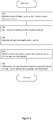
- a method in a wireless terminal is provided, starting at 100, wherein the wireless terminal, at 110, performs a delay in proceeding with a radio network access procedure based on an obtained indication of access barring.
- the indication of access barring is based on the radio resource usage of the wireless terminal.
- the radio network access procedure in some examples, is a random access procedure wherein the wireless terminal connects to the radio network node to transmit or receive data.
- the indication of access barring may be a resource based access barring flag indicating that wireless terminals requiring higher amounts of resources (e.g. due to performing blind repetitions) are barred from performing a radio network access procedure.
- the indication may alternatively be a radio resource based access barring bitmap wherein, for example, the bitmap corresponds to a predefined or preconfigured resource based access barring class in the wireless terminal.
- the indication comprises a coverage class level which corresponds to one of a number of coverage classes. The coverage classes may be determined by the wireless terminal.
- the indication comprises a transmission mode of the wireless terminal, for example a coverage mode or a power mode. It should be appreciated from the description that the indication of access barring may comprise a combination of the above disclosed techniques. The method ends at 120.
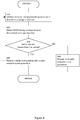
- a wireless terminal first determines its radio resource usage 210, this may be derived from the specific modes of operation of the wireless terminal, for example the type of device (low power, small form factor) or it may be derived through cell measurements which determine whether the wireless terminal operates in a certain coverage class.
- the wireless terminal obtains 220 an indication of resource based access barring.
- the indication may comprise one or more of a resource based access barring flag, a resource based access barring bitmap, a coverage class level or a transmission mode.
- Figure 2 depicts the obtaining step 220 occurring after the wireless terminal has determined its radio resource usage 210, in other examples, the wireless terminal obtains the radio resource based access barring before determining its radio resource usage.
- the wireless terminal compares 230 its determined radio resource usage with the obtained resource based access barring indication. If the indication corresponds to the determined resource usage of the wireless terminal then the wireless terminal performs 240 a delay in proceeding with a radio network access procedure. If the indication does not correspond to the radio resource usage determined by the wireless terminal, i.e. the wireless terminal is not operating in a mode for which resource based access barring is set, the wireless terminal proceeds with performing 250 a radio network access procedure. The method terminates at 260.
- Figure 3 describes the process for a wireless terminal determining its radio resource usage.
- the method starts at 300 and, in this example, the wireless terminal is in a sleep mode.
- the wireless terminal wakes 310 to perform a radio network access procedure.
- the wireless terminal is triggered by higher layers to perform an action, e.g. a mobile originated (MO) access.
- MO mobile originated
- the wireless terminal synchronises to a cell 320. In some examples this comprises synchronizing in time and frequency to the radio access network, in particular that of the radio network node serving the cell detected by the wireless terminal.
- the wireless terminal estimates 330 the downlink signal strength, and/or quality, to establish that the camped on cell is suitable for the wireless terminal to communicate with. If this is the case the wireless terminal acquires 340 the broadcasted system information and reads a set of signal level and /or quality thresholds.
- the wireless terminal determines 350 its radio resource usage, for example, its coverage class level based on the measured signal strength and/or quality and the obtained coverage class thresholds from the system information.
- the method terminates at 360.
- an embodiment of the disclosure is provided for determining the resource based barring, based on a resource based access barring bitmap.
- the process begins at 400, wherein a wireless terminal is configured with an Access Class value (e.g. value Y), for example, the Extended Access-class Barring (EAB) access class.
- the wireless terminal determines 410 its radio resource usage, for example a coverage class/level. In some examples the wireless terminal determines its coverage class/level as described in Figure 3 .
- the wireless terminal obtains 420 an indication of resource based access barring, this step corresponds to step 220 in Figure 2 .
- the wireless terminal selects and reads the RACB bitmap that is associated with its coverage level 430. If the RACB bitmap indicates that one or more Access classes are barred then the wireless terminal compares its own access class with the barred access classes to determine if the wireless terminal is barred from system access.
- the wireless terminal performs 440 a delay in proceeding with a radio network access procedure. If the wireless terminal is not barred the wireless terminal proceeds with performing 450 a radio network access procedure. The method terminates at 460.
- barred e.g. Access Class Y is barred
- an embodiment of the disclosure is provided for determining the resource based barring, based on a resource based access barring flag.
- the wireless terminal is configured with an access class, e.g. EAB class as described above and the wireless terminal determines 510 its coverage class, for example, as described previously.
- the wireless terminal obtains 520 an indication of resource based access barring, this step corresponds to step 220 in Figure 2 .
- the indication comprises a RACB flag. If the flag is set, all wireless terminals requiring a higher level of resources, e.g. due to being in extended coverage, and which are supporting RACB and EAB, should read the EAB bitmap to determine if they are barred before attempting a system access.
- the flag could be, in its simplest form, a single bit.
- the indication of access barring could be composed of more code points where each code points determines if wireless terminals in a certain coverage class, or a combination of coverage classes, should read the EAB bit map.
- the wireless terminal then examines the RACB flag, e.g. for its determined coverage class 530. If the respective RACB flag is set then the wireless terminal reads the EAB bitmap values and compares this with its EAB class value 550. If the EAB class (e.g. class Y) is set then the wireless terminal is barred from system access and performs 560 a delay in proceeding with a radio network access procedure. If the wireless terminal is not barred the wireless terminal proceeds with performing 570 a radio network access procedure. The method terminates at 580.
- the RACB flag e.g. for its determined coverage class 530. If the respective RACB flag is set then the wireless terminal reads the EAB bitmap values and compares this with its EAB class value 550. If the EAB class (e.g. class Y) is set then the wireless terminal is barred from system access and performs 560 a delay in proceeding with a radio network access procedure. If the wireless terminal is not barred the wireless terminal proceeds with performing 570 a radio network access procedure
- the wireless terminal determines the resource based access barring during the synchronisation phase.
- the process begins at 600 and applies to a wireless terminal with a specific coverage class (e.g. coverage class X), the coverage class may be preconfigured or determined by its mode of operation, e.g. power level 610.
- a specific coverage class e.g. coverage class X
- the coverage class may be preconfigured or determined by its mode of operation, e.g. power level 610.
- the wireless terminal synchronises 620 to a cell via the synchronisation channel and reads indication of access barring, for example the Resource Barring Bitmap (RBB), which is signalled in the synchronisation channel.
- RBB Resource Barring Bitmap
- the wireless terminal checks if the coverage class to which it belongs (e.g. class X) is set, according to the RBB 630. If the bit in the RBB corresponding to the coverage class of the wireless terminal is set then the wireless terminal is barred from system access and performs 640 a delay in proceeding with a radio network access procedure. If the wireless terminal is not barred the wireless terminal proceeds with performing 670 a radio network access procedure.
- the wireless terminal may determine the duration in which it delays proceeding with a radio network access procedure based on previous access attempts 650. If the wireless terminal has previously attempted to perform a radio network access procedure in which it has been barred from system access the delay period is increased 660. In some examples the duration of the delay is proportional to the number of failed access attempts. The process ends at 680.
- an embodiment is provided for a method in a radio network node, starting at 700.
- the radio network node provides 710 an indication of access barring, wherein the access barring is based on a radio resource usage of a wireless terminal.
- the radio network access procedure in some examples, is a random access procedure wherein the wireless terminal connects to the radio network node to transmit or receive data.
- the indication of access barring may be a resource based access barring flag indicating that wireless terminals requiring higher amounts of resources (e.g. due to performing blind repetitions) are barred from performing a radio network access procedure.
- the indication may alternatively be a radio resource based access barring bitmap wherein, the bitmap corresponds to a predefined or preconfigured resource based access barring class in the wireless terminal.
- the indication comprises a coverage class level which corresponds to one of a number of coverage classes which may be determined by the wireless terminal.
- the indication comprises a transmission mode of the wireless terminal, for example a coverage mode or a power mode. It should be appreciated from the description that the indication of access barring may comprise a combination of the above disclosed techniques.
- the radio network node may signal the indication of access barring to the wireless terminal.
- the type of signal used may depend on the system in which the method is deployed.
- the indication is provided in a synchronisation signal.
- the indication is provided in a system information broadcast or a master information broadcast.
- the indication is provided in a message carried by a common or dedicated control channel.
- the indication is provided in a plurality of the above mentioned signalling means and or other signalling mechanisms which achieve the same result.
- the radio network node provides a time period for which the wireless terminal shall delay proceeding with a radio network access procedure. In some examples the time period is randomly generated to provide a random distribution of the time in which wireless terminals retry performing a radio network access procedure. The procedure ends at 720.
- Figure 8 depicts an embodiment for a method in a system for controlling access to a radio network node in a telecommunications system.
- the procedure begins at 800, wherein the system comprises one or more radio network nodes and a plurality of wireless terminals.
- the system obtains in 810 an indication of access barring for a radio network node, wherein the indication of access barring is based on the radio resource usage of a wireless terminal.
- the system determines the radio resource usage of a wireless terminal. This may be achieved by the wireless terminal in question as described above. In other examples this may be configured or determined by the mode of the terminal, for example its power class or transmission mode and therefore known or obtained by the system. Whilst Figure 8 depicts the obtaining step 810 occurring before the step of determining the radio resource usage of a wireless terminal 820, in other examples, the system obtains the radio resource based access barring after determining the radio resource usage of a wireless terminal.
- the system causes the wireless terminal to perform a delay in proceeding with a radio network access procedure with the radio network node, based on the indication of access barring and the determined radio resource usage of the wireless terminal.
- the system may communicate with the wireless terminal via a management layer protocol such as LWM2M.
- LWM2M management layer protocol
- Figure 9 depicts a wireless terminal 900 configured to perform one or more of the methods disclosed herein.
- the wireless terminal is configured to delay proceeding with a radio network access procedure based on an obtained indication of access barring, wherein the access barring is based on a radio resource usage of the wireless terminal.
- the radio network access procedure in some examples, is a random access procedure wherein the wireless terminal connects to the radio network node to transmit or receive data.
- the indication of access barring may be a resource based access barring flag indicating that wireless terminals requiring higher amounts of resources (e.g. due to performing blind repetitions) are barred from performing a radio network access procedure.
- the indication may alternatively be a radio resource based access barring bitmap wherein, for example, the bitmap corresponds to a predefined or preconfigured resource based access barring class in the wireless terminal.
- the indication comprises a coverage class level which corresponds to one of a number of coverage classes.
- the indication comprises a transmission mode of the wireless terminal, for example a coverage mode or a power mode. It should be appreciated from the description that the indication of access barring may comprise a combination of the above disclosed techniques.
- the wireless terminal 900 is further configured to determine the radio resource usage based on estimated cell signal strength and/or quality and radio resource usage thresholds.
- the wireless terminal is configured with an Extended Access-class Barring (EAB) value and the indication of access barring indicates, for a given radio resource usage indication, an Extended Access-class Barring (EAB) value for which resource based access barring applies.
- the wireless terminal is configured to perform a delay in proceeding with a radio network access procedure until a specified time period has elapsed, wherein the specified time period is based either on a random period or derived from a number of consecutive access attempts.
- FIG. 10 depicts a radio network node 1000 configured to perform one or more of the methods disclosed herein.
- the radio network node 1000 is configured to provide an indication of access barring for a radio network node, wherein the access barring is based on the radio resource usage of a wireless terminal.
- the radio network access procedure in some examples, is a random access procedure wherein the wireless terminal connects to the radio network node to transmit or receive data.
- the indication of access barring may be a resource based access barring flag indicating that wireless terminals requiring higher amounts of resources (e.g. due to performing blind repetitions) are barred from performing a radio network access procedure.
- the indication may alternatively be a radio resource based access barring bitmap wherein, for example, the bitmap corresponds to a predefined or preconfigured resource based access barring class in the wireless terminal.
- the indication comprises a coverage class level which corresponds to one of a number of coverage classes which may be determined by the wireless terminal.
- the indication comprises a transmission mode of the wireless terminal, for example a coverage mode or a power mode, or a combination of the two. It should be appreciated from the description that the indication of access barring may comprise a combination of the above disclosed techniques.
- the radio network node 1000 may be configured to signal the indication of access barring to the wireless terminal.
- the type of signal used may depend on the system in which the method is deployed.
- the indication is provided in a synchronisation signal.
- the indication is provided in a system information broadcast or a master information broadcast.
- the indication is provided in a message carried by a common or dedicated control channel.
- the indication is provided in a plurality of the above mentioned signalling means and or other signalling mechanisms which achieve the same result.
- the radio network node 1000 is configured to provide a time period for which the wireless terminal shall delay proceeding with a radio network access procedure. In some examples the time period is randomly generated to provide a random distribution of the time in which wireless terminals retry performing a radio network access procedure.
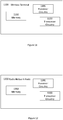
- FIG 11 depicts a further example of a wireless terminal 1100 comprising processor circuitry 1101, a memory 1102 and transceiver circuitry 1103, said memory containing instructions executable by said processor circuitry wherein the instructions enable the wireless terminal to perform one or more of the methods disclosed herein.
- the transceiver circuitry 1103 comprises the components necessary for communication with one or more radio network nodes. To that end it may include any number of transceiving, receiving, and/or transmitting units or circuitry. It should further be appreciated that the transceiver circuitry 1103 may be in the form of any input/output communications port known in the art and may comprise RF circuitry and baseband processing circuitry.
- the memory 1102 stores instructions, in the form of a computer program, for causing the processor circuitry 1101 to carry out the steps described herein.
- the computer program may be installed in the memory 1102 prior to the wireless terminal being put into operation or alternatively be downloaded subsequently as a separate application.
- the memory 1102 may be configured to store received or transmitted data and/or executable program instructions as well as any form of barring classes, transmission modes or power classes, reference signals, and/or measurement data or information.
- the memory 1102 may be any suitable type of computer readable memory and may be of volatile and/or non-volatile type.
- the processor circuitry 1102 may include any suitable type of computation unit, e.g.
- processor circuitry 1102 need not be provided as a single unit but may be provided as any number of units.
- the wireless terminal 1100 is operative to receive, via said transceiver circuitry 1103 an indication of access barring for a radio network node, wherein the barring is based on the radio resource usage of a wireless terminal.
- the processor circuitry 1102 is configured to determine the radio resource usage of the wireless terminal and perform a delay in proceeding with a radio network access procedure with the radio network node based on the indication of access barring and the determined radio resource usage.
- FIG. 12 depicts a further example of a radio network 1200 comprising processor circuitry 1201, a memory 1202 and transceiver circuitry 1203, said memory containing instructions executable by said processor circuitry 1201 wherein the instructions enable the radio network node to perform one or more of the methods disclosed herein.
- the transceiver circuitry 1103 comprises the components necessary for communication with a plurality of wireless terminals and one or more radio network nodes. To that end it may include any number of transceiving, receiving, and/or transmitting units or circuitry. It should further be appreciated that the transceiver circuitry 1103 may be in the form of any input/output communications port known in the art and may comprise RF circuitry and baseband processing circuitry.
- the memory 1202 stores instructions, in the form of a computer program, for causing the processor circuitry 1201 to carry out the steps described herein.
- the computer program may be installed in the memory 1202 prior to the radio network node being put into operation or alternatively be downloaded subsequently as a separate application.
- the memory 1202 may be configured to store received or transmitted data and/or executable program instructions as well as any form of barring classes, system information, reference signals, and/or measurement data or information.
- the memory 1202 may be any suitable type of computer readable memory and may be of volatile and/or non-volatile type.
- the processor circuitry 1202 may include any suitable type of computation unit, e.g.
- processor circuitry 1202 need not be provided as a single unit but may be provided as any number of units.
- radio network node 1200 is operative to provide, via the transceiver circuitry 1203, an indication of access barring for a radio network node, wherein the barring is based on the radio resource usage of a wireless terminal.
- the wireless terminal comprises a delay module for performing a delay in proceeding with a radio network access procedure with the radio network node based on the indication of access barring and the determined radio resource usage.
- the wireless terminal comprises a determining module for determining a radio resource usage of the wireless terminal according to the methods described herein.
- the wireless terminal comprises a determining module for determining the resource based access barring, through one or more of the methods described herein.
- the wireless terminal comprises an obtaining module for obtaining the indication of access barring, wherein the indication is based on the radio resource usage of a wireless terminal.
- the radio network node comprises a providing module for providing the indication of access barring, wherein the indication is based on the radio resource usage of a wireless terminal.
- a computer program comprising instructions which, when executed on at least one processor, cause the at least one processor to carry out the method according to any one of the methods described herein.
- An embodiment of the invention may include functionality that may be implemented as software executed by a processor, hardware circuits or structures, or a combination of both.
- the processor may be a general-purpose or dedicated processor, such as a processor from the family of processors made by Intel Corporation, Motorola Incorporated, Sun Microsystems Incorporated and others.
- the software may comprise programming logic, instructions or data to implement certain functionality for an embodiment of the invention.
- the software may be stored in a medium accessible by a machine or computer-readable medium, such as read-only memory (ROM), random-access memory (RAM), magnetic disk (e.g., floppy disk and hard drive), optical disk (e.g., CD-ROM) or any other data storage medium.
- the media may store programming instructions in a compressed and/or encrypted format, as well as instructions that may have to be compiled or installed by an installer before being executed by the processor.
- an embodiment of the invention may be implemented as specific hardware components that contain hard-wired logic for performing the recited functionality, or by any combination of programmed general-purpose computer components and custom hardware components.
Landscapes
- Engineering & Computer Science (AREA)
- Computer Networks & Wireless Communication (AREA)
- Signal Processing (AREA)
- Computer Security & Cryptography (AREA)
- Mobile Radio Communication Systems (AREA)
- Quality & Reliability (AREA)
- Physics & Mathematics (AREA)
- Electromagnetism (AREA)
Claims (15)
- Verfahren, das durch eine drahtloses Endgerät durchgeführt wird, zum Durchführen eines Funknetz-Zugangsvorgangs, wobei das Verfahren umfasst: Durchführen (110, 640) einer Verzögerung beim Fortfahren mit einem Funknetz-Zugangsvorgang basierend auf einer erhaltenen Anzeige einer Zugangssperrung, wobei die Anzeige der Zugangssperrung eine Anzeige einer Sperrung eines Abdeckungsklassenniveaus oder eines Übertragungsmodus umfasst, wobei das Abdeckungsklassenniveau einer von einer Anzahl von Abdeckungsklassen entspricht und der Übertragungsmodus einer oder mehrere von einem Abdeckungsmodus oder einem Leistungsmodus ist, und das Abdeckungsklassenniveau oder der Übertragungsmodus eine entsprechende Funkressourcennutzung des drahtlosen Endgeräts aufweist, und das drahtlose Endgerät dazu bestimmt wird, gemäß dem Abdeckungsklassenniveau oder dem Übertragungsmodus zu arbeiten.
- Verfahren nach einem der vorhergehenden Ansprüche, wobei die Funkressourcennutzung umfasst, dass das drahtlose Zugangsendgerät blinde Wiederholungen, Wiederholungen oder eine erneute Übertragung von Übertragungen an einen Funknetzknoten durchführt.
- Verfahren nach einem der vorhergehenden Ansprüche, wobei das drahtlose Endgerät das Abdeckungsklassenniveau basierend auf der gemessenen Zellensignalstärke und/oder -qualität und den erhaltenen Abdeckungsklassenschwellenwerten bestimmt (350).
- Verfahren nach einem der vorhergehenden Ansprüche, wobei die Anzeige der Zugangssperrung ferner eine Mehrzahl von ressourcenbasierten Zugangsklassensperrungs-Flags oder -Bitmaps umfasst, wobei jedes Flag oder jede Bitmap einer Funkressourcennutzungsanzeige entspricht und/oder wobei das drahtlose Endgerät mit einem erweiterten Zugangssperrungswert, EAB-Wert, konfiguriert ist und die Anzeige der Zugriffssperrung für eine gegebene Funkressourcennutzungsanzeige einen EAB-Wert anzeigt, für den eine ressourcenbasierte Zugangssperrung gilt, und/oder ferner umfassend, dass das drahtlose Endgerät eine Verzögerung beim Fortfahren mit einem Funknetz-Zugangsvorgang durchführt, bis eine spezifizierte Zeitperiode verstrichen ist, wobei die spezifizierte Zeitperiode entweder auf einer zufälligen Periode basiert oder von einer Anzahl von aufeinanderfolgenden Zugangsversuchen abgeleitet wird.
- Verfahren, durchgeführt durch einen Funknetzknoten, zur Steuerung des Zugangs auf den Funknetzknoten, wobei das Verfahren umfasst:
Bereitstellen (710), an ein drahtloses Endgerät, einer Anzeige einer Zugangssperrung für einen Funknetzknoten, wobei die Anzeige der Zugangssperrung eine Anzeige einer Sperrung eines Abdeckungsklassenniveaus oder eines Übertragungsmodus umfasst, wobei das Abdeckungsklassenniveau einer von einer Anzahl von Abdeckungsklassen entspricht und der Übertragungsmodus einer oder mehrere von einem Abdeckungsmodus oder einem Leistungsmodus ist, und das Abdeckungsklassenniveau oder der Übertragungsmodus eine entsprechende Funkressourcennutzung des drahtlosen Endgeräts aufweist, und das drahtlose Endgerät dazu bestimmt wird, gemäß dem Abdeckungsklassenniveau oder dem Übertragungsmodus zu arbeiten. - Verfahren nach Anspruch 5, wobei die Anzeige der Zugangssperrung ferner eine Mehrzahl von ressourcenbasierten Zugangsklassensperrungs-Flags oder -Bitmaps umfasst, wobei jedes Flag oder jede Bitmap einer Funkressourcennutzungsanzeige entspricht und/oder
wobei das drahtlose Endgerät mit einem erweiterten Zugangssperrungswert, EAB-Wert, konfiguriert ist und die Anzeige der Zugriffssperrung für eine gegebene Funkressourcennutzungsanzeige einen EAB-Wert anzeigt, für den eine ressourcenbasierte Zugangssperrung gilt. - Verfahren nach einem der Ansprüche 5 oder 6, wobei das Bereitstellen einer Anzeige der Zugangssperrung durch den Funknetzknoten an das drahtlose Endgerät signalisiert wird in einem oder mehreren von:einem Synchronisationssignal;einem Systeminformations-Sendesignal;einem Hauptinformations-Sendesignal; odereiner Nachricht, die über einen gemeinsamen oder dedizierten Steuerkanal übertragen wird.
- Verfahren nach einem der Ansprüche 5 bis 7, wobei das Verfahren ferner das Bereitstellen einer Zeitspanne umfasst, in der das drahtlose Endgerät eine Verzögerung beim Fortfahren mit einer Funknetz-Zugangsvorgang durchführt, wobei die Zeitspanne zufällig erzeugt wird.
- Drahtloses Endgerät (900), das dazu konfiguriert ist, das Fortfahren mit einem Funknetz-Zugangsvorgang basierend auf einer erhaltenen Anzeige einer Zugangssperrung zu verzögern, wobei die Anzeige der Zugangssperrung eine Anzeige einer Sperrung eines Abdeckungsklassenniveaus oder eines Übertragungsmodus umfasst, wobei das Abdeckungsklassenniveau einer von einer Anzahl von Abdeckungsklassen entspricht und der Übertragungsmodus einer oder mehrere von einem Abdeckungsmodus oder einem Leistungsmodus ist, und das Abdeckungsklassenniveau oder der Übertragungsmodus eine entsprechende Funkressourcennutzung des drahtlosen Endgeräts aufweist, und das drahtlose Endgerät dazu bestimmt ist, gemäß dem Abdeckungsklassenniveau oder dem Übertragungsmodus zu arbeiten.
- Drahtloses Endgerät nach Anspruch 9, wobei die Funkressourcennutzung umfasst, dass das drahtlose Zugangsendgerät blinde Wiederholungen, Wiederholungen oder eine erneute Übertragung von Übertragungen an einen Funknetzknoten durchführt.
- Drahtloses Endgerät nach einem der Ansprüche 9 oder 10, wobei das drahtlose Endgerät dazu konfiguriert ist, das Abdeckungsklassenniveau basierend auf gemessener Zellensignalstärke und/oder -qualität und erhaltenen Abdeckungsklassenschwellenwerte zu bestimmen.
- Drahtloses Endgerät nach einem der Ansprüche 9 bis 11, wobei die Anzeige der Zugangssperrung ferner eine Mehrzahl von ressourcenbasierten Zugangsklassensperrungs-Flags oder -Bitmaps umfasst, wobei jedes Flag oder jede Bitmap einer Funkressourcennutzungsanzeige entspricht und/oder wobei das drahtlose Endgerät mit einem erweiterten Zugangssperrungswert, EAB-Wert, konfiguriert ist und die Anzeige der Zugriffssperrung für eine gegebene Funkressourcennutzungsanzeige einen EAB-Wert anzeigt, für den eine ressourcenbasierte Zugangssperrung gilt, und/oder wobei das drahtlose Endgerät konfiguriert ist, um eine Verzögerung beim Fortfahren mit einem Funknetz-Zugangsvorgang durchzuführen, bis eine spezifizierte Zeitperiode verstrichen ist, wobei die spezifizierte Zeitperiode entweder auf einer zufälligen Periode basiert oder von einer Anzahl von aufeinanderfolgenden Zugangsversuchen abgeleitet wird.
- Funknetzknoten (1000), der dazu konfiguriert ist, einer Drahtlosvorrichtung eine Anzeige der Zugangssperrung für einen Funknetzknoten bereitzustellen, wobei die Anzeige der Zugangssperrung eine Anzeige einer Sperrung eines Abdeckungsklassenniveaus oder eines Übertragungsmodus umfasst, wobei das Abdeckungsklassenniveau einer von einer Anzahl von Abdeckungsklassen entspricht und der Übertragungsmodus einer oder mehrere von einem Abdeckungsmodus oder einem Leistungsmodus ist, und das Abdeckungsklassenniveau oder der Übertragungsmodus eine entsprechende Funkressourcennutzung des drahtlosen Endgeräts aufweist, und das drahtlose Endgerät dazu bestimmt ist, gemäß dem Abdeckungsklassenniveau oder dem Übertragungsmodus zu arbeiten.
- Funknetzknoten nach Anspruch 13, wobei der Funknetzknoten ferner dazu konfiguriert ist, eine Zeitspanne bereitzustellen, in der das drahtlose Endgerät das Fortfahren mit einem Funknetz-Zugangsvorgang verzögert, wobei die Zeitspanne zufällig erzeugt wird, und/oder die Anzeige der Zugangssperrung in einem oder mehreren von Folgenden zu signalisieren:einem Synchronisationssignal;einem Systeminformations-Sendesignal;einem Hauptinformations-Sendesignal; odereiner Nachricht, die über einen gemeinsamen oder dedizierten Steuerkanal übertragen wird.
- Verfahren zur Steuerung des Zugangs zu einem Funknetzknoten in einem Telekommunikationssystem, das einen oder mehrere Funknetzknoten und eine Mehrzahl von drahtlosen Endgeräten umfasst, wobei das Verfahren umfasst:Erhalten (810) einer Anzeige einer Zugangssperrung für einen Funknetzknoten, wobei die Anzeige der Zugangssperrung eine Anzeige einer Sperrung eines Abdeckungsklassenniveaus oder eines Übertragungsmodus umfasst, wobei das Abdeckungsklassenniveau einer von einer Anzahl von Abdeckungsklassen entspricht und der Übertragungsmodus einer oder mehrere von einem Abdeckungsmodus oder einem Leistungsmodus ist, und das Abdeckungsklassenniveau oder der Übertragungsmodus eine entsprechende Funkressourcennutzung eines drahtlosen Endgeräts aufweist;Bestimmen (820), dass das drahtlose Endgerät gemäß dem Abdeckungsklassenniveau oder dem Übertragungsmodus arbeitet; undBewirken (830), dass das drahtlose Endgerät eine Verzögerung beim Fortfahren mit einem Funknetz-Zugangsvorgang mit dem Funknetzknoten durchführt, basierend auf der Anzeige der Zugangssperrung und dem bestimmten Abdeckungsklassenniveau oder Übertragungsmodus.
Priority Applications (1)
| Application Number | Priority Date | Filing Date | Title |
|---|---|---|---|
| EP21208265.5A EP4033817B1 (de) | 2016-11-25 | 2016-11-25 | Verfahren und vorrichtung zur steuerung einer funkzugangsverbindung zu einem telekommunikationsnetz |
Applications Claiming Priority (1)
| Application Number | Priority Date | Filing Date | Title |
|---|---|---|---|
| PCT/EP2016/078890 WO2018095542A1 (en) | 2016-11-25 | 2016-11-25 | Method and apparatus for controlling a radio access connection to a telecommunications network |
Related Child Applications (2)
| Application Number | Title | Priority Date | Filing Date |
|---|---|---|---|
| EP21208265.5A Division-Into EP4033817B1 (de) | 2016-11-25 | 2016-11-25 | Verfahren und vorrichtung zur steuerung einer funkzugangsverbindung zu einem telekommunikationsnetz |
| EP21208265.5A Division EP4033817B1 (de) | 2016-11-25 | 2016-11-25 | Verfahren und vorrichtung zur steuerung einer funkzugangsverbindung zu einem telekommunikationsnetz |
Publications (2)
| Publication Number | Publication Date |
|---|---|
| EP3545708A1 EP3545708A1 (de) | 2019-10-02 |
| EP3545708B1 true EP3545708B1 (de) | 2022-01-05 |
Family
ID=57471831
Family Applications (2)
| Application Number | Title | Priority Date | Filing Date |
|---|---|---|---|
| EP16805353.6A Active EP3545708B1 (de) | 2016-11-25 | 2016-11-25 | Verfahren und vorrichtung zur steuerung einer funkzugangsverbindung zu einem telekommunikationsnetz |
| EP21208265.5A Active EP4033817B1 (de) | 2016-11-25 | 2016-11-25 | Verfahren und vorrichtung zur steuerung einer funkzugangsverbindung zu einem telekommunikationsnetz |
Family Applications After (1)
| Application Number | Title | Priority Date | Filing Date |
|---|---|---|---|
| EP21208265.5A Active EP4033817B1 (de) | 2016-11-25 | 2016-11-25 | Verfahren und vorrichtung zur steuerung einer funkzugangsverbindung zu einem telekommunikationsnetz |
Country Status (5)
| Country | Link |
|---|---|
| US (1) | US11026161B2 (de) |
| EP (2) | EP3545708B1 (de) |
| JP (1) | JP6813681B2 (de) |
| CN (1) | CN110235470B (de) |
| WO (1) | WO2018095542A1 (de) |
Families Citing this family (8)
| Publication number | Priority date | Publication date | Assignee | Title |
|---|---|---|---|---|
| WO2018143631A1 (ko) * | 2017-02-02 | 2018-08-09 | 주식회사 케이티 | 액세스 제어 방법 및 장치 |
| KR102129977B1 (ko) * | 2017-02-02 | 2020-07-06 | 주식회사 케이티 | 액세스 제어 방법 및 장치 |
| CN110249695A (zh) * | 2017-03-15 | 2019-09-17 | 富士通株式会社 | 接入禁止方法、装置以及通信系统 |
| CN110431909B (zh) | 2017-03-31 | 2023-05-23 | 索尼公司 | 用于移动电信系统的设备和方法 |
| WO2019096855A1 (en) * | 2017-11-14 | 2019-05-23 | Sony Corporation | Infrastructure equipment, wireless communications system, communications device and methods |
| US12471114B2 (en) | 2020-08-03 | 2025-11-11 | Nokia Technologies Oy | Method to indicate cell support for reduced capability UE |
| EP4221351A4 (de) | 2020-09-29 | 2023-11-01 | Guangdong Oppo Mobile Telecommunications Corp., Ltd. | Drahtloskommunikationsverfahren, endgerätevorrichtung und netzwerkvorrichtung |
| CN117397347A (zh) * | 2021-03-31 | 2024-01-12 | 株式会社Ntt都科摩 | 终端、无线通信方法以及基站 |
Family Cites Families (12)
| Publication number | Priority date | Publication date | Assignee | Title |
|---|---|---|---|---|
| CN102905344A (zh) * | 2011-07-26 | 2013-01-30 | 中兴通讯股份有限公司 | 接入控制的方法及系统、网络侧网元、用户设备 |
| CN102905389B (zh) * | 2011-07-28 | 2015-05-06 | 华为技术有限公司 | 接入控制方法和装置 |
| US20140171061A1 (en) * | 2011-08-15 | 2014-06-19 | Telefonaktiebolaget L M Ericsson (Publ) | Network access delay for eab-configured ues and/or group-based addressed ues |
| CN105163363B (zh) * | 2011-09-20 | 2019-05-24 | 华为技术有限公司 | 一种控制终端接入共享网络的方法及接入网网元 |
| CN103096416A (zh) * | 2011-11-03 | 2013-05-08 | 中兴通讯股份有限公司 | 一种接入控制方法、装置及系统 |
| CN103096418B (zh) * | 2011-11-04 | 2018-11-27 | 中兴通讯股份有限公司 | 一种接入控制的实现方法及系统 |
| US9078257B2 (en) * | 2011-11-11 | 2015-07-07 | Intel Coproration | Random backoff for extended access barring |
| US9949166B2 (en) * | 2012-01-23 | 2018-04-17 | Intel Corporation | Extended access barring (EAB) signaling for a core network (CN) and node |
| GB2499189B (en) * | 2012-01-31 | 2014-02-12 | Broadcom Corp | Method and apparatus for informing UE about access barring |
| CN103686928B (zh) * | 2012-09-07 | 2016-12-21 | 中兴通讯股份有限公司 | Mtc设备接入移动通信系统的方法及装置 |
| US9307447B2 (en) * | 2012-10-31 | 2016-04-05 | Telefonaktiebolaget Lm Ericsson (Publ) | Enhanced extended access class barring |
| EP3251411B1 (de) * | 2015-01-30 | 2024-07-31 | InterDigital Patent Holdings, Inc. | Verfahren, vorrichtung und system für anwendungsspezifische überlastregelung zur datenkommunikation (acdc) |
-
2016
- 2016-11-25 EP EP16805353.6A patent/EP3545708B1/de active Active
- 2016-11-25 EP EP21208265.5A patent/EP4033817B1/de active Active
- 2016-11-25 JP JP2019528105A patent/JP6813681B2/ja active Active
- 2016-11-25 WO PCT/EP2016/078890 patent/WO2018095542A1/en not_active Ceased
- 2016-11-25 CN CN201680092049.1A patent/CN110235470B/zh active Active
- 2016-11-25 US US16/463,480 patent/US11026161B2/en active Active
Non-Patent Citations (1)
| Title |
|---|
| None * |
Also Published As
| Publication number | Publication date |
|---|---|
| EP4033817A1 (de) | 2022-07-27 |
| EP4033817C0 (de) | 2025-05-21 |
| US11026161B2 (en) | 2021-06-01 |
| JP6813681B2 (ja) | 2021-01-13 |
| EP3545708A1 (de) | 2019-10-02 |
| JP2020501422A (ja) | 2020-01-16 |
| CN110235470A (zh) | 2019-09-13 |
| CN110235470B (zh) | 2022-03-11 |
| EP4033817B1 (de) | 2025-05-21 |
| WO2018095542A1 (en) | 2018-05-31 |
| BR112019010469A2 (pt) | 2019-09-10 |
| US20190364489A1 (en) | 2019-11-28 |
Similar Documents
| Publication | Publication Date | Title |
|---|---|---|
| US20220174584A1 (en) | Access Method of Wireless Communication Network | |
| EP4033817B1 (de) | Verfahren und vorrichtung zur steuerung einer funkzugangsverbindung zu einem telekommunikationsnetz | |
| CN112771982B (zh) | 用于在无线通信中执行随机接入进程的方法、设备和系统 | |
| US11197268B2 (en) | Method for obtaining network system resource allocation, terminal, network device, and system | |
| EP3277044B1 (de) | Endgerätevorrichtung und kommunikationsverfahren | |
| EP2679072B1 (de) | Übertragung von zugangsbeschränkungsinformation zwischen einem funknetzwerkknoten und einem benutzergerät | |
| EP3277022B1 (de) | Endgerätevorrichtung, basisstationsvorrichtung und kommunikationsverfahren | |
| EP3963947B1 (de) | Systeme und verfahren für verbessertes direktzugriffsverfahren | |
| US10165624B2 (en) | Method and system for operating coverage-limited devices | |
| US20170048802A1 (en) | Coverage Extension in Wireless Communication | |
| EP3678420B1 (de) | Zugangssteuerungsverfahren und -vorrichtung | |
| EP3574682A1 (de) | Zugangsberechtigungstechniken in einem verbundenen modus | |
| CN111654919A (zh) | 信息传输方法及装置 |
Legal Events
| Date | Code | Title | Description |
|---|---|---|---|
| STAA | Information on the status of an ep patent application or granted ep patent |
Free format text: STATUS: UNKNOWN |
|
| STAA | Information on the status of an ep patent application or granted ep patent |
Free format text: STATUS: THE INTERNATIONAL PUBLICATION HAS BEEN MADE |
|
| PUAI | Public reference made under article 153(3) epc to a published international application that has entered the european phase |
Free format text: ORIGINAL CODE: 0009012 |
|
| STAA | Information on the status of an ep patent application or granted ep patent |
Free format text: STATUS: REQUEST FOR EXAMINATION WAS MADE |
|
| 17P | Request for examination filed |
Effective date: 20190613 |
|
| AK | Designated contracting states |
Kind code of ref document: A1 Designated state(s): AL AT BE BG CH CY CZ DE DK EE ES FI FR GB GR HR HU IE IS IT LI LT LU LV MC MK MT NL NO PL PT RO RS SE SI SK SM TR |
|
| AX | Request for extension of the european patent |
Extension state: BA ME |
|
| DAV | Request for validation of the european patent (deleted) | ||
| DAX | Request for extension of the european patent (deleted) | ||
| GRAP | Despatch of communication of intention to grant a patent |
Free format text: ORIGINAL CODE: EPIDOSNIGR1 |
|
| STAA | Information on the status of an ep patent application or granted ep patent |
Free format text: STATUS: GRANT OF PATENT IS INTENDED |
|
| INTG | Intention to grant announced |
Effective date: 20201222 |
|
| GRAJ | Information related to disapproval of communication of intention to grant by the applicant or resumption of examination proceedings by the epo deleted |
Free format text: ORIGINAL CODE: EPIDOSDIGR1 |
|
| STAA | Information on the status of an ep patent application or granted ep patent |
Free format text: STATUS: REQUEST FOR EXAMINATION WAS MADE |
|
| GRAP | Despatch of communication of intention to grant a patent |
Free format text: ORIGINAL CODE: EPIDOSNIGR1 |
|
| STAA | Information on the status of an ep patent application or granted ep patent |
Free format text: STATUS: GRANT OF PATENT IS INTENDED |
|
| INTC | Intention to grant announced (deleted) | ||
| INTG | Intention to grant announced |
Effective date: 20210727 |
|
| GRAS | Grant fee paid |
Free format text: ORIGINAL CODE: EPIDOSNIGR3 |
|
| GRAA | (expected) grant |
Free format text: ORIGINAL CODE: 0009210 |
|
| STAA | Information on the status of an ep patent application or granted ep patent |
Free format text: STATUS: THE PATENT HAS BEEN GRANTED |
|
| AK | Designated contracting states |
Kind code of ref document: B1 Designated state(s): AL AT BE BG CH CY CZ DE DK EE ES FI FR GB GR HR HU IE IS IT LI LT LU LV MC MK MT NL NO PL PT RO RS SE SI SK SM TR |
|
| REG | Reference to a national code |
Ref country code: GB Ref legal event code: FG4D |
|
| REG | Reference to a national code |
Ref country code: CH Ref legal event code: EP |
|
| REG | Reference to a national code |
Ref country code: AT Ref legal event code: REF Ref document number: 1461698 Country of ref document: AT Kind code of ref document: T Effective date: 20220115 |
|
| REG | Reference to a national code |
Ref country code: DE Ref legal event code: R096 Ref document number: 602016068124 Country of ref document: DE |
|
| REG | Reference to a national code |
Ref country code: IE Ref legal event code: FG4D |
|
| REG | Reference to a national code |
Ref country code: NL Ref legal event code: FP |
|
| REG | Reference to a national code |
Ref country code: NO Ref legal event code: T2 Effective date: 20220105 |
|
| REG | Reference to a national code |
Ref country code: LT Ref legal event code: MG9D |
|
| REG | Reference to a national code |
Ref country code: AT Ref legal event code: MK05 Ref document number: 1461698 Country of ref document: AT Kind code of ref document: T Effective date: 20220105 |
|
| PG25 | Lapsed in a contracting state [announced via postgrant information from national office to epo] |
Ref country code: SE Free format text: LAPSE BECAUSE OF FAILURE TO SUBMIT A TRANSLATION OF THE DESCRIPTION OR TO PAY THE FEE WITHIN THE PRESCRIBED TIME-LIMIT Effective date: 20220105 Ref country code: RS Free format text: LAPSE BECAUSE OF FAILURE TO SUBMIT A TRANSLATION OF THE DESCRIPTION OR TO PAY THE FEE WITHIN THE PRESCRIBED TIME-LIMIT Effective date: 20220105 Ref country code: PT Free format text: LAPSE BECAUSE OF FAILURE TO SUBMIT A TRANSLATION OF THE DESCRIPTION OR TO PAY THE FEE WITHIN THE PRESCRIBED TIME-LIMIT Effective date: 20220505 Ref country code: LT Free format text: LAPSE BECAUSE OF FAILURE TO SUBMIT A TRANSLATION OF THE DESCRIPTION OR TO PAY THE FEE WITHIN THE PRESCRIBED TIME-LIMIT Effective date: 20220105 Ref country code: HR Free format text: LAPSE BECAUSE OF FAILURE TO SUBMIT A TRANSLATION OF THE DESCRIPTION OR TO PAY THE FEE WITHIN THE PRESCRIBED TIME-LIMIT Effective date: 20220105 Ref country code: ES Free format text: LAPSE BECAUSE OF FAILURE TO SUBMIT A TRANSLATION OF THE DESCRIPTION OR TO PAY THE FEE WITHIN THE PRESCRIBED TIME-LIMIT Effective date: 20220105 Ref country code: BG Free format text: LAPSE BECAUSE OF FAILURE TO SUBMIT A TRANSLATION OF THE DESCRIPTION OR TO PAY THE FEE WITHIN THE PRESCRIBED TIME-LIMIT Effective date: 20220405 |
|
| PG25 | Lapsed in a contracting state [announced via postgrant information from national office to epo] |
Ref country code: PL Free format text: LAPSE BECAUSE OF FAILURE TO SUBMIT A TRANSLATION OF THE DESCRIPTION OR TO PAY THE FEE WITHIN THE PRESCRIBED TIME-LIMIT Effective date: 20220105 Ref country code: LV Free format text: LAPSE BECAUSE OF FAILURE TO SUBMIT A TRANSLATION OF THE DESCRIPTION OR TO PAY THE FEE WITHIN THE PRESCRIBED TIME-LIMIT Effective date: 20220105 Ref country code: GR Free format text: LAPSE BECAUSE OF FAILURE TO SUBMIT A TRANSLATION OF THE DESCRIPTION OR TO PAY THE FEE WITHIN THE PRESCRIBED TIME-LIMIT Effective date: 20220406 Ref country code: FI Free format text: LAPSE BECAUSE OF FAILURE TO SUBMIT A TRANSLATION OF THE DESCRIPTION OR TO PAY THE FEE WITHIN THE PRESCRIBED TIME-LIMIT Effective date: 20220105 Ref country code: AT Free format text: LAPSE BECAUSE OF FAILURE TO SUBMIT A TRANSLATION OF THE DESCRIPTION OR TO PAY THE FEE WITHIN THE PRESCRIBED TIME-LIMIT Effective date: 20220105 |
|
| PG25 | Lapsed in a contracting state [announced via postgrant information from national office to epo] |
Ref country code: IS Free format text: LAPSE BECAUSE OF FAILURE TO SUBMIT A TRANSLATION OF THE DESCRIPTION OR TO PAY THE FEE WITHIN THE PRESCRIBED TIME-LIMIT Effective date: 20220505 |
|
| REG | Reference to a national code |
Ref country code: DE Ref legal event code: R097 Ref document number: 602016068124 Country of ref document: DE |
|
| PG25 | Lapsed in a contracting state [announced via postgrant information from national office to epo] |
Ref country code: SM Free format text: LAPSE BECAUSE OF FAILURE TO SUBMIT A TRANSLATION OF THE DESCRIPTION OR TO PAY THE FEE WITHIN THE PRESCRIBED TIME-LIMIT Effective date: 20220105 Ref country code: SK Free format text: LAPSE BECAUSE OF FAILURE TO SUBMIT A TRANSLATION OF THE DESCRIPTION OR TO PAY THE FEE WITHIN THE PRESCRIBED TIME-LIMIT Effective date: 20220105 Ref country code: RO Free format text: LAPSE BECAUSE OF FAILURE TO SUBMIT A TRANSLATION OF THE DESCRIPTION OR TO PAY THE FEE WITHIN THE PRESCRIBED TIME-LIMIT Effective date: 20220105 Ref country code: EE Free format text: LAPSE BECAUSE OF FAILURE TO SUBMIT A TRANSLATION OF THE DESCRIPTION OR TO PAY THE FEE WITHIN THE PRESCRIBED TIME-LIMIT Effective date: 20220105 Ref country code: DK Free format text: LAPSE BECAUSE OF FAILURE TO SUBMIT A TRANSLATION OF THE DESCRIPTION OR TO PAY THE FEE WITHIN THE PRESCRIBED TIME-LIMIT Effective date: 20220105 Ref country code: CZ Free format text: LAPSE BECAUSE OF FAILURE TO SUBMIT A TRANSLATION OF THE DESCRIPTION OR TO PAY THE FEE WITHIN THE PRESCRIBED TIME-LIMIT Effective date: 20220105 |
|
| PLBE | No opposition filed within time limit |
Free format text: ORIGINAL CODE: 0009261 |
|
| STAA | Information on the status of an ep patent application or granted ep patent |
Free format text: STATUS: NO OPPOSITION FILED WITHIN TIME LIMIT |
|
| PG25 | Lapsed in a contracting state [announced via postgrant information from national office to epo] |
Ref country code: AL Free format text: LAPSE BECAUSE OF FAILURE TO SUBMIT A TRANSLATION OF THE DESCRIPTION OR TO PAY THE FEE WITHIN THE PRESCRIBED TIME-LIMIT Effective date: 20220105 |
|
| 26N | No opposition filed |
Effective date: 20221006 |
|
| PG25 | Lapsed in a contracting state [announced via postgrant information from national office to epo] |
Ref country code: SI Free format text: LAPSE BECAUSE OF FAILURE TO SUBMIT A TRANSLATION OF THE DESCRIPTION OR TO PAY THE FEE WITHIN THE PRESCRIBED TIME-LIMIT Effective date: 20220105 |
|
| PG25 | Lapsed in a contracting state [announced via postgrant information from national office to epo] |
Ref country code: MC Free format text: LAPSE BECAUSE OF FAILURE TO SUBMIT A TRANSLATION OF THE DESCRIPTION OR TO PAY THE FEE WITHIN THE PRESCRIBED TIME-LIMIT Effective date: 20220105 |
|
| REG | Reference to a national code |
Ref country code: BE Ref legal event code: MM Effective date: 20221130 |
|
| PG25 | Lapsed in a contracting state [announced via postgrant information from national office to epo] |
Ref country code: IT Free format text: LAPSE BECAUSE OF FAILURE TO SUBMIT A TRANSLATION OF THE DESCRIPTION OR TO PAY THE FEE WITHIN THE PRESCRIBED TIME-LIMIT Effective date: 20220105 |
|
| PG25 | Lapsed in a contracting state [announced via postgrant information from national office to epo] |
Ref country code: LU Free format text: LAPSE BECAUSE OF NON-PAYMENT OF DUE FEES Effective date: 20221125 |
|
| PG25 | Lapsed in a contracting state [announced via postgrant information from national office to epo] |
Ref country code: IE Free format text: LAPSE BECAUSE OF NON-PAYMENT OF DUE FEES Effective date: 20221125 |
|
| PG25 | Lapsed in a contracting state [announced via postgrant information from national office to epo] |
Ref country code: BE Free format text: LAPSE BECAUSE OF NON-PAYMENT OF DUE FEES Effective date: 20221130 |
|
| PG25 | Lapsed in a contracting state [announced via postgrant information from national office to epo] |
Ref country code: HU Free format text: LAPSE BECAUSE OF FAILURE TO SUBMIT A TRANSLATION OF THE DESCRIPTION OR TO PAY THE FEE WITHIN THE PRESCRIBED TIME-LIMIT; INVALID AB INITIO Effective date: 20161125 |
|
| PG25 | Lapsed in a contracting state [announced via postgrant information from national office to epo] |
Ref country code: CY Free format text: LAPSE BECAUSE OF FAILURE TO SUBMIT A TRANSLATION OF THE DESCRIPTION OR TO PAY THE FEE WITHIN THE PRESCRIBED TIME-LIMIT Effective date: 20220105 |
|
| PG25 | Lapsed in a contracting state [announced via postgrant information from national office to epo] |
Ref country code: MK Free format text: LAPSE BECAUSE OF FAILURE TO SUBMIT A TRANSLATION OF THE DESCRIPTION OR TO PAY THE FEE WITHIN THE PRESCRIBED TIME-LIMIT Effective date: 20220105 |
|
| PG25 | Lapsed in a contracting state [announced via postgrant information from national office to epo] |
Ref country code: MT Free format text: LAPSE BECAUSE OF FAILURE TO SUBMIT A TRANSLATION OF THE DESCRIPTION OR TO PAY THE FEE WITHIN THE PRESCRIBED TIME-LIMIT Effective date: 20220105 |
|
| REG | Reference to a national code |
Ref country code: CH Ref legal event code: U11 Free format text: ST27 STATUS EVENT CODE: U-0-0-U10-U11 (AS PROVIDED BY THE NATIONAL OFFICE) Effective date: 20251201 |
|
| PG25 | Lapsed in a contracting state [announced via postgrant information from national office to epo] |
Ref country code: TR Free format text: LAPSE BECAUSE OF FAILURE TO SUBMIT A TRANSLATION OF THE DESCRIPTION OR TO PAY THE FEE WITHIN THE PRESCRIBED TIME-LIMIT Effective date: 20220105 |
|
| PGFP | Annual fee paid to national office [announced via postgrant information from national office to epo] |
Ref country code: NL Payment date: 20251126 Year of fee payment: 10 |
|
| PGFP | Annual fee paid to national office [announced via postgrant information from national office to epo] |
Ref country code: DE Payment date: 20251128 Year of fee payment: 10 |
|
| PGFP | Annual fee paid to national office [announced via postgrant information from national office to epo] |
Ref country code: GB Payment date: 20251127 Year of fee payment: 10 |
|
| PGFP | Annual fee paid to national office [announced via postgrant information from national office to epo] |
Ref country code: NO Payment date: 20251128 Year of fee payment: 10 |
|
| PGFP | Annual fee paid to national office [announced via postgrant information from national office to epo] |
Ref country code: FR Payment date: 20251125 Year of fee payment: 10 |
|
| PGFP | Annual fee paid to national office [announced via postgrant information from national office to epo] |
Ref country code: CH Payment date: 20251201 Year of fee payment: 10 |