EP3545659B1 - Handapparatidentifikatorverifizierung - Google Patents
Handapparatidentifikatorverifizierung Download PDFInfo
- Publication number
- EP3545659B1 EP3545659B1 EP17795021.9A EP17795021A EP3545659B1 EP 3545659 B1 EP3545659 B1 EP 3545659B1 EP 17795021 A EP17795021 A EP 17795021A EP 3545659 B1 EP3545659 B1 EP 3545659B1
- Authority
- EP
- European Patent Office
- Prior art keywords
- terminal device
- network
- requesting terminal
- imei
- handset identifier
- Prior art date
- Legal status (The legal status is an assumption and is not a legal conclusion. Google has not performed a legal analysis and makes no representation as to the accuracy of the status listed.)
- Active
Links
Images


Classifications
-
- H—ELECTRICITY
- H04—ELECTRIC COMMUNICATION TECHNIQUE
- H04W—WIRELESS COMMUNICATION NETWORKS
- H04W12/00—Security arrangements; Authentication; Protecting privacy or anonymity
- H04W12/06—Authentication
-
- H—ELECTRICITY
- H04—ELECTRIC COMMUNICATION TECHNIQUE
- H04L—TRANSMISSION OF DIGITAL INFORMATION, e.g. TELEGRAPHIC COMMUNICATION
- H04L63/00—Network architectures or network communication protocols for network security
- H04L63/08—Network architectures or network communication protocols for network security for authentication of entities
- H04L63/0823—Network architectures or network communication protocols for network security for authentication of entities using certificates
-
- H—ELECTRICITY
- H04—ELECTRIC COMMUNICATION TECHNIQUE
- H04L—TRANSMISSION OF DIGITAL INFORMATION, e.g. TELEGRAPHIC COMMUNICATION
- H04L63/00—Network architectures or network communication protocols for network security
- H04L63/08—Network architectures or network communication protocols for network security for authentication of entities
- H04L63/0876—Network architectures or network communication protocols for network security for authentication of entities based on the identity of the terminal or configuration, e.g. MAC address, hardware or software configuration or device fingerprint
-
- H—ELECTRICITY
- H04—ELECTRIC COMMUNICATION TECHNIQUE
- H04L—TRANSMISSION OF DIGITAL INFORMATION, e.g. TELEGRAPHIC COMMUNICATION
- H04L63/00—Network architectures or network communication protocols for network security
- H04L63/08—Network architectures or network communication protocols for network security for authentication of entities
- H04L63/0892—Network architectures or network communication protocols for network security for authentication of entities by using authentication-authorization-accounting [AAA] servers or protocols
-
- H—ELECTRICITY
- H04—ELECTRIC COMMUNICATION TECHNIQUE
- H04L—TRANSMISSION OF DIGITAL INFORMATION, e.g. TELEGRAPHIC COMMUNICATION
- H04L63/00—Network architectures or network communication protocols for network security
- H04L63/10—Network architectures or network communication protocols for network security for controlling access to devices or network resources
- H04L63/101—Access control lists [ACL]
-
- H—ELECTRICITY
- H04—ELECTRIC COMMUNICATION TECHNIQUE
- H04W—WIRELESS COMMUNICATION NETWORKS
- H04W12/00—Security arrangements; Authentication; Protecting privacy or anonymity
- H04W12/40—Security arrangements using identity modules
- H04W12/48—Security arrangements using identity modules using secure binding, e.g. securely binding identity modules to devices, services or applications
-
- H—ELECTRICITY
- H04—ELECTRIC COMMUNICATION TECHNIQUE
- H04W—WIRELESS COMMUNICATION NETWORKS
- H04W8/00—Network data management
- H04W8/22—Processing or transfer of terminal data, e.g. status or physical capabilities
- H04W8/24—Transfer of terminal data
-
- H—ELECTRICITY
- H04—ELECTRIC COMMUNICATION TECHNIQUE
- H04L—TRANSMISSION OF DIGITAL INFORMATION, e.g. TELEGRAPHIC COMMUNICATION
- H04L9/00—Cryptographic mechanisms or cryptographic arrangements for secret or secure communications; Network security protocols
- H04L9/32—Cryptographic mechanisms or cryptographic arrangements for secret or secure communications; Network security protocols including means for verifying the identity or authority of a user of the system or for message authentication, e.g. authorization, entity authentication, data integrity or data verification, non-repudiation, key authentication or verification of credentials
- H04L9/3247—Cryptographic mechanisms or cryptographic arrangements for secret or secure communications; Network security protocols including means for verifying the identity or authority of a user of the system or for message authentication, e.g. authorization, entity authentication, data integrity or data verification, non-repudiation, key authentication or verification of credentials involving digital signatures
-
- H—ELECTRICITY
- H04—ELECTRIC COMMUNICATION TECHNIQUE
- H04W—WIRELESS COMMUNICATION NETWORKS
- H04W12/00—Security arrangements; Authentication; Protecting privacy or anonymity
- H04W12/08—Access security
-
- H—ELECTRICITY
- H04—ELECTRIC COMMUNICATION TECHNIQUE
- H04W—WIRELESS COMMUNICATION NETWORKS
- H04W12/00—Security arrangements; Authentication; Protecting privacy or anonymity
- H04W12/60—Context-dependent security
- H04W12/69—Identity-dependent
- H04W12/71—Hardware identity
-
- H—ELECTRICITY
- H04—ELECTRIC COMMUNICATION TECHNIQUE
- H04W—WIRELESS COMMUNICATION NETWORKS
- H04W8/00—Network data management
- H04W8/02—Processing of mobility data, e.g. registration information at HLR [Home Location Register] or VLR [Visitor Location Register]; Transfer of mobility data, e.g. between HLR, VLR or external networks
- H04W8/08—Mobility data transfer
- H04W8/12—Mobility data transfer between location registers or mobility servers
Definitions
- the present technique relates to the field of mobile communication.
- Devices communicating on a mobile network may be identified by an International Mobile Equipment Identity (IMEI) number which identifies the particular handset.
- IMEI International Mobile Equipment Identity
- the IMEI can be used for device tracking, or for blacklisting devices which have been reported as stolen, so that a device having a blacklisted IMEI is prevented from communicating on the network.
- the IMEI can also be used for tracking prototype devices on the network during testing of the prototypes.
- US 2013/036223 A1 relates to facilitating authentication of access terminal identity.
- WO 2013/139071 A1 relates to a method, a system and user equipment for detecting whether or not UICC is used on an Authorized device.
- US 2012/100832 A1 relates to authentication of access terminal identities in roaming networks.
- WO 2016/155827 A1 relates to IMS emergency calls for roaming UES.
- At least some examples provide a network usage control method comprising:
- At least some examples provide a network operator comprising:
- At least some examples provide a computer program for controlling a data processing apparatus to describe the method described above.
- FIG 1 shows an example of mobile terminals 2 communicating within one of a number of mobile networks 4.
- Each mobile network 4 may be managed by a network operator 6 who may control access to the network 4 by certain mobile devices 2. While each network operator 6 is logically shown as a single device in Figure 1 , it will be appreciated that the functionality performed by the network operator 6 could be distributed between two or more distinct servers or other processing devices. For example, the network operator 6 may control which terminal devices 2 can connect to their network or are allowed to perform specific functions on the network such as making voice calls, sending text (SMS) messages, etc.
- SMS sending text
- Each network operator 6 may maintain an Equipment Identity Register (EIR) 8 which may specify information for controlling network access, which may include a Home Location Register (HLR) which provides information about each subscriber subscribing to that network operator's 6 network.
- EIR Equipment Identity Register
- HLR Home Location Register
- the network operators 6 of different networks can communicate with each other to control network access in instances where a given device 2-R associated with a particular home network is "roaming" (temporarily visiting another network) and wishes to connect to the visiting network.
- the network operator devices 6 can also communicate with a key server 10 for providing cryptographic information for verifying the identity of particular mobile terminals 2.
- the key server 10 is optional and in other examples the information for verifying the identity of a particular terminal 2 may come from the terminal itself 2 or may already reside in the EIR 8.
- the terminal device may already have obtained the digital certificate for verifying its own identity, and can provide the certificate to the network alongside the device signature to be checked using the certificate.
- the certificate may already reside in the EIR 8 if the device has been encountered before, or if the EIR 8 receives a batch of certificates through out of band communication (without having encountered the device).
- FIG. 2 schematically illustrates an example of one of the mobile terminals 2.
- the mobile terminal 2 comprises a processor 14, memory 16, display controller 18 and display 20, user input/output circuit 22 for accepting user input (e.g. a keypad or touch screen), communications interface 24 (e.g. a modem) for communicating with other devices on the network, and a peripheral input/output circuit 26 for communicating with other peripheral devices, such as a memory card providing further data storage or a fingerprint sensor for detecting fingerprints.
- the processor 14 executes computer program instructions that may be stored in the memory 16, an external data storage unit or dynamically downloaded via the communications interface 24. The results of the processing performed may be displayed to a user via the display controller 18 and display 20.
- User inputs for controlling the operation of the mobile terminal 2 may be received via the user input/output circuit 22.
- the computer program could be written in a variety of different computer languages.
- the computer program may be stored and distributed on a recording medium or dynamically downloaded to the device via the communications interface 24. It will be appreciated that this is a simplified example of some components of the terminal 2, and the architecture of the device may vary considerably, for example it may have other elements not shown in Figure 2 for conciseness.
- some embodiments may not have the display controller 18 and display 20, e.g. the device could be a sensor which merely gathers data but has no user interface functionality.
- the terminal could be any device capable of communicating on the mobile network 4, including not only a mobile cellular telephone or tablet computer, but also other devices with mobile communication functionality, such as a sensor or actuator in the Internet of Things (e.g. included within an appliance such as a television, washing machine or refrigerator, or in public infrastructure such as in streetlighting or traffic lights, for example).
- a sensor or actuator in the Internet of Things e.g. included within an appliance such as a television, washing machine or refrigerator, or in public infrastructure such as in streetlighting or traffic lights, for example.
- the present technique is not restricted as to the particular type of terminal device.
- SIM subscriber identity module
- the SIM card 28 may store an International Mobile Subscriber Identity (IMSI) number which identifies the particular subscriber.
- IMSI International Mobile Subscriber Identity
- the EIR 8 of the user's home network may include a HLR which associates the IMSI number with other information about the subscriber.
- the mobile terminal device is also associated with an International Mobile Equipment Identity (IMEI) number which identifies the particular mobile handset (independently from the user of the handset).
- IMEI International Mobile Equipment Identity
- the IMEI number can be stored in the memory 16.
- the IMEI number is independent of the IMSI number, since if the user buys a new handset but uses their existing SIM card 28, the IMEI number would change but the IMSI number would stay the same.
- the IMEI number is an example of a handset identifier which identifiers the particular terminal device to the network
- the IMSI number is an example of a subscriber identifier which identifiers the subscriber using the handset.
- the handset identifier could also be referred to as a terminal identifier.
- the electronic device 2 may have a hardware architecture which supports operation of a secure runtime environment 30 in addition to a normal runtime environment 32, as shown in Figure 3 .
- Secure data may be processed using trusted applications and/or a secure operating system executing under the secure run time environment 30.
- Hardware mechanisms may be provided to ensure that applications 40 or an operating system 42 running in the normal runtime environment 32 cannot access secure data or code associated with the secure runtime environment 30.
- a memory management unit or similar structure can be used to partition the memory address space into secure and normal regions, and prevent access to the secure regions by code executing in the normal runtime environment 32. There are a number of options for policing access to the secure runtime environment 30.
- transitions between the normal and secure runtime environments may be policed by secure monitor code which may permit transitions in a limited set of circumstances. For example, an exception mechanism may be used to trigger transitions between the runtime environments via the monitor code, which can check whether the application requesting access to the secure runtime environment is allowed to do so.
- the hardware architecture could permit branching between the normal and secure runtime environments 30, 32 directly, but hardware mechanisms may be provided to ensure safe transitions, such as requiring that the non-secure code only branches to secure code at certain predetermined entry points. For example, a given application may then branch to a function in the secure domain for carrying some security-sensitive functionality such as password checking, before branching back to the normal world 32 at the end of the function.
- Hardware assisted security mechanisms may also implement a protected communication channel between the communication interface 24, storage circuitry (such as memory 16 or the SIM card 28) and the processor 14 when executing trusted applications, to protect against local interception or tampering of secure data (such as the IMSI or IMEI number of cryptographic key information) when it is passing between the storage 16, 28, processor 14 and communication interface 24.
- An example of a hardware architecture providing such a secure runtime environment 30 may be the Trustzone ® architecture provided by ARM ® Limited of Cambridge, UK, although other examples are also available. Hence, if a secure runtime environment is implemented on the device 2, then this can provide greater protection for sensitive data or code running on the device. Nevertheless, the present technique can also be applied to devices not having such a secure runtime environment implemented in the hardware architecture of the device 2.
- the network operator 6 validates the IMSI number of the device to check that the subscriber is allowed to communicate on the network (e.g. checking that the subscriber is a valid customer of that network who has paid to use the network, or in the case of roaming authenticating the subscriber through contacting the subscriber's home network operator).
- the authentication towards the network comprises the network operator 6 passing down a set of nonces (single use random numbers) which are provided to authentication functions of the terminal's SIM card 28, and information is then generated in dependence on the IMSI number and the nonces to prove the subscriber's identity to the network operator 6.
- the network connection is established.
- the network operator 6 may also check whether the IMEI number of the mobile handset 2 is on a "black list" of handsets reported as stolen, and if the IMEI number is one of the blacklisted handsets, the network access is denied.
- the IMEI of the device 2 can be modified, it thwarts the whole idea of blacklisting stolen devices. Furthermore, if a vulnerable device can be cloned to have the IMEI (identity) of another legitimate device, from a legal point of view, a law-abiding user using its device could become a suspect in an investigation under the wrong pretences if the IMEI was tracked to them.
- the database of stolen IMEIs which mobile network operators 6 can query to see if the mobile terminal 2 should be rejected is only so effective, because it only knows of devices which have been reported stolen. As the IMEIs are predictive numbers generated according to a known scheme (e.g.
- the technique described below enforces a tamperproof IMEI on the device and ensures that the network only allows devices with valid IMEIs to access the network.
- the IMEI can be secured locally on the device itself (for regulatory reasons etc.) as well as ensuring that the network knows that the device's IMEI actually is legitimate when the device attempts to connect to a mobile network 4.
- the IMEI of the device was known at manufacturing time, the IMEI has a good known value and the system ensures that adversaries cannot freely choose any random IMEI as it has to match exactly the one it received in the factory - nothing else will validate.
- the technique also provides freshness to the validation such that an adversary cannot just replay an old successful authentication.
- the device's IMEI is registered with the subscriber's identity (HLR) in the EIR (Equipment Identity Register) and when the device is roaming, the visiting network can ask the Home Location Register for more information about the subscriber and the device itself.
- HLR subscriber's identity
- EIR Equipment Identity Register
- the HLR or the visiting network operator
- the network can validate the IMEI and the device with the cloned IMEI will be rejected from network attachment.
- the IMEI can be validated on the device before network registration, but is also passed in a secure transfer to the network for validation before the device is allowed on to the network.
- a secure environment (such as the one discussed above with respect to Figure 3 ) can be used to protect the IMEI against tampering locally on the device.
- the device In order for the device to pass the IMEI to the network, it needs a temporary access granted by the network to pass data (e.g. by using the emergency calls only communication mode), but is still not allowed general purpose access by the network.
- the subscriber's HLR also contains an entry of the IMEI, which can be queried by other mobile network operators 6 when the subscriber is roaming to ensure validity of the IMEI (an extra validation step can be added to the communication between the visiting network and the home network for subscriber validation that includes IMEI verification).
- Figure 4 shows a method of establishing a binding between a particular IMEI number and a particular mobile terminal device 2.
- the method can be performed during part of the process for manufacturing the mobile terminal device 2, or alternatively can be performed later (e.g. a device may be returned to the manufacturer or to a different party for refurbishment after it has already been used in the field, and at the point of refurbishment may be provided with a new IMEI identity).
- an IMEI is allocated to the device 2 and stored within the device 2.
- the IMEI could be stored to the memory 16 (although once a SIM card is installed the IMEI could later be transferred to the SIM card 28).
- the IMEI may be stored as secure data protected by the secure domain 30 of the hardware assisted security mechanism.
- the IMEI may be selected from a pool of unallocated IMEIs not currently used by any existing mobile device 2.
- a device specific key is provided for proving the identity of the authorised device associated with the IMEI, and stored within the secure storage of the device 2.
- the device key could be generated locally within the device itself, or generated externally and then injected into the device.
- a receipt is generated comprising the IMEI and a verification key for verifying that the device 2 has the device key.
- the receipt is uploaded to the key server 10.
- the key server 10 can be maintained by a particular network operator or by a third party (e.g. a certification authority) independent of the mobile network operators.
- the key server creates a digital certificate (e.g. X.509 certificate) which contains the IMEI number and the verification key (the certificate could also include other information about the authorised device associated with that particular IMEI number).
- the certificate is stored in a publicly facing web server so that it can be requested by mobile network operators when authenticating a terminal device requesting access to a network.
- the device key and verification key provided at steps 52, 54 may in fact be exactly the same key. That is, a symmetric key may be used both by the terminal device 2 to prove its identity, and by other parties to verify the identity of the terminal device.
- the device key and verification key may be different complementary keys, e.g. the device key can be a private key known only to the particular device authorised to use the particular IMEI value, and the verification key may be a public key which can be published as part of the device certificate so that other parties can decrypt data encrypted using the device's private key to verify that the particular device presenting the IMEI for network access is actually the device to which that IMEI value was allocated.
- Figure 4 shows an example where the key is uploaded to the key server 10 and the key server 10 generates the certificate at steps 54, 56, in other examples the certificate could be generated and stored locally within the terminal device 2, or generated locally and out of band transmitted to the EIR 8 of the network operator. Hence, it is not essential for a key server 10 to be used.
- the digital certificate is just one example of verification information for verifying the binding between the IMEI and the device 2.
- verification information any information which can be used to tie the IMEI value to a particular device can be used (e.g. the verification information could simply be a decryption key for decrypting data encrypted using the device's key, but need not be in the form of a certificate).
- Figure 5 shows a process for a mobile network operator 6 to control access to a mobile network 4 by a requesting terminal device 2 seeking access to the network, in which the IMEI of the device is validated by the network before permitting network access, to verify whether the requesting terminal device 2 is the authorised terminal device associated with the IMEI number.
- the communication interface 24 When the device 2 starts, the communication interface 24 remains in a limited communication mode (emergency calls only) and awaits a verdict if the IMEI (or SIMLock settings) are valid before continuing. The communication interface 24 will at some point in time attempt to register to the network, typically when the SIM becomes active (unlocked etc.).
- the communication interface 24 requests (S1) the IMEI from the trusted application running on the processor 14, which obtains the IMEI from secure storage (e.g. the memory 16) using a secure channel 30 set up between the communication interface 24, storage 28 and processor 14 as discussed above.
- the communication interface 24 of the device 2 transmits (S2) a request for network access, including transmitting the IMEI and IMSI numbers of the device and subscriber respectively to the network operator 6 for network validation.
- the network operator 6 passes a given set of N nonces (S3) to the device 2 (N ⁇ 1), and the device 2 and mobile network perform verification of the subscriber using the nonces and IMSI number using any known SIM verification technique (S4)
- the nonces are also passed to the trusted application 14 for verifying the IMEI of the mobile handset 2. While in this example the IMEI verification uses the same nonces as the IMSI verification, it would also be possible for the network operator 6 to transmit a different set of nonces for use in the IMEI verification.
- the nonces are random numbers which are generated afresh for each network connection attempt, to prevent replay attacks where signature data from an old successful connection are used to gain access in future by an attacker.
- the nonces are an example of a freshness indicator (other examples are discussed below).
- the trusted application 14 receives the nonces and generates a given function of the nonces (e.g. a cryptographic function such as SHA256 can be used to generate a value SHA256(NONCE1
- the trusted application 14 signs (S5) a blob of the transformed nonces in conjunction with the IMEI it previously stored, using its device key which was embedded in the device at step 52 of Figure 4 - e.g. sign(SHA256(NONCE1
- the signature generated by signing the nonces and IMEI using the device key is passed back to the communication interface 24 which sends (S6) the signature to the network operator 6 for further processing.
- the network operator 6 receives the signature (and IMEI if it is not already received at step S2), and requests (S7) from the key server 10 the corresponding device certificate for further validation.
- the key server 10 returns (S8) the certificate if it finds it (if no certificate has been uploaded then it may inform the network operator 6 that the IMEI cannot be authenticated).
- Figure 5 shows a single key server 10
- the network operator 6 may query each of those key servers 10 to identify the certificate associated with the particular IMEI.
- certificates for particular IMEIs could be cached at the network operator's device itself so that it is not always required to access the key server 10 to locate the device's certificate.
- the network operator 6 receives the certificate and verifies (S9) whether the requesting terminal 2 which provided the IMEI number is the same as the authorised terminal device which is cryptographically bound to that IMEI number. Hence, the network operator 6 decrypts the signature received from the requesting terminal device 2 using the verification key included with the certificate, and checks whether:
- Network access could also be rejected if no certificate for the IMEI number provided by the requesting terminal can be found on any key server 10.
- network access could still be allowed, but some other operation may be performed, such as logging of the accesses made by the device, or placing other restrictions on the device (e.g. certain functionality prevented even if some limited functionality is allowed).
- the signature verification is successful, and the network operator 6 informs the terminal device 2 that network access is allowed (S11), and in response the terminal device 2 may switch to a full communication mode in which the restrictions provided by the limited communication mode up to that point are removed (e.g. voice calls or messaging other than emergency calls may now be permitted).
- the network operator 6 can also update (S12) the EIR 8 to associate the valid IMEI number with the subscriber's HLR (identified based on the IMSI number).
- the subscriber's HLR may sometimes specify a list of two or more different IMEIs, each of which is valid for that particular subscriber. Also, it is possible for the same IMEI to appear in more than one subscriber's HLR, e.g. if different subscribers insert their SIM cards into the same terminal device and each have that device's IMEI validated and stored to their respective HLRs.
- Recording the authenticated IMEI number in the HLR can be useful for two purposes. Firstly, it can speed up subsequent authentication of the same subscriber using the same handset, as it may not be necessary to perform the cryptographic authentication of the IMEI again using the signature and certificate. Hence, as shown at the bottom of Figure 5 , on a subsequent network access, the device 2 again operates in the limited communication mode, and requests (S13) access in the same way as at step S2. The IMSI verification (S14) may still be performed in the same way as at step S4. However, the network operator 6 checks the EIR 8 and determines (S15) whether the IMEI provided by the requesting terminal device is in the list of one or more valid IMEIs recorded in the HLR associated with that subscriber's IMSI number.
- the IMEI is in the authorised list, then network access is allowed (S16) and steps S5-S12 discussed above can be omitted. However, if the IMEI is not in the authorised list, then the IMEI can be validated (S17) using the signature and certificate in the same way as at steps S5-S12.
- recording the authenticated IMEI number in the HLR can be useful for handling roaming, when a device from a "home network” visits another network (the "visiting network").
- the visiting network has no idea how to validate the subscriber (for billing purposes) nor how to validate the IMEI of the device itself, and so asks the home network of the subscriber for further validation.
- the IMSI validation can take place using any known technique.
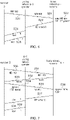
- Figures 6 and 7 show two examples of how the IMEI validation can be handled.
- the roaming terminal device 2 provides (S20) the IMEI and IMSI numbers to the visiting network operator 6-V.
- the visiting network operator 6-V provides (S21) the IMEI and IMSI numbers to the device's home network operator 6-H, which looks up the subscriber's HLR based on the IMSI number, checks (S22) whether the IMEI supplied by the visiting network operator 6-V is in a "valid list" of one or more IMEIs previously authenticated as valid by the home network operator 6-H, and returns (S23) an indication of whether the IMEI has been verified (whether the IMEI was in the valid list).
- the visiting network operator 6-V determines whether the IMEI has been verified by the home network operator 6-H.
- the HLR of the subscriber stores the IMEI alongside other meta data associated with the IMSI (in the EIR 6) and the IMEI is validated between the networks when the device requests to attach to a foreign network.
- the cryptographic identity binding the IMEI to a particular device can be checked during roaming.
- the terminal device 2 requests (S30) access to the visiting network by transmitting its IMEI and IMSI numbers, which are passed on (S31) to the subscriber's home network operator 6-H by the visiting network operator 6-V, which requests that the home network operator 6-H validates the subscriber, and also the IMEI.
- the home network operator 6-H generates and transmits (S32) the nonces to the visiting network operator 6-V, and the visiting network operator 6-V passes the nonces to the terminal device 2 (S33).
- the terminal 2 generates the signature based on the IMEI and nonces (as discussed at step S5 of Figure 5 ) and the signature is returned to the home network operator 6-H via the visiting network operator 6-V (S34, S35).
- the home network operator 6-H retrieves the corresponding device certificate and validates (S36) the signature using the certificate (for example as in steps S7-S9 of Figure 5 ).
- the home network operator 6-H informs (S37) the visiting network operator 6-V whether the IMEI has been verified. If the IMEI has been verified the visiting network operator 6-V can allow (S38) network access for the terminal device 2 to the visiting network (provided the IMSI number has also been validated by the home network operator 6-H - note that IMSI verification is not shown in Figure 7 ). If the IMEI has not been verified by the home network operator 6-H, then the visiting network operator 6-V rejects (S39) access to the network.
- Figures 5-7 show examples of a possible authentication procedure, but it will be appreciated that other procedures could also be used.
- Figure 5 shows certain steps of the method being performed by certain elements such as the communication interface 24 or the processor 14, other examples could perform the same functions in different elements of the device 2.
- Figure 5 shows that a trusted application executing on the processor 14 controls certain parts of the authentication procedure (e.g. generating the signature at step S5), but in other examples the terminal device side of the authentication procedure could be handled entirely by the communication interface 24 and may not involve communication with the application processor 14 at all. In this case, there would be no need for a trusted application or the protected channel 30 between the communication interface 24 and application processor 14.
- the key server 10 is not essential and in other examples the certificate (or other form of verification information for checking the binding between device 2 and IMEI) could be obtained from the device 2 itself or could already be held by the network operator 6. Also, the order of the steps could be varied - e.g. while Figure 5 shows the IMEI being transmitted at step S1, it could also be transmitted later in the process, e.g. the IMEI could be transmitted to the network operator only once the IMSI validation has already been successful.
- a network access control method comprising receiving a handset identifier of a requesting terminal device seeking access to a mobile network; retrieving verification information for verifying an identity of an authorised terminal device associated with the handset identifier; verifying, based on the verification information, whether the requesting terminal device is said authorised terminal device; and controlling access to the mobile network in dependence on whether the requesting terminal device is verified as said authorised terminal device.
- the verification information used to verify the identity of the authorised terminal device can take various forms.
- the verification information may be any information which enables the network operator to identify whether the terminal device has some secret information embedded in the terminal device during an earlier device provisioning phase (e.g. during manufacture).
- the verification information may comprise cryptographic identity information representing a cryptographic identity of the authorised terminal device associated with the handset identifier.
- the cryptographic identity information may specify at least a cryptographic key and the handset identifier associated with the authorised terminal device.
- the cryptographic key in the verification information could be a symmetric key also held by the device itself, or a public key which corresponds to a private key held by the device for proving its identity.
- a signature value can be received, which corresponds to a result of signing a block of information including the handset identifier using the corresponding cryptographic key of the requesting terminal device.
- the network operator may then decrypt the signature value using the cryptographic key specified by the cryptographic identity information, and verify whether a handset identifier extracted from the decrypted signature value matches the handset identifier specified by the cryptographic identity information, in order to control network access.
- the block of information signed by the device may include a function of at least one freshness indicator shared with the requesting terminal device which varies between different requests for use of the mobile network.
- the verifying of the handset identifier may include verifying whether a value extracted from the decrypted signature value matches the function of the freshness indicator.
- the freshness indicator can be any request-specific value which varies from request to request.
- the freshness indicator could be at least one nonce (single use random number) transmitted to the requesting terminal device by the network operator.
- the nonce could be the same nonces used for subscriber (IMSI number) validation, or could be an entirely different set of nonces.
- the freshness indicator could be some other indicator which can distinguish different requests, e.g. if the terminal device and network both have synchronized monotonic clocks, the current clock time could be used as a freshness indicator.
- the network operator could use the time indicated by its own clock as the freshness indicator, and transmit it to the terminal device in a similar way to the nonces described above, and verify on receipt of the signature that the decrypted value in the signature matches the time transmitted to the terminal device.
- the handset identifier of the requesting terminal device can be associated with subscriber information corresponding to a subscriber identification number specified by the requesting terminal device.
- the handset identifier of the requesting terminal device specifying a given subscriber identification number matches the handset identifier associated with the subscriber information corresponding to the given subscriber identification number, the requesting terminal device can be verified as the authorised terminal device without checking the verification information.
- an alternative to using the cryptographic information as verification information for validating the handset identifier could be that the verification information comprises at least one previously verified handset identifier associated with a subscriber information number specified by the requesting terminal device.
- the verifying of the handset identifier comprises checking whether the handset identifier of the requesting terminal device matches one of the one or more previously verified handset identifiers associated with the subscriber information number.
- a given handset identifier in the list of previously verified handset identifier may require cryptographic identification that a terminal device specifying the subscriber information number and the given handset identifier is the authorised terminal device associated with the given handset identifier, this cryptographic identification could be performed earlier, and at the point of seeking network access the verification of the handset identifier can simply include checking whether the handset identifier has already been verified as authentic for the particular handset seeking to access the network.
- the verifying of the handset identifier may be performed in response to a request for connection to the network, for a device not yet connected to the network.
- limited network communication may be required to enable exchange of the handset identifier, freshness indicator, subscriber number (e.g. IMSI number), signature etc. as part of the verification handshake protocol
- the requesting terminal device may be prevented from switching to a full communication mode in which at least one communication functionality other than a limited subset of communication functionality is allowed, until the requesting terminal device has been verified as the authorised terminal device bound to the handset identifier specified.
- the limited communication mode may be a mode in which only emergency calls and the handshaking for the handset identifier and subscriber verification is allowed, but the full communication mode may also permit other functionality such as voice calls, SMS messaging, etc.
- the verifying of the handset identifier may be performed for a device which is already connected to the network, but is now requesting a specific communication functionality for which handset identifier verification is required.
- whether that specific communication functionality is permitted may depend on whether the requesting terminal device is verified to be the authorised terminal device associated with the handset identifier.
- Examples of specific communication functionality which could be permitted only on condition that handset identifier verification is successful can include the ability to send or receive text messages, make a mobile call, use data services, etc.
- the network access is blocked. This blocking could be permanent or could be temporary (for a limited time period). Also, failed IMEI validation attempts could be logged in an audit trail which can be maintained, e.g. for allowing the police or other authorities to track data on use of stolen or tampered devices.
- the method for controlling the network access by verifying the handset identifier could be performed either by a network operator device for controlling access to the particular mobile network to which the requesting terminal device is seeking access (e.g. in the case of usage within the subscriber's home network), or by a first network operator device for controlling access to a first mobile network, in response to a request from a second network operator device for controlling access to a second mobile network to which the requesting terminal device is seeking access (e.g. where the first network operator device corresponds to the subscriber's home network and the second network operator device corresponds to the visiting network).
- a terminal device may have storage circuitry to store a handset identifier identifying the terminal device and a cryptographic key for proving an identity of the terminal device, processing circuitry to generate signature information by signing a block of information including the handset identifier using the cryptographic key; and communication circuitry to communicate on a mobile network, wherein during a network connection process for negotiating access to the mobile network with a network control device, the communication circuitry is configured to communicate the signature information to the network control device.
- the device can authenticate itself to the network and prove that the handset identifier it provided is actually associated with that particular device.
- the signature information provided to the network by the terminal device could be a hash of the handset identifier alone, or could be information obtained by signing a block of information including the handset identifier and at least one other piece of information, such as at least one freshness indicator transmitted from the network to the terminal device.
- the terminal device may have a hardware architecture providing a protected communication channel for protecting at least the cryptographic key between the storage circuitry, the processing circuitry and the communication circuitry. This protects against hardware attacks on the key within the terminal device itself.
- the protected communication channel could also be used to protect the handset identifier as well as the cryptographic key, although this is not essential as even if the handset identifier is leaked, a terminal device not having the same cryptographic key would not be able to authenticate itself as the proper authorised device associated with the handset identifier.
- the handset identifier may comprise an International Mobile Equipment Identity (IMEI) number.
- IMEI International Mobile Equipment Identity
- the IMEI is used as the identifier of the particular mobile handset.
- another identifier could also be used as the handset identifier.
- SIM card 28 is used to store the IMSI and IMEI numbers
- other embodiments could provide a "virtual SIM card" where the functionality of the SIM card for identifying the device to the network can be incorporated within the terminal device itself, rather than needing a separate hardware card.
- a trusted application within the secure world 30 could implement the functionality of the SIM card. Therefore, providing a hardware SIM card 28 is not essential.
Landscapes
- Engineering & Computer Science (AREA)
- Computer Security & Cryptography (AREA)
- Computer Networks & Wireless Communication (AREA)
- Signal Processing (AREA)
- General Engineering & Computer Science (AREA)
- Computer Hardware Design (AREA)
- Computing Systems (AREA)
- Power Engineering (AREA)
- Databases & Information Systems (AREA)
- Business, Economics & Management (AREA)
- Accounting & Taxation (AREA)
- Mobile Radio Communication Systems (AREA)
- Telephonic Communication Services (AREA)
Claims (12)
- Computerimplementiertes Verfahren zur Netznutzungssteuerung, das Folgendes umfasst:Empfangen (S2) von einer anfordernden Endgerätvorrichtung (2) einer Bedienhörerkennung der anfordernden Endgerätvorrichtung, die ein mobiles Netz verwenden möchte, bei einem Netzbetreiber (6), wobei die Bedienhörerkennung eine Nummer einer internationalen Kennung eines mobilen Geräts "IMEI" umfasst;Abrufen (S3, S6) von Verifikationsinformationen zum Verifizieren einer Identität einer autorisierten Endgerätvorrichtung, die der Bedienhörerkennung zugeordnet ist, durch den Netzbetreiber von der anfordernden Endgerätvorrichtung, wobei die Verifikationsinformationen Informationen zum Verifizieren der Bindung zwischen der IMEI und der anfordernden Endgerätvorrichtung umfassen,
wobei die Verifikationsinformationen Informationen über eine kryptografische Identität umfassen, die eine kryptografische Identität der autorisierten Endgerätvorrichtung, die der Bedienhörerkennung zugeordnet ist, repräsentieren;Verifizieren (S9) auf der Grundlage der Verifikationsinformationen durch den Netzbetreiber, ob die anfordernde Endgerätvorrichtung die autorisierte Endgerätvorrichtung ist, undSteuern (S10, S11) durch den Netzbetreiber der Nutzung des mobilen Netzes durch die anfordernde Endgerätvorrichtung in Abhängigkeit davon, ob die anfordernde Endgerätvorrichtung als die autorisierte Endgerätvorrichtung verifiziert ist,
wobei das Steuern der Nutzung des Netzes das Steuern umfasst, ob der anfordernden Endgerätvorrichtung erlaubt ist, von einem begrenzten Kommunikationsmodus, in dem eine begrenzte Teilmenge einer Netzkommunikationsfunktionalität, die nur Notrufe einschließt, und das Handshake-Verfahren für die Bedienhörerkennung und die Teilnehmerverifikation auf der Grundlage des Abrufs von Verifikationsinformationen erlaubt ist, zu einem vollständigen Kommunikationsmodus, in dem eine andere Kommunikationsfunktionalität als die begrenzte Teilmenge erlaubt ist, in Abhängigkeit davon, ob die anfordernde Endgerätvorrichtung als die autorisierte Endgerätvorrichtung verifiziert ist, zu schalten. - Verfahren nach Anspruch 1, wobei die Informationen über die kryptografische Identität einen kryptografischen Schlüssel und die Bedienhörerkennung, die der autorisierten Endgerätvorrichtung zugeordnet ist, spezifizieren.
- Verfahren nach Anspruch 2, wobei das Empfangen der Bedienhörerkennung das Empfangen eines Signaturwerts umfasst, der einem Ergebnis eines Signierens eines Blocks von Informationen, die die Bedienhörerkennung enthalten, unter Verwendung eines kryptografischen Schlüssels der anfordernden Endgerätvorrichtung entspricht, und
das Verifizieren das Entschlüsseln des Signaturwerts unter Verwendung des kryptografischen Schlüssels, der durch die Informationen über die kryptografische Identität spezifiziert ist, und das Verifizieren, ob eine Bedienhörerkennung, die aus dem entschlüsselten Signaturwert extrahiert wird, mit der Bedienhörerkennung übereinstimmt, die durch die Informationen über die kryptografische Identität spezifiziert ist, umfasst. - Verfahren nach Anspruch 3, wobei der Block von Informationen eine Funktion mindestens eines Neuheitsindikators umfasst, der mit der anfordernden Endgerätvorrichtung geteilt wird, der zwischen unterschiedlichen Anforderungen nach Nutzung des mobilen Netzes variiert, unddas Verifizieren das Verifizieren umfasst, ob ein Wert, der aus dem entschlüsselten Signaturwert extrahiert wird, mit der Funktion des mindestens einen Neuheitsindikators übereinstimmt,wobei der mindestens eine Neuheitsindikator optional mindestens einen Nonce umfasst, der an die anfordernde Endgerätvorrichtung gesendet wird.
- Verfahren nach einem der vorhergehenden Ansprüche, das das Zuordnen der Bedienhörerkennung der anfordernden Endgerätvorrichtung zu Teilnehmerinformationen, die einer Teilnehmeridentifikationsnummer entsprechen, die durch die anfordernde Endgerätvorrichtung spezifiziert ist, umfasst, wenn die anfordernde Endgerätvorrichtung als die autorisierte Endgerätvorrichtung verifiziert ist,
wobei optional dann, wenn die Bedienhörerkennung der anfordernden Endgerätvorrichtung, die eine gegebene Teilnehmeridentifikationsnummer spezifiziert, mit der Bedienhörerkennung, die den Teilnehmerinformationen zugeordnet ist, die der gegebenen Teilnehmeridentifikationsnummer entsprechen, übereinstimmt, die anfordernde Endgerätvorrichtung als die autorisierte Endgerätvorrichtung verifiziert wird, ohne dass die Verifikationsinformationen überprüft werden. - Verfahren nach einem der vorhergehenden Ansprüche, wobei das Verifizieren als Antwort auf eine Anforderung nach Verbindung mit dem Netz durchgeführt wird und das Steuern von Nutzung des Netzes das Steuern umfasst, ob der anfordernden Endgerätvorrichtung erlaubt ist, sich mit dem Netz zu verbinden.
- Verfahren nach einem der vorhergehenden Ansprüche, wobei das Verifizieren als Antwort auf eine Anforderung nach spezieller Kommunikationsfunktionalität durch eine anfordernde Endgerätvorrichtung, die schon mit dem mobilen Netz verbunden ist, durchgeführt wird und das Steuern von Nutzung des Netzes das Bestimmen umfasst, ob die spezielle Kommunikationsfunktionalität erlaubt ist.
- Verfahren nach einem der vorhergehenden Ansprüche, wobei das Verfahren durch eine Netzbetreibervorrichtung zum Steuern von Zugriff auf das mobile Netz, mit dem die anfordernde Endgerätvorrichtung Zugriff sucht, durchgeführt wird.
- Verfahren nach einem der Ansprüche 1 bis 7, wobei das Verfahren durch eine erste Netzbetreibervorrichtung zum Steuern von Zugriff auf ein erstes mobiles Netz als Antwort auf eine Anforderung von einer zweiten Netzbetreibervorrichtung zum Steuern von Zugriff auf ein zweites mobiles Netz, auf das die anfordernde Endgerätvorrichtung Zugriff sucht, durchgeführt wird.
- Verfahren nach einem der vorhergehenden Ansprüche, wobei das Steuern von Zugriff auf das Netz das Senden einer Angabe umfasst, dass die anfordernde Endgerätvorrichtung als die autorisierte Endgerätvorrichtung verifiziert worden ist.
- Netzbetreiber (6), der Folgendes umfasst:
eine Verarbeitungsschaltungsanordnung, die konfiguriert ist:von einer anfordernden Endgerätvorrichtung (2) eine Bedienhörerkennung der anfordernden Endgerätvorrichtung, die ein mobiles Netz verwenden möchte, zu empfangen (S2), wobei die Bedienhörerkennung eine Nummer einer internationalen Kennung eines mobilen Geräts "IMEI" umfasst;durch den Netzbetreiber von der anfordernden Endgerätvorrichtung Verifikationsinformationen zum Verifizieren einer Identität einer autorisierten Endgerätvorrichtung, die der Bedienhörerkennung zugeordnet ist, abzurufen (S3, S6), wobei die Verifikationsinformationen Informationen zum Verifizieren der Bindung zwischen der IMEI und der anfordernden Endgerätvorrichtung umfassen,
wobei die Verifikationsinformationen Informationen über eine kryptografische Identität umfassen, die eine kryptografische Identität der autorisierten Endgerätvorrichtung, die der Bedienhörerkennung zugeordnet ist, repräsentieren;auf der Grundlage der Verifikationsinformationen zu verifizieren (S9), ob die anfordernde Endgerätvorrichtung die autorisierte Endgerätvorrichtung ist, unddie Nutzung des mobilen Netzes durch die anfordernde Endgerätvorrichtung in Abhängigkeit davon, ob die anfordernde Endgerätvorrichtung als die autorisierte Endgerätvorrichtung verifiziert ist, zu steuern (S10, S11) ,
wobei das Steuern der Nutzung des Netzes das Steuern umfasst, ob der anfordernden Endgerätvorrichtung erlaubt ist, von einem begrenzten Kommunikationsmodus, in dem eine begrenzte Teilmenge einer Netzkommunikationsfunktionalität, die nur Notrufe einschließt, und das Handshake-Verfahren für die Bedienhörerkennung und die Teilnehmerverifikation auf der Grundlage des Abrufs von Verifikationsinformationen erlaubt ist, zu einem vollständigen Kommunikationsmodus, in dem eine andere Kommunikationsfunktionalität als die begrenzte Teilmenge erlaubt ist, in Abhängigkeit davon, ob die anfordernde Endgerätvorrichtung als die autorisierte Endgerätvorrichtung verifiziert ist, zu schalten. - Computerprogramm zum Steuern einer Datenverarbeitungseinrichtung bei einem Netzbetreiber, um das Verfahren nach einem der Ansprüche 1 bis 10 durchzuführen.
Applications Claiming Priority (2)
| Application Number | Priority Date | Filing Date | Title |
|---|---|---|---|
| GB1619918.4A GB2556906A (en) | 2016-11-24 | 2016-11-24 | Handset identifier verification |
| PCT/GB2017/053296 WO2018096311A1 (en) | 2016-11-24 | 2017-11-02 | Handset identifier verification |
Publications (2)
| Publication Number | Publication Date |
|---|---|
| EP3545659A1 EP3545659A1 (de) | 2019-10-02 |
| EP3545659B1 true EP3545659B1 (de) | 2022-08-31 |
Family
ID=58073536
Family Applications (1)
| Application Number | Title | Priority Date | Filing Date |
|---|---|---|---|
| EP17795021.9A Active EP3545659B1 (de) | 2016-11-24 | 2017-11-02 | Handapparatidentifikatorverifizierung |
Country Status (5)
| Country | Link |
|---|---|
| US (2) | US11228907B2 (de) |
| EP (1) | EP3545659B1 (de) |
| BR (1) | BR112019010266A2 (de) |
| GB (1) | GB2556906A (de) |
| WO (1) | WO2018096311A1 (de) |
Families Citing this family (16)
| Publication number | Priority date | Publication date | Assignee | Title |
|---|---|---|---|---|
| US10819526B2 (en) * | 2018-02-19 | 2020-10-27 | Microsoft Technology Licensing, Llc | Identity-based certificate authority system architecture |
| US11963007B2 (en) * | 2018-05-17 | 2024-04-16 | Nokia Technologies Oy | Facilitating residential wireless roaming via VPN connectivity over public service provider networks |
| US10812537B1 (en) * | 2018-07-23 | 2020-10-20 | Amazon Technologies, Inc. | Using network locality to automatically trigger arbitrary workflows |
| EP3654681A1 (de) * | 2018-11-13 | 2020-05-20 | Thales Dis France SA | Verfahren und netzwerkserver zur authentifizierung einer kommunikationsvorrichtung |
| WO2020182285A1 (en) * | 2019-03-11 | 2020-09-17 | Telefonaktiebolaget Lm Ericsson (Publ) | Wireless device and network node for verification of a device as well as corresponding methods in a wireless communication system |
| GB201906276D0 (en) * | 2019-05-03 | 2019-06-19 | Trustonic Ltd | Remote secure unlock |
| GB2588761B (en) * | 2019-10-30 | 2022-03-02 | Arm Cloud Services Ltd | System and method for performing identity management |
| US12149517B2 (en) * | 2020-10-26 | 2024-11-19 | Micron Technology, Inc. | Management of identifications of an endpoint having a memory device secured for reliable identity validation |
| US12039318B2 (en) * | 2020-10-26 | 2024-07-16 | Micron Technology, Inc. | Endpoint customization via online firmware store |
| CN114760029A (zh) * | 2020-12-26 | 2022-07-15 | 西安西电捷通无线网络通信股份有限公司 | 一种身份鉴别方法和装置 |
| US11445375B2 (en) * | 2021-01-12 | 2022-09-13 | Verizon Patent And Licensing Inc. | Systems and methods for network access security |
| CN115021949B (zh) * | 2021-03-03 | 2025-01-07 | 美光科技公司 | 具有被保护用于可靠身份验证的存储器装置的端点的识别管理方法和系统 |
| US11864148B2 (en) * | 2022-02-11 | 2024-01-02 | T-Mobile Innovatons LLC | Event triggered network migration of subscribers |
| US12088581B2 (en) * | 2022-05-16 | 2024-09-10 | Micron Technology, Inc. | Track activities of components in endpoints having secure memory devices via identity validation |
| KR20240013592A (ko) * | 2022-07-22 | 2024-01-30 | 삼성전자주식회사 | 이동 통신 시스템에서 사용자와 단말을 바인딩하는 방법 및 장치 |
| CN115865396B (zh) * | 2022-09-06 | 2024-03-01 | 中国联合网络通信集团有限公司 | 碳排放标识读取方法、装置、电子设备及可读存储介质 |
Citations (1)
| Publication number | Priority date | Publication date | Assignee | Title |
|---|---|---|---|---|
| WO2016155827A1 (en) * | 2015-04-01 | 2016-10-06 | Telefonaktiebolaget L M Ericsson | Ims emergency calls for roaming ues |
Family Cites Families (13)
| Publication number | Priority date | Publication date | Assignee | Title |
|---|---|---|---|---|
| DE10026326B4 (de) * | 2000-05-26 | 2016-02-04 | Ipcom Gmbh & Co. Kg | Verfahren zur kryptografisch prüfbaren Identifikation einer physikalischen Einheit in einem offenen drahtlosen Telekommunikationsnetzwerk |
| CN1272519C (zh) * | 2004-09-22 | 2006-08-30 | 王锐勋 | 随钥密码用后即清的电子锁装置和实现方法 |
| CN102196438A (zh) * | 2010-03-16 | 2011-09-21 | 高通股份有限公司 | 通信终端标识号管理的方法和装置 |
| US9112905B2 (en) * | 2010-10-22 | 2015-08-18 | Qualcomm Incorporated | Authentication of access terminal identities in roaming networks |
| US9668128B2 (en) * | 2011-03-09 | 2017-05-30 | Qualcomm Incorporated | Method for authentication of a remote station using a secure element |
| KR20130008939A (ko) * | 2011-07-13 | 2013-01-23 | 삼성전자주식회사 | 휴대 단말기에서 단말 고유 정보의 복제를 방지하는 장치 및 방법 |
| US9197600B2 (en) * | 2011-09-29 | 2015-11-24 | Israel L'Heureux | Smart router |
| US20140032733A1 (en) * | 2011-10-11 | 2014-01-30 | Citrix Systems, Inc. | Policy-Based Application Management |
| CN102595400B (zh) * | 2012-03-19 | 2018-08-03 | 中兴通讯股份有限公司 | 检测uicc是否在授权设备上使用的方法、系统和用户设备 |
| US20150006898A1 (en) * | 2013-06-28 | 2015-01-01 | Alcatel-Lucent Usa Inc. | Method For Provisioning Security Credentials In User Equipment For Restrictive Binding |
| US9735968B2 (en) * | 2014-10-20 | 2017-08-15 | Microsoft Technology Licensing, Llc | Trust service for a client device |
| US10425282B2 (en) * | 2014-11-28 | 2019-09-24 | Hewlett Packard Enterprise Development Lp | Verifying a network configuration |
| US11113420B2 (en) * | 2018-03-27 | 2021-09-07 | Vmware, Inc. | Policy based clipboard access |
-
2016
- 2016-11-24 GB GB1619918.4A patent/GB2556906A/en not_active Withdrawn
-
2017
- 2017-11-02 EP EP17795021.9A patent/EP3545659B1/de active Active
- 2017-11-02 WO PCT/GB2017/053296 patent/WO2018096311A1/en not_active Ceased
- 2017-11-02 BR BR112019010266A patent/BR112019010266A2/pt unknown
- 2017-11-02 US US16/346,618 patent/US11228907B2/en active Active
-
2021
- 2021-12-03 US US17/541,578 patent/US11882442B2/en active Active
Patent Citations (1)
| Publication number | Priority date | Publication date | Assignee | Title |
|---|---|---|---|---|
| WO2016155827A1 (en) * | 2015-04-01 | 2016-10-06 | Telefonaktiebolaget L M Ericsson | Ims emergency calls for roaming ues |
Also Published As
| Publication number | Publication date |
|---|---|
| WO2018096311A1 (en) | 2018-05-31 |
| GB201619918D0 (en) | 2017-01-11 |
| US20220095107A1 (en) | 2022-03-24 |
| BR112019010266A2 (pt) | 2019-09-10 |
| GB2556906A (en) | 2018-06-13 |
| US11882442B2 (en) | 2024-01-23 |
| US20190289464A1 (en) | 2019-09-19 |
| EP3545659A1 (de) | 2019-10-02 |
| US11228907B2 (en) | 2022-01-18 |
Similar Documents
| Publication | Publication Date | Title |
|---|---|---|
| US11882442B2 (en) | Handset identifier verification | |
| US9788209B2 (en) | Apparatus and methods for controlling distribution of electronic access clients | |
| CN109547464B (zh) | 用于存储和执行访问控制客户端的方法及装置 | |
| JP6533203B2 (ja) | 複数のアクセス制御クライアントをサポートするモバイル装置、及び対応する方法 | |
| EP2630816B1 (de) | Authentifizierung von zugangsendgerätidentitäten in roaming-netzwerken | |
| US7373509B2 (en) | Multi-authentication for a computing device connecting to a network | |
| KR101434769B1 (ko) | 신뢰적인 연합 아이덴티티 관리 및 데이터 액세스 인가를 위한 방법 및 장치 | |
| EP2063378B1 (de) | Telekommunikationsvorrichtungssicherheit | |
| US20110271330A1 (en) | Solutions for identifying legal user equipments in a communication network | |
| JP2012231466A (ja) | 電子的アクセスクライアントを記憶する装置及び方法 | |
| CN107332817B (zh) | 支持多个访问控制客户端的移动装置和对应的方法 | |
| CN102204299A (zh) | 将移动装置从旧拥有者安全变更到新拥有者的方法 | |
| US11202192B2 (en) | Registering user equipment with a visited public land mobile network | |
| Køien | A privacy enhanced device access protocol for an IoT context | |
| HK1169525A (en) | Methods and apparatus for storage and execution of access control clients |
Legal Events
| Date | Code | Title | Description |
|---|---|---|---|
| STAA | Information on the status of an ep patent application or granted ep patent |
Free format text: STATUS: UNKNOWN |
|
| STAA | Information on the status of an ep patent application or granted ep patent |
Free format text: STATUS: THE INTERNATIONAL PUBLICATION HAS BEEN MADE |
|
| PUAI | Public reference made under article 153(3) epc to a published international application that has entered the european phase |
Free format text: ORIGINAL CODE: 0009012 |
|
| STAA | Information on the status of an ep patent application or granted ep patent |
Free format text: STATUS: REQUEST FOR EXAMINATION WAS MADE |
|
| 17P | Request for examination filed |
Effective date: 20190624 |
|
| AK | Designated contracting states |
Kind code of ref document: A1 Designated state(s): AL AT BE BG CH CY CZ DE DK EE ES FI FR GB GR HR HU IE IS IT LI LT LU LV MC MK MT NL NO PL PT RO RS SE SI SK SM TR |
|
| AX | Request for extension of the european patent |
Extension state: BA ME |
|
| DAV | Request for validation of the european patent (deleted) | ||
| DAX | Request for extension of the european patent (deleted) | ||
| STAA | Information on the status of an ep patent application or granted ep patent |
Free format text: STATUS: EXAMINATION IS IN PROGRESS |
|
| 17Q | First examination report despatched |
Effective date: 20200610 |
|
| RAP1 | Party data changed (applicant data changed or rights of an application transferred) |
Owner name: TRUSTONIC LIMITED |
|
| REG | Reference to a national code |
Ref country code: DE Ref legal event code: R079 Ref document number: 602017061295 Country of ref document: DE Free format text: PREVIOUS MAIN CLASS: H04L0029060000 Ipc: H04W0012480000 |
|
| GRAP | Despatch of communication of intention to grant a patent |
Free format text: ORIGINAL CODE: EPIDOSNIGR1 |
|
| STAA | Information on the status of an ep patent application or granted ep patent |
Free format text: STATUS: GRANT OF PATENT IS INTENDED |
|
| RIC1 | Information provided on ipc code assigned before grant |
Ipc: H04W 12/08 20090101ALI20220223BHEP Ipc: H04W 12/06 20090101ALI20220223BHEP Ipc: H04L 9/32 20060101ALI20220223BHEP Ipc: H04W 8/12 20090101ALI20220223BHEP Ipc: H04W 12/48 20210101AFI20220223BHEP |
|
| INTG | Intention to grant announced |
Effective date: 20220329 |
|
| GRAS | Grant fee paid |
Free format text: ORIGINAL CODE: EPIDOSNIGR3 |
|
| GRAA | (expected) grant |
Free format text: ORIGINAL CODE: 0009210 |
|
| STAA | Information on the status of an ep patent application or granted ep patent |
Free format text: STATUS: THE PATENT HAS BEEN GRANTED |
|
| AK | Designated contracting states |
Kind code of ref document: B1 Designated state(s): AL AT BE BG CH CY CZ DE DK EE ES FI FR GB GR HR HU IE IS IT LI LT LU LV MC MK MT NL NO PL PT RO RS SE SI SK SM TR |
|
| REG | Reference to a national code |
Ref country code: CH Ref legal event code: EP Ref country code: GB Ref legal event code: FG4D |
|
| REG | Reference to a national code |
Ref country code: AT Ref legal event code: REF Ref document number: 1516213 Country of ref document: AT Kind code of ref document: T Effective date: 20220915 Ref country code: DE Ref legal event code: R096 Ref document number: 602017061295 Country of ref document: DE |
|
| REG | Reference to a national code |
Ref country code: IE Ref legal event code: FG4D |
|
| REG | Reference to a national code |
Ref country code: LT Ref legal event code: MG9D |
|
| REG | Reference to a national code |
Ref country code: NL Ref legal event code: MP Effective date: 20220831 |
|
| PG25 | Lapsed in a contracting state [announced via postgrant information from national office to epo] |
Ref country code: SE Free format text: LAPSE BECAUSE OF FAILURE TO SUBMIT A TRANSLATION OF THE DESCRIPTION OR TO PAY THE FEE WITHIN THE PRESCRIBED TIME-LIMIT Effective date: 20220831 Ref country code: RS Free format text: LAPSE BECAUSE OF FAILURE TO SUBMIT A TRANSLATION OF THE DESCRIPTION OR TO PAY THE FEE WITHIN THE PRESCRIBED TIME-LIMIT Effective date: 20220831 Ref country code: NO Free format text: LAPSE BECAUSE OF FAILURE TO SUBMIT A TRANSLATION OF THE DESCRIPTION OR TO PAY THE FEE WITHIN THE PRESCRIBED TIME-LIMIT Effective date: 20221130 Ref country code: LV Free format text: LAPSE BECAUSE OF FAILURE TO SUBMIT A TRANSLATION OF THE DESCRIPTION OR TO PAY THE FEE WITHIN THE PRESCRIBED TIME-LIMIT Effective date: 20220831 Ref country code: LT Free format text: LAPSE BECAUSE OF FAILURE TO SUBMIT A TRANSLATION OF THE DESCRIPTION OR TO PAY THE FEE WITHIN THE PRESCRIBED TIME-LIMIT Effective date: 20220831 Ref country code: FI Free format text: LAPSE BECAUSE OF FAILURE TO SUBMIT A TRANSLATION OF THE DESCRIPTION OR TO PAY THE FEE WITHIN THE PRESCRIBED TIME-LIMIT Effective date: 20220831 |
|
| REG | Reference to a national code |
Ref country code: AT Ref legal event code: MK05 Ref document number: 1516213 Country of ref document: AT Kind code of ref document: T Effective date: 20220831 |
|
| PG25 | Lapsed in a contracting state [announced via postgrant information from national office to epo] |
Ref country code: PL Free format text: LAPSE BECAUSE OF FAILURE TO SUBMIT A TRANSLATION OF THE DESCRIPTION OR TO PAY THE FEE WITHIN THE PRESCRIBED TIME-LIMIT Effective date: 20220831 Ref country code: IS Free format text: LAPSE BECAUSE OF FAILURE TO SUBMIT A TRANSLATION OF THE DESCRIPTION OR TO PAY THE FEE WITHIN THE PRESCRIBED TIME-LIMIT Effective date: 20221231 Ref country code: HR Free format text: LAPSE BECAUSE OF FAILURE TO SUBMIT A TRANSLATION OF THE DESCRIPTION OR TO PAY THE FEE WITHIN THE PRESCRIBED TIME-LIMIT Effective date: 20220831 Ref country code: GR Free format text: LAPSE BECAUSE OF FAILURE TO SUBMIT A TRANSLATION OF THE DESCRIPTION OR TO PAY THE FEE WITHIN THE PRESCRIBED TIME-LIMIT Effective date: 20221201 |
|
| PG25 | Lapsed in a contracting state [announced via postgrant information from national office to epo] |
Ref country code: SM Free format text: LAPSE BECAUSE OF FAILURE TO SUBMIT A TRANSLATION OF THE DESCRIPTION OR TO PAY THE FEE WITHIN THE PRESCRIBED TIME-LIMIT Effective date: 20220831 Ref country code: RO Free format text: LAPSE BECAUSE OF FAILURE TO SUBMIT A TRANSLATION OF THE DESCRIPTION OR TO PAY THE FEE WITHIN THE PRESCRIBED TIME-LIMIT Effective date: 20220831 Ref country code: PT Free format text: LAPSE BECAUSE OF FAILURE TO SUBMIT A TRANSLATION OF THE DESCRIPTION OR TO PAY THE FEE WITHIN THE PRESCRIBED TIME-LIMIT Effective date: 20230102 Ref country code: ES Free format text: LAPSE BECAUSE OF FAILURE TO SUBMIT A TRANSLATION OF THE DESCRIPTION OR TO PAY THE FEE WITHIN THE PRESCRIBED TIME-LIMIT Effective date: 20220831 Ref country code: DK Free format text: LAPSE BECAUSE OF FAILURE TO SUBMIT A TRANSLATION OF THE DESCRIPTION OR TO PAY THE FEE WITHIN THE PRESCRIBED TIME-LIMIT Effective date: 20220831 Ref country code: CZ Free format text: LAPSE BECAUSE OF FAILURE TO SUBMIT A TRANSLATION OF THE DESCRIPTION OR TO PAY THE FEE WITHIN THE PRESCRIBED TIME-LIMIT Effective date: 20220831 Ref country code: AT Free format text: LAPSE BECAUSE OF FAILURE TO SUBMIT A TRANSLATION OF THE DESCRIPTION OR TO PAY THE FEE WITHIN THE PRESCRIBED TIME-LIMIT Effective date: 20220831 |
|
| REG | Reference to a national code |
Ref country code: CH Ref legal event code: PK Free format text: BERICHTIGUNGEN |
|
| PG25 | Lapsed in a contracting state [announced via postgrant information from national office to epo] |
Ref country code: SK Free format text: LAPSE BECAUSE OF FAILURE TO SUBMIT A TRANSLATION OF THE DESCRIPTION OR TO PAY THE FEE WITHIN THE PRESCRIBED TIME-LIMIT Effective date: 20220831 Ref country code: EE Free format text: LAPSE BECAUSE OF FAILURE TO SUBMIT A TRANSLATION OF THE DESCRIPTION OR TO PAY THE FEE WITHIN THE PRESCRIBED TIME-LIMIT Effective date: 20220831 |
|
| REG | Reference to a national code |
Ref country code: DE Ref legal event code: R097 Ref document number: 602017061295 Country of ref document: DE |
|
| RAP4 | Party data changed (patent owner data changed or rights of a patent transferred) |
Owner name: TRUSTONIC LIMITED |
|
| RIN2 | Information on inventor provided after grant (corrected) |
Inventor name: LORESKAR, CHRIS |
|
| P01 | Opt-out of the competence of the unified patent court (upc) registered |
Effective date: 20230515 |
|
| PG25 | Lapsed in a contracting state [announced via postgrant information from national office to epo] |
Ref country code: NL Free format text: LAPSE BECAUSE OF FAILURE TO SUBMIT A TRANSLATION OF THE DESCRIPTION OR TO PAY THE FEE WITHIN THE PRESCRIBED TIME-LIMIT Effective date: 20220831 Ref country code: MC Free format text: LAPSE BECAUSE OF FAILURE TO SUBMIT A TRANSLATION OF THE DESCRIPTION OR TO PAY THE FEE WITHIN THE PRESCRIBED TIME-LIMIT Effective date: 20220831 Ref country code: AL Free format text: LAPSE BECAUSE OF FAILURE TO SUBMIT A TRANSLATION OF THE DESCRIPTION OR TO PAY THE FEE WITHIN THE PRESCRIBED TIME-LIMIT Effective date: 20220831 |
|
| REG | Reference to a national code |
Ref country code: CH Ref legal event code: PL |
|
| PLBE | No opposition filed within time limit |
Free format text: ORIGINAL CODE: 0009261 |
|
| STAA | Information on the status of an ep patent application or granted ep patent |
Free format text: STATUS: NO OPPOSITION FILED WITHIN TIME LIMIT |
|
| REG | Reference to a national code |
Ref country code: BE Ref legal event code: MM Effective date: 20221130 |
|
| PG25 | Lapsed in a contracting state [announced via postgrant information from national office to epo] |
Ref country code: LI Free format text: LAPSE BECAUSE OF NON-PAYMENT OF DUE FEES Effective date: 20221130 Ref country code: CH Free format text: LAPSE BECAUSE OF NON-PAYMENT OF DUE FEES Effective date: 20221130 |
|
| 26N | No opposition filed |
Effective date: 20230601 |
|
| PG25 | Lapsed in a contracting state [announced via postgrant information from national office to epo] |
Ref country code: SI Free format text: LAPSE BECAUSE OF FAILURE TO SUBMIT A TRANSLATION OF THE DESCRIPTION OR TO PAY THE FEE WITHIN THE PRESCRIBED TIME-LIMIT Effective date: 20220831 Ref country code: LU Free format text: LAPSE BECAUSE OF NON-PAYMENT OF DUE FEES Effective date: 20221102 |
|
| PG25 | Lapsed in a contracting state [announced via postgrant information from national office to epo] |
Ref country code: IE Free format text: LAPSE BECAUSE OF NON-PAYMENT OF DUE FEES Effective date: 20221102 |
|
| PG25 | Lapsed in a contracting state [announced via postgrant information from national office to epo] |
Ref country code: BE Free format text: LAPSE BECAUSE OF NON-PAYMENT OF DUE FEES Effective date: 20221130 |
|
| PG25 | Lapsed in a contracting state [announced via postgrant information from national office to epo] |
Ref country code: HU Free format text: LAPSE BECAUSE OF FAILURE TO SUBMIT A TRANSLATION OF THE DESCRIPTION OR TO PAY THE FEE WITHIN THE PRESCRIBED TIME-LIMIT; INVALID AB INITIO Effective date: 20171102 |
|
| PG25 | Lapsed in a contracting state [announced via postgrant information from national office to epo] |
Ref country code: CY Free format text: LAPSE BECAUSE OF FAILURE TO SUBMIT A TRANSLATION OF THE DESCRIPTION OR TO PAY THE FEE WITHIN THE PRESCRIBED TIME-LIMIT Effective date: 20220831 |
|
| PG25 | Lapsed in a contracting state [announced via postgrant information from national office to epo] |
Ref country code: MK Free format text: LAPSE BECAUSE OF FAILURE TO SUBMIT A TRANSLATION OF THE DESCRIPTION OR TO PAY THE FEE WITHIN THE PRESCRIBED TIME-LIMIT Effective date: 20220831 Ref country code: IT Free format text: LAPSE BECAUSE OF FAILURE TO SUBMIT A TRANSLATION OF THE DESCRIPTION OR TO PAY THE FEE WITHIN THE PRESCRIBED TIME-LIMIT Effective date: 20220831 |
|
| PG25 | Lapsed in a contracting state [announced via postgrant information from national office to epo] |
Ref country code: TR Free format text: LAPSE BECAUSE OF FAILURE TO SUBMIT A TRANSLATION OF THE DESCRIPTION OR TO PAY THE FEE WITHIN THE PRESCRIBED TIME-LIMIT Effective date: 20220831 |
|
| PG25 | Lapsed in a contracting state [announced via postgrant information from national office to epo] |
Ref country code: BG Free format text: LAPSE BECAUSE OF FAILURE TO SUBMIT A TRANSLATION OF THE DESCRIPTION OR TO PAY THE FEE WITHIN THE PRESCRIBED TIME-LIMIT Effective date: 20220831 |
|
| PG25 | Lapsed in a contracting state [announced via postgrant information from national office to epo] |
Ref country code: MT Free format text: LAPSE BECAUSE OF FAILURE TO SUBMIT A TRANSLATION OF THE DESCRIPTION OR TO PAY THE FEE WITHIN THE PRESCRIBED TIME-LIMIT Effective date: 20220831 |
|
| PGFP | Annual fee paid to national office [announced via postgrant information from national office to epo] |
Ref country code: DE Payment date: 20251126 Year of fee payment: 9 |
|
| PGFP | Annual fee paid to national office [announced via postgrant information from national office to epo] |
Ref country code: GB Payment date: 20251119 Year of fee payment: 9 |
|
| PGFP | Annual fee paid to national office [announced via postgrant information from national office to epo] |
Ref country code: FR Payment date: 20251124 Year of fee payment: 9 |