EP3545648B1 - Bereitstellung von subdienstströmen unter verwendung von broadcast und multicast - Google Patents
Bereitstellung von subdienstströmen unter verwendung von broadcast und multicast Download PDFInfo
- Publication number
- EP3545648B1 EP3545648B1 EP16813047.4A EP16813047A EP3545648B1 EP 3545648 B1 EP3545648 B1 EP 3545648B1 EP 16813047 A EP16813047 A EP 16813047A EP 3545648 B1 EP3545648 B1 EP 3545648B1
- Authority
- EP
- European Patent Office
- Prior art keywords
- content
- multicast
- user equipment
- common
- common content
- Prior art date
- Legal status (The legal status is an assumption and is not a legal conclusion. Google has not performed a legal analysis and makes no representation as to the accuracy of the status listed.)
- Active
Links
Images

Classifications
-
- H—ELECTRICITY
- H04—ELECTRIC COMMUNICATION TECHNIQUE
- H04L—TRANSMISSION OF DIGITAL INFORMATION, e.g. TELEGRAPHIC COMMUNICATION
- H04L12/00—Data switching networks
- H04L12/02—Details
- H04L12/16—Arrangements for providing special services to substations
- H04L12/18—Arrangements for providing special services to substations for broadcast or conference, e.g. multicast
- H04L12/189—Arrangements for providing special services to substations for broadcast or conference, e.g. multicast in combination with wireless systems
-
- H—ELECTRICITY
- H04—ELECTRIC COMMUNICATION TECHNIQUE
- H04L—TRANSMISSION OF DIGITAL INFORMATION, e.g. TELEGRAPHIC COMMUNICATION
- H04L67/00—Network arrangements or protocols for supporting network services or applications
- H04L67/50—Network services
- H04L67/56—Provisioning of proxy services
- H04L67/568—Storing data temporarily at an intermediate stage, e.g. caching
-
- H—ELECTRICITY
- H04—ELECTRIC COMMUNICATION TECHNIQUE
- H04W—WIRELESS COMMUNICATION NETWORKS
- H04W4/00—Services specially adapted for wireless communication networks; Facilities therefor
- H04W4/06—Selective distribution of broadcast services, e.g. multimedia broadcast multicast service [MBMS]; Services to user groups; One-way selective calling services
-
- H—ELECTRICITY
- H04—ELECTRIC COMMUNICATION TECHNIQUE
- H04W—WIRELESS COMMUNICATION NETWORKS
- H04W72/00—Local resource management
- H04W72/30—Resource management for broadcast services
Definitions
- the subject matter described herein relates to wireless.
- Multimedia Broadcast Multicast Service can be used to provide content via a service that broadcasts and multicasts the content via cellular.
- the broadcast, multicast transmission may be provided over one or more cells to one or more user equipment (UE).
- UE user equipment
- the cellular network may provide mobile television content to a user equipment using for example a multicast, broadcast single-frequency network (MBSFN) in which base stations transmit on the same frequency in a coordinated way to provide the television content as MBMS.
- MMSFN broadcast single-frequency network
- US 2013/276017 A1 discloses systems, methods, and receiver devices to enable broadcasters with restricted content license areas (e.g., Designated Market Areas ("DMAs”) to distribute content via Over the Top (“OTT”) IP networks.
- restricted content license areas e.g., Designated Market Areas ("DMAs)
- OTT Over the Top
- US 2010/299702 A1 discloses methods and systems to enable application content for use by an application running on a receiver device to be broadcast by a mobile multimedia broadcast network for energy-efficient reception and use by receiver devices.
- US 2015/095955 A1 discloses an electronic device which uses one antenna to wirelessly communicate information with two different wireless networks via concurrent connections associated with different radio access technologies. More specifically, the electronic device may receive video via a first of the connections using a multicast communication protocol.
- US 2014/194100 A1 is related to group communications over multimedia broadcast/multicast services (MBMS).
- MBMS multimedia broadcast/multicast services
- a method is provided.
- the method includes detecting, by a packet gateway, whether content is common content to be provided, via a multicast, broadcast transmission, to at least one user equipment, wherein the common content comprises content common to a plurality of user equipment within an area covered by the multicast, broadcast transmission wherein the detection of whether content is common content is based on deep packet inspection (DPI) and/or a special packet marking indication which indicates that the content is common content to a plurality of user equipment being served by one or more base stations; forwarding, by the packet gateway, the common content to a multicast, broadcast gateway to enable delivery to the at least one user equipment via the multicast, broadcast transmission; and forwarding, by the packet gateway, as a unicast service flow, other content to the at least one user equipment to enable the at least one user equipment to selectively combine the unicast service flow with the common content carried by the multicast, broadcast transmission.
- DPI deep packet inspection
- a special packet marking indication which indicates that the content is common content to a plurality of user equipment being served by one or more base stations
- the multicast, broadcast may comprise a multicast transmission and/or a broadcast transmission.
- the common content may be cached at an edge caching server in a mobile wireless network.
- the common content forwarded to the multicast, broadcast gateway may further include information regarding one or more cells of a mobile wireless network to which to transmit the common content via the multicast, broadcast.
- the forwarded common content may be handled as a sub-service flow to the at least one user equipment and delivered through a dynamic network slice.
- the common content may include content frequently downloaded by a plurality of user equipment within an area covered by the multicast, broadcast transmission.
- a method performed by a user equipment in a system includes receiving, by the user equipment, via a unicast service flow, content received from a content provider via a serving gateway; receiving, by the user equipment, an indication regarding common content to be received via a multicast, broadcast transmission, wherein the common content comprises content common to a plurality of user equipment within an area covered by the multicast, broadcast transmission wherein the common content is identified, by the packet gateway, as common content based on deep packet inspection (DPI) and/or a special packet marking indication which indicates that the content is common content to a plurality of user equipment being served by one or more base stations; receiving, by the user equipment, the common content via the multicast, broadcast transmission; and combining, by the user equipment, the content received via the unicast service flow and the common content received via the multicast, broadcast transmission.
- DPI deep packet inspection
- the indication may be provided as signaling from a base station and/or provided via an application at the apparatus.
- the indication may enable the apparatus to switch between a service flow carrying, via the unicast service flow, the content and a sub-service flow carrying, via the multicast, broadcast transmission, and the common content.
- the multicast, broadcast transmission may include a multicast transmission and/or a broadcast transmission.
- the common content may be received from at least one base station, a multicast, broadcast gateway, and an edge caching server in a mobile wireless network.
- MBMS including multicast, broadcast configured networks have been an aspect in Third Generation (3G), Fourth Generation (4G), and Long Term Evolution (LIE)-Advanced wireless networks.
- 3G Third Generation
- 4G Fourth Generation
- LIE Long Term Evolution
- the content has mainly been television broadcast content and public safety content (e.g., public warning systems and mission critical communication systems).
- time criticality may also be a concern with respect to delivering content to UEs including a UE group(s). For example, a group of fire safety personnel may need high quality video content delivery even while indoors, and this content may be delivered in a timely manner via a multicast, broadcast to the group of UEs.
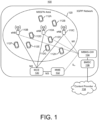
- FIG. 1 depicts an example of a system 100 for MBMS service delivery, in accordance with some example embodiments.
- the system 100 may include one or more base stations 110A-C, such as evolved node B (eNB) type base stations, one or more user equipment 112A-H, a multi-cell/multicast coordination entity (MCE) 130, a mobility management entity (MME) 132, a MBMS gateway 134, and a broadcast, multicast switching center (BMSC) 136.
- eNB evolved node B
- MCE multi-cell/multicast coordination entity
- MME mobility management entity
- BMSC broadcast, multicast switching center
- the user equipment 112A-H may be configured for multicast, broadcast single frequency network (MBSFN) operation while in the MBSFN coverage area 120, which may enable one or more UEs 112A-H within that area to receive MBMS content from the MBMS gateway 134 and the content provider 138.
- the content provider 138 may represent a server, such as a group communication system enabler (GCSE) and/or other type of server (see, e.g., " Enabling Group Communication for Public Safety in LTE-Advanced Networks," A. Prasad et al., Elsevier - Journal of Computer and Network Applications, vol. 62, Page 41-52, Feb. 2016 ).
- GCSE group communication system enabler
- Edge caching technology may include approaches in which the content providers collaborate with the cellular network operators to move content sources from for example the cloud to nodes closer to the radio access network including base stations.
- edge caching commonly used content may be cached in a server at the edge of the mobile, cellular network. From the content provider's perspective, edge caching may be considered efficient as edge caching can reduce the content provider's server load. From the cellular network provider's perspective, edge caching may increase signaling in the cellular network and/or may not scale well due to the need for special interfaces to the content provider's edge caching servers.
- cellular network providers may prefer relatively, generic content caching (which can be used frequently among a variety of users) at the edge of the core cellular network, rather than more unique or less commonly used content.
- MBMS transmission may be considered more efficient when there are multiple UEs in the network receiving the same content (given proper selection of transmission parameters), when compared to unicast transmissions to each UE.
- content delivered via edge caching and multicast, broadcast techniques may be delivered with reduced signaling impacts, interactions, and/or interface requirements, when compared to unicast approaches.
- a portion of the streaming content deemed to be common (also referred to herein as "common content") to a plurality of UEs (and, e.g., transmitted by a common base station(s) or into common target cell(s)) may be treated as common content for multicast, broadcast session setup and transmission.
- the common content may include an advertisement video stream, which may be common to a plurality of UEs in a target cell(s).
- a portion of the streaming content deemed to be common (also referred to herein as "common content") to a plurality of UEs may be delivered through a dynamic setup of a network slice for multicast, broadcast content delivery.
- a dynamic network slice may enable the network operator to dynamically design, deploy, customize, and optimize the physical network infrastructure to deliver various service flows in the most optimized manner.
- a network node such as a packet gateway (and/or any other network node configured to create a network slice) after detecting the common content delivery and determining the mode of transmission (e.g., unicast, multicast, and/or broadcast) may create a new network slice for delivering the common content, in a radio resource efficient manner.
- the creation of the slice and delivery of common content through the slice may be signaled to the UE either explicitly by a core node(s) (e.g., through non-access stratum signaling) or radio access network node(s) (e.g., through system information broadcast signaling), although the UE may be informed in other ways as well including implicitly by the UE application layer.
- a group of UEs may each be streaming different television or movie content via separate unicasts, but the advertisements may represent common content for the group of UEs.
- the UEs may receive their different television/movie streaming content via separate unicast service flows, but the UEs may receive, via multicast, broadcast transmission, the advertisement video stream as common content provided from an edged cached server, in accordance with some example embodiments.
- the multicast, broadcast transmission of the advertisement may be a sub-service flow to the UEs.
- the previous example refers to advertisement content being handled as common content for edge caching and multicast, broadcast transmission
- other types of content may also be handled including a popular video clip that is being frequently fetched or downloaded during a particular timeframe, a periodic advertisement, broadcast information such as feature updates meant for massive, machine type communication devices, a portion of a given popular TV show at a particular time instance, emergency content, warning information to be shown before some video content, a live video event, and/or the like.
- the network may determine that there is an opportunity to establish a new sub-service flow to deliver the common content using multicast, broadcast transmission, rather than unicast service flows.
- common content may be determined in a variety of ways including deep packet inspection (DPI), marking content as common content, and/or the like.
- DPI deep packet inspection
- common content may be determined by a node, such as a content provider server, a wireless network node, and/or any other node.
- common content may be determined based on how frequently, over a given time period such as hourly, daily, and/or the like, content is fetched from (or expected to be fetched from) an edge catching server.
- the edge catching server may include content more likely to be accessed and, as such, more likely to be common content that can be handled from the edge caching server via multicast, broadcast to a group of UEs. For example, a popular video clip that is commonly being fetched during a particular day can be placed in the edge caching server, so that this video clip content can be stored for fast and efficient delivery as common content via multicast, broadcast to a group of UEs.
- the network operator performs deep packet inspection (DPI) to detect the common content and then inform the MBMS gateway 134 about which cells (or base stations serving the cells) common content needs to be delivered to via a multicast, broadcast.
- DPI deep packet inspection
- the cells (or base stations) may be identified based on for example cell identifiers.
- the content provider provides a marking such as an indicator (e.g., a certain packet marking) to indicate that the content being streamed to the UEs is common content and/or at least partially common content, such as in the case of the advertisement example noted above.
- a marking such as an indicator (e.g., a certain packet marking) to indicate that the content being streamed to the UEs is common content and/or at least partially common content, such as in the case of the advertisement example noted above.
- a network node such as the content provider's server and/or other node, detects that it is likely that certain content is, at a given instance in time, common to a group of UEs being served by a certain base station.
- the node marks the common content (e.g., one or more packets associated with the common content) with an indication such as a special packet marking to indicate that the content is common content (or, e.g., at least partially common content) to a group of UEs being served by a given base station(s).
- the indicator may thus allow the base station or other type of node to handle via a multicast, broadcast transmission the common content (which can be partially common content as noted).
- DPI deep packet inspection
- the content may be performed (e.g., by the network or a mobile network operation) to establish that content being delivered is common content for some, if not all, UEs, such as a group of UEs.
- DPI also referred to as complete packet inspection and/or inspection extraction
- the inspection may check for optimizations (or other operations such as filtering, prioritization, de-prioritization, and/or even packet dropping) that could be done based on the content type information.
- the network operator may perform DPI to detect the common content and then inform a MBMS gateway (GW) about which cell(s) (or base station(s) serving the cell(s)) the common content needs to be delivered to via multicast, broadcast.
- GW MBMS gateway
- the target cells (or base stations) may be identified based on for example cell identifiers.
- a node such as packet gateway may use one or more criteria, such as whether there are multiple users in same cell(s) where the content could be more efficiently transmitted. For example, if an emergency warning audio or video stream is to be sent to all of the UEs 112A-H in MBSFN area 120, this content may be handled as common content which can be broadcast to all of the UEs 112A-H. To illustrate further, if a streaming video is frequently being downloaded on a certain day to a group of UEs in a coverage area, the packet gateway may determine that this steaming video is a candidate for common content and, as such, multicast to the group of UEs such as UEs 112A-C.
- the decision to transmit the data using multicast, broadcast could depend on the radio conditions of these multiple users receiving the common content.
- the network may monitor the reference signal received power (or other type of metric such as a quality level) experienced by the UE(s) to determine whether multicast, broadcast as compared to unicast could be more radio resource efficient to deliver the content.
- the transmission mode selection criteria may include determining whether multicast, broadcast transmission would provide improved resource efficiency as compared to unicast. For example, if there are significant amount of users with poor radio conditions, then using multicast, broadcast might not provide significant resource efficiency as compared to unicast, where a more robust modulation and coding scheme could be used to ensure reliable data delivery. Moreover, if there are only a very limited number of users receiving the data, then the cost of setting up the multicast, broadcast data transmission setup and related delays involved could be significantly higher than delivering the data over unicast.
- the transmission mode selection criteria may include determining whether optimization by placing certain common content on a multicast, broadcast would provide an improvement in terms of reducing user-plane backhaul link load/traffic (since the interfaces need not carry duplicated packets of the same information). For example, the unicast data transmission to multiple users could require related packet duplication to be done over the backhaul link, which could be avoided for multicast, broadcast, where only one copy of the packet needs to be sent through the backhaul links.
- the transmission mode selection criteria may include security related issues.
- the unicast data transmissions may have over-the-air encryption
- the multicast, broadcast mode of transmission may require application level encryption, in order to avoid possible misuse of the data.
- the transmission mode selection criteria may include determining whether the application layer can support receiving sub-flows within the same application through multiple streams, transmission techniques. For example, depending on whether the transmission mode is unicast or multicast, broadcast, the UE's application may be configured to receive multiple streams of the same data, where parts of the data may be received using multicast, broadcast, whereas other parts are received using unicast. The UE's application layer may be configured to support combining these streams into a unified stream for the end user, in order to view the common and dedicated content seamlessly.
- the common content e.g., advertisement video and/or other types of common content
- the QoS requirement information for the common content may be passed by the content provider to the network operator, in accordance with some example embodiments.
- FIG. 2 depicts an example of a system 200 for MBMS service delivery, in accordance with some example embodiments.
- System 200 is similar to system 100 in some respects but depicts additional edge caching aspects, in accordance with some example embodiments.
- the MBMS may perform a multicast, broadcast transmission which refers to a multicast transmission to some of the UEs in the MBSFN area 120, while the broadcast refers to a transmission to all of the UEs in the MBSFN area 120.
- the phrase "multicast, broadcast” transmission refers to a multicast transmission and/or a broadcast transmission.
- the content provider and network provider may cooperate and provide the actual content through core network interfaces including unicast service flows, while cached content may be provided through MBMS related interfaces as a sub-service flow.
- the MBMS related interfaces may interact with unicast gateways, such as a serving gateway (S-GW) 230 and a packet data network gateway 220 (PDN-GW and/or P-GW), to determine which base station(s) 110A-C and/or the like should participate in the final delivery of common content. The participation may be accomplished based on information related to which UEs 112A-H the common content is being targeted to.
- S-GW serving gateway
- PDN-GW and/or P-GW packet data network gateway
- the UE may coordinate by combining (1) unicast, dedicated content originating from the packet data network gateways 230/220 and (2) the common content originating from MBMS gateway 134.
- the UE may identify, based on the group information, whether the common content being delivered is meant for the UE.
- System 200 may include at least one edge caching server 210, the packet data network gateway 220 (labeled P-GW), and the serving gateway 230 (labeled S-GW).
- the packet data network gateway 220 may forward unicast service flows to the UEs 112A-F.
- the unicast service flows may include content from content provider server(s) 138. While common content to one or more UEs 112A-H may be provided as a multicast, broadcast via broadcast, multicast switching center (BMSC) 136 and MBMS-GW 134.
- BMSC multicast switching center
- a UE and/or application therein may combine the unicast service flow and the sub-service flow associated with the multicast, broadcast.
- the UEs 112C-D may each be receiving different content streams via separate unicasts, and may both be receiving common content via a sub-service flow associated with the multicast, broadcast.
- the UE (and/or application therein) may combine the unicast service flow with the common content sub-service flow associated with the multicast, broadcast.
- the UE may receive information related to the multicast, broadcast transmission of data through monitoring of a system information broadcast sent by the base station.
- the UE may determine whether the multicast, broadcast information being sent is actually meant for the UE (or some other device).
- the decision to combine the data from the multiple service flows may be taken by the UE application layer by decoding the data received through unicast and through multicast, broadcast.
- the UE may switch between the different transmission modes, and this switching may be based on the instructions received from the application layer and/or based on determining the most optimal service flow to receive the data.
- a node such as a packet gateway (P-GW) 220, may perform DPI 240 to detect whether the common content delivery within the streaming content has started, although the common content may be detected in other ways including via an indicator as noted.
- the packet gateway may monitor the service flows towards all the UEs and based on DPI detect when the common content delivery is initiated, and initiate multicast, broadcast sessions to deliver these packets to the end users.
- the packet gateway 220 may detect whether the stream from content provider 138 includes the common content that can be delivered via multicast, broadcast. Packet gateway 220 may also notify other nodes, such as the MBMS gateway 134, regarding the identity of the target base stations and/or cells where the multicast, broadcast transmissions need to be provided.
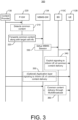
- FIG. 3 depicts an example of a signaling diagram for common content delivery, in accordance with some example embodiments.
- the packet gateway 220 may detect common content, in accordance with some example embodiments.
- the packet gateway 220 may detect, as noted, that a flow of content from the content provider 138 might include common content.
- the packet gateway 220 may perform DPI and/or the like to determine that the flow includes common content.
- the common content may be marked or include an indication to signal that the content is common content.
- packet gateway 220 may also determine the target cell(s), or the base station(s) serving those cell(s), by inspecting the packet header information, to determine the target end point of the packet, where it needs to be delivered. This could be determined by inspecting the target IP address of the packet as well.
- the previous example refers to the packet gateway 220 performing the detection of common content and/or determining the target cell(s), other nodes may perform the detection as well.
- the packet gateway 220 may forward detected common content to the MBMS gateway 134 for transmission as a multicast, broadcast, in accordance with some example embodiments.
- the packet gateway may also forward to the MBMS gateway 134 the target cell(s), such as the base station(s) to which the common content should be provided to as a multicast, broadcast.
- MBMS gateway 134 may setup a MBMS session with at least one target base station such as base station 110C covering at least one UE such as UEs 112A-B, in accordance with some example embodiments.
- the MBMS gateway 134 may setup an MBMS session by establishing and scheduling bearers at target base stations 110C (although the MBMS gateway may set up MBMS with the other base stations 110A and/or B as well).
- the MBSFN bearers may be established and scheduled to enable carrying the common content during an MBMS session to at least one UE in the coverage area, such as the MBSFN coverage 120 of the target base station 110C.
- the target base stations 110C may signal the at least one UE 112B so that the at least one UE 112B is informed of the common content delivery, in accordance with some example embodiments.
- This signaling may inform the UE(s), so that the UE can combine the unicast service flow from the serving/packet gateway 220/230 with the edge caching content being carried via the MBSFN by the multicast, broadcast sub-service flow.
- the at least one UE 112B may, at 350, be informed of the common content delivery via application layer signaling between the content provider 138 and the at least one UE 112B (or an application therein), in accordance with some example embodiments.
- the application provides information to allow the UE to combine the unicast service flow with multicast, broadcast sub-service flow (carried via the MBSFN).
- the application may provide information indicating that common content is, or will be received via a multicast, broadcast, and this information may include additional information including a schedule or when the multicast, broadcast will take place, an identifier of the multicast, broadcast session, and/or other information to allow the UE and/or application therein to identify the multicast, broadcast session.
- the at least one base station 110C may deliver the common content via multicast, broadcast subservice flow to the at least one UE 112B, in accordance with some example embodiments.
- the network may explicitly inform, as noted above, the UE that the common content is going to be, or is being, delivered through a multicast, broadcast.
- an application may inform the UE through application layer signaling (between the application server/content provider and the application client at the UE) that the common content is going to be delivered through multicast, broadcast.
- the content provider 138 may cache the common content at the edge cache server(s) 210. This caching may occur from time to time and/or periodically. The cached, common content may then be sent to the UE through a multicast, broadcast, rather than a unicast path. The use of the multicast, broadcast may reduce the use of radio and/or network resources, when compared to separate unicast paths to each UE.
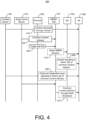
- FIG. 4 depicts an example of a signaling diagram including an edge cache server, in accordance with some example embodiments.
- the UE may detect that the common content is meant for the same application that has unicast service flows as well. Nonetheless, the user-plane gateways (P/S-GWs 220/230) involved in the unicast transmissions may assist the MBMS gateway 134 and BMSC 136 to deliver the common content to the appropriate cells, where the UEs have requested, or are being provided with, the common content.
- P/S-GWs 220/230 the user-plane gateways
- At 410 at least one UE (if not a group of UEs) may each receive a unicast service flow, in accordance with some example embodiments.
- some of the UEs 112A-F may be receiving different flows from content provider server(s) 138.
- the UEs 112A-F may be watching different movie or television content (although other types of content including emergency content may be provided by the content providers), and the content may be provided via gateways 220 (and/or 250).
- the edge cache server 210 may provide common content to a MBMS gateway 134, in accordance with some example embodiments.
- the common content may be provided to the MBMS gateway 134 along with, at 430, information regarding the target cell(s) or base station(s), in accordance with some example embodiments.
- the common content may be destined for some, if not all of, UEs 112A-F in the MBSFN coverage area 120 served by target base station 110A-C.
- the MBMS gateway 134 may setup a MBMS session with at least one base station 110C covering at least one UE 112B, in accordance with some example embodiments.
- the MBMS session may be setup in the same or similar manner as described above at 330.
- the MBMS point-to-multipoint control channel MCCH
- MTCH MBMS point-to-multipoint traffic channel
- MSCH MBMS point-to-multipoint scheduling channel
- the at least one base station 110C may signal the at least one UE 112B so that the at least one UE 112B is informed of the common content delivery, in accordance with some example embodiments.
- the UE may be informed in the same or similar manner as described above at 340.
- the at least one UE 112B may, at 460, informed of the common content delivery via application layer signaling between the content provider 138 and the at least one UE 112B (or an application therein), in accordance with some example embodiments.
- the UE may be informed in the same or similar manner as described above at 350.
- the at least one base station 110C may deliver the common content via multicast, broadcast to the at least one UE 112B, in accordance with some example embodiments.
- the UE may be informed in the same or similar manner as described above at 360.
- an interface 299 may be provided between the P/S-GW 220/230 and the MBMS-GW 134/BMSC 136 to enable the communication of the target cell information and the potential QoS information for the content delivery.
- a multicast, broadcast bearer may be established (e.g., as a default or always) for certain applications and corresponding content providers.
- a popular streaming video service may trigger a multicast, broadcast bearer to be established.
- the UE and/or the application handling the popular streaming video service
- the packet gateway 220 may determine whether the packets are common, dedicated content and may perform forwarding to the multicast UE entities, such as MBMS gateway and BMSC 136, based on the source and destination IP address information and/or based on analyzing the traffic pattern (for example, based on the detection of multiple copies of the same information being sent to a multitude of users).
- the packet gateway 220 may be located at any entity within the cellular network, which has the capability to enforce this method.
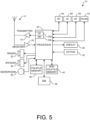
- FIG. 5 illustrates a block diagram of an apparatus 10, in accordance with some example embodiments.
- the apparatus 10 may be implemented at a UE, such as a smartphone cell phone, tablet, IoT device, and/or other processing device.
- the apparatus may also provide aspects of the base station, while the processor and memory including program code (alone or with other components of apparatus 10) may be configured to provide the edge caching server.
- the apparatus 10 may include at least one antenna 12 in communication with a transmitter 14 and a receiver 16. Alternatively transmit and receive antennas may be separate.
- the apparatus 10 may also include a processor 20 configured to provide signals to and receive signals from the transmitter and receiver, respectively, and to control the functioning of the apparatus.
- Processor 20 may be configured to control the functioning of the transmitter and receiver by effecting control signaling via electrical leads to the transmitter and receiver.
- processor 20 may be configured to control other elements of apparatus 10 by effecting control signaling via electrical leads connecting processor 20 to the other elements, such as for example a display or a memory.
- the processor 20 may, for example, be embodied in a variety of ways including circuitry, at least one processing core, one or more microprocessors with accompanying digital signal processor(s), one or more processor(s) without an accompanying digital signal processor, one or more coprocessors, one or more multicore processors, one or more controllers, processing circuitry, one or more computers, various other processing elements including integrated circuits (for example, an application specific integrated circuit (ASIC), a field programmable gate array (FPGA), and/or the like), or some combination thereof.
- Apparatus 10 may include a location processor and/or an interface to obtain location information, such as positioning and/or navigation information. Accordingly, although illustrated in FIG. 5 as a single processor, in some example embodiments the processor 20 may comprise a plurality of processors or processing cores.
- Signals sent and received by the processor 20 may include signaling information in accordance with an air interface standard of an applicable cellular system, and/or any number of different wireline or wireless networking techniques, comprising but not limited to Wi-Fi, wireless local access network (WLAN) techniques, such as for example, Institute of Electrical and Electronics Engineers (IEEE) 802.11, 802.16, and/or the like.
- these signals may include speech data, user generated data, user requested data, and/or the like.
- the apparatus 10 may be capable of operating with one or more air interface standards, communication protocols, modulation types, access types, and/or the like.
- the apparatus 10 and/or a cellular modem therein may be capable of operating in accordance with various first generation (1G) communication protocols, second generation (2G or 2.5G) communication protocols, third-generation (3G) communication protocols, fourth-generation (4G) communication protocols, Internet Protocol Multimedia Subsystem (IMS) communication protocols (for example, session initiation protocol (SIP) and/or the like.
- IMS Internet Protocol Multimedia Subsystem
- the apparatus 10 may be capable of operating in accordance with 2G wireless communication protocols IS-136, Time Division Multiple Access TDMA, Global System for Mobile communications, GSM, IS-95, Code Division Multiple Access, CDMA, and/or the like.
- the apparatus 10 may be capable of operating in accordance with 2.5G wireless communication protocols General Packet Radio Service (GPRS), Enhanced Data GSM Environment (EDGE), and/or the like. Further, for example, the apparatus 10 may be capable of operating in accordance with 3G wireless communication protocols, such as for example, Universal Mobile Telecommunications System (UMTS), Code Division Multiple Access 2000 (CDMA2000), Wideband Code Division Multiple Access (WCDMA), Time Division-Synchronous Code Division Multiple Access (TD-SCDMA), and/or the like. The apparatus 10 may be additionally capable of operating in accordance with 3.9G wireless communication protocols, such as for example, Long Term Evolution (LTE), Evolved Universal Terrestrial Radio Access Network (E-UTRAN), and/or the like. Additionally, for example, the apparatus 10 may be capable of operating in accordance with 4G wireless communication protocols, such as for example LTE Advanced and/or the like as well as similar wireless communication protocols that may be subsequently developed.
- GPRS General Packet Radio Service
- EDGE Enhanced Data GSM Environment
- the processor 20 may include circuitry for implementing audio/video and logic functions of apparatus 10.
- the processor 20 may comprise a digital signal processor device, a microprocessor device, an analog-to-digital converter, a digital-to-analog converter, and/or the like. Control and signal processing functions of the apparatus 10 may be allocated between these devices according to their respective capabilities.
- the processor 20 may additionally comprise an internal voice coder (VC) 20a, an internal data modem (DM) 20b, and/or the like.
- the processor 20 may include functionality to operate one or more software programs, which may be stored in memory. In general, processor 20 and stored software instructions may be configured to cause apparatus 10 to perform actions.
- processor 20 may be capable of operating a connectivity program, such as for example, a web browser.
- the connectivity program may allow the apparatus 10 to transmit and receive web content, such as for example location-based content, according to a protocol, such as for example, wireless application protocol, WAP, hypertext transfer protocol, HTTP, and/or the like.
- Apparatus 10 may also comprise a user interface including, for example, an earphone or speaker 24, a ringer 22, a microphone 26, a display 28, a user input interface, and/or the like, which may be operationally coupled to the processor 20.
- the display 28 may, as noted above, include a touch sensitive display, where a user may touch and/or gesture to make selections, enter values, and/or the like.
- the processor 20 may also include user interface circuitry configured to control at least some functions of one or more elements of the user interface, such as for example, the speaker 24, the ringer 22, the microphone 26, the display 28, and/or the like.
- the processor 20 and/or user interface circuitry comprising the processor 20 may be configured to control one or more functions of one or more elements of the user interface through computer program instructions, for example, software and/or firmware, stored on a memory accessible to the processor 20, for example, volatile memory 40, non-volatile memory 42, and/or the like.
- the apparatus 10 may include a battery for powering various circuits related to the mobile terminal, for example, a circuit to provide mechanical vibration as a detectable output.
- the user input interface may comprise devices allowing the apparatus 20 to receive data, such as for example, a keypad 30 (which can be a virtual keyboard presented on display 28 or an externally coupled keyboard) and/or other input devices.
- apparatus 10 may also include one or more mechanisms for sharing and/or obtaining data.
- the apparatus 10 may include a short-range radio frequency (RF) transceiver and/or interrogator 64, so data may be shared with and/or obtained from electronic devices in accordance with RF techniques.
- the apparatus 10 may include other short-range transceivers, such as for example an infrared (IR) transceiver 66, a Bluetooth (BT) transceiver 68 operating using Bluetooth wireless technology, a wireless universal serial bus (USB) transceiver 70, and/or the like.
- the Bluetooth transceiver 68 may be capable of operating according to low power or ultra-low power Bluetooth technology, for example, Wibree, radio standards.
- the apparatus 10 and, in particular, the short-range transceiver may be capable of transmitting data to and/or receiving data from electronic devices within a proximity of the apparatus, such as for example within 10 meters.
- the apparatus 10 including the WiFi or wireless local area networking modem may also be capable of transmitting and/or receiving data from electronic devices according to various wireless networking techniques, including 6LoWpan, Wi-Fi, Wi-Fi low power, WLAN techniques such as for example IEEE 802.11 techniques, IEEE 802.15 techniques, IEEE 802.16 techniques, and/or the like.
- the apparatus 10 may comprise memory, such as for example, a subscriber identity module (SIM) 38, a removable user identity module (R-UIM), and/or the like, which may store information elements related to a mobile subscriber. In addition to the SIM, the apparatus 10 may include other removable and/or fixed memory.
- the apparatus 10 may include volatile memory 40 and/or non-volatile memory 42.
- volatile memory 40 may include Random Access Memory (RAM) including dynamic and/or static RAM, on-chip or off-chip cache memory, and/or the like.
- RAM Random Access Memory
- Non-volatile memory 42 which may be embedded and/or removable, may include, for example, read-only memory, flash memory, magnetic storage devices, for example, hard disks, floppy disk drives, magnetic tape, optical disc drives and/or media, non-volatile random access memory, and/or the like. Like volatile memory 40, non-volatile memory 42 may include a cache area for temporary storage of data. At least part of the volatile and/or non-volatile memory may be embedded in processor 20.
- the memories may store one or more software programs (for example, an application and/or user interface associated with personal communications via local vehicle-to-vehicle links), instructions, pieces of information, data, and/or the like which may be used by the apparatus for performing functions of the user equipment/mobile terminal.
- the memories may comprise an identifier, such as for example an international mobile equipment identification (IMEI) code, capable of uniquely identifying apparatus 10.
- the functions may include one or more of the operations disclosed herein, such as for example the functions disclosed at processes 300, 400, and/or the like.
- the memories may comprise an identifier, such as for example, an international mobile equipment identification (IMEI) code, capable of uniquely identifying apparatus 10.
- the processor 20 may be configured using computer code stored at memory 40 and/or 42 to provide processes 300, 400, and/or the like as disclosed herein.
- Some of the embodiments disclosed herein may be implemented in software, hardware, application logic, or a combination of software, hardware, and application logic.
- the software, application logic, and/or hardware may reside on memory 40, the control apparatus 20, or electronic components, for example.
- the application logic, software or an instruction set is maintained on any one of various conventional computer-readable media.
- a "computer-readable medium" may be any non-transitory media that can contain, store, communicate, propagate or transport the instructions for use by or in connection with an instruction execution system, apparatus, or device, such as for example a computer or data processor circuitry.
- a computer-readable medium may comprise a non-transitory computer-readable storage medium that may be any media that can contain or store the instructions for use by or in connection with an instruction execution system, apparatus, or device, such as for example a computer.
- some of the embodiments disclosed herein include computer programs configured to cause operations as disclosed herein (see, for example, processes 300, 400, and/or the like).
- a technical effect of one or more of the example embodiments disclosed herein is a reduction in radio resource utilization for delivering common content with the radio access network.
Landscapes
- Engineering & Computer Science (AREA)
- Computer Networks & Wireless Communication (AREA)
- Signal Processing (AREA)
- Multimedia (AREA)
- Mobile Radio Communication Systems (AREA)
Claims (13)
- Verfahren, das Folgendes umfasst:Detektieren (310) durch ein Paketgateway (220), ob ein Inhalt ein allgemeiner Inhalt ist, der via eine Multicast-, Broadcastübertragung mindestens einer Teilnehmereinrichtung (112A-H) bereitzustellen ist, wobei der allgemeine Inhalt einen Inhalt umfasst, der einer Vielzahl von Teilnehmereinrichtungen (112A-H) in einem Gebiet, das von der Multicast-, Broadcastübertragung abgedeckt wird, gemeinsam ist, dadurch gekennzeichnet, dass die Detektion (310), ob der Inhalt ein allgemeiner Inhalt ist, auf einer Pakettiefenprüfung (DPI) und/oder einer speziellen Paketmarkierungsanzeige basiert, die anzeigt, dass der Inhalt ein für eine Vielzahl von Teilnehmereinrichtungen (112A-H), die von einer oder mehreren Basisstationen bedient werden, gemeinsam ist;Weiterleiten (320) des gemeinsamen Inhalts durch das Paketgateway (220) zu einem Multicast-, Broadcastgateway (134), um eine Lieferung via die Multicast-, Broadcastübertragung (360) an die mindestens eine Teilnehmereinrichtung zu ermöglichen; undWeiterleiten eines anderen Inhalts durch das Paketgateway (220) als einen Unicastdienststrom zu der mindestens einen Teilnehmereinrichtung (112A-H), um es der mindestens einen Teilnehmereinrichtung zu erlauben, den Unicastdienststrom mit dem gemeinsamen Inhalt, der über die Multicast-, Broadcastübertragung transportiert wird, selektiv zu kombinieren.
- Verfahren nach Anspruch 1, wobei der gemeinsame Inhalt, der zum Multicast-, Broadcastgateway weitergeleitet wird (320), ferner Informationen über eine oder mehrere Zellen eines drahtlosen Mobilfunknetzwerks beinhaltet, zu dem der gemeinsame Inhalt via die Multicast-, Broadcastübertragung zu übertragen ist.
- Verfahren nach Anspruch 1 oder 2, wobei der weitergeleitete (320) gemeinsame Inhalt als ein Subdienststrom zu der mindestens einen Teilnehmereinrichtung (112A-H) gehandhabt und über eine dynamische Netzwerkslice geliefert wird.
- Verfahren nach einem der Ansprüche 1 bis 3, wobei der gemeinsame Inhalt einen Inhalt beinhaltet, der von einer Vielzahl von Teilnehmereinrichtungen (112A-H) in einem Gebiet, das von der Multicast-, Broadcastübertragung abgedeckt wird, häufig heruntergeladen wird.
- Verfahren, das von einer Teilnehmereinrichtung durchgeführt wird, die in einem System (200) bereitgestellt ist, wobei das System (200) ferner ein Paketgateway umfasst, wobei das Verfahren Folgendes umfasst:Empfangen eines Inhalts, der über ein bedienendes Gateway (230) von einem Inhaltsanbieter (138) empfangen wird, durch die Teilnehmereinrichtung via einen Unicastdienststrom (410);Empfangen einer Anzeige (440) über einen gemeinsamen Inhalt, der via eine Multicast-, Broadcastübertragung zu empfangen ist, durch die Teilnehmereinrichtung, wobei der gemeinsame Inhalt einen Inhalt umfasst, der für eine Vielzahl von Teilnehmereinrichtungen (112A-H) in einem Gebiet, das von der Multicast-, Broadcastübertragung abgedeckt wird, gemeinsam ist, dadurch gekennzeichnet, dass der gemeinsame Inhalt vom Paketgateway als einen gemeinsamen Inhalt auf Basis einer Pakettiefenprüfung (DPI) und/oder einer speziellen Paketmarkierungsanzeige identifiziert wird, die anzeigt, dass der Inhalt für eine Vielzahl von Teilnehmereinrichtungen (112A-H), die von einer oder mehreren Basisstationen bedient werden, gemeinsam ist;Empfangen (470) des gemeinsamen Inhalts durch die Teilnehmereinrichtung via die Multicast-, Broadcastübertragung; undKombinieren des via den Unicastdienststrom empfangenen Inhalts und des via die Multicast-, Broadcastübertragung empfangenen gemeinsamen Inhalts durch die Teilnehmereinrichtung.
- Verfahren nach Anspruch 5, wobei die Anzeige (440) als eine Signalisierung von einer Basisstation und/oder via eine Anwendung an der Einrichtung bereitgestellt wird.
- Verfahren nach Anspruch 5 oder 6, wobei die Anzeige (440) es der Einrichtung ermöglicht, zwischen einem Dienststrom, der über den Unicastdienststrom den Inhalt transportiert und einem Subdienststrom, der den gemeinsamen Inhalt via die Multicast-, Broadcastübertragung transportiert, umzuschalten.
- Verfahren nach einem der Ansprüche 5 bis 7, das ferner Folgendes umfasst:
Empfangen des gemeinsamen Inhalts (470) von mindestens einer Basisstation (110C), einem Multicast-, Broadcastgateway (134) und einem Edgecachingserver (210) in einem drahtlosen Mobilfunknetzwerk. - Paketgatewayeinrichtung (220), die Folgendes umfasst.Mittel zum Detektieren (310), ob ein Inhalt ein allgemeiner Inhalt ist, der via eine Multicast-, Broadcastübertragung mindestens einer Teilnehmereinrichtung (112A-H) bereitzustellen ist, wobei der allgemeine Inhalt einen Inhalt umfasst, der einer Vielzahl von Teilnehmereinrichtungen (112A-H) in einem Gebiet, das von der Multicast-, Broadcastübertragung abgedeckt wird, gemeinsam ist, dadurch gekennzeichnet, dass die Detektion (310), ob der Inhalt ein allgemeiner Inhalt ist, auf einer Pakettiefenprüfung (DPI) und/oder einer speziellen Paketmarkierungsanzeige basiert, die anzeigt, dass der Inhalt ein für eine Vielzahl von Teilnehmereinrichtungen (112A-H), die von einer oder mehreren Basisstationen bedient werden, gemeinsam ist;Mittel zum Weiterleiten (320) des gemeinsamen Inhalts zu einem Multicast-, Broadcastgateway (134), um eine Lieferung an die mindestens eine Teilnehmereinrichtung via die Multicast-, Broadcastübertragung (360) zu ermöglichen; undMittel zum Weiterleiten eines anderen Inhalts als einen Unicastdienststrom zu der mindestens einen Teilnehmereinrichtung (112A-H), um es der mindestens einen Teilnehmereinrichtung zu erlauben, den Unicastdienststrom mit dem gemeinsamen Inhalt, der über die Multicast-, Broadcastübertragung transportiert wird, selektiv zu kombinieren.
- Einrichtung nach Anspruch 9, wobei die Einrichtung (220) ferner dazu ausgelegt ist, Mittel zum Durchführen von einem der Ansprüche 2 bis 4 zu beinhalten.
- System (200), das eine Teilnehmereinrichtung und ein Paketgateway (220) umfasst, wobei das System (200) Folgendes umfasst:Mittel zum Empfangen eines Inhalts, der über ein bedienendes Gateway (230) von einem Inhaltsanbieter (138) empfangen wird, durch die Teilnehmereinrichtung via einen Unicastdienststrom (410);Mittel zum Empfangen einer Anzeige (450) über einen gemeinsamen Inhalt, der via eine Multicast-, Broadcastübertragung zu empfangen ist, durch die Teilnehmereinrichtung, wobei der gemeinsame Inhalt einen Inhalt umfasst, der für eine Vielzahl von Teilnehmereinrichtungen (112A-H) in einem Gebiet, das von der Multicast-, Broadcastübertragung abgedeckt wird, gemeinsam ist, dadurch gekennzeichnet, dass der gemeinsame Inhalt vom Paketgateway als einen gemeinsamen Inhalt auf Basis einer Pakettiefenprüfung (DPI) und/oder einer speziellen Paketmarkierungsanzeige identifiziert wird, die anzeigt, dass der Inhalt für eine Vielzahl von Teilnehmereinrichtungen (112A-H), die von einer oder mehreren Basisstationen bedient werden, gemeinsam ist;Mittel zum Empfangen des gemeinsamen Inhalts durch die Teilnehmereinrichtung via die Multicast-, Broadcastübertragung (470); undMittel zum Kombinieren des via den Unicastdienststrom (410) empfangenen Inhalts und des via die Multicast-, Broadcastübertragung (470) empfangenen gemeinsamen Inhalts durch die Teilnehmereinrichtung.
- Einrichtung nach Anspruch 11, wobei die Einrichtung (112B) ferner dazu ausgelegt ist, Mittel zum Durchführen von einem der Ansprüche 6 bis 8 zu beinhalten.
- Nichttransitorisches computerlesbares Medium, auf dem Anweisungen codiert sind, um einen Prozessor zu veranlassen, das Verfahren gemäß einem der Ansprüche 1 bis 8 auszuführen.
Applications Claiming Priority (1)
| Application Number | Priority Date | Filing Date | Title |
|---|---|---|---|
| PCT/US2016/063514 WO2018097827A1 (en) | 2016-11-23 | 2016-11-23 | Delivery of sub-service flows using broadcast, multicast |
Publications (2)
| Publication Number | Publication Date |
|---|---|
| EP3545648A1 EP3545648A1 (de) | 2019-10-02 |
| EP3545648B1 true EP3545648B1 (de) | 2024-08-14 |
Family
ID=57570285
Family Applications (1)
| Application Number | Title | Priority Date | Filing Date |
|---|---|---|---|
| EP16813047.4A Active EP3545648B1 (de) | 2016-11-23 | 2016-11-23 | Bereitstellung von subdienstströmen unter verwendung von broadcast und multicast |
Country Status (3)
| Country | Link |
|---|---|
| US (1) | US11032095B2 (de) |
| EP (1) | EP3545648B1 (de) |
| WO (1) | WO2018097827A1 (de) |
Families Citing this family (9)
| Publication number | Priority date | Publication date | Assignee | Title |
|---|---|---|---|---|
| US10944650B2 (en) * | 2018-03-29 | 2021-03-09 | Fortinet, Inc. | Programmable, policy-based efficient wireless sniffing networks in WIPS (wireless intrusion prevention systems) |
| US11109339B2 (en) * | 2019-02-21 | 2021-08-31 | At&T Intellectual Property I, L.P. | Pre-provisioned access management containers for wireless services |
| GB201902640D0 (en) * | 2019-02-27 | 2019-04-10 | British Telecomm | Multicast assisted delivery |
| WO2020173878A1 (en) | 2019-02-27 | 2020-09-03 | British Telecommunications Public Limited Company | Multicast assisted delivery |
| US11477687B2 (en) * | 2019-08-29 | 2022-10-18 | Qualcomm Incorproated | Delivery of broadcast services using different broadcast/multicast radio bearer modes |
| US12114336B2 (en) * | 2020-02-14 | 2024-10-08 | Kt Corporation | Methods for processing multicast/broadcast service data and apparatuses thereof |
| EP4122238B1 (de) * | 2020-03-18 | 2025-09-10 | Tejas Networks Limited | System und verfahren zum offload von verkehr von einem mobilfunknetz zu einem rundfunknetz |
| GB2598295B (en) | 2020-08-19 | 2023-02-22 | British Telecomm | Content delivery |
| US11108839B1 (en) * | 2021-02-04 | 2021-08-31 | Nice Ltd. | Method and system for providing elastic media forking infrastructure to cloud distributed real-time applications |
Family Cites Families (28)
| Publication number | Priority date | Publication date | Assignee | Title |
|---|---|---|---|---|
| US7707246B1 (en) * | 2006-02-22 | 2010-04-27 | Qurio Holdings, Inc. | Creating a social network around recorded media |
| US20070244982A1 (en) | 2006-04-17 | 2007-10-18 | Scott Iii Samuel T | Hybrid Unicast and Multicast Data Delivery |
| KR100860411B1 (ko) | 2006-12-08 | 2008-09-26 | 한국전자통신연구원 | 멀티캐스트를 이용한 양방향 지역 광고 시스템 및 방법 |
| KR101424152B1 (ko) * | 2007-02-01 | 2014-08-04 | 로오데운트쉬바르츠게엠베하운트콤파니카게 | Atsc 상호운용성을 제공하는 시스템, 장치, 방법 및 컴퓨터 프로그램 제품 |
| US9300708B2 (en) | 2009-02-05 | 2016-03-29 | Google Technology Holdings LLC | Connecting to a multimedia broadcast/multicast service channel |
| US8621520B2 (en) | 2009-05-19 | 2013-12-31 | Qualcomm Incorporated | Delivery of selective content to client applications by mobile broadcast device with content filtering capability |
| CN102026096A (zh) | 2009-09-18 | 2011-04-20 | 中兴通讯股份有限公司 | 一种处理广播/多播业务接收异常的方法及系统 |
| WO2012063821A1 (ja) * | 2010-11-08 | 2012-05-18 | シャープ株式会社 | 移動通信システム、移動局装置、基地局装置、sgsn、ggsn、mme、mbms gw及び移動通信方法 |
| US8989021B2 (en) | 2011-01-20 | 2015-03-24 | Rohde & Schwarz Gmbh & Co. Kg | Universal broadband broadcasting |
| US9009764B2 (en) * | 2012-04-12 | 2015-04-14 | Qualcomm Incorporated | Broadcast content via over the top delivery |
| WO2013181191A1 (en) | 2012-05-29 | 2013-12-05 | Interdigital Patent Holdings, Inc. | Systems and methods for supporting cooperative streaming for multimedia multicast |
| WO2014017789A1 (en) | 2012-07-23 | 2014-01-30 | Samsung Electronics Co., Ltd. | Method and system for delivering multimedia content cached in wireless cellular network nodes using mbms |
| US9161179B2 (en) | 2013-01-04 | 2015-10-13 | Qualcomm Incorporated | Enabling a wireless communication device to switch from one local network to a separate wide area network for a high priority multicast group communication |
| JP6254188B2 (ja) * | 2013-01-17 | 2017-12-27 | インテル アイピー コーポレーション | Imsベースのdashサービスにおいて、プレゼンスサーバによりプレゼンス情報を供給する方法、および、プレゼンスサーバを介してプレゼンス情報を受信するユーザ機器(ue) |
| US9900166B2 (en) * | 2013-04-12 | 2018-02-20 | Qualcomm Incorporated | Methods for delivery of flows of objects over broadcast/multicast enabled networks |
| WO2014181151A1 (en) * | 2013-05-09 | 2014-11-13 | Nokia Siemens Networks Oy | Combination of unicast and multicast user plane data |
| US9432820B2 (en) | 2013-05-29 | 2016-08-30 | Qualcomm Incorporated | Method for efficiently supporting multiple simultaneous group PTT calls requiring low call setup latency |
| US9628853B2 (en) * | 2013-09-30 | 2017-04-18 | Apple Inc. | Seamless display of video during connection switching |
| WO2016070380A1 (en) * | 2014-11-06 | 2016-05-12 | Qualcomm Incorporated | Embms session suspend/stop notification |
| US9967855B2 (en) * | 2015-08-31 | 2018-05-08 | Verizon Patent And Licensing Inc. | Multicast delivery of network congestion information |
| US9680924B2 (en) * | 2015-09-11 | 2017-06-13 | At&T Intellectual Property I, L.P. | System and method for resource selection during group communication broadcast |
| EP3437398B1 (de) * | 2016-03-31 | 2020-12-16 | British Telecommunications public limited company | Mobilkommunikationsnetzwerk |
| CN108781347B (zh) * | 2016-03-31 | 2022-01-04 | 英国电讯有限公司 | 移动通信网络的基站、操作移动通信网络的基站的方法 |
| JP6812457B2 (ja) * | 2016-04-20 | 2021-01-13 | コンヴィーダ ワイヤレス, エルエルシー | システム情報プロビジョニングおよびライトウェイト接続シグナリング |
| US10966093B2 (en) * | 2016-09-20 | 2021-03-30 | Telefonaktiebolaget Lm Ericsson (Publ) | Temporary identifier in a wireless communication system |
| US20190274011A1 (en) * | 2016-09-30 | 2019-09-05 | NEC Laboratories Europe GmbH | Communication system |
| US10542409B2 (en) * | 2016-10-07 | 2020-01-21 | Qualcomm Incorporated | Access for group call services through a broadcast channel |
| EP3529972B1 (de) * | 2016-10-18 | 2021-07-28 | Expway | Verfahren zur übertragung von inhalten an mobile benutzergeräte |
-
2016
- 2016-11-23 EP EP16813047.4A patent/EP3545648B1/de active Active
- 2016-11-23 US US16/463,336 patent/US11032095B2/en active Active
- 2016-11-23 WO PCT/US2016/063514 patent/WO2018097827A1/en not_active Ceased
Also Published As
| Publication number | Publication date |
|---|---|
| US20190379551A1 (en) | 2019-12-12 |
| EP3545648A1 (de) | 2019-10-02 |
| US11032095B2 (en) | 2021-06-08 |
| WO2018097827A1 (en) | 2018-05-31 |
Similar Documents
| Publication | Publication Date | Title |
|---|---|---|
| EP3545648B1 (de) | Bereitstellung von subdienstströmen unter verwendung von broadcast und multicast | |
| US20240365178A1 (en) | Methods of delivery mode switch for multicast and broadcast service in a 5g network | |
| US12015967B2 (en) | Method, system and apparatus for multicast session management in 5G communication network | |
| US9826502B2 (en) | Managing handoff triggering between unicast and multicast services | |
| CN108886669B (zh) | 广播和单播递送之间的流送服务的动态切换 | |
| CN104012125B (zh) | 用于检测针对多媒体广播多播服务的需求以及用于建立基于需求的多媒体广播多播服务的方法和装置 | |
| US10356667B2 (en) | User equipment handover method, and base station | |
| US9226265B2 (en) | Demand-based multimedia broadcast multicast service management | |
| US9820259B2 (en) | Smooth transition between multimedia broadcast multicast service (MBMS) and unicast service by demand | |
| US11234214B2 (en) | Method and apparatus for providing broadcast/multicast services | |
| EP3051847B1 (de) | Gruppenkommunikationsverfahren, vorrichtung und system | |
| WO2017166244A1 (zh) | 多播传输方法、基站和用户设备 | |
| GB2522043A (en) | Multicast user service delivery | |
| CN105519147B (zh) | 多媒体广播多播业务的方法、装置和系统 | |
| CN107241701B (zh) | 一种数据传输方法及装置 | |
| CN107113802A (zh) | 资源调度方法、基站、调度器、节目源服务器和系统 | |
| CN119213852A (zh) | 接收来自不同小区的传输 | |
| US20250056307A1 (en) | Apparatus, method and computer program product | |
| CN102957999B (zh) | 启动多个mbms计数过程的方法及系统、mce和基站 | |
| US11368818B2 (en) | Methods and systems for using multi-connectivity for multicast transmissions in a communication system | |
| EP3549308B1 (de) | Ermöglichung der übertragung von streaming-inhalten unter verwendung von punkt-zu-mehrpunkt-bereitstellung |
Legal Events
| Date | Code | Title | Description |
|---|---|---|---|
| STAA | Information on the status of an ep patent application or granted ep patent |
Free format text: STATUS: UNKNOWN |
|
| STAA | Information on the status of an ep patent application or granted ep patent |
Free format text: STATUS: THE INTERNATIONAL PUBLICATION HAS BEEN MADE |
|
| PUAI | Public reference made under article 153(3) epc to a published international application that has entered the european phase |
Free format text: ORIGINAL CODE: 0009012 |
|
| STAA | Information on the status of an ep patent application or granted ep patent |
Free format text: STATUS: REQUEST FOR EXAMINATION WAS MADE |
|
| 17P | Request for examination filed |
Effective date: 20190528 |
|
| AK | Designated contracting states |
Kind code of ref document: A1 Designated state(s): AL AT BE BG CH CY CZ DE DK EE ES FI FR GB GR HR HU IE IS IT LI LT LU LV MC MK MT NL NO PL PT RO RS SE SI SK SM TR |
|
| AX | Request for extension of the european patent |
Extension state: BA ME |
|
| DAV | Request for validation of the european patent (deleted) | ||
| DAX | Request for extension of the european patent (deleted) | ||
| STAA | Information on the status of an ep patent application or granted ep patent |
Free format text: STATUS: EXAMINATION IS IN PROGRESS |
|
| 17Q | First examination report despatched |
Effective date: 20200529 |
|
| GRAP | Despatch of communication of intention to grant a patent |
Free format text: ORIGINAL CODE: EPIDOSNIGR1 |
|
| STAA | Information on the status of an ep patent application or granted ep patent |
Free format text: STATUS: GRANT OF PATENT IS INTENDED |
|
| INTG | Intention to grant announced |
Effective date: 20240307 |
|
| GRAS | Grant fee paid |
Free format text: ORIGINAL CODE: EPIDOSNIGR3 |
|
| GRAA | (expected) grant |
Free format text: ORIGINAL CODE: 0009210 |
|
| STAA | Information on the status of an ep patent application or granted ep patent |
Free format text: STATUS: THE PATENT HAS BEEN GRANTED |
|
| AK | Designated contracting states |
Kind code of ref document: B1 Designated state(s): AL AT BE BG CH CY CZ DE DK EE ES FI FR GB GR HR HU IE IS IT LI LT LU LV MC MK MT NL NO PL PT RO RS SE SI SK SM TR |
|
| REG | Reference to a national code |
Ref country code: GB Ref legal event code: FG4D |
|
| REG | Reference to a national code |
Ref country code: CH Ref legal event code: EP |
|
| REG | Reference to a national code |
Ref country code: DE Ref legal event code: R096 Ref document number: 602016088913 Country of ref document: DE |
|
| REG | Reference to a national code |
Ref country code: IE Ref legal event code: FG4D |
|
| REG | Reference to a national code |
Ref country code: LT Ref legal event code: MG9D |
|
| REG | Reference to a national code |
Ref country code: NL Ref legal event code: MP Effective date: 20240814 |
|
| PG25 | Lapsed in a contracting state [announced via postgrant information from national office to epo] |
Ref country code: NO Free format text: LAPSE BECAUSE OF FAILURE TO SUBMIT A TRANSLATION OF THE DESCRIPTION OR TO PAY THE FEE WITHIN THE PRESCRIBED TIME-LIMIT Effective date: 20241114 |
|
| REG | Reference to a national code |
Ref country code: AT Ref legal event code: MK05 Ref document number: 1714280 Country of ref document: AT Kind code of ref document: T Effective date: 20240814 |
|
| PG25 | Lapsed in a contracting state [announced via postgrant information from national office to epo] |
Ref country code: FI Free format text: LAPSE BECAUSE OF FAILURE TO SUBMIT A TRANSLATION OF THE DESCRIPTION OR TO PAY THE FEE WITHIN THE PRESCRIBED TIME-LIMIT Effective date: 20240814 Ref country code: GR Free format text: LAPSE BECAUSE OF FAILURE TO SUBMIT A TRANSLATION OF THE DESCRIPTION OR TO PAY THE FEE WITHIN THE PRESCRIBED TIME-LIMIT Effective date: 20241115 Ref country code: NL Free format text: LAPSE BECAUSE OF FAILURE TO SUBMIT A TRANSLATION OF THE DESCRIPTION OR TO PAY THE FEE WITHIN THE PRESCRIBED TIME-LIMIT Effective date: 20240814 Ref country code: PT Free format text: LAPSE BECAUSE OF FAILURE TO SUBMIT A TRANSLATION OF THE DESCRIPTION OR TO PAY THE FEE WITHIN THE PRESCRIBED TIME-LIMIT Effective date: 20241216 Ref country code: PL Free format text: LAPSE BECAUSE OF FAILURE TO SUBMIT A TRANSLATION OF THE DESCRIPTION OR TO PAY THE FEE WITHIN THE PRESCRIBED TIME-LIMIT Effective date: 20240814 |
|
| PG25 | Lapsed in a contracting state [announced via postgrant information from national office to epo] |
Ref country code: BG Free format text: LAPSE BECAUSE OF FAILURE TO SUBMIT A TRANSLATION OF THE DESCRIPTION OR TO PAY THE FEE WITHIN THE PRESCRIBED TIME-LIMIT Effective date: 20240814 |
|
| PG25 | Lapsed in a contracting state [announced via postgrant information from national office to epo] |
Ref country code: LV Free format text: LAPSE BECAUSE OF FAILURE TO SUBMIT A TRANSLATION OF THE DESCRIPTION OR TO PAY THE FEE WITHIN THE PRESCRIBED TIME-LIMIT Effective date: 20240814 |
|
| PG25 | Lapsed in a contracting state [announced via postgrant information from national office to epo] |
Ref country code: AT Free format text: LAPSE BECAUSE OF FAILURE TO SUBMIT A TRANSLATION OF THE DESCRIPTION OR TO PAY THE FEE WITHIN THE PRESCRIBED TIME-LIMIT Effective date: 20240814 Ref country code: IS Free format text: LAPSE BECAUSE OF FAILURE TO SUBMIT A TRANSLATION OF THE DESCRIPTION OR TO PAY THE FEE WITHIN THE PRESCRIBED TIME-LIMIT Effective date: 20241214 |
|
| PG25 | Lapsed in a contracting state [announced via postgrant information from national office to epo] |
Ref country code: HR Free format text: LAPSE BECAUSE OF FAILURE TO SUBMIT A TRANSLATION OF THE DESCRIPTION OR TO PAY THE FEE WITHIN THE PRESCRIBED TIME-LIMIT Effective date: 20240814 |
|
| PG25 | Lapsed in a contracting state [announced via postgrant information from national office to epo] |
Ref country code: RS Free format text: LAPSE BECAUSE OF FAILURE TO SUBMIT A TRANSLATION OF THE DESCRIPTION OR TO PAY THE FEE WITHIN THE PRESCRIBED TIME-LIMIT Effective date: 20241114 Ref country code: ES Free format text: LAPSE BECAUSE OF FAILURE TO SUBMIT A TRANSLATION OF THE DESCRIPTION OR TO PAY THE FEE WITHIN THE PRESCRIBED TIME-LIMIT Effective date: 20240814 |
|
| PG25 | Lapsed in a contracting state [announced via postgrant information from national office to epo] |
Ref country code: RS Free format text: LAPSE BECAUSE OF FAILURE TO SUBMIT A TRANSLATION OF THE DESCRIPTION OR TO PAY THE FEE WITHIN THE PRESCRIBED TIME-LIMIT Effective date: 20241114 Ref country code: PT Free format text: LAPSE BECAUSE OF FAILURE TO SUBMIT A TRANSLATION OF THE DESCRIPTION OR TO PAY THE FEE WITHIN THE PRESCRIBED TIME-LIMIT Effective date: 20241216 Ref country code: PL Free format text: LAPSE BECAUSE OF FAILURE TO SUBMIT A TRANSLATION OF THE DESCRIPTION OR TO PAY THE FEE WITHIN THE PRESCRIBED TIME-LIMIT Effective date: 20240814 Ref country code: NO Free format text: LAPSE BECAUSE OF FAILURE TO SUBMIT A TRANSLATION OF THE DESCRIPTION OR TO PAY THE FEE WITHIN THE PRESCRIBED TIME-LIMIT Effective date: 20241114 Ref country code: NL Free format text: LAPSE BECAUSE OF FAILURE TO SUBMIT A TRANSLATION OF THE DESCRIPTION OR TO PAY THE FEE WITHIN THE PRESCRIBED TIME-LIMIT Effective date: 20240814 Ref country code: LV Free format text: LAPSE BECAUSE OF FAILURE TO SUBMIT A TRANSLATION OF THE DESCRIPTION OR TO PAY THE FEE WITHIN THE PRESCRIBED TIME-LIMIT Effective date: 20240814 Ref country code: IS Free format text: LAPSE BECAUSE OF FAILURE TO SUBMIT A TRANSLATION OF THE DESCRIPTION OR TO PAY THE FEE WITHIN THE PRESCRIBED TIME-LIMIT Effective date: 20241214 Ref country code: HR Free format text: LAPSE BECAUSE OF FAILURE TO SUBMIT A TRANSLATION OF THE DESCRIPTION OR TO PAY THE FEE WITHIN THE PRESCRIBED TIME-LIMIT Effective date: 20240814 Ref country code: GR Free format text: LAPSE BECAUSE OF FAILURE TO SUBMIT A TRANSLATION OF THE DESCRIPTION OR TO PAY THE FEE WITHIN THE PRESCRIBED TIME-LIMIT Effective date: 20241115 Ref country code: FI Free format text: LAPSE BECAUSE OF FAILURE TO SUBMIT A TRANSLATION OF THE DESCRIPTION OR TO PAY THE FEE WITHIN THE PRESCRIBED TIME-LIMIT Effective date: 20240814 Ref country code: ES Free format text: LAPSE BECAUSE OF FAILURE TO SUBMIT A TRANSLATION OF THE DESCRIPTION OR TO PAY THE FEE WITHIN THE PRESCRIBED TIME-LIMIT Effective date: 20240814 Ref country code: BG Free format text: LAPSE BECAUSE OF FAILURE TO SUBMIT A TRANSLATION OF THE DESCRIPTION OR TO PAY THE FEE WITHIN THE PRESCRIBED TIME-LIMIT Effective date: 20240814 Ref country code: AT Free format text: LAPSE BECAUSE OF FAILURE TO SUBMIT A TRANSLATION OF THE DESCRIPTION OR TO PAY THE FEE WITHIN THE PRESCRIBED TIME-LIMIT Effective date: 20240814 |
|
| PG25 | Lapsed in a contracting state [announced via postgrant information from national office to epo] |
Ref country code: DK Free format text: LAPSE BECAUSE OF FAILURE TO SUBMIT A TRANSLATION OF THE DESCRIPTION OR TO PAY THE FEE WITHIN THE PRESCRIBED TIME-LIMIT Effective date: 20240814 Ref country code: SM Free format text: LAPSE BECAUSE OF FAILURE TO SUBMIT A TRANSLATION OF THE DESCRIPTION OR TO PAY THE FEE WITHIN THE PRESCRIBED TIME-LIMIT Effective date: 20240814 Ref country code: RO Free format text: LAPSE BECAUSE OF FAILURE TO SUBMIT A TRANSLATION OF THE DESCRIPTION OR TO PAY THE FEE WITHIN THE PRESCRIBED TIME-LIMIT Effective date: 20240814 |
|
| PG25 | Lapsed in a contracting state [announced via postgrant information from national office to epo] |
Ref country code: EE Free format text: LAPSE BECAUSE OF FAILURE TO SUBMIT A TRANSLATION OF THE DESCRIPTION OR TO PAY THE FEE WITHIN THE PRESCRIBED TIME-LIMIT Effective date: 20240814 |
|
| PG25 | Lapsed in a contracting state [announced via postgrant information from national office to epo] |
Ref country code: CZ Free format text: LAPSE BECAUSE OF FAILURE TO SUBMIT A TRANSLATION OF THE DESCRIPTION OR TO PAY THE FEE WITHIN THE PRESCRIBED TIME-LIMIT Effective date: 20240814 |
|
| PG25 | Lapsed in a contracting state [announced via postgrant information from national office to epo] |
Ref country code: SK Free format text: LAPSE BECAUSE OF FAILURE TO SUBMIT A TRANSLATION OF THE DESCRIPTION OR TO PAY THE FEE WITHIN THE PRESCRIBED TIME-LIMIT Effective date: 20240814 Ref country code: IT Free format text: LAPSE BECAUSE OF FAILURE TO SUBMIT A TRANSLATION OF THE DESCRIPTION OR TO PAY THE FEE WITHIN THE PRESCRIBED TIME-LIMIT Effective date: 20240814 |
|
| REG | Reference to a national code |
Ref country code: DE Ref legal event code: R097 Ref document number: 602016088913 Country of ref document: DE |
|
| REG | Reference to a national code |
Ref country code: DE Ref legal event code: R119 Ref document number: 602016088913 Country of ref document: DE |
|
| PLBE | No opposition filed within time limit |
Free format text: ORIGINAL CODE: 0009261 |
|
| STAA | Information on the status of an ep patent application or granted ep patent |
Free format text: STATUS: NO OPPOSITION FILED WITHIN TIME LIMIT |
|
| REG | Reference to a national code |
Ref country code: CH Ref legal event code: PL |
|
| PG25 | Lapsed in a contracting state [announced via postgrant information from national office to epo] |
Ref country code: MC Free format text: LAPSE BECAUSE OF FAILURE TO SUBMIT A TRANSLATION OF THE DESCRIPTION OR TO PAY THE FEE WITHIN THE PRESCRIBED TIME-LIMIT Effective date: 20240814 |
|
| PG25 | Lapsed in a contracting state [announced via postgrant information from national office to epo] |
Ref country code: LU Free format text: LAPSE BECAUSE OF NON-PAYMENT OF DUE FEES Effective date: 20241123 |
|
| REG | Reference to a national code |
Ref country code: CH Ref legal event code: PL |
|
| 26N | No opposition filed |
Effective date: 20250515 |
|
| GBPC | Gb: european patent ceased through non-payment of renewal fee |
Effective date: 20241123 |
|
| PG25 | Lapsed in a contracting state [announced via postgrant information from national office to epo] |
Ref country code: CH Free format text: LAPSE BECAUSE OF NON-PAYMENT OF DUE FEES Effective date: 20241130 |
|
| REG | Reference to a national code |
Ref country code: BE Ref legal event code: MM Effective date: 20241130 |
|
| PG25 | Lapsed in a contracting state [announced via postgrant information from national office to epo] |
Ref country code: SE Free format text: LAPSE BECAUSE OF FAILURE TO SUBMIT A TRANSLATION OF THE DESCRIPTION OR TO PAY THE FEE WITHIN THE PRESCRIBED TIME-LIMIT Effective date: 20240814 |
|
| PG25 | Lapsed in a contracting state [announced via postgrant information from national office to epo] |
Ref country code: DE Free format text: LAPSE BECAUSE OF NON-PAYMENT OF DUE FEES Effective date: 20250603 |
|
| PG25 | Lapsed in a contracting state [announced via postgrant information from national office to epo] |
Ref country code: GB Free format text: LAPSE BECAUSE OF NON-PAYMENT OF DUE FEES Effective date: 20241123 Ref country code: BE Free format text: LAPSE BECAUSE OF NON-PAYMENT OF DUE FEES Effective date: 20241130 |
|
| PGFP | Annual fee paid to national office [announced via postgrant information from national office to epo] |
Ref country code: FR Payment date: 20250930 Year of fee payment: 10 |
|
| PG25 | Lapsed in a contracting state [announced via postgrant information from national office to epo] |
Ref country code: IE Free format text: LAPSE BECAUSE OF NON-PAYMENT OF DUE FEES Effective date: 20241123 |
|
| PG25 | Lapsed in a contracting state [announced via postgrant information from national office to epo] |
Ref country code: HU Free format text: LAPSE BECAUSE OF FAILURE TO SUBMIT A TRANSLATION OF THE DESCRIPTION OR TO PAY THE FEE WITHIN THE PRESCRIBED TIME-LIMIT; INVALID AB INITIO Effective date: 20161123 |