EP3545470B1 - Verfahren zum trainieren eines neuronalen netzwerks und aktives lernsystem - Google Patents
Verfahren zum trainieren eines neuronalen netzwerks und aktives lernsystem Download PDFInfo
- Publication number
- EP3545470B1 EP3545470B1 EP17788318.8A EP17788318A EP3545470B1 EP 3545470 B1 EP3545470 B1 EP 3545470B1 EP 17788318 A EP17788318 A EP 17788318A EP 3545470 B1 EP3545470 B1 EP 3545470B1
- Authority
- EP
- European Patent Office
- Prior art keywords
- signal
- neural network
- features
- rank
- produce
- Prior art date
- Legal status (The legal status is an assumption and is not a legal conclusion. Google has not performed a legal analysis and makes no representation as to the accuracy of the status listed.)
- Active
Links
Images





Classifications
-
- G—PHYSICS
- G06—COMPUTING OR CALCULATING; COUNTING
- G06V—IMAGE OR VIDEO RECOGNITION OR UNDERSTANDING
- G06V10/00—Arrangements for image or video recognition or understanding
- G06V10/70—Arrangements for image or video recognition or understanding using pattern recognition or machine learning
- G06V10/77—Processing image or video features in feature spaces; using data integration or data reduction, e.g. principal component analysis [PCA] or independent component analysis [ICA] or self-organising maps [SOM]; Blind source separation
- G06V10/776—Validation; Performance evaluation
-
- G—PHYSICS
- G06—COMPUTING OR CALCULATING; COUNTING
- G06N—COMPUTING ARRANGEMENTS BASED ON SPECIFIC COMPUTATIONAL MODELS
- G06N3/00—Computing arrangements based on biological models
- G06N3/02—Neural networks
- G06N3/08—Learning methods
- G06N3/091—Active learning
-
- G—PHYSICS
- G06—COMPUTING OR CALCULATING; COUNTING
- G06F—ELECTRIC DIGITAL DATA PROCESSING
- G06F18/00—Pattern recognition
- G06F18/20—Analysing
- G06F18/21—Design or setup of recognition systems or techniques; Extraction of features in feature space; Blind source separation
- G06F18/217—Validation; Performance evaluation; Active pattern learning techniques
-
- G—PHYSICS
- G06—COMPUTING OR CALCULATING; COUNTING
- G06N—COMPUTING ARRANGEMENTS BASED ON SPECIFIC COMPUTATIONAL MODELS
- G06N3/00—Computing arrangements based on biological models
- G06N3/02—Neural networks
- G06N3/04—Architecture, e.g. interconnection topology
- G06N3/045—Combinations of networks
- G06N3/0455—Auto-encoder networks; Encoder-decoder networks
-
- G—PHYSICS
- G06—COMPUTING OR CALCULATING; COUNTING
- G06N—COMPUTING ARRANGEMENTS BASED ON SPECIFIC COMPUTATIONAL MODELS
- G06N3/00—Computing arrangements based on biological models
- G06N3/02—Neural networks
- G06N3/04—Architecture, e.g. interconnection topology
- G06N3/0464—Convolutional networks [CNN, ConvNet]
-
- G—PHYSICS
- G06—COMPUTING OR CALCULATING; COUNTING
- G06N—COMPUTING ARRANGEMENTS BASED ON SPECIFIC COMPUTATIONAL MODELS
- G06N3/00—Computing arrangements based on biological models
- G06N3/02—Neural networks
- G06N3/08—Learning methods
- G06N3/09—Supervised learning
Definitions
- This invention relates generally to a method for training a neural network, and more specifically to an active learning method for training artificial neural networks.
- NNs Artificial neural networks
- the top-ranking algorithms in various visual object recognition challenges including ImageNet, Microsoft COCO, and Pascal VOC, are all based on NNs.
- the proposed active learning procedure is based on the uncertainty sampling strategy and a deep neural network. Stacked auto-encoders trained on redundant special and spectral features and a few label training samples are used to initialize a deep neural network.
- Uncertainty for a given sample is measured by the difference between the largest two class outputs of the neural network.
- a batch of samples with most uncertainty will be selected after label query and added into the training set.
- the neural network is retrained. This active batch selection is iterated until the budget, that is, the upper limit of label queries, is reached.
- the selection of training samples to be added to the training set is based only on the uncertainty, which is measured by the difference between the largest two class outputs of the neural network. So, the uncertainty criterion is based on the top layer outputs of the neural network, a measure similar to the margin motivation behind multiclass/level uncertainty as performed by current support vector machines.
- the large scale image datasets are used for training the NNs to obtain good performance.
- annotating large-scale image datasets is an expensive and tedious task, requiring people to spend a large number of hours analyzing image content in a dataset because the subset of important images in the unlabeled dataset are selected and labeled by the human annotations.
- Some embodiments of the invention are based on recognition that an active learning using an uncertainty measure of features of input signals and reconstruction of the signals from the features provides less annotation processes with improving the accuracy of classifications of signals.
- one embodiment discloses a computer-implemented method for training a neural network according to claim 1.
- Another embodiment discloses an active learning system for training a neural network according to claim 4.
- one embodiment discloses a non-transitory computer-readable medium storing software comprising instructions executable by one or more computers which, upon such execution, cause the one or more computers to perform operations for training a neural network according to claim 7.
- the use of an artificial neural network that determines an uncertainty measure may reduce central processing unit (CPU) usage, power consumption, and/or network bandwidth usage, which is advantageous for improving the functioning of a computer.
- CPU central processing unit
- An active learning system includes a human machine interface, a storage device including neural networks, a memory, a network interface controller connectable with a network being outside the system.
- the active learning system further includes an imaging interface connectable with an imaging device, a processor configured to connect to the human machine interface, the storage device, the memory, the network interface controller and the imaging interface, wherein the processor executes instructions for classifying an electroencephalogram (EEG) signal or an electrocardiogram (ECG) signal.
- EEG electroencephalogram
- ECG electrocardiogram
- the neural networks perform steps of determining features of a signal using the neural network, determining an uncertainty measure of the features for classifying the signal, reconstructing the signal from the features using a decoder neural network to produce a reconstructed signal, comparing the reconstructed signal with the signal to produce a reconstruction error, combining the uncertainty measure with the reconstruction error to produce a rank of the signal for a necessity of a manual labeling, labeling the signal according to the rank to produce the labeled signal, and training the neural network and the decoder neural network using the labeled signal.
- FIG. 1A shows an active learning system 10 in accordance with some embodiments of the invention.
- An initial setting of the active learning system 10 includes a neural network 100 initialized with random parameters, an initial set of labeled training images 101, a trainer 102, a set of unlabeled images 103.
- the neural network 100 is a user defined neural network.
- the active learning system 10 attempts to efficiently query the unlabeled images for performing annotations through the basic workflow shown in FIG. 1A .
- the trainer 102 updates network parameters by fitting the NN 100 to the initial labeled training dataset of images 101.
- a trained NN 301 with the updated network parameters is used to rank the importance of images in an unlabeled dataset 103.
- the unlabeled images 103 are sorted according to importance scores 104 obtained from a ranking result performed by the trained NN 301.
- the K most important images 105 are stored into a labeling storage in a memory (not shown in the figure) associated to a labeling interface 106.
- the labeling interface 106 In response to data inputs made by an operator (or annotator), the labeling interface 106 generates annotated images 107 having the ground truth labels. These annotated images 107 are then added to the initial labeled training dataset 101 to form a new training dataset 108.
- the trainer 102 then retrains the network 301 by fitting the new training dataset of images 108 and obtains updated neural network parameters 401. This procedure is iterative.
- the updated neural network parameters 401 are used to rank the importance of the rest of the unlabeled images103, and the K most important images 105 are sent to the labeling interface 106. Usually, this procedure is repeated several times until a predetermined preferred performance is achieved or the budget for annotations is empty.
- a method for training a neural network uses a processor in communication with a memory, and the method includes steps of determining features of a signal using the neural network, determining an uncertainty measure of the features for classifying the signal, reconstructing the signal from the features using a decoder neural network to produce a reconstructed signal, comparing the reconstructed signal with the signal to produce a reconstruction error, combining the uncertainty measure with the reconstruction error to produce a rank of the signal for a necessity of a manual labeling, labeling the signal to produce the labeled signal, and training the neural network and the decoder neural network using the labeled signal.
- the labeling includes labeling the signal using the neural network if the rank does not indicate the necessity of the manual labeling process, and further the labeling includes transmitting a labeling request to an annotation device if the rank indicates the necessity of the manual labeling process.
- the determining features may be performed by using an encoder neural network.
- the encoder neural network can perform feature analysis of given signals.
- the signal is an electroencephalogram (EEG) signal or and electrocardiogram (ECG) signal. Accordingly, some embodiments of the invention can be applied to provide specific signals for assisting a diagnosis of medical doctors.
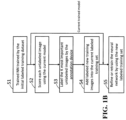
- FIG. 1B is a flowchart of an active learning system for training neural network.
- the active learning system 10 attempts to efficiently query the unlabeled images for the annotation through a process flow shown in the figure.
- the process flow includes the following stages:
- the active learning algorithms of the active learning system 10 attempt to efficiently query images for labeling images.
- An initialization model is trained on an initial for small labeled training set.
- the active learning system 10 tries to find the most informative unlabeled images to be annotated.
- a subset of the informative images are labeled and added to the training set for the next round of training.
- This training process is iteratively performed, and the active learning system 10 carefully adds more labeled images for gradually increasing the accuracy performance of the model on the test dataset.
- the algorithms of the active learning system 10 usually work much better than the standard approach for training, because the standard approach simply selects the samples at random for labeling.
- the active learning system processes an electroencephalogram (EEG) signal or an electrocardiogram (ECG) signal. Instead of the images, the EEG or ECG signals are used to train the neural network and decoder neural network in the active learning system 10.
- EEG electroencephalogram
- ECG electrocardiogram
- the trained active learning system 10 is applied to determine or judge abnormality with respect to an input signal, which can be a useful assistance for medical diagnosis of relevant symptoms.
- FIG. 1C shows a block diagram of process steps to be performed based on some embodiments of the invention.
- An input signal is fed into the active learning system10, an encoder neural network of the active learning system 10 determines features of the input signal in step SS1 and stores the features into a working memory (not shown). Further, an uncertainty measure is determined by a trained neural network 301 of the active learning system 10 in step SS2 and a result of the uncertainty measure is stored in the working memory.
- the features determined in SS1 is reconstructed by a decoder NN in step SS3 and a reconstructed signal is stored in the working memory.
- the reconstructed signal is fed from the working memory and compared with the input signal to compute a reconstruction error.
- step SS5 The reconstruction error is stored in the working memory and fed to step SS5.
- step SS5 the uncertain measure is read from the working memory and combined with the reconstruction error.
- step SS6 the input signal is labeled according to a ranking score and the labeled signal is used in step SS7 for training the neural networks in the active learning system 10.
- FIG. 1D shows a block diagram indicating an active learning process 11 and a convolutional neural network (CNN) training process 21, both of which are performed in the active learning system 10.
- the active learning process 11 feeds the input signal 12 to a convolutional neural network (CNN) 13 and the CNN 13 extracts features 14 from the input signal 12. Further, the active learning process 11 computes an uncertainty measure 16 from the features 14 and provides a score 17 based on the uncertainty measure 16.
- CNN convolutional neural network
- the input signal 12 is fed to the CNN 13 and the CNN 13 extracts the features 14 from the input signal 12. Then a CNN decoder 25 reconstructs a signal 26 from the features 14 to compare with the input signal 12. By comparing the input signal 12 and the reconstructed signal 26, the CNN training process 21 computes or generates a reconstruction error 27.
- the active learning system 10 combines the reconstruction error 27 and the uncertainty measure 16, and ranks the input signal 12 by a score 17.
- the input signal 12 is fed to a labeling interface (not shown) that allows an operator to annotate the input signal 12 according to one of predetermined classified labels, which is indicated as Human labeling process 18.
- a labeling interface (not shown) that allows an operator to annotate the input signal 12 according to one of predetermined classified labels, which is indicated as Human labeling process 18.
- FIG. 1E shows key process steps performed in the active learning system 10.
- the rank is defined based on an addition of an entropy function and the reconstruction error.
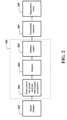
- FIG. 2 shows a block diagram of process steps for ranking the importance of unlabeled images in an active learning system according to some embodiments of the invention.
- the trained NN 301 When an input image 103 is provided to a front end of the NN 301 in step 302, the trained NN 301 generates features 303 and outputs a classification result via a softmax output layer 304.
- the classification result is used for calculating the importance score 104 of the input signal through uncertainty measure 305 based on the Rényi entropy.
- the trained NN 301 is used for extracting the features 303 for each of the images in the unlabeled dataset 103 and also for computing classifications by the softmax output layer 304.
- the classification result obtained by the softmax output layer 304 is a probability vector of dimension D where the dimension D is the number of object classes. Denoting the input image by x and the classification result computed by the softmax output layer 304 indicating a probability vector by p , each dimension of the probability vector p represents the probability that the input image 103 belongs to a specific class. The sum of the components of p is equal to one.
- the uncertainty measure can be used as the importance score of the unlabeled image 104.
- other entropy measures defined in the Renyi entropy category can be used for the uncertainty computation.
- the uncertainty method is a universal active learning method, it can be used in conjunction with various classifiers (SVMs, Gaussian processes, or neural networks) as long as the vector representing the class probability can be derived from each input image. In this case, the uncertainty method does not utilize the property of the classifier and reaches sub-optimal performance.
- an approach to improve the uncertainty method by utilizing the property of neural network computation is described in the following. It is established that a neural network computes a hierarchy of feature representation as processing an input image. The completeness of the feature representation can be used to judge how well the neural network models the input image. In order to quantify the completeness of the feature representation, an autoencoder neural network can be used.
- FIG. 3 shows a block diagram of an autoencoder neural network 710 according to some embodiments of the invention.
- the autoencoder neural network 710 includes an encoder neural network 701, a decoder neural network 705, and a softmax output layer 703.
- the autoencoder NN 710 When an input image 700 is provided, the autoencoder NN 710 outputs classification results 703 from the features 702 extracted by the encoder neural network 701. Further, the features 702 are transmitted to the decoder neural network 705. The decoder neural network 705 generates a reconstructed image 704 from the features 702 extracted by the encoder NN 701.
- the encoder NN 701 may be referred to as a first sub-network #1, and the decoder neural network 705 may be referred to as a second sub-network #2.
- the first sub-network 701 extracts the features 702 from the input image 700.
- the extracted features 702 are fed into the softmax output layer 703 that outputs classification results. In this case, the extracted features 702 are also fed into the second sub-network #2.
- the second sub-network #2 generates a reconstructed image 704 from the features 702 and outputs the reconstruction image.
- a reconstruction error is defined based on the Euclidean distance between an input image (or input signal) and a reconstructed image (or reconstructed signal).
- the reconstructed image 704 is compared to the input image 700 based on the Euclidean distance measurement.
- the Euclidean distance between the input image 700 and the reconstructed image 704 can be used for quantifying the completeness of the feature representation.
- the Euclidean distance indicates how the input image is well represented by the feature representation.
- a reconstruction error R(x) is small, it indicates that the neural network models the input image well.
- the reconstruction error R(x) is large, then it indicates that the neural network does not model the input image well.
- including the input image in training improves the representation power (accuracy) of the autoencoder NN 710.
- FIG. 4 shows a block diagram indicating an integrated design of sub-networks #1 and #2 used in the uncertainty measure based an active learning system 720 according to some embodiments of the invention.
- the block diagram shows data process steps used in a method for ranking the importance of unlabeled images in the active learning system 720.
- the active learning system 720 includes an encoder neural network 701 (first sub-network #1), a softmax output layer 703, a ranking layer 205, a decoder neural network (second sub-network #2).
- the encoder NN 701 When the input image 700 is provided to the active learning system 720, the encoder NN 701 generates the features 702 from the input image 700.
- the features 702 can be used for generating a classification result via the Softmax output layer 703.
- the classification result is fed to the ranking layer 205.
- the features 720 is fed to the decoder NN 705 and used to generate a reconstructed image 704 by using the decoder NN 705.
- the reconstructed image 704 is fed to the ranking layer 205.
- the classification result and the reconstructed image are used to compute the importance score 104 with respect to an unlabeled image of the input image 700.
- the importance score 104 of the unlabeled image can be calculated from the classification output 703 and the reconstructed image 704 by using the ranking layer 205 in the calculation step. After obtaining the importance score 104 regarding the unlabeled image, the active learning system outputs the importance score 104 as an output.
- FIG. 5 shows a block diagram of an active learning system 600 according to some embodiments of the invention.
- the active learning system 600 includes a human machine interface (HMI) 610 connectable with a keyboard 611 and a pointing device/medium 612, a processor 620, a storage device 630, a memory 640, a network interface controller 650 (NIC) connectable with a network 690 including local area networks and internet network, a display interface 660, an imaging interface 670 connectable with an imaging device 675, a printer interface 680 connectable with a printing device 685.
- the processor 620 may include one or more than one central processing unit (CPU).
- the active learning system 600 can receive electric text/imaging documents 695 via the network 690 connected to the NIC 650.
- the active learning system 600 can receive annotation data from the annotation device 613 via the HMI 610.
- the annotation device 613 includes a display screen, and the display screen of the annotation device 613 is configured to display the labeling interface 106 that allows the operator to perform labeling process of unlabeled images stored in the memory 640 by showing the unlabeled image in the display region 601 with the selection area 602 having predetermined annotation boxes and predetermined labeling candidates to be selected.
- the storage device 630 includes original images 631, a filter system module 632, and a neural network 400.
- the processor 620 loads the code of the neural network 400 in the storage 630 to the memory 640 and executes the instructions of the code for implementing the active learning.
- the pointing device/medium 612 may include modules that read programs stored on a computer readable recording medium.
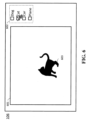
- FIG. 6 shows an example of the labeling interface 106 according to some embodiments of the invention.
- the labeling interface 106 includes a display region 601 and a selection area 602.
- the labeling interface 106 can be installed in the annotation device 613, which indicates the labeling interface 106 on a display of the annotation device 613.
- the labeling interface 106 can be installed an input/output interface (not shown in the figure) connectable to the human machine interface (HMI) 610 via the network 690.
- HMI human machine interface
- the selection area 602 indicates predetermined candidates for labeling the unlabeled image shown on the display region 601.
- the labeling interface 106 allows an operator to assign one of selectable annotations indicated in the selection area 602 with respect to the unlabeled image shown in the display region 601.
- the selection area 602 provides selection boxes with predetermined labeling candidates: Dog, Cat, Car, and Plane.
- FIG. 6 shows an unlabeled image indicating a cat image 603 displayed in the display region 601.
- the annotation box of Cat is checked by the operator (annotator) in response to the cat image shown in the selection area 602.
- the labeling interface 106 is configured to load and show unlabeled images stored the labeling storage in the memory according to the operations by the operator.
- the images labeled by the labeling interface 106 are stored into a new training image storage area in the memory in step S3 as newly labeled training images 107 as seen in FIG. 1A .
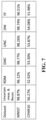
- FIG. 7 shows experimental results of image classifications using the active learning methods on a convolutional neural network (CNN) for comparison, and the uncertainty method based on a CANN.
- CNN convolutional neural network
- CNN convolutional neural network
- (20)5c” denotes a convolutional layer of 20 neurons with a kernel size 5
- "2p” denotes a 2 ⁇ 2 pooling
- "r” denotes rectified-linear units (ReLU)
- “500fc” denotes a fully connected layer with 500 nodes.
- One softmax loss layer is added to the classification output "10fc” for the backpropagation.
- CNN convolutional autoencoder neural network
- the dataset "Uncertain. meas. & Recon.” indicates data obtained by the uncertainty measure and reconstruction method according to an embodiment of the invention.
- the methods other than the uncertainty method shown in FIG. 7 are obtained by using a CNN instead of the structure with an autoencoder.
- RDM indicates random method
- EMC indicates an expected model change method
- UNC indicates an uncertainty method without reconstruction
- DW indicates a density weighted method
- FF indicates a farthest first method.
- the uncertainty measure & reconstruction method in accordance with the embodiment of the invention shows superior performance compared to the other methods. This indicates one of advantages of the active learning system in accordance with some embodiments of the invention.
- the artificial neural network according to some embodiments of the invention can provide less annotation processes with improving the classification accuracy, the use of artificial neural network that determines an uncertainty measure may reduce central processing unit (CPU) usage, power consumption, and/or network bandwidth usage, which is advantageous for improving the functioning of a computer.
- CPU central processing unit
- the embodiments can be implemented in any of numerous ways.
- the embodiments may be implemented using hardware, software or a combination thereof.
- the software code can be executed on any suitable processor or collection of processors, whether provided in a single computer or distributed among multiple computers.
- processors may be implemented as integrated circuits, with one or more processors in an integrated circuit component.
- a processor may be implemented using circuitry in any suitable format.
- the processor can be connected to memory, transceiver, and input/output interfaces as known in the art.
- the various methods or processes outlined herein may be coded as software that is executable on one or more processors that employ any one of a variety of operating systems or platforms.
- the invention may be embodied as a computer readable medium other than a computer-readable storage medium, such as signals.
- program or "software” are used herein in a generic sense to refer to any type of computer code or set of computer-executable instructions that can be employed to program a computer or other processor to implement various aspects of the present invention as discussed above.
Landscapes
- Engineering & Computer Science (AREA)
- Theoretical Computer Science (AREA)
- Physics & Mathematics (AREA)
- Artificial Intelligence (AREA)
- Evolutionary Computation (AREA)
- General Physics & Mathematics (AREA)
- Health & Medical Sciences (AREA)
- Software Systems (AREA)
- Data Mining & Analysis (AREA)
- General Health & Medical Sciences (AREA)
- Computing Systems (AREA)
- Life Sciences & Earth Sciences (AREA)
- General Engineering & Computer Science (AREA)
- Biophysics (AREA)
- Molecular Biology (AREA)
- Mathematical Physics (AREA)
- Computational Linguistics (AREA)
- Biomedical Technology (AREA)
- Computer Vision & Pattern Recognition (AREA)
- Medical Informatics (AREA)
- Databases & Information Systems (AREA)
- Multimedia (AREA)
- Bioinformatics & Cheminformatics (AREA)
- Bioinformatics & Computational Biology (AREA)
- Evolutionary Biology (AREA)
- Image Analysis (AREA)
- Measurement And Recording Of Electrical Phenomena And Electrical Characteristics Of The Living Body (AREA)
Claims (9)
- Computerimplementiertes Verfahren zum Trainieren eines neuronalen Netzes (400), um eine Anomalie in einem Signal zu bestimmen, wobei das Signal ein Elektrokardiogramm-, EKG-, Signal oder ein Elektroenzephalogramm-, EEG-, Signal ist, unter Verwendung eines Prozessors in Kommunikation mit einem Arbeitsspeicher, umfassend:Bestimmen (SS1) von Merkmalen (14) des Signals (12) unter Verwendung des neuronalen Netzes (400);Bestimmen (SS2) einer Entropiefunktion als Unsicherheitsmaß (16) der Merkmale (14) zur Klassifizierung des Signals (12);Rekonstruieren (SS3) des Signals (12) aus den Merkmalen (14) unter Verwendung eines neuronalen Decodierungsnetzes (705) zur Erzeugung eines rekonstruierten Signals;Vergleichen (SS4) des rekonstruierten Signals mit dem Signal (12) zur Erzeugung eines Rekonstruktionsfehlers (27);Kombinieren (SS5) des Unsicherheitsmaßes (16) mit dem Rekonstruktionsfehler (27) zur Erzeugung eines Rangs des Signals für eine Notwendigkeit eines manuellen Kennzeichnungsprozesses, wobei der Rang auf der Grundlage einer Addition der Entropiefunktion und des Rekonstruktionsfehlers definiert ist;Kennzeichnen (SS6) des Signals mit Hilfe des neuronalen Netzes (400) zur Erzeugung eines gekennzeichneten Signals, falls der Rang nicht die Notwendigkeit des manuellen Kennzeichnungsprozesses anzeigt;Übermitteln einer Kennzeichnungsanforderung an eine Annotationseinrichtung, falls der Rang die Notwendigkeit des manuellen Kennzeichnungsprozesses anzeigt; undTrainieren (SS7) des neuronalen Netzes (400) und des neuronalen Dekodierungsnetzes (705) unter Verwendung des gekennzeichneten Signals.
- Verfahren nach Anspruch 1, wobei der Schritt des Bestimmens von Merkmalen unter Verwendung eines neuronalen Kodierungsnetzes (701) durchgeführt wird.
- Verfahren nach Anspruch 1, wobei der Rekonstruktionsfehler auf der Grundlage eines euklidischen Abstands zwischen dem Signal und dem rekonstruierten Signal definiert ist.
- Aktives Lernsystem (600) zum Trainieren eines neuronalen Netzes (400), um eine Anomalie in einem Signal zu bestimmen, wobei das Signal ein Elektrokardiogramm-, EKG-, Signal oder ein Elektroenzephalogramm-, EEG-, Signal ist, umfassend:eine Mensch-Maschine-Schnittstelle (610);eine Speichereinrichtung (630) umfassend neuronale Netze;einen Arbeitsspeicher (640);eine Netzschnittstellen-Steuerungseinheit (650), verbindbar mit einem Netz (690) außerhalb des Systems;eine bildgebende Schnittstelle (670), verbindbar mit einer bildgebenden Einrichtung (675); undeinen Prozessor (620), der eingerichtet ist, mit der Mensch-Maschine-Schnittstelle, der Speichereinrichtung, dem Arbeitsspeicher, der Netzschnittstellen-Steuerungseinheit und der bildgebenden Schnittstelle verbunden zu werden,wobei der Prozessor Anweisungen zur Klassifizierung eines Signals unter Verwendung des neuronalen Netzes (400), das in der Speichereinrichtung gespeichert ist, ausführt, wobei der Prozessor (620) Schritte ausführt des:Bestimmens (SS1) von Merkmalen des Signals unter Verwendung des neuronalen Netzes (400);Bestimmens (SS2) einer Entropiefunktion als ein Unsicherheitsmaß für die Merkmale zur Klassifizierung des Signals;Rekonstruierens (SS3) des Signals aus den Merkmalen unter Verwendung eines neuronalen Dekodierungsnetzes (705) zur Erzeugung eines rekonstruierten Signals;Vergleichens (SS4) des rekonstruierten Signals mit dem Signal, um einen Rekonstruktionsfehler zu erzeugen;Kombinierens (SS5) des Unsicherheitsmaßes mit dem Rekonstruktionsfehler zur Erzeugung eines Rangs des Signals für die Notwendigkeit eines manuellen Kennzeichnungsprozesses, wobei der Rang auf der Grundlage einer Addition der Entropiefunktion und des Rekonstruktionsfehlers definiert ist;Kennzeichnens (SS6) des Signals mit Hilfe des neuronalen Netzes (400) zur Erzeugung eines gekennzeichneten Signals, falls der Rang nicht die Notwendigkeit des manuellen Kennzeichnungsprozesses anzeigt;Übermittelns einer Kennzeichnungsanforderung an eine Annotationseinrichtung (613), falls der Rang die Notwendigkeit des manuellen Kennzeichnungsprozesses anzeigt; undTrainieren (SS7) des neuronalen Netzes (400) und des neuronalen Dekodierungsnetzes (705) unter Verwendung des gekennzeichneten Signals.
- System nach Anspruch 4, wobei das Bestimmen von Merkmalen unter Verwendung eines neuronalen Kodierungsnetzes (701) durchgeführt wird.
- System nach Anspruch 4, wobei der Rekonstruktionsfehler auf der Grundlage eines euklidischen Abstands zwischen dem Signal und dem rekonstruierten Signal definiert ist.
- Nicht-transitorisches computerlesbares Medium, das Software speichert, die Befehle umfasst, die von einem oder mehreren Computern ausgeführt werden können, die bei einer solchen Ausführung den einen oder die mehreren Computer veranlassen, Operationen zum Trainieren eines neuronalen Netzes (400) durchzuführen, um eine Anomalie in einem Signal zu bestimmen, wobei das Signal ein Elektrokardiogramm-, EKG-, Signal oder ein Elektroenzephalogramm-, EEG-, Signal ist, umfassend:Bestimmen (SS1) von Merkmalen des Signals unter Verwendung des neuronalen Netzes (400);Bestimmen (SS2) einer Entropiefunktion als ein Unsicherheitsmaß für die Merkmale zur Klassifizierung des Signals;Rekonstruierens (SS3) des Signals aus den Merkmalen unter Verwendung eines neuronalen Dekodierungsnetzes (705) zur Erzeugung eines rekonstruierten Signals;Vergleichen (SS4) des rekonstruierten Signals mit dem Signal zum Erzeugen eines Rekonstruktionsfehlers;Kombinierens (SS5) des Unsicherheitsmaßes mit dem Rekonstruktionsfehler zur Erzeugung eines Rangs des Signals für die Notwendigkeit eines manuellen Kennzeichnungsprozesses, wobei der Rang auf der Grundlage einer Addition der Entropiefunktion und des Rekonstruktionsfehlers definiert ist;Kennzeichnen (SS6) des Signals mit Hilfe des neuronalen Netzes (400) zur Erzeugung eines gekennzeichneten Signals, falls der Rang nicht die Notwendigkeit des manuellen Kennzeichnungsprozesses anzeigt;Übermitteln einer Kennzeichnungsanforderung an eine Annotationseinrichtung, falls der Rang die Notwendigkeit des manuellen Kennzeichnungsprozesses anzeigt; undTrainieren (SS7) des neuronalen Netzes (400) und des neuronalen Dekodierungsnetzes (705) unter Verwendung des gekennzeichneten Signals.
- Medium nach Anspruch 7, wobei das Bestimmen von Merkmalen unter Verwendung eines neuronalen Kodierungsnetzes (701) durchgeführt wird.
- Medium nach Anspruch 7, wobei der Rekonstruktionsfehler auf der Grundlage eines euklidischen Abstands zwischen dem Signal und dem rekonstruierten Signal definiert ist.
Applications Claiming Priority (2)
| Application Number | Priority Date | Filing Date | Title |
|---|---|---|---|
| US15/358,420 US20180144241A1 (en) | 2016-11-22 | 2016-11-22 | Active Learning Method for Training Artificial Neural Networks |
| PCT/JP2017/035762 WO2018096789A1 (en) | 2016-11-22 | 2017-09-26 | Method for training neuron network and active learning system |
Publications (2)
| Publication Number | Publication Date |
|---|---|
| EP3545470A1 EP3545470A1 (de) | 2019-10-02 |
| EP3545470B1 true EP3545470B1 (de) | 2025-02-19 |
Family
ID=60164761
Family Applications (1)
| Application Number | Title | Priority Date | Filing Date |
|---|---|---|---|
| EP17788318.8A Active EP3545470B1 (de) | 2016-11-22 | 2017-09-26 | Verfahren zum trainieren eines neuronalen netzwerks und aktives lernsystem |
Country Status (4)
| Country | Link |
|---|---|
| US (1) | US20180144241A1 (de) |
| EP (1) | EP3545470B1 (de) |
| JP (1) | JP6692488B2 (de) |
| WO (1) | WO2018096789A1 (de) |
Families Citing this family (49)
| Publication number | Priority date | Publication date | Assignee | Title |
|---|---|---|---|---|
| CA2797980C (en) | 2010-05-12 | 2015-08-18 | Irhythm Technologies, Inc. | Device features and design elements for long-term adhesion |
| JP6198849B2 (ja) | 2013-01-24 | 2017-09-20 | アイリズム・テクノロジーズ・インコーポレイテッドiRhythm Technologies,Inc. | 生理学的信号をモニターする電子装置、及び該電子装置の部分を除去交換する方法 |
| US20160120434A1 (en) | 2014-10-31 | 2016-05-05 | Irhythm Technologies, Inc. | Wireless physiological monitoring device and systems |
| US10074038B2 (en) * | 2016-11-23 | 2018-09-11 | General Electric Company | Deep learning medical systems and methods for image reconstruction and quality evaluation |
| US10242443B2 (en) * | 2016-11-23 | 2019-03-26 | General Electric Company | Deep learning medical systems and methods for medical procedures |
| US10121103B2 (en) * | 2016-12-09 | 2018-11-06 | Cisco Technologies, Inc. | Scalable deep learning video analytics |
| US11113800B2 (en) * | 2017-01-18 | 2021-09-07 | Nvidia Corporation | Filtering image data using a neural network |
| US11580361B2 (en) * | 2017-04-24 | 2023-02-14 | Intel Corporation | Neural network training mechanism |
| US10572830B2 (en) | 2017-04-24 | 2020-02-25 | Virginia Tech Intellectual Properties, Inc. | Learning and deploying compression of radio signals |
| US12118455B2 (en) | 2017-04-27 | 2024-10-15 | Arizona Board Of Regents On Behalf Of Arizona State University | Systems, methods, and/or media, for selecting candidates for annotation for use in training a classifier |
| CN121212197A (zh) * | 2017-05-03 | 2025-12-26 | 弗吉尼亚科技知识产权有限公司 | 自适应无线通信的学习与部署 |
| US11829866B1 (en) * | 2017-12-27 | 2023-11-28 | Intuit Inc. | System and method for hierarchical deep semi-supervised embeddings for dynamic targeted anomaly detection |
| US10956785B2 (en) * | 2018-04-27 | 2021-03-23 | Arizona Board Of Regents On Behalf Of Arizona State University | Methods, systems, and media for selecting candidates for annotation for use in training classifiers |
| CN108805258B (zh) * | 2018-05-23 | 2021-10-12 | 北京图森智途科技有限公司 | 一种神经网络训练方法及其装置、计算机服务器 |
| US10713769B2 (en) * | 2018-06-05 | 2020-07-14 | Kla-Tencor Corp. | Active learning for defect classifier training |
| US11983244B1 (en) * | 2018-06-25 | 2024-05-14 | Amazon Technologies, Inc. | Artificial intelligence system for media item classification using transfer learning and active learning |
| US10748035B2 (en) * | 2018-07-05 | 2020-08-18 | Mitsubishi Electric Research Laboratories, Inc. | Visually aided active learning for training object detector |
| US20210271974A1 (en) * | 2018-07-07 | 2021-09-02 | Xjera Labs Pte. Ltd. | Annotation system for a neural network |
| KR102318775B1 (ko) * | 2018-08-13 | 2021-10-28 | 한국과학기술원 | 강화학습을 이용한 적응형 뇌파 분석 방법 및 장치 |
| CN109032071A (zh) * | 2018-08-16 | 2018-12-18 | 重庆理工大学 | 基于深度学习网络的数控机床运动误差实时溯因方法 |
| CN110897628A (zh) * | 2018-09-14 | 2020-03-24 | 杭州脉流科技有限公司 | 基于深度神经网络的心电图信号特征提取方法、装置、系统、设备和分类方法 |
| US11470101B2 (en) | 2018-10-03 | 2022-10-11 | At&T Intellectual Property I, L.P. | Unsupervised encoder-decoder neural network security event detection |
| KR102246318B1 (ko) * | 2018-10-05 | 2021-04-30 | 주식회사 딥바이오 | 병리 이미지 검색을 위한 시스템 및 방법 |
| US10878287B2 (en) | 2018-12-04 | 2020-12-29 | Here Global B.V. | Method and apparatus for culling training data |
| US11853812B2 (en) | 2018-12-20 | 2023-12-26 | Here Global B.V. | Single component data processing system and method utilizing a trained neural network |
| US20200202210A1 (en) * | 2018-12-24 | 2020-06-25 | Nokia Solutions And Networks Oy | Systems and methods for training a neural network |
| CN110135263A (zh) * | 2019-04-16 | 2019-08-16 | 深圳壹账通智能科技有限公司 | 人像属性模型构建方法、装置、计算机设备和存储介质 |
| US11157384B2 (en) * | 2019-06-27 | 2021-10-26 | Intel Corporation | Methods, systems, articles of manufacture and apparatus for code review assistance for dynamically typed languages |
| CN111266304B (zh) * | 2019-12-02 | 2024-11-19 | 唐山因泰智能科技发展有限公司 | 一种煤块识别检测分选系统 |
| US20210232914A1 (en) * | 2020-01-17 | 2021-07-29 | Ever Fortune.Ai Co., Ltd. | Method for building a heart rhythm classification model |
| JP7406001B2 (ja) | 2020-02-12 | 2023-12-26 | アイリズム・テクノロジーズ・インコーポレイテッド | 患者の生理学的特徴を推論するための、非侵襲的な心臓モニタ、および記録された心臓データの使用方法 |
| US10963792B1 (en) * | 2020-03-26 | 2021-03-30 | StradVision, Inc. | Method for training deep learning network based on artificial intelligence and learning device using the same |
| US11132607B1 (en) * | 2020-05-05 | 2021-09-28 | StradVision, Inc. | Method for explainable active learning, to be used for object detector, by using deep encoder and active learning device using the same |
| CN111401339B (zh) * | 2020-06-01 | 2020-09-29 | 北京金山云网络技术有限公司 | 识别人脸图像中的人的年龄的方法、装置及电子设备 |
| CA3174279A1 (en) * | 2020-06-05 | 2021-12-09 | Jean-Bastien Francois Laurent Grill | Self-supervised representation learning using bootstrapped latent representations |
| WO2022032117A1 (en) | 2020-08-06 | 2022-02-10 | Irhythm Technologies, Inc. | Adhesive physiological monitoring device |
| JP7796108B2 (ja) | 2020-08-06 | 2026-01-08 | アイリズム・テクノロジーズ・インコーポレイテッド | 生理学的モニタリング装置の電気部品 |
| EP3958167B1 (de) * | 2020-08-21 | 2024-03-20 | Toyota Jidosha Kabushiki Kaisha | Verfahren zum trainieren eines neuronalen netzes zur bereitstellung der ansichtspunkte von objekten unter verwendung unmarkierter bilderpaare und zugehöriges system |
| CN112052891A (zh) * | 2020-08-28 | 2020-12-08 | 平安科技(深圳)有限公司 | 机器行为识别方法、装置、设备及计算机可读存储介质 |
| CN112426147B (zh) * | 2020-10-21 | 2023-08-08 | 华南师范大学 | 睡眠呼吸事件检测模型处理方法、系统和存储介质 |
| KR102758569B1 (ko) * | 2020-11-11 | 2025-01-23 | 한국전자통신연구원 | 다중전이 능동학습 기반 설비 이상 진단 시스템 및 그 방법 |
| KR102483693B1 (ko) * | 2020-12-02 | 2023-01-03 | 울산대학교 산학협력단 | 설명 가능한 다중 심전도 부정맥 진단 장치 및 방법 |
| USD1063079S1 (en) | 2021-08-06 | 2025-02-18 | Irhythm Technologies, Inc. | Physiological monitoring device |
| CN116547661A (zh) * | 2021-12-03 | 2023-08-04 | 宁德时代新能源科技股份有限公司 | 用于图像分割的数据标注方法和系统以及图像分割装置 |
| CN114098679B (zh) * | 2021-12-30 | 2024-03-29 | 中新国际联合研究院 | 基于深度学习和射频感知的生命体征监测波形的恢复方法 |
| JP7345006B1 (ja) | 2022-03-30 | 2023-09-14 | 本田技研工業株式会社 | 学習モデル生成方法及び検査装置 |
| WO2023248163A1 (en) * | 2022-06-22 | 2023-12-28 | Dragerwerk AG & Co. KGaA | Smart annotation for recorded waveforms representing physiological characteristics |
| CN115120251B (zh) * | 2022-06-30 | 2024-09-06 | 中国科学院半导体研究所 | 一种脑电信号自适应压缩重建方法及装置 |
| KR20240112656A (ko) * | 2023-01-12 | 2024-07-19 | 삼성전자주식회사 | 센서 데이터의 레이블링을 위한 표현 학습 트레이닝 방법 및 장치 |
Family Cites Families (3)
| Publication number | Priority date | Publication date | Assignee | Title |
|---|---|---|---|---|
| US20120310864A1 (en) * | 2011-05-31 | 2012-12-06 | Shayok Chakraborty | Adaptive Batch Mode Active Learning for Evolving a Classifier |
| JP6362893B2 (ja) * | 2014-03-20 | 2018-07-25 | 株式会社東芝 | モデル更新装置及びモデル更新方法 |
| JP6402541B2 (ja) * | 2014-08-26 | 2018-10-10 | 株式会社豊田中央研究所 | 異常診断装置及びプログラム |
-
2016
- 2016-11-22 US US15/358,420 patent/US20180144241A1/en not_active Abandoned
-
2017
- 2017-09-26 EP EP17788318.8A patent/EP3545470B1/de active Active
- 2017-09-26 JP JP2019501745A patent/JP6692488B2/ja active Active
- 2017-09-26 WO PCT/JP2017/035762 patent/WO2018096789A1/en not_active Ceased
Non-Patent Citations (1)
| Title |
|---|
| XU JIN ET AL: "Active Dictionary Learning in Sparse Representation Based Classification", 27 September 2014 (2014-09-27), XP055799329, Retrieved from the Internet <URL:https://arxiv.org/pdf/1409.5763.pdf> [retrieved on 20210428] * |
Also Published As
| Publication number | Publication date |
|---|---|
| US20180144241A1 (en) | 2018-05-24 |
| JP6692488B2 (ja) | 2020-05-13 |
| JP2019528511A (ja) | 2019-10-10 |
| WO2018096789A1 (en) | 2018-05-31 |
| EP3545470A1 (de) | 2019-10-02 |
Similar Documents
| Publication | Publication Date | Title |
|---|---|---|
| EP3545470B1 (de) | Verfahren zum trainieren eines neuronalen netzwerks und aktives lernsystem | |
| EP4002296B1 (de) | Tiefe verarbeitung von dokumenten mit selbstüberwachtem lernen | |
| Medhekar et al. | Heart disease prediction system using naive Bayes | |
| US11379685B2 (en) | Machine learning classification system | |
| US12159706B2 (en) | Image-driven brain atlas construction method, device and storage medium | |
| CN110472090B (zh) | 基于语义标签的图像检索方法以及相关装置、存储介质 | |
| US6466929B1 (en) | System for discovering implicit relationships in data and a method of using the same | |
| CN111274425A (zh) | 医疗影像分类方法、装置、介质及电子设备 | |
| US20190133480A1 (en) | Discretized embeddings of physiological waveforms | |
| EP3726435B1 (de) | Verfahren und vorrichtung zum trainieren von tiefen neuronalen netzen und computervorrichtung | |
| US20230148955A1 (en) | Method of providing diagnostic information on alzheimer's disease using brain network | |
| US12530766B2 (en) | Clinic-driven multi-label classification framework for medical images | |
| JP2011210252A (ja) | マルチクラス分類器をトレーニングするための方法 | |
| CN110032631B (zh) | 一种信息反馈方法、装置和存储介质 | |
| Carrizosa et al. | Binarized support vector machines | |
| Li et al. | Multi-dimensional domain generalization with low-rank structures | |
| Ithapu et al. | The incremental multiresolution matrix factorization algorithm | |
| KR20220167001A (ko) | 반려동물 의료데이터 표준화 방법 및 장치, 그리고 이를 이용한 반려동물 질병 발생 예측 방법 | |
| US20240062907A1 (en) | Predicting an animal health result from laboratory test monitoring | |
| CN117633668A (zh) | 多分类识别方法、装置、设备以及介质 | |
| Alshakrani et al. | A comparative study of heart disease prediction using classification techniques | |
| Sagar | BUCAN: Bayesian Uncertainty-aware Classification with Attention Networks for Medical Images | |
| Kesavan et al. | Adaptive Deep Convolution Neural Network for Early Diagnosis of Autism through Combining Personal Characteristic with Eye Tracking Path Imaging | |
| Faisal et al. | PUMAA: Establishing a protocol for utilizing machine learning in forensic anthropological analyses | |
| Boccato et al. | In the Depths of Hyponymy: A Step towards Lifelong Learning |
Legal Events
| Date | Code | Title | Description |
|---|---|---|---|
| STAA | Information on the status of an ep patent application or granted ep patent |
Free format text: STATUS: UNKNOWN |
|
| STAA | Information on the status of an ep patent application or granted ep patent |
Free format text: STATUS: THE INTERNATIONAL PUBLICATION HAS BEEN MADE |
|
| PUAI | Public reference made under article 153(3) epc to a published international application that has entered the european phase |
Free format text: ORIGINAL CODE: 0009012 |
|
| STAA | Information on the status of an ep patent application or granted ep patent |
Free format text: STATUS: REQUEST FOR EXAMINATION WAS MADE |
|
| 17P | Request for examination filed |
Effective date: 20190430 |
|
| AK | Designated contracting states |
Kind code of ref document: A1 Designated state(s): AL AT BE BG CH CY CZ DE DK EE ES FI FR GB GR HR HU IE IS IT LI LT LU LV MC MK MT NL NO PL PT RO RS SE SI SK SM TR |
|
| AX | Request for extension of the european patent |
Extension state: BA ME |
|
| DAV | Request for validation of the european patent (deleted) | ||
| DAX | Request for extension of the european patent (deleted) | ||
| STAA | Information on the status of an ep patent application or granted ep patent |
Free format text: STATUS: EXAMINATION IS IN PROGRESS |
|
| 17Q | First examination report despatched |
Effective date: 20210506 |
|
| REG | Reference to a national code |
Ref legal event code: R079 Ref country code: DE Ref document number: 602017087870 Country of ref document: DE Free format text: PREVIOUS MAIN CLASS: G06N0003040000 Ipc: G06N0003045500 |
|
| RIC1 | Information provided on ipc code assigned before grant |
Ipc: G06N 3/0464 20230101ALN20240926BHEP Ipc: G06V 10/776 20220101ALI20240926BHEP Ipc: G06N 3/091 20230101ALI20240926BHEP Ipc: G06N 3/0455 20230101AFI20240926BHEP |
|
| RIC1 | Information provided on ipc code assigned before grant |
Ipc: G06N 3/0464 20230101ALN20241107BHEP Ipc: G06V 10/776 20220101ALI20241107BHEP Ipc: G06N 3/091 20230101ALI20241107BHEP Ipc: G06N 3/0455 20230101AFI20241107BHEP |
|
| GRAP | Despatch of communication of intention to grant a patent |
Free format text: ORIGINAL CODE: EPIDOSNIGR1 |
|
| STAA | Information on the status of an ep patent application or granted ep patent |
Free format text: STATUS: GRANT OF PATENT IS INTENDED |
|
| GRAS | Grant fee paid |
Free format text: ORIGINAL CODE: EPIDOSNIGR3 |
|
| INTG | Intention to grant announced |
Effective date: 20241216 |
|
| GRAA | (expected) grant |
Free format text: ORIGINAL CODE: 0009210 |
|
| STAA | Information on the status of an ep patent application or granted ep patent |
Free format text: STATUS: THE PATENT HAS BEEN GRANTED |
|
| AK | Designated contracting states |
Kind code of ref document: B1 Designated state(s): AL AT BE BG CH CY CZ DE DK EE ES FI FR GB GR HR HU IE IS IT LI LT LU LV MC MK MT NL NO PL PT RO RS SE SI SK SM TR |
|
| REG | Reference to a national code |
Ref country code: GB Ref legal event code: FG4D |
|
| REG | Reference to a national code |
Ref country code: CH Ref legal event code: EP |
|
| REG | Reference to a national code |
Ref country code: DE Ref legal event code: R096 Ref document number: 602017087870 Country of ref document: DE |
|
| REG | Reference to a national code |
Ref country code: IE Ref legal event code: FG4D |
|
| REG | Reference to a national code |
Ref country code: NL Ref legal event code: MP Effective date: 20250219 |
|
| PG25 | Lapsed in a contracting state [announced via postgrant information from national office to epo] |
Ref country code: RS Free format text: LAPSE BECAUSE OF FAILURE TO SUBMIT A TRANSLATION OF THE DESCRIPTION OR TO PAY THE FEE WITHIN THE PRESCRIBED TIME-LIMIT Effective date: 20250519 |
|
| PG25 | Lapsed in a contracting state [announced via postgrant information from national office to epo] |
Ref country code: FI Free format text: LAPSE BECAUSE OF FAILURE TO SUBMIT A TRANSLATION OF THE DESCRIPTION OR TO PAY THE FEE WITHIN THE PRESCRIBED TIME-LIMIT Effective date: 20250219 |
|
| PG25 | Lapsed in a contracting state [announced via postgrant information from national office to epo] |
Ref country code: PL Free format text: LAPSE BECAUSE OF FAILURE TO SUBMIT A TRANSLATION OF THE DESCRIPTION OR TO PAY THE FEE WITHIN THE PRESCRIBED TIME-LIMIT Effective date: 20250219 |
|
| PG25 | Lapsed in a contracting state [announced via postgrant information from national office to epo] |
Ref country code: ES Free format text: LAPSE BECAUSE OF FAILURE TO SUBMIT A TRANSLATION OF THE DESCRIPTION OR TO PAY THE FEE WITHIN THE PRESCRIBED TIME-LIMIT Effective date: 20250219 |
|
| REG | Reference to a national code |
Ref country code: LT Ref legal event code: MG9D |
|
| PG25 | Lapsed in a contracting state [announced via postgrant information from national office to epo] |
Ref country code: NO Free format text: LAPSE BECAUSE OF FAILURE TO SUBMIT A TRANSLATION OF THE DESCRIPTION OR TO PAY THE FEE WITHIN THE PRESCRIBED TIME-LIMIT Effective date: 20250519 Ref country code: IS Free format text: LAPSE BECAUSE OF FAILURE TO SUBMIT A TRANSLATION OF THE DESCRIPTION OR TO PAY THE FEE WITHIN THE PRESCRIBED TIME-LIMIT Effective date: 20250619 |
|
| PG25 | Lapsed in a contracting state [announced via postgrant information from national office to epo] |
Ref country code: NL Free format text: LAPSE BECAUSE OF FAILURE TO SUBMIT A TRANSLATION OF THE DESCRIPTION OR TO PAY THE FEE WITHIN THE PRESCRIBED TIME-LIMIT Effective date: 20250219 |
|
| PG25 | Lapsed in a contracting state [announced via postgrant information from national office to epo] |
Ref country code: HR Free format text: LAPSE BECAUSE OF FAILURE TO SUBMIT A TRANSLATION OF THE DESCRIPTION OR TO PAY THE FEE WITHIN THE PRESCRIBED TIME-LIMIT Effective date: 20250219 |
|
| PG25 | Lapsed in a contracting state [announced via postgrant information from national office to epo] |
Ref country code: LV Free format text: LAPSE BECAUSE OF FAILURE TO SUBMIT A TRANSLATION OF THE DESCRIPTION OR TO PAY THE FEE WITHIN THE PRESCRIBED TIME-LIMIT Effective date: 20250219 Ref country code: PT Free format text: LAPSE BECAUSE OF FAILURE TO SUBMIT A TRANSLATION OF THE DESCRIPTION OR TO PAY THE FEE WITHIN THE PRESCRIBED TIME-LIMIT Effective date: 20250620 |
|
| PG25 | Lapsed in a contracting state [announced via postgrant information from national office to epo] |
Ref country code: GR Free format text: LAPSE BECAUSE OF FAILURE TO SUBMIT A TRANSLATION OF THE DESCRIPTION OR TO PAY THE FEE WITHIN THE PRESCRIBED TIME-LIMIT Effective date: 20250520 Ref country code: BG Free format text: LAPSE BECAUSE OF FAILURE TO SUBMIT A TRANSLATION OF THE DESCRIPTION OR TO PAY THE FEE WITHIN THE PRESCRIBED TIME-LIMIT Effective date: 20250219 |
|
| REG | Reference to a national code |
Ref country code: AT Ref legal event code: MK05 Ref document number: 1769006 Country of ref document: AT Kind code of ref document: T Effective date: 20250219 |
|
| PG25 | Lapsed in a contracting state [announced via postgrant information from national office to epo] |
Ref country code: SE Free format text: LAPSE BECAUSE OF FAILURE TO SUBMIT A TRANSLATION OF THE DESCRIPTION OR TO PAY THE FEE WITHIN THE PRESCRIBED TIME-LIMIT Effective date: 20250219 |
|
| P01 | Opt-out of the competence of the unified patent court (upc) registered |
Free format text: CASE NUMBER: UPC_APP_4903_3545470/2025 Effective date: 20250827 |
|
| PG25 | Lapsed in a contracting state [announced via postgrant information from national office to epo] |
Ref country code: SM Free format text: LAPSE BECAUSE OF FAILURE TO SUBMIT A TRANSLATION OF THE DESCRIPTION OR TO PAY THE FEE WITHIN THE PRESCRIBED TIME-LIMIT Effective date: 20250219 |
|
| PG25 | Lapsed in a contracting state [announced via postgrant information from national office to epo] |
Ref country code: DK Free format text: LAPSE BECAUSE OF FAILURE TO SUBMIT A TRANSLATION OF THE DESCRIPTION OR TO PAY THE FEE WITHIN THE PRESCRIBED TIME-LIMIT Effective date: 20250219 |
|
| PGFP | Annual fee paid to national office [announced via postgrant information from national office to epo] |
Ref country code: DE Payment date: 20250730 Year of fee payment: 9 |
|
| PG25 | Lapsed in a contracting state [announced via postgrant information from national office to epo] |
Ref country code: IT Free format text: LAPSE BECAUSE OF FAILURE TO SUBMIT A TRANSLATION OF THE DESCRIPTION OR TO PAY THE FEE WITHIN THE PRESCRIBED TIME-LIMIT Effective date: 20250219 |
|
| PG25 | Lapsed in a contracting state [announced via postgrant information from national office to epo] |
Ref country code: AT Free format text: LAPSE BECAUSE OF FAILURE TO SUBMIT A TRANSLATION OF THE DESCRIPTION OR TO PAY THE FEE WITHIN THE PRESCRIBED TIME-LIMIT Effective date: 20250219 |
|
| PGFP | Annual fee paid to national office [announced via postgrant information from national office to epo] |
Ref country code: FR Payment date: 20250808 Year of fee payment: 9 |
|
| PG25 | Lapsed in a contracting state [announced via postgrant information from national office to epo] |
Ref country code: EE Free format text: LAPSE BECAUSE OF FAILURE TO SUBMIT A TRANSLATION OF THE DESCRIPTION OR TO PAY THE FEE WITHIN THE PRESCRIBED TIME-LIMIT Effective date: 20250219 Ref country code: CZ Free format text: LAPSE BECAUSE OF FAILURE TO SUBMIT A TRANSLATION OF THE DESCRIPTION OR TO PAY THE FEE WITHIN THE PRESCRIBED TIME-LIMIT Effective date: 20250219 |
|
| PG25 | Lapsed in a contracting state [announced via postgrant information from national office to epo] |
Ref country code: RO Free format text: LAPSE BECAUSE OF FAILURE TO SUBMIT A TRANSLATION OF THE DESCRIPTION OR TO PAY THE FEE WITHIN THE PRESCRIBED TIME-LIMIT Effective date: 20250219 |
|
| PG25 | Lapsed in a contracting state [announced via postgrant information from national office to epo] |
Ref country code: SK Free format text: LAPSE BECAUSE OF FAILURE TO SUBMIT A TRANSLATION OF THE DESCRIPTION OR TO PAY THE FEE WITHIN THE PRESCRIBED TIME-LIMIT Effective date: 20250219 |
|
| REG | Reference to a national code |
Ref country code: DE Ref legal event code: R097 Ref document number: 602017087870 Country of ref document: DE |
|
| PLBE | No opposition filed within time limit |
Free format text: ORIGINAL CODE: 0009261 |
|
| STAA | Information on the status of an ep patent application or granted ep patent |
Free format text: STATUS: NO OPPOSITION FILED WITHIN TIME LIMIT |
|
| 26N | No opposition filed |
Effective date: 20251120 |