EP3544235B1 - Verfahren, netzwerkgerät, und computerprogrammprodukt zum zurücksetzen einer paketverarbeitungskomponente in einen betriebszustand - Google Patents
Verfahren, netzwerkgerät, und computerprogrammprodukt zum zurücksetzen einer paketverarbeitungskomponente in einen betriebszustand Download PDFInfo
- Publication number
- EP3544235B1 EP3544235B1 EP18215934.3A EP18215934A EP3544235B1 EP 3544235 B1 EP3544235 B1 EP 3544235B1 EP 18215934 A EP18215934 A EP 18215934A EP 3544235 B1 EP3544235 B1 EP 3544235B1
- Authority
- EP
- European Patent Office
- Prior art keywords
- packet processing
- processing component
- network device
- information
- state
- Prior art date
- Legal status (The legal status is an assumption and is not a legal conclusion. Google has not performed a legal analysis and makes no representation as to the accuracy of the status listed.)
- Active
Links
Images
Classifications
-
- H—ELECTRICITY
- H04—ELECTRIC COMMUNICATION TECHNIQUE
- H04L—TRANSMISSION OF DIGITAL INFORMATION, e.g. TELEGRAPHIC COMMUNICATION
- H04L41/00—Arrangements for maintenance, administration or management of data switching networks, e.g. of packet switching networks
- H04L41/08—Configuration management of networks or network elements
- H04L41/0803—Configuration setting
-
- H—ELECTRICITY
- H04—ELECTRIC COMMUNICATION TECHNIQUE
- H04L—TRANSMISSION OF DIGITAL INFORMATION, e.g. TELEGRAPHIC COMMUNICATION
- H04L49/00—Packet switching elements
- H04L49/55—Prevention, detection or correction of errors
- H04L49/557—Error correction, e.g. fault recovery or fault tolerance
-
- G—PHYSICS
- G06—COMPUTING OR CALCULATING; COUNTING
- G06F—ELECTRIC DIGITAL DATA PROCESSING
- G06F11/00—Error detection; Error correction; Monitoring
- G06F11/07—Responding to the occurrence of a fault, e.g. fault tolerance
- G06F11/0703—Error or fault processing not based on redundancy, i.e. by taking additional measures to deal with the error or fault not making use of redundancy in operation, in hardware, or in data representation
- G06F11/0751—Error or fault detection not based on redundancy
-
- G—PHYSICS
- G06—COMPUTING OR CALCULATING; COUNTING
- G06F—ELECTRIC DIGITAL DATA PROCESSING
- G06F11/00—Error detection; Error correction; Monitoring
- G06F11/07—Responding to the occurrence of a fault, e.g. fault tolerance
- G06F11/14—Error detection or correction of the data by redundancy in operations
- G06F11/1402—Saving, restoring, recovering or retrying
-
- G—PHYSICS
- G06—COMPUTING OR CALCULATING; COUNTING
- G06F—ELECTRIC DIGITAL DATA PROCESSING
- G06F11/00—Error detection; Error correction; Monitoring
- G06F11/30—Monitoring
- G06F11/3058—Monitoring arrangements for monitoring environmental properties or parameters of the computing system or of the computing system component, e.g. monitoring of power, currents, temperature, humidity, position, vibrations
-
- H—ELECTRICITY
- H04—ELECTRIC COMMUNICATION TECHNIQUE
- H04L—TRANSMISSION OF DIGITAL INFORMATION, e.g. TELEGRAPHIC COMMUNICATION
- H04L12/00—Data switching networks
- H04L12/28—Data switching networks characterised by path configuration, e.g. LAN [Local Area Networks] or WAN [Wide Area Networks]
- H04L12/46—Interconnection of networks
- H04L12/4641—Virtual LANs, VLANs, e.g. virtual private networks [VPN]
-
- H—ELECTRICITY
- H04—ELECTRIC COMMUNICATION TECHNIQUE
- H04L—TRANSMISSION OF DIGITAL INFORMATION, e.g. TELEGRAPHIC COMMUNICATION
- H04L41/00—Arrangements for maintenance, administration or management of data switching networks, e.g. of packet switching networks
- H04L41/06—Management of faults, events, alarms or notifications
- H04L41/0654—Management of faults, events, alarms or notifications using network fault recovery
-
- H—ELECTRICITY
- H04—ELECTRIC COMMUNICATION TECHNIQUE
- H04L—TRANSMISSION OF DIGITAL INFORMATION, e.g. TELEGRAPHIC COMMUNICATION
- H04L41/00—Arrangements for maintenance, administration or management of data switching networks, e.g. of packet switching networks
- H04L41/06—Management of faults, events, alarms or notifications
- H04L41/0654—Management of faults, events, alarms or notifications using network fault recovery
- H04L41/0659—Management of faults, events, alarms or notifications using network fault recovery by isolating or reconfiguring faulty entities
- H04L41/0661—Management of faults, events, alarms or notifications using network fault recovery by isolating or reconfiguring faulty entities by reconfiguring faulty entities
-
- H—ELECTRICITY
- H04—ELECTRIC COMMUNICATION TECHNIQUE
- H04L—TRANSMISSION OF DIGITAL INFORMATION, e.g. TELEGRAPHIC COMMUNICATION
- H04L41/00—Arrangements for maintenance, administration or management of data switching networks, e.g. of packet switching networks
- H04L41/06—Management of faults, events, alarms or notifications
- H04L41/0677—Localisation of faults
-
- H—ELECTRICITY
- H04—ELECTRIC COMMUNICATION TECHNIQUE
- H04L—TRANSMISSION OF DIGITAL INFORMATION, e.g. TELEGRAPHIC COMMUNICATION
- H04L41/00—Arrangements for maintenance, administration or management of data switching networks, e.g. of packet switching networks
- H04L41/08—Configuration management of networks or network elements
- H04L41/085—Retrieval of network configuration; Tracking network configuration history
- H04L41/0853—Retrieval of network configuration; Tracking network configuration history by actively collecting configuration information or by backing up configuration information
- H04L41/0856—Retrieval of network configuration; Tracking network configuration history by actively collecting configuration information or by backing up configuration information by backing up or archiving configuration information
-
- H—ELECTRICITY
- H04—ELECTRIC COMMUNICATION TECHNIQUE
- H04L—TRANSMISSION OF DIGITAL INFORMATION, e.g. TELEGRAPHIC COMMUNICATION
- H04L43/00—Arrangements for monitoring or testing data switching networks
- H04L43/08—Monitoring or testing based on specific metrics, e.g. QoS, energy consumption or environmental parameters
-
- H—ELECTRICITY
- H04—ELECTRIC COMMUNICATION TECHNIQUE
- H04L—TRANSMISSION OF DIGITAL INFORMATION, e.g. TELEGRAPHIC COMMUNICATION
- H04L43/00—Arrangements for monitoring or testing data switching networks
- H04L43/08—Monitoring or testing based on specific metrics, e.g. QoS, energy consumption or environmental parameters
- H04L43/0823—Errors, e.g. transmission errors
-
- H—ELECTRICITY
- H04—ELECTRIC COMMUNICATION TECHNIQUE
- H04L—TRANSMISSION OF DIGITAL INFORMATION, e.g. TELEGRAPHIC COMMUNICATION
- H04L49/00—Packet switching elements
- H04L49/25—Routing or path finding in a switch fabric
-
- H—ELECTRICITY
- H04—ELECTRIC COMMUNICATION TECHNIQUE
- H04L—TRANSMISSION OF DIGITAL INFORMATION, e.g. TELEGRAPHIC COMMUNICATION
- H04L49/00—Packet switching elements
- H04L49/55—Prevention, detection or correction of errors
- H04L49/555—Error detection
-
- H—ELECTRICITY
- H04—ELECTRIC COMMUNICATION TECHNIQUE
- H04L—TRANSMISSION OF DIGITAL INFORMATION, e.g. TELEGRAPHIC COMMUNICATION
- H04L49/00—Packet switching elements
- H04L49/65—Re-configuration of fast packet switches
-
- G—PHYSICS
- G06—COMPUTING OR CALCULATING; COUNTING
- G06F—ELECTRIC DIGITAL DATA PROCESSING
- G06F11/00—Error detection; Error correction; Monitoring
- G06F11/07—Responding to the occurrence of a fault, e.g. fault tolerance
- G06F11/14—Error detection or correction of the data by redundancy in operations
- G06F11/1402—Saving, restoring, recovering or retrying
- G06F11/1415—Saving, restoring, recovering or retrying at system level
- G06F11/1438—Restarting or rejuvenating
-
- H—ELECTRICITY
- H04—ELECTRIC COMMUNICATION TECHNIQUE
- H04L—TRANSMISSION OF DIGITAL INFORMATION, e.g. TELEGRAPHIC COMMUNICATION
- H04L43/00—Arrangements for monitoring or testing data switching networks
- H04L43/16—Threshold monitoring
Definitions
- a network device may include one or more packet processing components.
- the network device may include one or more packet processing components for performing packet switching functions, packet routing functions, route lookup functions, and/or the like.
- Document US 7,652,982 describes a method that allows a network device, such as a router, to maintain a high level of functionality even in the event of a failure. Moreover, the high level of functionality may be achieved without substantially utilizing redundant hardware components.
- a network device may be manufactured to support a higher number of packet processing components, a higher number of links within the network devices (e.g., ports, virtual local area networks (VLANs), etc.), links with higher capacity (e.g., to allow the links to receive higher volumes of traffic), and/or the like.
- VLANs virtual local area networks
- the network device may need to restart or perform a procedure to repair the error, during which the network device may be unable to process any traffic. For example, if a network device supports eight (or more) packet processing components, and an error prevents a particular packet processing component from processing traffic, the entire network device may need to restart to correct the error, or the entire network device may need to be taken offline to perform the procedure to correct the error. During the restart time or the time needed to perform the procedure to correct the error, the network device may be unable to process any traffic, despite that only one of the packet processing components is experiencing an error.
- Some implementations described herein provide a network device that stores state information for a group of packet processing components, such that the network device is able to utilize the state information to reset a particular packet processing component when an error occurs.
- the network device may include a group of packet processing components, and may store state information for each packet processing component while the group of packet processing components are processing traffic.
- the network device may detect an error that prevents a particular packet processing component from processing traffic. Additionally, the network device may, based on detecting that the error is preventing the particular packet processing component from processing traffic, execute a recovery procedure that uses the state information to reset the particular packet processing component to an operational state.
- the network device is able to reset the particular packet processing component without disrupting traffic flow for the other packet processing components in the group of packet processing components. Furthermore, the network device conserves processing resources that might otherwise be used to perform the recovery procedure on the other packet processing components, conserves network resources by reducing an amount of traffic that has to be retransmitted and/or rerouted when an error occurs, conserves processing resources relative to an inferior network device that has to perform the recovery procedure on all packet processing components, and/or the like.
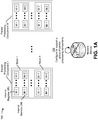
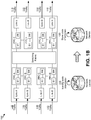
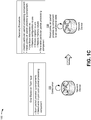
- Figs. 1A-1C are diagrams of an overview of an example implementation 100 described herein.
- example implementation 100 may include a network device that stores state information for a group of packet processing components, that detects an error associated with a particular packet processing component, and that performs a recovery procedure that uses the state information to reset the packet processing component to an operational state.
- the network device may be configured to support a group of packet processing components (shown as Packet Processing Component 1 through Packet Processing Component W, W ⁇ 1).
- each packet processing component may be segmented into a set of blocks (shown as Block 1 through Block X, X ⁇ 1) that are physical regions within an integrated circuit that is supporting a packet processing component.
- each packet processing component may be configured such that circuity and/or logic used to perform packet routing functions and/or packet processing functions may be distributed between the set of blocks.
- the set of blocks for a packet processing component may include one or more blocks that support logic that allow links (e.g., ports, virtual local area networks (VLANs), etc.) to receive packets, one or more blocks that support logic for assigning priority levels to packets, one or more blocks that support logic for performing load balancing decisions, one or more blocks that support logic for processing unidentifiable or problematic packets, one or more blocks that support logic for performing packet tracking functions, one or more blocks that support logic for routing the packets to other components of the network device (e.g., a switching fabric, another packet processing component, etc.), and/or the like.
- links e.g., ports, virtual local area networks (VLANs), etc.
- each block, of the set of blocks may include a set of internal registers (shown as Internal Register 1 through Internal Register Y, Y ⁇ 1).
- the set of internal registers may include an internal register capable of being used to route packets within a block, an internal register capable of determining how to process packets within a block, an internal register capable of routing packets between blocks, an internal register capable of monitoring errors within a block, and/or the like.
- the set of blocks may include internal memory (shown as Internal Memory 1 through Internal Memory Z, Z ⁇ 1) for storing state information associated with the packet processing component, as described below.
- a network device may be configured to support up to eight, sixteen, or more, packet processing components. Additionally, each packet processing component may have a hundred, five hundred, or more, blocks with circuitry and/or logic for performing routing functions and/or processing functions. Additionally, each block may have a thousand, ten thousand, or more, internal registers, and/or ten, fifty, a hundred, or more, internal memories.
- the network device is able to be configured with a group of packet processing components that are able to support large volumes of traffic.
- the network device may receive traffic (e.g., packets) through a set of links (shown as Link A through Link D). Additionally, the traffic may be routed through the each link, of the set of links, to particular packet processing components (shown as Packet Processing Component A through Packet Processing Component D). In this case, the particular packet processing components may process and/or route traffic to a switching fabric, which may process and/or route the traffic to additional packet processing components (shown as Packet Processing Component E through Packet Processing Component H). Furthermore, the additional packet processing components may transmit the traffic to another device (e.g., another network device, a user device, a server device, etc.) using another set of links (shown as Link E through Link H).
- another device e.g., another network device, a user device, a server device, etc.
- the network device may identify state information while receiving traffic. For example, as the group of packet processing components receives and/or processes the traffic, the network device may execute a scanning technique to identify state information for each packet processing component. In this case, the network device may identify the state information by scanning a set of internal registers (e.g., to determine values stored by each internal register), by scanning a set of internal memories (e.g., to determine values stored within each internal memory), and/or the like.
- a scanning technique to identify state information for each packet processing component.
- the network device may identify the state information by scanning a set of internal registers (e.g., to determine values stored by each internal register), by scanning a set of internal memories (e.g., to determine values stored within each internal memory), and/or the like.
- the state information for a particular packet processing component may include state configuration information and/or internal storage information.
- the state configuration information may include initialization instructions that allow one or more elements (e.g., links, blocks, internal registers, internal memories, etc.) of the particular packet processing component to receive, process, store, and/or provide traffic at run-time.
- the initialization instructions may be used to configure a set of links to be able to route traffic to the particular packet processing component, to configure circuitry and/or logic associated with a set of blocks to be able to perform packet routing functions and/or packet processing functions, to configure a set of internal registers to be able to support packet routing and/or packet processing functions, and/or the like.
- the internal storage information may include values that are stored within the particular packet processing component.
- the internal storage information may include register values for the set of internal registers, memory values for the set of internal memories, and/or the like.
- a block may include thousands of internal registers that, at a particular time period, may each store register values that are used for packet routing and/or packet processing functions.
- the network device may store state information.
- the network device may store state information using a data structure, such as by storing the state information using random access memory (RAM), a memory cache (e.g., a dynamic RAM (DRAM) memory cache), a data structure that stores memory for a limited time period, and/or the like.
- the data structure may be external to the packet processing component. For example, if the packet processing component malfunctions or is unable to process packets, the network device may need to execute a recovery procedure that clears all (or some) data structures within the packet processing component. As such, the state information may need to be stored in a location that is external to the packet processing component.
- the network device is able to identify and store state information for each packet processing component.
- the network device may detect an error that prevents a particular packet processing component from receiving and/or processing packets.
- the network device may execute an error detection technique to scan the group of packet processing components, where the scan is able to detect an error that prevents a particular packet processing component from processing packets.
- the set of internal registers of the particular packet processing component may be configured to store a particular bit value if a particular error occurs, which may allow the network device to scan the set of internal registers in order to detect the error.
- the error may be a hardware error associated with the packet processing component, such as an error on a link, a block, an internal register, an interconnect, and/or the like.
- the hardware error may be caused by a power issue, a temperature issue (e.g., overheating), an equipment degradation issue (e.g., equipment may begin to malfunction as the equipment ages), and/or the like.
- the error may be a software error, such as an error relating to data transmission (e.g., a forward error correction (FEC) error, a cyclic redundancy check (CRC) error, a bit error rate (BER) error, etc.), a signal integrity issue (e.g., a signal-to-noise (SNR) related error), and/or the like.
- FEC forward error correction
- CRC cyclic redundancy check
- BER bit error rate
- SNR signal-to-noise
- the network device may execute a recovery procedure to reset the particular packet processing component to an operational state. For example, the network device may begin the recovery procedure by disabling the particular packet processing component, such that the particular packet processing component is no longer able to receive and/or process traffic. While the particular packet processing component is disabled, the network device may execute a load balancing technique to ensure that the remaining packet processing components are able to support traffic that would otherwise be sent to the particular packet processing component.
- the network device may use the state information to reset the packet processing component to the operational state. For example, the network device may obtain the state information (e.g., the configuration information, the internal storage information, etc.) from the data structure, wherein the state information represents a state of the particular packet processing component before the error occurred. In this case, the network device may use the configuration information to restore configuration values for the particular packet processing component. Additionally, the network device may use the internal storage information to restore register values to each internal register and/or to restore memory values to each internal memory.
- the state information e.g., the configuration information, the internal storage information, etc.
- the network device may re-enable the particular packet processing component.
- the network device may re-enable the particular packet processing component such that the entire group of packet processing components is able to process traffic.
- the network device may only have to execute the recovery procedure on one or more elements of the particular packet processing component. For example, rather than disable the entire particular packet processing component, the network device may disable one or more elements of the particular packet processing component (e.g., one or more links, circuitry or logic associated with one or more blocks, one or more internal registers, etc.), and may execute the recovery procedure on the one or more elements that have been disabled, as described in detail further herein.
- the network device may disable one or more elements of the particular packet processing component (e.g., one or more links, circuitry or logic associated with one or more blocks, one or more internal registers, etc.), and may execute the recovery procedure on the one or more elements that have been disabled, as described in detail further herein.
- the network device is able to incur an error on a particular packet processing component, and detect and correct the error without having to reset the entire network device (e.g., by resetting only the particular packet processing component or one or more elements of the particular packet processing component). Furthermore, by performing a recovery procedure that does not disrupt traffic flow for the other packet processing components and/or for portions of the particular packet processing component, the network device conserves processing resources and/or network resources relative to an inferior network device that has to perform a recovery procedure that disrupts traffic flow for all packet processing components.
- Figs. 1A-1C are provided merely as an example. Other examples are possible and can differ from what was described with regard to Figs. 1A-1C . For example, there can be additional devices and/or networks, fewer devices and/or networks, different devices and/or networks, or differently arranged devices and/or networks than those shown in Figs. 1A-1C . Furthermore, two or more devices shown in Figs. 1A-1C can be implemented within a single device, or a single device shown in Figs. 1A-1C can be implemented as multiple, distributed devices. Additionally, or alternatively, a set of devices (e.g., one or more devices) of example implementation 100 can perform one or more functions described as being performed by another set of devices of example implementation 100.
- a set of devices e.g., one or more devices of example implementation 100 can perform one or more functions described as being performed by another set of devices of example implementation 100.
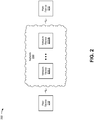
- environment 200 may include one or more peer devices 210, one or more network devices 220-1 through 220-N (N ⁇ 1) (hereinafter referred to collectively as “network devices 220", and individually as “network device 220”), and a network 230.
- Devices of environment 200 may interconnect via wired connections, wireless connections, or a combination of wired and wireless connections.
- Peer device 210 includes one or more devices capable of receiving and/or providing network traffic.
- peer device 210 may include a traffic transfer device, such as a router, a gateway, a switch, a firewall, a hub, a bridge, a reverse proxy, a server (e.g., a proxy server, a server executing a virtual machine, etc.), a load balancer, or a similar type of device.
- peer device 210 may include an endpoint device that is a source or a destination for network traffic.
- peer device 210 may include a computer, a server device, a mobile device, or a similar type of device.
- Peer device 210 may receive network traffic from and/or may provide network traffic to other peer devices 210 via network 230 (e.g., by routing packets using network device(s) 220 as an intermediary).
- Network device 220 includes one or more devices capable of receiving, processing, storing, routing, and/or providing traffic.
- network device 220 may include a router, such as a label switching router (LSR), a label edge router (LER), an ingress router, an egress router, a provider router (e.g., a provider edge router, a provider core router, etc.), a virtual router, or the like.
- network device 220 may include a gateway, a switch, a firewall, a hub, a bridge, a reverse proxy, a server (e.g., a proxy server, a cloud server, a data center server, etc.), a load balancer, or a similar device.
- network device 220 may be a physical device implemented within a housing, such as a chassis. In some implementations, network device 220 may be a virtual device implemented by one or more computer devices of a cloud computing environment or a data center. In some implementations, network device 220 may receive traffic from peer device 210 and/or from another network device 220.
- Network 230 includes one or more wired and/or wireless networks.
- network 230 may include a cellular network (e.g., a fifth generation (5G) network, a fourth generation (4G) network, such as a long-term evolution (LTE) network, a third generation (3G) network, a code division multiple access (CDMA) network, etc.), a public land mobile network (PLMN), a local area network (LAN), a wide area network (WAN), a metropolitan area network (MAN), a telephone network (e.g., the Public Switched Telephone Network (PSTN)), a private network, an ad hoc network, an intranet, the Internet, a fiber optic-based network, a cloud computing network, or the like, and/or a combination of these or other types of networks.
- 5G fifth generation
- 4G fourth generation
- LTE long-term evolution
- 3G third generation
- CDMA code division multiple access
- PLMN public land mobile network
- LAN local area network
- WAN wide area
- the number and arrangement of devices and networks shown in Fig. 2 are provided as an example. In practice, there may be additional devices and/or networks, fewer devices and/or networks, different devices and/or networks, or differently arranged devices and/or networks than those shown in Fig. 2 . Furthermore, two or more devices shown in Fig. 2 may be implemented within a single device, or a single device shown in Fig. 2 may be implemented as multiple, distributed devices. Additionally, or alternatively, a set of devices (e.g., one or more devices) of environment 200 may perform one or more functions described as being performed by another set of devices of environment 200.
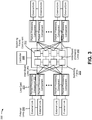
- Fig. 3 is a diagram of example components of a device 300.
- Device 300 may correspond to peer device 210 and/or network device 220.
- peer device 210 and/or network device 220 may include one or more devices 300 and/or one or more components of device 300.
- device 300 may include a switching fabric 310, a set of switching fabric components 312, a set of line cards 320 that support a set of packet processing components 322, a set of external links 330, a set of inter-board links 340, a set of intra-board (onboard) links 342, and/or a controller 350.
- traffic between switching fabric 310 and controller 350 may be provided and/or received through a single internal link.
- traffic between switching fabric 310 and controller 350 may be provided and/or received through a set of inter-board links 340, where each inter-board link 340 may be designated for a subset of external links 330 and/or a subset of line cards 320.
- line card 320 may use a set of inter-board links 340 to communicate with one or more corresponding planes of a switching fabric 310.
- Switching fabric 310 interconnects external links 330 via line cards 320.
- switching fabric 310 may be implemented using one or more switching fabric components 312 (e.g., one or more crossbars, one or more busses, one or more shared memories, and/or one or more planes).
- switching fabric components 312 may be connected using intra-board (onboard) links 342.
- switching fabric 310 may enable external links 330 to communicate. For example, switching fabric 310 may connect with one or more line cards 320 via a set of inter-board links 340, and the one or more line cards 320 may connect with the external links 330, as described further herein.
- Line cards 320 include one or more line card components 322.
- line cards 320 may include a modular electronic circuit designed to fit on a printed circuit board (PCB), and may include one or more packet processing components 322.
- Packet processing component 322 may include one or more processors to process packets, and may process incoming traffic, such as by performing data link layer encapsulation or decapsulation.
- packet processing component 322 may receive a packet from switching fabric 310, may process the packet, and may output the processed packet to an appropriate external link 330 connected to packet processing component 322.
- packet processing component 322 may receive a packet from external link 330, may process the packet, and may output the processed packet to switching fabric 310 for transfer to controller 350 and/or to another external link 330 (e.g., via the same packet processing component 322 or a different packet processing component 322).
- External link 330 is a point of attachment for physical links (e.g., a port) or virtual links (e.g., a virtual local area network (VLAN)), and may be a point of ingress and/or egress for incoming and/or outgoing traffic, such as packets.
- a single line card 320 may be connected to multiple external links 330.
- a single line card 320 may be connected to a single external link 330.
- External link 330 may permit communication between a first network device 220 and a second network device 220 that is a neighbor of the first network device 220.
- External link 330 may store packets (e.g., in a buffer) and/or may schedule packets for transmission on output physical links.
- External link 330 may support data link layer encapsulation or decapsulation and/or a variety of higher-level protocols.
- Inter-board link 340 is a path that allows line card 320 and/or controller 350 to communicate with switching fabric 310.
- Inter-board link 340 may include, for example, a wired or wireless path, such as a fiber-optic path, an electrical path, a virtual path, or the like.
- Intra-board (onboard) link 342 is a path that allows interconnection between line card components 322 and/or switching fabric components 312 (e.g., a physical connection, a virtual connection, etc.).
- Controller 350 includes a processor in the form of, for example, a central processing unit (CPU), a graphics processing unit (GPU), an accelerated processing unit (APU), a microprocessor, a microcontroller, a digital signal processor (DSP), a field-programmable gate array (FPGA), an application-specific integrated circuit (ASIC), and/or another type of processor.
- the processor is implemented in hardware, firmware, or a combination of hardware and software.
- controller 350 may include one or more processors that may be programmed to perform a function.
- controller 350 may include a group of virtual devices that each includes one or more processors.
- controller 350 may include a random access memory (RAM), a read only memory (ROM), and/or another type of dynamic or static storage device (e.g., a flash memory, a magnetic memory, an optical memory, etc.) that stores information and/or instructions for use by controller 350.
- RAM random access memory
- ROM read only memory
- static storage device e.g., a flash memory, a magnetic memory, an optical memory, etc.
- controller 350 may communicate with other devices, networks, and/or systems connected to device 300 to exchange information regarding network topology. Controller 350 may create routing tables based on the network topology information, create forwarding tables based on the routing tables, and forward the forwarding tables to packet processing component 322, such as for use in performing route lookups for incoming and/or outgoing packets.
- Controller 350 may perform one or more processes described herein. Controller 350 may perform these processes in response to executing software instructions stored by or received from a computer-readable medium.
- a computer-readable medium may include both transmission media and storage media.
- a computer-readable storage medium is defined herein as a non-transitory memory device.
- a memory device includes memory space within a single physical storage device or memory space spread across multiple physical storage devices.
- Transmission media may be provided between or within computer systems, and may include carrier waves and transmission signals. Any approach for delivering software instructions for execution by one or more processors may be termed a computer program product.
- Software instructions may be read into a memory and/or a storage component associated with controller 350 from another computer-readable medium or from another device via a communication interface. When executed, software instructions stored in a memory and/or storage component associated with controller 350 may cause controller 350 to perform one or more processes described herein. Additionally, or alternatively, hardwired circuitry may be used in place of or in combination with software instructions to perform one or more processes described herein. Thus, implementations described herein are not limited to any specific combination of hardware circuitry and software.
- device 300 may include additional components, fewer components, different components, or differently arranged components than those shown in Fig. 3 . Additionally, or alternatively, a set of components (e.g., one or more components) of device 300 may perform one or more functions described as being performed by another set of components of device 300.
- a set of components e.g., one or more components
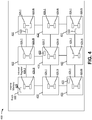
- Fig. 4 is a diagram of example elements of one or more components of Fig. 3 .
- Component 400 may correspond to packet processing component 322.
- packet processing component 322 may include one or more components 400 and/or one or more elements of component 400.
- component 400 may include a set of blocks 422, a set of internal memories 323, and/or a set of internal registers 424.
- component 400 may be supported by one or more integrated circuits (e.g., one or more ASICs).
- component 400 may be segmented into a set of blocks 422 that are physical regions within the one or more integrated circuits that support component 400.
- the set of blocks 422 may include one or more blocks 422 that support logic that allow links (e.g., ports, virtual local area networks (VLANs), etc.) to receive packets, one or more blocks 422 that support logic for assigning priority levels to packets, one or more blocks 422 that support logic for performing load balancing decisions, one or more blocks 422 that support logic for processing unidentifiable or problematic packets, one or more blocks 422 that support logic for performing packet tracking functions, one or more blocks 422 that support logic for routing the packets to other components of network device 220 (e.g., a switching fabric, another packet processing component, etc.), and/or the like.
- links e.g., ports, virtual local area networks (VLANs), etc.
- VLANs virtual local area networks
- a first block 422 (e.g., shown as the top left block in Fig. 4 ) may be used to manage link configuration for component 400.
- a second block 422 (e.g., shown as the block to the right of the first block 422) may be used to assign priority levels to packets.
- a third block 422 (e.g., shown as the block to the right of the second block 422) may be used to perform load balancing decisions for component 400. In this way, circuitry and/or logic within each block 422 may be used to perform different packet routing and/or packet processing functions.
- one or more blocks 422, of the set of blocks 422, may include one or more internal memories 423.
- the one or more internal memories 423 may include a random access memory (RAM), a read only memory (ROM), and/or another type of dynamic or static storage device (e.g., a flash memory, a magnetic memory, an optical memory, etc.) that stores information and/or instructions for use by component 400.
- RAM random access memory
- ROM read only memory
- another type of dynamic or static storage device e.g., a flash memory, a magnetic memory, an optical memory, etc.
- internal memory 423 may store state information for component 400.
- internal memory 423 may store state configuration information and/or internal storage information.
- internal memory 423 may store configuration instructions for one or more links, one or more blocks 422, and/or the like.
- internal memory 423 may store memory values relating to a particular routing functions and/or processing functions.
- the set of blocks 422 may include the set of internal registers 424.
- the set of internal registers 424 may include a hardware register (e.g., flip-flops, logic gates, etc.), a data register, an address register, a special-purpose register, a status register, and/or a similar type of register.
- the set of internal registers 424 may include an internal register 424 capable of being used to route packets within a block 422, an internal register 424 capable of determining how to process packets within a block 422, an internal register 424 capable of routing packets between blocks 422, an internal register 424 capable of monitoring errors within a block 422, and/or the like.
- the set of blocks 422 may be connected by one or more links.
- the set of blocks 422 may be connected by intra-board links 342, as described above.
- component 400 may include additional elements, fewer elements, different elements, or differently arranged elements than those shown in Fig. 4 . Additionally, or alternatively, a set of elements (e.g., one or more components) of component 400 may perform one or more functions described as being performed by another set of elements of component 400.
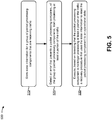
- Fig. 5 is a flow chart of an example process 500 for detecting an error associated with a packet processing component and performing a recovery procedure that uses state information to reset the packet processing component to an operational state.
- one or more process blocks of Fig. 5 may be performed by network device 220.
- one or more process blocks of Fig. 5 may be performed by another device or a group of devices separate from or including network device 220, such as peer device 210.
- process 500 may include storing state information for a group of packet processing components that are receiving traffic (block 510).
- network device 220 e.g., controller 350, a data structure external to packet processing components 322, etc.
- the state information may include state configuration information and/or internal storage information, as each described below.
- the state configuration information may include initialization instructions that allow one or more elements of the packet processing component 322 (e.g., links, such as external links 330, inter-board links, and/or intra-board (onboard) links 342, blocks 422, internal registers 424, internal memories 434, etc.) to receive, process, store, and/or provide traffic at run-time.
- the state configuration information may include link configuration instructions that may be used to configure a set of links to route traffic to the packet processing component 322.
- the link configuration instructions may include link identification values (e.g., a port identifier (ID), a VLAN ID, etc.), link capacity values (e.g., indicating an amount of bandwidth that a link may process at a particular time period), and/or the like.
- link identification values e.g., a port identifier (ID), a VLAN ID, etc.
- link capacity values e.g., indicating an amount of bandwidth that a link may process at a particular time period
- the state configuration information may include block configuration instructions to configure circuitry and/or logic associated with a set of blocks 422 to be able to perform packet routing functions and/or packet processing functions.
- the block configuration instructions may include routing instructions (e.g., a routing table or a forwarding table may instruct an element of packet processing component 322 on where to route a packet), scheduling instructions (e.g., a packet may be assigned a particular priority, and the scheduling instructions may indicate which priority to assign to the packet), and/or the like.
- the state configuration information may include register configuration instructions to configure a set of internal registers 424 to be able to support packet routing and/or packet processing functions.
- the register configuration instructions may include instructions indicating when an internal register is to accept or reject traffic, instructions when the internal register is to route traffic to another internal register or to another block, instructions on when an internal register is to store an indicator of an error, instructions indicating when an internal register is to store an indicator that may be used to track packets, and/or the like.
- the internal storage information may include values that are stored within the packet processing component 322 and that are created from the packet processing component 322 performing the packet routing and/or packet processing functions.
- the internal storage information may include register values for the set of internal registers 424, memory values for the set of internal memories 423, and/or the like, at a time period when the packet processing component 322 is performing the packet routing and/or packet processing functions.
- a register value for the internal register 424 may be a value that keeps track of a total number of packets that have been processed.
- the internal storage information may store register values for tens of thousands of internal registers 424, hundreds of thousands of internal registers 424, or more, whereby each register value may change dynamically as traffic is processed.
- network device 220 may also store packet tracking information. For example, network device 220 may store packet tracking information for packets associated with a client, such that packet statistics may be generated and provided to a device associated with the client (e.g., to monitor routing performance). Because the client may request packet statistics for the entire network device 220, network device 220 may store the packet tracking information externally to each packet processing component 322. This may allow the packet tracking information for each packet processing component 322 to be combined to provide the device associated with the client with the packet statistics.
- network device 220 may be configured to support a group of packet processing components 322.
- the group of packet processing components 322 may be supported by one or more integrated circuits (e.g., one or more application-specific integrated circuits (ASICs), etc.).
- ASICs application-specific integrated circuits
- a packet processing component 322 may be segmented into a set of blocks 422 that are physical regions within an integrated circuit that is supporting the packet processing component 322.
- a packet processing component 322 may be configured such that circuity and/or logic used to perform packet routing functions and/or packet processing functions may be distributed between the set of blocks 422.
- the set of blocks 422 for a packet processing component may include one or more blocks 422 that support logic that allow links (e.g., ports, virtual local area networks (VLANs), etc.) to receive packets, one or more blocks 422 that support logic for assigning priority levels to packets, one or more blocks 422 that support logic for performing load balancing decisions, one or more blocks 422 that support logic for processing unidentifiable or problematic packets, one or more blocks 422 that support logic for performing packet tracking functions, one or more blocks 422 that support logic for routing the packets to other components of the network device (e.g., a switching fabric, another packet processing component, etc.), and/or the like.
- links e.g., ports, virtual local area networks (VLANs), etc.
- each block 422, of the set of blocks 422, may include a set of internal registers 424.
- the set of internal registers 424 may include an internal register 424 capable of being used to route packets within a block 422, an internal register 424 capable of determining how to process packets within a block 422, an internal register 424 capable of routing packets between blocks 422, an internal register 424 capable of monitoring errors within a block 422, and/or the like.
- the set of blocks 422 may include internal memory 423 for storing state information associated with the packet processing component 322, as described below.
- network device 220 may receive traffic through a set of links. Additionally, the traffic may be routed through the each link, of the set of links, to packet processing components 322. In this case, packet processing components 322 may process and/or route traffic to switching fabric 310, which may process and/or route the traffic to additional packet processing components 322. Furthermore, the additional packet processing components 322 may transmit the traffic to peer device 210 and/or another network device 220 using another set of links.
- Network device 220 identifies state information for a packet processing component 322.
- Network device 220 executes a scanning technique to identify the state information for the packet processing component 322.
- network device 220 identifies the state information by scanning a set of internal registers 424 (e.g., to determine values stored by each internal register 424), by scanning a set of internal memories 423 (e.g., to determine values stored within internal memory 423), and/or the like.
- network device 220 may store the state information using a data structure.
- network device 220 may store the state information using random access memory (RAM), a memory cache (e.g., a dynamic RAM (DRAM) memory cache), a data structure that stores memory for a limited time period, and/or the like.
- the data structure may be external to the packet processing component 322. For example, if the packet processing component 322 malfunctions or is unable to process packets, network device 220 may need to execute a recovery procedure that clears the values included in the set of internal registers 424 and the values included in the set of internal memories 423. As such, the state information may need to be stored in a location that is external to the packet processing component.
- network device 220 may continue to store state information. For example, while packet processing component 322 is receiving traffic, network device 220 may be configured to periodically identify and store new instances of the state information (e.g., every second, every ten seconds, every minute, etc.). In this case, network device 220 ensures that if an error occurs, that state information is stored for a state that occurred right before the error (e.g., within a second, ten seconds, a minute, of the error occurring).
- state information e.g., every second, every ten seconds, every minute, etc.
- network device 220 is able to store state information for the packet processing component 322.
- process 500 may include detecting an error that prevents a packet processing component, of the group of packet processing components, from processing at least a portion of the traffic (block 520).
- network device 220 e.g., packet processing component 322, controller 350, etc.
- the error may be a hardware error associated with the packet processing component 322, such as an error on a link (e.g., an external link 330, an inter-board link 340, an intra-board (onboard) link 342, etc.), a block 422, an internal register 424, an internal memory 423, an interconnect 425, and/or the like.
- the hardware error may be caused by a power issue, a temperature issue (e.g., overheating), an equipment degradation issue (e.g., equipment may begin to malfunction as the equipment ages), and/or the like.
- the error may be a software error, such as an error relating to data transmission (e.g., a forward error correction (FEC) error, a cyclic redundancy check (CRC) error, a bit error rate (BER) error, etc.), a signal integrity issue (e.g., a signal-to-noise (SNR) related error), and/or the like.
- FEC forward error correction
- CRC cyclic redundancy check
- BER bit error rate
- SNR signal-to-noise
- network device 220 may execute the error detection technique to detect the error.
- Network device 220 detects the error by scanning packet processing component 322 for status information (e.g., particular readings, measurements, properties, and/or the like) of one or more elements or data types associated with packet processing component 322.
- network device 220 may compare the status information to one or more error thresholds. If the status information satisfies the one or more error thresholds, network device 220 may detect the error. If the status information does not satisfy the error threshold, network device 220 may determine that there is not an error.
- one or more internal registers 424 may store bit values and/or bit count values that may be used as indicators of errors.
- Network device 220 uses the error detection technique to scan the one or more internal registers 424 to determine whether an internal register 424 is storing a register value identifying an error.
- network device 220 is able to detect an error that prevents the packet processing component from processing at least a portion of the traffic.
- process 500 may include executing, based on detecting that the packet processing component is no longer processing at least a portion of the traffic, a recovery procedure that uses the state information to reset the packet processing component to an operational state (block 530).
- network device 220 e.g., packet processing component 322, controller 350, etc.
- the recovery procedure may include disabling the packet processing component 322 (or an element of packet processing component 322), using the state information to reset packet processing component 322 to an operational state, and re-enabling packet processing component 322 (or the element of packet processing component 322) to allow packet processing component 322 to continue to receive the traffic.
- the operational state may be a state in which packet processing component 322 is able to process the traffic without error.
- network device 220 may disable packet processing component 322. For example, network device 220 may disable packet processing component 322 by taking packet processing component 322 offline, by shutting down packet processing component 322, by preventing packet processing component 322 from receiving traffic, and/or the like. While packet processing component 322 is disabled, network device 220 may execute a load balancing technique to ensure that the remaining packet processing components 322 are able to support traffic that would otherwise be sent to packet processing component 322.
- network device 220 may reset packet processing component 322 to an operational state. For example, network device 220 may obtain the state information (e.g., the state configuration information, the internal storage information, etc.) from the data structure, wherein the state information represents a state of packet processing component 322 before the error occurred. In this case, network device 220 may use the state configuration information to restore link configuration instructions, block configuration instructions, and/or register configuration instructions. Additionally, network device 220 may use the internal storage information to restore register values for the set of internal registers 424 and/or memory values for the set of internal memories 423.
- state information e.g., the state configuration information, the internal storage information, etc.
- network device 220 may re-enable packet processing component 322.
- network device 220 may re-enable packet processing component 322 to allow packet processing component 322 to again to receive traffic.
- network device 220 may execute the recovery procedure on one or more elements of packet processing component 322. For example, rather than disable the entire packet processing component 322, network device 220 may disable one or more elements of packet processing component 322 (e.g., one or more links, circuitry or logic associated with one or more blocks 422, one or more internal registers 424, etc.), and may execute the recovery procedure on the one or more elements to reset the one or more elements to an operational state. While the recovery procedure is being executed, elements that have not been disabled may be able to continue to receive, process, and/or provide traffic.
- one or more elements of packet processing component 322 e.g., one or more links, circuitry or logic associated with one or more blocks 422, one or more internal registers 424, etc.
- network device 220 may disable one or more elements of packet processing component 322.
- network device 220 may obtain, from the data structure, state information associated with the one or more elements. Additionally, network device 220 may use the state information to restore link configuration instructions, block configuration instructions, and/or register configuration instructions for the one or more elements. Furthermore, network device 220 may use internal storage information to restore register values and/or memory values associated with the one or more elements. Additionally, network device 220 may re-enable the one or more elements, thereby allowing the one or more elements to continue to receive, process, and/or provide traffic. In this way, network device 220 conserves processing resources and/or network resources relative to an inferior network device that is unable to perform a recovery procedure on just one or more elements of the packet processing component 322.
- network device 220 is able to reset the packet processing component 322 to an operational state.
- process 500 may include additional blocks, fewer blocks, different blocks, or differently arranged blocks than those depicted in Fig. 5 . Additionally, or alternatively, two or more of the blocks of process 500 may be performed in parallel.
- network device 220 is able to reset packet processing component 322 without disrupting traffic flow for other packet processing components 322 in a group of packet processing components 322. Furthermore, network device 220 conserves processing resources that might otherwise be used to perform the recovery procedure on the other packet processing components 322, conserves network resources by reducing an amount of traffic that has to be retransmitted when an error occurs, conserves processing resources that relative to an inferior network device that has to perform the recovery procedure on all packet processing components 322, and/or the like.
- a network device that includes a plurality of packet processing components may receive traffic associated with one or more services.
- the network device may store state information for each of the plurality of packet processing components, while the plurality of packet processing components are receiving the traffic.
- the state information may include state configuration information and/or internal storage information.
- the state information may be stored using a data structure that is internal to the network device and external to the packet processing component.
- the network device may detect an error that prevents the packet processing component from processing at least a portion of the traffic.
- the network device may execute, based on detecting the error that prevents the packet processing component from processing at least the portion of the traffic, a recovery procedure that uses the state information to reset the packet processing component to an operational state.
- traffic or content may include a set of packets.
- a packet may refer to a communication structure for communicating information, such as a protocol data unit (PDU), a network packet, a datagram, a segment, a message, a block, a cell, a frame, a subframe, a slot, a symbol, a portion of any of the above, and/or another type of formatted or unformatted unit of data capable of being transmitted via a network.
- PDU protocol data unit
- the term component is intended to be broadly construed as hardware, firmware, and/or a combination of hardware and software.
- satisfying a threshold may refer to a value being greater than the threshold, more than the threshold, higher than the threshold, greater than or equal to the threshold, less than the threshold, fewer than the threshold, lower than the threshold, less than or equal to the threshold, equal to the threshold, etc.
Landscapes
- Engineering & Computer Science (AREA)
- Computer Networks & Wireless Communication (AREA)
- Signal Processing (AREA)
- Theoretical Computer Science (AREA)
- Quality & Reliability (AREA)
- Physics & Mathematics (AREA)
- General Engineering & Computer Science (AREA)
- General Physics & Mathematics (AREA)
- Environmental & Geological Engineering (AREA)
- Computer Security & Cryptography (AREA)
- Computing Systems (AREA)
- Data Exchanges In Wide-Area Networks (AREA)
Claims (13)
- Netzgerät (220), das Folgendes umfasst:einen oder mehrere Speicher, der/die Anweisungen speichert/speichern; undeinen oder mehrere Prozessoren, der/die kommunikativ an den einen oder die mehreren Speicher gekoppelt ist/sind, zum Ausführen der in dem einen oder den mehreren Speichern gespeicherten Anweisungen, wodurch bewirkt wird, dass der eine oder die mehreren Prozessoren Folgendes durchführt/durchführen:Empfangen von einem oder mehreren Diensten zugeordnetem Verkehr, wobei der Verkehr durch eine Vielzahl von Paketverarbeitungskomponenten (322) des Netzgeräts (220) empfangen wird;Analysieren der Paketverarbeitungskomponenten unter Nutzung einer Scantechnik zum Identifizieren von Zustandsinformationen für jede der Vielzahl von Paketverarbeitungskomponenten;Speichern der Zustandsinformationen, während die Vielzahl von Paketverarbeitungskomponenten den Verkehr empfängt, wobei die Zustandsinformationen für eine Paketverarbeitungskomponente der Vielzahl von Paketverarbeitungskomponenten Folgendes enthalten:Zustandskonfigurationsinformationen für die Paketverarbeitungskomponente und/oder Interndatenspeicherinformationen für die Paketverarbeitungskomponente, wobei die Zustandsinformationen unter Nutzung einer Datenstruktur, die innerhalb des Netzgeräts und außerhalb der Paketverarbeitungskomponente ist, gespeichert werden und wobei der eine oder die mehreren Prozessoren bei der Nutzung der Scantechnik zum Analysieren der Paketverarbeitungskomponente für Folgendes ausgelegt ist/sind:Scannen einer Menge interner Speicher (423) zum Identifizieren eines Teils der Zustandskonfigurationsinformationen, der Speicherwerte für die Menge interner Speicher enthält, undScannen einer Menge interner Register (424) zum Identifizieren eines anderen Teils der Zustandskonfigurationsinformationen, der Registerwerte für die Menge interner Register enthält;Erkennen eines Fehlers, der verhindert, dass eine Paketverarbeitungskomponente (322) mindestens einen Teil des Verkehrs verarbeitet; undAusführen einer Rückstellprozedur, die die Zustandsinformationen dazu nutzt, um die Paketverarbeitungskomponente in einen Betriebszustand zurückzusetzen, basierend auf dem Erkennen des Fehlers, der verhindert, dass die Paketverarbeitungskomponente mindestens den Teil des Verkehrs verarbeitet.
- Netzgerät nach Anspruch 1, wobei die Vielzahl von Paketverarbeitungskomponenten außer der Paketverarbeitungskomponente konfiguriert ist, um Verkehr zu empfangen, während die Rückstellprozedur ausgeführt wird.
- Netzgerät nach Anspruch 1 oder 2, wobei die Datenstruktur eine erste Datenstruktur ist; und wobei der eine oder die mehreren Prozessoren bei der Nutzung der Scantechnik zum Analysieren der Paketverarbeitungskomponente für Folgendes konfiguriert ist/sind:Scannen einer zweiten Datenstruktur, die außerhalb der Paketverarbeitungskomponente ist, zum Identifizieren von Paketverfolgungsinformationen für die Vielzahl von Paketverarbeitungskomponenten undSpeichern der Zustandsinformationen unter Nutzung der ersten Datenstruktur,
wobei die Zustandsinformationen die Paketverfolgungsinformationen enthalten. - Netzgerät nach einem vorhergehenden Anspruch, wobei der eine oder die mehreren Prozessoren beim Ausführen der Rückstellprozedur für Folgendes konfiguriert ist/sind:Ausschalten der Paketverarbeitungskomponente,Erhalten der Zustandskonfigurationsinformationen aus der Datenstruktur,Wiederherstellen von Konfigurationsanweisungen für die Paketverarbeitungskomponente unter Nutzung der Zustandskonfigurationsinformationen,Erhalten der Interndatenspeicherinformationen aus der Datenstruktur,Wiederherstellen von Registerwerten für eine Menge interner Register unter Nutzung der Interndatenspeicherinformationen undWiedereinschalten der Paketverarbeitungskomponente.
- Netzgerät nach einem vorhergehenden Anspruch, wobei der eine oder die mehreren Prozessoren beim Ausführen der Rückstellprozedur für Folgendes konfiguriert ist/sind:Ausschalten der Paketverarbeitungskomponente, wobei die Vielzahl von Paketverarbeitungskomponenten mit Ausnahme der Paketverarbeitungskomponente Verkehr empfängt, während die Paketverarbeitungskomponente ausgeschaltet ist,Erhalten der Zustandskonfigurationsinformationen aus der Datenstruktur, wobei die Zustandskonfigurationsinformationen Konfigurationsanweisungen aus dem Zeitraum vor dem Auftreten des Fehlers enthalten,Wiederherstellen der Konfigurationsanweisungen für die Paketverarbeitungskomponente unter Nutzung der Zustandskonfigurationsinformationen,Erhalten der Interndatenspeicherinformationen aus der Datenstruktur,Wiederherstellen von Registerwerten für eine Menge interner Register unter Nutzung der Interndatenspeicherinformationen undWiedereinschalten der Paketverarbeitungskomponente.
- Netzgerät nach einem vorhergehenden Anspruch, wobei der eine oder die mehreren Prozessoren beim Ausführen der Rückstellprozedur für Folgendes konfiguriert ist/sind:Ausschalten eines Elements aus einer Menge von der Paketverarbeitungskomponente zugeordneten Elementen oder einer dem Element zugeordneten Funktionalität, wobei die Menge von Elementen Folgendes enthält:eine Menge von der Paketverarbeitungskomponente zugeordneten Links und/odereine Menge von der Paketverarbeitungskomponente zugeordneten Blöcken und/odereine Menge von der Paketverarbeitungskomponente zugeordneten internen Registern, wobei das Element ein Link aus der Menge von Links, ein Block aus der Menge von Blöcken oder ein internes Register aus der Menge von internen Registern ist,Erhalten von Zustandsinformationen für das Element aus der Datenstruktur,Nutzen der Zustandsinformationen für das Element, um das Element in einen Zustand, in dem das Element war, bevor der Fehler aufgetreten ist, zurückzusetzen, undWiedereinschalten des Elements.
- Verfahren, das Folgendes umfasst:Empfangen von einem Netz zugeordnetem Verkehr durch ein Netzgerät, wobei der Verkehr durch eine Vielzahl von Paketverarbeitungskomponenten des Netzgeräts empfangen wird;Analysieren der Paketverarbeitungskomponenten unter Nutzung einer Scantechnik zum Identifizieren von Zustandsinformationen, wobei die Scantechnik die Zustandsinformationen durch Scannen einer Menge interner Speicher und einer Menge interner Register identifiziert;Speichern (510) der Zustandsinformationen für jede der Vielzahl von Paketverarbeitungskomponenten durch das Netzgerät, während die Vielzahl von Paketverarbeitungskomponenten den Verkehr empfängt, wobei die Zustandsinformationen für eine Paketverarbeitungskomponente der Vielzahl von Paketverarbeitungskomponenten Folgendes enthalten:Zustandskonfigurationsinformationen für die Paketverarbeitungskomponente und/oderInterndatenspeicherinformationen für die Paketverarbeitungskomponente undwobei die Zustandsinformationen unter Nutzung einer Datenstruktur, die innerhalb des Netzgeräts und außerhalb der Paketverarbeitungskomponente ist, gespeichert werden;Erkennen (520) eines Fehlers, der verhindert, dass eine Paketverarbeitungskomponente mindestens einen Teil des Verkehrs verarbeitet, durch das Netzgerät; undAusführen (530) einer Rückstellprozedur, die die Zustandsinformationen dazu nutzt, um die Paketverarbeitungskomponente in einen Betriebszustand zurückzusetzen, durch das Netzgerät basierend auf dem Erkennen des Fehlers, der verhindert, dass die Paketverarbeitungskomponente mindestens den Teil des Verkehrs verarbeitet.
- Verfahren nach Anspruch 7, wobei die Datenstruktur die Zustandsinformationen eine begrenzte Zeit lang speichert.
- Verfahren nach Anspruch 7 oder 8, wobei die Vielzahl von Paketverarbeitungskomponenten außer der Paketverarbeitungskomponente Verkehr empfängt, während die Rückstellprozedur ausgeführt wird.
- Verfahren nach einem der Ansprüche 7 bis 9, wobei die Datenstruktur eine erste Datenstruktur ist; und wobei das Speichern der Zustandsinformationen Folgendes umfasst:Ausführen einer Scantechnik zum Identifizieren der Zustandskonfigurationsinformationen und der Interndatenspeicherinformationen aus der Paketverarbeitungskomponente,Ausführen der Scantechnik zum Identifizieren von Paketverfolgungsinformationen für die Paketverarbeitungskomponente aus einer zweiten Datenstruktur, die außerhalb der Paketverarbeitungskomponente ist, undSpeichern der Zustandsinformationen unter Nutzung der ersten Datenstruktur,
wobei die Zustandsinformationen die Paketverfolgungsinformationen enthalten. - Verfahren nach einem der Ansprüche 7 bis 9, wobei das Ausführen der Rückstellprozedur Folgendes umfasst:Ausschalten der Paketverarbeitungskomponente,Erhalten der Zustandskonfigurationsinformationen und der Interndatenspeicherinformationen aus der Datenstruktur,Wiederherstellen von Konfigurationsanweisungen für die Paketverarbeitungskomponente unter Nutzung der Zustandskonfigurationsinformationen,Wiederherstellen von Registerwerten für eine Menge interner Register unter Nutzung der Interndatenspeicherinformationen,Wiederherstellen von Speicherwerten für eine Menge interner Speicher unter Nutzung der Interndatenspeicherinformationen undWiedereinschalten der Paketverarbeitungskomponente.
- Verfahren nach einem der Ansprüche 7 bis 10, wobei das Ausführen der Rückstellprozedur Folgendes umfasst:Ausschalten eines Elements aus einer Menge von der Paketverarbeitungskomponente zugeordneten Elementen oder einer dem Element zugeordneten Funktionalität,Erhalten von Zustandsinformationen für das Element aus der Datenstruktur,Nutzen der Zustandsinformationen für das Element, um das Element in einen Zustand, in dem das Element war, bevor der Fehler aufgetreten ist, zurückzusetzen, undWiedereinschalten des Elements.
- Computerprogrammprodukt, das eine oder mehrere Anweisungen speichert, die, wenn sie durch einen oder mehrere Prozessoren ausgeführt werden, bewirken, dass der eine oder die mehreren Prozessoren das Verfahren nach einem der Ansprüche 7 bis 12 durchführt/durchführen.
Priority Applications (1)
| Application Number | Priority Date | Filing Date | Title |
|---|---|---|---|
| EP19188680.3A EP3585001B1 (de) | 2018-03-23 | 2018-12-31 | Verfahren, netzwerkgerät, und computerprogrammprodukt zum zurücksetzen einer paketverarbeitungskomponente in einen betriebszustand |
Applications Claiming Priority (1)
| Application Number | Priority Date | Filing Date | Title |
|---|---|---|---|
| US15/934,662 US10404626B1 (en) | 2018-03-23 | 2018-03-23 | Method for resetting a packet processing component to an operational state |
Related Child Applications (2)
| Application Number | Title | Priority Date | Filing Date |
|---|---|---|---|
| EP19188680.3A Division EP3585001B1 (de) | 2018-03-23 | 2018-12-31 | Verfahren, netzwerkgerät, und computerprogrammprodukt zum zurücksetzen einer paketverarbeitungskomponente in einen betriebszustand |
| EP19188680.3A Division-Into EP3585001B1 (de) | 2018-03-23 | 2018-12-31 | Verfahren, netzwerkgerät, und computerprogrammprodukt zum zurücksetzen einer paketverarbeitungskomponente in einen betriebszustand |
Publications (2)
| Publication Number | Publication Date |
|---|---|
| EP3544235A1 EP3544235A1 (de) | 2019-09-25 |
| EP3544235B1 true EP3544235B1 (de) | 2021-09-22 |
Family
ID=64949089
Family Applications (2)
| Application Number | Title | Priority Date | Filing Date |
|---|---|---|---|
| EP19188680.3A Active EP3585001B1 (de) | 2018-03-23 | 2018-12-31 | Verfahren, netzwerkgerät, und computerprogrammprodukt zum zurücksetzen einer paketverarbeitungskomponente in einen betriebszustand |
| EP18215934.3A Active EP3544235B1 (de) | 2018-03-23 | 2018-12-31 | Verfahren, netzwerkgerät, und computerprogrammprodukt zum zurücksetzen einer paketverarbeitungskomponente in einen betriebszustand |
Family Applications Before (1)
| Application Number | Title | Priority Date | Filing Date |
|---|---|---|---|
| EP19188680.3A Active EP3585001B1 (de) | 2018-03-23 | 2018-12-31 | Verfahren, netzwerkgerät, und computerprogrammprodukt zum zurücksetzen einer paketverarbeitungskomponente in einen betriebszustand |
Country Status (3)
| Country | Link |
|---|---|
| US (2) | US10404626B1 (de) |
| EP (2) | EP3585001B1 (de) |
| CN (2) | CN113132169B (de) |
Families Citing this family (2)
| Publication number | Priority date | Publication date | Assignee | Title |
|---|---|---|---|---|
| US10943255B1 (en) | 2017-04-28 | 2021-03-09 | Snap Inc. | Methods and systems for interactive advertising with media collections |
| US10404626B1 (en) | 2018-03-23 | 2019-09-03 | Juniper Networks, Inc. | Method for resetting a packet processing component to an operational state |
Family Cites Families (9)
| Publication number | Priority date | Publication date | Assignee | Title |
|---|---|---|---|---|
| US7120934B2 (en) * | 2000-03-30 | 2006-10-10 | Ishikawa Mark M | System, method and apparatus for detecting, identifying and responding to fraudulent requests on a network |
| US6785843B1 (en) * | 2001-02-23 | 2004-08-31 | Mcrae Andrew | Data plane restart without state change in a control plane of an intermediate network node |
| US7409594B2 (en) * | 2004-07-06 | 2008-08-05 | Intel Corporation | System and method to detect errors and predict potential failures |
| US7652982B1 (en) * | 2005-11-16 | 2010-01-26 | Juniper Networks, Inc. | Providing high availability network services |
| US7594144B2 (en) * | 2006-08-14 | 2009-09-22 | International Business Machines Corporation | Handling fatal computer hardware errors |
| US8639984B2 (en) | 2011-08-09 | 2014-01-28 | International Business Machines Corporation | Checkpoint debugging using mirrored virtual machines |
| US8806266B1 (en) | 2011-09-28 | 2014-08-12 | Juniper Networks, Inc. | High availability using full memory replication between virtual machine instances on a network device |
| US9684775B2 (en) * | 2014-10-15 | 2017-06-20 | Qualcomm Incorporated | Methods and systems for using behavioral analysis towards efficient continuous authentication |
| US10404626B1 (en) | 2018-03-23 | 2019-09-03 | Juniper Networks, Inc. | Method for resetting a packet processing component to an operational state |
-
2018
- 2018-03-23 US US15/934,662 patent/US10404626B1/en active Active
- 2018-12-28 CN CN202110533138.8A patent/CN113132169B/zh active Active
- 2018-12-28 CN CN201811626222.9A patent/CN110300012B/zh active Active
- 2018-12-31 EP EP19188680.3A patent/EP3585001B1/de active Active
- 2018-12-31 EP EP18215934.3A patent/EP3544235B1/de active Active
-
2019
- 2019-07-26 US US16/523,495 patent/US10951548B2/en active Active
Also Published As
| Publication number | Publication date |
|---|---|
| US20200076679A1 (en) | 2020-03-05 |
| EP3585001A1 (de) | 2019-12-25 |
| EP3585001B1 (de) | 2022-03-30 |
| US20190297030A1 (en) | 2019-09-26 |
| CN113132169A (zh) | 2021-07-16 |
| CN110300012A (zh) | 2019-10-01 |
| CN113132169B (zh) | 2024-04-19 |
| CN110300012B (zh) | 2021-07-02 |
| US10404626B1 (en) | 2019-09-03 |
| US10951548B2 (en) | 2021-03-16 |
| EP3544235A1 (de) | 2019-09-25 |
Similar Documents
| Publication | Publication Date | Title |
|---|---|---|
| US10560550B1 (en) | Automatic configuration of a replacement network device in a high-availability cluster | |
| US20230006927A1 (en) | High-availability switchover based on traffic metrics | |
| US9729389B2 (en) | Methods and systems for switching network traffic in a communications network | |
| EP3340537B1 (de) | Stillstandsvermeidung unter verwendung von modifizierter störungsverwaltungssignalisierung von ethernet-konnektivität | |
| US10404570B2 (en) | Automatically detecting an error in a communication and automatically determining a source of the error | |
| CN110061912A (zh) | 仲裁虚拟节点的冗余控制平面之间的主控权 | |
| EP3624401B1 (de) | Systeme und verfahren zur nicht-intrusiven netzwerkleistungsüberwachung | |
| EP3544228B1 (de) | Selektive modifizierung von leistungszuständen auf basis von zuständen | |
| EP3544235B1 (de) | Verfahren, netzwerkgerät, und computerprogrammprodukt zum zurücksetzen einer paketverarbeitungskomponente in einen betriebszustand | |
| US10097457B1 (en) | Resolving a mismatch among control plane parameter values received from multiple routing control devices | |
| US20160226699A9 (en) | Fiber Channel 1:N Redundancy | |
| US11570073B1 (en) | Service status notification | |
| US11088897B2 (en) | Bidirectional forwarding detection control packet to indicate maintenance mode operation | |
| CN109218117B (zh) | 链路检测方法、装置及网络设备 | |
| US10771317B1 (en) | Reducing traffic loss during link failure in an ethernet virtual private network multihoming topology | |
| US11909650B2 (en) | Internet protocol operations and management option | |
| US10498591B1 (en) | Isolating service faults using loopbacks | |
| EP4053694B1 (de) | Hardware-unterstützte schnelle datenwegumschaltung für eine netzwerkvorrichtung mit redundanten weiterleitungskomponenten | |
| US20100325486A1 (en) | Systems and methods for providing redundancy in communications networks | |
| CN117857304A (zh) | 一种业务传输的方法以及相关装置 |
Legal Events
| Date | Code | Title | Description |
|---|---|---|---|
| PUAI | Public reference made under article 153(3) epc to a published international application that has entered the european phase |
Free format text: ORIGINAL CODE: 0009012 |
|
| STAA | Information on the status of an ep patent application or granted ep patent |
Free format text: STATUS: THE APPLICATION HAS BEEN PUBLISHED |
|
| AK | Designated contracting states |
Kind code of ref document: A1 Designated state(s): AL AT BE BG CH CY CZ DE DK EE ES FI FR GB GR HR HU IE IS IT LI LT LU LV MC MK MT NL NO PL PT RO RS SE SI SK SM TR |
|
| AX | Request for extension of the european patent |
Extension state: BA ME |
|
| STAA | Information on the status of an ep patent application or granted ep patent |
Free format text: STATUS: REQUEST FOR EXAMINATION WAS MADE |
|
| 17P | Request for examination filed |
Effective date: 20200324 |
|
| RBV | Designated contracting states (corrected) |
Designated state(s): AL AT BE BG CH CY CZ DE DK EE ES FI FR GB GR HR HU IE IS IT LI LT LU LV MC MK MT NL NO PL PT RO RS SE SI SK SM TR |
|
| STAA | Information on the status of an ep patent application or granted ep patent |
Free format text: STATUS: EXAMINATION IS IN PROGRESS |
|
| 17Q | First examination report despatched |
Effective date: 20200706 |
|
| REG | Reference to a national code |
Ref country code: DE Ref legal event code: R079 Ref document number: 602018023870 Country of ref document: DE Free format text: PREVIOUS MAIN CLASS: H04L0012260000 Ipc: H04L0012240000 |
|
| GRAP | Despatch of communication of intention to grant a patent |
Free format text: ORIGINAL CODE: EPIDOSNIGR1 |
|
| STAA | Information on the status of an ep patent application or granted ep patent |
Free format text: STATUS: GRANT OF PATENT IS INTENDED |
|
| RIC1 | Information provided on ipc code assigned before grant |
Ipc: G06F 11/14 20060101ALN20210408BHEP Ipc: H04L 12/939 20130101ALN20210408BHEP Ipc: G06F 11/30 20060101ALI20210408BHEP Ipc: G06F 11/07 20060101ALI20210408BHEP Ipc: H04L 12/26 20060101ALI20210408BHEP Ipc: H04L 12/24 20060101AFI20210408BHEP |
|
| RIC1 | Information provided on ipc code assigned before grant |
Ipc: G06F 11/14 20060101ALN20210414BHEP Ipc: H04L 12/939 20130101ALN20210414BHEP Ipc: G06F 11/30 20060101ALI20210414BHEP Ipc: G06F 11/07 20060101ALI20210414BHEP Ipc: H04L 12/26 20060101ALI20210414BHEP Ipc: H04L 12/24 20060101AFI20210414BHEP |
|
| INTG | Intention to grant announced |
Effective date: 20210428 |
|
| GRAS | Grant fee paid |
Free format text: ORIGINAL CODE: EPIDOSNIGR3 |
|
| GRAA | (expected) grant |
Free format text: ORIGINAL CODE: 0009210 |
|
| STAA | Information on the status of an ep patent application or granted ep patent |
Free format text: STATUS: THE PATENT HAS BEEN GRANTED |
|
| AK | Designated contracting states |
Kind code of ref document: B1 Designated state(s): AL AT BE BG CH CY CZ DE DK EE ES FI FR GB GR HR HU IE IS IT LI LT LU LV MC MK MT NL NO PL PT RO RS SE SI SK SM TR |
|
| REG | Reference to a national code |
Ref country code: GB Ref legal event code: FG4D |
|
| REG | Reference to a national code |
Ref country code: DE Ref legal event code: R096 Ref document number: 602018023870 Country of ref document: DE |
|
| REG | Reference to a national code |
Ref country code: IE Ref legal event code: FG4D |
|
| REG | Reference to a national code |
Ref country code: CH Ref legal event code: EP Ref country code: AT Ref legal event code: REF Ref document number: 1433192 Country of ref document: AT Kind code of ref document: T Effective date: 20211015 |
|
| REG | Reference to a national code |
Ref country code: DE Ref legal event code: R079 Ref document number: 602018023870 Country of ref document: DE Free format text: PREVIOUS MAIN CLASS: H04L0012240000 Ipc: H04L0041000000 |
|
| REG | Reference to a national code |
Ref country code: LT Ref legal event code: MG9D |
|
| REG | Reference to a national code |
Ref country code: NL Ref legal event code: MP Effective date: 20210922 |
|
| PG25 | Lapsed in a contracting state [announced via postgrant information from national office to epo] |
Ref country code: HR Free format text: LAPSE BECAUSE OF FAILURE TO SUBMIT A TRANSLATION OF THE DESCRIPTION OR TO PAY THE FEE WITHIN THE PRESCRIBED TIME-LIMIT Effective date: 20210922 Ref country code: FI Free format text: LAPSE BECAUSE OF FAILURE TO SUBMIT A TRANSLATION OF THE DESCRIPTION OR TO PAY THE FEE WITHIN THE PRESCRIBED TIME-LIMIT Effective date: 20210922 Ref country code: SE Free format text: LAPSE BECAUSE OF FAILURE TO SUBMIT A TRANSLATION OF THE DESCRIPTION OR TO PAY THE FEE WITHIN THE PRESCRIBED TIME-LIMIT Effective date: 20210922 Ref country code: RS Free format text: LAPSE BECAUSE OF FAILURE TO SUBMIT A TRANSLATION OF THE DESCRIPTION OR TO PAY THE FEE WITHIN THE PRESCRIBED TIME-LIMIT Effective date: 20210922 Ref country code: LT Free format text: LAPSE BECAUSE OF FAILURE TO SUBMIT A TRANSLATION OF THE DESCRIPTION OR TO PAY THE FEE WITHIN THE PRESCRIBED TIME-LIMIT Effective date: 20210922 Ref country code: BG Free format text: LAPSE BECAUSE OF FAILURE TO SUBMIT A TRANSLATION OF THE DESCRIPTION OR TO PAY THE FEE WITHIN THE PRESCRIBED TIME-LIMIT Effective date: 20211222 Ref country code: NO Free format text: LAPSE BECAUSE OF FAILURE TO SUBMIT A TRANSLATION OF THE DESCRIPTION OR TO PAY THE FEE WITHIN THE PRESCRIBED TIME-LIMIT Effective date: 20211222 |
|
| REG | Reference to a national code |
Ref country code: AT Ref legal event code: MK05 Ref document number: 1433192 Country of ref document: AT Kind code of ref document: T Effective date: 20210922 |
|
| PG25 | Lapsed in a contracting state [announced via postgrant information from national office to epo] |
Ref country code: LV Free format text: LAPSE BECAUSE OF FAILURE TO SUBMIT A TRANSLATION OF THE DESCRIPTION OR TO PAY THE FEE WITHIN THE PRESCRIBED TIME-LIMIT Effective date: 20210922 Ref country code: GR Free format text: LAPSE BECAUSE OF FAILURE TO SUBMIT A TRANSLATION OF THE DESCRIPTION OR TO PAY THE FEE WITHIN THE PRESCRIBED TIME-LIMIT Effective date: 20211223 |
|
| PG25 | Lapsed in a contracting state [announced via postgrant information from national office to epo] |
Ref country code: AT Free format text: LAPSE BECAUSE OF FAILURE TO SUBMIT A TRANSLATION OF THE DESCRIPTION OR TO PAY THE FEE WITHIN THE PRESCRIBED TIME-LIMIT Effective date: 20210922 |
|
| PG25 | Lapsed in a contracting state [announced via postgrant information from national office to epo] |
Ref country code: IS Free format text: LAPSE BECAUSE OF FAILURE TO SUBMIT A TRANSLATION OF THE DESCRIPTION OR TO PAY THE FEE WITHIN THE PRESCRIBED TIME-LIMIT Effective date: 20220122 Ref country code: SK Free format text: LAPSE BECAUSE OF FAILURE TO SUBMIT A TRANSLATION OF THE DESCRIPTION OR TO PAY THE FEE WITHIN THE PRESCRIBED TIME-LIMIT Effective date: 20210922 Ref country code: RO Free format text: LAPSE BECAUSE OF FAILURE TO SUBMIT A TRANSLATION OF THE DESCRIPTION OR TO PAY THE FEE WITHIN THE PRESCRIBED TIME-LIMIT Effective date: 20210922 Ref country code: PT Free format text: LAPSE BECAUSE OF FAILURE TO SUBMIT A TRANSLATION OF THE DESCRIPTION OR TO PAY THE FEE WITHIN THE PRESCRIBED TIME-LIMIT Effective date: 20220124 Ref country code: PL Free format text: LAPSE BECAUSE OF FAILURE TO SUBMIT A TRANSLATION OF THE DESCRIPTION OR TO PAY THE FEE WITHIN THE PRESCRIBED TIME-LIMIT Effective date: 20210922 Ref country code: NL Free format text: LAPSE BECAUSE OF FAILURE TO SUBMIT A TRANSLATION OF THE DESCRIPTION OR TO PAY THE FEE WITHIN THE PRESCRIBED TIME-LIMIT Effective date: 20210922 Ref country code: ES Free format text: LAPSE BECAUSE OF FAILURE TO SUBMIT A TRANSLATION OF THE DESCRIPTION OR TO PAY THE FEE WITHIN THE PRESCRIBED TIME-LIMIT Effective date: 20210922 Ref country code: EE Free format text: LAPSE BECAUSE OF FAILURE TO SUBMIT A TRANSLATION OF THE DESCRIPTION OR TO PAY THE FEE WITHIN THE PRESCRIBED TIME-LIMIT Effective date: 20210922 Ref country code: CZ Free format text: LAPSE BECAUSE OF FAILURE TO SUBMIT A TRANSLATION OF THE DESCRIPTION OR TO PAY THE FEE WITHIN THE PRESCRIBED TIME-LIMIT Effective date: 20210922 Ref country code: AL Free format text: LAPSE BECAUSE OF FAILURE TO SUBMIT A TRANSLATION OF THE DESCRIPTION OR TO PAY THE FEE WITHIN THE PRESCRIBED TIME-LIMIT Effective date: 20210922 |
|
| REG | Reference to a national code |
Ref country code: DE Ref legal event code: R097 Ref document number: 602018023870 Country of ref document: DE |
|
| PG25 | Lapsed in a contracting state [announced via postgrant information from national office to epo] |
Ref country code: MC Free format text: LAPSE BECAUSE OF FAILURE TO SUBMIT A TRANSLATION OF THE DESCRIPTION OR TO PAY THE FEE WITHIN THE PRESCRIBED TIME-LIMIT Effective date: 20210922 Ref country code: DK Free format text: LAPSE BECAUSE OF FAILURE TO SUBMIT A TRANSLATION OF THE DESCRIPTION OR TO PAY THE FEE WITHIN THE PRESCRIBED TIME-LIMIT Effective date: 20210922 |
|
| PLBE | No opposition filed within time limit |
Free format text: ORIGINAL CODE: 0009261 |
|
| REG | Reference to a national code |
Ref country code: CH Ref legal event code: PL |
|
| STAA | Information on the status of an ep patent application or granted ep patent |
Free format text: STATUS: NO OPPOSITION FILED WITHIN TIME LIMIT |
|
| 26N | No opposition filed |
Effective date: 20220623 |
|
| REG | Reference to a national code |
Ref country code: BE Ref legal event code: MM Effective date: 20211231 |
|
| PG25 | Lapsed in a contracting state [announced via postgrant information from national office to epo] |
Ref country code: LU Free format text: LAPSE BECAUSE OF NON-PAYMENT OF DUE FEES Effective date: 20211231 Ref country code: IE Free format text: LAPSE BECAUSE OF NON-PAYMENT OF DUE FEES Effective date: 20211231 |
|
| PG25 | Lapsed in a contracting state [announced via postgrant information from national office to epo] |
Ref country code: SI Free format text: LAPSE BECAUSE OF FAILURE TO SUBMIT A TRANSLATION OF THE DESCRIPTION OR TO PAY THE FEE WITHIN THE PRESCRIBED TIME-LIMIT Effective date: 20210922 Ref country code: BE Free format text: LAPSE BECAUSE OF NON-PAYMENT OF DUE FEES Effective date: 20211231 |
|
| PG25 | Lapsed in a contracting state [announced via postgrant information from national office to epo] |
Ref country code: LI Free format text: LAPSE BECAUSE OF NON-PAYMENT OF DUE FEES Effective date: 20211231 Ref country code: CH Free format text: LAPSE BECAUSE OF NON-PAYMENT OF DUE FEES Effective date: 20211231 |
|
| PG25 | Lapsed in a contracting state [announced via postgrant information from national office to epo] |
Ref country code: IT Free format text: LAPSE BECAUSE OF FAILURE TO SUBMIT A TRANSLATION OF THE DESCRIPTION OR TO PAY THE FEE WITHIN THE PRESCRIBED TIME-LIMIT Effective date: 20210922 |
|
| P01 | Opt-out of the competence of the unified patent court (upc) registered |
Effective date: 20230520 |
|
| PG25 | Lapsed in a contracting state [announced via postgrant information from national office to epo] |
Ref country code: CY Free format text: LAPSE BECAUSE OF FAILURE TO SUBMIT A TRANSLATION OF THE DESCRIPTION OR TO PAY THE FEE WITHIN THE PRESCRIBED TIME-LIMIT Effective date: 20210922 |
|
| PG25 | Lapsed in a contracting state [announced via postgrant information from national office to epo] |
Ref country code: SM Free format text: LAPSE BECAUSE OF FAILURE TO SUBMIT A TRANSLATION OF THE DESCRIPTION OR TO PAY THE FEE WITHIN THE PRESCRIBED TIME-LIMIT Effective date: 20210922 Ref country code: HU Free format text: LAPSE BECAUSE OF FAILURE TO SUBMIT A TRANSLATION OF THE DESCRIPTION OR TO PAY THE FEE WITHIN THE PRESCRIBED TIME-LIMIT; INVALID AB INITIO Effective date: 20181231 |
|
| PG25 | Lapsed in a contracting state [announced via postgrant information from national office to epo] |
Ref country code: MK Free format text: LAPSE BECAUSE OF FAILURE TO SUBMIT A TRANSLATION OF THE DESCRIPTION OR TO PAY THE FEE WITHIN THE PRESCRIBED TIME-LIMIT Effective date: 20210922 |
|
| PG25 | Lapsed in a contracting state [announced via postgrant information from national office to epo] |
Ref country code: TR Free format text: LAPSE BECAUSE OF FAILURE TO SUBMIT A TRANSLATION OF THE DESCRIPTION OR TO PAY THE FEE WITHIN THE PRESCRIBED TIME-LIMIT Effective date: 20210922 |
|
| PG25 | Lapsed in a contracting state [announced via postgrant information from national office to epo] |
Ref country code: MT Free format text: LAPSE BECAUSE OF FAILURE TO SUBMIT A TRANSLATION OF THE DESCRIPTION OR TO PAY THE FEE WITHIN THE PRESCRIBED TIME-LIMIT Effective date: 20210922 |
|
| PGFP | Annual fee paid to national office [announced via postgrant information from national office to epo] |
Ref country code: DE Payment date: 20251126 Year of fee payment: 8 |
|
| PGFP | Annual fee paid to national office [announced via postgrant information from national office to epo] |
Ref country code: GB Payment date: 20251120 Year of fee payment: 8 |
|
| PGFP | Annual fee paid to national office [announced via postgrant information from national office to epo] |
Ref country code: FR Payment date: 20251120 Year of fee payment: 8 |