EP3543844A1 - Verfahren zum durchführen von änderungen an einer software-anwendung - Google Patents
Verfahren zum durchführen von änderungen an einer software-anwendung Download PDFInfo
- Publication number
- EP3543844A1 EP3543844A1 EP18163323.1A EP18163323A EP3543844A1 EP 3543844 A1 EP3543844 A1 EP 3543844A1 EP 18163323 A EP18163323 A EP 18163323A EP 3543844 A1 EP3543844 A1 EP 3543844A1
- Authority
- EP
- European Patent Office
- Prior art keywords
- gui
- application
- change
- code
- application code
- Prior art date
- Legal status (The legal status is an assumption and is not a legal conclusion. Google has not performed a legal analysis and makes no representation as to the accuracy of the status listed.)
- Granted
Links
Images
Classifications
-
- G—PHYSICS
- G06—COMPUTING OR CALCULATING; COUNTING
- G06F—ELECTRIC DIGITAL DATA PROCESSING
- G06F8/00—Arrangements for software engineering
- G06F8/30—Creation or generation of source code
- G06F8/38—Creation or generation of source code for implementing user interfaces
-
- G—PHYSICS
- G06—COMPUTING OR CALCULATING; COUNTING
- G06F—ELECTRIC DIGITAL DATA PROCESSING
- G06F3/00—Input arrangements for transferring data to be processed into a form capable of being handled by the computer; Output arrangements for transferring data from processing unit to output unit, e.g. interface arrangements
- G06F3/01—Input arrangements or combined input and output arrangements for interaction between user and computer
- G06F3/048—Interaction techniques based on graphical user interfaces [GUI]
- G06F3/0484—Interaction techniques based on graphical user interfaces [GUI] for the control of specific functions or operations, e.g. selecting or manipulating an object, an image or a displayed text element, setting a parameter value or selecting a range
- G06F3/04842—Selection of displayed objects or displayed text elements
-
- G—PHYSICS
- G06—COMPUTING OR CALCULATING; COUNTING
- G06F—ELECTRIC DIGITAL DATA PROCESSING
- G06F9/00—Arrangements for program control, e.g. control units
- G06F9/06—Arrangements for program control, e.g. control units using stored programs, i.e. using an internal store of processing equipment to receive or retain programs
- G06F9/44—Arrangements for executing specific programs
- G06F9/445—Program loading or initiating
- G06F9/44521—Dynamic linking or loading; Link editing at or after load time, e.g. Java class loading
-
- G—PHYSICS
- G06—COMPUTING OR CALCULATING; COUNTING
- G06F—ELECTRIC DIGITAL DATA PROCESSING
- G06F9/00—Arrangements for program control, e.g. control units
- G06F9/06—Arrangements for program control, e.g. control units using stored programs, i.e. using an internal store of processing equipment to receive or retain programs
- G06F9/44—Arrangements for executing specific programs
- G06F9/451—Execution arrangements for user interfaces
-
- G—PHYSICS
- G06—COMPUTING OR CALCULATING; COUNTING
- G06F—ELECTRIC DIGITAL DATA PROCESSING
- G06F9/00—Arrangements for program control, e.g. control units
- G06F9/06—Arrangements for program control, e.g. control units using stored programs, i.e. using an internal store of processing equipment to receive or retain programs
- G06F9/44—Arrangements for executing specific programs
- G06F9/451—Execution arrangements for user interfaces
- G06F9/454—Multi-language systems; Localisation; Internationalisation
-
- G—PHYSICS
- G06—COMPUTING OR CALCULATING; COUNTING
- G06F—ELECTRIC DIGITAL DATA PROCESSING
- G06F40/00—Handling natural language data
- G06F40/10—Text processing
- G06F40/166—Editing, e.g. inserting or deleting
-
- G—PHYSICS
- G06—COMPUTING OR CALCULATING; COUNTING
- G06F—ELECTRIC DIGITAL DATA PROCESSING
- G06F40/00—Handling natural language data
- G06F40/40—Processing or translation of natural language
- G06F40/42—Data-driven translation
- G06F40/47—Machine-assisted translation, e.g. using translation memory
-
- G—PHYSICS
- G06—COMPUTING OR CALCULATING; COUNTING
- G06F—ELECTRIC DIGITAL DATA PROCESSING
- G06F40/00—Handling natural language data
- G06F40/40—Processing or translation of natural language
- G06F40/58—Use of machine translation, e.g. for multi-lingual retrieval, for server-side translation for client devices or for real-time translation
-
- G—PHYSICS
- G06—COMPUTING OR CALCULATING; COUNTING
- G06F—ELECTRIC DIGITAL DATA PROCESSING
- G06F8/00—Arrangements for software engineering
- G06F8/30—Creation or generation of source code
- G06F8/34—Graphical or visual programming
-
- G—PHYSICS
- G06—COMPUTING OR CALCULATING; COUNTING
- G06F—ELECTRIC DIGITAL DATA PROCESSING
- G06F8/00—Arrangements for software engineering
- G06F8/30—Creation or generation of source code
- G06F8/36—Software reuse
-
- G—PHYSICS
- G06—COMPUTING OR CALCULATING; COUNTING
- G06F—ELECTRIC DIGITAL DATA PROCESSING
- G06F8/00—Arrangements for software engineering
- G06F8/40—Transformation of program code
- G06F8/51—Source to source
-
- G—PHYSICS
- G06—COMPUTING OR CALCULATING; COUNTING
- G06F—ELECTRIC DIGITAL DATA PROCESSING
- G06F8/00—Arrangements for software engineering
- G06F8/40—Transformation of program code
- G06F8/53—Decompilation; Disassembly
-
- G—PHYSICS
- G06—COMPUTING OR CALCULATING; COUNTING
- G06F—ELECTRIC DIGITAL DATA PROCESSING
- G06F8/00—Arrangements for software engineering
- G06F8/60—Software deployment
- G06F8/61—Installation
-
- G—PHYSICS
- G06—COMPUTING OR CALCULATING; COUNTING
- G06F—ELECTRIC DIGITAL DATA PROCESSING
- G06F8/00—Arrangements for software engineering
- G06F8/70—Software maintenance or management
-
- G—PHYSICS
- G06—COMPUTING OR CALCULATING; COUNTING
- G06F—ELECTRIC DIGITAL DATA PROCESSING
- G06F9/00—Arrangements for program control, e.g. control units
- G06F9/06—Arrangements for program control, e.g. control units using stored programs, i.e. using an internal store of processing equipment to receive or retain programs
- G06F9/44—Arrangements for executing specific programs
- G06F9/455—Emulation; Interpretation; Software simulation, e.g. virtualisation or emulation of application or operating system execution engines
- G06F9/45504—Abstract machines for programme code execution, e.g. Java virtual machine [JVM], interpreters, emulators
- G06F9/45516—Runtime code conversion or optimisation
Definitions
- the present invention relates to a method for making changes to a software application.
- the software application comprises an application code, which determines in particular the behavior of the software applications.
- CMS content management system
- the process steps may preferably be carried out in the order mentioned above.
- the invention is based on the recognition that by injecting the dynamic library, the software application can be controlled by means of the injected dynamic library. By controlling, it is then again possible to read out a part or section of the application code of the software application, then display it, for example, and change the GUI of the software application directly and / or indirectly.
- the text to be translated can be detected in its context in the GUI of the software application. faulty Translations due to a misinterpretation due to lack of context can be avoided in this way. The process of translating software applications can thus be significantly accelerated and made more efficient.
- an instance and / or copy of the section can be created, which is then used to change the area of the GUI.
- the change of the area of the GUI may in particular take place in a separate application and / or in a separate user interface (the editor software mentioned below), as will be explained in more detail later.
- the invention makes it possible to mark a particular window or text box in a software application, for example, by mouse selection, and then to change the text box at runtime (i.e., live). In this way it can be immediately recognized whether the translation is correct and, for example, also fits into the intended text field. Subsequently, the changed area of the GUI can be stored so as to be e.g. to store the translated text (i.e., the changed area of the GUI) in a database, in the resource file mentioned later, and / or the aforementioned content management system.
- the injection of the dynamic library makes it possible in an advantageous manner to control various Software applications without having to have direct access to the source code of the software application.
- This makes it possible in particular that, for example, translation agencies can already translate finished software applications in a simple manner.
- the injected dynamic library can also be called an injector.
- the term dynamic library refers in each case to a dynamically linked / integrated library.
- the injection of the dynamic library may in particular also be a "DLL injection", wherein the code of the injector is executed in the address space of the software application.
- the injector is preferably a component of the below-discussed editor software in the form of a dynamic library which serves as an interface to the software application.
- the injector preferably includes application logic for parsing and evaluating (i.e., for example, for reading and extracting code) the software application.
- different languages refers to different human languages (e.g., English, Spanish or German) and not to various programming languages.
- the reading of the section of the application code is carried out by means of "Reflection".
- Reflection is the reading out of information and in particular meta-information from an application code.
- Reflection allows object-oriented programming to retrieve information about classes or their instances at runtime.
- the Reflection is particularly under the concept of Introspection known. Reflection can be used, for example, to query the visibility, the data type of a return value or the type of transfer parameter of a method. Reflection is possible, for example, if the application code was generated by means of a framework which is executed in a virtual environment (for example Java, .NET or Smalltalk).
- Reflection is that standard procedures and methods can be used to read the section of the application code. This in turn ensures that processing steps can be saved, which in turn allows the process to be carried out efficiently.
- the application code is executable code in which the injection takes place at its runtime. So injecting the dynamic library into the executable code occurs while the software application is running.
- the dynamic library comprises executable code which is executed after injection.
- the dynamic library can be a dynamic link library (DLL) that includes the executable code.
- DLL dynamic link library
- the code of the injected dynamic library may be executed in conjunction with the software application.
- the dynamic library accesses the software application and can, for example, the others with the software application retrieve or extract linked dynamic libraries (eg DLLs).
- DLLs linked dynamic libraries
- Such a extracted dynamic library which is an original part of the software application, can thus form the read-out section of the application code.
- the read-out section is read in particular in binary form, ie as a binary code.
- the application code is also binary code, ie executable code.
- binary code is meant in particular executable code and / or bytecode.
- the binary code of the GUI may be in the form of a BAML (Binary Application Markup Language) file.
- BAML Binary Application Markup Language
- a source code is a non-machine executable code, the source code usually being designed to be understandable to a human programmer.
- the .NET Framework can compile an Extensible Application Markup Language (XAML) source code file into a BAML file.
- XAML Extensible Application Markup Language
- the section is decompiled.
- the executable code or the application code can be converted back into a source code.
- a BAML file can be converted to a XAML file.
- the decompilation has the advantage that, for example, in the easier to edit XAML format then the change of the GUI can be made.
- the translation of a text module can thus be made in a simple manner, which in turn can save the necessary storage capacity, the necessary processing power and time can be achieved.
- the corresponding text modules can be determined from the XAML file and / or from the decompiled section and optionally used as instances in the reproduction mentioned below.
- a graphic reproduction of at least part of the GUI of the software application is generated from the section of the application code, wherein the graphical reproduction is preferably displayed in a further graphical user interface.
- the reproduction can thus be displayed, for example, in a second window and / or in another application window, in particular on the same screen or on a second monitor.
- the appearance and also the "look and feel" of the GUI of the software application can be at least substantially modeled, so that the translator can also see connections within the software application and thus the context.
- the reproduction may preferably be displayed and / or generated within editor software, which is software separate from the software application.
- the editor software may include an editor user interface (editor GUI) within which the reproduction is presented.
- the editor GUI may also be configured to select the software application to translate and / or display the changes to the GUI of the software application.
- the (original) GUI of the software application and the reproduction can be displayed simultaneously and / or next to each other to give an overview of the "before-after".
- the editor software can also perform further of the mentioned method steps, for example injecting, reading out and / or decompiling.
- the editor software can be executed in a so-called "sandbox", ie isolated from other programs and / or with limited access rights.
- the sandbox can prevent the intervention of a virus scanner or other security software when performing the injection.
- a change of the graphic reproduction is made, wherein the change of the reproduction, for example, causes a corresponding change of the portion of the application code.
- the change may, for example, include the replacement of an original text module with a text module in another language (translation).
- transformation By changing the graphical reproduction, then, at runtime (i.e., "live"), it is preferred to look at the altered text element in the context of the software application.
- the section of the application code can also be changed in parallel. It is also possible to modify a copy and / or instance of the application code or to save only the modified (e.g., translated) text (e.g., in the resource file discussed below).
- GUI elements of the GUI of the software application can also be changed.
- a change to the text may require a resizing of a button if the translated text is longer than the original text.
- the size of borders or text fields can be changed.
- changes to the section of the application code and / or its instance and / or copy are also effected.
- the method may be configured to change the attributes of Windows Forms elements.
- the method is used for software applications that use the Windows Presentation Foundation (WPF).
- WPF Windows Presentation Foundation
- the change in graphic reproduction is displayed by means of a display device to illustrate the effect of the change.
- the display device may in particular be a screen, so that a comparison (before-after) can be seen immediately.
- an area or a position in the GUI is selected by means of an input device, wherein the read-out section of the application code relates to the selected area and / or the selected position. Consequently, only that section of the application code which relates to the area and / or position selected by the user by means of the input device can be read out. For this purpose, it can be detected, for example by means of IDs (identification marks), which position in the GUI belongs to which section of the application code. If, for example, a text module is selected by means of the input device, then, in particular exclusively, that section of the application code which is responsible for the function and / or the representation of the text module can be read out. By such selective reading only small portions of the application code data saving can be effected. The section thus read is then in particular decompiled and displayed as a reproduction. After presenting the reproduction, finally, a change of the GUI (e.g., within the reproduction) is possible.
- IDs identification marks
- the input device may be, for example, a mouse and / or a touchscreen.
- To determine the section of the application code to be read In particular, the mouse position or a finger position on the touch screen is determined.
- a graphic element when changing the GUI, a graphic element is changed, wherein the graphic element is preferably a text module, wherein the change of the GUI further preferably causes a change of the portion of the application code and / or an instance of the portion of the application code.
- a change i. For example, creating a translation will immediately affect the section and / or instance of the section in application codes.
- a font size, a color, a size of text fields, a size of buttons, and / or a font direction (e.g., for Arabic or Japanese) may be changed.
- the resource file may be, for example, an Excel file, a CSV file or a text file.
- all translated text modules can then be stored after the translation process.
- the original text modules can also be assigned to the translated text modules in the resource file.
- the resource file is read into the editor software, in particular before the representation of the reproduction. After changing the GUI of the software application, the changes made, in particular by the editor software, can be stored in the resource file.
- a data connection is made with a content management system (CMS), preference being given in the CSM at least a part of text modules contained in the software application is stored, wherein changes to the GUI and / or to the portion of the application code are transmitted to the CMS. It is thus possible to transmit to the CMS in each case to which original text module which translation was made.
- the data transmission to the CMS can be done, for example, by means of a data connection.
- new application software can then be created with the translation out of the CMS.
- the data connection to the CMS can be established through an Ethernet connection.
- the change of the GUI is first stored in a volatile memory, wherein subsequently the change of the GUI is stored in a non-volatile memory, wherein the storage preferably takes place separately from the application code.
- a temporary storage of the change of the GUI in particular in the main memory (RAM) of the computer system performing the method can take place.
- the storage in the main memory of the computer system has the advantage that a much slower storage, e.g. can be omitted on a hard drive of the computer system. Possibly made during the translation multiple changes can thus be performed in a quick manner and presented with fast response speed, for example, in the reproduction.
- the nonvolatile memory may be, in particular, the CMS system and / or said resource file.
- the device may be a computer system having an input device and a display device, i. for example, a personal computer (PC), a tablet computer or a smartphone.
- a display device i. for example, a personal computer (PC), a tablet computer or a smartphone.
- the software application itself and its reproduction can be displayed.
- the said CMS may be present on a separate computer system with a data connection, e.g. via the Internet, between the device for carrying out the method according to the invention and the CMS can exist.
- a further subject of the invention is a data carrier with program code thereon which, when executed, carries out a method of the kind explained above, i. implemented.
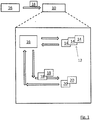
- Fig. 1 schematically shows a software application 10, which is based on an application code 12.
- the application code 12 is an executable code that includes or includes multiple dynamic libraries 14.
- the dynamic libraries 14 are DLL files in the present example.
- an injector 16 is injected in the form of another dynamic library 14.
- the injector 16 causes the software application 10 to be controlled by the injector 16.
- the injector 16 also uses methods of reflection.
- the dynamic libraries 14 present in the application code 12 and / or the integrated dynamic libraries 14 are determined.
- the information from the dynamic libraries 14 are then read out as binary code, in the present example as BAML files 18 and then decompiled by means of the injector 16.
- source code files which in the present example are XAML files 20.
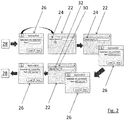
- Fig. 2 shows a first graphical user interface (first GUI) 22 that is generated by the software application 10.
- the first GUI 22 includes several graphical elements, including a text box 24 in the original language.
- an injection may be made as described with reference to FIG Fig. 1 described be performed.
- the injection can be controlled, for example, by means of a second user interface (second GUI) of an editor software 26.
- the editor software 26 can retrieve the respective original texts 24 of the software application 10 from a resource file 28 (for example an Excel file).
- the text to be translated can be identified and retrieved from the resource file 28 or from the XAML files 20.
- the translation 32 of the text may then be input, wherein a reproduction 30 of the first GUI 22 may be displayed, the reproduction 30 containing the translated text 32 and representing the translated text 32. If the translated text 32 is considered correct, the thus made alteration of the first GUI 22 may be stored with the translated text 32 stored in the resource file 28. The storage takes place in such a way that the translated text 32 in the resource file 28 is assigned to the original text 24.
Landscapes
- Engineering & Computer Science (AREA)
- Software Systems (AREA)
- Theoretical Computer Science (AREA)
- General Engineering & Computer Science (AREA)
- Physics & Mathematics (AREA)
- General Physics & Mathematics (AREA)
- Human Computer Interaction (AREA)
- Stored Programmes (AREA)
Abstract
Description
- Die vorliegende Erfindung betrifft ein Verfahren zum Durchführen von Änderungen an einer Software-Anwendung. Die Software-Anwendung umfasst einen Applikations-Code, welcher insbesondere das Verhalten der Software-Anwendungen bestimmt.
- Software-Anwendungen werden üblicherweise für einen weltweiten Markt verfasst, so dass die Software-Anwendung in unterschiedlichen Sprachen (multilingual) angeboten werden muss. Dafür ist es notwendig, existierenden Text der Software-Anwendung aus der Originalsprache in die entsprechenden weiteren Sprachen zu übersetzen.
- Es ist bekannt, hierzu ein Redaktionssystem, beispielsweise ein Content-Management-System (CMS) zu verwenden, in welches die übersetzten Texte eingepflegt werden und welches den Originaltext speichert.
- Nachteiligerweise ist in solchen CMS-Systemen der Originaltext nicht im Kontext der Anwendung und auch nicht im Kontext von anderen Textbausteinen zu erkennen. Hierdurch können Probleme bei der Übersetzung auftreten, so dass fehlerhafte Übersetzungen erzeugt werden, welche beispielsweise nicht zum Kontext passen. Dadurch müssen oft mehrere zeit- und kostenintensive Iterationen durchlaufen werden, bis die passende Übersetzung vorliegt.
- Es ist daher die der Erfindung zugrundeliegende Aufgabe, ein Verfahren zur Änderung oder Anpassung einer Software-Anwendung anzugeben, welches es ermöglicht, Übersetzungen mit verringertem Zeitaufwand zu erstellen und insbesondere die genannten Iterationen zur Korrektur von Übersetzungsfehlern vermeidet.
- Diese Aufgabe wird erfindungsgemäß durch ein Verfahren gemäß Anspruch 1 gelöst.
- Gemäß dem erfindungsgemäßen Verfahren werden Änderungen an einer Software-Anwendung durchgeführt, wobei die Software-Anwendung einen Applikations-Code umfasst. Zudem weist die Software-Anwendung eine grafische Benutzerschnittstelle (GUI) auf. Das erfindungsgemäße Verfahren umfasst die Schritte
- Injizieren einer dynamischen Bibliothek in die Software-Anwendung, um eine Steuerung der Software-Anwendung zu gestatten,
- Auslesen zumindest eines Abschnitts des Applikations-Codes, wobei der Abschnitt die GUI betrifft,
- Verändern eines Bereichs der GUI und Speichern des geänderten Bereichs der GUI.
- Die Verfahrensschritte können bevorzugt in der vorstehend genannten Reihenfolge durchgeführt werden.
- Die Erfindung setzt auf der Erkenntnis auf, dass durch die Injektion der dynamischen Bibliothek die Software-Anwendung mittels der injizierten dynamischen Bibliothek gesteuert werden kann. Durch das Steuern ist es dann wieder möglich, einen Teil bzw. Abschnitt des Applikations-Codes der Software-Anwendung auszulesen, diesen dann beispielsweise darzustellen und die GUI der Software-Anwendung direkt und/oder indirekt zu verändern. Insbesondere bei der Erstellung von Übersetzungen ergibt sich somit der Vorteil, dass der zu übersetzende Text in seinem Kontext in der GUI der Software-Anwendung erfasst werden kann. Fehlerhafte Übersetzungen aufgrund einer falschen Interpretation mangels Kontext können auf diese Weise vermieden werden. Der Prozess des Übersetzens von Software-Anwendungen kann somit deutlich beschleunigt und effizienter gestaltet werden.
- Zudem ist von Vorteil, dass insbesondere auch ausschließlich ein Teil (d.h. der genannte Abschnitt) des Applikations-Codes ausgelesen bzw. extrahiert werden kann. Es muss also nicht die vollständige Software-Anwendung ausgelesen werden, wodurch eine Einsparung von Rechenleistung und Speicher auf dem Computersystem erzielt wird, welches das Verfahren durchführt.
- Nach dem Auslesen des Abschnitts kann eine Instanz und/oder Kopie des Abschnitts erzeugt werden, der dann für die Veränderung des Bereichs der GUI verwendet wird. Die Änderung des Bereichs der GUI kann insbesondere in einer separaten Anwendung und/oder in einer separaten Benutzerschnittstelle (der weiter unten genannten Editor-Software) erfolgen, wie später noch näher ausgeführt wird.
- Kurz gesagt ermöglicht es die Erfindung also, in einer Software-Anwendung beispielsweise durch Auswahl mit einer Maus ein bestimmtes Fenster oder ein bestimmtes Textfeld zu markieren und das Textfeld dann zur Laufzeit (d.h. live) zu verändern. Auf diese Weise kann gleich erkannt werden, ob die Übersetzung korrekt ist und beispielsweise auch in das vorgesehene Textfeld passt. Anschließend kann der geänderte Bereich der GUI gespeichert werden, um auf diese Weise z.B. den übersetzten Text (d.h. den geänderten Bereich der GUI) in einer Datenbank, in der später erwähnten Ressourcen-Datei und/oder dem vorne erwähnten Content Management System zu speichern.
- Hierbei hat sich erfindungsgemäß herausgestellt, dass das Injizieren der dynamischen Bibliothek es in vorteilhafter Weise ermöglicht, die Steuerung verschiedener Software-Anwendungen zu gestatten, ohne dass ein direkter Zugriff auf den Quellcode der Software-Anwendung vorliegen muss. Hierdurch wird es insbesondere ermöglicht, dass beispielsweise Übersetzungsbüros bereits fertige Software-Anwendungen auf einfache Weise übersetzen können.
- Die injizierte dynamische Bibliothek kann auch als Injektor bezeichnet werden. Mit dem Begriff dynamische Bibliothek ist insbesondere jeweils eine dynamisch verlinkte/eingebundene Bibliothek gemeint. Die Injektion der dynamischen Bibliothek kann insbesondere auch eine "DLL-Injection" sein, wobei der Code des Injectors im Adressraum der Software-Anwendung ausgeführt wird. Der Injektor ist bevorzugt eine Komponente der unten erläuterten Editor-Software in Form einer dynamischen Bibliothek, welche als Schnittstelle zu der Software-Anwendung dient. Der Injektor umfasst bevorzugt eine Anwendungslogik für das Parsen und Auswerten (d.h. z.B. für das Auslesen und Extrahieren von Code) der Software-Anwendung.
- Nur zur Klarstellung sei erwähnt, dass hierin die Verwendung des Begriffs "verschiedene Sprachen" sich auf verschiedene menschliche Sprachen (z.B. Englisch, Spanisch oder Deutsch) bezieht und nicht auf verschiedene Programmiersprachen.
- Vorteilhafte Weiterbildungen der Erfindung sind der Beschreibung, den Unteransprüchen und den Figuren zu entnehmen.
- Gemäß einer ersten vorteilhaften Ausführungsform erfolgt das Auslesen des Abschnitts des Applikations-Codes mittels "Reflection". Als Reflection ist das Auslesen von Informationen und insbesondere Metainformationen aus einem Applikations-Code zu verstehen. Die Reflection ermöglicht es bei objektorientierter Programmierung beispielsweise, zur Laufzeit Informationen über Klassen oder deren Instanzen abzufragen. Die Reflection ist insbesondere auch unter dem Begriff der Introspektion bekannt. Durch die Reflection können beispielsweise die Sichtbarkeit, der Datentyp eines Rückgabewerts oder der Typ der Übergabeparameter einer Methode abgefragt werden. Die Reflection ist z.B. dann möglich, wenn der Applikations-Code mittels eines Frameworks erzeugt wurde, welches in einer virtuellen Umgebung ausgeführt wird (beispielsweise Java, .NET oder Smalltalk).
- Die Reflection bietet insbesondere den Vorteil, dass standardmäßig vorhandene Prozeduren und Methoden verwendet werden können, um den Abschnitt des Applikations-Codes auszulesen. Hierdurch wird es wiederum erreicht, dass Verarbeitungsschritte eingespart werden können, wodurch das Verfahren wiederum effizient durchgeführt werden kann.
- Gemäß einer weiteren vorteilhaften Ausführungsform ist der Applikations-Code ausführbarer Code, in welchen das Injizieren zu seiner Laufzeit erfolgt. Das Injizieren der dynamischen Bibliothek in den ausführbaren Code erfolgt also, während die Software-Anwendung ausgeführt wird. Hierdurch ergibt sich der Vorteil, dass - wie oben angedeutet - insbesondere der Kontext der zu übersetzenden Textbausteine für den Übersetzer sichtbar ist, da die Software-Anwendung beispielsweise ihren "normalen" Betrieb durchführen kann. Auf diese Weise wird beim Übersetzer ein gesteigertes Verständnis des Kontexts der Textbausteine geschaffen, so dass Übersetzungsfehler verringert werden können, wodurch sich eine Zeiteinsparung und ein Effizienzgewinn ergeben.
- Gemäß einer weiteren vorteilhaften Ausführungsform umfasst die dynamische Bibliothek ausführbaren Code, welcher nach dem Injizieren ausgeführt wird. Bei der dynamischen Bibliothek kann es sich beispielsweise um eine Dynamic Link Library (DLL) handeln, die den ausführbaren Code umfasst. Nach dem Injizieren kann der Code der injizierten dynamischen Bibliothek gemeinsam mit der Software-Anwendung ausgeführt werden. Die dynamische Bibliothek greift dabei auf die Software-Anwendung zu und kann beispielsweise die weiteren mit der Software-Anwendung verknüpften dynamischen Bibliotheken (z.B. DLLs) abrufen bzw. extrahieren. Eine derart extrahierte dynamische Bibliothek, welche ursprünglicher Bestandteil der Software-Anwendung ist, kann somit den ausgelesenen Abschnitt des Applikations-Codes bilden. Der ausgelesene Abschnitt wird insbesondere in binärer Form, d.h. als Binär-Code ausgelesen. Bei dem Applikations-Code handelt es sich insbesondere auch um binären Code, d.h. ausführbaren Code.
- Unter einem binären Code ist insbesondere ausführbarer Code und/oder Bytecode zu verstehen. Für das .NET Framework, kann der binäre Code der GUI beispielsweise in der Form einer BAML-Datei (Binary Application Markup Language) vorliegen. Demgegenüber ist unter einem Quellcode ein noch nicht von einer Maschine ausführbarer Code zu verstehen, wobei der Quellcode üblicherweise derart gestaltet ist, dass er für einen menschlichen Programmierer verständlich ist. Für z.B. das .NET Framework kann eine XAML-Quellcode-Datei (Extensible Application Markup Language) in eine BAML-Datei kompiliert werden.
- Gemäß einer weiteren vorteilhaften Ausführungsform wird nach dem Auslesen des Abschnitts des Applikations-Codes der Abschnitt dekompiliert. Beim Dekompilieren kann der ausführbare Code bzw. der Applikations-Code in einen Quellcode zurückverwandelt werden. Beispielsweise kann eine BAML-Datei in eine XAML-Datei umgewandelt werden.
- Das Dekompilieren besitzt den Vorteil, dass z.B. im leichter zu bearbeitenden XAML-Format dann die Veränderung der GUI vorgenommen werden kann. Die Übersetzung eines Textbausteins kann damit auf einfache Weise vorgenommen werden, wodurch wiederum eine Einsparung der notwendigen Speicherkapazität, der notwendigen Rechenleistung und Zeit erzielt werden kann. Insbesondere können aus der XAML-Datei und/oder aus dem dekompilierten Abschnitt die entsprechenden Textbausteine ermittelt werden und gegebenenfalls als Instanzen in der nachstehend genannten Reproduktion verwendet werden.
- Gemäß einer weiteren vorteilhaften Ausführungsform wird aus dem Abschnitt des Applikations-Codes eine grafische Reproduktion zumindest eines Teils der GUI der Software-Anwendung erzeugt, wobei die grafische Reproduktion bevorzugt in einer weiteren grafischen Benutzerschnittstelle dargestellt wird. Die Reproduktion kann also beispielsweise in einem zweiten Fenster und/oder in einem weiteren Anwendungsfenster dargestellt werden, insbesondere auf demselben Bildschirm oder auf einem zweiten Monitor.
- In der Reproduktion kann daher das Aussehen und auch das "Look and Feel" der GUI der Software-Anwendung zumindest im Wesentlichen vollständig nachempfunden sein, so dass sich dem Übersetzer auch Zusammenhänge innerhalb der Software-Anwendung und damit der Kontext erschließt.
- Die Reproduktion kann bevorzugt innerhalb einer Editor-Software, welche eine von der Software-Anwendung separate Software ist, dargestellt und/oder erzeugt werden. Die Editor-Software kann eine Editor-Benutzerschnittstelle (Editor-GUI) umfassen, innerhalb welcher die Reproduktion dargestellt wird. Die Editor-GUI kann auch dazu eingerichtet sein, die zu übersetzende Software-Anwendung auszuwählen und/oder die Veränderungen an der GUI der Software-Anwendung darzustellen. In der Editor-Software können auch die (originale) GUI der Software-Anwendung und die Reproduktion zeitgleich und/oder nebeneinander dargestellt werden, um eine Übersicht über das "Vorher-Nachher" zu geben.
- Die Editor-Software kann auch weitere der genannten Verfahrensschritte ausführen, beispielsweise das Injizieren, das Auslesen und/oder das Dekompilieren.
- Die Editor-Software kann in einer sogenannten "Sandbox" ausgeführt werden, d.h. abgeschottet von anderen Programmen und/oder mit eingeschränkten Zugriffsrechten. Durch die Sandbox kann ein Eingriff eines Virenscanners oder sonstiger Sicherheitssoftware bei der Durchführung der Injektion verhindert werden.
- Gemäß einer weiteren vorteilhaften Ausführungsform wird eine Veränderung der grafischen Reproduktion vorgenommen, wobei die Veränderung der Reproduktion beispielsweise eine entsprechende Veränderung des Abschnitts des Applikations-Codes bewirkt. Dies bedeutet, die Veränderung der GUI wird insbesondere in der Reproduktion vorgenommen. Der Ausdruck "Verändern eines Bereichs der GUI" ist demnach so zu verstehen, dass in irgendeiner Form für den Benutzer ersichtlich ist, wie sich die Veränderung der GUI auswirkt. Die Veränderung kann beispielsweise das Ersetzen eines originalen Textbausteins durch einen Textbaustein in einer anderen Sprache (Übersetzung) beinhalten. Durch die Veränderung der grafischen Reproduktion wird dann direkt zur Laufzeit (d.h. "live") bevorzugt das veränderte Textelement im Kontext der Software-Anwendung betrachtet werden. Durch die Veränderung der Reproduktion kann parallel auch der Abschnitt des Applikationscodes verändert werden. Ebenfalls ist es möglich, eine Kopie und/oder Instanz des Applikations-Codes zu verändern oder allein den geänderten (z.B. übersetzten) Text zu speichern (z.B. in der unten erläuterten Ressourcen-Datei).
- Neben einer bloßen Änderung von Textbausteinen können auch grafische Elemente der GUI der Software-Anwendung verändert werden. Beispielsweise kann eine Veränderung des Texts eine Änderung der Größe einer Schaltfläche ("Button") notwendig machen, wenn der übersetzte Text länger als der Original-Text ist. Auch kann beispielsweise die Größe von Umrandungen oder Textfeldern geändert werden. Hierdurch werden ebenfalls Veränderungen des Abschnitts des Applikationscodes und/oder dessen Instanz und/oder Kopie bewirkt. Bevorzugt kann das Verfahren hierzu ausgestaltet sein, die Attribute von Windows-Forms-Elementen zu verändern.
- Insbesondere wird das Verfahren für Software-Anwendungen eingesetzt, welche die Windows Presentation Foundation (WPF) verwenden. Für solche Software-Anwendungen ergibt sich eine weitere Reduktion der notwendigen Rechenleistung, da hier wiederum Standard-Routinen eingesetzt werden können, um z.B. das Dekompilieren durchzuführen.
- Bevorzugt wird die Veränderung der grafischen Reproduktion mittels eines Anzeigegeräts dargestellt, um die Auswirkung der Veränderung darzustellen. Bei dem Anzeigegerät kann es sich insbesondere um einen Bildschirm handeln, so dass sofort ein Vergleich (Vorher-Nachher) ersichtlich ist.
- Gemäß einer weiteren vorteilhaften Ausführungsform wird mittels eines Eingabegeräts ein Bereich oder eine Position in der GUI ausgewählt, wobei der ausgelesene Abschnitt des Applikationscodes den ausgewählten Bereich und/oder die ausgewählte Position betrifft. Es kann folglich jeweils nur derjenige Abschnitt des Applikations-Codes ausgelesen werden, welcher den vom Benutzer mittels des Eingabegeräts ausgewählten Bereich und/oder Position betrifft. Hierzu kann beispielsweise mittels IDs (Identifikationsmarken) erkannt werden, welche Position in der GUI zu welchem Abschnitt des Applikations-Codes gehört. Wenn beispielsweise ein Textbaustein mittels des Eingabegeräts ausgewählt wird, dann kann, insbesondere ausschließlich, derjenige Abschnitt des Applikationscodes ausgelesen werden, der für die Funktion und/oder die Darstellung des Textbausteins verantwortlich ist. Durch ein solches selektives Auslesen nur kleiner Abschnitte des Applikationscodes kann eine Dateneinsparung bewirkt werden. Der so ausgelesene Abschnitt wird dann insbesondere dekompiliert und als Reproduktion dargestellt. Nach dem Darstellen der Reproduktion ist schließlich eine Veränderung der GUI (z.B. innerhalb der Reproduktion) möglich.
- Bei dem Eingabegerät kann es sich beispielsweise um eine Maus und/oder einen Touchscreen handeln. Zur Bestimmung des auszulesenden Abschnitts des Applikationscodes wird insbesondere die Mausposition bzw. eine Fingerposition auf dem Touchscreen ermittelt.
- Gemäß einer weiteren vorteilhaften Ausführungsform wird beim Verändern der GUI ein Grafikelement geändert, wobei das Grafikelement bevorzugt ein Textbaustein ist, wobei die Veränderung der GUI weiter bevorzugt eine Veränderung des Abschnitts des Applikations-Codes und/oder eine Instanz des Abschnitts des Applikations-Codes bewirkt. Wie bereits weiter oben angedeutet, kann eine Veränderung, d.h. beispielsweise das Erstellen einer Übersetzung, sofort eine Auswirkung auf den Abschnitt und/oder die Instanz des Abschnitts in Applikationscodes haben. Beispielsweise kann eine Schriftgröße, eine Farbe, eine Größe von Textfeldern, eine Größe von Schaltflächen und/oder eine Schriftrichtung (z.B. für Arabisch oder Japanisch) geändert werden.
- Alternativ oder zusätzlich ist es auch möglich, die Änderungen in einer Ressourcen-Datei abzulegen. Bei der Ressourcen-Datei kann es sich beispielsweise um eine Excel-Datei, eine CSV-Datei oder eine Textdatei handeln. In der Ressourcendatei können nach dem Übersetzungsvorgang dann beispielsweise sämtliche übersetzten Textbausteine abgespeichert sein. Zusätzlich können in der Ressourcendatei neben den übersetzten Textbausteinen auch die Originaltextbausteine den übersetzten Textbausteinen zugeordnet sein.
- Gemäß einer weiteren vorteilhaften Ausführungsform wird die Ressourcen-Datei in die Editor-Software eingelesen, insbesondere vor der Darstellung der Reproduktion. Nach der Veränderung der GUI der Software-Anwendung können die vorgenommenen Änderungen, insbesondere von der Editor-Software, in der Ressourcen-Datei abgespeichert werden.
- Gemäß einer weiteren vorteilhaften Ausführungsform wird eine Datenverbindung mit einem Redaktionssystem (CMS) hergestellt, wobei in dem CSM bevorzugt zumindest ein Teil von in der Software-Anwendung enthaltenen Textbausteinen gespeichert ist, wobei Veränderungen an der GUI und/oder an dem Abschnitt des Applikations-Codes an das CMS übertragen werden. An das CMS kann somit jeweils übermittelt werden, zu welchem Original-Textbaustein welche Übersetzung angefertigt wurde. Die Datenübertragung an das CMS kann beispielsweise mittels einer Datenverbindung erfolgen. Alternativ ist es auch möglich, die Veränderungen an der GUI in der Ressourcendatei zu speichern und die Ressourcendatei danach an das CMS zu übertragen. Basierend auf der dann in dem CMS gespeicherten Übersetzung, kann eine neue Anwendungs-Software dann mit der Übersetzung aus dem CMS heraus erzeugt werden. Die Datenverbindung zu dem CMS kann beispielsweise durch eine Ethernet-Verbindung hergestellt werden.
- Gemäß einer weiteren vorteilhaften Ausführungsform wird die Veränderung der GUI zunächst in einem flüchtigen Speicher gespeichert, wobei anschließend die Veränderung der GUI in einem nichtflüchtigen Speicher gespeichert wird, wobei die Speicherung bevorzugt separat von dem Applikations-Code erfolgt. Zunächst kann folglich eine temporäre Speicherung der Veränderung der GUI insbesondere im Hauptspeicher (RAM) des das Verfahren durchführenden Computersystems erfolgen. Die Speicherung im Hauptspeicher des Computersystems besitzt den Vorteil, dass ein deutlich langsameres Speichern, z.B. auf einer Festplatte des Computersystems entfallen kann. Eventuell bei der Übersetzung vorgenommene mehrmalige Änderungen können somit auf schnelle Art und Weise durchgeführt werden und mit schneller Ansprechgeschwindigkeit auch beispielsweise in der Reproduktion dargestellt werden.
- Anschließend, beispielsweise nach Benutzerfreigabe, kann die Änderung in dem nichtflüchtigen Speicher hinterlegt werden. Der nichtflüchtige Speicher kann insbesondere das CMS-System und/oder die genannte Ressourcen-Datei sein.
- Grundsätzlich ist es auch möglich, die Änderungen direkt in den Applikations-Code der Software-Anwendung zurückzuspeichern, insbesondere unter vorausgehendem Kompilieren der Änderungen, um auf diese Weise direkt eine Software-Anwendung in einer weiteren Sprache zu erhalten.
- Weiterer Gegenstand der Erfindung ist eine Vorrichtung, welche zur Durchführung des Verfahrens der vorstehend erläuterten Art eingerichtet ist. Bei der Vorrichtung kann es sich insbesondere um ein Computersystem mit einem Eingabegerät und einem Anzeigegerät handeln, d.h. beispielsweise um einen Personal Computer (PC), um einen Tablet-Computer oder um ein Smartphone. Auf dem Anzeigegerät können sowohl die Software-Anwendung selbst als auch dessen Reproduktion angezeigt werden. Das genannte CMS hingegen kann auf einem separaten Computersystem vorhanden sein, wobei eine Datenverbindung, z.B. mittels Internet, zwischen der Vorrichtung zur Durchführung des erfindungsgemäßen Verfahrens und dem CMS bestehen kann.
- Weiterer Gegenstand der Erfindung ist ein Datenträger mit Programmcode darauf, der, wenn ausgeführt, ein Verfahren der oben erläuterten Art durchführt, d.h. implementiert.
- Zu der erfindungsgemäßen Vorrichtung und dem erfindungsgemäßen Datenträger gelten die zum erfindungsgemäßen Verfahren getroffenen Aussagen entsprechend, insbesondere hinsichtlich Vorteilen und bevorzugten Ausführungsformen.
- Nachfolgend wird die Erfindung rein beispielhaft unter Bezugnahme auf die Zeichnungen beschrieben. Es zeigen:
- Fig. 1
- schematisch das Vorgehen zum Auslesen eines Abschnitts des Applikations-Codes einer Software-Anwendung; und
- Fig. 2
- schematisch das Vorgehen zum Verändern eines Textbausteins einer GUI der Software-Anwendung.
-
Fig. 1 zeigt schematisch eine Software-Anwendung 10, welche auf einem Applikations-Code 12 basiert. Der Applikations-Code 12 ist ein ausführbarer Code, welcher mehrere dynamische Bibliotheken 14 umfasst oder einbindet. Die dynamischen Bibliotheken 14 sind im vorliegenden Beispiel DLL-Dateien. - In die Software-Anwendung 10 wird ein Injektor 16 in Form einer weiteren dynamischen Bibliothek 14 injiziert. Der Injektor 16 bewirkt, dass die Software-Anwendung 10 mittels des Injektors 16 gesteuert werden kann. Hierzu verwendet der Injektor 16 auch Methoden der Reflection.
- Nach dem Injizieren des Injektors 16 werden die in dem Applikations-Code 12 vorhandenen dynamischen Bibliotheken 14 und/oder die eingebundenen dynamischen Bibliotheken 14 ermittelt. Die Informationen aus den dynamischen Bibliotheken 14 werden dann als Binär-Code, im vorliegenden Beispiel als BAML-Dateien 18 ausgelesen und dann mittels des Injektors 16 dekompiliert. Nach dem Dekompilieren liegen dann Quellcode-Dateien vor, die im vorliegenden Beispiel XAML-Dateien 20 sind.
- Mit dem Vorliegen der XAML-Dateien 20 ist es dann möglich, eine Veränderung an der Software-Anwendung 10 vorzunehmen, wie mit Bezug auf
Fig. 2 nachfolgend beschrieben wird. -
Fig. 2 zeigt eine erste grafische Benutzerschnittstelle (erste GUI) 22, welche von der Software-Anwendung 10 erzeugt wird. Die erste GUI 22 umfasst mehrere grafische Elemente, darunter auch ein Textfeld 24 in Originalsprache. - Soll nun eine Übersetzung des Originaltextes 24 vorgenommen werden (d.h. eine Veränderung der ersten GUI 22 erfolgen), kann eine Injektion, wie mit Bezug auf
Fig. 1 beschrieben, durchgeführt werden. Die Injektion kann beispielsweise mittels einer zweiten Benutzerschnittstelle (zweite GUI) einer Editor-Software 26 gesteuert werden. Die Editor-Software 26 kann aus einer Ressourcendatei 28 (beispielsweise einer Excel-Datei) die jeweiligen Originaltexte 24 der Software-Anwendung 10 abrufen. - In der Editor-Software 26 kann dann von einem Benutzer der Originaltext 24 angeklickt werden, um zu signalisieren, dass dieser Text ersetzt bzw. übersetzt werden soll. In der Editor-Software 26 kann dann der zu übersetzende Text identifiziert werden und aus der Ressourcendatei 28 oder aus den XAML-Dateien 20 abgerufen werden. Die Übersetzung 32 des Textes kann dann eingegeben werden, wobei eine Reproduktion 30 der ersten GUI 22 angezeigt werden kann, wobei die Reproduktion 30 den übersetzten Text 32 enthält und den übersetzten Text 32 darstellt. Sofern der übersetzte Text 32 als korrekt angesehen wird, kann die somit erfolgte Veränderung der ersten GUI 22 gespeichert werden, wobei der übersetzte Text 32 in der Ressourcendatei 28 abgespeichert wird. Das Abspeichern erfolgt dabei derart, dass der übersetzte Text 32 in der Ressourcendatei 28 dem Original-text 24 zugeordnet wird.
- Somit ist es möglich, dass der Übersetzer auf einfache und bequeme Weise nach und nach eine Übersetzung der vollständigen Software-Anwendung 10 erstellt, wobei jeweils der Kontext des jeweiligen Originaltexts 24 bekannt ist und somit Übersetzungsfehler minimiert werden können.
-
- 10
- Software-Anwendung
- 12
- Applikations-Code
- 14
- dynamische Bibliothek
- 16
- Injektor
- 18
- BAML-Datei
- 20
- XAML-Datei
- 22
- erste GUI
- 24
- Originaltext
- 26
- Editor-Software
- 28
- Ressourcendatei
- 30
- Reproduktion
- 32
- übersetzter Text
Claims (14)
- Verfahren zum Durchführen von Änderungen an einer Software-Anwendung (10) mit einem Applikations-Code (12), welche eine grafische Benutzerschnittstelle (GUI) (22) aufweist, umfassend- Injizieren einer dynamischen Bibliothek (14, 16) in die Software-Anwendung (10), um eine Steuerung der Software-Anwendung (10) zu gestatten,- Auslesen zumindest eines Abschnitts des Applikations-Codes (12), wobei der Abschnitt die GUI (22) betrifft,- Verändern eines Bereichs (24) der GUI (22) und- Speichern des geänderten Bereichs (32) der GUI (22).
- Verfahren nach Anspruch 1,
dadurch gekennzeichnet, dass
das Auslesen des Abschnitts des Applikations-Codes (12) mittels Reflection erfolgt. - Verfahren nach Anspruch 1 oder 2,
dadurch gekennzeichnet, dass
der Applikations-Code (12) ausführbarer Code ist, in welchen das Injizieren zur Laufzeit des Applikations-Codes (12) erfolgt. - Verfahren nach zumindest einem der vorstehenden Ansprüche,
dadurch gekennzeichnet, dass
die dynamische Bibliothek (14, 16) ausführbaren Code umfasst, welcher nach dem Injizieren ausgeführt wird. - Verfahren nach zumindest einem der vorstehenden Ansprüche,
dadurch gekennzeichnet, dass
nach dem Auslesen des Abschnitts des Applikations-Codes (12) der Abschnitt dekompiliert wird. - Verfahren nach zumindest einem der vorstehenden Ansprüche,
dadurch gekennzeichnet, dass
aus dem Abschnitt des Applikations-Codes (12) eine grafische Reproduktion (30) zumindest eines Teils der GUI (22) der Software-Anwendung (10) erzeugt wird, wobei die grafische Reproduktion (30) bevorzugt in einer weiteren grafischen Benutzerschnittstelle (26) dargestellt wird. - Verfahren nach Anspruch 6,
dadurch gekennzeichnet, dass
eine Veränderung der grafischen Reproduktion (30) vorgenommen wird, wobei die Veränderung der Reproduktion (30) beispielsweise eine entsprechende Veränderung des Abschnitts des Applikations-Codes (12) bewirkt. - Verfahren nach Anspruch 6 oder 7,
dadurch gekennzeichnet, dass
die Veränderung der grafischen Reproduktion (30) mittels eines Anzeigegeräts dargestellt wird, um die Auswirkung der Veränderung darzustellen. - Verfahren nach zumindest einem der vorstehenden Ansprüche,
dadurch gekennzeichnet, dass mittels eines Eingabegeräts ein Bereich oder eine Position in der GUI (22) ausgewählt wird, wobei der ausgelesene Abschnitt des Applikations-Codes (12) den ausgewählten Bereich und/oder die ausgewählte Position betrifft. - Verfahren nach zumindest einem der vorstehenden Ansprüche,
dadurch gekennzeichnet, dass
beim Verändern der GUI (22) ein Grafikelement geändert wird, wobei das Grafikelement bevorzugt ein Textbaustein (24) ist, wobei die Veränderung der GUI (22) weiter bevorzugt eine Veränderung des Abschnitts des Applikations-Codes (12) und/oder einer Instanz des Abschnitts des Applikations-Codes (12) bewirkt. - Verfahren nach zumindest einem der vorstehenden Ansprüche,
dadurch gekennzeichnet, dass
eine Datenverbindung mit einem Redaktionssystem (CMS) hergestellt wird, wobei in dem CMS bevorzugt zumindest ein Teil von in der Software-Anwendung (10) enthaltenen Textbausteinen gespeichert ist, wobei Veränderungen an der GUI (22) und/oder an dem Abschnitt des Applikations-Codes (12) an das CMS übertragen werden. - Verfahren nach zumindest einem der vorstehenden Ansprüche,
dadurch gekennzeichnet, dass
die Veränderung der GUI (22) zunächst in einem flüchtigen Speicher gespeichert wird, wobei anschließend die Veränderung der GUI (22) in einem nichtflüchtigen Speicher gespeichert wird, wobei die Speicherung bevorzugt separat von dem Applikations-Code (12) erfolgt. - Vorrichtung, die zur Durchführung des Verfahrens nach einem der vorherigen Ansprüche ausgebildet ist.
- Datenträger mit Programmcode darauf, der, wenn ausgeführt, ein Verfahren nach einem der Ansprüche 1 bis 12 implementiert.
Priority Applications (2)
| Application Number | Priority Date | Filing Date | Title |
|---|---|---|---|
| EP18163323.1A EP3543844B1 (de) | 2018-03-22 | 2018-03-22 | Verfahren zum durchführen von änderungen an einer software-anwendung |
| US16/359,199 US10949175B2 (en) | 2018-03-22 | 2019-03-20 | Method of carrying out modifications to a software application |
Applications Claiming Priority (1)
| Application Number | Priority Date | Filing Date | Title |
|---|---|---|---|
| EP18163323.1A EP3543844B1 (de) | 2018-03-22 | 2018-03-22 | Verfahren zum durchführen von änderungen an einer software-anwendung |
Publications (2)
| Publication Number | Publication Date |
|---|---|
| EP3543844A1 true EP3543844A1 (de) | 2019-09-25 |
| EP3543844B1 EP3543844B1 (de) | 2020-04-29 |
Family
ID=61912947
Family Applications (1)
| Application Number | Title | Priority Date | Filing Date |
|---|---|---|---|
| EP18163323.1A Active EP3543844B1 (de) | 2018-03-22 | 2018-03-22 | Verfahren zum durchführen von änderungen an einer software-anwendung |
Country Status (2)
| Country | Link |
|---|---|
| US (1) | US10949175B2 (de) |
| EP (1) | EP3543844B1 (de) |
Families Citing this family (6)
| Publication number | Priority date | Publication date | Assignee | Title |
|---|---|---|---|---|
| WO2020163799A1 (en) * | 2019-02-07 | 2020-08-13 | Goldmine World, Inc. | Personalized language conversion device for automatic translation of software interfaces |
| US10788957B1 (en) * | 2019-08-22 | 2020-09-29 | Intel Corporation | Web page designing with sandboxed custom editors |
| DE102020114098A1 (de) | 2020-05-26 | 2021-12-02 | Bayerische Motoren Werke Aktiengesellschaft | Verfahren, System, Computerprogramm und Speichermedium zur Dokumentation einer Aktualisierung von Software einer Komponente eines Fahrzeugs |
| EP4327203A1 (de) * | 2021-04-21 | 2024-02-28 | Figma, Inc. | Verzweigung und zusammenführung in einer entwurfsschnittstelle |
| EP4416587A1 (de) | 2021-10-19 | 2024-08-21 | Figma, Inc. | Codeblockelement für integriertes grafisches designsystem |
| CN115269058B (zh) * | 2022-09-29 | 2023-01-24 | 广州市保伦电子有限公司 | 一种wpf资源加载方法及装置 |
Citations (2)
| Publication number | Priority date | Publication date | Assignee | Title |
|---|---|---|---|---|
| WO2001008006A1 (en) * | 1999-07-28 | 2001-02-01 | International Business Machines Corporation | Introspective editor system, program, and method for software translation |
| US6904563B2 (en) * | 2001-04-05 | 2005-06-07 | International Business Machines Corporation | Editing platforms for remote user interface translation |
Family Cites Families (26)
| Publication number | Priority date | Publication date | Assignee | Title |
|---|---|---|---|---|
| US5583761A (en) * | 1993-10-13 | 1996-12-10 | Kt International, Inc. | Method for automatic displaying program presentations in different languages |
| US5678039A (en) * | 1994-09-30 | 1997-10-14 | Borland International, Inc. | System and methods for translating software into localized versions |
| US6035121A (en) * | 1997-07-07 | 2000-03-07 | Netscape Communication Corporation | Method and system for localizing a computer program |
| US20030154183A1 (en) * | 2000-11-13 | 2003-08-14 | Exobrian, Inc. | Component processing system |
| US20040036718A1 (en) * | 2002-08-26 | 2004-02-26 | Peter Warren | Dynamic data item viewer |
| US7113904B2 (en) * | 2001-03-30 | 2006-09-26 | Park City Group | System and method for providing dynamic multiple language support for application programs |
| US6802055B2 (en) * | 2001-06-27 | 2004-10-05 | Microsoft Corporation | Capturing graphics primitives associated with any display object rendered to a graphical user interface |
| US20030004703A1 (en) * | 2001-06-28 | 2003-01-02 | Arvind Prabhakar | Method and system for localizing a markup language document |
| US20030084401A1 (en) * | 2001-10-16 | 2003-05-01 | Abel Todd J. | Efficient web page localization |
| US20030229554A1 (en) * | 2002-06-10 | 2003-12-11 | Veres Robert Dean | Method and system for composing transaction listing descriptions for use in a network-based transaction facility |
| US20040036722A1 (en) * | 2002-08-26 | 2004-02-26 | Peter Warren | Configurable type-over text box prompt |
| US20040039989A1 (en) * | 2002-08-26 | 2004-02-26 | Peter Warren | Structured forms with configurable labels |
| US20040056894A1 (en) * | 2002-09-19 | 2004-03-25 | Igor Zaika | System and method for describing and instantiating extensible user interfaces |
| US7318020B1 (en) * | 2003-10-08 | 2008-01-08 | Microsoft Corporation | Methods and systems for external localization |
| WO2005106658A1 (en) * | 2004-04-26 | 2005-11-10 | Google Inc. | Methods and systems for dynamically composing distributed interactive applications from high-level programming languages |
| CN100447743C (zh) * | 2005-06-24 | 2008-12-31 | 国际商业机器公司 | 在无需修改源代码的情况下本地化java gui应用的系统和方法 |
| US20080060085A1 (en) * | 2006-03-10 | 2008-03-06 | Jan Samzelius | Protecting Files on a Storage Device from Unauthorized Access or Copying |
| US20080077384A1 (en) * | 2006-09-22 | 2008-03-27 | International Business Machines Corporation | Dynamically translating a software application to a user selected target language that is not natively provided by the software application |
| US8407675B1 (en) * | 2007-02-06 | 2013-03-26 | The United States Of America As Represented By The Secretary Of The Navy | Extraction of executable code and translation to alternate platform |
| US8307349B2 (en) * | 2008-01-31 | 2012-11-06 | International Business Machines Corporation | Methods, systems, and computer program products for internationalizing user interface control layouts |
| CA2756102A1 (en) * | 2011-11-01 | 2012-01-03 | Martin Duncan Enriquez | Method and system for localizing an application on a computing device |
| US20130138421A1 (en) * | 2011-11-28 | 2013-05-30 | Micromass Uk Limited | Automatic Human Language Translation |
| US9875090B2 (en) * | 2012-12-20 | 2018-01-23 | Microsoft Technology Licensing, Llc | Program analysis based on program descriptors |
| US10497053B2 (en) * | 2015-02-27 | 2019-12-03 | 3D Product Imaging Inc. | Augmented reality E-commerce |
| US10235810B2 (en) * | 2015-09-22 | 2019-03-19 | 3D Product Imaging Inc. | Augmented reality e-commerce for in-store retail |
| US10049500B2 (en) * | 2015-09-22 | 2018-08-14 | 3D Product Imaging Inc. | Augmented reality e-commerce for home improvement |
-
2018
- 2018-03-22 EP EP18163323.1A patent/EP3543844B1/de active Active
-
2019
- 2019-03-20 US US16/359,199 patent/US10949175B2/en active Active
Patent Citations (2)
| Publication number | Priority date | Publication date | Assignee | Title |
|---|---|---|---|---|
| WO2001008006A1 (en) * | 1999-07-28 | 2001-02-01 | International Business Machines Corporation | Introspective editor system, program, and method for software translation |
| US6904563B2 (en) * | 2001-04-05 | 2005-06-07 | International Business Machines Corporation | Editing platforms for remote user interface translation |
Also Published As
| Publication number | Publication date |
|---|---|
| US20190294422A1 (en) | 2019-09-26 |
| EP3543844B1 (de) | 2020-04-29 |
| US10949175B2 (en) | 2021-03-16 |
Similar Documents
| Publication | Publication Date | Title |
|---|---|---|
| EP3543844B1 (de) | Verfahren zum durchführen von änderungen an einer software-anwendung | |
| DE69600794T2 (de) | Graphische entwicklungs- und verwaltungsumgebung für anwendungsprogramme | |
| DE69528738T2 (de) | Systeme und Verfahren zur Herstellung und Auffrischung zusammengesetzter Dokumente | |
| DE10051645B4 (de) | Prozesssteuersystem und Verfahren zum Kontrollieren eines Prozesses | |
| DE68919503T2 (de) | Methode und System zur Darstellung einer Benutzeroberfläche auf einem Computerbildschirm. | |
| DE3586273T2 (de) | Implizite erzeugung einer superblockstruktur in einem vieldaten-edierungsgeraet. | |
| DE19960050A1 (de) | Grafische Benutzerschnittstelle zur Entwicklung von Anwendungsbeispielen unter Verwendung einer Testobjektbibliothek | |
| DE4109258A1 (de) | Verfahren zum umwandeln der hardwarekonfiguration einer programmierbaren verknuepfungssteuerung und des entsprechenden steuerprogramms zur verwendung bei einer zweiten programmierbaren verknuepfungssteuerung | |
| DE10135445A1 (de) | Integriertes Verfahren für das Schaffen einer aktualisierbaren Netzabfrage | |
| DE10351351A1 (de) | Verfahren und System zur dynamischen Generierung von User Interfaces | |
| WO2006013161A1 (de) | Verfahren, programm und system zur dynamischen, template basierten generierung von internetseiten | |
| DE112008003584B4 (de) | Ein einheitliches Aussehen und Anfühlen schaffende Bios-Graphikmaschine | |
| DE68928811T2 (de) | Verkapselungssystem für ein Rechnersystem | |
| DE102013203831A1 (de) | Verfahren und System für ein Master-Seiten-basiertes integriertes Editieren und eine dynamische Layout-Aktivierung | |
| DE69615544T2 (de) | Anzeigeverfahren und anzeigevorrichtung | |
| EP2439691A1 (de) | Vorrichtung und Verfahren zum maschinellen Erstellen eines Prozessdiagramms | |
| EP3032408A1 (de) | Verfahren zur erzeugung von lauffähigen applikationen mit dynamischen skalierbaren vektorgrafiken | |
| DE102004009676A1 (de) | Verfahren und Systeme zum Erzeugen von Unterstützungsdateien für Befehle | |
| WO2001033318A1 (de) | Vorrichtung und verfahren zur geschützten ausgabe eines elektronischen dokuments über ein datenübertragungsnetz | |
| DE69121113T2 (de) | Verfahren zur bestimmung von benutzerschnittstellen und programmiersystem fur einen rechner mit mehreren benutzerschnittstellen | |
| DE102021116315A1 (de) | Verfahren zum Zusammenführen von Architekturinformationen | |
| DE102016114265A1 (de) | Verfahren zum zumindest teilweise maschinellen Transferieren einer in einer Quellsprache abgefassten Wortfolge in eine Wortfolge einer Zielsprache | |
| WO2001086402A2 (de) | Anzeigesteuerung mit aktiven hypertextdokumenten | |
| DE102015115797B4 (de) | Verfahren zum Erzeugen von elektronischen Dokumenten | |
| DE10057575A1 (de) | Verfahren zur automatischen Softwaregenerierung |
Legal Events
| Date | Code | Title | Description |
|---|---|---|---|
| STAA | Information on the status of an ep patent application or granted ep patent |
Free format text: STATUS: EXAMINATION IS IN PROGRESS |
|
| PUAI | Public reference made under article 153(3) epc to a published international application that has entered the european phase |
Free format text: ORIGINAL CODE: 0009012 |
|
| 17P | Request for examination filed |
Effective date: 20190103 |
|
| AK | Designated contracting states |
Kind code of ref document: A1 Designated state(s): AL AT BE BG CH CY CZ DE DK EE ES FI FR GB GR HR HU IE IS IT LI LT LU LV MC MK MT NL NO PL PT RO RS SE SI SK SM TR |
|
| AX | Request for extension of the european patent |
Extension state: BA ME |
|
| GRAP | Despatch of communication of intention to grant a patent |
Free format text: ORIGINAL CODE: EPIDOSNIGR1 |
|
| STAA | Information on the status of an ep patent application or granted ep patent |
Free format text: STATUS: GRANT OF PATENT IS INTENDED |
|
| RIC1 | Information provided on ipc code assigned before grant |
Ipc: G06F 8/70 20180101AFI20191105BHEP Ipc: G06F 17/28 20060101ALN20191105BHEP Ipc: G06F 8/36 20180101ALN20191105BHEP Ipc: G06F 9/455 20180101ALN20191105BHEP Ipc: G06F 17/24 20060101ALN20191105BHEP Ipc: G06F 9/451 20180101ALN20191105BHEP Ipc: G06F 8/34 20180101ALN20191105BHEP |
|
| RIC1 | Information provided on ipc code assigned before grant |
Ipc: G06F 8/34 20180101ALN20191121BHEP Ipc: G06F 8/70 20180101AFI20191121BHEP Ipc: G06F 9/455 20180101ALN20191121BHEP Ipc: G06F 9/451 20180101ALN20191121BHEP Ipc: G06F 17/24 20060101ALN20191121BHEP Ipc: G06F 17/28 20060101ALN20191121BHEP Ipc: G06F 8/36 20180101ALN20191121BHEP |
|
| INTG | Intention to grant announced |
Effective date: 20191205 |
|
| RAP1 | Party data changed (applicant data changed or rights of an application transferred) |
Owner name: SICK AG |
|
| GRAS | Grant fee paid |
Free format text: ORIGINAL CODE: EPIDOSNIGR3 |
|
| GRAA | (expected) grant |
Free format text: ORIGINAL CODE: 0009210 |
|
| STAA | Information on the status of an ep patent application or granted ep patent |
Free format text: STATUS: THE PATENT HAS BEEN GRANTED |
|
| AK | Designated contracting states |
Kind code of ref document: B1 Designated state(s): AL AT BE BG CH CY CZ DE DK EE ES FI FR GB GR HR HU IE IS IT LI LT LU LV MC MK MT NL NO PL PT RO RS SE SI SK SM TR |
|
| REG | Reference to a national code |
Ref country code: GB Ref legal event code: FG4D Free format text: NOT ENGLISH |
|
| REG | Reference to a national code |
Ref country code: CH Ref legal event code: EP |
|
| REG | Reference to a national code |
Ref country code: DE Ref legal event code: R096 Ref document number: 502018001298 Country of ref document: DE |
|
| REG | Reference to a national code |
Ref country code: AT Ref legal event code: REF Ref document number: 1264344 Country of ref document: AT Kind code of ref document: T Effective date: 20200515 |
|
| REG | Reference to a national code |
Ref country code: IE Ref legal event code: FG4D Free format text: LANGUAGE OF EP DOCUMENT: GERMAN |
|
| REG | Reference to a national code |
Ref country code: NL Ref legal event code: MP Effective date: 20200429 |
|
| REG | Reference to a national code |
Ref country code: LT Ref legal event code: MG4D |
|
| PG25 | Lapsed in a contracting state [announced via postgrant information from national office to epo] |
Ref country code: NO Free format text: LAPSE BECAUSE OF FAILURE TO SUBMIT A TRANSLATION OF THE DESCRIPTION OR TO PAY THE FEE WITHIN THE PRESCRIBED TIME-LIMIT Effective date: 20200729 Ref country code: SE Free format text: LAPSE BECAUSE OF FAILURE TO SUBMIT A TRANSLATION OF THE DESCRIPTION OR TO PAY THE FEE WITHIN THE PRESCRIBED TIME-LIMIT Effective date: 20200429 Ref country code: IS Free format text: LAPSE BECAUSE OF FAILURE TO SUBMIT A TRANSLATION OF THE DESCRIPTION OR TO PAY THE FEE WITHIN THE PRESCRIBED TIME-LIMIT Effective date: 20200829 Ref country code: FI Free format text: LAPSE BECAUSE OF FAILURE TO SUBMIT A TRANSLATION OF THE DESCRIPTION OR TO PAY THE FEE WITHIN THE PRESCRIBED TIME-LIMIT Effective date: 20200429 Ref country code: GR Free format text: LAPSE BECAUSE OF FAILURE TO SUBMIT A TRANSLATION OF THE DESCRIPTION OR TO PAY THE FEE WITHIN THE PRESCRIBED TIME-LIMIT Effective date: 20200730 Ref country code: PT Free format text: LAPSE BECAUSE OF FAILURE TO SUBMIT A TRANSLATION OF THE DESCRIPTION OR TO PAY THE FEE WITHIN THE PRESCRIBED TIME-LIMIT Effective date: 20200831 Ref country code: LT Free format text: LAPSE BECAUSE OF FAILURE TO SUBMIT A TRANSLATION OF THE DESCRIPTION OR TO PAY THE FEE WITHIN THE PRESCRIBED TIME-LIMIT Effective date: 20200429 |
|
| PG25 | Lapsed in a contracting state [announced via postgrant information from national office to epo] |
Ref country code: HR Free format text: LAPSE BECAUSE OF FAILURE TO SUBMIT A TRANSLATION OF THE DESCRIPTION OR TO PAY THE FEE WITHIN THE PRESCRIBED TIME-LIMIT Effective date: 20200429 Ref country code: LV Free format text: LAPSE BECAUSE OF FAILURE TO SUBMIT A TRANSLATION OF THE DESCRIPTION OR TO PAY THE FEE WITHIN THE PRESCRIBED TIME-LIMIT Effective date: 20200429 Ref country code: BG Free format text: LAPSE BECAUSE OF FAILURE TO SUBMIT A TRANSLATION OF THE DESCRIPTION OR TO PAY THE FEE WITHIN THE PRESCRIBED TIME-LIMIT Effective date: 20200729 Ref country code: RS Free format text: LAPSE BECAUSE OF FAILURE TO SUBMIT A TRANSLATION OF THE DESCRIPTION OR TO PAY THE FEE WITHIN THE PRESCRIBED TIME-LIMIT Effective date: 20200429 |
|
| PG25 | Lapsed in a contracting state [announced via postgrant information from national office to epo] |
Ref country code: NL Free format text: LAPSE BECAUSE OF FAILURE TO SUBMIT A TRANSLATION OF THE DESCRIPTION OR TO PAY THE FEE WITHIN THE PRESCRIBED TIME-LIMIT Effective date: 20200429 Ref country code: AL Free format text: LAPSE BECAUSE OF FAILURE TO SUBMIT A TRANSLATION OF THE DESCRIPTION OR TO PAY THE FEE WITHIN THE PRESCRIBED TIME-LIMIT Effective date: 20200429 |
|
| PG25 | Lapsed in a contracting state [announced via postgrant information from national office to epo] |
Ref country code: CZ Free format text: LAPSE BECAUSE OF FAILURE TO SUBMIT A TRANSLATION OF THE DESCRIPTION OR TO PAY THE FEE WITHIN THE PRESCRIBED TIME-LIMIT Effective date: 20200429 Ref country code: IT Free format text: LAPSE BECAUSE OF FAILURE TO SUBMIT A TRANSLATION OF THE DESCRIPTION OR TO PAY THE FEE WITHIN THE PRESCRIBED TIME-LIMIT Effective date: 20200429 Ref country code: DK Free format text: LAPSE BECAUSE OF FAILURE TO SUBMIT A TRANSLATION OF THE DESCRIPTION OR TO PAY THE FEE WITHIN THE PRESCRIBED TIME-LIMIT Effective date: 20200429 Ref country code: SM Free format text: LAPSE BECAUSE OF FAILURE TO SUBMIT A TRANSLATION OF THE DESCRIPTION OR TO PAY THE FEE WITHIN THE PRESCRIBED TIME-LIMIT Effective date: 20200429 Ref country code: EE Free format text: LAPSE BECAUSE OF FAILURE TO SUBMIT A TRANSLATION OF THE DESCRIPTION OR TO PAY THE FEE WITHIN THE PRESCRIBED TIME-LIMIT Effective date: 20200429 Ref country code: RO Free format text: LAPSE BECAUSE OF FAILURE TO SUBMIT A TRANSLATION OF THE DESCRIPTION OR TO PAY THE FEE WITHIN THE PRESCRIBED TIME-LIMIT Effective date: 20200429 Ref country code: ES Free format text: LAPSE BECAUSE OF FAILURE TO SUBMIT A TRANSLATION OF THE DESCRIPTION OR TO PAY THE FEE WITHIN THE PRESCRIBED TIME-LIMIT Effective date: 20200429 |
|
| REG | Reference to a national code |
Ref country code: DE Ref legal event code: R097 Ref document number: 502018001298 Country of ref document: DE |
|
| PG25 | Lapsed in a contracting state [announced via postgrant information from national office to epo] |
Ref country code: SK Free format text: LAPSE BECAUSE OF FAILURE TO SUBMIT A TRANSLATION OF THE DESCRIPTION OR TO PAY THE FEE WITHIN THE PRESCRIBED TIME-LIMIT Effective date: 20200429 Ref country code: PL Free format text: LAPSE BECAUSE OF FAILURE TO SUBMIT A TRANSLATION OF THE DESCRIPTION OR TO PAY THE FEE WITHIN THE PRESCRIBED TIME-LIMIT Effective date: 20200429 |
|
| PLBE | No opposition filed within time limit |
Free format text: ORIGINAL CODE: 0009261 |
|
| STAA | Information on the status of an ep patent application or granted ep patent |
Free format text: STATUS: NO OPPOSITION FILED WITHIN TIME LIMIT |
|
| 26N | No opposition filed |
Effective date: 20210201 |
|
| PG25 | Lapsed in a contracting state [announced via postgrant information from national office to epo] |
Ref country code: MC Free format text: LAPSE BECAUSE OF FAILURE TO SUBMIT A TRANSLATION OF THE DESCRIPTION OR TO PAY THE FEE WITHIN THE PRESCRIBED TIME-LIMIT Effective date: 20200429 |
|
| REG | Reference to a national code |
Ref country code: CH Ref legal event code: PL |
|
| REG | Reference to a national code |
Ref country code: BE Ref legal event code: MM Effective date: 20210331 |
|
| PG25 | Lapsed in a contracting state [announced via postgrant information from national office to epo] |
Ref country code: LU Free format text: LAPSE BECAUSE OF NON-PAYMENT OF DUE FEES Effective date: 20210322 Ref country code: IE Free format text: LAPSE BECAUSE OF NON-PAYMENT OF DUE FEES Effective date: 20210322 Ref country code: LI Free format text: LAPSE BECAUSE OF NON-PAYMENT OF DUE FEES Effective date: 20210331 Ref country code: CH Free format text: LAPSE BECAUSE OF NON-PAYMENT OF DUE FEES Effective date: 20210331 Ref country code: FR Free format text: LAPSE BECAUSE OF NON-PAYMENT OF DUE FEES Effective date: 20210331 |
|
| PG25 | Lapsed in a contracting state [announced via postgrant information from national office to epo] |
Ref country code: BE Free format text: LAPSE BECAUSE OF NON-PAYMENT OF DUE FEES Effective date: 20210331 |
|
| GBPC | Gb: european patent ceased through non-payment of renewal fee |
Effective date: 20220322 |
|
| PG25 | Lapsed in a contracting state [announced via postgrant information from national office to epo] |
Ref country code: GB Free format text: LAPSE BECAUSE OF NON-PAYMENT OF DUE FEES Effective date: 20220322 |
|
| PG25 | Lapsed in a contracting state [announced via postgrant information from national office to epo] |
Ref country code: CY Free format text: LAPSE BECAUSE OF FAILURE TO SUBMIT A TRANSLATION OF THE DESCRIPTION OR TO PAY THE FEE WITHIN THE PRESCRIBED TIME-LIMIT Effective date: 20200429 |
|
| PG25 | Lapsed in a contracting state [announced via postgrant information from national office to epo] |
Ref country code: HU Free format text: LAPSE BECAUSE OF FAILURE TO SUBMIT A TRANSLATION OF THE DESCRIPTION OR TO PAY THE FEE WITHIN THE PRESCRIBED TIME-LIMIT; INVALID AB INITIO Effective date: 20180322 |
|
| PG25 | Lapsed in a contracting state [announced via postgrant information from national office to epo] |
Ref country code: SI Free format text: LAPSE BECAUSE OF FAILURE TO SUBMIT A TRANSLATION OF THE DESCRIPTION OR TO PAY THE FEE WITHIN THE PRESCRIBED TIME-LIMIT Effective date: 20200429 |
|
| PG25 | Lapsed in a contracting state [announced via postgrant information from national office to epo] |
Ref country code: MK Free format text: LAPSE BECAUSE OF FAILURE TO SUBMIT A TRANSLATION OF THE DESCRIPTION OR TO PAY THE FEE WITHIN THE PRESCRIBED TIME-LIMIT Effective date: 20200429 |
|
| REG | Reference to a national code |
Ref country code: AT Ref legal event code: MM01 Ref document number: 1264344 Country of ref document: AT Kind code of ref document: T Effective date: 20230322 |
|
| PG25 | Lapsed in a contracting state [announced via postgrant information from national office to epo] |
Ref country code: AT Free format text: LAPSE BECAUSE OF NON-PAYMENT OF DUE FEES Effective date: 20230322 |
|
| PG25 | Lapsed in a contracting state [announced via postgrant information from national office to epo] |
Ref country code: AT Free format text: LAPSE BECAUSE OF NON-PAYMENT OF DUE FEES Effective date: 20230322 |
|
| PG25 | Lapsed in a contracting state [announced via postgrant information from national office to epo] |
Ref country code: MT Free format text: LAPSE BECAUSE OF FAILURE TO SUBMIT A TRANSLATION OF THE DESCRIPTION OR TO PAY THE FEE WITHIN THE PRESCRIBED TIME-LIMIT Effective date: 20200429 |
|
| PG25 | Lapsed in a contracting state [announced via postgrant information from national office to epo] |
Ref country code: TR Free format text: LAPSE BECAUSE OF FAILURE TO SUBMIT A TRANSLATION OF THE DESCRIPTION OR TO PAY THE FEE WITHIN THE PRESCRIBED TIME-LIMIT Effective date: 20200429 |
|
| PGFP | Annual fee paid to national office [announced via postgrant information from national office to epo] |
Ref country code: DE Payment date: 20260320 Year of fee payment: 9 |
|
| PGFP | Annual fee paid to national office [announced via postgrant information from national office to epo] |
Ref country code: AT Payment date: 20260410 Year of fee payment: 5 |