EP3542776A1 - Metal-carbon structure hybrid formulation for dental use in the treatment of dental hypersensitivity, demineralisation and cavities - Google Patents
Metal-carbon structure hybrid formulation for dental use in the treatment of dental hypersensitivity, demineralisation and cavities Download PDFInfo
- Publication number
- EP3542776A1 EP3542776A1 EP17871552.0A EP17871552A EP3542776A1 EP 3542776 A1 EP3542776 A1 EP 3542776A1 EP 17871552 A EP17871552 A EP 17871552A EP 3542776 A1 EP3542776 A1 EP 3542776A1
- Authority
- EP
- European Patent Office
- Prior art keywords
- agent
- composition according
- remineralization
- composition
- dentin
- Prior art date
- Legal status (The legal status is an assumption and is not a legal conclusion. Google has not performed a legal analysis and makes no representation as to the accuracy of the status listed.)
- Granted
Links
Images



Classifications
-
- A—HUMAN NECESSITIES
- A61—MEDICAL OR VETERINARY SCIENCE; HYGIENE
- A61K—PREPARATIONS FOR MEDICAL, DENTAL OR TOILETRY PURPOSES
- A61K8/00—Cosmetics or similar toiletry preparations
- A61K8/18—Cosmetics or similar toiletry preparations characterised by the composition
- A61K8/19—Cosmetics or similar toiletry preparations characterised by the composition containing inorganic ingredients
- A61K8/20—Halogens; Compounds thereof
- A61K8/21—Fluorides; Derivatives thereof
-
- A—HUMAN NECESSITIES
- A61—MEDICAL OR VETERINARY SCIENCE; HYGIENE
- A61K—PREPARATIONS FOR MEDICAL, DENTAL OR TOILETRY PURPOSES
- A61K8/00—Cosmetics or similar toiletry preparations
- A61K8/18—Cosmetics or similar toiletry preparations characterised by the composition
- A61K8/19—Cosmetics or similar toiletry preparations characterised by the composition containing inorganic ingredients
-
- A—HUMAN NECESSITIES
- A61—MEDICAL OR VETERINARY SCIENCE; HYGIENE
- A61K—PREPARATIONS FOR MEDICAL, DENTAL OR TOILETRY PURPOSES
- A61K33/00—Medicinal preparations containing inorganic active ingredients
- A61K33/02—Ammonia; Compounds thereof
-
- A—HUMAN NECESSITIES
- A61—MEDICAL OR VETERINARY SCIENCE; HYGIENE
- A61K—PREPARATIONS FOR MEDICAL, DENTAL OR TOILETRY PURPOSES
- A61K33/00—Medicinal preparations containing inorganic active ingredients
- A61K33/16—Fluorine compounds
-
- A—HUMAN NECESSITIES
- A61—MEDICAL OR VETERINARY SCIENCE; HYGIENE
- A61K—PREPARATIONS FOR MEDICAL, DENTAL OR TOILETRY PURPOSES
- A61K33/00—Medicinal preparations containing inorganic active ingredients
- A61K33/24—Heavy metals; Compounds thereof
-
- A—HUMAN NECESSITIES
- A61—MEDICAL OR VETERINARY SCIENCE; HYGIENE
- A61K—PREPARATIONS FOR MEDICAL, DENTAL OR TOILETRY PURPOSES
- A61K33/00—Medicinal preparations containing inorganic active ingredients
- A61K33/24—Heavy metals; Compounds thereof
- A61K33/30—Zinc; Compounds thereof
-
- A—HUMAN NECESSITIES
- A61—MEDICAL OR VETERINARY SCIENCE; HYGIENE
- A61K—PREPARATIONS FOR MEDICAL, DENTAL OR TOILETRY PURPOSES
- A61K33/00—Medicinal preparations containing inorganic active ingredients
- A61K33/24—Heavy metals; Compounds thereof
- A61K33/34—Copper; Compounds thereof
-
- A—HUMAN NECESSITIES
- A61—MEDICAL OR VETERINARY SCIENCE; HYGIENE
- A61K—PREPARATIONS FOR MEDICAL, DENTAL OR TOILETRY PURPOSES
- A61K33/00—Medicinal preparations containing inorganic active ingredients
- A61K33/44—Elemental carbon, e.g. charcoal, carbon black
-
- A—HUMAN NECESSITIES
- A61—MEDICAL OR VETERINARY SCIENCE; HYGIENE
- A61K—PREPARATIONS FOR MEDICAL, DENTAL OR TOILETRY PURPOSES
- A61K45/00—Medicinal preparations containing active ingredients not provided for in groups A61K31/00 - A61K41/00
- A61K45/06—Mixtures of active ingredients without chemical characterisation, e.g. antiphlogistics and cardiaca
-
- A—HUMAN NECESSITIES
- A61—MEDICAL OR VETERINARY SCIENCE; HYGIENE
- A61K—PREPARATIONS FOR MEDICAL, DENTAL OR TOILETRY PURPOSES
- A61K6/00—Preparations for dentistry
- A61K6/20—Protective coatings for natural or artificial teeth, e.g. sealings, dye coatings or varnish
-
- A—HUMAN NECESSITIES
- A61—MEDICAL OR VETERINARY SCIENCE; HYGIENE
- A61K—PREPARATIONS FOR MEDICAL, DENTAL OR TOILETRY PURPOSES
- A61K8/00—Cosmetics or similar toiletry preparations
- A61K8/18—Cosmetics or similar toiletry preparations characterised by the composition
- A61K8/19—Cosmetics or similar toiletry preparations characterised by the composition containing inorganic ingredients
- A61K8/27—Zinc; Compounds thereof
-
- A—HUMAN NECESSITIES
- A61—MEDICAL OR VETERINARY SCIENCE; HYGIENE
- A61P—SPECIFIC THERAPEUTIC ACTIVITY OF CHEMICAL COMPOUNDS OR MEDICINAL PREPARATIONS
- A61P31/00—Antiinfectives, i.e. antibiotics, antiseptics, chemotherapeutics
-
- A—HUMAN NECESSITIES
- A61—MEDICAL OR VETERINARY SCIENCE; HYGIENE
- A61Q—SPECIFIC USE OF COSMETICS OR SIMILAR TOILETRY PREPARATIONS
- A61Q11/00—Preparations for care of the teeth, of the oral cavity or of dentures; Dentifrices, e.g. toothpastes; Mouth rinses
-
- C—CHEMISTRY; METALLURGY
- C01—INORGANIC CHEMISTRY
- C01B—NON-METALLIC ELEMENTS; COMPOUNDS THEREOF; METALLOIDS OR COMPOUNDS THEREOF NOT COVERED BY SUBCLASS C01C
- C01B32/00—Carbon; Compounds thereof
- C01B32/15—Nano-sized carbon materials
- C01B32/182—Graphene
- C01B32/198—Graphene oxide
-
- C—CHEMISTRY; METALLURGY
- C01—INORGANIC CHEMISTRY
- C01B—NON-METALLIC ELEMENTS; COMPOUNDS THEREOF; METALLOIDS OR COMPOUNDS THEREOF NOT COVERED BY SUBCLASS C01C
- C01B32/00—Carbon; Compounds thereof
- C01B32/20—Graphite
- C01B32/21—After-treatment
- C01B32/23—Oxidation
Definitions
- the present invention is related to the technical field of compositions or antimicrobial agents which are useful in the dental remineralization.
- Oral health is essential for good health and a good quality of life.
- the dental caries corresponds to a demineralization of the dental tissue, as a result of a imbalance in the environmental conditions of the mouth, mainly the pH or acidity level. This imbalance is caused by the presence of specific microorganisms which generate changes in acidity due to the presence of sugars or carbohydrates, causing the demineralization process.
- the tooth enamel corresponds to a composed bioceramic which provides protection to the tooth.
- the main component corresponds to a mineral similar to the hydroxyapatite, a calcium orthophosphate of natural occurrence.
- the minerals present in the tooth enamel are composed of calcium, phosphate, and hydroxyl groups, with substituents.
- the formation of enamel is generated by the action of ameloblasts cells, which are specialized in the formation of enamel and which allow the formation of the enamel and the transport of the composing minerals.
- the ameloblasts allow the orientation during the growth of minerals, which allows generating an organized pattern of growth in the enamel until a mature enamel is obtained.
- the mature enamel contains approximately 95% mineral, 4% of water, and about 1% of proteins. It is precisely this low percentage of proteins that gives the enamel better properties such as higher elastic modulus, greater hardness and little reactivity with the medium.
- the enamel does not contain cells nor vascularization, therefore, it does not have self-repair or self-remodeling properties. Therefore, the remineralization processes necessary to obtain a healthy enamel, are governed in a physical-chemical manner.
- Demineralization of the enamel occurs when local conditions, in particular when acidity increases, i.e., when H+ ions increase, allowing the ions of the minerals which conform the enamel react with the H+ ions releasing themselves toward the solution which surrounding the tooth, i.e., saliva.
- Remineralization occurs when the concentration of ions in local conditions increases, so that the solution which surrounds the tooth is supersaturated with ions, thus allowing the deposition of ions on the crystals already formed in the tooth enamel.
- Remineralization corresponds to the net gain of calcified material which allows to replace the material that had been previously lost through demineralization.
- a remineralizing agent corresponds to a composition which is capable of promoting remineralization of the dental tissue.
- the saliva turns out to be a good remineralizing due to the content of phosphate present in it.
- the saliva keeps a balance with a biofilm which is formed on the surface of the teeth and the demineralization process.
- a disruption of said balance for example, by accumulation of a larger biofilm formed by a greater amount of bacteria, or by an increase in sugars which can be metabolized to organic acids by said bacteria, generates acidic conditions sufficient for allowing a demineralization of the enamel.
- the injuries produced by the demineralization of the enamel can be classified into non-cavitated dental caries and cavitated dental caries.
- the first corresponds to the situation where there is an injury, but due to it is in a sub superficial manner it generates a change in the continuity of the structure and produces a change in reflection index is observed as a white spot.
- This type of injuries can be treated using chemical means.
- the cavitated dental caries correspond to an injury where the surface of the enamel is not macroscopically intact.
- This latter type of injury requires mechanical treatment using injured-tissue removal turbine and the tooth preparation for the corresponding restorative technique.
- the current trend corresponds to apply treatments to avoid reaching cavitated dental caries injuries, so that to avoid the intervention of the piece which implies the loss of that piece in the future which generates a deterioration in the quality of life.
- fluoride Among the most commonly used remineralizing agents is fluoride, since its role in controlling the development of dental caries injuries, mainly by its topical remineralizing effect has been identified since the 1980s.
- remineralizing agents such as for example amorphous calcium casein-phosphate phosphopeptides (CPP-ACP, Recaldent®) based on peptides obtained from the casein hydrolysis, wherein said peptides allow the stabilization of amorphous calcium phosphate, facilitating thus, the remineralization of the enamel.
- CPP-ACP amorphous calcium casein-phosphate phosphopeptides
- Recaldent® amorphous calcium casein-phosphate phosphopeptides
- Another commercially available remineralizing agent is bioactive glass (Novamin®) composed of calcium, sodium, phosphorus and silicate. The contact of said material with water allows the release of sodium, calcium and phosphorus ions. The release of calcium generates an increase in the pH and allows the formation of complexes between the different ions, helping thus the remineralization of the enamel.
- bioactive glass Naovamin®
- the contact of said material with water allows the release of sodium, calcium and phosphorus ions.
- the release of calcium generates an increase in the pH and allows the formation of complexes between the different ions, helping thus the remineralization of the enamel.
- the composition according to the present invention complies with two requirements: 1) It has the ability of remineralizing the tooth by its ability of forming crystals associated with the composition of the tooth; 2) it has the ability to remove the bacteria responsible for dental caries.
- the present invention does not only provide a response to the consequence of demineralization, how it achieves remineralize the tooth, but it also capable of addressing the cause associated to the presence of bacteria.
- stannous fluoride (tin (II) fluoride) and the silver diamino fluoride are examples of these agents. Both agents are toxic, and the former generate blackish-brown pigmentation in teeth treated with them.
- composition of the present invention is a cariostatic and remineralizing agent, but with a much lower toxicity, in addition to not alter the color of the tooth.
- the remineralization not only helps to attack the consequences of dental caries, but it can also help to treat dental hypersensitivity.
- the present invention corresponds to an agent for treating two dental problems of great impact: 1) dental caries and their consequences associated to the demineralization; and 2) hypersensitivity. Since our invention develops a formulation which have bacteriostatic properties, remineralization effect, low toxicity and coloring effects which are not perceptible after application to the surface of teeth.
- composition of the present invention may inhibit the demineralization process.
- the present invention corresponds to a composition with antibacterial activity, and which applied to a dental surface allows the remineralization of the enamel, wherein the composition has a low toxicity for human use, and wherein its application does not leave stains nor change the visible color features in dental pieces wherein the composition has been applied.
- the invention corresponds to a composition or antimicrobial agent which also promotes the remineralization of the surface of tooth and dentin enamel.
- the composition comprises at least 3 components selected among:
- the inorganic antimicrobial agent is selected from metals and their salts, oxides and/or complexes, including copper, zinc, tin, and molybdenum derivatives, such as ammonia complexes of these metals, in a high concentration controlled by the addition of a solubilizing agent selected from different ammonia solutions.
- the ammonia solution is presented in a range of concentration in water between 1 and 50 % v/v.
- the promoter of remineralization is selected among halogens, in particular, fluorides compounds, to which it can also add another particulate mineralizing agents, such as ceramics. These same promoters can also inhibit the demineralization of the tooth.
- the stabilizing agent is selected from different carbon structures, specifically, those derived from the graphene and/or graphite, more specifically from graphite oxides and graphene oxides, and when the stabilizing agent is selected from graphite oxides and graphene oxides, said stabilizing agent also presents antimicrobial properties and helps the remineralization.
- the more preferred components correspond to copper complexes with fluorine.
- the copper is composed by a copper ammonia complex whose counterion is (Cu(NH 3 ) 6 )F 2 fluoride to a high pH, typically between 8-12; the more preferred remineralization promotor agent and the demineralization inhibitor is fluorine; and the more preferred stabilizing agent is a derivate from graphite, more specifically a graphite oxide or graphene oxide.
- the composition of the present invention also comprises another stabilizing agents derived from carbon, such as graphene, and its oxides.
- the antimicrobial and remineralizing agent in particular (Cu(NH 3 ) 6 )F 2
- the stabilizing agent in particular a derivate from graphene oxide type graphite, is in a concentration of between 0.0001 and 0.02 g/ml.
- Example 1 In vitro evaluation of the antibacterial capacity.
- Tests to demonstrate the antibacterial effect of the composition of the present invention were performed, in particular using 25,000 ppm of an aqueous solution of (Cu(NH 3 ) 6 )F 2 ammonia in presence of 0.002 g/ml of graphite oxide, comparing it with products which are currently available in the market and which is considered the standard in the field. These tests have been performed on the main bacterial species associated with dental caries. It is concluded that the composition of the present invention has the ability to remove the bacteria related with the dental caries to a similar level than other commercial products.
- chlorhexidine which is a very active compound, but it does not have the other functionalities presented by the composition of the present invention, which is observed in Figure 1 , where the areas of inhibition halos for chlorhexidine is 659 mm 2 ; Product on the market 200 mm 2 ; composition of the present invention 278 mm 2 .
- Example 2 In vitro evaluation of cytotoxicity.
- the viability of (TPH1) human cells was quantified by a mitochondrial activity assay (MTT) in contact with different concentrations of the composition of the present invention.
- MTT mitochondrial activity assay
- this result was compared to other commercial products currently used in clinical practice routine. It is observed that the commercial product is extremely toxic (0% viability) independent of the used dilution.
- the composition of the present invention in its formulation with and without the stabilizing, presents high viability to dilutions of the order of 10 3 o 10 4 . It is also observed that any product, including the chlorhexidine, present a degree of toxicity, therefore, what is the most important is that the composition of the present invention is much less toxic than the commercially available alternatives ( Figure 2 ).
- Example 3 Ability of remineralization using an in vitro model of dental caries.
- the lesions of non-cavitated artificial dental caries generated according the previous protocol are subjected to different protocols of remineralization using different concentrations and exposure times to a composition according to the described in the present invention.
- differences in the remineralization between this product with those currently used for this purpose will be determined.
- Example 4 Evaluation of the molecular interaction of components of the composition of the present invention.
- composition of the present invention has been characterized as a metal in solution, but as ammonia complex of theoretical formula of Cu(NH 3 ) 6 F 2 .
- Figure 6 it is observed the absorption spectrum UV/Visible which confirms this structure.
- the present invention finds application in the pharmaceutical or cosmetics industry, more specifically in the production of compositions for the care of oral health.
Landscapes
- Health & Medical Sciences (AREA)
- Life Sciences & Earth Sciences (AREA)
- Chemical & Material Sciences (AREA)
- Public Health (AREA)
- Veterinary Medicine (AREA)
- Animal Behavior & Ethology (AREA)
- General Health & Medical Sciences (AREA)
- Inorganic Chemistry (AREA)
- Epidemiology (AREA)
- Pharmacology & Pharmacy (AREA)
- Medicinal Chemistry (AREA)
- Birds (AREA)
- Organic Chemistry (AREA)
- Oral & Maxillofacial Surgery (AREA)
- Nanotechnology (AREA)
- General Life Sciences & Earth Sciences (AREA)
- Engineering & Computer Science (AREA)
- Materials Engineering (AREA)
- Geology (AREA)
- Communicable Diseases (AREA)
- Oncology (AREA)
- Chemical Kinetics & Catalysis (AREA)
- General Chemical & Material Sciences (AREA)
- Nuclear Medicine, Radiotherapy & Molecular Imaging (AREA)
- Cosmetics (AREA)
- Pharmaceuticals Containing Other Organic And Inorganic Compounds (AREA)
Abstract
Description
- The present invention is related to the technical field of compositions or antimicrobial agents which are useful in the dental remineralization.
- According to data provided by the World Health Organization, between 60% and 90% of school children have dental caries, and almost 100% of adults have them around the world, wherein the lack of treatment or care can finish in the loss of teeth product of serious diseases associated with their presence. In this situation, between 15 and 20% of adults aged between 35 and 44 years will be ending up losing teeth. At the end of the senior population, close to a 30% of the world population aged between 65 and 74 years does not have natural teeth.
- Oral health is essential for good health and a good quality of life.
- The dental caries corresponds to a demineralization of the dental tissue, as a result of a imbalance in the environmental conditions of the mouth, mainly the pH or acidity level. This imbalance is caused by the presence of specific microorganisms which generate changes in acidity due to the presence of sugars or carbohydrates, causing the demineralization process.
- The tooth enamel corresponds to a composed bioceramic which provides protection to the tooth. The main component corresponds to a mineral similar to the hydroxyapatite, a calcium orthophosphate of natural occurrence. Specifically, the minerals present in the tooth enamel are composed of calcium, phosphate, and hydroxyl groups, with substituents.
- The formation of enamel is generated by the action of ameloblasts cells, which are specialized in the formation of enamel and which allow the formation of the enamel and the transport of the composing minerals. Along with the aforementioned, the ameloblasts allow the orientation during the growth of minerals, which allows generating an organized pattern of growth in the enamel until a mature enamel is obtained.
- The mature enamel contains approximately 95% mineral, 4% of water, and about 1% of proteins. It is precisely this low percentage of proteins that gives the enamel better properties such as higher elastic modulus, greater hardness and little reactivity with the medium.
- Particularly, the enamel does not contain cells nor vascularization, therefore, it does not have self-repair or self-remodeling properties. Therefore, the remineralization processes necessary to obtain a healthy enamel, are governed in a physical-chemical manner.
- Demineralization of the enamel occurs when local conditions, in particular when acidity increases, i.e., when H+ ions increase, allowing the ions of the minerals which conform the enamel react with the H+ ions releasing themselves toward the solution which surrounding the tooth, i.e., saliva.
- One of the main causes of increased acidity in the oral environment, which eventually leads to the demineralization of tooth enamel, corresponds to the presence of bacteria which produce organic acids. Said organic acids in turn affect the pH balance in the oral environment, allowing an acidification, which will eventually produce the demineralization of the enamel.
- On the other hand, independent of the cause, when the demineralization process reaches the dentin, it produces another effect associated with dental hypersensitivity. This problem affects up to 50% of the population, although its diagnosis is difficult due to the subjective perception of patients. This phenomenon is associated with a sharp pain that the patient feels by a change in the environmental conditions in the dental environment, mainly by changes in the hydrodynamics, for example, with the temperature. Although there are many causes, all of them seem to be related to an acid erosion. In this way, the remineralization is also a process which helps to treat this demineralization problem.
- Remineralization occurs when the concentration of ions in local conditions increases, so that the solution which surrounds the tooth is supersaturated with ions, thus allowing the deposition of ions on the crystals already formed in the tooth enamel.
- Remineralization corresponds to the net gain of calcified material which allows to replace the material that had been previously lost through demineralization.
- The solution to the problem of demineralization of the enamel corresponds to the application of remineralizing agents. A remineralizing agent corresponds to a composition which is capable of promoting remineralization of the dental tissue. Naturally, the saliva turns out to be a good remineralizing due to the content of phosphate present in it. In conditions where there is no bacterial plaque responsible for producing organic acids which cause the demineralization of the enamel, the saliva keeps a balance with a biofilm which is formed on the surface of the teeth and the demineralization process. On the contrary, a disruption of said balance, for example, by accumulation of a larger biofilm formed by a greater amount of bacteria, or by an increase in sugars which can be metabolized to organic acids by said bacteria, generates acidic conditions sufficient for allowing a demineralization of the enamel.
- The injuries produced by the demineralization of the enamel can be classified into non-cavitated dental caries and cavitated dental caries. The first corresponds to the situation where there is an injury, but due to it is in a sub superficial manner it generates a change in the continuity of the structure and produces a change in reflection index is observed as a white spot. This type of injuries can be treated using chemical means.
- On the other hand, the cavitated dental caries correspond to an injury where the surface of the enamel is not macroscopically intact. This latter type of injury requires mechanical treatment using injured-tissue removal turbine and the tooth preparation for the corresponding restorative technique.
- The current trend corresponds to apply treatments to avoid reaching cavitated dental caries injuries, so that to avoid the intervention of the piece which implies the loss of that piece in the future which generates a deterioration in the quality of life.
- It is at this point where the current treatments appear for allowing the remineralization of the enamel in cases of non-cavitated dental caries.
- Among the most commonly used remineralizing agents is fluoride, since its role in controlling the development of dental caries injuries, mainly by its topical remineralizing effect has been identified since the 1980s.
- There are also another remineralizing agents, such as for example amorphous calcium casein-phosphate phosphopeptides (CPP-ACP, Recaldent®) based on peptides obtained from the casein hydrolysis, wherein said peptides allow the stabilization of amorphous calcium phosphate, facilitating thus, the remineralization of the enamel.
- Another commercially available remineralizing agent is bioactive glass (Novamin®) composed of calcium, sodium, phosphorus and silicate. The contact of said material with water allows the release of sodium, calcium and phosphorus ions. The release of calcium generates an increase in the pH and allows the formation of complexes between the different ions, helping thus the remineralization of the enamel.
- Even though this remineralizing agents are able to improve the mineralization in the tooth, they do not attack the main cause of the dental caries associated with the presence of microorganisms. In this context, the composition according to the present invention complies with two requirements: 1) It has the ability of remineralizing the tooth by its ability of forming crystals associated with the composition of the tooth; 2) it has the ability to remove the bacteria responsible for dental caries. Thus, the present invention does not only provide a response to the consequence of demineralization, how it achieves remineralize the tooth, but it also capable of addressing the cause associated to the presence of bacteria.
- Other forms of treatment correspond to cariostatic agents, which stop the progression of dental caries, and which also decrease dental sensitivity, and remineralize the carious dentin. The stannous fluoride (tin (II) fluoride) and the silver diamino fluoride are examples of these agents. Both agents are toxic, and the former generate blackish-brown pigmentation in teeth treated with them.
- On the other hand and in another aspect, the composition of the present invention is a cariostatic and remineralizing agent, but with a much lower toxicity, in addition to not alter the color of the tooth.
- Therefore, based on the characteristics of the commercial products, there is a need for an agent which can promote the dental remineralization, and which does not present the disadvantages of agents or compounds currently used, more specifically, that is simultaneously a bacteriostatic agent so as to reduce e the bacterial load that ultimately results in organic acids which damage the teeth enamel. In addition to these properties it is necessary that this agent has low toxicity; and finally, colorless with respect to its application.
- In addition, the remineralization not only helps to attack the consequences of dental caries, but it can also help to treat dental hypersensitivity.
- The present invention then, corresponds to an agent for treating two dental problems of great impact: 1) dental caries and their consequences associated to the demineralization; and 2) hypersensitivity. Since our invention develops a formulation which have bacteriostatic properties, remineralization effect, low toxicity and coloring effects which are not perceptible after application to the surface of teeth.
- In addition, given its characteristics mentioned above, the composition of the present invention may inhibit the demineralization process.
- There are some publications of patent applications in the prior art which refer to compositions with some of the features of the present invention, however, none of them meets each and every one of the features of the present invention in terms of its effect. In addition, none of them has the formulation of the present invention.
- Some of the documents found are described below:
-
WO2008089822A2 describes an antibacterial composition, wherein it is mentioned that one of its uses is dental or oral hygiene (prevention of bacterial plaque). The described compositions comprise, among others, metal oxides, wherein copper is mentioned as one of the options, in addition to metal fluorides (for example magnesium fluoride), graphite is also mentioned as a component of said compositions, wherein the graphite appears as a structural component. -
WO2004091567A2 describes compositions with antibacterial properties of topical use. Its use is mentioned for controlling acne or dandruff. Among the components, it is mentioned metal fluorides or mixtures, or metals or oxides thereof and it also mentions graphite as component which provides pigmentation to the formulation, although its use for oral or dental hygiene is not described or suggested. -
WO2004092283A2 describes pigments with antimicrobial capabilities. Among the different uses described for said pigments, cosmetic uses are mentioned, within which dental hygiene is included. Products as toothpaste or mouthwash are mentioned, which can contain the mentioned pigments. Among the described components different components with antimicrobial activity are highlighted, metals and oxides thereof are mentioned, wherein copper is specifically mentioned. It is also mentioned that it can contain fluorine in the form of magnesium fluoride (among others). -
-
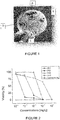
Figure 1 . Photograph comparing the antimicrobial effect against microorganisms of the dental caries, from different commercial products and the composition of the present invention. The dark zone corresponds to the area where there is no bacterial growth. Composition of the present invention which possess a similar ability to Silver Diamine Fluorine. A) Chlorhexidine, B) Silver Diamine Fluorine, C) Silane Fluorine, D) Composition of the Invention. -
Figure 2 . Cell viability assay using mitochondrial activity technique (MTT). THP1 cell type. Commercial = (Silver Amino Fluorine Commercial Product), White, CHX = Chlorhexidine, BR1 and BR2 = example of compositions of the present invention. -
Figure 3 . Scanning electron micrograph (SEM) of a biofilm formed by Streptococcus mutants on synthetic hydroxyapatite surface. -
Figure 4 . Photograph which shows a section of a) demineralized dentin by the biofilm effect and b) Non-demineralized dentin. White area is tooth enamel demineralized waste. -
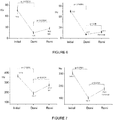
Figure 5 . Vickers microhardness of hydroxyapatite disks (HaP). The values of not microbiologically treated dentin (initial), demineralized by the developed microbiological in-vitro model (Desmi) and after applying a composition of the present invention (Remi), are shown. The bar indicates its maximum and minimum value. Statistically significant difference is indicated with a p< 0.00001 (n=90), and in a confidence interval of 95%. -
Figure 6 . Dentin Vickers microhardness. The values of not microbiologically treated dentin (initial), demineralized by the developed microbiological in-vitro model (Desmi) and after applying a composition of the present invention (Remi) are shown. Left chart composition effect of the present invention and right chart commercial agent effect. The bar indicates its maximum and minimum value. Statistically significant difference is indicated with a p< 0.00001 o p< 0.05, as appropriate (n=90), for a confidence interval of 95%. There is no significant statistical difference between the increase with respect to the sample remineralized with composition of the present invention and with the commercial product. -
Figure 7 . Vickers microhardness of enamel. The bar indicates its maximum and minimum value. The values of not microbiologically treated enamel (initial), demineralized by the developed microbiological in-vitro model (Desmi) and after applying a composition of the present invention (Remi) are shown. Left chart composition effect of the present invention and right chart commercial agent effect. Statistically significant difference is indicated with a p< 0.00001 (n=90), for a confidence interval of 95%. There is no significant statistical difference between the increase with respect to the sample remineralized with composition of the present invention and with the commercial product. -
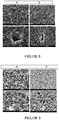
Figure 8 . Micrographs by scanning electron microscopy (SEM) of demineralized dentin before (A) and after (B) of applying a composition of the present invention. -
Figure 9 . Micrographs by scanning electron microscopy (SEM) of demineralized enamel before (A) and after (B) of applying a composition of the present invention. -
Figure 10 . UV-Vis spectrum of components of the composition of the present invention and their interactions: A: Cu(H2O)6F2; B: Cu(NH3)6F2; C: Cu(NH3)6F2 + GO. - The present invention corresponds to a composition with antibacterial activity, and which applied to a dental surface allows the remineralization of the enamel, wherein the composition has a low toxicity for human use, and wherein its application does not leave stains nor change the visible color features in dental pieces wherein the composition has been applied.
- In a first aspect, the invention corresponds to a composition or antimicrobial agent which also promotes the remineralization of the surface of tooth and dentin enamel.
- In a particular embodiment, the composition comprises at least 3 components selected among:
- i. An inorganic antimicrobial agent;
- ii. an agent which promotes the remineralization of surface of tooth and dentin enamel;
- iii. an agent which inhibits the demineralization of tooth and dentin enamel; and
- iv. astabilizing agent which may also have antimicrobial properties and can aid in remineralization.
- In a more specific embodiment, the inorganic antimicrobial agent is selected from metals and their salts, oxides and/or complexes, including copper, zinc, tin, and molybdenum derivatives, such as ammonia complexes of these metals, in a high concentration controlled by the addition of a solubilizing agent selected from different ammonia solutions. The ammonia solution is presented in a range of concentration in water between 1 and 50 % v/v.
- In another specific embodiment, the promoter of remineralization is selected among halogens, in particular, fluorides compounds, to which it can also add another particulate mineralizing agents, such as ceramics. These same promoters can also inhibit the demineralization of the tooth.
- In another specific embodiment, the stabilizing agent is selected from different carbon structures, specifically, those derived from the graphene and/or graphite, more specifically from graphite oxides and graphene oxides, and when the stabilizing agent is selected from graphite oxides and graphene oxides, said stabilizing agent also presents antimicrobial properties and helps the remineralization.
- In particular, without the intention of limiting the scope of the invention, the more preferred components correspond to copper complexes with fluorine. More specifically, the copper is composed by a copper ammonia complex whose counterion is (Cu(NH3)6)F2 fluoride to a high pH, typically between 8-12; the more preferred remineralization promotor agent and the demineralization inhibitor is fluorine; and the more preferred stabilizing agent is a derivate from graphite, more specifically a graphite oxide or graphene oxide.
- In a more specific embodiment, the composition of the present invention also comprises another stabilizing agents derived from carbon, such as graphene, and its oxides. In yet another more specific embodiment the antimicrobial and remineralizing agent, in particular (Cu(NH3)6)F2, is present at a concentration of between 100 and 40,000 ppm, and the stabilizing agent, in particular a derivate from graphene oxide type graphite, is in a concentration of between 0.0001 and 0.02 g/ml.
- Tests to demonstrate the antibacterial effect of the composition of the present invention were performed, in particular using 25,000 ppm of an aqueous solution of (Cu(NH3)6)F2 ammonia in presence of 0.002 g/ml of graphite oxide, comparing it with products which are currently available in the market and which is considered the standard in the field. These tests have been performed on the main bacterial species associated with dental caries. It is concluded that the composition of the present invention has the ability to remove the bacteria related with the dental caries to a similar level than other commercial products. It is only exceeded by chlorhexidine, which is a very active compound, but it does not have the other functionalities presented by the composition of the present invention, which is observed in
Figure 1 , where the areas of inhibition halos for chlorhexidine is 659 mm2; Product on themarket 200 mm2; composition of the present invention 278 mm2. - To evaluate the cytotoxicity of the composition of the present invention, viability experiments were performed of a cell culture exposed to the composition of the present invention. In particular, the viability of (TPH1) human cells was quantified by a mitochondrial activity assay (MTT) in contact with different concentrations of the composition of the present invention. In addition, this result was compared to other commercial products currently used in clinical practice routine. It is observed that the commercial product is extremely toxic (0% viability) independent of the used dilution. On the other hand, the composition of the present invention, in its formulation with and without the stabilizing, presents high viability to dilutions of the order of 103o 104. It is also observed that any product, including the chlorhexidine, present a degree of toxicity, therefore, what is the most important is that the composition of the present invention is much less toxic than the commercially available alternatives (
Figure 2 ). - At this stage it is aimed to evaluate in an in vitro model the remineralizing ability of the composition of the present invention. It has been mounted an in vitro model of dental caries lesions development by the metabolic activity of microbial species on human teeth by a monospecie biofilm. This allows you to produce lesions similar to those that occur in a real-world scenario.
- Our first result is related to validate the microbiological model of in vitro dental caries. The dental caries model described by Ccahuana-Vasquez y Cury (2010 Apr-Jun;24(2):135-41) was used, in which the simulation of a cariogenic environment is carried out by the exposure of enamel blocks, dentin or calcium hydroxyapatite to sucrose, previous formation of a monospecie biofilm of Streptococcus mutans. (
Figure 3 ) Thus, it is allowed to obtain a demineralization zone, which can then be remineralized with an experimental remineralizing agent. - The lesions of non-cavitated artificial dental caries generated according the previous protocol, are subjected to different protocols of remineralization using different concentrations and exposure times to a composition according to the described in the present invention. In addition, differences in the remineralization between this product with those currently used for this purpose will be determined.
- For the evaluation of the remineralizing effects, indicators of tissue superficial hardness change (Vickers microhardness) will be used, the obtained results obtained are given account below:
- Hydroxyapatite disks: According to the obtained data (n=90) the initial hardness of the Hydroxyapatite disks (HAP) is of 5,480.9 MPa with a confidence interval of 95% between 5,398.6 MPa and 5,562.3 MPa. After the specimens were subjected to the in vitro model of dental caries lesions development simulating the conditions of the mouth the hardness is 5,262.2 MPa with a confidence interval between 5,192.6 y 5,311.3. This difference between the initial disk and the treated one in the dental caries model, are statistically significant with p<0.0001. After the specimens were subjected to the remineralization protocol with the composition of the present invention, the hardness values are 5,416.2 MPa with an interval of 95% confidence between 5,375 and 5,456.4. The average difference observed is of 228.5 MPa with a confidence interval of 95% between 130.4 and 326. (
Figure 5 ). This difference is statistically significant when is compared with the controls with a value p< 0.00001. Therefore, it is demonstrated that the presence of the composition of the present increases the hardness of the injured material to values close to which the system had before the injury. This is an indicator that the composition product of the present invention is able to remineralize. - Dentin and Enamel: Real teeth were also evaluated (
Figure 6 and 7 ). Dentin has an initial value of 748.2 MPa, which after being subjected to the in vitro demineralization decreases to 152.9 MPa. Using our formulation of the present invention, this value increases to 259.9 MPa, with a statistical significance (p < 0.00001) In the enamel the trend is the same. In both cases, the commercial product presents the same increases in hardness in our materials. - The remineralizing ability of our formulation is confirmed by micrographs by scanning electron microscopy (SEM) of dentin and enamel, demineralized and after applying composition of the present invention. It is clearly observed that the samples after being subjected to composition of the present invention present an associated closure to the remineralization.
- The composition of the present invention has been characterized as a metal in solution, but as ammonia complex of theoretical formula of Cu(NH3)6F2. In
Figure 6 it is observed the absorption spectrum UV/Visible which confirms this structure. - The shift toward smaller wavelengths gives an account of the formation of ammonia metal complex which is observed in an increase of the solubility of the salt in this solution which allows to reach fluoride concentrations close to 30,000 ppm, which is impossible in aqueous solution.
- The present invention finds application in the pharmaceutical or cosmetics industry, more specifically in the production of compositions for the care of oral health.
Claims (14)
- A composition with antimicrobial activity which also promotes the remineralization of the surface of tooth enamel and dentin, wherein the composition comprises at least:a) an inorganic antimicrobial agent;b) a promotes agent of remineralization of a surface of tooth enamel and dentin;c) an inhibitor agent of the demineralization of tooth enamel and dentin; andd) a stabilizing agent which also has antimicrobial properties and helps to the remineralization.
- The composition according to claim 1, wherein the inorganic antimicrobial agent is selected among metals and its salts, oxides and/or complex, including derivatives of copper, zinc, tin, and molybdenum, ammonia complexes of these metals, in a high concentration controlled by the addition of a solubilizing agent which corresponds to solutions of ammonia.
- The composition according to claim 2, wherein the ammonia solution is presented in a range of concentration in water between 1 and 50 % v/v.
- The composition according to claim 1, wherein the remineralization promoter is selected from halogens, in particular compounds of fluorides.
- The composition according to claim 4, wherein the remineralization promoter also comprises another particulate mineralizing agents, such as ceramics.
- The composition according to claim 1, wherein the inhibitor of the demineralization is selected from halogens, in particular compounds of fluorides.
- The composition according to claim 1, wherein the stabilizing agent which also has antimicrobial properties and helps the remineralization, is selected among different carbon structures, specifically derived from the graphene and/or graphite, more specifically of graphite oxides and graphene oxides.
- The composition according to claim 1, wherein the promoter agent of remineralization of a surface of tooth enamel and dentin correspond to copper complexes with fluorine.
- The composition according to claim 7, wherein the promoter agent of remineralization is composed by an ammonia complex of copper whose counter ion is fluoride ((Cu(NH3)6)F2) to a high pH of between 8 and 12.
- The composition according to claim 1, wherein the promoter agent of remineralization is fluorine.
- The composition according to claim 1, wherein the stabilizing agent is a derivative of the graphite, more specifically a graphite oxide.
- The composition according to claim 1, wherein the composition also comprises another stabilizing agents derived from carbon, as the graphene, and its oxides.
- The composition according to claim 1, wherein the antimicrobial and remineralizing agent, in particular (Cu(NH3)6)F2, is presented in a concentration of between 100 and 40,000 ppm.
- The composition according to claim 1, wherein the stabilizing agent, in particular a derivative of the graphene oxide type graphite, is in a concentration of between 0.0001 and 0.02 g/ml.
Applications Claiming Priority (2)
| Application Number | Priority Date | Filing Date | Title |
|---|---|---|---|
| CL2016002960A CL2016002960A1 (en) | 2016-11-18 | 2016-11-18 | Hybrid metal / carbon structure formulation with dental applications in the treatment of dentine hypersensitivity, demineralization, and caries |
| PCT/CL2017/050067 WO2018090156A1 (en) | 2016-11-18 | 2017-11-15 | Metal-carbon structure hybrid formulation for dental use in the treatment of dental hypersensitivity, demineralisation and cavities |
Publications (3)
| Publication Number | Publication Date |
|---|---|
| EP3542776A1 true EP3542776A1 (en) | 2019-09-25 |
| EP3542776A4 EP3542776A4 (en) | 2020-07-08 |
| EP3542776B1 EP3542776B1 (en) | 2022-10-19 |
Family
ID=59858253
Family Applications (1)
| Application Number | Title | Priority Date | Filing Date |
|---|---|---|---|
| EP17871552.0A Active EP3542776B1 (en) | 2016-11-18 | 2017-11-15 | Metal-carbon structure hybrid formulation for dental use in the treatment of dental hypersensitivity, demineralisation and cavities |
Country Status (5)
| Country | Link |
|---|---|
| US (1) | US11071697B2 (en) |
| EP (1) | EP3542776B1 (en) |
| CL (1) | CL2016002960A1 (en) |
| ES (1) | ES2935883T3 (en) |
| WO (1) | WO2018090156A1 (en) |
Family Cites Families (6)
| Publication number | Priority date | Publication date | Assignee | Title |
|---|---|---|---|---|
| US4177258A (en) * | 1978-10-13 | 1979-12-04 | Colgate Palmolive Company | Dentifrice for dental remineralization |
| GB2068224B (en) * | 1979-12-19 | 1983-08-24 | Colgate Palmolive Co | Toothpaste comprising sorbitol and polyvinyl pyrrolidone |
| BRPI0409420A (en) | 2003-04-18 | 2006-04-25 | Merck Patent Gmbh | antimicrobial pigments |
| EP1688162A1 (en) * | 2005-01-28 | 2006-08-09 | Gumlink A/S | Multi functional oral care chewing gum possessing tooth cleaning effects |
| EP2112882A2 (en) | 2007-01-23 | 2009-11-04 | Merck Patent GmbH | Antimicrobial composition comprising zinc oxide, barium sulphate and silver ions |
| US9474282B2 (en) * | 2013-12-13 | 2016-10-25 | Tony John Hall | Acid-solubilized copper-ammonium complexes and copper-zinc-ammonium complexes, compositions, preparations, methods, and uses |
-
2016
- 2016-11-18 CL CL2016002960A patent/CL2016002960A1/en unknown
-
2017
- 2017-11-15 EP EP17871552.0A patent/EP3542776B1/en active Active
- 2017-11-15 WO PCT/CL2017/050067 patent/WO2018090156A1/en not_active Ceased
- 2017-11-15 ES ES17871552T patent/ES2935883T3/en active Active
- 2017-11-15 US US16/461,876 patent/US11071697B2/en active Active
Also Published As
| Publication number | Publication date |
|---|---|
| EP3542776B1 (en) | 2022-10-19 |
| CL2016002960A1 (en) | 2017-01-27 |
| EP3542776A4 (en) | 2020-07-08 |
| ES2935883T3 (en) | 2023-03-13 |
| WO2018090156A1 (en) | 2018-05-24 |
| US20190365614A1 (en) | 2019-12-05 |
| US11071697B2 (en) | 2021-07-27 |
Similar Documents
| Publication | Publication Date | Title |
|---|---|---|
| CA2863674C (en) | Multicomponent oral care composition | |
| Enax et al. | Synthetic hydroxyapatite as a biomimetic oral care agent. | |
| KR20150097492A (en) | Oral care products comprising zinc oxide and trimethylglycine | |
| CN110787121A (en) | Whitening toothpaste and preparation method thereof | |
| WO2020263120A1 (en) | Oral care compositions | |
| WO2022233361A1 (en) | Oral care agent | |
| CN120225165A (en) | Oral care compositions | |
| US11071697B2 (en) | Metal-carbon structure hybrid formulation for dental use in the treatment of dental hypersensitivity, demineralization and cavities | |
| WO2008022859A2 (en) | Composition containing 1 to 99 percent by weight of poorly water-soluble calcium salts and/or the composite materials thereof | |
| AU2007310819A1 (en) | Novel use of alkyl phosphate esters | |
| Jindal et al. | Reverse the adverse: A review | |
| JP6322355B2 (en) | Disinfecting cleaning composition | |
| WO2007101511A2 (en) | Mouth and teeth cleaning and/or remineralization method | |
| Alshoraim | Advances in Hard Tissue Remineralization | |
| KR20260070131A (en) | Dental care products containing tin fluoride | |
| BS et al. | A compendium on remineralizing agents in preventive dentistry | |
| DE102023124765A1 (en) | Composition comprising phosphinic acid or a salt thereof and a carrier system | |
| DE102021100811A1 (en) | oral care preparations, in particular toothpaste | |
| RU2595875C1 (en) | Use of zinc or copper (ii) salt as component of oral care composition and oral care composition | |
| PL229220B1 (en) | Suspension for making stomatological compositions and method for producing it |
Legal Events
| Date | Code | Title | Description |
|---|---|---|---|
| STAA | Information on the status of an ep patent application or granted ep patent |
Free format text: STATUS: THE INTERNATIONAL PUBLICATION HAS BEEN MADE |
|
| PUAI | Public reference made under article 153(3) epc to a published international application that has entered the european phase |
Free format text: ORIGINAL CODE: 0009012 |
|
| STAA | Information on the status of an ep patent application or granted ep patent |
Free format text: STATUS: REQUEST FOR EXAMINATION WAS MADE |
|
| 17P | Request for examination filed |
Effective date: 20190608 |
|
| AK | Designated contracting states |
Kind code of ref document: A1 Designated state(s): AL AT BE BG CH CY CZ DE DK EE ES FI FR GB GR HR HU IE IS IT LI LT LU LV MC MK MT NL NO PL PT RO RS SE SI SK SM TR |
|
| AX | Request for extension of the european patent |
Extension state: BA ME |
|
| DAV | Request for validation of the european patent (deleted) | ||
| DAX | Request for extension of the european patent (deleted) | ||
| A4 | Supplementary search report drawn up and despatched |
Effective date: 20200608 |
|
| RIC1 | Information provided on ipc code assigned before grant |
Ipc: C01B 32/192 20170101ALI20200602BHEP Ipc: A61K 31/28 20060101ALI20200602BHEP Ipc: C01G 39/02 20060101ALI20200602BHEP Ipc: A61K 8/27 20060101ALI20200602BHEP Ipc: A61K 33/34 20060101ALI20200602BHEP Ipc: A61K 31/315 20060101ALI20200602BHEP Ipc: C01B 32/198 20170101ALI20200602BHEP Ipc: A61K 31/30 20060101ALI20200602BHEP Ipc: A61K 8/21 20060101AFI20200602BHEP Ipc: A61K 31/32 20060101ALI20200602BHEP Ipc: A61K 8/19 20060101ALI20200602BHEP Ipc: A61P 31/00 20060101ALI20200602BHEP Ipc: A61K 33/30 20060101ALI20200602BHEP Ipc: A61K 33/44 20060101ALI20200602BHEP Ipc: A61Q 11/00 20060101ALI20200602BHEP Ipc: A61K 33/02 20060101ALI20200602BHEP Ipc: C01G 39/00 20060101ALI20200602BHEP Ipc: A61K 33/24 20190101ALI20200602BHEP Ipc: A61Q 11/02 20060101ALI20200602BHEP Ipc: A61K 33/16 20060101ALI20200602BHEP |
|
| REG | Reference to a national code |
Ref country code: DE Ref legal event code: R079 Ref document number: 602017062874 Country of ref document: DE Free format text: PREVIOUS MAIN CLASS: A61K0006020000 Ipc: A61K0008210000 |
|
| GRAP | Despatch of communication of intention to grant a patent |
Free format text: ORIGINAL CODE: EPIDOSNIGR1 |
|
| STAA | Information on the status of an ep patent application or granted ep patent |
Free format text: STATUS: GRANT OF PATENT IS INTENDED |
|
| RIC1 | Information provided on ipc code assigned before grant |
Ipc: A61K 8/19 20060101ALI20220420BHEP Ipc: C01G 39/02 20060101ALI20220420BHEP Ipc: C01G 39/00 20060101ALI20220420BHEP Ipc: C01B 32/198 20170101ALI20220420BHEP Ipc: C01B 32/192 20170101ALI20220420BHEP Ipc: A61Q 11/02 20060101ALI20220420BHEP Ipc: A61Q 11/00 20060101ALI20220420BHEP Ipc: A61P 31/00 20060101ALI20220420BHEP Ipc: A61K 33/44 20060101ALI20220420BHEP Ipc: A61K 33/34 20060101ALI20220420BHEP Ipc: A61K 33/30 20060101ALI20220420BHEP Ipc: A61K 33/24 20190101ALI20220420BHEP Ipc: A61K 33/16 20060101ALI20220420BHEP Ipc: A61K 33/02 20060101ALI20220420BHEP Ipc: A61K 31/32 20060101ALI20220420BHEP Ipc: A61K 31/315 20060101ALI20220420BHEP Ipc: A61K 31/30 20060101ALI20220420BHEP Ipc: A61K 31/28 20060101ALI20220420BHEP Ipc: A61K 8/27 20060101ALI20220420BHEP Ipc: A61K 8/21 20060101AFI20220420BHEP |
|
| INTG | Intention to grant announced |
Effective date: 20220516 |
|
| GRAS | Grant fee paid |
Free format text: ORIGINAL CODE: EPIDOSNIGR3 |
|
| GRAA | (expected) grant |
Free format text: ORIGINAL CODE: 0009210 |
|
| STAA | Information on the status of an ep patent application or granted ep patent |
Free format text: STATUS: THE PATENT HAS BEEN GRANTED |
|
| AK | Designated contracting states |
Kind code of ref document: B1 Designated state(s): AL AT BE BG CH CY CZ DE DK EE ES FI FR GB GR HR HU IE IS IT LI LT LU LV MC MK MT NL NO PL PT RO RS SE SI SK SM TR |
|
| REG | Reference to a national code |
Ref country code: GB Ref legal event code: FG4D |
|
| REG | Reference to a national code |
Ref country code: CH Ref legal event code: EP |
|
| REG | Reference to a national code |
Ref country code: IE Ref legal event code: FG4D |
|
| REG | Reference to a national code |
Ref country code: DE Ref legal event code: R096 Ref document number: 602017062874 Country of ref document: DE |
|
| REG | Reference to a national code |
Ref country code: AT Ref legal event code: REF Ref document number: 1525139 Country of ref document: AT Kind code of ref document: T Effective date: 20221115 |
|
| REG | Reference to a national code |
Ref country code: LT Ref legal event code: MG9D |
|
| REG | Reference to a national code |
Ref country code: NL Ref legal event code: MP Effective date: 20221019 |
|
| REG | Reference to a national code |
Ref country code: ES Ref legal event code: FG2A Ref document number: 2935883 Country of ref document: ES Kind code of ref document: T3 Effective date: 20230313 |
|
| REG | Reference to a national code |
Ref country code: AT Ref legal event code: MK05 Ref document number: 1525139 Country of ref document: AT Kind code of ref document: T Effective date: 20221019 |
|
| PG25 | Lapsed in a contracting state [announced via postgrant information from national office to epo] |
Ref country code: NL Free format text: LAPSE BECAUSE OF FAILURE TO SUBMIT A TRANSLATION OF THE DESCRIPTION OR TO PAY THE FEE WITHIN THE PRESCRIBED TIME-LIMIT Effective date: 20221019 |
|
| PG25 | Lapsed in a contracting state [announced via postgrant information from national office to epo] |
Ref country code: SE Free format text: LAPSE BECAUSE OF FAILURE TO SUBMIT A TRANSLATION OF THE DESCRIPTION OR TO PAY THE FEE WITHIN THE PRESCRIBED TIME-LIMIT Effective date: 20221019 Ref country code: PT Free format text: LAPSE BECAUSE OF FAILURE TO SUBMIT A TRANSLATION OF THE DESCRIPTION OR TO PAY THE FEE WITHIN THE PRESCRIBED TIME-LIMIT Effective date: 20230220 Ref country code: NO Free format text: LAPSE BECAUSE OF FAILURE TO SUBMIT A TRANSLATION OF THE DESCRIPTION OR TO PAY THE FEE WITHIN THE PRESCRIBED TIME-LIMIT Effective date: 20230119 Ref country code: LT Free format text: LAPSE BECAUSE OF FAILURE TO SUBMIT A TRANSLATION OF THE DESCRIPTION OR TO PAY THE FEE WITHIN THE PRESCRIBED TIME-LIMIT Effective date: 20221019 Ref country code: FI Free format text: LAPSE BECAUSE OF FAILURE TO SUBMIT A TRANSLATION OF THE DESCRIPTION OR TO PAY THE FEE WITHIN THE PRESCRIBED TIME-LIMIT Effective date: 20221019 Ref country code: AT Free format text: LAPSE BECAUSE OF FAILURE TO SUBMIT A TRANSLATION OF THE DESCRIPTION OR TO PAY THE FEE WITHIN THE PRESCRIBED TIME-LIMIT Effective date: 20221019 |
|
| PGFP | Annual fee paid to national office [announced via postgrant information from national office to epo] |
Ref country code: CH Payment date: 20230130 Year of fee payment: 6 |
|
| PG25 | Lapsed in a contracting state [announced via postgrant information from national office to epo] |
Ref country code: RS Free format text: LAPSE BECAUSE OF FAILURE TO SUBMIT A TRANSLATION OF THE DESCRIPTION OR TO PAY THE FEE WITHIN THE PRESCRIBED TIME-LIMIT Effective date: 20221019 Ref country code: PL Free format text: LAPSE BECAUSE OF FAILURE TO SUBMIT A TRANSLATION OF THE DESCRIPTION OR TO PAY THE FEE WITHIN THE PRESCRIBED TIME-LIMIT Effective date: 20221019 Ref country code: LV Free format text: LAPSE BECAUSE OF FAILURE TO SUBMIT A TRANSLATION OF THE DESCRIPTION OR TO PAY THE FEE WITHIN THE PRESCRIBED TIME-LIMIT Effective date: 20221019 Ref country code: IS Free format text: LAPSE BECAUSE OF FAILURE TO SUBMIT A TRANSLATION OF THE DESCRIPTION OR TO PAY THE FEE WITHIN THE PRESCRIBED TIME-LIMIT Effective date: 20230219 Ref country code: HR Free format text: LAPSE BECAUSE OF FAILURE TO SUBMIT A TRANSLATION OF THE DESCRIPTION OR TO PAY THE FEE WITHIN THE PRESCRIBED TIME-LIMIT Effective date: 20221019 Ref country code: GR Free format text: LAPSE BECAUSE OF FAILURE TO SUBMIT A TRANSLATION OF THE DESCRIPTION OR TO PAY THE FEE WITHIN THE PRESCRIBED TIME-LIMIT Effective date: 20230120 |
|
| PGFP | Annual fee paid to national office [announced via postgrant information from national office to epo] |
Ref country code: IT Payment date: 20230120 Year of fee payment: 6 |
|
| REG | Reference to a national code |
Ref country code: DE Ref legal event code: R097 Ref document number: 602017062874 Country of ref document: DE |
|
| REG | Reference to a national code |
Ref country code: BE Ref legal event code: MM Effective date: 20221130 |
|
| PG25 | Lapsed in a contracting state [announced via postgrant information from national office to epo] |
Ref country code: SM Free format text: LAPSE BECAUSE OF FAILURE TO SUBMIT A TRANSLATION OF THE DESCRIPTION OR TO PAY THE FEE WITHIN THE PRESCRIBED TIME-LIMIT Effective date: 20221019 Ref country code: RO Free format text: LAPSE BECAUSE OF FAILURE TO SUBMIT A TRANSLATION OF THE DESCRIPTION OR TO PAY THE FEE WITHIN THE PRESCRIBED TIME-LIMIT Effective date: 20221019 Ref country code: MC Free format text: LAPSE BECAUSE OF FAILURE TO SUBMIT A TRANSLATION OF THE DESCRIPTION OR TO PAY THE FEE WITHIN THE PRESCRIBED TIME-LIMIT Effective date: 20221019 Ref country code: EE Free format text: LAPSE BECAUSE OF FAILURE TO SUBMIT A TRANSLATION OF THE DESCRIPTION OR TO PAY THE FEE WITHIN THE PRESCRIBED TIME-LIMIT Effective date: 20221019 Ref country code: DK Free format text: LAPSE BECAUSE OF FAILURE TO SUBMIT A TRANSLATION OF THE DESCRIPTION OR TO PAY THE FEE WITHIN THE PRESCRIBED TIME-LIMIT Effective date: 20221019 Ref country code: CZ Free format text: LAPSE BECAUSE OF FAILURE TO SUBMIT A TRANSLATION OF THE DESCRIPTION OR TO PAY THE FEE WITHIN THE PRESCRIBED TIME-LIMIT Effective date: 20221019 |
|
| PLBE | No opposition filed within time limit |
Free format text: ORIGINAL CODE: 0009261 |
|
| STAA | Information on the status of an ep patent application or granted ep patent |
Free format text: STATUS: NO OPPOSITION FILED WITHIN TIME LIMIT |
|
| PG25 | Lapsed in a contracting state [announced via postgrant information from national office to epo] |
Ref country code: SK Free format text: LAPSE BECAUSE OF FAILURE TO SUBMIT A TRANSLATION OF THE DESCRIPTION OR TO PAY THE FEE WITHIN THE PRESCRIBED TIME-LIMIT Effective date: 20221019 Ref country code: LU Free format text: LAPSE BECAUSE OF NON-PAYMENT OF DUE FEES Effective date: 20221115 Ref country code: AL Free format text: LAPSE BECAUSE OF FAILURE TO SUBMIT A TRANSLATION OF THE DESCRIPTION OR TO PAY THE FEE WITHIN THE PRESCRIBED TIME-LIMIT Effective date: 20221019 |
|
| 26N | No opposition filed |
Effective date: 20230720 |
|
| PG25 | Lapsed in a contracting state [announced via postgrant information from national office to epo] |
Ref country code: IE Free format text: LAPSE BECAUSE OF NON-PAYMENT OF DUE FEES Effective date: 20221115 |
|
| PG25 | Lapsed in a contracting state [announced via postgrant information from national office to epo] |
Ref country code: SI Free format text: LAPSE BECAUSE OF FAILURE TO SUBMIT A TRANSLATION OF THE DESCRIPTION OR TO PAY THE FEE WITHIN THE PRESCRIBED TIME-LIMIT Effective date: 20221019 Ref country code: BE Free format text: LAPSE BECAUSE OF NON-PAYMENT OF DUE FEES Effective date: 20221130 |
|
| PG25 | Lapsed in a contracting state [announced via postgrant information from national office to epo] |
Ref country code: HU Free format text: LAPSE BECAUSE OF FAILURE TO SUBMIT A TRANSLATION OF THE DESCRIPTION OR TO PAY THE FEE WITHIN THE PRESCRIBED TIME-LIMIT; INVALID AB INITIO Effective date: 20171115 |
|
| PG25 | Lapsed in a contracting state [announced via postgrant information from national office to epo] |
Ref country code: CY Free format text: LAPSE BECAUSE OF FAILURE TO SUBMIT A TRANSLATION OF THE DESCRIPTION OR TO PAY THE FEE WITHIN THE PRESCRIBED TIME-LIMIT Effective date: 20221019 |
|
| PG25 | Lapsed in a contracting state [announced via postgrant information from national office to epo] |
Ref country code: MK Free format text: LAPSE BECAUSE OF FAILURE TO SUBMIT A TRANSLATION OF THE DESCRIPTION OR TO PAY THE FEE WITHIN THE PRESCRIBED TIME-LIMIT Effective date: 20221019 |
|
| PG25 | Lapsed in a contracting state [announced via postgrant information from national office to epo] |
Ref country code: TR Free format text: LAPSE BECAUSE OF FAILURE TO SUBMIT A TRANSLATION OF THE DESCRIPTION OR TO PAY THE FEE WITHIN THE PRESCRIBED TIME-LIMIT Effective date: 20221019 |
|
| REG | Reference to a national code |
Ref country code: CH Ref legal event code: PL |
|
| PG25 | Lapsed in a contracting state [announced via postgrant information from national office to epo] |
Ref country code: CH Free format text: LAPSE BECAUSE OF NON-PAYMENT OF DUE FEES Effective date: 20231130 |
|
| PG25 | Lapsed in a contracting state [announced via postgrant information from national office to epo] |
Ref country code: CH Free format text: LAPSE BECAUSE OF NON-PAYMENT OF DUE FEES Effective date: 20231130 Ref country code: BG Free format text: LAPSE BECAUSE OF FAILURE TO SUBMIT A TRANSLATION OF THE DESCRIPTION OR TO PAY THE FEE WITHIN THE PRESCRIBED TIME-LIMIT Effective date: 20221019 |
|
| PG25 | Lapsed in a contracting state [announced via postgrant information from national office to epo] |
Ref country code: MT Free format text: LAPSE BECAUSE OF FAILURE TO SUBMIT A TRANSLATION OF THE DESCRIPTION OR TO PAY THE FEE WITHIN THE PRESCRIBED TIME-LIMIT Effective date: 20221019 |
|
| PG25 | Lapsed in a contracting state [announced via postgrant information from national office to epo] |
Ref country code: IT Free format text: LAPSE BECAUSE OF NON-PAYMENT OF DUE FEES Effective date: 20231115 |
|
| PG25 | Lapsed in a contracting state [announced via postgrant information from national office to epo] |
Ref country code: IT Free format text: LAPSE BECAUSE OF NON-PAYMENT OF DUE FEES Effective date: 20231115 |
|
| PGFP | Annual fee paid to national office [announced via postgrant information from national office to epo] |
Ref country code: DE Payment date: 20251117 Year of fee payment: 9 |
|
| PGFP | Annual fee paid to national office [announced via postgrant information from national office to epo] |
Ref country code: GB Payment date: 20251111 Year of fee payment: 9 |
|
| PGFP | Annual fee paid to national office [announced via postgrant information from national office to epo] |
Ref country code: FR Payment date: 20251113 Year of fee payment: 9 |
|
| PGFP | Annual fee paid to national office [announced via postgrant information from national office to epo] |
Ref country code: ES Payment date: 20251202 Year of fee payment: 9 |