EP3542318B1 - Modellberechnungseinheit und steuergerät zur berechnung einer neuronenschicht eines mehrschichtigen perzeptronenmodells - Google Patents
Modellberechnungseinheit und steuergerät zur berechnung einer neuronenschicht eines mehrschichtigen perzeptronenmodells Download PDFInfo
- Publication number
- EP3542318B1 EP3542318B1 EP17761494.8A EP17761494A EP3542318B1 EP 3542318 B1 EP3542318 B1 EP 3542318B1 EP 17761494 A EP17761494 A EP 17761494A EP 3542318 B1 EP3542318 B1 EP 3542318B1
- Authority
- EP
- European Patent Office
- Prior art keywords
- model
- neuron
- control device
- function
- variable
- Prior art date
- Legal status (The legal status is an assumption and is not a legal conclusion. Google has not performed a legal analysis and makes no representation as to the accuracy of the status listed.)
- Active
Links
Images


Classifications
-
- G—PHYSICS
- G06—COMPUTING OR CALCULATING; COUNTING
- G06N—COMPUTING ARRANGEMENTS BASED ON SPECIFIC COMPUTATIONAL MODELS
- G06N3/00—Computing arrangements based on biological models
- G06N3/02—Neural networks
- G06N3/04—Architecture, e.g. interconnection topology
- G06N3/048—Activation functions
-
- G—PHYSICS
- G06—COMPUTING OR CALCULATING; COUNTING
- G06N—COMPUTING ARRANGEMENTS BASED ON SPECIFIC COMPUTATIONAL MODELS
- G06N3/00—Computing arrangements based on biological models
- G06N3/02—Neural networks
- G06N3/06—Physical realisation, i.e. hardware implementation of neural networks, neurons or parts of neurons
- G06N3/063—Physical realisation, i.e. hardware implementation of neural networks, neurons or parts of neurons using electronic means
-
- F—MECHANICAL ENGINEERING; LIGHTING; HEATING; WEAPONS; BLASTING
- F02—COMBUSTION ENGINES; HOT-GAS OR COMBUSTION-PRODUCT ENGINE PLANTS
- F02D—CONTROLLING COMBUSTION ENGINES
- F02D41/00—Electrical control of supply of combustible mixture or its constituents
- F02D41/02—Circuit arrangements for generating control signals
- F02D41/14—Introducing closed-loop corrections
- F02D41/1401—Introducing closed-loop corrections characterised by the control or regulation method
- F02D41/1405—Neural network control
-
- F—MECHANICAL ENGINEERING; LIGHTING; HEATING; WEAPONS; BLASTING
- F02—COMBUSTION ENGINES; HOT-GAS OR COMBUSTION-PRODUCT ENGINE PLANTS
- F02D—CONTROLLING COMBUSTION ENGINES
- F02D41/00—Electrical control of supply of combustible mixture or its constituents
- F02D41/24—Electrical control of supply of combustible mixture or its constituents characterised by the use of digital means
- F02D41/26—Electrical control of supply of combustible mixture or its constituents characterised by the use of digital means using computer, e.g. microprocessor
- F02D41/266—Electrical control of supply of combustible mixture or its constituents characterised by the use of digital means using computer, e.g. microprocessor the computer being backed-up or assisted by another circuit, e.g. analogue
-
- G—PHYSICS
- G05—CONTROLLING; REGULATING
- G05B—CONTROL OR REGULATING SYSTEMS IN GENERAL; FUNCTIONAL ELEMENTS OF SUCH SYSTEMS; MONITORING OR TESTING ARRANGEMENTS FOR SUCH SYSTEMS OR ELEMENTS
- G05B13/00—Adaptive control systems, i.e. systems automatically adjusting themselves to have a performance which is optimum according to some preassigned criterion
- G05B13/02—Adaptive control systems, i.e. systems automatically adjusting themselves to have a performance which is optimum according to some preassigned criterion electric
- G05B13/0265—Adaptive control systems, i.e. systems automatically adjusting themselves to have a performance which is optimum according to some preassigned criterion electric the criterion being a learning criterion
- G05B13/027—Adaptive control systems, i.e. systems automatically adjusting themselves to have a performance which is optimum according to some preassigned criterion electric the criterion being a learning criterion using neural networks only
-
- G—PHYSICS
- G06—COMPUTING OR CALCULATING; COUNTING
- G06N—COMPUTING ARRANGEMENTS BASED ON SPECIFIC COMPUTATIONAL MODELS
- G06N3/00—Computing arrangements based on biological models
- G06N3/02—Neural networks
- G06N3/04—Architecture, e.g. interconnection topology
- G06N3/0499—Feedforward networks
-
- G—PHYSICS
- G06—COMPUTING OR CALCULATING; COUNTING
- G06N—COMPUTING ARRANGEMENTS BASED ON SPECIFIC COMPUTATIONAL MODELS
- G06N3/00—Computing arrangements based on biological models
- G06N3/02—Neural networks
- G06N3/08—Learning methods
-
- F—MECHANICAL ENGINEERING; LIGHTING; HEATING; WEAPONS; BLASTING
- F02—COMBUSTION ENGINES; HOT-GAS OR COMBUSTION-PRODUCT ENGINE PLANTS
- F02D—CONTROLLING COMBUSTION ENGINES
- F02D41/00—Electrical control of supply of combustible mixture or its constituents
- F02D41/02—Circuit arrangements for generating control signals
- F02D41/14—Introducing closed-loop corrections
- F02D41/1401—Introducing closed-loop corrections characterised by the control or regulation method
- F02D2041/1433—Introducing closed-loop corrections characterised by the control or regulation method using a model or simulation of the system
-
- G—PHYSICS
- G06—COMPUTING OR CALCULATING; COUNTING
- G06N—COMPUTING ARRANGEMENTS BASED ON SPECIFIC COMPUTATIONAL MODELS
- G06N7/00—Computing arrangements based on specific mathematical models
- G06N7/01—Probabilistic graphical models, e.g. probabilistic networks
Definitions
- the invention relates to the calculation of functional models in a separate hard-wired model calculation unit, in particular for calculating multi-layer perceptron models.
- Control functions of technical systems are often implemented using models that represent a mathematical image of the real system.
- physical models especially in complex contexts, lack the required calculation precision, and with today's computing capacities it is generally difficult to calculate such models within the real-time requirements required for a control device.
- data-based models that describe relationships between an output variable and input variables exclusively on the basis of training data obtained with the help of a test stand or the like.
- Data-based models are particularly suitable for modeling complex relationships in which several input variables, between which there are interrelationships, are appropriately taken into account in the model.
- modeling with the help of data-based models offers the possibility of supplementing the model by adding individual input variables.
- Data-based functional models are usually based on a large number of support points in order to achieve sufficient modeling accuracy for the respective application. Due to the high number of support points, a high computing capacity is required to calculate a model value with a data-based functional model, such as a Gaussian process model. In order to be able to calculate such a data-based functional model in a control device application in real time, model calculation units based on a hardware design can therefore be provided.
- TURKSON ET AL. "Artificial neural network applications in the calibration of spark-ignition engines: An overview", ENGINEERING SCIENC AND TECHNOLOGY, AN INTERNATIONAL JOURNAL, Vol. 19, No.
- the invention is set out in independent claim 1.
- the model calculation unit of claim 1 provides for calculating a layer of a multi-layer perceptron model (MLP model) with a variable number of neurons.
- MLP model multi-layer perceptron model
- a model calculation unit for calculating a layer of a multi-layer perceptron model with a hard-wired computing core designed in hardware for calculating a fixed calculation algorithm in coupled function blocks, the computing core being designed to be for a neuron layer of a multi-layer perceptron model with a number of Neurons depending on one or more input variables of an input variable vector, a weighting matrix with weighting factors and an offset value specified for each neuron To calculate the output size for each neuron, whereby for each neuron a sum of the values of the input variables weighted with a weighting factor determined by the neuron and the input size and that given to the neuron Offset value is calculated and the result is transformed with an activation function to obtain the output size for the neuron.
- model calculation unit is to form it separately in a calculation core in a control device for calculating a layer of a multi-layer perceptron model in hardware structures.
- a substantially hard-wired hardware circuit can be provided for implementing functions that make it possible to calculate one or more neuron layers of a multi-layer perceptron model while only causing a very low computing load in a software-controlled microprocessor of a control device.
- Due to the hardware acceleration provided by the model calculation unit a multi-layer perceptron model can be calculated in real time, making the use of such a model for ECU applications for internal combustion engines in motor vehicles interesting.
- multi-layer perceptron models enables data-based modeling with a smaller number of support points than with comparable data-based models, such as a Gaussian process model.
- the model calculation unit can be equipped with interfaces to calculate the MLP model layer by layer, so that the number of neuron layers and the number of neurons in each neuron layer can be freely selected. This layer-by-layer division allows the parameters, such as the synapse weights, to be specified separately for each neuron layer.
- the computing core can have a state machine, a memory for storing the one or more input variables of the input variable vector, the weighting matrix, the offset values specified for each neuron and the output variables for each neuron, one or more arithmetic operation blocks, in particular a MAC block (for fixed-point or Floating point calculations) and an activation function calculation block.
- a state machine a memory for storing the one or more input variables of the input variable vector, the weighting matrix, the offset values specified for each neuron and the output variables for each neuron, one or more arithmetic operation blocks, in particular a MAC block (for fixed-point or Floating point calculations) and an activation function calculation block.
- the computing core is designed to select the type of activation function for the multi-layer perceptron model depending on a selection variable and/or to use a further selection variable to select whether a Gaussian process model or an RBF model or a neuron layer of the perceptron model should be calculated.
- the activation functions can include, for example, a kink function, a sigmoid function, a tangent hyperbolic function or a linear function.
- the computing core can be formed in a surface area of an integrated component.
- control device with a microprocessor and the above model calculation unit is provided.
- the control device can be designed as an integrated circuit.
- the invention according to claim 1 relates to the use of the above control device as a control device for controlling an engine system in a motor vehicle.
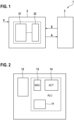
- Figure 1 shows an example of a schematic representation of a control device 2 for an engine system 1 with an internal combustion engine 3 as a technical system to be controlled.
- the control device 2 includes a microprocessor 21 and a model calculation unit 22, which can be designed as separate components or in an integrated manner in separate surface areas on a chip.
- the model calculation unit 22 represents a hardware circuit that can be structurally separated from a computing core of the microprocessor 21.
- the model calculation unit 22 is essentially hard-wired and is therefore not designed, like the microprocessor 21, to execute a software code and thereby carry out a variable function specified by software. In other words, no processor is provided in the model calculation unit 22, so that it cannot be operated by software code. By focusing on a predetermined model function, a resource-optimized implementation of such a model calculation unit 22 is made possible. In an integrated design, the model calculation unit 22 can be implemented in an area-optimized manner, which also enables fast calculations.
- the control device 2 essentially serves to process sensor signals S or sensor variables, which are detected by a sensor system in the internal combustion engine 3, and/or external specifications V and cyclically at fixed time intervals of, for example, 1 - 100 ms or angle synchronously depending to a crankshaft angle of an operated internal combustion engine, values of one or more corresponding control variables A are applied to the internal combustion engine 3, so that it can be operated in a manner known per se.
- the model calculation unit 22 includes a state machine 11, a memory 12 and one or more operation blocks, for example one or more MAC blocks 13 (MAC: Multiply-ACcumulate for fixed-point calculation or FMA: Fused-Multiply-Add for floating-point calculation) and an activation function calculation block (ACT) 14 for calculating an activation function.
- the state machine 11 and the one or more operation blocks 13, 14 form a computing core ALU of the model calculation unit 22.
- the operation blocks can comprise a multiplication block and an addition block in addition to or as an alternative to the MAC block.
- values of input variables stored in an input variable storage area of the memory 12 can be offset by repeated loop calculations in order to obtain intermediate variables or output variables which are written into a corresponding output variable storage area of the memory 12.
- the state machine 11 is designed to calculate a single neuron layer of a multi-layer perceptron model.
- the state machine 11 can be described using the following pseudocode:
- Figure 3 shows a neuron layer of several neurons 20, to which values of input variables of an input variable vector ut 0 ... ut p6-1 are supplied.
- the values of the input variables are weighted using a corresponding predetermined weighting matrix made up of weighting values, which are specified as weighting factors v 0...p7-1,0...p6-1 .
- the weighting is usually carried out by applying the assigned weighting factors v 0...p7-1,0...p6-1 multiplicatively, but can also apply the values of the input variable vector in a different way.
- the sums of the weighted values of the input variable vector ut 0 ... ut p6-1 are each applied with an offset value O 0 ... O p6-1 , in particular applied additively.
- the result is transformed with a given activation function “act”.
- the result is a corresponding value of an output variable vector y 0 ... y p6-1 .
- a multi-layer perceptron model can be used by using the values of the output size vector y 0 ... y p6-1 of a neuron layer as an input size vector for a calculation of a subsequent neuron layer in the model calculation unit 22, so that the number of neuron layers of the multi-layer perceptron model by repeatedly calling the function can be realized according to the above pseudocode or by repeatedly calling the model calculation unit 22 with correspondingly changed parameters.
- An input and/or output transformation of the input variables of the input variable vector or the output variables of the output variable vector can be carried out using the normalization variables p1 and p2 or p4 and p5 specified for each neuron.
- the layer-by-layer calculation of the MLP model enables a slim design of the model calculation unit 22, so that its space requirement is low in an integrated design. Nevertheless, the model calculation unit 22 enables a multi-layer perceptron model to be calculated in a simple manner by returning or redefining the values of the output variables of the output variable vector as input variables of an input variable vector for the calculation of a further neuron layer.
- activation function “act” can be provided as the activation function “act”, which can be calculated by the activation function calculation block 14 of the model calculation unit 22.
- the activation functions can be used, for example, a kink function, a sigmoid function, a tangent hyperbolic function or a linear function, as described in the Figures 4a to 4d are shown accordingly.
- the neuron model Due to the single-layer design of the neuron model, which is implemented by the above pseudocode, it is also possible, by simple modification, to create not only a neuron layer of an MLP model but also a Gaussian process model or an RBF model (RBF: Radial Basis Function). calculate.
- RBF Radial Basis Function
- the weighting values are not applied multiplicatively to the values of the input variable, but rather additively or subtractively.
- the square distance is calculated, which is weighted with specified length scales L[k].
- an exponential function is chosen as the activation function for the RBF model.
- a Gaussian process model or an RBF model is calculated. It is not necessary to select the activation function here, as it always uses the exponential function be calculated. In this way, it is possible to use the model calculation unit 22 both for the calculation of Gaussian process models and RBF models as well as for the calculation of a neuron layer of an MLP model, while only requiring a small amount of space in an integrated design of the state machine .
Landscapes
- Engineering & Computer Science (AREA)
- Physics & Mathematics (AREA)
- Artificial Intelligence (AREA)
- Theoretical Computer Science (AREA)
- Evolutionary Computation (AREA)
- Health & Medical Sciences (AREA)
- General Engineering & Computer Science (AREA)
- Life Sciences & Earth Sciences (AREA)
- Biomedical Technology (AREA)
- Biophysics (AREA)
- Software Systems (AREA)
- General Physics & Mathematics (AREA)
- Computational Linguistics (AREA)
- Molecular Biology (AREA)
- Mathematical Physics (AREA)
- General Health & Medical Sciences (AREA)
- Data Mining & Analysis (AREA)
- Computing Systems (AREA)
- Computer Hardware Design (AREA)
- Chemical & Material Sciences (AREA)
- Neurology (AREA)
- Combustion & Propulsion (AREA)
- Mechanical Engineering (AREA)
- Computer Vision & Pattern Recognition (AREA)
- Medical Informatics (AREA)
- Automation & Control Theory (AREA)
- Microelectronics & Electronic Packaging (AREA)
- Feedback Control In General (AREA)
- Combined Controls Of Internal Combustion Engines (AREA)
Description
- Die Erfindung betrifft die Berechnung von Funktionsmodellen in einer separaten hartverdrahteten Modellberechnungseinheit, insbesondere zur Berechnung von mehrschichtigen Perzeptronenmodellen.
- Funktionen von Steuerungen von technischen Systemen, wie z.B. Verbrennungsmotoren, Elektroantrieben, Batteriespeicher und dergleichen, werden häufig mit Modellen realisiert, die ein mathematisches Abbild des realen Systems darstellen. Jedoch mangelt es bei physikalischen Modellen, insbesondere bei komplexen Zusammenhängen, an der erforderlichen Berechnungsgenauigkeit, und es ist bei heutigen Rechenkapazitäten in der Regel schwierig, derartige Modelle innerhalb der für ein Steuergerät geforderten Echtzeitanforderungen zu berechnen. Für solche Fälle ist angedacht, datenbasierte Modelle zu verwenden, die Zusammenhänge zwischen einer Ausgangsgröße und Eingangsgrößen ausschließlich auf der Basis von mit Hilfe eines Prüfstands oder dergleichen erhaltenen Trainingsdaten beschreiben. Insbesondere eignen sich datenbasierte Modelle zum Modellieren von komplexen Zusammenhängen, bei denen mehrere Eingangsgrößen, zwischen denen Wechselbeziehungen bestehen, in geeigneter Weise in dem Modell berücksichtigt werden. Zudem bietet die Modellierung mit Hilfe von datenbasierten Modellen die Möglichkeit, das Modell durch Hinzufügen von einzelnen Eingangsgrößen zu ergänzen.
- Datenbasierte Funktionsmodelle basieren in der Regel auf einer großen Anzahl von Stützstellen, um eine für die jeweilige Anwendung ausreichende Modellierungsgenauigkeit zu erreichen. Aufgrund der hohen Anzahl der Stützstellen wird zur Berechnung eines Modellwertes mit einem datenbasierten Funktionsmodell, wie beispielsweise einem Gauß-Prozess-Modell, eine hohe Rechenkapazität benötigt. Um ein derartiges datenbasiertes Funktionsmodell in einer Steuergeräteanwendung in Echtzeit berechnen zu können, können daher auf einer Hardwareausgestaltung basierende Modellberechnungseinheiten vorgesehen sein. Das Dokument TURKSON ET AL., "Artificial neural network applications in the calibration of spark-ignition engines: An overview",ENGINEERING SCIENC AND TECHNOLOGY, AN INTERNATIONAL JOURNAL, Bd. 19, Nr. 3, 16. April 2016, Seiten 1346-1359, beschreibt die Verwendung eines Steuergeräts zur Steuerung eines Motorsystems in einem Kraftfahrzeug und auch führt das Modell mehrschichtiges Perzeptron auf. Das Dokument EPPLER ET AL., "High speed neural network chip for trigger purposes in high energy physics", DESIGN, AUTOMATION AND TEST IN EUROPE, 1998, PROCEEDINGS PARIS, FRANCE, 23-26 FEB. 1998, LOS ALAMITOS, CA, USA, IEEE COMPUT. SOC, US, 23. Februar 1998, Seiten 108-115, beschreibt einen für jedes Neuron vorgegebenen Offsetwert.
- Die Erfindung wird im unabhängigen Anspruch 1 angegeben.
- Weitere Ausgestaltungen sind in den abhängigen Ansprüchen angegeben.
- Die Modellberechnungseinheit des Anspruch 1 sieht vor, eine Schicht eines mehrschichtigen Perzeptronenmodells (MLP-Modells) mit einer variablen Anzahl von Neuronen zu berechnen.
- Gemäß einem ersten Aspekt ist eine Modellberechnungseinheit zur Berechnung einer Schicht eines mehrschichtigen Perzeptronenmodells mit einem in Hardware ausgebildeten fest verdrahteten Rechenkern zur Berechnung eines fest vorgegebenen Rechenalgorithmus in gekoppelten Funktionsblöcken vorgesehen, wobei der Rechenkern ausgebildet ist, um für eine Neuronenschicht eines mehrschichtigen Perzeptronenmodells mit einer Anzahl von Neuronen abhängig von einer oder mehreren Eingangsgrößen eines Eingangsgrößenvektors, von einer Gewichtungsmatrix mit Gewichtungsfaktoren und einem für jedes Neuron vorgegebenen Offsetwert eine Ausgangsgröße für jedes Neuron zu berechnen, wobei für jedes Neuron eine Summe der mit einem durch das Neuron und die Eingangsgröße bestimmten Gewichtungsfaktor gewichteten Werte der Eingangsgrößen und dem dem Neuron vorgegebenen Offsetwert berechnet wird und auf das Ergebnis mit einer Aktivierungsfunktion transformiert wird, um die Ausgangsgröße für das Neuron zu erhalten.
- Eine Idee der obigen Modellberechnungseinheit besteht darin, diese zur Berechnung einer Schicht eines mehrschichtigen Perzeptronenmodells in Hardwarestrukturen separat in einem Rechenkern in einem Steuergerät auszubilden. Auf diese Weise kann eine im Wesentlichen fest verdrahtete Hardwareschaltung zur Realisierung von Funktionen bereitgestellt werden, die es ermöglicht, eine oder mehrere Neuronenschichten eines mehrschichtigen Perzeptronenmodells zu berechnen und dabei nur eine sehr geringe Rechenlast in einem softwaregesteuerten Mikroprozessor eines Steuergeräts zu bewirken. Durch die Hardwarebeschleunigung, die durch die Modellberechnungseinheit bereitgestellt wird, kann ein mehrschichtiges Perzeptronenmodell in Echtzeit berechnet werden, so dass die Verwendung eines solchen Modells für Steuergeräteanwendungen für Verbrennungsmotoren in Kraftfahrzeugen interessant wird.
- Zudem ermöglicht die Verwendung von mehrschichtigen Perzeptronenmodellen eine datenbasierte Modellierung mit einer geringeren Anzahl von Stützstellenpunkten als bei vergleichbaren datenbasierten Modellen, wie beispielsweise einem Gauß-Prozess-Modell.
- Die Modellberechnungseinheit kann mit Schnittstellen ausgestattet sein, um das MLP-Modell schichtweise zu berechnen, so dass die Anzahl der Neuronenschichten und die Anzahl der Neuronen in jeder Neuronenschicht frei gewählt werden kann. Durch diese schichtweise Aufteilung können die Parameter, wie beispielsweise die Synapsengewichtungen, für jede Neuronenschicht separat vorgegeben werden.
- Weiterhin kann der Rechenkern eine Zustandsmaschine, einen Speicher zum Speichern der einen oder mehreren Eingangsgrößen des Eingangsgrößenvektors, der Gewichtungsmatrix, der für jedes Neuron vorgegebenen Offsetwerten und der Ausgangsgrößen für jedes Neuron, einen oder mehrere Rechenoperationsblöcke, insbesondere einem MAC-Block (für Festkomma- oder Gleitkomma-Berechnungen) und einem Aktivierungsfunktions-Berechnungsblock, umfassen.
- Es kann vorgesehen sein, dass der Rechenkern ausgebildet ist, um abhängig von einer Auswahlgröße die Art der Aktivierungsfunktion für das mehrschichtigen Perzeptronen-Modells auszuwählen und/oder mithilfe einer weiteren Auswahlgröße auszuwählen, ob ein Gaußprozessmodell bzw. ein RBF-Modell oder eine Neuronenschicht des Perzeptronenmodells berechnet werden soll.
- Die Aktivierungsfunktionen kann beispielsweise eine Knickfunktion, eine Sigmoidfunktion, eine Tangens-Hyberbolicus-Funktion oder eine lineare Funktion umfassen. Weiterhin kann der Rechenkern in einem Flächenbereich eines integrierten Bausteins ausgebildet sein.
- Gemäß der Erfindung ist ein Steuergerät mit einem Mikroprozessor und der obigen Modellberechnungseinheit vorgesehen. Insbesondere kann das Steuergerät als eine integrierte Schaltung ausgebildet sein.
- Die Erfindung nach Anspruch 1 betrifft die Verwendung des obigen Steuergeräts als ein Steuergerät zur Steuerung eines Motorsystems in einem Kraftfahrzeug.
- Ausführungsformen werden nachfolgend anhand der beigefügten Zeichnungen näher erläutert. Es zeigen:
- Figur 1
- eine schematische Darstellung eines Steuergeräts zum Einsatz für ein Motorsystem in einem Kraftfahrzeugs;
- Figur 2
- eine schematische Darstellung einer Berechnungseinheit als Teil des Steuergeräts;
- Figur 3
- eine schematische Darstellung einer Neuronenschicht eines MLP-Modells; und
- Figuren 4a -4d
- Darstellungen von möglichen Aktivierungsfunktionen.
-
Figur 1 zeigt beispielhaft eine schematische Darstellung eines Steuergeräts 2 für ein Motorsystem 1 mit einem Verbrennungsmotor 3 als ein zu steuerndes technisches System. Das Steuergerät 2 umfasst einen Mikroprozessor 21 und eine Modellberechnungseinheit 22, die als separate Bauteile oder in integrierter Weise in separaten Flächenbereichen auf einem Chip ausgebildet sein können. Insbesondere stellt die Modellberechnungseinheit 22 eine Hardwareschaltung dar, die strukturell von einem Rechenkern des Mikroprozessors 21 getrennt sein kann. - Die Modellberechnungseinheit 22 ist im Wesentlichen hartverdrahtet und dementsprechend nicht wie der Mikroprozessor 21 dazu ausgebildet, einen Softwarecode auszuführen und dadurch eine variable durch Software vorgegebene Funktion auszuführen. Mit anderen Worten ist in der Modellberechnungseinheit 22 kein Prozessor vorgesehen, so dass diese nicht durch einen Softwarecode betreibbar ist. Durch die Fokussierung auf eine vorgegebene Modellfunktion wird eine ressourcenoptimierte Realisierung einer solchen Modellberechnungseinheit 22 ermöglicht. In integrierter Aufbauweise kann die Modellberechnungseinheit 22 flächenoptimiert realisiert werden, die zudem schnelle Berechnungen ermöglicht.
- Das Steuergerät 2 dient im Wesentlichen dazu, Sensorsignale S bzw. Sensorgrö-ßen, die von einer Sensorik in dem Verbrennungsmotor 3 erfasst werden, und/oder externe Vorgaben V zu verarbeiten und zyklisch in fest vorgegebenen Zeitabständen von z.B. 1 - 100ms oder Winkelsynchron in Abhängigkeit zu einem Kurbelwellenwinkel eines betriebenen Verbrennungsmotors, Werte von einer oder mehreren entsprechenden Ansteuergrößen A an den Verbrennungsmotor 3 anzulegen, so dass dieser in an sich bekannter Weise betreibbar ist.
- In
Figur 2 ist eine Modellberechnungseinheit 22 ausführlicher dargestellt. Die Modellberechnungseinheit 22 umfasst eine Zustandsmaschine 11, einen Speicher 12 und einen oder mehrere Operationsblöcke, die beispielsweise einen oder mehreren MAC-Blöcke 13 (MAC: Multiply-ACcumulate für Festkommaberechnung oder FMA: Fused-Multiply-Add für Gleitkommaberechnung) und einen Aktivierungsfunktion-Berechnungsblock (ACT) 14 zur Berechnung einer Aktivierungsfunktion. Die Zustandsmaschine 11 und der eine oder die mehreren Operationsblöcke 13, 14 bilden einen Rechenkern ALU der Modellberechnungseinheit 22. Die Operationsblöcke können zusätzlich oder alternativ zu dem MAC-Block einen Multiplizierblock und einen Additionsblock umfassen. - Mit Hilfe der Zustandsmaschine 11 können in einem Eingangsgrößenspeicherbereich dem Speicher 12 abgelegte Werte von Eingangsgrößen durch wiederholte Schleifenberechnungen verrechnet werden, um Zwischengrößen bzw. Ausgangsgrößen zu erhalten, die in einen entsprechenden Ausgangsgrößenspeicherbereich des Speichers 12 geschrieben werden.
- Die Zustandsmaschine 11 ist so ausgelegt, um eine einzelne Neuronenschicht eines mehrschichtigen Perzeptronenmodells zu berechnen. Die Zustandsmaschine 11 kann anhand des nachfolgenden Pseudocodes beschrieben werden:

- Mit
- p7:
- maximaler Indexwert für die Eingangsgrößen des Eingangsgrößenvektors
- p8:
- minimaler Indexwert bzw. Anfangswert für die Anzahl der Neuronen
- p6:
- maximaler Indexwert für die Anzahl der Neuronen
- p3:
- Offsetwert
- p1, p2:
- Variablen für die Eingangstransformation
- p4, p5:
- Variablen für die Ausgangstransformation
- Mit Hilfe des obigen Pseudocodes lässt sich folgende Berechnung für jedes Neuron der zu berechnenden Neuronenschicht durchführen:

- Dieses stellt eine Berechnung für eine Neuronenschicht eines mehrschichtigen Perzeptronenmodells dar, wie es in
Figur 3 dargestellt ist. -
Figur 3 zeigt eine Neuronenschicht von mehreren Neuronen 20, denen Werte von Eingangsgrößen eines Eingangsgrößenvektors ut0 ... utp6-1 zugeführt werden. Die Werte der Eingangsgrößen werden mit Hilfe einer entsprechenden vorgegebenen Gewichtungsmatrix aus Gewichtungswerten gewichtet, die als Gewichtungsfaktoren v0...p7-1,0...p6-1 vorgegeben sind. Die Gewichtung erfolgt in der Regel durch multiplikatives Beaufschlagen mit den zugeordneten Gewichtungsfaktoren v0...p7-1,0...p6-1, kann jedoch auch in anderer Weise die Werte des Eingangsgrößenvektors beaufschlagen. - Die Summen der gewichteten Werte des Eingangsgrößenvektors ut0 ... utp6-1 werden jeweils mit einem Offsetwert O0 ... Op6-1 beaufschlagt, insbesondere additiv beaufschlagt. Das Ergebnis wird mit einer vorgegebenen Aktivierungsfunktion "act" transformiert. Als Ergebnis erhält man einen entsprechenden Wert eines Ausgangsgrößenvektors y0 ... yp6-1. Durch das Vorsehen des Offsetwerts für jedes Neuron besteht ein weiterer Freiheitsgrad für die Modellbildung.
- Durch Festlegen der Laufvariablen p6 kann die Anzahl der Neuronen 20 der zu berechnenden Neuronenschicht eingestellt werden. Ein mehrschichtiges Perzeptronenmodell kann durch Verwenden der Werte des Ausgangsgrößenvektors y0 ... yp6-1 einer Neuronenschicht als Eingangsgrößenvektor für eine Berechnung einer nachfolgenden Neuronenschicht in der Modellberechnungseinheit 22 verwendet werden, so dass die Anzahl der Neuronenschichten des mehrschichtigen Perzeptronenmodells durch wiederholtes Aufrufen der Funktion gemäß dem obigen Pseudocode bzw. durch wiederholtes Aufrufen der Modellberechnungseinheit 22 mit entsprechend geänderten Parametern realisiert werden kann.
- Es kann eine Eingangs- und/oder Ausgangstransformation der Eingangsgrößen des Eingangsgrößenvektors bzw. der Ausgangsgrößen des Ausgangsgrößenvektors mithilfe der für jedes Neuron vorgegebenen Normierungsvariablen p1 und p2 bzw. p4 und p5 vorgenommen werden.
- Die schichtweise Berechnung des MLP-Modells ermöglicht eine schlanke Ausgestaltung der Modellberechnungseinheit 22, so dass deren Flächenbedarf in integrierter Bauweise gering ist. Trotzdem ermöglicht die Modellberechnungseinheit 22 eine Berechnung eines mehrschichtigen Perzeptronenmodells in einfacher Weise durch Rückführung oder Umdefinition der Werte der Ausgangsgrößen des Ausgangsgrö-ßenvektors als Eingangsgrößen eines Eingangsgrößenvektors für die Berechnung einer weiteren Neuronenschicht.
- Als Aktivierungsfunktion "act" kann eine von mehreren Aktivierungsfunktionen zur Verfügung gestellt werden, die durch den Aktivierungsfunktion-Berechnungsblock 14 der Modellberechnungseinheit 22 berechnet werden kann. Die Aktivierungsfunktionen können beispielsweise eine Knickfunktion, eine Sigmoidfunktion, eine Tangens-Hyberbolicus-Funktion oder eine lineare Funktion verwendet werden, wie sie in den
Figuren 4a bis 4d entsprechend dargestellt sind. - Durch die einschichtige Ausbildung des Neuronenmodells, das durch den obigen Pseudocode realisiert wird, ist es zudem möglich, durch einfache Modifikation neben einer Neuronenschicht eines MLP-Modells auch ein Gauß-Prozess-Modell bzw. ein RBF-Modell (RBF: Radiale Basisfunktion) zu berechnen. Dazu werden die Gewichtungswerte nicht multiplikativ auf die Werte der Eingangsgröße beaufschlagt, sondern additiv bzw. subtraktiv. Weiterhin wird der quadratische Abstand gerechnet, der mit vorgegebenen Längenskalen L[k] gewichtet ist. Weiterhin wird für das RBF-Modell als Aktivierungsfunktion eine Exponentialfunktion gewählt. Somit lässt sich ein Gauß-Prozess-Modell entsprechend


- Man erkennt, dass bei der Durchführung der Schleifenfunktion durch die Variable cfg_mlp eine Fallunterscheidung durchgeführt werden kann. Bei cfg_mlp=1 wird die Berechnung der Neuronenschicht gewählt und es kann mit cfg_activation_function =0...3 die Art der oben beschriebenen Aktivierungsfunktionen ausgewählt werden.
- Bei cfg_mlp=0 wird ein Gaußprozessmodell oder ein RBF-Modell berechnet. Hier ist eine Auswahl der Aktivierungsfunktion nicht notwendig, da diese stets mit der Exponentialfunktion gerechnet werden. Auf diese Weise ist es möglich, die Modellberechnungseinheit 22 sowohl für die Berechnung von Gauß-Prozess-Modellen und RBF-Modellen als auch für die Berechnung einer Neuronenschicht eines MLP-Modells zu verwenden und dabei einen nur geringen Flächenbedarf in integrierter Bauweise der Zustandsmaschine zu benötigen.
Claims (6)
- Verwendung eines Steuergeräts (2) mit einem Mikroprozessor (21) und einer oder mehreren Modellberechnungseinheiten (22) als ein Steuergerät (2) zur Steuerung eines Motorsystems (1) in einem Kraftfahrzeug,wobei die Modellberechnungseinheit (22) zur Berechnung einer Schicht eines mehrschichtigen Perzeptronenmodells mit einem in Hardware ausgebildeten fest verdrahteten Rechenkern zur Berechnung eines fest vorgegebenen Rechenalgorithmus in gekoppelten Funktionsblöcken,wobei der Rechenkern ausgebildet ist, um für eine Neuronenschicht eines mehrschichtigen Perzeptronenmodells mit einer Anzahl von Neuronen (20) abhängig von einer oder mehreren Eingangsgrößen eines Eingangsgrößenvektors (ut), von einer Gewichtungsmatrix mit Gewichtungsfaktoren und einen für jedes Neuron (20) vorgegebenen Offsetwert (p3[j]) eine Ausgangsgröße für jedes Neuron (20) zu berechnen, wobei für jedes Neuron (20) eine Summe der mit einem durch das Neuron (20) und die Eingangsgröße bestimmten Gewichtungsfaktor gewichteten Werte der Eingangsgrößen und dem dem Neuron vorgegebenen Offsetwert (p3[j]) berechnet wird und das Ergebnis mit einer Aktivierungsfunktion (act) transformiert wird, um die Ausgangsgröße für das Neuron (20) zu erhalten,wobei das Steuergerät eingerichtet ist, erfasste Sensorsignale (S) als Eingangsgrößenvektor (ut) bereitzustellen und abhängig von einer berechneten Ausgangsgröße der Modellberechnungseinheit (22) eine Ansteuergröße (A) an das Motorsystem (1) anzulegen.
- Verwendung des Steuergeräts (2) nach Anspruch 1, wobei der Rechenkern eine Zustandsmaschine (11), einen Speicher (12) zum Speichern der einen oder mehreren Eingangsgrößen des Eingangsgrößenvektors, der Gewichtungsmatrix, der für jedes Neuron (20) vorgegebenen Offsetwerten (p3[j]) und der Ausgangsgrößen für jedes Neuron (20), einen oder mehrere Rechenoperationsblöcke (13, 14), insbesondere einem MAC-Block und einem Aktivierungsfunktions-Berechnungsblock, umfasst.
- Verwendung des Steuergeräts (2) nach Anspruch 1 oder 2, wobei der Rechenkern ausgebildet ist, um abhängig von einer Auswahlgröße (cfg_activation_function) eine Art der Aktivierungsfunktion für das mehrschichtigen Perzeptronenmodell auszuwählen.
- Verwendung des Steuergeräts (2) nach einem der Ansprüche 1 bis 3, wobei die Aktivierungsfunktionen (act) eine Knickfunktion, eine Sigmoidfunktion, eine Tangens-Hyberbolicus-Funktion oder eine lineare Funktion umfasst.
- Verwendung des Steuergeräts (2) nach einem der Ansprüche 1 bis 4, wobei der Rechenkern in einem Flächenbereich eines integrierten Bausteins ausgebildet ist.
- Verwendung des Steuergeräts (2) nach einem der vorhergehenden Ansprüche, wobei das Steuergerät (2) als eine integrierte Schaltung ausgebildet ist.
Applications Claiming Priority (2)
| Application Number | Priority Date | Filing Date | Title |
|---|---|---|---|
| DE102016216946.7A DE102016216946A1 (de) | 2016-09-07 | 2016-09-07 | Modellberechnungseinheit und Steuergerät zur Berechnung einer Neuronenschicht eines mehrschichtigen Perzeptronenmodells |
| PCT/EP2017/072058 WO2018046425A1 (de) | 2016-09-07 | 2017-09-04 | Modellberechnungseinheit und steuergerät zur berechnung einer neuronenschicht eines mehrschichtigen perzeptronenmodells |
Publications (2)
| Publication Number | Publication Date |
|---|---|
| EP3542318A1 EP3542318A1 (de) | 2019-09-25 |
| EP3542318B1 true EP3542318B1 (de) | 2023-11-08 |
Family
ID=59772617
Family Applications (1)
| Application Number | Title | Priority Date | Filing Date |
|---|---|---|---|
| EP17761494.8A Active EP3542318B1 (de) | 2016-09-07 | 2017-09-04 | Modellberechnungseinheit und steuergerät zur berechnung einer neuronenschicht eines mehrschichtigen perzeptronenmodells |
Country Status (4)
| Country | Link |
|---|---|
| US (1) | US11645499B2 (de) |
| EP (1) | EP3542318B1 (de) |
| DE (1) | DE102016216946A1 (de) |
| WO (1) | WO2018046425A1 (de) |
Families Citing this family (2)
| Publication number | Priority date | Publication date | Assignee | Title |
|---|---|---|---|---|
| US12511545B2 (en) * | 2020-06-03 | 2025-12-30 | Google Llc | Training robust neural networks via smooth activation functions |
| CN115797715B (zh) * | 2022-12-09 | 2023-06-23 | 北京中科闻歌科技股份有限公司 | 一种量子视觉mlp处理系统及存储介质 |
Family Cites Families (2)
| Publication number | Priority date | Publication date | Assignee | Title |
|---|---|---|---|---|
| DE102013220432A1 (de) | 2013-10-10 | 2015-04-16 | Robert Bosch Gmbh | Modellberechnungseinheit für einen integrierten Steuerbaustein zur Berechnung von LOLIMOT |
| US10909450B2 (en) * | 2016-03-29 | 2021-02-02 | Microsoft Technology Licensing, Llc | Multiple-action computational model training and operation |
-
2016
- 2016-09-07 DE DE102016216946.7A patent/DE102016216946A1/de not_active Withdrawn
-
2017
- 2017-09-04 WO PCT/EP2017/072058 patent/WO2018046425A1/de not_active Ceased
- 2017-09-04 EP EP17761494.8A patent/EP3542318B1/de active Active
- 2017-09-04 US US16/466,814 patent/US11645499B2/en active Active
Also Published As
| Publication number | Publication date |
|---|---|
| DE102016216946A1 (de) | 2018-03-08 |
| US20210295133A1 (en) | 2021-09-23 |
| US11645499B2 (en) | 2023-05-09 |
| WO2018046425A1 (de) | 2018-03-15 |
| EP3542318A1 (de) | 2019-09-25 |
Similar Documents
| Publication | Publication Date | Title |
|---|---|---|
| WO2018046415A1 (de) | Verfahren zur berechnung einer neuronenschicht eines mehrschichtigen perzeptronenmodells mit vereinfachter aktivierungsfunktion | |
| EP2999998B1 (de) | Methode zur ermittlung eines modells einer ausgangsgrösse eines technischen systems | |
| EP3701433B1 (de) | Verfahren, vorrichtung und computerprogramm zur erstellung eines tiefen neuronalen netzes | |
| DE102010028266A1 (de) | Steuergerät und Verfahren zur Berechnung einer Ausgangsgröße für eine Steuerung | |
| DE102022120560B4 (de) | Verfahren zur kalibrierung eines drehmomentsensorsystems für ein getriebe | |
| DE102013220432A1 (de) | Modellberechnungseinheit für einen integrierten Steuerbaustein zur Berechnung von LOLIMOT | |
| EP3542317B1 (de) | Modellberechnungseinheit und steuergerät zur wahlweisen berechnung eines rbf-modells, eines gauss-prozess-modells und eines mlp-modells | |
| EP3542318B1 (de) | Modellberechnungseinheit und steuergerät zur berechnung einer neuronenschicht eines mehrschichtigen perzeptronenmodells | |
| DE102009021781A1 (de) | Verfahren zur Berechnung eines Kennfelds | |
| DE102020127051A1 (de) | Verfahren zur Bestimmung von sicherheitskritischen Ausgabewerten mittels einer Datenanalyseeinrichtung für eine technische Entität | |
| WO2018046416A1 (de) | Modellberechnungseinheit und steuergerät zur berechnung eines mehrschichtigen perzeptronenmodells mit vorwärts- und rückkopplung | |
| DE102016216948A1 (de) | Modellberechnungseinheit und Steuergerät zur Berechnung einer Neuronenschicht eines mehrschichtigen Perzeptronenmodells mit wahlweiser Eingangs- und Ausgangstransformation | |
| WO2018046453A1 (de) | Modellberechnungseinheit und steuergerät zur berechnung eines rbf-modells | |
| WO2018046427A1 (de) | Modellberechnungseinheit und steuergerät zur berechnung einer partiellen ableitung eines rbf-modells | |
| DE102015221819A1 (de) | Verfahren und Vorrichtung zum Adaptieren eines datenbasierten Funktionsmodells zur Berechnung in einer Modellberechnungseinheit | |
| DE102019102679A1 (de) | Verfahren, Vorrichtung, Computerprogramm und Computerprogrammprodukt zum Bereitstellen eines Bahnverlaufs eines Objekts für ein Fahrzeug | |
| DE102013206274A1 (de) | Verfahren und Vorrichtung zum Anpassen eines nicht parametrischen Funktionsmodells | |
| WO2022078781A1 (de) | COMPUTERIMPLEMENTIERTES VERFAHREN UND VORRICHTUNG ZUR BESTIMMUNG EINES KONFIDENZMAßES EINER MODELLIERTEN PHYSIKALISCHEN GRÖßE EINES VIRTUELLEN SENSORS | |
| DE102024206127A1 (de) | Verfahren und Vorrichtung zum Bereitstellen eines Explainable Boosting Machine (EBM) Modells für ein Steuergerät | |
| WO2018046418A1 (de) | Modellberechnungseinheit und steuergerät zur berechnung eines mehrschichtigen perzeptronenmodells | |
| DE102022111294A1 (de) | Auf Maschinenlernen basierende Positionsbestimmung | |
| DE102013209851A1 (de) | Verfahren und Vorrichtung zur Nachadaption eines datenbasierten Funktionsmodells | |
| DE102022116180A1 (de) | Verfahren zum bestimmen eines drehmoments und eines antriebswellenwinkels | |
| DE112022003426T5 (de) | Maschinenlernvorrichtung | |
| DE102020209684A1 (de) | Verfahren und Vorrichtung zur Fusion von Sensorsignalen mittels eines neuronalen Netzes |
Legal Events
| Date | Code | Title | Description |
|---|---|---|---|
| STAA | Information on the status of an ep patent application or granted ep patent |
Free format text: STATUS: UNKNOWN |
|
| STAA | Information on the status of an ep patent application or granted ep patent |
Free format text: STATUS: THE INTERNATIONAL PUBLICATION HAS BEEN MADE |
|
| PUAI | Public reference made under article 153(3) epc to a published international application that has entered the european phase |
Free format text: ORIGINAL CODE: 0009012 |
|
| STAA | Information on the status of an ep patent application or granted ep patent |
Free format text: STATUS: REQUEST FOR EXAMINATION WAS MADE |
|
| 17P | Request for examination filed |
Effective date: 20190724 |
|
| AK | Designated contracting states |
Kind code of ref document: A1 Designated state(s): AL AT BE BG CH CY CZ DE DK EE ES FI FR GB GR HR HU IE IS IT LI LT LU LV MC MK MT NL NO PL PT RO RS SE SI SK SM TR |
|
| AX | Request for extension of the european patent |
Extension state: BA ME |
|
| DAV | Request for validation of the european patent (deleted) | ||
| DAX | Request for extension of the european patent (deleted) | ||
| RAP1 | Party data changed (applicant data changed or rights of an application transferred) |
Owner name: ROBERT BOSCH GMBH |
|
| STAA | Information on the status of an ep patent application or granted ep patent |
Free format text: STATUS: EXAMINATION IS IN PROGRESS |
|
| 17Q | First examination report despatched |
Effective date: 20211110 |
|
| GRAP | Despatch of communication of intention to grant a patent |
Free format text: ORIGINAL CODE: EPIDOSNIGR1 |
|
| STAA | Information on the status of an ep patent application or granted ep patent |
Free format text: STATUS: GRANT OF PATENT IS INTENDED |
|
| RIC1 | Information provided on ipc code assigned before grant |
Ipc: F02D 41/14 20060101ALN20230314BHEP Ipc: G06N 7/00 20060101ALI20230314BHEP Ipc: G06N 3/063 20060101AFI20230314BHEP |
|
| INTG | Intention to grant announced |
Effective date: 20230406 |
|
| GRAS | Grant fee paid |
Free format text: ORIGINAL CODE: EPIDOSNIGR3 |
|
| GRAA | (expected) grant |
Free format text: ORIGINAL CODE: 0009210 |
|
| STAA | Information on the status of an ep patent application or granted ep patent |
Free format text: STATUS: THE PATENT HAS BEEN GRANTED |
|
| AK | Designated contracting states |
Kind code of ref document: B1 Designated state(s): AL AT BE BG CH CY CZ DE DK EE ES FI FR GB GR HR HU IE IS IT LI LT LU LV MC MK MT NL NO PL PT RO RS SE SI SK SM TR |
|
| REG | Reference to a national code |
Ref country code: GB Ref legal event code: FG4D Free format text: NOT ENGLISH |
|
| REG | Reference to a national code |
Ref country code: CH Ref legal event code: EP |
|
| REG | Reference to a national code |
Ref country code: DE Ref legal event code: R096 Ref document number: 502017015583 Country of ref document: DE |
|
| REG | Reference to a national code |
Ref country code: IE Ref legal event code: FG4D Free format text: LANGUAGE OF EP DOCUMENT: GERMAN |
|
| REG | Reference to a national code |
Ref country code: LT Ref legal event code: MG9D |
|
| REG | Reference to a national code |
Ref country code: NL Ref legal event code: MP Effective date: 20231108 |
|
| PG25 | Lapsed in a contracting state [announced via postgrant information from national office to epo] |
Ref country code: GR Free format text: LAPSE BECAUSE OF FAILURE TO SUBMIT A TRANSLATION OF THE DESCRIPTION OR TO PAY THE FEE WITHIN THE PRESCRIBED TIME-LIMIT Effective date: 20240209 |
|
| PG25 | Lapsed in a contracting state [announced via postgrant information from national office to epo] |
Ref country code: IS Free format text: LAPSE BECAUSE OF FAILURE TO SUBMIT A TRANSLATION OF THE DESCRIPTION OR TO PAY THE FEE WITHIN THE PRESCRIBED TIME-LIMIT Effective date: 20240308 |
|
| PG25 | Lapsed in a contracting state [announced via postgrant information from national office to epo] |
Ref country code: LT Free format text: LAPSE BECAUSE OF FAILURE TO SUBMIT A TRANSLATION OF THE DESCRIPTION OR TO PAY THE FEE WITHIN THE PRESCRIBED TIME-LIMIT Effective date: 20231108 |
|
| PG25 | Lapsed in a contracting state [announced via postgrant information from national office to epo] |
Ref country code: NL Free format text: LAPSE BECAUSE OF FAILURE TO SUBMIT A TRANSLATION OF THE DESCRIPTION OR TO PAY THE FEE WITHIN THE PRESCRIBED TIME-LIMIT Effective date: 20231108 |
|
| PG25 | Lapsed in a contracting state [announced via postgrant information from national office to epo] |
Ref country code: ES Free format text: LAPSE BECAUSE OF FAILURE TO SUBMIT A TRANSLATION OF THE DESCRIPTION OR TO PAY THE FEE WITHIN THE PRESCRIBED TIME-LIMIT Effective date: 20231108 |
|
| PG25 | Lapsed in a contracting state [announced via postgrant information from national office to epo] |
Ref country code: NL Free format text: LAPSE BECAUSE OF FAILURE TO SUBMIT A TRANSLATION OF THE DESCRIPTION OR TO PAY THE FEE WITHIN THE PRESCRIBED TIME-LIMIT Effective date: 20231108 Ref country code: LT Free format text: LAPSE BECAUSE OF FAILURE TO SUBMIT A TRANSLATION OF THE DESCRIPTION OR TO PAY THE FEE WITHIN THE PRESCRIBED TIME-LIMIT Effective date: 20231108 Ref country code: IS Free format text: LAPSE BECAUSE OF FAILURE TO SUBMIT A TRANSLATION OF THE DESCRIPTION OR TO PAY THE FEE WITHIN THE PRESCRIBED TIME-LIMIT Effective date: 20240308 Ref country code: GR Free format text: LAPSE BECAUSE OF FAILURE TO SUBMIT A TRANSLATION OF THE DESCRIPTION OR TO PAY THE FEE WITHIN THE PRESCRIBED TIME-LIMIT Effective date: 20240209 Ref country code: ES Free format text: LAPSE BECAUSE OF FAILURE TO SUBMIT A TRANSLATION OF THE DESCRIPTION OR TO PAY THE FEE WITHIN THE PRESCRIBED TIME-LIMIT Effective date: 20231108 Ref country code: BG Free format text: LAPSE BECAUSE OF FAILURE TO SUBMIT A TRANSLATION OF THE DESCRIPTION OR TO PAY THE FEE WITHIN THE PRESCRIBED TIME-LIMIT Effective date: 20240208 Ref country code: PT Free format text: LAPSE BECAUSE OF FAILURE TO SUBMIT A TRANSLATION OF THE DESCRIPTION OR TO PAY THE FEE WITHIN THE PRESCRIBED TIME-LIMIT Effective date: 20240308 |
|
| PG25 | Lapsed in a contracting state [announced via postgrant information from national office to epo] |
Ref country code: SE Free format text: LAPSE BECAUSE OF FAILURE TO SUBMIT A TRANSLATION OF THE DESCRIPTION OR TO PAY THE FEE WITHIN THE PRESCRIBED TIME-LIMIT Effective date: 20231108 Ref country code: RS Free format text: LAPSE BECAUSE OF FAILURE TO SUBMIT A TRANSLATION OF THE DESCRIPTION OR TO PAY THE FEE WITHIN THE PRESCRIBED TIME-LIMIT Effective date: 20231108 Ref country code: PL Free format text: LAPSE BECAUSE OF FAILURE TO SUBMIT A TRANSLATION OF THE DESCRIPTION OR TO PAY THE FEE WITHIN THE PRESCRIBED TIME-LIMIT Effective date: 20231108 Ref country code: NO Free format text: LAPSE BECAUSE OF FAILURE TO SUBMIT A TRANSLATION OF THE DESCRIPTION OR TO PAY THE FEE WITHIN THE PRESCRIBED TIME-LIMIT Effective date: 20240208 Ref country code: LV Free format text: LAPSE BECAUSE OF FAILURE TO SUBMIT A TRANSLATION OF THE DESCRIPTION OR TO PAY THE FEE WITHIN THE PRESCRIBED TIME-LIMIT Effective date: 20231108 Ref country code: HR Free format text: LAPSE BECAUSE OF FAILURE TO SUBMIT A TRANSLATION OF THE DESCRIPTION OR TO PAY THE FEE WITHIN THE PRESCRIBED TIME-LIMIT Effective date: 20231108 |
|
| PG25 | Lapsed in a contracting state [announced via postgrant information from national office to epo] |
Ref country code: DK Free format text: LAPSE BECAUSE OF FAILURE TO SUBMIT A TRANSLATION OF THE DESCRIPTION OR TO PAY THE FEE WITHIN THE PRESCRIBED TIME-LIMIT Effective date: 20231108 |
|
| PG25 | Lapsed in a contracting state [announced via postgrant information from national office to epo] |
Ref country code: CZ Free format text: LAPSE BECAUSE OF FAILURE TO SUBMIT A TRANSLATION OF THE DESCRIPTION OR TO PAY THE FEE WITHIN THE PRESCRIBED TIME-LIMIT Effective date: 20231108 |
|
| PG25 | Lapsed in a contracting state [announced via postgrant information from national office to epo] |
Ref country code: SK Free format text: LAPSE BECAUSE OF FAILURE TO SUBMIT A TRANSLATION OF THE DESCRIPTION OR TO PAY THE FEE WITHIN THE PRESCRIBED TIME-LIMIT Effective date: 20231108 |
|
| PG25 | Lapsed in a contracting state [announced via postgrant information from national office to epo] |
Ref country code: SM Free format text: LAPSE BECAUSE OF FAILURE TO SUBMIT A TRANSLATION OF THE DESCRIPTION OR TO PAY THE FEE WITHIN THE PRESCRIBED TIME-LIMIT Effective date: 20231108 Ref country code: SK Free format text: LAPSE BECAUSE OF FAILURE TO SUBMIT A TRANSLATION OF THE DESCRIPTION OR TO PAY THE FEE WITHIN THE PRESCRIBED TIME-LIMIT Effective date: 20231108 Ref country code: RO Free format text: LAPSE BECAUSE OF FAILURE TO SUBMIT A TRANSLATION OF THE DESCRIPTION OR TO PAY THE FEE WITHIN THE PRESCRIBED TIME-LIMIT Effective date: 20231108 Ref country code: IT Free format text: LAPSE BECAUSE OF FAILURE TO SUBMIT A TRANSLATION OF THE DESCRIPTION OR TO PAY THE FEE WITHIN THE PRESCRIBED TIME-LIMIT Effective date: 20231108 Ref country code: EE Free format text: LAPSE BECAUSE OF FAILURE TO SUBMIT A TRANSLATION OF THE DESCRIPTION OR TO PAY THE FEE WITHIN THE PRESCRIBED TIME-LIMIT Effective date: 20231108 Ref country code: DK Free format text: LAPSE BECAUSE OF FAILURE TO SUBMIT A TRANSLATION OF THE DESCRIPTION OR TO PAY THE FEE WITHIN THE PRESCRIBED TIME-LIMIT Effective date: 20231108 Ref country code: CZ Free format text: LAPSE BECAUSE OF FAILURE TO SUBMIT A TRANSLATION OF THE DESCRIPTION OR TO PAY THE FEE WITHIN THE PRESCRIBED TIME-LIMIT Effective date: 20231108 |
|
| REG | Reference to a national code |
Ref country code: DE Ref legal event code: R097 Ref document number: 502017015583 Country of ref document: DE |
|
| PLBE | No opposition filed within time limit |
Free format text: ORIGINAL CODE: 0009261 |
|
| STAA | Information on the status of an ep patent application or granted ep patent |
Free format text: STATUS: NO OPPOSITION FILED WITHIN TIME LIMIT |
|
| 26N | No opposition filed |
Effective date: 20240809 |
|
| PG25 | Lapsed in a contracting state [announced via postgrant information from national office to epo] |
Ref country code: SI Free format text: LAPSE BECAUSE OF FAILURE TO SUBMIT A TRANSLATION OF THE DESCRIPTION OR TO PAY THE FEE WITHIN THE PRESCRIBED TIME-LIMIT Effective date: 20231108 |
|
| PG25 | Lapsed in a contracting state [announced via postgrant information from national office to epo] |
Ref country code: SI Free format text: LAPSE BECAUSE OF FAILURE TO SUBMIT A TRANSLATION OF THE DESCRIPTION OR TO PAY THE FEE WITHIN THE PRESCRIBED TIME-LIMIT Effective date: 20231108 |
|
| PGFP | Annual fee paid to national office [announced via postgrant information from national office to epo] |
Ref country code: DE Payment date: 20241126 Year of fee payment: 8 |
|
| PG25 | Lapsed in a contracting state [announced via postgrant information from national office to epo] |
Ref country code: MC Free format text: LAPSE BECAUSE OF FAILURE TO SUBMIT A TRANSLATION OF THE DESCRIPTION OR TO PAY THE FEE WITHIN THE PRESCRIBED TIME-LIMIT Effective date: 20231108 |
|
| REG | Reference to a national code |
Ref country code: CH Ref legal event code: PL |
|
| PG25 | Lapsed in a contracting state [announced via postgrant information from national office to epo] |
Ref country code: LU Free format text: LAPSE BECAUSE OF NON-PAYMENT OF DUE FEES Effective date: 20240904 |
|
| GBPC | Gb: european patent ceased through non-payment of renewal fee |
Effective date: 20240904 |
|
| PG25 | Lapsed in a contracting state [announced via postgrant information from national office to epo] |
Ref country code: GB Free format text: LAPSE BECAUSE OF NON-PAYMENT OF DUE FEES Effective date: 20240904 |
|
| REG | Reference to a national code |
Ref country code: BE Ref legal event code: MM Effective date: 20240930 |
|
| PG25 | Lapsed in a contracting state [announced via postgrant information from national office to epo] |
Ref country code: BE Free format text: LAPSE BECAUSE OF NON-PAYMENT OF DUE FEES Effective date: 20240930 |
|
| PG25 | Lapsed in a contracting state [announced via postgrant information from national office to epo] |
Ref country code: FR Free format text: LAPSE BECAUSE OF NON-PAYMENT OF DUE FEES Effective date: 20240930 |
|
| PG25 | Lapsed in a contracting state [announced via postgrant information from national office to epo] |
Ref country code: CH Free format text: LAPSE BECAUSE OF NON-PAYMENT OF DUE FEES Effective date: 20240930 |
|
| PG25 | Lapsed in a contracting state [announced via postgrant information from national office to epo] |
Ref country code: IE Free format text: LAPSE BECAUSE OF NON-PAYMENT OF DUE FEES Effective date: 20240904 |
|
| PG25 | Lapsed in a contracting state [announced via postgrant information from national office to epo] |
Ref country code: FI Free format text: LAPSE BECAUSE OF FAILURE TO SUBMIT A TRANSLATION OF THE DESCRIPTION OR TO PAY THE FEE WITHIN THE PRESCRIBED TIME-LIMIT Effective date: 20231108 |
|
| REG | Reference to a national code |
Ref country code: AT Ref legal event code: MM01 Ref document number: 1630298 Country of ref document: AT Kind code of ref document: T Effective date: 20240904 |
|
| PG25 | Lapsed in a contracting state [announced via postgrant information from national office to epo] |
Ref country code: AT Free format text: LAPSE BECAUSE OF NON-PAYMENT OF DUE FEES Effective date: 20240904 |
|
| PG25 | Lapsed in a contracting state [announced via postgrant information from national office to epo] |
Ref country code: CY Free format text: LAPSE BECAUSE OF FAILURE TO SUBMIT A TRANSLATION OF THE DESCRIPTION OR TO PAY THE FEE WITHIN THE PRESCRIBED TIME-LIMIT; INVALID AB INITIO Effective date: 20170904 |
|
| PG25 | Lapsed in a contracting state [announced via postgrant information from national office to epo] |
Ref country code: HU Free format text: LAPSE BECAUSE OF FAILURE TO SUBMIT A TRANSLATION OF THE DESCRIPTION OR TO PAY THE FEE WITHIN THE PRESCRIBED TIME-LIMIT; INVALID AB INITIO Effective date: 20170904 |