EP3541387B1 - Dose and regimen for hdm2-p53 interaction inhibitors - Google Patents
Dose and regimen for hdm2-p53 interaction inhibitors Download PDFInfo
- Publication number
- EP3541387B1 EP3541387B1 EP17804304.8A EP17804304A EP3541387B1 EP 3541387 B1 EP3541387 B1 EP 3541387B1 EP 17804304 A EP17804304 A EP 17804304A EP 3541387 B1 EP3541387 B1 EP 3541387B1
- Authority
- EP
- European Patent Office
- Prior art keywords
- treatment
- hdm2
- administration
- dose
- days
- Prior art date
- Legal status (The legal status is an assumption and is not a legal conclusion. Google has not performed a legal analysis and makes no representation as to the accuracy of the status listed.)
- Revoked
Links
- 0 C*CC[C@](C)(CC1)CC[C@]1*(C1)*C*(C)C1=O Chemical compound C*CC[C@](C)(CC1)CC[C@]1*(C1)*C*(C)C1=O 0.000 description 1
- XYHPMLZAFAWLCB-AIOLLYOTSA-N CC(C)(C)CC([C@](C)(C1C(CCC=C2Cl)=C2F)C(Nc2cccc(Cl)c2)=O)N[C@H]1C(NC(CC1)CCC1O)=O Chemical compound CC(C)(C)CC([C@](C)(C1C(CCC=C2Cl)=C2F)C(Nc2cccc(Cl)c2)=O)N[C@H]1C(NC(CC1)CCC1O)=O XYHPMLZAFAWLCB-AIOLLYOTSA-N 0.000 description 1
- NFGVCORPDNBMPO-LURJHWFVSA-N CC(C)(C)C[C@@H]([C@@](C(C1)c(cccc2Cl)c2F)(c(ccc(Cl)c2)c2F)C#N)N1C(Nc1ccc(CC(O)=O)cc1OC)=O Chemical compound CC(C)(C)C[C@@H]([C@@](C(C1)c(cccc2Cl)c2F)(c(ccc(Cl)c2)c2F)C#N)N1C(Nc1ccc(CC(O)=O)cc1OC)=O NFGVCORPDNBMPO-LURJHWFVSA-N 0.000 description 1
Images

Classifications
-
- A—HUMAN NECESSITIES
- A61—MEDICAL OR VETERINARY SCIENCE; HYGIENE
- A61K—PREPARATIONS FOR MEDICAL, DENTAL OR TOILETRY PURPOSES
- A61K31/00—Medicinal preparations containing organic active ingredients
- A61K31/33—Heterocyclic compounds
- A61K31/395—Heterocyclic compounds having nitrogen as a ring hetero atom, e.g. guanethidine or rifamycins
- A61K31/40—Heterocyclic compounds having nitrogen as a ring hetero atom, e.g. guanethidine or rifamycins having five-membered rings with one nitrogen as the only ring hetero atom, e.g. sulpiride, succinimide, tolmetin, buflomedil
- A61K31/401—Proline; Derivatives thereof, e.g. captopril
-
- A—HUMAN NECESSITIES
- A61—MEDICAL OR VETERINARY SCIENCE; HYGIENE
- A61K—PREPARATIONS FOR MEDICAL, DENTAL OR TOILETRY PURPOSES
- A61K45/00—Medicinal preparations containing active ingredients not provided for in groups A61K31/00 - A61K41/00
-
- A—HUMAN NECESSITIES
- A61—MEDICAL OR VETERINARY SCIENCE; HYGIENE
- A61K—PREPARATIONS FOR MEDICAL, DENTAL OR TOILETRY PURPOSES
- A61K31/00—Medicinal preparations containing organic active ingredients
- A61K31/33—Heterocyclic compounds
- A61K31/395—Heterocyclic compounds having nitrogen as a ring hetero atom, e.g. guanethidine or rifamycins
- A61K31/40—Heterocyclic compounds having nitrogen as a ring hetero atom, e.g. guanethidine or rifamycins having five-membered rings with one nitrogen as the only ring hetero atom, e.g. sulpiride, succinimide, tolmetin, buflomedil
-
- A—HUMAN NECESSITIES
- A61—MEDICAL OR VETERINARY SCIENCE; HYGIENE
- A61K—PREPARATIONS FOR MEDICAL, DENTAL OR TOILETRY PURPOSES
- A61K31/00—Medicinal preparations containing organic active ingredients
- A61K31/33—Heterocyclic compounds
- A61K31/395—Heterocyclic compounds having nitrogen as a ring hetero atom, e.g. guanethidine or rifamycins
- A61K31/40—Heterocyclic compounds having nitrogen as a ring hetero atom, e.g. guanethidine or rifamycins having five-membered rings with one nitrogen as the only ring hetero atom, e.g. sulpiride, succinimide, tolmetin, buflomedil
- A61K31/403—Heterocyclic compounds having nitrogen as a ring hetero atom, e.g. guanethidine or rifamycins having five-membered rings with one nitrogen as the only ring hetero atom, e.g. sulpiride, succinimide, tolmetin, buflomedil condensed with carbocyclic rings, e.g. carbazole
- A61K31/404—Indoles, e.g. pindolol
-
- A—HUMAN NECESSITIES
- A61—MEDICAL OR VETERINARY SCIENCE; HYGIENE
- A61K—PREPARATIONS FOR MEDICAL, DENTAL OR TOILETRY PURPOSES
- A61K31/00—Medicinal preparations containing organic active ingredients
- A61K31/33—Heterocyclic compounds
- A61K31/395—Heterocyclic compounds having nitrogen as a ring hetero atom, e.g. guanethidine or rifamycins
- A61K31/41—Heterocyclic compounds having nitrogen as a ring hetero atom, e.g. guanethidine or rifamycins having five-membered rings with two or more ring hetero atoms, at least one of which being nitrogen, e.g. tetrazole
- A61K31/415—1,2-Diazoles
- A61K31/4152—1,2-Diazoles having oxo groups directly attached to the heterocyclic ring, e.g. antipyrine, phenylbutazone, sulfinpyrazone
-
- A—HUMAN NECESSITIES
- A61—MEDICAL OR VETERINARY SCIENCE; HYGIENE
- A61K—PREPARATIONS FOR MEDICAL, DENTAL OR TOILETRY PURPOSES
- A61K31/00—Medicinal preparations containing organic active ingredients
- A61K31/33—Heterocyclic compounds
- A61K31/395—Heterocyclic compounds having nitrogen as a ring hetero atom, e.g. guanethidine or rifamycins
- A61K31/435—Heterocyclic compounds having nitrogen as a ring hetero atom, e.g. guanethidine or rifamycins having six-membered rings with one nitrogen as the only ring hetero atom
- A61K31/44—Non condensed pyridines; Hydrogenated derivatives thereof
- A61K31/4418—Non condensed pyridines; Hydrogenated derivatives thereof having a carbocyclic group directly attached to the heterocyclic ring, e.g. cyproheptadine
-
- A—HUMAN NECESSITIES
- A61—MEDICAL OR VETERINARY SCIENCE; HYGIENE
- A61K—PREPARATIONS FOR MEDICAL, DENTAL OR TOILETRY PURPOSES
- A61K31/00—Medicinal preparations containing organic active ingredients
- A61K31/33—Heterocyclic compounds
- A61K31/395—Heterocyclic compounds having nitrogen as a ring hetero atom, e.g. guanethidine or rifamycins
- A61K31/435—Heterocyclic compounds having nitrogen as a ring hetero atom, e.g. guanethidine or rifamycins having six-membered rings with one nitrogen as the only ring hetero atom
- A61K31/44—Non condensed pyridines; Hydrogenated derivatives thereof
- A61K31/4427—Non condensed pyridines; Hydrogenated derivatives thereof containing further heterocyclic ring systems
- A61K31/4439—Non condensed pyridines; Hydrogenated derivatives thereof containing further heterocyclic ring systems containing a five-membered ring with nitrogen as a ring hetero atom, e.g. omeprazole
-
- A—HUMAN NECESSITIES
- A61—MEDICAL OR VETERINARY SCIENCE; HYGIENE
- A61K—PREPARATIONS FOR MEDICAL, DENTAL OR TOILETRY PURPOSES
- A61K31/00—Medicinal preparations containing organic active ingredients
- A61K31/33—Heterocyclic compounds
- A61K31/395—Heterocyclic compounds having nitrogen as a ring hetero atom, e.g. guanethidine or rifamycins
- A61K31/435—Heterocyclic compounds having nitrogen as a ring hetero atom, e.g. guanethidine or rifamycins having six-membered rings with one nitrogen as the only ring hetero atom
- A61K31/47—Quinolines; Isoquinolines
-
- A—HUMAN NECESSITIES
- A61—MEDICAL OR VETERINARY SCIENCE; HYGIENE
- A61K—PREPARATIONS FOR MEDICAL, DENTAL OR TOILETRY PURPOSES
- A61K31/00—Medicinal preparations containing organic active ingredients
- A61K31/33—Heterocyclic compounds
- A61K31/395—Heterocyclic compounds having nitrogen as a ring hetero atom, e.g. guanethidine or rifamycins
- A61K31/495—Heterocyclic compounds having nitrogen as a ring hetero atom, e.g. guanethidine or rifamycins having six-membered rings with two or more nitrogen atoms as the only ring heteroatoms, e.g. piperazine or tetrazines
- A61K31/496—Non-condensed piperazines containing further heterocyclic rings, e.g. rifampin, thiothixene or sparfloxacin
-
- A—HUMAN NECESSITIES
- A61—MEDICAL OR VETERINARY SCIENCE; HYGIENE
- A61K—PREPARATIONS FOR MEDICAL, DENTAL OR TOILETRY PURPOSES
- A61K31/00—Medicinal preparations containing organic active ingredients
- A61K31/33—Heterocyclic compounds
- A61K31/395—Heterocyclic compounds having nitrogen as a ring hetero atom, e.g. guanethidine or rifamycins
- A61K31/495—Heterocyclic compounds having nitrogen as a ring hetero atom, e.g. guanethidine or rifamycins having six-membered rings with two or more nitrogen atoms as the only ring heteroatoms, e.g. piperazine or tetrazines
- A61K31/505—Pyrimidines; Hydrogenated pyrimidines, e.g. trimethoprim
- A61K31/506—Pyrimidines; Hydrogenated pyrimidines, e.g. trimethoprim not condensed and containing further heterocyclic rings
-
- A—HUMAN NECESSITIES
- A61—MEDICAL OR VETERINARY SCIENCE; HYGIENE
- A61K—PREPARATIONS FOR MEDICAL, DENTAL OR TOILETRY PURPOSES
- A61K45/00—Medicinal preparations containing active ingredients not provided for in groups A61K31/00 - A61K41/00
- A61K45/06—Mixtures of active ingredients without chemical characterisation, e.g. antiphlogistics and cardiaca
-
- A—HUMAN NECESSITIES
- A61—MEDICAL OR VETERINARY SCIENCE; HYGIENE
- A61P—SPECIFIC THERAPEUTIC ACTIVITY OF CHEMICAL COMPOUNDS OR MEDICINAL PREPARATIONS
- A61P35/00—Antineoplastic agents
-
- A—HUMAN NECESSITIES
- A61—MEDICAL OR VETERINARY SCIENCE; HYGIENE
- A61P—SPECIFIC THERAPEUTIC ACTIVITY OF CHEMICAL COMPOUNDS OR MEDICINAL PREPARATIONS
- A61P35/00—Antineoplastic agents
- A61P35/02—Antineoplastic agents specific for leukemia
-
- A—HUMAN NECESSITIES
- A61—MEDICAL OR VETERINARY SCIENCE; HYGIENE
- A61P—SPECIFIC THERAPEUTIC ACTIVITY OF CHEMICAL COMPOUNDS OR MEDICINAL PREPARATIONS
- A61P7/00—Drugs for disorders of the blood or the extracellular fluid
Definitions
- the present invention relates to HDM2-p53 interaction inhibitors for use in the treatment of cancer, wherein the drug is administered following a high dose intermittent dosing regimen.
- p53 is induced and activated by a number of potentially tumorigenic processes - including aberrant growth signals, DNA damage, ultraviolet light, and protein kinase inhibitors ( Millard M, et al. Curr Pharm Design 2011;17:536-559 ) - and regulates genes controlling cell growth arrest, DNA repair, apoptosis, and angiogenesis ( Bullock AN & Fersht AR. Nat Rev Cancer 2001;1:68-76 ; Vogelstein B, et al. Nature Education 2010;3(9):6 ). Human Double Minute-2 (HDM2) is one of the most important regulators of p53.
- HDM2 Human Double Minute-2
- p53 is one of the most frequently inactivated proteins in human cancer, either through direct mutation of the TP53 gene (found in approximately 50% of all human cancers) ( Vogelstein, B et al. Nature 2000;408:307-310 ) or via suppressive mechanisms such as overexpression of HDM2 ( Zhao Y, et al. BioDiscovery 2013;8:4 ).
- Potent and selective inhibitors of the HDM2-p53 interaction also referred to as HDM2 inhibitors or MDM2 inhibitors
- NVP-HDM201 have been shown to restore p53 function in preclinical cell and in vivo models ( Holzer P, et al. Poster presented at AACR 2016, Abstract #4855 ).
- US2013/0245089 discloses a method of treating a patient suffering from cancer by administering to the patient 4- ⁇ [(2R,3S,4R,5S)-4-(4-Chloro-2-fluoro-phenyl)-3-(3-chloro-2-fluoro-phenyl)-4-cyano-5-(2, 2-dimethyl-propyl)-pyrrolidine-2-carbonyl]-amino ⁇ -3-methoxybenzoic acid in an amount of from about 800 to about 3000 mg/day for an administration period of up to about 7 days, on days 1-7, of a 28 day treatment cycle, followed by a rest period of from about 21 to about 23 days.
- a paper in Clinical Cancer Research by B. Higgins et al. (May 2014 ) disclosed a 28 days cycle schedule, where RG7388 is administered once weekly three times followed by 13 days of rest (28 days cycle schedule), or where the drug is administered for 5 consecutive days of a 28 days schedule. Further dosing regimens for HDM2 inhibitors are disclosed in WO 2015/198266 .
- HDM2 inhibitors and how to prepare them were disclosed for example in WO2013/111105 or WO2011/076786 .
- One of the objectives in the development of HDM2 inhibitor drugs is to find a dosing regimen which allows the administration of a high dose which ensures efficacy but at the same time reduces the risk of the occurance of adverse events.
- dosing regimen is particularly useful for the treatment of solid tumors with HDM2 inhibitors.
- This dosing regimen was also found useful for the treatment of hematological tumors with MDM2 inhibitors.
- the present invention provides the following aspects, advantageous features and specific embodiments, respectively alone or in combination, as listed in the following items:
- a preferred embodiment of the present invention is: The HDM2-p53 interaction inhibitor drug HDM201 for use in the treatment of solid tumors, wherein the drug is administered on day 1 and day 8 of a 4 week (28 day) treatment cycle, wherein the treatment is composed of at least 2 treatment cycles, and the dose of the drug on each administration day is about 120 mg.
- the HDM2-p53 interaction inhibitor drug HDM201 for use in the treatment of hematological tumors, wherein the drug is administered on day 1 and day 8 of a 4 week (28 day) treatment cycle, wherein the treatment is composed of at least 2 treatment cycles, and the dose of the drug on each administration day is about 120 mg.
- the dosing regimens of the present invention as described above provide a highly favorable therapeutic index, low incidence of grade 3/4 thrombocytopenia while achieving therapeutically relevant exposures, p53 pathway activation (GDF-15 upregulation), and clinical activity.
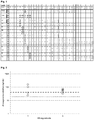
- Figure 1 illustrates the most preferred dosing regimen 1B (line “Pref.") of the present invention and some alternative regimens A1-E2.
- X1 and X2 are those days on which the HDM2 inhibitor drug is administered.
- Figure 2 shows the average concentration per cycle estimated for patients treated at 120 mg on regimen 1B. Cohort 1: 120 mg. cohort 2: 120 mg, new variant. Dashed line: Tumor stasis (SJSA-1 cell line), Dotted line: Tumor stasis (liposarcoma cell line). Each individual patient is represented by a circle.
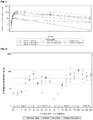
- Figure 3 shows the geometric mean concentration-time profile (Regimen 1A, Cycle 1 Day 1) (PAS).
- Figure 4 shows the Individual human average NVP-HDM201 concentration during first cycle (DDS).
- Individual C(average) individual AUC mode at the end of Cycle 1 divided by duration of Cycle 1 in hours.
- Average dose level total cumulative dose at the end of Cycle 1 divided by the duration of Cycle 1 in days.
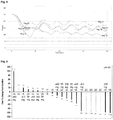
- Figure 5 shows the platelet kinetic profiles modeled based on the following doses as tested in each regimen (in order from top to bottom): Reg2C (D1-7 Q4wk): 25mg (6.25mg/d); Reg2A (D1-14 Q4wk): 20mg (10mg/d); Reg1B (Days 1, 8 Q4wk): 150mg (10.7 mg/d); Reg1A (D1 Q3wk): 350mg (16.7 mg/d).
- Figure 6 illustrates the best percentage change in blast percentage in bone marrow (BM) aspirate in AML patients (patients with available bone marrow aspirate). *Ongoing treatment; #best percentage change is ⁇ 100; TF: treatment failure; CR: complete response; CRi: morphologic CR with incomplete blood count recovery.
- Regimen 2C 45 mg.
- Line at 41 ng/mL Average concentration for tumor stasis derived from TGI PK/PD modelling in human SJSA-1 (osteosarcoma) xenograft rat.
- Line at 19 ng/mL Average concentration for tumor stasis derived from TGI PK/PD modelling in human HSAX2655 (liposarcoma) PDX rat. Calculation of average dose level (mg/day): Regimen Daily dose (mg) No.
- Figure 8 shows the best percentage change from baseline in sum of diameter and best overall response for sarcoma (liposarcoma and other sarcomas) patients treated with HDM201 according to regimen 1B (September 2017).
- PD progressing disease
- SD stable disease
- PR partial response.
- the invention provides: An HDM2-p53 interaction inhibitor for use in the treatment of cancer,
- administering day means that this is a day on which the patient takes the HDM2 inhibitor drug.
- the patient may take the drug then as one single dose on that day or the daily dose is split up into smaller portions, e.g. in the morning one half of the daily dose and in the evening the other half.
- the dose is taken as one single dose.
- administering-free days are those days during which the patient is not receiveing the HDM2 inhibitor drug.
- the patient may receive other drugs on an administration-free day. Therefore, administration-free means just free of the administration of an HDM2 inhibitor drug.
- Period is composed of from x to y days
- duration of said period is from x to y days long.
- the "period composed of 6 days” is a 6 days long time period.
- administered on two different administration days within a treatment cycle it is meant that there are only two administration days per treatment cycle, and not e.g. three or more administration day, neither only one administration days.
- the treatment cycle consists of two different administration days.
- “Two different administration days” means that the two days do not fall together to one administration day but are two separate, individual days, e.g. day 1 and day 8 of an 28 day treatment cycle.
- treatment cycle indicates the number and order of days which form one treatment scheme with administration days and administration-free days before this treatment scheme is then repeated again.
- a treatment cycle of 28 days with administration days 1 and 8 means that the drug is administered on day 1, day 8, day 29, day 36, day 57, day 64, day 85 day 92, etc.
- the present invention provides an HDM2-p53 interaction inhibitor drug, or any pharmaceutically acceptable salt thereof, for use in the treatment of cancer, wherein the drug is administered on two different administration days within a treatment cycle, wherein the first administration day and second administration day are interrupted by a short administration-free period, and the second administration day of the first or earlier treatment cycle and the first administration of the following cycle are interrupted by a long administration-free period, wherein the short administration-free period is composed of from 4 to 8 days, and the long administration-free period is composed of from 13 to 27 days, and wherein the treatment is composed of at least 2 treatment cycles.
- the present invention provides the use of an HDM2-p53 interaction inhibitor drug, or any pharmaceutically acceptable salt thereof, for the preparation of a medicament for the treatment of cancer, characterized in that the drug is administered on two different administration days within a treatment cycle, and the first administration day and second administration day are interrupted by a short administration-free period, and the second administration day of the first or earlier treatment cycle and the first administration of the following cycle are interrupted by a long administration-free period, and the short administration-free period is composed of from 4 to 8 days, and the long administration-free period is composed of from 13 to 27 days, and the treatment is composed of at least 2 treatment cycles.
- the present invention provides a medicament for the treatment of cancer comprising an HDM2-p53 interaction inhibitor drug or any pharmaceutically acceptable salt thereof,
- the treatment is repeated as long as clinically meaningful, i.e. tumor growth is at least reduced, or controlled, and the adverse events are tolerable.
- the treatment of the present invention is composed of at least 2 treatment cycles, preferably of from 2 to 20 treatment cycles. However, if clinically meaningful the therapy is continued beyond the 20 th treatment cycle.
- Figure 1 illustrates some specific dosing regimens which fall under the present invention.
- Line “Pref.” provides the most preferred dosing regimen.
- the treatment cycle of said dosing regimen is composed of 4 weeks, i.e. 28 days (day 1 - day 28).
- Administration days indicated in that figure as "X1" (first administration day) and "X2" (second administration day) are on day 1 and day 8.
- the doses on the administration days X1 and X2 are preferably the same, e.g. 120 mg at day 1 (X1) and 120 mg at day 8 (X2).
- the treatment cycle lasts 28 days, i.e. 4 weeks, and the drug, the HDM2 inhibitor, is dosed on day 1 and day 8.
- This regimen is also referred to as "d1,d8 q4w” or by similar abbreviated versions.
- This most preferred dosing regimen is herein also referred to as "Regimen 1B".
- that second administration day may alternatively be on day 6, 7, 9 or 10.
- the range of the length of the treatment cycle is from 3 to 5 weeks
- the range for the short administration-free period is from 4 to 8 days
- the range of the long administration period is from 13 to 27 days.
- Most preferred is a treatment cycle of 4 weeks.
- Figure 1 shows the preferred options in lines A1, A2, B1, B2, C1, C2, C3, D1, D2, E1, E2. More preferable regimens are A2, B1, B2, C1, C2, C3, D1, D2, E1. Even more preferable are the regimens A2, B2, C2, D1, E1. Even more preferable are the regimens B2, C2, D1. Most preferable is regimen C2 which is equal to the "regimen 1B" as mentioned above.
- HDM2 inhibitor also referred to as “HDM2i”, “Hdm2i”, “MDM2 inhibitor”, “MDM2i”, “Mdm2i”, denotes herein any compound inhibiting the HDM-2/p53 or HDM-4/p53 interaction with an IC 50 of less than 10 ⁇ M, preferably less than 1 ⁇ M, preferably in the range of nM, measured by a Time Resolved Fluorescence Energy Transfer (TR-FRET) Assay.
- TR-FRET Time Resolved Fluorescence Energy Transfer
- the inhibition of p53-Hdm2 and p53-Hdm4 interactions is measured by time resolved fluorescence energy transfer (TR-FRET).
- Fluorescence energy transfer or Foerster resonance energy transfer describes an energy transfer between donor and acceptor 5 fluorescent molecules.
- MDM2 protein amino acids 2-188
- MDM4 protein amino acids 2-185
- tagged with a C-terminal Biotin moiety are used in combination with a Europium labeled streptavidin (Perkin Elmer, Inc., Waltham, MA, USA) serving as the donor fluorophore.
- the p53 derived, Cy5 labeled peptide Cy5- TFSDLWKLL (p53 aa18-26) is the energy acceptor.
- binding interaction between MDM2 or MDM4 and the p53 peptide induces energy transfer and enhanced response at the acceptor emission wavelength at 665nm.
- the ratiometric FRET assay readout is calculated from the 15 raw data of the two distinct fluorescence signals measured in time resolved mode (countrate 665nm/countrate 615nm x 1000).
- the assay can be performed according to the following procedure: The test is performed in white 1536w microtiterplates (Greiner Bio-One GmbH, Frickenhausen, Germany) in a total volume of 3.1 ⁇ l by combining 100nl of compounds diluted in 90% DMSO/10% H2O (3.2% final DMSO concentration) with 2 ⁇ l Europium 20 labeled streptavidin (final concentration 2.5nM) in reaction buffer (PBS, 125mM NaCl, 0.001% Novexin (consists of carbohydrate polymers (Novexin polymers), designed to increase the solubility and stability of proteins; Novexin Ltd., ambridgeshire, United Kingdom), Gelatin 0.01%, 0.2% Pluronic (block copolymer from ethylenoxide and propyleneoxide, BASF, Ludwigshafen, Germany), 1 mM DTT), followed by the addition of 0.5 ⁇ l MDM2-Bio or MDM4-Bio diluted in assay buffer (final concentration 10nM).
- the HDM2 inhibitor may be selected from (S)-1-(4-Chlorophenyl)-7-isopropoxy-6-methoxy-2-(4- ⁇ methyl-[4-(3-oxo-piperazin-1-yl)-trans-cyclohexylmethyl]-amino ⁇ -phenyl)-1,4-dihydro-2H-isoquinolin-3-one; (S)-1-(4-Chloro-phenyl)-7-isopropoxy-6-methoxy-2-(4- ⁇ methyl-[4-(4-methyl-3-oxo-piperazin-1-yl)-trans-cyclohexylmethyl]-amino ⁇ -phenyl)-1,4-dihydro-2H-isoquinolin-3-one; (S)-1-(4-Chloro-phenyl)-7-isopropoxy-6-methoxy-2-(6- ⁇ methyl-[4-(4-methyl-3-oxo-piperazin-1-yl
- the HDM2 inhibitor is selected from Idasanutlin (RG7388, RO5503781), RG7775 (RO6839921), AMG232, DS3032 (DS3032b), ALRN-6924, ATSP-7041, CGM097, and HDM201.
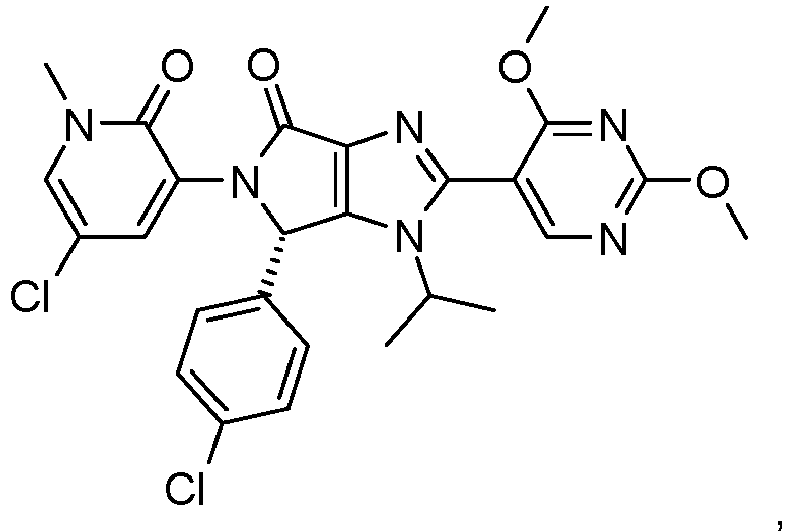
- the HDM2 inhibitor is selected from HDM201, i.e. (S)-5-(5-Chloro-1-methyl-2-oxo-1,2-dihydro-pyridin-3-yl)-6-(4-chloro-phenyl)-2-(2,4-dimethoxy-pyrimidin-5-yl)-1-isopropyl-5,6-dihydro-1H-pyrrolo[3,4-d]imidazol-4-one, also referred to as (6S)-5-(5-Chloro-1-methyl-2-oxo-1,2-dihydropyridin-3-yl)-6-(4-chlorophenyl)-2-(2,4-dimethoxypyrimidin-5-yl)-1-isopropyl-5,6-dihydropyrrolo[3,4-d]imidazol-4(1H)-one, and CGM097, i.e.
- CGM097 may be present as free base or a pharmaceutically acceptable salt, preferably it is present as sulphate salt, more preferably as bisulphate salt.
- CGM097 salts are described in WO2012/066095 .
- HDM201 may be present as free molecule or as acid variant.
- the acid variant may be a salt formed of HDM201 with the acid, or a HDM201 acid complex, or as HDM201 acid co-crystal, preferably HDM201 is present as co-crystal.
- the acid is succinic acid.
- the HDM201 is present as succinic acid co-crystal.
- HDM201 variants are described in WO2013/111105 .
- the HDM2 inhibitor is HDM201.
- the dosing regimens of the present invention are particularly well suited for the HDM201.
- the dose on the two administration days of the dosing regimen of the present invention is particularly well suited for HDM201.
- this dose may need to be adapted initially based on the recommended total clinical dose per treatment cycle for those other HDM2 inhibitors divided by two. That initially adapted dose may then further adapted based on the observed clinical efficacy and toxicological findings with that initially adapted dose.
- the daily dose of the HDM2 inhibitor on the administration days of the present invention may be from 50 mg to 400 mg, preferably from 80 mg to 300 mg, more preferably from 100 mg to 200 mg, even more preferably from 100 mg to 180 mg, even more preferably from 100 mg to 150 mg, even more preferably from 100 mg to 130 mg, even more preferably from 110 mg to 130 mg, most preferably about 120 mg.
- Those doses refer to the free drug molecule not taking into account any salt former, complex former or co-crystal former.
- Those daily doses are particularly suited for HDM201 as a HDM2 inhibitor.
- the doses on the administration days X1 and X2 are preferably the same, e.g. 120 mg at day 1 (X1) and 120 mg at day 8 (X2). Further, in the embodiments of the present invention, the doses on the administration days X1 and X2 are preferably single doses, taken by the patient as single dose units, e.g. 120 mg in one capsule or one tablet at day 1 (X1) and 120 mg in one capsule or one tablet at day 8 (X2).
- the dosing regimens of the present invention are particularly well suited for solid tumors, particularly for TP53 wild-type solid tumors.
- Said solid tumors may be e.g. sarcomas, e.g. liposarcoma or soft tissue sarcoma, melanomas or osteosarcoma, melanomas, e.g. skin melanoma (cutaneous melanoma) or uveal melanoma, blastomas, e.g. neuroblastoma, colon tumor, colorectal tumor, kidney tumor (renal cell carcinoma), liver tumor (hepatic cell carcinoma), testicular cancer.
- the dosing regimens of the present invention are even more particularly well suited for sarcomas, e.g. liposarcomas and other sarcomas.
- the dosing regimens of the present invention have the advantage that they reduces the risk of hematological toxicities, e.g. thrombocytopenia, neutropenia, leucopenia, lymphopenia, anemia.
- the dosing regimens of the present invention are particularly suited to reduce the risk of thrombocytopenia.
- the treatment comprising the HDM2-p53 interaction inhibitors may be in combination with a thrombopoietin receptor agonist, preferably said thrombopoietin receptor agonist is eltrombopag (INN) which is available under the trademarks PROMACTA or REVOLADE.
- a thrombopoietin receptor agonist preferably said thrombopoietin receptor agonist is eltrombopag (INN) which is available under the trademarks PROMACTA or REVOLADE.
- This combination may further reduce the risk of cytopenias, especically thrombocytopenia and/or neutropenia.
- the daily dose on the administration days is from 100 mg to 150 mg.
- the daily dose may be 100 mg, 105 mg, 110 mg, 120 mg, 125 mg, 130 mg, 135 mg, 140 mg, 145 mg or 150 mg.
- the daily dose is selected from 120 mg, 125 mg, 130 mg, 135 mg, 140 mg, 145 mg or 150 mg. More preferably the daily dose is selected from 120 mg or 150 mg. Even more preferably the daily dose is 120 mg.
- the other therapeutically active agent is preferably an anti-cancer agent.
- said anti-cancer agent may be selected from FLT3 inhibitors (e.g. gilterinib, quizartinib), BCL2 inhibitors (e.g. navitoclax, venetoclax), Other HDM2 inhibitors (e.g. idasanutlin) hypomethylating agents (HMA) (e.g. Vidaza [azacytidine, 5-azacytidine], Dacogen [decitabine], guadecitabine), anthracyclines (e.g. idarubicin, daunorubicin, doxorubicin, epirubicin); anti-CD33 antibodies (e.g. Mylotarg [gemtuzumab], vadastuximab) and other agents (e.g. AraC [cytarabine, aracytine])
- FLT3 inhibitors e.g. gilterinib, quizartinib
- BCL2 inhibitors e.g. navitoclax, venetoclax
- said anti-cancer agent may be selected from CDK-4/6 inhibitors (e.g. ribociclib, palbociclib), Protein kinase C inhibitors (e.g. selinexor, one or more of the PKCi disclosed in WO2017/029588 , i.e.
- This example provides a summary of the clinical safety and pharmacokinetic (PK) data that supports the dose and regimen of the present invention for single agent HDM201 for patients with solid tumors in the phase 1 trial CHDM201X2101.
- the preferred was found to be 120mg HDM201 given on d1 and d8 of a 4 w cycle (regimen 1B).
- the data are from the monotherapy trial with a data cut-off date of 19-Sep-2016.
- the primary objective of the phase I part of the study is to determine the Maximum Tolerated Dose (MTD) and/or to identify the preferred dose of HDM201.
- MTD Maximum Tolerated Dose
- the study design allowed parallel exploration of the safety, tolerability, and clinical activity of two broad dosing strategies for HDM201 across solid malignancies: intermittent high dose regimens (Regimen 1A and 1B) and extended low dose regimens (Regimen 2A and 2C).
- Table 1 summarizes the dosing regimens in each category that were evaluated in solid tumor patients.
- Table 2 provides the baseline characteristics of the patients involved in this study.
- the endpoint for the primary objective is the incidence of Dose Limiting Toxicities (DLTs) during the first cycle of treatment.
- DLTs Dose Limiting Toxicities
- the primary analysis estimates the MTD based on DLT rate
- the final preferred dose determination utilizes additional data beyond cycle 1 DLT rate, including later cycle tolerability, PK, PD and anti-tumor activity.
- Table 2 provides the baseline characteristics of the patients involved in this study.
- Cycle 2 hematological toxicities were also taken into account for dose escalation and regimen selection.
- the intermittent high dose regimen 1B (d1 and d8 of 4 w cycle) were found to have the most favorable therapeutic index.
- Grade 3/4 thrombocytopenia was lowest in this regimen over all doses tested, and did not occur in patients treated at the selected RDE of 120mg (see Table 3-1).
- the most frequent non-hematologic toxicities were gastrointestinal, but were not dose limiting at any of the dose levels evaluated across the 4 regimens.
- grade 3/4 neutropenia and thrombocytopenia were most commonly observed across the regimens (Table 3). Therefore, the comparative incidence of grade 3/4 cytopenias (most importantly thrombocytopenia) across the 4 regimens was a key factor informing the selection of regimen and dose for expansion.
- Intermittent high dose regimen 1A and extended low dose regimen 2A were the first to be evaluated in dose escalation. Both regimens had unfavorable rates of DLT and delayed hematologic toxicities at dose levels achieving predicted therapeutically relevant exposures. Therefore, cohorts exploring two additional regimens were opened: intermittent high dose regimen 1B and extended low dose regimen 2C. In the regimen 2C, DLTs were observed at dose levels at which exposures were below those predicted to be efficacious based on PK/PD modeling.
- grade 3/4 thrombocytopenia AEs see Table 3-1. There were no dose interruptions or discontinuations due to thrombocytopenia at this dose level and no patients required platelet transfusions.
- the incidence of grade 3/4 neutropenia was similar across all regimens, and was observed in 2 out of 9 patients at the 120mg dose level. There were no non-hematologic dose limiting toxicities or grade 3/4 AEs at this dose level.
- a subject with multiple occurrences of an AE under one treatment is counted only once in the AE category For that treatment.
- a subject with multiple adverse events is counted only once in the total row.
- Only AEs occurring during treatment or within 30 days of the last study medication are reported.
- Grade 3/4 AEs of special interest are shown in Table 3.
- Grade 3/4 hematological toxicities suspected to be study-drug related were observed for all treatment regimens, occurring in up to -35% of patients.
- Grade 3/4 thrombocytopenia was lowest in Regimen 1B.
- the PK of HDM201 was best described by a 1-compartment PK model with a delayed zero- and first-order absorption process, and a linear clearance.
- Body weight was identified as a statistically significant covariate on apparent central volume of distribution (Vc/F), in which Vc/F increased with increasing body weight.
- compartmental PK modeling was used to estimate the individual average concentration per cycle for the 9 patients treated at 120 mg on regimen 1B ( Figure 2 ).
- the estimated average drug concentrations per cycle were near or above the most conservative average tumor stasis concentration of ⁇ 41 ng/mL per cycle determined from PKPD modeling of preclinical data (human SJSA-1 xenograft rat model).
- the average plasma concentration reached with Regimen 1A/1B was closer to the predicted preclinical target efficacious levels (125 ng/mL) required for 95% tumor regression (upper dashed line in Figure 5 ) and near or above the estimated average concentrations for the most conservative average tumor stasis concentration of ⁇ 41 ng/mL (dashed line) determined from PK/PD modeling of human SJSA-1 xenograft rat model ( Figure 4 ).
- the dashed line at concentration of ⁇ 19 ng/mL represents average tumor stasis determined from PK/PD modeling of preclinical data from a liposarcoma (HSAX2655) patient-derived xenograft rat model.
- the dashed line at concentration 29.4 ng/mL represents IC50 value determined from the cellular activity in SJSA-1 cell line.
- This study utilizes a Bayesian logistic regression model (BLRM) to support dose escalation and estimate the MTD and/or determine the preferred dose for HDM201.
- the BLRM with escalation with overdose control (EWOC) enables incorporation of available prior information and updates the model parameters based upon new information about observed dose limiting toxicities (DLT) seen in the clinical study.
- DLT dose limiting toxicities
- regimen 1A and 1B DLT incidence has been used to update the model and support the decision for the next dose.
- DLTs are defined as per Table 6-3 of the protocol and are events occurring during the first cycle treatment.
- RDI median relative dose intensity
- the PK of HDM201 have been evaluated in the ongoing single agent Phase I clinical trial in patients with solid tumors and hematological malignancies (HDM201X2101).
- Patients have been treated with a single dose on Day 1 in a three-week cycle (q3w, regimen 1A), with a single dose on Day 1 and Day 8 in a four-week cycle (d1 and d8 of 4 w cycle, regimen 1B), or with daily dosing for the first 7 or 14 days in a four-week cycle (regimen 2C [q.d., 1 w on/3 w off] or regimen 2A [q.d., 2 w on/2 w off], respectively).
- PK assessments were conducted following single dose and repeated administration.
- PK parameters from non- compartmental analysis of plasma concentration-time profiles are summarized by dose regimen and tumor type (data cut-off 01-Apr-2016).
- PK parameters for Regimen 2A Day 1 and 14 of Cycle 1 for doses from 1 to 20 mg
- Regimen 1A Day 1 of Cycle 1 for doses from 12.5 to 350 mg
- Tables 9, 10 and 11 representative of the PK for daily and less frequent dosing regimens
- Example 3 PK/PD model of thrombocytopenia
- PK model 1 compartment with biphasic absorption.
- PD model Adjusted Friberg model for thrombocytopenia including PLT transfusions and effect on HDM201 on proliferative cells and regulations.
- the platelet kinetic profiles shown in Figure 5 are modeled based on the following doses as tested in each regimen (in order from top to bottom in Figure 5 ):
- 1B has best overall platelet kinetic profile of the regimens that have demonstrated single agent activity.
- the drug product consists of HDM201 succinic acid drug substance filled directly into hard gelatin capsules (HGC), and does not contain any other excipients.
- the drug product is provided in four dosage strengths: 1 mg, 2.5 mg, 10 mg and 100 mg (based on the weight of the free form), intended for oral use.
- the 1 mg strength capsule is a "Size 3" yellow HGC
- the 2.5 mg strength capsule is a "Size 3" Swedish Orange HGC
- the 10 mg strength capsule is a "Size 1" Grey HGC
- the 100 mg is a "Size 0" Swedish Orange HGC.
- the drug product is packaged in child resistant, induction sealed High Density Polyethylene (HDPE) bottles.
- HDPE High Density Polyethylene
- This example provides a summary of the clinical data of the phase 1 trial CHDM201X2101 (data cut-off date of 07-Dec-2016) that demonstrates that the dose regimen "1B", is also suitalble for the treatment of patients with hematological tumors.
- Table 1 HDM201 Dosing regimens and dose levels evaluated in hematologic malignancies Dosing Regimen Dose levels (number of patients) Total number of patients Intermittent high dose regimens 1A (d1 Q3W) 250mg (3) 16 350mg (4) 400mg (8AML; 1ALL) 1B (d1,d8 Q4W) 150mg (6) 6 Extended low dose regimens 2A (2 week on/2 weeks off) 20mg (3) 7 30mg (4) 2C (1 week on/3 weeks off) 45mg (7AML;1 ALL) 8
- Table 2 provides the characteristics of those patients.
- Relapsed/Refractory AML both de novo or secondary AML
- APL Acute Promyelocytic Leukemia
- IVS-R International Prognostic Scoring System
- relapsed/Refractory Acute Lymphoblastic Leukemia including Ph+ ALL, or previously untreated patients who are considered inappropriate candidates for standard induction therapy.
- Patients with Ph+ ALL who show early markers of relapse in MRD surveillance can be considered for inclusion as long as other therapies such as TKIs are exhausted or cannot be given.
- Tumor of the patient is TP53wt characterized by, at a minimum, no mutations in exons 5, 6, 7 and 8, and the p53 status was obtained from a bone-marrow sample, collected no longer than 3 months before signing the main ICF.
- Tables 3 and 4 provide safety and tolerability information about dosing regimen 1B in comparision with other intermittend high dose regimens and extended low dose regimens.
- regimen 1B only 1 dose limiting toxicity (DLT) were found.
- DLT dose limiting toxicity
- a subject with multiple occurrences of an AE under one treatment is counted only once in the AE category For that treatment.
- a subject with multiple adverse events is counted only once in the total row.
- Only AEs occurring during treatment or within 30 days of the last study medication are reported.
- Tables 5 and 6 and Figure 6 provide efficacy information for dosing regimen 1B in comparison to other regimens.
- One patient treated following the regimen 1B showed a CRi and thus demonstrated regimen 1B as being effective also in hematological tumors.
- this CRi patient showed the strongest positive effect.
- Non-compartmental PK analysis showed a median time to reach maximum plasma concentrations ranging from 2.0 to 5.8 h across the dose range (2 to 350 mg).
- a preliminary dose proportionality assessment showed approximately dose proportional PK (AUClast and Cmax) over the dose range studied.
- the inter-patient variability CV% Geo-mean
- CV% Geo-mean CV% Geo-mean
- CV% Geo-mean CV% Geo-mean
- an integrated analysis of all available HDM201 concentrations was conducted using a population approach.
- the PK of HDM201 was best described by a 1-compartment PK model with a delayed zero- and first-order absorption process, and a linear clearance.
- Body weight was identified as a statistically significant covariate on apparent central volume of distribution (Vc/F), in which Vc/F increased with increasing body weight.
- Compartmental PK modeling was used to estimate the individual average concentration during cycle 1 for patients with hematological tumors treated following the four different ( Figure 7 ). For all patients with measured PK, the estimated average drug concentrations during cycle 1 were above the most conservative average tumor stasis concentration of about 41 ng/mL per cycle determined from PKPD modeling of preclinical data (human SJSA-1 xenograft rat model).
Landscapes
- Health & Medical Sciences (AREA)
- Life Sciences & Earth Sciences (AREA)
- Veterinary Medicine (AREA)
- Chemical & Material Sciences (AREA)
- Public Health (AREA)
- Medicinal Chemistry (AREA)
- General Health & Medical Sciences (AREA)
- Animal Behavior & Ethology (AREA)
- Pharmacology & Pharmacy (AREA)
- Epidemiology (AREA)
- General Chemical & Material Sciences (AREA)
- Organic Chemistry (AREA)
- Nuclear Medicine, Radiotherapy & Molecular Imaging (AREA)
- Chemical Kinetics & Catalysis (AREA)
- Hematology (AREA)
- Oncology (AREA)
- Engineering & Computer Science (AREA)
- Bioinformatics & Cheminformatics (AREA)
- Diabetes (AREA)
- Pharmaceuticals Containing Other Organic And Inorganic Compounds (AREA)
- Medicines That Contain Protein Lipid Enzymes And Other Medicines (AREA)
Description
- The present invention relates to HDM2-p53 interaction inhibitors for use in the treatment of cancer, wherein the drug is administered following a high dose intermittent dosing regimen.
- p53 is induced and activated by a number of potentially tumorigenic processes - including aberrant growth signals, DNA damage, ultraviolet light, and protein kinase inhibitors (Millard M, et al. Curr Pharm Design 2011;17:536-559) - and regulates genes controlling cell growth arrest, DNA repair, apoptosis, and angiogenesis (Bullock AN & Fersht AR. Nat Rev Cancer 2001;1:68-76; Vogelstein B, et al. Nature Education 2010;3(9):6).
Human Double Minute-2 (HDM2) is one of the most important regulators of p53. It binds directly to p53, inhibiting its transactivation, and subsequently directing it towards cytoplasmic degradation (Zhang Y, et al. Nucleic Acids Res 2010;38:6544-6554).
p53 is one of the most frequently inactivated proteins in human cancer, either through direct mutation of the TP53 gene (found in approximately 50% of all human cancers) (Vogelstein, B et al. Nature 2000;408:307-310) or via suppressive mechanisms such as overexpression of HDM2 (Zhao Y, et al. BioDiscovery 2013;8:4).
Potent and selective inhibitors of the HDM2-p53 interaction (also referred to as HDM2 inhibitors or MDM2 inhibitors), e.g. NVP-HDM201, have been shown to restore p53 function in preclinical cell and in vivo models (Holzer P, et al. Poster presented at AACR 2016, Abstract #4855). - Different dosing regimens were described for HDM2 inhibitors and tested in clinical studies. E.g.
US2013/0245089 discloses a method of treating a patient suffering from cancer by administering to the patient 4-{[(2R,3S,4R,5S)-4-(4-Chloro-2-fluoro-phenyl)-3-(3-chloro-2-fluoro-phenyl)-4-cyano-5-(2, 2-dimethyl-propyl)-pyrrolidine-2-carbonyl]-amino}-3-methoxybenzoic acid in an amount of from about 800 to about 3000 mg/day for an administration period of up to about 7 days, on days 1-7, of a 28 day treatment cycle, followed by a rest period of from about 21 to about 23 days. - A paper in Clinical Cancer Research by B. Higgins et al. (May 2014) disclosed a 28 days cycle schedule, where RG7388 is administered once weekly three times followed by 13 days of rest (28 days cycle schedule), or where the drug is administered for 5 consecutive days of a 28 days schedule. Further dosing regimens for HDM2 inhibitors are disclosed in
WO 2015/198266 . - HDM2 inhibitors and how to prepare them were disclosed for example in
WO2013/111105 orWO2011/076786 . - One of the objectives in the development of HDM2 inhibitor drugs is to find a dosing regimen which allows the administration of a high dose which ensures efficacy but at the same time reduces the risk of the occurance of adverse events.
- It has been surprisingly found that one type of dosing regimen is particularly useful for the treatment of solid tumors with HDM2 inhibitors. This dosing regimen was also found useful for the treatment of hematological tumors with MDM2 inhibitors.
- Specifically, the present invention provides the following aspects, advantageous features and specific embodiments, respectively alone or in combination, as listed in the following items:
- 1. An HDM2-p53 interaction inhibitor for use in the treatment of cancer,
wherein the drug is administered on two different administration days within a treatment cycle,
wherein the first administration day and second administration day are interrupted by a short administration-free period, and the second administration day of the first or earlier treatment cycle and the first administration of the following cycle are interrupted by a long administration-free period,
wherein the short administration-free period is composed of from 4 to 8 days, and the long administration-free period is composed of from 13 to 27 days, and
wherein the treatment is composed of at least 2 treatment cycles. - 2. The HDM2-p53 interaction inhibitor for use in the treatment of cancer according to
item 1, wherein the short administration-free period is composed of 6 days, and the long administration-free period is composed of 20 days. - 3. The HDM2-p53 interaction inhibitor for use in the treatment of cancer according to
item 1 oritem 2, wherein said inhibitor is selected from the group of idasanutlin (RG7388, RO5503781), RG7775 (RO6839921), AMG232, DS3032 (DS3032b), ALRN-6924, ATSP-7041, CGM097, and HDM201. - 4. The HDM2-p53 interaction inhibitor for use in the treatment of cancer according to any one of
items 1 to 3, wherein said inhibitor is HDM201. - 5. The HDM2-p53 interaction inhibitor for use in the treatment of cancer according to
item 4, wherein said inhibitor is HDM201 succinic acid. - 6. The HDM2-p53 interaction inhibitor for use in the treatment of cancer according to
items - 7. The HDM2-p53 interaction inhibitor for use in the treatment of cancer according to
item 6, wherein the daily dose on the administration days is 120 mg. - 8. The HDM2-p53 interaction inhibitor for use in the treatment of cancer according to any one of the preceeding items, wherein the cancer is a TP53 wild-type tumor.
- 9. The HDM2-p53 interaction inhibitor for use in the treatment of cancer according to any one of the preceeding items, wherein the cancer is a solid tumor.
- 10 The HDM2-p53 interaction inhibitor for use in the treatment of cancer according to
item 9, wherein the solid tumor is selected from sarcomas, e.g. liposarcoma or soft tissue sarcoma, melanomas, e.g. skin melanoma or uveal melanoma, blastomas (e.g. neuroblastoma), colon tumor, colorectal tumor, kidney tumor, and liver tumor. - 11. The HDM2-p53 interaction inhibitor for use in the treatment of cancer according to any one of the preceeding items in combination with a thrombopoietin receptor agonist.
- 12. The HDM2-p53 interaction inhibitor in combination with a thrombopoietin receptor agonist for use in the treatment of cancer according to item 11, wherein the thrombopoietin receptor agonist is eltrombopag.
- 13. The HDM2-p53 interaction inhibitor for use in the treatment of cancer according to any one of the preceeding items, wherein the treatment reduces the risk of hematological toxicities.
- 14. The HDM2-p53 interaction inhibitor for use in the treatment of cancer according to any one of items -1 to 8, wherein the cancer is a hematological tumor.
- 15. The HDM2-p53 interaction inhibitor for use in the treatment of cancer according to item 14, wherein the hematological tumor is a leukemia.
- 16. The HDM2-p53 interaction inhibitor for use in the treatment of cancer according to item 14, wherein the hematological tumor is selected from acute myeloid leukemia (AML), myelodysplastic syndrome (MDS), and acute lymphoblastic leukemia (ALL).
- 17. The HDM2-p53 interaction inhibitor for use in the treatment of cancer according to any one of items 14 to 16, wherein the hematological tumor is a relapsed/refractory hematological tumor.
- 18. The HDM2-p53 interaction inhibitor for use in the treatment of cancer according to -
item - A preferred embodiment of the present invention is:
The HDM2-p53 interaction inhibitor drug HDM201 for use in the treatment of solid tumors, wherein the drug is administered onday 1 andday 8 of a 4 week (28 day) treatment cycle, wherein the treatment is composed of at least 2 treatment cycles, and the dose of the drug on each administration day is about 120 mg. - Another preferred embodiment of the present invention is:
The HDM2-p53 interaction inhibitor drug HDM201 for use in the treatment of hematological tumors, wherein the drug is administered onday 1 andday 8 of a 4 week (28 day) treatment cycle, wherein the treatment is composed of at least 2 treatment cycles, and the dose of the drug on each administration day is about 120 mg. - The dosing regimens of the present invention as described above provide a highly favorable therapeutic index, low incidence of
grade 3/4 thrombocytopenia while achieving therapeutically relevant exposures, p53 pathway activation (GDF-15 upregulation), and clinical activity. - In the following the present invention is described in detail with reference to accompanying figures in which:
Figure 1 illustrates the mostpreferred dosing regimen 1B (line "Pref.") of the present invention and some alternative regimens A1-E2. X1 and X2 are those days on which the HDM2 inhibitor drug is administered.
Figure 2 shows the average concentration per cycle estimated for patients treated at 120 mg onregimen 1B. Cohort 1: 120 mg. cohort 2: 120 mg, new variant. Dashed line: Tumor stasis (SJSA-1 cell line), Dotted line: Tumor stasis (liposarcoma cell line). Each individual patient is represented by a circle.
Figure 3 shows the geometric mean concentration-time profile (Regimen 1A,Cycle 1 Day 1) (PAS).
Figure 4 shows the Individual human average NVP-HDM201 concentration during first cycle (DDS). Individual C(average) = individual AUC mode at the end ofCycle 1 divided by duration ofCycle 1 in hours. Average dose level = total cumulative dose at the end ofCycle 1 divided by the duration ofCycle 1 in days.
Figure 5 shows the platelet kinetic profiles modeled based on the following doses as tested in each regimen (in order from top to bottom): Reg2C (D1-7 Q4wk): 25mg (6.25mg/d); Reg2A (D1-14 Q4wk): 20mg (10mg/d); Reg1B (Days
Figure 6 illustrates the best percentage change in blast percentage in bone marrow (BM) aspirate in AML patients (patients with available bone marrow aspirate).
*Ongoing treatment; #best percentage change is ≥100; TF: treatment failure; CR: complete response; CRi: morphologic CR with incomplete blood count recovery. Daily doses:Regimen 1A: 250, 350 or 400 mg.Regimen 1B: 150 mg.Regimen 2A: 20, 30 mg.Regimen 2C: 45 mg.
Figure 7 shows the individual average concentration during first treatment cycle versus dose per regimen for patients with hematological tumors.
Line at 120 ng/mL = 95% tumor regression from human SJSA-1 xenograft rat. Line at 41 ng/mL = Average concentration for tumor stasis derived from TGI PK/PD modelling in human SJSA-1 (osteosarcoma) xenograft rat. Line at 19 ng/mL = Average concentration for tumor stasis derived from TGI PK/PD modelling in human HSAX2655 (liposarcoma) PDX rat. Calculation of average dose level (mg/day):Regimen Daily dose (mg) No. of administration days Total dose per cycle (mg) Cycle duration (days) Average dose (mg/day) 1A 250 1 250 21 11.9 350 1 350 21 16.7 400 1 400 21 19 1B 150 2 300 28 10.7 2A 20 14 280 28 10 30 14 420 28 15 2C 45 7 315 28 11.3
Figure 8 shows the best percentage change from baseline in sum of diameter and best overall response for sarcoma (liposarcoma and other sarcomas) patients treated with HDM201 according toregimen 1B (September 2017). PD: progressing disease, SD: stable disease, PR: partial response. - Herein after, the present invention is described in further detail and is exemplified.
- In one aspect the invention provides:
An HDM2-p53 interaction inhibitor for use in the treatment of cancer, - wherein the drug is administered on two different administration days within a treatment cycle,
- wherein the first administration day and second administration day are interrupted by a short administration-free period, and the second administration day of the first or earlier treatment cycle and the first administration of the following cycle are interrupted by a long administration-free period,
- wherein the short administration-free period is composed of from 4 to 8 days, and the long administration-free period is composed of from 13 to 27 days, and wherein the treatment is composed of at least 2 treatment cycles.
- "Administration day" means that this is a day on which the patient takes the HDM2 inhibitor drug. The patient may take the drug then as one single dose on that day or the daily dose is split up into smaller portions, e.g. in the morning one half of the daily dose and in the evening the other half. Preferably the dose is taken as one single dose.
- "Administration-free days" are those days during which the patient is not receiveing the HDM2 inhibitor drug. A series of administration-free days directly one after the other, not interrupted by a administration day, forms an "administration-free period." The patient may receive other drugs on an administration-free day. Therefore, administration-free means just free of the administration of an HDM2 inhibitor drug.
- "Period is composed of from x to y days" means that the duration of said period is from x to y days long. E.g. the "period composed of 6 days" is a 6 days long time period.
- With "administered on two different administration days within a treatment cycle" it is meant that there are only two administration days per treatment cycle, and not e.g. three or more administration day, neither only one administration days. In other words, the treatment cycle consists of two different administration days. "Two different administration days" means that the two days do not fall together to one administration day but are two separate, individual days,
e.g. day 1 andday 8 of an 28 day treatment cycle. - The term "treatment cycle" indicates the number and order of days which form one treatment scheme with administration days and administration-free days before this treatment scheme is then repeated again. E.g. a treatment cycle of 28 days with
administration days day 1,day 8, day 29, day 36, day 57, day 64, day 85 day 92, etc. - The present invention provides an HDM2-p53 interaction inhibitor drug, or any pharmaceutically acceptable salt thereof, for use in the treatment of cancer,
wherein the drug is administered on two different administration days within a treatment cycle,
wherein the first administration day and second administration day are interrupted by a short administration-free period, and the second administration day of the first or earlier treatment cycle and the first administration of the following cycle are interrupted by a long administration-free period,
wherein the short administration-free period is composed of from 4 to 8 days, and the long administration-free period is composed of from 13 to 27 days, and wherein the treatment is composed of at least 2 treatment cycles. - As a further alternative the present invention provides the use of an HDM2-p53 interaction inhibitor drug, or any pharmaceutically acceptable salt thereof, for the preparation of a medicament for the treatment of cancer,
characterized in that the drug is administered on two different administration days within a treatment cycle,
and the first administration day and second administration day are interrupted by a short administration-free period, and the second administration day of the first or earlier treatment cycle and the first administration of the following cycle are interrupted by a long administration-free period,
and the short administration-free period is composed of from 4 to 8 days, and the long administration-free period is composed of from 13 to 27 days, and
the treatment is composed of at least 2 treatment cycles. - As a further alternative the present invention provides a medicament for the treatment of cancer comprising an HDM2-p53 interaction inhibitor drug or any pharmaceutically acceptable salt thereof,
- characterized in that the drug is administered on two different administration days within a treatment cycle,
- and the first administration day and second administration day are interrupted by a short administration-free period, and the second administration day of the first or earlier treatment cycle and the first administration of the following cycle are interrupted by a long administration-free period,
- and the short administration-free period is composed of from 4 to 8 days, and the long administration-free period is composed of from 13 to 27 days, and
- the treatment is composed of at least 2 treatment cycles.
- The treatment is repeated as long as clinically meaningful, i.e. tumor growth is at least reduced, or controlled, and the adverse events are tolerable. The treatment of the present invention is composed of at least 2 treatment cycles, preferably of from 2 to 20 treatment cycles. However, if clinically meaningful the therapy is continued beyond the 20th treatment cycle.
Figure 1 illustrates some specific dosing regimens which fall under the present invention. Line "Pref." provides the most preferred dosing regimen. The treatment cycle of said dosing regimen is composed of 4 weeks, i.e. 28 days (day 1 - day 28). Administration days, indicated in that figure as "X1" (first administration day) and "X2" (second administration day) are onday 1 andday 8. That leaves an administration-free period of 6 days between X1 and X2, fromday 2 to day 6 (short administration-free period) and and an administration-free period of 20 days between X2 an X1 of the next treatment cycle fromday 9 until day 28 (long administration-free period). Day 29 in this example would be then theday 1 of the next treatment cycle. - In the embodiments of the present invention, the doses on the administration days X1 and X2 are preferably the same, e.g. 120 mg at day 1 (X1) and 120 mg at day 8 (X2).
- In the most preferred dosing regimen of the present invention, the treatment cycle lasts 28 days, i.e. 4 weeks, and the drug, the HDM2 inhibitor, is dosed on
day 1 andday 8. This regimen is also referred to as "d1,d8 q4w" or by similar abbreviated versions. This most preferred dosing regimen is herein also referred to as "Regimen 1B". - Instead of the most
preferred day 8 for the second administration day, that second administration day may alternatively be onday
Depending on the length of the treatment cycle, preferably 3, 4, or 5 weeks, this leads to a shorter or longer administration-free periods. E.g. if the range of the length of the treatment cycle is from 3 to 5 weeks, the range for the short administration-free period is from 4 to 8 days, and the range of the long administration period is from 13 to 27 days. Most preferred is a treatment cycle of 4 weeks. - From all the possible regimens resulting from those ranges for the short and long administration-free preriods as defined above,
Figure 1 shows the preferred options in lines A1, A2, B1, B2, C1, C2, C3, D1, D2, E1, E2. More preferable regimens are A2, B1, B2, C1, C2, C3, D1, D2, E1. Even more preferable are the regimens A2, B2, C2, D1, E1. Even more preferable are the regimens B2, C2, D1. Most preferable is regimen C2 which is equal to the "regimen 1B" as mentioned above. - The term "HDM2 inhibitor", also referred to as "HDM2i", "Hdm2i", "MDM2 inhibitor", "MDM2i", "Mdm2i", denotes herein any compound inhibiting the HDM-2/p53 or HDM-4/p53 interaction with an IC50 of less than 10 µM, preferably less than 1 µM, preferably in the range of nM, measured by a Time Resolved Fluorescence Energy Transfer (TR-FRET) Assay. The inhibition of p53-Hdm2 and p53-Hdm4 interactions is measured by time resolved fluorescence energy transfer (TR-FRET). Fluorescence energy transfer (or Foerster resonance energy transfer) describes an energy transfer between donor and
acceptor 5 fluorescent molecules. For this assay, MDM2 protein (amino acids 2-188) and MDM4 protein (amino acids 2-185), tagged with a C-terminal Biotin moiety, are used in combination with a Europium labeled streptavidin (Perkin Elmer, Inc., Waltham, MA, USA) serving as the donor fluorophore. The p53 derived, Cy5 labeled peptide Cy5- TFSDLWKLL (p53 aa18-26) is the energy acceptor. Upon excitation of thedonor 10 molecule at 340nm, binding interaction between MDM2 or MDM4 and the p53 peptide induces energy transfer and enhanced response at the acceptor emission wavelength at 665nm. Disruption of the formation of the p53-MDM2 or p53-MDM4 complex due to an inhibitor molecule binding to the p53 binding site of MDM2 or MDM4 results in increased donor emission at 615nm. The ratiometric FRET assay readout is calculated from the 15 raw data of the two distinct fluorescence signals measured in time resolved mode (countrate 665nm/countrate 615nm x 1000). The assay can be performed according to the following procedure: The test is performed in white 1536w microtiterplates (Greiner Bio-One GmbH, Frickenhausen, Germany) in a total volume of 3.1µl by combining 100nl of compounds diluted in 90% DMSO/10% H2O (3.2% final DMSO concentration) with2µl Europium 20 labeled streptavidin (final concentration 2.5nM) in reaction buffer (PBS, 125mM NaCl, 0.001% Novexin (consists of carbohydrate polymers (Novexin polymers), designed to increase the solubility and stability of proteins; Novexin Ltd., ambridgeshire, United Kingdom), Gelatin 0.01%, 0.2% Pluronic (block copolymer from ethylenoxide and propyleneoxide, BASF, Ludwigshafen, Germany), 1 mM DTT), followed by the addition of 0.5µl MDM2-Bio or MDM4-Bio diluted in assay buffer (final concentration 10nM). Allow the solution to pre-incubate for 15 minutes at room temperature, followed by addition of 0.5µl Cy5-p53 peptide in assay buffer (final concentration 20nM). Incubate at room temperature for 10 minutes prior to reading the plate. For measurement of samples, an Analyst GT multimode microplate reader (Molecular Devices) with the followingsettings 30 is used: Dichroic mirror 380nm, Excitation 330nm, Emission Donor 615nm and Emission Acceptor 665nm. IC50 values are calculated by curve fitting using XLfit. If not specified, reagents are purchased from Sigma Chemical Co, St. Louis, MO, USA. - In the aspects of the invention, the HDM2 inhibitor may be selected from (S)-1-(4-Chlorophenyl)-7-isopropoxy-6-methoxy-2-(4-{methyl-[4-(3-oxo-piperazin-1-yl)-trans-cyclohexylmethyl]-amino}-phenyl)-1,4-dihydro-2H-isoquinolin-3-one;
(S)-1-(4-Chloro-phenyl)-7-isopropoxy-6-methoxy-2-(4-{methyl-[4-(4-methyl-3-oxo-piperazin-1-yl)-trans-cyclohexylmethyl]-amino}-phenyl)-1,4-dihydro-2H-isoquinolin-3-one; (S)-1-(4-Chloro-phenyl)-7-isopropoxy-6-methoxy-2-(6-{methyl-[4-(4-methyl-3-oxo-piperazin-1-yl)-trans-cyclohexylmethyl]-amino}-pyridin-3-yl)-1,4-dihydro-2H-isoquinolin-3-one; (S)-1-(4-Chloro-phenyl)-7-isopropoxy-6-methoxy-2-(6-{methyl-[4-(3-methyl-4-oxo-imidazolidin-1-yl)-trans-cyclohexylmethyl]-amino}-pyridin-3-yl)-1,4-dihydro-2H-isoquinolin-3-one;
(S)-1-(4-Chloro-phenyl)-7-isopropoxy-6-methoxy-2-(5-{methyl-[4-(3-methyl-4-oxo-imidazolidin-1-yl)-trans-cyclohexylmethyl]-amino}-pyrazin-2-yl)-1,4-dihydro-2H-isoquinolin-3-one;
1-(4-Chloro-phenyl)-7-isopropoxy-6-methoxy-2-(4-{methyl-[4-(4-methyl-3-oxo-piperazin-1-yl)-trans-cyclohexylmethyl]-amino}-phenyl)-1,4-dihydro-2H-isoquinolin-3-one; (S)-5-(5-Chloro-1-methyl-2-oxo-1,2-dihydro-pyridin-3-yl)-6-(4-chloro-phenyl)-2-(2,4-dimethoxy-pyrimidin-5-yl)-1-isopropyl-5,6-dihydro-1H-pyrrolo[3,4-d]imidazol-4-one; 4-[(S)-5-(3-Chloro-2-fluoro-phenyl)-2-(2,4-dimethoxy-pyrimidin-5-yl)-3-isopropyl-6-oxo-3,4,5,6-tetrahydro-pyrrolo[3,4-d]imidazol-4-yl]-benzonitrile; (S)-5-(5-Chloro-2-oxo-1,2-dihydro-pyridin-3-yl)-6-(4-chloro-phenyl)-2-(2,4-dimethoxy-pyrimidin-5-yl)-1-isopropyl-5,6-dihydro-1H-pyrrolo[3,4-d]imidazol-4-one; (S)-5-(3-chloro-4-fluorophenyl)-6-(4-chlorophenyl)-2-(2,4-dimethoxypyrimidin-5-yl)-1-((R)-1-methoxypropan-2-yl)-5,6-dihydropyrrolo[3,4-d]imidazol-4(1H)-one;


(S)-5-(5-chloro-1-methyl-2-oxo-1,2-dihydropyridin-3-yl)-6-(4-chlorophenyl)-2-(2,4-dimethoxy-d6-pyrimidin-5-yl)-1-((R)-1-methoxypropan-2-yl)-5,6-dihydropyrrolo[3,4-d]imidazol-4(1H)-one; Idasanutlin (RG7388, RO5503781); RG7775 (RO6839921); AMG232; DS3032 (also referred to as DS3032b); ALRN-6924; ATSP-7041; CGM097; and HDM201. - Preferably the HDM2 inhibitor is selected from Idasanutlin (RG7388, RO5503781), RG7775 (RO6839921), AMG232, DS3032 (DS3032b), ALRN-6924, ATSP-7041, CGM097, and HDM201.
- More preferably the HDM2 inhibitor is selected from HDM201, i.e. (S)-5-(5-Chloro-1-methyl-2-oxo-1,2-dihydro-pyridin-3-yl)-6-(4-chloro-phenyl)-2-(2,4-dimethoxy-pyrimidin-5-yl)-1-isopropyl-5,6-dihydro-1H-pyrrolo[3,4-d]imidazol-4-one, also referred to as (6S)-5-(5-Chloro-1-methyl-2-oxo-1,2-dihydropyridin-3-yl)-6-(4-chlorophenyl)-2-(2,4-dimethoxypyrimidin-5-yl)-1-isopropyl-5,6-dihydropyrrolo[3,4-d]imidazol-4(1H)-one,

- CGM097 may be present as free base or a pharmaceutically acceptable salt, preferably it is present as sulphate salt, more preferably as bisulphate salt. CGM097 salts are described in
WO2012/066095 . - HDM201 may be present as free molecule or as acid variant. The acid variant may be a salt formed of HDM201 with the acid, or a HDM201 acid complex, or as HDM201 acid co-crystal, preferably HDM201 is present as co-crystal. Preferable the acid is succinic acid. Most preferably, the HDM201 is present as succinic acid co-crystal. HDM201 variants are described in
WO2013/111105 . - Most preferably the HDM2 inhibitor is HDM201. The dosing regimens of the present invention are particularly well suited for the HDM201.
- The dose on the two administration days of the dosing regimen of the present invention is particularly well suited for HDM201. For other HDM2 inhibitors this dose may need to be adapted initially based on the recommended total clinical dose per treatment cycle for those other HDM2 inhibitors divided by two. That initially adapted dose may then further adapted based on the observed clinical efficacy and toxicological findings with that initially adapted dose.
- The daily dose of the HDM2 inhibitor on the administration days of the present invention may be from 50 mg to 400 mg, preferably from 80 mg to 300 mg, more preferably from 100 mg to 200 mg, even more preferably from 100 mg to 180 mg, even more preferably from 100 mg to 150 mg, even more preferably from 100 mg to 130 mg, even more preferably from 110 mg to 130 mg, most preferably about 120 mg. Those doses refer to the free drug molecule not taking into account any salt former, complex former or co-crystal former. Those daily doses are particularly suited for HDM201 as a HDM2 inhibitor.
- In the embodiments of the present invention, the doses on the administration days X1 and X2 are preferably the same, e.g. 120 mg at day 1 (X1) and 120 mg at day 8 (X2).
Further, in the embodiments of the present invention, the doses on the administration days X1 and X2 are preferably single doses, taken by the patient as single dose units, e.g. 120 mg in one capsule or one tablet at day 1 (X1) and 120 mg in one capsule or one tablet at day 8 (X2). - The dosing regimens of the present invention are particularly well suited for solid tumors, particularly for TP53 wild-type solid tumors. Said solid tumors may be e.g. sarcomas, e.g. liposarcoma or soft tissue sarcoma, melanomas or osteosarcoma, melanomas, e.g. skin melanoma (cutaneous melanoma) or uveal melanoma, blastomas, e.g. neuroblastoma, colon tumor, colorectal tumor, kidney tumor (renal cell carcinoma), liver tumor (hepatic cell carcinoma), testicular cancer. The dosing regimens of the present invention are even more particularly well suited for sarcomas, e.g. liposarcomas and other sarcomas.
- The dosing regimens of the present invention have the advantage that they reduces the risk of hematological toxicities, e.g. thrombocytopenia, neutropenia, leucopenia, lymphopenia, anemia. The dosing regimens of the present invention are particularly suited to reduce the risk of thrombocytopenia.
- The treatment comprising the HDM2-p53 interaction inhibitors may be in combination with a thrombopoietin receptor agonist, preferably said thrombopoietin receptor agonist is eltrombopag (INN) which is available under the trademarks PROMACTA or REVOLADE. This combination may further reduce the risk of cytopenias, especically thrombocytopenia and/or neutropenia.
- According to the present invention the daily dose on the administration days is from 100 mg to 150 mg. For example, the daily dose may be 100 mg, 105 mg, 110 mg, 120 mg, 125 mg, 130 mg, 135 mg, 140 mg, 145 mg or 150 mg. Preferably the daily dose is selected from 120 mg, 125 mg, 130 mg, 135 mg, 140 mg, 145 mg or 150 mg. More preferably the daily dose is selected from 120 mg or 150 mg. Even more preferably the daily dose is 120 mg.
- As a further aspect of the present invention there is provided:
A combination of an HDM2-p53 interaction inhibitor with one or more other therapeutically active agents for use in the treatment of cancer, - wherein the HDM2-p53 interaction inhibitor is administered on two different administration days within a treatment cycle,
- wherein the first administration day and second administration day are interrupted by a short administration-free period, and the second administration day of the first or earlier treatment cycle and the first administration of the following cycle are interrupted by a long administration-free period,
- wherein the short administration-free period is composed of from 4 to 8 days, and the long administration-free period is composed of from 13 to 27 days,
- wherein the treatment is composed of at least 2 treatment cycles.
- The other therapeutically active agent is preferably an anti-cancer agent.
- When treating hematological tumors (e.g. AML, MDS), said anti-cancer agent may be selected from
FLT3 inhibitors (e.g. gilterinib, quizartinib),
BCL2 inhibitors (e.g. navitoclax, venetoclax),
Other HDM2 inhibitors (e.g. idasanutlin)
hypomethylating agents (HMA) (e.g. Vidaza [azacytidine, 5-azacytidine], Dacogen [decitabine], guadecitabine),
anthracyclines (e.g. idarubicin, daunorubicin, doxorubicin, epirubicin);
anti-CD33 antibodies (e.g. Mylotarg [gemtuzumab], vadastuximab)
and other agents (e.g. AraC [cytarabine, aracytine]) - When treating solid tumors (e.g. liposarcomas or other sarcomas, melanomas or uveal melanomas), said anti-cancer agent may be selected from
CDK-4/6 inhibitors (e.g. ribociclib, palbociclib),
Protein kinase C inhibitors (e.g. selinexor, one or more of the PKCi disclosed inWO2017/029588 , i.e. 3-(1.H.-indol-3-yl)-4-[2-(4-methyl-piperazin-1-yl)-quinazolin-4-yl]-pyrrole-2,5-dione, or a pharmaceutically acceptable salt thereof or 3-amino-N-(3-(4-amino-4-methylpiperidin-1-yl)pyridin-2-yl)-6-(3-(trifluoromethyl)pyridin-2-yl)pyrazine-2-carboxamide, or a pharmaceutically acceptable salt thereof, 3-amino-N-(3-(4-aminopiperidin-1-yl)pyridin-2-yl)-6-(3-(trifluoromethoxy)pyridin-2-yl)pyrazine-2-carboxamide, or a pharmaceutically acceptable salt thereof, and 3-amino-N-(3-(4-amino-4-methylpiperidin-1-yl)pyridin-2-yl)-6-(3-(trifluoromethoxy)pyridin-2-yl)pyrazine-2-carboxamide),
and other agents (e.g. Halaven [eribulin], Yondelis [trabectedin]). - This example provides a summary of the clinical safety and pharmacokinetic (PK) data that supports the dose and regimen of the present invention for single agent HDM201 for patients with solid tumors in the
phase 1 trial CHDM201X2101. - Herein, data are disclosed from this multicenter, open-label, first-in-human Phase I study of HDM201 in patients with TP53 wild-type (WT) advanced solid tumors, progressing on standard therapy or for which no standard therapy exists (NCT02143635).
- The preferred was found to be 120mg HDM201 given on d1 and d8 of a 4 w cycle (
regimen 1B). The data are from the monotherapy trial with a data cut-off date of 19-Sep-2016. - The primary objective of the phase I part of the study is to determine the Maximum Tolerated Dose (MTD) and/or to identify the preferred dose of HDM201. The study design allowed parallel exploration of the safety, tolerability, and clinical activity of two broad dosing strategies for HDM201 across solid malignancies: intermittent high dose regimens (
Regimen Regimen - The endpoint for the primary objective is the incidence of Dose Limiting Toxicities (DLTs) during the first cycle of treatment. Although the primary analysis estimates the MTD based on DLT rate, the final preferred dose determination utilizes additional data beyond
cycle 1 DLT rate, including later cycle tolerability, PK, PD and anti-tumor activity.Table 1: HDM201 Dosing regimens and dose levels evaluated in solid tumor group Dosing Regimen Dose levels (number of patients) Total number of patients Intermittent high dose regimens 1A (d1 Q3 weeks) 12.5mg (n=1) N=26 25mg (n=1) 50mg (n=4) 100 mg (n=4) 200mg (n=5) 250mg (n=6) 350mg (n=5) 1B (d1,d8 of 4 w cycle) 120mg (n=9) N=20 150mg (n=8 ) 200mg (n=3) Extended low dose regimens 2A (2 weeks on/2 weeks off) 1mg (n=1) N=20 2mg (n=2) 4mg (n=4) 7.5mg (n=4) 15mg (n=4) 20mg (n=5) 2C (1 week on/3 weeks off) 15mg (n=8) N=19 20mg (n=6) 25mg (n=5) - Patients involved in this study are characterizecd by the following criteria:
- Patients aged ≥18 years with a locally advanced or metastatic solid malignancy that had progressed despite standard therapy, or for which no effective standard therapy exists
- Tumors with documented TP53 WT status (minimum of no mutations in exons 5-8) obtained from a tumor biopsy collected no longer than 36 months before screening
- Measurable or non-measurable (but evaluable) disease as per Response Evaluation Criteria in Solid Tumors (RECIST) v1.1
- Eastern Cooperative Oncology Group (ECOG)
performance status ≤ 2 - No prior treatment with compounds that inhibit the p53-HDM2 interaction, e.g. RG7388 or NVP-CGM097
- No treatment with growth factors targeting the myeloid lineage, e.g.
G-CSF, ≤2 weeks prior to study treatment - Absolute neutrophil count >1,500/µL, platelet count >100,000/µL, hemoglobin >9.0g/dL
- Table 2 provides the baseline characteristics of the patients involved in this study.
Table 2: Baseline characteristics (FAS) Characteristic Regimen 1A (n=26) Regimen 1B (n=20) Regimen 2A (n=20) Regimen 2C (n=19) All Regimens (N=85) Age (median), years 62 63 60 57 60 Range 18-80 31-78 38-76 37-74 18-80 Sex (male), n (%) 9 (35) 11 (55) 15 (75) 13 (68) 48 (56) Race, n (%) Caucasian 14 (54) 14 (70) 14 (70) 15 (79) 57 (67) Black 1 (4) 0 0 0 1 (1) Asian 8 (31) 5 (25) 4 (20) 4 (21) 21 (25) Other 2 (8) 1 (5) 2 (10) 0 5 (6) Missing 1 (4) 0 0 0 1 (1) WHO/ECOG PS* n (%) 0 12 (46) 9 (45) 11 (55) 10 (53) 42 (49) 1 14 (54) 11 (55) 9 (45) 9 (47) 43 (51) Tumor type, n (%) Liposarcoma 3 (12) 4 (20) 1 (5) 1 (5) 9 (11) Sarcoma (others) 8 (31) 2 (10) 6 (30) 3 (16) 19 (22) Skin melanoma 0 1 (5) 2 (10) 0 3 (4) Uveal melanoma 2 (8) 3 (15) 1 (5) 1 (5) 7 (8) Colon 0 1 (5) 4 (20) 3 (16) 8 (9) Kidney 0 0 1 (5) 1 (5) 2 (2) Other 13 (50) 9 (45) 5 (25) 10 (53) 37 (44) Number of prior antineoplastic regimens, n (%) 0 0 2 (10) 1 (5) 1 (5) 4 (5) 1 7 (27) 5 (25) 1 (5) 1 (5) 14 (16) 2 7 (27) 4 (20) 7 (35) 5 (26) 23 (27) ≥3 12 (46) 9 (45) 11 (55) 12 (63) 44 (52) *WHO/ECOG PS: Eastern Cooperative Oncology Group/World Health Organization performance status - Dose-escalation decisions were guided by the Bayesian logistic regression model (BLRM) with the escalation with overdose control principle (EWOC).
- Decisions were based on a synthesis of data available from all dose levels and regimens evaluated in the study including dose-limiting toxicities, all Common Terminology Criteria for Adverse Events (CTCAE) Grade ≥ 2 toxicity data during the first cycle of treatment, and pharmacokinetic and pharmacodynamic data from evaluable patients.
-
Cycle 2 hematological toxicities were also taken into account for dose escalation and regimen selection. - Of the 4 dosing regimens evaluated in solid tumors with single agent HDM201, the intermittent
high dose regimen 1B (d1 and d8 of 4 w cycle) were found to have the most favorable therapeutic index.Grade 3/4 thrombocytopenia was lowest in this regimen over all doses tested, and did not occur in patients treated at the selected RDE of 120mg (see Table 3-1). The most frequent non-hematologic toxicities were gastrointestinal, but were not dose limiting at any of the dose levels evaluated across the 4 regimens. Pharmacokinetic data demonstrated that therapeutically relevant exposures were achieved at the 120mg dose level forregimen 1B based on PK/PD modeling of preclinical data, and further supported by the observation of clinical efficacy in patients treated at this dose (1 patient with a long lasting PR, 1 patient with unconfirmed PR and 1 patient with SD). The 120mg dose was also within the range of favorable doses recommended by the Bayesian logistic regression model (BLRM) supporting dose escalation. Therefore,regimen 1B at the dose of 120 mg was seen as most preferred dose and regimen. - At the time of data cut-off (19-Sep-16), 85 patients with solid tumors have been treated with HDM201 across the 4 dosing regimens evaluated (see Table 1). Dose limiting toxicities across all regimens evaluated were primarily related to myelosuppression.
- Of all dose-limiting cytopenias,
grade 3/4 neutropenia and thrombocytopenia were most commonly observed across the regimens (Table 3). Therefore, the comparative incidence ofgrade 3/4 cytopenias (most importantly thrombocytopenia) across the 4 regimens was a key factor informing the selection of regimen and dose for expansion. - It was found that during the study that HDM201-induced myelosuppression can have delayed onset (beyond cycle 1). Therefore, dose limiting hematologic toxicities occurring in
cycle 2 were also factored into dose escalation decisions during the course of the study, using a non-binding sensitivity model. Table 4 summarizes the number of dose limiting toxicities duringcycle 1 and dose limiting hematologic toxicities incycle 2 across all the regimens evaluated in solid tumors. - Intermittent
high dose regimen 1A and extendedlow dose regimen 2A were the first to be evaluated in dose escalation. Both regimens had unfavorable rates of DLT and delayed hematologic toxicities at dose levels achieving predicted therapeutically relevant exposures. Therefore, cohorts exploring two additional regimens were opened: intermittenthigh dose regimen 1B and extendedlow dose regimen 2C. In theregimen 2C, DLTs were observed at dose levels at which exposures were below those predicted to be efficacious based on PK/PD modeling. - Twenty patients have been treated according to
regimen 1 B at 3 different dose levels (120 mg, 150 mg and 200 mg). The most frequent AEs (all grades) reported as suspected due to study treatment inregimen 1B were nausea (12 patients, 60.0%), thrombocytopenia/platelet count decreased (9 patients, 45.0%), neutropenia/neutrophil count decreased (8 patients, 40.0%) and vomiting (5 patients, 25.0%). Nine patients (45.0%) of this group experienced at least oneCTCAE grade 3/4 AE suspected to be treatment-related. The three mostfrequent CTCAE grade 3/4 AEs considered suspected to study treatment were: neutropenia/neutrophil count decreased (6 patients, 30.0%), lipase increase (3 patients, 15%) and thrombocytopenia/platelet count decrease (2 patients, 10.0%). One event of prolonged neutropenia (onset onday 22 and lasting18 days) meeting DLT criteria was observed in one patient treated at the dose of 150 mg. See Table 5 for further details. Of the 4 regimens evaluated,regimen 1B had the lowest overall incidence ofgrade 3/4 thrombocytopenia (Table 3). - At the preferred dose of 120mg (
regimen 1B), there were no cases ofgrade 3/4 thrombocytopenia AEs (see Table 3-1). There were no dose interruptions or discontinuations due to thrombocytopenia at this dose level and no patients required platelet transfusions. The incidence ofgrade 3/4 neutropenia was similar across all regimens, and was observed in 2 out of 9 patients at the 120mg dose level. There were no non-hematologic dose limiting toxicities orgrade 3/4 AEs at this dose level. - Importantly, meaningful clinical activity was observed at the preferred dose of 120mg (
regimen 1B). Of 9 patients treated at this dose, there was 1 PR (lasting 18 weeks and still ongoing at the cutoff date) in a patient with soft tissue sarcoma, 1 unconfirmed PR and 1 SD (lasting 8 weeks) both in patients with liposarcoma, indicating that therapeutically relevant exposures are achieved at this dose and schedule.Table 3: All cytopenia adverse events suspected to be study drug related - solid tumors Neutropenia/ neutrophil count decreased* Leukopenia/ white blood cell count decreased* Anemia Thrombocytopenia/ platelet count decreased* Regimen (n) All Grades n(%) G3/4 n(%) All Grades n(%) G3/4 n(%) All Grades n(%) G3/4 n(%) All Grades n(%) G3/4 n(%) Regimen 1A (n=26) 9 (34.6) 8 (30.7) 9 (34.6) 5 (19.2) 10 (38.5) 3 (11.5) 12 (46.2) 8 (30.8) Regimen 1B (n=20) 8 (40.0) 6 (30.0) 5 (25.0) 1 (5.0) 5 (25.0) 0 9 (45.0) 2 (10.0) Regimen 2A (n=20) 5 (25.0) 4 (20.0) 4 (20.0) 3 (15.0) 6 (30.0) 4 (20.0) 10 (50.0) 7 (35.0) Regimen 2C (n=19) 3 (15.8) 2 (10.5) 2 (10.5) 1 (5.3) 4 (21.1) 3 (15.8) 8 (42.1) 3 (15.8) RDE (Regimen 1B 120mg) (n=9) 2 (22.2) 2 (22.2) 3 (33.3) 0 2 (22.2) 0 4 (44.4) 0 *includes combination of preferred terms Table 4: Treatment cycle 1 DLTs and Cycle 2 hematologic dose limiting toxicities in solid tumors Dosing Regimen Dose levels (n) DLTs (cycle 1) Hematologic dose limiting toxicities (cycle 2) Intermittent high dose regimens 1A (d1 Q3 weeks) 12.5mg (n=1) 0 0 25mg (n=1) 0 0 50mg (n=4) 0 1 100 mg (n=4) 0 0 200mg (n=5) 0 1 250mg (n=6) 0 1 350mg (n=5) 2 2 Total (%) N=26 2 (7.7%) 5 (19.2%) 1B (d1,d8 of 4 w cycle) 120mg (n=9) 0 2 150mg (n=8) 1 1 200mg (n=3) 0 Data not available at the clinical cutoff Total (%) N=20 1 (5%) 3 (15%) Extended low dose regimens 2A (2 weeks on/2 weeks off) 1mg (n=1) 0 0 2mg (n=2) 0 0 4mg (n=4) 0 0 7.5mg (n=4) 0 0 15mg (n=4) 0 1 20mg (n=5) 0 4 Total (%) N=20 0 (0%) 5 (25%) 2C (1 week on/3 weeks off) 15mg (n=8) 0 1 20mg (n=6) 0 0 25mg (n=5) 2 0 Total (%) N=19 2 (10.5%) 1 (5.3%) Table 5: All grades and grade 3/4 adverse events, suspected to be study drug related, by preferred term and treatment - solid tumors - Regimen 1B HDM201 1B
120 mg
N=9HDM201 1B
150 mg
N=8HDM201 1B
200 mg
N=3All subjects
N=20MEDDRA Preferred Term All Grades n (%) Grade 3/4 n (%) All Grades n (%) Grade 3/4 n (%) All Grades n (%) Grade 3/4 n (%) All Grades n (%) Grade 3/4 n (%) -Total 9 (100) 4 (44.4) 7 (87.5) 4 (50.0) 3 (100) 1 (33.3) 19 (95.0) 9 (45.0) Nausea 7 (77.8) 1 (11.1) 4 (50.0) 0 1 (33.3) 0 12 (60.0) 1 (5.0) Neutropenia 2 (22.2) 2 (22.2) 4 (50.0) 3 (37.5) 0 0 6 (30.0) 5 (25.0) Anaemia 2 (22.2) 0 2 (25.0) 0 1 (33.3) 0 5 (25.0) 0 Diarrhoea 3 (33.3) 0 2 (25.0) 0 0 0 5 (25.0) 0 Thrombocytopenia 1 (11.1) 0 4 (50.0) 2 (25.0) 0 0 5 (25.0) 2 (10.0) Vomiting 3 (33.3) 0 2 (25.0) 0 0 0 5 (25.0) 0 Decreased Appetite 1 (11.1) 0 3 (37.5) 0 0 0 4 (20.0) 0 Fatigue 1 (11.1) 0 2 (25.0) 1 (12.5) 1 (33.3) 0 4 (20.0) 1 (5.0) Lipase Increased 1 (11.1) 0 2 (25.0) 2 (25.0) 1 (33.3) 1 (33.3) 4 (20.0) 3 (15.0) Platelet Count Decreased 3 (33.3) 0 1 (12.5) 0 0 0 4 (20.0) 0 Abdominal Pain 1 (11.1) 0 2 (25.0) 0 0 0 3 (15.0) 0 Neutrophil Count Decreased 0 0 3 (37.5) 2 (25.0) 0 0 3 (15.0) 2 (10.0) White Blood Cell Count Decreased 2 (22.2) 0 1 (12.5) 0 0 0 3 (15.0) 0 Asthenia 1 (11.1) 0 1 (12.5) 0 0 0 2 (10.0) 0 Blood Creatine Phosphokinase Increased 2 (22.2) 1 (11.1) 0 0 0 0 2 (10.0) 1 (5.0) Blood Creatinine Increased 1 (11.1) 0 1 (12.5) 0 0 0 2 (10.0) 0 Leukopenia 1 (11.1) 0 1 (12.5) 1 (12.5) 0 0 2 (10.0) 1 (5.0) Lymphopenia 0 0 2 (25.0) 1 (12.5) 0 0 2 (10.0) 1 (5.0) Alanine Aminotransferase Increased 0 0 1 (12.5) 0 0 0 1 (5.0) 0 Alopecia 1 (11.1) 0 0 0 0 0 1 (5.0) 0 Amylase Increased 0 0 0 0 1 (33.3) 0 1 (5.0) 0 Blood Bilirubin Increased 0 0 1 (12.5) 0 0 0 1 (5.0) 0 Dehydration 1 (11.1) 0 0 0 0 0 1 (5.0) 0 Dry Skin 1 (11.1) 0 0 0 0 0 1 (5.0) 0 Dysgeusia 1 (11.1) 0 0 0 0 0 1 (5.0) 0 Eye Pain 0 0 1 (12.5) 0 0 0 1 (5.0) 0 Folliculitis 0 0 1 (12.5) 0 0 0 1 (5.0) 0 Gamma-Glutamyltransferase Increased 0 0 1 (12.5) 0 0 0 1 (5.0) 0 Headache 0 0 1 (12.5) 0 0 0 1 (5.0) 0 Hyperkalaemia 1(11.1) 0 0 0 0 0 1 (5.0) 0 Hypocalcaemia 1(11.1) 0 0 0 0 0 1 (5.0) 0 Influenza Like Illness 0 0 1 (12.5) 0 0 0 1 (5.0) 0 Lethargy 0 0 1 (12.5) 0 0 0 1 (5.0) 0 Monocytosis 1(11.1) 0 0 0 0 0 1 (5.0) 0 Musculoskeletal Pain 1(11.1) 0 0 0 0 0 1 (5.0) 0 Myalgia 1(11.1) 0 0 0 0 0 1 (5.0) 0 Neuralgia 0 0 1 (12.5) 0 0 0 1 (5.0) 0 Oedema 0 0 0 0 1 (33.3) 0 1 (5.0) 0 Oral Candidiasis 0 0 1 (12.5) 0 0 0 1 (5.0) 0 Pruritus 0 0 1 (12.5) 0 0 0 1 (5.0) 0 Weight Decreased 1(11.1) 0 0 0 0 0 1 (5.0) 0 - Preferred terms are sorted in descending frequency of <all grades> column, as reported in the <All subjects> col umn. - A subject with multiple occurrences of an AE under one treatment is counted only once in the AE category For that treatment. - A subject with multiple adverse events is counted only once in the total row. - Only AEs occurring during treatment or within 30 days of the last study medication are reported. - Dose-limiting toxicities, typically occurring during
Cycle 2, were neutropenia and thrombocytopenia - Study drug-related all grade adverse events (AEs; occurring in ≥10% of all patients) are presented in Table 6.
Table 6: Adverse Events Suspected To Be Study-drug Related, By Combined Treatment Regimens (All Grades, Occurring in ≥10%) Preferred Term, n (%) All Regimens (N=85) All Grades Grade 3/4 Nausea 44 (52) 1 (1) Thrombocytopenia 27 (32) 14 (16) Anemia 25 (29) 10 (12) Fatigue 19 (22) 2 (2) Decreased appetite 19 (22) 2 (2) Vomiting 19 (22) 0 Neutropenia 18 (21) 15 (18) Platelet count decreased 15 (18) 7 (8) Diarrhea 13 (15) 0 Leukopenia 12 (14) 8 (9) White blood cell count decrease 11 (13) 3 (4) - The most frequent non-hematologic toxicities were gastrointestinal, but were not dose-limiting at any of the dose levels evaluated across the 4 regimens; the most common all grade gastrointestinal AE was nausea (44/85; 52%), which was mostly mild to moderate in severity
- Study-drug related
Grade 3/4 AEs of special interest are shown in Table 3.Grade 3/4 hematological toxicities suspected to be study-drug related were observed for all treatment regimens, occurring in up to -35% of patients.Grade 3/4 thrombocytopenia was lowest inRegimen 1B. - Pharmacokinetic data have been evaluated throughout the course of the dose escalation. Two HDM201 drug variants have been evaluated during the course of the study (refer to the protocol for further details). Non-compartmental PK analysis showed a median time to reach maximum plasma concentrations ranging from 2.0 to 5.8 h across the dose range (2 to 350 mg). A preliminary dose proportionality assessment showed approximately dose proportional PK (AUClast and Cmax) over the dose range studied. For the majority of dose cohorts, the inter-patient variability (CV% Geo-mean) for AUClast and Cmax was low to moderate (6 to 58.5%). Furthermore, an integrated analysis of all available HDM201 concentrations was conducted using a population approach. The PK of HDM201 was best described by a 1-compartment PK model with a delayed zero- and first-order absorption process, and a linear clearance. Body weight was identified as a statistically significant covariate on apparent central volume of distribution (Vc/F), in which Vc/F increased with increasing body weight.
- To further support the preferred dose for HDM201, compartmental PK modeling was used to estimate the individual average concentration per cycle for the 9 patients treated at 120 mg on
regimen 1B (Figure 2 ). For the majority of patients (7 out of 9), the estimated average drug concentrations per cycle were near or above the most conservative average tumor stasis concentration of ≈41 ng/mL per cycle determined from PKPD modeling of preclinical data (human SJSA-1 xenograft rat model). - Representative geometric mean plasma concentration-time profiles for NVP-HDM201 after single dose (Day 1) for
treatment Regimen 1A (12.5-350 mg) are presented inFigure 3
Oral absorption was fast (median Tmax 2-5.8 hours) and did not vary by dose group (2-350 mg)
Mean plasma exposures (AUClast and Cmax) increased with increasing dose, with no major deviations from dose proportionality after single and repeated doses
NVP-HDM201 steady-state was generally reached byDay 8, with limited accumulation upon daily dosing
Median half-life estimated afterDay 1 single dose (50-350 mg) ranged from 13.7 to 23.1 h
Inter-patient variability (CV% Geo-mean) in exposure was generally low to moderate. Compartmental population PK modeling of NVP-HDM201 was used to estimate the individual average plasma concentration forCycle 1 and to allow comparison with preclinical average concentration for tumor stasis derived by PK/PD tumor growth modeling. The results are shown inFigure 4 . - Compared with
Regimen 2A/2C, the average plasma concentration reached withRegimen 1A/1B was closer to the predicted preclinical target efficacious levels (125 ng/mL) required for 95% tumor regression (upper dashed line inFigure 5 ) and near or above the estimated average concentrations for the most conservative average tumor stasis concentration of ≈41 ng/mL (dashed line) determined from PK/PD modeling of human SJSA-1 xenograft rat model (Figure 4 ). - The dashed line at concentration of ≈19 ng/mL represents average tumor stasis determined from PK/PD modeling of preclinical data from a liposarcoma (HSAX2655) patient-derived xenograft rat model.
- The dashed line at concentration 29.4 ng/mL represents IC50 value determined from the cellular activity in SJSA-1 cell line.
- This study utilizes a Bayesian logistic regression model (BLRM) to support dose escalation and estimate the MTD and/or determine the preferred dose for HDM201. The BLRM with escalation with overdose control (EWOC) enables incorporation of available prior information and updates the model parameters based upon new information about observed dose limiting toxicities (DLT) seen in the clinical study. During the course of the dose escalation for
regimen cycle 2, a non-binding sensitivitymodel including cycle 1 DLT and hematologic dose limiting AEs in cycle 2 (weighting all cytopenias equally) was used to guide dose escalation/RDE determinations. Additionally, decisions were at all times based on a synthesis of relevant data available from all dose levels evaluated in the study including low grade toxicities, PK, and PD data (when available) from evaluable patients. - The results of the
BLRM using cycle 1 DLT events data from patients treated onregimen 1B (dose level 120 mg, 150 mg and 200 mg), supported escalation up to 400 mg HDM201. Median DLT rate at 120mg was 3.5% and 25.7% as per protocol analysis and sensitivity analysis, respectively. Thus, 120mg was found as preferred dose upon considering the lower incidence of clinicallyrelevant grade 3/4 thrombocytopenia, manageable neutropenia, and the meaningful clinical activity observed at this dose. - At the time of data cut-off 2/46 (4%) patients receiving the high-dose intermittent regimens achieved PR (1 patient with STS-intimal
sarcoma receiving Regimen 1A; 1 patient with STS-hemangiopericytoma receiving Regimen 1B) (Table 7). 15/46 (33%) patients receiving the high-dose intermittent regimens and 14/39 (36%) patients receiving the low-dose extended regimens achieved SD (Table 7). - While meaningful disease control was observed in all dosing regimens (DCR: 34%), PRs were only seen in
Regimens - By September 2017, strong antitumor efficacy had been observed for sarcoma patients (liposarcoma and other sarcomas). Out of 21 sarcoma patients treated with HDM201 according to
regimen Fig. 8 ).Table 7: Best Overall Response (FAS) (November 2016) BOR, n (%) Regimen 1A (n=26) Regimen 1B (n=20) Regimen 2A (n=20) Regimen 2C (n=19) CR 0 0 0 0 PR 1 (4) 1 (5) 0 0 SD 8 (31) 7 (35) 7 (35) 7 (37) PD 14 (54) 12 (60) 12 (60) 10 (53) Unknown 3 (12) 0 1 (5) 2 (11) ORR 1 (4) 1 (5) 0 0 95% CI 0.1-19.6 0.1-24.9 0.0-16.8 0.0-17.6 DCR 9 (35) 8 (40) 7 (35) 7 (37) 95% CI 17.2-55.7 19.1-63.9 15.4-59.2 16.3-61.6 BOR: best overall response; CI, confidence interval; CR: complete response; DCR: disease control rate (CR or PR or SD); FAS: full analysis set; ORR: overall response rate (CR or PR); PD: progressive disease; PR: confirmed partial response; SD: stable disease; BOR is based on investigator's assessment of disease status using RECIST 1.1; CR and PR are confirmed by repeat assessments performed not less than 4 weeks after the criteria for response is first met. The 95% CI is calculated using the exact (Clopper-Pearson) interval. - The median relative dose intensity (RDI) for patients with at least stable disease or better at the end of 32 weeks of treatment was similar in low-dose
extended Regimens Regimen 1B had a more favorable RDI, supporting its overall better tolerability at therapeutically relevant doses (Table 8).Table 8 Relative Dose Intensity Summary For Patients With At Least Stable Disease At The End Of 32 Weeks Of Treatment (SAS) Relative dose intensity during the first 32 weeks of treatment Regimen 1A (n=20) Regimen 1B (n=20)Regimen 2A (n=13)Regimen 2C (n=19)N 11 (55) 8 (40) 7 (53.8) 9 (47.4) Median 0.73 0.87 0.97 1 Range 0.33-1 0.5-1 0.72-1.42 0.61-1 SAS, safety analysis set.
n = total number of patients treated including only the treatment groups in the corresponding regimens:
Regimen 1A: ≥100mg;Regimen 1B: ≥120 mg;Regimen 2A: ≥7.5mg;Regimen 2C: ≥15mg
N = number of patients with at least one SD or PR or CR or patients discontinued treatment for reasons other than PD. - The PK of HDM201 have been evaluated in the ongoing single agent Phase I clinical trial in patients with solid tumors and hematological malignancies (HDM201X2101). Patients have been treated with a single dose on
Day 1 in a three-week cycle (q3w,regimen 1A), with a single dose onDay 1 andDay 8 in a four-week cycle (d1 and d8 of 4 w cycle,regimen 1B), or with daily dosing for the first 7 or 14 days in a four-week cycle (regimen 2C [q.d., 1 w on/3 w off] orregimen 2A [q.d., 2 w on/2 w off], respectively). PK assessments were conducted following single dose and repeated administration. Preliminary PK parameters from non- compartmental analysis of plasma concentration-time profiles are summarized by dose regimen and tumor type (data cut-off 01-Apr-2016). PK parameters forRegimen 2A (Day 1 and 14 ofCycle 1 for doses from 1 to 20 mg) andRegimen 1A (Day 1 ofCycle 1 for doses from 12.5 to 350 mg) in solid tumor patients are summarized as representative of the PK for daily and less frequent dosing regimens (Tables 9, 10 and 11).Table 9: Summary of primary PK parameters for HDM201 daily regimen 2A after single dose (Solid malignancies)Treatment (Day 1) AUClast (ng*hr/mL), Cmax (ng/mL), Tmax (hr) HDM201 (N=1) N=1 N=1 N=1 134.3 7.9 8.0 HDM201 (N=2) N=2 N=2 N=2 169.1 (31.5) 12.0 (23.7) 3.4 HDM201 (N=4) N=4 N=4 N=4 192.6 (29.1) 17.6 (22.8 ) 2.5 HDM201 2A, 7.5 mg(N=4) N=4 N=4 N=4 598.1 (49.8) 39.0 (43.9) 5.8 HDM201 (N=4) N=4 N=4 N=4 1301.6 (71.0) 91.5 (56.9) 3.1 HDM201 (N=5) N=5 N=5 N=5 2300.9 (33.3) 163.6 (15.9) 2.0 Values are Geo Mean (%CV) except for Tmax where median is presented.
AUClast is calculated from 0-24hTable 10: Summary of primary PK parameters for HDM201 daily regimen 2A on day 14 (Solid malignancies)Treatment (Day 14) AUClast (ng*hr/mL) Cmax (ng/mL) Tmax (hr) HDM201 (N=1) N=1 N=1 N=1 99.5 14.9 4.0 HDM201 (N=2) N=2 N=2 N=2 109.3 (6.0) 17.5 (4.9) 3.9 HDM201 (N=4) N=3 N=3 N=3 155.0 (21.7) 25.6 (23.9) 4.0 HDM201 2A, 7.5 mg(N=4) N=2 N=2 N=2 221.7 (44.7) 36.1 (43.6) 3.9 HDM201 (N=4) N=4 N=4 N=4 688.8 (29.2) 106.0 (27.9) 3.0 HDM201 (N=5) N=4 N=4 N=4 1264.0 (26.3) 214.5 (21.4) 4.0 Values are Geo Mean (%CV) except for Tmax where median is presented.
AUClast is calculated from 0-24hTable 11: Summary of primary PK parameters for HDM201 q3w regimen 1A after single dose (Solid malignancies) Treatment (Day 1) AUClast (ng*hr/mL) Cmax (ng/mL) T1/2 (hr) Tmax (hr) HDM201 1A, 12.5 mg (N=1) N=1 N=1 N=1 N=1 1483.1 118.0 7.2 3.2 HDM201 1A, 25 mg (N=1) N=1 N=1 N=1 N=1 1773.6 100.0 31.1 2.1 HDM201 1A, 50 mg (N=4) N=4 N=4 N=4 N=4 8028.8 (25.6) 467.0 (13.0) 11.8 (27.9) 3.0 HDM201 1A, 100 mg (N=4) N=4 N=4 N=3 N=4 14287.0 (58.5) 663.3 (30.1) 16.3 (21.6) 3.5 HDM201 1A, 200 mg (N=5) N=5 N=5 N=4 N=5 26255.2 (56.2) 1168.8 (43.7) 15.1 (102.7) 3.0 HDM201 1A, 250 mg (N=6) N=6 N=6 N=5 N=6 23850.1 (38.5) 1072.6 (36.3) 15.3 (43.8) 3.5 HDM201 1A, 350 mg (N=5) N=5 N=5 N=4 N=5 50527.1 (24.3) 1936.4 (40.5) 15.1 (47.1) 4.1 Values are Geo Mean (%CV) except for Tmax where median is presented.
AUClast is calculated from 0-24h - Following oral dosing (HDM201 capsule, fasted), the median time to reach maximum plasma concentrations ranged from 2.0 to 5.8 h across the dose range (2 to 350 mg). With the daily dosing regimen, HDM201 steady-state was generally reached by
Day 8, and accumulation was less than 2-fold. Mean T1/2 estimated after a single dose (50 to 350 mg) ranged from 11.8 to 16.3 h. A preliminary dose proportionality assessment showed approximately dose proportional PK (AUClast and Cmax) over the dose range studied onDay 1 single dose (1 to 350 mg) and after multiple doses on Day 14 (1 to 30 mg q.d.). For the majority of dose cohorts, the inter-patient variability (CV% Geo-mean) for AUClast and Cmax was low to moderate (6 to 58.5%). - Furthermore, the individual PK data was best described by a 1-compartment PK model with a delayed zero- and first-order absorption process (data cut-off 01-Apr-2016). The mean population estimate for apparent oral clearance (CL/F) and apparent volume of distribution of the central compartment (Vc/F) were 6.18 L/h and 119 L respectively (relative standard error of 7%), with inter-individual variability of 48% (CL/F) and 30% (Vc/F). Body weight was identified as a statistically significant covariate on Vc/F.
- Based on individual PK and platelet counts data over time a PK/PD model was established.
- PK model: 1 compartment with biphasic absorption.
- PD model: Adjusted Friberg model for thrombocytopenia including PLT transfusions and effect on HDM201 on proliferative cells and regulations.
- Data base:
- n= 73 subjects
- 1301 PK observations
- 1023 PD platelets observations
- 427 PD GDF15 observations
- The platelet kinetic profiles shown in
Figure 5 are modeled based on the following doses as tested in each regimen (in order from top to bottom inFigure 5 ): - Reg2C (D1-7 Q4wk): 25mg ((25 mg x 7 administration days) / 28 days cycle = 6.25mg/day)
- Reg2A (D1-14 Q4wk): 20mg ((20 mg x 14 administration days) / 28 days cycle = 10mg/day)
- Reg1B (
Days - Reg1A (D1 Q3wk): 350mg ((350 mg x 1 administration day) / 21 days cycle = 16.7 mg/day)
- Based on this modeling, 1B has best overall platelet kinetic profile of the regimens that have demonstrated single agent activity.
- The first occurrence of G4 thrombocytopenia with
regimen 1B 150mg in the clinical study occurred only after 100 days. - Addition of Eltrombopag to 1B could mitigate the relative delay and decreased peak of platelet recovery with subsequent cycles.
- The drug product consists of HDM201 succinic acid drug substance filled directly into hard gelatin capsules (HGC), and does not contain any other excipients. The drug product is provided in four dosage strengths: 1 mg, 2.5 mg, 10 mg and 100 mg (based on the weight of the free form), intended for oral use. The 1 mg strength capsule is a "
Size 3" yellow HGC, the 2.5 mg strength capsule is a "Size 3" Swedish Orange HGC, the 10 mg strength capsule is a "Size 1" Grey HGC, and the 100 mg is a "Size 0" Swedish Orange HGC. The drug product is packaged in child resistant, induction sealed High Density Polyethylene (HDPE) bottles. - This example provides a summary of the clinical data of the
phase 1 trial CHDM201X2101 (data cut-off date of 07-Dec-2016) that demonstrates that the dose regimen "1B", is also suitalble for the treatment of patients with hematological tumors. - Herein, data are disclosed from this multicenter, open-label, first-in-human Phase I study of HDM201 in patients with advanced TP53 wild-type (WT) leukemias.
- The clinical study design allowed parallel exploration of the safety, tolerability, and clinical activity (efficacy) of two broad dosing strategies for HDM201 during dose escalation: intermittent high dose regimens (
Regimen Regimen Table 1 HDM201 Dosing regimens and dose levels evaluated in hematologic malignancies Dosing Regimen Dose levels (number of patients) Total number of patients Intermittent high dose regimens 1A (d1 Q3W) 250mg (3) 16 350mg (4) 400mg (8AML; 1ALL) 1B (d1,d8 Q4W) 150mg (6) 6 Extended low dose regimens 2A (2 week on/2 weeks off) 20mg (3) 7 30mg (4) 2C (1 week on/3 weeks off) 45mg (7AML;1 ALL) 8 - At the time of data cut-off, a total of 37 patients (35 AML and 2 ALL) have been treated with HDM201 across the 4 dosing regimens evaluated (refer to Table 1). In
regimen - Table 2 provides the characteristics of those patients.
Table 2 Patient characteristics Reg 1A (n=16) Reg 1B (n=6) Reg 2A (n=7) Reg 2C (n=8) Median age, years (range) 70 (23-81) 71 (64-83) 63 (26-72) 75 (41-81) Male, n (%) 10 (63) 1 (17) 7 (100) 7 (88) ECOG PS, n (%) 0 2 (13) 0(0) 4 (57) 0(0) 1 13 (81) 5 (83) 2 (29) 7 (88) 2 1 (6) 1 (17) 1 (14) 1 (13) Disease history for AML patients n=15 n=6 n=7 n=7 Median prior treatment regimens, n (range) TBC TBC TBC TBC WHO classification at initial diagnosis, n (%) AML (BM blasts >30%) 8 (53) 6 (100) 6 (86) 3 (43) AML with multilineage dysplasia (BM blasts 21-30%) 6 (40) 0(0) 1 (14) 4 (57) Cytogenetics at initial diagnosis, n (%) Favorable 0 (0) 0 (0) 0 (0) 0 (0) Intermediate 3 (20) 2 (33) 1 (14) 2 (29) Unfavorable 3 (20) 0 (0) 1 (14) 2 (29) Unknown 3 (20) 2 (33) 1 (14) 0 (0) Missing 6 (40) 2 (33) 4 (57) 3 (43) Prior allogeneic stem cell transplant, n (%) 2 (13) 1 (17) 1 (14) 0 (0) - The patient population is further characterized by the following inclusion criteria:
- Patient (male or female) ≥ 18 years of age.
- ECOG performance status 0-2.
- Relapsed/Refractory AML (both de novo or secondary AML) expect for Acute Promyelocytic Leukemia (APL) with t(15;17), or previously untreated patients who are considered inappropriate candidates for standard induction therapy
- In dose escalation only, high and very high risk MDS according to the revised International Prognostic Scoring System (IPSS-R) who have failed prior therapies, such as azacitidine and decitabine (Patients with IPSS-R score of > 4.5).
- In dose escalation only, relapsed/Refractory Acute Lymphoblastic Leukemia (B-ALL or T-ALL) including Ph+ ALL, or previously untreated patients who are considered inappropriate candidates for standard induction therapy. Patients with Ph+ ALL who show early markers of relapse in MRD surveillance can be considered for inclusion as long as other therapies such as TKIs are exhausted or cannot be given.
- Tumor of the patient is TP53wt characterized by, at a minimum, no mutations in
exons - Tables 3 and 4 provide safety and tolerability information about
dosing regimen 1B in comparision with other intermittend high dose regimens and extended low dose regimens. For theregimen 1B only 1 dose limiting toxicity (DLT) were found. The occurance of all grades andgrade 3/4 adverse events were found to be comparatively low.Table 3 Cycle 1 DLTs in hematological tumorsDosing Regimen Dose levels (number of evaluable patients) DLTs Intermittent high dose regimens 1A (d1 Q3W) 250mg (3) 0 350mg (4) 0 400mg (9) 4 Total N=16 4: - Infection G3, GVHd reactivation G3 , Stomatitis G3 -Hypophosphatemia G4 -Subarachnoid hemorrhage (fatal) - Hypophosphatemia G4 1B (d1,d8 Q4W) 150mg (6) 1 Total N=6 1: - Acute Kidney Injury G4 Extended low dose regimens 2A (2 weeks on/2 weeks off) 20mg (3) 0 30mg (3) 0 Total N=6 0 2C (1 week on/3 weeks off) 45mg (8) 1 Total N=8 1 - Tumor Lysis Syndrome G4 Table 4 All grades and grade 3/4 adverse events, suspected to be study drug related, by preferred term and regimens - hematological tumorsMEDDRA Preferred Term HDM201
Regimen 1A
subjectsHDM201
Regimen 1B
subjectsHDM201
Regimen 2A
SubjectsHDM201
Regimen 2C
subjectsAll
subjectsN=16 N=6 N=7 N=8 N=37 All Grades Grade 3/4 All Grades Grade 3/4 All Grades Grade 3/4 All Grades Grade 3/4 All Grades Grade 3/4 n (%) n (%) n (%) n (%) n (%) n (%) n (%) n (%) n (%) n (%) -Total 15 (93.8) 12 (75.0) 5 (83.3) 5 (83.3) 5 (71.4) 3 (42.9) 8 (100) 5 (62.5) 33 (89.2) 25 (67.6) Nausea 10 (62.5) 0 4 (66.7) 0 3 (42.9) 0 3 (37.5) 0 20 (54.1) 0 Thrombocytop enia/ Platelet Count Decreased 8 (50.0) 8 (50.0) 3 (50.0) 3 (50.0) 2 (28.6) 2 (28.6) 5 (62.5) 5 (62.5) 18 (48.6) 18 (48.6) Anaemia 6 (37.5) 4 (25.0) 2 (33.3) 2 (33.3) 3 (42.9) 2 (28.6) 5 (62.5) 3 (37.5) 16 (43.2) 11 (29.7) Neutropenia/ Neutrophil Count Decreased 6 (37.5) 6 (37.5) 1 (16.7) 1 (16.7) 1 (14.3) 1 (14.3) 4 (50.0) 3 (37.5) 12 (32.4) 11 (29.7) Febrile Neutropenia 4 (25.0) 4 (25.0) 2 (33.3) 2 (33.3) 2 (28.6) 2 (28.6) 3 (37.5) 3 (37.5) 11 (29.7) 11 (29.7) Decreased Appetite 4 (25.0) 0 1 (16.7) 0 1 (14.3) 0 4 (50.0) 0 10 (27.0) 0 Tumour Lysis Syndrome 7 (43.8) 7 (43.8) 0 0 1 (14.3) 1 (14.3) 1 (12.5) 1 (12.5) 9 (24.3) 9 (24.3) Vomiting 5 (31.3) 0 0 0 1 (14.3) 0 1 (12.5) 0 7 (18.9) 0 Diarrhoea 4 (25.0) 0 0 0 0 0 2 (25.0) 0 6 (16.2) 0 Fatigue 4 (25.0) 0 0 0 0 0 2 (25.0) 0 6 (16.2) 0 Asthenia 2 (12.5) 0 1 (16.7) 0 0 0 2 (25.0) 0 5 (13.5) 0 Pyrexia 3 (18.8) 0 0 0 1 (14.3) 0 0 0 4 (10.8) 0 White Blood Cell Count Decreased 1 (6.3) 0 0 0 1 (14.3) 1 (14.3) 2 (25.0) 2 (25.0) 4 (10.8) 3 (8.1) Amylase Increased 3 (18.8) 0 0 0 0 0 0 0 3 (8.1) 0 Lipase Increased 3 (18.8) 2 (12.5) 0 0 0 0 0 0 3 (8.1) 2 (5.4) Acute Kidney Injury 1 (6.3) 0 1 (16.7) 1 (16.7) 1 (14.3) 0 3 (8.1) 1 (2.7) Blood Creatinine Increased 1 (6.3) 0 0 0 1 (14.3) 0 1 (12.5) 1 (12.5) 3 (8.1) 1 (2.7) Blood Phosphorus Increased 1 (6.3) 0 1 (16.7) 0 0 0 0 0 3 (8.1) 0 Hyperbilirubin aemia 1 (6.3) 0 1 (16.7) 0 1 (14.3) 0 0 0 3 (8.1) 0 Hyperphospha taemia 1 (6.3) 0 1 (16.7) 0 0 0 1 (12.5) 0 3 (8.1) 0 Abdominal Pain 2 (12.5) 0 0 0 0 0 0 0 2 (5.4) 0 Atrial Fibrillation 2 (12.5) 0 0 0 0 0 0 0 2 (5.4) 0 Blood Bilirubin Increased 1 (6.3) 0 1 (16.7) 0 0 0 0 0 2 (5.4) 0 C-Reactive Protein Increased 1 (6.3) 0 0 0 1 (14.3) 1 (14.3) 0 0 2 (5.4) 1 (2.7) Constipation 0 0 1 (16.7) 0 1 (12.5) 0 2 (5.4) 0 Dyspepsia 1 (6.3) 0 0 0 1 (14.3) 0 0 0 2 (5.4) 0 Gamma-Glutamyltransf erase Increased 2 (12.5) 1 (6.3) 0 0 0 0 0 0 2 (5.4) 1 (2.7) General Physical Health Deterioration 2 (12.5) 0 0 0 0 0 0 0 2 (5.4) 0 Gingival Bleeding 2 (12.5) 0 0 0 0 0 0 0 2 (5.4) 0 Headache 1 (6.3) 0 1 (16.7) 0 0 0 0 0 2 (5.4) 0 Hyperuricaemi a 2 (12.5) 1 (6.3) 2 (33.3) 0 1 (14.3) 0 2 (5.4) 1 (2.7) Hypocalcaemi a 2 (12.5) 0 0 0 0 0 0 0 2 (5.4) 0 Hypophosphat aemia 2 (12.5) 2 (12.5) 0 0 0 0 0 0 2 (5.4) 2 (5.4) Hyponatraemi a 1 (6.3) 0 1 (16.7) 0 0 0 0 0 2 (5.4) 0 Leukopenia 2 (12.5) 2 (12.5) 0 0 0 0 0 0 2 (5.4) 2 (5.4) Malaise 1 (6.3) 0 0 0 1 (14.3) 0 0 0 2 (5.4) 0 Mouth Haemorrhage 2 (12.5) 0 0 0 0 0 0 0 2 (5.4) 0 Pancytopenia 0 0 1 (16.7) 1 (16.7) 0 0 1 (12.5) 1 (12.5) 2 (5.4) 2 (5.4) Stomatitis 1 (6.3) 1 (6.3) 0 0 0 0 1 (12.5) 0 2 (5.4) 1 (2.7) Abdominal Discomfort 1 (6.3) 0 0 0 0 0 0 0 1 (2.7) 0 Abdominal Pain Upper 1 (6.3) 0 0 0 0 0 0 0 1 (2.7) 0 Arthralgia 1 (6.3) 0 0 0 0 0 0 0 1 (2.7) 0 Atypical Pneumonia 1 (6.3) 0 0 0 0 0 0 0 1 (2.7) 0 Balanitis Candida 1 (6.3) 0 0 0 0 0 0 0 1 (2.7) 0 Blood Alkaline Phosphatase Increased 1 (6.3) 0 0 0 0 0 0 0 1 (2.7) 0 Blood Uric Acid Increased 1 (6.3) 1 (6.3) 0 0 0 0 0 0 1 (2.7) 1 (2.7) Bone Marrow Failure 0 0 0 0 1 (14.3) 1 (14.3) 0 0 1 (2.7) 1 (2.7) Cardiac Failure 1 (6.3) 0 0 0 0 0 0 0 1 (2.7) 0 Cellulitis 0 0 1 (16.7) 1 (16.7) 0 0 0 0 1 (2.7) 1 (2.7) Chronic Graft Versus Host Disease 1 (6.3) 1 (6.3) 0 0 0 0 0 0 1 (2.7) 1 (2.7) Conjunctival Haemorrhage 1 (6.3) 0 0 0 0 0 0 0 1 (2.7) 0 Cough 1 (6.3) 0 0 0 0 0 0 0 1 (2.7) 0 Cystitis Viral 1 (6.3) 0 0 0 0 0 0 0 1 (2.7) 0 Cytomegalovir us Infection 0 0 0 0 1 (14.3) 0 0 0 1 (2.7) 0 Dyspnoea 1 (6.3) 1 (6.3) 0 0 0 0 0 0 1 (2.7) 1 (2.7) Epistaxis 0 0 0 0 0 0 1 (12.5) 0 1 (2.7) 0 Graft Versus Host Disease 1 (6.3) 0 0 0 0 0 0 0 1 (2.7) 0 Haemoglobin Decreased 1 (6.3) 0 0 0 0 0 0 0 1 (2.7) 0 Hyperglycaem ia 1 (6.3) 0 0 0 0 0 0 0 1 (2.7) 0 Hyperkalaemi a 0 0 1 (16.7) 1 (16.7) 0 0 0 0 1 (2.7) 1 (2.7) Hypoalbumina emia 1 (6.3) 0 0 0 0 0 0 0 1 (2.7) 0 Hypomagnesa emia 1 (6.3) 0 0 0 0 0 0 0 1 (2.7) 0 Hypokalaemia 0 0 1 (16.7) 0 0 0 0 0 1 (2.7) 0 Hypotension 1 (6.3) 0 0 0 0 0 0 0 1 (2.7) 0 Infection 1 (6.3) 1 (6.3) 0 0 0 0 0 0 1 (2.7) 1 (2.7) Infective Glossitis 0 0 0 0 0 0 1 (12.5) 0 1 (2.7) 0 Influenza Like Illness 1 (6.3) 0 0 0 0 0 0 0 1 (2.7) 0 Iron Overload 1 (6.3) 0 0 0 0 0 0 0 1 (2.7) 0 Lip Oedema 1 (6.3) 0 0 0 0 0 0 0 1 (2.7) 0 Macular Oedema 0 0 1 (16.7) 1 (16.7) 0 0 0 0 1 (2.7) 1 (2.7) Oedema 1 (6.3) 0 0 0 0 0 0 0 1 (2.7) 0 Oedema Peripheral 1 (16.7) 0 0 0 0 0 1 (2.7) 0 Oral Disorder 1 (6.3) 0 0 0 0 0 0 0 1 (2.7) 0 Pain In Extremity 1 (6.3) 0 0 0 0 0 0 0 1 (2.7) C Pneumonia 1 (6.3) 0 0 0 0 0 0 0 1 (2.7) C Pollakiuria 1 (6.3) 0 0 0 0 0 0 0 1 (2.7) C 0 Rash 1 (6.3) 0 0 0 0 0 0 0 1 (2.7) C 0 Rash Erythematous 1 (6.3) 0 0 0 0 0 0 0 1 (2.7) ( 0 Rash Papular 1 (6.3) 0 0 0 0 0 0 0 1 (2.7) 0 Rectal Haemorrhage 0 0 1 (16.7) 0 0 0 0 0 1 (2.7) 0 Renal Failure 0 0 0 0 0 0 1 (12.5) 1 (12.5) 1 (2.7) 1 (2.7) Skin Exfoliation 1 (6.3) 0 0 0 0 0 0 0 1 (2.7) 0 Subarachnoid Haemorrhage 1 (6.3) 1 (6.3) 0 0 0 0 0 0 1 (2.7) 1 (2.7) Weight Decreased 1 (6.3) 0 0 0 0 0 0 0 1 (2.7) 0 Preferred terms are sorted in descending frequency of <all grades> column, as reported in the <All subjects> colum n. - A subject with multiple occurrences of an AE under one treatment is counted only once in the AE category For that treatment. - A subject with multiple adverse events is counted only once in the total row. - Only AEs occurring during treatment or within 30 days of the last study medication are reported. - Tables 5 and 6 and
Figure 6 provide efficacy information fordosing regimen 1B in comparison to other regimens. One patient treated following theregimen 1B showed a CRi and thus demonstratedregimen 1B as being effective also in hematological tumors. In the best percentage change in blast percentage in bone marrow (BM) aspirate (Figure 6 ) this CRi patient showed the strongest positive effect.Table 5a Anti-tumor activity (March 2017) BOR, n (%) Regimen 1A (n=15) Regimen 1B (n=6) Regimen 2A (n=7) Regimen 2C (n=7) Total (N=35) CR 2 (13) 0 (0) 0 (0) 1 (14) 3 (9) CRi 0 (0) 1 (17) 0 (0) 3 (43) 4 (11) ORR (CR+CRi+PR) 2 (13) 1 (17) 0(0) 4 (57) 7 (20) BOR, best overall response; CR, complete response; CRi, morphologic CR with incomplete blood count recovery; ORR, overall response rate Table 5b Anti-tumor activity (Sep 2017) Regimen 1A Regimen 1B Regimen 2A Regimen 2C Dose escalation 250 mg (3): 1 CR 150 mg (6): 1 CRi 3 pts, 20mg (3): - 45 mg (8): 350 mg (4): - 120 mg (6): 1 CR 4 pts: 30 mg (4): - 1 CR, 3 CRi 400 mg (9): 1 CR Dose expansion 6 pts, 250 mg: 1 CRi (expansion not started yet) (no expansion) 45 mg (17): 1 CR, 1CRi Number in brackets, number of patients, patients; CR, complete response; CRi, morphologic CR with incomplete blood count recovery Table 6a Characteristics of AML patients with CR/CRi (March 2017) Regimen Dose Age (years) Cytogenetics at diagnosis Time to CR/CRi (weeks) Count recovery time from C1D1 (days) Duration of CR/CRi (days) CR patients High-dose: 1A 250 mg 81 Intermediate 7 48 50 High-dose: 1A 400 mg 71 Intermediate 6 40 23 Low-dose: 2C 45 mg 75 Missing 5 32 152 CRi patients High-dose: 1B 150 mg 83 Intermediate 11 NA 51 Low-dose: 2C 45 mg 80 Missing 7 NA 40 Low-dose: 2C 45 mg 70 Unfavorable 12 NA 1* Low-dose: 2C 45 mg 79 Intermediate 4 NA 1† *Patient withdrew consent while on CRi
†Patient ongoing at the time of data cut offTable 6b Updated table (Sep 2017), characteristics of AML patients with CR/CRi Regimen HDM dose Sex/Age WHO classificati on at initial diagnosis Time to CR/CR1 (weeks) Count recovery time from C1D1 (days) Duration of CR/CRi (days) CR achieved with HDM201 Reg 1A 250mg Female /81 AML with MDS related changes 7 48 50 Reg 1A400mg Male /71 AML 6 40 23 Reg 1B120mg Male / 67 AML 4 28 45 Reg 2C45mg Male /76 AML 5 32 152 Reg 2C45mg Female /71 AML with MDS related changes 4 30 41 CRi achieved with HDM201 Reg 1B 150mg Female /83 AML with MDS related changes 11 NA 51 Reg 1A250mg Female /73 AML 3 NA 67 Reg 2C45mg Female /80 AML with multilignea ge dysplasia 7 NA 40 Reg 2C45mg Male 170 AML 12 NA 1 Reg 2C45mg Male /79 AML with MDS related changes 4 NA 62 Reg 2C45mg Female 172 AML with multilignea ge dysplasia 4 NA 105 - The already observed 2 CR/CRi results out of the small number of patients treated so far demonstrate the strong antitumor activity of the HDM201 in AML patients when dosed according to
Regimen 1B. - Pharmacokinetic data have been evaluated throughout the course of the clinical study. Non-compartmental PK analysis showed a median time to reach maximum plasma concentrations ranging from 2.0 to 5.8 h across the dose range (2 to 350 mg). A preliminary dose proportionality assessment showed approximately dose proportional PK (AUClast and Cmax) over the dose range studied. For the majority of dose cohorts, the inter-patient variability (CV% Geo-mean) for AUClast and Cmax was low to moderate (6 to 58.5%). Furthermore, an integrated analysis of all available HDM201 concentrations was conducted using a population approach. The PK of HDM201 was best described by a 1-compartment PK model with a delayed zero- and first-order absorption process, and a linear clearance. Body weight was identified as a statistically significant covariate on apparent central volume of distribution (Vc/F), in which Vc/F increased with increasing body weight.
- Compartmental PK modeling was used to estimate the individual average concentration during
cycle 1 for patients with hematological tumors treated following the four different (Figure 7 ). For all patients with measured PK, the estimated average drug concentrations duringcycle 1 were above the most conservative average tumor stasis concentration of about 41 ng/mL per cycle determined from PKPD modeling of preclinical data (human SJSA-1 xenograft rat model).
Claims (18)
- An HDM2-p53 interaction inhibitor for use in the treatment of cancer,wherein the drug is administered on two different administration days within a treatment cycle,wherein the first administration day and second administration day are interrupted by a short administration-free period, and the second administration day of the first or earlier treatment cycle and the first administration of the following cycle are interrupted by a long administration-free period,wherein the short administration-free period is composed of from 4 to 8 days, and the long administration-free period is composed of from 13 to 27 days, andwherein the treatment is composed of at least 2 treatment cycles.
- The HDM2-p53 interaction inhibitor for use in the treatment of cancer according to claim 1, wherein the short administration-free period is composed of 6 days, and the long administration-free period is composed of 20 days.
- The HDM2-p53 interaction inhibitor for use in the treatment of cancer according to any one of claims 1 or 2, wherein said inhibitor is selected from the group of Idasanutlin, RG7775, AMG232, DS3032, ALRN-6924, ATSP-7041, CGM097, and HDM201.
- The HDM2-p53 interaction inhibitor for use in the treatment of cancer according to any one of claims 1 to 3, wherein said inhibitor is HDM201.
- The HDM2-p53 interaction inhibitor for use in the treatment of cancer according to claim 4, wherein said inhibitor is HDM201 succinic acid.
- The HDM2-p53 interaction inhibitor for use in the treatment of cancer according to claims 4 or 5, wherein the daily dose on the administration days is from 100 mg to 200 mg.
- The HDM2-p53 interaction inhibitor for use in the treatment of cancer according to claim 6, wherein the daily dose on the administration days is 120 mg.
- The HDM2-p53 interaction inhibitor for use in the treatment of cancer according to any one of the preceding claims, wherein the cancer is a TP53 wild-type tumor.
- The HDM2-p53 interaction inhibitor for use in the treatment of cancer according to any one of the preceding claims, wherein the cancer is a solid tumor.
- The HDM2-p53 interaction inhibitor for use in the treatment of cancer according to claim 9, wherein the solid tumor is selected from sarcomas, e.g. liposarcoma or soft tissue sarcoma, melanomas, e.g. skin melanoma or uveal melanoma, blastomas, e.g. neuroblastoma, colon tumor, colorectal tumor, kidney tumor, and liver tumor.
- The HDM2-p53 interaction inhibitor for use in the treatment of cancer according to any one of the preceding claims in combination with a thrombopoietin receptor agonist.
- The HDM2-p53 interaction inhibitor in combination with a thrombopoietin receptor agonist for use in the treatment of cancer according to claim 11, wherein the thrombopoietin receptor agonist is eltrombopag.
- The HDM2-p53 interaction inhibitor for use in the treatment of cancer according to any one of the preceding claims, wherein the treatment reduces the risk of hematological toxicities.
- The HDM2-p53 interaction inhibitor for use in the treatment of cancer according to any one of the claims 1 to 8, wherein the cancer is a hematological tumor.
- The HDM2-p53 interaction inhibitor for use in the treatment of cancer according to claim 14, wherein the hematological tumor is a leukemia.
- The HDM2-p53 interaction inhibitor for use in the treatment of cancer according to claim 14, wherein the hematological tumor is selected from acute myeloid leukemia (AML), myelodysplastic syndrome (MDS), and acute lymphoblastic leukemia (ALL).
- The HDM2-p53 interaction inhibitor for use in the treatment of cancer according to any one of claims 14 to 16, wherein the hematological tumor is a relapsed/refractory hematological tumor.
- The HDM2-p53 interaction inhibitor for use in the treatment of cancer according to any one of claims 1 or 2, wherein the inhibitor is HDM201, wherein the daily dose on the administration days is from 100 mg to 150 mg, preferably 120 mg, and wherein the cancer is a relapsed/refractory TP53 wild-type hematological tumors selected from acute myeloid leukemia (AML), myelodysplastic syndrome (MDS), and acute lymphoblastic leukemia (ALL), preferably AML.
Priority Applications (2)
| Application Number | Priority Date | Filing Date | Title |
|---|---|---|---|
| SI201730843T SI3541387T1 (en) | 2016-11-15 | 2017-11-14 | Dose and regimen for hdm2-p53 interaction inhibitors |
| PL17804304T PL3541387T3 (en) | 2016-11-15 | 2017-11-14 | Dose and regimen for hdm2-p53 interaction inhibitors |
Applications Claiming Priority (3)
| Application Number | Priority Date | Filing Date | Title |
|---|---|---|---|
| US201662422144P | 2016-11-15 | 2016-11-15 | |
| US201762479391P | 2017-03-31 | 2017-03-31 | |
| PCT/IB2017/057097 WO2018092020A1 (en) | 2016-11-15 | 2017-11-14 | Dose and regimen for hdm2-p53 interaction inhibitors |
Publications (2)
| Publication Number | Publication Date |
|---|---|
| EP3541387A1 EP3541387A1 (en) | 2019-09-25 |
| EP3541387B1 true EP3541387B1 (en) | 2021-04-21 |
Family
ID=60452703
Family Applications (1)
| Application Number | Title | Priority Date | Filing Date |
|---|---|---|---|
| EP17804304.8A Revoked EP3541387B1 (en) | 2016-11-15 | 2017-11-14 | Dose and regimen for hdm2-p53 interaction inhibitors |
Country Status (18)
| Country | Link |
|---|---|
| US (1) | US10966978B2 (en) |
| EP (1) | EP3541387B1 (en) |
| JP (1) | JP6890659B2 (en) |
| KR (1) | KR102325778B1 (en) |
| CN (2) | CN115252786A (en) |
| AU (1) | AU2017362040C1 (en) |
| CA (1) | CA3043004A1 (en) |
| DK (1) | DK3541387T3 (en) |
| ES (1) | ES2880149T3 (en) |
| HU (1) | HUE055509T2 (en) |
| IL (1) | IL266171B (en) |
| MX (1) | MX388093B (en) |
| PL (1) | PL3541387T3 (en) |
| PT (1) | PT3541387T (en) |
| RU (1) | RU2762573C2 (en) |
| SI (1) | SI3541387T1 (en) |
| TW (1) | TWI757367B (en) |
| WO (1) | WO2018092020A1 (en) |
Families Citing this family (13)
| Publication number | Priority date | Publication date | Assignee | Title |
|---|---|---|---|---|
| TW201613576A (en) | 2014-06-26 | 2016-04-16 | Novartis Ag | Intermittent dosing of MDM2 inhibitor |
| RU2762573C2 (en) | 2016-11-15 | 2021-12-21 | Новартис Аг | Dose and injection mode for inhibitors of interaction of hdm2 with p53 |
| EP3600326B1 (en) * | 2017-03-31 | 2023-01-25 | Novartis AG | Dose and regimen for an hdm2-p53 interaction inhibitor in hematological tumors |
| WO2020023502A1 (en) | 2018-07-23 | 2020-01-30 | Aileron Therapeutics, Inc. | Peptidomimetic macrocycles and uses thereof |
| KR101954370B1 (en) | 2018-07-25 | 2019-03-05 | 한미약품 주식회사 | Pyrimidine compounds and pharmaceutical composition for preventing or treating cancers comprising the same |
| CN110963958B (en) * | 2018-09-30 | 2025-10-10 | 上海长森药业有限公司 | An MDM2 inhibitor, and its preparation method, pharmaceutical composition and application |
| IL282485B2 (en) * | 2018-10-30 | 2025-09-01 | Dana Farber Cancer Inst Inc | Compositions comprising a mouse double minute 2 (mdm2) inhibitor and casein 1 alpha (ck1a) and/or a mouse double minute 4(mdm4) inhibitor for use in treating p53 wild type tumors |
| CA3123356A1 (en) | 2018-12-20 | 2020-06-25 | Novartis Ag | Combinations of a hdm2-p53 interaction inhibitor and a bcl2 inhibitor and their use for treating cancer |
| PH12021551985A1 (en) | 2019-02-22 | 2022-08-22 | Hanmi Pharmaceutical Co Ltd | Pharmaceutical composition comprising flt3 inhibitor and hypomethylating agent for treating acute myeloid leukemia |
| KR20210002015A (en) | 2019-06-27 | 2021-01-06 | 한미약품 주식회사 | A pharmaceutical composition comprising FLT3 inhibitor and chemotherapeutic agents for the treatment of the acute myeloid leukemia |
| WO2021066443A1 (en) * | 2019-09-30 | 2021-04-08 | 한미약품 주식회사 | Pharmaceutical composition for treating acute myeloid leukemia containing flt3 inhibitor and mdm2 inhibitor |
| WO2021211819A1 (en) * | 2020-04-16 | 2021-10-21 | Albert Einstein College Of Medicine | Inhibition of bax-mediated cell death by eltrombopag |
| EP4547201A4 (en) * | 2022-07-01 | 2025-10-29 | Jjr&D Llc | METHOD FOR THE PREVENTION AND TREATMENT OF CHEMOTHERAPY-INSUCTED ALOPECIA |
Citations (8)
| Publication number | Priority date | Publication date | Assignee | Title |
|---|---|---|---|---|
| WO2002064214A2 (en) | 2001-02-09 | 2002-08-22 | F. Hoffmann-La Roche Ag | Anti cancer combination of substituted pyrroles and paclitaxel |
| WO2003043632A2 (en) | 2001-11-20 | 2003-05-30 | F. Hoffmann-La Roche Ag | Use of bisindolmaleimide and gemcitabine for the treatment of cancer |
| US20130245089A1 (en) | 2012-03-19 | 2013-09-19 | Hoffmann-La Roche Inc. | Method for administration |
| US20140148494A1 (en) | 2010-11-12 | 2014-05-29 | The Regents Of The University Of Michigan | Spiro-oxindole mdm2 antagonists |
| US20140323482A1 (en) | 2011-12-21 | 2014-10-30 | Merck Sharp & Dohme Corp. | Substituted piperidines as hdm2 inhibitors |
| WO2015082384A1 (en) | 2013-12-05 | 2015-06-11 | F. Hoffmann-La Roche Ag | Novel combination treatment for acute myeloid leukemia (aml) |
| WO2015198266A1 (en) | 2014-06-26 | 2015-12-30 | Novartis Ag | Intermittent dosing of mdm2 inhibitor |
| WO2016127135A1 (en) | 2015-02-06 | 2016-08-11 | Unity Biotechnology, Inc. | Compounds and uses in treatment of senescence-associated conditons |
Family Cites Families (7)
| Publication number | Priority date | Publication date | Assignee | Title |
|---|---|---|---|---|
| CU24130B1 (en) | 2009-12-22 | 2015-09-29 | Novartis Ag | ISOQUINOLINONES AND REPLACED QUINAZOLINONES |
| US8440693B2 (en) | 2009-12-22 | 2013-05-14 | Novartis Ag | Substituted isoquinolinones and quinazolinones |
| US8815926B2 (en) * | 2012-01-26 | 2014-08-26 | Novartis Ag | Substituted pyrrolo[3,4-D]imidazoles for the treatment of MDM2/4 mediated diseases |
| EP3233918A1 (en) | 2014-12-19 | 2017-10-25 | Novartis AG | Combination therapies |
| MX2018001903A (en) | 2015-08-14 | 2018-06-20 | Novartis Ag | Mdm2 inhibitors for treating uveal melanoma. |
| RU2762573C2 (en) | 2016-11-15 | 2021-12-21 | Новартис Аг | Dose and injection mode for inhibitors of interaction of hdm2 with p53 |
| EP3600326B1 (en) * | 2017-03-31 | 2023-01-25 | Novartis AG | Dose and regimen for an hdm2-p53 interaction inhibitor in hematological tumors |
-
2017
- 2017-11-14 RU RU2019118261A patent/RU2762573C2/en active
- 2017-11-14 ES ES17804304T patent/ES2880149T3/en active Active
- 2017-11-14 KR KR1020197016797A patent/KR102325778B1/en not_active Expired - Fee Related
- 2017-11-14 SI SI201730843T patent/SI3541387T1/en unknown
- 2017-11-14 MX MX2019005623A patent/MX388093B/en unknown
- 2017-11-14 CN CN202210905351.1A patent/CN115252786A/en active Pending
- 2017-11-14 DK DK17804304.8T patent/DK3541387T3/en active
- 2017-11-14 WO PCT/IB2017/057097 patent/WO2018092020A1/en not_active Ceased
- 2017-11-14 PL PL17804304T patent/PL3541387T3/en unknown
- 2017-11-14 CN CN201780070276.9A patent/CN109982702A/en active Pending
- 2017-11-14 CA CA3043004A patent/CA3043004A1/en active Pending
- 2017-11-14 HU HUE17804304A patent/HUE055509T2/en unknown
- 2017-11-14 PT PT178043048T patent/PT3541387T/en unknown
- 2017-11-14 JP JP2019525886A patent/JP6890659B2/en not_active Expired - Fee Related
- 2017-11-14 EP EP17804304.8A patent/EP3541387B1/en not_active Revoked
- 2017-11-14 AU AU2017362040A patent/AU2017362040C1/en active Active
- 2017-11-14 US US16/461,005 patent/US10966978B2/en not_active Expired - Fee Related
- 2017-11-15 TW TW106139404A patent/TWI757367B/en not_active IP Right Cessation
-
2019
- 2019-04-22 IL IL266171A patent/IL266171B/en unknown
Patent Citations (8)
| Publication number | Priority date | Publication date | Assignee | Title |
|---|---|---|---|---|
| WO2002064214A2 (en) | 2001-02-09 | 2002-08-22 | F. Hoffmann-La Roche Ag | Anti cancer combination of substituted pyrroles and paclitaxel |
| WO2003043632A2 (en) | 2001-11-20 | 2003-05-30 | F. Hoffmann-La Roche Ag | Use of bisindolmaleimide and gemcitabine for the treatment of cancer |
| US20140148494A1 (en) | 2010-11-12 | 2014-05-29 | The Regents Of The University Of Michigan | Spiro-oxindole mdm2 antagonists |
| US20140323482A1 (en) | 2011-12-21 | 2014-10-30 | Merck Sharp & Dohme Corp. | Substituted piperidines as hdm2 inhibitors |
| US20130245089A1 (en) | 2012-03-19 | 2013-09-19 | Hoffmann-La Roche Inc. | Method for administration |
| WO2015082384A1 (en) | 2013-12-05 | 2015-06-11 | F. Hoffmann-La Roche Ag | Novel combination treatment for acute myeloid leukemia (aml) |
| WO2015198266A1 (en) | 2014-06-26 | 2015-12-30 | Novartis Ag | Intermittent dosing of mdm2 inhibitor |
| WO2016127135A1 (en) | 2015-02-06 | 2016-08-11 | Unity Biotechnology, Inc. | Compounds and uses in treatment of senescence-associated conditons |
Non-Patent Citations (17)
| Title |
|---|
| ANONYMOUS: "History of Changes for Study: NCT02143635 Study to Determine and Evaluate a Safe and Tolerated Dose of HDM201 in Patients With Selected Advanced Tumors That Are TP53wt", CLINICALTRIALS.GOV, 14 November 2016 (2016-11-14), pages 1 - 6, XP055886374, Retrieved from the Internet <URL:https://clinicaltrials.gov/ct2/history/NCT02143635?A=1&B=14&C=Side-by-Side#StudyPageTop> [retrieved on 20220202] |
| B. HIGGINS, K. GLENN, A. WALZ, C. TOVAR, Z. FILIPOVIC, S. HUSSAIN, E. LEE, K. KOLINSKY, S. TANNU, V. ADAMES, R. GARRIDO, M. LINN, : "Preclinical Optimization of MDM2 Antagonist Scheduling for Cancer Treatment by Using a Model-Based Approach", CLINICAL CANCER RESEARCH, ASSOCIATION FOR CANCER RESEARCH, vol. 20, no. 14, 15 July 2014 (2014-07-15), pages 3742 - 3752, XP055205610, ISSN: 10780432, DOI: 10.1158/1078-0432.CCR-14-0460 |
| CARRY JEAN-CHRISTOPHE; GARCIA-ECHEVERRIA CARLOS: "Inhibitors of the p53/hdm2 protein–protein interaction—path to th", BIOORGANIC & MEDICINAL CHEMISTRY LETTERS, ELSEVIER, AMSTERDAM, NL, vol. 23, no. 9, 16 March 2013 (2013-03-16), AMSTERDAM, NL , pages 2480 - 2485, XP028546981, ISSN: 0960-894X, DOI: 10.1016/j.bmcl.2013.03.034 |
| D M HYMAN, CHATTERJEE M, LANGENBERG M.H.G, LIN C.C, SUAREZ C, TAI D, CASSIER P, YAMAMOTO N, DE WEGER V. A, JEAY S, MAILLE C, HALI: "Dose- and Regimen-finding Phase I Study of NVP-HDM201 in Patients With TP53 Wild-type Advanced Tumors (Poster presented at EORTC-NCI-AACR Munic, Germany, 29.11.2016-2.12.2016)", 2 December 2016 (2016-12-02), XP055486600, Retrieved from the Internet <URL:http://www.poster-submission.com/ena2016/visitors/eposter/33139> [retrieved on 20180621] |
| HOLZER, PHILIPP, CHENE, PATRICK; FERRETTI, STEPHANE; FURET, PASCAL; GABRIEL, TOBIAS; GRUENENFELDER, BJOERN; GUAGNANO, VITO; HOFMAN: "Discovery of NVP-HDM201 - First disclosure of a Next-Generation Mdm2 inhibitor with superior characteristics", ABSTRACTS OF PAPERS, 252ND ACS NATIONAL MEETING & EXPOSITION, PHILADELPHIA, PA, UNITED STATES, AUGUST 21-25, 2016 (2016), MEDI-273, AMERICAN CHEMICAL SOCIETY, WASHINGTON, D. C., 1 August 2016 (2016-08-01), XP055464146, Retrieved from the Internet <URL:http://cancerres.aacrjournals.org/content/76/14_Supplement/4855> [retrieved on 20180403] |
| HYMAN D.; CHATTERJEE M.; LANGENBERG M.H.G.; LIN C.C.; SUáREZ C.; TAI D.; CASSIER P.; YAMAMOTO N.; DE WEGER V.A.; JEAY S.; MEI: "Dose- and regimen-finding phase I study of NVP-HDM201 in patients (pts) with TP53 wild-type (wt) advanced tumors", EUROPEAN JOURNAL OF CANCER, ELSEVIER, AMSTERDAM NL, vol. 69, 1 January 1900 (1900-01-01), Amsterdam NL , pages S128 - S129, XP029843847, ISSN: 0959-8049, DOI: 10.1016/S0959-8049(16)32982-3 |
| I GOLDSTEIN, V MARCEL, M OLIVIER, M OREN, V ROTTER, P HAINAUT: "Understanding wild-type and mutant p53 activities in human cancer: new landmarks on the way to targeted therapies", CANCER GENE THERAPY, APPLETON & LANGE, vol. 18, no. 1, 1 January 2011 (2011-01-01), pages 2 - 11, XP055021952, ISSN: 09291903, DOI: 10.1038/cgt.2010.63 |
| IANCU-RUBIN CAMELIA; MOSOYAN GOAR; GLENN KELLI; GORDON RONALD E.; NICHOLS GWEN L.; HOFFMAN RONALD: "Activation of p53 by the MDM2 inhibitor RG7112 impairs thrombopoiesis", EXPERIMENTAL HEMATALOGY, ELSEVIER INC., US, vol. 42, no. 2, 3 December 2013 (2013-12-03), US , pages 137, XP028612953, ISSN: 0301-472X, DOI: 10.1016/j.exphem.2013.11.012 |
| KHOO KIAN HOE, VERMA CHANDRA S., LANE DAVID P.: "Drugging the p53 pathway: understanding the route to clinical efficacy", NATURE REVIEWS DRUG DISCOVERY, NATURE PUBLISHING GROUP, GB, vol. 13, no. 3, 1 March 2014 (2014-03-01), GB , pages 217 - 236, XP055886435, ISSN: 1474-1776, DOI: 10.1038/nrd4236 |
| KITZEN, J.J.E.M. ; DE JONGE, M.J.A. ; LAMERS, C.H.J. ; ESKENS, F.A.L.M. ; VAN DER BIESSEN, D. ; VAN DOORN, L. ; TER STEEG, J. ; BR: "Phase I dose-escalation study of F60008, a novel apoptosis inducer, in patients with advanced solid tumours", EUROPEAN JOURNAL OF CANCER, ELSEVIER, AMSTERDAM NL, vol. 45, no. 10, 1 July 2009 (2009-07-01), Amsterdam NL , pages 1764 - 1772, XP026193729, ISSN: 0959-8049, DOI: 10.1016/j.ejca.2009.01.026 |
| KOJIMA KENSUKE, ISHIZAWA JO, ANDREEFF MICHAEL: "Pharmacological activation of wild-type p53 in the therapy of leukemia ", EXPERIMENTAL HEMATALOGY, ELSEVIER INC., US, 1 September 2017 (2017-09-01), US , pages 1 - 17, XP055886423, ISSN: 0301-472X, DOI: 10.1016/j.exphem.2016.05.014 |
| LANGENBERG M.H.; GLUCK L.; WEGER V.; FRANK R.; ESKENS F.; BLAY J.Y.; SORIA J.C.; CHAWLA S.; GOUNDER M.; WAGNER A.; ZHANG Y.; KAMBU: "A phase I study of the MDM2 inhibitor AMG 232 in patients with advanced p53 wild type (p53WT) solid tumors or multiple myeloma", EUROPEAN JOURNAL OF CANCER, ELSEVIER, AMSTERDAM NL, vol. 69, 1 January 1900 (1900-01-01), Amsterdam NL , pages S34, XP029843522, ISSN: 0959-8049, DOI: 10.1016/S0959-8049(16)32682-X |
| S R BERRY, R COSBY , T ASMIS , K CHAN , N HAMMAD , M K KRZYZANOWSKA: "Continuous versus intermittent chemotherapy strategies in metastatic colorectal cancer: a systematic review and meta-analysis", ANNALS OF ONCOLOGY, vol. 26, no. 3, 1 January 2015 (2015-01-01), pages 477 - 485, XP055886497 |
| SCHÖTTLE JAKOB, CHATTERJEE SAMPURNA, VOLZ CAROLINE, SIOBAL MAIKE, FLORIN ALEXANDRA, ROKITTA DENNIS, HINZE YVONNE, DIETLEIN FELIX, : "Intermittent high-dose treatment with erlotinib enhances therapeutic efficacy in EGFR-mutant lung cancer", ONCOTARGET, vol. 6, no. 36, 17 November 2015 (2015-11-17), pages 38458 - 38468, XP055886499, DOI: 10.18632/oncotarget.6276 |
| SéBSTIEN JEAY, SWANN GAULIS, STE´PHANE FERRETTI, HANS BITTER, MORIKO ITO, THéRèS VALAT, MASATO MURAKAMI, STEPH: "A distinct p53 target gene set predicts for response to the selective p53–HDM2 inhibitor NVP-CGM097", ELIFE, 12 May 2015 (2015-05-12), pages 1 - 23, XP055736377 |
| STÉPHANE FERRETTI, RAMONA REBMANN, MARJORIE BERGER, FRANCESCA SANTACROCE, GENEVIÈVE ALBRECHT, KERSTIN POLLEHN, DARIO STERKER, MARK: "Abstract 1224: Insights into the mechanism of action of NVP-HDM201, a differentiated and versatile Next-Generation small-molecule inhibitor of Mdm2, under evaluation in phase I clinical trials ", CANCER RESEARCH, 1 July 2016 (2016-07-01), pages 1 - 3, XP055886481, Retrieved from the Internet <URL:https://cancerres.aacrjournals.org/content/76/14_Supplement/1224> [retrieved on 20220202] |
| TOMOHIRO KUROKAWA, SOICHIRO MURATA, YUN-WEN ZHENG, KENICHI IWASAKI, KEISUKE KOHNO, KIYOSHI FUKUNAGA, NOBUHIRO OHKOHCHI: "The Eltrombopag antitumor effect on hepatocellular carcinoma", INTERNATIONAL JOURNAL OF ONCOLOGY, DEMETRIOS A. SPANDIDOS ED. & PUB, GR, vol. 47, no. 5, 1 November 2015 (2015-11-01), GR , pages 1696 - 1702, XP055620807, ISSN: 1019-6439, DOI: 10.3892/ijo.2015.3180 |
Also Published As
| Publication number | Publication date |
|---|---|
| WO2018092020A1 (en) | 2018-05-24 |
| JP2020500190A (en) | 2020-01-09 |
| PL3541387T3 (en) | 2021-10-25 |
| RU2019118261A (en) | 2020-12-17 |
| AU2017362040C1 (en) | 2020-09-10 |
| MX2019005623A (en) | 2019-08-14 |
| JP6890659B2 (en) | 2021-06-18 |
| IL266171B (en) | 2021-12-01 |
| PT3541387T (en) | 2021-07-14 |
| AU2017362040A1 (en) | 2019-05-02 |
| DK3541387T3 (en) | 2021-07-19 |
| RU2019118261A3 (en) | 2021-03-18 |
| KR20190084292A (en) | 2019-07-16 |
| CN109982702A (en) | 2019-07-05 |
| MX388093B (en) | 2025-03-19 |
| SI3541387T1 (en) | 2021-08-31 |
| US10966978B2 (en) | 2021-04-06 |
| AU2017362040B2 (en) | 2020-04-30 |
| EP3541387A1 (en) | 2019-09-25 |
| KR102325778B1 (en) | 2021-11-12 |
| IL266171A (en) | 2019-06-30 |
| HUE055509T2 (en) | 2021-12-28 |
| TW201822817A (en) | 2018-07-01 |
| CN115252786A (en) | 2022-11-01 |
| ES2880149T3 (en) | 2021-11-23 |
| CA3043004A1 (en) | 2018-05-24 |
| US20190298719A1 (en) | 2019-10-03 |
| TWI757367B (en) | 2022-03-11 |
| RU2762573C2 (en) | 2021-12-21 |
Similar Documents
| Publication | Publication Date | Title |
|---|---|---|
| EP3541387B1 (en) | Dose and regimen for hdm2-p53 interaction inhibitors | |
| AU2018242612B2 (en) | Dose and regimen for an HDM2-p53 interaction inhibitor in hematological tumors | |
| AU2025205645A1 (en) | Combination Therapy Utilizing DNA Alkylating Agents and ATR Inhibitors | |
| US20250041277A1 (en) | Methods and dosing regimens comprising a cdk2 inhibitor and a cdk4 inhibitor for treating cancer | |
| CN117957000A (en) | Pharmaceutical composition and use thereof | |
| AU2019400978A1 (en) | Extended low dose regimens for MDM2 inhibitors | |
| TW202329946A (en) | Methods and dosing regimens comprising a cdk2 inhibitor for the treatment of cancer | |
| US20250017927A1 (en) | Pharmaceutical composition and use thereof | |
| JP7571024B2 (en) | Therapeutic agent for anti-CCR4 antibody-resistant cancer | |
| CN119894514A (en) | Pharmaceutical composition and use thereof | |
| HK40006617B (en) | Dose and regimen for hdm2-p53 interaction inhibitors | |
| HK40006617A (en) | Dose and regimen for hdm2-p53 interaction inhibitors | |
| HK40012947B (en) | Dose and regimen for an hdm2-p53 interaction inhibitor in hematological tumors | |
| HK40012947A (en) | Dose and regimen for an hdm2-p53 interaction inhibitor in hematological tumors | |
| WO2018106118A1 (en) | Treatment of diffuse intrinsic pontine glioma | |
| WO2016150902A1 (en) | Use of 4-(4-fluoro-2-methoxyphenyl)-n-{3-[(s-methylsulfonimidoyl)methyl]phenyl}-1,3,5-triazin-2-amine for treating gastric cancers |
Legal Events
| Date | Code | Title | Description |
|---|---|---|---|
| STAA | Information on the status of an ep patent application or granted ep patent |
Free format text: STATUS: UNKNOWN |
|
| STAA | Information on the status of an ep patent application or granted ep patent |
Free format text: STATUS: THE INTERNATIONAL PUBLICATION HAS BEEN MADE |
|
| PUAI | Public reference made under article 153(3) epc to a published international application that has entered the european phase |
Free format text: ORIGINAL CODE: 0009012 |
|
| STAA | Information on the status of an ep patent application or granted ep patent |
Free format text: STATUS: REQUEST FOR EXAMINATION WAS MADE |
|
| 17P | Request for examination filed |
Effective date: 20190617 |
|
| AK | Designated contracting states |
Kind code of ref document: A1 Designated state(s): AL AT BE BG CH CY CZ DE DK EE ES FI FR GB GR HR HU IE IS IT LI LT LU LV MC MK MT NL NO PL PT RO RS SE SI SK SM TR |
|
| AX | Request for extension of the european patent |
Extension state: BA ME |
|
| DAV | Request for validation of the european patent (deleted) | ||
| DAX | Request for extension of the european patent (deleted) | ||
| REG | Reference to a national code |
Ref country code: HK Ref legal event code: DE Ref document number: 40006617 Country of ref document: HK |
|
| GRAP | Despatch of communication of intention to grant a patent |
Free format text: ORIGINAL CODE: EPIDOSNIGR1 |
|
| STAA | Information on the status of an ep patent application or granted ep patent |
Free format text: STATUS: GRANT OF PATENT IS INTENDED |
|
| RIC1 | Information provided on ipc code assigned before grant |
Ipc: A61P 35/00 20060101ALI20200526BHEP Ipc: A61K 31/404 20060101ALI20200526BHEP Ipc: A61K 31/47 20060101ALI20200526BHEP Ipc: A61K 31/401 20060101ALI20200526BHEP Ipc: A61K 31/4418 20060101ALI20200526BHEP Ipc: A61K 31/4439 20060101ALI20200526BHEP Ipc: A61K 31/496 20060101AFI20200526BHEP Ipc: A61K 31/506 20060101ALI20200526BHEP |
|
| INTG | Intention to grant announced |
Effective date: 20200618 |
|
| GRAJ | Information related to disapproval of communication of intention to grant by the applicant or resumption of examination proceedings by the epo deleted |
Free format text: ORIGINAL CODE: EPIDOSDIGR1 |
|
| STAA | Information on the status of an ep patent application or granted ep patent |
Free format text: STATUS: REQUEST FOR EXAMINATION WAS MADE |
|
| INTC | Intention to grant announced (deleted) | ||
| GRAP | Despatch of communication of intention to grant a patent |
Free format text: ORIGINAL CODE: EPIDOSNIGR1 |
|
| STAA | Information on the status of an ep patent application or granted ep patent |
Free format text: STATUS: GRANT OF PATENT IS INTENDED |
|
| INTG | Intention to grant announced |
Effective date: 20201215 |
|
| GRAS | Grant fee paid |
Free format text: ORIGINAL CODE: EPIDOSNIGR3 |
|
| GRAA | (expected) grant |
Free format text: ORIGINAL CODE: 0009210 |
|
| STAA | Information on the status of an ep patent application or granted ep patent |
Free format text: STATUS: THE PATENT HAS BEEN GRANTED |
|
| AK | Designated contracting states |
Kind code of ref document: B1 Designated state(s): AL AT BE BG CH CY CZ DE DK EE ES FI FR GB GR HR HU IE IS IT LI LT LU LV MC MK MT NL NO PL PT RO RS SE SI SK SM TR |
|
| REG | Reference to a national code |
Ref country code: GB Ref legal event code: FG4D |
|
| REG | Reference to a national code |
Ref country code: CH Ref legal event code: EP |
|
| REG | Reference to a national code |
Ref country code: DE Ref legal event code: R096 Ref document number: 602017037241 Country of ref document: DE Ref country code: IE Ref legal event code: FG4D |
|
| REG | Reference to a national code |
Ref country code: AT Ref legal event code: REF Ref document number: 1383910 Country of ref document: AT Kind code of ref document: T Effective date: 20210515 |
|
| REG | Reference to a national code |
Ref country code: FI Ref legal event code: FGE |
|
| REG | Reference to a national code |
Ref country code: PT Ref legal event code: SC4A Ref document number: 3541387 Country of ref document: PT Date of ref document: 20210714 Kind code of ref document: T Free format text: AVAILABILITY OF NATIONAL TRANSLATION Effective date: 20210709 |
|
| REG | Reference to a national code |
Ref country code: RO Ref legal event code: EPE Ref country code: DK Ref legal event code: T3 Effective date: 20210713 |
|
| REG | Reference to a national code |
Ref country code: NL Ref legal event code: FP |
|
| REG | Reference to a national code |
Ref country code: SE Ref legal event code: TRGR |
|
| REG | Reference to a national code |
Ref country code: LT Ref legal event code: MG9D |
|
| REG | Reference to a national code |
Ref country code: GR Ref legal event code: EP Ref document number: 20210401917 Country of ref document: GR Effective date: 20210813 |
|
| REG | Reference to a national code |
Ref country code: SK Ref legal event code: T3 Ref document number: E 37619 Country of ref document: SK |
|
| REG | Reference to a national code |
Ref country code: NO Ref legal event code: T2 Effective date: 20210421 |
|
| PG25 | Lapsed in a contracting state [announced via postgrant information from national office to epo] |
Ref country code: LT Free format text: LAPSE BECAUSE OF FAILURE TO SUBMIT A TRANSLATION OF THE DESCRIPTION OR TO PAY THE FEE WITHIN THE PRESCRIBED TIME-LIMIT Effective date: 20210421 Ref country code: HR Free format text: LAPSE BECAUSE OF FAILURE TO SUBMIT A TRANSLATION OF THE DESCRIPTION OR TO PAY THE FEE WITHIN THE PRESCRIBED TIME-LIMIT Effective date: 20210421 |
|
| REG | Reference to a national code |
Ref country code: ES Ref legal event code: FG2A Ref document number: 2880149 Country of ref document: ES Kind code of ref document: T3 Effective date: 20211123 |
|
| PG25 | Lapsed in a contracting state [announced via postgrant information from national office to epo] |
Ref country code: IS Free format text: LAPSE BECAUSE OF FAILURE TO SUBMIT A TRANSLATION OF THE DESCRIPTION OR TO PAY THE FEE WITHIN THE PRESCRIBED TIME-LIMIT Effective date: 20210821 Ref country code: LV Free format text: LAPSE BECAUSE OF FAILURE TO SUBMIT A TRANSLATION OF THE DESCRIPTION OR TO PAY THE FEE WITHIN THE PRESCRIBED TIME-LIMIT Effective date: 20210421 Ref country code: RS Free format text: LAPSE BECAUSE OF FAILURE TO SUBMIT A TRANSLATION OF THE DESCRIPTION OR TO PAY THE FEE WITHIN THE PRESCRIBED TIME-LIMIT Effective date: 20210421 |
|
| REG | Reference to a national code |
Ref country code: HU Ref legal event code: AG4A Ref document number: E055509 Country of ref document: HU |
|
| REG | Reference to a national code |
Ref country code: DE Ref legal event code: R026 Ref document number: 602017037241 Country of ref document: DE |
|
| PLBI | Opposition filed |
Free format text: ORIGINAL CODE: 0009260 |
|
| PLBI | Opposition filed |
Free format text: ORIGINAL CODE: 0009260 |
|
| PG25 | Lapsed in a contracting state [announced via postgrant information from national office to epo] |
Ref country code: EE Free format text: LAPSE BECAUSE OF FAILURE TO SUBMIT A TRANSLATION OF THE DESCRIPTION OR TO PAY THE FEE WITHIN THE PRESCRIBED TIME-LIMIT Effective date: 20210421 Ref country code: SM Free format text: LAPSE BECAUSE OF FAILURE TO SUBMIT A TRANSLATION OF THE DESCRIPTION OR TO PAY THE FEE WITHIN THE PRESCRIBED TIME-LIMIT Effective date: 20210421 |
|
| PLAX | Notice of opposition and request to file observation + time limit sent |
Free format text: ORIGINAL CODE: EPIDOSNOBS2 |
|
| REG | Reference to a national code |
Ref country code: FI Ref legal event code: MDE Opponent name: BOEHRINGER INGELHEIM INTERNATIONAL GMBH Ref country code: FI Ref legal event code: MDE Opponent name: STRAWMAN LIMITED |
|
| 26 | Opposition filed |
Opponent name: STRAWMAN LIMITED Effective date: 20220120 |
|
| REG | Reference to a national code |
Ref country code: FI Ref legal event code: MDE Opponent name: STRAWMAN LIMITED Ref country code: FI Ref legal event code: MDE Opponent name: BOEHRINGER INGELHEIM INTERNATIONAL GMBH |
|
| 26 | Opposition filed |
Opponent name: BOEHRINGER INGELHEIM INTERNATIONAL GMBH Effective date: 20220120 |
|
| PG25 | Lapsed in a contracting state [announced via postgrant information from national office to epo] |
Ref country code: IS Free format text: LAPSE BECAUSE OF FAILURE TO SUBMIT A TRANSLATION OF THE DESCRIPTION OR TO PAY THE FEE WITHIN THE PRESCRIBED TIME-LIMIT Effective date: 20210821 Ref country code: AL Free format text: LAPSE BECAUSE OF FAILURE TO SUBMIT A TRANSLATION OF THE DESCRIPTION OR TO PAY THE FEE WITHIN THE PRESCRIBED TIME-LIMIT Effective date: 20210421 |
|
| PLBB | Reply of patent proprietor to notice(s) of opposition received |
Free format text: ORIGINAL CODE: EPIDOSNOBS3 |
|
| PG25 | Lapsed in a contracting state [announced via postgrant information from national office to epo] |
Ref country code: MC Free format text: LAPSE BECAUSE OF FAILURE TO SUBMIT A TRANSLATION OF THE DESCRIPTION OR TO PAY THE FEE WITHIN THE PRESCRIBED TIME-LIMIT Effective date: 20210421 |
|
| PG25 | Lapsed in a contracting state [announced via postgrant information from national office to epo] |
Ref country code: LU Free format text: LAPSE BECAUSE OF NON-PAYMENT OF DUE FEES Effective date: 20211114 |
|
| PLAB | Opposition data, opponent's data or that of the opponent's representative modified |
Free format text: ORIGINAL CODE: 0009299OPPO |
|
| R26 | Opposition filed (corrected) |
Opponent name: BOEHRINGER INGELHEIM INTERNATIONAL GMBH Effective date: 20220120 |
|
| RDAF | Communication despatched that patent is revoked |
Free format text: ORIGINAL CODE: EPIDOSNREV1 |
|
| P01 | Opt-out of the competence of the unified patent court (upc) registered |
Effective date: 20230514 |
|
| PG25 | Lapsed in a contracting state [announced via postgrant information from national office to epo] |
Ref country code: CY Free format text: LAPSE BECAUSE OF FAILURE TO SUBMIT A TRANSLATION OF THE DESCRIPTION OR TO PAY THE FEE WITHIN THE PRESCRIBED TIME-LIMIT Effective date: 20210421 |
|
| APBM | Appeal reference recorded |
Free format text: ORIGINAL CODE: EPIDOSNREFNO |
|
| APBP | Date of receipt of notice of appeal recorded |
Free format text: ORIGINAL CODE: EPIDOSNNOA2O |
|
| APAH | Appeal reference modified |
Free format text: ORIGINAL CODE: EPIDOSCREFNO |
|
| APBQ | Date of receipt of statement of grounds of appeal recorded |
Free format text: ORIGINAL CODE: EPIDOSNNOA3O |
|
| PLBP | Opposition withdrawn |
Free format text: ORIGINAL CODE: 0009264 |
|
| REG | Reference to a national code |
Ref country code: AT Ref legal event code: UEP Ref document number: 1383910 Country of ref document: AT Kind code of ref document: T Effective date: 20210421 |
|
| REG | Reference to a national code |
Ref country code: FI Ref legal event code: FGE |
|
| PG25 | Lapsed in a contracting state [announced via postgrant information from national office to epo] |
Ref country code: MK Free format text: LAPSE BECAUSE OF FAILURE TO SUBMIT A TRANSLATION OF THE DESCRIPTION OR TO PAY THE FEE WITHIN THE PRESCRIBED TIME-LIMIT Effective date: 20210421 |
|
| PG25 | Lapsed in a contracting state [announced via postgrant information from national office to epo] |
Ref country code: MT Free format text: LAPSE BECAUSE OF FAILURE TO SUBMIT A TRANSLATION OF THE DESCRIPTION OR TO PAY THE FEE WITHIN THE PRESCRIBED TIME-LIMIT Effective date: 20210421 |
|
| PGFP | Annual fee paid to national office [announced via postgrant information from national office to epo] |
Ref country code: NL Payment date: 20241024 Year of fee payment: 8 |
|
| PGFP | Annual fee paid to national office [announced via postgrant information from national office to epo] |
Ref country code: PT Payment date: 20241113 Year of fee payment: 8 |
|
| PGFP | Annual fee paid to national office [announced via postgrant information from national office to epo] |
Ref country code: HU Payment date: 20241112 Year of fee payment: 8 |
|
| PGFP | Annual fee paid to national office [announced via postgrant information from national office to epo] |
Ref country code: DE Payment date: 20241023 Year of fee payment: 8 |
|
| PGFP | Annual fee paid to national office [announced via postgrant information from national office to epo] |
Ref country code: NO Payment date: 20241111 Year of fee payment: 8 |
|
| PGFP | Annual fee paid to national office [announced via postgrant information from national office to epo] |
Ref country code: DK Payment date: 20241118 Year of fee payment: 8 |
|
| PGFP | Annual fee paid to national office [announced via postgrant information from national office to epo] |
Ref country code: BE Payment date: 20241027 Year of fee payment: 8 Ref country code: PL Payment date: 20241023 Year of fee payment: 8 Ref country code: FI Payment date: 20241121 Year of fee payment: 8 Ref country code: GR Payment date: 20241029 Year of fee payment: 8 |
|
| PGFP | Annual fee paid to national office [announced via postgrant information from national office to epo] |
Ref country code: GB Payment date: 20241017 Year of fee payment: 8 |
|
| PGFP | Annual fee paid to national office [announced via postgrant information from national office to epo] |
Ref country code: BG Payment date: 20241029 Year of fee payment: 8 |
|
| PGFP | Annual fee paid to national office [announced via postgrant information from national office to epo] |
Ref country code: FR Payment date: 20241021 Year of fee payment: 8 Ref country code: AT Payment date: 20241025 Year of fee payment: 8 |
|
| PGFP | Annual fee paid to national office [announced via postgrant information from national office to epo] |
Ref country code: CZ Payment date: 20241025 Year of fee payment: 8 Ref country code: IE Payment date: 20241023 Year of fee payment: 8 |
|
| PGFP | Annual fee paid to national office [announced via postgrant information from national office to epo] |
Ref country code: RO Payment date: 20241113 Year of fee payment: 8 Ref country code: SK Payment date: 20241023 Year of fee payment: 8 |
|
| PGFP | Annual fee paid to national office [announced via postgrant information from national office to epo] |
Ref country code: IT Payment date: 20241028 Year of fee payment: 8 Ref country code: ES Payment date: 20241206 Year of fee payment: 8 |
|
| PGFP | Annual fee paid to national office [announced via postgrant information from national office to epo] |
Ref country code: SE Payment date: 20241028 Year of fee payment: 8 |
|
| PGFP | Annual fee paid to national office [announced via postgrant information from national office to epo] |
Ref country code: CH Payment date: 20241201 Year of fee payment: 8 |
|
| PGFP | Annual fee paid to national office [announced via postgrant information from national office to epo] |
Ref country code: TR Payment date: 20241025 Year of fee payment: 8 |
|
| PGFP | Annual fee paid to national office [announced via postgrant information from national office to epo] |
Ref country code: SI Payment date: 20241025 Year of fee payment: 8 |
|
| REG | Reference to a national code |
Ref country code: DE Ref legal event code: R064 Ref document number: 602017037241 Country of ref document: DE Ref country code: DE Ref legal event code: R103 Ref document number: 602017037241 Country of ref document: DE |
|
| APBU | Appeal procedure closed |
Free format text: ORIGINAL CODE: EPIDOSNNOA9O |
|
| RDAG | Patent revoked |
Free format text: ORIGINAL CODE: 0009271 |
|
| STAA | Information on the status of an ep patent application or granted ep patent |
Free format text: STATUS: PATENT REVOKED |
|
| REG | Reference to a national code |
Ref country code: CH Ref legal event code: PL |
|
| 27W | Patent revoked |
Effective date: 20250513 |
|
| GBPR | Gb: patent revoked under art. 102 of the ep convention designating the uk as contracting state |
Effective date: 20250513 |
|
| REG | Reference to a national code |
Ref country code: SK Ref legal event code: MC4A Ref document number: E 37619 Country of ref document: SK Effective date: 20250513 |
|
| REG | Reference to a national code |
Ref country code: AT Ref legal event code: MA03 Ref document number: 1383910 Country of ref document: AT Kind code of ref document: T Effective date: 20250513 |
|
| REG | Reference to a national code |
Ref country code: SE Ref legal event code: ECNC |