EP3541071A1 - System and method for detecting features in aerial images using disparity mapping and segmentation techniques - Google Patents
System and method for detecting features in aerial images using disparity mapping and segmentation techniques Download PDFInfo
- Publication number
- EP3541071A1 EP3541071A1 EP19171426.0A EP19171426A EP3541071A1 EP 3541071 A1 EP3541071 A1 EP 3541071A1 EP 19171426 A EP19171426 A EP 19171426A EP 3541071 A1 EP3541071 A1 EP 3541071A1
- Authority
- EP
- European Patent Office
- Prior art keywords
- aerial image
- object detection
- engine
- processing engine
- aerial
- Prior art date
- Legal status (The legal status is an assumption and is not a legal conclusion. Google has not performed a legal analysis and makes no representation as to the accuracy of the status listed.)
- Pending
Links
Images








Classifications
-
- G—PHYSICS
- G01—MEASURING; TESTING
- G01C—MEASURING DISTANCES, LEVELS OR BEARINGS; SURVEYING; NAVIGATION; GYROSCOPIC INSTRUMENTS; PHOTOGRAMMETRY OR VIDEOGRAMMETRY
- G01C11/00—Photogrammetry or videogrammetry, e.g. stereogrammetry; Photographic surveying
- G01C11/04—Interpretation of pictures
- G01C11/06—Interpretation of pictures by comparison of two or more pictures of the same area
-
- G—PHYSICS
- G06—COMPUTING OR CALCULATING; COUNTING
- G06F—ELECTRIC DIGITAL DATA PROCESSING
- G06F18/00—Pattern recognition
- G06F18/20—Analysing
- G06F18/25—Fusion techniques
- G06F18/254—Fusion techniques of classification results, e.g. of results related to same input data
-
- G—PHYSICS
- G06—COMPUTING OR CALCULATING; COUNTING
- G06T—IMAGE DATA PROCESSING OR GENERATION, IN GENERAL
- G06T7/00—Image analysis
- G06T7/10—Segmentation; Edge detection
- G06T7/11—Region-based segmentation
-
- G—PHYSICS
- G06—COMPUTING OR CALCULATING; COUNTING
- G06T—IMAGE DATA PROCESSING OR GENERATION, IN GENERAL
- G06T7/00—Image analysis
- G06T7/10—Segmentation; Edge detection
- G06T7/136—Segmentation; Edge detection involving thresholding
-
- G—PHYSICS
- G06—COMPUTING OR CALCULATING; COUNTING
- G06T—IMAGE DATA PROCESSING OR GENERATION, IN GENERAL
- G06T7/00—Image analysis
- G06T7/10—Segmentation; Edge detection
- G06T7/187—Segmentation; Edge detection involving region growing; involving region merging; involving connected component labelling
-
- G—PHYSICS
- G06—COMPUTING OR CALCULATING; COUNTING
- G06T—IMAGE DATA PROCESSING OR GENERATION, IN GENERAL
- G06T7/00—Image analysis
- G06T7/50—Depth or shape recovery
- G06T7/55—Depth or shape recovery from multiple images
- G06T7/593—Depth or shape recovery from multiple images from stereo images
-
- G—PHYSICS
- G06—COMPUTING OR CALCULATING; COUNTING
- G06V—IMAGE OR VIDEO RECOGNITION OR UNDERSTANDING
- G06V10/00—Arrangements for image or video recognition or understanding
- G06V10/20—Image preprocessing
- G06V10/25—Determination of region of interest [ROI] or a volume of interest [VOI]
-
- G—PHYSICS
- G06—COMPUTING OR CALCULATING; COUNTING
- G06V—IMAGE OR VIDEO RECOGNITION OR UNDERSTANDING
- G06V20/00—Scenes; Scene-specific elements
- G06V20/10—Terrestrial scenes
- G06V20/176—Urban or other man-made structures
-
- H—ELECTRICITY
- H04—ELECTRIC COMMUNICATION TECHNIQUE
- H04N—PICTORIAL COMMUNICATION, e.g. TELEVISION
- H04N13/00—Stereoscopic video systems; Multi-view video systems; Details thereof
- H04N13/10—Processing, recording or transmission of stereoscopic or multi-view image signals
- H04N13/106—Processing image signals
- H04N13/128—Adjusting depth or disparity
-
- G—PHYSICS
- G06—COMPUTING OR CALCULATING; COUNTING
- G06T—IMAGE DATA PROCESSING OR GENERATION, IN GENERAL
- G06T2207/00—Indexing scheme for image analysis or image enhancement
- G06T2207/10—Image acquisition modality
- G06T2207/10016—Video; Image sequence
- G06T2207/10021—Stereoscopic video; Stereoscopic image sequence
-
- G—PHYSICS
- G06—COMPUTING OR CALCULATING; COUNTING
- G06T—IMAGE DATA PROCESSING OR GENERATION, IN GENERAL
- G06T2207/00—Indexing scheme for image analysis or image enhancement
- G06T2207/10—Image acquisition modality
- G06T2207/10028—Range image; Depth image; 3D point clouds
-
- G—PHYSICS
- G06—COMPUTING OR CALCULATING; COUNTING
- G06T—IMAGE DATA PROCESSING OR GENERATION, IN GENERAL
- G06T2207/00—Indexing scheme for image analysis or image enhancement
- G06T2207/10—Image acquisition modality
- G06T2207/10032—Satellite or aerial image; Remote sensing
-
- G—PHYSICS
- G06—COMPUTING OR CALCULATING; COUNTING
- G06T—IMAGE DATA PROCESSING OR GENERATION, IN GENERAL
- G06T2207/00—Indexing scheme for image analysis or image enhancement
- G06T2207/30—Subject of image; Context of image processing
- G06T2207/30181—Earth observation
- G06T2207/30184—Infrastructure
-
- G—PHYSICS
- G06—COMPUTING OR CALCULATING; COUNTING
- G06V—IMAGE OR VIDEO RECOGNITION OR UNDERSTANDING
- G06V20/00—Scenes; Scene-specific elements
- G06V20/60—Type of objects
- G06V20/64—Three-dimensional [3D] objects
-
- H—ELECTRICITY
- H04—ELECTRIC COMMUNICATION TECHNIQUE
- H04N—PICTORIAL COMMUNICATION, e.g. TELEVISION
- H04N13/00—Stereoscopic video systems; Multi-view video systems; Details thereof
- H04N2013/0074—Stereoscopic image analysis
- H04N2013/0081—Depth or disparity estimation from stereoscopic image signals
-
- H—ELECTRICITY
- H04—ELECTRIC COMMUNICATION TECHNIQUE
- H04N—PICTORIAL COMMUNICATION, e.g. TELEVISION
- H04N13/00—Stereoscopic video systems; Multi-view video systems; Details thereof
- H04N2013/0074—Stereoscopic image analysis
- H04N2013/0092—Image segmentation from stereoscopic image signals
Definitions
- the system 10 could be web-based and could allow for remote access to the system 10 over a network 18 (e.g., Internet, WAN, LAN, etc.) by one or more devices, such as a personal computer system 30 , a smart cellular telephone 32 , a tablet computer 34 , or other devices. It is also contemplated that at least some of the functionality of the system 10 could run locally on devices (e.g., personal computer 30 , smart cellular telephone 32 , tablet computer 34 , etc.) programmed with software in accordance with the present disclosure. It is conceivable that, in such circumstances, the device could communicate with a remote aerial image database over a network 18 .
- a network 18 e.g., Internet, WAN, LAN, etc.
- devices such as a personal computer system 30 , a smart cellular telephone 32 , a tablet computer 34 , or other devices. It is also contemplated that at least some of the functionality of the system 10 could run locally on devices (e.g., personal computer 30 , smart
- the work manager 56 is a set of web services that dispatches tasks to low-cost, highly-trained operators, and then processes and stores the results of the work that they accomplish.
- the work manager 56 ensures that projects and tasks are assigned orderly based on priority and urgency levels. For example, customer requests could be assigned the highest priority, followed by customer PIF (policy in force) addresses, and then AOI's (areas of interest) with the most historical significance.
- the web manager 58 is a full web application user interface that allows managers to handle creating projects, managing property contractors and operators, work monitoring, and tracking of historic data, productivity statistics (e.g., per operator, team, and/or project block, etc.), and other statistics.
- FIG. 3 is a flowchart showing the steps for processing one or more images by the object detection preprocessing engine 60 .
- the process includes disparity map and/or point cloud generation sub-process 74 , segmentation sub-process 84 , and classification sub-process 90 .
- the system electronically receives one or more aerial images (e.g., imagery intake, imagery input data, etc.).
- aerial images e.g., imagery intake, imagery input data, etc.
- High-level imagery specifications e.g., proprietary satellite images
- FIG. 13 is a diagram showing processing steps 400 for generating a point cloud from a pair of aerial images, performed by an aerial image engine, and more specifically the object detection pre-processing engine. It is noted that point cloud data could be acquired during data capture and/or during image processing.
Landscapes
- Engineering & Computer Science (AREA)
- General Physics & Mathematics (AREA)
- Physics & Mathematics (AREA)
- Theoretical Computer Science (AREA)
- Computer Vision & Pattern Recognition (AREA)
- Multimedia (AREA)
- Remote Sensing (AREA)
- Radar, Positioning & Navigation (AREA)
- Signal Processing (AREA)
- Data Mining & Analysis (AREA)
- Bioinformatics & Computational Biology (AREA)
- General Engineering & Computer Science (AREA)
- Evolutionary Computation (AREA)
- Evolutionary Biology (AREA)
- Bioinformatics & Cheminformatics (AREA)
- Artificial Intelligence (AREA)
- Life Sciences & Earth Sciences (AREA)
- Image Analysis (AREA)
- Image Processing (AREA)
- Processing Or Creating Images (AREA)
- Information Retrieval, Db Structures And Fs Structures Therefor (AREA)
Abstract
Description
- This application claims priority to
U.S. Provisional Patent Application No. 61/861,610 filed on August 2, 2013 - The present disclosure relates generally to the field of aerial image detection and classification. More specifically, the present disclosure relates to a system and method for detecting features in aerial images using disparity mapping and segmentation techniques.
- Accurate and rapid identification and estimation of objects in aerial images is increasingly important for a variety of applications. For example, roofing information is often used by construction professionals to specify materials and associated costs for both newly-constructed buildings, as well as for replacing and upgrading existing structures. Further, in the insurance industry, accurate information about construction materials and costs is critical to determining the proper costs for insuring buildings/structures.
- Various software systems have been implemented to process aerial images to identify building structures and associated features thereof. However, such systems are often time-consuming and difficult to use, and require a great deal of manual input by a user. Further, such systems may not have the ability to improve results through continued usage over time.
- In view of existing technology in this field, what would be desirable is a system that automatically and efficiently processes aerial images to automatically identify various types of objects in the images. Moreover, what would be desirable is a system that self-improves over time to become more accurate and efficient. Accordingly, what would be desirable, but has not yet been provided, is a system and method for detecting features in aerial images using disparity mapping and segmentation techniques which addresses these needs.
- The present system of the current disclosure detects features in aerial images using disparity mapping and segmentation techniques. More specifically, the system includes an object detection pre-processing engine for object detection and classification using one or more aerial images. The object detection pre-processing engine includes disparity map generation, segmentation, and classification to identify various objects and types of objects in an aerial image. Detection algorithms, including region growing algorithms and split-and-merge segmentation algorithms, are applied to an image to identify structures. These component-based algorithms can evolve and become more efficient over time. The information derived from these pre-processed images can then be used by the mass production engine for the manual and/or automated production of drawings, sketches, and models. A quality control engine could also be used for ensuring the accuracy of any drawings, sketches, or models generated by the system.
- The foregoing features will be apparent from the following Detailed Description, taken in connection with the accompanying drawings, in which:
-
FIG. 1 is a diagram showing the system of the present disclosure for detecting features in aerial images; -
FIG. 2 is a diagram showing software components of the aerial image engine; -
FIG. 3 is a flowchart showing the steps for processing one or more images by the object detection preprocessing engine; -
FIG. 4 is an image depicting object classification carried out by the system using a pre-defined elevation threshold; -
FIG. 5 is a diagram of various classification parameters utilized by the system; -
FIG. 6 illustrates processing of an aerial image by the system using a region growing algorithm to identify structures, as well as footprints of such structures; -
FIG. 7 illustrates processing of an aerial image by the system using a split-and-merge segmentation algorithm to identify structures; -
FIG. 8 is a flowchart showing steps for evaluating and improving models generated by the system; -
FIGS. 9-11 are screenshots showing various user interface screens generated by the system; -
FIG. 12 is a diagram showing hardware and software components of the system; -
FIG. 13 is a diagram showing processing steps carried out by the aerial image engine of the present invention for generating a point cloud from a pair of aerial images; -
FIG. 14 is a disparity map generated by the engine using a depth from disparity method; -
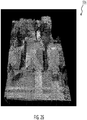
FIG. 15 is a point cloud generated by the engine using the depth from disparity method; -
FIG. 16 is a disparity map generated by the engine using the eye-ray method; -
FIG. 17 is a point cloud generated by the engine using the eye-ray method; -
FIG. 18 is a diagram showing processing steps for generating a composite point cloud from multiple image pairs; -
FIG. 19 is a nadir view of a point cloud based on a nadir pair of images; -
FIG. 20 is an oblique view of a point cloud based on a nadir pair of images; -
FIG. 21 is a slice of the point cloud that crosses the front windows of the building shown based on a nadir pair of images; -
FIG. 22 is a nadir view of a point cloud based on an oblique pair of images; -
FIG. 23 is an oblique view of a point cloud based on an oblique pair of images; -
FIG. 24 is a slice of the point cloud that crosses the front windows of the building shown based on an oblique pair of images; -
FIG. 25 is a nadir view of a point cloud based on a combination of nadir and oblique pairs of images; -
FIG. 26 is an oblique view of a point cloud based on a combination of nadir and oblique pairs of images; -
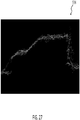
FIG. 27 is a slice of the point cloud that crosses the front windows the building shown based on a combination of nadir and oblique pairs of images; and -
FIG. 28 is a diagram illustrating modules and associated processing steps for automated building recognition carried out by the aerial image engine. - The present disclosure relates to a system and method for detecting features in aerial images using disparity mapping and segmentation techniques, as discussed in detail below in connection with
FIGS. 1-28 . -
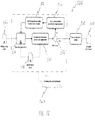
FIG. 1 is a diagram showing the system of the present disclosure for detecting features in aerial images, indicated generally at 10. Thesystem 10 comprises a computer system 12 (e.g., a server) having anaerial image database 14 stored therein and a software aerial image engine (module) 16. Thedatabase 14 could be stored on thecomputer system 12, or located externally (e.g., in a separate database server in communication with the system 10). As will be discussed in greater detail below, theaerial image engine 16 allows users to detect features in aerial images and generate three-dimensional models therefrom. - The
system 10 can communicate through anetwork 18 with one or more of a variety of image providers to obtain aerial images or photographs of abuilding structure 20 and can store them in theaerial image database 14 in any suitable format, such as JPEG, TIFF, GIF, etc. Network communication could be over the Internet using standard TCP/IP communications protocols (e.g., hypertext transfer protocol (HTTP), secure HTTP (HTTPS), file transfer protocol (FTP), electronic data interchange (EDI), etc.), through a private network connection (e.g., wide-area network (WAN) connection, e-mails, electronic data interchange (EDI) messages, extensible markup language (XML) messages, Javascript Object Notation messages (JSON) file transfer protocol (FTP) file transfers, etc.), or any other suitable wired or wireless electronic communications format. Image providers that thecomputer system 12 could communicate with include, but are not limited to, an airplane 22 (or unmanned autonomous vehicle (UAV)) having acamera 24 capable of capturing images of thestructure 20, and/or a third-partyaerial image provider 26, such as Pictometry, Google, or Bing. - The
computer system 12 could be any suitable computer server (e.g., a server with an INTEL microprocessor, multiple processors, multiple processing cores) running any suitable operating system (e.g., Windows by Microsoft, Linux, etc.). Thecomputer system 12 includes non-volatile storage, which could include disk (e.g., hard disk), flash memory, read-only memory (ROM), erasable, programmable ROM (EPROM), electrically-erasable, programmable ROM (EEPROM), or any other type of non-volatile memory. Theaerial image engine 16, discussed in greater detail below, could be embodied as computer-readable instructions stored in computer-readable media (e.g., the non-volatile memory mentioned above), and programmed in any suitable programming language (e.g., C, C++, Java, etc.). - The
system 10 could be web-based and could allow for remote access to thesystem 10 over a network 18 (e.g., Internet, WAN, LAN, etc.) by one or more devices, such as apersonal computer system 30, a smartcellular telephone 32, atablet computer 34, or other devices. It is also contemplated that at least some of the functionality of thesystem 10 could run locally on devices (e.g.,personal computer 30, smartcellular telephone 32,tablet computer 34, etc.) programmed with software in accordance with the present disclosure. It is conceivable that, in such circumstances, the device could communicate with a remote aerial image database over anetwork 18. -
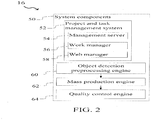
FIG. 2 is a diagramshowing software components 50 of theaerial image engine 16. Thecomponents 50 include a project andtask management system 52, objectdetection preprocessing engine 60,mass production engine 62, and quality control (QC) engine 64 (discussed in more detail below). The project andtask management system 52 allows for the creation, processing, and monitoring of projects relating to the processing of aerial images. The projects could be based on high resolution aerial imagery of areas, where the images have been captured, copied, and pre-processed. Each project is tracked in detail (e.g., steps toward completion, time spent on each task, etc.) to help pinpoint target areas for optimization, simplification, and/or improvement. - The project and
task management system 52 includes several distinct modules. More specifically, the system includes amanagement server 54,work manager 56, andweb manager 58. Themanagement server 54 is a set of web services that store and serve geo-referenced data, including raw data (e.g., data generated by computer vision (CV)) and elaborated data (e.g., new and previous sketches, ITV's (insurance-to-value), insurance claims, and other related data). Themanagement server 54 also provides a feedback mechanism that lets users quickly and efficiently return new and improved training data to the objectdetection preprocessing engine 60. - The
work manager 56 is a set of web services that dispatches tasks to low-cost, highly-trained operators, and then processes and stores the results of the work that they accomplish. Thework manager 56 ensures that projects and tasks are assigned orderly based on priority and urgency levels. For example, customer requests could be assigned the highest priority, followed by customer PIF (policy in force) addresses, and then AOI's (areas of interest) with the most historical significance. Theweb manager 58 is a full web application user interface that allows managers to handle creating projects, managing property contractors and operators, work monitoring, and tracking of historic data, productivity statistics (e.g., per operator, team, and/or project block, etc.), and other statistics. - The object
detection preprocessing engine 60, discussed in more detail below, detects structures in images, and then processes the images to identify different types of objects. More specifically, theobject preprocessing engine 60 processes imagery to analyze stereoscopic pairs of images and detect various objects of interest (e.g., buildings, trees, pools, noise (elements with a significant level of entropy), etc.). For example, the objectdetection preprocessing engine 60 could take preprocessed building structure perimeter information, add automatic line finding capabilities, and provide the ability to gather height information from stereoscopic pairs. - The mass production engine 62 (e.g., mass production client application) is an automatically updated smart client (e.g., desktop, mobile, or web application) for quickly creating aerial models (e.g., 3D models) of one or more structures and accompanying prefill and metadata for an aerial image library (which could be address-based). The
mass production engine 62 includes software tools to support the manual and automated process of creating a roof and/or property report. Themass production engine 62 could be a closed system which works in conjunction with designated web services and is programmed to protect any personally identifiable information (PII) data (e.g., the system could withhold from operations of the system actual address information or geocode information of a structure, remove imagery that is no longer needed from the local cache, etc.). - The
quality control engine 64 ensures the accuracy of the model and related data generated from the images. Thequality control engine 64 could be automated and/or could guide a technician in review and verification. -
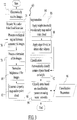
FIG. 3 is a flowchart showing the steps for processing one or more images by the objectdetection preprocessing engine 60. Broadly, the process includes disparity map and/or pointcloud generation sub-process 74,segmentation sub-process 84, andclassification sub-process 90. Instep 72, the system electronically receives one or more aerial images (e.g., imagery intake, imagery input data, etc.). High-level imagery specifications (e.g., proprietary satellite images) could be used for maximum automation and efficiency in relation to production, but the system could use lower-quality data inputs (e.g., third-party data) as well. The clearer the aerial images that are used as input, the better the results of the automated detection algorithms. - In
sub-process 74, the system generates a disparity map and/or point cloud, which provides information about the elevation of the structures (e.g., objects, elements, etc.) present in the stereoscopic pair of images. To generate a disparity map and/or point cloud, instep 76, the system uses world file information to process the overlapped region between stereoscopic images. One or more image pairs can be used in this process, and the resulting disparity maps and/or point clouds can be combined to gain additional information. Instep 78, the orientation of each image (e.g., left and right images) is processed, such as by using the camera position. In step 80, if needed (e.g., particularly if the overlapping images are from different flight lines), the brightness of the images is normalized. A disparity map and/or point cloud is then generated instep 82. The parameters used to generate the disparity map and/or point cloud are fine-tuned to account for differences between imagery data (e.g., differences produced by different camera systems, differences in sun angles, etc.) and other factors. The system could use other inflight or post-flight processing systems capable of producing accurate disparity maps and/or point clouds. - In
sub-process 84, segmentation is applied to the image, which allows the system to detect changes in different parts of the image that are later grouped together into areas based on similarities. These areas are subsequently classified (e.g., as structures, trees, pools, etc.), as discussed below in more detail. To apply segmentation, instep 86, a height threshold is applied to the disparity map and/or point cloud. This threshold is adjustable, but (for reasons relating to classification) should be taller than the height of a standard house or the tallest tree in a given area. Instep 88, one or more automated detectors (e.g., algorithms) are applied to objects in the image that are below the threshold to initially detect other objects (e.g., buildings). Automated detectors become more accurate and efficient over time and can be tuned and continually added. When one or more new detectors are added, the database could be reprocessed to run just the new detectors. Algorithms that could be used include region growing algorithms and/or split-and-merge segmentation algorithms (which could be used to find blobs that may be subsequently identified as structures, trees, noise, etc.), as well as object/feature detection algorithms. These algorithms are discussed in more detail inFIGS. 6-7 . - In
step 90, classification is applied to detect and classify objects (e.g., buildings, trees, pools, noise, etc.). To apply classification, instep 92, objects higher and/or taller than the certain predefined threshold (based on the height information derived by the disparity map) are automatically added as structures (e.g., automatically classified as buildings). Instep 94, areas are classified based on classification parameters using (and training) machine learning algorithms, such as neural networks. Machine learning algorithms and neural networks are powerful mechanisms which provide the system with the ability to learn and acquire experience from existing data and processes. For example, the network could be trained using an image database containing any number of stereoscopic image pairs, where the images are taken from different locations (including residential, industrial and commercial areas) and from datasets that have been captured using different types of sensor technology. The trained network could be tested using a test image database and an automated test tool. After the images have been pre-processed, a data package containing all information derived from the aerial images could be stored in a property database for future use by users or software applications. -
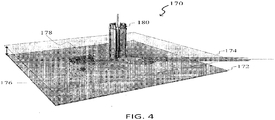
FIG. 4 is animage 170 depicting object classification carried out by the system using a pre-defined elevation threshold. As shown, theheight threshold 174 is adjustable to be a certain distance from theground 172. Thethreshold 174 is set to be larger thantrees 176 andhouses 178 in the area. Anything above thatthreshold 174, such as abuilding tower 180, is automatically classified as a building, because it is too tall to be anything else. -
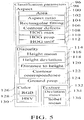
FIG. 5 is a diagram ofvarious classification parameters 96 that can be utilized by the system. Classification is based on a set ofspecific parameters 96 that can be modified and evolved to refine and improve the classification or detection of new elements (e.g., cars, vegetation, etc.).Classification parameters 96 could includeaspect 98,disparity 114,color 126, and/ortexture 132 parameters. More specifically, theaspect parameter 98 could include area 100 (e.g., blob area in pixels, where small blob areas are automatically discarded), aspect ratio 102 (e.g., best blob fitting oriented rectangle width and height ratio), rectangle fitting 104 (e.g., best blob fitting oriented rectangle area and blob area ratio, which tends to separate buildings from trees and noise), contour defects 106 (e.g., sum of defects of the blob convex polygon, which tends to separate buildings from trees and noise, where the noise generates more defects), HOG (histogram of oriented gradient) maximum 108 (e.g., distance between two main peaks in the HOG, and is ideally used for buildings having a distance of 90°), HOG property 110 (e.g., contour pixel proportion that belongs to the two main peaks in the HOG, which tends to distinguish buildings from trees), and/or HOG uniform 112 (e.g., Kolmogorov test of similarity between the HOG and the uniform distribution, which shows a low similarity in buildings and a high value in trees due to spread orientations). - The
disparity parameter 114 could include height mean 116 (e.g., mean of the blob disparity values, because noise has lower values than buildings or trees), height deviation 118 (e.g., standard deviation of the blob disparity values), distance to height 120 (e.g., sum of contour pixel distance to the edges of the disparity map, because noise usually presents a high distance value), contour correspondence 122 (e.g., sum of contour correspondences with contrasted disparity, because buildings and trees present a high contour correspondence value), ground prop 124 (e.g., analysis of the disparity between a reference point (ground point) and a studied point of a given blob, because noise usually belongs to ground). Thecolor parameter 126 could include RGB (red green blue) 128 (e.g., mean value of color channels, such as to separate buildings from trees, which are usually green) and HSV (hue, saturation value) 130 (e.g., mean value of HSV channels). Thetexture parameter 132 could include deviation mean 134 (e.g., mean of the deviation of a window ceiling of the blob, which could separate trees from buildings due to contrasted lighting in leaves) and/or Sobel mean 136 (e.g., mean of the deviation of a window ceiling of the blob with a high pass filter applied to increase contrast). -
FIG. 6 illustrates processing of anaerial image 150 by the system using a region growing algorithm to identify structures, as well asfootprints 152 of such structures. The algorithm uses the highest points found in the disparity map as seed values and begins the region growing process from there outward. The region growing algorithm uses not only color information, but also disparity map information, which prevents growing over low-elevation areas. This works particularly well on high-resolution imagery (though the processing time per image is relatively large). However, if the image resize parameter is too large, it can cause inaccuracies in the structure footprint detected. Parameters of the region growing algorithm could include:Table 1 Parameter Default Value Image resize 30% Ground proportion 45% Similar RGB & HSV Fuzzy set {0, 5, 10} Building detection threshold Disparity = 200 Noise threshold Area = 700 pixels Thresholding analysis step Disparity = 10 Minimum seed area 100 pixels -
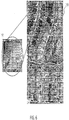
FIG. 7 illustrates processing of anaerial image 162 by the system using a split-and-merge segmentation algorithm to identify structures. The split-and-merge segmentation algorithm (which is faster than the region growing algorithm) looks at thewhole image 162 and determines if it is non-uniform or uniform. If it is non-uniform, the image is split into four squares. Then, it looks at each of those four squares and repeats the process on the squares until a complete segmentation map is created, where all squares are 100% uniform within them, as shown inimage 164. This algorithm is useful for finding differences between different areas of an image and detecting the location of the changes. This, as shown inimage 166, can be used to define the roof lines that separate the different sections of a roof. The split-and-merge algorithm uses not only color information but also the disparity map information (e.g., height map information) as input data. In this way, the interior lines are detected based on both the imagery and the disparity map information. -
FIG. 8 is aflowchart showing steps 200 for evaluating and improving models generated by the system. This process is optional and not required for object detection. The basic workflow includes determining the dimensions of the structure and creating a sketch or drawing. For example, the system provides the ability to determine and define a geocode at a front door (or one of the front doors) of a structure. Further, the system provides the ability to determine the footprint of the structure, roof dimensions (e.g., number of faces and other roof attributes), default area living space and non-living space (e.g., square feet), number of stories, number of car garage attributes, number and size of housing attributes (e.g., windows and doors), type of roofing material (e.g., shingles, metal, wood shake, etc.), exterior wall materials (e.g., stucco, brick, stone, etc.), and the number, size, and material of exterior property attributes (e.g., swimming pools, decks, etc.), among other things. - In
step 204, the project and task management system (e.g., web manager application) guides amanager 202 in creating and publishing one or more projects. Publishing the project (automatically or manually) assigns it to a specific team (or operator) and makes the tasks in the project available in a queue. The manager can prioritize tasks within a project and across projects, thereby controlling the priority (on a per project basis) of how the models and metadata are processed. - In
step 206, an operator of the assigned team, once available, is automatically assigned the highest priority task from the queue. The necessary pre-processed data, including data defaults and imagery, is then retrieved from one or more databases for the operator. These secondary methods are provided for operators to derive information where required and where automated detectors yield inaccurate or undetected results. Generally, the mass production engine guides an operator through the following steps: define 210,perimeter 212,interior lines 214,metadata 216, and submit 218, as discussed below. Instep 210, the mass production engine allows theoperator 208 to define the property by displaying for his/her review one or more images from the specified location and the default data thereof. When required, theoperator 208 marks which buildings and related structures belong to that particular property. This provides theoperator 208 with the ability to separate and combine structures and/or to identify new structures, which is useful if the object preprocessing engine did not accurately find a structure or merged together separate structures. If a new structure is created, a new task will be added to the appropriate queue and subsequently assigned to another operator. Where the parcel boundary geographic accuracy and/or detector default data is acceptable, this step would only require a quick review and verification by theoperator 208. - In
step 212, the mass production engine allows/guides theoperator 208 to verify and/or edit (e.g., creates, adjusts, etc.) the roof perimeter. Although preprocessing would most likely have accurately identified the perimeter, it may be necessary to adjust the perimeter (e.g., moving the points defining the perimeter) to match the exact contour of the building. Instep 214, the mass production engine allows/guides theoperator 208 to verify and/or edit (e.g., correct, add, remove, etc.) the interior lines of the structure. - In
step 216, the mass production engine allows/guides theoperator 208 in creating the metadata associated with the property. The operator could examine the imagery and answer a specific set of questions about the property. The user interface would guide theoperator 208 through desired attribute specifications or to verify automated pre-fill results. Answering the question could require clicking on a point on the model, such as marking the front door geo-code or verifying roof features. The metadata could include roof material (e.g., shingle, shake, metal, tile/slate or membrane), number and placement of roof features (e.g., chimneys, roof vents, turtle vents, skylights, etc.), front door geocode location, number of levels, walls, exterior material(s)/percentages, default area living compared with nonliving space, number, size, and placement of doors, windows, garage stalls, rain gutters, air conditioner units, trees, swimming pools, etc. After all phases of work have been successfully completed, instep 218, theoperator 208 submits the model and metadata. - In
step 220, automated QC checks (automated algorithms and/or operator input prompts) are implemented by the mass production engine to verify the validity and accuracy of the model and related data (e.g., metadata). This ensures that the images and related data will successfully import into other products (e.g., programs, engines, etc.). If the checks fail, the operator is notified of the error and the submission process is canceled. Otherwise, depending on the parameters of the project, the operator is given a new task, and the model is selected and added to the QC queue (or alternatively published for use). - In step 224, when the
QC technician 222 is ready, the system (e.g., web application) pulls the highest priority structure from the QC queue and displays it on top of the appropriate nadir and oblique imagery. The system also allows any other imagery of the particular location to be displayed with the model. Instep 226, the QC engine prompts theQC technician 222 to review both the model and related data (e.g., metadata). Instep 228, the engine prompts theQC technician 222 to mark the structure as either verified (to be published to the library) or rejected and returned to the operator for review (its priority increased to push it higher in the operator's queue). When rejecting the model, theQC technician 222 can specify the reason from a canned list of possible issues provided by the system and/or draft a custom message. Multiple levels of quality assurance (e.g., teams) could be configured with varying responsibilities. -
FIGS. 9-11 are showing various user interface screens generated by the system. More specifically,FIGS. 8-9 arescreenshots 250, 260 showing a split pane interface allowing multiple views (e.g.,left view 252, 262 and right view 254, 264) of the structure to help better evaluate and analyze details. The system provides an operator with basic tools including pan and zoom, the ability to display all images covering the structure, line and vertices adjustments (e.g., adding, editing and deleting vertices and lines), snapping appropriate angles between lines (90°, 45°, etc.), ensuring lines are parallel and/or horizontal, snapping to existing lines/vertices, etc. The interface could also provideupper toolbar 256, 266 andlower toolbar 258, 268, providing further functionality (e.g., define property, create contour, create break lines, submit model, new vertex, new rectangular boundary, find geometries by color, autodetect model, force coplanarity, display filling color, show detected polygon, new block, remove block, etc.). This allows the operator to view and edit the model frame with the model frame superimposed on one or more aerial different aerial images of the roof (e.g., orthographic, etc.). -
FIG. 11 is another screenshot of a user interface of the system. Thescreenshot 270 shows the split pane interface, with an aerial view of a housing structure in theleft pane 272, a three-dimensional model of the housing structure in theright pane 274, and asubmission window 276 overlaying both. Thesubmission window 276 includes acomment area 282 for a user to manually write a report, a submitbutton 278, and a list of possible issues orsubmission alternatives 280 to select (e.g., accept with warning, bad images, tree was found, pool was found, unrecognized area, etc.). The system could also present the operator with questions to record any useful feedback (e.g., for quality assurance). -
FIG. 12 is a diagram showing hardware and software components of thesystem 300. Thesystem 300 comprises aprocessing server 302 which could include astorage device 304, anetwork interface 308, acommunications bus 310, a central processing unit (CPU) (microprocessor) 312, a random access memory (RAM) 314, and one ormore input devices 316, such as a keyboard, mouse, etc. Theserver 302 could also include a display (e.g., liquid crystal display (LCD), cathode ray tube (CRT), etc.). Thestorage device 304 could comprise any suitable, computer-readable storage medium such as disk, non-volatile memory (e.g., read-only memory (ROM), eraseable programmable ROM (EPROM), electrically-eraseable programmable ROM (EEPROM), flash memory, field-programmable gate array (FPGA), etc.). Theserver 302 could be a networked computer system, a personal computer, a smart phone, tablet computer etc. It is noted that theserver 302 need not be a networked server, and indeed, could be a stand-alone computer system. - The functionality provided by the present disclosure could be provided by an
aerial image engine 306, which could be embodied as computer-readable program code stored on thestorage device 304 and executed by theCPU 312 using any suitable, high or low level computing language, such as Python, Java, C, C++, C#, .NET, etc. Thenetwork interface 308 could include an Ethernet network interface device, a wireless network interface device, or any other suitable device which permits theserver 302 to communicate via the network. TheCPU 312 could include any suitable single- or multiple-core microprocessor of any suitable architecture that is capable of implementing and running the program 306 (e.g., Intel processor). Therandom access memory 314 could include any suitable, highspeed, random access memory typical of most modern computers, such as dynamic RAM (DRAM), etc. -
FIG. 13 is a diagram showingprocessing steps 400 for generating a point cloud from a pair of aerial images, performed by an aerial image engine, and more specifically the object detection pre-processing engine. It is noted that point cloud data could be acquired during data capture and/or during image processing. - At
step 402, a pair of aerial images (e.g., image pair) is selected/identified (automatically by the engine or manually by the user). The pair of aerial images could be electronically received from a computer system, electronically transmitted from a database, etc. The engine could utilize a number of constraints in selecting the pair of aerial images. For example, the engine could require the pair of aerial images to have the same basic orientation (e.g., both are vertical images, both are oblique west images, etc.), the engine could require that the images have a large overlap area, and/or the engine could require that there is a small difference in capture time between both images (e.g., to avoid the effect of illumination changes). - At
step 404, the engine projects an overlapping area on ground plane data (using the pair of aerial images of step 402). More specifically, the engine calculates the overlapping area of the images, and projects the relevant area from both images onto a horizontal ground plane of an approximate height (e.g., where the height could be extracted from the image parameters). This corrects small scale and tilt differences between the two images. - At
step 406, the engine aligns the images to the direction of flight of an aircraft or other flying vehicle from which aerial images are being taken (e.g., the line joining the observation points of both images) to produce an aligned stereoscopic pair of aerial images atstep 408. This allows the engine to find horizontal correspondences between the two images. The engine rotates the images to align them to the flight direction to assimilate them to a canonical stereoscopic pair. The engine could also apply template matching to finely adjust the overlapping images. - At
step 410, the engine computes dense correspondence mapping (e.g., disparity map, using the aligned stereoscopic pair of images of step 408). More specifically, the engine applies a multi-scale disparity map module to the stereoscopic pair of images. This provides a measurement of the discrepancy distance between corresponding features on both images. The engine assigns a disparity value to each pixel on at least one of the stereoscopic images (e.g., the left image). - Using a depth from disparity method, the engine calculates depth from disparity at
step 412, which then generates a point cloud at step 414 (and electronically transmits point cloud data to another computer system). More specifically, the engine calculates a height map by applying an algorithm to compute depth (e.g., distance from an observation point) as a linear function of the disparity value at each pixel (e.g., the focal distance of the camera and the distance between observation points). To generate the point cloud, the engine transforms coordinates of the height map from the aligned stereoscopic pair back to the original image pair. - Alternatively (or additionally), the engine computes point heights using an eye-ray method at step 416 (based on the pair of images of step 402), and the produces the
point cloud 414. More specifically, the engine transforms disparity values of the disparity map from the aligned stereoscopic pair back to the original image pair. Then the engine applies the eye-ray method, which triangulates each point using the vision rays from both observation points. This provides a more precise height map than the depth from disparity method. -
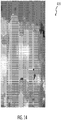
FIGS. 14-15 are views of a disparity map and point cloud generated from the depth from disparity method ofFIG. 13 . More specifically,FIG. 14 is adisparity map 418 generated by the engine using the depth from disparity method.FIG. 15 is apoint cloud 420 generated by the engine using the depth from disparity method. -
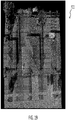
FIGS. 16-17 are views of a disparity map and point cloud generated from the depth from disparity method ofFIG. 13 . More specifically,FIG. 16 is adisparity map 422 generated by the engine using the eye-ray method.FIG. 17 is apoint cloud 424 generated by the engine using the eye-ray method. -
FIG. 18 is a diagram showingprocessing steps 500 for generating a composite point cloud from multiple image pairs, such as those used inFIGS. 13-17 . Atstep 502, multiple pairs of aerial images are selected/identified (automatically by the engine or manually by the user). The multiple pairs of aerial images could be electronically received from a computer system, electronically transmitted from a database, etc. The engine could utilize a number of constraints in selecting the pairs of aerial images (as similarly described above). For example, the engine could require that each pair of aerial images have the same basic orientation (e.g., both are vertical images, both are oblique west images, etc.), the engine could require that the images have a large overlap area, and/or the engine could require that there is a small difference in capture time between both images (e.g., to avoid the effect of illumination changes). - Once multiple image pairs have been selected, the engine applies a Levenberg-
Marquadt optimization module 504 to the multiple image pairs. More specifically, atstep 506, themodule 504 generates point clouds for each image pair (using the process described inFIG. 13 ). There are overlapping zones between different point clouds, although the overlap may not be a perfect fit. Instep 508, multiple point clouds are generated. - In
step 510, the engine calculates the error resulting from the multiple point clouds (e.g., discrepancy between overlapping zones). More specifically, the engine calculates 3D features for each point cloud. The engine evaluates the discrepancy between point clouds as an error metric that uses distances between corresponding 3D features. The engine accumulates the error metric to include overlaps between all point clouds. - At step 512 the engine determines whether the error is low (e.g., a pre-defined threshold). If no, the process proceeds to step 514, and the engine calculates an error gradient according to image parameters. More specifically, the engine adjusts the camera parameters to each image covering a large area and containing many different buildings. The discrepancies between point clouds are expected to be produced by minor camera parameter errors (e.g., as the camera parameters may not be the best for each single building on the image). The engine checks the change of error gradient against minor changes in camera parameters (e.g., using a Jacobain matrix and determinant).
- Then, in
step 516, the engine modifies projection parameters toward a lower error value. More specifically, the engine makes small changes to the camera parameters so that the error is reduced in a new computation of the point clouds. The process then reverts back to step 506, and new point clouds are generated. The process is repeated until the generated point clouds are calculated by the engine to have a low error. In this way, this process is an iterative gradient-descent optimization. - If, in step 512, the engine makes a positive determination that the error is low (thereby concluding the Levenberg-Marquadt optimization), then the process proceeds to step 518 and the engine removes redundant points. More specifically, the engine removes redundant points by using the ones with higher confidence according to the orientation of each point cloud region. Then the engine generates a composite point cloud at
step 520. Redundant points are removed because a composite point cloud (including all points from each individual point cloud) contains a large amount of information, and discrepancies in overlapping areas (although low) may be seen as noise by other engines (e.g., modules, algorithms, etc.), such as by a plane detection module. -
FIGS. 19-21 are views related to a point cloud based on a nadir pair of images. More specifically,FIG. 19 is a nadir (vertical) view 522 of a point cloud based on a nadir pair of images.FIG. 20 is anoblique view 524 of a point cloud based on a nadir pair of images.FIG. 21 is aslice 526 of the point cloud that cross the front windows of the building shown based on a nadir pair of images. -
FIGS. 22-24 are views related to a point cloud based on an oblique pair of images. More specifically,FIG. 22 is a nadir (vertical) view 528 of a point cloud based on an oblique pair of images.FIG. 23 is anoblique view 530 of a point cloud based on an oblique pair of images.FIG. 24 is aslice 532 of the point cloud that cross the front windows of the building shown based on an oblique pair of images. -
FIGS. 25-27 are views related to a point cloud based on a combination of nadir and oblique pairs of images. More specifically,FIG. 25 is a nadir (vertical) view 534 of a point cloud based on a combination of nadir and oblique pairs of images.FIG. 26 is anoblique view 536 of a point cloud based on a combination of nadir and oblique pairs of images.FIG. 27 is aslice 538 of the point cloud that cross the front windows the building shown based on a combination of nadir and oblique pairs of images. -
FIG. 28 is a diagram of modules and associated processing steps for automated building recognition (and/or recognition of any other object) carried out by anaerial image engine 600, and more specifically the object detection pre-processing engine. Theaerial image engine 600 could include one or more modules, such as astereo processing module 602, a segment-basedinduction module 604, acontour detection module 605, a roofmodel induction model 606, anoptimization module 608, and anevaluation module 610. - In
step 612, thestereo processing module 602 automatically selects/identifies/receives (or a user manually selects/identifies) a set of calibrated aerial images (e.g., as input). The calibrated aerial images could be received electronically from another computer system, a database, etc. In step 614, the segment-basedinduction module 604 uses the set of calibrated aerial images to detect 2D line segments on each image. The segment-basedinduction module 604 matches lines and generatescandidate 3D lines at step 616, and detects and discards ground lines at step 618. Then, the segment-basedinduction module 604 detects horizontal lines by finding parallel clusters atstep 620, and could concurrently, detect oblique lines by finding clusters of line intersections atstep 622. In step 624, the segment-basedinduction module 604 induces a set of roof model primitives, which are subsequently used atstep 678 by theoptimization module 608, discussed in more detail below. - Returning to step 612, once the set of calibrated aerial images are selected/identified, the process (concurrently) proceeds to step 626, where the
stereo processing module 602 selects image pairs in any orientation, and then the image pairs are rectified in step 628. Thestereo processing module 602 computes a multiscale disparity map at step 630, then computes and merges pairwise point clouds at step 632, and then generates a global point cloud at step 634. The global point cloud generated is used atstep 656 by the roofmodel induction module 606, discussed in more detail below. - Returning to step 612, once the set of calibrated aerial images are selected/identified, the process (concurrently) proceeds such that the
stereo processing module 602 selects a pair of nadir images in step 636, and then generates a stereo pair of images in step 638. Thestereo processing module 602 rectifies the stereo pair of images atstep 640, and then (concurrently) projects and aligns the stereo images atstep 642. Thestereo processing module 602 then computes a multiscale disparity map at step 644, and computes and filters a point cloud at step 646. - The process then proceeds to the
contour detection module 605. Thecontour detection module 605 includes one or more algorithms to detect contours. More specifically, thecontour detection module 605 could include agrabcut approach algorithm 648, an MSER (maximally stable extremal regions)approach algorithm 650, and/or a pointcloud approach algorithm 652. Thegrabcut approach 648 and theMSER approach 650 each receive the selected pair of nadir images of step 636 and the computed multiscale disparity map of step 644 as inputs. Thepoint cloud approach 652 receives the selected pair of nadir images of step 636 and the computed and filtered point cloud of step 646 as inputs. Each of the approaches then generates an output to be used by the roofmodel induction module 606. - Processing proceeds to the roof
model induction module 606 which builds contours at step 654 (based on the output of the contour detection module 605), and detects planes at step 656 (based on the global point cloud generated at step 634). Then the roofmodel induction module 606 finds intersecting lines atstep 660 and generates an intersecting line adjacency graph at step 662. Concurrently withsteps 660, 662, the roofmodel induction module 606 generates a plane image adjacency graph at step 658. The roofmodel induction module 606 then generates a set of roof model primitives atstep 664. - The process then proceeds to the
optimization module 608, which extracts segments from images in all views at step 666 (based on the set of calibrated aerial images ofstep 612 and based on the set of roof model primitives of step 664). Theoptimization module 608 then applies a distance transform per image atstep 668 and (concurrently) applies a distance to the nearest segment atstep 670. The results/outputs ofsteps 668 and 6670 are then used as inputs in one or more optimization algorithms of theoptimization module 608. More specifically, the optimization algorithms could include a Lavenberg-Marquadt optimization algorithm 672, a differentialevolution optimization algorithm 674, and/or a variable neighborhoodsearch optimization algorithm 676. Then at step 678 a set of adjusted primitives is generated by the optimization module 608 (based on the set of roof model primitives induced at step 624 and based on the output of the one ormore optimization algorithms - The
optimization module 608 then calculates overlapping with 2D lines at 680 (using the set of adjusted primitives 678), and then applies one or more high overlapping transformation options atstep 682. Additionally, theoptimization module 608 generates a model containing a roof and extensions atstep 684. Theoptimization module 608 applies VNS (variable neighborhood search) optimization atstep 686 and generates an adjusted model atstep 688. The adjusted model and VNS optimization are then outputted to theevaluation module 610. - The process then proceeds to the
evaluation module 610, which measures error by comparing roof segments at step 690 (based on the adjusted model ofstep 688, and based on a collection of blueprints with validated sketches of step 692). Theevaluation module 610 then generates an error metric atstep 694. Additionally, theevaluation module 610 generates confidence estimation at step 696 (based on the VNS optimization ofsteps 676 and 686). Theevaluation module 610 then generates a confidence metric atstep 698. - Having thus described the system and method in detail, it is to be understood that the foregoing description is not intended to limit the spirit or scope thereof. It will be understood that the embodiments of the present disclosure described herein are merely exemplary and that a person skilled in the art may make any variations and modification without departing from the spirit and scope of the disclosure. All such variations and modifications, including those discussed above, are intended to be included within the scope of the disclosure.
- Alternative statements of the invention are recited below as numbered clauses:
- 1. A system for aerial image detection and classification, comprising:
- an aerial image database storing one or more aerial images electronically received from one or more image providers; and
- a computer system in communication with the aerial image database, the computer system including an object detection pre-processing engine in electronic communication with the aerial image database, the object detection pre-processing engine detecting and classifying objects using:
- a disparity mapping generation module for automatically processing the one or more aerial images to generate a disparity map providing elevation information;
- a segmentation module for automatically applying a pre-defined elevation threshold to the disparity map, the pre-defined elevation threshold adjustable by a user; and a classification module for automatically detecting and classifying objects in the one or more stereoscopic pairs of aerial images by applying one or more automated detectors based on classification parameters and the pre-defined elevation threshold.
- 2. The system of Clause 1, wherein the object detection pre-processing engine automatically classifies as an object as a building if the object is above the pre-defined elevation threshold.
- 3. The system of Clause 1, wherein the classification parameters include at least one of aspect parameters, disparity parameters, color parameters, or texture parameters.
- 4. The system of Clause 1, further comprising a mass production engine in electronic communication with the object detection pre-processing engine, the mass production engine automatically producing drawings, sketches, and models using the elevation information generated by the object detection pre-processing engine.
- 5. The system of Clause 1, further comprising a project and task management system in electronic communication with the object detection pre-processing engine, the project and task management system guiding a user in creating and publishing one or more projects using the elevation information generated by the object detection pre-processing engine.
- 6. The system of Clause 1, wherein the one or more automated detects includes at least one of a region growing algorithm or a split-and-merge segmentation algorithm.
- 7. The system of Clause 1, wherein the disparity mapping generation module of the object detection pre-processing engine generates a point cloud.
- 8. The system of Clause 7, wherein the object detection pre-processing engine generates the point cloud by computing point heights using an eye-ray method.
- 9. A method for aerial image detection and classification, comprising:
- electronically receiving at a computer system including an object detection pre-processing engine one or more aerial images from an aerial image database, the one or more aerial images electronically received at the aerial image database from one or more image providers;
- automatically processing, by the object detection pre-processing engine, the one or more aerial images to generate a disparity map providing elevation information;
- automatically applying, by the object detection pre-processing engine, a pre-defined elevation threshold to the disparity map, the pre-defined elevation threshold adjustable by a user; and
- automatically detecting and classifying, by the object detection pre-processing engine, objects in the one or more stereoscopic pairs of aerial images by applying one or more automated detectors based on classification parameters and the pre-defined elevation threshold.
- 10. The method of Clause 9, wherein the object detection pre-processing engine automatically classifies an object as a building if the object is above the pre-defined elevation threshold.
- 11. The method of Clause 9, wherein the classification parameters include at least one of aspect parameters, disparity parameters, color parameters, or texture parameters.
- 12. The method of Clause 9, further comprising automatically producing, by a mass production engine, drawings, sketches, and models by using the elevation information generated by the object detection pre-processing engine, the mass production engine in electronic communication with the object detection pre-processing engine.
- 13. The method of Clause 9, further comprising guiding, by a project and task management system, a user in creating and publishing one or more projects using the elevation information generated by the object detection pre-processing engine, the project and task management system in electronic communication with the object detection pre-processing engine.
- 14. The method of Clause 9, wherein the engine executes at least one of a region growing algorithm or a split-and-merge segmentation algorithm.
- 15. The method of Clause 9, further comprising generating a point cloud by the object detection pre-processing engine.
- 16. The method of Clause 15, wherein the object detection pre-processing engine generates the point cloud by computing point heights using an eye-ray method.
- 17. A non-transitory computer-readable medium having computer-readable instructions stored thereon which, when executed by a computer system having an object detection pre-processing engine, cause the computer system to perform the steps of:
- electronically receiving one or more aerial images from an aerial image database, the one or more aerial images electronically received at the aerial image database from one or more image providers;
- automatically processing, by the object detection pre-processing engine, the one or more aerial images to generate a disparity map providing elevation information;
- automatically applying, by the object detection pre-processing engine, a pre-defined elevation threshold to the disparity map, the pre-defined elevation threshold adjustable by a user; and
- automatically detecting and classifying, by the object detection pre-processing engine, objects in the one or more stereoscopic pairs of aerial images by applying one or more automated detectors based on classification parameters and the pre-defined elevation threshold.
- 18. The non-transitory computer-readable medium of Clause 17, wherein the object detection pre-processing engine automatically classifies an object as a building if the object is above the pre-defined elevation threshold.
- 19. The non-transitory computer-readable medium of Clause 17, wherein the classification parameters include at least one of aspect parameters, disparity parameters, color parameters, or texture parameters.
- 20. The non-transitory computer-readable medium of Clause 17, further comprising automatically producing, by a mass production engine, drawings, sketches, and models by using the elevation information generated by the object detection pre-processing engine, the mass production engine in electronic communication with the object detection pre-processing engine.
- 21. The non-transitory computer-readable medium of Clause 17, further comprising guiding, by a project and task management system, a user in creating and publishing one or more projects using the elevation information generated by the object detection pre-processing engine, the project and task management system in electronic communication with the object detection pre-processing engine.
- 22. The non-transitory computer-readable medium of Clause 17, wherein the engine executes at least one of a region growing algorithm or a split-and-merge segmentation algorithm.
- 23. The non-transitory computer-readable medium of Clause 17, further comprising generating a point cloud by the object detection pre-processing engine.
- 24. The non-transitory computer-readable medium of Clause 23, wherein the object detection pre-processing engine generates the point cloud by computing point heights using an eye-ray method.
Claims (15)
- A system for aerial image detection and classification, comprising:an aerial image database configured to store one or more aerial images electronically received from one or more image providers; anda computer system in communication with the aerial image database, the computer system including an object detection pre-processing engine configured to be in electronic communication with the aerial image database, the object detection pre-processing engine being configured to detect and classify objects using:a disparity mapping generation module for automatically processing an aerial image of the one or more aerial images to generate a disparity map providing elevation information;a segmentation module for automatically detecting changes in different parts of the aerial image; anda classification module for automatically detecting and classifying objects in the aerial image by applying one or more automated detectors based on the elevation information in the disparity map and the detected changes in aerial image detected by the segmentation module.
- The system of Claim 1, wherein the classification module is configured to rely on a plurality of classification parameters from at least one of aspect parameters, disparity parameters, color parameters, or texture parameters.
- The system of any preceding Claim, further comprising a mass production engine configured to be in electronic communication with the object detection pre-processing engine, the mass production engine being configured to automatically produce drawings, sketches, and models using the elevation information generated by the object detection pre-processing engine.
- The system of any preceding Claim, further comprising a project and task management system configured to be in electronic communication with the object detection pre-processing engine, the project and task management system being configured to guide a user in creating and publishing one or more projects using the elevation information generated by the object detection pre-processing engine.
- The system of any preceding Claim, wherein the disparity mapping generation module of the object detection pre-processing engine is configured to generate a point cloud, and optionally:
wherein the object detection pre-processing engine is configured to generate the point cloud by computing point heights using an eye-ray method. - The system of any preceding Claim, wherein the segmentation module is configured to detect changes by determining whether the aerial image is uniform or non-uniform; and optionally:
wherein if the aerial image is non-uniform the system is configured to split the aerial image into a plurality of smaller portions, preferably wherein if any of the plurality of smaller portions are non-uniform the system is configured to continuously split the plurality of smaller portions that are non-uniform until all portions of the aerial image are uniform. - A method for aerial image detection and classification, comprising:electronically receiving at a computer system including an object detection pre-processing engine one or more aerial images from an aerial image database, the one or more aerial images electronically received at the aerial image database from one or more image providers;automatically processing, by the object detection pre-processing engine, an aerial image of the one or more aerial images to generate a disparity map providing elevation information;automatically applying, by the object detection pre-processing engine, a segmentation module for detecting changes in different parts of the aerial image; andautomatically detecting and classifying, by the object detection pre-processing engine, objects in the aerial image by applying one or more automated detectors based on the elevation information in the disparity map and the detected changes in the aerial image detected by the segmentation module.
- The method of Claim 7, further comprising the step of classifying objects in the aerial image based on a plurality of classification parameters from at least one of aspect parameters, disparity parameters, color parameters, or texture parameters.
- The method of any one of Claims 7 to 8, further comprising the step of automatically producing, by a mass production engine, drawings, sketches, and models by using the elevation information generated by the object detection pre-processing engine, the mass production engine in electronic communication with the object detection pre-processing engine.
- The method of any one of Claims 7 to 9, further comprising the step of guiding, by a project and task management system, a user in creating and publishing one or more projects using the elevation information generated by the object detection pre-processing engine, the project and task management system in electronic communication with the object detection pre-processing engine.
- The method of any one of Claims 7 to 10, further comprising the step of generating a point cloud by the object detection pre-processing engine.
- The method of Claim 11, further comprising the step of generating the point cloud by computing point heights using an eye-ray method.
- The method of any one of Claims 7 to 12, further comprising the step of detecting changes by determining whether the aerial image is uniform or non-uniform.
- The method of Claim 13, further comprising the step of splitting the aerial image into a plurality of smaller portions if the aerial image is non-uniform; and optionally:
further comprising the step of splitting the plurality of smaller portions that are non-uniform until all portions of the aerial image are uniform. - A computer-readable medium having stored thereon computer executable instructions to cause a computer system to perform the method of any one of claims 7 to 14.
Applications Claiming Priority (3)
| Application Number | Priority Date | Filing Date | Title |
|---|---|---|---|
| US201361861610P | 2013-08-02 | 2013-08-02 | |
| PCT/US2014/049605 WO2015017855A1 (en) | 2013-08-02 | 2014-08-04 | System and method for detecting features in aerial images using disparity mapping and segmentation techniques |
| EP14832467.6A EP3028464B1 (en) | 2013-08-02 | 2014-08-04 | System and method for detecting features in aerial images using disparity mapping and segmentation techniques |
Related Parent Applications (1)
| Application Number | Title | Priority Date | Filing Date |
|---|---|---|---|
| EP14832467.6A Division EP3028464B1 (en) | 2013-08-02 | 2014-08-04 | System and method for detecting features in aerial images using disparity mapping and segmentation techniques |
Publications (1)
| Publication Number | Publication Date |
|---|---|
| EP3541071A1 true EP3541071A1 (en) | 2019-09-18 |
Family
ID=52432484
Family Applications (2)
| Application Number | Title | Priority Date | Filing Date |
|---|---|---|---|
| EP14832467.6A Active EP3028464B1 (en) | 2013-08-02 | 2014-08-04 | System and method for detecting features in aerial images using disparity mapping and segmentation techniques |
| EP19171426.0A Pending EP3541071A1 (en) | 2013-08-02 | 2014-08-04 | System and method for detecting features in aerial images using disparity mapping and segmentation techniques |
Family Applications Before (1)
| Application Number | Title | Priority Date | Filing Date |
|---|---|---|---|
| EP14832467.6A Active EP3028464B1 (en) | 2013-08-02 | 2014-08-04 | System and method for detecting features in aerial images using disparity mapping and segmentation techniques |
Country Status (5)
| Country | Link |
|---|---|
| US (6) | US9679227B2 (en) |
| EP (2) | EP3028464B1 (en) |
| AU (6) | AU2014295972B2 (en) |
| CA (2) | CA2920251C (en) |
| WO (1) | WO2015017855A1 (en) |
Families Citing this family (121)
| Publication number | Priority date | Publication date | Assignee | Title |
|---|---|---|---|---|
| US9501700B2 (en) | 2012-02-15 | 2016-11-22 | Xactware Solutions, Inc. | System and method for construction estimation using aerial images |
| AU2014295972B2 (en) | 2013-08-02 | 2018-10-11 | Xactware Solutions, Inc. | System and method for detecting features in aerial images using disparity mapping and segmentation techniques |
| US9467664B2 (en) * | 2013-09-24 | 2016-10-11 | Motorola Solutions, Inc. | Method of and system for conducting mobile video/audio surveillance in compliance with privacy rights |
| EP2884364B1 (en) * | 2013-12-12 | 2018-09-26 | Hexagon Technology Center GmbH | Autonomous gardening vehicle with camera |
| CA2935457C (en) | 2014-01-10 | 2022-08-09 | Pictometry International Corp. | Unmanned aircraft structure evaluation system and method |
| WO2015123348A1 (en) | 2014-02-11 | 2015-08-20 | Xactware Solutions, Inc. | System and method for generating computerized floor plans |
| US9418290B2 (en) | 2014-12-12 | 2016-08-16 | Omniearth, Inc. | System and method for managing water |
| JP6506032B2 (en) * | 2015-01-28 | 2019-04-24 | 株式会社トプコン | Survey data processing apparatus, survey data processing method and program |
| EP3271788A4 (en) * | 2015-03-18 | 2018-04-04 | Izak Van Cruyningen | Flight planning for unmanned aerial tower inspection with long baseline positioning |
| WO2016207875A1 (en) * | 2015-06-22 | 2016-12-29 | Photomyne Ltd. | System and method for detecting objects in an image |
| US10699476B2 (en) * | 2015-08-06 | 2020-06-30 | Ams Sensors Singapore Pte. Ltd. | Generating a merged, fused three-dimensional point cloud based on captured images of a scene |
| US10089528B2 (en) * | 2015-08-18 | 2018-10-02 | Digitalglobe, Inc. | Movement intelligence using satellite imagery |
| WO2017040691A1 (en) * | 2015-08-31 | 2017-03-09 | Cape Analytics, Inc. | Systems and methods for analyzing remote sensing imagery |
| US10088736B2 (en) | 2015-09-24 | 2018-10-02 | Amazon Technologies, Inc. | Unmanned aerial vehicle descent |
| GB2543749A (en) * | 2015-10-21 | 2017-05-03 | Nokia Technologies Oy | 3D scene rendering |
| JP6921095B2 (en) * | 2015-11-08 | 2021-08-25 | エーグロウイング リミテッド | Methods for collecting and analyzing aerial images |
| EP3387623A4 (en) | 2015-12-09 | 2019-07-10 | Geomni, Inc. | SYSTEM AND METHOD FOR THE PRODUCTION OF COMPUTERIZED MODELS OF STRUCTURES USING TECHNIQUES FOR RECONSTRUCTION AND GEOMETRY EXTRACTION |
| US20170177748A1 (en) * | 2015-12-16 | 2017-06-22 | Wal-Mart Stores, Inc. | Residential Upgrade Design Tool |
| CA3001023A1 (en) | 2016-01-08 | 2017-07-13 | Pictometry International Corp. | Systems and methods for taking, processing, retrieving, and displaying images from unmanned aerial vehicles |
| WO2017127711A1 (en) | 2016-01-20 | 2017-07-27 | Ez3D, Llc | System and method for structural inspection and construction estimation using an unmanned aerial vehicle |
| US10482681B2 (en) | 2016-02-09 | 2019-11-19 | Intel Corporation | Recognition-based object segmentation of a 3-dimensional image |
| US10402676B2 (en) | 2016-02-15 | 2019-09-03 | Pictometry International Corp. | Automated system and methodology for feature extraction |
| US10373380B2 (en) | 2016-02-18 | 2019-08-06 | Intel Corporation | 3-dimensional scene analysis for augmented reality operations |
| US10255296B2 (en) | 2016-02-25 | 2019-04-09 | Omniearth, Inc. | System and method for managing geodemographic data |
| US9900584B2 (en) * | 2016-04-27 | 2018-02-20 | Semyon Nisenzon | Depth map generation based on cluster hierarchy and multiple multiresolution camera clusters |
| NL2016718B1 (en) * | 2016-05-02 | 2017-11-10 | Cyclomedia Tech B V | A method for improving position information associated with a collection of images. |
| US10346949B1 (en) * | 2016-05-27 | 2019-07-09 | Augmented Pixels, Inc. | Image registration |
| US20170366799A1 (en) * | 2016-06-20 | 2017-12-21 | Bitanimate, Inc. | Stereoscopic aerial-view images |
| WO2018005542A1 (en) | 2016-06-27 | 2018-01-04 | Omniearth, Inc. | Systems and methods for utilizing property features from images |
| US10573018B2 (en) * | 2016-07-13 | 2020-02-25 | Intel Corporation | Three dimensional scene reconstruction based on contextual analysis |
| JP6917820B2 (en) * | 2016-08-05 | 2021-08-11 | 株式会社半導体エネルギー研究所 | Data processing system |
| US10152630B2 (en) * | 2016-08-09 | 2018-12-11 | Qualcomm Incorporated | Methods and systems of performing blob filtering in video analytics |
| JP2018028766A (en) * | 2016-08-16 | 2018-02-22 | 富士通株式会社 | Control program, control device, and control method |
| US10032310B2 (en) | 2016-08-22 | 2018-07-24 | Pointivo, Inc. | Methods and systems for wireframes of a structure or element of interest and wireframes generated therefrom |
| US10402675B2 (en) * | 2016-08-30 | 2019-09-03 | The Boeing Company | 2D vehicle localizing using geoarcs |
| US10013798B2 (en) | 2016-08-30 | 2018-07-03 | The Boeing Company | 3D vehicle localizing using geoarcs |
| WO2018058044A1 (en) | 2016-09-23 | 2018-03-29 | Aon Benfield Inc. | Platform, systems, and methods for identifying property characteristics and property feature maintenance through aerial imagery analysis |
| US10650285B1 (en) | 2016-09-23 | 2020-05-12 | Aon Benfield Inc. | Platform, systems, and methods for identifying property characteristics and property feature conditions through aerial imagery analysis |
| US10127670B2 (en) | 2016-09-27 | 2018-11-13 | Xactware Solutions, Inc. | Computer vision systems and methods for detecting and modeling features of structures in images |
| US10089712B2 (en) * | 2016-09-30 | 2018-10-02 | Oracle International Corporation | System and method providing automatic alignment of aerial/satellite imagery to known ground features |
| CN107945198B (en) * | 2016-10-13 | 2021-02-23 | 北京百度网讯科技有限公司 | Method and device for marking point cloud data |
| CN107454969B (en) * | 2016-12-19 | 2019-10-29 | 深圳前海达闼云端智能科技有限公司 | Obstacle detection method and device |
| US10726558B2 (en) | 2017-02-27 | 2020-07-28 | Dolphin AI, Inc. | Machine learning-based image recognition of weather damage |
| US11046430B1 (en) * | 2017-04-17 | 2021-06-29 | United States Of America As Represented By The Administrator Of Nasa | Intelligent trajectory adviser system for unmanned aerial vehicles in complex environments |
| US10555181B2 (en) * | 2017-05-03 | 2020-02-04 | ARRIS Enterprises, LLC | Determining transceiver height |
| CA3099638A1 (en) * | 2017-05-07 | 2018-11-15 | Manam Applications Ltd. | System and method for construction 3d modeling and analysis |
| US10379545B2 (en) * | 2017-07-03 | 2019-08-13 | Skydio, Inc. | Detecting optical discrepancies in captured images |
| CN107392210A (en) * | 2017-07-12 | 2017-11-24 | 中国科学院光电技术研究所 | Target detection tracking method based on TLD algorithm |
| EP3676759A4 (en) | 2017-08-31 | 2021-05-26 | Omniearth, Inc. | SYSTEMS AND METHODS FOR AUTOMATIC ESTIMATION OF OBJECT CHARACTERISTICS FROM DIGITAL IMAGES |
| US11481993B2 (en) * | 2017-09-11 | 2022-10-25 | Hover Inc. | Trained machine learning model for estimating structure feature measurements |
| US10948919B2 (en) * | 2017-09-11 | 2021-03-16 | Baidu Usa Llc | Dynamic programming and gradient descent based decision and planning for autonomous driving vehicles |
| CA3099443A1 (en) | 2017-11-02 | 2019-05-09 | Airworks Solutions, Inc. | Methods and apparatus for automatically defining computer-aided design files using machine learning, image analytics, and/or computer vision |
| US11688186B2 (en) | 2017-11-13 | 2023-06-27 | Insurance Services Office, Inc. | Systems and methods for rapidly developing annotated computer models of structures |
| US12314635B2 (en) | 2017-11-13 | 2025-05-27 | Insurance Services Office, Inc. | Systems and methods for rapidly developing annotated computer models of structures |
| US10942509B2 (en) | 2018-01-19 | 2021-03-09 | Ge Aviation Systems Llc | Heterogeneous processing in unmanned vehicles |
| US11029985B2 (en) * | 2018-01-19 | 2021-06-08 | Ge Aviation Systems Llc | Processor virtualization in unmanned vehicles |
| US11131991B2 (en) * | 2018-01-19 | 2021-09-28 | Ge Aviation Systems Llc | Autopilot control system for unmanned vehicles |
| US10937165B2 (en) * | 2018-03-21 | 2021-03-02 | International Business Machines Corporation | Comparison of relevant portions of images |
| CN108765450A (en) * | 2018-05-21 | 2018-11-06 | 南京邮电大学 | intelligent robot visual tracking method based on deep learning |
| US11106911B1 (en) | 2018-06-13 | 2021-08-31 | Pointivo, Inc. | Image acquisition planning systems and methods used to generate information for structures of interest |
| EP3807844A4 (en) | 2018-06-15 | 2022-04-27 | Geomni, Inc. | Computer vision systems and methods for modeling roofs of structures using two-dimensional and partial three-dimensional data |
| CA3105309A1 (en) * | 2018-06-29 | 2020-01-02 | Geomni, Inc. | Computer vision systems and methods for modeling three dimensional structures using two-dimensional segments detected in digital aerial images |
| US11308714B1 (en) * | 2018-08-23 | 2022-04-19 | Athenium Llc | Artificial intelligence system for identifying and assessing attributes of a property shown in aerial imagery |
| US11587683B2 (en) * | 2018-08-31 | 2023-02-21 | Urban Design 4 Health, Inc. | Methods and systems for detecting environment features in images, predicting location-based health metrics based on environment features, and improving health outcomes and costs |
| US11182954B2 (en) * | 2018-09-07 | 2021-11-23 | Hivemapper Inc. | Generating three-dimensional geo-registered maps from image data |
| US10846531B2 (en) * | 2018-09-20 | 2020-11-24 | The Boeing Company | Image-based anomaly detection for aerial inspection using self-supervised learning |
| US10762660B2 (en) * | 2018-09-28 | 2020-09-01 | Verizon Patent And Licensing, Inc. | Methods and systems for detecting and assigning attributes to objects of interest in geospatial imagery |
| CN109389163B (en) * | 2018-09-29 | 2022-03-29 | 华南理工大学 | Unmanned aerial vehicle image classification system and method based on topographic map |
| US11055541B2 (en) * | 2018-10-12 | 2021-07-06 | Volvo Car Corporation | Vehicle lane marking and other object detection using side fisheye cameras and three-fold de-warping |
| WO2020102339A1 (en) | 2018-11-14 | 2020-05-22 | Cape Analytics, Inc. | Systems, methods, and computer readable media for predictive analytics and change detection from remotely sensed imagery |
| US11468575B2 (en) | 2018-11-16 | 2022-10-11 | Uatc, Llc | Deep structured scene flow for autonomous devices |
| ES2968959T3 (en) | 2018-11-21 | 2024-05-14 | Eagle View Tech Inc | Unmanned navigation aircraft that uses pitch |
| US12566899B2 (en) | 2018-12-21 | 2026-03-03 | Geospan Corporation | Shared geographic information system for creation, change management and delivery of 3D structure models |
| US20220368881A1 (en) * | 2019-01-25 | 2022-11-17 | Bitanimate, Inc. | Detection and ranging based on a single monoscopic frame |
| CN111491154A (en) * | 2019-01-25 | 2020-08-04 | 比特安尼梅特有限公司 | Detection and ranging based on one or more monoscopic frames |
| US10762690B1 (en) | 2019-02-11 | 2020-09-01 | Apple Inc. | Simulated overhead perspective images with removal of obstructions |
| US11555701B2 (en) | 2019-05-02 | 2023-01-17 | Corelogic Solutions, Llc | Use of a convolutional neural network to auto-determine a floor height and floor height elevation of a building |
| CN110276254B (en) * | 2019-05-17 | 2024-06-07 | 恒锋信息科技股份有限公司 | Unmanned aerial vehicle-based automatic recognition and early warning method for bootlegged area bootlegged |
| US11106937B2 (en) * | 2019-06-07 | 2021-08-31 | Leica Geosystems Ag | Method for creating point cloud representations |
| CN110347855A (en) * | 2019-07-17 | 2019-10-18 | 京东方科技集团股份有限公司 | Paintings recommended method, terminal device, server, computer equipment and medium |
| CN110599583B (en) * | 2019-07-26 | 2022-03-18 | 深圳眸瞳科技有限公司 | UAV flight trajectory generation method, device, computer equipment and storage medium |
| US11222464B2 (en) | 2019-08-22 | 2022-01-11 | The Travelers Indemnity Company | Intelligent imagery |
| WO2021062152A1 (en) | 2019-09-25 | 2021-04-01 | Pictometry International Corp. | Systems and methods for creating automated faux-manual markings on digital images imitating manual inspection results |
| US11566894B2 (en) * | 2019-10-15 | 2023-01-31 | Flir Unmanned Aerial Systems Ulc | Systems and methods for generating a two-dimensional map |
| US11640677B2 (en) * | 2019-10-15 | 2023-05-02 | Alarm.Com Incorporated | Navigation using selected visual landmarks |
| US11900820B2 (en) | 2019-11-20 | 2024-02-13 | Wing Aviation Llc | Map including data for routing aerial vehicles during GNSS failure |
| US11094113B2 (en) | 2019-12-04 | 2021-08-17 | Geomni, Inc. | Systems and methods for modeling structures using point clouds derived from stereoscopic image pairs |
| CN111060922B (en) * | 2019-12-11 | 2023-04-18 | 电子科技大学 | Tree point cloud extraction method based on airborne laser radar point cloud spatial distribution characteristics |
| EP3896640B1 (en) * | 2020-04-17 | 2022-09-28 | MVTec Software GmbH | System and method for efficient 3d reconstruction of objects with telecentric line-scan cameras |
| US11651552B2 (en) | 2020-06-23 | 2023-05-16 | Insurance Services Office, Inc. | Systems and methods for fine adjustment of roof models |
| CN111768456A (en) * | 2020-07-03 | 2020-10-13 | 福州大学 | A feature extraction method based on wood color space |
| KR20220004453A (en) * | 2020-07-03 | 2022-01-11 | 삼성전자주식회사 | Electronic device and method for recognizing objects |
| US12586140B2 (en) * | 2020-07-09 | 2026-03-24 | Tensorflight, Inc. | Automated property inspections |
| US12456154B2 (en) | 2020-07-09 | 2025-10-28 | TensorFlight Poland sp. z o. o. | Automated property inspections |
| WO2022082007A1 (en) | 2020-10-15 | 2022-04-21 | Cape Analytics, Inc. | Method and system for automated debris detection |
| CN112102411B (en) * | 2020-11-02 | 2021-02-12 | 中国人民解放军国防科技大学 | Visual positioning method and device based on semantic error image |
| AU2021403000A1 (en) | 2020-12-15 | 2023-07-06 | Insurance Services Office, Inc. | Systems and methods for rapidly developing annotated computer models of structures |
| AU2022246173A1 (en) | 2021-03-25 | 2023-09-28 | Insurance Services Office, Inc. | Computer vision systems and methods for generating building models using three-dimensional sensing and augmented reality techniques |
| US12125139B2 (en) | 2021-03-25 | 2024-10-22 | Insurance Services Office, Inc. | Computer vision systems and methods for generating building models using three-dimensional sensing and augmented reality techniques |
| CA3219424A1 (en) | 2021-05-24 | 2022-12-01 | Jacob JENSON | Systems and methods for rapidly developing annotated computer models of structures |
| FR3123753B1 (en) | 2021-06-07 | 2023-06-02 | Luxcarta Tech | Method for reconstructing a 3D model of a roof of a building by analyzing images acquired by remote sensing |
| WO2023283231A1 (en) | 2021-07-06 | 2023-01-12 | Cape Analytics, Inc. | System and method for property condition analysis |
| US20230069019A1 (en) * | 2021-08-13 | 2023-03-02 | Skyyfish Llc | Reality model object recognition using cross-sections |
| IT202100022310A1 (en) * | 2021-08-25 | 2023-02-25 | Vhive Tech Ltd | Autonomous data acquisition using context-aware unmanned aerial systems (UAS). |
| US11861880B2 (en) | 2021-10-19 | 2024-01-02 | Cape Analytics, Inc. | System and method for property typicality determination |
| US12142038B1 (en) * | 2021-11-30 | 2024-11-12 | United Services Automobile Association (Usaa) | Systems and methods of vegetation and structure load analysis in aerial property images |
| US20230186622A1 (en) * | 2021-12-14 | 2023-06-15 | X Development Llc | Processing remote sensing data using neural networks based on biological connectivity |
| WO2023114027A1 (en) | 2021-12-16 | 2023-06-22 | Cape Analytics, Inc. | System and method for change analysis |
| CN114280554A (en) * | 2021-12-17 | 2022-04-05 | 北京航空航天大学杭州创新研究院 | Radar noise removal and boundary positioning method |
| US11861843B2 (en) | 2022-01-19 | 2024-01-02 | Cape Analytics, Inc. | System and method for object analysis |
| US11935276B2 (en) | 2022-01-24 | 2024-03-19 | Cape Analytics, Inc. | System and method for subjective property parameter determination |
| US20230267601A1 (en) * | 2022-02-18 | 2023-08-24 | Rockwell Collins, Inc. | System and method for verifying display |
| US12429322B2 (en) | 2022-03-15 | 2025-09-30 | Carlisle Construction Materials, LLC | Locating, measuring, and error-checking system |
| CN114821365B (en) * | 2022-03-30 | 2024-07-26 | 武汉大势智慧科技有限公司 | Unmanned aerial vehicle photogrammetry overlapping degree calculation method and system considering surface relief |
| US12229845B2 (en) | 2022-06-13 | 2025-02-18 | Cape Analytics, Inc. | System and method for property group analysis |
| EP4310261A1 (en) * | 2022-07-18 | 2024-01-24 | Leica Geosystems Technology A/S | A system for handling the seamless transition of breaklines during an excavation task |
| IT202200026262A1 (en) | 2022-12-21 | 2024-06-21 | Enel Grids S R L | Method and system for the generation of two-dimensional graphic maps of overhead electrical distribution networks |
| US20240220940A1 (en) * | 2022-12-30 | 2024-07-04 | AIDASH Inc. | Systems and methods for predicting trim devices for vegetation management |
| US11823364B1 (en) | 2023-01-10 | 2023-11-21 | Ecopia Tech Corporation | Machine learning for artificial parcel data generation |
| CN115880289B (en) * | 2023-02-21 | 2023-05-26 | 深圳普菲特信息科技股份有限公司 | Steel coil burr identification method, system and medium based on big data processing |
| CN118053085B (en) * | 2024-03-14 | 2024-12-06 | 中国科学院自动化研究所 | Rail bar segmentation method, device, electronic equipment and storage medium |
Citations (3)
| Publication number | Priority date | Publication date | Assignee | Title |
|---|---|---|---|---|
| US20030014224A1 (en) * | 2001-07-06 | 2003-01-16 | Yanlin Guo | Method and apparatus for automatically generating a site model |
| US20080298638A1 (en) * | 2007-05-31 | 2008-12-04 | Tohru Miyazaki | Map change detection device, map change detection method, and program |
| US20110222757A1 (en) * | 2010-03-10 | 2011-09-15 | Gbo 3D Technology Pte. Ltd. | Systems and methods for 2D image and spatial data capture for 3D stereo imaging |
Family Cites Families (185)
| Publication number | Priority date | Publication date | Assignee | Title |
|---|---|---|---|---|
| DE1419359U (en) | ||||
| US3908281A (en) | 1973-01-29 | 1975-09-30 | Michael C Fox | Real estate appraisal instrument and method |
| US4845643A (en) | 1986-04-14 | 1989-07-04 | Clapp Roy A | Simplified computer graphics perspectives |
| US5276866A (en) | 1988-07-19 | 1994-01-04 | Michael Paolini | System with two different communication mediums, transmitting retrieved video and compressed audio information to plural receivers responsively to users' requests |
| US6581045B1 (en) | 1989-05-12 | 2003-06-17 | Building Technology Associates, Inc. | Asset management system for analyzing the condition of assets and evaluating repair/replacement options |
| US5259037A (en) | 1991-02-07 | 1993-11-02 | Hughes Training, Inc. | Automated video imagery database generation using photogrammetry |
| US5633995A (en) | 1991-06-19 | 1997-05-27 | Martin Marietta Corporation | Camera system and methods for extracting 3D model of viewed object |
| US5247356A (en) | 1992-02-14 | 1993-09-21 | Ciampa John A | Method and apparatus for mapping and measuring land |
| US5422989A (en) | 1992-11-23 | 1995-06-06 | Harris Corporation | User interface mechanism for interactively manipulating displayed registered images obtained from multiple sensors having diverse image collection geometries |
| US5592375A (en) | 1994-03-11 | 1997-01-07 | Eagleview, Inc. | Computer-assisted system for interactively brokering goods or services between buyers and sellers |
| EP0686932A3 (en) | 1994-03-17 | 1997-06-25 | Texas Instruments Inc | A computer vision system to detect 3-D rectangular objects |
| DE4419359A1 (en) | 1994-06-03 | 1995-12-07 | Wolfram Dipl Ing Kirchner | Procedure for the acquisition, evaluation, measurement and storage of geographic information |
| JP3523338B2 (en) | 1994-09-14 | 2004-04-26 | 富士通株式会社 | 3D model creation method and apparatus |
| US5761328A (en) | 1995-05-22 | 1998-06-02 | Solberg Creations, Inc. | Computer automated system and method for converting source-documents bearing alphanumeric text relating to survey measurements |
| US5983010A (en) | 1996-01-24 | 1999-11-09 | Jeffrey Earl Murdock | Method of describing a building structure |
| US6046745A (en) | 1996-03-25 | 2000-04-04 | Hitachi, Ltd. | Three-dimensional model making device and its method |
| DE19719620A1 (en) | 1997-05-09 | 1998-11-12 | Christian Angermann | Method of generating, processing and using aerial images, e.g. aerial photographs |
| US6037945A (en) | 1997-12-16 | 2000-03-14 | Xactware, Inc. | Graphical method for modeling and estimating construction costs |
| US6333749B1 (en) | 1998-04-17 | 2001-12-25 | Adobe Systems, Inc. | Method and apparatus for image assisted modeling of three-dimensional scenes |
| EP1008957A1 (en) | 1998-06-02 | 2000-06-14 | Sony Corporation | Image processing device and image processing method |
| US6912293B1 (en) | 1998-06-26 | 2005-06-28 | Carl P. Korobkin | Photogrammetry engine for model construction |
| JP2000090290A (en) | 1998-07-13 | 2000-03-31 | Sony Corp | Image processing apparatus, image processing method, and medium |
| JP3954211B2 (en) | 1998-08-20 | 2007-08-08 | 富士通株式会社 | Method and apparatus for restoring shape and pattern in 3D scene |
| US6198431B1 (en) | 1998-08-27 | 2001-03-06 | Maptrek Llc | Compact GPS tracker and customized mapping system |
| US6323885B1 (en) | 1998-09-18 | 2001-11-27 | Steven Paul Wiese | Real estate value map computer system |
| WO2000029806A2 (en) | 1998-11-06 | 2000-05-25 | Friedhelm Gante | Method for measuring the surfaces of a house roof |
| US6496184B1 (en) | 1998-11-30 | 2002-12-17 | William T. Freeman | Method for inferring scenes from test images and training data using probability propagation in a markov network |
| DE19857667A1 (en) | 1998-12-15 | 2000-08-17 | Aerowest Photogrammetrie H Ben | Process for creating a three-dimensional object description |
| US6456287B1 (en) | 1999-02-03 | 2002-09-24 | Isurftv | Method and apparatus for 3D model creation based on 2D images |
| US6342884B1 (en) | 1999-02-03 | 2002-01-29 | Isurftv | Method and apparatus for using a general three-dimensional (3D) graphics pipeline for cost effective digital image and video editing, transformation, and representation |
| US6356280B1 (en) | 1999-02-03 | 2002-03-12 | Isurftv | Mechanism and apparatus for realistic 3D model creation using interactive scissors |
| US6448964B1 (en) | 1999-03-15 | 2002-09-10 | Computer Associates Think, Inc. | Graphic object manipulating tool |
| US6446053B1 (en) | 1999-08-06 | 2002-09-03 | Michael Elliott | Computer-implemented method and system for producing a proposal for a construction project |
| JP2001195491A (en) | 1999-11-02 | 2001-07-19 | Matsushita Electric Works Ltd | Selling support method for commodity associated with living space, method and system for charging the same and recording medium |
| US6826539B2 (en) | 1999-12-31 | 2004-11-30 | Xactware, Inc. | Virtual structure data repository and directory |
| US20010027404A1 (en) | 1999-12-31 | 2001-10-04 | Loveland James B. | Integrated learning objects |
| US6829584B2 (en) | 1999-12-31 | 2004-12-07 | Xactware, Inc. | Virtual home data repository and directory |
| US6980690B1 (en) | 2000-01-20 | 2005-12-27 | Canon Kabushiki Kaisha | Image processing apparatus |
| US6810383B1 (en) | 2000-01-21 | 2004-10-26 | Xactware, Inc. | Automated task management and evaluation |
| US7006977B1 (en) | 2000-02-03 | 2006-02-28 | Cory Attra | System for automating and improving home design and construction |
| US6385541B1 (en) | 2000-02-29 | 2002-05-07 | Brad Wayne Blumberg | Global positioning-based real estate database access device and method |
| US6484101B1 (en) | 2000-08-16 | 2002-11-19 | Imagelinks, Inc. | 3-dimensional interactive image modeling system |
| WO2002017232A2 (en) | 2000-08-25 | 2002-02-28 | Limbic Systems, Inc. | Method for conducting analysis of two-dimensional images |
| US7246044B2 (en) | 2000-09-13 | 2007-07-17 | Matsushita Electric Works, Ltd. | Method for aiding space design using network, system therefor, and server computer of the system |
| US7487114B2 (en) | 2000-10-23 | 2009-02-03 | Costar Group, Inc. | System and method for associating aerial images, map features, and information |
| JP2002157576A (en) | 2000-11-22 | 2002-05-31 | Nec Corp | Device and method for processing stereo image and recording medium for recording stereo image processing program |
| GB0028491D0 (en) | 2000-11-22 | 2001-01-10 | Isis Innovation | Detection of features in images |
| AUPR301401A0 (en) | 2001-02-09 | 2001-03-08 | Commonwealth Scientific And Industrial Research Organisation | Lidar system and method |
| US7164883B2 (en) | 2001-02-14 | 2007-01-16 | Motorola. Inc. | Method and system for modeling and managing terrain, buildings, and infrastructure |
| US20020154174A1 (en) | 2001-04-23 | 2002-10-24 | Redlich Arthur Norman | Method and system for providing a service in a photorealistic, 3-D environment |
| US20030028393A1 (en) | 2001-06-18 | 2003-02-06 | Coulston Robert Michael | Method and computer program for estimating project costs and time factors and facilitating management of remodeling and construction projects |
| JP2003006680A (en) | 2001-06-20 | 2003-01-10 | Zenrin Co Ltd | Method of generating 3D electronic map data |
| CA2352844C (en) | 2001-07-10 | 2009-11-17 | Geojet Information Solutions Inc. | 3-d map data visualization |
| JP3910582B2 (en) | 2001-07-31 | 2007-04-25 | 株式会社キャドセンター | Three-dimensional structure shape automatic generation apparatus, automatic generation method, program thereof, and recording medium recording the program |
| US7444013B2 (en) | 2001-08-10 | 2008-10-28 | Stmicroelectronics, Inc. | Method and apparatus for recovering depth using multi-plane stereo and spatial propagation |
| JP3776787B2 (en) | 2001-11-02 | 2006-05-17 | Nec東芝スペースシステム株式会社 | 3D database generation system |
| US6636803B1 (en) | 2001-11-30 | 2003-10-21 | Corus Home Realty | Real-estate information search and retrieval system |
| US7373303B2 (en) | 2001-12-10 | 2008-05-13 | E2Value, Inc. | Methods and systems for estimating building reconstruction costs |
| TW550521B (en) | 2002-02-07 | 2003-09-01 | Univ Nat Central | Method for re-building 3D model of house in a semi-automatic manner using edge segments of buildings |
| US20030171957A1 (en) | 2002-03-11 | 2003-09-11 | Watrous Leslie P. | Process for inspecting and certifying roofs for structures and repairing leaking roofs during the certification period |
| JP3788378B2 (en) | 2002-03-27 | 2006-06-21 | ソニー株式会社 | Three-dimensional model generation system and method, and computer program |
| US20030233310A1 (en) | 2002-06-17 | 2003-12-18 | Boris Stavrovski | Method and system for implementing a business transaction over the internet with use and consecutive transformation of information from publicly available databases, actual preferences of potential customers and statistical models of the market situation |
| AU2003245713A1 (en) | 2002-07-10 | 2004-01-23 | Harman Becker Automotive Systems Gmbh | System for texturizing electronic representations of objects |
| AU2003277240A1 (en) | 2002-10-15 | 2004-06-07 | University Of Southern California | Augmented virtual environments |
| US7424133B2 (en) | 2002-11-08 | 2008-09-09 | Pictometry International Corporation | Method and apparatus for capturing, geolocating and measuring oblique images |
| US7324666B2 (en) | 2002-11-15 | 2008-01-29 | Whitegold Solutions, Inc. | Methods for assigning geocodes to street addressable entities |
| FR2852128A1 (en) | 2003-03-07 | 2004-09-10 | France Telecom | METHOD FOR MANAGING THE REPRESENTATION OF AT LEAST ONE MODELIZED 3D SCENE |
| IL155034A0 (en) * | 2003-03-23 | 2004-06-20 | M A M D Digital Data Proc Syst | Automatic aerial digital photography and digital data processing systems |
| WO2004095328A1 (en) | 2003-04-22 | 2004-11-04 | Sharp Kabushiki Kaisha | Solar cell ordering system |
| US8855405B2 (en) * | 2003-04-30 | 2014-10-07 | Deere & Company | System and method for detecting and analyzing features in an agricultural field for vehicle guidance |
| US8051089B2 (en) | 2003-04-30 | 2011-11-01 | Hewlett-Packard Development Company, L.P. | Systems and methods for location-based real estate service |
| JP4319857B2 (en) | 2003-05-19 | 2009-08-26 | 株式会社日立製作所 | How to create a map |
| US7305983B1 (en) | 2003-07-08 | 2007-12-11 | University Of Hawai'i | Assessment of solar energy potential on existing buildings in a region |
| US7003400B2 (en) | 2003-10-22 | 2006-02-21 | Bryant Consultants, Inc. | Apparatus and method for displaying subsurface anomalies and surface features |
| AU2004298635B2 (en) | 2003-12-18 | 2008-02-28 | 1626628 Ontario Limited | System, apparatus and method for mapping |
| CA2455359C (en) | 2004-01-16 | 2013-01-08 | Geotango International Corp. | System, computer program and method for 3d object measurement, modeling and mapping from single imagery |
| US7421125B1 (en) * | 2004-03-10 | 2008-09-02 | Altor Systems Inc. | Image analysis, editing and search techniques |
| DE102004028635A1 (en) | 2004-06-15 | 2006-01-19 | Burkhard Heins | Method for measuring objects with a camera |
| US20050288959A1 (en) | 2004-06-16 | 2005-12-29 | David Eraker | Map-based search for real estate service providers |
| JP4488804B2 (en) | 2004-06-23 | 2010-06-23 | 株式会社トプコン | Stereo image association method and three-dimensional data creation apparatus |
| US20070036467A1 (en) | 2004-07-26 | 2007-02-15 | Coleman Christopher R | System and method for creating a high resolution material image |
| US7728833B2 (en) | 2004-08-18 | 2010-06-01 | Sarnoff Corporation | Method for generating a three-dimensional model of a roof structure |
| US7522163B2 (en) | 2004-08-28 | 2009-04-21 | David Holmes | Method and apparatus for determining offsets of a part from a digital image |
| US8207964B1 (en) | 2008-02-22 | 2012-06-26 | Meadow William D | Methods and apparatus for generating three-dimensional image data models |
| US8078396B2 (en) | 2004-08-31 | 2011-12-13 | Meadow William D | Methods for and apparatus for generating a continuum of three dimensional image data |
| CA2582971A1 (en) | 2004-10-15 | 2006-04-20 | Ofek Aerial Photography International Ltd. | Computational solution of and building of three dimensional virtual models from aerial photographs |
| US7869981B2 (en) | 2004-11-19 | 2011-01-11 | Edgenet, Inc. | Automated method and system for object configuration |
| JP4602074B2 (en) | 2004-12-28 | 2010-12-22 | シャープ株式会社 | Photovoltaic generator installation support system and program |
| GB2423839A (en) | 2005-02-28 | 2006-09-06 | Spelthorne Borough Council | Method of assessing energy efficiency of buildings |
| WO2006092853A1 (en) | 2005-03-02 | 2006-09-08 | Navitime Japan Co., Ltd. | Map display device and map display method |
| US20060200311A1 (en) | 2005-03-03 | 2006-09-07 | Arutunian Ethan B | Enhanced imagery, such as for lead generation for service providers who provide services associated with real estate |
| CN101198989A (en) | 2005-03-24 | 2008-06-11 | G元件私人有限公司 | Systems and devices for visualization, planning, surveillance and reconnaissance of adjacent areas and buildings |
| US20060262112A1 (en) | 2005-05-23 | 2006-11-23 | Carnegie Mellon University | System and method for three-dimensional shape generation from partial and incomplete views, and interactive design system using same |
| EP1736928A1 (en) * | 2005-06-20 | 2006-12-27 | Mitsubishi Electric Information Technology Centre Europe B.V. | Robust image registration |
| US8818076B2 (en) | 2005-09-01 | 2014-08-26 | Victor Shenkar | System and method for cost-effective, high-fidelity 3D-modeling of large-scale urban environments |
| US20070067191A1 (en) | 2005-09-22 | 2007-03-22 | Loveland James E | Claim adjustment quality review |
| FR2891936A1 (en) | 2005-10-11 | 2007-04-13 | France Telecom | METHODS, DEVICES AND PROGRAMS FOR TRANSMITTING A ROOF STRUCTURE AND CONSTRUCTING A THREE DIMENSIONAL REPRESENTATION OF A BUILDING ROOF THEREFROM. |
| KR100647807B1 (en) | 2005-11-24 | 2006-11-23 | 인하대학교 산학협력단 | 3D building information extraction method through shadow analysis |
| US7844499B2 (en) | 2005-12-23 | 2010-11-30 | Sharp Electronics Corporation | Integrated solar agent business model |
| US20070220174A1 (en) | 2006-03-17 | 2007-09-20 | Fatdoor, Inc. | Marker placement in a mapping environment |
| US7500391B2 (en) | 2006-04-27 | 2009-03-10 | Ecometriks, Llc | System and method for identifying the solar potential of rooftops |
| US20080071604A1 (en) | 2006-05-05 | 2008-03-20 | Scanlan Joseph T | Method and apparatus for selling solar roofs |
| US7752018B2 (en) | 2006-07-20 | 2010-07-06 | Harris Corporation | Geospatial modeling system providing building roof type identification features and related methods |
| US7873238B2 (en) | 2006-08-30 | 2011-01-18 | Pictometry International Corporation | Mosaic oblique images and methods of making and using same |
| US7916935B2 (en) | 2006-09-19 | 2011-03-29 | Wisconsin Alumni Research Foundation | Systems and methods for automatically determining 3-dimensional object information and for controlling a process based on automatically-determined 3-dimensional object information |
| JPWO2008062819A1 (en) | 2006-11-21 | 2010-03-04 | 日本電気株式会社 | 3D map data generation system, 3D map data generation method, and 3D map data generation program |
| JP5075408B2 (en) | 2006-12-28 | 2012-11-21 | シャープ株式会社 | Photovoltaic generator installation support system and program |
| US8593518B2 (en) | 2007-02-01 | 2013-11-26 | Pictometry International Corp. | Computer system for continuous oblique panning |
| US8520079B2 (en) | 2007-02-15 | 2013-08-27 | Pictometry International Corp. | Event multiplexer for managing the capture of images |
| US7920963B2 (en) | 2007-02-22 | 2011-04-05 | Iac Search & Media, Inc. | Map interface with a movable marker |
| US8145578B2 (en) | 2007-04-17 | 2012-03-27 | Eagel View Technologies, Inc. | Aerial roof estimation system and method |
| US8078436B2 (en) | 2007-04-17 | 2011-12-13 | Eagle View Technologies, Inc. | Aerial roof estimation systems and methods |
| US8385672B2 (en) | 2007-05-01 | 2013-02-26 | Pictometry International Corp. | System for detecting image abnormalities |
| US8099264B2 (en) | 2007-09-28 | 2012-01-17 | Harris Corporation | Geospatial modeling system providing inpainting and error calculation features and related methods |
| US20090089018A1 (en) | 2007-09-28 | 2009-04-02 | Harris Corporation | Geospatial modeling system providing building generation based upon user input on 3d model and related methods |
| CA2701645C (en) | 2007-10-04 | 2017-09-26 | Sungevity | Methods and systems for provisioning energy systems |
| US7991226B2 (en) | 2007-10-12 | 2011-08-02 | Pictometry International Corporation | System and process for color-balancing a series of oblique images |
| IL191615A (en) * | 2007-10-23 | 2015-05-31 | Israel Aerospace Ind Ltd | Method and system for producing tie points for use in stereo-matching of stereoscopic images and method for detecting differences in a photographed scenery between two time points |
| US8059888B2 (en) | 2007-10-30 | 2011-11-15 | Microsoft Corporation | Semi-automatic plane extrusion for 3D modeling |
| US8154633B2 (en) | 2007-11-16 | 2012-04-10 | Sportvision, Inc. | Line removal and object detection in an image |
| US8531472B2 (en) | 2007-12-03 | 2013-09-10 | Pictometry International Corp. | Systems and methods for rapid three-dimensional modeling with real façade texture |
| US20100275018A1 (en) | 2007-12-20 | 2010-10-28 | Pedersen Thomas Jam | System and method for conversion and distribution of graphical objects |
| US8417061B2 (en) | 2008-02-01 | 2013-04-09 | Sungevity Inc. | Methods and systems for provisioning energy systems |
| US8275194B2 (en) * | 2008-02-15 | 2012-09-25 | Microsoft Corporation | Site modeling using image data fusion |
| US20090234692A1 (en) | 2008-03-13 | 2009-09-17 | Tigo Energy, Inc. | Method and System for Configuring Solar Energy Systems |
| US20090271154A1 (en) | 2008-04-28 | 2009-10-29 | Coad Engineering Enterprises, Inc. | Method and Apparatus for Facilitating HVAC Design for a Building |
| US8224097B2 (en) | 2008-06-12 | 2012-07-17 | Sri International | Building segmentation for densely built urban regions using aerial LIDAR data |
| US8588547B2 (en) | 2008-08-05 | 2013-11-19 | Pictometry International Corp. | Cut-line steering methods for forming a mosaic image of a geographical area |
| US8209152B2 (en) | 2008-10-31 | 2012-06-26 | Eagleview Technologies, Inc. | Concurrent display systems and methods for aerial roof estimation |
| US8731234B1 (en) | 2008-10-31 | 2014-05-20 | Eagle View Technologies, Inc. | Automated roof identification systems and methods |
| US8170840B2 (en) | 2008-10-31 | 2012-05-01 | Eagle View Technologies, Inc. | Pitch determination systems and methods for aerial roof estimation |
| US8754886B2 (en) | 2008-12-29 | 2014-06-17 | Intel Corporation | Systems and methods for transporting physical objects from real physical life into virtual worlds |
| US20100182316A1 (en) | 2009-01-22 | 2010-07-22 | Harris Corporation | Geospatial modeling system for 3d clutter data and related methods |
| US9098926B2 (en) | 2009-02-06 | 2015-08-04 | The Hong Kong University Of Science And Technology | Generating three-dimensional façade models from images |
| EP2399212A1 (en) | 2009-02-20 | 2011-12-28 | SunPower Corporation | Automated solar collector installation design including version management |
| CA2950725C (en) | 2009-05-15 | 2020-10-27 | Eagle View Technologies, Inc. | Pitch determination systems and methods for aerial roof estimation |
| US8401222B2 (en) | 2009-05-22 | 2013-03-19 | Pictometry International Corp. | System and process for roof measurement using aerial imagery |
| US8390617B1 (en) | 2009-06-04 | 2013-03-05 | Google Inc. | Visualizing oblique images |
| US9330494B2 (en) | 2009-10-26 | 2016-05-03 | Pictometry International Corp. | Method for the automatic material classification and texture simulation for 3D models |
| JP4996673B2 (en) | 2009-12-25 | 2012-08-08 | 株式会社東芝 | Image processing apparatus, image display apparatus, and image processing method |
| US8232990B2 (en) | 2010-01-05 | 2012-07-31 | Apple Inc. | Working with 3D objects |
| US9911228B2 (en) | 2010-02-01 | 2018-03-06 | Eagle View Technologies, Inc. | Geometric correction of rough wireframe models derived from photographs |
| US9014415B2 (en) * | 2010-04-22 | 2015-04-21 | The University Of North Carolina At Charlotte | Spatially integrated aerial photography for bridge, structure, and environmental monitoring |
| US9036861B2 (en) * | 2010-04-22 | 2015-05-19 | The University Of North Carolina At Charlotte | Method and system for remotely inspecting bridges and other structures |
| US8477190B2 (en) | 2010-07-07 | 2013-07-02 | Pictometry International Corp. | Real-time moving platform management system |
| US9041796B2 (en) | 2010-08-01 | 2015-05-26 | Francis Ruben Malka | Method, tool, and device for determining the coordinates of points on a surface by means of an accelerometer and a camera |
| US8977520B2 (en) | 2010-10-21 | 2015-03-10 | Pictometry International Corp. | Computer system for automatically classifying roof elements |
| US8823732B2 (en) | 2010-12-17 | 2014-09-02 | Pictometry International Corp. | Systems and methods for processing images with edge detection and snap-to feature |
| US8983806B2 (en) | 2011-01-11 | 2015-03-17 | Accurence, Inc. | Method and system for roof analysis |
| US9151608B2 (en) | 2011-03-31 | 2015-10-06 | Francis Ruben Malka | Apparatus, tool, and method for modifying a portion of a floor plan based on measurements made by one or more sensors |
| US8996336B2 (en) | 2011-03-31 | 2015-03-31 | Francis Ruben Malka | Method, tool, and device for assembling a plurality of partial floor plans into a combined floor plan |
| US8634597B2 (en) | 2011-08-01 | 2014-01-21 | At&T Intellectual Property I, Lp | Method and apparatus for managing personal content |
| CA2850937A1 (en) | 2011-10-04 | 2013-04-11 | Metalforming, Inc. | Using videogrammetry to fabricate parts |
| US9047688B2 (en) * | 2011-10-21 | 2015-06-02 | Here Global B.V. | Depth cursor and depth measurement in images |
| US9977978B2 (en) * | 2011-11-14 | 2018-05-22 | San Diego State University Research Foundation | Image station matching, preprocessing, spatial registration and change detection with multi-temporal remotely-sensed imagery |
| US9933257B2 (en) | 2012-02-03 | 2018-04-03 | Eagle View Technologies, Inc. | Systems and methods for estimation of building wall area |
| US10663294B2 (en) | 2012-02-03 | 2020-05-26 | Eagle View Technologies, Inc. | Systems and methods for estimation of building wall area and producing a wall estimation report |
| US20130204575A1 (en) | 2012-02-03 | 2013-08-08 | Chris Pershing | Systems and methods for estimation of building floor area |
| WO2013116165A1 (en) | 2012-02-03 | 2013-08-08 | Eagle View Technologies, Inc | Systems and methods for estimation of building floor area |
| US8774525B2 (en) | 2012-02-03 | 2014-07-08 | Eagle View Technologies, Inc. | Systems and methods for estimation of building floor area |
| US9501700B2 (en) | 2012-02-15 | 2016-11-22 | Xactware Solutions, Inc. | System and method for construction estimation using aerial images |
| US9183538B2 (en) | 2012-03-19 | 2015-11-10 | Pictometry International Corp. | Method and system for quick square roof reporting |
| US8855442B2 (en) * | 2012-04-30 | 2014-10-07 | Yuri Owechko | Image registration of multimodal data using 3D-GeoArcs |
| AU2013326865B2 (en) | 2012-10-05 | 2019-03-21 | Eagle View Technologies, Inc. | Determining image transforms without using image acquisition metadata |
| US9159164B2 (en) | 2013-01-31 | 2015-10-13 | Eagle View Technologies, Inc. | Statistical point pattern matching technique |
| US9147287B2 (en) | 2013-01-31 | 2015-09-29 | Eagle View Technologies, Inc. | Statistical point pattern matching technique |
| US9959581B2 (en) | 2013-03-15 | 2018-05-01 | Eagle View Technologies, Inc. | Property management on a smartphone |
| AU2014235296A1 (en) | 2013-03-15 | 2015-09-03 | Eagle View Technologies, Inc. | Methods for risk management assessment of property |
| AU2014295972B2 (en) | 2013-08-02 | 2018-10-11 | Xactware Solutions, Inc. | System and method for detecting features in aerial images using disparity mapping and segmentation techniques |
| US9542417B2 (en) | 2013-11-27 | 2017-01-10 | Eagle View Technologies, Inc. | Preferred image retrieval |
| US9460517B2 (en) | 2014-10-22 | 2016-10-04 | Pointivo, Inc | Photogrammetric methods and devices related thereto |
| TWI530409B (en) | 2014-11-07 | 2016-04-21 | 財團法人工業技術研究院 | Automatic tracking anti-collision warning system and method thereof |
| DE102016103891A1 (en) | 2015-03-03 | 2016-09-08 | Imagination Technologies Limited | Systems and methods for soft shading in 3D rendering |
| US9704254B2 (en) | 2015-03-27 | 2017-07-11 | Intel Corporation | Stereo image matching by shape preserving filtering of a cost volume in a phase domain |
| US20160343140A1 (en) | 2015-05-24 | 2016-11-24 | Pointivo, Inc. | Surveying and measurement methods and devices |
| WO2017084009A1 (en) | 2015-11-16 | 2017-05-26 | Intel Corporation | Disparity search range compression |
| EP3182157B1 (en) | 2015-12-14 | 2020-04-15 | Leica Geosystems AG | Method for creating a spatial model with a hand-held distance measuring device |
| WO2017127711A1 (en) | 2016-01-20 | 2017-07-27 | Ez3D, Llc | System and method for structural inspection and construction estimation using an unmanned aerial vehicle |
| EP3408848A4 (en) | 2016-01-29 | 2019-08-28 | Pointivo Inc. | SYSTEMS AND METHODS FOR EXTRACTING INFORMATION CONCERNING OBJECTS FROM SCENE INFORMATION |
| EP3252713A1 (en) | 2016-06-01 | 2017-12-06 | Fraunhofer-Gesellschaft zur Förderung der angewandten Forschung e.V. | Apparatus and method for performing 3d estimation based on locally determined 3d information hypotheses |
| RU2623806C1 (en) | 2016-06-07 | 2017-06-29 | Акционерное общество Научно-производственный центр "Электронные вычислительно-информационные системы" (АО НПЦ "ЭЛВИС") | Method and device of processing stereo images |
| US10032310B2 (en) | 2016-08-22 | 2018-07-24 | Pointivo, Inc. | Methods and systems for wireframes of a structure or element of interest and wireframes generated therefrom |
| WO2020056041A1 (en) | 2018-09-11 | 2020-03-19 | Pointivo, Inc. | Improvements in data acquistion, processing, and output generation for use in analysis of one or a collection of physical assets of interest |
| US11094113B2 (en) | 2019-12-04 | 2021-08-17 | Geomni, Inc. | Systems and methods for modeling structures using point clouds derived from stereoscopic image pairs |
| US20240251463A1 (en) | 2019-12-04 | 2024-07-25 | Insurance Services Office, Inc. | Systems and Methods for Modeling Structures Using Point Clouds Derived from Stereoscopic Image Pairs |
-
2014
- 2014-08-04 AU AU2014295972A patent/AU2014295972B2/en active Active
- 2014-08-04 CA CA2920251A patent/CA2920251C/en active Active
- 2014-08-04 US US14/450,861 patent/US9679227B2/en active Active
- 2014-08-04 WO PCT/US2014/049605 patent/WO2015017855A1/en not_active Ceased
- 2014-08-04 EP EP14832467.6A patent/EP3028464B1/en active Active
- 2014-08-04 EP EP19171426.0A patent/EP3541071A1/en active Pending
- 2014-08-04 CA CA3255701A patent/CA3255701A1/en active Pending
-
2017
- 2017-06-13 US US15/621,458 patent/US10540577B2/en active Active
-
2019
- 2019-01-15 AU AU2019200259A patent/AU2019200259A1/en not_active Abandoned
- 2019-03-27 US US16/365,847 patent/US10896353B2/en active Active
-
2020
- 2020-01-21 US US16/748,174 patent/US11144795B2/en active Active
-
2021
- 2021-03-12 AU AU2021201579A patent/AU2021201579B2/en active Active
- 2021-10-12 US US17/499,308 patent/US12270648B2/en active Active
-
2023
- 2023-07-19 AU AU2023206133A patent/AU2023206133A1/en not_active Abandoned
-
2025
- 2025-04-08 US US19/173,284 patent/US20250237503A1/en active Pending
- 2025-09-11 AU AU2025230748A patent/AU2025230748A1/en active Pending
- 2025-09-11 AU AU2025230742A patent/AU2025230742A1/en active Pending
Patent Citations (3)
| Publication number | Priority date | Publication date | Assignee | Title |
|---|---|---|---|---|
| US20030014224A1 (en) * | 2001-07-06 | 2003-01-16 | Yanlin Guo | Method and apparatus for automatically generating a site model |
| US20080298638A1 (en) * | 2007-05-31 | 2008-12-04 | Tohru Miyazaki | Map change detection device, map change detection method, and program |
| US20110222757A1 (en) * | 2010-03-10 | 2011-09-15 | Gbo 3D Technology Pte. Ltd. | Systems and methods for 2D image and spatial data capture for 3D stereo imaging |
Non-Patent Citations (1)
| Title |
|---|
| BAILLARD C ET AL: "3-D Reconstruction of Urban Scenes from Aerial Stereo Imagery: A Focusing Strategy", COMPUTER VISION AND IMAGE UNDERSTANDING, ACADEMIC PRESS, US, vol. 76, no. 3, 1 December 1999 (1999-12-01), pages 244 - 258, XP004444638, ISSN: 1077-3142, DOI: 10.1006/CVIU.1999.0793 * |
Also Published As
| Publication number | Publication date |
|---|---|
| US20200202183A1 (en) | 2020-06-25 |
| AU2021201579B2 (en) | 2023-04-20 |
| US20220027622A1 (en) | 2022-01-27 |
| AU2023206133A1 (en) | 2023-08-10 |
| AU2014295972A1 (en) | 2016-02-25 |
| US9679227B2 (en) | 2017-06-13 |
| AU2021201579A1 (en) | 2021-04-01 |
| US20170277980A1 (en) | 2017-09-28 |
| CA3255701A1 (en) | 2025-04-17 |
| EP3028464A1 (en) | 2016-06-08 |
| CA2920251A1 (en) | 2015-02-05 |
| US20250237503A1 (en) | 2025-07-24 |
| EP3028464A4 (en) | 2017-04-12 |
| US12270648B2 (en) | 2025-04-08 |
| CA2920251C (en) | 2025-10-07 |
| EP3028464B1 (en) | 2019-05-01 |
| US10540577B2 (en) | 2020-01-21 |
| AU2019200259A1 (en) | 2019-01-31 |
| AU2025230748A1 (en) | 2025-10-02 |
| AU2014295972B2 (en) | 2018-10-11 |
| US10896353B2 (en) | 2021-01-19 |
| WO2015017855A1 (en) | 2015-02-05 |
| AU2025230742A1 (en) | 2025-10-02 |
| US11144795B2 (en) | 2021-10-12 |
| US20190220711A1 (en) | 2019-07-18 |
| US20150347872A1 (en) | 2015-12-03 |
Similar Documents
| Publication | Publication Date | Title |
|---|---|---|
| US12270648B2 (en) | System and method for detecting features in aerial images using disparity mapping and segmentation techniques | |
| US12265758B2 (en) | System and method for construction estimation using aerial images | |
| US11416644B2 (en) | Supervised automatic roof modeling | |
| Wei et al. | Integrated vision-based automated progress monitoring of indoor construction using mask region-based convolutional neural networks and BIM | |
| US10825346B2 (en) | Systems and methods for adaptive property analysis via autonomous vehicles | |
| US10984182B2 (en) | Systems and methods for context-rich annotation and report generation for UAV microscan data | |
| Fathi et al. | A videogrammetric as-built data collection method for digital fabrication of sheet metal roof panels | |
| CN120970541A (en) | Methods, devices and computer equipment for testing the flatness of irregular roofs | |
| CN121564438A (en) | Method and system for detecting defects of outer facade of unmanned aerial vehicle building and generating visual report |
Legal Events
| Date | Code | Title | Description |
|---|---|---|---|
| PUAI | Public reference made under article 153(3) epc to a published international application that has entered the european phase |
Free format text: ORIGINAL CODE: 0009012 |
|
| STAA | Information on the status of an ep patent application or granted ep patent |
Free format text: STATUS: THE APPLICATION HAS BEEN PUBLISHED |
|
| AC | Divisional application: reference to earlier application |
Ref document number: 3028464 Country of ref document: EP Kind code of ref document: P |
|
| AK | Designated contracting states |
Kind code of ref document: A1 Designated state(s): AL AT BE BG CH CY CZ DE DK EE ES FI FR GB GR HR HU IE IS IT LI LT LU LV MC MK MT NL NO PL PT RO RS SE SI SK SM TR |
|
| STAA | Information on the status of an ep patent application or granted ep patent |
Free format text: STATUS: REQUEST FOR EXAMINATION WAS MADE |
|
| 17P | Request for examination filed |
Effective date: 20200318 |
|
| RBV | Designated contracting states (corrected) |
Designated state(s): AL AT BE BG CH CY CZ DE DK EE ES FI FR GB GR HR HU IE IS IT LI LT LU LV MC MK MT NL NO PL PT RO RS SE SI SK SM TR |
|
| RIN1 | Information on inventor provided before grant (corrected) |
Inventor name: TAYLOR, JEFFREY Inventor name: WEBECKE, EDMUND |
|
| STAA | Information on the status of an ep patent application or granted ep patent |
Free format text: STATUS: EXAMINATION IS IN PROGRESS |
|
| 17Q | First examination report despatched |
Effective date: 20221115 |
|
| P01 | Opt-out of the competence of the unified patent court (upc) registered |
Effective date: 20230526 |
|
| STAA | Information on the status of an ep patent application or granted ep patent |
Free format text: STATUS: THE APPLICATION HAS BEEN REFUSED |