EP3540536A2 - Development support device, development support method, and development support program - Google Patents
Development support device, development support method, and development support program Download PDFInfo
- Publication number
- EP3540536A2 EP3540536A2 EP19156610.8A EP19156610A EP3540536A2 EP 3540536 A2 EP3540536 A2 EP 3540536A2 EP 19156610 A EP19156610 A EP 19156610A EP 3540536 A2 EP3540536 A2 EP 3540536A2
- Authority
- EP
- European Patent Office
- Prior art keywords
- shared variable
- language
- referred
- program
- development support
- Prior art date
- Legal status (The legal status is an assumption and is not a legal conclusion. Google has not performed a legal analysis and makes no representation as to the accuracy of the status listed.)
- Granted
Links
Images








Classifications
-
- G—PHYSICS
- G06—COMPUTING OR CALCULATING; COUNTING
- G06F—ELECTRIC DIGITAL DATA PROCESSING
- G06F8/00—Arrangements for software engineering
- G06F8/30—Creation or generation of source code
- G06F8/31—Programming languages or programming paradigms
-
- G—PHYSICS
- G06—COMPUTING OR CALCULATING; COUNTING
- G06F—ELECTRIC DIGITAL DATA PROCESSING
- G06F8/00—Arrangements for software engineering
- G06F8/30—Creation or generation of source code
- G06F8/33—Intelligent editors
-
- G—PHYSICS
- G05—CONTROLLING; REGULATING
- G05B—CONTROL OR REGULATING SYSTEMS IN GENERAL; FUNCTIONAL ELEMENTS OF SUCH SYSTEMS; MONITORING OR TESTING ARRANGEMENTS FOR SUCH SYSTEMS OR ELEMENTS
- G05B19/00—Program-control systems
- G05B19/02—Program-control systems electric
- G05B19/04—Program control other than numerical control, i.e. in sequence controllers or logic controllers
-
- G—PHYSICS
- G05—CONTROLLING; REGULATING
- G05B—CONTROL OR REGULATING SYSTEMS IN GENERAL; FUNCTIONAL ELEMENTS OF SUCH SYSTEMS; MONITORING OR TESTING ARRANGEMENTS FOR SUCH SYSTEMS OR ELEMENTS
- G05B19/00—Program-control systems
- G05B19/02—Program-control systems electric
- G05B19/04—Program control other than numerical control, i.e. in sequence controllers or logic controllers
- G05B19/05—Programmable logic controllers, e.g. simulating logic interconnections of signals according to ladder diagrams or function charts
- G05B19/056—Programming the PLC
-
- G—PHYSICS
- G06—COMPUTING OR CALCULATING; COUNTING
- G06F—ELECTRIC DIGITAL DATA PROCESSING
- G06F8/00—Arrangements for software engineering
- G06F8/40—Transformation of program code
- G06F8/41—Compilation
- G06F8/43—Checking; Contextual analysis
- G06F8/436—Semantic checking
-
- G—PHYSICS
- G05—CONTROLLING; REGULATING
- G05B—CONTROL OR REGULATING SYSTEMS IN GENERAL; FUNCTIONAL ELEMENTS OF SUCH SYSTEMS; MONITORING OR TESTING ARRANGEMENTS FOR SUCH SYSTEMS OR ELEMENTS
- G05B19/00—Program-control systems
- G05B19/02—Program-control systems electric
- G05B19/04—Program control other than numerical control, i.e. in sequence controllers or logic controllers
- G05B19/042—Program control other than numerical control, i.e. in sequence controllers or logic controllers using digital processors
- G05B19/0426—Programming the control sequence
-
- G—PHYSICS
- G05—CONTROLLING; REGULATING
- G05B—CONTROL OR REGULATING SYSTEMS IN GENERAL; FUNCTIONAL ELEMENTS OF SUCH SYSTEMS; MONITORING OR TESTING ARRANGEMENTS FOR SUCH SYSTEMS OR ELEMENTS
- G05B2219/00—Program-control systems
- G05B2219/20—Pc systems
- G05B2219/23—Pc programming
- G05B2219/23251—Use two or more different programming languages in same program
-
- G—PHYSICS
- G06—COMPUTING OR CALCULATING; COUNTING
- G06F—ELECTRIC DIGITAL DATA PROCESSING
- G06F8/00—Arrangements for software engineering
- G06F8/40—Transformation of program code
- G06F8/41—Compilation
- G06F8/42—Syntactic analysis
- G06F8/427—Parsing
Definitions
- the disclosure relates to a development support device, a development support method, and a development support program for developing a plurality of different programming languages that are executed in a control device.
- a program used for robot control is created in, for example, a V+ language
- a program used for sequence control is created in, for example, a programming language composed of one or a plurality of instructions described according to International Standard IEC61131-3 defined according to the International Electrotechnical Commission (IEC) (hereinafter referred to as an IEC language).
- IEC International Electrotechnical Commission
- a processor that executes a program used for robot control and a processor that executes a program used for a sequence control are bus-connected by a shared memory, and data is exchanged between the two programs.
- Patent Document 1 Japanese Unexamined Patent Application Publication No. H7-72920
- an embodiment of the disclosure provides a development support device, a development support method, and a development support program through which it is possible to appropriately find an omission of implementation of a shared variable defined between different programs and an error of a shared variable name before a program is executed.
- a development support device of the disclosure for developing a plurality of different programming languages that are executed in a control device, includes: a shared variable reference which is a pre-created shared variable reference and is referred to in source codes of the plurality of different programming languages, and used for a shared variable that shares a memory; an input unit configured to input the source codes of the plurality of different programming languages; and a determination unit configured to determine whether the shared variable is referred to in the input source codes of the plurality of different programming languages based on the shared variable reference.
- a shared variable reference for the shared variable is created.
- the shared variable reference may be input to the development support device, or may be stored in an external device that the development support device can access.
- the source codes of the plurality of different programming languages are created in a device different from the development support device, and are input to the development support device by the input unit of the development support device.
- the determination unit of the development support device refers to the shared variable reference, reads the shared variable, and determines whether the shared variable is referred to in the input source codes of the plurality of different programming languages.
- the development support device further includes an error message output unit configured to output an error message.
- an error message output unit configured to output an error message.
- the determination unit determines whether the shared variable referred to is referred to in a source code of another programming language.
- the determination unit outputs a notification indicating an error state.
- the error message output unit outputs an error message when the determination unit outputs the notification indicating the error state.
- the determination unit determines whether the shared variable is referred to in a source code of one programming language among the source codes of the plurality of different programming languages. When it is determined that the shared variable is referred to in the source code of the one programming language, it is determined whether the shared variable referred to is referred to in a source code of another programming language. As a result, when it is determined that the shared variable is not referred to, a notification indicating an error state is output and an error message is output.
- the development support device further includes an error message output unit configured to output an error message.
- an error message output unit configured to output an error message.
- the determination unit When it is determined that the shared variable is not referred to in a source code of any programming language among the source codes of the plurality of different programming languages or when it is determined that the shared variable is referred to only in a source code of any programming language, the determination unit outputs a notification indicating an error state.
- the error message output unit outputs an error message when the determination unit outputs the notification indicating the error state.
- the determination unit determines whether the shared variable is referred to in the source codes of the plurality of different programming languages. When it is determined that the shared variable is not referred to in a source code of any programming language, a notification indicating an error state is output and an error message is output. In addition, when it is determined that the shared variable is referred to only in a source code of one programming language, a notification indicating an error state is output and an error message is output.
- the development support device further includes: a display unit configured to display at least one of the source codes of the plurality of different programming languages, and outlines of the source codes; a selection unit configured to select the shared variable displayed on the display unit; and a reference unit configured to, when the determination unit determines that the shared variable is referred to, display a location in which the shared variable is referred to in the source code.
- the selection unit selects the shared variable in a source code or an outline of one programming language among the source codes or the outlines of the plurality of different programming languages displayed on the display unit, the determination unit determines whether the shared variable is referred to in the source code of the one programming language and a source code of another programming language.
- the determination unit determines whether a shared variable is selected by the selection unit in a source code or outline of one programming language among source codes or outlines of a plurality of different programming languages displayed on the display unit. As a result of determination, when the shared variable is selected, it is determined whether the shared variable is referred to not only in the source code of the one programming language but also a source code of another programming language.
- a development support method of the disclosure for developing a plurality of different programming languages that are executed in a control device, includes: a step of inputting source codes of the plurality of different programming languages; and a step of determining whether a shared variable is referred to in the input source codes of the plurality of different programming languages based on a shared variable reference which is a pre-created shared variable reference and is referred to in the source codes of the plurality of different programming languages, and used for the shared variable that shares a memory.
- a development support program of the disclosure is a program causing a computer to execute the above development support method.
- the development support device since it is determined whether the shared variable is referred to in source codes of a plurality of different programming languages based on the shared variable reference, it is possible to appropriately find an omission of implementation of a shared variable defined between different programs and an error of a shared variable name before a program is executed.
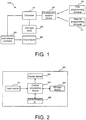
- FIG. 1 is a block diagram showing a schematic configuration of a robot control system 100 in a first embodiment.
- the robot control system 100 includes a controller (control device) 10, an arm type robot 20, an end effector controller 30, an end effector 40, and a development support device 50.
- the controller 10 is, for example, a programmable logic controller (PLC), and executes a robot control program that controls operations of the arm type robot 20 and a sequence control program that controls operations of the end effector 40, and outputs a control signal.
- PLC programmable logic controller
- the arm type robot 20 is, for example, a 6-axis vertical articulated robot, and is communicatively connected to the controller 10.
- the arm type robot 20 has a power source such as a servomotor, and drives a servomotor according to a control signal output from the controller 10 based on a robot control program, and operates joint axes.
- the end effector controller 30 is communicatively connected to the controller 10.
- the end effector controller 30 drives a servomotor in the end effector 40 according to a control signal output from the controller 10 based on the sequence control program.
- the end effector 40 is attached to a tip of the arm type robot 20 and includes, for example, a mechanism that grips a component.
- the end effector 40 is communicatively connected to the end effector controller 30, and drives a servomotor in the end effector 40 based on a control signal output from the end effector controller 30, and performs an operation of gripping a component and the like.
- the development support device 50 is, for example, a computer such as a personal computer, and is communicatively connected to the controller 10.
- the development support device 50 has a function of downloading a robot control program and a sequence control program executed in the controller 10 to the controller 10, a function of debugging these programs, a function of simulating these programs, and the like.
- the development support device 50 is communicatively connected to a first programming terminal 60 and a second programming terminal 61.
- the robot control program is created by the first programming terminal 60 such as a personal computer, and is downloaded to the development support device 50.
- the sequence control program is created by the second programming terminal 61 such as a personal computer and is downloaded to the development support device 50.
- the robot control program and the sequence control program may be created in the development support device 50.
- the development support device 50 activates software that is installed in advance in a computer and thus realizes the above functions.
- a development support program of the disclosure is included in this software.
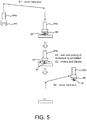
- a hardware configuration of the development support device 50 includes an input device 51, a display device 52, a central processing device 53, a storage device 54, and a communication I/F (interface) 55.
- the input device 51 includes, for example, a keyboard and a pointing device.
- the display device 52 includes, for example, a display.
- the central processing device 53 includes, for example, a CPU (Central Processing Unit).
- the storage device 54 includes a non-volatile storage device and a volatile storage device.
- the non-volatile storage device stores outline information, cross reference information, a global variable table, and the like to be described below in addition to the robot control program and the sequence control program.
- the volatile storage device is appropriately used as a work memory when the central processing device 53 is executed.
- the communication I/F 55 is, for example, a serial line interface such as RS232C, and performs communication with the controller 10.
- the communication I/F 55 may be another communication line interface.
- FIG. 3 is a functional block diagram of the development support device 50 in the present embodiment.
- the development support device 50 functions as an input processing unit 71, a display processing unit 72, an operation unit 73, a storage unit 74, and a communication processing unit 75.
- the input processing unit 71 processes an input from the input device 51.
- the display processing unit 72 creates display data output to the display device 52.
- the operation unit 73 includes a user program editing unit 73a, an outline information generating unit 73b, a cross reference information generating unit 73c, and a determination unit 73d. Details of such functions of the operation unit 73 will be described below.
- the storage unit 74 includes a user program storage unit 74a, an outline information storage unit 74b, a cross reference information storage unit 74c, and a global variable table storage unit 74d. Details of such storage units will be described below.
- FIG. 4 shows a display screen displayed on the display device 52.
- a display screen of the display device 52 includes a program display unit 52a, an outline information display unit 52b, and a reference information display unit 52c.
- the program display unit 52a displays a source code of a robot control program and a sequence control program.
- the outline information display unit 52b displays outline information indicating a configuration of the robot control program and the sequence control program.
- Outline information to be displayed on the outline information display unit 52b is created by the outline information generating unit 73b and stored in the outline information storage unit 74b in the storage unit 74. Then, the display processing unit 72 displays outline information about the robot control program and the sequence control program displayed on the program display unit 52a in the outline information display unit 52b.
- the outline information is information indicating an outline of a configuration of the robot control program and the sequence control program, and is obtained by extracting predetermined components used in the robot control program and the sequence control program in order from the beginning of the program.
- the reference information display unit 52c includes a reference target input field 52c-1 and a reference information display field 52c-2. By inputting an operand to the reference target input field 52c-1, cross reference information about an instruction having the same operand as the operand is displayed on the reference information display field 52c-2. In addition, by inputting a shared variable to the reference target input field 52c-1, cross reference information about an instruction that uses the shared variable is displayed on the reference information display field 52c-2.
- variable names can be assigned to correspond to a contact number and a memory number corresponding to the operand of the instruction, and the program can be edited using the variable names.
- Operands can be displayed using variable names on the program display unit 52a, the outline information display unit 52b, and the reference information display unit 52c.
- a contact number and a memory number may be used for display without using such variable names.
- a shared variable check process in the present embodiment will be described.
- a shared variable check process in a program when an arm type robot is moved to a position of a workpiece, the workpiece is gripped by an end effector, and the arm type robot is moved to another position in that state will be described.
- a V+ language is used in the present embodiment.
- the sequence control program is a program written in an IEC language, and in the present embodiment, for example, an ST (structured text) language is used.
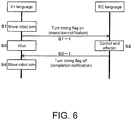
- FIG. 5 is a diagram explaining the above operations of an arm type robot and an end effector.
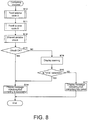
- FIG. 6 is a flowchart of a program written in a V+ language and a program written in an IEC language for realizing the above operations.
- FIG. 7 is a diagram showing a source code of a program written in a V+ language and a program written in an IEC language for realizing the above operations.
- step S1 move robot arm
- step S2 control end effector
- step S3 wait until picking of the workpiece is completed
- step S4 move robot arm
- step S1 in a program written in a V+ language which is a robot control program, first, the arm 20a of the arm type robot 20 is moved to a predetermined position near the workpiece W (step S1). Next, when movement of the arm 20a of the arm type robot 20 to a predetermined position is completed, a timing flag is turned ON using a shared variable (step S1-1). This shared variable is referred to also in a program written in an IEC language and turning the timing flag ON is a notification that control of the end effector is executed for the program written in an IEC language.
- step S2 When the timing flag is turned ON, the program written in an IEC language starts control of the end effector 40 to pick up the workpiece W (step S2). During this time, the program written in a V+ language waits (step S3).
- step S3 When picking of the workpiece W by the end effector 40 is completed, the program written in an IEC language turns the timing flag OFF using a shared variable (step S3-1). Turning the timing flag OFF is a notification that control of the end effector is completed for the program written in a V+ language.
- the program written in a V+ language moves the arm 20a of the arm type robot 20 to another position (step S4).
- reqHandClose is used as a shared variable, and reqHandClose is referred to both in the program written in a V+ language and the program written in an IEC language.
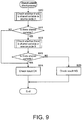
- FIG. 8 and FIG. 9 are a flowchart showing a flow of a shared variable check process in the present embodiment.
- step S10 the input processing unit 71 of the development support device 50 reads a source code A (step S10), and reads a source code B (step S11).
- the source code of the program written in a V+ language is set as the source code A and the source code of the program written in an IEC language is set as the source code B.
- FIG. 9 is a flowchart showing subroutines of the shared variable check process.
- the central processing device 53 first checks whether there is a shared variable in the source code A.
- a global variable table TBL1 shown in FIG. 10 is used to check whether there is a shared variable.
- the global variable table TBL1 is created when a program is created in an IEC language in the second programming terminal 61, and is downloaded together when the program written in an IEC language is downloaded to the development support device 50.
- the global variable table TBL1 includes a field indicating a name of a shared variable, a field indicating a data type, a field indicating whether a variable is shared, a field indicating whether a shared variable is checked, and the like.
- the field indicating whether a variable is shared and the field indicating whether a shared variable is checked are provided in consideration of reserving a shared variable that may be used later.
- variable reqHandClose in the variable reqHandClose, a checkbox in the field indicating whether a variable is shared is checked and a checkbox in the field indicating whether a shared variable is checked is checked.
- the central processing device 53 reads the shared variable reqHandClose from the global variable table TBL1, and checks whether the shared variable is described in the source code A, that is, the source code of the program written in an V+ language (step S20). In this example, it is checked whether the shared variable reqHandClose is described.
- the determination unit 73d sets a check result to OK (step S24), and exits the subroutine.
- the determination unit 73d determines that there is a shared variable in the source code B (YES in step S21).
- the determination unit 73d determines that there is a shared variable in the source code A (YES in step S23). In this case, the determination unit 73d sets a check result to OK (step S24), and exits the subroutine. However, when it is determined that there is no shared variable in the source code A (NO in step S23), the determination unit 73d sets a check result to NG (S25), and exits the subroutine.
- step S12 when a result of shared variable checking (step S12) is that the check result is OK (YES in step S13), the central processing device 53 displays a message indicating that compiling is successful on a screen of the display device 52 of the development support device 50 (step S14).
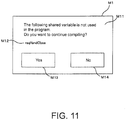
- step S12 when a result of shared variable checking (step S12) is that the check result is NG (NO in step S13), the central processing device 53 displays an error message box M1 as shown in FIG. 11 on a screen of the display device 52 of the development support device 50 (step S15).
- FIG. 11 is a diagram showing an example of the error message box M1.
- an error message M11 a name M12 of a shared variable of an error object, a "Yes" button M13, and a "No” button M14 are displayed.
- the error message M11 a message of "The following shared variable is not used in the program. Do you want to continue compiling?" is displayed.
- a name M12 of a shared variable of an error object a name called reqHandClose is displayed.
- the determination unit 73d displays a message indicating that compiling is successful on a screen of the display device 52 of the development support device 50 (step S14).
- the determination unit 73d displays a message indicating that compiling has failed on a screen of the display device 52 of the development support device 50 (step S17).
- a global variable table may be created when a program is described in a V+ language.
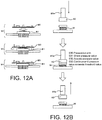
- FIG. 12A and FIG. 12B are diagrams explaining operations of an arm type robot and an end effector in the present embodiment.
- a shared variable check process in a program for realizing a pressing operation of an arm type robot will be described.
- the end effector 40 in this case includes a force sensor (not shown), and acquires a pressure value during a pressing operation from the force sensor. As shown in FIG. 12B , the end effector 40 including a force sensor is attached to the arm type robot 20.
- step S30 press robot arm
- step S31 share pressure value
- step S32 acquire pressure value
- step S33 continue until the pressure value exceeds a threshold value
- step S30 in the program written in a V+ language which is a robot control program, the arm 20a of the arm type robot 20 is pressed against the workpiece W (step S30).
- a pressure value during pressing is acquired from the force sensor provided in the end effector 40, the pressure value is assigned to the shared variable, and the pressure value is shared with the arm type robot 20 (step S31).
- the program written in a V+ language acquires the pressure value using the shared variable (step S32), and continues the pressing operation until the pressure value exceeds a threshold value (step S33).
- the program written in a V+ language stops the pressing operation and moves the arm 20a of the arm type robot 20 away from the workpiece W (step S34).
- presValue is used as a shared variable, and presValue is referred to both in the program written in a V+ language and the program written in an IEC language.
- WHILE presValue ⁇ 2000 DO indicates a process of continuing a pressing operation until the pressure value exceeds a threshold value in the program written in a V+ language.
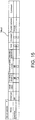
- a global variable table TBL2 shown in FIG. 15 is used to check whether there is a shared variable.
- presValue is registered as a shared variable.
- a hardware configuration and a functional block configuration of the development support device 50 in the present embodiment are the same as the hardware configuration and the functional block configuration of the development support device 50 in the first embodiment shown in FIG. 2 and FIG. 3 .
- a project tab 90 is selected on a screen of the display device 52 of the development support device 50
- a project menu 91 is displayed.
- the shared variable check item 92 is selected from the project menu 91, the shared variable check process is performed.
- an input of the source code of the program written in a V+ language and the source code of the program written in an IEC language has already been completed, and the compiling process of the program written in an IEC language has already been completed.
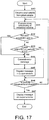
- FIG. 17 is a flowchart showing a flow of a shared variable check process in the present embodiment.
- the cross reference information generating unit 73c extracts a shared variable from a global variable table (step S40).
- the global variable table the same global variable table as the global variable tables TBL1 and TBL2 shown in the first embodiment and the second embodiment is used.
- the cross reference information generating unit 73c executes cross referencing between the source code of the program written in a V+ language and the source code of the program written in an IEC language with respect to extracted shared variable (step S41). That is, the cross reference information generating unit 73c refers to a location in which the shared variable is used in the source code of the program written in a V+ language and the source code of the program written in an IEC language, and stores its program name, a step number, an address, a language, a path, and the like as cross reference information in the cross reference information storage unit 74c. When there are a plurality of extracted shared variables, the above cross referencing is sequentially executed on the shared variables.
- shared variables shared1, shared2, in1, and in2 are used.
- shared variables shared3 and shared4 are used in the program written in an ST language.
- shared variables shared1 and shared4 are used in the program written in a V+ language.
- the determination unit 73d first executes cross referencing for the shared variable shared1 (step S41), and determines whether the shared variable is used in both the program written in an IEC language and the program written in a V+ language (step S42). Next, it is determined whether the shared variable is used only in the program written in an IEC language or used only in the program written in a V+ language (step S43).
- step S46 since the shared variable shared 1 is used in the program written in a ladder language and the program written in a V+ language (NO in step S42, NO in step S43), the process advances to step S46.
- the determination unit 73d determines whether checking is completed for all shared variable (step S46). In this case, since checking has not yet been completed (NO in step S46), the process returns to step S41 again, and next cross referencing is executed for the shared variable shared2 (step S41).
- step S44 the determination unit 73d generates an error message (step S44), and the display processing unit 72 registers "warning: the shared variable "shared2" is used only in the IEC program. :Program0" in the output window 110 shown in FIG. 22 (step S45).
- Program0 indicates a program written in a ladder language shown in FIG. 19 .
- the determination unit 73d determines whether checking is completed for all shared variables (step S46). In this case, since checking has not yet been completed (NO in step S46), the process returns to step S41 again, and next cross referencing is executed for the shared variable shared3 (step S41).
- step S44 the determination unit 73d generates an error message (step S44), and the display processing unit 72 registers "warning: the shared variable "shared3" is used only in the V+ program. :Program2" in an output window 110 shown in FIG. 22 .
- Program2 indicates a program written in a V+ language shown in FIG. 21 .
- step S46 determines that check is completed for all shared variables (YES in step S46)
- the display processing unit 72 displays the error message registered as described above on the output window 110 (step S47), and the determination unit 73d ends checking of the shared variable.
- the output window 110 shown in FIG. 22 is displayed.
- the output window 110 may be displayed on the reference information display unit 52c or may be displayed on the program display unit 52a.
- a cross reference display screen 103 shown in FIG. 18 may be displayed.
- the cross reference display screen 103 is displayed on the reference information display unit 52c.
- Program0 corresponds to the program written in a ladder language shown in FIG. 19
- Program 1 corresponds to the program written in an ST language shown in FIG. 20
- Program2 corresponds to the program written in a V+ language shown in FIG. 21 .
- the shared variable shared1 is used in the program written in a ladder language and the program written in a V+ language.
- the shared variable shared2 is used only in the program written in a ladder language.
- the shared variable shared3 is used only in the program written in an ST language.
- the shared variable shared4 is used in the program written in an ST language and the program written in a V+ language.
- the shared variable shared5 is not used in all programs.
- the variables in1 and in2 are not shared variables.
- an error message indicating that no shared variable is used in at least one program of the program written in an IEC language and the program written in a V+ language is displayed.
- the source code of the program written in an IEC language and the source code of the program written in a V+ language are displayed on the program display unit 52a, and when a shared variable is selected from the source code, in both the program written in an IEC language and the program written in a V+ language, a location in which the selected shared variable is referred to is displayed as the cross reference information.
- FIG. 23 is a functional block diagram of the development support device 50 in the present embodiment. This differs from the functional block diagram shown in FIG. 3 in the first embodiment in that the operation unit 73 includes a component selection unit 73e and a shared variable processing unit 73f as a determination unit in the present embodiment. For example, when a variable is clicked by a user in outline information displayed on the outline information display unit 52b, the component selection unit 73e selects the variable as a variable for which the shared variable check process is performed. In addition, when the variable selected by the component selection unit 73e is present in the shared variable reference, the shared variable processing unit 73f determines whether the variable is referred to as a shared variable in the program written in an IEC language and the program written in a V+ language.
- the cross reference information generating unit 73c functioning as a reference unit specifies a location in which the shared variable is used.
- FIG. 24 shows an example of the source code of the program written in a V+ language and the source code of the program written in an IEC language displayed on the program display unit 52a in the present embodiment.
- a part indicated by the dotted line is a shared variable.
- reqHandClose is a shared variable.
- a source code of any one program may be displayed and source codes of both programs may be displayed.
- an input of the source code of the program written in a V+ language and the source code of the program written in an IEC language has already been completed, and the compiling process of the program written in an IEC language has already been completed.
- FIG. 25 is a flowchart showing a flow of a shared variable check process in the present embodiment.
- the process shown in FIG. 25 is repeatedly executed at predetermined time intervals.
- the shared variable processing unit 73f determines whether a variable is clicked by a user and the variable is selected by the component selection unit 73e (step S50).
- the shared variable processing unit 73f exits the process shown in FIG. 25 .
- the shared variable processing unit 73f next determines whether the selected variable is present in the shared variable reference (step S51).
- the shared variable reference in the present embodiment may be a global variable table or a reference different from the global variable table.
- the shared variable processing unit 73f When it is determined that the selected variable is not present in the shared variable reference (NO in step S51), the shared variable processing unit 73f exits the process shown in FIG. 25 . However, when it is determined that the selected variable is present in the shared variable reference (YES in step S51), the shared variable processing unit 73f extracts the variable from the shared variable reference (step S52).
- the shared variable processing unit 73f determines whether the extracted variable is referred to in, for example, the source code of the program written in an IEC language (step S53).
- the cross reference information generating unit 73c refers to a location in which the extracted variable is used in the source code of the program written in an IEC language and stores its program name, a step number, an address, a language, a path, and the like as cross reference information in the cross reference information storage unit 74c (step S54).
- the shared variable processing unit 73f determines whether cross referencing for the shared variable is completed in all programs (step S55). In this example, the shared variable processing unit 73f determines that cross referencing for the shared variable has not yet been completed in the source code of the program written in a V+ language (NO in step S55), and the process returns to step S53 again.
- the shared variable processing unit 73f determines whether the extracted variable is referred to in the source code of the program written in a V+ language (step S53).
- the cross reference information generating unit 73c refers to a location in which the extracted variable is used in the source code of the program written in an V+ language and stores its program name, a step number, an address, a language, a path, and the like as cross reference information in the cross reference information storage unit 74c (step S54).
- the shared variable processing unit 73f determines whether cross referencing for the shared variable is completed in all programs (step S55). In this example, it is determined that cross referencing for the shared variable is completed in all programs (YES in step S55), cross reference information stored in the cross reference information storage unit 74c is displayed on a cross reference window (step S56), and the process shown in FIG. 25 ends.
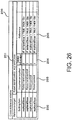
- FIG. 26 shows an example of a cross reference window 200.
- the cross reference window 200 is displayed on the reference information display unit 52c.
- the cross reference window 200 shown in FIG. 26 includes a reference target display field 201, a setting item display field 202, an occurrence location display field 203, a detailed information display field 204, a reference display field 205, and the like.
- a name of a program in which cross referencing of a shared variable is performed and a selected shared variable are displayed.
- "Robot hand control" shown in FIG. 26 indicates a name of the program written in an IEC language.
- "reqHandClose” is a selected shared variable.
- a shared variable which is a cross reference target is displayed in the setting item display field 202.
- reqHandClose is displayed in the example in FIG. 26 .
- a name of a program in which a shared variable displayed on a setting item is referred to is displayed in the setting item display field 202.
- robot hand control, and robot control are displayed.
- Robot control indicates a name of a program written in V+ language.
- a line number in the source code of the program in which the shared variable displayed in the setting item display field 202 is referred to is displayed.
- a source code in the line number displayed in the detailed information display field 204 is displayed.
- the outline information is information indicating an outline of a configuration of the program written in an IEC language or the program written in a V+ language, and is obtained by extracting predetermined components used in these programs in order from the beginning of the programs.
Landscapes
- Engineering & Computer Science (AREA)
- Software Systems (AREA)
- Theoretical Computer Science (AREA)
- General Engineering & Computer Science (AREA)
- Physics & Mathematics (AREA)
- General Physics & Mathematics (AREA)
- Automation & Control Theory (AREA)
- Computing Systems (AREA)
- Computational Linguistics (AREA)
- Programmable Controllers (AREA)
- Devices For Executing Special Programs (AREA)
- Stored Programmes (AREA)
- Debugging And Monitoring (AREA)
Abstract
Description
- The disclosure relates to a development support device, a development support method, and a development support program for developing a plurality of different programming languages that are executed in a control device.
- In a system configured to control a robot, a program used for robot control is created in, for example, a V+ language, and a program used for sequence control is created in, for example, a programming language composed of one or a plurality of instructions described according to International Standard IEC61131-3 defined according to the International Electrotechnical Commission (IEC) (hereinafter referred to as an IEC language).
- In order to build an application for a robot using such programs, it is necessary to perform an interlock process for exchanging data between two programs and adjusting a timing, or share data that should be acquired in one language with another language.
- In the related art, as in
Patent Document 1, a processor that executes a program used for robot control and a processor that executes a program used for a sequence control are bus-connected by a shared memory, and data is exchanged between the two programs. - In the two programs, such data exchange is performed by defining shared variables with the same name in each program.
- [Patent Document 1] Japanese Unexamined Patent Application Publication No.
H7-72920 - However, programs in two languages are created on different screens, and generally, created by different persons. Thus, it is assumed that, when implementation of a shared variable taken as an interface between the programs in two languages is forgotten or a shared variable name is erroneously implemented, the two programs do not function properly.
- Here, an embodiment of the disclosure provides a development support device, a development support method, and a development support program through which it is possible to appropriately find an omission of implementation of a shared variable defined between different programs and an error of a shared variable name before a program is executed.
- A development support device of the disclosure, for developing a plurality of different programming languages that are executed in a control device, includes: a shared variable reference which is a pre-created shared variable reference and is referred to in source codes of the plurality of different programming languages, and used for a shared variable that shares a memory; an input unit configured to input the source codes of the plurality of different programming languages; and a determination unit configured to determine whether the shared variable is referred to in the input source codes of the plurality of different programming languages based on the shared variable reference.
- In the above development support device, when a shared variable that is referred to in source codes of a plurality of different programming languages and shares a memory is defined, a shared variable reference for the shared variable is created. The shared variable reference may be input to the development support device, or may be stored in an external device that the development support device can access.
- The source codes of the plurality of different programming languages are created in a device different from the development support device, and are input to the development support device by the input unit of the development support device.
- The determination unit of the development support device refers to the shared variable reference, reads the shared variable, and determines whether the shared variable is referred to in the input source codes of the plurality of different programming languages.
- According to the above development support device, since it is determined whether a shared variable is referred to in source codes of a plurality of different programming languages based on the shared variable reference, it is possible to appropriately find an omission of implementation of the shared variable defined between different programs and an error of a shared variable name before a program is executed.
- The development support device according to one embodiment further includes an error message output unit configured to output an error message. When it is determined that the shared variable is referred to in a source code of one programming language among the source codes of the plurality of different programming languages, the determination unit determines whether the shared variable referred to is referred to in a source code of another programming language. When it is determined that the shared variable is not referred to, the determination unit outputs a notification indicating an error state. The error message output unit outputs an error message when the determination unit outputs the notification indicating the error state.
- In the development support device of the one embodiment, the determination unit determines whether the shared variable is referred to in a source code of one programming language among the source codes of the plurality of different programming languages. When it is determined that the shared variable is referred to in the source code of the one programming language, it is determined whether the shared variable referred to is referred to in a source code of another programming language. As a result, when it is determined that the shared variable is not referred to, a notification indicating an error state is output and an error message is output.
- According to the above development support device, it is possible to appropriately find an omission of implementation of a shared variable defined between different programs and an error of a shared variable name before a program is executed.
- The development support device according to one embodiment further includes an error message output unit configured to output an error message. When it is determined that the shared variable is not referred to in a source code of any programming language among the source codes of the plurality of different programming languages or when it is determined that the shared variable is referred to only in a source code of any programming language, the determination unit outputs a notification indicating an error state. The error message output unit outputs an error message when the determination unit outputs the notification indicating the error state.
- In the development support device of the one embodiment, the determination unit determines whether the shared variable is referred to in the source codes of the plurality of different programming languages. When it is determined that the shared variable is not referred to in a source code of any programming language, a notification indicating an error state is output and an error message is output. In addition, when it is determined that the shared variable is referred to only in a source code of one programming language, a notification indicating an error state is output and an error message is output.
- According to the above development support device, it is possible to check for an omission of implementation of a shared variable, an error of a shared variable name, the presence of a useless shared variable, and the like, and it is possible to smoothly debug the program.
- The development support device according to one embodiment further includes: a display unit configured to display at least one of the source codes of the plurality of different programming languages, and outlines of the source codes; a selection unit configured to select the shared variable displayed on the display unit; and a reference unit configured to, when the determination unit determines that the shared variable is referred to, display a location in which the shared variable is referred to in the source code. When the selection unit selects the shared variable in a source code or an outline of one programming language among the source codes or the outlines of the plurality of different programming languages displayed on the display unit, the determination unit determines whether the shared variable is referred to in the source code of the one programming language and a source code of another programming language.
- In the development support device of the one embodiment, the determination unit determines whether a shared variable is selected by the selection unit in a source code or outline of one programming language among source codes or outlines of a plurality of different programming languages displayed on the display unit. As a result of determination, when the shared variable is selected, it is determined whether the shared variable is referred to not only in the source code of the one programming language but also a source code of another programming language.
- According to the above development support device, it is possible to easily check whether the shared variable is properly referred to in all programs. As a result, it is possible to check for an omission of implementation of a shared variable, an error of a shared variable name, the presence of a useless shared variable, and the like, and it is possible to smoothly debug the program.
- A development support method of the disclosure, for developing a plurality of different programming languages that are executed in a control device, includes: a step of inputting source codes of the plurality of different programming languages; and a step of determining whether a shared variable is referred to in the input source codes of the plurality of different programming languages based on a shared variable reference which is a pre-created shared variable reference and is referred to in the source codes of the plurality of different programming languages, and used for the shared variable that shares a memory.
- According to the development support method of the disclosure, it is possible to appropriately find an omission of implementation of a shared variable defined between different programs and an error of a shared variable name before a program is executed.
- A development support program of the disclosure is a program causing a computer to execute the above development support method.
- When the program of the disclosure is executed in a computer, the above development support method can be performed.
- As can be clearly understood from the above, according to the development support device, the development support method and the development support program of the disclosure, since it is determined whether the shared variable is referred to in source codes of a plurality of different programming languages based on the shared variable reference, it is possible to appropriately find an omission of implementation of a shared variable defined between different programs and an error of a shared variable name before a program is executed.
-
-
FIG. 1 is a block diagram showing a schematic configuration of arobot control system 100 in a first embodiment. -
FIG. 2 is a diagram showing a hardware configuration of a development support device. -
FIG. 3 is a functional block diagram of the development support device. -
FIG. 4 is a diagram showing a display screen displayed on a display device. -
FIG. 5 is a diagram explaining operations of an arm type robot and an end effector. -
FIG. 6 is a flowchart of a program written in a V+ language and a program written in an IEC language for realizing operations shown inFIG. 5 . -
FIG. 7 is a diagram showing a program written in a V+ language and a program written in an IEC language for realizing operations shown inFIG. 5 . -
FIG. 8 is a flowchart showing a flow of a shared variable check process. -
FIG. 9 is a flowchart showing a flow of a shared variable check process. -
FIG. 10 is a diagram showing an example of a global variable table displayed on a reference information display unit. -
FIG. 11 is a diagram showing an example of an error message box. -
FIG. 12A is a diagram showing a process of attaching a substrate on which a component is mounted to a heatsink, andFIG. 12B is a diagram for explaining such operations when the process ofFIG. 12A is executed by an arm type robot and an end effector in a second embodiment. -
FIG. 13 is a flowchart of a program written in a V+ language and a program written in an IEC language for realizing operations shown inFIG. 12B . -
FIG. 14 is a diagram showing an example of a program written in a V+ language and a program written in an IEC language for realizing operations shown inFIG. 12B . -
FIG. 15 is a diagram showing an example of a global variable table. -
FIG. 16 is a diagram showing an example of a project menu in a third embodiment. -
FIG. 17 is a flowchart showing a flow of a shared variable check process. -
FIG. 18 is a diagram showing an example of a cross reference display screen. -
FIG. 19 is a diagram showing an example of a program written in a ladder language. -
FIG. 20 is a diagram showing an example of a program written in an ST language. -
FIG. 21 is a diagram showing an example of a program written in a V+ language. -
FIG. 22 is a diagram showing an example of an output window. -
FIG. 23 is a functional block diagram of a development support device in a fourth embodiment. -
FIG. 24 is a diagram showing an example of a source code of a program written in a V+ language and a source code of a program written in an IEC language displayed on a program display unit. -
FIG. 25 is a flowchart showing a flow of a shared variable check process. -
FIG. 26 is a diagram showing an example of a cross reference window. - Embodiments of the disclosure will be described below in detail with reference to the drawings.
-
FIG. 1 is a block diagram showing a schematic configuration of arobot control system 100 in a first embodiment. As shown inFIG. 1 , therobot control system 100 includes a controller (control device) 10, anarm type robot 20, anend effector controller 30, anend effector 40, and adevelopment support device 50. - The
controller 10 is, for example, a programmable logic controller (PLC), and executes a robot control program that controls operations of thearm type robot 20 and a sequence control program that controls operations of theend effector 40, and outputs a control signal. - The
arm type robot 20 is, for example, a 6-axis vertical articulated robot, and is communicatively connected to thecontroller 10. Thearm type robot 20 has a power source such as a servomotor, and drives a servomotor according to a control signal output from thecontroller 10 based on a robot control program, and operates joint axes. - The
end effector controller 30 is communicatively connected to thecontroller 10. Theend effector controller 30 drives a servomotor in theend effector 40 according to a control signal output from thecontroller 10 based on the sequence control program. - The
end effector 40 is attached to a tip of thearm type robot 20 and includes, for example, a mechanism that grips a component. Theend effector 40 is communicatively connected to theend effector controller 30, and drives a servomotor in theend effector 40 based on a control signal output from theend effector controller 30, and performs an operation of gripping a component and the like. - The
development support device 50 is, for example, a computer such as a personal computer, and is communicatively connected to thecontroller 10. Thedevelopment support device 50 has a function of downloading a robot control program and a sequence control program executed in thecontroller 10 to thecontroller 10, a function of debugging these programs, a function of simulating these programs, and the like. - In the present embodiment, the
development support device 50 is communicatively connected to afirst programming terminal 60 and asecond programming terminal 61. The robot control program is created by thefirst programming terminal 60 such as a personal computer, and is downloaded to thedevelopment support device 50. In addition, the sequence control program is created by thesecond programming terminal 61 such as a personal computer and is downloaded to thedevelopment support device 50. In addition, the robot control program and the sequence control program may be created in thedevelopment support device 50. - The
development support device 50 activates software that is installed in advance in a computer and thus realizes the above functions. A development support program of the disclosure is included in this software. As shown inFIG. 2 , a hardware configuration of thedevelopment support device 50 includes aninput device 51, adisplay device 52, acentral processing device 53, astorage device 54, and a communication I/F (interface) 55. Theinput device 51 includes, for example, a keyboard and a pointing device. Thedisplay device 52 includes, for example, a display. Thecentral processing device 53 includes, for example, a CPU (Central Processing Unit). Thestorage device 54 includes a non-volatile storage device and a volatile storage device. The non-volatile storage device stores outline information, cross reference information, a global variable table, and the like to be described below in addition to the robot control program and the sequence control program. In addition, the volatile storage device is appropriately used as a work memory when thecentral processing device 53 is executed. The communication I/F 55 is, for example, a serial line interface such as RS232C, and performs communication with thecontroller 10. The communication I/F 55 may be another communication line interface. -
FIG. 3 is a functional block diagram of thedevelopment support device 50 in the present embodiment. Thedevelopment support device 50 functions as aninput processing unit 71, adisplay processing unit 72, anoperation unit 73, astorage unit 74, and acommunication processing unit 75. Theinput processing unit 71 processes an input from theinput device 51. Thedisplay processing unit 72 creates display data output to thedisplay device 52. Theoperation unit 73 includes a userprogram editing unit 73a, an outlineinformation generating unit 73b, a cross referenceinformation generating unit 73c, and adetermination unit 73d. Details of such functions of theoperation unit 73 will be described below. Thestorage unit 74 includes a userprogram storage unit 74a, an outlineinformation storage unit 74b, a cross referenceinformation storage unit 74c, and a global variabletable storage unit 74d. Details of such storage units will be described below. -
FIG. 4 shows a display screen displayed on thedisplay device 52. As shown inFIG. 4 , a display screen of thedisplay device 52 includes aprogram display unit 52a, an outlineinformation display unit 52b, and a referenceinformation display unit 52c. Theprogram display unit 52a displays a source code of a robot control program and a sequence control program. The outlineinformation display unit 52b displays outline information indicating a configuration of the robot control program and the sequence control program. - Outline information to be displayed on the outline
information display unit 52b is created by the outlineinformation generating unit 73b and stored in the outlineinformation storage unit 74b in thestorage unit 74. Then, thedisplay processing unit 72 displays outline information about the robot control program and the sequence control program displayed on theprogram display unit 52a in the outlineinformation display unit 52b. - The outline information is information indicating an outline of a configuration of the robot control program and the sequence control program, and is obtained by extracting predetermined components used in the robot control program and the sequence control program in order from the beginning of the program.
- The reference
information display unit 52c includes a referencetarget input field 52c-1 and a referenceinformation display field 52c-2. By inputting an operand to the referencetarget input field 52c-1, cross reference information about an instruction having the same operand as the operand is displayed on the referenceinformation display field 52c-2. In addition, by inputting a shared variable to the referencetarget input field 52c-1, cross reference information about an instruction that uses the shared variable is displayed on the referenceinformation display field 52c-2. - In the present embodiment, variable names can be assigned to correspond to a contact number and a memory number corresponding to the operand of the instruction, and the program can be edited using the variable names. Operands can be displayed using variable names on the
program display unit 52a, the outlineinformation display unit 52b, and the referenceinformation display unit 52c. Of course, a contact number and a memory number may be used for display without using such variable names. - In the present embodiment, it is possible to check a shared variable referred to in both the robot control program and the sequence control program. When a shared variable is checked, the shared variable is input to the reference
target input field 52c-1 of the referenceinformation display unit 52c, and thus cross reference information is displayed on the referenceinformation display field 52c-2. Details will be described below. - Next, a shared variable check process in the present embodiment will be described. In the present embodiment, as an example, a shared variable check process in a program when an arm type robot is moved to a position of a workpiece, the workpiece is gripped by an end effector, and the arm type robot is moved to another position in that state will be described. In the robot control program, a V+ language is used in the present embodiment. The sequence control program is a program written in an IEC language, and in the present embodiment, for example, an ST (structured text) language is used.
-
FIG. 5 is a diagram explaining the above operations of an arm type robot and an end effector.FIG. 6 is a flowchart of a program written in a V+ language and a program written in an IEC language for realizing the above operations.FIG. 7 is a diagram showing a source code of a program written in a V+ language and a program written in an IEC language for realizing the above operations. - In this example, as shown in
FIG. 5 , first, anarm 20a of thearm type robot 20 is moved close to the workpiece W (step S1: move robot arm). Next, theend effector 40 is moved and thus the workpiece W is picked up by the end effector 40 (step S2: control end effector). During this time, thearm type robot 20 waits until picking of the workpiece W is completed (step S3: wait until picking of the workpiece is completed). Then, when picking of the workpiece W is completed, thearm 20a of thearm type robot 20 is moved to another position (step S4: move robot arm). - The above operations will be described with reference to the flowchart in
FIG. 6 . As shown inFIG. 6 , in a program written in a V+ language which is a robot control program, first, thearm 20a of thearm type robot 20 is moved to a predetermined position near the workpiece W (step S1). Next, when movement of thearm 20a of thearm type robot 20 to a predetermined position is completed, a timing flag is turned ON using a shared variable (step S1-1). This shared variable is referred to also in a program written in an IEC language and turning the timing flag ON is a notification that control of the end effector is executed for the program written in an IEC language. - When the timing flag is turned ON, the program written in an IEC language starts control of the
end effector 40 to pick up the workpiece W (step S2). During this time, the program written in a V+ language waits (step S3). When picking of the workpiece W by theend effector 40 is completed, the program written in an IEC language turns the timing flag OFF using a shared variable (step S3-1). Turning the timing flag OFF is a notification that control of the end effector is completed for the program written in a V+ language. When the timing flag is turned OFF, the program written in a V+ language moves thearm 20a of thearm type robot 20 to another position (step S4). - In the example shown in
FIG. 7 , reqHandClose is used as a shared variable, and reqHandClose is referred to both in the program written in a V+ language and the program written in an IEC language. The statement reqHandClose=TRUE indicates that the timing flag is turned ON, and the statement reqHandClose=FALSE indicates that the timing flag is turned OFF. - As described above, in the present embodiment, when a shared variable called reqHandClose is checked between the program written in a V+ language and the program written in an IEC language, operations of the
arm type robot 20 and theend effector 40 are controlled. Thus, when any of the programs forgets to use a shared variable called reqHandClose or uses a shared variable with a name different from reqHandClose, the program stops at that time, and thearm type robot 20 and theend effector 40 do not perform a desired operation. - Thus, in the present embodiment, in order to prevent implementation errors of such shared variables, a shared variable check process is performed when the program written in an IEC language is subjected to a compiling process.
FIG. 8 andFIG. 9 are a flowchart showing a flow of a shared variable check process in the present embodiment. - In
FIG. 8 , steps necessary for the compiling process other than the shared variable check process are not described. When a program written in a V+ language and a program written in an IEC language are downloaded to thedevelopment support device 50 and a compiling process starts, theinput processing unit 71 of thedevelopment support device 50 reads a source code A (step S10), and reads a source code B (step S11). In this example, the source code of the program written in a V+ language is set as the source code A and the source code of the program written in an IEC language is set as the source code B. - When the source code A and the source code B are completely read, the
determination unit 73d performs a shared variable check process (step S12).FIG. 9 is a flowchart showing subroutines of the shared variable check process. As shown inFIG. 9 , thecentral processing device 53 first checks whether there is a shared variable in the source code A. A global variable table TBL1 shown inFIG. 10 is used to check whether there is a shared variable. - In the present embodiment, the global variable table TBL1 is created when a program is created in an IEC language in the
second programming terminal 61, and is downloaded together when the program written in an IEC language is downloaded to thedevelopment support device 50. - When a shared variable is checked, it is necessary to register the shared variable in advance in the global variable table TBL1 displayed on the
program display unit 52a. - As shown in
FIG. 10 , the global variable table TBL1 includes a field indicating a name of a shared variable, a field indicating a data type, a field indicating whether a variable is shared, a field indicating whether a shared variable is checked, and the like. The field indicating whether a variable is shared and the field indicating whether a shared variable is checked are provided in consideration of reserving a shared variable that may be used later. - In the example shown in
FIG. 10 , in the variable reqHandClose, a checkbox in the field indicating whether a variable is shared is checked and a checkbox in the field indicating whether a shared variable is checked is checked. Thecentral processing device 53 reads the shared variable reqHandClose from the global variable table TBL1, and checks whether the shared variable is described in the source code A, that is, the source code of the program written in an V+ language (step S20). In this example, it is checked whether the shared variable reqHandClose is described. - When it is determined that there is no shared variable in the source code B (NO in step S21) as a result of checking, the
determination unit 73d sets a check result to OK (step S24), and exits the subroutine. In the example shown inFIG. 7 , since the shared variable reqHandClose is described in the source code of the program written in an IEC language, thedetermination unit 73d determines that there is a shared variable in the source code B (YES in step S21). Next, it is checked whether a shared variable is described in the source code A, that is, the source code of the program written in a V+ language (step S22). In this example, it is checked whether the shared variable reqHandClose is described. In the example shown inFIG. 7 , since the shared variable reqHandClose is described in the source code of the program written in a V+ language, thedetermination unit 73d determines that there is a shared variable in the source code A (YES in step S23). In this case, thedetermination unit 73d sets a check result to OK (step S24), and exits the subroutine. However, when it is determined that there is no shared variable in the source code A (NO in step S23), thedetermination unit 73d sets a check result to NG (S25), and exits the subroutine. - As shown in
FIG. 8 , when a result of shared variable checking (step S12) is that the check result is OK (YES in step S13), thecentral processing device 53 displays a message indicating that compiling is successful on a screen of thedisplay device 52 of the development support device 50 (step S14). However, when a result of shared variable checking (step S12) is that the check result is NG (NO in step S13), thecentral processing device 53 displays an error message box M1 as shown inFIG. 11 on a screen of thedisplay device 52 of the development support device 50 (step S15). -
FIG. 11 is a diagram showing an example of the error message box M1. As shown inFIG. 11 , in the error message box M1, an error message M11, a name M12 of a shared variable of an error object, a "Yes" button M13, and a "No" button M14 are displayed. In the example inFIG. 11 , as the error message M11, a message of "The following shared variable is not used in the program. Do you want to continue compiling?" is displayed. As the name M12 of a shared variable of an error object, a name called reqHandClose is displayed. - When a user confirms the error message box M1 and wants to continue compiling, he or she clicks the "Yes" button M13, and when a user wants to stop compiling, he or she clicks the "No" button M14.
- As in
FIG. 8 , when it is determined that the "Yes" button M13 is selected in the error message box M1 (YES in step S16), thedetermination unit 73d displays a message indicating that compiling is successful on a screen of thedisplay device 52 of the development support device 50 (step S14). However, when it is determined that the "No" button M14 is selected in the error message box M1 (NO in step S16), thedetermination unit 73d displays a message indicating that compiling has failed on a screen of thedisplay device 52 of the development support device 50 (step S17). - As described above, according to the present embodiment, since a shared variable is checked using a global variable table during a compiling process, it is possible to appropriately find an omission of implementation of a shared variable defined between different programs and a difference of a shared variable name before the program is executed.
- While an example in which a global variable table is created when a program is described in an IEC language has been described in the above embodiment, a global variable table may be created when a program is described in a V+ language.
- While a form in which the field indicating whether a variable is shared and the field indicating whether a shared variable is checked are provided in the global variable table has been described in the above embodiment, a form in which these fields are not provided may be used.
- Next, a second embodiment of the disclosure will be described with reference to the appended drawings.
FIG. 12A and FIG. 12B are diagrams explaining operations of an arm type robot and an end effector in the present embodiment. In the present embodiment, a shared variable check process in a program for realizing a pressing operation of an arm type robot will be described. - In this example, as shown in
FIG. 12A , in order to attach asubstrate 80 on which a component is mounted to aheatsink 81, an operation of pressing thesubstrate 80 on which a component is mounted against theheatsink 81 is performed by thearm type robot 20. - The
end effector 40 in this case includes a force sensor (not shown), and acquires a pressure value during a pressing operation from the force sensor. As shown inFIG. 12B , theend effector 40 including a force sensor is attached to thearm type robot 20. - In order to perform a pressing operation, first, the
end effector 40 attached to thearm 20a of thearm type robot 20 is pressed against the workpiece W (step S30: press robot arm). At this time, the force sensor provided in theend effector 40 acquires a pressure value during pressing, the pressure value is assigned to the shared variable, and the pressure value is shared with the arm type robot 20 (step S31: share pressure value). Thearm type robot 20 acquires the pressure value using the shared variable (step S32: acquire pressure value), and continues the pressing operation until the pressure value exceeds a threshold value (step S33: continue until the pressure value exceeds a threshold value). When the pressure value exceeds a threshold value, thearm type robot 20 stops the pressing operation and moves away from the workpiece W. - The above operations will be described with reference to the flowchart in
FIG. 13 . As shown inFIG. 13 , in the program written in a V+ language which is a robot control program, thearm 20a of thearm type robot 20 is pressed against the workpiece W (step S30). In the program written in an IEC language, a pressure value during pressing is acquired from the force sensor provided in theend effector 40, the pressure value is assigned to the shared variable, and the pressure value is shared with the arm type robot 20 (step S31). The program written in a V+ language acquires the pressure value using the shared variable (step S32), and continues the pressing operation until the pressure value exceeds a threshold value (step S33). When the pressure value exceeds a threshold value, the program written in a V+ language stops the pressing operation and moves thearm 20a of thearm type robot 20 away from the workpiece W (step S34). - In the example shown in
FIG. 14 , presValue is used as a shared variable, and presValue is referred to both in the program written in a V+ language and the program written in an IEC language. The statement presValue:=N1_Ch1_Analog_Input_Value indicates a process of assigning a pressure value to a shared variable in the program written in an IEC language. In addition, the statement WHILE presValue<2000 DO indicates a process of continuing a pressing operation until the pressure value exceeds a threshold value in the program written in a V+ language. - Since the flowchart of the shared variable check process in the present embodiment is the same as the flowchart shown in
FIG. 8 andFIG. 9 described in the first embodiment, description thereof will be omitted. However, a global variable table TBL2 shown inFIG. 15 is used to check whether there is a shared variable. In the global variable table TBL2 shown inFIG. 15 , presValue is registered as a shared variable. - As described above, according to the present embodiment, since a shared variable is checked using a global variable table during a compiling process, it is possible to appropriately find an omission of implementation of a shared variable defined between different programs and a difference of a shared variable name before the program is executed.
- Next, a third embodiment of the disclosure will be described with reference to the appended drawings. A form in which the shared variable check process is performed during the compiling process of the program written in an IEC language has been described in the first embodiment and the second embodiment. However, in the present embodiment, after the compiling process is executed, if a shared
variable check item 92 is selected, the shared variable check process is performed. - A hardware configuration and a functional block configuration of the
development support device 50 in the present embodiment are the same as the hardware configuration and the functional block configuration of thedevelopment support device 50 in the first embodiment shown inFIG. 2 andFIG. 3 . - In the present embodiment, as shown in
FIG. 16 , when aproject tab 90 is selected on a screen of thedisplay device 52 of thedevelopment support device 50, aproject menu 91 is displayed. When the sharedvariable check item 92 is selected from theproject menu 91, the shared variable check process is performed. Here, in the present embodiment, an input of the source code of the program written in a V+ language and the source code of the program written in an IEC language has already been completed, and the compiling process of the program written in an IEC language has already been completed. - In addition, in the present embodiment, as the program written in an IEC language, a program written in a ladder language as shown in
FIG. 19 and a program written in an ST language as shown inFIG. 20 are used. -
FIG. 17 is a flowchart showing a flow of a shared variable check process in the present embodiment. When the shared variable check process starts, the cross referenceinformation generating unit 73c extracts a shared variable from a global variable table (step S40). For the global variable table, the same global variable table as the global variable tables TBL1 and TBL2 shown in the first embodiment and the second embodiment is used. - Next, the cross reference
information generating unit 73c executes cross referencing between the source code of the program written in a V+ language and the source code of the program written in an IEC language with respect to extracted shared variable (step S41). That is, the cross referenceinformation generating unit 73c refers to a location in which the shared variable is used in the source code of the program written in a V+ language and the source code of the program written in an IEC language, and stores its program name, a step number, an address, a language, a path, and the like as cross reference information in the cross referenceinformation storage unit 74c. When there are a plurality of extracted shared variables, the above cross referencing is sequentially executed on the shared variables. - For example, as shown in
FIG. 19 , in the program written in a ladder language, shared variables shared1, shared2, in1, and in2 are used. As shown inFIG. 20 , in the program written in an ST language, shared variables shared3 and shared4 are used. In addition, as shown inFIG. 21 , in the program written in a V+ language, shared variables shared1 and shared4 are used. - The
determination unit 73d first executes cross referencing for the shared variable shared1 (step S41), and determines whether the shared variable is used in both the program written in an IEC language and the program written in a V+ language (step S42). Next, it is determined whether the shared variable is used only in the program written in an IEC language or used only in the program written in a V+ language (step S43). - In this example, since the shared variable shared 1 is used in the program written in a ladder language and the program written in a V+ language (NO in step S42, NO in step S43), the process advances to step S46. The
determination unit 73d determines whether checking is completed for all shared variable (step S46). In this case, since checking has not yet been completed (NO in step S46), the process returns to step S41 again, and next cross referencing is executed for the shared variable shared2 (step S41). - Since the shared variable shared2 is used only in the program written in a ladder language (NO in step S42, YES in step S43), the
determination unit 73d generates an error message (step S44), and thedisplay processing unit 72 registers "warning: the shared variable "shared2" is used only in the IEC program. :Program0" in theoutput window 110 shown inFIG. 22 (step S45). Here, Program0 indicates a program written in a ladder language shown inFIG. 19 . - The
determination unit 73d determines whether checking is completed for all shared variables (step S46). In this case, since checking has not yet been completed (NO in step S46), the process returns to step S41 again, and next cross referencing is executed for the shared variable shared3 (step S41). - Since the shared variable shared3 is used only in the program written in an ST language (NO in step S42, YES in step S43), the
determination unit 73d generates an error message (step S44), and thedisplay processing unit 72 registers "warning: the shared variable "shared3" is used only in the V+ program. :Program2" in anoutput window 110 shown inFIG. 22 . Here, Program2 indicates a program written in a V+ language shown inFIG. 21 . - In the same manner, checking is performed below for all shared variables. When the
determination unit 73d determines that check is completed for all shared variables (YES in step S46), thedisplay processing unit 72 displays the error message registered as described above on the output window 110 (step S47), and thedetermination unit 73d ends checking of the shared variable. - As a result of the above process, finally, the
output window 110 shown inFIG. 22 is displayed. Theoutput window 110 may be displayed on the referenceinformation display unit 52c or may be displayed on theprogram display unit 52a. - In addition, in the present embodiment, in addition to the
output window 110, a crossreference display screen 103 shown inFIG. 18 may be displayed. The crossreference display screen 103 is displayed on the referenceinformation display unit 52c. - In
FIG. 18 , Program0 corresponds to the program written in a ladder language shown inFIG. 19 , andProgram 1 corresponds to the program written in an ST language shown inFIG. 20 . In addition, Program2 corresponds to the program written in a V+ language shown inFIG. 21 . - As shown in
FIG. 18 , the shared variable shared1 is used in the program written in a ladder language and the program written in a V+ language. The shared variable shared2 is used only in the program written in a ladder language. The shared variable shared3 is used only in the program written in an ST language. - In addition, the shared variable shared4 is used in the program written in an ST language and the program written in a V+ language. In addition, the shared variable shared5 is not used in all programs. Here, the variables in1 and in2 are not shared variables.
- Therefore, in the example shown in
FIG. 18 , an error message as shown inFIG. 22 is displayed for the shared variables shared2, shared3, and shared5. - As described above, according to the present embodiment, an error message indicating that no shared variable is used in at least one program of the program written in an IEC language and the program written in a V+ language is displayed. As a result, it is possible to check for an omission of implementation of a shared variable, an error of a shared variable name, the presence of a useless shared variable, and the like, and it is possible to smoothly debug the program.
- Next, a fourth embodiment of the disclosure will be described with reference to the appended drawings. A form in which the shared variable check process is performed during the compiling process of the program written in an IEC language has been described in the first embodiment and the second embodiment. In addition, a form in which the shared variable check process is performed after the compiling process is executed has been described in the third embodiment.
- In the present embodiment, the source code of the program written in an IEC language and the source code of the program written in a V+ language are displayed on the
program display unit 52a, and when a shared variable is selected from the source code, in both the program written in an IEC language and the program written in a V+ language, a location in which the selected shared variable is referred to is displayed as the cross reference information. -
FIG. 23 is a functional block diagram of thedevelopment support device 50 in the present embodiment. This differs from the functional block diagram shown inFIG. 3 in the first embodiment in that theoperation unit 73 includes acomponent selection unit 73e and a shared variable processing unit 73f as a determination unit in the present embodiment. For example, when a variable is clicked by a user in outline information displayed on the outlineinformation display unit 52b, thecomponent selection unit 73e selects the variable as a variable for which the shared variable check process is performed. In addition, when the variable selected by thecomponent selection unit 73e is present in the shared variable reference, the shared variable processing unit 73f determines whether the variable is referred to as a shared variable in the program written in an IEC language and the program written in a V+ language. In the present embodiment, when the shared variable processing unit 73f determines that the selected shared variable is referred to in the program written in an IEC language or the program written in a V+ language, the cross referenceinformation generating unit 73c functioning as a reference unit specifies a location in which the shared variable is used. -
FIG. 24 shows an example of the source code of the program written in a V+ language and the source code of the program written in an IEC language displayed on theprogram display unit 52a in the present embodiment. InFIG. 24 , a part indicated by the dotted line is a shared variable. In this example, reqHandClose is a shared variable. - In the
program display unit 52a, a source code of any one program may be displayed and source codes of both programs may be displayed. Here, in the present embodiment, an input of the source code of the program written in a V+ language and the source code of the program written in an IEC language has already been completed, and the compiling process of the program written in an IEC language has already been completed. -
FIG. 25 is a flowchart showing a flow of a shared variable check process in the present embodiment. The process shown inFIG. 25 is repeatedly executed at predetermined time intervals. When the shared variable check process starts, the shared variable processing unit 73f determines whether a variable is clicked by a user and the variable is selected by thecomponent selection unit 73e (step S50). When it is determined that no variable is selected (NO in step S50), the shared variable processing unit 73f exits the process shown inFIG. 25 . However, when it is determined that a variable is selected (YES in step S50), the shared variable processing unit 73f next determines whether the selected variable is present in the shared variable reference (step S51). As in the above embodiment, the shared variable reference in the present embodiment may be a global variable table or a reference different from the global variable table. - When it is determined that the selected variable is not present in the shared variable reference (NO in step S51), the shared variable processing unit 73f exits the process shown in
FIG. 25 . However, when it is determined that the selected variable is present in the shared variable reference (YES in step S51), the shared variable processing unit 73f extracts the variable from the shared variable reference (step S52). - Next, the shared variable processing unit 73f determines whether the extracted variable is referred to in, for example, the source code of the program written in an IEC language (step S53). When the shared variable processing unit 73f determines that the extracted variable is referred to in the source code of the program written in an IEC language, the cross reference
information generating unit 73c refers to a location in which the extracted variable is used in the source code of the program written in an IEC language and stores its program name, a step number, an address, a language, a path, and the like as cross reference information in the cross referenceinformation storage unit 74c (step S54). - Next, the shared variable processing unit 73f determines whether cross referencing for the shared variable is completed in all programs (step S55). In this example, the shared variable processing unit 73f determines that cross referencing for the shared variable has not yet been completed in the source code of the program written in a V+ language (NO in step S55), and the process returns to step S53 again.
- The shared variable processing unit 73f determines whether the extracted variable is referred to in the source code of the program written in a V+ language (step S53). When the shared variable processing unit 73f determines that the extracted variable is referred to in the source code of the program written in an V+ language, the cross reference
information generating unit 73c refers to a location in which the extracted variable is used in the source code of the program written in an V+ language and stores its program name, a step number, an address, a language, a path, and the like as cross reference information in the cross referenceinformation storage unit 74c (step S54). - The shared variable processing unit 73f determines whether cross referencing for the shared variable is completed in all programs (step S55). In this example, it is determined that cross referencing for the shared variable is completed in all programs (YES in step S55), cross reference information stored in the cross reference
information storage unit 74c is displayed on a cross reference window (step S56), and the process shown inFIG. 25 ends. -
FIG. 26 shows an example of across reference window 200. Thecross reference window 200 is displayed on the referenceinformation display unit 52c. Thecross reference window 200 shown inFIG. 26 includes a referencetarget display field 201, a settingitem display field 202, an occurrencelocation display field 203, a detailedinformation display field 204, areference display field 205, and the like. - In the reference
target display field 201, a name of a program in which cross referencing of a shared variable is performed and a selected shared variable are displayed. "Robot hand control" shown inFIG. 26 indicates a name of the program written in an IEC language. "reqHandClose" is a selected shared variable. - In the setting
item display field 202, a shared variable which is a cross reference target is displayed. In the example inFIG. 26 , reqHandClose is displayed. In the occurrencelocation display field 203, a name of a program in which a shared variable displayed on a setting item is referred to is displayed. In this example, robot hand control, and robot control are displayed. "Robot control" indicates a name of a program written in V+ language. - In the detailed
information display field 204, in the program displayed in the occurrencelocation display field 203, a line number in the source code of the program in which the shared variable displayed in the settingitem display field 202 is referred to is displayed. In thereference display field 205, a source code in the line number displayed in the detailedinformation display field 204 is displayed. - As described above, according to the present embodiment, in one program, by simply selecting a shared variable, not only a location in which the shared variable is referred to in the program, but also a location in which the shared variable is referred to in the other program, are displayed in the
cross reference window 200. - Therefore, when a user views content displayed in the
cross reference window 200, it is possible to easily determine whether the shared variable is properly referred to in all programs. As a result, it is possible to check for an omission of implementation of a shared variable, an error of a shared variable name, the presence of a useless shared variable, and the like, and it is possible to smoothly debug the program. - In the above description, while a form in which a variable is selected from the source code of the program displayed on the
program display unit 52a has been described, the disclosure is not limited to such a form. For example, a form in which outline information is displayed on anoutline display unit 52b and a variable is selected from outline information can also be applied. - The outline information is information indicating an outline of a configuration of the program written in an IEC language or the program written in a V+ language, and is obtained by extracting predetermined components used in these programs in order from the beginning of the programs.
- In this case, in outline information of one program, by simply selecting a shared variable, not only a location in which the shared variable is referred to in the program, but also a location in which the shared variable is referred to in the other program can be displayed in the
cross reference window 200. - Therefore, when a user views content displayed in the
cross reference window 200, it is possible to easily determine whether the shared variable is properly referred to in all programs. As a result, it is possible to check for an omission of implementation of a shared variable, an error of a shared variable name, the presence of a useless shared variable, and the like, and it is possible to smoothly debug the program. - A form in which only the program written in an ST language is used as the program written in an IEC language has been described in the first embodiment, the second embodiment, and the fourth embodiment. However, in these embodiments, as in the third embodiment, both the program written in an ST language and the program written in a ladder language can be used as the program written in an IEC language.
-
- 10 Control device
- 50 Development support device
- 51 Input unit
- 53 Determination unit
- TBL1 global variable table (shared variable reference)
Claims (6)
- A development support device (50) for developing a plurality of different programming languages that are executed in a control device (10), characterized in that the development support device (50) comprises:a shared variable reference (200, TBL1, TBL2) which is a pre-created shared variable reference and is referred to in source codes of the plurality of different programming languages, and used for a shared variable that shares a memory;an input unit (51, 71) configured to input the source codes of the plurality of different programming languages; anda determination unit (53, 73d, 73f) configured to determine whether the shared variable is referred to in the input source codes of the plurality of different programming languages based on the shared variable reference (200, TBL1, TBL2).
- The development support device (50) according to claim 1, further comprising
an error message output unit (52, 72) configured to output an error message (M1),
wherein, when it is determined that the shared variable is referred to in a source code of one programming language among the source codes of the plurality of different programming languages, the determination unit (53, 73d, 73f) determines whether the shared variable referred to is referred to in a source code of another programming language, and when it is determined that the shared variable is not referred to, outputs a notification indicating an error state, and
wherein the error message output unit (52, 72) outputs the error message when the determination unit (53, 73d, 73f) outputs the notification indicating the error state. - The development support device (50) according to claim 1, further comprising
an error message output unit (52, 72) configured to output an error message,
wherein, when it is determined that the shared variable is not referred to in a source code of any programming language among the source codes of the plurality of different programming languages or when it is determined that the shared variable is referred to only in a source code of any programming language, the determination unit (53, 73d, 73f) outputs a notification indicating an error state, and
wherein the error message output unit (52, 72) outputs the error message when the determination unit (53, 73d, 73f) outputs the notification indicating the error state. - The development support device (50) according to claim 1, further comprising
a display unit (52, 72) configured to display at least one of the source codes of the plurality of different programming languages, and outlines of the source codes;
a selection unit (73e) configured to select the shared variable displayed on the display unit; and
a reference unit (73c) configured to, when the determination unit (53, 73d, 73f) determines that the shared variable is referred to, specify a location in which the shared variable is referred to in the source code,
wherein, when the selection unit (73e) selects the shared variable in a source code or an outline of one programming language among the source codes or the outlines of the plurality of different programming languages displayed on the display unit, the determination unit (53, 73d, 73f) determines whether the shared variable is referred to in the source code of the one programming language and a source code of another programming language. - A development support method for developing a plurality of different programming languages that are executed in a control device (10), characterized in that the development support method comprises:a step of inputting source codes of the plurality of different programming languages; anda step of determining whether a shared variable is referred to in the input source codes of the plurality of different programming languages based on a shared variable reference (200, TBL1, TBL2) which is a pre-created shared variable reference and is referred to in the source codes of the plurality of different programming languages, and used for the shared variable that shares a memory.
- A development support program for a development support device (50) for developing a plurality of different programming languages that are executed in a control device (10), characterized in that the program causes a computer to execute:a step of inputting source codes of the plurality of different programming languages; anda step of determining whether a shared variable is referred to in the input source codes of the plurality of different programming languages based on a shared variable reference (200, TBL1, TBL2) which is a pre-created shared variable reference and is referred to in the source codes of the plurality of different programming languages, and used for the shared variable that shares a memory.
Applications Claiming Priority (1)
| Application Number | Priority Date | Filing Date | Title |
|---|---|---|---|
| JP2018048504A JP6891838B2 (en) | 2018-03-15 | 2018-03-15 | Development support equipment, development support methods, and development support programs |
Publications (3)
| Publication Number | Publication Date |
|---|---|
| EP3540536A2 true EP3540536A2 (en) | 2019-09-18 |
| EP3540536A3 EP3540536A3 (en) | 2020-02-26 |
| EP3540536B1 EP3540536B1 (en) | 2023-08-23 |
Family
ID=65411794
Family Applications (1)
| Application Number | Title | Priority Date | Filing Date |
|---|---|---|---|
| EP19156610.8A Active EP3540536B1 (en) | 2018-03-15 | 2019-02-12 | Development support device, development support method, and development support program |
Country Status (4)
| Country | Link |
|---|---|
| US (1) | US10747507B2 (en) |
| EP (1) | EP3540536B1 (en) |
| JP (1) | JP6891838B2 (en) |
| CN (1) | CN110275451B (en) |
Cited By (1)
| Publication number | Priority date | Publication date | Assignee | Title |
|---|---|---|---|---|
| CN111618846A (en) * | 2020-04-10 | 2020-09-04 | 中国科学院软件研究所 | Debugger for mechanical arm program development programming language |
Families Citing this family (5)
| Publication number | Priority date | Publication date | Assignee | Title |
|---|---|---|---|---|
| JP6969460B2 (en) * | 2018-03-15 | 2021-11-24 | オムロン株式会社 | Program development support system, program development support method and program development support program |
| JP7294078B2 (en) * | 2019-11-12 | 2023-06-20 | オムロン株式会社 | Control device |
| CN111158663B (en) * | 2019-12-26 | 2021-07-02 | 深圳逻辑汇科技有限公司 | Method and system for handling references to variables in program code |
| US11709659B1 (en) * | 2020-03-25 | 2023-07-25 | Stripe, Inc. | Systems and methods for a code generation tool for software development systems |
| CN114968352A (en) * | 2021-02-27 | 2022-08-30 | 华为技术有限公司 | Method and device for sharing information |
Citations (1)
| Publication number | Priority date | Publication date | Assignee | Title |
|---|---|---|---|---|
| JPH0772920A (en) | 1993-09-03 | 1995-03-17 | Hitachi Ltd | FA system control method and device |
Family Cites Families (14)
| Publication number | Priority date | Publication date | Assignee | Title |
|---|---|---|---|---|
| JP2000347894A (en) * | 1999-06-09 | 2000-12-15 | Fujitsu Ltd | Source program check device and program recording medium thereof |
| US7035781B1 (en) * | 1999-12-30 | 2006-04-25 | Synopsys, Inc. | Mixed language simulator |
| JP2003241997A (en) * | 2002-02-20 | 2003-08-29 | Denso Corp | Interrupt instruction check device and interrupt instruction check program |
| US20040010780A1 (en) * | 2002-07-11 | 2004-01-15 | Nortel Networks Limited | Method and apparatus for approximate generation of source code cross-reference information |
| US7464065B2 (en) * | 2005-11-21 | 2008-12-09 | International Business Machines Corporation | Object specific language extension interface for a multi-level data structure |
| EP3249893A1 (en) * | 2008-06-03 | 2017-11-29 | Whirlpool Corporation | Appliance development toolkit |
| WO2013004389A1 (en) * | 2011-07-06 | 2013-01-10 | Abb Ag | Method and device for the programming and configuration of a programmable logic controller |
| CN102419730A (en) * | 2011-12-08 | 2012-04-18 | 北京控制工程研究所 | Automatic checking method of safety coding rule of 51 assembly language software |
| JP5942446B2 (en) * | 2012-02-01 | 2016-06-29 | オムロン株式会社 | Support device and support program |
| KR20140147318A (en) * | 2013-06-19 | 2014-12-30 | 한국전자통신연구원 | Apparatus and method for detecting concurrency error of parallel program for multicore |
| US20160246622A1 (en) * | 2015-02-23 | 2016-08-25 | Karlen Simonyan | Method and system for implementing invocation stubs for the application programming interfaces embedding with function overload resolution for dynamic computer programming languages |
| JP2016186697A (en) * | 2015-03-27 | 2016-10-27 | 日本電気株式会社 | Method and mechanism for sharing variable among functions |
| CN106200445B (en) * | 2015-05-06 | 2018-09-25 | 西门子工厂自动化工程有限公司 | The adjustment method of logic controller |
| JP6969460B2 (en) * | 2018-03-15 | 2021-11-24 | オムロン株式会社 | Program development support system, program development support method and program development support program |
-
2018
- 2018-03-15 JP JP2018048504A patent/JP6891838B2/en active Active
-
2019
- 2019-02-12 EP EP19156610.8A patent/EP3540536B1/en active Active
- 2019-02-12 CN CN201910110944.7A patent/CN110275451B/en active Active
- 2019-02-14 US US16/275,354 patent/US10747507B2/en active Active
Patent Citations (1)
| Publication number | Priority date | Publication date | Assignee | Title |
|---|---|---|---|---|
| JPH0772920A (en) | 1993-09-03 | 1995-03-17 | Hitachi Ltd | FA system control method and device |
Cited By (1)
| Publication number | Priority date | Publication date | Assignee | Title |
|---|---|---|---|---|
| CN111618846A (en) * | 2020-04-10 | 2020-09-04 | 中国科学院软件研究所 | Debugger for mechanical arm program development programming language |
Also Published As
| Publication number | Publication date |
|---|---|
| CN110275451B (en) | 2022-06-14 |
| JP6891838B2 (en) | 2021-06-18 |
| EP3540536B1 (en) | 2023-08-23 |
| JP2019160079A (en) | 2019-09-19 |
| CN110275451A (en) | 2019-09-24 |
| US10747507B2 (en) | 2020-08-18 |
| US20190286423A1 (en) | 2019-09-19 |
| EP3540536A3 (en) | 2020-02-26 |
Similar Documents
| Publication | Publication Date | Title |
|---|---|---|
| EP3540536B1 (en) | Development support device, development support method, and development support program | |
| US9727442B2 (en) | Engineering tool, program editing device, and program editing system | |
| CN111993419B (en) | PDPS-based robot offline manufacturing method and device and computer terminal equipment | |
| US20060247806A1 (en) | Development aid device | |
| US11703830B2 (en) | Production system, recovery system, production method, and information storage medium | |
| US20190012168A1 (en) | Program generating apparatus | |
| EP3540593B1 (en) | Program development assist system, program development assist method, and program development assist program | |
| US11454952B2 (en) | Numerical control apparatus | |
| US11353844B2 (en) | Information processing apparatus | |
| CN112166409B (en) | Control system, control method of control system, and recording medium | |
| JP4387288B2 (en) | Display device for control, editor device, program, and recording medium | |
| CN116796407B (en) | BIM model-based collision check preview method and system | |
| JP2008165324A (en) | Program creation support device | |
| US20040049622A1 (en) | Programming tool | |
| JP2023138113A (en) | Information processing device and information processing system | |
| JP2006268292A (en) | Template compiling device and template compiling program | |
| WO1987001476A1 (en) | Method of confirming a robot program | |
| JPH06195249A (en) | Name designation method | |
| JP2007122524A (en) | Control program monitoring device, monitor program, and recording medium for recording this program | |
| JPH1173342A (en) | Device and method for testing program |
Legal Events
| Date | Code | Title | Description |
|---|---|---|---|
| PUAI | Public reference made under article 153(3) epc to a published international application that has entered the european phase |
Free format text: ORIGINAL CODE: 0009012 |
|
| STAA | Information on the status of an ep patent application or granted ep patent |
Free format text: STATUS: REQUEST FOR EXAMINATION WAS MADE |
|
| 17P | Request for examination filed |
Effective date: 20190212 |
|
| AK | Designated contracting states |
Kind code of ref document: A2 Designated state(s): AL AT BE BG CH CY CZ DE DK EE ES FI FR GB GR HR HU IE IS IT LI LT LU LV MC MK MT NL NO PL PT RO RS SE SI SK SM TR |
|
| AX | Request for extension of the european patent |
Extension state: BA ME |
|
| REG | Reference to a national code |
Free format text: PREVIOUS MAIN CLASS: G05B0019050000 Ref country code: DE Ref legal event code: R079 Ref document number: 602019035400 Country of ref document: DE Free format text: PREVIOUS MAIN CLASS: G05B0019050000 Ipc: B25J0009160000 |
|
| PUAL | Search report despatched |
Free format text: ORIGINAL CODE: 0009013 |
|
| AK | Designated contracting states |
Kind code of ref document: A3 Designated state(s): AL AT BE BG CH CY CZ DE DK EE ES FI FR GB GR HR HU IE IS IT LI LT LU LV MC MK MT NL NO PL PT RO RS SE SI SK SM TR |
|
| AX | Request for extension of the european patent |
Extension state: BA ME |
|
| RIC1 | Information provided on ipc code assigned before grant |
Ipc: B25J 9/16 20060101AFI20200122BHEP Ipc: G06F 8/33 20180101ALI20200122BHEP Ipc: G05B 19/042 20060101ALI20200122BHEP Ipc: G05B 19/05 20060101ALI20200122BHEP |
|
| RBV | Designated contracting states (corrected) |
Designated state(s): AL AT BE BG CH CY CZ DE DK EE ES FI FR GB GR HR HU IE IS IT LI LT LU LV MC MK MT NL NO PL PT RO RS SE SI SK SM TR |
|
| STAA | Information on the status of an ep patent application or granted ep patent |
Free format text: STATUS: EXAMINATION IS IN PROGRESS |
|
| 17Q | First examination report despatched |
Effective date: 20211223 |
|
| GRAP | Despatch of communication of intention to grant a patent |
Free format text: ORIGINAL CODE: EPIDOSNIGR1 |
|
| STAA | Information on the status of an ep patent application or granted ep patent |
Free format text: STATUS: GRANT OF PATENT IS INTENDED |
|
| INTG | Intention to grant announced |
Effective date: 20230222 |
|
| RIN1 | Information on inventor provided before grant (corrected) |
Inventor name: NIWA, YOSHIMI Inventor name: SUZUKI, YUJI Inventor name: MARUNO, RYOTA |
|
| GRAS | Grant fee paid |
Free format text: ORIGINAL CODE: EPIDOSNIGR3 |
|
| GRAA | (expected) grant |
Free format text: ORIGINAL CODE: 0009210 |
|
| STAA | Information on the status of an ep patent application or granted ep patent |
Free format text: STATUS: THE PATENT HAS BEEN GRANTED |
|
| AK | Designated contracting states |
Kind code of ref document: B1 Designated state(s): AL AT BE BG CH CY CZ DE DK EE ES FI FR GB GR HR HU IE IS IT LI LT LU LV MC MK MT NL NO PL PT RO RS SE SI SK SM TR |
|
| REG | Reference to a national code |
Ref country code: GB Ref legal event code: FG4D |
|
| REG | Reference to a national code |
Ref country code: CH Ref legal event code: EP |
|
| REG | Reference to a national code |
Ref country code: DE Ref legal event code: R096 Ref document number: 602019035400 Country of ref document: DE |
|
| REG | Reference to a national code |
Ref country code: IE Ref legal event code: FG4D |
|
| REG | Reference to a national code |
Ref country code: LT Ref legal event code: MG9D |
|
| REG | Reference to a national code |
Ref country code: NL Ref legal event code: MP Effective date: 20230823 |
|
| REG | Reference to a national code |
Ref country code: AT Ref legal event code: MK05 Ref document number: 1602035 Country of ref document: AT Kind code of ref document: T Effective date: 20230823 |
|
| PG25 | Lapsed in a contracting state [announced via postgrant information from national office to epo] |
Ref country code: GR Free format text: LAPSE BECAUSE OF FAILURE TO SUBMIT A TRANSLATION OF THE DESCRIPTION OR TO PAY THE FEE WITHIN THE PRESCRIBED TIME-LIMIT Effective date: 20231124 |
|
| PG25 | Lapsed in a contracting state [announced via postgrant information from national office to epo] |
Ref country code: IS Free format text: LAPSE BECAUSE OF FAILURE TO SUBMIT A TRANSLATION OF THE DESCRIPTION OR TO PAY THE FEE WITHIN THE PRESCRIBED TIME-LIMIT Effective date: 20231223 |
|
| PG25 | Lapsed in a contracting state [announced via postgrant information from national office to epo] |
Ref country code: SE Free format text: LAPSE BECAUSE OF FAILURE TO SUBMIT A TRANSLATION OF THE DESCRIPTION OR TO PAY THE FEE WITHIN THE PRESCRIBED TIME-LIMIT Effective date: 20230823 Ref country code: RS Free format text: LAPSE BECAUSE OF FAILURE TO SUBMIT A TRANSLATION OF THE DESCRIPTION OR TO PAY THE FEE WITHIN THE PRESCRIBED TIME-LIMIT Effective date: 20230823 Ref country code: PT Free format text: LAPSE BECAUSE OF FAILURE TO SUBMIT A TRANSLATION OF THE DESCRIPTION OR TO PAY THE FEE WITHIN THE PRESCRIBED TIME-LIMIT Effective date: 20231226 Ref country code: NO Free format text: LAPSE BECAUSE OF FAILURE TO SUBMIT A TRANSLATION OF THE DESCRIPTION OR TO PAY THE FEE WITHIN THE PRESCRIBED TIME-LIMIT Effective date: 20231123 Ref country code: NL Free format text: LAPSE BECAUSE OF FAILURE TO SUBMIT A TRANSLATION OF THE DESCRIPTION OR TO PAY THE FEE WITHIN THE PRESCRIBED TIME-LIMIT Effective date: 20230823 Ref country code: LV Free format text: LAPSE BECAUSE OF FAILURE TO SUBMIT A TRANSLATION OF THE DESCRIPTION OR TO PAY THE FEE WITHIN THE PRESCRIBED TIME-LIMIT Effective date: 20230823 Ref country code: LT Free format text: LAPSE BECAUSE OF FAILURE TO SUBMIT A TRANSLATION OF THE DESCRIPTION OR TO PAY THE FEE WITHIN THE PRESCRIBED TIME-LIMIT Effective date: 20230823 Ref country code: IS Free format text: LAPSE BECAUSE OF FAILURE TO SUBMIT A TRANSLATION OF THE DESCRIPTION OR TO PAY THE FEE WITHIN THE PRESCRIBED TIME-LIMIT Effective date: 20231223 Ref country code: HR Free format text: LAPSE BECAUSE OF FAILURE TO SUBMIT A TRANSLATION OF THE DESCRIPTION OR TO PAY THE FEE WITHIN THE PRESCRIBED TIME-LIMIT Effective date: 20230823 Ref country code: GR Free format text: LAPSE BECAUSE OF FAILURE TO SUBMIT A TRANSLATION OF THE DESCRIPTION OR TO PAY THE FEE WITHIN THE PRESCRIBED TIME-LIMIT Effective date: 20231124 Ref country code: FI Free format text: LAPSE BECAUSE OF FAILURE TO SUBMIT A TRANSLATION OF THE DESCRIPTION OR TO PAY THE FEE WITHIN THE PRESCRIBED TIME-LIMIT Effective date: 20230823 Ref country code: AT Free format text: LAPSE BECAUSE OF FAILURE TO SUBMIT A TRANSLATION OF THE DESCRIPTION OR TO PAY THE FEE WITHIN THE PRESCRIBED TIME-LIMIT Effective date: 20230823 |
|
| PG25 | Lapsed in a contracting state [announced via postgrant information from national office to epo] |
Ref country code: PL Free format text: LAPSE BECAUSE OF FAILURE TO SUBMIT A TRANSLATION OF THE DESCRIPTION OR TO PAY THE FEE WITHIN THE PRESCRIBED TIME-LIMIT Effective date: 20230823 |
|
| PG25 | Lapsed in a contracting state [announced via postgrant information from national office to epo] |
Ref country code: ES Free format text: LAPSE BECAUSE OF FAILURE TO SUBMIT A TRANSLATION OF THE DESCRIPTION OR TO PAY THE FEE WITHIN THE PRESCRIBED TIME-LIMIT Effective date: 20230823 |
|
| PG25 | Lapsed in a contracting state [announced via postgrant information from national office to epo] |
Ref country code: SM Free format text: LAPSE BECAUSE OF FAILURE TO SUBMIT A TRANSLATION OF THE DESCRIPTION OR TO PAY THE FEE WITHIN THE PRESCRIBED TIME-LIMIT Effective date: 20230823 Ref country code: RO Free format text: LAPSE BECAUSE OF FAILURE TO SUBMIT A TRANSLATION OF THE DESCRIPTION OR TO PAY THE FEE WITHIN THE PRESCRIBED TIME-LIMIT Effective date: 20230823 Ref country code: ES Free format text: LAPSE BECAUSE OF FAILURE TO SUBMIT A TRANSLATION OF THE DESCRIPTION OR TO PAY THE FEE WITHIN THE PRESCRIBED TIME-LIMIT Effective date: 20230823 Ref country code: EE Free format text: LAPSE BECAUSE OF FAILURE TO SUBMIT A TRANSLATION OF THE DESCRIPTION OR TO PAY THE FEE WITHIN THE PRESCRIBED TIME-LIMIT Effective date: 20230823 Ref country code: DK Free format text: LAPSE BECAUSE OF FAILURE TO SUBMIT A TRANSLATION OF THE DESCRIPTION OR TO PAY THE FEE WITHIN THE PRESCRIBED TIME-LIMIT Effective date: 20230823 Ref country code: CZ Free format text: LAPSE BECAUSE OF FAILURE TO SUBMIT A TRANSLATION OF THE DESCRIPTION OR TO PAY THE FEE WITHIN THE PRESCRIBED TIME-LIMIT Effective date: 20230823 Ref country code: SK Free format text: LAPSE BECAUSE OF FAILURE TO SUBMIT A TRANSLATION OF THE DESCRIPTION OR TO PAY THE FEE WITHIN THE PRESCRIBED TIME-LIMIT Effective date: 20230823 |
|
| REG | Reference to a national code |
Ref country code: DE Ref legal event code: R097 Ref document number: 602019035400 Country of ref document: DE |
|
| PG25 | Lapsed in a contracting state [announced via postgrant information from national office to epo] |
Ref country code: IT Free format text: LAPSE BECAUSE OF FAILURE TO SUBMIT A TRANSLATION OF THE DESCRIPTION OR TO PAY THE FEE WITHIN THE PRESCRIBED TIME-LIMIT Effective date: 20230823 |
|
| PLBE | No opposition filed within time limit |
Free format text: ORIGINAL CODE: 0009261 |
|
| STAA | Information on the status of an ep patent application or granted ep patent |
Free format text: STATUS: NO OPPOSITION FILED WITHIN TIME LIMIT |
|
| 26N | No opposition filed |
Effective date: 20240524 |
|
| PG25 | Lapsed in a contracting state [announced via postgrant information from national office to epo] |
Ref country code: SI Free format text: LAPSE BECAUSE OF FAILURE TO SUBMIT A TRANSLATION OF THE DESCRIPTION OR TO PAY THE FEE WITHIN THE PRESCRIBED TIME-LIMIT Effective date: 20230823 |
|
| PG25 | Lapsed in a contracting state [announced via postgrant information from national office to epo] |
Ref country code: MC Free format text: LAPSE BECAUSE OF FAILURE TO SUBMIT A TRANSLATION OF THE DESCRIPTION OR TO PAY THE FEE WITHIN THE PRESCRIBED TIME-LIMIT Effective date: 20230823 |
|
| REG | Reference to a national code |
Ref country code: CH Ref legal event code: PL |
|
| PG25 | Lapsed in a contracting state [announced via postgrant information from national office to epo] |
Ref country code: LU Free format text: LAPSE BECAUSE OF NON-PAYMENT OF DUE FEES Effective date: 20240212 |
|
| PG25 | Lapsed in a contracting state [announced via postgrant information from national office to epo] |
Ref country code: CH Free format text: LAPSE BECAUSE OF NON-PAYMENT OF DUE FEES Effective date: 20240229 |
|
| GBPC | Gb: european patent ceased through non-payment of renewal fee |
Effective date: 20240212 |
|
| PG25 | Lapsed in a contracting state [announced via postgrant information from national office to epo] |
Ref country code: LU Free format text: LAPSE BECAUSE OF NON-PAYMENT OF DUE FEES Effective date: 20240212 Ref country code: CH Free format text: LAPSE BECAUSE OF NON-PAYMENT OF DUE FEES Effective date: 20240229 |
|
| PG25 | Lapsed in a contracting state [announced via postgrant information from national office to epo] |
Ref country code: BG Free format text: LAPSE BECAUSE OF FAILURE TO SUBMIT A TRANSLATION OF THE DESCRIPTION OR TO PAY THE FEE WITHIN THE PRESCRIBED TIME-LIMIT Effective date: 20230823 |
|
| PG25 | Lapsed in a contracting state [announced via postgrant information from national office to epo] |
Ref country code: BG Free format text: LAPSE BECAUSE OF FAILURE TO SUBMIT A TRANSLATION OF THE DESCRIPTION OR TO PAY THE FEE WITHIN THE PRESCRIBED TIME-LIMIT Effective date: 20230823 |
|
| REG | Reference to a national code |
Ref country code: BE Ref legal event code: MM Effective date: 20240229 |
|
| PG25 | Lapsed in a contracting state [announced via postgrant information from national office to epo] |
Ref country code: BE Free format text: LAPSE BECAUSE OF NON-PAYMENT OF DUE FEES Effective date: 20240229 |
|
| PG25 | Lapsed in a contracting state [announced via postgrant information from national office to epo] |
Ref country code: GB Free format text: LAPSE BECAUSE OF NON-PAYMENT OF DUE FEES Effective date: 20240212 |
|
| PG25 | Lapsed in a contracting state [announced via postgrant information from national office to epo] |
Ref country code: FR Free format text: LAPSE BECAUSE OF NON-PAYMENT OF DUE FEES Effective date: 20240229 |
|
| PG25 | Lapsed in a contracting state [announced via postgrant information from national office to epo] |
Ref country code: IE Free format text: LAPSE BECAUSE OF NON-PAYMENT OF DUE FEES Effective date: 20240212 |
|
| PG25 | Lapsed in a contracting state [announced via postgrant information from national office to epo] |
Ref country code: IE Free format text: LAPSE BECAUSE OF NON-PAYMENT OF DUE FEES Effective date: 20240212 Ref country code: GB Free format text: LAPSE BECAUSE OF NON-PAYMENT OF DUE FEES Effective date: 20240212 Ref country code: FR Free format text: LAPSE BECAUSE OF NON-PAYMENT OF DUE FEES Effective date: 20240229 Ref country code: BE Free format text: LAPSE BECAUSE OF NON-PAYMENT OF DUE FEES Effective date: 20240229 |
|
| PG25 | Lapsed in a contracting state [announced via postgrant information from national office to epo] |
Ref country code: CY Free format text: LAPSE BECAUSE OF FAILURE TO SUBMIT A TRANSLATION OF THE DESCRIPTION OR TO PAY THE FEE WITHIN THE PRESCRIBED TIME-LIMIT; INVALID AB INITIO Effective date: 20190212 |
|
| PG25 | Lapsed in a contracting state [announced via postgrant information from national office to epo] |
Ref country code: HU Free format text: LAPSE BECAUSE OF FAILURE TO SUBMIT A TRANSLATION OF THE DESCRIPTION OR TO PAY THE FEE WITHIN THE PRESCRIBED TIME-LIMIT; INVALID AB INITIO Effective date: 20190212 |
|
| PG25 | Lapsed in a contracting state [announced via postgrant information from national office to epo] |
Ref country code: TR Free format text: LAPSE BECAUSE OF FAILURE TO SUBMIT A TRANSLATION OF THE DESCRIPTION OR TO PAY THE FEE WITHIN THE PRESCRIBED TIME-LIMIT Effective date: 20230823 |
|
| PGFP | Annual fee paid to national office [announced via postgrant information from national office to epo] |
Ref country code: DE Payment date: 20260217 Year of fee payment: 8 |