EP3539839A1 - Computer-implemented method and system for processing data related to a motor vehicle - Google Patents
Computer-implemented method and system for processing data related to a motor vehicle Download PDFInfo
- Publication number
- EP3539839A1 EP3539839A1 EP18161468.6A EP18161468A EP3539839A1 EP 3539839 A1 EP3539839 A1 EP 3539839A1 EP 18161468 A EP18161468 A EP 18161468A EP 3539839 A1 EP3539839 A1 EP 3539839A1
- Authority
- EP
- European Patent Office
- Prior art keywords
- vehicle
- data
- processing device
- track
- maximum
- Prior art date
- Legal status (The legal status is an assumption and is not a legal conclusion. Google has not performed a legal analysis and makes no representation as to the accuracy of the status listed.)
- Granted
Links
Images


Classifications
-
- B—PERFORMING OPERATIONS; TRANSPORTING
- B60—VEHICLES IN GENERAL
- B60W—CONJOINT CONTROL OF VEHICLE SUB-UNITS OF DIFFERENT TYPE OR DIFFERENT FUNCTION; CONTROL SYSTEMS SPECIALLY ADAPTED FOR HYBRID VEHICLES; ROAD VEHICLE DRIVE CONTROL SYSTEMS FOR PURPOSES NOT RELATED TO THE CONTROL OF A PARTICULAR SUB-UNIT
- B60W50/00—Details of control systems for road vehicle drive control not related to the control of a particular sub-unit, e.g. process diagnostic or vehicle driver interfaces
- B60W50/08—Interaction between the driver and the control system
- B60W50/14—Means for informing the driver, warning the driver or prompting a driver intervention
-
- B—PERFORMING OPERATIONS; TRANSPORTING
- B60—VEHICLES IN GENERAL
- B60W—CONJOINT CONTROL OF VEHICLE SUB-UNITS OF DIFFERENT TYPE OR DIFFERENT FUNCTION; CONTROL SYSTEMS SPECIALLY ADAPTED FOR HYBRID VEHICLES; ROAD VEHICLE DRIVE CONTROL SYSTEMS FOR PURPOSES NOT RELATED TO THE CONTROL OF A PARTICULAR SUB-UNIT
- B60W40/00—Estimation or calculation of non-directly measurable driving parameters for road vehicle drive control systems not related to the control of a particular sub unit, e.g. by using mathematical models
- B60W40/02—Estimation or calculation of non-directly measurable driving parameters for road vehicle drive control systems not related to the control of a particular sub unit, e.g. by using mathematical models related to ambient conditions
- B60W40/06—Road conditions
-
- G—PHYSICS
- G01—MEASURING; TESTING
- G01C—MEASURING DISTANCES, LEVELS OR BEARINGS; SURVEYING; NAVIGATION; GYROSCOPIC INSTRUMENTS; PHOTOGRAMMETRY OR VIDEOGRAMMETRY
- G01C21/00—Navigation; Navigational instruments not provided for in groups G01C1/00 - G01C19/00
- G01C21/20—Instruments for performing navigational calculations
-
- G—PHYSICS
- G08—SIGNALLING
- G08G—TRAFFIC CONTROL SYSTEMS
- G08G1/00—Traffic control systems for road vehicles
- G08G1/22—Platooning, i.e. convoy of communicating vehicles
-
- B—PERFORMING OPERATIONS; TRANSPORTING
- B60—VEHICLES IN GENERAL
- B60W—CONJOINT CONTROL OF VEHICLE SUB-UNITS OF DIFFERENT TYPE OR DIFFERENT FUNCTION; CONTROL SYSTEMS SPECIALLY ADAPTED FOR HYBRID VEHICLES; ROAD VEHICLE DRIVE CONTROL SYSTEMS FOR PURPOSES NOT RELATED TO THE CONTROL OF A PARTICULAR SUB-UNIT
- B60W50/00—Details of control systems for road vehicle drive control not related to the control of a particular sub-unit, e.g. process diagnostic or vehicle driver interfaces
- B60W50/08—Interaction between the driver and the control system
- B60W50/14—Means for informing the driver, warning the driver or prompting a driver intervention
- B60W2050/146—Display means
-
- B—PERFORMING OPERATIONS; TRANSPORTING
- B60—VEHICLES IN GENERAL
- B60W—CONJOINT CONTROL OF VEHICLE SUB-UNITS OF DIFFERENT TYPE OR DIFFERENT FUNCTION; CONTROL SYSTEMS SPECIALLY ADAPTED FOR HYBRID VEHICLES; ROAD VEHICLE DRIVE CONTROL SYSTEMS FOR PURPOSES NOT RELATED TO THE CONTROL OF A PARTICULAR SUB-UNIT
- B60W2520/00—Input parameters relating to overall vehicle dynamics
- B60W2520/16—Pitch
-
- B—PERFORMING OPERATIONS; TRANSPORTING
- B60—VEHICLES IN GENERAL
- B60W—CONJOINT CONTROL OF VEHICLE SUB-UNITS OF DIFFERENT TYPE OR DIFFERENT FUNCTION; CONTROL SYSTEMS SPECIALLY ADAPTED FOR HYBRID VEHICLES; ROAD VEHICLE DRIVE CONTROL SYSTEMS FOR PURPOSES NOT RELATED TO THE CONTROL OF A PARTICULAR SUB-UNIT
- B60W2520/00—Input parameters relating to overall vehicle dynamics
- B60W2520/18—Roll
-
- B—PERFORMING OPERATIONS; TRANSPORTING
- B60—VEHICLES IN GENERAL
- B60W—CONJOINT CONTROL OF VEHICLE SUB-UNITS OF DIFFERENT TYPE OR DIFFERENT FUNCTION; CONTROL SYSTEMS SPECIALLY ADAPTED FOR HYBRID VEHICLES; ROAD VEHICLE DRIVE CONTROL SYSTEMS FOR PURPOSES NOT RELATED TO THE CONTROL OF A PARTICULAR SUB-UNIT
- B60W2556/00—Input parameters relating to data
- B60W2556/10—Historical data
-
- B—PERFORMING OPERATIONS; TRANSPORTING
- B60—VEHICLES IN GENERAL
- B60W—CONJOINT CONTROL OF VEHICLE SUB-UNITS OF DIFFERENT TYPE OR DIFFERENT FUNCTION; CONTROL SYSTEMS SPECIALLY ADAPTED FOR HYBRID VEHICLES; ROAD VEHICLE DRIVE CONTROL SYSTEMS FOR PURPOSES NOT RELATED TO THE CONTROL OF A PARTICULAR SUB-UNIT
- B60W2556/00—Input parameters relating to data
- B60W2556/45—External transmission of data to or from the vehicle
-
- B—PERFORMING OPERATIONS; TRANSPORTING
- B60—VEHICLES IN GENERAL
- B60W—CONJOINT CONTROL OF VEHICLE SUB-UNITS OF DIFFERENT TYPE OR DIFFERENT FUNCTION; CONTROL SYSTEMS SPECIALLY ADAPTED FOR HYBRID VEHICLES; ROAD VEHICLE DRIVE CONTROL SYSTEMS FOR PURPOSES NOT RELATED TO THE CONTROL OF A PARTICULAR SUB-UNIT
- B60W2556/00—Input parameters relating to data
- B60W2556/45—External transmission of data to or from the vehicle
- B60W2556/50—External transmission of data to or from the vehicle of positioning data, e.g. GPS [Global Positioning System] data
Definitions
- the present invention relates to a computer-implemented method and system for processing data related to a motor vehicle, to a computer program product capable to perform such method, and to a motor vehicle configured to communicate with such system.
- a monitoring of geographic positions of a vehicle driving on a tour may be performed at the request of the vehicle driver.
- one such use case may be to record and publish special scenic tours for other drivers who can then copy the tour data into their vehicle head unit and follow the tour at another time with their vehicle.
- a potential implementation employs a headunit which records GPS (Global Positioning System) geographic log data, and the user of the vehicle uploads the recorded data to an internet site.
- the user rates a difficulty of the track or tour according to some rating scheme (e.g. easy, moderate, difficult, expert).
- some rating scheme e.g. easy, moderate, difficult, expert
- Other users may download tours according to their desire and follow the tour with their vehicle.
- a potential disadvantage may be that the rating is based on subjective judgment of the recording driver, so that the rating might not match the skills/experience of other users. Particularly in relation with recorded off-road tracks, there may be a risk that other users might try to follow tracks which are too difficult and end up in dangerous situations, cause damage to their car or even get injured.
- the invention relates to a computer-implemented method and system for processing data related to a motor vehicle according to the appended claims.
- the invention further relates to a computer program product capable to perform such method, and to a motor vehicle configured to communicate with such system, as specified in the appended claims. Embodiments thereof are disclosed herein below and in the dependent claims.
- a computer-implemented method for processing data related to a motor vehicle comprising: receiving, by a first processing device, with respect to a first vehicle, which is a motor vehicle, first data which are indicative of geographic positions of the first vehicle during motion of the first vehicle on a first track, receiving, by the first processing device, with respect to the first vehicle second data which are indicative of at least one roll and pitch angle of the first vehicle during the motion of the first vehicle on the first track, recording, by the first processing device, the first and second data in at least one database for a period of time of the motion of the first vehicle on the first track such that the second data are associated with a geographic position of the first vehicle at which the respective second data has been measured, and providing an interface for a second processing device of a second motor vehicle, which is different from the first vehicle, for retrieving the first and second data from the database to the second processing device of the second vehicle for providing information to a user interface of the second vehicle based on the retrieved first and second data.
- a computer-implemented method for processing data related to a motor vehicle comprising: retrieving, with respect to a first vehicle, first data from a database which are indicative of geographic positions of the first vehicle recorded during motion of the first vehicle on a first track, retrieving second data from the database which are indicative of at least one roll and pitch angle of the first vehicle recorded during the motion of the first vehicle on the first track and associated with the first data, providing, by a second processing device of a second vehicle, which is a motor vehicle and different from the first vehicle, at least one technical correlation between the retrieved second data and one or more vehicle specific technical parameters associated with the second vehicle, and providing, by the second processing device of the second vehicle, information to a user interface of the second vehicle which is indicative of the at least one technical correlation.
- a system for processing data related to a motor vehicle comprising a processing device configured to retrieve, with respect to a first vehicle which is a motor vehicle, from a database first data which are indicative of geographic positions of the first vehicle recorded during motion of the first vehicle on a first track, the processing device configured to retrieve second data from the database which are indicative of at least one roll and pitch angle of the first vehicle recorded during the motion of the first vehicle on the first track and associated with the first data.
- the processing device is configured to provide for a second vehicle, which is a motor vehicle and different from the first vehicle, at least one technical correlation between the retrieved second data and one or more vehicle specific technical parameters associated with the second vehicle, wherein the processing device is configured to provide information to a user interface of the second vehicle which is indicative of the at least one technical correlation.
- the rating may be based on objective judgment with respect to the first vehicle in relation to the second vehicle, so that it may be better evaluated whether the rating with respect to the first vehicle matches the capabilities of the second vehicle reflected in the one or more vehicle specific technical parameters associated with the second vehicle. For example, it may be evaluated whether a maximum roll and pitch angle of the second vehicle complies with a recorded maximum roll and pitch angle recorded for the first vehicle when driving on the first track. With such information, a dangerous situation may be prevented, particularly in situations where the second vehicle potentially follows the first track which the first vehicle previously used, if the maximum roll and pitch angle of the second vehicle (e.g.
- a maximum roll and pitch angle recorded for the first vehicle during driving on the first track is particularly advantageous in relation with off-road tracks, where high roll and pitch angles for the respective vehicle may occur.
- Motor vehicles such as off-road terrain motor vehicles, can be quite different in their technical capabilities, such as regarding roll and pitch angles, motor torque, traction on loose ground, and other properties which can be of relevance when driving on an off-road track.
- a computer program product comprising software code sections which are configured to perform a method according to the invention as described herein.
- such computer program may be implemented in principle in any processing device which is appropriate to perform the respective function.
- processing device and/or the first and second processing devices as described herein, may be, for example, implemented in, or part of, one or more processors, e.g. of one or more server computers and/or one or more computers (such as of an ECU, "Electronic Control Unit") of a vehicle.
- processors e.g. of one or more server computers and/or one or more computers (such as of an ECU, "Electronic Control Unit") of a vehicle.
- processing device may be a separate component, or may be a distributed system using one or more processors and/or integrated circuits.
- the computer program may be stored on a computer readable medium.
- At least part of at least one of the first and second processing devices and database are respectively implemented in one or more computer system resources accessible through the Internet.
- Such computer system resources may be, for example, implemented in, or part of, one or more processors, e.g. comprised in one or more server computers, or may be a separate component, or may be a distributed system (e.g. connected through the Internet or another network) using one or more processors and/or integrated circuits.
- at least part of at least one of the processing device of the system as described herein and database are respectively implemented in one or more computer system resources accessible through the Internet. In a particular embodiment, they can be respectively implemented on a server computer system accessible through the Internet.
- first”, “second”, “third”, etc. are not meant to designate any temporal order of actions, components or occurrences, but are simply used to distinguish different entities, such as the users, vehicles, processing devices, and data, etc. from each other.
- the second data are additionally indicative of at least one of: a motor torque, a vehicle speed, a fuel range, a steering wheel angle, a driving direction, brake condition, and motion of the first vehicle without wheel rotation during motion of the first vehicle on the first track.
- the method according to the second aspect further comprises providing, by the second processing device of the second vehicle, the information to the user interface of the second vehicle such that the user can select on the user interface one of a plurality of second tracks for the second vehicle to be driven along based on the provided information.
- the user can select from a plurality of potential track for his or her vehicle based on objective information provided on the basis of a track driven by a first vehicle and associated data related to roll and pitch angles on this track.
- the one or more vehicle specific technical parameters include at least one of: a maximum roll and pitch angle, a maximum motor torque, a maximum fuel range, a maximum steering wheel angle, a maximum brake force, and a maximum vehicle speed for the second vehicle, with the respective maximum values specified in a spec of the second vehicle.
- the correlation information provided to the user via the user interface of the second vehicle may be further enhanced.
- the one or more vehicle specific technical parameters include at least one of: a roll and pitch angle, a motor torque, a fuel range, a steering wheel angle, a brake force, and a vehicle speed recorded for the second vehicle during a previous motion track of the second vehicle.
- the respective parameters may be advantageously respective maximum values, such as a maximum roll and pitch angle, a maximum motor torque, a maximum fuel range, a maximum steering wheel angle, a maximum brake force, and/or a maximum vehicle speed recorded for the second vehicle during a previous motion track of the second vehicle. Accordingly, it can be evaluated based on the respective parameters recorded during a previous motion track of the second vehicle whether the second vehicle is appropriate to follow a new track which has been used by the first vehicle based on a correlation between the respective parameters of first and second vehicle.
- the second processing device of the second vehicle provides at least part of the information to the user interface of the second vehicle in the form of a dynamic rating based on a user risk level previously entered by the user of the second vehicle.
- objective and subjective information, such as a risk level, provided by the user of the second vehicle may be combined.
- At least part of the processing device configured to retrieve the first and second data and to provide the technical correlation information to the user interface may be comprised in the second vehicle.
- the one or more vehicle specific technical parameters include at least one of: a maximum roll and pitch angle, a maximum motor torque, a maximum fuel range, a maximum steering wheel angle, a maximum brake force, and a maximum vehicle speed for the second vehicle, with the respective maximum values specified in a spec of the second vehicle.
- the one or more vehicle specific technical parameters include at least one of: a roll and pitch angle, a motor torque, a fuel range, a steering wheel angle, a brake force, and a vehicle speed recorded for the second vehicle during a previous motion track of the second vehicle, such as a maximum roll and pitch angle, a maximum motor torque, a maximum fuel range, a maximum steering wheel angle, a maximum brake force, and/or a maximum vehicle speed recorded for the second vehicle during the previous motion track of the second vehicle.
- the vehicle, the first vehicle and/or the second vehicle, and/or any other vehicle used in connection with the method and system according to aspects of the present invention is an off-road terrain motor vehicle.
- any aspects and embodiments described herein with respect to the method, particularly the method according to the second aspect, can equally be employed in the system with the processing device (employing one or more processors, for example) configured by software and/or hardware appropriately.
- a system 100 for processing data related to a motor vehicle according to an embodiment of the invention.
- a first vehicle such as vehicle 1 which is, in this embodiment, an off-road terrain motor vehicle
- vehicle 1 is driving on a track 11, e.g. an off-road track in which the vehicle 1 undergoes relatively large roll and pitch angles.
- a roll and pitch angle may be sensed in the vehicle 1, for example, by an appropriate sensor device 12 comprising one or more inclination sensors, as commonly implemented in cars, such as off-road terrain motor cars.
- the sensor device 12 may also include a GPS sensor for sensing a geographic location of the vehicle 1, as commonly known.
- a roll and pitch angle may designate a respective roll and pitch angle with respect to a particular reference level, such as a horizontal plane (e.g. horizontal earth ground plane).
- the one or more sensor devices 12, which may also sense additional technical parameters, as set out in more detail below, are coupled with (e.g. in wired manner or wirelessly) a control unit 10 of the vehicle 1, which may be, or may be part of, a control unit of the vehicle 1, such as an ECU (electronic control unit) or head unit of the vehicle 1.
- the control unit 10 may function as a receiver and/or transmitter which receives and/or transmits the data D1 and D2, processes the parameter(s) of the sensor device(s) 12, and provides any processed information to a user interface, such as provided on a display device of the vehicle 1 (e.g. on a touchscreen of the head unit of vehicle 1).
- the control unit 10 transmits data D1 (herein designated as first data), which are indicative of geographic positions of the vehicle 1 during motion of the vehicle 1 on the track 11, to one or more processing devices 31, 32 located on a server computer 3, e.g. accessible through the internet 40.
- first data data indicative of geographic positions of the vehicle 1 during motion of the vehicle 1 on the track 11
- server computer 3 e.g. accessible through the internet 40.
- the one or more processing devices 31, 32 and the server computer 3 are located remotely from the respective vehicle, such as vehicles 1 and 2.
- the server computer 3 is forming part of a remote server computer system accessible by the vehicles 1 and 2 through the Internet 40, e.g. using respective wireless communication devices installed on the vehicle (e.g. using mobile telecommunications network(s)), as commonly known in the art.
- the one or more processing devices 31, 32 receive the first data D1 from the vehicle 1 and receive data D2 (herein designated second data) from the vehicle 1 which are indicative of at least one roll and pitch angle of the vehicle 1 sensed by the sensor device 12 during the motion of the vehicle 1 along the track 11.
- the at least one roll and pitch angle of the vehicle 1 may comprise a maximum value of the roll and pitch angle sensed during the motion of the vehicle 1 along the track 11, or may be a plurality of roll and pitch angles sensed during the motion of the vehicle 1 along the track 11, e.g. at particular geographic locations along the track.
- Other technical parameters related to the vehicle 1, such as vehicle speed, steering angle, etc., as set out in more detail below, may also be included in the data D2.
- These second data D2 are associated with the first data D1, so that the second data D2 can be assigned to at least one geographic location, such as at least one geographic location indicative of the track 11.
- the processing device 31 then records the first and second data D1, D2 in at least one database 33 provided by the server computer 3 for at least a period of time of the motion of the vehicle 1 on the track 11 such that the second data D2 are associated with one or more geographic positions of the vehicle 1 (e.g. indicative of the track 11) at which the respective second data D2 has been measured by the sensor device 12. For example, a particular maximum roll and pitch angle sensed by the senor device 12 at a particular GPS position of vehicle 1 is recorded in the database 33 associated with the sensed GPS position.
- a processing device 21 cf. Fig. 2
- the processing device 21 is a processor of a control unit 20 (such as an ECU) of the vehicle 2, which is also coupled with one or more sensor devices 22 (such as inclination sensor and GPS sensor) of the vehicle 2.
- the vehicle 2 further includes a display device 24 which is appropriate for displaying a user interface 23 with information processed by the processing device 21 based on the retrieved data D1 and D2.
- the second data D2 are additionally indicative of a motor torque, a vehicle speed, a fuel range, a steering wheel angle, a driving direction, a brake condition, and/or a motion of the vehicle 1 without wheel rotation sensed during motion of the vehicle 1 on the track 11.
- the sensor device 12 may include further sensors for measuring the respective parameters, such as speed sensor, fuel sensor, a wheel turn angle sensor, etc., as commonly known with common cars.
- the control unit 10 of vehicle 1 records GPS log data when driving on the track 11, and uploads the recorded data to the server computer 3 and database 33, respectively.
- the user of vehicle 1 also rates a subjective difficulty of the track 11 according to some rating scheme (e.g. "easy”, “moderate”, “difficult", “expert”).
- This information may be downloaded to the vehicle 2 for making a decision by the user of vehicle 2 whether to follow the track 11 by his or her vehicle 2 (which is different from vehicle 1 and, thus, may have different technical capabilities, such as different maximum roll and pitch angle).
- the user of vehicle 2 may decide whether track 11 is too difficult for his or her vehicle 2 and/or his or her risk level. This may prevent dangerous situations for the vehicle 2 when driving on track 11.
- the processing device 21 of the control unit 20 of vehicle 2 determines or calculates for the vehicle 2 at least one technical correlation between the retrieved second data D2 related to vehicle 1 and one or more vehicle specific technical parameters associated with the vehicle 2.
- a technical correlation may be a comparison of respective data or values, for instance a comparison of a (e.g., maximum) roll and pitch angle of vehicle 1 sensed during driving on track 11 with a (e.g., maximum) roll and pitch angle of vehicle 2 as defined in a spec of the vehicle 2.
- Such correlation or comparison may be provided on the user interface 23, e.g. in the form of a listing displayed on the display device 24.
- the one or more vehicle specific technical parameters of vehicle 2 correlated with the data D2 of vehicle 1 may additionally include at least one of a maximum roll and pitch angle, a maximum motor torque, a maximum fuel range, a maximum steering wheel angle, a maximum brake force, and a maximum vehicle speed for the vehicle 2.
- the respective maximum values are specified in a spec of the vehicle 2, e.g. by the manufacturer (OEM) of the respective vehicle.
- the one or more vehicle specific technical parameters of vehicle 2 which are processed to be correlated with the data D2 of vehicle 1 may include at least one of a roll and pitch angle, a motor torque, a fuel range, a steering wheel angle, a brake force, and a vehicle speed recorded for the vehicle 2 during a previous motion track of the vehicle 2. In this way, previous experiences of the driver with vehicle 2 when driving on another motion track can be taken into account for a comparison with the second data D2 in relation to the vehicle 1.
- the control unit 20 of vehicle 2 not only retrieves and stores the GPS data related to track 11 (so-called NMEA data as a standard with common navigation devices), but also additional time based technical information about the vehicle 1 driving on track 11, such as roll and pitch angle of the vehicle 1, potential mismatch between driving direction and steering wheel angle of vehicle 1 during driving, special car situations like activation of the ABS/EPS systems on slippery road, movements of the vehicle without wheel rotation, e.g. when sliding down or sideways a very steep hill.
- An interested driver of vehicle 2 can download the data D1 and D2 to the vehicle's head unit.
- the user of vehicle 2 advantageously may not only see the subjective rating of the recording driver of vehicle 1, but the vehicle's control unit may create a dynamic rating based on objective data about the vehicle 2 such as previous experiences of the driver of vehicle 2, maximum allowed roll and pitch angle of the vehicle 2 (and other technical parameters according to the vehicle's spec), and/or risk level of the driver of vehicle 2, such as like "can accept sliding down a hill".
- objective data may be presented to the user of vehicle 2 who can better judge if this track 11 is appropriate for his/her vehicle 2 and experience level.
- the rating and dynamic comparison could also be done on a web portal, e.g. on server computer 3, e.g. when the user of vehicle 2 uploads previous recordings or parameters. In this case the user's skills may also be compared and a ranking of experience could be displayed to all interested and authorized users of the web site.
- the recording user could define to play specific music titles/music type at predefined points of the route.
- the user may then download the track information and retrieve at the same time the matching music from a music download portals.
- the system may also search for similar music styles in the music which is stored in the vehicle's control unit.
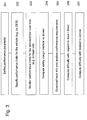
- Fig. 3 shows a flow diagram of a potential data processing procedure according to various embodiments of the invention.
- respective performance parameters may be defined by the driver of vehicle 1 or 2, such as pitch angle, roll angle, required motor torque and fuel range.
- a tailored user interface 23 may be created on the display device 24 of the vehicle, cf. Table 1: Table 1 Performance Parameter Min Max Pitch angle Roll angle Required motor torque N.A. Fuel range N.A.
- performance limits may be specified for the vehicle 1 or 2, for example in a spec (technical specification) of the vehicle by an OEM (Original Equipment Manufacturer), cf. Table 2. These limits may define respective maximum values which shall never be exceeded when driving on a track.
- step 203 performance parameters as defined previously in step 201 may be monitored for the driver of vehicle 1 or 2 over time when driving on a track, e.g. in the vehicle's head unit, cf. Table 3: Table 3 Performance Parameter - Driver Min Max Pitch angle -20° 25° Roll angle -15° 10° Required motor torque N.A. 100 Nm Fuel range N.A. 150 km
- a safety margin may be computed, cf. Table 4.
- the vehicle's parameters as defined in Table 2 are compared to the driver's parameters as recorded in Table 3.
- step 205 track information (such as of a vehicle driving on a track) may be downloaded to the vehicle from the server computer 3 and the performance requirements may be analyzed, cf.
- Table 5 Table 5 Performance Parameter - Track Min Max Pitch angle -25° 10° Roll angle -10° 20° Required motor torque N.A. 140 Nm Fuel range N.A. 250 km
- a difficulty may be defined and computed with respect to the track (comparison of Table 5 with Table 2), cf. Table 6: Table 6 Performance Parameter - Track Safety margin vehicle Min Max Min Max Pitch angle -25° 10° 17% 67% Roll angle -10° 20° 50% 0% Required motor torque N.A. 140 Nm N.A. 51% Fuel range N.A. 250 km N.A. 29%
- a difficulty may be defined and computed with respect to the driver (comparison of Table 5 with Table 3), cf.
- Table 7 Table 7 Performance Parameter - Track Driver challenge Min Max Pitch angle -25° 10° 125% 40% Roll angle -10° 20° 67% 200% Required motor torque N.A. 140 Nm N.A. 140% Fuel range N.A. 250 km N.A. 167%
- a parameter indicative of a difficulty may be computed. Such determination may comprise a check whether vehicle parameter limits are /are not exceeded. For example, if "hard” parameter limits are defined, the respective track will be rated as “too difficult” if any of these limits is reached or exceeded. It is also possible that the user defines lower “hard limits” for specific parameters, which deviate from any limits defined in the spec.
Landscapes
- Engineering & Computer Science (AREA)
- Automation & Control Theory (AREA)
- Radar, Positioning & Navigation (AREA)
- Remote Sensing (AREA)
- Physics & Mathematics (AREA)
- Transportation (AREA)
- Mechanical Engineering (AREA)
- General Physics & Mathematics (AREA)
- Human Computer Interaction (AREA)
- Mathematical Physics (AREA)
- Control Of Driving Devices And Active Controlling Of Vehicle (AREA)
Abstract
Description
- The present invention relates to a computer-implemented method and system for processing data related to a motor vehicle, to a computer program product capable to perform such method, and to a motor vehicle configured to communicate with such system.
- In many potential scenarios, a monitoring of geographic positions of a vehicle driving on a tour may be performed at the request of the vehicle driver. For example, one such use case may be to record and publish special scenic tours for other drivers who can then copy the tour data into their vehicle head unit and follow the tour at another time with their vehicle.
- For example, a potential implementation employs a headunit which records GPS (Global Positioning System) geographic log data, and the user of the vehicle uploads the recorded data to an internet site. Optionally, the user rates a difficulty of the track or tour according to some rating scheme (e.g. easy, moderate, difficult, expert). Other users may download tours according to their desire and follow the tour with their vehicle. A potential disadvantage may be that the rating is based on subjective judgment of the recording driver, so that the rating might not match the skills/experience of other users. Particularly in relation with recorded off-road tracks, there may be a risk that other users might try to follow tracks which are too difficult and end up in dangerous situations, cause damage to their car or even get injured.
- It is thus an object of the present invention to provide a method and system for processing data related to a motor vehicle which avoids the above mentioned drawbacks and is capable of increasing safety by preventing such dangerous situations, particularly in situations where the vehicle potentially follows an off-road track.
- The invention relates to a computer-implemented method and system for processing data related to a motor vehicle according to the appended claims. The invention further relates to a computer program product capable to perform such method, and to a motor vehicle configured to communicate with such system, as specified in the appended claims. Embodiments thereof are disclosed herein below and in the dependent claims.
- According to a first aspect, there is disclosed a computer-implemented method for processing data related to a motor vehicle, comprising: receiving, by a first processing device, with respect to a first vehicle, which is a motor vehicle, first data which are indicative of geographic positions of the first vehicle during motion of the first vehicle on a first track, receiving, by the first processing device, with respect to the first vehicle second data which are indicative of at least one roll and pitch angle of the first vehicle during the motion of the first vehicle on the first track, recording, by the first processing device, the first and second data in at least one database for a period of time of the motion of the first vehicle on the first track such that the second data are associated with a geographic position of the first vehicle at which the respective second data has been measured, and providing an interface for a second processing device of a second motor vehicle, which is different from the first vehicle, for retrieving the first and second data from the database to the second processing device of the second vehicle for providing information to a user interface of the second vehicle based on the retrieved first and second data.
- According to a second aspect, which may be combined with a method according to the first aspect as mentioned above and its embodiments as described herein, there is disclosed a computer-implemented method for processing data related to a motor vehicle comprising: retrieving, with respect to a first vehicle, first data from a database which are indicative of geographic positions of the first vehicle recorded during motion of the first vehicle on a first track, retrieving second data from the database which are indicative of at least one roll and pitch angle of the first vehicle recorded during the motion of the first vehicle on the first track and associated with the first data, providing, by a second processing device of a second vehicle, which is a motor vehicle and different from the first vehicle, at least one technical correlation between the retrieved second data and one or more vehicle specific technical parameters associated with the second vehicle, and providing, by the second processing device of the second vehicle, information to a user interface of the second vehicle which is indicative of the at least one technical correlation.
- According to a further aspect, there is disclosed a system for processing data related to a motor vehicle comprising a processing device configured to retrieve, with respect to a first vehicle which is a motor vehicle, from a database first data which are indicative of geographic positions of the first vehicle recorded during motion of the first vehicle on a first track, the processing device configured to retrieve second data from the database which are indicative of at least one roll and pitch angle of the first vehicle recorded during the motion of the first vehicle on the first track and associated with the first data. The processing device is configured to provide for a second vehicle, which is a motor vehicle and different from the first vehicle, at least one technical correlation between the retrieved second data and one or more vehicle specific technical parameters associated with the second vehicle, wherein the processing device is configured to provide information to a user interface of the second vehicle which is indicative of the at least one technical correlation.
- According to another aspect, there is disclosed a motor vehicle comprising a control unit which at least in part comprises, or is configured to communicate with, a system as described above, and in more detail herein below.
- The invention provides the advantage that, for example, GPS geographic log data may be received by a first processing device, such as implemented in a web server accessible through the internet, and the user of the first vehicle uploads the recorded data to a database on the web server, e.g. accessible through an internet site. Optionally, the user may rate a difficulty of the track according to some rating scheme (e.g. easy, moderate, difficult, expert). Other users, such as the user of the second vehicle, may download tracks according to their desire and follow the track with their vehicle. Since the downloaded track related data contain some information about roll and pitch angle of the first vehicle measured during driving on the downloaded, the rating may be based on objective judgment with respect to the first vehicle in relation to the second vehicle, so that it may be better evaluated whether the rating with respect to the first vehicle matches the capabilities of the second vehicle reflected in the one or more vehicle specific technical parameters associated with the second vehicle. For example, it may be evaluated whether a maximum roll and pitch angle of the second vehicle complies with a recorded maximum roll and pitch angle recorded for the first vehicle when driving on the first track. With such information, a dangerous situation may be prevented, particularly in situations where the second vehicle potentially follows the first track which the first vehicle previously used, if the maximum roll and pitch angle of the second vehicle (e.g. specified in a vehicle spec of the second vehicle) equals or is greater than a maximum roll and pitch angle recorded for the first vehicle during driving on the first track. This is particularly advantageous in relation with off-road tracks, where high roll and pitch angles for the respective vehicle may occur. Based on such objective information on a human machine interface of the second vehicle, the risk may be reduced or prevented that other users might try to follow tracks which are too difficult or inappropriate for their vehicle and end up in dangerous situations, cause damage to their vehicle or even get injured. Motor vehicles, such as off-road terrain motor vehicles, can be quite different in their technical capabilities, such as regarding roll and pitch angles, motor torque, traction on loose ground, and other properties which can be of relevance when driving on an off-road track.
- According to another aspect, there is provided a computer program product comprising software code sections which are configured to perform a method according to the invention as described herein. In particular, such computer program may be implemented in principle in any processing device which is appropriate to perform the respective function. Such processing device, and/or the first and second processing devices as described herein, may be, for example, implemented in, or part of, one or more processors, e.g. of one or more server computers and/or one or more computers (such as of an ECU, "Electronic Control Unit") of a vehicle. Further, such processing device may be a separate component, or may be a distributed system using one or more processors and/or integrated circuits. The computer program may be stored on a computer readable medium.
- According to an embodiment, at least part of at least one of the first and second processing devices and database are respectively implemented in one or more computer system resources accessible through the Internet. Such computer system resources may be, for example, implemented in, or part of, one or more processors, e.g. comprised in one or more server computers, or may be a separate component, or may be a distributed system (e.g. connected through the Internet or another network) using one or more processors and/or integrated circuits. According to an embodiment, at least part of at least one of the processing device of the system as described herein and database are respectively implemented in one or more computer system resources accessible through the Internet. In a particular embodiment, they can be respectively implemented on a server computer system accessible through the Internet.
- In the above terminology and as used herein below, "first", "second", "third", etc. are not meant to designate any temporal order of actions, components or occurrences, but are simply used to distinguish different entities, such as the users, vehicles, processing devices, and data, etc. from each other.
- According to an embodiment of the first aspect, the second data are additionally indicative of at least one of: a motor torque, a vehicle speed, a fuel range, a steering wheel angle, a driving direction, brake condition, and motion of the first vehicle without wheel rotation during motion of the first vehicle on the first track. With such additional vehicle specific technical parameters, the correlation information provided to the user via the user interface of the second vehicle may be further enhanced.
- According to an embodiment, the method according to the second aspect further comprises providing, by the second processing device of the second vehicle, the information to the user interface of the second vehicle such that the user can select on the user interface one of a plurality of second tracks for the second vehicle to be driven along based on the provided information. Advantageously, the user can select from a plurality of potential track for his or her vehicle based on objective information provided on the basis of a track driven by a first vehicle and associated data related to roll and pitch angles on this track.
- According to an embodiment of the method according to the second aspect, the one or more vehicle specific technical parameters include at least one of: a maximum roll and pitch angle, a maximum motor torque, a maximum fuel range, a maximum steering wheel angle, a maximum brake force, and a maximum vehicle speed for the second vehicle, with the respective maximum values specified in a spec of the second vehicle. With such additional vehicle specific technical parameters, the correlation information provided to the user via the user interface of the second vehicle may be further enhanced.
- According to an embodiment, the one or more vehicle specific technical parameters include at least one of: a roll and pitch angle, a motor torque, a fuel range, a steering wheel angle, a brake force, and a vehicle speed recorded for the second vehicle during a previous motion track of the second vehicle. For example, the respective parameters may be advantageously respective maximum values, such as a maximum roll and pitch angle, a maximum motor torque, a maximum fuel range, a maximum steering wheel angle, a maximum brake force, and/or a maximum vehicle speed recorded for the second vehicle during a previous motion track of the second vehicle. Accordingly, it can be evaluated based on the respective parameters recorded during a previous motion track of the second vehicle whether the second vehicle is appropriate to follow a new track which has been used by the first vehicle based on a correlation between the respective parameters of first and second vehicle.
- According to an embodiment, the second processing device of the second vehicle provides at least part of the information to the user interface of the second vehicle in the form of a dynamic rating based on a user risk level previously entered by the user of the second vehicle. Advantageously, objective and subjective information, such as a risk level, provided by the user of the second vehicle may be combined.
- Advantageously, according to an embodiment, in a system as described herein at least part of the processing device configured to retrieve the first and second data and to provide the technical correlation information to the user interface may be comprised in the second vehicle.
- According to an embodiment, the one or more vehicle specific technical parameters include at least one of: a maximum roll and pitch angle, a maximum motor torque, a maximum fuel range, a maximum steering wheel angle, a maximum brake force, and a maximum vehicle speed for the second vehicle, with the respective maximum values specified in a spec of the second vehicle.
- According to a further embodiment, the one or more vehicle specific technical parameters include at least one of: a roll and pitch angle, a motor torque, a fuel range, a steering wheel angle, a brake force, and a vehicle speed recorded for the second vehicle during a previous motion track of the second vehicle, such as a maximum roll and pitch angle, a maximum motor torque, a maximum fuel range, a maximum steering wheel angle, a maximum brake force, and/or a maximum vehicle speed recorded for the second vehicle during the previous motion track of the second vehicle.
- According to an embodiment, the vehicle, the first vehicle and/or the second vehicle, and/or any other vehicle used in connection with the method and system according to aspects of the present invention is an off-road terrain motor vehicle.
- Any aspects and embodiments described herein with respect to the method, particularly the method according to the second aspect, can equally be employed in the system with the processing device (employing one or more processors, for example) configured by software and/or hardware appropriately.
- Aspects of the invention and embodiments will now be described with reference to the following Figures in which
- Fig. 1
- shows a schematic view of a system according to an embodiment of the invention,
- Fig. 2
- shows a schematic view of a vehicle in greater detail which is configured according to the system as shown in
Fig. 1 according to an embodiment of the invention, - Fig. 3
- shows a flow diagram of a potential data processing procedure according to an embodiment of the invention.
- In
Fig. 1 there is shown asystem 100 for processing data related to a motor vehicle according to an embodiment of the invention. In a potential user scenario, a first vehicle, such asvehicle 1 which is, in this embodiment, an off-road terrain motor vehicle, is driving on atrack 11, e.g. an off-road track in which thevehicle 1 undergoes relatively large roll and pitch angles. A roll and pitch angle may be sensed in thevehicle 1, for example, by anappropriate sensor device 12 comprising one or more inclination sensors, as commonly implemented in cars, such as off-road terrain motor cars. Thesensor device 12 may also include a GPS sensor for sensing a geographic location of thevehicle 1, as commonly known. A roll and pitch angle may designate a respective roll and pitch angle with respect to a particular reference level, such as a horizontal plane (e.g. horizontal earth ground plane). The one ormore sensor devices 12, which may also sense additional technical parameters, as set out in more detail below, are coupled with (e.g. in wired manner or wirelessly) acontrol unit 10 of thevehicle 1, which may be, or may be part of, a control unit of thevehicle 1, such as an ECU (electronic control unit) or head unit of thevehicle 1. Thecontrol unit 10, as set out in more detail below, may function as a receiver and/or transmitter which receives and/or transmits the data D1 and D2, processes the parameter(s) of the sensor device(s) 12, and provides any processed information to a user interface, such as provided on a display device of the vehicle 1 (e.g. on a touchscreen of the head unit of vehicle 1). - In a data collection process, the
control unit 10 transmits data D1 (herein designated as first data), which are indicative of geographic positions of thevehicle 1 during motion of thevehicle 1 on thetrack 11, to one ormore processing devices server computer 3, e.g. accessible through theinternet 40. Particularly, the one ormore processing devices server computer 3 are located remotely from the respective vehicle, such asvehicles server computer 3 is forming part of a remote server computer system accessible by thevehicles Internet 40, e.g. using respective wireless communication devices installed on the vehicle (e.g. using mobile telecommunications network(s)), as commonly known in the art. - Accordingly, the one or
more processing devices vehicle 1 and receive data D2 (herein designated second data) from thevehicle 1 which are indicative of at least one roll and pitch angle of thevehicle 1 sensed by thesensor device 12 during the motion of thevehicle 1 along thetrack 11. For example, the at least one roll and pitch angle of thevehicle 1 may comprise a maximum value of the roll and pitch angle sensed during the motion of thevehicle 1 along thetrack 11, or may be a plurality of roll and pitch angles sensed during the motion of thevehicle 1 along thetrack 11, e.g. at particular geographic locations along the track. Other technical parameters related to thevehicle 1, such as vehicle speed, steering angle, etc., as set out in more detail below, may also be included in the data D2. These second data D2 are associated with the first data D1, so that the second data D2 can be assigned to at least one geographic location, such as at least one geographic location indicative of thetrack 11. - For instance, the
processing device 31 then records the first and second data D1, D2 in at least onedatabase 33 provided by theserver computer 3 for at least a period of time of the motion of thevehicle 1 on thetrack 11 such that the second data D2 are associated with one or more geographic positions of the vehicle 1 (e.g. indicative of the track 11) at which the respective second data D2 has been measured by thesensor device 12. For example, a particular maximum roll and pitch angle sensed by thesenor device 12 at a particular GPS position ofvehicle 1 is recorded in thedatabase 33 associated with the sensed GPS position. - The
server computer 3, particularly the one ormore processing devices Fig. 2 ) of asecond motor vehicle 2. Through the provided interface, e.g. a web interface, and theinternet 40 the first and second data D1, D2 recorded with respect to thevehicle 1 may be retrieved from thedatabase 33 to theprocessing device 21 of thesecond vehicle 2, which may also be an off-road terrain motor vehicle. For example, theprocessing device 21 is a processor of a control unit 20 (such as an ECU) of thevehicle 2, which is also coupled with one or more sensor devices 22 (such as inclination sensor and GPS sensor) of thevehicle 2. Thevehicle 2 further includes adisplay device 24 which is appropriate for displaying auser interface 23 with information processed by theprocessing device 21 based on the retrieved data D1 and D2. - In addition to respective roll and pitch angles, the second data D2 are additionally indicative of a motor torque, a vehicle speed, a fuel range, a steering wheel angle, a driving direction, a brake condition, and/or a motion of the
vehicle 1 without wheel rotation sensed during motion of thevehicle 1 on thetrack 11. To this end, thesensor device 12 may include further sensors for measuring the respective parameters, such as speed sensor, fuel sensor, a wheel turn angle sensor, etc., as commonly known with common cars. - As such, according to an embodiment, the
control unit 10 ofvehicle 1 records GPS log data when driving on thetrack 11, and uploads the recorded data to theserver computer 3 anddatabase 33, respectively. For example, the user ofvehicle 1 also rates a subjective difficulty of thetrack 11 according to some rating scheme (e.g. "easy", "moderate", "difficult", "expert"). This information may be downloaded to thevehicle 2 for making a decision by the user ofvehicle 2 whether to follow thetrack 11 by his or her vehicle 2 (which is different fromvehicle 1 and, thus, may have different technical capabilities, such as different maximum roll and pitch angle). Based on such information retrieved fromdatabase 33 through an appropriate interface, the user ofvehicle 2 may decide whethertrack 11 is too difficult for his or hervehicle 2 and/or his or her risk level. This may prevent dangerous situations for thevehicle 2 when driving ontrack 11. - In particular, the
processing device 21 of thecontrol unit 20 ofvehicle 2 determines or calculates for thevehicle 2 at least one technical correlation between the retrieved second data D2 related tovehicle 1 and one or more vehicle specific technical parameters associated with thevehicle 2. For example, a technical correlation may be a comparison of respective data or values, for instance a comparison of a (e.g., maximum) roll and pitch angle ofvehicle 1 sensed during driving ontrack 11 with a (e.g., maximum) roll and pitch angle ofvehicle 2 as defined in a spec of thevehicle 2. Such correlation or comparison may be provided on theuser interface 23, e.g. in the form of a listing displayed on thedisplay device 24. The one or more vehicle specific technical parameters ofvehicle 2 correlated with the data D2 ofvehicle 1 may additionally include at least one of a maximum roll and pitch angle, a maximum motor torque, a maximum fuel range, a maximum steering wheel angle, a maximum brake force, and a maximum vehicle speed for thevehicle 2. The respective maximum values are specified in a spec of thevehicle 2, e.g. by the manufacturer (OEM) of the respective vehicle. Additionally, or alternatively, the one or more vehicle specific technical parameters ofvehicle 2 which are processed to be correlated with the data D2 ofvehicle 1 may include at least one of a roll and pitch angle, a motor torque, a fuel range, a steering wheel angle, a brake force, and a vehicle speed recorded for thevehicle 2 during a previous motion track of thevehicle 2. In this way, previous experiences of the driver withvehicle 2 when driving on another motion track can be taken into account for a comparison with the second data D2 in relation to thevehicle 1. - Advantageously, according to embodiments of the invention, the
control unit 20 ofvehicle 2 not only retrieves and stores the GPS data related to track 11 (so-called NMEA data as a standard with common navigation devices), but also additional time based technical information about thevehicle 1 driving ontrack 11, such as roll and pitch angle of thevehicle 1, potential mismatch between driving direction and steering wheel angle ofvehicle 1 during driving, special car situations like activation of the ABS/EPS systems on slippery road, movements of the vehicle without wheel rotation, e.g. when sliding down or sideways a very steep hill. An interested driver ofvehicle 2 can download the data D1 and D2 to the vehicle's head unit. The user ofvehicle 2 advantageously may not only see the subjective rating of the recording driver ofvehicle 1, but the vehicle's control unit may create a dynamic rating based on objective data about thevehicle 2 such as previous experiences of the driver ofvehicle 2, maximum allowed roll and pitch angle of the vehicle 2 (and other technical parameters according to the vehicle's spec), and/or risk level of the driver ofvehicle 2, such as like "can accept sliding down a hill". Such objective information may be presented to the user ofvehicle 2 who can better judge if thistrack 11 is appropriate for his/hervehicle 2 and experience level. The rating and dynamic comparison could also be done on a web portal, e.g. onserver computer 3, e.g. when the user ofvehicle 2 uploads previous recordings or parameters. In this case the user's skills may also be compared and a ranking of experience could be displayed to all interested and authorized users of the web site. - Additionally the recording user could define to play specific music titles/music type at predefined points of the route. The user may then download the track information and retrieve at the same time the matching music from a music download portals. The system may also search for similar music styles in the music which is stored in the vehicle's control unit.
-
Fig. 3 shows a flow diagram of a potential data processing procedure according to various embodiments of the invention. - In
step 201, respective performance parameters may be defined by the driver ofvehicle user interface 23 may be created on thedisplay device 24 of the vehicle, cf. Table 1:Table 1 Performance Parameter Min Max Pitch angle Roll angle Required motor torque N.A. Fuel range N.A. - In
step 202, performance limits may be specified for thevehicle Table 2 Performance Parameter - Vehicle Min Max Pitch angle -30° 30° Roll angle -20° 20° Required motor torque N.A. 284 Nm Fuel range N.A. 350 km - In
step 203, performance parameters as defined previously instep 201 may be monitored for the driver ofvehicle Table 3 Performance Parameter - Driver Min Max Pitch angle -20° 25° Roll angle -15° 10° Required motor torque N.A. 100 Nm Fuel range N.A. 150 km - In
step 204, a safety margin may be computed, cf. Table 4. In the present embodiment, the vehicle's parameters as defined in Table 2 are compared to the driver's parameters as recorded in Table 3.Table 4 Performance Parameter - Driver Safety margin (Vehicle) Min Max Min Max Pitch angle -20° 25° 33% 17% Roll angle -15° 10° 25% 50% Required motor torque N.A. 100 Nm 65% Fuel range N.A. 150 km 57% - In
step 205, track information (such as of a vehicle driving on a track) may be downloaded to the vehicle from theserver computer 3 and the performance requirements may be analyzed, cf. Table 5:Table 5 Performance Parameter - Track Min Max Pitch angle -25° 10° Roll angle -10° 20° Required motor torque N.A. 140 Nm Fuel range N.A. 250 km - In
step 206, a difficulty may be defined and computed with respect to the track (comparison of Table 5 with Table 2), cf. Table 6:Table 6 Performance Parameter - Track Safety margin vehicle Min Max Min Max Pitch angle -25° 10° 17% 67% Roll angle -10° 20° 50% 0% Required motor torque N.A. 140 Nm N.A. 51% Fuel range N.A. 250 km N.A. 29% - Further, a difficulty may be defined and computed with respect to the driver (comparison of Table 5 with Table 3), cf. Table 7:
Table 7 Performance Parameter - Track Driver challenge Min Max Pitch angle -25° 10° 125% 40% Roll angle -10° 20° 67% 200% Required motor torque N.A. 140 Nm N.A. 140% Fuel range N.A. 250 km N.A. 167% - In a
step 207, a parameter indicative of a difficulty may be computed. Such determination may comprise a check whether vehicle parameter limits are /are not exceeded. For example, if "hard" parameter limits are defined, the respective track will be rated as "too difficult" if any of these limits is reached or exceeded. It is also possible that the user defines lower "hard limits" for specific parameters, which deviate from any limits defined in the spec. - Potential approaches for computation and classification of overall difficulty may be: Compute difficulty of track based on driver parameters:
- Required parameter between 0% and 90% of driver experience: "Easy"
- Required parameter between 90% and 140% of driver experience: "Moderate"
- Required parameter higher than 140% of driver experience: "Difficult"
Claims (15)
- A computer-implemented method for processing data related to a motor vehicle (1), comprising:- receiving, by a first processing device (31), with respect to a first vehicle (1), which is a motor vehicle, first data (D1) which are indicative of geographic positions of the first vehicle (1) during motion of the first vehicle (1) on a first track (11),- receiving, by the first processing device (31), with respect to the first vehicle (1) second data (D2) which are indicative of at least one roll and pitch angle of the first vehicle (1) during the motion of the first vehicle (1) on the first track (11),- recording, by the first processing device (31), the first and second data (D1, D2) in at least one database (33) for a period of time of the motion of the first vehicle (1) on the first track (11) such that the second data (D2) are associated with a geographic position of the first vehicle (1) at which the respective second data (D2) has been measured,- providing an interface for a second processing device (21) of a second motor vehicle (2), which is different from the first vehicle (1), for retrieving the first and second data (D1, D2) from the database (33) to the second processing device (21) of the second vehicle (2) for providing information to a user interface (23) of the second vehicle (2) based on the retrieved first and second data (D1, D2).
- The method according to claim 1, wherein the second data (D2) are additionally indicative of at least one of: a motor torque, a vehicle speed, a fuel range, a steering wheel angle, a driving direction, a brake condition, and a motion of the first vehicle without wheel rotation during the motion of the first vehicle (1) on the first track (11).
- A computer-implemented method for processing data related to a motor vehicle (1), particularly according to one of the preceding claims, comprising:- retrieving, with respect to a first vehicle (1), first data (D1) from a database (33) which are indicative of geographic positions of the first vehicle (1) recorded during motion of the first vehicle (1) on a first track (11),- retrieving second data (D2) from the database (33) which are indicative of at least one roll and pitch angle of the first vehicle (1) recorded during the motion of the first vehicle (1) on the first track (11) and associated with the first data (D1),- providing, by a second processing device (21) of a second vehicle (2), which is a motor vehicle and different from the first vehicle (1), at least one technical correlation between the retrieved second data (D2) and one or more vehicle specific technical parameters associated with the second vehicle (2),- providing, by the second processing device (21) of the second vehicle (2), information to a user interface (23) of the second vehicle (2) which is indicative of the at least one technical correlation.
- The method according to claim 3, further comprising providing, by the second processing device (21) of the second vehicle (2), the information to the user interface (23) of the second vehicle (2) such that the user can select on the user interface (23) one of a plurality of second tracks for the second vehicle (2) to be driven along based on the provided information.
- The method according to claim 3 or 4, wherein the one or more vehicle specific technical parameters include at least one of: a maximum roll and pitch angle, a maximum motor torque, a maximum fuel range, a maximum steering wheel angle, a maximum brake force, and a maximum vehicle speed for the second vehicle (2), with the respective maximum values specified in a spec of the second vehicle (2).
- The method according to one of claims 3 to 5, wherein the one or more vehicle specific technical parameters include at least one of: a roll and pitch angle, a motor torque, a fuel range, a steering wheel angle, a brake force, and a vehicle speed recorded for the second vehicle (2) during a previous motion track of the second vehicle (2).
- The method according to one of claims 3 to 6, wherein the second processing device (21) of the second vehicle (2) provides at least part of the information to the user interface (23) of the second vehicle (2) in the form of a dynamic rating based on a user risk level previously entered by the user of the second vehicle (2).
- A computer program product comprising software code sections which are configured to perform a method according to one of claims 1 to 7.
- A system (100) for processing data related to a motor vehicle (1, 2), comprising:- a processing device (21) configured to retrieve, with respect to a first vehicle (1) which is a motor vehicle, from a database (33) first data (D1) which are indicative of geographic positions of the first vehicle (1) recorded during motion of the first vehicle (1) on a first track (11),- the processing device (21) configured to retrieve second data (D2) from the database (33) which are indicative of at least one roll and pitch angle of the first vehicle (1) recorded during the motion of the first vehicle (1) on the first track (11) and associated with the first data (D1),- the processing device (21) configured to provide for a second vehicle (2), which is a motor vehicle and different from the first vehicle (1), at least one technical correlation between the retrieved second data (D2) and one or more vehicle specific technical parameters associated with the second vehicle (2),- the processing device (21) configured to provide information to a user interface (23) of the second vehicle (2) which is indicative of the at least one technical correlation.
- The system according to claim 9, wherein at least part of the processing device (21) is comprised in the second vehicle (2).
- The system according to one of claims 9 to 10, wherein at least part of at least one of the processing device (21) and database (33) are respectively implemented in one or more computer system resources (3) accessible through the Internet (40), particularly are implemented on a server computer system accessible through the Internet (40).
- The system according to one of claims 9 to 11, wherein the one or more vehicle specific technical parameters include at least one of: a maximum roll and pitch angle, a maximum motor torque, a maximum fuel range, a maximum steering wheel angle, a maximum brake force, and a maximum vehicle speed for the second vehicle (2), with the respective maximum values specified in a spec of the second vehicle (2).
- The system according to one of claims 9 to 12, wherein the one or more vehicle specific technical parameters include at least one of: a roll and pitch angle, a motor torque, a fuel range, a steering wheel angle, a brake force, and a vehicle speed recorded for the second vehicle (2) during a previous motion track of the second vehicle (2).
- A motor vehicle (2) comprising a control unit (20) which at least in part comprises, or is configured to communicate with, a system (100) according to one of claims 9 to 13.
- The motor vehicle (2) according to claim 14, wherein the vehicle (2) is an off-road terrain motor vehicle.
Priority Applications (1)
| Application Number | Priority Date | Filing Date | Title |
|---|---|---|---|
| EP18161468.6A EP3539839B1 (en) | 2018-03-13 | 2018-03-13 | Computer-implemented method and system for processing data related to a motor vehicle |
Applications Claiming Priority (1)
| Application Number | Priority Date | Filing Date | Title |
|---|---|---|---|
| EP18161468.6A EP3539839B1 (en) | 2018-03-13 | 2018-03-13 | Computer-implemented method and system for processing data related to a motor vehicle |
Publications (2)
| Publication Number | Publication Date |
|---|---|
| EP3539839A1 true EP3539839A1 (en) | 2019-09-18 |
| EP3539839B1 EP3539839B1 (en) | 2022-05-04 |
Family
ID=61655597
Family Applications (1)
| Application Number | Title | Priority Date | Filing Date |
|---|---|---|---|
| EP18161468.6A Active EP3539839B1 (en) | 2018-03-13 | 2018-03-13 | Computer-implemented method and system for processing data related to a motor vehicle |
Country Status (1)
| Country | Link |
|---|---|
| EP (1) | EP3539839B1 (en) |
Cited By (1)
| Publication number | Priority date | Publication date | Assignee | Title |
|---|---|---|---|---|
| CN110641461A (en) * | 2019-11-15 | 2020-01-03 | 华人运通(上海)新能源驱动技术有限公司 | Vehicle early warning method, vehicle road cooperative system and storage medium |
Families Citing this family (1)
| Publication number | Priority date | Publication date | Assignee | Title |
|---|---|---|---|---|
| GB2640522A (en) * | 2024-04-23 | 2025-10-29 | Jaguar Land Rover Ltd | Routing in an off-road area |
Citations (3)
| Publication number | Priority date | Publication date | Assignee | Title |
|---|---|---|---|---|
| WO2016142858A1 (en) * | 2015-03-11 | 2016-09-15 | Trailze, Ltd. | Automatically creating a terrain mapping database |
| US9475494B1 (en) * | 2015-05-08 | 2016-10-25 | Toyota Motor Engineering & Manufacturing North America, Inc. | Vehicle race track driving assistance |
| GB2552028A (en) * | 2016-07-08 | 2018-01-10 | Jaguar Land Rover Ltd | Vehicle system |
-
2018
- 2018-03-13 EP EP18161468.6A patent/EP3539839B1/en active Active
Patent Citations (3)
| Publication number | Priority date | Publication date | Assignee | Title |
|---|---|---|---|---|
| WO2016142858A1 (en) * | 2015-03-11 | 2016-09-15 | Trailze, Ltd. | Automatically creating a terrain mapping database |
| US9475494B1 (en) * | 2015-05-08 | 2016-10-25 | Toyota Motor Engineering & Manufacturing North America, Inc. | Vehicle race track driving assistance |
| GB2552028A (en) * | 2016-07-08 | 2018-01-10 | Jaguar Land Rover Ltd | Vehicle system |
Cited By (2)
| Publication number | Priority date | Publication date | Assignee | Title |
|---|---|---|---|---|
| CN110641461A (en) * | 2019-11-15 | 2020-01-03 | 华人运通(上海)新能源驱动技术有限公司 | Vehicle early warning method, vehicle road cooperative system and storage medium |
| CN110641461B (en) * | 2019-11-15 | 2020-04-28 | 华人运通(上海)新能源驱动技术有限公司 | Vehicle early warning method, vehicle road cooperative system and storage medium |
Also Published As
| Publication number | Publication date |
|---|---|
| EP3539839B1 (en) | 2022-05-04 |
Similar Documents
| Publication | Publication Date | Title |
|---|---|---|
| US20250020479A1 (en) | Recreational vehicle interactive telemetry, mapping, and trip planning system | |
| US12172652B2 (en) | Driver and vehicle monitoring feedback system for an autonomous vehicle | |
| JP4986135B2 (en) | Database creation device and database creation program | |
| EP3813029B1 (en) | Recording and reporting of driving characteristics using wireless mobile device | |
| JP4815943B2 (en) | Hazardous area information display device | |
| US10088844B2 (en) | Wearable computer in an autonomous vehicle | |
| JP7678079B2 (en) | SYSTEM, APPARATUS AND METHOD FOR OPERATING A VEHICLE USING SENSOR MONITORED PARAMETERS - Patent application | |
| US10521749B2 (en) | Risk information processing method and server device | |
| CA3036193C (en) | Vehicle turn detection | |
| US12434714B2 (en) | Vehicle-based intervention based on modeling driver performance | |
| US9734720B2 (en) | Response mode verification in vehicle dispatch | |
| FR3048544B1 (en) | DEVICE AND METHOD FOR MONITORING A DRIVER OF A MOTOR VEHICLE | |
| JP2017049990A (en) | Driver assistance methods and systems | |
| JP2008296682A (en) | On-vehicle dangerous driving monitor, dangerous driving centralized supervisory system, and dangerous driving prevention system | |
| US20230281667A1 (en) | Modulation of advertisement display based on vehicle operation data | |
| JP6786921B2 (en) | Driving support system and driving support method | |
| JPWO2018180347A1 (en) | Information processing apparatus, information processing system, information processing method, and program | |
| US20170076517A1 (en) | Automatic driving log system and method | |
| JP2018073374A (en) | Vehicle control method and system capable of recognizing driver | |
| EP3539839A1 (en) | Computer-implemented method and system for processing data related to a motor vehicle | |
| US11651436B1 (en) | Deductible determination system | |
| JP2004240688A (en) | Traffic condition monitoring system for vehicle, its configuring device, traffic condition monitoring method, and computer program | |
| CN110770108B (en) | Device for assisting a vehicle driver in performing physical exercises, connected to a remote server | |
| JP2024065065A (en) | Restricting access to vehicle-related information | |
| JP2019206243A (en) | Behavior determination method of vehicle |
Legal Events
| Date | Code | Title | Description |
|---|---|---|---|
| PUAI | Public reference made under article 153(3) epc to a published international application that has entered the european phase |
Free format text: ORIGINAL CODE: 0009012 |
|
| STAA | Information on the status of an ep patent application or granted ep patent |
Free format text: STATUS: REQUEST FOR EXAMINATION WAS MADE |
|
| 17P | Request for examination filed |
Effective date: 20190628 |
|
| AK | Designated contracting states |
Kind code of ref document: A1 Designated state(s): AL AT BE BG CH CY CZ DE DK EE ES FI FR GB GR HR HU IE IS IT LI LT LU LV MC MK MT NL NO PL PT RO RS SE SI SK SM TR |
|
| AX | Request for extension of the european patent |
Extension state: BA ME |
|
| RIC1 | Information provided on ipc code assigned before grant |
Ipc: G08G 1/00 20060101ALI20210825BHEP Ipc: G01C 21/00 20060101ALI20210825BHEP Ipc: B60W 40/06 20120101ALI20210825BHEP Ipc: B60W 50/14 20200101AFI20210825BHEP |
|
| GRAP | Despatch of communication of intention to grant a patent |
Free format text: ORIGINAL CODE: EPIDOSNIGR1 |
|
| STAA | Information on the status of an ep patent application or granted ep patent |
Free format text: STATUS: GRANT OF PATENT IS INTENDED |
|
| INTG | Intention to grant announced |
Effective date: 20211103 |
|
| GRAS | Grant fee paid |
Free format text: ORIGINAL CODE: EPIDOSNIGR3 |
|
| GRAA | (expected) grant |
Free format text: ORIGINAL CODE: 0009210 |
|
| STAA | Information on the status of an ep patent application or granted ep patent |
Free format text: STATUS: THE PATENT HAS BEEN GRANTED |
|
| AK | Designated contracting states |
Kind code of ref document: B1 Designated state(s): AL AT BE BG CH CY CZ DE DK EE ES FI FR GB GR HR HU IE IS IT LI LT LU LV MC MK MT NL NO PL PT RO RS SE SI SK SM TR |
|
| REG | Reference to a national code |
Ref country code: GB Ref legal event code: FG4D |
|
| REG | Reference to a national code |
Ref country code: CH Ref legal event code: EP |
|
| REG | Reference to a national code |
Ref country code: AT Ref legal event code: REF Ref document number: 1488767 Country of ref document: AT Kind code of ref document: T Effective date: 20220515 |
|
| REG | Reference to a national code |
Ref country code: IE Ref legal event code: FG4D Ref country code: DE Ref legal event code: R096 Ref document number: 602018034758 Country of ref document: DE |
|
| REG | Reference to a national code |
Ref country code: LT Ref legal event code: MG9D |
|
| REG | Reference to a national code |
Ref country code: NL Ref legal event code: MP Effective date: 20220504 |
|
| REG | Reference to a national code |
Ref country code: AT Ref legal event code: MK05 Ref document number: 1488767 Country of ref document: AT Kind code of ref document: T Effective date: 20220504 |
|
| PG25 | Lapsed in a contracting state [announced via postgrant information from national office to epo] |
Ref country code: SE Free format text: LAPSE BECAUSE OF FAILURE TO SUBMIT A TRANSLATION OF THE DESCRIPTION OR TO PAY THE FEE WITHIN THE PRESCRIBED TIME-LIMIT Effective date: 20220504 Ref country code: PT Free format text: LAPSE BECAUSE OF FAILURE TO SUBMIT A TRANSLATION OF THE DESCRIPTION OR TO PAY THE FEE WITHIN THE PRESCRIBED TIME-LIMIT Effective date: 20220905 Ref country code: NO Free format text: LAPSE BECAUSE OF FAILURE TO SUBMIT A TRANSLATION OF THE DESCRIPTION OR TO PAY THE FEE WITHIN THE PRESCRIBED TIME-LIMIT Effective date: 20220804 Ref country code: NL Free format text: LAPSE BECAUSE OF FAILURE TO SUBMIT A TRANSLATION OF THE DESCRIPTION OR TO PAY THE FEE WITHIN THE PRESCRIBED TIME-LIMIT Effective date: 20220504 Ref country code: LT Free format text: LAPSE BECAUSE OF FAILURE TO SUBMIT A TRANSLATION OF THE DESCRIPTION OR TO PAY THE FEE WITHIN THE PRESCRIBED TIME-LIMIT Effective date: 20220504 Ref country code: HR Free format text: LAPSE BECAUSE OF FAILURE TO SUBMIT A TRANSLATION OF THE DESCRIPTION OR TO PAY THE FEE WITHIN THE PRESCRIBED TIME-LIMIT Effective date: 20220504 Ref country code: GR Free format text: LAPSE BECAUSE OF FAILURE TO SUBMIT A TRANSLATION OF THE DESCRIPTION OR TO PAY THE FEE WITHIN THE PRESCRIBED TIME-LIMIT Effective date: 20220805 Ref country code: FI Free format text: LAPSE BECAUSE OF FAILURE TO SUBMIT A TRANSLATION OF THE DESCRIPTION OR TO PAY THE FEE WITHIN THE PRESCRIBED TIME-LIMIT Effective date: 20220504 Ref country code: ES Free format text: LAPSE BECAUSE OF FAILURE TO SUBMIT A TRANSLATION OF THE DESCRIPTION OR TO PAY THE FEE WITHIN THE PRESCRIBED TIME-LIMIT Effective date: 20220504 Ref country code: BG Free format text: LAPSE BECAUSE OF FAILURE TO SUBMIT A TRANSLATION OF THE DESCRIPTION OR TO PAY THE FEE WITHIN THE PRESCRIBED TIME-LIMIT Effective date: 20220804 Ref country code: AT Free format text: LAPSE BECAUSE OF FAILURE TO SUBMIT A TRANSLATION OF THE DESCRIPTION OR TO PAY THE FEE WITHIN THE PRESCRIBED TIME-LIMIT Effective date: 20220504 |
|
| PG25 | Lapsed in a contracting state [announced via postgrant information from national office to epo] |
Ref country code: RS Free format text: LAPSE BECAUSE OF FAILURE TO SUBMIT A TRANSLATION OF THE DESCRIPTION OR TO PAY THE FEE WITHIN THE PRESCRIBED TIME-LIMIT Effective date: 20220504 Ref country code: PL Free format text: LAPSE BECAUSE OF FAILURE TO SUBMIT A TRANSLATION OF THE DESCRIPTION OR TO PAY THE FEE WITHIN THE PRESCRIBED TIME-LIMIT Effective date: 20220504 Ref country code: LV Free format text: LAPSE BECAUSE OF FAILURE TO SUBMIT A TRANSLATION OF THE DESCRIPTION OR TO PAY THE FEE WITHIN THE PRESCRIBED TIME-LIMIT Effective date: 20220504 Ref country code: IS Free format text: LAPSE BECAUSE OF FAILURE TO SUBMIT A TRANSLATION OF THE DESCRIPTION OR TO PAY THE FEE WITHIN THE PRESCRIBED TIME-LIMIT Effective date: 20220904 |
|
| PG25 | Lapsed in a contracting state [announced via postgrant information from national office to epo] |
Ref country code: SM Free format text: LAPSE BECAUSE OF FAILURE TO SUBMIT A TRANSLATION OF THE DESCRIPTION OR TO PAY THE FEE WITHIN THE PRESCRIBED TIME-LIMIT Effective date: 20220504 Ref country code: SK Free format text: LAPSE BECAUSE OF FAILURE TO SUBMIT A TRANSLATION OF THE DESCRIPTION OR TO PAY THE FEE WITHIN THE PRESCRIBED TIME-LIMIT Effective date: 20220504 Ref country code: RO Free format text: LAPSE BECAUSE OF FAILURE TO SUBMIT A TRANSLATION OF THE DESCRIPTION OR TO PAY THE FEE WITHIN THE PRESCRIBED TIME-LIMIT Effective date: 20220504 Ref country code: EE Free format text: LAPSE BECAUSE OF FAILURE TO SUBMIT A TRANSLATION OF THE DESCRIPTION OR TO PAY THE FEE WITHIN THE PRESCRIBED TIME-LIMIT Effective date: 20220504 Ref country code: DK Free format text: LAPSE BECAUSE OF FAILURE TO SUBMIT A TRANSLATION OF THE DESCRIPTION OR TO PAY THE FEE WITHIN THE PRESCRIBED TIME-LIMIT Effective date: 20220504 Ref country code: CZ Free format text: LAPSE BECAUSE OF FAILURE TO SUBMIT A TRANSLATION OF THE DESCRIPTION OR TO PAY THE FEE WITHIN THE PRESCRIBED TIME-LIMIT Effective date: 20220504 |
|
| REG | Reference to a national code |
Ref country code: DE Ref legal event code: R097 Ref document number: 602018034758 Country of ref document: DE |
|
| PLBE | No opposition filed within time limit |
Free format text: ORIGINAL CODE: 0009261 |
|
| STAA | Information on the status of an ep patent application or granted ep patent |
Free format text: STATUS: NO OPPOSITION FILED WITHIN TIME LIMIT |
|
| PG25 | Lapsed in a contracting state [announced via postgrant information from national office to epo] |
Ref country code: AL Free format text: LAPSE BECAUSE OF FAILURE TO SUBMIT A TRANSLATION OF THE DESCRIPTION OR TO PAY THE FEE WITHIN THE PRESCRIBED TIME-LIMIT Effective date: 20220504 |
|
| 26N | No opposition filed |
Effective date: 20230207 |
|
| PG25 | Lapsed in a contracting state [announced via postgrant information from national office to epo] |
Ref country code: SI Free format text: LAPSE BECAUSE OF FAILURE TO SUBMIT A TRANSLATION OF THE DESCRIPTION OR TO PAY THE FEE WITHIN THE PRESCRIBED TIME-LIMIT Effective date: 20220504 |
|
| PG25 | Lapsed in a contracting state [announced via postgrant information from national office to epo] |
Ref country code: MC Free format text: LAPSE BECAUSE OF FAILURE TO SUBMIT A TRANSLATION OF THE DESCRIPTION OR TO PAY THE FEE WITHIN THE PRESCRIBED TIME-LIMIT Effective date: 20220504 |
|
| REG | Reference to a national code |
Ref country code: CH Ref legal event code: PL |
|
| REG | Reference to a national code |
Ref country code: BE Ref legal event code: MM Effective date: 20230331 |
|
| PG25 | Lapsed in a contracting state [announced via postgrant information from national office to epo] |
Ref country code: LU Free format text: LAPSE BECAUSE OF NON-PAYMENT OF DUE FEES Effective date: 20230313 |
|
| REG | Reference to a national code |
Ref country code: IE Ref legal event code: MM4A |
|
| PG25 | Lapsed in a contracting state [announced via postgrant information from national office to epo] |
Ref country code: LI Free format text: LAPSE BECAUSE OF NON-PAYMENT OF DUE FEES Effective date: 20230331 Ref country code: IT Free format text: LAPSE BECAUSE OF FAILURE TO SUBMIT A TRANSLATION OF THE DESCRIPTION OR TO PAY THE FEE WITHIN THE PRESCRIBED TIME-LIMIT Effective date: 20220504 Ref country code: IE Free format text: LAPSE BECAUSE OF NON-PAYMENT OF DUE FEES Effective date: 20230313 Ref country code: CH Free format text: LAPSE BECAUSE OF NON-PAYMENT OF DUE FEES Effective date: 20230331 |
|
| PG25 | Lapsed in a contracting state [announced via postgrant information from national office to epo] |
Ref country code: BE Free format text: LAPSE BECAUSE OF NON-PAYMENT OF DUE FEES Effective date: 20230331 |
|
| PG25 | Lapsed in a contracting state [announced via postgrant information from national office to epo] |
Ref country code: BG Free format text: LAPSE BECAUSE OF FAILURE TO SUBMIT A TRANSLATION OF THE DESCRIPTION OR TO PAY THE FEE WITHIN THE PRESCRIBED TIME-LIMIT Effective date: 20220504 |
|
| PG25 | Lapsed in a contracting state [announced via postgrant information from national office to epo] |
Ref country code: BG Free format text: LAPSE BECAUSE OF FAILURE TO SUBMIT A TRANSLATION OF THE DESCRIPTION OR TO PAY THE FEE WITHIN THE PRESCRIBED TIME-LIMIT Effective date: 20220504 |
|
| PG25 | Lapsed in a contracting state [announced via postgrant information from national office to epo] |
Ref country code: CY Free format text: LAPSE BECAUSE OF FAILURE TO SUBMIT A TRANSLATION OF THE DESCRIPTION OR TO PAY THE FEE WITHIN THE PRESCRIBED TIME-LIMIT; INVALID AB INITIO Effective date: 20180313 |
|
| PG25 | Lapsed in a contracting state [announced via postgrant information from national office to epo] |
Ref country code: HU Free format text: LAPSE BECAUSE OF FAILURE TO SUBMIT A TRANSLATION OF THE DESCRIPTION OR TO PAY THE FEE WITHIN THE PRESCRIBED TIME-LIMIT; INVALID AB INITIO Effective date: 20180313 |
|
| PG25 | Lapsed in a contracting state [announced via postgrant information from national office to epo] |
Ref country code: TR Free format text: LAPSE BECAUSE OF FAILURE TO SUBMIT A TRANSLATION OF THE DESCRIPTION OR TO PAY THE FEE WITHIN THE PRESCRIBED TIME-LIMIT Effective date: 20220504 |
|
| PGFP | Annual fee paid to national office [announced via postgrant information from national office to epo] |
Ref country code: GB Payment date: 20260324 Year of fee payment: 9 |
|
| PGFP | Annual fee paid to national office [announced via postgrant information from national office to epo] |
Ref country code: DE Payment date: 20260319 Year of fee payment: 9 |
|
| PGFP | Annual fee paid to national office [announced via postgrant information from national office to epo] |
Ref country code: FR Payment date: 20260320 Year of fee payment: 9 |