EP3539667A1 - Improved grinding method - Google Patents
Improved grinding method Download PDFInfo
- Publication number
- EP3539667A1 EP3539667A1 EP19020117.8A EP19020117A EP3539667A1 EP 3539667 A1 EP3539667 A1 EP 3539667A1 EP 19020117 A EP19020117 A EP 19020117A EP 3539667 A1 EP3539667 A1 EP 3539667A1
- Authority
- EP
- European Patent Office
- Prior art keywords
- product
- grinding
- type grinding
- decortication
- stone
- Prior art date
- Legal status (The legal status is an assumption and is not a legal conclusion. Google has not performed a legal analysis and makes no representation as to the accuracy of the status listed.)
- Granted
Links
Images

Classifications
-
- B—PERFORMING OPERATIONS; TRANSPORTING
- B02—CRUSHING, PULVERISING, OR DISINTEGRATING; PREPARATORY TREATMENT OF GRAIN FOR MILLING
- B02B—PREPARING GRAIN FOR MILLING; REFINING GRANULAR FRUIT TO COMMERCIAL PRODUCTS BY WORKING THE SURFACE
- B02B5/00—Grain treatment not otherwise provided for
- B02B5/02—Combined processes
-
- B—PERFORMING OPERATIONS; TRANSPORTING
- B02—CRUSHING, PULVERISING, OR DISINTEGRATING; PREPARATORY TREATMENT OF GRAIN FOR MILLING
- B02C—CRUSHING, PULVERISING, OR DISINTEGRATING IN GENERAL; MILLING GRAIN
- B02C9/00—Other milling methods or mills specially adapted for grain
- B02C9/04—Systems or sequences of operations; Plant
Definitions
- the present invention relates to an innovative grinding method in the milling sector and to the product that can be obtained with this method.
- the present invention relates to an innovative grinding method having the purpose of giving life to an innovative unique product containing all those properties/features currently present only separately in the different products deriving from separated one each other individual processes.
- Some grinding methods in the milling sector are known in the art, such as stone grinding, cylinder grinding and decortication, up to now used separately.
- Stone grinding It is the oldest grinding method, it takes place by passing the grains between two millstones, the wheat enters the millstones through the hopper. The millstones are superimposed one each other and have the function of grinding the grain. The distance between the two stones, and therefore the grain size of the output product, is adjustable. It has an energetic, coarse and violent crushing, which also affects the cruscale part. Once crushed, the grains pass through a sieve (called "buratto”) which, depending on the selected size, causes more or less large particles of bran and middlings to pass.
- buratto a sieve
- the obtained product is rich in fibres, minerals, B vitamins, tocopherols (vitamin E), proteins and fats - polyunsaturated and monounsaturated - present in the bran and in the germ.
- Cylinder grinding It is the most common type of milling at the industrial level due to the high levels of production, which involves the succession of different steps. Through mills equipped with pairs of metal cylinders rotating in the opposite direction, the grain breaking occurs. An oscillating sieve, called “plansichter”, collects the output product by subdividing the product by granulometry retaining the larger fragments to send them to subsequent rolling mills and letting pass the finer ones, consisting of flour: the operation is defined with the term "sifting”. The procedure is repeated in the successive machines with ever closer cylinders, less lined and more smooth and sieves with finer meshes.
- the cylinder grinding with has the disadvantage of the impossibility of producing whole wheat flour in a single pass, since it is possible to form such flour only by mixing the bran and, eventually, the germ with the white flour.
- the cylinder grinding has the disadvantage of having a poor preservation of the nutritive properties of the grain.
- the decortication has the purpose of removing the outer layers of the pericarp from the wheat grains before proceeding to the grinding.
- One of the most significant disadvantages of the decortication method of the beans before the grinding process consists in the fact that, by eliminating an external part of the wheat grains, a part of the bran is also eliminated, thus consequently reducing the whole product.
- the present invention relates to a grinding method such as that one indicated in claim 1.
- the final product obtained with the method of the present invention has a good nutritional properties preservation, is rich in fibres, minerals, B vitamins, tocopherols (vitamin E), proteins and fats - polyunsaturated and monounsaturated. It also demonstrates good reliability from the point of view of stability and repeatability/reproducibility over time, while maintaining the advantages that can be obtained with the grinding methods taken individually. It is also capable of being used on large production lines and thus meeting the needs ranging from the small laboratory to the large industry.
- the final product obtained with the method of the present invention has a much longer useful life than the use of single grinding processes (stone or cylinder grinding), and allows savings from the energy point of view, compared to the sum of the consumption due to the use of the individual known in the art grinding technologies.
- step c Thanks to the fact that at the end of the stone grinding in step c) it is possible to obtain two products A and B having different grain size, it is possible to use said product B having a larger grain size (shredded grain) to insert it in the intermediate stages of the cylinder grinding of the decorticated product C (whole wheat). In this way it is possible to make the most of the advantages of the single stone and cylinder grinding technologies to obtain an excellent quality end product.
- the grinding method of the present invention relates to the cereal grinding, such as wheat, corn and any other type of grain cereal.
- said grain cleaning step a) is subdivided into a first pre-cleaning step a1) and a subsequent cleaning step a2).
- the average particle size of said first product A and the average particle size of said second product B obtained at the end of said step c) are, respectively, ⁇ 350 ⁇ m and >350 ⁇ m
- the product A has a smaller grain size compared to the product B; consequently the product A is finer and can directly flow into the finished product E, while the product B is coarser and is subjected to the cylinder grinding step.
- the grain in said decortication step d) is positioned inside a decortication chamber by means of conveyors in correspondence of abrasive stones.
- the grain is uniformly decorticated.
- the outer layers of the seed are selectively removed, one at a time.
- the decortication step the extractive yield and the purity of the product obtained from the grinding are improved, since the portion of the outer bran that can contaminate the final product is removed.
- the decortication reduces the ⁇ -amylase activity in the flour, it guarantees a higher product safety deriving from the grinding also from the chemical point of view, since most of the contaminants are contained in the most external cruscale layers (mycotoxins, heavy metals, pesticide residues, molds, coliforms).
- the decortication properly regulated, does not eliminate the germ.
- the presence of the decortication step allows to reduce the initial investment costs as it can shorten the technological grinding cycle, since fewer breaking and separation steps are necessary to reach the desired purity.
- the method of the present invention further comprises the step wherein, during the decortication step d), a part of the grain waste is passed through special perforated cloaks surrounding said decortication chamber.
- said perforated cloaks surround a vertical rotating shaft positioned in the decortication chamber.
- said waste exits thanks to the suction transport to which the decortication chamber is connected and/or thanks to a thrust fan which the decortication chamber is provided with.
- the decortication degree depends both on the cereal quantity to be decorticated and on the time spent in the decortication step, established by means of an electronic management software that controls a device for opening/closing the exit from the decortications chamber.
- said cylindrical grinding of step e) takes place in successive rolling mills, causing the grain to pass, firstly, through pairs of metal cylinders of a first rolling mill rotating in the opposite direction, thus causing the grain crushing. Subsequently, the crushed grain is passed through a sieve, such as an oscillating sieve, which collects the output product by subdividing it according to the required granulometry. The finer fragments, made of flour, are allowed to pass, while the larger fragments are retained to be sent to subsequent rolling mills. The treatment is repeated in successive rolling mills equipped with cylinders that are always closer, less scratched and smoother, and sieves with increasingly finer meshes.
- the quantities percentages of said product A arriving from the stone grinding step c) and of said product D coming from the decortications step d) and from the cylinder grinding step e) are managed according to needs.
- the final product E is stored in special silos.
- the product quantity percentages arriving from the stone grinding cycle of step c) and from the cylinder grinding cycle of step e) are naturally mixed when arriving at the silos.
- the product B obtained at the end of the stone grinding of step c) and the product C obtained at the end of the decortication step d) are subjected to said the cylinder grinding type of the step e) so as to obtain a first product D1 having an average particle size ⁇ 250 ⁇ m and a second product D2 having an average particle size in the range of 250-500 ⁇ m.
- said product A obtained at the end of the stone grinding step c) is mixed with said first product D1 and with said second product D2 obtained at the end of the cylinder grinding step e) so as to obtain the final product E2.
- the method of the present invention comprises in parallel:
- said product A obtained at the end of the stone grinding step is mixed with the product D (for example with said first product D1 and with said second product D2) obtained at the end of the cylinder type grinding step e), and with the product D3 obtained at the end of said cylinder type grinding step e'), so as to obtain the final product E3.
- the final product E3 is given by the mixing of the products A, D, D3, preferably, A, D1, D2, D3.
- the present invention relates to a product as indicated in claim 10, obtained by the grinding method described above with reference to the first aspect of the invention.
- Example 1 of the invention Example 1 of the invention .
- the grain follows the steps a1) of pre-cleaning and a2) of subsequent cleaning; at this point, at the end of step b), the grain is subdivided into a first dry portion P1, which is sent to the stone grinding step c), while a second portion P2 is wetted, subsequently conditioned and sent to the decortication chamber to be subjected to the decortication step d).
- the second portion P2 is uniformly distributed in the decortication chamber wherein at its inside special conveyors position the bean with respect to the abrasive stones (grinding wheels) so as to uniformly decorticulate it and obtain the decorticated product C.
- the decortication degree of the product C depends both on the quantity of cereal to be decorticated and on the residence time, for example 20 seconds, inside the decortication chamber, established through an electronic management software that controls the exit damper.
- the thus obtained product C is sent to the rolling mills to be subjected to the cylinder grinding step e), as it will be explained herein below.
- the waste of the decortication step d) is expelled through perforated cloaks that surround the rotor (vertical rotating shaft) and comes out thanks to the suction transport to which the machine is connected and to the thrust fan the machine is supplied with.
- the first dry portion P1 with humidity lower than 12% is subdivided into product A, having an average granulometry of about 300 ⁇ m, and in product B, having an average granulometry of about 400 ⁇ m, therefore greater than the one of the product A.
- product A comes flowed into the finished product, while the product B is channeled to reach the rolling mills to be subjected to the cylinder grinding step e), together with the product C obtained at the end of the decortications step d), as seen above.
- the product B and the decorticated product C are subjected to the cylinder grinding step e) which takes place in successive rolling mills, letting pass the beans, firstly, through pairs of metal cylinders of a first rolling mill which determine the grain crushing and, subsequently, through a sieve which collects the output product subdividing it according to the required granulometry, and repeating these operations in successive rolling mills equipped with increasingly closer cylinders and sieves with finer meshes until the product D having an average granulometry about ⁇ 200 ⁇ m is obtained.
- the product D exiting from the cylinder grinding - step e) - joins the product A exiting from the stone grinding step c) to give the final product E1 (A+D), which is homogenized and stored in special silos.
- the grain was treated only using the known in the art stone grinding technology.
- the grain was treated only using the known in the art cylinder grinding technology.
- Example 1 integrated grinding (invention)
- Example 2 stone grinding (comparison)
- Example 3 - cylinder grinding (comparison)
- Granulometry Thin and constant Coarse and inconstant Thin and constant absorption capacity High and constant Low and variable High and constant rheological properties constancy high low high nutritional property conservation excellent excellent low set up for use on automated lines high low high
- the integrated grinding shown in the example 1 of the invention allows to obtain a grain with high properties, contrary to what can be obtained in the comparative example 2 (stone grinding only) and in the comparative example 3 (cylinder grinding only).
- a first alternative embodiment of the method of the present invention is shown which differs from the example 1 of the invention shown with reference to Figure 1 in that the product C obtained at the end of decortication step d) is subjected to cylinder grinding step e) together with the product B obtained at the end of the stone grinding step c) so as to obtain, not a single product D as indicated in Example 1 of the invention, but rather a first product D1 having an average particle size of about 200 ⁇ m and a second product D2 having an average particle size of about 350 ⁇ m, with a humidity of about 14-15%.
- the product A obtained at the end of the stone grinding step c) is mixed with the first product D1 and with the second product D2 obtained at the end of the cylinder grinding step e) so as to obtain the final product E2 (A+D1+D2), which showed further improvement properties with respect to the final product E1 (A+D) obtained in Example 1.
- a second alternative embodiment of the method of the present invention is shown which differs from the example 4 of the invention shown with reference to Figure 2 in that, in addition to obtaining the products D1 and D2 at the end of the cylinder grinding step e) as described in Example 4, in Example 5 a portion C2 of the product C obtained at the end of the decortication step d) is subjected in the step e') to cylindrical grinding without however addition of the product B obtained at the end of the stone grinding step c), so as to obtain the product D3, having an average particle size of about 150 ⁇ m.
- the product A obtained at the end of the stone grinding step c) is mixed with the first product D1 and with the second product D2 obtained at the end of the cylinder grinding step e) and with the product D3 obtained at the end of step e'), so as to obtain the final product E3 (A+D1+D2+D3), which showed further improved properties with respect to the final product E2 (A+D1+D2) obtained in Example 4.
Landscapes
- Engineering & Computer Science (AREA)
- Food Science & Technology (AREA)
- Cereal-Derived Products (AREA)
- Adjustment And Processing Of Grains (AREA)
- Disintegrating Or Milling (AREA)
Abstract
Description
- The present invention relates to an innovative grinding method in the milling sector and to the product that can be obtained with this method. In particular, the present invention relates to an innovative grinding method having the purpose of giving life to an innovative unique product containing all those properties/features currently present only separately in the different products deriving from separated one each other individual processes.
- Some grinding methods in the milling sector are known in the art, such as stone grinding, cylinder grinding and decortication, up to now used separately.
- Stone grinding. It is the oldest grinding method, it takes place by passing the grains between two millstones, the wheat enters the millstones through the hopper. The millstones are superimposed one each other and have the function of grinding the grain. The distance between the two stones, and therefore the grain size of the output product, is adjustable. It has an energetic, coarse and violent crushing, which also affects the cruscale part. Once crushed, the grains pass through a sieve (called "buratto") which, depending on the selected size, causes more or less large particles of bran and middlings to pass.
- The obtained product is rich in fibres, minerals, B vitamins, tocopherols (vitamin E), proteins and fats - polyunsaturated and monounsaturated - present in the bran and in the germ.
- However, the product obtained with the stone grinding method has the following disadvantages:
- it is not possible to wet and adequately condition the grain before grinding;
- it is not possible to obtain true 00 and 0 flours;
- there is no reconstruction, and the flour coming out of the grinding stone process is as it is produced;
- the fact of having a larger grain size can be a disadvantage because it presents more difficulties in the gluten mesh formation and different water absorption; therefore it presents greater inconstancy and difficulty in processing;
- difficulty in the stability and consistency of the product over time;
- inability to completely separate the starch from the germ and the bran, which are densely blended;
- greater resistance to leavening due to the presence of bran.
- Cylinder grinding. It is the most common type of milling at the industrial level due to the high levels of production, which involves the succession of different steps. Through mills equipped with pairs of metal cylinders rotating in the opposite direction, the grain breaking occurs. An oscillating sieve, called "plansichter", collects the output product by subdividing the product by granulometry retaining the larger fragments to send them to subsequent rolling mills and letting pass the finer ones, consisting of flour: the operation is defined with the term "sifting". The procedure is repeated in the successive machines with ever closer cylinders, less lined and more smooth and sieves with finer meshes. This type of grinding appears to be very progressive, more precise and more delicate than the stone grinding, as the breaking, unraveling and re-grinding of the beans takes place in multiple steps, separating the white part (endosperm) from the rest. At the exit of a cylinder grinding, the grain is subdivided as follows:
- flour;
- wheat germ (based on fats and vitamins, like all fats it is prone to go rancid, compared to stone grinding there is a more rapid decay due to the greater surface area exposed to air as it is extracted by rolling);
- the external part of the grain is subdivided by sieving it and then from the larger particles to the smaller ones in: bran, middlings, "tritello" and "farinaccio".
- However, the cylinder grinding with has the disadvantage of the impossibility of producing whole wheat flour in a single pass, since it is possible to form such flour only by mixing the bran and, eventually, the germ with the white flour.
- Furthermore, the cylinder grinding has the disadvantage of having a poor preservation of the nutritive properties of the grain.
- Decortication. The decortication has the purpose of removing the outer layers of the pericarp from the wheat grains before proceeding to the grinding. One of the most significant disadvantages of the decortication method of the beans before the grinding process consists in the fact that, by eliminating an external part of the wheat grains, a part of the bran is also eliminated, thus consequently reducing the whole product.
- Furthermore, the nature of products obtained from the different processes taken individually leads to different rheological characteristics.
- The Applicant of the present patent application has found the need to realize a grinding method which is able to obtain a finished product which has the advantages obtained by each single grinding method, without having at the same time the disadvantages indicated above.
- According to a first aspect, the present invention relates to a grinding method such as that one indicated in claim 1.
- The present invention in fact arises from the general consideration according to which the above highlighted technical problem can be effectively and reliably solved by a cereal grain grinding method comprising the following steps:
- a) cleaning of grains;
- b) subdivision of the cleaned grains in a first dry portion P1 and in a second portion P2, the latter one to be subjected to wetting and subsequent conditioning;
- c) subjecting to the stone type grinding said first dry portion P1 so as to obtain a first product type A and a second product type B, wherein the average particle size of the product A is less than the average particle size of the product B;
- d) subjecting to a decortication step said second wet and subsequently conditioned portion P2 so as to obtain a decorticated product C;
- e) subjecting to a cylinder grinding both said product B obtained at the end of the stone grinding of step c) and at least a portion of said decorticated product C obtained at the end of step d), so as to obtain at least one product D;
- f) mixing said obtained product A at the end of the stone grinding of step c) with the product D obtained at the end of the cylinders grinding of step e), so as to obtain the final product E1.
- In this way, the final product obtained with the method of the present invention has a good nutritional properties preservation, is rich in fibres, minerals, B vitamins, tocopherols (vitamin E), proteins and fats - polyunsaturated and monounsaturated. It also demonstrates good reliability from the point of view of stability and repeatability/reproducibility over time, while maintaining the advantages that can be obtained with the grinding methods taken individually. It is also capable of being used on large production lines and thus meeting the needs ranging from the small laboratory to the large industry.
- Moreover, the final product obtained with the method of the present invention has a much longer useful life than the use of single grinding processes (stone or cylinder grinding), and allows savings from the energy point of view, compared to the sum of the consumption due to the use of the individual known in the art grinding technologies.
- Thanks to the fact that at the end of the stone grinding in step c) it is possible to obtain two products A and B having different grain size, it is possible to use said product B having a larger grain size (shredded grain) to insert it in the intermediate stages of the cylinder grinding of the decorticated product C (whole wheat). In this way it is possible to make the most of the advantages of the single stone and cylinder grinding technologies to obtain an excellent quality end product.
- In this context and in the appended claims, the grinding method of the present invention relates to the cereal grinding, such as wheat, corn and any other type of grain cereal.
- In a preferred embodiment, said grain cleaning step a) is subdivided into a first pre-cleaning step a1) and a subsequent cleaning step a2).
- In this way a better grain cleaning is obtained before being subjected to various types of grinding.
- In a preferred embodiment, the average particle size of said first product A and the average particle size of said second product B obtained at the end of said step c) are, respectively, <350 µm and >350 µm
- In this way the product A has a smaller grain size compared to the product B; consequently the product A is finer and can directly flow into the finished product E, while the product B is coarser and is subjected to the cylinder grinding step.
- In a preferred embodiment, in said decortication step d) the grain is positioned inside a decortication chamber by means of conveyors in correspondence of abrasive stones.
- In this way, the grain is uniformly decorticated.
- In a preferred embodiment, during said decortication step d), the outer layers of the seed are selectively removed, one at a time.
- In this way, based on the quantity and consistency of the removed outer layers of the seed, it is possible to obtain a diversification of the products.
- Furthermore, through the decortication step, the extractive yield and the purity of the product obtained from the grinding are improved, since the portion of the outer bran that can contaminate the final product is removed.
- Moreover, the decortication reduces the α-amylase activity in the flour, it guarantees a higher product safety deriving from the grinding also from the chemical point of view, since most of the contaminants are contained in the most external cruscale layers (mycotoxins, heavy metals, pesticide residues, molds, coliforms).
- The decortication, properly regulated, does not eliminate the germ.
- Moreover, the presence of the decortication step allows to reduce the initial investment costs as it can shorten the technological grinding cycle, since fewer breaking and separation steps are necessary to reach the desired purity.
- In a preferred embodiment, the method of the present invention further comprises the step wherein, during the decortication step d), a part of the grain waste is passed through special perforated cloaks surrounding said decortication chamber.
- In a preferred embodiment, said perforated cloaks surround a vertical rotating shaft positioned in the decortication chamber.
- In a preferred embodiment, said waste exits thanks to the suction transport to which the decortication chamber is connected and/or thanks to a thrust fan which the decortication chamber is provided with.
- In a preferred embodiment, the decortication degree depends both on the cereal quantity to be decorticated and on the time spent in the decortication step, established by means of an electronic management software that controls a device for opening/closing the exit from the decortications chamber.
- In a preferred embodiment, said cylindrical grinding of step e) takes place in successive rolling mills, causing the grain to pass, firstly, through pairs of metal cylinders of a first rolling mill rotating in the opposite direction, thus causing the grain crushing. Subsequently, the crushed grain is passed through a sieve, such as an oscillating sieve, which collects the output product by subdividing it according to the required granulometry. The finer fragments, made of flour, are allowed to pass, while the larger fragments are retained to be sent to subsequent rolling mills. The treatment is repeated in successive rolling mills equipped with cylinders that are always closer, less scratched and smoother, and sieves with increasingly finer meshes.
- Grinding is very progressive and precise, separating the white part (endosperm) of the grain from the rest.
- In this way a standardization and constancy of the crushed particles is obtained, as well as a better water absorption and the formation of the gluten mesh which favours the processing of the finished product, as well as the diversification of the possible obtainable products, since there is the subdivision of the wheat germ, and of the by-products from flour.
- In a preferred embodiment, the quantities percentages of said product A arriving from the stone grinding step c) and of said product D coming from the decortications step d) and from the cylinder grinding step e) are managed according to needs.
- In a preferred embodiment, the final product E is stored in special silos.
- Thanks to the setting and tuning of the method of the present invention, the product quantity percentages arriving from the stone grinding cycle of step c) and from the cylinder grinding cycle of step e) are naturally mixed when arriving at the silos.
- In a first alternative embodiment of the method of the present invention, the product B obtained at the end of the stone grinding of step c) and the product C obtained at the end of the decortication step d) are subjected to said the cylinder grinding type of the step e) so as to obtain a first product D1 having an average particle size <250 µm and a second product D2 having an average particle size in the range of 250-500 µm.
- In this first alternative embodiment of the method of the present invention, in said step f), said product A obtained at the end of the stone grinding step c) is mixed with said first product D1 and with said second product D2 obtained at the end of the cylinder grinding step e) so as to obtain the final product E2.
- In this way the final product E2 is given by the mixing of products A, D1, D2.
- In a second alternative embodiment, the method of the present invention comprises in parallel:
- a step e) wherein the product B, obtained at the end of the stone grinding step c), and a portion C1 of the product C obtained at the end of the decortication step d), are subjected to the cylinder type grinding step e) so as to obtain at least one product D, for example the first product D1 and the second product D2 as detailed above with reference to the first alternative embodiment of the present invention; and
- a phase e') wherein at least one portion C2 of the product C obtained at the end of said decortication step d) is subjected to cylinder type grinding without the addition of the product B obtained at the end of the stone grinding step c) in order to obtain the product D3.
- In this second alternative embodiment of the method of the present invention, in said step f), said product A obtained at the end of the stone grinding step is mixed with the product D (for example with said first product D1 and with said second product D2) obtained at the end of the cylinder type grinding step e), and with the product D3 obtained at the end of said cylinder type grinding step e'), so as to obtain the final product E3.
- In this way the final product E3 is given by the mixing of the products A, D, D3, preferably, A, D1, D2, D3.
- According to a second aspect, the present invention relates to a product as indicated in claim 10, obtained by the grinding method described above with reference to the first aspect of the invention.
- Further characteristics and advantages of the present invention will be better highlighted by examining the following detailed description of a preferred but not exclusive embodiment, illustrated by way of non-limiting example, with the aid of the attached drawings, wherein:
-
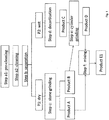
Figure 1 is a diagram of an embodiment of the method of the present invention; -
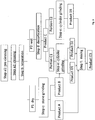
Figure 2 is a diagram of a first alternative embodiment of the method of the present invention; -
Figure 3 is a diagram of a second alternative embodiment of the method of the present invention. - Some embodiments of the method of the present invention are described herein below.
- With reference to
Figure 1 , the grain follows the steps a1) of pre-cleaning and a2) of subsequent cleaning; at this point, at the end of step b), the grain is subdivided into a first dry portion P1, which is sent to the stone grinding step c), while a second portion P2 is wetted, subsequently conditioned and sent to the decortication chamber to be subjected to the decortication step d). - Through an automatic device, the second portion P2 is uniformly distributed in the decortication chamber wherein at its inside special conveyors position the bean with respect to the abrasive stones (grinding wheels) so as to uniformly decorticulate it and obtain the decorticated product C.
- The decortication degree of the product C depends both on the quantity of cereal to be decorticated and on the residence time, for example 20 seconds, inside the decortication chamber, established through an electronic management software that controls the exit damper.
- The thus obtained product C is sent to the rolling mills to be subjected to the cylinder grinding step e), as it will be explained herein below.
- The waste of the decortication step d) is expelled through perforated cloaks that surround the rotor (vertical rotating shaft) and comes out thanks to the suction transport to which the machine is connected and to the thrust fan the machine is supplied with.
- At the end of the stone grinding step c), the first dry portion P1 with humidity lower than 12% is subdivided into product A, having an average granulometry of about 300 µm, and in product B, having an average granulometry of about 400 µm, therefore greater than the one of the product A. The product A comes flowed into the finished product, while the product B is channeled to reach the rolling mills to be subjected to the cylinder grinding step e), together with the product C obtained at the end of the decortications step d), as seen above.
- At this point the product B and the decorticated product C are subjected to the cylinder grinding step e) which takes place in successive rolling mills, letting pass the beans, firstly, through pairs of metal cylinders of a first rolling mill which determine the grain crushing and, subsequently, through a sieve which collects the output product subdividing it according to the required granulometry, and repeating these operations in successive rolling mills equipped with increasingly closer cylinders and sieves with finer meshes until the product D having an average granulometry about < 200 µm is obtained.
- Finally, in the final mixing step f), the product D exiting from the cylinder grinding - step e) - joins the product A exiting from the stone grinding step c) to give the final product E1 (A+D), which is homogenized and stored in special silos.
- Thanks to the setting and tuning of the entire integrated process the quantity percentages of the product arriving from the stone grinding cycle and from the cylinder grinding cycle are naturally mixed when arriving at the silos.
- The grain was treated only using the known in the art stone grinding technology.
- The grain was treated only using the known in the art cylinder grinding technology.
- The following table shows the comparisons between the main characteristics of the grain treated with example 1 of the invention (integrated stone and cylinder grinding) and with the comparison example 2 (stone grinding only) and comparison example 3 (cylinder grinding only).
Table Features Example 1 - integrated grinding (invention) Example 2 - stone grinding (comparison) Example 3 - cylinder grinding (comparison) Granulometry Thin and constant Coarse and inconstant Thin and constant absorption capacity High and constant Low and variable High and constant rheological properties constancy high low high nutritional property conservation excellent excellent low set up for use on automated lines high low high - From the above, it can be seen that the integrated grinding shown in the example 1 of the invention allows to obtain a grain with high properties, contrary to what can be obtained in the comparative example 2 (stone grinding only) and in the comparative example 3 (cylinder grinding only).
- With reference to
Figure 2 , a first alternative embodiment of the method of the present invention is shown which differs from the example 1 of the invention shown with reference toFigure 1 in that the product C obtained at the end of decortication step d) is subjected to cylinder grinding step e) together with the product B obtained at the end of the stone grinding step c) so as to obtain, not a single product D as indicated in Example 1 of the invention, but rather a first product D1 having an average particle size of about 200 µm and a second product D2 having an average particle size of about 350 µm, with a humidity of about 14-15%. - Consequently, in the final mixing step f), the product A obtained at the end of the stone grinding step c) is mixed with the first product D1 and with the second product D2 obtained at the end of the cylinder grinding step e) so as to obtain the final product E2 (A+D1+D2), which showed further improvement properties with respect to the final product E1 (A+D) obtained in Example 1.
- With reference to
Figure 3 , a second alternative embodiment of the method of the present invention is shown which differs from the example 4 of the invention shown with reference toFigure 2 in that, in addition to obtaining the products D1 and D2 at the end of the cylinder grinding step e) as described in Example 4, in Example 5 a portion C2 of the product C obtained at the end of the decortication step d) is subjected in the step e') to cylindrical grinding without however addition of the product B obtained at the end of the stone grinding step c), so as to obtain the product D3, having an average particle size of about 150 µm. Consequently, in the final mixing step f) of example 5, the product A obtained at the end of the stone grinding step c) is mixed with the first product D1 and with the second product D2 obtained at the end of the cylinder grinding step e) and with the product D3 obtained at the end of step e'), so as to obtain the final product E3 (A+D1+D2+D3), which showed further improved properties with respect to the final product E2 (A+D1+D2) obtained in Example 4. - Of course, many modifications and variations of the preferred embodiment described above will be apparent to persons skilled in the art, still remaining within the scope of the invention.
- Therefore, the present invention is not limited to the preferred embodiment described, illustrated only by way of non-limiting example, but is defined by the following claims.
Claims (10)
- Method of grinding cereal grains comprising the following steps:a) cleaning of grains P;b) division of the grains into a first dry portion P1 and into a second portion P2, the latter to be subjected to wetting and to subsequent conditioning;characterized in that the method further comprises the following steps:c) subjecting to a stone type grinding said first dry portion P1 so as to obtain a first type of product A and a second type of product B, wherein the average particle size of product A is lower than the average particle size of product B;d) subjecting to a decortication step said second wet and conditioned portion P2 in order to obtain a decorticated product C;e) subjecting to a cylinder type grinding said product B obtained at the end of the stone type grinding of step c) and at least a portion of said decorticated product C obtained at the end of step d), so as to obtain at least one product D;f) mixing said product A obtained at the end of the stone type grinding of step c) and the product D obtained at the end of the cylinder type grinding of step e), so as to obtain the final product E1.
- Method according to claim 1, wherein the average particle size of said first product A and the average particle size of said second product B obtained at the end of said step c) are, respectively, <350 µm and >350 µm.
- Method according to any one of the preceding claims, wherein the product B obtained at the end of the stone type grinding of step c) and at least said portion of the product C obtained at the end of the decortication step d) are subjected to said cylinder type grinding of the step e) so as to obtain a first product D1 having an average particle size of <250 µm and a second product D2 having an average particle size in the range of 250-500 µm.
- Method according to claim 3, wherein, in said step f), said product A obtained at the end of the stone type grinding of step c) is mixed with said first product D1 and with said second product D2 obtained at the end of the cylinder type grinding to of step e) in order to obtain the final product E2.
- Method according to any one of the preceding claims, wherein said cylinder type grinding of step e) takes place in successive rolling mills, passing the grains, firstly, through metal cylinders pairs of a first rolling mill which determine the crushing of the grain and, subsequently, through a sieve that collects the output product by dividing it according to the required particle size, and repeating these operations in successive rolling mills equipped with increasingly close cylinders and finer mesh sieves.
- Method according to any one of the preceding claims, which further comprises the step e') wherein at least a portion C2 of the product C obtained at the end of said decortication step d) is subjected to cylinder type grinding without adding the product B obtained at the end of the stone type grinding of step c) in order to obtain the product D3.
- Method according to claim 6 wherein, in said step f), said product A obtained at the end of the stone type grinding is mixed with the first product D1 and with the second product D2 obtained at the end of the cylinder type grinding of step e), and with the product D3 obtained at the end of said step e') of cylinder type grinding, so as to obtain the final product E3.
- Method according to any one of the preceding claims, wherein in said decortication step the grains are placed inside a decortication chamber by means of conveyors in correspondence with abrasive stones to be evenly decorticated.
- Method according to any one of the preceding claims, which further comprises the step in which, during the decortication step d), a waste part of the grain is passed through suitable perforated cloaks surrounding said decortication chamber and hence ejected by suction.
- Product obtained by the grinding method according to any of the previous claims 1-9.
Applications Claiming Priority (1)
| Application Number | Priority Date | Filing Date | Title |
|---|---|---|---|
| IT102018000003528A IT201800003528A1 (en) | 2018-03-14 | 2018-03-14 | Improved grinding method |
Publications (3)
| Publication Number | Publication Date |
|---|---|
| EP3539667A1 true EP3539667A1 (en) | 2019-09-18 |
| EP3539667B1 EP3539667B1 (en) | 2025-08-13 |
| EP3539667C0 EP3539667C0 (en) | 2025-08-13 |
Family
ID=62530364
Family Applications (1)
| Application Number | Title | Priority Date | Filing Date |
|---|---|---|---|
| EP19020117.8A Active EP3539667B1 (en) | 2018-03-14 | 2019-03-11 | Improved grinding method |
Country Status (3)
| Country | Link |
|---|---|
| EP (1) | EP3539667B1 (en) |
| ES (1) | ES3040752T3 (en) |
| IT (1) | IT201800003528A1 (en) |
Citations (2)
| Publication number | Priority date | Publication date | Assignee | Title |
|---|---|---|---|---|
| EP0356987A2 (en) * | 1988-09-01 | 1990-03-07 | Massimo Schiavi | Method of processing cereals |
| RU2314872C2 (en) * | 2005-11-30 | 2008-01-20 | Общество с ограниченной ответственностью "Базис-А" | Method for producing of wheat flour and wheat flour produced by this method (versions) |
-
2018
- 2018-03-14 IT IT102018000003528A patent/IT201800003528A1/en unknown
-
2019
- 2019-03-11 EP EP19020117.8A patent/EP3539667B1/en active Active
- 2019-03-11 ES ES19020117T patent/ES3040752T3/en active Active
Patent Citations (2)
| Publication number | Priority date | Publication date | Assignee | Title |
|---|---|---|---|---|
| EP0356987A2 (en) * | 1988-09-01 | 1990-03-07 | Massimo Schiavi | Method of processing cereals |
| RU2314872C2 (en) * | 2005-11-30 | 2008-01-20 | Общество с ограниченной ответственностью "Базис-А" | Method for producing of wheat flour and wheat flour produced by this method (versions) |
Also Published As
| Publication number | Publication date |
|---|---|
| IT201800003528A1 (en) | 2019-09-14 |
| ES3040752T3 (en) | 2025-11-04 |
| EP3539667B1 (en) | 2025-08-13 |
| EP3539667C0 (en) | 2025-08-13 |
Similar Documents
| Publication | Publication Date | Title |
|---|---|---|
| RU2498854C2 (en) | Method of flour production from grain, roll mill, application of roll mill, zigzag sieving machine and its application | |
| JP2569159B2 (en) | Method for producing starch raw material and starch mill device | |
| JP3743599B2 (en) | Milling method and milling system using the milling method | |
| US5082680A (en) | Process for removing bran layers from wheat kernels | |
| US5650018A (en) | Method and apparatus for the scoring of and the preparation for milling of cereal | |
| Anderson et al. | Corn dry milling: Processes, products, and applications | |
| EP2910307B1 (en) | Oat processing apparatus and method | |
| CN106179563B (en) | A kind of germ separation technique | |
| US3362649A (en) | Milling process for soft wheat | |
| PL207641B1 (en) | A process for the production of wheat flour | |
| US4094700A (en) | Apparatus and process for the production of gluten and starch from wheat, rye, or barley | |
| UA130500C2 (en) | Process for the milling of vegetable-based materials, in particular plants like seeds | |
| US20040258814A1 (en) | Process of forming corn flaking grits of improved quality with minimization of production of corn doubles | |
| EP3539667B1 (en) | Improved grinding method | |
| US5387430A (en) | By-product fractions from debranned wheat | |
| CN111185256B (en) | Production and processing method of high-quality graded rice | |
| US2847167A (en) | Milling process for wheat and similar granular food products | |
| US5240733A (en) | Dietary fibre composition | |
| KR200497440Y1 (en) | All-in-one coarse crusher for grain | |
| US3088827A (en) | Method of milling corn to simulate rice | |
| EP1213054B1 (en) | Process for milling corn | |
| Serna-Saldivar | Production of cereal-based raw materials for the snack industry | |
| RU2239332C2 (en) | Method for buckwheat flour production | |
| CN110918186B (en) | Production method and production system of stone mill flour | |
| RU2510294C2 (en) | Rye grain groats production method |
Legal Events
| Date | Code | Title | Description |
|---|---|---|---|
| PUAI | Public reference made under article 153(3) epc to a published international application that has entered the european phase |
Free format text: ORIGINAL CODE: 0009012 |
|
| STAA | Information on the status of an ep patent application or granted ep patent |
Free format text: STATUS: THE APPLICATION HAS BEEN PUBLISHED |
|
| AK | Designated contracting states |
Kind code of ref document: A1 Designated state(s): AL AT BE BG CH CY CZ DE DK EE ES FI FR GB GR HR HU IE IS IT LI LT LU LV MC MK MT NL NO PL PT RO RS SE SI SK SM TR |
|
| AX | Request for extension of the european patent |
Extension state: BA ME |
|
| STAA | Information on the status of an ep patent application or granted ep patent |
Free format text: STATUS: REQUEST FOR EXAMINATION WAS MADE |
|
| 17P | Request for examination filed |
Effective date: 20200313 |
|
| RBV | Designated contracting states (corrected) |
Designated state(s): AL AT BE BG CH CY CZ DE DK EE ES FI FR GB GR HR HU IE IS IT LI LT LU LV MC MK MT NL NO PL PT RO RS SE SI SK SM TR |
|
| STAA | Information on the status of an ep patent application or granted ep patent |
Free format text: STATUS: EXAMINATION IS IN PROGRESS |
|
| 17Q | First examination report despatched |
Effective date: 20221202 |
|
| GRAP | Despatch of communication of intention to grant a patent |
Free format text: ORIGINAL CODE: EPIDOSNIGR1 |
|
| STAA | Information on the status of an ep patent application or granted ep patent |
Free format text: STATUS: GRANT OF PATENT IS INTENDED |
|
| INTG | Intention to grant announced |
Effective date: 20250402 |
|
| GRAS | Grant fee paid |
Free format text: ORIGINAL CODE: EPIDOSNIGR3 |
|
| GRAA | (expected) grant |
Free format text: ORIGINAL CODE: 0009210 |
|
| STAA | Information on the status of an ep patent application or granted ep patent |
Free format text: STATUS: THE PATENT HAS BEEN GRANTED |
|
| AK | Designated contracting states |
Kind code of ref document: B1 Designated state(s): AL AT BE BG CH CY CZ DE DK EE ES FI FR GB GR HR HU IE IS IT LI LT LU LV MC MK MT NL NO PL PT RO RS SE SI SK SM TR |
|
| REG | Reference to a national code |
Ref country code: GB Ref legal event code: FG4D |
|
| REG | Reference to a national code |
Ref country code: CH Ref legal event code: EP |
|
| REG | Reference to a national code |
Ref country code: DE Ref legal event code: R096 Ref document number: 602019073971 Country of ref document: DE |
|
| REG | Reference to a national code |
Ref country code: IE Ref legal event code: FG4D |
|
| U01 | Request for unitary effect filed |
Effective date: 20250903 |
|
| U07 | Unitary effect registered |
Designated state(s): AT BE BG DE DK EE FI FR IT LT LU LV MT NL PT RO SE SI Effective date: 20250909 |
|
| REG | Reference to a national code |
Ref country code: ES Ref legal event code: FG2A Ref document number: 3040752 Country of ref document: ES Kind code of ref document: T3 Effective date: 20251104 |
|
| PG25 | Lapsed in a contracting state [announced via postgrant information from national office to epo] |
Ref country code: IS Free format text: LAPSE BECAUSE OF FAILURE TO SUBMIT A TRANSLATION OF THE DESCRIPTION OR TO PAY THE FEE WITHIN THE PRESCRIBED TIME-LIMIT Effective date: 20251213 |
|
| PG25 | Lapsed in a contracting state [announced via postgrant information from national office to epo] |
Ref country code: NO Free format text: LAPSE BECAUSE OF FAILURE TO SUBMIT A TRANSLATION OF THE DESCRIPTION OR TO PAY THE FEE WITHIN THE PRESCRIBED TIME-LIMIT Effective date: 20251113 |
|
| PG25 | Lapsed in a contracting state [announced via postgrant information from national office to epo] |
Ref country code: HR Free format text: LAPSE BECAUSE OF FAILURE TO SUBMIT A TRANSLATION OF THE DESCRIPTION OR TO PAY THE FEE WITHIN THE PRESCRIBED TIME-LIMIT Effective date: 20250813 |
|
| PG25 | Lapsed in a contracting state [announced via postgrant information from national office to epo] |
Ref country code: GR Free format text: LAPSE BECAUSE OF FAILURE TO SUBMIT A TRANSLATION OF THE DESCRIPTION OR TO PAY THE FEE WITHIN THE PRESCRIBED TIME-LIMIT Effective date: 20251114 |
|
| PG25 | Lapsed in a contracting state [announced via postgrant information from national office to epo] |
Ref country code: PL Free format text: LAPSE BECAUSE OF FAILURE TO SUBMIT A TRANSLATION OF THE DESCRIPTION OR TO PAY THE FEE WITHIN THE PRESCRIBED TIME-LIMIT Effective date: 20250813 |
|
| PG25 | Lapsed in a contracting state [announced via postgrant information from national office to epo] |
Ref country code: RS Free format text: LAPSE BECAUSE OF FAILURE TO SUBMIT A TRANSLATION OF THE DESCRIPTION OR TO PAY THE FEE WITHIN THE PRESCRIBED TIME-LIMIT Effective date: 20251113 |
|
| PG25 | Lapsed in a contracting state [announced via postgrant information from national office to epo] |
Ref country code: SM Free format text: LAPSE BECAUSE OF FAILURE TO SUBMIT A TRANSLATION OF THE DESCRIPTION OR TO PAY THE FEE WITHIN THE PRESCRIBED TIME-LIMIT Effective date: 20250813 |
|
| PGFP | Annual fee paid to national office [announced via postgrant information from national office to epo] |
Ref country code: GB Payment date: 20260325 Year of fee payment: 8 |
|
| PGFP | Annual fee paid to national office [announced via postgrant information from national office to epo] |
Ref country code: HU Payment date: 20260319 Year of fee payment: 8 |
|
| PG25 | Lapsed in a contracting state [announced via postgrant information from national office to epo] |
Ref country code: CZ Free format text: LAPSE BECAUSE OF FAILURE TO SUBMIT A TRANSLATION OF THE DESCRIPTION OR TO PAY THE FEE WITHIN THE PRESCRIBED TIME-LIMIT Effective date: 20250813 |
|
| PG25 | Lapsed in a contracting state [announced via postgrant information from national office to epo] |
Ref country code: SK Free format text: LAPSE BECAUSE OF FAILURE TO SUBMIT A TRANSLATION OF THE DESCRIPTION OR TO PAY THE FEE WITHIN THE PRESCRIBED TIME-LIMIT Effective date: 20250813 |
|
| U20 | Renewal fee for the european patent with unitary effect paid |
Year of fee payment: 8 Effective date: 20260320 |