EP3538693B1 - Bio-based meg and polyester fiber compositions and methods of making the same - Google Patents
Bio-based meg and polyester fiber compositions and methods of making the same Download PDFInfo
- Publication number
- EP3538693B1 EP3538693B1 EP17869799.1A EP17869799A EP3538693B1 EP 3538693 B1 EP3538693 B1 EP 3538693B1 EP 17869799 A EP17869799 A EP 17869799A EP 3538693 B1 EP3538693 B1 EP 3538693B1
- Authority
- EP
- European Patent Office
- Prior art keywords
- ppm
- bio
- meg
- composition
- polyester fiber
- Prior art date
- Legal status (The legal status is an assumption and is not a legal conclusion. Google has not performed a legal analysis and makes no representation as to the accuracy of the status listed.)
- Active
Links
Images
Classifications
-
- D—TEXTILES; PAPER
- D01—NATURAL OR MAN-MADE THREADS OR FIBRES; SPINNING
- D01F—CHEMICAL FEATURES IN THE MANUFACTURE OF ARTIFICIAL FILAMENTS, THREADS, FIBRES, BRISTLES OR RIBBONS; APPARATUS SPECIALLY ADAPTED FOR THE MANUFACTURE OF CARBON FILAMENTS
- D01F6/00—Monocomponent artificial filaments or the like of synthetic polymers; Manufacture thereof
- D01F6/78—Monocomponent artificial filaments or the like of synthetic polymers; Manufacture thereof from copolycondensation products
- D01F6/84—Monocomponent artificial filaments or the like of synthetic polymers; Manufacture thereof from copolycondensation products from copolyesters
-
- D—TEXTILES; PAPER
- D01—NATURAL OR MAN-MADE THREADS OR FIBRES; SPINNING
- D01F—CHEMICAL FEATURES IN THE MANUFACTURE OF ARTIFICIAL FILAMENTS, THREADS, FIBRES, BRISTLES OR RIBBONS; APPARATUS SPECIALLY ADAPTED FOR THE MANUFACTURE OF CARBON FILAMENTS
- D01F6/00—Monocomponent artificial filaments or the like of synthetic polymers; Manufacture thereof
- D01F6/58—Monocomponent artificial filaments or the like of synthetic polymers; Manufacture thereof from homopolycondensation products
- D01F6/62—Monocomponent artificial filaments or the like of synthetic polymers; Manufacture thereof from homopolycondensation products from polyesters
-
- C—CHEMISTRY; METALLURGY
- C08—ORGANIC MACROMOLECULAR COMPOUNDS; THEIR PREPARATION OR CHEMICAL WORKING-UP; COMPOSITIONS BASED THEREON
- C08G—MACROMOLECULAR COMPOUNDS OBTAINED OTHERWISE THAN BY REACTIONS ONLY INVOLVING UNSATURATED CARBON-TO-CARBON BONDS
- C08G63/00—Macromolecular compounds obtained by reactions forming a carboxylic ester link in the main chain of the macromolecule
- C08G63/02—Polyesters derived from hydroxycarboxylic acids or from polycarboxylic acids and polyhydroxy compounds
- C08G63/12—Polyesters derived from hydroxycarboxylic acids or from polycarboxylic acids and polyhydroxy compounds derived from polycarboxylic acids and polyhydroxy compounds
- C08G63/16—Dicarboxylic acids and dihydroxy compounds
- C08G63/18—Dicarboxylic acids and dihydroxy compounds the acids or hydroxy compounds containing carbocyclic rings
- C08G63/181—Acids containing aromatic rings
- C08G63/183—Terephthalic acids
-
- C—CHEMISTRY; METALLURGY
- C08—ORGANIC MACROMOLECULAR COMPOUNDS; THEIR PREPARATION OR CHEMICAL WORKING-UP; COMPOSITIONS BASED THEREON
- C08G—MACROMOLECULAR COMPOUNDS OBTAINED OTHERWISE THAN BY REACTIONS ONLY INVOLVING UNSATURATED CARBON-TO-CARBON BONDS
- C08G63/00—Macromolecular compounds obtained by reactions forming a carboxylic ester link in the main chain of the macromolecule
- C08G63/02—Polyesters derived from hydroxycarboxylic acids or from polycarboxylic acids and polyhydroxy compounds
- C08G63/12—Polyesters derived from hydroxycarboxylic acids or from polycarboxylic acids and polyhydroxy compounds derived from polycarboxylic acids and polyhydroxy compounds
- C08G63/16—Dicarboxylic acids and dihydroxy compounds
- C08G63/18—Dicarboxylic acids and dihydroxy compounds the acids or hydroxy compounds containing carbocyclic rings
- C08G63/181—Acids containing aromatic rings
-
- C—CHEMISTRY; METALLURGY
- C08—ORGANIC MACROMOLECULAR COMPOUNDS; THEIR PREPARATION OR CHEMICAL WORKING-UP; COMPOSITIONS BASED THEREON
- C08G—MACROMOLECULAR COMPOUNDS OBTAINED OTHERWISE THAN BY REACTIONS ONLY INVOLVING UNSATURATED CARBON-TO-CARBON BONDS
- C08G63/00—Macromolecular compounds obtained by reactions forming a carboxylic ester link in the main chain of the macromolecule
- C08G63/02—Polyesters derived from hydroxycarboxylic acids or from polycarboxylic acids and polyhydroxy compounds
- C08G63/12—Polyesters derived from hydroxycarboxylic acids or from polycarboxylic acids and polyhydroxy compounds derived from polycarboxylic acids and polyhydroxy compounds
- C08G63/40—Polyesters derived from ester-forming derivatives of polycarboxylic acids or of polyhydroxy compounds, other than from esters thereof
- C08G63/42—Cyclic ethers; Cyclic carbonates; Cyclic sulfites; Cyclic orthoesters
Definitions
- This disclosure relates to bio-based polyester fibers and methods of making bio-based polyester fibers.
- Polyesters such as polyethylene terephthalate are widely used for industrial and consumer applications, for example pipe, retail and pharmaceutical packaging, food and beverage packaging such as beverage bottles, toys, carpet, apparel fibers, appliances and many other household items. Due to their excellent mechanical properties, polyethylene terephthalate and its co-polyesters (hereinafter referred to collectively as "PET") are particularly useful for fabricating fibers and products made from or containing fibers such as fabrics, nonwoven materials, carpet, apparel, and the like. PET fibers are particularly useful in creating wrinkle-resistant, durable fabrics with high color retention, and may also exhibit superior water, wind, and environmental resistance when compared to natural fibers such as cotton. Standard PET fiber production can involve a spinning process, for example a filament type spinning process or a spun type spinning process, and a weaving process.
- PET polyethylene terephthalate and its co-polyesters
- PET polyester is usually produced from the condensation reaction of terephthalic acid with monoethylene glycol (MEG), also referred to simply as ethylene glycol.
- MEG monoethylene glycol
- Both of these PET precursors are normally derived from petrochemical sources.
- terephthalic acid is generally formed by the oxidation ofp-xylene
- MEG is generally derived from the oxidation of ethylene, both of which are produced from petrochemicals.
- WO 2016/001169 discloses a process for the preparation of ethylene glycol from sugars.
- CN 101 525 782 discloses short fibers of polyethylene terephthalate and a method for producing the same.
- AU 2015 201 314 discloses a method of making a bio-based PET packaging.
- JP 2014 001257 discloses a method for producing biomass resource-derived polyester and biomass resource-derived polyester.
- CN 103 668 538 discloses a UV resistant type biomass polyester fiber.
- Xiao et al. discloses the synthesis and characterization of polyethylene terephthalate) from biomass-based ethylene glycol.
- This disclosure generally focuses on fibers and fiber-containing products made using bio-based MEG and PET.
- the MEG disclosed herein can be used as a polyester precursor for any polyester that uses ethylene glycol as the diol precursor.
- the resulting polyesters and co-polyesters can also be used in any polyester application such as fibers, fiber-containing products including carpet, apparel, and non-woven products, films and containers, including containers such as bottles, drums, carafes, coolers, and the like.
- the monoethylene glycol (MEG) used herein that is bio-based can be described according to the minor concentrations of the additional diol components, alcohol components, or other hydroxyl-containing components contained in the bio-based MEG.
- the bio-based MEG composition used herein includes monoethylene glycol (MEG); from 1 ppm to 5000 ppm of at least one C 3 -C 12 1,2-diol, wherein the C 3 -C 12 1,2-diol is linear, branched, or cyclic; and 2-[(5-methyltetrahydro-2-furanyl)methoxy] ethanol.
- the disclosure provides a method of making a bio-based polyester fiber, the method comprising the steps of: contacting a bio-based MEG composition with a diacid composition to form a polyester composition; and spinning and/or drawing the resulting polyester composition into a fiber; wherein the bio-based MEG composition comprises: a) monoethylene glycol (MEG); b) from 1 ppm to 5000 ppm of at least one C 3 -C 12 1,2-diol, wherein the C 3 -C 12 1,2-diol is linear, branched, or cyclic; and c) 2-[(5- methyltetrahydro-2-furanyl)methoxy] ethanol.
- MEG monoethylene glycol
- this disclosure provides a bio-based polyester fiber, comprising the polyester reaction product of: a bio-based MEG composition comprising a) monoethylene glycol (MEG); b) from about 1 ppm to about 5000 ppm of at least one C 3 -C 12 1,2-diol, wherein the C 3 -C 12 1,2-diol is linear, branched, or cyclic; and c) 2-[(5-methyltetrahydro-2- furanyl)methoxy]ethanol; and a diacid composition.
- a bio-based MEG composition comprising a) monoethylene glycol (MEG); b) from about 1 ppm to about 5000 ppm of at least one C 3 -C 12 1,2-diol, wherein the C 3 -C 12 1,2-diol is linear, branched, or cyclic; and c) 2-[(5-methyltetrahydro-2- furanyl)methoxy]ethanol; and a diacid composition.
- the diacid composition comprises one or more aromatic diacid, including terephthalates, furanoates, naphthalates, and the like.
- the diacid composition can comprise one or more of terephthalic acid, isophthalic acid, 2,6-naphthalenedicarboxylic acid, 2,5-furandicarboxylic acid, or 2-(2-carboxyphenyl)benzoic acid.
- a textile comprising the bio-based polyester fiber according to the disclosure, including a carpet and an apparel fabric.
- nonwoven materials including dry-laid nonwovens, wet-laid nonwovens, spunbond nonwovens, and monofilament as well.
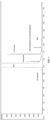
- FIG. 1 is a gas chromatogram (FID detector) of a bio-based MEG composition produced according to an aspect of the present disclosure.
- bio-based MEG compositions and the PET derived therefrom can be produced from plant mass and in particular, the sugars contained therein.
- suitable sugars include, but not limited to glucose, xylose, sucrose, fructose, and mixtures thereof.
- sugar cane may be fermented using means known to one of ordinary skill in the art to produce ethanol and carbon dioxide. This ethanol may then be converted to ethylene using any of the known methods in the art, which may then be converted to MEG using standard processes, such as those used to convert petroleum-based ethylene to MEG.
- a bio-based MEG composition may be produced by pyrolyzing a sugar to obtain a pyrolysis product composition; and hydrogenating the pyrolysis product composition in the presence of a catalyst and a solvent, under pressure, as discussed in detail in WO 2016/001169 .
- a bio-based MEG composition may be produced in a continuous process whereby hydrogen, a carbohydrate source, and a liquid diluent can be continuously fed into a continuously stirred tank reactor (CSTR) wherein a catalyst system is present, and wherein the catalyst system comprises a tungsten compound and at least one hydrogenolysis metal selected from a Group 8, 9, or 10 metal, to achieve the reaction between the carbohydrate source and the hydrogen to form ethylene glycol.
- CSTR continuously stirred tank reactor
- the catalyst system comprises a tungsten compound and at least one hydrogenolysis metal selected from a Group 8, 9, or 10 metal, to achieve the reaction between the carbohydrate source and the hydrogen to form ethylene glycol.
- at least one tungsten compound can be added to the CSTR continuously or periodically, as discussed in detail in WO 2016/114661 .
- the tungsten compound may be selected from, for example, tungstic acid (H 2 WO 4 ), ammonium tungstate, or ammonium metatungstate.
- the bio-based MEG can be prepared by from sucrose by hydrolyzing the sucrose to form a product stream containing glucose, fructose, and their derivatives, separating the reaction product stream into a fructose rich stream (including its derivatives) and a glucose rich stream (including its derivatives); and contacting the glucose rich stream with hydrogen in a reactor in the presence of a solvent and a catalyst system with catalytic hydrogenation abilities to produce a product stream comprising monoethylene glycol.
- a solvent and a catalyst system with catalytic hydrogenation abilities to produce a product stream comprising monoethylene glycol.
- plant mass such as sugar cane, corn wheat, cassava, agricultural waste, or wood chips may be used as a feed material and processed to help isolate the sugar and convert this sugar to MEG.
- the sugar from a plant source can be fermented to generate ethanol and CO 2 , and this bio-CO 2 can be converted to oxalic acid, which in turn can be reduced to MEG. Therefore, not only can the sugars derived from a plant source be used as bio-MEG precursors, but also the CO 2 derived from the fermentation process can be used as a bio-MEG precursor as well.
- Bio-MEG may also be produced by electrochemical routes from CO 2 .
- MEG and PET compositions are suitable for a wide range of uses, including for use in fabricating fiber-containing materials or beverage bottles.
- FIG. 1 depicts a gas chromatogram of a MEG composition produced according to an aspect of the invention.
- This chromatogram identifies MEG, 1,2-propanediol, 1,2-butanediol, 1,2-pentanediol, diethylene glycol (DEG), and an unknown compound which has been identified as 2-[(5-methyltetrahydro-2-furanyl)methoxy]ethanol.
- DEG diethylene glycol
- each of the impurities listed above can be present in an amount of from about 1 ppm to about 5,000 ppm, for example about 1 ppm, about 100 ppm, about 500 ppm, about 1,000 ppm, about 2,000 ppm, about 3,000 ppm, about 4,000 ppm, or about 5,000 ppm. While not intending to be bound by theory, it is believed that the specific species and concentration of C 3 -C 12 1,2-diols present may be adjusted by adjusting the types and relative amounts of plant mass used as feed material to produce a bio-based MEG composition.
- the bio-based MEG composition used herein contains from 1 ppm to 5000 ppm of at least one C 3 -C 12 1,2-diol, wherein the C 3 -C 12 1,2-diol is linear, branched, or cyclic, for example about 1 ppm, about 10 ppm, about 50 ppm, about 100 ppm, about 1000 ppm, about 2000 ppm, about 3000 ppm, about 4000 ppm, or about 5000ppm of at least one C 3 -C 12 1,2-diol.
- the bio-based MEG composition further contains 2-[(5-methyltetrahydro-2-furanyl)methoxy]ethanol.
- the bio-based MEG composition used herein may contain from about 1 to about 100 ppm of 1,2-propanediol, or from about 1 to about 20 ppm of 1,2-propanediol. In some embodiments of the present disclosure, the bio-based MEG composition may contain from 1 to about 1000 ppm 1,2-butanediol, or from about 1 to about 80 ppm of 1,2-butanediol. In some embodiments of the present disclosure, the bio-based MEG composition may contain from about 1 to about 1000 ppm of 1,2-pentanediol, or from about 1 to about 500 ppm of 1,2-pentanediol.
- the bio-based MEG composition may contain from about 1 to about 1000 ppm of 1,2-hexanediol, or from about 1 to about 20 ppm of 1,2-hexanediol. In some embodiments of the present disclosure, the bio-based MEG composition may contain from about 1 to about 1000 ppm of 1,2-cyclopentanediol, or from about 1 to about 20 ppm of 1,2-cyclopentanediol.
- the bio-based MEG composition may contain from about 1 to about 1000 ppm of 2-[(5-methyltetrahydro-2-furanyl)methoxy]ethanol, or from about 1 to about 100 ppm of 2-[(5-methyltetrahydro-2-furanyl)methoxy]ethanol.
- the bio-based MEG composition may contain any one or more of from about 1 to about 20 ppm of 1,2-propanediol, from about 1 to about 80 ppm of 1,2-butanediol, from about 1 to about 500 ppm of 1,2-pentanediol, from about 1 to about 20 ppm 1,2-hexanediol, from about 1 to about 20 ppm of 1,2-cyclopentanediol, and from about 1 to about 100 ppm of 2-[(5-methyltetrahydro-2-furanyl)methoxy]ethanol.
- the bio-based MEG composition may contain any one or more of from about 5 to about 10 ppm of 1,2-propanediol, from about 30 to about 70 ppm of 1,2-butanediol, from about 300 to about 450 ppm of 1,2-pentanediol, from about 5 to about 10 ppm 1,2-hexanediol, from about 5 to about 10 ppm of 1,2-cyclopentanediol, and from about 60 to about 80 ppm of 2-[(5-methyltetrahydro-2-furanyl)methoxy] ethanol.
- the bio-based MEG above may be reacted with terephthalic acid (PTA) to form the polyester PET, which is referred to herein as bio-PET or bio-polyester.
- PTA terephthalic acid
- the bio-based MEG above may be reacted with any other aromatic diacid, including terephthalates, furanoates, naphthalates, and the like.
- the bio-based MEG above may be reacted with a combination of aromatic diacids.
- C 3 -C 12 1,2-diol components derived from the bio-based MEG may reduce crystallization and crystallinity of the PET produced from these MEG compositions, and may further improve PET processability. That is, it is thought that these C 3 -C 12 1,2-diols may be incorporated as co-monomers which can lead to disruption of chain orientation or crystallinity development in the co-polyester PET resin as compared to PET resins without such C 3 -C 12 1,2-diols.
- these C 3 -C 12 1,2-diols in bio-based PET resins may disrupt the chain orientation or crystallinity development of the bio-based PET resin as compared to bio-based PET resins without such C 3 -C 12 1,2-diols. Moreover, these impurities may further improve the performance of the fibers produced from this PET. Similarly, while not intending to be bound by theory, it is thought that the incorporation of these C 3 -C 12 1,2-diols may as co-monomers can lead to a reduction in the lamellar size and spherulitic crystallization in the co-polyester PET resin as compared to PET resins without such C 3 -C 12 1,2-diols.
- a decrease in the lamellar size and spherulitic crystallization may lead to an increase in the probability of tie chain participation in adjacent crystallites in the co-polyester PET resin as compared to the PET resins without such C 3 -C 12 1,2-diols, and may further result in a finer, more granular crystalline structure in the co-polyester PET resin as compared to the PET resins without such C 3 -C 12 1,2-diols.
- This higher probability of tie chain participation in adjacent crystallites will lead to higher toughness of the co-polyester PET resin under both extension and impact as compared to the PET resins without such C 3 -C 12 1,2-diols.
- impurities include any byproducts of the process used to produce the MEG.
- the unexpected blend of MEG and minor diols provided by selecting the plant mass or carbohydrate from specific sources is thought to provide the improved performance of the fibers prepared using the same.
- the transparency and clarity of films, blow-molded, or stretch blow-molded samples prepared using the bio-based PET disclosed herein provides a useful comparison and can be measured by the transmission haze percentage, which measures the scattering of light as it passes through a transparent material, as detailed in ASTM D1003.
- the bio-based PET resin is clearer than a comparable petroleum-based PET resin.
- the transmission haze percentage of a bio-based PET resin is lower than the transmission haze percentage of a petroleum-based PET resin.
- the transmission haze percentage of a bio-based PET resin is about 3.75% while the transmission haze percentage of a petroleum-based PET resin is about 4.2%. In some embodiments of the present disclosure, the transmission haze percentage of a bio-based PET resin is no more than about 10%. In some embodiments of the present disclosure, the transmission haze percentage of a bio-based PET resin is at least about 10%.
- the transmission haze percentage of a bio-based PET resin may be about 10%, about 9%, about 8 %, about 7%, about 6%, about 5%, about 4.75%, about 4.5%, about 4.25%, about 4%, about 3.75%, about 3.5%, about 3.25%, about 3%, about 2.75%, about 2.5%, about 2.25%, about 2%, about 1.75%, about 1.5%, about 1.25%, about 1%, about 0.75%, about 0.5%, or about 0.25%.
- the transmission haze percentage of a bio-based PET resin may be from about 20% to about 40% lower than the transmission haze percentage of a comparative oil-based PET resin.
- a "comparative oil-based PET resin” is intended to refer to a PET resin which is identical in composition to the bio-based PET resin, except that the oil-based PET resin contains only oil-based MEG, and no bio-based MEG.
- the transmission haze percentage of a bio-based PET resin may be about 20% lower than the transmission haze percentage of a comparative oil-based PET resin, about 25% lower, about 30% lower, about 35% lower, about 40% lower, or any ranges therebetween.
- the bio-based MEG disclosed herein also can be used as a polyester precursor for any polyester that uses ethylene glycol as the diol precursor, including for example, polyethylene naphthalate (PEN), polyethylene isophthalate, and the like.
- the bio-based MEG can further be used in any polyester co-polymers that may comprise some fraction of glycol (diol) modification, regardless of the whether the glycol used for modification is petroleum- or bio-based, and/or some fraction of diacid modification.
- the bio-based MEG can be used in PET copolymers having up to about 20 percent diacid modification, based on 100 mole percent diacid component in the bio-based PET.
- Diol (glycol) modification also occurs using bio-based MEG, but for the diol component, the co-diol can be from about 1 ppm to about 5000 ppm of at least one C 3 -C 12 1,2-diol, wherein the C 3 -C 12 1,2-diol is linear, branched, or cyclic. That is, the co-diols are derived as a result of the production of bio-based MEG using the plant sources as described herein.
- the polyester may be made using any suitable polycondensation catalysts; however, Applicants previously discovered that specific polycondensation catalysts may be particularly useful.
- polycondensation catalysts such as those disclosed in U.S. Patent Publication No. 2006/0275568 can be used to make the bio-based PET.
- the polyester may be made using at least one first polycondensation catalyst selected from the group consisting of metals in groups 3, 4, 13, and 14 of the Periodic Table.
- the polyester composition may comprise a catalyst residue remaining in the polyester from formation of the polyester and the catalyst residue may comprise at least a portion of the at least one first polycondensation catalyst.
- the catalyst residue may be present in the polyester composition in an amount up to 250 ppm, and is preferably less.
- the activity of the first polycondensation catalyst can be moderated using optional catalyst deactivating compounds, such as phosphorus containing compounds, to the polyester composition.
- phosphorus containing compounds include both organic and inorganic compounds. Examples include but are not limited to phosphoric acid, polyphosphoric acid, and tris(2,4-di-t-butylphenyl) phosphite, tris monononylphenyl phosphite.
- the bio-based PET composition may comprise a second polycondensation catalyst selected from the group consisting of cobalt, antimony, zinc, manganese, magnesium, cesium, calcium, and cadmium.
- a second polycondensation catalyst selected from the group consisting of cobalt, antimony, zinc, manganese, magnesium, cesium, calcium, and cadmium.
- the polyester composition desirably has an I.V. of at least 0.60, more preferably from about 0.65 to about 1.0, and even more preferably from about 0.70 to about 0.86.
- the units for I.V. herein are all in dL/g measured according to ASTM D4603-96, in which the I.V. of bio-based PET based resin is measured at 30°C with 0.5 weight percent concentration in a 60/40 (by weight) phenol/1,1,2,2-tetrachloroethane solution.
- the Hoffman-Weeks extrapolation procedure may be used to determine the equilibrium melting temperature of a homopolymer, such as PET made according to embodiments of the present disclosure.
- the experimentally observed peak melting temperature T m is plotted as a function of the crystallization temperature, T c .
- T c crystallization temperature
- a plot of Tm against T c may be extrapolated to the intersection of the T m -T c parity line to obtain the value for the equilibrium melting temperature T m 0 .
- the method is described in detail in the original paper by Hoffman and Weeks, John D. Hoffman and James J. Weeks, "Melting Process and the Equilibrium Melting Temperature of Polychlorotrifluoroethylene," J.
- the bio-based PET composition is used to form a draw texturized yarn (DTY).
- DTY is a fully drawn, fully oriented polyester multifilament yarn with soft crimp, high bulk and texture with cotton feel and very high durability and retention properties. This is manufactured by texturizing partially oriented yarn (POY) using texturizing machines.
- POY partially oriented yarn
- DTY is suitable for fabric end uses like outer/inner garments, skin-clinging garments, furnishings, upholstery, etc This is a replacement of cotton and cotton blend yarns with very low moisture content. Intermingled (various rip levels) and non intermingled are also available.
- the bio-based PET composition is used to form a draw texturized yarn having a Denier per filament (DPF) of from about 0.5 to about 10, for example about 0.5, about 1.0, about 1.10, about 1.50, about 1.82, about 2.0, about 2.09, about 2.21, about 2.35, about 2.5, about 2.94, about 3.0, about 3.13, about 3.5, about 4.0, about 4.41, about 4.5, about 5.0, about 5.5, about 6.0 , about 6.5, about 7.0, about 7.5, about 8.0, about 8.5, about 9.0, about 9.5, or about 10.0.
- DPF Denier per filament
- the bio-based PET composition is used to form a partially oriented yarn (POY).
- a bio-based PET POY is formed by first cooling the melted bio-based PET composition in a polymer cooler, filtering the bio-based PET composition, and after pressure boosting distributing the bio-based PET composition to the spinning manifolds and then to the spinning positions.
- the PET melt from spinning position is then extruded through spinnerets by variable speed driven spinning pumps.
- the extruded filaments are cooled by precisely controlled conditioned and filtered air in quench chamber.
- the filaments are then passed through the finish application system.
- the filaments are taken on take up winders and finally wound on bobbins.
- the yarn produced is extremely fine, as evidenced by the relatively high DPF values for POY.
- the spinnerets and spinning manifold may be jacketed and heated with dowtherm vapor.
- POYs are produced by a continuous polymerization process, with strict quality control of denier orientation and spread, often along with computer-controlled draw force testing, to ensure maximum consistency of yarn performance during and after texturizing.
- critical yarn properties such as draw force, tenacity, elongation, uster (a measure of the spun filament denier evenness or uniformity along the filament bundle) and shrinkage may be monitored and controlled.
- the bio-based PET composition is used to form a POY having a denier variability of about 2%, a tenacity of at least about 2.5 gpd, elongation of about 5.0%, spin finish of about 0.05 wt%, and an uster of no more than about 1.2%.
- the bio-based PET composition is used to form a partially oriented yarn having a Denier per filament (DPF) of from about 0.5 to about 15, for example about 0.5, about 1.0, about 1.10, about 1.5, about 1.57, about 1.62, about 1.77, about 2.0, about 2.07, about 2.35, about 2.5, about 2.63, about 2.65, about 2.71, about 2.94, about 3.0, about 3.02, about 3.38, about 3.5, about 3.60, about 3.71, about 3.82, about 4.0, about 4.15, about 4.26, about 4.41, about 4.5, about 4.90, about 5.0, about 5.5, about 5.52, about 6.0, about 6.5, about 6.91, about 7.0, about 7.5, about 7.79, about 8.0, about 8.5, about 9.0, about 9.5, about 10.0, about 10.3, about 10.5, about 11.0, about 11.5, about 12.0, about 12.5, about 13.0, about 13.5, about 14.0, about 14.5, or about 15.0.
- DPF Denier per filament
- the bio-based PET composition is used to form a polyester staple fiber (PSF).
- PSF polyester staple fiber
- the tow is then subjected to further processes including, but not limited to drawing, crimping, spin finish application, and are then cut into fixed lengths to result in fibers almost equal in length to cotton fibers.
- These cut fibers are known as PSF, and are used in a variety of commercial products, such as carpets and nonwoven fabrics. To ensure quality of the fibers, there may be constant checks of the manufacturing line.
- the bio-based PET composition is used to form a polyester staple fiber having a Denier per filament (DPF) of from about 0.5 to about 40.0, for example about 0.5, about 1.0, about 1.5, about 2.0, about 2.5, about 3.0, about 3.5, about 4.0, about 4.5, about 5.0, about 5.5, about 6.0, about 6.5, about 7.0, about 7.5, about 8.0, about 8.5, about 9.0, about 9.5, about 10.0, about 10.5, about 11.0, about 11.5, about 12.0, about 12.5, about 13.0, about 13.5, about 14.0, about 14.5, about 15.0, about 15.5, about 16.0, about 16.5, about 17.0, about 17.5, about 18.0, about 18.5, about 19.0, about 19.5, about 20.0, about 20.5, about 21.0, about 21.5, about 22.0, about 22.5, about 23.0, about 23.5, about 24.0, about 24.5 , about 25.0, about 25.5, about 26.0, about 26.5, about 27.0, about 2
- DPF Denier per filament
- the bio-based PET composition is used to form a fully drawn yarn (FDY).
- FDY fully drawn yarn
- a FDY is produced by a process similar to POY manufacturing, except that the yarn is produced at higher spinning speeds coupled with intermediate drawing integrated in the process itself. This combination allows for stabilization of the polymer through orientation and crystallization.
- FDYs are suitable for direct twisting, warping, and weaving, and may be used to produce fabrics which have a feeling and drape similar to fabrics produced from natural materials, such as silk or cotton. Further, FDYs eliminate the draw-twisting and sizing process, thus reducing the cost of products for light and medium range fabrics.
- the bio-based PET composition is used to form a fully drawn yarn having a Denier per filament (DPF) of from about 0.5 to about 5, for example about 0.5, about 0.97, about 1.00, about 1.11, about 1.5, about 2.0, about 2.06, about 2.08, about 2.35, about 2.5, about 3.0, about 3.5, about 4.0, about 4.5, or about 5.0.
- DPF Denier per filament
- the bio-based PET composition is used to form a spin draw yarn (SDY).
- SDY is produced by a process similar to POY manufacturing except that the yarn is produced at higher spinning speeds coupled with an intermediate drawing integrated in the process itself, which allows for stabilization through orientation and crystallization.
- the bio-based PET composition is used to form a spin drawn yarn having a Denier per filament (DPF) of from about 1 to about 5, for example about 0.97, about 1.00, about 1.11, about 2.06, about 2.08, or about 2.35.
- DPF Denier per filament
- the bio-based PET composition may be used to form a fiber having an intrinsic viscosity (IV) of from about 0.4 to about 2.0, for example about 0.4, about 0.5, about 0.75, about 1.0, about 1.25, about 1.5, about 1.75, or about 2.0.
- IV intrinsic viscosity
- a bio-based MEG composition was prepared according to the following method. Gel permeation chromatography was used to generate the chromatogram shown in FIG. 1 . Further analysis was able to identify the species and concentrations of impurities, as shown in Table 1 below. Table 1 Impurity Concentration 1,2-propanediol ⁇ 10 ppm 1,2-butanediol 71 ppm 1,2-pentanediol 418 ppm valeroactone ⁇ 10 ppm 2-[(5-methyltetrahydro-2-furanyl)methoxy]ethanol 75 ppm 1,2-hexanediol ⁇ 10 ppm 1,2-cyclopentanediol ⁇ 10 ppm Diethylene glycol (DEG) ⁇ 40 ppm
- DEG Diethylene glycol
- diols listed above were detected, without wishing to be bound by theory, it is believed that further diol impurities may be present, where these diols are a linear, branched, or cyclic C 3 -C 12 1,2-diol.
- the bio-based MEG provided according to the disclosure was reacted with PTA produced from petroleum sources, although bio-based PTA could also be used according to methods which would be known to one of skill in the art.
- the resulting polyester composition (PET) can then be spun and/or drawn into a fiber.
- the Hoffman-Weeks extrapolation procedure can be used to determine the equilibrium melting temperature of a homopolymer, such as PET made according to embodiments of the present disclosure.
- the experimentally observed peak melting temperature T m is plotted as a function of the crystallization temperature, T c .
- T c crystallization temperature
- transitional terms comprising, consisting essentially of, and consisting of, apply only to feature class to which is utilized and it is possible to have different transitional terms or phrases utilized with different features within a claim.
- a method can comprise several recited steps (and other non-recited steps) but utilize a catalyst system preparation consisting of specific steps but utilize a catalyst system comprising recited components and other non-recited components.
- compositions and methods are described in terms of “comprising" various components or steps, the compositions and methods can also "consist essentially of or “consist of the various components or steps.
- bio-based or simply “bio-” as used herein means at least mostly (>50 wt%) originating or produced from a biological material other than a petrochemical, such as plant mass, including but not limited to sugar cane, corn wheat, cassava, agricultural waste, wood chips, or any component thereof.
- a biological material feedstock such as plant mass, or from sugars derived or isolated from plant mass (including but not limited to glucose, xylose, sucrose, fructose, or mixtures thereof) used to generate the MEG.
- Applicant's intent is that the disclosure of this range also discloses and is equivalent to the disclosure of about 1 ppm, about 2 ppm, about 3 ppm, about 4 ppm, about 5 ppm, about 6 ppm, about 7 ppm, about 8 ppm, about 9 ppm, about 10 ppm, about 11 ppm, about 12 ppm, about 13 ppm, about 14 ppm, about 15 ppm, about 16 ppm, about 17 ppm, about 18 ppm, about 19 ppm, and about 20 ppm. Applicant's intent is that these two methods of describing the range are interchangeable.
- Values or ranges may be expressed herein as “about”, from “about” one particular value, and/or to “about” another particular value. When such values or ranges are expressed, other embodiments disclosed include the specific value recited, from the one particular value, and/or to the other particular value. Similarly, when values are expressed as approximations, by use of the antecedent “about,” it will be understood that the particular value forms another embodiment. It will be further understood that there are a number of values disclosed herein, and that each value is also herein disclosed as “about” that particular value in addition to the value itself. In aspects, "about” can be used to mean within 10% of the recited value, within 5% of the recited value, within 2% of the recited value, or within 1% of the recited value.
Landscapes
- Chemical & Material Sciences (AREA)
- Chemical Kinetics & Catalysis (AREA)
- Health & Medical Sciences (AREA)
- Medicinal Chemistry (AREA)
- Polymers & Plastics (AREA)
- Organic Chemistry (AREA)
- General Chemical & Material Sciences (AREA)
- Engineering & Computer Science (AREA)
- Textile Engineering (AREA)
- Polyesters Or Polycarbonates (AREA)
- Artificial Filaments (AREA)
- Compositions Of Macromolecular Compounds (AREA)
Description
- This disclosure relates to bio-based polyester fibers and methods of making bio-based polyester fibers.
- Polyesters such as polyethylene terephthalate are widely used for industrial and consumer applications, for example pipe, retail and pharmaceutical packaging, food and beverage packaging such as beverage bottles, toys, carpet, apparel fibers, appliances and many other household items. Due to their excellent mechanical properties, polyethylene terephthalate and its co-polyesters (hereinafter referred to collectively as "PET") are particularly useful for fabricating fibers and products made from or containing fibers such as fabrics, nonwoven materials, carpet, apparel, and the like. PET fibers are particularly useful in creating wrinkle-resistant, durable fabrics with high color retention, and may also exhibit superior water, wind, and environmental resistance when compared to natural fibers such as cotton. Standard PET fiber production can involve a spinning process, for example a filament type spinning process or a spun type spinning process, and a weaving process.
- Conventional PET polyester is usually produced from the condensation reaction of terephthalic acid with monoethylene glycol (MEG), also referred to simply as ethylene glycol. Both of these PET precursors are normally derived from petrochemical sources. For example, terephthalic acid is generally formed by the oxidation ofp-xylene and MEG is generally derived from the oxidation of ethylene, both of which are produced from petrochemicals.
- Over time, consumer demand has increased for limiting the use of oil and petroleum-based products, including plastics, in consumer products, and preferences for more "natural" or plant-based or -derived products have expanded. To meet this consumer demand, there remains a need for improvements in the current polymerization processes to produce PET from plant-based sources. In particular, there is a need to produce PET precursors such as MEG entirely from biological or plant-based sources, rather than from traditional petroleum sources.
WO 2016/001169 discloses a process for the preparation of ethylene glycol from sugars.CN 101 525 782 discloses short fibers of polyethylene terephthalate and a method for producing the same.AU 2015 201 314 JP 2014 001257 CN 103 668 538 discloses a UV resistant type biomass polyester fiber. Xiao et al. (Industrial & Engineering Chemistry Research, 2015, 54, 5862-5869 discloses the synthesis and characterization of polyethylene terephthalate) from biomass-based ethylene glycol. - This disclosure generally focuses on fibers and fiber-containing products made using bio-based MEG and PET. The MEG disclosed herein can be used as a polyester precursor for any polyester that uses ethylene glycol as the diol precursor. The resulting polyesters and co-polyesters can also be used in any polyester application such as fibers, fiber-containing products including carpet, apparel, and non-woven products, films and containers, including containers such as bottles, drums, carafes, coolers, and the like.
- The monoethylene glycol (MEG) used herein that is bio-based can be described according to the minor concentrations of the additional diol components, alcohol components, or other hydroxyl-containing components contained in the bio-based MEG. In particular, the bio-based MEG composition used herein includes monoethylene glycol (MEG); from 1 ppm to 5000 ppm of at least one C3-C12 1,2-diol, wherein the C3-C12 1,2-diol is linear, branched, or cyclic; and 2-[(5-methyltetrahydro-2-furanyl)methoxy] ethanol.
- In one aspect, the disclosure provides a method of making a bio-based polyester fiber, the method comprising the steps of: contacting a bio-based MEG composition with a diacid composition to form a polyester composition; and spinning and/or drawing the resulting polyester composition into a fiber; wherein the bio-based MEG composition comprises: a) monoethylene glycol (MEG); b) from 1 ppm to 5000 ppm of at least one C3-C12 1,2-diol, wherein the C3-C12 1,2-diol is linear, branched, or cyclic; and c) 2-[(5- methyltetrahydro-2-furanyl)methoxy] ethanol.
- In another aspect, this disclosure provides a bio-based polyester fiber, comprising the polyester reaction product of: a bio-based MEG composition comprising a) monoethylene glycol (MEG); b) from about 1 ppm to about 5000 ppm of at least one C3-C12 1,2-diol, wherein the C3-C12 1,2-diol is linear, branched, or cyclic; and c) 2-[(5-methyltetrahydro-2- furanyl)methoxy]ethanol; and a diacid composition.
- In some embodiments, the diacid composition comprises one or more aromatic diacid, including terephthalates, furanoates, naphthalates, and the like. As an example, the diacid composition can comprise one or more of terephthalic acid, isophthalic acid, 2,6-naphthalenedicarboxylic acid, 2,5-furandicarboxylic acid, or 2-(2-carboxyphenyl)benzoic acid.
- Also described is a textile comprising the bio-based polyester fiber according to the disclosure, including a carpet and an apparel fabric. Further described are nonwoven materials including dry-laid nonwovens, wet-laid nonwovens, spunbond nonwovens, and monofilament as well. These and other aspects and embodiments of the present disclosure are further described in the following sections.
- Advantages of the methods, processes and systems of the present disclosure may become apparent to one of skill in the art upon reading the following detailed description and upon reference to the drawings in which:
FIG. 1 is a gas chromatogram (FID detector) of a bio-based MEG composition produced according to an aspect of the present disclosure. - Several specific embodiments and/or aspects of the present disclosure are described herein. To provide a concise description of these embodiments, not all features of an actual implementation are necessarily described in the specification. It should be appreciated that in the development of any such actual implementation, as in any engineering or design project, numerous implementation-specific decisions are made to achieve the developers' specific goals, such as compliance with system-related and business-related constraints, which may vary from one implementation to another. Moreover, it should be appreciated that such a development effort might be complex and time consuming, but would nevertheless be a routine undertaking of design, fabrication, and manufacture for those of ordinary skill in the art and having the benefit of this disclosure.
- According to aspects of the present disclosure, bio-based MEG compositions and the PET derived therefrom can be produced from plant mass and in particular, the sugars contained therein. Suitable sugars include, but not limited to glucose, xylose, sucrose, fructose, and mixtures thereof. For example, sugar cane may be fermented using means known to one of ordinary skill in the art to produce ethanol and carbon dioxide. This ethanol may then be converted to ethylene using any of the known methods in the art, which may then be converted to MEG using standard processes, such as those used to convert petroleum-based ethylene to MEG. For example, a bio-based MEG composition may be produced by pyrolyzing a sugar to obtain a pyrolysis product composition; and hydrogenating the pyrolysis product composition in the presence of a catalyst and a solvent, under pressure, as discussed in detail in
WO 2016/001169 . - Alternatively, a bio-based MEG composition may be produced in a continuous process whereby hydrogen, a carbohydrate source, and a liquid diluent can be continuously fed into a continuously stirred tank reactor (CSTR) wherein a catalyst system is present, and wherein the catalyst system comprises a tungsten compound and at least one hydrogenolysis metal selected from a Group 8, 9, or 10 metal, to achieve the reaction between the carbohydrate source and the hydrogen to form ethylene glycol. In this process, for example, at least one tungsten compound can be added to the CSTR continuously or periodically, as discussed in detail in
WO 2016/114661 . In such a continuous process the tungsten compound may be selected from, for example, tungstic acid (H2WO4), ammonium tungstate, or ammonium metatungstate. - In a further aspect, the bio-based MEG can be prepared by from sucrose by hydrolyzing the sucrose to form a product stream containing glucose, fructose, and their derivatives, separating the reaction product stream into a fructose rich stream (including its derivatives) and a glucose rich stream (including its derivatives); and contacting the glucose rich stream with hydrogen in a reactor in the presence of a solvent and a catalyst system with catalytic hydrogenation abilities to produce a product stream comprising monoethylene glycol. An example of such as process is disclosed in
US20160096789 . - In another aspect, plant mass such as sugar cane, corn wheat, cassava, agricultural waste, or wood chips may be used as a feed material and processed to help isolate the sugar and convert this sugar to MEG. For example, the sugar from a plant source can be fermented to generate ethanol and CO2, and this bio-CO2 can be converted to oxalic acid, which in turn can be reduced to MEG. Therefore, not only can the sugars derived from a plant source be used as bio-MEG precursors, but also the CO2 derived from the fermentation process can be used as a bio-MEG precursor as well. Bio-MEG may also be produced by electrochemical routes from CO2.
- While not intending to be bound by theory, it is believed that varying the source and relative amounts of plant mass used in the feed material may affect the types and contents of various sugars, thereby affecting the specific properties, such as specific by-products or impurities and their concentrations, of any MEG or PET composition produced therefrom.
- These MEG and PET compositions are suitable for a wide range of uses, including for use in fabricating fiber-containing materials or beverage bottles.
- It has been discovered that the bio-based MEG compositions described herein contain numerous impurities which generally are not present in standard petroleum-based MEG compositions, including numerous diols. Such diols are likely produced as by-products during the chemical reactions used to convert plant-based sugars to ethanol. Several of these impurities are shown in
FIG. 1 , which depicts a gas chromatogram of a MEG composition produced according to an aspect of the invention. This chromatogram identifies MEG, 1,2-propanediol, 1,2-butanediol, 1,2-pentanediol, diethylene glycol (DEG), and an unknown compound which has been identified as 2-[(5-methyltetrahydro-2-furanyl)methoxy]ethanol. The structure of 2-[(5-methyltetrahydro-2-furanyl)methoxy]ethanol is shown here.
- In some embodiments, each of the impurities listed above can be present in an amount of from about 1 ppm to about 5,000 ppm, for example about 1 ppm, about 100 ppm, about 500 ppm, about 1,000 ppm, about 2,000 ppm, about 3,000 ppm, about 4,000 ppm, or about 5,000 ppm. While not intending to be bound by theory, it is believed that the specific species and concentration of C3-C12 1,2-diols present may be adjusted by adjusting the types and relative amounts of plant mass used as feed material to produce a bio-based MEG composition.
- The bio-based MEG composition used herein contains from 1 ppm to 5000 ppm of at least one C3-C12 1,2-diol, wherein the C3-C12 1,2-diol is linear, branched, or cyclic, for example about 1 ppm, about 10 ppm, about 50 ppm, about 100 ppm, about 1000 ppm, about 2000 ppm, about 3000 ppm, about 4000 ppm, or about 5000ppm of at least one C3-C12 1,2-diol. The bio-based MEG composition further contains 2-[(5-methyltetrahydro-2-furanyl)methoxy]ethanol.
- In some embodiments of the present disclosure, the bio-based MEG composition used herein may contain from about 1 to about 100 ppm of 1,2-propanediol, or from about 1 to about 20 ppm of 1,2-propanediol. In some embodiments of the present disclosure, the bio-based MEG composition may contain from 1 to about 1000 ppm 1,2-butanediol, or from about 1 to about 80 ppm of 1,2-butanediol. In some embodiments of the present disclosure, the bio-based MEG composition may contain from about 1 to about 1000 ppm of 1,2-pentanediol, or from about 1 to about 500 ppm of 1,2-pentanediol. In some embodiments of the present disclosure, the bio-based MEG composition may contain from about 1 to about 1000 ppm of 1,2-hexanediol, or from about 1 to about 20 ppm of 1,2-hexanediol. In some embodiments of the present disclosure, the bio-based MEG composition may contain from about 1 to about 1000 ppm of 1,2-cyclopentanediol, or from about 1 to about 20 ppm of 1,2-cyclopentanediol. In some embodiments of the present disclosure, the bio-based MEG composition may contain from about 1 to about 1000 ppm of 2-[(5-methyltetrahydro-2-furanyl)methoxy]ethanol, or from about 1 to about 100 ppm of 2-[(5-methyltetrahydro-2-furanyl)methoxy]ethanol.
- In some embodiments of the present disclosure, the bio-based MEG composition may contain any one or more of from about 1 to about 20 ppm of 1,2-propanediol, from about 1 to about 80 ppm of 1,2-butanediol, from about 1 to about 500 ppm of 1,2-pentanediol, from about 1 to about 20 ppm 1,2-hexanediol, from about 1 to about 20 ppm of 1,2-cyclopentanediol, and from about 1 to about 100 ppm of 2-[(5-methyltetrahydro-2-furanyl)methoxy]ethanol. In some embodiments of the present disclosure, the bio-based MEG composition may contain any one or more of from about 5 to about 10 ppm of 1,2-propanediol, from about 30 to about 70 ppm of 1,2-butanediol, from about 300 to about 450 ppm of 1,2-pentanediol, from about 5 to about 10 ppm 1,2-hexanediol, from about 5 to about 10 ppm of 1,2-cyclopentanediol, and from about 60 to about 80 ppm of 2-[(5-methyltetrahydro-2-furanyl)methoxy] ethanol.
- The bio-based MEG above may be reacted with terephthalic acid (PTA) to form the polyester PET, which is referred to herein as bio-PET or bio-polyester. In some embodiments, the bio-based MEG above may be reacted with any other aromatic diacid, including terephthalates, furanoates, naphthalates, and the like. In some embodiments, the bio-based MEG above may be reacted with a combination of aromatic diacids. While not intending to be bound by theory, it is believed that the specific combination and concentrations of C3-C12 1,2-diol components derived from the bio-based MEG may reduce crystallization and crystallinity of the PET produced from these MEG compositions, and may further improve PET processability. That is, it is thought that these C3-C12 1,2-diols may be incorporated as co-monomers which can lead to disruption of chain orientation or crystallinity development in the co-polyester PET resin as compared to PET resins without such C3-C12 1,2-diols. That is, it is thought that these C3-C12 1,2-diols in bio-based PET resins may disrupt the chain orientation or crystallinity development of the bio-based PET resin as compared to bio-based PET resins without such C3-C12 1,2-diols. Moreover, these impurities may further improve the performance of the fibers produced from this PET. Similarly, while not intending to be bound by theory, it is thought that the incorporation of these C3-C12 1,2-diols may as co-monomers can lead to a reduction in the lamellar size and spherulitic crystallization in the co-polyester PET resin as compared to PET resins without such C3-C12 1,2-diols. A decrease in the lamellar size and spherulitic crystallization may lead to an increase in the probability of tie chain participation in adjacent crystallites in the co-polyester PET resin as compared to the PET resins without such C3-C12 1,2-diols, and may further result in a finer, more granular crystalline structure in the co-polyester PET resin as compared to the PET resins without such C3-C12 1,2-diols. This higher probability of tie chain participation in adjacent crystallites will lead to higher toughness of the co-polyester PET resin under both extension and impact as compared to the PET resins without such C3-C12 1,2-diols. This increased toughness will make the co-polyester PET resin particularly desirable for use in fiber applications, where toughness in extension and impact is necessary. Additionally, the decrease in the lamellar size and spherulitic crystallization may lead fibers made from the co-polyester PET resin to exhibit a better, more uniform dyeability response as compared to the PET resins without such C3-C12 1,2-diols.
- As used herein, "impurities" include any byproducts of the process used to produce the MEG. The unexpected blend of MEG and minor diols provided by selecting the plant mass or carbohydrate from specific sources is thought to provide the improved performance of the fibers prepared using the same.
- In an aspect, the transparency and clarity of films, blow-molded, or stretch blow-molded samples prepared using the bio-based PET disclosed herein provides a useful comparison and can be measured by the transmission haze percentage, which measures the scattering of light as it passes through a transparent material, as detailed in ASTM D1003. Surprisingly, in some embodiments of the present disclosure, the bio-based PET resin is clearer than a comparable petroleum-based PET resin. In other words, in some embodiments of the present disclosure, the transmission haze percentage of a bio-based PET resin is lower than the transmission haze percentage of a petroleum-based PET resin. For example, in one embodiment of the present disclosure, the transmission haze percentage of a bio-based PET resin is about 3.75% while the transmission haze percentage of a petroleum-based PET resin is about 4.2%. In some embodiments of the present disclosure, the transmission haze percentage of a bio-based PET resin is no more than about 10%. In some embodiments of the present disclosure, the transmission haze percentage of a bio-based PET resin is at least about 10%. In some embodiments, the transmission haze percentage of a bio-based PET resin may be about 10%, about 9%, about 8 %, about 7%, about 6%, about 5%, about 4.75%, about 4.5%, about 4.25%, about 4%, about 3.75%, about 3.5%, about 3.25%, about 3%, about 2.75%, about 2.5%, about 2.25%, about 2%, about 1.75%, about 1.5%, about 1.25%, about 1%, about 0.75%, about 0.5%, or about 0.25%.
- In some embodiments, the transmission haze percentage of a bio-based PET resin may be from about 20% to about 40% lower than the transmission haze percentage of a comparative oil-based PET resin. As used herein, a "comparative oil-based PET resin" is intended to refer to a PET resin which is identical in composition to the bio-based PET resin, except that the oil-based PET resin contains only oil-based MEG, and no bio-based MEG. For example, in some embodiments, the transmission haze percentage of a bio-based PET resin may be about 20% lower than the transmission haze percentage of a comparative oil-based PET resin, about 25% lower, about 30% lower, about 35% lower, about 40% lower, or any ranges therebetween. The bio-based MEG disclosed herein also can be used as a polyester precursor for any polyester that uses ethylene glycol as the diol precursor, including for example, polyethylene naphthalate (PEN), polyethylene isophthalate, and the like. The bio-based MEG can further be used in any polyester co-polymers that may comprise some fraction of glycol (diol) modification, regardless of the whether the glycol used for modification is petroleum- or bio-based, and/or some fraction of diacid modification. For example, the bio-based MEG can be used in PET copolymers having up to about 20 percent diacid modification, based on 100 mole percent diacid component in the bio-based PET. Diol (glycol) modification also occurs using bio-based MEG, but for the diol component, the co-diol can be from about 1 ppm to about 5000 ppm of at least one C3-C12 1,2-diol, wherein the C3-C12 1,2-diol is linear, branched, or cyclic. That is, the co-diols are derived as a result of the production of bio-based MEG using the plant sources as described herein.
- The polyester may be made using any suitable polycondensation catalysts; however, Applicants previously discovered that specific polycondensation catalysts may be particularly useful. For example, polycondensation catalysts such as those disclosed in
U.S. Patent Publication No. 2006/0275568 can be used to make the bio-based PET. In one embodiment, the polyester may be made using at least one first polycondensation catalyst selected from the group consisting of metals in groups 3, 4, 13, and 14 of the Periodic Table. The polyester composition may comprise a catalyst residue remaining in the polyester from formation of the polyester and the catalyst residue may comprise at least a portion of the at least one first polycondensation catalyst. In some embodiments, the catalyst residue may be present in the polyester composition in an amount up to 250 ppm, and is preferably less. - If desired, the activity of the first polycondensation catalyst can be moderated using optional catalyst deactivating compounds, such as phosphorus containing compounds, to the polyester composition. The phosphorus containing compounds include both organic and inorganic compounds. Examples include but are not limited to phosphoric acid, polyphosphoric acid, and tris(2,4-di-t-butylphenyl) phosphite, tris monononylphenyl phosphite.
- In other embodiments the bio-based PET composition may comprise a second polycondensation catalyst selected from the group consisting of cobalt, antimony, zinc, manganese, magnesium, cesium, calcium, and cadmium. Those skilled in the art should appreciate that the amount of the second polycondensation catalyst which is present in the polyester composition should be maintained below levels which may significantly lower the IV. of the polyester composition below acceptable levels. Accordingly, in one embodiment the second polycondensation catalyst may be present in the polyester composition in an amount up to 3 ppm of the polyester composition. Specifically, the reactivity of traditional polycondensation catalysts such as cobalt, antimony, zinc, manganese, magnesium, cesium, calcium, calcium, and cadmium is not mitigated to the extent necessary to make use of the phosphorus-based deactivating agents a viable alternative compared to substantial reduction or elimination of the metal catalyst residues containing cobalt, antimony, zinc, manganese, magnesium, cesium, calcium, or cadmium.
- In order to prepare suitable fibers from the subject bio-polyester samples prepared from the bio-MEG, having adequate physical properties and an intrinsic viscosity (I.V. or IV) suitable for efficient spinning and/or drawing, the polyester composition desirably has an I.V. of at least 0.60, more preferably from about 0.65 to about 1.0, and even more preferably from about 0.70 to about 0.86. The units for I.V. herein are all in dL/g measured according to ASTM D4603-96, in which the I.V. of bio-based PET based resin is measured at 30°C with 0.5 weight percent concentration in a 60/40 (by weight) phenol/1,1,2,2-tetrachloroethane solution.
- The Hoffman-Weeks extrapolation procedure may be used to determine the equilibrium melting temperature of a homopolymer, such as PET made according to embodiments of the present disclosure. In this method, the experimentally observed peak melting temperature Tm is plotted as a function of the crystallization temperature, Tc. When secondary effects such as recrystallization are negligible or absent, a plot of Tm against Tc may be extrapolated to the intersection of the Tm-Tc parity line to obtain the value for the equilibrium melting temperature Tm 0. The method is described in detail in the original paper by Hoffman and Weeks, John D. Hoffman and James J. Weeks, "Melting Process and the Equilibrium Melting Temperature of Polychlorotrifluoroethylene," J. Research NBS - A. Phys. Chem. , 66, 13-28 (1962), which is well known to the skilled artisan. The method is especially applicable to polymer systems that approach equilibrium during crystallization and crystallize via a chain folding mechanism. While not intending to be bound by theory, it is believed that the method can be readily applicable to situations where the homopolymer crystallization behavior is closely approached, such as in the present disclosure, where the 1,2-diols are present in very small amounts, but still have a measurable effect on the ability of the chain to crystallize via chain folding.
- An alternative method where the comonomer content is appreciable was originally developed by Flory as disclosed in Paul J. Flory, "Theory of Crystallization in Copolymers," Trans. Faraday Soc, 51, 848-856 (1955), and later modified by Sanchez and Eby in Isaac C. Sanchez and R. K. Eby, "Crystallization of Random Copolymers," J. Research NBS - A. Phys. Chem., 77 A, 353-358 (1973), to describe the effects of solvents on homopolymer melting behavior where the non-crystallizable count is excluded from the crystal lattice (Flory) and included in the crystal lattice (Sanchez and Eby). Flory proposed that both solvent molecules and chain incorporated comonomer units would exert the same diluent effect on the melting of a homopolymer The equation known as the Flory copolymer melting model is as follows:

- In some embodiments of the present disclosure, the bio-based PET composition is used to form a draw texturized yarn (DTY). As would be understood by one of skill in the art, DTY is a fully drawn, fully oriented polyester multifilament yarn with soft crimp, high bulk and texture with cotton feel and very high durability and retention properties. This is manufactured by texturizing partially oriented yarn (POY) using texturizing machines. DTY is suitable for fabric end uses like outer/inner garments, skin-clinging garments, furnishings, upholstery, etc This is a replacement of cotton and cotton blend yarns with very low moisture content. Intermingled (various rip levels) and non intermingled are also available. Typically, DTY is produced on high-speed draw texturizing machines, with frequent quality checks and monitoring regarding qualities such as dyeability, bulk, and elongation. In some embodiments of the present disclosure, the bio-based PET composition is used to form a draw texturized yarn having a Denier per filament (DPF) of from about 0.5 to about 10, for example about 0.5, about 1.0, about 1.10, about 1.50, about 1.82, about 2.0, about 2.09, about 2.21, about 2.35, about 2.5, about 2.94, about 3.0, about 3.13, about 3.5, about 4.0, about 4.41, about 4.5, about 5.0, about 5.5, about 6.0 , about 6.5, about 7.0, about 7.5, about 8.0, about 8.5, about 9.0, about 9.5, or about 10.0.
- In some embodiments of the present disclosure, the bio-based PET composition is used to form a partially oriented yarn (POY). As would be understood by one of skill in the art, a bio-based PET POY is formed by first cooling the melted bio-based PET composition in a polymer cooler, filtering the bio-based PET composition, and after pressure boosting distributing the bio-based PET composition to the spinning manifolds and then to the spinning positions. The PET melt from spinning position is then extruded through spinnerets by variable speed driven spinning pumps. The extruded filaments are cooled by precisely controlled conditioned and filtered air in quench chamber. The filaments are then passed through the finish application system. The filaments are taken on take up winders and finally wound on bobbins. The yarn produced is extremely fine, as evidenced by the relatively high DPF values for POY. The spinnerets and spinning manifold may be jacketed and heated with dowtherm vapor. Typically, POYs are produced by a continuous polymerization process, with strict quality control of denier orientation and spread, often along with computer-controlled draw force testing, to ensure maximum consistency of yarn performance during and after texturizing. For example, critical yarn properties such as draw force, tenacity, elongation, uster (a measure of the spun filament denier evenness or uniformity along the filament bundle) and shrinkage may be monitored and controlled. In some embodiments of the present disclosure, the bio-based PET composition is used to form a POY having a denier variability of about 2%, a tenacity of at least about 2.5 gpd, elongation of about 5.0%, spin finish of about 0.05 wt%, and an uster of no more than about 1.2%. In some embodiments of the present disclosure, the bio-based PET composition is used to form a partially oriented yarn having a Denier per filament (DPF) of from about 0.5 to about 15, for example about 0.5, about 1.0, about 1.10, about 1.5, about 1.57, about 1.62, about 1.77, about 2.0, about 2.07, about 2.35, about 2.5, about 2.63, about 2.65, about 2.71, about 2.94, about 3.0, about 3.02, about 3.38, about 3.5, about 3.60, about 3.71, about 3.82, about 4.0, about 4.15, about 4.26, about 4.41, about 4.5, about 4.90, about 5.0, about 5.5, about 5.52, about 6.0, about 6.5, about 6.91, about 7.0, about 7.5, about 7.79, about 8.0, about 8.5, about 9.0, about 9.5, about 10.0, about 10.3, about 10.5, about 11.0, about 11.5, about 12.0, about 12.5, about 13.0, about 13.5, about 14.0, about 14.5, or about 15.0.
- In some embodiments of the present disclosure, the bio-based PET composition is used to form a polyester staple fiber (PSF). As would be understood by one of skill in the art, PSF is the fastest-growing fiber, and is produced by melt spinning a bundle of continuous filaments, called a tow. The tow is then subjected to further processes including, but not limited to drawing, crimping, spin finish application, and are then cut into fixed lengths to result in fibers almost equal in length to cotton fibers. These cut fibers are known as PSF, and are used in a variety of commercial products, such as carpets and nonwoven fabrics. To ensure quality of the fibers, there may be constant checks of the manufacturing line. In some embodiments of the present disclosure, the bio-based PET composition is used to form a polyester staple fiber having a Denier per filament (DPF) of from about 0.5 to about 40.0, for example about 0.5, about 1.0, about 1.5, about 2.0, about 2.5, about 3.0, about 3.5, about 4.0, about 4.5, about 5.0, about 5.5, about 6.0, about 6.5, about 7.0, about 7.5, about 8.0, about 8.5, about 9.0, about 9.5, about 10.0, about 10.5, about 11.0, about 11.5, about 12.0, about 12.5, about 13.0, about 13.5, about 14.0, about 14.5, about 15.0, about 15.5, about 16.0, about 16.5, about 17.0, about 17.5, about 18.0, about 18.5, about 19.0, about 19.5, about 20.0, about 20.5, about 21.0, about 21.5, about 22.0, about 22.5, about 23.0, about 23.5, about 24.0, about 24.5 , about 25.0, about 25.5, about 26.0, about 26.5, about 27.0, about 27.5, about 28.0, about 28.5, about 29.0, about 29.5, about 30.0, about 30.5, about 31.0, about 31.5, about 32.0, about 32.5, about 33.0, about 33.5, about 34.0, about 34.5, about 35.0, about 35.5, about 36.0, about 36.5, about 37.0, about 37.5, about 38.0, about 38.5, about 39.0, about 39.5, or about 40.0.
- In some embodiments of the present disclosure, the bio-based PET composition is used to form a fully drawn yarn (FDY). As would be understood by one of skill in the art, a FDY is produced by a process similar to POY manufacturing, except that the yarn is produced at higher spinning speeds coupled with intermediate drawing integrated in the process itself. This combination allows for stabilization of the polymer through orientation and crystallization. FDYs are suitable for direct twisting, warping, and weaving, and may be used to produce fabrics which have a feeling and drape similar to fabrics produced from natural materials, such as silk or cotton. Further, FDYs eliminate the draw-twisting and sizing process, thus reducing the cost of products for light and medium range fabrics. In some embodiments of the present disclosure, the bio-based PET composition is used to form a fully drawn yarn having a Denier per filament (DPF) of from about 0.5 to about 5, for example about 0.5, about 0.97, about 1.00, about 1.11, about 1.5, about 2.0, about 2.06, about 2.08, about 2.35, about 2.5, about 3.0, about 3.5, about 4.0, about 4.5, or about 5.0.
- In some embodiments of the present disclosure, the bio-based PET composition is used to form a spin draw yarn (SDY). As would be understood by one of skill in the art, SDY is produced by a process similar to POY manufacturing except that the yarn is produced at higher spinning speeds coupled with an intermediate drawing integrated in the process itself, which allows for stabilization through orientation and crystallization. In some embodiments of the present disclosure, the bio-based PET composition is used to form a spin drawn yarn having a Denier per filament (DPF) of from about 1 to about 5, for example about 0.97, about 1.00, about 1.11, about 2.06, about 2.08, or about 2.35.
- In some embodiments of the present disclosure, the bio-based PET composition may be used to form a fiber having an intrinsic viscosity (IV) of from about 0.4 to about 2.0, for example about 0.4, about 0.5, about 0.75, about 1.0, about 1.25, about 1.5, about 1.75, or about 2.0.
- A bio-based MEG composition was prepared according to the following method. Gel permeation chromatography was used to generate the chromatogram shown in
FIG. 1 . Further analysis was able to identify the species and concentrations of impurities, as shown in Table 1 below.Table 1 Impurity Concentration 1,2-propanediol <10 ppm 1,2-butanediol 71 ppm 1,2-pentanediol 418 ppm valeroactone <10 ppm 2-[(5-methyltetrahydro-2-furanyl)methoxy]ethanol 75 ppm 1,2-hexanediol <10 ppm 1,2-cyclopentanediol <10 ppm Diethylene glycol (DEG) <40 ppm - While only the diols listed above were detected, without wishing to be bound by theory, it is believed that further diol impurities may be present, where these diols are a linear, branched, or cyclic C3-C12 1,2-diol.
- The bio-based MEG provided according to the disclosure was reacted with PTA produced from petroleum sources, although bio-based PTA could also be used according to methods which would be known to one of skill in the art. The resulting polyester composition (PET) can then be spun and/or drawn into a fiber.
- As explained in the written description, the Hoffman-Weeks extrapolation procedure can be used to determine the equilibrium melting temperature of a homopolymer, such as PET made according to embodiments of the present disclosure. In this method, the experimentally observed peak melting temperature Tm is plotted as a function of the crystallization temperature, Tc. When secondary effects such as recrystallization are negligible or absent, a plot of Tm against Tc may be extrapolated to the intersection of the Tm-Tc parity line to obtain the value for the equilibrium melting temperature Tm 0. Also as described in the written description, an alternative method where the comonomer content is appreciable was originally developed by Flory and later modified by Sanchez and Eby to describe the effects of solvents on homopolymer melting behavior where the non-crystallizable count is excluded from the crystal lattice (Flory) and included in the crystal lattice (Sanchez and Eby).
- To define more clearly the terms used herein, the following definitions are provided, and unless otherwise indicated or the context requires otherwise, these definitions are applicable throughout this disclosure. If a term is used in this disclosure but is not specifically defined herein, the definition from the IUPAC Compendium of Chemical Terminology, 2nd Ed (1997) can be applied, as long as that definition does not conflict with any other disclosure or definition applied herein, or render indefinite or non-enabled any claim to which that definition is applied.
- The claim transitional phrases or terms are those described in MPEP 211 1.03. The transitional term "comprising" is synonymous with "including," "containing," or "characterized by." However, absent an indication to the contrary, describing a process or composition as "consisting essentially of is not to be construed as "comprising," but is intended to describe the recited component that includes materials which do not significantly alter composition or method to which the term is applied. For example, a feedstock consisting essentially of a material A can include impurities typically present in a commercially produced or commercially available sample of the recited compound or composition. When a claim includes different features and/or feature classes (for example, a method step, feedstock features, and/or product features, among other possibilities), the transitional terms comprising, consisting essentially of, and consisting of, apply only to feature class to which is utilized and it is possible to have different transitional terms or phrases utilized with different features within a claim. For example a method can comprise several recited steps (and other non-recited steps) but utilize a catalyst system preparation consisting of specific steps but utilize a catalyst system comprising recited components and other non-recited components. While compositions and methods are described in terms of "comprising" various components or steps, the compositions and methods can also "consist essentially of or "consist of the various components or steps.
- The terms "a," "an," and "the" are intended, unless specifically indicated otherwise or the context requires otherwise, to include plural alternatives, for example, at least one.
- "Optional" or "optionally" means that the subsequently described event or circumstance can or cannot occur, and that the description includes instances where the event or circumstance occurs and instances where it does not.
- The terms "configured for" or "adapted for" and similar language is used herein to reflect that the particular recited structure or procedure is used as described or claimed is designed, shaped, arranged, constructed, and/or tailored to effect the disclosed function, as would have been understood by the skilled person.
- The term "bio-based" or simply "bio-" as used herein means at least mostly (>50 wt%) originating or produced from a biological material other than a petrochemical, such as plant mass, including but not limited to sugar cane, corn wheat, cassava, agricultural waste, wood chips, or any component thereof. As an example, when referring to a "bio-based MEG composition", Applicant's intent is that this refers to an MEG composition in which at least 50 wt% (and alternatively at least 75 wt% or at least 90 wt%) of the ethylene glycol in the composition is attributable to the biological material feedstock such as plant mass, or from sugars derived or isolated from plant mass (including but not limited to glucose, xylose, sucrose, fructose, or mixtures thereof) used to generate the MEG.
- When describing a range of measurements such as temperatures, pressures, ratios and the like, it is the Applicant's intent to disclose every individual number that such a range could reasonably encompass, for example, every individual number that has at least one more significant figure than in the disclosed end points of the range. As an example, when referring to a concentration from about 1 ppm to about 20 ppm, Applicant's intent is that the disclosure of this range also discloses and is equivalent to the disclosure of about 1 ppm, about 2 ppm, about 3 ppm, about 4 ppm, about 5 ppm, about 6 ppm, about 7 ppm, about 8 ppm, about 9 ppm, about 10 ppm, about 11 ppm, about 12 ppm, about 13 ppm, about 14 ppm, about 15 ppm, about 16 ppm, about 17 ppm, about 18 ppm, about 19 ppm, and about 20 ppm. Applicant's intent is that these two methods of describing the range are interchangeable. Moreover, when a range of values is disclosed or claimed, Applicant also intends for the disclosure of a range to reflect, and be interchangeable with, disclosing any and all sub-ranges and combinations of sub-ranges encompassed therein. Accordingly, Applicants reserve the right to proviso out or exclude any individual members of any such group, including any sub-ranges or combinations of sub-ranges within the group, that can be claimed according to a range or in any similar manner, if for any reason Applicants choose to claim less than the full measure of the disclosure, for example, to account for a reference that Applicants may be unaware of at the time of the filing of the application.
- Values or ranges may be expressed herein as "about", from "about" one particular value, and/or to "about" another particular value. When such values or ranges are expressed, other embodiments disclosed include the specific value recited, from the one particular value, and/or to the other particular value. Similarly, when values are expressed as approximations, by use of the antecedent "about," it will be understood that the particular value forms another embodiment. It will be further understood that there are a number of values disclosed herein, and that each value is also herein disclosed as "about" that particular value in addition to the value itself. In aspects, "about" can be used to mean within 10% of the recited value, within 5% of the recited value, within 2% of the recited value, or within 1% of the recited value.
- Any headings that are employed herein are not intended to be used to construe the scope of the claims or to limit the scope of the subject matter that is disclosed herein. Any use of the past tense to describe an example otherwise indicated as constructive or prophetic is not intended to reflect that the constructive or prophetic example has actually been carried out.
- The publications discussed throughout the text are provided solely for their disclosure prior to the filing date of the present application. Nothing herein is to be construed as an admission that the inventors are not entitled to antedate such disclosure by virtue of prior invention.
- Applicants reserve the right to proviso out any selection, feature, range, element, or aspect, for example, to limit the scope of any claim to account for a prior disclosure of which Applicants may be unaware.
Claims (13)
- A method of making a bio-based polyester fiber comprising the steps of:contacting a bio-based MEG composition with a diacid composition to form a polyester composition; andspinning and/or drawing the resulting polyester composition into a fiber; wherein the bio-based MEG composition comprises:a) monoethylene glycol (MEG);b) from 1 ppm to 5000 ppm of at least one C3-C12 1,2-diol, wherein the C3-C12 1,2-diol is linear, branched, or cyclic; andc) 2-[(5-methyltetrahydro-2-furanyl)methoxy]ethanol.
- The method according to claim 1, wherein the bio-based MEG composition comprises from 1 to 1000 ppm of 2-[(5-methyltetrahydro-2-furanyl)methoxy] ethanol.
- The method according to claim 1, wherein the bio-based MEG composition comprises:from 1 to 20 ppm, preferably from 5 to 10 ppm, of 1,2-propanediol;from 1 to 80 ppm, preferably from 30 to 70 ppm, of 1,2-butanediol;from 1 to 500 ppm, preferably from 300 to 450 ppm, of 1,2-pentanediol;from 1 to 20 ppm, preferably from 5 to 10 ppm, of 1,2-hexanediol;from 1 to 20 ppm, preferably from 5 to 10 ppm, of 1,2-cyclopentanediol; andfrom 1 to 100 ppm, preferably from 60 to 80 ppm, of 2-[(5-methyltetrahydro-2-furanyl)methoxy] ethanol.
- The method according to claim 1, wherein the diacid composition comprises terephthalic acid, isophthalic acid, 2,6-naphthalenedicarboxylic acid, 2,5-furandicarboxylic acid, 2-(2-carboxyphenyl)benzoic acid, or any combination thereof.
- A bio-based polyester fiber, comprising the polyester reaction product of:a bio-based MEG composition comprisinga) monoethylene glycol (MEG);b) from about 1 ppm to about 5000 ppm of at least one C3-C12 1,2-diol,wherein the C3-C12 1,2-diol is linear, branched, or cyclic; and
c) 2-[(5-methyltetrahydro-2-furanyl)methoxy]ethanol; anda diacid composition. - The bio-based polyester fiber according to claim 5, wherein the bio-based MEG composition comprises from 1 to 1000 ppm of 2-[(5-methyltetrahydro-2-furanyl)methoxy] ethanol.
- The bio-based polyester fiber according to claim 5, wherein the bio-based MEG composition comprises:from 1 to 20 ppm, preferably from 5 to 10 ppm, of 1,2-propanediol;from 1 to 80 ppm, preferably from 30 to 70 ppm, of 1,2-butanediol;from 1 to 500 ppm, preferably from 300 to 450 ppm, of 1,2-pentanediol;from 1 to 20 ppm, preferably from 5 to 10 ppm, of 1,2-hexanediol;from 1 to 20 ppm, preferably from 5 to 10 ppm, of 1,2-cyclopentanediol; andfrom 1 to 100 ppm, preferably from 60 to 80 ppm, of 2-[(5-methyltetrahydro-2-furanyl)methoxy] ethanol.
- The bio-based polyester fiber according to claim 5, wherein the diacid composition comprises terephthalic acid, isophthalic acid, 2,6-naphthalenedicarboxylic acid, 2-(2-carboxyphenyl)benzoic acid, or any combination thereof.
- The bio-based polyester fiber according to any one of claims 5-8, wherein the polyester reaction product has a zero shear rate viscosity of from 890 to 1700 Pa*s; or wherein the fiber has an intrinsic viscosity of from 0.4 to 2.0; or
wherein the fiber has a Denier per filament of from 0.5 to 40. - The method according to any of claims 1-4 or the bio-based polyester fiber according to any one of claims 5-11, wherein the bio-based polyester is bio-based PET.
- The method according to any of claims 1-4 or 10, or the bio-based polyester fiber according to any one of claims 5-10, wherein the diacid composition comprises terephthalic acid.
- A textile comprising the bio-based polyester fiber according to any one of claims 5-11, preferably wherein the textile is a carpet or an apparel fabric.
- A nonwoven material or monofilament fiber comprising the bio-based polyester fiber according to any one of claims 5-11.
Applications Claiming Priority (2)
| Application Number | Priority Date | Filing Date | Title |
|---|---|---|---|
| CN201610987012.7A CN108070075A (en) | 2016-11-09 | 2016-11-09 | Biology base MEG and polyester fiber composition and the method for manufacturing them |
| PCT/US2017/060812 WO2018089605A2 (en) | 2016-11-09 | 2017-11-09 | Bio-based meg and polyester fiber compositions and methods of making the same |
Publications (3)
| Publication Number | Publication Date |
|---|---|
| EP3538693A2 EP3538693A2 (en) | 2019-09-18 |
| EP3538693A4 EP3538693A4 (en) | 2020-06-10 |
| EP3538693B1 true EP3538693B1 (en) | 2024-02-21 |
Family
ID=62110574
Family Applications (1)
| Application Number | Title | Priority Date | Filing Date |
|---|---|---|---|
| EP17869799.1A Active EP3538693B1 (en) | 2016-11-09 | 2017-11-09 | Bio-based meg and polyester fiber compositions and methods of making the same |
Country Status (7)
| Country | Link |
|---|---|
| US (1) | US11352718B2 (en) |
| EP (1) | EP3538693B1 (en) |
| CN (2) | CN108070075A (en) |
| DK (1) | DK3538693T3 (en) |
| ES (1) | ES2987682T3 (en) |
| FI (1) | FI3538693T3 (en) |
| WO (1) | WO2018089605A2 (en) |
Families Citing this family (8)
| Publication number | Priority date | Publication date | Assignee | Title |
|---|---|---|---|---|
| CN108070079A (en) * | 2016-11-09 | 2018-05-25 | 可口可乐公司 | Biology base MEG and PET composition and the method for manufacturing them |
| JP7505713B2 (en) | 2019-02-22 | 2024-06-25 | ロヨラ メリーマウント ユニバーシティ | Amyloid peptide variants |
| CN112760740B (en) * | 2021-01-18 | 2022-12-23 | 中国科学院宁波材料技术与工程研究所 | Bio-based 2, 5-furandicarboxylic acid based copolyester fiber and preparation method and application thereof |
| WO2024133660A1 (en) | 2022-12-22 | 2024-06-27 | Topsoe A/S | Purified biomass based compositions comprising ethylene glycol and use thereof to produce a polyester |
| AU2023413834A1 (en) | 2022-12-22 | 2025-06-12 | Topsoe A/S | Method of producing a polyester |
| EP4638405A1 (en) | 2022-12-22 | 2025-10-29 | Topsoe A/S | Purified biomass based compositions comprising ethylene glycol and use thereof to produce a polyester |
| US12401563B2 (en) | 2023-01-08 | 2025-08-26 | Keysight Technologies, Inc. | Methods, systems, and computer readable media for detecting network service anomalies |
| CN117926449A (en) * | 2024-01-17 | 2024-04-26 | 浙江海利得新材料股份有限公司 | Method for producing bio-based chemical fiber filaments, bio-based chemical fiber filaments and airbag |
Citations (8)
| Publication number | Priority date | Publication date | Assignee | Title |
|---|---|---|---|---|
| CN1868990A (en) | 2006-06-30 | 2006-11-29 | 东华大学 | Corn base ethylene glycol and method for preparing PDT copolgester fiber using same |
| CN101525782A (en) | 2008-03-04 | 2009-09-09 | 东丽纤维研究所(中国)有限公司 | Short fiber of polyethylene terephthalate and method for producing same |
| CN101525415A (en) | 2008-03-04 | 2009-09-09 | 东丽纤维研究所(中国)有限公司 | Polyester for bottle and method for preparing same |
| JP2014001257A (en) | 2012-06-15 | 2014-01-09 | Toray Ind Inc | Method for producing biomass resource-derived polyester and biomass resource-derived polyester |
| WO2015028156A1 (en) | 2013-09-02 | 2015-03-05 | Biochemtex S.P.A. | Bio-derived ethylene glycol compositions for polyester bottles |
| WO2016001169A1 (en) | 2014-06-30 | 2016-01-07 | Haldor Topsøe A/S | Process for the preparation of ethylene glycol from sugars |
| US20160096789A1 (en) | 2013-04-26 | 2016-04-07 | Shell Oil Company | Process for the preparation of monoethylene glycol |
| WO2016114661A1 (en) | 2015-01-13 | 2016-07-21 | Avantium Knowledge Centre B.V. | Continuous process for preparing ethylene glycol from a carbohydrate source |
Family Cites Families (20)
| Publication number | Priority date | Publication date | Assignee | Title |
|---|---|---|---|---|
| JP2003506592A (en) * | 1999-08-06 | 2003-02-18 | イーストマン ケミカル カンパニー | Polyester having a controlled melting point and fibers formed therefrom |
| US8545952B2 (en) | 2005-06-07 | 2013-10-01 | The Coca-Cola Company | Polyester container with enhanced gas barrier and method |
| CN101501104A (en) * | 2005-08-10 | 2009-08-05 | 诚信工业有限公司 | Inherently coloured polyester polymers, fibers or filaments and process for producing them |
| WO2008057317A1 (en) | 2006-10-27 | 2008-05-15 | Archer-Daniels-Midland Company | Processes for isolating or purifying propylene glycol, ehtylene glycol and products produced therefrom |
| US20080103340A1 (en) * | 2006-10-27 | 2008-05-01 | Archer-Daniels-Midland Company | Applications of biobased glycol compositions |
| US20100019191A1 (en) | 2006-12-15 | 2010-01-28 | Basf Se | Method for producing 1,2-ethylene glycol and 1,2-propylene glycol by means of the heterogeneously catalysed hydrogenolysis of a polyol |
| CN101046007B (en) * | 2007-03-16 | 2010-05-19 | 东华大学 | A kind of preparation method of PDT copolyester fiber |
| US20090246430A1 (en) * | 2008-03-28 | 2009-10-01 | The Coca-Cola Company | Bio-based polyethylene terephthalate polymer and method of making same |
| US8946472B2 (en) | 2008-12-31 | 2015-02-03 | Sabic Innovative Plastics Ip B.V. | Bio-based terephthalate polyesters |
| AU2013203996A1 (en) * | 2009-03-03 | 2013-05-09 | The Coca-Cola Company | Bio-based polyethylene terephthalate packaging and method of making thereof |
| CN105254858A (en) * | 2009-03-03 | 2016-01-20 | 可口可乐公司 | Bio-based polyethylene terephthalate packaging and method of making thereof |
| WO2012173220A1 (en) * | 2011-06-17 | 2012-12-20 | 東レ株式会社 | Method for manufacturing biomass-derived polyester and biomass-derived polyester |
| CN102875783A (en) * | 2011-07-15 | 2013-01-16 | 东丽纤维研究所(中国)有限公司 | Polyester and preparation method and usage thereof |
| CN103502303B (en) | 2011-09-06 | 2015-04-29 | 东丽株式会社 | Polyester with excellent heat resistance and method for producing same |
| WO2013034950A1 (en) | 2011-09-08 | 2013-03-14 | Société Anonyme Des Eaux Minerales D'evian | Method for producing a bio-pet polymer |
| US20130324644A1 (en) * | 2012-05-31 | 2013-12-05 | Bioamber Inc. | Bio-derived polyester for use in composite panels, composite articles and methods of producing such articles |
| CN103668538B (en) * | 2012-09-13 | 2016-01-20 | 东华大学 | A kind of ultraviolet-resisting biomass polyester fiber and preparation method thereof |
| CN104418997A (en) * | 2013-08-21 | 2015-03-18 | 中国科学院大连化学物理研究所 | Synthetic method of polyethylene glycol terephthalate from biomass glycol |
| JP2016029173A (en) * | 2015-09-08 | 2016-03-03 | 大日本印刷株式会社 | Polyester resin composition |
| CN108070079A (en) * | 2016-11-09 | 2018-05-25 | 可口可乐公司 | Biology base MEG and PET composition and the method for manufacturing them |
-
2016
- 2016-11-09 CN CN201610987012.7A patent/CN108070075A/en active Pending
-
2017
- 2017-11-09 DK DK17869799.1T patent/DK3538693T3/en active
- 2017-11-09 US US16/348,407 patent/US11352718B2/en active Active
- 2017-11-09 CN CN201780082465.8A patent/CN110402308A/en active Pending
- 2017-11-09 EP EP17869799.1A patent/EP3538693B1/en active Active
- 2017-11-09 FI FIEP17869799.1T patent/FI3538693T3/en active
- 2017-11-09 WO PCT/US2017/060812 patent/WO2018089605A2/en not_active Ceased
- 2017-11-09 ES ES17869799T patent/ES2987682T3/en active Active
Patent Citations (8)
| Publication number | Priority date | Publication date | Assignee | Title |
|---|---|---|---|---|
| CN1868990A (en) | 2006-06-30 | 2006-11-29 | 东华大学 | Corn base ethylene glycol and method for preparing PDT copolgester fiber using same |
| CN101525782A (en) | 2008-03-04 | 2009-09-09 | 东丽纤维研究所(中国)有限公司 | Short fiber of polyethylene terephthalate and method for producing same |
| CN101525415A (en) | 2008-03-04 | 2009-09-09 | 东丽纤维研究所(中国)有限公司 | Polyester for bottle and method for preparing same |
| JP2014001257A (en) | 2012-06-15 | 2014-01-09 | Toray Ind Inc | Method for producing biomass resource-derived polyester and biomass resource-derived polyester |
| US20160096789A1 (en) | 2013-04-26 | 2016-04-07 | Shell Oil Company | Process for the preparation of monoethylene glycol |
| WO2015028156A1 (en) | 2013-09-02 | 2015-03-05 | Biochemtex S.P.A. | Bio-derived ethylene glycol compositions for polyester bottles |
| WO2016001169A1 (en) | 2014-06-30 | 2016-01-07 | Haldor Topsøe A/S | Process for the preparation of ethylene glycol from sugars |
| WO2016114661A1 (en) | 2015-01-13 | 2016-07-21 | Avantium Knowledge Centre B.V. | Continuous process for preparing ethylene glycol from a carbohydrate source |
Non-Patent Citations (15)
| Title |
|---|
| "Bio-Based Plastics Materials and Applications", 1 January 2014, WILEY, article KABASCI STEPHAN EDITOR, WILEY: "Bio-Based Terephthalates", pages: 1 - 17, XP093239735 |
| "Chemical Engineering Design, volume 6", 1 January 2005, COULSON & RICHARDSON’S, article SINNOT R.K.: "Chemical Engineering Design, Fourth edition", pages: 501 - 517, XP093239713 |
| "Structure Elucidation in Organic Chemistry", 1 January 2019, article CID MARIA-MAGDALENA, JORGE BRAVO: "Putting the Puzzle Together - Structure Elucidation of Unknowns", pages: 131, XP093239742 |
| "Ullmann's Encyclopedia of Industrial Chemistry", 1 January 2012, WILEY-VCH , Weinheim , ISBN: 978-3-527-30673-2, article REBSDAT SIEGFRIED, MAYER DIETER: "Ethylene Glycol", pages: 531 - 546, XP093237389, DOI: 10.1002/14356007.a10_101 |
| ANONYMOUS: "2,5-Furandicarboxylic acid", WIKIPEDIA, pages 1 - 6, XP093239730, Retrieved from the Internet <URL:https://web.archive.org/web/20160408074842/httpsV/en.Wikipedia.org/wiki/2,5-Furandicarboxylic_acid> |
| ANONYMOUS: "2,6-Naphthalenedicarboxylic acid", WIKIPEDIA, pages 1 - 2, XP093239727, Retrieved from the Internet <URL:https://web.archive.org/web/20160913065558/https://en.Wikipedia.org/wiki/2,6-Naphthalenedicarboxylic_acid > |
| ANONYMOUS: "Polyester", WIKIPEDIA, pages 1 - 7, XP093239732, Retrieved from the Internet <URL:https://web.archive.org/web/20160816122741/https://en.wikipedia.org/wiki/Polyester> |
| ANONYMOUS: "Polyethylene terephthalate", WIKIPEDIA, pages 1 - 16, XP093239719, Retrieved from the Internet <URL:https://web.archive.org/web/20160422080021/httpsV/en.wikipedia.org/wiki/Polyethylene_terephthalate> |
| ANONYMOUS: "Spinning (polymers)", WIKIPEDIA, 10 February 2016 (2016-02-10), pages 1 - 3, XP093237401 |
| LÄUGER JÖRG, MONIKA BERNZEN: "Getting the zero shear viscosity of polymer melts with different rheological tests", ANNUAL TRANSACTIONS OF THE NORDIC RHEOLOGY SOCIETY, vol. 8, 1 January 2000 (2000-01-01), pages 159 - 162, XP093239738 |
| NA JI ET AL: "Direct Catalytic Conversion of Cellulose into Ethylene Glycol Using Nickel-Promoted Tungsten Carbide Catalysts", ANGEWANDTE CHEMIE INTERNATIONAL EDITION, VERLAG CHEMIE, HOBOKEN, USA, vol. 47, no. 44, 20 October 2008 (2008-10-20), Hoboken, USA, pages 8510 - 8513, XP008143521, ISSN: 1433-7851, DOI: 10.1002/anie.200803233 |
| XIAO BIN ET AL: "Synthesis and Characterization of Poly(ethylene terephthalate) from Biomass-Based Ethylene Glycol: Effects of Miscellaneous Diols", INDUSTRIAL & ENGINEERING CHEMISTRY RESEARCH, AMERICAN CHEMICAL SOCIETY, vol. 54, no. 22, 10 June 2015 (2015-06-10), pages 5862 - 5869, XP055878762, ISSN: 0888-5885, DOI: 10.1021/acs.iecr.5b00487 |
| XIAO BIN ET AL: "Synthesis and Characterization of Poly(ethylene terephthalate) from Biomass-Based Ethylene Glycol: Effects of Miscellaneous Diols", vol. 54, no. 22, 10 June 2015 (2015-06-10), pages 5862 - 5869, XP055878762, ISSN: 0888-5885, Retrieved from the Internet <URL:https://pubs.acs.org/doi/pdf/10.1021/acs.iecr.5b00487> DOI: 10.1021/acs.iecr.5b00487 * |
| ZHAO GUANHONG, ET AL: "Catalytic Conversion of Concentrated Glucose to Ethylene Glycol with Semicontinuous Reaction System", INTERNATIONAL & ENGINEERING CHEMISTRY RESEARCH, vol. 52, 25 June 2013 (2013-06-25), pages 9566 - 9572, XP055810478 |
| ZHIJUN TAI ET AL: "Temperature-controlled phase-transfer catalysis for ethylene glycol production from cellulose", CHEMICAL COMMUNICATIONS, ROYAL SOCIETY OF CHEMISTRY, vol. 48, no. 56, 1 January 2012 (2012-01-01), pages 7052, XP055070686, ISSN: 13597345, DOI: 10.1039/c2cc32305b |
Also Published As
| Publication number | Publication date |
|---|---|
| US20200063294A1 (en) | 2020-02-27 |
| ES2987682T3 (en) | 2024-11-15 |
| DK3538693T3 (en) | 2024-05-27 |
| WO2018089605A2 (en) | 2018-05-17 |
| FI3538693T3 (en) | 2024-05-24 |
| WO2018089605A3 (en) | 2018-08-02 |
| US11352718B2 (en) | 2022-06-07 |
| CN108070075A (en) | 2018-05-25 |
| EP3538693A2 (en) | 2019-09-18 |
| CN110402308A (en) | 2019-11-01 |
| EP3538693A4 (en) | 2020-06-10 |
Similar Documents
| Publication | Publication Date | Title |
|---|---|---|
| US11352718B2 (en) | Bio-based MEG and polyester fiber compositions and methods of making the same | |
| KR100582567B1 (en) | Long staple nonwoven fabric | |
| CN1675418B (en) | Shaped articles with improved stability | |
| US8066923B2 (en) | Poly(trimethylene terephthalate)/poly(alpha-hydroxy acid) biconstituent filaments | |
| KR102213562B1 (en) | Process for the preparation of a fiber, a fiber and a yarn made from such a fiber | |
| US20200040484A1 (en) | Thermally adhesive sheath-core conjugate fiber and tricot fabric | |
| JP2009091694A (en) | Polyethylene terephthalate, fiber using the same, and automotive interior material | |
| US5955196A (en) | Polyester fibers containing naphthalate units | |
| US20190330417A1 (en) | Bio-based meg and polyester compositions and methods of making the same | |
| JP4617872B2 (en) | Polylactic acid fiber | |
| EP4522685A1 (en) | Bio-based hdpe for non-woven application | |
| JP2006336122A (en) | Wet heat-resistant recycled polyester fiber | |
| HK40017048A (en) | Bio-based meg and polyester fiber compositions and methods of making the same | |
| KR100442916B1 (en) | Poly(trimethylene terephthalate)multifilament yarn | |
| CN101548036A (en) | Melt-spun elastic ester multifilament | |
| JPH11107038A (en) | High heat stress polyester yarn | |
| JP2014198917A (en) | Side-by-side type fiber | |
| Hansen et al. | Polyester fibers | |
| KR20190061562A (en) | Polyester Composite Fibers Using materials from biomass and Method Preparing Same | |
| JP5216972B2 (en) | Method for producing atmospheric pressure cationic dyeable polyester fiber | |
| KR100656686B1 (en) | Polyester Fibers Containing Naphthalate Units | |
| JP2013036126A (en) | Crimped yarn and carpet using the same | |
| MX2008007157A (en) | Poly(trimethylene terephthalate)/poly(alpha-hydroxy acid) bi-constituent filaments | |
| JP2009228167A (en) | Spun-like double layered yarn, and fabric using the same |
Legal Events
| Date | Code | Title | Description |
|---|---|---|---|
| STAA | Information on the status of an ep patent application or granted ep patent |
Free format text: STATUS: THE INTERNATIONAL PUBLICATION HAS BEEN MADE |
|
| PUAI | Public reference made under article 153(3) epc to a published international application that has entered the european phase |
Free format text: ORIGINAL CODE: 0009012 |
|
| STAA | Information on the status of an ep patent application or granted ep patent |
Free format text: STATUS: REQUEST FOR EXAMINATION WAS MADE |
|
| 17P | Request for examination filed |
Effective date: 20190520 |
|
| AK | Designated contracting states |
Kind code of ref document: A2 Designated state(s): AL AT BE BG CH CY CZ DE DK EE ES FI FR GB GR HR HU IE IS IT LI LT LU LV MC MK MT NL NO PL PT RO RS SE SI SK SM TR |
|
| AX | Request for extension of the european patent |
Extension state: BA ME |
|
| DAV | Request for validation of the european patent (deleted) | ||
| DAX | Request for extension of the european patent (deleted) | ||
| RIN1 | Information on inventor provided before grant (corrected) |
Inventor name: LIU, JING Inventor name: KRIEGEL, ROBERT Inventor name: QI, HONGBIN Inventor name: MOFFITT, RONALD D. Inventor name: YI, YANG Inventor name: REN, HAIYU Inventor name: MORALES, MARLON SALVADOR |
|
| A4 | Supplementary search report drawn up and despatched |
Effective date: 20200512 |
|
| RIC1 | Information provided on ipc code assigned before grant |
Ipc: D01F 6/62 20060101AFI20200506BHEP Ipc: D01F 1/10 20060101ALI20200506BHEP |
|
| TPAC | Observations filed by third parties |
Free format text: ORIGINAL CODE: EPIDOSNTIPA |
|
| STAA | Information on the status of an ep patent application or granted ep patent |
Free format text: STATUS: EXAMINATION IS IN PROGRESS |
|
| 17Q | First examination report despatched |
Effective date: 20220328 |
|
| TPAC | Observations filed by third parties |
Free format text: ORIGINAL CODE: EPIDOSNTIPA |
|
| GRAP | Despatch of communication of intention to grant a patent |
Free format text: ORIGINAL CODE: EPIDOSNIGR1 |
|
| STAA | Information on the status of an ep patent application or granted ep patent |
Free format text: STATUS: GRANT OF PATENT IS INTENDED |
|
| INTG | Intention to grant announced |
Effective date: 20230614 |
|
| RIN1 | Information on inventor provided before grant (corrected) |
Inventor name: QI, HONGBIN Inventor name: LIU, JING Inventor name: YI, YANG Inventor name: REN, HAIYU Inventor name: MORALES, MARLON SALVADOR Inventor name: KRIEGEL, ROBERT Inventor name: MOFFITT, RONALD D. |
|
| GRAS | Grant fee paid |
Free format text: ORIGINAL CODE: EPIDOSNIGR3 |
|
| GRAA | (expected) grant |
Free format text: ORIGINAL CODE: 0009210 |
|
| STAA | Information on the status of an ep patent application or granted ep patent |
Free format text: STATUS: THE PATENT HAS BEEN GRANTED |
|
| AK | Designated contracting states |
Kind code of ref document: B1 Designated state(s): AL AT BE BG CH CY CZ DE DK EE ES FI FR GB GR HR HU IE IS IT LI LT LU LV MC MK MT NL NO PL PT RO RS SE SI SK SM TR |
|
| REG | Reference to a national code |
Ref country code: GB Ref legal event code: FG4D |
|
| P01 | Opt-out of the competence of the unified patent court (upc) registered |
Effective date: 20240122 |
|
| REG | Reference to a national code |
Ref country code: CH Ref legal event code: EP |
|
| REG | Reference to a national code |
Ref country code: DE Ref legal event code: R096 Ref document number: 602017079426 Country of ref document: DE |
|
| REG | Reference to a national code |
Ref country code: IE Ref legal event code: FG4D |
|
| REG | Reference to a national code |
Ref country code: FI Ref legal event code: FGE |
|
| REG | Reference to a national code |
Ref country code: DK Ref legal event code: T3 Effective date: 20240522 |
|
| REG | Reference to a national code |
Ref country code: LT Ref legal event code: MG9D |
|
| REG | Reference to a national code |
Ref country code: SE Ref legal event code: TRGR |
|
| PG25 | Lapsed in a contracting state [announced via postgrant information from national office to epo] |
Ref country code: IS Free format text: LAPSE BECAUSE OF FAILURE TO SUBMIT A TRANSLATION OF THE DESCRIPTION OR TO PAY THE FEE WITHIN THE PRESCRIBED TIME-LIMIT Effective date: 20240621 |
|
| REG | Reference to a national code |
Ref country code: NL Ref legal event code: FP |
|
| PG25 | Lapsed in a contracting state [announced via postgrant information from national office to epo] |
Ref country code: LT Free format text: LAPSE BECAUSE OF FAILURE TO SUBMIT A TRANSLATION OF THE DESCRIPTION OR TO PAY THE FEE WITHIN THE PRESCRIBED TIME-LIMIT Effective date: 20240221 |
|
| PG25 | Lapsed in a contracting state [announced via postgrant information from national office to epo] |
Ref country code: GR Free format text: LAPSE BECAUSE OF FAILURE TO SUBMIT A TRANSLATION OF THE DESCRIPTION OR TO PAY THE FEE WITHIN THE PRESCRIBED TIME-LIMIT Effective date: 20240522 |
|
| REG | Reference to a national code |
Ref country code: AT Ref legal event code: MK05 Ref document number: 1659183 Country of ref document: AT Kind code of ref document: T Effective date: 20240221 |
|
| PG25 | Lapsed in a contracting state [announced via postgrant information from national office to epo] |
Ref country code: HR Free format text: LAPSE BECAUSE OF FAILURE TO SUBMIT A TRANSLATION OF THE DESCRIPTION OR TO PAY THE FEE WITHIN THE PRESCRIBED TIME-LIMIT Effective date: 20240221 Ref country code: RS Free format text: LAPSE BECAUSE OF FAILURE TO SUBMIT A TRANSLATION OF THE DESCRIPTION OR TO PAY THE FEE WITHIN THE PRESCRIBED TIME-LIMIT Effective date: 20240521 |
|
| PG25 | Lapsed in a contracting state [announced via postgrant information from national office to epo] |
Ref country code: AT Free format text: LAPSE BECAUSE OF FAILURE TO SUBMIT A TRANSLATION OF THE DESCRIPTION OR TO PAY THE FEE WITHIN THE PRESCRIBED TIME-LIMIT Effective date: 20240221 |
|
| PG25 | Lapsed in a contracting state [announced via postgrant information from national office to epo] |
Ref country code: RS Free format text: LAPSE BECAUSE OF FAILURE TO SUBMIT A TRANSLATION OF THE DESCRIPTION OR TO PAY THE FEE WITHIN THE PRESCRIBED TIME-LIMIT Effective date: 20240521 Ref country code: LT Free format text: LAPSE BECAUSE OF FAILURE TO SUBMIT A TRANSLATION OF THE DESCRIPTION OR TO PAY THE FEE WITHIN THE PRESCRIBED TIME-LIMIT Effective date: 20240221 Ref country code: IS Free format text: LAPSE BECAUSE OF FAILURE TO SUBMIT A TRANSLATION OF THE DESCRIPTION OR TO PAY THE FEE WITHIN THE PRESCRIBED TIME-LIMIT Effective date: 20240621 Ref country code: HR Free format text: LAPSE BECAUSE OF FAILURE TO SUBMIT A TRANSLATION OF THE DESCRIPTION OR TO PAY THE FEE WITHIN THE PRESCRIBED TIME-LIMIT Effective date: 20240221 Ref country code: GR Free format text: LAPSE BECAUSE OF FAILURE TO SUBMIT A TRANSLATION OF THE DESCRIPTION OR TO PAY THE FEE WITHIN THE PRESCRIBED TIME-LIMIT Effective date: 20240522 Ref country code: BG Free format text: LAPSE BECAUSE OF FAILURE TO SUBMIT A TRANSLATION OF THE DESCRIPTION OR TO PAY THE FEE WITHIN THE PRESCRIBED TIME-LIMIT Effective date: 20240221 Ref country code: AT Free format text: LAPSE BECAUSE OF FAILURE TO SUBMIT A TRANSLATION OF THE DESCRIPTION OR TO PAY THE FEE WITHIN THE PRESCRIBED TIME-LIMIT Effective date: 20240221 |
|
| PG25 | Lapsed in a contracting state [announced via postgrant information from national office to epo] |
Ref country code: PL Free format text: LAPSE BECAUSE OF FAILURE TO SUBMIT A TRANSLATION OF THE DESCRIPTION OR TO PAY THE FEE WITHIN THE PRESCRIBED TIME-LIMIT Effective date: 20240221 Ref country code: PT Free format text: LAPSE BECAUSE OF FAILURE TO SUBMIT A TRANSLATION OF THE DESCRIPTION OR TO PAY THE FEE WITHIN THE PRESCRIBED TIME-LIMIT Effective date: 20240621 |
|
| PG25 | Lapsed in a contracting state [announced via postgrant information from national office to epo] |
Ref country code: PT Free format text: LAPSE BECAUSE OF FAILURE TO SUBMIT A TRANSLATION OF THE DESCRIPTION OR TO PAY THE FEE WITHIN THE PRESCRIBED TIME-LIMIT Effective date: 20240621 Ref country code: PL Free format text: LAPSE BECAUSE OF FAILURE TO SUBMIT A TRANSLATION OF THE DESCRIPTION OR TO PAY THE FEE WITHIN THE PRESCRIBED TIME-LIMIT Effective date: 20240221 Ref country code: LV Free format text: LAPSE BECAUSE OF FAILURE TO SUBMIT A TRANSLATION OF THE DESCRIPTION OR TO PAY THE FEE WITHIN THE PRESCRIBED TIME-LIMIT Effective date: 20240221 |
|
| PG25 | Lapsed in a contracting state [announced via postgrant information from national office to epo] |
Ref country code: SM Free format text: LAPSE BECAUSE OF FAILURE TO SUBMIT A TRANSLATION OF THE DESCRIPTION OR TO PAY THE FEE WITHIN THE PRESCRIBED TIME-LIMIT Effective date: 20240221 |
|
| PG25 | Lapsed in a contracting state [announced via postgrant information from national office to epo] |
Ref country code: EE Free format text: LAPSE BECAUSE OF FAILURE TO SUBMIT A TRANSLATION OF THE DESCRIPTION OR TO PAY THE FEE WITHIN THE PRESCRIBED TIME-LIMIT Effective date: 20240221 Ref country code: CZ Free format text: LAPSE BECAUSE OF FAILURE TO SUBMIT A TRANSLATION OF THE DESCRIPTION OR TO PAY THE FEE WITHIN THE PRESCRIBED TIME-LIMIT Effective date: 20240221 |
|
| PG25 | Lapsed in a contracting state [announced via postgrant information from national office to epo] |
Ref country code: SK Free format text: LAPSE BECAUSE OF FAILURE TO SUBMIT A TRANSLATION OF THE DESCRIPTION OR TO PAY THE FEE WITHIN THE PRESCRIBED TIME-LIMIT Effective date: 20240221 |
|
| PG25 | Lapsed in a contracting state [announced via postgrant information from national office to epo] |
Ref country code: SM Free format text: LAPSE BECAUSE OF FAILURE TO SUBMIT A TRANSLATION OF THE DESCRIPTION OR TO PAY THE FEE WITHIN THE PRESCRIBED TIME-LIMIT Effective date: 20240221 Ref country code: SK Free format text: LAPSE BECAUSE OF FAILURE TO SUBMIT A TRANSLATION OF THE DESCRIPTION OR TO PAY THE FEE WITHIN THE PRESCRIBED TIME-LIMIT Effective date: 20240221 Ref country code: RO Free format text: LAPSE BECAUSE OF FAILURE TO SUBMIT A TRANSLATION OF THE DESCRIPTION OR TO PAY THE FEE WITHIN THE PRESCRIBED TIME-LIMIT Effective date: 20240221 Ref country code: EE Free format text: LAPSE BECAUSE OF FAILURE TO SUBMIT A TRANSLATION OF THE DESCRIPTION OR TO PAY THE FEE WITHIN THE PRESCRIBED TIME-LIMIT Effective date: 20240221 Ref country code: CZ Free format text: LAPSE BECAUSE OF FAILURE TO SUBMIT A TRANSLATION OF THE DESCRIPTION OR TO PAY THE FEE WITHIN THE PRESCRIBED TIME-LIMIT Effective date: 20240221 |
|
| REG | Reference to a national code |
Ref country code: DE Ref legal event code: R026 Ref document number: 602017079426 Country of ref document: DE Ref country code: ES Ref legal event code: FG2A Ref document number: 2987682 Country of ref document: ES Kind code of ref document: T3 Effective date: 20241115 |
|
| PLBI | Opposition filed |
Free format text: ORIGINAL CODE: 0009260 |
|
| PG25 | Lapsed in a contracting state [announced via postgrant information from national office to epo] |
Ref country code: IT Free format text: LAPSE BECAUSE OF FAILURE TO SUBMIT A TRANSLATION OF THE DESCRIPTION OR TO PAY THE FEE WITHIN THE PRESCRIBED TIME-LIMIT Effective date: 20240221 |
|
| PLAX | Notice of opposition and request to file observation + time limit sent |
Free format text: ORIGINAL CODE: EPIDOSNOBS2 |
|
| 26 | Opposition filed |
Opponent name: HAMPTON KNOWLES LIMITED Effective date: 20241120 Opponent name: AVANTIUM KNOWLEDGE CENTRE B.V. Effective date: 20241115 |
|
| PG25 | Lapsed in a contracting state [announced via postgrant information from national office to epo] |
Ref country code: IT Free format text: LAPSE BECAUSE OF FAILURE TO SUBMIT A TRANSLATION OF THE DESCRIPTION OR TO PAY THE FEE WITHIN THE PRESCRIBED TIME-LIMIT Effective date: 20240221 |
|
| PLBB | Reply of patent proprietor to notice(s) of opposition received |
Free format text: ORIGINAL CODE: EPIDOSNOBS3 |
|
| PG25 | Lapsed in a contracting state [announced via postgrant information from national office to epo] |
Ref country code: SI Free format text: LAPSE BECAUSE OF FAILURE TO SUBMIT A TRANSLATION OF THE DESCRIPTION OR TO PAY THE FEE WITHIN THE PRESCRIBED TIME-LIMIT Effective date: 20240221 |
|
| REG | Reference to a national code |
Ref country code: CH Ref legal event code: PL |
|
| PG25 | Lapsed in a contracting state [announced via postgrant information from national office to epo] |
Ref country code: MC Free format text: LAPSE BECAUSE OF FAILURE TO SUBMIT A TRANSLATION OF THE DESCRIPTION OR TO PAY THE FEE WITHIN THE PRESCRIBED TIME-LIMIT Effective date: 20240221 |
|
| PG25 | Lapsed in a contracting state [announced via postgrant information from national office to epo] |
Ref country code: LU Free format text: LAPSE BECAUSE OF NON-PAYMENT OF DUE FEES Effective date: 20241109 |
|
| REG | Reference to a national code |
Ref country code: CH Ref legal event code: PL |
|
| PG25 | Lapsed in a contracting state [announced via postgrant information from national office to epo] |
Ref country code: CH Free format text: LAPSE BECAUSE OF NON-PAYMENT OF DUE FEES Effective date: 20241130 |
|
| REG | Reference to a national code |
Ref country code: BE Ref legal event code: MM Effective date: 20241130 |
|
| PG25 | Lapsed in a contracting state [announced via postgrant information from national office to epo] |
Ref country code: BE Free format text: LAPSE BECAUSE OF NON-PAYMENT OF DUE FEES Effective date: 20241130 |
|
| PG25 | Lapsed in a contracting state [announced via postgrant information from national office to epo] |
Ref country code: IE Free format text: LAPSE BECAUSE OF NON-PAYMENT OF DUE FEES Effective date: 20241109 |
|
| PGFP | Annual fee paid to national office [announced via postgrant information from national office to epo] |
Ref country code: NL Payment date: 20251022 Year of fee payment: 9 |
|
| PGFP | Annual fee paid to national office [announced via postgrant information from national office to epo] |
Ref country code: DE Payment date: 20251022 Year of fee payment: 9 |
|
| PGFP | Annual fee paid to national office [announced via postgrant information from national office to epo] |
Ref country code: GB Payment date: 20251023 Year of fee payment: 9 |
|
| PGFP | Annual fee paid to national office [announced via postgrant information from national office to epo] |
Ref country code: NO Payment date: 20251024 Year of fee payment: 9 |
|
| PGFP | Annual fee paid to national office [announced via postgrant information from national office to epo] |
Ref country code: FI Payment date: 20251022 Year of fee payment: 9 Ref country code: DK Payment date: 20251022 Year of fee payment: 9 |
|
| PGFP | Annual fee paid to national office [announced via postgrant information from national office to epo] |
Ref country code: FR Payment date: 20251023 Year of fee payment: 9 |
|
| PGFP | Annual fee paid to national office [announced via postgrant information from national office to epo] |
Ref country code: SE Payment date: 20251022 Year of fee payment: 9 |
|
| PGFP | Annual fee paid to national office [announced via postgrant information from national office to epo] |
Ref country code: ES Payment date: 20251201 Year of fee payment: 9 |
|
| PG25 | Lapsed in a contracting state [announced via postgrant information from national office to epo] |
Ref country code: HU Free format text: LAPSE BECAUSE OF FAILURE TO SUBMIT A TRANSLATION OF THE DESCRIPTION OR TO PAY THE FEE WITHIN THE PRESCRIBED TIME-LIMIT; INVALID AB INITIO Effective date: 20171109 |
|
| PG25 | Lapsed in a contracting state [announced via postgrant information from national office to epo] |
Ref country code: CY Free format text: LAPSE BECAUSE OF FAILURE TO SUBMIT A TRANSLATION OF THE DESCRIPTION OR TO PAY THE FEE WITHIN THE PRESCRIBED TIME-LIMIT; INVALID AB INITIO Effective date: 20171109 |
|
| PLCK | Communication despatched that opposition was rejected |
Free format text: ORIGINAL CODE: EPIDOSNREJ1 |
|
| REG | Reference to a national code |
Ref country code: DE Ref legal event code: R100 Ref document number: 602017079426 Country of ref document: DE |
|
| PG25 | Lapsed in a contracting state [announced via postgrant information from national office to epo] |
Ref country code: TR Free format text: LAPSE BECAUSE OF FAILURE TO SUBMIT A TRANSLATION OF THE DESCRIPTION OR TO PAY THE FEE WITHIN THE PRESCRIBED TIME-LIMIT Effective date: 20240221 |
|
| PLBN | Opposition rejected |
Free format text: ORIGINAL CODE: 0009273 |
|
| STAA | Information on the status of an ep patent application or granted ep patent |
Free format text: STATUS: OPPOSITION REJECTED |
|
| REG | Reference to a national code |
Ref country code: CH Ref legal event code: L18 Free format text: ST27 STATUS EVENT CODE: U-0-0-L10-L18 (AS PROVIDED BY THE NATIONAL OFFICE) Effective date: 20260708 |
|
| 27O | Opposition rejected |
Effective date: 20260402 |