EP3538489B1 - Processing of cobaltous sulphate/dithionate liquors derived from cobalt resource - Google Patents
Processing of cobaltous sulphate/dithionate liquors derived from cobalt resource Download PDFInfo
- Publication number
- EP3538489B1 EP3538489B1 EP17870326.0A EP17870326A EP3538489B1 EP 3538489 B1 EP3538489 B1 EP 3538489B1 EP 17870326 A EP17870326 A EP 17870326A EP 3538489 B1 EP3538489 B1 EP 3538489B1
- Authority
- EP
- European Patent Office
- Prior art keywords
- lithium
- sodium
- dithionate
- cobalt
- sodium sulphate
- Prior art date
- Legal status (The legal status is an assumption and is not a legal conclusion. Google has not performed a legal analysis and makes no representation as to the accuracy of the status listed.)
- Active
Links
Images




Classifications
-
- C—CHEMISTRY; METALLURGY
- C01—INORGANIC CHEMISTRY
- C01D—COMPOUNDS OF ALKALI METALS, i.e. LITHIUM, SODIUM, POTASSIUM, RUBIDIUM, CAESIUM, OR FRANCIUM
- C01D5/00—Sulfates or sulfites of sodium, potassium or alkali metals in general
- C01D5/18—Dehydration
-
- C—CHEMISTRY; METALLURGY
- C01—INORGANIC CHEMISTRY
- C01G—COMPOUNDS CONTAINING METALS NOT COVERED BY SUBCLASSES C01D OR C01F
- C01G51/00—Compounds of cobalt
- C01G51/06—Carbonates
-
- C—CHEMISTRY; METALLURGY
- C01—INORGANIC CHEMISTRY
- C01B—NON-METALLIC ELEMENTS; COMPOUNDS THEREOF; METALLOIDS OR COMPOUNDS THEREOF NOT COVERED BY SUBCLASS C01C
- C01B17/00—Sulfur; Compounds thereof
- C01B17/64—Thiosulfates; Dithionites; Polythionates
-
- C—CHEMISTRY; METALLURGY
- C01—INORGANIC CHEMISTRY
- C01D—COMPOUNDS OF ALKALI METALS, i.e. LITHIUM, SODIUM, POTASSIUM, RUBIDIUM, CAESIUM, OR FRANCIUM
- C01D15/00—Lithium compounds
- C01D15/08—Carbonates; Bicarbonates
-
- C—CHEMISTRY; METALLURGY
- C01—INORGANIC CHEMISTRY
- C01D—COMPOUNDS OF ALKALI METALS, i.e. LITHIUM, SODIUM, POTASSIUM, RUBIDIUM, CAESIUM, OR FRANCIUM
- C01D5/00—Sulfates or sulfites of sodium, potassium or alkali metals in general
-
- C—CHEMISTRY; METALLURGY
- C01—INORGANIC CHEMISTRY
- C01F—COMPOUNDS OF THE METALS BERYLLIUM, MAGNESIUM, ALUMINIUM, CALCIUM, STRONTIUM, BARIUM, RADIUM, THORIUM, OR OF THE RARE-EARTH METALS
- C01F7/00—Compounds of aluminium
- C01F7/02—Aluminium oxide; Aluminium hydroxide; Aluminates
-
- C—CHEMISTRY; METALLURGY
- C01—INORGANIC CHEMISTRY
- C01F—COMPOUNDS OF THE METALS BERYLLIUM, MAGNESIUM, ALUMINIUM, CALCIUM, STRONTIUM, BARIUM, RADIUM, THORIUM, OR OF THE RARE-EARTH METALS
- C01F7/00—Compounds of aluminium
- C01F7/77—Aluminium carbonates
-
- C—CHEMISTRY; METALLURGY
- C01—INORGANIC CHEMISTRY
- C01G—COMPOUNDS CONTAINING METALS NOT COVERED BY SUBCLASSES C01D OR C01F
- C01G45/00—Compounds of manganese
-
- C—CHEMISTRY; METALLURGY
- C01—INORGANIC CHEMISTRY
- C01G—COMPOUNDS CONTAINING METALS NOT COVERED BY SUBCLASSES C01D OR C01F
- C01G45/00—Compounds of manganese
- C01G45/02—Oxides
-
- C—CHEMISTRY; METALLURGY
- C01—INORGANIC CHEMISTRY
- C01G—COMPOUNDS CONTAINING METALS NOT COVERED BY SUBCLASSES C01D OR C01F
- C01G51/00—Compounds of cobalt
- C01G51/04—Oxides
-
- C—CHEMISTRY; METALLURGY
- C01—INORGANIC CHEMISTRY
- C01G—COMPOUNDS CONTAINING METALS NOT COVERED BY SUBCLASSES C01D OR C01F
- C01G51/00—Compounds of cobalt
- C01G51/40—Complex oxides containing cobalt and at least one other metal element
- C01G51/42—Complex oxides containing cobalt and at least one other metal element containing alkali metals, e.g. LiCoO2
-
- C—CHEMISTRY; METALLURGY
- C01—INORGANIC CHEMISTRY
- C01G—COMPOUNDS CONTAINING METALS NOT COVERED BY SUBCLASSES C01D OR C01F
- C01G53/00—Compounds of nickel
- C01G53/04—Oxides
-
- C—CHEMISTRY; METALLURGY
- C01—INORGANIC CHEMISTRY
- C01G—COMPOUNDS CONTAINING METALS NOT COVERED BY SUBCLASSES C01D OR C01F
- C01G53/00—Compounds of nickel
- C01G53/06—Carbonates
-
- C—CHEMISTRY; METALLURGY
- C01—INORGANIC CHEMISTRY
- C01G—COMPOUNDS CONTAINING METALS NOT COVERED BY SUBCLASSES C01D OR C01F
- C01G53/00—Compounds of nickel
- C01G53/80—Compounds containing nickel, with or without oxygen or hydrogen, and containing one or more other elements
- C01G53/82—Compounds containing nickel, with or without oxygen or hydrogen, and containing two or more other elements
-
- C—CHEMISTRY; METALLURGY
- C02—TREATMENT OF WATER, WASTE WATER, SEWAGE, OR SLUDGE
- C02F—TREATMENT OF WATER, WASTE WATER, SEWAGE, OR SLUDGE
- C02F2103/00—Nature of the water, waste water, sewage or sludge to be treated
- C02F2103/34—Nature of the water, waste water, sewage or sludge to be treated from industrial activities not provided for in groups C02F2103/12 - C02F2103/32
-
- H—ELECTRICITY
- H01—ELECTRIC ELEMENTS
- H01M—PROCESSES OR MEANS, e.g. BATTERIES, FOR THE DIRECT CONVERSION OF CHEMICAL ENERGY INTO ELECTRICAL ENERGY
- H01M10/00—Secondary cells; Manufacture thereof
- H01M10/05—Accumulators with non-aqueous electrolyte
- H01M10/052—Li-accumulators
-
- H—ELECTRICITY
- H01—ELECTRIC ELEMENTS
- H01M—PROCESSES OR MEANS, e.g. BATTERIES, FOR THE DIRECT CONVERSION OF CHEMICAL ENERGY INTO ELECTRICAL ENERGY
- H01M10/00—Secondary cells; Manufacture thereof
- H01M10/05—Accumulators with non-aqueous electrolyte
- H01M10/052—Li-accumulators
- H01M10/0525—Rocking-chair batteries, i.e. batteries with lithium insertion or intercalation in both electrodes; Lithium-ion batteries
-
- H—ELECTRICITY
- H01—ELECTRIC ELEMENTS
- H01M—PROCESSES OR MEANS, e.g. BATTERIES, FOR THE DIRECT CONVERSION OF CHEMICAL ENERGY INTO ELECTRICAL ENERGY
- H01M4/00—Electrodes
- H01M4/02—Electrodes composed of, or comprising, active material
- H01M2004/026—Electrodes composed of, or comprising, active material characterised by the polarity
- H01M2004/028—Positive electrodes
-
- Y—GENERAL TAGGING OF NEW TECHNOLOGICAL DEVELOPMENTS; GENERAL TAGGING OF CROSS-SECTIONAL TECHNOLOGIES SPANNING OVER SEVERAL SECTIONS OF THE IPC; TECHNICAL SUBJECTS COVERED BY FORMER USPC CROSS-REFERENCE ART COLLECTIONS [XRACs] AND DIGESTS
- Y02—TECHNOLOGIES OR APPLICATIONS FOR MITIGATION OR ADAPTATION AGAINST CLIMATE CHANGE
- Y02E—REDUCTION OF GREENHOUSE GAS [GHG] EMISSIONS, RELATED TO ENERGY GENERATION, TRANSMISSION OR DISTRIBUTION
- Y02E60/00—Enabling technologies; Technologies with a potential or indirect contribution to GHG emissions mitigation
- Y02E60/10—Energy storage using batteries
-
- Y—GENERAL TAGGING OF NEW TECHNOLOGICAL DEVELOPMENTS; GENERAL TAGGING OF CROSS-SECTIONAL TECHNOLOGIES SPANNING OVER SEVERAL SECTIONS OF THE IPC; TECHNICAL SUBJECTS COVERED BY FORMER USPC CROSS-REFERENCE ART COLLECTIONS [XRACs] AND DIGESTS
- Y02—TECHNOLOGIES OR APPLICATIONS FOR MITIGATION OR ADAPTATION AGAINST CLIMATE CHANGE
- Y02W—CLIMATE CHANGE MITIGATION TECHNOLOGIES RELATED TO WASTEWATER TREATMENT OR WASTE MANAGEMENT
- Y02W30/00—Technologies for solid waste management
- Y02W30/50—Reuse, recycling or recovery technologies
- Y02W30/84—Recycling of batteries or fuel cells
Definitions
- the present invention relates to the recovery of water and sulphate salts from sulphate and dithionate containing liquors such as those derived from hydrometallurgical processing of cobalt containing resource material such as cathode materials from lithium ion batteries.
- cobalt may be leached from higher valent cobalt containing resource material, such as cobalt (III) oxide, using a reducing agent such as sulphur dioxide in combination with sulphuric acid, to produce cobaltous sulphate and cobaltous dithionate.
- a reducing agent such as sulphur dioxide in combination with sulphuric acid
- Cobalt present in rechargeable lithium ion battery cathode material is in the trivalent state and is expected to be leached with sulphur dioxide and sulphuric acid.
- (Ni,Co,Mn)SO 4 and (Ni,Co,Mn)S 2 O 6 represent a mixed metal sulphate and a mixed metal dithionate respectively.
- (Ni,Co,Al)SO 4 and (Ni,Co,Al)S 2 O 6 represent a mixed metal sulphate and a mixed metal dithionate respectively.
- one embodiment of the invention is a process of water removal and/or recycling from sodium sulphate and/or sodium dithionate containing liquors derived from processing cobalt resource material essentially free of lithium, comprising the steps of: a. precipitation of cobalt as cobaltous carbonate in whole or in part followed by its removal in whole or in part from the liquor for example by centrifugation or filtration; b. crystallization of sodium sulphate and sodium dithionate to separate the majority of sodium sulphate and sodium dithionate from solution; removal of sodium sulphate and sodium dithionate crystals; c. heating of sodium sulphate and sodium dithionate crystals to form anhydrous sodium sulphate, sulphur dioxide and water (steam); and d. separation of anhydrous sodium sulphate.
- Another embodiment of the invention is a process of water removal and/or recycling from sodium sulphate and/or sodium dithionate containing liquors derived from processing cobalt resource material containing lithium, comprising the steps of; a. precipitation of cobalt as cobaltous carbonate in whole or in part and lithium in whole or in part as lithium carbonate followed by their removal in whole or in part from the liquor for example by centrifugation or filtration; b. crystallization of sodium sulphate and sodium dithionate to separate the majority of sodium sulphate and sodium dithionate from solution; c. removal of sodium sulphate and sodium dithionate crystals; and e. separation of anhydrous sodium sulphate.
- a further embodiment of the invention is a process of water removal and/or recycling from sodium sulphate and/or sodium dithionate containing liquors derived from processing cobalt resource material essentially free of lithium, comprising the steps of: a. precipitation of cobalt as cobaltous hydroxide in whole or in part followed its removal in whole or in part from the liquor for example by centrifugation or filtration; b. crystallization of sodium sulphate and sodium dithionate to separate the majority of sodium sulphate and sodium dithionate from solution; c. removal of sodium sulphate and sodium dithionate crystals; d. heating of sodium sulphate and sodium dithionate crystals to form anhydrous sodium sulphate, sulphur dioxide and water (steam); and e. separation of anhydrous sodium sulphate.
- a still further embodiment of the invention is a process of water removal and/or recycling from sodium sulphate and/or sodium dithionate containing liquors derived from processing cobalt resource material containing lithium, comprising the steps of: a. precipitation of cobalt as cobaltous hydroxide in whole or in part followed by its removal in whole or in part from the liquor for example by centrifugation or filtration; b. precipitation of lithium as lithium carbonate in whole or in part from the cobaltous hydroxide stripped liquor of a. followed by its removal in whole or in part from the liquor for example by centrifugation; c. crystallization of sodium sulphate and sodium dithionate to separate the majority of sodium sulphate and sodium dithionate from solution; d. removal of sodium sulphate and sodium dithionate crystals; and e. separation of anhydrous sodium sulphate.
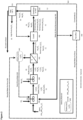
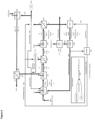
- Figures 1 to 3 illustrates process flowsheets for a first embodiment of the present invention, with "S” indicating solid phase and “L” indicating liquid phase.
- Cobaltous sulphate and cobaltous dithionate containing liquor are treated with sodium carbonate to form cobaltous carbonate solids and a sodium sulphate and sodium dithionate containing liquor.
- Lithium sulphate and lithium dithionate if present, will be partially precipitated as lithium carbonate solids along with the cobaltous carbonate solids.
- Cobaltous carbonate containing solids and lithium carbonate solids, if present, are removed from the carbonate treated liquor by filtration or centrifugation.
- Cobaltous carbonate containing solids and lithium carbonate solids are washed to remove soluble impurities and produce clean materials for reuse, such as for cathode materials for lithium ion batteries.
- Sodium sulphate and sodium dithionate along with remaining lithium sulphate and lithium dithionate, if present, containing filtrate or centrifugate are treated with a crystallizer to crystallize the majority of sodium sulphate and sodium dithionate crystals.
- Crystallization can be conducted by cooling to precipitate (crystallize) sodium sulphate decahydrate and sodium dithionate dihydrate or by multi-effect crystallization to precipitate (crystallize) anhydrous sodium sulphate and sodium dithionate.
- Sodium sulphate and sodium dithionate crystals are heated to a temperature sufficient to convert sodium dithionate crystals to sodium sulphate and recyclable sulphur dioxide and water for leaching of cobalt resource material.
- the temperatures for converting sodium dithionate to sodium sulphate and sulphur dioxide are described by Chow et al, ("New Developments in the Recovery of Manganese from Lower-grade Resources", Minerals & Metallurgical Processing, Vol. 29, No. 1, February 2012, pp 70-71 ).
- the crystallizer liquor having the majority of sodium sulphate and sodium dithionate removed and containing lithium sulphate and lithium dithionate, if lithium was present in the resource material, is recycled into the leach circuit for further recovery of lithium and cobalt that was not recovered previously and reuse of water in an energy efficient manner.
- a portion of the crystallizer liquor having the majority of sodium sulphate and sodium dithionate removed and containing lithium sulphate and lithium dithionate, if lithium was present in the resource material, can be passed through a nanofiltration membrane to create a water rich sulphate and dithionate free liquor output for recycling and a sodium sulphate and sodium dithionate concentrate along with lithium sulphate and lithium dithionate for recycling to the sodium sulphate and sodium dithionate crystallizer.
- the precipitated cobalt and lithium containing compounds can be used to manufacture cathode materials for lithium ion batteries. This is generally conducted by combining the desired ratio of cobalt and lithium containing compounds and performing a heat treatment procedure on the mixture.
- Jones et al (“LixCoO2 (0 ⁇ x ⁇ 1): A New Cathode Material for Batteries of High Energy Density", Solid State Ionics, 3 ⁇ 4, 1981, pp 171-174 ) describes a method to manufacture lithium cobalt oxide cathode materials by treating lithium and cobalt compounds.
- Lu et al (“United States Patent No. 8,685,565", April 2014 ) describes a method to manufacture lithium nickel manganese cobalt oxide by treating lithium, nickel, manganese and cobalt compounds.
- Kim et al describes a method to manufacture lithium nickel cobalt aluminum oxide by treating lithium, nickel, cobalt and aluminum compounds.
- Commercial battery manufacturers typically develop and use their own proprietary treatment methods to produce cathode materials for lithium ion batteries.
- a portion of the crystallizer liquor having the majority of sodium sulphate and sodium dithionate removed and containing lithium sulphate and lithium dithionate, if lithium was present in the resource material, can be passed through a nanofiltration membrane to create a water rich sulphate and dithionate free liquor output for recycling and a sodium sulphate and sodium dithionate concentrate along with lithium sulphate and lithium dithionate, if lithium was present in the resource material, for recycling to the sodium sulphate and sodium dithionate crystallizer.
- a portion of the crystallizer liquor, having the majority of sodium sulphate and sodium dithionate removed and containing lithium sulphate and lithium dithionate can be passed through a nanofiltration membrane to create a water rich sulphate and dithionate free liquor output for recycling and a sodium sulphate and sodium dithionate concentrate along with lithium sulphate and lithium dithionate for recycling to the sodium sulphate and sodium dithionate crystallizer.
- the precipitated cobalt and lithium containing compounds can be used to manufacture cathode materials for lithium ion batteries.
- the flowsheet is described as follows: In the leach reactor (12), spent lithium ion battery cathode material with the chemical formula LiCoO 2 is combined and mixed with SO 2 and H 2 SO 4 reagent and a solution containing water, and possibly lithium and / or cobalt that has not been recovered previously from the last stages of the flowsheet. Lithium and cobalt are dissolved in solution producing a leach solution containing cobalt sulphate, cobalt dithionate, lithium sulphate and lithium dithionate.
- the leach solution is transferred to a precipitation reactor (20) where sodium carbonate solution is added and mixed to precipitate cobalt and part of the dissolved lithium as cobalt and lithium carbonate solid and forming a solution containing mainly lithium sulphate, lithium dithionate, sodium sulphate and sodium dithionate.
- the slurry containing a mixture of solids and liquids is filtered (14) to separate lithium carbonate and cobalt carbonate which is rinsed to produce a collected product (16).
- the filtrate is transferred to a crystallizer (18) where part of the sodium sulphate and sodium dithionate is crystallized as solid crystals by multi-effect crystallization or cooling crystallization.
- the solid sodium sulphate and sodium dithionate crystals are collected from solution with a centrifuge or filter (22). Heating of the sodium sulphate and sodium dithionate crystals to approximately 120 °C (24) decomposes the sodium dithionate to sodium sulphate by-product and SO 2 which can be recycled to the leach.
- the mother solution contains the remaining lithium sulphate, lithium dithionate, sodium sulphate, sodium dithionate and water is recycled (26) back to the leach to minimize water consumption and maximize lithium recovery of the overall flowsheet.
- a portion of the mother solution can be treated by nanofiltration (28) to produce clean water (30) for rinsing products and reuse of the spent rinse water (32) back to the leach.
- the concentrate from nanofiltration (34) is recycled back to the crystallizer to maximize sodium sulphate recovery.
- the mixed lithium carbonate and cobalt carbonate collected product (16) is heat treated (36) to manufacture new cathode compounds for use in lithium ion batteries. If required, additional lithium carbonate and or cobalt carbonate may be added to the collected product to achieve the desired ratio of lithium and cobalt prior to heat treatment.
- spent lithium nickel manganese cobalt oxide cathode materials for example with the chemical formula LiNi 0.33 Mn 0.33 Co 0.33 O 2 is combined and mixed with SO 2 and H 2 SO 4 reagent and a solution containing water, and possibly lithium and / or nickel and / or manganese and / or cobalt that has not been recovered previously from the last stages of the flowsheet.
- Lithium, nickel, manganese and cobalt are dissolved in solution producing a leach solution containing a nickel manganese cobalt sulphate, nickel manganese cobalt dithionate, lithium sulphate and lithium dithionate.
- the leach solution is transferred to a precipitation reactor (48) where sodium carbonate is added and mixed to precipitate nickel, manganese and cobalt and part of the dissolved lithium as nickel, manganese, cobalt and lithium carbonate solid and forming a solution containing mainly lithium sulphate, lithium dithionate, sodium sulphate and sodium dithionate.
- the slurry containing a mixture of solids and liquids is filtered (42) to separate lithium carbonate and nickel manganese cobalt carbonate which is rinsed to produce a collected product (44).
- the filtrate is transferred to a crystallizer (46) where part of the sodium sulphate and sodium dithionate is crystallized as solid crystals by multi-effect crystallization or cooling crystallization.
- the solid sodium sulphate and sodium dithionate crystals are collected from solution with a centrifuge or filter (50). Heating of the sodium sulphate and sodium dithionate crystals to approximately 120 °C (52) decomposes the sodium dithionate to sodium sulphate by-product and SO 2 which can be recycled to the leach.
- the mother solution contains the remaining lithium sulphate, lithium dithionate, sodium sulphate, sodium dithionate and water is recycled (54) back to the leach to minimize water consumption and maximize lithium recovery of the overall flowsheet.
- a portion of the mother solution can be treated by nanofiltration (56) to produce clean water (58) for rinsing products and reuse of the spent rinse water (60) back to the leach.
- the concentrate from nanofiltration (62) is recycled back to the crystallizer to maximize sodium sulphate recovery.
- the mixed lithium carbonate and nickel manganese cobalt carbonate collected product (44) is heat treated (64) to manufacture new cathode compounds for use in lithium ion batteries. If required, additional lithium, nickel, manganese and or cobalt compounds may be added to the collected product to achieve the desired ratio of lithium, nickel, manganese and cobalt prior to heat treatment.
- spent lithium nickel cobalt aluminum oxide cathode materials for example with the chemical formula LiNi 0.8 Co 0.15 Al 0.05 O 2 is combined and mixed with SO 2 and H 2 SO 4 reagent and a solution containing water, and possibly lithium and / or nickel and / or cobalt and / or aluminum that has not been recovered previously from the last stages of the flowsheet.
- Lithium, nickel, cobalt and aluminum are dissolved in solution producing a leach solution containing a nickel cobalt aluminum sulphate, nickel cobalt aluminum dithionate, lithium sulphate and lithium dithionate.
- the leach solution is transferred to a precipitation reactor (78) where sodium carbonate is added and mixed to precipitate nickel, cobalt and aluminum and part of the dissolved lithium as nickel, cobalt, aluminum and lithium carbonate solid and forming a solution containing mainly lithium sulphate, lithium dithionate, sodium sulphate and sodium dithionate.
- the slurry containing a mixture of solids and liquids is filtered (72) to separate lithium carbonate and nickel cobalt aluminum carbonate which is rinsed to produce a collected product (74).
- the filtrate is transferred to a crystallizer (76) where part of the sodium sulphate and sodium dithionate is crystallized as solid crystals by multi-effect crystallization or cooling crystallization.
- the solid sodium sulphate and sodium dithionate crystals are collected from solution with a centrifuge or filter (80). Heating of the sodium sulphate and sodium dithionate crystals to approximately 120 °C (82) decomposes the sodium dithionate to sodium sulphate by-product and SO 2 which can be recycled to the leach.
- the mother solution contains the remaining lithium sulphate, lithium dithionate, sodium sulphate, sodium dithionate and water is recycled (84) back to the leach to minimize water consumption and maximize lithium recovery of the overall flowsheet.
- a portion of the mother solution can be treated by nanofiltration (86) to produce clean water (88) for rinsing products and reuse of the spent rinse water (90) back to the leach.
- the concentrate from nanofiltration (92) is recycled back to the crystallizer to maximize sodium sulphate recovery.
- the mixed lithium carbonate and nickel cobalt aluminum carbonate collected product (74) is heat treated (94) to manufacture new cathode compounds for use in lithium ion batteries. If required, additional lithium, nickel, cobalt and or aluminum compounds may be added to the collected product to achieve the desired ratio of lithium, nickel, cobalt and aluminum prior to heat treatment.
- spent lithium ion battery cathode materials with the chemical formula LiCoO 2 is combined and mixed with SO 2 and H 2 SO 4 reagent and a solution containing water, and possibly lithium and / or cobalt that has not been recovered previously from the last stages of the flowsheet.
- Lithium and cobalt are dissolved in solution producing a leach solution containing cobalt sulphate, cobalt dithionate, lithium sulphate and lithium dithionate.
- the leach solution is transferred to a precipitation reactor (108) where sodium hydroxide is added and mixed to selectively precipitate cobalt as cobalt hydroxide and forming a solution containing mainly lithium sulphate, lithium dithionate, sodium sulphate and sodium dithionate.
- the slurry containing a mixture of solids and liquids is filtered (102) to separate the cobalt hydroxide which is rinsed to produce a collected product (104).
- the filtered solution is transferred to a second precipitation reactor (106) where sodium carbonate is added and mixed to precipitate part of the dissolved lithium as lithium carbonate solid and forming a solution containing mainly lithium sulphate, lithium dithionate, sodium sulphate and sodium dithionate.
- the slurry containing a mixture of solids and liquids is filtered (118) to separate lithium carbonate which is rinsed to produce a collected product (120).
- the filtrate is transferred to a crystallizer (114) where part of the sodium sulphate and sodium dithionate is crystallized as solid crystals by multi-effect crystallization or cooling crystallization.
- the solid sodium sulphate and sodium dithionate crystals are collected from solution with a centrifuge or filter (116). Heating of the sodium sulphate and sodium dithionate crystals to approximately 120 °C (110) decomposes the sodium dithionate to sodium sulphate by-product and SO 2 which can be recycled to the leach.
- the mother solution contains the remaining lithium sulphate, lithium dithionate, sodium sulphate, sodium dithionate and water is recycled (112) back to the leach to minimize water consumption and maximize lithium recovery of the overall flowsheet.
- a portion of the mother solution can be treated by nanofiltration (122) to produce clean water (124) for rinsing products and reuse of the spent rinse water (126, 128) back to the leach.
- the concentrate from nanofiltration (130) is recycled back to the crystallizer to maximize sodium sulphate recovery.
- the lithium carbonate (120) and cobalt hydroxide (104) collected products are mixed to the desired ratio of lithium and cobalt and heat treated (132) to manufacture new cathode compounds for use in lithium ion batteries. If required, additional lithium and or cobalt compounds may be added to the collected product to achieve the desired ratio of lithium and cobalt prior to heat treatment.
- spent lithium nickel manganese cobalt oxide cathode materials for example with the chemical formula LiNi 0.33 Mn 0.33 Co 0.33 O 2 is combined and mixed with SO 2 and H 2 SO 4 reagent and a solution containing water, and possibly lithium and / or nickel and / or manganese and / or cobalt that has not been recovered previously from the last stages of the flowsheet.
- Lithium, nickel, manganese and cobalt are dissolved in solution producing a leach solution containing nickel manganese cobalt sulphate, nickel manganese cobalt dithionate, lithium sulphate and lithium dithionate.
- the leach solution is transferred to a precipitation reactor (148) where sodium hydroxide is added and mixed to selectively precipitate nickel, manganese and cobalt as nickel manganese cobalt hydroxide and forming a solution containing mainly lithium sulphate, lithium dithionate, sodium sulphate and sodium dithionate.
- the slurry containing a mixture of solids and liquids is filtered (142) to separate the nickel manganese cobalt hydroxide which is rinsed to produce a collected product (144).
- the filtered solution is transferred to a second precipitation reactor (146) where sodium carbonate is added and mixed to precipitate part of the dissolved lithium as lithium carbonate solid and forming a solution containing mainly lithium sulphate, lithium dithionate, sodium sulphate and sodium dithionate.
- the slurry containing a mixture of solids and liquids is filtered (158) to separate the lithium carbonate which is rinsed to produce a collected product (160).
- the filtrate is transferred to a crystallizer (154) where part of the sodium sulphate and sodium dithionate is crystallized as solid crystals by multi-effect crystallization or cooling crystallization.
- the solid sodium sulphate and sodium dithionate crystals are collected from solution with a centrifuge or filter (156). Heating of the sodium sulphate and sodium dithionate crystals to approximately 120 °C (150) decomposes the sodium dithionate to sodium sulphate by-product and SO 2 which can be recycled to the leach.
- the mother solution contains the remaining lithium sulphate, lithium dithionate, sodium sulphate, sodium dithionate and water is recycled (152) back to the leach to minimize water consumption and maximize lithium recovery of the overall flowsheet.
- a portion of the mother solution can be treated by nanofiltration (162) to produce clean water (164) for rinsing products and reuse of the spent rinse water (166, 168) back to the leach.
- the concentrate from nanofiltration (170) is recycled back to the crystallizer to maximize sodium sulphate recovery.
- the lithium carbonate (160) and nickel manganese cobalt hydroxide (144) collected products are mixed to the desired ratio of lithium, nickel, manganese and cobalt and heat treated (172) to manufacture new cathode compounds for use in lithium ion batteries. If required, additional lithium, nickel, manganese and or cobalt compounds may be added to the collected product to achieve the desired ratio of lithium, nickel, manganese and cobalt prior to heat treatment.
- spent lithium nickel cobalt aluminum oxide cathode materials for example with the chemical formula LiNi 0.8 Co 0.15 Al 0.05 O 2 is combined and mixed with SO 2 and H 2 SO 4 reagent and a solution containing water, and possibly lithium and / or nickel and / or cobalt and / or aluminum that has not been recovered previously from the last stages of the flowsheet.
- Lithium, nickel, cobalt and aluminum are dissolved in solution producing a leach solution containing nickel cobalt aluminum sulphate, nickel cobalt aluminum dithionate, lithium sulphate and lithium dithionate.
- the leach solution is transferred to a precipitation reactor (188) where sodium hydroxide is added and mixed to selectively precipitate nickel, cobalt and aluminum as nickel cobalt aluminum hydroxide and forming a solution containing mainly lithium sulphate, lithium dithionate, sodium sulphate and sodium dithionate.
- the slurry containing a mixture of solids and liquids is filtered (182) to separate the nickel cobalt aluminum hydroxide which is rinsed to produce a collected product (184).
- the filtered solution is transferred to a second precipitation reactor (186) where sodium carbonate is added and mixed to precipitate part of the dissolved lithium as lithium carbonate solid and forming a solution containing mainly lithium sulphate, lithium dithionate, sodium sulphate and sodium dithionate.
- the slurry containing a mixture of solids and liquids is filtered (198) to separate the lithium carbonate which is rinsed to produce a collected product (200).
- the filtrate is transferred to a crystallizer (194) where part of the sodium sulphate and sodium dithionate is crystallized as solid crystals by multi-effect crystallization or cooling crystallization.
- the solid sodium sulphate and sodium dithionate crystals are collected from solution with a centrifuge or filter (196). Heating of the sodium sulphate and sodium dithionate crystals to approximately 120 °C (190) decomposes the sodium dithionate to sodium sulphate by-product and SO 2 which can be recycled to the leach.
- the mother solution contains the remaining lithium sulphate, lithium dithionate, sodium sulphate, sodium dithionate and water is recycled (192) back to the leach to minimize water consumption and maximize lithium recovery of the overall flowsheet.
- a portion of the mother solution can be treated by nanofiltration (202) to produce clean water (204) for rinsing products and reuse of the spent rinse water (206, 208) back to the leach.
- the concentrate from nanofiltration (210) is recycled back to the crystallizer to maximize sodium sulphate recovery.
- the lithium carbonate (200) and nickel cobalt aluminum hydroxide (184) collected products are mixed to the desired ratio of lithium, nickel, cobalt and aluminum and heat treated (212) to manufacture new cathode compounds for use in lithium ion batteries. If required, additional lithium, nickel, cobalt and or aluminum compounds may be added to the collected product to achieve the desired ratio of lithium, nickel, cobalt and aluminum prior to heat treatment.
- spent lithium ion battery cathode material with the chemical formula LiCoO 2 is combined and mixed with SO 2 and H 2 SO 4 reagent and a solution containing water, and possibly lithium and / or cobalt that has not been recovered previously from the last stages of the flowsheet.
- Lithium and cobalt are dissolved in solution producing a leach solution containing cobalt sulphate, cobalt dithionate, lithium sulphate and lithium dithionate.
- the leach solution is transferred to a precipitation reactor (228) where lithium hydroxide is added and mixed to selectively precipitate cobalt as cobalt hydroxide and forming a solution containing mainly lithium sulphate and lithium dithionate.
- the slurry containing a mixture of solids and liquids is filtered (222) to separate the cobalt hydroxide which is rinsed to produce a collected product (224).
- the filtered solution is transferred to a second precipitation reactor (226) where sodium carbonate is added and mixed to precipitate part of the dissolved lithium as lithium carbonate solid and forming a solution containing mainly lithium sulphate, lithium dithionate, sodium sulphate and sodium dithionate.
- the slurry containing a mixture of solids and liquids is filtered (238) to separate the lithium carbonate which is rinsed (240). A portion of the lithium carbonate will be collected as a product (242). The other portion of the lithium carbonate will be further mixed with calcium hydroxide (244) to produce a slurry containing dissolved lithium hydroxide and solid calcium carbonate. The slurry will be filtered (246) to separate calcium carbonate solid and lithium hydroxide solution to be re-used to precipitate cobalt compounds (228).
- the filtrate from the second filter (238) is transferred to a crystallizer (234) where part of the sodium sulphate and sodium dithionate is crystallized as solid crystals by multi-effect crystallization or cooling crystallization.
- the solid sodium sulphate and sodium dithionate crystals are collected from solution with a centrifuge or filter (236). Heating of the sodium sulphate and sodium dithionate crystals to approximately 120 °C (230) decomposes the sodium dithionate to sodium sulphate by-product and SO 2 which can be recycled to the leach.
- the mother solution contains the remaining lithium sulphate, lithium dithionate, sodium sulphate, sodium dithionate and water is recycled (232) back to the leach to minimize water consumption and maximize lithium recovery of the overall flowsheet.
- a portion of the mother solution can be treated by nanofiltration (248) to produce clean water (250) for rinsing products and reuse of the spent rinse water (252, 254) back to the leach.
- the concentrate from nanofiltration (256) is recycled back to the crystallizer to maximize sodium sulphate recovery.
- the lithium carbonate (242) and cobalt hydroxide (224) collected products are mixed to the desired ratio of lithium and cobalt and heat treated (258) to manufacture new cathode compounds for use in lithium ion batteries. If required, additional lithium and or cobalt compounds may be added to the collected product to achieve the desired ratio of lithium and cobalt prior to heat treatment.
- spent lithium nickel manganese cobalt oxide cathode material for example with the chemical formula LiNi 0.33 Mn 0.33 Co 0.33 O 2 is combined and mixed with SO 2 and H 2 SO 4 reagent and a solution containing water, and possibly lithium and / or nickel and / or manganese and / or cobalt that has not been recovered previously from the last stages of the flowsheet.
- Lithium, nickel, manganese and cobalt are dissolved in solution producing a leach solution containing nickel manganese cobalt sulphate, nickel manganese cobalt dithionate, lithium sulphate and lithium dithionate.
- the leach solution is transferred to a precipitation reactor (278) where lithium hydroxide is added and mixed to selectively precipitate nickel, manganese and cobalt as nickel manganese cobalt hydroxide and forming a solution containing mainly lithium sulphate and lithium dithionate.
- the slurry containing a mixture of solids and liquids is filtered (272) to separate the nickel manganese cobalt hydroxide which is rinsed to produce a collected product (274).
- the filtered solution is transferred to a second precipitation reactor (276) where sodium carbonate is added and mixed to precipitate part of the dissolved lithium as lithium carbonate solid and forming a solution containing mainly lithium sulphate, lithium dithionate, sodium sulphate and sodium dithionate.
- the slurry containing a mixture of solids and liquids is filtered (288) to separate the lithium carbonate which is rinsed (290). A portion of the lithium carbonate will be collected as a product (292). The other portion of the lithium carbonate will be further mixed with calcium hydroxide (294) to produce a slurry containing dissolved lithium hydroxide and solid calcium carbonate. The slurry will be filtered (296) to separate calcium carbonate solid and lithium hydroxide solution to be re-used to precipitate cobalt compounds (278).
- the filtrate from the second filter (288) is transferred to a crystallizer (284) where part of the sodium sulphate and sodium dithionate is crystallized as solid crystals by multi-effect crystallization or cooling crystallization.
- the solid sodium sulphate and sodium dithionate crystals are collected from solution with a centrifuge or filter (286). Heating of the sodium sulphate and sodium dithionate crystals to approximately 120 °C (280) decomposes the sodium dithionate to sodium sulphate by-product and SO 2 which can be recycled to the leach.
- the mother solution contains the remaining lithium sulphate, lithium dithionate, sodium sulphate, sodium dithionate and water is recycled (282) back to the leach to minimize water consumption and maximize lithium recovery of the overall flowsheet.
- a portion of the mother solution can be treated by nanofiltration (298) to produce clean water (300) for rinsing products and reuse of the spent rinse water (302, 304) back to the leach.
- the concentrate from nanofiltration (306) is recycled back to the crystallizer to maximize sodium sulphate recovery.
- the lithium carbonate (292) and nickel manganese cobalt hydroxide (274) collected products are mixed to the desired ratio of lithium, nickel, manganese and cobalt and heat treated (308) to manufacture new cathode compounds for use in lithium ion batteries. If required, additional lithium, nickel, manganese and or cobalt compounds may be added to the collected product to achieve the desired ratio of lithium, nickel, manganese and cobalt prior to heat treatment.
- spent lithium nickel cobalt aluminum oxide cathode material for example with the chemical formula LiNi 0.8 Co 0.15 Al 0.05 O 2 is combined and mixed with SO 2 and H 2 SO 4 reagent and a solution containing water, and possibly lithium and / or nickel and / or cobalt and / or aluminum that has not been recovered previously from the last stages of the flowsheet.
- Lithium, nickel, cobalt and aluminum are dissolved in solution producing a leach solution containing nickel cobalt aluminum sulphate, nickel cobalt aluminum dithionate, lithium sulphate and lithium dithionate.
- the leach solution is transferred to a precipitation reactor (328) where lithium hydroxide is added and mixed to selectively precipitate nickel, cobalt and aluminum as nickel cobalt aluminum hydroxide and forming a solution containing mainly lithium sulphate and lithium dithionate.
- the slurry containing a mixture of solids and liquids is filtered (322) to separate the nickel cobalt aluminum hydroxide which is rinsed to produce a collected product (324).
- the filtered solution is transferred to a second precipitation reactor (326) where sodium carbonate is added and mixed to precipitate part of the dissolved lithium as lithium carbonate solid and forming a solution containing mainly lithium sulphate, lithium dithionate, sodium sulphate and sodium dithionate.
- the slurry containing a mixture of solids and liquids is filtered (338) to separate the lithium carbonate which is rinsed (340). A portion of the lithium carbonate will be collected as a product (342). The other portion of the lithium carbonate will be further mixed with calcium hydroxide (344) to produce a slurry containing dissolved lithium hydroxide and solid calcium carbonate. The slurry will be filtered (346) to separate calcium carbonate solid and lithium hydroxide solution to be re-used to precipitate nickel, cobalt and aluminum compounds (328).
- the filtrate from the second filter (338) is transferred to a crystallizer (334) where part of the sodium sulphate and sodium dithionate is crystallized as solid crystals by multi-effect crystallization or cooling crystallization.
- the solid sodium sulphate and sodium dithionate crystals are collected from solution with a centrifuge or filter (336). Heating of the sodium sulphate and sodium dithionate crystals to approximately 120 °C (330) decomposes the sodium dithionate to sodium sulphate by-product and SO 2 which can be recycled to the leach.
- the mother solution contains the remaining lithium sulphate, lithium dithionate, sodium sulphate, sodium dithionate and water is recycled (332) back to the leach to minimize water consumption and maximize lithium recovery of the overall flowsheet.
- a portion of the mother solution can be treated by nanofiltration (348) to produce clean water (350) for rinsing products and reuse of the spent rinse water (352, 354) back to the leach.
- the concentrate from nanofiltration (356) is recycled back to the crystallizer to maximize sodium sulphate recovery.
- the lithium carbonate (342) and nickel cobalt aluminum hydroxide (324) collected products are mixed to the desired ratio of lithium, nickel, cobalt and aluminum and heat treated (358) to manufacture new cathode compounds for use in lithium ion batteries. If required, additional lithium, nickel, cobalt and or aluminum compounds may be added to the collected product to achieve the desired ratio of lithium, nickel, cobalt and aluminum prior to heat treatment.
- Lithium cobalt oxide consisting of the chemical formula LiCoO 2 (Alfa Aesar) was used for this test work. Leaching was conducted by mixing 25 grams of LiCoO 2 with 250 mL of 2 molar sulphuric acid. Sulphur dioxide gas was continuously sparged into the leach solution to maintain an oxidation-reduction potential (ORP) of ⁇ 400 mV.
- ORP oxidation-reduction potential
- the leach vessel consisted of a three-port round bottom flask, and stirring was conducted with a magnetic stir bar. One port of the flask was used to monitor ORP, a condenser was added to another port to condense vapours back into the vessel and the other port was used to measure temperature. The experiment was conducted without temperature control.
- the leaching was determined to be exothermic as the temperature rose to as high as 71° C after 5 minutes of leaching and further cooling down to 21 C after 120 minutes of experimentation.
- ICP Inductively coupled plasma spectroscopy
- Leaching was conducted by mixing 12.5 grams of LiCoO 2 with 250 mL of 2 molar sulphuric acid and 0.67 molar sodium metabisulphite.
- the leach vessel consisted of a three-port round bottom flask, and stirring was conducted with a magnetic stir bar. One port of the flask was used to monitor ORP, a condenser was added to another port to condense vapours back into the vessel and the other port was used to measure temperature. The experiment was conducted without temperature control.
- the leaching was determined to be exothermic as the temperature rose to as high as 60°C after 5 minutes of leaching and further cooling down to 25°C after 120 minutes of experimentation. ICP analysis of the solutions showed that 100% of the lithium and cobalt were extracted after 5 minutes of leaching.
- a precipitation test was conducted by adding 31.83 grams of anhydrous sodium carbonate (which is calculated to be 1.2 times the stoichiometric amount of sodium carbonate required to precipitate all of the lithium and cobalt as carbonate). Afterwards, 10 molar sodium hydroxide was added to raise the pH to 11.14. The test was conducted in a 1000 mL beaker with an overhead stirrer. The slurry was filtered; 35.33 grams of residue and 118 mL of filtrate were collected. Evaporation was noticed. The residue was washed with saturated lithium carbonate solution, re-filtered and dried. Analysis of the residue indicated that 100% of the cobalt and 82.11% of the lithium was precipitated as a mixed cobalt and lithium carbonate.
- a precipitation test was conducted by slowly adding 10 molar sodium hydroxide to raise the pH to 10.61 to precipitate cobalt. The test was conducted in a 1000 mL beaker with an overhead stirrer. The slurry was filtered; 46.48 grams of residue and 390 mL of filtrate was collected. The residue was washed with deionized water, re-filtered and dried. Analysis of the residue indicated that 100% of the cobalt was selectively precipitated as cobalt hydroxide from the solution containing lithium and cobalt. The final residue contained a trace amount of lithium (approximately 0.0292%) which could likely be further purified by additional rinsing.
- a 385 mL solution remaining from the filtrate after Test #PTC3-2 above was used for this test.
- a precipitation test was conducted by adding 25 grams of sodium carbonate monohydrate (calculated to be 1.2 times the stoichiometric amount required to precipitate all of the lithium as lithium carbonate to the solution). The test was conducted in a 1000 mL beaker with an overhead mixer. The slurry was filtered; 7.82 grams of residue and 318 mL of filtrate were collected. The residue was washed with saturated lithium carbonate solution, re-filtered and dried. Analysis of the residue indicates that 53.9% of the lithium was precipitated as lithium carbonate.
- Lithium cobalt oxide consisting of the chemical formula LiCoO 2 (Alfa Aesar) was used for this test work.
- a number of leach experiments were conducted by mixing a range of 36 to 50 grams of LiCoO 2 with 250 mL of sulphuric acid ranging from 0.8 molar to 1.5 molar concentration. Sulphur dioxide gas was continuously sparged into the leach solution.
- the range of final oxidation-reduction potential (ORP) tested was between 102 mV to 401 mV.
- the leach vessel consisted of a three-port round bottom flask, and stirring was conducted with a magnetic stir bar.
- Lithium cobalt oxide consisting of the chemical formula LiCoO 2 (Alfa Aesar) was used for this test work. Lithium cobalt oxide was processed in a locked cycle manner to simulate the major unit operations in the flowsheet described in embodiment two.
- the locked cycle testing demonstrates the removal of sulphate and dithionate from the circuit which enables un-recovered lithium and water at the end of the flowsheet from the previous cycle to be recirculated to the front end of the flowsheet of the subsequent cycle to be recovered.
- the leaching condition consists of pH control to approximately 1.5; 1.2M H 2 SO 4 in the leaching head; 8% pulp density; and SO 2 sparing with a target ORP of 350 mV. For each leaching stage within 4 cycles, all the head solids visually disappeared after 2 hours of SO 2 reductive leaching.
- Leachate from previous leaching stage is adjusted to pH 11 by 10M NaOH to precipitate the dissolved cobalt as Co(OH) 2 . 2 re-pulp wash steps and filtration was then followed. The wet solids were dried at 60°C.
- Example 20 An Example of a nanofiltration step is described in Example 20.
- ORP oxidation-reduction potential
- the leach vessel consisted of a three-port round bottom flask, and stirring was conducted with a magnetic stir bar.
- Nickel, Manganese and Cobalt as (Ni,Mn,Co)(OH) 2 with NaOH (Test #NMC-2-PTC 11)
- a precipitation test was conducted by slowly adding 10 molar sodium hydroxide to raise the pH to 10.70 to precipitate nickel, manganese and cobalt. The test was conducted in a 500 mL beaker with a magnetic stirrer. The slurry was filtered. 18.70 grams of dry residue and 140 mL of filtrate was collected. The residue was washed with deionized water, re-filtered and dried.
- a precipitation test was conducted by slowly adding 3.34 molar lithium hydroxide to raise the pH to 11.07 to precipitate nickel, manganese and cobalt. The test was conducted in a 500 mL beaker with a magnetic stirrer. The slurry was filtered; 18.24 grams of residue and 206 mL of filtrate was collected. The residue was washed with deionized water, re-filtered and dried.
- Lithium nickel manganese cobalt oxide consisting of the chemical formula
- LiNi 0.33 Mn 0.33 Co 0.33 O 2 (Sigma Aldrich) was used for this test work.
- Lithium nickel manganese cobalt oxide was processed in a locked cycle manner to simulate the major unit operations in the flowsheet described in embodiment three.
- the locked cycle testing demonstrates the removal of sulphate and dithionate from the circuit which enables un-recovered lithium and water at the end of the flowsheet from the previous cycle to be recirculated to the front end of the flowsheet of the subsequent cycle to be recovered.
- the leaching condition consists treating 100 g of sample with pH control to approximately 1.5; 1.5M H 2 SO 4 in the leaching head; 10% pulp density; and SO 2 sparing with a target ORP of 550 mV. For each leaching stage within 4 cycles, the head solids visually disappeared after 2 hours of SO 2 reductive leaching.
- Leachate from previous leaching stage is adjusted to pH 11 by saturated LiOH to precipitate the dissolved nickel, manganese and cobalt as (Ni,Mn,Co)(OH) 2 .
- Example 20 An Example of a nanofiltration step is described in Example 20.
- ORP oxidation-reduction potential
- the leach vessel consisted of a four-port glass reactor, and stirring was conducted with an overhead mixer.
- One port of the flask was used to monitor ORP, a condenser was added to another port to condense vapours back into the vessel, the other port was used to measure temperature and the final port for the overhead mixer.
- the experiment was conducted without temperature control.
- the leaching was determined to be exothermic as the temperature rose to as high as 88° C after 30 minutes of leaching and further cooling down to 50° C after 120 minutes of experimentation.
- Inductively coupled plasma spectroscopy (ICP) analysis of the solutions showed that 100% of the lithium, nickel, cobalt and aluminum were extracted after 120 minutes of leaching.
- Ion Chromatography analysis showed that the final leach solution contained 11.3 g/L dithionate.
- a precipitation test was conducted by slowly adding 10 molar sodium hydroxide to raise the pH to 11.09 to precipitate nickel, cobalt and aluminum. The test was conducted in a 500 mL beaker with a magnetic stirrer. The slurry was filtered. 27.15 grams of dry residue and 135 mL of filtrate was collected. The residue was washed with deionized water, re-filtered and dried.
- a precipitation test was conducted by slowly adding 4.44 molar lithium hydroxide to raise the pH to 11.03 to precipitate nickel, cobalt and aluminum. The test was conducted in a 500 mL beaker with a magnetic stirrer. The slurry was filtered; 18.55 grams of residue and 202 mL of filtrate was collected. The residue was washed with deionized water, re-filtered and dried.
- Lithium nickel cobalt aluminum oxide consisting of the chemical formula LiNi 0.8 Co 0.15 Al 0.05 O 2 (MTI Corp) was used for this test work. Lithium nickel cobalt aluminum oxide was processed in a locked cycle manner to simulate the major unit operations in the flowsheet described in embodiment three.
- the locked cycle testing demonstrates the removal of sulphate and dithionate from the circuit which enables un-recovered lithium and water at the end of the flowsheet from the previous cycle to be recirculated to the front end of the flowsheet of the subsequent cycle to be recovered.
- Leaching consisted of treating 400 g of sample with pH control to approximately 1.5; 1.2M H 2 SO 4 in the leaching head; 10% pulp density; and SO 2 sparing with a target ORP of 550 mV. For each leaching stage within 7 cycles, the head solids visually disappeared after 2 hours of SO 2 reductive leaching.
- Leachate from previous leaching stage was adjusted to pH 10.5 by saturated LiOH to precipitate the dissolved nickel, cobalt and aluminum as (Ni,Co,Al)(OH) 2 .
- Example 20 An Example of a nanofiltration step is described in Example 20.
- a nanofiltration test was conducted by pumping a feed solution containing 32.23 g/L sulphate and 24.0 dithionate through a Dow Filmtec NF270-400 nanofiltration membrane.
- the feed flow rate was set at 5.65 L/min.
- the pressure at the inlet of the membrane was measured at 29.1 Bar.
- the pressure at the concentrate outlet was measured at 28.5 Bar.
- the permeate flowrate through the membrane was measured at 0.65 L/min.
- a sample of the permeate was collected and sulphate was measured as 2.30 g/L and dithionate as 2.84 g/L by ion chromatography.
- the concentrate flow rate was calculated as 5.0 L/min.
- the concentrate was calculated to contain 36.13 g/L sulphate and 26.80 g/L dithionate.
- the sulphate rejection was calculated to be 92.2% and the dithionate rejection was calculated to be 85.5%.
Landscapes
- Chemical & Material Sciences (AREA)
- Organic Chemistry (AREA)
- Inorganic Chemistry (AREA)
- Engineering & Computer Science (AREA)
- Materials Engineering (AREA)
- Geology (AREA)
- Life Sciences & Earth Sciences (AREA)
- Manufacturing & Machinery (AREA)
- Chemical Kinetics & Catalysis (AREA)
- Electrochemistry (AREA)
- General Chemical & Material Sciences (AREA)
- Inorganic Compounds Of Heavy Metals (AREA)
- Manufacture And Refinement Of Metals (AREA)
- Battery Electrode And Active Subsutance (AREA)
- Secondary Cells (AREA)
Description
- This application is a non-provisional application claiming the priority of provisional application No.
62/421,139, filed on November 11, 2016 - The present invention relates to the recovery of water and sulphate salts from sulphate and dithionate containing liquors such as those derived from hydrometallurgical processing of cobalt containing resource material such as cathode materials from lithium ion batteries.
- It is generally known that cobalt may be leached from higher valent cobalt containing resource material, such as cobalt (III) oxide, using a reducing agent such as sulphur dioxide in combination with sulphuric acid, to produce cobaltous sulphate and cobaltous dithionate. This is described in the following reactions:
Co2O3 + SO2 + H2SO4 = 2CoSO4 + H2O
Co2O3 + 2SO2 + H2SO4 = 2CoS2O6 + H2O
- Cobalt present in rechargeable lithium ion battery cathode material is in the trivalent state and is expected to be leached with sulphur dioxide and sulphuric acid. Lithium cobalt oxide, such as LiCoO2 is a common cathode material for high energy lithium ion batteries typically used in personal electronic devices is expected to leach according to the following reactions:
2LiCoO2 + SO2 + 2H2SO4 = Li2SO4 + 2CoSO4 + 2H2O
2LiCoO2 + 3SO2 + 2H2SO4 = Li2SO4 + 2CoS2O6 + 2H2O
2LiCoO2 + 4SO2 + 2H2SO4 = Li2S2O6 + 2CoS2O6 + 2H2O
- Experimental work conducted on leaching lithium cobalt oxide with sulphur dioxide and sulphuric acid confirmed that up to 100% extractions of lithium and cobalt were achieved and that dithionate was detected in all leach tests conducted.
- Lithium nickel manganese cobalt oxide, such as LiNi0.33Mn0.33Co0.33O2 is an emerging cathode material having both high energy and high power suitable for use in electric vehicles is expected to leach according to the following reactions:
2LiNi0.33Mn0.33Co0.33O2 + SO2 + 2H2SO4 = Li2SO4 + 2(Ni,Co,Mn)SO4 + 2H2O
2LiNi0.33Mn0.33Co0.33O2 + 3SO2 + 2H2SO4 = Li2SO4 + 2(Ni,Co,Mn)CoS2O6 + 2H2O
2LiNi0.33Mn0.33Co0.33O2 + 4SO2 + 2H2SO4 = Li2S2O6 + 2(Ni,Co,Mn)S2O6 + 2H2O
- (Ni,Co,Mn)SO4 and (Ni,Co,Mn)S2O6 represent a mixed metal sulphate and a mixed metal dithionate respectively.
- Experimental work conducted on leaching lithium nickel manganese cobalt oxide with sulphur dioxide and sulphuric acid confirmed that up to 100% extractions of lithium, nickel, manganese and cobalt were achieved and that dithionate was detected in all leach tests conducted.
- Lithium nickel cobalt aluminum oxide, such as LiNi0.8Co0.15Al0.05O3 is another emerging cathode material having both high energy and high power suitable for use in electric vehicles is expected to leach according to the following reactions:
2LiNi0.8Co0.15Al0.05O2 + SO2 + 2H2SO4 = Li2SO4 + 2(Ni,Co,Al)SO4 + 2H2O
2LiNi0.8Co0.15Al0.05O2 + 3SO2 + 2H2SO4 = Li2SO4 + 2(Ni,Co,Al)CoS2O6 + 2H2O
2LiNi0.8Co0.15Al0.05O2 + 4SO2 + 2H2SO4 = Li2S2O6 + 2(Ni,Co,Al)S2O6 + 2H2O
- (Ni,Co,Al)SO4 and (Ni,Co,Al)S2O6 represent a mixed metal sulphate and a mixed metal dithionate respectively.
- Experimental work conducted on leaching lithium nickel manganese cobalt oxide with sulphur dioxide and sulphuric acid confirmed that up to 100% extractions of lithium, nickel, cobalt and aluminum were achieved and that dithionate was detected in all leach tests conducted.
- There is no known prior art method of recovering valuable metals from spent lithium ion battery cathode materials containing cobalt that uses reductive leaching with sulphur dioxide while dealing with dithionates and recovery of water in an energy efficient manner. Although
US patent 8,460,631 describes the processing of manganese sulphate and manganese dithionate containing liquors, which also contain sodium sulphate and sodium dithionate, it is not obvious from that invention how sodium sulphate and sodium dithionate could be processed together with cobaltous sulphate and cobaltous dithionate in the presence or absence of lithium sulphate and lithium dithionate. Furthermore, it has been discovered that the process of dealing with dithionates and recovery of water and recirculating treated solutions back to the leach in a locked cycle manner significantly improves the recovery of lithium when present. - Accordingly one embodiment of the invention is a process of water removal and/or recycling from sodium sulphate and/or sodium dithionate containing liquors derived from processing cobalt resource material essentially free of lithium, comprising the steps of: a. precipitation of cobalt as cobaltous carbonate in whole or in part followed by its removal in whole or in part from the liquor for example by centrifugation or filtration; b. crystallization of sodium sulphate and sodium dithionate to separate the majority of sodium sulphate and sodium dithionate from solution; removal of sodium sulphate and sodium dithionate crystals; c. heating of sodium sulphate and sodium dithionate crystals to form anhydrous sodium sulphate, sulphur dioxide and water (steam); and d. separation of anhydrous sodium sulphate.
- Another embodiment of the invention is a process of water removal and/or recycling from sodium sulphate and/or sodium dithionate containing liquors derived from processing cobalt resource material containing lithium, comprising the steps of; a. precipitation of cobalt as cobaltous carbonate in whole or in part and lithium in whole or in part as lithium carbonate followed by their removal in whole or in part from the liquor for example by centrifugation or filtration; b. crystallization of sodium sulphate and sodium dithionate to separate the majority of sodium sulphate and sodium dithionate from solution; c. removal of sodium sulphate and sodium dithionate crystals; and e. separation of anhydrous sodium sulphate.
- A further embodiment of the invention is a process of water removal and/or recycling from sodium sulphate and/or sodium dithionate containing liquors derived from processing cobalt resource material essentially free of lithium, comprising the steps of: a. precipitation of cobalt as cobaltous hydroxide in whole or in part followed its removal in whole or in part from the liquor for example by centrifugation or filtration; b. crystallization of sodium sulphate and sodium dithionate to separate the majority of sodium sulphate and sodium dithionate from solution; c. removal of sodium sulphate and sodium dithionate crystals; d. heating of sodium sulphate and sodium dithionate crystals to form anhydrous sodium sulphate, sulphur dioxide and water (steam); and e. separation of anhydrous sodium sulphate.
- A still further embodiment of the invention is a process of water removal and/or recycling from sodium sulphate and/or sodium dithionate containing liquors derived from processing cobalt resource material containing lithium, comprising the steps of: a. precipitation of cobalt as cobaltous hydroxide in whole or in part followed by its removal in whole or in part from the liquor for example by centrifugation or filtration; b. precipitation of lithium as lithium carbonate in whole or in part from the cobaltous hydroxide stripped liquor of a. followed by its removal in whole or in part from the liquor for example by centrifugation; c. crystallization of sodium sulphate and sodium dithionate to separate the majority of sodium sulphate and sodium dithionate from solution; d. removal of sodium sulphate and sodium dithionate crystals; and e. separation of anhydrous sodium sulphate.
-
Figures 1 to 3 illustrates process flowsheets for a first embodiment of the present invention, with "S" indicating solid phase and "L" indicating liquid phase. -
Figure 1 illustrates a process flowsheet for a first embodiment to treat spent lithium cobalt oxide. -
Figure 2 illustrates a process flowsheet for a first embodiment to treat spent lithium nickel manganese cobalt oxide. -
Figure 3 illustrates a process flowsheet for a first embodiment to treat spent lithium nickel cobalt aluminum oxide. -
Figure 4 illustrates a process flowsheet for a second embodiment to treat spent lithium cobalt oxide. -
Figure 5 illustrates a process flowsheet for a second embodiment to treat spent lithium nickel manganese cobalt oxide. -
Figure 6 illustrates a process flowsheet for a second embodiment to treat spent lithium nickel cobalt aluminum oxide. -
Figure 7 illustrates a process flowsheet for a third embodiment to treat spent lithium cobalt oxide. -
Figure 8 illustrates a process flowsheet for a third embodiment to treat spent lithium nickel manganese cobalt oxide. -
Figure 9 illustrates a process flowsheet for a third embodiment to treat spent lithium nickel cobalt aluminum oxide. - In accordance with the present invention there is provided a process for the hydrometallurgical processing of cobaltous sulphate and cobaltous dithionate containing liquors derived from sulphurous acid and sulphuric acid leaching of cobalt (III) oxide containing resource material such as those recovered from the cathode materials of lithium ion batteries.
- For embodiment one, referring to
Figures 1-3 . - Cobaltous sulphate and cobaltous dithionate containing liquor are treated with sodium carbonate to form cobaltous carbonate solids and a sodium sulphate and sodium dithionate containing liquor.
- Lithium sulphate and lithium dithionate, if present, will be partially precipitated as lithium carbonate solids along with the cobaltous carbonate solids.
- Cobaltous carbonate containing solids and lithium carbonate solids, if present, are removed from the carbonate treated liquor by filtration or centrifugation.
- Cobaltous carbonate containing solids and lithium carbonate solids, if present, are washed to remove soluble impurities and produce clean materials for reuse, such as for cathode materials for lithium ion batteries.
- Sodium sulphate and sodium dithionate along with remaining lithium sulphate and lithium dithionate, if present, containing filtrate or centrifugate are treated with a crystallizer to crystallize the majority of sodium sulphate and sodium dithionate crystals.
- Crystallization can be conducted by cooling to precipitate (crystallize) sodium sulphate decahydrate and sodium dithionate dihydrate or by multi-effect crystallization to precipitate (crystallize) anhydrous sodium sulphate and sodium dithionate.
- Sodium sulphate and sodium dithionate crystals are heated to a temperature sufficient to convert sodium dithionate crystals to sodium sulphate and recyclable sulphur dioxide and water for leaching of cobalt resource material. The temperatures for converting sodium dithionate to sodium sulphate and sulphur dioxide are described by Chow et al, ("New Developments in the Recovery of Manganese from Lower-grade Resources", Minerals & Metallurgical Processing, Vol. 29, No. 1, February 2012, pp 70-71).
- The crystallizer liquor, having the majority of sodium sulphate and sodium dithionate removed and containing lithium sulphate and lithium dithionate, if lithium was present in the resource material, is recycled into the leach circuit for further recovery of lithium and cobalt that was not recovered previously and reuse of water in an energy efficient manner.
- Alternatively, a portion of the crystallizer liquor, having the majority of sodium sulphate and sodium dithionate removed and containing lithium sulphate and lithium dithionate, if lithium was present in the resource material, can be passed through a nanofiltration membrane to create a water rich sulphate and dithionate free liquor output for recycling and a sodium sulphate and sodium dithionate concentrate along with lithium sulphate and lithium dithionate for recycling to the sodium sulphate and sodium dithionate crystallizer.
- The precipitated cobalt and lithium containing compounds can be used to manufacture cathode materials for lithium ion batteries. This is generally conducted by combining the desired ratio of cobalt and lithium containing compounds and performing a heat treatment procedure on the mixture. Jones et al ("LixCoO2 (0<x≤1): A New Cathode Material for Batteries of High Energy Density", Solid State Ionics, ¾, 1981, pp 171-174) describes a method to manufacture lithium cobalt oxide cathode materials by treating lithium and cobalt compounds.
Lu et al ("United States Patent No. 8,685,565", April 2014 ) describes a method to manufacture lithium nickel manganese cobalt oxide by treating lithium, nickel, manganese and cobalt compounds. Kim et al ("Synthesis of High-Density Nickel Cobalt Aluminum Hydroxide by Continuous Coprecipitation Method", ACS Applied Materials & Interfaces, 4, 2012, pp 586-589) describes a method to manufacture lithium nickel cobalt aluminum oxide by treating lithium, nickel, cobalt and aluminum compounds. Commercial battery manufacturers typically develop and use their own proprietary treatment methods to produce cathode materials for lithium ion batteries. - The conversion of cobaltous sulphate and cobaltous dithionate to sodium sulphate and sodium dithionate provides for novel methods of dealing with dithionates, increasing the recovery of lithium and recycling water in an energy efficient manner.
- For embodiment two, referring to
Figures 4-6 - Cobaltous sulphate and cobaltous dithionate containing liquors are treated with sodium hydroxide to form cobaltous hydroxide solids and a sodium sulphate and sodium dithionate containing liquor;
- Cobaltous hydroxide containing solids are removed from the hydroxide treated liquor by filtration or centrifugation;
- Cobaltous hydroxide containing solids are washed to remove soluble impurities and produce clean materials for reuse, such as for cathode materials for lithium ion batteries;
- The addition of sodium carbonate to the remaining solution precipitates part of the lithium, if present, as lithium carbonate;
- Lithium carbonate solids are removed from the carbonate treated liquor by filtration or centrifugation;
- Lithium carbonate solids are washed to remove soluble impurities and produce clean materials for reuse, such as for cathode materials for lithium ion batteries;
- Sodium sulphate and sodium dithionate along with remaining lithium sulphate and lithium dithionate, if present, containing filtrate or centrifugate are treated with a crystallizer to crystallize the majority of sodium sulphate and sodium dithionate crystals;
- Crystallization can be conducted by cooling to precipitate (crystallize) sodium sulphate decahydrate and sodium dithionate dihydrate or by multi-effect crystallization to precipitate (crystallize) anhydrous sodium sulphate and sodium dithionate;
- Sodium sulphate and sodium dithionate crystals are heated to a temperature sufficient to convert sodium dithionate crystals to sodium sulphate and recyclable sulphur dioxide and water for leaching of cobalt resource material;
- The crystallizer liquor, having the majority of sodium sulphate and sodium dithionate removed and containing lithium sulphate and lithium dithionate, if lithium was present in the resource material, is recycled into the leach circuit for further recovery of lithium and cobalt that was not recovered previously and reuse of water in an energy efficient manner.
- Alternatively, a portion of the crystallizer liquor, having the majority of sodium sulphate and sodium dithionate removed and containing lithium sulphate and lithium dithionate, if lithium was present in the resource material, can be passed through a nanofiltration membrane to create a water rich sulphate and dithionate free liquor output for recycling and a sodium sulphate and sodium dithionate concentrate along with lithium sulphate and lithium dithionate, if lithium was present in the resource material, for recycling to the sodium sulphate and sodium dithionate crystallizer.
- For embodiment three, referring to
Figures 7-9 . - Cobaltous sulphate and cobaltous dithionate containing liquors are treated with lithium hydroxide to form cobaltous hydroxide solids and a lithium sulphate and lithium dithionate containing liquor;
- The lithium hydroxide can be produced by treating lithium carbonate recovered by previous operation of the flowsheet. Wietelmann et al ("Lithium and Lithium Compounds", Ullmann's Encyclopedia of Industrial Chemistry, Wiley-VCH Verlag GmbH & Co, 2013, pp 24) describes a method of producing lithium hydroxide by reacting lithium carbonate with calcium hydroxide;
- Cobaltous hydroxide containing solids are removed from the hydroxide treated liquor by filtration or centrifugation;
- Cobaltous hydroxide containing solids are washed to remove soluble impurities and produce clean materials for reuse, such as for cathode materials for lithium ion batteries;
- The addition of sodium carbonate to the remaining solution precipitates part of the lithium, if present, as lithium carbonate;
- Lithium carbonate solids are removed from the carbonate treated liquor by filtration or centrifugation;
- Lithium carbonate solids are washed to remove soluble impurities and produce clean materials for reuse, such as for cathode materials for lithium ion batteries;
- Sodium sulphate and sodium dithionate along with remaining lithium sulphate and lithium dithionate, if present, containing filtrate or centrifugate are treated with a crystallizer to crystallize the majority of sodium sulphate and sodium dithionate crystals;
- Crystallization can be conducted by cooling to precipitate (crystallize) sodium sulphate decahydrate and sodium dithionate dihydrate or by multi-effect crystallization to precipitate (crystallize) anhydrous sodium sulphate and sodium dithionate;
- Sodium sulphate and sodium dithionate crystals are heated to a temperature sufficient to convert sodium dithionate crystals to sodium sulphate and recyclable sulphur dioxide and water for leaching of cobalt resource material;
- The crystallizer liquor, having the majority of sodium sulphate and sodium dithionate removed and containing lithium sulphate and lithium dithionate, if lithium was present in the resource material, is recycled into the leach circuit for further recovery of lithium and cobalt not recovered previously and reuse of water in an energy efficient manner.
- Alternatively, a portion of the crystallizer liquor, having the majority of sodium sulphate and sodium dithionate removed and containing lithium sulphate and lithium dithionate can be passed through a nanofiltration membrane to create a water rich sulphate and dithionate free liquor output for recycling and a sodium sulphate and sodium dithionate concentrate along with lithium sulphate and lithium dithionate for recycling to the sodium sulphate and sodium dithionate crystallizer.
- The precipitated cobalt and lithium containing compounds can be used to manufacture cathode materials for lithium ion batteries.
- With respect to embodiment one for treatment of lithium cobalt oxide shown in
Figure 1 , the flowsheet is described as follows:
In the leach reactor (12), spent lithium ion battery cathode material with the chemical formula LiCoO2 is combined and mixed with SO2 and H2SO4 reagent and a solution containing water, and possibly lithium and / or cobalt that has not been recovered previously from the last stages of the flowsheet. Lithium and cobalt are dissolved in solution producing a leach solution containing cobalt sulphate, cobalt dithionate, lithium sulphate and lithium dithionate. - The leach solution is transferred to a precipitation reactor (20) where sodium carbonate solution is added and mixed to precipitate cobalt and part of the dissolved lithium as cobalt and lithium carbonate solid and forming a solution containing mainly lithium sulphate, lithium dithionate, sodium sulphate and sodium dithionate.
- The precipitation reactions occur as follows:
CoSO4 + Na2CO3 = CoCO3 + Na2SO4 Near Complete Conversion
CoS2O6 + Na2CO3 = CoCO3 + Na2S2O6 Near Complete Conversion
Li2SO4 + Na2CO3 = Li2CO3 + Na2SO4 Partial Conversion
Li2S2O6 + Na2CO3 = Li2CO3 + Na2S2O6 Partial Conversion
- The slurry containing a mixture of solids and liquids is filtered (14) to separate lithium carbonate and cobalt carbonate which is rinsed to produce a collected product (16).
- The filtrate is transferred to a crystallizer (18) where part of the sodium sulphate and sodium dithionate is crystallized as solid crystals by multi-effect crystallization or cooling crystallization. The solid sodium sulphate and sodium dithionate crystals are collected from solution with a centrifuge or filter (22). Heating of the sodium sulphate and sodium dithionate crystals to approximately 120 °C (24) decomposes the sodium dithionate to sodium sulphate by-product and SO2 which can be recycled to the leach. The mother solution contains the remaining lithium sulphate, lithium dithionate, sodium sulphate, sodium dithionate and water is recycled (26) back to the leach to minimize water consumption and maximize lithium recovery of the overall flowsheet. Alternatively, a portion of the mother solution can be treated by nanofiltration (28) to produce clean water (30) for rinsing products and reuse of the spent rinse water (32) back to the leach. The concentrate from nanofiltration (34) is recycled back to the crystallizer to maximize sodium sulphate recovery. The mixed lithium carbonate and cobalt carbonate collected product (16) is heat treated (36) to manufacture new cathode compounds for use in lithium ion batteries. If required, additional lithium carbonate and or cobalt carbonate may be added to the collected product to achieve the desired ratio of lithium and cobalt prior to heat treatment.
- With respect to embodiment one for treatment of lithium nickel manganese cobalt oxide shown in
Figure 2 , the flowsheet is described as follows: - In the leach reactor (40), spent lithium nickel manganese cobalt oxide cathode materials for example with the chemical formula LiNi0.33Mn0.33Co0.33O2 is combined and mixed with SO2 and H2SO4 reagent and a solution containing water, and possibly lithium and / or nickel and / or manganese and / or cobalt that has not been recovered previously from the last stages of the flowsheet. Lithium, nickel, manganese and cobalt are dissolved in solution producing a leach solution containing a nickel manganese cobalt sulphate, nickel manganese cobalt dithionate, lithium sulphate and lithium dithionate.
- The leach solution is transferred to a precipitation reactor (48) where sodium carbonate is added and mixed to precipitate nickel, manganese and cobalt and part of the dissolved lithium as nickel, manganese, cobalt and lithium carbonate solid and forming a solution containing mainly lithium sulphate, lithium dithionate, sodium sulphate and sodium dithionate.
- The precipitation reactions occur as follows:
(Ni,Mn,Co)SO4 + Na2CO3 = (Ni,Mn,Co)CO3 + Na2SO4 Near Complete Conversion
(Ni,Mn,Co)S2O6 + Na2CO3 = (Ni,Mn,Co)CO3 + Na2S2O6 Near Complete Conversion
Li2SO4 + Na2CO3 = Li2CO3 + Na2SO4 Partial Conversion
Li2S2O6 + Na2CO3 = Li2CO3 + Na2S2O6 Partial Conversion
- The slurry containing a mixture of solids and liquids is filtered (42) to separate lithium carbonate and nickel manganese cobalt carbonate which is rinsed to produce a collected product (44).
- The filtrate is transferred to a crystallizer (46) where part of the sodium sulphate and sodium dithionate is crystallized as solid crystals by multi-effect crystallization or cooling crystallization. The solid sodium sulphate and sodium dithionate crystals are collected from solution with a centrifuge or filter (50). Heating of the sodium sulphate and sodium dithionate crystals to approximately 120 °C (52) decomposes the sodium dithionate to sodium sulphate by-product and SO2 which can be recycled to the leach. The mother solution contains the remaining lithium sulphate, lithium dithionate, sodium sulphate, sodium dithionate and water is recycled (54) back to the leach to minimize water consumption and maximize lithium recovery of the overall flowsheet. Alternatively, a portion of the mother solution can be treated by nanofiltration (56) to produce clean water (58) for rinsing products and reuse of the spent rinse water (60) back to the leach. The concentrate from nanofiltration (62) is recycled back to the crystallizer to maximize sodium sulphate recovery. The mixed lithium carbonate and nickel manganese cobalt carbonate collected product (44) is heat treated (64) to manufacture new cathode compounds for use in lithium ion batteries. If required, additional lithium, nickel, manganese and or cobalt compounds may be added to the collected product to achieve the desired ratio of lithium, nickel, manganese and cobalt prior to heat treatment.
- With respect to embodiment one for treatment of lithium nickel cobalt aluminum oxide shown in
Figure 3 , the flowsheet is described as follows: - In the leach reactor (70), spent lithium nickel cobalt aluminum oxide cathode materials for example with the chemical formula LiNi0.8Co0.15Al0.05O2 is combined and mixed with SO2 and H2SO4 reagent and a solution containing water, and possibly lithium and / or nickel and / or cobalt and / or aluminum that has not been recovered previously from the last stages of the flowsheet. Lithium, nickel, cobalt and aluminum are dissolved in solution producing a leach solution containing a nickel cobalt aluminum sulphate, nickel cobalt aluminum dithionate, lithium sulphate and lithium dithionate.
- The leach solution is transferred to a precipitation reactor (78) where sodium carbonate is added and mixed to precipitate nickel, cobalt and aluminum and part of the dissolved lithium as nickel, cobalt, aluminum and lithium carbonate solid and forming a solution containing mainly lithium sulphate, lithium dithionate, sodium sulphate and sodium dithionate.
- The precipitation reactions occur as follows:
(Ni,Co,Al)SO4 + Na2CO3 = (Ni,Co,Al)CO3 + Na2SO4 Near Complete Conversion
(Ni,Co,Al)S2O6 + Na2CO3 = (Ni,Co,Al)CO3 + Na2S2O6 Near Complete Conversion
Li2SO4 + Na2CO3 = Li2CO3 + Na2SO4 Partial Conversion
Li2S2O6 + Na2CO3 = Li2CO3 + Na2S2O6 Partial Conversion
- The slurry containing a mixture of solids and liquids is filtered (72) to separate lithium carbonate and nickel cobalt aluminum carbonate which is rinsed to produce a collected product (74).
- The filtrate is transferred to a crystallizer (76) where part of the sodium sulphate and sodium dithionate is crystallized as solid crystals by multi-effect crystallization or cooling crystallization. The solid sodium sulphate and sodium dithionate crystals are collected from solution with a centrifuge or filter (80). Heating of the sodium sulphate and sodium dithionate crystals to approximately 120 °C (82) decomposes the sodium dithionate to sodium sulphate by-product and SO2 which can be recycled to the leach. The mother solution contains the remaining lithium sulphate, lithium dithionate, sodium sulphate, sodium dithionate and water is recycled (84) back to the leach to minimize water consumption and maximize lithium recovery of the overall flowsheet. Alternatively, a portion of the mother solution can be treated by nanofiltration (86) to produce clean water (88) for rinsing products and reuse of the spent rinse water (90) back to the leach. The concentrate from nanofiltration (92) is recycled back to the crystallizer to maximize sodium sulphate recovery. The mixed lithium carbonate and nickel cobalt aluminum carbonate collected product (74) is heat treated (94) to manufacture new cathode compounds for use in lithium ion batteries. If required, additional lithium, nickel, cobalt and or aluminum compounds may be added to the collected product to achieve the desired ratio of lithium, nickel, cobalt and aluminum prior to heat treatment.
- With respect to embodiment two for treatment of lithium cobalt oxide shown in
Figure 4 , the flowsheet is described as follows: - In the leach reactor (100), spent lithium ion battery cathode materials with the chemical formula LiCoO2 is combined and mixed with SO2 and H2SO4 reagent and a solution containing water, and possibly lithium and / or cobalt that has not been recovered previously from the last stages of the flowsheet. Lithium and cobalt are dissolved in solution producing a leach solution containing cobalt sulphate, cobalt dithionate, lithium sulphate and lithium dithionate.
- The leach solution is transferred to a precipitation reactor (108) where sodium hydroxide is added and mixed to selectively precipitate cobalt as cobalt hydroxide and forming a solution containing mainly lithium sulphate, lithium dithionate, sodium sulphate and sodium dithionate.
- The precipitation reactions occur as follows:
CoSO4 + 2NaOH = Co(OH)2 + Na2SO4 Near Complete Conversion
CoS2O6 + 2NaOH = Co(OH)2 + Na2S2O6 Near Complete Conversion
- The slurry containing a mixture of solids and liquids is filtered (102) to separate the cobalt hydroxide which is rinsed to produce a collected product (104).
- The filtered solution is transferred to a second precipitation reactor (106) where sodium carbonate is added and mixed to precipitate part of the dissolved lithium as lithium carbonate solid and forming a solution containing mainly lithium sulphate, lithium dithionate, sodium sulphate and sodium dithionate.
- The slurry containing a mixture of solids and liquids is filtered (118) to separate lithium carbonate which is rinsed to produce a collected product (120).
- The filtrate is transferred to a crystallizer (114) where part of the sodium sulphate and sodium dithionate is crystallized as solid crystals by multi-effect crystallization or cooling crystallization. The solid sodium sulphate and sodium dithionate crystals are collected from solution with a centrifuge or filter (116). Heating of the sodium sulphate and sodium dithionate crystals to approximately 120 °C (110) decomposes the sodium dithionate to sodium sulphate by-product and SO2 which can be recycled to the leach. The mother solution contains the remaining lithium sulphate, lithium dithionate, sodium sulphate, sodium dithionate and water is recycled (112) back to the leach to minimize water consumption and maximize lithium recovery of the overall flowsheet. Alternatively, a portion of the mother solution can be treated by nanofiltration (122) to produce clean water (124) for rinsing products and reuse of the spent rinse water (126, 128) back to the leach. The concentrate from nanofiltration (130) is recycled back to the crystallizer to maximize sodium sulphate recovery. The lithium carbonate (120) and cobalt hydroxide (104) collected products are mixed to the desired ratio of lithium and cobalt and heat treated (132) to manufacture new cathode compounds for use in lithium ion batteries. If required, additional lithium and or cobalt compounds may be added to the collected product to achieve the desired ratio of lithium and cobalt prior to heat treatment.
- With respect to embodiment two for treatment of lithium nickel manganese cobalt oxide shown in
Figure 5 , the flowsheet is described as follows: - In the leach reactor (140), spent lithium nickel manganese cobalt oxide cathode materials for example with the chemical formula LiNi0.33Mn0.33Co0.33O2 is combined and mixed with SO2 and H2SO4 reagent and a solution containing water, and possibly lithium and / or nickel and / or manganese and / or cobalt that has not been recovered previously from the last stages of the flowsheet. Lithium, nickel, manganese and cobalt are dissolved in solution producing a leach solution containing nickel manganese cobalt sulphate, nickel manganese cobalt dithionate, lithium sulphate and lithium dithionate.
- The leach solution is transferred to a precipitation reactor (148) where sodium hydroxide is added and mixed to selectively precipitate nickel, manganese and cobalt as nickel manganese cobalt hydroxide and forming a solution containing mainly lithium sulphate, lithium dithionate, sodium sulphate and sodium dithionate.
- The precipitation reactions occur as follows:
(Ni,Mn,Co)SO4 + 2NaOH = (Ni,Mn,Co)(OH)2 + Na2SO4 Near Complete Conversion
(Ni,Mn,Co)S2O6 + 2NaOH = (Ni,Mn,Co)(OH)2 + Na2S2O6 Near Complete Conversion
- The slurry containing a mixture of solids and liquids is filtered (142) to separate the nickel manganese cobalt hydroxide which is rinsed to produce a collected product (144).
- The filtered solution is transferred to a second precipitation reactor (146) where sodium carbonate is added and mixed to precipitate part of the dissolved lithium as lithium carbonate solid and forming a solution containing mainly lithium sulphate, lithium dithionate, sodium sulphate and sodium dithionate.
- The slurry containing a mixture of solids and liquids is filtered (158) to separate the lithium carbonate which is rinsed to produce a collected product (160).
- The filtrate is transferred to a crystallizer (154) where part of the sodium sulphate and sodium dithionate is crystallized as solid crystals by multi-effect crystallization or cooling crystallization. The solid sodium sulphate and sodium dithionate crystals are collected from solution with a centrifuge or filter (156). Heating of the sodium sulphate and sodium dithionate crystals to approximately 120 °C (150) decomposes the sodium dithionate to sodium sulphate by-product and SO2 which can be recycled to the leach. The mother solution contains the remaining lithium sulphate, lithium dithionate, sodium sulphate, sodium dithionate and water is recycled (152) back to the leach to minimize water consumption and maximize lithium recovery of the overall flowsheet. Alternatively, a portion of the mother solution can be treated by nanofiltration (162) to produce clean water (164) for rinsing products and reuse of the spent rinse water (166, 168) back to the leach. The concentrate from nanofiltration (170) is recycled back to the crystallizer to maximize sodium sulphate recovery. The lithium carbonate (160) and nickel manganese cobalt hydroxide (144) collected products are mixed to the desired ratio of lithium, nickel, manganese and cobalt and heat treated (172) to manufacture new cathode compounds for use in lithium ion batteries. If required, additional lithium, nickel, manganese and or cobalt compounds may be added to the collected product to achieve the desired ratio of lithium, nickel, manganese and cobalt prior to heat treatment.
- With respect to embodiment two for treatment of lithium nickel cobalt aluminum oxide shown in
Figure 6 , the flowsheet is described as follows: - In the leach reactor (180), spent lithium nickel cobalt aluminum oxide cathode materials for example with the chemical formula LiNi0.8Co0.15Al0.05O2 is combined and mixed with SO2 and H2SO4 reagent and a solution containing water, and possibly lithium and / or nickel and / or cobalt and / or aluminum that has not been recovered previously from the last stages of the flowsheet. Lithium, nickel, cobalt and aluminum are dissolved in solution producing a leach solution containing nickel cobalt aluminum sulphate, nickel cobalt aluminum dithionate, lithium sulphate and lithium dithionate.
- The leach solution is transferred to a precipitation reactor (188) where sodium hydroxide is added and mixed to selectively precipitate nickel, cobalt and aluminum as nickel cobalt aluminum hydroxide and forming a solution containing mainly lithium sulphate, lithium dithionate, sodium sulphate and sodium dithionate.
- The precipitation reactions occur as follows:
(Ni,Co,Al)SO4 + 2NaOH = (Ni,Co,Al)(OH)2 + Na2SO4 Near Complete Conversion
(Ni,Co,Al)S2O6 + 2NaOH = (Ni,Co,Al)(OH)2 + Na2S2O6 Near Complete Conversion
- The slurry containing a mixture of solids and liquids is filtered (182) to separate the nickel cobalt aluminum hydroxide which is rinsed to produce a collected product (184).
- The filtered solution is transferred to a second precipitation reactor (186) where sodium carbonate is added and mixed to precipitate part of the dissolved lithium as lithium carbonate solid and forming a solution containing mainly lithium sulphate, lithium dithionate, sodium sulphate and sodium dithionate.
- The slurry containing a mixture of solids and liquids is filtered (198) to separate the lithium carbonate which is rinsed to produce a collected product (200).
- The filtrate is transferred to a crystallizer (194) where part of the sodium sulphate and sodium dithionate is crystallized as solid crystals by multi-effect crystallization or cooling crystallization. The solid sodium sulphate and sodium dithionate crystals are collected from solution with a centrifuge or filter (196). Heating of the sodium sulphate and sodium dithionate crystals to approximately 120 °C (190) decomposes the sodium dithionate to sodium sulphate by-product and SO2 which can be recycled to the leach. The mother solution contains the remaining lithium sulphate, lithium dithionate, sodium sulphate, sodium dithionate and water is recycled (192) back to the leach to minimize water consumption and maximize lithium recovery of the overall flowsheet. Alternatively, a portion of the mother solution can be treated by nanofiltration (202) to produce clean water (204) for rinsing products and reuse of the spent rinse water (206, 208) back to the leach. The concentrate from nanofiltration (210) is recycled back to the crystallizer to maximize sodium sulphate recovery. The lithium carbonate (200) and nickel cobalt aluminum hydroxide (184) collected products are mixed to the desired ratio of lithium, nickel, cobalt and aluminum and heat treated (212) to manufacture new cathode compounds for use in lithium ion batteries. If required, additional lithium, nickel, cobalt and or aluminum compounds may be added to the collected product to achieve the desired ratio of lithium, nickel, cobalt and aluminum prior to heat treatment.
- With respect to embodiment three for treatment of lithium cobalt oxide shown in
Figure 7 , the flowsheet is described as follows: - In the leach reactor (220), spent lithium ion battery cathode material with the chemical formula LiCoO2 is combined and mixed with SO2 and H2SO4 reagent and a solution containing water, and possibly lithium and / or cobalt that has not been recovered previously from the last stages of the flowsheet. Lithium and cobalt are dissolved in solution producing a leach solution containing cobalt sulphate, cobalt dithionate, lithium sulphate and lithium dithionate.
- The leach solution is transferred to a precipitation reactor (228) where lithium hydroxide is added and mixed to selectively precipitate cobalt as cobalt hydroxide and forming a solution containing mainly lithium sulphate and lithium dithionate.
- The precipitation reactions occur as follows:
CoSO4 + 2LiOH = Co(OH)2 + Li2SO4 Near Complete Conversion
CoS2O6 + 2LiOH = Co(OH)2 + Li2S2O6 Near Complete Conversion
- The slurry containing a mixture of solids and liquids is filtered (222) to separate the cobalt hydroxide which is rinsed to produce a collected product (224).
- The filtered solution is transferred to a second precipitation reactor (226) where sodium carbonate is added and mixed to precipitate part of the dissolved lithium as lithium carbonate solid and forming a solution containing mainly lithium sulphate, lithium dithionate, sodium sulphate and sodium dithionate.
- The slurry containing a mixture of solids and liquids is filtered (238) to separate the lithium carbonate which is rinsed (240). A portion of the lithium carbonate will be collected as a product (242). The other portion of the lithium carbonate will be further mixed with calcium hydroxide (244) to produce a slurry containing dissolved lithium hydroxide and solid calcium carbonate. The slurry will be filtered (246) to separate calcium carbonate solid and lithium hydroxide solution to be re-used to precipitate cobalt compounds (228).
- The filtrate from the second filter (238) is transferred to a crystallizer (234) where part of the sodium sulphate and sodium dithionate is crystallized as solid crystals by multi-effect crystallization or cooling crystallization. The solid sodium sulphate and sodium dithionate crystals are collected from solution with a centrifuge or filter (236). Heating of the sodium sulphate and sodium dithionate crystals to approximately 120 °C (230) decomposes the sodium dithionate to sodium sulphate by-product and SO2 which can be recycled to the leach. The mother solution contains the remaining lithium sulphate, lithium dithionate, sodium sulphate, sodium dithionate and water is recycled (232) back to the leach to minimize water consumption and maximize lithium recovery of the overall flowsheet. Alternatively, a portion of the mother solution can be treated by nanofiltration (248) to produce clean water (250) for rinsing products and reuse of the spent rinse water (252, 254) back to the leach. The concentrate from nanofiltration (256) is recycled back to the crystallizer to maximize sodium sulphate recovery. The lithium carbonate (242) and cobalt hydroxide (224) collected products are mixed to the desired ratio of lithium and cobalt and heat treated (258) to manufacture new cathode compounds for use in lithium ion batteries. If required, additional lithium and or cobalt compounds may be added to the collected product to achieve the desired ratio of lithium and cobalt prior to heat treatment.
- With respect to embodiment three for treatment of lithium nickel manganese cobalt oxide shown in
Figure 8 , the flowsheet is described as follows: - In the leach reactor (270), spent lithium nickel manganese cobalt oxide cathode material for example with the chemical formula LiNi0.33Mn0.33Co0.33O2 is combined and mixed with SO2 and H2SO4 reagent and a solution containing water, and possibly lithium and / or nickel and / or manganese and / or cobalt that has not been recovered previously from the last stages of the flowsheet. Lithium, nickel, manganese and cobalt are dissolved in solution producing a leach solution containing nickel manganese cobalt sulphate, nickel manganese cobalt dithionate, lithium sulphate and lithium dithionate.
- The leach solution is transferred to a precipitation reactor (278) where lithium hydroxide is added and mixed to selectively precipitate nickel, manganese and cobalt as nickel manganese cobalt hydroxide and forming a solution containing mainly lithium sulphate and lithium dithionate.
- The precipitation reactions occur as follows:
(Ni,Mn,Co)SO4 + 2LiOH = (Ni,Mn,Co)(OH)2 + Li2SO4 Near Complete Conversion
(Ni,Mn,Co)S2O6 + 2LiOH = (Ni,Mn,Co)(OH)2 + Li2S2O6 Near Complete Conversion
- The slurry containing a mixture of solids and liquids is filtered (272) to separate the nickel manganese cobalt hydroxide which is rinsed to produce a collected product (274).
- The filtered solution is transferred to a second precipitation reactor (276) where sodium carbonate is added and mixed to precipitate part of the dissolved lithium as lithium carbonate solid and forming a solution containing mainly lithium sulphate, lithium dithionate, sodium sulphate and sodium dithionate.
- The slurry containing a mixture of solids and liquids is filtered (288) to separate the lithium carbonate which is rinsed (290). A portion of the lithium carbonate will be collected as a product (292). The other portion of the lithium carbonate will be further mixed with calcium hydroxide (294) to produce a slurry containing dissolved lithium hydroxide and solid calcium carbonate. The slurry will be filtered (296) to separate calcium carbonate solid and lithium hydroxide solution to be re-used to precipitate cobalt compounds (278).
- The filtrate from the second filter (288) is transferred to a crystallizer (284) where part of the sodium sulphate and sodium dithionate is crystallized as solid crystals by multi-effect crystallization or cooling crystallization. The solid sodium sulphate and sodium dithionate crystals are collected from solution with a centrifuge or filter (286). Heating of the sodium sulphate and sodium dithionate crystals to approximately 120 °C (280) decomposes the sodium dithionate to sodium sulphate by-product and SO2 which can be recycled to the leach. The mother solution contains the remaining lithium sulphate, lithium dithionate, sodium sulphate, sodium dithionate and water is recycled (282) back to the leach to minimize water consumption and maximize lithium recovery of the overall flowsheet. Alternatively, a portion of the mother solution can be treated by nanofiltration (298) to produce clean water (300) for rinsing products and reuse of the spent rinse water (302, 304) back to the leach. The concentrate from nanofiltration (306) is recycled back to the crystallizer to maximize sodium sulphate recovery. The lithium carbonate (292) and nickel manganese cobalt hydroxide (274) collected products are mixed to the desired ratio of lithium, nickel, manganese and cobalt and heat treated (308) to manufacture new cathode compounds for use in lithium ion batteries. If required, additional lithium, nickel, manganese and or cobalt compounds may be added to the collected product to achieve the desired ratio of lithium, nickel, manganese and cobalt prior to heat treatment.
- With respect to embodiment three for treatment of lithium nickel cobalt aluminum oxide shown in
Figure 9 , the flowsheet is described as follows: - In the leach reactor (320), spent lithium nickel cobalt aluminum oxide cathode material for example with the chemical formula LiNi0.8Co0.15Al0.05O2 is combined and mixed with SO2 and H2SO4 reagent and a solution containing water, and possibly lithium and / or nickel and / or cobalt and / or aluminum that has not been recovered previously from the last stages of the flowsheet. Lithium, nickel, cobalt and aluminum are dissolved in solution producing a leach solution containing nickel cobalt aluminum sulphate, nickel cobalt aluminum dithionate, lithium sulphate and lithium dithionate.
- The leach solution is transferred to a precipitation reactor (328) where lithium hydroxide is added and mixed to selectively precipitate nickel, cobalt and aluminum as nickel cobalt aluminum hydroxide and forming a solution containing mainly lithium sulphate and lithium dithionate.
- The precipitation reactions occur as follows:
(Ni,Co,Al)SO4 + 2LiOH = (Ni,Co,Al)(OH)2 + Li2SO4 Near Complete Conversion
(Ni,Co,Al)S2O6 + 2LiOH = (Ni,Co,Al)(OH)2 + Li2S2O6 Near Complete Conversion
- The slurry containing a mixture of solids and liquids is filtered (322) to separate the nickel cobalt aluminum hydroxide which is rinsed to produce a collected product (324).
- The filtered solution is transferred to a second precipitation reactor (326) where sodium carbonate is added and mixed to precipitate part of the dissolved lithium as lithium carbonate solid and forming a solution containing mainly lithium sulphate, lithium dithionate, sodium sulphate and sodium dithionate.
- The slurry containing a mixture of solids and liquids is filtered (338) to separate the lithium carbonate which is rinsed (340). A portion of the lithium carbonate will be collected as a product (342). The other portion of the lithium carbonate will be further mixed with calcium hydroxide (344) to produce a slurry containing dissolved lithium hydroxide and solid calcium carbonate. The slurry will be filtered (346) to separate calcium carbonate solid and lithium hydroxide solution to be re-used to precipitate nickel, cobalt and aluminum compounds (328).
- The filtrate from the second filter (338) is transferred to a crystallizer (334) where part of the sodium sulphate and sodium dithionate is crystallized as solid crystals by multi-effect crystallization or cooling crystallization. The solid sodium sulphate and sodium dithionate crystals are collected from solution with a centrifuge or filter (336). Heating of the sodium sulphate and sodium dithionate crystals to approximately 120 °C (330) decomposes the sodium dithionate to sodium sulphate by-product and SO2 which can be recycled to the leach. The mother solution contains the remaining lithium sulphate, lithium dithionate, sodium sulphate, sodium dithionate and water is recycled (332) back to the leach to minimize water consumption and maximize lithium recovery of the overall flowsheet. Alternatively, a portion of the mother solution can be treated by nanofiltration (348) to produce clean water (350) for rinsing products and reuse of the spent rinse water (352, 354) back to the leach. The concentrate from nanofiltration (356) is recycled back to the crystallizer to maximize sodium sulphate recovery. The lithium carbonate (342) and nickel cobalt aluminum hydroxide (324) collected products are mixed to the desired ratio of lithium, nickel, cobalt and aluminum and heat treated (358) to manufacture new cathode compounds for use in lithium ion batteries. If required, additional lithium, nickel, cobalt and or aluminum compounds may be added to the collected product to achieve the desired ratio of lithium, nickel, cobalt and aluminum prior to heat treatment.
- Lithium cobalt oxide consisting of the chemical formula LiCoO2 (Alfa Aesar) was used for this test work. Leaching was conducted by mixing 25 grams of LiCoO2 with 250 mL of 2 molar sulphuric acid. Sulphur dioxide gas was continuously sparged into the leach solution to maintain an oxidation-reduction potential (ORP) of ≤ 400 mV. The leach vessel consisted of a three-port round bottom flask, and stirring was conducted with a magnetic stir bar. One port of the flask was used to monitor ORP, a condenser was added to another port to condense vapours back into the vessel and the other port was used to measure temperature. The experiment was conducted without temperature control. The leaching was determined to be exothermic as the temperature rose to as high as 71° C after 5 minutes of leaching and further cooling down to 21 C after 120 minutes of experimentation. Inductively coupled plasma spectroscopy (ICP) analysis of the solutions showed that 100% of the lithium and cobalt were extracted after 5 minutes of leaching.
- Leaching was conducted by mixing 12.5 grams of LiCoO2 with 250 mL of 2 molar sulphuric acid and 0.67 molar sodium metabisulphite. The leach vessel consisted of a three-port round bottom flask, and stirring was conducted with a magnetic stir bar. One port of the flask was used to monitor ORP, a condenser was added to another port to condense vapours back into the vessel and the other port was used to measure temperature. The experiment was conducted without temperature control. The leaching was determined to be exothermic as the temperature rose to as high as 60°C after 5 minutes of leaching and further cooling down to 25°C after 120 minutes of experimentation. ICP analysis of the solutions showed that 100% of the lithium and cobalt were extracted after 5 minutes of leaching.
- A 200 mL solution containing 5.59 g/L lithium and 50.01 g/L cobalt, at pH 1.59, was prepared by leaching lithium cobalt oxide with sulphur dioxide in combination with sulphuric acid. A precipitation test was conducted by adding 31.83 grams of anhydrous sodium carbonate (which is calculated to be 1.2 times the stoichiometric amount of sodium carbonate required to precipitate all of the lithium and cobalt as carbonate). Afterwards, 10 molar sodium hydroxide was added to raise the pH to 11.14. The test was conducted in a 1000 mL beaker with an overhead stirrer. The slurry was filtered; 35.33 grams of residue and 118 mL of filtrate were collected. Evaporation was noticed. The residue was washed with saturated lithium carbonate solution, re-filtered and dried. Analysis of the residue indicated that 100% of the cobalt and 82.11% of the lithium was precipitated as a mixed cobalt and lithium carbonate.
- A 450 mL solution containing 5.59 g/L lithium and 50.01 g/L cobalt, at pH 1.59, was prepared by leaching lithium cobalt oxide with sulphur dioxide in combination with sulphuric acid. A precipitation test was conducted by slowly adding 10 molar sodium hydroxide to raise the pH to 10.61 to precipitate cobalt. The test was conducted in a 1000 mL beaker with an overhead stirrer. The slurry was filtered; 46.48 grams of residue and 390 mL of filtrate was collected. The residue was washed with deionized water, re-filtered and dried. Analysis of the residue indicated that 100% of the cobalt was selectively precipitated as cobalt hydroxide from the solution containing lithium and cobalt. The final residue contained a trace amount of lithium (approximately 0.0292%) which could likely be further purified by additional rinsing.
- A 385 mL solution remaining from the filtrate after Test #PTC3-2 above was used for this test. A precipitation test was conducted by adding 25 grams of sodium carbonate monohydrate (calculated to be 1.2 times the stoichiometric amount required to precipitate all of the lithium as lithium carbonate to the solution). The test was conducted in a 1000 mL beaker with an overhead mixer. The slurry was filtered; 7.82 grams of residue and 318 mL of filtrate were collected. The residue was washed with saturated lithium carbonate solution, re-filtered and dried. Analysis of the residue indicates that 53.9% of the lithium was precipitated as lithium carbonate.
- Lithium cobalt oxide consisting of the chemical formula LiCoO2 (Alfa Aesar) was used for this test work. A number of leach experiments were conducted by mixing a range of 36 to 50 grams of LiCoO2 with 250 mL of sulphuric acid ranging from 0.8 molar to 1.5 molar concentration. Sulphur dioxide gas was continuously sparged into the leach solution. The range of final oxidation-reduction potential (ORP) tested was between 102 mV to 401 mV. The leach vessel consisted of a three-port round bottom flask, and stirring was conducted with a magnetic stir bar. One port of the flask was used to monitor ORP, a condenser was added to another port to condense vapours back into the vessel and the other port was used to measure temperature. The experiment was conducted without temperature control. After leaching for 120 minutes samples removed for analysis of dithionate by ion chromatography. The results are summarized in Table 1.
Table 1. Test Number S2O6 2- (mg/L) LT 1827150 LT 19 30294 LT 2015207 LT 21 23069 LT 2213290 LT 23 30953 LT 2419951 LT 25 9260 LT 2610386 - Lithium cobalt oxide consisting of the chemical formula LiCoO2 (Alfa Aesar) was used for this test work. Lithium cobalt oxide was processed in a locked cycle manner to simulate the major unit operations in the flowsheet described in embodiment two. The locked cycle testing demonstrates the removal of sulphate and dithionate from the circuit which enables un-recovered lithium and water at the end of the flowsheet from the previous cycle to be recirculated to the front end of the flowsheet of the subsequent cycle to be recovered.
- The leaching condition consists of pH control to approximately 1.5; 1.2M H2SO4 in the leaching head; 8% pulp density; and SO2 sparing with a target ORP of 350 mV. For each leaching stage within 4 cycles, all the head solids visually disappeared after 2 hours of SO2 reductive leaching.
- Leachate from previous leaching stage is adjusted to pH 11 by 10M NaOH to precipitate the dissolved cobalt as Co(OH)2. 2 re-pulp wash steps and filtration was then followed. The wet solids were dried at 60°C.
- Filtrate from the previous step was then mixed with 1.2 times stoichiometric Na2CO3 with respect to lithium concentration measured by ICP. The mixed solution was then heated to 95°C for 30 minutes before filtering out the Li2CO3 precipitate. The precipitate was washed with saturated Li2CO3 at 95°C. Except for
Lock Cycle # 1, all saturated Li2CO3 wash solutions were prepared by Li2CO3 solids generated from previous cycle. In the locked cycle, lithium is expected to accumulate in solution result in increasing Li recovery. Results from ICP and calculation confirmed this conclusion. Calculated lithium recovery for each cycle of the flowsheet is shown in Table 2.Table 2. Lock Cycle No. % Lithium Recovery 1 32% 2 36% 3 68% 4 76% - Filtrate from the previous step containing a mixture of sodium sulphate, sodium dithionate and un-recovered lithium ion solution is cooled to 5°C to for 2 hours with gentle mixing with an overhead mixer to crystallize sodium sulphate decahydrate and sodium dithionate dihydrate. The crystals were collected by filtration and dried as 60 °C to collect anhydrous crystals. The weight of the dry crystals for
Cycles 1 to 4 is shown in Table 3.Table 3. Lock Cycle No. Weight of Dry Crystals (g) 1 26.16 2 59.77 3 78.50 4 74.25 - An Example of a nanofiltration step is described in Example 20.
- Lithium nickel manganese cobalt oxide consisting of the chemical formula LiNi0.33Mn0.33Co0.33O2 (Sigma Aldrich) was used for this test work. Leaching was conducted by mixing 30 grams of LiNi0.33Mn0.33Co0.33O2 with 255 mL of 1.2 molar sulphuric acid. Sulphur dioxide gas was continuously sparged into the leach solution to maintain an oxidation-reduction potential (ORP) of = 550 mV. The leach vessel consisted of a three-port round bottom flask, and stirring was conducted with a magnetic stir bar. One port of the flask was used to monitor ORP, a condenser was added to another port to condense vapours back into the vessel and the other port was used to measure temperature. The experiment was conducted without temperature control. The leaching was determined to be exothermic as the temperature rose to as high as 66° C after 30 minutes of leaching and further cooling down to 28 C after 120 minutes of experimentation. Inductively coupled plasma spectroscopy (ICP) analysis of the solutions showed that 100% of the lithium, nickel, manganese and cobalt were extracted after 120 minutes of leaching. Ion Chromatography analysis showed that the final leach solution contained 24.1 g/L dithionate.
- A 200 mL solution containing 7.71 g/L lithium, 19.83 g/L nickel, 18.09 g/L manganese and 19.38 g/L cobalt, at pH 0.8, was prepared by leaching lithium nickel manganese cobalt oxide with sulphur dioxide in combination with sulphuric acid. A precipitation test was conducted by slowly adding 10 molar sodium hydroxide to raise the pH to 10.70 to precipitate nickel, manganese and cobalt. The test was conducted in a 500 mL beaker with a magnetic stirrer. The slurry was filtered. 18.70 grams of dry residue and 140 mL of filtrate was collected. The residue was washed with deionized water, re-filtered and dried. Analysis of the residue indicated that 100% nickel, 100% manganese and 100% of the cobalt were precipitated as metal hydroxide from the solution containing lithium, nickel, manganese and cobalt. The final residue contained a small amount of lithium (approximately 0.155%) which could likely be further purified by additional rinsing.
- The remnants from the filtrate after Test #NMC-2-PTC-11 were used for this test. A precipitation test was conducted by adding 14.12 grams of sodium carbonate (calculated to be 1.2 times the stoichiometric amount required to precipitate all of the lithium as lithium carbonate to the solution). The test was conducted in a 500 mL beaker with a magnetic stirrer at 95 °C for 15 minutes. The slurry was filtered; 2.39 grams of dry residue and 130 mL of filtrate were collected. The residue was washed with saturated lithium carbonate solution, re-filtered and dried. Analysis of the residue indicates that 34.6% of the lithium was precipitated as lithium carbonate.
- A 200 mL solution containing 7.30 g/L lithium, 18.27 g/L nickel, 17.05 g/L manganese and 18.24 g/L cobalt, at pH 0.66, was prepared by leaching lithium nickel manganese cobalt oxide with sulphur dioxide in combination with sulphuric acid. A precipitation test was conducted by slowly adding 3.34 molar lithium hydroxide to raise the pH to 11.07 to precipitate nickel, manganese and cobalt. The test was conducted in a 500 mL beaker with a magnetic stirrer. The slurry was filtered; 18.24 grams of residue and 206 mL of filtrate was collected. The residue was washed with deionized water, re-filtered and dried. Analysis of the residue indicated that 100% nickel, 100% manganese and 100% of the cobalt were precipitated as metal hydroxide from the solution containing lithium, nickel, manganese and cobalt. The final residue contained a small amount of lithium (approximately 0.787%) which could likely be further purified by additional rinsing.
- The remnants from the filtrate after Test #NMC-2-CT-PTC3 were used for this test. A precipitation test was conducted by adding 27.74 grams of sodium carbonate (calculated to be 1.2 times the stoichiometric amount required to precipitate all of the lithium as carbonate to the solution). The test was conducted in a 500 mL beaker with a magnetic stirrer at 95 °C for 15 minutes. The slurry was filtered; 12.12 grams of dry residue and 184 mL of filtrate were collected. The residue was washed with saturated lithium carbonate solution, re-filtered and dried. Analysis of the residue indicates that 49.8% of the lithium was precipitated as lithium carbonate.
- LiNi0.33Mn0.33Co0.33O2 (Sigma Aldrich) was used for this test work. Lithium nickel manganese cobalt oxide was processed in a locked cycle manner to simulate the major unit operations in the flowsheet described in embodiment three. The locked cycle testing demonstrates the removal of sulphate and dithionate from the circuit which enables un-recovered lithium and water at the end of the flowsheet from the previous cycle to be recirculated to the front end of the flowsheet of the subsequent cycle to be recovered.
- The leaching condition consists treating 100 g of sample with pH control to approximately 1.5; 1.5M H2SO4 in the leaching head; 10% pulp density; and SO2 sparing with a target ORP of 550 mV. For each leaching stage within 4 cycles, the head solids visually disappeared after 2 hours of SO2 reductive leaching.
- Leachate from previous leaching stage is adjusted to pH 11 by saturated LiOH to precipitate the dissolved nickel, manganese and cobalt as (Ni,Mn,Co)(OH)2. Two re-pulp wash steps and filtration then followed. The wet solids were dried at 60°C.
- Filtrate from the previous step was then mixed with 1.0 times stoichiometric Na2CO3 with respect to lithium concentration measured by ICP. The mixed solution was then headed to 95°C for 30 minutes before filtering out the Li2CO3 precipitate. The precipitate was washed with saturated Li2CO3 at 95°C. Except for
Lock Cycle # 1, all saturated Li2CO3 wash solutions were prepared by Li2CO3 solids generated from previous cycle. In the locked cycle, lithium is expected to accumulate in solution result in increasing Li recovery. Results from ICP and calculation confirmed this conclusion. Calculated lithium recovery for each cycle of the flowsheet are shown in Table 4.Table 4. Lock Cycle No. % Lithium Recovery 1 47% 2 67% 3 78% 4 100% - Filtrate from the previous step containing a mixture of sodium sulphate, sodium dithionate and un-recovered lithium ion solution was cooled to 5°C to for 2 hours with gentle mixing using an overhead mixer to crystallize sodium sulphate decahydrate and sodium dithionate dihydrate. The crystals were collected by filtration and dried as 60 °C to collect anhydrous crystals. The weights of the dry crystals for
Cycles 1 to 4 are shown in Table 5.Table 5. Lock Cycle No. Weight of Dry Crystals (g) 1 53.22 2 108.29 3 71.75 4 236.11 - An Example of a nanofiltration step is described in Example 20.
- Lithium nickel cobalt aluminum oxide consisting of the chemical formula LiNi0.08Co0.15Al0.05O2 (MTI Corp) was used for this test work. Leaching was conducted by mixing 30 grams of LiNi0.8Co0.15Al0.05O2 with 245 mL of 1.2 molar sulphuric acid. Sulphur dioxide gas was continuously sparged into the leach solution to maintain an oxidation-reduction potential (ORP) of = 550 mV. The leach vessel consisted of a four-port glass reactor, and stirring was conducted with an overhead mixer. One port of the flask was used to monitor ORP, a condenser was added to another port to condense vapours back into the vessel, the other port was used to measure temperature and the final port for the overhead mixer. The experiment was conducted without temperature control. The leaching was determined to be exothermic as the temperature rose to as high as 88° C after 30 minutes of leaching and further cooling down to 50° C after 120 minutes of experimentation. Inductively coupled plasma spectroscopy (ICP) analysis of the solutions showed that 100% of the lithium, nickel, cobalt and aluminum were extracted after 120 minutes of leaching. Ion Chromatography analysis showed that the final leach solution contained 11.3 g/L dithionate.
- A 200 mL solution containing 8.63 g/L lithium, 57.82 g/L nickel, 10.54 g/L cobalt and 1.17 g/L aluminum, at pH 1.06, was prepared by leaching lithium nickel cobalt aluminum oxide with sulphur dioxide in combination with sulphuric acid. A precipitation test was conducted by slowly adding 10 molar sodium hydroxide to raise the pH to 11.09 to precipitate nickel, cobalt and aluminum. The test was conducted in a 500 mL beaker with a magnetic stirrer. The slurry was filtered. 27.15 grams of dry residue and 135 mL of filtrate was collected. The residue was washed with deionized water, re-filtered and dried. Analysis of the residue indicated that 100% nickel, 100% manganese and 100% of the cobalt were precipitated as metal hydroxide from the solution containing lithium, nickel, manganese and cobalt. The final residue contained a small amount of lithium (approximately 0.078%) which could likely be further purified by additional rinsing.
- The remnants from the filtrate after Test #NCA-
PTL 1 were used for this test. A precipitation test was conducted by adding 15.82 grams of sodium carbonate (calculated to be 1.2 times the stoichiometric amount required to precipitate all of the lithium as carbonate to the solution). The test was conducted in a 500 mL beaker with a magnetic stirrer at 95 °C for 15 minutes. The slurry was filtered; 2.88 grams of dry residue and 125 mL of filtrate were collected. The residue was washed with saturated lithium carbonate solution, re-filtered and dried. Analysis of the residue indicated that 31.5% of the lithium was precipitated as lithium carbonate. - A 200 mL solution containing 6.64 g/L lithium, 46.84 g/L nickel, 8.45 g/L cobalt and 0.89 g/L aluminum, at pH 0.35, was prepared by leaching lithium nickel cobalt aluminum oxide with sulphur dioxide in combination with sulphuric acid. A precipitation test was conducted by slowly adding 4.44 molar lithium hydroxide to raise the pH to 11.03 to precipitate nickel, cobalt and aluminum. The test was conducted in a 500 mL beaker with a magnetic stirrer. The slurry was filtered; 18.55 grams of residue and 202 mL of filtrate was collected. The residue was washed with deionized water, re-filtered and dried. Analysis of the residue indicated that 100% nickel, 100% cobalt and 100% of the aluminum were precipitated as metal hydroxide from the solution containing lithium, nickel, cobalt and aluminum. The final residue contained a small amount of lithium (approximately 0.648%) which could likely be further purified by additional rinsing.
- The remnants from the filtrate after Test #NCA-CT-
PTC 2 were used for this test. A precipitation test was conducted by adding 27.31 grams of sodium carbonate (calculated to be 1.0 times the stoichiometric amount required to precipitate all of the lithium as carbonate to the solution). The test was conducted in a 500 mL beaker with a magnetic stirrer at 95 °C for 15 minutes. The slurry was filtered; 14.04 grams of dry residue and 185 mL of filtrate was collected. The residue was washed with saturated lithium carbonate solution, re-filtered and dried. Analysis of the residue indicates that 55.97% of the lithium was precipitated as lithium carbonate. - Lithium nickel cobalt aluminum oxide consisting of the chemical formula LiNi0.8Co0.15Al0.05O2 (MTI Corp) was used for this test work. Lithium nickel cobalt aluminum oxide was processed in a locked cycle manner to simulate the major unit operations in the flowsheet described in embodiment three. The locked cycle testing demonstrates the removal of sulphate and dithionate from the circuit which enables un-recovered lithium and water at the end of the flowsheet from the previous cycle to be recirculated to the front end of the flowsheet of the subsequent cycle to be recovered.
- Leaching consisted of treating 400 g of sample with pH control to approximately 1.5; 1.2M H2SO4 in the leaching head; 10% pulp density; and SO2 sparing with a target ORP of 550 mV. For each leaching stage within 7 cycles, the head solids visually disappeared after 2 hours of SO2 reductive leaching.
- Leachate from previous leaching stage was adjusted to pH 10.5 by saturated LiOH to precipitate the dissolved nickel, cobalt and aluminum as (Ni,Co,Al)(OH)2. Two re-pulp wash steps and filtration then followed. The wet solids were dried at 60°C.
- Filtrate from the previous step was then mixed with 1.2 times stoichiometric Na2CO3 with respect to lithium concentration measured by ICP. The mixed solution was then heated to 95°C for 30 minutes before filtering out the Li2CO3 precipitate. The precipitate was washed with saturated Li2CO3 at 95°C. With the exception of
Lock Cycle # 1, all saturated Li2CO3 wash solutions were prepared by Li2CO3 solids generated from previous cycle. In the locked cycle, Lithium was expected to accumulate in solution result in increased Li recovery. Results from ICP and calculation confirmed this conclusion. Calculated lithium recovery for each cycle of the flowsheet are shown in Table 6.Table 6. Lock Cycle No. % Lithium Recovery 1 51% 2 62% 3 69% 4 70% 5 80% 6 86% 7 100% - Filtrate from the previous step containing a mixture of sodium sulphate, sodium dithionate and un-recovered lithium ion solution was cooled to 5°C to for 2 hours with gentle mixing with an overhead mixer to crystallize sodium sulphate decahydrate and sodium dithionate dihydrate. The crystals were collected by filtration and dried as 60 °C to collect anhydrous crystals. The weights of the dry crystals for
Cycles 1 to 4 are shown in Table 7.Table 7. Lock Cycle No. Weight of Dry Crystals (g) 1 67.9 2 185.3 3 161.4 4 175.0 5 218.7 6 109.3 7 205.6 - An Example of a nanofiltration step is described in Example 20.
- A nanofiltration test was conducted by pumping a feed solution containing 32.23 g/L sulphate and 24.0 dithionate through a Dow Filmtec NF270-400 nanofiltration membrane. The feed flow rate was set at 5.65 L/min. The pressure at the inlet of the membrane was measured at 29.1 Bar. The pressure at the concentrate outlet was measured at 28.5 Bar. The permeate flowrate through the membrane was measured at 0.65 L/min. A sample of the permeate was collected and sulphate was measured as 2.30 g/L and dithionate as 2.84 g/L by ion chromatography. The concentrate flow rate was calculated as 5.0 L/min. The concentrate was calculated to contain 36.13 g/L sulphate and 26.80 g/L dithionate. The sulphate rejection was calculated to be 92.2% and the dithionate rejection was calculated to be 85.5%.
- Although a preferred embodiment of the invention has been disclosed for purposes of illustration, it should be understood that various changes, modifications and substitutions may be incorporated in the embodiment.
Claims (14)
- A process of water removal and/or recycling from sodium sulphate and/or sodium dithionate containing liquors derived from processing cobalt resource material essentially free of lithium, comprising the steps of:a. precipitation of cobalt as cobaltous carbonate in whole or in part followed by its removal in whole or in part from the liquor by centrifugation or filtration;b. crystallization of sodium sulphate and sodium dithionate to separate the majority of sodium sulphate and sodium dithionate from solution;c. removal of sodium sulphate and sodium dithionate crystals;d. heating of sodium sulphate and sodium dithionate crystals to form anhydrous sodium sulphate, sulphur dioxide and water in the form of steam; ande. separation of anhydrous sodium sulphate.
- A process of water removal and/or recycling from sodium sulphate and/or sodium dithionate containing liquors derived from processing cobalt resource material containing lithium, comprising the steps of:a. precipitation of cobalt as cobaltous carbonate in whole or in part and lithium in whole or in part as lithium carbonate followed by their removal in whole or in part from the liquor by centrifugation or filtration;b. crystallization of sodium sulphate and sodium dithionate to separate the majority of sodium sulphate and sodium dithionate from solution;c. removal of sodium sulphate and sodium dithionate crystals; andd. heating of the sodium sulphate and sodium dithionate crystals to form anhydrous sodium sulphate, sulphur dioxide and water in the form of steam; ande. separation of anhydrous sodium sulphate.
- A process of water removal and/or recycling from sodium sulphate and/or sodium dithionate containing liquors derived from processing cobalt resource material essentially free of lithium, comprising the steps of:a. precipitation of cobalt as cobaltous hydroxide in whole or in part followed by its removal in whole or in part from the liquor by centrifugation or filtration;b. crystallization of sodium sulphate and sodium dithionate to separate the majority of sodium sulphate and sodium dithionate from solution;c. removal of sodium sulphate and sodium dithionate crystals;d. heating of sodium sulphate and sodium dithionate crystals to form anhydrous sodium sulphate, sulphur dioxide and water in the form of steam; ande. separation of anhydrous sodium sulphate.
- A process of water removal and/or recycling from sodium sulphate and/or sodium dithionate containing liquors derived from processing cobalt resource material containing lithium, comprising the steps of:a. precipitation of cobalt as cobaltous hydroxide in whole or in part followed by its removal in whole or in part from the liquor by centrifugation or filtration;b. precipitation of lithium as lithium carbonate in whole or in part from the cobaltous hydroxide stripped liquor of a. followed by its removal in whole or in part from the liquor for example by centrifugation;c. crystallization of sodium sulphate and sodium dithionate to separate the majority of sodium sulphate and sodium dithionate from solution;d. heating of the sodium sulphate and sodium dithionate crystals to form anhydrous sodium sulphate, sulphur dioxide and water in the form of steam; ande. separation of anhydrous sodium sulphate.
- The process of claim 2, including the presence of manganese in the process.
- The process of claim 4, including the presence of manganese in the process.
- The process of claim 5, wherein manganese is recovered as manganese carbonate.
- The process of claim 6, wherein manganese is recovered as manganese hydroxide.
- The process of claim 2, including the presence of nickel in the process.
- The process of claim 4, including the presence of nickel in the process.
- The process of claim 9, wherein nickel is recovered as nickel carbonate.
- The process of claim 10, wherein nickel is recovered as nickel hydroxide.
- The process of claim 2 wherein the cobalt resource material contains lithium ion battery cathode material.
- The process of claim 4 wherein the cobalt resource material contains lithium ion battery cathode material.
Applications Claiming Priority (2)
| Application Number | Priority Date | Filing Date | Title |
|---|---|---|---|
| US201662421139P | 2016-11-11 | 2016-11-11 | |
| PCT/US2017/060794 WO2018089595A1 (en) | 2016-11-11 | 2017-11-09 | Processing of cobaltous sulphate/dithionate liquors derived from cobalt resource |
Publications (4)
| Publication Number | Publication Date |
|---|---|
| EP3538489A1 EP3538489A1 (en) | 2019-09-18 |
| EP3538489A4 EP3538489A4 (en) | 2020-07-08 |
| EP3538489C0 EP3538489C0 (en) | 2024-03-20 |
| EP3538489B1 true EP3538489B1 (en) | 2024-03-20 |
Family
ID=62110365
Family Applications (1)
| Application Number | Title | Priority Date | Filing Date |
|---|---|---|---|
| EP17870326.0A Active EP3538489B1 (en) | 2016-11-11 | 2017-11-09 | Processing of cobaltous sulphate/dithionate liquors derived from cobalt resource |
Country Status (11)
| Country | Link |
|---|---|
| US (1) | US10246343B2 (en) |
| EP (1) | EP3538489B1 (en) |
| JP (1) | JP6906060B2 (en) |
| KR (1) | KR102246670B1 (en) |
| CN (1) | CN110139832B (en) |
| AU (1) | AU2017357001B2 (en) |
| CA (1) | CA3043335C (en) |
| ES (1) | ES2978207T3 (en) |
| HU (1) | HUE066784T2 (en) |
| PL (1) | PL3538489T3 (en) |
| WO (1) | WO2018089595A1 (en) |
Families Citing this family (19)
| Publication number | Priority date | Publication date | Assignee | Title |
|---|---|---|---|---|
| US10308523B1 (en) * | 2017-11-07 | 2019-06-04 | Rocher Manganese, Inc. | Processing of cobaltous sulphate/dithionate liquors derived from cobalt resource |
| KR20240075840A (en) * | 2017-11-22 | 2024-05-29 | 네마스카 리튬 인코포레이션 | Processes for preparing hydroxides and oxides of various metals and derivatives thereof |
| CN109734107A (en) * | 2018-12-28 | 2019-05-10 | 池州西恩新材料科技有限公司 | A kind of resource recycle method of the useless positive electrode of lithium battery |
| PL3956485T3 (en) * | 2019-04-19 | 2023-06-12 | Umicore | Process for the preparation of precursor compounds for lithium battery cathodes |
| CN111092273B (en) * | 2019-09-14 | 2022-11-18 | 湖南金源新材料股份有限公司 | Novel method for comprehensively recovering cobalt, nickel, manganese and lithium elements from ternary battery waste |
| KR102205442B1 (en) * | 2020-05-26 | 2021-01-20 | 주식회사 에코프로이노베이션 | Method for recovering valuable metals using lithium carbonate from waste electrode materials of lithium-ion batteries |
| US11811035B2 (en) | 2020-05-27 | 2023-11-07 | Ut-Battelle, Llc | Recovery of critical elements from end-of-life lithium ion batteries with supported membrane solvent extraction |
| EP4159303A4 (en) | 2020-05-29 | 2024-06-19 | Toray Industries, Inc. | METHOD FOR SEPARATING AND RECOVERING COBALT SALT AND NICKEL SALT |
| US11316208B2 (en) | 2020-07-08 | 2022-04-26 | American Hyperform, Inc. | Process for recycling cobalt and nickel from lithium ion batteries |
| US10995014B1 (en) | 2020-07-10 | 2021-05-04 | Northvolt Ab | Process for producing crystallized metal sulfates |
| JP7793613B2 (en) * | 2020-10-01 | 2026-01-05 | ビーエーエスエフ ソシエタス・ヨーロピア | Method for producing cathode active material |
| JP2023551108A (en) | 2020-11-03 | 2023-12-07 | ハッチ リミテッド | Processing method for crystallizing metal sulfates |
| JP2023549374A (en) | 2020-11-12 | 2023-11-24 | ハッチ リミテッド | Process and method for producing crystallized metal sulfates |
| CN112642837A (en) * | 2020-12-02 | 2021-04-13 | 攀钢集团研究院有限公司 | Resource utilization method of SDS (sodium dodecyl sulfate) desulfurization waste residues |
| EP4294762A4 (en) | 2021-02-18 | 2025-06-25 | Hatch Ltd. | TREATMENT OF SODIUM SULFATE BY-PRODUCT IN LITHIUM CHEMICAL AND BATTERY PRODUCTION |
| US11302961B1 (en) | 2021-06-30 | 2022-04-12 | Storagenergy Technologies, Inc. | Semi-solid polymer electrolyte and uses thereof in electrochemical devices |
| US11909016B2 (en) | 2021-08-24 | 2024-02-20 | American Hyperform, Inc. | Recycling process for isolating and recovering rare earth metals and nickel hydroxide from nickel metal hydride batteries |
| US11932554B2 (en) | 2022-04-11 | 2024-03-19 | American Hyperform, Inc. | Method of recovering high nickel content cathode material from recycled lithium ion and nickel metal hydride batteries |
| EP4328335A1 (en) * | 2022-08-26 | 2024-02-28 | H.C. Starck Tungsten GmbH | Method for the production of cathode material from battery waste |
Family Cites Families (15)
| Publication number | Priority date | Publication date | Assignee | Title |
|---|---|---|---|---|
| GB1436595A (en) | 1973-03-30 | 1976-05-19 | Sherritt Gordon Mines Ltd | Process for the production of finely divided cobalt powders |
| US4186176A (en) * | 1977-08-04 | 1980-01-29 | Asahi Kasei Kogyo Kabushiki Kaisha | Method of simultaneously removing sulfur dioxide and nitrogen oxides from exhaust gases |
| JP3425206B2 (en) * | 1994-01-20 | 2003-07-14 | 住友金属鉱山株式会社 | Method for recovering valuable resources from used lithium secondary batteries |
| JP3452769B2 (en) * | 1997-09-18 | 2003-09-29 | 株式会社東芝 | Battery treatment method |
| JP4144820B2 (en) * | 1998-06-30 | 2008-09-03 | 株式会社東芝 | Method for regenerating positive electrode active material from lithium ion secondary battery |
| TW511306B (en) | 2001-08-20 | 2002-11-21 | Ind Tech Res Inst | Clean process of recovering metals from waste lithium ion batteries |
| CN1274602C (en) * | 2003-11-18 | 2006-09-13 | 深圳市格林美高新技术有限公司 | Cobaltosic oxide preparation method for lithium ion battery |
| JP4492222B2 (en) | 2004-06-21 | 2010-06-30 | トヨタ自動車株式会社 | Lithium battery treatment method |
| JP4746853B2 (en) * | 2004-07-12 | 2011-08-10 | 和光 加藤 | High purity metal hydroxide, purification method and production method thereof, hydroxide and oxide obtained by these methods, and synthetic resin composition and synthetic resin molded article |
| CN102947225A (en) | 2010-02-17 | 2013-02-27 | 辛博尔股份有限公司 | Processes for preparing highly pure lithium carbonate and other highly pure lithium containing compounds |
| CA2808627C (en) * | 2010-08-18 | 2018-05-15 | American Manganese Inc. | Processing of manganous sulphate/dithionate liquors |
| CN102476887A (en) * | 2010-11-29 | 2012-05-30 | 攀钢集团钢铁钒钛股份有限公司 | Treatment method of vanadium extraction wastewater |
| JP2013194315A (en) * | 2012-03-22 | 2013-09-30 | Dowa Eco-System Co Ltd | Method for recovering valuable material from lithium ion secondary battery |
| CN102820468B (en) * | 2012-09-11 | 2014-11-05 | 赣州腾远钴业有限公司 | Preparation process of cobaltosic oxide for continuous production of batteries |
| JP5706457B2 (en) * | 2013-02-27 | 2015-04-22 | Jx日鉱日石金属株式会社 | Method for separating and recovering metal from mixed metal solution |
-
2017
- 2017-11-07 US US15/806,183 patent/US10246343B2/en active Active
- 2017-11-09 CA CA3043335A patent/CA3043335C/en active Active
- 2017-11-09 KR KR1020197016179A patent/KR102246670B1/en active Active
- 2017-11-09 CN CN201780069663.0A patent/CN110139832B/en active Active
- 2017-11-09 WO PCT/US2017/060794 patent/WO2018089595A1/en not_active Ceased
- 2017-11-09 EP EP17870326.0A patent/EP3538489B1/en active Active
- 2017-11-09 JP JP2019546764A patent/JP6906060B2/en active Active
- 2017-11-09 HU HUE17870326A patent/HUE066784T2/en unknown
- 2017-11-09 PL PL17870326.0T patent/PL3538489T3/en unknown
- 2017-11-09 AU AU2017357001A patent/AU2017357001B2/en active Active
- 2017-11-09 ES ES17870326T patent/ES2978207T3/en active Active
Also Published As
| Publication number | Publication date |
|---|---|
| PL3538489T3 (en) | 2024-07-22 |
| EP3538489C0 (en) | 2024-03-20 |
| CA3043335C (en) | 2022-04-19 |
| KR102246670B1 (en) | 2021-04-29 |
| CA3043335A1 (en) | 2018-05-17 |
| JP6906060B2 (en) | 2021-07-21 |
| CN110139832A (en) | 2019-08-16 |
| WO2018089595A1 (en) | 2018-05-17 |
| EP3538489A1 (en) | 2019-09-18 |
| AU2017357001A1 (en) | 2019-05-23 |
| CN110139832B (en) | 2022-04-15 |
| KR20190089903A (en) | 2019-07-31 |
| JP2020513397A (en) | 2020-05-14 |
| US10246343B2 (en) | 2019-04-02 |
| HUE066784T2 (en) | 2024-09-28 |
| AU2017357001B2 (en) | 2020-03-19 |
| ES2978207T3 (en) | 2024-09-09 |
| US20180155208A1 (en) | 2018-06-07 |
| EP3538489A4 (en) | 2020-07-08 |
Similar Documents
| Publication | Publication Date | Title |
|---|---|---|
| EP3538489B1 (en) | Processing of cobaltous sulphate/dithionate liquors derived from cobalt resource | |
| JP7719131B2 (en) | Processing of cobaltous sulfate/cobaltous dithionate solutions derived from cobalt sources | |
| AU2019400942B2 (en) | Battery recycling process | |
| CN113106257A (en) | Recycling method of lithium battery waste and application thereof | |
| Sastre et al. | Resynthesis of cathode active material from heterogenous leachate composition produced by electric vehicle (EV) battery recycling stream | |
| US11873539B2 (en) | Ferronickel alloy direct refining processes and processes for producing nickle sulfate or other nickel products | |
| CN104528831B (en) | Method for preparing high-purity hydrated manganese sulfate employing dual washing method | |
| CA3130692A1 (en) | Processing of cobaltous sulphate/dithionate liquors derived from cobalt resource | |
| WO2025132849A1 (en) | Mixed metal hydroxides battery material precursor from battery recycling feeds | |
| TW202321151A (en) | Method for producing lithium sulfate and transition metal sulfate | |
| HK40063630B (en) | Battery recycling process | |
| EA045218B1 (en) | BATTERY RECYCLING METHOD | |
| EA052721B1 (en) | PROCESSING METHOD FOR CRYSTALLIZING METAL SULFATE | |
| JPS60204624A (en) | Manufacture of manganese carbonate |
Legal Events
| Date | Code | Title | Description |
|---|---|---|---|
| STAA | Information on the status of an ep patent application or granted ep patent |
Free format text: STATUS: THE INTERNATIONAL PUBLICATION HAS BEEN MADE |
|
| PUAI | Public reference made under article 153(3) epc to a published international application that has entered the european phase |
Free format text: ORIGINAL CODE: 0009012 |
|
| STAA | Information on the status of an ep patent application or granted ep patent |
Free format text: STATUS: THE APPLICATION HAS BEEN PUBLISHED |
|
| 17P | Request for examination filed |
Effective date: 20190430 |
|
| AK | Designated contracting states |
Kind code of ref document: A1 Designated state(s): AL AT BE BG CH CY CZ DE DK EE ES FI FR GB GR HR HU IE IS IT LI LT LU LV MC MK MT NL NO PL PT RO RS SE SI SK SM TR |
|
| AX | Request for extension of the european patent |
Extension state: BA ME |
|
| DAV | Request for validation of the european patent (deleted) | ||
| DAX | Request for extension of the european patent (deleted) | ||
| A4 | Supplementary search report drawn up and despatched |
Effective date: 20200609 |
|
| RIC1 | Information provided on ipc code assigned before grant |
Ipc: C01D 15/02 20060101ALI20200604BHEP Ipc: C22B 26/12 20060101ALI20200604BHEP Ipc: C22B 23/06 20060101ALI20200604BHEP Ipc: C01D 15/08 20060101ALI20200604BHEP Ipc: C22B 23/00 20060101ALI20200604BHEP Ipc: C01D 5/18 20060101AFI20200604BHEP |
|
| RAP3 | Party data changed (applicant data changed or rights of an application transferred) |
Owner name: ROCHER MANGANESE, INC. |
|
| GRAP | Despatch of communication of intention to grant a patent |
Free format text: ORIGINAL CODE: EPIDOSNIGR1 |
|
| STAA | Information on the status of an ep patent application or granted ep patent |
Free format text: STATUS: GRANT OF PATENT IS INTENDED |
|
| INTG | Intention to grant announced |
Effective date: 20231117 |
|
| GRAS | Grant fee paid |
Free format text: ORIGINAL CODE: EPIDOSNIGR3 |
|
| GRAA | (expected) grant |
Free format text: ORIGINAL CODE: 0009210 |
|
| STAA | Information on the status of an ep patent application or granted ep patent |
Free format text: STATUS: THE PATENT HAS BEEN GRANTED |
|
| AK | Designated contracting states |
Kind code of ref document: B1 Designated state(s): AL AT BE BG CH CY CZ DE DK EE ES FI FR GB GR HR HU IE IS IT LI LT LU LV MC MK MT NL NO PL PT RO RS SE SI SK SM TR |
|
| REG | Reference to a national code |
Ref country code: GB Ref legal event code: FG4D |
|
| REG | Reference to a national code |
Ref country code: CH Ref legal event code: EP |
|
| REG | Reference to a national code |
Ref country code: IE Ref legal event code: FG4D |
|
| REG | Reference to a national code |
Ref country code: DE Ref legal event code: R096 Ref document number: 602017080277 Country of ref document: DE |
|
| U01 | Request for unitary effect filed |
Effective date: 20240320 |
|
| U07 | Unitary effect registered |
Designated state(s): AT BE BG DE DK EE FI FR IT LT LU LV MT NL PT SE SI Effective date: 20240327 |
|
| PG25 | Lapsed in a contracting state [announced via postgrant information from national office to epo] |
Ref country code: GR Free format text: LAPSE BECAUSE OF FAILURE TO SUBMIT A TRANSLATION OF THE DESCRIPTION OR TO PAY THE FEE WITHIN THE PRESCRIBED TIME-LIMIT Effective date: 20240621 |
|
| PG25 | Lapsed in a contracting state [announced via postgrant information from national office to epo] |
Ref country code: RS Free format text: LAPSE BECAUSE OF FAILURE TO SUBMIT A TRANSLATION OF THE DESCRIPTION OR TO PAY THE FEE WITHIN THE PRESCRIBED TIME-LIMIT Effective date: 20240620 Ref country code: HR Free format text: LAPSE BECAUSE OF FAILURE TO SUBMIT A TRANSLATION OF THE DESCRIPTION OR TO PAY THE FEE WITHIN THE PRESCRIBED TIME-LIMIT Effective date: 20240320 |
|
| PG25 | Lapsed in a contracting state [announced via postgrant information from national office to epo] |
Ref country code: RS Free format text: LAPSE BECAUSE OF FAILURE TO SUBMIT A TRANSLATION OF THE DESCRIPTION OR TO PAY THE FEE WITHIN THE PRESCRIBED TIME-LIMIT Effective date: 20240620 Ref country code: HR Free format text: LAPSE BECAUSE OF FAILURE TO SUBMIT A TRANSLATION OF THE DESCRIPTION OR TO PAY THE FEE WITHIN THE PRESCRIBED TIME-LIMIT Effective date: 20240320 Ref country code: GR Free format text: LAPSE BECAUSE OF FAILURE TO SUBMIT A TRANSLATION OF THE DESCRIPTION OR TO PAY THE FEE WITHIN THE PRESCRIBED TIME-LIMIT Effective date: 20240621 |
|
| REG | Reference to a national code |
Ref country code: ES Ref legal event code: FG2A Ref document number: 2978207 Country of ref document: ES Kind code of ref document: T3 Effective date: 20240909 |
|
| REG | Reference to a national code |
Ref country code: HU Ref legal event code: AG4A Ref document number: E066784 Country of ref document: HU |
|
| PG25 | Lapsed in a contracting state [announced via postgrant information from national office to epo] |
Ref country code: IS Free format text: LAPSE BECAUSE OF FAILURE TO SUBMIT A TRANSLATION OF THE DESCRIPTION OR TO PAY THE FEE WITHIN THE PRESCRIBED TIME-LIMIT Effective date: 20240720 |
|
| PG25 | Lapsed in a contracting state [announced via postgrant information from national office to epo] |
Ref country code: SM Free format text: LAPSE BECAUSE OF FAILURE TO SUBMIT A TRANSLATION OF THE DESCRIPTION OR TO PAY THE FEE WITHIN THE PRESCRIBED TIME-LIMIT Effective date: 20240320 |
|
| PG25 | Lapsed in a contracting state [announced via postgrant information from national office to epo] |
Ref country code: CZ Free format text: LAPSE BECAUSE OF FAILURE TO SUBMIT A TRANSLATION OF THE DESCRIPTION OR TO PAY THE FEE WITHIN THE PRESCRIBED TIME-LIMIT Effective date: 20240320 |
|
| PG25 | Lapsed in a contracting state [announced via postgrant information from national office to epo] |
Ref country code: SK Free format text: LAPSE BECAUSE OF FAILURE TO SUBMIT A TRANSLATION OF THE DESCRIPTION OR TO PAY THE FEE WITHIN THE PRESCRIBED TIME-LIMIT Effective date: 20240320 |
|
| PG25 | Lapsed in a contracting state [announced via postgrant information from national office to epo] |
Ref country code: SM Free format text: LAPSE BECAUSE OF FAILURE TO SUBMIT A TRANSLATION OF THE DESCRIPTION OR TO PAY THE FEE WITHIN THE PRESCRIBED TIME-LIMIT Effective date: 20240320 Ref country code: SK Free format text: LAPSE BECAUSE OF FAILURE TO SUBMIT A TRANSLATION OF THE DESCRIPTION OR TO PAY THE FEE WITHIN THE PRESCRIBED TIME-LIMIT Effective date: 20240320 Ref country code: RO Free format text: LAPSE BECAUSE OF FAILURE TO SUBMIT A TRANSLATION OF THE DESCRIPTION OR TO PAY THE FEE WITHIN THE PRESCRIBED TIME-LIMIT Effective date: 20240320 Ref country code: IS Free format text: LAPSE BECAUSE OF FAILURE TO SUBMIT A TRANSLATION OF THE DESCRIPTION OR TO PAY THE FEE WITHIN THE PRESCRIBED TIME-LIMIT Effective date: 20240720 Ref country code: CZ Free format text: LAPSE BECAUSE OF FAILURE TO SUBMIT A TRANSLATION OF THE DESCRIPTION OR TO PAY THE FEE WITHIN THE PRESCRIBED TIME-LIMIT Effective date: 20240320 |
|
| U1N | Appointed representative for the unitary patent procedure changed after the registration of the unitary effect |
Representative=s name: CLEVELAND SCOTT YORK; GB |
|
| REG | Reference to a national code |
Ref country code: DE Ref legal event code: R097 Ref document number: 602017080277 Country of ref document: DE |
|
| U20 | Renewal fee for the european patent with unitary effect paid |
Year of fee payment: 8 Effective date: 20241127 |
|
| PLBE | No opposition filed within time limit |
Free format text: ORIGINAL CODE: 0009261 |
|
| STAA | Information on the status of an ep patent application or granted ep patent |
Free format text: STATUS: NO OPPOSITION FILED WITHIN TIME LIMIT |
|
| 26N | No opposition filed |
Effective date: 20241223 |
|
| REG | Reference to a national code |
Ref country code: CH Ref legal event code: PL |
|
| PG25 | Lapsed in a contracting state [announced via postgrant information from national office to epo] |
Ref country code: MC Free format text: LAPSE BECAUSE OF FAILURE TO SUBMIT A TRANSLATION OF THE DESCRIPTION OR TO PAY THE FEE WITHIN THE PRESCRIBED TIME-LIMIT Effective date: 20240320 |
|
| REG | Reference to a national code |
Ref country code: CH Ref legal event code: PL |
|
| PG25 | Lapsed in a contracting state [announced via postgrant information from national office to epo] |
Ref country code: CH Free format text: LAPSE BECAUSE OF NON-PAYMENT OF DUE FEES Effective date: 20241130 |
|
| PG25 | Lapsed in a contracting state [announced via postgrant information from national office to epo] |
Ref country code: IE Free format text: LAPSE BECAUSE OF NON-PAYMENT OF DUE FEES Effective date: 20241109 |
|
| PGFP | Annual fee paid to national office [announced via postgrant information from national office to epo] |
Ref country code: HU Payment date: 20251029 Year of fee payment: 9 |
|
| U20 | Renewal fee for the european patent with unitary effect paid |
Year of fee payment: 9 Effective date: 20251126 |
|
| PGFP | Annual fee paid to national office [announced via postgrant information from national office to epo] |
Ref country code: GB Payment date: 20251127 Year of fee payment: 9 |
|
| PGFP | Annual fee paid to national office [announced via postgrant information from national office to epo] |
Ref country code: NO Payment date: 20251128 Year of fee payment: 9 |
|
| PGFP | Annual fee paid to national office [announced via postgrant information from national office to epo] |
Ref country code: PL Payment date: 20251024 Year of fee payment: 9 |
|
| PGFP | Annual fee paid to national office [announced via postgrant information from national office to epo] |
Ref country code: ES Payment date: 20251201 Year of fee payment: 9 |
|
| PG25 | Lapsed in a contracting state [announced via postgrant information from national office to epo] |
Ref country code: CY Free format text: LAPSE BECAUSE OF FAILURE TO SUBMIT A TRANSLATION OF THE DESCRIPTION OR TO PAY THE FEE WITHIN THE PRESCRIBED TIME-LIMIT; INVALID AB INITIO Effective date: 20171109 |