EP3536033B1 - Authorisierung zur reichweitenerweiterung für eine internet-der-dinge-kommunikationsvorrichtung - Google Patents
Authorisierung zur reichweitenerweiterung für eine internet-der-dinge-kommunikationsvorrichtung Download PDFInfo
- Publication number
- EP3536033B1 EP3536033B1 EP17758551.0A EP17758551A EP3536033B1 EP 3536033 B1 EP3536033 B1 EP 3536033B1 EP 17758551 A EP17758551 A EP 17758551A EP 3536033 B1 EP3536033 B1 EP 3536033B1
- Authority
- EP
- European Patent Office
- Prior art keywords
- coverage extension
- internet
- communication device
- extension level
- things communication
- Prior art date
- Legal status (The legal status is an assumption and is not a legal conclusion. Google has not performed a legal analysis and makes no representation as to the accuracy of the status listed.)
- Active
Links
Images
Classifications
-
- H—ELECTRICITY
- H04—ELECTRIC COMMUNICATION TECHNIQUE
- H04W—WIRELESS COMMUNICATION NETWORKS
- H04W36/00—Hand-off or reselection arrangements
- H04W36/04—Reselecting a cell layer in multi-layered cells
-
- H—ELECTRICITY
- H04—ELECTRIC COMMUNICATION TECHNIQUE
- H04W—WIRELESS COMMUNICATION NETWORKS
- H04W4/00—Services specially adapted for wireless communication networks; Facilities therefor
- H04W4/70—Services for machine-to-machine communication [M2M] or machine type communication [MTC]
-
- H—ELECTRICITY
- H04—ELECTRIC COMMUNICATION TECHNIQUE
- H04W—WIRELESS COMMUNICATION NETWORKS
- H04W8/00—Network data management
- H04W8/18—Processing of user or subscriber data, e.g. subscribed services, user preferences or user profiles; Transfer of user or subscriber data
Definitions
- One such technology is the narrow band cellular internet-of-things technology that uses 180kHz downlink carriers based on OFDM (Orthogonal Frequency Division Multiplex) technology combined with an FDMA (Frequency Division Multiple Access) based uplink carrier.
- OFDM Orthogonal Frequency Division Multiplex
- FDMA Frequency Division Multiple Access
- Another such technology corresponds to the so-called "Cat M” technology, or LTE internet-of-things technology.
- the use of the second coverage extension level can be barred or at least restricted with regard to those internet-of-things communication devices that have a corresponding subscriber profile within the mobile communication network.
- the result according to the present invention is a better control of the permissions to use the second coverage extension level (compared to the first coverage extension level) from the core network, which is in line with typically an increased usage of network resources and/or air interface resources (at least in terms of "per byte of communication data transmitted") when using the second coverage extension level as compared to using the first coverage extension level.
- the invention inter-alia aims at being applied with respect (access or communication) technologies providing different coverage levels, such as the narrow band cellular internet-of-things technology or the "Cat M” or LTE internet-of-things technology.
- first coverage extension level and second coverage extension level refer to the use of the second coverage extension level being controlled (by a piece of subscriber profile information) or not (and not to whether the first or second coverage extension levels provide the best (or least) coverage with respect to all possible coverage (extension) levels considered. This is explained in the following: According to a first considered scenario, an access or communication technology might be considered providing only two different coverage levels - such as a "normal” (or standard or default) coverage level, and a further coverage level providing a "better” or extended coverage.
- the first coverage extension level corresponds to the normal or standard or default coverage level
- the second coverage extension level corresponds to the further coverage level, providing an extended coverage.
- the use of the coverage level providing a better coverage involves using more network and/or air interface resources, it provides a clear advantage (for the overall efficiency of the mobile communication network and/or its components or connected devices) that - especially in case that, according to the example considered, a default coverage level and a further coverage level is possible to be used for a user equipment or an internet-of-things communication device - the use of the further (or extended) coverage level is controllable by means of using subscription profile information, related to the corresponding user equipments or internet-of-things communication devices accessing the mobile communication network.
- an access or communication technology might be considered providing three different coverage levels - such as, especially in case of the narrow band cellular internet-of-things technology, a "normal” (or standard or default) coverage (extension) level CE0, and a first further coverage level providing a "better” or extended coverage CE1, and a second further coverage level providing an even better or extended coverage CE2 (compared to the first further coverage level).
- a "better” coverage level i.e.
- the enhanced communication of an internet-of-things communication device (or at least one internet-of-things communication device of typically a multitude of different internet-of-things communication devices) in a mobile communication network, i.e. in a radio cell served by a base station entity, is realized by transmitting, in a first step, a coverage extension subscription information to the base station entity, and, in a second step subsequent to the first step, by a communication request of the at least one internet-of-things communication device being either rejected or delayed by the base station entity or avoided by the internet-of-things communication device, in case that the coverage situation is sufficiently bad and in case that the coverage extension subscription information indicates that the at least one internet-of-things communication device is subscribed to use the first coverage extension level and the use of the second coverage extension level being barred or restricted.
- the coverage extension subscription information (that the serving base station entity receives) is related to the at least one internet-of-things communication device and either indicates that the at least one internet-of-things communication device is subscribed to use both the first and the second coverage extension level or it indicates that the at least one internet-of-things communication device is subscribed to use the first coverage extension level while the use of the second coverage extension level being barred or restricted.
- This information i.e. whether both coverage extension levels are allowed or only the first coverage extension level
- the coverage situation of the considered internet-of-things communication device being sufficiently bad means that the at least one internet-of-things communication device is in a coverage situation necessitating the use of the second coverage extension level (instead of only using the first coverage extension level).
- the communication between the internet-of-things communication device and the mobile communication network typically provides the possibility to choose or to adapt the coverage extension level, especially by means of repeating more or less often the transmission of a radio signal carrying communication data. Additionally and/or alternatively, the data transmission power level could also be modified in order to modify the radio coverage. By means of adapting the coverage level, it is advantageously possible according to the present invention to serve different internet-of-things communication devices within a radio cell.
- the coverage extension subscription information or an analogous coverage extension subscription information is transmitted from the base station entity to the at least one internet-of-things communication device, wherein the coverage extension subscription information or the analogous coverage extension subscription information indicates whether the at least one internet-of-things communication device is subscribed to use both the first and the second coverage extension level or whether the at least one internet-of-things communication device is subscribed to use the first coverage extension level while the use of the second coverage extension level being barred or restricted, wherein, in the second step, the internet-of-things communication device at least avoids communication requests, directed to the base station entity, related to the transmission of payload communication data.
- the coverage extension subscription information (transmitted to the considered internet-of-things communication device in the third step) might correspond to (or might even be identical to) the coverage extension subscription information transmitted to the base station entity in the first step.
- what is transmitted to the considered internet-of-things communication device in the third step does not correspond to (or is not identical to) the coverage extension subscription information but is slightly different, hence constitutes an analogous coverage extension subscription information (for the purposes of informing the internet-of-things communication device whether it is configured (or able or subscribed) to use both the first and the second coverage extension level or to use the first coverage extension level while the use of the second coverage extension level being barred or restricted).
- the coverage extension subscription information or the analogous coverage extension subscription information indicates that the at least one internet-of-things communication device is subscribed to use the first coverage extension level while the use of the second coverage extension level being barred or restricted, and furthermore in case that the at least one internet-of-things communication device is in a coverage situation necessitating the use of the second coverage extension level - the internet-of-things communication device transmits a communication request to the base station entity related to temporarily using the second coverage extension level.
- the internet-of-things communication device is in a sufficiently bad coverage situation -, even though the internet-of-things communication device is not subscribed to "normally" or on a standard basis use the second coverage extension level, it is nevertheless possible for the internet-of-things communication device to transmit at least a signaling information (such that it might be granted a temporary access to the second coverage extension level). Otherwise, at least in case that the sufficiently bad coverage situation of the internet-of-things communication device continuously applies, no communication at all would be possible between the mobile communication network and the considered internet-of-things communication device.
- the use of the first coverage extension level is associated with the use - by the at least one internet-of-things communication device - of a first portion of a random access channel within the radio cell of the base station entity
- the use of the second coverage extension level is associated with the use - by the at least one internet-of-things communication device - of a second portion of a random access channel within the radio cell of the base station entity, wherein the communication request, of the at least one internet-of-things communication device, to transmit payload and/or control communication data uses the second portion of the random access channel.
- the mobile communication network comprises, especially as part of the core network, at least one mobility management entity, wherein the coverage extension subscription information is transmitted to the base station entity - especially by the mobility management entity - as a subscriber profile identity information, the subscriber profile identity information being related to the at least one internet-of-things communication device, and comprising an indicating whether the at least one internet-of-things communication device is subscribed to use both the first and the second coverage extension level or whether the at least one internet-of-things communication device is subscribed to use the first coverage extension level while the use of the second coverage extension level being barred or restricted.
- the coverage extension subscription information can be transmitted efficiently to the base station entity.
- a third coverage extension level is able to be applied regarding the communication between the at least one internet-of-things communication device and the mobile communication network, wherein the at least one internet-of-things communication device has a subscriber profile within the mobile communication network such that it is either configured to use the third, first and second coverage extension level or to use the third and first coverage extension level while the use of the second coverage extension level being barred or restricted, wherein the coverage extension subscription information, being transmitted to the base station entity in the first step, indicates whether the at least one internet-of-things communication device is subscribed to use the third, the first and the second coverage extension level or whether the at least one internet-of-things communication device is subscribed to use the third and the first coverage extension level while the use of the second coverage extension level being barred or restricted.
- the third coverage extension level corresponding to a normal coverage level the first coverage extension level corresponding to an increased coverage level compared to the normal coverage level, and the second coverage extension level corresponding to an increased coverage level compared to the first coverage extension level, it is advantageously possible to control the access or the use of the second coverage extension level, i.e. the highest coverage level (providing the best radio coverage).
- the third coverage extension level being or corresponding to - according to a first alternative embodiment - a normal (or standard or default) coverage level (and the first and second coverage extension levels corresponding, respectively, to increased coverage levels compared to the normal coverage level), it is advantageously possible according to the present invention that the restriction or barring of data exchange between internet-of-things communication devices and the mobile communication network occurs between the highest (or best) and the second highest (or second best) coverage level.
- the restriction or barring of data exchange between internet-of-things communication devices and the mobile communication network occurs between the second highest (or second best) and the third highest (or third best) coverage level.
- both the use of (or the access to) the second coverage extension level (and (a) higher level(s)) is controlled (i.e. it might be restricted and/or barred), and - especially independently thereof and additionally - the use of (or the access to) the third coverage extension level is controlled.
- Such an independent control of the access to the third coverage extension level (the third coverage extension level being or corresponding to an increased coverage level compared to the second coverage extension level), hence, requires:
- the present invention relates to a communication network for an enhanced communication of at least one internet-of-things communication device in a mobile communication network
- the mobile communication network comprises an access network and a core network
- the access network comprises at least one radio cell and a base station entity associated with the at least one radio cell
- at least a first coverage extension level and a second coverage extension level is able to be applied regarding the communication between the at least one internet-of-things communication device and the mobile communication network
- the at least one internet-of-things communication device has a subscriber profile within the mobile communication network such that it is either configured to use both the first and the second coverage extension level or to use the first coverage extension level while the use of the second coverage extension level being barred or restricted
- the mobile communication network is configured such that:
- the present invention relates to a system for an enhanced communication of at least one internet-of-things communication device in a mobile communication network, the system comprising the internet-of-things communication device and the mobile communication network, wherein the mobile communication network comprises an access network and a core network, wherein the access network comprises at least one radio cell and a base station entity associated with the at least one radio cell, wherein at least a first coverage extension level and a second coverage extension level is able to be applied regarding the communication between the at least one internet-of-things communication device and the mobile communication network, wherein the at least one internet-of-things communication device has a subscriber profile within the mobile communication network such that it is either configured to use both the first and the second coverage extension level or to use the first coverage extension level while the use of the second coverage extension level being barred or restricted, wherein the system is configured such that:
- the present invention relates to an internet-of-things communication device suitable for communicating in an inventive mobile communication network or being part of an inventive system or according to an inventive method, wherein the internet-of-things device is especially configured such that in case that the coverage extension subscription information or the analogous coverage extension subscription information indicates that the internet-of-things communication device is subscribed to use the first coverage extension level while the use of the second coverage extension level being barred or restricted, and furthermore in case that the at least one internet-of-things communication device is in a coverage situation necessitating the use of the second coverage extension level, the internet-of-things communication device is configured to transmit a communication request to the base station entity related to temporarily using the second coverage extension level. suitable for receiving downlink communication data from an inventive mobile communication network or being part of an inventive system or according to an inventive method.
- the present invention relates to a program comprising a computer readable program code which, when executed on a computer or on an internet-of-things communication device or on a network component of a mobile communication network, especially a base station entity, or in part on an internet-of-things communication device and in part on a network component of a mobile communication network, especially a base station entity, causes the computer or the internet-of-things communication device and/or the network component of the mobile communication network to perform the inventive method.
- the present invention relates to a computer program product for an enhanced communication of at least one internet-of-things communication device in a mobile communication network
- the computer program product comprising a computer program stored on a storage medium
- the computer program comprising program code which, when executed on a computer or on an internet-of-things communication device or on a network component of a mobile communication network, especially a base station entity, or in part on an internet-of-things communication device and in part on a network component of a mobile communication network, especially a base station entity, causes the computer or the internet-of-things communication device and/or the network component of the mobile communication network to perform the inventive method.
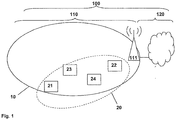
- Figure 1 schematically illustrate a mobile communication network comprising a radio cell being served by a base station entity, a plurality of internet-of-things communication devices being served by the mobile communication network.
- a mobile communication network 100 comprising a radio cell 10 being served by a base station entity 111 is schematically shown.
- the mobile communication network 100 comprises an access network 110 and a core network 120.
- the mobile communication network 100 is preferably a cellular telecommunications network comprising typically a plurality of network radio cells, one of which is represented in Figure 1 by means of a solid line and reference sign 10.
- typically a plurality of mobile subscribers (or user equipments) are camping on the telecommunications network 100 within the network radio cell 10, i.e. the mobile subscribers are connected or are camping on a base station entity 111 serving the radio cell 10; however, such "normal" mobile subscribers (or user equipment) are not represented in Figure 1 .
- a certain number of internet-of-things communication devices 20 are also connected with the base station entity 111.
- a first internet-of-things communication device 21, a second internet-of-things communication device 22, a third internet-of-things communication device 23, and fourth internet-of-things communication device 24 are schematically shown.
- the base station entity 111 is typically a base station, e.g. a NodeB or an eNodeB base transceiver station.
- the mobile communication network 100 is configured to provide mobile communication services to the mobile subscribers (or user equipments) within the radio cell 10 of the mobile communication network 100.
- mobile communication data (related to the mobile communication services) are transmitted between the mobile subscribers and the mobile communication network via the base station entity 111, wherein the mobile communication data are transmitted with comparably high bitrates of at least 9,6 kBd (9600 bits per second).
- the air interface between the base station entity 111 and the mobile subscribers comprises a plurality of frequency channels within at least one frequency band to provide the mobile communication services.
- the core network 120 is only schematically shown by means of a cloud representation.
- the public land mobile network 100 (especially the core network 120) comprises typically various network elements such as an MSC (Mobile Switching Center), a SGSN (Serving GPRS Support Node), a MME (Mobility Management Entity), a PDN-GW (Packet Data Network-Gateway) preferably a plurality of network elements thereof.
- MSC Mobile Switching Center
- SGSN Serving GPRS Support Node
- MME Mobility Management Entity
- PDN-GW Packet Data Network-Gateway
- a plurality of internet-of-things communication devices 20 are located within the network radio cell 10, i.e. the internet-of-things communication devices 20 are at least able to be connected to the base station entity 111 or at least a component thereof.
- the internet-of-things communication devices 20 are configured to exchange radiofrequency electromagnetic signals which are received and/or transmitted by the base station entity 111, typically transmitting - in uplink direction, i.e. towards the base station entity, and/or in downlink direction, i.e. towards the internet-of-things communication devices 20 - communication data, especially small and infrequent communication data.
- downlink direction i.e. from the base station entity 111 to the internet-of-things communication devices 20
- the need might occur (typically sporadically) to transmit larger chunks of data (typically to each one of the internet-of-things communication devices 20, individually), e.g. in order to perform a firmware update or the like.
- Method for an enhanced communication of at least one internet-of-things communication device in a mobile communication network wherein the mobile communication network comprises an access network and a core network, wherein the access network comprises at least one radio cell and a base station entity associated with the at least one radio cell, wherein at least a first coverage extension level and a second coverage extension level is able to be applied regarding the communication between the at least one internet-of-things communication device and the mobile communication network, wherein the at least one internet-of-things communication device has a subscriber profile within the mobile communication network such that it is either configured to use both the first and the second coverage extension level or to use the first coverage extension level while the use of the second coverage extension level being barred or restricted, wherein the method comprises the following steps:
- Method for an enhanced communication of at least one internet-of-things communication device in a mobile communication network wherein the mobile communication network comprises an access network and a core network, wherein the access network comprises at least one radio cell and a base station entity associated with the at least one radio cell, wherein at least a first coverage extension level and a second coverage extension level is able to be applied regarding the communication between the at least one internet-of-things communication device and the mobile communication network, wherein the at least one internet-of-things communication device has a subscriber profile within the mobile communication network such that it is either configured to use both the first and the second coverage extension level or to use the first coverage extension level while the use of the second coverage extension level being barred or restricted, wherein the method comprises the following steps:
- a method, a mobile communication network, a system and an internet-of-things communication device are proposed such that the communication between the base station entity 111 and the internet-of-things communication devices 20 (or at least one internet-of-things communication device 21, e.g. the first internet-of-things communication device 21) can be enhanced in the mobile communication network 100.
- it is made use of at least a first coverage extension level and a second coverage extension level, i.e. the first and second coverage extension levels are able to be applied regarding the communication between the at least one internet-of-things communication device 21 and the mobile communication network 100.
- a subscriber profile information or a subscriber profile (being defined either individually for each internet-of-things communication device or at least for each internet-of-things communication device of a group of internet-of-things communication devices) is defined such that the considered internet-of-things communication device 21 is either configured to use both the first and the second coverage extension level or to use the first coverage extension level while the use of the second coverage extension level being barred or restricted.
- a coverage extension subscription information is transmitted to the base station entity 111, the coverage extension subscription information being related to the internet-of-things communication device 21.
- the coverage extension subscription information indicates whether the considered internet-of-things communication device 21 is subscribed to use both the first and the second coverage extension level or whether the internet-of-things communication device 21 is subscribed to use the first coverage extension level while the use of the second coverage extension level is barred or restricted.
- a communication request, of the considered internet-of-things communication device 21, to transmit payload and/or control communication data is either rejected or delayed by the base station entity 111 or avoided by the internet-of-things communication device 21.
Landscapes
- Engineering & Computer Science (AREA)
- Computer Networks & Wireless Communication (AREA)
- Signal Processing (AREA)
- Mobile Radio Communication Systems (AREA)
Claims (11)
- Verfahren für eine verbesserte Kommunikation mindestens einer Internet-of-Things-Kommunikationsvorrichtung (21) in einem Mobilkommunikationsnetz (100),
wobei das Mobilkommunikationsnetz (100) ein Zugangsnetz (110) und ein Kernnetz (120) umfasst,
wobei das Zugangsnetz (110) mindestens eine Funkzelle (10) und eine Basisstationsentität (111) umfasst, die mit der mindestens einen Funkzelle (10) verknüpft ist,
wobei mindestens ein erster Versorgungsreichweitepegel und ein zweiter Versorgungsreichweitepegel im Hinblick auf die Kommunikation zwischen der mindestens einen Internet-of-Things-Kommunikationsvorrichtung (21) und dem Mobilkommunikationsnetz (100) angewendet werden kann,
wobei die mindestens eine Internet-of-Things-Kommunikationsvorrichtung (21) ein Teilnehmerprofil innerhalb des Mobilkommunikationsnetzes (100) aufweist, dergestalt, dass sie entweder dafür konfiguriert ist, sowohl den ersten als auch den zweiten Versorgungsreichweitepegel zu verwenden oder den ersten Versorgungsreichweitepegel zu verwenden, während die Verwendung des zweiten Versorgungsreichweitepegels gesperrt oder eingeschränkt ist, wobei das Verfahren die folgenden Schritte umfasst:- in einem ersten Schritt, und während die mindestens eine Internet-of-Things-Kommunikationsvorrichtung (21) durch die Basisstationsentität (111) bedient wird, wird eine Versorgungsreichweite-Teilnahmeinformation zu der Basisstationsentität (111) gesendet, wobei sich die Versorgungsreichweite-Teilnahmeinformation auf die mindestens eine Internet-of-Things-Kommunikationsvorrichtung (21) bezieht und angibt, ob die mindestens eine Internet-of-Things-Kommunikationsvorrichtung (21) berechtigt ist, sowohl den ersten als auch den zweiten Versorgungsreichweitepegel zu verwenden, oder ob die mindestens eine Internet-of-Things-Kommunikationsvorrichtung (21) berechtigt ist, den ersten Versorgungsreichweitepegel zu verwenden, während die Verwendung des zweiten Versorgungsreichweitepegel gesperrt oder eingeschränkt ist,- in einem zweiten Schritt, im Anschluss an den ersten Schritt, in dem Fall, dass die Versorgungsreichweite-Teilnahmeinformation angibt, dass die mindestens eine Internet-of-Things-Kommunikationsvorrichtung (21) zur Nutzung des ersten Versorgungsreichweitepegels berechtigt ist und die Nutzung des zweiten Versorgungsreichweitepegel gesperrt oder eingeschränkt ist, und des Weiteren in dem Fall, dass sich die mindestens eine Internet-of-Things-Kommunikationsvorrichtung (21) in einer Versorgungssituation befindet, die die Verwendung des zweiten Versorgungsreichweitepegels erforderlich macht, wird eine Kommunikationsanforderung der mindestens einen Internet-of-Things-Kommunikationsvorrichtung (21) zum Senden von Nutzdaten und/oder Steuerungskommunikationsdaten entweder durch die Basisstationsentität (111) zurückgewiesen oder verzögert oder durch die Internet-of-Things-Kommunikationsvorrichtung (21) vermieden,wobei - neben dem ersten Versorgungsreichweitepegel und dem zweiten Versorgungsreichweitepegel - mindestens ein dritter Versorgungsreichweitepegel im Hinblick auf die Kommunikation zwischen der mindestens einen Internet-of-Things-Kommunikationsvorrichtung (21) und dem Mobilkommunikationsnetz (100) angewendet werden kann,
wobei die mindestens eine Internet-of-Things-Kommunikationsvorrichtung (21) ein Teilnehmerprofil innerhalb des Mobilkommunikationsnetzes (100) aufweist, dergestalt, dass sie entweder dafür konfiguriert ist, den dritten, ersten und zweiten Versorgungsreichweitepegel zu verwenden oder den dritten und ersten Versorgungsreichweitepegel zu verwenden, während die Verwendung des zweiten Versorgungsreichweitepegel gesperrt oder eingeschränkt ist,
wobei die Versorgungsreichweite-Teilnahmeinformation, die in dem ersten Schritt zu der Basisstationsentität (111) gesendet wird, angibt, ob die mindestens eine Internet-of-Things-Kommunikationsvorrichtung (21) berechtigt ist, den dritten, den ersten und den zweiten Versorgungsreichweitepegel zu verwenden, oder ob die mindestens eine Internet-of-Things-Kommunikationsvorrichtung (21) berechtigt ist, den dritten und den ersten Versorgungsreichweitepegel zu verwenden, während die Verwendung des zweiten Versorgungsreichweitepegels gesperrt oder eingeschränkt ist. - Verfahren nach Anspruch 1,
wobei in einem dritten Schritt, im Anschluss an den ersten Schritt, aber vor dem zweiten Schritt, die Versorgungsreichweite-Teilnahmeinformation von der Basisstationsentität (111) zu der mindestens einen Internet-of-Things-Kommunikationsvorrichtung (21) gesendet wird, wobei die Versorgungsreichweite-Teilnahmeinformation angibt, ob die mindestens eine Internet-of-Things-Kommunikationsvorrichtung (21) berechtigt ist, sowohl den ersten als auch den zweiten Versorgungsreichweitepegel zu verwenden, oder ob die mindestens eine Internet-of-Things-Kommunikationsvorrichtung (21) berechtigt ist, den ersten Versorgungsreichweitepegel zu verwenden, während die Verwendung des zweiten Versorgungsreichweitepegels gesperrt oder eingeschränkt ist,
wobei in dem zweiten Schritt die Internet-of-Things-Kommunikationsvorrichtung (21) mindestens Kommunikationsanforderungen, die an die Basisstationsentität (111) gerichtet sind und sich auf die Übertragung von Nutzdaten-Kommunikationsdaten beziehen, vermeidet. - Verfahren nach einem der vorangehenden Ansprüche,
wobei in dem zweiten Schritt - und in dem Fall, dass die Versorgungsreichweite-Teilnahmeinformation angibt, dass die mindestens eine Internet-of-Things-Kommunikationsvorrichtung (21) berechtigt ist, den ersten Versorgungsreichweitepegel zu verwenden, während die Verwendung des zweiten Versorgungsreichweitepegels gesperrt oder eingeschränkt ist, und des Weiteren in dem Fall, dass sich die mindestens eine Internet-of-Things-Kommunikationsvorrichtung (21) in einer Versorgungssituation befindet, die die Verwendung des zweiten Versorgungsreichweitepegels erforderlich macht - die Internet-of-Things-Kommunikationsvorrichtung (21) eine Kommunikationsanforderung an die Basisstationsentität (111) sendet, die sich auf die vorübergehende Verwendung des zweiten Versorgungsreichweitepegels bezieht. - Verfahren nach einem der vorangehenden Ansprüche,
wobei die Verwendung des ersten Versorgungsreichweitepegels mit der Verwendung - durch die mindestens eine Internet-of-Things-Kommunikationsvorrichtung (21) - eines ersten Abschnitts eines Direktzugriffskanals innerhalb der Funkzelle (10) der Basisstationsentität (111) verknüpft ist, und
wobei die Verwendung des zweiten Versorgungsreichweitepegels mit der Verwendung - durch die mindestens eine Internet-of-Things-Kommunikationsvorrichtung (21) - eines zweiten Abschnitts eines Direktzugriffskanals innerhalb der Funkzelle (10) der Basisstationsentität (111) verknüpft ist, wobei die Kommunikationsanforderung der mindestens einen Internet-of-Things-Kommunikationsvorrichtung (21) zum Senden von Nutzdaten und/oder zur Steuerung von Kommunikationsdaten den zweiten Abschnitt des Direktzugriffskanals verwendet. - Verfahren nach einem der vorangehenden Ansprüche,
wobei das Mobilkommunikationsnetz (100) als Abschnitt des Kernnetzes (120) mindestens eine Mobilitätsmanagemententität umfasst,
wobei die Versorgungsreichweite-Teilnahmeinformation - durch die Mobilitätsmanagemententität - an die Basisstationsentität (111) als eine Teilnehmerprofil-Identitätsinformation gesendet wird, wobei sich die Teilnehmerprofil-Identitätsinformation auf die mindestens eine Internet-of-Things-Kommunikationsvorrichtung (21) bezieht und einen Hinweis umfasst, ob die mindestens eine Internet-of-Things-Kommunikationsvorrichtung (21) berechtigt ist, sowohl den ersten als auch den zweiten Versorgungsreichweitepegel zu verwenden, oder ob die mindestens eine Internet-of-Things-Kommunikationsvorrichtung (21) berechtigt ist, den ersten Versorgungsreichweitepegel zu verwenden, während die Verwendung des zweiten Versorgungsreichweitepegels gesperrt oder eingeschränkt ist. - Verfahren nach einem der vorangehenden Ansprüche,
wobei- entweder der dritte Versorgungsreichweitepegel einem normalen Versorgungspegel entspricht, der erste Versorgungsreichweitepegel einem erhöhten Versorgungspegel im Vergleich zum normalen Versorgungspegel entspricht, und der zweite Versorgungsreichweitepegel einem erhöhten Versorgungspegel im Vergleich zu dem ersten Versorgungsreichweitepegel entspricht,- oder der zweite Versorgungsreichweitepegel einem erhöhten Versorgungspegel im Vergleich zu dem ersten Versorgungsreichweitepegel entspricht, und der dritte Versorgungsreichweitepegel einem erhöhten Versorgungspegel im Vergleich zu dem zweiten Versorgungsreichweitepegel entspricht,wobei sich der zweite Versorgungsreichweitepegel auf die Verwendung einer größeren Anzahl von Wiederholungen oder anderer Versorgungsoptimierungsmittel - einschließlich einer kleineren Bandbreite - im Vergleich zu dem ersten Versorgungsreichweitepegel bezieht, wenn Daten durch die Basisstationsentität (111) zu der mindestens einen Internet-of-Things-Kommunikationsvorrichtung (21) gesendet werden oder umgekehrt. - Mobilkommunikationsnetz (100) für eine verbesserte Kommunikation mindestens einer Internet-of-Things-Kommunikationsvorrichtung (21) in einem Mobilkommunikationsnetz (100),
wobei das Mobilkommunikationsnetz (100) ein Zugangsnetz (110) und ein Kernnetz (120) umfasst,
wobei das Zugangsnetz (110) mindestens eine Funkzelle (10) und eine Basisstationsentität (111) umfasst, die mit der mindestens einen Funkzelle (10) verknüpft ist,
wobei mindestens ein erster Versorgungsreichweitepegel und ein zweiter Versorgungsreichweitepegel im Hinblick auf die Kommunikation zwischen der mindestens einen Internet-of-Things-Kommunikationsvorrichtung (21) und dem Mobilkommunikationsnetz (100) angewendet werden kann,
wobei die mindestens eine Internet-of-Things-Kommunikationsvorrichtung (21) ein Teilnehmerprofil innerhalb des Mobilkommunikationsnetzes (100) aufweist, dergestalt, dass sie entweder dafür konfiguriert ist, sowohl den ersten als auch den zweiten Versorgungsreichweitepegel zu verwenden oder den ersten Versorgungsreichweitepegel zu verwenden, während die Verwendung des zweiten Versorgungsreichweitepegels gesperrt oder eingeschränkt ist, wobei das Mobilkommunikationsnetz (100) so konfiguriert ist, dass:- während die mindestens eine Internet-of-Things-Kommunikationsvorrichtung (21) durch die Basisstationsentität (111) bedient wird, eine Versorgungsreichweite-Teilnahmeinformation zu der Basisstationsentität (111) gesendet wird, wobei sich die Versorgungsreichweite-Teilnahmeinformation auf die mindestens eine Internet-of-Things-Kommunikationsvorrichtung (21) bezieht und angibt, ob die mindestens eine Internet-of-Things-Kommunikationsvorrichtung (21) berechtigt ist, sowohl den ersten als auch den zweiten Versorgungsreichweitepegel zu verwenden, oder ob die mindestens eine Internet-of-Things-Kommunikationsvorrichtung (21) berechtigt ist, den ersten Versorgungsreichweitepegel zu verwenden, während die Verwendung des zweiten Versorgungsreichweitepegel gesperrt oder eingeschränkt ist,
wobei - neben dem ersten Versorgungsreichweitepegel und dem zweiten Versorgungsreichweitepegel - mindestens ein dritter Versorgungsreichweitepegel im Hinblick auf die Kommunikation zwischen der mindestens einen Internet-of-Things-Kommunikationsvorrichtung (21) und dem Mobilkommunikationsnetz (100) angewendet werden kann,
wobei die mindestens eine Internet-of-Things-Kommunikationsvorrichtung (21) ein Teilnehmerprofil innerhalb des Mobilkommunikationsnetzes (100) aufweist, dergestalt, dass sie entweder dafür konfiguriert ist, den dritten, ersten und zweiten Versorgungsreichweitepegel zu verwenden oder den dritten und ersten Versorgungsreichweitepegel zu verwenden, während die Verwendung des zweiten Versorgungsreichweitepegel gesperrt oder eingeschränkt ist,
wobei die Versorgungsreichweite-Teilnahmeinformation, die zu der Basisstationsentität (111) gesendet wird, angibt, ob die mindestens eine Internet-of-Things-Kommunikationsvorrichtung (21) berechtigt ist, den dritten, den ersten und den zweiten Versorgungsreichweitepegel zu verwenden, oder ob die mindestens eine Internet-of-Things-Kommunikationsvorrichtung (21) berechtigt ist, den dritten und den ersten Versorgungsreichweitepegel zu verwenden, während die Verwendung des zweiten Versorgungsreichweitepegels gesperrt oder eingeschränkt ist,- wobei in dem Fall, dass die Versorgungsreichweite-Teilnahmeinformation angibt, dass die mindestens eine Internet-of-Things-Kommunikationsvorrichtung (21) zur Nutzung des ersten Versorgungsreichweitepegels berechtigt ist und die Nutzung des zweiten Versorgungsreichweitepegel gesperrt oder eingeschränkt ist, und des Weiteren in dem Fall, dass sich die mindestens eine Internet-of-Things-Kommunikationsvorrichtung (21) in einer Versorgungssituation befindet, die die Verwendung des zweiten Versorgungsreichweitepegels erforderlich macht, eine Kommunikationsanforderung der mindestens einen Internet-of-Things-Kommunikationsvorrichtung (21) zum Senden von Nutzdaten und/oder Steuerungskommunikationsdaten entweder durch die Basisstationsentität (111) zurückgewiesen oder verzögert oder durch die Internet-of-Things-Kommunikationsvorrichtung (21) vermieden wird, - System für eine verbesserte Kommunikation mindestens einer Internet-of-Things-Kommunikationsvorrichtung (21) in einem Mobilkommunikationsnetz (100), wobei das System die Internet-of-Things-Kommunikationsvorrichtung (21) und das Mobilkommunikationsnetz (100) umfasst,
wobei das Mobilkommunikationsnetz (100) ein Zugangsnetz (110) und ein Kernnetz (120) umfasst,
wobei das Zugangsnetz (110) mindestens eine Funkzelle (10) und eine Basisstationsentität (111) umfasst, die mit der mindestens einen Funkzelle (10) verknüpft ist,
wobei mindestens ein erster Versorgungsreichweitepegel und ein zweiter Versorgungsreichweitepegel im Hinblick auf die Kommunikation zwischen der mindestens einen Internet-of-Things-Kommunikationsvorrichtung (21) und dem Mobilkommunikationsnetz (100) angewendet werden kann,
wobei die mindestens eine Internet-of-Things-Kommunikationsvorrichtung (21) ein Teilnehmerprofil innerhalb des Mobilkommunikationsnetzes (100) aufweist, dergestalt, dass sie entweder dafür konfiguriert ist, sowohl den ersten als auch den zweiten Versorgungsreichweitepegel zu verwenden oder den ersten Versorgungsreichweitepegel zu verwenden, während die Verwendung des zweiten Versorgungsreichweitepegels gesperrt oder eingeschränkt ist, wobei das System so konfiguriert ist, dass:- während die mindestens eine Internet-of-Things-Kommunikationsvorrichtung (21) durch die Basisstationsentität (111) bedient wird, eine Versorgungsreichweite-Teilnahmeinformation zu der Basisstationsentität (111) gesendet wird, wobei sich die Versorgungsreichweite-Teilnahmeinformation auf die mindestens eine Internet-of-Things-Kommunikationsvorrichtung (21) bezieht und angibt, ob die mindestens eine Internet-of-Things-Kommunikationsvorrichtung (21) berechtigt ist, sowohl den ersten als auch den zweiten Versorgungsreichweitepegel zu verwenden, oder ob die mindestens eine Internet-of-Things-Kommunikationsvorrichtung (21) berechtigt ist, den ersten Versorgungsreichweitepegel zu verwenden, während die Verwendung des zweiten Versorgungsreichweitepegel gesperrt oder eingeschränkt ist,
wobei - neben dem ersten Versorgungsreichweitepegel und dem zweiten Versorgungsreichweitepegel - mindestens ein dritter Versorgungsreichweitepegel im Hinblick auf die Kommunikation zwischen der mindestens einen Internet-of-Things-Kommunikationsvorrichtung (21) und dem Mobilkommunikationsnetz (100) angewendet werden kann,
wobei die mindestens eine Internet-of-Things-Kommunikationsvorrichtung (21) ein Teilnehmerprofil innerhalb des Mobilkommunikationsnetzes (100) aufweist, dergestalt, dass sie entweder dafür konfiguriert ist, den dritten, ersten und zweiten Versorgungsreichweitepegel zu verwenden oder den dritten und ersten Versorgungsreichweitepegel zu verwenden, während die Verwendung des zweiten Versorgungsreichweitepegel gesperrt oder eingeschränkt ist,
wobei die Versorgungsreichweite-Teilnahmeinformation, die zu der Basisstationsentität (111) gesendet wird, angibt, ob die mindestens eine Internet-of-Things-Kommunikationsvorrichtung (21) berechtigt ist, den dritten, den ersten und den zweiten Versorgungsreichweitepegel zu verwenden, oder ob die mindestens eine Internet-of-Things-Kommunikationsvorrichtung (21) berechtigt ist, den dritten und den ersten Versorgungsreichweitepegel zu verwenden, während die Verwendung des zweiten Versorgungsreichweitepegels gesperrt oder eingeschränkt ist,- wobei in dem Fall, dass die Versorgungsreichweite-Teilnahmeinformation angibt, dass die mindestens eine Internet-of-Things-Kommunikationsvorrichtung (21) zur Nutzung des ersten Versorgungsreichweitepegels berechtigt ist und die Nutzung des zweiten Versorgungsreichweitepegel gesperrt oder eingeschränkt ist, und des Weiteren in dem Fall, dass sich die mindestens eine Internet-of-Things-Kommunikationsvorrichtung (21) in einer Versorgungssituation befindet, die die Verwendung des zweiten Versorgungsreichweitepegels erforderlich macht, eine Kommunikationsanforderung der mindestens einen Internet-of-Things-Kommunikationsvorrichtung (21) zum Senden von Nutzdaten und/oder Steuerungskommunikationsdaten entweder durch die Basisstationsentität (111) zurückgewiesen oder verzögert oder durch die Internet-of-Things-Kommunikationsvorrichtung (21) vermieden wird, - Internet-of-Things-Kommunikationsvorrichtung (21) zum Kommunizieren in einem Mobilkommunikationsnetz (100) nach Anspruch 7, oder das Teil eines Systems nach Anspruch 8 ist, oder zum Kommunizieren gemäß einem Verfahren nach einem der Ansprüche 1 bis 6,
wobei die Internet-of-Things-Vorrichtung (21) so konfiguriert ist, dass in dem Fall, dass die Versorgungsreichweite-Teilnahmeinformation angibt, dass die Internet-of-Things-Kommunikationsvorrichtung (21) berechtigt ist, den ersten Versorgungsreichweitepegel zu verwenden, während die Verwendung des zweiten Versorgungsreichweitepegels gesperrt oder eingeschränkt ist, und des Weiteren in dem Fall, dass sich die mindestens eine Internet-of-Things-Kommunikationsvorrichtung (21) in einer Versorgungssituation befindet, die die Verwendung des zweiten Versorgungsreichweitepegels erforderlich macht, die Internet-of-Things-Kommunikationsvorrichtung (21) dafür konfiguriert ist, eine Kommunikationsanforderung an die Basisstationsentität (111) zu senden, die sich auf die vorübergehende Verwendung des zweiten Versorgungsreichweitepegels bezieht. - Programm, das einen computerlesbaren Programmcode umfasst, der, wenn er in einer Internet-of-Things-Kommunikationsvorrichtung (21) oder in einer Netzkomponente eines Mobilkommunikationsnetzes (100) oder teilweise in einer Internet-of-Things-Kommunikationsvorrichtung (21) und teilweise in einer Netzkomponente eines Mobilkommunikationsnetzes (100) ausgeführt wird, die Internet-of-Things-Kommunikationsvorrichtung (21) und/oder die Netzkomponente des Mobilkommunikationsnetzes (100) veranlasst, ein Verfahren nach einem der Ansprüche 1 bis 6 auszuführen.
- Computerprogrammprodukt für eine verbesserte Kommunikation mindestens einer Internet-of-Things-Kommunikationsvorrichtung (21) in einem Mobilkommunikationsnetz (100), wobei das Computerprogrammprodukt ein auf einem Speichermedium gespeichertes Computerprogramm umfasst, wobei das Computerprogramm Programmcode umfasst, der, wenn er in einer Internet-of-Things-Kommunikationsvorrichtung (21) oder in einer Netzkomponente eines Mobilkommunikationsnetzes (100) oder teilweise in einer Internet-of-Things-Kommunikationsvorrichtung (21) und teilweise in einer Netzkomponente eines Mobilkommunikationsnetzes (100) ausgeführt wird, die Internet-of-Things-Kommunikationsvorrichtung (21) und/oder die Netzkomponente des Mobilkommunikationsnetzes (100) veranlasst, ein Verfahren nach einem der Ansprüche 1 bis 6 auszuführen.
Applications Claiming Priority (2)
| Application Number | Priority Date | Filing Date | Title |
|---|---|---|---|
| EP16197361 | 2016-11-04 | ||
| PCT/EP2017/071765 WO2018082825A1 (en) | 2016-11-04 | 2017-08-30 | Authorization of coverage extension for an internet-of-things communication device |
Publications (2)
| Publication Number | Publication Date |
|---|---|
| EP3536033A1 EP3536033A1 (de) | 2019-09-11 |
| EP3536033B1 true EP3536033B1 (de) | 2020-09-30 |
Family
ID=57281023
Family Applications (1)
| Application Number | Title | Priority Date | Filing Date |
|---|---|---|---|
| EP17758551.0A Active EP3536033B1 (de) | 2016-11-04 | 2017-08-30 | Authorisierung zur reichweitenerweiterung für eine internet-der-dinge-kommunikationsvorrichtung |
Country Status (2)
| Country | Link |
|---|---|
| EP (1) | EP3536033B1 (de) |
| WO (1) | WO2018082825A1 (de) |
-
2017
- 2017-08-30 WO PCT/EP2017/071765 patent/WO2018082825A1/en not_active Ceased
- 2017-08-30 EP EP17758551.0A patent/EP3536033B1/de active Active
Non-Patent Citations (1)
| Title |
|---|
| None * |
Also Published As
| Publication number | Publication date |
|---|---|
| EP3536033A1 (de) | 2019-09-11 |
| WO2018082825A1 (en) | 2018-05-11 |
Similar Documents
| Publication | Publication Date | Title |
|---|---|---|
| US11540320B2 (en) | User terminal, radio base station and radio communication method | |
| KR102775024B1 (ko) | 이동 통신 시스템에서 통신을 수행하는 방법 및 장치 | |
| EP3585097B1 (de) | Verfahren und vorrichtung zur effektiven durchführung eines ruhemodusbetriebs in einem mobilkommunikationssystem der nächsten generation | |
| KR102601489B1 (ko) | 차세대 이동통신 시스템에서 이중연결구조를 고려하여 패킷 중복을 제어하는 방법 및 장치 | |
| US9326179B2 (en) | Mobile communications system, infrastructure equipment, base station and method | |
| US12490229B2 (en) | Method and device for transmitting user data through random access response message in mobile communication system | |
| US9144059B2 (en) | Super scheduling control channel | |
| KR102666326B1 (ko) | 비면허 대역의 이동통신 시스템에서 셀 재선택 절차를 수행하는 방법 및 장치 | |
| US20220124815A1 (en) | Method and device for transmitting user data through two-stage random access process in mobile communication system | |
| EP2773141A1 (de) | Datenübertragungsverfahren, benutzerausrüstung und basisstation | |
| US20240172093A1 (en) | Method and device for transmitting and receiving signal for supporting non-public network (npn) in wireless communication system | |
| EP3412060A1 (de) | System und verfahren zur flexiblen benutzergeräteidentifizierung | |
| KR20200114971A (ko) | 차세대 이동 통신 시스템에서 차량 통신을 지원하기 위한 셀 재선택 우선순위 관리 방법 및 장치 | |
| US10149174B2 (en) | Communication system | |
| US10548141B1 (en) | Dynamic carrier allocation based on dual-connectivity capability | |
| CN105191401A (zh) | 通信系统中确定具有双连接的用户设备的移动性的方法 | |
| EP3435733A1 (de) | Basisstation und übertragungsverfahren | |
| KR20230021445A (ko) | 이동통신 시스템에서 엑세스 제어 정보를 제공하는 방법 및 장치 | |
| CN107211396B (zh) | 用户终端及无线通信方法 | |
| KR20230074947A (ko) | 차세대 이동통신 시스템에서 복수 개의 sim을 지원하는 방법 및 장치 | |
| US20240356708A1 (en) | Method and device for wireless communication | |
| US10750416B1 (en) | Proactive handover in response to prediction of precipitation | |
| WO2024062424A1 (en) | Reducing energy consumption for a wireless communications system | |
| EP3826336B1 (de) | Verfahren zur übertragung von downlink-kommunikationsdaten aus einem mobilkommunikationsnetzwerk an mehrere internet-der-dinge-kommunikationsvorrichtungen, mobilkommunikationsnetzwerk zur übertragung von downlink-kommunikationsdaten an mehrere internet-der-dinge-kommunikationsvorrichtungen, system zur übertragung von downlink-kommunikationsdaten an mehrere internet-der-dinge-kommunikationsvorrichtungen, internet-der-dinge-kommunikationsvorrichtung zum empfangen der downlink-kommunikationsdaten aus einem mobilkommunikationsnetzwerk, programm und computerprogrammprodukt | |
| KR102942426B1 (ko) | 차세대 이동 통신 시스템에서 비연결 모드 단말을 위한 주파수 측정 설정 방법과 주파수 측정을 수행하는 방법 및 장치 |
Legal Events
| Date | Code | Title | Description |
|---|---|---|---|
| STAA | Information on the status of an ep patent application or granted ep patent |
Free format text: STATUS: UNKNOWN |
|
| STAA | Information on the status of an ep patent application or granted ep patent |
Free format text: STATUS: THE INTERNATIONAL PUBLICATION HAS BEEN MADE |
|
| PUAI | Public reference made under article 153(3) epc to a published international application that has entered the european phase |
Free format text: ORIGINAL CODE: 0009012 |
|
| STAA | Information on the status of an ep patent application or granted ep patent |
Free format text: STATUS: REQUEST FOR EXAMINATION WAS MADE |
|
| 17P | Request for examination filed |
Effective date: 20190604 |
|
| AK | Designated contracting states |
Kind code of ref document: A1 Designated state(s): AL AT BE BG CH CY CZ DE DK EE ES FI FR GB GR HR HU IE IS IT LI LT LU LV MC MK MT NL NO PL PT RO RS SE SI SK SM TR |
|
| AX | Request for extension of the european patent |
Extension state: BA ME |
|
| DAV | Request for validation of the european patent (deleted) | ||
| DAX | Request for extension of the european patent (deleted) | ||
| RIC1 | Information provided on ipc code assigned before grant |
Ipc: H04W 4/70 20180101ALI20200417BHEP Ipc: H04W 4/00 20180101ALI20200417BHEP Ipc: H04W 36/04 20090101AFI20200417BHEP Ipc: H04W 8/18 20090101ALI20200417BHEP |
|
| GRAP | Despatch of communication of intention to grant a patent |
Free format text: ORIGINAL CODE: EPIDOSNIGR1 |
|
| STAA | Information on the status of an ep patent application or granted ep patent |
Free format text: STATUS: GRANT OF PATENT IS INTENDED |
|
| INTG | Intention to grant announced |
Effective date: 20200619 |
|
| GRAS | Grant fee paid |
Free format text: ORIGINAL CODE: EPIDOSNIGR3 |
|
| GRAA | (expected) grant |
Free format text: ORIGINAL CODE: 0009210 |
|
| STAA | Information on the status of an ep patent application or granted ep patent |
Free format text: STATUS: THE PATENT HAS BEEN GRANTED |
|
| AK | Designated contracting states |
Kind code of ref document: B1 Designated state(s): AL AT BE BG CH CY CZ DE DK EE ES FI FR GB GR HR HU IE IS IT LI LT LU LV MC MK MT NL NO PL PT RO RS SE SI SK SM TR |
|
| REG | Reference to a national code |
Ref country code: CH Ref legal event code: EP Ref country code: GB Ref legal event code: FG4D |
|
| REG | Reference to a national code |
Ref country code: DE Ref legal event code: R096 Ref document number: 602017024671 Country of ref document: DE Ref country code: AT Ref legal event code: REF Ref document number: 1320094 Country of ref document: AT Kind code of ref document: T Effective date: 20201015 |
|
| REG | Reference to a national code |
Ref country code: IE Ref legal event code: FG4D |
|
| PG25 | Lapsed in a contracting state [announced via postgrant information from national office to epo] |
Ref country code: GR Free format text: LAPSE BECAUSE OF FAILURE TO SUBMIT A TRANSLATION OF THE DESCRIPTION OR TO PAY THE FEE WITHIN THE PRESCRIBED TIME-LIMIT Effective date: 20201231 Ref country code: NO Free format text: LAPSE BECAUSE OF FAILURE TO SUBMIT A TRANSLATION OF THE DESCRIPTION OR TO PAY THE FEE WITHIN THE PRESCRIBED TIME-LIMIT Effective date: 20201230 Ref country code: BG Free format text: LAPSE BECAUSE OF FAILURE TO SUBMIT A TRANSLATION OF THE DESCRIPTION OR TO PAY THE FEE WITHIN THE PRESCRIBED TIME-LIMIT Effective date: 20201230 Ref country code: SE Free format text: LAPSE BECAUSE OF FAILURE TO SUBMIT A TRANSLATION OF THE DESCRIPTION OR TO PAY THE FEE WITHIN THE PRESCRIBED TIME-LIMIT Effective date: 20200930 Ref country code: HR Free format text: LAPSE BECAUSE OF FAILURE TO SUBMIT A TRANSLATION OF THE DESCRIPTION OR TO PAY THE FEE WITHIN THE PRESCRIBED TIME-LIMIT Effective date: 20200930 Ref country code: FI Free format text: LAPSE BECAUSE OF FAILURE TO SUBMIT A TRANSLATION OF THE DESCRIPTION OR TO PAY THE FEE WITHIN THE PRESCRIBED TIME-LIMIT Effective date: 20200930 |
|
| REG | Reference to a national code |
Ref country code: AT Ref legal event code: MK05 Ref document number: 1320094 Country of ref document: AT Kind code of ref document: T Effective date: 20200930 |
|
| PG25 | Lapsed in a contracting state [announced via postgrant information from national office to epo] |
Ref country code: RS Free format text: LAPSE BECAUSE OF FAILURE TO SUBMIT A TRANSLATION OF THE DESCRIPTION OR TO PAY THE FEE WITHIN THE PRESCRIBED TIME-LIMIT Effective date: 20200930 Ref country code: LV Free format text: LAPSE BECAUSE OF FAILURE TO SUBMIT A TRANSLATION OF THE DESCRIPTION OR TO PAY THE FEE WITHIN THE PRESCRIBED TIME-LIMIT Effective date: 20200930 |
|
| REG | Reference to a national code |
Ref country code: NL Ref legal event code: MP Effective date: 20200930 |
|
| REG | Reference to a national code |
Ref country code: LT Ref legal event code: MG4D |
|
| PG25 | Lapsed in a contracting state [announced via postgrant information from national office to epo] |
Ref country code: RO Free format text: LAPSE BECAUSE OF FAILURE TO SUBMIT A TRANSLATION OF THE DESCRIPTION OR TO PAY THE FEE WITHIN THE PRESCRIBED TIME-LIMIT Effective date: 20200930 Ref country code: PT Free format text: LAPSE BECAUSE OF FAILURE TO SUBMIT A TRANSLATION OF THE DESCRIPTION OR TO PAY THE FEE WITHIN THE PRESCRIBED TIME-LIMIT Effective date: 20210201 Ref country code: CZ Free format text: LAPSE BECAUSE OF FAILURE TO SUBMIT A TRANSLATION OF THE DESCRIPTION OR TO PAY THE FEE WITHIN THE PRESCRIBED TIME-LIMIT Effective date: 20200930 Ref country code: LT Free format text: LAPSE BECAUSE OF FAILURE TO SUBMIT A TRANSLATION OF THE DESCRIPTION OR TO PAY THE FEE WITHIN THE PRESCRIBED TIME-LIMIT Effective date: 20200930 Ref country code: EE Free format text: LAPSE BECAUSE OF FAILURE TO SUBMIT A TRANSLATION OF THE DESCRIPTION OR TO PAY THE FEE WITHIN THE PRESCRIBED TIME-LIMIT Effective date: 20200930 Ref country code: SM Free format text: LAPSE BECAUSE OF FAILURE TO SUBMIT A TRANSLATION OF THE DESCRIPTION OR TO PAY THE FEE WITHIN THE PRESCRIBED TIME-LIMIT Effective date: 20200930 |
|
| PG25 | Lapsed in a contracting state [announced via postgrant information from national office to epo] |
Ref country code: IS Free format text: LAPSE BECAUSE OF FAILURE TO SUBMIT A TRANSLATION OF THE DESCRIPTION OR TO PAY THE FEE WITHIN THE PRESCRIBED TIME-LIMIT Effective date: 20210130 Ref country code: PL Free format text: LAPSE BECAUSE OF FAILURE TO SUBMIT A TRANSLATION OF THE DESCRIPTION OR TO PAY THE FEE WITHIN THE PRESCRIBED TIME-LIMIT Effective date: 20200930 Ref country code: AT Free format text: LAPSE BECAUSE OF FAILURE TO SUBMIT A TRANSLATION OF THE DESCRIPTION OR TO PAY THE FEE WITHIN THE PRESCRIBED TIME-LIMIT Effective date: 20200930 Ref country code: AL Free format text: LAPSE BECAUSE OF FAILURE TO SUBMIT A TRANSLATION OF THE DESCRIPTION OR TO PAY THE FEE WITHIN THE PRESCRIBED TIME-LIMIT Effective date: 20200930 Ref country code: ES Free format text: LAPSE BECAUSE OF FAILURE TO SUBMIT A TRANSLATION OF THE DESCRIPTION OR TO PAY THE FEE WITHIN THE PRESCRIBED TIME-LIMIT Effective date: 20200930 |
|
| PG25 | Lapsed in a contracting state [announced via postgrant information from national office to epo] |
Ref country code: SK Free format text: LAPSE BECAUSE OF FAILURE TO SUBMIT A TRANSLATION OF THE DESCRIPTION OR TO PAY THE FEE WITHIN THE PRESCRIBED TIME-LIMIT Effective date: 20200930 Ref country code: NL Free format text: LAPSE BECAUSE OF FAILURE TO SUBMIT A TRANSLATION OF THE DESCRIPTION OR TO PAY THE FEE WITHIN THE PRESCRIBED TIME-LIMIT Effective date: 20200930 |
|
| REG | Reference to a national code |
Ref country code: DE Ref legal event code: R097 Ref document number: 602017024671 Country of ref document: DE |
|
| PLBE | No opposition filed within time limit |
Free format text: ORIGINAL CODE: 0009261 |
|
| STAA | Information on the status of an ep patent application or granted ep patent |
Free format text: STATUS: NO OPPOSITION FILED WITHIN TIME LIMIT |
|
| PG25 | Lapsed in a contracting state [announced via postgrant information from national office to epo] |
Ref country code: DK Free format text: LAPSE BECAUSE OF FAILURE TO SUBMIT A TRANSLATION OF THE DESCRIPTION OR TO PAY THE FEE WITHIN THE PRESCRIBED TIME-LIMIT Effective date: 20200930 |
|
| 26N | No opposition filed |
Effective date: 20210701 |
|
| PG25 | Lapsed in a contracting state [announced via postgrant information from national office to epo] |
Ref country code: IT Free format text: LAPSE BECAUSE OF FAILURE TO SUBMIT A TRANSLATION OF THE DESCRIPTION OR TO PAY THE FEE WITHIN THE PRESCRIBED TIME-LIMIT Effective date: 20200930 |
|
| PG25 | Lapsed in a contracting state [announced via postgrant information from national office to epo] |
Ref country code: SI Free format text: LAPSE BECAUSE OF FAILURE TO SUBMIT A TRANSLATION OF THE DESCRIPTION OR TO PAY THE FEE WITHIN THE PRESCRIBED TIME-LIMIT Effective date: 20200930 |
|
| REG | Reference to a national code |
Ref country code: CH Ref legal event code: PL |
|
| PG25 | Lapsed in a contracting state [announced via postgrant information from national office to epo] |
Ref country code: MC Free format text: LAPSE BECAUSE OF FAILURE TO SUBMIT A TRANSLATION OF THE DESCRIPTION OR TO PAY THE FEE WITHIN THE PRESCRIBED TIME-LIMIT Effective date: 20200930 |
|
| REG | Reference to a national code |
Ref country code: BE Ref legal event code: MM Effective date: 20210831 |
|
| PG25 | Lapsed in a contracting state [announced via postgrant information from national office to epo] |
Ref country code: LI Free format text: LAPSE BECAUSE OF NON-PAYMENT OF DUE FEES Effective date: 20210831 Ref country code: CH Free format text: LAPSE BECAUSE OF NON-PAYMENT OF DUE FEES Effective date: 20210831 |
|
| PG25 | Lapsed in a contracting state [announced via postgrant information from national office to epo] |
Ref country code: IS Free format text: LAPSE BECAUSE OF FAILURE TO SUBMIT A TRANSLATION OF THE DESCRIPTION OR TO PAY THE FEE WITHIN THE PRESCRIBED TIME-LIMIT Effective date: 20210130 Ref country code: LU Free format text: LAPSE BECAUSE OF NON-PAYMENT OF DUE FEES Effective date: 20210830 |
|
| PG25 | Lapsed in a contracting state [announced via postgrant information from national office to epo] |
Ref country code: BE Free format text: LAPSE BECAUSE OF NON-PAYMENT OF DUE FEES Effective date: 20210831 Ref country code: IE Free format text: LAPSE BECAUSE OF NON-PAYMENT OF DUE FEES Effective date: 20210830 |
|
| PG25 | Lapsed in a contracting state [announced via postgrant information from national office to epo] |
Ref country code: CY Free format text: LAPSE BECAUSE OF FAILURE TO SUBMIT A TRANSLATION OF THE DESCRIPTION OR TO PAY THE FEE WITHIN THE PRESCRIBED TIME-LIMIT Effective date: 20200930 |
|
| P01 | Opt-out of the competence of the unified patent court (upc) registered |
Effective date: 20230528 |
|
| PG25 | Lapsed in a contracting state [announced via postgrant information from national office to epo] |
Ref country code: HU Free format text: LAPSE BECAUSE OF FAILURE TO SUBMIT A TRANSLATION OF THE DESCRIPTION OR TO PAY THE FEE WITHIN THE PRESCRIBED TIME-LIMIT; INVALID AB INITIO Effective date: 20170830 |
|
| PG25 | Lapsed in a contracting state [announced via postgrant information from national office to epo] |
Ref country code: MK Free format text: LAPSE BECAUSE OF FAILURE TO SUBMIT A TRANSLATION OF THE DESCRIPTION OR TO PAY THE FEE WITHIN THE PRESCRIBED TIME-LIMIT Effective date: 20200930 |
|
| PG25 | Lapsed in a contracting state [announced via postgrant information from national office to epo] |
Ref country code: MT Free format text: LAPSE BECAUSE OF FAILURE TO SUBMIT A TRANSLATION OF THE DESCRIPTION OR TO PAY THE FEE WITHIN THE PRESCRIBED TIME-LIMIT Effective date: 20200930 |
|
| PGFP | Annual fee paid to national office [announced via postgrant information from national office to epo] |
Ref country code: DE Payment date: 20250819 Year of fee payment: 9 |
|
| PGFP | Annual fee paid to national office [announced via postgrant information from national office to epo] |
Ref country code: GB Payment date: 20250822 Year of fee payment: 9 |
|
| PGFP | Annual fee paid to national office [announced via postgrant information from national office to epo] |
Ref country code: FR Payment date: 20250827 Year of fee payment: 9 |
|
| PG25 | Lapsed in a contracting state [announced via postgrant information from national office to epo] |
Ref country code: TR Free format text: LAPSE BECAUSE OF FAILURE TO SUBMIT A TRANSLATION OF THE DESCRIPTION OR TO PAY THE FEE WITHIN THE PRESCRIBED TIME-LIMIT Effective date: 20200930 |