EP3535975B1 - Vorrichtung und verfahren zur 3d-video-codierung - Google Patents
Vorrichtung und verfahren zur 3d-video-codierung Download PDFInfo
- Publication number
- EP3535975B1 EP3535975B1 EP16806057.2A EP16806057A EP3535975B1 EP 3535975 B1 EP3535975 B1 EP 3535975B1 EP 16806057 A EP16806057 A EP 16806057A EP 3535975 B1 EP3535975 B1 EP 3535975B1
- Authority
- EP
- European Patent Office
- Prior art keywords
- depth information
- reconstructed
- information value
- video coding
- coding block
- Prior art date
- Legal status (The legal status is an assumption and is not a legal conclusion. Google has not performed a legal analysis and makes no representation as to the accuracy of the status listed.)
- Active
Links
Images



Classifications
-
- H—ELECTRICITY
- H04—ELECTRIC COMMUNICATION TECHNIQUE
- H04N—PICTORIAL COMMUNICATION, e.g. TELEVISION
- H04N19/00—Methods or arrangements for coding, decoding, compressing or decompressing digital video signals
- H04N19/50—Methods or arrangements for coding, decoding, compressing or decompressing digital video signals using predictive coding
- H04N19/597—Methods or arrangements for coding, decoding, compressing or decompressing digital video signals using predictive coding specially adapted for multi-view video sequence encoding
-
- H—ELECTRICITY
- H04—ELECTRIC COMMUNICATION TECHNIQUE
- H04N—PICTORIAL COMMUNICATION, e.g. TELEVISION
- H04N19/00—Methods or arrangements for coding, decoding, compressing or decompressing digital video signals
- H04N19/10—Methods or arrangements for coding, decoding, compressing or decompressing digital video signals using adaptive coding
- H04N19/102—Methods or arrangements for coding, decoding, compressing or decompressing digital video signals using adaptive coding characterised by the element, parameter or selection affected or controlled by the adaptive coding
- H04N19/124—Quantisation
-
- H—ELECTRICITY
- H04—ELECTRIC COMMUNICATION TECHNIQUE
- H04N—PICTORIAL COMMUNICATION, e.g. TELEVISION
- H04N19/00—Methods or arrangements for coding, decoding, compressing or decompressing digital video signals
- H04N19/10—Methods or arrangements for coding, decoding, compressing or decompressing digital video signals using adaptive coding
- H04N19/169—Methods or arrangements for coding, decoding, compressing or decompressing digital video signals using adaptive coding characterised by the coding unit, i.e. the structural portion or semantic portion of the video signal being the object or the subject of the adaptive coding
- H04N19/17—Methods or arrangements for coding, decoding, compressing or decompressing digital video signals using adaptive coding characterised by the coding unit, i.e. the structural portion or semantic portion of the video signal being the object or the subject of the adaptive coding the unit being an image region, e.g. an object
- H04N19/172—Methods or arrangements for coding, decoding, compressing or decompressing digital video signals using adaptive coding characterised by the coding unit, i.e. the structural portion or semantic portion of the video signal being the object or the subject of the adaptive coding the unit being an image region, e.g. an object the region being a picture, frame or field
-
- H—ELECTRICITY
- H04—ELECTRIC COMMUNICATION TECHNIQUE
- H04N—PICTORIAL COMMUNICATION, e.g. TELEVISION
- H04N19/00—Methods or arrangements for coding, decoding, compressing or decompressing digital video signals
- H04N19/46—Embedding additional information in the video signal during the compression process
- H04N19/463—Embedding additional information in the video signal during the compression process by compressing encoding parameters before transmission
-
- H—ELECTRICITY
- H04—ELECTRIC COMMUNICATION TECHNIQUE
- H04N—PICTORIAL COMMUNICATION, e.g. TELEVISION
- H04N19/00—Methods or arrangements for coding, decoding, compressing or decompressing digital video signals
- H04N19/80—Details of filtering operations specially adapted for video compression, e.g. for pixel interpolation
- H04N19/82—Details of filtering operations specially adapted for video compression, e.g. for pixel interpolation involving filtering within a prediction loop
Definitions
- the present invention relates to the field of video coding. More specifically, the present invention relates to an apparatus and method for processing 3D video data using inter-view prediction.
- 3D video coding multiple sequences of texture frames have to be coded, which feature at least two different views of a scene.
- the known standard 3D-HEVC only supports block-based view synthesis prediction for coplanar camera arrangements, i.e. views from locations within a single plane.
- view synthesis prediction approaches usually fail.
- a 3D video sequence provides several views of a scene and comprises texture data in the form of texture frames and depth map data in the form of corresponding depth maps.
- the camera parameters such as the calibration matrix and the relation to a world coordinate system, are known for each view (as well as for each frame, in case these parameters should vary in time).
- the different views can be mapped to one another.
- the mapping is often imperfect, since occlusions are likely to occur in the warped view.
- the quality of the depth map is very important for the 3D warping of one view to another.
- the depth map has to be estimated by an algorithm which has only the textures and the camera parameters available. If, for instance, a reference depth map estimated in this way is used for generating a dependent texture or depth map from "View 0" to "View 1", this can lead to an inaccurate view synthesis of "Warped 0". This, in turn, can negatively affect the number of regions, which will be chosen by the encoder to predict "View 1" from "Warped 0" using inter-view prediction.
- US 7,558,432 B2 describes an approach for a quantization of depth map data prior to encoding based on histogram analysis. More specifically, US 7,558,432 B2 discloses a method of representing an image or sequence of images using a depth map, including a non-linear transformation of a n-bit depth map representation into a m-bit depth map representation with m ⁇ n.
- DLT Depth Lookup Table
- Embodiments of the invention are based on the idea of using a configurable depth map value mapping for a preprocessing of depth maps in order to obtain depth maps better suited for view synthesis in inter-view prediction.
- Typical view synthesis algorithms for instance, determine homography mappings for each depth value of a depth map, which are then used to generate the synthesized pixels.
- Embodiments of the invention enable an improved homography mapping, which, in turn, makes it possible to improve the precision of the prediction.
- Embodiments of the invention provide these advantageous effects without increasing the coding costs of the coded depth maps.
- Depth maps typically feature many values in a small range, while other ranges are not used. Value mapping of the depth maps in the context of inter-view prediction, as provided by embodiments of the invention, allows focusing on the range portion where the majority of depth map values are located.
- Information about the value mapping used by the encoder can be signaled and used at the decoder to modify the values of the depth map for the purpose of inter-view prediction using view synthesis.
- a value mapping could restrict the range of the nearest and the farthest value in the depth map to a range where the majority of depth values is found. This is a simple solution which can improve the prediction performance. The reconstructed depth maps are not changed by this process, since only the predictor is modified.
- the invention relates to an apparatus for processing 3D video data using inter-view prediction, wherein the apparatus comprises a processor configured to:
- the video coding blocks could be macro blocks, coding tree units, coding units, prediction units and/or prediction blocks.
- Each video coding block can comprise a plurality of pixels.
- a depth information value can be a depth value or a disparity value.
- a distance information value can be a distance value, a depth value or a disparity value.
- depth map used herein is to cover any kind of maps or frames providing information about depth or distance of the pixels of the depth map.
- a predicted texture video coding block and/or a predicted depth information video coding block is generated on the basis of the adapted reconstructed depth information value for the dependent view.
- the texture video coding block of the dependent texture frame is predicted on the basis of the spatially filtered adapted reconstructed depth information value
- the depth information video coding block of the dependent depth information map is predicted on the basis of the adapted reconstructed depth information value (and not the spatially filtered adapted reconstructed depth information value).
- the depth information value adaptation function is implemented such that a number of quantization levels available for representing adapted reconstructed depth information values is larger than or equal to the reduced range of depth quantization levels associated to the reduced range of reconstructed depth information values.
- the resolution of the adapted reconstructed depth information values can be increased resulting in an improved coding efficiency.
- Using a linear distance information value adaptation function allows a fast determination of the adapted reconstructed depth information value.
- the processor is further configured to determine the reduced range information, e.g. a lower depth information value representing a lower limit of the reduced range and an upper depth information value representing an upper limit of the reduced range, associated to the reference view by performing an outlier detection among occurring reconstructed depth information values occurring in a reconstructed version of the depth information map associated to the reference view.
- the reduced range information e.g. a lower depth information value representing a lower limit of the reduced range and an upper depth information value representing an upper limit of the reduced range
- the resolution of the adapted reconstructed depth information values can be increased resulting in an improved coding efficiency, without requiring any additional memory resources as well as losing any essential information contained in the original depth map.
- the processor is configured to determine the reduced range information such that the lower depth information value is larger than a minimum depth information value occurring in the reconstructed version of the depth information map and/or the upper depth information value is smaller than a maximum depth information value occurring in the reconstructed version of the depth information map.
- the resolution of the adapted reconstructed depth information values can be increased resulting in an improved coding efficiency, without requiring any additional memory resources as well as losing any essential information contained in the original depth map.
- the processor is further configured to determine a histogram about an occurrence of reconstructed depth information values in the reconstructed version of the depth information map associated to the reference view to perform the outlier detection.
- Using a histogram about the occurrence of reconstructed depth information values in the reconstructed version of the depth information map associated to the reference view allows detecting any outliers fast and efficiently.
- the processor is further configured to obtain a nearest depth value corresponding to a minimum depth information value and a depth distance value corresponding to a maximum depth information value according to the pre-determined reference quantization, wherein the depth information value adaptation function is further based on the nearest depth value and the farthest depth value for providing an adapted nearest depth value and an adapted farthest depth value.
- the apparatus for processing 3D video data using inter-view prediction is an apparatus for decoding 3D video data using inter-view prediction.
- the processor is configured to obtain encoding side information, wherein the encoding side information comprises information about at least one parameter associated with the processing of the reconstructed depth information value of the reconstructed depth information video coding block associated to the reference view using the depth information value adaptation function to obtain the adapted reconstructed depth information value of the reconstructed depth information video coding block.
- the encoding side information can comprise, for instance, the lower and the upper limit of the reduced range, i.e. the lower depth information value and the upper depth information value. In this case these values do not need to be determined once more for decoding.
- the encoding side information can comprise a flag indicating whether depth value mapping is to be used for decoding or not.
- the apparatus for processing 3D video data using inter-view prediction is an apparatus for encoding 3D video data using inter-view prediction.
- the processor is further configured to generate encoding side information, wherein the encoding side information comprises at least one parameter associated with the processing of the reconstructed depth information value of the reconstructed depth information video coding block associated to the reference view using the depth information value adaptation function to obtain the adapted reconstructed depth information value of the reconstructed depth information video coding block.
- the encoding side information can comprise, for instance, the lower and the upper limit of the reduced range, i.e. the lower depth information value and the upper depth information value. In this case these values do not need to be determined once more for decoding.
- the encoding side information can comprise a flag indicating whether depth value mapping is to be used for decoding or not.
- the invention relates to a corresponding method for processing 3D video data using inter-view prediction.
- the method comprises:
- the invention relates to a computer program comprising program code for performing the method according to the second aspect when executed on a computer.
- the invention can be implemented in hardware and/or software.
- a disclosure in connection with a described method may also hold true for a corresponding device or system configured to perform the method and vice versa.
- a corresponding device may include a unit to perform the described method step, even if such unit is not explicitly described or illustrated in the figures.
- the features of the various exemplary aspects described herein may be combined with each other, unless specifically noted otherwise.
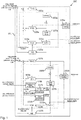
- Figure 1 shows a schematic diagram illustrating a reference layer (upper half of figure 1 ) and a dependent layer (lower half of figure 1 ) implemented by a processor 101 of an apparatus 100 for encoding 3D video data according to an embodiment.
- the apparatus 100 is configured to encode 3D video data comprising a plurality of texture frames and a plurality of associated depth maps, wherein each texture frame and each depth map can be partitioned into a plurality of video coding blocks.
- the encoding apparatus 100 can further comprise a communication interface for receiving and transmitting 3D video data.
- the video coding blocks could be, for instance, macro blocks, coding tree units, coding units, prediction units and/or prediction blocks.
- Each video coding block can comprise a plurality of pixels.
- Each depth map can define for the plurality of pixels a depth value, a distance value or a disparity value.
- the encoding apparatus 100 shown in figure 1 will be described in more detail further below.
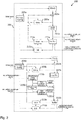
- Figure 2 shows a schematic diagram illustrating a reference layer (upper half of figure 2 ) and a dependent layer (lower half of figure 2 ) implemented by a processor 201 of a corresponding apparatus 200 for decoding 3D video data according to an embodiment, for instance, 3D video data provided in the form of a bitstream by the encoding apparatus 100.
- the apparatus 200 is configured to decode 3D video data comprising a plurality of texture frames and a plurality of associated depth maps, wherein each texture frame and each depth map can be partitioned into a plurality of video coding blocks.
- the decoding apparatus 200 can further comprise a communication interface for receiving and transmitting 3D video data.
- FIGS. 1 and 2 show an exemplary setup based on two views, namely a reference view or "View 0" and a dependent view or “View 1", wherein each view is associated with a (temporal) sequence of texture frames and corresponding depth maps.
- a reference view or "View 0" and a dependent view or "View 1"
- each view is associated with a (temporal) sequence of texture frames and corresponding depth maps.
- the person skilled in the art will readily appreciate how to extend the embodiments shown in figures 1 and 2 to more than two views.
- Very generally both texture and depth map are used for a view synthesis prediction of the dependent view "View 1" on the basis of the reference view "View 0".
- output from the reference layer is used for processing in the dependent layer.
- a configurable value mapping based on a distance information value adaptation function is applied to a depth map before it is used for view synthesis prediction.
- the mapping operation can be implemented identically in the encoding apparatus 100 and the decoding apparatus 200.
- the parameters of the mapping can be sequence, frame or slice dependent and can either be partially or completely determined by the decoding apparatus 200 (as well as the encoding apparatus 100) or signaled to the decoding apparatus 200 by the encoding apparatus 100 on the basis of encoding side information.
- Different signaling schemes can be implemented in embodiments of the invention, such as signaling of the value mapping used by the encoding apparatus by means of encoding side information, including a lookup table, a piece-wise linear or higher order functional and/or the definition of a depth clipping range (i.e. a lower and/or upper limit of a range of depth map values).
- a flag can be signaled indicating whether depth value mapping is to be used or not.
- processor 101 of the encoding apparatus 100 and the processor 201 of the decoding apparatus 200 are configured to:
- the processor 101 of the encoding apparatus 100 and the processor 201 of the decoding apparatus 200 can comprise the functional blocks shown in figures 1 and 2 , in particular the functional blocks 123b and 223b providing the depth map value mapping as well as the blocks 117b, 121b as well as 217b, 221b providing a view synthesis prediction for the inter-view prediction.
- These functional blocks can be implemented in software. In other embodiments, at least some of these functional blocks can be provided by dedicated hardware units.
- Both texture and depth map frames associated with the reference view are split into non-overlapping video coding blocks.
- the predicted video coding block is subtracted.
- the video coding block is transformed, quantized and entropy encoded (see functional blocks 102a and 105a in figure 1 ).
- the encoded video coding blocks are provided to a functional block 103a, which performs a reverse transformation and quantization (indicated as "iTR+iQ" in figure 1 ). This processing step can result in a quantization error.
- the reconstructed video coding block is made available for intra prediction of other video coding blocks in the same frame (see functional block 109a in figure 1 ).
- the video coding block can be processed by a loop filter 107a and stored in a reference picture buffer 111a.
- the video coding block is also available for inter prediction of other frames (see functional block 113a of figure 1 ).
- the inter prediction can be based on a motion estimation (see functional block 115a of figure 1 ).
- a control unit or module can select the video coding block and the mode (intra/inter), which is used as predictor for a particular video coding block.
- This information is generally also needed by the decoder 200 and hence also entropy coded by the entropy encoder 105a.
- the reconstructed texture and depth map frames are made available to the dependent layer portion of the apparatus 100, which is shown in the lower half of figure 1 and will be described in the following.
- the dependent layer portion of the apparatus 100 shown in the lower half of figure 1 also has the reconstructed texture and depth map frames of the reference layer as input.
- the reconstructed depth map of the reference texture frame is remapped (as described above) using the depth map value mapping unit 123b and processed using the view synthesis prediction unit 117b in order to create a predictor for the depth map of the dependent view. This predictor is added to a reference picture buffer 111b.
- the reconstructed depth map of the reference texture frame can be filtered by means of a depth map filter 119b, which will be described in more detail further below, and processed using the view synthesis prediction unit 121b in order to create a predictor of the dependent texture frame.
- This predictor is added to the reference picture buffer 111b as well.
- Both texture frames and depth map frames of the reference view are split into non-overlapping video coding blocks.
- the residual of a video coding block for both the texture frames and depth maps of the reference view is read from the entropy coding unit 205a together with the corresponding parameters for inter and intra prediction.
- the residual is added to the obtained predictor.
- reverse transform and quantization of the video coding block are computed in order to reconstruct the video coding block (see functional block 202a of figure 2 ).
- the reconstructed video coding block is made available for intra prediction of other blocks in the same frame (see functional block 209a of figure 2 ).
- the video coding block can be processed by a loop filter 207a and stored in a reference picture buffer 211a.
- the video coding block is then also available for inter prediction of other frames (see functional block 213a of figure 2 ).
- the inter prediction can be based on a motion compensated prediction (see functional block 215a of figure 2 ).
- Frames i.e. texture frames and depth maps
- the dependent layer portion of the decoding apparatus 200 can be identical to the corresponding functional blocks of the reference layer portion of the decoding apparatus 200, only the differences between these two portions will be explained in more detail.
- the dependent layer portion of the decoding apparatus 200 also has the reconstructed texture frames and depth map frames of the reference view as input available.
- the reconstructed depth map of the reference texture frame is remapped (as described above) using the depth map value mapping unit 223b and processed using the view synthesis prediction unit 217b in order to create a predictor for the depth map of the dependent view.
- This predictor is added to a reference picture buffer 211b.
- the reconstructed depth map of the reference texture frame can be filtered by means of a depth map filter 219b, which will be described in more detail further below, and processed by the view synthesis prediction unit 221b in order to create a predictor of the dependent texture frame. This predictor is added to the reference picture buffer 211b.
- Figure 3 shows a schematic diagram illustrating a corresponding method 300 of processing, in particular encoding or decoding, 3D video data using inter-view prediction.
- the method 300 comprises a step 301 of obtaining a reconstructed depth information value of a reconstructed depth information video coding block associated to a reference depth information map of a reference view, wherein reconstructed depth information values of the reference depth information map are quantized according to a predetermined reference quantization comprising a predetermined number of quantization levels, each quantization level representing a different depth information value.
- the method 300 comprises a step 303 of obtaining a reduced range information associated to the reference depth information map, wherein the reduced range information defines a reduced range of depth quantization levels available for the inter-view prediction within the range of quantization levels defined by the predetermined reference quantization.
- the method 300 comprises a step 305 of processing a reconstructed distance information value of the reconstructed depth information video coding block associated to the reference view using a distance information value adaptation function to obtain an adapted reconstructed distance information value of the reconstructed depth information video coding block, wherein the reconstructed distance information value corresponds to the reconstructed depth information value of the reconstructed depth information video coding block or a further processed version thereof, and wherein the distance information value adaptation function is based on the reduced range information.
- the method 300 comprises a step 307a of generating a predicted texture video coding block of a dependent texture frame associated with a dependent view on the basis of the adapted reconstructed distance information value of the reconstructed depth information video coding block associated to the reference view and a corresponding reconstructed texture video coding block of a reference texture frame associated to the reference view.
- the method 300 comprises a step 307b of generating a predicted depth information video coding block of a dependent depth information map associated with the dependent view on the basis of the adapted reconstructed distance information value of the reconstructed depth information video coding block associated to the reference view.
- the distance information value adaptation function is implemented such that a number of quantization levels available for representing adapted reconstructed distance information values is larger than or equal to the reduced range of depth quantization levels associated to the reduced range of reconstructed depth information values.
- the distance information adaptation function is implemented such that a number of quantization levels available for representing adapted reconstructed distance information values is predetermined, for example equal to a number of quantization levels of the pre-determined reference quantization, or larger than the number of quantization levels of the pre-determined reference quantization.
- the quantization levels of the pre-determined reference quantization can be based, for instance, on an 8 bit quantization and the quantization levels available for representing adapted reconstructed distance information values can be based, for instance, on an 8, 10 or 12 bit quantization.
- the processor 101 and/or the processor 201 is further configured to determine the reduced range information, e.g. a lower depth information value representing a lower limit of the reduced range and an upper depth information value representing an upper limit of the reduced range, associated to the reference view by performing an outlier detection among occurring reconstructed depth information values occurring in a reconstructed version of the depth information map associated to the reference view.
- the reduced range information e.g. a lower depth information value representing a lower limit of the reduced range and an upper depth information value representing an upper limit of the reduced range
- the processor 101 and/or the processor 201 is configured to determine the reduced range information such that the lower depth information value is larger than a minimum depth information value occurring in the reconstructed version of the depth information map and/or the upper depth information value is smaller than a maximum depth information value occurring in the reconstructed version of the depth information map.
- the lower and upper depth information value can be provided by the encoding apparatus 100 as part of the encoding side information to the decoding apparatus 200 so that these values do not have to be determined by the decoding apparatus 200 once more.
- the processor 101 and/or the processor 201 is further configured to determine a histogram about an occurrence of reconstructed depth information values in the reconstructed version of the depth information map associated to the reference view to perform the outlier detection, as will be described in more detail further below.
- the processor 101 of the encoding apparatus 100 is further configured to generate encoding side information, wherein the encoding side information comprises information about at least one parameter associated with the processing of the reconstructed distance information value of the reconstructed depth information video coding block associated to the reference view using the distance information value adaptation function to obtain the adapted reconstructed distance information value of the reconstructed depth information video coding block.
- the encoding side information can comprise, for instance, the lower and the upper limit of the reduced range, i.e. the lower depth information value and the upper depth information value.
- the encoding side information can comprise a flag indicating whether depth value mapping is to be used or not.
- the value mapping (also referred to as value remapping) provided, for instance, by the depth map value mapping functional blocks 123b and 223b of figures 1 and 2 can be implemented in the following way.
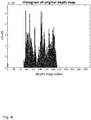
- a histogram of the depth map is computed, such as the exemplary histogram shown in figure 4 .
- the range of depth map values (i.e. depth information values) can be determined, which comprises the majority of depth map values, for instance, 90% of the depth map values, defining a lower limit l l and an upper limit l u and thereby a reduced range.
- l l and l u could be determined by removing the or a given number smallest outlier and/or the or a given number of largest outlier value(s) in the original histogram of the depth map (as already mentioned above, l l and l u can be provided as part of the encoding side information to the decoding apparatus 200).
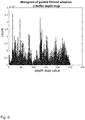
- the range between l l and l u can then be remapped to a full 8 bit range of the predetermined reference quantization providing, for instance, the exemplary processed histogram of depth map values shown in figure 5 .
- the remapping described above i.e. the distance information value adaptation function
- D adapZ D ⁇ l l l u ⁇ l l ⁇ 255 , where l l denotes the lower limit of the used dynamic range and l u is the upper limit of the used dynamic range, respectively.
- the parameters Z near and Z far can be adapted accordingly.
- the new values ( Z near adap , , Z far adap ), for the closest and farthest values in the depth map ( Z near , Z far ) are determined.
- Z near and Z far correspond to the closest and farthest values (distance from the camera) in the unchanged reference depth map.
- Z near adap and Z far adap correspond to the closest and farthest values (distance from the camera) in the modified depth map.
- the modified depth map can then be used together with the adapted values of Z near and Z far for the view synthesis prediction, as implemented, for instance, in the functional blocks 117b, 121b and 217b, 221b of figures 1 and 2 , respectively.
- the original histogram e.g. the exemplary histogram shown in figure 4
- n depth map value ranges which together comprise the majority of depth map values.
- the lower and upper limits of these respective depth map value ranges are I l 1 to l ln and l u 1 to l un .
- the range between l lx and l ux ( x between 1 and n ) can then be remapped to the full 8 bit range.
- the remapping for each range is done using the same equations (i.e. distance information value adaptation functions) as for a single range, replacing the respective values for l l and l u .
- the exemplary histogram of processed depth map values shown therein comprises several "gaps", i.e. depth map values within the dynamic range, which are associated with no or very few pixels of the depth map.
- these gaps can be handled by means of an additional spatial filtering of the depth map, as implemented, for instance, in the functional blocks 119b and 219b of figures 1 and 2 , respectively.
- the texture video coding block of the dependent texture frame is predicted on the basis of the spatially filtered adapted reconstructed depth information value
- the depth information video coding block of the dependent depth information map is predicted on the basis of the adapted reconstructed depth information value (and not the spatially filtered adapted reconstructed depth information value).
- the spatial filtering i.e. functional blocks 119b, 219b
- the depth map value mapping i.e. functional blocks 123b, 223b
- the spatial filtering of the reconstructed depth map can occur before the depth map value mapping.
- an edge preserving smoothing filter can be used for a spatial filtering of the depth map.
- the filter suggested in the paper Kaiming He, Jian Sun and Xiaoou Tang, "Guided Image Filtering", in Pattern Analysis and Machine Intelligence, IEEE Trans. on 35.6, June 2013, Pages 1397-1409 can be applied on the depth map for spatial filtering. It is similar to a bilateral filter, but can be implemented more efficiently and achieves a smoothing of the depth map while preserving sharp edges.
- FIG 6 which shows the exemplary histogram of figure 4 after the value remapping and spatial filtering described above
- embodiments of the invention can increase the precision of the output of the filter, as there are more values of the dynamic range available. Note that generally this behavior is not achievable by the filter process alone, because only applying the filter directly on the original reference depth map shown in figure 4 cannot increase the precision of the depth map.
- Figure 7 shows the result of applying filtering to the original reference depth map.
- v filt (15 20 21 22 23 23 24 27 30 23), which has 8 distinct levels.
- v remapped (0 0 26 51 77 77 77 204 255 255).
- Embodiments of the invention can be configured to process multiple reference views for an improved prediction of the texture and depth map of the target view by including multiple warped reference views into the reference picture list of the target view.
- the coding scenario was two view All-Intra.
- the filtering was applied to distance values and not to the "original reference depth map". However, as already described above, the filtering could be applied to the depth map directly as well with different parameters for the filtering.
Landscapes
- Engineering & Computer Science (AREA)
- Multimedia (AREA)
- Signal Processing (AREA)
- Compression Or Coding Systems Of Tv Signals (AREA)
Claims (13)
- Vorrichtung (100; 200) zum Verarbeiten von 3D-Video-Daten unter Verwendung von Inter-View-Vorhersage, wobei die Vorrichtung (100; 200) einen Prozessor (101; 201) umfasst, der dazu konfiguriert ist:einen rekonstruierten Tiefeninformationswert eines rekonstruierten Tiefeninformationsvideocodierblocks in Verbindung mit einer Referenz-Tiefeninformationskarte eines Referenz-Views einzuholen, wobei die rekonstruierten Tiefeninformationswerte der Referenz-Tiefeninformationskarte gemäß einer vorbestimmten Referenz-Quantisierung, die eine vorbestimmte Anzahl von Quantisierungsebenen umfasst, quantisiert sind, wobei jede Quantisierungsebene einen unterschiedlichen Tiefeninformationswert darstellt;eine Information über den reduzierten Bereich in Verbindung mit der Referenz-Tiefeninformationskarte einzuholen, wobei die Information über den reduzierten Bereich einen reduzierten Bereich von Tiefenquantisierungsebenen definiert, die für die Inter-View-Vorhersage innerhalb des Bereichs von Quantisierungsebenen, die durch die vorbestimmte Referenz-Quantisierung definiert werden, verfügbar sind;einen rekonstruierten Tiefeninformationswert des rekonstruierten Tiefeninformationsvideocodierblocks in Verwendung mit dem Referenz-View unter Verwendung einer Tiefeninformationswertanpassungsfunktion zu verarbeiten, um einen angepassten rekonstruierten Tiefeninformationswert des rekonstruierten Tiefeninformationsvideocodierblocks zu erhalten, wobei der angepasste rekonstruierte Tiefeninformationswert dem rekonstruierten Tiefeninformationswert des rekonstruierten Tiefeninformationsvideocodierblocks oder einer weiter verarbeiteten Version davon entspricht, und wobei die Tiefeninformationswertanpassungsfunktion auf der Information über den reduzierten Bereich basiert und dazu konfiguriert ist, eine Anzahl von Quantisierungsebenen zu erhöhen, die verfügbar sind, um angepasste rekonstruierte Tiefeninformationswerte in Verbindung mit rekonstruierten Tiefeninformationswerten innerhalb des reduzierten Bereichs darzustellen;einen Raumfilter auf den angepassten rekonstruierten Tiefeninformationswert des rekonstruierten Tiefeninformationsvideocodierblocks in Verbindung mit dem Referenz-View anzuwenden, um einen räumlich gefilterten angepassten rekonstruierten Tiefeninformationswert des rekonstruierten Tiefeninformationsvideocodierblocks in Verbindung mit dem Referenz-View zu erhalten, wobei der Raumfilter ein kantenerhaltender Glättungsfilter ist; undeinen vorhergesagten Texturvideocodierblock eines abhängigen Texturbilds in Verbindung mit einem abhängigen View auf der Basis des räumlich gefilterten angepassten rekonstruierten Tiefeninformationswerts des rekonstruierten Tiefeninformationsvideocodierblocks in Verbindung mit dem Referenz-View und eines entsprechenden rekonstruierten Texturvideocodierblocks eines Referenz-Texturbilds in Verbindung mit dem Referenz-View zu erzeugen; undeinen vorhergesagten Tiefeninformationsvideocodierblock einer abhängigen Tiefeninformationskarte in Verbindung mit dem abhängigen View auf der Basis des angepassten rekonstruierten Tiefeninformationswerts des rekonstruierten Tiefeninformationsvideocodierblocks in Verbindung mit dem Referenz-View zu erzeugen.
- Vorrichtung (100; 200) nach Anspruch 1, wobei die Tiefeninformationswertanpassungsfunktion derart implementiert wird, dass eine Anzahl von Quantisierungsebenen, die zur Darstellung angepasster rekonstruierter Tiefeninformationswerte verfügbar ist, vorbestimmt wird, zum Beispiel gleich einer Anzahl von Quantisierungsebenen der vorbestimmten Referenz-Quantisierung, oder größer als die Anzahl von Quantisierungsebenen der vorbestimmten Referenz-Quantisierung.
- Vorrichtung (100; 200) nach einem der Ansprüche 1 bis 2, wobei die Tiefeninformationswertanpassungsfunktion derart implementiert wird, dass eine Anzahl von Quantisierungsebenen (quantization levels) QL von Tiefeninformationswerten vorbestimmt wird, und wobei die Tiefeninformationswertanpassungsfunktion der folgenden Gleichung entspricht:

- Vorrichtung (100; 200) nach einem der Ansprüche 1 bis 3, wobei der Prozessor (101; 201) ferner dazu konfiguriert ist:
die Information über den reduzierten Bereich zu ermitteln, z. B. einen unteren Tiefeninformationswert, der eine untere Grenze des reduzierten Bereichs darstellt, und einen oberen Tiefeninformationswert, der eine obere Grenze des reduzierten Bereichs darstellt, in Verbindung mit dem Referenz-View durch Durchführen einer Ausreißererkennung unter auftretenden rekonstruierten Tiefeninformationswerten, die in einer rekonstruierten Version der Tiefeninformationskarte in Verbindung mit dem Referenz-View auftreten. - Vorrichtung (100; 200) nach Anspruch 4, wobei der Prozessor (101; 201) dazu konfiguriert ist, die Information über den reduzierten Bereich so zu ermitteln, dass der untere Tiefeninformationswert größer ist als ein minimaler Tiefeninformationswert, der in der rekonstruierten Version der Tiefeninformationskarte auftritt, und/oder der obere Tiefeninformationswert kleiner ist als ein maximaler Tiefeninformationswert, der in der rekonstruierten Version der Tiefeninformationskarte auftritt.
- Vorrichtung (100; 200) nach Anspruch 4 oder 5, wobei der Prozessor (101; 201) dazu konfiguriert ist, ein Histogramm über ein Auftreten rekonstruierter Tiefeninformationswerte in der rekonstruierten Version der Tiefeninformationskarte in Verbindung mit dem Referenz-View zu ermitteln, um die Ausreißererkennung durchzuführen.
- Vorrichtung (100; 200) nach einem der vorstehenden Ansprüche, wobei der Prozessor (101; 201) ferner dazu konfiguriert ist:einen nächsten Tiefenwert, der einem minimalen Tiefeninformationswert entspricht, und einen entferntesten Tiefenwertwert, der einem maximalen Tiefeninformationswert entspricht, gemäß der vorbestimmten Referenz-Quantisierung einzuholen;wobei die Tiefeninformationswertanpassungsfunktion ferner auf dem nächsten Tiefenwert und dem entferntesten Tiefenwert basiert.
- Vorrichtung (100; 200) nach einem der vorstehenden Ansprüche, wobei die Vorrichtung (100; 200) zum Verarbeiten von 3D-Video-Daten unter Verwendung von Inter-View-Vorhersage eine Vorrichtung (200) zum Decodieren von 3D-Video-Daten unter Verwendung von Inter-View-Vorhersage ist.
- Vorrichtung (200) nach Anspruch 8, wobei der Prozessor (201) dazu konfiguriert ist, eine Codiernebeninformation einzuholen, wobei die Codiernebeninformation eine Information über mindestens einen Parameter in Verbindung mit dem Verarbeiten des rekonstruierten Tiefeninformationswerts des rekonstruierten Tiefeninformationsvideocodierblocks in Verbindung mit dem Referenz-View unter Verwendung der Tiefeninformationswertanpassungsfunktion, um den angepassten rekonstruierten Tiefeninformationswert des rekonstruierten Tiefeninformationsvideocodierblocks zu erhalten, umfasst, insbesondere einen unteren Tiefeninformationswert, der eine untere Grenze des reduzierten Bereichs darstellt, und einen oberen Tiefeninformationswert, der eine obere Grenze des reduzierten Bereichs darstellt.
- Vorrichtung (100; 200) nach einem der Ansprüche 1 bis 7, wobei die Vorrichtung (100; 200) zum Verarbeiten von 3D-Video-Daten unter Verwendung von Inter-View-Vorhersage eine Vorrichtung (100) zum Codieren von 3D-Video-Daten unter Verwendung von Inter-View-Vorhersage ist.
- Vorrichtung (100) nach Anspruch 10, wobei der Prozessor (101) ferner dazu konfiguriert ist, eine Codiernebeninformation zu erzeugen, wobei die Codiernebeninformation eine Information über mindestens einen Parameter in Verbindung mit dem Verarbeiten des rekonstruierten Tiefeninformationswerts des rekonstruierten Tiefeninformationsvideocodierblocks in Verbindung mit dem Referenz-View unter Verwendung der Tiefeninformationswertanpassungsfunktion, um den angepassten rekonstruierten Tiefeninformationswert des rekonstruierten Tiefeninformationsvideocodierblocks zu erhalten, umfasst, insbesondere einen unteren Tiefeninformationswert, der eine untere Grenze des reduzierten Bereichs darstellt, und einen oberen Tiefeninformationswert, der eine obere Grenze des reduzierten Bereichs darstellt.
- Verfahren (300) zum Verarbeiten von 3D-Video-Daten unter Verwendung von Inter-View-Vorhersage, wobei das Verfahren (300) Folgendes umfasst:Einholen (301) eines rekonstruierten Tiefeninformationswerts eines rekonstruierten Tiefeninformationsvideocodierblocks in Verbindung mit einer Referenz-Tiefeninformationskarte eines Referenz-Views, wobei rekonstruierte Tiefeninformationswerte der Referenz-Tiefeninformationskarte gemäß einer vorbestimmten Referenz-Quantisierung quantisiert sind, die eine vorbestimmte Anzahl von Quantisierungsebenen umfasst, wobei jede Quantisierungsebene einen unterschiedlichen Tiefeninformationswert darstellt;Einholen (303) einer Information über den reduzierten Bereich in Verbindung mit der Referenz-Tiefeninformationskarte, wobei die Information über den reduzierten Bereich einen reduzierten Bereich von Tiefenquantisierungsebenen definiert, die für die Inter-View-Vorhersage innerhalb des Bereichs von Quantisierungsebenen, die durch die vorbestimmte Referenz-Quantisierung definiert werden, verfügbar sind;Verarbeiten (305) eines rekonstruierten Tiefeninformationswerts des rekonstruierten Tiefeninformationsvideocodierblocks in Verwendung mit dem Referenz-View unter Verwendung einer Tiefeninformationswertanpassungsfunktion, um einen angepassten rekonstruierten Tiefeninformationswert des rekonstruierten Tiefeninformationsvideocodierblocks zu erhalten, wobei der angepasste rekonstruierte Tiefeninformationswert dem rekonstruierten Tiefeninformationswert des rekonstruierten Tiefeninformationsvideocodierblocks oder einer weiter verarbeiteten Version davon entspricht, und wobei die Tiefeninformationswertanpassungsfunktion auf der Information über den reduzierten Bereich basiert und dazu konfiguriert ist, eine Anzahl von Quantisierungsebenen zu erhöhen, die verfügbar sind, um angepasste rekonstruierte Tiefeninformationwerte in Verbindung mit rekonstruierten Tiefeninformationswerten innerhalb des reduzierten Bereichs darzustellen;Anwenden eines Raumfilters auf den angepassten rekonstruierten Tiefeninformationswert des rekonstruierten Tiefeninformationsvideocodierblocks in Verbindung mit dem Referenz-View, um einen räumlich gefilterten angepassten rekonstruierten Tiefeninformationswert des rekonstruierten Tiefeninformationsvideocodierblocks in Verbindung mit dem Referenz-View zu erhalten, wobei der Raumfilter ein kantenerhaltender Glättungsfilter ist; undErzeugen (307a) eines vorhergesagten Texturvideocodierblocks eines abhängigen Texturbilds in Verbindung mit einem abhängigen View auf der Basis des räumlich gefilterten angepassten rekonstruierten Tiefeninformationswerts des rekonstruierten Tiefeninformationsvideocodierblocks in Verbindung mit dem Referenz-View und eines entsprechenden rekonstruierten Texturvideocodierblocks eines Referenz-Texturbilds in Verbindung mit dem Referenz-View; undErzeugen (307b) eines vorhergesagten Tiefeninformationsvideocodierblocks einer abhängigen Tiefeninformationskarte in Verbindung mit dem abhängigen View auf der Basis des angepassten rekonstruierten Tiefeninformationswerts des rekonstruierten Tiefeninformationsvideocodierblocks in Verbindung mit dem Referenz-View.
- Computerprogramm, umfassend einen Programmcode zum Durchführen des Verfahrens (300) nach Anspruch 12, wenn es auf einem Computer ausgeführt wird.
Applications Claiming Priority (1)
| Application Number | Priority Date | Filing Date | Title |
|---|---|---|---|
| PCT/EP2016/079595 WO2018099571A1 (en) | 2016-12-02 | 2016-12-02 | Apparatus and method for 3d video coding |
Publications (2)
| Publication Number | Publication Date |
|---|---|
| EP3535975A1 EP3535975A1 (de) | 2019-09-11 |
| EP3535975B1 true EP3535975B1 (de) | 2020-11-04 |
Family
ID=57485476
Family Applications (1)
| Application Number | Title | Priority Date | Filing Date |
|---|---|---|---|
| EP16806057.2A Active EP3535975B1 (de) | 2016-12-02 | 2016-12-02 | Vorrichtung und verfahren zur 3d-video-codierung |
Country Status (4)
| Country | Link |
|---|---|
| US (1) | US20190289329A1 (de) |
| EP (1) | EP3535975B1 (de) |
| CN (1) | CN110495178B (de) |
| WO (1) | WO2018099571A1 (de) |
Families Citing this family (7)
| Publication number | Priority date | Publication date | Assignee | Title |
|---|---|---|---|---|
| WO2020072842A1 (en) * | 2018-10-05 | 2020-04-09 | Interdigital Vc Holdings, Inc. | Methods and apparatus for depth encoding and decoding |
| JP6686122B1 (ja) * | 2018-12-21 | 2020-04-22 | 株式会社モルフォ | 画像処理装置、画像処理方法およびプログラム |
| US10896523B2 (en) * | 2019-04-01 | 2021-01-19 | Microsoft Technology Licensing, Llc | Depth image compression |
| CN113963094B (zh) * | 2020-07-03 | 2025-05-16 | 阿里巴巴集团控股有限公司 | 深度图及视频处理、重建方法、装置、设备及存储介质 |
| CN111726619B (zh) * | 2020-07-06 | 2022-06-03 | 重庆理工大学 | 一种基于虚拟视点质量模型的多视点视频比特分配方法 |
| US12058302B2 (en) * | 2022-04-06 | 2024-08-06 | Samsung Electronics Co., Ltd. | Encoding depth information for images |
| US12267484B2 (en) * | 2022-12-05 | 2025-04-01 | Google Llc | Warped reference list for warped motion video coding |
Family Cites Families (2)
| Publication number | Priority date | Publication date | Assignee | Title |
|---|---|---|---|---|
| KR101367282B1 (ko) * | 2007-12-21 | 2014-03-12 | 삼성전자주식회사 | 깊이 정보에 대한 적응적 정보 표현 방법 및 그 장치 |
| CN103826135B (zh) * | 2013-12-24 | 2017-02-08 | 浙江大学 | 基于恰可识别视差错误估计的三维视频深度图编码方法 |
-
2016
- 2016-12-02 EP EP16806057.2A patent/EP3535975B1/de active Active
- 2016-12-02 WO PCT/EP2016/079595 patent/WO2018099571A1/en not_active Ceased
- 2016-12-02 CN CN201680091333.7A patent/CN110495178B/zh active Active
-
2019
- 2019-06-03 US US16/429,769 patent/US20190289329A1/en not_active Abandoned
Non-Patent Citations (1)
| Title |
|---|
| None * |
Also Published As
| Publication number | Publication date |
|---|---|
| EP3535975A1 (de) | 2019-09-11 |
| US20190289329A1 (en) | 2019-09-19 |
| CN110495178B (zh) | 2021-12-28 |
| CN110495178A (zh) | 2019-11-22 |
| WO2018099571A1 (en) | 2018-06-07 |
Similar Documents
| Publication | Publication Date | Title |
|---|---|---|
| EP3535975B1 (de) | Vorrichtung und verfahren zur 3d-video-codierung | |
| US12519916B2 (en) | Multi-view signal codec with reusing coding parameters | |
| US20150189276A1 (en) | Video encoding method and apparatus, video decoding method and apparatus, and programs therefor | |
| US11006147B2 (en) | Devices and methods for 3D video coding | |
| JP2017135724A (ja) | パーティション符号化を用いた有効な予測 | |
| EP3635957B1 (de) | Vorrichtungen und verfahren zur codierung und decodierung eines videocodierungsblocks eines mehransichtsvideosignals | |
| KR101648098B1 (ko) | 영상 부호화 방법 및 장치, 영상 복호 방법 및 장치와 이들의 프로그램 | |
| JP2015502063A (ja) | 高い分割自由度を伴う効果的なパーティション符号化 | |
| US11323717B2 (en) | Frequency adjustment for texture synthesis in video coding | |
| US9503751B2 (en) | Method and apparatus for simplified depth coding with extended prediction modes | |
| US11252413B2 (en) | Polynomial fitting for motion compensation and luminance reconstruction in texture synthesis | |
| HK40062696A (en) | Decoding of a multi-view video signal | |
| HK40062696B (en) | Decoding of a multi-view video signal |
Legal Events
| Date | Code | Title | Description |
|---|---|---|---|
| STAA | Information on the status of an ep patent application or granted ep patent |
Free format text: STATUS: UNKNOWN |
|
| STAA | Information on the status of an ep patent application or granted ep patent |
Free format text: STATUS: THE INTERNATIONAL PUBLICATION HAS BEEN MADE |
|
| PUAI | Public reference made under article 153(3) epc to a published international application that has entered the european phase |
Free format text: ORIGINAL CODE: 0009012 |
|
| STAA | Information on the status of an ep patent application or granted ep patent |
Free format text: STATUS: REQUEST FOR EXAMINATION WAS MADE |
|
| 17P | Request for examination filed |
Effective date: 20190604 |
|
| AK | Designated contracting states |
Kind code of ref document: A1 Designated state(s): AL AT BE BG CH CY CZ DE DK EE ES FI FR GB GR HR HU IE IS IT LI LT LU LV MC MK MT NL NO PL PT RO RS SE SI SK SM TR |
|
| AX | Request for extension of the european patent |
Extension state: BA ME |
|
| STAA | Information on the status of an ep patent application or granted ep patent |
Free format text: STATUS: EXAMINATION IS IN PROGRESS |
|
| DAV | Request for validation of the european patent (deleted) | ||
| DAX | Request for extension of the european patent (deleted) | ||
| 17Q | First examination report despatched |
Effective date: 20200226 |
|
| GRAP | Despatch of communication of intention to grant a patent |
Free format text: ORIGINAL CODE: EPIDOSNIGR1 |
|
| STAA | Information on the status of an ep patent application or granted ep patent |
Free format text: STATUS: GRANT OF PATENT IS INTENDED |
|
| INTG | Intention to grant announced |
Effective date: 20200602 |
|
| GRAS | Grant fee paid |
Free format text: ORIGINAL CODE: EPIDOSNIGR3 |
|
| GRAA | (expected) grant |
Free format text: ORIGINAL CODE: 0009210 |
|
| STAA | Information on the status of an ep patent application or granted ep patent |
Free format text: STATUS: THE PATENT HAS BEEN GRANTED |
|
| AK | Designated contracting states |
Kind code of ref document: B1 Designated state(s): AL AT BE BG CH CY CZ DE DK EE ES FI FR GB GR HR HU IE IS IT LI LT LU LV MC MK MT NL NO PL PT RO RS SE SI SK SM TR |
|
| REG | Reference to a national code |
Ref country code: GB Ref legal event code: FG4D |
|
| REG | Reference to a national code |
Ref country code: CH Ref legal event code: EP |
|
| REG | Reference to a national code |
Ref country code: AT Ref legal event code: REF Ref document number: 1332351 Country of ref document: AT Kind code of ref document: T Effective date: 20201115 |
|
| REG | Reference to a national code |
Ref country code: IE Ref legal event code: FG4D |
|
| REG | Reference to a national code |
Ref country code: DE Ref legal event code: R096 Ref document number: 602016047324 Country of ref document: DE |
|
| REG | Reference to a national code |
Ref country code: NL Ref legal event code: MP Effective date: 20201104 |
|
| REG | Reference to a national code |
Ref country code: AT Ref legal event code: MK05 Ref document number: 1332351 Country of ref document: AT Kind code of ref document: T Effective date: 20201104 |
|
| PG25 | Lapsed in a contracting state [announced via postgrant information from national office to epo] |
Ref country code: NO Free format text: LAPSE BECAUSE OF FAILURE TO SUBMIT A TRANSLATION OF THE DESCRIPTION OR TO PAY THE FEE WITHIN THE PRESCRIBED TIME-LIMIT Effective date: 20210204 Ref country code: RS Free format text: LAPSE BECAUSE OF FAILURE TO SUBMIT A TRANSLATION OF THE DESCRIPTION OR TO PAY THE FEE WITHIN THE PRESCRIBED TIME-LIMIT Effective date: 20201104 Ref country code: PT Free format text: LAPSE BECAUSE OF FAILURE TO SUBMIT A TRANSLATION OF THE DESCRIPTION OR TO PAY THE FEE WITHIN THE PRESCRIBED TIME-LIMIT Effective date: 20210304 Ref country code: GR Free format text: LAPSE BECAUSE OF FAILURE TO SUBMIT A TRANSLATION OF THE DESCRIPTION OR TO PAY THE FEE WITHIN THE PRESCRIBED TIME-LIMIT Effective date: 20210205 Ref country code: FI Free format text: LAPSE BECAUSE OF FAILURE TO SUBMIT A TRANSLATION OF THE DESCRIPTION OR TO PAY THE FEE WITHIN THE PRESCRIBED TIME-LIMIT Effective date: 20201104 |
|
| PG25 | Lapsed in a contracting state [announced via postgrant information from national office to epo] |
Ref country code: ES Free format text: LAPSE BECAUSE OF FAILURE TO SUBMIT A TRANSLATION OF THE DESCRIPTION OR TO PAY THE FEE WITHIN THE PRESCRIBED TIME-LIMIT Effective date: 20201104 Ref country code: AT Free format text: LAPSE BECAUSE OF FAILURE TO SUBMIT A TRANSLATION OF THE DESCRIPTION OR TO PAY THE FEE WITHIN THE PRESCRIBED TIME-LIMIT Effective date: 20201104 Ref country code: BG Free format text: LAPSE BECAUSE OF FAILURE TO SUBMIT A TRANSLATION OF THE DESCRIPTION OR TO PAY THE FEE WITHIN THE PRESCRIBED TIME-LIMIT Effective date: 20210204 Ref country code: PL Free format text: LAPSE BECAUSE OF FAILURE TO SUBMIT A TRANSLATION OF THE DESCRIPTION OR TO PAY THE FEE WITHIN THE PRESCRIBED TIME-LIMIT Effective date: 20201104 Ref country code: LV Free format text: LAPSE BECAUSE OF FAILURE TO SUBMIT A TRANSLATION OF THE DESCRIPTION OR TO PAY THE FEE WITHIN THE PRESCRIBED TIME-LIMIT Effective date: 20201104 Ref country code: IS Free format text: LAPSE BECAUSE OF FAILURE TO SUBMIT A TRANSLATION OF THE DESCRIPTION OR TO PAY THE FEE WITHIN THE PRESCRIBED TIME-LIMIT Effective date: 20210304 Ref country code: SE Free format text: LAPSE BECAUSE OF FAILURE TO SUBMIT A TRANSLATION OF THE DESCRIPTION OR TO PAY THE FEE WITHIN THE PRESCRIBED TIME-LIMIT Effective date: 20201104 |
|
| REG | Reference to a national code |
Ref country code: LT Ref legal event code: MG9D |
|
| PG25 | Lapsed in a contracting state [announced via postgrant information from national office to epo] |
Ref country code: HR Free format text: LAPSE BECAUSE OF FAILURE TO SUBMIT A TRANSLATION OF THE DESCRIPTION OR TO PAY THE FEE WITHIN THE PRESCRIBED TIME-LIMIT Effective date: 20201104 |
|
| PG25 | Lapsed in a contracting state [announced via postgrant information from national office to epo] |
Ref country code: RO Free format text: LAPSE BECAUSE OF FAILURE TO SUBMIT A TRANSLATION OF THE DESCRIPTION OR TO PAY THE FEE WITHIN THE PRESCRIBED TIME-LIMIT Effective date: 20201104 Ref country code: SK Free format text: LAPSE BECAUSE OF FAILURE TO SUBMIT A TRANSLATION OF THE DESCRIPTION OR TO PAY THE FEE WITHIN THE PRESCRIBED TIME-LIMIT Effective date: 20201104 Ref country code: CZ Free format text: LAPSE BECAUSE OF FAILURE TO SUBMIT A TRANSLATION OF THE DESCRIPTION OR TO PAY THE FEE WITHIN THE PRESCRIBED TIME-LIMIT Effective date: 20201104 Ref country code: EE Free format text: LAPSE BECAUSE OF FAILURE TO SUBMIT A TRANSLATION OF THE DESCRIPTION OR TO PAY THE FEE WITHIN THE PRESCRIBED TIME-LIMIT Effective date: 20201104 Ref country code: SM Free format text: LAPSE BECAUSE OF FAILURE TO SUBMIT A TRANSLATION OF THE DESCRIPTION OR TO PAY THE FEE WITHIN THE PRESCRIBED TIME-LIMIT Effective date: 20201104 Ref country code: LT Free format text: LAPSE BECAUSE OF FAILURE TO SUBMIT A TRANSLATION OF THE DESCRIPTION OR TO PAY THE FEE WITHIN THE PRESCRIBED TIME-LIMIT Effective date: 20201104 |
|
| REG | Reference to a national code |
Ref country code: CH Ref legal event code: PL |
|
| REG | Reference to a national code |
Ref country code: DE Ref legal event code: R097 Ref document number: 602016047324 Country of ref document: DE |
|
| PG25 | Lapsed in a contracting state [announced via postgrant information from national office to epo] |
Ref country code: DK Free format text: LAPSE BECAUSE OF FAILURE TO SUBMIT A TRANSLATION OF THE DESCRIPTION OR TO PAY THE FEE WITHIN THE PRESCRIBED TIME-LIMIT Effective date: 20201104 Ref country code: MC Free format text: LAPSE BECAUSE OF FAILURE TO SUBMIT A TRANSLATION OF THE DESCRIPTION OR TO PAY THE FEE WITHIN THE PRESCRIBED TIME-LIMIT Effective date: 20201104 |
|
| REG | Reference to a national code |
Ref country code: BE Ref legal event code: MM Effective date: 20201231 |
|
| PLBE | No opposition filed within time limit |
Free format text: ORIGINAL CODE: 0009261 |
|
| STAA | Information on the status of an ep patent application or granted ep patent |
Free format text: STATUS: NO OPPOSITION FILED WITHIN TIME LIMIT |
|
| 26N | No opposition filed |
Effective date: 20210805 |
|
| PG25 | Lapsed in a contracting state [announced via postgrant information from national office to epo] |
Ref country code: AL Free format text: LAPSE BECAUSE OF FAILURE TO SUBMIT A TRANSLATION OF THE DESCRIPTION OR TO PAY THE FEE WITHIN THE PRESCRIBED TIME-LIMIT Effective date: 20201104 Ref country code: IE Free format text: LAPSE BECAUSE OF NON-PAYMENT OF DUE FEES Effective date: 20201202 Ref country code: IT Free format text: LAPSE BECAUSE OF FAILURE TO SUBMIT A TRANSLATION OF THE DESCRIPTION OR TO PAY THE FEE WITHIN THE PRESCRIBED TIME-LIMIT Effective date: 20201104 Ref country code: LU Free format text: LAPSE BECAUSE OF NON-PAYMENT OF DUE FEES Effective date: 20201202 Ref country code: NL Free format text: LAPSE BECAUSE OF FAILURE TO SUBMIT A TRANSLATION OF THE DESCRIPTION OR TO PAY THE FEE WITHIN THE PRESCRIBED TIME-LIMIT Effective date: 20201104 |
|
| PG25 | Lapsed in a contracting state [announced via postgrant information from national office to epo] |
Ref country code: CH Free format text: LAPSE BECAUSE OF NON-PAYMENT OF DUE FEES Effective date: 20201231 Ref country code: SI Free format text: LAPSE BECAUSE OF FAILURE TO SUBMIT A TRANSLATION OF THE DESCRIPTION OR TO PAY THE FEE WITHIN THE PRESCRIBED TIME-LIMIT Effective date: 20201104 Ref country code: LI Free format text: LAPSE BECAUSE OF NON-PAYMENT OF DUE FEES Effective date: 20201231 |
|
| PG25 | Lapsed in a contracting state [announced via postgrant information from national office to epo] |
Ref country code: IS Free format text: LAPSE BECAUSE OF FAILURE TO SUBMIT A TRANSLATION OF THE DESCRIPTION OR TO PAY THE FEE WITHIN THE PRESCRIBED TIME-LIMIT Effective date: 20210304 Ref country code: TR Free format text: LAPSE BECAUSE OF FAILURE TO SUBMIT A TRANSLATION OF THE DESCRIPTION OR TO PAY THE FEE WITHIN THE PRESCRIBED TIME-LIMIT Effective date: 20201104 Ref country code: MT Free format text: LAPSE BECAUSE OF FAILURE TO SUBMIT A TRANSLATION OF THE DESCRIPTION OR TO PAY THE FEE WITHIN THE PRESCRIBED TIME-LIMIT Effective date: 20201104 Ref country code: CY Free format text: LAPSE BECAUSE OF FAILURE TO SUBMIT A TRANSLATION OF THE DESCRIPTION OR TO PAY THE FEE WITHIN THE PRESCRIBED TIME-LIMIT Effective date: 20201104 |
|
| PG25 | Lapsed in a contracting state [announced via postgrant information from national office to epo] |
Ref country code: MK Free format text: LAPSE BECAUSE OF FAILURE TO SUBMIT A TRANSLATION OF THE DESCRIPTION OR TO PAY THE FEE WITHIN THE PRESCRIBED TIME-LIMIT Effective date: 20201104 |
|
| PG25 | Lapsed in a contracting state [announced via postgrant information from national office to epo] |
Ref country code: BE Free format text: LAPSE BECAUSE OF NON-PAYMENT OF DUE FEES Effective date: 20201231 |
|
| P01 | Opt-out of the competence of the unified patent court (upc) registered |
Effective date: 20230524 |
|
| PGFP | Annual fee paid to national office [announced via postgrant information from national office to epo] |
Ref country code: DE Payment date: 20251104 Year of fee payment: 10 |
|
| PGFP | Annual fee paid to national office [announced via postgrant information from national office to epo] |
Ref country code: GB Payment date: 20251030 Year of fee payment: 10 |
|
| PGFP | Annual fee paid to national office [announced via postgrant information from national office to epo] |
Ref country code: FR Payment date: 20251110 Year of fee payment: 10 |