EP3533759A1 - Graphene manufacturing method - Google Patents
Graphene manufacturing method Download PDFInfo
- Publication number
- EP3533759A1 EP3533759A1 EP18791494.0A EP18791494A EP3533759A1 EP 3533759 A1 EP3533759 A1 EP 3533759A1 EP 18791494 A EP18791494 A EP 18791494A EP 3533759 A1 EP3533759 A1 EP 3533759A1
- Authority
- EP
- European Patent Office
- Prior art keywords
- graphite
- graphene
- vessel
- vibration
- preparing
- Prior art date
- Legal status (The legal status is an assumption and is not a legal conclusion. Google has not performed a legal analysis and makes no representation as to the accuracy of the status listed.)
- Granted
Links
Images


Classifications
-
- C—CHEMISTRY; METALLURGY
- C01—INORGANIC CHEMISTRY
- C01B—NON-METALLIC ELEMENTS; COMPOUNDS THEREOF; METALLOIDS OR COMPOUNDS THEREOF NOT COVERED BY SUBCLASS C01C
- C01B32/00—Carbon; Compounds thereof
- C01B32/15—Nano-sized carbon materials
- C01B32/182—Graphene
- C01B32/184—Preparation
- C01B32/19—Preparation by exfoliation
Definitions
- the present invention relates to a method of preparing graphene, wherein the method of preparing graphene may specifically include preparing graphite; and putting the graphite in the inside of a vessel and applying vibration at a frequency of 55 Hz to 65 Hz to the vessel.
- graphene is a semi-metallic material having a thickness corresponding to a carbon atom layer in which carbon atoms are two-dimensionally arranged in a hexagonal shape and connected by sp2 bonds.
- the graphene not only has excellent electrical conductivity, but also has structural and chemical stabilities and excellent thermal conductivity. Also, since the graphene is composed of only carbon, a relatively light element, a one-dimensional or two-dimensional nanopattern is easily processed. Above all, the graphene sheet is an inexpensive material, wherein it has excellent price competitiveness in comparison to conventional nanomaterials.
- graphene may replace silicon-based semiconductor technology and transparent electrodes in the future, and, particularly, it is expected that graphene may be applied to a flexible electronic device field due to excellent mechanical properties.
- Patent Document 1 Korean Patent No. 10-1682007
- An aspect of the present invention provides a method of preparing graphene in which a dispersant is not used and a process is simplified.
- a method of preparing graphene which includes: preparing graphite; and putting the graphite in inside of a vessel and applying vibration at a frequency of 55 Hz to 65 Hz to the vessel.
- a grinding phenomenon of graphene may be prevented, and thus, process yield may be improved and a preparation process may be simplified. Therefore, manufacturing costs may be reduced.
- a method of preparing graphene according to an embodiment of the present invention may include preparing graphite; and putting the graphite in inside of a vessel and applying vibration at a frequency of 55 Hz to 65 Hz to the vessel.
- the graphite has a three-dimensional structure in which carbon atom layers are stacked
- the graphite may be an arbitrary carbon-based material which may be prepared as graphene having one or more carbon atom layers through exfoliation by an arbitrary physical force such as high speed, high pressure, ultrasonic irradiation, or a shear force.
- the graphite may include at least one selected from natural graphite and artificial graphite.
- a shape of the graphite may be any one of an irregular shape, a plate shape, and an expanded shape.
- the shape of the graphite may be a plate shape.
- the shape of the graphite is the plate shape, since the exfoliation of the graphite may be effectively performed by vibration, graphene may be smoothly formed.
- graphene having smaller thickness and wider area may be prepared, and, accordingly, graphene with better characteristics and minimized occurrence of defects may be well prepared.
- the graphite may have an average particle diameter (D 50 ) of 5 ⁇ m to 30 ⁇ m, for example, 5 ⁇ m to 20 ⁇ m.
- D 50 average particle diameter
- a conductive path may be sufficiently secured if the prepared graphene is used in an electrode.
- the graphite may be added to the inside of the vessel in an amount of 10 vol% to 90 vol%, for example, 50 vol% to 80 vol% based on a total internal volume of the vessel.
- the amount of the graphite added satisfies the above range, the preparation of graphene by collision of graphites may be effectively performed.
- the inside of the vessel may be cylindrical, and, in this case, since a space (dead space), which does not affect the grinding of the graphite, is minimized, process efficiency may be improved.
- the vessel may be a sealed vessel.
- An internal pressure of the vessel to which the graphite is added may be atmospheric pressure.
- the internal pressure may be 10 -2 Hg or less, and may specifically be vacuum.
- the internal pressure of the vessel is 10 -2 Hg or less, since collision interference by internal air is somewhat removed, the preparation of the graphene may proceed more smoothly.
- a frequency of the vibration applied to the vessel to which the graphite is added may be in a range of 55 Hz to 65 Hz, for example, 58 Hz to 62 Hz.
- the graphite is in the form in which a plurality of carbon atom layers are stacked.
- carbon atoms arranged in the same carbon atom layer are bonded to each other by a double bond
- carbon atoms disposed in different carbon atom layers are bonded to each other by van der Waals bonds that are weaker than the above double bond.
- the frequency range of 55 Hz to 65 Hz corresponds to a resonance frequency range in which the van der Waals bonds may be broken.
- a dispersant may not be included in the vessel to which the vibration is applied.
- the graphite may the only material included in the vessel to which the vibration is applied.
- a process may be simplified. Since it is not necessary to adjust the type and ratio of the dispersant in consideration of raw materials, such as graphite, used in the preparation of the graphene, the process may be flexibly used depending on the purpose of the graphene. Also, since the problem that the prepared graphene is ground by the dispersant may not occur, graphene with the desired size and shape may be obtained smoothly.
- FIG. 1 is a schematic view of the vessel used in the method of preparing graphene of the present invention.
- the vibration may be applied in at least one direction of a vertical direction (a), a horizontal direction (b), and a diagonal direction (c) of a vessel 100 in which graphite 110 is contained.
- the vibration may be applied only in the vertical direction (a), or may be applied in the horizontal direction (b) or the diagonal direction (c) following the vertical direction (a), and such a pattern may be repeated.
- the vibration may be applied to the vessel for 10 minutes to 60 minutes, for example, 30 minutes to 50 minutes.
- graphene may be effectively prepared.
- An acceleration of the vibration may be in a range of 50 G to 100 G, for example, 70 G to 80 G. When the above range is satisfied, since the damage to graphite is less, excellent graphene may be prepared.
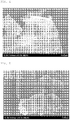
- Plate-shaped artificial graphite (see FIG. 2 ) having an average particle diameter (D 50 ) of 10 ⁇ m was added to a polycarbonate (PC) vessel having a volume of an internal space of 200 ml, but, in this case, the artificial graphite was added such that an amount of the artificial graphite added was 50 vol% based on a total internal volume of the vessel. Thereafter, the vessel was sealed. Vibration (acceleration: 80 G) at a frequency of 60 Hz was applied to the vessel containing the artificial graphite in a vertical direction for 40 minutes to prepare graphene, and an image of the prepared graphene was taken with a scanning electron microscope (SEM) and presented in FIG. 3 .
- SEM scanning electron microscope
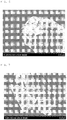
- Graphene was prepared in the same manner as in Example 1 except that the vibration was applied to the vessel for 60 minutes, and an image of the graphene is presented in FIG. 4 .
- Graphene was prepared in the same manner as in Example 1 except that the vibration was applied to the vessel for 10 minutes, and an image of the graphene is presented in FIG. 5 .
- Graphene was prepared in the same manner as in Example 1 except that the frequency of the vibration applied to the vessel was 50 Hz, and an image of the graphene is presented in FIG. 6 .
- Graphene was prepared in the same manner as in Example 1 except that the frequency of the vibration applied to the vessel was 70 Hz, and an image of the graphene is presented in FIG. 7 .
Landscapes
- Chemical & Material Sciences (AREA)
- Organic Chemistry (AREA)
- Engineering & Computer Science (AREA)
- Materials Engineering (AREA)
- Nanotechnology (AREA)
- Inorganic Chemistry (AREA)
- Carbon And Carbon Compounds (AREA)
- Crushing And Grinding (AREA)
Abstract
Description
- This application claims the benefit of Korean Patent Application No.
10-2017-0055639, filed on April 28, 2017 - The present invention relates to a method of preparing graphene, wherein the method of preparing graphene may specifically include preparing graphite; and putting the graphite in the inside of a vessel and applying vibration at a frequency of 55 Hz to 65 Hz to the vessel.
- In general, graphene is a semi-metallic material having a thickness corresponding to a carbon atom layer in which carbon atoms are two-dimensionally arranged in a hexagonal shape and connected by sp2 bonds. The graphene not only has excellent electrical conductivity, but also has structural and chemical stabilities and excellent thermal conductivity. Also, since the graphene is composed of only carbon, a relatively light element, a one-dimensional or two-dimensional nanopattern is easily processed. Above all, the graphene sheet is an inexpensive material, wherein it has excellent price competitiveness in comparison to conventional nanomaterials.
- Due to these electrical, structural, chemical, and economic characteristics, it is predicted that graphene may replace silicon-based semiconductor technology and transparent electrodes in the future, and, particularly, it is expected that graphene may be applied to a flexible electronic device field due to excellent mechanical properties.
- Due to the excellent properties of graphene, various methods capable of more effectively mass-producing graphene from a carbon-based material, such as graphite, have been proposed or studied.
- Among them, a method of preparing graphene by grinding graphite together with a dispersant is used (Korean Patent No.
10-1682007 - Therefore, there is a need for a new method of preparing graphene in which a dispersant is not used.
- (Patent Document 1) Korean Patent No.
10-1682007 - An aspect of the present invention provides a method of preparing graphene in which a dispersant is not used and a process is simplified.
- According to an aspect of the present invention, there is provided a method of preparing graphene which includes: preparing graphite; and putting the graphite in inside of a vessel and applying vibration at a frequency of 55 Hz to 65 Hz to the vessel.
- According to a method of preparing graphene according to an embodiment of the present invention, since the method does not use a dispersant, a grinding phenomenon of graphene may be prevented, and thus, process yield may be improved and a preparation process may be simplified. Therefore, manufacturing costs may be reduced.
- The following drawings attached to the specification illustrate preferred examples of the present invention by example, and serve to enable technical concepts of the present invention to be further understood together with detailed description of the invention given below, and therefore the present invention should not be interpreted only with matters in such drawings.
-
FIG. 1 is a schematic view of a vessel used in a method of preparing graphene of the present invention; -
FIG. 2 is an image of graphite used in an embodiment of the present invention; -
FIG. 3 is an image of graphene which is prepared by a method of preparing graphene according to an example of the present invention; -
FIG. 4 is an image of graphene which is prepared by a method of preparing graphene according to an example of the present invention; -
FIG. 5 is an image of graphene which is prepared by a method of preparing graphene according to an example of the present invention; -
FIG. 6 is an image of graphene which is prepared by a method of preparing graphene according to a comparative example of the present invention; and -
FIG. 7 is an image of graphene which is prepared by a method of preparing graphene according to a comparative example of the present invention. - Hereinafter, the present invention will be described in more detail to allow for a clearer understanding of the present invention.
- It will be understood that words or terms used in the specification and claims shall not be interpreted as the meaning defined in commonly used dictionaries, and it will be further understood that the words or terms should be interpreted as having a meaning that is consistent with their meaning in the context of the relevant art and the technical idea of the invention, based on the principle that an inventor may properly define the meaning of the words or terms to best explain the invention.
- The terminology used herein is for the purpose of describing particular example embodiments only and is not intended to be limiting of the present invention. In the specification, the terms of a singular form may comprise plural forms unless referred to the contrary.
- It will be further understood that the terms "include," "comprise," or "have" when used in this specification, specify the presence of stated features, numbers, steps, elements, or combinations thereof, but do not preclude the presence or addition of one or more other features, numbers, steps, elements, or combinations thereof.
- A method of preparing graphene according to an embodiment of the present invention may include preparing graphite; and putting the graphite in inside of a vessel and applying vibration at a frequency of 55 Hz to 65 Hz to the vessel.
- Since the graphite has a three-dimensional structure in which carbon atom layers are stacked, the graphite may be an arbitrary carbon-based material which may be prepared as graphene having one or more carbon atom layers through exfoliation by an arbitrary physical force such as high speed, high pressure, ultrasonic irradiation, or a shear force.
- In the preparing of the graphene, the graphite may include at least one selected from natural graphite and artificial graphite.
- A shape of the graphite may be any one of an irregular shape, a plate shape, and an expanded shape. Specifically, the shape of the graphite may be a plate shape. In a case in which the shape of the graphite is the plate shape, since the exfoliation of the graphite may be effectively performed by vibration, graphene may be smoothly formed. Thus, graphene having smaller thickness and wider area may be prepared, and, accordingly, graphene with better characteristics and minimized occurrence of defects may be well prepared.
- The graphite may have an average particle diameter (D50) of 5 µm to 30 µm, for example, 5 µm to 20 µm. When the average particle diameter satisfies the above range, a conductive path may be sufficiently secured if the prepared graphene is used in an electrode.
- In the putting of the graphite in the inside of the vessel, the graphite may be added to the inside of the vessel in an amount of 10 vol% to 90 vol%, for example, 50 vol% to 80 vol% based on a total internal volume of the vessel. In a case in which the amount of the graphite added satisfies the above range, the preparation of graphene by collision of graphites may be effectively performed.
- The inside of the vessel may be cylindrical, and, in this case, since a space (dead space), which does not affect the grinding of the graphite, is minimized, process efficiency may be improved.
- The vessel may be a sealed vessel.
- An internal pressure of the vessel to which the graphite is added may be atmospheric pressure. Alternatively, the internal pressure may be 10-2 Hg or less, and may specifically be vacuum. In a case in which the internal pressure of the vessel is 10-2 Hg or less, since collision interference by internal air is somewhat removed, the preparation of the graphene may proceed more smoothly.
- A frequency of the vibration applied to the vessel to which the graphite is added may be in a range of 55 Hz to 65 Hz, for example, 58 Hz to 62 Hz. The graphite is in the form in which a plurality of carbon atom layers are stacked. In the graphite, carbon atoms arranged in the same carbon atom layer are bonded to each other by a double bond, and carbon atoms disposed in different carbon atom layers are bonded to each other by van der Waals bonds that are weaker than the above double bond. Also, the frequency range of 55 Hz to 65 Hz corresponds to a resonance frequency range in which the van der Waals bonds may be broken. Thus, when the vibration within the above frequency range is applied to the graphite, the double bond may be maintained, but the van der Waals bonds may be broken, and thus, graphene may be formed.
- Alternatively, in a case in which vibration outside the above frequency range is applied to the vessel, since the van der Waals bonds are not easily broken, the yield of graphene is decreased.
- A dispersant may not be included in the vessel to which the vibration is applied. Specifically, the graphite may the only material included in the vessel to which the vibration is applied. During the preparation of the graphene, since a separate dispersant is not added with the graphite, a process may be simplified. Since it is not necessary to adjust the type and ratio of the dispersant in consideration of raw materials, such as graphite, used in the preparation of the graphene, the process may be flexibly used depending on the purpose of the graphene. Also, since the problem that the prepared graphene is ground by the dispersant may not occur, graphene with the desired size and shape may be obtained smoothly.
-
FIG. 1 is a schematic view of the vessel used in the method of preparing graphene of the present invention. Referring toFIG. 1 , the vibration may be applied in at least one direction of a vertical direction (a), a horizontal direction (b), and a diagonal direction (c) of avessel 100 in whichgraphite 110 is contained. For example, the vibration may be applied only in the vertical direction (a), or may be applied in the horizontal direction (b) or the diagonal direction (c) following the vertical direction (a), and such a pattern may be repeated. - The vibration may be applied to the vessel for 10 minutes to 60 minutes, for example, 30 minutes to 50 minutes. When the above range is satisfied, graphene may be effectively prepared.
- An acceleration of the vibration may be in a range of 50 G to 100 G, for example, 70 G to 80 G. When the above range is satisfied, since the damage to graphite is less, excellent graphene may be prepared.
- Hereinafter, preferred examples will be provided for better understanding of the present invention. It will be apparent to those skilled in the art that these examples are only provided to illustrate the present invention and various modifications and alterations are possible within the scope and technical spirit of the present invention. Such modifications and alterations fall within the scope of claims included herein.
- Plate-shaped artificial graphite (see
FIG. 2 ) having an average particle diameter (D50) of 10 µm was added to a polycarbonate (PC) vessel having a volume of an internal space of 200 ml, but, in this case, the artificial graphite was added such that an amount of the artificial graphite added was 50 vol% based on a total internal volume of the vessel. Thereafter, the vessel was sealed. Vibration (acceleration: 80 G) at a frequency of 60 Hz was applied to the vessel containing the artificial graphite in a vertical direction for 40 minutes to prepare graphene, and an image of the prepared graphene was taken with a scanning electron microscope (SEM) and presented inFIG. 3 . - Graphene was prepared in the same manner as in Example 1 except that the vibration was applied to the vessel for 60 minutes, and an image of the graphene is presented in
FIG. 4 . - Graphene was prepared in the same manner as in Example 1 except that the vibration was applied to the vessel for 10 minutes, and an image of the graphene is presented in
FIG. 5 . - Graphene was prepared in the same manner as in Example 1 except that the frequency of the vibration applied to the vessel was 50 Hz, and an image of the graphene is presented in
FIG. 6 . - Graphene was prepared in the same manner as in Example 1 except that the frequency of the vibration applied to the vessel was 70 Hz, and an image of the graphene is presented in
FIG. 7 . - Referring to
FIGS. 3 to 7 , it may be confirmed that the graphenes prepared by the preparation methods of Examples 1 to 3 had a better thin-film shape than the graphenes prepared by the preparation methods of Comparative Examples 1 and 2. Thus, it may be confirmed that the application of the vibration at a frequency of 55 Hz to 65 Hz is an important factor for preparing high-quality graphene. - When
FIG. 3 andFIG. 5 are compared, it may be understood that the graphene of Example 1 had a more elaborate thin-film shape than the graphene of Example 3. Thus, it may be confirmed that higher-quality graphene may be formed when the time for applying the vibration as well as the frequency was adjusted to an appropriate level.
Claims (10)
- A method of preparing graphene comprising:preparing graphite; andputting the graphite in inside of a vessel and applying vibration at a frequency of 55 Hz to 65 Hz to the vessel.
- The method of claim 1, wherein the graphite has an average particle diameter (D50) of 5 µm to 30 µm.
- The method of claim 1, wherein the graphite comprises at least one of natural graphite or artificial graphite.
- The method of claim 1, wherein a shape of the graphite is any one of an irregular shape, a plate shape, or an expanded shape.
- The method of claim 1, wherein the putting the graphite in the inside of the vessel comprises:
adding the graphite to the inside of the vessel in an amount of 10 vol% to 90 vol% based on a total internal volume of the vessel. - The method of claim 1, wherein the graphite is only material included in the vessel to which the vibration is applied.
- The method of claim 1, wherein an acceleration of the vibration is in a range of 50 G to 100 G.
- The method of claim 1, wherein the vibration is applied in at least one direction of a vertical direction, a horizontal direction, or a diagonal direction of the vessel.
- The method of claim 1, wherein the vibration is applied for 10 minutes to 60 minutes.
- The method of claim 1, wherein the inside of the vessel is cylindrical.
Priority Applications (1)
| Application Number | Priority Date | Filing Date | Title |
|---|---|---|---|
| PL18791494T PL3533759T3 (en) | 2017-04-28 | 2018-04-10 | Graphene manufacturing method |
Applications Claiming Priority (2)
| Application Number | Priority Date | Filing Date | Title |
|---|---|---|---|
| KR1020170055639A KR102176629B1 (en) | 2017-04-28 | 2017-04-28 | Method for preparing a graphene |
| PCT/KR2018/004213 WO2018199512A1 (en) | 2017-04-28 | 2018-04-10 | Graphene manufacturing method |
Publications (3)
| Publication Number | Publication Date |
|---|---|
| EP3533759A1 true EP3533759A1 (en) | 2019-09-04 |
| EP3533759A4 EP3533759A4 (en) | 2019-12-25 |
| EP3533759B1 EP3533759B1 (en) | 2021-03-24 |
Family
ID=63918988
Family Applications (1)
| Application Number | Title | Priority Date | Filing Date |
|---|---|---|---|
| EP18791494.0A Active EP3533759B1 (en) | 2017-04-28 | 2018-04-10 | Graphene manufacturing method |
Country Status (7)
| Country | Link |
|---|---|
| US (1) | US11254576B2 (en) |
| EP (1) | EP3533759B1 (en) |
| JP (1) | JP7038943B2 (en) |
| KR (1) | KR102176629B1 (en) |
| CN (1) | CN110582463B (en) |
| PL (1) | PL3533759T3 (en) |
| WO (1) | WO2018199512A1 (en) |
Families Citing this family (2)
| Publication number | Priority date | Publication date | Assignee | Title |
|---|---|---|---|---|
| KR102567606B1 (en) | 2023-03-23 | 2023-08-17 | 케미칼링크 주식회사 | Graphene manufacturing apparatus |
| KR102706588B1 (en) | 2023-10-30 | 2024-09-13 | 케미칼링크 주식회사 | Graphene manufacturing apparatus |
Family Cites Families (19)
| Publication number | Priority date | Publication date | Assignee | Title |
|---|---|---|---|---|
| JPH0445535U (en) * | 1990-08-23 | 1992-04-17 | ||
| JP2011219318A (en) * | 2010-04-12 | 2011-11-04 | Idemitsu Kosan Co Ltd | Graphite dispersion liquid, method for manufacturing the same, and graphite powder |
| WO2011162727A1 (en) | 2010-06-25 | 2011-12-29 | National University Of Singapore | Methods of forming graphene by graphite exfoliation |
| US9763287B2 (en) | 2011-11-30 | 2017-09-12 | Michael R. Knox | Single mode microwave device for producing exfoliated graphite |
| CA2795965C (en) | 2012-11-16 | 2016-02-16 | Xerox Corporation | Graphene nano-sheets and methods of making the same |
| GB201302149D0 (en) * | 2013-02-07 | 2013-03-27 | Carbonlab | Graphene production method |
| JP6044934B2 (en) | 2013-02-13 | 2016-12-14 | 国立大学法人名古屋大学 | Method for producing graphene |
| KR101817260B1 (en) * | 2013-02-22 | 2018-01-11 | 삼성전자주식회사 | Graphene-nanomaterial composite, electrode and electric device including the graphene-nanomaterial composite, and method of manufacturing the graphene-nanomaterial composite |
| CN104692363B (en) * | 2013-12-04 | 2017-02-15 | 北京化工大学 | Method for preparing graphene through hypergravity technology |
| WO2015092871A1 (en) | 2013-12-17 | 2015-06-25 | グラフェンプラットフォーム株式会社 | Graphene powder, device for producing graphene powder, method for producing graphene powder, and product using graphene powder |
| KR101682007B1 (en) | 2013-12-26 | 2016-12-02 | 주식회사 엘지화학 | Preparation method of graphene |
| CN103991863B (en) * | 2014-04-28 | 2015-09-09 | 南京航空航天大学 | A kind of utilize controlled vibration to prepare Graphene or graphene oxide method and device |
| JP5688669B1 (en) | 2014-09-09 | 2015-03-25 | グラフェンプラットフォーム株式会社 | Graphite-based carbon material used as graphene precursor, graphene dispersion containing the same, graphene composite, and method for producing the same |
| KR101652965B1 (en) * | 2014-10-24 | 2016-09-01 | (주)티피에스 | Manufacturing method of graphene oxide using ultrasonication and apparatus for the same |
| US11772975B2 (en) * | 2015-12-03 | 2023-10-03 | Global Graphene Group, Inc. | Chemical-free production of graphene materials |
| CN105329886B (en) * | 2015-12-08 | 2017-07-25 | 成都新柯力化工科技有限公司 | A kind of utilize vibrates the method that screw extruder combination shearing stress stripping prepares graphene |
| CN105800545B (en) * | 2016-03-18 | 2019-01-18 | 北京化工大学 | A method of removing preparation two-dimensional material |
| CN106006621B (en) * | 2016-06-13 | 2020-07-07 | 华南理工大学 | A kind of preparation method of multi-layer graphene |
| CN106587036A (en) * | 2016-12-13 | 2017-04-26 | 顾广才 | Low-cost graphene processing device |
-
2017
- 2017-04-28 KR KR1020170055639A patent/KR102176629B1/en active Active
-
2018
- 2018-04-10 US US16/606,962 patent/US11254576B2/en active Active
- 2018-04-10 PL PL18791494T patent/PL3533759T3/en unknown
- 2018-04-10 EP EP18791494.0A patent/EP3533759B1/en active Active
- 2018-04-10 CN CN201880027108.6A patent/CN110582463B/en active Active
- 2018-04-10 WO PCT/KR2018/004213 patent/WO2018199512A1/en not_active Ceased
- 2018-04-10 JP JP2019553880A patent/JP7038943B2/en active Active
Also Published As
| Publication number | Publication date |
|---|---|
| US20200331759A1 (en) | 2020-10-22 |
| EP3533759B1 (en) | 2021-03-24 |
| CN110582463B (en) | 2022-12-23 |
| PL3533759T3 (en) | 2021-07-12 |
| JP7038943B2 (en) | 2022-03-22 |
| CN110582463A (en) | 2019-12-17 |
| KR20180121209A (en) | 2018-11-07 |
| WO2018199512A1 (en) | 2018-11-01 |
| EP3533759A4 (en) | 2019-12-25 |
| US11254576B2 (en) | 2022-02-22 |
| JP2020515500A (en) | 2020-05-28 |
| KR102176629B1 (en) | 2020-11-09 |
Similar Documents
| Publication | Publication Date | Title |
|---|---|---|
| EP2463893B1 (en) | Graphene structure and method of fabricating the same | |
| Saeed et al. | Chemical vapour deposition of graphene—synthesis, characterisation, and applications: a review | |
| KR100973697B1 (en) | AAA laminated graphene-diamond hybrid material through high temperature treatment of diamond and method for producing same | |
| CN102791628B (en) | Carbon material and its manufacturing method | |
| Behranginia et al. | Highly efficient hydrogen evolution reaction using crystalline layered three-dimensional molybdenum disulfides grown on graphene film | |
| US8679976B2 (en) | Method of manufacturing graphene by using germanium layer | |
| CN102373506B (en) | Method for epitaxially growing graphene on SiC substrate, graphene and graphene device | |
| CN102020271B (en) | Method of manufacturing graphene and graphene manufactured by the method | |
| EP2769960B1 (en) | Graphene-nanomaterial composite, electrode and electric device including the same, and method of manufacturing the graphene-nanomaterial composite | |
| İyikanat et al. | Thinning CsPb 2 Br 5 perovskite down to monolayers: Cs-dependent stability | |
| CN110498445B (en) | Layered GaAs, preparation method thereof and GaAs nanosheet stripped therefrom | |
| US11254576B2 (en) | Method of preparing graphene | |
| US8974867B2 (en) | Method for making strip shaped graphene layer | |
| CN102936009A (en) | Method for manufacturing low layer number graphene film on silicon carbide substrate | |
| US12033796B2 (en) | Deposited carbon film on etched silicon for on-chip supercapacitor | |
| John et al. | Stabilizing honeycomb borophene by metal decoration: a computational study | |
| Tung et al. | Scalable realization of conductive graphene films for high-efficiency microwave antennas | |
| US20150344312A1 (en) | Method of manufacturing graphene and conductor | |
| US9704611B2 (en) | Composite structure of graphene and carbon nanotube and method of manufacturing the same | |
| RU2400858C1 (en) | Method of producing graphene nano-ribon fet | |
| Zhuang et al. | Graphene/3C-SiC hybrid nanolaminate | |
| CN104194275A (en) | Preparation method for high-resisting and high-attenuation-resisting backing material | |
| CN106591798A (en) | Method for preparing graphene through non-adhesion inserting layer metal foil stacking | |
| KR101745056B1 (en) | Graphene-powder composite and method of manufacturing the same | |
| Jia et al. | One-pot synthesis of Bi-Ni nanowire and nanocable arrays by coelectrodeposition approach |
Legal Events
| Date | Code | Title | Description |
|---|---|---|---|
| STAA | Information on the status of an ep patent application or granted ep patent |
Free format text: STATUS: THE INTERNATIONAL PUBLICATION HAS BEEN MADE |
|
| PUAI | Public reference made under article 153(3) epc to a published international application that has entered the european phase |
Free format text: ORIGINAL CODE: 0009012 |
|
| STAA | Information on the status of an ep patent application or granted ep patent |
Free format text: STATUS: REQUEST FOR EXAMINATION WAS MADE |
|
| 17P | Request for examination filed |
Effective date: 20190528 |
|
| AK | Designated contracting states |
Kind code of ref document: A1 Designated state(s): AL AT BE BG CH CY CZ DE DK EE ES FI FR GB GR HR HU IE IS IT LI LT LU LV MC MK MT NL NO PL PT RO RS SE SI SK SM TR |
|
| AX | Request for extension of the european patent |
Extension state: BA ME |
|
| A4 | Supplementary search report drawn up and despatched |
Effective date: 20191126 |
|
| RIC1 | Information provided on ipc code assigned before grant |
Ipc: C01B 32/19 20170101AFI20191120BHEP |
|
| DAV | Request for validation of the european patent (deleted) | ||
| DAX | Request for extension of the european patent (deleted) | ||
| GRAP | Despatch of communication of intention to grant a patent |
Free format text: ORIGINAL CODE: EPIDOSNIGR1 |
|
| STAA | Information on the status of an ep patent application or granted ep patent |
Free format text: STATUS: GRANT OF PATENT IS INTENDED |
|
| INTG | Intention to grant announced |
Effective date: 20201216 |
|
| GRAS | Grant fee paid |
Free format text: ORIGINAL CODE: EPIDOSNIGR3 |
|
| GRAA | (expected) grant |
Free format text: ORIGINAL CODE: 0009210 |
|
| STAA | Information on the status of an ep patent application or granted ep patent |
Free format text: STATUS: THE PATENT HAS BEEN GRANTED |
|
| AK | Designated contracting states |
Kind code of ref document: B1 Designated state(s): AL AT BE BG CH CY CZ DE DK EE ES FI FR GB GR HR HU IE IS IT LI LT LU LV MC MK MT NL NO PL PT RO RS SE SI SK SM TR |
|
| REG | Reference to a national code |
Ref country code: GB Ref legal event code: FG4D |
|
| REG | Reference to a national code |
Ref country code: CH Ref legal event code: EP |
|
| REG | Reference to a national code |
Ref country code: IE Ref legal event code: FG4D |
|
| REG | Reference to a national code |
Ref country code: AT Ref legal event code: REF Ref document number: 1374320 Country of ref document: AT Kind code of ref document: T Effective date: 20210415 Ref country code: DE Ref legal event code: R096 Ref document number: 602018014487 Country of ref document: DE |
|
| REG | Reference to a national code |
Ref country code: LT Ref legal event code: MG9D |
|
| PG25 | Lapsed in a contracting state [announced via postgrant information from national office to epo] |
Ref country code: BG Free format text: LAPSE BECAUSE OF FAILURE TO SUBMIT A TRANSLATION OF THE DESCRIPTION OR TO PAY THE FEE WITHIN THE PRESCRIBED TIME-LIMIT Effective date: 20210624 Ref country code: FI Free format text: LAPSE BECAUSE OF FAILURE TO SUBMIT A TRANSLATION OF THE DESCRIPTION OR TO PAY THE FEE WITHIN THE PRESCRIBED TIME-LIMIT Effective date: 20210324 Ref country code: HR Free format text: LAPSE BECAUSE OF FAILURE TO SUBMIT A TRANSLATION OF THE DESCRIPTION OR TO PAY THE FEE WITHIN THE PRESCRIBED TIME-LIMIT Effective date: 20210324 Ref country code: GR Free format text: LAPSE BECAUSE OF FAILURE TO SUBMIT A TRANSLATION OF THE DESCRIPTION OR TO PAY THE FEE WITHIN THE PRESCRIBED TIME-LIMIT Effective date: 20210625 Ref country code: NO Free format text: LAPSE BECAUSE OF FAILURE TO SUBMIT A TRANSLATION OF THE DESCRIPTION OR TO PAY THE FEE WITHIN THE PRESCRIBED TIME-LIMIT Effective date: 20210624 |
|
| PG25 | Lapsed in a contracting state [announced via postgrant information from national office to epo] |
Ref country code: SE Free format text: LAPSE BECAUSE OF FAILURE TO SUBMIT A TRANSLATION OF THE DESCRIPTION OR TO PAY THE FEE WITHIN THE PRESCRIBED TIME-LIMIT Effective date: 20210324 Ref country code: LV Free format text: LAPSE BECAUSE OF FAILURE TO SUBMIT A TRANSLATION OF THE DESCRIPTION OR TO PAY THE FEE WITHIN THE PRESCRIBED TIME-LIMIT Effective date: 20210324 Ref country code: RS Free format text: LAPSE BECAUSE OF FAILURE TO SUBMIT A TRANSLATION OF THE DESCRIPTION OR TO PAY THE FEE WITHIN THE PRESCRIBED TIME-LIMIT Effective date: 20210324 |
|
| REG | Reference to a national code |
Ref country code: NL Ref legal event code: MP Effective date: 20210324 |
|
| REG | Reference to a national code |
Ref country code: AT Ref legal event code: MK05 Ref document number: 1374320 Country of ref document: AT Kind code of ref document: T Effective date: 20210324 |
|
| PG25 | Lapsed in a contracting state [announced via postgrant information from national office to epo] |
Ref country code: NL Free format text: LAPSE BECAUSE OF FAILURE TO SUBMIT A TRANSLATION OF THE DESCRIPTION OR TO PAY THE FEE WITHIN THE PRESCRIBED TIME-LIMIT Effective date: 20210324 |
|
| PG25 | Lapsed in a contracting state [announced via postgrant information from national office to epo] |
Ref country code: CZ Free format text: LAPSE BECAUSE OF FAILURE TO SUBMIT A TRANSLATION OF THE DESCRIPTION OR TO PAY THE FEE WITHIN THE PRESCRIBED TIME-LIMIT Effective date: 20210324 Ref country code: EE Free format text: LAPSE BECAUSE OF FAILURE TO SUBMIT A TRANSLATION OF THE DESCRIPTION OR TO PAY THE FEE WITHIN THE PRESCRIBED TIME-LIMIT Effective date: 20210324 Ref country code: LT Free format text: LAPSE BECAUSE OF FAILURE TO SUBMIT A TRANSLATION OF THE DESCRIPTION OR TO PAY THE FEE WITHIN THE PRESCRIBED TIME-LIMIT Effective date: 20210324 Ref country code: SM Free format text: LAPSE BECAUSE OF FAILURE TO SUBMIT A TRANSLATION OF THE DESCRIPTION OR TO PAY THE FEE WITHIN THE PRESCRIBED TIME-LIMIT Effective date: 20210324 Ref country code: AT Free format text: LAPSE BECAUSE OF FAILURE TO SUBMIT A TRANSLATION OF THE DESCRIPTION OR TO PAY THE FEE WITHIN THE PRESCRIBED TIME-LIMIT Effective date: 20210324 |
|
| PG25 | Lapsed in a contracting state [announced via postgrant information from national office to epo] |
Ref country code: IS Free format text: LAPSE BECAUSE OF FAILURE TO SUBMIT A TRANSLATION OF THE DESCRIPTION OR TO PAY THE FEE WITHIN THE PRESCRIBED TIME-LIMIT Effective date: 20210724 Ref country code: SK Free format text: LAPSE BECAUSE OF FAILURE TO SUBMIT A TRANSLATION OF THE DESCRIPTION OR TO PAY THE FEE WITHIN THE PRESCRIBED TIME-LIMIT Effective date: 20210324 Ref country code: PT Free format text: LAPSE BECAUSE OF FAILURE TO SUBMIT A TRANSLATION OF THE DESCRIPTION OR TO PAY THE FEE WITHIN THE PRESCRIBED TIME-LIMIT Effective date: 20210726 Ref country code: RO Free format text: LAPSE BECAUSE OF FAILURE TO SUBMIT A TRANSLATION OF THE DESCRIPTION OR TO PAY THE FEE WITHIN THE PRESCRIBED TIME-LIMIT Effective date: 20210324 |
|
| PG25 | Lapsed in a contracting state [announced via postgrant information from national office to epo] |
Ref country code: LU Free format text: LAPSE BECAUSE OF NON-PAYMENT OF DUE FEES Effective date: 20210410 |
|
| REG | Reference to a national code |
Ref country code: DE Ref legal event code: R097 Ref document number: 602018014487 Country of ref document: DE |
|
| RAP2 | Party data changed (patent owner data changed or rights of a patent transferred) |
Owner name: LG ENERGY SOLUTION LTD. |
|
| REG | Reference to a national code |
Ref country code: BE Ref legal event code: MM Effective date: 20210430 |
|
| PG25 | Lapsed in a contracting state [announced via postgrant information from national office to epo] |
Ref country code: ES Free format text: LAPSE BECAUSE OF FAILURE TO SUBMIT A TRANSLATION OF THE DESCRIPTION OR TO PAY THE FEE WITHIN THE PRESCRIBED TIME-LIMIT Effective date: 20210324 Ref country code: MC Free format text: LAPSE BECAUSE OF FAILURE TO SUBMIT A TRANSLATION OF THE DESCRIPTION OR TO PAY THE FEE WITHIN THE PRESCRIBED TIME-LIMIT Effective date: 20210324 Ref country code: LI Free format text: LAPSE BECAUSE OF NON-PAYMENT OF DUE FEES Effective date: 20210430 Ref country code: AL Free format text: LAPSE BECAUSE OF FAILURE TO SUBMIT A TRANSLATION OF THE DESCRIPTION OR TO PAY THE FEE WITHIN THE PRESCRIBED TIME-LIMIT Effective date: 20210324 Ref country code: DK Free format text: LAPSE BECAUSE OF FAILURE TO SUBMIT A TRANSLATION OF THE DESCRIPTION OR TO PAY THE FEE WITHIN THE PRESCRIBED TIME-LIMIT Effective date: 20210324 Ref country code: CH Free format text: LAPSE BECAUSE OF NON-PAYMENT OF DUE FEES Effective date: 20210430 |
|
| PLBE | No opposition filed within time limit |
Free format text: ORIGINAL CODE: 0009261 |
|
| STAA | Information on the status of an ep patent application or granted ep patent |
Free format text: STATUS: NO OPPOSITION FILED WITHIN TIME LIMIT |
|
| PG25 | Lapsed in a contracting state [announced via postgrant information from national office to epo] |
Ref country code: SI Free format text: LAPSE BECAUSE OF FAILURE TO SUBMIT A TRANSLATION OF THE DESCRIPTION OR TO PAY THE FEE WITHIN THE PRESCRIBED TIME-LIMIT Effective date: 20210324 |
|
| 26N | No opposition filed |
Effective date: 20220104 |
|
| PG25 | Lapsed in a contracting state [announced via postgrant information from national office to epo] |
Ref country code: IE Free format text: LAPSE BECAUSE OF NON-PAYMENT OF DUE FEES Effective date: 20210410 |
|
| PG25 | Lapsed in a contracting state [announced via postgrant information from national office to epo] |
Ref country code: IS Free format text: LAPSE BECAUSE OF FAILURE TO SUBMIT A TRANSLATION OF THE DESCRIPTION OR TO PAY THE FEE WITHIN THE PRESCRIBED TIME-LIMIT Effective date: 20210724 |
|
| PG25 | Lapsed in a contracting state [announced via postgrant information from national office to epo] |
Ref country code: BE Free format text: LAPSE BECAUSE OF NON-PAYMENT OF DUE FEES Effective date: 20210430 |
|
| PG25 | Lapsed in a contracting state [announced via postgrant information from national office to epo] |
Ref country code: IT Free format text: LAPSE BECAUSE OF FAILURE TO SUBMIT A TRANSLATION OF THE DESCRIPTION OR TO PAY THE FEE WITHIN THE PRESCRIBED TIME-LIMIT Effective date: 20210324 |
|
| REG | Reference to a national code |
Ref country code: DE Ref legal event code: R081 Ref document number: 602018014487 Country of ref document: DE Owner name: LG ENERGY SOLUTION, LTD., KR Free format text: FORMER OWNER: LG CHEM, LTD., SEOUL, KR |
|
| P01 | Opt-out of the competence of the unified patent court (upc) registered |
Effective date: 20230408 |
|
| PG25 | Lapsed in a contracting state [announced via postgrant information from national office to epo] |
Ref country code: CY Free format text: LAPSE BECAUSE OF FAILURE TO SUBMIT A TRANSLATION OF THE DESCRIPTION OR TO PAY THE FEE WITHIN THE PRESCRIBED TIME-LIMIT Effective date: 20210324 |
|
| PG25 | Lapsed in a contracting state [announced via postgrant information from national office to epo] |
Ref country code: HU Free format text: LAPSE BECAUSE OF FAILURE TO SUBMIT A TRANSLATION OF THE DESCRIPTION OR TO PAY THE FEE WITHIN THE PRESCRIBED TIME-LIMIT; INVALID AB INITIO Effective date: 20180410 |
|
| REG | Reference to a national code |
Ref country code: GB Ref legal event code: 732E Free format text: REGISTERED BETWEEN 20230901 AND 20230906 |
|
| PG25 | Lapsed in a contracting state [announced via postgrant information from national office to epo] |
Ref country code: MK Free format text: LAPSE BECAUSE OF FAILURE TO SUBMIT A TRANSLATION OF THE DESCRIPTION OR TO PAY THE FEE WITHIN THE PRESCRIBED TIME-LIMIT Effective date: 20210324 |
|
| PG25 | Lapsed in a contracting state [announced via postgrant information from national office to epo] |
Ref country code: MT Free format text: LAPSE BECAUSE OF FAILURE TO SUBMIT A TRANSLATION OF THE DESCRIPTION OR TO PAY THE FEE WITHIN THE PRESCRIBED TIME-LIMIT Effective date: 20210324 |
|
| PG25 | Lapsed in a contracting state [announced via postgrant information from national office to epo] |
Ref country code: TR Free format text: LAPSE BECAUSE OF FAILURE TO SUBMIT A TRANSLATION OF THE DESCRIPTION OR TO PAY THE FEE WITHIN THE PRESCRIBED TIME-LIMIT Effective date: 20210324 |
|
| PGFP | Annual fee paid to national office [announced via postgrant information from national office to epo] |
Ref country code: GB Payment date: 20260324 Year of fee payment: 9 |
|
| PGFP | Annual fee paid to national office [announced via postgrant information from national office to epo] |
Ref country code: FR Payment date: 20260323 Year of fee payment: 9 |
|
| PGFP | Annual fee paid to national office [announced via postgrant information from national office to epo] |
Ref country code: PL Payment date: 20260324 Year of fee payment: 9 |
|
| PGFP | Annual fee paid to national office [announced via postgrant information from national office to epo] |
Ref country code: DE Payment date: 20260323 Year of fee payment: 9 |