EP3529146B1 - A lighter-than-air vehicle with a hull, a laminate for such hull and a method of production of such laminate - Google Patents
A lighter-than-air vehicle with a hull, a laminate for such hull and a method of production of such laminate Download PDFInfo
- Publication number
- EP3529146B1 EP3529146B1 EP17797868.1A EP17797868A EP3529146B1 EP 3529146 B1 EP3529146 B1 EP 3529146B1 EP 17797868 A EP17797868 A EP 17797868A EP 3529146 B1 EP3529146 B1 EP 3529146B1
- Authority
- EP
- European Patent Office
- Prior art keywords
- lighter
- layer
- air vehicle
- vehicle according
- laminate
- Prior art date
- Legal status (The legal status is an assumption and is not a legal conclusion. Google has not performed a legal analysis and makes no representation as to the accuracy of the status listed.)
- Active
Links
Images







Classifications
-
- B—PERFORMING OPERATIONS; TRANSPORTING
- B32—LAYERED PRODUCTS
- B32B—LAYERED PRODUCTS, i.e. PRODUCTS BUILT-UP OF STRATA OF FLAT OR NON-FLAT, e.g. CELLULAR OR HONEYCOMB, FORM
- B32B5/00—Layered products characterised by the non- homogeneity or physical structure, i.e. comprising a fibrous, filamentary, particulate or foam layer; Layered products characterised by having a layer differing constitutionally or physically in different parts
- B32B5/02—Layered products characterised by the non- homogeneity or physical structure, i.e. comprising a fibrous, filamentary, particulate or foam layer; Layered products characterised by having a layer differing constitutionally or physically in different parts characterised by structural features of a fibrous or filamentary layer
-
- B—PERFORMING OPERATIONS; TRANSPORTING
- B32—LAYERED PRODUCTS
- B32B—LAYERED PRODUCTS, i.e. PRODUCTS BUILT-UP OF STRATA OF FLAT OR NON-FLAT, e.g. CELLULAR OR HONEYCOMB, FORM
- B32B27/00—Layered products comprising a layer of synthetic resin
- B32B27/06—Layered products comprising a layer of synthetic resin as the main or only constituent of a layer, which is next to another layer of the same or of a different material
-
- B—PERFORMING OPERATIONS; TRANSPORTING
- B32—LAYERED PRODUCTS
- B32B—LAYERED PRODUCTS, i.e. PRODUCTS BUILT-UP OF STRATA OF FLAT OR NON-FLAT, e.g. CELLULAR OR HONEYCOMB, FORM
- B32B27/00—Layered products comprising a layer of synthetic resin
- B32B27/06—Layered products comprising a layer of synthetic resin as the main or only constituent of a layer, which is next to another layer of the same or of a different material
- B32B27/08—Layered products comprising a layer of synthetic resin as the main or only constituent of a layer, which is next to another layer of the same or of a different material of synthetic resin
-
- B—PERFORMING OPERATIONS; TRANSPORTING
- B32—LAYERED PRODUCTS
- B32B—LAYERED PRODUCTS, i.e. PRODUCTS BUILT-UP OF STRATA OF FLAT OR NON-FLAT, e.g. CELLULAR OR HONEYCOMB, FORM
- B32B27/00—Layered products comprising a layer of synthetic resin
- B32B27/12—Layered products comprising a layer of synthetic resin next to a fibrous or filamentary layer
-
- B—PERFORMING OPERATIONS; TRANSPORTING
- B32—LAYERED PRODUCTS
- B32B—LAYERED PRODUCTS, i.e. PRODUCTS BUILT-UP OF STRATA OF FLAT OR NON-FLAT, e.g. CELLULAR OR HONEYCOMB, FORM
- B32B27/00—Layered products comprising a layer of synthetic resin
- B32B27/28—Layered products comprising a layer of synthetic resin comprising synthetic resins not wholly covered by any one of the sub-groups B32B27/30 - B32B27/42
- B32B27/281—Layered products comprising a layer of synthetic resin comprising synthetic resins not wholly covered by any one of the sub-groups B32B27/30 - B32B27/42 comprising polyimides
-
- B—PERFORMING OPERATIONS; TRANSPORTING
- B32—LAYERED PRODUCTS
- B32B—LAYERED PRODUCTS, i.e. PRODUCTS BUILT-UP OF STRATA OF FLAT OR NON-FLAT, e.g. CELLULAR OR HONEYCOMB, FORM
- B32B27/00—Layered products comprising a layer of synthetic resin
- B32B27/30—Layered products comprising a layer of synthetic resin comprising vinyl (co)polymers; comprising acrylic (co)polymers
- B32B27/306—Layered products comprising a layer of synthetic resin comprising vinyl (co)polymers; comprising acrylic (co)polymers comprising vinyl acetate or vinyl alcohol (co)polymers
-
- B—PERFORMING OPERATIONS; TRANSPORTING
- B32—LAYERED PRODUCTS
- B32B—LAYERED PRODUCTS, i.e. PRODUCTS BUILT-UP OF STRATA OF FLAT OR NON-FLAT, e.g. CELLULAR OR HONEYCOMB, FORM
- B32B27/00—Layered products comprising a layer of synthetic resin
- B32B27/36—Layered products comprising a layer of synthetic resin comprising polyesters
-
- B—PERFORMING OPERATIONS; TRANSPORTING
- B32—LAYERED PRODUCTS
- B32B—LAYERED PRODUCTS, i.e. PRODUCTS BUILT-UP OF STRATA OF FLAT OR NON-FLAT, e.g. CELLULAR OR HONEYCOMB, FORM
- B32B5/00—Layered products characterised by the non- homogeneity or physical structure, i.e. comprising a fibrous, filamentary, particulate or foam layer; Layered products characterised by having a layer differing constitutionally or physically in different parts
- B32B5/02—Layered products characterised by the non- homogeneity or physical structure, i.e. comprising a fibrous, filamentary, particulate or foam layer; Layered products characterised by having a layer differing constitutionally or physically in different parts characterised by structural features of a fibrous or filamentary layer
- B32B5/024—Woven fabric
-
- B—PERFORMING OPERATIONS; TRANSPORTING
- B32—LAYERED PRODUCTS
- B32B—LAYERED PRODUCTS, i.e. PRODUCTS BUILT-UP OF STRATA OF FLAT OR NON-FLAT, e.g. CELLULAR OR HONEYCOMB, FORM
- B32B7/00—Layered products characterised by the relation between layers; Layered products characterised by the relative orientation of features between layers, or by the relative values of a measurable parameter between layers, i.e. products comprising layers having different physical, chemical or physicochemical properties; Layered products characterised by the interconnection of layers
- B32B7/04—Interconnection of layers
-
- B—PERFORMING OPERATIONS; TRANSPORTING
- B32—LAYERED PRODUCTS
- B32B—LAYERED PRODUCTS, i.e. PRODUCTS BUILT-UP OF STRATA OF FLAT OR NON-FLAT, e.g. CELLULAR OR HONEYCOMB, FORM
- B32B7/00—Layered products characterised by the relation between layers; Layered products characterised by the relative orientation of features between layers, or by the relative values of a measurable parameter between layers, i.e. products comprising layers having different physical, chemical or physicochemical properties; Layered products characterised by the interconnection of layers
- B32B7/04—Interconnection of layers
- B32B7/12—Interconnection of layers using interposed adhesives or interposed materials with bonding properties
-
- B—PERFORMING OPERATIONS; TRANSPORTING
- B64—AIRCRAFT; AVIATION; COSMONAUTICS
- B64B—LIGHTER-THAN AIR AIRCRAFT
- B64B1/00—Lighter-than-air aircraft
- B64B1/58—Arrangements or construction of gas-bags; Filling arrangements
-
- B—PERFORMING OPERATIONS; TRANSPORTING
- B32—LAYERED PRODUCTS
- B32B—LAYERED PRODUCTS, i.e. PRODUCTS BUILT-UP OF STRATA OF FLAT OR NON-FLAT, e.g. CELLULAR OR HONEYCOMB, FORM
- B32B2255/00—Coating on the layer surface
- B32B2255/10—Coating on the layer surface on synthetic resin layer or on natural or synthetic rubber layer
-
- B—PERFORMING OPERATIONS; TRANSPORTING
- B32—LAYERED PRODUCTS
- B32B—LAYERED PRODUCTS, i.e. PRODUCTS BUILT-UP OF STRATA OF FLAT OR NON-FLAT, e.g. CELLULAR OR HONEYCOMB, FORM
- B32B2255/00—Coating on the layer surface
- B32B2255/20—Inorganic coating
- B32B2255/205—Metallic coating
-
- B—PERFORMING OPERATIONS; TRANSPORTING
- B32—LAYERED PRODUCTS
- B32B—LAYERED PRODUCTS, i.e. PRODUCTS BUILT-UP OF STRATA OF FLAT OR NON-FLAT, e.g. CELLULAR OR HONEYCOMB, FORM
- B32B2260/00—Layered product comprising an impregnated, embedded, or bonded layer wherein the layer comprises an impregnation, embedding, or binder material
- B32B2260/02—Composition of the impregnated, bonded or embedded layer
- B32B2260/021—Fibrous or filamentary layer
-
- B—PERFORMING OPERATIONS; TRANSPORTING
- B32—LAYERED PRODUCTS
- B32B—LAYERED PRODUCTS, i.e. PRODUCTS BUILT-UP OF STRATA OF FLAT OR NON-FLAT, e.g. CELLULAR OR HONEYCOMB, FORM
- B32B2260/00—Layered product comprising an impregnated, embedded, or bonded layer wherein the layer comprises an impregnation, embedding, or binder material
- B32B2260/04—Impregnation, embedding, or binder material
- B32B2260/046—Synthetic resin
-
- B—PERFORMING OPERATIONS; TRANSPORTING
- B32—LAYERED PRODUCTS
- B32B—LAYERED PRODUCTS, i.e. PRODUCTS BUILT-UP OF STRATA OF FLAT OR NON-FLAT, e.g. CELLULAR OR HONEYCOMB, FORM
- B32B2262/00—Composition or structural features of fibres which form a fibrous or filamentary layer or are present as additives
- B32B2262/02—Synthetic macromolecular fibres
-
- B—PERFORMING OPERATIONS; TRANSPORTING
- B32—LAYERED PRODUCTS
- B32B—LAYERED PRODUCTS, i.e. PRODUCTS BUILT-UP OF STRATA OF FLAT OR NON-FLAT, e.g. CELLULAR OR HONEYCOMB, FORM
- B32B2307/00—Properties of the layers or laminate
- B32B2307/30—Properties of the layers or laminate having particular thermal properties
- B32B2307/308—Heat stability
-
- B—PERFORMING OPERATIONS; TRANSPORTING
- B32—LAYERED PRODUCTS
- B32B—LAYERED PRODUCTS, i.e. PRODUCTS BUILT-UP OF STRATA OF FLAT OR NON-FLAT, e.g. CELLULAR OR HONEYCOMB, FORM
- B32B2307/00—Properties of the layers or laminate
- B32B2307/30—Properties of the layers or laminate having particular thermal properties
- B32B2307/31—Heat sealable
-
- B—PERFORMING OPERATIONS; TRANSPORTING
- B32—LAYERED PRODUCTS
- B32B—LAYERED PRODUCTS, i.e. PRODUCTS BUILT-UP OF STRATA OF FLAT OR NON-FLAT, e.g. CELLULAR OR HONEYCOMB, FORM
- B32B2307/00—Properties of the layers or laminate
- B32B2307/50—Properties of the layers or laminate having particular mechanical properties
- B32B2307/514—Oriented
- B32B2307/518—Oriented bi-axially
-
- B—PERFORMING OPERATIONS; TRANSPORTING
- B32—LAYERED PRODUCTS
- B32B—LAYERED PRODUCTS, i.e. PRODUCTS BUILT-UP OF STRATA OF FLAT OR NON-FLAT, e.g. CELLULAR OR HONEYCOMB, FORM
- B32B2307/00—Properties of the layers or laminate
- B32B2307/50—Properties of the layers or laminate having particular mechanical properties
- B32B2307/54—Yield strength; Tensile strength
-
- B—PERFORMING OPERATIONS; TRANSPORTING
- B32—LAYERED PRODUCTS
- B32B—LAYERED PRODUCTS, i.e. PRODUCTS BUILT-UP OF STRATA OF FLAT OR NON-FLAT, e.g. CELLULAR OR HONEYCOMB, FORM
- B32B2307/00—Properties of the layers or laminate
- B32B2307/50—Properties of the layers or laminate having particular mechanical properties
- B32B2307/548—Creep
-
- B—PERFORMING OPERATIONS; TRANSPORTING
- B32—LAYERED PRODUCTS
- B32B—LAYERED PRODUCTS, i.e. PRODUCTS BUILT-UP OF STRATA OF FLAT OR NON-FLAT, e.g. CELLULAR OR HONEYCOMB, FORM
- B32B2307/00—Properties of the layers or laminate
- B32B2307/50—Properties of the layers or laminate having particular mechanical properties
- B32B2307/582—Tearability
- B32B2307/5825—Tear resistant
-
- B—PERFORMING OPERATIONS; TRANSPORTING
- B32—LAYERED PRODUCTS
- B32B—LAYERED PRODUCTS, i.e. PRODUCTS BUILT-UP OF STRATA OF FLAT OR NON-FLAT, e.g. CELLULAR OR HONEYCOMB, FORM
- B32B2307/00—Properties of the layers or laminate
- B32B2307/70—Other properties
- B32B2307/71—Resistive to light or to UV
-
- B—PERFORMING OPERATIONS; TRANSPORTING
- B32—LAYERED PRODUCTS
- B32B—LAYERED PRODUCTS, i.e. PRODUCTS BUILT-UP OF STRATA OF FLAT OR NON-FLAT, e.g. CELLULAR OR HONEYCOMB, FORM
- B32B2307/00—Properties of the layers or laminate
- B32B2307/70—Other properties
- B32B2307/712—Weather resistant
-
- B—PERFORMING OPERATIONS; TRANSPORTING
- B32—LAYERED PRODUCTS
- B32B—LAYERED PRODUCTS, i.e. PRODUCTS BUILT-UP OF STRATA OF FLAT OR NON-FLAT, e.g. CELLULAR OR HONEYCOMB, FORM
- B32B2307/00—Properties of the layers or laminate
- B32B2307/70—Other properties
- B32B2307/724—Permeability to gases, adsorption
- B32B2307/7242—Non-permeable
-
- B—PERFORMING OPERATIONS; TRANSPORTING
- B32—LAYERED PRODUCTS
- B32B—LAYERED PRODUCTS, i.e. PRODUCTS BUILT-UP OF STRATA OF FLAT OR NON-FLAT, e.g. CELLULAR OR HONEYCOMB, FORM
- B32B2307/00—Properties of the layers or laminate
- B32B2307/70—Other properties
- B32B2307/724—Permeability to gases, adsorption
- B32B2307/7242—Non-permeable
- B32B2307/7244—Oxygen barrier
-
- B—PERFORMING OPERATIONS; TRANSPORTING
- B32—LAYERED PRODUCTS
- B32B—LAYERED PRODUCTS, i.e. PRODUCTS BUILT-UP OF STRATA OF FLAT OR NON-FLAT, e.g. CELLULAR OR HONEYCOMB, FORM
- B32B2307/00—Properties of the layers or laminate
- B32B2307/70—Other properties
- B32B2307/732—Dimensional properties
-
- B—PERFORMING OPERATIONS; TRANSPORTING
- B32—LAYERED PRODUCTS
- B32B—LAYERED PRODUCTS, i.e. PRODUCTS BUILT-UP OF STRATA OF FLAT OR NON-FLAT, e.g. CELLULAR OR HONEYCOMB, FORM
- B32B2605/00—Vehicles
-
- B—PERFORMING OPERATIONS; TRANSPORTING
- B32—LAYERED PRODUCTS
- B32B—LAYERED PRODUCTS, i.e. PRODUCTS BUILT-UP OF STRATA OF FLAT OR NON-FLAT, e.g. CELLULAR OR HONEYCOMB, FORM
- B32B2605/00—Vehicles
- B32B2605/18—Aircraft
Definitions
- the present invention relates to a lighter-than-air vehicle with a hull, a laminate for such hull and a method of production of such laminate. Especially, it relates to a multi-functional laminate with a reinforcing fibre layer and a gas barrier film.
- Lighter-than-air vehicles have a flexible hull that is filled with a gas, typically Helium.
- a gas typically Helium.
- the vehicle does not have an internal structural framework, it is also called a blimp, where the shape of the airship, typically elongate shape, is maintained by internal pressure.
- the hull has to be made of a laminate that is stable enough to not burst and which also functions as a gas barrier, typically for Helium, He, inside the hull.
- Hull material for high-altitude lighter-than-air vehicles is subject to a number of requirements. It must be light-weight while at the same time provide mechanical stability. It has to chemically resist the aggressive atmosphere at high altitude, especially the ozone content in the air. It must also be UV resistant and be stable and flexible at high and low temperature. Although, materials are known for each of these requirements, the combination thereof implies a severe challenge for the development of hull materials.
- US patent No. 7,354,636 by Lavan et al discloses a laminate with a liquid crystal polymer fibre layer, for example Vectran®, a polyimide (PI) layer secured to the liquid crystal polymer fibre layer; and a polyvinylidene fluoride (PVDF) layer secured to the PI layer.
- the layers are secured to one another with a polyurethane (PU) adhesive.
- Adjacent laminates may be secured to one another by a PVDF cover tape on the exterior surfaces and a structural tape on the interior surfaces.
- the structural tape includes a liquid crystal polymer fibre layer and a PI layer to ensure the integrity of the vehicle.
- An alternative material may include a liquid crystal polymer fibre layer and a PVDF layer disposed on both sides of the liquid crystal polymer fibre layer.
- the weight is around 5 ounces per square yard (170 grams /square meter).
- the tensile strength is around 240 lbs per inch, corresponding to 420 N/cm.
- the laminate comprises Zylon® fibres for its base fabric.
- Zylon® is a trademark name of Toyobo Corporation for rigid-rod lyotropic liquid crystal polymer. In more detail, it is a thermoset liquid-crystalline polyoxazole, poly(p-phenylene-2,6-benzobisoxazole), also called PBO.
- Zylon® has a high specific strength as compared to other commercially available high performance fibres.
- Zylon® yarns also have high resistance to creep elongation and are therefore useful for fibre reinforcement (FR) in the laminate material.
- FR fibre reinforcement
- PBO is also known to be very susceptible to photo-degradation not only by UV but also by visible light. The presence of moisture and oxygen has been found to accelerate the photo-degradation. For these reasons, despite the apparent advantages in terms of high strength and low creep, other challenges go along with this fibre material when used for stratospheric airships.
- hull material is disclosed in US patents US6074722 by Cuccias et al. assigned to Lockheed Martin, wherein the laminate is made of a fibrous layer laminated to plastic resin material.
- the fibrous layer is either a woven material or a multilayer of unidirectional filamentary material.
- Laminates with woven fabrics for airships are also disclosed in US7713890 by Vogt et al. assigned to Milliken & Company. Integration of electronic components in the hull layer is disclosed in US8152093 by Liggett et al. assigned to Lockheed Martin Corporation.
- the article states low temperature flexibility as the most important parameter among various desirable properties, which also includes low gas permeability, minimal weight, good bondability, abrasion resistance, and ozone resistance.
- ethylene vinyl alcohol copolymer EVOH
- EVOH ethylene vinyl alcohol copolymer
- this article mentions instead polyolefin, polyurethane, ethylene propylene diene monomer (EPDM) rubber, and silicone rubber as the most promising polymeric materials for the gas retention layer.
- US2009042037 A discloses a lighter-than-air vehicle, comprising a hull that itself comprises at least one piece of laminate material including a straight ply monofilament yarn layer; a bias ply monofilament yarn layer secured to said straight ply layer; a polymeric film layer secured to said bias ply layer; and a metal coating layer secured to said polymeric film layer.
- Said laminate further comprises polyurethane adhesive disposed between said straight ply layer and said bias ply layer, and between said bias ply layer and said polymeric film layer.
- US2007128963 A discloses a laminated flexible sheet-like composite substrate to be used in lighter-than-air vehicles, comprising, in combination, a fabric layer, a film layer, and an adhesive layer in contact with said fabric layer and said film layer, wherein said fabric layer is comprised of yarns having a relatively high modulus that are arranged in a construction that allows for limited, controlled shifting of yarns during lamination and that provides a tear strength that improves as the tear point moves across multiple yarns.
- the improved laminate hull is optimized with respect to weight relatively to strength as well as minimised gas permeability.
- the laminate for the hull comprises a laminate material as a gas barrier and load bearing structure, the laminate comprising a reinforcing fibre layer and a first Ethylene Vinyl Alcohol, EVOH, film melt-bonded into the fibre layer on one side of the fibre layer, wherein the EVOH is in direct contact with the reinforcing fibre layer.
- a laminate material as a gas barrier and load bearing structure
- the laminate comprising a reinforcing fibre layer and a first Ethylene Vinyl Alcohol, EVOH, film melt-bonded into the fibre layer on one side of the fibre layer, wherein the EVOH is in direct contact with the reinforcing fibre layer.
- the term "direct contact” implies that no layer of other material is disposed between the EVOH layer and the fibre layer.
- the EVOH film is not provided as part of a composite film, where the EVOH is sandwiched between two TPU layers prior to melt-bonding it to the fibre layer.
- the laminate comprises a second EVOH film melt-bonded into the fibre layer on an opposite side of the fibre layer, wherein also the EVOH of the second EVOH film is in direct contact with the reinforcing fibre layer.
- the reinforcing fibre layer is sandwiched between a first and second film made of Ethylene Vinyl Alcohol, EVOH, which is melted into the fibre layer on either side.
- EVOH has very low gas permeability for Helium, which is highly useful. It is UV stable and ozone resistant. Furthermore, it is heat sealable. The prior art statement of poor low temperature flexibility was experimentally not found as a problem when used alone or when used in the laminates that were provided with EVOH as gas barrier layer.
- melt bonding is achieved by heat-pressing the layers together.
- a temperature in the range of 175-180°C is useful.
- the EVOH film not only serves as an adhesive for bonding the layers to each other, but also acts gas barrier. Thus, it serves as a multi-functional layer.
- liquid crystal fibres is a good candidate, for example Poly [p-phenylene-2, 6-benzobisoxazole], PBO.
- Such fibres are marketed as Zylon® fibres, as already explained in the introduction.
- the sized fibres assist in additional bonding between the layers, especially if the sized material is compatible with the adhesive layer.
- sized material are certain PVA (poly-vinyl-acetate) fibres.
- PVA poly-vinyl-acetate
- Another example is fibres marketed under the trade name Exceval. For example sizing of the fibres is achieved by applying the sizing material as a spin finish to the fibres.
- a suitable sizing agent is polyvinyl alcohol.
- Such agent is commercially available, for example from the Japanese company Kuraray® Co, Ltd.
- a hydrophobically modified polyvinyl alcohol with the trade name ExcevalTM from Kuraray® has also been used experimentally with good results.
- Such sizing agents based on polyvinyl alcohol are highly elastic, chemically resistant and turned out to be compatible with EVOH. It was shown experimentally that the polyvinyl alcohol strengthened Zylon® yarns. It also provided better adhesion between the fabric and the EVOH.
- a first set of fibres in the fibre layer are twisted, whereas a second set of fibres in the fibre layer, optionally liquid crystal fibres, is not twisted.
- the two sets of fibres are arranged in different directions.
- a first set of the fibres oriented in a first direction are twisted and a second set of fibres oriented in a second direction are not twisted.
- the first and the second direction have an angle between the directions of at least 30 degrees, for example 45 degrees, optionally perpendicular. Good results have been achieved with twisted fibres that comprise a twist of between 30 and 50 twists per meter.
- the fibres in the second set of fibres are at least two times thicker than the first set of fibres.
- the first set of fibres has a first thread density and the second set of fibres has a second thread density that differs from the first thread density by at least a factor of two.
- the thickness of the EVOH layer is between 10 and 20 microns.
- the laminate comprises a multi-functional weathering layer melt-bonded to the first EVOH layer, wherein the weathering layer comprises a metallized polymer film, having a single metal layer on only one side or, alternatively, on both sides of the polymer film.
- the weathering layer has only a single metal layer, it is advantageously oriented with the metal layer towards the EVOH and melt-bonded onto the first EVOH film layer. This way, it is protected by the outwards-directed polymer, for example polyimide, of the weathering layer.
- Such weathering layer has to protect the hull against the reactive Ozone and other chemical attacks as well as protect the reinforcing fibre layer against UV radiation.
- PBO for example Zylon® degrades very quickly in UV light.
- the weathering layer functions as an additional gas barrier.
- a good candidate for the polymer in the weathering layer is polyimide, PI.
- An example of an alternative material for this purpose is polyvinyl fluoride, PVF.
- the thickness of the weathering layer is between 10 and 20 microns.
- outwards-directed polymer layer also is useful for creating strong seems between adjacent laminates.
- EVOH is a good gas barrier
- the gas tightness can be improved by adding a metallized gas barrier layer to the laminate on the inner side of the hull, which is opposite to the weathering layer.
- the metallised gas barrier is optionally melt-bonded onto the second EVOH film.
- a candidate for the metallised polymer film layer is a polyethylene terephthalate, PET; for example a PET layer with a thickness of between 4 and 8 microns.
- the PET layer has a thickness of between 2 and 6 microns.
- a gas tight and stable laminate could be made with a weight in the range between 90 and 110 gsm.
- the laminate has a weight between 85 and 120 gsm.
- the tenacity-to-weight ratio for the laminate was experimentally found to be above 890 kNm/kg.
- the fibre layer is a woven layer with a warp and a weft.
- the warp and weft optionally, have filaments of different thickness and/or density.
- a non-crimp fibre layer it is composed of a plurality of layers with unidirectional filaments, the different layers having different filament directions, for example perpendicular directions.
- the filaments in one direction are advantageously thicker and/or denser than in the second direction in order to optimise the strength without adding unnecessary weight.
- the laminate includes a numerous layers, the combination of which is multi-functional.
- the functionality includes protection against UV radiation, visible light, ozone, singlet oxygen, and heat.
- the outermost layer also provides thermal management by having a low emissivity.
- first and second values are optionally included.
- FIG. 1 A load-bearing fibrous re-enforcing (FR) layer is sandwiched between two adhesive layers, which are used to bond the FR to further layers, for example, an outer hull layer, in the following called weathering layer, and a potential inner hull layer as a gas barrier.
- the adhesive layers are configures as efficient gas barrier with low gas permeability.
- the adhesive layers are main gas barrier layers such that the total gas permeability of the adhesive layers is less than the gas permeability of the remaining layers.
- This combination of functions of adhesivity and low gas permeability is unconventional.
- gas permeability concerns the gas inside the hull, typically Helium or Hydrogen gas.
- a fibrous load bearing layer is sandwiched between two EVOH layers, which not only work as gas barriers but are also used to take the role of adhesive for potential further layers, especially an outer hull layer, in the following called weathering layer, and a potential inner hull layer as a further gas barrier.
- Further functions of the layers, especially the weathering layer are protection against UV radiation, visible light, ozone, singlet oxygen, and heat.
- FIG. 2 A variation of the design concept of FIG. 1 is shown in FIG. 2 .
- the laminate material does not have any separate inner primary gas barrier layer. Instead the inner surface of the laminate is metallized after the laminate formation.
- Use of EVOH as an adhesive material with low gas permeability and the metallization of the inner surface yields excellent gas barrier properties of the laminate material. Elimination of the gas barrier layer reduces the overall laminate weight, while the tensile strength of the laminate is not affected.
- both balanced and unbalanced structures can be used.
- an unbalanced construction was chosen to provide the different strength required in the longitudinal and the hoop direction of the LTA airship.
- Zylon® yarns with 99 denier, 150 denier, and 250 denier yarn counts were provided by Toyobo Co., Ltd.
- twist factor an optimum degree of twist
- the yarns with 99 denier (110 dtex) and 250 denier (278 dtex) were twisted with various amount of twist (tpi, tpm) and tested for their tensile strength.
- the results tabulated in Table 1 show that the tensile strength of both 99 denier and 250 denier yarns are highest for the Twist Factor of 10 which corresponds to 7.69 tpi (or 303 twists per meter, tpm) for the 99 denier yarn and 4.84 tpi (or 190 tpm) for the 250 denier yarn.
- Table 1 Twist Factor Yarn count, denier turns per inch, tpi Tenacity, gf / denier Strain @ peak load. % avg.
- FIG. 3a A third principle with 90/ ⁇ 45 degree plies is illustrated in FIG. 3c .
- EVOH Ethylene Vinyl alcohol copolymer
- PI polyimide
- PV poly-vinyl fluoride
- the outer weathering layer was metallised, in order to repel radiation and heat.
- the metal coating was directed inwards, which is between the polymer of the weathering layer and the EVOH. This way, the polymer protects the metal against the corrosive environment in the stratosphere.
- the weathering layer is metallized on both sides. If the weathering layer is metallized on both sides or has a metalized side that is exposed to the environment, it is advantageously protected by a corrosion resistance coating.
- an inner gas barrier was added to the opposite side of the multilayer as compared to the weathering layer, where the inner gas barrier layer was a metallised polyethylene terephthalate (PET) film, for example Mylar®.
- PET polyethylene terephthalate
- estimated tensile strengths were 1033 N/cm and 516 N/cm in the warp and weft directions, respectively.
- the warp direction tensile strength of all the samples were found to be close to 1000 N/cm, while the weft of all samples were found to be greater than 500 N/cm.
- Corresponding parameter values in terms of gf/den were in the range of 31-35.
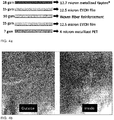
- FIG. 4a shows a specific embodiment of the principle sketch of FIG. 2 .
- the weight of each layer is shown in unit of grams per square meter (gsm), and the thickness in microns is shown to the right.
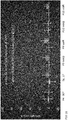
- Photographs of the produced laminates are shown in FIG. 4b .
- the schematic design of this laminate prototype, in the experiment termed P3, comprises an unbalanced cross-ply (two-ply) non crimp fabric as the fibre reinforcement.
- the fabric has 250 denier Zylon® yarns in 90-degree and 0-degree directions.
- the basis weight of the fabric is 48 gsm with yarn density of 30 ypi (30 yarns per inch are approximately 12 yarns per cm) in 90-degree direction and 15 ypi (approximately 6 yarns per cm) in 0-degree direction, thus, yielding more strength in the 90-degree direction than in the 0-degree direction.
- the prototype design includes three layers of EVOH film which provide excellent adhesion and gas barrier properties.
- the estimated and measured weight of this laminate prototype was found to be 111 gsm and 109 gsm, respectively.
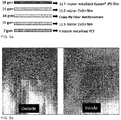
- FIG. 5a shows a specific embodiment of the principle sketch of FIG. 1 .
- the weight of each layer is shown in unit of grams per square meter (gsm), and the thickness is shown to the right.
- Photographs of the produced laminates are shown in FIG. 5b .
- the schematic design of this laminate prototype in the experiment termed P4, comprises an unbalanced cross-ply (two-ply) non crimp fabric as the fibre reinforcement.
- the fabric has 250 denier PBO yarns in longitudinal and cross directions.
- the basis weight of the fabric is 48 gsm with yarn density of 30 ypi (approximately 12 yarns per cm) in 90-degree direction and 15 ypi (approximately 6 yarns per cm) in 0-degree direction.
- the design uses two layers of EVOH film and a bottom layer of a lightweight metallized PET film (Mylar®) which serves as the primary gas barrier layer.
- the estimated and measured weight of this laminate prototype is 103 gsm.
- FIG. 6a shows a specific embodiment of the principle sketch of FIG. 1 .
- the weight of each layer is shown in unit of grams per square meter (gsm), and the thickness is shown to the right.
- Photographs of the produced laminates are shown in FIG. 6b .
- the schematic design of this laminate prototype in the experiment termed P9, comprises an unbalanced woven fabric as the fibre reinforcement.
- the woven fabric has 99 denier Zylon® yarns with 40 tpm twist in warp direction and non-twisted 250 denier Zylon® yarns in weft directions, respectively.
- the basis weight of the fabric is 50 gsm with yarn density of 40 ypi (approximately 16 yarns per cm) in warp direction and 30 ypi (approximately 12 yarns per cm) in weft direction.
- the bottom layer is a lightweight metallized PET film (Mylar®) which serves as the primary gas barrier layer.
- FIG. 7a shows a specific embodiment of the principle sketch of FIG. 1 .
- the weight of each layer is shown in unit of grams per square meter (gsm), and the thickness is shown to the right.
- Photographs of the produced laminates are shown in FIG. 7b .
- prototype P10 comprises an unbalanced woven fabric as the fibre reinforcement.
- prototype P10 uses woven fabric with 99 denier Zylon® yarns with 40 tpm twist in warp direction and non-twisted 99 denier Zylon® yarns in weft directions, respectively.
- the basis weight of the fabric is 50 gsm with yarn density of 40 ypi (approximately 16 yarns per cm) in warp direction and 75 ypi (30 yarns per cm) in weft direction. The higher ypi (yarns per inch) in the weft direction is expected to form a more stable fabric structure with smoother surface texture.
- the warp and weft direction tensile strength of laminate prototypes P4, P9, and P10 are shown in Table 3.
- the tensile strength of one specimen of prototype P3 was found to be 1086 N/cm.
- Table 3 Laminate Prototype Laminate Weight, gsm Tensile Strength, N / cm Tensile Strength, gf / denier Elongation% @ break Warp Weft Warp Weft Warp rp Weft Avg. cv% Avg. cv% Avg. cv% Avg. cv% Avg. cv% Avg. cv% Avg. cv% Avg. cv% Avg. cv% Avg. cv% Avg. cv% Avg. cv% Avg. cv% Avg. cv% Avg.
- the estimated tensile strengths are 1033 N/cm and 516 N/cm in the two directions.
- the measured tensile strength of the prototypes was slightly lower than the estimated values.
- the lower tensile strengths compared to the estimated tensile strength is attributed to manual experimental preparation of laminate prototypes which causes lack of complete alignment of yarns and non-uniform tension in the yarns. These imperfections result in non-uniform load sharing among the load-bearing yarns which ultimately causes pre-mature rupture of specimens during the tensile test. It is believed that the tensile strengths improve and are similar to theoretical values when the laminates are produced in a dedicated large scale production facility. However, it is pointed out that the experimental values are deviating by less than 10% from the theoretical values, which is a very satisfactory result.
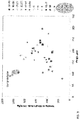
- FIG. 8 A comparison of the strength and weight of the new laminate prototypes and laminate materials developed in other studies in the literature is shown in FIG. 8 .
- the references are found at the end of this section in relation to Table 4.
- the new laminate prototypes are not only significantly lighter than any other laminates with similar tensile strength, but also significantly stronger than any laminate with the similar weight.
- the strength-to-weight ratios of the new laminate prototypes are higher than all the laminates developed in other studies.
- the strength of the laminates P3, P4, P9, and P10 is very high as compared to the weight, making them highly suitable for use in lighter than air vehicles.
- the superior Tenacity-to-weight ratio is believed to be scalable to thicker laminates, which favours the exemplified laminates also over those laminates that have an overall higher tenacity in FIG. 8 .
- Z500-100 means 500d Zylon fiber is used & 100 gsm Z500-100PU-XL 1300 244 533 A2 Z250-94PU-XL 1240 235 528 A3 Z250-79PU-XL 1100 226 487 A4 Z250-47PU-XL 615 193 319 A5 Z250-47PU 610 164 372 A6 Z250-40PU 510 154 331
- B1 Development of High Specific Strength Envelope Material 1 B3, B5 are developed.
- B1, B2, B4 are off the shelf; V:Vectran, PU :Polyurethane, PE:Polyethylene, XL:EVOH, XLA:Aluminum stuck EVOH V-PU-XL 610 1 98 308 B2 V100-31PE-XLA 620 150 413 B3 V-PU-XL 350 111 315 B4 V200-1 02PU-XL 1060 274 387 C1 Development of High Specific Strength Envelope Material 1 A1-A6 are modified into this category; TA:Tedlar with Aluminium-deposit, T: Tedlar, Z: Zylon, PUA: Polyurethane with Aluminum deposit TA-Z250-110PU 1327 198 670 C2 T-Z250-110PU 1313 225 584 D1 Development of High Specific Strength Envelope Material 1 Z250-110PUA-XLD 1337 163 820 D2 Z250110PU-X LD 1350 171 789 E1 Development of High Specific Strength Envelope Material 1 for
- Laminate prototypes P4, P9, and P10 were subjected to two different weathering conditions. In one weathering exposure the prototypes were subjected to thermal exposure for 24 hours in an oven at 80°C. The other weathering exposure involved the accelerated exposure to UV and Visible light (UV-Vis) spectrum of ⁇ 275 to 700 nm for a duration of 170 hours ( ⁇ 60 days of real time exposure at an altitude of 10 km). The prototypes were exposed in an Atlas Ci 3000+ Weather-Ometer (www. atlas-mts.com) with the irradiance level of 1.1 Watts/m2 at 340 nm. During the UV-Vis weathering, the temperature of the prototypes was maintained at about 80°C.
- UV-Vis UV and Visible light
- the specimens were mounted on metal frames and the inner side (Mylar® side) of the samples was covered with two layers of black card paper to prevent any exposure to the inner side.
- the frames were then mounted on round rails inside the weathering chamber of Atlas Ci 3000+ Weather-Ometer such that the outside of the specimens were facing towards the UV and visible light source.
- the tensile strength of the prototypes after each weathering exposure was tested.
- the tear strength of prototype P4 and P9 were measured using the cut-slit tear test method MIL-C-21189.
- Schematic diagram of a tear specimen is shown in FIG. 12 .
- a 1.25 inch cut slit is made at the centre of the specimen perpendicular to the direction of test.
- the specimens are 4 inch wide with a test gauge length of 3 inch between the grips.
- Tear strength of a specimen was calculated by averaging the 5 highest peak loads during a tear test. Three specimens per sample were tested in warp and weft directions. The tear strength results of prototype P4 and P9 are shown in Table 5. Table 5 Laminate Prototype Tear Strength, N Warp Weft Avg. cv% Avg. cv% P4 330.7 9.5 403.5 9.7 P9 290.0 6.6 533.7 5.2
- a 1-inch wide specimen of prototype P4 was subject to a constant load of 1250 N for a duration of 1 day on a MTS Load frame (www.mts.com) with the load frame running in load control mode.
- the gauge length of the test specimen was 3 inch (76 mm).
- the load extension curve of the test is shown in FIG. 13 . After an instantaneous extension of 1.6%, the P4 specimen showed a very small creep extension of 0.02%.
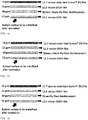
- FIG. 14 and FIG. 15 show specific light-weight embodiments of the principle sketch of FIG. 2 .
- the schematic design of the laminate prototype, experimentally termed P12, illustrated in FIG. 14 uses an unbalanced cross-ply non-crimp fabric or an unbalanced woven fabric as the fibre reinforcement.
- the 48 gsm fabric is made of PBO yarns.
- the inner surface of the laminate (adhesive layer) is metallized after the laminate formation.
- the estimated basis weight of the laminate prototype is 96 gsm.
- FIG. 15 An example of laminate prototype with three-ply fibre reinforcement is described below in relation to FIG. 15 .
- the schematic design of this laminate prototype, experimentally termed P13, illustrated in FIG. 15 uses a three-ply fabric (250 denier yarn) with 15 ypi (approximately 6 yarns per cm) in 90° direction, and 11 ypi (approximately 4 yarns per cm) in +/- 45° directions.
- the three ply is arranged as in FIG. 3c .
- the fibre reinforcement weight is equal to 41 gsm.
- the inner surface of the laminate is metallized after the lamination process.
- the estimated weight the laminate is expected to be 89 gsm.
- the estimated tensile strength of the laminate prototype P13 is estimated to be higher than 1000 N/cm.
- the schematic design of laminate prototype, experimentally termed P14 illustrated in FIG. 16 uses a three-ply fabric (250 denier yarn) with 22 ypi (approximately 9 yarns per cm) in 90° direction, and 16 ypi (approximately 6 yarns per cm) in +/- 45° directions.
- the fibre reinforcement weight is equal to 59 gsm.
- the three ply is arranged as in FIG. 3c .
- the inner surface of the laminate (adhesive layer) is metallized after the lamination process.
- the estimated weight the laminate is expected to be 107 gsm.
- the estimated tensile strength of the laminate prototype P13 is estimated to be higher than 1550 N/cm.
- the strength-to-weight ratio is estimated to be close to 1400 kN.m/Kg, which is vastly higher than all laminate materials developed in other studies.
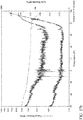
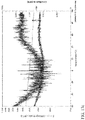
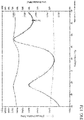
- Dynamic Mechanical Analysis was made on a number of samples for a large temperature range in order to elucidate whether low temperatures could become a problem for the flexibility of the material.
- the temperature range was from -60°C to 100°C.
- the loss modulus, related to the inelastic properties and the energy dissipation, and the storage modulus, related to the elastic properties were measured in units of MPa with a Q800 DMA measurement device commercially provided by TA Instruments, New Castle, DE19720, USA (www.TAInstruments.com).
- the ratio between the two parameters also called Tan Delta, was calculated. Measurements are illustrated in FIG. 17a , 17b and 17c .
- FIG. 17a for a sample of EVOH film with a size of 20 x 7 x 0.0130 mm
- FIG. 17b for a sample of Mylar film with a size of 22 x 7 x 0.0050 mm
- FIG. 17c for a sample for a sample of polyimide (PI) film with a size of 23 x 7 x 0.0130 mm
- FIG. 17d for a sample of the P4 Warp tensile 3 with a size of 19 x 6 x 0.1020 mm.
- PI polyimide
- the new laminate prototypes are not only significantly lighter than prior art laminates with similar tensile strength, but also significantly stronger than prior art laminates with the similar weight.
- the specific strength (strength-to-weight ratio) of the laminate prototypes is significantly higher than the current state-of-the-art.
- the laminates prototypes also have excellent resistance to thermal degradation, photo degradation, chemical resistance, especially against singlet oxygen and ozone, excellent gas barrier properties, and excellent resistance to creep elongation.
- the outermost film/layer also provide excellent thermal management, including low emissivity. Accordingly, the layered material has multi-functional properties at high level.
- the laminate design concept can be used to adjust the laminate materials to lower or higher weight while largely keeping the strength-to-weight ratio.
Landscapes
- Engineering & Computer Science (AREA)
- Mechanical Engineering (AREA)
- Aviation & Aerospace Engineering (AREA)
- Textile Engineering (AREA)
- Laminated Bodies (AREA)
- Helmets And Other Head Coverings (AREA)
- Treatments For Attaching Organic Compounds To Fibrous Goods (AREA)
- Medicines Containing Material From Animals Or Micro-Organisms (AREA)
Description
- The present invention relates to a lighter-than-air vehicle with a hull, a laminate for such hull and a method of production of such laminate. Especially, it relates to a multi-functional laminate with a reinforcing fibre layer and a gas barrier film.
- Lighter-than-air vehicles have a flexible hull that is filled with a gas, typically Helium. In case that the vehicle does not have an internal structural framework, it is also called a blimp, where the shape of the airship, typically elongate shape, is maintained by internal pressure. The hull has to be made of a laminate that is stable enough to not burst and which also functions as a gas barrier, typically for Helium, He, inside the hull.
- Hull material for high-altitude lighter-than-air vehicles is subject to a number of requirements. It must be light-weight while at the same time provide mechanical stability. It has to chemically resist the aggressive atmosphere at high altitude, especially the ozone content in the air. It must also be UV resistant and be stable and flexible at high and low temperature. Although, materials are known for each of these requirements, the combination thereof implies a severe challenge for the development of hull materials.
-
US patent No. 7,354,636 by Lavan et al , assigned to Lockheed Martin Corporation, discloses a laminate with a liquid crystal polymer fibre layer, for example Vectran®, a polyimide (PI) layer secured to the liquid crystal polymer fibre layer; and a polyvinylidene fluoride (PVDF) layer secured to the PI layer. The layers are secured to one another with a polyurethane (PU) adhesive. Adjacent laminates may be secured to one another by a PVDF cover tape on the exterior surfaces and a structural tape on the interior surfaces. The structural tape includes a liquid crystal polymer fibre layer and a PI layer to ensure the integrity of the vehicle. An alternative material may include a liquid crystal polymer fibre layer and a PVDF layer disposed on both sides of the liquid crystal polymer fibre layer. The weight is around 5 ounces per square yard (170 grams /square meter). The tensile strength is around 240 lbs per inch, corresponding to 420 N/cm. - Seeing that the payload capacity is directly related to the weight of the hull, it would be desirable to reduce the weight while keeping or even increasing the strength.
- A better weight to strength ratio is found in the article "Tear propagation of a High-performance Airship Envelope Material" published by Maekawa and Yoshino in Journal of Aircraft Vol. 45, No. 5, Sept-Oct. 2008. The disclosed material had a weight of 157 g/m2 and a tensile strength of 997 N/cm. The laminate comprises Zylon® fibres for its base fabric. Zylon® is a trademark name of Toyobo Corporation for rigid-rod lyotropic liquid crystal polymer. In more detail, it is a thermoset liquid-crystalline polyoxazole, poly(p-phenylene-2,6-benzobisoxazole), also called PBO.
- Zylon® (PBO) has a high specific strength as compared to other commercially available high performance fibres. Zylon® yarns also have high resistance to creep elongation and are therefore useful for fibre reinforcement (FR) in the laminate material. However, PBO is also known to be very susceptible to photo-degradation not only by UV but also by visible light. The presence of moisture and oxygen has been found to accelerate the photo-degradation. For these reasons, despite the apparent advantages in terms of high strength and low creep, other challenges go along with this fibre material when used for stratospheric airships.
- Another hull material is disclosed in US patents
US6074722 by Cuccias et al. assigned to Lockheed Martin, wherein the laminate is made of a fibrous layer laminated to plastic resin material. The fibrous layer is either a woven material or a multilayer of unidirectional filamentary material. Laminates with woven fabrics for airships are also disclosed inUS7713890 by Vogt et al. assigned to Milliken & Company. Integration of electronic components in the hull layer is disclosed inUS8152093 by Liggett et al. assigned to Lockheed Martin Corporation. - Various hull materials are discussed in the article "Material challenges for Lighter-Than-Air Systems in High Altitude Applications" by Zhai and Euler, published by the American Institute of Aeronautics and Astronautics at the AIAA 5th Aviation, Technology, Integration, and Operations Conference (ATIO) 26-28 Sept. 2005, Arlington California. This article discusses various materials for lighter-than-air ballonet materials, in particular materials for the gas retention layer as well as for the load-bearing woven structural layer, which takes up the load/stress. These layers are bonded to each other by an adhesive layer. Adhesive bonding is described with reference to polyurethane, epoxy and acrylic. For the gas retention layer, the article states low temperature flexibility as the most important parameter among various desirable properties, which also includes low gas permeability, minimal weight, good bondability, abrasion resistance, and ozone resistance. In table 5 of this article, ethylene vinyl alcohol copolymer (EVOH) is mentioned as having poor low temperature flexibility, indicating that EVOH is not suitable as ballonet or hull material for lighter-than-air airships at low temperatures, which are typically found at high altitudes. For this apparent reason, this article mentions instead polyolefin, polyurethane, ethylene propylene diene monomer (EPDM) rubber, and silicone rubber as the most promising polymeric materials for the gas retention layer.
- Although, the article by Zhai and Euler indicates EVOH as not useful for high-altitude airships, indications are found that EVOH is useful when used in a sandwich layer together with polyurethanes, which are also regarded as promising material in the above article. Reference is made in this respect to the sales brochure of Eval Europe NV, a subsidiary of Kuraray Co. Ltd., the brochure being found on the Internet site http://eval-americas.com/media/15453/eval%20industrial%20application.pdf. In this brochure, great flexibility and excellent gas barriers are mentioned in addition to suitability at frigid atmospheric conditions for a coextruded film structure where EVOH resin (Eval™) is sandwiched between layers of thermoplastic polyurethane (TPU), the sandwich in short described as TPU/Eval™/TPU. One of the proposed uses of this sandwich film is as material for stratospheric dirigibles. This brochure indicates that a sandwiching of EVOH between two TPU films overcomes the disadvantage of the poor low-temperature flexibility of EVOH itself. However, for a light-weight hull material, which is essential for suitable lifting capacity of airships, the sandwiching of EVOH between TPU layers disadvantageously adds weight to the hull without optimizing the strength of the final hull material.
-
US2009042037 A discloses a lighter-than-air vehicle, comprising a hull that itself comprises at least one piece of laminate material including a straight ply monofilament yarn layer; a bias ply monofilament yarn layer secured to said straight ply layer; a polymeric film layer secured to said bias ply layer; and a metal coating layer secured to said polymeric film layer. Said laminate further comprises polyurethane adhesive disposed between said straight ply layer and said bias ply layer, and between said bias ply layer and said polymeric film layer. -
US2007128963 A discloses a laminated flexible sheet-like composite substrate to be used in lighter-than-air vehicles, comprising, in combination, a fabric layer, a film layer, and an adhesive layer in contact with said fabric layer and said film layer, wherein said fabric layer is comprised of yarns having a relatively high modulus that are arranged in a construction that allows for limited, controlled shifting of yarns during lamination and that provides a tear strength that improves as the tear point moves across multiple yarns. - Accordingly, it appears that an optimum solution for a hull material has not yet been found. As a conclusion, although, numerous proposals are found in the prior art for airship hulls, there is still a steady need for improvements and optimization.
- It is therefore an objective of the invention to provide an improvement in the art. It is a further objective to provide a lighter-than-air vehicle with an improved hull. Specifically, the improved laminate hull is optimized with respect to weight relatively to strength as well as minimised gas permeability. These objectives are achieved with a lighter-than-air vehicle having a hull that comprises a laminate as described in more detail in the following.
- The following abbreviations are used:
- ypi (yarns per inch), 1 inch = 2.54 cm, 1 ypi = 1/(2.54) yarns per cm
- tpi (twist per inch) ; tpm (twists per meter); 1 tpi=39 tpm
- gsm (grams per square meter)
- sqm (square meter)
- UV-Vis weathering - degradation by exposure to UV radiation and/or visible light
- The laminate for the hull comprises a laminate material as a gas barrier and load bearing structure, the laminate comprising a reinforcing fibre layer and a first Ethylene Vinyl Alcohol, EVOH, film melt-bonded into the fibre layer on one side of the fibre layer, wherein the EVOH is in direct contact with the reinforcing fibre layer.
- The term "direct contact" implies that no layer of other material is disposed between the EVOH layer and the fibre layer. Especially, the EVOH film is not provided as part of a composite film, where the EVOH is sandwiched between two TPU layers prior to melt-bonding it to the fibre layer.
- Optionally, the laminate comprises a second EVOH film melt-bonded into the fibre layer on an opposite side of the fibre layer, wherein also the EVOH of the second EVOH film is in direct contact with the reinforcing fibre layer. In this case, the reinforcing fibre layer is sandwiched between a first and second film made of Ethylene Vinyl Alcohol, EVOH, which is melted into the fibre layer on either side.
- EVOH has very low gas permeability for Helium, which is highly useful. It is UV stable and ozone resistant. Furthermore, it is heat sealable. The prior art statement of poor low temperature flexibility was experimentally not found as a problem when used alone or when used in the laminates that were provided with EVOH as gas barrier layer.
- For the hull material, a first EVOH film melt-bonded onto and at least partially into the fibre layer from one side, and optionally a second EVOH film is melt-bonded onto and at least partially into the fibre layer from the opposite side of the fibre layer. Such melt bonding is achieved by heat-pressing the layers together. As an example, a temperature in the range of 175-180°C is useful. In the laminate as described in the following paragraphs, the EVOH film not only serves as an adhesive for bonding the layers to each other, but also acts gas barrier. Thus, it serves as a multi-functional layer.
- In order to provide high strength and light weight of the fibre reinforcement (FR) layer, liquid crystal fibres is a good candidate, for example Poly [p-phenylene-2, 6-benzobisoxazole], PBO. Such fibres are marketed as Zylon® fibres, as already explained in the introduction.
- In order to optimize strength and/or uniformity, it is advantageous in some cases to include at least one of twisted fibres, sized fibres and fibres that are both sized and twisted. Optionally, the sized fibres assist in additional bonding between the layers, especially if the sized material is compatible with the adhesive layer. Examples of sized material are certain PVA (poly-vinyl-acetate) fibres. Another example is fibres marketed under the trade name Exceval. For example sizing of the fibres is achieved by applying the sizing material as a spin finish to the fibres.
- A suitable sizing agent is polyvinyl alcohol. Such agent is commercially available, for example from the Japanese company Kuraray® Co, Ltd. A hydrophobically modified polyvinyl alcohol with the trade name Exceval™ from Kuraray® has also been used experimentally with good results. Such sizing agents based on polyvinyl alcohol are highly elastic, chemically resistant and turned out to be compatible with EVOH. It was shown experimentally that the polyvinyl alcohol strengthened Zylon® yarns. It also provided better adhesion between the fabric and the EVOH.
- For example, a first set of fibres in the fibre layer, optionally liquid crystal fibres, are twisted, whereas a second set of fibres in the fibre layer, optionally liquid crystal fibres, is not twisted.
- In some embodiments, the two sets of fibres are arranged in different directions. For example, a first set of the fibres oriented in a first direction are twisted and a second set of fibres oriented in a second direction are not twisted. For example, the first and the second direction have an angle between the directions of at least 30 degrees, for example 45 degrees, optionally perpendicular. Good results have been achieved with twisted fibres that comprise a twist of between 30 and 50 twists per meter.
- Both balanced and unbalanced fibrous layers are potentially useful. In some embodiments, the fibres in the second set of fibres are at least two times thicker than the first set of fibres. In some embodiments, the first set of fibres has a first thread density and the second set of fibres has a second thread density that differs from the first thread density by at least a factor of two.
- For a lighter-than-air vehicle, where weight is crucial, experimental results were obtained for a fibre layer with a weight of between 40 and 70 g per sqm.
- For example, the thickness of the EVOH layer is between 10 and 20 microns.
- Advantageously, the laminate comprises a multi-functional weathering layer melt-bonded to the first EVOH layer, wherein the weathering layer comprises a metallized polymer film, having a single metal layer on only one side or, alternatively, on both sides of the polymer film. In case that the weathering layer has only a single metal layer, it is advantageously oriented with the metal layer towards the EVOH and melt-bonded onto the first EVOH film layer. This way, it is protected by the outwards-directed polymer, for example polyimide, of the weathering layer. Such weathering layer has to protect the hull against the reactive Ozone and other chemical attacks as well as protect the reinforcing fibre layer against UV radiation. As discussed initially, PBO, for example Zylon® degrades very quickly in UV light. In addition, it functions as an additional gas barrier. A good candidate for the polymer in the weathering layer is polyimide, PI. An example of an alternative material for this purpose is polyvinyl fluoride, PVF. For example, the thickness of the weathering layer is between 10 and 20 microns.
- It is pointed out that the outwards-directed polymer layer also is useful for creating strong seems between adjacent laminates.
- Although, EVOH is a good gas barrier, the gas tightness can be improved by adding a metallized gas barrier layer to the laminate on the inner side of the hull, which is opposite to the weathering layer. For this purpose the metallised gas barrier is optionally melt-bonded onto the second EVOH film. A candidate for the metallised polymer film layer is a polyethylene terephthalate, PET; for example a PET layer with a thickness of between 4 and 8 microns. Optionally, the PET layer has a thickness of between 2 and 6 microns.
- In experiments, it has been shown, as will also be described in greater detail below, that a gas tight and stable laminate could be made with a weight in the range between 90 and 110 gsm. Optionally the laminate has a weight between 85 and 120 gsm. For example, the tenacity-to-weight ratio for the laminate was experimentally found to be above 890 kNm/kg.
- In some embodiments, the fibre layer is a woven layer with a warp and a weft. For elongate blimps, the necessary strength in transverse direction of the hull is higher than in the longitudinal direction. Accordingly, the warp and weft, optionally, have filaments of different thickness and/or density. When using a non-crimp fibre layer, it is composed of a plurality of layers with unidirectional filaments, the different layers having different filament directions, for example perpendicular directions. Also in this case, the filaments in one direction are advantageously thicker and/or denser than in the second direction in order to optimise the strength without adding unnecessary weight.
- It was found that both balanced and unbalanced structures were useful. Selection of balanced or unbalanced structures depends on the purpose. For example a higher strength may be desired in one direction as compared to the other. This is relevant for shape stability of the hull as well as minimization of weight, as unbalanced structures typically have a higher potential for optimized strength/weight ratios, seeing that the force on the fabric due to the elongate hull shape differs in the longitudinal the transverse direction.
- As it appears from the above, the laminate includes a numerous layers, the combination of which is multi-functional. The functionality includes protection against UV radiation, visible light, ozone, singlet oxygen, and heat. The outermost layer also provides thermal management by having a low emissivity.
- For ranges between a first and a second value, the first and second values are optionally included.
- The invention will be explained in more detail with reference to the drawing, where
- FIG. 1
- illustrates a principle sketch for the laminate of the hull material;
- FIG. 2
- illustrates an alternative principle sketch for the laminate of the hull material;
- FIG. 3
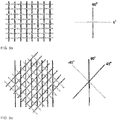
- illustrates a fibre re-enforcement (FR) layer a) non-crimp 2 ply cross-ply and b) woven; c) non-crimp 3 ply;
- FIG. 4
- Prototype P3, a) schematic design and b) photographs of outside and inside;
- FIG. 5
- Prototype P4, a) schematic design and b) photographs of outside and inside;
- FIG. 6
- Prototype P9, a) schematic design and b) photographs of outside and inside;
- FIG. 7
- Prototype P10, a) schematic design and b) photographs of outside and inside;
- FIG. 8
- Comparison of the strength and weight of the new laminate prototypes and laminate materials developed in other studies;
- FIG. 9
- Comparison of the strength-to-weight ratio of the new laminate prototypes and laminate materials developed in other studies;
- FIG. 10
- Comparison of tensile strength of prototypes before and after thermal exposure and accelerated UV-Vis weathering;
- FIG. 11
- Strength loss after thermal exposure and accelerated UV-Vis weathering;
- FIG. 12
- Schematic diagram of a cut-slit tear specimen;
- FIG. 13
- Load extension curve of prototype P4 subjected to a constant load of 1250 N;
- FIG. 14
- Prototype P12, schematic design;
- FIG. 15
- Prototype P13, schematic design;
- FIG. 16
- Prototype P14, schematic design;
- FIG. 17
- illustrates DMA measurements performed for a) EVOH film, b) Mylar film, c) PI film, d) the warp of prototype P4.
- In order to provide a thin and light-weight hull material laminate, which at the same time is gas tight, UV resistant, heat-resistant, and chemically resistant, especially against singlet oxygen and ozone, the following basic scheme was used, which is exemplified in
FIG. 1 . A load-bearing fibrous re-enforcing (FR) layer is sandwiched between two adhesive layers, which are used to bond the FR to further layers, for example, an outer hull layer, in the following called weathering layer, and a potential inner hull layer as a gas barrier. In particular, the adhesive layers are configures as efficient gas barrier with low gas permeability. For example, the adhesive layers are main gas barrier layers such that the total gas permeability of the adhesive layers is less than the gas permeability of the remaining layers. This combination of functions of adhesivity and low gas permeability is unconventional. In contrast thereto, in the prior art, there are specific main gas-barrier layers different from the adhesive layers, where the main gas barriers have a lower gas permeability than the adhesive layers. In this context gas permeability concerns the gas inside the hull, typically Helium or Hydrogen gas. - As an example, illustrated in more detail in
FIG. 1 , a fibrous load bearing layer is sandwiched between two EVOH layers, which not only work as gas barriers but are also used to take the role of adhesive for potential further layers, especially an outer hull layer, in the following called weathering layer, and a potential inner hull layer as a further gas barrier. Further functions of the layers, especially the weathering layer are protection against UV radiation, visible light, ozone, singlet oxygen, and heat. - Although, two EVOH film layers have been used in the optimization process, it is believed that a single EVOH layer melt-bonded into the fibre layer also would be more advantageous than the laminate systems of the prior art.
- A variation of the design concept of
FIG. 1 is shown inFIG. 2 . In this case, the laminate material does not have any separate inner primary gas barrier layer. Instead the inner surface of the laminate is metallized after the laminate formation. Use of EVOH as an adhesive material with low gas permeability and the metallization of the inner surface yields excellent gas barrier properties of the laminate material. Elimination of the gas barrier layer reduces the overall laminate weight, while the tensile strength of the laminate is not affected. - In the following, materials as well as production methods are discussed in relation to experiments that were performed in optimising the hull laminate material.
- In order to simultaneously optimize low weight and high strength, high strength fibres are advantageously used. An example of an advantageous material for the fibrous load-bearing layer was found in crystalline PBO (crystalline polyoxazole, poly(p-phenylene-2,6-benzobisoxazole) fibres, especially of the brand Zylon® because these fibres have a very high strength and specific modulus among the commercially available high performance fibres. These yarns also have high resistance to creep elongation. Zylon® yarns were therefore selected for the fibre reinforcement in the laminate material used in experiments. However, PBO is known to be very susceptible to photo-degradation. The presence of moisture and oxygen has been accelerates photo-degradation, why a protection mechanism had to be found.
- For the fibre reinforcement layer, both balanced and unbalanced structures can be used. In some embodiments, an unbalanced construction was chosen to provide the different strength required in the longitudinal and the hoop direction of the LTA airship.
- Zylon® yarns with 99 denier, 150 denier, and 250 denier yarn counts were provided by Toyobo Co., Ltd. The supplied yarns, which had zero-twist (non-twisted), were tested for their tensile strength. The average tensile strengths of non-twisted 99 denier and 250 denier yarns were 35.5 gf/denier (4.8% cv ; cv=coefficient of variation) and 34.9 gf/denier (3.0% cv), respectively. Recognizing the fact that adding an optimum degree of twist (twist factor) to a yarn provides its highest tensile strength, a series of tests were conducted to determine the optimum twist factor and the corresponding highest tensile strength achievable in 99 denier and 250 denier Zylon® yarns. The Twist Factor (TF), which depends on both the amount of twist (twists per inch, tpi ; twists per meter, tpm ; 1 tpi=39 tpm), and the yarn count are calculated using the formula TF = 0.124 · tpi · dtex0.5 where dtex is the unit for count, also called yarn linear density (1 denier is equal to 0.9 dtex).
- The yarns with 99 denier (110 dtex) and 250 denier (278 dtex) were twisted with various amount of twist (tpi, tpm) and tested for their tensile strength. The results tabulated in Table 1 show that the tensile strength of both 99 denier and 250 denier yarns are highest for the Twist Factor of 10 which corresponds to 7.69 tpi (or 303 twists per meter, tpm) for the 99 denier yarn and 4.84 tpi (or 190 tpm) for the 250 denier yarn.
Table 1 Twist Factor Yarn count, denier turns per inch, tpi Tenacity, gf/denier Strain @ peak load. % avg. cv% avg. cv% 10.00 99 7.69 40.6 3.3 3.9 9.6 13.21 99 10.16 39.9 3.1 3.8 2.1 9.19 250 4.45 37.5 2.7 3.6 ∼0 10.00 250 4.84 39.0 1.5 3.7 3.0 11.55 250 5.59 38.0 3.5 3.7 3.7 13.13 250 6.35 38.9 1.4 3.8 ∼0 - In experiments, for the load bearing layer, several principles were applied. One was a non-crimp 2 ply cross-ply fibre reinforcement layer as illustrated in
FIG. 3a and another a woven fibre reinforcement layer as illustrated inFIG. 3b . A third principle with 90/±45 degree plies is illustrated inFIG. 3c . - EVOH (Ethylene Vinyl alcohol copolymer) has a very low permeability with respect to gas, especially He, which is why it is a good candidate for the adhesive layer.
- A good candidate for the outer weathering layer against the outer atmosphere was found in PI (polyimide), although also other polymers are possible, for example poly-vinyl fluoride (PVF). Advantageously, the outer weathering layer was metallised, in order to repel radiation and heat. In order to protect the metal against damages, the metal coating was directed inwards, which is between the polymer of the weathering layer and the EVOH. This way, the polymer protects the metal against the corrosive environment in the stratosphere.
- Alternatively, the weathering layer is metallized on both sides. If the weathering layer is metallized on both sides or has a metalized side that is exposed to the environment, it is advantageously protected by a corrosion resistance coating.
- In some embodiments, an inner gas barrier was added to the opposite side of the multilayer as compared to the weathering layer, where the inner gas barrier layer was a metallised polyethylene terephthalate (PET) film, for example Mylar®.
- Lamination was done for laminates with a size of 7.5 inch x 7.5 inch (19 cm x 19 cm) under pressure at 285 psi = 1965 kPa between two stationary aluminium plates with a temperature of 175-178°C for 15 minutes, the upper end of the temperature interval showing the best lamination results. These samples for used for tests of various kinds as described in the following.
- However, different combinations of temperature and dwell time are possible. In other experiments, a lower pressure and lower dwell time at higher temperature in the range of 180-200°C was successful. For example, a temperature of 196°C was used for 2 seconds at a pressure of 60 psi = 414 kPa.
- Tensile strength measurements were performed according to the Standard Test Method for Breaking Force and Elongation of Textile Fabrics (Strip Method) ASTM D5035. The tensile strength values are reported in the units of N/cm and gf/denier (mN/tex = 88.3 gf/den). Tensile strength in N/cm represents the sample tenacity per unit width in cm. Tensile strength in gf/denier represents the sample tenacity per total denier of yarns in the loading direction. Tensile strength in gf/denier is used as a normalized metric to determine how of much of yarn strength is translated to laminated/non-laminated fibre reinforcement strength.
- For unbalanced structures, as explained in the following in detail, estimated tensile strengths (calculated based on the yarn strength and fibre reinforcement construction parameters) were 1033 N/cm and 516 N/cm in the warp and weft directions, respectively. In general, the warp direction tensile strength of all the samples (except laminated woven fibre reinforcements) were found to be close to 1000 N/cm, while the weft of all samples were found to be greater than 500 N/cm. Corresponding parameter values in terms of gf/den were in the range of 31-35.
- Experiments were also performed for balanced fabric structures based on Zylon® yarn in the fabric. Low twisted (3-5 tpi) Zylon® yarns of 99 denier and with a density of 46-50 ypi (approximately 18-20 yarn per cm) were used for both the warp and the weft in a plain weave. The Zylon® yarn was sized with polyvinyl alcohol. Tensile strengths were measures in the range of 520 to 615 N/cm and 28 to 34 gf/den in the warp and weft directions, and an elongation at break of 2.9-3.2%. These results are also very good for the purpose, seeing that this were values for the fabric and not the entire laminate. In more detail the following data were measured.
- As a conclusion, it has been demonstrated that both balanced and unbalanced structures with high-strength yarns are very useful.
-
FIG. 4a shows a specific embodiment of the principle sketch ofFIG. 2 . On the left in the figure, the weight of each layer is shown in unit of grams per square meter (gsm), and the thickness in microns is shown to the right. Photographs of the produced laminates are shown inFIG. 4b . - The schematic design of this laminate prototype, in the experiment termed P3, comprises an unbalanced cross-ply (two-ply) non crimp fabric as the fibre reinforcement. The fabric has 250 denier Zylon® yarns in 90-degree and 0-degree directions. The basis weight of the fabric is 48 gsm with yarn density of 30 ypi (30 yarns per inch are approximately 12 yarns per cm) in 90-degree direction and 15 ypi (approximately 6 yarns per cm) in 0-degree direction, thus, yielding more strength in the 90-degree direction than in the 0-degree direction. The prototype design includes three layers of EVOH film which provide excellent adhesion and gas barrier properties. The estimated and measured weight of this laminate prototype was found to be 111 gsm and 109 gsm, respectively.
-
FIG. 5a shows a specific embodiment of the principle sketch ofFIG. 1 . On the left in the figure, the weight of each layer is shown in unit of grams per square meter (gsm), and the thickness is shown to the right. Photographs of the produced laminates are shown inFIG. 5b . - The schematic design of this laminate prototype, in the experiment termed P4, comprises an unbalanced cross-ply (two-ply) non crimp fabric as the fibre reinforcement. The fabric has 250 denier PBO yarns in longitudinal and cross directions. The basis weight of the fabric is 48 gsm with yarn density of 30 ypi (approximately 12 yarns per cm) in 90-degree direction and 15 ypi (approximately 6 yarns per cm) in 0-degree direction. In order to achieve lower laminate weight, the design uses two layers of EVOH film and a bottom layer of a lightweight metallized PET film (Mylar®) which serves as the primary gas barrier layer. The estimated and measured weight of this laminate prototype is 103 gsm.
-
FIG. 6a shows a specific embodiment of the principle sketch ofFIG. 1 . On the left in the figure, the weight of each layer is shown in unit of grams per square meter (gsm), and the thickness is shown to the right. Photographs of the produced laminates are shown inFIG. 6b . - The schematic design of this laminate prototype, in the experiment termed P9, comprises an unbalanced woven fabric as the fibre reinforcement. The woven fabric has 99 denier Zylon® yarns with 40 tpm twist in warp direction and non-twisted 250 denier Zylon® yarns in weft directions, respectively. The basis weight of the fabric is 50 gsm with yarn density of 40 ypi (approximately 16 yarns per cm) in warp direction and 30 ypi (approximately 12 yarns per cm) in weft direction. Like prototype P4, the bottom layer is a lightweight metallized PET film (Mylar®) which serves as the primary gas barrier layer. Although the lamination temperature of 175°C produced satisfactory adhesion between the layers, increasing the lamination temperature to 178°C improved the adhesion between layers. The estimated and measured weights of this laminate prototype were found to be 105 gsm.
-
FIG. 7a shows a specific embodiment of the principle sketch ofFIG. 1 . On the left in the figure, the weight of each layer is shown in unit of grams per square meter (gsm), and the thickness is shown to the right. Photographs of the produced laminates are shown inFIG. 7b . - The schematic design of this laminate prototype, in the experiment termed P10, comprises an unbalanced woven fabric as the fibre reinforcement. Unlike the prototype P9, prototype P10 uses woven fabric with 99 denier Zylon® yarns with 40 tpm twist in warp direction and non-twisted 99 denier Zylon® yarns in weft directions, respectively. The basis weight of the fabric is 50 gsm with yarn density of 40 ypi (approximately 16 yarns per cm) in warp direction and 75 ypi (30 yarns per cm) in weft direction. The higher ypi (yarns per inch) in the weft direction is expected to form a more stable fabric structure with smoother surface texture. In the initial trails, a lamination temperature of 175°C was used, however, this resulted in poor lamination quality with weak adhesion of the metallized PI film. Increasing the lamination temperature to 178 C improved the lamination quality, but the adhesion was not as good as prototype P9 but still satisfactory. The estimated and measured weight of this laminate prototype was found to 105 gsm.
- Helium permeability test results (Table 2) shows that while both the laminate prototypes P3 and P4 have much lower helium permeability than the target value of 132 cc/m2.day.atm, laminate prototype P4 has significantly lower helium permeability compared to that of prototype P3. The lower permeability of prototype P4 is attributed to the presence of the metallized Mylar® layer which also reduced the overall weight of the prototype P4.
Table 2 Laminate Prototype Laminate Weight, gsm Gas (He) Permeability, cc/m2.day.atm P3 109 2 3 P4 1 03 8 - Given the same layering schemes, helium permeability values of prototypes P9 and P10 were expected to be same as that of prototype P4, which with respect to gas tightness were favoured over P3.
- The warp and weft direction tensile strength of laminate prototypes P4, P9, and P10 are shown in Table 3. The tensile strength of one specimen of prototype P3 was found to be 1086 N/cm.
Table 3 Laminate Prototype Laminate Weight, gsm Tensile Strength, N/cm Tensile Strength, gf/denier Elongation% @ break Warp Weft Warp Weft Warp rp Weft Avg. cv% Avg. cv% Avg. cv% Avg. cv% Avg. cv% Avg. cv% P4 103 945.4 5.5 507.8 7.9 32.1 5.7 35.3 5.0 3.17 7.3 2.91 5.0 P9 105 486.9 6.0 970.8 3.7 32.0 5.5 32.9 4.5 3.01 7.8 3.29 8.8 P10 105 476.8 - 956.4 - 30.7 - 33.3 - 2.68 - 3.41 - - The estimated tensile strengths, calculated based on the yarn strength and fibre reinforcement construction parameters, are 1033 N/cm and 516 N/cm in the two directions. The measured tensile strength of the prototypes was slightly lower than the estimated values. The lower tensile strengths compared to the estimated tensile strength is attributed to manual experimental preparation of laminate prototypes which causes lack of complete alignment of yarns and non-uniform tension in the yarns. These imperfections result in non-uniform load sharing among the load-bearing yarns which ultimately causes pre-mature rupture of specimens during the tensile test. It is believed that the tensile strengths improve and are similar to theoretical values when the laminates are produced in a dedicated large scale production facility. However, it is pointed out that the experimental values are deviating by less than 10% from the theoretical values, which is a very satisfactory result.
- A comparison of the strength and weight of the new laminate prototypes and laminate materials developed in other studies in the literature is shown in
FIG. 8 . The references are found at the end of this section in relation to Table 4. - Comparison of strength-to-weight ratio of the new laminate with the laminates developed by other studies is shown in
FIG. 9 . The new laminate prototypes are not only significantly lighter than any other laminates with similar tensile strength, but also significantly stronger than any laminate with the similar weight. The strength-to-weight ratios of the new laminate prototypes are higher than all the laminates developed in other studies. - As it is seen in this comparison, the strength of the laminates P3, P4, P9, and P10 is very high as compared to the weight, making them highly suitable for use in lighter than air vehicles. However, it is pointed out that the superior Tenacity-to-weight ratio, as illustrated in
FIG. 9 , is believed to be scalable to thicker laminates, which favours the exemplified laminates also over those laminates that have an overall higher tenacity inFIG. 8 .Table 4 # Organization / Study Remarks Material Description Tenacity, N/cm Weight, gsm Tenacity - to-Weight Ratio, kN.m/kg A1 Development of High Specific Strength Envelope Material1 "Z500-100" means 500d Zylon fiber is used & 100 gsm Z500-100PU-XL 1300 244 533 A2 Z250-94PU-XL 1240 235 528 A3 Z250-79PU-XL 1100 226 487 A4 Z250-47PU-XL 615 193 319 A5 Z250-47PU 610 164 372 A6 Z250-40PU 510 154 331 B1 Development of High Specific Strength Envelope Material 1 B3, B5 are developed. B1, B2, B4 are off the shelf; V:Vectran, PU :Polyurethane, PE:Polyethylene, XL:EVOH, XLA:Aluminum stuck EVOH V-PU-XL 610 1 98 308 B2 V100-31PE-XLA 620 150 413 B3 V-PU-XL 350 111 315 B4 V200-1 02PU-XL 1060 274 387 C1 Development of High Specific Strength Envelope Material1 A1-A6 are modified into this category; TA:Tedlar with Aluminium-deposit, T: Tedlar, Z: Zylon, PUA: Polyurethane with Aluminum deposit TA-Z250-110PU 1327 198 670 C2 T-Z250-110PU 1313 225 584 D1 Development of High Specific Strength Envelope Material 1 Z250-110PUA-XLD 1337 163 820 D2 Z250110PU-X LD 1350 171 789 E1 Development of High Specific Strength Envelope Material 1 for internal gas bag or light weight use; N:Nylon, K: Kevlar, H:Hydrel; MI: Mictron N30-40PU-X LD 105 78 135 E2 K200-H-MI 450 130 346 E3 V-H-MI 500 104 481 E4 Z-H-MI 440 117 376 F1 Development of High Specific Strength Envelope Material1 Thick Zylon fibers are sandwiched bv two Mylar films Z500-37M 680 161 422 F2 Z1000-74M 1220 198 616 F3 Z1500-111M 1800 236 763 F4 Z 1000-44M 770 170 453 F5 Z 1500-67M 1090 193 565 F6 Z2000-89M 1400 210 667 G1 Japan Aerospace Exploration Agency (JAXA) 2,3,4 Suitable for Operational Airship (overall length: 250 m) AL-PVF + PU + Zylon fabric + PU 1310 203 645 H1 Japan Aerospace Exploration Agency (JAXA) 4,5,6 "Technology Demostrator" Airship (overall length: 150 m) AL-PVF + PU + Zylon fabric + PU 993 157 632 J 1 Cubic Tech Corp 7 Heavy Zylon Noncrimp Fabric Zylon FR (349 gsm) 2833 - - J2 Cubic Tech Corp7 Medium Vectran Noncrimp Fabric Vectran FR (139 gsm) 916 - - K1 Kang et al 2006 8 Vectran woven Fabric Vectran FR (109)+PU coating + PVF + PU film 883 220 401 L1 Gu 20079 Lindstrand HALE Airship Envelope Vectran FR 1460 295 495 L2 Gu 20079 Envelope of Stratespheric Airship (overall length 200 m) na 1360 210 648 M1 Cao & Gao 2009 10 Zylon plain weave (Warp) PBO FR (87) + PVF (52) + PU (25∗2) + PU coating (5-8) 1013 189 536 Zylon plain weave (Weft) 1281 678 N1 Li et al. 201011 Zylon plain weave (Warp) 990 denier PBO (78) + PET (40) + PVF (30) + PU (30) 1578 178 887 Zylon plain weave (Weft) 1356 762 - References to Table 4:
- 1. Kamatsu, K, Sano, M., and Kakuta, Y., "Development of High Specific Strength Envelope Material", AAIA 3rd Annual Aviation Technology, Integration, and Operations (ATIO) Tech, Nov 17-18 2003, Denver, Colorado.
- 2. Sasaki Y., Eguchi, K, Kono T, and Maekawa, S, "Scenario for Development of the SPF Airship Technology Demostrator", The Fifth Stratospheric Platform Systems Workshop, Feb 23-24, 2005, Tokyo, Japan.
- 3. Maekawa S, "On the Design Issue of a Stratospheric Platform Airship Structure" NAL TM-722, National Aerospace Laboratory of Japan, May 2003.
- 4. Maekawa, S and Yoshino, T, "Tear propagation of a High-Performance Airship Envelope Material", Journal of Aircraft, 45 (5), Sept-Oct 2008.
- 5. Nkadate, M., Maekawa, S., Maeda .T, Hiyoshi, M., Kitada, T., and Segawa6, S. "Reinforcement of an Opening for High Strength and Light Weight Envelop Material Zylon" 18th AIAA Lighter-Than-Air Systems Technology Conference, May 4-7 2009, Seattle, Washington, USA.
- 6. Nakadate, M., Maekawa, S., Shibasaki, K, Kurose, T. Kitada, T, and Segawa, S., "Development of High Strength and Light Weight Envelop Material Zylon" 7th International Airship Convention 2008, Friedrichshafen Germany, Oct 9-11 2008.
- 7. High Strength-to-Weight Ratio Non-Woven Technical Fabrics for Aerospace Applications" Cubic Tech Corp, 2009, Mesa, Arizona.
- 8. Kang, W, Suh, Y, and Woo, K.., "Mechanical property characterization of film-fabric laminate for stratospheric airship envelope" Composite Structures, 75, pp.151-155, 2006.
- 9. Gu Z., "Research of Stratospheric Airships Skin Material' Spacecraft Recovery& Remote Sensing, 28(1), pp.62-66, 2007.
- 10. Cao, X, and Gao, C. "Fabrication and Investigation of Envelope Materials for Stratospheric Aircraft with PBO Fabric as Load-carriers" High-tech Fibre & Application, 34(4), pp.0-5, 2009.
- 11. Li B, Xing L, Zhou Z, Jiang S, and Chen X., "Study on Mechanical Properties of High Performance Envelope Materials" Material Engineering, pp.1-5, 2010.
- Laminate prototypes P4, P9, and P10 were subjected to two different weathering conditions. In one weathering exposure the prototypes were subjected to thermal exposure for 24 hours in an oven at 80°C. The other weathering exposure involved the accelerated exposure to UV and Visible light (UV-Vis) spectrum of ∼275 to 700 nm for a duration of 170 hours (∼ 60 days of real time exposure at an altitude of 10 km). The prototypes were exposed in an
Atlas Ci 3000+ Weather-Ometer (www. atlas-mts.com) with the irradiance level of 1.1 Watts/m2 at 340 nm. During the UV-Vis weathering, the temperature of the prototypes was maintained at about 80°C. For UV-Vis weathering the specimens were mounted on metal frames and the inner side (Mylar® side) of the samples was covered with two layers of black card paper to prevent any exposure to the inner side. The frames were then mounted on round rails inside the weathering chamber ofAtlas Ci 3000+ Weather-Ometer such that the outside of the specimens were facing towards the UV and visible light source. - The tensile strength of the prototypes after each weathering exposure was tested. The strength loss in percentage was as defined as follows:

- The average tensile strength before and after thermal exposure and UV-Vis weathering were found to be statistically the same (statistical analysis was performed using t-test at 95% confidence level). It can therefore be concluded that there is negligible degradation caused by thermal and UV-Vis weathering. It is important to notice that the specimens tested before and after weathering exposures were taken from different replicas of the same prototype. Due to the manual preparation of the prototypes, there are inherent variations within a replica as well as variations among the different replicas of the same prototype. Some of the samples exposed to heat showed higher strength compared to corresponding unexposed samples which strongly points to the variability in the specimens within a sample. A graphical comparison of tensile strengths of prototypes P4, P9, and P10 before and after thermal exposure and UV-Vis weathering is shown in
FIG. 10 . - Strength loss % in prototypes P4, P9 and P10 after thermal exposure and accelerated UV-Vis weathering is shown in
FIG. 11 . - The average tensile strength before and after thermal exposure and UV-Vis weathering were found to be statistically same (statistical analysis was performed suing t-test at 95% confidence level). It can therefore be concluded that there is negligible degradation caused by thermal and UV-Vis weathering. It is important to note that the specimens tested before and after weathering exposures were taken from different replicas of the same prototype. Due to the manual preparation of the prototypes, there are inherent variations within a replica as well as variations among the different replicas of the same prototype. Some of the samples exposed to heat showed higher strength compared to corresponding unexposed samples which strongly points to the variability in the specimens within a sample.
- The tear strength of prototype P4 and P9 were measured using the cut-slit tear test method MIL-C-21189. Schematic diagram of a tear specimen is shown in
FIG. 12 . A 1.25 inch cut slit is made at the centre of the specimen perpendicular to the direction of test. The specimens are 4 inch wide with a test gauge length of 3 inch between the grips. - Tear strength of a specimen was calculated by averaging the 5 highest peak loads during a tear test. Three specimens per sample were tested in warp and weft directions. The tear strength results of prototype P4 and P9 are shown in Table 5.
Table 5 Laminate Prototype Tear Strength, N Warp Weft Avg. cv% Avg. cv% P4 330.7 9.5 403.5 9.7 P9 290.0 6.6 533.7 5.2 - The reason for the higher tear in warp direction of prototype P4 compared to prototype P9 is due to the difference in warp yarn denier used to construct the two structures. In prototype P4, 250 denier yarn was used, while in prototype P9, 99 denier was used. It is well established in the literature that the tear load increases by increasing the yarn braking load.
- A 1-inch wide specimen of prototype P4 was subject to a constant load of 1250 N for a duration of 1 day on a MTS Load frame (www.mts.com) with the load frame running in load control mode. The gauge length of the test specimen was 3 inch (76 mm). The load extension curve of the test is shown in
FIG. 13 . After an instantaneous extension of 1.6%, the P4 specimen showed a very small creep extension of 0.02%. -
FIG. 14 and FIG. 15 show specific light-weight embodiments of the principle sketch ofFIG. 2 . - The schematic design of the laminate prototype, experimentally termed P12, illustrated in
FIG. 14 uses an unbalanced cross-ply non-crimp fabric or an unbalanced woven fabric as the fibre reinforcement. The 48 gsm fabric is made of PBO yarns. The inner surface of the laminate (adhesive layer) is metallized after the laminate formation. The estimated basis weight of the laminate prototype is 96 gsm. - Using a three-ply non-crimp fabric instead was expected to not only further reduce the fibre reinforcement weight but also increase the tensile strength of the laminate. An example of laminate prototype with three-ply fibre reinforcement is described below in relation to
FIG. 15 . The schematic design of this laminate prototype, experimentally termed P13, illustrated inFIG. 15 , uses a three-ply fabric (250 denier yarn) with 15 ypi (approximately 6 yarns per cm) in 90° direction, and 11 ypi (approximately 4 yarns per cm) in +/- 45° directions. The three ply is arranged as inFIG. 3c . The fibre reinforcement weight is equal to 41 gsm. Similar to prototype P12, the inner surface of the laminate (adhesive layer) is metallized after the lamination process. The estimated weight the laminate is expected to be 89 gsm. The estimated tensile strength of the laminate prototype P13 is estimated to be higher than 1000 N/cm. - The schematic design of laminate prototype, experimentally termed P14 illustrated in
FIG. 16 uses a three-ply fabric (250 denier yarn) with 22 ypi (approximately 9 yarns per cm) in 90° direction, and 16 ypi (approximately 6 yarns per cm) in +/- 45° directions. The fibre reinforcement weight is equal to 59 gsm. The three ply is arranged as inFIG. 3c . Similar to prototype P12, the inner surface of the laminate (adhesive layer) is metallized after the lamination process. The estimated weight the laminate is expected to be 107 gsm. The estimated tensile strength of the laminate prototype P13 is estimated to be higher than 1550 N/cm. The strength-to-weight ratio is estimated to be close to 1400 kN.m/Kg, which is vastly higher than all laminate materials developed in other studies. - Dynamic Mechanical Analysis (DMA) was made on a number of samples for a large temperature range in order to elucidate whether low temperatures could become a problem for the flexibility of the material. The temperature range was from -60°C to 100°C. In this interval, the loss modulus, related to the inelastic properties and the energy dissipation, and the storage modulus, related to the elastic properties, were measured in units of MPa with a Q800 DMA measurement device commercially provided by TA Instruments, New Castle, DE19720, USA (www.TAInstruments.com). In addition, the ratio between the two parameters, also called Tan Delta, was calculated. Measurements are illustrated in
FIG. 17a ,17b and17c . - The measurements are illustrated in
FIG. 17a for a sample of EVOH film with a size of 20 x 7 x 0.0130 mm,
FIG. 17b for a sample of Mylar film with a size of 22 x 7 x 0.0050 mm,
FIG. 17c for a sample for a sample of polyimide (PI) film with a size of 23 x 7 x 0.0130 mm,
FIG. 17d for a sample of the P4 Warp tensile 3 with a size of 19 x 6 x 0.1020 mm. - The measurements showed that the EVOH, Mylar and PI films are stable at low temperatures without indicating low temperature weakness. For the EVOH film, this is surprising in view of the Zhai and Euler article discussed in the introdction. The Tan Delta curve indicates phase transitions, which for the films at low temperatures seem not to occur. For the laminates of Prototype P4, no evidence of delamination and neither physical damage was observed. It is believed that the heating of the fabric to 180°C during processing leads to a cross-link the polymers into their final state in the fabric, which is advantageous for the stability.
- Light weight laminate materials for the hull of high altitude lighter than air vehicles were developed, which have improved properties. The new laminate prototypes are not only significantly lighter than prior art laminates with similar tensile strength, but also significantly stronger than prior art laminates with the similar weight. The specific strength (strength-to-weight ratio) of the laminate prototypes is significantly higher than the current state-of-the-art. The laminates prototypes also have excellent resistance to thermal degradation, photo degradation, chemical resistance, especially against singlet oxygen and ozone, excellent gas barrier properties, and excellent resistance to creep elongation. Furthermore, the outermost film/layer also provide excellent thermal management, including low emissivity. Accordingly, the layered material has multi-functional properties at high level. The laminate design concept can be used to adjust the laminate materials to lower or higher weight while largely keeping the strength-to-weight ratio.
Claims (22)
- A lighter-than-air vehicle comprising a hull, the hull comprising a laminate material as a gas barrier and load-bearing structure, the laminate material comprising a reinforcing fibre layer and a first Ethylene Vinyl Alcohol, EVOH, film melt-bonded into the fibre layer on one side of the fibre layer, wherein the EVOH is in direct contact with the reinforcing fibre layer.
- A lighter-than-air vehicle according to claim 1, wherein a second EVOH film is melt-bonded into the fibre layer on an opposite side of the fibre layer, wherein the EVOH of the second EVOH film is in direct contact with the reinforcing fibre layer.
- A lighter-than-air vehicle according to claim 1 or 2, wherein the reinforcing fibre layer comprises fibres made of liquid crystal.
- A lighter-than-air vehicle according to claim 3, wherein the liquid crystal is Poly [p-phenylene-2, 6-benzobisoxazole], PBO.
- A lighter than air vehicle according to claim 3 or 4, wherein at least some of the liquid crystal fibres are twisted.
- A lighter-than-air vehicle according to claim 5, wherein the twisted liquid crystal fibres comprise a twist of between 30 and 50 per meter.
- A lighter-than-air vehicle according to claim 5 or 6, wherein the fibre layer comprises at least a first set of fibres and a second set of fibres, wherein the fibres in the first set of fibres are twisted liquid crystal fibres and oriented in a first direction, and wherein the fibres in the second set of fibres are non-twisted liquid crystal fibres and oriented in a second direction that is different from the first direction.
- A lighter-than-air vehicle according to claim 7, wherein the first and the second direction have an angle between the directions of at least 30 degrees.
- A lighter-than-air vehicle according to claim 7 or 8, wherein the first and the second directions are perpendicular.
- A lighter-than-air vehicle according to anyone of the claims 7-9, wherein the first set of fibres has a first thread density and the second set of fibres has a second thread density that differs from the first thread density by at least a factor of two.
- A lighter-than-air vehicle according to any preceding claim, wherein the weight of the fibre layer is between 40 and 70 g per sqm.
- A lighter-than-air vehicle according to any preceding claim, wherein the thickness of the first EVOH film is between 10 and 20 microns.
- A lighter-than-air vehicle according to any of claim 2 or its dependent claims, wherein the thickness of the second EVOH film is between 10 and 20 microns.
- A lighter-than-air vehicle according to any preceding claim, wherein the laminate comprises a weathering layer melt-bonded to the first EVOH film, wherein the weathering layer comprises a metallized polymer film.
- A lighter-than-air vehicle according to claim 14, wherein the metallized polymer film comprises a metal layer melt-bonded by and onto the first EVOH film layer.
- A lighter-than-air vehicle according to claim 14 or 15, wherein the thickness of the weathering layer is between 10 and 20 microns.
- A lighter-than-air vehicle according to any of claim 2 or its dependent claims wherein the laminate comprises a metallized gas barrier layer melt-bonded onto the second EVOH film on the opposite side of the laminate relatively to the weathering layer.
- A lighter-than-air vehicle according to claim 17, wherein the metallized gas barrier layer comprises a metallised polymer film that is melt bonded to the second EVOH film a metal layer on the opposite side of the metallised polymer film relatively to the second EVOH film.
- A lighter-than-air vehicle according to claim 18, wherein the metallised polymer film layer is a polyethylene terephthalate, PET, layer with a thickness of between 4 and 8 microns.
- A lighter-than-air vehicle according to any preceding claim, wherein the laminate has a weight of between 90 and 110 gsm.
- A lighter-than-air vehicle according to any preceding claim, wherein the Tenacity-to-weight ratio for the laminate is above 890 kNm/kg.
- A method of production of a laminate material for a lighter-than-air vehicle according to any preceding claim, the method comprising providing a reinforcing fibre layer and a first EVOH film on one side of the fibre layer and heat-pressing the layers together at a temperature of between 175°C and 200°C for melt-bonding.
Priority Applications (3)
| Application Number | Priority Date | Filing Date | Title |
|---|---|---|---|
| RS20210570A RS61824B1 (en) | 2016-10-24 | 2017-10-23 | A lighter-than-air vehicle with a hull, a laminate for such hull and a method of production of such laminate |
| HRP20210760TT HRP20210760T1 (en) | 2016-10-24 | 2017-10-23 | VEHICLE WITH SHIELD LIGHTER THAN AIR, LAMINATE FOR SUCH ARMOR AND PROCEDURE FOR PRODUCTION OF SUCH LAMINATE |
| SI201730746T SI3529146T1 (en) | 2016-10-24 | 2017-10-23 | A lighter-than-air vehicle with a hull, a laminate for such hull and a method of production of such laminate |
Applications Claiming Priority (2)
| Application Number | Priority Date | Filing Date | Title |
|---|---|---|---|
| US201662411764P | 2016-10-24 | 2016-10-24 | |
| PCT/EP2017/077009 WO2018077806A1 (en) | 2016-10-24 | 2017-10-23 | A lighter-than-air vehicle with a hull, a laminate for such hull and a method of production of such laminate |
Publications (2)
| Publication Number | Publication Date |
|---|---|
| EP3529146A1 EP3529146A1 (en) | 2019-08-28 |
| EP3529146B1 true EP3529146B1 (en) | 2021-02-17 |
Family
ID=60327272
Family Applications (1)
| Application Number | Title | Priority Date | Filing Date |
|---|---|---|---|
| EP17797868.1A Active EP3529146B1 (en) | 2016-10-24 | 2017-10-23 | A lighter-than-air vehicle with a hull, a laminate for such hull and a method of production of such laminate |
Country Status (28)
| Country | Link |
|---|---|
| US (1) | US11285707B2 (en) |
| EP (1) | EP3529146B1 (en) |
| JP (1) | JP7110215B6 (en) |
| KR (1) | KR102431137B1 (en) |
| CN (1) | CN109963779B (en) |
| AU (1) | AU2017351564B2 (en) |
| BR (1) | BR112019008047B1 (en) |
| CA (1) | CA3041392C (en) |
| CL (1) | CL2019001067A1 (en) |
| CO (1) | CO2019004050A2 (en) |
| DK (1) | DK3529146T3 (en) |
| EA (1) | EA036839B1 (en) |
| ES (1) | ES2870528T3 (en) |
| HR (1) | HRP20210760T1 (en) |
| IL (1) | IL266137B (en) |
| MX (1) | MX2019004716A (en) |
| MY (1) | MY193212A (en) |
| NZ (1) | NZ753704A (en) |
| PE (1) | PE20191141A1 (en) |
| PH (1) | PH12019500857A1 (en) |
| PT (1) | PT3529146T (en) |
| RS (1) | RS61824B1 (en) |
| SG (1) | SG11201903319TA (en) |
| SI (1) | SI3529146T1 (en) |
| TN (1) | TN2019000128A1 (en) |
| UA (1) | UA124471C2 (en) |
| WO (1) | WO2018077806A1 (en) |
| ZA (1) | ZA201903039B (en) |
Families Citing this family (2)
| Publication number | Priority date | Publication date | Assignee | Title |
|---|---|---|---|---|
| JP7371095B2 (en) * | 2018-11-26 | 2023-10-30 | スイエ ソシエテ アノニム | Graphene oxide-grafted PBO (Zylon®) fiber, its manufacturing method, and application to airship hulls and lighter-than-air vehicles |
| CN113564937B (en) * | 2021-07-23 | 2023-07-21 | 中国乐凯集团有限公司 | Polyurethane composition for capsule material and its preparation method and application |
Family Cites Families (20)
| Publication number | Priority date | Publication date | Assignee | Title |
|---|---|---|---|---|
| DE3688000T2 (en) * | 1985-05-16 | 1993-10-21 | Chemfab Corp | Flexible composite laminates containing a fluoropolymer. |
| US5082721A (en) * | 1989-02-16 | 1992-01-21 | Smith Novis W Jr | Fabrics for protective garment or cover |
| US6074722A (en) | 1994-09-30 | 2000-06-13 | Lockheed Martin Corporation | Flexible material for use in an inflatable structure |
| MY113596A (en) | 1995-04-11 | 2002-04-30 | Daicel Chem | Barrier composite films and method of producing the same |
| US6914021B2 (en) | 1998-12-07 | 2005-07-05 | Lockheed Martin Corporation | Flexible wall material for use in an inflatable structure |
| JP4588156B2 (en) | 2000-02-29 | 2010-11-24 | 株式会社クラレ | Laminated sheet |
| JP3698666B2 (en) | 2000-10-31 | 2005-09-21 | 東レ・デュポン株式会社 | Composite membrane |
| US20030228821A1 (en) * | 2002-06-06 | 2003-12-11 | Reiyao Zhu | Fire-retardant fabric with improved tear, cut, and abrasion resistance |
| US6979479B2 (en) | 2003-03-14 | 2005-12-27 | Lockheed Martin Corporation | Flexible material for lighter-than-air vehicles |
| US7713890B2 (en) * | 2005-08-23 | 2010-05-11 | Milliken & Company | Flexible sheet-like composites |
| DE602006021322D1 (en) * | 2005-09-21 | 2011-05-26 | Lockheed Corp | METALLIC, FLEXIBLE LAMINATE MATERIAL FOR VEHICLES LIGHTER THAN AIR |
| US20070281570A1 (en) | 2006-05-30 | 2007-12-06 | Liggett Paul E | Reduced weight flexible laminate material for lighter-than-air vehicles |
| US8399080B2 (en) | 2006-06-07 | 2013-03-19 | Toray Plastics (America), Inc. | Lighter than air balloon made from a biaxially oriented polyester film |
| CN101711200B (en) | 2007-04-28 | 2014-12-03 | 卡马尔·阿拉维 | Flexible multilayer material preferably for inflatable balloon casings, and method for producing inflatable casings |
| US8152093B2 (en) | 2008-04-18 | 2012-04-10 | Lockheed Martin Corporation | Laminate structure with electronic devices and method |
| WO2011103452A1 (en) | 2010-02-19 | 2011-08-25 | Toray Plastics (America) , Inc. | Multi-layer high moisture barrier polylactic acid film |
| DE102012006416A1 (en) | 2011-12-09 | 2013-06-13 | Maria Soell High Technology Films Gmbh | Metal-layer-free multilayer film with a low basis weight |
| FR2993284B1 (en) | 2012-07-12 | 2015-02-20 | Cie Chomarat | TEXTILE REINFORCING COMPLEX FOR COMPOSITE PARTS, AND COMPOSITE COMPONENTS INTEGRATING SUCH COMPLEX |
| WO2015112861A2 (en) * | 2014-01-27 | 2015-07-30 | E. I. Du Pont De Nemours And Company | Light weight trauma reducing body armor |
| CN104742469A (en) | 2015-03-18 | 2015-07-01 | 东莞前沿技术研究院 | Capsule material composite layer and aerostat |
-
2017
- 2017-10-23 PE PE2019000837A patent/PE20191141A1/en unknown
- 2017-10-23 MY MYPI2019002251A patent/MY193212A/en unknown
- 2017-10-23 WO PCT/EP2017/077009 patent/WO2018077806A1/en not_active Ceased
- 2017-10-23 EA EA201990896A patent/EA036839B1/en unknown
- 2017-10-23 HR HRP20210760TT patent/HRP20210760T1/en unknown
- 2017-10-23 NZ NZ753704A patent/NZ753704A/en unknown
- 2017-10-23 UA UAA201904960A patent/UA124471C2/en unknown
- 2017-10-23 CA CA3041392A patent/CA3041392C/en active Active
- 2017-10-23 EP EP17797868.1A patent/EP3529146B1/en active Active
- 2017-10-23 DK DK17797868.1T patent/DK3529146T3/en active
- 2017-10-23 MX MX2019004716A patent/MX2019004716A/en unknown
- 2017-10-23 SG SG11201903319TA patent/SG11201903319TA/en unknown
- 2017-10-23 AU AU2017351564A patent/AU2017351564B2/en active Active
- 2017-10-23 ES ES17797868T patent/ES2870528T3/en active Active
- 2017-10-23 JP JP2019542798A patent/JP7110215B6/en active Active
- 2017-10-23 US US16/344,132 patent/US11285707B2/en active Active
- 2017-10-23 KR KR1020197014346A patent/KR102431137B1/en active Active
- 2017-10-23 SI SI201730746T patent/SI3529146T1/en unknown
- 2017-10-23 BR BR112019008047-3A patent/BR112019008047B1/en active IP Right Grant
- 2017-10-23 PT PT177978681T patent/PT3529146T/en unknown
- 2017-10-23 IL IL266137A patent/IL266137B/en unknown
- 2017-10-23 RS RS20210570A patent/RS61824B1/en unknown
- 2017-10-23 TN TNP/2019/000128A patent/TN2019000128A1/en unknown
- 2017-10-23 CN CN201780065830.4A patent/CN109963779B/en active Active
-
2019
- 2019-04-18 CL CL2019001067A patent/CL2019001067A1/en unknown
- 2019-04-22 PH PH12019500857A patent/PH12019500857A1/en unknown
- 2019-04-24 CO CONC2019/0004050A patent/CO2019004050A2/en unknown
- 2019-05-15 ZA ZA2019/03039A patent/ZA201903039B/en unknown
Non-Patent Citations (1)
| Title |
|---|
| None * |
Also Published As
Similar Documents
| Publication | Publication Date | Title |
|---|---|---|
| CA2453255C (en) | Flexible wall material for use in an inflatable structure | |
| AU716786B2 (en) | Flexible material for use in an inflatable structure | |
| US11285707B2 (en) | Lighter-than-air vehicle with a hull, a laminate for such hull and a method of production of such laminate | |
| Vallabh et al. | Ultra-lightweight fiber-reinforced envelope material for high-altitude airship | |
| Seyam et al. | Textile Laminates for High-altitude Airship Hull Materials –a review | |
| McDaniels et al. | High strength-to-weight ratio non-woven technical fabrics for aerospace applications | |
| US20020016118A1 (en) | High-strength lightweight composite fabric with low gas permeability | |
| HK40012491A (en) | A lighter-than-air vehicle with a hull, a laminate for such hull and a method of production of such laminate | |
| HK40012491B (en) | A lighter-than-air vehicle with a hull, a laminate for such hull and a method of production of such laminate | |
| Zhang et al. | Glass/carbon fibre hybrid composite laminates for structural applications in automotive vehicles | |
| DK179553B1 (en) | A lighter-than-air vehicle with a hull, a laminate for such hull and a method of production of such laminate | |
| Chouhan et al. | Mechanical and gas barrier properties of naturally and artificially weathered high-performance fiber reinforced laminated structures for stratospheric airship envelope | |
| Li | Evaluation of laminated hull material for high altitude airship | |
| JP2019533610A5 (en) | A vehicle lighter than air having an outer shell, a laminate for such an outer shell, and a method for manufacturing such a laminate. | |
| KR20140133522A (en) | High density unidirectional fabric for soft ballistics applications | |
| Ugale | Evaluation of components of high altitude stratospheric airship | |
| Niccum et al. | Investigation of Kevlar Fabric-Based Materials for Use with Inflatable Structures. | |
| EP4719763A1 (en) | Lightweight cryogenic vessel, and method for manufacturing same | |
| Alley Jr et al. | Structural materials research for lighter-than-air vehicles | |
| Vadala | Assessment of Materials for Application to Modern Lighter-Than-Air (LTA) Vehicles |
Legal Events
| Date | Code | Title | Description |
|---|---|---|---|
| STAA | Information on the status of an ep patent application or granted ep patent |
Free format text: STATUS: UNKNOWN |
|
| STAA | Information on the status of an ep patent application or granted ep patent |
Free format text: STATUS: THE INTERNATIONAL PUBLICATION HAS BEEN MADE |
|
| PUAI | Public reference made under article 153(3) epc to a published international application that has entered the european phase |
Free format text: ORIGINAL CODE: 0009012 |
|
| STAA | Information on the status of an ep patent application or granted ep patent |
Free format text: STATUS: REQUEST FOR EXAMINATION WAS MADE |
|
| 17P | Request for examination filed |
Effective date: 20190522 |
|
| AK | Designated contracting states |
Kind code of ref document: A1 Designated state(s): AL AT BE BG CH CY CZ DE DK EE ES FI FR GB GR HR HU IE IS IT LI LT LU LV MC MK MT NL NO PL PT RO RS SE SI SK SM TR |
|
| AX | Request for extension of the european patent |
Extension state: BA ME |
|
| RIN1 | Information on inventor provided before grant (corrected) |
Inventor name: BRADFORD, PHILIP DAVID Inventor name: VALLABH, RAHUL Inventor name: SEYAM, ABDEL-FATTAH MOHAMED Inventor name: VESTERGAARD FRANDSEN, MIKKEL Inventor name: LI, ANG Inventor name: KIM, DAVID |
|
| DAV | Request for validation of the european patent (deleted) | ||
| DAX | Request for extension of the european patent (deleted) | ||
| STAA | Information on the status of an ep patent application or granted ep patent |
Free format text: STATUS: EXAMINATION IS IN PROGRESS |
|
| 17Q | First examination report despatched |
Effective date: 20200527 |
|
| REG | Reference to a national code |
Ref country code: HK Ref legal event code: DE Ref document number: 40012491 Country of ref document: HK |
|
| GRAP | Despatch of communication of intention to grant a patent |
Free format text: ORIGINAL CODE: EPIDOSNIGR1 |
|
| STAA | Information on the status of an ep patent application or granted ep patent |
Free format text: STATUS: GRANT OF PATENT IS INTENDED |
|
| INTG | Intention to grant announced |
Effective date: 20200918 |
|
| GRAS | Grant fee paid |
Free format text: ORIGINAL CODE: EPIDOSNIGR3 |
|
| GRAA | (expected) grant |
Free format text: ORIGINAL CODE: 0009210 |
|
| STAA | Information on the status of an ep patent application or granted ep patent |
Free format text: STATUS: THE PATENT HAS BEEN GRANTED |
|
| AK | Designated contracting states |
Kind code of ref document: B1 Designated state(s): AL AT BE BG CH CY CZ DE DK EE ES FI FR GB GR HR HU IE IS IT LI LT LU LV MC MK MT NL NO PL PT RO RS SE SI SK SM TR |
|
| RAP1 | Party data changed (applicant data changed or rights of an application transferred) |
Owner name: SCEYE SA |
|
| REG | Reference to a national code |
Ref country code: GB Ref legal event code: FG4D |
|
| REG | Reference to a national code |
Ref country code: CH Ref legal event code: EP |
|
| REG | Reference to a national code |
Ref country code: DE Ref legal event code: R096 Ref document number: 602017032837 Country of ref document: DE |
|
| REG | Reference to a national code |
Ref country code: AT Ref legal event code: REF Ref document number: 1361132 Country of ref document: AT Kind code of ref document: T Effective date: 20210315 |
|
| REG | Reference to a national code |
Ref country code: IE Ref legal event code: FG4D |
|
| REG | Reference to a national code |
Ref country code: NL Ref legal event code: FP |
|
| REG | Reference to a national code |
Ref country code: SE Ref legal event code: TRGR |
|
| REG | Reference to a national code |
Ref country code: HR Ref legal event code: TUEP Ref document number: P20210760T Country of ref document: HR |
|
| REG | Reference to a national code |
Ref country code: PT Ref legal event code: SC4A Ref document number: 3529146 Country of ref document: PT Date of ref document: 20210518 Kind code of ref document: T Free format text: AVAILABILITY OF NATIONAL TRANSLATION Effective date: 20210512 |
|
| REG | Reference to a national code |
Ref country code: GR Ref legal event code: EP Ref document number: 20210401227 Country of ref document: GR Effective date: 20210614 |
|
| REG | Reference to a national code |
Ref country code: LT Ref legal event code: MG9D |
|
| PG25 | Lapsed in a contracting state [announced via postgrant information from national office to epo] |
Ref country code: LT Free format text: LAPSE BECAUSE OF FAILURE TO SUBMIT A TRANSLATION OF THE DESCRIPTION OR TO PAY THE FEE WITHIN THE PRESCRIBED TIME-LIMIT Effective date: 20210217 Ref country code: BG Free format text: LAPSE BECAUSE OF FAILURE TO SUBMIT A TRANSLATION OF THE DESCRIPTION OR TO PAY THE FEE WITHIN THE PRESCRIBED TIME-LIMIT Effective date: 20210517 Ref country code: NO Free format text: LAPSE BECAUSE OF FAILURE TO SUBMIT A TRANSLATION OF THE DESCRIPTION OR TO PAY THE FEE WITHIN THE PRESCRIBED TIME-LIMIT Effective date: 20210517 Ref country code: FI Free format text: LAPSE BECAUSE OF FAILURE TO SUBMIT A TRANSLATION OF THE DESCRIPTION OR TO PAY THE FEE WITHIN THE PRESCRIBED TIME-LIMIT Effective date: 20210217 |
|
| REG | Reference to a national code |
Ref country code: AT Ref legal event code: MK05 Ref document number: 1361132 Country of ref document: AT Kind code of ref document: T Effective date: 20210217 |
|
| REG | Reference to a national code |
Ref country code: HR Ref legal event code: T1PR Ref document number: P20210760 Country of ref document: HR |
|
| PG25 | Lapsed in a contracting state [announced via postgrant information from national office to epo] |
Ref country code: PL Free format text: LAPSE BECAUSE OF FAILURE TO SUBMIT A TRANSLATION OF THE DESCRIPTION OR TO PAY THE FEE WITHIN THE PRESCRIBED TIME-LIMIT Effective date: 20210217 Ref country code: LV Free format text: LAPSE BECAUSE OF FAILURE TO SUBMIT A TRANSLATION OF THE DESCRIPTION OR TO PAY THE FEE WITHIN THE PRESCRIBED TIME-LIMIT Effective date: 20210217 |
|
| PG25 | Lapsed in a contracting state [announced via postgrant information from national office to epo] |
Ref country code: IS Free format text: LAPSE BECAUSE OF FAILURE TO SUBMIT A TRANSLATION OF THE DESCRIPTION OR TO PAY THE FEE WITHIN THE PRESCRIBED TIME-LIMIT Effective date: 20210617 |
|
| REG | Reference to a national code |
Ref country code: ES Ref legal event code: FG2A Ref document number: 2870528 Country of ref document: ES Kind code of ref document: T3 Effective date: 20211027 |
|
| PG25 | Lapsed in a contracting state [announced via postgrant information from national office to epo] |
Ref country code: AT Free format text: LAPSE BECAUSE OF FAILURE TO SUBMIT A TRANSLATION OF THE DESCRIPTION OR TO PAY THE FEE WITHIN THE PRESCRIBED TIME-LIMIT Effective date: 20210217 Ref country code: SM Free format text: LAPSE BECAUSE OF FAILURE TO SUBMIT A TRANSLATION OF THE DESCRIPTION OR TO PAY THE FEE WITHIN THE PRESCRIBED TIME-LIMIT Effective date: 20210217 Ref country code: CZ Free format text: LAPSE BECAUSE OF FAILURE TO SUBMIT A TRANSLATION OF THE DESCRIPTION OR TO PAY THE FEE WITHIN THE PRESCRIBED TIME-LIMIT Effective date: 20210217 Ref country code: EE Free format text: LAPSE BECAUSE OF FAILURE TO SUBMIT A TRANSLATION OF THE DESCRIPTION OR TO PAY THE FEE WITHIN THE PRESCRIBED TIME-LIMIT Effective date: 20210217 |
|
| REG | Reference to a national code |
Ref country code: HR Ref legal event code: ODRP Ref document number: P20210760 Country of ref document: HR Payment date: 20211005 Year of fee payment: 5 |
|
| REG | Reference to a national code |
Ref country code: DE Ref legal event code: R097 Ref document number: 602017032837 Country of ref document: DE |
|
| PG25 | Lapsed in a contracting state [announced via postgrant information from national office to epo] |
Ref country code: SK Free format text: LAPSE BECAUSE OF FAILURE TO SUBMIT A TRANSLATION OF THE DESCRIPTION OR TO PAY THE FEE WITHIN THE PRESCRIBED TIME-LIMIT Effective date: 20210217 Ref country code: RO Free format text: LAPSE BECAUSE OF FAILURE TO SUBMIT A TRANSLATION OF THE DESCRIPTION OR TO PAY THE FEE WITHIN THE PRESCRIBED TIME-LIMIT Effective date: 20210217 |
|
| PLBE | No opposition filed within time limit |
Free format text: ORIGINAL CODE: 0009261 |
|
| STAA | Information on the status of an ep patent application or granted ep patent |
Free format text: STATUS: NO OPPOSITION FILED WITHIN TIME LIMIT |
|
| 26N | No opposition filed |
Effective date: 20211118 |
|
| PG25 | Lapsed in a contracting state [announced via postgrant information from national office to epo] |
Ref country code: AL Free format text: LAPSE BECAUSE OF FAILURE TO SUBMIT A TRANSLATION OF THE DESCRIPTION OR TO PAY THE FEE WITHIN THE PRESCRIBED TIME-LIMIT Effective date: 20210217 |
|
| PG25 | Lapsed in a contracting state [announced via postgrant information from national office to epo] |
Ref country code: IS Free format text: LAPSE BECAUSE OF FAILURE TO SUBMIT A TRANSLATION OF THE DESCRIPTION OR TO PAY THE FEE WITHIN THE PRESCRIBED TIME-LIMIT Effective date: 20210617 |
|
| REG | Reference to a national code |
Ref country code: BE Ref legal event code: MM Effective date: 20211031 |
|
| PG25 | Lapsed in a contracting state [announced via postgrant information from national office to epo] |
Ref country code: MC Free format text: LAPSE BECAUSE OF FAILURE TO SUBMIT A TRANSLATION OF THE DESCRIPTION OR TO PAY THE FEE WITHIN THE PRESCRIBED TIME-LIMIT Effective date: 20210217 |
|
| PG25 | Lapsed in a contracting state [announced via postgrant information from national office to epo] |
Ref country code: LU Free format text: LAPSE BECAUSE OF NON-PAYMENT OF DUE FEES Effective date: 20211023 Ref country code: BE Free format text: LAPSE BECAUSE OF NON-PAYMENT OF DUE FEES Effective date: 20211031 |
|
| REG | Reference to a national code |
Ref country code: HR Ref legal event code: ODRP Ref document number: P20210760 Country of ref document: HR Payment date: 20221005 Year of fee payment: 6 |
|
| PG25 | Lapsed in a contracting state [announced via postgrant information from national office to epo] |
Ref country code: IE Free format text: LAPSE BECAUSE OF NON-PAYMENT OF DUE FEES Effective date: 20211023 |
|
| REG | Reference to a national code |
Ref country code: DK Ref legal event code: T3 Effective date: 20230306 Ref country code: DK Ref legal event code: EGE Effective date: 20230306 |
|
| PG25 | Lapsed in a contracting state [announced via postgrant information from national office to epo] |
Ref country code: CY Free format text: LAPSE BECAUSE OF FAILURE TO SUBMIT A TRANSLATION OF THE DESCRIPTION OR TO PAY THE FEE WITHIN THE PRESCRIBED TIME-LIMIT Effective date: 20210217 |
|
| PG25 | Lapsed in a contracting state [announced via postgrant information from national office to epo] |
Ref country code: HU Free format text: LAPSE BECAUSE OF FAILURE TO SUBMIT A TRANSLATION OF THE DESCRIPTION OR TO PAY THE FEE WITHIN THE PRESCRIBED TIME-LIMIT; INVALID AB INITIO Effective date: 20171023 |
|
| REG | Reference to a national code |
Ref country code: HR Ref legal event code: ODRP Ref document number: P20210760 Country of ref document: HR Payment date: 20231006 Year of fee payment: 7 |
|
| PG25 | Lapsed in a contracting state [announced via postgrant information from national office to epo] |
Ref country code: MT Free format text: LAPSE BECAUSE OF FAILURE TO SUBMIT A TRANSLATION OF THE DESCRIPTION OR TO PAY THE FEE WITHIN THE PRESCRIBED TIME-LIMIT Effective date: 20210217 |
|
| REG | Reference to a national code |
Ref country code: HR Ref legal event code: ODRP Ref document number: P20210760 Country of ref document: HR Payment date: 20241007 Year of fee payment: 8 |
|
| REG | Reference to a national code |
Ref country code: HR Ref legal event code: ODRP Ref document number: P20210760 Country of ref document: HR Payment date: 20251010 Year of fee payment: 9 |
|
| PGFP | Annual fee paid to national office [announced via postgrant information from national office to epo] |
Ref country code: SI Payment date: 20250930 Year of fee payment: 9 |
|
| REG | Reference to a national code |
Ref country code: CH Ref legal event code: U11 Free format text: ST27 STATUS EVENT CODE: U-0-0-U10-U11 (AS PROVIDED BY THE NATIONAL OFFICE) Effective date: 20251101 |
|
| PGFP | Annual fee paid to national office [announced via postgrant information from national office to epo] |
Ref country code: NL Payment date: 20251026 Year of fee payment: 9 |
|
| PGFP | Annual fee paid to national office [announced via postgrant information from national office to epo] |
Ref country code: PT Payment date: 20251006 Year of fee payment: 9 |
|
| PGFP | Annual fee paid to national office [announced via postgrant information from national office to epo] |
Ref country code: DE Payment date: 20251029 Year of fee payment: 9 |
|
| PGFP | Annual fee paid to national office [announced via postgrant information from national office to epo] |
Ref country code: GB Payment date: 20251027 Year of fee payment: 9 |
|
| PGFP | Annual fee paid to national office [announced via postgrant information from national office to epo] |
Ref country code: MK Payment date: 20251003 Year of fee payment: 9 |
|
| PGFP | Annual fee paid to national office [announced via postgrant information from national office to epo] |
Ref country code: DK Payment date: 20251027 Year of fee payment: 9 Ref country code: IT Payment date: 20251021 Year of fee payment: 9 |
|
| PGFP | Annual fee paid to national office [announced via postgrant information from national office to epo] |
Ref country code: FR Payment date: 20251027 Year of fee payment: 9 Ref country code: HR Payment date: 20251010 Year of fee payment: 9 |
|
| PGFP | Annual fee paid to national office [announced via postgrant information from national office to epo] |
Ref country code: TR Payment date: 20251007 Year of fee payment: 9 Ref country code: GR Payment date: 20251029 Year of fee payment: 9 |
|
| PGFP | Annual fee paid to national office [announced via postgrant information from national office to epo] |
Ref country code: SE Payment date: 20251027 Year of fee payment: 9 Ref country code: CH Payment date: 20251101 Year of fee payment: 9 |
|
| PGFP | Annual fee paid to national office [announced via postgrant information from national office to epo] |
Ref country code: RS Payment date: 20251001 Year of fee payment: 9 |
|
| PGFP | Annual fee paid to national office [announced via postgrant information from national office to epo] |
Ref country code: ES Payment date: 20251103 Year of fee payment: 9 |