EP3528251B1 - Method and device for detecting audio signal - Google Patents
Method and device for detecting audio signal Download PDFInfo
- Publication number
- EP3528251B1 EP3528251B1 EP17860814.7A EP17860814A EP3528251B1 EP 3528251 B1 EP3528251 B1 EP 3528251B1 EP 17860814 A EP17860814 A EP 17860814A EP 3528251 B1 EP3528251 B1 EP 3528251B1
- Authority
- EP
- European Patent Office
- Prior art keywords
- audio signal
- short
- voice signal
- voice
- signal
- Prior art date
- Legal status (The legal status is an assumption and is not a legal conclusion. Google has not performed a legal analysis and makes no representation as to the accuracy of the status listed.)
- Active
Links
Images

Classifications
-
- G—PHYSICS
- G10—MUSICAL INSTRUMENTS; ACOUSTICS
- G10L—SPEECH ANALYSIS TECHNIQUES OR SPEECH SYNTHESIS; SPEECH RECOGNITION; SPEECH OR VOICE PROCESSING TECHNIQUES; SPEECH OR AUDIO CODING OR DECODING
- G10L25/00—Speech or voice analysis techniques not restricted to a single one of groups G10L15/00 - G10L21/00
- G10L25/78—Detection of presence or absence of voice signals
-
- G—PHYSICS
- G10—MUSICAL INSTRUMENTS; ACOUSTICS
- G10L—SPEECH ANALYSIS TECHNIQUES OR SPEECH SYNTHESIS; SPEECH RECOGNITION; SPEECH OR VOICE PROCESSING TECHNIQUES; SPEECH OR AUDIO CODING OR DECODING
- G10L25/00—Speech or voice analysis techniques not restricted to a single one of groups G10L15/00 - G10L21/00
- G10L25/78—Detection of presence or absence of voice signals
- G10L25/87—Detection of discrete points within a voice signal
-
- G—PHYSICS
- G10—MUSICAL INSTRUMENTS; ACOUSTICS
- G10L—SPEECH ANALYSIS TECHNIQUES OR SPEECH SYNTHESIS; SPEECH RECOGNITION; SPEECH OR VOICE PROCESSING TECHNIQUES; SPEECH OR AUDIO CODING OR DECODING
- G10L25/00—Speech or voice analysis techniques not restricted to a single one of groups G10L15/00 - G10L21/00
- G10L25/78—Detection of presence or absence of voice signals
- G10L25/84—Detection of presence or absence of voice signals for discriminating voice from noise
-
- G—PHYSICS
- G10—MUSICAL INSTRUMENTS; ACOUSTICS
- G10L—SPEECH ANALYSIS TECHNIQUES OR SPEECH SYNTHESIS; SPEECH RECOGNITION; SPEECH OR VOICE PROCESSING TECHNIQUES; SPEECH OR AUDIO CODING OR DECODING
- G10L25/00—Speech or voice analysis techniques not restricted to a single one of groups G10L15/00 - G10L21/00
- G10L25/03—Speech or voice analysis techniques not restricted to a single one of groups G10L15/00 - G10L21/00 characterised by the type of extracted parameters
- G10L25/21—Speech or voice analysis techniques not restricted to a single one of groups G10L15/00 - G10L21/00 characterised by the type of extracted parameters the extracted parameters being power information
-
- G—PHYSICS
- G10—MUSICAL INSTRUMENTS; ACOUSTICS
- G10L—SPEECH ANALYSIS TECHNIQUES OR SPEECH SYNTHESIS; SPEECH RECOGNITION; SPEECH OR VOICE PROCESSING TECHNIQUES; SPEECH OR AUDIO CODING OR DECODING
- G10L25/00—Speech or voice analysis techniques not restricted to a single one of groups G10L15/00 - G10L21/00
- G10L25/78—Detection of presence or absence of voice signals
- G10L2025/783—Detection of presence or absence of voice signals based on threshold decision
Definitions
- the present application relates to the field of computer technologies, and in particular, to a voice signal detection method and apparatus.
- the smart device To complete sending of the voice message without requiring the user to tap a button, the smart device needs to perform recording continuously or based on a predetermined period, and determine whether an obtained audio signal includes a voice signal. If the obtained audio signal includes a voice signal, the smart device extracts the voice signal, and then subsequently processes and sends the voice signal. As such, the smart device completes sending of the voice message.
- voice signal detection methods such as a dual-threshold method, a detection method based on an autocorrelation maximum value, and a wavelet transformation-based detection method are usually used to detect whether an obtained audio signal includes a voice signal.
- frequency characteristics of audio information are usually obtained through complex calculation such as Fourier Transform, and further, it is determined, based on the frequency characteristics, whether the audio information include voice signals. Therefore, a relatively large amount of buffer data needs to be calculated, and memory usage is relatively high, so that a relatively large amount of calculation is required, a processing rate is relatively low, and power consumption is relatively large.
- WO 2011/049516 describes a voice activity detector and a method thereof.
- the voice activity detector is configured to detect voice activity in a received input signal comprising an input section configured to receive a signal from a primary voice detector of said VAD indicative of a primary VAD decision and at least one signal from at least one external VAD indicative of a voice activity decision from the at least one external VAD, a processor configured to combine the voice activity decisions indicated in the received signals to generate a modified primary VAD decision, and an output section configured to send the modified primary VAD decision to a hangover addition unit of said VAD
- WO 2014/194273 describes a method and apparatus to provide a feature-rich hearing assistance device, which utilizes software that runs in the standard operating environment of commercially available Mobile Platforms.
- Implementations of the present application provide a voice signal detection method and apparatus, to alleviate a problem that a processing rate is relatively low and resource consumption is relatively high in a voice signal detection method in the existing technology.
- an implementation of the present application provides a voice signal detection method.
- An execution body of the method may be, but is not limited to a user terminal such as a mobile phone, a tablet computer, or a personal computer (Personal Computer, PC), may be an application (application, APP) running on these user terminals, or may be a device such as a server.
- a user terminal such as a mobile phone, a tablet computer, or a personal computer (Personal Computer, PC)
- an application application, APP
- APP application running on these user terminals
- a device such as a server.
- FIG. 1 is a schematic diagram of a procedure of the method. The method includes the steps below.
- Step 101 Obtain an audio signal.
- the audio signal may be an audio signal collected by the APP by using an audio collection device, or may be an audio signal received by the APP, for example, may be an audio signal transmitted by another APP or a device. Implementations are not limited in the present application. After obtaining the audio signal, the APP can locally store the audio signal.
- the present application also imposes no limitation on a sampling rate, duration, a format, a sound channel, or the like that corresponds to the audio signal.
- the APP may be any type of APP, such as a chat APP or a payment APP, provided that the APP can obtain the audio signal and can perform voice signal detection on the obtained audio signal in the voice signal detection method provided in the present implementation of the present application.
- Step 102 Divide the audio signal into a plurality of short-time energy frames based on a frequency of a predetermined voice signal.
- the short-time energy frame is actually a part of the audio signal obtained in step 101.
- a period of the predetermined voice signal is determined based on a frequency of the predetermined voice signal, and based on the determined period, the audio signal obtained in step 101 is divided into the plurality of short-time energy frames whose corresponding duration is the period. For example, assuming that the period of the predetermined voice signal is 0.01s, based on duration of the audio signal obtained in step 101, the audio signal can be divided into several short-time energy frames whose duration is 0.01s. It is worthwhile to note that, when the audio signal obtained in step 101 is divided, the audio signal may alternatively be divided into at least two short-time energy frames based on an actual condition and the frequency of the predetermined voice signal. For ease of subsequent description, an example in which the audio signal is divided into the plurality of short-time energy frames is used for description below in the present implementation of the present application.
- the APP collects the audio signal by using the audio collection device in step 101, because collecting the audio signal is generally collecting, at a certain sampling rate, an audio signal that is actually an analog signal to form a digital signal, namely, an audio signal in a pulse code modulation (Pulse Code Modulation, PCM) format, the audio signal can be further divided into the plurality of short-time energy frames based on the sampling rate of the audio signal and the frequency of the predetermined voice signal.
- PCM Pulse Code Modulation
- a ratio m of the sampling rate of the audio signal to the frequency of the predetermined voice signal can be determined, and then each m sampling points in the collected digital audio signal are grouped into one short-time energy frame base on the ratio m. If m is a positive integer, the audio signal may be divided into a maximum quantity of short-time energy frames based on m; or if m is not a positive integer, the audio signal may be divided into a maximum quantity of short-time energy frames based on m that is rounded to a positive integer.
- the remaining sampling points may be discarded, or the remaining sampling points may alternatively be used as a short-time energy frame for subsequent processing.
- M is used to denote a quantity of sampling points included in the audio signal obtained in step 101 in the period of the predetermined voice signal.
- the frequency of the predetermined voice signal is 82 Hz
- duration of the audio signal obtained in step 101 is Is
- the sampling rate is 16000 Hz
- the quantity of sampling points included in the audio signal is 16000. Because the quantity of sampling points included in the audio signal is not an integer multiple of 195, after the audio signal is divided into 82 short-time energy frames, the remaining 10 sampling points may be discarded. The quantity of sampling points included in each short-time energy frame is 195.
- the audio signal obtained in step 101 is a received audio signal transmitted by another APP or a device
- the audio signal is divided into a plurality of short-time energy frames by using any one of the previous methods.
- the format of the audio signal may not be the PCM format. If the short-time energy frame is obtained by performing division in the previous method based on the sampling rate of the audio signal and the frequency of the predetermined voice signal, the received audio signal needs to be converted into the audio signal in the PCM format.
- the sampling rate of the audio signal needs to be identified.
- a method for identifying the sampling rate of the audio signal may be an identification method in the existing technology. Details are omitted here for simplicity.
- Step 103 Determine energy of each short-time energy frame.
- the energy of the short-time energy frame can be determined based on an amplitude of an audio signal that corresponds to each sampling point in the short-time energy frame. Specifically, energy of each sampling point can be determined based on the amplitude of the audio signal that corresponds to each sampling point in the short-time energy frame, and then energy of the sampling points is added up. A finally obtained sum of energy is used as the energy of the short-time energy frame.
- a value obtained by dividing an amplitude by 32768 can be further used as a normalized amplitude of the short-time energy frame.
- the amplitude is obtained when the audio signal is collected.
- a value range of the normalized amplitude of the short-time energy frame is from -1 to 1.
- an amplitude calculation function can be determined based on an amplitude of the short-time energy frame at each moment, and integration is performed on a square of the function, and a finally obtained integral result is the energy of the short-time energy frame.
- Step 104 Detect, based on the energy of each short-time energy frame, whether the audio signal includes a voice signal.
- the following two methods are used in combination to determine whether the audio signal includes a voice signal.
- Method 1 A ratio of a quantity of short-time energy frames whose energy is greater than a predetermined threshold to a total quantity of all short-time energy frames (referred to as a high-energy frame ratio below) is determined, and it is determined whether the determined high-energy frame ratio is greater than the predetermined ratio. If yes, it is determined that the audio signal includes a voice signal; or if no, it is determined that the audio signal does not include a voice signal.
- a value of the predetermined threshold and a value of the predetermined ratio can be set based on an actual demand.
- the predetermined threshold can be set to 2
- the predetermined ratio can be set to 20%. If the high-energy frame ratio is greater than 20%, it is determined that the audio signal includes a voice signal; otherwise, it is determined that the audio signal does not include a voice signal.
- Method 1 is used to determine whether the audio signal includes a voice signal. In this case, if an audio signal segment includes short-time energy frames whose energy is greater than the predetermined threshold, and these short-time energy frames make up a certain ratio of the audio signal segment, it may be determined that the audio signal includes a voice signal.
- Method 1 is used to determine a high-energy frame ratio and determine whether the determined high-energy frame ratio is greater than a predetermined ratio. If no, it is determined that the audio signal does not include a voice signal; or if yes, when there are at least N consecutive short-time energy frames in the short-time energy frames whose energy is greater than the predetermined threshold, it is determined that the audio signal includes a voice signal; or when there are not at least N consecutive short-time energy frames in the short-time energy frames whose energy is greater than the predetermined threshold, it is determined that the audio signal does not include a voice signal.
- N may be any positive integer. In the present implementation of the present application, N may be set to 10.
- Method 2 based on Method 1, in Method 2, the following requirement is added for determining whether an audio signal includes a voice signal: It is determined whether there are at least N consecutive short-time energy frames in short-time energy frames whose energy is greater than a predetermined threshold. As such, noise can be effectively reduced. In actual life, the noise has lower energy than voice of the people and audio signals are random, in Method 2, a case in which the audio signal includes excessive noise can be effectively excluded, and impact of noise in an external environment is reduced, to achieve a noise reduction function.
- the voice signal detection method provided in the present implementation of the present application may be applied to detection of a mono audio signal, a binaural audio signal, a multichannel audio signal, or the like.
- An audio signal collected by using one sound channel is a mono audio signal; an audio signal collected by using two sound channels is a binaural audio signal; and an audio signal collected by using a plurality of sound channels is a multichannel audio signal.
- an obtained audio signal of each channel may be detected by performing the operations mentioned in step 101 to step 104, and finally, it is determined, based on a detection result of the audio signal of each channel, whether the obtained audio signal includes a voice signal.
- step 101 if the audio signal obtained in step 101 is a mono audio signal, the operations mentioned in step 101 to step 104 can be directly performed on the audio signal, and a detection result is used as a final detection result.
- the audio signal obtained in step 101 is a binaural audio signal or a multichannel audio signal instead of a mono audio signal
- the audio signal of each channel can be processed by performing the operations mentioned in step 101 to step 104. If it is detected that the audio signal of each channel does not include a voice signal, it is determined that the audio signal obtained in step 101 does not include a voice signal. If it is detected that an audio signal of at least one channel includes a voice signal, it is determined that the audio signal obtained in step 101 includes a voice signal.
- a frequency of the predetermined voice signal mentioned in step 102 can be a frequency of any voice.
- different frequencies of predetermined voice signals can be set for different audio signals obtained in step 101.
- the frequency of the predetermined voice signal can be a frequency of any voice signal, such as a voice frequency of a soprano or a voice frequency of a bass, provided that a short-time energy frame that is finally obtained through division satisfies the following requirement: Duration that corresponds to a short-time energy frame is not less than a period that corresponds to the audio signal obtained in step 101.
- the frequency of the predetermined voice signal is set to a minimum human voice frequency, namely, 82 Hz. Because the period is a reciprocal of the frequency, if the frequency of the predetermined voice signal is the minimum human voice frequency, the period of the predetermined voice signal is a maximum human voice period. Therefore, regardless of a period of the audio signal obtained in step 101, duration that corresponds to the short-time energy frame is not less than the period of the previously obtained audio signal.
- the detection method discussed herein is used to determine whether an audio signal includes a voice signal based on a feature of voice of a human being, it is required that the duration that corresponds to the short-time energy frame be not less than the period of the audio signal obtained in step 101. Compared with noise, the voice of the human being has higher energy, is more stable, and is continuous. If the duration that corresponds to the short-time energy frame is less than the period of the audio signal obtained in step 101, waveforms that correspond to the short-time energy frame do not include a waveform of a complete period, and the duration of the short-time energy frame is relatively short.
- duration of the audio signal obtained in step 101 should be greater than a maximum human voice period.
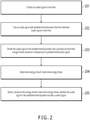
- FIG. 2 is a schematic diagram of a procedure of the method. The method includes the steps below.
- Step 201 Collect an audio signal in real time.
- the user may expect the chat APP to complete sending of the voice message without any tap operation after the user starts the APP.
- the APP continuously records the external environment to collect the audio signal in real time, to reduce omission of voice of the user.
- the APP can locally store the audio signal in real time. After the user stops the APP, the APP stops recording.
- Step 202 Clip an audio signal with predetermined duration from the collected audio signal in real time.
- the APP can clip, in real time, the audio signal with the predetermined duration from the audio signal collected in step 201, and perform subsequent detection on the audio signal with the predetermined duration.
- the currently clipped audio signal with the predetermined duration can be referred to as a current audio signal, and a last clipped audio signal with the predetermined duration can be referred to as a last obtained audio signal.
- Step 203 Divide the audio signal in the predetermined duration into a plurality of short-time energy frames based on a frequency of a predetermined voice signal.
- Step 204 Determine energy of each short-time energy frame.
- Step 205 Detect, based on the energy of each short-time energy frame, whether the audio signal in the predetermined duration includes a voice signal.
- the current audio signal includes a voice signal
- the last obtained audio signal includes a voice signal. If it is determined that the last obtained audio signal includes a voice signal, an end point of the last obtained audio signal can be determined as an end point of the voice signal; or if it is determined that the last obtained audio signal does not include a voice signal, neither an end point of the current audio signal nor an end point of the last obtained audio signal is an end point of the voice signal.
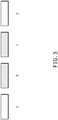
- A, B, C, and D are four adjacent audio signals with predetermined duration.
- a and D do not include a voice signal, and B and C include voice signals.
- a start point of B can be determined as a start point of the voice signal
- an end point of C can be determined as an end point of the voice signal.
- the current audio signal happens to be a start part or an end part of a sentence of the user, and the audio signal includes a few voice signals.
- the APP may incorrectly determine that the audio signal does not include a voice signal.
- it can be determined whether the last obtained audio signal includes a voice signal; and if it is determined that the last obtained audio signal does not include a voice signal, a start point of the last obtained audio signal can be determined as a start point of the voice signal.
- the current audio signal does not include a voice signal
- a start point of A can be determined as the start point of the voice signal
- an end point of D can be determined as the end point of the voice signal.
- the APP After detecting that the current audio signal includes a voice signal, the APP can send the audio signal to a voice identification apparatus, so that the voice identification apparatus can perform voice processing on the audio signal, to obtain a voice result. Then, the voice identification apparatus sends the audio signal to a subsequent processing apparatus, and finally the audio signal is sent in a form of a voice message. To ensure that voice of the user in the sent voice message is a complete sentence, after sending all audio signals between the determined start point and the determined end point of the voice signal to the voice identification apparatus, the APP can send an audio stop signal to the voice identification apparatus, to inform the voice identification apparatus that this sentence currently said by the user is completed, so that the voice identification apparatus sends all the audio signals to the subsequent processing apparatus. Finally, the audio signals are sent in the form of the voice message.
- a sub-signal with a predetermined time period can be further clipped from the last obtained audio signal, and the current audio signal and the clipped sub-signal are concatenated, to serve as the obtained audio signal (referred to as a concatenated audio signal below).
- subsequent voice signal detection is performed on the concatenated audio signal.
- the sub-signal can be concatenated before the current audio signal.
- the predetermined time period can be a tail time period of the last obtained audio signal, and duration that corresponds to the time period can be any duration.
- the duration that corresponds to the predetermined time period can be set to a value that is not greater than a product of the predetermined ratio and duration that corresponds to the concatenated audio signal.
- the concatenated audio signal includes a voice signal
- the APP in addition to continuous recording, can periodically perform recording. Implementations are not limited in the present implementation of the present application.
- the voice signal detection method provided in the present implementation of the present application can be further implemented by using a voice signal detection apparatus as defined by appended independent claim 3.
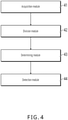
- a schematic structural diagram of an example apparatus is shown in FIG. 4 . Said example does not form part of the invention but is useful for its understanding.
- the example voice signal detection apparatus mainly includes the following modules: an acquisition module 41, configured to obtain an audio signal; a division module 42, configured to divide the audio signal into a plurality of short-time energy frames based on a frequency of a predetermined voice signal; a determining module 43, configured to determine energy of each short-time energy frame; and a detection module 44, configured to detect, based on the energy of each short-time energy frame, whether the audio signal includes a voice signal.
- the acquisition module 41 is configured to: obtain a current audio signal; clip a sub-signal with a predetermined time period from a last obtained audio signal; and concatenate the current audio signal and the clipped sub-signal, to serve as the obtained audio signal.
- the division module 42 is configured to determine a period of the predetermined voice signal based on the frequency of the predetermined voice signal; and divide, based on the determined period, the audio signal into a plurality of short-time energy frames whose corresponding duration is the period.
- the detection module 44 is configured to determine a ratio of a quantity of short-time energy frames whose energy is greater than a predetermined threshold to a total quantity of all short-time energy frames; determine whether the ratio is greater than a predetermined ratio; and if yes, determine that the audio signal includes a voice signal; or if no, determine that the audio signal does not include a voice signal.
- the detection module 44 is configured to determine a ratio of a quantity of short-time energy frames whose energy is greater than a predetermined threshold to a total quantity of all short-time energy frames; determine whether the ratio is greater than a predetermined ratio; and if no, determine that the audio signal does not include a voice signal; or if yes, when there are at least N consecutive short-time energy frames in the short-time energy frames whose energy is greater than the predetermined threshold, determine that the audio signal includes a voice signal; or when there are not at least N consecutive short-time energy frames in the short-time energy frames whose energy is greater than the predetermined threshold, determine that the audio signal does not include a voice signal.
- the existing technology it is determined, through complex calculation such as Fourier Transform, whether an audio signal includes a voice signal.
- the complex calculation such as Fourier Transform does not need to be performed.
- the obtained audio signal is divided into the plurality of short-time energy frames based on the frequency of the predetermined voice signal, energy of each short-time energy frame is further determined, and it can be detected, based on the energy of each short-time energy frame, whether the obtained audio signal includes a voice signal. Therefore, in the voice signal detection method provided in the implementations of the present application, a problem that a processing rate is relatively low and resource consumption is relatively high in a voice signal detection method in the existing technology can be alleviated.
- These computer program instructions can be provided for a general-purpose computer, a dedicated computer, an embedded processor, or a processor of another programmable data processing device to generate a machine, so that the instructions executed by the computer or the processor of the another programmable data processing device generate a device for implementing a specified function in one or more processes in the flowcharts and/or in one or more blocks in the block diagrams.
- These computer program instructions can be stored in a computer readable memory that can instruct the computer or the another programmable data processing device to work in a way, so that the instructions stored in the computer readable memory generate an artifact that includes an instruction device.
- the instruction device implements a specified function in one or more processes in the flowcharts and/or in one or more blocks in the block diagrams.
- a calculation device includes one or more central processing units (CPUs), one or more input/output interfaces, one or more network interfaces, and one or more memories.
- CPUs central processing units
- input/output interfaces input/output interfaces
- network interfaces network interfaces
- memories one or more memories.
- the memory can include a non-persistent memory, a random access memory (RAM), a non-volatile memory, and/or another form that are in a computer readable medium, for example, a read-only memory (ROM) or a flash memory (flash RAM).
- ROM read-only memory
- flash RAM flash memory
- the computer readable medium includes persistent, non-persistent, movable, and unmovable media that can store information by using any method or technology.
- the information can be a computer readable instruction, a data structure, a program module, or other data.
- Examples of a computer storage medium include but are not limited to a phase-change random access memory (PRAM), a static random access memory (SRAM), a dynamic random access memory (DRAM), another type of random access memory (RAM), a read-only memory (ROM), an electrically erasable programmable read-only memory (EEPROM), a flash memory or another memory technology, a compact disc read-only memory (CD-ROM), a digital versatile disc (DVD) or another optical storage, a cassette magnetic tape, a magnetic tape/magnetic disk storage, another magnetic storage device, or any other non-transmission medium.
- the computer storage medium can be configured to store information accessible to the calculation device. Based on the definition in the present specification, the computer readable medium does not include transitory computer readable media (
- the implementations of the present application can be provided as a method, a system, or a computer program product. Therefore, the present application can use a form of hardware only implementations, software only implementations, or implementations with a combination of software and hardware. In addition, the present application can use a form of a computer program product implemented on one or more computer-usable storage media (including but not limited to a disk memory, a CD-ROM, an optical memory, etc.) that include computer-usable program code.
- computer-usable storage media including but not limited to a disk memory, a CD-ROM, an optical memory, etc.
Landscapes
- Engineering & Computer Science (AREA)
- Physics & Mathematics (AREA)
- Multimedia (AREA)
- Health & Medical Sciences (AREA)
- Audiology, Speech & Language Pathology (AREA)
- Human Computer Interaction (AREA)
- Computational Linguistics (AREA)
- Acoustics & Sound (AREA)
- Signal Processing (AREA)
- Telephone Function (AREA)
- Circuits Of Receivers In General (AREA)
- Mobile Radio Communication Systems (AREA)
- Time-Division Multiplex Systems (AREA)
- Signal Processing For Digital Recording And Reproducing (AREA)
- Electric Clocks (AREA)
Applications Claiming Priority (2)
| Application Number | Priority Date | Filing Date | Title |
|---|---|---|---|
| CN201610890946.9A CN106887241A (zh) | 2016-10-12 | 2016-10-12 | 一种语音信号检测方法与装置 |
| PCT/CN2017/103489 WO2018068636A1 (zh) | 2016-10-12 | 2017-09-26 | 一种语音信号检测方法与装置 |
Publications (3)
| Publication Number | Publication Date |
|---|---|
| EP3528251A1 EP3528251A1 (en) | 2019-08-21 |
| EP3528251A4 EP3528251A4 (en) | 2019-08-21 |
| EP3528251B1 true EP3528251B1 (en) | 2022-02-23 |
Family
ID=59176496
Family Applications (1)
| Application Number | Title | Priority Date | Filing Date |
|---|---|---|---|
| EP17860814.7A Active EP3528251B1 (en) | 2016-10-12 | 2017-09-26 | Method and device for detecting audio signal |
Country Status (10)
| Country | Link |
|---|---|
| US (1) | US10706874B2 (enExample) |
| EP (1) | EP3528251B1 (enExample) |
| JP (2) | JP6859499B2 (enExample) |
| KR (1) | KR102214888B1 (enExample) |
| CN (1) | CN106887241A (enExample) |
| MY (1) | MY201634A (enExample) |
| PH (1) | PH12019500784B1 (enExample) |
| SG (1) | SG11201903320XA (enExample) |
| TW (1) | TWI654601B (enExample) |
| WO (1) | WO2018068636A1 (enExample) |
Families Citing this family (15)
| Publication number | Priority date | Publication date | Assignee | Title |
|---|---|---|---|---|
| CN106887241A (zh) * | 2016-10-12 | 2017-06-23 | 阿里巴巴集团控股有限公司 | 一种语音信号检测方法与装置 |
| CN107957918B (zh) * | 2016-10-14 | 2019-05-10 | 腾讯科技(深圳)有限公司 | 数据恢复方法和装置 |
| CN108257616A (zh) * | 2017-12-05 | 2018-07-06 | 苏州车萝卜汽车电子科技有限公司 | 人机对话的检测方法以及装置 |
| CN108305639B (zh) * | 2018-05-11 | 2021-03-09 | 南京邮电大学 | 语音情感识别方法、计算机可读存储介质、终端 |
| CN108682432B (zh) * | 2018-05-11 | 2021-03-16 | 南京邮电大学 | 语音情感识别装置 |
| CN108847217A (zh) * | 2018-05-31 | 2018-11-20 | 平安科技(深圳)有限公司 | 一种语音切分方法、装置、计算机设备及存储介质 |
| CN109545193B (zh) * | 2018-12-18 | 2023-03-14 | 百度在线网络技术(北京)有限公司 | 用于生成模型的方法和装置 |
| CN110225444A (zh) * | 2019-06-14 | 2019-09-10 | 四川长虹电器股份有限公司 | 一种麦克风阵列系统的故障检测方法及其检测系统 |
| CN111724783B (zh) * | 2020-06-24 | 2023-10-17 | 北京小米移动软件有限公司 | 智能设备的唤醒方法、装置、智能设备及介质 |
| CN113270118B (zh) * | 2021-05-14 | 2024-02-13 | 杭州网易智企科技有限公司 | 语音活动侦测方法及装置、存储介质和电子设备 |
| CN116612775A (zh) * | 2022-02-09 | 2023-08-18 | 宸芯科技股份有限公司 | 一种杂音消除方法、装置、电子设备及介质 |
| CN114792530B (zh) * | 2022-04-26 | 2025-07-04 | 美的集团(上海)有限公司 | 语音数据处理方法、装置、电子设备和存储介质 |
| CN114898774B (zh) * | 2022-05-06 | 2025-06-13 | 钉钉(中国)信息技术有限公司 | 一种音频掉点的检测方法及装置 |
| CN116170558A (zh) * | 2022-09-21 | 2023-05-26 | 世邦通信股份有限公司 | 鞭炮燃放音视频取证方法及系统、智能设备及存储介质 |
| CN116863947A (zh) * | 2023-07-27 | 2023-10-10 | 海纳科德(湖北)科技有限公司 | 一种利用宠物语音信号识别情绪的方法及系统 |
Family Cites Families (30)
| Publication number | Priority date | Publication date | Assignee | Title |
|---|---|---|---|---|
| JP3297346B2 (ja) * | 1997-04-30 | 2002-07-02 | 沖電気工業株式会社 | 音声検出装置 |
| TW333610B (en) | 1997-10-16 | 1998-06-11 | Winbond Electronics Corp | The phonetic detecting apparatus and its detecting method |
| US6480823B1 (en) | 1998-03-24 | 2002-11-12 | Matsushita Electric Industrial Co., Ltd. | Speech detection for noisy conditions |
| JP3266124B2 (ja) * | 1999-01-07 | 2002-03-18 | ヤマハ株式会社 | アナログ信号中の類似波形検出装置及び同信号の時間軸伸長圧縮装置 |
| KR100463657B1 (ko) * | 2002-11-30 | 2004-12-29 | 삼성전자주식회사 | 음성구간 검출 장치 및 방법 |
| US7715447B2 (en) | 2003-12-23 | 2010-05-11 | Intel Corporation | Method and system for tone detection |
| CN101625860B (zh) * | 2008-07-10 | 2012-07-04 | 新奥特(北京)视频技术有限公司 | 语音端点检测中的背景噪声自适应调整方法 |
| WO2010061505A1 (ja) | 2008-11-27 | 2010-06-03 | 日本電気株式会社 | 発話音声検出装置 |
| CN101494049B (zh) * | 2009-03-11 | 2011-07-27 | 北京邮电大学 | 一种用于音频监控系统中的音频特征参数的提取方法 |
| ES2371619B1 (es) | 2009-10-08 | 2012-08-08 | Telefónica, S.A. | Procedimiento de detección de segmentos de voz. |
| BR112012008671A2 (pt) * | 2009-10-19 | 2016-04-19 | Ericsson Telefon Ab L M | método para detectar atividade de voz de um sinal de entrada recebido, e, detector de atividade de voz |
| KR101666521B1 (ko) * | 2010-01-08 | 2016-10-14 | 삼성전자 주식회사 | 입력 신호의 피치 주기 검출 방법 및 그 장치 |
| US20130090926A1 (en) | 2011-09-16 | 2013-04-11 | Qualcomm Incorporated | Mobile device context information using speech detection |
| CN102568457A (zh) * | 2011-12-23 | 2012-07-11 | 深圳市万兴软件有限公司 | 一种基于哼唱输入的乐曲合成方法及装置 |
| US9351089B1 (en) * | 2012-03-14 | 2016-05-24 | Amazon Technologies, Inc. | Audio tap detection |
| JP5772739B2 (ja) * | 2012-06-21 | 2015-09-02 | ヤマハ株式会社 | 音声処理装置 |
| CN103544961B (zh) * | 2012-07-10 | 2017-12-19 | 中兴通讯股份有限公司 | 语音信号处理方法及装置 |
| RU2609133C2 (ru) * | 2012-08-31 | 2017-01-30 | Телефонактиеболагет Л М Эрикссон (Пабл) | Способ и устройство для обнаружения голосовой активности |
| CN103117067B (zh) * | 2013-01-19 | 2015-07-15 | 渤海大学 | 一种低信噪比下语音端点检测方法 |
| CN103177722B (zh) * | 2013-03-08 | 2016-04-20 | 北京理工大学 | 一种基于音色相似度的歌曲检索方法 |
| CN103198838A (zh) * | 2013-03-29 | 2013-07-10 | 苏州皓泰视频技术有限公司 | 一种用于嵌入式系统的异常声音监控方法和监控装置 |
| CN103247293B (zh) * | 2013-05-14 | 2015-04-08 | 中国科学院自动化研究所 | 一种语音数据的编码及解码方法 |
| WO2014194273A2 (en) * | 2013-05-30 | 2014-12-04 | Eisner, Mark | Systems and methods for enhancing targeted audibility |
| US9502028B2 (en) * | 2013-10-18 | 2016-11-22 | Knowles Electronics, Llc | Acoustic activity detection apparatus and method |
| CN103646649B (zh) * | 2013-12-30 | 2016-04-13 | 中国科学院自动化研究所 | 一种高效的语音检测方法 |
| CN104916288B (zh) | 2014-03-14 | 2019-01-18 | 深圳Tcl新技术有限公司 | 一种音频中人声突出处理的方法及装置 |
| CN104934032B (zh) * | 2014-03-17 | 2019-04-05 | 华为技术有限公司 | 根据频域能量对语音信号进行处理的方法和装置 |
| US9406313B2 (en) * | 2014-03-21 | 2016-08-02 | Intel Corporation | Adaptive microphone sampling rate techniques |
| CN106328168B (zh) * | 2016-08-30 | 2019-10-18 | 成都普创通信技术股份有限公司 | 一种语音信号相似度检测方法 |
| CN106887241A (zh) * | 2016-10-12 | 2017-06-23 | 阿里巴巴集团控股有限公司 | 一种语音信号检测方法与装置 |
-
2016
- 2016-10-12 CN CN201610890946.9A patent/CN106887241A/zh active Pending
-
2017
- 2017-09-12 TW TW106131148A patent/TWI654601B/zh not_active IP Right Cessation
- 2017-09-26 SG SG11201903320XA patent/SG11201903320XA/en unknown
- 2017-09-26 PH PH1/2019/500784A patent/PH12019500784B1/en unknown
- 2017-09-26 KR KR1020197013519A patent/KR102214888B1/ko active Active
- 2017-09-26 MY MYPI2019001999A patent/MY201634A/en unknown
- 2017-09-26 EP EP17860814.7A patent/EP3528251B1/en active Active
- 2017-09-26 JP JP2019520035A patent/JP6859499B2/ja active Active
- 2017-09-26 WO PCT/CN2017/103489 patent/WO2018068636A1/zh not_active Ceased
-
2019
- 2019-04-10 US US16/380,609 patent/US10706874B2/en active Active
-
2020
- 2020-12-04 JP JP2020201829A patent/JP6999012B2/ja active Active
Also Published As
| Publication number | Publication date |
|---|---|
| TW201814692A (zh) | 2018-04-16 |
| PH12019500784B1 (en) | 2024-02-28 |
| US20190237097A1 (en) | 2019-08-01 |
| JP6859499B2 (ja) | 2021-04-14 |
| PH12019500784A1 (en) | 2019-11-11 |
| US10706874B2 (en) | 2020-07-07 |
| TWI654601B (zh) | 2019-03-21 |
| EP3528251A1 (en) | 2019-08-21 |
| CN106887241A (zh) | 2017-06-23 |
| KR102214888B1 (ko) | 2021-02-15 |
| EP3528251A4 (en) | 2019-08-21 |
| WO2018068636A1 (zh) | 2018-04-19 |
| KR20190061076A (ko) | 2019-06-04 |
| JP2021071729A (ja) | 2021-05-06 |
| SG11201903320XA (en) | 2019-05-30 |
| JP6999012B2 (ja) | 2022-01-18 |
| JP2019535039A (ja) | 2019-12-05 |
| MY201634A (en) | 2024-03-06 |
Similar Documents
| Publication | Publication Date | Title |
|---|---|---|
| EP3528251A1 (en) | Method and device for detecting audio signal | |
| US10540994B2 (en) | Personal device for hearing degradation monitoring | |
| US20130090926A1 (en) | Mobile device context information using speech detection | |
| EP3716271A1 (en) | Audio processing system for speech enhancement | |
| EP3147903B1 (en) | Voice processing apparatus, voice processing method, and non-transitory computer-readable storage medium | |
| JP2019530264A (ja) | 音波によるデータ送信/受信方法及びデータ伝送システム | |
| US20140350923A1 (en) | Method and device for detecting noise bursts in speech signals | |
| CN103617801A (zh) | 语音检测方法、装置及电子设备 | |
| US12488806B2 (en) | System and method for real-time detection of user's attention sound based on neural signals, and audio output device using the same | |
| TW202247141A (zh) | 語音增強方法和系統 | |
| CN106412188A (zh) | 一种提醒方法及装置 | |
| CN113971962A (zh) | 一种信号的检测方法、计算设备及存储介质 | |
| CN108093356B (zh) | 一种啸叫检测方法及装置 | |
| EP2887698B1 (en) | Hearing aid for playing audible advertisement | |
| US11790931B2 (en) | Voice activity detection using zero crossing detection | |
| US20220130405A1 (en) | Low Complexity Voice Activity Detection Algorithm | |
| US9704504B2 (en) | Voice analysis device and voice analysis system | |
| US9330674B2 (en) | System and method for improving sound quality of voice signal in voice communication | |
| HK1237986A (en) | Voice signal detection method and apparatus | |
| CN111883159B (zh) | 语音的处理方法及装置 | |
| CN115938359A (zh) | 音频信号检测方法、装置、电子设备及可读存储介质 | |
| EP4264598A1 (en) | A computer implemented method and an apparatus for silence detection in speech recognition | |
| HK40012079A (en) | Voice processing method and device | |
| HK40021198A (en) | Howl detection in conference systems | |
| EP3079377A1 (en) | Sound signal processing method and apparatus |
Legal Events
| Date | Code | Title | Description |
|---|---|---|---|
| STAA | Information on the status of an ep patent application or granted ep patent |
Free format text: STATUS: THE INTERNATIONAL PUBLICATION HAS BEEN MADE |
|
| PUAI | Public reference made under article 153(3) epc to a published international application that has entered the european phase |
Free format text: ORIGINAL CODE: 0009012 |
|
| STAA | Information on the status of an ep patent application or granted ep patent |
Free format text: STATUS: REQUEST FOR EXAMINATION WAS MADE |
|
| 17P | Request for examination filed |
Effective date: 20190513 |
|
| A4 | Supplementary search report drawn up and despatched |
Effective date: 20190702 |
|
| AK | Designated contracting states |
Kind code of ref document: A1 Designated state(s): AL AT BE BG CH CY CZ DE DK EE ES FI FR GB GR HR HU IE IS IT LI LT LU LV MC MK MT NL NO PL PT RO RS SE SI SK SM TR |
|
| AX | Request for extension of the european patent |
Extension state: BA ME |
|
| DAV | Request for validation of the european patent (deleted) | ||
| DAX | Request for extension of the european patent (deleted) | ||
| STAA | Information on the status of an ep patent application or granted ep patent |
Free format text: STATUS: EXAMINATION IS IN PROGRESS |
|
| 17Q | First examination report despatched |
Effective date: 20200616 |
|
| RAP1 | Party data changed (applicant data changed or rights of an application transferred) |
Owner name: ADVANCED NEW TECHNOLOGIES CO., LTD. |
|
| REG | Reference to a national code |
Ref country code: DE Ref legal event code: R079 Ref document number: 602017053838 Country of ref document: DE Free format text: PREVIOUS MAIN CLASS: G10L0025840000 Ipc: G10L0025210000 |
|
| GRAP | Despatch of communication of intention to grant a patent |
Free format text: ORIGINAL CODE: EPIDOSNIGR1 |
|
| STAA | Information on the status of an ep patent application or granted ep patent |
Free format text: STATUS: GRANT OF PATENT IS INTENDED |
|
| RIC1 | Information provided on ipc code assigned before grant |
Ipc: G10L 25/21 20130101AFI20210519BHEP Ipc: G10L 25/78 20130101ALI20210519BHEP |
|
| GRAJ | Information related to disapproval of communication of intention to grant by the applicant or resumption of examination proceedings by the epo deleted |
Free format text: ORIGINAL CODE: EPIDOSDIGR1 |
|
| STAA | Information on the status of an ep patent application or granted ep patent |
Free format text: STATUS: EXAMINATION IS IN PROGRESS |
|
| INTG | Intention to grant announced |
Effective date: 20210617 |
|
| GRAP | Despatch of communication of intention to grant a patent |
Free format text: ORIGINAL CODE: EPIDOSNIGR1 |
|
| STAA | Information on the status of an ep patent application or granted ep patent |
Free format text: STATUS: GRANT OF PATENT IS INTENDED |
|
| INTC | Intention to grant announced (deleted) | ||
| INTG | Intention to grant announced |
Effective date: 20210730 |
|
| GRAJ | Information related to disapproval of communication of intention to grant by the applicant or resumption of examination proceedings by the epo deleted |
Free format text: ORIGINAL CODE: EPIDOSDIGR1 |
|
| STAA | Information on the status of an ep patent application or granted ep patent |
Free format text: STATUS: EXAMINATION IS IN PROGRESS |
|
| GRAP | Despatch of communication of intention to grant a patent |
Free format text: ORIGINAL CODE: EPIDOSNIGR1 |
|
| STAA | Information on the status of an ep patent application or granted ep patent |
Free format text: STATUS: GRANT OF PATENT IS INTENDED |
|
| INTC | Intention to grant announced (deleted) | ||
| GRAS | Grant fee paid |
Free format text: ORIGINAL CODE: EPIDOSNIGR3 |
|
| GRAA | (expected) grant |
Free format text: ORIGINAL CODE: 0009210 |
|
| STAA | Information on the status of an ep patent application or granted ep patent |
Free format text: STATUS: THE PATENT HAS BEEN GRANTED |
|
| INTG | Intention to grant announced |
Effective date: 20220110 |
|
| AK | Designated contracting states |
Kind code of ref document: B1 Designated state(s): AL AT BE BG CH CY CZ DE DK EE ES FI FR GB GR HR HU IE IS IT LI LT LU LV MC MK MT NL NO PL PT RO RS SE SI SK SM TR |
|
| REG | Reference to a national code |
Ref country code: GB Ref legal event code: FG4D |
|
| REG | Reference to a national code |
Ref country code: CH Ref legal event code: EP |
|
| REG | Reference to a national code |
Ref country code: AT Ref legal event code: REF Ref document number: 1471067 Country of ref document: AT Kind code of ref document: T Effective date: 20220315 |
|
| REG | Reference to a national code |
Ref country code: IE Ref legal event code: FG4D |
|
| REG | Reference to a national code |
Ref country code: DE Ref legal event code: R096 Ref document number: 602017053838 Country of ref document: DE |
|
| REG | Reference to a national code |
Ref country code: LT Ref legal event code: MG9D |
|
| REG | Reference to a national code |
Ref country code: NL Ref legal event code: MP Effective date: 20220223 |
|
| REG | Reference to a national code |
Ref country code: AT Ref legal event code: MK05 Ref document number: 1471067 Country of ref document: AT Kind code of ref document: T Effective date: 20220223 |
|
| PG25 | Lapsed in a contracting state [announced via postgrant information from national office to epo] |
Ref country code: SE Free format text: LAPSE BECAUSE OF FAILURE TO SUBMIT A TRANSLATION OF THE DESCRIPTION OR TO PAY THE FEE WITHIN THE PRESCRIBED TIME-LIMIT Effective date: 20220223 Ref country code: RS Free format text: LAPSE BECAUSE OF FAILURE TO SUBMIT A TRANSLATION OF THE DESCRIPTION OR TO PAY THE FEE WITHIN THE PRESCRIBED TIME-LIMIT Effective date: 20220223 Ref country code: PT Free format text: LAPSE BECAUSE OF FAILURE TO SUBMIT A TRANSLATION OF THE DESCRIPTION OR TO PAY THE FEE WITHIN THE PRESCRIBED TIME-LIMIT Effective date: 20220623 Ref country code: NO Free format text: LAPSE BECAUSE OF FAILURE TO SUBMIT A TRANSLATION OF THE DESCRIPTION OR TO PAY THE FEE WITHIN THE PRESCRIBED TIME-LIMIT Effective date: 20220523 Ref country code: NL Free format text: LAPSE BECAUSE OF FAILURE TO SUBMIT A TRANSLATION OF THE DESCRIPTION OR TO PAY THE FEE WITHIN THE PRESCRIBED TIME-LIMIT Effective date: 20220223 Ref country code: LT Free format text: LAPSE BECAUSE OF FAILURE TO SUBMIT A TRANSLATION OF THE DESCRIPTION OR TO PAY THE FEE WITHIN THE PRESCRIBED TIME-LIMIT Effective date: 20220223 Ref country code: HR Free format text: LAPSE BECAUSE OF FAILURE TO SUBMIT A TRANSLATION OF THE DESCRIPTION OR TO PAY THE FEE WITHIN THE PRESCRIBED TIME-LIMIT Effective date: 20220223 Ref country code: ES Free format text: LAPSE BECAUSE OF FAILURE TO SUBMIT A TRANSLATION OF THE DESCRIPTION OR TO PAY THE FEE WITHIN THE PRESCRIBED TIME-LIMIT Effective date: 20220223 Ref country code: BG Free format text: LAPSE BECAUSE OF FAILURE TO SUBMIT A TRANSLATION OF THE DESCRIPTION OR TO PAY THE FEE WITHIN THE PRESCRIBED TIME-LIMIT Effective date: 20220523 |
|
| PG25 | Lapsed in a contracting state [announced via postgrant information from national office to epo] |
Ref country code: PL Free format text: LAPSE BECAUSE OF FAILURE TO SUBMIT A TRANSLATION OF THE DESCRIPTION OR TO PAY THE FEE WITHIN THE PRESCRIBED TIME-LIMIT Effective date: 20220223 Ref country code: LV Free format text: LAPSE BECAUSE OF FAILURE TO SUBMIT A TRANSLATION OF THE DESCRIPTION OR TO PAY THE FEE WITHIN THE PRESCRIBED TIME-LIMIT Effective date: 20220223 Ref country code: GR Free format text: LAPSE BECAUSE OF FAILURE TO SUBMIT A TRANSLATION OF THE DESCRIPTION OR TO PAY THE FEE WITHIN THE PRESCRIBED TIME-LIMIT Effective date: 20220524 Ref country code: FI Free format text: LAPSE BECAUSE OF FAILURE TO SUBMIT A TRANSLATION OF THE DESCRIPTION OR TO PAY THE FEE WITHIN THE PRESCRIBED TIME-LIMIT Effective date: 20220223 Ref country code: AT Free format text: LAPSE BECAUSE OF FAILURE TO SUBMIT A TRANSLATION OF THE DESCRIPTION OR TO PAY THE FEE WITHIN THE PRESCRIBED TIME-LIMIT Effective date: 20220223 |
|
| PG25 | Lapsed in a contracting state [announced via postgrant information from national office to epo] |
Ref country code: IS Free format text: LAPSE BECAUSE OF FAILURE TO SUBMIT A TRANSLATION OF THE DESCRIPTION OR TO PAY THE FEE WITHIN THE PRESCRIBED TIME-LIMIT Effective date: 20220623 |
|
| PG25 | Lapsed in a contracting state [announced via postgrant information from national office to epo] |
Ref country code: SM Free format text: LAPSE BECAUSE OF FAILURE TO SUBMIT A TRANSLATION OF THE DESCRIPTION OR TO PAY THE FEE WITHIN THE PRESCRIBED TIME-LIMIT Effective date: 20220223 Ref country code: SK Free format text: LAPSE BECAUSE OF FAILURE TO SUBMIT A TRANSLATION OF THE DESCRIPTION OR TO PAY THE FEE WITHIN THE PRESCRIBED TIME-LIMIT Effective date: 20220223 Ref country code: RO Free format text: LAPSE BECAUSE OF FAILURE TO SUBMIT A TRANSLATION OF THE DESCRIPTION OR TO PAY THE FEE WITHIN THE PRESCRIBED TIME-LIMIT Effective date: 20220223 Ref country code: EE Free format text: LAPSE BECAUSE OF FAILURE TO SUBMIT A TRANSLATION OF THE DESCRIPTION OR TO PAY THE FEE WITHIN THE PRESCRIBED TIME-LIMIT Effective date: 20220223 Ref country code: DK Free format text: LAPSE BECAUSE OF FAILURE TO SUBMIT A TRANSLATION OF THE DESCRIPTION OR TO PAY THE FEE WITHIN THE PRESCRIBED TIME-LIMIT Effective date: 20220223 Ref country code: CZ Free format text: LAPSE BECAUSE OF FAILURE TO SUBMIT A TRANSLATION OF THE DESCRIPTION OR TO PAY THE FEE WITHIN THE PRESCRIBED TIME-LIMIT Effective date: 20220223 |
|
| REG | Reference to a national code |
Ref country code: DE Ref legal event code: R097 Ref document number: 602017053838 Country of ref document: DE |
|
| PG25 | Lapsed in a contracting state [announced via postgrant information from national office to epo] |
Ref country code: AL Free format text: LAPSE BECAUSE OF FAILURE TO SUBMIT A TRANSLATION OF THE DESCRIPTION OR TO PAY THE FEE WITHIN THE PRESCRIBED TIME-LIMIT Effective date: 20220223 |
|
| PLBE | No opposition filed within time limit |
Free format text: ORIGINAL CODE: 0009261 |
|
| STAA | Information on the status of an ep patent application or granted ep patent |
Free format text: STATUS: NO OPPOSITION FILED WITHIN TIME LIMIT |
|
| 26N | No opposition filed |
Effective date: 20221124 |
|
| PG25 | Lapsed in a contracting state [announced via postgrant information from national office to epo] |
Ref country code: SI Free format text: LAPSE BECAUSE OF FAILURE TO SUBMIT A TRANSLATION OF THE DESCRIPTION OR TO PAY THE FEE WITHIN THE PRESCRIBED TIME-LIMIT Effective date: 20220223 |
|
| PG25 | Lapsed in a contracting state [announced via postgrant information from national office to epo] |
Ref country code: MC Free format text: LAPSE BECAUSE OF FAILURE TO SUBMIT A TRANSLATION OF THE DESCRIPTION OR TO PAY THE FEE WITHIN THE PRESCRIBED TIME-LIMIT Effective date: 20220223 |
|
| REG | Reference to a national code |
Ref country code: CH Ref legal event code: PL |
|
| GBPC | Gb: european patent ceased through non-payment of renewal fee |
Effective date: 20220926 |
|
| REG | Reference to a national code |
Ref country code: BE Ref legal event code: MM Effective date: 20220930 |
|
| P01 | Opt-out of the competence of the unified patent court (upc) registered |
Effective date: 20230521 |
|
| PG25 | Lapsed in a contracting state [announced via postgrant information from national office to epo] |
Ref country code: LU Free format text: LAPSE BECAUSE OF NON-PAYMENT OF DUE FEES Effective date: 20220926 |
|
| PG25 | Lapsed in a contracting state [announced via postgrant information from national office to epo] |
Ref country code: LI Free format text: LAPSE BECAUSE OF NON-PAYMENT OF DUE FEES Effective date: 20220930 Ref country code: IT Free format text: LAPSE BECAUSE OF FAILURE TO SUBMIT A TRANSLATION OF THE DESCRIPTION OR TO PAY THE FEE WITHIN THE PRESCRIBED TIME-LIMIT Effective date: 20220223 Ref country code: IE Free format text: LAPSE BECAUSE OF NON-PAYMENT OF DUE FEES Effective date: 20220926 Ref country code: FR Free format text: LAPSE BECAUSE OF NON-PAYMENT OF DUE FEES Effective date: 20220930 Ref country code: CH Free format text: LAPSE BECAUSE OF NON-PAYMENT OF DUE FEES Effective date: 20220930 |
|
| PG25 | Lapsed in a contracting state [announced via postgrant information from national office to epo] |
Ref country code: BE Free format text: LAPSE BECAUSE OF NON-PAYMENT OF DUE FEES Effective date: 20220930 |
|
| PG25 | Lapsed in a contracting state [announced via postgrant information from national office to epo] |
Ref country code: GB Free format text: LAPSE BECAUSE OF NON-PAYMENT OF DUE FEES Effective date: 20220926 |
|
| PG25 | Lapsed in a contracting state [announced via postgrant information from national office to epo] |
Ref country code: HU Free format text: LAPSE BECAUSE OF FAILURE TO SUBMIT A TRANSLATION OF THE DESCRIPTION OR TO PAY THE FEE WITHIN THE PRESCRIBED TIME-LIMIT; INVALID AB INITIO Effective date: 20170926 |
|
| PG25 | Lapsed in a contracting state [announced via postgrant information from national office to epo] |
Ref country code: CY Free format text: LAPSE BECAUSE OF FAILURE TO SUBMIT A TRANSLATION OF THE DESCRIPTION OR TO PAY THE FEE WITHIN THE PRESCRIBED TIME-LIMIT Effective date: 20220223 |
|
| PG25 | Lapsed in a contracting state [announced via postgrant information from national office to epo] |
Ref country code: MK Free format text: LAPSE BECAUSE OF FAILURE TO SUBMIT A TRANSLATION OF THE DESCRIPTION OR TO PAY THE FEE WITHIN THE PRESCRIBED TIME-LIMIT Effective date: 20220223 |
|
| PG25 | Lapsed in a contracting state [announced via postgrant information from national office to epo] |
Ref country code: TR Free format text: LAPSE BECAUSE OF FAILURE TO SUBMIT A TRANSLATION OF THE DESCRIPTION OR TO PAY THE FEE WITHIN THE PRESCRIBED TIME-LIMIT Effective date: 20220223 |
|
| PG25 | Lapsed in a contracting state [announced via postgrant information from national office to epo] |
Ref country code: MT Free format text: LAPSE BECAUSE OF FAILURE TO SUBMIT A TRANSLATION OF THE DESCRIPTION OR TO PAY THE FEE WITHIN THE PRESCRIBED TIME-LIMIT Effective date: 20220223 |
|
| PGFP | Annual fee paid to national office [announced via postgrant information from national office to epo] |
Ref country code: DE Payment date: 20250702 Year of fee payment: 9 |