EP3528154B1 - Systeme und verfahren zur authentifizierungscodeeingabe mithilfe mobiler elektronischer vorrichtungen - Google Patents
Systeme und verfahren zur authentifizierungscodeeingabe mithilfe mobiler elektronischer vorrichtungen Download PDFInfo
- Publication number
- EP3528154B1 EP3528154B1 EP19157601.6A EP19157601A EP3528154B1 EP 3528154 B1 EP3528154 B1 EP 3528154B1 EP 19157601 A EP19157601 A EP 19157601A EP 3528154 B1 EP3528154 B1 EP 3528154B1
- Authority
- EP
- European Patent Office
- Prior art keywords
- authentication code
- values
- masking pattern
- entry
- backend
- Prior art date
- Legal status (The legal status is an assumption and is not a legal conclusion. Google has not performed a legal analysis and makes no representation as to the accuracy of the status listed.)
- Active
Links
Images



Classifications
-
- G—PHYSICS
- G06—COMPUTING OR CALCULATING; COUNTING
- G06F—ELECTRIC DIGITAL DATA PROCESSING
- G06F21/00—Security arrangements for protecting computers, components thereof, programs or data against unauthorised activity
- G06F21/30—Authentication, i.e. establishing the identity or authorisation of security principals
- G06F21/45—Structures or tools for the administration of authentication
-
- G—PHYSICS
- G06—COMPUTING OR CALCULATING; COUNTING
- G06F—ELECTRIC DIGITAL DATA PROCESSING
- G06F21/00—Security arrangements for protecting computers, components thereof, programs or data against unauthorised activity
- G06F21/30—Authentication, i.e. establishing the identity or authorisation of security principals
- G06F21/31—User authentication
- G06F21/34—User authentication involving the use of external additional devices, e.g. dongles or smart cards
- G06F21/35—User authentication involving the use of external additional devices, e.g. dongles or smart cards communicating wirelessly
-
- G—PHYSICS
- G06—COMPUTING OR CALCULATING; COUNTING
- G06F—ELECTRIC DIGITAL DATA PROCESSING
- G06F21/00—Security arrangements for protecting computers, components thereof, programs or data against unauthorised activity
- G06F21/30—Authentication, i.e. establishing the identity or authorisation of security principals
- G06F21/31—User authentication
-
- G—PHYSICS
- G06—COMPUTING OR CALCULATING; COUNTING
- G06F—ELECTRIC DIGITAL DATA PROCESSING
- G06F21/00—Security arrangements for protecting computers, components thereof, programs or data against unauthorised activity
- G06F21/60—Protecting data
- G06F21/606—Protecting data by securing the transmission between two devices or processes
-
- G—PHYSICS
- G06—COMPUTING OR CALCULATING; COUNTING
- G06Q—INFORMATION AND COMMUNICATION TECHNOLOGY [ICT] SPECIALLY ADAPTED FOR ADMINISTRATIVE, COMMERCIAL, FINANCIAL, MANAGERIAL OR SUPERVISORY PURPOSES; SYSTEMS OR METHODS SPECIALLY ADAPTED FOR ADMINISTRATIVE, COMMERCIAL, FINANCIAL, MANAGERIAL OR SUPERVISORY PURPOSES, NOT OTHERWISE PROVIDED FOR
- G06Q20/00—Payment architectures, schemes or protocols
- G06Q20/30—Payment architectures, schemes or protocols characterised by the use of specific devices or networks
- G06Q20/32—Payment architectures, schemes or protocols characterised by the use of specific devices or networks using wireless devices
- G06Q20/322—Aspects of commerce using mobile devices [M-devices]
-
- G—PHYSICS
- G06—COMPUTING OR CALCULATING; COUNTING
- G06Q—INFORMATION AND COMMUNICATION TECHNOLOGY [ICT] SPECIALLY ADAPTED FOR ADMINISTRATIVE, COMMERCIAL, FINANCIAL, MANAGERIAL OR SUPERVISORY PURPOSES; SYSTEMS OR METHODS SPECIALLY ADAPTED FOR ADMINISTRATIVE, COMMERCIAL, FINANCIAL, MANAGERIAL OR SUPERVISORY PURPOSES, NOT OTHERWISE PROVIDED FOR
- G06Q20/00—Payment architectures, schemes or protocols
- G06Q20/38—Payment protocols; Details thereof
- G06Q20/385—Payment protocols; Details thereof using an alias or single-use codes
-
- H—ELECTRICITY
- H04—ELECTRIC COMMUNICATION TECHNIQUE
- H04L—TRANSMISSION OF DIGITAL INFORMATION, e.g. TELEGRAPHIC COMMUNICATION
- H04L12/00—Data switching networks
- H04L12/02—Details
- H04L12/06—Answer-back mechanisms or circuits
-
- G—PHYSICS
- G06—COMPUTING OR CALCULATING; COUNTING
- G06F—ELECTRIC DIGITAL DATA PROCESSING
- G06F21/00—Security arrangements for protecting computers, components thereof, programs or data against unauthorised activity
- G06F21/60—Protecting data
- G06F21/62—Protecting access to data via a platform, e.g. using keys or access control rules
- G06F21/6218—Protecting access to data via a platform, e.g. using keys or access control rules to a system of files or objects, e.g. local or distributed file system or database
- G06F21/6245—Protecting personal data, e.g. for financial or medical purposes
-
- G—PHYSICS
- G06—COMPUTING OR CALCULATING; COUNTING
- G06F—ELECTRIC DIGITAL DATA PROCESSING
- G06F2221/00—Indexing scheme relating to security arrangements for protecting computers, components thereof, programs or data against unauthorised activity
- G06F2221/21—Indexing scheme relating to G06F21/00 and subgroups addressing additional information or applications relating to security arrangements for protecting computers, components thereof, programs or data against unauthorised activity
- G06F2221/2103—Challenge-response
-
- G—PHYSICS
- G06—COMPUTING OR CALCULATING; COUNTING
- G06Q—INFORMATION AND COMMUNICATION TECHNOLOGY [ICT] SPECIALLY ADAPTED FOR ADMINISTRATIVE, COMMERCIAL, FINANCIAL, MANAGERIAL OR SUPERVISORY PURPOSES; SYSTEMS OR METHODS SPECIALLY ADAPTED FOR ADMINISTRATIVE, COMMERCIAL, FINANCIAL, MANAGERIAL OR SUPERVISORY PURPOSES, NOT OTHERWISE PROVIDED FOR
- G06Q20/00—Payment architectures, schemes or protocols
- G06Q20/38—Payment protocols; Details thereof
- G06Q20/40—Authorisation, e.g. identification of payer or payee, verification of customer or shop credentials; Review and approval of payers, e.g. check credit lines or negative lists
-
- G—PHYSICS
- G06—COMPUTING OR CALCULATING; COUNTING
- G06Q—INFORMATION AND COMMUNICATION TECHNOLOGY [ICT] SPECIALLY ADAPTED FOR ADMINISTRATIVE, COMMERCIAL, FINANCIAL, MANAGERIAL OR SUPERVISORY PURPOSES; SYSTEMS OR METHODS SPECIALLY ADAPTED FOR ADMINISTRATIVE, COMMERCIAL, FINANCIAL, MANAGERIAL OR SUPERVISORY PURPOSES, NOT OTHERWISE PROVIDED FOR
- G06Q20/00—Payment architectures, schemes or protocols
- G06Q20/38—Payment protocols; Details thereof
- G06Q20/40—Authorisation, e.g. identification of payer or payee, verification of customer or shop credentials; Review and approval of payers, e.g. check credit lines or negative lists
- G06Q20/401—Transaction verification
- G06Q20/4012—Verifying personal identification numbers [PIN]
Definitions
- the present disclosure relates generally to input devices, and more particularly to systems and methods for authentication code entry using mobile electronic devices.
- Mobile electronic devices such as notebook/laptop computers, tablet computers, smart phones, etc. are often used by merchants in place of traditional point of sale devices.
- the merchant may execute a computer application on the mobile electronic device, and may swipe, read, or otherwise enter account information (e.g., a primary account number) from a transaction card (e.g., a credit card, debit card, etc.), and the cardholder may enter his or her authentication code (e.g., a PIN) using a touchscreen, keypad, or other entry device.
- the entry of the authentication code on the mobile electronic device may not be secure; the application (or another application executed on the mobile electronic device) may capture the authentication code as it is entered and store it, along with the account information, for future playback.
- WO 2015/148048 A1 discloses a touch screen system which challenges the user to enter a partial PIN.
- a problem to be solved by the invention is to increase security during the entry of an authentication code into a mobile electronic device by a user.
- a method for authentication code entry may include: (1) receiving, at the information processing device, a masking pattern for receiving entry of an authentication code, the masking pattern specifying an order for entering the authentication code; (2) presenting, on the display, a prompt to enter the authentication code in accordance with the masking pattern; (3) receiving, at the input device, a masked authentication code entry where the masked authentication code entry comprises the authentication code entered in accordance with the masking pattern; and (4) storing the masked authentication code entry.
- the masking pattern may include a plurality of placeholders, and the order for entering the authentication code specifies a first subset of the plurality of placeholders that receive values of the authentication code and a second subset of the plurality of placeholders that receive dummy values.
- the masked authentication entry may include the authentication code and a plurality of dummy values.
- the method may further include wirelessly transmitting the masked authentication code entry to a point of transaction device.
- the prompt may be displayed in a manner such that it cannot be machine-read by the information processing device.
- the information processing device may be a mobile electronic device, and the masked authentication code may be stored in secure storage of the mobile electronic device.
- a method for authentication code entry may include: (1) receiving, over a network and from a mobile electronic device, a request to generate a masking pattern for receiving entry of an authentication code, the masking pattern specifying an order for entering the authentication code; (2) generating the masking pattern; (3) associating the masking pattern with a customer account; and (4) communicating the masking pattern to the mobile electronic device.
- the masking pattern may specify the order of entering values of the authentication code and dummy values in an authentication code entry.
- the masking pattern may be communicated to the mobile electronic device with a prompt for entering the authentication code in accordance with the masking, wherein the prompt is displayed in a manner such that it cannot be machine-read by the information processing device.
- the method may further include receiving, from a point of transaction device, a customer account identifier and a masked authentication code entry received from the mobile electronic device; retrieving the masking pattern for the account associated with the customer account identifier; identifying the authentication code in the masked authentication code entry based on the masking pattern; and validating the authentication code.
- the masked authentication entry may include the authentication code and a plurality of dummy values.
- the method may further include communicating the validation of the authentication code to the point of transaction device.
- a method for conducting a transaction using a stored authentication value may include: (1) receiving information for a financial instrument requiring validation of an authentication code to conduct a transaction; (2) receiving, from a computer application executed by a mobile electronic device, a masked authentication code entry comprising authentication values and dummy values, wherein the authentication values are not identified as part of the authentication code; (3) communicating, to a backend for a financial institution associated with the financial instrument, the masked authentication code entry; and (4) receiving, from the backend, approval or denial for the transaction.
- the point of transaction device may prompt the mobile electronic device for the masked authentication code entry.
- the masked authentication code entry may be received wirelessly.
- a method for entering an authentication code on an electronic device may include: (1) at least one computer processor displaying a prompt on a display of the electronic device to enter a plurality of values in an authentication code and a plurality of dummy values in accordance with an order of entry; (2) the at least one computer processor receiving a response to the prompt comprising the plurality of values in the authentication code and the plurality of dummy values; and (3) the at least one computer processor storing the response to the prompt in memory.
- the method may further include the at least one computer processor verifying that the entered order of the plurality of values in the authentication code and the plurality of dummy values matches the order of entry.
- the order of entry may be received from a back-end.
- the prompt may be displayed in a manner such that it cannot be machine-read by the information processing device.
- the method may further include communicating the response to the prompt to the backend; and receiving validation of the authentication code from the backend.
- a method for conducting a transaction using a stored authentication value may include: (1) receiving information for a financial instrument requiring validation of an authentication code to conduct a transaction; (2) receiving, from a computer application executed by a mobile electronic device, authentication values and dummy values, wherein the authentication values are not identified as part of the authentication code; (3) communicating, to a backend for a financial institution associated with the financial instrument, the authentication values and the dummy values; and (4) receiving, from the backend, approval or denial for the transaction.
- a method for conducting a transaction using a stored authentication value may include: (1) receiving, from a point of transaction device, information for a financial instrument requiring validation of an authentication code to conduct a transaction and authentication values and dummy values provided by a mobile electronic device; (2) retrieving a stored masking pattern for the financial instrument; (3) identifying the authentication code from the authentication values and dummy values using the masking pattern; and (4) validating the authentication code and communicating a result of the validation to the point of transaction device.
- a method for conducting a transaction using a stored authentication value may include: (1) communicating, to a point of transaction device, information for a financial instrument requiring validation of an authentication code to conduct a transaction; (2) receiving, from the point of transaction device, a public key; (3) communicating, to a backend for a financial institution associated with the financial instrument, the public key; (4) receiving, from the backend, a masking pattern encrypted with the public key; and (5) communicating, to the point of transaction device, authentication values and dummy values and the encrypted masking pattern, wherein the authentication values are not identified as part of the authentication code.
- Embodiments are directed to systems and methods for authentication code entry using mobile electronic devices.
- System 100 may include mobile electronic device 110, backend 120, and merchant point of transaction device 130.
- Mobile electronic device 110 may be any suitable electronic device, including, for example, notebook/laptop computers, tablet computers, smartphones, Internet of Things (IoT) appliances, smartwatches, etc.
- mobile electronic device 110 may execute one or more computer programs or computer applications that may receive and/or store an authentication code, such as a PIN from user 115.
- Backend 120 may include one or more servers or computing devices that may be hosted by an issuer of a financial instrument, or a third party associated with the issuer (e.g., an outsourced service), that may be used to conduct a transaction.
- backend 120 may be hosted by a credit card issuer, a bank, etc.
- Point of transaction device 130 may be any suitable device that receives payment for a transaction from user 115.
- point of transaction device 130 may be a point of sale device, an electronic device executing a payment computer application (e.g., a tablet computer, smartphone, etc.).
- point of transaction device 130 may include a magnetic stripe reader, an EMV chip reader, an user interface, etc.
- Mobile electronic device 110 and backend 120 may communicate with each other using any suitable communication channel, including the Internet.
- backend 120 and point of transaction device 130 may communicate using any suitable communication channel, including the Internet, payment networks, etc.
- mobile electronic device 110 and point of transaction device 130 may communicate using, for example, RF communications (e.g., WiFi, near field communication, Bluetooth), optically, audibly, etc.
- RF communications e.g., WiFi, near field communication, Bluetooth
- audibly e.g., audibly, etc.
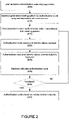
- a user may execute an authentication code entry computer program or application using a mobile electronic device.
- the authentication code entry application may be provided by the issuer of a financial instrument that may be used to conduct a transaction.
- the user may be authenticated to the application by, for example, providing a user identifier and a password, biometrics, etc.
- the user may request the entry and/or storage of an authentication code via the authentication code entry application, and the authentication code entry application may communicate the request to a backend.
- the communication may include user credentials (e.g., user identifier and password, account information, etc.).
- the backend for the issuer may generate a masking pattern for receiving entry of an authentication code from the use of the mobile electronic device.
- the masking pattern may include a plurality of placeholders.
- the masking pattern may specify an order of entry of the values in the authentication code. It may further specify the order of entry of dummy values. For example, if the authentication code has four values, the masking pattern may specify that the first, third, fourth, and seventh places in an eight value entry may include the values of the authentication code. The remaining places (e.g., the second, fifth, sixth, and eighth places) may contain dummy values.
- the number of dummy values may vary as is necessary and/or desired, as may the placement for the authentication values and the dummy values.
- the masking pattern may also re-order the authentication code values.
- the masking pattern may specify that the first authentication code value be entered in the fourth authentication code place, the second authentication code value be entered in the third authentication code place; the third authentication code value be entered in the second authentication code place, and the fourth authentication code value be entered in the first authentication code place.
- the backend may store the masking pattern and may associate the masking pattern with the user. It may then communicate the masking pattern to the user.
- the user may be prompted by the authentication code entry application to enter the authentication code according to the masking pattern. For example, the user may be presented with eight entry spaces, and may be instructed to enter the authentication code values in the first, third, fourth, and seventh places, and to enter dummy values in the second, fifth, sixth, and eighth places.
- the prompt may be presented in a manner that cannot be read or interpreted by a machine.
- the user may be presented with one or more images of numbers associated with the values in a manner similar to CAPTCHA prompts.
- the images may include numbers of different fonts, sizes, orientations, colors, darkness, hue, focus, line quality, etc. in order to prevent machine reading.
- the authentication code entry application does not know what places contain the authentication code values, and what spaces contain the dummy values.
- step 220 the user may enter the authentication code values and dummy values in accordance with the prompt, and, in step 225, the authentication code values and the dummy values may be communicated to the backend.
- the backend may identify the authentication code values from the received authentication code values and the dummy values, and may validate the authentication code. If, in step 235, the authentication code is validated, in step 240, the backend may instruct the authentication code entry application to store the authentication code values and dummy values that were entered. In one embodiment, the authentication code values and dummy values may be stored in device memory, in a secure element, in the cloud, etc.
- the backend may instruct the authentication code entry application to repeat the entry.
- the user may be re-authenticated, the user's account may be locked, the backend may generate a new masking pattern, or any other suitable action may be taken.
- the stored authentication code values and dummy values and/or the masking pattern may expire after a predetermined event.
- the backend may expire the masking pattern after a certain number of transactions, after a period of time, after a certain amount is spent, etc.
- the authentication value entry may be performed remotely from a merchant, and in advance of a transaction.
- a user may approach a merchant point of transaction device with a mobile electronic device that has authentication code values and dummy values that were entered in accordance with a masking pattern stored in the memory thereof.
- the user may present a financial instrument (e.g., credit card, debit card, token, etc.) to the point of transaction device.
- a financial instrument e.g., credit card, debit card, token, etc.
- the financial instrument may be physically presented; in another embodiment, the financial instrument may be communicated by RF communication, optical communication, etc.
- the point of transaction device may communicate a request for authenticating information to the mobile electronic device.
- the point of transaction device may communicate the request to a computer program or application executed by the mobile electronic device, such as an authentication code entry application.
- the computer application may retrieve the authentication code values and the dummy values from memory, and may communicate the authentication code values and dummy values to the point of transaction device.
- the computer application may conduct the process of entering the authentication code values and dummy values as detailed above.
- the authentication code values and dummy values may be communicated therewith.
- the point of transaction device may communicate the authentication code values and dummy values to a backend for a financial institution associated with the financial instrument.
- the backend may retrieve the masking pattern associated with the financial instrument and, using the stored masking pattern, may identify the authentication code values from the received authentication code values and the dummy values, and, in step 330, may validate the authentication code. If, in step 335, the authentication code is validated, in step 340, the backend may instruct the point of transaction device that the transaction is approved.
- the backend may instruct the point of transaction device that the transaction is denied.
- the backend may notify the user associated with the financial instrument that the authentication code was rejected, and may take any appropriate action as is necessary and/or desired (e.g., lock the account, expire the masking pattern, etc.).
- the backend may not be available to validate the authentication code.
- FIG. 4 a method for conducting an offline transaction with authentication code entry using mobile electronic devices according to another embodiment.
- a user may approach a merchant point of transaction device with a mobile electronic device that has authentication code values and dummy values that were entered in accordance with a masking pattern stored in the memory thereof.
- the user may present a financial instrument (e.g., credit card, debit card, token, etc.) to the point of transaction device.
- a financial instrument e.g., credit card, debit card, token, etc.
- the financial instrument may be physically presented; in another embodiment, the financial instrument may be communicated by RF communication, optical communication, etc.
- the financial instrument may be an EMV card.
- the EMV card may have an authentication code stored thereon.
- the EMV card may not have the authentication code stored thereon, but may verify the authentication code using, for example, a stored hash of the authentication code.
- the authentication code may be cryptographically protected.
- the point of transaction device may communicate a request for authenticating information to the mobile electronic device, for example, to a computer application executed by the mobile electronic device.
- the point of transaction device may communicate the request to a computer program or application executed by the mobile electronic device, such as an authentication code entry application.
- the point of transaction device may further provide its public key and any other necessary information to the computer application executed by a mobile electronic device.
- the public key may be the point of transaction's Secure Card Reader for PIN, or SCRP, public key. Additional information, such as a serial number or identification number for the point of transaction, merchant information, etc. may be provided as is necessary and/or desired.
- the computer application may communicate the point of transaction's public key and other information to the backend for the financial institution associated with the financial instrument.
- the backed may retrieve and encrypt the masking pattern with the point of transaction's public key, and, in step 430, may communicate the encrypted masking pattern to the computer application.
- the computer application may communicate the authentication values and dummy values, and the encrypted masking pattern, to the point of transaction device.
- the point of transaction device may decrypt the masking pattern and use the masking pattern to extract the authentication code from the authentication values and dummy values.
- the authentication code may optionally be encrypted as is necessary and/or desired for the financial instrument (e.g., the EMV card).
- the point of transaction device may communicate the plaintext authentication code, or the encrypted authentication code, to the financial instrument.
- the financial instrument may communicate a stored authentication code, or a stored hash or other cryptographically-processed version of the authentication code, to the point of transaction device.
- the stored authentication code, or a stored hash or other cryptographically-processed version of the authentication code may optionally be encrypted for communication as is necessary and/or desired.
- the financial instrument may provide the function, or an identification of the function, that was used to generate the hash or other cryptographically-processed version of the authentication code that may be stored on the financial instrument.
- offline authentication code validation may be performed between the financial instrument (e.g., the EMV card) and the point of transaction device.
- the authentication code may be stored on the financial instrument, and the financial instrument may verify the authentication code.
- a hash or other cryptographically-processed version of the authentication code may be stored on the financial instrument, and the financial instrument may verify the authentication code against the stored cryptographically-processed version of the authentication code.
- the point of transaction device may then verify the authentication code against the received authentication code or the hash or other cryptographically-processed version of the authentication code.
- the point of transaction device may generate a hash or other cryptographically-generated version of the decrypted authentication code using the function received or identified by the financial instrument.
- step 460 the transaction may be approved. If the authentication code is not validated, in step 465, the transaction may be denied.
Landscapes
- Engineering & Computer Science (AREA)
- Theoretical Computer Science (AREA)
- Computer Security & Cryptography (AREA)
- Physics & Mathematics (AREA)
- General Physics & Mathematics (AREA)
- Computer Hardware Design (AREA)
- General Engineering & Computer Science (AREA)
- Software Systems (AREA)
- Business, Economics & Management (AREA)
- Computer Networks & Wireless Communication (AREA)
- Accounting & Taxation (AREA)
- Strategic Management (AREA)
- General Business, Economics & Management (AREA)
- Finance (AREA)
- Signal Processing (AREA)
- Health & Medical Sciences (AREA)
- Bioethics (AREA)
- General Health & Medical Sciences (AREA)
- Financial Or Insurance-Related Operations Such As Payment And Settlement (AREA)
Claims (10)
- Computerimplementiertes Verfahren für eine Eingabe eines Authentifizierungscodes, das Folgendes umfasst:in einer Informationsverarbeitungsvorrichtung, die wenigstens einen Computerprozessor, eine Anzeige undeine Eingabevorrichtung umfasst:Empfangen (210), an derInformationsverarbeitungsvorrichtung, eines Maskierungsmusters zum Empfangen einer Eingabe eines Authentifizierungscodes, wobei das Maskierungsmuster eine Reihenfolge zum Eingeben von Werten des Authentifizierungscodes spezifiziert, wobei das Maskierungsmuster durch ein Backend für einen Emittenten eines Finanzinstruments erzeugt wird;Präsentieren (215), auf der Anzeige, einer Aufforderung, die Werte des Authentifizierungscodes gemäß dem Maskierungsmuster einzugeben;Empfangen (220), an der Eingabevorrichtung, einer maskierten Authentifizierungscodeeingabe, wobei die maskierte Authentifizierungscodeeingabe die Werte des Authentifizierungscodes umfasst, die gemäß dem Maskierungsmuster eingegeben werden, wobei die maskierte Authentifizierungscodeeingabe die Werte des Authentifizierungscodes und mehrere Dummy-Werte umfasst;wobei die Werte des Authentifizierungscodes und die mehreren Dummy-Werte an das Backend (225) kommuniziert werden;wobei das Backend unter Verwendung des Maskierungsmusters die Werte des Authentifizierungscodes aus den empfangenen Werten des Authentifizierungscodes und den mehreren Dummy-Werten identifiziert (230);wobei das Backend den Authentifizierungscode validiert (235);und Speichern (240) der maskierten Authentifizierungscodeeingabe.
- Verfahren nach Anspruch 1, wobei das Maskierungsmuster mehrere Platzhalter umfasst und die Reihenfolge zum Eingeben des Authentifizierungscodes eine erste Teilmenge der mehreren Platzhalter, die Werte des Authentifizierungscodes empfangen, und eine zweite Teilmenge der mehreren Platzhalter, die Dummy-Werte empfangen, spezifiziert.
- Verfahren nach einem der Ansprüche 1 oder 2, wobei die Aufforderung auf derartige Weise angezeigt wird, dass sie nicht durch die Informationsverarbeitungsvorrichtung maschinenlesbar ist.
- Verfahren nach einem der Ansprüche 1 bis 3, wobei die Informationsverarbeitungsvorrichtung eine mobile elektronische Vorrichtung (110) umfasst.
- Verfahren nach Anspruch 4, wobei der maskierte Authentifizierungscode in einem sicheren Speicher der mobilen elektronischen Vorrichtung (110) gespeichert ist.
- Vorrichtung für eine Eingabe eines Authentifizierungscodes, die Folgendes umfasst:einen Computerprozessor;eine Anzeige;eine Eingabevorrichtung; undeinen Speicher;wobei:die Vorrichtung konfiguriert ist, um ein Maskierungsmuster zu empfangen, das eine Reihenfolge zum Eingeben von Werten eines Authentifizierungscodes spezifiziert, wobei das Maskierungsmuster durch ein Backend für einen Emittenten eines Finanzinstruments erzeugbar ist;der Computerprozessor konfiguriert ist, um zu veranlassen, dass die Anzeige eine Aufforderung darstellt, die Werte des Authentifizierungscodes gemäß dem Maskierungsmuster einzugeben;die Eingabevorrichtung konfiguriert ist, um eine maskierte Authentifizierungscodeeingabe zu empfangen, wobei die maskierte Authentifizierungscodeeingabe die Werte des Authentifizierungscodes, die gemäß dem Maskierungsmuster eingegebenen werden, und mehrere Dummy-Werte umfasst;wobei die Vorrichtung konfiguriert ist, um die Werte des Authentifizierungscodes und der mehreren Dummy-Werte an das Backend zu kommunizieren;wobei die Werte des Authentifizierungscodes aus den Werten des Authentifizierungscodes und den mehreren Dummy-Werten durch das Backend unter Verwendung des Maskierungsmusters identifizierbar sind;wobei der Authentifizierungscode durch das Backend validierbar ist;und der Computerprozessor konfiguriert ist, um die maskierte Authentifizierungscodeeingabe in dem Speicher zu speichern.
- Vorrichtung nach Anspruch 6, wobei das Maskierungsmuster mehrere Platzhalter umfasst, und die Reihenfolge zum Eingeben des Authentifizierungscodes eine erste Teilmenge der mehreren Platzhalter, die Werte des Authentifizierungscodes empfangen, und eine zweite Teilmenge der mehreren Platzhalter, die Dummy-Werte empfangen, spezifiziert.
- Vorrichtung nach einem der Ansprüche 6 oder 7, wobei die Aufforderung auf derarte Weise angezeigt wird, dass sie nicht durch die Informationsverarbeitungsvorrichtung maschinenlesbar ist.
- Vorrichtung nach einem der Ansprüche 6 bis 8, wobei die Vorrichtung eine mobile elektronische Vorrichtung (110) umfasst.
- Vorrichtung nach einem der Ansprüche 6 bis 9, wobei der Speicher einen sicheren Speicher umfasst.
Priority Applications (1)
| Application Number | Priority Date | Filing Date | Title |
|---|---|---|---|
| EP22167068.0A EP4047494A1 (de) | 2018-02-15 | 2019-02-15 | Systeme und verfahren zur authentifizierungscodeeingabe mithilfe mobiler elektronischer vorrichtungen |
Applications Claiming Priority (1)
| Application Number | Priority Date | Filing Date | Title |
|---|---|---|---|
| US15/897,791 US11042628B2 (en) | 2018-02-15 | 2018-02-15 | Systems and methods for authentication code entry using mobile electronic devices |
Related Child Applications (2)
| Application Number | Title | Priority Date | Filing Date |
|---|---|---|---|
| EP22167068.0A Division-Into EP4047494A1 (de) | 2018-02-15 | 2019-02-15 | Systeme und verfahren zur authentifizierungscodeeingabe mithilfe mobiler elektronischer vorrichtungen |
| EP22167068.0A Division EP4047494A1 (de) | 2018-02-15 | 2019-02-15 | Systeme und verfahren zur authentifizierungscodeeingabe mithilfe mobiler elektronischer vorrichtungen |
Publications (2)
| Publication Number | Publication Date |
|---|---|
| EP3528154A1 EP3528154A1 (de) | 2019-08-21 |
| EP3528154B1 true EP3528154B1 (de) | 2022-05-18 |
Family
ID=65493832
Family Applications (2)
| Application Number | Title | Priority Date | Filing Date |
|---|---|---|---|
| EP22167068.0A Withdrawn EP4047494A1 (de) | 2018-02-15 | 2019-02-15 | Systeme und verfahren zur authentifizierungscodeeingabe mithilfe mobiler elektronischer vorrichtungen |
| EP19157601.6A Active EP3528154B1 (de) | 2018-02-15 | 2019-02-15 | Systeme und verfahren zur authentifizierungscodeeingabe mithilfe mobiler elektronischer vorrichtungen |
Family Applications Before (1)
| Application Number | Title | Priority Date | Filing Date |
|---|---|---|---|
| EP22167068.0A Withdrawn EP4047494A1 (de) | 2018-02-15 | 2019-02-15 | Systeme und verfahren zur authentifizierungscodeeingabe mithilfe mobiler elektronischer vorrichtungen |
Country Status (5)
| Country | Link |
|---|---|
| US (3) | US11042628B2 (de) |
| EP (2) | EP4047494A1 (de) |
| CN (1) | CN112352237A (de) |
| AU (1) | AU2019220702A1 (de) |
| WO (1) | WO2019161176A1 (de) |
Families Citing this family (3)
| Publication number | Priority date | Publication date | Assignee | Title |
|---|---|---|---|---|
| US11646876B2 (en) * | 2017-07-31 | 2023-05-09 | Koninklijke Philips N.V. | Distributing a computation output |
| US12132720B2 (en) * | 2022-03-13 | 2024-10-29 | Kyocera Document Solutions Inc. | Enhanced security for device authorization for browserless or input-constrained devices |
| US20230352134A1 (en) * | 2022-04-04 | 2023-11-02 | Cvs Pharmacy, Inc. | Ai based systems and methods for providing a care plan |
Family Cites Families (18)
| Publication number | Priority date | Publication date | Assignee | Title |
|---|---|---|---|---|
| US20030126453A1 (en) | 2001-12-31 | 2003-07-03 | Glew Andrew F. | Processor supporting execution of an authenticated code instruction |
| US6954862B2 (en) * | 2002-08-27 | 2005-10-11 | Michael Lawrence Serpa | System and method for user authentication with enhanced passwords |
| WO2006129383A1 (ja) * | 2005-05-31 | 2006-12-07 | Sharp Kabushiki Kaisha | サービス提供システム、サービス利用装置、テンプレート送信装置 |
| US8352323B2 (en) * | 2007-11-30 | 2013-01-08 | Blaze Mobile, Inc. | Conducting an online payment transaction using an NFC enabled mobile communication device |
| JP4650386B2 (ja) | 2006-09-29 | 2011-03-16 | 沖電気工業株式会社 | 個人認証システム及び個人認証方法 |
| US8892598B2 (en) | 2010-06-22 | 2014-11-18 | Cleversafe, Inc. | Coordinated retrieval of data from a dispersed storage network |
| DE102010052324A1 (de) * | 2010-11-25 | 2012-05-31 | Ps4B-Professional Solutions For Business Gmbh | Verfahren und Vorrichtung zur Verhinderung eines unberechtigte Erspähens von Zugangsdaten |
| US20130097697A1 (en) * | 2011-10-14 | 2013-04-18 | Microsoft Corporation | Security Primitives Employing Hard Artificial Intelligence Problems |
| US20140156535A1 (en) * | 2012-06-01 | 2014-06-05 | Nameh Jabbour | System and method for requesting and processing pin data using a digit subset for subsequent pin authentication |
| CN103873432A (zh) * | 2012-12-10 | 2014-06-18 | 深圳市腾讯计算机系统有限公司 | 验证码实现方法及其系统、验证码服务端 |
| US9082121B2 (en) * | 2013-10-23 | 2015-07-14 | Mastercard International Incorporated | System and method for guided passcode entry |
| US9342673B2 (en) * | 2014-03-26 | 2016-05-17 | Motorola Solutions, Inc. | Method for user authentication in a device comprising a touch screen |
| SG11201609002SA (en) * | 2014-05-08 | 2016-11-29 | Thumbzup Uk Ltd | Authentication code entry system and method |
| CN104038502B (zh) * | 2014-06-24 | 2018-11-13 | 五八同城信息技术有限公司 | 一种验证方法及系统 |
| US9639699B1 (en) * | 2014-07-18 | 2017-05-02 | Cyberfend, Inc. | Detecting non-human users on computer systems |
| CN106446667B (zh) * | 2015-08-07 | 2020-09-08 | 阿里巴巴集团控股有限公司 | 一种密码数据处理方法、装置及设备 |
| US20180300464A1 (en) * | 2017-04-13 | 2018-10-18 | International Business Machines Corporation | Authenticating using a password entry pattern |
| CN107563181A (zh) * | 2017-10-24 | 2018-01-09 | 百望电子发票数据服务有限公司 | 一种点选图形验证码的验证方法及系统 |
-
2018
- 2018-02-15 US US15/897,791 patent/US11042628B2/en not_active Expired - Fee Related
-
2019
- 2019-02-15 AU AU2019220702A patent/AU2019220702A1/en not_active Abandoned
- 2019-02-15 EP EP22167068.0A patent/EP4047494A1/de not_active Withdrawn
- 2019-02-15 CN CN201980025747.3A patent/CN112352237A/zh active Pending
- 2019-02-15 WO PCT/US2019/018186 patent/WO2019161176A1/en not_active Ceased
- 2019-02-15 EP EP19157601.6A patent/EP3528154B1/de active Active
-
2021
- 2021-06-21 US US17/353,635 patent/US11604870B2/en active Active
-
2023
- 2023-02-15 US US18/169,653 patent/US20230185898A1/en not_active Abandoned
Also Published As
| Publication number | Publication date |
|---|---|
| WO2019161176A1 (en) | 2019-08-22 |
| US20210312036A1 (en) | 2021-10-07 |
| US20190251248A1 (en) | 2019-08-15 |
| US11604870B2 (en) | 2023-03-14 |
| US11042628B2 (en) | 2021-06-22 |
| EP3528154A1 (de) | 2019-08-21 |
| CN112352237A (zh) | 2021-02-09 |
| EP4047494A1 (de) | 2022-08-24 |
| US20230185898A1 (en) | 2023-06-15 |
| AU2019220702A1 (en) | 2020-09-10 |
Similar Documents
| Publication | Publication Date | Title |
|---|---|---|
| US12112310B2 (en) | Authentication for third party digital wallet provisioning | |
| JP7748423B2 (ja) | 安全な読み取り専用の認証のためのシステム及び方法 | |
| AU2023203952B2 (en) | Steganographic image encoding of biometric template information on a card | |
| US8843757B2 (en) | One time PIN generation | |
| CN115004208A (zh) | 利用密码技术生成条形码 | |
| US10078744B2 (en) | Authentication-activated augmented reality display device | |
| US20230185898A1 (en) | Systems and methods for authentication code entry using mobile electronic devices | |
| CN112889046A (zh) | 用于非接触卡的密码认证的系统和方法 | |
| EP3248165A1 (de) | Transaktion mit anonymisierten benutzerdaten | |
| JP2017537421A (ja) | 支払いトークンのセキュリティを確保する方法 | |
| EP4601247A2 (de) | Sichere authentifizierung auf der basis von passdaten, die in einer kontaktlosen karte gespeichert sind | |
| WO2016048797A1 (en) | On-device shared cardholder verification | |
| US10503936B2 (en) | Systems and methods for utilizing magnetic fingerprints obtained using magnetic stripe card readers to derive transaction tokens | |
| KR20160092944A (ko) | 실물카드를 이용한 온라인 금융거래 본인인증 시스템 및 방법 | |
| US20190019189A1 (en) | Payment authentication | |
| WO2005024743A1 (en) | Granting access to a system based on the use of a card having stored user data thereon | |
| HK40059045A (en) | Steganographic image encoding of biometric template information on a card | |
| HK40072900A (zh) | 利用密码技术生成条形码 | |
| HK40055604A (en) | Tap to autofill card data | |
| HK40053284A (en) | Systems and methods for cryptographic authentication of contactless cards |
Legal Events
| Date | Code | Title | Description |
|---|---|---|---|
| PUAI | Public reference made under article 153(3) epc to a published international application that has entered the european phase |
Free format text: ORIGINAL CODE: 0009012 |
|
| STAA | Information on the status of an ep patent application or granted ep patent |
Free format text: STATUS: THE APPLICATION HAS BEEN PUBLISHED |
|
| AK | Designated contracting states |
Kind code of ref document: A1 Designated state(s): AL AT BE BG CH CY CZ DE DK EE ES FI FR GB GR HR HU IE IS IT LI LT LU LV MC MK MT NL NO PL PT RO RS SE SI SK SM TR |
|
| AX | Request for extension of the european patent |
Extension state: BA ME |
|
| STAA | Information on the status of an ep patent application or granted ep patent |
Free format text: STATUS: REQUEST FOR EXAMINATION WAS MADE |
|
| STAA | Information on the status of an ep patent application or granted ep patent |
Free format text: STATUS: EXAMINATION IS IN PROGRESS |
|
| 17P | Request for examination filed |
Effective date: 20200220 |
|
| RBV | Designated contracting states (corrected) |
Designated state(s): AL AT BE BG CH CY CZ DE DK EE ES FI FR GB GR HR HU IE IS IT LI LT LU LV MC MK MT NL NO PL PT RO RS SE SI SK SM TR |
|
| 17Q | First examination report despatched |
Effective date: 20200401 |
|
| GRAP | Despatch of communication of intention to grant a patent |
Free format text: ORIGINAL CODE: EPIDOSNIGR1 |
|
| STAA | Information on the status of an ep patent application or granted ep patent |
Free format text: STATUS: GRANT OF PATENT IS INTENDED |
|
| INTG | Intention to grant announced |
Effective date: 20211203 |
|
| RIC1 | Information provided on ipc code assigned before grant |
Ipc: G06F 21/35 20130101ALI20211119BHEP Ipc: G06F 21/31 20130101AFI20211119BHEP |
|
| GRAS | Grant fee paid |
Free format text: ORIGINAL CODE: EPIDOSNIGR3 |
|
| GRAA | (expected) grant |
Free format text: ORIGINAL CODE: 0009210 |
|
| STAA | Information on the status of an ep patent application or granted ep patent |
Free format text: STATUS: THE PATENT HAS BEEN GRANTED |
|
| AK | Designated contracting states |
Kind code of ref document: B1 Designated state(s): AL AT BE BG CH CY CZ DE DK EE ES FI FR GB GR HR HU IE IS IT LI LT LU LV MC MK MT NL NO PL PT RO RS SE SI SK SM TR |
|
| REG | Reference to a national code |
Ref country code: GB Ref legal event code: FG4D |
|
| REG | Reference to a national code |
Ref country code: CH Ref legal event code: EP |
|
| REG | Reference to a national code |
Ref country code: IE Ref legal event code: FG4D |
|
| REG | Reference to a national code |
Ref country code: DE Ref legal event code: R096 Ref document number: 602019014999 Country of ref document: DE |
|
| REG | Reference to a national code |
Ref country code: AT Ref legal event code: REF Ref document number: 1493569 Country of ref document: AT Kind code of ref document: T Effective date: 20220615 |
|
| REG | Reference to a national code |
Ref country code: LT Ref legal event code: MG9D |
|
| REG | Reference to a national code |
Ref country code: NL Ref legal event code: MP Effective date: 20220518 |
|
| REG | Reference to a national code |
Ref country code: AT Ref legal event code: MK05 Ref document number: 1493569 Country of ref document: AT Kind code of ref document: T Effective date: 20220518 |
|
| PG25 | Lapsed in a contracting state [announced via postgrant information from national office to epo] |
Ref country code: SE Free format text: LAPSE BECAUSE OF FAILURE TO SUBMIT A TRANSLATION OF THE DESCRIPTION OR TO PAY THE FEE WITHIN THE PRESCRIBED TIME-LIMIT Effective date: 20220518 Ref country code: PT Free format text: LAPSE BECAUSE OF FAILURE TO SUBMIT A TRANSLATION OF THE DESCRIPTION OR TO PAY THE FEE WITHIN THE PRESCRIBED TIME-LIMIT Effective date: 20220919 Ref country code: NO Free format text: LAPSE BECAUSE OF FAILURE TO SUBMIT A TRANSLATION OF THE DESCRIPTION OR TO PAY THE FEE WITHIN THE PRESCRIBED TIME-LIMIT Effective date: 20220818 Ref country code: NL Free format text: LAPSE BECAUSE OF FAILURE TO SUBMIT A TRANSLATION OF THE DESCRIPTION OR TO PAY THE FEE WITHIN THE PRESCRIBED TIME-LIMIT Effective date: 20220518 Ref country code: LT Free format text: LAPSE BECAUSE OF FAILURE TO SUBMIT A TRANSLATION OF THE DESCRIPTION OR TO PAY THE FEE WITHIN THE PRESCRIBED TIME-LIMIT Effective date: 20220518 Ref country code: HR Free format text: LAPSE BECAUSE OF FAILURE TO SUBMIT A TRANSLATION OF THE DESCRIPTION OR TO PAY THE FEE WITHIN THE PRESCRIBED TIME-LIMIT Effective date: 20220518 Ref country code: GR Free format text: LAPSE BECAUSE OF FAILURE TO SUBMIT A TRANSLATION OF THE DESCRIPTION OR TO PAY THE FEE WITHIN THE PRESCRIBED TIME-LIMIT Effective date: 20220819 Ref country code: FI Free format text: LAPSE BECAUSE OF FAILURE TO SUBMIT A TRANSLATION OF THE DESCRIPTION OR TO PAY THE FEE WITHIN THE PRESCRIBED TIME-LIMIT Effective date: 20220518 Ref country code: ES Free format text: LAPSE BECAUSE OF FAILURE TO SUBMIT A TRANSLATION OF THE DESCRIPTION OR TO PAY THE FEE WITHIN THE PRESCRIBED TIME-LIMIT Effective date: 20220518 Ref country code: BG Free format text: LAPSE BECAUSE OF FAILURE TO SUBMIT A TRANSLATION OF THE DESCRIPTION OR TO PAY THE FEE WITHIN THE PRESCRIBED TIME-LIMIT Effective date: 20220818 Ref country code: AT Free format text: LAPSE BECAUSE OF FAILURE TO SUBMIT A TRANSLATION OF THE DESCRIPTION OR TO PAY THE FEE WITHIN THE PRESCRIBED TIME-LIMIT Effective date: 20220518 |
|
| PG25 | Lapsed in a contracting state [announced via postgrant information from national office to epo] |
Ref country code: RS Free format text: LAPSE BECAUSE OF FAILURE TO SUBMIT A TRANSLATION OF THE DESCRIPTION OR TO PAY THE FEE WITHIN THE PRESCRIBED TIME-LIMIT Effective date: 20220518 Ref country code: PL Free format text: LAPSE BECAUSE OF FAILURE TO SUBMIT A TRANSLATION OF THE DESCRIPTION OR TO PAY THE FEE WITHIN THE PRESCRIBED TIME-LIMIT Effective date: 20220518 Ref country code: LV Free format text: LAPSE BECAUSE OF FAILURE TO SUBMIT A TRANSLATION OF THE DESCRIPTION OR TO PAY THE FEE WITHIN THE PRESCRIBED TIME-LIMIT Effective date: 20220518 Ref country code: IS Free format text: LAPSE BECAUSE OF FAILURE TO SUBMIT A TRANSLATION OF THE DESCRIPTION OR TO PAY THE FEE WITHIN THE PRESCRIBED TIME-LIMIT Effective date: 20220918 |
|
| PG25 | Lapsed in a contracting state [announced via postgrant information from national office to epo] |
Ref country code: SM Free format text: LAPSE BECAUSE OF FAILURE TO SUBMIT A TRANSLATION OF THE DESCRIPTION OR TO PAY THE FEE WITHIN THE PRESCRIBED TIME-LIMIT Effective date: 20220518 Ref country code: SK Free format text: LAPSE BECAUSE OF FAILURE TO SUBMIT A TRANSLATION OF THE DESCRIPTION OR TO PAY THE FEE WITHIN THE PRESCRIBED TIME-LIMIT Effective date: 20220518 Ref country code: RO Free format text: LAPSE BECAUSE OF FAILURE TO SUBMIT A TRANSLATION OF THE DESCRIPTION OR TO PAY THE FEE WITHIN THE PRESCRIBED TIME-LIMIT Effective date: 20220518 Ref country code: EE Free format text: LAPSE BECAUSE OF FAILURE TO SUBMIT A TRANSLATION OF THE DESCRIPTION OR TO PAY THE FEE WITHIN THE PRESCRIBED TIME-LIMIT Effective date: 20220518 Ref country code: DK Free format text: LAPSE BECAUSE OF FAILURE TO SUBMIT A TRANSLATION OF THE DESCRIPTION OR TO PAY THE FEE WITHIN THE PRESCRIBED TIME-LIMIT Effective date: 20220518 Ref country code: CZ Free format text: LAPSE BECAUSE OF FAILURE TO SUBMIT A TRANSLATION OF THE DESCRIPTION OR TO PAY THE FEE WITHIN THE PRESCRIBED TIME-LIMIT Effective date: 20220518 |
|
| REG | Reference to a national code |
Ref country code: DE Ref legal event code: R097 Ref document number: 602019014999 Country of ref document: DE |
|
| PLBE | No opposition filed within time limit |
Free format text: ORIGINAL CODE: 0009261 |
|
| STAA | Information on the status of an ep patent application or granted ep patent |
Free format text: STATUS: NO OPPOSITION FILED WITHIN TIME LIMIT |
|
| PG25 | Lapsed in a contracting state [announced via postgrant information from national office to epo] |
Ref country code: AL Free format text: LAPSE BECAUSE OF FAILURE TO SUBMIT A TRANSLATION OF THE DESCRIPTION OR TO PAY THE FEE WITHIN THE PRESCRIBED TIME-LIMIT Effective date: 20220518 |
|
| 26N | No opposition filed |
Effective date: 20230221 |
|
| PG25 | Lapsed in a contracting state [announced via postgrant information from national office to epo] |
Ref country code: SI Free format text: LAPSE BECAUSE OF FAILURE TO SUBMIT A TRANSLATION OF THE DESCRIPTION OR TO PAY THE FEE WITHIN THE PRESCRIBED TIME-LIMIT Effective date: 20220518 |
|
| P01 | Opt-out of the competence of the unified patent court (upc) registered |
Effective date: 20230529 |
|
| PG25 | Lapsed in a contracting state [announced via postgrant information from national office to epo] |
Ref country code: MC Free format text: LAPSE BECAUSE OF FAILURE TO SUBMIT A TRANSLATION OF THE DESCRIPTION OR TO PAY THE FEE WITHIN THE PRESCRIBED TIME-LIMIT Effective date: 20220518 |
|
| REG | Reference to a national code |
Ref country code: CH Ref legal event code: PL |
|
| REG | Reference to a national code |
Ref country code: BE Ref legal event code: MM Effective date: 20230228 |
|
| PG25 | Lapsed in a contracting state [announced via postgrant information from national office to epo] |
Ref country code: LU Free format text: LAPSE BECAUSE OF NON-PAYMENT OF DUE FEES Effective date: 20230215 Ref country code: LI Free format text: LAPSE BECAUSE OF NON-PAYMENT OF DUE FEES Effective date: 20230228 Ref country code: CH Free format text: LAPSE BECAUSE OF NON-PAYMENT OF DUE FEES Effective date: 20230228 |
|
| REG | Reference to a national code |
Ref country code: IE Ref legal event code: MM4A |
|
| PG25 | Lapsed in a contracting state [announced via postgrant information from national office to epo] |
Ref country code: IT Free format text: LAPSE BECAUSE OF FAILURE TO SUBMIT A TRANSLATION OF THE DESCRIPTION OR TO PAY THE FEE WITHIN THE PRESCRIBED TIME-LIMIT Effective date: 20220518 Ref country code: IE Free format text: LAPSE BECAUSE OF NON-PAYMENT OF DUE FEES Effective date: 20230215 |
|
| PG25 | Lapsed in a contracting state [announced via postgrant information from national office to epo] |
Ref country code: BE Free format text: LAPSE BECAUSE OF NON-PAYMENT OF DUE FEES Effective date: 20230228 |
|
| PGFP | Annual fee paid to national office [announced via postgrant information from national office to epo] |
Ref country code: DE Payment date: 20240828 Year of fee payment: 6 |
|
| PGFP | Annual fee paid to national office [announced via postgrant information from national office to epo] |
Ref country code: GB Payment date: 20240828 Year of fee payment: 6 |
|
| PGFP | Annual fee paid to national office [announced via postgrant information from national office to epo] |
Ref country code: FR Payment date: 20240828 Year of fee payment: 6 |
|
| PG25 | Lapsed in a contracting state [announced via postgrant information from national office to epo] |
Ref country code: BG Free format text: LAPSE BECAUSE OF FAILURE TO SUBMIT A TRANSLATION OF THE DESCRIPTION OR TO PAY THE FEE WITHIN THE PRESCRIBED TIME-LIMIT Effective date: 20220518 |
|
| PG25 | Lapsed in a contracting state [announced via postgrant information from national office to epo] |
Ref country code: BG Free format text: LAPSE BECAUSE OF FAILURE TO SUBMIT A TRANSLATION OF THE DESCRIPTION OR TO PAY THE FEE WITHIN THE PRESCRIBED TIME-LIMIT Effective date: 20220518 |
|
| PG25 | Lapsed in a contracting state [announced via postgrant information from national office to epo] |
Ref country code: CY Free format text: LAPSE BECAUSE OF FAILURE TO SUBMIT A TRANSLATION OF THE DESCRIPTION OR TO PAY THE FEE WITHIN THE PRESCRIBED TIME-LIMIT; INVALID AB INITIO Effective date: 20190215 |
|
| PG25 | Lapsed in a contracting state [announced via postgrant information from national office to epo] |
Ref country code: HU Free format text: LAPSE BECAUSE OF FAILURE TO SUBMIT A TRANSLATION OF THE DESCRIPTION OR TO PAY THE FEE WITHIN THE PRESCRIBED TIME-LIMIT; INVALID AB INITIO Effective date: 20190215 |
|
| REG | Reference to a national code |
Ref country code: DE Ref legal event code: R119 Ref document number: 602019014999 Country of ref document: DE |
|
| GBPC | Gb: european patent ceased through non-payment of renewal fee |
Effective date: 20250215 |
|
| PG25 | Lapsed in a contracting state [announced via postgrant information from national office to epo] |
Ref country code: TR Free format text: LAPSE BECAUSE OF FAILURE TO SUBMIT A TRANSLATION OF THE DESCRIPTION OR TO PAY THE FEE WITHIN THE PRESCRIBED TIME-LIMIT Effective date: 20220518 |
|
| PG25 | Lapsed in a contracting state [announced via postgrant information from national office to epo] |
Ref country code: DE Free format text: LAPSE BECAUSE OF NON-PAYMENT OF DUE FEES Effective date: 20250902 |
|
| PG25 | Lapsed in a contracting state [announced via postgrant information from national office to epo] |
Ref country code: GB Free format text: LAPSE BECAUSE OF NON-PAYMENT OF DUE FEES Effective date: 20250215 |
|
| PG25 | Lapsed in a contracting state [announced via postgrant information from national office to epo] |
Ref country code: FR Free format text: LAPSE BECAUSE OF NON-PAYMENT OF DUE FEES Effective date: 20250228 |