EP3526916B1 - Data encoding and decoding - Google Patents
Data encoding and decoding Download PDFInfo
- Publication number
- EP3526916B1 EP3526916B1 EP16788088.9A EP16788088A EP3526916B1 EP 3526916 B1 EP3526916 B1 EP 3526916B1 EP 16788088 A EP16788088 A EP 16788088A EP 3526916 B1 EP3526916 B1 EP 3526916B1
- Authority
- EP
- European Patent Office
- Prior art keywords
- codeword
- decoding
- data
- parameters
- bits
- Prior art date
- Legal status (The legal status is an assumption and is not a legal conclusion. Google has not performed a legal analysis and makes no representation as to the accuracy of the status listed.)
- Active
Links
Images




Classifications
-
- H—ELECTRICITY
- H04—ELECTRIC COMMUNICATION TECHNIQUE
- H04L—TRANSMISSION OF DIGITAL INFORMATION, e.g. TELEGRAPHIC COMMUNICATION
- H04L1/00—Arrangements for detecting or preventing errors in the information received
- H04L1/0001—Systems modifying transmission characteristics according to link quality, e.g. power backoff
- H04L1/0009—Systems modifying transmission characteristics according to link quality, e.g. power backoff by adapting the channel coding
- H04L1/0013—Rate matching, e.g. puncturing or repetition of code symbols
-
- H—ELECTRICITY
- H04—ELECTRIC COMMUNICATION TECHNIQUE
- H04L—TRANSMISSION OF DIGITAL INFORMATION, e.g. TELEGRAPHIC COMMUNICATION
- H04L1/00—Arrangements for detecting or preventing errors in the information received
- H04L1/0001—Systems modifying transmission characteristics according to link quality, e.g. power backoff
- H04L1/0002—Systems modifying transmission characteristics according to link quality, e.g. power backoff by adapting the transmission rate
- H04L1/0003—Systems modifying transmission characteristics according to link quality, e.g. power backoff by adapting the transmission rate by switching between different modulation schemes
-
- H—ELECTRICITY
- H04—ELECTRIC COMMUNICATION TECHNIQUE
- H04L—TRANSMISSION OF DIGITAL INFORMATION, e.g. TELEGRAPHIC COMMUNICATION
- H04L1/00—Arrangements for detecting or preventing errors in the information received
- H04L1/0001—Systems modifying transmission characteristics according to link quality, e.g. power backoff
- H04L1/0014—Systems modifying transmission characteristics according to link quality, e.g. power backoff by adapting the source coding
-
- H—ELECTRICITY
- H04—ELECTRIC COMMUNICATION TECHNIQUE
- H04L—TRANSMISSION OF DIGITAL INFORMATION, e.g. TELEGRAPHIC COMMUNICATION
- H04L1/00—Arrangements for detecting or preventing errors in the information received
- H04L1/004—Arrangements for detecting or preventing errors in the information received by using forward error control
- H04L1/0041—Arrangements at the transmitter end
-
- H—ELECTRICITY
- H04—ELECTRIC COMMUNICATION TECHNIQUE
- H04L—TRANSMISSION OF DIGITAL INFORMATION, e.g. TELEGRAPHIC COMMUNICATION
- H04L1/00—Arrangements for detecting or preventing errors in the information received
- H04L1/004—Arrangements for detecting or preventing errors in the information received by using forward error control
- H04L1/0045—Arrangements at the receiver end
- H04L1/0046—Code rate detection or code type detection
-
- H—ELECTRICITY
- H04—ELECTRIC COMMUNICATION TECHNIQUE
- H04L—TRANSMISSION OF DIGITAL INFORMATION, e.g. TELEGRAPHIC COMMUNICATION
- H04L1/00—Arrangements for detecting or preventing errors in the information received
- H04L1/004—Arrangements for detecting or preventing errors in the information received by using forward error control
- H04L1/0072—Error control for data other than payload data, e.g. control data
-
- H—ELECTRICITY
- H04—ELECTRIC COMMUNICATION TECHNIQUE
- H04L—TRANSMISSION OF DIGITAL INFORMATION, e.g. TELEGRAPHIC COMMUNICATION
- H04L1/00—Arrangements for detecting or preventing errors in the information received
- H04L1/004—Arrangements for detecting or preventing errors in the information received by using forward error control
- H04L1/0075—Transmission of coding parameters to receiver
-
- H—ELECTRICITY
- H04—ELECTRIC COMMUNICATION TECHNIQUE
- H04L—TRANSMISSION OF DIGITAL INFORMATION, e.g. TELEGRAPHIC COMMUNICATION
- H04L1/00—Arrangements for detecting or preventing errors in the information received
- H04L1/0001—Systems modifying transmission characteristics according to link quality, e.g. power backoff
- H04L1/0036—Systems modifying transmission characteristics according to link quality, e.g. power backoff arrangements specific to the receiver
- H04L1/0039—Systems modifying transmission characteristics according to link quality, e.g. power backoff arrangements specific to the receiver other detection of signalling, e.g. detection of TFCI explicit signalling
-
- H—ELECTRICITY
- H04—ELECTRIC COMMUNICATION TECHNIQUE
- H04L—TRANSMISSION OF DIGITAL INFORMATION, e.g. TELEGRAPHIC COMMUNICATION
- H04L1/00—Arrangements for detecting or preventing errors in the information received
- H04L1/004—Arrangements for detecting or preventing errors in the information received by using forward error control
- H04L1/0056—Systems characterized by the type of code used
- H04L1/0067—Rate matching
- H04L1/0068—Rate matching by puncturing
- H04L1/0069—Puncturing patterns
Definitions
- the data defining the exchanged parameters is smaller in size than the user message that is to be transmitted.
- the user message is often called the payload.
- the data of the user message is transmitted over a data (or payload) channel.
- the control data is sent on a control channel separate from the data channel, the control and user data are generally encoded and decoded separately.
- a known encoding mechanism is to assign separate channels for transmitting the control message and the payload data.
- the control message and the payload data are encoded and decoded separately.
- Turbo codes are used to encode the payload.
- Multiple modulation and coding schemes (MCSs) can be used.
- MCSs modulation and coding schemes
- the current choice of MCS is signaled over the control channel with a separate channel code, namely the convolutional code (CC).
- CC convolutional code
- the receiver can start decoding the payload. Without decoding the control message the receiver would not know which coding and modulation scheme was used for the payload transmission.
- EP 1 207 659 A2 discloses a data transmission method.
- a transmitting side if a frame contains transmission data, frame data containing the transmission data and a calculated error-detecting code is generated. If the frame contains no transmission data, frame data containing neither transmission data nor an error-detecting code is generated.
- a receiving side one or more final bit positions of the frame data are assumed in the frame, transmission data and an error-detecting code are assumed in the frame, and the error-detecting code of the assumed transmission data is calculated. If there is a position where the assumed error-detecting code matches the error-detecting code calculated based on the assumed transmission data, it is decided that the position is the final bit position. Otherwise, it is decided that the frame contains no transmission data or that the received frame data contains an error.
- GB 2533412 A discloses methods for wireless communications. Packets sent between devices using the IEEE802.11ad standard use a modulation and coding scheme where each modulation scheme uses a certain code rate. An indication of a code rate of an LDPC code used to encode the packets is inserted at predetermined positions in the packet headers. The method provides further code rates per modulation scheme, and sends an indication of a revised code rate to be used with a particular modulation scheme in unused bits of a packet header. The revised code rate may be based on measured transmission link quality.
- the invention provides a signal receiver, a signal encoder, a communication system, a method for interpreting a received codeword, and a method for encoding a data signal to form a codeword as defined in the attached set of claims.
- a signal receiver for interpreting a received message, the receiver being configured to perform the steps of: decoding a first part of the message using a channel decoding scheme with a predefined set of decoding parameters to form a first data block; and subsequently decoding a second part of the message using the channel decoding scheme with decoding parameters that are at least partially dependent on the content of the first data block.
- One or more decoding parameters that is/are dependent on the content of the first data block may be any one or more of the following: an indicator of the length of the second part of the message, a rate adaptation scheme for the second part of the message, a puncturing scheme for the second part of the message, a modulation order for the second part of the message, an error detection scheme for the first and/or the second part of the message and a set of frozen bits for the second part of the message.
- the decoding parameters that are dependent on the content of the first data block comprise one or more of a set of frozen bits for the second part of the codeword, and error detection bits.
- the channel decoding scheme may be such that the first part of the message can be decoded independently of the second part of the message. Then at least some state data for the decoding process can be discarded between decoding the first and second parts, and decoding can readily be suspended between decoding the first and second parts if required.
- the signal receiver may be configured to perform the step of decoding the first part of the message using trellis decoding and/or sliding window decoding. These approaches are amendable to performing decoding when not all the encoding parameters are known.
- the receiver may store the predefined set of decoding parameters. Then they can be available for decoding when required.
- the predefined set of decoding parameters may include one or more of: a length of the first part of the message, a rate adaptation scheme for the first part of the message, a puncturing scheme for the first part of the message, a modulation order for the first part of the message, an error detection scheme for the first part of the message and a set of frozen bits for the first part of the message. These may be useful in decoding the first part of the message.
- the predefined set of decoding parameters comprises a set of predetermined frozen bits.
- the channel decoding scheme may be one of: convolutional decoding, low-density parity check decoding, Wi-Turbo decoding, successive cancellation polar decoding, and successive cancellation list polar decoding. These are amendable to decoding when a limited amount of control information is known. According to the claimed solution, the channel decoding scheme is one of: successive cancellation polar decoding, and successive cancellation list polar decoding.
- the first part of the message may precede the second part of the message. This makes it efficient to decode the first part before the second part.
- the first part of the message may be a leading part of the message. This can allow the remainder of the message to be encoded as for the second part.
- a signal encoder for encoding a data signal to form a message
- the signal encoder storing a set of predetermined encoding parameters and being configured to form the message as: a first part that is encoded according to the predetermined encoding parameters, the first part comprising data defining further encoding parameters; and a second part that is encoded according to the further encoding parameters; the encoder being configured to encode the message by an encoding scheme that permits the first part of the message to be decoded independently of the second part of the message.
- the encoder may be configured to encode the message by an encoding scheme such that knowledge of the further encoding parameters is required to permit the second part of the message to be decoded.
- the receiver can then decode the second part once control information has been extracted from the first part.
- the signal encoder may be configured to select the further encoding parameters.
- the signal encoder may be configured to select at least one of the further encoding parameters at the time of encoding the message. Then it can adapt them to suit the current circumstances.
- the further encoding parameters may include one or more of a length of the second part of the message, a rate adaptation scheme for the second part of the message, a puncturing scheme for the second part of the message, a modulation order for the second part of the message, an error detection scheme for the second part of the message and a set of frozen bits for the second part of the message. Then these parameters can be adapted to suit the current circumstances.
- the further encoding parameters comprise one or more of a set of frozen bits for the second part of the codeword, and error detection bits.
Landscapes
- Engineering & Computer Science (AREA)
- Computer Networks & Wireless Communication (AREA)
- Signal Processing (AREA)
- Quality & Reliability (AREA)
- Error Detection And Correction (AREA)
- Detection And Prevention Of Errors In Transmission (AREA)
Description
- This invention relates to a signal receiver, a signal encoder, a communication system, a method for interpreting a received codeword, and a method for encoding a data signal.
- In a typical modern communication system, the manner in which a transmitter forms its signals can be varied to account for operational factors such as the expected characteristics of the channel it is using, the reliability with which transmitted data is required to be decoded and the required data rate. Some examples of the factors that can be varied include the encoding scheme, the amount of error correction encoding and the message length. In order for a receiver to interpret the signal correctly it needs to be aware of the parameters used at the transmitter. If the transmitter is able to vary its parameters then the transmitter and the receiver need to align their parameters in order to exchange messages. In some systems, the parameters are exchanged over a separate channel. That channel is often called the control channel. The data defining the parameters is often called the control information, control message or control data. The control data may, for example, be a few bytes long.
- Normally, the data defining the exchanged parameters is smaller in size than the user message that is to be transmitted. The user message is often called the payload. The data of the user message is transmitted over a data (or payload) channel. When the control data is sent on a control channel separate from the data channel, the control and user data are generally encoded and decoded separately.
- It is known that the performance of channel codes generally decreases with decreasing message length. For illustration, consider an AWGN channel with BPSK modulation and a certain target block error rate (BLER).
Fig. 1 shows an estimate of the required SNR to achieve a BLER of 0.01 for different message lengths if the code rate is ½. It can be seen that with decreasing message length, the required SNR increases. In other words, the cost of transmitting a bit is reduced by using longer channel codes. It follows that, since a control message typically has a small size, the cost per bit (e.g. in terms of SNR to achieve a target BLER) of conveying control data is typically higher than that of the payload data if they are encoded and decoded separately. - As indicated above, a known encoding mechanism is to assign separate channels for transmitting the control message and the payload data. The control message and the payload data are encoded and decoded separately. For example, in the LTE protocol, Turbo codes are used to encode the payload. Multiple modulation and coding schemes (MCSs) can be used. The current choice of MCS is signaled over the control channel with a separate channel code, namely the convolutional code (CC). After decoding the control message, the receiver can start decoding the payload. Without decoding the control message the receiver would not know which coding and modulation scheme was used for the payload transmission.
- The disadvantages of this solution are twofold. First, the receiver needs to run two decoding processes: one for the control channel and one for the actual payload. Second, because the control message typically contains a small amount of information and because FEC schemes perform poorly with short block lengths, the available resources are used in an inefficient way.
- One way to improve performance is to concatenate the payload data and the control data and encode them together. However, in this approach it generally is only possible to transmit a control message that relates to payload data other than the payload data with which it is concatenated. For instance, the control message might relate to some future payload data. Otherwise, the content of the control data would be needed to decode the control data itself.
-
EP 1 207 659 A2 -
GB 2533412 A - It would be advantageous to be able to send control data more efficiently.
- The invention provides a signal receiver, a signal encoder, a communication system, a method for interpreting a received codeword, and a method for encoding a data signal to form a codeword as defined in the attached set of claims.
- According to one aspect, there is provided a signal receiver for interpreting a received message, the receiver being configured to perform the steps of: decoding a first part of the message using a channel decoding scheme with a predefined set of decoding parameters to form a first data block; and subsequently decoding a second part of the message using the channel decoding scheme with decoding parameters that are at least partially dependent on the content of the first data block.
- One or more decoding parameters that is/are dependent on the content of the first data block may be any one or more of the following: an indicator of the length of the second part of the message, a rate adaptation scheme for the second part of the message, a puncturing scheme for the second part of the message, a modulation order for the second part of the message, an error detection scheme for the first and/or the second part of the message and a set of frozen bits for the second part of the message. According to the claimed solution, the decoding parameters that are dependent on the content of the first data block comprise one or more of a set of frozen bits for the second part of the codeword, and error detection bits.
- The channel decoding scheme may be such that the first part of the message can be decoded independently of the second part of the message. Then at least some state data for the decoding process can be discarded between decoding the first and second parts, and decoding can readily be suspended between decoding the first and second parts if required.
- The signal receiver may be configured to perform the step of decoding the first part of the message using trellis decoding and/or sliding window decoding. These approaches are amendable to performing decoding when not all the encoding parameters are known.
- The receiver may store the predefined set of decoding parameters. Then they can be available for decoding when required.
- The predefined set of decoding parameters may include one or more of: a length of the first part of the message, a rate adaptation scheme for the first part of the message, a puncturing scheme for the first part of the message, a modulation order for the first part of the message, an error detection scheme for the first part of the message and a set of frozen bits for the first part of the message. These may be useful in decoding the first part of the message. According to the claimed solution, the predefined set of decoding parameters comprises a set of predetermined frozen bits.
- The channel decoding scheme may be one of: convolutional decoding, low-density parity check decoding, Wi-Turbo decoding, successive cancellation polar decoding, and successive cancellation list polar decoding. These are amendable to decoding when a limited amount of control information is known. According to the claimed solution, the channel decoding scheme is one of: successive cancellation polar decoding, and successive cancellation list polar decoding.
- The first part of the message may precede the second part of the message. This makes it efficient to decode the first part before the second part.
- The first part of the message may be a leading part of the message. This can allow the remainder of the message to be encoded as for the second part.
- According to another aspect, there is provided a signal encoder for encoding a data signal to form a message, the signal encoder storing a set of predetermined encoding parameters and being configured to form the message as: a first part that is encoded according to the predetermined encoding parameters, the first part comprising data defining further encoding parameters; and a second part that is encoded according to the further encoding parameters; the encoder being configured to encode the message by an encoding scheme that permits the first part of the message to be decoded independently of the second part of the message.
- The encoder may be configured to encode the message by an encoding scheme such that knowledge of the further encoding parameters is required to permit the second part of the message to be decoded. The receiver can then decode the second part once control information has been extracted from the first part.
- The signal encoder may be configured to select the further encoding parameters. The signal encoder may be configured to select at least one of the further encoding parameters at the time of encoding the message. Then it can adapt them to suit the current circumstances.
- The further encoding parameters may include one or more of a length of the second part of the message, a rate adaptation scheme for the second part of the message, a puncturing scheme for the second part of the message, a modulation order for the second part of the message, an error detection scheme for the second part of the message and a set of frozen bits for the second part of the message. Then these parameters can be adapted to suit the current circumstances.
- According to the claimed solution, the further encoding parameters comprise one or more of a set of frozen bits for the second part of the codeword, and error detection bits.
- The signal encoder may be configured to cause the first part of the message to be transmitted before the second part of the message. This makes it efficient to decode the first part before the second part.
- According to a third aspect, there is provided a communication system comprising a signal encoder as set out above and a signal receiver as set out above, the signal receiver being arranged to interpret a message formed by the signal encoder.
- According to a fourth aspect, there is provided a method for interpreting a received message, the method comprising: decoding a first part of the message using a channel decoding scheme with a predefined set of decoding parameters to form a first data block; and subsequently decoding a second part of the message using the channel decoding scheme with decoding parameters that are at least partially dependent on the content of the first data block.
- According to a fifth aspect, there is provided a method for encoding a data signal to form a message, the method comprising: storing a set of predetermined encoding parameters; and
forming the message as: a first part encoded according to the predetermined encoding parameters, the first part comprising data defining further encoding parameters; and a second part encoded according to the further encoding parameters; the method comprising encoding the message by an encoding scheme that permits the first part of the message to be decoded independently of the second part of the message. - The present invention will now be described by way of example with reference to the accompanying drawings. In the drawings:
-
Figure 1 shows the required SNR to achieve a target BLER for different message lengths according to the Gaussian approximation on the finite length bound given in Polyanskiy, Poor, and Verdú. "Channel coding rate in the finite blocklength regime" IEEE Transactions on Information Theory, Vol. 56, No. 5, May 2010. -
Figure 2 illustrates the Parity Check Matrix of a convolutional LDPC Code. -
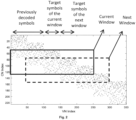
Figure 3 shows the interleaving function f(j) of a Wi-Turbo Code. -
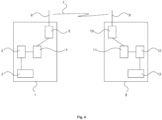
Figure 4 is a schematic view of a transmitter/receiver architecture. -
Figure 5 shows a transmitter structure. -
Figure 6 shows a receiver structure. - The encoding mechanisms to be described below involve transmitting a payload and the control data needed to decode it (or at least to decode it efficiently) together in a single message. The raw or literal content of the message represents a codeword which, when correctly decoded, will yield the original payload and control data. The encoding of the message is such that the control data can be decoded efficiently even when the receiver is not in possession of enough information to decode the payload efficiently or at all. Once the control data has been decoded it can be used to decode the payload.
- The control data and the payload may be encoded at substantially the same time as each other, or one may be encoded a substantially time after the other.
- Conveniently, the control data and the payload data are encoded according to the same high-level encoding scheme. The control data may be encoded using default, fixed, or predetermined parameters for that coding scheme. Those parameters may be stored by the encoder and the decoder. The encoder may adaptively select the parameters to be used to encode the payload data, for instance so as to improve throughput and/or decoding accuracy. Those parameters can be conveyed in the control data. The high-level encoding scheme itself may be selected to facilitate a receiver decoding part of the message (i.e. the control data) without decoding the whole message.
- The mechanisms may involve encoding and subsequently decoding payload data and control data by using certain classes of channel codes that allow retrieving part of the information from a received codeword without decoding the whole codeword. Control data partly or wholly defining the channel coding scheme for the payload is encoded within the same codeword as the payload. Any parameters usable to decode the payload that are not contained in the codeword may be predetermined and stored by the receiver and/or determined by the receiver through trial and error. One example of a decoding scheme that is compatible with this approach is using sliding window decoding.
- Embodiments of this approach can provide several advantages. First, since the message/codeword in which the control data is contained also contains the payload, it is longer than a message containing only the control data. As a result, the control data is transmitted with less cost in terms of energy per bit as compared to transmitting them over a separate control channel. Second, this method allows encoding a control message carrying channel coding parameters for decoding part of a codeword inside that very same codeword. That means the parameters can be conveyed in a prompt manner, allowing quick adaptation of coding parameters. Third, if an error detecting code (such as a CRC) is used over the control message, this allows transmission errors to be detected and responded to promptly. If the control data is not decoded correctly, the receiver can send a non-acknowledgement (NACK) message, e.g. as a retransmission request, without having decoding the rest of the codeword. Fourth, if an error detecting code is used over the control data the decoding of the rest of the codeword can be improved if the control data is decoded correctly. For example, by setting L-values for soft decoding to +/-infinity according to the decoded control message.
- In order that the same high-level encoding scheme can be applied to both parts of the message, it is preferred that the encoding scheme is one that permits reliable decoding of the control data using predetermined parameters. Otherwise, the receiver might have to try multiple options for the parameters to be used to decode the control data until it finds the right one. Some examples of preferred encoding schemes will be described. It will be appreciated that for each encoding scheme there is a corresponding decoding scheme for recovering the message data.
- When data has been encoded using a convolutional code it is possible to decode the k-th bit of the convolutionally encoded data if code bits corresponding to k+t trellis segments are received, where t is the trace-back length. The reason for this is that later data influences the decoding of the earlier data only slightly. Typically, t is a few integer multiples of the constraint length of the convolutional code, for example 10 to 15. The first kc bits of a message block can be assigned to carry the control message. Once kc +t trellis segments of the message have been received, the control data can be recovered even if the whole message has not yet been received. The control data can be encoded with, e.g. a fixed puncturing pattern known to the receiver.
- When convolutional encoding is used, examples of the parameters for decoding the payload data that can be carried in the control data are any one or more of:
- a. message length,
- b. puncturing scheme for the rest of the payload,
- c. modulation order for the rest of the payload.
- Each of these may be predetermined for the portion of the message carrying the control data. Data defining each predetermined parameter can be stored by the receiver for use as default encoding parameter(s) for decoding the control data.
- These are also known as Spatially Coupled LDPC codes (SC-LDPC).
- SC-LDPC codes are built by coupling smaller LDPC codes. They have a parity check matrix with a diagonal structure. (See the applicant's co-pending patent application entitled "Communication System with Latency-Controlled Forward Error Correction" (
WO 2017/144111 A1 , which does not form part of the prior art for this disclosure)). The structure of the parity check matrix allows a sliding window decoder to be used. By suitable choice of the decoder's window length, part of the codeword can be decoded without processing the rest of the codeword. - When LDPC convolutional encoding is used, examples of the parameters for decoding the payload data that can be carried in the control data are any one or more of:
- a. message length,
- b. coupling length,
- c. length of the codeword,
- d. rate adaptation parameters (e.g. puncturing and/or expanding patterns) for the payload part of the codeword,
- e. error detection bits (e.g. for a CRC mechanism).
- Each of these (with the exception of the error detection bits) may be predetermined for the portion of the message carrying the control data. Data defining each predetermined parameter can be stored by the receiver for use as default encoding parameter(s) for decoding the control data.
- Where error detection bits (e.g. for a CRC mechanism) are provided, these may be used to support a decision to reject the message, e.g. by the receiver transmitting a NACK in respect of the message, the receiver transmitting a retransmission request in respect of the message. The receiver may terminate its decoding of the message if the error detection bits recovered for the control data do not match a CRC computed by the receiver over some or all of the recovered control data.
- Wi-turbo codes are turbo codes with an interleaver (a window interleaver) that allows using a window decoder (See the applicant's co-pending patent application entitled "Window-Interleaved Turbo (Wi-Turbo) Codes" (
WO 2017/121473A1 A1, which does not form part of the prior art for this disclosure)).Figure 1 shows the interleaving function f(j) of a Wi-turbo code. Similarly to convolutional LDPC codes, under this scheme a control message contained in a codeword can be decoded without processing the whole codeword. - When Wi-turbo encoding is used, examples of the parameters for decoding the payload data that can be carried in the control data are any one or more of:
- a. message length,
- b. rate adaptation parameters (e.g. a puncturing pattern) for the rest of the codeword,
- c. error detection bits (such as CRC) to allow early error detection and/or early hard decisions for iterative decoding in the manner described above.
- Each of these (with the exception of the error detection bits) may be predetermined for the portion of the message carrying the control data. Data defining each predetermined parameter can be stored by the receiver for use as default encoding parameter(s) for decoding the control data.
- If decoded with a successive cancellation (SC) or SC-List decoder, polar decoders make an estimate of the transmitted sequence bit-by-bit. I.e., first a decision is made on the first bit, followed by the second bit, and so on (See E. Arikan, "Channel Polarization: A Method for Constructing Capacity-Achieving Codes for Symmetric Binary-Input Memoryless Channels," in IEEE Transactions on Information Theory, vol. 55, no. 7, pp. 3051-3073, July 2009). As a result, the first kc non-frozen bits of a codeword encoded using polar codes can be used to transmit control data, and that control data can be decoded even if the whole codeword is not yet capable of being decoded.
- When polar coding is used, examples of the parameters for decoding the payload data that can be carried in the control data are any one or more of:
- a. the set of frozen bits for the payload portion of the codeword,
- b. error detection bits (such as CRC) for early error detection as described above, and early elimination of the wrong paths in the decoding list.
- Each of these (with the exception of the error detection bits) may be predetermined for the portion of the message carrying the control data. Data defining each predetermined parameter can be stored by the receiver for use as default encoding parameter(s) for decoding the control data.
-
Figures 4 to 6 illustrate a transmitter and a receiver for implementing the methods described above. -
Figure 4 is a schematic view of the transmitter/receiver architecture. Thetransmitter 1 comprises asource 2 of payload data. That may, for example be a user interface input device such as a keyboard or touchscreen. Data from thesource 2 is passed to a processor 3 which packages it for transmission. Chunks of data for transmission as payload data are passed to an encoder 4. The encoder selects any non-default parameters for encoding of the payload data and forms control data representing those parameters. Then the encoder encodes the control data and the payload data to form a codeword. The control data is encoded according to a set of predefined default parameters. The payload data is encoded according to the parameters included in the control data. The codeword is passed to a transmitterfront end 5, which transmits the codeword as a message. In this example the message is transmitted from anantenna 6 over awireless channel 7. At receiver 8 the message is received at an antenna 9 which provides input to a receiverfront end 10. Note that the idea is not limited to wireless channels but applicable to any communication system. Message data received by the receiver front end is passed to adecoder 11. Thedecoder 11 decodes the control data in a message using stored default decoding parameters. Conveniently the control data is contained in the leading part of the message. The decoder extracts other decoding parameters from the control data and uses them to decode the payload part of the message. Conveniently the payload part comes after the control data part. The recovered payload data is passed to aprocessor 12 which performs any necessary processing on the received data and then passes it to aconsumer 13. The consumer may, for example, be a display or loudspeaker. Eachdevice 1, 8 may be capable of acting as both a transmitter and a receiver. -
Figure 5 illustrates the encoder 4 in more detail. The encoder 4 first concatenates the bits of control data and the bits of payload data inblock 20. They are then encoded together inblock 21 using a selected high-level encoding scheme, but with potentially different parameters being used for encoding the two sets of data. -
Figure 6 illustrates thedecoder 11 in more detail. Received data is divided into a portion representing the control data and a portion representing the payload data bydemultiplexer 30. The portions are decoded bydecoder 31 using stored parameters and/or parameters recovered from the control data. When the control data includes CRC data, error detection may be performed on the control data inblock 32. If a CRC calculated by the receiver over the control data does not match the received CRC value then a NACK message can be sent to the transmitter. - As an example not covered by the claims, a Wi-turbo code may be used as the high-level encoding scheme. The control data may be encoded using a default puncturing pattern, whereas the payload data may be encoded using a puncturing pattern selected by the transmitter. The control data may, for instance, have a length of 64 bits. The control data may include an indication of (a) the message length and (b) the puncturing pattern for the payload bits. When a message is received at the receiver, first the channel output corresponding to the 64 control bits is extracted. The obtained values are decoded using a suitable decoder (in this example that may be a sliding window decoder) which can decode the first 64 bits without requiring knowledge of the content of the control message. After the control message is decoded, error detection is performed on the decoded control bits. If those bits are decoded successfully, the decoder parameters are adjusted according to this information and the rest of the codeword is decoded, which contains the payload data. In this step, the decoder can also make use of the hard decisions of the decoded control bits to further improve the decoding performance of the rest of the codeword. If an error is detected, there is no need to decode the rest of the codeword and a NACK to the transmitter can already be sent. The same embodiment can also be employed with convolutional codes, convolutional LDPC codes and any other coding scheme allowing a sliding window decoder.
- As another example covered by the claims, a Polar code may be used as channel code. A successive cancellation (SC) decoder (or an SC List decoder) for a Polar code takes a set of frozen bits as a decoder parameter. Due to the sequential structure of such a decoder, for decoding of the j th bit, only the frozen bits with indices less than j are required. Assuming the set of frozen bits with indices less than j is known to the receiver, the decoder can decode the non-frozen bits with indices less than j. Exploiting this property, a set of frozen indices larger than j can be defined in the control data. The control data, which may also include data for supporting an error detection mechanism, such as CRC, can be transmitted in the non-frozen bits with indices less than j. At the receiver, after the first j bits are processed, error detection is performed. If an error is detected, the decoding operation can be stopped and an early NACK can be sent to the transmitter. If no errors are detected, the set of frozen bits for the rest of the codeword is extracted from the control data and the decoding can continue according to those parameters. If a SC list decoder is used at the receiver, the error detection can also be used to remove incorrect partial-codewords from the list to further improve the decoding performance for the rest of the codeword.
Claims (11)
- A signal receiver (8) for interpreting a received codeword, which when correctly decoded yields payload data and control data, and wherein a first part of the codeword can be decoded independently of a second part of the codeword, the receiver (8) being configured to perform the steps of:decoding the first part of the codeword using a channel decoding scheme with a predefined set of decoding parameters to form a first data block, wherein the first data block includes the control data comprising at least one decoding parameter for decoding payload data, and the predefined set of decoding parameters is stored by the receiver (8) and comprises a set of predetermined frozen bits for the first part of the codeword, and subsequentlydecoding the second part of the codeword using the channel decoding scheme with decoding parameters that are at least partially dependent on the content of the first data block as obtained by decoding the first part of the codeword to decode the payload data, wherein the decoding parameters that are dependent on the content of the first data block comprise one or more of a set of frozen bits for the second part of the codeword, and error detection bits,wherein the codeword is encoded using a polar code and is decoded with a successive cancellation, SC or SC-List decoder, which estimates the codeword bit-by-bit, and first kc non-frozen bits of the codeword are used to transmit the control data.
- A signal receiver (8) as claimed in claim 1, wherein the decoding parameters that are dependent on the content of the first data block comprise the error detection bits, and the signal receiver is further configured to perform early error detection and early elimination of wrong paths in a decoding list based on the error detection bits.
- A signal receiver (8) as claimed in claim 2, wherein the signal receiver is further configured to transmit a negative acknowledgement, NACK, and/or a retransmission request in response to a decision to reject the received codeword based on the error detection bits, wherein the error detection bits comprise error detection bits calculated over the control data.
- A signal receiver (8) as claimed in claim 2 or 3, wherein the error detection bits are cyclic redundancy code, CRC, bits and the signal receiver is further configured to terminate its decoding of the codeword if the error detection bits recovered for the control data do not match a CRC computed by the signal receiver over some or all of the recovered control data.
- A signal receiver (8) as claimed in any preceding claim, wherein the first part of the codeword is a leading part of the codeword.
- A signal encoder (4) for encoding a data signal to form a codeword, wherein the signal encoder (4) is configured to:store a set of predetermined encoding parameters, wherein the set of predetermined encoding parameters comprises a set of predetermined frozen bits for a first part of the codeword;form the codeword using to a common, high-level encoding scheme, wherein:the first part is encoded according to the common encoding scheme using the predetermined encoding parameters, the first part comprising control data defining further encoding parameters for decoding payload data, wherein the further encoding parameters comprise one or more of a set of frozen bits for a second part of the codeword, and error detection bits; andthe second part is encoded according to the common encoding scheme using the further encoding parameters; andthe common encoding scheme permits the first part of the codeword to be decoded independently of the second part of the codeword; andthe codeword is encoded using a polar code and first kc non-frozen bits of the codeword are used to transmit the control data.
- A signal encoder (4) as claimed in claim 6, wherein the error detection bits are cyclic redundancy code, CRC, bits.
- A signal encoder (4) as claimed in claim 6 or 7, further configured to cause the first part of the codeword to be transmitted before the second part of the codeword.
- A communication system comprising a signal encoder (4) according to one of claims 6 to 8 and a signal receiver (8) according to one of claims 1 to 5, wherein the signal receiver (8) is arranged to interpret a message formed by the signal encoder (4).
- A method for interpreting a received codeword, which when correctly decoded yields payload data and control data, and wherein a first part of the codeword can be decoded independently of a second part of the codeword, the method comprising:decoding the first part of the codeword using a channel decoding scheme with a predefined set of decoding parameters to form a first data block, wherein the first data block includes the control data comprising at least one decoding parameter for decoding payload data, and the predefined set of decoding parameters is stored by a receiver (8) and comprises a set of predetermined frozen bits for the first part of the codeword; and subsequentlydecoding the second part of the codeword using the channel decoding scheme with decoding parameters that are at least partially dependent on the content of the first data block as obtained by decoding the first part of the codeword to decode the payload data, wherein the decoding parameters that are dependent on the content of the first data block comprise one or more of a set of frozen bits for the second part of the codeword, , and error detection bits,wherein the codeword is encoded using a polar code and is decoded with a successive cancellation, SC or SC-List decoder, which estimates the codeword bit-by-bit, and first kc non-frozen bits of the codeword are used to transmit the control data.
- A method for encoding a data signal to form a codeword, the method comprising:storing a set of predetermined encoding parameters, wherein the set of predetermined encoding parameters comprises a set of predetermined frozen bits for a first part of the codeword;forming the codeword using to a common, high-level encoding scheme, wherein:the first part is encoded according to the common encoding scheme using the predetermined encoding parameters, the first part comprising control data defining further encoding parameters for decoding payload data, wherein the further encoding parameters comprise one or more of a set of frozen bits for a second part of the codeword, and error detection bits; andthe second part is encoded according to the common encoding scheme using the further encoding parameters; andthe common encoding scheme permits the first part of the codeword to be decoded independently of the second part of the codeword, andthe codeword is encoded using a polar code and first kc non-frozen bits of the codeword are used to transmit the control data.
Applications Claiming Priority (1)
| Application Number | Priority Date | Filing Date | Title |
|---|---|---|---|
| PCT/EP2016/075855 WO2018077406A1 (en) | 2016-10-26 | 2016-10-26 | Data encoding and decoding |
Publications (2)
| Publication Number | Publication Date |
|---|---|
| EP3526916A1 EP3526916A1 (en) | 2019-08-21 |
| EP3526916B1 true EP3526916B1 (en) | 2025-07-09 |
Family
ID=57209465
Family Applications (1)
| Application Number | Title | Priority Date | Filing Date |
|---|---|---|---|
| EP16788088.9A Active EP3526916B1 (en) | 2016-10-26 | 2016-10-26 | Data encoding and decoding |
Country Status (4)
| Country | Link |
|---|---|
| US (1) | US11057148B2 (en) |
| EP (1) | EP3526916B1 (en) |
| CN (1) | CN109417432B (en) |
| WO (1) | WO2018077406A1 (en) |
Families Citing this family (4)
| Publication number | Priority date | Publication date | Assignee | Title |
|---|---|---|---|---|
| US11822902B2 (en) * | 2020-01-21 | 2023-11-21 | California Institute Of Technology | Systems and methods for performing lossless source coding |
| CN114982162A (en) * | 2020-01-22 | 2022-08-30 | 华为技术有限公司 | Communication method and communication device |
| US20240405787A1 (en) * | 2023-05-30 | 2024-12-05 | Samsung Electronics Co., Ltd. | Polarization-adjusted convolutional codes with freezer |
| WO2025252314A1 (en) * | 2024-06-07 | 2025-12-11 | Telefonaktiebolaget Lm Ericsson (Publ) | Error correction coding |
Family Cites Families (10)
| Publication number | Priority date | Publication date | Assignee | Title |
|---|---|---|---|---|
| US7242726B2 (en) * | 2000-09-12 | 2007-07-10 | Broadcom Corporation | Parallel concatenated code with soft-in soft-out interactive turbo decoder |
| JP3795743B2 (en) * | 2000-11-17 | 2006-07-12 | 株式会社エヌ・ティ・ティ・ドコモ | Data transmission method, data transmission system, transmission device and reception device |
| US7437654B2 (en) * | 2000-11-29 | 2008-10-14 | Lucent Technologies Inc. | Sub-packet adaptation in a wireless communication system |
| US7302628B2 (en) * | 2000-12-14 | 2007-11-27 | Telefonaktiebolaget L M Ericsson (Publ) | Data compression with incremental redundancy |
| US7562278B2 (en) * | 2005-12-29 | 2009-07-14 | Intel Corporation | Incremental forward error correction redundancy |
| JP4930024B2 (en) * | 2006-12-08 | 2012-05-09 | 富士通株式会社 | Transmitting apparatus, receiving apparatus, and data transmission method |
| US8359507B2 (en) * | 2008-06-23 | 2013-01-22 | Nec Laboratories America, Inc. | Systems and methods for adaptive hybrid automatic retransmission requests |
| GB2533412B (en) * | 2014-12-19 | 2018-01-03 | Blu Wireless Tech Limited | Methods for wireless communications |
| WO2017121473A1 (en) | 2016-01-13 | 2017-07-20 | Huawei Technologies Duesseldorf Gmbh | Window-interleaved turbo (wi-turbo) codes |
| WO2017144111A1 (en) | 2016-02-26 | 2017-08-31 | Huawei Technologies Duesseldorf Gmbh | Communication system with latency-controlled forward error correction |
-
2016
- 2016-10-26 WO PCT/EP2016/075855 patent/WO2018077406A1/en not_active Ceased
- 2016-10-26 CN CN201680087377.2A patent/CN109417432B/en active Active
- 2016-10-26 EP EP16788088.9A patent/EP3526916B1/en active Active
-
2019
- 2019-04-26 US US16/395,447 patent/US11057148B2/en active Active
Also Published As
| Publication number | Publication date |
|---|---|
| US20190253182A1 (en) | 2019-08-15 |
| WO2018077406A1 (en) | 2018-05-03 |
| CN109417432A (en) | 2019-03-01 |
| CN109417432B (en) | 2023-10-20 |
| US11057148B2 (en) | 2021-07-06 |
| EP3526916A1 (en) | 2019-08-21 |
Similar Documents
| Publication | Publication Date | Title |
|---|---|---|
| KR102023181B1 (en) | Packet-level erasure protection coding in aggregated packet transmissions | |
| EP0998072B1 (en) | Forward error correction for ARQ protocol | |
| EP2566086B1 (en) | Method and apparatus for transmitting and receiving information in a broadcasting/communication system | |
| KR101526990B1 (en) | Transmission block size determination method and signal transmission method using the same | |
| AU2012302460B2 (en) | Method and apparatus for transmitting and receiving information in a broadcasting/communication system | |
| CN109964426B (en) | Signal receiver and method for analyzing received signal, communication system | |
| US9548837B2 (en) | Method and apparatus for transmitting and receiving a data block in a wireless communication system | |
| US11088780B2 (en) | Low complexity blind detection of code rate | |
| CN101595702B (en) | Method and apparatus for code block segmentation in a mobile communication system | |
| EP3580869B1 (en) | System and method for employing outer codes with non-equal length codeblocks | |
| US11057148B2 (en) | Data encoding and decoding | |
| CN101779378A (en) | Protected communication link with improved protection indication | |
| JP2002158642A (en) | Data transmission method, data transmission system, transmitting device and receiving device | |
| US20040199848A1 (en) | Error correction decoding apparatus and error correction decoding method | |
| KR102123093B1 (en) | Apparatus and method for transmitting and receiving data in communication system | |
| KR101061116B1 (en) | Uplink Control Information Transmission Method and Decoding Method of Control Information in a Mobile Communication System | |
| JP2001007784A (en) | Data transmission method, data transmission system, transmitting device and receiving device | |
| CN104135345A (en) | A Cross-Layer Encoding and Decoding Method Applied to Long Term Evolution System | |
| CN101584144B (en) | System and method for efficient transmission of multimedia and data | |
| EP1811674A1 (en) | Apparatus and methods for jointly decoding messages based on apriori knowledge of modified codeword transmission | |
| JP2014504828A (en) | Method and apparatus for simultaneous transmission and reception of data sequences and channel information for link adaptation | |
| CN113541871B (en) | Method for generating code words and coder-decoder | |
| CN116388937B (en) | Uplink sliding window HARQ method based on Raptor code | |
| US11876620B1 (en) | Error correction for decoding frames | |
| KR20240028887A (en) | Receiver performing blind detection in wireless communication system and operating method thereof |
Legal Events
| Date | Code | Title | Description |
|---|---|---|---|
| STAA | Information on the status of an ep patent application or granted ep patent |
Free format text: STATUS: UNKNOWN |
|
| STAA | Information on the status of an ep patent application or granted ep patent |
Free format text: STATUS: THE INTERNATIONAL PUBLICATION HAS BEEN MADE |
|
| PUAI | Public reference made under article 153(3) epc to a published international application that has entered the european phase |
Free format text: ORIGINAL CODE: 0009012 |
|
| STAA | Information on the status of an ep patent application or granted ep patent |
Free format text: STATUS: REQUEST FOR EXAMINATION WAS MADE |
|
| 17P | Request for examination filed |
Effective date: 20190517 |
|
| AK | Designated contracting states |
Kind code of ref document: A1 Designated state(s): AL AT BE BG CH CY CZ DE DK EE ES FI FR GB GR HR HU IE IS IT LI LT LU LV MC MK MT NL NO PL PT RO RS SE SI SK SM TR |
|
| AX | Request for extension of the european patent |
Extension state: BA ME |
|
| DAV | Request for validation of the european patent (deleted) | ||
| DAX | Request for extension of the european patent (deleted) | ||
| STAA | Information on the status of an ep patent application or granted ep patent |
Free format text: STATUS: EXAMINATION IS IN PROGRESS |
|
| 17Q | First examination report despatched |
Effective date: 20210525 |
|
| GRAP | Despatch of communication of intention to grant a patent |
Free format text: ORIGINAL CODE: EPIDOSNIGR1 |
|
| STAA | Information on the status of an ep patent application or granted ep patent |
Free format text: STATUS: GRANT OF PATENT IS INTENDED |
|
| INTG | Intention to grant announced |
Effective date: 20250221 |
|
| GRAS | Grant fee paid |
Free format text: ORIGINAL CODE: EPIDOSNIGR3 |
|
| GRAA | (expected) grant |
Free format text: ORIGINAL CODE: 0009210 |
|
| STAA | Information on the status of an ep patent application or granted ep patent |
Free format text: STATUS: THE PATENT HAS BEEN GRANTED |
|
| AK | Designated contracting states |
Kind code of ref document: B1 Designated state(s): AL AT BE BG CH CY CZ DE DK EE ES FI FR GB GR HR HU IE IS IT LI LT LU LV MC MK MT NL NO PL PT RO RS SE SI SK SM TR |
|
| REG | Reference to a national code |
Ref country code: GB Ref legal event code: FG4D |
|
| REG | Reference to a national code |
Ref country code: CH Ref legal event code: EP |
|
| REG | Reference to a national code |
Ref country code: IE Ref legal event code: FG4D |
|
| REG | Reference to a national code |
Ref country code: DE Ref legal event code: R096 Ref document number: 602016092845 Country of ref document: DE |
|
| PGFP | Annual fee paid to national office [announced via postgrant information from national office to epo] |
Ref country code: GB Payment date: 20250904 Year of fee payment: 10 |
|
| REG | Reference to a national code |
Ref country code: NL Ref legal event code: MP Effective date: 20250709 |
|
| PG25 | Lapsed in a contracting state [announced via postgrant information from national office to epo] |
Ref country code: PT Free format text: LAPSE BECAUSE OF FAILURE TO SUBMIT A TRANSLATION OF THE DESCRIPTION OR TO PAY THE FEE WITHIN THE PRESCRIBED TIME-LIMIT Effective date: 20251110 |
|
| PG25 | Lapsed in a contracting state [announced via postgrant information from national office to epo] |
Ref country code: NL Free format text: LAPSE BECAUSE OF FAILURE TO SUBMIT A TRANSLATION OF THE DESCRIPTION OR TO PAY THE FEE WITHIN THE PRESCRIBED TIME-LIMIT Effective date: 20250709 |
|
| REG | Reference to a national code |
Ref country code: AT Ref legal event code: MK05 Ref document number: 1812874 Country of ref document: AT Kind code of ref document: T Effective date: 20250709 |
|
| PG25 | Lapsed in a contracting state [announced via postgrant information from national office to epo] |
Ref country code: IS Free format text: LAPSE BECAUSE OF FAILURE TO SUBMIT A TRANSLATION OF THE DESCRIPTION OR TO PAY THE FEE WITHIN THE PRESCRIBED TIME-LIMIT Effective date: 20251109 |
|
| PGFP | Annual fee paid to national office [announced via postgrant information from national office to epo] |
Ref country code: DE Payment date: 20250902 Year of fee payment: 10 |
|
| PG25 | Lapsed in a contracting state [announced via postgrant information from national office to epo] |
Ref country code: NO Free format text: LAPSE BECAUSE OF FAILURE TO SUBMIT A TRANSLATION OF THE DESCRIPTION OR TO PAY THE FEE WITHIN THE PRESCRIBED TIME-LIMIT Effective date: 20251009 |
|
| REG | Reference to a national code |
Ref country code: LT Ref legal event code: MG9D |
|
| PG25 | Lapsed in a contracting state [announced via postgrant information from national office to epo] |
Ref country code: AT Free format text: LAPSE BECAUSE OF FAILURE TO SUBMIT A TRANSLATION OF THE DESCRIPTION OR TO PAY THE FEE WITHIN THE PRESCRIBED TIME-LIMIT Effective date: 20250709 |
|
| PG25 | Lapsed in a contracting state [announced via postgrant information from national office to epo] |
Ref country code: FI Free format text: LAPSE BECAUSE OF FAILURE TO SUBMIT A TRANSLATION OF THE DESCRIPTION OR TO PAY THE FEE WITHIN THE PRESCRIBED TIME-LIMIT Effective date: 20250709 |
|
| PG25 | Lapsed in a contracting state [announced via postgrant information from national office to epo] |
Ref country code: HR Free format text: LAPSE BECAUSE OF FAILURE TO SUBMIT A TRANSLATION OF THE DESCRIPTION OR TO PAY THE FEE WITHIN THE PRESCRIBED TIME-LIMIT Effective date: 20250709 |
|
| PG25 | Lapsed in a contracting state [announced via postgrant information from national office to epo] |
Ref country code: GR Free format text: LAPSE BECAUSE OF FAILURE TO SUBMIT A TRANSLATION OF THE DESCRIPTION OR TO PAY THE FEE WITHIN THE PRESCRIBED TIME-LIMIT Effective date: 20251010 |
|
| PG25 | Lapsed in a contracting state [announced via postgrant information from national office to epo] |
Ref country code: SE Free format text: LAPSE BECAUSE OF FAILURE TO SUBMIT A TRANSLATION OF THE DESCRIPTION OR TO PAY THE FEE WITHIN THE PRESCRIBED TIME-LIMIT Effective date: 20250709 |
|
| PG25 | Lapsed in a contracting state [announced via postgrant information from national office to epo] |
Ref country code: LV Free format text: LAPSE BECAUSE OF FAILURE TO SUBMIT A TRANSLATION OF THE DESCRIPTION OR TO PAY THE FEE WITHIN THE PRESCRIBED TIME-LIMIT Effective date: 20250709 |
|
| PG25 | Lapsed in a contracting state [announced via postgrant information from national office to epo] |
Ref country code: PL Free format text: LAPSE BECAUSE OF FAILURE TO SUBMIT A TRANSLATION OF THE DESCRIPTION OR TO PAY THE FEE WITHIN THE PRESCRIBED TIME-LIMIT Effective date: 20250709 Ref country code: BG Free format text: LAPSE BECAUSE OF FAILURE TO SUBMIT A TRANSLATION OF THE DESCRIPTION OR TO PAY THE FEE WITHIN THE PRESCRIBED TIME-LIMIT Effective date: 20250709 |
|
| PG25 | Lapsed in a contracting state [announced via postgrant information from national office to epo] |
Ref country code: RS Free format text: LAPSE BECAUSE OF FAILURE TO SUBMIT A TRANSLATION OF THE DESCRIPTION OR TO PAY THE FEE WITHIN THE PRESCRIBED TIME-LIMIT Effective date: 20251009 |
|
| PG25 | Lapsed in a contracting state [announced via postgrant information from national office to epo] |
Ref country code: ES Free format text: LAPSE BECAUSE OF FAILURE TO SUBMIT A TRANSLATION OF THE DESCRIPTION OR TO PAY THE FEE WITHIN THE PRESCRIBED TIME-LIMIT Effective date: 20250709 |
|
| PG25 | Lapsed in a contracting state [announced via postgrant information from national office to epo] |
Ref country code: RO Free format text: LAPSE BECAUSE OF FAILURE TO SUBMIT A TRANSLATION OF THE DESCRIPTION OR TO PAY THE FEE WITHIN THE PRESCRIBED TIME-LIMIT Effective date: 20250709 |
|
| PG25 | Lapsed in a contracting state [announced via postgrant information from national office to epo] |
Ref country code: SM Free format text: LAPSE BECAUSE OF FAILURE TO SUBMIT A TRANSLATION OF THE DESCRIPTION OR TO PAY THE FEE WITHIN THE PRESCRIBED TIME-LIMIT Effective date: 20250709 |
|
| REG | Reference to a national code |
Ref country code: DE Ref legal event code: R097 Ref document number: 602016092845 Country of ref document: DE |
|
| PG25 | Lapsed in a contracting state [announced via postgrant information from national office to epo] |
Ref country code: DK Free format text: LAPSE BECAUSE OF FAILURE TO SUBMIT A TRANSLATION OF THE DESCRIPTION OR TO PAY THE FEE WITHIN THE PRESCRIBED TIME-LIMIT Effective date: 20250709 |
|
| PG25 | Lapsed in a contracting state [announced via postgrant information from national office to epo] |
Ref country code: IT Free format text: LAPSE BECAUSE OF FAILURE TO SUBMIT A TRANSLATION OF THE DESCRIPTION OR TO PAY THE FEE WITHIN THE PRESCRIBED TIME-LIMIT Effective date: 20250709 |
|
| PG25 | Lapsed in a contracting state [announced via postgrant information from national office to epo] |
Ref country code: CZ Free format text: LAPSE BECAUSE OF FAILURE TO SUBMIT A TRANSLATION OF THE DESCRIPTION OR TO PAY THE FEE WITHIN THE PRESCRIBED TIME-LIMIT Effective date: 20250709 |
|
| PG25 | Lapsed in a contracting state [announced via postgrant information from national office to epo] |
Ref country code: EE Free format text: LAPSE BECAUSE OF FAILURE TO SUBMIT A TRANSLATION OF THE DESCRIPTION OR TO PAY THE FEE WITHIN THE PRESCRIBED TIME-LIMIT Effective date: 20250709 Ref country code: SK Free format text: LAPSE BECAUSE OF FAILURE TO SUBMIT A TRANSLATION OF THE DESCRIPTION OR TO PAY THE FEE WITHIN THE PRESCRIBED TIME-LIMIT Effective date: 20250709 |
|
| PLBE | No opposition filed within time limit |
Free format text: ORIGINAL CODE: 0009261 |
|
| STAA | Information on the status of an ep patent application or granted ep patent |
Free format text: STATUS: NO OPPOSITION FILED WITHIN TIME LIMIT |
|
| REG | Reference to a national code |
Ref country code: CH Ref legal event code: L10 Free format text: ST27 STATUS EVENT CODE: U-0-0-L10-L00 (AS PROVIDED BY THE NATIONAL OFFICE) Effective date: 20260521 |
|
| REG | Reference to a national code |
Ref country code: CH Ref legal event code: H13 Free format text: ST27 STATUS EVENT CODE: U-0-0-H10-H13 (AS PROVIDED BY THE NATIONAL OFFICE) Effective date: 20260527 |
|
| PG25 | Lapsed in a contracting state [announced via postgrant information from national office to epo] |
Ref country code: LU Free format text: LAPSE BECAUSE OF NON-PAYMENT OF DUE FEES Effective date: 20251026 |
|
| 26N | No opposition filed |
Effective date: 20260410 |
|
| REG | Reference to a national code |
Ref country code: BE Ref legal event code: MM Effective date: 20251031 |
|
| PG25 | Lapsed in a contracting state [announced via postgrant information from national office to epo] |
Ref country code: LT Free format text: LAPSE BECAUSE OF FAILURE TO SUBMIT A TRANSLATION OF THE DESCRIPTION OR TO PAY THE FEE WITHIN THE PRESCRIBED TIME-LIMIT Effective date: 20250709 Ref country code: MC Free format text: LAPSE BECAUSE OF FAILURE TO SUBMIT A TRANSLATION OF THE DESCRIPTION OR TO PAY THE FEE WITHIN THE PRESCRIBED TIME-LIMIT Effective date: 20250709 |
|
| PG25 | Lapsed in a contracting state [announced via postgrant information from national office to epo] |
Ref country code: BE Free format text: LAPSE BECAUSE OF NON-PAYMENT OF DUE FEES Effective date: 20251031 Ref country code: CH Free format text: LAPSE BECAUSE OF NON-PAYMENT OF DUE FEES Effective date: 20251031 |
|
| PG25 | Lapsed in a contracting state [announced via postgrant information from national office to epo] |
Ref country code: FR Free format text: LAPSE BECAUSE OF NON-PAYMENT OF DUE FEES Effective date: 20251031 |